When you think of Alaska, you probably picture places like Bristol Bay or the Kenai Peninsula. But tucked away in southeast Alaska is the Tongass National Forest, a wild, untouched rainforest full of remote streams where you could be the only angler for miles around.
In this episode, find out why fly patterns matter more than just covering ground in certain times of the year, why tides pretty much run the show up there, what it takes to chase steelhead and sea-run cutthroat in spots only reachable by mothership, and why a Stikine River float might be one of the most underrated trips in Alaska.
The Tongass National Forest is America’s largest national forest, covering just over 16 and a half million acres. It’s basically an archipelago with dozens, if not hundreds, of islands around it.
Kevin says none of these islands are connected by a road system, so everything has to be flown or taken by boat, whether it’s people, goods, or cargo. The Tongass stretches from just north of Haida Gwaii (Queen Charlotte Islands) all the way up to Yakutat, Alaska. It’s a vast region of public land with lots of unexplored, really fun places to check out.
Kevin grew up in Denver, where he first learned to fly fish and developed his love for the outdoors. He had the opportunity to visit Alaska for a steelhead fishing trip in 2011 and spent 10 days exploring Southeast Alaska. He was blown away by the water, the mountains, the weather, and the old-growth forests. That trip made him decide to make Alaska his home.
After working for a few years guiding in Bristol Bay, which is a famous fishery, his heart kept pulling him back to the Tongass. A few years ago, he finally fulfilled his longtime dream and started Tongass on the Fly. Kevin is now based in Petersburg, right in the heart of the Tongass, which gives him prime access to some of the world’s most amazing freshwater fisheries.
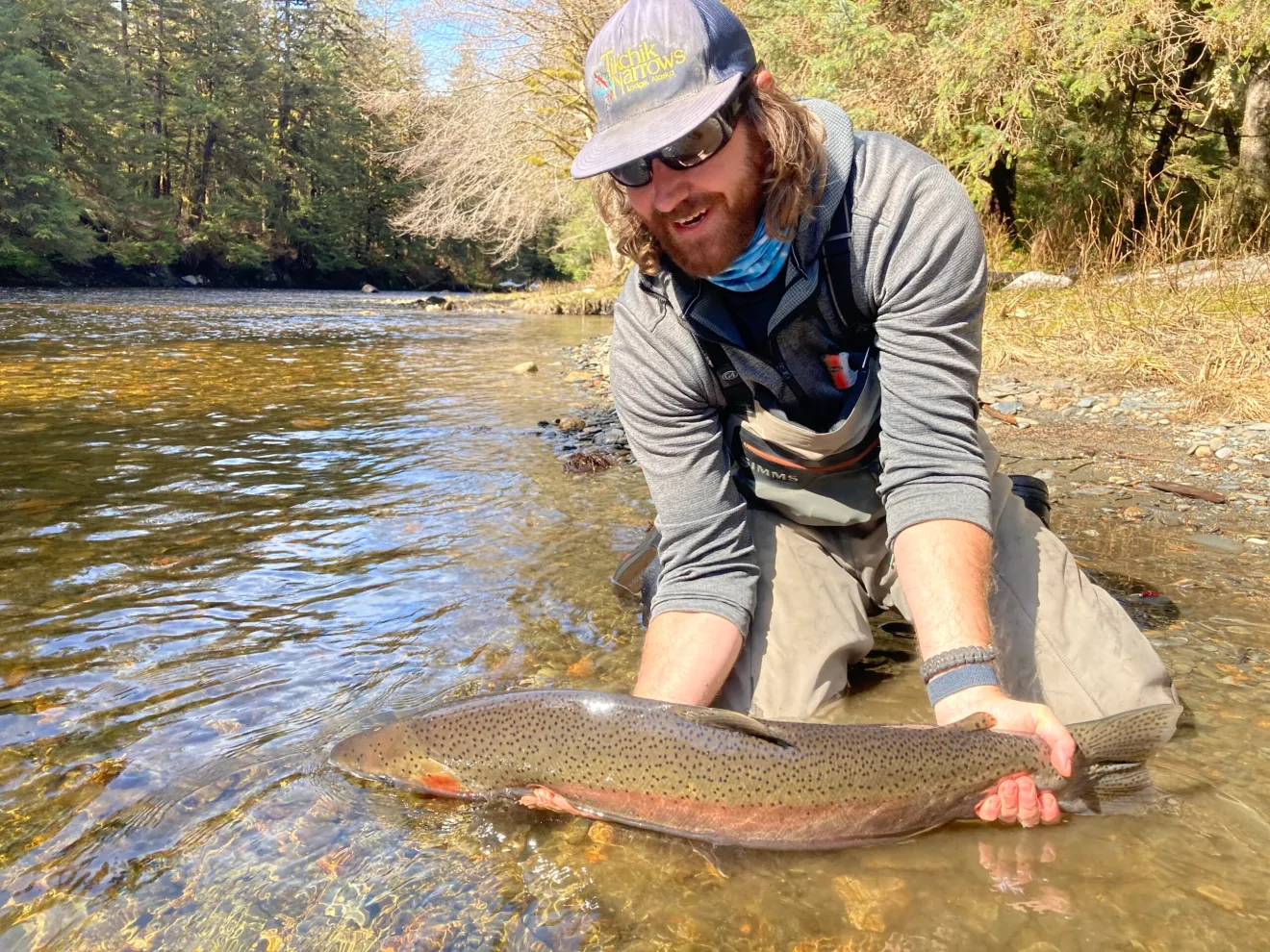
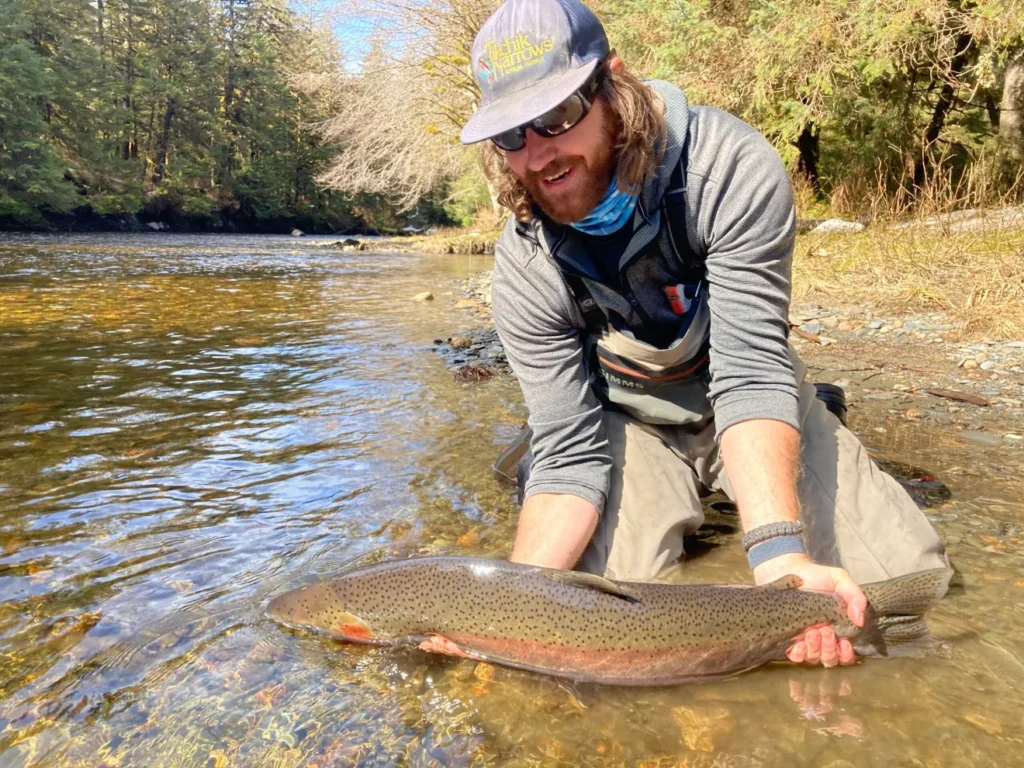
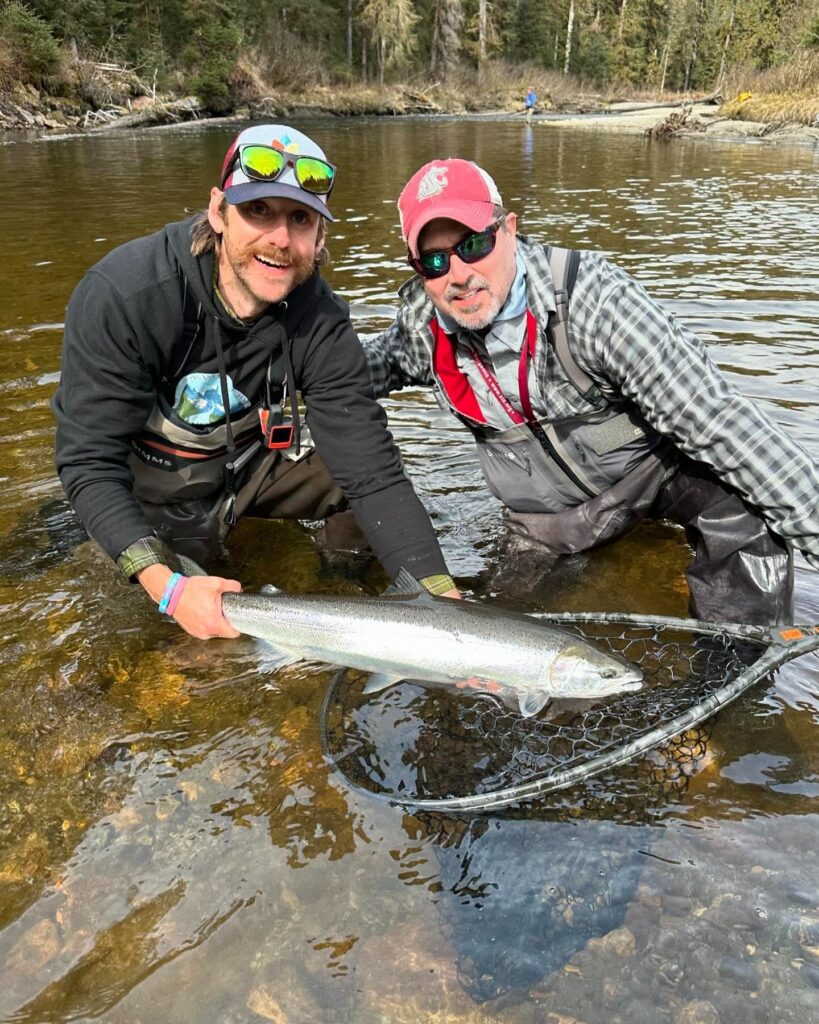
Steelhead fishing in the Tongass isn’t your classic steelheading experience. You’re carrying multiple rods, fishing smaller waters, and mixing up techniques. Nymphing one run, swinging flies in the next.
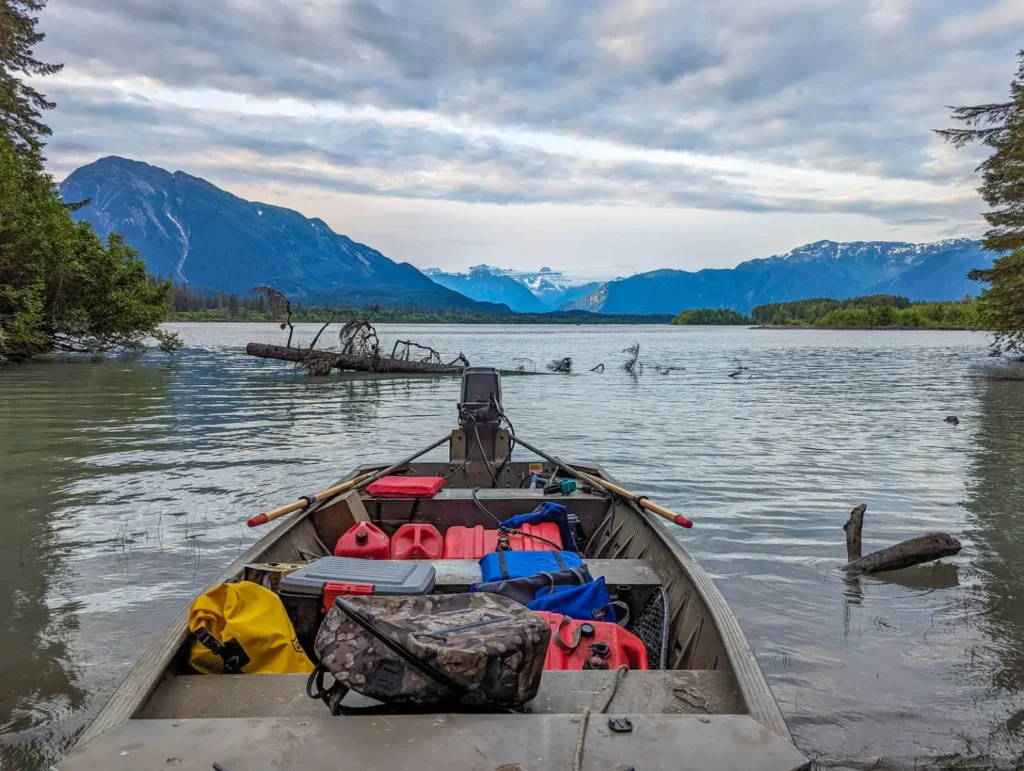
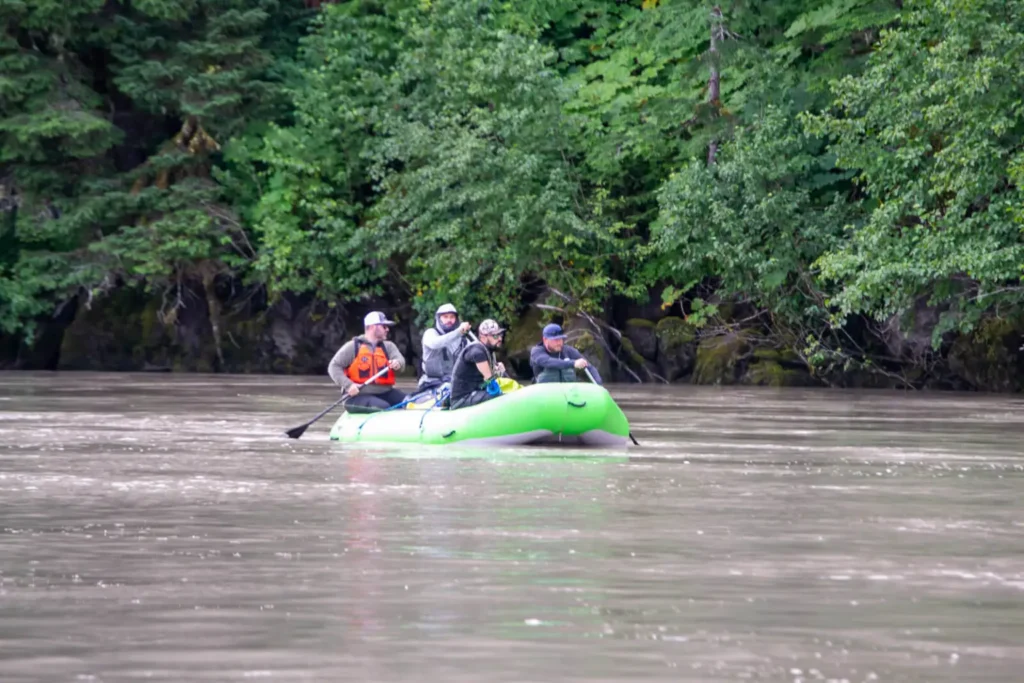
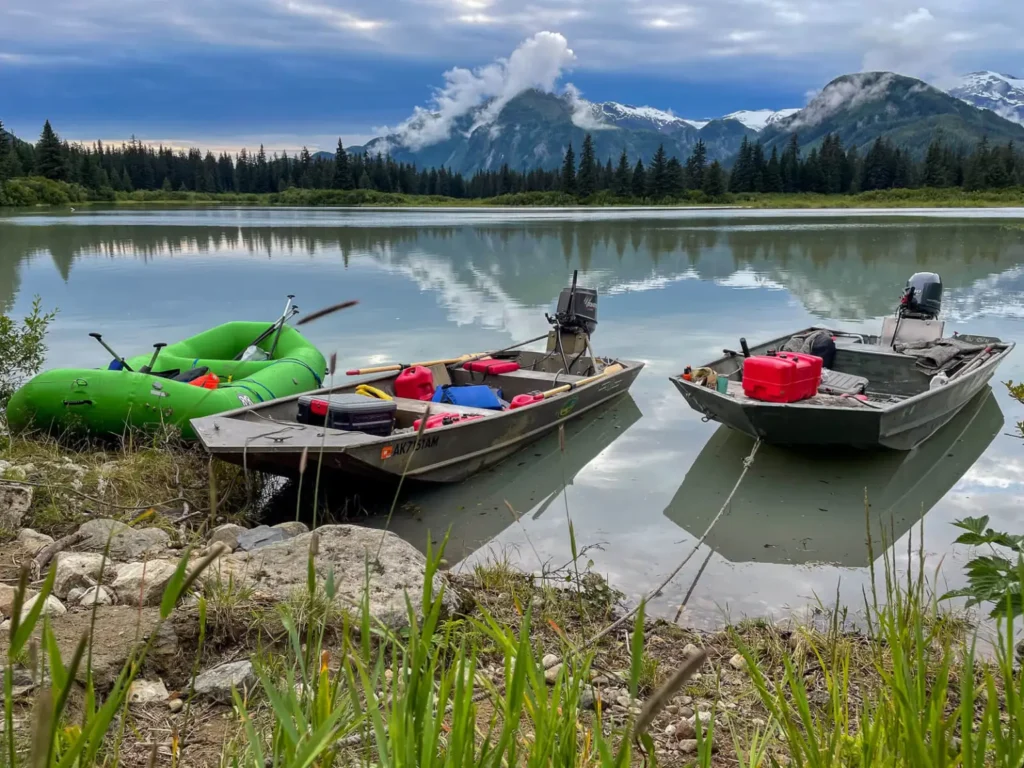
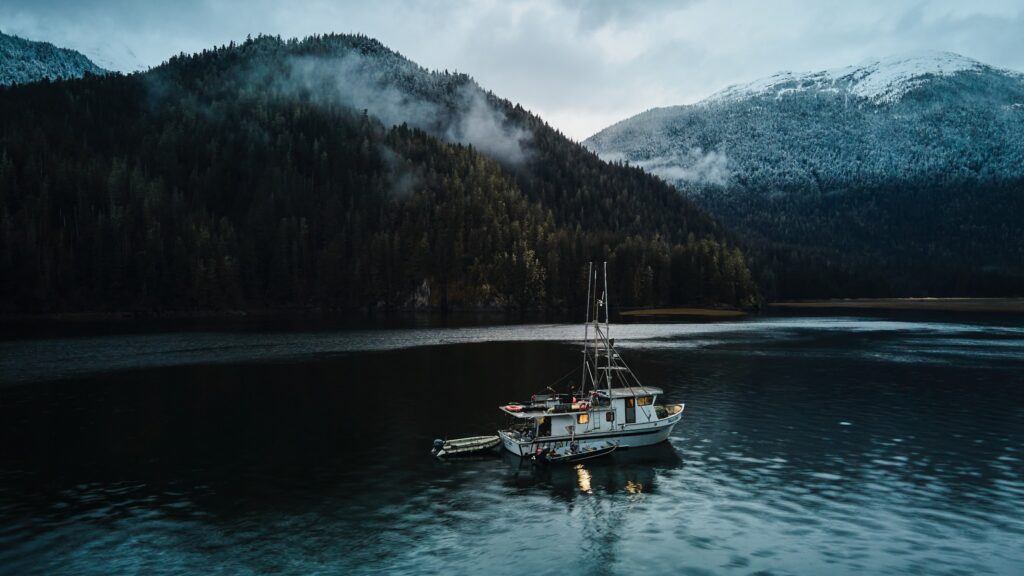
Their main run happens in spring (March to May), with fish also showing up in winter (October through December). They run trips off a 45-foot liverboard mothership that moves around the islands and streams. They also use a jet raft and skiff to reach rivers after anchoring.
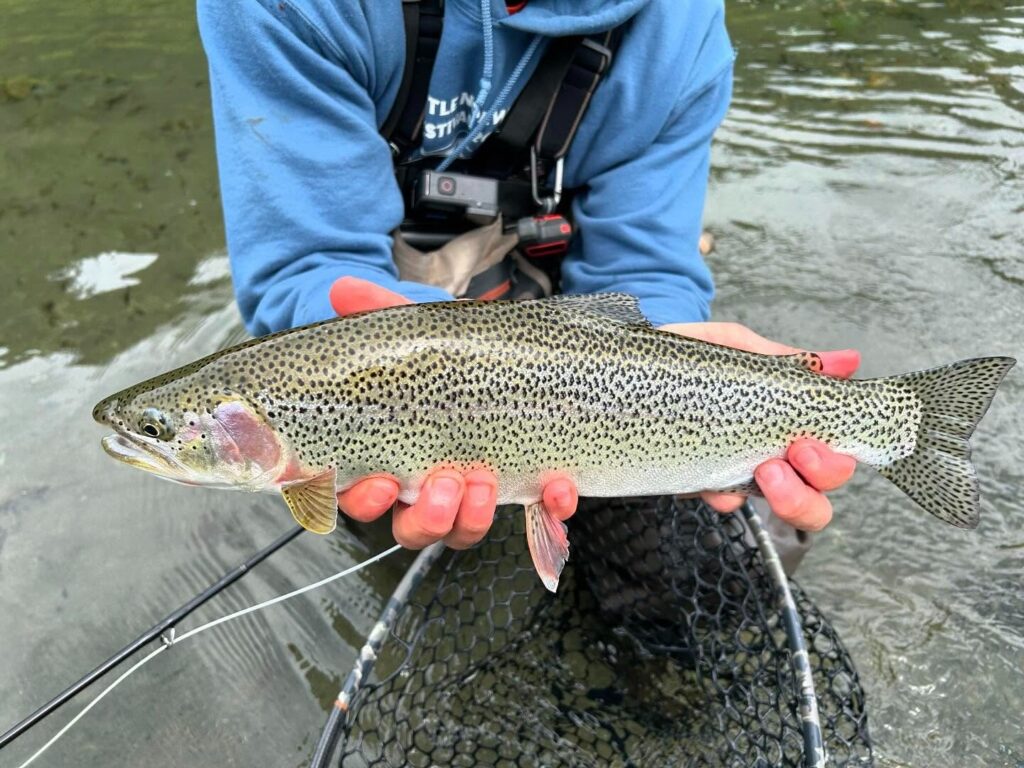
As for rainbows, Kevin says their fishery isn’t huge compared to places like Bristol Bay. They have some resident rainbow trout, but not many.
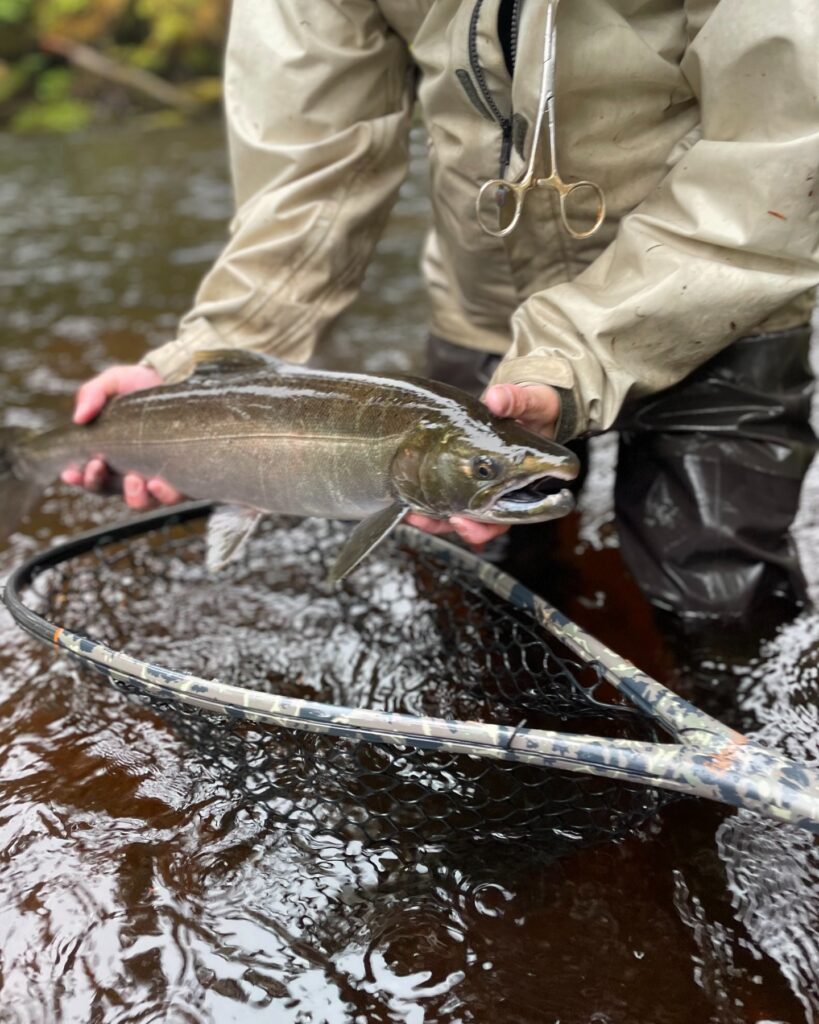
Along with steelhead, there’s awesome sea-run cutthroat fishing in the spring. They’re gorgeous fish, and at that same time of year, dolly varden are also hanging out in estuaries chasing pink salmon fry. Both species are around pretty much all season.
The Tongass is also called America’s salmon forest, so you’ll see all five species of salmon showing up, but Kevin mainly focuses on:
They don’t target sockeye salmon much because they’re more of a catch-and-keep fish, and they’re mainly catch-and-release.
Chinook (king salmon) runs are not strong enough in his area to specifically target, but you’ll occasionally see them spawning in some clearwater tributaries of big rivers like the Stikine.
Kevin says you’ll probably catch steelhead, sea-run cutthroat, and dollies all on the same trip. It’s pretty physical fishing—mostly hiking, not fishing from a boat. Here’s what gear you’ll likely be using:
Kevin likes swinging for steelhead, and because the rivers are small, you can usually see the fish. This means you can watch exactly how they react to your fly. Typical setups are lighter than usual, with a sink tip that’s mostly floating with just a short sinking section (like a 5-foot float with a 5-ft T8 sink tip).
Kevin says they use lots of bright colors, such as purple, pink, and orange.
Black and blue are classic too, and he’s had luck with those even on sunny days. Here are some of their go-to flies:
A standard six-weight rod with a weight-forward floating line is perfect for Dollies. You don’t really need sink tips. Dollies feed just below the surface, so a nine or ten-foot leader is usually enough.
The Stikine River is a massive glacial river with clear tributaries perfect for fishing. In July, they offer float trips down the Stikine using jet boats to access clear tributaries. The river’s glacial silt makes visibility tricky. Sometimes you can’t tell if the water is shallow or deep just by looking. These float trips last six or seven days.
Kevin runs the mothership, Sally Girl, with his business partner. They guide, captain, and have a third person onboard to help with cooking and deckhand duties. Their trips run best with 3 to 4 people, which keeps the experience comfortable and gives everyone good fishing time. The boat is booked by the week, so whether you come solo or as a group, you get the whole boat to yourselves. No strangers on board!
Episode Transcript
Dave (2s):
Today’s guest is navigating Alaska’s Forgotten Frontier, guiding fly anglers through the wild streams of the Tongass national forest chasing steelhead where log jams outnumber anglers, and swinging flies in rivers is where you might be the only one for miles. By the end of this episode, you’ll know how to target sea run cutthroat on top water, what it takes to access remote steelhead streams from a mothership, and why this to Keen River float might be one of the most underrated trips in the state. This is the Wet Fly Swing podcast where I show you the best places to travel to for fly fishing, how to find the best resources and tools to prepare for that big trip, And what you can do to give back to the fish species we all love. Kevin Main of Tongass on the Fly breaks down the rhythms of Southeast Alaska.
Dave (46s):
Why fly patterns matter more than stream miles this time of year? How tides and tides alone can dictate your entire day and what it means to chase fish in America’s largest national forest. From pop eating cud to glacial tributaries filled with dollies and salmon. We’re heading deep into the rainforest here he is, Kevin, Maine. You can find him at togas on the fly.com. How are you doing, Kevin?
Kevin (1m 11s):
I’m doing well, Dave. Thanks. Thanks for having me on.
Dave (1m 14s):
Yeah, yeah, this is, I’m really excited about this episode because we’re always, you know, Alaska is one of those places that we definitely have talked a lot about, but it’s always, you know, finding new places in Alaska I think is always interesting. And the tongass is something, you know, I’ve heard about. I actually don’t know much about it. So today you’re gonna explain that what the, you know, the resources like where you kind of work and you know, your trips and things like that. So we’re gonna get into all that today. But first take us back, maybe let’s just start today. It’s, it’s kind of time-wise, I guess we’re in kind of June now. What’s it like, what’s the tongass like and how are you doing out there this time of year?
Kevin (1m 48s):
Yeah, well that’s a tough question because right now it feels more like October than June. We’re still having a lot of rain. It doesn’t feel like, like really spring or summer’s kind of started for us yet, but I, that is abnormal. We’ve had, after a really mild winter, we’ve had more rain in April and May than we’ve ever had on records here in southeast Alaska. So typically May and June we are in a rainforest. So it’s always a little bit wetter than, than a lot of places. But yeah, I think we’re excited to get into summer and hopefully some more sunshine and mild weather.
Kevin (2m 29s):
So that’s, yeah, I’m looking outside and just waiting for the skies to clear.
Dave (2m 34s):
So you guys get plenty of rain down there. Are you getting what, like a hundred inches of rain or more per year?
Kevin (2m 40s):
You know, I, we’re probably around there. Yeah, I think, so we’re located in Petersburg, Alaska, and I guess we can kind of zoom out a little bit and just explain where the Tongass is, because a lot of people that maybe know about Alaska but are unfamiliar with the specifics. It’s kind of the region that gets forgotten about. So if you’re looking on the map, most people see the mainlands kind of up to the northern side. And we are in southeast Alaska, which is actually the panhandle section of the state that borders Canada. So we’re kind of that little sliver that separates Canada from the Pacific Ocean.
Kevin (3m 22s):
And it’s an archipelago and we have a lot of, a lot of islands here. But yeah, we are, it is the Tongass National Forest, and it is temperate rainforest. So, I mean, everything here requires moisture and so we do get a lot of rain usually, you know, most of that rain is kinda in the fall throughout the winter. But yeah, so just to give a little background Yeah. About, you know, our climate in general, it can be pretty wet. Right,
Dave (3m 51s):
Right. And the TNG is, and is it the, the National Forest is the entire island a national forest.
Kevin (3m 57s):
So basically the entire Archipelago is,
Dave (4m 0s):
Yeah. And what is the difference between an archipelago and an island?
Kevin (4m 4s):
Yeah, so basically it’s just a series of islands. So we live in a place where there’s, I mean, there’s dozens if not hundreds of violence just around us, and none of them are connected by a road system. So everything has to be either flown or taken by boat, whether it’s people, goods, cargo, all of that. So we’re in a series of violence. Basically the entire region is, is public land, is national forest. And so the Tonga is America’s largest national forest and by substantial amount, so we have, it’s, it’s about just over 16 and a half million acres is, is the Tonga.
Kevin (4m 50s):
And the next largest national forest is actually the Chuga, which is in South Central Alaska. And that one is a little less than half of what the Tongass is. And I think that’s closer to a third actually, just to give kind of a sense of scale on how large this region is. And it stretches all the way from kind of just north of Haida Gwaii or, or Queen Charlotte all the way up to Yak tat Alaska. And so for listeners, if they look at it on a map, I mean, Alaska’s enormous, so you kind of lose some of that sense of scale. But the region here is, is really big and leads to a lot of unexplored and really fun places to check out.
Dave (5m 36s):
Right. That’s amazing. Well, take us back real quick. How did you find yourself up on that area in the Tongass? Like, it’s so remote. How did you get there? And then how did your program start?
Kevin (5m 45s):
Yeah, that’s one of my favorite stories to tell actually. So I grew up in Denver and that’s where I learned how to fly fish. That’s, you know, kind of where my love for the outdoors and and passion came from. And I had the opportunity back in my twenties to visit Alaska. I’d never been before. You know, it’s, I think for every, everybody that fly fishes Alaska is kind of this mecca Yeah. That everybody dreams about and has on their bucket list. And I had a family friend that was living up here in Southeast Alaska, and I had the opportunity to come up and visit for a steelhead trip. And this was 2011, and I was here for 10 days.
Kevin (6m 30s):
And it was incredible. It blew me away. Everything about it. I mean, the water, the mountains, even the weather and the way that the mountains breathe and the forests and the old growth and the trees, I mean, I, I was just astounded. And so that’s when I decided that I wanted to make this home. And so I moved up here, I started looking for jobs. I ended up getting a job up here a couple years later who was living in southeast Alaska, but actually guiding out in Bristol Bay for a few years, which I, I mean, I think people are a lot more familiar with Bristol Bay and that’s an incredible, incredible fishery. And I had a blast and loved it. But my heart was always calling me back to, to Tonga.
Kevin (7m 13s):
And so after kind of a roundabout more circuitous path, I ended up back here and we started Tonga on the fly just over three years ago. Which, you know, looking back in college, this was always a dream of mine and, and it took longer than expected, but here we are and it feels pretty great to, to be putting it all together.
Dave (7m 37s):
Amazing. So talk about that. What does that look like? So you’re, and is there a town, what is the nearest town to where you actually live out there?
Kevin (7m 44s):
Yeah, so we’re in Petersburg, Alaska, which is actually smack dab in the middle of the Tonga. So here we call it central southeast. There’s a lot of directions that get thrown around when you’re describing Southeast Alaska, but we’re in central Southeast and we think that that gives us kind of a prime location to access a lot of amazing freshwater fisheries.
Dave (8m 7s):
Yeah, that’s right. Okay. So Petersburg is kind of the main hub there. So talk about that. What are, what are the trip, what are the species you’re focusing on? What are people coming there to fish for mainly?
Kevin (8m 17s):
Yeah, it’s a great question and it’s takes a while to even describe kind of all of the, the offerings that we have here. You know, it’s a longer season than a lot of places in Alaska. And basically we start in early April and our season kicks off with our steelhead, which is, you know, what we look forward to all year. I’d say it’s, it’s kind of what it was, the catalyst for the whole outfitter. It’s really what we love. I mean, these fish are incredible. We could spend hours just talking about that. But that season kicks off in April and our trips, a lot of ’em are done on a liverboard.
Kevin (8m 58s):
So we have a 45 foot liverboard that we run our trips off of, using that as a mothership. And then we take that around from Petersburg to the different islands and you know, the dozens of freshwater streams in the area. And then we have a jet raft and a, and a skiff that we use to access those rivers after we anchor up. But steelhead seasoned here, you know, kind of prime time, at least when we’re running our trips is about six weeks long. The fisher around a little bit before and a little bit after, but that’s when we’re operating. And man, it’s exciting because just about every blue line that you look at on a map has fish.
Kevin (9m 44s):
I mean, whether it’s a run of 15 fish or a few hundreds, you know, yeah. That’s the variable. But they all have fish and I, I just think that’s an incredible thing.
Dave (9m 54s):
Oh, that’s cool. And so six weeks, so this is a, when is that timing where people could actually fish for steelhead?
Kevin (10m 0s):
So we run our trips from the first week of April into mid-May.
Dave (10m 5s):
So you guys just wrapped up the season. Have you, how was the season up there? Do you guys fish? Is it more of a diversity of techniques? Are you nipping swinging? What do you do there?
Kevin (10m 14s):
Yeah, I’d say diversity is the name of the game and they’re also pretty physical trips, so it’s a lot different than I think your classic steel heading. Right. And so a lot of the waters that we’re fishing are pretty small. And again, all all, most of what I’ll talk about is in generality. Yeah. But all of this has nuance and, and there’s specifics to it. But you know, generally speaking, most of our water’s pretty small. There are a handful of rivers that we fish there are a little bit bigger, but we’ll be, you know, carrying multiple rods in a day. So we might be nipping one run and then a hundred yards up. We’ll be swinging a run for a little bit and then kind of continuing that cycle throughout the day.
Kevin (10m 57s):
And then throughout the trip, because what we’re doing is fishing, you know, over the course of a week long trip, we’ll probably fish four or five, potentially even six different river systems over that trip. And so there’s a lot of variety. You know, our season this year to get to that, you know, back to the weather, it was tough because we had a really mild winter, so we didn’t have a lot of snow pack. But then spring became really, really wet. Yeah. And we just were getting hammered by rain. So the rivers were fluctuating pretty heavily. I mean, we would have two foot rises and then two foot drops within the span of, you know, 12 to 36 hours.
Kevin (11m 39s):
So the conditions weren’t ideal. I mean, we were still able to get into fish. Yeah. I’d say we had to work a little bit harder for them this year. But that’s kind of really the name of the game here anyways. You’re always gonna be working a little bit harder because, you know Yeah. Because
Dave (11m 57s):
Of where you are
Kevin (11m 58s):
When we’re accessing these rivers. Yeah, exactly. And the togas is where we’re fishing is not, it’s not that accessible, which is what keeps people away from it, you know? Yeah. You’ve only want run into one other group of anglers in our three years of running trips, which, wow. I mean, just to have these places to yourself is like, that’s a pretty special thing in and of itself.
Dave (12m 22s):
So that’s steelhead. So you guys have the steelhead. Do you also have, you know, it’s a, a rainbow fishery. How does that, because it seems like there’s these areas where there’s steelhead and then maybe there’s not as many rainbow and then there’s places where there’s no steelhead and then these giant rainbows. Do you guys have a good rainbow fishery?
Kevin (12m 37s):
Yeah, so we, we, I wouldn’t say it’s good, but that it’s all relative, right? Yeah. Compared to Bristol Bay, it’s nothing like that. We have our, our steelhead and then there’s a few resident rainbows, but they’re not as prolific and not, I would say in our region specifically, they’re not as prolific. There’s some other areas even within Southeast Alaska that I think have, yeah. Some better rainbow trout fishing. Yeah.
Dave (13m 2s):
It’s interesting ’cause you’re kind of on a transitional, it’s really interesting ’cause we’ve obviously done episodes up and down the Pacific Rim, you know, everywhere from, you know, pretty much almost Mexico all the way up and you know, and then you have summer steelhead. And I’m guessing you guys don’t, well maybe you do ’cause you got the Cheena basin, which is, you know, which is south of you, which does have kind of a spring and a fall summer run. But do you guys have just the winter run? Is that what the steelhead run is there? You don’t have anything later in the year.
Kevin (13m 29s):
Yeah, so yeah.
Dave (13m 31s):
Or is it a mix? Is my favorite question. You’re in this transition zone, right? You’re in the zone of, of where the steelhead are eventually ending. You know, that’s an interesting thing, right? Eventually you go up around the Pacific grin and steelhead go away completely. And I’m not quite sure why that is either, but you’re in that zone of, it’s unique, right? It’s a cool area.
Kevin (13m 47s):
It is, yeah. And you know, I, our big run is definitely, you know, in the spring, so march there’s a lot of fish showing up. But we do have winter run fish, fish that are coming in in October, November, November, December, you know, and they’ll hold over in some of the lake systems. It all depends on the watersheds.
Dave (14m 8s):
Would you call those fish like fall, summer, fall or winter run fish? Because I would think the, the fall, the April fish are more like winter fish. Would those October fish be summer fish then summer, fall?
Kevin (14m 19s):
You know, we kind of classify ’em as winter and then spring. I don’t know scientifically if that would be Yeah. You know, yeah. How accurate that would be. But that’s colloquially what we refer to them as is we, we have the winter run fish that are showing up in November, December. And then we have the spring run, which is primarily when most of the fish is showing up. And, and that’s kind of the interesting thing too. I think that’s what makes our season so short is although there might be fish around, really the highest density of them is gonna be in that spring. And I should caveat that with, you know, a lot of people are familiar with the sea tuck river, which is in southeast Alaska up by Yakutat there.
Kevin (15m 2s):
And I think the run timing, I mean that’s the largest steelhead run in Alaska. I mean they get several thousand fish just in that one river. And I think they might have a little bit different timing, but that’s, while it’s in the same region, it’s still pretty far away from where we are. And our systems are a lot smaller than that. So it’s not a quite an apples to apples comparison. But I do, you know, for the people that know the sea tuck, I wanna make that distinction that they do have, I think more a a little different run timing and have a larger fall run and all of that.
Dave (15m 40s):
Check out Jackson Hole fly company today. Premium fly gear straight to your door without the premium price. Jackson Hole fly company designs and builds their own fly rods, reels, flies and gear delivering quality you can trust at prices that let you fish more and spend less. Whether you’re picking up a fly rod for the first time or guiding every day they’ve got what you need. Check ’em out right now. That’s Jackson Hole fly company.com. Jackson hole fly company.com. Pescador on the fly offers a full range of fly fishing gear for any angler at any budget with premium rods delivered directly to you. The LAG six is the most packable high performance fly rod on the market, performing like a four piece rod, but with unmatched portability in six pieces.
Dave (16m 25s):
And you can get 10% off your next order right now If you use the code wet fly swing at pescador on the fly.com. Never fly without your G six. Discover the L race series and more at pescador on the fly.com. So you have the steelhead and then you’ve got some rainbow there mixed in. What are the other species, like times of year people are coming up? Do you guys have another focus species or give us maybe the top five? Or do you, or do you guys focus more on just a couple?
Kevin (16m 52s):
Yeah, so I can kind of go through just a general sense of the season. So in the spring, along with the steelhead, we have a great, I mean phenomenal sea run cutthroat fishery. Oh wow. And so, yeah, they, and they’re, they’re beautiful, especially that time of year. They’re really, really colored up. I mean they’re just gorgeous fish. And then the dollar garden are also kind of in the estuaries because at the same time that steelheaders showing up is when we’re having a lot of the fry out migration. So a lot of the pink fry are making their way outta the river system and sea run cuds and the dollies are kind of hammering them on their way out.
Kevin (17m 34s):
So we have phenomenal fishing for both of those in the spring as well. And that’s kind of a year round deal dollies and sea run cuds we can find pretty much throughout the season. And we, the, the sea run cutthroat, we do have some rivers that have some pretty good size. I mean they’ll get up, you know, 18 to 20 inches and I mean just gorgeous, gorgeous fish. And then we have all five salmon species that show up. I mean the togas is also known as America’s salmon forest because it thrives on salmon returning to all of these different streams. So, you know, you’ll walk across something that looks like a trickle and you’ll find pink salmon in there.
Kevin (18m 17s):
But I would say, you know, later we, we catch pink chum sockeye are round, but it’s not something that we really focus on. There’s some decent runs for ’em, but it’s not really a main part of our program. I mean we, we’re all catch and release and sockeye a lot of the people that wanna catch that wanna take ’em home in fish boxes. Right. And that’s, you know, just not really part of what we do. Yeah. And then obviously the coho kind of late summer into fall I’d say is, is the behind steelhead the second most popular target species. What
Dave (18m 53s):
About Chinook?
Kevin (18m 55s):
We don’t target Chinook a whole lot just because the runs aren’t too strong. So just to kind of give a complete picture about what’s happening with them up here. All the islands that I spoke about don’t have Native King runs. So it, we get all four of the other salmon species plus steelhead, then the sea run cuties and the dollies and you know, a couple other ISTs. Yeah. But there’s a handful of these large mainland rivers. So you mentioned the Skinner earlier. We have some big rivers like the Stick is the one that’s really close to us and we love going up there and spending time and it’s this huge glacial river.
Kevin (19m 38s):
It’s just impressive to check out. And there’s all of these Clearwater tributaries. And so the US Alaska has about 40 miles of the bottom end of the stickin from where it crosses into Alaska and then empties out into the Pacific Ocean. But it continues for another, you know, 200 miles into Canada and that entire way there’s these Clearwater tributaries and kings do run and spawn in a lot of those Clearwater tributaries. And that’s the case, whether it’s the Kin or the Taku or, or a number of these other systems on the mainland.
Kevin (20m 18s):
They do have king runs, but they’re not, you know, it’s not like the noac. Yeah. Where there, there’s ton of ’em. So we’ll see ’em, it’s incredible to watch ’em, you know, we’ll see ’em spawning and we, we’d love seeing ’em in small clear water. It’s one of the coolest things I think. But we, I wouldn’t say that we necessarily, I mean we don’t go out and target ’em, you know? Yeah.
Dave (20m 43s):
And it makes sense because it’s, Kings are kind of bigger river, you know, fish, you know, they, they, you look at where they come back and all the big rivers, you know, they can come back to smaller ones as well, but you probably just don’t get as much of the run. So historically, you know, but you do have this kin, which is a massive river, which I’ve heard about and I forget about that. Yeah. It goes from Canada and then you have that 40 mile section down flows in just north of Wrangle, which I’ve heard a little bit about Wrangle Alaska. Yeah. Cool. So that gives us a good high level. I think that, you know, again, I, I like to go back to planning a trip. Like if we were planning a trip, what would be, I mean, steelheads off obviously huge, you know, sea run. Would you, If you did that steelhead trip, could you fish catch potentially steelhead sea run cutthroat and dollies on the same trip?
Kevin (21m 26s):
Yeah. Yeah. So usually and and our steelhead trip, so I, we started talking about this, but we’re able to access the mouths and a lot of the time we’re kind of stopped by log jam at the bottom of the river. ’cause again, these are are very natural rivers, so they all have log jams. We can only make it so far. And then it’s a lot of hiking. Hmm. So we’re spending a lot of time walking up these rivers. You know, we’re not fishing out of a boat. It’s a pretty physical fishery, you know, to get up here and, you know, you can go on forever. But yeah, we’ll carry, you know, usually a single hand, eight weight rods, we’ll have a switch rods, you know, 11, 7, 7 weight is pretty ideal to use both as a swing setup.
Kevin (22m 10s):
And then also you can throw an indicator on there and kind of get a, a longer roll cast out. But then also a six weight. You know, if we come to a slower pool and there’s a bunch of cuties or dollies and the tide flats that are popping off and slapping. Yeah. We’ll definitely spend some time, you know, messing around with those guys. So I would say yeah, it’s almost guaranteed that you’re gonna catch all those things.
Dave (22m 33s):
So you guys are swinging for steelhead, so you have a kind of a, a smaller, shorter rod you’re using for steelhead, you can swing up there.
Kevin (22m 40s):
Yep, exactly. And that’s, you know, still my favorite way to do it. And so we try to do that as much as we can. It’s just not like fishing, you know, the big classic waters. So you’re, you’re finding different ways to swing into these fish and stuff. But we’re able to site fish a lot of these, you know, again, being on a smaller system, we’re able to spot ’em. We can sight fish ’em, which you know, from a guiding perspective is really exciting. ’cause a lot of times we’re able to watch exactly what the reaction is to the fly and so on a swing rather than having a binary outcome of digit catch catch fish. Yeah. Or not. And you don’t know if you’re 1% there or 99% there to getting a take.
Kevin (23m 23s):
We have a lot more feedback. I mean, number one, a lot of times we can confirm if there’s actually a fish round. And then number two we can judge well did was it a decent swing? Did we present the fly well? Were we in the right area and was there a reaction? And you know, that’s gone from not seeing a fish move at all to watching them, you know, either come across 10 feet and hammer a fly or move up 10 feet and hammer a fly. I mean it’s, it’s really, really exciting stuff and I think it helps us learn a lot about these fish behaviors and kind of how they’re reacting under the water where a lot of times you just aren’t able to see that. Yeah.
Dave (24m 0s):
Yeah. Is that you’re technique typically since you’re kind of out there in the winter spring that you’re fishing, kind of sinking lines getting down to ’em?
Kevin (24m 8s):
I would say our setups just due to the size of the systems, are gonna be a lot lighter than most of the places. So I mean we’ll be using, I’d say our most standard sink tip is like a five five of T eight. So five feet of floating and five feet of T eight. And you know, there’s times when that’s even a little bit too heavy and we’ll go to two and a half feet of T eight and then, you know, on rare occasions we’ll go a little bit heavier with a full, you know, 10 foot section of T eight, maybe T 11. But you know, in the grand scheme of things, all of our, our stuff is gonna be a little bit lighter. Yeah. A
Dave (24m 45s):
Little bit lighter. Okay. And is it typical, you know, fly a wise, just using the, maybe describe that a little bit. What are your top flies you’re using up there?
Kevin (24m 53s):
Yeah, so we use a lot of hobo spades, a lot of bright colors, you know, purple and pink. And then also orange is a big one for us. I think it really stands out in the tannic waters. And then black and blue also is, is kind of a classic and you know, there’s a lot of discussion about different weather patterns and when to use different colors. But yeah, I’ve had just as much luck on black and blue on really bright sunny days, so, yeah.
Dave (25m 21s):
Yeah. Would the egg sucking leach work up there?
Kevin (25m 24s):
Yep. Both purple and black. Yeah. And then a liquid wrench is another one that’s pretty popular around here. Oh,
Dave (25m 32s):
Okay. I haven’t heard of that one. The liquid wrench.
Kevin (25m 34s):
Yeah. Yeah, that’s a, that’s a good one to have in the box.
Dave (25m 38s):
Okay. So this is cool. I think we’re getting a little flavor of kinda what it is you guys, you know, have up there for your operation. And is it po and I’m gonna talk more obviously, you know, if somebody’s going up there, it would be much easier to connect with you, you know, to, you know, at least a day on the water if not a full week to kind of do the trip and all that ’cause it’s so remote. But could people also go into Petersburg and maybe if they wanted to try to DIY it, is that possible? Or I guess because you have a boat, could you walk? It’s probably not that easy to do.
Kevin (26m 8s):
Yeah, it’s, I mean I’d say it’s doable, you know, but it is difficult. There’s other ways to do, you know, you could hire a float plane, fly out to a river and do things like that. So there’s ways to do it. But yeah, logistically I think southeast is just really, really hard because it’s not even just having the boat or the float plane, but, and especially where we are in South Central, there’s a lot of really, really big tide flats and a lot of big tide swings. So even getting up to the river mouth, you kind of really have to be aware of what the tide’s doing, where the channel is, how much water is in the river, because that’s gonna dictate, you know, if the tide’s out, are you gonna be able to make it up or down?
Kevin (26m 52s):
So short answer is yes, you can absolutely figure out a way to do it, but there is a lot of, a lot of our job is thinking about, you know, how best to access these places.
Dave (27m 6s):
Gotcha, gotcha. I wanna focus on a little bit here, you know, we mentioned steelhead, so Dolly varden and you know, and C run cutthroat trial. Maybe describe that program a little bit. Are you up there? Is that something where a guy might spend, you know, a full day targeting them? How are you doing it and kind of, you know, is it lower in the system mostly?
Kevin (27m 24s):
Yeah. So when we’re on our steelhead trips, I feel bad for these fish ’cause they kind of get, they get forgotten about because the steelhead are there. So people, you know, bycatch of a, of a beautiful sea run Cuddy is kind of like, ah man, it’s not, it’s not what we’re looking for. But after the steelhead are gone, you know, so from May into June and even into like early July, that’s kind of our what’s around and our main focus. Okay. So we’re using a lot of small streamers, so fry imitation and then even some top water stuff.
Dave (27m 58s):
So right now, as we’re speaking kind of in June, this is a good time. Like you could be getting into those, both of those species.
Kevin (28m 5s):
Oh it’s, it’s phenomenal time. That’s what we spent yesterday doing actually. We were out catching Sierra run Cuds on, on poppers on top water and it’s, it was a blast. Wow. It was, it was a lot of fun. So yeah, that’s, that’s kind of the program right now. And yeah, they’re fun. They’re aggressive. They’re, I mean, I, I just, I said it earlier and I’ll say it again. They’re just such beautiful fish and they, they fight hard. They’re aerial so, you know, catching them on lighter tackle five, six weights is, is a great time. So yeah, we’ll do that for a day. Absolutely. No problem.
Dave (28m 41s):
So you mentioned sea run on top water. Describe that a little bit, maybe that day yesterday. How does that look? How are you guys fishing that?
Kevin (28m 47s):
Yeah, so I’d say they, they’re aggressive. We like to catch ’em on top water just ’cause it’s the most fun. And we like to use kind of bigger streamer patterns. So we’ll use poppers for them, kind of, you know, bolt skating it, but then also just like almost fishing it like a polygrapher silvers where you’re getting a lot of action on the surface, big strip and letting it sit. And they’ll, I mean, they’re aggressive. They’ll come, you know, a foot or two outta the water to try and eat fly and they miss it a lot. So your hookup rate is pretty low, but it’s a lot of fun to see the takes. And then for the dollies it’s a lot more subsurface stuff. So still using a lot of fried patterns, but just trying to get it a little bit deeper into the water column.
Kevin (29m 34s):
But they will, you know, there’s times if they’re really in a feeding frenzy where it doesn’t really matter what you throw out there, if it even resembles something that might be foods, they’re, they’re gonna be on it. Yeah.
Dave (29m 46s):
Right. Okay. So, so you’ve got that going in for cutthroat and for dollies. Now are you mostly in the estuary or is this like just lower in the system where you’re catching these?
Kevin (29m 57s):
A lot of ’em are. So the dollies will start lower, you know, they’ll be in the estuary areas, the tidal zones, kind of the flats. And at low tides, especially when there’s kind of the corridors and pinch points where it’s funneling the fry out through, they’ll be really aggressive and sitting in there. The sea run Cuddy are kind of more spread out through the entire systems. So you’ll find them all the way up, you know, basically as far as you can hike in a lot of these systems. So be, they’ll be up there and then the dollies will kind of work their way up throughout the year. So, you know, as, especially as the salmon starts to show up, you know, they’re gonna follow and come up with the salmon and get ready for them to start to spawn.
Kevin (30m 45s):
And then that’s when, you know, you transition into the eggs and they’re just, oh, hoing themselves on the spawning, you know, salmon eggs that are getting swept down. Oh,
Dave (30m 57s):
I see. So that starts in what, in like August, September? When does that start The eggs?
Kevin (31m 1s):
Yeah, so I mean it can be as early as July kind of towards the end of July and then it just gets better and better through August and September. They’re getting fatter, they’re getting the dolly specifically and they’re getting more colored up. You know, they’re getting that traditional like orange lipstick colors. Right. They’re getting the bright dots on ’em and the, the kind of orange bellies on ’em and yeah, they’re, it’s a lot of fun. So
Dave (31m 29s):
That’s the time. If you want to get one of those colored up dollies with all the beautiful colors, what, when’s the best time?
Kevin (31m 34s):
I’d say August into September is, is when they really start to kind of pop like that. So yeah, they’re still pretty silvery in the spring. And then even right now you’re starting to see a little bit of color change on ’em, but it’s not anything like the fall.
Dave (31m 51s):
Okay. But you’re fishing a similar way now. If you wanted to catch ’em in June, July, you’re fishing kind of streamers down deep.
Kevin (31m 58s):
That’s what we’re doing right now. And then once the salmons show up, we’ll be, you know, dead drift and beads and egg patterns for ’em. Okay. And that’s what they’re primarily keyed on. They’ll still hit a streamer, but you know, they’ll just be working through the salmon beds waiting for anything to float down that they’re able to eat. They’re anything. Yeah.
Dave (32m 20s):
What is the fly if you’re fishing, maybe talk about that for dollies. What’s your fly line and the flies and that setup look like?
Kevin (32m 27s):
Yeah, so it’s pretty standard. Just a a six weight, you know, is what we’re using. And then just a, a weight forward floating line. And we might have a little bit of weight on our fly if we’re fishing a clouser, maybe, maybe a little bit of bead chain eye or dumbbell eyes on that to get it down. But we’re typically not using any sort of sink tips or anything like that with them. We’re able to get down to where we need to go just with, you know, maybe a nine or 10 foot liter and then a little bit of weight on the fly, you know, ’cause they’ll be, they’re feeding not too deep under the surface. There’s times, I’m thinking about a couple specific pools that we really like where they’ll be deeper down and maybe you’re gonna change your tactics a little bit to get a little bit more sink on your fly.
Kevin (33m 16s):
But primarily, you know, just a, a standard six weight floating line set up is gonna be able to get the job done. That’s
Dave (33m 23s):
It. So six weight standard. And then, and you said clouds are so are, what are your top, say top, you know, two or three flies you’re using for dollies?
Kevin (33m 31s):
Yeah, so I’d say, let’s see, probably, I really like a white clouser. Any little chum or pink fry imitation. Hmm. So even a little bit smaller than a clouser. And even on the Clouder it’s like smaller the better really, because a lot of what they’re chasing is fairly small. Like
Dave (33m 53s):
What is small? What would small be,
Kevin (33m 55s):
Shoot probably so hook size, I would say six, even eight. But really, you know, a lot of clouds get tied with like a really long trailing like material right? And so we even like to kind of clip those off so that it’s just behind the hook. So you don’t really want a lot of extra on there because you wanna reduce the size of the bait fish that you’re trying to present. And so that’s why some of the fry patterns are really good. And then the sound searcher is kind of the top water popper that we, we really like.
Dave (34m 34s):
We wrapped up a 5,000 mile road trip to Wisconsin last year. And our project M from four wheel campers made the entire journey better than we imagined. From remote camp size to spontaneous detours. We had the freedom to go where we wanted in total comfort. For over 50 years, four wheel campers has been building ultra durable, lightweight pop-up campers that fit almost any truck bed. The pop-up design sets up in under a minute and with the Project M like we have, I can set up and still use my tailgate and truck bed whenever I need it. Whether you want a minimalist set up like mine or something fully built out like the premium Orvis edition, four wheel campers as a camper to match your adventure goals.
Dave (35m 14s):
Do you have a truck? Head over to four wheel campers.com right now. Customize your camper, find a local dealer. See upcoming events and more. Trust me, you’re gonna love checking out four wheel campers. Are you an avid angler looking for the perfect fly selection or perhaps you’ve just started out fly tying? Smitty’s Fly Box offers a monthly subscription service that delivers a range of flies, fly time, materials and fishing accessories. They tailor their selections based on your fishing location, ensuring you get exactly what you need. And Smitty’s isn’t just any fly supplier. They’ve been in business for over three decades delivering quality and expertise. I can personally vouch for their quality having picked up some dry flies and they were perfect.
Dave (35m 57s):
It’s a perfect time to stock up on flies for your next adventure. Check out their offerings at smitty’s fly box.com. By subscribing you’re not only getting top-notch flies, but you’re also supporting a small business that has had a significant contribution to the fishing community. Remember that smitty’s fly box.com and let ’em know you heard about them through this podcast. And are these flies the sound searcher, is that something that, do you know where that one came from? Is that a pretty common fly I guess out there?
Kevin (36m 26s):
Yeah, I’d say especially in the Pacific Northwest. So we actually got them from Dave McCoy. Oh, McCoy at Emerald Water Anglers. Yeah. Yeah, he’s good friend. So he Oh nice. Sent up a bunch of those and you know, he does a lot of sea run Cuddy fishing around Puget Sound. And so we brought some of those patterns up here and, and they’re just as as useful here. And so it’s Oh that’s cool. I’ve kinda how we,
Dave (36m 52s):
I’ve seen him now the, the Puget Fly McCoy’s sound searcher and it’s Emeral water and other. Cool. Yeah. And we actually have an episode on the, we’ll put a link to the show notes to that episode we did with Dave on Sea Run Cutthroat Fishing. But it’s essentially a, you know, it’s got a little bit of a tail, it’s got a little bit of a body, some fur something and then a a, it’s got the foam foam is home, right? It’s got a bunch of foam on top.
Kevin (37m 12s):
Exactly.
Dave (37m 13s):
And, and eye it’s got what’s, what’s down the bottom. Does it have like an ice spot or what’s that below on the bottom?
Kevin (37m 18s):
It does, yeah. It’s got a little, little eye glued to the bottom. Yeah, so it’s like basically a fry kind of laying on its side almost with the eye facing down and struggling. Wow,
Dave (37m 28s):
That’s cool. So how do you fish that? How do you fish that fly?
Kevin (37m 32s):
We’ll skate it if there’s enough current kind of just bring it across just like you would a mouse pattern or even just casting it directly across. ’cause a lot of the pools that we’re fishing for sea run cuds are, are, it’s kind of frog water. It’s, it’s pretty slow. So you can just cast directly across and then, you know, one or two kind of big strips trying to get water to move and then letting it sit. And a lot of times we’ll get hits on the pause and you know, it’s something that we’re always varying the retrieve because some days it seems like they want it moving consistently and then other days, you know, to move it a couple times, get their attention and then all of the hits will be when it’s stopped.
Kevin (38m 15s):
And those are usually like the big torpedo takes where they’re coming up like jaws directly from underneath and then, you know, coming back down on top of it. Wow. So that’s, yeah, I’d say it kind of depends, you know, and, and don’t be afraid to change the way that you’re doing your retrieve. Especially if you’re seeing fish surface around you and you’re not getting hits. Maybe, you know, try a little bit faster, try a little bit more aggressive couple pops and then let it sit. Don’t be afraid, you know, there’s not one size fits all. No answer to that.
Dave (38m 48s):
You can try all sorts of things. Well it’d be a typical one you might start with out there. Like as far as a retrieve, you got this fly, you cast it out across the pool. Is it kind of like a quick, quick quick stop or what’s that look like?
Kevin (38m 58s):
Yeah, yeah. Usually two, two quick and then a stop for maybe even one to two seconds. So let it like sit there for a while and then, you know, do that again and then try that for a few times and then move on to more like consistent just like strip, strip, strip, strip. And if it doesn’t seem, sometimes I think the pop can be a little too aggressive, like if you’re getting a lot of water spraying off of it. Oh right. Maybe just kind of take it down a notch and make it a little bit more subtle. Yeah. And sometimes that’ll induce a take. Okay.
Dave (39m 31s):
And when you stop, is it just floating there right in the surface film?
Kevin (39m 34s):
Yep, exactly. I mean just like dead, you know?
Dave (39m 37s):
Right, right. Just dead. Okay. So you have that kind of, that top water stuff a little bit, but then you also have, and I guess are we still talking about sea run cutthroat and will dollies also hit that fly on the surface?
Kevin (39m 47s):
They will, but they definitely like more movement. So they almost need the movement for them to be interested. If it’s sitting on top, it’s really, really rare for them to take it. They, they, they like the chase. So for them it’s almost like the faster you can retrieve the better.
Dave (40m 6s):
Yeah, the better. Okay. Wow. Yeah, this is awesome. So you’ve got, essentially you’ve got lots of different diversity of fishing there. The dollies are lower in the system for the most part, but as the season goes on, they’re kind of moving up in the system and cutthroat are spread throughout. You’ve got steelhead. So all three of those species are there kind of early in the season. Steelhead eventually close. And you have just this, when does the, you know, somebody was thinking salmon, you know, I guess pinks you got pinks you’ve got, what are the other ones you got? Chum
Kevin (40m 34s):
Hum. We have some summer rum chum. Okay. That, that show up. And then, you know, the sockeye, like I said, will be around and, and every once in a while we’re run into one of those. But the way that we structure our season is we kind of, you know, a big part of our trips, especially I’d say like right now in June and then kind of like early August is being out on the boat. Right. Yeah. So we’re, we’re a lot of, like I said, a lot of the stuff that we’re doing is Liv aboard. And so you’re anchored up in this bay with not anybody if maybe another boat or two around. And you know, we’re fishing areas with brown bears, black bears, moose.
Kevin (41m 16s):
Oh wow. Wolves. I mean, we’ll see orcas, a lot of humpback whales, corpses that’ll come route ride the bow wake while we’re, we’re running to the fishing spots. So, you know, I’d say there are times in the season where fly fishing is the vehicle to get people up here to experience what Southeast Alaska has to offer. I mean, the fishing’s incredible. You’re gonna catch more sea run cuties than you could probably imagine. Yeah. But for a week long trip, like there’s a lot more to it. But then in July we also offer a couple float trips down the stick river. Oh, cool. So, so we kind of talked about this a little bit, but we have access to the forest service cabins that we can stay in.
Kevin (42m 3s):
And so we have people in 12 foot fixed bottom rafts and they’ll, they’ll float down the Sta river and then we will bring our jet boats up and use those to access some of the Clearwater tributaries and run up there to where we want to go fish. And it’s a really, really fun program. And again, the Ian is just, it’s one of those places that you walk into and, and it seems like you’re taking a step back in time and it’s, it’s impressive. I mean, just gorgeous mountains, there’s glaciers, you know, the water in the kin is kind of, it’s mind blowing because when you’re floating you can hear there’s so much silt Oh
Dave (42m 45s):
Yeah, I can hear it.
Kevin (42m 46s):
The friction on the boat. Oh, that’s cool. And you don’t know if you’re in 20 feet of water or six inches because the visibility is so poor, which is why we have to go into the freshwater tributaries to actually do any of the fishing.
Dave (42m 60s):
Oh, the fishing, right. Wow. This is cool. So when you guys are motoring up in the mothership up to like the mouth of the stickin and parking it there.
Kevin (43m 8s):
So from there we’re actually able to just launch our boats from where we are and run up there. And so we’ll kind of do a drop off with all the gear up at the high point and then, you know, do the float down from there over six or seven days.
Dave (43m 23s):
Oh, so you’ll run the mothership up the st
Kevin (43m 25s):
No, not these are just on, on our regular jet boats. Oh yeah. These are the, the mothership stays home for this one. And this is just, just the smaller boats that we use to access there. So it’s a little different program, you know, so the boats, the mothership’s basically working for a steelhead season and then she gets rest. Sally girl gets to stay at home for a little bit. We do our float trips up to st Okay. And then starting in August, September we’ll get back on the big boat and start doing liverboard trips again. I see.
Dave (43m 56s):
Cool. And the boat is that, are you the captain of the, and what was the name of the, the mothership?
Kevin (44m 1s):
Sally girl.
Dave (44m 2s):
Sally girl. And are you the captain?
Kevin (44m 4s):
Yeah, so myself and my business partner are the ones who run the boats and then we’re also guiding, and then we usually have a third person on to help kind of a, a guides Yeah. Cook position to help out deckhand on the boats. You know, it’s kind of a jack of all trades deal. But yeah, we’re all, all kind of doing everything. That’s
Dave (44m 23s):
Cool. Yeah. So the boat is, and what is the boat? It’s how many people can you get on a trip on the boat?
Kevin (44m 29s):
Yeah, that’s great question. So we like to run our trips with three to four people. Steelhead season three is kind of our sweet spot. It’s what makes the boat most comfortable, but it also makes the fishing and the experience the best for us. You know, I’ve said it multiple times, but with the smaller rivers, three people, it’s nice to have less people to be able to get everybody a chance to fish and you’re gonna be potentially taking turns and, and all of that depending on conditions and where we are. But you know, it’s nice to have a, a lower group number. And then we also on these trips, we don’t book out like single spots, so we just book out the boat for the Yeah.
Kevin (45m 13s):
The boat Sure. For the week. And then, you know, it doesn’t matter if it’s one person or three people, it’s gonna be the same price and we’re not gonna put like a single with two people that they don’t know. So everybody on the boat’s gonna know each other already before they show up. Yeah, that makes sense. And yeah, that’s the way we like to do things, so
Dave (45m 35s):
Yeah, I think that’s awesome. It sounds like a cool program. I mean, and it’s, it’s small, right? So you got three people out there and get the boat for the week. So is that typically how, maybe describe that a little bit. Do you fly into Petersburg and then, and then you’re out like what, five days on the water? Describe your program.
Kevin (45m 51s):
Yep. So we get two flights a day, Alaska Airlines flights. So if you’re looking to come up to Petersburg, you’re able to get a, you have to go through Seattle, but from Seattle you can get here pretty easily. And then, so you’ll come in, we recommend people show up a day early and then plan to leave a day after the trip end date. Just, you know, due to weather or any other potential, you know, things that could change our schedule a little bit. But yeah, you’ll show up, spend the night in Petersburg and then we’ll get on the boat the next day and we’ll head out to where we wanna fish. And we have a huge area that we’re able to fish.
Kevin (46m 33s):
And so it’s kind of a game time decision based on current conditions. Okay,
Dave (46m 38s):
Cool. And how many total days is it on the water?
Kevin (46m 41s):
So our steelhead trips we do week long. Yeah. So there’s seven days, six nights, seven day trips. And then, you know, we try to get five, five and a half days of fishing because a lot, you know, because it’s such a big area, there is a fair amount of runtime that we’re on the big boat, which is what’s nice, which all, all everything else to see. Yep. And then our summer trips are a little more customizable. So we’ll do anything from three to week long, three days to week long trips on the big boat in the summer. And that’s mostly because steelheads fishing is a little bit tougher, so we don’t wanna limit our chances. We wanna have the full week Sure. To really kind of put in the work to try and make that happen.
Kevin (47m 24s):
But the rest of the year we have a lot more options on where we can go and, and the fish are a lot more abundant so we’re not as kind of pressured on needing the full time.
Dave (47m 35s):
Yeah, yeah. The full time. Okay, cool. Well this is awesome. I think I want to, I had a few more questions for you. Some random ones about the, the boat and kind of some of the operation, but let’s take it outta here. You know, we’ve been doing this a little bit of our plays of the week segment, which is the throwback to, you know, our sports analogies, you know, the Michael Jordan taking off from the free throw line and you know, doing the, you know, the dunk or whatever. But what is your, as we get outta here, so this is gonna be our play of the week, so think of a, it doesn’t have to be a big fish, just some, you know, trip, some event, some memory you have on there. We’ll think of that for a second. And we’re gonna give a shout out today to Patagonia. They have their new swift current waiters. I’m not sure what kind of waiters you use, but we’re big, big Patagonia fans and we’re helping them get the word out in the waiters here.
Dave (48m 17s):
So wanna give a shout out to Patagonia? We’ll put a link in the, in the show notes to an episode I did with Yvan and our the founder, which was pretty epic and tells a story more about them. But, so first shout out to Patagonia. Let’s go to the plays of the week. So what do you have, I mean, you must have some crazy stories. You’re in Alaska, you’re on this mothership boat. Do you have one that would be, that would help share what the experience is like?
Kevin (48m 41s):
Man? Yeah, that’s, there’s lots of stuff going through my head right now, you know, it’s, yeah, shoot. But I, I think some of the moments that I get most excited about are, which we talked about earlier, but I have some very vivid memories of walking up some of these rivers. We’re walking up, you know, moose tracks followed by very fresh wolf tracks Oh wow. That were probably there an hour or two before we were. And then walking up to a pool and seeing some fish in there and then being able to swing into a fish and watch like one of those just arm rip takes just in, in this beautiful, beautiful country.
Kevin (49m 23s):
Like there’s those moments always stick out to me. Yeah. And then actually on the kin we, you know, some of the best days of sea run cutthroat fishing, I’ve had like watching these torpedoes come out of the water and then, you know, hearing a bear across the river because it’s all really thick, thick woods and brush and so, you know Yeah. Signs everywhere and you’re kind of walking up there and you know that they’re around.
Dave (49m 50s):
You’re not necessarily seeing tons of wolves or, or moose necessarily up there, but there you’re seeing signs of them.
Kevin (49m 56s):
Yeah, absolutely. And same with the bears. Yeah. And we do see a fair amount of bears like you do, especially Yeah. On the, on the beaches and stuff. And being on the big boat is a great way to do that. ’cause when we’re anchored up, you know, they’ll be out on the, the beaches and we can watch ’em from the big boat and everybody’s happy. And are
Dave (50m 14s):
You seeing wolves out? Have you seen some wolves and do you hear ’em out there?
Kevin (50m 17s):
So wolves are like, they’re on a lot of these islands and they’re almost like my white whale that I just, I’m always a day late, mid dollar short. Yeah. Where, where I have not seen them like out a lot of sign. No. Yeah. It’s kind of one of these crazy things. They’re, I mean, they’re extremely elusive. They’re smart. We’ll go howl for ’em on the back deck at night and we’re still waiting to get them to howl back from the boats. But yeah, they’re around and it’s, I mean, for me it’s just really amazing knowing that they’re, they’re
Dave (50m 50s):
There. That they’re there, that you’re in there. That’s kinda the cool thing about it. Yeah. They’re there, you’ve got all these species and it’s just, yeah, it’s Alaska. Right. It’s totally wild. And then you add the mothership or a remote float down the Toke and you’re even more remote. Right. Have you had any situations where, you know, you’ve been in a, a little sticky situation out there where it’s been, you know, we always, you hear, you know, the bears and the bugs and all that, but has it been pretty smooth for you the last few years? Or you, have you had any close encounters?
Kevin (51m 18s):
I mean, you know, most of our close encounters I would say come from like trying not to get our boat stuck. Yeah. Or you know, having some issue with the tides where we’re anchored up and then there’s a big rock that sure. He couldn’t see when the tide was in, but all of a sudden is exposing itself now. So I think, you know, again, a lot of what we’re stressing about during our trips are, are the logistics and the, the access of the fishery once we’re on the river. And I’m knocking on wood while I say this, but you know, it’s fairly smooth sailing. You know, we’re very bear aware, our wildlife encounter, you know, we stay in groups.
Kevin (51m 58s):
We’re, we’re carrying bear protection. We both, myself and Lucas, my co-owner, have a lot of bear experience. So I wouldn’t say we, we push our limits or our luck in those situations, you know? But every time you’re walking through the woods and you kind of hear Russell or you, you bump something in front of you that you didn’t know was there. It can be a pretty heart pounding few seconds. Yeah. Until, until it’s sober. Yeah.
Dave (52m 28s):
Yeah. Do you guys have, are the bugs pretty bad down there?
Kevin (52m 32s):
They can be, yeah. Yeah, they definitely can be. You know, July can be pretty rough. Yeah. And
Dave (52m 39s):
What, what’s your recommendation? Is it bring you guys wearing head nets? Just det? What? What do you do to if it gets a bad day?
Kevin (52m 45s):
Yeah. So every once in a while we wear head nets. There’s times and there’s certain locations that we’ll wear head nets. Other than that, it’s pretty standard, just det and you know, I like to use the strong stuff just ’cause I get tired of the bugs. So I, I’m using like the jungle juice, 95% deets.
Dave (53m 5s):
Yeah. Yeah. What is the stuff, if somebody wanted to get the best buy it right now, what would that be called?
Kevin (53m 11s):
So that’s, I, I think it’s called Jungle Juice. I have some in my waiters right now, but it’s like the very concentrated don’t use a lot, it’s like a drop or two and rub it on the back of your hands. Oh,
Dave (53m 21s):
Jungle juice. I see it. Yeah. Sawyer jungle juice, insect repellent.
Kevin (53m 25s):
Yeah. So that stuff’s pretty serious. It’s the real deal. But even just, you know, like you’re off, you know, If you don’t, if you’re not out every day and it, the off does the trick. Yeah. Like we always carry some in the boats with us so that we can, you know, reapply Right. As necessary. But don’t get me wrong, bugs can be bad and there’s certain days where they’re horrific. Yeah. But it’s not as bad as when I was in Bristol Bay like that, that I’d say the bugs out there took the cake. They were a lot worse. They
Dave (53m 57s):
Were a lot worse. Okay, cool. And yeah, it’s interesting, I mean, your whole program is cool. I mean, the mothership is unique. You’ve got, like you said, the teke and you know, so people listen to you got a few different options, but it sounds like one option wouldn’t be necessarily a float trip on the Teke and a mothership. Is that not the same? That usually doesn’t work out together?
Kevin (54m 17s):
Correct. Yep. That would be two different, different deals. And you know, it’s what I think I really love about our program is the diversity of it and we’re able to do so much. And even the mothership trips are there, no two of them are gonna be the same. There’s no canned product like the this, the places we go are gonna be different from place to place. It all changes and it keeps it exciting for us. And I think for, you know, anybody looking to come up here and do a trip, we try to have personal conversations with them before anybody books just because, you know, each trip and each time of year is gonna kind of offer different pros and cons.
Kevin (55m 0s):
So we really like to understand, you know, what are you gonna define as a successful trip, right? Like what are you wanting to get out of this and how can we best provide and tailor an experience that’s gonna match those Yeah. Expectations and those, you know, wants that you’re looking for. Yeah,
Dave (55m 16s):
Definitely. Definitely. And on that Stine trip, so, you know, describe that just a little bit. Is that what, what sort of, you guys are floating these hard bottom rafts, so is it like a, describe that, what are the rafts you’re running?
Kevin (55m 28s):
Yeah, so they’re just, yep, 12 foot fixed bottom. So it’s the Stine’s a fast flowing river, but it’s not, there’s no rapids, there’s no technical water. So even though it’s kind of quick, it’s not, you know, you’re not having to navigate Gotcha. The Grand Canyon. Yeah. Yeah. At least not the section we’re in. There’s other parts of the tokin where that’s different story. Okay. Where we are, it’s pretty simple, it’s an easy float. We’re not, you know, it’s 40 miles covered over six days, so it’s not like really long sections. You’re basically doing it to get from point A to point B and then, you know, we’ll stop at the cabin, we’ll get camp set up and then usually we’re gonna take you up fishing into, you know, one of the several areas that we can go fish depending on time of year and all that.
Kevin (56m 22s):
And again, we’ll kind of get up as far as we can. And then it’s a lot of walking again, so you’re hiking up into these places and just fishing the different bands and you know, it’s like this crystal clear, just beautiful water in these big mountain valleys. And you know, that’s one too where if people want to go take a look at the glacier, we can run up one of the rivers and go take a look at a glacier. There’s hot springs up there. There’s a lot of different things that we can work into a week long trip. Yeah. To kind of, so there’s other stuff, show people what it’s like. Yeah.
Dave (56m 56s):
There’s, and I was gonna thinking that’s the difference is that separating you from the other places that you do have some other stuff, the glaciers, other stuff you can check out.
Kevin (57m 4s):
Yeah. And that’s honestly, you know, I’d say our biggest thing is allowing people to experience what the tongass is. And that’s kind of an all encompassing thing. It’s not just the fishing, but the fishing, like we talked about in the salmon specifically is what drives the entire ecosystem, the entire region. Right. I mean, not even, not even just the natural world, but also the people here, you know, it’s South Alaska is a huge commercial fishing industry. It’s what a lot of these towns have survived on are, are the salmon runs. Oh, right.
Dave (57m 36s):
Is that what Petersburg still is a major hub for fishing, commercial fishing.
Kevin (57m 40s):
Yeah. Yeah. And Petersburg, you know, it’s a Norwegian town so they, they call it little Norway. We have a lot of that going on. But yeah, commercial fishing has kind of been the, the lifeblood of the community here. So I mean salmon is, is what, what drives everything, right. Including our business and what we do. But that’s like the base layer that then provides like this incredible area that is the tongass and you know, we’re looking at big mountains on the coast and then, you know, like I was saying earlier, just thick, beautiful old growth forests and, and all of this and, and the region’s just spectacular.
Kevin (58m 22s):
All the marine life and the marine mammals and the, the wildlife on the land, it’s, yeah. And our job I think is to show what this place is and how special it is.
Dave (58m 32s):
Right. Are people coming up there on those, you know, like cruise, big cruiser boats, you know, like stopping in or is there, is there some of that going on?
Kevin (58m 41s):
Yeah, yeah. So that’s what most people know southeast Alaska for is the inside passage. Yeah. And that’s because there’s a lot of cruises that go from, you know, Vancouver all the way up to, you know, there’s, there’s different ending points. But yeah, they come through and they stop in a lot of these southeast communities. Petersburg is interesting because we don’t get a lot of the big cruise ships, so we get smaller ones, we get National Geographic like, you know, 2, 3, 400 person ones. But it’s not like the 4,000 person ships. And that’s because of our location. We don’t have a big, big deep water port.
Dave (59m 22s):
Yeah, you’re tuck down south, you kind of have to And what is the inside passage? What, where is that defined as?
Kevin (59m 28s):
Yeah, so the inside passage is basically making your way through all of these islands.
Dave (59m 33s):
Oh. So that’s the inside passage you make your way, you start at the down at, you know, Haida Gwaii and you make your way through instead of being in the open ocean, you’re just going through all these islands.
Kevin (59m 42s):
Exactly. Yep. So, you know, we’re fairly protected, which I guess is worth mentioning about our liverboard trips. Like we’re, you know, seasickness is a big question we get. Oh yeah. But you know, we’re not out on the open ocean where we have a bunch of swell. And that’s not to say that it can’t get rough. I mean weather, these are still big bodies of water and if we have bad weather, like it can absolutely be be rough. But you know, when we’re choosing to run our trips, you know, and run the big boats and then where we’re anchoring, like we’re, we’re pretty still, we’re protected. And so that’s basically what the inside passage is, is all, all of these boats that are traveling through there, it’s a little bit calmer waterway than, you know, going out into the open ocean.
Kevin (1h 0m 28s):
Gotcha.
Dave (1h 0m 28s):
Well cool. Well let’s take it out. I had, you know, another question just on the mothership and then we’ll kind of take it out here. So what is that like living for somebody who hasn’t been on one of those boats, you know, and what is it, how, how many feet is the, is your boat?
Kevin (1h 0m 40s):
Yeah, so Sally Grove’s, 45 feet and you know, the accommodations we have basically there’s a v birth in the front with another bunk. So that’s where we sleep the three clients. And you know, boat life can be a little tight. It’s intimate and honestly it’s kind of what makes it fun. Yeah. I think you leave the boat and we’re all best friends, right, right. Like there, there’s a lot of bonding and, and you really able to form a relationship with people because it’s not like we’re getting back from a day of fishing and everybody can just go hide in their quarters. Right.
Kevin (1h 1m 20s):
So again, I think about, you know, after these trips it’s like you, these are people that you still stay in touch with and I still talk with a lot of our clients on a regular basis because you kind of have a different relationship with them after a week than you would If you were just doing like a few day trips out of town or, or you know, kind of the turn and burn type stuff.
Dave (1h 1m 43s):
Yeah, I gotcha. No, I think it’s cool. I think it’s, you know, and it would be really awesome and I, I love the small right three people. That’s perfect. You can get, you and a couple people go up there on the trip and try to, you know, track down a steelhead and you have some of these other species that, that are going on. And right now as we look ahead, maybe talk about that. So you’ve got your season ends. When is the kind of, when do you guys close things up for the end before the winter?
Kevin (1h 2m 6s):
Yeah, so we’re usually done by mid to late September. And to be honest, we, we we’ll fish later than that, like the fishing stays good into October, so it’s not a matter of the fish being gone, it’s more you start running into weather challenges on a more consistent basis. Right. The later in the year you get. But yeah, I mean we kind of wrap up, I would say mid to late September is when we’re ending things and then starting up again, you know, early April. So.
Dave (1h 2m 39s):
And what are you doing in your off season? October through that kinda march, April.
Kevin (1h 2m 44s):
Yeah. That’s when all the boring stuff, all the admin work, you know. Yeah. Right off the behind the scenes
Dave (1h 2m 49s):
Is the weather. What’s the weather like that do you guys, it’s southeast so you’re not quite as socked in with the snow or does it get a period where you’re just snowed in?
Kevin (1h 2m 56s):
Nope, that’s, you’re, you’re spot on. We don’t get, you know, the negative 40 degree weather or you know, as much snow. I mean, again, I hate to speak in absolutes. Right. Especially here. Yeah. But typically it’s not as, as snowy, it’s not as extreme of the weather, you know, it’s, we’re not dealing with 24 hours of darkness, although, you know, our days will be nine hours long. So it’s, it can be really short, gloomy, dark. It’s not like a beautiful winter season. But yeah, we, so we’ll do you know, a lot of the admin stuff. And then also I like to try and get out and do some fishing. Like last year I was on the op for a couple weeks chasing steelhead just for fun.
Kevin (1h 3m 39s):
And then most years I didn’t do it this past winter but I, I like to try and get somewhere warm and do some flats fishing. Oh yeah. And sure at least see some sun for a little while. Yeah, yeah,
Dave (1h 3m 50s):
Definitely. No, this is awesome. Well Kevin, I think we could probably leave it there. I think we touched on a little bit of your program. We’ll send everybody out to Tongass on the fly.com or they can find you there on Instagram as well. And I think, yeah, you know, it sounds like an amazing area, something I’ve heard about. I’m glad we’ve had a chance to dig into it and you know, hopefully we’ll be in touch with you down the line. Appreciate all your time today.
Kevin (1h 4m 11s):
Definitely Dave. Well, hey, I really, really enjoyed the conversation and thank you so much for having me on.
Dave (1h 4m 18s):
Hope you love that one man gets you thinking. Right. The rainforest of Southeast Alaska Wolf, moose Fly for Sea Run Dollies swinging for Steelhead, the mothership, Kevin’s bringing it all together. You check ’em out right now. Go to Tongass on the fly and, and let Kevin know you heard this podcast and give him a shout out on Instagram as well. If you haven’t yet, please subscribe to this podcast. So you get that next episode delivered right to your inbox and we got some good ones coming here. If you haven’t yet, we’ve got Wetly Swing Pro, the shop is going strong, go to wetly swing.com/pro and If you want a chance to connect with a group of passionate fly anglers.
Dave (1h 4m 58s):
If you want a safe place to build trips together, answer questions. If you’re going to a new state, a new province, a new location, you want somebody who’s been there, who has local experience, wetly Swing Pro is a place to be. I’ll also be doing Q and as there all year long and, and we got it rolling. Just go to wetly swing.com/pro, sign up there, I’ll give you more information and you can get started for the price of a little bit more than a cup of coffee and you can get access to a deep dive with to take this further. Alright, that’s all I have for you. I hope you appreciate this episode. I hope you enjoyed it. Look forward to seeing you on the next one. Hope you have a great afternoon. Hope you have a great evening. And if it’s morning, maybe it’s late in the morning, maybe you’re getting up late today and you’re just kicking off this podcast just opened up on your channel.
Dave (1h 5m 42s):
Maybe you’re listening in there and watching on YouTube. I’m not sure what you got going, but I hope you enjoy it and looking forward to seeing you and talking to you soon.
I hope you loved this one. It really gets you thinking, right? The rainforest of Southeast Alaska, wolves, moose, swinging for steelhead… and the mothership. Kevin’s got it all covered.
Check out Tongass on the Fly and let Kevin know you heard it here. Or give him a shout on Instagram. And if you haven’t already, hit subscribe so the next episode lands right in your inbox. We’ve got some good ones coming up.