Would you rather compete at the World Fly Fishing Championships or spend a season guiding on the San Juan River?
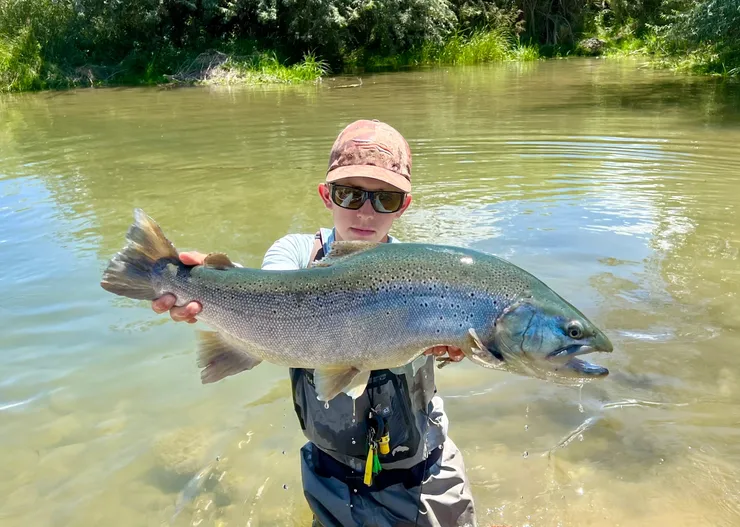
Today’s guest made that leap from Team USA gold medalist to full-time San Juan River guide. He’s dialing in tiny size 26 midges, handling 40-fish days, and teaching anglers how to hook 20-inch browns on a 6X tippet.
By the end of this episode, you’ll learn how to fish the San Juan’s tailouts, why ant falls spark some of the river’s best dry fly action, and what it really takes to catch fish year-round on one of America’s most technical tailwaters.
Drew Bone of Bone Fly Fishing is here and he’s breaking down the river he knows best. Hear why presentation always beats pattern, how a confidence fly can change everything, and what winning gold in Bosnia taught him about fishing the slow, deep waters of the San Juan.
This guy fished under the greatest pressure at the World Championships and now brings that same precision to every trip in northwest New Mexico. I’m gearing up to fish the San Juan River next year, so I’m really excited about this one! Let’s go!
Drew started fly fishing super young, thanks to camping trips with his parents in New Mexico and Colorado. Some of his first clear memories are of stocked ponds where his dad would cast for him, and he’d feel the trout take.
By the time he was a teen, he found out about the US Youth Fly Fishing Team and knew that’s where he wanted to be. After grinding through tons of practice and competitions, he earned his spot on the world championship team in 2021. Drew fished in Italy in 2022 and then Bosnia in 2023, where he won individual gold and helped secure team gold. Josh Miller was the coach at that world championship and was even standing next to Drew when he caught the winning fish.
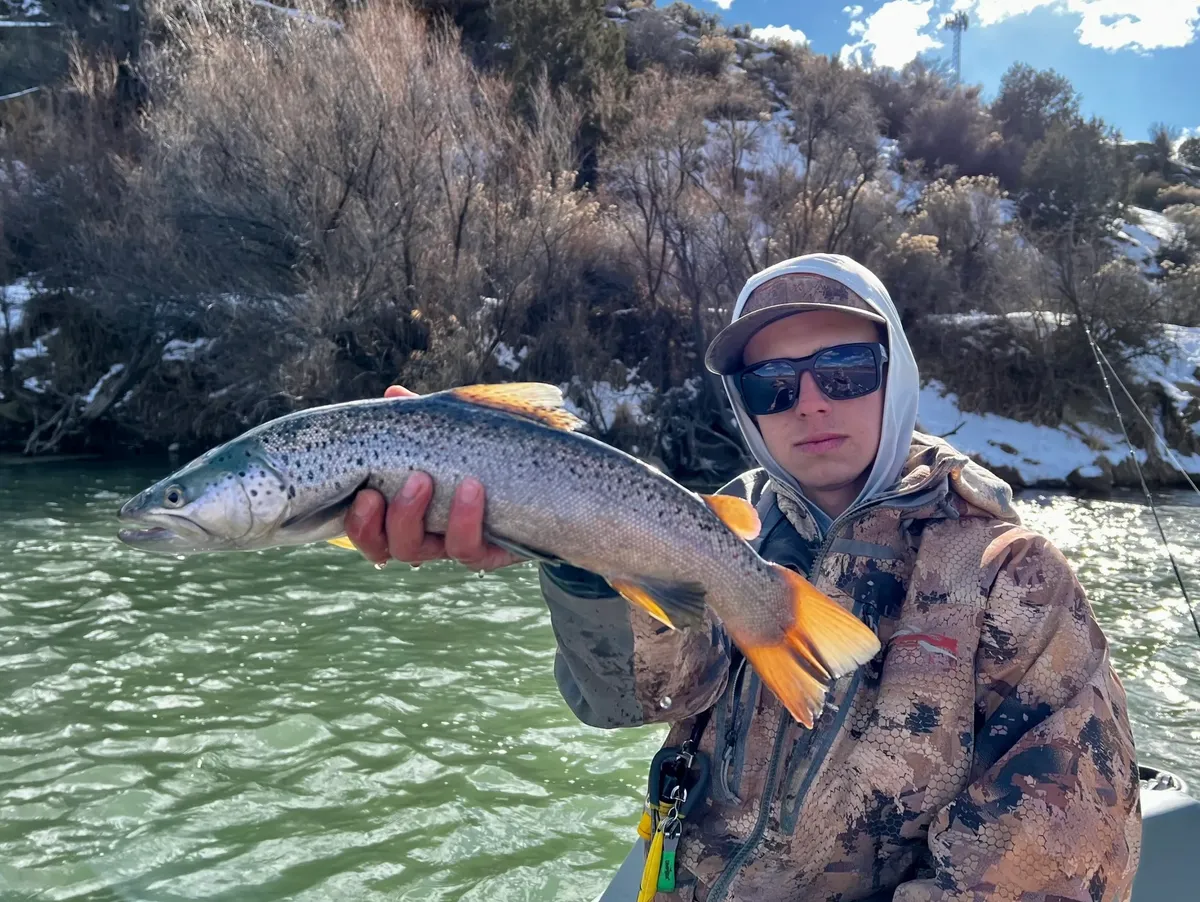
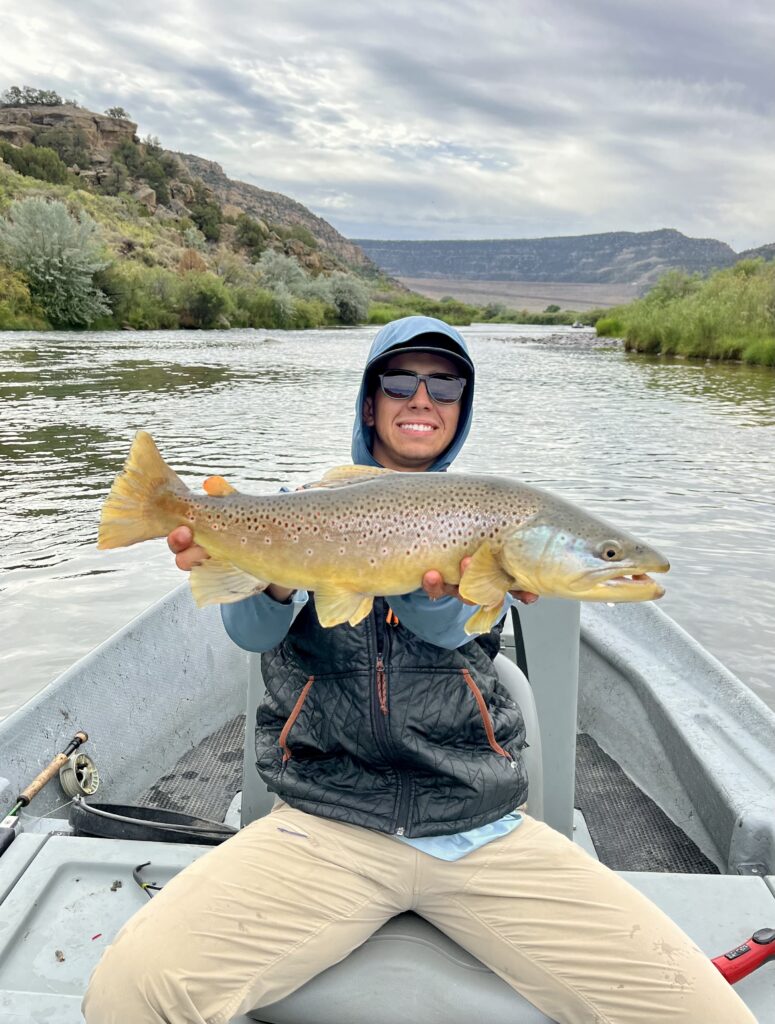
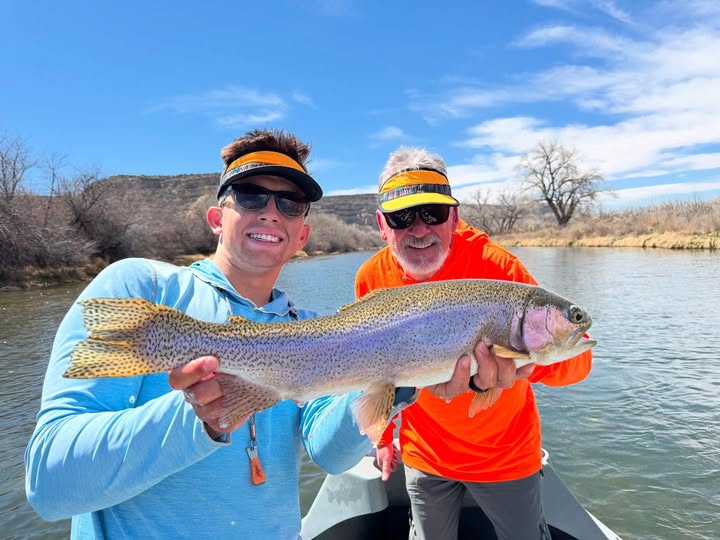
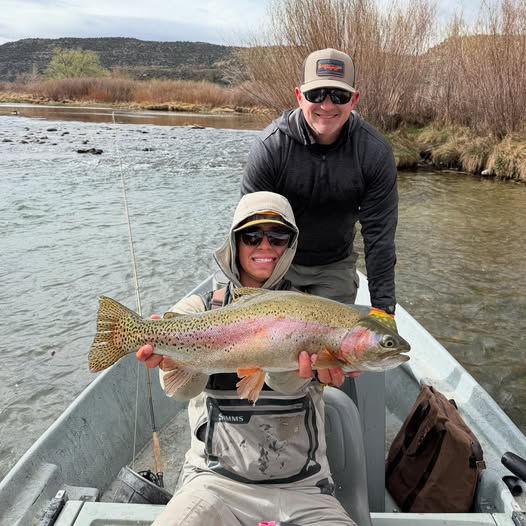
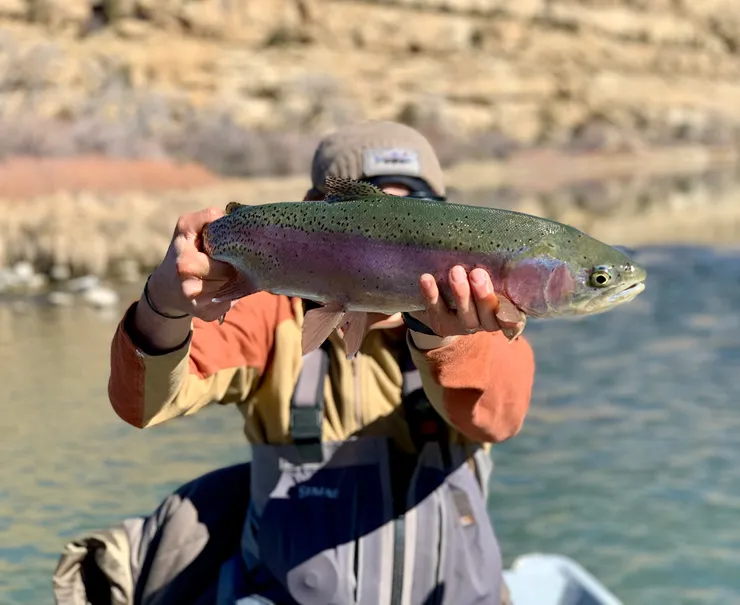
The San Juan River is famous for lots of fish, and lots of big fish. Drew says he’s traveled all over the world and fished countless rivers across the US, but he’s never seen another river that has this many big trout. It’s common to catch fish that are 18 to 20 inches.
The San Juan is really technical, with lots of slow water and tiny bugs. Drew says they mostly use indicator nymphing because the Euro Nymph style doesn’t always work here. Flies are super small — usually size 22 or smaller, sometimes even 28. There’s also a lot of pressure on the river from guides and private anglers, and you have to match that to catch fish.
Drew’s setup is designed to handle those tiny flies and tricky fishing conditions on the San Juan. Here’s how he rigs up for size 22 and smaller flies:
Drew prefers tying his flies eye to eye instead of using dropper tags because with tiny, unweighted flies, droppers tend to tangle more. Since the hooks are so small, tying off the bend can close the hook gap.
He uses the Davy knot, which is small and refined and way less bulky than a clinch knot, so it doesn’t overpower tiny flies like a size 28.
Drew says there’s never a bad time to fish the San Juan. The bugs and flies you use just change with the seasons. During much of the year, tiny midges and baetis, size 22 and smaller, are key.
But in the winter months, those small flies won’t work as well. Red larvae, egg patterns, and leeches become the top choices because the water tends to be a bit murkier, so bigger, brighter flies with heavier tippets work best. Water clarity can also affect fly choice and tippet weight.
Summer on the San Juan River means smaller flies and lighter tippets as the water clears and pressure builds. Hopper fishing also becomes a solid option, especially in shallow water where fish are more likely to rise for big dry flies.
The first four miles below the dam have strict catch-and-release rules and lots of big fish, and the lower river is a nine-mile float through private water where fish are more traditional and less pressured. You can expect more big fish and higher numbers in the quality waters, while the lower river offers a good mix but fewer 20-inch-plus fish.
Fishing in new waters can be tricky and overwhelming. Drew breaks down how he gets ready, whether it’s the San Juan or a river he’s never seen before, by mixing local guidance, research, and plenty of practice to build confidence and a smart game plan.
Episode Transcript
Dave (2s):
Today’s guest made the leap from a team USA gold medal to full-time as a San Juan River guy, dialing in size 26 Midges, navigating 40 fish days, and teaching anglers how to hook into 20 inch browns on six x Tippet. By the end of this episode, you’ll learn how to fish the sand wands, glassy tail outs, why ant falls trigger some of the river’s best dry fly action and what it really takes to catch fish all year long on one of America’s most technical tailwaters. This is the Wet Fly Swing podcast where I show you the best places to travel to for fly fishing, how to find the best resources and tools to prepare for that big trip And what you can do to give back to the fish species. We all love Drew bone of bone, fly fishing breaks down the river.
Dave (45s):
He knows best why presentation always beats pattern, how a confidence fly can change everything. And what winning gold and Bosnia taught him about fishing the slow deep waters of the San Juan. He’s fished under the greatest pressure in the world championships and now brings that same precision to every trip in northwest New Mexico. Here he is. You can find him@boneflyfishing.com. How are you doing, drew?
Drew (1m 11s):
Doing great. Thanks for having me on. Yeah, thanks
Dave (1m 14s):
For coming on here and we’re looking forward to this episode. We have, You know, the San Juan is, You know, a famous river. It’s a river that I’m hoping to get to in the next year. That’s one of my big goals. So I’m hoping that today we can talk a little about that as along with team USA. You have some serious experience. I, I think you were a part of some of the big teams there that had some championships. So we’re gonna dig into that and maybe talk about, You know, how to prepare for a new stream. But before we get into all that, take us back to fly fishing. Always love to start kind of from the beginning. I’ve heard that you got started young. What, how’d you first get into it?
Drew (1m 47s):
Yeah, so, You know, both my parents, they always did it to an extent. It was kind of something that they’d do a few times a year in the summer and we’d go camping and, you know, being in New Mexico, we’d go camping a lot in northern New Mexico and Southern Colorado. So there’s, there’s always somewhere to go, go fishing for trout. And so the first time I ever, ever fly fished for trout was when I was two years old. And, and so can’t even remember the first time I did it. So I had a, I had a really, really early start and then as I got older, I just had a lot more interest in it and became a lot more passionate about it. And eventually that led me to my competitive career.
Dave (2m 24s):
Yeah. And, and the competitive career led to it eventually a world championship, right?
Drew (2m 30s):
It did. I did. I did. I fished in, in two world championships. I fished in my first world championship in Italy in 2022 and I fished my second world championship in Bosnia in 2023. And that’s the, that’s the one that I took individual golden and we, we were all able to secure the team gold medal.
Dave (2m 50s):
Right. Awesome. Well, I think we’re going to definitely touch base on that today and all the details there, but take us back, You know, maybe so two years old. So eventually you, I guess maybe the next question would be, what is your first memory, you know, of fly fishing after that?
Drew (3m 5s):
Yeah, I think there’s a few like stocked kids ponds kind of in Northern New Mexico that I remember remember going to. And there’s a few vivid memories of of, you know, when my dad would cast the fly rod out for me into the pond and I’d feel a stock trout, You know, taking all the line out and I don’t know, those are kind of some of the early memories that just kind of hooked me on it and really started that passion for me. ’cause I can’t, can’t remember the very, very first few times I did it. But I do remember as I got a little bit older, some of those really early memories that kind of, kind of started that passion for me that led me down this path. Yeah.
Dave (3m 42s):
What, what were, how did you, how did the team USA, you know, when did that idea begin?
Drew (3m 49s):
I’ve always been a super competitive person and, and so I kind of found out about it ’cause I was like, I wonder if there’s a way that I can fly fish competitively. And through some research I found that there was a, a US Youth fly fishing team, and I think I was about 13 when I found out about that. And as soon as I found out about it, I knew, I was like, all right, this is something I wanna do and this is something I wanna pursue. And I eventually wanna fish on a world championship team. And, and so I, I got involved with some of the team events pretty pretty early on, and then COVID kind of put a stop in that for a little bit. And then right when everything kind of got fired back up with the team, I, I was able to, to make, become a member of the team after fishing my, my first world or my first national championship.
Drew (4m 34s):
And then got to spend a lot of time fishing, various competitions on the East coast. That kind of led to me also becoming a team member. And then, and then was really, really excited to be part of that first world championship team. ’cause there’s about 15 kids on the team and they only sent six members from each team to represent the world championship each year. And so I was actually able to become a team member and a world championship team member at my, my first world or at my first national championship, which was held in, held out of North Carolina.
Dave (5m 7s):
Okay. And and what year was that?
Drew (5m 10s):
That was, I think the World champ or the, that national championship is in 2021 and then we fished that first world championship in the following summer. And that’s the one that was in Italy.
Dave (5m 21s):
Oh, in Italy. Okay. And does it feel like when you look back at that, that there was a lot of, You know, in the right place at the right time sort of thing? Or I’m sure you worked your butt off, but what did all that look like? Were, you know, you look back. Yeah, yeah.
Drew (5m 33s):
You know, I think, I think there’s certain times when I got to be in the right place at the right time and got to fish in front of the right people at the right time. That, You know, I was able to kind of showcase my abilities too. But there was also a lot of, a lot of extensive work that went into being able to put myself in those positions and be able to perform at the level I needed to. And, You know, those years leading up and then even during the, the peak of my competitive career, I was probably fishing 250 days a year. So there’s a lot of, a lot of work that went into making that all happen and making that a reality.
Dave (6m 10s):
And so 2023, the gold, and I’m guessing you were around 18 by then in ready, or 17, 18. So you had to head out, you’re finished with the youth.
Drew (6m 19s):
Yeah, you can fish on the youth team until you’re, you’re 19 and or as long as you’re 19 in the same year that that world championship took place. So when I won, I had already turned 20, but because I was 19 at some point in that year, I was, I was still eligible for that, that last one that year.
Dave (6m 36s):
Oh, gotcha. Okay. Yep. So you win that and then, and then next steps, I mean, are you still, did you think about the next level of team USA or is are, did you just think like, man, I just want to get rolling on the guiding?
Drew (6m 48s):
Yeah, You know, there’s definitely some time I spent considering pursuing the men’s team, but, You know, I really, really enjoyed my years on the, on the youth team. And as I got towards the, the tail end of that, of my competitive career, I had already started my, my guiding career on the San Juan. And then as that just became busier, that kind of became, became the main focus point for me. And so, You know, maybe later on the road I’ll, I’ll start getting back into the competitive scene, but for now I’m kind of, kind of focusing all my, all my time and effort on my, my business and my guiding career on the San Juan right now.
Dave (7m 28s):
Nice. That’s awesome. And so you’ve got the San Juan and do You know, You know, I guess the kids that are, you know, in there now, the youth that are in there now, it’s, You know, it’s 25, right? So they’re, you probably know some of the kids or is there some A lot of turnaround. I
Drew (7m 43s):
Know some of ’em, some of ’em are new that I never really was, was involved with, but because some of the kids that I, I fished those last world Championships with were a few years younger than me, they’re still eligible to fish the World Championship last year and this year. And so I would say there’s probably about half of that world championship team that, that I still keep in touch with and that I’m still pretty close with and have also had experience fishing with. So it’s, it’s a little bit of a mix now, a few years later, You know.
Dave (8m 13s):
Yeah. Well, knowing what you know, and the cool thing is this year it’s in eastern Idaho, right? In the Henry’s Fork. It is on our home water. Do you think they have a cha a from what, you know, a chance to take the gold maybe?
Drew (8m 25s):
You know, I think no matter where it’s at, I think they have a, a chance to take the gold. You know, we, we won the world championship that I was a part of in Bosnia. We also, that year we, in 23, 1 of my teammates also took the individual silver and we had someone take individual fourth, so we just missed that third place. And then last year they were in the, I believe they’re in the Czech Republic and they also won the team gold and they had the clean sweep on the individual podium with first, second, and third. So the last last couple years, the team u USA has really kind of dominated all the other teams at the world championship. So I think that having that, that home field advantage is, is only gonna
Dave (9m 6s):
Make it better,
Drew (9m 6s):
Gonna make that better for ’em. So yeah, I think that no matter where it’s at, I think that team is just so dominant right now that, that I think that, that they have a really, really good shot at at taking another gold medal.
Dave (9m 20s):
What do you think, what do you attribute that when you look at the Domina? I mean, You know, I guess I didn’t wanna say the last one ’cause I was talking to you, I’ve had Josh Miller on and you know, we had Jess on and we were talking about some of this, and I didn’t wanna say, I didn’t wanna say Dynasty, but you know, three in a row, You know, the threepeat. Like what do you attribute that to, like where you guys are at,
Drew (9m 38s):
You know, at least on, I think that to win a world championship as a team, you really have to have a team medal mentality. And it has to be, you know, I think that there’s been other teams where everyone was, there might be other teams or other years where people might be out for themselves a little bit more and out for that, that individual medal. But I think to really dominate a world championship, you have to have a team medal mentality. And you have to be wanting your teammates to be as successful as you want yourself to be successful. And so if everyone’s really working together and everyone really has a good team dynamic and all is all in on that, that mentality where it’s, it’s a team medal goal, You know, if that’s the mentality, those individual medals are just naturally gonna follow.
Drew (10m 25s):
You know, like If you were all helping each other out and we’re all being successful, like we’re inevitably gonna take those individual medals along with the, the team medal. So I think to be successful as a team and individually the team medal mindset is really, really crucial to being successful.
Dave (10m 42s):
Yeah, it is. Okay. And we’ve heard that before. That’s awesome. I, I’m not sure who, where that started or who the, You know, the team USA coach was that kinda got that thinking, but we’ve heard about before, I mean Josh Miller, I’m sure you were, was he he Yeah, he’s, he was your coach right at the time.
Drew (10m 57s):
He was, yeah, he actually at that world championship I, Juan, he, he stayed on on the lake session the whole time. ’cause no one’s allowed to talk to the anglers except for each team’s coach. And so he kind of stayed on that lakes, on that lake venue, the entire course of the world championship and was just, You know, watching it every day. He was really, really dialed into what was going on out there. And I fished the lake session on the final day and it was a really tough session. By the end, it was only taking one or two fish to win a session. And so Josh was actually, he actually stood right next to me when I caught my winning fish for that world championship.
Dave (11m 36s):
Wow. How did that feel when you, you take that championship, the goal, like what’s, describe that a little bit that, that moment
Drew (11m 43s):
It was incredible, You know, and I, going into the session, I knew it was only gonna because of where I was at, if I caught one fish in that three hour session that was gonna be enough to, to, to take the gold. And I actually hooked and lost my first fish. So that was pretty heartbreaking. And you could kind of feel the silence of, of everyone around me watching. And then I was able to get a second chance at another fish and landed that fish and gave Josh a big hug. And it, It just, you know, he kind of knew that, that I had it in the bag at that point, even though there was another hour in the session left. And, and so that was, You know, from the very beginning of my competitive career, winning a world championship was like the pinnacle for me.
Drew (12m 24s):
And that was like the big goal in involved in this whole deal, taking a, a team goal and an individual goal. And, and so making that that happen at my last world championship that I was eligible for was just super surreal, really, really incredible experience. And it was really awesome to have Josh standing by my side when, when I was able to make that all happen at the end.
Dave (12m 47s):
Yeah, that’s really cool. Well, we’ll probably talk a little more about this as we go. And, you know, I wanted to talk a little about your home water, You know, what you’re doing with the guiding and maybe talk about how to apply somebody’s listening now and they’re thinking about going to a new water. You know, I think a lot of people are out there always thinking, okay, I go to a new water. How do I prepare, how do I plan? So maybe we could talk about that a little bit, but, but first describe the San Juan we’ve talked about a little bit, but haven’t done the deep dive. What would people, why would they love to go to the San Juan River?
Drew (13m 16s):
So the San Juan River is famous for, for big fish, lots of fish and lots of big fish. It, You know, I’ve gone gone to travel all over the world. I’m, I fished so many places all over the country and I’ve never fished a river that has the number of fish and the number of big fish. You know, a number of fish that are over 18 to 20 inches. Like that’s a very, very common fish in the San Juan. And there’s not many rivers when that’s, when that’s a, can be an average sized fish on some days. And so that’s that number fish and number of big fish is kind what it’s famous for.
Dave (13m 52s):
And what is the technique wise? Are you using a lot of the stuff you use, you learned in the world championships that you’re applying for the San Juan? You
Drew (13m 59s):
Know, a little bit, You know, there’s a lot of, of very slow water We fish and it’s a lot of, so there’s certain places that that Euro NPH style fishing can be conducive, but there’s a lot of water that that style of fishing is really not conducive to, and, and so we do a lot of, a lot of indicator nph and the bugs in there are very, very small. And so, like the last month I haven’t fished a, a fly bigger than a size 22. Hmm. You know, recently we, we just had a, it’s pretty famous for its Amil every year. So there’s a lot of big sandstone cliffs surrounding the river and there’s these big size 12 flying ants that live up in the cliffs.
Drew (14m 43s):
And so after the first big rainstorm of the year, they all get washed into the system and the fish just absolutely go crazy for ’em. I think they like have a little bit of poison that the fish get addicted to when they start eating them. So once they start eating ’em, it’s just nuts. Like you, every, every time you see a fish rising, If you throw something about a size 12, if it’s floating and it’s black, the fish are gonna eat it every time. It’s, it’s some of the most incredible dry fly fishing. So with the exception of some of those, those days out there, it’s a lot of, a lot of midge and beta, You know, we fish a lot of size 22 and all the way down to size 28 sometimes. And so it’s really hard to fish weighted bead head flies that are size 26, You know, so that’s kind of a time when you have to fish really small unweighted flies with, with split shot under a strike indicator and so, so it’s a little, little bit different than normal rivers.
Drew (15m 35s):
You don’t have have as many big bugs and big bead head flies and Yeah. You know, you don’t, it’s not, not a typical river at all.
Dave (15m 43s):
Sounds like it’s pretty technical would you say overall, at least throughout the year? It
Drew (15m 47s):
Is, it is. I think that for someone that’s never been there showing up there for the first time, You know, even if they have extensive background in fishing, a lot of traditional trout rivers that the San Juan can, can kind of throw ’em off and can be come across as really technical. But You know, when you’re spend every day out there and you’re really dialed in, it’s not, it’s a really great place to take people that have never fly fished before, you know, have never had someone not catch a fish. And so it’s, it’s, there’s a lot of opportunities to catch fish, You know, you just gotta give ’em what they want.
Dave (16m 20s):
Experience the waters of Bristol Bay at Togiak River Lodge where fly fishing meets Alaska’s rugged beauty. This is the place to complete the Alaska Grand Slam with all five salmon species, rainbow trout, arctic char and more where each day offers a new Alaskan adventure. You can visit togiak lodge.com right now to start planning your Bristol Bay experience with Togiac River Lodge. Do you think when you get that, You know, you’re using size 20 twos there, is that mainly because the bugs are just smaller or because there’s a lot of pressure and you have to kind of get smaller?
Drew (16m 55s):
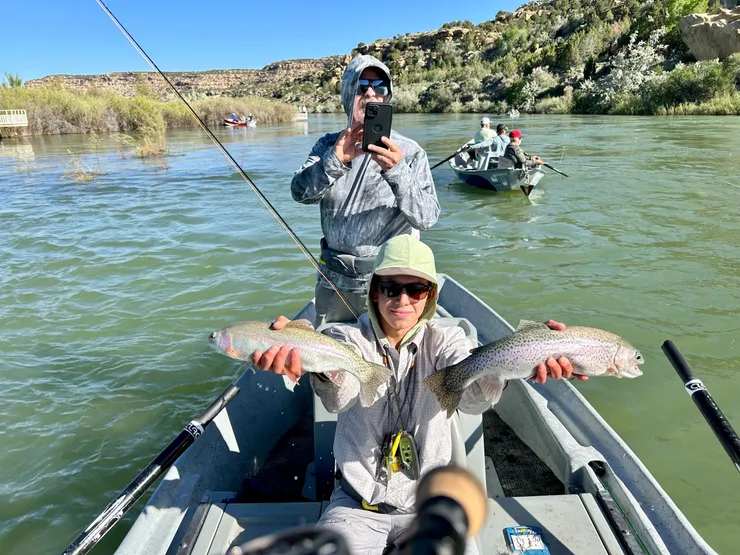
The bugs are so small. Yeah. The bugs are so small and there is a lot of pressure, there’s a lot of, lot of private angular pressure and there’s a lot of guiding pressure. It’s a really heavily guided river, but You know, if you’re dialed in and giving ’em what they want, yeah, fish numbers are, are very high. It’s not a low number fishery at all. You know, it’s not uncommon to go out there and catch 40 50 fish a day and with a lot of those fish being over 16 to 18 inches and, and so Wow. It’s a really, really incredible fishery
Dave (17m 27s):
And the, so the poison and that’s really interesting. What is the, it sounds like that’s dependent on rainfall, but when is that typically
Drew (17m 33s):
It is, You know, it kind of ha it happened about a week and a half ago this year, which is kind of early. It usually happens late June and early July. Okay. And we might, because it happens so early this year, we might might get it to happen again this year Yep. If we get a good rain. But it has to, it has to rain really, really hard to flush all those ants into the system. And then the, then that next day after that happens is usually a pretty incredible day of dry fly fishing.
Dave (18m 0s):
Are you guys fishing year round out there?
Drew (18m 3s):
I am, yep. It, You know, we’re fishing right below the dam and so the water temperature stays around 42 to 43 degrees year round, no matter how hot or cold it is outside. And being in northwest New Mexico, You know, we’re, we’re less than 6,000 feet of elevation, so it’s kind of high desert country. And so we’re not too low, we’re not too high in the mountains, so the summers aren’t terribly hot and the winters aren’t too cold that you can’t be out there and fish pretty comfortably If you dress for it. And so the fishing in the wintertime is just as great as the summertime. And because it’s so consistent, there’s always great bug hatches year round and, and the fish are always super happy down there.
Dave (18m 46s):
Right on. And so you got the Midge and you talked about the small flies. Maybe let’s take it there a little bit and talk about this setup. If you’re using some of those 20 twos or smaller, talk about your rig, how do you fish that?
Drew (18m 58s):
Yeah, so I mean, with an indicator rig, which is most of our fishing, I fish, You know, fish that light or fishing flies that small we throw, You know, especially when when fish are high up in the water column or fishing a lot of shallow water or fishing really light. And I really like to throw a really thin liter. And so usually I’ll the, the thickest part of my liter is 10 pound maximum and that’ll go all the way down to Forex Tippet and, You know, just to avoid twists and tangles, that leader always terminates in a, in a micro swivel. And then that my split shot goes above that swivel and then I usually fish about 14 inches between each fly and I tie each fly eye to eye.
Drew (19m 39s):
And so, You know, we’re fishing about a anywhere from a 10 to 12 foot liter and, and there’s a lot of deep water we fish too, so we might be fishing size 24 flies, seven feet down. And so it really varies. There’s a really wide variety of water type from, You know, really just big deep slow, almost kind of still water runs to a lot of shallow riffles. And so the water type that we’re fishing varies so much, but You know, the bug stayed the same and, and so, you know, It just kind of varies on the water type you’re in. But yeah, I really always just throw a really long, long thin liter and, and then flies about 14 inches apart so it’s nothing too crazy, You know, it’s, yeah, kind of a standard nfr but everything’s kind of refined down.
Drew (20m 22s):
You know, you’re not throwing big taper leaders and Right. Big flies and big shots. It’s kind of the same concept that you would use with a, a traditional nfr but everything’s just a little bit thinner, a little bit smaller, a little bit lighter and just kind refined down a little bit. And You know, with our flies being so small, I throw a lot, I don’t really fish rod shorter than 10 feet and You know, even if we’re catching two foot fish, we’re still gonna throw like a 10 foot three weight or 10 foot four weight. And the reason behind that is, you know, when our flies are that small and our tippets, You know, six xtid and you have fish that big, you kind of need that extra length on that, that light rod just to have that extra cushion and give, you know, like a nine foot five weight’s gonna kind of be like a broomstick and a yeah, you have a two foot fish run on a size 24 midge, that hook is either gonna pop out or break off.
Drew (21m 12s):
So we, we use that, that extra length and that white rod to just have that cushion to kind of protect those small flies and small tip it.
Dave (21m 19s):
So 10 foot. And what would be the longest rod you might use?
Drew (21m 23s):
Maybe an 11 foot rod. Yeah, I kind of like that. I find that 10 foot four way to kind of be the, the, just the bread and butter the most, yeah, most virtual rod out there, you throws dry flies really well. It’s really great for, for the nip rigs we throw, if we do throw some heavier weight and some longer rigs, it, it has enough back one to turn over those big areas. ’cause while a lot of our fishing is with really, really small flies, sometimes you, you go down there with a size eight or size 10 leach and they’ll crush a leach too. There’s a lot of the, the bottom river is really lush and we have a lot of moss down there and there’s a lot of bugs in the moss. So sometimes those fish will grab those moss clumps and shake the bugs out of them.
Drew (22m 6s):
And so throwing a big leach can kind of imitate those moss clumps. And so sometimes those fish will just eat a, eat a big giant leach or in the wintertime they’ll eat a eat a big egg as well, or, or some really, really small worms as well. Yeah.
Dave (22m 19s):
And are these mix of browns and rainbows?
Drew (22m 22s):
It is, yeah. It used to be almost all rainbows, but the last decade it’s, it’s, I would say it’s probably 60% rainbows and 40% browns. Okay. So a little bit heavier rainbows, but still a pretty good mixture.
Dave (22m 36s):
Yeah. And what is your typical length of a, a typical indicator rig on your leader?
Drew (22m 42s):
You know, from my split shot to my indicator it can be anywhere from three feet to seven feet to that split shot. And then there’s sometimes that fishery, a lot of emerging midges and betas just under the surface. And we might throw one of those small pulse of pinch on indicators and have a number nine split shots, six inches under our indicator. And all that’s gonna do is just break the surface so that we can fish those flies just in those, those top couple inches of the water column. You know, sometimes even if you’re a foot and a half down, you’re, you’re below where those fish are feeding. So sometimes like it’s sounds kind of goofy and it’s not something you’d do on most trout rivers, but we’ll throw a really small piece of lead under a, a really, really small indicator and that distance might only be four to six inches and then It just breaks the surface just so we can fish in that, You know, kind of top three to six inches of the water column.
Dave (23m 38s):
I see. Okay. So the, and there is some variation, I guess that’s the question. If you’re fishing, it sounds like the water might be shallow in some areas, but How are you figuring out what depth to get to the fish?
Drew (23m 47s):
You know, it really depends on the water depth we’re in and in that shallow water, the water’s clear enough that you can, with the fish being that big, you can see ’em all down there, You know, when the water’s clear this time of year you can look down there and the whole river, It just looks like an aquarium with, with big fish swimming all over the place. And so it’s really easy to just kinda look down in the river off the boat and and see how deep those fish are, how deep the water is, and then you can kind of tailor your rig to that.
Dave (24m 13s):
Wow. So a lot of the year you can actually see, you’re seeing the fish, you’re spotting them, you’re fishing, do specific fish, is that kind of how it looks?
Drew (24m 21s):
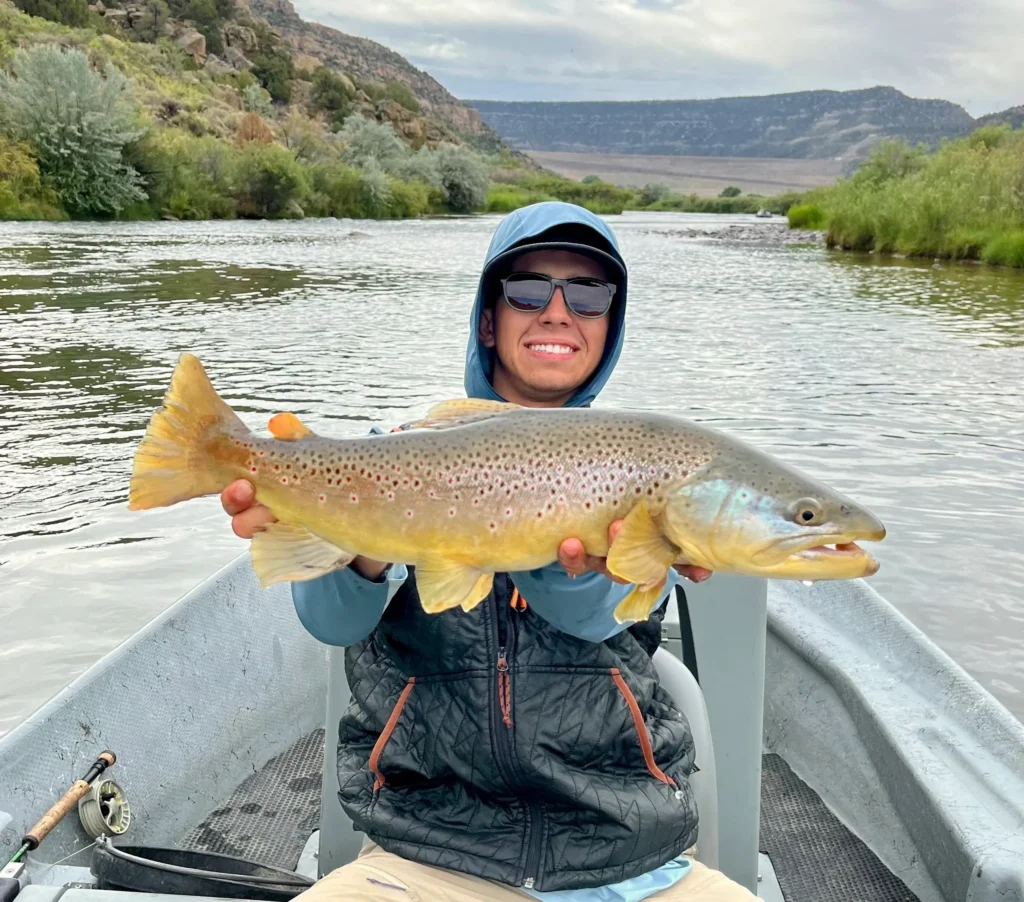
You know, I mean there’s so many that you’re not always fishing a one individual fish. Like you might look down and there’s 25 fish in a pod down there and they’re four feet down. And so you might then you throw a four foot rig at that pod of fish and, and catch those fish until you’re done with them. But there’s, You know, it’s not uncommon to see browns 28 to 30 inches in the river too. And usually those fish kind of roll solo. And so if we’re gonna sight fish to one of those fish, You know, we’re really trying to dial in our rig to the exact depth and weight and we’ll fish to that individual fish sometimes. But the majority of the time we’re, we’re fishing to pretty good sized pods of fish and whether it be big, deep, slow water or You know, two foot riffles and the fish will sit in all of it, so.
Drew (25m 5s):
Hmm. So everywhere you look there’s fish in the river
Dave (25m 9s):
And to get down to those on the deeper runs, are you fishing those differently or is it the same just getting deeper down?
Drew (25m 16s):
You know, it kind of varies. Like if we’re fishing some water’s so slow that it almost looks like a lake out there and so you don’t need a whole lot of weight because the water’s not moving so fast that you need to get down to ’em instantly. And you can throw a really light long rig with a really small piece of shot, even if you’re six feet down and you can really kind of let it sink down and nice and slow. And then there’s some deep water that’s really heavy and has a lot of current to it and You know, we might throw some really, really heavy lead to, to get down to those fish. And so it really just depends on the speed of the water, You know, that that faster water’s gonna need more weight than the, than the slower water will. Okay.
Dave (25m 53s):
And just wrapping up the, on the rig on that for a second. So you said you start with the 10 pound, is that just a short section or is that, how long is that?
Drew (26m 1s):
Yeah, so my liter formula for Nph rig starts with three feet of 10 pound maxima and then goes to three feet of eight pound maxima and then that ends in three feet of four X tidbit. And then I’ll either end in a, in a tippet ring or a micro swivel.
Dave (26m 17s):
Okay. A micro swivel I got. And then, then you said you tie your flies on to the hook eye. So each in, what is the reason for that versus say other dropper methods?
Drew (26m 27s):
Yeah, so You know, if I’m fishing weighted flies like we do when we’re Euro infant, I always throw everything off off a off a short dropper tag like most people do. But with those flies being unweighted and not small, I kind of feel like they’re a little bit more prone to tangling up when they’re, when they’re that small and unweighted, If you tie off a dropper tag and because the, the hooks are so small, I don’t really like to tie off the bend just to keep that whole hook gap a little bit more open. So I tie everything eye to eye and then I always tie all my flies on with a Davy knot and that Davy knot’s just such a small knot and it doesn’t have a lot of wraps in it. And so when you have a size 28 fly, If you tie two clinch knots off the eye, those knots, you’re gonna be as big as the fly you’re fishing.
Drew (27m 14s):
And so yeah, so that Davy knot’s just such a small refined knot that it, it doesn’t, there’s not a lot of bulk to that knot. And so I, I really, really love fishing that knot with those small flies or really any of my flies for that matter.
Dave (27m 28s):
Okay. No, that’s awesome. I’ve heard a lot about the Davy Knot. I actually haven’t, I should probably practice that one. Yeah, yeah. Is it pretty easy to learn? It’s
Drew (27m 36s):
Super easy to learn. Yeah. And it doesn’t, it, it wastes very little tip it, If you get good enough at tying it, you can tie it on with without even having to clip your tags off just ’cause you can cinch it down with that tag being so short. And I find it to be, be a stronger knot and it doesn’t have a lot, like when you tie a clinch knot, there’s all those wraps around it. So when you cinch it down, I find that it burns your knot just a little bit and it kind of compromises your tbit strength. But that Davy knot does has so, so minimal wraps that it, when you cinch it down, there’s no friction on the knot and so it’s not, there doesn’t compromise your strength either.
Dave (28m 17s):
Nice. That is a huge one. Yeah. And then is that Davey Watton? Do You know, is that who that is?
Drew (28m 21s):
It is, it is the Davey Watton. Yep.
Dave (28m 23s):
Yeah, the Davey Watton. That’s right. Do You know Davey, have you, you’ve, I’m guessing you met a few of those big names, old timers o over the years? Yeah,
Drew (28m 30s):
I’ve met quite a few of ’em. I never met Davey though. Yeah. One of my big mentors, Norman Tima. Oh yeah, he’s a, yeah, yeah, he’s a big team. USA guy. Sure. And he’s, he’s also based outta New Mexico and recently he is also been been guiding a little bit on the San Juan and he, he learned that one from Davy himself and, and passed that one down to me a few years back.
Dave (28m 54s):
Oh, there you go. Nice. Yeah, we, we had, let’s see, I think it was episode 3 48, we had Norman on and we talked about Oh nice. Yeah. Yeah. So it was a little bit ago. I guess that’s been 22. But yeah, no, awesome. I think we’ve been working around connecting with a lot of the, the team USA stuff, so, so this is great. So you’ve got, we talked about your rig, talk about the, the time of year, like throughout the year. Do you, like if somebody’s listening now and they’re thinking, You know, maybe they’re nearby but they haven’t fished the San Juan, is there a better time or worse time to go to fish? It,
Drew (29m 25s):
There’s never a bad time to be on the San Juan. Yeah, never. It’s always good. Never a bad day out there. It’s always good, You know, the, the, the bug choice and the fly selection and the water type that you fish can change based on the time of year. You know, right now it’s, we’re fishing mostly bugs, size 22 and smaller, all midges and betas. But you show up in the middle of January and you’re not gonna, not gonna catch very many fish thrown size 22 midges and betas in that time of year. You know, just a red larvae is gonna be a really good choice and egg pattern’s gonna be a really good choice and a leach is gonna be a really good choice. So that time of year it’s, you’re fishing a little bit brighter and bigger kind of standard wintertime flies and so a lot of your, your standard wintertime trout flies that you’d fish on a lot of rivers or will actually work, work really well in the San Juan as well that time of year.
Dave (30m 17s):
Okay. And why do the, why do the leeches work? Well during the wintertime,
Drew (30m 22s):
You know, there’s the bug, while there are still great bug hatches during that time of year, those fish just really like those bigger junk flies and those bigger, bigger brighter patterns. And in the wintertime the water is a little bit more off colored and so you can just get away with throwing those bigger flies a little bit heavier tip it. Whereas this time of year, you know, you might show up out there first thing early in the morning when the light’s low and catch some fish on a leach or an egg. But for the most part, with the water being this clear, you gotta kind of refine everything down and go with a little bit of a more technical approach with those, those smaller flies in that lighter tidbit.
Dave (31m 2s):
Okay. Yeah, that makes sense. So June, so right now as we’re talking, it’s kind of early mid-June and you’re hitting the, the smaller stuff. And then what happens as you go into the summer, into the hotter parts of the season? What changes with the hatches? Do you guys have a little bit of everything there with hatches?
Drew (31m 16s):
It is, yeah. It’s kind of the same thing. So, but our, our flies and our tippet size will probably drop a little bit, You know, once we get into later July and August, just ’cause that water’s gonna get more clear. Those fish are gonna get a little bit more technical as they get more pressure throughout the summer. And so you just go kind of refine everything down just even slightly more. Once we get later in the summer there can be some great opportunities for hopper fishing as well so we can, You know, while our nymphs are really small sometimes you can go out there with a, a big giant dry fly and, and catch plenty of fish doing that as well. And so once we get even probably starting about now through the rest of the summer, that that hopper fishing’s gonna be gonna be something that, that can be successful as well.
Dave (32m 1s):
Yeah. And that changes all up when you got a big hopper on there, you’re, you’re going bigger with everything and is It, just talk about that a little bit or what are you doing to get those fish to eat the hoppers?
Drew (32m 12s):
You know, I find that when I’m throwing hoppers I’ve gotta really target the shallow water. I don’t find very many fish in, in the big deep pools coming from seven feet of water to eat a hopper. But You know, when you’re fishing water that’s four feet on the deep end all the way down to a foot deep, those fish are gonna be the fish that are usually willing to willing to come up and eat something big off the top.
Dave (32m 34s):
Okay. And do you, are you on the drive fly with those hoppers? Are you just casting any specific way against the bank? Are you doing any movement, anything like that?
Drew (32m 43s):
You know, there are a lot of fish against the bank and then sometimes there’s just some big shallow riffles where you can see pods of fish out there that are sometimes at the right time of the year pretty happy to just come up and crush a big dry fly too. And then, You know, once we get a little bit higher flows in the river as the summer goes on, when they release some more water out of the dam, there’s, there’s also a lower river float we’ll fish. So the water that we’ve kind of been talking about is, is the what’s considered the quality waters. And that’s all catch and release and really strictly regulated and that’s the first four miles below the dam. Then there’s a about a nine mile float we do that’s all through private water and that’s what kind of everyone refers to as the lower river and down being down that low below the dam.
Drew (33m 27s):
If fish is a little bit more like a traditional freestone and that’s kinda the water that I was talking about that is a lot more conducive to tight line fishing. You know, you’ll get ’em to eat a size 14 bead head with no problem. There’s a lot of overhanging brush on the river that you can throw hoppers against on the water comes up a little bit higher, we’ll throw a lot of traditional dry droppers with a big hopper and You know, just a size 14 or size 16 bead head NA few feet below that. And so once you go down there, You know, you don’t have to throw as much of the super small technical stuff and there’s a lot of brown trout down there and those fish don’t see as much pressure and that kind of fish is more like a traditional trout river. But when everyone comes to the San Juan, the quality waters in that first four miles of the dam is, is is what it’s the river’s famous for.
Drew (34m 14s):
Oh. It’s, that’s kind of kind of where everyone wants to go and that’s where there’s the highest number of fish in the river and that’s where there’s the most big fish, You know, on the lower river there’s a lot of fish, there’s still a lot of great opportunities at some big fish, but you don’t see the, the number of those 20 plus inch fish. It’s kind of, You know, If you catch a couple fish that big in one day, that’s, that’s great. And You know, you’ll catch a lot of 16 and 17 inch browns down there. So there’s still great fish. But yeah, you don’t see as many of those 20 plus inch fish as you do in that, that first four miles below the dam.
Dave (34m 46s):
And is that just because the water is cooler throughout the year or any reason why? Yeah,
Drew (34m 51s):
You know, the water temperature might late in the summer be a slightly warmer down there, but it really doesn’t, doesn’t change a whole lot. And I think that, You know, being all catch and release and strictly regulated up there, it’s also stocked a little bit heavier with those rainbows and so, You know, it has more fish in it and those big fish have a lot more small fish to eat. ’cause they s stock all the rainbows as as fingerlings. So they’re really small fish when they s stock ’em and You know, a lot of those big fish will kind of go crazy for those, those little fish. And once they get big enough to start eating other fish, they grow really fast.
Dave (35m 27s):
Which is in the, what the, the 20 inch range they start eating feeding on other fish.
Drew (35m 31s):
Fish, yeah, yeah, yeah. I mean I think they even, I’ve seen 16, 18 inch fish eat other, other small th without a problem too. So once they start getting to that size, they, they tend to grow pretty fast.
Dave (35m 43s):
Cool. So that breaks it down then. Is it roughly, there’s about 13 miles of river that people are fishing then below that it’s not quite worth the time.
Drew (35m 52s):
Yeah, so there’s that first four miles below the dam and then in between the lower river float and the quality waters, there’s about three miles that there’s a lot more relaxed tackle restrictions. It’s stocked a little more heavily and people are allowed to keep fish in there and that’s still public and so there’s still some big fish in there, but that gets, gets fish pretty hard by people that, You know, are throwing fish on a stringer. But once you get below that three miles, that’s where it’s all private land. There’s very minimal fishing pressure, there’s a lot less boat traffic. And and that’s kind of that nine mile float is the, the lower river float. So we have about 15 miles of Floatable River.
Dave (36m 33s):
Okay, nice. And are you guys floating in drift boats or rafts?
Drew (36m 37s):
We’re all in drift boats. Yeah, there’s a, there’s not any, any crazy rapids or anything that, that you need a, need a raft for. So, You know, it’s pretty standard that everyone’s in a, in a, in a low profile boat or, or most people are, are in in skiff style drift boats. Just, just ’cause you don’t, you don’t need a, a high side on your boat in the San Juan and, and the yeah that skiff is just a lot, a lot easier to row and it, it doesn’t get blown around in the wind as bad.
Dave (37m 5s):
You think you need a bush plane to fish Alaska’s legendary waters. Think again. Fish Hound Expedition specializes in road accessible adventures that don’t skip on excitement. Picture yourself fishing for massive rainbow trout, arctic grayling and plenty of salmon species all within Alaska’s epic road system. It’s doable. I fished the road system on our first day with Adam and the crew and it did not disappoint. The largest leopard rainbow I caught and landed was right off the road system. And we’ll be driving up again this year heading up from the lower 48 all the way up to Alaska to hit those streams again. You’ll experience the breathtaking beauty of Alaska’s wilderness from mountain streams to hidden rivers Perfect for anglers of all levels.
Dave (37m 47s):
Fish hound expeditions makes it easy to explore Alaska. Why wait Your Alaska adventure is just a drive away. Book your spot now before spaces fill up. That’s fish hound expeditions.com. F-I-S-H-H-O-U-N-D expeditions.com. Don’t miss out. Well let’s take it to, You know, maybe more higher level kind of think of a new river. So if somebody’s listening now and they might be fishing in San Juan or really any other river, what would you tell them as they prepare us? You know, I’m guessing you’ve done quite a bit of this through your team USA stuff, but You know, how do you prepare? How would you, what sort of tips might you give somebody for that?
Drew (38m 24s):
If I was preparing for the San Juan?
Dave (38m 26s):
Yeah, well maybe even take it to, let’s just say you were preparing for a river that you haven’t fished before.
Drew (38m 31s):
Yeah. So like, I think a good example would be, You know, preparing for a world championship Yeah. Because we’re going to new places that we’ve never been. Yeah. New rivers that we’ve never fished. And so for the months and months leading up to a world championship, the team hires a local guide and for those months leading up to the world championship, we stay in really good contact with him and he’s, You know, always giving us kind of the UpToDate intel and giving us all the local knowledge that we have and we’re just kind of doing as much online research on the rivers as that we can find. And You know, so based on on that knowledge that we’re gaining, we’ll kind of prepare our fly patterns and kind of try our best to prepare for the, the water that we’re gonna be fishing.
Drew (39m 17s):
And then when we show up there, we get about a week of practice fishing so we can kind of take that knowledge and information and apply it to our practice fishing and we can, You know, try our own stuff that we’re really confident in and, and kind of come up with a, with a game plan for how we’re going to gonna approach that river through those competition days. And so, You know, that’s kind of, yeah kind of breaks down how, how I prepare for Right. Prepare for a new river.
Dave (39m 46s):
So you start off with, which is great, you know, pay a local guy. I think that’s always something that we talk a lot about, You know, even if it’s just for one day Right. Getting that experience. Yeah. And then you mentioned the online research. What do you think is the best online research? You know, I mean you could obviously Google up, but do you think that’s sufficient? Just Google up the river, the technique? Yeah. How would you, yeah, yeah. What would you do? Yeah,
Drew (40m 7s):
I think that there’s a lot of places in the US where our, our famous famous rivers like the San Juan or you know, a lot of the big famous rivers in Montana or just any of your, your big famous rivers in, in the, in the US have a lot of, You know, online resources that you can come across and and apply to what you’re doing and where you’re fishing. But some of those places in Europe have kind of minimal online resources, right? We’re kind of trying to do our best, trying to look at pictures of the river, look at videos of the river, trying to get an idea of what the bug hatches are like there. And that’ll kind of help us figure out, You know, how we wanna tie flies leading up to that competition and, and you know, try and get an idea of how we’re gonna approach that.
Drew (40m 51s):
And then when we show up there we’ll see, You know, how much of that that really helped us. And You know, we kind of go into it with an open mind of kind of trying everything and then when we show up with a big team, you know, everyone’s trying different stuff and we kind of by the end of that practice week we can kind of combine all our information and our knowledge and research from that that week along with the information we had prior to going over there. And so we kind of, kind of combine all that to come up with the best game plan that we can. Right.
Dave (41m 21s):
And that practice week. So that’s where you guys, would you do all your research then you get over there a week before is you have a week to practice before the event starts?
Drew (41m 28s):
Exactly. Exactly. Yep. Yeah, so the guide will take us to all the, all the local practice spots, put us on as much different water as we can. We’re not allowed to fish the competition venues leading up to the competition, but we can, You know, go look at the venues, look at what the water looks like and compare that to the practice water that we were able to fish earlier that week in 2022 when we fished the world championship in Italy, we actually went over there a few months early, so the world championship took place in July and I think we went over there in either March or April for just a practice trip. And because we were, we fished it far enough in advance, we were able to fish all the competition venues and so, You know, there was some water that I fished in March or April during our, our practice trip that I had in the competition.
Drew (42m 16s):
So I already had some familiarity with the water that I was competing on and, and had that local knowledge. So there’s definitely, definitely a lot of confidence going into, into that world championship just ’cause we, we had had already spent that time out there and, and You know, kind of got familiar with the water and familiar with the fish and the bug activity and, and everything that was going on out there. Right.
Dave (42m 38s):
What as you, You know, the, the youth that are there this year it’s gonna be, actually it’s right around the corner July actually by the time this episode goes out I think it’ll already be over. But You know, as you look ahead, they’re obviously doing it every year doing these events. What would be your, your tip to the, the youth, You know, the kids that are out there now to have more success or what would you tell ’em from your experience what You know,
Drew (42m 59s):
You know, as far as just trying to get to that level where you can compete with those people? I would just fish as much as you can and fish, fish on as much different water as you can. You know, I would fish is I, If you have any places that are really difficult to fish, I would always, always go fish those places just ’cause they would always make you better and, and fish with as many other people as you can and just try and try and just always go into everything with an open mindset and just always show up to the river without having any preconceived notions going into everything. And know that every day on the river’s a new day and, and just work on as many styles of fishing as you can. ’cause once you get to that level in the world championship, while there’s a lot of that European style nphi and You know, while that is really important to be able to do that well, you also gotta be able to fish a dry fly just as well as you can n and fish a streamer just as well as you can n and fish a lake, You know?
Drew (43m 53s):
Yeah. Because when they, you go to a world championship, they’re gonna put you on a lot of different types of water and there’s gonna be some water that you can’t nip very well and you have to throw dry flies. You’re also gonna have to fish lakes. And so it’s just, there’s just a, a wide variety of skill sets that you gotta gotta have in your tool bag and you gotta do all of them really well to compete at that level. And so just try and try and really test all your skill sets and, and work on everything that you can. ’cause You know, if you’re really good at one thing that might, might be good on one day, but then you show up to your session the next day and If you can’t, you it very well and you don’t know how to fish the dry fly very well, that’s gonna gonna be kind of different. Yeah. It’s gonna be tough. So just try and try and work on as many different things as you can and fish as much as you can and fish as much variety of water as you can.
Dave (44m 42s):
Yeah. The variety, right? So not just the, not just the riffles, but you, you try, try to hit it all, all all different water types, you
Drew (44m 48s):
Types, you gotta fish it all, you gotta know how to fish all water types and fish all those water types with, with all different styles.
Dave (44m 55s):
Nice. Well we’re gonna take it outta here in a, in a little bit as we go here, but I, you mentioned lakes. Is that something down on in the San Juan that you’re fishing a lot of out there? Is it mostly streams?
Drew (45m 5s):
It’s mostly so around the, the lake that the San Juan is coming out of, it does have trout in it, but it’s more of a, a small mouth bass and, and pike fishery. Mm. So we don’t do as much of that style of lake fishing, but we go just north of the border, You know, about an hour and hour and a half away. And there’s a lot of really, really great trout fishing lakes up in the mountains that I would spend a lot of time practicing on in my, in my competition years. And, and so, You know, knowing how to, how to fish a lake well from the bank or out of the boat, You know, throwing all the different sinking lines and all the different flies and, and all the, all the different, different styles that you had you’d use to fish a lake is, is really, really important to, to the competition game.
Dave (45m 51s):
Perfect. Well, I’ve got a few more and then we’ll let you get outta here and I wanna kick it off here just with our kind of a Wetly swing pro segment. And this is where we’re kind of giving a shout out to our, our community in here and we’re in there always thinking of new places to go and, You know, getting the tools and, and things like that. So people can go out to wef fly swing.com/pro if they wanna get some more information there. But talk about, as we take it outta here, your fly box. What’s your fly box setup look like as you’re preparing for your river? Or maybe just talk about your box there in the San Juan. Are you a, a bunch of boxes or how, how is your organization method set up?
Drew (46m 26s):
You know, I have a bunch of boxes. My, my main box is just a magnetic fly box just ’cause those flies that we fish on the sand, Juan are so small. Yeah. And it’s organized by style flying color a little bit, but there’s just, there’s probably 4,000 flies just all piled in there. And so I’m not, I don’t have the most organized box, but as far as my, you know, competition boxes, my boxes, they, you know, I always had those very organized and organized by weight. Weight on the flies and fly size and, and fly type. And You know, I used to fish a lot of flies, but as I competed more, I kind of went to a more simple approach where I think the whole world championship, I fished outta outta one fly box.
Drew (47m 10s):
Mm. And, and, You know, most trout are not too picky. And, you know, I would always, I always were, was big on just fishing, my confidence flies and making them work and not worrying about having 40 different fly patterns. And, You know, instead maybe that whole world championship, I fished six different fly patterns the whole time. Oh wow. You know, if that, you know, I was probably like three or four different nips I fished the whole time. And crazy, you know, I really liked the approach of just having, having a, a simple selection of flies and, and not, not worrying about your fly pattern too much and focusing more on your presentation more than anything.
Drew (47m 52s):
Right.
Dave (47m 53s):
That’s really cool. What are those, what were those six flies that you used through the world championship? Was that a mix of tries and
Drew (47m 58s):
There was one that was like kind of a, a variation of a blowtorch. It was just a, a big tag. N and then there was some paragon style flies. And then there was also just like some big heavy hair ears. And in the Bosnia world championship we were only allowed to fish one fly. And so, You know, we were fishing a lot of big, deep heavy water. And so we You mean
Dave (48m 23s):
One fly the whole time?
Drew (48m 25s):
No, you, you can, I mean, you could fish different flies, but you’re only allowed to fish one fly at a time. Oh, gotcha. So you couldn’t fish like a double nim fig. Yeah. And so there was a lot of, you know, we had a big four millimeter ts and bee on that, on that hook with a lot of, lot of lead weight hidden in the body underneath all the materials. Just ’cause we needed, we couldn’t fish two flies. So that one fly that we were fishing had to have, have a lot of weight to get down there. So a lot of our flies were, You know, pretty big. We fished a lot of size 10 and 12 nymphs, you know, 14 on the small side throughout that world championship. So a little bit different, but you know, for what we’re doing over there, it worked really well.
Dave (49m 1s):
Yeah. So basically a blowtorch variation, paragon variations, a big hairs ear. And was that kind of, that, was it as for the world championships or do you have some dries mixed in there? Yeah,
Drew (49m 12s):
A lot of dry flies mixed in there too. You know, a lot of just like big CDC catalyze and then, and a big egg pattern was incredible too.
Dave (49m 21s):
Egg pattern for the worlds.
Drew (49m 22s):
Yeah. Yeah. I fished, I think our, that was kind of like the winning fly pattern that, that we fish, You know, those nymphs are really productive too, but I think everyone kinda fish that egg pretty hard throughout that competition.
Dave (49m 35s):
Oh, and is this just this, what, what’s the A what type of pattern is it?
Drew (49m 39s):
It’s just, just that EC toy material. So just that the egg chael that, that we wrap up the hook. Okay.
Dave (49m 45s):
Yep, yep. Eggs. Gotcha. Okay, cool. So yeah, that’s pretty easy. So you, you’ve got the basic patterns, your confidence fly and then really it’s about technique. You know, you’re on the water figuring out how to present the fly essentially to get down to the fish at the right level.
Drew (49m 58s):
Right,
Dave (49m 59s):
Right. Yeah. So pretty simple. Do you, when you look back at it, do you see that, you know, I mean it could have gone either way on some of those things or do you feel like, you know, you kind of had your game ready. I, I guess I’m going back to the 23 when you took the gold, You know, were there a few chances that kinda like that went the right way or may, how would you describe that?
Drew (50m 18s):
Yeah, I mean I think that, You know, going into it, I kind of just had a game plan and, and kind of stuck with that game plan. That game plan was pretty simple and I didn’t, wasn’t one of those guys that had 4,000 flies in my chest pack Right. And had one box that I fished out of and I was like, I’m gonna fish an egg a tag into a hairs ear and that’s what I’m rolling with and I’m gonna Yep. Gonna make it work. And I just stuck with that game plan and had a hundred percent confidence in it the whole time. And, and it worked really, really well for me, obviously the whole time.
Dave (50m 51s):
That’s awesome. Yeah, I, I feel like with some species, You know, I always go back to kinda steelhead for example. You know, you have to have confident doesn’t really, the fly isn’t as critical as knowing that it’s the fly that works or it’s a fly that works. Right. And, and so, right. You know, I feel like that’s a big part of this. Right. Even with trout is that having confidence in your fly, is it, is that critical here?
Drew (51m 11s):
Oh yeah. Yeah. I think that, You know, If you have confidence in the fly, you’re gonna fish. If someone else is throwing the same fly and doesn’t have confidence in it, I think you’re gonna fish that fly a lot better just ’cause you have confidence in it. You’re not worried about trying other flies. You know, you’re all, your only concern at that point is how you’re presenting that fly to the fish and, and trying to, to make it work the best you can. And, and You know that that’s the fly. You wanna be fishing and you have, have confidence that it’s gonna work for you. And so at that point you’re just, just looking for trout to eat it.
Dave (51m 40s):
What do you think is a, a big overlooked kind of skill that, You know, competition or just maybe fishing in general, something that you, You know, that you utilize or some skill you have that a lot of people don’t think as much about?
Drew (51m 53s):
I think for me it’s, it’s reading water. Yeah. I think that, you know, that’s something that maybe some people don’t, don’t, maybe they can overlook a little bit
Dave (52m 4s):
Or not even know how to do it. Or not even really know where to start on it.
Drew (52m 7s):
Not know, not knowing how to read the water. Yeah. And then not knowing how to tailor your presentation to different water types, You know, ’cause we might fish the same fly, but it, you might have to fish that fly heavier, you might have to fish it lighter, you might have to fish it deeper, shallower, you might have to fish a different drift in different types of water. And so just knowing how to tailor your presentation to those different water types is, is something that’s really important. And I think there’s a lot of water that gets overlooked by people that has a lot of fish to be, be caught that, You know, a lot of people will walk right past. And so fishing all the water and knowing how to fish all the waters is really, really important.
Drew (52m 46s):
More, more so than your, than your rig or your, your fly selection.
Dave (52m 50s):
Right. And, and a good, like you said, a good way to do that is potentially get a guide trip or go with somebody who maybe has some of that experience. If you don’t have it, You know, the, the reading water is challenging, right? Because you have the reading the water of like, okay, where are the fish? And then presenting the fly, You know, are you casting upstream across down? Right. There’s a lot of, there’s a lot of unknowns. Do you, I guess you can experiment I guess if somebody wasn’t gonna get a guide trip, what would be your, You know, tip there? Just experiment with techniques. Just
Drew (53m 15s):
Do experiment a lot, You know, and You know, as a guide, You know, I can take people to a lot, a big variety of different water types throughout the day and I can explain to people why we’re gonna throw more weight in this spot. Why we’re gonna take off weight in this spot. Why are rig needs to be a foot deeper or why it has to be shallower or why our fly selection is different in, in different types of water. You know, like on the San Juan for fish water, riffle water, I throw a lot more beta ’cause the beta live in the riffles. And so it’s like, just explain why my fly selection, why my presentation and my, my weight and death changes. Why you need to mend a certain way, why you need to cast in a certain spot and explain the thought process behind all those decisions in those different spots that a lot of people don’t think of.
Drew (53m 60s):
And You know, I see all those things and can explain to people my, my thought process and my, my psychology behind all those decisions that I make on the water throughout the day and those different situations.
Dave (54m 12s):
Perfect. Well cool. Well you mentioned boats. I, I wanted to just touch base on a little gear real quick on the boat. What, what’s your boat that you’re using out there, your skiff?
Drew (54m 21s):
I’m, I’m rowing a clock of craft headhunter right now, now.
Dave (54m 25s):
Oh yeah, yeah, the headhunter. So like what, what length is that? Is that a 16 footer or
Drew (54m 29s):
That’s about a 15, I think it’s about a 15 or 15 and a half a boat.
Dave (54m 33s):
Okay. Yeah. Good. And, and what’s it like in the summer? How are you always interested? We’ve got, I’ve heard the sun is getting stronger out there. How do you stay, you know, safe out there in the sun? What’s you’re, because you guys probably, I’m guessing the summertime it gets pretty hot.
Drew (54m 47s):
It does. It’s, You know, with the water being so cool, if there’s a little breeze blowing off the water, it doesn’t get too hot where you can’t be out there. But as far as sun protection goes, I’m always wearing long sleeves, You know, really lightweight pants and lightweight long sleeve shirts with a, with a hood. And
Dave (55m 4s):
So yeah, that’s it.
Drew (55m 5s):
So the only thing exposes my hands and my face and my feet and so Yep. And
Dave (55m 10s):
Your feet. I
Drew (55m 10s):
Don’t do a good job at wearing sunscreen, but I should, I should probably be better about that. Are
Dave (55m 14s):
You, are you wearing, are you wearing the like sandals out there? What, what’s your
Drew (55m 17s):
Yeah, I’m always wearing flip flops. Oh,
Dave (55m 19s):
There you go. Yeah. That’s awesome. We, we did, I can’t remember the name of, we did a trip with Pete Erickson on, in the Eastern Idahos a couple years ago, but he had this South African guide who was one of our guides on the trip. And yeah, he was wearing, actually he just, he just walked barefoot most of the time. Oh really? Yeah, so, but he did have a sandals, but yeah, he was walking barefoot. It was pretty funny. But yeah, I’ve always been kinda a boot probably ’cause I’m more of a northern guy. Right. It’s a little bit colder, but it is nice to have the sandals. Are you, so what’s your go-to sandal? Is this like a flip flop or what, what do you got there? Yeah,
Drew (55m 50s):
Just like a Chaco flip flop. Yeah.
Dave (55m 52s):
Chacos are great. Cool. Nice. Drew. Well I think, You know, there’s always a ton of questions, You know, we could ask, but I think we’ll leave it there and we’ll send everybody out to bone fly fishing.com if they have questions or bone fly fishing online. And, and like we said at the start, the, the World championships are in eastern Idaho, near kind of the Henrys Fork. They’re gonna be on the South fork of the Snake. So it’s gonna be exciting and hopefully, You know, we’ll we will take home a gold, we’ll know by the time this goes live, whether they, they won I think so. I
Drew (56m 19s):
Know we’ll have to wait and see.
Dave (56m 20s):
Huh. Awesome. All right Drew, well appreciate all your time and look forward to staying in touch. Touch.
Drew (56m 24s):
Awesome. Sounds good. Thanks for having me on.
Dave (56m 28s):
If you ever been thinking about fishing the San Juan or wanting to know how to catch 20 inch trout, how to get Big Days, drew Bone, San Juan is the place for you. You can check in right now with Drew. Go to bone fly fishing.com and check in and ask him any questions you have. And if you’re thinking about technical tailwaters, this is the place to go. So let check in right now. If you haven’t yet, please subscribe to this podcast. You’ll get that next episode delivered to your inbox next week. We’re back with CJ’s real Southern podcast and you know, CJ always brings it, You know, CJ’s always bringing it. All right, I am gonna let you get outta here and we’re off. Do some good stuff today. Hope you have a good morning. Hope you have a great afternoon.
Dave (57m 8s):
And if it’s evening, hope you’re enjoying that evening, kicking back and, and I appreciate you for stopping today. We’ll see you on the next episode.
If you’ve ever thought about fishing the San Juan or want to learn how to catch 20-inch trout and score big days, Drew Bone is your go-to guide. Go check him out now!