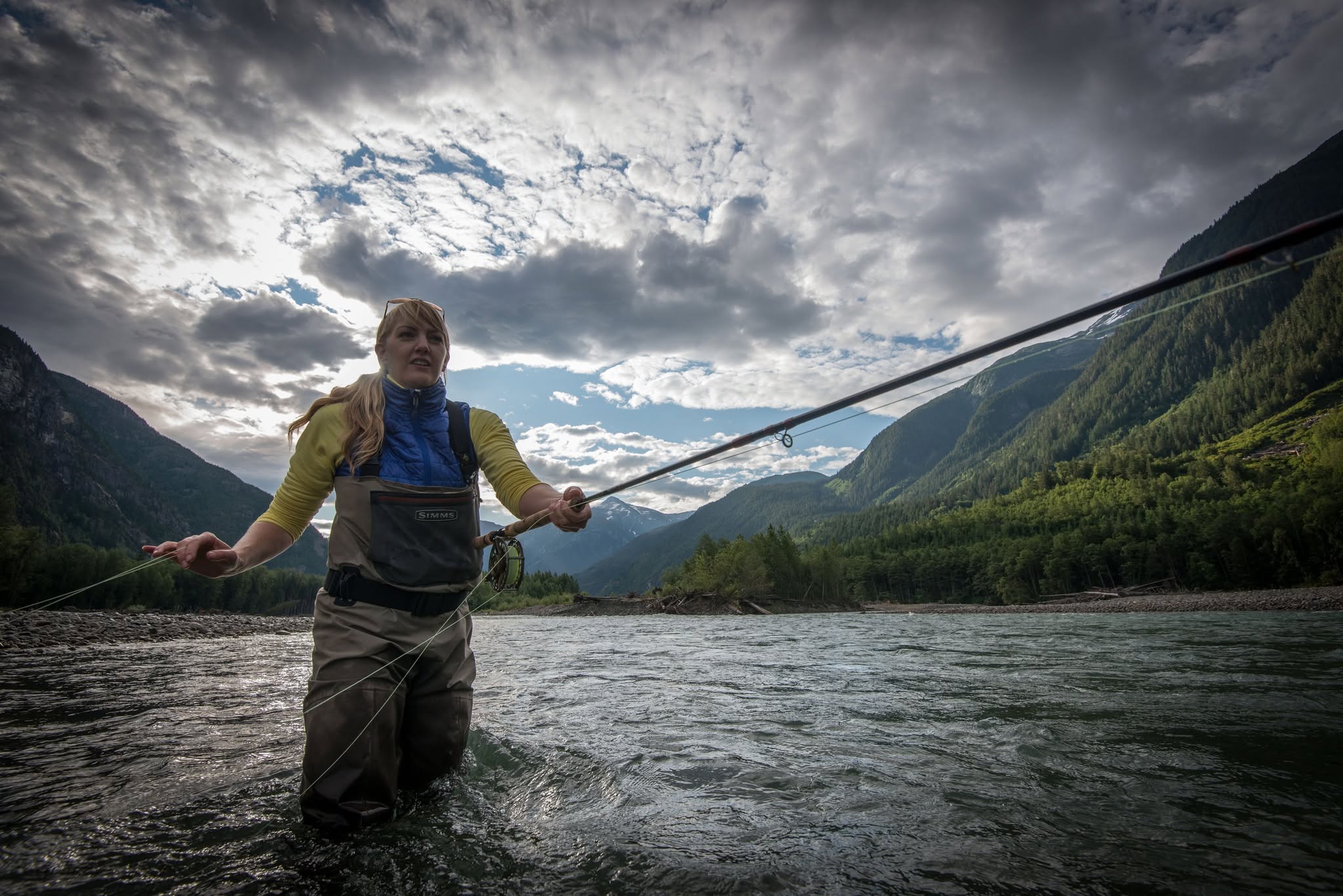
Kara Knight is a steelhead angler, casting instructor, longtime lodge professional, and competitive caster based in British Columbia. We get into the Dean, Spey-O-Rama, steelhead conservation, casting practice, competition gear, and the lessons Kara has picked up from years spent around some of BC’s great steelhead rivers.
Kara grew up in Calgary but didn’t seriously get into fly fishing until her mid-20s. While working at King Pacific Lodge on Princess Royal Island, she learned to single-hand cast and watched another guide spey casting from the dock in the evenings. That was the spark.
Her career eventually moved through adventure tourism, heli-skiing, lodge management, and steelhead country. She spent years fishing the Thompson, about a decade working around the Dean, and now lives near Smithers with the Bulkley close by.
Kara is also moving deeper into casting instruction. She’s teaching locally and hopes to work with more shops and Spey claves, bringing the same technical eye she uses in competition to anglers who want to improve on the river.
Kara spent about 10 years on the Dean, including running a lodge on the lower river near the ocean. What makes that section so remarkable is just how fresh these steelhead are when anglers encounter them.
There are runs where you can practically have your feet in salt water. Compared with steelhead farther inland around Smithers and Terrace, these fish have only just left the ocean and can be incredibly bright.
The extra work paid off. Kara recorded a 157-foot cast, setting a new women’s longest-cast record at the event.
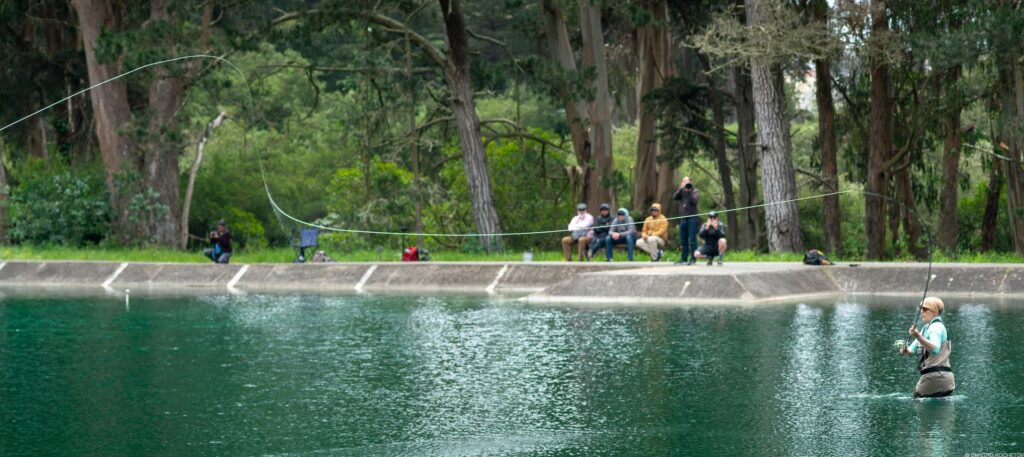
Spey-O-Rama takes place at the Golden Gate Angling and Casting Club, where competitors cast from roughly 34 to 35 inches of water with a 15-foot rod and long-belly line. Competitors must cast from both sides, performing single Speys and snake rolls within a six-minute window.
Casting that kind of setup takes more than good mechanics. Kara’s competition head is close to 1,000 grains, and repeatedly moving a 15-foot rod and that much line becomes a conditioning exercise.
For anglers working on their own casting, Kara recommends something much simpler: record yourself. Watching video makes it easier to spot problems that are almost impossible to diagnose while you’re actually casting.
One common issue is speed. Kara says anglers are often surprised by how slowly a spey cast can be made.
Kara’s first Spey-O-Rama was also the first time she had really dealt with left-handed casting. She came away knowing that side needed work, so she made a commitment to fish left-handed as much as possible during the following summer.
She spent much of that summer on the Dean casting left-handed and even stripping with her off hand until the movements started feeling natural. Today, that work gives her more options when wind, obstacles, and river position make one casting side difficult.
Casting with both hands on top isn’t a requirement, but Kara sees it as a way to become a more versatile angler. Interestingly, casting with the off hand also puts the dominant hand on the bottom grip, which can help with the bottom-hand steering used in Spey casting.
A Dean River trip comes with a serious logistics operation. Kara explains that clients historically traveled through Vancouver and Bella Coola before taking another aircraft into the river, while some operations now also use Smithers.
For lodge staff, preparations could mean loading a truck and trailer, traveling through Prince George and Williams Lake, crossing the plateau to Bella Coola, and then sending supplies by barge. Once the season begins, anything else has to fit on an aircraft.
“If it can’t fit in a plane, it’s not going to come in” pretty much sums up the challenge. The Dean may feel like the middle of nowhere, but Kara notes that it has more infrastructure than many anglers expect, including lodge operations on both the lower and upper river.
Today, the Bulkley is practically Kara’s backyard. She can walk to the river in about 10 minutes, and the larger Skeena region gives her access to an incredible collection of steelhead waters.
Her steelhead education also included the Thompson, where she spent long stretches fishing around 2009 and 2010. Kara remembers a huge river, slippery boulders, difficult wading, and powerful fish that could turn landing one into a serious downstream scramble.
She feels fortunate to have experienced the Thompson before the fishery closed. The conversation also turns toward the challenges facing steelhead, including commercial fisheries and the difficulty of understanding the complete picture from run-count data alone.
Kara saw those impacts firsthand on the Dean. She remembers periods when fishing could suddenly shut off following commercial activity in the ocean, and she says a multi-year moratorium on a chum fishery made a noticeable difference.
Before the main steelhead season gets rolling, there’s a short opportunity for Chinook on the lower Dean. The section from the river mouth to the base of the canyon is only about three kilometers long, concentrating anglers and fish into a relatively small piece of water.
The fish are fresh, the river is powerful, and landing one can be another story entirely. Kara estimates that in some situations anglers might land only about one out of every four Chinook they hook, especially if a boat isn’t available to chase a fish downstream.
The window can be only a couple of weeks, and conditions depend heavily on runoff and water levels. Some seasons the river can simply be too high to fish effectively.
Kara’s Spey-O-Rama setup is built specifically for distance. She uses a 15-foot CND F1 competition rod paired with a roughly 68-foot Gaelforce Weapon line. It’s an effective casting tool, but she says it would be exhausting to fish all day.
Her fishing setup is different. She has also been fishing a 15-foot CND rod paired with one of Tim Arsenault’s Bridge long lines, a combination she especially likes for dry-fly steelheading.
Kara credits Tim Arsenault with being intentional and meticulous about both casting and line design, and she sees that same approach in the products he builds.
Kara’s advice for someone still searching for that first steelhead is about as simple as it gets: don’t give up. One fish can change the entire day or trip, and you never know when it’s coming.
Her first landed steelhead came from the Bulkley. Earlier in her fishing, she mostly swung wet flies, but over the years she has moved toward fishing dries more often when conditions allow.
If catching a steelhead on the surface is the goal, Kara’s point is simple: you have to actually keep fishing the dry.
Episode Transcript
WFS 976 Transcript
00:00:00 Dave: From the Thompson to the Skeena system. And a decade on, the Dene Kara Knight has built much of her life around steelhead rivers, and along the way, casting became a pursuit of its own, taking her all the way to a one hundred and fifty seven foot record at Spey Orama. Today we’re going into the Dene River, what it takes to become a better Spey caster. The lessons Kara has picked up through years of practice and what she’s learned fishing some of the British Columbia’s most storied steelhead waters. This is the Wet Fly Swing podcast, where I show you the best places to travel to for fly fishing, how to find the best resources and tools to prepare for that big trip, and what you can do to give back to the fish species we all love. Kara Knight, a steelhead angler, casting instructor, longtime lodge professional, and a competitive caster who recently set a new women’s longest cast record at Spey. Orama is here to walk us through a number of great Spey rivers. We’re going to hear what it’s like fishing the Lower Dene, where Kara says there are runs where your feet are practically in the salt water. We’re going to find out about this Bay Orama event and how this one hundred and fifty seven foot cast came to be this record setting cast, including what it took to get her prepared for it. We’ll talk about learning to cast left handed, and why Kara has spent an entire summer fishing that way on the Dean, and why we should all be thinking about making sure we got both hands on top. And plus, we’re also going to get into a short window on the Dean where Chinook are coming in, and this window that you could catch. And Kara says landing one can be a serious challenge once they arrive. Once you hook up, Kara is now teaching casting around Smithers and looking to do more instruction at Spey Claves. If you’re interested, you can check in with Kara on Instagram at Kara and click here she is, Kara. Night. How you doing, Kara?
00:01:46 Kara: I’m great. Dave thanks for having me.
00:01:48 Dave: Yeah, yeah. Thanks for making some time today to talk a little steelhead. We were it was interesting because I was just, um, one of the cool things about the podcast that we’ve put together here is that, you know, I do a lot of the interviewing, but we actually have some pretty amazing hosts that host other episodes in our feed. And one of them is, is Jeff Linsky, who is the Great Lakes dude. He’s a big spay guy. And he was recently doing a podcast. He was actually up there at the Dean River with the Hickman’s program, and he was kind of doing a podcast with him and Adrian, and I was just listening to it. And so I haven’t been to the dean yet, but I’m trying to, you know, I was just listening, thinking like, wow, this place, I know it’s one of those places, but but you actually worked up on the dean for a while, right? Tell us about that. Is that a place that you I know you’ve been there a while. Is it something you missed or you still go back there?
00:02:37 Kara: Oh, yeah. I miss it for sure. I mean, I was I was on the dean for about ten years and running a lodge on the lower River down near the ocean. And eventually it was Jeff Hickman purchased it. So eventually Jeff was the owner there. But yeah, it’s the dean is, is such a special place. Like you obviously have these spectacular fish that are, you know, probably some of the most, most exciting in the world to catch. And then the setting that you’re in, you’re in these like these really dramatic granite mountains that just plunge down into this channel of the ocean. They’re so like, it’s kind of second to none in that sense to combine those two things together. Yeah, it’s pretty special.
00:03:18 Dave: Wow. Are the the Dean River fish? I know they’re if you’re below the canyon, they’re, you’re right there in the title close to the ocean. So there’s that. But how similar. And I guess it’s different. I was just thinking about, you know, the other areas you fish like the Bulkley on the Skeena. You know, we’re up there probably a little bit different maybe, or the steelhead. Are there any similarities there between those two fish?
00:03:40 Kara: Oh yeah. Definitely. I mean, the difference with the fish in around, you know, Terrace and Smithers and stuff is they’ve just come further, but they’re, they’re the same creature, you know, on the dean though, you’re literally there’s runs where you’re fishing with your feet in the salt, pretty much, you know. So you’re catching them in their first few moments of being out of the saltwater. So I remember one of my first years up there with a friend of mine who was guiding, and he caught his first fish and he had guided steelhead elsewhere. And I remember we landed that fish and he was just like, oh my God, it’s so bright. And I was like, man, they all look like that here, you know? Because when you get up into some of the far reaches of the Skeena system, there’s still spectacular fish, but they have so much color on them and they behave a little bit differently. So.
00:04:22 Dave: Yeah, yeah. Which is cool. And it’s interesting because, you know, I think the unique thing about the dean and probably the Skeena, you know, and Brian Niska, we’ve been doing a lot of stuff with him as well in the Lower Skeena. It’s these essentially summer steelhead, you know, we kind of call them summer. I guess some people think of them as more like, I don’t know, what do you call the the Dean River fish? And what do you call those fish? Are they summers? Are they, are they fall or are they winter? They’re not winter, right.
00:04:46 Kara: No, they’re definitely not. No. And I mean, like, I think the summer runs come in quite early. I mean, the Dean run is such a different timing, so it’s kind of hard.
00:04:56 Dave: Yeah, it’s a June through. It’s a June through like August. September, right?
00:04:59 Kara: Yeah, definitely. And like the Lodge season starts late June and you’re catching springs at that time. You’re catching King Salmon, which is a whole nother, that’s a whole nother ball of wax. And then, you know, the Steelheads start to roll in after that. And then the that run on the dean, the upper lodges above the canyon, they fish right into September. But on the lower river, the season’s kind of tapering off at the end of August.
00:05:23 Dave: Oh. And right. So the fish have already moved through by the end of August. They’re through basically that lower section up through the canyon and they’re heading to the upper river.
00:05:31 Kara: Yeah. And it obviously it depends on the year. You know, the very first year I went into the Dean, we actually didn’t fly in until I think August twenty sixth. And it was, it was just a personal trip. But we went really late that year and all of the lodges were shutting down and it was lights out. It was unbelievable fishing. So you really just never know what the season’s going to be. It’s really kind of the same as it is up here on the Skeena.
00:05:53 Dave: Yeah. Same deal. Right. And I heard that, and I’m not sure of I haven’t been in the know, but it sounds like the Skeena had a great return this year or is having a great. Do you keep up on that? On the return numbers for the Skeena?
00:06:05 Kara: Yeah, normally I do. I mean, it’s it’s pretty crucial to the lodge operations up here, because if you don’t reach a certain threshold, then the season doesn’t run. You know, the government can can make the decision to shut it. So when the test fishery shows good numbers, everybody just kind of, you know, has a bit of a celebration up here that it’s going to be at least that pressure is gone for the year. And yeah, I actually haven’t looked at the test fishery this year because I just heard from everybody that it was so good. So I haven’t bothered. But apparently the numbers are phenomenal. So that’s great to see.
00:06:35 Dave: Yeah, I’m kind of the same way. I feel like I think it was the third highest. I think I read on social somewhere it was like third highest run. And this is what Brian said, you know a lot when he’s talked about this before, the fact that these numbers have been all over the place. You know, like these large, you’ll have the largest run and then you’ll have the smallest run, right? It’s hard to kind of figure out. It’s but but it was interesting because I go back to, um, you know, the red, the red shed there up on the Clearwater, um, we were talking to, uh, the big guy there, Poppy, and he was saying that I asked him that same question, like, what are you on the Clearwater? Do you do you look at the numbers? And he’s like, man, I don’t even look at the numbers. It’s like, it doesn’t matter to me. I’m going to fish regardless. And I feel like there’s something to that, you know, like the numbers aren’t really right. You can still just as long as I can fish, I’m happy.
00:07:20 Kara: Yeah. And the funny thing, like one of the lodges that I’m working with is I was chatting with the manager the other day and he’s like, you know what? Now that the numbers, the test numbers are, are showing as this spectacular run, all the numbers guys are coming out of the woodwork, like all the people who didn’t book. And they’re like, hey, do you have a spot? Hey, do you have a spot?
00:07:39 Dave: Oh, wow. Yeah.
00:07:39 Kara: And, but the people who have booked, I mean, or who do repeatedly and consistently, you know, they’re the people who they don’t just come up for the fishing, they come up for the experience they come up to for the opportunity to see a moose and a calf in the river, or to see grizzly bears or to watch, you know, be present when the when all the leaves are turning and just like be here for that the ambiance and, and the feelings that go with that. I have a real love hate relationship with that test fishery. Like, I think it’s great that there’s data. I think that is so important to have. But I also think it’s like, I think it’s an incomplete picture. And, you know, there’s years where the early numbers are really poor. And then by the time they pull, you know, they pull that or stop doing that test fishery numbers are still either consistent or, you know, they run further into the season. There’s years where they, you know, they said, oh, it’s terrible numbers, one of the worst we’ve ever seen. But if you stuck around and fished, you know, late October into November, there’s, you know, tons of fish around. So I just, I don’t know, it’s yeah, I feel like there must be a better way to do it, right?
00:08:47 Dave: Right. Exactly. Yeah. It’s like the best thing you have up there. Or they found that that’s the best. Yeah.
00:08:52 Kara: At least we have something. Oh, I guess yeah.
00:08:53 Dave: Yeah. At least you have something. It’s good to have something, but um, but yeah, I think the unique getting back to that summer steelhead thing, I think the, you know, I think the timing is the same. You know, my home water is kind of the Deschutes River and it’s kind of that, you know, July through similar deal. And I feel like the unique thing about the dean, especially in that lower Skeena, is that you’re so close to the ocean, you know, you’ve got these fish like the ocean stuff. It seems like in the West Coast, like, you know, the states down here, it seems like they’re all winter steelhead that are close to the salt. You know, Oregon, Washington, California probably has a little bit different. But but up there in the Dean and the Skeena, you’ve got these fish that are summer essentially like they’re coming in in the summer and they’re near salt. Right. Are there any other places like that? Do you think that’s one of the unique things about it?
00:09:35 Kara: It is definitely one of the unique things about it. Like there are early fish that come into the Skeena, but there’s not as many. It’s a tough fishery and it’s much earlier. So, you know, I don’t know enough about the the intricacies, you know, biologically and stuff like that about the run timing difference and that kind of thing. And honestly, I don’t know if there’s other parts of the world where you do get that timing. It’s pretty interesting though. Like it’s the difference between, you know, slogging it out up here on an October day where you’re, you’re like wearing every layer that you have and you just can’t get warm versus being on the dean in a t shirt and fighting off the horse flies. Like, it’s just such a different experience. It’s pretty neat.
00:10:13 Dave: Yeah. It is. Yeah, it’s, it’s pretty awesome. That’s, I think the older, at least the older I get. And I know John mentioned this too, is that you, you’re into all the steelhead. And then as you get older, the winter steelhead doesn’t look quite as appealing as you get older.
00:10:26 Kara: It’s not as appealing. Hey.
00:10:27 Dave: Right.
00:10:28 Kara: Yeah. The older you get, like I’ve lived in northern pretty much northern Canada most of my adult life. And during the pandemic, I actually had the opportunity to run a help run a lodge down in Mexico. And I was there in some of the winter times and I was like, oh, I think I finally understand why people go somewhere warm in the winter when they get older.
00:10:45 Dave: That’s it. That’s what it’s about. Nice. So and you mentioned Kings. I want to definitely hear about that a little bit because we’ve been talking about, you know, Chinook fishing. And you know, there’s not a ton of places you can find. You can actually fish for Chinook anymore, or at least, you know, for fly stuff. But, um, but talk about one thing I really want to hear about is the, the Spey Orama you’ve recently, I think you’ve taken home the big prize, right? Talk about that. You’ve, uh, the last event. Describe how that went down.
00:11:12 Kara: So I went down to, I go to San Francisco every year for a spare rama. And, um, yeah, I compete in that event and I’ve been, I’m trying to remember if my first year was twenty twelve or twenty thirteen. Um, but I’ve been going almost every year except for the pandemic years to that event. And this year was I decided to go down a little bit earlier. I was lucky I had the, I had the flexibility with work and I had some friends I could stay with down there, um, so that I could go down and practice a bit more. One of the challenging things for me up here is that, you know, once November, late November hits, everything freezes and it often doesn’t thaw until, you know, the beginning of August, maybe a week or two before that event even happens. So I decided to go down early this year and just spend some time practicing and see if it made a difference, and I think it definitely made a difference.
00:11:58 Dave: Yeah it did. So you basically got the longest cast. Maybe give us an update on the event, you know, kind of what it looks like, you know, what sort of what are the criteria and all that stuff.
00:12:09 Kara: Yeah. So the event you’re in, you’re in at Golden Gate Angling Club, it’s a set of man made ponds in Golden Gate Park. So it’s a Spey casting event with a fifteen foot rod and a long belly line. And, uh, the line, you know, typically it starts at about eighty feet. That’s how it comes from the manufacturer. And people typically cut it down to, you know, anywhere from like sixty five to seventy five feet. So it’s this long line with a long rod and Stillwater. And you’re standing, you know, pretty deep. I think the depth is about thirty four or thirty five inches deep. So yeah, that makes it more challenging. And then you have to do casts from both sides. So you have to cast right handed and left handed, and you do a single Spey from each side, and you do a snake roll from each side and you have six minutes. And in that time frame, you do four of each of those casts, and then they take the top scoring casts that you’ve done out of each of those four. And that’s your that’s your score.
00:13:03 Dave: And your score was, I think it was one fifty or describe. Yeah, the final score. And you took the top, top notch, right?
00:13:10 Kara: Yeah. I think my overall score I would have to look. I think my total score this year was five eighty five.
00:13:16 Dave: Oh that’s right. Yeah yeah yeah that’s right. One fifty seven was your longest cast. Yeah.
00:13:20 Kara: Or somewhere, somewhere in there. Five eighty five or five eighty seven. Somewhere in there. And then my, um, yeah, I got a new record for the women’s longest cast and it was one hundred and fifty seven feet. So that was pretty exciting.
00:13:31 Dave: Yeah. And one hundred and fifty seven feet for those that I, I just started measuring. I haven’t really ever measured my cast in my life until this year when I’ve been kind of working with Paul Arden a little bit. And he was like, all right, we got the tape measure. I’m like, man, this this, uh, eighty feet isn’t quite. You know what I mean? It’s, it’s a ways.
00:13:48 Kara: It’s a humbling experience.
00:13:49 Dave: Right? And you’re doubling that. I mean, you’re literally doubling that eighty feet.
00:13:53 Kara: Oh, man. And the thing is like, like, I’m thrilled, obviously watching the guys do it though, like the guy that won this year, uh, Blaine Lyon, he’s, he’s from Scotland and he cast, I think his, his longest cast that he set a record for this year was one hundred and ninety nine feet. And he did it like twice in a row. And it was just, we were all just sitting there mind blown at what he just did.
00:14:15 Dave: Yeah. That’s cool. Yeah. The speed of Rama is kind of I know there’s other Spey events like in Europe and stuff, but I think people think of the Spey Rama as kind of the event, right? Like it’s like most of the big casters around the world come to this, right?
00:14:29 Kara: Mhm. Yeah. And I think, I mean, it’s different than the the ones that they hold in Europe. You know, the one I’m going to one in, in the coming weeks actually. And the fifteen foot spay event for that competition, you know, you’re in a little bit shallower water. You still have to cast right and left handed, but you’re only doing the single spay. And I think perhaps it’s like a smaller angle change. I might be wrong about that, but you know, it’s just a different, yeah, slightly different setup for it. So I mean, some people argue that spare arm is more challenging because you have, you know, the forecasts and deeper water. But I mean, it’s, it’s not easy regardless of, of where you’re doing.
00:15:07 Dave: No it’s not. Yeah. In thirty, whatever it is three feet deep of water, you know, the deeper you get the harder you get. Right. Is it when you’re in this Bay of Rama? What if you’re a shorter person? Do you still have to be in the same depth of water?
00:15:19 Kara: Yes you do. And I mean, that’s where I’m I’m really lucky. Like I’m six feet tall. So I definitely have an advantage over some of the other ladies. That being said, on the women’s and the men’s side, there’s two people who’ve won repeatedly Travis Johnson and Mia Sheppard, both of whom are not incredibly tall people, but they’re technically excellent. And I think they’re both quite strong. And and those are the other things that like, it doesn’t matter if you’re six foot four, if you don’t have the technical knowledge and can’t apply it, then it doesn’t really matter.
00:15:50 Dave: The practice. You mentioned practice. I think that’s something I always love thinking about because, you know, Paul mentioned that practice, you know, not just fishing, but out there practicing. How do you with the spey rod? You know, that’s a challenge. Like single hand rod is pretty easy to practice. You can go anywhere and do it. How do you do it on the Spey if you’re not on the water?
00:16:07 Kara: Well, I mean, there’s aspects of it that you can practice without water, but really, especially for that competition, you need to find a lake somewhere to do it. Part of why I went down early this year, part of it is to sort of work the bugs out of it, but a lot of it was conditioning because, you know, a fifteen foot rod and the head, you know, the shooting head that I’m using for that is almost a thousand grains. So it’s like, you know, more than anything, you just your muscles fatigue. And the longer you spend in there flailing with it, the more tired you get, the more mistakes you get. So having the conditioning to do it, and you could theoretically go outside and, you know, do overhead casts with that rod to help condition your muscles. But to really work on things like, you know, your lift, your anchor placement, all that kind of thing, you really need to be in the water.
00:16:56 Speaker 3: Fly fish with me. Utah discover year round blue ribbon trout fishing on the famed Provo River. Choose a guided walk and wade or a scenic float and experience big trout, stunning canyons and unforgettable days on the water. You can book your adventure right now at Fly Fish with Me, Utah dot com. World class water. Incredible fishing. That’s fly fishing with me Utah dot com.
00:17:22 Dave: And you’re usually and you mentioned in the winter time, what is your maybe take us through your program a little bit throughout the year. Are you still guiding throughout the year? Describe that a little bit.
00:17:31 Kara: No, and I’ve never really been big on guiding. I’ve, I really, um, my career has more been in the management side of lodges. It’s interesting. I went into it wanting to guide and did a little bit of guiding, but the school program I did focused really intently on, on sort of leadership and management the second year and that it became really obvious that that was what I wanted to do. So, I mean, it’s been it was a great career. You know, it really moved with the seasons. It was busy in the summer. It would taper in the fall and I’d have, you know, um, sort of consistent but reduced duties through the winter, which gave me a chance to kind of rest and relax. And then it amped up in the spring again. So I really liked it that way. I haven’t been doing lodge management for the last couple of years. I was working full time for this lodge up on the lodge, and I was doing all of their bookings and, and sort of the behind the scenes administration and that kind of thing. But that, like I said, that changed in the spring and I honestly don’t know what it’s going to look like moving forward. I’m doing a seasonal contract expediting for them in town now. So I’m responsible for all their, you know, all the shopping in town, the procurement of whatever goods they need, shuttling clients and that kind of thing. But yeah, winter is still to be determined.
00:18:44 Dave: Yeah, yeah. That’s and that’s an important role. We know we went to a really amazing lodge this year, Scott Lake Lodge and fish for pike and lake trout. And, um, and I remember we, it was cool because it was a lot of logistics, right? The planes you flew in, I think we flew.
00:18:58 Kara: In so many logistics.
00:18:59 Dave: Right? All that stuff. You got all these planes. But I love that stuff. I mean, that’s the fun part of, you know, the travel. But there was these two, uh, two ladies that were on we got on the plane. Let’s see, when we flew into, I think it was Stony Rapids, I believe, I think that’s the name of it. But we dropped into one of the small towns and, um, and we pretty much they were there. They were our like on the flight up from, you know, up south and, and they were doing all the logistics. Like you’re saying, they were like getting people shuttled. Making sure everybody’s there, getting gear ready and all that stuff. And they were super cool too. They were on there. We were chatting with them. I feel like that’s something that goes, you know, people don’t realize what it takes to make one of these large trips. What does it feel like for you knowing been there with that lodge system? Is it is there a lot going on that people don’t realize the clients that are there?
00:19:42 Kara: Oh, yeah. Absolutely. And there’s, there’s so much behind the scenes stuff. And when I was on the, you know, at Lodge Front managing, I always kind of said to myself, if the clients don’t, don’t see all the things that have to be done, like if they don’t realize it, then I feel like I’ve done my job really well, you know, but I think having so many years in that management role at the Lodge, it serves me really well in what I’m doing now, you know, because it’s it just makes it easier to do the job.
00:20:08 Dave: And yeah, you know all about it. You’ve done, you’ve done a little bit of everything.
00:20:11 Kara: Yeah. For sure. Yeah. And honestly, like, I wasn’t sure if I would stay when I moved away from the lodge management part of it was the dean. It’s just a really complex environment, like socially and politically.
00:20:26 Dave: Oh, right. What does it take to get up to the dean? What does that look like? If you’re doing a Dean trip, where are you flying into?
00:20:32 Kara: Uh, you fly into Vancouver and then I think the way they run it now, we used to fly clients into Bella Coola, and then they would take another like a helicopter charter from there or something. But, um, I think some of them fly through Smithers now, and there’s a company that flies down from Smithers as well. So it’s, it’s not easy to get to, but I mean, as a, as the man like, as the staff getting in there, we would, you know, every spring we’d kind of get our list together. I’d get a truck and a trailer and convoy down through Prince George Williams Lake and across the plateau and like, just load up with all the, all the dry goods that we need. And we’d get into Bella Coola and then ship everything out on a barge. Like it’s there’s a lot of logistics that go into that of sending, you know, sending vehicles out at the end of the season, sending fuel drums out, making sure you have everything that you need because it all you know, you have to fly it all in through the season. If it can’t fit in a plane, it’s not going to come in. So it’s um, yeah, it’s complicated for sure.
00:21:29 Dave: You got to fly it in. Yeah. Because the dean described that where the dean is. When you think of just somebody who’s never looked at where it is, where is it?
00:21:36 Kara: So central coast of Columbia. So if you if you find Vancouver on a map and then you go north and you find Prince Rupert on a map and you kind of split the difference and go right in the middle, there’s this little like arm of the ocean that comes in, and it splits into three channels, and one goes to Bella Coola, one goes south and one goes north. And at the end of that one is the Dean River.
00:21:57 Dave: And Bella Coola is like a small town there.
00:22:00 Kara: Yes, it’s a very small town, beautiful, like a gorgeous valley. It’s, I think in Bella Coola is some of the highest. And like further just up towards the plateau there, it’s some of the highest concentration of grizzly bears in British Columbia. It’s this incredibly lush valley. Like It’s amazing to see just how green and beautiful everything is down there, but it’s really remote. It’s one of those places where in the winter, you know, there’s a day where they know the sun is going to go away, and they’re probably not going to see it for a couple months. And then they have the day we’re finally it comes back over the mountain and they all celebrate.
00:22:34 Dave: Right? Right. Cool. And then is there and there’s a lodge actually a physical like building structures on the Lower Dene.
00:22:41 Kara: Yes. There are on both the lower and the upper. The Dene has, I think, way more infrastructure on it than people realize. You know, they used to log in there. So there’s little logging roads and there’s there are some little cabins that people own. There are two sort of two large outfits on the lower and then two on the upper as well. So yeah, it’s quite, it’s quite a bustling place for, I think more than what people would expect for kind of being in the middle of nowhere, right.
00:23:06 Dave: Being so remote. And then what other area, what other rivers have you fished most? Is the, is the Bulkley or what are your other steelhead rivers that you’ve fished most other than the dean?
00:23:14 Kara: I mean, the Berkeley is at my doorstep here, so I’m. I’m really lucky with that. It’s, you know, it takes me ten minutes to walk down there and fish, which is. I just feel so fortunate for that. And then just the Skeena region is, you know, littered with with steelhead rivers. So, you know, from here to terrace and beyond, you can, if you really wanted to, you could go and fish half a dozen rivers in a day, you know, which is pretty, pretty amazing. I don’t know a lot of places where you can do that.
00:23:38 Dave: Right. That is. And do you have is the Bulkley kind of I mean, it’s your home back door, but is there one you fish more? I guess I’m assuming you fish the Bulkley more, but have you fished all of them? All the big ones. Babin lower and upper.
00:23:50 Kara: Yeah, I fished a lot of them. Yeah. I honestly try to go where? Where I’m not going to see a lot of people. So like the Morris tends to stay fairly busy. The section of the Bulkley kind of on the telkwa side of town also seems to stay pretty busy. I live on the on the west side of Smithers, so. And it’s it seems like there’s less a few less people down here anyway, so I tend to stay close to home and if I head out towards terrace I might go fish the kispiox. I might fish the Skeena, maybe go fish the copper. But a lot of it just depends on how busy you know. That’s the sort of the unfortunate thing about working in that industry is that this is going to be the busiest time of year. So, you know, it’s funny, when I didn’t live up here, I fished way more.
00:24:32 Dave: Oh, really? Where did you live before that? Before you lived there.
00:24:35 Kara: In, uh, like southern interior, British Columbia, Golden and Revelstoke. I’m from Calgary originally, but I kind of migrated north and west. But at this time of year, I used to work in the heli skiing industry. So I wasn’t busy at this time of year. And, you know, come September, I would just kind of take off for a month and come up here and camp and live out of my truck and fish, you know, every day for a month type of thing. And it’s lovely being up here and having it at your doorstep. But when you’re working full time, it’s you just have to make. Yeah. It’s different trying to find that time.
00:25:06 Dave: Yeah. It’s it’s interesting. You’re kind of it sounds like in a little bit of a transitional period. I mean, it’s pretty amazing after, you know, having you won the Spee orama you’ve got I’m guessing is casting. Is that going to be like casting instruction? Talk about that a little bit. Would somebody, if they wanted to get instruction from you? How do they do that? Is that like online? Are they doing in person? How does that work?
00:25:26 Kara: Um, I mean, I haven’t done it online. Online would be possible, but in person is way better. The thing that most people don’t, they don’t think about with casting instruction is it’s so difficult to self-diagnose what’s happening, you know, like it’s so difficult to look at yourself and be like, oh, like, especially just, just casting without even taking a video or something. It’s incredibly difficult to, to pinpoint where the problem is. Whereas if you have somebody who’s experienced with it who, you know, looks at it from the outside, it typically is very easy to, to say, oh, this is where the problems are stemming from. And I am, I’m doing lessons locally here. I do want to start getting involved in more spay claves. And, you know, I travel a little bit through the years. So I’d like to start, you know, working with shops and offering. Offering lessons in different cities wherever it’s possible. But like I said, this is all really new. So it’s kind of figuring out the, the logistics of that and, and sort of where it makes sense.
00:26:22 Dave: Right, right. Yeah. That’s cool. And then the show season, we were talking a little bit off air, but you connected with, you know, Phil and we obviously know Phil Roy. He, he kind of connected us and, and he’s kind of the ultimate. I always say he’s the guy that, you know, he does the whole show thing. He’s traveling all the time. It seems like he’s also doing a bunch of schools, kind of hosted trips around and stuff. Does it sound like that’s something you enjoyed? It sounds like you were at one of the shows, and was that a pretty good experience?
00:26:49 Kara: It was, yeah, I love I love the show environments. I mean, you leave it just completely. Your social battery is empty, but it’s also yeah, it’s just so fun to, to meet new people. And for me, the instruction is, has been way more rewarding than I expected.
00:27:05 Dave: It’s like doing the live. Were you doing the, the things where you’re up there in the front, like people are watching?
00:27:09 Kara: No, no, I’ve only I’ve only done a couple of those. And definitely, I think, you know, it’ll, it’ll get easier as that goes. Like it’s, it’s so easy one on one to, like I said, to make things really, really specific for that person and very individual in a, in a group environment, it becomes difficult to, to keep the answers kind of generic enough to apply to everybody. But the. Yeah, I really have enjoyed the teaching so far. It’s, it just, yeah, it’s nice to connect with people on that level and, and see them improve and see them, you know, stoked to get back out on the river and try it and yeah, and just be a better angler.
00:27:43 Dave: That’s cool. What is your, uh, is looking out like steelhead fishing? Are you going to be swinging some flies this summer or what does that look like? You got any trips looking ahead?
00:27:52 Kara: I don’t have any fishing trips. Um, it’s funny this year, like I said earlier, I’m heading off, um, shortly to go do another competition, a casting competition.
00:28:02 Dave: Oh, right. Yeah, yeah. You get the comp. Yep.
00:28:04 Kara: Yeah. And I’m excited for that.
00:28:06 Dave: And where is that one?
00:28:07 Kara: That’s actually in Europe. So I’m I leave on Sunday and I’ll be flying to to France and spending a little bit of time in France and then traveling to sort of north western Italy, um, to spend a week at that. And it’s the International Casting Sport Federation hosts this world fly casting championship every two years. And two years ago the event was in Sweden and I got to attend that one. And I decided that this one I really wanted to try to attend as well. So I’m excited for that.
00:28:36 Dave: Yeah, I see it now. The eighth isSF World Fly Casting Championship, uh, twenty fourth or thirtieth in Vienna, Italy.
00:28:45 Kara: I haven’t quite figured out how it’s pronounced yet, but.
00:28:47 Dave: Something like.
00:28:47 Kara: That. Yeah.
00:28:49 Dave: Set against the backdrop of the Alps and the Forte Albertino.
00:28:55 Kara: It’s spectacular looking, isn’t it?
00:28:57 Dave: Yeah. This is amazing. This is going to be a fun. So I mean, that’s obviously one of the cool things. I mean, that’s Europe is uh, seems like a a whole area that is left to explore, at least for me and probably a lot of people. Is that something that you’ve, uh, you’ve been looking at? Have you been over there before? Is this something that you plan on doing more of?
00:29:14 Kara: I would love to do more of it. I mean, I’m excited for the event. And I’m also, you know, making it into a little bit of a holiday for myself. Europe just is a whole different. Yeah, it’s a very different feel. I love how old everything is over there. And it seems like, you know, no matter where you are, you turn a corner and there’s something interesting to, to see and explore, learn about. So yeah, I think it’ll be fun and the event’s going to be interesting. Last time I went so with this, this is a very different event from Speyer. Speyer is strictly that one. Spey casting discipline. This event is six different disciplines. So this has three different two handed events and three different single hand events. And the last time I went I only did the Spey events. And this year I’m going to try to do all of them. So we’ll see how that goes.
00:29:58 Dave: Oh wow. There you go. So and how is your single hand casting compared to your spay? Are you better at the spay?
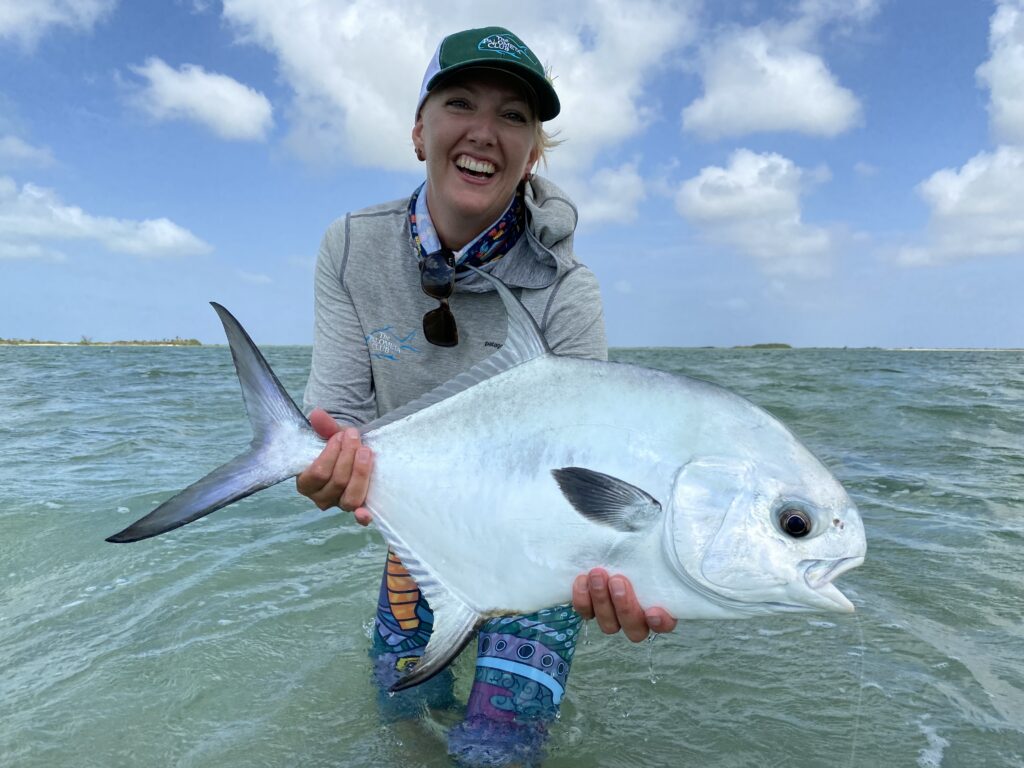
00:30:04 Kara: I think I’m better at the spay because I’ve done more of it. But I love the single hand, and my single hand is not it’s not terrible. It’s not bad. You know, the time that I spent down in, in Mexico running that that saltwater lodge, I mean, that was that’s flats fishing for a permit and bonefish and tarpon. So you definitely, you have to kind of up your skill level to have any success in that. But the tournament casting for single hand, I guess just like the Spey casting for, for tournament stuff is so different from what you would apply on the flats or on a river. So there’s just really different techniques. Some of it I feel like I’m doing great at, and some of it is really kicking my butt. So we’ll see how it goes, right?
00:30:43 Dave: How do you when somebody is, let’s say we’ve got some Spey casters listening and they’ve got some struggles like we all do. What do you tell somebody? What are a few things you’re telling them to work on if they’re going to practice out there? I mean, you’ve got all these different parts of the Spey cast, right? What’s the recommendation? Let’s say they’re not getting. it. I mean, I think getting an instructor is probably the best thing you could do. But if they’re not doing that right now, what do you recommend they do to up their level a little bit?
00:31:07 Kara: Yeah, I think if you’re not going to go get a private lesson with somebody, one of the most effective things you can do is take a video of yourself and watch it, you know, and you can compare that to videos you see online. And just, it becomes really easy to see where the challenges might be. You know, probably one of the biggest things is that people go too fast. It’s amazing how slowly you can stay cast. You know, it’s, there’s so many parts to it, but I think, yeah, taking a video and watching it is really is really one of the most helpful things you can do.
00:31:37 Dave: It’s kind of interesting because you know, me myself, I definitely have not put in enough time to get at the next level, you know, to the next level, right? It’s, it’s kind of one of those things where and I know that. So it’s just something I got to do more of. But one thing I’ve heard a lot about is, you know, being able to do both hands on top, right or left hand. Is that something you think is really important to dial in to kind of get to that next level as far as casting and you’re fishing.
00:32:00 Kara: I think it’s a really individual thing. You know, it’s not a requirement by any means. You know, I do think it makes you a more versatile angler. I know it did for me the first year I went to Spey, Orama was the first time I had ever cast left handed. So I feel like I think I learned while I was down there.
00:32:18 Dave: Oh, wow. So you mean you tried it? You had tried it with the left hand, but it was the first time you were in a competition having to use both.
00:32:24 Kara: Oh, absolutely. Yeah. It was very new to me that that first year I went, you know, I hadn’t really cast long lines before. I hadn’t done a snake roll before. I hadn’t really done much left handed stuff.
00:32:35 Dave: How’d that first year go?
00:32:36 Kara: It was okay. My goal going into it is the same goal that I tell anybody who’s doing that event for the first time is, you know, your goal should be to make four scoring casts, even if they’re just at the minimum, and to have a good time because it’s just so easy to it’s so easy to work yourself into this frenzy about doing well and stress out about it and not enjoy yourself. And that doesn’t make you past any better, you know? And nobody does. Well, the first time, it’s really unusual for somebody to just knock it out of the park the first time they go do that. But I went away from that, that first event thinking, oh man, my left, my left hand casting is just awful. And I, I made myself a commitment to go away and fish like as much as I possibly could left handed that year. So I did it pretty much the entire summer. I was on the dean and tried to fish left handed for the whole summer and like fishing, casting left handed stripping with my off hand until it got to the point where it felt more natural. And yeah, it definitely made a huge difference. And it is nice now, you know, as an angler, to be able to step into pretty much any situation, regardless of the wind, regardless of what’s behind you, you know, beside you, anything like that, and be able to pull out a cast that feels, you know, strong and effective.
00:33:49 Dave: Right now as you’re is the left as can you cast as far with the left as the right on top.
00:33:55 Kara: It depends on the day. It’s funny when you cast with your off hand. So spey fishing particularly, you’re supposed to be steering the rod primarily with your with your bottom hand. And when you cast on your off shoulder or with your off hand, rather you’re steering the rod with your dominant hand, if that makes sense. So often some of the motions become easier, but some of them just feel it’s like trying to throw a ball with your left hand if you’re right handed.
00:34:18 Dave: Yeah, that’s the thing I think about that. I definitely, if I tried to throw any do anything with the left right, it looks weird, it feels weird, but it’s just a matter of practice. Same thing. Right? You do it enough times, you get the muscle memory sort of thing.
00:34:30 Kara: Absolutely.
00:34:31 Dave: You mentioned, uh, you know, getting started. I mean, you’re obviously at the highest level now with casting. What was I mean, if you take us back a little bit, if you’ve been thinking about this for a while, I mean, what’s been your if you look back before you kind of first got into fly fishing, were you picturing this sort of thing?
00:34:47 Kara: No. Oh my gosh, it’s really funny. Like, if I spoke to myself in my teen years and, told them that this is what I would be doing. It’s so far off of what I had imagined. You know, I grew up in Calgary, which has arguably one of the best trout fisheries.
00:35:01 Dave: Yeah. The bow.
00:35:02 Kara: Yeah, it has the bow. I’ve actually really never fished the bow.
00:35:05 Speaker 3: No kidding.
00:35:06 Kara: Yeah, because I didn’t fish really when I lived in Calgary. You know, when I was in my teens, I remember going like going spin casting with a couple of friends. Um, but I really, I didn’t get into fly fishing until my mid twenties when I worked at my first lodge on the West coast actually, and I learned how to single hand cast there. And that was the first time that I saw somebody Spey casting. There was a guide from Whistler who was working at that lodge, and in the evenings he had brought a Spey rod with him, and sometimes in the evening he would go and. And Spey cast off the dock, and I thought it looked really cool and wanted to learn more about it, so I. I kind of got to know those guys went down to went down to Whistler. I learned how to Spey cast and kind of got into Steelheading that way.
00:35:51 Dave: Do you think you need a bush plane to fish Alaska’s legendary waters? Think again. Fishing expeditions specializes in road accessible adventures that don’t skimp on excitement. Picture yourself fishing for massive rainbow trout, Arctic grayling, and plenty of salmon species, all within Alaska’s epic road system. It’s doable. I fished the road system on our first day with Adam and the crew, and it did not disappoint. The largest leopard rainbow I caught and landed was right off the road system, and we’ll be driving up again this year, heading up from the lower forty eight all the way up to Alaska to hit those streams again. You’ll experience the breathtaking beauty of Alaska’s wilderness, from mountain streams to hidden rivers perfect for anglers of all levels, fishing expeditions makes it easy to explore Alaska. Why wait? Your Alaska adventure is just a drive away? Book your spot now before spaces fill up. That’s fishing expeditions dot com. F I s h h o u n d Expeditions dot com. Don’t miss out. When it comes to premium flies that deliver results, Drift hook dot com is the name to trust this season. Whether you’re chasing trout with dry flies, swinging streamers, or dialing in those Euro nymphs, they’ve got everything you need. Here’s a quick story. I was fishing a tricky Spring Creek earlier this year and nothing was working. Then I pulled out a Royal Wolfe from the drift hook box I cast upstream, letting it drift effortlessly toward a holding fish. It was textbook. One of the biggest fish in the run, rose slipped the fly and the fight was on. That’s definitely a moment I’ll never forget. Their flight kit shipped free straight to your door, fully stocked and ready for action. You can support a great small business right now and this podcast by heading over to Drift hook dot com today. That’s drift hook D r I f t h o o k. Use the code swing at checkout to get fifteen percent off your first order. What was that first lodge you worked at?
00:37:46 Kara: It was called King Pacific Lodge, and it was a pretty high end. Saltwater lodge on the West Coast on Princess Royal Island and I actually worked there as a as a adventure guide. So I was taking people sea kayaking and heli hiking and like whale watching. It was really cool. It was such a neat job and it was really my intro into that whole world.
00:38:06 Dave: It was. And it was fly fishing part of their program.
00:38:09 Kara: There it was. Yeah, it was primarily saltwater fishing, but they did, you know, heli fly fishing adventures. And um, yeah, primarily, I think heli fly fishing was what they did. Yeah.
00:38:21 Dave: Gotcha. And then where did you go after that? You finished that? Did you kind of go on a series of working for lodges?
00:38:26 Kara: I got really involved in heli skiing after that. I was in a school program at the time. Um, it was a college program for adventure tourism and small business. And like I said, it was, I had gone into that wanting to guide. It was a program that was sort of fifty over fifty academic studies and field studies. And I went into it the first year, wanting to guide and the second year when we. Sort of pivoted towards more of the management side, it became really clear that’s what I wanted to do. But at one point we did a. I did a case study on a big heliskiing company called Canadian Mountain Holidays. And I just loved the company. Everything they stood for everything, you know, it just seemed like such an incredible atmosphere and an incredible job. So once I finished my case study, I reached out and asked them for a job and went and did my work practicum there. And I stayed with them for almost ten years.
00:39:14 Dave: Oh, wow. Yeah, a long time. So the heli ski and then when did you switch over fully into the fly fishing kind of management or in that space?
00:39:23 Kara: It was sort of probably halfway through that that I really got into Steelheading. I had started to do some little trips up to up to the Skeena region, but the people who taught me how to fish and the guys, the guys that I fished with also were really avid fisherman on the Thompson. And that’s really where I kind of cut my teeth. Steelheading.
00:39:42 Dave: Oh, so you fished the Thompson quite a bit?
00:39:44 Kara: Yes, I fished it a lot. Yeah, I was kind of one of those again. That was a time of year that wasn’t incredibly busy for work, because it was sort of leading up to the heli skiing season. So at that time I was just kind of waiting to start. So I would pack up and just go live there for, you know, live there for a month and fish every day.
00:40:02 Dave: Cool. When was that on the Thompson? When were you fishing that?
00:40:05 Kara: That was like two thousand and nine, twenty ten ish.
00:40:08 Dave: Yeah, two thousand and nine. And that was the time of year. Was that summertime?
00:40:13 Kara: Uh, September, September, October, uh, time frame, actually more October, November, December. Yeah. For sure.
00:40:19 Dave: Because that’s kind of a, a little bit further south, a little bit different than the dean, right? Is the, is the Thompson quite a bit different or a little bit different than the dean?
00:40:27 Kara: Well, it’s different. Yeah.
00:40:29 Dave: It’s different.
00:40:32 Kara: Yeah.
00:40:32 Dave: Fishing is different. The steelhead fishing is a lot different too.
00:40:35 Kara: I mean steelhead fishing, there’s so much of it that’s the same regardless of where you are. But it’s um The Thompson is a big river. And, uh, just like the gnarliest waiting you’ve ever done.
00:40:46 Dave: Oh, no kidding. Big boulders and stuff.
00:40:49 Kara: Oh my gosh, big boulders. So slippery and like. And just like huge rocks. Oh my gosh. Like you could in certain runs. You could take the wrong step and like go over your head type of thing. So it’s, it’s just an interesting place. And then huge fish with just so much power. So like, do you know the, like the Dan Bailey cleats, the big rubber booties?
00:41:10 Dave: Yeah. The yeah, I remember Dan. Yeah. The little like rubber they strapped on with rope or whatever.
00:41:15 Kara: Yeah. Like big neoprene boots that you put over your wading boots. Yeah. Like we used to use those to keep our feet wading down the river.
00:41:23 Dave: Oh, right. Big old stud. Big studs on them, right?
00:41:25 Kara: Yeah. The big aluminum bars on the bottom. And it’s like, it’s one thing to, to like wade down a river casting. And then you hook a freight train of a fish and you got to try to run down river after the thing. Oh my God, like it was, it was so much fun and it was such a show sometimes. But yeah, it was incredible.
00:41:43 Dave: That’s cool. And the Thompson definitely took a big downturn. Were you there when things started? I’m not sure if they were already going down, but it closed right a number of years ago.
00:41:52 Kara: Yeah, I feel really privileged that I had that. I was able to finish it before it closed, you know, and I think the time frame that I was there, you know, it certainly was nowhere near the heyday of that river. So, you know, I don’t have a lot to compare it to in terms of it really declining other than the numbers that we saw in the counts. But yeah, it’s pretty sad that it’s shut. I think, you know, everybody always wonders whether it’s going to open again. I hope that at some point it gets to the point where the run has started to accommodate that again, but that all I think hinges on, you know, what happens with with commercial fisheries in the Fraser and and impact on that river.
00:42:30 Dave: Right. That’s the biggest. Is that the biggest thing impacting the I mean, there’s a bunch of things, right? But it’s the commercial fishing. That’s a big part of it.
00:42:38 Kara: Yeah. Commercial fishing. I think there’s netting in the river too, which is always it’s a bit of a controversial topic, you know, but it’s yeah, the Fraser is, is a huge, hugely impacted um river. Um.
00:42:52 Dave: Right, right. Yeah. It’s a huge. Yeah. You’re talking, we’re talking about the Thompson, which is a trip to the Fraser, but the Fraser is a gigantic river that flows into the Vancouver area. Right?
00:43:01 Kara: Yeah. And there’s just so much that goes on in there. You know, that impacts what happens upstream. It’s the same same everywhere. I mean yeah, and commercial fishing is, is one of those things that’s such a, I don’t know how to figure that one out. You know, the dean was really heavily impacted by commercial fishing when I got there. Um, in the first few years it was. Oh yeah. It was amazing how, how much you could see the correlation. Like there were days you’d have a great fishing day. And then it was almost, it was like somebody just turned the tap off and you wouldn’t see a fish for a couple of days.
00:43:31 Dave: And these are what is the commercial fishing type? Is, is this in the river or the ocean?
00:43:36 Kara: It’s in the ocean and it’s, you know, in that channel and in that whole set of islands that kind of it’s like this archipelago that comes down from the north. And, you know, the boats would set up in those little channels. So it’s really tons of pinch points and just really easy to find, find the fish. I think they put a moratorium on that chum fishery for five years. And it, it made a huge difference. Like, yeah, it was incredible the difference it made. So I mean, again, the data is there. It’s it’s good that we can see it, but trying to affect change is really challenging with that.
00:44:09 Dave: Yeah. It is. God that’s crazy. So so the dean. Yeah. I mean, really we’ve seen steelhead numbers throughout the whole Pacific Rim. You know, they’re, they’re definitely struggling right in some places more than others. But the Thompson’s one that definitely is, is one that’s kind of the rough, really rough story. But and the Skagit, right. There’s some of these that have been closed. But so yeah, I mean, that’s a whole nother thing. Um, but we could probably hold that one to another episode. And we’ve had, like you said, we’ve had Brian talk to Bob Hooton and he’s been on and I know some guys that know that area very well have been talking about this and, and all that. But, but I wanted to check in. You mentioned at the start Chinook salmon on king salmon. I think that is pretty interesting because we’ve been heading up to Togiak River Lodge kind of out of Bristol Bay fishing there, but I know the Skeena used to have. Right. They used to be able to fish. I think that’s closed. But what is the Dean did you describe that a little bit? Is that as big as the steelhead fishing up there?
00:45:02 Kara: It’s big in a different way. I mean, there’s part of what’s challenging about that is there’s, you know, it’s it’s a really short time frame. And primarily people fish that lower section of river. And just for some context, like from the mouth of the dean to the base of the canyon, it’s only about three kilometers. Like it’s really not very long.
00:45:22 Dave: Oh, wow. Three kilometers, which is like a like a yeah. What is that about? Not even a mile, right?
00:45:27 Kara: Yeah. It’s very short, you know, so it’s this really it’s this incredibly concentrated piece of water. And at that time of year, you can I remember in some of the years where I was there, there would be weeks or days where you’d have like forty or fifty people. And there’s just not a lot of runs. So you’d have forty or fifty people between the do it yourself anglers, the.
00:45:49 Dave: Oh. And so yeah, there’s, and this isn’t just a lodge, like people can actually do it yourself in here and come in and get in there themselves.
00:45:55 Kara: Yeah, it’s not easy, but you can do it. And some people do it, but it’s, yeah, it’s, uh, it’s spectacular. It’s amazing. Like, it’s such an incredible experience to catch a chrome Chinook in the river, you know, in, in pretty, like the water levels are usually a little higher at that time of year. So the water’s strong, the fish are super strong. And it’s, you know, we always kind of joke with clients that the catch ratio, you know, it’s maybe a quarter of the fish you hook, you’re going to land if the boat isn’t there and you can’t chase it, your chance is pretty quickly, but pretty amazing experience.
00:46:28 Dave: And on the Dean when you were there, would that start in? Would they hit that in June and then fish into July? Mostly those two months.
00:46:36 Kara: Yeah, it was pretty, pretty quick. It wasn’t even. Yeah. I would say it’s not even really a month. It’s a couple of weeks where it happens. And then after that you get into the steelhead season.
00:46:44 Dave: Gotcha. So that’s it. So people. So that would I’d imagine a pretty prime tough little window. You got to get that window because I mean I think of other places you can do that right. There’s not a lot. I don’t know if the Thompson probably isn’t one of those, but.
00:46:57 Kara: No.
00:46:57 Dave: Yeah.
00:46:58 Kara: And the thing, the thing about it there is it’s really, it can be really kind of hit and miss. You never know what the early season is going to look like. There are some years where the water is so high that you can barely fish at that time of year. It just it depends on the snow. It depends on the runoff. Timing depends on, you know, all sorts of things. So yeah, it’s a pretty niche, a pretty niche thing. And the people who love it, I think are like obsessively in love with it. And some people do it once and are are satisfied.
00:47:24 Dave: Definitely, definitely. Cool. Well, we’re going to, we’re going to take it out of here in a little bit. But I wanted to check in before we jump into our rapid fire round on the on your the rod that you used, what was the setup? Is the setup you use for the Spey Orama. Is that totally different than what you’d be using for steelhead fishing?
00:47:41 Kara: Oh yeah. Absolutely. Yeah. I use, uh, right now I’m using a C and D rod. It’s the F1 uh, competition. Rod. It’s a competition specific rod. So it’s yeah, it’s fifteen feet long. And uh, the line I use is a gale force weapon and it’s, I think the line I’m using is about sixty eight feet. That’s my setup. It wouldn’t be very fun to fish it.
00:48:03 Dave: No, it wouldn’t. Why is that? Why wouldn’t it be fun?
00:48:06 Kara: Oh, it’s just such a heavy rod. It’s such a heavy rod. You just get tired for the number of casts that you have to do in your training. Yeah for sure. You just want to have something that’s. Yeah. And it wouldn’t, I mean, it would be a great, uh, a really strong, effective tool for getting efficient, but it wouldn’t be very fun fight.
00:48:22 Dave: Right. Like that’d probably be good for Chinook, a big Chinook, right? That rod.
00:48:26 Kara: Yeah, it might be. Yeah, definitely.
00:48:28 Dave: What’s your typical what’s your go to summer steelhead. I guess for the dean or the bulk lead you’re using a similar rod.
00:48:34 Kara: Yeah. Actually in the last couple of years I did, I started using a fifteen foot caddy that’s more geared towards casting. And it’s a rod that I kind of, uh, somebody gifted it to me because they, it’s funny when you’re casting fifteen foot rods in competition, people are like, oh, I have a fifteen footer I don’t use. So sometimes you kind of end up inheriting these rods. And this one sat in my closet for a couple of years. And then I decided to, to get it out. And I don’t know if you know who Tim Arsenault is. He’s got a line. Yeah. Some long lines from his company called bridge, and I put one of his lines on it, and I love it. It’s it’s so nice. It’s such a great setup for especially for dry fly fishing. Yeah, it’s pretty sweet.
00:49:14 Dave: Yeah. We’ve heard a lot about bridge lines. It sounds like Tim’s doing some good stuff. Is it? I mean, he’s obviously a casting. Well, he won the championship I think a year or two ago as well. Right. So he’s in you know, it sounds like he’s got some stuff going that others don’t. Right. I guess that’s part of it. When you’re in that casting kind of world, you’re probably learning things that other people aren’t thinking about. Is that what it is about the lines? Or how are they different than, say, the other lines out there?
00:49:36 Kara: Tim is incredibly intentional about what he wants to do, and I think he just knew that there was there was a gap that wasn’t being filled in that market, and it was something that he wanted for himself, you know? So I think that makes it easy when you’re trying to product create something that means that is what you want and it means a lot to you in that sense. I think it’s easy to to do a good job with it. And I think that’s what he’s done. He’s very like, aside from being one of the nicest humans you’ll ever meet, he’s an incredible teacher. He’s a very meticulous with how he approaches his casting for that competition, I think, and I think he’s brought those same qualities to his business.
00:50:12 Dave: Nice. Well, let’s yeah, like I said, let’s take it out of here. We got a little rapid fire. This is going to be pretty easy and fun. I got some random questions to jump into as we go here and and then we’ll we’ll take it out of here. But the first one, you know, just jumping into this, you mentioned the the kayak. I’m interested in all the outdoor stuff, but you used to do these kayak tours. These were just I’m assuming sea kayaks. Is there a go to kayak? Are you still doing some kayaking out there?
00:50:37 Kara: I’m not no. And this this was, you know, for people who’d never really done it before. It was it was to offer, um, offer guests something that wasn’t fishing. If they wanted to just branch out and do something different. I did a little bit of sea kayaking, but it’s not something that I really stuck with. I got more into skiing and skiing and snowboarding and, uh, and fly fishing just kind of took priority.
00:50:58 Dave: Yeah. And it sounds like you’ve done a little bit, including you’re still doing some backpacking. Is that still something you’re out there doing? I know we do a lot of that as well.
00:51:05 Kara: Yeah, I haven’t done as much of it. I used to live in the Rockies and oh, I was just spoiled down there for access to those mountains. And it’s beautiful up around Smithers, but the like the access compared to the Rockies, it’s just different. You can’t just like park at the side of the road and hike into the alpine. It takes, uh, takes a little bit more planning and time.
00:51:24 Dave: Yeah. So that’s the thing about Calgary, where it is with the Rocky Mountains, you’re just right in it and where you’re at. I mean, it seems like you’re kind of in it in the Smithers area, but it’s different down there, right? You don’t have the mountains necessarily right around you.
00:51:37 Kara: The mountains are here. And I think I might be wrong about this, but I think like in actual measurement, I think they might be taller than the Rockies, but there’s like there’s less rocky part and more forested part. So it’s like in the Rockies where you can, you know, spend an hour and then you’re in the alpine here. It’s like you have to spend a few hours and then you can find the alpine. And you might, you might stay in it. You might not. It’s just it’s very, very dense, very heavily forested once you get into it.
00:52:04 Dave: Yeah. Cool. What’s your, uh, as far as steelhead fishing, if you had to give somebody a tip, maybe somebody that’s still struggling to catch their first steelhead, what would you tell them?
00:52:13 Kara: Oh, man, don’t give up.
00:52:17 Dave: Yeah. Right. That’s good. Yeah.
00:52:19 Kara: Yeah. Don’t give up because you never know when it’s going to happen.
00:52:21 Dave: Yeah. Do you remember your first steelhead?
00:52:24 Kara: I do remember my first one. Yeah. I remember my first one. And actually it was coming to mind now is like a friend of mine who. Yeah. I ran into him on the Thompson and he had been fishing it a few. He’d fished it a couple of years and he hadn’t caught one. And he was so discouraged. And I was like, dude, go down to this run and stand in the spot and just, you know, just don’t give up, you know, and and I think he did catch one that year. So it’s just, it’s gonna happen, you know, same with like permit fishing down in Ascension. There’s people who go there. There was a guy who’d been there, I don’t know, seven trips or something, and he hadn’t caught a permit. And then the day that he finally caught one, he and his partner caught like eight or something. So it just you never know when it’s coming.
00:53:01 Dave: You never know. And it only takes one. That’s the great thing about steelhead, right? One fish can change your day, your trip.
00:53:06 Kara: Absolutely.
00:53:07 Dave: Yeah, yeah. And was your first fish steelhead a Thompson fish.
00:53:11 Kara: No. My first steelhead was a bulkley fish. I remember my first bite was on the checklist and I trout said it really on.
00:53:18 Dave: Where was it? The first bite.
00:53:20 Kara: Uh, it was down near Whistler on the checklist.
00:53:22 Dave: Okay, I haven’t heard of that. That’s a river down in Whistler.
00:53:25 Kara: Yeah. And the first fish that I actually caught was on the Bulkley. Yeah. But it’s. Yeah. I mean, they’re all pretty special fish.
00:53:32 Dave: Yeah. Do you remember what that fish the Bulkley fish ate?
00:53:36 Kara: Uh, no, I don’t I don’t remember.
00:53:38 Dave: Do you do? Mostly wet wet fly swinging or is it surface or.
00:53:42 Kara: Uh, back then it was more wet flies. And I’ve definitely progressed over the years to more dry flies. It’s kind of situation dependent, but it’s pretty amazing how you can catch a steelhead on a dry fly on a lot of conditions.
00:53:54 Dave: Right? Right. Exactly. Yeah. That’s the thing. It’s the same thing with time. You know, if you want to catch one on a dry, you know, you just got to put your time in.
00:54:01 Kara: You gotta fish a dry. That’s right.
00:54:03 Dave: You gotta fish a dry. Yeah. That’s it. Yeah. We talked a little about sports. It sounds like you’ve done. You’re pretty into skiing. Is that the sport? If you were going to be going pro in something other than fly fishing, was it going to be skiing or what? What would that be if you look back.
00:54:15 Kara: Yeah, maybe I really I love cross country skiing. I’ve been cross country skiing since I could walk basically, so I could see myself doing something competitive in Nordic skiing and actually really like tennis a lot. I’m getting back into tennis. Yeah. And it’s yeah, it seems like it’s I just, I don’t know, I’ve never been much of one for those sports that were like heavy on the running, like soccer or, you know, running itself.
00:54:38 Dave: Tennis is good.
00:54:39 Kara: It is. It’s fantastic.
00:54:40 Dave: Yeah, it’s a great sport. I’m kind of the jack of all trades sort of thing. You know, I’ve, I remember playing tennis a little bit. You know, I’ve done a little bit of everything kind of, you know, the master of none, the sort of thing. But yeah, it’s I don’t know what it is about tennis. I think it’s, uh, it’s good, you know, you’re doing the joints and all that stuff and it’s not easy either, right?
00:54:59 Kara: No it’s not. No. And I think it’s funny, I had a, I had a relative who just, you know, I remember her being quite old before she passed away, but she played tennis, you know, well into her, into her, you know, sunset years. And she was in great shape. And I just think it’s it’s one of those sports that kind of yeah. Hits the whole body and hits a lot of like, not just aerobic stuff, but like, you know, pivoting and balance and using all, all your limbs, everything.
00:55:24 Dave: So yeah, it’s one of those sports. Fly fishing is the same way, right?
00:55:27 Kara: Totally. It is.
00:55:27 Dave: Or you can do it into your old and there’s some sports that aren’t that way. You know, basketball, I think is one where you can’t that was my sport. You know, baseball, even baseball, softball stuff. I think it’s the I don’t know, I guess I guess if you stay in shape, there’s people doing it for many years. But um.
00:55:42 Kara: Oh yeah. Yeah. There’s something to it. Definitely.
00:55:45 Dave: Yeah. Good, good. And, uh, well take us away a little bit. I know you’ve got a little bit of a music, uh, maybe background, a love for music. Do you have a type of music if you’re out on the road, driving down, you know, hitting your next trip, is there something you’re listening? Are you doing more music or more podcasts? More audiobooks? What’s that look like?
00:56:02 Kara: It’s funny for driving. Now I do more podcasts. I find they make the trip go so much faster. But yeah, I love music and I have a really eclectic taste. like. I like everything from, you know, like EDM to classical to classic rock and metal and stuff. So it’s definitely a little bit of everything. I don’t love country, which is funny because I’m from Calgary and I’m always like, oh, the stampede and country music. I’m just like, no.
00:56:24 Dave: Oh, is country popular in Calgary?
00:56:26 Kara: It is very much so, yeah, but it’s not not my jam.
00:56:30 Dave: Right, right. Do you have a podcast? If you look at your feed now, do you have a certain like type of podcast genre or podcast you like listen to?
00:56:38 Kara: I really enjoyed, uh, the Rich roll podcast.
00:56:41 Dave: Oh yeah. It’s rich. It’s rich roll.
00:56:44 Kara: Yeah. Rich roll. I just find there’s a lot of, there’s a lot of things around fitness and health, a lot of things around mental health, which has become more and more important to me in the last few years. And yeah, just on kind of, yeah, working to make life more of what you want it to be.
00:56:58 Dave: Yeah. I listen to Rich before I met you. Yeah. He’s got he’s got some good stuff going there for sure. Cool. Well, we’ll get a link out to Rich. We’ll get some people to listen to that podcast, maybe as we head out of here. And, um, I think that’s a perfect place to to end it. Kara, this has been great to catch up with you. Um, definitely. Congrats on the space drama. Definitely. We’ll be keeping in touch with you on everything. So yeah, until we meet again, thanks for all your time and we’ll be in touch.
00:57:21 Kara: That sounds great. Thanks again for having me. This has been super fun.
00:57:25 Dave: There’s one thing to take away from today’s episode one Call to action. It might be Kara’s approach to getting better. Slow things down. Watch your cast and put in the reps. Next time you’re practicing, pull out your phone. Shoot a video. We’ve talked about this before. Videoing yourself watching your cast is amazing. It puts it in perspective for you and you can get better at your craft. I want to let you know we have a big trip. We’re heading back to Togiak River Lodge this year. If you’re interested, you can go to flying dot com slash togiak, T o g I a k or check in with me by email Dave at web dot com. If I haven’t talked to you yet and you’re new to the podcast or you haven’t checked in in a while, please reach out to me by email. I’d love to hear where you’re coming from and just to say hi. I always love getting those in the inbox, so please check in and and we hope to hear from you very soon. Uh, I want to just leave you with this. Kara spent an entire summer casting left handed because she knew it was her weakness. Years later, she’s throwing one hundred and fifty seven foot record casts at the speed of Rama. You don’t have to fix everything today. Just pick one thing. Give it time it deserves, and and let it take you to the next level. Hope you enjoyed this one. Hope you are having a great day and I hope you have a great afternoon, a great evening or morning. We look forward to seeing you and talking to you on the next one. See you then.
00:58:42 Speaker 4: Thanks for listening to the Wet Fly Swing Fly Fishing show. For notes and links from this episode, visit wet fly dot com.
Kara’s story connects a lot of the pieces that make steelhead fishing so addictive: wild rivers, hard-earned casts, long stretches without a grab, and those moments when everything suddenly comes together.
Whether you’re working on your off-hand Spey cast, dreaming about the Dean, or still looking for your first steelhead, Kara’s advice holds up pretty well. Keep practicing, keep fishing, and don’t give up.