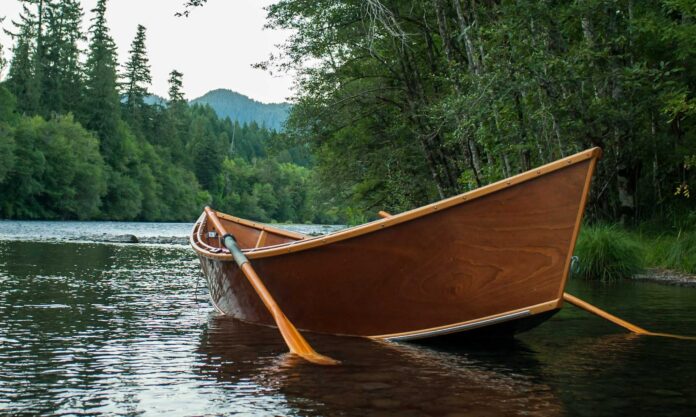
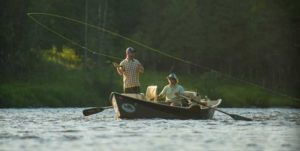
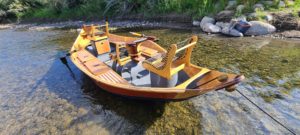
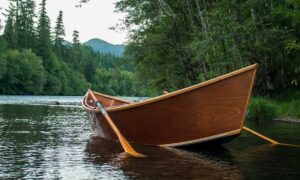
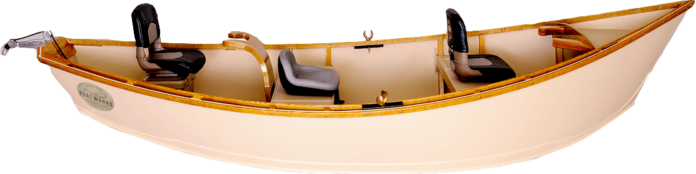
Shaun Hargrave shares the Boulder Boat Works story and how he came to own one of the unique polymer hulled drift boat designs on the water.We talk a little about drift boat fly fishing but get more into some of the nerdy specs on boat design and history.
Shaun describes how their boat design does not chip and there is very little maintenance overall and has a ton of great features. We also find out why they developed a river skiff and why it’s so killer for trout fishing.
Click the button below and listen to the Boulder Boat Works Podcast with Shaun Hargrave:
19:40 – We talked about NRS fishing frames and the great company and service that NRS provides. This is the same company that produces the Boulder frame.
29:15 – We talked about Prince Helfrich and the early drift boats. There is a 100 year old history of drift boats and a cool transition over the years.
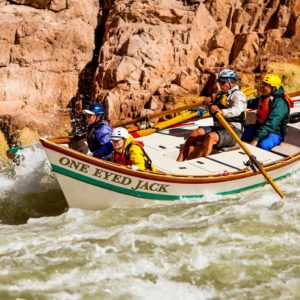
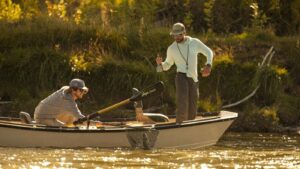
35:00 – The DC 10 is the decked over boat that was used for the Grand Canyon trips. Here’s a pic of the Boulder Boat in the whitewater.
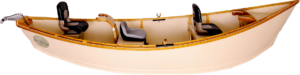
Polymer allows you to hit rocks and slide off with no noise.
Very easy repairing if needed in a few seconds minutes
the skiff mitigates wind
lower side for landing fish
maneuverable in the water due to the rocker
full walk-around design
Customizable rod trays, and seating
Boulder Boat Works Videos
Boulder Boat Works Conclusion with Shaun Hargrave
We hear about how Boulder Boat Works came to be and how Shaun Hargrave came to be the co-owner of one of the unique drift boats on the market. They use a polymer mix with wood highlights to make a beautiful and indestructible drift boat.
Ken Morrish is on the podcast to share the story of how he built created and became one of the leading travel companies at Fly Water Travel plus we dig into some tips on dry fly tying design and the top 6 dry fly patterns Ken created.
We hear how it came to be with a meteoric start after completing an expensive private college degree but quickly moving up to Alaska to guide. We also find out how Ken has produced some of the great dry fly patterns in the game.
Click below and listen to the Fly Water Travel Podcast with Ken Morrish:
04:45 – John Gierach was on the podcast in episode 47 and talked about a liberal arts degree and his story of becoming a leading fishing author.
08:05 – Marc Bale is a good friend of Ken’s and a big player in the fly fishing industry. Ken says he’s the best-connected person in the world. Marc was also a big part of purchasing Fly Water Travel.
10:45 – Struble is how Ken met George Cook for the first time. George was on the podcast in episode 131 and covered the history of NW spey.
13:45 – Fly Water Travel started after Ken connected with Brad Jackson who was the co-founder of the Fly Shop in Redding California. Ken tells the story of how it all came to be in the travel space.
21:15 – Far Bank purchased Fly Water Travel recently. Far Bank owns Sage, Rio and Redington. I’ve had the main man behind RIO, Simon Gawesworth on the podcast in a past episode.
Ken Morrish shares the story of how he created Fly Water Travel, one of the big players in fly fishing travel. We also dig into some of Ken’s dry fly patterns with over 40 available in the commercial market.
Ken covers the top dry fly patterns of his career for steelhead and trout fishing. We get a little behind the scenes glimpse at one of the leaders in the space of fly fishing travel and fly design.
John McMillan is on the podcast to give us a steelhead report and talk about our northwest steelhead runs, the ups and downs of anadromous fish cycles and why John is optimistic about the current status of steelhead. John has a skill for clarifying important topics and breaking down complicated issues for the rest of us.
There is no question this one will go down as one of the great podcast episodes of the year and one of the first deep dives from this podcast into a few conservation topics related to steelhead and salmon. The North Umpqua, Olympic Peninsula and Deschutes are all covered in this one and much more!
This blog post was originally published on January 21st, 2020. On January 16th, 2021 this post was updated with more recent content and links.
Click below and listen to the Steelhead Report with John McMillan:
28:50 – John talks about the highest priority basins on TU’s list for recovering and protecting wild steelhead.
33:00 – We note the reason steelhead disappear in Alaska as you move north and note that John was on the Barbless podcast where he covered many similar topics as we covered today.
35:50 – The Wild Steelhead Initiative is John’s focus now for Trout Unlimited. The goal is to identify those best last places for steelhead.
38:00 – We talk about the Big Fundamental, aka Tim Duncan and how this applies to steelhead recovery based on limiting factors. There focus for each basin is Run size, how many total anglers fishing, total number of fish caught and how many steelhead escaping to spawn.
56:00 – Rainforest_steel is John’s Instagram handle where he shares some great underwater pics, videos and summaries of steelhead life histories.
1:05:00 – We talk about John’s new podcast coming out soon. I’ll add a link when it’s ready to roll. The guys at Barbless were a big part of helping to get John fired up creating a new podcast.
1:13:30 – The Steelhead Caddis and the String Leech are Johns goto flies for Summer and Winter Steelhead respectively.
John McMillan covered all of the big issues when it comes to steelhead recovery and the current status. Snake River dams, hatcheries and habitat issues were all covered today on the podcast. John has a talent for breaking down the big issues for the rest of us. Hope you enjoy this one with one of the best. Leave a comment below if you want to hear more conservation-related episodes.
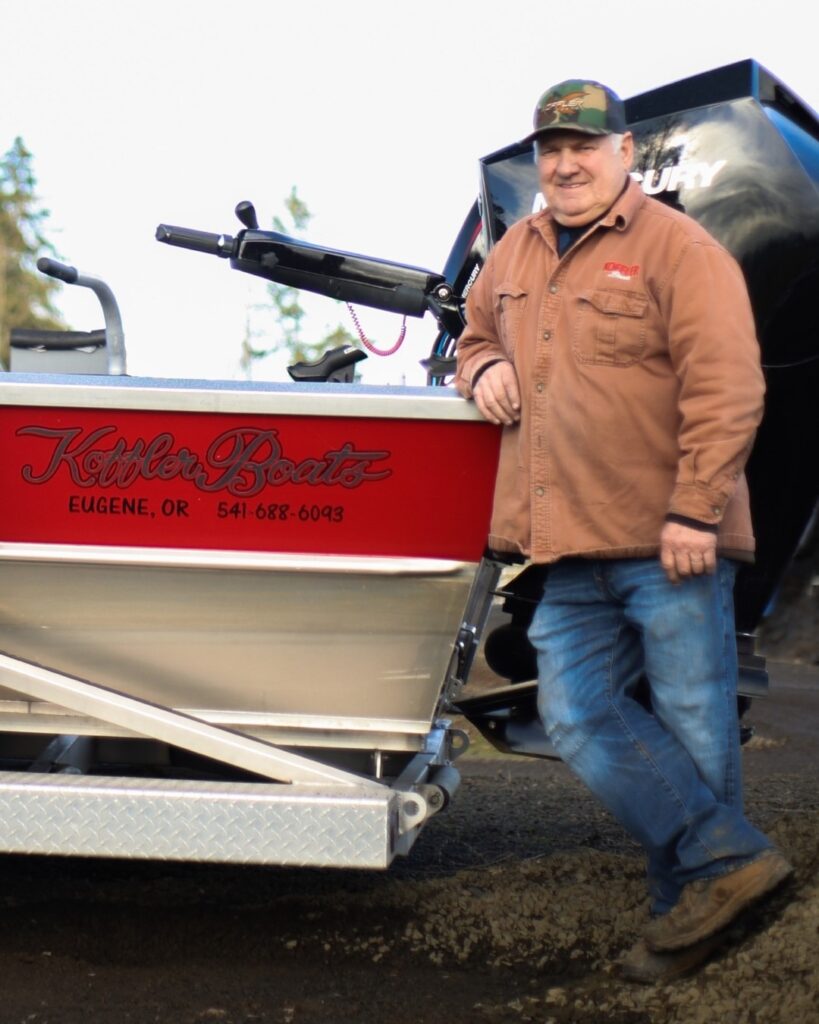
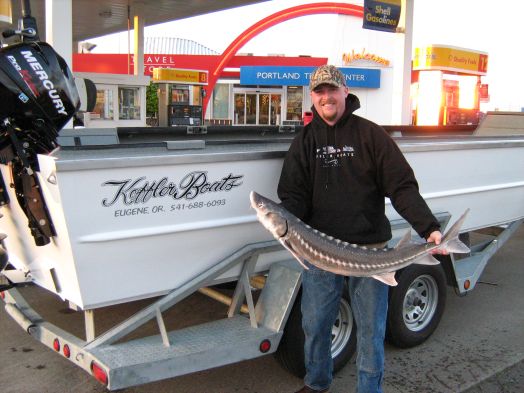
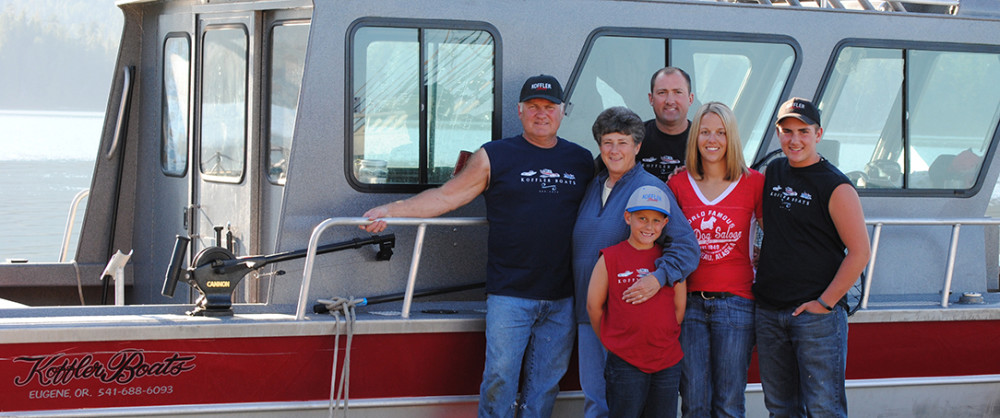
I had the pleasure of sitting down with Joe Koffler from Koffler Boats. Joe is the son of Bruce Koffler, and today, we hear how Bruce turned a small aluminum gutter business into one of the top aluminum drift boat builders in the country.
I have been using a 17′ Koffler drift boat for many years now and love it for the carrying capacity, so I’m really excited to get into the full Koffler story. In this episode, Joe shares some of his best maintenance and boat care tips (including how to protect the bottom of your drift boat), which are the best-selling boats right now, and why a drift boat won’t help you get up on step.
If you’ve ever rowed a Koffler or you’re just curious what makes aluminum drift boats so tough and dependable, this one’s packed with great insights.
Click below and listen to the Koffler Boats Podcast with Joe Koffler:
EpisodeShow Noteson Koffler Boats with Joe Koffler
How Koffler Boats Started
(02:17) Back in the early 1970s, Bruce Koffler was running an aluminum gutter business in Lane County when he decided he was tired of fishing from the bank. With the help of his old shop teachers, he built his first wooden drift boat, which he later sold to pay for Joe’s hospital bill when he was born.
Using leftover aluminum from the gutter business, Bruce built his first aluminum drift boat in 1974. Word spread quickly. Local anglers were tired of constant wood boat repairs, and by 1977, Bruce was building aluminum drift boats full-time out of Eugene, Oregon.
Joe and Bruce Koffler Photo via https://www.instagram.com/koffler_boats
The Early Days of Aluminum Drift Boats
(05:06) At that time, when Bruce Koffler started building aluminum boats, only a few others were doing the same. Page Stevens was one, Willie worked with Alumaweld before starting his own company called Willie Boats, and Wooldridge Boats was already building boats too.
Bruce worked in the gutter business during the day and built boats at night until 1977, when he went full-time. Aluminum boats like his are still popular today. Meanwhile, fiberglass boats like Clackacraft and other companies in Montana have also found a solid niche in the drift boat space.
Bruce Koffler Photo via https://www.instagram.com/kofflerboats/
(08:00) – Joe Koffler says running the drift boat business has been a great way to grow up. He loves meeting people, talking fishing and boats all day, and working in Eugene, Oregon, where the shop is located.
The first aluminum boats were 16’ x 48” with 48-inch bottoms. By the 1980s, they moved to 54-inch bottoms to carry more people, more gear, and float in shallower water. Today, boats go up to 18’ long and 60” wide for guides and anglers who need extra room.
(11:00) Fun Fact: I shared my story about almost swamping an old Fishrite boat on the Deschutes. That experience led me to get a Koffler 17’ x 54”, which handles weight amazingly and still performs well with lighter loads.
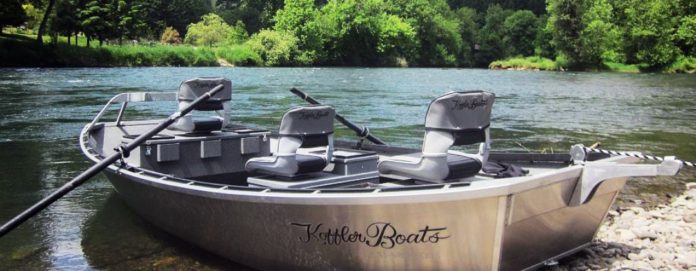
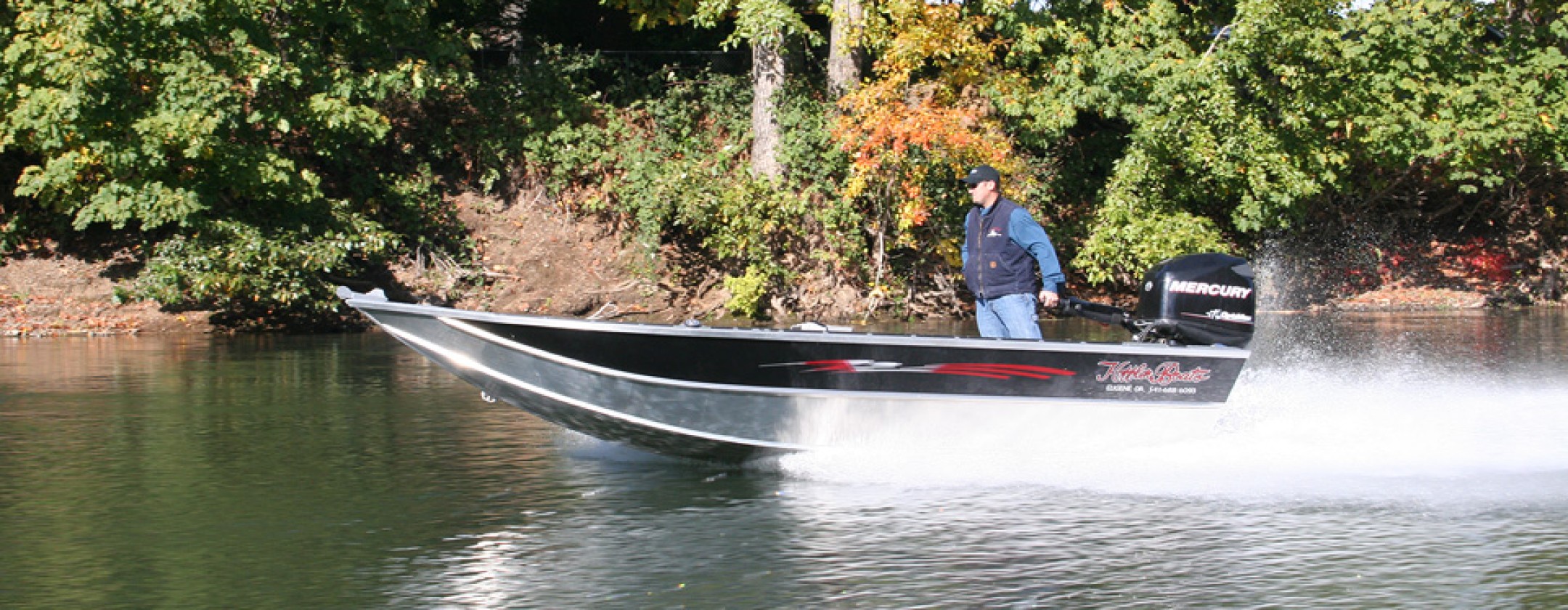
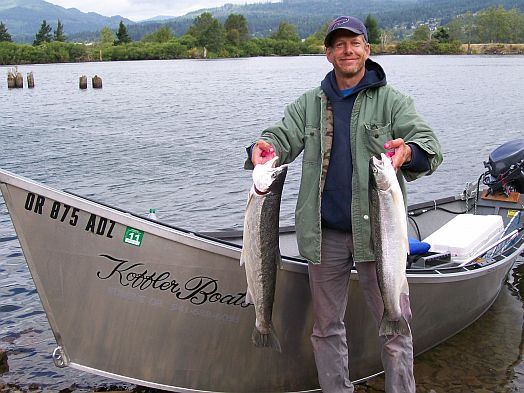
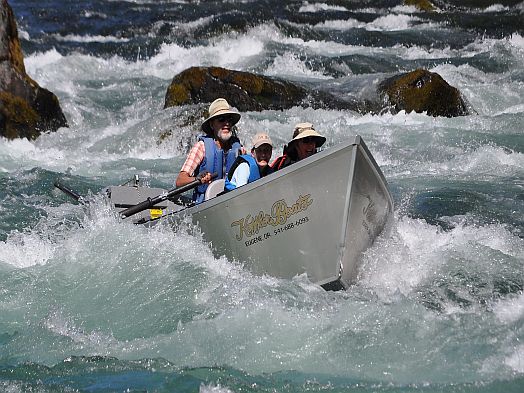
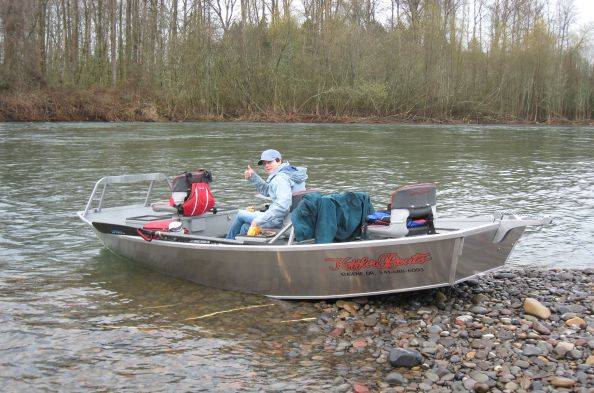
Photos via https://kofflerboats.com/fishing-gallery/
Beyond Drift Boats
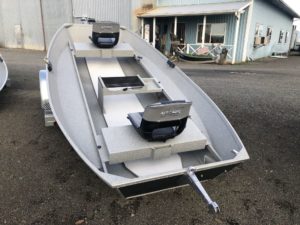
Joe explains that their main drift boats are Mackenzie-style. These boats are built for rivers with whitewater and tight spots. The Mackenzie style started with blunt noses for extra stability. Over the years, Koffler has seen other small companies come and go, but their focus on quality keeps them strong in the drift boat market.
Beyond drift boats, Joe’s team builds a variety of boats:
Powerboats, jet sleds, and deeper V-bottom boats for aggressive water.
Specialized landing crafts and sea dories for ocean use, especially on Pacific City beaches.
The Rocky Mountain Trout Boat
Durability and Maintenance of Aluminum Drift Boats
(14:54) Aluminum drift boats are tough. Joe explains that while wood boats are quieter when hitting rocks, aluminum can take a beating. You can get big dents, but they can be pounded out or rewelded. That durability makes them easy to repair and keep on the water for decades.
Joe says it’s not uncommon to see boats from the mid-’70s come back into the shop for a full refurbish — and after a little paint and metalwork, they look nearly new again.
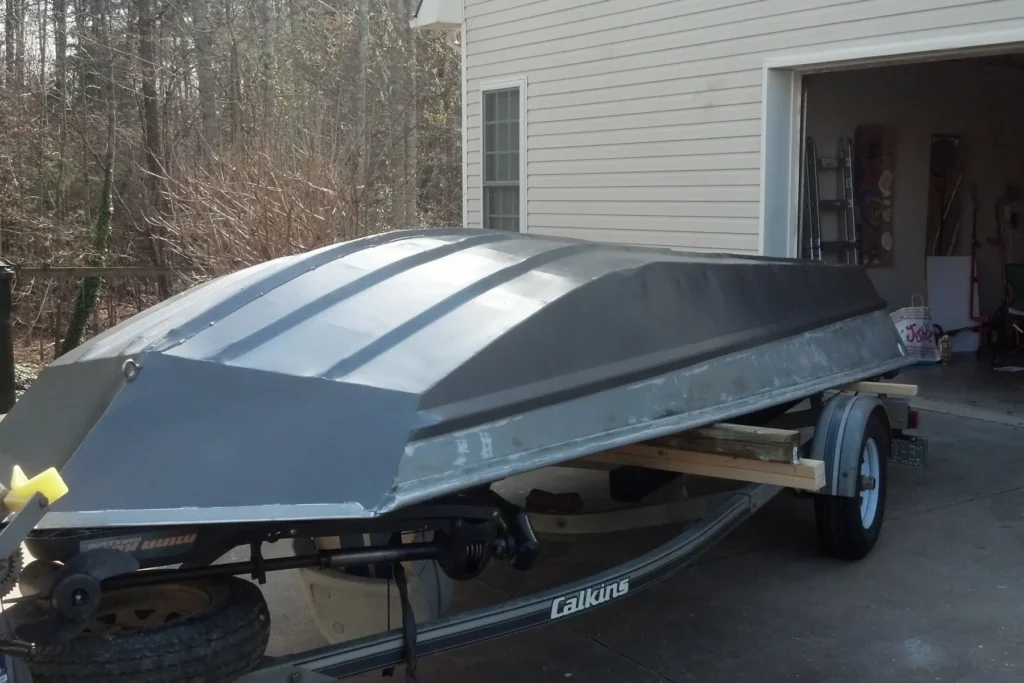
Side note: I recall pulling an old 16×48 Koffler boat off the Oregon coast. It had blackberries growing through it, and the trailer had rusted apart. Joe and his team refurbished it, pounded out dents, fixed the structure, and repainted it.
Protecting and Maintaining Your Koffler Drift Boat Bottom
(24:50) – Joe talks about how important it is to take care of the bottom of your drift boat. He recommends Wetlander, a slick new coating that helps the boat slide smoothly on and off the water. Unlike older coatings like Gluvit, which can crack and peel over time, Wetlander wears down slowly without flaking, which means fewer big repairs later.
Here’s what Joe shared:
If your boat starts sticking on rocks, it’s time to recoat because that’s when dents can start forming.
You can do it yourself by sanding down to bare aluminum and rolling on the Wetlander, but it’s messy work.
Joe and his team at Koffler charge around $575 for a new coat, or up to $700 if they have to remove old Gluvit first.
Dents, especially along the chine (where the bottom meets the side), can be fixed, but sometimes need welding and water testing.
Photo via https://wetlander.com/application/
Koffler’s Most Popular Boats
When asked about their best-selling boats, Joe didn’t hesitate. It’s the power boats.
He says most customers go for 16- to 22-foot models, with the 20- and 22-footers being the most common. These boats make up the biggest part of Koffler’s sales.
Joe also mentioned their trout boat is doing really well lately. A lot of anglers are looking to consolidate from two boats to one, and that model hits the sweet spot for versatility.
Why Rocker Matters in Drift Boats
Joe explained that a rockered boat won’t plane. To do that, a boat needs a flat planing surface in the back. His own design comes close, but because it still has a rocker, it won’t fully get up on plane.
He mentioned the Jet Drifter as one option that does plane. It’s light, small, and still rows well. But once you remove the rocker, you also lose that easy control in whitewater unless you’re using power.
So why is rocker so important?
It helps the bow lift as the boat drops into rapids.
A flat-bottom boat would push its nose straight into the wave instead.
Rocker lets the boat “ride” over waves instead of diving through them.
As Joe put it, without a rocker, you’d basically nose-dive into every wave, and that’s never fun.
“When you’re doing big white water, there’s those that have had trouble and those that will.”
-Bruce Koffler
Koffler Boats Conclusion with Joe Koffler
Joe Koffler is on the podcast today to share the Koffler Boats story and how they created one of the best aluminum boat companies in the world. Also, Joe shares some tips on taking care of your boat, including how to protect it
George Cook is back on the podcast to break down lake fishing with a fly with a focus on Issac’s Ranch out of Washington State. There are a ton of lakes scattered throughout Washington state that the tips we discuss today apply to.
We find out why George not only loves red-colored flies for steelhead but also for lake fishing. We also hear about orange, chartreuse, and other great tips if you want to catch trout off of the bank with a fly.
Click below and listen to George Cook on Lake Fishing with a Fly:
Floating line for chironomid fishing with 10 foot leader
Intermediate and the camolux by RIO is the best
Type 6 line or 6 inches per second sink rate
Look for flats, points and/or drop offs to find fish
Orange, white and red mid day in a size 8 is killer
The chartreuse Carey Special in the 1-5 pm period
Go with intermediate if you could only pick one line
3, 2 or 1x are all good for tippet
Fish the fly all the way into the nail knot hitting your rod tip
Cover the water from 10 to 2 systematically across
Videos and/or podcasts Noted in the Show
How to tie the thin mint
“Fish your fly all the way in until the the nail knot hits your rod tip.”
-George Cook
photo via: lake fishing with a fly
Conclusion with George Cook on Lake Fishing with a Fly
George Cook breaks out the steps to lake fishing with a fly as we focus on eastern Washington lakes. We find out why scuds are super prevalent but they don’t fish them.
We cover the Thin mint and how you can systematically cover the water fishing from the bank. There is enough content in this podcast to get you started and into trout on the lake even if you are brand new to stillwater.
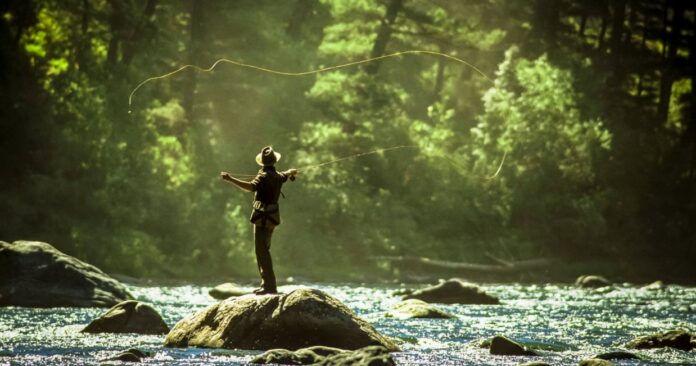
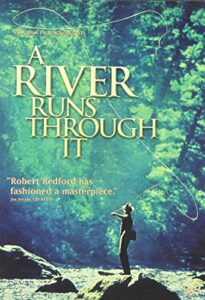
We hear the story behind the story and the movie A River Runs Through It. Still to this day the greatest fly fishing movie of all time.John Dietsch was the stunt man for Brad Pitt and lead the fly fishing team that created the fishing scenes in the movie.
We hear some of the great stories that made this the greatest movie of all time. The story was about family, about death and addiction. The story was not about fly fishing as Robert Redford told John many times during production. Enjoy!
This article was originally published on April 28th, 2020. It was update on January 10th, 2020 to reflect updated links and new content.
Click below and listen A River Runs Through Podcast with John Dietsch:
05:40 – Norman Maclean wrote A River Runs Through It about fishing with his brother in the 1920’s.
11:40 – “I’m haunted by waters was a famous quote from the movie.
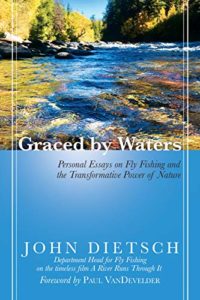
13:00 – Graced By Waters is John’s new book that describes John’s take on what “it” is. John also lost his brother Paul and has affected his life for over 10 years now,.
13:00 – Under the rocks are the words and the words are theirs.
We find out what the movie was about and why for Norman McClain it was about him coming to terms with the death of his brother. It’s a beautiful story and one that we should all watch or read again if you have ever lost someone.
I’ve been getting some questions about the need for a winter steelhead fly fishing gear list for the upcoming Olympic Peninsula Steelhead Trip.
I’ll breakdown the basics today so we can assure you have the major items given rain, cold, sun, sleet, hail or any and all of the above. Because it is February in the Pacific Northwest, we prepare for any condition.
Before we jump in, I wanted to note that some of the links below are affiliate links, which means that if you choose to make a purchase, I will earn a commission. This commission comes at no additional cost to you. Please understand that I have experience with all of these companies, and I recommend them because they are helpful and useful, not because of the small commissions I make if you decide to buy something. Please do not spend any money on these products unless you feel you need them or that they will help you achieve your goals.
And please note that you can reach out to me anytime here if you have any questions about any of the products listed below.
Click below to get this guide as a clean PDF Download:
Click below to listen to the Winter Steelhead Fly Fishing Gear List podcast:
Before we jump into the weeds a bit I wanted to share a link to the wet fly swing resources page which includes a number of other products recommended by guests of the podcast. Click below to take a look at the other recommended fishing gear items:
I. Winter Steelhead Fly Fishing Gear List Breakdown
Here’s the break down for each of the above items listed under fishing gear for winter steelhead. Note, that I don’t cover it all and there is plenty you could pick up on top of this. But this should get you started if you are new to steelhead fishing during the winter.
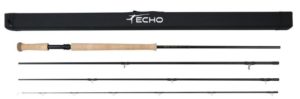
Two Handed Fly Rod #8-9 – There are a lot of great rods on the market so this is not an easy thing to just pick one. But for me, I have used and love Echo rods for many years. A super durable rod at a great price. Here’s the Echo Full Spey that I recommend. You get a free spey line if you purchase through this link. For winter steelhead I am using and recommend the Airflo Skagit Fist.
2. Two Skagit heads – One standard and the other a dual or triple density line. I’ve been using the Air Flo FIST which is a triple density skagit line. You can purchase one here at the Gorge Shop. Take a look at Tim describing the FIST and what makes it unique.
3. Various Sink tips from 3.9 inches per second to 11 inches per second. Lengths 7.5 feet to 15 feet. Again Air Flo has the Flo Tips which are similar to the other brands out there and cover the spectrum. You can get custom cut tips if you need more control of your length.
4. Single Handers 9.5 foot #8 with matching dry line. If you want to go high end you can check out the new G Loomis Asquith for one good example of one of the best rods on the market. I have not used the Asquith but the Gorge Fly Shop highly recommends this rod.
5. Reel – I could list a crap load of reels right now that will work for steelhead but as you likely know a reel for steelhead has two main reasons for living: 1 – To hold a lot of line and backing, and 2 – A very good drag so you can slow down a fish that might get a little spunky on you. Love that word! Taylor Fly Fishing is one of our partner companies who have plenty of great reels.
6. Tippet – Maxima works well for me as it is stiff and super durable. I build my own leaders with an 8 lb tippet at the low end of the spectrum. I find that for smaller summer fish 8 lb works but 10, 12 or even 15 lb is common if you want to assure you don’t break off any of the monster fish you might run into.
I wanted to share my favorite knot for tying your fly to your leader, the open clinch knot:
To be honest I’m not even sure if that’s the correct name for that knot. Let’s look at what Simon Says:
7. Hook file – Check your hook periodically to make sure that it’s sharp. Mark shares a few sharpeners you can purchase as well as a tip on checking your hook for sharpness. The drag on your fingernail method. Take a look below to see how to test it:
In this video Mark from the Welches Shop describes how to sharpen your hook and how to test if your hook is sharp enough in this video:
8. vest/pack – Take a look at Fish pond or Simms for some great dry packs. Here is the Thunderhead Sling.Full disclosure – I have not used this but is on my list for Christmas list this year!
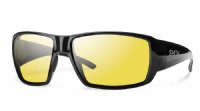
9.Polarized glasses and chums – I’m a fan of smith but the most important thing is to get a lens that works well in low light conditions. I love a yellow lens or some of the specialized Smith lenses are great. I usually bring two pairs of glasses. One for sun and one for overcast, but I know there are some lenses that cover both. Leave a comment for your recommendation if you don’t use yellow lenses.
10. Fly boxes and flies – GrabFlies.com is helping to sponsor the OP Trip this year. If you want to pick up some flies from Jeff that are specific for the OP and support the podcast, click this link. Listen to my podcast episode below with Jeff Layton:
Click below to listen to my Interview with Jeff Layton:
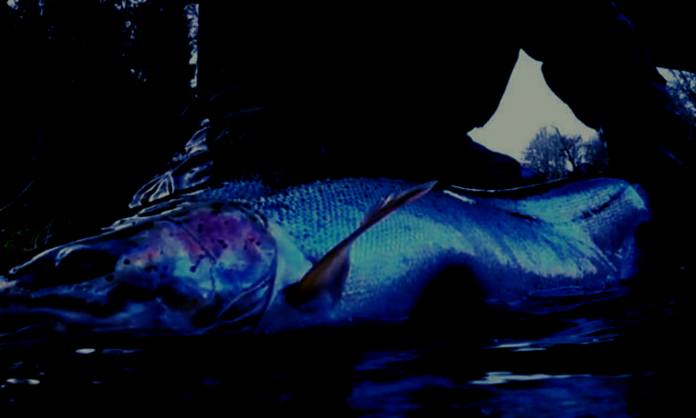
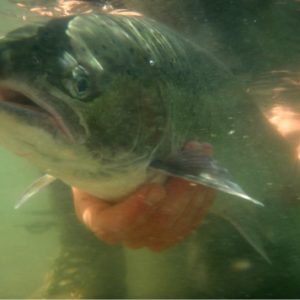
The Artifical Inteligence being the number 1 goto pattern for Jeff on the OP. The fish below was caught the week after he did the above podcast with me on the OP and the summary below comes from an email Jeff sent.
Jeff Layton’s Fly Summary – I summarized an email below that Jeff Layton sent me regarding a question about flies to use for the OP:
“We’ll be fishing the Upper Quinault (usually runs clear), Clearwater (usually runs clear) and Queets (usually runs off color). I say this as it means you should have flies from 2 – 4 inches. (2.5 – 3 inches mostly)
Hooks:
Hook size: Strong 2 hooks like Owner SSW, or Owner SSW #1, or OPST barbless #1. Smaller flies = smaller hooks. But if you hook a 20 pounder, a size 1 hook will do the job. A #2 could straighten, but I have landed plenty on them.
Materials:Rabbit, Marabou, Ostrich…
Dumbbell eyes: Medium (3/16″ 4.8 mm), Large (7/32″ 5.5 mm). All depends on the fly dressing. Flies with lots of material will need large eyes, cones (1.4 “) or no weight at all. Note: Queets can be off color and look deep but you are usually fishing water 2-4 feet – don’t need a lot of weight. The other two rivers depending on flow you are fishing buckets and may need to get down.
Shanks:
Shanks: 25 – 40 mm. I would say the popular thing to dress now is with 25MM shanks, with extended stinger hook using mono or wire on a single stage Leech or Intruder.
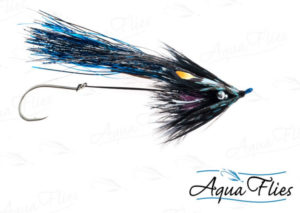
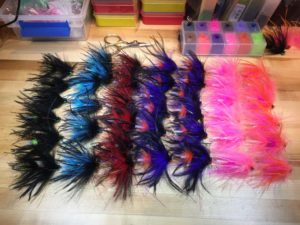
Fly Colors: Black Pink, Purple Pink, Black/Purple Pink – any of these. If the water is off color, this is the fly
Black/Blue, Black/Blue/Chartreuse, Blue – any of these when the water is clearer and also later in the winter, March, April.”
11. Waders – I’ve used Simms waders for a long time. They are one of the most durable and comfortable waders out there but there are plenty of good companies.
(please note as part of the OP trip, Jack does not include waders or boots)
12. Wading Boots and Studs – I love felt boots with studs. This gives you a little better traction on some of the slippery surfaces and pretty much better for all around wear. Rock Treads has a really great product you should check out.
14. Fishing Nipper – And don’t leave home without a high quality pair of nippers. Finger nail clippers don’t cut it (pun intended) anymore. We love LidRig because of the convenience of a magnetic nipper on your lid.
Here’s the break down for each of the above items listed under fishing apparel for winter steelhead. These are the items that keep me warm and toasty on those challenging and blustery days on a February morning.
The big takeaways for clothing for winter steelhead is that wool is good, cotton is bad. Synthetics can also be great. And layering is the key when heading out for winter fish. I’ll cover more details below.
Please note I’m a man and most of the links that follows are male links.
1. Wool Socks – Much of the time we are standing in water that’s cold enough to make you wonder whether that steelhead will really move to swipe at your offering. And the more you stand around the more you feel it. I like to have two different weights of wool socks. A lighter pair and a heavier pair for those extra cold days. I like wool.
There are other things like battery powered socks but have never used them. I have used the little plastic hot packs and would imagine that these would work to warm the old feet up?
2. Base Layer (bottoms) – Let’s keep working our way up. I have used many different brands but find that supporting companies like Patagonia is important. So, here’s a link to their mid weight base layer.
Here’s what Patagoinia says about this product:
The smooth, soft face makes for easy layering and HeiQ® Fresh durable odor control keeps things fresh
Soft, brushed, fast-drying elastic waistband for added next-to-skin comfort. Locker loop for hang-drying.
Fabric’s diamond-grid pattern next to skin provides superior warmth, breathability and moisture-wicking performance
Gusseted crotch for comfort and unimpeded mobility
Functional fly and flatlock seams to minimize chafing
Stretch for added comfort and improved fit during movement
Fair Trade Certified™ sewn
Sounds pretty F’ing good right? I typically stick with a mid weight but you could go heavier if you need extra warmth. I’m kind of a hiker when out and love staying mid so I can cover some ground without getting too hot.
3. Fleece Pants – Let’s just stick with Patagonia on this one. Here are the R1 Fleece Pants. I still have an old pair of Patagonia fleece pants that I’ve worn for about 20 years. The elastic waist band is worn out put I still use them because they are the perfect mid weight layer. I can run a marathon in them or sit in the icy cold with my waders and still be good and comfy.
4. Shorts (Optional) – I love wearing a pair of shorts as my third layer on my lower half. I will have the base layer, then a pair of shorts, then the fleece pants. I find that it gives a little more warmth where you need it, but keeps your lower legs free to move and not get too hot. The upper body is a little different. Let’s get into that next.
5.Base Layer (Tops) – I like to work a 3-5 layer process for the top and depends on how nasty it is out. Remember how I noted layering at the top of this section? Take a look below for my 5 Step Layering Process Summary. Same product as the base layer bottom above.
5 Step Layering Process for Winter Steelhead
1st Layer – Long Sleeve Mid Weight Base layer of polypropone or similar material
2nd Layer – Short Sleeve Mid Weight T Shirt
3rd Layer – Fleece Hoodie
4th Layer – Fleece Vest or Jacket
5th Layer – Rain Jacket or Shell
6. Base Layer T Shirt – I think this is kinda like my shorts layer (#4 above). Not totally needed but do love when you get a warm day and you can peal off everything accept for your first layer and T-Shirt layer. Again, a good poly or fleece material so you stay warm even when wet.
7. Hoodie – I’ll be honest and tell you that the hoodie is my #1 goto piece of clothing on and off the water! There’s something about tossing the hood on or off based on the conditions and it gives you just the right amount or un-amount of warmth to the head and neck. By the way, did you know that the majority of heat loss comes from the back of your neck. Is that really true? I don’t know but do know that I love a good hoodie on my head.
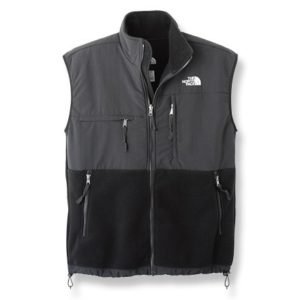
8. Fleece Vest or Coat – This is the 4th layer and an important one on those cold days. If it’s not super cold I will go with a fleece vest or switch to a fleece jacket if it’s frigid. I have been wearing my North Face Denali Vest for so many years and it’s freaking amazing. Love the two upper pockets, big pockets and high collar.
It also looks like North Face has brought back their Denali Jacket now under the retro title. I also loved my blue Denali full sleeve jacket. Literally wore holes in the sleeves.
9. Raincoat or Shell – The 5th and last layer in the process and maybe the most important. I’ve used just about every type of rain shell but find that a mid to heavy is my preferred. I also like to have a shorter wading jacket style to you can keep the pockets dry when wading deep. I’ve used Simms for years and most know that they make some of the finest gear in the biz.
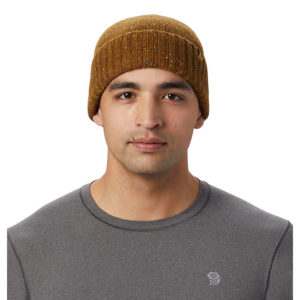
10. Stocking Cap – A nice warm and wool cap is what I prefer. If you can find a wool cap with a little fleece liner to keep in soft and less itchy go for it. Wool is the best material for the wet and cold so you should try to find wool. Here’s a recent wool blend cap that I picked up from Mt. Hardwear:
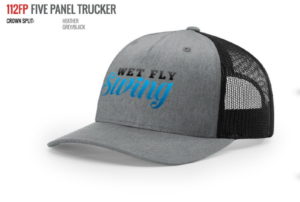
11. Hat with Brim – Unless it’s really cold you will usually catch me wearing a baseball style cap. Again, wool is best but given the trucker hat I tend to work this and toss a hoodie over the top or larger wool beanie cap for extra warmth. Of course I’m going to promote the Wet fly swing Trucker cap here.
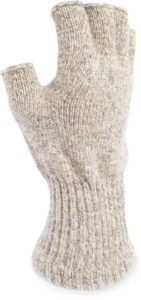
12. Wool Gloves (fingerless) – I should have probably started with this one since it is by far the one piece of gear that is a must have. It’s critical that my hands stay warm but that also allow me to tie knots. The Wool fingerless gloves are where it’s at and stay warm even after grabbing the caudle peduncle of a fat winter steelhead. I love a pair that REI sells and are super basic and cheap. Bring two pairs of these so you have a dry pair for the next day. Here are the Fox River Gloves I Love:
13. Down Jacket – If I’m being honest with myself, I guess this is a luxury item? I’ve still got the orange Columbia Sportswear Jacket that I wore for years including on the Babine River trip aka – 12 cold ass days with hairy stinky guys trip.
The trip was cold, and wet, did I say cold? But having that down jacket with my waders in the morning gave me some hope. I would wear other fleece during the day and save that jacket for getting off the water.
When back at the tent, I’d strip off the semi wet fleece (more from condensation and hiking than leakage) jacket and slip into the puffy warm of goose down against my skin. You can stuff this down super small so you might as well toss one in.
III. Winter Steelhead Fly Fishing Gear List Bonus Breakdown
Snacks/Broth
Guide Book/Maps
GPS or App
Wading Staff
Water Bottle
Dry Bag/Pack
Aquaseal/Duct Tape
Water proof phone case
camera/phone
Head Lamp
Knife or multi-tool
Net
1. Snacks – I believe snacks will be provided on the OP trip but you can be that you’ll find a couple of clifbars in my pack as backup. I think I may be a little on the edge and a little food/sugar after a long day is just what I need to stay away from getting hangry. I also love a little hot broth as well.
2. Guide Book/Maps – You won’t have to worry much for the OP trip since we’ll be with a guide but a guide and/or map of the river can be very helpful. Even on rivers I know very well, I enjoy marking new spots on a map and keeping an eye on our path.
I was once called the cartographer so there’s that Shannon.
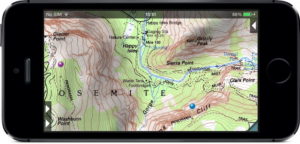
3. GPS or App – I use a great app on my phone called Topo Maps by Phillip Endocot and have used OnXHunt App which has some really great landower information. Topo Maps is free and allows you to mark locations with decent accuracy. Short of a nice full on GPS unit like a Garmin, either of these apps will do the trick.
4. Wading Staff – I’ve always been an anti-wading staff guy. Like I’m too bad ass for a staff. This changed last year and not because I fell or almost died or something. But because I caught more fish that day I first used one. They are great for tough wading but they also help you to hold tight in areas that may normally not allow you to fish.
5. Water Bottle – Not a heck of a lot to say here but will note that I feel like I never drink enough. Between coffee, IPA and kombucha I always feel like I’m good.
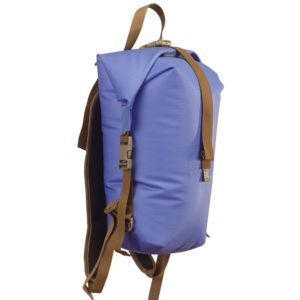
6. Dry Bag/Pack – You need a way to keep your stuff dry during the day. a place to keep some backup clothes, lunch and maybe your phone or camera. I use a dry bagpack that was actually produced by an old friend. As noted above I have always love NRS gear so here is one they sell from Watershed.
7. Aquaseal/Duct Tape – It never hurts to have backups. You never know when a little glue and duct tape might save the day. A little tip if you want to always have duct tape on you – wrap some around a water bottle 20 times and now you have a roll that sticks with you.
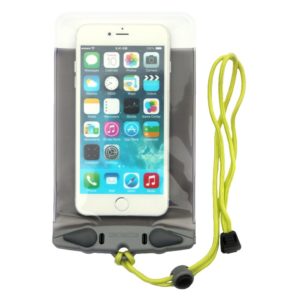
8. Water proof phone case – If you are a leave your phone in the car type of person then you may be able to avoid this one. But if you are like me then you likely have your phone with you to take pics. I’ve talked about fishing photos with Brian O’keefe on the podcast here so I won’t argue wheether the smart phones have made us better or worse photographers but did want to share another product from NRS that will keep your goods dry:
I was a PC person and then became a Mac. It started with an iphone and now can’t imagine using anything else. But, I digress.
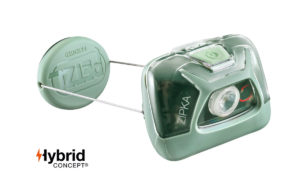
10. Headlamp – I have this weird thing with headlamps as well. Instead of turning lights on around the house, I click on the headlamp that’s around my head most nights. And if it’s not on my head I love how the Petzl Zipka also turns into a watch light, or at least that’s what I call it (it fits perfectly around your rist). I don’t go anywhere without my Petzl and neither should you.
11. Knife – I have about the same amount of knives as I do headlamps which means I probably have some type of a problem. Right now I’ll tell you that Gerber is my goto knife. They are local, small and clean plus they keep their edge.
12. Net – I was never a net guy. Still really not now but do appreciate the value of the net for the angler and for the fish. If you are new to steelheading then a net and a fishing partner will help you and may protect the fish.
and now a few podcast episodes………
IV. Popular Podcasts Episodes for Steelhead
WFS 002 – Steelhead Fly Fishing Interview with Jack Mitchell from the Evening Hatch:
Conclusion for Winter Steelhead Fly Fishing Gear List
Shhhhhwoooo! Did that feel like a lot to you? I put some energy into that one but I feel like it’s a good resource especially if you are new to winter steelhead fly fishing.
I shared the best products and resources as well as a step by step guide to make sure you have the right items for winter steelhead fly fishing. If there is anything I left off the list please leave a comment below.
If you’re interested in the right spey rod for steelhead, Click here to see the Spey Rod that has helped me improve my spey cast and find more steelhead at a super reasonable cost (You also get a free speyline if you pick-up the Spey Rod here). By the way, the link above is an affiliate link, which means I earn a commission if you do end up purchasing through that link. It’s at no extra cost to you, and please if you have any questions related to this product, please let me know and I’d be happy to answer them for you.
Today, we jump right into the step x step of how you can tie nymphs for fly fishing. The videos that follow will walk you through the basics of tying a nymph.
In the last Module 2, you should have worked through the basic techniques and practiced tying the wooly bugger each day this week. How does it feel? Not perfect? Don’t worry, it doesn’t have to be perfect.
In fact, an imperfect fly is usually better. I can’t tell you how many times I’ve hammered fish on a fly that was thrashed. So, don’t be afraid to use the flies you just tied even if they don’t look great.
If you want a reminder about Module 2, just click here and you can get caught up.
You should also have ordered and received your materials for this week’s fly – The Pheasant Tail.
If you still have questions this week, you can connect with me directly here. Just let me know what you are struggling with.
Now we’re ready to jump into this weeks content.
We’ll be covering nymphs today and will be tying the pheasant tail nymph. We will also talk about different hooks, weighting flies, beads, look at the thread base and other nymph tying options.
Table of Contents – Nymphs for Fly Fishing
Chapter 1: Introduction to Module 3
Chapter 2: Understanding Fishing Hook Size and Shape
Chapter 3: Fly Tying Thread Base
Chapter 4: Weighting a Nymph
Chapter 5: Beadhead Flies
Chapter 6: Tying with Flash
Chapter 7: Action Item Video for Module 3
Chapter 8: Fly Materials for Next Weeks Fly
Chapter 9: Conclusion
Chapter 10: Action Item List for the Week
Ch. 1 – Introduction to Nymphs for Fly Fishing Module 3
Before we get into the next section I wanted to highlight a couple of items that I will cover below but not in super detail. Euro nymphing and the hooks and flies that go along with it include jig hooks.
There’s a hook for just about every type of bug out there and then some. You can get as specialized as you would like. I discuss the different hooks in general and the details of the hook types and shapes we are using in this course.
As you start expanding outward with your fly tying you will eventually pick up new fly sizes and shapes. For this course, there are a few general hooks that will work for the flies we tie and a number of other types.
First let’s talk about general terminology. This linkgoes into the details of the terminology around the hook itself. Key items like the hooks eye, bend and barb are covered here. Review this page before moving on, but I want you to focus more on the type of hook you will be using.
The different patterns we use call for different hooks. Last week you tied a wooly bugger which used a streamer hook with a 3x long shank. Now you know that many streamer hooks have a larger x number. 3x being longer shanked than a 2x. The larger the x number, the longer the hook.
This week we are going to tie a pheasant tail nymph which used a shorter and more compact hook. These nymph hooks are often thicker and stronger as well. Adding extra wait to help the fly sink.
Dry fly hooks on the other hand, are very light hooks that are intended to float on the surface. These hooks typically have lighter wire hooks compared to the same size nymph hook.
Hook sizes are a little backwards as well. The larger the hook size number, the smaller the hook. So, a size 18 dry fly hook is smaller than a size 10 dry fly hook. We will be using sizes 6 through 16 for this course, but there are plenty of hooks in sizes 18 + that you may use for trout.
I’m not going to get into the names of the different hooks for this course but we will cover this in a subsequent course.
We talked about this briefly during the wooly bugger session, but I want to remind you about thread base. Thread base is just the base layer of thread that goes on the hook before you start adding any materials.
A thread base will help minimize chance that your materials will twist on you while you are tying.
It’s usually easiest to start at the hook eye when you put your thread on the hook the first time. Then just wrap back until you reach the back of the fly.
Putting extra weight on a hook can be critical in some fishing situations. It depends on the depth and speed of water as well as other factors, and thinking about this as you approach the vise will be helpful.
I’m going to show you how to wrap weight onto your hook prior to tying a fly. this weight willbe in the form of lead wire which comes in different diameters and weights. It might also come in the form as copper wire. Or could come in the form of a weighted beadhead.
Here’s how you add weight in these few examples. There are times when you might only want to put one strip along the top of the fly. This is referred to as a keel. How do you know how much weight to use? This will vary so keeping a variety of weights in your box will be helpful.
We will talk about beads a bit more in the next section.
There is an additional technique called flattening the wire. Flattening the wire helps the bug look a little more similar to nature as many stoneflies and other insects are not completely rounded. You can imitate gills and other nature features after flattening the fly.
Additional simple “add-ons” that you will likely use when tying nymphs include beads and flash. A bead can add weight to the fly or just give it a little extra sparkle or something a little different. A little flash in a fly can be just want you need to mix things up.
Don’t be afraid to test it out but don’t use too much material. Sometimes just a little flash is all you need. For any given pattern a flash version and a traditional non flash version is good to have in the box.
Here’s how to place a bead on a fly. Beads can be many different colors and gold isn’t always the best. Here’e a few different types of flash, but they all do the same thing. Add something to attract the fish and change things up a little.
It may seem a little weird to add something as synthetic and bold as this sparkly stuff but the fish don’t seem to mind. In fact they will eat it up. Like a pink hot spot in a euro fly, a flashback Krystal flash wing case can kill out there!
You will be imitating air bubbles and similar glaring irregularities in the water. We are usually tying these on nymphs so the fish won’t have a lot of time to verify they are plastic.
Play around with adding flash and testing on the river. Check back with me on Instagram if you are reading along. Dave on Instagram @wetflyswing
Follow the step by step video to tie the first of your nymphs for fly fishing. Click here if you have a major hangup so I can coach you through. There are more basic nymphs you can tie but the P. Tail is one of the best so let’s go for it!
I also wanted to share another version of the Pheasant tail from one of the great fly tyers on the planet here:
This is a quick solo episode for the Wet Fly Swing Podcast and what we have coming for 2021. We also touch on 2020 and how the year went. We grew by over 60% because of you so wanted to thank you here.
I also share the focus for 2021 given that we will not change any of the posting schedule, a new show will still drop every Tuesday. We are also doing some big giveaways in 2021 that are going to be huge and provide a ton of excitement for the Wet Fly Swing Team.
Click below and listen to the 2021 Wet Fly Swing Podcast Introduction
05:30 – I noted the Fly Fishing Insider Podcast and the big giveaways we have going. Stay tuned as I’ll update you as we launch into the year.
06:06 – The Outdoors Online Marketing Podcast and the Jay Abraham episode that was huge.
08:20 – The Wet Fly Swing Team and Wet Fly Swing Media is two other bigs things this year. If you want to join the team reach out to dave@wetflyswing.com.
10:12 – The Wet Fly Swing app is one way to listen and grab bonus content.
If you want to join our email list and grab bonus updates —>>> WetFlySwing.com/email
You can support the show by sharing this episode or any past episodes with 2 other people today.
Conclusion for the 2021 Wet Fly Swing Podcast
I do a quick summary of 2020 and talk about what is coming for 2021. We will be surpassing 1 million downloads and 200 episodes in 2021. I also note the new position we are looking to fill in 2021.
If you have an idea for the podcast, want to join the team or just have feedback please connect with me in 2021. If you have never said hey or dropped me a message, please do this year. It makes my day better every time!
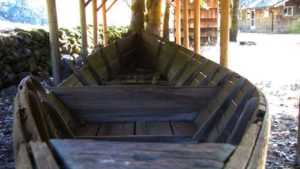
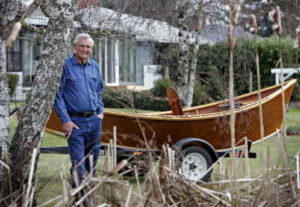
Roger Fletcher is here to share the history of the driftboat and how it all started back in the early 20th century with a few river guides that needed a better boat for whitewater. We discover the connection between the Rogue, Mckenzie, Grand Canyon Dories and why the name drift boat stuck over the river dorie.
Roger describes how the drift boat design came to be through a few key people over the last 100 years. Roger is the leading authority on drift boats so is very exciting to have him on the podcast today.
Click below and listen to the Driftboat Podcast with Roger Fletcher:
11:40 – Milo Thomson used the old scow boat and were the first boats on the river until 1925. Milo and the early guides on the river were there to focus on drift boat fishing and guiding their clients.
20:10 – I noted the Pete Mcbride video and Martin’s boat.
Driftboat Plans
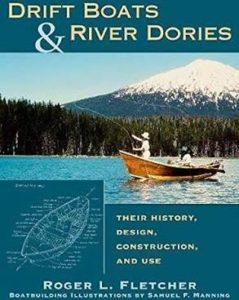
24:20 – We talk about the Dorie Book by John Gardner. In this episode we didn’t go deep into drift boat Plans but you can check out Drift Boats and Dories for 10 full plan sets and how to build your own boat.
There are a number of drift boat plans in Roger’s book but there are other resources around the web. There are various boat school, classes and forums that you can take advantage of.
29:00 – Veltie Pruitt is the guy who built the old scow for the river. Veltie shortened the boat and made it much lighter of a boat.
30:20 – in 1925 Prince Helfrich saw veltie go by in the new 13 foot boat. So Veltie built a boat for Prince and they built a life long friendship.
31:40 – Woody hindman moved in around 1934 to the area from Texas. Woody is maybe the most important person to the contemporary design. He built the first double ender and is basically what we see today in a contemporary drift boat.
35:00 – We talk about Ray Heater and the 14′ rapid robert has great carrying capacity and can get up on step
37:10 – Joe Koffler with Koffler Boats talked about getting up on plane with a sled in a recent podcast we put together.
Woody Hindman was the biggest influence on drift boats and was the guy who created the double ender which is what has given us the current drift boat design. His boat of choice became the 16′ double ender. He added the motor on the transom and is now the boat we see for most wood boats and drift boats.
Drift Boats for Sale
You can go to Ray’s River Dories for a new wood boat or Jason Hayes on the McKenzie.
Then over to Montana where many are stitch and glue style boats like the Cajune boats.
photo via: http://www.cajuneboats.com/
Wooden Boat People is a great place to find and sell wooden boats.
We also touched on Don Hill boats and the effect on the McKenzie boat style with a wider and more open boat plan.
DH Drift Boats is now owned by another person after Don Hills passing.
We discover the history of the drift boat from the guy who wrote the book on it. Roger Fletcher shares some great stories including how a little known boat builder from grants pass produced 35 of the greatest river dories for the Grand Canyon and are still going strong today.















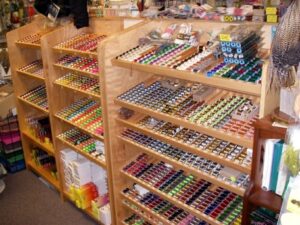
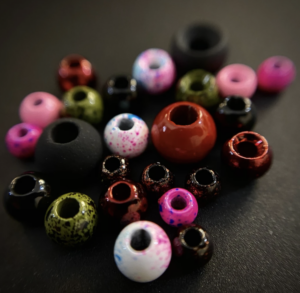
 We will talk about beads a bit more in the next section.