Home Blog Page 3

878 | How Fly Rods Are Really Designed: Inside St. Croix with Zack Dalton

How Fly Rods Are Really Designed

Today, we’re digging into how fly rods are really designed. Not the marketing side, but what really goes into the design, the testing, and why some rods last for decades while others fall apart.

Zac Dalton from St. Croix Rods is on the podcast today, and he walks us through how fly rods are designed from the ground up.

We talk about rod action and why faster is not always better, what durability really means for anglers who fish hard, and how different actions change the way a rod fishes and casts. We also get into cork, handles, and we even touch on the conventional side toward the end.

Hit play to start listening! 👇🏻🎧


apple podcasts

Find the show:  Follow the Show | Overcast | Spotify

Subscribe on Apple Podcasts

Subscribe on Android

Subscribe via RSS

(The full episode transcript is at the bottom of this blogpost) 👇🏻

Sponsors and Podcast Updates


How Fly Rods Are Really Designed

Show Notes with Zack Dalton on How Fly Rods Are Really Designed

Zac says he’s a lifer in this business. He started at Rio back in 1997, when the brand was still brand new, and even helped get the fly line manufacturing side off the ground.

He stayed with Rio through the Far Bank years until 2021, then stepped away for a bit before jumping back in with St Croix Rods.

How Fly Rods Are Really Designed: Inside St. Croix

Zac says St. Croix is a sneaky big company, especially on the conventional side. It is the largest rod manufacturer in the U.S., even bigger than most people realize. Fly rods are a smaller part of the business, but they are still taken seriously.

Zac wears a lot of hats, similar to his early days at Rio. He works closely with marketing and engineering and stays hands-on with the fly category.

How Fly Rods Are Really Designed
Photo via https://www.facebook.com/StCroixRod/

St. Croix’s Fly Rod Lineup

Zac says St. Croix does not try to be everything to everyone. Instead, they focus on a good, better, best lineup so anglers can choose what fits their style and budget. Some rods are built for presentation. Others are made to cover more water or handle bigger fish.

The Imperial is a big part of that story. It has been around since the late 1940s and is one of the longest running fly rod names still in production. Zac also talks about how newer rods build on that history with modern materials and design.

Some of the fly rod families we talked about:

  • Connect
  • Imperial
  • EVOS
  • Technica
  • Legend

Zac also shares that most fly rod sales are still freshwater focused, with a smaller but important slice going to saltwater and two handed rods. And yes, St. Croix has more coming down the line soon.

Fast, Moderate, and Everything Between

Zac says rod choice always starts with the angler. What action they already like. What they are used to casting. From there, St. Croix builds clear lanes instead of trying to be everything at once.

He explains the market is packed with fast rods already. That’s why the Legend Elite came back as a moderate-fast rod on purpose. Not to chase speed, but to give anglers something with more feel and definition.

Zac also says price point should not decide action. The rod should match the job it’s built to do. That is where specialty rods like Technica and TANNIC come in. They are designed to solve a problem, not just fill a slot on the rack.

How Fly Rods Are Really Designed
Photo via https://stcroixfly.com/collections/tannic-bass

The TANNIC Rods

The TANNIC series is built to solve a specific problem: moving big flies with authority. There are two versions, TANNIC Bass and TANNIC Muskie/Pike.

The Muskie and Pike models are designed for heavy lines and large flies, while the Bass models are more all-around warmwater rods. Even though they are labeled for predators, Zac says they work great for trout streamers and some saltwater fishing when power really matters.

Rod Choices for Tarpon and Bonefish

Zack says saltwater rod choice depends on water clarity, how fast you need to react, and how clean your presentation needs to be. Clear water fisheries demand control more than brute force.

  1. For tarpon, Zack’s go-to is the Evos Salt in a 10 or 11 weight. He likes how fast it loads for quick shots in the Florida Keys and how it delivers a clean, subtle presentation while still having the power to fight big fish.
  2. For bonefish, Zack usually reaches for a 7 or 8 weight. He prefers faster action rods here because they move line immediately and make it easier to redirect quick shots.

Blank Rods

Zack says custom rod building is still around, but it’s slowed down a lot over the years. There just aren’t as many builders as there used to be. St. Croix still makes blanks, but they don’t push them hard through fly shops anymore.

Two-Handed Rods and What’s Coming Next

Right now, St. Croix offers the Imperial Switch rod. Zack explains that a switch rod is generally thought of as something you can both overhead cast and spey cast with, although technically any rod can do both.

He hints that St. Croix has more two-handed rods in development but can’t share details yet. He suggests keeping an eye on the space over the next several months.

Some of that development is driven by Great Lakes fishing, and some of it is personal. Zack mentions that he’s close enough to the Olympic Peninsula that winter steelhead fishing is a real part of his life.

How Fly Rods Are Really Designed

Final Advice on Buying a Fly Rod

Zack strongly encourages anglers to buy rods through local fly shops whenever possible. That’s where you can cast rods, get real feedback, and match gear to specific fisheries.

If someone doesn’t have that option, he suggests starting by identifying what kind of fishing they do most. From there, match rod length, weight, and action to that application. Shorter rods tend to be more accurate. Longer rods are better at covering water.

He cautions against trying to make one rod do everything.


If you want to learn more about St. Croix fly rods and see which models fit your fishing, head over and check them out. Better yet, stop into your local fly shop and put a few rods in your hand.

How Fly Rods Are Really Designed

Sponsors and Podcast Updates

Related Podcast Episodes

Full Podcast Transcript

Episode Transcript
878 Zack Dalton 00:00:00 Dave: Zac Dalton works at Saint Croix Rods, one of the largest rod manufacturers in the country. And today you’re going to hear how fly rods really get designed, what makes the cut, what doesn’t, and why. Some rods last decades while others don’t. This is the Wet Fly Swing podcast, where I show you the best places to travel to for fly fishing, how to find the best resources and tools to prepare for that big trip, and what you can do to give back to the fish species we all love. We’ve got Zac Dalton on the podcast today from Saint Croix, and you’re going to discover why not every rod should be fast. We’re going to get into some different actions. They’ve had some for many years. We’re going to find out what durability really means for anglers who fish hard. And also about rod action, how that affects fishing and some casting. And then we’re going to get into a little bit on the conventional as well today towards the end. So stay tuned on this one. We’re going to get a nice update from Saint Croix here. All the good stuff we have going. Plus, Zac breaks down how they choose the right rod for the perfect fishing situation. We’re going to talk about corks, cork handles and actions and I hope you enjoy this one. Let’s get into it. Here he is Zach Dalton. You can find him at Saint Croix Rods. Com how’s it going Zach? 00:01:13 Zack : I’m doing well Dave. Thanks for having me on the show. 00:01:15 Dave: Yeah, yeah I’m excited to talk about this one. I, I didn’t even look back in the Cadillac. I know we had Saint Croix at least one episode in the past out there. We’ll put a link in the show notes to that one. Um, I always love telling the story because, you know, when back in the day, the old shop we used to carry Saint Croix, and I think for a lot of it, they were blanks because my dad was a big custom rod maker, and we used to make and I to this day, I’ve got one right sitting here next to me. I got a Saint Croix rod that I made, you know, in my, my, I wasn’t as good as my dad, but I love it because Saint Croix was a cool brand. They were out there and you guys are still out there. So I think we’re going to get updated on what’s new with Saint Croix and all that. But yeah, maybe first just take us back to your background. I know you worked with far Bank before. What’s your first memory in fly fishing? 00:01:56 Zack : Oh, Dave, I’m a lifer in this business. Um, so far, uh, so I started at, uh, Rio in nineteen ninety seven, when that brand was really in its infancy, um, and was part of the team that put together, uh, the fly line manufacturing equipment and helped get it off the ground. Um, believe it or not, I actually, uh, predate Simon in that business. 00:02:20 Dave: So was that before? Because we had Mark Bill on? I can’t remember now with the dates, but was that before far Bank came to be? 00:02:26 Zack : Oh, yeah. Yep. Um, so, uh, far Bank purchased Rio in two thousand and five, two thousand and five. 00:02:33 Dave: Okay. Yeah. Gotcha. So, yeah. So eight years before that happens, you’re in there. So yeah. So you’re in Rio doing just, uh, what was your role there? 00:02:42 Zack : Well, you know, it was. The business is so small. I think I was employee number eleven. So you got to wear a lot of different hats, you know, with a company that size. So, you know, doing everything from manufacturing fly lines, uh, mixing plastic to, you know, for fly line coding, customer service, you name it. Um, as the business grew, it kind of got a little bit more, you know, specific on what job duties and roles were and inevitably ended up in sales. 00:03:11 Dave: Okay. And, uh, and then you were there for like twenty years. So up until seventeen, is that the correct, uh, twenty seventeen? 00:03:19 Zack : Uh, no, I think it was twenty, twenty one. Uh. 00:03:22 Dave: Okay. 00:03:23 Zack : Yeah. Uh, and then I left, uh, far Bank that year took a year off. Um, and then kind of reengaged in the space with, uh, Saint Croix. 00:03:31 Dave: Yeah, with Saint Croix. So you’re back on. What’s it like now being with Saint Croix? And I don’t know the whole story, but does it feel different as far? I’m not sure the size of the company. I mean, Saint Croix has a pretty good strong background to in the conventional, uh, arena. 00:03:43 Zack : Yeah, yeah. No, uh, Saint Croix is a sneaky large manufacturing company, uh, predominantly in the conventional space. So they’re the largest USA, uh, rod manufacturer. Um, by a pretty. 00:03:57 Dave: No kidding. 00:03:58 Zack : Uh, sizable. Um, yeah. Percentage. Absolutely. 00:04:01 Dave: Oh, wow. So you’re talking all the the bass and the, you know, and all the conventional, you name it, uh, even even, I mean, all the species. Right. So Saint Croix is the biggest aw out there. 00:04:11 Zack : Yep. True statement. 00:04:12 Dave: Yeah. So the fly. 00:04:13 Zack : Yes. You know, there’s probably larger, you know, conglomerates coming out of, uh, Asia that have sizable volume. But for domestic production, it’s Saint Croix. 00:04:22 Dave: Yeah. And Saint Croix has always had, you know, a connection in the fly. So what is what is that like now there? Is it, uh, you with a small staff, large staff on the fly side. What does that look like? 00:04:33 Zack : Uh, well, you know, if it was, if I was given the amount of staff based off the percentage of business, I think it would still be me. Um, so I’m doing a lot of kind of the brass tacks, uh, of the category for the brand, but do have a great support staff with the marketing team, the engineering team, uh, and everybody else in Admin. Um, but. Yeah. No, it’s, uh, it’s just a like I said, the fly, uh, portion is a small percentage of the business. And, uh, the CEO of Saint Croix, uh, man named Scott Forstall was an individual that I worked with, uh, at Sage and Fairbank, uh, prior to coming, uh, to Saint Croix. Um, so we have some history there. And, you know, he liked what I was doing in the space and my time, uh, with my previous employer, um, and was excited to get me on board. 00:05:21 Dave: Yeah. And what do you do? What’s your daily like at Saint Croix these days? 00:05:25 Zack : Uh, maybe not too dissimilar from, uh, Rio in its infancy. You know, with, uh, it being a smaller category, I get to wear a lot of hats. Um, you know, those hats include managing the sales team, uh, product development. Um, yeah. Doing trade shows. So, you know, I think that a lot of these fly fishing businesses that are, you know, pretty small, you know, you’re always working with a smaller staff, with crews that are doing quite a bit of different, uh, you know, tasks throughout the brand. 00:05:57 Dave: Right. Yeah. It seems like with the rods out there, there’s so many, you know, small, medium, big size rods and and all sorts of in between. Right. And specialties too. So, you know, I’m not sure like with Saint Croix do you guys look when you think of development, are you thinking these are the categories, you know, whether it’s euro nymphing or steelhead or something like that that you’re focusing on or do you try to kind of cover it all or what does that look like for Saint Croix? 00:06:19 Zack : Well, uh, I think I think it’s hard for a brand like Saint Croix to have, you know, be everything to everybody. So we’re really focused on having, uh, a good, better, best story. That’s pretty, you know, robust as far as our assortment is concerned. And being able to give people the option, you know, based off of feature set, uh, carbon fiber technology to really get them into the space so they can, you know, start with our connect rod at two hundred and ninety five dollars and, you know, go from there to, uh, our Imperial rod that’s at a three hundred and ninety five dollars, and the Imperial rod is probably the longest continually produced fly rod under that namesake in the market. So it’s been in production. The Imperial has in one way, shape or form since nineteen forty eight. 00:07:06 Dave: Yeah, that’s right, nineteen forty eight. So how long is Saint Croix been around? What is that history? 00:07:09 Zack : Yeah, right. Right around there. Right around nineteen forty seven, nineteen forty eight. When I came on board, they were just celebrating their seventy fifth anniversary. So. Yeah. So I think they’re probably at the seventy eighth anniversary. And, you know, it’s just an amazing family business, you know, with the, with the Schluter family that what they’ve done to kind of support the community where the rods are manufactured, uh, keep it rooted to the ground and, you know, really kind of keep focus on what makes Saint Croix, um, unique and special. 00:07:39 Dave: So are they manufactured in the US? 00:07:41 Zack : Yep. Uh, our connect series. We also have, uh, a Mexican facility, uh, in Fresno, Mexico, that we own. So it’s a one hundred percent, uh, vertically integrated, uh, manufacturing facility down there. And, you know, a good chunk of the lower price point conventional product is built there, uh, with the rest of it being manufactured in Park Falls, Wisconsin, in Wisconsin. 00:08:07 Dave: Right. So that’s the majority. And I’m looking at the series and you mentioned the Imperial. And I remember again. Yeah, that that one’s been around forever. And I see the yeah, the Evo’s, the Technica, the legend. That one’s been around a while. Right. And then the tannic and the connect. You mentioned the, uh, the the bass. 00:08:23 Zack : Uh, well, yeah, we got the mojo bass, too. Yeah. Uh, which is a fun little rod. Um, so when I walked in, we were kind of well down the line of developing the the evo’s fly rod and evo salt fly rods. And those came to market about two and a half years ago. Um, you know, not far behind that was the Technica rod. Uh, and the Technica rod is a presentation, uh, oriented rod uh, Fun little, uh, series. You know, six rods in the rod family. Kind of covering your three weight to five weight with the dry fly presentations kind of being the focus of that rod series. 00:08:58 Dave: Gotcha. So that’s the technique of the Evos. And then you mentioned the legend, the legends, one that’s been around for a while to write the legend, uh, elite. 00:09:05 Zack : Um, we actually just reintroduced it this year at Icast. So it has it’s a it’s a heritage namesake, and it has been in the assortment several different times. Um, but it had been out for about the last four or five years now, probably five years. Uh, so I had an opportunity to work with the team and re-engineer that one, uh, and bring, you know, the legend elite freshwater and saltwater rods to market. 00:09:29 Dave: Mhm. There you go. And are you spending I know your background. You love the salt. Uh, do you spend a lot of time thinking about the saltwater stuff. Like what percentage wise it must be still. Right. The, the fresh is quite a majority of, of the rod sales. 00:09:42 Zack : Oh yeah. Absolutely. You know I think if you look at any business and fly seventy five percent of it will be made up in freshwater fishing, you know, and if you’re in these other categories, you know, fifteen percent would probably be salt, fifteen percent could be two handed stuff. But that’s kind of the general split for the industry as a whole. 00:10:00 Dave: That’s it okay. And do you guys yeah. You have the two handed stuff too. 00:10:03 Zack : Uh, we do the Imperial switch right now. Um, but we’ve got some stuff that we’ve been working on. Um, that, uh. Yeah. Keep your eye on the space. Um, you know, in another six months, you might be seeing something, uh, cool coming down the pipe. 00:10:17 Dave: Oh, good. So, yeah, I see the Imperial switch, and the switch is a, you know, again, I think there’s been some different names thrown out there, but, I mean, it’s a it’s just a short two handed rod. Right. Or what is your definition of the switch. 00:10:30 Zack : Well, I think, you know, if you asked a bunch of different rod designers or a bunch of tenured individuals in the business, it would be a rod that you could both, you know, Spey cast with and overhead cast with. But you can do that with any rod at the end of the day, whether it’s, you know, a six foot two weight or a, you know, a fourteen foot nine weight, they’re all capable of that. At the end of the day. 00:10:51 Dave: They’re capable of. What I’ve heard is that you the switch should be you should be able to cast single handed all day long without getting tired. Right? 00:10:58 Zack : Yeah. Whoever said that, I’ll agree with them. 00:11:01 Dave: Yeah. So I mean, that makes sense because. Yeah, some of these rods, you know, the big ones might be hard to do, but they’re getting lighter, you know. I mean, do you guys find that have you find the found the the tech and just the rod. Um, you know material that as that’s changed, it’s made it easier. What’s that look like for you from your end? 00:11:18 Zack : Well, you know, I think you look at, uh, rod kind of at its base form and it’s a sheet of carbon, uh, you know, fiber, you find a mandrel, you roll it around it, and I think what goes in or comes out of, uh, that carbon fiber at the end of the day, kind of, you know, drives one kind of the responsiveness and the weight of the blank. And then, of course, you’ve got the component aspect with the handle, the real seat and the guide train that all kind of, you know, drive that overall weight conversation. And I mean, if you look at everything that’s in the market now, everything’s pretty dang light. You know, you’re really at a point in time where you’re splitting the finest of hairs. 00:11:57 Dave: Yep. Yeah. It’s all light and all fast. As fast as you want it to be, right? Do you guys find your with your lineup? We talked about whether it’s the the legend or the different series that you have different actions. Like talk about that a little bit like if somebody was coming in to buy a rod, what would you how would you be telling them, you know where to get started. 00:12:17 Zack : Well, I think of course, you’re going to want to fill that angler out, see what type of rod action that they’re predisposed to to like or have a familiarity with and kind of drive the conversation from there. Um, and with the reintroduction of the legend Elite this year, we deliberately went kind of a moderate fast route. Instead of a fast action route. The Evos and Evos salt they they squarely align with that, you know, fast action definition. And, you know, I think you could probably have a conversation about price point and action. But I don’t know if that’s, you know, the best way to go about it. I think that as a, you know, somebody that’s on the design team and offers input on what actions should look like, I think that we got a market that’s heavily saturated with fast, and that’s one of the reasons that we went down the moderate fast route with the Legend Elite. Just to give a little bit more, you know, definition to specific rod families, you know, a reason to take a look at it, if you will. Um, and then beyond that, I think it kind of turns to a specialty conversation, you know, what’s this rod trying to achieve? A good example of that would be the Technica or, you know, the Nutanix series that we came out with this year, rod actions that are designed to really solve a specific problem or a fishery or, uh, target species. 00:13:39 Dave: And was the the Titanic. Was that specifically for the big the giant predator sort of fish. 00:13:45 Zack : A little bit. You know, we’ve got, uh, two different, um, call it subsets within the Titanic rod family. We’ve got the Titanic bass, and we’ve got the Titanic Muskie Pike and the Muskie Pike. Um, iteration is clearly, you know, predator focused, uh, whereas the Titanic bass. I think that that’s just a little bit more. All warm water, all rounded. And you got to be careful that you don’t, you know, paint yourself into a corner with a product like this because this, this rod would function great. You know, for streamer fishing for trout or saltwater applications as well. But you know, as a, as a brand and a manufacturer, you got to have a marketing story to tell. Um, and, you know, that’s going to be one of the aspects of the Titanic series that it’s, you know, warm water focused, has the ability to cast big flies, great load carrying capacity, very efficient, uh, in its overall functionality. 00:14:36 Dave: Nice. Yeah. And we’re heading up, uh, on a trip up to Scott Lake in northern Saskatchewan for Pike, and that’s going to be the focus. And so I guess if you’re looking at that, what would be the rod that looks like this might be the Titanic, might be the rod to bring up there. 00:14:49 Zack : Oh yeah. Yeah for sure. The Titanic ten ninety would be, you know, ideally suited. I don’t know if you get fish, you know, if you’re starting to creep up into those fifty, sixty inchers up there. 00:14:59 Dave: Yeah, they got some over forty. I’m not sure if they got them up to fifty, but they might. 00:15:02 Zack : Yeah. Um, so yeah, ten weight I think would be, you know, a great, great option for that fishery. 00:15:08 Dave: So a nine foot and these rods are pretty cool because they have a big fighting button. Now is that a fighting butt or is that for casting two handed to both. 00:15:15 Zack : Um, and we’ve seen a lot of that kind of evolve and, you know, mostly musky fisheries, less so in pike fisheries. But the overall size of the fly has gotten huge. So, you know, you need to have mass to carry mass and the size of fly lines that are being used on eleven and twelve weight rods now are, you know, well over their after, you know, I think that you’ve got guys using, you know, five to seven hundred grain lines on an eleven weight and that’s just to get enough mass out of the fly line to propel the fly. 00:15:47 Dave: Wow. Yeah. So the giant flies giant fly line and you got to go bigger with the rod. So but you’re saying the ten foot or the ten weight is good for pike. Like pike. You can go down to the lower end of it. You don’t need a twelve weight. 00:15:57 Zack : No, no, I don’t think so. Not at that. You know, that forty inch mark you’d get away with a, you know, probably even an eight weight. 00:16:05 Dave: Would you like to level up your fly fishing game this year? Head over to Smitty’s Fly Box.com, your one stop shop for top quality flies, tying materials, gear and accessories online. Whether you’re hunting trout in riffles, stock and steelhead in a slick or tie in in your garage late at night, Smitty’s has the hooks, beads, dubbing and everything you need to get the job done. Check out Smitty’s right now at Wet Fly. That’s s I t y Smitty’s. Get what you need at Smitty’s Box.com, located in Boulder, Colorado. Intrepid Camp Gear is dedicated to designing and manufacturing the best and most highly engineered automotive camp gear on the market. Intrepid Camp Gear specializes in rooftop tents and aluminum cargo cases designed for skis, rods, hunting gear, and any other gear you may be hauling. Elevate your adventure with Intrepid Camp gear right now. Head over to. Intrepid. Right now that’s intrepid. I n t r p I. Intrepid camp gear. What about if we switch over? Staying on the species route a little bit. I know you like a little tarpon fishing. What’s your. What would be your rod for? For tarpon. 00:17:16 Zack : Oh, kind of depends on the fishery. You know, I’m pretty fond of, you know, the ocean and the keys. Uh, Oceanside and the Florida Keys. It’s clear water. It’s challenging. You want something that can load quick, deliver a, you know, a nice, subtle presentation and, you know, still have the ability to fight the fish. So, you know, evo salt and a ten weight or an eleven weight would be my go to for that application. 00:17:39 Dave: Okay. Yeah. Evo and what would be the difference between the Evo salt and the, uh, the other one we talked about for the pike? 00:17:46 Zack : Um, yeah. Well, one of the things that you noted was the handle design. Yeah. With the Titanic, uh, you’re going to have a longer fighting, but that’s about four inches long at one to kind of give you that two hand, uh, assist on a casting technique and to do a figure eight, uh, retrieve once your boat side, uh, with the rod. So that’s not something that you would want in a Clearwater tarpon fishing situation. You know, you want something that, um, that inevitably going to retrieve, you know, to the boat side, but you’re not going to get a tarpon? Well, you probably could, but, uh, you know, that wouldn’t be something that you would try. First off, with a figure eight retrieve, you know? Okay. Yeah. In Clearwater. But, uh, and it’s going to be a little bit more robust, too, from, um, just a build standpoint. So, you know, it’s made for efficiency and, uh, load carrying capacity and the Evo salt, you know, that’s going to be made for a little bit more delicacy and giving you, you know, probably a, you know, a finer, more fluid casting stroke versus just trying to yard something big out there, if that makes sense, you know. 00:18:56 Dave: Right. Right, right. And then the evo’s like on the saltwater page here you’ve got the, the legend Elite, you got the Evo’s and the Imperial. Is that just a different price point or what was the difference between those. 00:19:06 Zack : Yeah, they’re going to be different. Uh, carbon fiber technology stories that go into that, there’s going to be higher component, uh, quality that goes into each one of those based off of price point, too. 00:19:17 Dave: Gotcha. Okay. So that would be and then what would be out of those if you’re again bonefish, any one of those three categories, if you’re just going for more of the smaller bonefish just a little less lower weight. 00:19:26 Zack : Uh, yeah. Probably a seven or an eight weight. Um, you know, I prefer pretty fast action rods there. I want some, you know. I want my fly line to move immediately and be able to kind of redirect that immediately. A faster action rod that doesn’t deflect as much when you’re trying to pick line up off the water is more efficient for me as an angler and a caster. So I’m probably going to lend myself to those evo salts, uh, for a majority of my fishing. But, you know, not to kind of downplay, uh, the Imperial Salt or the legend elite salt. You know, there’s some sweetheart rods within those series that, you know, on any given day, whether it’s like a flat, calm day, I might prefer something a little bit more moderate action, just because I know I’m not going to have to be that reactive, uh, in that situation, or I might not have to battle the wind as much so I can do something that’s a little bit, you know, uh, more forgiving on a casting stroke. Doesn’t throw his title loop and his, um, you know, sometimes funner to fight fish on. 00:20:23 Dave: That makes sense. Do you guys I mentioned earlier about the the blanks. Is that something? I don’t know if you remember that time when they were there. Were you? Saint Croix had blanks, but it seems like there were more brands maybe doing that. Do you see that out there? Or brands are still selling blanks for like, custom rods? 00:20:38 Zack : Uh, a little bit, you know, and I would say that that’s kind of been a dying aspect of the specialty space for a couple years now. Saint Croix still sells blanks, but it doesn’t market the blank program to specialty dealers like some of the other competitors in this space do. They’ve got, uh, a brand called Rod Geeks that really caters to the custom rod builder. There’s fly rod blanks with, you know, within the offering there. But, uh, I think more specifically, I think that custom rod builder, you know, is just a it’s, you know, something that’s slowed down in recent years. You don’t have as many rod builders out there. You know, I’ve always appreciated, you know, the space because, you know, oftentimes, you know, those are the guys that get to be really creative on trim wraps or hardware that go on to it. So I think it’s, you know, as equal to, you know, fly tying as far as the creative outlets concerned. 00:21:30 Dave: Yeah, definitely. And even looking at the it’s interesting the cork on the tonic, it’s got the it’s a different cork right. What is that. It’s got kind of the black mixed in there. Is that a different just type or what is that. 00:21:42 Zack : Yeah. No it’s a product called Cactus Cork. It is actually manufactured from uh you know cork but it’s compressed and then it’s flame treated to kind of give it the durability. You know, you kind of look at it maybe like a whiskey barrel. That could be an analogy. Um, where they go in and they flame all those things to make sure that, you know, they don’t rot out or they don’t have, um, whiskey permeate the wood and soak the wood. So this is maybe similar, maybe not exactly. And, uh, but I think that that could be the closest thing I can kind of come up with to describe it. That’s right. But what it does is, you know, gets a really nice in hand fill, makes the grip incredibly durable. And it’s still, you know, feels a lot like cork. And when we were developing the Titanic Rod series and kind of talking to a bunch of different experts within the space, the one thing that they wanted was, you know, the most durable rod out there. Finesse clearly is not part of, you know, that fishery. So, you know, you’re looking for a rod that’s going to be able to get drug across the gunwale of a boat and not break and just beat the holy living crap out of it, frankly. Uh, and if you look at the different handles out there and all the testing that we went through to kind of land on what we thought was going to be the most durable in class, this cactus cork handles, um, what we landed on. 00:23:06 Dave: Nice. And you have you mentioned you’re going to be, uh, you’ve got the show season coming up, right, right around the corner as we’re talking. Actually, when this goes live, it’s probably going to be going, where are you going to be at? You’re going to hit all the shows, a few of them. How does that look? 00:23:16 Zack : Uh, we’ve got four that are on our docket. Um, you know, first off, it’s going to be Edison, the fly fishing show in Edison, new Jersey. Uh, right after that, the fly fishing show in Denver, Colorado. Uh, from there, we’re going to go to one that’s in our backyard in March. That’s the Great Waters Fly Fishing Expo in Saint Paul, Minnesota. Um, and then after that one, we’re going to go to my hometown, uh, Idaho Falls for the East Idaho fly fishing expo. Oh, cool. Yeah. Looking forward to all four of them. 00:23:46 Dave: So that’s your hometown. So you grew up in Idaho Falls? Yep. Nice, nice. And so, yeah. You grew up in Idaho Falls. And then where did you take. Where’d you after that? Where did you head out to? 00:23:54 Zack : Uh, so, yeah, I left Idaho Falls in, uh, I think twenty twelve to move to Bainbridge Island, Washington. So, you know, I’ve, uh, those are the only two places I’ve really ever lived. 00:24:07 Dave: Yeah, those are two places, right? So that was Bainbridge. So you moved to. And that’s when the far bank started or that. 00:24:12 Zack : Uh. Well, yeah, it was shortly, uh, shortly. It was a couple years after, uh, far Bank acquired Ria that I moved to Bainbridge Island. 00:24:18 Dave: Gotcha. Okay. And what was it like growing up in Idaho, in Idaho Falls? 00:24:22 Zack : Well, man, I don’t know if you’ve been out there, but. And you have it’s. 00:24:27 Dave: Been a it’s been a little while. I’ve been through there. Yeah, a few times. 00:24:30 Zack : Well you’re going to get some bias and I don’t know if you’ll share my bias, but I think it’s one of the best trout towns in North America. You know, you got the accessibility of the South Fork and the Henry’s Fork, um, within fifteen minute to forty five minutes away, depending on where you want to go. Fish the river through town can fish really well, too. And you’re right on the edge of Yellowstone National Park and southwest Montana with the Madison. But that all kind of involved leaving fish to find fish, right? So, you know, yeah, I’m like, okay, I’m going to drive past the South Fork to go into, you know, go over to Jackson and fish the snake over there, go, you know, fish another Wyoming, uh, river or, you know, I’m going to drive past the Henry’s Fork to go to the Madison. And, um, not that I didn’t do that. You know, I did that all the time, but I think that, um, you know, just the accessibility, um, the amount of water that’s just within, you know, a short drive from Idaho Falls is pretty tough to beat. 00:25:27 Dave: Yeah, it’s right there. And what was the The Fly shop back then? Who was your local fly shop in Idaho Falls? 00:25:33 Zack : Well, that was Jimmy’s. Jimmy’s an angler. Yeah, owned by Jimmy. And it’s now fly fish food. Jimmy’s, um, owned by the Fly Fish food crew. 00:25:42 Dave: Yeah. That’s right. Yeah. Jimmy’s. We’ve done, uh. I haven’t had Jimmy on yet, but I’m hoping to track him down. I know he’s out there fishing and probably staying busy. 00:25:50 Zack : Uh, he’s a he’s a legend. Um, you know, and again, you might get some bias out of me, but that’s, uh, definitely been one of my favorite, uh, fly shops that I’ve ever been, uh, into. Uh, I’ve been into one hundred and forty, uh, fly shops across the country. Really? One hundred and forty, one hundred and forty and I guess across the globe. And, you know, Jimmy’s is still one that I love to go into. Uh, I’ll be going into it next week to tell the crew. Hi. 00:26:13 Dave: You will? 00:26:14 Zack : Yeah. Yeah. 00:26:14 Dave: Cool. Yeah. I’ve heard I think we talked to Curtis. I think he said they something like, doubled. He was already known as a tying fly tying shop, but they doubled the inventory of. It’s even bigger than it used to be. 00:26:24 Zack : Oh, yeah, I was in there not long ago, like before the Thanksgiving holiday, and went in and said hi to everybody, and they were definitely well stocked on everything that you could possibly want. 00:26:35 Dave: Yeah. And so one hundred and forty shops. How many shops do you know how many fly shops there are in the, in the US? 00:26:41 Zack : Um, yeah. I think it’s kind of a little bit of a guess at this stage. Um, you know, maybe ten or fifteen years ago, we’d have long conversations about, you know, the size of the industry, the number of shops out there right now. I think it’s probably around four hundred, uh, fly shops in the US. 00:26:57 Dave: Oh, that’s it, just four hundred. 00:26:59 Zack : Yeah. I mean, that’s I mean, there’s more outlets that sell fly fishing equipment, right? Yeah, yeah. A true, uh, specialty fly shop. There’s probably about four hundred. 00:27:09 Dave: That’s pretty cool. So I was way off. I was I don’t know where the number came from, but I had like five thousand in my in my head for that. Not even close. So we’re an order of magnitude off of that. 00:27:18 Zack : Probably just ten. x. 00:27:20 Dave: Wow. Okay. Gotcha. Okay. So. Yeah. So there’s not that many. So you’ve probably seen a third of the shops, if not more. More than the shops around. Yeah. And if you think about it by state, just by the US it’s. Yeah I mean the bigger states are going to obviously have more. But um, so yeah, you’ve been around so you’ve traveled a lot through your job, your positions here. 00:27:37 Zack : Oh yeah. Um, I think that might be one of the reasons that folks gravitate towards this industry is to get an opportunity to travel and fish a bunch of different places. Um, sometimes that pans out, sometimes, you know, you’re just traveling in the middle of winter and hope that your flight takes off and gets you home. But, um, so timing is important there. You know, maybe focus your travel, you know, if you’re going to go out and visit shops in May or June, you know, depending on where runoffs happen and some of those areas or, you know, go down to, um, Southeast Florida and visit those guys. Timing’s right in May, you know. 00:28:12 Dave: Right. Right, right. Yeah. There’s a lot of opportunities. And and you guys cover a little bit of everything, it seems like. Right. You have your, like you mentioned the Titanic rods, which are specifically for Pike, although there is some overlap with other species. Where did it? So it sounds like that one came out more recently. How do you decide to go down the pike, Muskie versus say, going down some other route? That must be a decent sized chunk of the market, I’m guessing. 00:28:34 Zack : Well, uh, yeah, for Saint Croix for sure. You know, kind of given where the business is located and, you know, the Northwoods of Wisconsin and being a true warm water state and a lot of the brand equity, you know, is squarely focused in the warm water game. So kind of look at some of the old, yeah, the old advertising that they’ve got hanging on the walls. And, um, Saint Croix, it’s, you know, it’s pretty cool and it’s very muskie centric. Uh, Park Falls, Wisconsin. Prior to being renamed Park Falls was Muskellunge Falls, Wisconsin. 00:29:08 Dave: Oh, no kidding. 00:29:09 Zack : Yeah. 00:29:09 Dave: Oh, wow. So. And Saint Croix, of course, is I mean, we’re talking the Saint Croix. Is that the history there that the Saint Croix River is that kind of where that all came from? 00:29:16 Zack : Well, yeah. Um, kind of, in a nutshell, uh, Saint Croix was on the banks of the Saint Croix River in Minnesota is where it was, uh, you know, originally founded. And then, um, through an ownership change when it, uh, was handed over to the Schluter family. And I don’t have the year. Forgive me on this one, but they relocated the business, uh, straight east to Park Falls, Wisconsin. So now it’s a little bit longer. Hike, uh, to the Saint Croix River. 00:29:43 Dave: It is a little bit longer, but you’re still in the same area. Yeah, it’s. We were up there. I guess it’s been a couple years now. Went through Saint Paul, Minneapolis and it’s a yeah, it’s a it’s a cool area. I mean there’s definitely lots of water up there. Right? I mean that’s the thing. There’s it’s pretty hard to beat all the opportunities. It seems like. 00:29:59 Zack : Oh yeah for sure. I mean from a product development standpoint, um, it’s pretty endless. You’ve got the Flambeau River, the Chippewa River, Eagle River. I mean, there’s a lot of rivers, um, the with just a within a stone’s throw of Saint Croix factory. Uh, it’s, you know, it’s not even five hundred yards from the bank of the Flambeau River. So, you know, if you got something you’ve prototyped and you want to go out and test in the afternoon, you’ve got that ability to do it. 00:30:26 Dave: Right, right. Cool. Well, are you kind of like, as far as the fly rods? Are you a casting nerd? Are you like, a casting instructor? Are you at that higher level? What’s your what’s your experience there? 00:30:36 Zack : Uh, yeah. Nerd might be a better way to describe it, for sure. You know, I’ve had the pleasure of, you know, learning from a lot of the best casters in the space over the course of my career, you know, Gawsworth, Ray Jeffs, um, you know, Jerry SIM, the list goes on. Um. It’s hard, uh, you know, when you spend time with those guys to not become a better caster, you know, you’d have to make a conscious effort to suck at it after that. 00:31:02 Dave: Yeah. After getting a coaching from, uh, from Ray Jeff. Yeah, that’s pretty sweet, but. And so. Yeah. And I guess going back to the rods again, we talk about, you know, different actions and stuff like that. If you think of Rod’s distance, you know, durability, weight, all that stuff, how do you factor that? Because you can’t have, right? You can’t have everything. What goes into your mindset when you’re and are you working pretty closely as you’re developing a new rod with the folks, you know, putting that together? 00:31:28 Zack : Yeah. Um, I do get the final say on the rod action. Um, so you know that that might be a blessing or curse and maybe a lot of responsibility at the end of the day. Um, but, you know, I personally, you know, my mindsets are around functionality, usability and in-hand feel, you know, I think that you want the rod when you flex it to feel like it’s bending pretty uniformly depending on, you know, whatever rod action that is, whether it’s a slow action rod, moderate action rod or fast action rod, you’re kind of looking for, you know, that fluidity and smoothness that you know might be a key indicator that, you know, you got something that’s quality built in your hand. Um, at the end of the day, um, and, you know, aside from that, you know, I look at efficiency is another kind of key attribute in raw design. You know, too many false casts in a lot of situation or can be counterproductive. So the faster that you can get that rod loaded up and smooth out your loop to deliver the fly. Um, you know, that would be the efficiency aspect of it. And you can I mean, you can tune rods infinitely with all the fly lines that are on the market today. So, I mean, you can take some pretty poor rods that are on the market and go through the exercise of tuning it with the fly line. And you can probably, you know, get something that’s pretty fishable at the end of the day. Um, yeah, I think so. Or you can take a premium product and not go through such an exercise because, you know, the functionality in the rod in the design is going to lend itself to, uh, accommodating, you know, more fly lines so well. 00:32:59 Dave: Oh, well. So Premium Rod will actually allow you to put more, uh, different lines on the rod and still cast effectively. 00:33:05 Zack : Yeah, I think that that’s a fair statement. Uh, and, and a lot of that’s going to be, you know, dependent on what, you know, style of fishing you’re doing, how far you’re casting, what size of flies you’re utilizing at the end of the day. But those rods that are, you know, well built, well engineered, well thought through, they’re going to have, you know, a wider range of versatility than, um, some of the off the shelf stuff. 00:33:30 Dave: What about the the price point. It seems like you’ve got these different price points. You know, you got two hundred you know, four hundred, six hundred thousand is that nowadays just a matter of, you know, really how much money you have because they’re all going to perform pretty well. How do you describe that? Somebody coming in here to buy a rod, you know, how do they think about that discussion? Because you’re right. Some people might have more money to spend. 00:33:51 Zack : Well yeah. Yeah, absolutely. I think price aversion, you know, if there’s one thing that I’ve heard in the call it the last three years, um, is that, you know, there’s a lot of price sensitivity in the market. And with a lot of manufacturers, ourselves included, you get a little bit of trickle down technology, right? So the stuff that was at the top of the shelf ten years ago is now at the middle of the shelf. Um, and that stuff’s still pretty dang good. Still pretty. 00:34:21 Dave: Good. Yeah. 00:34:21 Zack : Yeah, absolutely. 00:34:23 Dave: Yeah. And we’ve heard that on the podcast. I mean, some of the champion casters out there are using rods from the eighties because the action is right. You know what I mean? It’s not about the brand new fastest thing necessarily. 00:34:34 Zack : Right. No, that’s the true story. So I, you know, and there’s been so many good rods that have been developed over the years. And I and I know why a tournament caster would kind of gravitate to, you know, one of those specific rods for one reason or the other. You know, it’s something that the manufacturer has probably gone away from, and they’ve adapted their casting stroke and their technique to achieve their best performance with it. And you kind of, you know, you stick with something like that for a reason. 00:35:04 Speaker 3: Stonefly nets makes nets with soul, each one handcrafted to stand out and built to last. When you spend time on the water, your gear matters. And these are the kinds of nets you can pass down for generations. I know my stonefly net goes with me everywhere and has seen the abuse, but it seems to get better each day. I’m on the water. Every net is shaped from premium hardwoods balanced by hand and finish to handle a lifetime of use. We all love a big fish story, but it’s the moments around it that Stick stonefly helps turn every one of those into something you’ll remember. Head over to Stonefly Nets right now to see what stories you can create with this beautiful custom landing net. That’s stonefly nets. Com. We’ve heard many of the stories on this podcast. Togiak River Lodge is one of the great destinations for swinging flies, for Chinook, stripping for coho all day, and unwinding in a lodge right on the riverbank of Togiak River, with access to all five salmon species plus rainbows, Dolly Varden and more, Togiak offers a true Alaskan experience. Picture over thirty miles of river, seasoned guides, high quality boats and low fishing pressure. It’s fly fishing. Alaska at its best. I’ll be heading up this summer, so reach out to Jordan and the crew to see what dates they have available this year. You can learn more right now at. That’s t g I Alaskan fly fishing like you’ve always dreamed about. 00:36:31 Dave: Well, have we missed anything in the lineup here? I’m just looking. You guys have a lot, lot going here. And I’m just trying to, you know, I’m looking at now some surf, some nearshore. What do you, um. Yeah. Anything you want to shed light on that we haven’t talked about here today? 00:36:44 Zack : Um, you know, I think just one thing that I would shed some light on is probably the diversity in some of these families that you’re going to see from Saint Croix. Uh, if you look at kind of a competitive set that’s in your specialty fly shop, you know, you’re probably going to find more rod lengths, uh, and weights within, uh, our assortment, um, to kind of, you know, if you’re building a quiver, uh, as an example, and you’ve spent all your money on a nine foot five weight and, and that’s kind of your go to daily driver. Uh, and if you’re looking at a, you know, a smaller rod weight or a larger rod weight as an example, and you don’t want to cough up another one thousand dollars, you’re likely going to be able to find it in one of our other rod families, whether it’s the legend elite, the Imperial, or the connect to kind of make it, uh, more feasible to build out your quiver or rods to, you know, give yourself access to more fisheries that you’re interested in, you know, checking out whether it’s, you know, small brook trout fishing, bluegill fishing or something that’s, uh, on the larger side, you know, big bass or redfish or tarpon or, you know, anything, uh, saltwater related, uh, and, you know, spend more time on the experience than the product. At the end of the day, of course, we’re always going to have a consumer demographic that doesn’t care. And, you know, they always want the best of the best, uh, no matter what it is, But, you know, we’re really here to kind of serve a wider range of, you know, the blue collar market that, um, you know, I think, uh, hopefully resonates and identifies with Saint Croix, that you can get some of the, you know, most advanced, best in class fraud actions in carbon fiber that’s on the market today at a price that’s going to be, you know, hopefully more competitive than what else you’re seeing on the shelf. 00:38:26 Dave: And is that the is the connect the one that’s the lower price point that’s out there. Yeah. 00:38:30 Zack : Yep. That’s two hundred and ninety five dollars. 00:38:32 Dave: Yeah. And that’s the connect. And on that how do you again this is more back just to the these are all four piece are pretty much standard. Is that pretty much what the raw most of your rods are for piece. 00:38:42 Zack : Uh yeah. All in our assortment currently it’s all four piece I actually I take that back. We got a couple of small two way and three way rods in the Imperial family that are, uh, two piece right now. Uh, but everything else is going to be four, four piece. And, you know, I think that that’s largely consumer driven because so many of our guys are breaking rods down and or traveling with them, that a two piece rod just is, is not all that convenient to travel with. Uh, you can build some beautiful product with two piece and three piece rod designs, and they exist from, you know, some of the competitive set out there. Um, but and, you know, they become just a little bit more solving a specific problem, filling a particular niche within the space. But yeah, right now, uh, all of our stuff, for the most part, with the exception of those two Imperials, is for peace. 00:39:32 Dave: For peace. And what about on the cork, you know, and again, going back to the old custom rods you could make choose your cork. How important do you think it is to get the right cork? And I can’t remember the names, but like the full wells versus the different type or what’s your take on that? 00:39:44 Zack : I think that we’ve put a lot of specific thought into handle shape and handle design. Um, and if you’re clicking around the web page, you’re going to find something that speaks specifically to that. Um, and, you know, as a caster, the grip that you use. Uh, I think becomes more important to, you know, improve your overall casting. So if you’ve got a lot of consistency with how you grip the rod, I think that that’s important to, you know, be able to take yourself to the next level. 00:40:14 Dave: Yeah. 00:40:15 Zack : To find and be able to engage different parts of the rod during your casting stroke. If you grip it up a little bit higher, you know, you’re shortening the rod a little bit. You’re not engaging as much of the blank. Uh, the rod’s probably going to become a little bit quicker. You know, you’re able to utilize utilize the rod a little bit more. So off the tip. Um, conversely, you know, you drop your hand down at the bottom of the grip closest to the reel, you’re going to engage, uh, as much of the rod blank as possible. It’s going to bend deeper, uh, give you the ability to carry more line, heavier loads, you know, bigger flies or bigger fly lines. So, yeah, just having a grip that I think accommodates a wide user base of, you know, how they grab the fly rod is just super important at the end of the day. 00:41:00 Dave: Yep. Gotcha. So there’s and you have a few different types of grips. And what on those grips is it? Um, I mean, again, I think do you remember the names of the style, the grip, is that important or is there just a few different styles now of different core candles? 00:41:14 Zack : Oh, yeah. I mean, we’ve got a large convention of named grip designs. You know, we’ve got, uh, the modified Falwells, but modified micro falwells. And that’s just, you know, the overall length of the handle is what kind of separates those two, uh, you know, a modified Falwell’s. That’s something that you would find on a saltwater rod. The micro Falwell’s is just because of its shorter overall length. You’re going to find that on trout sized rods, and you got standard Falwell’s half wells cigar. You know. 00:41:43 Dave: Cigar. Yeah. 00:41:44 Zack : So many rods. You know, back in call it the two thousand. Um, kind of, you know, about when I was first getting into the space, you know, everything had a cigar style grip, but as kind of the you know, rod actions evolved, so did the handle design. And that’s where you started running into, you know, these snubnosed well, scripts or the modified micro flywheels grips because you could kind of engage the rod through, you know, more angler’s grip on the rod with, uh, those styles instead of kind of just having your thumb near the top or your index finger kind of, you know, pointing down the back of the rod during your casting stroke. Um, it just became a more forgiving handle shape to engage, you know, a wider user group with. 00:42:30 Dave: Gotcha. Okay. And and on back to the switch. Are you guys going to be doing was that some of the changes potentially coming up is on the the two handed stuff. 00:42:39 Zack : Yeah. Yeah for sure. Um, yeah. I can’t let too much more, you know out of the bag on that one. But yeah. Um, we’ve got some two handed stuff that’s getting cooked up. 00:42:48 Dave: Nice nice nice. Yeah. Because that’s a big, I think up in your neck. I mean, we’ve definitely had some podcast episodes recently with, with Spey in some areas that you know is not as well known. You know, definitely the big two handed stuff for steelhead and everything. I mean, you’re right there in the Great Lakes, right? Lots of opportunity. 00:43:03 Zack : Oh, yeah. Great Lakes folks over there. You know, it only takes me about two and a half hours to get to the Olympic Peninsula and fish all those famous rivers out there. So, you know, some of that could have been self-serving. You know, get something that I might use this site for this winter steelhead season. Yeah. 00:43:18 Dave: Yeah. That’s right. Yeah. And I think it’s, uh, yeah. The numbers have been, you know, kind of up and down. But from what I’ve heard about the Olympics is that it’s been. Yeah, there’s fishing every year. There’s pretty much, you know, there’s some fish to be caught. I know Trevor Kovic has been outspoken about that. The fact that. Sure. 00:43:33 Zack : Absolutely. 00:43:33 Dave: And he’s obviously one of the best guides out there. So. So, yeah, we’re coming up here, I think later this winter, too, we’re going to be heading up and chasing some op fish because it’s it’s a cool area, right? It’s definitely this time of year can be cold and nasty. But what do you love about that part of the world. 00:43:48 Zack : Warming up after. Yeah, after I’ve been fishing. Uh, I don’t know. I mean, it’s the fish or, you know, second to none. I, I think that if you were looking kind of beyond that, just, you know, being that far west and that far north and the US and having the species is, you know, as amazing as a winter steelhead, uh, as your target, um, it’s, you know, a lot of suffering, to be frank with you. You know, like you said, the weather being cold, you’re not moving a lot, you know, um, while you’re fishing, you know, to cast, take three steps, cast. And that gets a little, you know, you’ll start to get soaked. I don’t care how good your, you know, waterproof stuff is. At the end of the day, that’s going to permeate through you eventually. And once you’re rewarded, though, you know, I think that that makes up for everything. Just getting your eyes on one. If it’s jumping, even if you lose it, or if you’re fortunate enough to actually put your hand on its tail, you know, it’s an amazing fish, an amazing place out there. 00:44:46 Dave: Do you find yourself as you kind of get older? Well, you’ve already got the warm water bug, right? Do you find yourself trying to plan those more of those trips back to the warmer weather? 00:44:55 Zack : Uh, yeah, you know I do. And if I’m ever going to get my wife to kind of tag along, you know, with me, uh, she would very clearly opt for the warmer climates. 00:45:05 Dave: Yep. Yeah, definitely. Definitely. Cool. Well, let’s kind of start to take it out of here with our little segment. This is like our gear tips and tools and resources segment. Um, today we’ve been talking obviously fly rods. This is presented by Patagonia and their swift current waders. We’ve been we’ve been doing a lot of gear talk. It’s been fun because um you know everybody there’s a lot of good gear out there and stuff. And Patagonia is obviously doing some great stuff. We’re going to give a shout out to them today. And I want to talk for you. What is some of your other gear? We were talking rods today. Are you kind of a when it comes to fly gear and everything. Kind of a nut about everything. You kind of nerd about all the gear or what do you got going there? 00:45:40 Zack : Oh my gosh. Uh, Dave, I’m kind of a minimalist at heart. Are you? Oh, yeah. Yeah. Um, but, you know, I very much like to have a perfectly balanced setup and, you know, perfectly level backing, you know, perfect knots, you know, so that aspect of it, right. 00:45:56 Dave: You’re a perfectionist when it comes to that stuff. 00:45:59 Zack : I pay a lot of attention to that. But you know, I if I have, you know, more than a puck that I got from the fly shop filled with flies in my vest and a couple spools of tippet, you know, I’m hoping that that’s all of it, unless I’m in a drift boat or something like that. But, you know, if I can get out there and I think that I’ve got odds of being successful with the least amount of gear on my body, and it’s kind of one of my overall goals. 00:46:24 Dave: That’s it. I love that. And yeah. So what is your this is always a good one for me because like the pack, you know, the vest, the sling, what do you it sounds like you’re just to throw it in your pocket. Do you even have a vest or pack? 00:46:35 Zack : Well, I think I’ve had every one from almost every manufacturer, like a majority of anglers have. 00:46:41 Dave: Have you had that? I’m just curious on this one because I don’t have this yet, but I’ve been thinking about get it since we’ve been chatting with Patagonia. But they have this sling. It kind of does a bunch of different things. But have you had one of those types of slings? Do you like the sling? 00:46:53 Zack : For sure, I thought I did, you know, and I’ve purchased five or six of them in my career. And then I find flaw with it, and then it just, you know, it ends up on, you know, getting passed down to somebody else or, you know, whatever becomes of it. I could, you know, before you buy, come take a look in my garage and see if you got. 00:47:12 Dave: You got a bunch of stuff in there. I’ve got the same way. I’m funny with the bags. Like, I will just. I don’t even care if I’ve got the perfect bag. I’ll still buy a new bag. If I see it, I’m like, oh God, I got to try that bag, right? It’s like a pack or something like that. But. So you’ve got a bunch of. So what do you think if you had to pick, are you more a, a sling, a hip, a vest? What’s your style if you had to pick one tomorrow for a new one? 00:47:32 Zack : I think probably a sling if I can get it out of the water, that’s important to me. You know, waterproof specifically in like that, you know, winter steelhead fishing situation. You want it to be waterproof, especially if you wait a little bit deep. Okay. And the smaller the better, you know? Yeah. If you can get that size kind of shrunk down to where it doesn’t, you know, interfere with your casting stroke or you get your fly line, you know, that’s one of the things I can’t same with drift boats. You know, all these things have things to catch, fly line on. And that’s like a known issue. And nobody’s figured that one out yet. 00:48:06 Dave: Yeah, yeah. Well, we’re we’re excited. We’re going to be testing out. I’m not sure if you heard. I could probably announce it now I think is the, uh, Teton Valley Lodge. You probably heard of them right down on the Teton. 00:48:16 Zack : Oh, yeah. 00:48:16 Dave: Yeah, yeah. So they’re coming out with, uh, we had a podcast with them. I didn’t really. I’m a big kind of a boat nerd. I love the drift boats and rafts and the history. We did a whole history of boats and stuff. And so I know with drift boats, but, yeah, they’ve got a boat. They’ve got this cool raft coming out. I guess they got a new they’re kind of a line of and they’ve been doing boats. So we’re going to be getting in that I think testing some things out this next year. 00:48:37 Zack : Super cool. Over in, in in the Teton Valley there. 00:48:40 Dave: Yeah I think we’ll get over there. But I think I might actually get it out on some steelhead water too, just because I’m in the market right now for a new boat. And so I’m kind of looking I’m looking around. I’m kind of, you know what I mean? It’s a good chance to test some stuff out. So there’s so many good boats. So that’s the thing. Just like fly rods, you know, it’s hard to find a bad boat. Just like rods, right? 00:48:58 Zack : For sure. Yeah, absolutely. But you can make some poor decisions. So yeah. Do your research. Absolutely. Do your research. 00:49:04 Dave: You gotta do your research. Well, let’s keep going a couple more on this gear. So now Saint Croix do they. You guys don’t do reels, right? It’s just rods. 00:49:11 Zack : Um, we have a conventional reel brand called seven. Um, and they do. 00:49:15 Dave: Okay. 00:49:16 Zack : There’s spinning reels and conventional reels, but no fly reels. 00:49:20 Dave: Okay, well, tell me about that a little bit. Let’s go down that track because I know I mean, in our audience we got lots of people who are listening who are actually conventional fishermen too. So what is the Saint Croix I mean? Yeah, seven. I don’t even know about this. Do you kind of cover it all in the conventional space? 00:49:33 Zack : Uh, yep. Yeah. Well, you know, from Saint Croix, uh, rod standpoint. Yeah. Everything’s there, you know, whether it’s warm water, uh, offshore, anadromous. You know, they’ve certainly been building a rod for every fish that swims out there. And two or three years ago and started a real brand called seven, um, focusing on the conventional side, like I said, on both bait casters and spinning reels and covering, you know, every size of rod, uh, from small trout stuff all the way up to saltwater applications with, with, uh, their assortment as well. 00:50:08 Dave: Everything. And what is in the, in the conventional world, is there one that just is more you sell more of than, than anything else? One niche out there. 00:50:17 Zack : Um, I would say, you know, like a two thousand series spinning reel is probably like, you know, a five, six equivalent, uh, fly reel. So that’s the one that’s probably gonna do the. Yeah. Uh, not overly big, but, you know, something that’s gonna cover a vast majority, you know, five weight equivalent type stuff. 00:50:36 Dave: That’s right. Have you done a little bit of that? The conventional. Is that something you’ve tested? 00:50:40 Zack : Oh, yeah. Yeah, absolutely. You know, I’ve been doing a bunch of that now that, you know, I’ve got all these new coworkers that are experts in that space. So it’s just a, you know, it’s a new discipline to learn. And, you know, as enamored as they are with being a good fly caster, I’m as enamored with of trying to become as good a bait caster, you know, and I would argue that being an efficient angler with a bait caster is as difficult, you know, as angling technique is exists. So I think that the learning curve would be longer to master that. Baitcaster. 00:51:13 Dave: Oh, really? 00:51:13 Zack : Versus, you know, trying to master, you know, a fly rod with. 00:51:17 Dave: No kidding. So so you think it’s harder to learn to master the bait casting stuff versus fly? 00:51:22 Zack : Yeah, absolutely. 00:51:23 Dave: Yeah. Just because there’s a whole thing I mean. Yeah. What is that? Is that just because, I mean, I think some people would fly would probably think the opposite. They think, well, the fly cast is harder, but what is the hard part of the bait casting? Just learning the reel and. 00:51:35 Zack : Managing the reel effectively so you don’t end up with a backlash, you know. So, but if you tune those critters correctly, you know that helps minimize it. But if you have like a missed weighted lure on, uh, you know, and don’t pay as much attention to it, you know, you can just grab that fly rod out of the boat and start waving it, you know, pretty quickly. And you’re not gonna, you know, run into too many problems. That’s a good point. You start doing something erratic like that with the bait caster, and you’re gonna. 00:52:04 Dave: You’re toast. 00:52:05 Zack : Yeah. You’re toast, you’re toast. 00:52:06 Dave: Yeah, I’ve done a little bit of bait. Yeah, I used to the level wine right for steelhead and. Yeah, man, that takes some skill. You can’t just go out there and cast a level wine without knowing what you’re doing. Yeah. Um, the spin reel is a little bit different, right? Because, I mean, you could probably control there too, but the spins kind of for you. Anybody almost can pick up a spin reel and do that pretty quick. 00:52:24 Zack : Yeah. And there’s just some techniques, you know, within that conventional space that are unachievable with fly gear. You know, if you’re gonna try and skip a bait like doc skipping or something like that, which is super effective for, you know, getting bass that live up underneath a boat or whatever, you know, you just can’t reach those fish with the fly cast, you know, so that they, you know, it’s one of the self-limiting aspects of, you know, fly fishing. But you know, where there’s a will, there’s a way somebody will probably figure out how to, you know, skip it effectively eventually. 00:52:54 Dave: Where do you think fly casting does better than the conventional? You know, because there’s a lot of places where, you know, you hear like steelhead seems like better conventional, you know, with the bait and stuff like that. Is there a place where fly casting maybe does better than the conventional. 00:53:06 Zack : Oh, yeah, absolutely. You know, I, um, anything that is rapid presentation oriented and, you know, like a salmon fly hatch on a fast moving river, like the South Fork of the snake or the Madison where you’re trying to present a tight cover, um, you know, every few feet. You just couldn’t do that with conventional gear. You know, you’d have to reel up, reset and cast in there, and you’re never you’re going to miss a ton of water, right? So. Right. You know, that’s one of the efficiency aspects that goes into like the product design or whatever, you know, that, you know, fly casting definitely has a strong upper hand with. 00:53:42 Dave: Yep. Yeah. Definitely does. Nice. Well, let’s take it out of here with just thinking again. Somebody is and you sell most of your rods, right? You’re selling them through. People can buy them through the website. Right? I mean pretty much everybody’s doing that now. Right. The direct to consumer. 00:53:53 Zack : You know, I would as long as I’ve been in this business, you know, the specialty fly shop is what this industry is built on. So, you know, anytime I’ve got an opportunity to speak directly to a consumer, you know, I’m always going to encourage them to go to a specialty, fly shop, engage with their dealer, and they’re going to get the best service they’re going to find. You know what works for them. 00:54:11 Dave: Um, test out the rods. 00:54:13 Zack : Yeah. Test out the rods. You know, it’s impossible to do that via a website or going into, you know, a larger box store that’s not going to have that level of detail. So go to your local fly shop, support those guys all day long. 00:54:26 Dave: So that’s definitely the place to go. If somebody can’t get in there and they’re just looking, you know, and they’re thinking, okay, I’m going to get a rod. What are the couple of tips you’re telling them? You know, if they need to just grab something and they’re, you know, what are the biggest things about before you get a rod. 00:54:38 Zack : Well, maybe identify what’s gonna what a majority of your fishing time is going to be spent doing. Kind of honed in from there. On what size of rod is going to be appropriate for your conditions and species? Uh, I mean, YouTube’s going to be the greatest vault of rabbit hole of all time. 00:54:59 Dave: What do you think about the length? What do you think about the eight and a half? You know, the nine foot five weight, kind of your most common, but do you think there’s a time where a eight and a half foot five weight, nine foot nine and a half foot five. Well, I guess it’s more like ten. 00:55:09 Zack : Sure. Yeah. 00:55:10 Dave: Yeah. 00:55:10 Zack : I mean, each one of those is, you know, in my opinion, kind of directly related to application. Um, you know, the shorter rod is inherently going to be more accurate because it’s closer to your hand and longer Rod’s going to be more efficient at covering more water. Uh, you know, so you can cast it further. So like a lake fishing situation is going to be well suited to those longer length rods. But you wouldn’t want to use that ten footer for dry fly fishing at, you know, forty five feet. 00:55:39 Dave: No, that’s right. But you do have the the Euro stuff, right? The nymphing rod is a whole nother like all these little micro niches, right? Sure. And even even take it out to the more of the, I don’t know, tenkara, right. I mean, I guess, would you even call that more of a fad sort of thing because it’s still out there, right? There’s still some tenkara. I don’t think a lot of the brands got into tenkara, though, right? 00:55:59 Zack : No. Um, but new brands popped up to fill that space. Um, and I think it’s been around as far as angling techniques longer than just about anything. So it’s probably far from a fad, but I think that, you know, it’s just like anybody, whatever you kind of gravitate towards and want to master from a skillset standpoint, you know, more power to them. You know, go have fun with tenkara, go have fun with your own nymphing, you know, so long as you’re passionate about it and you’re working to get better at it, you know you got my support. 00:56:33 Dave: Yep, definitely. And I’m looking at a photo on here I think was was Tom Larimer. Was he there at Saint Croix for a while before? Yeah. 00:56:41 Zack : Yeah, absolutely. 00:56:42 Dave: He was there. Yeah. Because Tom was and we’ve been chatting with him because he was on the podcast way back in the early days, because when we first started, I think he was out kind of out in the Oregon somewhere, or at least out in the northwest out. And he was a big Spae guy. Right? Because I know we talked spae about the Deschutes and he the episode still is one of our most listened to episodes because he broke down like the five tips of how to fish the Deschutes River. You know, something like that, right? It was. Yeah. But now. So he was there a little bit. Did he have some influence on some of the switch stuff that’s there that’s, you know. 00:57:12 Zack : No not currently. Um, but yeah, some of the forthcoming, um, two handed stuff for sure. You know, some of the projects that we’ve mentioned here with the Evos and the Technica and the tank, we worked on those projects together, you know, and ironically enough, he has my old job at far Bank currently. Oh. 00:57:29 Dave: He does. No kidding. Oh, there you go. Wow. 00:57:32 Zack : That could be more a testament to, you know, the size of the industry, right? And maybe the, the lack of, you know, I don’t. 00:57:40 Dave: Know, it’s kind of cool. 00:57:41 Zack : I’m struggling for the right word to use there. 00:57:44 Dave: Well, it’s interesting because for me in most I mean, I’m, I’m talking to everybody, right? A lot of people. So it’s interesting to me and it does seem like it’s big. But then you hear stories like that and you realize it’s not that big compared to especially like you say, the conventional is way bigger, right? Like much bigger. 00:57:58 Zack : Yeah. So yeah, you got to be real careful what you say about people in this space, because more likely than not, you’re going to end up working with them at some point in time. 00:58:07 Dave: Exactly. That is so interesting. Cool. Well, this has been fun, Zach. I think, uh, you know, anything else? I think I feel like we’ve covered your lineup and stuff. Um, any other items you want to touch? Base. We’ve done a good job kind of covering what you have going here. 00:58:21 Zack : No, I think we did. I appreciate the opportunity to be on the show, Dave. And, you know, hopefully somebody will listen to it. 00:58:26 Dave: Yeah, yeah. Well, no, we’ll definitely get some listeners. And, uh, like I said, I always love, uh, kind of getting that history connection. So for me it’s good to see you guys still going strong out there. And and yeah we’ll keep in touch. Thanks for all your time today. 00:58:38 Zack : Yeah, absolutely. Thanks, Dave. 00:58:42 Dave: There you go. If you want to check in with Zach, you can head over to Saint Croix Rods Comm and let them know you heard this podcast. If you get a chance. And we’re turning right around tomorrow. If you’re interested in Atlantic salmon, we talked about a little bit Atlantic salmon going back to Newfoundland. And we’re talking brook trout tomorrow. So if you want to hear some good stories about big brook trout tomorrow is the day. Check in with us. Uh, and I think we’re gonna get out of here. It’s getting late tonight, so I hope you’re having a good evening. And, uh, if it’s morning, have a great day or afternoon. Uh, and I hope to see you on that next episode, and we will talk to you very soon.

How Fly Rods Are Really Designed


Conclusion with Zack Dalton on How Fly Rods Are Really Designed

This conversation strips away the marketing language and focuses on how fly rods actually work. Zack explains why action matters, why durability matters, and why feel often matters more than speed or price.


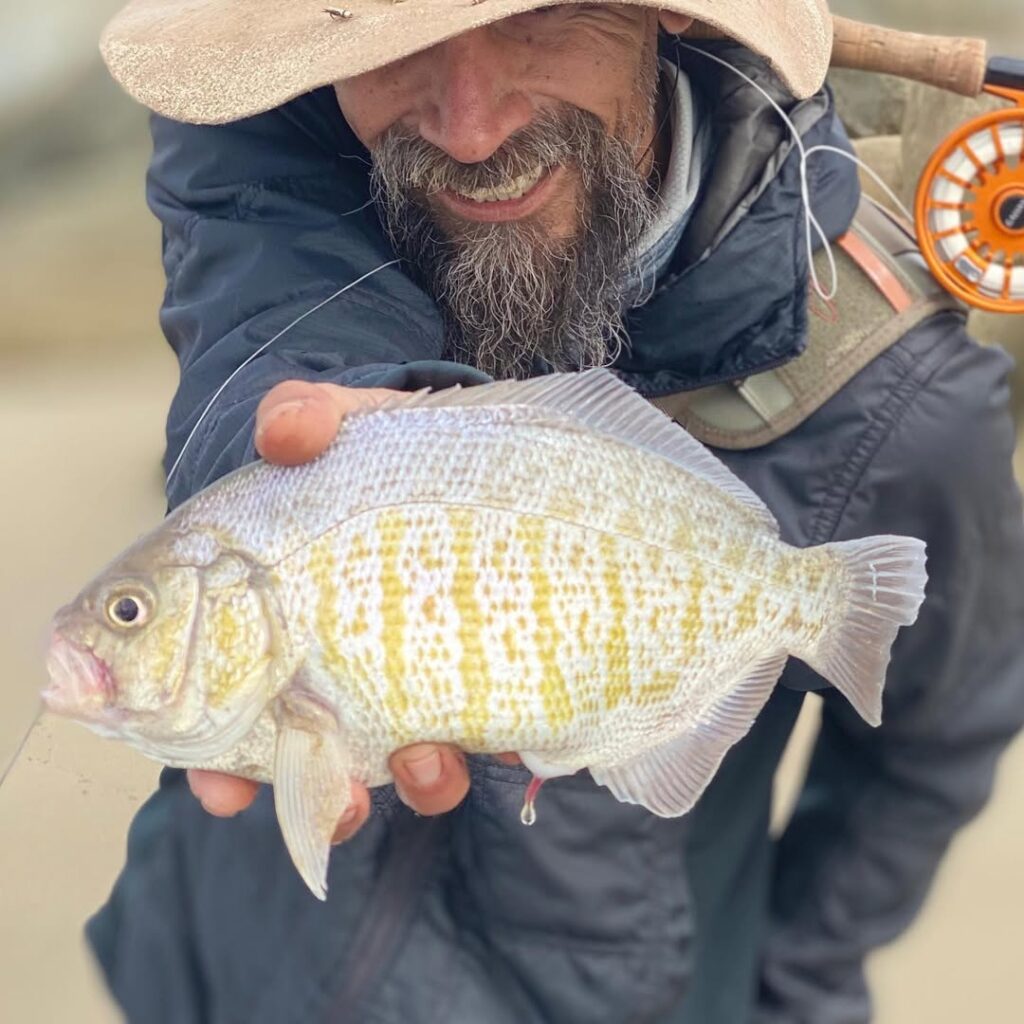
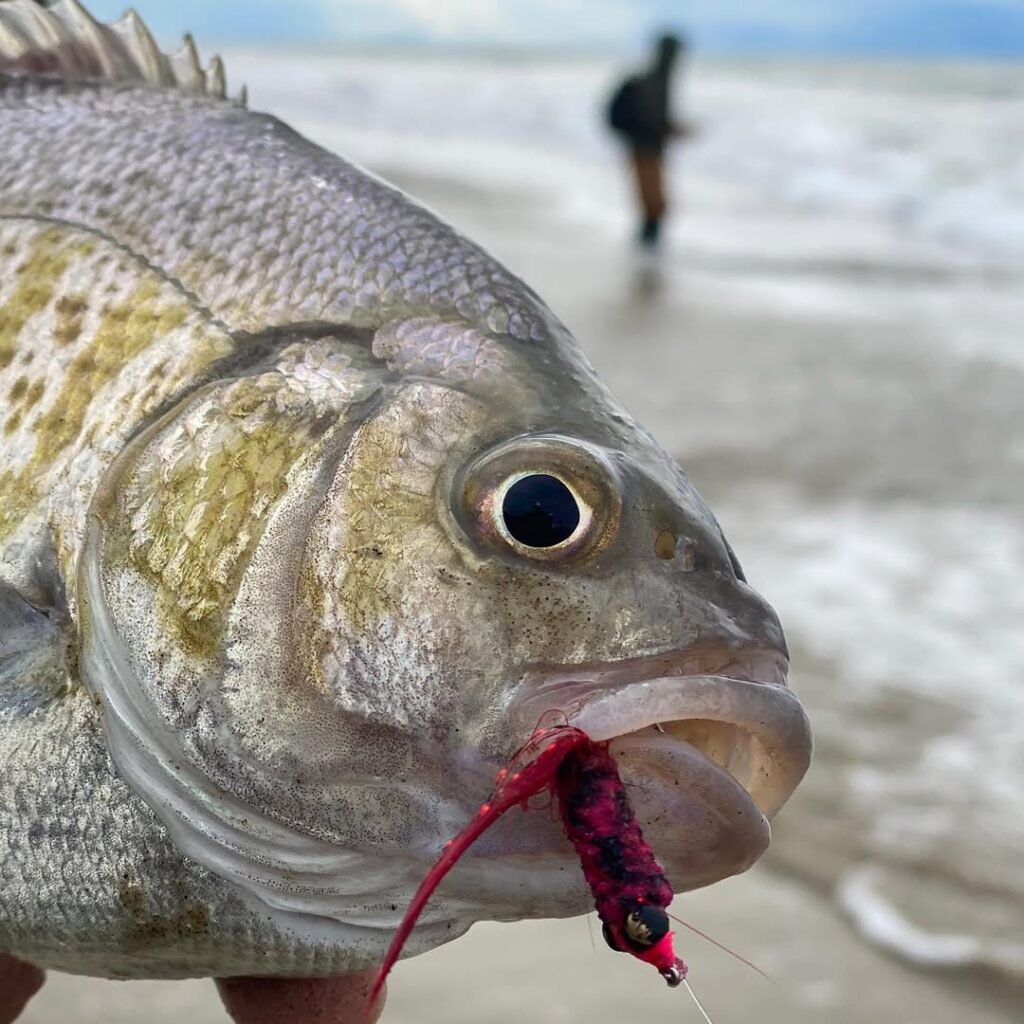
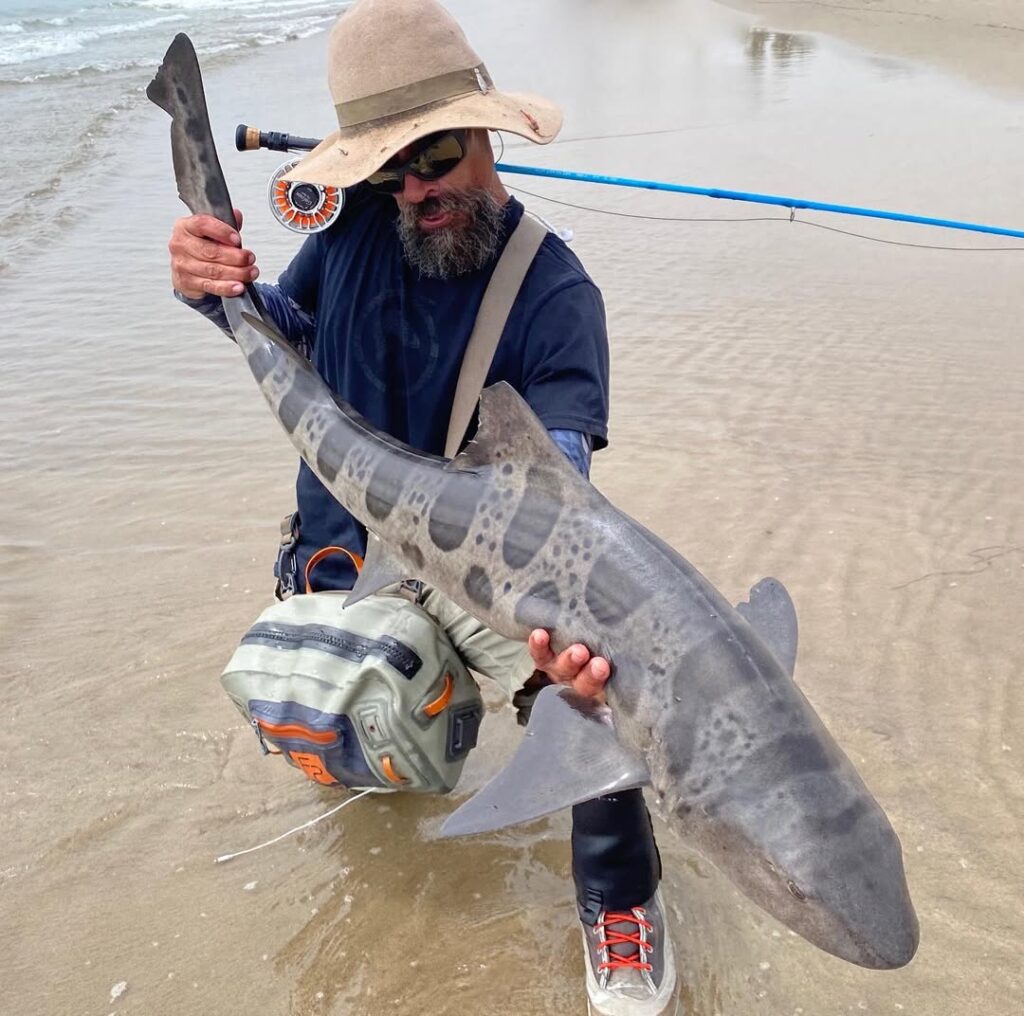
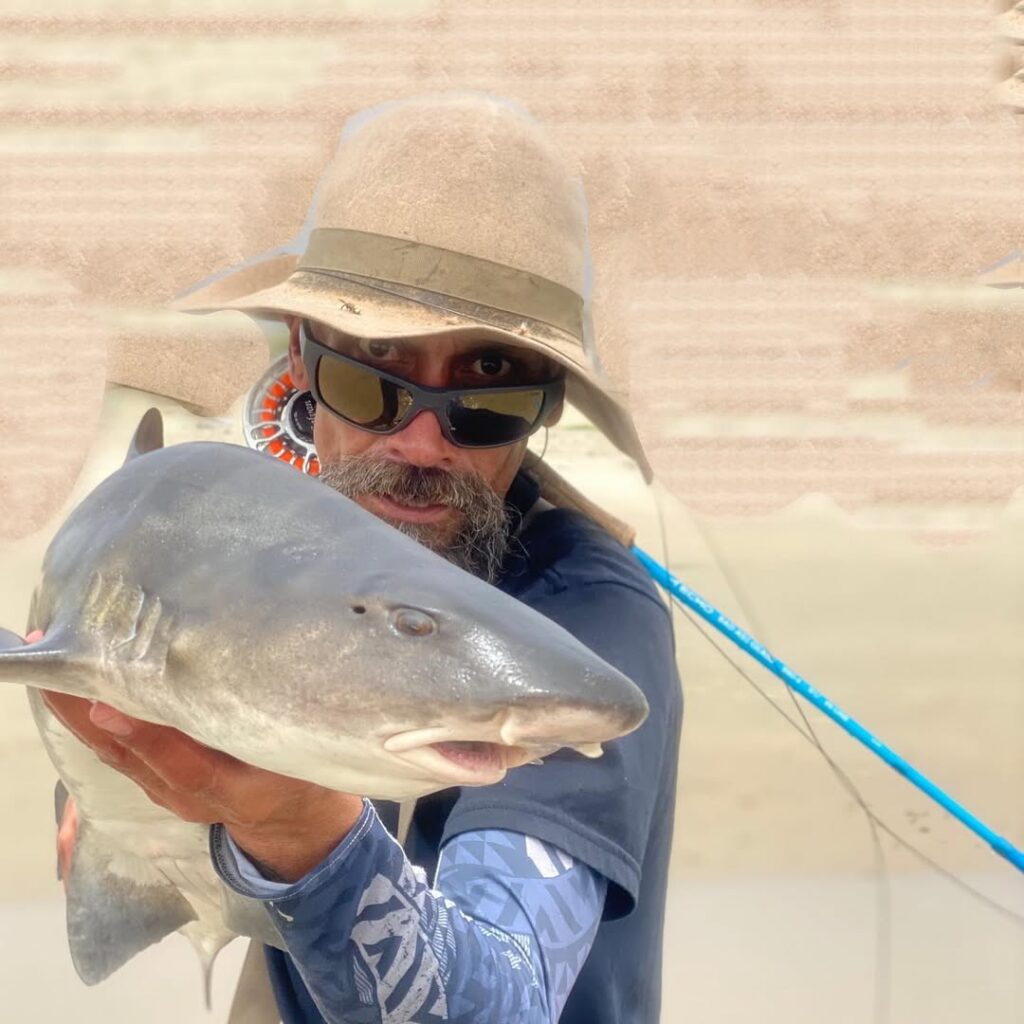
877 | Fly Fishing the Surf with Frank Vargas – Corbina, Surf Perch, Leopard Sharks

Episode Show Notes

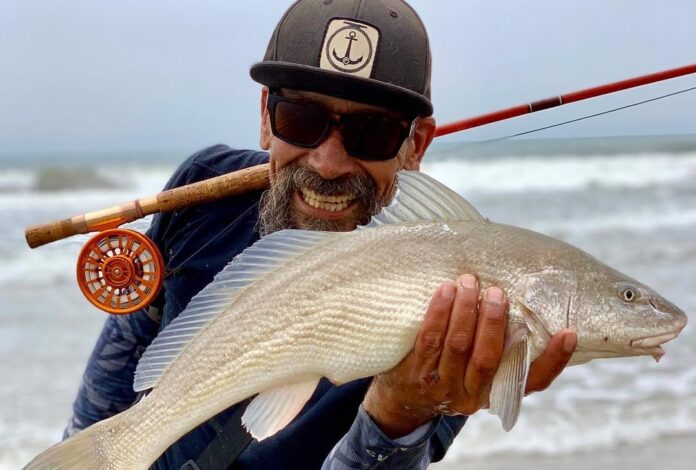
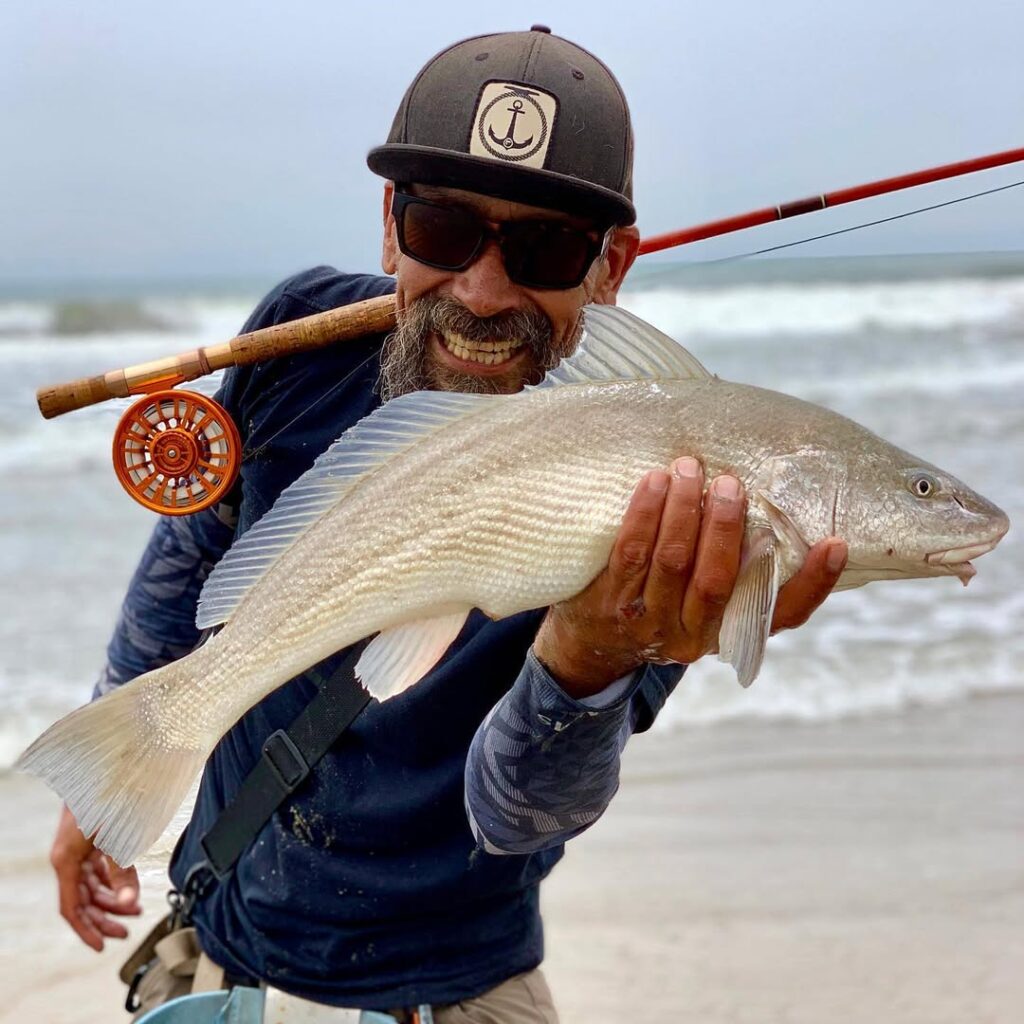
Fly fishing in Southern California looks nothing like a mountain river—and that’s exactly why it works. In this episode, Frank Vargas breaks down how surf fly fishing actually functions, from reading tides and beach structure to understanding how species like perch, corbina, and leopard sharks use shallow water to feed and travel.

Frank shares how incoming and negative tides reveal feeding lanes, why anglers often walk past productive water, and how sight fishing in the surf can feel more like targeting carp than blind casting waves. This conversation covers gear, etiquette, safety, and why slowing down and learning to see the beach is the key to success in one of the most overlooked fly fisheries in the country.

Hit play to start listening! 👇🏻🎧

apple podcasts

Find the show:  Follow the Show | Overcast | Spotify

Subscribe on Apple Podcasts

Subscribe on Android

Subscribe via RSS

(The full episode transcript is at the bottom of this blogpost) 👇🏻

Sponsors and Podcast Updates

Episode Recap

00:00 – 02:10 — Why Surf Fly Fishing Is More Technical Than It Looks
Dave introduces Southern California surf fly fishing and reframes it as a game of observation, tide reading, and structure—closer to carp fishing than traditional saltwater casting.

02:10 – 06:15 — Can You Fly Fish the SoCal Coast Year-Round?
Frank explains seasonal windows, water temperature influence, and why perch and other species remain catchable even into winter months.

06:15 – 11:30 — How to Read a Beach Using Tides and Structure
A breakdown of negative tides, holes, troughs, and how watching water movement reveals feeding zones before fish even arrive.

11:30 – 16:45 — Incoming Tides, Holding Water, and Feeding Lanes
Why incoming tides create stability, camouflage, and predictable travel routes for corbina and perch.

16:45 – 22:10 — Surf Species Breakdown: Perch, Corbina, and Croakers
Frank explains where each species feeds, how they behave in shallow water, and why corbina become the ultimate sight-fishing challenge.

22:10 – 27:30 — Sight Fishing the Surf: Depth, Distance, and Approach
How shallow corbina actually feed, why you don’t need long casts, and how anglers miss fish by standing too close.

27:30 – 32:45 — Fly Selection and Triggering Eats in the Surf
Crab patterns, worm flies, flashy triggers, and how stripping speed matters more than perfect imitation.

32:45 – 36:45 — Gear Setup: Rods, Lines, and Leaders for the Surf
Why a 9’ 6-weight with a fast-sinking head and intermediate running line covers most surf situations.

36:45 – 41:20 — Leopard Sharks on the Fly
When leopard sharks show up, how to target them ethically, and what fighting one in the surf really feels like.

41:20 – End — Etiquette, Public Access, and Urban Fly Fishing Reality
Navigating crowds, surfers, public access laws, and why Southern California remains one of the most accessible saltwater fly fisheries anywhere.


Sponsors and Podcast Updates

Resources Noted in the Show

Follow Frank on Instagram 👉 @franks_fly_shack

Fly Fish The Surf book by Lee R. Baermann

Related Videos

 Related Episodes

Full Podcast Transcript

Episode Transcript
00;00;01;29 – 00;00;18;28 Dave What if some of the most technical fly fishing in the country isn’t on a river, but on a southern California beach? And what if fly fishing? The surf has more in common with site fishing carp than bottom and long cast into the waves. Today’s guest fishes the Southern California coast. And today you’re going to hear how surf fly fishing actually works. 00;00;19;08 – 00;00;41;26 Frank Redefined about how tides replace current seams, how structure hides in plain sight, and why cabana perch and even leopard sharks reward anglers who slow down and learn to see the water differently. This is the Web by Swim podcast, where I show you the best places to travel to for fly fishing, how to find the best resources and tools to prepare for that big trip and what you can do to give back to the fish species we all love. 00;00;42;23 – 00;01;04;00 Dave Frank Vargas is here today to talk about Southern California, fly fishing and a focus on his local waters. You’re going to discover how incoming and negative tides create predictable feeding lanes in the surf where Robina actually feed and why most anglers walk right past them. We’re also going to hear about surf perch and how they make the perfect year round species to learn fishing the surf. 00;01;04;11 – 00;01;25;02 Dave And when leopard sharks show up, how to target them and what it takes to get one on the beach. Plus, break ranks down etiquette, safety and how fly fishing still thrives even in heavily populated areas of the country. There’s a good one. Here you go, Frank Vargas. You can find him at Fisherman’s Spot NBC.com. How are you doing, Frank? 00;01;25;13 – 00;01;27;10 Frank Good, good, good. Thanks for having me. How are you doing? 00;01;27;15 – 00;01;42;22 Dave Yeah, great. Great. Yeah, I’m excited to talk. You know, we’re to up around like we always do a little bit, but we’re going to focus on Southern California a little bit. Where you’re at. You’re kind of in the, I guess, Burbank, Right. Is the area you’re down the fishermen spot is the fly shop that you work out. You do a bunch of getting out there. 00;01;42;29 – 00;01;57;12 Dave So we’re going to focus on that. Like if somebody was coming in to that area, let’s say they’re traveling down to go to Universal Studios or something like that and want to go fly fishing. You know, we’re going to chat on some opportunities and then see what else you got through the year. But maybe just start there like this time of year. 00;01;57;12 – 00;02;04;03 Dave I mean, the cool thing about Southern California is the weather, right? I mean, do you guys I’m guessing you can fish year round or give me an update on that? 00;02;04;14 – 00;02;25;02 Frank Yeah, usually we we do get to fish year round. You know, our peak season, you know, usually is going to be like April through, you know, October just based on the water temps in the surf. Likewise, you know, this past season, you know, coming into December, you know, we’ve had people catching, you know, good sized perch, you know, last month into this month being have been being caught on the blind. 00;02;25;13 – 00;02;43;20 Frank And it’s just weather dependent, you know, like this past week, we’ve had some some heavy rains come through. So the people that were out in the surf were, you know, fish were on the top right before the storm came in. So that’s putting us into December. And so as far as like, you know, my experience goes, the latest I’ve caught a to was, you know, maybe early November late October type thing. 00;02;43;20 – 00;02;59;25 Frank But, you know, having people catch them, you know, in the last month or so has been really cool to see. And just based on our water current that’s been coming through, it’s been warm. The only thing that we’ve kind of been dealing with was maybe like outside air temps. You know, But other than that, you know, you’re just wearing shorts and maybe you put a bigger jacket on or something. 00;02;59;25 – 00;03;11;17 Frank But yeah, we’ve been fishing year round. Likewise, we fish for car too during our off seasons, so it keeps us busy here. You know, if you’re a die hard fly fisherman and you want to get out and fish, you know, we have urban fly fishing is what we call it over here. 00;03;11;22 – 00;03;21;28 Dave Right in the surf. Fishing, I think is definitely a little bit different. I guess you consider that urban fly fishing, too. Are you what’s it look like when you’re out there fishing in the surf? Are you can you fish the surf throughout that whole area? 00;03;22;10 – 00;03;36;19 Frank Pretty much. I mean, it’s just a matter of how far do you want to drive? And, you know, it’s for myself, you know, if I’m staying down in Santa monica, you know, it’s a five minute drive from there. You know, I’m staying anywhere else. You know, maybe I’ve got an hour drive. I don’t want to say an hour drive. 00;03;36;19 – 00;03;58;05 Frank That could be an hour drive down to like south side of of Santa monica, down to Venice. And then likewise, going all the way up to Carpinteria into the Ventura County zone. So not just that, you know, the shops based out of Burbank, you know, we kind of look at where customers, you know, live locally and then likewise with visitors that you mentioned when they come in, you know, it’s they’re staying within proximity of the shop. 00;03;58;05 – 00;04;08;08 Frank They’re able to come in or call and ask questions where they can go. They brought gear not knowing what to do. And we just let them know, hey, wherever your hotel is, it could be only like 20 minutes from the beach and you can have a good day. 00;04;08;17 – 00;04;21;21 Dave You know, that’s it. So pretty much just the first step would be protocol, you guys, right? If they’re heading down there at the it’s fishermen spot e-comm, check in with you. And so who are some of the let’s talk about that real quick on the shop. Who are some of the folks that they’re going to call here in the next? 00;04;21;21 – 00;04;30;23 Dave I mean, this probably is going to go live in early February. Let’s just focus on that for a second. Are there going to be some opportunities in February for fishing? What’s that look. 00;04;30;23 – 00;04;46;27 Frank Like for February? Yeah, I mean, that’s when, you know, honestly. So a majority of our regular fly fishermen locally are going to be looking to take hosted trips with us. You know, So that’s kind of us getting out of the area. So, I mean, if someone’s coming to visit, you know, we’d offer them that, you know, if the time frames line up. 00;04;46;27 – 00;05;13;16 Frank But if they’re looking to kind of come in and, you know, fish locally there, we’re going to they’re going to be talking to like Dave or myself, you know, there’s there’s another person there named Sarah. She’s in the surf a lot. So she’ll be able to kind of direct them where to go. Yeah. So it’s it’s just, you know, likewise because we’re if we’re not on the water, you know, our connections with our customer base and other people that are, you know, giving instructions as well on the water to, you know, we tap into that resource and we’re all kind of networking together to figure out what’s fishing. 00;05;13;16 – 00;05;36;10 Frank Well, what’s the water temp, what’s the clarity of the water looking like and what’s the buy? So from there, you know, it’s just based on, you know, almost like a week by week basis, you know, what’s happening in watching the tide and all that. So we try to offer them the surf, let them know there’s local carp, fish, and then likewise, if they don’t really specifically want to do any of that and they’re like, hey, I have like four days here and I can take a little, you know, drive up to Mammoth or Bishop, you know, what do you have to offer there? 00;05;36;10 – 00;05;42;20 Frank And you know, the network or guys that we have up there, that’s where we kind of suggest them calling and getting them in contact with them as well. 00;05;42;28 – 00;05;46;06 Dave Right. And then that’s for like trout fishing within a few hours up north. 00;05;46;14 – 00;06;05;17 Frank Yeah. Yeah. So I mean, it’s it’s I think when someone’s coming from outside of the state, you know, them not realizing, oh these people do you know that we do fly fish to surf. That’s, that’s a whole like eye opener to them if they’re doing their homework already and researching their trip and you know, they’re just as enthusiastic about fly fishing, they’re going to know, okay, these people are on your fly fish and this is the shop to call. 00;06;05;17 – 00;06;11;02 Frank These are the people that know what’s going on. These are the people that are tapped into the Southern California fly fishing season. 00;06;11;09 – 00;06;22;26 Dave Yeah, that’s it. Yeah. In Southern California. I mean, you’re in I mean, we’re talking Los Angeles area, but how far up does or does this break of Southern California become more, you know, where does that go away as you go north? 00;06;23;08 – 00;06;40;23 Frank I think it’s kind of right at that tipping point, kind of where I or I venture to is would be Carpinteria, OC, Ventura County. It’s almost like the north of point conception to me kind of gets a little bit kind of like that central Central Coast and starts kind of going up that way. That’s that’s kind of pushing it. 00;06;40;23 – 00;07;02;12 Frank But I think like for majority our customer base and you know, people come in and that’s kind of like where we would say we can really focus where we’ve focused our time up that far down to. If you go south wise, you know, down to Bolsa Chica is kind of like somewhere where we’re kind of tapped into, you know, we have customers coming up from Long Beach, Fullerton area. 00;07;02;12 – 00;07;25;02 Frank And so those zones down there, you know, not per se that we’re not fishing, but, you know, some of the stuff that we teach or that I teach, you know, is, you know, if you can read one beach and we teach you on one beach, you should be able to read any beach. So they just kind of, you know, might come up to our zone and we might meet them out on the beach and spend some time with them, you know, educate them on what we’re looking for, and then they can take that back down to their home beach or travel up to whatever beaches they want to. 00;07;25;11 – 00;07;37;26 Dave Yeah, that’s great. Well, let’s talk about that, because I think that is an interesting topic. Reading the beach. How do you take that? If somebody is there, they come in their brand new to it. What is that, you know, instruction or what are you telling them about reading it? 00;07;38;17 – 00;08;00;22 Frank About reading it? You know, I mean, I use apps, I read the newspaper, and for starters, I look for my tides, you know, So if it’s, you know, incoming tide, you know, that’s what I’m looking for. Ideally, you know, if I’m going to show someone the structure in the beach, you know, this off the right off where the the rollers and the breakers are forming, that negative tide allows us to see like the holes and the troughs. 00;08;01;10 – 00;08;23;08 Frank So once they’re able to kind of see that with with the negative low tide and the water starts washing. And so we’re just you know, as we’re talking about structure, they’re able to see how the water acts differently once it starts covering up those holes and those troughs the way it looks, you know, when a crab bed is exposed, when the water starts receding out, you know, to come in again, to wash back up on the shore. 00;08;23;17 – 00;08;39;22 Frank So once we’re able to identify, you know, the tide and then some structure, now they’re able to kind of start putting together like as they look up and down the beach, they’re able to say, oh, I just don’t stand in this one spot. I can hit multiple spots. I’m not going to say that it’s not drought, water or, you know how we can read you know, behind a boulder or cut bank. 00;08;39;26 – 00;09;02;02 Frank You know, we’re just reading different structures now. You know, it’s it’s a vast ocean. It’s a vast coastline that we’re walking up and down. And, you know, you fish it the same way. You just cover ground. And once, you know, like we’ll just keep it simple with, you know, where there’s a hole and then there’s, you know, some food, a food source, you’re able to kind of work that little area, you know, it could be, you know, ten feet long, it could be 20 feet, it could be 30 feet. 00;09;02;02 – 00;09;06;19 Frank So but once you’re able to kind of identify that, you know, you’re going to, you know, tentatively, there should be some fish there. 00;09;07;00 – 00;09;14;18 Dave Gotcha. So, yeah, the tides are the first thing. And you want when you’re out there, you want to be looking for an incoming tide. Is that the best for me? 00;09;14;18 – 00;09;29;20 Frank That’s the best when I’m, you know, showing people what and how we fish and what we’re looking for, you know, there’s always a discussion as far as, you know, Oh, after, you know, people enjoy fish in the hour before the peak of a high tide in the hour after, you know, the bite kind of comes on to me. 00;09;29;20 – 00;09;47;29 Frank You know, we’re fishing on like, oh, Dark 30. So that means, you know, as of right now, you know, we’d be out there at, you know, probably like 645, 630 right before sunrise. It does seem like, you know. Right. Is that, you know, we might get a few bites, you know, some fish to hand. And it’s almost like as soon as that sun kisses the water, the bite kind of turns on. 00;09;48;12 – 00;09;55;00 Frank And it’s just kind of like they go into a feeding frenzy. And with that incoming tide, it’s bringing those fish back into the food source. 00;09;55;07 – 00;09;56;01 Dave Oh, it is. Okay. 00;09;56;01 – 00;10;10;13 Frank So that’s kind of where I like it. And then there becomes the stability in the water when it’s kind of settling out after it’s it’s kind of been rising, rise and rising and it’s kind of getting to its peak. You know, it just depends on the duration of the peak. You know, what it does as far as it kind of like settling out. 00;10;10;13 – 00;10;25;01 Frank You know, like I call I refer to it as holding water. And it’s just kind of holding like a a slow moving water that’s keeping the food source covered and allowing these fish to to travel up and down through the holes and through the troughs. And that allows us for some site fishing or at least, you know, the blind fish. 00;10;25;01 – 00;10;29;02 Frank And we’re able to read the water, the foam that and how it’s acting in the water there. 00;10;29;11 – 00;10;44;22 Dave Yeah I see. Okay. So that’s your tides. And then in like you’re saying, negative tide going out there when it’s super low, you can see where those structures are going to be and kind of plan your day to say, hey, when this gets up to that high tide or it’s coming in, you’ll know where those little, you know, either rocks or buckets or. 00;10;44;22 – 00;10;46;22 Dave Right. Some sort of structure is what you’re looking for. 00;10;47;02 – 00;11;15;13 Frank Yeah. Yeah. And, you know, even with the negative tide, sometimes we get like, you know, this this last couple of months, we’ve had, you know, this king tide and it, you know, had a super effect on the on the negative. And so we were kind of able to fish like a whole lot further out than we normally do, you know, So when we’re really, you know, trying to double haul and send some line out there, shoot some line, it’s you know, we’re barely hitting those marks, but it’s almost like once we get these negative tides, we’re able to fish like a whole nother zone kind of where the surfers are hanging and beyond. 00;11;15;13 – 00;11;20;18 Frank So that’s that’s always the plus to fishing, like stuff we normally don’t get to fish on super negative tides. 00;11;20;26 – 00;11;33;06 Dave Okay, So that’s an opportunity. So you got the two. So the incoming tide in that range and then also negative tides. And you what you’re doing is trying to get were what are they doing, the food’s coming in or why is the incoming tide the best or that negative tide. 00;11;33;17 – 00;11;49;29 Frank It starts covering up, you know, their their food source. It’s allowing you know, it’s creating almost camouflage for them. You know, the more depth there is, the less exposed they feel, the predators, you know, I mean, number one source would be kind of like birds, you know, seagulls, pelicans. They’re swooping down on them, you know, clear, sunny days. 00;11;49;29 – 00;12;09;24 Frank They’re more exposed when there’s clear water. You know, they’re out in the deeper water where there tends to be more seals kind of cruising at that depth. So, you know, if you have core being a perch, etc., you know, croakers, they’re kind of more exposed to predators in deeper water. You know, it doesn’t mean those seals aren’t coming in and they haven’t, you know, pushed this to us. 00;12;09;24 – 00;12;26;23 Frank You know, I mean, I’ve been able to cast that as SEAL, you know, So that’s maybe a 30 foot chunk. And they’re right there. You know, just last time that I’ve heard a seal was pushing some fish up to someone that’s like two weeks ago, SEAL was basically coming on shore chasing fish, lo and behold, birds and backpedaling. 00;12;27;12 – 00;12;33;14 Frank See, she still had the fish on and she felt a good tug. And it was you know, it wasn’t the fish run away. It was the seal had gotten her fish. 00;12;33;14 – 00;12;34;12 Dave Oh, wow. Yeah. 00;12;34;13 – 00;12;55;09 Frank Yeah. So I mean that they’re they’re not afraid of us, you know, obviously we respect them and, you know, they’re wild animals, but it’s just, you know, they they’re fishing and hunting to survive. So, you know, we just kind of watch them and we watch those zones. And it’s so basically an answer, long story short, is, you know, the food source that, you know, the perch core being a croakers and they’re looking for are those crabs or clams. 00;12;56;13 – 00;13;05;25 Frank So when that water is, you know, coming up onto the sand, you know, if there’s crab beds in the area, that’s where you’re going to find a lot of more a lot more fish kind of coming in to eat. 00;13;06;04 – 00;13;13;10 Dave Yeah. Gotcha. Okay. And those are the species wise. Those are kind of the main ones are what are the top species. You’d be fish in the survey for the top. 00;13;13;10 – 00;13;32;03 Frank You know, there’s always going to be perch in the mix. You know, you find a nice little hole, you’ll find some a good majority of, of perch. You know, you fish behind the back of the crash and where you should be finding perch if there’s a food source core being a you know, that’s that’s you know what we all kind of come out to hunt during the summer and, you know, that’s the plus. 00;13;32;03 – 00;13;49;29 Frank You know, there there’s there’s a lot of them when the water warms up and the food source is available. And that’s what I’m going to say. A lot of us are chasing, you know, that site fishing thrill that we look for and I think, you know, a lot of us, you know, when we say we’re on the board, it’s we sight fished and caught, you know, the first being for us in the season, you know, we kind of keep track of that. 00;13;49;29 – 00;14;15;03 Frank So I definitely say the beans are are the ones we really focus on. Once you kind of start understanding the way the core being our eating, the way you can catch them on the fly all of a sudden, you know, my experience is, you know, all of a sudden the leopard’s art show up. So now all of a sudden now we got a bigger species that showed up is obviously a lot easier to see because you’re seeing dorsal fins or tails and you’re watching them either come in and out, you know, or they’re paralleling the break line. 00;14;15;03 – 00;14;29;17 Frank So we’re able to sight fish at those. And, you know, that’s kind of where I where I really see that. That’s what I like to target. The core being anthracite fishing in leopard search for fly fish. And if there is nothing to show and we’re fishing for the perch, you know, as far as site fishing for halibut, a little more challenging. 00;14;29;17 – 00;14;43;22 Frank But, you know, I’ve caught him on the blind just kind of thinking where they’re at throwing something that, you know, might trigger them to eat. And then there’s a croaker, yellowfin croaker that we tend to get when we send our cast out a little bit further just on the back side of some breaks. 00;14;43;27 – 00;14;51;22 Dave Yeah. Okay. On the backside. That’s cool. So you have the breaks. What does that look like? Let’s just say in curbing a winner, the prime time’s for fishing, for curbing it. 00;14;52;03 – 00;15;13;09 Frank I’m going to say it kind of just based on water. Timberlake May we’re going to be looking at like, man, you know, starts warming up May, June, July, August. Those are going to be like our peak times. And as long as water temps, you know, hanging in there, you know, we’re looking at September, October, and that’s when, you know, when you’re thinking not that you think I mean, the more time you do it, you’re like, okay, who am I going to see today? 00;15;13;09 – 00;15;44;01 Frank You know? So the five fishing communities down here and especially the salt, you know, I’m going to say it’s it’s a tight little community. Everyone kind of knows everyone or knows who someone is. You know, there’s the you know, you’re usually walking by someone and it’s the same way you have etiquette. You know, you give everyone the space and bump past them and you know, take a you know, give someone 100 yards or so because it’s, you know, if that’s the only zone you’re working in Santa monica, you know, it’s going to give everyone the opportunity, you know, And if that there’s a lot of people on the beach, I’ll go to another beach. 00;15;44;01 – 00;16;03;24 Dave San Juan Rod work started with a simple belief great fly rods and gear shouldn’t cost a fortune. As a family run company, they focus on building high quality fly fishing products that perform on the water without the premium price tag. You can try San Juan. Rod works for 30 days risk free right now, and if you’re not satisfied, send it back for a full refund. 00;16;03;24 – 00;16;32;21 Dave You can go to San Juan Rod works dot com that’s Sanjay you and Rod works dot com fish town exhibitions offers world class fly fishing right off Alaska’s incredible road system for monster rainbow trout to feisty Arctic grayling. You’ll chase big species in the stunning landscape whether you’re a seasoned angler or just starting out there. Expert guides ensure an unforgettable adventure Book your trip today before spots fill up and experience Alaska’s diversity like never before. 00;16;33;02 – 00;16;53;13 Dave Check them out right now that’s Fish Hound expeditions dot com. Is it pretty busy? I mean, obviously Los Angeles is known for you know, lots of traffic and you know lots of people. Is it what’s the fly fishing like? Are you seeing a lot of people fly fishing? Is there a mix of fly conventional? And then you also have the surfers and everybody else. 00;16;53;13 – 00;16;55;01 Dave What does it look like on a busy day? 00;16;55;12 – 00;17;05;07 Frank On a busy day? I mean, it’s location, location, location. Where does everyone rendezvous in from the fly fishing community? You know, you have different groups. You have women’s groups. All right. 00;17;05;18 – 00;17;17;22 Dave So there’s a lot of that. There’s a lot of the groups where you have a group going out and you guys might meet up and like you said, do a class or something like that. So it’s but you there are opportunities. You can go out solo and just find a beach and read it and go, right, There’s a lot of opportunities. 00;17;18;03 – 00;17;32;19 Frank Yeah. So I mean that’s what I’m saying. You could show up and you know, a friend group shows up with three or four and you know, in passing you’re going to know someone myself in the shop wise, you know, I mean, I get to, you know, meet our customers. I get to fish with our customers and I get to see our customers out on the water. 00;17;33;09 – 00;17;46;19 Frank So that’s all I’m saying. So you could show up thinking you found a spot, Right? But then, you know, all of us use maps. And so saying people might be showing up at that beach, you might find some gear people. And, you know, likewise, we’re all fishermen, we’re all fishers. They know if we put it out that way. 00;17;46;19 – 00;18;01;15 Frank And so we’re communicating. What are they catching, what do they throw and what size, you know, leader tip it or they use. And you know, when I’m speaking to gear guys, you know, and then likewise they’re like, what do you use it? You know, we always they’re always intrigued with what are we catching? And you can fly fish out here, you know. 00;18;01;15 – 00;18;19;19 Frank So we answer those questions a lot, but anywhere from like runners to, you know, people just walk in, people, you know, with their heads down and looking for shells. I mean, your drop in the cast sometimes, you know, it’s someone’s not paying attention and they’re ten feet right behind you or you have, you know, the tours that’s taking a picture right behind you. 00;18;19;19 – 00;18;34;05 Frank And, you know, your head’s on the swivel, not just for, you know, watching the birds or, you know, watching the sea life. You know, it’s it’s watching for tourist. It’s watching for the runners, surfers, you know, I mean I mean, it’s sometimes. 00;18;34;14 – 00;18;35;16 Dave They right there, too. 00;18;35;16 – 00;18;50;00 Frank They are, you know, some places I’ve been where it’s territorial, you know, they’re surfing. You get out of here, you know, All right. Express them and say, you know, But that’s just kind of, I think, how it goes. I think we all kind of try to give each other space, you know, where space and space enjoy what we’re doing out there. 00;18;50;00 – 00;19;02;27 Frank But I think it’s the ones that aren’t adapted to, you know, the saltwater life, the water life of like ham fishing for a couple of hours. You know, I’m going to give you your space. I’m going to, you know, get my space. And we all kind of like end up working together. 00;19;02;27 – 00;19;05;00 Dave Yeah, right, Right. That’s always better. 00;19;05;00 – 00;19;08;09 Frank Yeah. I mean, you come across tourists, they’re like, Hey, I’m walking here. 00;19;08;14 – 00;19;09;02 Dave Yeah, yeah. 00;19;09;19 – 00;19;10;13 Frank I’m fishing here. 00;19;10;15 – 00;19;24;16 Dave That’s funny. Yeah. The public, I public land is pretty amazing. Well, and that’s what’s cool about, you know, really. I mean, a lot of public land, right? What does that look like on the coast down there? Is are there areas that are beaches that are totally private or how is that not broken up? 00;19;24;16 – 00;19;48;11 Frank There is a lot of public land, a lot of access, you know, and then it comes down to like these little pocket beaches that, you know, obviously we had a lot of fires come through. So a lot of beaches that were kind of overlooked because of the houses that were were built directly on the coastline, had limited access, you know, And it was you kind of had to just get on the map or you had to park somewhere where you saw something fishy and just kind of like walk up and down or drive slowly. 00;19;48;11 – 00;20;07;10 Frank And then you’ll see public access to these places that look like they’re private. There is, you know, private clubs that are on the on the beach front, you know, right on the beachfront, right adjacent to where public access is. And we can’t really walk up like it’s almost like the high side of that bank, you know, the watermark. 00;20;07;16 – 00;20;12;29 Frank We can’t walk through their property. But if we’re fishing, you know, in the wet sand, they can’t really tell us anything. 00;20;12;29 – 00;20;20;15 Dave It’s just how you access it. Okay, so that’s it. So the beaches. So as long as you’re on the beach up to the high watermark, that that’s all public, pretty much the whole thing. 00;20;21;03 – 00;20;36;08 Frank That’s been my experience. But likewise, you know, I mean, is it right or wrong? Is there you know, does it extend out to a certain point where we’re not allowed to be on there? I know we can’t use their parking. You know, that’s just based on experience, you know, driving in and asking if we’re allowed to park or no, are you a member? 00;20;36;23 – 00;20;51;13 Dave But if you came in just thinking, if you were fishing and you’re working your way up, up north or something like that, you know, knowing that you could fish and then walk back to wherever you put in, you know what I mean? That’s a good. But I guess the advice would be to call you guys probably and say, hey, we’re you know, we’re thinking about going here. 00;20;51;13 – 00;20;56;16 Dave Maybe we could ask you, like where it would be a good place to go if your first time. Is that some advice you guys give out there? 00;20;56;25 – 00;21;13;04 Frank Oh, yeah. I mean, we fish are, you know, somewhere we know, you know, it’s somewhere we can send people to whether they’re, you know, our local customers and they’re just getting started. And it could be like we mentioned earlier, you know, someone coming in for a vacation. You know, we have like spots that are, you know, could produce fish. 00;21;13;04 – 00;21;31;19 Frank And when I say could produce fish, it’s just based on the person. It depends on the tide. If they find the food source, you know, we give them a very descriptive picture of what they’re going to go fish, you know, very descriptive drop point, you know, in how to work the water. So we do have multiple points if if where they’re staying, you know, that we can refer them to. 00;21;32;02 – 00;21;46;24 Dave Okay. And going back to that that wintertime. So the kind of the January, February, March before it start, you know, I guess winter, I’m not sure what it’s like. I mean, what is the weather like there in that period of time? And can you go out there and fish pretty much, you know, 12 months out of the year and have a chance at something? 00;21;47;04 – 00;22;02;12 Frank Yeah, you can. I just was speaking with someone about that and she’s planning on on, you know, fishing year round, you know, and it’s in the surf, you know, and it’s if that’s our home water, I mean, I have to look at it like I have to own it. Like that’s our home water. It’s the salt and that’s where I fish. 00;22;02;12 – 00;22;19;09 Frank If I can’t go to to Mammoth, if I can’t go to Montana to fish for trout, I’m going to dial in my own water. And that’s right in our backyard. That’s the coastline. And you know, we’re talking about that. And yeah, you are going to catch fish. It might be a little bit colder. You know, you might have to work a little bit harder, you know, and put a little bit more time in. 00;22;19;09 – 00;22;40;04 Frank But it’s it’s staying consistent. It’s being, you know, fluent in your your water, you know, or your you’re fishing. So I think, you know, not just myself but them too, and others, you know, there’s others that are out there fishing, you know, year round. And it’s just because we enjoy it. You know, I like to say we go out there to to relax and unwind, but it’s also to go out and catch and learn. 00;22;40;07 – 00;22;46;27 Frank You know, I’m always learning like, what can I do better? You know, especially if the water temps, you know, the air temps, what’s going on in the winter months change in. 00;22;46;27 – 00;22;47;05 Dave Yeah. 00;22;47;06 – 00;22;51;01 Frank Yeah. So it’s it’s just adapting and just, you know, being proficient at the fishery. 00;22;51;08 – 00;23;06;08 Dave Yeah. Well if you’re out there, you know, let’s just say curbing it sounds like, you know, maybe more summer things warm up a little bit. What’s the typical first? What is the typical setup you’re using rod line for? And is it the same for whether you’re fishing cabana or fishing? Those other species. 00;23;06;20 – 00;23;25;03 Frank Are. So myself, when when someone comes in the shop and they’re, you know, we always, you know, fly fishing community wise, I think drought always starts everyone with the five weight, right? Your first fly right is going to be a fly weight. So then when they’re like, Hey, I want to learn to fly fish, to surf, and I want to invest in a rod if I need to, that’s where I get to educate them. 00;23;25;03 – 00;23;45;23 Frank You know, I recommend a six week with a sinking line with a real that has quality drag, you know, so and a sinking line. So with that you know the you know I’ll let them know that six way you know if you’re trout fisherman that six weight becomes your streamer rod you know if you’re fishing or start fishing for carp, there goes your car broad and you’re fishing, you want to start fishing for bass, That’s your light bass rod. 00;23;46;07 – 00;23;53;13 Frank So it’s not just selling them the one and done, and this is your only surf rod and that’s all it’s going to be useful for. And I think the six weights kind of ideal it is. 00;23;53;13 – 00;23;57;18 Dave So a nine foot six weight is the perfect surfer like Corbin or Perch or any of these species. 00;23;57;28 – 00;24;15;06 Frank Oh yeah. Well, they go online and read and, you know, sometimes, you know, online is right on and sometimes they’re way off. So I think the best thing when when people have come in and I get to or Dave or anyone that you know, shares the same knowledge that we have, you know, we’re able to educate them as far as that six week goes to use. 00;24;15;06 – 00;24;31;04 Frank And to me, you know, you catch a palm sized perch, you’re still going to have fun. You’re going to catch, you know, I don’t know, maybe a three or £4 cabana. You’re going to be able to put the bend on your rod, put that pressure on it, and then you have the fighting. But, you know, so that becomes a useful part of your rod there. 00;24;31;07 – 00;24;40;05 Dave Yeah. So six way so you would have and then you mentioned seeing light. So what is the good line out there? I mean do you have an all around and then should you have a few different lines in your quiver. 00;24;40;16 – 00;25;05;11 Frank Yeah. When it comes, I mean, you know what, I kind of come to keep it simple, you know, I just use, you know, basically anywhere from Rio or scientific anglers. You know, basically what I’m looking for is, is a 26, 27 foot head, you know, thinking out 5 to 6 inches per second. And then the handling running line is intermediate, you know, so my head’s going to sink super fast and then that intermediate line is just going to get below the top. 00;25;05;11 – 00;25;35;29 Frank Anything any movement on on the surface that intermediate lines is going to drop down right behind that. So that just helps me stay more in control and more in contact with my line. You know, there’s books people right now. Q wrote, you know, Kirby in the diaries, and he refers to multiple lines for for different situations. For me, it’s, you know, I’m I just use what I use, you know, like I let other people know there’s there’s other sources, there’s other, you know, educated people that are also putting out information, you know, and it’s you know, no one’s no one’s saying anything’s wrong. 00;25;35;29 – 00;25;36;17 Frank They all have. 00;25;36;17 – 00;25;40;19 Dave No. So you could use a dry line out there, though, or do you have to have some sort of sinking line? 00;25;40;29 – 00;25;56;07 Frank I would say I would avoid a floating line. That’s one thing I would say. But if you wanted to use an intermediate line, because where you’re at is it’s has more flats, you know, there’s not a lot of water moves. I want a clear, stealthy line and it just gets below the surface. That’s what I would say. Yeah, I understand that. 00;25;56;07 – 00;26;05;08 Dave Yeah. So just use a you could use the intermediate like a full sinking intermediate like it maybe like almost like you’d use on a trout on a Lake Stillwater you know, for intermediate line. 00;26;05;13 – 00;26;08;09 Frank Right, right, right. But that’s based on conditions from, from. 00;26;08;09 – 00;26;20;00 Dave Yeah. Yeah. If it’s not getting down, where do you want to get down to these fish. Like how deep. And maybe describe that a little bit. So you, you get out there in the surf, you cast out. Are you trying to get this thing down to the bottom? Talk about that a little bit. 00;26;20;11 – 00;26;36;11 Frank So if we’re fishing for core being and we’re site fishing for them, we’re looking for them, I mean, they could be right at your feet. So in some of these pictures and and you see people that they’re completely dry, you know, they’re not bellied up out there checking. They’re line out 40, 50 feet. And where, you know, 15 back from the wet sand. 00;26;36;11 – 00;26;53;04 Frank So we’re standing on dry sand, you know, fish and, you know, an inch of water if that you know, when it’s, you know, kind of skinny or water, it could be, you know, like two feet that they’re cruising in three feet. And there’s just, you know, a side breaking small little wave that they’re cruising through using to travel. 00;26;53;04 – 00;27;08;07 Frank So, you know, it’s just a matter of getting the fly in front of them. Deeper water, you know, tends to be a little more challenging when you’re sight facing them. Just base. That means you’re all of a sudden now and they’re feeding area. So it’s just being observant. You know, when we’re fishing for beans, I’ll just keep it simple. 00;27;08;07 – 00;27;17;13 Frank Majority of the time we’re fishing anywhere from, you know, 1 to 2 inches where they’re kind of sucking all the way up to the sand where the sand crabs are to, you know, 2 to 3 feet in depth. 00;27;17;13 – 00;27;28;27 Dave Two or three feet. And are you as you’re walking, are you walking the beach or are you going in the sand and looking for them? Or do you go to spots, you know, like let’s say you’re new to it. Should somebody start just walking the beach and looking for spotting these fish? 00;27;29;07 – 00;27;49;00 Frank I think that’s key. Yeah. I mean, if you can’t see them right off the back, you know, and then I mean, there’s the easy part when they come in and they’re almost like tailing carp, you’ll see them, you know, with tail up, you know, and it’s like, cool. I can see that. But if you were not able to see that happening and you need to start looking into the water, you know, you need to, number one, have some polarized glasses. 00;27;49;09 – 00;28;02;11 Frank Remember, too, is sometimes you might think it was that the shadow was out of gray spot. Was that a dark spot? That’s how you got to start training your eyes. So it’s they were kind of going out on your own, having the understanding that’s cool to do. And likewise, if we’re able to help you along with that and that’s what it is. 00;28;02;11 – 00;28;22;23 Frank But it’s, you know, you train your eye to see how and what how they’re swimming, what they’re doing, how deep they are. You know, my first experience was like I went to the beach for like, you know, almost like, say, like a couple, three weeks and just observed, just watched. And then it was just training that I, you know, even the most sudden movements was like, oh, there went one, you know, And then it’s, you know, using your peripherals, expanding your vision. 00;28;22;23 – 00;28;36;17 Frank Once you’re able to identify what they look like, what they’re doing, you know, the secret weapon is those polarized glasses. You know, that’s our superpower, you know, being able to see through the water, the clarity of it and see what those fish are doing and see what your fly does once you’re able to identify them. 00;28;36;26 – 00;28;49;08 Dave Yeah, that’s it. So once you ID, let’s see, you find a core being a it’s out there maybe in a few inches of water tailing. What’s your first casts? What does that look like and what fly would you be thrown on there. 00;28;50;00 – 00;29;06;13 Frank First class, You know, if they’re tailing like if their face towards me, you know, I’m going to put it, you know, kind of off to the side of their eyes. You know, their eyes are on the side. They’re kind of going forward, too. So I’m going to, you know, kind of put it in a manner that’s, you know, maybe two feet from them off to their angle. 00;29;06;13 – 00;29;20;23 Frank And I’m going to try to strip it across their dinner plate. You know, it’s it’s sometimes, you know, the fast trip gets them a lot of the time when it’s going by them pretty quick, sometimes that that’s going to spook them. So sometimes it’s just a matter of getting the fly to their dinner plate is what I like to say. 00;29;20;24 – 00;29;38;08 Dave So as you know, this makes sense. So you’ve got the dinner plate, so you’ve got this fish that sitting there eating, you know, crabs or whatever he’s tailing. Let’s just say he’s tailing you make that cast a couple of feet out off to his side and then you strip that through that, you get the right speed. And with the strip be like along, it varies, it sounds like. 00;29;38;08 – 00;29;42;05 Dave But would it be a like a long 12 inch strip or like a boom, boom, boom, boom. What would be the strip? 00;29;42;11 – 00;29;57;03 Frank Yeah, I would go with the boom, boom, boom, you know, 6 to 8 inches, you know, and, you know, getting it to move along on a rapid pace. You know, sometimes you might be driven as fast as you can to trigger them. And so a lot of the times I mean, I’ll go with, you know, a crab pattern works. 00;29;57;21 – 00;30;22;02 Frank There’s a red checkerboard. I mean, I tie up my own flashy kind of like Willy burger that’s like bright red and, you know, some crystal flash and then some marabou for us and red tail. And it’s just, you know, I think for myself, just really trying to trigger them. But then, you know, once again, that crab pattern also works if they’re just so focused on crabs, you know, sometimes that red piece that’s you know, a material, it’s not triggering them and they’re just focused on those crabs. 00;30;22;02 – 00;30;40;26 Frank I’ll throw crab in the mix, you know, or like a type of worm that is in the mix as well, too. So, I mean, it kind of varies. There’s you know, when they’re kind of honed in, I’ll just say if they’re honed in on the crabs, I’m throwing a crab pattern, something gray and yeah, rattlers or other ones that we use kind of shrimp is less clammy looking. 00;30;41;13 – 00;30;50;13 Frank That’s usually kind of like I mean, I have like maybe a total of anywhere, maybe 5 to 8 go to flies, you know, that I can put in my pocket and I can go in. 00;30;50;13 – 00;30;58;15 Dave There and those are flies. Could you? Sounds like you’ve got a lot of your own creations, but what would those five be? Would those be more a mix of crabs and yeah. 00;30;58;15 – 00;31;16;16 Frank Like the surf worm, the crab pattern or the red checkerboard? You know, that’s just to me is the trigger, the Americans kind of one that you got in the mix. You know, I have that you know, if I’m looking at a variety of another crab pattern might be, you know, just a merkin and gray. That’s kind of it. 00;31;16;16 – 00;31;21;21 Frank And then that just the variation of colors, you know, could be orange on could be brownish. 00;31;21;22 – 00;31;22;03 Dave Okay. 00;31;22;10 – 00;31;26;11 Frank Yeah. So you have a palette. It’s almost like your streamer box. You’re going to have multiple colors of it. 00;31;26;11 – 00;31;42;04 Dave Okay? So and you get these flies. So basically on this situation, you would want to get the fly kind of down on the bottom and strip it across there. So it looks like a, you know, one of those whatever it’s eating. And when this is, are there other fish that you’re kind of sight fishing or a curbing of the main fish throughout the year? 00;31;42;13 – 00;31;58;16 Frank Of course being and then back to leopard’s in leopard. Yeah. Yeah. So that site fishing part, that’s what we really like. For myself I like to focus on, you know, I mean, it doesn’t mean I’m not catching surf perch in the blind or that I haven’t got caught being on the blind. But that that’s what we really look for is something the same fish that. 00;31;58;18 – 00;32;15;09 Dave Yeah, that’s what you’re looking for. So site fishing and again that’s what’s cause you’re seeing the fish And with Korina this is interesting like they’re in the shallows. You could be way back, not even in the wet sand, but over on the dry sand casting across. And what is the distance you would want to be proficient at casting to really have a shot at? 00;32;15;11 – 00;32;18;10 Frank URBINA I’d say at least 20 feet. 00;32;18;11 – 00;32;21;21 Dave At least 20. Okay. So but then sometimes you cast further if you need to. 00;32;21;29 – 00;32;36;11 Frank You’re right. I mean, it’s a when we’re on the dry skin, you know, you might be down on your knees. So you’ve got to be able to put, you know, a 20 foot cast out from your knees, you know, hunched down, you know, or not in a typical, you know, prone position, we’re standing straight up. We’re trying to keep that low profile. 00;32;36;11 – 00;32;57;25 Frank So it’s, you know, at least a 20 foot, you know, if you’re having, like really spooky face, you’re lengthening your leader. You know, you’re you’re making a lower profile. You know, you’re really taking that time because even as you’re going up to walk up, you know, as your first time on the water, you know, in the morning, you know, you’re walking, it kind of adjusts your eyes and it’s like you already walked up on some of your being in there. 00;32;57;25 – 00;33;08;14 Frank They’re spooked and you might be that 15 feet away, you know. So it’s like, okay, I need to adjust. I need to maybe wait for a little bit more light to show up before I kind of start, you know, getting too close to the water. 00;33;08;24 – 00;33;28;27 Dave Gotcha. Okay. I want to highlight to, you know, since we won’t get into all this on Kirby and we did have an episode with you mentioned our cue episode 219 a few years back. We’ll put a link on the show notes. And we also did one with we talked to Tyler down in Mission Bay. He’s down, I guess, closer to San Diego, but probably some of this stuff overlaps. 00;33;28;27 – 00;33;34;05 Dave Would you say that if you’re fishing surf in San Diego versus where you’re at with some similar types of fishing? 00;33;34;16 – 00;33;51;11 Frank Yeah, right. It’s like, you know, the beginning of what we’re saying. You know, you read a beach, you can read any beach. You know, you understand, you know, the structure of the beach and the tide and the food source. You’re, you know, you’ve got a good shot of finding fish, of whatever beach. You you walk on it. And that’s, that’s the big thing that I that, you know, I get to teach I get to let customers know. 00;33;51;11 – 00;34;06;00 Frank I mean, I’ll show them pictures. I’ll show them you know, what we’re looking for and how. And then once they’re able to identify that, yeah, they could be down in San Diego and they could be all the way up to San Luis Obispo, you know, just kind of thinking. And they’ll be able to read that beach and be successful for it, you know, just to put out there, too. 00;34;06;00 – 00;34;12;04 Frank I mean, we do fish, you know, we go to Long Beach, breakwall for Calico Bass. Okay. That’s always fun. 00;34;12;11 – 00;34;15;13 Dave Yeah. Long Beach. So that is where is Long Beach from where you’re at? 00;34;15;23 – 00;34;24;06 Frank Oh, it’s south of us, too. So that’s maybe. Yeah, you know, just based on traffic, you know, that’s, that’s what it comes down to an hour and a half to 2 hours. 00;34;24;10 – 00;34;27;06 Dave Is that for you for so Long Beach from you’re in Burbank, right? 00;34;27;14 – 00;34;28;13 Frank Right. Yes. 00;34;28;16 – 00;34;33;19 Dave In Burbank. By if you were to drive without anybody on the road, how long will that take you? 00;34;34;01 – 00;34;40;02 Frank Right. Like half hour, maybe a half hour. 45, tops. Yeah, I just mileage true mileage. 00;34;40;02 – 00;34;45;18 Dave It’s a little ways. Yeah. So half an hour or 45 and then with traffic you double that or triple it. Right. Something like that. Going across L.A.. 00;34;45;19 – 00;34;59;25 Frank Yeah. I mean then I go with my buddy, he’s got a, you know, 18 foot center console and he’s like, Hey, we’re going to push off at 7 p.m. I’m like, okay, I got to get off work, you know, an hour or two early to go fish with him, You know, if I’m leaving during the week. 00;35;00;06 – 00;35;00;29 Dave Yeah, yeah, right. 00;35;01;08 – 00;35;18;01 Frank So that’s kind of it’s all sometimes, you know, if you were to travel in the middle of the night and there’s no traffic, everything is the true mileage and, you know, obviously equated to miles per hour. And usually that’s what it is but you know LA with our traffic it’s Yeah. Usually had in an hour to hour and a half and even when you’re thinking an hour and a half there’s an accident. 00;35;18;01 – 00;35;19;05 Frank There’s like 2 hours now. 00;35;19;06 – 00;35;32;17 Dave Yeah. Right, right, right. Okay. And so Long Beach. Yeah. So you do have some other species. Well, let’s hear on Leopard. I wanted. That’s interesting. So you now with the leopard shark, is this also depending on water temperature? When’s the time that you might see some sharks out there? 00;35;33;02 – 00;35;53;22 Frank Usually maybe like February. March would be timeframe thinking back like, let’s say like September, October. I’ve seen some, you know, once again, just kind of comes in on they’re there when they’re spawning with what we’re looking at you know, water to when they’re cruising. Sometimes you’ll just find pods that have slipped in and they’re cruising when when you’re fishing for your crabbing. 00;35;54;17 – 00;36;12;15 Frank And so that’s where like all of a sudden, you know, one prized fish, you know, at least to myself, goes to a different prized fish. And it’s just switching gears again. So, you know, you’re taking off that eight or £10 liter or £12 whatever you’re leading and throwing anywhere from 20 to £25 leader on, you know, anywhere from three feet to six feet per se. 00;36;12;16 – 00;36;35;16 Frank Like when they’re in, sometimes it’s only a week or two that you’ll see them. And so with myself, I just, you know, really dialing it in there’s that there’s still the randoms that it’s just when they’re happening there, they’re there and it’s like either you’re getting news from someone, Hey, I saw a leopard and you know, I was out, you know, for two days and I’ve been seeing them and I’ve been casting anywhere, been putting that time in, you know, I’ve been putting 5 hours in and I finally got one. 00;36;35;25 – 00;36;46;11 Dave It’s a wow. What’s it like catching? What is the leopard shark? I’m not sure if you had an opportunity to see some of those out there hooking to some of those. What what does that look like? 00;36;46;19 – 00;37;03;02 Frank Oh, I mean, it’s so that’s what we go back to that six. Wait, Rod, you know, you get a fair hook that that’s key number one when we’re fair hooking leopards, that’s that’s when you know, you’ll be able to put some pressure on with the six way. Is that ideal I mean for me my experience has been, yes, it works and we’ve landed them. 00;37;03;16 – 00;37;21;15 Frank I think with your as people’s experience grows, they’ll see that the six weight works. But it’s a kick in the pants. I mean, you’re getting a good take. You’re watching a fish, you know, you’re watching the shark. You know, track your fly. You’re you’re delivering it. You know, kind of out in front of them and you’re stripping and you might be switching to a bait fish pattern. 00;37;22;01 – 00;37;39;23 Frank I like to use blue over white deceiver sometimes. Right over white closers all over white. But it’s just, you know, when they’re tracking it and they finally do take and you get that solid strip set, I mean, it’s just, you know, I’m not going to say all hell breaks loose, but I mean, it’s it’s a fish that’s running, you know? 00;37;39;23 – 00;37;40;12 Frank I mean, it’s. 00;37;40;12 – 00;37;43;25 Dave Yeah, it’s a shark and it’s a shark, right? This is an actual shark. 00;37;44;02 – 00;37;58;26 Frank Yeah, it’s designed for speed. I mean, it has to work and, you know, we always say they’re going to Catalina, you know, they’re taking that run on you. But, you know, when you got the right leader on, you know, which is, you know, I like to use £25. So in case I hook them on one side of the mouth and we turn them the other way. 00;37;58;26 – 00;38;14;26 Frank And if that leader comes across their teeth, which they’re not sharp, but they’re, you know, enough to beat up your leader or break your leader off, you know, you might have an a leader that has some abrasion on it, but you’re able to turn them. You know, you’ve got to let them run. You know, it’s it’s not like we can horse them in. 00;38;14;26 – 00;38;32;16 Frank So you just let them run. And when you can put some pressure on them to turn them and parallel the shore and you can start relying on them, you start really on them, you walk with them. I call it a give and take. Sometimes I got to go into the water to gain line and then I’ll try to back out with them with the line I game, they’ll come in and you think you got them. 00;38;32;16 – 00;38;48;02 Frank And then all of a sudden they got another spurt of energy and their running pass experiences. Usually there’s like kelp and stuff, free floating kelp that’s kind of out and about. And for some reason they know to put your line in that. So you’re kind of dealing with, you know, just, oh, I got I got kelp on my line now. 00;38;48;02 – 00;39;10;26 Frank So now I have a different pressure. You know, that pressure could relieve some slack in the fish. So you’re trying to get it off shore in the lower your line into the water and shake it, but still keeping tension on it. If you have a friend with you and you’re able to gain on your fish after, you know, multiple runs and, you know, kind of wearing them down, I’m not going to say tire them down, but, you know, you will wear them down and you’re able to bring them in. 00;39;10;26 – 00;39;25;03 Frank You know, your friend might ground by the tail if you you know, we’re to beat them. We’re trying to get them onto the beach. So when you’re going on your own, I mean, that’s where you really put your your gear to the test, you know, from your drag to your ride. You know, when I’ve landed them on my own, you know that fighting. 00;39;25;03 – 00;39;41;02 Frank But it’s kind of like in my thigh or just right above my thigh by my hip. And you’re putting, you know, and in that regard, as best as you can without breaking it, you know, and I mean, that’s just a funny you know, I have friends that have those hero shots of themselves, you know, or someone that took a picture of them landing the shark by themselves. 00;39;41;02 – 00;39;55;17 Frank And it’s just so rewarding at that point. That’s a big fish that you caught, you know, that you trick to either fly, you know, there’s no scent being used, there’s no nothing, there’s no bait on or off, You know, it’s just straight hooks and feathers, Maybe a little tinsel or something. That’s it. 00;39;55;25 – 00;40;06;16 Dave Yeah, right. Wow. And so that’s in the land. I mean, what’s the landing like? Are you so you kind of beach them and then you can go up and just grab them and they’re just kind of sitting there like any other fish getting ready to get released. 00;40;06;22 – 00;40;28;21 Frank Yeah, they, I mean, they’re, they’re big, they’re muscle. So, I mean, you know, you’re, you’re getting them. They kind of settle down a little bit to where you’re able to get your hook out. You know, use I’ll use some pliers, not some forceps. And at that point, you know, trying to get a picture of them, you know, you just feel you know, you think you’re going to be holding like a trout or something, you know, and all of a sudden their muscles just forms them into a sea shape, you know? 00;40;28;21 – 00;40;46;13 Frank And then just your reaction is like us trying to bite me is or, oh you know, and then, you know, so you just take either video and pictures that you’re just trying to, you know, just get the whole profile of the fish as you’re holding it, you know, and you’re trying to get that release, you know, and it’s to me, it’s one of the best fish that we have down here that I do like chasing when they’re here. 00;40;46;13 – 00;40;50;18 Frank I wish they were we’re here a lot more often. But, you know, likewise they’re not. 00;40;50;23 – 00;41;02;03 Dave Know it’s temperature, right. Temperature related, similar to Cabana it sounds like. And that’s thing with climate change, probably you guys have probably seen some of that, too. Right. Changes in temperatures aren’t always what they used to be or is that a factor now? 00;41;02;09 – 00;41;22;19 Frank Yeah. You guys have what? Yeah, I mean, if we’re just kind of watching everything away, it’s flowing, you know, it seems like you’re, like I said, people catching cabana, they’re on the blind. Some people have been like fishing, though, based on their location. But the fact that we’re having that in like late November, early December, you know, that water temp sticking around, is it El Nino or type situation happening? 00;41;22;19 – 00;41;31;00 Frank And that could be. But like the trend, when I look at it, you know, it seems like we’re catching caught being a later and later so that warmer water stick are on the air. 00;41;31;00 – 00;41;39;07 Dave Right. And so we talked to cabana leopards. And then what about the perch? Now these other species are these more just you’re catch them throughout the year. 00;41;39;19 – 00;41;56;21 Frank Yeah. And then they’re sizes you know so you know it’s we backtrack a little bit you know just on on network of people that are out there catching, you know all of a sudden one day or for a week or so, there’s, you know, good sized perch being caught, you know, and then the next you might have, you know, an associate going out. 00;41;56;21 – 00;42;11;25 Frank And then they’re like, hey, I got a bunch of little and when I say little, they’re are palm size even smaller than that. You know, they’re, you know, like three inches, four inches, you know, and we’re just kind of like trying to put that together. Were they in their dropping babies? Where those ones in there the whole time, Why were these bigger ones in the mix? 00;42;12;10 – 00;42;27;09 Frank But it’s you know, it’s it’s kind of like has its time when they come in and they’re, you know, in the spawn, you know, and that could have been the last go around or were they dropping babies, you know, this last few months, you know, and then in the like February, March timeframe, you know, it’s starting to see bigger ones. 00;42;27;09 – 00;42;48;17 Frank And then, you know, then you kind of find some holes in the middle of the season that, you know, you’re able to pull out some. You know, when I say decent, you know, they’re they’re you know, they’re the tip of the nose and the tail is hanging outside of your palm. You know, So that’s a decent one. You know, some of the bigger ones that have been being caught, I mean, they’re people putting the time in, you know, and the time is only like an hour or two that they put in. 00;42;48;17 – 00;43;05;22 Frank But it’s quality time in a quality location where there should be fish. And they’re picking up those bigger fish, whether it’s their cast that’s getting further out. And those bigger fish are hanging out there more or those just bigger fish that have come in and they’re doing something and the person was in the right place, right time with that part of fish. 00;43;06;13 – 00;43;13;16 Dave What is the fish? You know, you talked about Kirby in a little bit. Is it similar to how you’re fishing for Kirby, for sharks to describe that? How would you would hook into a shark? 00;43;14;05 – 00;43;32;05 Frank Yeah, same thing. So I’m you know, once we identify them, you know, I mean, it could be that you’re seeing their tail as they’re kind of, you know, going back to the open ocean and you’re going to you’re going to sit on that for a little. You just saw one. And usually, you know, if you’re with someone or you’re by yourself, you’re going to sit on that and watch it and see if they come back in. 00;43;32;05 – 00;43;54;08 Frank And then you’re going to see if you can identify multiple and then you’re going to see of how far they go left or right, up or down north or south. And at that point, once you’re kind of seen if they’re kind of just hanging out in that area, mowing around either, you know, hanging out with each other and checking each other out, you know, so they’re maybe, you know, maybe a priest on or spawn and type thing or they’re just hanging out together, eating, and it’s just time for them to be around. 00;43;55;04 – 00;44;24;11 Frank I just make sure that they’re going to kind of stay in that same location doesn’t mean I haven’t walked, you know, four or five life guard towers up and, you know, same thing back down to follow them and put cast out. But it’s going to be, you know, putting that fly out in front of them or tracking it diagonally across them, letting them see, you know, the profile of either a baitfish, if in if they’re not taking my baitfish pattern at that point, you know, maybe I am throwing on like a a closer, you know, something that’s a little bit bigger profile but that Yeah. 00;44;24;11 – 00;44;41;18 Frank Just comes down to getting it, you know, for them to, you know, approach it, you know, their mouths are underneath on the underside of them. So it’s, you know, using a bigger hook is a bigger potential for for you hooking them in the mouth, you know, and then likewise, you know, rod tips down in your strip and, you know, your your cadence is getting adjusted. 00;44;41;18 – 00;44;56;18 Frank And, you know, so you find that right cadence for them to eat and to be interested in your your pattern and, you know, it’s a strip set, you know, good solid strips. And even after I strip that and I’m in there running and, you know, you get people to I get a second strip set and they’re very that hook in there. 00;44;57;01 – 00;45;22;06 Frank And yeah, it just comes down to fighting them. You know, they go left, you go right with your rod. You know, you keep that rod angle at 45 degrees. You know, you, you make sure you’re drags you know, in that set at a decent amount sometimes if you’re not feeling good and they’re taking more it’s kind of that that fine line do you play with your drag right You just use your palm know I feel a little more confident having the drag and using my palm because I know it’s only going to last a small duration. 00;45;22;12 – 00;45;39;19 Frank Yeah, Yeah. And then I’ll gain on them again. And if you know, I feel confident enough, maybe I’ll put like a couple three turns on it knowing I didn’t feel like I had enough pressure on it. But it’s almost like you’re adjusting your drag when you know you’re to be thrown at him as opposed to like, you know, your drag set with a core being or even a perch. 00;45;39;19 – 00;45;57;13 Frank You know, perch were stripping in my hand. So it’s, you know, when you’re with those beings, you know, you have your, you know, drag set, you know, but not to a significant amount of pressure, but enough. So you’re not getting backlash, but enough to put pressure on them and wear them down a little bit. But yeah, just making those adjustments on your your drag prior to casting items, big. 00;45;59;10 – 00;46;21;24 Dave Pest control on the Fly offers a full spectrum of fly fishing gear for any angler at any budget by bring in high performance rods directly to the angler. They eliminate the middleman, mark up, saving you time and money. The top tiered El Ray series is designed for serious anglers with the El Rey G6 being the most packable high performance rod on the market and most anglers who try the G6 can’t believe it is a six piece rod. 00;46;21;24 – 00;46;39;19 Dave It performs just like a four piece. There’s no difference in performance whether you’re fishing local streams or embarking on your next adventure across the world, the G6 delivers precision and power. Wherever you go, you can get 10% off your next order. Right now, if you use the code wet fly swing at checkout. That’s pescatore on the fly dot com. 00;46;39;19 – 00;47;01;09 Dave Use the code wet fly swing for 10% off. Never fly without your g six. Discover the El Rey series and more at Pescatore on the fly Dcop. We’re going to jump into a few more tips from you here, but I want to do a quick little segment before we start to take it out of here is this is our wet fly swing trivia segment. 00;47;01;09 – 00;47;17;07 Dave We’ve been having fun with this on the podcast here. And today I’m going to have a question about what we’ve been talking about. And and this is to be fun because the way this is going to work, people can just we’re going to post on Instagram and the question today is going to be what do CORBIJN fish mainly on? 00;47;17;07 – 00;47;34;15 Dave And we’ve been talking about this today. There’s a few different species. So, you know, the question is what is curbing? And people listening right now, you know, basically to answer this is you can just go at where fly swinging and at Trout Roots, which is presented by today, trout roots on Instagram. And then we will select a winner. 00;47;34;24 – 00;47;51;22 Dave And then that winner is going to get some goodies. We’re going to get some swag together from trout rights and give a free yearly membership to trout, right? So that’s what we’re doing here. And so put your answer to that question in what you call being a mainly fish, mainly feed on. And then I’m going to circle around and see and choose a winner. 00;47;51;22 – 00;48;03;05 Dave It’s not going to be necessarily the first person, the first person I get there when I’m on social. So that’s the question. I’m sure we’ve been talking about this a little bit today, Frank, but what else have we missed? As we, you know today? You know, from our conversation? 00;48;03;15 – 00;48;32;28 Frank Yeah, you know what? Just come into the fisherman spot I think is key. And are you guys, you know, people out there want to learn more. I mean, we’re here to educate, you know, it’s, you know, we’re we’re willing to share our knowledge. We’re willing to grow your experience. You know, we’re willing you know, it’s what we want the community to do is we want to grow it and cultivate it, you know, with five fishers that have that experience etiquette, you know, we’re always pushing etiquette, you know, And it’s you know, we’re always saying hi to each other out there on the on the water and likewise understanding like I need to give space. 00;48;32;28 – 00;48;53;15 Frank But I think, you know, like just, you know, establishing, you know, one of the last five fishing shops in Southern California, is it, I believe. Yeah. I mean, we had you know, Bob Marriott’s closed down, you know, Orvis just their last day of business was the day before Christmas, Christmas Eve. Crazy, you know, just kind of looking at who’s kind of left right now in the Los Angeles area. 00;48;53;15 – 00;49;24;00 Frank I mean, it’s fisherman spot. So to that place, Dorian, I mean, I just really recommend, you know, all our locals, you know, stop in and buy local, you know, and likewise when you stop it and buy local, you’re you’re talking to local fly fisherman, you know. So I mean, to be honest with you are fishing, you know, between Dave and myself and, you know, some of the other folks in there, we’re fishing all the way south from Magdalena Bay, all the way up to British Columbia, Montana being a favorite of, you know, the locals of ours, you know, our fly tire instructor or myself, you know, So it’s, you know, say we fish everywhere. 00;49;24;00 – 00;49;30;10 Frank Yeah. The experience is, you know, from salt to fresh water to warm water to brackish water to there’s a puddle of there. 00;49;30;10 – 00;49;41;15 Dave So the travel program, I mean, like you guys have people that are there that live in town and their fish and they do have these opportunities like we talked about today. But they also are traveling a lot around the country, around the North America, wherever. 00;49;41;24 – 00;50;03;04 Frank Yeah. And that’s where the shop comes in and be well rounded. You know, we do realize, you know, maybe our customer base is taking trips to Billy’s or to Patagonia or, you know, to British Columbia or anywhere else, you know, to go fish for Tarpon. So the shop being versed in multiple lines and knowledge, you know, that that’s that’s what we bring You know it’s it’s come in and get that you know direct contact with us with our experience that we have. 00;50;03;04 – 00;50;04;10 Frank And let us get you dialed in. 00;50;04;18 – 00;50;19;24 Dave Exactly. That’s sweet. Yeah. So that’s a big part of it. And what is it like you, the shop. So you mentioned the fisherman spot. When you walk in the door, it’s always interesting. I haven’t been there, but is it? What do you see when you first walk in the door? Is it kind of fleeting materials? You have a mix of stuff. 00;50;19;24 – 00;50;20;18 Dave What is that first. 00;50;20;20 – 00;50;34;07 Frank Year, right When you walk through the door? I mean you’re going to look at all our signage in the window as you’re walking up, you know, and then you’re going to walk in and out and enjoy that. We have a hardy format, you know, Hardy’s been a big journey. Okay. Hardy I would five fish fishing. So I mean, that’s your format to me. 00;50;34;07 – 00;50;48;12 Frank I’m like, okay, we got to keep that clean and front and center, you know? But overall, you walk in, we got like some luggage off to the right, we got a rod rack off to the right, you know, and then you got your packs and stuff to the left and you start walking down, there’s a tire, and then all of a sudden there’s flies to the right. 00;50;48;12 – 00;51;02;17 Frank And if you’re looking at the big picture straight in front of you, the weight or wall, you know, off to the you know, there’s flight time material off to the left. We’ve got collectibles and you get to the counter and you’re going to see the rails. You’re going to you’re going to see, you know, specialty items we have. 00;51;02;26 – 00;51;05;09 Dave Is the counter in the back or the front from the door. 00;51;05;10 – 00;51;05;23 Frank It’s in the. 00;51;05;23 – 00;51;06;13 Dave Back, in the. 00;51;06;13 – 00;51;17;00 Frank Back, in the back. So, yeah, I mean, honestly, that you’re going to hear a halo and, you know, if I’m in the shop, bring out the music playing, we’re going to, you know, have this vibe going, right? We’re going, What are you doing? Welcome in, What’s going on? 00;51;17;02 – 00;51;21;14 Dave Are you guys ever tired or is there somebody time flies. You have a little station there for that. 00;51;21;14 – 00;51;35;04 Frank We do. You know what we do once in a while? Usually Sundays, we kind of like encourage people to come in and try and hang out, you know, so building that community. But we have vices set up that we’re selling. And there’s usually something if one of us spins something, you’ll see a collection of flies that we’ve done. 00;51;35;14 – 00;51;50;04 Frank I mean, it’s just based on, you know, we’re kind of busy downtime, you know, it’s downtime. It’s, it’s a little more challenging to tie. I mean, I do enjoy when I have time there, you know, And I’m someone walks in and I’m tying up some flies and they’re like, Oh, what are you doing? You know, you get to show him some stuff. 00;51;50;04 – 00;52;08;27 Frank And even if they’re not tying, they’re like it just, you know, it’s it’s a conversation that starts and maybe they wanted to start doing it, you know, And then you know what The class is going on, though, with fly tying classes, introduction to fly fishing, introduction to fly fish in the surf, etc.. There’s, you know, all kinds of people walk in to by type and all of a sudden they’re like, Oh, there’s a fly time class. 00;52;08;27 – 00;52;24;17 Frank I need to get on that. And so, you know, we’re generating, you know, people’s education. So it’s just to broaden everyone’s experience and have some more that they can call their shop is what I look at. You know, they want to be part of something. We want to be part of their life and vice versa. So and it’s you know, it’s something big. 00;52;24;23 – 00;52;32;16 Dave That’s really cool. And we talked about this at the start, but the intro to Fly Fishing, the Surf, what does that look like? Is that a in class or like in class and on the water? 00;52;32;23 – 00;52;48;10 Frank Yeah, a lot of times we’ll go out on the water, you know, I mean, that’s that’s to me it’s you already got that experience fly fishing. So it’s, you know, getting out on the water and looking at those tides, you know, precursor, you know, either they need gear, they’re going to use some gear, you know, So it’s going out on the water. 00;52;48;10 – 00;53;02;00 Frank Meet that, oh, Dark 30, treating it the way we are going to be fishing, you know, But it’s also understanding if it’s their first time out there, we got to, you know, obviously going to kind of go over some basic, you know, safety, safety rules and, you know, identify way we’ll kind of wait till the sun come up. 00;53;02;00 – 00;53;18;03 Frank You know, we’re going to be throwing a sink in line, you know, so it’s getting hands on, getting your feet wet or not where, you know, based on what we’re going to be fishing for and just putting that time and developing your experience. So, you know, you have this carousel of of different experiences, different views of what you’re looking for and. 00;53;18;03 – 00;53;23;02 Frank You can pull each one every time you go to a beach or different beach. Yeah, it’s hands on. 00;53;23;09 – 00;53;34;21 Dave Yeah, it sounds pretty cool. It sounds like you guys have have a little community down there with the shop. And who is the the owner? The owner of the shop or the owners who are Its been there a while right. That you’ve been the shop’s been there quite a while. 00;53;35;02 – 00;53;47;11 Frank Yeah. It’s been there is. I want to say you know timeframe that it’s been there I think I want to say has been there since like 1960 I believe. Yeah. I was there. 00;53;47;11 – 00;53;47;26 Dave A long time. 00;53;47;26 – 00;54;08;10 Frank Yeah. I mean it’s, but it was, it was all gear fishing in the beginning, you know, there was a small, you know, 1970 I’ll say is when when Steve was came in the ownership is what it was, you know, and it was generally building rods, you know, jig wall, you know, small little section of fly fishing. And then, you know, in 2000 or so, they decided that, you know, turn the whole shop over to fly fish. 00;54;08;10 – 00;54;22;13 Dave And I think this is great. I think you guys cover a lot. You know, it’s not only the you know, just the surf. I mean, you’ve got all this travel going around and you’ve got a great shop. Again, it’s one of the last ones that are remaining there, which is really kind of crazy to think with all the people down there. 00;54;22;13 – 00;54;39;06 Dave But but tell me this, because I think we talked off air about your story. You’ve got an interesting story getting into fly fishing. Maybe, maybe. Let’s hear that before we start to take it out of here. How did you bring it back? How did you get into this? You know, you’re guiding you’re doing all this stuff. Has this been a long story to get to where you are now? 00;54;39;17 – 00;54;55;28 Frank Uh, I yeah, I mean, if we’re. Yeah, I mean, I can keep it simple. You know, there’s the story of, you know, your dad gives you this fly right at 60, and he’s going to teach you to fly fish. And, you know, it’s, you know, just busy, you know? I mean, it was, to be honest with you, at school, comes into play football, you know? 00;54;55;28 – 00;55;15;28 Frank So I grew up fishing with him, fly fishing rod handed to me one day, we’re going to do this. And why teach you to you know, career takes off as a career wildland firefighter, you know, 15 years. So fishing was kind of like opening day and closing day and maybe in between in the summer. So like three times a year type thing. 00;55;15;28 – 00;55;30;08 Frank And I was just gear fishing one season. I went up to go be a smoke jumper that came across these my my rookie brothers. And, you know, they were building rods and time flies. And I was like, this is the stuff my dad was talking about. So I would tag along with them. And this is like in 2002. 00;55;30;19 – 00;55;49;07 Frank And so when I got home after that season and after watching them and just observing how they were casting what they were doing, I was like, I got to do this. I got to focus on this and do it. So I stopped carrying my spinner on and took the fly right out. And, you know, like I said, like three times a year, you know, for anywhere from 3 to 5 days, I would be out fishing. 00;55;49;21 – 00;56;05;04 Frank But it took me a good year of teaching myself. You know, I think if you’ve taught yourself, we all kind of go through all that the wringer, everything, and it’s like a full year to finally catch, you know, a little 12 inch trout. And it was the most rewarding thing. And so I just kind of continue that path. 00;56;05;04 – 00;56;25;04 Frank And so then I going to say, unfortunately, but fortunately, if I look at it in the positive way, you know, I was in this car accident. It was a traumatic car accident, traumatic brain injury, and I got medically retired. You know, things that come with my brain injury was, you know, as I was in recovery, you know, and rehabilitation wise, you know, I became real recluse. 00;56;25;27 – 00;56;47;03 Frank My parents ended up medically retiring. You know, I was married at the time. And, you know, to help take care of me, get me back on my feet, literally. But in that whole time frame, you know, my dad being a disabled vet, he was like, when I retire, I’m going to go do this. This project, Healing Waters. And part of my story is that, you know, with me being recluse, my dad’s like, he’s looking at his son, which is me. 00;56;47;03 – 00;57;01;12 Frank And he’s like, Man, I got to get this. I got to bring something to this kid. And so he tells me like, Hey, I need your help. I’m going to project Healing Waters. You know, I can’t hear you. Well, maybe you can help me. And I was like, Yeah, cool. And long story short, it’s, you know, it’s there for him. 00;57;01;12 – 00;57;19;08 Frank But likewise, the community took me to was fly fishing and the disabled vets were welcome in. For some reason, I they mistook me as one of them and, you know, very welcoming. But even after that, once they found out, it was obviously more from my dad, you know, they were just, you know, really helpful. There was the exposure to all this. 00;57;19;08 – 00;57;39;07 Frank You know, I met people at at that point. Then, you know, as we’re kind of going, we were asked to join a club. Sierra Pacific Fly Fish is a local San Fernando fly fishing club. And so with meeting them, they’re like, Hey, have you guys been the fishermen spot? It’s our local fly shop. So my education of fly fishing, it’s just all of a sudden now growing exponentially moments in time frames. 00;57;39;07 – 00;57;57;25 Frank And it was it was big. And so then I meet these guys at Fishermen Spot. So I meet Dave and meet Steve. I meet the old owner, Ken. And you know, I was almost in there every other day. You know, me and my dad would kind of just go in there and hang out. And so part of my thing is like, I would belong to a traumatic brain injury survivor group. 00;57;57;25 – 00;58;13;26 Frank And we had a person come in and talk about the Department of Rehab. And so I made contact with Department of Rehab. And, you know, it was a pipe dream. I’m like, Can you guys help me figure out how to get my guy license and, you know, pursue this career and, you know, and the outdoors and educating people. 00;58;13;26 – 00;58;29;18 Frank And they’re like, yeah, what what do we got to do? And so at that point, you know, I mean, I was out there putting time in. That’s what I was recommended from my buddy Dean. It was like, you know, go put a time in when you get a chance, you know, kind of follow me around on my guide trips, on my classes. 00;58;29;18 – 00;59;00;14 Frank You know, you sit in and kind of see how he runs things. Another gentleman, Lee Berman, you know, another mentor to me, he ties wise here locally. We saw him in the shop. You know, I was able to fish with him and, you know, just kind of learn, you know, I fish in the surf for him. So, you know, all the people that kind of put that time in before me, learning from them, reading books just really, you know, really focusing, you know, to become proficient and to be able to, you know, explain to people and teach people, you know, what it is that we’re doing and how to be become successful or how to 00;59;00;17 – 00;59;21;13 Frank increase your chances to become successful. Right. So to me, it’s like time on the water makes you better from catching the fishing to understanding it. So it was just put in that time. And and likewise, I don’t know if we caught, you know, Department of Rehab had helped me, you know, kind of through that whole program. And, you know, that’s what really got the ball rolling that the big kicker was, you know, Project healing waters. 00;59;21;13 – 00;59;37;29 Frank You know, getting the job at the shop was was a big part of it. And, you know, throughout the seasons, you know, being able to to guide and instruct and, you know, do things was was key, you know, and now being in the shop just being able to to help people get started is is one of the biggest things that’s the most rewarding part. 00;59;38;14 – 00;59;47;14 Dave Yeah. Wow. And so now you’re there basically all the time you’re guiding throughout the year is that if somebody wanted to get a trip, how would they do that? Just through the fly shop? 00;59;47;27 – 01;00;11;26 Frank Yeah, they could contact me through the fly shop. Basically. This is kind of usually how it works. And then we just, you know, set up sometimes that that work for them and we go out and do that. It’s, you know, and likewise we’re just bringing customers in is the big picture and building that relationship. You know, once we get them started, you know, we’re, you know, building that relationship that they’re going to keep coming back for for the knowledge, for the gear, for everything. 01;00;11;26 – 01;00;27;27 Frank And that’s kind of where I think it is. We’re looking at building, you know, our customer base as, you know, our friends, too. And then supporting our local fly shop, you know, And that’s what’s going to keep, you know, that knowledge being pressed out. And likewise, if we educate people, they’re educating people. So it’s just this big ripple effect that happens. 01;00;28;01 – 01;00;29;07 Frank Yeah, no, this is great. 01;00;29;07 – 01;00;45;03 Dave And well, take us back just to wrap this up on what we talked about. We talked about Cabana and some of the other species. What are two or three tips that you’re telling somebody? You know, they’re getting ready to head out there for the first time on the surf. What are a few things you’re telling them to get ready to maybe have more success? 01;00;45;13 – 01;00;47;12 Frank You know, obviously, just think stealthy. 01;00;47;16 – 01;00;48;10 Dave Yeah. Stealth. 01;00;48;10 – 01;01;07;14 Frank Yeah. Being a stealth is you can’t presentation, you know, we’re not working at, you know, Chuck in and duck in and slap in the water to get their attention. You know we’re trying to usually lay in a delicate cast, you know, being able to see the fish or casting, you know, if we’re per se going to go if they’re going to go look for Cabana overall, you know, that’s about it. 01;01;07;14 – 01;01;10;02 Frank You know, I like tip it. 01;01;10;08 – 01;01;14;22 Dave Yeah. What is your tip? What you said, £25. Is that what would that be for Cabana. 01;01;14;25 – 01;01;38;29 Frank £25 will be for the leopard sharks. You know, as far as you know, you can go anywhere from 12 to £10 tip, you know, 3 to 6 feet, sometimes eight feet long, nine feet long, just based on how spooky that accord being it might be. But usually right around £10 is what I usually run. You know, people, if it’s their first time, you know, I’ll tell them like, Hey, you can run 12 and then you can decide from there. 01;01;38;29 – 01;01;57;11 Frank If you want to go down to ten, if you want to go down to eight and you know, give it a little bit, you know, play it a little bit more. Use your rod to be your shock absorber. You know, don’t horse them in at £8 unless you’re you know, you’re comfortable if you’re comfortable enough and know how to play a fish on a pound and you know, deal with the surf and the surge and the tide and all that, and then go for it. 01;01;57;11 – 01;02;13;11 Frank But I think like overall it just find the fish first, observe their behavior and, you know, see what they’re they’re eating it. I mean, that’s pretty obvious if they’re feeding on the crabs, you’re going to see them coming into that sand and, you know, trying to loosen up the crabs to eat. 01;02;13;17 – 01;02;19;15 Dave Yeah. What if they’re feeding on fish like other? Are they also feeding on little you know, what other fish are swimming or out there? 01;02;19;23 – 01;02;36;01 Frank I you know, I’ve caught them on a flashy black over white. You know, when the grunion run happens, you know, the the shore gets packed with multiple species of fish. So, I mean, I’ve been out there and like, okay, I’m, I go catch a halibut because the grunion are running and the halibut are going to come in. So I need to chuck a baitfish. 01;02;36;01 – 01;02;39;06 Frank Well, and behold, I’ve got, you know, of course, being on baitfish patterns. 01;02;39;13 – 01;02;40;04 Dave So it does happen. 01;02;40;05 – 01;02;51;07 Frank I mean, are they opportunistic and eating, you know, smaller little fish maybe. I mean, I’ve caught them on that, whether it was their getting their attention, but it was, you know, the intent to catch something else and catch in some caught being in the mix. 01;02;51;16 – 01;03;01;16 Dave Cool. And what about a resource if somebody wanted to take this conversation further on the surf, is there a book, you know, video, some person that you’d recommend? 01;03;01;26 – 01;03;17;27 Frank I mean, do you call the shop a fisherman spot? You’ll be able to talk to me, can reach out to me. For example, I shack on Instagram always, you know, I mean, from there we’re DMing and getting conversations going. And likewise, it goes to like, here’s my phone number, contact me or come into the shop. We can get you know, that’s that’s a classroom there too, that we’re utilizing. 01;03;18;01 – 01;03;43;29 Frank So it’s you know, you want to talk, you know, shop with me like that. That’s what I do encourage you know, I’m not the sale and all type thing, but I’m a part of, you know, getting you educated. You know, there’s people like when you Ada there’s out. Q There’s Lieberman, Dean, Andras, you know, these are all people that have put that time in, that have that experience they’re willing to share, you know, So there’s there’s a good, good handful of people that, you know, or educators that, you know, want to see is successful. 01;03;43;29 – 01;04;02;11 Frank And you can reach out to them. There’s books, you know, fly fishing, the surf by Lieberman, there’s our queues. Or being a diary is and you know that breaks down a lot. You know and and I have all those books you know it’s I refer back to them. You know, it’s you know those books that you hold on to that that make your experience, you know, broadens your experience. 01;04;02;11 – 01;04;21;20 Frank And it’s just something you can refer back to, you know? But, you know, for me, myself, personally, I do enjoy talking and meeting somebody, you know, and even from my own experience, you know, to go gain knowledge and experience, you know, talking on the phone and like, Hey, can I come meet you where you work at? Or, you know, we’re we’re somewhere that we can have a face to face, you know, just building that relationship. 01;04;21;20 – 01;04;35;27 Frank You know, you’re going to it just go so much further. But I mean, fisherman spot, you know, I definitely recommend yours. Give us a call. If I’m not there, ask when I’m going to be. They’re asked to leave a message for me and I’ll reach back out. I mean, the biggest thing I see is like, you know, I just want to put it out there. 01;04;35;27 – 01;04;53;03 Frank You know, the the young folks coming in and the women, you know, that community is growing. And, you know, there’s a lot of women out there. And, you know, I hear them say, you know, they want somewhere comfortable. And that’s what we’re all trying to create for everybody. You know, we have a saltwater fly writers club on it, meets all the fishermen spot. 01;04;53;03 – 01;05;10;29 Frank I’m the president there. And, you know, the last meeting that, you know, we had a couple more women come in and, you know, we’re all diverse, you know. So, I mean, part of my thing was like, hey, you know, there’s no color lines, there’s no gender lines. There’s only five fishing lines that we worry about here. We want all to feel welcome and inclusive, you know, and want to educate everybody. 01;05;10;29 – 01;05;30;28 Frank And we want people to stand in their their power and knowledge and grow it and cultivated, you know, just because I fish. So it doesn’t mean I don’t fish freshwater, you know, I mean, it’s so I was I was raised fishing for trout. You know, it’s just now as as I’m here in Southern California, you know, this is what, you know, we that’s kind of like our specialty, you know, working in Montana. 01;05;30;28 – 01;05;50;25 Frank That was my specialty, fishing for trout. You know, it’s it’s it’s just becoming diverse in every fishery that I’m around, you know, And anything that I can travel to and have that experience grown and fishing with other people, too, and gaining that, that’s where we’re at. And then it comes back to the shop and then it comes back to the clubs and then it comes back to, you know, education of people. 01;05;50;25 – 01;05;59;15 Frank It’s become proficient in that and being able to put people in the right direction with gear, with locations, with work and how to do it. That’s kind of where I look at. 01;05;59;15 – 01;06;04;17 Dave So and the clubs are great too. What was the name of the club that you’re involved? Were there a couple down there? 01;06;04;26 – 01;06;25;05 Frank And there was. So I’m involved with Saltwater Fly Rodders Pacific One. Our meetings are the second Tuesday of every month from 6 p.m. to 8 p.m.. On that Tuesday. We kind of it’s on the President there. So we we have a you know, we have a, you know, kind of dinner with people, bring in pizza and appetizers and desserts. 01;06;25;05 – 01;06;48;14 Frank And the first half hour we’re kind of just hanging out, talking, eating 632 sevens, kind of like our club, our little small club, meaning that we have, you know, just bringing everyone up to date do’s, etc., you know, the plan for the future and then we usually have someone come in and give a presentation anywhere from Flight 9 to 5 fish in the surf to, you know, calico fly patterns, Long Beach, breakwall patterns. 01;06;48;28 – 01;06;53;28 Frank You know it’s a club that had been around for so long, and then it got dissolved in the cove and Time for you. 01;06;53;29 – 01;06;54;03 Dave Oh. 01;06;54;16 – 01;06;58;08 Frank Yeah, Yeah. So we just brought it back in the last 4 to 5 months. 01;06;58;08 – 01;06;59;13 Dave Wow. Nice. 01;06;59;27 – 01;07;25;00 Frank Yeah. So it’s, you know, we have a good, you know, the the age group. I mean, it’s, it’s right in line with anywhere. I mean, our youngest right now is probably like 25, you know, and then the average is going to be probably 40. Yeah. And on average, 35 to 40. And then, you know, I just call them our home guard, you know, the the older club members that were like, oh, we’re bummed to see the clubs no longer functioning, but they’re still doing chips. 01;07;25;00 – 01;07;41;15 Frank They’re hanging out together. When we brought it back that, that whole group kind of came back, you know. So it’s, you know, the big focus, I would say is we have a good, you know, middle age group with young folks involved in encouraging that. And then we just have those home guards that kind of just passed. They passed on that experience. 01;07;41;15 – 01;07;56;08 Frank So I have friends that aren’t even guys that, you know, educated me and mentored me and showed me the way, you know, And it’s just like those are role models to them in what we do here. You know, it’s passing on that knowledge, skills and abilities in a way that people understand it and can utilize it. Yeah, well, that’s great. 01;07;56;08 – 01;08;00;26 Dave Yeah. So that’s the salt in there. Was there another one the Sierra was at. There’s the salt water, the main club down there. 01;08;01;05 – 01;08;19;02 Frank That’s the club I’m associated with now in shop. You know, it’s where we do it for Sierra Pacific. Fly Fishers is one also started out a fisherman spot okay on the seventies so I mean and that’s still around. Yeah I mean there’s a lot I mean the the major ones that I think of would be obviously the Pasadena Carson Club. 01;08;19;02 – 01;08;20;11 Frank Long Beach. Carson Club. 01;08;20;11 – 01;08;21;26 Dave Yeah. Long Beach, Right, right, right. 01;08;22;01 – 01;08;31;09 Frank Yeah. In the immediate area, you know, there’s CSB, there’s Santa Barbara, you know, So there’s a variety. We got, you know, ones that are in the current area, too, you know? Yeah, it’s. 01;08;31;10 – 01;08;33;18 Dave More clubs than fly shops, it sounds like down there. 01;08;34;03 – 01;08;43;18 Frank Right. But I mean, that goes to show how many fly fishers are that are associated with clubs and then there’s also ones that aren’t. So I mean, it kind of is like a half and half. You know, it’s it serves its. 01;08;43;18 – 01;08;44;24 Dave Purpose for what. 01;08;44;24 – 01;08;59;08 Frank You’re looking for, you know, and if you just want to come in and just meet people on the beach, on the water, you have that opportunity. If you want to be associated with the club, you want to gain knowledge. You know, I think our salt water fly Writers Club like opens that door to like, Hey, we do more than just fish for trout. 01;08;59;17 – 01;09;05;03 Frank You know, it’s and things we specialize in project healing waters another good thing the local chapter. 01;09;05;10 – 01;09;19;05 Dave Yeah it’s right project We’re doing some stuff with them this year too. This is no I think you mentioned a lot of great groups. I think today maybe we’ll leave it there and we’ll circle back around with you later on. You know, next year and see how things are going. I think we covered it pretty well, sent everybody out. 01;09;19;05 – 01;09;27;17 Dave We mentioned it fisherman spot dot com if they have questions for you. And also on Instagram remind us again what’s your best Instagram your handle there. 01;09;27;28 – 01;09;29;22 Frank Frank flashback for me Yeah. 01;09;29;22 – 01;09;31;06 Dave There you go for yourself Yeah. 01;09;31;06 – 01;09;34;21 Frank And then Fisherman Spot has an Instagram too as. 01;09;34;21 – 01;09;43;25 Dave Well. Okay. A fisherman spot. Cool. We’ll follow both those. And yeah, this is awesome. Frank, appreciate all your time today. This has been great to hear the stories and all the tips and we’ll stay in touch with you. Thanks again. 01;09;44;06 – 01;09;48;18 Frank Awesome. Thanks for having me. I appreciate that a lot. All right. 01;09;49;01 – 01;10;08;23 Dave If you get a chance for a head out of here, head over and check in with Frank fisherman, spot dot com, Give him a call and let him know you heard this podcast. If you’re in town or swing in through there, definitely stop by. It sounds like it’s one of the last remaining fly shops down there. I know they would love to hear from you and you can get a little insight on taking this to the next step when Fly Swing Pro. 01;10;08;23 – 01;10;25;26 Dave As always, if you’re interested in booking trips, getting access to our community and connecting with listeners of this podcast, go to fly swing dot com pro. We’ll let you know when we open up the doors for the next cohort. I also want to give you a heads up. We’ve got a bunch of stuff going on next month as we speak. 01;10;26;12 – 01;10;50;16 Dave We’ve got a big event to if you haven’t heard of the Teton Valley Lodge, Teton Valley Lodge, we’re going to be opening that up next month and talking more about as we go. I hope you enjoy this one and hope you have a chance to explore that big trip next. And I hope you’re having a good morning. Good afternoon or good evening and appreciate you for stopping in and listen all the way to then we’ll see you on that next episode and have a good one. 01;10;51;05 – 01;10;54;25 Dave Thanks for listening to the wet fly Swing fly fishing show for. 01;10;54;25 – 01;11;00;22 Speaker 3 Notes and links from this episode. Visit Wet Fly, swing, Dotcom.

Conclusion

Surf fly fishing rewards anglers who slow down and learn to read water instead of rushing casts. Frank Vargas shows that success on Southern California beaches comes from understanding tides, structure, and fish behavior rather than covering ground blindly. From perch and corbina to the occasional leopard shark, the surf offers a diverse and accessible fishery hiding in plain sight. This episode is a reminder that some of the best fly fishing opportunities exist far from trout streams. With the right mindset, the beach becomes a classroom.


876 | How to Build an Adventure Vehicle with Matt Dunkerly of AVC Rig

adventure vehicle

Episode Show Notes

Most adventure rigs look great online. Fewer are built for real miles, real weather, and those long fishing days that end well after dark. In this episode, I sit down with Matt Dunkerly to talk about building camper vans that actually work for anglers.

Matt runs Adventure Vehicle Concepts, and his approach is refreshingly practical. This isn’t about Instagram builds or overcomplicating things. It’s about access, simplicity, and designing a rig that helps you fish more without getting in your own way.

If you’ve been thinking about a van for fly fishing trips, road travel, or long weekends chasing water, this episode will help you avoid the most common mistakes before you ever pick up a tool.


Hit play to start listening! 👇🏻🎧

apple podcasts

Find the show:  Follow the Show | Overcast | Spotify

Subscribe on Apple Podcasts

Subscribe on Android

Subscribe via RSS

(The full episode transcript is at the bottom of this blogpost) 👇🏻

Sponsors and Podcast Updates


adventure vehicle

Show Notes with Matt Dunkerly on Adventure Vehicles

Start With the Right Questions

Matt says every successful build starts with three simple questions. Skip these, and you’ll end up rebuilding later.

  • How long are your trips? Weekend missions look very different from month-long travel or full-time van life.
  • How many people are coming along? A solo angler’s needs are nothing like a family of four.
  • What gear do you need to haul? Bikes, skis, fly fishing gear, and boats all change how space needs to be used.

Why Vans Beat Campers for Anglers

For Matt, the biggest advantage of a van is lowering the barrier to getting out. No hitching up, no setup, no storage lot.

Everything stays packed and ready. You can drive all day, pull off late, sleep, and be fishing again in the morning with zero friction.

That simplicity is what turns short windows into actual fishing trips.

Ford Transit vs Sprinter for Fly Fishing Trips

Matt specializes in the Ford Transit and explains why it’s often a better value for anglers.

Transits are easier to service anywhere in North America and cost less up front than Sprinters. The EcoBoost engine also makes a difference when you’re loaded and driving mountain passes.

Sprinters are popular, but Matt says most anglers don’t need the added expense.

June 13, 2023 “Nothing like a clean and shiny van! #fordtransit #fordtransitcamper #campervan” (Photo via: https://www.facebook.com/avcrig)

Common Van Build Mistakes to Avoid

The biggest mistake Matt sees is poor planning.

People build themselves into a corner, then realize they want heat, water, or power later. Adding systems after the fact usually means tearing half the van apart.

Another issue is overbuilding. It’s easy to add every feature you’ve seen online, but most rigs work better when they’re simpler and lighter.

The Core Systems That Matter Most

If you’re prioritizing your build, Matt says start here:

  • A comfortable bed comes first
  • A reliable power system is next
  • Climate control with a fan or heater
  • A fridge instead of a cooler

Everything else is optional. Hot water, showers, and extra cabinetry are nice, but not required to get out and fish.

Photo via: https://avcrig.com/pages/tailored-aluminum-fridge-cabinet
Photo via: https://avcrig.com/pages/base-camp

DIY Van Builds and Modular Kits

Not everyone wants or can afford a full custom build. That’s where DIY systems come in.

Matt explains how anglers can start with just a floor and walls, throw in a mattress, and be camping the same weekend. Systems can be added over time without redoing the whole van. AVC Rig has downloadable guides to assist you in your build.

Photo via: https://avcrig.com/pages/custom

Fly Fishing-Specific Van Features

One of Matt’s favorite upgrades is interior fly rod storage mounted along the ceiling. It allows rods to stay fully rigged and protected inside the van.

This makes quick sessions easy. You can stop, fish for an hour, and be back on the road without re-rigging.

He also talks about using outdoor showers to rinse waders and gear at the river, keeping everything clean and dry before heading home.

Van Life With Kids and Family

Matt shares how his van setups changed as his family grew.

Early builds included rooftop tents and convertible dinettes. Later vans used stacked bed systems to fit kids and gear efficiently.

The key takeaway is that family rigs don’t need to be massive. Smart layouts make a big difference.

Should You Buy New or Used?

Matt recommends buying new if possible.

Used vans often cost more than expected once you factor in build costs and remaining vehicle life. New vans also come with modern features like adaptive cruise control and Apple CarPlay.

If you do go used, keep the build simple.


You can find AVC Rig on Instagram @AVCRig.

Facebook at Adventure Vehicle Concepts

Visit their website at AVCRig.com.

adventure vehicle


Sponsors and Podcast Updates

Full Podcast Transcript

Episode Transcript
WFS 876 Transcript 00:00:00 Dave: Today’s guest helps people build out their ultimate adventure vehicle. Not for show, not for Instagram, for real miles, real weather and long days that start out on the river and end in the dark. He grew up road tripping to Wyoming to fish freestone rivers, learned to sleep wherever the water stopped him, and figured out early that access matters more than comfort. Today, Matt Dunkerley runs AVC rig building, custom camper van build outs and DIY systems that help anglers, writers and families get farther without overbuilding or overthinking it. This is the podcast where I show you the best places to travel to for fly fishing, how to find the best resources and tools to prepare for that big trip, and what you can do to give back to the fish species we all love. Matt Dunkerley is here today, and he is going to break down a number of things, including why most van build mistakes happen before the first tool even comes out. He’s going to talk about a few systems that actually mattered, and what you can actually skip when you’re getting into a custom build out or something a more detailed. And we’re also going to find out how fly fishing shaped Matt’s approach to access simplicity and design, and the real difference between vans, trucks, and trailers for anglers. We’re going to get into a bunch of trips. If you’re excited about this one, I know I am. Here he is. You can find Matt Dunkerly at AVCrig.com How’s it going Matt? 00:01:19 Matt: It’s doing pretty good Dave. Good morning. Yeah great to great to be on with you. 00:01:23 Dave: Yeah yeah this is this is going to be a fun one. I think that uh, you have a brand that a lot of people, either they have one they’re thinking about. I know I’ve been thinking about this for a while. The van. I know we were on a trip. I think back to this trip we did in Virginia. We crossed the country, I flew across, I met with two, uh, of our listeners, Brandon and Matt, and both of them had these dialed in. One was, I think one was a sprinter van and one was a was the transit. And they were both just like. And I my first chance to really look and see one of these build outs. So basically, I mean, that’s what you do. You build out these vans. We’re going to talk about that today. But you’re also into fly fishing. And we got some fly fishing questions for you as well. But but first off how are things going. You you staying busy. We’re just kind of into the new year, right? 00:02:08 Matt: Yeah. Into the new year. We are as busy as ever. It used to be that we would have kind of a slow season this time of year, but I’d say the last few years we’ve just been cranking, you know, Covid obviously was like a big one for all outdoor things in general. And so we got really busy then and we’ve honestly never slowed down since. So yeah, it’s good to be busy. And you know, it’s a little bit chilly here in Colorado. But we got a nice big warm shop to work in. So we we stay busy year round. 00:02:32 Dave: Nice nice. Well maybe just start off with and we’re going to get into a little on your background on fishing. But first just talk about you know AVC rig for people that don’t know what that is. Maybe explain a little bit about what you do. 00:02:45 Matt: Yeah. So AVC rig stands for Adventure Vehicle Concepts. And we just wanted a nice short URL so people could find us on the web. We build custom camper vans. That’s our main bread and butter. So we we take the Ford Transit platform. We bring them in-house as an empty cargo van, and then we just dial them in with everything custom for whatever the customer needs. We’ll usually sit down with somebody, do a needs analysis, talk about the activities they do, what kind of trips they like to take, and then we kind of steer them through the the design process and build a van based on their needs. That’s like one half of our business. The other half is all this DIY product and do it yourself kind of stuff, so that a home builder can build these at home. Because let’s face it, camper vans these days are ridiculously expensive. You know, you’re going to be one hundred and twenty thousand dollars into a van, uh, in all reality. And so that is out of the budget for a lot of people, frankly. And if I wasn’t a van builder, I couldn’t afford one myself. So so we have this whole DIY contingent where we sell you all the pieces and parts in all sorts of different levels of complications, so we can buy a paper pattern that’s super cheap, ship it to you, and you cut out all your own material, or we have completely finished kits that just, you know, screw and bolt right into your van and they’re ready to go. And that would meet people at their skill level and at their price point. 00:03:55 Dave: Oh, wow. So yeah. So you you guys kind of cover it sounds like all ends of it from the person that, uh, you’re kind of customizing it. Not only do you guys do the full build out, but you can actually help somebody. And is this the people that would be buying the DIY kits? Is that for the Ford Transit, or is that for any other type of van? 00:04:12 Matt: Right now it’s just for the Ford Transit. We kind of specialize in Ford Transit, but a little sneak peek into our future. We actually have a sprinter coming in in the next couple of weeks. And so we’re going to be expanding into sprinter. 00:04:22 Dave: Oh there you go. Which is a pretty decent size I mean I always wondered about that. You know I know I’ve been looking for years I haven’t you know, we haven’t got the van yet, but I’ve been you know, you see all the sprinter vans, you know, they’re amazing. And you see the Ford, I mean, they’re all amazing, but it’s kind of like, okay, which one do you go for? I’m guessing the the sprinter. The Mercedes sprinter is a little more expensive to get into. Is that one of the big differences? 00:04:43 Matt: Yeah, that’s one of the big ones I mean there’s a couple size differences. But in all in all intents and purposes I’d say the transit and the sprinter are pretty comparable, but you’re probably going to be ten K into a sprinter. You know more. And then the cost of ownership, you know, getting an oil change and all that kind of stuff with sprinter is going to be a little bit more expensive. It is by far a more popular platform, and I’d say ninety percent of the market is probably sprinter camper vans out there. And so we are kind of the little side piece of the van industry being a Ford Transit outfitter. But I really prefer the Ford Transit. There. There’s a couple nice things about them. You can get them serviced just about anywhere in the country, because any Ford mechanic can service a transit, which is really nice here in North America. And they have a really awesome, uh, EcoBoost engine, which is a turbocharged V6. And so they just call, you know, we can I can go ninety miles an hour uphill, as long as there’s not a cop around and we can get to where we need to go and pass people on the highway and drive pretty comfortably in this vehicle. 00:05:38 Dave: Right, right. Gotcha. Okay, well, we’re going to dig more into that as we go and talk about, you know, if somebody is interested, what they need to know, like I said, getting started. But let’s take it back to fly fishing real quick. I know you’ve got some experience here. First off, your name. Right? Or not your name, but the logo that came from some sort of fly fishing story. 00:05:54 Matt: Yeah. So when I, when I first started ABC rig, my buddy and I and my buddy, I met through fly fishing, and he was actually a guide for a long time and we were roommates. I built his first van, but we we designed the logo after our favorite fly fishing spot. And so we both lived here on the Front Range. We were living in Boulder, Colorado at the time and we would drive up to Buena Vista. He was a sales rep, so he didn’t work like a nine to five. So we would just say, hey, okay, like Friday afternoon we’re going to meet at Leon Tree and Leon Tree. Is this like a tree that hangs over the river and there’s a nice deep undercut bank. It’s on the Arkansas River. And so, you know, he would say, hey, let’s just meet at Leon Tree at four o’clock and I’d know exactly where we’re going to be. And so that just seemed like a really great icon for our business. And so we call it the Leon Tree logo. And that’s just our awesome fly fishing spot. 00:06:40 Dave: There you go. There you go. And we’ll obviously have a link in the show notes to the logo and some of this too. So so that’s kind of how you got all that going. Well you mentioned it. You know, again we’re talking about this and we’ll jump back and forth a little bit today. But when you think about the person coming, you know somebody listening now they have a van. What are the things that they should be thinking about either you know, maybe they have one or maybe they’re thinking about getting one. What’s because I’m sure there’s lots of different levels of these build outs, right? What are you telling somebody when they’re first getting going? 00:07:07 Matt: There’s really three questions. One is what kind of adventures you go on. You know, so I’m going to go on week long trips. I’m going to go on a month long trip. I’m going to go on Weekend Warrior kind of stuff, or I’m going to just straight up live in the van. Then next is going to be how many people do you need to bring with you? Personally, I’m a family of four, so my needs are going to be different than a single guy or maybe a retired couple whose kids are growing up. The last is going to be what kind of toys do you want to bring along with you? And so those three decisions are really going to tell you what you need in the van, how much room you need for toys and how much room you need for people and sleeping platforms, things like that. 00:07:37 Dave: Right, right. Yeah. Those are key. So so what you’re doing and let’s just take an example. I think there’s lots of diversity, but I know I’ve talked to a number of listeners who are right now thinking about, you know, well, there’s both ends, there’s people getting ready to retire, and then people that are new are getting into it. What’s your just roughly do you have a mix of age ranges of people that are, you know, looking at your stuff? 00:07:59 Matt: We do get people from all over. I built vans for people as young as like thirty, maybe late twenties, early thirties. But I’d say these days we get more and more like retired couples or nearly retired couples whose kids are, you know, like they’re in high school, maybe going to college next year, in the next couple of years. And so, you know, they’re looking at things and saying, okay, you know, we could take a little bit more time and travel and be a little bit more comfortable than we used to be. 00:08:23 Dave: That’s right. Yeah. That’s kind of who I was thinking about here, because I know I’ve heard about some of those some of those people that are getting ready to retire. It’s coming up and they’re planning on traveling around the country and fishing. And I think that this is a great example, because I think part of the challenge is, is with the campers, the big campers, and we have a poll behind us that it’s so huge and pulling it and stuff. It just takes you, you know? That’s why I think these vans are amazing because you can literally build them out, like as far as you want. You could have it a full camper and then but you can park in a regular parking spot, right? Maybe talk about that a little bit. Is that one of the cool things about, you know, having one of these vans? 00:08:56 Matt: The biggest thing for having a van for me is lowering the barrier to entry. You know, I’ll have a van that is outfitted all summer that’s just ready to go if I want to go fishing or I want to go camping, I want to go mountain biking, whatever it’s going to be, I can pretty much just jump in the van and drive away. You know, I always have a couple of meals in here that are ready to go. I got a water system, I got cooking, I got, you know, everything is at my fingertips and there’s no setup. And that’s one of the huge things is I can drive for eight hours across the country, I can pull off on a truck stop or, you know, just on some random exit. I can camp for the night. I can wake up in the next morning and continue on with with no, like, thought or setup or anything like that. 00:09:32 Dave: Yes. That’s what. Yeah. You just make it easy to get going. You got all your stuff. And then you also mentioned number of people affects how you’re building these out. So let’s just in this situation, let’s assume it’s for a couple of people just in this example and then toys. And now when you asked with toys what are we talking about here. What sort of toys would we be asking or questions for? 00:09:50 Matt: You know, we do a lot of stand up paddle boarding, a lot of kayaking, mountain biking, fly fishing, skiing, running, hiking, running and hiking is pretty easy because the gear is small. But here in Colorado, lots of mountain biking. So everybody wants to be able to store, you know, they’re arguably very expensive mountain bikes inside. 00:10:08 Dave: Oh, inside. 00:10:09 Matt: Yeah. Oh yeah. So we have you know, my van has a big garage in the back. It’s almost four feet wide. It’s about six feet long. And, uh, you know, it expands up to fifty five inches underneath the bed because we do an electric bed lift so the bed can move up and down. I’ve put for mountain bikes and a cooler in the back of my van on a slide out tray with a couple of pairs of skis and just everything in here. And I can go with, you know, with all my buddies, I can get four guys in here, four bikes and a cooler, you know, and our fridge inside, everything, you know, just. And it fits pretty comfortably. 00:10:39 Dave: Amazing. And then when you’re ready to sleep, do you pull the bikes out and then drop the bed down to sleep in there? 00:10:45 Matt: It’s six foot eight inside, so there’s enough room even with a fully outfitted mountain bike. You can climb up on top and get in the bed. Uh, you know, we’ll have about twenty eight, thirty inches of bed height in the, in the upstairs. So you can’t can’t necessarily sit up in bed, but you can be comfortable and not feel like you’re in some kind of submarine bunk. 00:11:00 Dave: Right? Right, right. Exactly. Which I’ve done before too. I think you know, anybody that’s done some of this, you know, it’s like in the back of the pickup in a canopy. It’s like, I definitely did that for years, but it’s not the most comfortable. So this is a good start. So maybe, you know we’re on this track talking about you know somebody’s getting ready to to build this out. So you’ve asked a few questions. You know what sort of level. Let’s just say they’re more of the, you know, maybe not one hundred percent fully, you know, living out of it. But they love going for long trips like maybe three weeks a month, you know, is no problem. So that’s kind of where we’re at. It’s going to be a couple people. They’re going to have a couple of bikes, you know. So that’s kind of the setup. What sort of options do you have? Is this something where you guys are doing a mix of fully camper everything versus like, what’s the difference between going the lite version versus the big version? Or how would you describe that? 00:11:48 Matt: The Lite version would be something like, you know, it’s maybe it’s going to be somebody’s daily driver and it’s going to be their weekend warrior rig. And so they want to keep it pretty light because they don’t want to drag everything around every day back and forth to work. And so we might do something a little bit more portable or, you know, with like a portable kitchenette or portable sink cabinet that would maybe live in the garage most of the time, and then you can bring it out and put it in the van. But maybe, you know, we’d still have a power system in a fridge because those need to be hardwired and safely mounted. And so that way you can have cold drinks and some food in there all the time, year round power systems there. So you can do, you know, just about everything can be done off a power system these days. And then everything else can come in and out of the van as they please. And then if we get into more of like a, you know, a proper what I would call proper camper van, something you could go out for long weekends or multiple weeks at a time. Then we’re going to be getting into a full kitchenette with hot running water. A hot shower off the back of the van. Maybe doing, you know, an inset induction cooktop so you can cook easy, simple meals in the van all the time. You know, hard side overhead cabinets, maybe a microwave. Something that just makes those extended trips a little bit more efficient. You know, I don’t have a microwave in mine personally, just because I’m more of a weekend warrior. But if I was out for three weeks at a time, I’d want to be able to heat up, you know, a meal. Just real easy. 00:12:57 Dave: Right. So how does that. Because that is a whole nother thing, right? The microwave, the air conditioner, and even the power. How does that work with the power? Are you maybe describe that a little bit because, you know, if you set this up, can you power everything you need to on these trips? 00:13:11 Matt: Yeah, you could power just about anything you can think of on these trips. We’ll do rooftop air conditioners, we’ll do microwaves, we’ll do induction. You know, dual burner induction cooktops, electric hot water heaters, furnaces, all that kind of stuff. And we’ll still have room to charge electric bikes in the back and things like that. That’s becoming a little bit more popular these days. And the the system charges off the vehicle as we drive charges off of solar. And then if we have a chance to plug in, we can top off the battery plugged into shore power, right? 00:13:36 Dave: Maybe. Let’s take it back a step, because I’m starting to think like all this stuff. It seems like it’s a lot, right? What’s your background? Maybe describe that a little bit. Let’s take us back into let’s blend this into the fly fishing. But also how AVC rig your background how you got into all this. 00:13:51 Matt: I grew up fly fishing with my family. You know, I grew up in Northern California, and every summer we’d take a trip to Wyoming and my grandparents in Georgia would do the same trip, and we’d all meet in Wyoming and go fly fishing. Uh, and there was a freestone river on western Wyoming just north of Pinedale. And my grandpa had been fishing there since the, like, late sixties, I think he was he met some random guy fly fishing. He said, what the heck is that? And so he got into fly fishing a little early, you know, earlier than a lot of people I feel like. And, uh, then got, you know, got the rest of the family into it. And then I grew up doing the same thing. So, you know, fly fishing from a young age and then, uh, you know, obviously took a break as I got into high school and college, stuff like that. But, uh, moved out to Colorado in twenty ten and found myself near all these rivers and everything, and so I would ride my bike to all the local rivers around Boulder, up in the mountains, and do a little bit of fly fishing, and then eventually had a roommate that moved in with me, and he was a fly fishing guide, and he really stepped up my game. Then I learned to actually fly fish. I learned what, you know, nymphing and some of the basics were and that’s when it really took off for me as more of a, you know, a proper passion. You know, at the time I was camping in my pickup truck, I had, uh, you know, I had the tuna can in the back, just, you know, a little bed over the top and climb in there and sleep wherever I could on the edge of the river and fish as much as I could, which is pretty awesome. And then just, you know, just explored all around Colorado and, and found that having an adventure vehicle just really makes access to all these places so much easier. 00:15:15 Dave: Yep. That’s it. And then when did the van were you always kind of thinking about the van, like, how did you how did you go from where you’re at there to actually doing all this stuff we’re talking about like, I mean, building out all because this is pretty technical, right? Some of the stuff we’re talking about. 00:15:28 Matt: It is. Yeah. Most definitely. So I’ve always been a builder. I’m actually my degree is in. I went to school for art and I was a sculpture major, but I ran I ran our wood shop and metal shop on campus. And so I’ve always been building I work construction on the side. I was a maintenance guy for my college, and so I always had a good mind for all the technical systems, as far as you know, and then all sorts of custom fabrication. And when you’re an art major, you know, you’re making weird stuff. And so you have to come up with creative solutions. And that lends itself really well to the industry. Just because you’re building in such a small space, you got to be pretty creative. And I had so then I was living in Boulder. My roommate sold his car and pulled up outside my job one day, and he had an empty van and he said, check it out, look what I got. And so he had this old pro or he had a a ProMaster. This is like twenty fifteen at the time. And and he said, oh I want to put a little kitchen in here. And I said, oh well I know this because my dad did all this kind of stuff back when I was a kid. And so, you know, we went to Home Depot, I think we dropped a grand total of one hundred dollars and built them a little kitchenette out of, like, one piece of plywood and some simple hinges and bolted it into the van. Put a little camp stove in there. And, uh, I think that weekend ran up to Buena Vista and went fishing in it. 00:16:34 Dave: There you go. Yeah. That’s sweet. 00:16:36 Matt: So that kind of got me back into this journey and upfitting vehicles and, you know, at the time, I had a little camper kit in my pickup truck, and that’s why he asked me to to do it. And so then, you know, fast forward a couple years later, he got his van professionally outfitted a years later and was working with another company here in Colorado. And he said, you know, these guys can’t pick up the phone. He said, Matt, why don’t you pick up the phone for them? And so I started doing sales for a van company here in Colorado. And, uh, you know, after about two years of doing that for them and, you know, doing some building on the floor and things like that, I realized there was a there was an open spot in the market for a DIY kit and helping people build these at home, just because not everybody can afford to get these professionally outfitted. And the space where I was wasn’t, they were not going to be set up to do any kind of DIY infrastructure or mail order. And so I, I said, you know, I’m going to go, go at my own. And, uh, so I started AVC and that was in twenty seventeen. 00:17:29 Dave: Wow. So that’s it. That’s an amazing story. When you talk about the DIY kits, you know, what’s the most popular thing people are starting or adding to their when they’re dying it? 00:17:38 Matt: Our core product or the things that we, you know, we sell a lot of are just the infrastructure build out pieces. And this is they’re the things that are important to get right the first time. And they’re kind of the core of your build. So we do insulated floor systems. We do drop in, uh, synthetic floor systems that are one hundred percent waterproof. And then we do all sorts of different kinds of wall kits and window packages and all that kind of thing. And so, you know, it’s the stuff that a lot of people will start, you know, that’s the first things you’re going to do. But it’s not the glamorous part. And it’s not the really fun part of building a van, tracing walls into your van or making up a wall kit for the first time. That’s not the sexy part of van life. The fun part of van life is like picking the colors and finishes and fabrics and then just going and using the van. And I think, I think a lot of people lose sight of, you know, when they get into building a van. They worry so much about building the van, and they forget that this is all about using the van. It’s not about building the van. And so we’re just trying to press fast forward for people so that you can, you know, it’s like, okay, I can just buy a floor and a wall and I can put these things in and I can go camping tomorrow. You know, you can put a wall and a floor in here in a day and, you know, throw a mattress in the back and you’re camping. And I think that’s the key is just don’t overthink it. 00:18:44 Dave: Right. So it’s not that hard. So you literally even if you’re not a like what if you’re not a super skilled carpenter or somebody with the skills there? Could you learn this and do this yourself? And like you’re saying, maybe a little bit longer than a day? 00:18:55 Matt: Yeah. I mean, yeah, a little bit longer than a day to get a fully built camper, of course. But um, yeah, if you don’t have, you know, you don’t really have to own a lot of power tools these days to build a vein yourself. I’d say the big things that are going to be a challenge are things like cutting windows in a vehicle. And there’s a lot of shops, myself included, that’ll be more than happy to have you come by. We’ll install some windows, put a fan in the roof, make sure it’s not going to leak, and then, you know, turn you loose on building the interior and so we can take care of some of those harder things. Or you know, we’ll put in aftermarket seating so that the kids are safe in the back and your insurance company is going to be happy. And then you can go to town building the rest of the van out. And, you know, if you want to build your own bed, build your own kitchen, you can do that. But if you don’t have those skills, you know, we also sell cabinets and bed systems and, you know, all sorts of things to make it just a bolt together kit. 00:19:38 Dave: That’s what’s cool, is that somebody, like you said, you got the both levels. They can if they want to get the complete build out, they can talk to you about that. But if they want to do this DIY sort of thing works well, what about people that are remotely maybe they’re not right around Colorado, maybe they’re on the east or West Coast. Is that something they can also work with you on, or would it be your recommendation there? 00:19:57 Matt: Yeah, I mean, there are built you know, there are builders all over the country. And I do recommend trying to find a local builder to you just because having that local support is going to be really handy. And we work with lots of professional outfitters and sell them pieces and parts and kits and things like that. And that’s uh, you know, I think right now we have seventy two shops in our B2B network. And so, you know, we work with shops all over the country, and we build vans for people all over the country. I just built a van for a gentleman that lives in Virginia, but I’ve built vans for people from Washington to Florida, Virginia, Maine, New Hampshire, Southern California, and everywhere in between. So we do have people from all over the country come and build out with us. But I do think working with a local builder is really good. And if there’s something that ABC offers that they don’t offer, you know, we we sell a lot of infrastructure kits and pieces and parts to these outfitters. And that’s, that’s one of the big things is, you know, a lot of these outfitters build sprinter. And so they don’t build transit. We’ll have, you know, the end user will see and realize, you know, a transit makes a lot more sense. I think it’s a much better value. And so a lot of these shops will come to me and say, hey, we normally build sprinter, can I just pick up a transit kit? And that way we can, you know, we can do mostly what we do, but we can kind of press, fast forward ourselves as a professional builder and get a nice finish on the Ford Transit and and get it nice for our customer I gotcha. 00:21:08 Dave: Wow. This is cool. So yeah, you got the shops around the country. So if somebody was in wherever you named the state, you could likely find somebody. So you recommend it is good to have somebody because like you said, you’re maybe you’re dying it. You’re putting in the floor. But yeah, you might not want to cut the roof out and put in a fan. You want to have that professionally done so you can stop by the shop and have them do a few parts, the hard stuff. Then you can and maybe ask them some questions while you’re there and then get you to the next step. Right? 00:21:31 Matt: Yeah. Exactly. Yeah. And then and then you have a relationship with them. If something goes wrong in the future, you can you can fall back on them. And yeah, we do a lot of that here in Colorado. We’ll have people from multiple states over. They’ll drive out to Colorado. We’ll put in a floor system for them. We’ll probably put in a furnace, put in a rooftop, or you can put in a rooftop fan and some windows, all those hard parts, and then they’ll take the rest of the kit and they’ll just load it up in the back of the van and drive home and then and then build out the rest of their vehicle. 00:21:55 Dave: Nice. Well, what about so you’ve got the vans, you’re the transit, you know, for transit expert. You’re getting into some of the the next the other vans that are out there. What about what about trucks? I think that’s something people also have out there. Do you maybe talk about the difference between because you’ve had a truck, the difference between maybe the van versus the truck, and what are your thoughts there? As far as. And do you do some build outs like could somebody take maybe one of your things and throw it in the back of a truck if they had some sort of a shell or camper? 00:22:25 Matt: We sell a couple of portable units, like we have a thing we call the Fountain of Youth, which is a portable sink cabinet. And that’s, you know, it’s just an all battery powered water, little simple water system that you could you could throw that in the back of a pickup truck and then pull it out to your campsite, put it at the picnic table and have a, you know, a little bit of a creature comfort and some simplicity there. But for the most part, we specialize in vans just because the pieces have to be so specific to the build out to be efficient, that, you know, that’s kind of what we did. And when AVC first started, we actually used to do a lot of pickup truck systems. So I did like drawer systems and platform beds and things like that, just because that was my background. And even when I first started AVC, I still had my Tacoma, you know. So I was still camping in my Tacoma. And we have all the equipment here. We have Cncs, we do CAD design. And so we built slide out trays and cool drawer systems and storage systems and things like that. But, you know, we never got into like big slide in campers or anything like that. 00:23:18 Dave: Yeah. And now do you have I thought there was something, um, I don’t know if it’s a build out, but is there a new camper thing you guys have coming in the future that’s different from the the sprinter, the vans? Or are you guys sticking with the van style? 00:23:31 Matt: We are on the van thing right now, but we are in the background. We have a trailer that we’re developing. That would be it’s kind of like a supplement or it’s kind of like a it’s a take on a trailer. So, you know, camper trailer, something that would work for a van that you could supplement your van lifestyle, or you could put it behind your Chevy or your Ford F-150, something like that, and pull it out to a site. 00:23:53 Dave: Gotcha. So that’s coming. That’s in the future. 00:23:55 Matt: That’s in the works. You know, with the sprinter coming on board this year, we’re probably going to focus on moving all of our pieces and parts into the sprinter platform and then maybe get into the trailer thing in the last part of the year. That might be a good winter project for us. You know, like winter time twenty twenty six. 00:24:10 Dave: Right, okay. And maybe on that line just talk about this. Might be obvious to some. But you know, the van, you know, versus the truck or, you know, like you’re saying you’ve kind of had both. Why is the van so much better than, say, let’s just say you had some sort of a pick up with a, a shell back there and all that. Why is the van Superior over that? 00:24:28 Matt: I mean, the van is nice because you can, you know, just stand up inside. You have a little bit of living room inside the vehicle itself. You know, there’s a lot more systems that can fit in a vehicle this size. And so you can have, you know, I can have a queen size bed, you know, like a dorm size fridge, full water system, sink and everything like that and still have room to stand up and get my waders on and put my boots on and be in a nice, warm camper and get myself totally decked out. I have enough room to set up a ten foot fly rod inside the vehicle so it all, you know, all set up and everything tied on, and then then jump out of the vehicle and hit the river. Um, which you can’t really do in the back of a pickup truck. And so, so there’s a little bit more creature comforts in a van, but the alternative is, you know, in a pickup truck, you can get a lot more places. And so there’s still, you know, I still think there’s some use case for pickup trucks and, you know, getting into your truck and getting out there. 00:25:14 Dave: Yeah. You mean because of most of them have four wheel drive? Is that is what you’re saying? 00:25:18 Matt: Yeah. I mean, like, you know, like my transits, all wheel drive, but it’s not a proper four wheel drive. And vans are big. You know, one of the advantages of them is they’re large. So you can be inside, you can get set up and everything. But that also means it’s big on the outside. And so fitting down a tight trail or under trees or something like that is a lot of times, especially here in Colorado, it’s just not feasible. 00:25:35 Dave: Right. Yeah. Yeah. There’s places that I remember, you know, going back to John Gierach, you know, R.I.P., you know, he was on the podcast, I think the first time he was on, he talked about he’s in Colorado, probably not far from you. I think he’s near the national park there. And he talked about how he has this little jeep or he had this jeep, this little, you know, Jeep, whatever, you know, four wheel rig. And he loved it because he could get to those fishing spots that nobody else could. Right. He’d have his four by Jeep and just go for it. And and he just loved, you know, to driving around town. But I feel like. Yeah, I mean, there’s certain situations where, you know, just like I said, if I was had my pull behind camper, which we rarely use, you know, there’s no way I’m taking that out to any, you know what I mean? Any any place. It’s kind of just on the street. But I think for what you’re saying is the vans all wheel drive van, I mean, can go a lot of places, but you just got to be careful, right? You’re not going to take it down the thickest bushwhack road. So that is a good point. 00:26:27 Matt: Yeah. It is, you know, and you know the vans are they’re surprisingly capable you know. So as long as you have the room on the trail you can get a lot of places. And you’d be surprised where these things can get, you know, you’re just not going to get there necessarily fast because you have to remember it’s mostly a house inside. So we’re not trying to rally down some dirt roads, but you can get you can get out there pretty far and and you’re fully self-supported, which is pretty awesome. So you’re comfortable when you get there too? 00:26:48 Dave: Yeah, definitely. What are some of the you mentioned like doing the rod in the van. What are some of the are there fly fishing focused features that you guys have there that somebody would be thinking about? 00:26:59 Matt: I do an interior storage for fly rods that we put up on the ceiling. Nice. We developed that. Just because the vans are so tall, it’s hard to put something like a rod vault on the top of the van. So, you know, you need a you need a stepladder to get up there and actually get into it. So I developed an interior fly rod storage so I could put, you know, fully strung fly rods inside the vehicle. And that way I can have, you know, I can have a nymphing rod and a fly rod or maybe a dry dropper rod just set up and ready to go in the van all the time, which just makes it that much easier to jump out of the van and fish for an hour while my wife and kids are distracted. I can get out there and knock a couple of fish out, and then, uh, and then just, you know, get back to the road or get back to the family time. 00:27:34 Dave: Right. That’s awesome. So that’s a cool feature. So, so no need to to buy the rod vault. You’ve actually got it. You could build it out inside. 00:27:41 Matt: Yeah. It’s you know just it’s just because these vehicles are so tall, you know, the the transit is almost ten feet tall outside. So if you put a vault on top of this, you know, now you’re ten and a half feet and you’re, you’re up there getting into it. 00:27:51 Dave: Do the transits. I mean, because there’s different levels of those two, right. You can get the you can get the are there how many levels are there like three heights of the transit or what does that look like. 00:27:59 Matt: Yeah, there’s three heights. They have a high medium and low. And the the low roof is really small. It’s it’s designed to fit in a seven foot garage, so it’s more like minivan size in all reality. Uh, and those don’t make very good campers. I don’t really recommend that one, but, uh, the medium is just under nine feet tall, and so that makes a really good daily driver. It fits in a lot of drive thrus to grab a cup of coffee, stuff like that. And it’s tall enough inside. It’s like five ten inside. So that’s just about how tall I am. I can’t quite stand up inside, but I can mostly stand up and it’s comfortable enough to get dressed and things like that in the vehicle. And you know, they’re a little bit lower. So wind profiles nice. You know, if I’m driving across Wyoming or something like that, I don’t get blown around as much. And then the high roof van is ten feet tall outside and it’s six foot eight inside. So lots of room, lots of room for tall guys, things like that. You can you can stand up in here even if you’re six two and have room above your head, not be cramped inside like you would be in a in a sprinter. 00:28:53 Dave: Wow. Yeah. So those are two big ones. So medium or high. And then out of those two, which one do you think is the most common? 00:28:59 Matt: I think the high roof is going to be the most common. It’s just you have more room inside for the extra creature comforts so you know you have more room for overhead cabinets, just that much more storage. You have room over your head for things like fly rods to be stored. And, you know, even in this van, I can have fly rods above it. And if you’re six two, you’d still have room above you for those fly rods to live and not not be, you know, grazing your head on them or anything like that. 00:29:20 Dave: Gotcha. So the high end, the only disadvantage really is, yeah, it’s a little taller, maybe the wind on the highway, but other than that there’s not a lot of disadvantages of the higher roof. It doesn’t seem like. 00:29:31 Matt: Not really. No. I just I think the big one is, uh, like some people, if they’re doing a daily driver or they want, you know, the daily driver thing is probably the biggest one. And I’d say the medium roof honestly looks cooler. So, you know, if that’s something that’s that’s important to you, you know, like it’s a big van. I think they all look kind of cool. But I’m obviously pretty biased. And so the medium roof arguably does look a little bit cooler. You can put some big tires on it and black it out and things like that. And it’s like, okay, yeah, this is this is a pretty sweet vehicle. 00:29:57 Dave: That’s true. Yeah. That’s right. And and I guess you mentioned the all wheel drive, but do they? I mean, yeah, I always think about that. The difference between all wheel drive and four wheel drive. I guess one is it’s just kind of all wheel like a lot of cars are, you know, tons of all wheel drives. The big difference is between like a four wheel drive is you don’t have four low, I guess. But other than that, it’s pretty similar. Right. To it’s essentially a four wheel drive car. 00:30:17 Matt: Yeah it is. And it’s you know, it’s computer controlled. So they do the four computer does a pretty good job of power management and putting power in the wheels where it needs to. But it’s not you know like you said there’s no for low. You know, there’s no option to put lockers in or anything like that. And so it’s a little bit more limited. But for anywhere realistically a van should go. I think the all wheel drive is totally fine. 00:30:37 Dave: Okay, good. Let’s keep it back on that bill. So we got the person we talked about. Maybe it’s a couple. They’re getting ready. They’re they’re getting ready to think about this. What are the do you think the kind of the most common mistakes people are making before they’re getting into this and talking to, you know, a builder like yourself, what are, you know, are there some common mistakes people make if they go into this? Let’s just say they don’t talk to you. What are those common things people do? 00:31:00 Matt: A lot of people will. Let’s say they haven’t talked to a professional builder, or they just kind of wing it on their own. They build a van and it’s functional and that’s great. But then they hit a certain point where they realize, oh, I didn’t plan for this. I didn’t plan for that. And so you got to take a lot of steps backwards to take another step forward. And that’s the thing you see a lot of is, you know, people will have a sixty percent finished camper and then they’ll come in, they’ll say, hey, I want to add a furnace, but there’s no provisions there for it. And so then we have to open up the van. We got to take a lot of pieces and parts out, just to get to the point where we can safely and efficiently install a heater or something like that. That’s the big one, I think. Coming up with a plan for your ultimate goal in the, you know, your your end goal is, is the most important. And then starting small, you know, I think people add too much to a van, especially when they get into it. You know, you you fall down this hole, you’re on YouTube, you’re on Instagram, you’re looking at all these different things and you think, oh, I need that, oh, I need that. You pull all these ideas from all these different people. But there’s no there’s never like a, never a trimming process where you take things out of the vehicle. And so, so they have this laundry list of all these things they want to put in a van and you don’t need that much. You know, it’s not a house. You know, I think you can trim the fat and get something that’s lean and mean and get a lot more comfortable living out of the vehicle. 00:32:07 Dave: That’s right, that’s right. No, this is this is great. So. So, yeah, there’s a lot of and kind of like me. I tend to be that way. And maybe a lot of us are where, you know, you’re going on a trip and you throw everything in, you know, except the kitchen sink or whatever, right? But you can put too much. And it’s that fine line of like, just having the right amount of stuff. So what are those things that you think? I mean, we talked about power. I think nowadays power is becoming more and more important, right? Because we’ve got all these devices and stuff. What do you think the top things, if you’re getting started, somebody again thinking, what are the, you know, the biggest thing they need down the line to maybe the less popular things. What do you think that is? 00:32:44 Matt: First things first bed. You got to have a comfortable bed that is more important than anything else in there. The bed is not comfortable, or you’re making compromises on the bed or the bed size. Anything like that, you’re doing it wrong. You know, like, the whole point of the van is to be comfortable. Have a comfortable night’s sleep. After that, I would say power system. Just because everything relies on power these days. You know, from our phones and our devices to, you know, rooftop fan and a heater and all those things, you know, you’re going to need power for all of that. Then I would get into maybe climate control. So a fan, a heater, if you’re a winter sport kind of person or you’re going to get into shoulder season and things like that. And then refrigerator having the ability to not deal with soggy lunch meat in a cooler is so nice. 00:33:24 Dave: Right. Yeah. The cooler. Right. The melting ice is the worst. 00:33:27 Matt: Yeah. You know, even really nice coolers. You know, after four days, you got you got soggy food in the bottom of that cooler no matter what. And so having a fridge that’s always cold, then you can have, you know, I can have frozen ice cream sandwiches in here and food for a week packed away in fridge. And it’s it’s just ready to go, which is awesome. And I think at that point you’re probably in a really efficient camper. So then you can start getting a little more creature comforts from there. You’re adding things like maybe a simple water system that’s just cold water. Then you can wash dishes and get prepped and wash your hands and things like that. And then from there I would start adding things like hot water. Hot water just makes everything so much easier. It’s a pretty bougie thing to have in a vehicle, but we see it more and more these days. You know, washing dishes with warm water is it’s a lot more efficient on water too, which is really nice. 00:34:12 Dave: Oh, right. Is it when you do the hot water is it seems like the challenges are you know, you got the power. I guess power is the biggest thing because you’ve got to power this fan and heater and fridge and all this stuff. Right. Is that and hot water. Is hot water a big addition, a big challenge or is that just pretty easy? Like, why wouldn’t you just put hot water in right from the start as opposed to cold? 00:34:32 Matt: The big one is just cost. Hot water heaters for a van are remarkably expensive. Just because they they’re very small. They have to have a lot of technology packed into them. They have to be able to be winterized. I mean, you can put these little like, under-sink hot water heaters that you’d have maybe in your kitchen, in your house. And they’re fairly inexpensive, but they’re not set up for a van. They don’t winterize Well, and so you’re going to end up replacing it after a couple of years anyway. 00:34:54 Dave: Yeah. That’s the other big problem you got to be careful of, right. You’ve got water now. And if you’re in a place where it’s going to freeze, you could break all your water lines, right? That’s a major problem. 00:35:02 Matt: Yes. You have to consider that kind of set up for when you design your vehicle and making sure you can winterize it easily and just get it set up and, you know, in hours. Some people will try to do a four season camper where they can run water all winter long. The places we go, it’s just too darn cold. We’ll get into negative fourteen here in Colorado and you know, and then we’ll go to the mountains from there. And there’s just no way you can keep a water system liquid at that point. 00:35:23 Dave: So that’s what you have to do. So basically the yeah that’s a big question right. If you are living in it, let’s just say somebody is living throughout the whole year. This would probably be more the extreme. I’m not sure what percentage of people are getting these to live in, but if you did that and you’re out there in the winter and it’s fourteen degrees, you know, I guess you just have to have more of an extreme insulation or how would they do that? So you still have water? 00:35:43 Matt: I mean, I do have a couple friends that live in their van and they do a lot of, you know, skiing and big mountain stuff. And so they they need to be able to live comfortably in the van in the winter. And there’s two things you can do. One, you can put heating pads and heating wraps around all your pipes and things like that, and keep the van warm for yourself. You know, if you’re in the van and you’re running your heater and it’s warm enough for you to be in there, typically your water system is going to be okay. So you just want to make sure all the water system is inside the van, you know, and you don’t have exterior tanks and things like that. And then I think a couple of provisions, like putting a heater wrap over your pump and stuff like that just so it doesn’t freeze up. The other one is just you just run out of a simple jerry can in the winter. I would say the biggest thing people put in these vans that you don’t need is a shower. These big interior showers never get used a lot, and that’s a big one for winter sport people is, you know, they just they get a Planet Fitness membership or something like that. And they can take a hot shower at the gym, and then they can go back to the van and, and make dinner and be comfortable and run the heater and stuff like that. Doing something as simple as running out of a five gallon Jerry can just. And you can still use your sink. You just don’t have running water out of the faucet. It’s a I think it’s a good holdover for, you know, for the winter time. 00:36:46 Dave: And and what is the jerry can? 00:36:48 Matt: Oh, just like a five gallon water jug. So just, you know, something with a spigot on it. I can set it up on the countertop. I can, you know, it’s basically just the gravity fed faucet at that point. 00:36:57 Dave: Yeah. So you have water. So, yeah, I mean, you’ve got this system, so you’ve got water there to use for whatever. You just can’t necessarily you can’t take a shower. And that would be an extra. We’re just talking about the extreme winter. Right. Because once you get out of the winter time, you mentioned the the water, the shower in the back. So is that something that sounds like that’d be pretty cool. This is kind of like an outdoor shower. You can kind of set up your curtain if you need to describe that shower a little bit. 00:37:20 Matt: Yeah. So we just do like a regular shower fixture off the back of the vehicle. So you open the back doors and it’s right there on the back of what we call a utility cabinet. So we do these boxes that live over the wheel wells. And that’s what our power and water go inside of. And so we’ll just have a shower set up right there at the back of the vehicle. You open up the back doors, you can put up a curtain, or you can pop up a little tent and then and do a shower outside. And that’s all you need. I think it’s great. It’s a great space compromise for the inside of the vehicle. You know, if I’m coming back from a mountain bike ride, I can rinse off with warm water. And, you know, just in my, like, bibs in the parking lot and no big deal, jump in the van and go. Or if you know, we’re in Moab, we’ve been out there for a few days. I can set up a little shower tent, which is just kind of like, it’s like the size of a porta potty. And then, uh, that just keeps all the wind away from you and makes it a lot nicer. And, you know, the whole family can run through and take showers and get cleaned up, and then we can just pack it away and and we gain that space back. 00:38:09 Dave: Yeah. Yeah. It’s so cool. It’s I just think about all the outdoor activities, you know, that this would be awesome. Like, surfing is another one, right? I mean, surfing I mean, you see these all the time vans out there and being able to come back and rinse off all the salt off your gear and same with same with fishing. You talk about waders. You know, that’s something. Again, not all of us are great at cleaning the waders, but being able to keep them clean and that’s going to make those lasts longer and all that. So this is a cool feature. 00:38:34 Matt: I mean, hanging up my kit on the back of the van and rinsing everything off before I pack it away in my bag is so nice and it’s so nice not to have to think about it when I get home. You know, if I can do that on the side of the river, as I’m like, you know, putting everything away and putting my kid away and having a snack. And then when I get home, it’s that much easier and I can just, you know, I can leave my kit drying as I drive home and then throw the waders back in my bag, and then I’m ready for my next adventure. 00:38:54 Dave: Yeah, it seems like to me again, I think we’re, you know, in the outdoor space. So it just seems like a no brainer. But to me, it seems like, man, why would you not have a van? You know, with what we’re talking about, I get I guess the one thing obviously is the price. You know, you said these are not cheap. Although a new pickup these days is going to run you sixty thousand or more. So, I mean, the stuff’s getting expensive, but I feel like, you know, the one way you could do this is to actually build it out, which is cool, right? You can. What does it typically cost for? Let’s say you get the van. Let’s say you have a van right now. You’ve got, you know, the Ford Transit. What is the build out cost? I know there’s different levels, maybe from the smaller end just to build what you need. The basics say a bed and a floor versus going the full monty. What is the cost? Roughly? 00:39:39 Matt: You could build a bed in a floor for a few thousand dollars, you know, bed floor, walls, things like that. If you’re going to cut all the pieces and parts yourself, you know, a few thousand bucks and a mattress on Amazon, you’re ready to go. And then I would say if you’re going into like full fledged camper with all the bells and whistles, you’re probably twenty five K into like your full kit if you’re putting it in yourself. But that’s professional level components. You know, that’s like professional aluminum cabinetry, full insulated floor and, you know, nice professional interior systems, power system, all that kind of stuff. 00:40:07 Dave: Everything. Yeah. And you could build the cool thing about that is you could. Yeah. Start with the three. Like you said, start with the basics. So you got the floor plan, you know, put a few thousand dollars into it, do it yourself as you have time and then build up and then hit the next thing. And then you’ve got this thing, which is kind of fun, actually. I feel like the build out would be really cool to do because you can actually, you know, you’re building, maybe you’re customizing it to exactly your fit right as you go to what you need. It seems like it’s a do you find more and more people are getting into the custom? Is that a equal mix of people that you’re seeing? 00:40:38 Matt: Yeah, I think so. And you know, it’s just it’s so nice to be able to tailor it to exactly to your needs and your style. I think as these vans have gotten more popular and more expensive, we’re getting more, you know, a lot of people that wouldn’t necessarily build one at home realize, oh, okay, there’s a lot of good level or high level pieces and parts that I can pick up online or pick up from a builder and, and put them in my van. And so, you know, they don’t have to be an engineer to design their own cabinets and things like that. But they can they can pick and choose all the different pieces and put them in their van. And I think that’s one of the coolest things right now in our industry is, you know, I can pick, you know, even personally here at the shop, we’ll grab these cabinets from this builder, we’ll put in our sink cabinet. We’ll we’ll grab this other guy’s slide out tray. You know, we’ll just, you know, oh, this other company’s tire carrier for the back. And we put all these different pieces and parts and make the perfect recipe for a camper for someone. 00:41:23 Dave: Nice. Well, this has been good. Let’s take it out here with our our road trip segment we’re doing here. And we’re again everybody we’re starting it now. It’s the winter time but we’re getting ready. We’re starting to think about trips right. Getting that next big road trip and and all that. So I’m going to have a couple of random questions for you here. But let’s start with the the tips again. So somebody’s getting ready to build this. What are a few other things that you haven’t mentioned today that people should be thinking about before they jump into this? 00:41:48 Matt: Do some research. So ABC has a YouTube channel. We have over two hundred videos on there teaching you how to build your own van, and you can get an idea of what you’re going to get yourself into. You know, when you get into these build outs. So whether it’s completely designing and building your own interior pieces and parts, or picking up a couple of pieces and parts from ABC and kind of pressing fast forward on your build out, I think the best way is just to get your research in and do that kind of thing, and then sit down with yourself and set a realistic budget and a realistic time frame to what you want to do. You know, if it’s June and you have a trip in July and you work a full time job and you want a full built camper, it’s not going to happen. You know, you know, it takes some real time. And so, you know, if you’re working nights and weekends on this, I’d plan for four months or so to get this van fully built, you know. And that’s and that’s if you have a life. Right. You know, if you’re if it’s like, this is my singular mission in life is like work and build this camper. You should knock it out, of course. But you know, if you got a regular life and wife and kids or anything like that, you know, you got to just plan accordingly and then use the van as you go. So do that simple initial build out and go use it and remember why you’re building this van. You know, I think if you get in the weeds and you, you get too into the details of building the van and you forget why you’re trying to use it, you know, you can always add more to it over time, but just have a good strategy, do your research and build it over time. 00:43:04 Dave: Yeah, I love the quote. This kind of applies to this, I think, and a lot of things. But, uh, you know, progress over perfection. I feel like a lot of us are like, you know, I’m kind of I can be that way where you’re trying to make it perfect, and then you you try to make it too perfect, and it just, you know, it doesn’t work. It’s better to. Right? Progress is better. Is that. Do you feel that’s pretty good for the camper build out? 00:43:24 Matt: I think there’s a great mantra. Absolutely. Yes. It’s probably a good mantra for most things in life. 00:43:28 Dave: Yeah. Good. Okay. So so the YouTube channel is awesome. So right now people can go over there and actually watch some of these build outs check and they can learn and they can kind of discover that you mentioned the budget, knowing how much you have. And the time frame is good. And so yeah. So it could be a nice winter project for sure if people want if somebody wanted to get started right now and they had you know, they can get going on this. And what about the vans do you think, you know, finding let’s say they’re even at the square one where they don’t have the van yet. Where what’s your recommendation on finding a van? Are there lots of places. Should you buy a new one? What are your thoughts there? Again, I guess that depends on your budget. 00:44:01 Matt: The best thing to do is going to be buy a new vehicle. Mostly because realistically you’re going to pour some real money into the vehicle and so you don’t want to be upside down on a build out. You buy some old van with one hundred and eighty thousand miles, and then you pour another thirty thousand dollars into a build out, or twenty thousand dollars into a build out. Okay. Now you’re putting, you know, you’re how much life do you have in that vehicle? And, you know, and use vans aren’t that great of a deal. You know, it used to be, you know, twenty seventeen or twenty, you know, twenty eighteen, you could buy some you get some good deals out there. But, uh, lately it doesn’t seem like there’s a lot of good deals on vehicles. And so I’d say it’s better to just go ahead and buy a vehicle, buy one new, get all the nice modern bells and whistles in it. They’re so nice. You know, I would say after twenty two, uh, things got super nice in the van world. You know, Apple CarPlay, radar, cruise control, all that kind of stuff. Just all the creature comforts we’re used to in a modern vehicle are are in these vans. And so they’re pretty dialed. 00:44:51 Dave: Oh they are. Yeah. So you can get everything. So you could get the probably just like, uh, you know, like any car you can get different levels of a limited or whatever heated seats. It’s kind of you can get everything you want there. Right. 00:45:02 Matt: Exactly one hundred percent. All the bells and whistles. Yeah. And then you can add the build out on, on top of that in the back. I mean, you know, if you are on a budget and you’re looking for something, there are some deals to be had. I would just I would just be thoughtful about what you’re putting in the build, you know, based on the level of vehicle you’re buying. You know, if you’re buying a clapped out van, you know, for twenty K or something like that. And, you know, hard to say clapped out for twenty K, but you get the idea. You know, if you’re you’re buying a relatively inexpensive vehicle and then, you know, I just say keep it simple. You know, at that point. 00:45:30 Dave: Yeah. Keep it simple. And like you said, go back to what we talked about earlier, the simple things you need, you know, the floor, get the basics in there so you can build it out the right way as you go and not have to backtrack. That sounds like that’s a big take home message today. 00:45:43 Matt: Yeah. And you know, and realistically, we build a lot of vans for people that are building their second or third van because, you know, they built one maybe themselves on a budget at first. And they realized, oh yeah, this is something I like. And so they said, okay, I want to do this again, but I want to do it right, or I want to do it, you know, with a few more comfort, comfort things in here. And now I realize I don’t have the time to do that or I don’t have the skill to do that. And so then we’ll build build somebody second van. The other thing is you can go and rent a van. You know, there are some companies now that you can go online, you can rent them just like like an Airbnb. You know, there’s a company called outdoorsy that does rentals. So you can you can kind of try before you buy. You can rent a van, rent it for a few nights, go use it for a weekend and then realize, oh yeah, I do like this. Or nope, I’m a hotel person, you know, like I thought this would be for me. And nope, that’s not for me. And that’s some good money, too. You know, it’s some good investment to realize that this is for me or this is not for me. 00:46:33 Dave: Yeah. It’s a and again, when we got into this, like I said, we had this pull behind that we bought a while back that, you know, we just don’t use too much very often because it’s so big. But it’s, um, it’s a lifestyle, you know, you realize when you get the camper you get into, it’s not something where you just kind of park it and let it sit there. You got to really be. It becomes a lifestyle. Do you feel like the van? I mean, I guess that that’s probably the most heard thing, right? Van lifestyle. But it is right. You have to kind of love love that lifestyle. 00:47:00 Matt: It’s true. And that’s the that’s one of the big things about Havana is you can just jump in and use it. And it’s so easy. And you know, compared to a camper, you know, pull behind, you have to oh, I gotta back up the truck. I gotta pull it, you know, out from behind the house or I got to go pick it up from storage or something like that. You know, it’s just it’s another barrier to entry. Whereas a van, if it’s outfitted, you know, you know, you have all the things in there. And on Friday night you can drive home from work, park your daily driver in the garage and then walk out to the van, jump in and drive away. You’re there. You know you’re ready to go. You can, you know, maybe throw some fresh groceries in there Thursday night and put them in the fridge. You don’t have to do anything. And Friday night, right after work, you can be on the road and you can be, you know, you can be at a campsite Friday night in a few hours. 00:47:37 Dave: Yeah, exactly. Well, and that’s the thing I remember with that camper when we got one of the big scary, you know, things that came up was like, oh, man, you know, you’re driving this thing down the road. And I remember a couple of times we got in a couple of precarious places. I remember one time I took when we first got it, I drove down some random road. Again, we were just out there camp, and I had to back up the camper for like a half a mile because it was a dead end road. You know what I mean? And it was on a river, and I was like, on a lake. It was like right on the water. So. And I’m luckily I’m good at backing up trailers. But again, it was just a reminder. But as we were going, you know, banging it around and bouncing, you’re thinking like, man, all that stuff, like you said, it’s like a house. How do you I’m sure you build these things out. How do you build it out? So if you’re if you’re kind of going down a rough road, stuff bounce around or are you worrying about that or is that all pretty tight? 00:48:22 Matt: It’s all pretty tight in our vehicles. But you know, all of our cabinets bolt into the superstructure of the vehicle. So everything is super, super strong in the vehicle. And then all of our cabinets latch shut and have locking mechanisms so that everything is buttoned up nice and tight in the vehicle. I’d say, you know, the main thing I’ll hear bouncing around is like my gear in the back that I just dumped in the garage because I was, you know, in a rush or just it’s like, okay, my wife handed me four more things to put in here. Where am I going to put them? Um, and they just cram it in the back, and then you’re driving down the road and you hear, oh, my kids rock collection is rattling around back there. So, yeah, you know, everything’s pretty tight. Pretty safe in here, which is nice. You know, having a having a place for everything. And everything in its place is definitely a van life mantra, that is. 00:48:59 Dave: I like that one. That’s a good one. Nice. What about you mentioned the kids. So I have a couple kids as well. Um, what does that look like when you guys you’re on the road? So describe that with the bed because you’ve got a big bed. How do you guys do the sleeping with the kids? I guess it depends on how big they are, right? 00:49:14 Matt: I have two kids. I have a an older stepdaughter who’s about ten years older, and my youngest now they’re five and fifteen. But when we first started out, a lot of times I had a rooftop tent on top of a medium roof van, so I’d pop up the tent and dad would go sleep in the tent upstairs, and then mom and the older daughter would sleep in a bed in the back of the van, and our baby would sleep in a pack and play on top of a two person bench seat. And so, you know, I kind of designed it specifically around that. And then in the back of that van we had a dinette. And so the dinette would convert to a bed. So that was the main bed. And then we had a little bunk that would be like an east west across the van. And as the the little one got older, that’s what she would sleep in as a little bunk bed across the back. And, and that was a really good van that we, you know, I’m a, I’m a van builder. So I kind of I move through vans, you know every couple of years. So my next van I built with two queen size beds top and bottom. 00:50:01 Dave: Oh, wow. 00:50:01 Matt: And they were stacked up in the back. But it was, you know, it was tight because I still had room for bikes underneath. So we had like a thirty two inch garage underneath. And then I had so I could take off the front wheel off a bike and put it underneath. And then we had two beds and the upper bed was on an electric bed lift, so I could put the kids to bed upstairs, or actually mom and mom and daughter upstairs sleeping. Hit the button, raise them up. Then I could climb into the bed with my youngest. We would get settled. Then I hit the button and then it would come out and split the difference. So everybody had oh wow, about twenty two inches. So it was a little bit like a submarine bunks or something like that, but it was enough that you could roll over and not scrape your shoulders on the upper bed or something like that, but it was a little tight. Then our newest van, which is the one we currently have, we built this one with a bed in the back, and then we have another rooftop tent from a company called Super Pacific, and they build a tent in Portland, Oregon, and it has a pass through that you can pass. You can climb up from inside the vehicle. 00:50:52 Dave: Oh, wow. 00:50:53 Matt: Now I have a bed on top and a bed inside. Everybody’s got a nice big, comfortable sleeping space and the kids can talk to us through the porthole. 00:50:59 Dave: No kidding. So there’s a hole. You cut a hole in the roof into the. Yeah, yeah. 00:51:03 Matt: There’s like a sixteen by twenty eight hole in the roof that you can climb up through. And, uh, and then, you know, there’s another full size bed now on the roof. And when you’re in a campsite, it’s the kids love it because you’re up ten feet off the ground. 00:51:15 Dave: It’s all. 00:51:15 Matt: Around. You got the windows. And you know, personally, when I’m out, if I’m on the river, I’ll sleep up there because it’s pretty awesome to. 00:51:21 Dave: Uh, yeah. 00:51:22 Matt: Pop the top and wake up and I can see up the, you know, half a mile up the river. No problem. Uh, it’s pretty sweet. 00:51:27 Dave: Oh, that’s great. And it’s a pop up tent. Like a soft sided pop up tent. 00:51:31 Matt: Exactly right. Yeah. 00:51:32 Dave: God. That’s great. Yeah. And that’s the thing about those is that they’re. This isn’t like, for those that don’t know, it’s not like some flimsy thing that you’re going to replace next year. I mean, they build these these pop up tents now. Pretty pretty bulletproof. Right. And they can hand up to the wind. 00:51:46 Matt: Yeah. They’re super burly, heavy canvas. Um, and, you know, and set up super easy. So you just, you know, I undo the locking mechanism, push it up, and it lifts up and out of the way, you know, and a nice, comfortable mattress inside. You know, I got I have lights, I have power, I have a fan. I have all that kind of stuff up there too. Um, and so, you know, everybody’s pretty cozy. Comfy. 00:52:05 Dave: That’s sweet. Where could somebody see maybe your van or something, like some of these things we’ve been talking about. Where is the best place to go? 00:52:11 Matt: There’s a couple show series that come around. So we do, uh, we do some regional shows called Adventure Van Expo, and they go mostly in the West. Um, every once in a while they’ll have an East Coast show or something like that. But if you’re anywhere in the West, you know, between Colorado, Montana, Oregon, Washington, California, uh, there’s, you know, there’s things like this all over and those are probably going to be the best shows to see. Lots of variety. There’s also another series called Overland Expo. That thing’s been around forever. And the Overland Expo. You can see camper vans, but you can also see these like pull behind trailers, slide ins, you know, really cool off road rigs, overlanding rigs on forerunners, all that kind of thing so you can get a good idea. Those are really good because you can see everything and you can realize, oh, you know, I’m a I’m a Tacoma guy. I’m not a van guy or, you know, this Tacoma is nice, but man, these vans, there’s a lot of, you know, there’s a lot of comfort. I can be a lot more comfortable in this van. And then, uh, we are actually going to a show here in Colorado for the first time. We’re actually going to the Denver fly fishing show. I think that’s going to be a really cool one for us. Uh, meet some cool people that have like minded interests and and get to show off. Just. I think van life is like a concept for people rather than, you know, these big van shows. It’s like, okay, what’s your A to B comparison between your company and this other company. But they can come and just shake us down and see what we got. Just, you know, from a fresh eyes. 00:53:26 Dave: Yeah. Perfect. No. That gives three awesome options in person. And the great thing is, I will be at the Denver show, so I’ll be able to check in with you there and see it in person as well. And we could chat there at the show. So this is this is going to be fun. And I think the Denver show is a good one to go to. Uh, all the fly fishing shows are great, but I think the Denver is still like the biggest one. So you definitely get a mix of people from all around the country, which is great. 00:53:49 Matt: And that’s what I hear. I’m excited just to I’m excited to go to the show myself. 00:53:52 Dave: Yeah, yeah. Well, that’s the thing about it. Yeah. You’re going to build a if you can get some time, definitely save some time to go check out some of the displays and the other products and all the I mean, you know, a lot of them have been on the podcast, but, you know, Land and Mayer and others who are going to be presenting, you know, you got some of the best people if you want to up your fly fishing game this year, too. It’s a good thing. 00:54:11 Matt: Yeah. I’m excited. I mean, you know, we’ve built I built some vans for some fly fishing reps here in Colorado, and so it’ll be cool to to see what they do and, you know, pick up some ideas for casting instruction and things like that to, uh, you know, I got some things to learn. Most definitely. 00:54:24 Dave: Yeah. Yeah, we all do. Yeah. The casting is something we’re always thinking about. It just was reading some emails this morning and, you know, it’s just like, okay, you can cast, but how do you maybe get more accurate or how do you make it a little bit further cast? Right. If you’re maybe you’re getting into salt water fishing, you need to make that seventy foot cast in the wind, you know? And so getting some help there is always good. 00:54:44 Matt: That’s it. Yeah. I thought it was hot stuff here in Colorado. And I can I can do pretty well here in Colorado. But we recently took a trip down to Alabama. I did a little bit of saltwater fly fishing and was quickly humbled. 00:54:54 Dave: Good. That’s what I was going to ask you on our road trip segment I mentioned is that, you know, what is your next or past or next road trip you have planned? It sounds like you’ve been you’ve been out there. Do you guys do you guys have anything on the on the docket, or do you kind of plan out in advance or just kind of let it come to you? 00:55:08 Matt: We do plan some big summer trips around some of these around show series and things like that. You know, I have a family trip end of May, early June. We’re going to be going to Northern California and through Oregon and doing some coastal camping along Oregon. And so usually I’ll drive the van out and I’ll have the family fly to the West Coast. And it kind of saves. It saves both of us. Saves my five. You know, my daughters from, you know, twenty hours across the country and saves me from twenty hours of them across the country to just sitting in seats. And so that frees me up to do a little bit of fishing and adventuring on the way there, which is really cool because I’ll go through I’ll go through Idaho, I’ll go through Wyoming, I’ll go through maybe Utah or Oregon, and I can, you know, I can have some really good days and I can kind of take my time and take the long weekend and drive out there by myself and enjoy it. Then we’ll pick up the family and do some solid family camping along the coast and having fun doing the beach thing. And then. Then I’ll drop them off at the airport and do the same thing on the way back. 00:56:05 Dave: That’s a great idea. 00:56:06 Matt: It’s been a good recipe for our family. It’s like it’s a little bougie, I will admit. You know, having the family fly in and out. But my wife works, and she has, you know, she has things she has to get to. And so it makes bigger trips a reality for our family. You know, we don’t have two weeks to drive across the country, camp and then drive back, but they can take a week off and come and meet me and do the camping thing. And then I usually piggyback it on one of these expos that I’m going to. So if I’m going to Oregon or going to southern, you know, Northern California, something like that, I can I can do the work trip, then take the family out on the coast and then come back. 00:56:36 Dave: Yeah, that sounds like a great system, I think. Yeah. You basically, you know, not everybody can take tons of time off. So being able to fly. That makes perfect sense. So. So cool. Well I think I think this is this has been a good start. We’re going to be talking to you more Matt as we go. But I think I wanted to just get a high level of, you know, kind of getting people ready for this because I feel like, again, there’s a lot of questions. I have them we’ve answered a few of them today. So, um, so we’ll send everybody out to AVC. Com if they have questions. They got your YouTube channel like you mentioned. You got the shows coming up and everything and, um, yeah, man, I appreciate the time and excited to dig more into this as we go. 00:57:12 Matt: Yeah. Thanks, Dave. Yeah, this is, uh, it’s been fun. I look forward to hearing from some people. Yeah. And if you have questions, we’re more than happy to help you out and get you steered, uh, steered right on your journey. All right, before. 00:57:22 Dave: We head out here, I just want to give a huge thanks to Matt for breaking down, uh, the camper build out. Uh, if you want to get access, just go to AVC comm check in with Matt. And I know they got some good stuff. We didn’t dig into everything they have going. Just wanted to give you a flavor of that. But definitely, if you’re in the van world, uh, check in with Matt and let him know you heard this podcast. Also want to let you know, uh, we’ve got a fly fishing boot camp coming up. If you’re interested, go to Web Fly. That’s boot camp. And, uh, and you can find out who is going to be there leading the boot camp this year. We got a bunch of great speakers. This is the first time this has been going, so we’re excited to share this out. And, uh, check in there and you can find out who’s speaking. And you can save your spot for the fly fishing boot camp. Also want to let you know we have a Montana Fly Fishing trip giveaway going on right now. If you want to get that access to Fishing Spring creeks in Montana with me and the crew, uh, just go to Wet Fly Giveaway if you want to enter to win and then check in with me by email. Dave. Com and I’ll let you know of what we have on availability. We should still have some spots available for the Montana fly fishing trip with the focus on spring creeks. All right, that’s all I have for you. I hope you enjoyed this one. Uh, looking forward to catching you on the next one. I hope you have a great evening. Hope you have a great morning or afternoon wherever you are in the world. And, uh, I want to thank you again for stopping by. We’ll talk to you soon. 00:58:42 Speaker 3: Thanks for listening to the Wet Fly Swing Fly Fishing show. For notes and links from this episode, visit Wet Fly com.

adventure vehicle

Conclusion with Matt Dunkerly on Adventure Vehicles

If you’ve been thinking about building a camper van for fly fishing, this episode is a solid place to start. Matt’s approach cuts through the noise and keeps the focus on fishing more and stressing less.

Simple, flexible builds almost always get used more. That’s the real goal.


Streamer Season in the Ozarks with Chad Johnson (CJ’s Reel Southern Podcast #10) 

Streamer season is officially here in the Ozarks, and this one is all about slowing things down and fishing with intention. January kicks off the most aggressive window of the year, especially for big browns and smallmouth, and today Chad Johnson is digging deep into how they approach it.

He walks us through why post-spawn is such a key window for them, how aggression bites drive streamer eats, and why presentation matters more than fly choice.

If you fish the Ozarks (or any tailwater with changing flows) this is one you’ll want to bookmark.

Hit play to start listening! 👇🏻🎧


apple podcasts

Find the show:  Follow the Show | Overcast | Spotify

Subscribe on Apple Podcasts

Subscribe on Android

Subscribe via RSS

(The full episode transcript is at the bottom of this blogpost) 👇🏻

Sponsors and Podcast Updates


January Fly Report: Streamers Take Over

Morgan breaks down what January fishing looks like right now. Higher water has kicked off streamer season, and it has been fishing well in spurts. Big water calls for big streamers on heavy sinking lines.

When flows drop, smaller three to four-inch flies and sculpins on intermediate lines have been productive. Mop flies along the bank still work in high water, and low water nymphing with midges is solid. No major hatches, but streamer fishing is clearly the focus heading into January and February.

Streamer Love Fest and Fly Battle Details

Diamond State Fly Shop is lining up a two-day streamer-focused weekend with tying, beers, and plenty of smack talk.

Fly Battle Night | January 23
Rapp’s Barren Brewing Company

  • Amateur tiers go head-to-head in 20-minute rounds
  • Articulated streamers only
  • Judges include Chad Johnson, Steve Dally, and Cheech from Fly Fish Food

Streamer Love Fest | January 24
Diamond State Fly Shop

  • Live streamer tying
  • Beer and food
  • A full night of streamer talk and shop stories

Cheech’s Streamer Class | January 24, 9 AM to 12 PM

  • Hands-on streamer tying session
  • Limited spots available
  • Call the shop to sign up

Check out all the details here.

streamer season in the ozarks

Streamer Season in the Ozarks with Chad Johnson

Chad lays out why streamer season in the Ozarks looks different from that of many other places. Instead of a pre-spawn bite, most of their best streamer fishing happens post-spawn, when fish are coming off the beds and feeding aggressively.

That aggression carries over from spawning behavior, with big trout and smallmouth actively running off other fish. Many of the biggest eats this time of year aren’t feeding bites—they’re reaction and territory bites.

This is the window when streamer fishing really shines, especially for anglers willing to focus on presentation rather than just fly selection.

streamer season in the ozarks

Hanging the Fly

Chad breaks down a slow-game streamer move he calls hanging the fly. This is not a pause. It is a full stop. The fly stays in the strike zone and just barely moves. The goal is to let the fish come up and eat instead of ripping the fly away from them.

Here are some key takeaways from Chad’s hanging fly approach:

  • Leave the fly sitting in the water column. Let it quiver, not strip.
  • Use a floating line and flies with some buoyancy in the head.
  • Keep the fly shallow, about two to six inches deep.
  • This works best when fish are aggressive, especially post-spawn.
  • It shines in skinny water and around ledges where fish ambush.
  • Big Johnson is Chad’s go-to. Party Crasher is right behind it.
Photo via https://muskyfool.com/products/mfcs-cjs-party-crasher

Chad says the eats are violent and the hookup ratio is high. Fish come up, crush the fly, and turn back down. If they are on it, this is the bug and the move.

Slowing It Down With the Hang

Chad explains that the key to this technique is buoyancy. He wants the fly to stay high in the water, not sink fast. He sticks with a floating line and adjusts the fly instead of switching to a sinking line, which lets the current take over.

The idea is simple. Stop stripping, but let the fly keep moving. The deer hair or foam head makes it quiver, turn, or rise. That looks natural. Most baitfish do not sprint nonstop. They hang, twitch, then move a few inches.

This works great in shallow or cold water when fish will not chase. Some days burning the fly is the move, but Chad says he has caught more fish letting it hang than racing it. It is just another tool to pull out when speed is not working.

streamer season in the ozarks

Using the Hang to Trout Fishing

Chad says trout do not mind a paused or hung fly at all. On his river, trout eat wounded rainbows all the time, so a fly that hangs or moves poorly looks normal. Slowing the fly down near the bank and keeping it in the strike zone longer has been producing big fish.

If burning a fly is not working, slow down. Try vertical jigging. Then try the hang. The one time this does not work well is on bright, sunny days when browns do not want to look up. That is when Chad goes deeper.

Chad’s main point is simple. Do not fish one speed all day. Change your presentation and stay ready for the bite.

Streamer Season Fly Box Basics

Chad says winter streamer season is mostly about big flies. From January through February, he is usually throwing five to eight inch flies, mostly articulated. Bigger flies help trigger aggression bites, especially from brown trout that want to run other fish out of their space. Downsizing only really happens on bright, sunny days or during low water when fish are not feeding aggressively.

The big idea is to cover all water columns, not just one. Bring flies that sink fast for heavy water, flies that swim well in mid water, and buoyant flies that stay higher in the column. Water levels change fast, sometimes in the same day, so the right box matters more than one magic fly.

Flies Chad mentioned:

Check out CJ’s White River Outfitter to book a trip or learn more about fishing the White River and surrounding waters.

Follow along on Facebook and Instagram for river updates, flies, and daily fishing talk

Sponsors and Podcast Updates

Related Podcast Episodes

Full Podcast Transcript

Episode Transcript
WFS 875B Transcript 00:00:00 Chad: Welcome to CJRS Real Southern Podcast. I’m your host, Chad Johnson, fly fishing guide, storyteller and southern soul through and through. From the front porch to the riverbanks. This podcast is going to be about connection, friends, and maybe learning a trick or two about trophy fishing. So grab a sweet T tie on your favorite fly and let’s go fishing. 00:00:31 Michael: Hey all you fly heads. Welcome back to CJRS Real Southern Podcast. I know, I know, wait a minute. This isn’t Chad. Uh, Chad left this go read fishing for a little bit, so. Uh. Oh, and he’s pretending that he doesn’t have cell service. So that’s another. Another good one. 00:00:47 Morgan: Oh, of course, just bails, goes fishing, leaves us to do all the work. 00:00:51 Michael: Absolutely. I’m Michael, I help him out with his tech stuff. And, uh, today we got Morgan Gus with us today, and he’s going to go over your, uh, January fly report. What you got going on there Morgan. 00:01:03 Morgan: What’s up guys. So January we are starting to kick off really kind of streamer season. Um we should start seeing some higher water. We already have kind of been seeing higher water come through in spurts. Um, and with that the streamer fishing has been really good. So um, throwing big streamers in that big water has been really productive on heavy sinking lines. Um, as you get into that lower water, throwing some smaller stuff, three to four inch flies is fishing pretty good as well. Um, we are seeing periods of minimum flow, so throwing small sculpins, um, on like an intermediate line has been a lot of fun as well, if the streamer thing really isn’t for you, um, in that high water throwing mop, flies, uh, up along the bank is kind of the program for this time of year as well. Low water nymphing is still good. Midges, things like that. Nothing. No big hatches is really happening except for those midges. But, uh, this is definitely when we start focusing a lot more on our streamer fishing. Um, in the colder parts of these, uh, of the year, um, when we have that big water. So that’s one of the big things that we’re kind of gearing up and getting ready for is streamers as we go through January and February. So just depending on water, uh, you’ll have to change up that, that sink rate on that line and change up the size and buoyancy of those bugs. But, uh, streamer fishing is really, really the big game right now. 00:02:35 Michael: Awesome, awesome. You heard it from the man himself. So what you got going on at the shop? I know you got some big events coming. 00:02:41 Morgan: Speaking of streamer fishing, we do have Streamer Love Fest coming up. Um, so that’s going to be kind of a two day event. Um, it’s going to be January twenty third and January twenty fourth. So on January twenty third, what we’re doing, you may have seen it out on social media already. We’re having our first annual fly battle. Um, and that’s going to be the night before Streamer Love Fest. So that’s going to be Friday, January twenty third, and that’s going to be over at Rapp’s Barren Brewing Company in Mount Home, right on the square there. Um, so they’re generous enough to lend us some space to do that. And, um, basically what the fly battle is, is earlier this year, um, through the fall, we had people that are not, quote unquote professional tires, um, send in patterns of articulated streamers. And we kind of us here at the shop, uh, we called through all those streamers and we picked out the top eight, and those top eight are going to go head to head in a round robin style format, tying against each other twenty minute rounds, one on one kind of single elimination. And the winner of that fly battle is going to be, uh, going to have a spot to sit at Streamer Love Fest on the night of the twenty fourth, so should be a really fun event over at the brewery. So we’re going to be upstairs at wraps and basically they’re going to be tying head to head. We’re going to have a panel of judges. So Chad is going to be one of the judges. If he comes back from fishing. 00:04:16 Michael: He’s getting voluntold. Yeah, yeah. 00:04:19 Morgan: We’re going to drag him off the water and, uh, drag him into wraps to do some judging. Uh, Steve Dally is going to be one of the judges as well as, uh, Cheech from Fly Fish. Food is going to be one of the judges. Um, so it should be really fun. Um, Brian Wise from, uh, fly Fishing the Ozarks, um, is going to be kind of emceeing it. So he’s going to be going through going around the tables, heckling people, um, as they’re trying to tie these articulated streamers in a, in a competition style format. So stop by wraps, check that out. That’ll be really, really fun. Um, if you guys have been around for any of the previous streamer love fests. Very similar format there. It’s going to be held here at Diamond State Flag Company. Um, in the shop here at six o’clock on January twenty fourth, which is a Saturday. So kind of two day event. So it gives you a chance to come in Friday night, check out the fly battle, kind of see the amateur tires go head to head. And then as we go into, uh, Saturday, you guys will have some time to go out and fish and then you guys can come by, um, the shop, we’re going to have beer. We’ll have food. Um, wraps is sponsoring our beer for that. Um, so it should be really fun. We’ll have a big list of really good tires. Obviously, Cheech is going to be here. He’s going to be doing a class on Saturday morning from nine to noon. So kind of like a like a skill builders streamer class, um, hands on class. So you get to come in tie, learn a couple of the patterns and some of the techniques. So that’s something else to do. Saturday during the day before uh, streamer leftist. If you want to get on that class, Give us a call here at the shop and we can sign you up. Um, it’s one hundred bucks, and we do have limited seating, so give us a call as soon as possible. Other than that, it’s just going to be a streamer love fest where we’re going to be hanging out, drinking beer, watching some of the best streamer tires in the world. Tie some flies. It’s going to be a really, really fun event. 00:06:11 Michael: A little smack talk in there. 00:06:13 Morgan: There’s going to be a lot of smack talking. Um, it’s going to be both. Both nights are going to be really fun events. So if you’re in town doing some streamer fishing or you’re looking for an excuse to come into town and do some streamer fishing, um, this is a good weekend to do it as we have a lot of nightly events kind of going on in that weekend. 00:06:30 Michael: Awesome. Sounds good. Sounds like it’ll be a fun weekend. Some good information to learn also from those classes. Um, and is any of that information on your website? 00:06:41 Morgan: Yes. It is all going to be under the events tab, um on Diamond State fly com. So we’ll have the class with Cheech up there as well as the details for Streamer Love Fest and the Fly battle. 00:06:54 Michael: Awesome. And then, uh, website will also have some stuff posted on that and, uh, social media, Facebook, Instagram. Uh, but awesome. Uh, Morgan, I appreciate you stopping in and getting this done for us. Uh. 00:07:07 Morgan: No problem. 00:07:09 Michael: Uh, guys, if you have any questions you want to send in for the podcast, you can always reach us at CJ’s Real Southern at Outlook.com. Uh, we always love to hear from you guys, questions about the podcast or even something that may have been talked about on past podcast. Just hit us up, send us an email, and that question may be featured on a future podcast. So love to hear from you guys. And I think that’s going to be about it for us. Next up is going to be Chad Johnson. Thank you. 00:07:37 Morgan: Thanks, Michael. 00:07:39 Chad: Good morning guys. This is Chad Johnson with CJ’s Real Southern podcast. We’re here with your guest today Chad Johnson. No I’m going to do this one on my own here today. Guys. We’re gonna. You know, streamer season is upon us here. And, um, the Ozarks. I know different times of year, different places. I know fall for a lot of people. That doesn’t end up being the way it turns out for us here. Um, we tend to fish a a post-spawn instead of pre-spawn, um, versus our fish going and putting on the feed sacks right before they go on the lay on the beds. They tend to go on a huge feed when they get off the beds. It’s also the time of the year that they’re the most aggressive, right. Because they’ve been running off other fish, other rainbows, other brown trout mating season. They become very aggressive. As I’ve talked to you guys before, I believe a lot of our strikes from our bigger fish are aggression bites. So that really comes into play. So the first thing I want to do is just I want to talk about a couple of techniques, and then we’ll get into a fly box and some gear that you wouldn’t want to come without. But we talked a few episodes ago when I done The One by myself about the slow game, and when we talked about that, what we talked about was, I talked to you about my series of jigging flies, that very vertical up and down. There’s another way to play the slow game, and it’s hanging your flies. And it is such a weird concept to us. I’m going to walk through a couple of scenarios for you. When I say hanging a fly, what I mean is literally letting it sit in the water column. I don’t mean a pause, okay? I mean a stop. To me, there’s a difference, right? A pause is a brief little section where you’ve paused, you’ve made a big strip and made it look alive, and you’re pausing to let something find it or let it crush. Then you’re moving on with another strip. This hanging technique, I’m literally leaving it in the strike zone and very, very small. What I would call a twitch versus a strip. And really what I’m doing is I’m making these flies quiver in the upper water column. So I’m going to walk you through a small mouth scenario, um, on our streams here. And I’m sure in other places at the appropriate time, um, I’m actually fishing a floating line with flies such as CJ’s big Johnson. Uh, in the mini, the party crasher in the three inch size. My buddy Ben Levin has a craft fair bug that he ties that stays in that upper column. And, um, one of the really cool things about these hanging flies when you do this, there’s several things that it does for you. One is it keeps it in the strike zone where so quickly I feel like we pull out of the strike zone. We’ve talked about that in our prior episode, how a lot of times just it races out of the strike zone so quick that they lose interest. That’s one of the things that this does for me is I can leave my bug in the strike zone, make it look alive, and get this bite. And the bite is so cool to where you have to imagine, like the hookup ratio is ridiculous. Um, because these fish are coming from the bottom water column to the upper water column, and when they eat that bug, they turn straight back down to the bottom. And the hookup ratio is so great on those because as you’re getting your hook set, they’re literally turning against you. Another thing that’s happening is because I’m on a floating line, and those bugs that we just talked about have some sort of buoyancy in the head. They’re only getting two to six inches deep. I’m not trying to get these bugs down. I’m trying to bring the fish up to them. Um, it’s funny. I use it under two extreme conditions. So when these fish are fired up and we’re talking smallmouth right now, when these fish are fired up come June, really seems like when they’ll start coming up into that upper water column real hard for us. We also know that’s about when they start eating poppers and all. So they start looking into that upper column that time of year. And so that tends to be the time of year that really kind of works best for me, for the smallmouth to be able to get them up into that upper water column. The other thing I’m able to do is to really, really fish skinny water. You know how a lot of times, like if you’re fishing Crooked Creek, you may be throwing over into, you know, a foot of water to bring it out into the three foot of water. And as a general rule, if you had on a bug with a lead eyes on it, you’d have to strip that out of there pretty quick or Are you going to get hung on the ledge before you ever make it to the three foot? And I find that when I come over that ledge is when I get a lot of those bites. And so I want my fly in play before it comes over the ledge. And I don’t want to have to work it super fast over that strike zone. So now that I’m fishing, a fly that’s on a floating line and it’s hanging in the column, I can literally just let it sit there. And so I will make it quiver past that strike zone. And it’s just a really fun way to fish because it’s so visual. And just in case you guys are not super familiar with some of my flies when we’re talking about this, and I’m talking about being able to keep it up in that water column, you’ve got to understand, like, um, the Sluggo has a spun deer hair head. So that’s going to stay in that upper water column where really if you want it down, you need a sinking line. So that’s a great fly to fish in this water column. I have to say, one of my favorites, though is the Mini Johnson. It just it moves so, so great. And because the deer hair head is much smaller on it, I can get it down to that six inch mark where it’s not just waking on the top like a sluggo wants to do sometimes. And so I have found that the big Johnson is my number one for this technique, and my party crasher would be number two. So I found a couple of other scenarios that that same technique will work in, as long as we have that buoyancy in the head. So like your party crasher has foam eyes, so that’s where its buoyancy comes in. But everything’s got to have a little buoyancy to it or you’re going to get too much sink. You’re going to get into the lower water column. And now we’re not presenting the fly in the same manner, which I find I don’t get as many eats on when they are doing that. It is the bug to have on or the technique to fish when they’re on it. They’re on it anyway. Okay, so now that y’all know what I meant by the buoyancy and my bugs, um, you can do anything that will stay in that upper water column. You’re really looking for something with a little buoyancy and no weight, but you want it to break the surface if it’s not breaking the surface on you and it’s waking, like maybe your sluggo’s doing, um, you need a little less deer hair. I don’t really want to see you go to a sinking line to pull that down. As soon as you go to a sinking line, what tends to happen is the current catches the line, sweeps the line out. Now you’ve got to fish at the speed of the current. You can’t make your mends to really be able to slow that bug down. And so I just really like working on, um, modifying my flies versus going to that sinking line. Um, you’ll notice it just doesn’t work the same. And so I’m going to encourage you to use floating line. One thing I do encourage is a nine foot leader, a fluorocarbon, so that it will help you sink a little bit. Like, I mean, you got to remember, we’re only trying to get two to six inches. And so let’s try that before we go to our sinking line. Um, another way that I have been able to use that for bass was I was down in Mississippi here a couple of weeks ago doing some rock hunting. I was down with my friend Ryan Johnson, and he took me to an old bar pit off the Pearl River and, um. Just loaded with nice black bars and, um, they were not moving, man. The night before, a cold snap came in. Dropped down to the Thirties and Thirties in Mississippi is cold. And, um, those fish just locked up. And so I had not used this like that, but I started in my thought process where I’m using these bugs to slow down. And then I know in the past, if I was fishing bass in Mississippi before I was fly fishing is a no brainer. As soon as it gets cold and those fish slow down, we just simply go to a pig and jig where we could slow it down. Because once you put that bug on the bottom, you can move it a quarter inch at a time, so you’re really allowing it to hang in that strike zone. However, you know, that can be a little tougher on a fly rod. We get hung up a little more. It’s a little harder to work like that. So my process was was with this thing’s only two foot deep. So if I use my hanging technique, then I can keep it in the strike zone. And so I went to that hanging technique because the water was so shallow. And I was able to do the same thing six inches under the surface versus being a foot and a half deeper on the bottom. They were plenty happy to come up and close that two foot, but you couldn’t race out of the strike zone. My buddy was fishing conventional tackle, and he had to go to the bottom and slow down to be able to get a bite, and I was able to get a bite in the upper column because I was able to work so slow. Um, really? More like a twitched Rapala, you know, don’t be afraid to give it a two inch twitch and then let the thing just dance a little. The other thing that’s happening is that deer hair head in there. Are those foam eyes really make that fly turn? So one of the things that’s always been my thought process when we say, you know, there is a process, thought process out there that you don’t stop your fly because pray would not stop in front of a predator. But if my fly is still moving in that I have stopped stripping, but my fly is still turning, or quivering or sinking, or the deer hair head is rising, then it is still moving in the water column. It’s just not being stripped. I mean, how often when you go to a creek or a river, do you see a minnow taking off across the river in the manner in which we strip them? Most of the time when you see minnows or other prey fish in the water column, they’re sitting still, just giving enough movement to stay straight. And boom, they move over four inches and they hang for a while. So it’s not an unnatural presentation that you are giving. It’s just different. And so if you can I’m not saying get that thought process out of your head, but use this as another arrow in your quiver. I mean, I would back up and say a lot of the times or some of the times these fish want to see it burned, right? I mean, they just want the reaction bite. You strip it out in front of them as quick as you can. And man, they are just fired up. For instance, um, I had Dusty Waldrop in my boat for what was the best streamer day I’ve ever had. It was just me and him, and he put four in the boat over two foot in one day, and we were stripping Sluggo’s as fast as he could strip them. And he is a big man, and so he’s got a long wingspan and he was moving that bug. Now, I have tried that so many multiple times and not been able to replicate that. And I know on that given day, we were going down with several other boats that were not burning it and they were not getting them. And so I’m not saying that burning it is never the case. Like, I mean, it produced the very best day I’ve ever had, but those days are fewer and far between. Um, I have definitely caught more fish on a pause or a hang than I have ever caught racing. However, I do race, you know, uh, in the appropriate time. At the appropriate time. It’s another arrow to have in the quiver, right? So whenever I’m telling you these things, guys, they are not end all, be all. Don’t leave going. Oh, Chad strips like this. No, that’s one of the arrows in my quiver. And on any given day, you need to shoot several different arrows. Um, let’s back up real quick and move this over to, um, to trout fishing. Right. Um, it’s not far off of what we talked about with our, um, with our vertical jigging in that trout don’t mind eating a hung fly. They don’t mind eating a paused fly. They eat a lot of wounded rainbows on our river. So to see a rainbow that’s not swimming well is not uncommon. They love those guys because they’re easy prey for them. And so we would would I call more. Paul’s are big bugs versus hanging them. But over the last few years I have really moved into when these fish are hanging tight on the bank to really slow that bug down, keep it in the strike zone for longer, and it has been producing some pretty serious fish for us. Um, so I just want you to think about that. If you’re out there and you’re burning and you’re not getting anything, I want you to slow down. And I want you to try maybe your vertical jig, and you’re not getting them on the vertical jig and move to the hanging technique. Like, let’s try several of these things on a given day. The one time that I haven’t been able to get brown trout to eat, my hanging technique is on a big, bright, bold, sunny day. And of course, we know they don’t want to look up meat or hoppers. Well, they don’t want to look up meat or streamers either on a big, broad, sunny day. I’m going to really be working to get down into that lower column that has less light. Um, and I feel like I’m going to do way better. I’m not saying that it has to be total cloud cover for you to do it, but, you know, mornings, evenings, just the lower light situations where they are not having to look up into that upper column, into that sun, I think is a big deal. It’s like I say, it’s been the one time that I just have not been able to get them to produce on the hang is on that sun. Now, the smallmouth will still do it, but for whatever reason, your brown trout are just not going to come up into that upper water column on a big, bold, sunny, high pressure day. Um, I tend to go, you know, LED heads, full sinking lines, that type thing at that point. Um, and so I just like I say, I just want you all to think about this as you’re coming through, as you’re trying some things here on the white in the North Fork and surrounding areas are wherever you’re from. What I don’t want you to do is think that you go out if you want to be a productive streamer fisherman, if you’re going out every day and you’re stripping, technique is the same. You’re not getting the best of it. Um, you may have picked out four or five flies and said, hey, if they’re going to eat, they’re going to eat one of these. But the strip for the given day is, in my opinion, probably the biggest deal, which we know is presentation, presentation, presentation. And so what we don’t have to do is go down the river beating ourselves up fishing a fly or a technique for eight hours that isn’t working. Start switching it up. It’ll keep you fresh because you’re changing things and your curiosity of whether the next thing is going to work will help keep you on your toes because it is very hard when you’re fishing for two or three hours and then boom, you get the big bite for you to be ready for that. So I believe switching techniques keeps you a little more focused and a little more in the game, so you’ll be ready when that happens. So I just think there’s several different things it can do for you. So now that we’ve talked about a few techniques that we’ll try, let’s talk about fly boxes for just, you know obviously this is for our area. Um, as a general rule, not that I’m never going below it, but as a general rule, during streamer season January, February, I am usually not throwing anything under five inches. Um, it’s kind of a five to eight inch mark is what you’re looking at. Most are going to be articulated. There are times like that big, bold, sunny day, different things where we may downsize a little bit and just try to feed a fish because they’re not they’re not eating aggressively. But as a general rule, we want that five to eight because and in my opinion, uh, one of the thought processes on that or one of the reasons they’re doing that is because, you know, it takes a certain amount of fish to be aggressive. Right? So like if a minnow swims in front of a big brown trout, that’s not aggressive to him. That’s food. There’s no like running that fish off right. He’s not aggressive to that. But another freaking trout come into play. You know another eight inch trout come into play. Well he’ll run that off. He’ll chase that out of a territory. And so I feel like it needs to be a certain size just to get that aggression bite. But we don’t want to grow up out of that feeding bite range either, you know? Um, and so let’s just talk about a few flies. So I think you need several different things when we have really big water. Okay. We’re obviously going to a really heavy sinking lines. But we also it helps to have some bugs with some weight on them. When it gets up into that twenty grand or over fifteen really. And that’s when we would come into play with like Alex Lafc’s Love Child Sculpin or um, Michael Schmitz Double Deceiver that has the little skull head on it. My drop zone. We’re looking at bugs with some lead on the head. That’s just going to help us get into that lower water column, because once the hydraulics get that big, our lines and flies get washed out so bad that having that little bit of extra weight really helps. Especially, you know, I fish a lot of buoyant flies. Buoyant flies are harder to sink, so when it gets up into that big upper column, I’m really going to suggest that you have something with a little weight on the front of it, or at the very least, not a lot of buoyancy. And so I would come prepared with that with some five to seven inch, you know, pretty typical colors olive, black, yellow, ginger just typical trout colors. But then we also, as you all well know, we have a lot of water. That’s that medium class water. And that’s when we’re running from three to, you know, twelve grand. That’s when the big Johnson and the Sluggo and the, the double party crasher and those bugs are going to come much more into play because I feel like I get Alex laugh, kiss, brush, head up, Michael Schmitz, double deceiver. There are a lot of bugs like that that are going to be a little more buoyant. Not quite sink as well, but they’re going to have so much more action because you got to realize as soon as we went to that lead head, we’re fishing a jig. As soon as you put a lead, head on something, you’ve got a jig. And so that’s an action, not just a fly that’s going to get down, because that’s going to be head down, head up, head down, head up. Right. And so as soon as I move away from that lead, I can actually get my bugs to swim. And when they swim, they really just look so much better. But you’re really going to struggle to get those into the lower water column. Um, and so there’s a time and place for each bug, right? Um, and then as we talked about in the beginning, when maybe you’ve got to drop down below five, would to me would be when it’s that, um, five thousand or less, I can still get away with throwing some decent sized bugs. But I have also found that things such as like Russ’s Circus, peanut, Kelly gallops, um, sex dungeon. Those type bugs, um, are going to do really well in that lower water because at that point in time, most of our fish are not super aggressive during that time unless we get just a crazy cloudy, snowy something day, they’re not going to be aggressive as aggressive in those water flows. So at that point I would try to move to a feeding fly where I’m actually trying to feed them a sculpin or a minnow, versus trying to get that big bug reaction bite. So I’m not telling you not to bring your three and four inch bugs, but they will be for a very appropriate time on the lower water. Um, but I mean, guys, you gotta realize there’s a million flies out there. My main thing is that I want you to bring something that’s going to get with a little lead into the lower water column. It’s going to be a medium strip like Michael’s Deceiver or Alex’s brush head and then you’re going to that’s going to be mid column flies. And then you’re going to have upper water column flies such as my sluggo my big Johnson, my party crasher. Um those bugs are going to be more upper to mid water column. And so the main thing I want you to think about is both size five to eight inches on an articulated platform that you can reach each water column. It doesn’t have to be a given bug or a given. You know, there’s so many bugs that would work. So don’t get twisted off in that. Get more along the lines of I need bugs for each water column so that whenever we come here on the white River, you may get a dead low water day. You may get a twenty five thousand day, and we just want to be prepared for each. I mean, you may get one in the morning and one in the evening as far as water depths. And so we just want you guys to come prepared. Don’t just bring your big bugs and your heavy sinking lines and think you’ve got it covered. It’s a little more challenging here than that with the up and down water flows. And so one thing we can do is just come with the right box, like come with the appropriate arrows as far as lines and rods and stuff. I don’t think I really have to go over that with you guys. Most of you guys that are listening to this already know, but I’ll just for you guys that may not know if I was coming to the white River and I wanted to be prepared for what was going to happen, I would bring a eight weight rod with a type six full sinking, fastest sinking line you can get, not just a sink tip like we need really, really heavy sink. I don’t care what line company you use. Just the fastest sinking eight weight line they got. And then you will also need a type three on not for when we have those medium flows. The other thing I like doing is I like having a seven weight with a full sinking line and a tight three line. So that’s kind of what I’m running. I’m bringing a when I if I walked into the boat to go fishing, I’m going to bring a seven weight and a eight weight with two extra spools. And if I’m in high water that day, I’m going to put on my full sinkers. If I’m in medium water, I’m going to put on my medium sinkers, and I’m going to have a eight weight for all my seven to eight inch bugs, and I’m going to have a seven weight for my five to six inch bugs. That’s kind of how I fish it. I just I enjoy fishing that way. I don’t like using the eight weight if I don’t have to, if I can get away with a seven. Um, most of the time I’m fishing eight because just the bigger flows that time of year. But, um, that’s how I would prepare to come down and give us a shot. Um, that’s kind of what I would gear up with. Um, I use as far as I mean, guys, I’m kind of funny when it comes to this. I use Greenline maxima twelve pound for just about everything I do. It is just one of the most abrasion resistant lines, um, of not had breakage with it. Knots are good. As a general rule. That’s what I’m going to use for my tippet is is a twelve pound maxima Greenline. Um, obviously on a loop knot. Um, leaders are going to be, um, depending on what your thought process is. So there’s the old thought process or there’s the thought process of all you need is thirty six inches, because your fly line only has to sink thirty six inches before it starts pulling down your fly. And so it is going to pull down your fly faster than any other way. The other thought process is if I leave it five foot long, I can let my fly line sink five foot before it has the struggle of pulling down the fly, and then the very first time I rip it, the thing’s going to dive four foot deep. So if you feel like your fish are holding right on the bank, you need thirty six inch of tippet or leader because you need that bug to get down right on the bank. Now, if you think your fish are holding off the bank and you need to get down deeper overall, run the five foot leader when you cast it out. The mistake people make is as soon as it hits the water. They strip that little bit of slack out of it. Don’t do that. When you let it hit the water, leave the slack in it. Let it sink. That line will plummet because it’s not tight on your rod end. And it’s not being having the struggle of pulling down the fly yet. So that line can freefall. You will see the big difference. And so if I’m running the thirty six inch gig, I really just run thirty six inches of that twelve pound green line maximum. However, if I’m running the five to six foot gig, I will run, um, like three foot of thirty and two foot of the twelve. Uh, because when you get over to that bigger line with the bigger flies or longer leader with the bigger flies, it’s a little harder to turn over. So that thirty pound will help you turn it over so you can hit those tight spots. Um, kind of what? I’m running, boys. That’s kind of how I’m targeting it. Um, if I could give you one tip to fish our waters that may or may not cross your mind because of the way a streamer fishermen are built, bank oriented. Probably the number one tip I could give you is everything’s not on the bank. Strip your flies all the way back to the boat. You’re going to be surprised how many you might pick up across the current seam. So if you can keep your boat out far enough that you can hit the bank and the current seam on the same cast, you’re doubling your opportunity to catch them. So do not. On our rivers feel like you’re going to throw to the bank, strip five foot off and throw back on the bank and strip five foot off. You are missing over half of your fish. So keep that in your thought bank there. And we’re going to end this one. I don’t know if you guys been with me or been in my boats or been around. Y’all know, one thing that I’m not a fan of is fishing the Reds. The Reds are where our browns are trying to bed and produce more brown trout for us. And I feel like if we’re here and we want these brown trout and we want to make a living off these brown trout, and our customers want to catch these brown trout, we have to let them reproduce, guys. And so stay off of our reds. If you’re fishing the banks and structure, you’re not going to be on the beds if you’re fishing over bearing gravel. Stop. Uh, we would just really like to see those fish left alone. Guys, there are plenty of fish on the banks and on our structure that are very willing to eat for us. Obviously, just like any streamer game, you have to work for it if you don’t want to work for it. The streamer game is probably not your game, and we could set you up with a spin fisherman or something. Uh, but, um, anyway, let’s do that, guys. Let’s take care of our resource so it’ll continue to be here for us for the up and coming years. Um, hope all you guys have a great Christmas and and New Years and, uh, really appreciate you guys listening to us this season. I know I still got a lot to learn. Hopefully get some feedback from you guys and be able to do a better job for you next year. And, um, I’m really enjoying it. I hope you guys are. I want to thank Michael Beauvais is actually, um, my recorder and putting all this together for me. And, um, hope you guys have a good year and we will see y’all in January.


875 | Phil Monahan on Simplifying Fly Fishing for Beginners  

Fly fishing doesn’t fall apart because it’s too hard. It falls apart because there’s too much going on at once. Too many rods, too many flies, too many opinions, and not enough clarity about what actually matters on day one.

In this episode, I sat down with Phil Monahan to strip fly fishing back to its essentials. Phil’s spent decades teaching, writing, guiding, and answering the same beginner questions over and over. His takeaway is simple. Most new anglers don’t fail because they lack skill. They stall because they’re overloaded with choices.

Phil’s new book, The Orvis Quickstart Guide to Fly Fishing, is all about cutting through that noise and helping people catch their first fish faster.

Hit play to start listening! 👇🏻🎧

apple podcasts

Find the show:  Follow the Show | Overcast | Spotify

Subscribe on Apple Podcasts

Subscribe on Android

Subscribe via RSS

(The full episode transcript is at the bottom of this blogpost) 👇🏻

Sponsors and Podcast Updates


Fly angler holding a brown trout in shallow water while fly fishing for beginners
Fly fishing for beginners starts with simple gear, clear steps, and time on the water.

Show Notes with Phil Monahan on Getting Started in Fly Fishing

The “Quickstart” Philosophy Explained (04:20)

Phil wrote this book for someone who buys it on Monday and goes fishing on Saturday. That meant stripping away anything a beginner doesn’t immediately need.

The goal isn’t mastery. It’s momentum. Catch a fish, feel success, and let curiosity pull you deeper into the sport.

Finding Fish Isn’t Just a Beginner Problem (14:21)

Even experienced anglers struggle with fish location. Beginners shouldn’t feel discouraged by this challenge.

Learning where fish hold is a lifelong process.

Fly angler holding a brown trout in shallow water, showing that finding fish takes practice
Finding fish takes practice, and it challenges beginners and experienced anglers alike.

Gear That Actually Matters (15:45)


Instead of listing everything available, Phil focuses on what’s necessary. For most people, that’s surprisingly little.

If you don’t want to overthink it, there’s a simple solution.

What Comes After the Basics (17:03)

Advanced techniques like Euro nymphing, Trout Spey, and specialized rigs belong later. First comes confidence, consistency, and understanding the fundamentals.

Fly angler releasing a trout in shallow water while progressing beyond beginner fly fishing skills
Advanced fly fishing techniques come after confidence and consistency are built.

Casting: What Beginners Actually Need (35:48)

Distance isn’t the goal. Most fish are caught close.

Core casts taught:

  • Overhead cast
  • Roll cast

Presentation, Mending, and the “Why” (41:31)

Blindly mending causes problems. Phil explains why mending exists and when it helps.

Understanding concepts allows anglers to make decisions on their own.

What’s New (and Old) in Fly Fishing (50:05)


Old methods become new again. Modern rods are better across all price points, making specialization easier than ever.

Phil’s Best Advice for New Anglers (57:29)

Fly fishing should be fun first.

Advice for beginners:

  • Measure success by learning, not fish count
  • Celebrate good drifts
  • Fish with friends when possible

A good drift is a win, even without a fish.

Two fly anglers fishing together from a canoe, enjoying time on the water
Fly fishing is about enjoying the water, learning together, and having fun along the way.


You can find guest on Instagram @phil_monahan


Top 10 tips for beginners in fly fishing

  •  Fly fishing isn’t hard to start, it’s hard to master – You don’t need expert skills to catch your first fish. Focus on learning just enough to get going and build from there.
  • Too many choices slow learning – Beginners struggle more from option overload than lack of skill. Fewer rods, fewer flies, and fewer techniques lead to faster progress.
  • Buy simple, proven gear – A 9-foot, 5-weight rod-and-reel package will cover most beginner situations. You don’t need specialized gear to start.
  • Most fish are caught closer than you think – Distance casting isn’t the goal. Good positioning and short, controlled casts catch more fish.
  • Use a small, basic fly selection – A handful of proven dry flies, nymphs, and streamers will work almost everywhere. You don’t need hundreds of patterns.
  • The best knot is the one you can tie well – Don’t chase “stronger” knots. Tie simple knots correctly and consistently.
  • Understand why you do things, not just what to do – Blindly mending, casting, or changing flies causes confusion. Learn the purpose behind each action.
  • Finding fish is challenging for everyone – Even experienced anglers struggle with fish location. This is normal and part of the learning process.
  • Measure success by learning, not fish count – A good drift, a clean cast, or reading water correctly are wins, even if no fish eats.
  • Fly fishing should be fun first -Enjoy the water, the place, and the people you’re with. Fun keeps you coming back, and time on the water builds skill.

Sponsors and Podcast Updates

Related Podcast Episodes

Full Podcast Transcript

Episode Transcript
00:00:00 Dave: Fly fishing doesn’t start with mastering everything all at once. It starts by knowing just enough to get going. For most people, the problem isn’t motivation. It’s overload. Too many rods, too many flies, too many options, and no clear sense of what actually matters on day one. Today’s episode is all about cutting through the noise. Today I’m sitting down with Phil Monahan, longtime editor at Orvis, a voice at Mid Current and the author of The Orvis Quickstart Guide to Fly Fishing. And today Phil’s going to get back to the basics. So today you know what’s most important when getting started in fly fishing. This is the Wet Fly Swing podcast where I show you the best places to travel to for fly fishing, how to find the best resources and tools to prepare for that big trip, and what you can do to give back to the fish species we all love. Phil Monahan has spent decades teaching, writing, guiding and answering the same questions throughout his career, and one of them is fly fishing hard. And today’s conversation. He explains why it doesn’t have to be and how most beginners fall not because they lack skill, but because. They’ve got too many choices. We’re going to fine tune things today, and by the end of this episode, you’ll find out what a brand new fly angler actually needs to know and what can wait. Today we’re going to find out why removing options helps people learn faster how to think about success before you even catch your first fish, and what separates frustration from progress in those early days on the water. This episode is for new anglers and those just getting started. And for anyone who’s ever felt like they were missing that twenty five percent. I’m excited to jump into this one. Here he is, Phil Monahan. You can find him at Phil Monahan dot com. How you doing, Phil? 00:01:38 Phil: I’m doing well. Thanks for having me, Dave. 00:01:40 Dave: Yeah. Thanks for coming back on here and we’re going to chat. Get caught up with you. It’s been about over four years now since you were on the podcast. We talked about your experience and really your life at Orvis. And I know that’s changed in recent years, so we can get an update from you on all that. But this book is really interesting too, because I think that, you know, there’s always this people I know people in our community, a lot of them are already fly anglers, but there’s a lot of people out there that are new to it. So your book is Orvis The Quickstart Guide to Fly Fishing. And we’re going to talk about that today and maybe how to get some more people into the sport we love. But give us an update. What’s been happening in the last I know you’ve had some big changes. 00:02:14 Phil: Well, yeah, lots of big changes. About a year ago, in October twenty twenty four, I got laid off from Orvis along with one hundred and eleven of my fellow colleagues. And, uh, I made the switch at that point to Current.com. For those of you who don’t know, was a is a website started by my friend Marshall Cutchin all the way back in two thousand and three, and I had actually worked for Marshall at Mid Current before I joined Orvis. So after fourteen years at Orvis I went back to Mid current. And uh, so I’ve spent the last year at mid current, but that contract ends at the end of twenty twenty five. So I’m a free agent again. 00:02:59 Dave: Love it. Free agent. So you’re probably going to be picked up quick off the market because it’s yeah I mean the skills you bring to this, we I think the last time we talked about the blog post blogging. Right. And that’s changed a lot, you know, since then. But blogs still are still out there. You know, they still get SEO. It’s just changed a lot. Especially now you have AI in there and and the whole search thing has changed. What do you think? I guess back to Orvis. You probably don’t know since you’re out of there, but I mean, it seems like it would be hard to fill a top. You were the editor of the blog, right? That was your main role back then? 00:03:27 Phil: Yeah. And, you know, obviously changes were made by the by the people at the top. I would not speak to any of their, um, I guess, reasons for doing stuff that’s, that wasn’t in my, in my wheelhouse, but it was a great place to work, uh, for fourteen years. And there are still a lot of people there who are my great friends, especially Tom Tom. 00:03:55 Dave: Exactly. And and we love it too, because. Orvis I’ve always had a connection for me back since my entire life. You know, a little kid, it was kind of the first brand that I knew, knew of, you know, the first big brands. So that’s good there. Um, and the guy too. So talk about this. Let’s just jump into the book here a little bit and we’ll bounce around a little bit. But talk about how this idea kind of came to be and maybe who the focus is for, you know, who it’s targeted for. 00:04:20 Phil: Well, this book is really targeted on the person who is just starting fly fishing. I remember thirty something years ago, I was a self-taught fly fisherman. I learned mostly from reading articles in magazines, and one of the memories I have is being out on the water and knowing that I had about seventy five percent of the information I needed to catch a fish, but that last twenty five percent was what was killing me and keeping me from from catching fish. And so the idea of this book was to strip away anything extraneous that a brand new angler doesn’t need to know yet, and to only focus on those things that you need to know to catch your first trout. So the way I initially pitched it to the publisher was, this is the book you buy on Monday if you’re going fly fishing for the first time on Saturday. And and the other pitch was since since the both books are published by the same publisher. But I said, you know, the idea is you buy this book, you hopefully catch your first few fish, you realize you want to be a fly fisher, and then you will buy Tom Rosenbauer Orvis Guide to Fly Fishing, which has all information about all the various kinds of of equipment and casts and knots and all that stuff. But I think that to to someone just starting out a book like Tom’s might even be a little intimidating just because it makes it seem like there’s so much to know. 00:05:56 Dave: That’s that’s a good point. It is always the the overwhelming thing for new fly anglers is, you know, the casting, the etymology. You know, when you start putting all this, you just you overload yourself. So how would you break that down? What were the I don’t know if you want to break down the chapters or how you what are the most important things to start with? Like what’s number one? When somebody comes in, they’re brand new. What do they need to look at first? 00:06:19 Phil: Well, I mean, the book starts off with a question, which is the question that is probably the most common question that any fly Fisher gets from other people, which is, is fly fishing hard? And my answer is no and yes, in that no, fly fishing is not hard to learn. But if you want to become an expert fly fisher, then it is hard and you do have to put in a lot of work, just like you know, you’re not going to go out to the golf course for the first time and start driving the ball straight down the range and putting in from three feet. But I do think a lot of people have this impression that the sport itself is difficult, and therefore it’s a big impediment to starting, because you need to know so much and you have to be able to do so much. And I don’t think that’s really true. I think that with some very basic equipment. So a basic box of flies and some basic knowledge of casting and presentation, you can go out and have success on a trout stream. Will you catch as many fish as the expert angler? Of course not. But it’s it’s about getting people through that initial hurdle. 00:07:35 Dave: And we’re going to dig more into these intro stuff. But what’s the step once they’re out there going and maybe they’ve caught a few fish to get them to the next level? Is that just a slow progression of, you know, there’s a lot to dig into. Where do you take them? I guess once they get into Tom’s book. You know, how do you. 00:07:52 Phil: One of the ways that I chose to make things as easy as possible in my book was to remove as many choices as possible. So my book is is purposely reductive. The idea is, you know, I’ve been in the how to writing game since nineteen ninety six, so I’ve got a ton of experience at what is the best way that people learn how to do something. And, you know, I’m sure I mentioned this four years ago when we talked about this, but over the years I’ve I’ve developed this notion that no matter what people tell you, what they want more than anything else is to be told exactly what to do. And so, you know, when you way, when you wade into a book like Tom’s book, which, by the way, is the definitive book on the subject, this is in no way trying to, say my book is better than Tom’s book because that’s a ridiculous notion. But what Tom’s book gives you is a ton of options. And for a lot of people, options are paralyzing. So my the goal of my book was to strip away as many options as possible. And, and so the person can just say, if I follow the steps in this book, I will catch a fish. So then once you’ve done that, though, now the entire world of fly fishing is open to you. You know, do you do you live someplace where warm water or salt water fly fishing are popular? Do you live in a place where you’re fishing high mountain streams or big lowland rivers? You suddenly have all of these different opportunities to explore. And so I think the second step, after you’ve read my book and you’ve caught your first fish, is that you? You now start to think of what is the kind of fly fisher that you want to become? 00:09:46 Dave: No, I totally agree. I think that I find that’s what’s great about just all the content out there, you know, podcasts, videos, whatever, because you can listen to it, then rewind it and listen again. And I and I do think the exact steps I find myself learning the same way, you know, if I’m taking some class in business or something like that, you know, having those exact steps that you can follow are helpful, you know, and then over time you tweak it, you know, you’re like, okay, I’ve got it now, and now I’m going to tweak it to my own thing after you learn the basics. So I think that’s totally right on. What are the if you were to break it, let’s say somebody listening now, they just picked up this episode. It got shared to them and they’re brand new. They’ve never fished before and they’re listening to this. What are those few top seven, whatever the number is, things that they need to understand to catch that first fish. 00:10:28 Phil: Well, I mean, the first thing you have to understand is what kind of fish you can catch, you know? So a lot of people think fly fishing is just trout fishing, but it’s not. And in fact, probably the first fish that a large percentage of people catch isn’t a trout, it’s a panfish. But the very basic things you need to know are. What equipment do you really need? Not equipment. Do you want? Not what equipment is available, but what equipment do you actually need to go catch a fish? And in some respects, that depends on where you live. If you live somewhere warm, of course you don’t even need waders. So, you know, there’s the discussion about how you choose a a rod and reel and then how you put all the pieces together. You know, even something as simple as stringing a rod, as I’m sure you know, there are ways to do it and ways not to do it. One of the goals of this book is to see how much of the frustration that comes with learning a new sport I could remove from the process. So even something as simple as explaining how you string your fly rod so that the line doesn’t fall back through the guides when you when you lose your handle on the line, just removes that little bit of frustration. Because I am I don’t have any data on this, of course, but I’m sure that there’s an inverse relationship between how frustrated someone is and how likely they are to continue to pursue a sport. So, you know, once you’ve once you’ve figured out what the gear is that you need and how to put it all together, then really, before you can do anything, you need to learn to cast, but you don’t need to learn to cast sixty feet. Uh, even expert trout fishers will tell you they catch the vast majority of trout much closer than a lot of people think. And in fact, the better you get at becoming an angler and reading water and knowing how to position yourself, the closer you’re going to get to those fish. A really good angler is always as close to the fish as they can possibly be. So learn your basic casts. We’re talking very basic. The regular overhead cast and the roll cast is pretty much what you need to go out there that first time. Then what do you put on the end of your line? So again, one of the most paralyzing things for an angler is to stand in front of the fly band at a fly shot and be presented with hundreds of fly patterns. And, you know, fly shops really probably make most of their, their money indirectly through their fly recommendations. Right? That’s what that’s what really gets the angler to trust the fly shop. If the fly shop says use that line, catch that fish. So again the idea was to simplify, simplify, simplify to really that super basic trout box. It’s not going to allow you to catch fish on a spring creek with super selective trout on a day when they’re only choosing one size. But for most places where you’re going to catch trout, you’ll catch trout with one of these flies. 00:13:55 Dave: And these are the and I don’t know, are these I’m guessing these are kind of the twelve flies, the Woolly Bugger Elk caddis sort of. 00:14:02 Phil: Yeah a lot of them that that you would assume that those flies are popular for a reason. And that’s because they catch fish everywhere. And so then really the two things that are left are finding the fish, which a lot of people, they look at a river and they’re well I don’t know where to go. 00:14:21 Dave: And that one’s hard for not just beginners but people that are fishing for five, ten years or more. That’s still a challenge that can be right depending on where you’re at. 00:14:30 Speaker 3: Right. 00:14:31 Phil: And then so once you once you have found the fish, how do you present your flies to the fish. And again, we’re not we’re not focused on the, the the expert really hard presentations that we’re focused on. The most basic way to get that get that fly to the fish. 00:14:51 Dave: So in the nutshell that that’s it. Those are the top I mean for somebody beginner that’s breaking it down to the essence right there. 00:14:57 Speaker 3: Right. And you know. 00:14:58 Phil: Obviously I’m leaving out a lot the books one hundred and eighty something pages. But there’s a lot of step by step photography. Uh, there’s really a wonderful my friend Ted phacelia, probably the the greatest aquatic insect photographer of our time, was incredibly generous and kind and lent his amazing insect images to the book. So for someone who’s never been involved in the sport and has never seen what these flies, the actual live insects look like, uh, it’s a it’s a great opportunity. 00:15:34 Dave: So just going back to this again and this is high level. But you know what fish are out there. The gear you need the rod reel and on the gear you need is it the for the new person. Is it just getting the the package. Is that usually the best thing the rod reel line all in a package. 00:15:48 Phil: I think it is. But you know depending on where you’re fishing what’s the proper rod weight. What’s the proper rod length? I mean, you know, the most popular fly rod in the world for every company is a nine foot five weight. So at the very beginning of the chapter, it says, you know, if you don’t want to read the rest of this chapter, go buy a nine foot five weight. 00:16:07 Dave: Grab a nine foot five weight and that get a package. So it’s good to go. Yep. And then that takes care of it. You don’t even have to. But you do have the the putting the fly on the leader and stuff like that. Do you do you cover that? 00:16:19 Phil: Yeah. We cover out, you know, the basic knots that you need to get anything done. 00:16:23 Dave: Yeah. It’s interesting because we’re putting together in our wet fly swing pro community. You know, I’m putting together kind of a year ahead, you know, like our plan to set up some challenges and just kind of get better at the craft. You know, fly fishing and we’re breaking it up. I found that what I’m hearing and ours is a little bit you know, we’ve got a lot of people that are in it for swing and flies and spey and stuff, but it’s a diversity of people. But casting, you know, is, is the first thing. It’s like everybody because they’re a little more experienced. But we got so we’re going to spend time on casting and then we’re going to get into more on the techniques. You know, nymphing, swinging flies, dry fly fishing, kind of all the different stuff. Do you focus on that a little bit? Do you cover that a little bit in the book like the types of or is that more on the next level of, you know. 00:17:03 Phil: I think that’s that’s on the next level. You know, like I said, I am trying to to do something very specific and get that person that first taste of success that then makes them crave that next step more. 00:17:18 Dave: So yeah, we were talking about basically the the gear, right. You went through everything. So you talked about what fish the gear you need, learning how to cast, choosing the fly, finding the fish, presenting your fly. I mean, that’s essentially that’s that’s the basics of fly fishing. 00:17:34 Phil: Yeah. And then we have a chapter at the end on warm water fly fishing. And then, and then the book ends with sort of what do you do now. So now you’ve done this. Now what’s the best way to really become involved in fly fishing as a sport? 00:17:48 Dave: And what is the answer on that one. What is the best way? 00:17:50 Phil: Well, I mean, there’s a lot obviously by Tom’s book, but also it talks about conservation. It talks about joining your local organizations. Uh, some of the books that I recommend. Um, and, and really, you know, there’s a, a whole world of fly fishing out there for people. And no matter what you want to do, there’s a group of people who are already doing it. You know, I have a good friend, Drew Price, who’s a fishing guide on Lake Champlain here in Vermont, and he’s catching bowfin and gar drum and all sorts of crazy things. And so there really is no limit. You know, people always say, people are always surprised when you mention a species of fish and they say, oh, you can catch that on a fly. And I have to tell them, actually, you, you can catch any fish on a fly. 00:18:41 Dave: Yeah. Any fish. Yeah. Mako sharks, you name it. 00:18:44 Phil: Yeah, exactly. You know, huge six hundred pound marlin or, you know, little tiny dace. 00:18:50 Dave: And you’ve really been there for the whole time. And not only have you been there, but you’ve been documenting it in this educational through Orvis and everything else. What has that been like for you as you look back over your career since, like you said, ninety six and the changes? 00:19:04 Phil: Um, you know, it’s been I feel like I’ve been here through some remarkable changes in just the way people consume information about a sport like fly fishing. You know, I started at Outdoor Life magazine, which was pretty much already a dinosaur. By nineteen ninety six, the desktop publishing revolution of the eighties had created all of these vertical, much more specific magazines. You know, before then, sportsmen really, you got outdoor life field and stream or sports a field, and that gave you everything that gave you your deer hunting, your bird hunting, your fly fishing, your bass fishing. And then when desktop publishing took off, suddenly you could have a magazine specifically aimed at you for the thing that you like to do, whether that was saltwater fly fishing or warm water fly fishing. You know, when I got to. So I then made the switch to take over as the editor of American Angler, which was one of the vertical publications. And then at the time, Abenaki Publishers, the company that published American Angler, also had a warm water fly fishing magazine, a saltwater fly fishing magazine. And the only one that still exists today. Fly Tyer magazine. 00:20:30 Dave: Experience the waters of Bristol Bay at Togiak River Lodge, where fly fishing meets Alaska’s rugged beauty. This is the place to complete the Alaska Grand Slam with all five salmon species, rainbow trout, Arctic char and more where each day offers a new Alaskan adventure. You can visit Togiak Lodge. Com right now to start planning your Bristol Bay experience with Togiak River Lodge. Let on to Mark Lodge give you the Montana fly fishing experience you deserve. The gin clear waters of the Missouri River offer a world class experience with one of the finest rainbow trout and brown trout fisheries in the world. Whether you’re a seasoned angler or new to the sport, their family of guides will tailor a trip just for you. You can head over to On the Lodge to fish one of the great trout streams in the country. Is that the only fly tying magazine left? 00:21:25 Phil: Oh, yeah. Uh, no. My. That was pretty much the only one ever, I think. Has there ever been another, like, real fly tying magazine? 00:21:34 Dave: Yeah, maybe there hasn’t. Yeah. Maybe that is the only one. Yeah. Fly tyer. 00:21:37 Phil: Yeah. And you know, for those who don’t know, uh, Dave Klausmeyer, who was the longtime editor almost thirty years, uh, just passed away in November, uh, which is I mean, he’s for my money, he’s an unsung hero of the fly tying community because he wasn’t a big self-promoter, but he was really at the center of American fly tying for decades. 00:22:00 Dave: We just had, uh. Well, it’s it’s out now. David McPhail was is on the podcast. And it was interesting because, you know, I love ninety percent of our episodes are, you know, North America based, you know, people here. But I always love hearing people from across the pond because you get a different take on the same evolution that was going on. Changes were happening there and sometimes even sooner, you know, and the history of over in Scotland and stuff. But yeah, but it’s changed. I mean, like you said, you know, YouTube. I mean look at YouTube now for fly tying, I mean YouTube, Dave Engvall’s got a ton of followers and people probably there’s probably a whole host of a generation that’s watched him and learn from him. You know, it’s kind of crazy. 00:22:37 Phil: Absolutely. You gotta have the subtitles on, though when you’re watching Davies. Oh, right. 00:22:41 Dave: Yeah, he is tough. That was tough on the podcast. You definitely gotta listen up. Um, so yeah, your career. And like we said, we’ll put a link in the show notes to that episode we did with you, um, back, you know, four years ago. But part of it. Yeah. You have an interesting career. Really. It’s pretty diverse. I mean, it’s outdoors, but you worked with some huge magazines and throughout. And then Orvis, of course. What was that like? Talk about that. I know we talked blogs, you know, before, but what was it like running the Orvis blog? Because I feel like they’ve always been one of the biggest out there. And I remember that because it was a, you know, I mean, that’s how I first learned about a lot of this stuff was through that blog. 00:23:17 Phil: Yeah. I mean, it was it was a remarkable, A remarkable decision by Orvis to launch the blog, and they had already had success with Tom’s podcast. 00:23:30 Dave: The podcast was before. Did the podcast come before the blog? 00:23:34 Phil: Podcast? And it’s funny that the same person, uh, my friend, uh, Jamie Hathaway, who’s no longer at Orvis, was the sort of brain. Those were his brainchild. He pushed them to start a podcast, and they did. And then he pushed them to start a blog, which they did. 00:23:50 Dave: And where is Jamie now? 00:23:52 Phil: Jamie is now the executive director of the Make a Wish foundation for Vermont and upstate New York. 00:23:59 Dave: Oh, cool. 00:24:00 Phil: But blog was that it was not going to be about Orvis. It was going to be about fly fishing. And that was that was a revolutionary idea that we’re going to start this blog, but it’s not going to be selling Orvis. So I had a remarkable amount of freedom. Um, and, you know, it’s funny, we were talking about the transitions before, so I went from a a dinosaur of a huge national magazine to one of those vertical print magazines and then made the leap to online, which was the next, of course, big revolution in, in delivering content. And, um, you know, there was sort of a golden age of blogs which has now passed. You may remember in the, I don’t know, say twenty twelve to sixteen, there were many, many fly fishing blogs, like a lot of them, and only a few have really come out the other side. A lot of them just went away for various reasons, and the ones that had really strong readership and really strong point of view, uh, have remained. So something like the Fiberglass Manifesto or Southern Culture on the fly and gasoline, but there used to be dozens more. I think a lot of people realized just how grueling it is to produce content at the rate required to keep your audience really interested, right. 00:25:29 Dave: Which is that daily, more than daily. What is that rate now? 00:25:33 Phil: Well, I mean, in my fourteen years at Orvis, we published eleven thousand blog posts. 00:25:39 Dave: Yeah, that’s right, eleven thousand. 00:25:40 Phil: Yeah. There were there were times when we would publish, you know, three or four a day. And then the next big shift was social media and social. 00:25:49 Dave: Right. 00:25:49 Phil: I think in a lot of ways, social media sort of meant the death of the blog as the major form, because you could get things in much smaller chunks, much faster on social media. So by the time I was done at Orvis News, the majority of the traffic to the news came via social media. So a blog post would go up on Orvis news and then we would post it to social media and that’s how people would come to the blog post. Whereas, you know, seven, eight years earlier, people would just go to the blog because they knew there was stuff there to read. 00:26:27 Dave: Yeah. And it’s all changing now as we speak, because social has gone from it used to be about your followers, and now because of TikTok, it’s all about just the algorithm and how well, how well the stuff’s doing. If the stuff’s doing well, it’ll get shared to new people that don’t even know about you. And then it could go viral, right? It’s this interesting, crazy world, right? 00:26:47 Phil: I mean, that gets harder and harder as as the algorithm becomes more and more pay for play. 00:26:52 Dave: Yeah, it’s interesting that that world is and it’s all about getting good information out there, which like you said, you did eleven thousand blog posts. I’m sure most of those were great blogs, but maybe some of them didn’t get the views they deserved just because of the algorithm or whatever was going on. 00:27:06 Phil: Yeah. I mean, um, it’s interesting because each new platform sort of creates the same problem. And that problem is how do you tell the good information from the not so good information, right. 00:27:21 Dave: Yeah. Like the AI. Think of that. All this AI stuff right now it’s going on and there’s some really bad stuff out there. 00:27:27 Phil: Yeah. And so, you know, the the issue becomes how do you make yourself a trusted source. You know, how do you make your point of view, your information, something that people know they can rely on? And as the pieces of information get more and more fragmented by social media, I think that problem becomes highlighted even more. 00:27:54 Dave: I always love that. That’s where the podcast is a little bit, um, for me, I’ve always enjoyed it, but it’s cool because, you know, it’s hard to be in an hour long conversation to be, um, to make stuff up, you know? I mean, you can you can get a real, you know, a good perspective on who the people are. So I think that’s why the podcast works because they listen to, you, know, you or anybody else for an hour, you know, and it’s clear, you know, okay, that person knows what’s going on with that subject, right. And so, I mean, obviously, you’ve got your whole career, you know, with, you know, backed with what you do. But I think that’s a big part of podcasting. Do you find I mean, I think Tom’s still going strong. I always talk, it’s always been one of the biggest fly fishing podcasts. Right. He’s still going strong out there. 00:28:35 Phil: Oh yeah. No. Yeah. He’s he’s been the king of the hill for quite a long time for sure. 00:28:40 Dave: Yeah, it’s pretty amazing. So. Well, let’s get back. I just want to highlight circle back around to the book, because I think this is going to be a resource that we’re going to use for people that are, that are new out there and will direct them, you know, if they want to hear the podcast, get to know a little bit of you and then then go get your book. Um, but tell us again. So if we walk back through that again, we’re looking at somebody that’s kind of new to it. And they and let’s just go back to the steps. It’s pretty simple I love this. It’s like seven basically seven steps. You know what fish when you go to the what fish do you talk about okay. Other than trout, panfish. Do you go through all the fish or do you go through just a few? What species? What areas? 00:29:17 Phil: Most likely fish that a first time fly fisher is going to be is going to be fishing for. So it’s really, you know, it’s identifying trout. How do you know brown trout from a brook. Trout from a rainbow trout from a cutthroat trout. Um, panfish bass, smallmouth and largemouth and pretty much that’s it. Yeah. I mean, there aren’t a lot of people going fly fishing for the first time to catch a gar or sailfish or a carp. So again, the goal is to really draw a line between what a first time fly Fisher really needs to know versus what might just be interesting. So I mean, there was a lot of things I wrote. And then I as I went through in the editing process, I thought, how vital is this to the new fly fisher. And so a lot of stuff got tossed, you know, because as you know, especially as a podcast host, we can talk about this stuff forever because once you’re in fly fishing, it’s endlessly interesting. There, there. You know, we could we could start talking right now about, you know, catching redfish in Louisiana marsh and and not be done till the end of the day. 00:30:33 Dave: You know, or mayflies or or specific genus of mayflies or. 00:30:37 Phil: Exactly or or why you don’t need to know that. So yeah, the goal was really to make sure that every single piece of information that’s in the book is something that that first time fly Fisher is going to need to know. And again, it goes back to my early experiences of feeling like, gosh, this something’s something’s quite not right here, but I don’t know what it is. 00:31:03 Dave: Yeah. Do you remember that pretty well when you first got started? 00:31:06 Phil: Oh, yeah, I mean, I, I was taught to fly fish in the January of nineteen ninety. I think in. 00:31:15 Dave: Oh, ninety. 00:31:16 Phil: Yeah. In, in the, the backyard of my brother’s girlfriend. He taught me how to cast. And then we we went out new Hampshire, um, has what’s called open water season. So it’s, uh, after January first when if creeks don’t have ice on them, you can fish. So we went fishing. Neither of us caught anything, but I was immediately hooked. But, you know, my brother had a job. I was in graduate school so I could go fishing whenever I wanted. So I, I fished almost exclusively by myself for that first year and tons of trial and error, tons of frustration. And so when I was writing this book, I was really thinking, what is all of the stuff that I wish I had known in those first few months when I was learning to fly fish. 00:32:04 Dave: And so, yeah, so the species is that’s I like that trout. Panfish. Bass. Pretty simple. The gear we talked about. The rod, the reel, the package. Putting the gear together. What is that? What do you cover in the book? So talk about that line deal you mentioned. 00:32:17 Phil: I mean, if you go on on Reddit, on the fly fishing subreddit subreddit, every week, you’ll see people asking questions like, did I put this line on my real wrong? Or why do my knots keep failing? Or, you know, can I put a six weight line on my three weight rod type of thing? So, you know, the idea is we think because we are longtime anglers that these things are easy. But to someone who’s never seen a fishing rod, never mind a fly rod, simply putting the reel on the rod is not obvious to them. How do I know how to attach the reel to the fly rod? How do I make sure the line is coming out of the reel the right way. How do I know if I put it on backwards? And you know that as an experienced angler, you know that you don’t grab the end of the tippet and feed that through the guides as you string your fly rod. Because if you accidentally lose your grip, the weight of the fly line will cause everything to fall back to the ground. 00:33:26 Dave: Yeah, and that’s not good. That’s annoying. 00:33:28 Phil: That’s not good. So you grab the fly line, you pinch it into a loop, and you feed the loop through the guides. So even if you drop the line, the loop will expand and usually catch the line at the next guy down. And you haven’t lost all the work. 00:33:41 Dave: What about on the knots? What are the knots you cover there? Do you cover just a couple or the main knots? 00:33:46 Phil: Again, I don’t want to. I don’t want to confuse anybody. There’s no discussion of which knot is better than another knot. And focus is really on. And this is something that I believe overall is that the best knot is the one that you can tie well every time. So even if under strict testing in the laboratory, one knot outperforms another knot. If that first knot is poorly tied, it’s not outperforming anything. So, you know, we do the very basics. We do the clinch knot, we do the perfection loop. We do the, um, surgeon’s surgeon’s knot for cutting pieces of tippet. And then we leave it. People can always have the option once they’ve decided that fly fishing is for them to learn all of those other knots. I mean, there are many. You know, I’ve been in this game now for all this time, and there are lots of knots that I’ve never even tried. 00:34:46 Dave: No. You find the knots that you like. Like, for me, I’ve always been a blood not sort of person. I’ve loved the blood knot. 00:34:52 Phil: I’m a blood guy. You mostly for aesthetic reasons. 00:34:54 Dave: Yeah, but there are other knots that, you know, like you mentioned, the surgeon’s knot is a great one. That’s even easier to tie. Probably. 00:35:00 Phil: Absolutely. And, you know, as as part of my job on the Orvis blog, I posted about tons of knots. You know, because the posts were always really popular, because anglers always looking for the better knot than the one that I’ve got. You know, the vast majority of time when a knot fails, it’s because it was poorly tied. It’s not because that’s not a good knot. 00:35:23 Dave: Yep. That’s right. So yeah the knots I think I love that discussion. It’s always a good one. We’re going to have a whole month segment in our community with knots. We’re going to have some, you know people talking about that. We’ll have some discussion. But um, and then you get into the, you know, so that’s the gear that’s getting the gear together. You got your fly do all that stuff, and then you kind of get to the cast. How do you cover the casting? Because some of this stuff is not easy to just read, right? How does what are the steps you cover there? 00:35:48 Phil: Well, you know, luckily I had access. You know, I wrote this book when I still worked for Orvis. So luckily I had access to Pete Kutzer, who is Orvis main casting guy. Um, and it was taught literally thousands of people how to cast. But, you know, during my time as a guide back in the nineties, I also taught a lot of people how to cast. And, you know, I take the same approach to it is I don’t want to use a I don’t want to describe the same thing a bunch of different ways. So I really just use the most basic casting method that they use at the Orvis Fly Fishing schools, which teaches you to pick up and lay down, cast, then teach you how to bring that up into the air, and then really how to present the fly, how to how to make the presentation cast. And that’s it. In terms of, um, in terms of we talk a little bit about opening up the loop if you have a heavy nymph rig or a streamer, but we don’t spend a lot of time talking about different kinds of casts and different kinds of situations, because again, then you’re giving someone a whole bunch of choices to make when they get out on the water. So we teach the basic overhead cast and then the role cast and little variations of when you might need to change those, but really not very much. And we’ve got step by step photos with Pete casting. 00:37:24 Dave: Oh you. 00:37:24 Phil: Do. Yeah. I really feel like there are lots of things in fly fishing that words alone can’t get across. And that’s why video has become, I think, really the main way that people learn both fly tying and casting. I mean, think of trying to explain in words alone, just the plane that your fly tip needs to describe as you’re throwing a cast. It’s very difficult. So you know, the, the old saw that a picture is worth a thousand words is very clearly true when you’re talking about casting. 00:38:03 Dave: Well, actually quite a bit is. Yeah. You have the casting, the fly tying the knots. It’s nice to watch somebody the um, some of that stuff, but you can and like before video, right there was, it was all books for the most part. 00:38:15 Speaker 4: Oh yeah. 00:38:16 Dave: Going away. That’s one thing we’ve learned about the revolution in content is that books are definitely not going away. Right. There’s always going to be room for fly fishing books and other books. Right. 00:38:25 Phil: Absolutely. 00:38:26 Dave: Okay. So that’s so that’s the cast basics again. And then choosing the fly is more again simplify. You’ve got a few patterns and you just grab. How do you talk about that. For a for somebody brand new. Do you talk about the dry fly. Because you do have the thing? Well, if they grab a dry fly and they’re not on the surface, how do you describe that simplified. 00:38:42 Phil: Well, yeah. I mean we describe the basic four kinds of flies dry flies, nymphs, wet flies and streamers. And we touch a little bit on the variations, things like mergers, but really. It’s about understanding where trout eat and where the things that they eat live, and trying to match that with what you’ve got in your fly box. We don’t delve at all into, you know, the proper number of hackle wraps on a Catskill dry. But we do talk about, you know, how to make sure your fly will float. We do talk about how to use nymphs that will get deep. You know, I’m a big believer that for a brand new angler, stay away from split shot. Expert anglers know. I mean, people say, you know, the difference between catching a fish and not catching a fish is often one split shot. I totally agree with that. But for a new angler, split shot seems to me to be a recipe for disaster. So we focus on perhaps using a bead head fly instead of a split shot, and really just trying to get the angler to understand the concept behind a dry fly and a wet fly and a streamer. Because a lot. Having taught a lot of people to fly fish, I find that a lot of people will do what you tell them to do, even if they don’t understand why they’re doing it. And the problem with that is when they’re no longer with you, they don’t know what to do, and they’re perfect. The perfect example of this is the mend. So having been a guy, you know, one of the most common things a guide says is mend. And and what I found as a guide was that once some people got mend into their brain, they would just do it in every situation, even when they didn’t need it. So what that meant to me is they didn’t Understand why you make the mend in the first place. They were just mending. Because that’s the thing you did after you cast, you cast, and then you mend. But there, as as you know, there are lots of situations where you don’t want to mend or you might want to downstream mend. Even so, the one place where we did delve a little bit into, um, getting beyond the absolute basics is trying to understand some of the concepts of why you mend, why you cast upstream, to allow your fly to sink before it gets to the fish, so that the person can visualize what’s happening with their line and their fly in the water. 00:41:31 Dave: Right? Is that in the presenting the fly section more? 00:41:34 Speaker 4: Yes. 00:41:35 Phil: Because yeah, I can’t tell you how many times I’ve seen anglers who show up and and they just cast mend, cast men. Cast men. Well, considering what the water in front of them is doing, and to be fair. And, yeah, I had this, uh, I had this experience. The person who took most of the photos in this book is my friend, uh, Charlie Hildick-smith, who lives right down the river from me here in Vermont. And over the last couple years, I’ve been teaching him how to fish. And when you start with someone who has absolutely never done it before, you realize how many things you just do automatically. And for that person, they’re not automatic. And you have to actually explain to them. And for me, the toughest thing about fly fishing from the very beginning is that the angler has to do several things at the same time. So once you make the cast and your fly lands on the water, now you have to control the drift. Take up slack, deal with the line in your in your line hand. Watch the fly. Be aware of the fly line that you’re stripping onto the water. That’s a lot of stuff holding your head at the same time. And what you find is that often one or two of those things gets lost. And that’s where the problem lies. You know, someone will cast out a fly and then notice that their line on the water is messed up, and they begin to focus on that. And they don’t realize that their fly in their line is still in the water and is maybe drifting over a waterfall or into a log or whatever. So the one part of fly fishing that I think is most difficult to deal with, even in a book like mine, which is super simple, is how many balls in the air a fly fisher has at the same time. And how do you make sure that you’re paying attention to all of those balls at the same time? 00:43:37 Dave: Golden Fly Shop isn’t your average fly shop. They have a twelve foot shark painted like a cutthroat, hovering over a huge selection of the best rods in the business. A massive assortment of tying materials and their famous steakhouse streamer display. And it’s the hub for a community of anglers who never stop tinkering with new ways to catch fish. Sometimes the conversation behind the counter includes what hatches are going off and what techniques are working best. Then tales of destination fishing, adventures sought after species, or a good old congratulations. When a customer brings stories of finally connecting with that fish they’ve searched for forever. With a growing online store and a budding YouTube channel, you’ll be able to follow along with their fun antics, international adventures, and helpful fly fishing tips. Golden Fly Shop where the community is hanging out even if they’re supposed to be working. That’s Golden fly shop.com check them out right now. Definitely. That’s not, uh, not easy for the beginner. What is it like for now? Is this book we talked about it for somebody brand new. Pick up this book. What if the person is out there, has a little bit, has done a little bit of fly fishing? Is it for them to or, you know, is there some cutoff there? What are your thoughts there? 00:44:47 Speaker 4: Well, I think it’s. 00:44:48 Phil: Definitely for them because, you know, if you are the person who was like me with only seventy five percent of the knowledge, this would be a way to help you fill in those gaps and maybe catch up on what you missed in your initial fly fishing experience. The vast majority of anglers in the world are somewhere between beginner and intermediate. You know, we like to we like to talk a lot and and lionize those expert anglers. And most of them are way better than I am. But that represents a pretty small percentage of the fly fishing community. You know, I’m a much worse angler now than I was when I was a fly fishing guy, even though thirty years have gone by because there’s really no substitute for being on the water sixty days in a row. 00:45:43 Dave: That’s the thing, you realize? Yeah, those are the guides. And that’s why, you know, again, the podcast works so well because most of the time I’m interviewing those experts. And that might be for some species technique, river system. And so if you want to learn from the best right. That’s a good place to go is to hear it directly from them. And I find that all the time I guided to and I found that it was not, you know, it was a hard job, but also that I wasn’t that good at it. And I love actually being guided because you learn all this stuff. These guys are so it’s pretty amazing. 00:46:12 Speaker 4: Absolutely. 00:46:13 Phil: And I think, you know, you you hinted at it there. But not every expert angler is a good guide. 00:46:21 Dave: No, that’s for sure. True. I think there’s the good guys. You see, I think we’ve talked about this a number of times, but there’s just these people that are born to be a guide. They’ve got that something. We’ve talked to them. You know, we’ve got some that we’ve already had on this this month, this week that you just hear it the way they talk. They’re so passionate about it. You know, they’re already out there three hundred days a year. And then on their days off they’re still fishing. You know, like, it’s pretty cool, but, um, but let’s do a quick little segment here. Uh, Phil, we got our Wet Fly Swing Pro segment. Shout out. And we love doing this because we’re getting a chance to grow our community and doing some cool stuff here. So today I’m going to give a shout out to Bill who is in our fly tying challenge. We talked a little bit fly tying, but he’s been in this challenge. And and he’s going to get a chance. We’re going to be doing some cool stuff in there getting his badge. And obviously the best thing is that we’re kind of getting better at it. We’re learning from each other. So today this is presented by San Juan Rod Works, who’s another great small company out there doing great stuff. So we’re going to give a big shout out to Gary and his team over there. And but what Bill asked was he said one thing he really wants to learn more about is Trout Spey. You know, and that’s a big thing we’re going to be diving into. Do you find first off good shout out to Bill and San Juan Rod works. But was Trout Spey. What’s your take on that. Is that something that’s just next level that isn’t in your book. And then have you talked written a lot about that. 00:47:36 Phil: So Charles Spey is not something that’s in my book because it is next level. First of all, you have to buy a whole new rod. New line, uh, probably some new flies, but I do find that I have really enjoyed it. I learned from Pete Kutzer and we went out on the battenkill one morning, and he sort of walked me through how he would fish a pool. Uh, I watched him catch three fish in the process, um, which was humbling. 00:48:06 Dave: With, like, swinging, like wet flies. 00:48:08 Speaker 4: Yes. 00:48:09 Phil: And and you know, the thing, one of the first things I learned was, you know, I had done spey fishing for Atlantic salmon in Norway, which was another spectacular experience. But child Spey is a is a different animal. And the first thing I saw was how small the flies. Pete was using were. I had just tried out tied on my normal streamers and he showed me his setup, which was much smaller, but I first of all, I have a bad shoulder. So Trout Spey is a great way to go through a whole fishing without hurting my shoulder. But it’s also sort of a cool, rhythmic way to experience a river that’s a lot different from regular fly fishing, where you’re really focused on individual spots. So instead, to approach a, um, a pool looking to cover the entire thing. While you may expect to catch a fish in particular parts of that pool, you’re actually covering the whole thing. And, um, I find it to be a really cool way to fish, especially during those times when there aren’t major hatches. And perhaps the the fish are sulking a little bit. 00:49:28 Dave: Yeah. It’s part of the, the Spey, the evolution of Spey. And there’s you know, it’s always evolving. I think that’s what’s interesting about fly fishing too. There’s always you’ve probably seen we’ve all seen those changes over the last thirty years of, you know, faster rods and lines, trying to keep up with the rods. And then then there’s back to glasses back. Right. It’s pretty fun. What do you think is the new you know, as you look at this? You’ve been in this a while. I mean, there’s nothing really new, right? It’s all the same stuff. But do you see any, um. What else is left? It seems like there’s always, you know, the space here. What else is it? Are we just going to repeat what’s been done before for the new stuff in the future? 00:50:05 Phil: You know, it’s hard to say what what the next new thing is, but what seems to be happening is the old is becoming new again. It seems like people are constantly rediscovering older ways of fishing or older, uh, kinds of equipment. And, you know, I think that the other big thing is that there’s almost no bad fly rods anymore. You know, when I first got into this business, you could go to the fly tackle dealer show, and there were a lot of people hawking just sort of objectively cheap, bad fly. But the the manufacturing has gotten so good that a rod that costs two hundred dollars now is as good as a rod that costs six hundred dollars twenty years ago. And so I think that one of the one of the results of that is there are so many rod models, styles, types on the market now that you can really start to specialize. You know, we saw that with Euro nymphing the explosion of Euro Nymphing suddenly everybody wanted an eleven foot three weight. So I don’t know what the what the next frontier is, but it does seem like every time something like Euro Nymphing goes runs its course, and then someone figures out a cool new way to use that equipment to perhaps do things that people weren’t doing before. You know, I recently saw a cool video by George Daniel talking about, uh, using micro jig streamers with his gyro rod. So it just feels like there’s a constant refining of every part of the sport. And then you add to that the exploding popularities of species that aren’t trout. You know, when Abenaki publishers published warm water fly fishing, which I think launched in nineteen ninety seven, most of the companies in the fly fishing industry wouldn’t advertise in the magazine because they thought it hurt their brand, because publishers want to know about trout. Now, you know, some of the cutting edge cool guys are there carp anglers in downtown Denver? You know that some of the people that that other anglers look up to, or you see people catching gar or other weird species that you would have never thrown a fly at twenty years ago, right. 00:52:45 Dave: And it’s still, I mean, percentage wise, right? It’s still probably what what do you think, seventy percent or what percentage of people are still trout fishing? Mostly. 00:52:54 Phil: Well, I think you’re probably right, but I would say a lot of those people are also doing other things, which they weren’t doing before. So I think the number of trout only anglers has probably gone down. While trout is still far and away the the most popular. 00:53:14 Dave: Yeah. Trout it’s the it’s kind of the, for lack of a better phrase, the gateway drug right to the next species. 00:53:21 Speaker 5: Right. And, you know, it’s. 00:53:22 Phil: It’s tied to the history of the sport, which a lot of people love. Trout rivers are certainly more beautiful than, you know, the South Platte through Denver. But I just feel like people’s minds have opened up a lot in the last twenty five years about the all of the different possibilities for catching fish with a fly rod. And that’s exciting. I love that stuff. 00:53:48 Dave: Yeah. Me too. I think that’s definitely one of the cool things about fly fishing. And then also the, you know, kind of the the diversity in Orvis. Back to Orvis. We talked about that at the start. I mean, the the fifty fifty, you were probably there when that campaign first went out, right? Do you remember that when the fifty fifty thing that was what was that ten years, fifteen years ago? 00:54:04 Phil: Uh, probably ten ish. Yeah. And I mean, very it was very controversial. There were a lot of people who were very upset. Yeah. 00:54:12 Dave: And what were people upset? What was. Because what was that? Was that just a and I remember hearing that because it kind of went viral. Right. Like what was there to be upset about? Because it was just literally the idea is, is that you want more diversity of people into fishing. 00:54:25 Phil: So what it did was it made people defensive and people would say, there’s nothing about fly fishing that discriminates. And what they couldn’t do is put themselves in the shoes of a woman who walks into a fly shop and gets ignored, or a woman who out on the river and gets heckled. And we ran into the same thing when we began talking about racial diversity. Diversity in flight. So people would say, you know, who’s getting discriminated? And then, you know, Alvin Dido from, uh, all water Guides in Florida, who’s one of the most popular YouTube fly fishing person out, went online and said, you want to know what it’s like to be a black guy fishing? Let me tell you some stories. And the idea that was that people couldn’t empathize, they couldn’t put themselves in their shoes, and they immediately got defensive. You know, Joel Johnson, who at one time was the communications director for Trout Unlimited, told a story about getting shot at while trout fishing. Uh, because he he had the audacity to be a black man. Fly fishing. Um, now ninety percent of fly fishers are totally fine with it. But, you know, there’s there’s that small percentage of people and, you know, we are in a social media atmosphere, which you are certainly not immune to online, where people have their their set issues that they want to scream about, and they’re going to do it no matter what. 00:55:59 Dave: And and the louder you are, the way it works on social is in some places, right? The louder you scream at one way, whether it’s negative or positive, the more reach you get. 00:56:09 Phil: Exactly. 00:56:10 Dave: You know, which is not good. 00:56:12 Phil: But, you know, we had we had one one Orvis customer say, uh, you know, we were trying to create a battle of the sexes by focusing on this issue. And he took all of his gear and he brought it back and returned it. And then he then he hilariously posted, you know, to their credit, they took it all back. 00:56:33 Dave: Right? They took it all back. Ah, that’s so, so bizarre. I mean, I feel like I’ve been saying for a while, I don’t know if I’m sure somebody said this before me, but the diversity of of people in fly fishing is just like the diversity of species that we’re fishing for. The more diverse the community out there in any native species stream, the better the healthier it is. And it’s kind of the same way with right with fly fishing, really anything the more diverse. That’s why this country is great. You know, that’s why the US is great because it’s so diverse. 00:57:02 Phil: Absolutely. And the more people who are loving our natural resources, the more people we have to protect them. 00:57:11 Dave: Well, this is this is good, Phil. Um, I think let’s take it out of here with just a couple of tips. We’ve obviously been talking some quick start tips for somebody new, but what would be your two or three if you had to say somebody coming here? Let’s just focus on that person that’s new. They they’re getting your book. What are a couple of things you’re telling them before they get on the water to have success? 00:57:29 Phil: Well, the first thing that I always say is really the only reason to go fly fishing is to have fun. So keeping that in the front of your mind is important, especially when you’re just starting out. And there are a lot of things about fly fishing that are fun that don’t involve catching fish. You get to be out in nature. You get to be hopefully on a beautiful river. You get to see you, get you. You may get to travel, you get to to see. Even if you don’t catch a rising fish. Just seeing a rising fish is cool. 00:58:07 Dave: Yeah, or a hatch. Or being in the middle of a hatch. 00:58:09 Phil: Crazy hatch in the middle of a hatch is amazing. So always go into it if you can, with that attitude. because if you’re not having fun, you’re not going to continue to do this sport. But the other thing I would say is, you know, start small, start with, uh, expectations of focused on your learning rather than on your success. Because one of the beautiful things about fly fishing and for me, what separates it from conventional angling is there are many different kinds of success in fly fishing. I consider a good drift to be a success, even if it doesn’t catch a fish. If I say to myself, here’s where I want this fly to drift naturally through this part of the river. And I accomplished that. Even if I don’t catch a fish, that’s a success and that’s going. And the more I can have that kind of success, the more I’m going to have the fish catching kind of success. So fly fishing is a process rather than a simple means to an end. And the other thing I would say is go with a friend, especially if that friend is actually a an accomplished fly fisher. I think my book is great, but having someone standing next to you who knows what they’re talking about is a real added bonus and will help you learn more quickly and, uh, progress as an angler. 00:59:49 Dave: Yeah, that’s. And that goes with, like you said earlier, the groups or really anybody to connect with and you know. 00:59:55 Phil: Yeah, I mean, fly fishing is really a community. It’s a small community, but it is a community. And and, you know, fly fishers know when you see the guy walking through the airport with the rod on his backpack here. Hey, you know, we’re part of the same community. I don’t know that guy, but I bet we could hang out. 01:00:12 Dave: That’s right. Nice. And what would be, uh, you mentioned, uh, Tom’s book. Is there another book you would recommend as a resource for fly fishing for somebody that. 01:00:20 Phil: Aside from Tom’s book. Yeah. I mean, well, first of all, the Orvis Guide to Fly Fishing, Tom Tom’s book is is certainly the thing I have always loved the Curtis Creek Manifesto about Jared and Anderson. It’s very short. It’s not great on the sort of how to details as much as it is behind what I was saying before, sort of the the concepts of fly fishing, why you do certain things. 01:00:47 Dave: Who is that author? Do you remember that or who that was? 01:00:50 Phil: Sheridan Anderson. 01:00:51 Dave: Yeah. Is that a person that would wrote one book or did they write, you know, do you know the background at all? 01:00:56 Phil: Uh, I think he wrote one book. I think he died quite young. I think he was kind of like a a sort of hippie angler dude in late sixties, early seventies. But yeah, as far as I know, that’s the only certainly the only book on fly fishing he ever wrote. I could be wrong. 01:01:12 Dave: Yeah. It is. Okay. Yeah, I got that one on my shelf. I’ve had that one on my shelf since I was a kid, too. I mean, that’s amazing. I think some of these books out there. Well, this has been great, Phil, let me know. Let us know where you know what you have planned here. So you’ve got you know, you’re going to be you got some time on your hands. What’s your. Give us a heads up what you’re looking out to and where people can track you down. 01:01:32 Phil: Well, I’m going to hit some of the East Coast, uh, consumer fly fishing shows in January to hopefully sign some books and give presentations and, uh, yeah, the rest of the time I’ll be doing a lot of freelance writing and editing and, uh, looking for my next adventure. 01:01:50 Dave: Perfect. All right, well, we’ll send everybody out, uh, hopefully meet you up at, uh, some of those shows. And they can also go to Phil Monahan. Com or on social media. And, uh, we’ll be getting the word out as well about your book. And for new folks coming in or, you know, those just getting started, we’ll definitely be sending people your way. So this has been great. Phil, thanks again for catching up and all your time. 01:02:08 Phil: Thank you so much, Dave. 01:02:11 Dave: Uh, I want to hope you enjoy that one. Uh, if you want to get any more information on this and follow up you can go to. Com if you want to check out our Pro membership. That’s wet Swing and find out what we have going there with trips and goodies inside. Pro a lot of good stuff going here we are turning right around and getting, uh, getting going tomorrow. Uh, if you’re interested in hearing from CJ, check out tomorrow’s podcast and then we’re going to be keeping it moving all year long and excited to start this year with you. Hope you’re enjoying the podcast and hope you get a chance to check in with me. Uh, Dave at Swing Anytime. Hope you’re having a good one. Have a great morning, great afternoon or evening wherever you are in the world. Look forward to catching you on the next episode. Talk to you then. 01:02:53 Speaker 6: Thanks for listening to the Wet Fly Swing Fly Fishing show. For notes and links from this episode, visit Wet Fly com.


Phil Monahan signing fly fishing books at an event, sharing his approach to simplifying fly fishing
Phil Monahan sharing his approach to simplifying fly fishing for new anglers.

Conclusion with Phil Monahan on Simplifying Fly Fishing

Fly fishing doesn’t need to be complicated to be rewarding. Strip it down, focus on what matters first, and let success build naturally. Phil’s approach reminds us that simplicity creates momentum.


874 | How Grundéns Turned Commercial Fishing Survival Gear into Fly Fishing Essentials

Most fly fishing gear is built for comfort. Some of it is built for performance. But very little of it is built with the assumption that conditions can turn from “kinda crappy” to “this could go bad” in a hurry.

That’s where Grundéns comes in.

In this episode, I sat down with Justin Waters, who’s right in the middle of translating nearly 100 years of commercial fishing toughness into gear that guides, steelheaders, and fly anglers lean on when the weather goes sideways. We dug into why durability beats “features,” what guides actually do to destroy gear, and how the best product ideas still come from the hardest fishing jobs on Earth.

Hit play to start listening! 👇🏻🎧

apple podcasts

Find the show:  Follow the Show | Overcast | Spotify

Subscribe on Apple Podcasts

Subscribe on Android

Subscribe via RSS

(The full episode transcript is at the bottom of this blogpost) 👇🏻

Sponsors and Podcast Updates


Show Notes with Justin Waters on Grundéns Fly Fishing Gear

From Florida to Puget Sound to Grundéns (02:58)

Justin grew up fishing the flats around Homosassa and Crystal River in Florida before eventually finding fly fishing after moving north. He taught himself on an old fly rod, then worked with Mike Lawson in Yellowstone before settling into guiding Puget Sound for nearly two decades.

That long arc gave him a rare perspective. He understands saltwater fish behavior and trout behavior, which is exactly why his sea-run cutthroat insights are so practical.

The COVID Pivot and Joining Grundéns (04:12)

When the guidance shut down during COVID, Justin was doing whatever work he could find to get by. That’s when Mike Jackson reached out and offered him a job at Grundéns, initially helping wherever needed.

Justin started in customer service, but it didn’t take long for the company to realize his strength was talking with fishermen. He moved into marketing and now works as Community Marketing Manager, connecting directly with anglers, guides, and fishing communities.

The story felt less like a corporate hire and more like fishermen taking care of fishermen when things got tough..

A 1926 Survival Mindset and Why “Deadliest Catch” Matters (10:17)

Grundéns started in 1926, originally making commercial gear (sealskin early on) for fishermen working brutal North Sea conditions. Over time, it evolved into PVC gear and eventually the iconic commercial bibs that became household recognition thanks to Deadliest Catch.

Justin made a point I liked: the brand didn’t “pay to be on the show.” Those crews wear it because it works. And when conditions get truly ugly, he says you’ll see people switch into Grundéns gear even if something else was sponsoring the spotlight.

That “survival-first” mindset is what they’re trying to carry into fly fishing now.

Fly angler wearing Grundéns cold-weather fishing gear in winter conditions
Grundéns gear is built for cold, demanding conditions—on the water and beyond.

Rubber vs Gore-Tex and Why Guides Wear Commercial Jackets (18:28)

One of the big takeaways was how differently guides use gear compared to most anglers. Many Olympic Peninsula drift boat guides wear commercial rain jackets over their waders while rowing or sitting all day.

If you’re not hiking hard or constantly wading, rubber-style waterproof gear can actually keep you warmer than breathable fabrics that dump heat.

Justin specifically mentioned the Neptune jacket becoming popular with steelhead guides.

Waders Built for Abuse: Boundary and Vector (20:37)

Grundéns’ fly fishing wader lineup centers around two models.

The Boundary wader is their Gore-Tex, high-end option. The Vector wader sits at a mid-price point but was designed specifically to represent the brand’s durability-first identity.

Justin described how they tested the Vector by actively trying to destroy it. Sliding down Yakima River cliffs and sitting in the river afterward barely phased the material.

Jackets and Layering That Actually Make Sense (21:58)

The Portal jacket pairs directly with Grundéns waders and includes a reach-through pocket system that lets you access wader storage without removing your jacket. It’s a small detail, but one that makes a difference on cold, wet days.

For insulation, Justin pointed to the Turbulence hoodie and Bering Sea fleece pieces. These aren’t marketed only to fly anglers, but they work extremely well when layered under rain gear.

  • Portal Gore-Tex Jacket
  • Turbulence Insulated Hoodie
  • Bering Sea Fleece Pant & Hoodie

Justin also explained why Grundéns avoids down insulation. Their customers are hard on gear, and down simply doesn’t hold up well when wet or abused for 200 days a year. aders to get trashed. That’s the customer Grundéns is building for.

Footwear: The “Flat Tire” Problem and Why Deck Boots Matter (26:39)

Footwear has quietly become a major part of the Grundéns lineup. Many deck boots rely on air-filled support systems that collapse once punctured, leaving anglers with sore feet after long days.

Grundéns fills those support zones with EVA foam, so even if the boot gets damaged, the structure doesn’t collapse.

This is why many guides opt for bibs and deck boots instead of waders when they’re mostly living in a drift boat.

Ankle Deck Boots

Deck Boots

Community, Events, and Showing Up (32:52)

Justin emphasized that Grundéns is smaller than most people assume. The company is based in Poulsbo, across the water from Seattle, and the marketing team is tiny.

Their strategy is simple: show up. That means guide nights, open bar tabs, fly shop events, and booth happy hours at shows where anglers can grab a custom hat made on the spot.

“When we show up, we win,” Justin said, because it’s genuine. Everyone there fishes.

Conservation Partnerships That Matter (37:19)

Justin also runs partnerships with conservation groups that align with Grundéns’ fishing roots.

These include work tied to Bristol Bay, Backcountry Hunters & Anglers, Captains for Clean Water, and the Henry’s Fork Foundation.

The focus isn’t branding. It’s about showing up and supporting places that fishing communities depend on..” Show up. Build something useful. Help communities protect what they depend on.

Spey Casting, Dick Hogan, and Why Lessons Actually Work (45:01)

Justin still loves Spey casting, even if steelhead guiding wasn’t his long-term path. He shared a great story about struggling on the Stillaguamish before getting impromptu casting help from a stranger who turned out to be Dick Hogan.

His takeaway was simple: real casting lessons make a massive difference, especially for Spey.

  • Sage Spey Rod
  • Hatch Reel

Sea-Run Cutthroat Tips in Puget Sound and Hood Canal (49:22)

If you’re heading to Puget Sound, this was the most actionable part of the episode.

Justin said the big misconception is that people don’t realize sea-run cutthroat can behave like apex predators once they hit saltwater. If the water temperatures are below about 60°F, they can feed aggressively.

Punk Rock, Positive Hardcore, and Fishing Energy (57:04)

We wrapped up talking about music, and Justin didn’t hesitate.

Bad Brains and Gorilla Biscuits came up as major influences, along with Seven Seconds and Hot Water Music. He described “positive hardcore” as aggressive music focused on making the world better, not burning it down.

That mindset lined up perfectly with the rest of the conversation: intensity, community, and looking out for the people around you.


You can find the guest on Instagram @capjustinwaters

Top 10 tips: How Grundéns Turned Commercial Fishing Survival Gear into Fly Fishing Essentials

  • Durability matters more than features – Fancy add-ons don’t mean much if your gear fails when conditions turn ugly. Grundéns designs gear assuming it will be abused, not babied.
  • Gear built for survival translates well to fly fishing – Commercial fishing gear isn’t about comfort or style. It’s about staying alive. That mindset carries over perfectly to winter steelhead and harsh-weather fly fishing.
  • Guides destroy gear faster than anyone else – Jumping in and out of boats, sliding down banks, and pulling clients around is far harder on equipment than most anglers realize.
  • Rubber rain gear can be warmer than breathable jackets – If you’re rowing, standing, or sitting most of the day, rubber jackets like the Neptune can trap heat better than Gore-Tex that dumps warmth.
  • Breathability only matters if you’re actually working hard – If you’re not hiking or bushwhacking, you may not need breathable outerwear at all. Match gear to activity, not marketing claims.
  • Mid-priced gear can still be guide-grade – The Vector wader was designed specifically for anglers on the water 200 days a year, proving durability doesn’t always require the highest price tag.
  • Synthetic insulation makes more sense than down for fishing – Down fails when wet. Synthetic insulation like the Turbulence hoodie keeps working even after getting soaked.
  • Deck boots and bibs can outperform waders in boats – Many guides skip waders entirely when they’re not wading. Bibs and deck boots are often warmer and more comfortable in cold drift boats.
  • For sea-run cutthroat, never pause your retrieve – Speed matters less than consistency. Keep the fly moving and avoid pauses, because baitfish don’t stop when they’re being chased.
  • The best fishing brands show up in the community – Real credibility comes from being present. Events, guide nights, conservation partnerships, and genuine conversations matter more than ads.

Sponsors and Podcast Updates

Related Podcast Episodes

Full Podcast Transcript

Episode Transcript
00:00:00 Dave: Most fly fishing gear is designed for comfort, some of it is designed for performance and very little of it is designed for survival. Grunniens didn’t start in fly shops. It started in the North Sea, building gear to keep commercial fishermen alive in freezing spray, heavy weather and conditions where mistakes don’t get a second chance. That mindset never went away. Today’s guest, Justin Waters, works inside that legacy, helping translate nearly one hundred years of blue collar fishing experience into gear that fly anglers steelheaders and guides now trust when conditions turn ugly. This is the Wet Fly Swing podcast, where I show you the best places to travel to for fly fishing, how to find the best gear and tools to prepare for that big trip, and what you can do to give back to the fish species we all love. In today’s conversation, we’re going to talk about why durability matters more than features, how guides actually destroy their gear, and why some of the best fly fishing insights still comes from commercial and conventional anglers By the end of this episode, you’re going to find out how guns made the jump from crab boats to fly fishing without changing who they are, what the Vector Waiter was built specifically for, and how anglers abuse this gear. We’re going to find out about commercial fishing jackets, how they became standard issue on steelhead drift boats, and why community conservation and showing up, or what matters most in marketing. Have you ever wondered what fly fishing looks like when it borrows its toughness from the hardest fishing jobs on Earth? This episode is going to connect the dots. Here he is, Justin Waters. You can find him at Grundy’s com. How you doing, Justin? 00:01:34 Justin: Oh, real good man. I’m stoked to be here. 00:01:37 Dave: Yeah, yeah. Me too. It’s going to be a fun conversation. I always love talking gear. We got a bunch of. I’m kind of. I consider myself a gear nerd. I’ve used kind of a little bit of everything. And, you know, Grunions has been really a big name. You’ve seen it a lot out there, especially in fly fishing, because I think you guys have had some new products that have come out recently, or at least updating some stuff. And, and I know there’s been some buzz around. So we’re going to talk about kind of your lineup and all that and get into. And we were just on a trip, actually went down to one to checked off on my bucket list trips to Togiak up in out of Bristol Bay. Had an amazing trip catching, you know, some fish there and connected with some of your team, right? Was up there fishing with us that week. It was interesting because there was some there was a little bit of a bug going around that week. You probably heard about that one. 00:02:16 Justin: Oh yeah. I think a I think CJ. CJ caught it on like one of the most epic fishing trips of all time, and he was laid up in a cabin for a couple days. 00:02:26 Dave: Ah it was so rough too. And I remember one morning because I got it to oh no. Yeah I had it. And I was just like, all right, now what do I do? Do I basically sit here or do I, you know, just like I got out that morning and the funny thing was, is I landed like my best fish that morning half into it. 00:02:43 Justin: Yeah, that’s that’s kind of the worst. Like when you have, like, the dream trip and your health is what knocks you out. 00:02:48 Dave: Oh, I know, but it was all good. It was a great trip. And so we’re going to talk about that a little bit on Grunions. But maybe take us back real quick on fly fishing. Are you, uh, have you been fly fishing? Have you been doing this a while or what’s your experience there? 00:02:58 Justin: Yeah, I, uh, I’ve been. I mean, I’ve been fishing my whole life. I mean, I grew up in Homosassa, Florida. Uh, Crystal River, Florida area. And, uh, I’ve been, you know, regular spin fishing and all that kind of stuff. Flats, fishing since I was a little kid, bass fishing, all that. But then, uh, I moved up north and up to Wisconsin and found an old fly rod in a barn and taught myself how to do it, and then moved out west and in the early two thousand and and ended up working for Mike Lawson and, um, guiding out in Yellowstone and then out back out here in the Puget Sound for about two decades and been doing it ever since. 00:03:46 Dave: Wow. That’s it. Yeah, that’s a good chunk of time. So back to Lawson. I love the connections because obviously Mike’s an all star out there. Been doing it forever and well, as we go, there will probably be some connections. We’ve got some definitely some podcasts with him and others. We’ll put it in the show notes. But so that brings us back. So Florida up north and then out west. And when was your connection kind of to the Grunions. Is that more a recent thing with them? Because you’ve got a pretty cool story about your how you connected to them. Let’s hear how that all happened. 00:04:12 Justin: Yeah. So I, uh, Matt and Mike Jackson are locals here in Poulsbo. I was guiding Puget Sound and I took them out one day fishing, and, uh, they were trying to tell me about this company. And again, I grew up in Florida, so they were like, you know, the orange, the orange rain gear. And I was like, yeah, I have no idea what you’re talking about. Um, they’re like from Deadliest Catch. I was like, yeah, I only care about fishing. Like I don’t watch TV. Like I just didn’t. I didn’t know what it was. And, uh, obviously everybody when you say you work at Grunions and they go, what’s grunions? And you go, Deadliest Catch. The orange stuff. Everybody knows what you’re talking about. Uh, it didn’t work on me. 00:04:55 Dave: Yeah. So you didn’t know at the time you hadn’t heard of Grunions or. It just didn’t at all. 00:04:59 Justin: Well, I, I knew what it was. I just didn’t know that I knew. So I had associated grunions with, like, the white rain gear that all like the offshore and commercial guys in Florida wore, like, the white rubber stuff. I didn’t I just didn’t put it together that it was this stuff, that it was, uh, that they were talking about the same thing, just in a different color. It’s famously the orange bib everywhere outside of Florida. Oh, so we fished all day and I eventually I caught. They laughed. They were like, where are you from? You know, all that? We really hit it off. And then, um, I took them. I took him fishing a handful of times, and they. When Covid hit, they heard that, you know, Washington shut, they shut fishing down for like, three months or something like that. And then when they opened it back up, they closed, guiding down for another quite a long time. And, uh, I was good at guiding and I made a pretty good living doing that. But I did not make the good living because I was good at accounting, and I did not take advantage of any of like, the Covid bailouts or anything like that, unfortunately. And, uh, at the time, unfortunately, it worked out great. Mike heard I was like, chopping wood for customers and like, just trying to figure out a way to make a living. And he called and he was like, hey, I heard you’re you’re having a hard time. Like, you know, kind of grunions, you know, Grunions has been helping fishermen forever. Like, why don’t you come work for us and and we’ll just find we’ll find stuff around the office for you to do. I was like, oh, man. You know, like, I mean, truthfully, like the Jackson family, the owners of Grunions are, like, just great humans and they really stand by what they say. And they had me in customer service, and I don’t know if my reputation precedes myself, but I, I kind of, uh, have a reputation for being a pretty good talker. So customer service worked out great, but, uh, they immediately realized, like, hey, let’s bring you over to marketing. Like, we need to be talking to fishermen, not, uh, and, uh, that was, uh, that was kind of my niche. And I’ve been I’ve been over here as the community marketing manager for ever since. 00:07:21 Dave: Oh. That’s amazing. Wow, what a story. 00:07:23 Justin: Yeah. It was it was like a true, like, bailed me out of a hard time story. 00:07:29 Dave: Yeah. The Covid thing is, is crazy because I’ve heard now, you know, with years after hearing these stories and there’s been a lot of these amazing good things that have come of it with all the bad. Right? That’s the crazy thing. 00:07:39 Justin: Oh, yeah. My wife definitely, definitely reminds me every day that I’m a lot nicer when I’m not worried about weather and, you know, worried about chasing the next trip and all that stuff, I, I, uh, guiding out here. I ran a little flats boat, and we have big water out here. And it was, uh, she’s like, you’re just you’re just so much less stressed. It’s like, I have stress. But, you know, my stress, it’s it’s not a I’m not worried about killing any of my customers. 00:08:08 Dave: No. 00:08:09 Justin: Yeah. They really, uh, it really changed my life in, like, a really awesome way. Um, it worked out great. 00:08:16 Dave: What is your. Were you guiding for their. 00:08:18 Justin: Uh, sea run cutthroat trout, primarily, and then salmon. I, uh, you know, back in the early two thousand, I tried my hand at steelhead fishing, guiding for steelhead. And I immediately, man, I felt like a poser. I, I knew all the guys who were really good at it, and I was like, I’m not as good as them. I shouldn’t be doing this. And, uh, I’m a big believer in kind of playing to your strengths. And that was not I like steelhead fishing. There’s people who are who their life revolves around it. I made I made the right choice. 00:08:51 Dave: Well, that’s so good. You’re. I mean, you’re very similar to me because I guided for steelhead, too, and it never felt, you know, I always just it just I had the pressure. It just was never. And you’re right, there’s these guys out there that are just like all stars. 00:09:01 Justin: Well, when when I took people, when I took people on cutthroat fishing, something that I think all guides should probably think about more. Um, and I think most good guides do is that, like, guys like me, I’ll save up all year to go on that trip that I, I’ve been thinking about all year. Like, and I, when I get on the boat, I’ve done my research I, I think I’m going with the best guy. And when I took people around cutthroat fishing or salmon fishing, I was like, yeah, you got it. Like, I’m I’m really good at this when I take people. When I took people steelhead fishing, I was like, man, I wish you were in someone else’s boat. 00:09:42 Speaker 3: Like I wish. I wish we were with that guy over there. He really knows what he’s doing. 00:09:46 Dave: No. That’s cool. Well, I think we could chat more because this is great sea run cutthroat. We definitely have a lot of people that ask questions. You know, listeners about Sea Run and and Sam and Roy, there’s a lot in Puget Sound. It’s pretty unique area because you got these, you know, you don’t see the same type of sea run fishing. So I want to touch on that. But let’s get into a little bit first and hear about some lineup, because I feel like there’s been a lot going. I mean, you must feel that talk about that from your position. What has it been like the last few years in Groton? You must have been seeing this. You know, how everything’s been rolling out, but there’s been some new products, right? 00:10:17 Justin: Oh, absolutely. Man. Um. 00:10:19 Speaker 3: Yeah. 00:10:20 Justin: So Grunin started in nineteen twenty six. So we’re going on one hundred years, and they started by making commercial gear out of sealskin for commercial fishermen. They were trying to protect fishermen in the North Sea. So freezing cold weather, gnarly ocean conditions, all that kind of stuff, and it kind of continued, like obviously technology got better and everything we started using like PVC and stuff like that up in, I mean, our Hercules bibs, fifty, fifty something or sixty years old now, almost. But, uh, that’s like the famous one from Deadliest Catch. And then in the eighties, when the Jackson family took it over, they brought it to America, brought it here in Poulsbo. And we immediately upon bringing it to America, we noticed, like the offshore fishermen started using it. And for quite a few years, it was pretty much just a commercial fishing and offshore fishing company. The guy started using it. As they got closer to shore. We started adapting and making lighter weight gear for for the guys that were sport fishing. And that progressed, you know, they got as we made lighter gear, it got closer to shore and closer to shore. And eventually, like the flats, guys started wearing it a little bit and we were like, man, where’s the market? you know, where’s this going to stop? So we started making breathable gear in the bass fishing world. Started wearing it. And when the bass guys started wearing it, they needed like really, really like techy, techy gear for running a boat, like, ninety miles an hour across the across the water in a rainstorm. So we were like, all right, well, Gore-Tex. And once we got that Gore-Tex license, everybody in the company that was about when I started, everybody in the company was like waiters, you know? Um, we were like, all right, let’s, you know, let’s try this out, let’s see what we can do. And everybody at the company is a bunch of fly fishermen. 00:12:15 Dave: Oh, they are right. 00:12:16 Justin: Yeah. So we were all like, this is kind of a it’s a very organic, you know, organic thing for a bunch of fishing nerds in the Pacific Northwest to make Gore-Tex waders. Once we started on the process, we were like, let’s try to make it in a very grunions way. You know, like what we’ve been known for for the entire hundred years is that we protect people in the harshest environments. Let’s make sure that that doesn’t change when we go into fly fishing. Let’s make sure that we have the safest wading belt. Let’s make sure we have, you know, a suspender system that you can layer with and you can wear and you can wear all day hiking and and bushwhacking, because our gear is made for the most hardcore fishermen. And, you know, I think beyond our Gore-Tex waiter or the boundary waiter, we really hit our stride with the vector waiter. The vector waiter is our kind of mid-price point. But like, I think it’s it should be what represents grunions in the fly fishing world. It’s a very durable. It’s made for guides, like when we designed it, like we were like we were like, all right, the guy that’s on the water two hundred days a year, jumping in and out of boats, sliding down banks, you know, pulling clients out of the river, all this stuff, all the stuff that a guy does. Um, we wanted to make the most durable waiter ever. And the vector waiters, it I, I personally took that and I slid down the cliffs that on the Yakima River out here, and we were just we were laughing. We were like, they were like, if anybody can destroy it, who can do it? And they were like, all right, Justin, what are you going to do? And I slid down the cliff like on my ass, slide down the cliff. And, uh, and then I went and sat in the river and I was like, I didn’t destroy it. Like I couldn’t believe it. I was like, all right, this stuff is unbelievable. The material did everything it was supposed to do. 00:14:12 Dave: And now the waiters. It’s a cool story, especially the history, because when you look at waiters, there is a time you can go back when. I mean, it was even before my time a little bit, but there was, there was rubber waiters back in the probably the like sixties somewhere in there before they actually had the neoprene. Right? Yep. And um, and I’m not sure who was making them, but there were definitely these super. So they were around. But the evolution you know neoprene was there and then eventually Gore-Tex. I can’t even remember when that started. It was probably in the eighties, I’m guessing. Right. Somewhere in their nineties, I think. 00:14:41 Justin: In the nineties. Yeah. 00:14:42 Dave: Nineties. Yeah. So this thing comes out when you go back to the the gear that like you said, they’re known for the bibs. I think the orange, the deadliest catch is that really the show that put Grimsby. Because before Deadliest Catch I mean they were everybody was using them to. But is that kind of what you think of. 00:14:57 Justin: It’s what made it kind of a household name, you know, like, uh, when people think of Deadliest Catch, they think of, you know, the wild crabbers out in the Bering Sea wearing the orange bibs, you know, like, and it’s funny because, you know, I’m a fly fisherman. I’ve been a fly fisherman my whole life. I mean, my whole adult life, I guess. And, uh, I’ve been passionate about punk rock and fly fishing. That’s about it. Um, and when I started at Grunions, I didn’t expect to fall in love with not commercial fishing, because I’m not a commercial fisherman. But, uh, I fell in love with that culture, like the people that do it. And it’s so awesome. Like, there’s such tough people. But, uh, the one thing about Deadliest Catch is like, because it’s a TV show and it’s dramatizing commercial fishing, they kind of focused on a lot of the negative aspects of it, and these guys are like unbelievable people, like they’re the toughest humans alive. Um, it’s a real hard job. 00:15:58 Dave: Located in Boulder, Colorado, Intrepid Camp Gear is dedicated to designing and manufacturing the best and most highly engineered automotive camp gear on the market. Intrepid Camp Gear specializes in rooftop tents and aluminum cargo cases designed for skis, rods, hunting gear, and any other gear you may be hauling. Elevate your adventure with Intrepid Camp gear right now. Head over to Netflix. Right now, that’s intrepid. I n t r p I intrepid camp gear. Grand Teton Fly Fishing is a premier guide, service and fly shop that has access to some of the most coveted rivers and lakes in western Wyoming. Their simple goal is to share their valued resource and have you experience a native cutthroat trout rising to a single dry fly in the shadows of the Tetons? You can check out Grand Teton right now at Grand Teton Fly Fishing. Com let them know you heard of them through this podcast. Yeah, it’s a hard job. Anybody that knows the Deadliest Catch is I mean, I’ve never been up on one of those boats, but, you know, I had a friend who was it lived that life. He was like crabbing up there and everything. And he was man, he lived exactly what? That show on the seat of his. You know, he was on the edge. 00:17:11 Justin: It’s wild. Like. I mean, I talked to him every day. 00:17:14 Dave: Yeah. You talk to those people, right? I mean. 00:17:16 Justin: Yeah, those guys are. Those guys have become like friends to us. 00:17:19 Dave: Right? Because it is a legit I mean, it’s one of the deadliest. It is one of the deadliest jobs you can have. 00:17:24 Justin: Oh, yeah. The West Coast, like the West coast Dungeness fishery out here in Washington, Oregon and northern California. And then the Bering Sea crabbing fishery fishery are I mean, they’re super deadly. Like one wrong move and you’re gone. But they, uh, I forgot where we were getting at. But, like, they rely on our gear to keep them alive so we don’t sponsor the show in any way. Like, they just that that’s like an organic. 00:17:52 Dave: Yeah, that’s just what they wear. 00:17:53 Justin: Yeah. And it’s funny because they’re. I don’t want to talk bad about other companies, but, um, there, there are companies that do sponsor that show. And when it gets gnarly, you watch them all bring out the grunts. 00:18:05 Dave: Oh, right. Yeah. When it’s running. Yeah. 00:18:06 Justin: Yeah. Which is kind of cool. 00:18:08 Dave: Yeah. Well there’s something to that. I mean, even if you’re not at that level of commercial fisherman, I mean, just like you mentioned winter steelhead fishing, man. I’ll tell you what. I’ve been out there in my waders and stuff when it’s nasty and then, you know, take a dip in the water and all that stuff, you can die there too if you’re not careful. Right. I mean, winter steelhead can be cold. So I think, like you said, having the right gear. Winter steelhead fishing or whatever it is, is important. 00:18:28 Justin: Yeah. And I mean, you see it now, you see, like the Mike Z’s and Justin Kinsler and a lot of those like kind of og Olympic Peninsula guides. Now they all wear our commercial fishing jackets while they’re rowing their boats. If they’re not swinging for steelhead, like if they’re not actively like standing in the river, walking up and down swinging with their clients like they’re wearing our commercial jackets over top of their waders. 00:18:56 Dave: They are. And what are those jackets? If you wanted to find those, what would those? 00:18:59 Justin: It’s our Neptune, our Neptune. It’s a stretchable. And we make a we make a tourney jacket that’s even lighter than that. But a lot of those guys are wearing, like our Neptune, our Neptune insulated. 00:19:10 Dave: Okay. Yeah, I see it. There’s like, the Neptune Neptune thermo jacket. 00:19:13 Justin: Yep. And it’s become a thing. I mean, like, even like waters west. Now they they carry it in the store because so many people started switching over to it. 00:19:20 Dave: And is that a rubber. What is the material on those? 00:19:22 Justin: It’s a polyurethane rubber. And I mean, if you’re not like. I mean, if you’re sitting or nymphing or swinging for steelhead all day where you’re not active, like constantly active, you’re not going to be building up a sweat that requires like a breathable jacket. Um, so a lot of those guys were like, man, the it keeps your body heat in and keeps the rain out. That’s all I need. 00:19:46 Dave: So that’s the big difference because you have the Gore-Tex. I mean, you know, good Gore-Tex is one hundred percent. Well, I guess it is one hundred percent waterproof, right? But it breathes, so it’s not quite it’s letting some of that warm out. Right. That’s the difference. 00:19:57 Justin: Absolutely. Yeah. We’ll dump it will dump heat where that’s the downside of rubber is it doesn’t dump heat when if you are like, you know, bushwhacking through the woods and stuff, then you probably want to use our portal portal jacket or something. If you’re sitting in a boat all day or standing in a run all day, you’re a you’re probably you’re probably not sweating. I can’t remember the last time I was out in the Olympic Peninsula and was sweating outside of a outside of like hiking into a spot. 00:20:25 Dave: Well, that makes sense. So that’s some of the gear. Maybe just go through a little bit of that. I mean, I know you guys have a ton of gear, but what would be if we were going to break down, say, Top Gear, you know, gear that say fly anglers are going to be using from your lineup. What would that look like? 00:20:37 Justin: Yeah. Um, right now I would say our vector or boundary waiter. Those are our two, like high end waiter. If you were to, like, go with a system, I would say our vector or or boundary waiter, our bank side boot or our bedrock boot as our wading boot. Right now we have a new one coming in the spring. That’s unbelievable. Um, a new wading boot. And then, uh, I’ve been I’ve been testing it, and then, uh, I’m sitting looking at our jackets. Right now, our portal jackets are our kind of top of the line that goes with the. Our portal jacket goes with the boundary. Waiter. And if you reach in the pocket of our portal jacket, you can actually unzip the inner pocket and reach into the waiter pocket without taking your jacket off. 00:21:29 Dave: There’s the portal Gore-Tex waiting jacket. 00:21:30 Justin: Yep, that’s the portal jacket. Um, that’s why we call it portal, as you can reach in and your waiting pocket. Um, we built our vectors pockets to line up with that as well. And then for base layers, our turbulence or our for below the rain jacket are turbulence. Jacket for the winter is definitely it’s a extremely durable waterproof or not waterproof waterproof insulation okay. 00:21:58 Dave: This is the turbulence turbulence insulated hoodie. 00:22:01 Justin: Yep. That one. Even if you soak it in the river and then put it on, it will still keep you dry or not dry. It’ll keep you warm and the face fabric on it is extremely durable. Honestly, if it was a if we were greedy on that one, that would be a very expensive jacket. It’s a very affordable. 00:22:18 Dave: Yeah, because it’s like two twenty, which isn’t bad for. Is that a down or is that a synthetic? 00:22:23 Justin: It’s a synthetic. It’s called jitloff. 00:22:25 Dave: Synthetic down. 00:22:26 Justin: Yeah it’s called g loft insulation. 00:22:28 Dave: G loft. So if it gets wet, it’s not the end of the world with that thing. 00:22:31 Justin: Exactly. 00:22:32 Dave: That’s always the X factor. You know, I’m not sure what you guys have on the down side of it, but, I mean, down wool, you know, some of those natural things are, like, the greatest. But like with down, if you get it wet, man, you’re in trouble. 00:22:42 Justin: Yeah. We don’t even make it our one. Like I would consider grunions like a blue collar premium brand. Like the price of premium of down if we want it to. The quality that we kind of require everything to be, we would have to charge a lot of money for it. And then the other thing is, like, our customers are the guy that’s going to go out and beat the hell out of things, and down just doesn’t hold up once it gets wet. We do like we do target the consumer. That’s going to find the end of the life of all of our gear. Um, we do go after that guy that’s gonna that’s gonna go spend two hundred days on the water and not care if they rip holes and all that stuff. It’s kind of funny, like our, uh. I had a guide call me the other day asking about our warranty program, and I was like, yeah, man. We have, you know, all of our all of our waders have a have a warranty, you know, just send it in. And all of all the guides have a little better warranty than the guys that aren’t guides. And, uh, I was telling him about, he goes, man, it’s just a pinhole. Can’t you just send me some? Uh, can’t you just send me some, like, epoxy to stick on it? I was like, I yeah, I guess he’s like, I’m, I’m a I’m a fisherman. I’m gonna rip it. I was like, yeah, we can do that. Like, I think you can just go to the store and buy that. But he just he was in Alaska and he couldn’t he couldn’t get to a store. Um, yeah, he was just. It was just funny the way he said it. He was like, I don’t need to. I don’t need a new pair of waders. I just have a little hole I need to patch up. I was like, yeah. And then at the end of the season, call me up and we’ll figure it out. But, uh, yeah, they’re our guys. Do find the the limiting factor of every piece of equipment. Um, which is cool. 00:24:26 Dave: Well, that explains you out. I mean, you got the waiters, the boots, the portal jacket, the turbulence, and that. That’s kind of the full outerwear, right? 00:24:33 Justin: Yeah, totally. For outerwear. And then we make our cry all pant and, uh, I mean, my favorite, like, is, uh, like our Bering Sea pant and hoodie. Um, they’re made obviously for commercial fishing, but, like, if you’re sitting in a boat or ice fishing or anything like that, like they are cozy, warm. They are. 00:24:54 Dave: They are like fleece fleece pants. 00:24:56 Justin: Yep. The fleece pants and jacket or hoodie. Um, they’re they’re super, super warm. 00:25:02 Dave: Oh, and look at the in a great price. Like one hundred and thirty bucks for a super nice. 00:25:05 Justin: Like I said, like our brands kind of the blue collar premium, all of our stuff. We know we could charge more. We just. We just don’t. Um, it kind of is like. What? I don’t know. We we want to support fishermen. Not not not get rich. I guess one day, maybe one day. 00:25:24 Dave: Right. Well, some of this stuff I know, I’ve heard, you know, like the waiters, the Gore-Tex, it’s like, you know, there’s some things that, you know, like the zipper, the zip. Right? That’s not a cheap thing to put on to waiters. And you kind of that’s going to just cost you more. 00:25:35 Justin: Yeah. Yeah. It is, it is wild on a how much of a difference it makes the difference between a zip and a non zip where I mean, if you’re on the water more than a couple days a year, you’re going to get the zip waiter. 00:25:48 Dave: Yeah you are. Well especially in the cold like you said the cold environments. Because if you got all these layers man that’s so annoying. 00:25:54 Justin: Oh it’s a nightmare. It’s a nightmare. Yeah. It’s a it’s funny. I, uh I fought it for so long, and then, um, I think back in the day, I think Patagonia gave me a pair of waders, and they had the zipper. And the second I. The second I put it on, I was like, I’m never going back. I am now, I am now spoiled. Yeah. 00:26:15 Dave: It’s true. Yeah. You know, some people that are a little vertically challenged that maybe for just waiters in general with the sip, it maybe doesn’t go down as far as it needs to at times. Right. 00:26:24 Justin: Yeah. There’s a joke. There’s the joke there. But. 00:26:27 Dave: Yeah. Right. Exactly. Yeah. That’s right. So this is good. So we got a good lineup here. Um, anything else we’re missing? Just on if you want to talk about some of the gear with grunge, you want to give a shout out to. 00:26:39 Justin: Yeah, I mean, I mean another I mean, another thing like, our footwear is like, kind of a thing that sets our brand a lot apart from a lot of other brands. 00:26:48 Dave: Oh, yeah. Well, you got the footwear, the shoes we haven’t even talked about. Right. Those are like a synonymous with the water. What do you guys call your shoes, your boots. 00:26:55 Justin: Our deck boots or our. Uh, yeah. Either either our ankle boots or our or all the way up to our full, like, on deck work boot. Um, we, uh, that is something that sets us apart from most fishing brands is like, we’re a. I mean, for a lack of a better way of saying it, we’ve kind of become a footwear brand. We didn’t exactly. I don’t think that was anybody’s intention. But like, it’s just they we make really good footwear and it’s become a it’s become like a big thing for us. 00:27:26 Dave: What makes a good. And I’ve heard this because I’m not obviously I’m not haven’t been guiding for a while, but I’ve heard guides that are out there and they love using the like. Not even waiters like going bibs with boots and like, especially if you’re on a boat. Talk about that. What makes a good that boot. Like if you’re on a boat, what are you looking for there. 00:27:43 Justin: Yeah. So I think I think one thing for sure is, uh, is like the support in the, in the foot bed. Most boot brands, they’re all boot brands pretty much are made like, I’m trying to think of how I can say this on a podcast or people to understand what I’m saying. Um, the way they get support is like a baffling system in the foot bed. Um, most brands use that baffling and just have air inside of it. So if you’ve ever walked behind someone that has like a pair of deck boots on and it almost looks like they have a flat tire. Um, and they all wear out kind of the same. We prevented that by filling ours with Eva foam so that you never like if you get a pinhole, it doesn’t let the air out and give you that, like, flat tire. Um, almost like an old pair of, like, Nike airs. If you pop that hole, um, how it would, like, kind of look goofy. Well, you definitely feel that under your feet, especially if you’re standing in, like a center console all day or up on a poling platform all day. But a lot of guys now, like on a lot of guides who are guiding, like Arkansas or something like that, they’re not wearing waders. They’re they’re putting their drift boat in. They’re hopping over the bow, walking to the rowing seat. And that’s where they’re at all day, you know, and they’re telling their clients to throw big streamers and catch big ass brown trout. Um. 00:29:02 Dave: And they have big nets with long handles. Right? 00:29:04 Justin: Yep, yep. And they’re never getting in the river anymore. Um, so if you’re if, if you can get away with not wearing waders, why. You know, a, a bib is way more comfortable. 00:29:14 Dave: Yeah. It’s interesting. I’ve been in the always in school because I just love waders and I’ve always just worn I’ll put them on the, you know, first of the day, wear them all day long and and it’s and you stay warm in them too. Right. Because they’re Gore-Tex. But I have heard um, one of those guys that was telling me about he wears the boots. He was saying that especially when it’s really cold waders and the way the boots are set might keep your feet colder than if you’re wearing the boots. Right. So because you’re not. Do you understand? You guys probably talked about that a little bit there. 00:29:38 Justin: Yeah, totally. And and I think that’s why because in a Dec boot you have a lot more play around your feet. 00:29:45 Dave: Yeah that’s what it is. More play. It’s not you’re not frozen. You’re not hard and frozen to a stiff thing. You’ve actually got room to move. 00:29:50 Justin: Yeah. Stocking foot’s going to squeeze your foot. 00:29:53 Dave: Especially if it’s frozen or super cold out. You’re going to be just sitting there in your boat with frozen feet versus, you know, you could go this other option, but but yeah, you guys kind of have both. I mean, that’s it sounds like you got both options you find with the anglers that are getting your stuff. I guess you see people buying both all these products that we’ve been talking about. 00:30:10 Justin: Yeah. I mean, what’s been awesome is, uh, is like, I think because we’re not just a fly fishing brand, you know, we’re we kind of I mean, our slogan is we are fishing. As long as you’re ethically fishing, we’re into it. You know, um, I mean, everything from ice fishing to Bering Sea to fly to offshore. And I think we see way more crossover in product because of that. Because if you do, if you do follow Grunions at all, you kind of get exposed to it by proxy. I also think, I mean, correct me if you’ve if you’ve seen this, but like the guys who do other fishing, like I’m going to get crucified for saying this, but like if you look at the Midwest fishermen, like if you look at like an angler from Michigan, those are some of the best fishermen in the world because they’re exposed to so many different kinds of fishing. And like I if I were to build an Olympic Olympic fishing team, it would probably be a lot of Midwest guys because they’re doing a lot of different things. 00:31:11 Dave: Yeah. That’s right. No, we have heard that a lot. I think we have heard people, you know, whether it’s, you know, you name the person Kelly Gallup or whoever out there, the people that have an experience in conventional fishing, you know, steelhead fishing too. I mean, if you because you get a lot more opportunities to learn about the fish, the species. Right. 00:31:28 Justin: Yeah. I went and I was swinging flies. I was super lucky, uh, to be swinging with, uh, ed up at Waters West and Justin Kinsler. Justin Kinsler is a fly fishing guide who also does conventional tackle or conventional tackle guide that also does fly fishing, depending on how you look at it. Um, but he he’s amazing. But because of like, running jigs through runs and everything, he just knew where fish stood. So like, we would go up to a run and I would start at the top and he would go. Don’t start there. There’s no fish up there. Start here. And I’m like, we saved. We got to hit so many more spots because he knew because of running jigs and everything through. He knew where not to fish. Yeah. Um, which I think is way more important than knowing where to fish, but. And because he does everything like, I don’t know, I think grunions. Grunions lines up really well with his, uh, his style of fishing. 00:32:26 Dave: Well, I think that, you know, I think we’ve touched on a good chunk. Obviously, we’re not going to be able to get to everything on on grunions today with the gear, but, um, but I think it’s a cool story, you know, hearing about, you know, you guys coming here with this history a hundred years, right. What does that feel like there? When you look back at a hundred years of a company, it sounds like you’re pretty well intertwined with the social media. Maybe describe that a little bit on your role there. How do you talk about what you do there and how that’s helped guide what, you know, your role there? 00:32:52 Justin: Yeah. So, um, we’re a tiny company, you know, like we, uh. It’s funny because we because we do so much in so many different disciplines of fishing, a lot of companies, a lot of people will call us and be like, oh, you’re a huge company sponsor. This sponsor that. I was like, I’m like, we’re we’re a marketing team of three. We’re we’re tiny. We, uh, you know, I’m in the office right now and I know every single person’s name and probably their kids names. 00:33:20 Dave: Right. And your office is where where’s the headquarters. 00:33:23 Justin: In Poulsbo, Washington. 00:33:24 Dave: And where is that at? 00:33:25 Justin: Uh, across the water from Seattle. So across the Puget Sound. Um, right next to, uh, we’re right down the road from far Bank on Bainbridge Island. But, uh, we being being a tiny little company that kind of projects that we’re a lot bigger than we are. 00:33:41 Dave: It does? Yeah. It seems like from the outside. And again, this is my first time I’ve chatted. I didn’t talk that much with the guys when we were at Togiak about, you know, any of the details. But yeah, it seems like you guys are a really massive company just because your name is kind of out. But I guess again, if you’re in the fishing, you’re going to see Grunions because you’re out there doing, like you said, everything. 00:33:59 Justin: Yeah. And it’s, it’s a it’s like a blessing and a curse. Right. But we’re, uh. I forgot where we were. What we were, what you asked me there. Um. Oh, my role, my role, my role. Um, yeah. So I I’m the community marketing manager. But being a tiny little company, my role kind of, you know, I’ll help out customer service. I do pretty much all the different. I touch most of the different jobs of marketing, but primarily I run our community. So like, I do events, um, I do our ambassador team, our pro teams, and then I do a lot of our communications, obviously. But, uh, yeah, we it is like a really big thing for us to be part of the fishing community. It’s kind of I use this all the time internally here. But I say, like, when we show up, we win because we are like we are authentically just a bunch of fishermen that run a fishing company. You know, we’re not like a bunch of investors that that work in a fishing company or anything like that. 00:35:03 Dave: So you guys are all everybody there is pretty much in the fishing, whether that’s. Yeah, you name it some, some part of it. 00:35:09 Justin: Yeah. And we uh, and we love it, you know, like it’s it whether we go down to Louisiana, we, we did Venice, Louisiana for offshore fishing. And then we were over in Hopedale, fly fishing the next day. And, you know, we did events at both places and threw a party for the guide community. And we really we really try to celebrate the the people who have dedicated their lives, lives to fishing. 00:35:33 Dave: Yeah. What does that look like? Talk about that event, maybe a typical event that you would put together. Is that a small event? Big event? Is that something where the public can be connected to it? 00:35:42 Justin: So yes, for the guide events, I mean, we try to limit it to just the guides. Um, just because that can get expensive. But typically if it’s a guide event, we’ll go and open a bar tab and. 00:35:55 Dave: Yeah, there you go. 00:35:57 Justin: Yeah. Hey. Drinks on Grondin’s tonight, which is a lot of fun. Um, but we do like all the shows and everything like that. We we like to do, like, we call it happy hour. We come out and make custom hats for, you know, we’ll be at the Denver fly fishing show and the fly fishing show and all that. We’ll make custom hats for everybody. And and our booth is always kind of a party. Um, yeah, we try to we try to make it that way. 00:36:23 Dave: And what are the custom hats? I haven’t seen these. Yeah. 00:36:25 Justin: So we’ll we’ll print a bunch of, like, patches that are relevant to the Denver fly fishing scene. Uh, and, you know, they’ll say grunions. They’ll have trout or flies or, you know, stuff like that. And then you can pick whatever kind of hat blank that we have there, and we have our hat press there. So we’ll heat press all those patches onto the hats for people as they come by the booth, and you leave with a free custom hat. 00:36:49 Dave: That stuff definitely works. I’m holding. It’s funny because I’ve got this cup here that’s a Yeti cup. And I got it at the one of the shows. I can’t remember which one. It was quite a while ago, but you know. And on it, it says, it says businesses for Bristol Bay. You know what I mean? It’s just that little reminder. I’ve always liked the cup because, well, one thing, it works really well. You know, it’s a good cup. It keeps that for him because he obviously has a great product. But then, you know, they had a little part about Bristol Bay, which again is a good reminder that you know their partnerships probably. And you guys probably I’m sure think about that stuff too right. These partnerships. 00:37:19 Justin: Oh yeah. That’s the other part of my job is I run I run all of our partnerships with like nonprofits and things like that. So we do currently right now officially we we are with a commercial fishermen for Bristol Bay, which is also Bristol Bay forever. And then we do, uh, backcountry hunters and anglers and captains for clean water. And we have a handful of other, other organizations that we help out on smaller scales and stuff like that as well. The Henry’s Fork Foundation, because it’s kind of near and dear to all of our hearts here, which is awesome. It worked out that, like all of us, just love that river. 00:37:55 Dave: Nice. Well, I mean, again, you said it. I think that it’s always important to, you know, the community, the connections to these nonprofits. And, you know, we’re trying to do some of the same stuff. You know, I wanted to talk again. The fishing. Right. We mentioned that at the start. Maybe, maybe tell me, let’s swing to that a little bit on your the guiding like you did that before. Are you still getting out fishing as much as you were before you started with Grunions? 00:38:17 Justin: No, no, I wish. Uh, unfortunately, I mean, even back then, like, I was fishing a lot, but I was fishing, like, through customers. Not as often as I would like being on the pointy end of the boat, but, uh. No, I still fish. I still fish quite a bit, though. Typically now I fish like, while I’m out doing events and things like that. Like we go up to Bristol Bay every year and, uh, do a commercial fishing, dude, do an event for, uh, the commercial fishing community up there and partner with, uh, the different groups that are, you know, fighting pebble mine up there. And then on the back end of that, a couple of us will go out and and go fish with one of the lodges up there for a day or two. Um, which is, which is always awesome. 00:39:00 Dave: I love that you’re talking about the stories, and I think that’s interesting from your perspective, because you’re trying to do similar things to what we’re doing, right? Tell stories and all that stuff. And that’s what everybody always talks about stories. But what makes what do you think makes a story worth telling or we’re sharing with what you do? 00:39:15 Justin: Man, I that’s an awesome question. Let me think on that for a second. Um, you know, I think every story has to have, like, a purpose. Like, if that makes sense. Like, we talk a lot about, like. I mean, right now we’re in the heart of budget season at Grumman’s, which is the least favorite part of every marketing person’s, right? 00:39:34 Dave: Like you’re deciding where to put the marketing dollars. 00:39:36 Justin: Yeah. Where the marketing dollars can go. And we’ve really I think one of the really cool parts of my job is looking at it and going, all right, how can we tell a community story? Like in twenty twenty seven, we’re launching a new side of fly fishing that we haven’t really touched on much yet. And, uh, it’s super exciting. Like, it’s relevant to everybody, I guess. But, uh, it’s this new products that kind of support, like an expansion on our fly fishing portion of our business. And we’re like, okay, we can. So to tell that story, well, we need to we need to make sure we have friendships in this area with these guys. So my job this year is to go out and make friends and go fishing and take some photos and, and hopefully take some video and all that kind of stuff in that area and really like it works out really well with me because I’m a Chatty Cathy and I like meeting people and I like. 00:40:35 Dave: Exactly. Yeah. You’re one of those people. You can tell you’re one of those people that gets energy. You can talk to people all day and you still have energy at the end of the day, right? 00:40:42 Justin: Yeah. Um, I get made fun of for that a lot. Um, I drink a lot of caffeine and talk a lot of, um, but it’s it’s my favorite part of my favorite part of life, really is, is, is connections. And if you’re going to tell a story, you want to have a good connection and and have some sort of purpose for being there or telling that story. Like if we go into a community, I don’t know, we’re going into ice fishing in twenty twenty six, I’m breaking breaking news. We’re going to go into ice fishing and ice fishing. 00:41:16 Dave: So you haven’t been in ice fishing yet? 00:41:18 Justin: We have, uh, based off of, like, just products that are that like, carry over to it. A lot of guys wear our base layers and like, our grundys and thermals and all that, but, um, you know, socks and everything, but, uh, we’re launching, like, a full on ice fishing category of the business. I probably shouldn’t be saying that, but that’s okay. That’s fine. Um, nobody’s going to be upset about that. But anyway, we’re launching into ice fishing in twenty twenty six, and when we tell that story we want to tell about, like, we want to go all in, like we want to make sure that we have a we want to make the community better than what we found it like. We saw some holes in the products that were available and said, hey, we can do this better, and we can. We can be like an asset to that community. And that’s kind of how we’ve decided every step of the way, which sometimes isn’t the best business decision over like, but like if we can make it better and we can make fishing better for a community by being there, we it’s kind of our job to do it. 00:42:21 Dave: It’s a great answer to the question of, you know, the stories, right? Because you do it with making better gear. Now they can come in and those people will share better stories because maybe they’re out there longer. They’re able to do some stuff they couldn’t do before. Right? 00:42:34 Justin: Yeah, yeah. And that’s kind of like our, our mission whenever we make a product and then in turn, from marketing, go tell the story is like, how can we tell the story of this product making making fishing more enjoyable or making fishing making it more tolerable depending on what kind of fishing it is? You know, like if you’re a Bering Sea crabber, it might not make it more enjoyable for your back, but it will make it. It’ll make it more comfortable or make you, make you be able to be out there longer or safer. 00:43:05 Dave: Yeah. And the hoodie, that’s the thing. Especially for the cold. If you’re not in the cold environment, you might not realize it. But the hoodie is a game changer. You know, you see it on those Deadliest Catch, right? They got the heavy hoodie and then they got the rain hoodie. You know, at least those two. And I mean, God, there’s something about, you know, the back of your neck. You got to keep that warm when you’re out in those environments. That’s a big a big part of it. 00:43:24 Justin: Yeah, it is funny. It is funny, uh, being a fly fisherman. And then, you know, my day to day, I have a lot of I have a lot of calls with the commercial fishing world and, uh, the things that like that’s different. Like, well, I look back on like when I was guiding and I, you know, oh, I got a pinhole in my waders. This is terrible. And then someone’s like, yeah, I got a thousand pound crab pot dropped on my foot and it ripped my boot. Could you help me out? I’m like, oh my gosh, dude. I was like, I’m. I wasn’t that tough when I thought I was, I thought being out there for a hundred days in the summer was a was a pretty awesome season. They’re like, no, I, I was out in hundred foot seas. 00:44:09 Dave: This has been good. I think we’re going to take it out of here. We’ve got a little segment talk about community. We have our segment, our wet fly swing pro community. And uh, I just want to give a quick shout out to, uh, Colin. Colin is in the group there. And we have, uh, probably a smaller community than you. But, you know, I think for us it’s really cool because it’s a way to do a lot of the stuff we’re doing. How do we get out there, spend more time fishing, you know, do more cool trips. So today this is presented by Drift Hook, who is another one of our partners. And they’re they’ve got some flies that I’ve been using for the last couple of years now. So I want to give a shout out to Drift Hook and also to Colin in the group. And Colin was interesting because we were I was asking him, you know, what are you struggling with or what he’s working on? And two handed casting, right, is a big part. It’s like the the whole Spey thing, you know, that’s a big part of the community. So so first I want to give a shout out to those two and tell me you’ve done a little bit of this. Have you had a Spey. Can you talk about your are you fully do you still do two handed casting or is that something. 00:45:01 Justin: Oh yeah. Yeah. It’s kind of why I, I mean, it’s one of the few reasons why I love steelhead fishing. I love casting rods. Like, I think it’s just fun. Um, I’m definitely not as proficient as I am with a single handed, but I, I still love it. And it’s a lot of fun. 00:45:18 Dave: Yeah. What’s been your. Do you remember, I mean, your journey there, has it been, you know, like, has it been going for a while? What have been some struggles. Are you, are you doing like what’s your what’s your go to steelhead setup. 00:45:29 Justin: Um right now, I, I love I have a twelve foot, I have a twelve foot sage and, uh, with a hat trail on it and but, uh, yeah, my my spade, my spade journey. I guess I once upon a time lived on the Stillaguamish River, and, uh, I was out with a deck, Hogan, like thirteen foot three echo. And, uh, I was just flailing on the water, getting frustrated, you know, in my. I, like, twenty years old or something like that. And, um, and I, I’m flailing and not doing good. And, uh, we were at a spot called Hazel that I don’t even know if it exists anymore, but, uh, and up, up the river, uh, there’s a big guy walking up towards me, like, walking up because he had to walk past me to get back to his car, and he stopped and, like, gave me some pointers. And I went to shake his hand goodbye. And he introduced himself. And it was Dick Hogan. Yeah. So I got, like, a free little mini casting lesson from, like, the nicest guy in the world. And, you know, he was like a I didn’t know. I didn’t even know who Dick Hogan was. I just got his rod for cheap like at the time, but ended up being like a huge fan of his, of all his books and everything. But I will say of any kind of casting I’ve ever done, like every time I’ve ever taken a casting lesson for Sp-a, I have gotten substantially better at it. Like having like a real casting lesson from, from like one of the pros. 00:47:04 Dave: I know that’s a big part of it. Yeah, I we say that a lot. It’s like, if you can, if you got a little extra cash, I mean, you’re gonna spend the money on a rod and all that stuff anyways. You know, a lesson isn’t that much more and it’s worth it. Yeah. 00:47:15 Justin: A thousand a thousand dollar rod with a four dollar cast never helped anybody. Um, yeah, I do a I do a trip. I do a trip to Yellowstone every year, and, uh, I get the fish with, I get to do a little fishing trip. We kind of have it with a guy, uh, Matt. Claire. And. Yeah. And he’s taught me a tremendous amount. Part of it is just watching him cast, and then, uh, part of it is him. Like taking the time to show me different things with Trout Spey, because that’s new to me. I’ve recently got into Trout Spey, which is a tremendous amount of fun. It’s like a whole new world for trout fishing. 00:47:56 Dave: Discover the Montana Fly Fishing Lodge, nestled along the federally designated Wild and scenic East Rosebud River. With one point five miles of exclusive private frontage, their all inclusive luxury experiences combine world class fly fishing on legendary waters like the Yellowstone, the Bighorn and Stillwater rivers with rustic elegance and their spacious lodge and luxurious canvas cabins. Beyond fishing, explore the stunning Absaroka-beartooth Wilderness through guided adventures or simply relax on their outdoor fire pit, surrounded by quaking aspen and cottonwoods with capacity for up to eighteen guests, private Spring Creek stocked trout ponds and a fully equipped fly shop. Every detail is designed for the perfect Montana escape. You can book now and experience the ultimate combination of responsible fishing practices, breathtaking scenery and unmatched hospitality at Montana’s premier fly fishing destination. You can head over to Montana Fly Fishing dot com right now and check in with them and see what they have available. That’s Montana Fly Fishing Lodge dot com. Yep, definitely gotta trust trout is big too. So well this is good. Let’s do a couple of, uh, questions. I got one random one. Then we’ll take it out of here. Let’s go to the sea run. Because I think we’re talking about that. Talk about a little bit of how you do it out there. The sea run. And is this off the beaches in a boat? And then give us a couple of sea run tips. If somebody’s listening, they’re going to be up in the Puget Sound. What would you be telling him? 00:49:22 Justin: Yeah. So cutthroat is a cutthroat trout that spawns in the rivers, goes out to the saltwater lives, its life in the estuaries and the of Puget Sound and Hood Canal. That’s where we fish them anyway. They’re technically, they’re from Alaska, all the way down to California. But where we fish them in Puget Sound and Hood Canal. Preferably Hood Canal, because it’s the most beautiful place in the world. We fished them for years out of the boat and off the beaches. But I think like one, like, giant misconception for cutthroat fishermen is that, like, they I don’t think they realize that once they hit the saltwater, for the most part, they’re like an apex predator. So like, they’re feeding pretty ravishingly in any, any month. That’s not hot. Um, if they’re in the saltwater and it’s not hot out, like if the water temperature is still below sixty degrees, they’re like a pretty, like, ferocious feeder. and from the boat you could really watch them in day in and day out, like they would shock you at how aggressive. 00:50:27 Dave: What are they eating? Mostly. 00:50:28 Justin: There’s a handful of different baits out there, but, uh um, herring, uh, sand lance, um, uh, outgoing outmigrating salmon smolt and then, uh, like aquatic worms and things like that. Um, but they’re, they’re so aggressive that they, uh, that like, they, they almost look like they’re trying to get caught if you’re, if you’re fishing them correctly. So, like, my wife and I fish together for years, my wife is a Brita Fordyce, the fly designer. And, uh, we fished together for years for him. And we fish very differently. But we’ve, like, established like like I used to say, you have to fish faster. Like, I strip really fast, and she would strip really slow. Um, and we, like, kind of came to the conclusion that as long as you don’t stop stripping, it doesn’t matter. Um, like so the pause is what makes them because nothing stops when it’s being chased. 00:51:22 Dave: Oh, so they don’t like the pot? So that’s the funny thing because yeah the pot. So see run. Do not want the pause. You don’t need to pause. 00:51:27 Justin: No no. That’s like the big thing is like be aggressive while you’re fishing and like and then they just they want moving water in anywhere where there’s moving water adjacent to a place to deep water. They want to chase bait up on the flat, but if the flat has like a drop off nearby, it’s probably pretty good fishing. 00:51:50 Dave: Okay, so that’s where you want to beach. If you’re on a beach, you want to get one with a little bit of a drop off. 00:51:54 Justin: Yep, yep. And then if you’re on a boat, you want to be off the drop off so that your fly will drop. Um, and typically the bigger fish will sit right on that edge, um, almost like a trevally or anything. 00:52:06 Dave: What lines are you using for those guys? 00:52:08 Justin: Um, I’ve always been a big fan of like a type if you’re off the beach, an intermediate or floating line, but an outbound short. And then if you’re on the boat, a type three with the outbound short, I just think that line is it’s the perfect line for what we do, like throwing flies with some weight on them that they’re small, but they’re weighted. Um, in the outbound shorts. Just such a such a pleasure to chuck really hard. Um, and a lot of times it’s windy or or whatever. The outbound short will still get it off. Get it out there. 00:52:42 Dave: Yep. And what’s your, uh, what would be one fly you’d use out there for the sea run? 00:52:47 Justin: I love the, uh, the Rio flash drive. Um, that that’s like a it’s a cone head bait fish with a lot of flash in it. And that cone head I like better than dumbbell eyes, because I feel like dumbbell eyes get caught in the oysters, and the, uh, the Coneheads can pull. You can pull them out of the oysters easier without snapping your line or cutting your line on the sharp shells, because they pretty much every flat and hood canal is covered in oysters. 00:53:18 Dave: Yep. There you go. So the cone. Yeah, that’s a cool fly. That’s just basically. And the color wise, does it matter like gold or what’s the best color? 00:53:24 Justin: When I would say when in doubt white. Um, every bait fish out here has a white belly. Um, and a lot of the cutthroat attacks are from the bottom. They’re like real surface oriented fish. They’ll chase bait right up to the top. They’ll. I mean, I’ll throw a gurgler a lot to, like, a, like a on a floating line. Just chug it along the surface. But, uh, those are probably my two favorite flies as a gurgler, a white gurgler or a white flash drive. Yeah. That’s a those are my those are my absolute favorites. And really when if you said this is coming out around mid-February, it’s going to start getting good. Like towards the end of February. Oh yeah. The bait. Then the chum fry start coming out around. 00:54:08 Dave: Oh is that what happens. So yeah because the sea run talk about that just a little bit on the life history. What are they doing? Why is the end of February? Why does that start to get the hot time in the estuary? 00:54:17 Justin: So in Hood Canal particularly, um, that’s where I guided for for the longest time in Hood Canal, you start seeing. So the cutthroat will follow the chum, which is like the last salmon of the year. They’ll kind of follow them into the, like, real close to the estuaries, like real close to the little creek mouths and stuff. And they’ll eat eggs and they’ll eat. They’ll eat flesh coming down the river. Not not as like effectively as you could like Alaska, but they definitely will eat eggs and everything. And then, um, and then when they spawn, they tend to spawn like early January into early February. And when they drop back out, they typically drop back out with the chum fry, and they’re just gorging themselves on chum fry. 00:55:02 Dave: Oh, wow. So they follow the chum fry out and just eat them on the way. 00:55:05 Justin: Yeah, yeah. You’ll net them and they’ll, like, puke up bait fish. Um, if you, if you hit it. Right. Um, and then pretty much like every back eddy on every back eddy in all of Puget Sound, that is, uh, that is north of a chum river, will have a ton of little bait fish in it and cut their eating them. And that’s kind of that’s kind of how they disperse as the chum chum for the best swimmers. So as they get bigger and start swimming away, that’s kind of how the cutthroat disperse on the beach, um, is when those schools kind of dwindle, they tend to hang in those spots. That’s where they live for the whole summer. 00:55:45 Dave: Yep. And then can you catch them throughout the when is it not good for on the beaches? 00:55:49 Justin: Really? January. January is pretty much like the only time that you’re I mean, it’s not bad. It’s not like you won’t catch them, but, um, it’s it’s the worst time of year to be there is probably January. And then if, if you’re living in, like, the real Deep South Sound or the Deep Hood Canal. The water temperatures rise, so like January and August are really the only two times a month or two times a year that are not great cutthroat fishing. When that water temperature gets high. They’ll still eat, but they’ll they’ll die. Like you’ll see them. You’ll go to release them and feel real bad about yourself. And you shouldn’t do that. That’s like it’s kind of a crummy thing to do. I wish, I wish that, uh, Wdaf would put Hoot Owl on the Hood Canal like they do on Yellowstone. 00:56:37 Dave: Right. Wow. That’s interesting. No, this is good. Well, I think maybe we will save some of this for a future episode if we can follow back. I think the sea run cutthroat is an interesting species, especially up there. But let’s take it out of here with our one random one you mentioned at the start, the punk rock. I’m always interested. I love getting the music background. What’s your, you know, your preference? It sounds like you’ve got a good background. Are you a what if you had to say what is a group, a band? What could we listen to to hear your your taste? 00:57:04 Justin: Oh, man. Uh, if I were to, if I were to sum my music up, it would probably be Bad Brains or Gorilla Biscuits. Um, Bad Brains being probably the most important band of all time. Um, yeah. And then Gorilla Biscuits, probably my favorite band of all time. Um, uh, Bad Brains is out of Washington, D.C., and Gorilla Biscuits is out of New York City. 00:57:30 Dave: Okay. And is the punk rock. What is that, uh, scene like? Because it’s interesting. Because Seattle, it wasn’t punk, really, but, I mean, the back to the early nineties, right? You had Nirvana in that whole alternative thing, which was kind of there was a little bit of that right there. 00:57:44 Justin: Yeah. So I’m a I’m, I’m, I’m like a, a real music dork. Um, so like my, my version of punk rock might be different than other people’s, but like, I love, like hardcore punk rock, like the music that actually, like, tries to make the world a better place, which is kind of funny to say, right? 00:58:03 Dave: Yeah. What is what is that for? Somebody who doesn’t know punk rock. Because punk rock, you think of it, if you didn’t know it, you’d be like, you know, it’s some crazy whatever, you know, just, you know. 00:58:12 Justin: Yeah. So, so I think a lot of the, a lot of like the, a lot of punk rock is like burn the world down, fuck authority, all that stuff. I think that’s trash. Um, I like, uh, I like, I like, like positive, positive hardcore music. Like, uh, like Bad Brains sang about positive mental attitude and trying to make the world a better place. And, and and their willingness to, uh, their willingness to maybe be a little violent and be a little be a little aggressive to make it that way. Yeah. Um, and I, I just love the energy of, of hardcore music and and, I don’t know, it’s it’s, uh, it’s I think it’s made me a better person. It’s certainly a it certainly makes me a nicer person. And. Yeah, yeah. And, you know, going to live shows and the energy of that is, is amazing. I got to take my daughter to see seven seconds this summer and and it was it was incredible. 00:59:16 Dave: Um yeah. And seven seconds. Is that another another group. 00:59:19 Justin: Another punk rock band? Yeah. She is about to be eighteen. Yeah. She’s seventeen. Yeah. 00:59:26 Dave: Oh, wow. Yeah, yeah. There you go. That must have been pretty cool at a at a show. And what is it like at a punk rock show? The, uh. What was the name of the group again? Seven seconds. Yeah. What was that like? Is there a place in there where you got to be? I’m not even sure. It’s been a while for me, but is there a pit in there where you got to be careful to not go in there? 00:59:42 Justin: Uh, no, we were in there. 00:59:44 Dave: Oh. You were? Yeah. 00:59:45 Justin: Oh, yeah. Yeah. Um, you know, it’s crowdsurfing and and pile dog piles, and. 00:59:52 Dave: You just got to be careful, right? You just got to know where to. Yeah. 00:59:54 Justin: Yelling into the microphone and and making sure that you take care of everybody in there so no one gets hurt. But that’s I think that’s the difference between like, hardcore music and like and like, uh, like that dirty like trash. Punk rock is like, you go to a hardcore show and everybody’s it looks really aggressive and really mean, and it can be. But like most people are trying to take care of each other and make sure no one gets hurt while they’re doing that. But, uh, yeah, it was a it was a lot of fun taking taking my daughter to see that. And, you know. Yeah. I don’t know if you know, uh, Joe Cermelli. 01:00:28 Dave: Yeah. Yeah, we do know Joe. Yeah. Joe’s been on the podcast. 01:00:30 Justin: Oh, he’s he’s he’s such a cool guy. But that was something we bonded over, too. Um. 01:00:35 Dave: Yeah. He did. Yeah. That’s right. Yeah, I can’t remember. It’s been a while. I think this was a few years ago with Joe, but. Yeah, he’s. He’s a super cool guy. 01:00:42 Justin: Yeah, yeah, we, uh, he’s there’s a there’s a group of people, um, Andy from Durango and, uh, yeah, there’s, there’s a bunch of a bunch of guys who are, uh, who are into punk rock and fly fishing. Um, Chuck Ragan is one of our ambassadors. He’s the lead singer of Hot Water Music. 01:01:00 Dave: Oh, nice. Nice. There’s a whole whole thing. Well, this is this is cool. We’ll have to follow up with you again on on some of the music stuff. But we’ll get we’ll get definitely bad. We’ll get bad brain. Is it bad brains or bad brain? 01:01:10 Justin: Bad brains. 01:01:11 Dave: Yeah. Bad brains. And we’ll get them in the show notes so we can listen to some of that on the way out of here. 01:01:15 Justin: Oh, perfect. Perfect. 01:01:17 Dave: And, uh, and then we’ll get that going. But this has been great, Justin. I think we can leave it there. We’ll send everybody out to, uh, grundeinkommen. If they want to connect, and and they can connect with you by. Yeah. Social. Right. You’re out there. Are you the one that’s out there on social media answering questions and stuff like that? 01:01:32 Justin: Um, I’m one of the one of the two guys that kind of runs our social media. Um, CJ, CJ manages the day to day, and I’m typically the guy if you, uh, jump into our DMs on on the person that will respond to that. 01:01:45 Dave: Cool. Well, we’ll send people there. And I did want to mention too, I know I saw Marty and me out there. They’re they’re definitely friends of the podcast and. 01:01:53 Justin: They’re another set of ambassadors. 01:01:55 Dave: They were the first ones I remember when I when you guys were getting going. I remember seeing them and I think can’t remember if it was me or Mario, but they were talking about and I was like, oh, cool. Yeah, because that’s that’s what it is, right? You got these people that really are, you know, outspoken, I think, cool people and a lot of respect, you know, and. 01:02:10 Justin: And they’re doing the and me is doing the Sandy River Spey cleave again this year. Um and uh she’s she’s amazing. Marty’s amazing. They’re such good people. And they work so hard. Again. Again. Way better than I ever was at it. Um. 01:02:26 Dave: Yeah, definitely. Yeah, they got some good stuff going. So cool. Justin. Well, like we said, grundys. Com and if anybody has questions, they can take you there. And, uh, yeah. Thanks for all the time today. This has been a lot of fun. And we’ll we’ll keep in touch with you. 01:02:36 Justin: Awesome. Thank you. 01:02:40 Dave: Before we head out of here, I just want to remind you, if you haven’t yet, check in with Justin, check in with us, let him know you heard this podcast. That’d be amazing. You can always check in with us. Go to and sign up there and we’ll get some information on when Pro opens back up for you and want to let you know we’ve got some great stuff coming up here, including a Montana Spring Creek trip right now you can go over to that’s wet, and you can actually check out what spots are available still for this school and others. It’s your best chance to find out what we got going. The giveaway just ended and we are announcing the winner soon, so if you didn’t win, you still got a chance to go on this amazing trip. Let me know and I’d love to hear from you. All right, that’s all I have for you. I hope you’re having a good evening. I hope you have a good morning or afternoon. And and we’ll catch you on that next episode. Have a good one. 01:03:30 Speaker 4: Thanks for listening to the Wet Fly swing Fly Fishing show. For notes and links from this episode, visit Wet Fly Comm.


Conclusion with Justin Waters on Grundens Fly Fishing Gear

This episode tied together nearly a century of commercial fishing experience with the realities of modern fly fishing, showing why durability, simplicity, and community still matter more than flashy features. Justin Waters made it clear that Grundéns didn’t change who they were to enter fly fishing—they just carried a survival-first mindset from crab boats to rivers, beaches, and drift boats.

As fly fishing continues to evolve, what would your gear look like if it were built first for survival and second for comfort?


873 | Fly Fishing Entomology Made Simple with Sawyer Finley

This episode breaks entomology down into something you can actually use. Sawyer Finley, guide at Grand Teton Fly Fishing, explains how insects live, move, and emerge—and how trout respond to that reality, not just to textbook hatches. The focus is on observation, timing, and availability, not memorization.

Hit play to start listening! 👇🏻🎧


apple podcasts

Find the show:  Follow the Show | Overcast | Spotify

Subscribe on Apple Podcasts

Subscribe on Android

Subscribe via RSS

(The full episode transcript is at the bottom of this blogpost) 👇🏻

Sponsors and Podcast Updates

Fly Fishing Entomology

Show Notes with Sawyer Finley on Fly Fishing Entomology

Today’s episode sits right at the crossroads of science and trout water. It starts with a freshwater ecologist flipping rocks and ends with practical ways you can read bugs, read rivers, and make better decisions on the water… without needing a biology degree.

Sawyer Finley, a guide with Grand Teton Fly Fishing, didn’t get into bugs because of fly fishing. He got into fly fishing because he understood bugs. Sawyer earned a master’s degree in freshwater ecology from Idaho State University, studying aquatic macroinvertebrates long before he ever guided a drift boat on the Snake River.

We dig into why understanding just three insect orders can cover most trout fishing situations, why winter is actually loaded with bug life, how midges really emerge, and why turning over rocks might be the most important thing you do all day.

Fly Fishing Entomology

Guiding the Upper Snake with an Ecology Mindset

Sawyer comes to fly fishing from a completely different direction than most guides. He didn’t grow up tying flies or chasing hatches. He learned rivers by turning over rocks, mapping insect communities, and studying how landscapes shape life underwater.

He spends about 90% of his time on the upper Snake River, from below Jackson Lake Dam down toward Palisades Reservoir, including sections that transition into whitewater upstream. This is water he studied long before he guided it.

Sawyer talks about starting every guide day with what he calls “data collection”. That means observing bugs, water types, seams, and structure before ever worrying about fly choice.

What Entomology Actually Means for Fly Anglers

(03:23) Entomology is simply the study of insects—both aquatic and terrestrial. For fly anglers, the focus is mostly on aquatic insects, but Sawyer points out that terrestrials play a major role too, especially in places like Jackson Hole.

He emphasizes that entomology can be studied at many levels. You can keep it broad—think life cycles, timing, and availability—or you can go extremely deep into families, genera, and species. Both approaches are valid. What matters most is how insect ecology overlaps with trout ecology.

Sawyer frames this as a Venn diagram: one circle is bugs, the other is trout. The overlap is where fishing decisions actually happen. Knowing insects without understanding trout behavior doesn’t help. And fishing without understanding what trout are eating leaves a lot on the table.

Fly Fishing Entomology

The Three Insect Orders That Cover Most Trout Fishing

(05:59) Sawyer says most anglers can cover the majority of trout fishing situations by understanding just three orders:

  • Stoneflies
  • Mayflies
  • Caddisflies

At the order level, anglers should know:

  • Basic life cycle
  • Seasonal timing (phenology)
  • Where insects live in the river
  • How trout feed on them

This level of knowledge is enough for most anglers. Going deeper into families can elevate your fishing, but it’s optional unless you truly want to nerd out.

Winter Is Not a Dead Season for Bugs

(11:30)A major misconception Sawyer addresses is the idea that winter rivers are biologically quiet. From an entomological standpoint, winter is incredibly active.

Every insect anglers fish during summer is already present in the river during winter, just in its nymphal stage. Long-lived insects like stoneflies can spend two to four years underwater which means they are available to trout year-round.

While anglers often focus only on midges in winter, Sawyer explains that mayflies, caddisflies, and stoneflies are all still part of the system. The difference is visibility, not availability.

Winter fishing success often comes from understanding where trout position themselves to conserve energy while still feeding, not from chasing surface activity.

Midges (chironomids) dominate winter trout diets because of how their life cycle works. Unlike caddisflies, midges have an incomplete metamorphosis, moving directly from larva to adult without a pupal stage.

Fly Fishing Entomology

Where Trout Hold and Feed in Winter

(15:40) In January and mid-winter conditions, Sawyer looks for trout in:

  • Deep, slow-moving main river habitats
  • Backwaters and soft seam lines
  • Inside edges of riffle-to-pool transitions

Cutthroat trout in the Snake River move out of tributaries and collect in areas that offer:

  • Thermal stability
  • Reduced current
  • Consistent food delivery

On warmer winter days, midges may crawl on snow along river margins or bring fish to the surface briefly. Water temperature—not calendar date—drives this behavior.

Winter Midge Fly Patterns and Sizes

(30:22) When fish are rising to midges, Sawyer likes:

  • Griffith’s Gnat as a cluster imitation
  • Small midge dries or emergers trailing behind

Sampling Bugs: “Data Collection”

Sawyer is a strong advocate for sampling bugs before fishing. He calls this the data collection period, and it often defines the entire day. His simple methods are:

  • Turn over rocks in multiple habitats
  • Look at size, color, and abundance
  • Think like a fish—what’s easy to eat?

More advanced methods:

  • Use a fine-mesh net over a landing net
  • Kick rocks upstream into the net
  • Use a white tray or small container to observe movement

Sawyer emphasizes that perfect identification is not required. Even recognizing order-level patterns helps build a mental picture of what trout are seeing.

Guiding with Grand Teton Fly Fishing

(51:37) Sawyer is in his second full season guiding with Grand Teton Fly Fishing. Before guiding, he worked as a restoration project manager in Jackson. He says fishing with Scott often turns into an impromptu guide session, even when Sawyer is off the clock.

Advice for Anglers Getting Started with Entomology

(55:44) Sawyer’s key recommendations:

  • Use a good regional field guide
  • Attend fly shop or Trout Unlimited entomology nights
  • Ask guides questions—they observe rivers daily
  • Spend time observing before fishing

Most importantly, he encourages anglers to discover how much entomology matters to them personally. Some stop at order-level knowledge. Others go deep. Both paths are valid.

Fly Fishing Entomology

About Sawyer Finley

Sawyer Finley is a freshwater ecologist and fly fishing guide with a master’s degree in freshwater ecology. He guides on the upper Snake River with Grand Teton Fly Fishing, bringing a science-based, observation-driven approach to trout fishing.


Connect with Sawyer and Grand Teton Fly Fishing

To learn more about guided trips, local waters, or fishing the Snake River around Jackson Hole, check out Grand Teton Fly Fishing.

Sponsors and Podcast Updates

Related Podcast Episodes

Full Podcast Transcript

Episode Transcript
WFS 873 Transcript 00:00:00 Dave: Today’s episode lives at the crossroads of science and trout water, where a freshwater ecologist with a master’s degree from Idaho State steps out of the research world and into a drift boat on the upper snake River. Sawyer Findlay didn’t grow up studying bugs because of fly fishing. He became a fly fishing guide because he understood bugs. He learned rivers by turning over rocks, mapping insect communities, and tracking how landscapes shape life under water. And now he brings that whole lens to the Grand Teton fly fishing team, where he guides in the same waters he studied or observed first, and where he’s casting now. This is the Wet Fly Swing podcast, where I show you the best places to travel to for fly fishing, how to find the best resources and tools to prepare for that big trip, and what you can do to give back to the fish species we all love. Sawyer Findlay is going to walk us through what really matters when we talk about streamside entomology. We’re going to start from the beginning and get into some good stuff. Today we’re going to find out why understanding just three big orders is the key to most trout fishing out there. How? Reading lifecycles, timing instars and winter midges to make sense of what fish are actually doing out there and why. Every day starts with data collection. Like we said, turning over some rocks, checking out some shucks. That’s where he’s starting here. We’re going to get into a bunch of it today, including some interesting studies on the Yellowstone area around wolves and elk and all that. It’s going to be a good episode. I hope you enjoy it. You can find Sawyer at Grand Teton Fly fishing. Com. All right. Here he is. Sawyer. Finley. How you doing, Sawyer? 00:01:38 Sawyer : How’s it going, Dave? Good. Thanks for having me on. 00:01:41 Dave: Yeah, totally. I’ve been excited about this conversation because we’re going to talk entomology. I think I’ve been talking a lot over the years about the fact that it’s hard to find an entomologist in, you know, that also fly fishes. Do you find that out there? I guess starting off the top, do you find entomology, like finding somebody that has your skills as hard in the fly fishing world? 00:01:59 Sawyer : You know, it’s funny. I think I have come to guiding fly fishing from a very different angle than a lot of people. So I would say that I, I don’t really find a lot of people with a similar background in terms of like how they found themselves to be both an entomologist and a and an angler. Um, but I definitely find a lot of people that have such a deep understanding of, of entomology in the way that it drives angling, especially in the Jackson Hole area. But there’s a couple out here that, you know, have a true like entomology trained from the scientific angle, background. Um, yeah. For sure. 00:02:39 Dave: Yeah, there’s a few. Okay. Well, today we’re going to talk about, you know, where you guide out there. You’re working with Grand Teton fly fishing. Um, Scott’s been on the podcast. We’ve had some episodes. That’s a that’s a hot area. You know, definitely that part of the West is just, you know, Jack Dennis, of course, you know, your Grand Teton. We talked about that with Scott, how the history there of and Jack’s been on the podcast. We just there’s all these connections. You know, the more I do these podcasts, the more connections I make, which is great. But I think today we’re going to focus on, you know, what you do there guiding and talk about maybe bringing in entomology so somebody listening today can get a feel for, you know, maybe, first off, what it is and how we can get better at using, you know, what, you know, as an entomologist to maybe have more success on the water. Does that sound like a good start? 00:03:22 Sawyer : Yeah, that sounds great. 00:03:23 Dave: Okay. All right. Well, we’ll start there. For those people that are brand new, maybe haven’t heard of entomology or maybe the past episodes we’ve had. What is? Give us the summary. What is the quick definition of entomology? 00:03:35 Sawyer : Yeah. You know, entomology is the study of insects and both terrestrial and aquatic. And I think, you know, for the most part, as anglers, we really kind of can focus heavily on the aquatic, but especially in Jackson, that the terrestrial entomology is incredibly interesting as well as, like really pretty impactful for the fishing around here. Um, but you know, that study, just like the study of anything else, can be really broad, or it can be really specific. And, you know, thinking about life cycles and life history and timing, uh, all those things are really, really important and kind of fall under that umbrella of, like, the study of entomology. 00:04:16 Dave: Right? And I want to break it down, kind of like we’re getting ready to fish your area, because I think that it’ll be easy to apply this to other areas. But talk about that. What is the the main rivers. What do you think are your home waters? Where are you guiding mostly? 00:04:30 Sawyer : Yeah, I mean, I spend probably ninety percent of my time on the the upper snake River outside of Jackson. So the snake below Jackson Lake Dam all the way to kind of the upper extent of where some of the whitewater section starts on the Bridger-teton National Forest upstream of Palisades Reservoir. So that kind of extent Of water. There is really where I’m focused and spending most of my time thinking about and fishing and guiding. 00:05:02 Dave: Okay. And is this there’s always, we hear, you know, the snake called the South Fork of the snake. And I know I think in Idaho they call it the South Fork. Do you guys call it or is it the South Fork still up there, or do you call it just the upper snake? 00:05:13 Sawyer : Yeah, the nomenclature has changed. Um, and, you know, everyone kind of has a different name for it. Most people think of it as the upper snake or the snake River, and then everything below palisades till where the Henrys Fork comes in is typically thought of as the South Fork. 00:05:29 Dave: Gotcha. That’s the South Fork. Yeah. Okay, so you’re a little bit in the upper. That upper water. So we’ll talk more about that as we get into this. But let’s talk about on the bugs themselves. You know there’s this whole thing in entomology. You know I think if you’ve been in it, you’ve got, you know, the classification just of animals, right? You got orders and families and species and, and genus and subspecies. Where should people if they’re getting into this? I know we could take it as far as we want, but how far do people should they be taking this down? Should we know the. Is it important to know the orders of bugs, the families? 00:05:59 Sawyer : I think it’s important to at least have an understanding of the order at which you’re operating. Um, and that is kind of where we break out and talk about the three main orders. Right? We’ve got the stoneflies, we’ve got the mayflies, we’ve got the caddisflies. I think if anglers are operating at that level, you know, unless you’re more interested, you’re going to get by just fine with an order level understanding of both, a little bit of biology, a little bit of phonology, which is timing, and then just a little bit of understanding, you know, trout feeding habits, because I think that’s a big kind of part of this entomology puzzle as well, is like, how does the understanding of bugs and their ecology intersect with the understanding of fish and their ecology. Right. Yeah. There’s kind of an overlapping Venn diagram there of, like, where our understanding needs to be focused. Unless you’re, like, truly a bug nerd, like, yeah, me and a couple other a couple others. Um, you know, I think there’s something to be said about an understanding that’s a just a touch deeper than order, I think. You know, when we start to get into families and, you know, even deeper than that, I think that is kind of the next level and oftentimes can take your angling at least to the next level, in my opinion, and being able to really see what’s out on the water and recognize, you know, who’s present, what insects are present, where our fish feeding based on what insects are present. Right. Is there a mayfly emerging out of, you know, more slow water environments that have pushed trout up into kind of these like slower, shallower zones that they’re looking for, either emerging nymphs or like freshly emerged subadults. Um, subimago. So, you know, it’s one of those things where I try to focus on having some of that background knowledge of bugs kind of not immediately direct how I fish, but certainly feed into what I’m focused on. And what I’m noticing in that observation is really key, right? 00:08:20 Dave: Because I think that probably a lot of people that have been fly fishing for a while, they know, you know, stoneflies, mayflies, caddisflies and terrestrials, they know that, but they don’t maybe know within a mayfly, you know, you’ve got some family of whatever the mayfly is. But breaking that down into, you know, family and then genus species so you can know exactly. But then there’s the question. We hear that sometimes, like how important is it to break it down, you know, to that far. You know, I think it’s not always totally critical, but what would be. 00:08:48 Sawyer : Definitely. 00:08:48 Dave: What would be the if somebody wanted to get become a big bug nerd, where would you send somebody if they’re listening now and they’re like, okay, we’re going to cover this today as good as we can, but is there a, you know, where would somebody short of getting an education like you have a degree in ecology? Are there books, tools, resources out there? Where would you send somebody to take it deeper? 00:09:07 Sawyer : There’s incredible resources, both from kind of a more user friendly approach to just a straight up dichotomous key where you’re, you know, looking at these insects under magnification or even just in the field, you know, there’s plenty of other, you know, in-person opportunities as well. Like, I know some Orvis stores will do Ecology night or Entomology night, especially in this area. Trout unlimited does a lot of interactive things for kids and adults as well for that sort of thing. Um, I’ve got a a little handbook in my car that’s, uh, aquatic insects of the greater Yellowstone region. So there’s there’s all sorts of both print and media, right? Um, you know, there’s YouTubers that are talking about entomology. There are entomology podcasts, I’m sure, um, you know, people can find what they’re looking for. 00:10:03 Dave: It’s out. 00:10:03 Sawyer : There. It’s definitely out there and especially in the fly fishing world. I think if you’re new to fly fishing and find yourself getting hung up by your understanding of entomology and what’s going on with the bugs when you’re out there fishing, there are certainly some really good resources for you. If that’s the step that you want to take in your angling. And I think that most people do find themselves getting to that point, especially in fly fishing. 00:10:30 Dave: Yeah. You’re right. It’s interesting because I just looked at my podcast app and I typed in entomology, which is usually where I start on things. And as I look at it, it’s interesting because the podcasting space is pretty interesting because you’ll get a podcast like Angler’s Entomology Podcast. I don’t know who Eric Fromberg is, but, you know, he had some good ratings and but it doesn’t look like he’s published a podcast in, like, three years. Yeah, but he’s got fifty eight episodes, so he pod faded. You know, he literally started a podcast and it looks like it had great success. But he’s he’s out of the space now, so we’ll have to track him down and see what’s going on there. 00:11:02 Sawyer : Yeah, definitely. 00:11:03 Dave: Um, but yeah. So I think so. Where would you I think there’s a lot of ways we could take this digging into specific bugs and, you know, like you said, getting really deep. But what if somebody is listening now? They likely have at least a few years of experience fly fishing. They kind of know about all the insects. You know, they probably know about some hatches. What would be the next level for them to take them to the next level? Where would you say, what would we want to cover here today to kind of and let’s think of that like they’re coming to that Jackson Hole area. 00:11:30 Sawyer : Yeah, I mean, I think one of the things that I, I think a lot about kind of in that intersect between like entomological understanding and how that translates to fishing is really has to do with timing, right? It has to do with the cycle that we go through in our river systems each year, especially out west. We have this incredible cyclic nature to our seasons and especially in our rivers. Um, with, you know, a relatively long winter that refills our, our snowpack and kind of sets us up for the year ahead. And oftentimes, like that warming up process in the spring is a great time to get out to fish because a, the the pressure has been relatively low for the past couple of months unless you’re, you know, pretty masochistic and also, um, a die hard in Jackson, you’re not really fishing that much. Um, but you probably. 00:12:31 Dave: You see guys out there, though occasionally in the middle of winter and you get a, you get a sunny. 00:12:34 Sawyer : Day. I’ve got some friends that definitely are getting after it, you know, on days over thirty four degrees, but most people shift their focus. 00:12:45 Dave: Um, skiing and stuff like that or whatever. 00:12:47 Sawyer : Yeah, yeah. And so those, you know, April, May, before we get that, you know, high water runoff can be a really incredible time of the year. And and it’s funny, I think a lot of people think about winter as a, as a period where there’s not a ton going on in the river, but from an entomological standpoint, like there is so much going on in our rivers in the winter. You know, people are always like trout are only eating, you know, chironomids or midges and that’s it. And that can be true for sure. I’ve had days where like, that’s the only thing fish are eating. Um, but every other insect in the river, especially the ones that have a really strong hatch and a short mating season in the in the summer, they’re all in there. Every single insect that you can expect to see for the next summer is in their nymphal form. 00:13:44 Dave: Yeah. Like the, uh, a good example. I was just thinking about giant salmon flies or stoneflies. They’re like, they have a long life cycle right there a couple years or whatever it is in. 00:13:52 Sawyer : two to three to four years. Yeah. 00:13:54 Dave: Right. So they’re living they’re these giant things. So these fish are year round able to eat these not just during the hatch. 00:14:00 Sawyer : You know there’s this is great. This is bringing up a whole nother like point of entomological understanding. And I think a lot of people focus on hatches when it comes to entomology. I’m a dry fly angler. I love fish and dry flies. But the nymphal phase of an insect’s life is one where they’re really, really available to fish. Yeah. So if if I don’t have the nymph, I won’t. But just speaking from like a true entomology view, if you want to catch a lot of fish, like just nymph. 00:14:32 Dave: Yeah. Just nymph. That’s it. 00:14:33 Sawyer : I don’t want that to come back on me as like, you know, I don’t want people to be like, oh, Sawyer’s the only got he only nymphs, right. 00:14:41 Dave: Well, we talked a lot about that. I mean, especially like your own effing, you know, people, that’s a hot topic. It’s been a hot topic. It’s like and you know, and you hear the whole stat, right? Like you said, ninety percent of the fish are feeding under the surface. Most of their life. Yeah, ninety percent of the time. So it’s interesting. So nymphing is great. But I think when you get those hatches, that’s where people, you know, if you’re into it, that’s where the magic can happen because you’re like, oh man, you’re getting them. You’re seeing the heads and they’re on the surface and, and all that. So and that’s part of the cycle, right? 00:15:07 Sawyer : Yeah. We just that’s the that’s what we live for, right? It’s just, you know, that’s why people come and trout fishing. Jackson. It’s because the trout are looking up. 00:15:14 Dave: Right, right. That’s it. Yeah. Because of the species and all that. So what is let’s talk about that cycle a little bit. And right now as this episode goes live, it’s probably going to be kind of, you know, January in that range early January. Talk about that. That’s right. In the middle of winter. I mean, as we’re talking now, it’s getting closer to Christmas. It’s winter time, right. What is is there anything like if somebody sitting out there, do you get a break in the weather. And then you can kind of go talk about just if you were going to fish in January, what that would look like. 00:15:40 Sawyer : Yeah. There’s so what I would look for in January is kind of informed by two things, right? The cutthroat trout in this watershed are, um, they move quite a bit, and there’s a couple different life histories in there that we could go into if we want to. But for the most part, most fish are going to move into the big river. So out of the tributaries and into the main river, and they’re going to kind of collect in these deep, slow moving habitats that a offer them a little thermal barrier from the cold and allow them to feed while also minimizing the energy they’re using to find food. Um, so those are the areas I’m going to go. I’m going to go find, you know, where there’s a slow seam line or a backwater, or even the soft little inside of kind of a riffle to run or pool transition. And on a warm day, it’s definitely not unlikely to see, you know, some midges out either crawling around on the snow. Kind of on the margins of the river, or every once in a while you can see. Definitely see fish rise. That just typically has to do with water temperature. Right. We’re kind of on the front end of our deep winter cycle. We haven’t quite hit it yet. It’s probably in the forties out there today. Good day to go fishing. Right. So our water temps haven’t really gotten down to the point where fish are truly like kind of baseline feeding for the winter. So that’s the sort of thing I’m looking for, because there are definitely life cycles and generations of chironomid midges that are actively going right now. So they’re one of those types of insects that can have multiple life cycles, multiple generations within a year. Whereas we think about, like most mayflies and caddis flies, They get one generation, which is why we see like one hatch of them every year. And then we’ve got some of those longer lived stoneflies that have, you know, one generation for multiple years. So those sorts of differences really kind of become important this time of year. 00:17:54 Dave: Right. Okay. So let’s take it to midges because midges in the wintertime they’re known for that. You got midges and then eventually you got blue winged olives and that but with the midges what is the life cycle? I think that is important. Right. Knowing the life cycle, these bugs, because some have a complete metamorphosis. Right. And some have what is the midge life cycle and how is that different than say, that you mentioned the caddis stoneflies and mayflies? 00:18:14 Sawyer : Yeah. So they they have an incomplete, um, life cycle. They don’t go through a full, you know, nymph to pupa to adult, which is a complete which is, you know, we always think about butterflies. Okay. Um, but in the aquatic world, our caddis flies have a complete, complete. 00:18:33 Dave: Oh, right. So the midges have a incomplete, which means they have the four. force. So they just go from a nymph right into a. What does the state talk about that? What is the incomplete stages for the incomplete lifecycle? 00:18:43 Sawyer : They’ve got a couple different stages to their nymphal form. You know, as invertebrates. Aquatic insects have exoskeletons. So they grow kind of incrementally. They have what we call instars. And an instar is just the period of time between shedding that exoskeleton as growth is occurring. And so, you know, if you see a really tiny bug, it’s maybe in its first instar, whereas typically like a fifth, some have more than five. But most mayflies and I think stoneflies as well have five instars. Um, so that’s where growth is occurring. Gotcha. But for a insect like a chironomid, which is a type of midge, that generation can happen multiple, multiple times over the year. And that’s just driven by the fact that they they’re turning over really quickly. They don’t have to wait for a certain time frame, certain temperature, certain condition window like a mayfly does in order to hatch. They can continue to hatch and reproduce and grow and live. 00:19:52 Dave: In colder water and more various kind of environmental conditions. 00:19:56 Sawyer : Yeah. And, you know, in the summer you’re not seeing midges because, you know, to some extent there is that environmental window for them. 00:20:05 Dave: Oh, okay. So that says so midges are yeah. They’re known as the winners. So you don’t see them although you see them in in lakes. But that’s probably different. 00:20:14 Sawyer : Yeah. You know some are emerging and there are definitely emergences of Chironomid and other midges in the summer. It’s just not one that we think about because. 00:20:25 Dave: The other ones are so, so abundant. 00:20:27 Sawyer : Yeah. You know, there’s other bugs out there that are kind of more interesting. But they also, I would argue, don’t make up the majority of the biomass of emergence in the summer, whereas in the winter they are, you know, by far and away the largest biomass and food and available food for our trout in the winter. 00:20:45 Dave: They’re the ones. And midges are great. Yeah. So okay, so and then going back to the the life cycle. So describe that again for the midges. It’s incomplete. So they have they don’t have a pupae. Is that the stage they don’t have. 00:20:57 Sawyer : Yes. Yeah. They don’t have a pupal stage. They go straight from larva to. And maybe you’ve seen these and other people have seen the videos of the midges. I think a lot of them come from Stillwater environments, as they kind of shed that final larval shuck to become an adult. And they actually like wiggle. 00:21:18 Dave: Yeah. 00:21:18 Sawyer : And they, they really start to wiggle up towards the surface. So that’s a really super cool visual and ecologically really a neat thing that they do. 00:21:28 Dave: Of a larva. That’s a larva emerging, basically an emerging insect. 00:21:32 Sawyer : Yeah. That’s a lava emerging as a winged adult. Um, it’s super cool. You can see if you go out into either the lakes or the rivers and are sampling for invertebrates. Right. Trying to look for who’s there, which is, I think, a great thing that everyone should do at least once in their life. You can see those, especially midges and other insects as well. You can see the ones that are really close to emerging because right behind their head on their main body segment, they start growing these really dark black wing buds. So you can see the wings developing while they’re still in their larval stage. 00:22:11 Dave: Right, right. That’s cool. And then what are just to talk about what are the three. The what’s the other stage. You got the larvae. You got the winged adult. What’s the third one of the midge. 00:22:19 Sawyer : So those are the two that the midge get right. They get the larva and they get the adult. And that’s kind of the hallmark of, um, incomplete metamorphosis. 00:22:27 Dave: Oh it is. Okay, so that’s all it is. Yeah. They got the larva and you got the adult. And then with the complete you have, you add a pupa stage in between there. 00:22:35 Sawyer : Yeah. And so mayflies are also incomplete. They don’t have a pupil phase as well as stone and stoneflies. Yeah. Stoneflies are incomplete as well. Right, right. 00:22:47 Dave: Um, yeah. 00:22:48 Sawyer : But, you know, the complete is while it’s only caddisflies, that is a really cool thing to being able to use three different life stages as an angler to be able to target fish eating caddisflies, like, that’s a in my brain. That’s a really cool thing. 00:23:05 Dave: That’s awesome. I think the caddis I every time we bring up caddis, I always get fired up because I think there’s a a cool for me. I’ve always been interested in it. But you also have, like Gary Lafontaine and some of these really famous anglers who really study. I mean, his book on a lot of people say his book on caddis flies was one of the greatest, you know, out there. But so we have all this I don’t want to miss. Um, one thing you said here on sampling, because I feel like that’s a big part of this, you know, how do you how do you figure out what’s out there? Talk about that. If somebody was thinking about, you know, next time they’re on the water, they want to learn how to sample bugs. I’m sure there’s a few different ways to do it, but what would you recommend? Do they need some tools? How do they get started? 00:23:41 Sawyer : I think that it’s probably one of the most approachable things to do on the river. As an angler. Like I am such an outspoken advocate for. Just like taking a little. I call it my data collection period. And I think a lot of the clients that I take out are don’t really know what to think of me at the beginning of the day because I’m like, we’re just we’re collecting data, you know, this is this is what we do for the first hour. We like, think and we observe, and then we do a casting lesson, and then we go fishing, and we use everything that we just learned to to help us with that. The best way to do it is just go turn over some rocks. I mean, I catch flak for this all the time, you know, from my partner, from my friends, from people I fished with. They always give me flak when I go pick up a rock in the river. but it really is. You can learn so much just from picking up a couple of rocks in a couple of different spots. And even if you don’t have the skills to identify down even past order, it’s still so helpful to be able to just start building a picture of who’s there. And you know, I also, I like to call it thinking like a fish. If I’m a fish in this river, you know, what are the sort of things I’m looking for, not only from entomological standpoint and thinking about the community of bugs that’s actually there, but like, what do they look like? What size are they? What color are they in? This kind of leads into the application a little bit, but I’m not picking a fly because I think it is the exact best replicate of of the bugs that I think are going to be there. I’m picking something that I think the fish are going to eat, because it’s around the same size and color and depth that they’re looking for, so, so that sort of even that sort of kind of low level investigation can be really fruitful. And then obviously there’s more layers to it. They sell those fine mesh nets that you can slip over, um, the head of your fishing net and you stick those down kind of with the top of the rim of the fishing net on the bottom, and just kick a couple rocks around. That’s going to knock up all sorts of bugs and other things. That’s a really great way to sample as well. I know guides that, um, carry like a little tray to fill with water and even a little Tupperware, and you can kind of put what you catch in there, talk through it a little bit. 00:26:06 Dave: Yeah. And then you can look through it. 00:26:08 Sawyer : That’s a great way to do it. And then of course, you know, on the if you want to get more scientific and draw more in depth things from the sampling you’re doing, you have to, you know, kind of take a step up into like what, more research grade. Yeah. 00:26:24 Dave: Um, take it up. 00:26:25 Sawyer : Yeah. You know, for most people. Right. It’s the next level. Yeah, totally. 00:26:30 Dave: So basically what you’re saying is you take at a simple level, you get to the river, turn over a few rocks. When you turn over those rocks, let’s say you look at it and you see, you know, some big stone flies crawling a bunch of mayfly clingers. You got some case caddis and all this stuff. So you see that there’s a bunch going on there. If you’re in a stream that has a lot of bug life, you know, where do you start on that? Because you probably see multiple species, multiple, you know, families and orders. Like how do you decide what from that to use or tell us to the next step. So you turn over the rock then what do you do? 00:26:59 Sawyer : That’s a great question. I think, you know, most of the time if I’m seeing a stone fly, I’m stoked. Those are, you know, they’re big and they’re moving quick and they’re super fun and interesting. Uh, I’m going to look to see, you know, what kind it is. Uh, there’s a couple different varieties out here that are relatively easy to spot. You know, we’ve got big golden stones. We’ve got some other kind of more common species. We don’t have a ton of stoneflies, so if I’m seeing a stonefly, I’m really excited. Okay, so we don’t have the big salmon flies. 00:27:32 Dave: Right. You don’t have the big giant salmon fly, Pteronarcys californica. 00:27:36 Sawyer : Yeah. There’s a couple, you know, and we get some cool, like, cassinia species. And so mostly I’m looking for a are they crawling around on the rock near the bank. Right. That’s a really key thing with the stoneflies because that’s going to inform my fishing for sure. So the way that most of these larger bodied stoneflies are emerging is instead of like kind of we think about the classic emergence of a mayfly where it floats up to the surface of the water, dries its wings and flies away. These stoneflies are going to crawl towards the banks of the river. And whether that’s cobble for most of the, like, golden glycinea species. Or, you know, there’s a classic images of people fishing on the South Fork and the Henry’s Fork and all the the salmon flies are just in the grasses and bushes and just covering that sort of thing. Right. So they’re going to move to whatever is available on the bank of the river and to kind of dry off, get themselves ready for mating, and then kind of fly around to bump into each other. 00:28:49 Dave: And that’s what they’re doing. They’re getting ready to I mean, basically all these insects are that’s what it’s about. They’re getting ready for that next stage to mate. So you have the midges, which now how do midges because you have the stoneflies that crawl to the bank. You got mayflies that hatch in the water. How do midges hatch. Do they they catch out of the water. 00:29:07 Sawyer : Yeah, they do hatch out of the water. They similar to a mayfly. They’re you know, they’re living around in their larval form. They’re living in and around the rocks and on the rocks. And, you know, they’re kind of making a living down there. And then as they kind of are in that final stage of kind of shedding their exoskeleton, they before emerging as an adult, they use gas exchange. So oftentimes on those kind of close up pictures, they’ll have a little like air bubble. And they’re using they’re riding that air bubble to the surface. 00:29:43 Dave: Oh wow. 00:29:44 Sawyer : Um, to then shed that exoskeleton. And they do kind of spend a little bit of time up there drying their wings. You know, there’s there’s so much that isn’t known about all this stuff. So, you know, this is a lot. Some do it, others don’t. Um, yeah. But they can kind of run along the top of the surface of the water, too, which is why typically you see them like big mass, like you can find the big floating mats. So they spend time on the surface of the water similar to a mayfly. But oftentimes they’ll also aggregate on the banks. And there’s just so many of them that if you hit a good midge hatch in the winter. It’s crazy. 00:30:22 Dave: It’s crazy. What is that like for you? If somebody, you know, say they hit that midge hatch. Are you using, um, dry flies? Nymphs? What? What’s your what? Do you have a couple patterns you like for midges? 00:30:32 Sawyer : Yeah. I mean, I’m using. I like the Griffith gnat. Yeah. I think it’s a great pattern that imitates multiple midges. Kind of stuck to each other because they kind of get stuck in the surface film, and that can be a really great one. I’ll also typically throw a really tiny, either like little midge merger or just a tiny midge dry fly that I’m thinking will probably sink behind that. It’s really it can be truly a test for your eyesight, but also a really great way to get better at dry fly fishing. If that’s something you want to do is like go, go throw some really tiny dry flies for in the winter for midges. 00:31:13 Dave: How tiny are those? What’s that? What size would that be? 00:31:16 Sawyer : I mean, I don’t go too small on that one because you have the benefit of fish, maybe thinking that it’s more than one insect. But, you know, I think eighteen is probably. 00:31:27 Dave: Yeah, eighteen. 00:31:27 Sawyer : Big big enough. 00:31:29 Dave: So that’s good. And I love the Griffins now that’s awesome. Kind of old traditional pattern. Great to hear about that one. Um so let’s on the sampling back to that a little bit. So you’ve got we talked about turning over the rocks. Or if you have a net you can put that down kicks and rocks. So once you get your sample and if you had a little white tray and some tweezers, that’d be good because you could throw them in some water and actually look at the bugs swimming. You ID some stuff. So let’s just say again you’re in there, your ID and some mayflies, some different things you mentioned, like with the stoneflies, you see some next to the bank. Well that keys you off that you might be able to use stoneflies. What about mayflies, which seems like they’re all over the place. How do you start with mayflies? What would you be looking for? You kind of find that right size, you know, size fourteen, the right color. Talk about that next step to what you’d be put on on based on your sample. 00:32:10 Sawyer : Yeah. I think, you know, I typically a lot of this is informed by timing, right. For folks that are guides or, you know, spend a lot of time on a certain river, you start to grow this image of, you know, what you should be seeing at a given time of the year. And I think that that’s an important thing to build into an angler’s portfolio. But so already going into this, I have some ideas in my head of of what what I’m expecting to see. Am I going to be seeing really small, small drakes? Like, are they going to be tiny or are they going to be really big? Are they going to be like ready to go any day now? So that’s the sort of thing I’m looking for. Another thing that kind of on the same vein with the the mayflies, I really like to look. You can often find what we call an exuvia so that that shuck right. A lot of modern mayfly patterns have like a shuck built on them, like the last chance cripple has, like that little Antron. 00:33:16 Dave: Oh, right. Yeah. 00:33:17 Sawyer : The shock that’s supposed to imitate a shock that hasn’t fully been shed by that, by that insect. You can find those shucks kind of in slow water if you’re really looking carefully. This is you know, this is not something that, that everyone’s going to want to do, but that can that oftentimes can be a really great indicator. I had a day this last summer while fishing the one fly. So of course this wasn’t helpful at all because we couldn’t change flies. 00:33:49 Dave: Okay. That’s right. 00:33:51 Sawyer : But I was finding a lot of, um, these shucks of a siphlonurus mayfly. So they’re mayflies that that live in rivers, but really love kind of the margins. They love flow water, they love backwaters. They love anywhere. There’s going to be some fine sediment, some wood. 00:34:10 Dave: Um, is that siphlonurus? Siphlonurus. 00:34:13 Sawyer : Yeah. Yeah, I was finding a bunch of their, their exuvia, which was, you know, we were fishing big foam and, um, whatever, it’s the one fly. Yeah. Um, but that sort of thing. Right. Observing all the signs that are out there. Right. There’s a ton of information for us. And so that’s that’s a good one to kind of keep in mind. But but if I’m looking through the tray, right, I’m kind of breaking out my big mayflies from my small mayflies. Right. I’ve got my baited, um, you know, a couple different species of them. Um, I’ve got my, my larger like ephemerals essentially is what I’ll call them, the bodybuilders of the mayfly, um, family. You know, they’re the ones that kind of turn into drakes. They’re the dornellas. They’re kind of the classic, like, Western big River, you know, large bodied, um, mayfly. And then I’m looking for, like, my kind of other weird ones, like, like Siphlonurus is one of them. 00:35:10 Dave: What’s the siphlonurus? Is there a common name for the siphlonurus? 00:35:13 Sawyer : Yeah. And that’s this is where my entomology overshadows my angling. 00:35:18 Dave: Right. Because because, yeah, sometimes, I mean, a lot of people probably know the common name a lot more, but you, I’m guessing because you’re a you’re a bug nerd, you might not even have the common name because you’ve gone so deep on some of this. 00:35:29 Sawyer : Exactly. The issue that I run into all the time, and it’s one that I could readily fix, right? 00:35:38 Dave: Because there is a common name, probably for most bugs you find out there. 00:35:41 Sawyer : Absolutely. Yeah. I mean, either the common name or just the normal, like a fly pattern. 00:35:46 Dave: Or a fly pattern. Right, right, right. But it could be like on the Siphlonurus you could just call it, like you said, color, size. You don’t really have to know the name. If you knew the color of the siphlonurus and the size and you match that to some, you know, fly even like a Euro nymph, right? I mean, that would be good enough. 00:36:02 Sawyer : Definitely. Yeah. So again, that’s, you know, one of those things that I should definitely be in the know on. 00:36:08 Dave: Right, right. Well, we’ll do a little research. The great thing is, is how do you spell Siphlonurus here? 00:36:13 Sawyer : I’m looking right now. S I t h l. Yeah. 00:36:18 Dave: Oh, there it is. Siphlonurus lactiferous. 00:36:20 Sawyer : There. So there a drake as well. 00:36:23 Dave: Oh, yeah. Yeah. There the long. Yeah. Right there. The longer body there the cool. That’s that mayfly with the shorter tails and the long body. Yeah. Yeah. Gotcha. So they’re the clingers. They’re not the Clingers. They’re the, um. Because in mayflies, again, we’re not going deep on all this, but with mayflies you have clingers that are clinging to the rock. They have the really flat body. Then you’ve got like siphlonurus, which are more what do you call those more swimmers. 00:36:43 Sawyer : Yeah, they’re kind of in the similar kind of category as, as Bates. Right. Minnow mayflies is typically what, what they’re called. But a lot of those common names are like long tailed mayflies or, you know, so they definitely are more of a minnow, like, um, swimmer, swimmer, for sure. They’re swimming around. They’re moving fast. Um, so clingers which are kind of like for the people who want the Latin name are more like Heptageniidae or those drunella have some clinging properties and then swimmers are more like Baetodes. The Nereids ephemerides are really cool. They’re a tusked mayfly, so they actually similar to like a hexagenia on those big Midwestern um, rivers and hexagenia. 00:37:36 Dave: Hexagenia now, is that the. Describe that because you’ve got Hepta. You’re talking about Baetodes, which is kind of the family Hexagenia is that the order? 00:37:43 Sawyer : So Hexagenia is also a family. So this is kind of family level. 00:37:49 Dave: O Hexagenia day, right? Yeah. Yeah. Right. 00:37:52 Sawyer : Mhm. 00:37:52 Dave: That’s one of the other thing. Again, we’re getting it down into this rabbit hole a little bit. But that is important because the way we talk if you get into it Baetodes Heptageniidae, I mean it’s you’re talking about the family because families all end in Ida right. 00:38:05 Sawyer : Yeah. So the way that I was taught was like, it’s day to day Heptageniidae. Siphlonuridae. Ephemeridae. Ephemerellidae. But if you want to, like, kind of in passing, you can go like. Oh, that’s a baited. 00:38:21 Dave: Which is easier, right? That is a common kind of baited instead of the whatever the blue involve. Right. Or is that the. Yeah. Right. 00:38:27 Sawyer : Yeah yeah yeah. Blue wings. And the reason I think for that is especially for baited is it’s so infrequent that anyone talks about them at the species level. 00:38:37 Dave: Oh that’s what it is. Right. Where some of these bugs, the like I mentioned one californica or Pteronarcys California is the genus and species. So that’s a common one because that’s such a big one. Different than say, the giant stone. I don’t even know what the genus species of the, of the golden stone is, but it’s different. 00:38:54 Sawyer : Yes. Yeah. There’s I mean there’s like Hesperapis, Pacifica and Sabulosa. So it’s kind of funny. It’s entomology follows a lot of similar patterns to, uh, the other studies of organisms. Right. Like, everyone loves their big megafauna, right? So those species are kind of like the charismatic megafauna of aquatic entomology. 00:39:18 Dave: Oh, right. Yeah. What’s the megafauna? What is megafauna versus what we’re talking about? 00:39:23 Sawyer : Like big, larger animals, right? Like, everyone here loves their bison, their bear, their elk. 00:39:29 Dave: Oh, right. Right. Yeah. And they and they all have a family and genus species. And just like we do Homo sapiens. Right? Everything’s on the same family. Yeah. The same, uh, whatever it’s called, the the natural, uh, tree. Essentially. Right. Yeah, yeah. No. It’s cool. I think it’s cool because, like, fly fishing. I think that’s why fly fishing is so amazing. Because you can just take it at a super easy level. You’re brand new. Just throw on a fly and go fishing, or you can go down the rabbit hole of wherever that is. And etymology is one that’s kind of cool because you’re in that you’re down that. What is that like for you? Because you’re a maybe talk about your background, you talk. You have a background that sounds like ecology. Did you have talk about your degree and was it ecology? And then you had like a minor in entomology or describe that a little bit. 00:40:09 Sawyer : Yeah. So I’ve got a, um, a master’s degree in freshwater ecology. So, you know, kind of a very broad topic there. But my, my real focus of my master’s thesis was on understanding how landscapes drive the diversity of aquatic macroinvertebrates. Um, so really thinking about how communities of these organisms kind of arrange spatially and how that’s driven by the template that a river provides for them. Right. Um, thinking about like how diversity is driven by the habitat that they exist in. Yeah. 00:40:55 Dave: And did you study, uh, where was your thesis? What part of the world. 00:41:00 Sawyer : Um, so I went to Idaho State University and did all of the research for that in the central Idaho wilderness. Oh, Frank. Church River. No return. Wilderness. 00:41:09 Dave: Oh. You did? Yeah, yeah. So in the, um, in the amazing, uh, Middle fork of the salmon. Right? Yeah. 00:41:14 Sawyer : That section just incredible, incredible country up there. 00:41:18 Dave: That’s so cool. Okay. And Idaho State. And what town is Idaho State in? 00:41:21 Sawyer : That’s in Pocatello. 00:41:22 Dave: Okay. So you went to Idaho State, got your your master’s there. And then did you have a and then the homology was along with that. Or how did that come in. 00:41:30 Sawyer : Yeah. So that focus of diversity was all like centered around the diversity of entomology of bugs. So, you know, I was basically given a crash course in both identifying but also like understanding spatial patterns of diversity. 00:41:48 Dave: Because you had to basically because you’re in this ecology, which essentially the high level ecology is the study of the uh, what is it the, the biotic and abiotic worlds. Is that kind of the definition of ecology? 00:41:58 Sawyer : Yeah, absolutely. 00:41:58 Dave: Yeah. So you’re taking these two, you’re taking the, the living creatures and your and the non-living. And so I have a really good interesting I have one question that’s come up a lot, and I know there’s been different thoughts on this. You’re near this area. I know there was a study done on the elk, right. I think they, uh, they took elk out of Yellowstone National Park or they they fenced or something, right. It changed the whole landscape. Do you know the study I’m talking about or that. Yeah. Yeah. 00:42:20 Sawyer : Yes I do. 00:42:20 Dave: Describe that a little bit, because I think there was a thing where they said something happened, and then somebody came back and said there was no study and said, well, no, that was wrong. Describe that study a little bit. And does that apply to kind of the same stuff that you were doing or a similar. 00:42:32 Sawyer : Yeah. So there was actually a PhD student in the lab that I was working in at Idaho State who was doing a gigantic PhD project on understanding how the reintroductions of wolves and kind of the landscape up in Yellowstone, um, has changed based on, you know, what, predators are there. Um, really great paper. If anyone is interested in reading a very well put together paper. 00:43:01 Dave: What’s that one? What would they look if we wanted to find that paper? 00:43:04 Sawyer : It’s written by Jeremy Brooks, who was the PhD student, and cold, and Baxter, who was the professor at Idaho State. So I think if people looked up those two, they would find the paper that I’m talking about. Um, but Yellowstone is a really kind of incredible system in and of itself. But, you know, a landscape that has been observed, heavily observed. 00:43:28 Dave: Yeah. Right. From all the way back to Teddy Roosevelt and even beyond. Right. 00:43:31 Sawyer : Yeah. And observed and managed. And it’s kind of been, in many ways, a place where these types of management decisions, like reintroducing a wolf or, you know, is it’s almost like the canary in the coal mine in some ways, because it is a national park and it can be managed like that, for instance. So the wolf and elk story in Yellowstone is, is really complicated. Um, and there’s a lot of people out there that can explain kind of all of it better than I can. But one piece of the story that I really was got a little bit of perspective on while helping Jeremy in Yellowstone was the implications of both like abiotic and biotic interactions. They’re so widespread throughout an ecosystem, especially throughout an ecosystem like Yellowstone, where on the whole, there isn’t a ton of, you know, there is quite a bit of human kind of interference. But for most of that landscape, there is kind of more natural order, whatever your philosophy of that is. Um, you know, that work was really focused around understanding how predation and the pressure that predators put on undulate herds. So deer, elk, moose, how that shape rivers, you know, through increased or decreased pressure on riparian corridors. So like, are the elk and Eating bison. Eating all of the willows and alders. And then how does that affect river ecosystems? Fish what they eat and in return, the macroinvertebrate community. Because we kind of have this body of evidence that the terrestrial and the aquatic ecosystems, and especially food webs, are intimately linked. There’s really no line between the two. And they’re constantly, you know, subsidizing each other and receiving energy flow and, and all sorts of things between the two. 00:45:36 Dave: So it’s hard to separate. And that’s the thing I’m guessing about this is that there is different takes on it because it’s hard to separate what’s going on. But essentially you have, you know, you have these wolves, you know, which were extirpated, right? They weren’t there. They were out of the area. But then they reintroduce wolves back to Yellowstone. And there’s a whole politics there of the wolf reduction. Right? But we won’t get to that. But I mean, it’s just you reintroduce wolves, they come in. Okay. Now, those elk which had no predators. Really. Now they’ve got these wolves that are taking them out. So because the elk are gone now you have these areas that used to be grazed by elk, and now the riparian grows up. And because of that you’ve got beavers probably chopping down trees. And all these animals are using that riparian area that wasn’t there. And now down the line, the bugs. Now there’s probably some stoneflies that weren’t there that are there now. That sort of is that kind of the the summary high level from the, you know, my level. 00:46:25 Sawyer : Yeah. You basically got everything there. Right. There’s the change to how much pressure there is on the riparian corridor, which is changing not only like how much sun is making it into the. Oh, right. 00:46:38 Dave: Yeah. 00:46:39 Sawyer : And what does that that basal resource look like. Right. Is there parasite in there now. So algae is on the rocks that new species of insects that require that to eat and make their living like is. So there are all sorts of these. 00:46:54 Dave: That’s crazy. 00:46:54 Sawyer : Just so much interactions that. Yeah, it’s so hard to think about them all. 00:46:58 Dave: What was the other. So you had that. So it’s pretty interesting. I think it’s amazing that you actually worked with the person who was involved in this study, which is a pretty huge study. Um, but then what was the other take? It feels like there was some maybe some politics, or maybe there was just another take that people said, oh, that study wasn’t true. What was the thought there? 00:47:14 Sawyer : So there have been multiple kind of large research papers that have come out of kind of this line of thinking, and I’m not in the know on all of them, but but I do I know what you’re talking about. There was I think what happens, especially in a place like Yellowstone where you know, everyone is there or everyone has gone, everyone iconic landscape, we expect these relations to be one or another, right? Especially like in the scientific community. 00:47:46 Dave: Right? Like you expect it to be just like it’s this way or it’s this way, but that’s not what you’re saying. It’s not that way. There could be many hundreds of different ways. 00:47:53 Sawyer : Well, you know, and this is science. Science is conducted in the way that it is because, you know, we use it because we’re looking for answers and, you know, so if you don’t see one thing, it leads you to think another thing, right? Or if you do see that thing, it leads you to another outcome. Um, and when we’re studying these ecosystems that have evolved over millions of years, you know, a majority of that spent without humans, there are outcomes and interactions and, you know, particles of minutia that we we can’t see, um, for one reason or another. Right? And so it’s so easy for science to kind of beat itself between the rock and a hard place, which may seem like too independent or an opposing views, whereas in reality, like that’s just the process of science. 00:48:49 Dave: That’s the process. It’s messy. Yeah. Scientific processes. Yeah. No. That’s cool. I think it’s an interesting study. And that’s pretty amazing that you’re, you know, and like I said, involved in that. Well, let’s take it back here to where we were chatting. So we were talking, you know, again, bugs and high level, um, you know, what else should somebody be thinking about if they’re, you know, want to learn about entomology? We talked about sampling. Any other steps along the way. Once you look at the bugs and identify it, it sounds like at a high level that’s probably a good enough start. Just turn over some rocks, learn about what’s there. 00:49:18 Sawyer : I think that’s a really great place for people to start, and I think you can let entomology really drive your fly fishing especially. You can really dive down that hole and kind of make it a focus of your fly fishing. But I know some of the best anglers I know, like they know what’s a mayfly and stonefly and caddisfly, but that’s where they they draw the line. 00:49:44 Dave: That’s it. 00:49:44 Sawyer : And I don’t think, you know, I want people to be able to start thinking about this, but fly fishing is such a wonderful thing because it doesn’t take a master’s degree or any fancy degree to get out there and like, start to fish and learn how to fish. But to me, it’s a lifelong pursuit because it does have this sort of like wealth and depth to it. Um, if you want to learn more, you can always learn more. And that that to me is what kind of sets it apart from other pursuits. 00:50:18 Dave: Right. Other pursuits. Yeah. And I’ve heard that before. We talked about that. The fact that in fly fishing, I’m not even sure if it’s true, but there’s been more books written about fly fishing than any other, whatever hobby or sport or something like that. Right? It’s like there’s a lot of and we’re not etymology has its own like because we’re just talking aquatic, but etymology covers terrestrial as well. So all the terrestrial bugs in the world. Is that true now? Is that all under etymology? 00:50:42 Sawyer : Yeah. So most entomologists are terrestrial entomologists? Um, because there’s a ton of diversity. Yeah. 00:50:49 Dave: Like beetles, there’s like beetles. There’s whatever a million different, uh, species of beetles or something like that. 00:50:55 Sawyer : Yeah, there’s like, you know, millions of butterflies out there. It’s. Yeah. So there’s all sorts of really interesting stuff that happens in the terrestrial world as well. That’s another can of worms, especially when it comes to fly fishing. 00:51:08 Dave: I think like a lot of these, what we’ll have to do is maybe bring you back on and we’ll dig in deeper to some of these topics. But I did want to hear, you know, we mentioned Grand Teton fly fishing. I think Scott, obviously, who’s kind of running the show there. We mentioned at the start took over from Jack Dennis. He’s he’s obviously a wealth of knowledge and I’m sure he’s learned some stuff from you. But what is that like working with Scott. Have you learned some things. What do you think is one thing you’ve he’s taught you? Because I’m sure you know, you’ve have you been there a while? Talk about that first, what you’ve learned from him and then how long have you been there at the Grand Teton? 00:51:37 Sawyer : Yeah. So this I just finished my second full summer, so. Oh, cool. I haven’t not a long tenure. Um, I was actually working as a restoration project manager in Jackson before I started guiding, um, so, you know, transitioning to guiding has been great. I think Scott is probably one of the best people I’ve worked for, not only because he is just a great guy all around, but he’s really dedicated to not only, like, shaping the next generation of stewards in this area, but also just providing a service to visitors and anglers alike in the valley that is kind of focused on the context and focused on how special this place is and and making sure that that’s something that we can continue to share, um, for years to come. And, you know, not only is it just a hoot to fish with Scott, and I feel like I learn a ton every time. And the best part is he, like, he can’t not guide you, right? Like, I don’t get guided very frequently, but every time I fish with Scott, like I’m getting got. 00:52:44 Dave: You’re getting guy. That’s sweet. Yeah. Because he’s had I mean all of us right. We’ve all had these mentors and you know I’m sure I go back to his, you know Jack Dennis and yeah all these guys. And then Jack had mentors. Who was your mentor? In enzymology. Did you have somebody that was like a major influence person out there for you? 00:53:00 Sawyer : I mean, I’ve had many kind of in the vein of like my interest in freshwater ecology and entomology. Both of my parents are geoscientists. My mom is a fluvial geomorphologist at Colorado State University. 00:53:14 Dave: No kidding. 00:53:14 Sawyer : Um, so I spent my whole childhood in, like, running in and around rivers. 00:53:20 Dave: Wow. Your mom is a fluvial, which is a person who studies the change evolution of river channels and stuff. Right? 00:53:26 Sawyer : Yes. Yep. So, I mean, that kind of obviously sparked my love for rivers and and especially, like, rivers in the West. And then when I was eleven years old, I, um, got a scholarship to go to a Trout Unlimited camp where you, like, learned to fly fish and learned there was some entry level entomology. And that was really kind of a. 00:53:51 Dave: That was your first. 00:53:52 Sawyer : Stop. Formative. Um, yeah. Time for me where I was like, oh, this is really cool. And I like fishing, but I’m terrible at it. Um, I need to get better at it. And then my, you know, my master’s advisor, Colton Baxter at Idaho State was just a real, not only professional, but, like, personal mentor and really kind of shaped the way that I think about the world. And I think about rivers especially, you know, kind of thinking holistically and being able to kind of think broadly about things instead of it’s so easy to get, especially with entomology, easy to get kind of buried in the muck is how we would call it. And especially when it comes to like entomological understanding for fly fishing. Like, don’t bog yourself down because you will bog yourself. 00:54:40 Dave: Don’t do it right away like we did today. Well we didn’t. I think we did great. But I think that any of those species, you know, we went into midges a little bit. We didn’t really talk about capsules, but you could go deep into any caddisfly all the way down to. That species and then probably spend your whole career. There’s probably people that spend careers on just one species of bug. Right. You’ve probably met some of those people. 00:54:59 Sawyer : Yeah. There. Yeah, there. I mean that that level of like yeah there’s just level there’s levels to all of it. And so I think that, you know, all those levels are needed. You know, we need the, the like that the angler that just is like all right I’m just going to put on a purple haze because that’s what cutthroat trout eat. We need that person as just as much as we need the person that like named the caddisfly and spent their whole life looking at it. 00:55:25 Dave: Yeah. That person too. Cool. Um, well, would you give us. We talked a little bit, um, on all of this, but what would be a couple tips you’d be giving somebody? Now they’re listening. They’re getting ready to go out on the water. We talked about turning rocks. Any other tips on, you know, kind of the etymology of what you know, that they might apply on their next river trip that we didn’t talk about? 00:55:44 Sawyer : Yeah, I would say, you know, get a good field guide. Like there are good field guides out there. There are field guides that have not only the bug but also the fly to use. 00:55:53 Dave: Oh, right. Right. For. And do you think there’s field guides for regionally, locally, all sorts of everything in between? 00:56:00 Sawyer : Definitely. Yeah. I think that’s a great thing to do. If you find yourself interested in bugs, like find a night that your local, you know, two chapters is talking about bugs and flies and fishing. Yeah, I think, you know, go to a fly shop. That’s a great one. 00:56:23 Dave: Yeah. Fly shop. Right. 00:56:24 Sawyer : You know, if you know a friend of a friend who’s a guide, like, pick their brain a little bit, um, guides are often, you know, they spend more days on the river than most. And they, they have they’re usually they’re great observers. Yeah. And so and then just, you know, spend some time yourself on the water and, and start to build kind of that picture and mental process of like how what I’m seeing is going to affect how I fish. Um, I think people kind of building that for themselves because it looks different for everyone. Um, I think is kind of the key in my eyes. And what I would recommend is like, go figure out how entomology and kind of a more in depth like study of insects like informs your fishing because it may not. And that’s completely fine. Like, don’t feel bad if you are get to one point and you’re like, I’m done. 00:57:17 Dave: Yeah, yeah, it’s too much. 00:57:18 Sawyer : But if you want to like, keep going, it’s cool. 00:57:20 Dave: Yeah. This is great. Okay. Well, I think that’s probably a good place to leave it. Um, you know, and like I said, we’ll hopefully follow up with you. We’ll send everybody out to, uh, Grand Teton fly fishing comm if they want to connect with you on trips or anything you have going. And, uh. Yeah, man, this has been a lot of fun. I appreciate all your, uh, knowledge and background and looking forward to keeping in touch. 00:57:37 Sawyer : Yeah, absolutely. Thanks for having me on. Um, really, really neat to kind of dig up some of that entomology that’s in there in my brain. 00:57:57 Dave: All right, here’s the outro. All right. Hope you enjoyed that one. If you want to check in with Sawyer and the team at Grand Teton, go to Grand Teton Flyfishing Comm and let them know you heard them through this podcast. If you want to check in with us and check out on Trips Wet Fly Swing Pro, that’s where we’re building the community. If you want to take this to the next level, Wet Fly Swing Pro, go to Wet Fly and you can get started today. And we’ll follow up with you on some details. All right. Um, hope you’re enjoying everything out there. Hope you get a chance to connect with us on the water. And, uh, hope you have a great day. Hope you have a great afternoon, evening or morning wherever you are in the world. And we’ll look forward to seeing you on the next episode. Talk to you then.


Conclusion with Sawyer Finley on

This episode is a reminder that fly fishing rewards curiosity. You don’t need to memorize bug names or chase every hatch—but paying attention changes everything. Flip rocks. Watch water. Let insects guide your thinking.


872 | Fly Fishing Patagonia with Nicolas Rivero of Guides Patagonia

patagonia fly fishing

Episode Show Notes

In this episode, I sat down with Nicolas Rivero to dig into Patagonia fly fishing. We covered the two-basin setup in Patagonia, the famous Limay River, giant brook trout in mountain lakes, and what a full April trip with Moccasin Fly Club looks like on the water.

If you’re curious about swinging flies for migratory trout, fishing both lakes and rivers in one week, or planning your first Patagonia trip, this one’s packed.


Hit play to start listening! 👇🏻🎧

apple podcasts

Find the show:  Follow the Show | Overcast | Spotify

Subscribe on Apple Podcasts

Subscribe on Android

Subscribe via RSS

(The full episode transcript is at the bottom of this blogpost) 👇🏻

Sponsors and Podcast Updates


patagonia fly fishing

Show Notes with Nicolas Rivero on Fly Fishing Patagonia

Two Basins, Two Worlds in Patagonia

Patagonia is split by the Continental Divide, creating two completely different fisheries less than 40 miles apart. The Pacific Basin is green, wet, and full of lakes and forests, while the Atlantic Basin is dry, open, and built for big river migrations.

This split lets anglers fish stillwaters, freestone rivers, tailwaters, and reservoirs in the same week without long travel days.

Key differences:

  • Pacific Basin: lakes, dragonfly hatches, brook trout
  • Atlantic Basin: migratory browns and rainbows
  • Massive landscape change in short distances

The Limay River and Freshwater Migrations

The Limay River flows out of Nahuel Huapi Lake and supports one of the most impressive freshwater migrations in the world. Browns and rainbows move miles through the system, growing big and powerful before heading upriver.

April is prime time, with brown trout migration in full swing and migratory rainbows just starting to show.

What makes the Limay special:

  • Freestone upper river inside the national park
  • Fish migrating from huge lake systems
  • Less pressure than comparable rivers in the US
patagonia fly fishing
Photo via: https://www.guidespatagonia.com/en/trips/boat-trips

Swinging Streamers for Migratory Trout

Swinging flies is the go-to method on the Limay in April. Fish are holding mid-river, traveling in lanes, and responding best to flies that move across them like fleeing baitfish.

Angle matters here. Nicolas explains how changing from a head-on presentation to a lateral or escaping angle can trigger aggressive takes.

Techniques covered:

  • Casting 45–90 degrees depending on depth
  • Upstream mends for proper swing
  • Mixing swing and strip mid-presentation

Gear notes:

  • Single-hand shooting heads
  • Scandi-style single-hand lines
  • 20 lb tippet for solid hook sets
patagonia fly fishing
March 18, 2025 “The era of migratory has begun at #limaysuperior The first signs of autumn are in the air and the precious trout are already in the river. First time from @marianelagiav specifically looking for migratory trout and what a result!” Photo via: https://www.instagram.com/nicolasriverofly/)

Mountain Lakes and Giant Brook Trout

Patagonia’s mountain lakes are home to some of the biggest brook trout you’ll ever see. In April, these fish are fully colored up and feeding aggressively on native minnows.

Fishing from skiffs allows precise boat positioning and long parallel casts along the shoreline.

Brook trout approach:

  • Full sink or sink-tip lines
  • Small minnow imitations
  • Fast, continuous strips

Effective fly patterns:

  • Slump Buster-style streamers
patagonia fly fishing
April 18, 2025 “The brook trout in Argentina are simply mind-boggling! The brookies are all colored-up and they have an attitude that screams autumn! It’s hard to explain…but trust me…it’s bucket list stuff!” (Photo via: https://www.instagram.com/patdorseyflyfishing/)

Dragonfly Hatches and Surface Explosions

From mid-December to mid-January, dragonfly hatches dominate the western basin. Trout key on both nymphs and adults, creating some of the most visual fishing Patagonia has to offer.

Big foam flies popped tight to structure trigger violent eats that feel more like bass fishing than trout fishing.

Dragonfly setup:

  • 5–6 weight rods
  • Floating lines
  • Short leaders (2X–3X)
  • Foam dries and terrestrials

Camping Trips vs Lodge-Based Fishing

Nicolas offers everything from luxury lodge stays to fully supported multi-day river camping trips. Camps are pre-set with helpers, hot meals, and real beds, letting anglers focus entirely on fishing.

For the Moccasin Fly Club trip, the group stays at a lodge near the river, combining comfort with long fishing days.

Trip options:

  • Lodge-based programs
  • 2–4 day float and camp trips
  • Base-camp lake fishing

The Moccasin Fly Club Patagonia Trip

The April Moccasin Fly Club trip focuses on trophy hunting. The plan includes Limay River floats, mountain lake brook trout, and optional reservoir fishing depending on conditions.

This is a streamer-focused trip designed for anglers who want big fish and diverse water.

Trip outline:

  • Fly into Buenos Aires, then Bariloche
  • Lodge stay near Limay River
  • Mountain lakes + river floats
  • Swinging and stripping streamers
patagonia fly fishing
Nov. 4, 2024 “Monster brookies and big smiles in the season opening day #fishing the lakes. Unique #brooktrout fishing surrounded by pristine landscapes in the heart of #patagonia #rocalake #bariloche #flyfishing #brooktrout” (Photo via: https://www.instagram.com/guides.patagonia)

You can find Nico on Instagram @nicolasriverofly and @guides.patagonia.

Visit their website at GuidesPatagonia.com.

patagonia fly fishing


Sponsors and Podcast Updates


Full Podcast Transcript

Episode Transcript
WFS 872 Transcript 00:00:00 Dave: Somewhere between the Andean rainforest and the high desert steppe. There is a stretch of water in Patagonia that feels frozen in time, a place where browns still migrate like ghosts out of the water, where brook trout paint themselves in colors that shouldn’t exist, and where a single seam on the limit can turn a quiet morning into the kind of story that follows you home. Last month on one of those seams, Nico Rivera watched a client throw the perfect cast into the wrong angle. The fly swung fine, but the big fish didn’t move. Nico didn’t blame the cast. He blamed the presentation. Change the angle. Make it escape, he said. Next cast. Same seam. But now the streamer came across the fish like a fleeing minnow. A chrome back rainbow erupted, cartwheeling through the wind scuffed surface. This is the Wet Fly Swing podcast, where we show you the best places to travel to for fly fishing, how to find the best resources and tools to prepare for that big trip, and what you can do to give back to the fish species we all love. Nico Rivero spends his year guiding both sides of Patagonia’s Continental Divide the Pacific basin, thick with green forests and dragonfly hatches, and over to the Atlantic Basin, a high desert corridor of migratory browns and rainbows. Mountain lakes. Trophy brookies. Uh, it’s all going, including the Lemhi River, the famous Lamia River. That’s got a lot of similarities to Montana in the west of, uh, the United States. Over the next hour or so, we’re going to dig into Patagonia’s two basins and how to fish these in this forty mile radius. We’re going to find out how brookies explode on streamer patterns, and how April turns the Lemhi into a migration highway for ten to fifteen pound trout. We’re gonna get swinging flies. Plus, uh, how they do a little bit differently there. And also what moccasin fly cub’s adventure in April. The Moccasin Fly Club adventure in April is going to look like we’re gonna get into the full day trip. Uh, the full day and week trip there. All right, you ready for this one? This one’s gonna be a big one. You can find Nico Rivero at GuidesPatagonia.com. here he is Nico Rivero. How’s it going Nico? 00:02:05 Nico: Hi, Dave. Great. Thanks for having me here and happy to be talking to you. 00:02:09 Dave: Yeah, yeah. This is, uh, this is exciting. I think we always, whenever we head down south, uh, you know, to Patagonia, anywhere, really down in that world. It’s exciting for me because I think a lot of people probably, you know, haven’t been down there yet. And it’s a place that we’re going to shed some light. The other cool thing is, is that there’s a lot of similarities, from what I’ve heard over the years between the fishing, you know, I think you guys have brown trout and rainbows and, and, you know, all the trout species. And there’s probably going to be a lot of overlap for people that might fish here, you know, maybe in the lower forty eight, but are one ahead down there and get a different experience. But how are things going? Just take us back right now we’re kind of in the almost the holiday season December. What’s keeping you guys busy this time of year? 00:02:47 Nico: Well, nowadays we are in a very, very busy time of the season. Uh, in this moment we have what what is called the dragonfly hatch. Really good dry fly fishing. We can find it on lakes and rivers on the western side, close to Bariloche. I’m based in Bariloche, which is a city inside of Nahuel Huapi National Park. It’s northwest of Patagonia, and there’s a lot of fishing around around this area. 00:03:14 Dave: Yeah. What’s the name of the. How do you spell that? The name of the town you’re in. 00:03:17 Nico: It’s b a r I o c h e Bariloche. 00:03:23 Dave: Okay, perfect. And so that gets us into the location and and so. Yeah. So the dragonfly hatch maybe let’s just start on that. You know describe that. Since it’s kind of going on right now is how long does that hatch last. And what does that look like. 00:03:34 Nico: Yeah. This is going on right now. It’s a little early in the normal timing. This usually happens between mid-December to middle January. That would be the regular period of time. But in this season we have a little lower water than normal because in the winter didn’t know too much. So everything is kind of happening early, you know, earlier than normal. So but usually you will find between mid-December to mid-January. And it’s very interesting. It happens in well in this area. Let me give you a little introduction. We got around two different basins to fish. One is Pacific and the other one is Atlantic. So we’re very close to a continental divide. This dragonfly hatch happens everywhere. But trout are they tend to eat more dragonflies on the Pacific basin. And because they lack of crab and crayfish. So the main protein source is the dragonfly. When there are nymphs and also when they are, when they are adults. And now the adults are, you know, are around. And in this time of the year, they feed a lot on those. So we can fish the dragonfly in the western basin and in lakes and in rivers in both of them, mostly in lakes. We fish from flat boats and we go along the shores casting big foam flies, that may be exact dragonfly imitations or all kind of, you know, Chernobyl and, uh, chernobyl’s Plan B’s, uh, cyclones. And it’s super, super dynamic. It’s almost fishing like with poppers, you know, so you fish like five, six weight rods, floating lines, not very long, leaders, maybe two x three x, and you will cast to the shore, to the pockets, to the structure and pop it, strip it, move it, give it a lot of action and you get very violent takes. So it’s super interesting. And also in those in those areas we have, we have the three kinds of trout that we have in this area, which are browns, rainbows and brooks and brookies. The brookies that we have in terms of size are very interesting. They are very big. If you compare what maybe you will find in some other places in the world. 00:05:48 Dave: Yeah. Like what’s the average size, Brookie? And what’s the big one you guys might have there. 00:05:51 Nico: Well you can catch sixteen inch Brookies and up to twenty, which is a really big in terms of Brookies is really big, right? 00:05:59 Dave: It’s interesting because it’s down there, you know, um, and I’m not sure what the, um, historically the native species are. And what is the, the river, there’s a big river, right. Or I guess a big water body. What is the biggest water body just in that area. 00:06:13 Nico: That is in the Atlantic basin. 00:06:15 Dave: That’s the national park. 00:06:16 Nico: Yeah. National Park is huge. Holds lots of rivers and lakes. But the biggest one is Nahuel Huapi Lake, uh, which is seventy thousand hectares. To convert it in acres is is the twice of it probably. I’m not sure. So it’s really big. And that’s on the Atlantic basin. And the, the outlet of, of that lake is Limay River, which is a very famous river in Argentina. And this is the superior, the upper part, that part here is is inside of the national park. And it’s one of the places that I guide most to with Mansoa River and Manso Lakes, and we have around forty miles of Freestone River, which is. That’s the main difference with the middle section, which is also famous, but the middle section is Tailwater. So the upper section, the one that we guide here is freestone is still running wild. It burns out from Nahuel Huapi Lake. Uh, it starts on the eastern stream of the lake and you have the the Lima River. Boca, the mouth, which is super famous. Um, from there we we can float in for different day trip sections. Those four miles we divided roughly in ten miles. Float those forty miles. Sorry, ten miles float per day. 00:07:34 Dave: Oh, cool. So you guys are doing float trips out here? These, uh, on the river? 00:07:38 Nico: Yes, we do float trips. Only my river. And we do float trips in Manso River. 00:07:42 Dave: This is great. I think today is one of those episodes where there’s so much information, it’s going to be hard to focus because you guys have a lot going on. But let’s go back to more to the start. And I want to talk about Mocks and Flight Club, because we’ve been working with Moccasin this year and John’s been awesome. We’ve been talking about these different locations that he’s been fishing around, the really around the world, and it’s been awesome because we’re putting some trips together and we got some listeners that are fired up. So how did you connect to Moccasin and kind of John’s operation, maybe take us back there for a second? 00:08:12 Nico: Me and my wife been in the US promoting our operation. That’s how we met John. And so I met him in Denver. We had a meeting and we started working together. And he been here and we’ve been fishing last October, and he got his personal best, brook trout on Nahuel Huapi Lake. Oh, he did so, yeah. And we’ve been fishing around here in this area and we, you know, having barbecue and stuff. Asados and started working together. 00:08:41 Dave: Yeah. Oh that’s cool. And when was John there? Uh, on this last trip here last October. 00:08:46 Nico: Pretty short time ago. 00:08:47 Dave: Yeah. So October right now. And like you said, December. So just a couple months ago, he was there. 00:08:51 Nico: Couple months ago. Yeah. Yeah, it was couple months ago. And it was amazing. 00:08:55 Dave: Yeah. That’s awesome. Well, and we’ll probably be picking John’s brain more as we go about that. But what’s your connection? Have you been fly fishing for a while? Like what’s your experience? How’d you how’d you come to this area, this amazing area and talk about how the operation came to be? 00:09:09 Nico: I was born in a city called Del Plata, which is by the Atlantic Ocean, and I grew up fishing in the sea. 00:09:15 Dave: How do you spell that city where you grew up? 00:09:17 Nico: It’s Mar del Plata. 00:09:21 Dave: Okay. Oh, yeah. Yeah. Gotcha. 00:09:23 Nico: It’s not in Patagonia. It’s by the Atlantic Ocean. So I grew up fishing in the sea, you know, back in time. Fly fishing here in Argentina wasn’t so easy to get information, so I started it was maybe on a magazine, you know, reading a little bit, maybe see a video. And I got totally hooked with it. So I started fly fishing at seventeen years old and started coming to to this same area to fish for, for the summers. And then, you know, I have another profession. I have a civil engineering degree. Oh, wow. And I used to work in construction business around the area. And then I decided to change the business, and I decided to change my profession and become a fly fishing guide, which was my my childhood dream, I would say. 00:10:09 Dave: Yeah. You did. You fulfilled your dream. 00:10:11 Nico: Yes. So I did it for some years. I, I still work like in the summer fly fishing guide. In the winter. I had a small consultancy firm. But then I finally quitted everything related with engineering. And I’m a full, full time guide. And I guided my first off season that I wasn’t doing engineering. I went guiding to Norway for Atlantic salmon. And so nowadays I’m, I’m fully, you know, dedicated to to fly fishing. 00:10:42 Dave: Yeah. And talk about the, the operation. If somebody was going to be coming in on a trip. You know, talk about the lodging kind of the whole the whole operation there. What does that look like? And is that the same place you’ve been you’ve been at for a while? 00:10:54 Nico: We partnered with two different lodges in this area, which are amazing. And we also can offer like day trips or we can offer lodging. There’s many options depending what what the client would like to do. And we also offer camping trips. 00:11:09 Dave: Yeah. So you do camping. So you do like in that probably mixes into that river trip. We talked about river camping trip. 00:11:14 Nico: Exactly. We offer packages to stay in a very beautiful lodge in the now in the river mouth. And we we offer packages if you want to stay more in downtown. It’s also possible. And also camping trips. 00:11:29 Dave: Which is right on that big, uh, water body, I guess. Is that a lake? Uh, what is the big? Just the north. That big water body. What’s that called? 00:11:35 Nico: It’s Noel Lake, that’s the same name of the national park, which is called Nahuel Huapi National Park is our first and biggest national park of Argentina. The guy that started this national park was inspired by Roosevelt after Yellowstone. 00:11:52 Dave: Oh, wow. There you go. 00:11:54 Nico: So it’s very interesting. 00:11:55 Dave: Yeah, that is interesting. Okay, so you’ve got this amazing national park. You guys are in this location. And the cool thing is, like, you talk, you got these multiple options. You know, you could take from somebody if they want to stay in the city or maybe stay in a lodge or maybe even do the camping river trip. Well, let’s go to the river trip, because I feel like that’s something I always love is a good river trip and camping. Talk about what does that look like? Is there a certain amount of time? Is that like a week long trip, or how would that look if we were like, right now planning a river trip with you? 00:12:21 Nico: Yeah. Usually we we offer from two days, one night that would be the shorter one and up to four days. Three nights. That’s also possible to be done. 00:12:32 Dave: Okay. And do people do a little mix where they might come in, do a stay at the lodge and then maybe do a night or two or three? Yeah. 00:12:38 Nico: Yes. We can mix it up. Yeah, absolutely. It depends. Um, we have very flexible programs that can be can be tailored for each kind of client. 00:12:47 Dave: Okay. Well, let’s say we’re doing a maybe three days, you know, on the water, maybe four nights, something like that. Now, this is on the Lima River. 00:12:55 Nico: Yes. Three days. Two nights is very possible. Only my river. We we end up doing all the section. We start on section one we put in next to La Boca Bridge, and we float the first day until we arrived to the camp. It’s going to be fishing boats, you know, drift boats. We will fish on drift boats as a regular day trip, and then we have rafts with with all the camping gear and helpers that are ahead of us setting up camps. We fish all day like a regular day trip. And when we get to the camp, everything is going to be ready. We got the the barbecue ready, a bar and an appetizer. We use a two or single person tent with God’s mattresses, good sleeping bags, and so it’s a really comfortable time. Everything is going to be ready, and it’s just the client will arrive to the camp and joy. And it will be like day after day doing that. The helpers there on the next day will lift all the all the camp site and move it ahead of us again. So we just worry about fishing and enjoying. 00:13:58 Dave: That’s really cool. So yeah, this is a full a full river experience. Yeah. You guys are doing the full thing. 00:14:03 Nico: Yeah, that’s a full river experience. We’re going to do that on on Levi and we can do that on Manso. We have some other rivers that are farther away that we can be done to. Another camping trip that I recommend a lot is, for example, during the dragonfly hatch to make a base camp on one of the lakes that are a little bit remoter. Uh, so we fish the lakes and come back to the camp because we use motor skiff. So on one day we fish one lake, we come back to the camp, and the next day we fish the other lake and we come back to the camp. So it’s the same dynamic. But the camp is base camp, uh, but the same kind of service, you know. 00:14:40 Dave: So you have Stillwater fishing too. So you’ve got both River and Stillwater. 00:14:43 Nico: In that case, it would be Stillwater. Yeah, I highly recommend that during the Dragonfly Hatchery because it’s amazing. 00:14:49 Dave: And how are you? Are you getting around to these different locations by car or how are you doing that? 00:14:54 Nico: Yes. We get to the locations by car, let’s say from downtown Bariloche. We have forty minutes drive to Limay to the east, and to get to the farther lakes that we fish, that would be Funk Lake. Um, we have like an hour and a half from Bariloche. That’s why sometimes we like to do a camping trip in that area, because you don’t have to drive back to Bariloche. And then in the multi-day programs, we recommend to get a good idea of all the fishing here. We usually recommend to fish, Limay, to fish, Manso, to fish the lakes, to fish the reservoir. So in different days we can do different things and you never get bored. And every of our environments has its own beauty. If you go west, you have very dense green forest. A higher amount of rain during the year and on the east is high desert. That difference? You find it only in less than forty miles drive. So it’s very, very close. The landscape changes a lot in very short distance. 00:16:00 Dave: Yeah, it’s very much like where I’m at located. I’m in the Pacific Northwest and we have, you know, you’ve got these, you know, the west side is just a rainforest. And, uh, you hop over the Cascade Range and you’re into the desert and it’s like, you know, it’s one hundred inches of rain to ten. You know, it’s a huge difference. 00:16:17 Nico: It’s exactly the same. Yeah, exactly the same, but in the same. Let’s say if you fish a week, we can see all of that. And you can fish like more number of fish in some areas and the other. But good sizes but little smaller. And then we can fish like looking for the trophy fish. In other areas you have less bites, but with the chance of catching a trout of your lifetime. So all that combined in the same area and the same week is amazing. 00:16:47 Dave: Yeah. That’s great. And again, like we said at the start, there’s so many options. I think we’ll probably have to follow up with you on more details as we move ahead. But let’s take it to that. You know, talking about Mox and Fly Club because John I’m not sure. Talk about the program he’s setting up is he’s setting up a, a certain time of year when he’s going down there or how are you guys doing that? 00:17:06 Nico: That’s going to happen in April. It’s a great time for streamer fishing. The program that we offer with John at Moccasin is staying at the Lodge very close to the river. And the idea is to fish for a couple of days, leave my river looking for trophies, and then we go to one of the mountain lakes on the west looking for big brookies. It’s a four day program, so it will be probably two days of my one day of the month. One of the mountain lakes and maybe one day on the reservoir on the east. On the east side, there’s a reservoir below which is full of big rainbows. So that’s one of the ideas. We can also switch the reservoir depending on weather or client preferences. We can switch it for an hour or another day. 00:17:53 Dave: And you could probably if somebody came in and they were, you know, booking with with Moccasin and John there, they could probably maybe extend or add days on if they wanted to stick around longer potentially if it worked out. 00:18:04 Nico: Absolutely. Yeah. Yeah. It’s totally possible. No problem at all. Well, the problem that we’re doing, the way we’re offering with Moccasin is staying in a very nice lodge that I say, and fishing mostly. April is a good time for streamer fishing, swimming flies or hitting banks in some occasions and looking for trophy fish. So because the migration is on during April and we have this big fresh water run from Nahuel Huapi Lake to Limay. So it’s meant for people who want to chase big fish. And it’s I think it’s going to be amazing. 00:18:36 Dave: Yeah. So the April what’s going on there in April. And again that’s the switching of the season. So that’s kind of the the fall. So describe that. What’s going on in that time. Describe the species that you’re hitting on the migration and kind of what’s going on that time of year. 00:18:50 Nico: As I said before we got two basins. So I will describe the things that are going on in the two different basins, because we will fish both with, with moccasin. 00:18:57 Dave: Oh we will right. Because we’ll fish the limit which is on the east side, and then we’ll fish the mountains. And which is more on the west. 00:19:03 Nico: Yes. So we probably start fishing the west. Uh, we’ll go to the mountain lakes, we will fish from skiffs and it’s going to be streamer fishing. We use full sink lines or we use sink tips. Sometimes you will look for the fish a little deeper, and sometimes in some areas, or in some moments you will fish the banks. In that time of the year we got a lot of baitfish, very little baitfish that are called pushing that are native. And the the trout will feed a lot on them. So we are fishing, push and imitation and it’s super fun looking mostly in those legs. As I said before, we got browns, rainbows and brookies. Um, we are targeting like for big brookies and they are totally colored up. 00:19:49 Dave: Oh they are. Oh. So these are just like bright. These kind of look like a you always look at those pictures of, um, I think of like an Arctic char up in Alaska. It’s the same thing where they get those really bright. 00:19:58 Nico: Yeah, they get really bright red color and orange and the white stripes on the O and and all the halos and the spots. They are beautiful. So. And we will catch lots of rainbows and browns too. And there’s big browns on those lakes also. Then that will be probably the first day and then we will start fishing. Lima Lima is on the east side and in that time we are in the middle of the brown trout migration. And it’s the start of the rainbow trout migration. In this area we have two breeds of rainbow, one breed that will migrate in the in the spring as usual. And the other breed is not a steelhead because it’s fresh water, but will migrate in the fall. So in April we have in that time of the year, we have when John’s coming, is going to be the middle of the brown trout migration and the start of the at the fall rainbow migration. 00:20:53 Dave: O fall, which is kind of like a summer steelhead, kind of similar sort of thing. 00:20:57 Nico: Something like that. So in those trips we will go on drift boats, fishing. It’s a lot of a lot of casting, you know, looking for a few bites. It’s swinging. 00:21:08 Dave: And swinging. And is this where you’re swinging flies? 00:21:10 Nico: Swinging flies. If people like them, we recommend shooting heads. We do that a lot here. They can be single handed shooting heads. They can be regular shooting heads. They can be with mono running lines or integrated running lines. 00:21:23 Dave: Okay. So if somebody was a big two handed angler, they could do their spey, take their they fish for steelhead, do the exact same thing down their side. 00:21:30 Nico: Same thing. Yeah. We swing flies. Yeah. So we can go fish from the boat, or we can wait. We can do both. So from the boat, we can swing from the boat. Usually recommend single hand rods. It can be single hand spey which is super interesting. And then from waiting we fish two hundred rods. 00:21:48 Dave: Yeah. And what are the flies you’re swinging out there for the. And is the steelhead. Could you have a chance to hook into a brown or steelhead or brook trout if you’re swinging flies at that time of year? 00:21:57 Nico: Yes. On this side is very difficult to find brook trout, but rainbows and browns totally swinging. This is the best thing to do in that time of the year, because the river is usually lower and the fish are starting to move in schools and they they lie in the center of the river, not always in the center, but you know, they are not so many in the edges. In the beginning of the season, we like November. We find a lot of fish stick to the bank. In that time of the year, they are more confident to stay in the center of the river. So swinging flies is is the go to. And we fish like these migratory rainbows and these migratory browns with that technique. As I said, it can be from the boat or it can be wading, but swinging flies is is the technique to go. So we use a lot of local flies. But whatever you would use like intruders and or all kind of they all work okay. 00:22:52 Dave: So you could pick your favorite pattern and is it more like I always compare it the difference between, you know, their steelhead fishing for like winter steelhead versus summer, you know, and or maybe the comparison would be Atlantic salmon versus winter steelhead where you have this winter steelhead is down and dirty and sometimes you’re getting it deep Atlantic salmon. You’re fishing on the surface a lot. Is this more in April there or is it more like surface or more down? Down in deep? 00:23:16 Nico: We do both. 00:23:16 Dave: You do both. So both work. 00:23:18 Nico: They both work. Yeah. 00:23:19 Dave: If you’re out there, when would you choose between the. Because it feels like the the lighter stuff maybe is easier you know, easier to cast. When would the lighter versus the heavier stuff work there. 00:23:29 Nico: Depending on the pool that we fish, and also depends on the water level that we have that season. If the water level is low, it will look more like fishing Atlantic salmon because we use lighter gear. We like Scandi style lines when it’s very low because they are, you know, they’re more silent, but you can only throw smaller stuff when you have a one year that the water level is high. We use like heavier stuff that will make what the trout is taking. I’ve been fishing those migratory browns on low water condition years, and we fished a very small river lake nymphs on the stream. 00:24:06 Dave: Okay. And the heading east. Right. It’s going to the Atlantic. 00:24:09 Nico: Yeah, it’s going to Atlantic. Yeah. 00:24:11 Dave: Wow. So you’re way up. You’re way up towards the top of the river. It’s a pretty big river, right? 00:24:16 Nico: Yes, we are on the top. We are on the top of the river. And the migration comes from the top to below. 00:24:22 Dave: And these fish are migrating basically in that lake that’s upstream, which is, um, El Mongol. Is that the lake Nahuel Huapi? Okay. Yeah. Okay. Yeah, but they’re migrating from that lake down to to Lima. Yeah, I see. And not out to the could fish actually get because it goes to the ocean. Right. The fish coming up from the ocean. 00:24:42 Nico: No, it’s not connected because there’s a system of dams below it. The system is huge, but below where we fish, we have a sequence of dams that don’t let the fish get to the ocean. But the system is is enormous. And we got a huge freshwater migration here. It’s very famous. It’s, uh, it’s it’s kind of pretty unique, right? 00:25:07 Dave: It’s probably similar in some ways to the, um, you know, the Great Lakes, right? Same thing. Those steelhead out there that are. Yeah. In the lakes. And then they’re coming and they’re migrating up into the river, and and they’re doing the same thing migrating down to the rivers to spawn. Right. And then go back up. 00:25:20 Nico: Exactly. Yeah. And it’s also connected with other lakes without, sorry, without other river and other lake, which is Traful River and Traful Lake. And also all of that happens before the first dam. So the system is enormous and the fish can move freely for many, many, many miles. That makes them get really big. And so it’s super interesting to to go after them. 00:25:43 Dave: Yeah. This is great. So basically yeah you got the limit. You’re swinging. So that’s a huge thing. So if you want to get your swing action and when you’re swinging there how likely are you to catch a brown versus a steelhead. Is it kind of equal or what does that look like. 00:25:57 Nico: Um, depending on the time of the season, I would say April is, is, uh, more possible to catch Browns and during May you will catch more more rainbows. I don’t know if I would call them steelheads, but it’s not to get dark. 00:26:12 Dave: Yeah. Migratory. They’re migratory rainbows. 00:26:14 Nico: Yeah, they’re migratory rainbows, but they’re they look like steelhead. You know, they’re big. 00:26:18 Dave: Like what would be an average size of a rainbow? 00:26:21 Nico: They’re a trophy maybe more than twenty six, twenty seven inches. And we got we got even more. You can catch a thirty inch trout here. Doesn’t happen all the time, but you know. 00:26:32 Dave: But there’s some big. 00:26:32 Nico: Yeah, yeah. An even bigger. 00:26:34 Dave: Yeah. Exactly. Okay. And then the Browns are similarly are they getting pretty decent size. 00:26:39 Nico: They get enormous. My record trout that I caught my that I landed fishing myself not guiding on that river was almost fifteen pounds. 00:26:49 Dave: Oh wow. Fifteen pound brown. 00:26:51 Nico: Yeah. 00:26:51 Dave: Wow. That’s yeah that’s a massive fish. So you’ve got these big fish and this is the li-mei. So you know, again we’re coming in there with John on this trip and we’re thinking April which is actually a good time because April here I mean April is you’re just getting the spring. But what’s April look like down there for the weather? Can it be all over the place? Can you get some cold weather? Warm weather. What’s that look like? 00:27:12 Nico: It’s fall weather. You know, the landscape is starting to change colors. You got red trees, yellow trees, green. You got foggy mornings. It can be cold. It can be rainy. Uh, not all the time. You know, there’s really, really nice weather, too. But frequently cold. So it’s good. 00:27:32 Dave: Good fishing weather, right? That’s good fishing weather. 00:27:35 Nico: Good fishing weather. Exactly. When it gets nasty, it’s better. So you got to bring all the all your gear, you know, rain gear, fleece, you know, down jacket, gloves. 00:27:46 Dave: Yeah. Bring your gear like you’re going winter steelhead fishing. Bring the gear just in case. Even though you could be a the sun could break or whatever, you know, depending. But be ready for some cold rain if needed. 00:27:56 Speaker 3: Yeah, yeah, maybe. 00:27:57 Nico: We don’t use it, but in this program, four day program, probably some of the days people will use it. 00:28:03 Dave: Yeah. What does that look like? I’m just curious on the river trips because I think the river trips, I think of one in our home, you know, area is like the Deschutes and, you know, and when we’re doing summer steelhead there, it’s it’s ninety degrees. It’s hot. You know, you’re out there, you’re not worried about it. But, you know, if you factor in the rain, how do you do that on a river trip if you were doing, you know, one of those trips, is that a different time or are you doing the river trips in April, or in the period where it could be wet and cold? 00:28:26 Nico: We do it all all season long. 00:28:27 Dave: Like the camping? 00:28:28 Nico: Yeah, the camping trip. Yeah, yeah, yeah, we can do it all season long. Most of the time people prefer them during the summer, but I’ve done a lot of camping trips during the the autumn, the fall in April. Um, it’s not so bad because you have, uh, we always take dining tents. So even if it’s raining, you will be warm and hanging out in there. We got campfires. 00:28:53 Dave: Yeah. We did. Um, you know, some of, I think the past trips that have been some of the best trips I’ve ever done were, you know, like fishing the Skeena system and some of the tribs and some of those best trips were those campsite camping on the river. You got your fire sometimes. I mean, we were out there. I remember one morning we woke up and we were down on the Babine in the middle of nowhere, and it snowed on us and we had like inches of snow on the ground. We were like, all right, this is. You know what I mean? Basically, I put on my waders before I even got out of the tent, and I was ready to go, and it turned out, you know what I mean? It was because we had the right gear. It was an amazing trip. And so I feel like nowadays, especially with the gear, Patagonia is one of our our sponsors this year, and there’s all sorts of great companies that have all this gear. I mean, it’s not like you’re struggling for the good gear these days, right? 00:29:35 Speaker 3: No, no. 00:29:36 Nico: There’s no bad weather. It’s bad gear, you know? So if you have the right gear, you will be perfectly okay. The camping trips are very are very comfortable. And we got we got all kinds of, you know, things to do, people to have a good time. But in April we are promoting this this trip with John about it’s going to be in a lodge so. 00:29:56 Dave: Oh right. Yeah. So we don’t have to worry about that. 00:29:58 Nico: It’s an amazing lodge you have. Great. You come back and you take a hot shower and you’ll be super big dining room with, with the grill inside and all the amenities to to have a great time with the bar and all that stuff. 00:30:13 Dave: Okay. Yeah. So that’s right. So this is going to be the lodge. So basically let’s take that. So the Lima we’re going to have two days out there. And is that kind of where you go fishing the drift boats for a day floating, and then and then come back and do that again a second day. 00:30:26 Speaker 3: Exactly. 00:30:26 Nico: Probably the problem will be first day mountain Lake. That’s the day that we drive a little bit more. Uh, but it’s perfectly possible. You know, it’s normal for an operation. The next two days will be limited. The river is next to the lodge, so super close and drift boats are going to be ready. First day we fish on skiffs. Something like a Carolina skiff or flat boat, you know. 00:30:47 Dave: Oh, yeah? Yeah, totally like a skiff. Like a saltwater skiff? 00:30:50 Speaker 3: Yeah. 00:30:50 Nico: Stillwater skiff. We move them with with motors, but when we fish, we fish rowing, uh, with oars. So it gives a lot of great precision to the guides to place the boat for the client to be very comfortable casting. 00:31:05 Dave: Right. Are you casting when you’re on the lakes? Are you casting in, like, the shallow shoal area or are you hitting deeper water? 00:31:11 Speaker 3: Both. 00:31:12 Nico: In April, both thing happens, and we also fish the mouth of the creeks that come in the lake. It’s very interesting because they’re going to see a lot of brookies packed in the in the mouth of the creeks, because brookies are starting to run. So it’s amazing to see them. 00:31:27 Dave: Yeah, they’re starting to run. 00:31:29 Nico: Yeah. We’re going to catch them in the creeks too. And so we fish shallow banks, we fish deeper water and we fish a creek mouths on the mountain lakes. Then, okay, we go with drift boats and we we will be floating and swinging and hitting banks both. We like to use, as I say, shooting heads for swinging can be spayed or regular. And we use sink deep lines, regular sink lines to hit banks. So we set up two rods per angler. We got rod holders. And so we switched to depending on the situation. And we can fish really big streamers like they would say let’s like a sex dungeon style sometimes. Yeah. And we can fish. Yes. Big stuff. We can fish big stuff sometimes, depending on the conditions we can fish very small stuff to targeting to the same big fish. Sometimes they are taking. As I said, this eastern basin is full of crab and crayfish, freshwater crab and freshwater crayfish. They can be small and they can be really big. They can be like four inches long. The crayfish. So all of that is possible to imitate with different kind of flies. And sometimes they are feeding on the small ones and using small rubberlegs like some kind of bats rabbit legs. But not exactly that. We use something that is local, but it’s very they would say similar has some differences and it works amazingly good. 00:32:51 Dave: So you’re swinging a rubber legs? 00:32:53 Nico: Yes, yes. When they get picky you know. 00:32:56 Dave: So yeah. So just to summarize now on the trip, let’s just take us in, you know, again, we’re coming in in that April period with John and Moccasin. Talk about the first day. Are people arriving? Where are they flying into and where are we meeting up? 00:33:09 Nico: People are going flying to Buenos Aires first, and they’re going to do it with with John or one of the hosts. Uh, I know a first trip is coming. But then it’s going to be hosts club hosts coming too. They will guide them through all airports and stuff. They will come through Buenos Aires first, and from Buenos Aires they will have a two hours flight to Bariloche. When they arrive to the airport here, we will pick them up. We will be waiting for them. Me and the and the crew. On the first night we will have a barbecue all together at the lodge. So they will get to know the guys that we they will share. The next days. We will tell some stories and hang out, you know. The next day, fishing starts. If the flight is a little earlier, it depends. They can do just if and if they want it. They can fish a little bit waiting on La Boca, you know, on the mouth of Limay, which is next to the lodge. They can fish waiting by their own there if they like to do it. And then we have the barbecue all together at night. And on the next day that would be day one of fishing. We start floating. You know, we start fishing like regular full days. We start early in the morning and after breakfast, and we go first to Mountain Lake. Then my second day, third day limhi. And the fourth day is adjustable. We can do depending on people preferences or depending on weather conditions or fishing conditions. We can do reservoir, we can do limhi again probably or other lake. So that would be the the total program. Then they will sleep one more night in the lodge and the next day they fly out to Buenos Aires. 00:34:54 Dave: Yeah. Which is pretty easy I’m guessing. Pretty easy to get down to Buenos Aires from around the if we’re taking it to people coming from the US or Canada, that’s not not too big of a I mean, I’m, I’m guessing, you know, as far as flights, there’s probably lots of direct flights down there, right? 00:35:07 Nico: Yeah. From the US you can fly to Buenos Aires from many areas. Uh, it can be through Houston, through Denver. Through Seattle. There’s different options. 00:35:18 Dave: Yeah, you guys make it easy because you’ve got people that are set up. So once you get, you know, there and then like you said, you have that bonus day. If people wanted to get in there and they could, could they get out there and swing some flies. Is that sort of the technique and maybe talk about that? Are there other techniques you’re doing other somebody wanted to say go for other, you know, nymphing or other or is it mainly swing is the best thing out there during that time? 00:35:39 Nico: Swinging is the best thing. But it’s very possible to nymph too during the migration. Mostly they’re big rainbows would take nymphs, so it’s possible to nymph, um, like regular nymphing, like an indicator and a floating line. Or you can do your thing too, but it has to be heavyweight nymphing. It’s not the regular one. You got to go like thicker stuff, because if you hook one of those, you won’t. You won’t land it with the regular nymphing stuff. So here the the euro nymphing guys that fish the Boka or the river, they adapted the technique with heavier line, bigger, bigger names. That’s the idea. 00:36:17 Dave: I think the brook trout thing is really interesting too, because brook trout are spread around the world, you know. But a lot of times, you know, some of these areas are pretty small, you know, fishing, native rookies and stuff. What would that look like? What day would we be having a chance at a brook trout if we, you know, let’s say we got into some some of the rainbows and browns. We wanted to also find Brookies. 00:36:34 Nico: Yeah, that would be the first day during the mountain lake fishing. So the first fishing day after the day they arrived, the first full day of fishing, we will head to the mountain lakes. So we’ll be targeting to the three of them. But there’s a lot of brookies and really good ones. So that would be the first day, the time to catch the the good brookies. 00:36:54 Dave: And how are you catching those? Take us back to that again on the mountain lake. How are you catching Brookies? 00:36:58 Nico: It’s all streamers. By that time they get a little picky in terms of the imitation of the baitfish that are around. So we got a variety of options, but they are all like small minnows, small minnow imitation. So we will be fishing a full sinking lines and we will be fishing. Sinking tips to both. With small streamers looking like minnows, it can be like one fly that works pretty good. That is well known in the US is the slump buster. 00:37:28 Dave: Oh yeah? 00:37:28 Nico: Yeah. Slump buster with pine squirrel strips. Those imitate our minnows pretty good and they take them frequently. So we we use, let’s say, number six hooks. Long Buster is a good idea. 00:37:40 Dave: How do you spell that pattern? 00:37:41 Nico: Slump buster. SL ump Buster. 00:37:45 Dave: Yeah. Slump buster. Okay, I’m not totally familiar with that. That pattern. I will take a look at it here. 00:37:49 Nico: It’s American. It’s American flag. 00:37:51 Dave: Yeah, okay. 00:37:51 Nico: It’s a squirrel strip streamer. 00:37:55 Dave: Oh, yeah. It’s one of. Yeah, I see that Charlie’s Cravens. 00:37:58 Nico: Yeah, that works really good here. And let’s say number six hook streamer. That’s more or less the size of the minnows that we have. But but sometimes we use a big variety of imitations until we get the one that they like that day. You know, it’s a sinking. Sometimes you let it sink a lot and sometimes you don’t. Depending on the on the area you’re fishing and you get a strip quick and short and fast. 00:38:21 Dave: Oh, short and fast. So you cast it out. And are you in the creek or are you in the the lake? 00:38:26 Nico: Both options. 00:38:28 Dave: Okay. So if you’re let’s take it up. If you’re in the in the lake, you’re casting the sinking line out, letting it. Are you doing kind of a count, letting it sink, get down and then doing your strip. 00:38:37 Nico: Yeah. When you are, when you’re fishing, they say the lake areas you will cast parallel to the shoreline. You will cast as far as you can and you will count. We’ll do a counting and then you strip it up. Because it’s interesting. People think that the trouts are taking dry flies, but they are not. They are not taking bugs. You see them, you know, popping up the surface like if they were rising to something and in fact, what they’re doing, they’re chasing the minnows from below, from the deep. 00:39:05 Dave: Oh, wow. 00:39:05 Nico: And they mean some of the minnows are running up, you know, swimming up. 00:39:09 Dave: Do the minnows ever jump? 00:39:10 Nico: Yeah, but you almost never see them because they are kind of translucent. 00:39:14 Dave: Oh they are. And what’s the minnow? What’s the name? How do you spell the minnow? That is, they’re a bunch of different native minnows. 00:39:20 Nico: Uh, no. In that area, you have one kind of native minnow that is called pushing. And you will spell it p u y e. You will pronounce it pouillon. 00:39:30 Dave: Okay, okay. 00:39:32 Nico: But here it’s in Argentinian. Spanish is pushing. 00:39:36 Dave: Gotcha. 00:39:36 Nico: Yeah, but the the Y’s sound like a sh in Argentina. 00:39:40 Dave: Oh, right. Right. Yeah. Okay. Okay. This is great. So. So that’s what you’re talking about. These fish, these big, uh, rainbows and all the species are chasing these minnows, and you’re just trying to imitate them, and they’re making what looks like rises on the surface. But it’s just the bodies of the fish moving near the surface. 00:39:56 Nico: Yeah, it’s it’s the the trouts are chasing the minnows from the bottom. And some how they get trapped against the surface of the water. So in that moment, they, they hit it and they break the surface a little bit. It looks like if they were hitting dry flies or some kind of bug, but it’s not. So what you imitate you. You throw your lines and you let them sink and you strip them. You strip them vertically, imitating that minnow swimming up, coming up. Right, coming up. And you have the bite when it’s coming up. 00:40:27 Dave: Do you get the bite when you stop the strip or when does the take the take? 00:40:31 Nico: Usually when you stop it, they don’t take it. You need to keep going. 00:40:35 Dave: Okay. That’s interesting because a lot of the streamer fishing up here, you hear people talking about how, you know, stopping it is when the fish, you know, hit it. But here it’s actually on the strip. 00:40:45 Nico: On the strip. They like it fast. And many times you see a fish chasing your minnow. If you, for example, you’re hitting a bank, you will see a fish chasing your minnow. And if you stop the strip, they stop and go. They stop and turn around. They don’t like them to stop. 00:41:00 Dave: Right. So you need to go. So describe the strip a little bit. Is it how fast is it and how do you do it. 00:41:05 Nico: The strip is is not very long in the lakes when you’re fishing with these minnows. It’s kind of short and bumpy. It’s like like tuck, tuck tuck tuck tuck tuck tuck, tuck. Something like that. Okay. If I can describe it that way. 00:41:20 Dave: That’s good, that’s good. 00:41:21 Nico: Yeah. Um. Short and bumpy. Not very long. And that works really good. But you can go, like, fishing the lake. You can throw it parallel to the bank, let it sink and bring it. Bring it up. But also you can throw to the bank. In many situations, we will fish. There are some places in the lakes that you have springs coming under the surface. It’s not a creek, it’s a spring coming under under the bank, you know. And the fish behave there as if it were spring, as if it were a creek. They stay all packed there. So in those situations, you don’t use a very fast sinking line. You use just a sink dip. You go in that area, you let it sink just a little bit and strip it fast, and you will see the pack of brookies there. And some of them turns around and starts chasing your Mino. You see everything. It’s really interesting because it’s site fishing many times. 00:42:13 Dave: That’s in the lake. So you have all that going on and then when you’re in the rivers, is it a similar thing if you follow those brook trout up into the rivers, are you also using sinking lines and all that. 00:42:23 Nico: When you fish the rivers in April? We don’t find a lot of brook trout in the rivers. The only river that has brookies is the Manso. But in April we don’t fish it because it’s closed. So we fish limit where we have the rainbows and the browns and they behave different. They like swinging, but when you strip streamers only you go fast and long. So it’s different way of stripping. 00:42:46 Dave: Yeah. Fast line. When would you on the limit. When would you switch and say instead of swinging go for more of that where you’re doing the streamer stripping? 00:42:54 Nico: Well, we combine it because when we swing it, we also strip something that we do a lot that is very effective is you will cast across. 00:43:02 Dave: When you cast across, are you casting like at a ninety or more like a forty five. 00:43:06 Nico: Between ninety and forty five, depending the depth. So if it’s deeper and you want to sink more, you would go ninety. But if it’s not, you will go forty five. There’s times that you need to vary the angle not only depending on the depth. You got a variety angle depending on how you want to present the streamer to the fish, which is very important here. So they tend to be selective on the angle the streamer is heading to the fish. So you wonder if the fish are lying in the in some seam or in some pool. You want the streamer to come laterally or escaping from them, and you don’t want it to go head down to the fish. So that’s how you work with the angles on your cast. To do that, and also with mending and doing rich casts to adjust the angle on the streamer. 00:43:57 Dave: Right. Yeah. You want the fly always like, because you’re imitating these minnows out there when you’re swinging too. 00:44:01 Nico: Exactly. And so you combine swinging with stripping. How? So you would go like forty five or ninety to forty five whatever you would man. Or you will also do like a rich cast on men. And then you hold it on the swing and it will start swinging normally. But at some point, sometimes we recommend to start stripping. If you think that your fly is passing on the seam where the fish would be and you start stripping, many times you make them bite. So we combine swinging and stripping all the time. 00:44:36 Dave: So basically you’re. Yeah, you do your cast, you’re swinging it down. And as soon as you see that spot where you think that seam is or where the fish might be or. Yeah, how do you decide when you’re going to decide when to choose, when you might strip, whether you are there, times when you might just let it swing all the way in without stripping? 00:44:52 Nico: Yes, there’s times that you would do that, but there’s times that you need to move it. Just strip it. That’s, you know, very you got to know the river. You got to know each pool. 00:45:01 Dave: Yeah. You got to know where the fish are at because you’re saying basically if you have, I think of, you know, again, you’re on a steelhead or salmon run or something. If you don’t know the water, you know, it’s good to cover the water system. That’s why swinging works so good, because you systematically cover the entire run. So if there’s a fish there, you’re likely going to swing over it. And then you find where the fish are, and then you come back next time and you, you dial in those spots. It’s the same thing here, right. You’ve got the spots dialed in. You know that when that bucket, your flies coming up, you want to be stripping above that bucket. 00:45:28 Nico: Yeah. Yeah. Because there’s no fast stripping in this river. There’s no stripping. That would be too fast. Oh, fish are super fast. They will out speed you every time. No problem. There’s no. You will never be fast enough. All right. To make them not bite. Yeah. When they decide to attack a streamer that is escaping from them. It’s amazing how fast they are. 00:45:51 Dave: Wow. 00:45:51 Nico: So sometimes you will just swing it, and sometimes you will strip really fast and long, really fast at your full speed. And that will trigger bites many times. 00:46:01 Dave: This is awesome. No. This. This sounds amazing. Maybe just big picture. Patagonia for the people that haven’t been down there. Argentina. How is it different from, say. I mean, because I know there are a lot of similarities, right? How does this experience maybe differ from, you know, you name the spot and the, you know, the US or Canada, you know, how is it different down there? 00:46:19 Nico: Well, I’ve been fishing in the US a little bit. I can say that in terms of landscape, uh, Limay River, the east side will look a little bit like Wyoming, like some parts of Wyoming. I would say I know the Miracle Mile, for example. It’s a high desert, and it’s, uh, some parts of Colorado look like talking about the our high desert is very similar. And our, our forest would be very similar to some rivers in Montana, you know, North Montana or something like that. And the fishing, I found it different. I really enjoyed fishing in the US. It was it was good, I liked it. Average size of fish is smaller than here, but fish are in many places. You have higher fishing pressure than us. 00:47:04 Dave: Oh that’s right. So that’s another thing. So more people. Right. So there’s less pressure. Where you’re at. 00:47:08 Nico: Here is less way less pressure. 00:47:10 Dave: Yeah. How does that look with the I wonder if it’s similar to just the the people that are in Argentina, kind of the native people, you know, or the local people. Is fly fishing at just as popular as it is here? I mean, I guess it’s a pretty tiny niche here in the US too, right? It’s a small chunk of people who are fly fishermen. 00:47:27 Nico: Yeah. Here is even smaller. There’s a lot of anglers in Argentina and a lot of anglers. Local anglers in Bariloche is a well known place for fly fishing, but it’s a total different scale than what happens in the US, right? 00:47:41 Dave: Yeah. You don’t have fly shops down there like the same sort of thing or the industry. 00:47:45 Nico: Yeah, we have fly shops. They are smaller. They don’t have such amount of stuff. We got way less fly shops too. And in terms of of people in the fishing areas, the difference is enormous. There’s one of these beautiful mountain lakes that you can fish, and it’s really good fishing. Uh, maybe one day during April, you will find four boats in the whole lake. 00:48:09 Dave: Four or five boats? 00:48:10 Nico: Yes. And in a lake. Similar conditions in the US. Maybe you have a hundred. So that’s a very big difference. That’s something that everybody noticed. And everybody, every American angler will, will appreciate. Every time they come, they say, hey, this lake here, it’s only an hour from Bariloche. It should be full of boats, but it’s not. You still feel the the wilderness here, right? 00:48:34 Dave: You feel the wilderness. What is the, um. You know, you mentioned the national park. If people were coming up there and maybe for other things, what other things are people coming to that area for? As far as if they weren’t fly fishing, what else would they be doing? 00:48:46 Nico: There’s a lot of outdoors activities here. Uh, you have mountain biking, hiking. You have scenic trips. Well, in the winter there’s ski, big ski center. Then you have horseback riding during the summer and every year long. All the outdoor. You got rafting and everything you will have. 00:49:07 Dave: Like you’re hunting. You have hunting too, right? 00:49:09 Nico: Hunting? Of course. 00:49:10 Dave: Well, what’s the hunting? Take us down there for a little bit, because I think that’s on your website. Right? You guys do a little. Yeah. What is the hunting you’re hunting for there? 00:49:17 Nico: In this area? We do. Big game hunting is all red stag and wild boar. 00:49:21 Dave: Oh, wow. So red stag like deer, right? 00:49:23 Nico: Red deer. It would be like the European elk. 00:49:26 Dave: Wow. Now, here’s the question for you. Is, is hunting or fly fishing more popular down in that area? 00:49:32 Speaker 4: Fly fishing. 00:49:32 Dave: Oh, it is okay because that is a difference. Yeah. So fly fishing still is more popular. Yeah. 00:49:37 Nico: Fly fishing is still more popular. Fishing is more popular. Uh, hunting is popular, but, um, it’s not as as much developed. Like fly fishing. Not as popular as fly fishing here. But hunting is really good. We got amazing red stag hunting. We hunt them in the mountains and we have a really good rat. Also many wild boar to hunt. So yeah, it will be like let’s say red stag hunting is very similar to elk hunting. So you call them, you hear them. They are fighting. They have a group of cows, you know, and it’s very similar. They sound very different. They don’t bugle, they roar. And they are a bit smaller than the elk. So you can hand them from like from a three hundred eight to three hundred six, three hundred win mag. You know, all those calibers are popular regular hunting rifles. 00:50:34 Dave: Yeah. Big game. Yeah. 00:50:35 Nico: Big game. Yeah, it’s very interesting. And also wild boar is also very interesting in the mountains. Sometimes you hunt them stalking. Uh, you can also hand them like in blinds waiting for them. So there’s two options. Red stag hunting many times is using horse. You know, use horseback riding because it’s a very big country and a lot of mountains, and you have to go far. Sometimes the kind of hunting that we offer is all free range. So it’s like an authentic adventure. It’s amazing. 00:51:11 Dave: Right? You probably need a few more days down there if you’re going to. 00:51:14 Nico: It’s perfectly combined with the April trip because during April we still have rat. The rat goes for the Red stag goes from March to April. So depending the year, sometimes it starts, you know, earlier or later. But that’s the rut. So it’s combinable hunting is Combinable with with the fishing trips is amazing. 00:51:34 Dave: Do you get into some of the hunting? Have you done some of that? 00:51:37 Speaker 4: Yeah, yeah, yeah, I’ve. 00:51:38 Nico: Been hunting for many, many. 00:51:39 Speaker 4: Years. 00:51:39 Dave: Yeah. This is awesome. Well, let’s go through just as we take it out of here. I’m just on your website looking at some FAQs. Right. Some questions. And one of them is like we mentioned, you know, the best time. We’ve already talked about the timing. You know, some of these are general things. You know I don’t speak Spanish. I guess you guys get some questions here that are probably I mean, new people. Do you find that people coming down there are mostly a lot of time. It’s their first time down there. Or do you get kind of who is your clientele? Who is that person look like in general? 00:52:06 Nico: So all kinds we guide beginners many times and it’s totally possible and it’s super enjoyable. And we guide very experienced people too. 00:52:15 Dave: Okay, so if you’re not new, let’s just say you’re you’ve never swung a fly. You’re just you’ve done some fly fishing. You really want to get into the two handed game. You really would love to learn about it. Could somebody just come down there and one of your guides could get them dialed in to the two handed casting and all that? 00:52:30 Speaker 4: Absolutely. 00:52:30 Nico: We all like giving instructions and instruction to the people for new people. Maybe the only trip that I that is a little tougher for beginners is chasing migratory fishing limit. But it’s also possible to do and all the rest of the trips and all the rest of the times of the year are great for beginners. Summertime is amazing for beginners because nymphing is good. Dry fly fishing is good and it’s it’s easier to help them catch their first trouts, you know. But also if, for example, somebody is has experience in fly fishing but never swung, a fly is perfectly possible to come to fish in April. 00:53:08 Dave: Good. Well, let’s give a I want to give a shout out in our Wet Fly Swing Pro segment. This is our members community. And I was chatting with Percy, uh, here recently and we were talking about trips and stuff like that. And he’s talking about a number of different things. Again, we’re all kind of thinking, okay, where’s that next trip? So first I want to give a shout out to Fly Swing Pro and Percy here today. Uh, this is presented by we mentioned it before Moxon Fly Club as we’re kind of setting up this trip. Talk about that a little bit on maybe a couple of tips. Let’s take it to that. That swinging. So what are you telling somebody if they’re kind of getting ready to go that first morning before they get out on the river. What are a couple things you’re telling them to maybe have better success out there on on the swing? 00:53:45 Speaker 4: Okay. 00:53:46 Nico: If we are starting to the day trip on the drift boat, for example, what I always start saying, is that my way of guiding this is, I will say, if I say hit banks, is that you cast to the bank, to the bank and strip. And if I say swing, you will cast across. It can be from ninety to forty five. Mend and hold. 00:54:08 Dave: Is the mend always that? Could it be a downstream or upstream men, or does that change to. 00:54:13 Nico: We usually go upstream here downstream mend. It can be useful in some situations, but not most. 00:54:20 Dave: But upstream because you like you said, you’re trying to get that the tail kind of going. You want them to be able to chase the flies you want to make. 00:54:27 Speaker 4: Yeah. 00:54:27 Nico: So that’s the the, the instructions that I will give is sometimes we will be moving and say and I will say, okay, now you hit banks on the left so you know that you will have, you will have to cast to the left and strip. And then I would say, now we swing to the right, so I will stop the boat or slow it down a lot, and you will cast to the right men hold and swing. That’s one of the first advices that I give. There are instructions for guiding so it gets like more fluid. You know when we are fishing then when we hit banks. I don’t like to hit banks backwards. Let’s say upstream. It’s also from ninety to forty five. And if we can go forty five, it’s better. Usually. Not always, but usually. And I think that these big fish, if you’re fishing them forty five is the, the farthest cast that you can make from the boat. Because they are very spooky. They’re very. 00:55:22 Speaker 4: Smart. 00:55:22 Dave: Okay. 00:55:23 Nico: You don’t need to get super far, but you cannot fish them next to the boat. All right. So we’ll be at the medium range distance. And you will be casting forty five degrees to the pockets or to the structures in the, in the bank. 00:55:34 Dave: Yeah. And are you doing this while the boat’s floating or do you guys anchor up at all. 00:55:37 Nico: When we hit banks we’re moving, but we’re moving. We’re moving slower than the current. So we are always back rowing. And when we swing, we are still so. Or we are anchored or we are holding it with the oars back rowing. But the boat has to be still. Okay. That’s the difference between between hitting banks and swinging. Then one thing that happened to me is that, and I don’t exactly know why, but I know that steelhead anglers, they set the hook sideways. Let’s say when you are swinging. I’ve seen them and I guided steelhead anglers and you’re swinging with your two handed rod. You just move the rod sideways to set the hook. Okay. Here is different. 00:56:25 Dave: Yeah. How do you set it there. How do you set the hook there? Like if you’re let’s just take it. Let’s just say we’re floating down. If we’re in the boat, maybe we’re casting towards the left bank. River left? 00:56:34 Speaker 4: Yes. 00:56:35 Nico: So you will be stripping. The first thing you will do is the fish bites. And you will get really tight on the strip. 00:56:43 Dave: On the strip. So like a strip set? 00:56:44 Nico: Yes, but then you lift. 00:56:46 Dave: Then you look like a trout. Then you lift like a trout lift. 00:56:48 Speaker 4: Yes. 00:56:49 Nico: That’s the best thing you can do. They have tough mouth. The migratory trout have kind of tough. It’s a trout, but has it kind of tough mouth. And I’ve seen many fish lost because of not lifting the rod or not stripping. You know when you’re hitting bank, you’re stripping. But when you’re swinging and you have the the bite, the line stops with the kinds of lines. I think that the main difference is the kind of line that we use. That’s something that I’ve been thinking about for some time, comparing, you know, steelhead fishing with what we do here. And I think the main difference is the kind of line that we use. So when a steelhead is taking the swing on a line, maybe you go sideways and it’s okay. And of course it’s okay because everybody sets that way. But if you set, as I had the experience with anglers here, if you set that way with the shooting heads that we use, you may lose the fish. So when you when you are swinging a shooting head that is thinner and is more sunk than a regular Skagit head. You need also to strip and also lift the rod very tight. 00:57:57 Dave: Yeah, right. Keep it tight. So you’re keeping your. Yeah. Keep it all tight. 00:58:00 Speaker 4: Yes. 00:58:00 Nico: Because we’re using twenty pound test usually on the tippet. So you won’t break it on the set. And so you get a set hard. And if you go sideways too slow, you know the rod works like a spring. And you may lose many fish on the swing. 00:58:15 Dave: Yeah. How is the with the Skagit versus a shooting head? There’s always confusion there on what the difference is like. Are they the same thing. Are they different. How’s the shooting had different than Skagit Line. 00:58:25 Speaker 4: In. 00:58:25 Nico: Terms of the first big definition. They are both shooting heads because it’s a head followed by a running line. But Skagit is a Spey line on a second classification and is a kind of Spey line. To make it clear, you have Spey world and single hand world. 00:58:45 Dave: Yeah. So you got the Spey world and the single hand world, right? 00:58:48 Speaker 4: Yes. 00:58:48 Nico: Inside of Spey World, you got shooting heads. Some of them are Skagit and some of them are Scandi. But inside of the single hand world, you got the regular shooting heads, the normal ones that are a single hand line, that is a head attached with running. And I’m referring to those. 00:59:04 Dave: Yeah, yeah. Versus having a, having a really like a weight forward single hand line that isn’t a shooting line that’s got a full line. It doesn’t. Right. That’s the difference. 00:59:12 Speaker 4: Correct? Correct. 00:59:13 Nico: Grab a way forward line, clip the head and tie mono behind. 00:59:18 Dave: Yeah, that would be it. That’s what you’re doing here right. And the difference is is and that’s what you’re saying about the the line. So when you’re out there you got to keep your system tight because you’re using these shooting heads. And if I can imagine if you’re not tight then that line’s getting it’s probably not in a good hook set position. 00:59:32 Speaker 4: Correct. 00:59:33 Nico: Yeah, that’s the idea. It’s a way of fishing that is very particular, I would say very local from Argentina it’s not very different but but has some differences. 00:59:43 Dave: Yeah. And I’ve done a lot about it. When I first started steelhead fishing back before Roy the Spey. Well, you know, early days before I got into Spey, you know, we were taking we were doing that. We were taking like really heavy line cutting it up, putting a running line on it. So it’s essentially the same thing. And you know we’d be drift boats to fish for winter steelhead back in the old days. And and it was tough sometimes, you know, because like the line was so heavy it would get down there. You’re kind of wondering, are you tight on it. It’s sinking too fast. You had all this stuff. And that’s why I think the Skagen and Scandi works really well because it’s more balanced. You’re getting the same effect, but you’re getting a more balanced program. 01:00:17 Nico: Well, where I’m using a lot to guide nowadays is not those old school shooting heads. Which one? I used to fish myself many times, but we are using a lot of Scandi style single hand shooting heads. So you know, the Skagit, the single hand Skagit, they got like popular in the US. Like I don’t know, you know, like those ones. 01:00:40 Dave: Oh yeah. Opst sure. 01:00:42 Nico: Okay. Those are all gadgets. 01:00:43 Dave: Yeah. Those are. Yeah. They don’t make a Scandi line, Roy. 01:00:46 Nico: No, no, I don’t know if they do, but usually all the ones that I tried, they are single hand Skagit lines. Well, I’m using a lot of single hand Scandi lines which are more or less the same but lighter. So in only one Backcast is very easy to cast for beginners or people who is not very used to it. So you got a mono running line and a Scandi head, body and head all together. That is very short and it’s for a single hand rod. And what it makes is very easy to roll. You can use Spey techniques like single space, snap or whatever, and you can cast it overhead very easily with only one back cast and one forward cast back cast. 01:01:30 Dave: And it shoots. And that’s your shooting line? 01:01:32 Nico: Yes. 01:01:33 Dave: And throw just Huck and Chuck. 01:01:35 Nico: Yeah, exactly. And that what happens with that? You get less tired because you get. You gotta cast a lot. So it’s very easy and relaxed and you get a very good distance in only one stroke. So that helps a lot. Um, that’s my go to line to guide. Usually only my. 01:01:52 Dave: Yeah. What would that be like. Can you pick one of those up from a brand or is that something you’re building yourself? 01:01:57 Nico: Uh, no. They exist. Uh, nowadays it’s pretty new, but it exists in the market. I use an LTS brand, which is a Norwegian brand. I’m an ambassador of that brand. 01:02:08 Speaker 5: Oh, cool. 01:02:08 Nico: So that’s very good. But you got other brands that make them. I don’t know if they are very, very frequent in the US. 01:02:16 Dave: No lights. 01:02:17 Nico: I don’t know if lights or any other Scandi single hand line. 01:02:21 Dave: Yeah. I haven’t heard of lights or I’ve heard of them, but I haven’t really seen them checking out their stuff here. But yeah, but you have a lot of those brands over from Scandinavia. I mean, we talked to like guideline recently. 01:02:30 Nico: I think guideline has, guideline has and they are very good too. I’ve used them I like them too. 01:02:36 Dave: Yeah. Guideline and they talk. I know in that conversation I was talking to, I think it was guideline where they were saying they don’t really separate. It’s not the same like the US really does the Skagit versus Scandi, but they really kind of bring it all together and they have their, you know, they don’t really make that distinction. They just kind of have their lines that are specific for certain things, you know what I mean? It’s a little different. 01:02:54 Nico: It’s a matter of wait. In fact, line is usually for the same rod. Weight is usually heavier. There’s other differences too. But that’s why some brands don’t make a difference. They just sell different weights of line. 01:03:09 Dave: Yeah, I’m on the I went to this pretty funny. I went to the lights website and yeah I’ve got the are they a Norwegian brand. 01:03:16 Speaker 5: Yeah. 01:03:16 Dave: Yeah Norwegian. Yeah. It didn’t translate it into English. So it’s all Norwegian which is pretty cool to see it. So I have no idea. I’m looking at the photos, but I have no idea what it’s saying. But it’s really. That’s the funny thing about it. You don’t even have to. You don’t even have to read it. You know the copy. The funny thing about it is, like, I could literally buy something just by looking at the photos here, and you could see exactly what they’re talking about. 01:03:35 Nico: Yeah, they make good stuff. They make good stuff for Atlantic salmon, for migratory trout. So I use them, but I used other ones like guideline I tried them, I like them, those single hand spey Scandi lines useful. But it’s not the only thing that works. You know, there’s many people who fish with a sink tip and works perfectly. It matters how you use it. 01:03:56 Dave: Yeah, it sounds like you guys have an operation that’s pretty diverse. It sounds like people can come up with probably lots of different lines and techniques and right, and have some success up there. 01:04:06 Nico: We are happy to guide everybody and we adapt to their needs. I had clients that were very experienced guides or very experienced anglers from other countries, from the US. Many and some of them never fish a shooting head before. Uh, some of them really liked it and some others didn’t, so I don’t force them to do that. I just. What are you used to to fish with, I think. Good sink tip. Okay. Can I see you casting? Yeah. Boom. Let’s go with that one. It will work. You know, sometimes it’s better that you can use what you are more comfortable with. You can make good cars with more efficiency during the day than making you do something different. Uh, to force you to to get out of your comfort zone, you know. 01:04:47 Dave: Right, I love that. Are you guys using drift boats when you’re floating the river or are rafts? 01:04:52 Nico: We use drift boats. 01:04:53 Dave: What boats are you using? What’s the brand? 01:04:55 Nico: Well, they are local boats. We don’t have a big importation of American boats. 01:05:00 Dave: Oh, cool. So you have local drift boats down there? 01:05:02 Nico: We got local drift boats. We own wooden local drift boats that are really nice. Really nice. 01:05:07 Dave: That’s amazing. What would be. Could we see? I’m always curious. I’m a big boat. I’m a big drift boat. Just boat guy in general. Where can we see a photo of one of those boats? Looks like. 01:05:15 Nico: Probably on the web page. I’m sure you find one. 01:05:18 Dave: Yeah, and that’s guides Patagonia. 01:05:20 Nico: Com the ones that says guides Patagonia on the side, a blue one. 01:05:24 Dave: Oh yeah. Yeah I see one now. Yeah I see I’m looking at a photo. Yeah. So yeah I’m looking at the boat. So the style is, is a traditional drift boat like high bow. This is not a skiff drift boat. Right. This is not low sided. 01:05:34 Nico: It’s a traditional drift boat. Exactly. 01:05:36 Dave: Yeah. Not normal, but it’s a big. 01:05:39 Nico: Yeah, yeah, it’s very comfortable for fishing. Very comfortable for fishing. 01:05:42 Dave: Right. And that’s because you guys are going through some. Are there some kind of whitewater rapids you’re taking those through. 01:05:48 Nico: Not much in but we have Lima may be mostly class one and one little rapids maybe class two. So it’s not not a big deal in terms of whitewater, but Manseau has more rapids. We are not fishing Manseau River in April because it’s closed. But if somebody comes in another time of the season, for sure we will fish manseau because it’s super interesting and we go there mostly with rafts because you can find some class three rapids and it’s a little bony, so there’s more rocks popping out of the surface. I like to do it more with raft than with drift boats. Uh, but it’s possible to go with a drift boat if you know the river. 01:06:31 Dave: Okay. And are you on those boats? Are those fiberglass drift boats or wooden? 01:06:35 Nico: The one you see on the photo is wood. 01:06:37 Dave: Oh it’s wood. Okay, I didn’t quite see the photo, but we can. What we’ll do is get a link from you and we’ll put it in the show notes so people can take a look at it. 01:06:44 Speaker 6: Yeah, please. 01:06:45 Dave: Awesome. Niko. I think we can leave it there today. I think, like we said, we’ll send everybody out there. And if they want to check in on this trip, this April trip, it’s a moccasin flight. Club.com. They can check in with John, and, uh, and we can follow up there. Also, I mentioned Wet Fly Swing Pro, which is our place where we’re kind of building trips together. So one of those places will get people to the right spot, and we’ll have links to everything in the show notes. So thanks for all your time. This has been a lot of fun and we’ll keep in touch. 01:07:07 Nico: Thank you very much. Was a pleasure. 01:07:10 Dave: Before you go, just want to check on a few things that are coming up here. New member resources drop in Inside Pro right now. Fresh casting and streamer challenges coming your way. Uh, that’s going to be coming up here this next month. If you’re interested in upping your game, connecting with the community, grabbing a masterclass, and taking this to the next level. Wet Fly Swing Pro, go to Wet Fly Swing Pro and we’ll let you know when we open up the doors to the next cohort. And we’ll be doing some good stuff there. So check in right there. I want to give a shout out again if you’re interested in, uh, heading out, uh, to, uh, Newfoundland, you can check in with me. Uh, the trip this year is actually full, but we do have some other spots in prime time locations throughout the year. Send me an email, Dave, if you want to learn more about this trip. And we are going to be, uh, traveling around the country here this year. So excited to check in with you. As always, hope you have a great evening. Hope you have a great morning or if it’s afternoon, hope you’re enjoying your day. We will see you on the next episode. Talk to you then. 01:08:11 Speaker 7: Thanks for listening to the Wet Fly Swing Fly Fishing show. For notes and links from this episode, visit Wet Fly com.

patagonia fly fishing

Conclusion with Nicolas Rivero on Fly Fishing Patagonia

Patagonia offers something rare. Big water, big fish, and room to slow down and fish with intention. Whether you’re swinging flies on the Limay or stripping streamers for glowing brookies, this is a place that sticks with you.

If you’re thinking about a trip south, April might be your window.


871 | Fly Fishing Tactics for the Yellowstone, Bighorn, and Stillwater Rivers with Alex Hepworth from Montana Fly Fishing Lodge

Episode Show Notes

Big Montana rivers can feel overwhelming, even for experienced anglers. In this episode, Alex from Montana Fly Fishing Lodge breaks down how he approaches iconic waters like the Yellowstone, Bighorn, and Stillwater Rivers—and why many anglers struggle to find consistency on large freestone systems. It’s a practical conversation focused on simplifying decisions, reading water effectively, and understanding what really matters on big rivers.

We dig into fly fishing tactics like dry-dropper setups, nymphing adjustments, and streamer opportunities, along with how Alex adapts throughout the day as conditions change. Along the way, Dave also shares details on the Montana Fly Fishing Trip and Gear Giveaway, giving listeners a chance to turn these lessons into a real-world experience on Montana water.

Hit play to start listening! 👇🏻🎧

apple podcasts

Find the show:  Follow the Show | Overcast | Spotify

Subscribe on Apple Podcasts

Subscribe on Android

Subscribe via RSS

(The full episode transcript is at the bottom of this blogpost) 👇🏻

Sponsors and Podcast Updates

Episode Recap

00:00 – 02:15 — Why Big Rivers Overwhelm Anglers (and Why They Don’t Have To)
Dave introduces Alex and frames the core challenge of fishing big Montana rivers: too much water, too many options, and anglers moving too fast. Alex explains why success starts with narrowing focus instead of trying to cover everything.

02:15 – 05:05 — What Makes the Yellowstone River Hard—and How to Simplify It
Alex breaks down why the Yellowstone’s size, braided channels, and variable flows confuse anglers, and explains how to simplify decisions by focusing on specific water types rather than the entire river.

05:05 – 08:20 — Choosing the Right River: Yellowstone vs. Bighorn vs. Stillwater
Alex explains how he chooses between these rivers based on flows, clarity, pressure, and season, and why rotating rivers is often smarter than forcing a bad day on one system.

08:20 – 12:10 — Dry-Dropper Systems That Actually Work on Big Water
A practical breakdown of dry-dropper setups for wide rivers, including how Alex controls depth, chooses flies that are easy to track, and manages longer drifts without overcomplicating the rig.

12:10 – 16:30 — How to Read Productive Water from a Boat and from the Bank
Alex explains how perspective changes when floating versus wading, what water types he prioritizes in each situation, and how anglers often misread big water when they’re moving too quickly.

THE BIG GIVEAWAY! (Sign up here) 👇🏻

16:30 – 21:05 — Fixing Your Nymph Rig When Fish Stop Eating
When the dry-dropper bite fades, Alex explains how he adjusts weight, leader length, and fly spacing to stay in the feeding zone instead of switching tactics too quickly.

21:05 – 26:40 — When Streamers Make Sense on Big Montana Rivers
Alex talks about when streamer fishing becomes the right call, what conditions trigger streamer bites, and shares a real example of landing his biggest fish of the year using this approach.

26:40 – 32:15 — Adapting Mid-Day Instead of Waiting It Out
A discussion on why big rivers change throughout the day, how Alex reads subtle signals that things are shifting, and what small adjustments help keep fish coming to hand.

32:15 – 38:10 — Beating Fishing Pressure by Fishing Where Others Don’t
Alex explains how pressure affects fish behavior on popular rivers and points out the types of overlooked water where anglers often walk past fish without realizing it.

38:10 – End — Building Confidence on Big Rivers
Alex wraps up with advice on slowing down, trusting simple decisions, and developing confidence by understanding water—not chasing perfect flies or constant changes.


Sponsors and Podcast Updates

Resources Noted in the Show

Montana Fly Fishing Lodgemontanaflyfishinglodge.com

Instagram@montanaflyfishinglodge

Related Videos

Related Podcast Episodes

Full Podcast Transcript

Episode Transcript
00;00;01;29 – 00;00;28;08 Dave What if the best dry drop of water on the river isn’t on the banks? And what if yesterday’s tactics aren’t working today? Today’s guest fishes the Yellowstone, Bighorn and other great rivers around south central Montana. And today, you’re going to hear how fishing big Freestone rivers really works, what water produces consistently, what anglers overlook, and why the Yellowstone in particular, can be one of the most rewarding rivers in the West. 00;00;28;15 – 00;00;47;07 Dave Once you understand it, this is the Wi-Fi Swim podcast, where I show you the best places to travel to for fly fishing, how to find the best resources and tools to prepare for that big trip, and what you can do to give back to the fish species we all love. Alex Hepworth from Montana. Fly Fishing Lodge is here to take us into south central Montana. 00;00;47;15 – 00;01;04;23 Dave You’re going to discover why Yellowstone, such a great river and how you to fish it. We’re also going to hear how Alex rotates rivers like the Yellowstone, the Stillwater, this is shown and the big horn to keep things consistent. We’re also going to talk about dry droppers, how to shine those on big water. What? Alex works with his knife set up. 00;01;04;23 – 00;01;20;17 Dave We’re going to get into the nymph rig as well. And then also on streamers, we’re going to find out how he got his biggest fish of the year on Streamers are going to hear that story today. Plus, Alex breaks down how he reads water adapts when fishing is slow and how to help you fish more effectively out of the boat or on the bank. 00;01;21;12 – 00;01;41;03 Dave Just want to give a heads up. We are launching a right now a giveaway wet fly swing icon slash giveaway right now. If you want to enter for a chance to win this Montana fly fishing lodge adventure, you can also go to a wet fly, swing, dot.com slash Montana lodge and you can check there on availability and and we can take it from there. 00;01;41;11 – 00;01;49;09 Dave All right. Let’s get into it. Here he is, Alex Hepworth. You can find him at Montana Fly fishing lodge, dotcom. How are you doing, Alex? 00;01;49;16 – 00;01;51;01 Alex I’m doing good, sir. How are you? 00;01;51;07 – 00;02;15;10 Dave I’m doing great. I’m doing great. Should do good to have a chat here today. We’re going to talk Montana, which is always a fun conversation. It’s it’s definitely one of those hot spots. You know, there’s a few places around the country, you know, that are definitely always, always talked about. And this is one of them. I’m going to get your background here in a little bit, But yeah, just tell me about maybe start of off the top, you know, what’s it like being out there, being the guy in Montana on your side? 00;02;15;23 – 00;02;40;25 Alex It’s probably one of the most extraordinary jobs somebody could ever ask for. You know, where we’re located here and absorb Montana, you know, the Yellowstone River alone, we have about 110 miles of public access and, you know, numerous boat ramps that we can access. And you know, just, you know, fishing that 100 miles of river is truly incredible. 00;02;40;25 – 00;03;02;20 Alex It’s very scenic and there’s a lot of big fish. I will say that the Yellowstone itself is probably one of the tougher rivers to figure out in the state, but it’s very rewarding What? You can figure it out. Yeah. And then, you know, a couple other rivers. There’s the Stillwater, which is, you know, our local one here at Montana Fly fishing Lodge. 00;03;02;20 – 00;03;27;17 Alex We have about during, you know, high water season. We got about close to 40 miles of river to fish. And then we have the Shoshone, which is in Cody, Wyoming, which is also another really close by. Yeah, well, not so much close by, but it’s an awesome, awesome river to fish. And then the bighorn River itself too, is also in the Bighorn. 00;03;27;25 – 00;03;41;20 Alex Yeah, the bighorn is it’s not so much local, you know, it’s about a two hour drive. But, you know, we’ll have some people who will want to fish it. And, you know, we’re happy to we’re happy to do that for him. And that’s also super productive for us as well. 00;03;41;27 – 00;03;55;12 Dave That’s really cool. Yeah. I feel like, you know, we’ve done these podcasts all over the country and I feel like 2 hours or even three or four. I mean, some people drive. It’s funny, right? Not everybody lives in Montana, and sometimes there’s people that, you know, you have to drive 10 hours to get to a good water. 00;03;55;16 – 00;03;56;27 Alex Oh, yeah, absolutely. 00;03;56;27 – 00;04;13;07 Dave And then me included, you know, if I’m going to go fish like a really good home water, you know, that I think of as the big like you’re saying, the kind of like the Bighorn. You know, for me it’s like a few hours and it’s not that big of a deal. You know, you hop in the car, you you get thrown a couple of podcasts or whatever, you know, some music you get there. 00;04;13;07 – 00;04;14;02 Alex Absolutely. 00;04;14;02 – 00;04;27;14 Dave But the Big horn is known as one of those. I definitely I mean, I’ve heard about the Big Horn for pretty much my whole life. I mean, I know I’ve had friends that have, you know, the Big Horn, but then the Yellowstone, obviously that’s the huge with the national park and everything. But we’re going to get into this all. 00;04;27;14 – 00;04;38;08 Dave Maybe just start real quick on on the Big horn. Is that something if somebody was coming in and were really wanted to hit that, what is typically is that why do people want to hit the big horn typically or what’s your take there? 00;04;38;23 – 00;05;04;18 Alex So the big horn has a lot of fish per mile. You know, in comparison to the Yellowstone or the Stillwater here. But it it’s and it’s really productive. There’s a lot of really big fish over there. You know, it’s you got to deal with the crowds. But, you know, at times it can be it can be really rewarding, especially if there’s bugs around, you know, as far as as far as crowds go, they’re definitely tolerable. 00;05;04;18 – 00;05;06;15 Alex It’s nothing really too crazy, Right? 00;05;06;22 – 00;05;10;05 Dave Not that different than, say, if you went over to the Madison or in the end of the big. 00;05;10;11 – 00;05;13;29 Alex Yeah, I would say it’s probably better than the Madison as far as crowds. 00;05;13;29 – 00;05;20;16 Dave Yeah, right. Okay. Yeah. And that’s and that’s kind of I guess billings right. East of Billings. Is that where you get the big horn? Yeah. 00;05;20;16 – 00;05;21;11 Alex Yep. That’s it. 00;05;21;19 – 00;05;36;26 Dave Yeah. And then you guys are an obscure ski, which is a little bit kind of further down the highway 90 and, and we, you know, and we had a, a podcast we did where we talked about all this and kind of framed the whole, you know, the whole Montana area where you guys are at. But this is what you call this eastern Montana. 00;05;36;26 – 00;05;39;16 Dave What part of Montana would you call this people? 00;05;39;16 – 00;05;43;10 Alex A lot of guys say that this area is like South Central. 00;05;43;10 – 00;05;44;09 Dave South Central. Okay. 00;05;44;10 – 00;05;48;22 Alex Yeah, South Central would probably be like the term for it. 00;05;48;22 – 00;06;02;12 Dave Yeah, I like that. South Central. Okay. Yeah. Okay. And well, let’s talk about again, we’re going to get into all of this. I want to talk about, you know, the rivers. Hopefully we’ll get into a number of these ones you fish and where you guide there. But let’s take it back real quick. Have you been doing this in Montana for a while? 00;06;02;12 – 00;06;05;11 Dave What’s what’s your first memory of getting into fly fishing? Yeah. 00;06;05;11 – 00;06;28;03 Alex So I spent the last couple of years actually over in Pinedale, Wyoming. I worked as a shop guy and a part time guide over there. And then actually, this past spring was my first season in Montana. Nice. Yeah. So it’s been quite the quite the experience here. It’s that I definitely don’t plan on leaving anytime soon. No. 00;06;28;11 – 00;06;30;05 Dave And where’s Pinedale? What’s the shock? 00;06;30;05 – 00;06;33;02 Alex I was about an hour and a half south of Jackson. 00;06;33;07 – 00;06;49;09 Dave Okay. South of Jackson. Gotcha. So you’re in that Jackson area. What’s it like with the comparison between kind of that Jackson area versus where you’re at now? Because I know I know we talked about this. You know, Lincoln was saying that there’s not that many people in that absorb ski area. Is that is that the biggest difference? 00;06;49;09 – 00;07;11;00 Alex Yeah, that’s right. Yep. So like you know, in Wyoming itself, you know, there’s different variables that come into play when guiding and you know, you have certain numbers of people at the boat ramp but here it’s a lot different. You know, in in Wyoming, you know, there’s you know, you’ll see ten, 12, 15, 20 boats at the boat ramp. 00;07;11;00 – 00;07;30;12 Alex You know, here I don’t think there was one time all summer, at least in this area besides the big horn that I saw, more than probably eight boat trailers at the boat ramp. So it’s pretty it’s pretty remote here. It’s really awesome. You know, crowds are something that you don’t really have to worry about here and it’s great. 00;07;30;17 – 00;07;31;01 Dave Okay. 00;07;31;01 – 00;07;31;27 Alex I love it. Yeah. 00;07;32;08 – 00;07;44;27 Dave How do you guys make it? Maybe talk about a little bit on how it breaks out? You know, if we’re talking about, you know, somebody coming there for a trip, we’ve got say we got a small group that’s going there, what does that look like for you? Are you breaking this up or are you fish in the same water? 00;07;44;27 – 00;07;47;12 Dave Does it depend on what’s going on each day, each week? 00;07;47;21 – 00;08;13;25 Alex Yeah, it definitely it definitely depends on, you know, how the fishing is. But I really try to kind of spread out as much as I can, you know, like, you know, one day we’ll fish the Yellowstone, the next day or fish to Stillwater, and then, you know, maybe the third day we’ll take a drive and go and fish the Shoshone or maybe even the Bighorn or either we might go back to the Yellowstone, You know, definitely depends. 00;08;13;25 – 00;08;18;26 Alex I definitely try to try to break up the days and, you know, show people different water. 00;08;19;05 – 00;08;26;06 Dave Okay. And do you fish also the because you guys have some spring creeks there, right. I think are some of them private or are there some waters with that are springs. 00;08;26;06 – 00;08;49;02 Alex Yeah we do we actually. So the lodge itself actually has private access to a place called Deer Creek. It’s in Montana and it’s Yeah, just a little, little spring Fed creek coming from the Beartooth mountain range and yeah, we got about six and a half miles of private access walkway fishing on that river. 00;08;49;02 – 00;08;52;00 Dave It is. That’s something that you hit up or you just stick more in the boats? 00;08;52;10 – 00;09;08;24 Alex Absolutely. Yeah. It depends on kind of what my clients would like. You know, if they want to spend a day, walk away and fishing, I’m probably going to end up taking them there. But I probably run about 85 90% of my trips from from a boat. 00;09;08;24 – 00;09;20;17 Dave You do, you know. Okay. Yeah. Well, let’s start let’s start there at the boat. Let’s talk about that. So first day, I’d say if you had to choose, you know, where you would want to go, what would be the first one that would be hit? The big the Yellowstone first or that look like? 00;09;20;23 – 00;09;43;10 Alex I would say, yeah, if, if the yellowstone’s in fishable condition, I’m probably going to go to the Yellowstone. Just me personally, I’m a fan of really big water and yeah, I really like the Yellowstone. So if ever you’re coming here and you know, you want to give, you know, gear a shot, chances are if you’re fishing with me, we’re going to go to the Yellowstone. 00;09;43;11 – 00;09;56;15 Dave Yeah, it’s going to be the Yellowstone. What is the what does that look like for the day? Are you guys kind of dry drop or depending on the season, I think, you know, let’s just let’s frame it like we were heading there in early July. What would that look like? What would a day on the water yet? 00;09;56;15 – 00;10;20;20 Alex It would be dry dropper for sure. We would start with that you know Chevy’s work amazing. There’s a lot of a lot of stone fly activity on the Yellowstone hopper. Fishing gets really good toward the end of the July, the beginning of August and all throughout August and September. It’s really, really good. But yeah, so like early July definitely would start with dry dropper. 00;10;20;20 – 00;10;21;15 Alex Absolutely. 00;10;21;15 – 00;10;39;22 Dave Yeah, dry dropper. What’s sure we just had this question in the group somebody was asking about that. They’re pretty new to fly fishing or or they’ve done it a little while but they took a big break and now they’re getting back into it. And and definitely Montana’s on on the radar. What is your setup look like? Maybe describe that, how you’re dry, how you’d fish that dry dropper. 00;10;40;01 – 00;11;05;22 Alex Yeah. So, you know, just for, you know, somebody who’s just starting off the road and realize that we use our eye like ten foot five weights, that’s probably my go to Rod for something like that, you know, ten, four, five weight. Orvis Clear water is really good. And then, you know, I’ll fish about a nine foot tapered leader, maybe ten foot tapered liter depending on if the you know fish want to be leader shy or not. 00;11;05;22 – 00;11;25;26 Alex But usually we’ll start with the nine foot leader to to the chubby or dry fly. And then I usually I usually do 2 to 3 feet off of off of that dry and to just like you know, I like keeping it basic. I like pheasant tails. A lot of fish. If I doesn’t tell all year round here. Really? 00;11;26;06 – 00;11;30;02 Alex Yeah, absolutely. It’s definitely one of my go to just. 00;11;30;02 – 00;11;32;26 Dave Your standard pheasant tail. No flash. Yes. And just kind of Yeah. 00;11;32;27 – 00;11;56;09 Alex Flash flashback Flashback. Pheasant tail for sure. Absolutely. Yep. So something like that. Pretty straightforward. And then like, it’s a lot different on the Yellowstone. You know, most people in the fish and dry drivers would kind of be targeting the banks and those, you know, overhanging trees undercut banks, you know, small riffles on the Yellowstone is a little different. 00;11;56;09 – 00;12;10;19 Alex I usually like to target, you know, the bigger runs and, you know, you know, water that normally doesn’t get fished as much as, you know, the banks would. And I, I like keeping those dry flies in the middle of the river most of the time. 00;12;10;27 – 00;12;12;15 Dave Okay. Yeah. Yeah. You know, gotcha. 00;12;12;15 – 00;12;13;01 Alex Definitely. 00;12;13;01 – 00;12;20;01 Dave And so on that set up, you had a ten foot taper in. This would be like, what sort of taper later? What, what do you use and is this something. Oh yeah. 00;12;20;14 – 00;12;29;05 Alex Yeah. I just use like a, I use like a nine foot two x straight to my fly. Yeah. And then you know, I’ll use like three or four ax off of the dropper. 00;12;29;13 – 00;12;35;05 Dave Yeah. Three or four X. Okay. And depending on the side of you, what is the first until typically like a 16 or something like that. 00;12;35;06 – 00;12;57;01 Alex Yeah. I usually go from, I like a, I like a bigger there’s some really big, big, big big mayflies that hatch on the Yellowstone. So you know, I’ll do like a 12 or 14 usually and if that’s not you know that’s not being productive I’ll, I’ll switch over to like a two like a like a 14 or 16 usually a maybe even a 18. 00;12;57;12 – 00;13;11;02 Dave There you go. Okay. So so fishing a little bit bigger of the the mayflies, the pheasant tails and then how do you you know, so let’s say you’re fishing those big maybe describe how you fish it. Are you casting up or are you in it? Is this all out of a boat or a raft? 00;13;11;11 – 00;13;13;06 Alex Oh, yeah, just out of my raft, Yep. 00;13;13;14 – 00;13;24;03 Dave Okay, good. And yes, to describe it a little bit. What’s your how do you fish it? How does the person are you drifting the you know, you have your client in the front in there, Are they casting two spots or. Describe that. 00;13;24;11 – 00;13;52;19 Alex Yeah. So I usually so usually on the Yellowstone your you know, anywhere on the Stillwater, any of these rivers, you know, I’ll usually have, I usually have two people and you know one guy I’ll try to, I’ll try to have them cast toward the back of the boat and then I’ll just back row a little bit so we can then allow that fly to sort of drift and then really make sure that we’re covering that water as best as possible. 00;13;52;19 – 00;14;09;23 Alex You know, other times, like when fish are really shy, you know, if I have one guy that’s in the front of the boat, I’ll try to have him cast toward the front of the boat and then I’ll kind of just chase that fly around usually most of the day and just kind of really get some really good distance on that fly. 00;14;09;23 – 00;14;11;05 Alex And. Yeah. 00;14;11;13 – 00;14;26;02 Dave Yeah, that’s it. So the dry dropper, it’s pretty straightforward. It pretty much get a big and you like the chubby, just get a big old Chevy channel especially fishing in July because you’re imitating some of those hoppers or whatever the trust drills that are bouncing around or maybe even some salmon fly stone flies, right? 00;14;26;08 – 00;14;54;10 Alex Yeah. Yeah. We’ll have we’ll have some salmon flies hatchery out. I’ve seen I’ve seen a few, especially in the Stillwater. We get a pretty decent salmon fly hatch in the beginning of usually toward the, you know, beginning of July, maybe toward the end of June if the waters fish and we’ll get a really good hatch of salmon flies but it only lasts you know, about a week, maybe a week and a half or so, two weeks tops. 00;14;54;28 – 00;15;00;13 Alex But yeah, it’s definitely productive stone fly activity here in the early summers. Awesome. 00;15;00;13 – 00;15;18;06 Dave It is. Yes. Yeah. Okay. And and so just framing a little bit on the, you know, the trip again on the river. So you’ve got the Yellowstone which kind of goes down. It flows from, you know, kind of west to east right head now from I guess through Livingston and then towards Billings. Is that correct? 00;15;18;13 – 00;15;19;05 Alex Yes, sir. Yep. 00;15;19;11 – 00;15;28;28 Dave Yeah. So it’s flowing out that way. Where do you guys are there a bunch of different boat ramps that you guys are covered in different sections. Does it depend on flows and things like that or is a pretty, pretty standard what you guys are hitting? 00;15;29;06 – 00;15;56;16 Alex It’s fairly standard. You know, in during the early season when the water is relatively on the cooler side, I like to fish it kind of close to where we are toward Billings in like over by Columbus. And we actually have a private boat ramp that we use that’s like about the furthest I’d say the furthest fishable section downstream from Columbus, Montana. 00;15;57;23 – 00;16;24;21 Alex And it’s about, you know, from where we put in, which is in Columbus, it’s about 13 and a half miles toward Billings. And that so like, you know, that area I really like to fish earlier in the season because the water is cool. You know, as as the summer goes on, that water tends to get pretty warm just because, you know, it’s pretty far away from the mountain range itself and it tends to warm up pretty quick. 00;16;25;01 – 00;16;38;23 Alex But yeah, and then so, you know, as as the season goes on, as you know, we get toward the end of July, August and September, I’ll kind of travel to Livingston and, you know, work my way up to find that cooler water. 00;16;38;23 – 00;16;47;14 Dave I see. Yeah. So chasing the cooler water and you guys sometimes still have you know, you hear a lot about the Montana the huddle. Does that typically happen on the Yellowstone. 00;16;47;24 – 00;17;08;25 Alex So this past season we never did we never had food at all. We did have some warm water. But yeah, the fishing game never, never called Hoot Owl. And, you know, we got the fish, we got the whole thing pretty good all year. Yeah, but in the past it has happened. But it doesn’t happen very often. 00;17;08;25 – 00;17;22;16 Dave Doesn’t happen. Okay, So. So you’re going to have so like you said, you see, you start if the conditions are right down towards Columbus and your fish in that water and what is a typical run, this is about a 30 mile section you’re floating or what does a typical day look like? How many miles? 00;17;22;28 – 00;17;34;11 Alex Yeah, usually I try to do at least ten, usually ten, 11. You know, anywhere from usually like 9 to 14 miles is what I’ll try to do in a day. 00;17;34;15 – 00;17;49;08 Dave Yep. 9 to 14. So, yeah. So you have an area that do you know much about just as you go up the Yellowstone. So you have it. It comes out of us right out of Yellowstone Park. Yeah. Have you fished a lot of the other areas or is this kind of because I mean, I guess you could fish in the park and you could fish. 00;17;49;08 – 00;17;54;05 Dave I’m just looking at the map. You know, there’s other areas as it comes out of Wyoming. I’m guessing you could fish the whole river. 00;17;54;14 – 00;18;13;18 Alex Yeah. Yeah, you can. You can access the whole river. The furthest I have fished it up by boat is in Livingston about it’s I think it’s close to 20 miles upriver from Livingston. Okay. Yeah. This boat ramp called Emigrant. And that’s about the furthest I have fished it. And it is awesome. 00;18;13;18 – 00;18;14;04 Dave And that is. 00;18;14;21 – 00;18;16;07 Alex Yeah, absolutely. 00;18;16;13 – 00;18;22;25 Dave Yeah. And what is the difference between Livingston and and Billings? Are those two towns pretty similar? 00;18;23;14 – 00;18;28;01 Alex They no. So Livingston is definitely a little. It’s way smaller though. 00;18;28;06 – 00;18;28;23 Dave It’s a smaller. 00;18;29;12 – 00;18;43;00 Alex Yeah. Way smaller than billings. I would say that Livingston is more touristy, I guess you can say just because it’s at that. Yep. So you can get into Yellowstone National Park. 00;18;43;00 – 00;18;43;20 Dave All right. 00;18;44;07 – 00;18;45;03 Alex In Gardner. 00;18;45;04 – 00;18;45;20 Dave And Gardner. 00;18;45;28 – 00;18;49;16 Alex And Livingston is about the closest town outside of. 00;18;49;27 – 00;18;51;00 Dave Gardner. That’s right. 00;18;51;00 – 00;18;57;12 Alex Yeah. And then Billings is more industrialized, bigger. You know, that kind of thing. 00;18;57;17 – 00;19;10;12 Dave That’s okay. Yes. And I think we even the last time we were through there, we were we stopped, I think it was in Gardner, and we went through that area. Yeah. That’s basically the main well, it’s one of the main northern entrances to the park. 00;19;10;15 – 00;19;11;00 Alex Yes. 00;19;11;08 – 00;19;20;01 Dave Yeah, that’s one. So okay. And the back to where we’re at. So we’re down below Livingston where if it’s early in say so if it’s July, you might be fishing in that Columbus area. 00;19;20;10 – 00;19;22;12 Alex Yeah, I will be for sure. Absolutely. 00;19;22;12 – 00;19;36;04 Dave You will be okay. And there do you have. So we’ll find a boat ramp there. Maybe it’s the private boat ramp that you’ll float down. Then you take out somewhere towards, like you said, ten miles downriver and you’ll get a what’s the typical private? 00;19;36;04 – 00;19;40;25 Alex The private access itself is actually our furthest take out on the Yellowstone. 00;19;40;28 – 00;19;41;25 Dave Oh, gotcha. 00;19;41;25 – 00;19;45;02 Alex Yeah, our furthest eastern take out on the Yellowstone. Yeah. 00;19;45;02 – 00;19;54;11 Dave Perfect. So. Yeah. So you put in, what does it look like? So you meet at the at the lodge, pick up the clients from the lodge, and then go from there. Talk about that. What’s the early morning in the first part of the day. 00;19;54;19 – 00;20;18;18 Alex Yeah. So morning routine is, you know, get up. Most of the guides who guide here live actually at the Lodge, Lincoln and Judy provide housing for us pretty much all season. Nice. Yeah. So it’s pretty pretty straightforward. We get up, head over to our trucks and boats, you know, make sure we’re good to go, make sure they’re clean and then, yeah, usually we’ll start anywhere from 7 to 8:00. 00;20;18;29 – 00;20;39;10 Alex Usually by 8:00 we’re off and we’re and, but yeah, pretty straightforward. We just pull up to the lodge and our clients are waiting for us, and then, you know, we’re there in our hands for the rest of the day and then fish, you know, all day like an injury. Make some really, really good lunches that we get to have. 00;20;39;10 – 00;21;02;07 Alex So, you know, we’ll fish until about, you know, 12 1:00, you know, in Montana, there’s the high water mark rule. And so, you know, we’ll usually, you know, try to pull over. Most of us set up tables and chairs for our guests. And, you know, we’ll get out, eat some lunch, finish the day, and then usually we’re back to the lodge by four or 5:00. 00;21;02;07 – 00;21;03;11 Alex Most of the time. 00;21;03;11 – 00;21;10;06 Dave Okay, perfect. Now let’s just take it to the water. So we put in in first off, maybe like to here on the boat or what’s your raft of choice you use in there? 00;21;11;00 – 00;21;31;03 Alex I use a 13 foot Rio craft, and I had a frame built by Leo from Missoula, Montana reference. And that thing has been it’s been my baby. I take that thing pretty much anywhere and everywhere I possibly can. And it’s a it’s a fishing rig for sure. Yeah, I really enjoy it. 00;21;31;03 – 00;21;31;18 Dave Nice. 00;21;31;27 – 00;21;32;18 Alex Yeah. 00;21;32;18 – 00;21;42;23 Dave Yeah. I’ve heard about the Rio crafts described. Are they similar, do you think? What do you think the most important thing is on the boat? Is, is the raft itself or the frame more important? 00;21;42;23 – 00;22;04;18 Alex That’s a good question. I would say the frame definitely has a lot to do with it. You know, you could have frames that are very spacious and, you know, your line gets cut around everything. And, you know, you have, you know, not much room at all. You know, the Montana A-frame that I had built in Missoula this past spring, that thing is just incredible. 00;22;04;18 – 00;22;13;21 Alex There’s a lot of room. Everything is positioned on it so that your line doesn’t get tangled and they’re just really sturdy, durable frames. They’re awesome. 00;22;13;21 – 00;22;21;07 Dave They are okay. And the frames I’m trying to think of is that frame look like a metal frame. It’s got the standing platforms. 00;22;21;07 – 00;22;47;16 Alex Yeah, it’s aluminum. Yeah, it’s got a little like braces, one in the front run on the back. And then I have, I have a dry box underneath my rower seat. That’s incredible for, you know, life storage and everything else that every guide is required to have in Montana. And yeah, it’s just super. So they’re very thoughtful about the storage and the room in a raft. 00;22;47;24 – 00;22;48;13 Alex Definitely. 00;22;48;14 – 00;23;02;11 Dave Right. Okay. And that’s the real craft. Good in the raft. Looks sweet. Well, we’ll put a link out to real craft here. And then and then on the boat. I guess that’s the comparison between the drift. But could you use the drift cutters, the rafts more nimble allows you to get in some different rivers. 00;23;02;29 – 00;23;23;08 Alex I personally like the drift boat for the room aspect of things. But, you know, with with my raft I mean I ran close to 90 trips with in a raft this year and everything went fine. I never had any and never had any problems. Not many complaints at all. Yeah, it was. They’re awesome boats, man. 00;23;23;13 – 00;23;33;05 Dave Okay, well, let’s take it back to the river. So, you know, again, do you guys do much of the is it mostly flowing out of the boat? Do you ever get out and fish run stuff like that during the day. 00;23;33;08 – 00;23;52;23 Alex Yeah. Yeah. You know most of the time, you know, there’s a couple of sections on the Stillwater that we do that are, you know, relatively shorter, you know, 6 to 8 miles. And, you know, normally, you know, people just kind of blow through it. But I love to stop, you know, I love getting out. I love I love, you know, really picking apart certain runs. 00;23;52;23 – 00;24;14;03 Alex And yeah, I you know, I do a lot of road arounds, too, you know, So we’ll go through a run and then, you know, I’ll just row back up and we’ll do it, you know, three or four times till we don’t catch a fish, you know. And so, yeah, you know, doing that, getting out is definitely important for just really picking apart those runs for sure. 00;24;14;11 – 00;24;21;03 Dave Do you, when you get out, do you use is the dry dropper are you using that could use that just as effectively off the bank as in the boat. 00;24;21;16 – 00;24;42;14 Alex Yeah. Yeah. So usually like if I’m fishing a dry dropper, normally that’ll be kind of like a boat thing. You know, you know, just hitting the banks, you know, fish in the middle of the runs and, you know, rowing back up, doing it again with the dry dropper. And we do a lot of them thing here too. Oh, I would say yeah. 00;24;43;01 – 00;24;50;28 Alex About well, gosh, I’d say about 70% of the fishing that I do do is bobber fishing or nipping it. Yeah. 00;24;51;03 – 00;24;55;08 Dave So now different than and that’s different than the dry drop you wouldn’t consider dry dropper or anything. 00;24;55;20 – 00;25;09;12 Alex No, no, not at all. Yeah. That’s just with the strike indicator in two flies. Yeah. But yeah, definitely, you know, and, and if we are getting out and wade fishing or on nine times out of ten will be hoping that one you’ll. 00;25;09;12 – 00;25;17;00 Dave Be different And describe that. What would that look like. Say you’re out of the boat or maybe are you fish in both in and out of the boat for with anything? 00;25;17;12 – 00;25;38;23 Alex Yeah, Yeah. Both in and out. You know, if we’re out of the boat, normally I’ll just have my guys try to cast it about as far upstream as possible. And, you know, we’re going to we’re going to mend that sucker down all the way to our feet pretty much. And then repeat process with with the dry dropper. It’s more of your kind of like fish in a smaller window of a spot or. 00;25;38;23 – 00;25;51;12 Alex Right. You know, whether it’s just like a little slew or just like a little, you know, back any that you’re trying to position that dry fly in. It’s it’s a little different but very productive. 00;25;51;12 – 00;25;56;26 Dave I see. And on the nipping what is your rig look like there? What’s your indicator? And describe that. 00;25;57;11 – 00;26;36;13 Alex Yeah. So ah, most of my guys live rigs and mine have rigs usually look like, you know, we’ll use you know about I’d say about three feet of, you know, heavy monofilament that the strike indicator gets attached to and then usually I’ll do about a wingspan, maybe 5 to 6 feet of, you know, fluorocarbon and that’s, you know, 6 to £8 test or, you know, three or four X and then I’ll just I’ll run a5x to my flies usually and I’ll do about 18 inches to each fly for the most part. 00;26;36;13 – 00;26;43;12 Alex So our average total looks about nine feet, 9 to 10 feet total. 00;26;44;01 – 00;26;46;07 Dave And then in the end, what type of indicator to use? 00;26;46;28 – 00;26;49;25 Alex I use all strike indicators. Yep, yep. 00;26;50;00 – 00;26;54;07 Dave How do Oros compare? Because there’s a bunch of different ones. What is? How is or else do it a little bit differently. 00;26;54;23 – 00;27;24;17 Alex I’ve always used oros. I’ve tried air locks before. I’ve tried, you know, I’ve tried New Zealand strike indicators. I’ve tried, I’ve tried like the sticky foam strike indicators before. But Oros has always been a go to for me. I’ve been fishing or else since they’ve come out pretty much and they’re awesome. They don’t tend to slide usually, especially if you’re using like a thicker mano, you know, anywhere from, you know, 35 to £40 test. 00;27;24;17 – 00;27;28;29 Alex And you, you can really crank the that strike indicator down and it won’t slide at all. 00;27;29;05 – 00;27;40;25 Dave No. Again. Okay. Yeah. And so on that nine foot set up, you’re fishing I guess. Let’s take it to that again. Let’s just say we’re July. What, what would be a typical setups back to the, the pheasant tail or what would be supplies you’d be using. 00;27;41;02 – 00;28;10;00 Alex Yeah. Yeah. I’d definitely a pheasant tail would be on that rig for sure. Cardigans guns are definitely a go to any pmds that any PMD nymphs you like in July and August work really really well. My favorite one’s is called the TNT PMD. Okay, that’s a really good one. And then also two, like in July and August on the Yellowstone, there’s a lot of crayfish around to small fish. 00;28;10;18 – 00;28;13;27 Alex There’s buggy bug, it’s called the Zirkle bug. 00;28;13;27 – 00;28;14;17 Dave How do you spell that. 00;28;15;01 – 00;28;17;21 Alex As called z i r deli. 00;28;18;10 – 00;28;22;16 Dave Zero. Okay. I haven’t heard that kind of like in rhymes like the girl bug, but is it different than anybody? 00;28;22;18 – 00;28;31;06 Alex Yeah, yeah, exactly. Same thing. And then also two. Yep. Pass for rubber legs or girdle bugs. We’ll fish a lot of those to earlier in the season. 00;28;31;13 – 00;28;39;12 Dave Oh right. Yeah. Those are great. It’s kind of a stove. Well imitates a bunch of things, right. But it’s got these rubber legs that kind of bounce around. 00;28;39;12 – 00;28;42;19 Alex And definitely it still has its number one imitates. 00;28;42;20 – 00;28;50;11 Dave Don’t fly. Okay so that’s that’s okay And you get all those stones that are hatching or getting ready to hatch. And what about the sizes on the zero bug? What would be a typical size? 00;28;51;03 – 00;29;03;00 Alex I usually you know, anywhere from like a size eight to a 14, usually kind of in that range. Like I usually fish tens and 12 is kind of like my go to. 00;29;03;11 – 00;29;18;14 Dave Yeah, 10 to 12. Okay good. And and then describe that a little bit. So we got the leader, we got the three foot heavy or three feet of the heavy and then the four and then back to the now is it, is it mono then flora and then back to mono. Is that what the set up looks like. 00;29;18;29 – 00;29;22;21 Alex Yeah. Yep. So you’re saying for the nymph. Briggs. Yeah. 00;29;22;21 – 00;29;23;11 Dave For the difference. 00;29;23;22 – 00;29;39;09 Alex Yep. So I just, I do like so mono first that will be attached to my fly line and then about 5 to 6 feet of fluorocarbon and then 218, 12, 18 inch sections of fluorocarbon off of each fly. 00;29;39;17 – 00;29;47;11 Dave And then how do you tie So when you go down from your floor to the to the the the 18 inches how the two fly, how are you doing your dropper. 00;29;48;06 – 00;30;08;18 Alex So for my dropper, I usually attach it to the I of my first fly. So I’ll do what people call it. Just the eye to eye attachment. Yeah. Yep. I is super productive. I just think I just think that eye to eye connection allows for a little bit more hook exposure and a better hook up ratio. 00;30;08;18 – 00;30;11;20 Dave Right? It does, especially for small flies, right. The smaller you get. 00;30;11;20 – 00;30;13;24 Alex Definitely. Yeah. Yeah, absolutely. 00;30;13;24 – 00;30;24;20 Dave Okay. So your tip, it essentially is So you got the floral, which is five or six feet and then you tie in 18 inches from that flora down. That’s your tip. It is. Is that what your tip looks like or is it longer than the 18. 00;30;24;20 – 00;30;28;14 Alex That’s it. Yep. That’s usually four or five x fluorocarbon. 00;30;28;14 – 00;30;34;23 Dave Yeah. So you got that. So you got one fly going there and then you got another one going off of that two flies that are both 18 inches. 00;30;35;02 – 00;30;49;23 Alex Yep. And then from that, from that what we, we call it our like running line, you know, from our, from our bobber to our first split shot, I usually use, you know, one baby size split shot, sometimes two. But you know, average of just fish one. 00;30;49;23 – 00;30;51;23 Dave Yeah. Where would that go on on the rig. 00;30;52;03 – 00;30;55;07 Alex Yeah. So that would go 18 inches above my first fly. 00;30;55;07 – 00;30;58;06 Dave Above your first slide. So just below the floral connection. 00;30;58;16 – 00;30;59;03 Alex Exactly. 00;30;59;03 – 00;31;04;16 Dave Yeah. Yep. Yep. And that’s and you use and what’s your leader. A leader connection. 00;31;05;10 – 00;31;15;12 Alex So a lot of the times I use barrel swivels. Oh that’s kind of like my go to And then if I have like some really, really finicky fish, I just use a blood, not. 00;31;15;16 – 00;31;24;02 Dave Just a but Yeah. And the swivels are nice because they allow you to well they add a little bit of weight right to it, but they also allow you to switch flies out pretty easy or the way the swivels. 00;31;24;03 – 00;31;30;18 Alex Definitely. Yep. And you, you, you lose a lot less of your rig as well and it saves you a lot of time on the water. 00;31;30;26 – 00;31;43;08 Dave Okay. Okay, cool. So that’s the rig. So that’s your nipping rig. And depending on, you know, I guess the three feet is depending on where you want. You adjust that across to fit the depth of the water. What’s your typical depth? You might be fishing below. 00;31;43;08 – 00;32;01;29 Alex The indicator kind of varies depending on time of year and you know where the fish want to be. But usually we’re fishing runs anywhere from 4 to 8 feet and then, you know, some of the deeper holes on the Yellowstone, those will be about, you know, 10 to 12 feet, some of them. 00;32;02;04 – 00;32;13;14 Dave Ten, 12. Okay. Yeah. So if you’re in a deeper so if you’re floating down, well, maybe describe that. So we’re sticking on the Yellowstone or fish in the nymph. You could fish this just as easy out of the boat as on the back. 00;32;13;25 – 00;32;34;06 Alex Yeah, absolutely. Yep, yep. It’s actually I would say it’s probably a little bit easier to fish from the boat because what you don’t have to really cast very far and then, you know, too, it’s pretty easy to fight fish from a boat. You don’t have to worry about them running too far because you could always chase after them and. 00;32;34;08 – 00;32;47;00 Alex Oh, right, etc.. Yeah. Yeah. So, yeah, I mean, I both very productive fishing in and out of the boat, but I prefer to nymph from the boat. It’s, it’s very productive. Okay. 00;32;47;00 – 00;32;53;27 Dave And and when would you choose between. We talked about the dry dropper versus this nipping setup. How would you know what what to use there. 00;32;54;07 – 00;33;13;29 Alex I usually start the morning off with dry dropper You know, low light periods are better for dry fly fishing. The fish are less spooky, the water’s cooler, and they’re willing to cooperate a little more. So usually when that slows down, I usually, you know, pick up the frogs as well. And then for the rest of the day, most of the time. 00;33;14;01 – 00;33;25;03 Dave Oh, there you go. Okay. And you have do you have much of a. So we got that cover. We got the nipping and the dry dropper. And then do you find some hatches out there in July potentially or just throughout the year? 00;33;25;03 – 00;33;37;11 Alex Absolutely. Yeah. Yeah. We we get a really awesome cat is hatch at the beginning of July. It’s really, really good I mean just blankets of course just it’s yeah it’s awesome. 00;33;37;11 – 00;33;42;02 Dave And are these the little lake size 12 to 14. Sort of the bigger cat is Yeah. 00;33;42;02 – 00;33;52;23 Alex Yeah exactly. Yep. 12 and 14. You know sometimes 16 will be a little more ideal, but yeah, usually of fish a 12 and a 14 on the same rig. 00;33;53;03 – 00;34;02;19 Dave Same right. Yeah. It was the cat as well. Now are we talking nipping dry fires. What is the dry graphite. Yeah. What’s your go to dry for cats. 00;34;03;01 – 00;34;12;13 Alex But see I like seeds cats a lot. They make this one. It’s called the corn fed cat is. Oh yeah. And it’s yeah, that’s a really good one. 00;34;12;13 – 00;34;16;01 Dave And I think that’s Lance’s Lance Egan’s fly I think that’s what Yes. 00;34;16;01 – 00;34;34;29 Alex That’s, yeah, that’s a really, really good one. That’s probably my go to And then just typical l care cat is, you know keeping it simple is great as well. And then just like a regular cdcc cat is just, just in l care cats with some buggy CDC within it and it’s, it’s awesome. It’s an awesome bug. 00;34;35;08 – 00;34;43;17 Dave Okay so that’s the CDC cats are just basically it’s l care the same it’s got the l care wing or deer hair but then it’s got a little CDC on the front tied in there. 00;34;43;27 – 00;34;44;23 Alex Yep, that’s it. 00;34;44;25 – 00;34;52;21 Dave Yeah, that makes sense. Okay, so that’s it. And it’s going to the CDC just gives it a little bit of something unique, Right? Whether that’s it gives. 00;34;52;21 – 00;34;54;10 Alex It, it gives it a bug. Look. 00;34;54;10 – 00;35;09;14 Dave Bug ear. Yeah. Okay. Gotcha. And I’m looking at now I’m on the fly fish food site and they got the desert all tan. So the zero bug looks like it’s exactly like a girl bag or it’s got the model, but then it’s got this is it Rabbit strip on top and it’s flash. 00;35;09;14 – 00;35;15;07 Alex Yep, it’s soccer. It’s got a big old zombie strip in front and it’s a great crayfish imitation. 00;35;15;07 – 00;35;21;15 Dave Oh, so that’s what you’re. So that’s basically like you said, that’s what it’s everything. So it’s not just don’t fly. This could imitate the crayfish as well. 00;35;21;25 – 00;35;22;29 Alex Yes. Yeah. 00;35;23;08 – 00;35;38;20 Dave Okay, so we got a bunch of good patterns. What haven’t we talked about? So we’ve talked about the nymph. Your nymph, Ray. We’ve talked about the dry dropper. What happens when you’re out there? You’re fishing, and I’m not sure if this happens very often, but, you know, the fish aren’t cooperating. And you’re like, okay, it’s a little bit tougher today. 00;35;38;21 – 00;35;45;23 Dave Do you find that could be just a water temperature change or what’s your go to and things? Or does that very often? I’m guessing it does. We all get skunked, right? 00;35;46;05 – 00;35;57;11 Alex Yeah. So it happens. It happens a lot. You know, there’ll be times, there’ll be days. You know, like I said, the Yellowstone is definitely a very, very tough river to figure out. And it can be. 00;35;57;14 – 00;36;00;04 Dave Yeah, because it’s not a tail. All right, This is a freestone river. 00;36;00;04 – 00;36;23;20 Alex It’s a it’s a freestone river. It’s. It’s got a lot of different food source. It’s not consistent by any means whatsoever. So, you know. Yeah. In that case, there’s a lot of different things you can do. You can kind of change up the water that, you know, you normally fish, you know, instead of maybe fish in deep runs, dry shower runs, you know, switching flies is very important. 00;36;24;07 – 00;36;31;19 Alex You know, just kind of figuring it out as you go is kind of what I say. Yeah, But yeah, yeah, you can. 00;36;31;27 – 00;36;34;17 Dave Get the same thing. Yeah. If you’re, if you’re not catching something, you’ve got to. 00;36;34;17 – 00;36;43;00 Alex Definitely always you always got to try it. You got to try to do something different, you know something, Something’s not working and you got to just. You got to really figure it out. 00;36;43;08 – 00;37;01;18 Dave Yeah. Yeah. That’s on the Yellowstone. You’ve got, you know, again, it’s the temperatures. There’s different environmental factors that, you know, that’s the cool thing about the Yellowstone, that it’s free flowing. Right. I think Lincoln might have said it’s the longest free dam, free river maybe in the west or something like that. But it’s a it’s a big river flows all the way out down to the Missouri. 00;37;01;18 – 00;37;20;27 Dave Right. I mean, the thing is, is across, you know, going across the country. But so, yeah, you’re out there. You start with day one. Like we said, you’re doing the dry dropper. How do you know when you’re fish in the dry drop or if it’s not going to be a day or do you find you’re getting majority of fish on the dropper or on the dry or can you tell like right away, within the first 30 minutes, an hour, like Okay. 00;37;20;27 – 00;37;21;08 Dave This is I. 00;37;21;08 – 00;37;42;19 Alex Could I could definitely tell, you know, within the first usually hour and a half. Well, we’ll give it that. Yeah. You know, if I’m not seeing any fish coming to look up on top, you know, I’ve gone through, you know, three different bugs have gone through, you know, all kinds of different things. And if I’m having no action whatsoever, I’m going to I’m going to switch to the nymphs. 00;37;42;27 – 00;37;44;21 Dave To the nymphs. That’s it. So that could be. 00;37;44;22 – 00;37;49;11 Alex Or streamers, streamers to streamer fishing here is absolutely incredible. 00;37;49;13 – 00;37;50;29 Dave Oh, it is the streamers are good too. 00;37;51;09 – 00;38;17;11 Alex Yeah, absolutely. Yeah. You know, streamer fish in here is probably like a go to for me, especially during the cold months, you know, spring and fall here streamer fishing is awesome and then you know if you’re out the summer too any crayfish imitations work really good my favorite for like you know the the heat of summer stream or fishing is probably like a orange mini dungeon that’s probably my go to the mini. 00;38;18;18 – 00;38;25;19 Alex Yep, that’s a good one. And then I really like streamer fish in here in the cold months. It’s awesome. 00;38;25;25 – 00;38;35;04 Dave Okay. Yeah. Good, good. And and so that’s something we haven’t touched on in in is this just as effective as is the Yellowstone the river or are they all you can hit them on with streamers on all of them. 00;38;35;10 – 00;38;41;05 Alex Yeah. So you’re just asking is streamer fishing effective mostly on the Yellowstone or is it pretty effective everywhere. 00;38;41;05 – 00;38;46;04 Dave Yeah. Are you using are you doing streamers depending on the conditions on, on any of the you mentioned the Stillwater Yellowstone. 00;38;46;06 – 00;38;57;29 Alex Yeah. Oh yeah. Yeah. Even on the Stillwater streamer fishing is awesome, you know, especially during high water when those fish are kind of pushed to the banks, you know, something to wake them up is definitely a go for me. 00;38;58;05 – 00;39;06;17 Dave So that could be the thing you could you could have if it is that day where it’s slower with the dry drop or maybe the maybe the nymphs or something, want to change it up. The streamers could be a good change up. 00;39;06;25 – 00;39;09;14 Alex Nymphs or streamers. Yeah, absolutely. 00;39;09;14 – 00;39;14;08 Dave Okay. Yeah, well, let’s hear that a little bit. What is on on the streamer talk about your your set up there is this. 00;39;14;08 – 00;39;36;00 Alex Yeah. So I usually I usually start you know I, I really like fishing really big rods for streamers so I have like I usually, you know, go with like a ten foot eight weight is my go to or a ten foot seven weight is probably there are the fish the most. And then that’s I usually fish with full sinking fire lines. 00;39;36;18 – 00;40;05;00 Alex Scientific anglers makes a full sink line that’s like a that’s like a one, three, five. That’s like the weight taper throughout the fire line. And so that’s that’s usually what I’ll go to. I’ll usually fish like a ten foot seven weight with a11354 sinking line And then I usually four liter for streamers I usually use just heavy fluorocarbon, you know, just like a four or five foot section of like £12 test. 00;40;05;15 – 00;40;26;14 Alex You know, fluorocarbon works really, really good for me. So that’s usually what I’ll start off with. And yeah, usually, you know, I really like white streamers for the Stillwater. That’s a really that’s kind of my go to There’s a lot of smaller sized rainbow trout in there and the white always seems to get it done pretty good. So White’s. 00;40;26;14 – 00;40;33;19 Dave Good. Okay. And then back on and on the flora, what is your your leader? So you’re are you getting a prebuilt leader tape or. 00;40;33;19 – 00;40;47;16 Alex No, it’s actually just I usually just use like a just like a regular spool of fluorocarbon cigar Red Label is what I use and that’s like two. Yeah. Just £12 test fluorocarbon. Oh £12. No taper, no tapes. 00;40;47;16 – 00;40;50;19 Dave Yeah. And then that’s a short, fairly short leader. How long would you be. 00;40;50;25 – 00;40;52;15 Alex For to five feet usually. 00;40;52;25 – 00;41;07;00 Dave Okay. So 4 to 5. So that’s pretty, pretty awesome. 4 to 5 feet. You got your maybe your mini dungeon, maybe wait for that. And then how are you? Is this something where you’re casting upstream across, down across? How are you and are you doing this out of the boat? 00;41;07;09 – 00;41;15;16 Alex I usually try to keep it 90 degrees. You know, when you’re streamer fishing, you’re hunting, you’re not really, you know, targeting. 00;41;15;16 – 00;41;17;15 Dave Right. You’re not seeing fish necessarily. 00;41;17;15 – 00;41;34;20 Alex Yeah, exactly. You’re you’re trying to make the fish come to you. So, you know, I’m hitting all the little spots, you know, throwing it toward the bank, throwing it out into the middle of the river, throwing it back to the bag, throwing it up against the tree, you know, and and I’m fishing, you know, are out here. I really like fishing. 00;41;34;20 – 00;41;44;19 Alex It really fast. So, you know, I’m doing like a foot and a half to two foot long strip and I’m just pop, pop, pop, like pretty pretty consistent. 00;41;44;19 – 00;41;47;29 Dave Like just boom, boom, boom, boom and long, pretty long strips. Pretty long. 00;41;47;29 – 00;41;50;15 Alex Erratic, erratic, aggressive strips. 00;41;50;15 – 00;41;55;13 Dave Yeah. Okay. All right. You. And are they hitting on the paws or on the strip or what? How does that happen? 00;41;56;04 – 00;42;03;12 Alex Usually they’ll hit it on the paws. You know, once you’re in that paws and you know, you’ll feel in that next strip and then set the hook, go. 00;42;03;12 – 00;42;19;05 Dave Yeah. That’s so good. Yeah. It seems like the worse. It seems like it’s all you know, it’s all amazing because. Right, you got these different, you know, the different I don’t know what you call them types of fishing. Right. The dry is the nips, all that. But streamers just seems to be like that because it’s that aggressive thing, right? 00;42;19;05 – 00;42;26;09 Dave These fish are coming and potentially you’re getting a big fish. You find that the streamers are might be your better chance to find the real big ones. 00;42;26;20 – 00;42;52;22 Alex Yes, absolutely. You know, and then yeah, so, you know, for example, I, you know, fished all summer, all spring know all of May, June, July, August and September. And then I had just like the final trips of the year in October and I went up to Livingston on the Yellowstone and I had a guy who just wanted to streamer fish and I was like, perfect, You know, it’s all these fish are, you know, bulking up, getting aggressive. 00;42;52;22 – 00;42;56;23 Dave Oh yeah. And are these, these browns and rainbows are mostly browns for mostly browns. 00;42;57;03 – 00;43;20;24 Alex Yeah. Yeah. For the most part streamer fish. And it’s probably going to be a brown. But you know rainbow trout is not afraid to stream or whatsoever. Yeah okay but yeah like like I was saying you know all season I struggled to break the two foot mark and then, you know, I just had, I had that guy, I had a guy, you know, who just wanted a streamer fish, and I was like, All right, let’s do it. 00;43;21;09 – 00;43;25;08 Alex So we went up to Livingston and, you know, the first day we landed a 26 inch. 00;43;25;08 – 00;43;26;09 Dave Brown Oh, nice. On a. 00;43;26;10 – 00;43;26;24 Alex Streamer. 00;43;26;24 – 00;43;27;05 Dave Really. 00;43;27;05 – 00;43;43;08 Alex First down one. Yeah. Day one. That was awesome. You know, then we went back and then we were like, Let’s go try to do that again. So the next day went up in like, you know, two runs above where we caught that 26. We stuck a 24 incher. 00;43;43;08 – 00;43;44;00 Dave Oh cool. 00;43;44;00 – 00;43;50;28 Alex And yeah, yep, same guy who’s just just incredible. Super, super fun times. 00;43;50;28 – 00;43;57;13 Dave Yeah. What was that, seven. That first one you stuck. What was that was the setup you just describe here the same stuff you use there. 00;43;57;20 – 00;44;03;26 Alex Yep. Just. Yep. Ten foot eight. Wait, with actually, that was a five, three, five, seven. So what does. 00;44;03;26 – 00;44;06;23 Dave The three five sub describe that is at the sink. What is it. Three five. 00;44;06;28 – 00;44;09;03 Alex So that’s the sink rate. It sinks to the line. 00;44;09;04 – 00;44;09;25 Dave So it’s a, it’s a. 00;44;10;04 – 00;44;13;13 Alex Six about a foot in three inches per second. 00;44;13;23 – 00;44;21;18 Dave Okay. Yeah. So, so in this one this is the so your fly line sinks at the different rates. Is that, is that what this is the 357. 00;44;21;28 – 00;44;26;04 Alex Yep. Yep. Three, five, seven is like the heaviest rate they have. 00;44;26;06 – 00;44;26;24 Dave Oh it is. 00;44;26;25 – 00;44;30;03 Alex Okay. And that’s like, that’s they’re the fastest degrade they have right. 00;44;30;03 – 00;44;30;23 Dave So you’re getting down. 00;44;31;00 – 00;44;33;14 Alex You need a big rod to throw it. So yeah. 00;44;33;14 – 00;44;43;26 Dave Okay. So you’re getting the flies down so you so back to that. So describe the your client. So he was out there, was this something where he casts over towards out and across over towards some wood. 00;44;43;29 – 00;45;05;21 Alex Yeah. So this was just right smack dab in the middle of the run. Yeah. And he lit on them, you know. Yep. Threw it in the middle of the rod and let it sink for a couple of seconds. And just like, like I was saying, those just aggressive, erratic strips, you know, pop, pop, pop and yeah, just the middle of the river caught that fish and it was it was just incredible. 00;45;05;26 – 00;45;14;00 Dave Yeah, that’s it. And how do you know how long to let it sink? So you cast out there, do you are you waiting for it to feel the bottom when it hits and then go or. No. 00;45;14;09 – 00;45;28;00 Alex No, not necessarily. It’s kind of more of like a just like a timing thing. I usually say like 5 seconds, 5 seconds, and that usually kind of puts it in the strike zone. And then as you’re stripping it in, that fly still sinking. Yeah. So. 00;45;28;12 – 00;45;28;21 Dave Okay. 00;45;28;21 – 00;45;36;26 Alex Yeah. So, so yeah, that’s usually kind of how I go with it. There’s not really a certain way to tell, but yeah, it’s just more of like. 00;45;36;26 – 00;45;37;23 Dave A start with something. 00;45;37;23 – 00;45;39;05 Alex Yeah, yeah. Start some. 00;45;39;05 – 00;45;46;11 Dave Test something. I mean, that’s always the good advice, right? Start with the start of the five second and test. If you’re getting snagged up, that’s too much. Or you know, go a little lighter and figure it out. 00;45;46;28 – 00;45;47;17 Alex Exactly. 00;45;47;17 – 00;46;03;07 Dave Yeah. Okay. Yeah. And Then you’re so on the different, you know, weights like we’re talking about here. It sounds like maybe maybe describe the reading the water because that’s something I think for a challenge for a lot of people. How would you know to tell him to cast where he did, where he got that fish versus say you’re saying towards the wood or the banks? 00;46;03;12 – 00;46;05;03 Dave How do you what are you looking for when you’re eating water? 00;46;06;00 – 00;46;25;19 Alex So like, you know, usually so that day, you know, we you know, we fished everything, right? So we started fishing. The banks, you know, got a couple of smaller fish, but it wasn’t really what we were looking for. And so, you know, I knew I knew that the bigger fish were pushed up on the banks. So we had to find where those bigger fish were sitting. 00;46;25;19 – 00;46;36;21 Alex So obviously we were going to we’re going to try something different, you know. So we left the banks alone and we started targeting, you know, the deepest water we can find. Okay. And sure enough, that did it. 00;46;36;21 – 00;46;54;23 Dave Sure enough. Yeah. And heard that we’ve had some other episodes. I think the recent one we had down fishing kind of more, you know, down in New Mexico. And we were talking about how the some of the water they were fishing was this really slow, almost like frog water, you know, And it says water you almost think of maybe isn’t the good trout water. 00;46;54;23 – 00;46;59;00 Dave But do you find that do you guys have some froggy type slow water? You could catch some fish out there, too. 00;46;59;11 – 00;47;17;24 Alex Oh, yeah, absolutely. Yeah. Yep, definitely. Yeah. Especially on the Yellowstone. We get a lot of what we call Lake Lakey Lake sections. Oh, yeah, yeah, yeah. Just real slow moving, barely any flow. Yeah. And then, you know, in that case, streamer fish. It’s great because you can cover a lot of it, you know. 00;47;17;25 – 00;47;20;04 Dave Yeah. Wow. You can just as awesome. 00;47;20;11 – 00;47;41;26 Alex Yeah. Yeah. And so you know streamer fishing in that scenario is great you know nip in through that section is also really productive because it’s deep you know we you’re not really having many fish that are looking out for bugs they’re really just you know focused on hugging the bottom in those areas and, you know, getting down and dirty, you know? 00;47;41;26 – 00;47;52;14 Alex Right. So, yeah, So yeah, we do have a lot of sections that are like that. And I wouldn’t say that they’re the most productive, but they do hold some really nice fish. 00;47;52;24 – 00;48;14;28 Dave Yeah, they do. Okay, good. Well, we’ve touched on a little bit of everything. We haven’t gone deep into the Spring Creek fish, and I think maybe we’ll leave that one for the next one. But as we’re paying this picture of the trip, I mean, I could see us, like I said, day one, you know, maybe hitting the Yellowstone town, you know, maybe like you said, depending on what conditions throw out us, maybe we’re doing the Dry eyedropper Day two, you’ve got the Stillwater, and then we mentioned the Bighorn. 00;48;14;28 – 00;48;21;02 Dave And if you had another day, you might throw in the Spring Creek or maybe even start off the Spring Creek. Would that be a pretty good three or four day trip out there? 00;48;21;07 – 00;48;30;23 Alex Absolutely. Yeah. Yeah. Bet, you know, we get to cross state lines fish, a whole new, whole new area if we’re going to the Shoshone as well. 00;48;30;26 – 00;48;31;26 Dave Oh, that’s another one. 00;48;31;26 – 00;48;54;05 Alex We fish a lot too. Yeah. And then yeah that’s, that’s a tail water. So that’s a really popular one. You know, during spring runoff when the Stillwater and the Yellowstone are both blown out. Oh, right. Yeah. So that’s awesome. I really like going down there and then yeah, the bighorn is definitely an option. Probably not number one on my list. 00;48;54;05 – 00;48;58;11 Alex Like, like I said, I’ve know so far as the Yellowstone. Yeah, but yeah. 00;48;58;21 – 00;49;07;28 Dave Yeah, it sounds like that would be pretty. Yeah. You’ve painted the picture of what, the Yellowstone. You know why. It’s why it’s a cool river, you know It’s big, right? It sounds like it’s a really big river, which is kind of. 00;49;08;05 – 00;49;10;12 Alex Is huge. Yeah. Yeah, it’s absolutely. 00;49;10;15 – 00;49;18;00 Dave How big how big is it for somebody that hasn’t seen it? How? How? I’m not sure if we talk about by with or CFS, how would you describe what does it compare to. 00;49;18;25 – 00;49;34;29 Alex Let’s see I would say in you know, in comparison it’s probably the closest to the Missouri. The dairy gets, you know, pretty big in some spots. And you know, but the Yellowstone is definitely bigger. 00;49;34;29 – 00;49;35;14 Dave It is. 00;49;35;18 – 00;49;53;10 Alex It’s yeah. You know you’ll have you’ll have some areas where like, you know, Hartford yards wide 150 yards wide. Some places, you know, as you as you get down toward Billings, it definitely widens up a little bit and and gets really, really big. But yeah, I’d say, you know, on average it you know, it’s about a hundred yards. 00;49;53;12 – 00;49;54;27 Alex It’s about football field wide. 00;49;55;03 – 00;50;04;28 Dave Okay. Yeah. And do you have other species that we’ve talked about? You know today was kind of focus rainbow you know browns are there other species out there in Montana other than the those two main. Yeah. 00;50;04;28 – 00;50;29;20 Alex So like on the Yellowstone there’s, there’s some smallmouth bass. Uh huh Yep. So small mouth around, There’s a lot of these really cool people would consider a bait fish, but they’re like probably one of the most like dinosaur chick looking fish ever. They’re called it’s called a Goldie. And it’s just like they kind of look like shad, but they have, like, pretty sharp teeth. 00;50;29;20 – 00;50;30;13 Dave Oh, wow. Gold. 00;50;30;19 – 00;50;52;25 Alex Yeah. Yeah, they’re pretty sweet. And there’s a lot of them in the Yellowstone, so. Okay, that’s another one that’s around, you know, on this. Joni You’ll get some brook trout and tiger trout over there, which is really, really cool. And then let’s see, there’s some carp around as well. And carp, but yeah, and carp. But that’s, that’s really it. 00;50;52;25 – 00;50;56;21 Alex And why a lot of like Rocky Mountain Bonefish in the area. 00;50;56;25 – 00;51;05;01 Dave That’s cool. That’s a pretty good mix. I feel like, you know, whitefish. You’re talking about a native species. I’m not sure on the gold. I guess they are the gold. I those probably. 00;51;05;01 – 00;51;07;26 Alex Yeah. They are native. Yeah. Yep, yep. Fully native. 00;51;07;26 – 00;51;15;15 Dave The gold. I am not sure. But you got gold, you got carp, you got some of these other. But those are more they found in the lower like warmer waters. A little bit. Yeah. 00;51;15;16 – 00;51;17;14 Alex Exactly. He have lower Yellowstone. 00;51;17;17 – 00;51;36;01 Dave Yellowstone. Okay, cool. I think that gives us a little tour. Let’s take it out of here. This is our We are doing our giveaway segment. This is pretty fun because one person is going to be winning a trip to go out here and probably fish with you, I’m guessing. Do you now with your guides here, do you guys have a few other folks out there? 00;51;36;01 – 00;51;41;02 Dave I mean, how many guides are on in a typical summer out there running around with you guys per day? 00;51;41;02 – 00;51;56;27 Alex Usually on on a really, really, really busy day. There’ll be, you know, 6 to 8 of us. But, you know, just on average, you know. Yeah. 6 to 8 on a really busy day. But you know, on average it’s about four or five of us. Yeah. For a. 00;51;56;27 – 00;52;14;02 Dave Day. Okay. Yeah. So that’s perfect. Yeah. Typically that’s how we kind of do. Usually on a trip we’ll have 6 to 8 people. So that could be four, four guides, right? Something like that. Yeah, they’re covered. So it’s likely we’ll be fishing with. Yeah. That’s the cool thing. So likely will going out and it may, will mix it up on day one. 00;52;14;02 – 00;52;37;10 Dave Maybe we’ll fish with you but let’s, let’s take it to our giveaway. So one person is going to win this trip. They’re going to be out there fishing. They can go to what if I swing dot.com slash giveaway if they want to enter this? And then also we we can go to to the landing page at RFI swing dot com slash Montana lodge and they can actually enter and if they want to pick up one of these trips for the paid spots because we have some of that as well. 00;52;37;10 – 00;52;43;18 Dave But so this is presented by the Montana fly fishing lodge like we mentioned. What are your three biggest tips for trout fishing? 00;52;44;00 – 00;53;06;07 Alex Let’s see, three biggest tips. It’s a good question. I would say I would say number one, definitely be, you know, downsizing is definitely important. You know, if we’re if it’s slow and, you know, you’re really struggling, you know, maybe drop the size of the fly, maybe, you know, try something, maybe just a little bit smaller, more finesse, as they’d say. 00;53;06;17 – 00;53;31;08 Alex That’s number one. Downsizing is probably number one. Number two, know, especially especially fishing in, you know, the spring creeks and, you know, maybe places or areas that you’ll find finicky or fish. Being stealthy is definitely important, you know, being quiet and, you know, making a making a good soft cast is definitely important. And number three, oh, man. 00;53;31;21 – 00;53;47;20 Dave Well, we got downsizing, which is a big one. We got stealth, which is always a good one. Yeah. I’m always thinking about, you know, if somebody is out on their own, you know, being being observant is one that probably has come up more than anything else. Right. Being observed. That’s something that’s important for the Yellowstone. 00;53;47;27 – 00;54;01;25 Alex Yes, absolutely. Yeah. We’ll call that number three, you know, being observant, you know, seeing what bugs are hatching, seeing what the water’s doing, what the flows are, you know, checking the flows. That’s definitely important. Being observed is definitely important. 00;54;01;25 – 00;54;24;19 Dave So so we’ll add that to the list. So what I love today, how you we kind of went through all the disciplines. That was the word I was thinking of. You know, we got we didn’t go deep and draft was all you said July would be good for cats. What about, you know, the off season Are you are you still fishing and right right now it’s almost Christmas time you know it’s almost Christmas but are you fish in December, January, February, What does that look like? 00;54;24;23 – 00;54;53;21 Alex Absolutely. Yeah. Yeah I yeah. You know, especially out here, the big horn fish is really good all season long or all year round is what I meant. But yeah, streamer fishing stays pretty good up until, you know, January until it gets really, really cold. But you know, recently we’ve had, you know, days in the forties and fifties so it’s been it’s been fishing’s been pretty good recently mostly nymph fishing and streamer fishing. 00;54;54;01 – 00;54;59;18 Alex I’ve been taking some trips over to Washington and Oregon, steelhead fishing, swinging so. 00;54;59;18 – 00;55;00;06 Dave Oh nice. 00;55;00;28 – 00;55;03;16 Alex Yeah. So that’s, that’s been a lot of fun. 00;55;03;16 – 00;55;04;02 Dave There you go. 00;55;04;02 – 00;55;05;00 Alex And so, yeah. 00;55;05;08 – 00;55;09;23 Dave What have you been hitting there? What have you been hitting some secret spots or what? Where have you been? Fishing. Yeah. 00;55;09;24 – 00;55;34;16 Alex Fish. The klickitat a bunch. Oh yeah. I’ve been to earlier in the season, I went over to the Hub Tulips in Washington. So that was. That was a lot of fun. And then I’ve been to the HOH a couple of times, but yeah, over here, like, you know where I live now. I’ve been to the Big horn a bunch too, doing some trout spear, so that’s been a lot of fun. 00;55;34;16 – 00;55;39;29 Dave Are you out in the when you’re not at the Montana fly fishing larger you at the near Billings. 00;55;40;09 – 00;55;58;12 Alex No I actually I actually live here now I’m actually at the lodge as we speak. So yeah, I’m working. I’m actually working over at Red Lodge around Ski Resort. So yeah, I’m fortunate to have Lincoln and Judy let me stay here for the winter. And it’s been. It’s been fun. So. Oh, that’s. 00;55;58;12 – 00;55;58;25 Dave Awesome. 00;55;59;02 – 00;55;59;15 Alex Yeah, man. 00;55;59;24 – 00;56;22;02 Dave That’s really cool. We’ve talked a lot about the. The overlap of the ski industry, right? There’s a good overlap of people that are skiers and fly anglers. We’ve. We’ve had time on the show. Yeah, Yeah, that’s good. Okay. Well, I think it’s been a great episode, a good place to stop here. I think what we’ll dig into more on the next one and probably is dig into some of these you know maybe Spring Creek that that might be the next step here on this. 00;56;22;02 – 00;56;39;19 Dave So like we said, we’ll send everybody out to Montana fly fishing lodge dot com if they have questions or want to connect with you and then we’ll also have that link in the show notes for people if they want to enter the giveaway or grab a trip and awesome. Alex we appreciate all your time today. This has been good and I’ll look forward to hopefully seeing you on the water here this next year. 00;56;40;01 – 00;56;41;21 Alex Sounds good. Dave. Thank you so much, man. 00;56;43;19 – 00;56;59;22 Dave All right, before you head out, quick, heads up, just if you haven’t already, check in with Montana, fly fishing lodge. If you want to get a trip, you can check in with me. Dave At what place? Twinkle. We’ll let you know what we have for availability. We didn’t talk in detail about Spring Creek fishing, but we will be doing that because that’s going to be part of this trip. 00;56;59;29 – 00;57;16;27 Dave Also, we have a big giveaway going right now. If you go to west fly swing dot com slash giveaway, enter your name and we will have a big extravaganza here as we launch away our next giveaway. As always, Wet fly swing pro. You can check in with me any time and that’s all we got. We got a big week here. 00;57;16;27 – 00;57;33;16 Dave We’ve got an exciting episode if you stay tuned. If you haven’t yet, subscribe to this podcast. We’ve got one of the greatest flight tires in the world. I can say that for sure is on the podcast and we’ve been thinking a lot about this one, so don’t miss it on Wednesday. You don’t want to miss that. Stay tuned this week. 00;57;34;04 – 00;57;47;28 Dave All right. I want to thank Alex for all the good stuff. I want to appreciate you for stopping in today. And I want to thank you again and hope you have a great morning. If it’s afternoon, I hope you have a great afternoon. And if it’s evening, wherever you are in the world, I hope you enjoy the evening. 00;57;47;29 – 00;58;04;27 Dave Hope you maybe have a little campfire out there or maybe a fire wherever you are. Enjoy that warmth and and we will see you on the next episode. Talk to you soon. Thanks for listening to the wet fly, swing fly fishing show for notes and links from this episode, Visit Wet fly, swing, Dotcom.
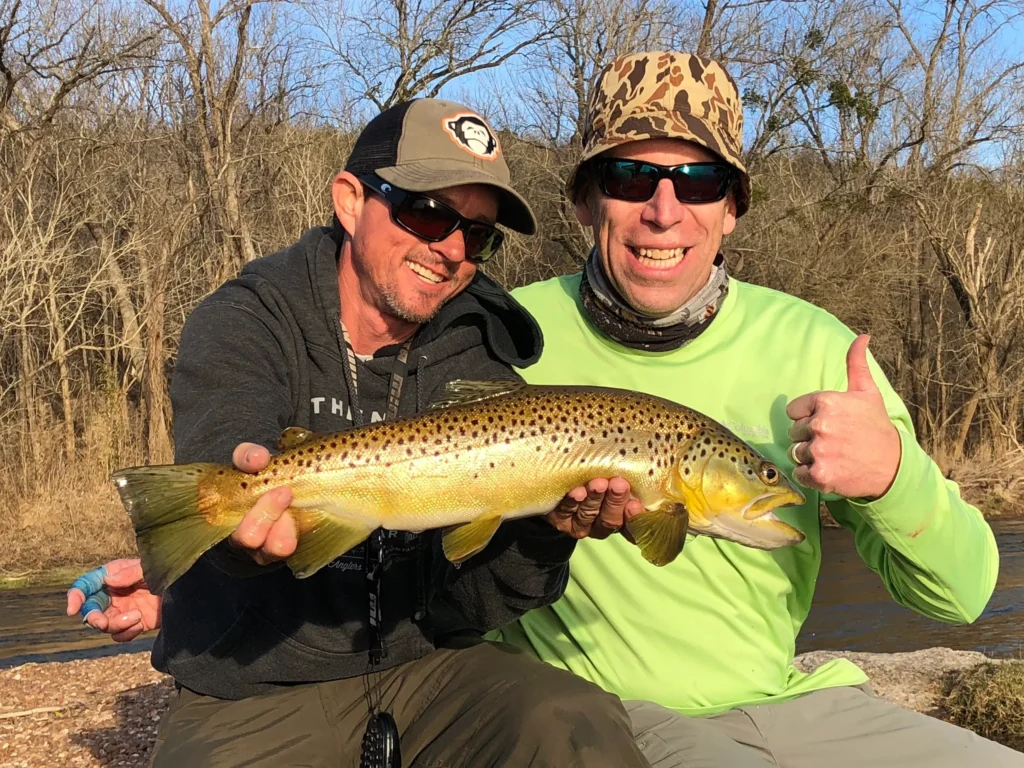
Conclusion

Fishing the Yellowstone, Bighorn, and Stillwater doesn’t require secret flies or complicated systems. Alex shows that success on big Montana rivers comes from understanding water types, staying flexible, and making thoughtful adjustments throughout the day. Whether fishing from a drift boat or on foot, slowing down and simplifying your approach can make a big difference. If this episode gets you thinking about your next Montana trip, be sure to check out the Montana Fly Fishing Trip and Gear Giveaway for a chance to put these tactics into practice. It’s a reminder that good information—and a little opportunity—can go a long way.


870 | Fly Fishing the Eleven Point River with Justin Spencer

Somewhere deep in the Ozarks, Missouri splits in two. One side is farmland and highways. The other is the Eleven Point River, where everything goes quiet. No houses. No roads. Just cold, spring-fed water sliding through Mark Twain National Forest and miles of wild trout water where you can float for hours without seeing anyone.

In this episode, we dig into fly fishing the Eleven Point River and the surrounding Ozark streams with Justin Spencer. We talk about his indicator jig system, why movement matters more than anything, when the fishing is best, and how trout and smallmouth behave through the seasons. We also cover Missouri’s trout parks, blue ribbon water, and how to plan a trip that actually fits the river.

Hit play to start listening! 👇🏻🎧


apple podcasts

Find the show:  Follow the Show | Overcast | Spotify

Subscribe on Apple Podcasts

Subscribe on Android

Subscribe via RSS

(The full episode transcript is at the bottom of this blogpost) 👇🏻

Sponsors and Podcast Updates


Eleven Point River
Photo via https://elevenpointflyfishing.com/

Show Notes with Justin Spencer on Fly Fishing the Eleven Point River

This episode covers the Eleven Point River and the greater Ozarks, focusing on a simple but deadly indicator jig system that works for trout and smallmouth bass. We talk seasons, water conditions, boat access, Missouri trout parks, and why this region offers one of the most peaceful float-fishing experiences in the country.

The Eleven Point River

Justin breaks down why the Eleven Point River feels like stepping back in time. Roughly 40–50 miles of the river flow through federally protected land, meaning no houses, no roads, and no development along the banks. It’s designated as a National Wild and Scenic Riverway, and you can float miles without seeing another angler.

The river is spring-fed, stays cool year-round, and supports both trout and smallmouth bass. That mix, combined with isolation, makes it a rare fishery in the Midwest.

The Eleven Point River flows generally south and east from Missouri into Arkansas and stretches roughly 130–140 miles. It’s a spring-fed freestone river, meaning flows depend on spring input and rainfall rather than dams.

The Ozarks cover much of southern Missouri and are defined by rolling hills, limestone bluffs, pine and oak forests, and countless cold-water springs. Most of Missouri’s fly fishing—trout and smallmouth alike—happens in this region.

Best Time of Year to Fish the Eleven Point

Justin says fall is the most consistent time to fish the Eleven Point. Water levels stabilize, fishing stays strong, and you avoid the frequent flooding that has become more common in spring.

Spring can be excellent, but trips are often canceled due to high water. Summer fishing remains solid, with water temperatures around 65°F thanks to the springs, though air temps can hit the 90s. Winter fishing slows, but opportunities remain for anglers willing to brave the cold.

The Indicator Jig System for Trout and Smallmouth

Justin’s most productive method is fishing marabou jigs under indicators year-round. The river has a massive baitfish population, so trout and smallmouth key heavily on minnows, sculpins, and crawdads. He describes it as a hybrid between streamer fishing and nymphing. The indicator allows longer drifts and keeps the fly in the strike zone longer, especially in deeper holes where fish may be sitting six to seven feet down.

Key details from Justin’s setup:

  • 5- or 6-weight rod, typically 9 feet
  • Floating fly line
  • About 6 feet of straight 15 lb mono to a tippet ring
  • 3X–4X in spring, downsizing to 4X–5X in clear water
  • Marabou jig as the main fly, sometimes with a San Juan Worm or nymph dropper
  • Adjustable indicators like Oros or Airlock, adjusted constantly throughout the day

Movement is everything. Justin wants anglers popping the indicator up several inches during mends so the jig rises and falls. Fish often eat as the jig drops back through the water column.

Justin’s most productive technique—year-round—is fishing marabou jigs under an indicator. While it may sound unconventional, it perfectly matches the Eleven Point’s abundant baitfish and sculpin population.

Eleven Point River
Photo via https://elevenpointflyfishing.com/

Reading Water and Finding Fish

The Eleven Point River holds fish in nearly every type of water. Wild trout often show up in riffles, while stocked and larger fish tend to sit in runs, pools, and tailouts. Oxygen isn’t usually a limiting factor because the river stays cool.

Moderate current and depth are ideal, but Justin stresses that fish can show up in unexpected places. Average trout run 13–15 inches, with occasional fish over 18 inches, but this isn’t a river known for giants.

Smallmouth Bass in the Ozarks

Trout and smallmouth are usually caught on the same setup. In winter, smallmouth stack in specific holes, but Justin waits for slightly higher, off-color water before targeting them. Clear winter water makes smallmouth extremely spooky.
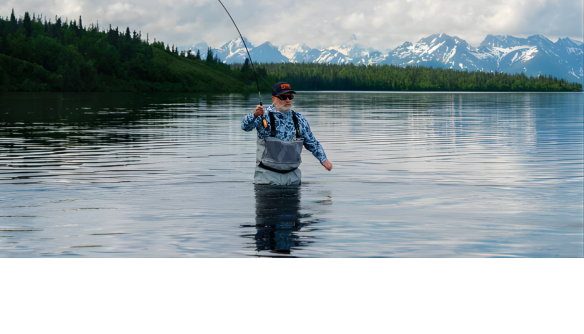
When conditions line up, the bite window can be short but intense. Fifteen-inch smallmouth are common, with occasional fish pushing 17–19 inches, and reports of 20-inch fish in slower, deeper Ozark rivers.

Top 20 Places to Fly Fish in Missouri

Drifthook breaks down the top places to fly fish in Missouri, and Justin says the list lines up well with how locals see the state.

  • Eleven Point River – One of the better places to fish in Missouri, but it’s big and intimidating. Best fished from a drift boat. Without knowing where fish sit, it’s hard to read.
  • Trout Parks (like Bennett Spring State Park) – Missouri has four trout parks, many built in the 1930s. They sit on large springs, get stocked daily in season, and are very put-and-take. Great for beginners and families.
  • Bennett Spring State Park → Niangua River – The park flows into the Niangua, with trout fishing both inside the park and outside. The Niangua also turns into a solid smallmouth river.
  • Barren Fork Creek – A Blue Ribbon trout stream. Small, technical water with wild reproduction. Tougher fishing, but good habitat.
  • Crane Creek – Another Blue Ribbon stream. Known for redband genetics and rumored McCloud strain rainbows. Fish often hold parr marks longer than usual.
  • Blue Springs Creek – Small spring-fed water. Requires downsizing flies and tippet and moving carefully. Similar feel to a Driftless-style creek.
  • Capps Creek – Another small creek where stealth matters. Not much dry fly action most of the time, but some opportunities on smaller water.
  • Current River – One of the best wade-fishing trout rivers in the state. Browns and rainbows, plus strong smallmouth fishing. Gets busy in summer.
  • Jacks Fork River – An Ozark Scenic Riverway focused on smallmouth. Clear water, big gravel bars, and lots of float traffic in peak season.
  • Lake Taneycomo – A tailwater below Table Rock Lake. Best accessed by boat. Big browns and rainbows. Close to Branson and great for family trips, but very different from natural spring creeks.
  • Most of Missouri’s best fly water sits south of I-44.
    North of that turns into farmland and muddier warmwater creeks. In the Ozarks, you cross rivers and think smallmouth.

Want to dig deeper into all 20 spots, plus fly suggestions for each one?
Check out the Drifthook’s Top 20 Places to Fly Fish in Missouri blog.

About the Guest

Eleven Point River

Justin Spencer grew up fishing farm ponds in Kansas, chasing bass and bluegill before discovering fly fishing in his late teens. What started with popping bugs and panfish quickly turned into a lifelong obsession.

After studying fisheries biology and working in the field, Justin eventually landed in southern Missouri, just minutes from the Eleven Point River. He’s spent years learning Ozark rivers, from tailwaters to freestones, and even ran a canoe rental and campground before a major flood changed plans. Today, Justin brings a deep local knowledge of Missouri trout and smallmouth water, shaped by time on the river and a lot of days figuring things out the hard way.


Eleven Point Fly Fishing

Sponsors and Podcast Updates

Related Podcast Episodes

Full Podcast Transcript

Episode Transcript
WFS 870 Transcript 00:00:00 Dave: Somewhere deep in the Ozarks, the world splits in two. Much of Missouri is farmland and highways, the kind of place where you might hear a diesel truck long before you see the river. But on the eleven point River, everything goes quiet. No houses, no road. Hum. Just spring fed water sliding through Mark Twain National Forest and a stretch of wild trout water where you could float miles without meeting a single soul. This is the Wet Fly Swing podcast, where I show you the best places to travel to for fly fishing, how to find the best resources and tools to prepare for that big trip, and what you can do to give back to the fish species we all love. Justin Spencer is here today to take us into the Ozarks and the surrounding great rivers and spring creeks of the area. Today we’re going to find out how he fishes an indicator style jig system, and he swears by this and how it works for both trout and smallmouth bass, and how movement is the key. Today. We’re also going to find out the best seasons to fish and some tips on fishing the Ozarks as well. We’re also going to find out how Smallmouths stack in the winter, and the exact conditions that Justin waits for before taking his clients to the river, and why Missouri’s trout parks and blue ribbon streams matter and how to plan your next trip to the Missouri. All right, if you’ve ever wondered how to do it all, how to fish it, how to take it all in, we’re going to get into a top fishing spots of Missouri as well today. Uh, we’re digging in. You can find Justin Spencer at eleven point fly fishing. Com here he is. How you doing, Justin? 00:01:30 Justin: Doing good. Thanks for having me on. 00:01:32 Dave: Yeah, yeah. Thanks for putting this together here today. Um, we’re going to jump into a new river. It’s always fun talking new rivers. And we’ve done a little bit in the Missouri over the years. I think more of the southern part, which I believe you’re kind of in that range. But we’re going to talk about the eleven point River, where we’re going to talk about some of the techniques that you use down there and just really get into a background. So people and we might even get into a little bit on, you know, some of the top places to fish in Missouri. Um, but what’s happened this time of year? How are things looking down there? Are you still fishing? It’s kind of December now. How is all that looking? 00:02:03 Justin: Yeah, things are cooling off here now, so I had a couple trips last week and then it’ll start getting pretty spotty from this point on, depending on weather and water levels. You know, the fishing slows down a little here in the wintertime. It stays fairly good. But you know, people just don’t want to get out in the cold as much as they do when the weather’s better. So. 00:02:24 Dave: Yeah. So your peak time, is it kind of the typical, uh, you know, spring through fall sort of deal? 00:02:32 Justin: Yeah, it really is. Starting about mid-April, the fishing starts picking up pretty good. And then, yeah, it stays good on through about now. And even now the fishing will be good. It just gets really low and clear this time of year, which makes the fish a little. A little spookier and a little harder to catch. But we can still keep catching them pretty good, especially on cloudy days. 00:02:53 Dave: Okay, well, take us back a little bit on your your background. You’re out there now. Have you lived out there a while? What’s your first memory of kind of fly fishing and all that? Take us all the way back. 00:03:03 Justin: So I grew up in a little town called Fort Scott, Kansas, right there on the Missouri Kansas border, kind of the southeast corner of Kansas. Um, I didn’t really get into fly fishing until probably the latter high school years. I grew up, uh, with a buddy of mine in little local, um, farm pond. We would go out there quite a bit. There was a little John boat out there with oars on it. I really don’t even know who owned that boat. But yeah, we were out there most weekends in the summertime. You know, he was throwing, uh, bait casters, which I could never throw without getting horrible backlashes. So I started with the old Zebco two hundred two and, you know, just catching bass and bluegill that way. And that kind of started my love for fishing. And then from there, another friend got me into fly fishing and took that to the same farm pond, catching lots of bluegill on popping bugs. And, uh, you know, that just gave me the fever. And, uh, you know, it’s just kind of blossomed from there. 00:04:03 Dave: Yeah. It has. And have you been, uh, spent most of your time in Missouri? Uh, do you know Missouri pretty well over all the state? 00:04:09 Justin: Yeah, I know quite a bit. Now, um, out of went to graduate school for fisheries biology and, uh, met my wife there at Pittsburg State University in Pittsburg, Kansas. And, uh, from there we moved down to Florida, got jobs in our field for a while, and, and had a child, uh, decided to get back closer to home. Her homes, West Plains, Missouri, which is only about thirty minutes from the eleven point River. So we’re kind of in that area. She brought me back to her kind of her home stomping grounds. And so that’s kind of how that developed back in two thousand and four is when we moved here, uh, bought a canoe rental and campground on the North Fork of the white River, which is above Norfork Lake. So all that ends up flowing down into the tail waters, eventually coming to the white River down there. So yeah, we’ve got a lot of different fishing opportunities in this area, from tail waters to freestone streams. So it’s a really neat area to be in all kinds of different fishing for whatever you want to try to get into. 00:05:11 Dave: Right? That’s awesome. And so do you guys still have the, uh, the canoe rental and that campground? 00:05:16 Justin: No, we sold it in twenty nineteen. Had a thousand year flood in twenty seventeen that basically wiped out all of our buildings and trees and everything. And so we we put it back together, got it running again, and, uh, decided we weren’t confident that that wasn’t going to happen over and over again. So we decided to go ahead and sell it to some younger people who were who were raring to go and still excited about it. So it’s worked out well for everyone. 00:05:44 Dave: Oh, good. Well, we’re going to jump into a little on the kind of the eleven point river. We mentioned it, um, you know, at the start maybe talk about that. So frame this up. So where is the eleven point in relation to. And are you? You’re near the river. 00:05:58 Justin: Yeah. The eleven point river is basically we base our operations kind of out of Alton, Missouri, which is in Oregon County. It’s in the far southern part of the state, maybe just a little bit east of of what you would think of the center of Missouri being. Yeah, there’s really West Plains. Missouri’s really the only big town around, and it’s probably a town of twelve to fifteen thousand. So in Alton itself maybe has four or five hundred people. So we’re talking very rural area, pretty rugged, you know, windy roads and not big mountains, but pretty neat hills and valleys. Around the eleven point River is a it’s a designated National Wild and Scenic Riverway. So there’s about forty to fifty miles of it that flow through Mark Twain National Forest, which is what all of the federally owned land in Missouri is considered Mark Twain National Forest. So it’s not all connected together, but but there’s a large swath that runs down the eleven points. So when you’re floating down the eleven point, you’re not going to see houses. You’re not going to see, you know, campgrounds with RVs and vehicles. And so it’s a very wild experience, you know, probably as close to going back in time as you can be. 00:07:12 Dave: That’s cool. What’s your, um, your experience as far as guiding? When did you first, you know, learn that that was going to be, you know, your calling. 00:07:20 Justin: So when we bought the canoe rental back in two thousand and four, I thought I was a fly fisherman. Found out I really didn’t know a whole lot about it. I’d done some fly fishing. You know, we’ve got some trout parks here in Missouri, um, that are a really neat thing, and we might get into that later if you’re interested. But, you know, I’ve done some fishing at the trout parks. Uh, did some saltwater fly fishing when we lived in Florida. And then coming up to the bigger rivers here in Missouri, it was a whole different ball game, you know, talking rivers that are flowing more like seven thousand eight hundred cubic feet per second as opposed to the little small creeks we were used to. But, you know, I learned from guys coming down to the campground that were coming to the river to fish. They taught me quite a bit about techniques for the Ozarks. And, uh, you know, the guys there at Hargrove’s fly shop in Saint Louis, they were always coming down here fishing and taking me with them and, you know, giving me good pointers. And as I learned, then I started having people wanting me to take them fishing and, and bought a drift boat and, uh, just kind of went from there, you know, started out taking people for free. And then then there’s more and more people wanted to do it. You know, it just kind of grew into a little bit of a business. And then once I sold the campground, I was able to put my full attention towards guiding. 00:08:35 Dave: The eleven point is a huge, uh, river, isn’t it? It flows kind of south. Is that down into. 00:08:40 Speaker 3: Yeah, it flows. 00:08:41 Justin: Generally south and probably a little bit east. I think it’s, I don’t know, one hundred and thirty, one hundred and forty miles long flowing from, from up in Missouri, well down into Arkansas. So yeah, it’s a really neat deal for sure. 00:08:57 Dave: Huh? And so are you in the maybe describe the geography a little bit where the eleven point is and the you mentioned the Mark Twain National Forest. Is that, uh, considered is that the Ozarks maybe describe Missouri a little bit overall? 00:09:09 Justin: Yeah, we’re definitely in the Ozarks. Most of the, the streams and rivers that you would consider for fly fishing or any type of fishing other than maybe catfish and stuff like that are going to be found in the Ozarks, which it covers a pretty huge portion of Missouri, mostly the southern half. 00:09:26 Dave: Yeah, like kind of south of Saint Louis and Kansas City. 00:09:29 Justin: Yeah, exactly. You, you know, probably from Lake of the Ozarks down to the south is what most people would generally consider the Ozarks. And it’s just kind of a some areas are real rugged, you know, with, uh, along the rivers, you’ve got big bluffs, quite a few pine trees, oak trees, you know, mostly densely wooded areas. You know, the farmers now, um, or loggers will go in log areas and then turn it into pasture land. It’s really not good land for growing any kind of crops. 00:10:04 Speaker 3: So yeah. 00:10:05 Justin: So it’s either going to be heavily forested, um, which most of the Mark Twain forest is, which is a really neat opportunity for people that want to fish and hunt. 00:10:14 Speaker 3: Huh. Yeah. 00:10:15 Justin: But yeah, that’s basically the topography. It’s, you know, more gently rolling hills than what you’d think of as mountains. There’s no real passes or anything like that. So. 00:10:25 Dave: Okay, perfect. Well, I think we’ll touch on some high level stuff a little bit later on, maybe talk about some other areas. But let’s talk about specifically the eleven point. Like maybe first talk about that. If we were, you know, trying to set up a trip to head out there, when do you think would be a good time? If we were going to get a few people together to, to come and fish that area? What do you think? Is there a prime time? 00:10:44 Justin: Probably the the best time is the fall, just because usually the weather is fairly consistent. The fishing is usually very good in the fall. Like I said earlier, sometimes when it gets a little low and clear, the fish get a little pickier and that’s typically fall water. But at the same time, you’re not worried about all the flooding and and high water that we get in the spring. I used to say the spring was the best time to come, but it just seems like like we get a lot more flooding than we used to. 00:11:15 Dave: And more rain. 00:11:17 Justin: Yeah. This last year in particular, I think I canceled more trips than I was able to take in the spring, which was kind of a bummer. 00:11:23 Speaker 3: But it. 00:11:24 Justin: Is what it is. 00:11:25 Speaker 3: Yeah, and. 00:11:25 Justin: Then it stays good on through the summertime. It gets a little hot out there. You know, we have highs in the nineties. You can always jump in the nice cool sixty five degree river to cool off. But yeah some people think that’s a little drastic too. 00:11:39 Dave: But that’s a good temperature for us that swimming temperature. 00:11:42 Speaker 3: Yeah we definitely. 00:11:43 Justin: Is a is guides. We definitely jump in and cool off even if our clients don’t Right. 00:11:48 Dave: Yeah. That’s sweet. So talk about what are you guys doing typically. Let’s just say if it’s the fall, uh, you know, say October in that range. Are you fishing? Dries. Nymphs mixing it up. What is your typical what’s the most productive technique? 00:12:01 Justin: So on the eleven point, the most productive technique, uh, year round for the most part, is going to be we fish, uh, marabou jigs under indicators, which doesn’t really sound like fly fishing, but, um, there’s such a huge bait fish population in the eleven point that the fish really get keyed into those little minnows and stuff. And so so we’re trying to imitate any of the minnows or sculpins, darker colors, crawdads maybe as well. So, so I kind of think of it as a hybrid between streamer fishing and nymphing. 00:12:36 Speaker 3: Um. 00:12:37 Justin: You know, we’re going to be fishing in some areas maybe six, seven feet under that indicator in some of the deeper holes. And, you know, I like to put it under an indicator as opposed to just stripping it because you can get a longer drift. You pop your indicator up out of the water, and rainbow trout really love to see a jig bait. So whether we’re fishing, we might be fishing a San Juan worm dropper off one of our our marabou jigs. But when they see that thing move, they they’re going to grab it. So we’d like to give it a lot of action. Um fishing that way. Also if you come across where a smallmouth sitting he’s going to bite it the same way. So. Oh right. So you know, we’re going to do that on every trip. That’s probably how we’re going to start out fishing those. And if they’re biting those and liking to see it move, we a lot of times we’re going to stick with that all day long. 00:13:26 Dave: Yeah that’s amazing. What is the, um what’s the setup for setting up the jig? Uh, you know, kind of the rod kind of wait and then talk about the jigs you’re using. 00:13:37 Justin: Yeah, we like a five or a six weight rod. You know, something that’s going to be able to chuck a kind of chuck and duck with these jigs. 00:13:45 Dave: Like a nine foot or do you do something longer? 00:13:47 Justin: Yeah, we’re usually using a nine foot. I think a ten foot would probably be fine too. But, you know, just the standard stuff that everybody has pretty much works great. And then we’re going to put a floating line with a, oh, I usually just take a probably a six foot section of maybe straight fifteen pound, um, monofilament to a tippet ring. I’ve kind of started doing that just because I always used a tapered leader in the past. But, you know, people are going to get wind knots and everything else. So it’s a lot cheaper just to use a little bit of a straight mono and then and then just tie a oh. Usually in the spring we can get away with three x tippet to your main fly, maybe four x to your dropper, and then then just kind of downsize that as the water clears up. Right now water’s clear. So we’re fishing for X to the main fly and five x to the dropper. And usually we don’t have to go any lighter than that. And then just adjusting. Adjusting that indicator to the depth of the water, which, you know, the new Oros indicators or the or the ones from air lock make it really easy to change depth. So we’re changing depths a hundred times a day probably. 00:14:58 Dave: Yeah. You are. Okay. So you’re getting keyed in. And what is the the water you’re looking for. Are you fishing pools and riffles or is it more deeper water? 00:15:06 Justin: You know the wonderful thing about the eleven point? We’ve got fish in every kind of water. There’s natural reproduction occurs, not just a ton of wild fish, but enough that they keep the riffles productive. If people want to get out and wade fish, which most people don’t. But some people like to, and we can get out and find some fish in the fast water. Usually those are going to be your wild fish that have that have reproduced naturally in the river. And then then they’re going to be in the pools. As long as you’ve got a little bit of movement to the water, you know, these fish can sit anywhere in this river. It stays cool enough that that usually oxygen isn’t an issue. So yeah, you can find them in some really strange areas, but, you know, just the moderate current a little bit deeper here. And then the tail outs of course are going to have quite a few fish too. 00:15:53 Dave: So okay. And where would you find more of some of the bigger fish and what is out there. What would be a nice bigger size fish? Or maybe what’s the average what’s a bigger fish? 00:16:02 Speaker 4: You know, your average. 00:16:03 Justin: Fish is going to be probably thirteen to fifteen inches, I would say, you know, just a nice solid fish. I was talking to the biologist just the other day about we just don’t see a whole lot of big fish in the river, other than maybe the ones that the conservation Department stocks. Um, you know, and I was talking to him. We don’t really know why. You know, it seems like twenty inch wild fish. You don’t see just a lot bigger than that. So, you know, you’ve every few trips we’ll catch fish over eighteen inches, but most of the time you’re just going to catch a whole lot of, of, say, thirteen to sixteen inch fish, you know, some smaller. We usually get a few seventeen inches each trip, but, you know, just fun size fish. You’re not going to come to the eleven point hoping to catch a giant, that’s for sure. 00:16:51 Dave: Check out Jackson Hole Fly Company today. Premium fly gear straight to your door without the premium price. Jackson Hole Fly Company designs and builds their own fly rods, reels, flies and gear, delivering quality you can trust at prices that let you fish more and spend less. Whether you’re picking up a fly rod for the first time or guiding every day, they’ve got what you need. Check them out. Right now. That’s Jackson Hole fly company, Jackson Hole fly company. Com fish to Fly Guide service is dedicated to sharing the incredible fly fishing opportunities around Jackson Hole. Whether floating the scenic snake River in search of native cutthroat trout, or hiking into the mountains to explore pristine tributaries, every day on the water is an adventure. You can join them for an unforgettable fly fishing experience in the heart of the Tetons at Fish to Fly. Com. How is that different? It’s interesting because we’ve heard about you know, there’s all obviously all places are different all around the country. You know from catching, you know, four inch fish up to, you know, whatever forty inch fish. But you know, the white River you mentioned is down in the system south, you know, you have to go down into kind of Arkansas. And I guess it’s because it’s a tail water, but it’s known as one of the maybe the greatest rivers as far as producing these massive fish. What do you think? What’s the difference between, say, the white River down in Arkansas and where you’re at and maybe just some of the other areas? Is it just one’s a tailwater and one’s a yours is more of a spring. Is it a spring creek or a freestone? 00:18:19 Speaker 4: Yeah. 00:18:19 Justin: We’re a spring fed creek that I guess. Yeah. That’s like right now I think the spring is pumping about three hundred and fifty cubic feet per second. Um, the spring that makes it the trout part, you know, above it, there’s water coming in. And then I want to say about twenty miles down, there’s another water gauge and it’s, it’s at maybe six hundred and fifty cubic feet per second right now. So you know, about half of the the eleven points water at these lower conditions are coming from the spring itself. You know, other than that it’s a, you know, a, a freestone river that just it’s only affected by the spring and rainwater. So, you know, you get a big rain event, it’s going to bump it up quite a bit. Whereas the, you know, the tail waters, they’re just a, a larger especially the white River. It’s a huge river. You know, it might fluctuate from a thousand cubic feet per second to twenty thousand cubic feet per second in just a few hours when they turn the generators on. And I don’t know if those big browns down there, I think they probably really get big on, you know, there’s quite a bit of natural forage there, but they’re going to eat a lot of those stocked rainbows too, I think. And so yeah, I couldn’t really tell you why the white grows them so much bigger than, than the eleven point. But a part of it is they have the brown trout and we don’t. 00:19:41 Dave: Oh right. Yeah. You have the rainbows, right. Exactly. Yeah. But it sounds like there’s pretty solid there. I mean, thirteen and fifteen inches is definitely a solid fish. I could, you know, be okay catching those all day long. Right. 00:19:51 Justin: Yeah. There’s nothing wrong with that. 00:19:53 Dave: Yeah. Um, but so back on the jigging. So you have your setup with your float. Is it floating line. Is that typically what you’re using? 00:20:01 Justin: Yeah, we’re using floating line. 00:20:02 Dave: Yeah. So floating line you have your jig set up. You have your your leader your indicator. And then what are you doing. Are you casting, you know, upstream and letting it go and talk about where you’re casting and how you’re jigging it, the motion. 00:20:15 Justin: So most of the time we’re going to be drifting with the current, um, unless we’re really picking apart a place, you know, with a guy in the front and back, I find it easier and less tangles if I just kind of drift with the current, let them fish it, and then. And then if we hit a good spot, you know, I’ll row the boat back up. And typically on the eleven point, I can roll back up in most of the good areas and we can hit it multiple times, um, depending on, you know, the skill level of the anglers. If we can slow down a little bit, I’ll have them toss it upstream just a little and let it float by the boat, and then we’ll let it swing at the tail end. The guy in the front can really let it swing, and we catch a lot of fish on the swing. As that jig starts coming up off the bottom. Those fish think it’s getting away and they and they grab it that way. But you know, I try to make it as, as easy as possible for people to not have to work too hard to catch these fish, but we’ll be growing up to where the riffle kind of drops into a deeper run. And usually we start right there and just fish it on through the hole until it gets too shallow to fish again. And, you know, if the fish are biting in that particular area, we’ll hit that one several times until we move on. 00:21:23 Dave: Yeah. Until you move on. And and the technique, uh, so you make the cast and what is the. So you’ve got the jig, the actual jig with the jig hook on it. It sounds like, what is the motion you’re making with your rod or your hand on the to get a take. And do they take while you’re making the motion up, or do they take on the pause? When do they hit it? 00:21:41 Justin: So usually if somebody needing to make a mend, what I’ll have them do is I’ll have them kind of do an exaggerated mend to where it pops that indicator up out of the water. You know, three, four or five inches. You really can’t jump it too much. And then a lot of times those fish are going to grab it as that is that jigs falling in the water column. So you know that that indicator is going to land back on the water. And then sometimes it’s just going to keep going down, and that’s when the fish is going to grab it. And then some of that slower water, you’ll just barely see it. You know, that indicator might just pause or it might you might think it’s not floating quite right. And in the slow water the fish bite it real subtly a lot of the times. So you know, if anything’s going on. I just have the guys go ahead and set the hook just in case. And, and uh, we just kind of repeat that. And if the jigs aren’t working, then we’ll put on a patch, of rubber legs or something like that. You know, in all your typical nymphs are going to work too, as droppers. So the fish aren’t real picky here. 00:22:43 Dave: Yeah. They’re not, they’re not. It sounds like it’s pretty easy. And are there other, uh, other guides, other people fishing float in the river? What does that look like out there? 00:22:52 Justin: I’m kind of the only fly fishing guide on the river. We do have some guides on rivers, um, in the area. That’ll bring clients down as well, but I don’t see many of them out there. It’s so isolated from some of the other rivers that a lot of those guys will just have their clients call me to take them on the eleven point as well. Um, so, you know, typically on a day out there, we may be the only people out there fly fishing. We might see a few people drifting by in canoes and kayaks that are throwing some spinning gear. And it’s just a real it’s a fairly tough river to wade fish. So fishing from the drift boat is by far the best way to catch trout and smallmouth in the eleven point it is. 00:23:33 Dave: And are you doing an equal amount of smallmouth and trout trips, or are you just kind of doing them together at the same time? 00:23:39 Justin: They’re kind of combined. When we when we’re fishing with those jigs, it’s the best way to catch both species. So most people are coming down to catch trout. And, you know, they’re more than happy to catch smallmouth along with it. So the one exception to that would be this time of year is the water cools off, the smallmouth will move to specific areas, and depending on the water levels, we can kind of target them knowing where they kind of like to winter this time of year. And so we need a little more water in the river. I’ve got a list of clients that want to do that as soon as the water gets right. And so hopefully we’ll get some rain and little precipitation to bring the river up and get it just a little off color, because those smallmouth are really spooky. They don’t like the clear water at all. So, you know, we get a little color on the river and, uh, there’s a few holes that it can just be, you know, we can really put the hammer to him in the wintertime, but it’s not in every winter thing for sure. We just got to kind of wait for the water to get right, and sometimes the window might only be a few days. So I’ll make a bunch of phone calls, and some of my retirees can jump down real quick and and get out for a day. But so that’s kind of what we’re waiting on right now. 00:24:51 Dave: Okay. And the boats you’re using, are you using like a drift boat or what’s your boat of choice? 00:24:56 Justin: Yeah, I, I, uh, guide out of a predator drift boat, which is made down in midway, Arkansas. The same company, Shawnee Supreme. That makes a lot of the. 00:25:06 Dave: Yeah, yeah. The big the the long the the the really specialized narrow, long drift boats. 00:25:12 Justin: Exactly. Yeah. They mine is actually a drift. It’s kind of a skiff that they make. But yeah, they do all the we call them trout boats or trout johns that they use on the white River. So this is a different style of boat, more like a headhunter skiff maybe, or something that you might be familiar with. 00:25:27 Dave: Yeah. Yeah, it’s like a skiff. It’s kind of like a skiff. More of a. Yeah, like something you’d have. Yeah, exactly. Okay. More of a almost not totally flat bottom, but just more like a drift boat, but skiff style. 00:25:38 Justin: Yep. We just don’t have the big wave, so we’re not worried about getting wet? No. Unless the water’s real high, you know, we’re not going to take water over the side too much. So it’s. It’s a little more convenient to get in and out of a skiff, and the wind doesn’t affect it quite as much. And. Yeah. So it’s just perfect for Ozark rivers. There’s only a few rivers in the Ozarks that are big enough for for drift boats, and it works great for those. 00:26:01 Dave: That’s it. And then canoe wise, when you guys had your canoe rental, did you find a lot of people using canoes? Anybody using them for fly fishing out there? 00:26:11 Justin: Yeah, a little bit. You know, it seemed like more people would probably take kayaks that were wanting to fly fish. Okay. And kayaks really. Everybody’s taking kayaks or rafts anymore. You know, you still get some canoes, but it’s really shifted into kayaking and rafting. 00:26:28 Dave: Oh, right. The kayak, because kayaks have gotten so specialized and the canoe is just kind of a more of a I don’t know what is it? It’s a little older school. It’s it’s bigger. Exactly. Yeah. 00:26:37 Justin: You can put a cooler of beer in there easier. 00:26:39 Dave: That’s the nice thing about the canoe. So yeah, the canoe is better for that if you’re doing a big or a bigger trip or something like that. Are you guys doing anything on the eleven point? Can you do like a a multi. Could you camp and do some overnight stuff out there. 00:26:50 Justin: Yeah it’s a great river for that. They’ve uh the Forest Service has set up some designated float camps that may have picnic tables and a place to hang your lanterns and stuff like that. Firings. Maybe you don’t necessarily know how well they’ve been taken care of year to year, but you’re allowed to camp anywhere along the river as well. So, you know, there’s some good gravel bars to camp on, which is where I prefer to camp if I’m going on an overnight. 00:27:18 Dave: Yeah. Have you guys done that? Would you offer are there clients that have you’ve done that with your clients? You know. 00:27:23 Justin: We’ve tried to set up a few of those and, uh, you know, it’s just, uh, not a whole lot of people want to do it. Yeah. And I’ve been approached by a few other guides and I say, yeah, I’m fully willing, but I don’t want to be the one setting up camp and cooking and doing all that stuff. 00:27:37 Dave: No, don’t do that. No. 00:27:39 Justin: But yeah, I’ve done it. You know, me and my son have done it several times, you know, just the two of us. But it’s a there’s a lot of people that do it recreationally. 00:27:48 Dave: Sure. 00:27:49 Justin: In the summertime, you know, you’ll see a lot of camps as you float down the river. And it’s a wonderful thing to do. Mix in some fishing with some camping and and beer drinking. 00:28:00 Dave: And yeah. 00:28:01 Justin: It’s a unique thing to the Ozarks. It’s a lot of fun. 00:28:04 Dave: That is cool. Yeah. There’s nothing like a good river trip. And like you’re saying there. Well, let’s hear a little bit more. Let’s go out. Um, higher level, kind of a broader picture. And I have a blog post that I’ve, uh, I’ve got here. This is from drift com. Um, and they talk about some of the best places to fish in Missouri. I’d love to hear what your thoughts are on that. When you look at Missouri, overall, it sounds like, you know, we’re down in the southern central part of Missouri. What do you think are the other top? What would you say? Just Missouri in general. Take out, you know, Arkansas. Just thinking of the state of Missouri. What are the is the eleven point like one of the best places for fishing for you know, I guess trout or bass. 00:28:40 Justin: You know, the way I’m doing it, it is one of the better places to go. Like I was saying earlier, it’s really best fished out of a drift boat. So, you know, if I was just a guy wanting to go trout fishing in Missouri, that’s probably not the first place I would go just because it’s pretty large and a little bit intimidating. And without really knowing what you’re doing, you’re going to catch fish, but you’re you’re maybe not going to have the experience you were hoping for unless you get a guide. And yeah, you know, somebody that really knows where the fish are sitting because it’s just kind of a hard, yeah, a hard thing to read. But as a trout fisherman, one cool thing that Missouri has or and we touched on it a little bit ago, is the trout parks, which there’s four trout parks in Missouri. I think three of them started back in the the nineteen thirties, I think, um, the Civilian Conservation Corps went in and built cabins and, and, you know, made some improvements, campgrounds and stuff like that. So they’re all located on, on fairly large springs, and then they stock them in the summertime on a daily basis. So it’s very put and take um, yeah. You know, it’s not everybody’s cup of tea, but it’s a great place to get started fly fishing. Everybody at the trout parks are friendly. And, you know, a lot of people are willing to help. It’s not all fly fishing, but there are a lot of fly fishermen there. Um, most of the trout parks have a fly shop nearby so they can get you hooked up with what to do. And, you know, a great place to take the family. Um, you’ll see kids playing in the creek while dads are fishing and, you know, moms are reading a book or fishing as well. And, uh, right. Just a really cool thing that Missouri offers, you know, especially for for the social aspect and as you’re getting started fly fishing. And then a lot of those trout parks flow into rivers that offer some trout fishing outside of the park. So the current river is a great great wade fishing trout River, uh, they offer browns and rainbows there so it can be busy at times. It’s probably the best trout fishing. Um, it’s still several hours from Saint Louis, but a lot of Saint Louis people like to go. It’s called the Trout park. There is Montauk. And then, uh, you can fish outside the park. Really good. Wade fishing and, um. Yeah, just a neat, neat river in the current river, then turns into a really good smallmouth river as well. So I believe it’s a designated it’s not a wild and scenic riverway. I think it’s an Ozark Scenic Riverway. So it has a really kind of a special designation as well. And then, uh, you’ve got the Jacks Fork River, which is it’s all smallmouth also, uh, Ozark Scenic Riverway. Big gravel bars. You know, nice clear water. A lot of these, like the current and Jacks Fork. There are very popular recreational. Um, yeah. Recreational. So you’re going to deal with a lot of floaters in the summertime. So you’ve just kind of got to watch where you go and when. But, you know, there’s just every river in Missouri is going to have smallmouth in it. So. Okay. Or in, in the Ozarks anyway. And so, you know, out west you cross every river and you think about the trout in there. And here you cross over rivers and creeks and, and think smallmouth. 00:31:57 Dave: So yeah. That’s right. And there’s some pretty good smallmouth fishing. You get some pretty good sized smallmouth down there. 00:32:03 Justin: Yeah, we really do. Um, in the eleven point, you know, we get a lot of, I think maybe fifteen to twenty percent of smallmouth that they sample are are over fifteen inches. So, you know, a fifteen inch smallmouth is going to pull like a eighteen inch trout. You know, they’re just so much fun. And then I think this year I’ve seen a couple seventeen inch smallmouth come out of the river. Maybe the biggest I’ve seen is is nineteen inches, but you hear about twenty inches pretty often, especially kind of in the northern Ozarks where you’ve got a little bit slower, deeper streams. 00:32:41 Dave: Right. 00:32:42 Justin: But then we’ve got I actually live on the North Fork of the white River, which, as I said earlier, we had a big flood in twenty seventeen. It really widened the river out. It’s not, you know, it’s just not as neat as it used to be, but it still holds some really nice rainbows. All the rainbows on the North Fork are are wild reproducing. They don’t stock rainbows here at all. So when you do catch one, they’re strong, good fighting fish. They’re going to be in the fast water. And uh, they also stock brown trout in the North Fork. So you’ve got the potential to catch some good brown trout as well. We streamer fish a lot for them. Um, we do get striped bass. Come out of Norfolk Lake up into the North Fork of the white also so that, you know, it’s a a very specific fishery. But in the spring and early summer, when the water is still kind of murky, you can get on those striped bass and catch some of those if you’re willing to put your time in. Okay. And some of those are going to weigh up to twenty to thirty pounds. You know, a thirty inch striper is not uncommon at all, with forty to fifty inch fish being seen on occasion. 00:33:53 Dave: Right, right. That’s awesome. Well, you mentioned a few. Maybe we can go back and, uh, we can. I love doing this with our drift hook. Um, blog post. This is, um, I mentioned driftwood, and they’ve got the twenty places, uh, best places to fish. Let’s throw a few of these and see if you know of these. If they’re on track here on some names. I think you already mentioned a few of them, and I don’t think these are necessarily any order, but one here at the top. Um, the first one is the Barren Fork Creek. Are you familiar with that one? 00:34:21 Speaker 5: Uh, yes. Yeah. 00:34:22 Justin: That’s something I haven’t touched on, is the Department of Conservation here in Missouri has a, I believe they call it the Blue Ribbon Trout Challenge or Blue Ribbon Trout Slam or something like that. So we’ve got there’s nine rivers and creeks in Missouri designated as blue ribbon trout areas. I believe nine is the right number. But the barren fork is one of those. The barren fork. I’ve never been to it, but I hear it’s, uh, you know, it’s a fairly small creek. I hear it’s one of the tougher ones to catch a fish in. Out of all the Blue ribbon creeks. But your Blue Ribbon creeks are going to have wild natural reproduction and, you know, have some of the best habitat for trout in the state, even though they’re not native fish. Right. Um, some of those they may stock them in, but I think mostly they’re wild, wild fish in these smaller creeks. So yeah, that’s going to be the barren fork, the little piney. Yeah. Um, what are some of the other ones, uh, Mill Creek maybe. 00:35:20 Dave: Okay. Yeah, yeah, there’s probably some of these other ones that we could mention here. I think the number two here is Bennett Spring State Park. 00:35:27 Justin: Okay. Yeah. That’s one of the trout parks that we talked about before. 00:35:30 Dave: Okay. That’s a trout park. 00:35:31 Justin: Yep. Exactly. 00:35:33 Dave: Gotcha. 00:35:33 Justin: And that one I believe flows into the Niagara River. And then there’s a little bit of trout fishing outside the park there as well. And then the Niagara was also a really good smallmouth river as well. 00:35:46 Dave: Quick shout out to today’s sponsor AVC rig. They’re the team in Loveland, Colorado, turning regular vans into full blown adventure machines looking for a full build from the ground up, or just their killer aluminum cabinetry and storage systems, AVC rig helps you create a setup that’s lightweight, rock solid, and built for life on the road. Perfect for anyone chasing fish and wild places. And here’s the best part they’ll be at the Denver Fly Fishing show so you can step inside their rigs, meet the crew, and see what makes their work so dialed in. Stop by, say hi, and let them know you heard about them on the Swing podcast. And if you want to learn more right now and start planning your dream rig, go to AVC rig. That’s AVC rig. Com. Albert. Victor Conrad rig. Com AVC rig. Check em out now. And the trout parks are essentially their sections of stream where they have hatcheries in the. The state basically just puts a lot of hatchery fish. Is that what makes it a trout park? Yeah. Yeah. 00:36:48 Justin: Yep. Exactly. There. There’ll be a spring that flows into a little spring branch before it reaches the main river most of the time. So you’ll be fishing along the spring branches of these areas. And yeah, most of those, they’ve put. 00:36:59 Dave: Okay. 00:37:00 Justin: Hatcheries and and those hatcheries help supply fish, you know, around the state as well. So it’s a really neat, really neat thing right now they’re going through a lot of rebuilding of the hatcheries because they’ve finally flooded enough times that they realize they’re not high enough anymore. 00:37:17 Dave: So they’re not high enough. Right. Get out of the river. Yeah. 00:37:21 Justin: Yeah. So, um, one that’s on your list. That’s kind of a neat one. Is Crane Creek. Okay, um, I assume it’s probably on there somewhere, but it’s a Blue Ribbon Creek as well. 00:37:30 Dave: Oh, yeah, I see it. Yeah. Crane Creek, we have number five. Yeah, I see it here. Okay. 00:37:34 Justin: The rumor out there is that it has McLeod strain rainbows specifically. 00:37:41 Dave: That’s right. Yeah. Red band. These are red band. Rainbow. 00:37:44 Justin: Yeah. And, uh, you know, that’s been there long enough that they’ve probably developed into their own strain at this point. So they’re probably not identical to McLeod’s. But Missouri in general has a lot of red band genetics in it, which is really cool. You know, the trout here in the North Fork of the white, they’ll hold their PA marks till they’re, you know, ten eleven inches long, which I think is kind of a red band characteristic. So yeah, places like Crane Creek, people like to go there and say they’ve caught their McLeod rainbows, whether or not they’re I believe there’s a genetic study out right now that I’ve not seen the results to, but they’ve kind of been testing some of these strains in Missouri to see what they actually are. 00:38:24 Dave: Yeah. Gotcha. Wow. This is great. Yeah. No, I think we got this. Let’s go through a few more of these just to highlight. And I think most of these are all these so far kind of in that southern part south of, uh, you know, the big cities. 00:38:36 Justin: Yeah. Mostly south of Interstate forty four I think are right around that. 00:38:40 Dave: Interstate forty four, which cuts down from basically Saint Louis down to Springfield. Right? Forty four yeah. So that’s what we’re looking at. And then as you get up higher, like, say north of Kansas City, Saint Louis, you just get into more of the kind of open range, more kind of what like farmland type habitat. 00:38:57 Justin: Yeah, that’s going to be farmland, you know, muddier creeks that, you know, are going to have some more of your warm water species. 00:39:04 Dave: Um, yeah. 00:39:05 Justin: Gotcha. Yeah. And most people, you know, those people don’t think of those quite as for the recreational opportunity as they do the clear waters of the Ozarks for sure. 00:39:14 Dave: Yeah. That’s right. Okay. So we mentioned Bennett Springs. So yeah it says right here Bennett flows into the Niangua River. Is that right? Yeah. Yeah. Niangua Niangua that’s the trout park. And then another one here is, uh, Blue Springs Creek. Do you know that one? 00:39:27 Justin: Yeah, that’s another little creek. Kind of like the Barren Fork or or the little Piney and that sort of thing. So, yeah, that’s just going to be another one of those little ones. And I can’t, you know, on those little creeks, you’ve got to downsize your stuff and really sneak around. 00:39:41 Dave: Right. 00:39:41 Justin: You know, probably it’s more like a, say, a driftless creek only. Yeah. You know, the topography is a lot different, but, uh, you know, kind of a mix between the little Colorado stream and a. 00:39:53 Dave: Oh, yeah. 00:39:54 Justin: And maybe the Driftless. If there was a hybrid of that, that’s what some of these little creeks are like. 00:39:58 Dave: So that’s cool. 00:39:59 Justin: Access can be a little bit tough on some of the smaller creeks. But um, you know, once you get in the creek, I think you’re allowed to kind of walk up and down them. You know, there’s a yeah, in Missouri, if it’s considered a navigable waterway, which is also kind of a fuzzy area. You’re able to stay below the high water mark, but, you know, depending on where you’re at, you can usually get a pretty good read. If there’s no trespassing signs and stuff like that, obviously you probably better not. 00:40:30 Dave: Yeah. 00:40:30 Justin: Test the waters. 00:40:31 Dave: But well, one thing that’s probably helpful out there is using the Trout Routes app, right, is you can actually figure out where the public access points are and get some of that knowledge there. But um, but yeah. So the Blue Springs Creek, I see it now and uh, and Matt, their drift cook, has a couple flies he mentions for all these two. He says the parachute Adams sixteen. The bar emerger number size twenty. And you know so those are a couple of good patterns. The bar merger is one I’ve heard about before. But it looks like small stuff is what’s key there. And then you mentioned another one here is number four Capps Creek. You mentioned that one I think, right. 00:41:04 Justin: Yeah. Capps Creek is another of those little guys. I’ve not been there. But yeah, same sort of deal. You know, you’ve got to kind of downsize your tippet and your flies and really sneak around. Yep. Yeah. In Missouri, we really don’t get a whole lot of dry fly action, but some of these smaller creeks can give you some of that. So, you know, hopper dropper type stuff. Yeah. Might be a good way to go on some of those creeks. But yeah we’ve got we get huge hatches of caddis and, and bluing olives and tricos. But it’s just seldom you see especially on like the eleven point or the North Fork, you just don’t see fish coming up to them at all. 00:41:43 Dave: Yeah. You don’t. Okay. And just kind of round this out. We mentioned, uh, so number five, Crane Creek, we got uh, current river. You mentioned, uh, the eleven point, of course. Uh, that’s on the list. Um, see Hickory Creek, Lake Taneycomo. 00:41:59 Justin: Okay. So Lake Taneycomo is kind of a tailwater fishery that comes out of table Rock Lake. 00:42:04 Dave: Okay? 00:42:05 Justin: It’s dammed up at the bottom, too. So, you know, it’s almost like a it’s a little more like a lake than a river, I guess. But when they’re generating power, you’ve got some flow through there. Okay. I think it’s best to access with a boat, but there are some really big fish there. Um, you see guys going out of Lily’s landing down there that are, you know, they’re catching some big browns, some big rainbows. You know, it’s right near Branson, Missouri. So a great place to take the family. And, uh, especially if dad and mom and the kids, if they like to fish or just get out on a boat, or if, you know, you can split up and the kids can go see Silver Dollar City while dad goes fishing or. Yeah. But yeah, really neat, really good fishery. Um, but totally different than these natural creeks and streams for sure. 00:42:52 Dave: Yeah, the natural ones. Okay. And, uh, yeah, just a few more. You mentioned little piney’s on the list. We got, uh, the Meramec Spring Park. You mentioned that one. Um, the Meramec River. Yeah. So there’s a bunch. It sounds like, uh, drift hook. It sounds like they’re pretty much on track, covering probably most of the the the bigger places. Well, they cover small and big, but that list sounds like it’s pretty solid. 00:43:11 Justin: Yeah, it’s a pretty good list. 00:43:12 Dave: Good. Well, we’ll put a link to the show notes on that so people can take a look and dig deeper if they’re heading out there for you. You know, as you look at, you know, your clients that are coming out here, are you finding mostly local folks? Are you getting some people from out of state? Where are you finding kind of some of your new, new clients out there? 00:43:29 Justin: You know, most of my clients are going to be coming from some of the bigger cities around. Probably the Saint Louis is we’re about, I want to say, the eleven points between three and four hours from Saint Louis. So that’s where a lot of my clients come from. Um, and then kind of that corridor from Saint Louis up towards Chicago. I get, you know, quite a few from the Illinois side, you know, up towards Springfield, Illinois, and then out get some people from Indiana. Uh, Memphis is not too far away, so. 00:44:01 Dave: Oh, right. 00:44:02 Justin: You know, the Memphis area I get, we get, you know, we’re centrally located. So, you know, Kansas City is not too awful far away. Nothing’s too close, but nothing’s too far. 00:44:13 Dave: So, yeah, you are kind of in the central. Yeah. 00:44:15 Justin: Yeah. And then I get a lot of people that come back, you know, that used to live in the area that, you know, they say from Arizona or Dallas or, you know, they just like to get back. Maybe they don’t even have family here anymore. But, you know, they want to come back and show their friends from wherever they’re living currently, you know? Yeah. The allure of the Ozarks. So I get quite a few people from, you know, from all over the country. 00:44:39 Dave: That’s great. Well, let’s give a little, a little shout out here, uh, kind of to our local groups. Um, you know, and as we kind of start to take it out of here, are there any in your area? You know, there’s fly fishing groups around the country. Do you guys have some local groups out there or is there is there a fly shop nearby your area? 00:44:56 Speaker 6: So there’s not. 00:44:58 Justin: In our area, you know, on the North Fork of the white. I’m only about an hour away from the white River. So down there we’ve got several brick and mortar fly shops. Um, but they’re more catered to the tail waters down there, both Norfolk and the white. There is a new fly shop up in Rolla, Missouri, which Rolla is a great jumping off point for a lot of those smaller creeks you were talking about. 00:45:23 Dave: Like, yeah. 00:45:23 Justin: Like the little Piney and and Mill Creek and that sort of thing. So there is a new fly shop in Rolla called a White Buffalo Fly Shop. And I just got in there for the first time, maybe two weeks ago. Oh, cool. And, uh, so they’re starting to have some tying nights and, uh, and things like that. So, you know, people in the area, if you’re coming down to fish, that’s a great place to stop. You know, it’s right on I-44. So a lot of people are going to come through Rolla on the way to a lot of the different trout waters down here. But yeah, then you’ve got a couple fly shops in Saint Louis. Feather craft that you may have heard of, may have got the catalog from them. And then Hargrove’s is kind of the local, the local hangout with, uh, that offer a lot of good stuff, a lot of good information as well. So those two places are great. 00:46:12 Dave: Okay. 00:46:13 Justin: But yeah, those are kind of the main brick and mortar things in the area. But yeah, they’re just not as much good fly fishing as there is in the area. There’s just it’s just not utilized very heavily. 00:46:25 Dave: So which is good. And a lot of ways right for you guys. 00:46:28 Justin: Is if. 00:46:29 Dave: You’re not crowded. 00:46:30 Justin: Out. Yeah it’s wonderful. 00:46:32 Dave: Yeah. And are there also local fly fishing clubs or groups out there? 00:46:35 Speaker 6: Uh, mostly. 00:46:37 Justin: Uh, Springfield has one, um, which we’re located, you know, a little over two hours from Springfield. Uh, Saint Louis has a Trout Unlimited chapter as well as, uh. Oh. The the names of these clubs are kind of local. Yeah, I can’t remember. Uh, but there are several. But again, those are more in the cities. Most of the local people out here in the rural areas, they just don’t really fly fish. So, you know, once the tourist season is over, the rivers just kind of fall silent unless the weather’s good and guys want to make a little trip from the city. 00:47:12 Dave: Yeah, that makes sense. So, yeah, it makes sense where you’re at. So you’ve got people coming down, you know, the big population, Saint Louis, Kansas City, but then also even further from Chicago. If people want to get out and don’t want to go north to the Driftless, they can take a nice drive down and hit forty four and go into the Ozarks, which is kind of a I mean, what makes the Ozarks kind of a famous area? It’s a name that you, you know, we all have heard of. I mean, of course, there’s been the crazy the Show Bateman show that went out on the Ozarks, which was, you know, that whole thing. But what is it about the Ozarks that makes it kind of famous? 00:47:43 Speaker 6: Uh, I. 00:47:43 Justin: Think a lot of it does have to do with the water and the springs. And, you know, you just don’t find areas in the center of the country that have so much clean, clear water. And, you know, you don’t. When we’re on the eleven point, you know, you’re not hearing road noise. You’re just hearing, you know, crows and woodpeckers and, you know, it’s just, uh, It’s the natural environment. I think that makes it what it is. You know, the Buffalo River is just over the border down in Arkansas, and it’s a famous floating stream with absolutely beautiful, you know, one hundred foot tall bluffs right along the river and. Right, you know, you just have to get here and float down one of these rivers to really understand the allure of it, I think. 00:48:28 Dave: Yeah. Just get the experience. That’s awesome. Well, give us a couple before we get out of here. A couple tips on. We’ve been talking trout fishing, but let’s switch it to bass a little bit. And with the bass, are you also doing that whole jig technique that we talked about? 00:48:40 Justin: Yeah, that’s how we’re catching most of them when I’m guiding. Just because, you know, the main thing we’re trying to do is catch trout. So that works great for them. But at the same time the smallmouth will eat those jigs as well. Um, and we’ve done that on Crooked Creek and some of the other rivers nearby that where we are maybe targeting smallmouth specifically. But, you know, there’s so many different methods to catch smallmouth on fly most of its streamer fishing probably. You know some of your smaller streamers. I know a buddy of mine and I went out with some burglars a couple summers ago, and just tossing those up near the banks on on one of our little local creeks here and, uh, you know, catching a lot of smallmouth doing that. So, um, you know, just I’d say most of your techniques for smallmouth are going to work, you know, in the Ozarks, it’s just a matter of of trying to find some of those rivers that maybe aren’t as clear as the others. You know, from an aesthetic standpoint, the clear rivers are beautiful to float down. But from a fisherman standpoint, you like to see just a little color in the water so that the fish aren’t quite so spooky. 00:49:46 Dave: Yeah, definitely. Well, this is this is awesome. 00:49:49 Justin: The the cicada hatch was one example of of when we finally did have some dry fly fishing. And you know, when you can get them coming to the top. It’s more fun than anything. So you know that gurgler fishing for any kind of topwater stuff for smallmouth can be a lot of fun. 00:50:05 Dave: Yeah. Did you hit the. You guys had the cicada this last year? That hit pretty good there. 00:50:09 Justin: Yeah we did. We got on him for maybe two to three weeks on the eleven point. And then we had a flood that came in and you know, the water got muddy for a couple more weeks. And by the time it cleared up it was done. But yeah, yeah, for about three weeks we were fishing nothing but big cicada patterns and, you know, catching maybe forty, fifty fish on them a day and missing just as many as we were catching, which was so odd on a river that never sees any fish come to the top right, doing nothing but that for a while it got I had some new clients during that time. I said, don’t expect us ever to do this again, but enjoy it. Or at least thirteen more years maybe. 00:50:46 Dave: Yeah. Yeah. Right, right. That’s cool. Well, good. Well, give us a maybe a tip or two as again thinking about fishing that technique. You know, if we’re somebody listening now they’re going to be setting this up. What are a couple of things you’re telling them to have more success out there as far as using the jig setup? 00:51:02 Justin: I think the main thing is just try to keep that jig down deep, but at the same time you want to, you know, keep it moving somewhat too. So I just tell my guys, you know, if we’re fishing six feet deep, you know, you make your cast out there, let it sink to the bottom, which may take, you know, 10s or so. And then then every five seconds I’m wanting them to either if they need to mend it, jump that thing on the mend. If you don’t need to mend it, just pop that indicator up in the air two or three inches and just do that every five to 10s. 00:51:35 Dave: All right. That’s all you’re doing? Yep. So you’re popping up two or three inches just to you’re near the bottom. So you get it down to the bottom where you feel it. And then you kind of how do you and then you adjust your bobber so it’s not on the bottom. 00:51:46 Justin: Yeah. I’m just kind of estimating, you know, I don’t want it right on the bottom. I want it maybe a foot or two off the bottom and then yeah, then I’m just wanting them to pop it and let it sink back down and they’ll eat it on the Dead Drift. But you’ll get ten times the bites if you keep it moving a little bit. And I think that’s the case with any flies in any situation. You know, we’re trying to get that dead drift to let that fly get down deep. But once it’s down there, I think the fish, even in the egg you see a stripped egg and they grab it. I don’t know if it’s a reaction thing, I think. 00:52:20 Dave: Right. What’s the craziest thing you’ve used on the that style that under the care that you’ve caught a fish on. 00:52:27 Justin: Oh, that’s a really good question. I’ve messed up tying things, leaving out. I think I was tying a Pat’s rubber legs and forgot the chenille. Yeah, right. Or didn’t forget it, but forgot to tie it in and then just ended up tying it with rubber legs on a hook shank with some. 00:52:42 Dave: Nice. 00:52:42 Justin: With some red thread. And the fishing was really good. And of course, you just kind of sneak that thing in on a client. You don’t really let them know that until you’ve caught a fish on it, that it was a messed up pattern. But yeah, that was one of the weirder things. And then I’ve kind of started using that particular pattern from time to time. It’s just nothing but a few rubber legs on a jig head. But you know when you’re out there every day, you really figure out how as hard as they can be to catch. Sometimes they’re not that smart of an animal. 00:53:12 Dave: No they’re not. I mean, that’s the great thing about it is that, yeah, there, at the end of the day, they’re just fish. 00:53:16 Justin: So yep. 00:53:17 Dave: This is good okay. And give us a couple just last thing here as we get out of here on, you know, a couple resources. If somebody was interested in maybe heading down that way or just, you know, in general, do you have any, um, you know, are you more into books, videos? What are a couple of things people could check out, maybe to learn about either that area or kind of fishing for trout or bass. 00:53:38 Justin: You know, I anytime I go anywhere, I jump on YouTube for sure and see if there’s any videos, um, on YouTube about fishing a particular stream or area. Um, it’s a little bit trickier. In the Ozarks. There’s not just a whole lot of stuff out there, but I’d probably start with YouTube. I know there are some videos on on some of those smaller creeks and stuff you were talking about as well? 00:54:01 Dave: Yeah. 00:54:01 Justin: And, you know, I always recommend and do this myself. Anytime you’ve got a brick and mortar fly shop in the area you want to go to, if you’re not driving by there, at least give them a phone call or something, you know, and talk to them that way. And yeah, it helps if you can show up and buy a few flies. And a lot of these are manned by the owner themselves. So if you can find the owner there, they’re going to give you all the scoop you want if they can sell you some flies. So definitely always try to get in and talk to your local fly shop. And uh, they’re going to give you the best information possible. Um, I’m always open to having people call and text me. I’m I’m as free with my information as I can be. Just because we don’t have the pressure down here I’m not worried about. 00:54:45 Dave: Oh, sure. So there’s a good resource if somebody wants to. If somebody’s heading down that your neck of the woods, they can just give you a call to. 00:54:51 Justin: Exactly. Yep. Yeah. Just go on my website and contact information there. I can we can get it maybe in the. 00:54:58 Dave: Yeah. Yeah. we’ll put in the show notes, too. 00:55:00 Justin: Yeah, I’m happy to talk. I love talking fishing. So I’m going to tell you what works. 00:55:05 Dave: Oh, good. Perfect. Yeah. You got your phone number right there at the top. I see at eleven point fly fishing. Awesome. This looks great. So people can check it out and and we’ll put all these resources in the show notes, um, on this episode today. Uh, but this has been awesome. Justin, appreciate you shedding some light on the Ozarks and what you have going here. And, uh, we’ll send everybody your way if they have questions or want to dig in deeper. But, yeah, appreciate all your time today and we’ll be in touch. 00:55:28 Justin: Sounds good. Thanks for having me on. And hopefully some people out there will think of Missouri when they think of taking a little fly fishing vacation in the future. 00:55:38 Dave: All right, before we take off today, I just want to give a big shout out to, uh, Justin. Uh, you can go to eleven point fly fishing right now and check in with him. If you’re interested in hearing more about our Wet Fly Swing Pro travel program, uh, you can go to Wet Fly Swing and sign up there, and we’ll follow up with you on details when that opens back up. Hope you enjoyed this one with all the great tips and tricks. We are heading to Montana this year. We’re heading to some of the spring creeks of Montana, some of the lesser known creeks of Montana that you probably haven’t heard of, and we’re going to be opening up the door today for that. So if you’re interested in fishing Montana with us, send me an email, Dave, at and I’ll check back with you on details. That’s open right now as we speak. We got a big event going on. Check in, uh, Montana fly fishing lodge. That’s where we’re headed. All right. Thanks again for stopping in today. Hope you’re having a great day. I hope you have a great evening or great morning wherever you are in the world, and we will see you on the next episode.


Eleven Point River


Conclusion with Justin Spencer on Fly Fishing the Eleven Point River

Missouri might not be the first place people think of for a fly fishing trip, but the Ozarks quietly deliver world-class water, solitude, and variety. From spring-fed trout rivers to smallmouth floats and wild camping, the Eleven Point shows what the middle of the country has to offer. All links, products, and host promises have been flagged inline throughout the post.

         
Support Our Podcast Sponsors         
Support Our Podcast Sponsors       
Support Our Podcast Sponsors         

Support Our Podcast Sponsors

         
Support Our Podcast Sponsors         

POPULAR ARTICLES