Home Blog Page 27

770 | San Juan Rodworks with Gary Davis: Building Affordable, High Quality Rods and Gear

San Juan Rodworks

In this episode, we’re joined by Gary Davis, the founder of San Juan Rodworks. Gary shares his unique journey from the golf course to the world of fly rods. We dive into how his background in golf and a passion for music influence his approach to fly rod design. Whether you’re new to fly fishing or a seasoned angler looking for an upgrade, Gary breaks down the importance of rod action, offers tips for beginners, and explains why quality matters more than price.


Hit Play Below to Listen to Gary Davis on San Juan Rodworks. 

apple podcasts

Find the show:  Follow the Show | Overcast | Spotify

Subscribe on Apple Podcasts

Subscribe on Android

Subscribe via RSS

(The full episode transcript is at the bottom of this blogpost) 👇🏻

Sponsors and Podcast Updates


San Juan Rodworks

Show Notes with Gary Davis on San Juan Rodworks

How Golf Clubs, Guitars, and Fly Rods All Connect

Gary Davis grew up fishing in Oklahoma but really got hooked on fly fishing after moving to Colorado. Before rods, he spent years fitting golf clubs and playing guitar—two things that surprisingly shaped how he thinks about fly rod design. Just like a golf shaft or guitar string, a fly rod needs to “feel” right. Gary believes that a rod’s action matters, but your technique matters more. You don’t need the most expensive gear. Start with something good, practice a little, and you’ll get better. Even three minutes a day can make a difference.

How San Juan Rodworks Was Born

Gary didn’t set out to build a fly rod company. But one broken rod tip on a fishing trip during the pandemic sparked an idea: what if rods came with an extra tip? That simple thought led to San Juan Rodworks. Gary leaned on his background in golf, his love for fly fishing, and years of e-commerce research to build rods designed for real anglers. His lineup includes:

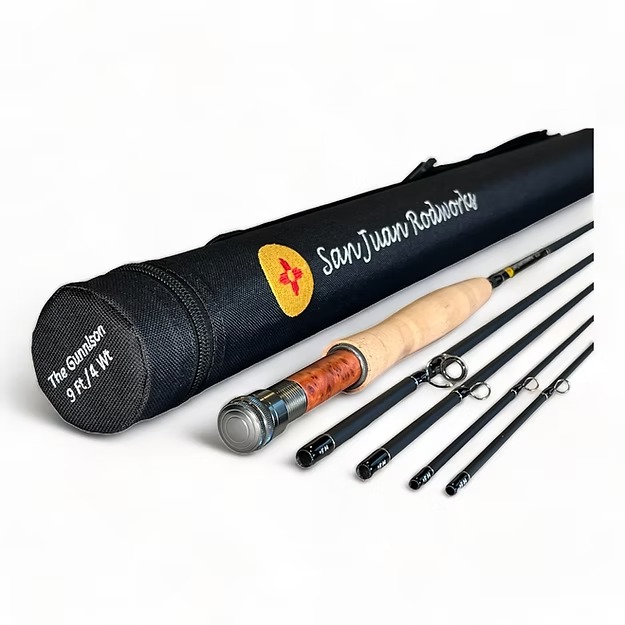
  • Gunnison – Fast action, from 2wt to 8wt.
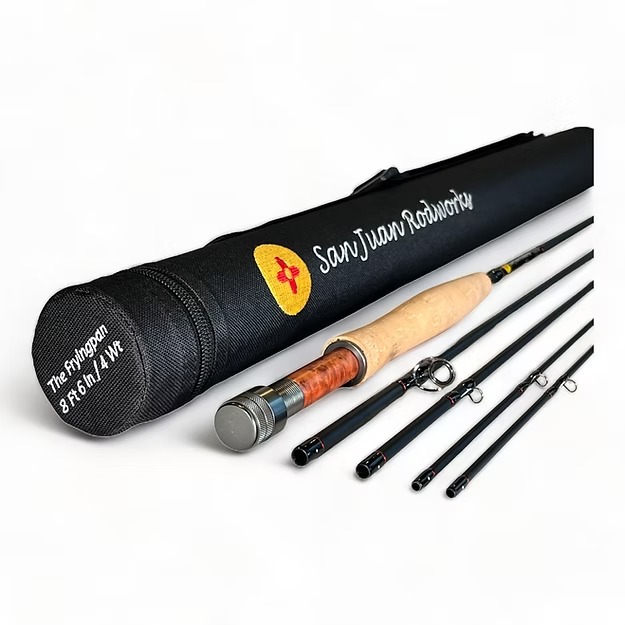
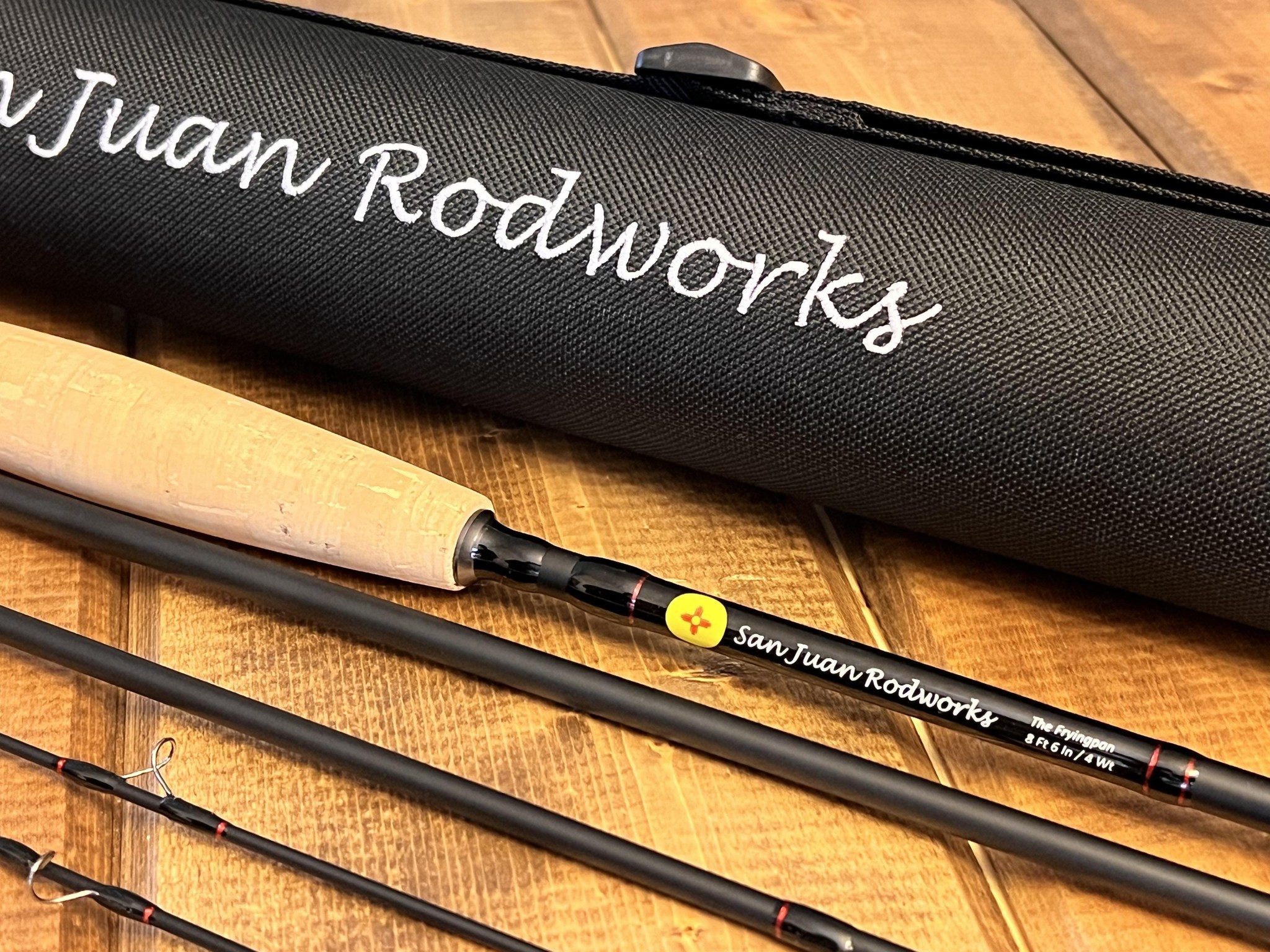
  • Fryingpan – Medium-fast, perfect for dry flies.
  • Conejos – 10’ Euro nymph rods that double for dries.

The goal? Build reliable rods that perform well and feel right in your hands—even if you’re just getting started.

san juan rodworks
Photo via: https://www.sanjuanrodworks.com/product-page/the-gunnison-fast-action-fly-rod

Best First Rod? Gary Shares His Pick

Not sure where to start with fly rods? Gary keeps it simple. If you’re new, he says go with a 9-foot, 5-weight Fryingpan rod. It’s easier to cast and helps you feel the line load—great for learning.

Gary also thinks about your natural rhythm. Are you fast-paced or slow and steady? That can help match you to the right rod.

Want more reach? Try a 10-foot rod, especially useful from a boat or when Euro nymphing. Gary’s team even made one after hearing from local guides who needed a better option for floating the San Juan.

His tip: Start with a solid all-around rod, then build your quiver based on how and where you fish.
san juan rodworks
Photo via: https://www.sanjuanrodworks.com/product-page/the-fryingpan-medium-fast-action-fly-rod

How San Juan Rodworks Puts Anglers First

Gary isn’t just selling rods—he’s building trust. They focus on making great gear and great service. Here’s what sets them apart:

  • They listen to guides and shops: Gary talks with folks who fish over 300 days a year to stay ahead of trends.
  • 30-Day Risk-Free Trial: Fish the rod for a month. If it’s not the one, send it back—no hassle.
  • Affordable, High-Quality Rods: You get a case, free shipping, and two tip sections.
  • Lifetime Warranty

San Juan vs. Pecos: Two Very Different Rivers

Gary breaks down the contrast between his two local favorites: the San Juan and the Pecos.

San Juan River: A famous tailwater packed with trout. Most anglers nymph here using small midge patterns. Euro nymphing is effective too, especially during heavy hatches when the water seems to boil with rising fish. Gary says it’s best to hire a guide your first time to really learn the water.

San Juan Rodworks
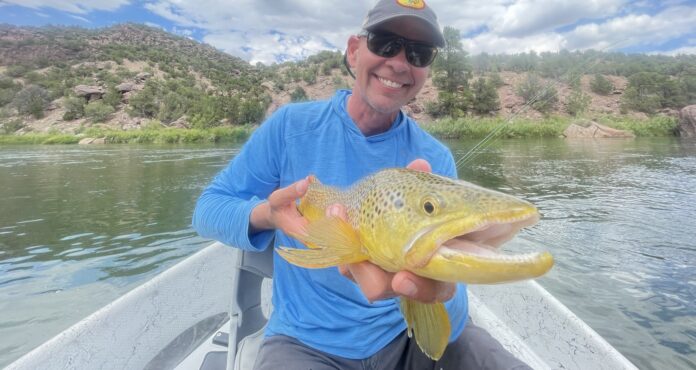
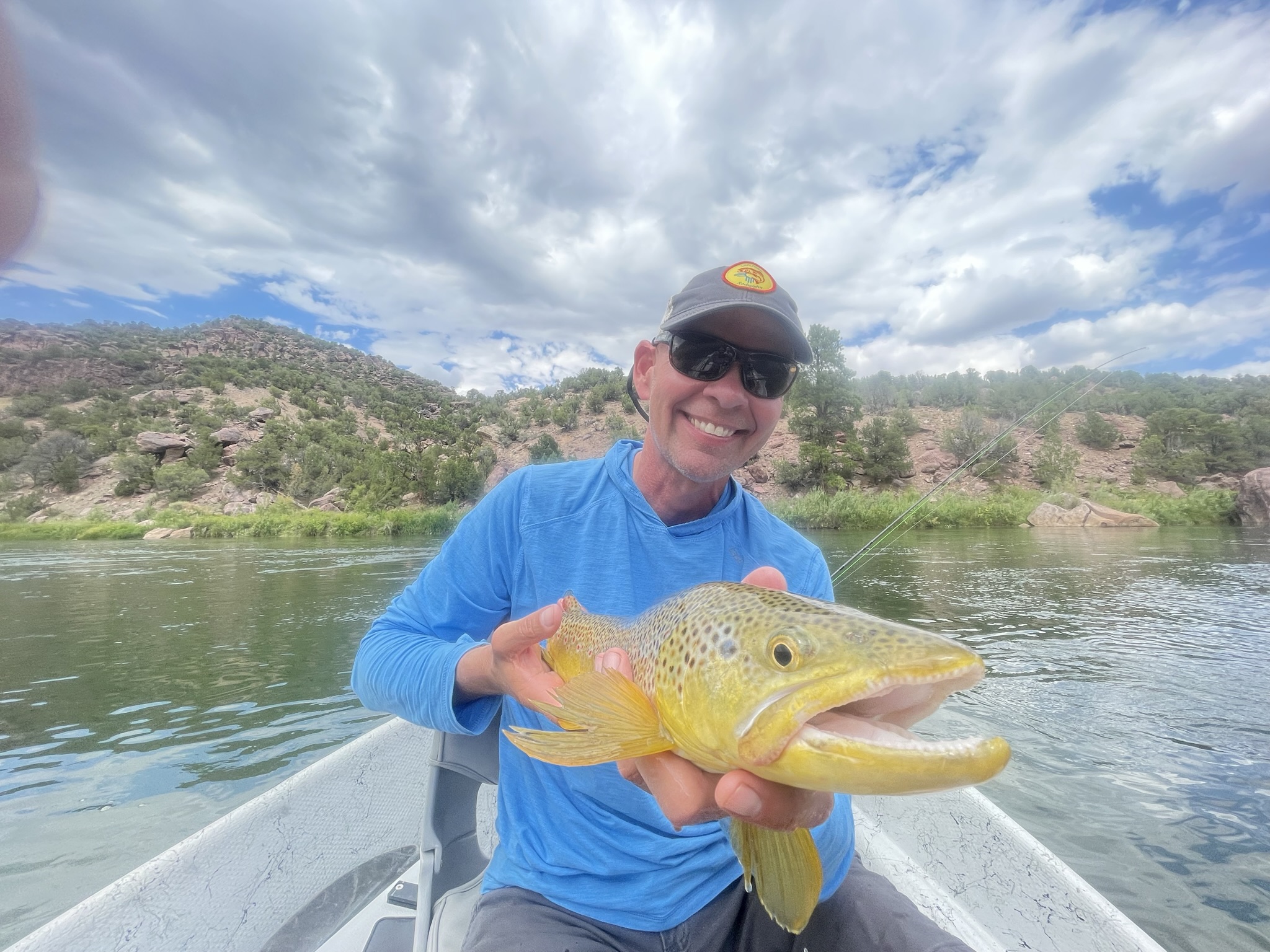
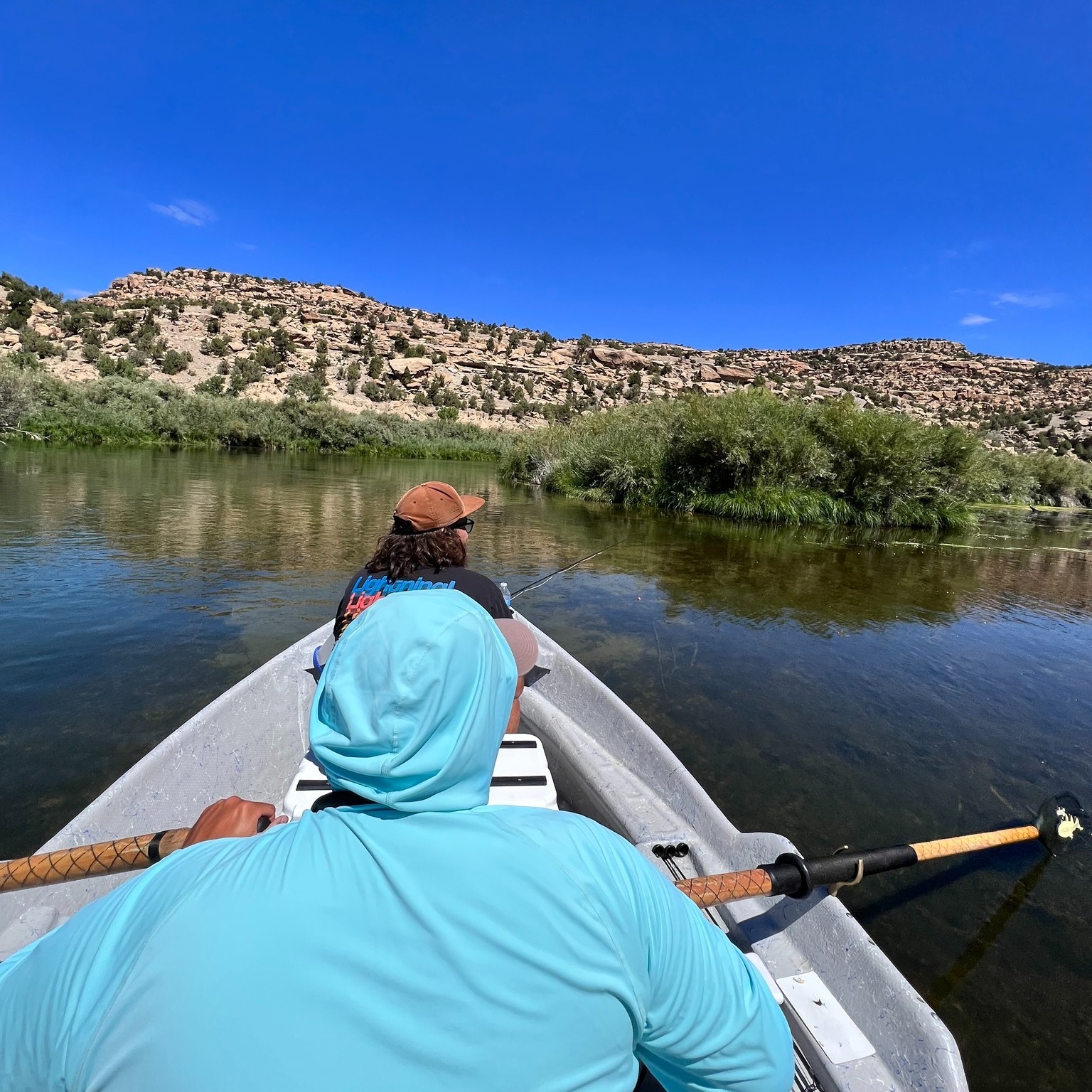
September 1, 2023 “Great day with the best guide on the San Juan! #vidatrucha #sanjuanrodworks” (Photo via: https://www.facebook.com/SanJuanRodworks)

Pecos River: Just an hour from Gary’s home, this mountain stream offers a more laid-back experience. It’s stocked and also has wild browns. Fish are smaller but not picky—perfect for a quick and fun day on the water.

Small Steps, Big Gains: Casting and Gear Tips

Gary knows a thing or two about improvement—whether it’s golf, guitar, or fly fishing. His best advice? Practice a little every day. A few minutes in the yard with a yarn rod can do wonders over time.

He also encourages folks to reach out if they’re thinking about a new rod. Gary still picks up the phone and helps anglers figure out what rod works best for their local water or target species.

Gary’s take is simple: gear should work for you. Whether you’re casting in the backyard or planning a San Juan trip, a little daily effort and the right setup make all the difference.


You can follow San Juan Rodworks on Instagram @sanjuanrodworks.

Facebook at San Juan Rodworks

Visit their website at SanJuanRodworks.com.

San Juan Rodworks logo


Read the Full Podcast Transcript Below

Episode Transcript
Dave (2s): What do fly rods, guitars, and golf clubs all have in common? Today’s guest draws a surprising connection between these passions and what they reveal about performance practice and personal style. We get into how Rod design has evolved, why action matters more than you think, and how to choose the right setup. By the end of this episode, you’ll have clear, actionable steps to choose your next fly rod. Whether you’re getting started or looking to fine tune your setup this year, this is the Wet Fly Swing podcast where I show you the best places to travel to for fly fishing, how to find the best resources and tools to prepare for that big trip, And what you can do to give back to the fish species we all love. Gary Davis, the founder of San Juan Rod Works, shares how a background in golf and a love for music helped shape his approach to fly rod design. Dave (48s): Based near the legendary San Juan River, he’s built a reputation for affordable, high quality rods with thoughtful action that provide a focus on service. We find out today which Rod you need for specific techniques and why three minutes per day is all you need to master the craft of fly casting. All right, let’s get into it. Here he is, Gary Davis from San Juan, rod works.com. How you doing, Gary? Gary (1m 16s): Doing great, Dave. How are you? Dave (1m 18s): Great, great. Yeah, I’m really excited to get into this conversation today because I love talking rods. You have an amazing rod that we’re gonna talk about. I think you do things a little bit differently down there. You’re into this amazing place, you know, part, you know, kind of on the San Juan in that area, you know, near the San Juan River. We’re gonna talk Colorado. Maybe you’re, you’re a homesteader background from your, your family and stuff. But before we get into all that, maybe just take us back to, you know, that kind of how’d you get started in, in fly fishing and, and all that. Gary (1m 45s): Yeah. Well, great. Thanks for having me. I’m really happy to be on with you today and looking forward to having a conversation around all this. But, but yeah, I, my fly fishing journey started when I moved to Colorado in around 2004, 2005. But prior to that, I was introduced to fishing, growing up in Oklahoma, and my father was, was big into bass fishing, car catfish, all of that stuff. So as a kid, I got a lot of great memories of, you know, spending time out in little ponds and lakes and stuff like that, and with my little Zco 2 0 2, you know? Yeah. And, and with a worm and a bobber. So that, that’s kind of where it all started, but was always fascinated with the outdoors and loves the mountains and streams and, you know, and all of that stuff. Gary (2m 31s): And so when I moved to Colorado, I really took the opportunity to kind of jump into this, what was new for me at the time. New, new way to put a fish in a net, which was fly fishing. And so really fell in love with it at that point. My background is actually in the golf business, and I, I went to college and got a degree in professional golf management at New Mexico State University and ran and operated golf courses and taught golf for a lot, lot of years, and went into club fitting and Wow. And all of that. And so that, you know, really introduced me to, at that I was kind of, I was kind of in the golf business at the time that, you know, there was a transition from, you know, steel shafts and golf clubs to graphite shafts and golf clubs. Gary (3m 20s): So I became very familiar with, with graphite, you know, shafts and how they’re manufactured, how they’re made, their performance characteristics and all of that stuff. So one of the things I found really fascinating and, you know, learning to cast a fly rod was how it performed, you know, very similar to a graphite shaft performs in a golf club. And so that was kind of the, you know, that that was something that was very intriguing to me at the time. Didn’t really think much about, you know, turning it into a business or anything like that at that point. But I loved the way I could feel a fly rod load and unload, much like you could, you can feel a shaft load and unload when you’re, you know, swinging a golf club, hitting a golf ball. Gary (4m 4s): So, so that was kind of, kind of where the genesis of it all started. But yeah, it just fell in love with fly fishing, love being outdoors, you know, do a lot of stuff outdoors other than fly fish. But yeah, really, really fell in love with it at that point, and then kind of started going down this other path as, as things went along. So Dave (4m 22s): That’s amazing. Yeah. I, I love the, I always love the sports analogies and stuff like that, and I think golf, golf is so perfect because you hear a lot about, you know, the analogy of fly fishing to golf and, and other sports, right? And yeah. And, and you just made one that we haven’t talked about, the fact that golf went from steel to graphite. Fly fishing’s gone from, I mean, funny thing is fly fishing did even have steel fly rods at some point, right? But bamboo to fiberglass, to graphite, and then actually kind of back because, and we could talk about this ’cause there’s been a, an interesting evolution of rods and actions of rod and stuff, but I remember hearing, I think it was on a recent episode, somebody was talking about a New York Yankees famous player. I’m, I’m, it’s, it wasn’t Joe DiMaggio one of the other big Yankees, but he, he was a big fly angler, and he said that the three toughest things to do in sports are, he basically said hitting a baseball, hitting a golf ball and casting a fly rod. Dave (5m 14s): You know, and I’m not, yeah, I’m not sure if it was in that order, but he was like, those are the three things. And he was one of the greatest hitters of all time. It, I think it was Ted Williams, I think it was Ted Williams. Yeah. Gary (5m 23s): Which most people say it was the greatest hitter of all time. The only guy that hit over 400, Dave (5m 27s): Did they say Ted was one of the one the greatest? Yeah. So he was a big fly angler, and, and Jack Dennis was on the podcast and Jack was talking about how he was hanging out with, with him and some other folks there. And he told him that one day, he said like, this is it. And so fly fishing is not easy, right? The the funny thing is, is that it is not easy, but it also doesn’t have to be super hard. What’s your take on how fly rods fit into that? Obviously it’s very important, but how do you match that to somebody who says, man, how am I ever gonna learn to fly fish? Gary (5m 57s): You know, it’s, it’s a good question. It was interesting in the golf business, there was always this debate. Is it the equipment or is it the person using the equipment? And, and at the end of the day, I always look at it like this, you know, if you’ve got somebody who’s, who’s talented, who has the ability, who’s practiced, who’s worked at it, who’s developed their craft, and their ability to ability to Swing a golf club, you know, you can put virtually any golf club in their hand and they’re gonna figure out how to use it. So there, there’s this element of working at it, developing the skills, developing the technique, but then once you do that, if you can match that to the proper piece of equipment, you know, they’re gonna perform at their best. You know, the other thing I do, I, I’m a, I’m a avid guitar junkie. Gary (6m 39s): I love playing guitar. I’m not very good at it, but I love playing guitars. I’m, I’m modestly probably more of a guitar collector than anything else. But, you know, I’ve always, I’ve always kind of thought of it, you know, you could take a cheap hundred dollar guitar and put it in Eric Clapton’s hands, and he’s still gonna sound like Eric Clapton, right? But if you put a $10,000 guitar in my hands, I am not gonna sound like Eric Clapton. I love that. You know? So, you know, it’s the same thing. Same thing in golf. I think it’s the same thing, you know, with, with fly fishing. I mean, it really experienced angler who’s been doing it for a lot of years and has a lot of experience and has developed their, and, you know, and refined their technique over period of time, they’re gonna be able to tell really small differences from one, you know, fly rod to another. Gary (7m 22s): But somebody who’s new to the sport, they’re not gonna have the ability to really discern, you know, one fly rod from another, how it performs again, as they, as they gain more experience, yeah, they’re gonna develop that feel and that technique and be able to, you know, start to feel those nuances. But, you know, for the most part, I’ve always believed, and again, this was true in teaching golf and equipment with golf and all that, if you can get a, something that is a quality piece of equipment, it doesn’t have to be the, you know, the most expensive, the highest end, you know, in somebody’s hands, but just something that’s quality, you know, then that’s not going to inhibit them from continuing to improve and get better and, and kind of, you know, develop the techniques, allow them to perform at a high level. Gary (8m 6s): And I think it’s the same thing with fly rods or virtually anything. You know, the, the quality of manufacturing has gone up substantially in virtually everything that we do nowadays. And so it’s, it’s almost hard to find really poor quality. I mean, some of it’s still out of there, but, but yeah, for the most part, the, the quality of everything is, is, has gone up. So Dave (8m 27s): It has no, I love, and I, I love that we’re into guitars too now, because those are, I, I’m also not a good guitar player, but I have one, and, and I struggle at, you know what I mean? But it’s, it’s amazing. I, I, you know, what I love is, is going to live music and seeing any guitar player up on stage, because I, I look at that and like, wow, that person is, is Eric Clapton pretty much, right? Gary (8m 46s): Yeah. It’s a same thing. I, I love live music, you know, I love going and watching bands play of all shapes, sizes, whatever. So, so yeah, it’s, it’s a lot of fun as well. Cool. Dave (8m 57s): Well, I think this is an interesting conversation because you’ve got a couple things. You know, you, you mentioned that you’ve got the new person coming in and they’re probably gonna need a different rod than say, the person who is going out for a, for bonefish or out in the Salt Flats, right? That like in and all this stuff. So I, I wanna talk about your lineup a little bit and we’ll, we’ll circle back to some of these sports analogies because we, you know, I love them and, and all that stuff. But what is it about you, what you do? Maybe explain that, because I think you guys have kind of a little bit of a unique take. Not only your name, I think the naming stuff is awesome, but talk about your rides. How do you describe that? What’s your elevator pitch to somebody who’s new to you? Gary (9m 30s): I’ll backtrack just a little bit, but, you know, I, I hit again, I’d been in the golf business for years. I’m approaching 30 years and now as a member of the PGA of America and been in the business again in a lot of different, you know, segments of it from running golf courses as a director of golf or general manager to teaching to club, fitting to all of it. But I’d always had this fascination with e-commerce, and I’ve always kind of considered myself a serial entrepreneur. I’ve done a lot of things, you know, outside of the golf business as well. But I became very fascinated with E-commerce. And so I’d spent about four or five years really researching it, you know, trying to understand how it worked, so on and so forth. And, you know, I was, I was constantly kinda looking for what would be a good opportunity to maybe get into that, you know, to that world. Gary (10m 18s): And, you know, the genesis of the company was really back in 2020 during the COVID Pandemic. I was actually up in Colorado at my next door neighbor. His brother has a place on the EOS River. And we were up there fishing, and I was literally was out on the water for about 15 minutes, and the tip of my rod broke. And fortunately he had a whole quiver of rods at his cabin there. And so I was able to kinda continue my, continue my fishing for that weekend. But it kind of just sparked something. I mean, I was like, man, it’d be, it, it would’ve been really bad news had I not had another rod available, better access to it. But it was, I was like, man, it’d be really cool if, you know, there was, you know, you had an extra tip section with your, you know, with your rod because it, obviously, if something’s gonna break, that’s most likely going to be the section of the rod that’s gonna break. Gary (11m 9s): ’cause it’s, you know, just the thinnest, the most fragile. So that really got me to thinking and came back, and unfortunately at that time in New Mexico, which is where I was living at the time, and still live actually, but, you know, everything was shut down. Like you could not go to a fly shop and buy a fly rod. So I was forced to do it online and ended up buying a rod online. And that really, again, got the, got the wheels kind of moving for me, you know, started doing some research into, okay, how would I manufacture my own rods? What would I want those rods to be? You know, how would I want those rods to perform? So start really started down that path, started working with some companies to develop some prototypes. Gary (11m 55s): Went through several iterations of different prototypes and, you know, tapers and, and those kinds of things. And, and got those in the hands of some people who I would consider better fly casters than me at this point. And got a lot of feedback there. And we ended up coming up with, initially we came up with two models. One of ’em was called our Gunnison, and one of ’em is called our Frying Pan. Both, both still models we, we sell to this day. We ended up coming up with a third model, which is a, primarily a Euro nimrod, which is called the eos, you know, and then the name of the, you know, the name of the company we developed was San Juan Rod Works. So there was, you know, the, the San Juan is really well known in New Mexico. Gary (12m 35s): It’s an unbelievable fishery that any avid fly fisherman, if you’ve got the opportunity to get there, you definitely should. It’s definitely worth the trip. But, you know, trying to tie in kind of the New Mexico Colorado connection, you know, from the time I spent in Colorado, and again, the, the kenos, the frying pan and the Gunnison are just three of my favorite fisheries in Colorado. So that was kind of part of the, the idea and the creativity and naming some of the stuff along with the company. But, but that, that was kind of the genesis of it. You know, the Gunnison, we designed that as a, as a fast action rod. We do that in everything from a six foot, six inch, two weight up to a nine foot eight weight, the frying pan. We do that and everything from a seven foot, six inch, three weight to a, we have also have a nine foot eight weight in that one as well. Gary (13m 21s): So, and then the eos, we designed those as a 10 foot two weight and a 10 foot three weight. And those have become really popular again with, with your own nim fing. And they also, they’re, they’re great rods for throwing dry flies too when, when the start rising. So they’re, they’ve kind of become really dual purpose rods. So yeah. Dave (13m 39s): Is the frying pan rod, is that a little more, you know, kind of medium action? Gary (13m 44s): Yeah, frying pan fits in more of the medium fast category. Frying pan is a great dry fly rot. I love, you know, kind of my, my favorite river to fish that’s close and easy for me to get to when I don’t have a whole lot of time to get up to the San Juan is the Pecos, which is a great, a great stream, you know, up outside of Santa Fe, New Mexico is the headwaters of that. And I love going up there and throwing, you know, little dry flies, you know, on the three weight rod. That’s kind, that’s kind of my favorite go-to Rod right now is, is the, the frying pan three weight. But yeah, it’s a great, great rod for, for throwing dry flies and, you know, really great presentation, so. Okay. Dave (14m 20s): Perfect. And, and when we were talking about the action, we’ve talked about this a little bit on the podcast, but we’ve had a few casting instructors on, and, and we’ve had this conversation kind of like we just had about the different actions where the, the action of a a, you know, a more of a medium softer action rod, one that you can feel in the handle is probably better for a beginner because they can feel the line load up a lot more, right? Versus say the fast action stuff because the newbie can’t do it as well. So what would be the rod from your lineup for the beginner? Is there one you have that you say, Hey, this is the best rod? Gary (14m 51s): Yeah, generally we point people towards the frying pan if they’re brand new to the sport, you know, and, and the most, like, like everything else, a nine foot five weight, if you’re, if you’re gonna get one rod to start with, a nine foot five weight frying pan is, is perfect. You know, you really can get that in your hands and really start to develop that feel and start to understand how the fly line loads and unloads the rod, you know, as you’re, as you’re learning to cast. One of the things that, that I think is fascinating and I’ve seen carry over from my time teaching golf and in the golf industry is I think a lot of it has to do more with somebody’s kind of natural tempo. You know, we all kind of have this kinda rhythm that we walk with or, you know, we, we do all these different activities with. Gary (15m 35s): And, and so I kind of almost, you know, if, if I had the opportunity to, to stand in front of somebody and put two different rods in their hands and, you know, I would kind of watch what their natural tempo is. You know, are they somebody who is, you know, kind of has a, has a quicker pace to life, or somebody who has a slower, you know, maybe smoother pace to life. And, you know, to me that can factor into the equation as well. You know, again, going back to my, my years in the golf business, there were, there are players who have a very fast Swing, fast tempo, Dave (16m 6s): Like a, I always go back to like a Tiger Woods. He was the Yeah. Ultimate fast, like hard swinger, right? Gary (16m 11s): Yeah. You know, you, you know, this is going way back, but, you know, a Nick Price or Dave (16m 16s): Oh yeah, Nick Price, Gary (16m 16s): Tom Watson, you know, Nick Price had a very fast, you know, motion to it, right? The same thing Tom Watson did as well. But then you look at a guy like Fred Couples, who I saw actually made a, an eagle on hole number 14 at the Masters yesterday at the age agency. Dave (16m 29s): Oh, are you serious? Gary (16m 30s): Yeah. He, he hold a, you know, it is a funny thing, these older guys now, which of which I am one now, you know, these, these younger guys are hitting, you know, nine irons into hole number 14 in Augusta. And Fred, I saw Freddy hold it out for, I don’t how far he was, but he was hitting a hybrid, so Dave (16m 45s): Oh, he had hybrid. Gary (16m 45s): Wow. But, but you know, like, like Fred Couples or Ernie ELs just kind have this slow, smooth syrupy Swing, right? Dave (16m 52s): Yeah. What about, I’m interested in Mark o me because he’s a big flight angler. Do you know what, what was his Swing like? ’cause I’m gonna, we talked, he’s gonna be on the podcast hopefully this year, but what’s his Swing like? Gary (17m 2s): I would say Mark, you know, was probably kinda more in the middle. You know, he wasn’t super fast like a, like a Nick price or, or something like that. But he certainly didn’t, you know, kinda have that slow syrupy Swing like a, you know, like a Fred Couples or an Elle or something. But, but yeah, so it, I think you can, like, like I say, I, I feel like we all kinda have this natural rhythm or tempo or flow that we have to kind of, how we do everything. You know, I think you can kind of match the fly rod up to that. I mean, obviously, again, as you become a better, more experienced angler, you know, faster rods are generally better in the wind. So, you know, depending on the conditions, you know, if you’re a better angler and this, and again, I think this is where you get to that point of, you know, what’s your experience level, you know, what are you trying to do? Gary (17m 47s): You know? And, and I think, you know, and that’s why where people start to get into having, you know, a quiver or numerous rods that they can go to, depending on the conditions or depending on what their, you know, what the species they’re targeting is or what the, you know, what stream or river that they’re fishing or what, you know, what the conditions are. But, but yeah, I would back to your original question. Yeah, I would say, you know, if you started with, for us, you know, the nine foot five weight frying pan is a great place to start. It’s an easy rod to cast. You can develop your technique and you can really grow a lot with that. Dave (18m 15s): Yep. Nine foot five weight. Okay. And then, and the 10 foot, and basically if somebody’s looking at, you know, a little bit longer, what does that, you know, gives you more control? Why would a 10 foot do you think versus, say the nine foot five, I guess you, and you have two more, it’s focused on you and I think it sounds like Gary (18m 30s): Yeah, so we actually have a couple of 10 foot models now. We, we earlier, well, I guess fall of 2024, we just introduced a 10 foot four weight and a 10 foot five weight in our Gunnison line, which is our fast action rod. And we, we developed that through a lot of partnership and conversations with some local fly shops here in the Albuquerque area, Los Pinos fly shop. And then some of the guides that we have really good relationships with up on the San Juan and the San Juan, you know, a lot of people float that river and you know, a lot of the guys were telling us, man, if we had a 10 foot rod, it’s just so much easier to mend outta the boat. But we like the fast action aspect of, you know, what you’ve got with the gunness in there. Gary (19m 12s): So we developed that, launched that last year. So that, that’s one application for the 10 foot rod. And then, you know, really in the more, in the Euro nymphing style, 10 to 11 foot rods have really become commonplace. ’cause they just give you that extra, you know, that extra bit of reach when you’re, you know, you’re tight lining your own nim fing, whatever you wanna call it. So that’s really become kind of the standard in a, you know, in a kind of a dedicated Euro nymphing rod is that 10 to 11 foot, you know, range. And so that’s kind of where we went with those two. You know, one of the big comments we get though on a Ineos rod, and this is true, I think with a lot of, a lot of Euro specific design rods, is it, man, it throws dry flies like so well too. Gary (19m 56s): So I, I run Mike and Yales rod, you know, where I can pull my Euro leader off. I usually fish the two weight, you know, I’ve got an a two-way floating line on that and you know, just basically swapping out, if fish start rising, I’ll just swap it out and go, you know, run everything off the two weight, weight forward line and throw dry flies with it. And that’s a blast too. Yeah, Dave (20m 16s): I feel like the 10 foot, yeah, I mean, it’s interesting because in trout it’s really cool, it’s kind of getting longer, right? You get the trout space, some of that, which is maybe that’s different. But then with the, the double-handed rods, which is a place we’re in too, that’s gotten shorter, you know, that started out as 15 foot went down to 14. Now 13 is probably the most common, and it’s the opposite with the trout, which is interesting. So I think it’s always evolving. That’s the interesting thing about the fly, you know, fly fishing and probably golf is the same thing. You, you know what I mean? Like, you know, you got the big Bertha, I remember when that came out back in the day, the day, yeah. It’s like this giant, the big Bertha, right? Yeah. But fly fishing’s not much different. In fact, we’ve heard people, you know, some of those instructors talk about this nuclear arms race to a faster and faster fly rod, you know, and to the point that they’re so fast now that they, the lines can’t even keep up with it. Dave (21m 3s): Or, or they tried to, and now there’s questions about what weight lines are. Are they two lines heavier or there’s a little bit of confusion. How do you, with your people, you know, somebody’s coming in, they see you online, how do you break through that confusion to let somebody know maybe that’s either new or maybe they, they, they’ve been fly fishing, but they’re a little bit confused on this stuff. Gary (21m 21s): It’s really interesting, like you say, how things evolve and like you say, the, the fact that, you know, fly rods have gotten faster and faster and you know, and now as a result, fly line weights have changed, you know? Right. So we introduced a fly line last year that’s essentially a half a weight heavier than standard. And we feel like that works really well with our fast action rod, but it also works really well with our, you know, our medium fast action rod and the frying pan. But yeah, it’s really interesting. The same thing kind of happened, like you mentioned in golf years ago. So everybody wants to hit the golf ball further. And so, yeah. Dave (21m 56s): Yeah, John, remember John Daley? Gary (21m 57s): Yeah. Oh yeah. Dave (21m 58s): He was the ultimate. Right, Gary (21m 59s): Exactly. And, but it was a really interesting thing. So there were some manufacturers who started messing with the lofts on the golf club. So say just for example, a pitching wedge traditionally had 44 degrees of loft on it, and a nine iron would have 40 degrees of loft. Well, you know, somebody in the marketing department said, well, what if we take, you know, what if we take the nine iron and just stamp a P on the bottom of it? So now my pitching wedge, now I’m thinking of hitting my pitching wedge as far as my nine iron. Right? Right. So there, there’s always some marketing tricks, you know, up the sleeve somewhere, but obviously it’s a little bit different in the world of fly fishing. But, you know, the thing that I think is very interesting is kind of the resurgence that we’re starting to see with, you know, fiberglass coming back and, you know, I mean, that’s just such a, you know, such a difference from the, you know, kind of where things have gone on the fast action side of the market. Gary (22m 53s): But I think people are, you know, are starting to kind embrace that kind of slower, smoother, you know, kinda enjoy that feeling of, you know, a softer rod and really being able to fill that thing, load and unload. And then when you get a fish on it, you know, the way, the way you play a fish with something like that, you know, but there’s, there is, there’s this constant evolution, which I, which I think is great, you know, and really all of these elements. Yeah, Dave (23m 17s): Exactly. Well, it sounds like, I’m guessing you can stay a little bit on top of that evolution because you’re talking, which is smart, you’re talking to guides and shop owners. Is that how you stay above when you look ahead, like say next year, five years from now, how you make sure you’re, you’re staying up with whatever the changes are at, you know, how do you think of that? Is that how you do it? Or how do you look ahead? Or do you look ahead that far? Gary (23m 38s): One of the things that’s really important to me is how do we stay relevant? How do we provide the absolute best customer service that we possibly can? To me, that’s a huge element of it. That’s something that we really take a lot of pride in and focus on. You know, that’s a big, big deal. You know, working with the fly shops, working with the guides, you know, what’s important with them. You know, these guys are out in the water. Some of these guys are out in the water 300 plus days a year, and working with all different clients, you know, having to manage all different skill sets and abilities and, and all of that. So, you know, really trying to listen to our customers and our partners, whether it’s guides or fly shops, helping us understand what’s important to them, what they see, you know, how changes, you know, and people are using the equipment are, and, and you know, we really try and take that and say, okay, how do we, how do we apply that to what we’re doing? Gary (24m 29s): And continue to provide the value that we try to provide for the customer with the, you know, what the products we’re developing and, and all of that. So, yeah. Yeah. Dave (24m 37s): Yeah. Exactly. What is the, you know, I mean, I think that the, you hit on it, customer service, I think that’s a big thing because especially like you said, that story of online, you know, you go online, it’s so easy to buy stuff online. Now, first off, how do you stand out? But then how do you make sure people know what they’re buying, they don’t have to worry about? ’cause I think that is something sometimes people worry about. Like, well, I buy this rod and maybe this company’s not gonna be around, you know, in five years. Right? Is that something you’re thinking about? I mean, I think the customer service, maybe talk about that. What is your warranty on the rods if somebody was to buy one from you, you know, tomorrow. Gary (25m 11s): Yeah. So that, that was something that was really interesting. Obviously a fly rod is a very personal thing, right? It’s, they all feel a little bit different. We all have a connection to our favorite fly rod and all of that. So, so I realized early on, you know, that there’s a big advantage to walking into a fly shop and be able to put that thing in your hands. And again, a good fly shop’s gonna put a reel on it for you with the, you know, with the appropriate line is you can usually go out and cast it and get a feel for it, right? That’s an element that is, you know, being an online retailer, we don’t have the opportunity to do that. So one of the things I really wanted to do was make sure that people had a comfort level of knowing, Hey, if I make this commitment and I buy a rod from this company, and I get in my hands and I take it out in my water and it’s not the right fit for me, I wanna be able to send it back and not have to worry about it. Gary (26m 1s): So from the start, we’ve had our, our 30 day risk-free trial, we call it. And literally I tell people, buy a rod from us online, we’ll ship it to you. We ship everything, priority shipping, shipping’s included, you know, and all of our domestic orders over 75 bucks. But you get, we, when you get that rod, if you literally wanna take it out and fish it for 30 straight days, and then if that’s not the right rod for you, you know, reach out to us. We’ll send you a, a prepaid return shipping label, ship the rod back, and we’ll refund your money. You know, at the end of the day, from a customer service standpoint, for me, if somebody gets one of our rods in their hands and they don’t absolutely love it, I don’t want them to keep it, I want, I want them to buy and own a fly rod that they love and they cherish, and it’s, you know, it’s something that they’re gonna use and pass on for generations. Gary (26m 48s): So at the end of the day, to me, that’s way more important than me selling a fly rod to somebody and they don’t absolutely love it and think that it’s the perfect fit for them. And again, launching this company, this was all a, a, a leap of faith, right? So I had no idea, I mean, I didn’t know if people were gonna get our rods in their hands. I mean, I, I, I shouldn’t say I had no idea I had a, I had a pretty good idea that we had a good product, but you never know until it gets into the marketplace. And, you know, we’ve shipped probably close to 750 Roz now since we, we really launched the company in 2021. And, you know, one of the most amazing things to me, I was looking at the statistics the other day, we’ve literally had six rods returned. Gary (27m 29s): Oh, wow. You know, because it wasn’t the right fit for somebody. Dave (27m 31s): Right. That’s so cool. Gary (27m 33s): Yeah. So it was like, you know, if you’d have told me that when we were starting this, you know, that our, our return rate would be that low, I would’ve been shocked. But yeah, it’s been, it’s been so well received. And I think part of it is, is because we do try to offer that, you know, level of customer service and, you know, and people really appreciate that in today’s day and age. I mean, you know, we really try to go in above and beyond, and if somebody has an issue, you know, we’re always gonna be there to pick up the phone and have a conversation with them and help them out however we can. So that’s Dave (28m 3s): Awesome. Yeah, I think you look at a couple things, I think first off the warranty, but the, the rods, you know, just the quality is another big thing. And the price, I mean, the price point you have is pretty amazing. Maybe talk about that a little bit, because I feel like there’s other rods out there that are more expensive, but yeah, you’ve got a price point that’s pretty hard to be, describe that a little bit, Gary (28m 22s): You know, understanding that you can spend about as much as you want on a fly rod, kinda like you can with virtually anything in the world these days. I mean, but I was like, you know, I want, I wanted to build and create something that was premium quality without the premium price tag. And, you know, in the world of, you know, 900,000, $1,200 fly rods, can we build something that’s approaches that level of, of quality, but it’s something that, you know, the average person can afford and they don’t feel like they’re, you know, they’re spending their life savings on. And so we really focused on coming in at a price point that again, was going to provide people a level of quality that, that they could expect, you know, something to last them a long time that was gonna perform at a really high level and all of that. Gary (29m 8s): So, you know, all of our rods right now in today’s day and age are $250. Again, it includes free shipping, everything comes, you know, in a cordura tube. Really nice case with it. We ship everything with two tip sections, which again, was one of the big things that I thought could help differentiate us in the marketplace. And it, it’s nice to have that backup tip section with you and, you know, if you do slam that tip section in a, in a, in the car door, yeah. Or, or break it in some other form or fashion, at least you’ve got that backup with you when you’re out on the water that day day or on that trip. So that, that’s been a huge, you know, a huge selling point for our brand. People love that. Gary (29m 48s): As far as the warranty goes, we offer a lifetime warranty on everything. If it’s a manufacturer’s defect, we obviously take care of it, you know, I’m really happy to say we’ve had very, very few of those. But other than that, if again, you close it in a car door or step on it or however else it might break, you literally go to our website, choose the rod, choose the length, weight, which section that needs to be replaced. It’s a $35 charge that it covers all the shipping. We ship it out to you no later than the next business day and you’re, you’re back up and on the water. So, you know, so free shipping, lifetime warranty, 30 day trial, those were kind of, you know, big things that were really important when we launched this company that we really kind of felt like we’ve built it on. Gary (30m 34s): Yeah, it’s Dave (30m 34s): A, it really, like you said, it goes back to the service, customer service, which is definitely doesn’t get any bigger than that, so. Awesome. Well, and you mentioned the club, so what would be the, I always like, you know, kind of going back to this, I think it’s kind of fun with the golf stuff, but what is the, an an expensive golf club, and then what’s a similar thing where you can get like a lower price club? Gary (30m 52s): Yeah, that’s really interesting. You know, like everything else, the, the price and technology and golf clubs has continued to really evolve, you know, and you’ve got your major brands, you got like your tailor MAs and Callaway, you know, ping and all of that. But, you know, there, there’s some brands out there now. You know, one that comes to mind is, is Tour Edge. A lot of guys on the Champions tour use their, their clubs now, you can literally go, you know, much like fly rods now. You can, you know, you can obviously go online, build, you know, buy blanks and all the components and build fly rods. There’s an element of that. There’s several companies out there now where you can go and buy components and, you know, and custom build your own, your own golf clubs, which I think is really cool. Gary (31m 33s): I actually did that for my wife last year. I, she was, she wanted to get into golf, and so I built her a built her a set of clubs from, you know, assembling some components, which was a lot of fun. But, but yeah, there’s, I firmly believe at the end of the day, having gone through a lot of this stuff and all these analogies of guitars and golf clubs and, you know, fly rods, I do think that there is an element to it of, yes, a quality product that performs well is important, but at the end of the day, it’s your technique. It’s how you utilize that tool. And really all of those things are tools that how you learn to best utilize that tool. And the more you practice with it, the more you work with it, the more you understand how that tool works, the better you’re going to be. Gary (32m 21s): You know, Winston Sage, all the big companies, they make great, wonderful fly rods, right? But I’ve kind of had this firm belief that, you know, it’s how you, how you utilize that tool is going to really determine your success. Yeah. Dave (32m 35s): It’s, and you obviously practicing. That’s the other thing we’ve heard a lot about from not only, you know, guides, but any put that knows, you know, they just say practice. I mean, we’ve had the guides on that that are the best in the country, and they still practice the yarn rod every day. Yeah. So that’s what it comes down to. If you’re not practicing, if you’re going out for a, you know, a tarping trip or something and you’re not preparing for that, you’re probably gonna have some struggles. Right? Absolutely. And same thing for the San Juan. Well, I’m interested because I think the, the San Juan, you know, and, and Colorado, but I mean, the San Juan, I think is a famous river around the country. I feel like I’ve heard about that one forever. I’m hoping the next year or two will be the time I break the, you know, my, my time. Dave (33m 16s): I haven’t been out there yet. And, and, and it’s such a cool area. But what would be the rod for the San Juan? Like if you, the perfect like length, weight, you know, what’s your recommendation there? Because is that more of, is that more of a Nph river? Is there a mix of techniques used there? Gary (33m 30s): Yeah, primarily in Nph River, you know, it’s a tail water where most people fish at below that Navajo dam there, you know, in north northwest New Mexico, there’s a lot of midges, you know, really small stuff, you know. So I would say most people fish that with, you know, a nine foot four weight to a nine foot six weight. Again, a lot of people are moving to the 10 foot rods, even euro nymphing up there, you know, you can have a lot of success. The best day I’ve ever had on San Juan, I was euro nymphing and this never happens to me, but I caught more fish than I ever thought I would. I think I’m done for the day. Oh, wow. Yeah. So I kinda got, I almost got tired of catching fish, which never happens. Right. But, but yeah, so it’s, it’s a very interesting fishery. Gary (34m 14s): There’s, there’s so many fish in that river, you know, and Indian quality fish that you can, you can catch it on a, if you catch a mid hatch going off, I mean, it is, is so much fun. It’s Dave (34m 26s): Crazy. What does a mid hatch look like? You’re on the water and it’s, it’s going crazy. What, what? Gary (34m 30s): Yeah, I mean, I, I’ve literally been up there and the water looks like it’s boiling. I mean, you’ve just got fish just rolling up on these midges coming up and, and, you know, and taking them off the surface and, you know, I’ve seen these cluster midge hatches where there’s just kind of this cluster of midges and you, it, it, it’s amazing when you see something like that start to happen and then be able to be able to present your fly in a way that, you know, you fool one of those fish and you, you get it on the hook and get it to the net. So, so yeah, it’s a ton of fun up there. That’s crazy. And I, you know, I would really recommend if, you know, there’s so many great guides up there, but if you’re gonna make a trip out here, it’s a tough river to fish until you kind of figure it out. And I would always recommend that, you know, if you’re gonna come out and you’re gonna fish that at least the first time, get with a guide, they’re so good up there, there’s so many great guys up there, and they’re gonna really ensure that you have a great time and kinda learn the nuances of that river. Gary (35m 23s): And, and it’s, it’s, it’s a blast once you kind of figure it out. Yeah. It’s Dave (35m 28s): Sweet. What, what is your out there, it sounds like you fish that river. Is that kinda your home water? Or do you have some other ones out there that you fish? Gary (35m 34s): So the San Juan, for me, it’s about a, it’s about a two and a half hour drive from where I live. Like I said, my, unfortunately, I, I seem to not have as much time as I would like, like most people in, in life these days. But the Pecos River, like I say, up outside of Santa Fe, I can be on the water there in about an hour. And so that’s kind of my go-to. And I’m just like, all right, I got a half a day, I’ve got an afternoon or the case, maybe I’ll run up to the Pecos. And it’s a great fun, you know, kind of more of a, a Freestone river, you know. Dave (36m 0s): Is that a lot different, the Pecos versus the San Juan? Or is it just like worlds apart, or The environment I’m guessing is similar, but what about the fishing? Gary (36m 8s): Yeah, fishing’s very different on the Pecos. I mean, they, they stock the Pecos, there’s a big hatchery up there, the New Mexico game and fish stocks, that river. But there’s also a lot of natural browns up there, you know, and they’re not generally big fish. You know, I’ll usually, you’re usually catching something in the eight to 10 to 12 inch category, but, but it’s a ton of fun. I mean, the fish are not very picky. You can generally throw virtually anything out there that resembles some sort of food source, and if you present it to ’em, well, you’re, you’re gonna catch a bunch of fish. But it’s just a fun, you know, it’s a fun river for me. It’s up in the mountains, it’s, you know, pretty secluded. It can get a little bit crowded, particularly on the weekends. Gary (36m 49s): But yeah, it’s just a, it’s a fun, fun river and a beautiful place and, you know, it’s just a, it’s a joy to be out there. Yeah. Dave (36m 55s): So you have the Pecos and the San Juan, and are there, are there a number of other rivers out there in kind of that area around Albuquerque? Gary (37m 2s): Yeah, so the Rio Grande, obviously everybody’s here, the Rio Grande, or most people have, anyway, it, when you get up towards Taos as a great river, a great fishery up there. The Chama River Oh yeah. Is another great river. The up in the EZ Mountains, there’s a, there’s a bunch of small streams. The Guadalupe, the ez up in the, up in the EZ Mountains, which is, I’m actually, I’m actually heading up there tomorrow, which will be a lot of fun. But yeah, there’s a lot of great fisheries. And then you get into Southern Colorado and there’s even more, you’ve got the, again, you’ve got the eos, you’ve got the Dolores, you’ve got the animus. So there’s a lot, we’re very blessed to have a lot of access to some great water, you know, in our part of the world in northern New Mexico, Southern Colorado. Gary (37m 47s): So. Dave (37m 47s): Awesome. You mentioned a few, I think a couple of your kind of ambassadors, people that are kind of helped or using your stuff. It sounds like you have like a local fly shop. Is that one of them that you’re connected with out there? Gary (37m 58s): Yeah, so we, again, we initially started this thing strictly big in e-commerce, direct to consumer brand. Did that for a couple years and then decided it was kind of twofold. Number one, I really wanted to make sure that we had a really good quality product before I approached, you know, fly shops to see if they might be interested in carrying it. And we, and we kind of proved that over the first few years, the brand. And so I approached the, a local fry shop in Albuquerque, Los Pinots fly Shop, great guys over there, a great fly shop. They were, you know, showed them what we were doing and they were very interested. So they started carrying the product. And then the real life up in Santa Fe also carries the product. Gary (38m 38s): We’re talking to a couple of fly shops up in southern Colorado about potentially bringing our line on board. But the partnerships with them have been great. Again, they’ve given us a lot of great feedback. Again, a bunch of the guides that we work with, we work with guides up on the Green River up in Utah, which have been great, you know, again, guides up on the Rio Grande up in Taos, obviously up on the San Juan. So, you know, they’ve all been great in providing a lot of feedback to us and in helping us kind of really advance what we’re doing. Dave (39m 7s): Nice. No, this is awesome. I, you know, I wanna start to take it out here a little bit with our segment. This is kind of our, our casting challenge. We’ve been working on this, trying to get some tips on casting, and we’ve had some different experts on that have been talking about this. And now in golf, were you a ca, were you a, a hitting instructor or did you do that, or what, what was your golf back? Gary (39m 27s): Yeah, yeah. I spent a, I spent a lot of time teaching and coaching golf, which I really enjoyed, honestly, of all my kind of various responsibilities within the golf industry. You know, teaching was what I always enjoyed most. When you’re kind of able to help somebody when you, you know, when you can kind of see it click for somebody and they’re able to take, you know, take the information that you’ve given them and able to actually apply it and see, you know, the joy and excitement in somebody when they, when they make that connection, right, yeah. Dave (39m 56s): And it goes straight and goes way out there straight. Gary (39m 58s): Yeah, exactly. And you just, it’s just so fun from a, as a, a teaching standpoint to see that happen. So, and I, and I, I will be the first to admit that there are a whole lot of people in the world that cast a fly rod better than I do. But, but yeah, I mean, I think one thing I would tell people is, is, you know, like we were talking about a little bit earlier, you gotta practice same in golf, same in playing guitar, same in casting a fly rod. Anything, if you don’t practice, you’re never going to change. You know, change the behavior, change what you’re doing and going out to a local park with your fly rod and, you know, just tying a, a piece of wool on the end and then casting that or getting one of the great, you know, little echo makes a great little Yeah, the yarn rod. Gary (40m 39s): Yeah, exactly. Yarn rod. I mean, I’ve got one of those all going my backyard and, and cast that one, I’m out there, you know, grilling steak or whatever. Yeah, exactly. You know, so, you know, doing all those things, all that helps. And I, and I always, it was interesting when I was teaching golf people always, I would have people say, well, you know, I’m gonna go out every Saturday, I’m gonna hit, you know, go to the driving range and hit three buckets of golf balls. And then they wouldn’t, they wouldn’t do anything for a week, you know? Oh yeah. I told all my students, I said, I would much rather you go out in your backyard and spend three minutes a day just making practice swings without a golf ball, without any, just swinging the golf club. And you would be shocked at how much better you get over a much shorter period of time, spinning three minutes really focusing on what you’re doing. Gary (41m 27s): And I’ve applied that logic to virtually everything I do in life. Like, I, I’ll pick up a guitar for two or three minutes a day and just really focus on what I’m doing. And it’s, and it’s amazing over a, a month or two months or six months, how just that really short focused practice really helps me more so than sitting down and even playing for an hour or something like that. Same thing, like I say, swinging a golf club, you know, get a yarn rod and go out in the backyard and, and practice casting for five minutes a day, you know, and you’d be shocked at how much better you, your cast and your feel and your motion starts to become. I Dave (42m 2s): Love that. Yeah. I think that’s a, a great tip is just the, the daily, you know, and then just not make it too big. Yeah. You don’t have to go out there and hit three buckets of balls, but maybe you hit one or, you know, five minutes of casting or three or whatever you can get. No, it makes total sense. So, you know, we have, we have that, I mean, obviously practicing is a big part of it. Anything else? Any words of advice? Like somebody’s thinking about picking up their next rod, if somebody’s thinking about that. Do you take calls from people? Like, do you Yeah, or, yeah, so like if somebody’s thinking like, okay, they want this, they’re like, man, the the price point is awesome. You’ve got this great high quality rod. If they had questions, is that the best way to call you and just, you know, pick your brain a little bit? Yeah, Gary (42m 42s): Give us a call, shoot us an email. We are still a small company. We’re a small family owned company. It’s primarily me. I have my kids who are great, who help me as well. I mean, they do a lot of the packaging and shipping and all of that stuff. But yeah, I, I take a lot of pride in, in being the one to answer the phone and, and have conversation. And I love doing it, having conversations with people and talking about fly fishing and kinda what their needs are, what they’re looking for, where they’re fishing, you know, what are they, what are they targeting? Like, there’s so many variables that can go into, you know, picking the right fly rod, you know. So I, I love having those conversations and, you know, if I don’t get the call answered right away, you know, we’ll absolutely get you called back and love doing that. Gary (43m 24s): Love helping people, you know, find the right, you know, right rod for their needs. And we’ve introduced, like I say, last year we introduced a fly line, late 2023, we introduced a line of reels. So we’ve kind of got, we’ve kind of got the whole package now. You, we, we, we carry reels, we carry rods, we carry fly line, you know, so we’ve got some bundle deals right now that we’re, we’re doing, providing a really premium product at, you know, less than a, what I would call a premium price. So, so yeah, we love, we love helping people get, get the gear they need to get out the water, have a great time, and have something that, you know, is going to last them and ultimately even be able to pass down to the next generation. Dave (44m 5s): Yeah, definitely. And you even have, you have blanks too, right? You sell some blanks? Gary (44m 9s): We do. We did a custom program. We had a custom shop for a while. We still do a little bit of that, you know, quite honestly, we’ve gotten so busy now with, you know, and the response has been so good on our production rods that we’ve kind of pulled back from that a little bit. But yeah, we do, we do sell some blanks. We do, you know, do have some of that stuff on the, in the catalog right now online as well. That’s Dave (44m 30s): Right. Yeah. I remember blanks back in the day. It feels like blanks were a lot more common. You know, we used to build a lot of, you know, my dad’s old shop. I, you know, I know he used to build a lot of, and there was blanks. It seems like blanks aren’t out there as much. I mean, there’s, I think there’s one big fly custom rod company that will give kits out, you know, we’ll send kits out. What, what’s your take there on that? Do you see much of the the rod building stuff out there, or do you think that’s slowly like, going away? Gary (44m 55s): Yeah, I don’t know. I think that there’s definitely not a ton of people who do it. I, I love doing it. It’s a time consuming thing, but it’s a craft, right? I think it’s really cool that you can, you know, I wanna pick, pick the specific blank. I’m looking for this length, this weight, this, you know, this action to it, you know, pairing that up with a beautiful real seed and, you know, a, a grip and the colors and the wrapping and all that stuff. I actually, a few years ago, built all my kids and my wife all, they all got for Christmas custom rods that I built them, which was a really fun project. And that’s another thing I love to do, is I just, I love, I love to, you know, build and craft things and that’s, you know, that’s kinda a whole nother level to it. But, but yeah, I, you know, somebody who’s interested in doing that kind of stuff, I think there’s nothing more rewarding than, you know, than building your own fly rod and then taking that out and fishing it and catching fish with it. Gary (45m 45s): And, you know, I think that’s a, I think that’s a great way to do it. And, and, and there are, you know, there are people out there, there are companies out there, there’s a company actually in Albuquerque called Custom Fly Rod Crafters, and they sell basically all of the components to build your own fly rods and Great Bob and Lee Whir. They actually used to own Los Pinos fly shop at Albuquerque. They’re a great, great company. I think the website is fly rod crafters.com. But yeah, I see it. Great company. You can get, you can get everything you need on there to build your own fly rod. Oh, cool. Much like us. They’re a small company. You, you can call them Bob or Lee will pick up the phone and talk to you and, and help you through what you’re doing. So yeah, so there, there’s, there’s some, some great resources out there. Gary (46m 26s): That’s awesome. Dave (46m 27s): No, I see that. So there are more than just the, the one I was thinking about there. There’s definitely a few companies. Okay, good. We’ll put a link in the show notes to that. Yeah, the fly rod crafters.com and anything else we, we talked about today. But let’s get into, this is kind of our random segment as we start to take it outta here. And I want to go back to the, again, we’ve been on this golf analogy, I think I wanna keep on it here. So what would be, you’re not that far away. If, if I was going out in the golf, what’s that look like? If I was gonna get a set of clubs, and I’ve actually been thinking about it because my brother is big time into it. My dad, who’s like 85 and still he’s struggling with some dementia and stuff, but he’s still literally getting out there, cracking the ball. What would be a set of clubs? What would I expect to spend on a set that would be just decent for me to get back? Dave (47m 10s): I haven’t golfed in probably five or 10 years, something like that. Gary (47m 12s): Yeah. Golf has become a very expensive sport from an equipment. And I, I, I mean you can literally spend six, $700 on a driver now just on a dr. Yeah, yeah. You know, again, for me, somebody who’s getting into it, here’s the first thing I would tell people is, is when you’re starting in golf, you do not need a full set of golf clubs. The rules of golf allow you to carry 14 clubs. If you’re just getting into golf, you know, you need to buy maybe three or four irons, a hybrid and maybe a three wood. And that is all in a putter. That’s all you really need to get started playing golf. At the end of the day, learning how to Swing the golf club and make consistent contact with the golf ball is far more important than confusing yourself with which of these 14 clubs should I be hitting here? Gary (47m 59s): And so again, even, even if you’re starting, if you’ve got one golf club that you can take out and Swing in your backyard, go to the driving range, practice hitting the golf club, you know, getting to the point where you can consistently hit the golf ball in the middle of the club face, that’s where you have to start. But you know, there, there’s brands out there, you know, I know Callaway I think has done a really good job recently. They’ve got some kind of, I would, I guess I would, you know, for lack of a better term, starter sets, you know, and some of the companies now are, are starting to do that kind of stuff. A lot of the companies now too do kinda have these refurbished programs. I believe Tailormade has that now, you know, where you can go in and kind of buy, or, or Callaway pre-owned, I know is a, is a company now that, or a, a component of Callaway where, you know, basically people trade in older Callaway clubs and they kinda refurbish ’em. Gary (48m 48s): They may refinish the club heads, put a new shaft in ’em, new grip on ’em, whatever the case may be. But I think those are always gonna be the best place to start. Again, when you get to a point in your golf journey where you’ve become very serious and you, you know, you’ve taken it to another level, then yeah. At that point going in, getting custom fitted, you know, for a, you know, a custom set of golf clubs that that’ll be an element that you may wanna consider. But, you know, getting started, Dave (49m 14s): Which is not much different than fly. Right? Same thing like you talked, I mean, it’s, you don’t have to go out and get the giant, in fact, I’m looking at one now, right here on the Callaway Golf Min Strata complete set, $300, right? 2, 9, 9. It’s only got, like you said, it’s got three irons, a putter, it’s got the hybrid and a drive just like you said it. So it doesn’t have a whole bunch, but it even comes with a bag. So like that, that’s your, so 300 bucks. So it sounds like for about the same price you can get into a star set, that’s probably okay. Gary (49m 40s): Yeah, yeah, absolutely. And I’m really glad that the golf companies have started doing that, and it’s been really smart on their part from a business standpoint, right. Because Dave (49m 47s): Gets ’em in, you can, Gary (49m 48s): You can, yeah, you can go once you get into golf and you start at that point, you know, then maybe five, 10 years, you know, two or three years down the line, whatever it is, then maybe you’re buying that Callaway $600 driver. You know, so it’s, it’s obviously very smart on those companies part to give people an, you know, an opportunity to enter the, enter the market. Dave (50m 5s): Enter the market. Exactly. And I feel like that that’s something you are also doing very good at. Yeah. Right. Yeah. You’re, you’re, you’ve got this quality and like, like you said, the Callaway, I am sure this is probably a quality set. My guess is they’ll probably last a lifetime right. Sort of thing, so Yeah, for sure. Yeah. So there we go. We knocked out one of my, one of my tasks, so we got the golf clubs to take care of. The other random one was the guitar. So I definitely want to hit on that. Maybe just go to the music because you’ve, you know, we both kind of mess around you play it sounds like, but what’s your style? I always love to hear that. So we can get some music on Spotify as we head outta here. Do you have a style that you play or what do you, what do you listen to? Gary (50m 40s): Yeah, so I’m a big blues guy. I love blues. That’s 95% of what I play. I played in a couple little garage bands when I lived in Denver, which was a ton of fun. You know, I grew up on classic rock, that’s kind of always been my thing. But I really love playing blues. You know, buddy guy, Stevie Ray Vaughan. Oh yeah. All of that kind of stuff. Just a ton of fun for me. Even the, you know, led Zeppelin, I mean, they, they were basically started as a blues band, right? Yeah. They Dave (51m 5s): Were blues rolling stones, Gary (51m 7s): Rolling stones. Exactly. You know, just simple blues chord progressions. And I love doing that. And I love, I, what I do mostly is I’ll put on a jam track, you know, or a backing track and I’ll just sit there and noodle around to it and, and just, I, I can sit there and do that for hours. I’ve had this fascination with guitars. My, my grandfather and grandmother actually had a band. Oh wow. They would play like senior citizen dances in the little area. I grew up in Oklahoma. Dave (51m 33s): In Oklahoma, yeah. Gary (51m 35s): Yeah. And so, so I was kind of always around it then. And you know, I I kinda like, kinda blew it off until I got older, older and it kind of got into it. But yeah, I, I love guitars. I love, I think they’re works of art. I mean, I’ve literally got most of them hanging up on my wall in my office and just, you know, the, the different colors and the wood and, and all that stuff. Yeah. I, I, I almost do ’em as, as much of works of art as I do an instrument to play. Yeah. Dave (51m 59s): That’s so cool. Yeah, we had Ra B 80 on was, he was on in a recent episode and he was talking about, he was talking about the history of the fly fishing film tours, right. He’s there at the beginning, which is really interesting. He got into all this stuff on just the movies he’s making and it was a really cool episode. But also he talked about what he does on his kind of side, or I guess the, you know, the day is he, he gets wood from around the world for guitars. And these guitars are, and this wood is sourced naturally, but it’s sustainably. So, yeah. You know, the idea was is how do you, you know, could you get sustainable wood? And he basically went out and made a business around it. And so that, that’s really cool. And you, I imagine probably know a little about as a collector, the type of wood, like it sounds like, I think there’s a few types that are really common in guitars, right? Dave (52m 44s): But there’s some that are very exotic. Gary (52m 46s): Yeah, I mean, you can, you can get into some really exotic woods, particularly in acoustic guitars, you know, like KOA and Brazilian rosewood. That’s changed a lot now. You really, I mean there, there is still some Brazilian rosewood out there that’s, you can, they can no longer harvest it is my understanding. But there is still some people who have some of this wood stashed away that, you know, has been curing for decades that, you know, some people, some guitar builders can get their hands on it and build, you know, just unbelievable works of art with it. We, we actually had a customer like a couple weeks ago, he, he’s a custom guitar builder in upstate New York and builds the most beautiful guitars. Gary (53m 26s): And I’m, I feel bad I can’t, the name of his company’s slipping my mind now. But it was funny ’cause we were going back and forth, you know, he bought a fly rod and I was, I was looking at his website and he just did these most beautiful custom guitars that he builds. And it’s just, again, they’re just, they’re works of art. I mean, it’s there, it’s amazing when you look at some of that stuff. Dave (53m 44s): Yeah. I think that’s the beauty of some of this stuff. And rods are no different, right? Yeah. You find a beautiful rod and, and you kinda, you’re sitting there holding it and casting it all day and, you know what I mean? It’s not much different. I think it’s not, yeah. It’s all similar. Cool. Well this has been fun, Gary. I think, like we said, we’ll send everybody out to San Juan rod works.com if they have questions for you or want to connect and check out some of your lineup. And yeah, we’ll definitely be in touch because I think, you know, we’re obviously working together this year, gonna be doing some cool stuff, but I, I feel like getting out to your neck of the woods would be a big, a big thing to look at in the next year. So I’m gonna stay in touch with you on that. But yeah, thanks again for all your time today and look forward to everything we’re doing this year. Gary (54m 22s): Yeah, appreciate it. Thank you guys, Dave, and again, yeah, really looking forward to doing more stuff with you guys this year for sure. Dave (54m 30s): Okay, quick call to action. If you get a chance, check in with Gary right now. Go to San Juan rod works.com and find out what these things look like. Take a look, find out about their customer service. If you wanna get a local family run business. If you wanna get some action right now in a part of the world that we’re gonna be heading to check in with Gary right now. And if you haven’t yet, you can subscribe to this podcast and get the next episode delivered to your inbox. We’ve got the litur zone back, Phil roll is back next week. We’re gonna be jumping into it with Phil. That’s gonna be, as always great to get back into the Stillwater game. And, and that’s all I have for you today. Appreciate you for stopping in today. Hope you have a great morning, great afternoon, or a great evening, and we will see you on that next episode. 3 (55m 12s): Thanks for listening to the Wet Fly, Swing fly fishing show. For notes and links from this episode, visit wet fly Swing dot com.


san juan rodworks

Conclusion with Gary Davis on San Juan Rodworks

Gary Davis’ perspective on fly rod design and customer service brings a fresh approach to the sport. From choosing the right rod for specific fishing techniques to practicing casting for just a few minutes each day, Gary’s insights can help improve your skills and make your fishing experience more enjoyable. Don’t forget to check out San Juan Rodworks for affordable, high-quality rods that could be your next go-to tool. Thanks for tuning in to this episode, and be sure to subscribe for more fly fishing tips and stories!


CJ’s Reel Southern Podcast #3 | Trophy Fishing, Summer Hatches, and the Dying Minnow Technique

Episode Show Notes

In this episode of CJ’s Reel Southern Podcast, Chad covers early summer fly fishing in the Ozarks. He starts with a quick June fishing report, highlighting the transition from caddis to sulfur on the White and Norfolk Rivers, and why high water during a sulfur hatch can make for surprisingly good dry fly action. Chad also touches on the opportunities for smallmouth bass and carp fishing during May and June, especially in the creeks and tributaries in the region.

Hit play to start listening! 👇🏻🎧

apple podcasts

Find the show:  Follow the Show | Overcast | Spotify

Subscribe on Apple Podcasts

Subscribe on Android

Subscribe via RSS

(The full episode transcript is at the bottom of this blogpost) 👇🏻

Sponsors and Podcast Updates

We hear Chad’s philosophy of trophy fishing—not just chasing giants, but understanding what a “trophy” means in each fishery. He shares insights into his dying minnow technique, a game-changing approach to streamer fishing that relies on vertical jigging and triggering strikes on the fall. Packed with storytelling, honest reflections, and practical takeaways, this episode is a guide to fishing smarter, respecting your local waters, and having a better mindset for trophy fish.

Resources Noted in the Show

Videos Noted in the Show

Related Episodes

CJ’s Reel Southern Podcast #2 | Musky Fishing the Northwoods with Chris Willen

Full Podcast Transcript

Episode Transcript
Chad (2s): Welcome to CJ’s Real Southern podcast. I’m your host Chad Johnson, fly fishing guide storyteller and southern soul through and through from the front porch to the river banks. This podcast is gonna be about connection, friends, and maybe learning a trick or two about trophy fishing. So grab a sweet tea tie on your favorite fly and let’s go fishing. I am here with Morgan Gus of Diamond State Fly Shop to give us our monthly fishing report. And guys, just before I bring him on, I wanna make a small apology. Chad (44s): I am just getting into this podcast and realizing that with the editing and all that, we’re kind of a month behind on them, which means that your fishing reports have been a month behind. We have given you April reports at the end of April. Morgan (1m 0s): Good information, just late. Chad (1m 3s): Great information. Just a little too late for you guys to use it. So anyway, we’ll push you on and what we’re gonna do is we’re just gonna skip May and we’re going to jump right into June to just kinda get it on track. So that’s what’s going on with that guys. And this is Mr. Morgan to bring us June’s calendar. Morgan (1m 20s): Yeah, well May has been great coming outta May going into June. So we’re gonna start seeing that transition, especially on the White River, Norfolk Rivers. We’re gonna start seeing that transition from ca to sulfur. That’s gonna be our big player in this area, in those arcs right now. So with that, usually we, we start to see a little bit higher water coming in as we start getting those summer months, those sulfur tend to like it and the dry fly fishing can be really, really good. A lot of those fish tend to pot up. We can see lower water in the morning, which actually I Chad (1m 54s): Like, it’s not bad. But just to hit a note on what you’re saying, just so people know is guys, when y’all see that high water during our sulfur hatch don’t freak out like we want that high water. They seem to come off better in the high water. Right. Morgan (2m 12s): I agree. I agree. I like, I like that. Like if we did a little bit of low water in the morning, great ing and then I like to see that push of water coming. Those fish really tend to key in and caught up. And Chad (2m 26s): Guys that’s just like today we had on 10,000 and we were dry fly fishing with Catis. We’re gonna have on big water during the summer and we’re gonna be dry fly fishing in that. It’s really odd. I know it’s hard to kinda wrap your head around a little bit fishing dries and freaking 15,000 CFS, but we really get a scenario where these fish push to the soft water and pot up for us. So it makes it very doable. And instead of having a fish to throw to, you have a pod a fish to throw to. Right. Okay. So what size do those typically tend to be and what’s kinda one of your favorite patterns? What are you kind of fishing for? That? Chad (3m 5s): Because me personally, I have found that in my cadi fishing I can put on one cadis dry and I can catch every fish with that particular cat dry. But when it comes to sulfur, I found myself changing tons. Yep. So talk to us a little bit about the bugs we’ll be using. Morgan (3m 26s): Okay, so what you’re saying about the Cass, you can pretty much get away with like an EC Cass or an easy cadi and that’ll pretty much do you right. Elk care cas work pretty good too, but with the sulfur, you do see a little bit of size discrepancy as they go through. I’ve seen them anywhere from 18 to 14. I found, and this is what I’ve seen on the river myself, is the earlier sutures tend to be bigger. Chad (3m 55s): Yes, I’ve, yes I can. Yes, I agree with that. Yeah. Morgan (3m 59s): So like I start big Chad (4m 2s): Yep. And go small, like as big as a 14. 14. Yeah. Yeah. Okay. Early season fourteens guys and Morgan (4m 8s): They’re, they’re easier for my ankles to see and those fish tend to be less picky about it as we go on. And those fish have been fished too. I’m going down to an 18. Right? Yes. Way more common. And even twenties at times, Chad (4m 26s): You’re getting down into the actual size of them later in the season, but at the same time, it seems like they’ve been beat up with the big ones so much that the smaller you fish the better. Yes. I even find that in my ca Yes. By late. I agree. By late seasons I moved from my sixteens to my eighteens, you know, because they’ve just, they’ve just been beat on. Okay. So I have found that I do decent on cripples Morgan (4m 56s): The film critic. Chad (4m 57s): Yes. I have not done well on straight shank parachutes. Morgan (5m 4s): I have days Chad (5m 5s): Okay. Morgan (5m 6s): Where they want that parachute. Okay. Chad (5m 8s): But Morgan (5m 9s): The cripple does seem to work, Chad (5m 12s): But You end up changing a lot. So I, I even kinda said I wasn’t gonna give this little tip away, but I’ll go ahead and tell you. I, I found something that’s, it’s really odd to me, but if I will tie my parachute on a scud hook Yeah. Where the tail is actually tucked in just kicking down versus on a straight shank Sure. World of difference. Sure. Yeah. Like daylight and dark with that butt hanging down in the water. So that’s, guys don’t negate that. Like take a look at that, try a couple of them before you negate it, like it matters. And I feel like those cripples, you know, they’re the same way. So much of their body is still down in the water Sure. Chad (5m 54s): That it looks completely different than the total dry. And so I think we get that a lot. Morgan (5m 59s): Yeah, I agree there. I mean, very rarely do you find that sulfur sitting completely flat on the water. Yeah. When they’re emerging. I’ve actually used a, like an extended body where that tail kicks up and that seems to work really good for me. And then Yeah. And the when they’re, when they’re coming back down and laying eggs and then they’re, they’re cripples. Yep. Then yeah, having something like the, like the film critic, like that film critic sits down Chad (6m 29s): Something that we’ve probably not gotten into as much here as we should and it’s really guys, it’s because all this dry fly fishing’s really new to us down here. I mean, our river’s young, you know, our river was made in the fifties, so our, when I got here, our river was only 50 years old and in the beginning it was a small mouth river, so it had warm water bugs and once it turned to cold water, it has taken a period of time For those bugs to establish themselves. And so we really haven’t had that in the past to play with. It’s kind of a new thing for us. Morgan (7m 7s): Yeah. I mean having some experience coming from Western rivers and playing with those different patterns on especially emergent stage, I felt like has given me a little bit of an advantage and having a fairly wide variety. I mean I was throwing like that extended body was actually A PMD, Chad (7m 24s): But Yep, yep. Well, I mean I, I was just out there talking to somebody about that just now, like that is, knowing about the emerges is, like I say here, it’s new to us. Having that merger program before the hatch starts is a big deal. And to be quite honest, I mean I, I don’t feel like I have it worked out as well. Like, hey, any of you guys out there killing it on mergers, like, talk to me, you know, I mean it’s, it’s just been something, I mean I’ve, I’ve tagged some soft tackles and different things below dry and, and got some eats and made some things work, but I’ve never really felt like I had the merger pattern worked out. Morgan (8m 10s): Yeah. I think on this river it can be kind of weird, especially when you’re getting 10, 15 grand. Yep. It is like you see the two extremes. It’s either people on the surface or people really deep. Chad (8m 22s): Right. Morgan (8m 24s): We, Chad (8m 25s): I seen Mr. Larry McNair today, I, I seen the guy had set the hook, he brings it up and the guy is standing as tall as he can, rod up as high as he can, looks like the statue of Liberty. And I watched Larry reach down and grab the line and I thought, okay, he’s gonna have to pull it up this extra foot. Dude, it looked like he was pulling somebody out of a dang ditch. He made like four pulls on that thing before he got it up. They might had to have been 14 foot deep, you know? Yeah. 15 foot deep. Morgan (8m 58s): And I mean I’ll, I’ll admit I don’t, I haven’t played with the emerge stage nearly as much as I have out west where you have maybe a three foot river. It’s a little bit more like Chad (9m 9s): Little more conducive for it. Yeah. Yeah. Morgan (9m 11s): But it can be good for sure. It can be good. But I mean overall the sulfur, the sulfur fishing out here is really, really fun. It’s, I think it’s some of my favorite fishing out here. Yeah. I Chad (9m 21s): Like June is a good time man. June, you know, it it’s, it’s changed for us because it used to would’ve been like that in between copper time season. Yeah, right. Kind of shoulder season. Yeah. And you don’t really have, the hoppers aren’t really going good and the Cass are way gone and now all of a sudden like we’ve got this InBetween bug and it’s not just a bug. It’s kinda coolest bug we got. Well Morgan (9m 46s): I mean, and I think we’re starting to see stuff like with guys like you tad four that transition a lot between small mouth and trout. It can be, I know I’ve talked to Tad about it, it’s a struggle time for him that year because there’s two really fun things to do. Yeah. Chad (10m 5s): There there’s so yeah, there’s so much going on in the Ozarks. It’s like, okay, which direction do I head today? Right. And so that’s really cool. And to touch on that note a little bit, I mean guys we’ve got some phenomenal little small mouth streams around that all of May and June are just wonderful to fish in. Yeah. So like at any point in time that you want small mouth May and June is definitely the two months you want to be here. Morgan (10m 35s): Yeah. I, I like June because you might still have a little bit of floatable water in there. Yeah. It might be coming down where you can start getting out on foot a little bit more. They’re still eating minow patterns for me. They’re the elite crawfish patterns. They are still starting to get a little bit more finicky I found. Chad (10m 53s): Yep. You can start getting some on some finesse poppers at that time. And so like the smallmouth stream is really cool at that time. I also, another thing that starts happening in June for me on the creek is I’ll begin to catch some carp. Oh yeah. I don’t tend to get those carp until the water warms up. Yeah. It’s like they are very, very lethargic until that. Morgan (11m 13s): Yeah, for sure. For sure. Once that, until that water warms up, once it warms up, you start seeing a lot of those, Chad (11m 17s): A lot of those car all all along we’re, we’re fishing a bank, say we’re fishing rip bank into these big boulders and catching small mouth. You look over your shoulder and over on the the 10 inch deep sand side, there’s one nose and then mudding and Morgan (11m 32s): Oh it’s so fun. Chad (11m 32s): Yeah. It’s so much fun. I mean Morgan (11m 34s): We, we give Vince a hard time a lot because he, he goes out to Crooker Creek just to cart fish. Yeah. Where it’s like it’s a creek small mouth fisher buddy and he, but he’s eating up with the carp. Chad (11m 44s): Well and I would suggest like if anybody’s into carp, go watch Dave Whitlock’s Carping video, you’ll learn a lot. Dave Gabe was a lover of carp. Like he loved the way they fought, he loved the way they ate, he loved the way he caught ’em. He is like a Ozark bonefish, you know? Yeah. Ozark red fish, you know. Yeah. Because their nose down you’re freaking target shooting to ’em, sight fishing to ’em and it’s just, it is a really, really cool fish. Morgan (12m 14s): And they can be tough too. Oh they can be really tough. And Chad (12m 18s): I think if you wanna test your skills, Morgan (12m 20s): Yeah. I think that’s what’s fun about ’em is it’s like, it’s a challenge to get one of those suckers to eat. Chad (12m 24s): If somebody goes to the creek and they come back and they tell me they’ve caught 10 small mouth, I go, oh cool. If they come back from the creek and they tell me they got three carp, I want go, oh, like that’s feet. Okay. You done it. Yeah. Like, I mean you you, you go out there and get those dudes, feed those dudes, I they are finicky. It’s Morgan (12m 45s): Close to salt water fishing as you can get nails. Chad (12m 47s): I, I believe that’s right. I think that’s, that’s a good way of looking at it. So last question. I guess, does the shop have anything going on in June that people need to know about? Got any new gear coming in? Anything going on that you want to want to spread the word Morgan (13m 6s): June, we’re looking to do a open tying night. So we will have an open tying night. Chad (13m 12s): Oh sweet. You gonna let me come? Yeah, Morgan (13m 15s): You can come. Chad (13m 15s): You let me come dude. So they let beginners in. Guys you’re hearing that Morgan (13m 20s): You know, through April and May. We’re so busy here. Oh’s so hard to line up. Yes. Enough people to come in and you know, Chad (13m 28s): Everybody’s busy. It is wild. Morgan (13m 30s): Yeah. But June is kind of when we start to settle back down a little bit right in and shop wise Chad (13m 35s): Things get back to normal. Yeah. Morgan (13m 38s): We got, you know, people are on summer break, stuff like that. So it’s a lot easier to to do that. So we’re gonna be doing open tie night. Chad (13m 45s): Okay guys, so that means keep up with Diamond States still. Where do they get your information? I mean obviously you have a website, but where are you like putting out like daily little? Morgan (13m 56s): So most of our stuff is on Instagram. Instagram and Facebook. If you follow us on Diamond State fly Co on Instagram or Facebook, that’s where you’re gonna find most of our like pertinent information that’s gonna come out a lot on our website. We have an events page, so it’ll be on our events page as well on the website YouTube. But we use that more for like tying demos and stuff like that. So you probably won’t see much on YouTube, but Instagram, Facebook, if you follow us on Instagram and Facebook, you’ll see. Okay. Chad (14m 26s): And then I do know that y’all also on, on YouTube, y’all do have like y’all done a lot of 32nd time tips. Yeah. And things like that. I mean that’s where on YouTube, where would they look? Morgan (14m 38s): Just under diamonds. Everything’s, everything’s Chad (14m 40s): Under Diamond State Co, Morgan (14m 42s): Diamond State, fly Co, Chad (14m 43s): Diamond State Fly Co. There you go guys. So get touched in base with him there. He’s doing some cool things. If you need anything, anything come to Diamond State, they’ll take care of you before your fishing trip. You need any guides, gimme a ring. Other than that guys, we’re gonna move on into our segment. Hello all you fly heads, let’s just jump right In. Today we’re gonna do a podcast and I’m not gonna have a guest. We are just gonna talk some techniques and tactics, some things that I’ve done over the years that I feel like have put trophy fishing in my boat. And I want to stop right there and talk about just trophy fishing for a minute. Chad (15m 26s): We discussed in the first podcast that the podcast was gonna be about trophy fishing. And in a lot of people’s minds that jumps immediately to streamers. That’s not the case. I mean today I fished and what I caught my trophy fish home was the size 16 elk care cat. And so it doesn’t always mean we’re throwing seven inch streamers, right? There’s, there’s a multitude of ways of catching trophy fish. And when I say trophy, I think this is where a lot of people’s minds go Anyway, I’m not just talking about a 30 inch trout, I’m not just talking about a 10 pound bass. Chad (16m 7s): When I say trophies, trophies can be per watershed. If I go to the buffalo and the biggest fish I can catch is 18 inches, that’s a trophy there. That’s the trophy, right? However I jump up to Wisconsin and 18 inches is not a giant, you know, 2021 is a giant. And so that’s the trophy on that watershed. And so you can go to any given fishery on a day and I feel like you have the option of either catching lots of small ones or targeting the trophy fish and only catching a few. Chad (16m 50s): And I find that to be the same in a lot of scenarios. I mean, do you want to go to the pond and catch 30 brim or do you want to go catch five nice large mouth, you know, do you want to go to the creek and catch gole and sunfish or do you want to catch the big small mouth, right? So you, you are almost always, heck I go to Turks and Caicos bone fishing and we can go to the backs and get on the bigger bones and we’re only gonna catch a couple. Or we can go out on the outsides and we may, I mean I have been, me and Max Wildrick were in the back of a flat and we caught nice fish in the back, just one or two. Chad (17m 35s): But then on the way out, once we come to the outside where all your average bonefish were, heck I caught five on the way out just walking out of the big fish hole. And so like do you wanna spend your time back in that back hunting that big one or do you wanna sit out on the outsides and catch the average ones? So I think this is like do you want to come to the White River and catch 30 rainbows or do you want to come catch 22 inch, 28 inch round trout today? It would’ve been very easy to put on San Juan worm split shot, get that dude down catch pile of rainbows for these two ladies and send them home a happy camper. Chad (18m 23s): Or I can go out with my dries and I can hunt heads and only throw to the big fish and we caught brown trout all day long, but I can’t go catch 30 of them. I went and caught 14 of them. You know, if I want to go for the smaller fish I can go catch more of ’em. Tarpon, you want to go catch one giant migratory tarpon or do you want to go in the backs and catch 10 10 pounders? You know, it’s just when I talk about trophy fish, for me personally, what I mean is the bigger fish in that water column. I mean don’t get me wrong, I kinda set myself up in positions where I go to places that I think have the bigger trophy, right? Chad (19m 10s): But trophies aren’t always 30 inch fish. You know, the all day long these ladies went, oh man, we’re catching the good ones. You know? So just be mindful that just because you’re not catching 30 inch fish doesn’t mean you’re not catching trophies. And so I just kinda like the idea of wrapping your mind around each fishery, study the fishery, talk to people on the fishery, find out what’s actually being caught. I remember back in the day, me and Alex Lez used to be, we used to get so frustrated because people would catch 25 inch fish and call ’em 20 eights and 20 nines to where we are going, dude, I don’t legitimately know what’s on the river if you’re not being honest about the size of the fish, it’s not, I could care less what size fish you caught. Chad (20m 11s): I wanna know what size fish is coming out of the river on that given technique. So if you catch a 25 inch on a hopper and you call it a 30, I’m blown away, I go a 30 inch on a hopper. Oh my god, I’ve never seen that before. Well it wasn’t a 30 inch or it was a 20 fiver and I’ve caught 25 inches on a hopper. So like when we’re going and doing this trophy fishing, you could also do you and all of the other guys around you a favor by being honest about your catch. Dude, if you catch a 25 inch trout that is a giant, why do we need to call it 28? Chad (20m 51s): Right? And then down the road you’re gonna catch a true 28 and you’re gonna go, oh well it’s another 28. No it’s your personal best. You called the 25 a 30, right? So just it’s great for everybody involved both the fisheries so that people see what’s coming off of them in true size and form with each given technique. And the reason I say it like that is with each given technique is because I may go out with a streamer and catch 30 that’s a giant on a streamer, but I may go out and catch a 20 fiver on a hopper and that is a giant on a hopper. If I go out and catch a 23 on a size 16 ca, that is a giant. Chad (21m 38s): So for a size 16 ca. So you see what I mean when I say I wanna know the technique as well, right? Because we can also begin to break that down where we go, okay guys, they’re getting, they’re only getting those fish over 25 on streamers. So if we’re going there and we want to get something over 25, this is the way we’re gonna have to do it. And so you’re gonna help the guy behind you know, what’s coming off of it, how to target it. And then you yourself, when you start looking up these fisheries, if everybody’s doing it, then you’re getting the right information as well. And I just think that’s really cool. I know I always say that God only allows you to lie twice in your life. Chad (22m 23s): It’s when your wife asks you if her ass looks big in that dress or when you’re fishing and that’s the two times he’ll allow you to to lie. So I know as fishermen we tell some lies and some gigs, but like it’s just something as a trophy fisherman over the years that has just frustrated me a little bit, right where you’re going, not because you’re going, oh man, he got a 30 inch injury and I caught a 25. It’s not that. It’s, I wanna know what really came off of the fishery that day. Holy cow, you got in and caught a 30 inch or today in 3000 CFS with the sun shining on a freaking woolly booger. Chad (23m 5s): Well holy crap. You know what I mean? So like that’s gonna help all of us guys. So just as you’re growing up in your fishery, if you’re just getting started, that type thing, yeah, we like to brag that type thing. But just remember that is a trophy fish that you’ve caught already. If you caught a 24 inch trout, that’s a trophy. It doesn’t matter if there’s been a 28 there caught before your 24 is a trophy, you don’t have to call it a 28. There’s very few men in the world that are gonna catch a two foot trout in their lifetime. So anyway, just, I kinda went on a little rant there, but just kind of keep that true for us guys because as we go through and we are sharing with y’all as trophy guys, as fishermen we’re sharing with you guys, we want you guys to be able to come and do what we do. Chad (23m 54s): We’re not trying to hold it tight the best and go, oh no, I’m doing this and I don’t want them to know how I’m doing it. Right? If I can pass something on to you guys and it helps your trophy fishing and you pass that on to your kids, that means what I know doesn’t die with me. I think that’s cool, right? Let’s do ourselves justice and help the guy behind us by just being honest about our trophy fishing. So one of the things I’m gonna do first is tell a little story kinda how I, I kinda came up on this. I was, I was already playing the dying minnow game with some of my swimmers, but not to the same degree. Chad (24m 38s): So okay, we were on the creek one day small mouth fishing and I had told my ex-wife, I had quite a bit of paralysis in her hands from some surgeries she had and she was really struggling to hold a fly rod. So I just told her we would spin fish. And of course she said, yeah, well you’ve always told me if it’s on a spinning rod it don’t count. Like well things are different now. And so anyway, we’re fishing and oh my god, she is whooping my butt. Like, I mean she now has, you know, poor small mouth over 16 inches and I don’t have a fish yet. Chad (25m 19s): And I’m going, man, what in the world? Like she can’t even hold her hand on the rod. How’s she whooping my butt? And so I just stop, put down my gear and I start watching her and paying attention. And what’s happening is she is throwing onto the bank, we’re throwing a little jig with a soft plastic paddle tail and she is throwing over on the bank, she’ll make one good jig off and then her hand would fall off of the reel and the very next time she would go get her hand back on the reel and make a crank she would have a big fish on. So I start realizing what they’re doing obviously is they’re eating it as it’s falling to the bottom. Chad (25m 59s): And so of course ding ding ding and I start fishing mine that way and I start producing fish circle back two months later. I’m on the White River with this kid and we’re streamer fishing and it’s lower water, so we’re fishing smaller streamers and he has this streamer he wants to fish. And I just kinda looked at him and was like, man, that ain’t gonna work. And in my opinion at that stage in my game, it was too flashy and I seen the disappointment on his face. Chad (26m 39s): He had tied this for this trip. And so I just said, you know what man, let’s just, let’s just tie it on and let’s fish for a little bit. We get down the road not far and he has brown trout in the boat, I’m shocked. And I’m going, okay, that was a fluke. And we get a little bit further down the river and boom, he catches another one. This kid ends up getting five nice brown trout on this fly that I did not think was gonna work well. I love being wrong, it means I can get another tool in the arrow in the quiver so to speak. And so I go back to the shop and I find the flashiest bug we got, which was a CX and I go to the river and I catch a couple of nice fish on it, nothing crazy, nothing to brag about. Chad (27m 26s): And then came into the shop, the sparkle minnow and I started fishing that sparkle minnow and same thing, I’m still catching a couple of nice brown trout on it, but You know, nothing crazy. Some 18, some twenties and one day I’m going down Kotter Bank, I’m getting to fish, I’m just off in the afternoons, make a pitch over by a rock. My dog Tucker does something. I turn around and look at Tucker, turn back around to see my fly fluttering to the bottom with a 25 inch trout eating it. Ding, ding, ding ding. I went, oh my god, are they eating it on the fall as well? Chad (28m 12s): And I started playing a dying minnow game with that sparkle minnow where I’m literally jigging it up to the upper water column and letting it flutter all the way to the bottom. I mean I made dead drift at 10 foot, like literally letting it flutter back to the bottom and then another good hard jig up to the top and letting it to the bottom because if you don’t bring it to the top of the water column, you don’t have that much fall. If you’re in three foot of water and you jig it six inches, it can only fall back down six inches. I want you to jig it to three foot so it can have three foot of fall because that’s when they’re eating it. Chad (28m 54s): So it’s giving them more time to eat it. Also what we’re doing by playing that game as well is we’re not bringing it out of the strike zone as fast because I’ve made a big hard motion, but the motion is up and down, not back to the boat. And so I’m leaving it in that strike zone for a much longer period of time where they don’t have to make that split second decision that they’re gonna chase it out. It’s the same way when you kick over to the, like my swimming flies are more of a wounded minnow tie where I throw that sluggo in or the Big Johnson or the party crash or whatever and I’m hitting it once or twice and letting it kick sideways and sit in that column and not race out of that strike zone like we do so often. Chad (29m 49s): And the longer I’m in that strike zone, as long as I’m playing dying minnow, they’re reacting to it. And so it become very aware to me where I felt like before I was playing that wounded minnow game by. So let’s break down the sluggo real quick. So if we look at the sluggo, we’ve got a deer hair head, a buck tail collar and slap and tail, you know, we, we want very little material on it. Well what’s happening with that bug is when you stop your fly, when you’re on your retrieve back in and you stop your fly, that fly should turn 90 to you every time you pause. Chad (30m 33s): If it’s not turning 90 to you, then you’re not making a sharp enough strip. It has to actually lunge forward with just a little bit of slack to allow that deer hair head to want to float up. And then the sinking line is pulling it back down. And those two struggling against each other is actually what’s making it kick 90 and what’s giving it the wounded minnow action. And so that’s where I feel comfortable where we say a minnow would never stop in front of a predator. Well a one, a wounded fish doesn’t swim well. Chad (31m 14s): Plus if I stop stripping but my fly is still moving, did I ever really stop or did I just make it move another direction? ’cause I paused my, my swimming flies and they are still turning into a 90. I stopped my jigging flies and they are fluttering to the bottom. And so both of those are still moving even though I have stopped stripping. And so I would even go to say that if you still are of the opinion that a fly shouldn’t stop in front of a predator, it’s not stopping, it’s just going up down our side to side when I pause. Chad (32m 1s): And so it’s still getting those follow throughs. So I’m never really stopping that bug and I get 80% of my eats when I have paused or stopped my fly. And that’s because I’m presenting that kill shot. I have done this on things as big as I’ve got a buddy’s lake that I go fish at in Alabama that has giant large mouth bass in it. And I will take a eight inch fly dressed very sparsely so that it will have the sink rate a set of heavy lead eyes or cone head on it and I’m jigging it in 15 foot of water for bass, an eight inch bug, almost vertical gigging nose and producing giant fish on about a six foot fall. Chad (33m 1s): I’m probably giving it six foot a jig at that point. I think that when you’re in a lake, if you’re fishing 10 foot of water and you jig at five foot, that’s plenty Split your water column. Now I don’t mean if you’re in freaking 30 foot of water, you gotta jig at 15 foot, but kinda split your water column if you’re in, you know, if you’re in six foot, give it at least a three foot jig. If you’re in 10 foot, give it at least. And I’m saying at the very least a five foot jig and that way it still has half the water column to fall through. That’s probably a, just a pretty good idea of what it is. Chad (33m 41s): And then as far as how far down, it really depends on what fish you’re talking about. I generally don’t let ’em fall all the way to the bottom with a trout because I mean, not that a trout won’t eat off the floor, but it’s not its favorite thing to do. However, if I’m fishing for small mouth or large mouth bass, they love it to touch the floor. If you’ve ever got a small mouth bass that’s following your fly and you’ve run outta line to twitch and jerk and try to make him bite, try just letting it fall and hitting the floor and the second that fly touches the floor, they’ll pick it up. Chad (34m 23s): That is a huge trigger for my small mouth, which really come apparent to me when I started doing this vertical jigging. Being able to actually watch them in that column and see what they’re doing and see that that small mouth bass will sit there and watch me jig it three times and not eat it and then I can touch the floor with it and he crushes it. That is the dying minnow. And so I would just venture to say that if we have locked in our heads that like there’s one thing you need to do or one way you need to fish, I think you’re limiting yourself and you’re limiting your quiver. Chad (35m 4s): And what I would say is all of that, whether you stop it in front of a predator, whether you’re playing a live minow game, a dead minow game really depends on where you’re at and what their habitat is. There’s a lot of trout across the country that do not want you to stop that bug. However, here ours eat loads of dying rainbows. And so they are used to eating a dying fish game. And I think that makes maybe our trout maybe a little more acceptable to the paws than maybe in other places. Chad (35m 46s): But as soon as we’re not talking about trout, like I catch most of my fish on a paws, just don’t negate it. Start trying it. Make sure that when you’re making this pause, if you, if you’re trying to make these pauses and you’ve got a bug that’s just hanging there in the water column like a wet sock and it’s not turning 90 for you and it’s not diving to the bottom for you or making some sort of action once you’ve stopped, I would say you’re gonna see limited success. So I’m not just saying pause your bugs, make sure you’re pausing the right bugs and that they have the right action for you to, to be able to fish ’em that way. Chad (36m 30s): One of the things is is you know, for all of my sinking flies, if they are overdressed, they will not sink correctly. And so hollow ties different things that you can do to make that bug just a little lighter or materials that you can use to shed water on your back cast so that that fly can sink appropriately is, I mean stuff like Russ Madden, circus Peanut, I mean everything, all the materials are tight to hook. There’s very little on it to keep it from sinking a nice set of heavy lead eyes. Chad (37m 13s): That is a wonderful jigging fly. I’ve got some that aren’t out yet. I’ve got a couple of difference that that are gonna hit. I’m not gonna bring them up yet, but I do have a couple that are fixing to hit that are gonna play this dying minnow game as far as the jig style. And we’ll come out and introduce those on maybe the next ca podcast. But make sure that your flies that you’re trying to do this with are the appropriate flies. And what that would mean to me is a medium sink rate. I find if it doesn’t sink fast enough, you don’t get enough jigs in the zone and the heavier you have it weighted, of course the more you’re gonna be able to keep it in that zone. Chad (38m 4s): That bug’s gonna come straight up and straight down. But if it’s weighted too heavy and it falls too fast, then you don’t have the fall time. So a nice medium fall is kinda what you’re looking for. I’ll fish a, most of these jig flies on a floating line. Obviously you can’t jig a sinking line. So when I’m talking about streamers and I’m talking about jig flies, I’m also talking about floating lines and long leaders. The long leaders are what’s gonna allow you to get it down because now you can sink 10 foot before you have the struggle of pulling down the fly lines and that allows you to get that appropriate jig. Chad (38m 49s): So we’re definitely gonna need to go to floating lines on that as well. So I know we, we talk so much about our big bugs, right? I mean our 6, 7, 8 inch bugs and we do, I mean I went on a tear for about 10 years where I threw nothing under seven inches. I mean it was pretty ridiculous if I had my time off, I didn’t throw anything under seven inches for an extended period of time. I can go back through my books and look and through that extended period of time I caught bigger fish than I’ve ever caught in my life. The big bait big fish thing is legit. Chad (39m 29s): However, I was sitting and talking all this with Dave Whitlock one time and I was showing him pictures of the fish that I’d caught off of the White River, which I’m gonna throw this in if, if you guys don’t know Dave Whitlock is the reason that there are so many big browns here on the white. Dave Whitlock from 1980 to 1990, planted over 500 virum boxes both on the Norfolk, the Little Red and the White River since that point in time, each one of those rivers have produced a world record. Whitlock got bitterroot brown trout eggs, so that’s our bloodline is the bitterroot strain. Chad (40m 15s): And so I kinda was coming and showing him pictures of some of the big fish that I was catching and kinda going, Hey, I really appreciate you putting these in there in here. And I kinda told, talking to him about how I’m catching them and all, and he just kinda told me something I wouldn’t, I mean he goes, Chad, I love what you’re doing. Don’t stop doing it. I love these pictures you’re showing me. He goes, and I love these bugs you’re tying. I always, when I’d bring him over a picture of one of his fish, I would bring him over, I would tie one and bring him over the fly that I caught it on, you know, and give him one of ’em and go Here Dave, this is, this is what I caught him on. Chad (40m 57s): And so he had several of my big bugs or whatever and he just kinda, he goes, Chad, I want you to know something. He goes, I like what you’re doing, but it takes a special fish on a special day to eat that big bug. And I just want you to remember that every one of those fish that you’re catching will also eat a three inch minnow. That was a hard pill for me to swallow, even though, I mean I knew in concept wise, obviously they’ll eat a minnow, but it just had not been what I had seen up to that point. Chad (41m 38s): And then as I started playing this jig dying minnow game with some of my smaller bugs and I started producing some of these bigger fish on it, I started kinda realizing what he was saying. But I also think that this is what I found to add to, they will all eat a three inch minnow. I feel like a lot of the eats that I get from bigger fish are territorial. I’ve pissed them off, I’m in their zone, they want me out a three inch minnow swimming through their house does not bother them at all. Chad (42m 18s): They’re not gonna be aggressive to that three inch minnow. However you put a seven eight inch bug in there, they’re liable to run that off. They’re liable to get pissed at that. That seems that seven inch mark for me, for my most of my fish, unless we’re talking Muskier pike, a seven inch fly is enough to get into that territorial zone where they don’t want it in there. And so that’s where that seven inch mark has came in for me. So big is just, I feel like that’s what it takes to get the aggression bite. So I definitely believe, and I preach and some people like some people don’t, but I think there is a huge difference in the fish that we get off of a reaction bite versus the fish we get off of a feeding bite. Chad (43m 9s): Those are just two totally different bites. And sometimes I feel that like I just can’t frustrate ’em enough with it. And so that’s why I’m, most of the time when I’m trophy hunting, I tend to fish those bigger flies. I don’t mind catching a fish a day or fish every other day or that kind of thing. But there are a lot of times when those big bugs are not working, you’re on the wrong day, you’ve got the wrong water, you’ve got the wrong light, whatever the condition may be that they are just not gonna eat your big bug. Those are the days we need to downsize and we need to go to that three inch bug. Chad (43m 53s): And what I have found is just because you can’t, just because they’re not aggressive that day or it’s not a day that they’re all riled up, that doesn’t mean that they won’t eat that three inch minnow. And so there’s times where, you know, downsizing and play into that feeding bite versus trying to get the reaction bite is the right thing to do for the day. And so I just really want you guys to mix it up. I was talking to a guy at Sal Bug and I kind of told him that story and was kind of telling him about my jig flies and I could like almost see all the happiness run out of his face, you know, ’cause he was like, dang dude, you know how long I’ve been working on my swimming flies and now you’re telling me I got to start tying some jig flies. Chad (44m 46s): Like almost distraught, right? Because it’s for us guys, us big streamer guys and all jig fly. I mean like you’re trying to produce these swimming flies, you know, these type things that just swim so good and move so good and not necessarily that same up and down action that that we’ve used forever and that type thing. They, we wanna make ’em swim and look good and, and so we’ve kinda, over the years we got into that aspect of it. So that’s kinda why I talked about it because it was even for me is such a new thing. And the funny part about that is it’s probably the oldest technique in fishing is fishing jigs. Chad (45m 33s): I do not know this. I would almost venture to be that that’s probably one of the first artificial lures would be a jig. And so, I mean it’s not like they haven’t been doing it for years, but we kinda walked away from it. And we also don’t pay attention to it as fly fishermen. As fly fishermen. We put that bug out there and we want to see it rip and strip back and turn and do all of these things. But you’re also going on those streamer trips and not catching a lot of fish at times. So at times it’s not just about changing the color guys from one swimming fly to another. Oh I need a four inch, or oh I need a seven inch, or Oh I need a olive. Chad (46m 15s): Oh I need a white. It’s simply you need to change styles of bugs, get off of your big game and start playing the feeding game because they may not be giving you the reaction bites that day. If I don’t have a little cloud cover, a little something going on to help give me that day, I may not get that aggression bite. And I know you guys aren’t out there getting those aggression bites every day. I’ve thrown streamers long enough to know. And I’m just telling you, if you would add this to your repertoire and another error to your quiver, I believe some of those really hard streamer days that you’re having could be lightened up a little bit. Chad (47m 2s): You could put a few more fish in the boat. Heck, I got it on the creek today. And that is all that we fished. Think about this guys. When you’re fishing these little creeks and you’re fishing a sinking line and you’re throwing over to the rocks, you’re throwing over to the structure and you’ve got a five foot liter on, by the time your fly gets down, you are seven foot out. When you are seven foot out, you are already out of the strike zone. Now I was guiding, I was fishing small mouth, so you’re already out of the strike zone. So I need to fish jigging flies so that it actually gets down in the rocks and then I can jig and work it out. Chad (47m 53s): And every fish we caught today except one was on the jig, on the dying minnow. I see this a lot where we want to fish streamers so bad that we may not be fishing appropriately for where we’re at and the conditions we’re in. So anyway guys, just add this to your quiver. Go give it a try. If you have any questions and you can’t figure it out, call me and book me. I’ll show you. I’d love to teach you the technique and show you the bugs. And guys, I was just gonna say at the end of this podcast, if you guys are friends with me on Facebook, I would really like you to, what y’all are doing is y’all are looking at my personal Facebook page and there is nothing on that that y’all want to see. Chad (48m 50s): That’s all family stuff and things like that. I have a fishing Facebook page, CJ’s White River Outfitter. Y’all need to go friend that page instead of my personal page. If y’all are wanting to see what we’re doing, keep up with the podcast, keep up with the fish, keep up with the new stuff I’m putting out, go check me out. CJ’s White River Outfitter, my website’s the same. You can go on there to hear this podcast and look around to see what I got. All right guys, I hope I didn’t bore you, just kinda rapping about by myself here. Next week we’ll have a new cool guest. Chad (49m 31s): I’m not even gonna, not even gonna tell you who he is yet, but we got a really good one for next month. Thanks guys. I appreciate y’all listening to me and go get ’em, boys.
     

Traveled #28 | The 2025 Women’s Fly Fishing World Championship with Melissa Smith

The Women’s Fly Fishing World Championship is coming to the U.S. for the first time, and it’s happening in Island Park, Idaho. In this episode, we’re joined by Team USA’s women’s team president, Melissa Smith, who’ll give us a behind-the-scenes look at what it’s like to compete on Stillwaters.

Melissa will share tips for tackling a new lake, from doing your homework before a trip to figuring out what’s working once you’re on the water. If you’re looking to get better at Stillwater fishing, this one’s packed with practical tips to help you get dialed in.

Hit Play Below to Listen to Melissa Smith on The 2025 Women’s Fly Fishing World Championship

apple podcasts

Find the show:  Follow the Show | Overcast | Spotify

Subscribe on Apple Podcasts

Subscribe on Android

Subscribe via RSS

(The full episode transcript is at the bottom of this blogpost) 👇🏻

Sponsors and Podcast Updates

Women's Fly Fishing World Championship

Show Notes with Melissa Smith on The 2025 Women’s Fly Fishing World Championship

For the first time ever, the Fly Fishing World Championship is happening in the US. It’s happening this July in Island Park, Idaho, with venues like the Henry’s Fork River and Hebgen Lake on the list.

Here’s the schedule:

  • Opening Ceremony: July 13
  • Competition Days: July 14 – 17
  • Closing Ceremony: July 18

There’ll be seven teams from around the world, and Melissa’s excited to share some of their “most cherished fishing spots” with anglers from across the globe.

USA Fly Fishing Team

Melissa didn’t go to the first fly fishing world championship in Norway, but she’s been a big part of the team ever since. That first year, the U.S. team finished fourth. Her first competition was in British Columbia, where it was mostly lake fishing. Team USA took the bronze medal that year.

In 2024, they went to the Czech Republic with the USA Masters Team. Melissa loved the place, especially the food, and said she’d love to fish those waters again.

Women’s Fly Fishing Team

Women's Fly Fishing World Championship
Photo via https://usangling.org/

The women’s fly fishing team from the U.S. only started in 2022, so it’s still pretty new compared to other countries like the Czech Republic and England, where teams have been around much longer.

Melissa says their team is really strong because everyone supports each other and communicates well. Their world championship team has five anglers and one reserve, and the national team has 12 members spread all over the country.

The Lake Fishing Competition

Melissa says she loves lake fishing in competitions because it’s fast and tactical. The boat drifts with a wind sock slowing it down, and two anglers fish at once on their own side. You’ve got three hours to catch fish and score points for how many and how big they are.

It’s all about precise casts, reading conditions like wind and sun, and staying sharp by watching your competitor. For Melissa, it’s not just about catching fish. It’s about being fully in the moment. You’re always adjusting, reading the water, and refining your technique. It keeps you fully engaged from start to finish.

Women's Fly Fishing World Championship

Want to dive deeper into loch style fishing? Check out our full episode with Devin Olsen and Phil Rowley, where they break it all down.

Getting Ready for the Fly Fishing World Championships

With the fly fishing world championships just around the corner, Melissa and the team are deep in prep mode. They know this level of competition takes serious strategy and mental focus. Their last practice session focused on Sheridan Lake. Here are things they do to prepare:

  1. In-person team meetups to fish and build chemistry
  2. Weekly Zoom calls, each focused on a different venue
  3. Group fly-tying sessions to share patterns and techniques
Fly Fishing World Championships

The key is knowing the lake before you even get there. That means researching fish species, fly patterns, and even where the drop-offs or weed beds are. On Zoom calls (one session for each lake), they share what they’ve found. Here’s what they look into for each lake:

  • Water temps and feeding behavior
  • Common flies and hatches
  • Weather forecasts and how they affect fishing
  • Lake maps to find good zones, like inflows and structure

Melissa says having her husband, Chris, a longtime coach and now Masters Team president, helps big time. He taught her the ropes early on and even got her into the sport by putting her on 15–20 fish the first time out.

Lake Fishing 101

If you want to try lakes, Melissa’s advice is to start simple. Start with the basics like a 9-foot 5-weight rod, reel, fly line, leader, tippet, and some flies. But don’t just run out and cast right away. Watch the water before anything. Here’s her beginner-friendly lake game plan:

  1. Find the right depth. Count down after your cast before stripping. That helps you search different water levels.
  2. Look for structure like drop-offs, weed beds, or spots where water flows in.
  3. If the water is clear, use lighter flies. For deeper water, go with a sinking line or weighted fly.
  4. Watch for swirls, rising fish, or even birds diving. These are usually signs that fish are around.
  5. Practice a smooth overhead cast. Distance doesn’t matter too much, just be accurate.
  6. You can try different retrieves. Jerky strips mimic baitfish, while slow, steady strips are great for nymphs.

Picking the Right Rod and Line

Melissa likes using a 10-ft 7-wt rod for lake fishing, while her husband uses a 10-ft 6-wt. These give more power in the wind and make it easier to cast farther. Also, she says the longer reach means you can cover more water without moving around. A 9-foot 5-weight rod is great for beginners.

She also suggests keeping a mix of fly lines so you’re ready for anything:

  • Floating line
  • Intermediate sinking line
  • Type 3 or Type 4 sinking line (for deeper water)
fly fishing world championships

Picking Your First Fly at the Lake

Melissa says the best way to begin is by keeping it simple. Here’s here quick guide:

  1. Dry Flies (Parachute Adams, Elk Hair Caddis): Only when you see fish rising
  2. Wooly Bugger: Best all-around starter fly
  3. Damsel Nymphs: Great near weed beds
  4. Chironomids: Use black, red, or olive with bead heads
  5. Pheasant Tail or Hare’s Ear Nymphs: Classic, versatile subsurface patterns

Melissa’s Top Fly Picks

  1. Streamers: Woolly Bugger
  2. Nymphs: Pheasant Tail Nymph, Hare’s Ear Nymph
  3. Dries: Elk Hair Caddis, Blue-Winged Olives
  4. Emergers: RS2, Soft Hackles
  5. Terrestrials: Ants, Foam Beetles, Chubby Chernobyls
  6. Lake flies: Damsel patterns, Booby flies

If you want to watch the Fly Fishing World Championships in July, the lakes are the easier option since you can see more of the action. Just bring some binoculars to get a better view.

The rivers are a bit trickier, and you’ll need to hike in to reach the viewing spots, but it’s doable if you’re up for an adventure.

Want to help out instead? They need more volunteers!

Learn more at USAngling.org


Related Podcast Episodes

Read the Full Podcast Transcript Below

Episode Transcript
Dave (2s): This year marks the fourth year that the women’s team from Team USA has been in existence. And this year is also the first year that the World Championships are gonna be held in the US of a. Today you’re going to get a glimpse of what Fishing Stillwaters is all about in the competition arena. And by the end of this, you’re going to have a step-by-step guide to fishing a new Stillwater this year. Hey, I’m Dave host of the Travel podcast. I’ve been fly fishing since I was a little kid. I grew up around a little fly shop and creative, one of the largest fly fishing podcasts out there. I’ve also interviewed more of the competition team, USA anglers than just about anyone out there. Melissa Smith, president of the women’s team, USA and Stillwater master is gonna give us her best tips and how to have success this year. Dave (48s): Even if you’re in a new area, you’re gonna find out how to do research on a lake, what you should be thinking about, what factors also are most important to be really digging into. Then once you’re on the lake, we’re gonna talk about the techniques that are gonna allow you to find the most fish and how to adjust on changes that occur and how to get systematic. We talked about being systematic. Plus we’re gonna get her top three most important factors in fishing still, waters, and what leader set up you should use, even if you’re brand new to Stillwaters right now. This episode of travel is presented by Yellowstone Teton territory, where you can explore great fishing, great hunting, the world championships this year, and you can just get out and explore some great part of the country and the US West. Dave (1m 32s): The big event is even closer. Hope you have plans. Here she is. Melissa Smith. How are you doing, Melissa? Melissa (1m 40s): I’m great. Thanks for having me. Dave (1m 41s): Yeah, I appreciate you putting some time today to dig into a few topics that we’ve been working on here in recent episodes. Part of it is, today’s gonna be Team USA, I think we’re gonna talk about that this year. They’re actually gonna be in the us so over in Eastern Idaho. We’ve had a few episodes where we’ve talked about that, some of the youth stuff. So I think the women’s and youth will talk about that today. We’re also in a hotspot for fly fishing Colorado. You’ve got a good background. I think your husband has maybe some good influence on you, so we’ll talk about that. But yeah, I just wanna check in. How are things going today? What are you up to now? We’re, we’re in kind of almost April as we’re talking here, what’s going on these days? Melissa (2m 21s): Yeah, things are starting to thaw, which is great. So we’ve been able to get out fishing here and there more in the Denver area, which has been great down into the Deckers. And so just kind of dusting off, dusting off the old reels and, and rods and, and getting out and fishing. Dave (2m 38s): Yeah. Do you, what, what’s your, when it’s windy or when it’s cold and you’re frozen, no fishing, what are you doing during the off season? Melissa (2m 46s): So, we ski a lot. We live up in Black Hawk, and so we’re right in the middle of all the ski resorts, which has been great. So yeah. Dave (2m 53s): Yeah, skiing, that’s, I I feel like that’s one of those outdoor sports in the winter. Maybe it’s the number one. I, I know Brian Ska on the, on our in the Bucket podcast talks a lot about the overlap between skiing and fly fishing and, you know what I mean? There’s, it seems like, I guess anything outdoors, right? We’re all kind of into all that stuff. Melissa (3m 11s): Oh, yeah. Well, I mean, it’s a good winter. Fishing’s tough. It’ll take a number on your confidence. Yeah. So, so sometimes skiing’s a good break. Dave (3m 21s): That’s right. Yeah. And the older you get, the harder that becomes to love the, the, the cold, the abuse, I guess is what you’d call it. But we’ll leave that for the, the younger kids out there. But what does it look like for you? I want to hear about Team USA, ’cause this is pretty exciting. I think the women’s program has been going for a while now, but is this the first time it’s been in the us the World championship? Melissa (3m 43s): It is the women’s team, yeah. So we’re excited to be hosting, it’ll be our first championship. It’s the, actually the fourth championship for the women’s team, for the women’s organization, if you will. So it’ll be an island park. That’ll be exciting. It’s gonna be an incredible event. We’re gonna be hosting on venues like the Henry’s Fork River and the Hep Lake. And so there’ll be seven teams from around the globe here. So we’ll be the host country. We’re thrilled to share some of our, our most cherish fishing spots and welcome anglers from all over the world. Dave (4m 19s): Yeah, they, so it’s gonna be the, so yeah, the Henry’s four cab. Do you know the program right now as you look at, do you kind of know exactly where you’re fishing? Are you starting to think about what does that look like? Are you starting to think about getting over there and, and kind of checking things out? Melissa (4m 33s): Yeah, in the next couple of months, everything’s still frozen over there. Okay. But in the next couple of months, yeah. Dave (4m 38s): Okay. And then when does the, as a reminder, when does that all start? Do you have all the dates? When, when is the, the opening ceremony? When do you start fishing? Melissa (4m 46s): So the 13th is the opening ceremony, and we start fishing on the 14th to the, I think the closing ceremony is on the 18th. Dave (4m 55s): And that’s of July, right? Melissa (4m 56s): Of July, Dave (4m 57s): Yes. Yeah. Okay. And what do you expect this one, so you had four years now, how has that been? Have you been there for all four years or talk about that a little bit? Melissa (5m 5s): So the first year was in Norway. I wasn’t at that one, but I have been at the, the next two, so the first year in Norway, they took fourth place. The next one was in British Columbia. That one was mainly a lake competition. And that was my first one, and that’s my specialty is lakes. And so while we were there, we took bronze medal and it was an incredible opportunity. That was a, a really cool championship. So in British Columbia. And then that was in 2023. In 2024. Last year we were in the Czech Republic. Incredible country. We had the best food, and I would love to go back just to fish again, but the, we were there with the master’s team. Melissa (5m 51s): My husband’s on the master’s team, so we were able to fish at the same time. But it was just a really cool experience and we took forth place there. Dave (6m 0s): Okay. So you’ve been right up there, I mean, since the beginning, you’re up there almost, you know, in the meddling. Right. What do you attribute that to? You’re brand new, this scene, there must be other women’s teams out there that have been doing this for a while. Has that, what is the history of the women’s program? Has it been out there for a while worldwide? Melissa (6m 16s): You know, we started in 2022, so brand new, our, our women’s team is, is new. I would say a lot of the women’s teams are new-ish, but some of them, like the check team, have been around for quite a long period of time. Same with a lot of them in like England. And, and all of those teams have been around for quite a, a long time. They have been competing. And so for our team to start up just recently and to be competing at the level we are, it’s been incredible. We have a really, really strong group of women. And so we just work really well together. It’s all about communicating and, and just supporting each other along the way. Dave (6m 55s): Nice. And who are the, on the women’s team, how many are people? Are there total Melissa (6m 60s): On the team? For the world’s team, there’s five competing anglers, and then there’s one reserve that we have. But on the national team, we have 12. Dave (7m 9s): Yeah, 12. Gotcha. And those people are spread kind of throughout the US all over the country. Do you, do you fish with them regularly? How does that work? Or do you kind of meet up at just the national champion, you know, how does that work regionally? Melissa (7m 22s): Yeah, so, well, we just, our national team was just announced in September. And so, so I’m lucky because here in Colorado there’s four of us. And so we have the opportunity of getting together. We live fairly close to each other, so we’re able to get together pretty frequently. There’s a few folks, I think there’s three in the Montana area, so they’re able to get together with Oklahoma, North Carolina, they’re just all over the country. And so the ideas will get together often. We do have calls frequently, so we’re able to share ideas. We just started an internal intranet so we can share ideas, best practices, and just start bonding together. Melissa (8m 6s): So. Dave (8m 8s): Nice. Yeah. So you mentioned lakes is kinda your specialty. How did you, is that just something that, you know, you had some background in. What do you love about the lake fishing? Melissa (8m 18s): Yeah, so Lake lifestyle, fishing without a doubt, one of my favorite competition formats. So, so what I really love about it is, especially this, this competition like style. I’ll break it down for you because it’s, yeah, it’s really a unique way of fishing. So it’s all done from a drifting boat. So unlike anchored fishing where you’re stationary, the boat is constantly in motion where that makes it exciting. So we use a drug which is a wind sock, it trails behind the boat and it slows the drift and keeps things under control. So you have two anglers fishing at the same time, one from the bow and one from the stern. Melissa (8m 58s): And each of us gets our own half of the boat to work from. So it’s fair game. You have three hours to fish when you’re in the competition setting. And then every single detail matters because you’re gaining points for the number of fish that you catch and the size. And so there’s a lot of strategy in that. You’re thinking about everything, the precision of your cast, where your flies are sitting in the water column, how you’re retrieving every environmental factor kicks in, like the wind, the sun, the cloud cover or the weather. And then there’s the added challenge of paying attention to what your competitor is doing right next to you. So it’s as much about focus and adaptation as it is about skill. Melissa (9m 40s): So I love this because it’s not just about catching fish, it’s about being fully in the moment. You’re constantly adjusting, reading the water, refining your technique. It’s just so engaging. Wow. Dave (9m 54s): Yeah. We’ve heard a little bit on the lock style over the years. I think Devin and Phil Roy who did an episode on the Laal zone where they talked a little bit about that and we’ve kind of briefly chatted on it, but hadn’t gone deep on it. Do you know the history of the lock style? Is that something like, why is that the, and that’s the only thing you can do in competitive fishing, right? It sounds like. Do you know why that is? And do you know much of that history? Melissa (10m 17s): You know, actually I, I don’t know the history of the lock style. Yeah, I’m not really sure. Yeah, Dave (10m 24s): Well I can, we’ll, we’ll do a little research actually. I’m trying to think who would be the best person. There must be some anglers out there that have, did you know many, I mean, when it comes to lock style, how does that work on the lake when you’re, let’s, let’s take it to the BC event. When you guys were up there, how did that work? Did you choose somebody to fit or does all, do all five of the competitors fish the lock style throughout the event? Melissa (10m 45s): Yeah, so we all do all at once. And so you’ll have each of the teams. So you’ll have five boats on the water all at once. I do know, you know, actually I was sitting in the boat with one of the ladies from Scotland and she did mention that there were roots from Scotland and Ireland, that it had something about the top of the water technique. And that’s all I remember. It had something about casting multiple flies, about a team of flies from a drifting boat. But yeah. Dave (11m 15s): Gotcha. Yeah, we’ll put a couple links in the, in the show notes. I’m looking at some stuff now here back on, on the u in the uk. So yeah, we’ll, we’ll get a little bit of information there on that, but, so well let’s take it to, so you have the, let’s take it to the water like, and say we’re not even competition. I mean, do you think this is a technique that people should be implementing if they’re just out there fishing on lakes? Do you find that’s something more common these days Melissa (11m 40s): Using a drug and lal fishing? Dave (11m 42s): Yeah. Do you find people are doing this out just recreationally? Not, not just competitive fishing out there, Melissa (11m 49s): You know, not so much, but I, I think it’s a great way of covering water and keeping your, you know, boat moving and covering water when you’re just stationary. Yeah, you can catch fish and you know, there’s something to that. I see a lot of people fishing that way with an indicator and, you know, catching fish that way. But there is something about keeping your boat moving and covering water to be able to catch fish. And there’s so much more technique and, and a lot that goes into that when you’re, when you’re on a lake. Dave (12m 18s): Yeah, definitely. Well, let, let’s take it to, you know, I want to take it to the, the events coming up. ’cause it’s right around the core. I mean, it’s April, may, June, July, just a few months really, that, that time is coming quick. Do you feel at all, you know, nervous? Does this feel like something you guys, you’re all ready for? How does that look as far as the event? Melissa (12m 39s): You know, we’re all getting, we’re all getting prepared for it. I wouldn’t say we’re, we’re nervous for it, but there’s a lot of preparation that goes, that goes into it. A lot of strategy, a lot of practice, and a lot of mental focus. So we just had a, a team practice last night to talk about one of the venues and, you know, sharing ideas and techniques and, and getting familiar with, with that particular venue. What do we know? And so I think there’s just a lot of preparation that goes into the championships. Dave (13m 11s): How did the, what does that look like, team practice? Is this something where you’re hopping on, on a zoom call, but walk us through that. Is this something where it’s like 30 minutes on a call or are you talking like hours and hours of you guys with the team practice? Melissa (13m 24s): Yeah, so it’ll be multiple Zoom calls, one for each venue. Sometimes it is just tying together as well. And so we’ll do about an hour call for each venue and then we’ll get together and we’ll just tie together. We will get together in advance of the championships and actually fish together as well. And so that’s a huge part of the preparation. So it’s a whole mix of strategy, practice and mental focus. Dave (13m 53s): Gotcha. So when you, on this Zoom call, let’s just take it to the last one. Which were you talking about Henry’s or what, what, which area were you covering? Melissa (14m 2s): Sheridan. Dave (14m 2s): Oh, Sheridan. Yeah. Perfect. Yes, Sheridan, we actually had, I think, well last year, we might even be going back in this next year, but Sheridan Lake’s cool because it’s a private lake there. What did that look like on the call? How do you, I’m just trying to get to that point, like how does somebody prepare for a new lake? How do you prepare? You guys are in a championship, you know, what tips can somebody get if they’re getting ready for a new water? You know what I mean? Like what did you guys talk about? Or is it more you’re just kind of chatting, you know, kind of like, I’m just trying to get to that. How do you, what do you get out of those meetings on the Zoom calls? Melissa (14m 34s): So when we talk about each of those new lakes, it’s about gathering knowledge, planning carefully, and being adaptable. So we, we did a lot of research on the lake. So we talked about the landscape doing the fish species, the type of feeding behavior, water temperatures, common fly patterns that are used there. And then we check for any reports, current conditions or or hatches that happen different times of the year. We map it out, understand the layout of the lake, that’s really crucial. So study maps to identify key areas such as drop offs or weed beds, inflows, things like that. And then also look at the weather forecast to anticipate how wind or sun might impact the fishing at different times of the year. Melissa (15m 22s): And so, yeah, then we talk about different casts and retrieves, what would you do if the weather happened in this type or those kinds of things. And so we chat about what have you done and what has worked best for you and how would you adjust for these types of factors if you were sitting in this portion of the lake. Dave (15m 42s): Hmm. Yep. Well that’s awesome. Yeah, that’s exactly. So you guys just basically take a deep dive and then when everybody comes together, you probably all have your specialties and you’re providing different feedback. I mean, the cool thing about, I think what we have going is you’ve got, you know, the youth team, you’ve got the women’s, you’ve got the two levels of the men’s. Is there some form of, I guess you have a benefit because Chris right, your husband is also, is he still in the, in competing? Melissa (16m 8s): He is, he’s actually the president of the master’s team. Yeah. Dave (16m 11s): Perfect. And the masters, Remi, I, I’m always, I can’t get this through my head. I always, the masters is the younger of the men. Which one’s the, there’s not the seniors is, or No, that’s, he is the older. Yeah, Melissa (16m 22s): He’s the older. Dave (16m 23s): It’s confusing ’cause I think of the golf, I think of golf as the opposite. Right. But seniors are actually the the younger, the younger, yeah. Seniors are the younger, the masters are the older, so, so yeah. So he’s in it with that crew, which is awesome. Pete Erickson. Right. And all those guys that have been, have already been through this for a while. Yes. So is that something you can, yeah, I mean, that must be pretty amazing having a resource like Krista, if you have a que something pops up and you’re unsure, you can just check in with him. Right. Has that been a big factor on you, your success? Melissa (16m 51s): You know, honestly, I think that’s like the biggest factor. That’s probably the best thing that’s made me a good angler. It comes down to, well the first thing is time on the water, but I think the biggest factor is the support system. So I’m incredibly fortunate to have Chris, my husband, as my fishing partner and my partner in life. So he is my fishing buddy, somebody that I can go out and go fishing with any day. It’s funny because when we first started, I didn’t wanna go fishing and I didn’t want to be the one to like this. Right. So I, I didn’t start fishing until, you know, maybe 20 17, 20 18. And I just went out because he just kept escaping every weekend. Melissa (17m 33s): And we had really stressful jobs and, you know, I, I was like, ah, let’s just take me out there. And we went out and he put me on Phish immediately and ’cause he used to be the, the coach for the youth team. Oh Dave (17m 44s): Yeah. Melissa (17m 45s): And so, you know, 15, 20 fish later we went home and I was like, oh, that was, that was, was kind of cool. So we went out again and again and I didn’t realize that was like a lot of fish until we started talking to people. And I was like, oh, you only caught two fish. Right. And so, so it was actually really cool. So having him be my mentor, my teacher has just been incredible. Yeah, Dave (18m 8s): That is incredible. So that’s, yeah, obviously been huge and then you can share right, your wisdom now with everybody else through the, through the team, but that’s great. I love how you broke down a lot of the stuff you just rattled off there about species temperature, all these things. If you had to put that in a nutshell, as far as the research you do, preparing for a new river, a new lake, is that something where you have, you know, your spreadsheet, you have all these checklists? Or is it just in your head when you think about this stuff, are you kind of more, what, what’s your, how’s your brain work? Do you, are you more like, I’m more of a list person? I would have this thing as a list, but, but how do you do it? Melissa (18m 41s): Yeah, I actually do have a list, but it just depends on what you’re doing. So in a lake, I’m very much a linear list person in my head. Dave (18m 50s): Yeah, in your head. Yeah. So you got it all in your head. Yeah, yeah. Melissa (18m 53s): Do a lot of research, mapping gear, weather conditions, you know, all of those things. Dave (18m 57s): Okay. So when you look at, let’s just take it to share. And you guys talked about sharing, you’ve got species, you mentioned everything. Let, let’s just start there on that, just real quick, we’ll go down this road. So on, on species, do you know exactly what species are in the lake, whether it’s hatchery versus wild, all that stuff? Melissa (19m 14s): We do. I’m not gonna share it though. Dave (19m 16s): Oh yeah, that’s right. Because there’s other people that could be listening. There’s other, so we’ll just walk through it. So there’s species, there’s temperatures. You mentioned looking at other reports. Reports could be like anything, right? Just search for fishing reports, go to local fly shops, all that stuff. Hatches another big part on lakes. Do you feel like with the, you know, with the, the drogue fishing on the lake, that I guess hatches obviously, even if they’re not on the surface, fish could still be hatching. Talk about that a little bit. How do the hatches work on these lakes? Are you fishing dry or is this mostly below the surface? Melissa (19m 54s): It can be a combo of, of both. It just depends on, like I said, the weather and, and the hatches. And so I’m not gonna give out too much. Yeah, Dave (20m 4s): Okay. We don’t wanna get all your secrets out. So let’s maybe not talk specifically about Sheridan, because obviously you guys are getting ready for this event. Let’s talk more like fly fishing 1 0 1. Let’s just go high level on this. This will be easier because we won’t have to worry about any of any competition issues here. So let’s say we’ve got a brand new angler right now. They just came into fly fishing, they heard about it, you know, and they’re like, whoa, this looks pretty cool. I, I don’t know quite what this, what what this is about. What would you tell that person, they’re brand new, they want to like learn about it, get into it, what are the, the steps you would tell them to help them kind of get started? Melissa (20m 42s): Yeah, so I think the first thing is kind of gear up. Start with the basics. You’ll need, you know, a basic rod and reel, fly line leader tip. It flies just the, the basic gear. A nine foot five weight is pretty versatile for most, if you’re talking about lakes. Dave (20m 59s): Yeah, let, let’s keep it on lake. Let’s just get, we’ll keep it real high level. We’ll just say, let’s say this is a fly fishing 1 0 1 for lakes, so you need the gear. So fly rod reel, that’s the start. Yeah, you gotta get the gear, Melissa (21m 9s): Study the lake. So even before you make any cast, I think it’s a really good time to observe where you’re gonna fish. So I always look for areas with structure like drop offs, weed beds or inflows. Those will attract fish. You’re gonna look at water clarity and depth. So clear water will require lighter presentations, while deeper areas will need a sinking line or weighted flies. You’ll look for fish activity. If you see surface rises or swirls or any signs of movement or bird diving that can indicate where some action is casting. If you’re new to fly casting, I would start with some very simple techniques. Melissa (21m 53s): Practice basic overhead cast to get some smooth controlled presentation. On lakes, you don’t really need a cast far, it’s just accurate. Just be really accuracy over distant. So on lakes presentation matters, so you’ll cast out and let your flies settle, experiment with your retrieve. That’s, that’s really important. So short jerky strips, mimic bait fish, so like tick, tick, tick type of jerky strips. And then if you do slow steady strips, those are better for nymphs or eds. Hmm. If you vary the depth of your fly, that’s important as well. Melissa (22m 34s): Finding the fish is the hardest part. So you can do that by counting down count seconds after your cast for your retrieve. That’ll help you cover the water column to find out where the fish are. Dave (22m 46s): There you go. Yeah, those are some awesome dose on the, on the rod, the, the nine foot five way, that’s always kind of been the, the standard all around Rod. Do you think there’s any event, is that what you use or do you find that there’s a benefit of going shorter or smaller and then weight-wise difference going lighter or shorter? Or do you think the nine foot five all around is kind of the best one? Melissa (23m 7s): That’s a good all around? I use a a 10 foot seven, I like a seven weight. It, it’s easier in the wind. My husband uses a 10 foot six weight. It’s easier to cast. You can get a lot more distance with that. So it just depends on your, on your personal preference, some good lines. I, I always would have a, an intermediate sinking line, a good floating line and a, and maybe a type three or type four. So you have a good, you know, variation of, of lines, so yeah. Dave (23m 40s): Yeah. So 10 foot and the, the benefit of the 10 foot is that it’s kind of, of a longer lever. It allows you to do more. Why do you think the 10 foot for you, do you like that over say the nine or nine and a half? Melissa (23m 52s): You know, I like the, the additional reach that you get, it allows you to cover more water without moving your position. So it helps you when you’re in a drifting boat, it helps you have better control of your line and fly over a greater distance. And then it gives you a little better line control in my opinion. So if you have techniques like nipping or your Yeah, just that additional length makes it easier to lift more line off the water. Dave (24m 21s): Okay, great. And when you’re fishing on lakes, if it’s not competition, are you doing kind of all sorts of techniques other than using the drug? Are you anchored up doing kind of everything? Melissa (24m 31s): No, I, we don’t really use anchors. Dave (24m 34s): Yeah. So it’s pretty much you’re using the drug if you’re out there on still waters, you’re, if even non-competition, you’re fishing with the drug? Melissa (24m 41s): Yes. Dave (24m 42s): Yeah. Okay. Gotcha. Then part of that is obviously you’re probably preparing for competitions, but also I’m guessing it’s pretty effective. Do you think, like, let’s just say, you know, we’ve talked a lot about kind of anchored up steel water, kron, mids kind of indicators, all that stuff too. Do you feel like the drug is as effective, more effective than some of those other techniques? Melissa (25m 3s): Yeah, it allows the boat to drift naturally with the wind. So creates motion that’s ideal for fishing. When you anchor the boat and you stay stationary, it can limit the dynamic presentation of the flies. So the, the steady movement provided by the drug helps mimic the lifelike movement of the insects or the bait fish increasing your chances of attracting fish. Yep. I think it also allows you to cover more water rather than anchoring. So you’re limiting the area you could fish when you’re anchored a drug allows you to, to fish across a larger area of the lake. So if fish are feeding, you know, when you think about how fish are in water, they don’t just sit, especially in a lake, they don’t just sit in the same spot. Melissa (25m 46s): They’re always cruising and, and going around and looking. Yeah. So it allows you to explore different depths and spots without constantly repositioning yourself. Yeah, Dave (25m 55s): I love this. No, I, I think, yeah, it sounds like it’s more en engaging, you know, and I always think of the old school, back when I started Stillwater Fishing and Lakes and stuff, it was, it was like trolling was a good way to find fish, you know? And it seems like that’s just kind of an old school, like it’s similar to this, but totally different. The difference is trolling, you’re kind of going over your water before you even hit it in some ways, depending on how you cast. But yeah. What do you think about that? Is trolling still something that people are doing out there, or is that just a method that, that’s maybe low on the list for still waters? Melissa (26m 25s): I see people trolling all the time and I see ’em catching fish. It’s wild. And so, so yeah, people are doing it. We do it when we’re, you know, I I I’ll be rowing and I’ll see my husband trolling behind us. Yep. So yeah, it happens. Dave (26m 39s): Yeah, throw it out. I mean, that’s one way you could do it, especially, I could think you’re in a boat, you could just throw your thing out there while you’re getting to another spot. I mean, definitely picked up lots of fish doing that. Right, for Melissa (26m 49s): Sure. Dave (26m 50s): Yeah. So, and then the, the dro but the cool thing is with the drug is you’re drifting, you’re getting a more natural drift so you can actually fish, you know, ahead of the drift. Right? So these fish aren’t seeing the boat you’re casting before. Is that kind of, maybe break that down. How does that work as you’re drifting? How are you casting? Let’s just say, you know, I guess you could take it to competition or, or just in general, if you, if somebody was out there with aro, how would they, are they always casting in front of the boat before the boat hits that area? Melissa (27m 16s): Yeah, so you’re always casting downwind. So you’re gonna cast in the direction of the boat’s drift, which is typically downwind. So you make sure that your flies land ahead of the boat, so you’re maintaining a natural presentation as you drift towards them. It keeps your line under control as you’re casting against the wind. So Dave (27m 38s): Yeah. So you’re going with the wind? Yeah. So the wind’s blowing. Oh yeah, I’m trying to get this now. So the drug’s out there behind you, the wind’s coming, blowing you down away from the drug. Right. And then you’re casting down kind of the wind’s at your back, so it’s easy to cast. You’re making the cast is easy. Is that the case? Yes, Melissa (27m 57s): Exactly. Yes. And then you’ll, you’ll work a fly pattern, a fan pattern, I apologize. Yeah, so you’ll cover the water systematically. You’ll cast in a fan shape. You’ll start at one side, for example, like 10 o’clock, and you’ll make a, a succession of casts to the other side to two o’clock. So you’ll make sure that you cover as much water as possible as the boat drifts. Dave (28m 18s): Gotcha. And then how slow or fast is the boat drifting? And can you control that? Or is it all dependent on the wind and is there a limit? Like what if there’s like white caps out there? You could, you still do this method? Melissa (28m 29s): I mean, it’s all dependent on the wind. It, yes, you can do it. You really don’t wanna be out in a drift boat with y caps because, no, yeah, yeah. I mean, there’s not high sides on a boat, on a drift boat. Dave (28m 43s): No. Yeah. I guess what is the boat you guys are, what is your typical boat? Is the boat you use in competition? The same boat you use just out fishing and what is that boat? Melissa (28m 53s): Yeah, so we just use a little, it’s a small little drift boat. What do we use? We, we use a adipose. Dave (29m 0s): Oh, so like a skiff with low sides, like, is that Yes. Yeah. Gotcha. So that’s your boat. So you don’t have a special like lake boat sort of thing. This is actually a, like a drift boat with oars or I guess depending on the situation, is that typically what you’re doing? Melissa (29m 15s): That’s exactly right. Dave (29m 16s): Yeah. I gotcha. What do you do when you’re fishing big lakes that require, you know, you to motor around to, you know, the other end of the lake if it’s a bigger lake, Melissa (29m 26s): Like at hep? Dave (29m 27s): Is that pretty big? Yeah, Melissa (29m 28s): It’s a really big lake. So with some of those, we do use a, a thwart board, and so we’re able to sit up on this, on this board. So we’re positioning ourselves higher up on the, on the sides, and we’re able to cast out that way. We, you still use a drug, so you’ll you’ll motor yourself out where you need to and then you’ll cast out the same way. You’ll still use a drug? Dave (29m 53s): Yeah, you still use a drug. Okay. And then, and so you do have like a, a motor on these skiffs. Do you, is this a, like an outboard motor or what are you putting on the skiffs to get around? Melissa (30m 1s): No, we’ll actually use if on those larger lakes we’ll use a motorboat. Oh, gotcha. That’s a size for those lakes. Dave (30m 9s): Yeah. Yeah. Gotcha. Okay. Yeah, depending. All right. So, but that’s the, the same technique is gonna be used, the drug’s out, it’s, you know, you’re, the wind’s blowing you, you’re fishing, you’re fly at a, with a fan, like, you know, casting. Once you cast, you know, what are you typically fishing? What are the flies? Are you fishing, you know, bigger streamers, you know, Coronas, nms, A little bit of everything. Melissa (30m 30s): Yeah, a little bit of everything. You know, streamers, damsels, really everything. Junk flies everything. Dave (30m 37s): Yeah, that’s right. Okay. So getting back to that person who’s kind of brand new, they’re thinking, okay, I’m at this lake, this giant lake, I’m out here fishing, you know, okay. Maybe they, they did some research, they found some drop offs, maybe there’s a spring or something. They’re fishing around. How do they know what to use? Like there’s cronin, there’s all these bugs. How do they know? What bug does that first fly to put on? Melissa (30m 58s): Yeah, so, so to get started, eds are, are small. It’s really just a look at like what’s happening out there. So a really good, easy one that everybody starts with is a wooly bugger. They’re versatile streamers, they’re effective in almost any lake. They ate, bait fish, leeches or, or larger insects. So black, olive, brown, those are great for beginners. And those are, are great to retrieve with varied strips to mimic like a swimming motion. Damsel flies are, or dams will fly. Nymphs are, are long, slender patterns. Those are great in late spring and summer. Melissa (31m 39s): Those are great near weed beds. So if you find yourself near a weed bed where dams will fly, nymphs are often found. Those are good with a really slow retrieve, with occasional pauses. Those are good. If you are cid, those are small flies that imitate the larvae and pupil stages of midges. That’s a major food source for lake trout. And so black, red, or olive with a bead head. And I would normally fish those under a dry or something like that, or suspend them in some way. That’s usually how those are fished. And then pheasant, nymphs or hairs, NPHs, those are great classic patterns. Melissa (32m 22s): Those imitate a variety of insects. Those are great for subsurface fishing as well on a, a sinking line. Yep. And then dries, those are great. If you see trout rising. Dave (32m 33s): Yeah. If you do see fish rising on the surface, then you can try to try to match the hatch even on lakes. Is that the case? Melissa (32m 38s): Oh absolutely. Yeah. Good parachute atoms or an I care cas, yeah. Dave (32m 42s): Yeah. Okay. And so there’s a good little rundown of some, you know, top main flies that you can get started with. So if you take it to that woolly bugger, you mentioned some lines, the dry line, the intermediate type three. How do you know, again, experimenting, let’s say you’re on this new lake, you know, there’s a drop off here. You’re gonna start with the woolley butter. ’cause that’s an easier one. How do you figure out how to get that down? Do you typically start with an intermediate or do you start with the type three work down? Or what would you do? What would somebody new do? Melissa (33m 11s): That’s a good question. So I always start shallow, begin fishing near the edges, especially around the weed beds or the drop-offs or areas with underwater structure. Those are the spots that tend to hold more fish. And then you’ll experiment with the depth. So lakes with three dimensional fishing environments. So fish aren’t always on the surface. You’ll use flies and techniques that let you target different depths. So you’ll try a sinking line or a weighted fly to reach deeper zones. So if you’re using a, you can even use a, a floating line with a, a weighted fly just to get down to some of those, those depths, and then really focus on your retrieve that can make a difference. Melissa (34m 0s): It’ll make or break your success. So you’ll, you’ll experiment with the speed and the rhythm of your retrieve. So try really slow steady strips for nymphs or fast erotic retrieves for streamers. So like tick, tick, tick, or you know, like a tick tick paw you mentioned match the hatch. Yeah. And so pay attention to what insects or prey fish are in the water. So if you’re not sure, start with the wooly buggers or therons. Those are those almost always work. Hmm. So I always will, will start with some sort of a leach pattern or a wooly bugger, and that’s a really good place to start. Dave (34m 39s): That’s sweet. Yeah. No, I love that because that means that, you know, we’re, I’m not too far off a lot of people listening. Right. We could start with the basics and, and that’s what’s great about the wool. I feel like the wooly bugger, it keeps coming back to that the, the pheasant tail also is a popular pattern, but I feel like the woolly bugger is the, is the greatest fly pattern of all time. Do you feel like that that’s kind of the case? Melissa (34m 58s): Oh yeah, yeah, yeah. Woolly bugger some sort of leach. Yeah. Throw a little flash in there and you’ve, you’ve gotta make, yeah, Dave (35m 4s): You gotta make, and that’s, and even some of these other patterns, like everything else, you know, I think Phil talks a lot about the balance leach, you know, but I mean, essentially those are all just woolly buggers. I, I used to love the mohair leach, you know, the mohair with the burgundy mohair leach and stuff with a little flash. But at the end of the day, they’re all just woolly buggers. Right. I mean, that’s kind of the same thing. You’re, IM, we’re all imitating that, at least with the leches. Is that, is that the case on most of this stuff? Melissa (35m 27s): Stuff, yeah. All some sort of variation of it, of a leach or a bully bugger in some sense. Dave (35m 33s): Yeah. Okay. And then you said the, the other cool thing is you mentioned you’re out there, you’re new to the lake, you have a wooly bugger, you know, you don’t wanna be necessarily slow retrieves, although you can mix it up, but these fast, erratic stop, you know, strip, strip stops and being erratic is a good way to do it because you’re imitating these bait fish. Or, or maybe talk about that a little bit. I guess you’re imitating a lot of stuff, but you’re imitating something that’s attacking or fleeing, or what are you trying to do with that? Woolly bugger. Melissa (35m 57s): Yeah, that’s exactly right. Those bait fish or the, the small little prey fish in the water. So that’s what you’re doing is the insects or, or those fish in the water. Dave (36m 7s): Yeah. Okay. And so that makes it good. So you got the bugger. And then to get down the right depth, you could just start even with the dry line, maybe a weighted fly just to get down below the surface, work on that a little bit. And then, and then could you also, would you also maybe cast out and then do some counting to let it drop a bit? What’s your systematic approach to finding those fish? Right. They’re at some level in the column, whether that’s a foot below or or four feet below, you know, how do people find those fish? Melissa (36m 32s): That’s the, that’s the whole game. Dave (36m 35s): That’s the hard Melissa (36m 35s): Part. Yep. And that’s my favorite part of it. It’s a big puzzle or a mystery. I’ve loved piecing things together. It’s being able to, to fi figure out that puzzle. And so casting out and counting is exactly it. Yeah. You wanna find out where the fish are, and that depth is the most important part. And so you can count, use the countdown method if you are using a, a sinking line. So you’ll cast it out and then countdown. So you’ll have to know at what speed your line is, is sinking. And so if you’re using a hover or a, a type three, you’ll know if it’s a one inch per second or three inches per second at how fast it’s sinking. Melissa (37m 19s): And then you’ll start your countdown and then start your retrieve at that point in time. So your erratic retrieves, you’ll vary the, the speed and length of your poles during that time. And then just keep mixing it up until you, you finally find the fish. Dave (37m 35s): Yeah. Keep, keep doing that. I love, we had a recent episode with Gunner Bramer and he was talking about more like streamers, but he kept talking about how there’s nothing that’s set in fly fishing. I think a lot of times we try to set rules of things like, you gotta use, you know, certain things, certain flies, whatever. But really, you know, he was saying like, it, it’s not set and you should just try stuff out there. Do you find that that’s the case with Stillwater, that people, if they’re new, you know, there’s nothing really set, there’s all sorts of ways to catch fish and people should experiment with things. Melissa (38m 6s): Oh, absolutely. That’s one of the best things about fly fishing in general, is that it’s full of challenges every single time that you go out. And so what worked today is gonna be different. Tomorrow we go out and we practice all the time for these competitions and we’ll, we’ll practice every single day. And then the day of the competition, everything changes. Yeah. And so everything that you knew, everything you prepared for, and you’re like, I have this thing dialed in, I know exactly what’s happening. It changes. And so whether it’s the, the clouds, the wind, who knows, everything is just different. And so it’s the game. It’s fun. Dave (38m 45s): Yeah, it is fun. And I think that’s where the team USA competitors probably do the best because you all fish on all these different water bodies, waterways, rivers, streams, whatever. And I feel like that’s the advantage you have is that you can be ready for that. So if something does change, just like when you’re in another country and you’re like, okay, you gotta be able to switch on the fly. How does that happen? So if you’re out there, you’re expecting something, you’ve got your game plan, you know what typically hatches in July, mid-July, all of a stuff, and all of a sudden something crazy happens, maybe, I don’t know, you know, it snows or something like that, right. Or something goes wild, the temperatures are maybe really warm, maybe it’s a really hot season and it’s super warm. How do you adjust to that? What, what do you, is that all on the fly? Dave (39m 25s): What’s your tip there? Melissa (39m 27s): You know, we, we all have our, our confidence flies. Yeah. And so it doesn’t matter what it is, they’re always going to work because, because you have confidence in it. But I would say the biggest thing is mental preparation. Competitions are, are nerve wracking. And so everything’s going to change. It’s gonna, the table’s gonna flip, everything is just upside down and it can be nerve wracking. And being able to stay calm and focused is, is critical. And so, so visualization is what I use. That’s the technique I use. So I mentally walk through the casts, the retrieves and the tactics before the event to build confidence. Melissa (40m 8s): And then at the end of the day, it’s all about being able to adapt and adaptability. So every venue, every competition is different, and the anglers who are able to adjust on the fly tend to have the greatest success. Yeah. So like I said, everything changes the day of we can strategize all day long. We can tie all of the flies in the world, every pattern, but being able to adjust to the local insects, the water conditions and, and the weather on the fly, the people that can do that are the ones that, that succeed. Dave (40m 40s): That’s awesome. And the, the confidence, I love how you mentioned the visualization and our in visualizing, right? The, I mean, is that part of that or you’re visualizing everything and then even catching of the fish? I, I feel like the, in sports, that’s always the analogy, right? Because this is kind of a sport, but the best of the best I’m sure are doing that too, right? The, the LeBron James, Michael Jordans, those people are visualizing what it, the championship already looks like, like they’ve already done it. Is that kind of what you’re saying that, are you doing through the whole thing, even of all the way to the catching of the big fish and winning the tournament? Melissa (41m 12s): Oh yeah, absolutely. Yeah. Taking it through to the finish and if you, you know, if I think of, oh yeah, I’m catching a fish on this, I don’t know, egg, and that’s the only thing that I can catch fish on, I’m cooked. Dave (41m 26s): Yeah. Right. Melissa (41m 27s): Yeah. The game’s over for me. And if I think that’s the only thing that’s going to work, but being able to walk through the, the game top to bottom, getting from point A to point B, it’s without my teammates being able to lean on sometimes. And we all have good days and we all have bad days, and your confidence is shaken from one day to the next. Especially if you have one bad session after another. Each one of us have had that time where we’re like, dang it, I knew I had this thing and it just fell apart for me. They, if I can’t visualize it for myself, the teammates that I have, we just lean on each other and it is incredible. So having that support system, again, I’ll mention it, it just is, is key to being able to be successful. Dave (42m 9s): Yeah, that’s, that’s awesome. Well, I wanna get back to a little bit on the, the flies. And we talked about some general categories, maybe some top flies you like just in general. But I wanted to also talk about the event coming up again. So how, you know, you’re, is it Island Park? Is that where everybody’s heading down for the first night? Melissa (42m 26s): Yeah, so we’ll be staying in Idaho Falls. Dave (42m 28s): Oh yeah. Idaho Falls. So you’ll be in Idaho Falls and then take us there a little bit. Are you familiar with that area? Have you been there before? Do you know kind of what to expect with that area? Melissa (42m 37s): A little bit. Like, my family’s from Idaho Falls, so Oh, okay. I’ve been there a couple times. Dave (42m 42s): Yeah. Okay. So yeah, you actually have family still in, in Idaho Falls? Melissa (42m 47s): No, that’s where my grandfather’s from. Dave (42m 49s): Oh, your, your grandfather. Yeah. Oh cool. Okay. Yeah, that’s right. Awesome. So you have some family connections there and let’s just walk through that. The event starts, you mentioned July, let, lemme take it back. I don’t have the dates right in front of me, but is it July 17th? That’s a Thursday, Melissa (43m 6s): July 13th to the 19th are the official days. Dave (43m 9s): Okay. 13th and 19th. So you’re probably going to be arriving on what, July 11th, 12th to, you know, Friday before, something like that, Melissa (43m 17s): Around that time period? Yeah. Yeah, Dave (43m 18s): Yeah. Okay. And then as far as fishing, you’re preparing for this, are you gonna be preparing, I guess that’s the one advantage you have, right? Because it’s your home country so you can go out there and fish this as much as possible. How does, does that, is that how that works? And these other teams that are coming from around the world, they’re not able to do that. How, how does that work? Is that just a advantage of being the home team? Melissa (43m 39s): Yeah, that would be wonderful. Everything’s frozen, but we’d love to get out there a lot more. We were out there this last year and we were able to fish all of the venues ahead of time. So that was, that was great. Yeah, so we’ve been out there and we’ve fished all of these Dave (43m 54s): And that’s probably the same thing when you turn around to the Czech over there, you, I’m assuming, didn’t go out there and fish, you know, months, you know, years before that you just kinda went there during your trip and fished for the first time. Is that kinda how that worked into check and on that last year that you did it? Melissa (44m 11s): Yes. Yeah, we show up about a week before the competition and we fished the week prior and then just go straight into it. Dave (44m 17s): Okay. And so that’s exactly what these teams are gonna do here as well. But I feel like that just having to, being able to fish, it doesn’t always mean you’re gonna win. You know, just the fact that you all can fish it more than the other countries. Right. There’s still some other pieces to the, the pie here, right? Melissa (44m 32s): Oh yeah. Yeah, absolutely. I mean, like I said, everything changes. So what happened last year, this year, there could be a lot of runoff or, or maybe not so much runoff. The conditions can change year over year. Dave (44m 43s): Perfect. And I’m just looking now, so yeah, so July 13th, and we just wanna give people a heads up if they’re gonna be, if people are interested in checking out this event, what is the best thing to do? Is to go to the, the website. If people, do they have to register? Can they just show up to if they, people wanted to watch this event, wanted to volunteer, that sort of thing? Melissa (45m 1s): Yeah, I mean we’d love to have more volunteers. If you go to the US angling site, us angling.org are having the youth and the women’s at the same time. And so the youth team or the youth championships, there are nine teams competing. And for the women’s championships we have seven. And so there’ll be, at the same time we’re looking for a lot of volunteers. The home base is in Idaho Falls and so we will be having two river venues and no, I lied. Three river venues and two lake venues. And so yeah, come out, see some of the, the best anglers from around the world. Melissa (45m 44s): It’s incredible. Dave (45m 45s): Yeah. And when the people are out there, how does that work on the watching? Do they come there and just sit in certain river sections or, you know, is it different depending on where you’re at? Do you actually have spectators or is it, you know, how does that look? Melissa (46m 0s): The lakes will be easier. You’ll wanna bring binoculars so you can see what’s going on because the lakes are pretty big. The rivers, that’s, there’s a little, I don’t wanna say little, it’s a hike to get down to the rivers. Dave (46m 15s): Yeah. So there is some possibility. And then the volunteering, can they do that from, if people wanna get involved in that, just checking with us angling.org as well. Melissa (46m 23s): Oh yeah, absolutely. Yeah, Dave (46m 25s): That’s it. Okay, well let’s start to kinda take it out here, like we said with some of those, go back to the fi. I always like to get some top patterns, you know, and you mentioned the, the woolly bugger, a few of kind of the categories, but again, when it comes down to, if you look at these five categories you talked about, I guess the, the streamers, the woolly bugger, that’s one category. Is the fly that you would be using literally a woolly bugger just in general, if somebody was out there, is that the fly? Just grab a black woolly bugger, just your standard style Melissa (46m 52s): Kind of. Yeah, I, I kind of use a general woolly bugger. I do like for, for streamers when it comes to nms, I, I generally love a good pheasant nymph. It’s pretty classic pattern or a hairs air nymph for dries, I love a good elk care. Cadi Oh, Dave (47m 11s): Elk care. Okay. Melissa (47m 12s): Yeah, B WFS, bluing olives are, are great, especially this time of year RSS two for mergers. That’s a great mayfly pattern or a soft tackle. And then let’s talk about terrestrials. A good ants a foment is a, a good one. And I, I love that for the summer fishing your banks. It’s funny, you can catch a lot on a chubby as well. A chubby tno. Dave (47m 39s): Okay. Melissa (47m 40s): Every once in a while we’ll throw that on. And then for the lakes, I’ve been getting into a lot of damsels or some booby flies. Yeah, those are great buoyant flies if you’re gonna use ’em on a sinking line. And so yeah, those are, those are really good ones. You mentioned match the hatch. That’s a really good advice. A lot of people talk about that resembling, you know, choose patterns that resemble the insects that are present in your environment. So just be really observant. Observe the water. That can give you a lot of clues on what to use. Cover a lot of different layers. Keep flies that are targeting the surface, mid depth and the deeper zones to cover the water column. Melissa (48m 25s): And, and don’t be afraid to experiment. Try a lot of different patterns until you find out what the fish are responding to. Olive black, those two are great colors, depending on the time of the year. And that’ll set you up for success. Dave (48m 38s): Okay. And and what would be, if you had to say again, that person that’s kind of new to the lakes, they’re out there, we’ve now got ’em there, they’ve got their rod, they’ve got some fly patterns, their lines. What are two or three tips you’re giving them for that day to say, okay, you’re gonna be out here, think about this when you’re fishing still waters. What? What would you tell them? Melissa (48m 57s): Yeah, experiment with your retrieval. Speeds. Yeah. Dave (49m 0s): Retrievals, that’s number one. Melissa (49m 2s): Yeah. Fish respond to slow steady retrieves while other times they prefer fast erratic movements. So mix things up to mimic different prey like bait fish, nymphs, or leeches. Okay. So for beginners, short strips and pauses are good, are good way to start, cover the water thoroughly. So work systematically to cover as much water as possible. So cast in a fan like pattern, start from the left and move across to the right to make sure you don’t miss any of the feeding zones. And that’ll help you explore different depths in the areas efficiently. Gotcha. Dave (49m 37s): And then what would be one more bonus tip that you, I love that. So retrievals, that’s number one cover systematically. That’s getting you there. What would be another one you’d throw in there? Melissa (49m 47s): Pack the essentials. Dave (49m 48s): Yeah, right. Melissa (49m 49s): Bring flies. Tippet sizes and liter. Don’t forget polarized sunglasses. That’ll be a game changer for spot. Dave (49m 58s): Yep. Is the leader, is that a big part of this? Is the leader varied? Are you changing your leaders up a lot when you’re out there depending on the, the flies you’re using? Melissa (50m 9s): Sometimes it depends. Sometimes I’ll lengthen the leader depending on, you know, if it’s really still, it’s more the wind conditions is when I’ll change the leader. Dave (50m 18s): Yeah. When, okay, so you, when it, if it’s really blowing harder out there, you’re just gonna go shorter leaders? Melissa (50m 24s): Yes. Dave (50m 24s): Okay. And what is your, what would be a good typical leader. If somebody’s out there again, they’re that new person, they’ve got their holy bugger on. What’s your standard like leader length and kind of a build? Melissa (50m 37s): Usually I do a, like a nine foot liter if you’re just gonna do streamers or you know, if there’s gonna be some wind. So shorter liters are easier to control. A good 10 to 12 foot liter is what I use. That’s ideal for fishing. CIDs under, you know, if you’re gonna dangle them under a dry or something. So, or in clear water if they’re gonna be spooked. Dave (51m 1s): Hmm, gotcha. So 10 to foot and is that liter or something where you’re just grabbing it out of a pack? Or you building kind of this leader? Melissa (51m 8s): If you’re a beginner, I would just get pre-built leader. Yeah. Dave (51m 12s): Just get a nine foot and add three feet to tip it on on it. Melissa (51m 15s): Absolutely. Dave (51m 16s): Yeah. Gotcha. Okay. Yeah, keep it simple. And then, then if it is windy out there, you know, you can change it up. But like you said, you got the dry line, the sinking line and the, or the intermediate and the, and the type three or somewhere in that range. And then on the dry flies, how does that look when you’re, let’s just take it to the drug. If you’re drifting down, you see some fish rising, you already probably know maybe what some hatches are going on. Is that something where you’re, while you’re in the drug, you’re casting using your dryly rod and throwing it out there? Melissa (51m 45s): I mean, you can only have one rod rigged up at a time. Dave (51m 48s): Oh, you can. Only one. Yeah. Okay. Gotcha. Melissa (51m 50s): So you’d be switching out your line to that. Yep. So you wanna be strategic about the line that you’re using. Okay. Dave (51m 57s): So you pretty much, when you’re on your, when that event goes, you’re probably not switching your still water rod too much because if you do, you’re missing a lot of water. Or do you occasionally switch up completely, like go from a, a nif to a dryly setup? Melissa (52m 11s): Yeah, so you have to be real strategic, starting high and then going low. So, you know, if you are gonna start with a floating line, you’ll go floating and then you’ll put, you know, put your weighted fly on and start your depth there before you switch your line. Dave (52m 26s): Gotcha. Yeah. I see. Yeah, so again, back to that systematic, so you start and you gotta be on it. So you start, maybe like you said, start high, you know, maybe you do start with a dry, but you start higher. And then if you’re not getting anything, you’ve got your fly, you go a little bit deeper, maybe that’s a weighted fly. Then maybe you go to the intermediate so that, and then down until you find them. And then once you find them, you’re on. And then you also have your, and the competition’s interesting ’cause you have a person in the boat who you’re competing against. Is there, like, how does that work? ’cause I would imagine you could just look and say, oh, they’re using the, the type three airflow line, right. And that sort of thing. Is that kind of how it looks? Is it easy to see if they’re doing, have you been in that situation where the person’s just killing it out there, doing it, catching a lot of fish and you’re not catching anything and you’re like, oh, maybe I should switch to what they’re using? Melissa (53m 9s): Oh yeah, absolutely. And you have to pay attention to their line. Like, is it sinking? What are they doing? Dave (53m 14s): Oh, right, okay. So you are using them, you’re, you’re using, you’re basically kind of, we’re fishing with them in a sort, even though you’re competing against them. Melissa (53m 23s): You are. And then there’s a lot of technique. You’ll be in the boat and you’re kind of chitchatting with the person next to you trying to distract them, but also not, so there, there really is a lot that goes along with it, but then you’re also paying attention and you know, trying to see what they’re using and hiding your flies at the same time. Dave (53m 42s): Right. Wow, that’s so interesting. And then, and then do you get down, typically, I guess depending on the lake, you get down to the end of the lake and then you pull up your drug, you motor back up to the top and are you like making multiple runs out there? How does that work when you’re fishing on the comp? Melissa (53m 56s): Yes. Yep. And then you have to reset. So while you’re moving, while the boat’s in motion, nobody’s fishing just to be fair. And so you reset the boat and then you both start fishing again. And so each boat has to be, what is it, 50 yards from each other. And so while you’re repositioning, if another boat sees that you are on fish and you’re catching fish, they could sneak in there and hop in the line behind you. So then you have this assembly line of boats you could get pushed out. And so then you have to find a new spot. Dave (54m 27s): No kidding. Oh, so if you’re, yeah, if you’re getting the, the action, somebody can hop in line and then you get bumped out eventually outta that line. Melissa (54m 35s): Yeah, so there’s, there’s a lot that goes on. You wanna catch fish, but be very quiet about it. You and your boat partner. Dave (54m 41s): Oh, right. There’s stealth, Melissa (54m 42s): Yeah, there’s a lot of strategy that goes into it. So, so I love lake fishing. There’s, there’s a lot that goes into it. It’s a lot of fun. Dave (54m 48s): Yeah. Yeah. Right. That is awesome. I, that competition is kinda interesting ’cause yeah, you, you definitely probably don’t want a real loud reel out there. Right. And lakes are quiet. Depend, especially if there’s no wind, you can be on the other end and be, they know exactly what’s going on. So how would you, how would you stay quiet? I guess that’s it. If you’re starting to get into ’em, you just kind of, you’re low key. You try to not let anybody know and and just be as quiet as possible. Melissa (55m 9s): Oh yeah. You and your partner, you’re both quiet. You kind of make like a secret handshake deal when you start, Hey, yeah. Gonna be one and two if we’re gonna win this, this is the, the winning boat. Right. And then you immediately just go through the, the whole motion. Yeah. Dave (55m 25s): And then do you mix it up after that? So the session, well, so we, we haven’t talked a lot about the still water comp. So when you get done with that session, do you mix it up and then do all your teams go through and all your teammates fish that day? Or how does that work? On the Stillwater? Melissa (55m 41s): No, no. So each day only one person fishes or one team fishes that day. Dave (55m 47s): Oh, okay. So only one. So like you guys are starting on July 13th or in that range? So there’ll be, the first day will be one person, one team out there. The next day will be that a new person. So outta those five people you have, you got five days of fishing? Melissa (56m 0s): Correct. Dave (56m 1s): Oh, I see. Okay. So, and you’ll have, you said three still or two Stillwater and three Rivers. So you will be, do you know your lineups? Will you be probably your Stillwater right? You probably will be doing one of those Stillwater days, Melissa (56m 13s): Correct? Yeah, we don’t, we don’t have our lineups yet. We get those that week of the competition, but yeah, I believe it goes river. So Water River. So water. So, Dave (56m 25s): Okay. Do you have, does the women’s team have a coach? Melissa (56m 29s): Norm Mc? Mc is our Dave (56m 31s): Oh, norm is, yeah, yeah. Mc, okay. Yeah, we’ve had Norma on the podcast. He’s actually, it’s one of our most listened to podcasts in the history of our show. We’ll put a link out to that episode. Yeah, that was a great one. I can’t even remember to be honest with you. It was so long ago. I can’t remember exactly what we covered obvi. It was definitely some comp stuff, but cool. So yeah, you got Norm and, and like we said, obviously Chris, you know, having him there is big as well, so this has been good. Well I think there’s always so much to talk about. I, I kind of love that we chatted on, you know, kind of some high level getting people started. That’s always interesting. And then, and then the lake stuff. Anything else you wanna leave with on the competition or what you have going, we haven’t talked much about your home waters, we’ve kind of focused here, but do you, you know, when you’re not doing comp, you know, what’s keeping you busy on the fly stuff, are you guiding doing any of that stuff or is it mostly the competition? Melissa (57m 17s): No, you know, it’s, it’s mostly the competition. Like I mentioned, my, my husband’s the president of the master’s team and yeah, Blake Gunther, he was the, the president of the, the women’s team. And I guess in December of this last year of 2024, he was looking for, or he stepped down and he became the director of fly. So he asked if I’d take over the team. So I became the president of the team and I was a, a little intimidated, but I was honored on, on the opportunity to do that. So I became the president of the team. So I do a lot for the women’s team, but also I was able to create a whole leadership team here for the women’s team. Melissa (57m 57s): So I know you’ve spoken to some of the other folks on the team, but we have most of our, our world’s team that’s competing are also the leaders part of the leadership team on the women’s team. So our team manager, Lindsay Soran, our team Captain Tess, our secretary, Julie Matson, all three of them are guides. Our vice president, Katie Cher, she’s a lifelong athlete. She was a golf pro. Kristen Almond, she’s our communications director. So all of us. Wow. We all come on the world’s team as well. So we have a ton of talent, passion, and heart. So that’s, that’s what I do. So I do a lot with bringing the team together and being able to expand the work. Melissa (58m 43s): Yeah, Dave (58m 43s): That’s amazing. Yeah, and I think you mentioned, I think Lindsay te Julie, I think we’ve had all of them on the podcast and we haven’t talked to Katie, had everybody yet, but I, I think we’re doing a good job working on this through here. I I feel like, you know, occasionally we go back and talk about the, the 50 50, you know, Orvis movement back in the day where I think, you know, trying to get more women on the water, but how do you feel like, I, I feel like that’s going pretty well. It seems like, especially now you have a four years of the women’s team. Do you think overall we’re doing pretty well at getting more women out there on the water? Melissa (59m 17s): Yes. Yeah, I would say if you would’ve asked me, you know, four years ago, seven years ago, if this is what the team could have been and would’ve been, I don’t know that I would’ve believed it. But yes, I would say, yeah, this is incredible. I wouldn’t trade this journey for anything. The team is great, you know, our national team of 12 is, we’re all coming together and we have some good plans moving forward to be able to expand the team and to Yep. Have some more events and clinics to let people know that so cool. Exist. Yeah. So, Dave (59m 50s): And you got, and you got I think the gold medal still, right? You gotta, that, that’s probably, I’m sure the goal, it feels like that, that you’ve could, I mean, this could be the year, right? Do you feel like this could be there that, that you could win the gold out here, whether individually or as a team? Melissa (1h 0m 4s): Oh yeah. Yep. This is the year Dave (1h 0m 6s): It is, right? It’s on our home water. This, I think that’s what’s exciting about this is that it’s on the home water. So anybody listening now, if they’ve never been to a world championship, if they’ve never heard about it, never, well, they’ve probably heard about but never thought about it. I mean, that’s what I think is exciting that you could, like anybody can go there and watch this and, and it could be a gold medal sort of, you know, thing. And so I’m pretty excited about it. I think this is gonna be a great year. Hopefully we’ll get some people out there and maybe get some volunteers, you know, out there and helping out. But yeah. Any, anything else you wanna leave with Melissa before we get outta here that we missed today or about the competition or, you know, what you have going? Melissa (1h 0m 41s): No, I think that’s great. This has been wonderful and I appreciate you, you know, giving me the time. I, it’s been wonderful. Dave (1h 0m 47s): Awesome. All right, well, we’ll send everybody out like we said us angling.org and, and that’ll be the best place to connect. And also the Melissa Smith 82 on Instagram, they can connect with you there. And yeah, I appreciate all your time, Melissa. This is gonna be awesome. We’ll definitely, hopefully keep connecting with more of the team, USA members and all that. And until we talk again, thanks. All Melissa (1h 1m 8s): Right, thanks. Dave (1h 1m 11s): Quick call to action for you today. If you wanna check out this and see the best in the world. We’ve got the youth team this year. We’ve got the women’s team we talked about today. You can check it out right now. And, and this is gonna be amazing this year. If you haven’t checked in on this and you wanna learn and, and volunteer and get involved, you can also do that. Check in with us angling.org and check in there. All right, if you haven’t heard, we have something going on right now. It is called Wetly Swing Pro. And you can go to wetly Swing dot com slash join right now. Join, you can actually, you can actually join Wetly Swing Pro and we’re gonna have a special discount code for those that wanna get involved in this. Dave (1h 1m 54s): So if you’re interested, send me to me email Dave at wetly Swing dot com. This is where we’re all building trips together, building our best trips of the year. If you’re interested in getting first access to upcoming trips, everything we have going Wetly Swing Pro is the place to be. Alright, hope you enjoy that one. Hope you enjoy these episodes. We have more of these coming. We are going to definitely as we work up to this event, it’s gonna be a great one. So please check in with me if you have any questions and hope you enjoy this episode of Travel Today. And I hope you can live that dream trip this year and get out and fish some of those amazing waters and experience that road less traveled.


Conclusion with Melissa Smith on The 2025 Women’s Fly Fishing World Championship

If you’re curious about what top-level fly fishing looks like, then head to Eastern Idaho in July. This is a great chance to learn, connect, and even volunteer. Visit USAngling.org to get involved and see how you can support these amazing anglers doing what they love.


767 | Fly Fishing in the UK with Peter Cockwill – Stillwater Fishing, Chalk Streams, Fly Shop Stories

Episode Show Notes

Today, we sit down with UK fly fishing legend Peter Cockwill for a wide-ranging chat on small stillwaters, chalk streams, and the decades-long friendship with our friend Jim Teeny. Peter shares his origin story insights into stocking trout with simple flies and why you shouldn’t overlook that shallow downwind bank when fish and still waters. We’ve even got a backcountry story. This one is jam-packed with wisdom, humor, and lots of old stories.

Hit play to start listening! 👇🏻🎧

apple podcasts

Find the show:  Follow the Show | Overcast | Spotify

Subscribe on Apple Podcasts

Subscribe on Android

Subscribe via RSS

(The full episode transcript is at the bottom of this blogpost) 👇🏻

Sponsors and Podcast Updates

Peter Cockwill returns with more insight from the stillwater side of the fly fishing world. We dive into fishing clearwater with minimal flies, using the wind to your advantage, and how to fish without a boat on stillwaters.   

Follow Peter on Instagram 👉🏻 @cockwillpeter

Facebook 👉🏻 Peter Cockwill

You can find Peter’s book on Amazon

Related Videos

Related Episodes

738 | Jim Teeny on Sinking Fly Lines – Spotting Fish, Teeny Nymph, Legendary Catches

Full Podcast Transcript

Episode Transcript
Dave (2s): Today we sit down with UK fly fishing legend Peter Cockwell, for a wide ranging chat on small still waters, chalk streams, and the decades long friendship with our friend Jim Tini. Peter shares his origin story insights into stocking trout with simple flies and why you shouldn’t overlook that shallow downwind bank when fish and still waters. We’ve even got a backcountry story. This one is jam packed with wisdom, humor, and lots of old stories. This is the Wet Fly Swing podcast where I show you the best places to travel to for fly fishing, how to find the best resources and tools to prepare for that big trip And what you can do to give back to the fish species we all love. Peter Cockwell returns. With more insight from the Stillwater side of the fly fishing world, we dive into fishing Clearwater with minimal flies, using wind to your advantage and what and how to fish without a boat on still waters. Dave (54s): Plus you’re gonna hear why fly shops mattered long before the internet and what it’s like to chase steelhead with Jim Tini. This one’s good, so let’s get into it. Here he is, Peter Cockwell. How you doing Peter? Peter (1m 7s): Fine, thank you. I’m in sunny Hampshire in Southern England. Dave (1m 11s): It’s sunny. It’s sunny. That’s always interesting. I always think of it as a similar weather pattern, right? Because I think latitude wise you guys are pretty close, but Peter (1m 18s): You’re right Dave, it should be the same. But we’ve had this easterly high pressure with cold winds, but blazing sunshine every day. Dave (1m 27s): Wow. Wow. So is that probably, it seems like sunshine’s not always the best for fishing, right? Do you find that the The sunshine is kind of not great? Peter (1m 36s): Yeah. When it’s bright and cold and you can’t defeat that old saying can you, that when the wind is in the east, the fish bite least. Dave (1m 43s): Oh, there you go. I like that. Okay. That’s it. Awesome. And we get the east wind out here as well. You know, we, well, Jim Tini is the person that, you know, I’ve heard your name before, but Jim was really the one that connected us and you know, he’s an old friend of the family, so it’s cool to connect and we’ll probably talk about some Jim stories as well as we go here. But I wanted to get into, today I wanted to talk Stillwaters, ’cause I know you’ve got some, you’ve written about it, you have a book there and maybe even specifically again down to smaller steel waters and all that. So we’re gonna talk about that today. But before we get there, let’s hear your story about fly fishing. You know, did you get into it early? What’s your story? What’s your first memory? Peter (2m 23s): Well my father taught me to fish, but that was for what you would call trash fish or course fish as we call them, when I was about five. And then my next door neighbor, I was trope fishing at the time as well, but when I was around about 10 and catching lots of fish on little tiny spinners and things. And he said to me, I think it’s time you learn to fly fish. And that was that. So from 10 onwards that’s what I’ve been doing. Quite interesting really, because you, it you may be slightly puzzling for me ’cause I’ve, I’ve got a Cornish accent. I come from the southwest of England from Cornwall. So my voice is a little bit different to a lot of other people. Dave (3m 1s): Gotcha. Where, where’s the, in England, where is the best fishing? Is there good fishing, great fishing all over the country or where, what do you think? Peter (3m 10s): We’ve still got a lot of wild fish and there’s no doubt about that. And in streams and rivers and as you go farther north into some of the lakes and locks and stuff up into Scotland, yeah, we’ve got some very good fishing in fact. But an awful lot of our fishing is for stock fish, be it on the choke streams or the smaller still waters. Dave (3m 29s): And is that kind of how, we’ve heard a little bit about that, but are the still waters a place where typically it’s, those are still kind of public access or are the still waters also private? A lot of those Peter (3m 41s): You get both. Most of the still waters are what we would call a data fishery. A a public water you’d pay by the day to fish them. But yeah, so of course there’s private ones. And where we are now, where I’m speaking from is a place in Hampshire called Deaver Springs, which was one of the premier day ticket fisheries for stocking with large reared fish. But the fishery owner has now made it private just for himself and his various companies to have what we call corporate days and for his family to be able to come and fish. Dave (4m 13s): Right. There you go. And you’ve spent, I’m guessing, some time around the world. Have you, you’ve been to the us what have those trips been like when you’ve been over here? Have you been over here a number of times? Peter (4m 23s): I have, yeah. And it started with a trip over to sea, your friend Jim Tini, I think some, something like 38 years ago and I’ve been coming at least every year since then. And going to Alaska as well every year. Dave (4m 37s): Oh yeah. Peter (4m 38s): It’s all, it’s all Jimmy’s fault. I blame him entirely. Dave (4m 40s): That nice. That’s right. Yeah. What was your, with, with Jim? What was your, what was that first trip you guys did? Peter (4m 45s): Yeah, that was interesting because you know, Jim had a connection with a couple of people in the music world, one of which was called Gary Brooker, who wrote the song Whiter Shade of Pale. And Gary and I had been fishing friends for a long time and one day he said to me, Pete, would you like to go to Oregon? And I thought, do, I don’t know what to say ’cause I’ve never really been anywhere in my life. And, and he said, come on, we’ll go, I know this friend out there, Jim Tini and you’ll get on with him. So before I knew quite what was happening, I was out meeting Jim and that was the start of a completely new life for me. Dave (5m 21s): So that was the first trip over here. And then, and a Jim, of course is known for catching a lot of different fish, but especially like steelhead and, and some of those salmon and stuff like that. Did you guys do a few steelhead trips? Peter (5m 32s): Yes, we did. Most, mostly in Oregon and I, I got my first one on the Clackamas. Yep. Dave (5m 38s): Do you remember that first steelhead pretty well? Peter (5m 40s): Oh yes. Dave (5m 42s): Yeah. What, what was that? Was that, ’cause that probably, I’m guessing was a, probably a decent sized fish. Had you caught some larger fish in that ray, anything close before getting that steelhead? What was the closest fish you had caught? Peter (5m 53s): Well, in terms of size to a steelhead you mean? Dave (5m 55s): Yeah. Peter (5m 56s): Yeah. I mean I’d, I’d caught some big fish over here in the UK because as I say, we do the stocked fishery system. But in terms of wild fish, no. It was the biggest wild fish I’d ever caught. Dave (6m 6s): Gotcha. Well let’s hear on a little bit on the Stillwater. I’m, I’m interested in this ’cause we, you know, definitely talk still waters. Phil Rolly does our Lato Zone podcast and talks a lot about that. But you know, I think you probably bring a different perspective, especially because there’s different techniques and and stuff like that. But what is that like if you are, you know, heading to a new lake, you know, what is like if somebody’s out there that may newer to distill waters, what are you telling them to kind get prepared a little bit for a still water and is there a big difference between a smaller still water and a larger still water? Peter (6m 39s): There is a difference. Yeah. ’cause it does depend on the, sometimes on the size of the fish that are being stocked. We’ve got larger still waters up to several thousand acres and they’re, they generally are stocked with fish of around two pounds or so, which then in some instances can grow on very, very well indeed. But the smaller waters can be stocked with fish from of very varying sizes. I mean, where I’m speaking from here, we do rear rainbows and stuff and browns up to maybe 20 pounds if we can. Dave (7m 9s): Wow, okay. So yeah, so the, these fish, that’s the cool thing about the stillwaters right? Is that you can get some pretty large fish and is what does that look like over there on the, on the lakes? Do you guys get, you know, I’m just thinking like growth wise, I always think of kind of the Eastern Oregon over here or places where you get a lot of production and, and you know, is it the same thing there? You get a lot of bug life in some of those lakes. Peter (7m 31s): Yeah, again, it depends very much on the water, doesn’t it? But where I am here in, in chalk country, it’s, it is very rich, the water. So we get very good OMI hatches and plenty of dams or flies and various mayfly patterns. Dave (7m 46s): And maybe describe that again, you know, the chalk streams on why those are so productive. Is that a certain type of, maybe describe the chalk stream first and why they’re so productive. Peter (7m 55s): Okay. Well the, they always reckon that about 80% of the world’s chalk streams are in England. And chalk is the base medium for this part of the world, shall we say. So when it, it rains here, the water goes into the ground and then comes out in the form of springs and whatever to make the rivers, so rivers here in this part of the country don’t flood because they don’t get direct runoff into them very much. So they tend to run out of the ground. The water’s very, very clear, the high pH around about 8.2 and very, very productive for insect life. Dave (8m 28s): Gotcha. So it’s kinda like spring creeks, essentially like a Spring Creek. Yeah. Peter (8m 33s): I mean you’ve probably heard of River’s called the river test and the river itching. Yeah. Very famous worldwide. And I mean, where I, I am here the, the stream that runs past the fishery enters the test about another mile away. Dave (8m 45s): Gotcha. So yeah, you’re in a, you’re in a famous, lots of famous waters are in, in the area where you live now. Peter (8m 51s): Yeah. Whether one can get to fish them of course is another matter altogether, right? Because they’re the premier fisheries and Well, I used to run a fly shop for 30 odd years, a bit like your dad really. And I, I always remember people would come into my shop and they’d say, you know, they, they want to fish these famous rivers to test in the itching, but it’s far too expensive and why can’t ordinary people go to fish them? And I’d say, well, you know, they are the premier rivers, they are fantastic places to be. And they happen to be in the southeast of England where most of the money is, therefore they’re gonna cost, and if you owned a quarter of a mile of the bank, you wouldn’t let me fish it for say, $10 a day. Peter (9m 33s): You take the going rate. Dave (9m 34s): Yeah, definitely. That’s, you know, it’s a, it’s a business right there. People are making some money. Exactly. So southeast of, and you’re essentially, you’re kind of southeast of London, right? You’re southeast, you’re down, I guess is Wales still considered more kind of southeast? It’s Peter (9m 49s): On the west Dave (9m 49s): Or west, sorry, sorry, that’s west. Yeah. So you’re in the southeast of, so you’re southeast of London? Peter (9m 55s): Yeah, almost do direct south. Really? Yeah. Dave (9m 58s): Oh, direct south. Gotcha. Okay. Yeah, that’s right. So that makes sense. So, so you’re close to London, so there’s gonna be more money there, but are there places you can go and fish chalk streams where it’s not, doesn’t cost as much money? Peter (10m 8s): There’s a few in the north of England, but then again where they’re, you know, because it’s chalk water, it’s gonna be club operated or privately owned and it’s gonna cost in the main And we, we have a different system here than you in that you have in essence public water, don’t you? But here it’s almost all rivers are privately owned in that the River bank is obviously got a, a river bank owner, but they own to the center of the stream, it’s called riparian ownership. So the river itself is half owned by each respective bank of the whoever owns the banks. So the pub can’t just get there. Dave (10m 48s): Do they own the water or could somebody float down in like a, in a boat, a small boat? Peter (10m 53s): It does happen, but not many of the rivers have a rite of passage of, of boats for like canoes or kayaks and stuff. And you wouldn’t be able to fish from them on someone else’s water, shall we say? Dave (11m 5s): Yeah, you wouldn’t, okay. Yeah. ’cause that’s the one unique thing here. We definitely have private waters here too. We, we hear a lot about Colorado, you know how, you know, there’s private land and you know, there’s, and you can’t actually even walk in the stream, but if you had a boat, the water in the US is all public, you know, it’s owned by the public, so you could actually float by in some of these areas even though you couldn’t walk ’em, you know what I mean? So Peter (11m 28s): Yeah, that’s what I’ve heard. So you could you actually stop and fish or do you have to keep on moving? Dave (11m 33s): Yeah. So you couldn’t yeah, you wouldn’t, some places yeah, you couldn’t anchor, so then you’d have to keep moving. Yep, that’s right. So yeah, it’s interesting. The, the law is, is interesting to different countries, but it makes sense ’cause I mean I, you see why UK’s obviously an or country, you know, it’s, things are different there. And we have actually plenty of private pay to play waters too here. It’s just, there’s Peter (11m 55s): Yeah, I Dave (11m 55s): Know you do. Yeah. Yeah. I think there’s also a lot of public, but, but no, it’s interesting. And, and then on the still waters you guys have there, are there abundant still waters kind of as abundant as the chalk streams? Peter (12m 5s): Oh yeah, very much so. And a lot of them are manmade either for water empowerment, for water supply or, or just purely for aesthetics or for directly just for fishing. Dave (12m 18s): Gotcha. What is the interest that you mentioned about the fly shop as I grew up around a fly shop in my dad’s shop. What was it like, how did you come to be owning running a fly shop? Well, Peter (12m 29s): There was no clear cut decision as to why I did that. It was one of those things that it sort of happened without any sensible thought in it all really. And, but it, it was fun ’cause I, I did it initially with a mix of what we call course fishing and fly fishing. And then in time went on a bit and I thought, well, you know, my thing is fly fishing. And I was already doing an awful lot of work for magazines and writing books and stuff, and I thought, let’s make this a, a fly shop. But to be perfectly honest, if I’d had any brains at all, it would’ve been a, a shop just for carp fishing. Dave (13m 4s): Oh, really? Is carp the main course fish? Peter (13m 8s): Yeah, it’s, it’s the biggest element of fishing over here by a long, long way. Dave (13m 12s): Yeah. And for fishing. And now is that just a mix of fly fishing and conventional fishing? Peter (13m 18s): It’s conventional fishing with bait. It’s fly fishing has, has developed here for carp over the last probably 25 years or so. But a lot of those types of fisheries we call ’em, course fisheries won’t let you fly fish on them. The reason being that the carp angler doesn’t like you fly fishing because you are very successful. So therefore he will get it banned. Dave (13m 44s): Oh wow. Gotcha. So in carp over there, are people fishing with bait to eat them? Peter (13m 49s): No, no, no. It’s strictly catch and release on carp. Oh, it is. And Dave (13m 52s): For Peter (13m 53s): Conventional. Oh, absolutely. Yeah. Yeah. Very strict on catch and release. And I mean, many of these fish are extremely valuable, much more so than the trope we rear. And some of them, they do live to incredible ages and they’re, they’re so well known that people would target individual waters to catch an individual fish. And when they’ve caught that one, they’ll then go on to try another one or another fishery. Wow. Dave (14m 19s): Wow. That’s awesome. Yeah, and car. And so yeah, I’m not even totally sure what, do you know the, like native range of carp? Aren’t they, are they more from Asia or where, do you know where Peter (14m 29s): The Yes, yes, they were, they were allegedly brought to this country by the monks to put into their ponds on the monasteries as a food supply. Oh, Dave (14m 36s): As food. Yeah. Gotcha. Yeah. So that’s, that’s, and then, and it’s cool because I mean, we just did a carp episode with a guest who was in Arizona, you know, kind of talking about fishing, the, the canals of Arizona, right. And where it’s 120 degrees and stuff and car amazing because they’re so, I don’t know what the word is, resilient. They can live in kind of the craziest places. I’m guessing it’s the same thing there. Are you guys fishing them in places that are super warm, like diverse? What’s that look like? Peter (15m 5s): Yeah, they, they’re much more tolerant of low oxygen levels and, and higher water temperature. Very, very much different to the trout. So, you know, here now we’re just at the stage of waiting for the waters to warm up a little bit, to be able to get after the carp on the fly, because in the winter months they, they go quite topi and they’re hard to get to take on the fly. But as the temperature warms up, they, they’re much more keen. They’re, they’re feeding more heavily. But you see also here we do, we’re allowed to do chumming for them where we throw bait into the water to indu induce the fish to either take the hook bait or to get them up on the surface on floating bait so we can get to fish fly patterns of various sorts to try to get them on the fly. Peter (15m 49s): Oh Dave (15m 49s): Wow. Okay. So you can chum up with bait. Peter (15m 51s): Yeah, no, I know it’s not allowed in in your country. Dave (15m 54s): Yeah, no, I don’t think, I don’t think that is allowed in most places, but No, it sounds like fun. So you’re, you’re baiting ’em, getting ’em up. And, and so you mentioned on your shop you would’ve been smart to have the carp, you know, focused shop. But what was your shop like back in the day when you walked in there? What, what would you see take, what was that picture? What’d that look like? Peter (16m 12s): Oh yeah, I mean, once I’d made the decision to go fly fishing only that’s, that was it. That’s what I really did. I, I did fly time materials quite heavily. And then obviously different rod band, rod brands I did obviously did Jim Tini lines. I was a hardy agent. I did Able reels, I did Temple Fork for a while. You know, I did lots of different things and I was one of the first people to do some of those brands in the uk. Dave (16m 37s): Yeah. So Hardy And what, what was the gears that you had the fly shop open? Peter (16m 41s): That’s a good question. I closed it about eight years ago and I ran it for 31 years. So it’s okay Dave (16m 46s): About eight years ago. Yeah. Peter (16m 47s): Yeah. I mean, I closed it just before COVID, so I, it was probably a good time ’cause I think I would’ve been defeated by the internet and the way things were changing, so it just worked out Okay. Really. Dave (17m 1s): Trout Routes by Onyx is built for fly anglers who want better intel without spending hours digging for the information, you’ll get access to public land maps, stream access points, regulations, and even road and trail maps all in one place. It’s become my go-to app for scouting new trips. You can check ’em out right now. Go to wetly swing.com/trout routes and download the app today. Stonefly Nets build handcrafted landing nets that are as tough as they are. Beautiful. They’re shaped, sanded, and finished by hand from premium hardwoods. You’ll feel the difference the moment you land your first fish light in the hands strong at the hoop and made by someone who knows what it means to earn your trust. You can head over to stonefly nets.com right now and see what they’ve got in the shop today. Dave (17m 45s): That’s stonefly nets.com. Yeah, so really actually, yeah, more likely you started in the 80, like the late 1980s somewhere in there. Peter (17m 55s): Yeah, yeah. Round about then. Yes. Dave (17m 57s): Gotcha. Yeah, so that was about the time. Perfect. So, and was the shop when you started that you had already written, maybe talk about that, like how did you, you know, what was the sum of the, the articles? What were you focused on then? How, how’d you get, because you are, I mean, known as kind of a famous person out in the fly fishing space. How, what did you know? How’d you build that reputation? Peter (18m 17s): Yeah, it was, it was always a fun one that, because I’d, I’d, you know, I’d been catching a few fairly big fish and then your name sort of gets around a little bit. And I, I’d never thought about writing. I mean, I’m not very smart at all, but when, when I was fishing a, a large reservoir, a concrete bowl, we call them a big concrete manmade reservoir near Heathrow airport, actually called the Queen Mother Reservoir, been fish in there a lot. And it was a, in those days it was stocked with 12 inch fish, which is, is impossible now because of the Coran problem. But it was a rich water and the fish grew quite well and I wanted to try to catch the better ones. So, you know, I did that for a long time and I was catching some quite good fish, but I’d made up a, a tandem hook link to be able to fish a large black lure basically. Peter (19m 5s): And I’d used a bit of braided nylon and stuff to make the hook link and it seemed interesting. So I wrote a little story about it and sent it to one of the magazines when we had from some, for many, many years called Trope Fisherman Magazine. And they published it and you know, I thought, oh, that was fun, you know, I did that and I thought no more of it. And then at some other date I happened to meet the editor of the magazine on a fishery and he said to me, have you got anything else? No. And he said, well, why don’t you write about this, you know, about this catching of the bigger fish that you seem to be good at. So I did. And that’s what happened before I knew what I was doing, I was writing. Dave (19m 44s): Yeah. Wow. And it sounds like in the, the shop kind of came to be, it sounds like a lot of this stuff was just, you know, naturally you didn’t plan it, it just kind of happened. Is that how a lot of the stuff happened in fly fishing for you? Yeah, Peter (19m 56s): Absolutely. Dave, there was no clear cut plan at all. It just sort of sort of happened. Yeah, Dave (20m 2s): Yeah. Has fly fishing always been, I mean, obviously it’s kind of where it all started. You’re in the, that’s kind of where, you know, I think I would love to get over there. I think probably a lot of people would love to fish that area just because it’s kind of the, you know, the, it’s not just the birthplace of fly fishing in the us it’s the world, right? I mean, that’s kind of where it started. Peter (20m 19s): It is really, yeah. It’s certainly dryly and stuff. Dave (20m 22s): Yeah. Well, I wanna hear about this, the book, and I’m not sure how many books, if you’ve written a few books, but you wrote one on Stillwaters. How did that one, what, what was that process like? Was that quite a while ago? And, and talk about like what, what that book covers? Peter (20m 36s): Yeah. I, I, I’ve done three on fishing, the small still waters as we call on these smaller stocked waters I’ve done, it was a, you know, just upgrade in it over the years. So I’ve actually had seven books published now and one on fly tying all those sorts of things that you do in this fly fishing world. And yeah, it’s been fun to do. It really has. I, I enjoy it. Dave (20m 60s): What is the, the Stillwater book, like the small, talk about that. What did you cover? Was that like a full on 1 0 1 from start to finish from anybody who maybe like beginners or was it set for a different level? Peter (21m 12s): It’s really set for, so you can get into it by reading everything there. But I tried to put enough into inspire somebody who’s been into it for a while to think a little more deeply about it. I mean, it’s relatively straightforward in fly fishing to learn to cast and cast out a fly cast, a a fluffy thing, whatever it may be. And hopefully a trope grabs hold. It’s not too complicated, but, you know, if you want to fish imitatively, then yeah, you need to think more about it. I mean, for example, yesterday on this fishery here, we did what we call a corporate day, which is for the fishery owner for his different businesses. So I’m teaching 14 people who’ve never fly fished, get them casting, get them operate in a fly rod. Peter (21m 53s): And with the fish that are stocked into the lake, there’s a pretty darn good chance they’re gonna catch something. And if that happens, I look on it as yet another life ruined. Dave (22m 3s): Right? Yeah. Is is fly fishing, can you tell there, is it still, you know, gaining popularity? Is it losing popularity? What, what does that look like? Any idea? Peter (22m 13s): There’s a lot of people coming into it every year, but the numbers participating seem to be about stable, but they are more, it’s pretty obvious it’s the older generation. We don’t get the kids into it that much. Dave (22m 26s): Yeah, you don’t. And that’s the, you know, and I guess it’s similar here, although I think we have, I think part of the, the thing that happened or we talk about is the old white guy syndrome, right? Like that’s what fly fishing is, was known for, right. These, the old white guy, you know, and the kids didn’t really see it. I think now in the US you’re hearing more, and I’m not sure of the statistics on it, but you’re hearing more about these kids that are getting into it and they’re doing different things. They’re not just fishing for trout, they’re fishing, like I said, they’re fishing for carp, they’re fishing for, you know, you name the species. It seems like now you know, any species you can catch on the fly. Do you find that in the UK it’s still mostly trout? Carp, there’s just a few species that are focused on Peter (23m 8s): Yes. There’s not many people pursue the other species, shall we say. Not, not specifically. Anyway, pike are pursued on the fly quite a bit. Oh yeah. Okay. Yeah, we’ve got some, we’ve got some very good pike. And their saltwater fly fishing is, is increasing, particularly for the, our most common fisher on the shore. The bass, it looks like your striper, but it doesn’t have the stripes on its sides. Oh, Dave (23m 29s): Okay. It’s like a strip. Okay. Peter (23m 31s): Yeah. And, and that’s very popular here. They don’t get as big as your stripers. But you know, that’s a, that’s a growth thing without a doubt. And the weird thing is, over the last few years that blue fin tuna have come back off the British coasts. Oh wow. And they, they, they disappeared many years ago. They were caught in the North Sea, which is a big sea between England and the continent. When the herring shoals were there and people were going out with what we would call now antiquated gear fishing for these massive tuna. And then the herring shoals were over exploited and that was it. The tuna were gone. But the last few years they’ve come back again and now they’re all around our coasts. Dave (24m 8s): Wow. And are people fishing for the, these are, these are big fish, right? Peter (24m 12s): These are big, yeah. They are fishing for them. But with conventional, shall we just call it tuna gear? I’ve, I haven’t heard of anybody risking it on the fly yet. And that to me, I would’ve thought would be risking, I don’t think I’d want to hook one of those things on a fly rod. Yeah, Dave (24m 27s): Right. No, definitely not. What about Atlantic salmon? We’ve heard some stuff about that. Is that something you’ve ever tried out there in that area? Peter (24m 34s): Yeah, I mean, I was lucky where I lived in Cornwall with, say, down in the southwest of England, there, there was still a lot of wild fish in the streams and that, albeit mostly brown trout and some sea trout, you know, the, the sea running version of the brown trout. But there was also atlantic salmon around and often tell the story that I probably said to you once before when we’re with Jimmy, that I have a passion for grayling. But we’d fish for grayling in the winter months on the headwaters of some of the rivers down in Cornwall fishing for grayling. And this would’ve been when I was still a teenager and salmon were confounded nuisance, Dave (25m 11s): Really? Peter (25m 12s): That sounds stupid to say. But this was their, the salmon spawning time. And they would be up the rivers in the winter and there would be in some of the pools, so many of the things that you couldn’t run, say a little red worm or something like that, through on float fishing bobber gear to catch the grayling. ’cause they, the salmon were in the way. Wow. Dave (25m 32s): People Peter (25m 32s): Don’t believe me on it. But within a very few years they were gone. Dave (25m 37s): They were So what year, when they were, what year was that roughly when they were, you know, stock? Peter (25m 43s): This would’ve been in in in the sixties? Yeah, Dave (25m 45s): In the sixties. Okay. And then, and then, then within a few years they were gone. And that was, do you know what was the reason behind that? There’s Peter (25m 51s): Lots of complicated theories, but I think an awful lot of it in those early days was pollution on the rivers impacting the fry. Yeah. And it, if you don’t get babies, you don’t get adults, do Dave (26m 1s): You? No, no. So just water quality and all the impacts of just human population growth and everything. Yeah. Peter (26m 7s): Yeah. I think silage pollution back in those days was a big factor. Yeah, Dave (26m 12s): That’s right. Okay. Peter (26m 12s): But I mean, at, at that time I used, I started work for what we call our river board, which is now the environment agency. And I’m, I’m really a water chemist and fisheries biologist. That’s what I really am. And I, you know, used to fish these streams and we would catch these little baby salmon par and small brown trout and things on wet fly trout. Never got more than about eight ounces, but we’d catch lots of them. And one of my great friends in, in fly fishing, he, he went on to university, which I, I didn’t, but he then worked for the same river board that I did and he then did the river survey work on these streams, which I had done many, many years before on stretches that we used to fish together as lads. Peter (26m 56s): And he said he’d go through with the electric stunning gear and he said there aren’t any there now Pete, those streams where we were catching 50, 60 little fish in a day, we weren’t finding any. Wow. Dave (27m 7s): Yeah. Peter (27m 7s): So thing things, things happened quite dramatically. Dave (27m 10s): Yeah. And I think they’ve been, and obviously changes can be made and I think there are some examples of where the populations have come back, although I haven’t heard lots of great things of recent. Right. I think there’s still some struggles out there. Peter (27m 23s): There are struggles, but yeah, there, there are things recovering I think, I think we’ve got problems with sewage pollution here quite badly. But yeah. And a lot of places the fish species and numbers have recovered quite well and you, you said about Atlantic salmon just now and they, they were on a pretty serious decline Right, right around the country. But there’s, last couple of years there’s been a glimmer of hope that there may be a slight recovery. Dave (27m 47s): Nice. Well we’ll wait to hear on that. Let’s take it back on the Stillwater a little bit there. So, and I wanna focus, ’cause I’m interested, I don’t wanna miss this on some of your background with the book and everything, but let’s just say we’re, we’re going to a Stillwater, maybe it’s a new Stillwater, you’re heading out to a new Stillwater. What are you telling somebody or what are you doing to get prepared to kind of find the fish, to know what to use, what, what does that look like? Kind of the, the first steps? Peter (28m 11s): Yeah, that’s a fun one because I, you know, when I was working for the magazine I did features on different fisheries right around the country. And so I saw, let’s say around about 200 different fisheries over those years of writing. And we’d go to, and I’ve gotta get a result on the day I’ve got a photographer with me, I’ve got to catch. So we get the pictures and whatever failure is not an option. Yep, Dave (28m 37s): Yep. Peter (28m 37s): And it was quite fun really. ’cause my wife always used to come with me. And one of the days she said, what is it you see? She said, you talk to the cameraman. She said, you talk to the fishery owner, you talk to the fishery anglers. She said, you never take your eyes off the water. And then you say to the camera guy, okay, let’s get going. And you go off somewhere on that lake, that small pond, whatever it is, you catch some fish, you get the pictures done and your job’s done and what is it you see? And I thought that was a really, really interesting question ’cause I hadn’t thought about that before. So you are asking me the same thing really. What do I see? Dave (29m 16s): Yeah, that’s right. Yeah. What, what do you see? What, what is, because stillwaters I think are a little bit daunting because you look out at ’em and it’s just like one straight flat body of water, you know what I mean? Yeah. And you don’t see much but, but what do you see differently? How do you look at the lake differently when you’re trying to figure out like, you know, where the fish, where to start fishing all that? Peter (29m 35s): Well, before a trip I would have been thinking and watching the weather and I want to know if the weather’s stable, if the fish are happy with under stable conditions and also which direction the wind has been blowing. And if it’s been the same wind direction for two or three days, I’ve got a pretty good idea where the fish are gonna be. ’cause they almost always end up on the dent down wind shore, especially if they’re newly introduced stock fish. And most people can’t cast into the wind. So that’s fine by me ’cause I can, so I know where the fish are so I’ll catch them. But also I would be looking at the water birds, see where their diving to where their food is on the weed beds and the insect where they were like likely to be. Peter (30m 18s): Where the deeper parts are, where the fish may be. If the temperature is varying a lot, just looking all the time to see what’s going on. Is there a hatch? Is something happening. Lots of little factors you have to put together. Yeah. Dave (30m 31s): What is it on lakes? What are the over there, what are the common bugs that are pretty diverse? Selection of different insects? Peter (30m 39s): Yeah. An awful lot of it is is Eds the, what we call, we call them buzzers, you know, which is a really the strangest name when you try to explain to somebody, because the buzzer pupa, it doesn’t buzz, it’s the adult insect that buzzes. So why do we call it a buzzer? Dave (30m 56s): Right, right. You don’t even fish, you rarely fish the adult. Right, Peter (30m 60s): Exactly. ’cause when it hatches, it takes off so quickly the adult isn’t on the surface for very long at all the hatching stage. Yeah, that’s great. The emerger stage. But the actual adult, no it’s, it’s up and gone. Yeah, Dave (31m 11s): It’s up and gone. Are you fishing out on these smaller lakes typically? Is this off the shore or are you using boats? Peter (31m 18s): It’s mostly off the shore. On a water of say 10 acres and above, you’ll sometimes get access for a boat and sometimes a float tube. Dave (31m 26s): Yeah, that’s right. What, what is the, and is that the size? If you say what do you consider a small stream? How, how small does it have to be? 10 acres? Is that, do you have a number? Peter (31m 35s): Yeah, the smaller waters are generally reckoned to be under 50 acres. Under 50. But ty typically they’ll be in the five to 1520 acres size. Yeah. Dave (31m 45s): Okay. Five to 15, 20. And so this is where, you know, this is cool. So if you’re fishing off the bank, which is actually a good place to be because that’s the littoral zone. Right. That’s where the shallow area we’ve, we’ve talked to a few, you know, we mentioned Phil Roy with the Littoral zone, Denny Rickards. You know, they talk a lot about getting into the lare zone, the places where fish are coming in to feed. Do you also find that that shore, the shawl area is the most important? Or How are you, are you hitting off of drops in, you know, where are the fish actually holding? Peter (32m 15s): Yeah, fish will always hold on a drop off. You know, if you’ve got deeper areas and stuff. But like I say it, that wind factor is a big thing in it. And if the down wind shore is relatively shallow, doesn’t matter, that’s where they’ll be. People say that it’s because all the food is blown that way. But I mean that’s, that’s nothing to do with it. If all the food were blown on that way, then, then one shoreline would’ve all the food and there wouldn’t be any food anywhere else in the lake. Well that doesn’t happen. Sure, sure. Insects do get blown to the downwind shore, the hatching ones. But what it actually is that the wind will induce an underwater current. So where the water’s turning over on the downwind shore, there is an underwater current and Stillwater fish love the feel of a current, however slight it may be. Peter (33m 0s): And that’s where they are. They’re happy, they love it. Dave (33m 3s): Gotcha. That’s why the wind’s so key. So it’s actually stirring up and you like the down where it’s pushing in because that’s where you’re getting the most stirring up of insects. Peter (33m 12s): Yeah. And I mean typically I would fish off the bank and stand several feet back from the bank and I would expect them the, the take to come right at my feet. Whereas most people like to wade in and cast as far as they can ’cause no, they’ve just trampled all over where the fish are likely to be and scared ’em away. Dave (33m 29s): Right, right. So don’t jump out in the water, stay on the bank and, and on the bank. They’re probably good to be stealthy and try to hide yourself from being spotted. Is is that also important? Peter (33m 40s): It is important, yeah. Particularly for wild fish. I think the stocked fish not quite the same. And I mean, I became quite notorious for wearing brightly colored clothing, you know, nice bright shirts and stuff and people say you’re scaring the fish. Yeah. Okay, well I don’t have any trouble catching. What’s your problem? Yeah. But the reason I, I wore stuff like that was so, it, it looks great in photos. Yeah. Dave (34m 5s): Right, right. It definitely sticks out Peter (34m 7s): And you know, that’s a large part of making success of writing, isn’t it? Get the photos right. Dave (34m 11s): Oh yeah, yeah. Photos. So, so who is taking your pho? Is that something, are you a photographer yourself or who is getting the good photos? Peter (34m 20s): I am. I’m just a snapper really. But the guy I’ve worked with for well over 30 years was called Peter and he’s a extremely famous fly tire. He is written many, many books on fly tying and he’s a brilliant photographer. So yeah, we worked together for years and years. Dave (34m 38s): What was his name? Peter (34m 39s): Peter Gather Cole. Dave (34m 40s): Gather Cole. Okay. Gotcha. Perfect. Okay, so, so you had, that’s pretty nice. You had somebody taking the photos and then, you know, back to the lake. So you’re, maybe talk about that a little bit. What is the bugs? So you got Chrons, that’s probably, it sounds like that’s number one. What, what are some of the other insects that you have there? And then How are you fishing? You know, How are you fishing those CIDs and, and the other bugs Peter (35m 1s): U usually with a floating line and I mean a CID only moves up and down in the water column. It doesn’t travel along in, in the water. It can, it doesn’t free swim shall we say. It can only go up and down. So the best ways to fish them or their blood worm I imitation is dead slow or stop very, very slow. Retrieve s sadly they work when they’re could retrieved quickly, but I dunno what the fish think they are then. Yeah, Dave (35m 27s): Right. ’cause these bugs are, these carotids are, and why is it just up and down? They’re not going side to side at all. Peter (35m 35s): No, I mean that’s all they can do is go up and down in the water column. They, they don’t have a means of propulsion, like a mayfly nim for a damsel fly nim, but they don’t have that ability. Dave (35m 44s): Right. So they’re down at the bottom and then they’re just kind of Peter (35m 47s): Up They come. Dave (35m 48s): Yeah, up they come. So you have to slowly, and, and so when you’re stripping that, what does that strip retrieve? What does that look like? What kind of retrieve is it? Peter (35m 57s): Usually it’s, it’s what I would call a figure eight retrieve where it’s using your fingers to very, very slow retrieve. Dave (36m 2s): Yep. How do you find the, the depth of the fish when you’re, you know, if you’re using that figure eight, how do you are, are you just covering a lot of depths of the water? Are they, are they sitting at certain depths and then you’re trying to target ’em there? Peter (36m 16s): Yeah, that’s an interesting one Dave, because a lot of fisheries here, you’re allowed to fish more than one fly. So people will often fish with three flies on the leader. And so with doing that, if you’ve got a more weighted fly on the point, you can explore different depths and find out where the fish are. But if the rule is single fly only, well then it’s up to you to work out what depth they are. And that’s why you let the fly sink deeper, retrieve a little quicker sometimes just to find out where they are. Dave (36m 47s): Today’s episode is brought to you by Grand Teton Fly Fishing. They’re a top guide, service and fly shop with access to some of the most prized waters in western Wyoming. And their guide team brings together over 200 years of local experience. Their goal is simple to share these amazing resources and help you experience the thrill of a native cutthroat rising to a single dry fly all in the shadows of the Tetons. It’s the kind of experience that stays with you and fosters a deep appreciation for the waters we love. You can check ’em out right now at Grand teton fly fishing.com and if you book a trip, let them know you heard about them through this podcast today. Yeah, I think that’s always a struggle is finding the fish and you know, but I think that you broke it down a little bit is that first off on the bank, they might be right at your feet. Dave (37m 34s): So like it’s always good to start right there. Are you casting when they’re at your feet? Are you casting kind of parallel to the shore light? How are you getting or you know, talk about that. How, how, when you come up to a lake, what’s your first cast look like? Peter (37m 47s): Usually be straight out and then let the breeze pick up the line and let it swing more into the shore. So you get a little bit of a belly develops in the line. It’s actually fish in these ides is is quite fun. If you’ve got a, if the fish are feeding them, we on them. Well and you can cast out across the breeze. So you know, you know when the wind induces a like a little belly in the line and a floating line. Yeah. And the take can be really dramatic. I mean everything just tightens up and shoots away and people say, oh yeah, fantastic takes Today. You know, they’re really hitting the fly. Well, well actually they’re not. ’cause what’s happened is you have missed the real take. Peter (38m 30s): What’s happened is the fish has taken your imitation, which it would do generally very gently and quietly. Fish don’t take a fly and rush off with it. What happens is it takes a fly ’cause it’s fairly positive, it knows what it is, it looks the right thing. And then because of the slight pressure of the nylon due to the wind and everything, the hook point pricks the fish, the fish goes oh, and startles and darts off. That’s what you think is the take. You actually missed the real take. Dave (39m 1s): Right. And part of that is because you had, you’re setting that up with a, a belly in your line. Is that part of the success? Yeah, Peter (39m 7s): It’s a great way to fish to use the, the bow in the line to, to actually in, in effect hook the fish for you. Dave (39m 13s): Wow. That’s perfect. Yeah. So, so the bellying line isn’t necessarily bad on Stillwaters? Oh Peter (39m 18s): No, no, no, no. Definitely not. Gotcha. And, and you know, if you’re, if you’re watching the end of your leader and stuff, you can’t concentrate all the time. You know, you’re bound to miss things aren’t you? Dave (39m 29s): Right. Yeah. You can’t catch every single take. I mean, especially on the Stillwater. What are a few of the flies that you would be using? Do you have patterns that you talked about? Tying a little bit, do you have some patterns that you love using out there for Stillwater? Peter (39m 43s): I do. And interesting. I I do like the clearer water fisheries, like which we get in this chalk country. And I like to be able to target an individual fish. We, we tend to call it stalking here and you know, it could be, you can see e each fish when the water goes very, very clear. And I like to use something we call them stalking bugs. Very, very simple little flies. Often there’s not all it is is lead wire on the hook. It’s nothing else. I don’t know. Do you, do you have a camera on me at all? Dave (40m 15s): No Peter (40m 16s): You don’t. Okay. Right. Well I can’t show it to you, but I’m just ho holding a hook in my hand. It says like a size 10 standard shank hook and there are six turns of lead wire on, on it, on the hook strength, which I’ve touched with a olive Pantone pen just to give it an olivey tint on the lead. And that is it. There is nothing else on it. Dave (40m 38s): That’s it. So what is that? Is that imitating m Peter (40m 41s): It might be, yeah. Dave (40m 43s): Yeah. Peter (40m 43s): You can think what you, what you like. It imitates and I like to cast it and drop it into individual fish. It sinks very, very quickly ’cause there’s no dressing on it. So it sinks down real quick. And I try to get it to fall right in front of the fish’s face and they will just move forward slightly and take it as gentle as a lamb. You do have to be able to see, ’cause again, you won’t see a lot of the takes if you can’t see the fish. So what are they taking it for now? There’s a little puzzle in a conundrum, that’s for sure. So I tend to think maybe they see those turns of lead wire as the segments of an insect’s abdomen maybe. Peter (41m 27s): I don’t know. But if they had any brains at all, they would see the whacking great curve of metal hanging from it and the great big metal ring at the other end. And the halls are attached to it. But I think we have to accept that trope don’t have the pole of reasoning. Dave (41m 45s): No, no. Sometimes, you know, putting something in front of ’em, they’re just kinda curious. They’re just gonna take try it. Peter (41m 52s): Yeah. And I love fishing these little dead things and, and it, and it is fun to do. I sort of became, how should we say, in my early writing days, because I use these things quite a bit. People would ask me about, and I love teaching it how to do it, and I’d do shows and talks for clubs where I’d tie these bits of lead wire. Then people look at you, they think, no, no, no, that’s not true. Okay, well let me show you how it works. And this is a, a fun thing. You’ll, I hope you’ll like this. When, when I first came out to Oregon and I went to your dad’s shop, okay. I bought a coil of lead wire, which you guys use. Peter (42m 33s): It’s got a hole through the middle of it and you use it for lead weights and stuff for fishing with maybe with lurs or whatever to get the gear down. And I bought this coil of lead wire from your dad’s shop. ’cause I thought, oh, this is gonna be interesting. So when I got back here to the UK and we’d be doing say a club night and people would talk about these lead wire flies. And it is a very, very fine lead wire we use in the main. So I’d say, yeah, what you need is a coil of lead wire. And I’d root around in my bag and I’d pick up this coil of lead wire that I bought in your dad’s shop, you know, which is really heavy stuff. And they go, what you using that? I say, yeah, Dave (43m 13s): Right. Peter (43m 15s): So I’ve still got that. You still Dave (43m 17s): Have that? Peter (43m 18s): Yeah. Listen, listen. Dave (43m 20s): Yeah. Peter (43m 20s): That’s the coil of lead wire. Oh, Dave (43m 22s): There it is. Amazing. Which I’ve still Peter (43m 24s): Got from your dad’s shop. Dave (43m 25s): Oh, that’s pretty cool. Wow. So, and this is a heavier, heavier gauge wire than the stuff you guys typically use. Peter (43m 32s): Oh yeah, yeah, yeah. You would not be able to, you wouldn’t be able to wrap this on a size 10 hook. Gotcha. Dave (43m 36s): So why did you grab that heavy, the heavy duty for my dad’s shop? Just for that to use as a talking point. Because Peter (43m 41s): As soon as I, I thought, oh, I can make a joke outta this, but I’m fine. Dave (43m 45s): There you go. You did? That’s amazing. Yeah, I’m trying to think because man, I use the lead wire for a lot of flies and we had different sizes. I’m trying to think what, what did we use it on? I think we waited, God, I can’t even remember what flies, but I know because I used to tie, you know, probably hundreds, thousands of flies in that shop and, and so yeah. That’s amazing that you’ve still got that, that that lead wire Peter (44m 7s): Did, did you then use the flat, the lead wire to, or maybe even flat sheet lead just simply to wait the fly to be able to get it that Yeah. Dave (44m 15s): Yeah. We would do like, you’d do like eight wraps, 5, 8, 10 wraps, like right at the start, wrap some thread around it to secure it and then tie your fly on top of that. Peter (44m 24s): Yeah, exactly. But then you can obviously remember this because what happened was that the gold bead came along, didn’t it? Yeah. If a fly tying and that suddenly was the weight and then the beads became different colors and then the beads became tungsten tungsten and, and now a fly isn’t a fly unless it’s got a bead head. Right. But I mean I’ve, I’ve looked at real flies and insects and bugs for years and years and years. I’ve never seen one with a great big bulbous head. Dave (44m 53s): No, no, that’s right. Yeah. It’s kinda interesting. I think part of that, I was just, we had an episode, we did a webinar with Landon Mayer who does some steelwater fishing in Colorado and he was showing some of his favorite flies and he was talking about, one of ’em was this had a little glass bead and he was talking about, I think he was saying maybe that was like a bubble, you know, like a water, you know, whatever that is. Right. It could be some other little thing, but I think it is just attracting their attention. But also he was saying that he thought those flies that are really subtle, that don’t have anything, a beads or anything can also be effective. Right. So I think it maybe depends on how much pressure and stuff like that. Right. With the fish are seeing. Peter (45m 29s): Yeah. And and fish are curious too, aren’t they? You know, there was a, a friend of mine, he was making flies out of a range of different colored beads just threading the beads onto the hook. Nothing else. No real different to my lead wire fly, if you like. But his was just a range of beads and, and he caught all sorts of stuff on them. And you know, I think a lot of it is, if you can see the fish and you can target it Exactly. And get it to dead drift or whatever in front of his face, you’re, you’re in with a damn good chance on you. Dave (46m 1s): Yeah. That’s the key. And, and it’s interesting ’cause that’s what Jim, you know, Jim Tini, that’s what he talks about. I think he got kind of famous for the, you know, stocking fish and I spot him, I got him right. That’s one of his famous word. Do you remember that those times when, you know, you’ve met Jim and hearing about him or knowing, I mean, first like did you know all those stories about the New York Times articles and all that stuff where, you know, throwing rocks at fish and all, all those things? Peter (46m 28s): Yeah, I know Jim took some stick over the years and you know, I, I mean I’ve been very, very lucky to have fished with him many, many times, particularly in Alaska and stuff. And yeah, sure. You know, people will say things, they say it about me, well, okay, well fish against Jimmy then, let’s see who can catch, Dave (46m 44s): Right. That’s the key. Yeah, exactly. Because he, he knows his stuff, right. Peter (46m 49s): Yeah. I mean I, I always talk about him with his ability with his sunk lines in, in that he can map out a pool by feeling around it with his sunk lines and he can tell you where the rocks are. You can’t see them, but he’ll, he marks out where they are, so therefore he knows where the fish are lying and yeah, he’s, he’s good. Oh, right. Dave (47m 10s): You know, Peter (47m 10s): I just, I fished Kodiak many, many times for steelhead. Jimmy got me to go there with Dave Duncan and sons and, you know, I’d fish a pile of rocks or whatever. Generally I would use split shot and stuff because I wasn’t good enough with the sun line. But then I’d work through a pile of rocks and I’d catch a couple of fish or whatever and, and Jim would be stood back shaking his head. He’d say, there’s more in there. You know, and he’d go through with a single sunline and he’d catch three or four palms as many as I did. Dave (47m 39s): Wow. Yeah. Gosh. That’s it. Yeah. And Kodiak, that’s amazing, right? You guys fished for Steelhead and Kodiak. What, what was that like? Were there some days of, of lots of fish or was it kinda, you know, describe that a little bit. Peter (47m 53s): You get some incredible weeks there. Yeah, I mean the, the first year I, I ever went there on the Carlock, I had 83 fish for the week. Wow. I mean that’s ludic, that’s ludicrous. I never did as well as that a game. But, you know, I would off often get 30 fish weeks. And that, to me, that to me was fantastic. Yeah. Dave (48m 11s): Wow. And these are all fishing, like you said, this was with, up there with Jim and, and he was using the sinking lines at the time. Peter (48m 19s): Yeah, yeah, yeah. I mean he fished the sinking line all the time. I would, I generally fished with split shot because I I wasn’t as good as him. Dave (48m 27s): Yeah. Right. Yeah. Split. And we did that too. I mean, split shot was always huge. It’s interesting because I think that Yeah, with the right sinking line or even, you know, going to like euro nipping, we’ve talked a lot about that. The fact that, you know, not even a line at all. Just mono Right. Actually fishing in Tung. Yeah. Do you, is, have you ever kind of touched on any of that stuff with the, the kind of that style of fishing? Peter (48m 50s): I haven’t, to be honest. And I think it’s more the competition guys who used that a lot and that developed, I, I dropped outta competition fishing a long time ago. I really enjoyed my years doing it, but then I, I sort of dropped out of it ’cause I was too damn busy. There were too many jobs. I couldn’t do everything. But yeah, it’s very, very clever. I’ve got a, a friend who you’ve heard of him called Charles Jardine. Oh yeah. He’s a he is a, we’ve been French for over 50 years and, and Charles is a fantastic river angler. And, and I watch him fishing with these new techniques and he is brilliant. He really is. Dave (49m 24s): Yeah, he is. Charles ine. Yeah. We had, I think, I can’t remember the episode, but we had him on the podcast quite a while ago, I think. Yeah. Episode 2 21. We’ve talked about nip fishing with, with Charin kind of, I think some people have said maybe the, the lefty cray of the, you know, of that, that world. Right. It’s, it’s probably very much Peter (49m 44s): So. I mean, I always rate, I always rate him as England’s number one by a long, long way. He’s just a, a brilliant fly tire, brilliant angler, wonderful artist, and, and a, and a great communicator. And, and he does wonderful things for fishing. He, Charles has got a, a charity he runs called Fishing for Schools, where he helps children in underprivileged schools and stuff, experience fishing. And he’s been wonderful through that. And if I, you might like this silly little story that, I mean, I help him out obviously, because he is a great friend. But in two years ago we did an event in, in London where there’s a Stillwater fishery place called Scion Park. Peter (50m 26s): It’s owned by the Duke of Northumberland. And we got him to allow us access to one of the banks on the lakes. And we measured out a 300 yard stretch of bank. And Charles and I had a range of rods between us, four, six, and eight weights. And we cast along the grass to where, how far we could walked to the end cast again. Walked to the end cast again until we’d covered the 300 yards. Turned around, went back again, turned around, went back again until between us we’d covered 26.2 miles and we called it cast a marathon. Dave (51m 5s): Wow. 26 miles. Peter (51m 7s): Yeah. And it was 1,989 casts. And it took us 10 hours. And if you people are are with you there, if you look me my name up on YouTube, there isn’t much there on YouTube. But my son filmed it that day. And you can look it up on cast a marathon and you can see us doing it. And at the end of it, Charles and I hug each other. And what we’re actually saying is never again. Dave (51m 34s): Right. Yeah. Gosh, that’s crazy. So in 2000, basically 2000 casts to get the marathon in. Yeah. Peter (51m 42s): And between us, we raised a stack of money. So, you know, it was fun. Dave (51m 46s): Yeah, you did. No, that sounds like that’s a good, that’s a, that’s a good activation. Right? That’s kind of a fun way to do it. That’s awesome. Well, this is good. I think that we’re gonna start to take it outta here. We’ve got the, a segment we call the, the plays of the week segment. This is kind of my throwback to some of the sports ESPN Sports Center, but thinking plays of the week, we’re gonna get into that a little bit and talk about a story from you, maybe a, a play of the week or a play of the year that you’ve had in your life. Maybe a big fish, maybe not. But today this is presented by Patagonia. They have a new waiter. They’re swift current waiters that are out there, and they’re doing some cool stuff. We’re big supporters of Patagonia. They do a ton of great stuff in conservation. Dave (52m 27s): I think they’re one of the great, not only fly fishing brands, but just great brands in the world for everything there. So, so first off, big shout out to Patagonia on you. Maybe let’s tell that, I know you’ve got years and years of stories, but do you ever go back and think, man, there’s this one story, you know, that, that I kind of, that pops in your head, right? And you remember anything that comes to mind that would, that would make a play of the week? Peter (52m 49s): Yeah, no, there’s a good one, isn’t it? I, I, I love stories about Phish and my brain’s always full of crazy things that have happened. But let’s think, let’s think. I mean, yeah, years and years ago up in Alaska, in the days when there were big king salmon around Oh yeah. There are now. Yeah. And we had a year when, yeah, there was some big old fish around and we’d spotted one particular fish in a, in a pool. And it was difficult. I, I couldn’t get the thing and neither of my friends could. But we were casting, casting, casting at this thing. And I eventually put on a fly that my daughter had made for me when she was 14. It was a mixture of pink, purple and blue. We called it the Fonzie fly. Peter (53m 30s): ’cause she was called Fiona and put this fly out, saw this fish lift and snap its mouth. And I thought, that must be me titan. And it was, and the hence the long, long battle. It was 51 inches by 34 inches. That’s a pretty big king salmon, isn’t it? Dave (53m 50s): Wow. I wonder how big, I’m not even, I don’t even know how big of a king salmon is that kind of in the 30 pound range, Peter (53m 56s): More like the Dave (53m 57s): 70 0, 70, 70 pounds. Wow. Okay. So yeah, this is gigantic. Yeah. Peter (54m 2s): 50, 51 by 34. And we put it back obviously, but I got a, a picture of it I used to have in my shop and people would say, you know, why are you ho, why didn’t you hold it up for the, the camera and stuff? Why are you one end and the guide the other end? I said, well, it’s pretty damn simple actually, because a fish of that size, I can’t lift 70 pounds with my arms stretched that far apart. Dave (54m 25s): Right, right. Totally. Oh my gosh. So you caught a Yeah, what most people, I mean, you hear about these stories of back in the day, you know, it’s always kind of back in the day, but these fish that are, you know, maybe even up to a hundred pounds or over a hundred pounds, right? Well Peter (54m 39s): They did. I mean, on the, on the Columbia they were, weren’t they? Dave (54m 42s): Yeah. Some giant fish, but even, I mean, even 70 or 50, really, I mean, gosh, if you get a, if you were to get a 50 pounder, that would be gigantic. So, and what, what did the getting that in, do you remember like what Rod you had and, and what what that was like? Yeah, Peter (54m 56s): I was using a nine weight G Lumus and, and of course a teeny T 300 line. And I can’t remember the real, probably a great big Abel ’cause I was crazy on Abel colors at the time. Dave (55m 7s): Oh yeah. Peter (55m 8s): And yeah, I mean, but it was just surreal, you know, it was just a lot of luck, I think. And the fish chose not to leave this huge pool. I mean, if it had done the normal thing, a running down river where you’ve gotta get the boat and chase it, I wouldn’t have got it. But it, it chose to stay in the pool and slug it out and that’s fine. And it came into the edge at one stage, nothing to do with me. And I could see the flying the corner of the mouth really easily. And I said to the young guide, I said, I’m, I’m gonna run below it, try and turn its head over in shallows. I said, you’ve got one chance to grab its tail, get it wrong, and you’re gonna die. Dave (55m 44s): Right. Yeah. This would be the Peter (55m 46s): Sudden, Dave (55m 47s): Right. The ultimate guide mistake. Right. Don’t lose this thing. Peter (55m 52s): And, and all of a sudden, there it was, Dave (55m 54s): And there it was. Wow. And you got it in, what was that like that camp? Was this the camp, this is the Dunkins, right? Yes. Down there on the nga Peter (56m 2s): On the Connect talk. This was Dave (56m 3s): Oh, the Connect talk? Yeah, that’s right. Connect Talk. What was that camp like? Was this where you’re in some nice tents sort of thing? What, what was that Dunking camp like? Peter (56m 10s): It’s a tented camp, you know, which has evolved over the years to be become extremely comfortable. And, and they do a great job there. They really do. I mean, I’ve been going there for now 38 years, so, Dave (56m 20s): Oh, so you’re Yeah. You’re still going to the same camp. Peter (56m 23s): Yeah, I take people there every year from the UK and, you know, I love it. And I’m, I’m getting people ready to, to go for this coming year. And, you know, I’ve, I’ve done it a lot and I, I’ve been lucky. I’ve, I really have Dave. I I have been lucky in my life, but, you know, I look at it now when I take people there that I want them to see it through. I like to see it through their eyes again. So I’m experiencing the whole thing through their eyes and, and I love to see the them get the thrill of seeing all those fish. Dave (56m 53s): Yep. Wow, that’s really cool. Yeah. So you’re, so you’re experiencing, I mean yeah, through just like a guide would right. Kind of through the Yeah. But you’re also getting a chance to still kind of have, do some fishing out there, right? Peter (57m 5s): Yeah, very much so. And but you know, if you talk about guides Yeah, my goodness. I, I do respect guides because, you know, they got this bunch of people to look after for the week of very, very varying abilities. And they may have a tough week, they may have awful shitty weather, whatever it is the end of the week, they, you know, say goodbye, blah, blah, blah, see you again, blah, blah. A few minutes later, the next batch of guests arrived to go through the same whole thing week on week on week. You’ve gotta be a bit special to be a guide. Yeah, Dave (57m 34s): You do. Yeah. The guides are, that was one thing I was never, never super great at. And yeah, it’s, you gotta be a, there’s a certain type of person. I think that makes a, a good, great guide. Yeah. Right. Peter (57m 44s): Yeah, very much so. Dave (57m 46s): We’ve talked to a lot of them. Nice. Well, and I guess, you know, you’ve been here a lot. Have you ever thought about over all those years, maybe making the move and trying to, you know, maybe live in the US more, or, I know people here in the US you hear people sometimes talking about, you know, because of changes like leaving the US right. To go other places because of whatever politics or something like that. But is that something you ever thought about, or do you just, you, you’ve kind of always had your been settled where you’re at? Peter (58m 11s): I sort of goofed around with the thoughts at one time, but yeah, I think, you know, I am, I come from Cornwall that’s, I don’t live there now, but it’s England’s my home and I, I guess I’m stuck here and Oh goodness, I’m, I’m, I’ll be 78 in a few weeks. I can’t move now. Dave (58m 27s): Right. Yeah. It’s too much of a, yeah. The, the move is one of the most stressful things. Right. So in, what was the name of the, the town that, that you’re in now? Peter (58m 35s): The town is called, I’m, I’m near a town called Andover, which is in Hampshire. Dave (58m 40s): Oh, okay. Andover. Yeah. And Peter (58m 42s): The fish, the fishery is called Beaver Springs. Dave (58m 44s): Beaver Springs, okay. Yeah, I see it. Andover. Okay. You got, yeah, Anton Lakes. That’s it looks like, yeah, there’s a lot of, is that a lake that looks like that’s a big reservoir near Anton Lakes. Peter (58m 55s): Oh, Anton, yeah. That’s one of the rivers here. The, the Anton, which goes into the test. Dave (58m 59s): Oh, it goes into, into, okay, so that goes into the test. Yeah. Oh, wow. Yeah, this is cool. That’s, so if somebody was, well, well, let’s just take it out here pretty quick here. But if somebody was heading out and, you know, coming over from wherever in the world to fish the uk, what would you recommend they do? What, what, what’s the best way to get a chance to maybe fish, you know, I don’t know, either some of the still waters or shock streams, you know, any recommendation there? Peter (59m 23s): Well, the still waters are, are readily available on a, on a day ticket, so that’s not a problem. The chalk stream, yes, you can, you can get day tickets on them and it’s best to do it through one of the booking agencies. One, a very, really good one is called Fishing Breaks, and I do a lot of guiding work for them. So they’ve got access to lots of different beats. But yeah, do do, if you’re gonna do it, book up will in advance. Dave (59m 45s): Well in advance. Yeah. Yeah. Gotcha. Okay. Nice. Well, I think, Peter, we could probably leave it there. This has been awesome to catch up with. Again, we have this other episode we’ve done with you. We, you know, we’ve got one out there with you and Jim, and so we had some good stories there, but this has been great to connect. Any, anything else you wanna leave people with today about what you have coming or anything new? You know, I mean, it sounds like you’ve pretty much done it all at this point, but anything you wanna leave people with? Peter (1h 0m 12s): I would say try many, many different things. Don’t be stuck in the mud with one technique. You know, if you’re, if you’re catching fish, fine, we’ll do something else. Learn a new technique, try a different fly. Dave (1h 0m 21s): Yeah, that’s great advice. Yeah. Don’t get stuck in the same, same old, same old. Right. Yeah. Peter (1h 0m 26s): If, if you’re catching, that’s fine, we’ll do something else. Dave (1h 0m 28s): Yeah. Or if you’re catching, maybe Even if you’re on fire, you’re catch a lot, maybe still try something else, right? Because that’s when you maybe will learn. Peter (1h 0m 36s): Oh, absolutely. Yeah. I mean, if the fish are taking, that’s the time to try different flies. Dave (1h 0m 40s): Yeah. Awesome. Cool, Peter, well, we will send everybody out to Peter Cockwell on Facebook is probably the best place on social media to track you down. Peter (1h 0m 49s): Yeah, that’s the easiest. Dave (1h 0m 50s): Okay. And we’ll, we’ll throw in your YouTube channel as well, so we can look at some of the, I know you’ve got a couple older videos there that’ll be cool to check into. But, but yeah, Peter, until we meet again, I appreciate your time today and definitely all the great work over the years and look forward to staying in touch with you. Peter (1h 1m 7s): Thanks Dave. Thanks for asking me. Dave (1h 1m 10s): If you enjoyed this episode with Peter Cockwell, do us a big favor and share this episode out with someone you love and would love to hear some of this connection to more of our UK brothers and sisters. You can find more@wew.com as always, and subscribe if you get a chance. We got a big episode of CJ Chad Johnson is back for CJ’s real Southern podcast coming in at you next week, so stay tuned. Another good reason to subscribe because you’ll get updated when Chad and his next guest go live. All right, I’m outta here. I hope you have a great morning. Hope you have an awesome afternoon, and if it’s evening, hope you’re having a great evening and things are going well and, and you’re gonna catch us on that next episode. Dave (1h 1m 56s): We’ll talk to you very soon. Thanks again. 3 (1h 1m 58s): Thanks for listening to the Wet Fly, swing Fly fishing show. For notes and links from this episode, visit wet fly swing.com.
     

766 | Fly Fishing California with Matt Callies – Loon Outdoors, Fly Gear, Carp and Bass Fishing

Episode Show Notes

California is one of the most populous states in the US and one of the most diverse places to fly fish. From the base of the Sierra Nevadas to the Pacific Coast, steelhead in the North, carp on the flats, and saltwater opportunities in Southern California. It’s just about all here. Today, you’re going to get an inside look at where to fish and what to expect straight from a guy who reps some of the top brands in fly fishing and helps design gear you’re probably using right now.

Hit play to start listening! 👇🏻🎧

apple podcasts

Find the show:  Follow the Show | Overcast | Spotify

Subscribe on Apple Podcasts

Subscribe on Android

Subscribe via RSS

(The full episode transcript is at the bottom of this blogpost) 👇🏻

Sponsors and Podcast Updates

Matt Callies, product designer at Loon Outdoors fly tyer and longtime fly fishing rep joins us to share some of his go-to tips from years in the game. You’re going to hear which Loon product tops the charts these days and has for a while, what new gear is turning heads, and what life on the road as a rep really looks like. 

Plus, Matt’s going to break down one liter he always carries. And why building your own might not be worth the hassle anymore. Heading back to Cali, here we go…

You can connect with Matt on Facebook 👉🏻 Matt Callies

Visit LoonOutdoor.com 👇🏻

Related Videos

Related Episodes

WFS 147 – Loon Outdoors with Matt Callies – Fly Fishing Product Design, Scott, Abel, Trinity River

Full Podcast Transcript

Episode Transcript
Dave (2s): California is one of the most populous states in the US and one of the most diverse places to fly fish. From the base of the s Sierra Nevadas to the Pacific Coast, steelhead in the North carp on the flats and salt water opportunities in Southern California. It’s just about all here. Today you’re gonna get an inside look at where to fish and what to expect straight from a guy who reps some of the top brands in fly fishing and helps design gear you’re probably using right now. This is the Wet Fly Swing podcast where I show you the best places to travel to for fly fishing, how to find the best resources and tools to prepare for that big trip And what you can do to give back to fish species. We all love Matt Calise, product designer at Loon Outdoors Fly Tire and longtime fly fishing rep joins us to share some of his go-to tips from years in the game. Dave (49s): You’re gonna hear which Loon product tops the charts these days and has for a while, what new gear is turning heads and what life on the road as a rep really looks like. Plus Matt’s gonna break down one liter he always carries. And why building your own might not be worth the hassle anymore. Heading back to Cali, Here he is, Matt Calis from loon outdoors.com. How you doing, Matt? Matt (1m 14s): I’m doing well. And yourself? Great, Dave (1m 16s): Great, great. Yeah, it’s always good to get these update episodes. We had you on way back in, I think it was, I think it was June of 2020, episode 1 47. And you know, we’re, we’re approaching 800 now, so it’s been quite a bit ago. I’m, I’m excited to hear because Loon we’re always hearing a lot about loon out there. Just the other day I had a, a guest that brought up one of your, I can’t remember what it’s called, it’s the circular thing that holds all of the fly materials. I’m sure you know what I’m talking about, but he throws it on his wall and he has all of his, you know, fly patterns and all that stuff. All the Matt (1m 45s): Materials. Oh, the bench rings. Dave (1m 46s): Yeah, the bench rings. Yeah. It was actually, it was, it was Brian Wise, he was talking about, he was like, man, these things are awesome. And so I want to get an update on Luke, ’cause I’m sure there’s been some new products in the last five years, but also the area you cover for kind of the brands that you work with and, and that includes, you know, a lot of stuff in California, which we’re always, you know, working on there. So, but take us back real quick. How’d you get, give us a little update maybe just from the last, you know, last five years, what’s been new with you? Matt (2m 12s): Oh man. Lots of different things. You know, loon, we’re always continuously growing and I do product design there, so I get to, I get to kind of invent all of the stuff that we’re coming out with. We’ve come out with some new floats, a ton of new tools, you know, tungsten, carbide, you know, we’ve reinvented shapes and styles of scissors that added posts, kind of, if you look at like the hair industry, right? Like you get a high-end pair of like hair cutting scissors and they have like posts to rest your fingers on. And so we, we just do like a lot of things just a little bit different. And so yeah, we, we’ve we’re kind of just continuously evolving and trying to introduce new ideas. Matt (2m 59s): Probably my favorite thing that we’ve done in the last five years is a product called Fly Dip, which is, you know, I only lit my garage on fire once creating that. So it was, it was a win. But you know, it’s like a, it’s an evaporative that isco friendly, so it kind of, it’s not like a petroleum based product, so you know, it’s not gonna, it’s not bad for the environment. Dave (3m 21s): And is this the dip, is this a where like a dry fly floating? Matt (3m 24s): Yeah, it’s kind of similar to like the gra stuff. Just Lynn’s healthier spin on it, I guess I would say. Which, you know, is always the hurdle. Designing products that work as well as other things, but don’t have like, the harm that other products have, you know, so Dave (3m 41s): Yeah, totally. Those are a few for sure. Maybe talk about the other, you know, let’s just go around, let’s keep it high level here for a second. And so you obviously have a lot going with Loon being, you know, designing products and everything there. What are some of the other, you know, brands out there that you’re working with? Matt (3m 56s): So I, I am like the Southwest, which kind of encompasses California, Nevada, Arizona, and unfortunately Hawaii. ’cause who wants to be there, right? So I work with Scott Fly Rods, I work with Echo Fly Rods. I recently picked up Lampson. Oh, nice. I work with Foley Mill flies, you know, they do great Flies materials, trout Hunter leader and Tippet Casey Underwood. I do clinging, I do corks. I have a cool net company called North Fork Nets that we just brought kind of under the ln umbrella for distribution and they’re American made nets and that’s kind of fun. Matt (4m 36s): That’s been a fun project to work with those guys. And, you know, so yeah, I do, I’m forgetting stuff because I have a laundry list of products, but those are kind of like the main hitters. And I don’t know, I, I kind of think like in the, in the terms of most of my brands are kind of still the, the cool indie rock bands. You know, they’re, it’s, it’s small night tight knit crews, kind of like the dudes you would wanna go or women too like that you would wanna go fish with the people that like you get on the phone and it’s like, Hey, this is gonna take five minutes and 40 minutes later you’re like, hey, so stoked for the update, man. Like that was fun. Yeah, Dave (5m 13s): That’s awesome. You know? Matt (5m 15s): Yeah. It’s just a cool like group of brands and like-minded individuals that I get to work with. Dave (5m 22s): That’s cool. So yeah, no, I love what you’re saying here. I mean all these brands are great obviously, and you know, Lampson, you know, Nick at Lampson, we’ve talked to him and you know, I’ve been on on the River with him as well. I mean I think that’s, that’s kinda the fly fishing space, right? I mean you’re lucky enough to, you know, kinda work with all these great people, you know, and, and Loon I guess is the one, you know, going back to that because you’re more connected there, right? Just because of the product stuff. How did, give us a little update for the people that didn’t listen to that last episode. How did you come into the loon world? Matt (5m 53s): Man, you know, I mean this is, I have a friend who teaches at like a, I don’t wanna call it an alternative high school. And he’s like, dude, I want you to come to career day and tell the kids how you got to be a fly fishing rep. And I’m like, dude, that would be the worst idea ever. Right. You know, ’cause it’s not this glorified pathway of like, oh I went to an Ivy League college and you know, studied for my MBA and now I’m here, or you know, whatever. Honestly, I was a firefighter paramedic living in the back of my truck so I could fish more. Kind of like, I mean this was like early to mid two thousands probably. So like this was far before Van Life guiding, getting put on pro staffs. Matt (6m 37s): And I got invited to IFTD in I think Reno maybe. And walking down the exhibition hall, there’s like this tall blonde lady and I’m like, whoa, it’s, I know this woman, she grew up five doors down for me. It’s Brett, the owner’s wife Andrea. She like gives me a huge hug. I haven’t seen you since we were kids. What are you doing here? I’m like, oh I live in Redding. She’s like, whoa, we live in Ashland, we own loon. Wow. Like, and from there it was like, hey, I wanna look at like, you know, talking to them. And it was really just like one of those things where I like somebody from my past like that, you know, grew up five doors down for me in San Diego, mind you right. Matt (7m 18s): Is now two hours away from me in Northern California. Crazy. And from there I started doing tying videos and then one day just like, hey, we want you to help us with product design. Like there was like obviously a ton of evolution inside of that, but like, it was like one of those days with like a job offer comes in the mailbox and you’re like, whoa, this is rad. And at the time I was kind of like being a pro staff guy going into repping all of that stuff. And yeah they, they kind of took me outta that for a while and then I kind of circled back to getting to rep again, to which I love. So, but yeah, it’s not like the story, it’s like dude, I got where I was because I was super focused. I got where I was ’cause I was like a total dirt bag trout bu yeah Dave (7m 58s): You’re in the right place at the right time. Just it happened. All happened. Yeah. Yeah. Matt (8m 1s): So Dave (8m 2s): I guess that’s the thing. I mean when you hear, ’cause there are some people out there listening right now that are probably thinking, man, I would love to be doing something like you’re doing or you know, repping, I mean that whole thing, is it always pretty, do you think most of the stories from people you talk to who are reps are in similar things of you? Or it’s pretty random how they got there? Matt (8m 20s): I think it’s all pretty random. You know, some reps come in as like a sub rep where they have a guy who’s established and you know, like it’s like the elder statesman takes you under the wing and it’s like you’re gonna be the lineage. And I know a lot of reps like that and I kind of went like the school of hard knocks where it’s like you’re gonna get this brand and there’s three accounts. Like dude, go get ’em Tiger. And you’re like trying to explain to your wife why you just purchased. ’cause nothing’s free despite what everybody thinks. Right. You know, all like, you went in the whole like 10 K in product to go show it to three shops and your wife’s looking at you like you’re nuts. Dave (9m 1s): Right man. So that is, that is some pretty good pressure’s. Yeah. Matt (9m 6s): Yeah. It, you know, it’s like trial by fire and you know, it’s a tough thing to do. There’s, there’s no easy way into it. No, Dave (9m 12s): There isn’t. Well I think like in business, you know, if you have a good product that makes it easier. Right. And I mean I think everybody you talked to, you know, you mentioned previously are pretty, you know, pretty top of the line products in the fly fishing space. Right. So I’m sure going to fly shops and stuff like that makes it a little bit easier when you walk in with those folks behind you. Right. Although there’s still, yeah, there’s still competition. Right. ’cause I mean, Scott’s an amazing rod but there’s so many amazing rods out there. Right. How do you, do you still do the fly shop? Are you cruising around, checking in with fly shops? Is that part of your regular process? Matt (9m 41s): Absolutely. Yeah. I mean I was, I was in a fly shop yesterday. I’ll be in a fly shop on Sunday. Yep. Dave (9m 48s): Right. So you’re still going into shops and basically doing, you know, updates on what you have, your kinda your lineup and all that stuff. Matt (9m 56s): Absolutely. Yeah. Like I think SI mean my weekend’s gonna be pretty chaotic. Both my kids play pretty high level competitive soccer. So we have a, they both have a tournament this weekend, so there’s like four games Saturday and then Saturday night I’m ditching my wife to deal with the Sunday Mayhem. Sure. And going to an awesome event. Actually live music barbecue at Tahoe, fly Fishing Outfitters in Southlake. We’re doing a full day customer appreciation day event for like spring kickoff. It’s scheduled to snow so that should be great and fun. And then, yeah, I’m actually in shops the whole next week doing education and training on new products just prior to kind of like that, you know, we kind of already had trout opener even though that’s a more of a historical thing here in California because regulations changed. Matt (10m 49s): But you know, trying to get in their early season, get all the young guys that like maybe just got a job tuned up, get all the guys who have been there a while tuned up on the new products. You know, we’ll get ’em, pizza, bagels, whatever time of day it is. Right. Like dial ’em in and just go hit like 12 shops in the next five days. Dave (11m 7s): Right. Gotcha. Matt (11m 8s): So, Dave (11m 9s): So that’s it. So pretty much you, you go around so you get, you’re ready to go. It’s more checking in with people and, and just letting them know what’s going on and just keeping people kinda on the same page. Matt (11m 18s): Yeah, absolutely. Yeah. You know, here’s some new stuff, here’s why we did it. You know, give them, give ’em the features, advantages and benefits and make sure they understand it and don’t have any questions. Right, Dave (11m 28s): Right, right. Because yeah. ’cause people are gonna come in the shop and now it’s like, okay, you need a new fly rod, you know, here’s a Scott or whatever. And then they can talk about the, the features and benefits and everything in more detail. Right. Yeah, exactly. That’s cool man, that’s, that’s pretty awesome. And of course you, you’re able to get out on the water ride occasionally with the, with folks. Matt (11m 45s): Yeah. The, you know, besides like being a rep is like the most glorified office job ’cause there’s a ton of backend work. Oh yeah. Is most of the guys from the shops will point you in the real right direction. Like, Hey, go hit this. I’ve been fishing for the last three days, it’s I gotta work, but you know, go fish this and this is the bugs I was using. You know, check it out. Like see what you find. It’s like cool. Right. So yeah. That’s Dave (12m 9s): Cool. Well, we’re talking a little about California, which is good because I wanted to do a little kind of walk around California maybe, and I’m not sure if we can cover the whole state ’cause it’s huge. I mean we were just down in San Diego on a podcast and you know, we’re up in northern a lot. But let’s talk high level California fly fishing. I, I know you know, you know it quite well. Where do you start, if somebody’s thinking about just understanding California, how would you break up the state in a fly fishing kind of perspective? Is that pretty crazy? Is that pretty hard to do since it’s such a huge state and all that? Matt (12m 40s): You know, not totally. For me, I always think back of like those funny meme maps, you know, and you know, it’s like Northern California, it’s like always gets pinned as like rednecks and hippies. Dave (12m 52s): Oh it does. Right. Matt (12m 53s): You know, like whatever it is. So like kind of like say we’ll take, we’ll take like Bay Area Sacramento and just push geographically north. Like that’s like kind of, you know, that’s like kind of like the northern California trout area and up here everything’s looking pretty awesome. Water is not an issue. We had too much water, quite literally too much water for the second year in a row. Dave (13m 19s): Oh right. Yeah. You guys had some, that’s right. You had those massive, some pretty decent flooding events, right? Matt (13m 24s): Yes. I mean just this winter alone, you know, winter flows for the lower stack, which is like my backyard literally I live on the river is about 3,500 and it’s this awesome Midge tail water all winter long with nobody on it. It was at 64,000 for weeks on end. Geez. Dave (13m 43s): No kidding. 64,000 for a week. Not just a day of bump, but weeks, Matt (13m 48s): No it was sustained 64,000 just due to the fact that we have Shasta above us creating our tail water obviously with the large dam. But you know, like right now it’s starting to clear up. It’s backed down into normal spring ranges. The back door has a ton of randomly of PMDs on it this morning. They’re about a size 14 to 16 if anybody’s curious. And I’m starting to see some cadis, our bass scene up here for our Highland, I call ’em like highland reservoirs. That’s kind of would be like your shastas, stuff like that where they take a deep canyon, dam it up, Oroville our bass are moving out of, they’re in a various stage of spawn, like there’s some late spawners, but I think the, the majority of the spawn push is over right now. Matt (14m 36s): Float and fly action has been super fun. I’m sure you’ve talked to guys about that, you know, as we move. So there’s opportunities up here right now for everything. I think the Bay area, surprisingly it’s probably one of the fun funnest places for beach and surf fishing. I’m seeing guys post fish everywhere there, the deltas, you know, heating up so that like large mouth bass, striper fishery is gonna be going off. There’s just a ton going on as you move like up into the mountain region say like, ’cause I kind of, I kind of start this year Nevada’s mountain range, like below lassen as it changes from like plate tectonic movement into more volcanic mountain ranges. Not to be a geology nerd, but I think, I think the Sierra Nevadas are still holding like a pretty good amount of snow packs. Matt (15m 21s): So we’re gonna see a little bit higher flows throughout that for a while. You know, probably well into June, but there’s still a ton of great fishing happening right now in the spring. I know the guys in South Lake and in Truckee are posting fish that they’re catching with the shop. You know, the shop guys are going out and fishing and so that looks pretty vibrant Mammoth. I’ve, I’ve heard good reports from like that whole Owens Valley down, you know, like kind of that whole region. I would probably say the mountain streams like might be a little aggressive at times right now just, just due to snowpack and this, you know, San Diego’s gonna be 67 and sunny Dave (15m 57s): Always, Matt (15m 58s): Always having grown up there. But like right now it’s probably, you know, well postponed for freshwater fish and you know, the ocean’s probably gonna be start to really kick off. So guys, it’s interesting, I’ve seen a huge rise in equipment for IC species on the fly down there in the last few years. Oh Dave (16m 17s): Really? Yeah. And what are IC species? What’s that again? Matt (16m 20s): So like your tuna, your Dorado, you know, anything that’s following surface temperatures and bait. Also, there’s just been a huge influx of dudes running down to Mexico, which like growing up there, we were renting Pangas all through the nineties, you know, like, and you could go out and like have these epic days on fiberglass, ate weights and click pauses and just get Dave (16m 44s): Oh wow. So you would go down there. So you, when you were a kid you would go down into the Baja and fish off. Is that kinda what with Pangas? Matt (16m 51s): Yeah, we’d, you could go and rent like not, you’re not renting the Panga, like literally you’re kind of finding a fisherman and just being like, Hey, will you take us fishing if we give you money in the fish? And back then, you know, like I’m not a purist in any capacity as far as fishing goes. Like I wasn’t brought up that way. I’m more of like, you know, so it was a mix of like whatever we had. Sure. And you know, some spun adventures and then the afternoons, you know, you’d go surf for the rest of the day if the wind was right. Dave (17m 19s): Fish to Fly Guide service is dedicated to sharing the incredible fly fishing opportunities around Jackson Hole. Whether floating the Scenic Snake River in search of native cutthroat trout or hiking into the mountains to explore pristine tributaries every day on the water is an adventure. You can join them for an unforgettable fly fishing experience in the heart of the Tetons at fish. The fly.com Pescador on the fly offers a full range of fly fishing gear for any angler at any budget with premium mirage delivered directly to you. The L ray G six is the most packable high performance fly rod on the market performing like a four piece rod, but with unmatched portability in six pieces. And you can get 10% off your next order right now if you use the code wet fly Swing at pescador on the fly.com. Dave (18m 3s): Never fly without your G six. Discover the L Ray series and more at pescador on the fly.com. Yeah, you definitely hear a lot about that. The Baja was a place that I think it seems like it’s super doable, you know, because it’s not super expensive. There’s lots of that sort of stuff you could do. Right. Or you could probably find a lodge down there if you wanted to. Right. Matt (18m 22s): Yeah, I mean it’s very DI able, there’s something for everybody. Like, so if your wife or you know, if you have friends that aren’t into fishing, like there’s all sorts of excursions. Like everybody can, oh yeah, I’ll go fish with you, but we’re gonna surf later or I’m gonna do this la you know, like whatever it is, there’s a little bit of something for everybody and it’s a cool place. So Yeah. Dave (18m 43s): And it’s pretty mu and it is safe, right? There’s, you always, people worry about the safety thing, right. But it’s pretty doable down there. Matt (18m 49s): I’ve never had anybody come back even recently and be like, oh, I felt so unsafe. Like I just, I just have friends in Cabo and they’re like, oh dude, yeah, we were, the kids were running around all over the place and it’s like they weren’t freaked out, you know? Dave (19m 2s): No, I think that’s just, that’s the news. Like that’s the media stuff. I, I think it’s, yeah. Kind of whatever, but, okay, so you got the Baja, so we’re going into another country down there. But then what about like between the one area, you know, you don’t hear as much about like between the Bay Area and say San Diego, like what’s that middle portion of California? Like, you know what I mean? I guess, I guess Bakersfield north of Bakersfield into like, you got Fresno, all that area. The, well, I guess so Soko National Park, is there fishing opportunities out there too? Matt (19m 30s): Man, one of the, one of the craziest things is there is the whole West Slope, you know, a shout out to Sonora Fly company, Brian down there, he’s on that side kind of covers down through that like, you know, Merced, quame, that whole drainage and, and I really feel like the general population of Southern California just focuses so heavy on that east side that they forget that there’s just this epicenter. Literally just like when you’re looking from the Eastern Sierras and you get up in the mountains, it’s like you see the top of everything and right over that peak that, oh, that’s the west side. You know, like, yeah. And it’s super, it’s a little different. Matt (20m 10s): Yeah. It rolls like from grasslands into like scrub oaks and then into your Alpine environment. Tons of access, tons of fish, way less people. And it’s a place that I explored a ton as a backpacker in my youth. And Brian does a great job over there. You’ve got Yosemite Valley, obviously that’s touristy lots of people, but just outside of that region, throughout Sonora, like you can go talk to Brian, he’s gonna steer you in the right direction. And it’s a whole different world. You know, it, it’s kind of weird, like the current, like Guy Gene’s like does a killer job in the current drainage and as you just curve up that Western slope, it just seems like it’s never, it’s not part of the lore as much. Matt (20m 54s): Right. Like as, you know, the Owens or Hot Creek or any of that stuff. And it’s, I’ve had some of my best trips over there. I always fish a ton of stuff over there. I won’t blow up any spots. But you know, like Right, Dave (21m 6s): Right. Yeah. We don’t blow anything up. It’s like, Matt (21m 8s): Yeah. But that’s like part of the exploration, man. Go find your spot. Go out there. Experience that. Like it’s part of the whimsy I guess in the world, right? Like figure it out. But there’s, there’s cool places to go adventure over there. Dave (21m 19s): Well you can always yeah. Hop in like your local fly shop, like you said, Sonora Fly Co and Guy Jeans, we both who have been on the podcast and, and we’ve got good resources there so they could check in there and check, you know, pick their brains and figure out where it goes. Yeah. But, but yeah, the Sierras are crazy, right? The Sierra Nevada range is gigantic. I think when you look at it, does it go, I mean it starts in the northern and goes all the way down towards Bakersfield, is that kind of Sierra Nevadas and, and everything in between there? Matt (21m 44s): Yeah. Like man, the Sierra Nevada starts like literally where Gaia is at, like that current drainage. Like I believe that to be the true southern terminus of the Sierra. Like if you were a PCT hiker, you’re rolling through like Borrego big Bear, like cool hit Big bear and you drop out and you’re in just this like desert and then all of a sudden it’s just like, boom, the Sierra’s, that subduction plate is there and nothing just looms. And then it technically, you know, it transitions up north, like right about Lassen from like, and you can see the geology change. You’ll have granite, which is Sierra, and then you go more into like a metamorphic rock. Like a lot of volcanic basalt, like right about lassen. Matt (22m 25s): So right about that, like Redding line is where the Cascades begin, I think, technically. So yeah, it is a massive stretch of Cal. I mean that’s, two thirds of California are covered with a spine of the Sierra Nevada. Dave (22m 39s): Wow. Lassen, volcanic national park. So that there’s another national park in there. Matt (22m 44s): Yes. Yeah. Lassen lassen 45 minutes from me. Dave (22m 47s): How many national parks are in California? This is nuts, right? I haven’t even been to, I haven’t been to Lassen. That’s, I didn’t even really know about it. Matt (22m 52s): Oh man, Dave (22m 54s): There must be a time, because you got all the big ones. You got Yosemite and Sequoia, right? I mean, Matt (22m 59s): Sequoia. Yeah. And I think Pinnacles, it was a national monument. Now it’s a national park. Dave (23m 5s): Yeah. Oh, right. So that’s what happens. Yeah. The national monuments become parks is how they do it. Matt (23m 9s): Parks, yeah. Yeah. So I think Lassen be, was a national monument and then became a park, you know, Lassen Sen’s. Insane. Like you can go look at like, it’s super cool rumors. Like geologists speculate that it was larger than Everest before. Oh right. It erupted just due to like angulation of like, oh yeah. Inside the crater. Right? Like when you find the outside of the crater, which is almost in Red Bluff, like below Red Bluff kind of a thing, you know, like 40 miles south, 50 miles Dave (23m 38s): South. That’s the cool thing about the geology. I’m a, I’m not a big, like, I’m not a nerd on it, but I, it’s interesting because it’s been, like you’re saying these plate tectonics, the whole Pacific plate or whatever is moving inland and it’s been doing that for probably, you know, millions of years. And so, you know, like Yosemite or Yellowstone right. Is kind of the epicenter, all that volcanic activity. But that wasn’t there, you know, a million years ago or what. Right. It’s, it’s moved its way there. It’s kind of cool. Yeah, Matt (24m 2s): There’s like a, I mean there’s just a ton of, you know, so like why you’re nerding out on trout. Like there’s like a million other things to nerd, you know, like, oh look it, there’s edible mushrooms and Dave (24m 12s): Right. You know, all Matt (24m 13s): Of that. Well this took this much. Like, I don’t know. That’s what I try to teach my kids at least. Yeah. And they seem fairly receptive. Yeah. For teenagers, but Oh Dave (24m 19s): Yeah, they’re teenagers right there in that range. That’s good. It Matt (24m 22s): Depends on what you got. It’s a mixed bag. Right, Dave (24m 24s): Exactly. You know, I think this has been awesome. So we’re popping around California. This is always a hard thing to do. I know, but if I was to say, you know, somebody’s going to California and they’re thinking, what are our top some top places or maybe region doesn’t have, we’re not going to, you know, give any places away. But what would you say, because we haven’t even talked steelhead yet. I mean, they’re steelhead, right? What are the species, what do you think are the top, maybe maybe not your favorite, but what do you think are the ones when you think California, they’re kind of those top species in California? Or is it so diverse that it’s hard to, you know, put that out there? Matt (24m 52s): Man, it’s, I mean the tribal, I mean as far as like tribes go, like, ’cause I always think of fly fishing kind of as tribalism, Dave (24m 59s): Right? Matt (25m 0s): Like we’re all kind of the same dude, like with the same pursuit. Like our approaches are all different. And yeah, I mean like the steelhead tribe guys right now, you know, like their season’s kind of coming to that there, it’s coming to the end, right? Yeah. Dave (25m 13s): Let’s think of that. This is a good way to do it. I love the tribes first of all, but also just maybe a year in review, right? Of California. So right now it’s may just early May, so this episode probably goes out a little bit later, but so may, so this steelhead season is kind of wrapping up right now? Matt (25m 27s): Yeah, I mean, I would say I would leave ’em alone. I wouldn’t put that like, you know, mid-April, like early April, like it’s done, done. You know, like if there’s anybody left they wanna spawn, leave ’em alone, let ’em do their thing. So like right now we start transitioning way more bass fishing. So like a lot of our reservoirs will have spa, you know, we we’re pretty blessed here in California. So it depends on where you’re at. Like March, April Southern region, that’s gonna be your bass spawn right now, like April, may up north, depending on weather temps, like that’s our spotted bass. Smallies will start going off in June. Matt (26m 7s): You’ve got stripers 24 7 up north. So if you’re the bass tribe guy, like all of that, that’s a, that’s all available. And you know, trout’s available year round in a lot of the northern and eastern region, I would say. Like, and you know, we’ll, we’ll lump the west slope of the Sierras into that more eastern side just due to geography. But you know, like right now you’re gonna see a lot of your valley car fisheries. Although if you ever have talked to Deur Dave (26m 34s): Oh yeah, I have. He’s catching, yeah, that’s right. Deur. Matt (26m 36s): He’s catching carp on those beautiful lake flats all winter long on a hot pink reel. So nice. Dave (26m 44s): Yeah, the lake flats. Yeah, he talked about that when we had ’em on. Yeah, he’s got these, you got the lakes, you got the carp in multiple places, but those lake flats are sweet. Matt (26m 51s): Yeah. So, you know, the carp action will really start, like, as the water warms, they’re gonna go into their spawn cycles and stuff like that. Like that’s all gonna be picking up like right now as well. So it’s, I mean, there’s not really a place you could throw a dart and you’re gonna be super bummed. Yeah, Dave (27m 4s): There’s, you know, it’s all open. Yeah, yeah. It’s, it’s there. Yeah. Yeah. So I love it. So you got Steelhead tribe, you got like the bass tribe, you got the carp tribe, the trout kind of the small, you got the mountain trout, but then what other, well then you have, like you said, the sack. I mean, you got these tail waters, right? There’s, are there quite a few tail waters around in California? Matt (27m 23s): There are. There are. And they’re more so, you know, they’re more so up north, you know, like, so when you look at like, all of the, the older water storage systems and you like, you just look at ’em and every river coming off of like, like off Oroville, you know, the Yuba, like everything, it’s kind of a, it’s kind of a Tailwater fishery. So there’s, there’s actually quite a bit like, and they’re fairly big rivers. They’re very intimidating too. Like if you were a walk and wait angler, like, everybody’s like, oh, you need a boat to go there. And you know, one of the thing I always tell those guys is like, dude, big Rivers have all the same features as a small river. It’s just a little bigger. Matt (28m 3s): You know, you just gotta find the access point with that access to, oh look, it, it’s slow inside. Okay. Or picks up right there on a riff. It’s like a, it’s just a bigger version. The fish sit in the same spots, the the playing field’s just bigger. Right. So, you know, there’s a lot of cool tail water, so you can go fish. Dave (28m 21s): Yeah, definitely. No, it, it’s cool. I think it is, it is hard because it’s so, you know, diverse California from the north to south, right? With the change in the environment. I am looking at a, a blog post. I just looked@drifthook.com. They’ve got one, they’re doing this like 27 Places to Fish California. I’m interested, I always love to check this out to see, you know, how this looks. So let’s, let’s run through this list a little bit and see what you think on this. So we’ve got, I guess we’ve got 12 here. We’ll just start with the 10. So Carson River, now, the Carson Rivers now, do you know that one? Matt (28m 49s): I do, yeah. So there’s, that’s actually like, kind of flows out of, starts like just south of Tahoe proper up in the Sierra Nevada. So there’s East Fork of the Carson, then there’s also the West Fork. There’s, and that’s actually like, that’s like probably one of the main guide zones for Tahoe Fly fishing Outfitters is that Carson. And then that actually meanders, I believe, I haven’t looked at it completely. When you get down into like Gardnerville, Minden kind of like that below the Sierra Valley line back there, I think it goes all the way back through there quite a ways. It does warm up. The species can change on you at a certain point. Matt (29m 29s): You know, you’re gonna get smallies and Oh, okay. You know, carp and stuff like that. But yeah. Dave (29m 33s): But it’s a trout. So the Carson East Fork is a, probably a trout fishery or it can be Matt (29m 38s): Super trout fishery. Yeah, Dave (29m 39s): Super trout. Okay. So two on this is a Crowley Lake. Do you know that one? Matt (29m 43s): I do know that one. So that’s, that one’s awesome. That’s kind of a, it’s a super cool, like Kran mid fishery. Dave (29m 50s): Oh, okay. Matt (29m 51s): Yeah. Yeah. They also, so like when you get to Mammoth Lake’s proper, if you’re gonna go out on a boat, you go to Crowley and like by boat, it could be kick boat or a motorized boat, canoe, whatever you got. Right. Like you can, there’s access and the guys, there’s like a cool little, it’s super fun. There’s like a little perch hatch there. And the trout eat the perch fry. That’s a great chron Stillwater fishery. Mildly alkaline lake. When the lake’s lower, actually on the east side there’s some like really crazy like steg tight looking things. Dave (30m 21s): Oh, nice. Matt (30m 22s): Like Instagram girls go and walk through ’em. But like, it’s actually kind of cool to look at. Yeah. Like if you know, you’re, it’s, yeah. But yeah, no, it’s super cool Lake, super fabled, east side fishery for sure. Dave (30m 35s): Oh it is? Yeah. East side. So yeah. So that’s on the east side of the Sierras. Yep. Okay. East side. Okay. So we got, and then, so we got, what about Eagle Lake? I’ve heard of that one. That’s a big one, right? Matt (30m 44s): So Eagle Lake. Yeah. Like that’s in the northeast part of the state. Big Lake fishery. There’s the Eagle, Eagle Lake Rainbows. I think it’s one of those, I don’t think it’s like one, I don’t think it got widely distributed as say, like the McLeod River Redband through like hatchery programs in the forties and fifties, I think was the right timeline on that. But the Eagle Lake rainbows are, are massive big bodied trout, super cool Stillwater fishery. Dave (31m 9s): And that’s not far from you, right? Or it’s far as west of you? Or it’s east of you? Matt (31m 13s): It’s east of me, surprisingly. It’s about two and a half hours, two hours. Dave (31m 18s): Oh, it’s a little, yeah, it’s a little ways. Okay. Matt (31m 20s): It’s a little jaunt. Dave (31m 21s): Yeah. Yeah. And I think we did have a podcast with one of the old guy, old timers on the Eagle. I’ll have to, we’ll have to put that in the show notes if we can find it. Let’s keep going. Now we got a few more here. Let’s, we got East Walker River. I haven’t heard of that one. Do you know that one? Matt (31m 33s): Yeah. So the East Walker is Bridgeport, California. Super cool. It’s actually Tailwater. Dave (31m 39s): Oh it is. There you go. Another Tailwater. Matt (31m 41s): Well, and it’s, and it’s a weird Tailwater. There’s Bridgeport Reservoir and it flows out of the Sierras. Okay. There’s East and the West Walker. Both of them flow out of the Sierras. One, the West Walker flows through Walker, California. And then the East Walker, which is, I think there’s like two lakes above it. Twin Lakes, which is like, the first part goes to cattle land, Bridgeport Reservoir. And then everybody fishes kind of below Bridgeport Reservoir, big brown trout fishery, you know, kind of lower like sub alpine type activity there. Like as far as like trees and stuff. A lot of juniper, but just huge browns. Dave (32m 20s): Oh really? Giant browns. Yep. Matt (32m 22s): Yeah. And that’s a great town. I’ve worked there as a firefighter paramedic. Oh wow. Dave (32m 28s): Yeah. In Bridgeport. Matt (32m 29s): In Bridgeport. Yeah. Yeah, yeah. And Jim over there at the Ken’s Sporting Goods. There is. Dave (32m 36s): Oh, okay. Yeah, there’s no fly shop, but there’s a sporting goods. Matt (32m 38s): It’s, but you go into those shops on the east side, like, and everybody’s like, they don’t know, like he’s got more bugs. Dave (32m 44s): Oh, really? So they got lots of fly stuff. Matt (32m 46s): Oh dude. Like 10 bins stacked to the gills. Nice. Like, anything that you need, he’s running, you know, he is got guides that he works with out of the, the sporting goods store. Super historic building to the town. Super cool place. He’ll point you in the right direction. Definitely fun place to fish. Dave (33m 2s): No, this is great. I’m, I’m loving this because I get it. It just opens up all these places where you realize, man, it’s, it’s so huge out there, right? There’s so many And they’re all amazing. Like, you’re talking about this thing I’ve never even heard of, I guess I have heard of Thero Walker, but I didn’t realize it was this epic tail water brown trout fishery. Yeah, Matt (33m 17s): Yeah, Dave (33m 18s): Yeah. Matt (33m 18s): So super puns. If you, if you’re a streamer guy, that’s where like a lot of streamer dudes end up too. Dave (33m 22s): Yeah. Okay. All right. Let’s, let’s check off a few more. Here we go. Yeah, keep going. What about the Fall River? There’s lots of fall rivers around the country. What do you know that, what they’re talking about here? Matt (33m 30s): Yeah, it’s the, it’s the one up east of Mount Shasta. I have, I have friends up there. It’s a, it’s a cool fishery man. Huge hex hatch. Kind of just this flowing weed bed, crystal clear water and just really big healthy trout. Typically you’re gonna want a boat. Dave (33m 48s): Oh, you will. So this is Fall River near Oroville, right? East of Orville? No, no different one. Matt (33m 53s): No, north. Oh, north River. Fall River. Like Fall River Mills. Dave (33m 56s): Oh, mill. Oh yeah, mills. I see it. Right, right, right. Gotcha. Fall River Mills. Matt (33m 60s): Yeah, it’s kind of this, it’s kind of cool, like everything it seems east of the mountains are just these like kind of high alpine planes of pretty awesome places. Dave (34m 9s): Yeah. So that’s kind of the way California, so you’ve got the Sierra Nevada. So everything east is obviously more the desert on the west side, it’s different, right. It’s more forested and probably not as much trout fishing. Is that kind of what? ’cause what do you have down there other than steelhead? Well you have the Redding, right? Or or do you have the, the sack, which is huge. Huge. Yeah. But do you have a lot of west side, west side streams that are great for trout fishing? I guess you go north. Yeah, totally. I guess you do North. I’m thinking more like as you go south, right? Southern California, you get down to where you lose that stuff eventually. Matt (34m 39s): I mean, you are not gonna lose it till the southern end of the Sierras. Dave (34m 41s): Oh really? Okay. So you have West, so all the way southern end of the Sierras, you’ve got west side trout fishing. Yep. Decent. Okay, cool. All right, well let’s just for a good measure, let’s get a six on here. So we got, this is one I think we’ve heard about Hat Creek. Matt (34m 54s): Yeah. Hat Creek. Super great fishery as well. That’s pretty close to home as well. I don’t fish it that often. I mean it’s, it sounds funny, but like, honestly time constraint with like my office job that I do of order entry and designing products and Right. Kids in sports. Like Dave (35m 10s): You’ve got a limited time. Limited Matt (35m 12s): Time. Dave (35m 13s): Yeah. You can’t hit everything. No, I’d say Okay, cool. Well, well we broke this out. Let’s circle back, you know, as we kinda, you know, get back into the loon thing. I want to hear about that a little more because I know people are gonna be interested about that. So you mentioned a few products at the start, the the dry flight floating. What do you think are loon’s kind of right now, some of the top selling products you guys have? Do you have things out there that people are just loving or anything that you just recommend we, we’d like to check out for your fly tire? Matt (35m 36s): Yeah, yeah, totally. Number one selling product has always aqua. So it’s like my benchmark of things to Deron Dave (35m 42s): Aqua. So Aqua, so, and why, why is Awell always been? It just, why is that the one? Because you mentioned that and Awell is the, is it, it’s got multiple uses, right? But is it mostly the dry fly part? Matt (35m 52s): It’s a floating. Yeah. Yeah. You know, and for me, like personally, I think it’s like, I think I mentioned it earlier on, you know, like we were talking about EarPods and or earbuds and it’s like, oh yeah, everything that’s wireless kind of gets named like every insulated cup is a Yeti. Dave (36m 7s): Right? Or, or the trout hunter and trout hunter leaders. Right. Almost are getting to that level. Everybody knows they’ve got this amazing, unique leader, right. Which is, it’s got its own life. Oh, Matt (36m 16s): It’s crazy that like, the lack of education on leaders, like that’s a whole nother tangent. But like trout hunter actually, like a fly line builds a very specific taper into their leader. And that’s why I love Trout Hunter. Yeah. So, you know, it’s like guys are like, wow, this leader cast’s really good and it’s like, mine don’t do that. And it’s like, dude, it’s because of old taper thought processes of guys tying stuff together to create an action, right? Like Dave (36m 43s): Yeah. Talk about that a little bit because this is great. I think this conversation, I know it’s huge. We can talk an hour on this, but let’s talk leadership a little bit because I know Trout Hunter is, this is amazing for a number of reasons. They have like super narrow diameter, but, but I know a lot of people tie their own leaders. We just did one with, who was it? We had somebody, Jason Randall I think was talking about his leader build, you know, he’s got a specific type of leader build, and I’m not sure what he’s using there, but talk about the building your own versus say the Trout Hunter or any of these other ones that are, you know, like you’re saying the diameter’s, right? Matt (37m 12s): Yeah. Yeah. So I mean, back in the day you used to walk into fly shops. And this was, I started fly fishing when I was 11 and I learned how to, like my first fly fishing experience was Sea Run Cuts in Washington with my uncle at our family cabin. And he’s like, no, no, you can’t use that store-bought thing. ’cause they had kind of the store-bought guys, you know? And that’s what I showed up with. And he goes, you’ve gotta build them. Dave (37m 40s): And he goes, right. Now, was there truth back in those days when you were 11, do you think those were not good leaders or you think they were solid back then? Dude, Matt (37m 46s): Honestly, I think my uncle was cheap and material was cheaper than the store-bought thing. And you know, he was, he was a renaissance kind of guy, you know, like you wanted to frame a house or like weld something or speak about something really scientific. And he had already learned it, you know, so like I, I have think he enjoyed the tinkering side of things, but also it was like more economical, right? So like back in the day, yeah, everybody had, I mean, I have books of stuff I get at garage sales still to this day. Like cool old leader wallets and weird stuff that I enjoy owning. And you look through it and it’s, it’s like, this is lefties. So, and so this is, you know, and it’s all of these infamous fly fishermen’s leader formulas that they developed and then shared, you know, and it’s like six feet of, you know, say 30 pounds and then 18 inches only of 20 to fi you know, whatever. Matt (38m 39s): And it’s like these, and it’s all of this series of knots, you know, unity unis or Bloods or whatever your, your flavor was to create this turnover for a fishery. So it’s, it’s almost like fly tying to me like a fly Italian recipe. So trout hunter. And the reason they’re cool is like, you know, they’ll have a 14 foot liter and you’ll notice like, wow, this is super, super, super thick. And then oh my gosh, there’s this rapid change. And what that really creates is as your fly line ends, if your leader’s not right, that transfer of energy is gonna essentially die. Dave (39m 14s): Right. Matt (39m 15s): You know, so like as you have stripper materials for a certain amount of length, that transfer of energy can, has more of an opportunity for continuation into the final turnover of your presentation. And so that’s where these leader formula guys come in, right? Like they’re creating that. And Trout Hunter just has some really, really cool ones where it’s like, you could cast a 14 foot leader and you’re like, this feels like a seven and a half footer. Like, this was not as bad as I thought it was gonna be to turn over. And, you know, so for, for your application, everything does have a design, right? Dave (39m 50s): And if you were to try to make that leader yourself, you probably wouldn’t get it right because it would be hard to do that, right? To get that perfect transfer of power to the leader. Matt (39m 58s): It would take time and energy. And I feel like, I feel like Trout Hunter does a really good job of just putting something out there that’s user ready, especially for the guy who maybe is busy in life and doesn’t have all of this trial and air time that all these other people have that, you know, they make it their life to go through, which it’s a huge benefit to the angler, right? Dave (40m 20s): Waters West. Fly Fishing Outfitters is your gateway to the heart of Northwest fly fishing, renowned for their expertise in spa casting and swung fly techniques. Waters West boast an unmatched selection of fly time materials and the knowledge to help you explore the region’s most iconic rivers. I’ll never forget that morning when Ed landed a steelhead just behind me, A perfect moment that reminds you why we chase Chrome and why every day is a special one on the water. Whether you’re a seasoned angler or swinging for the first time, ed and Kyle are here to take your fishing expertise to the next level. You can visit Waters West, fly Fishing Outfitters right now and mention this podcast when you stop by, join your community for both freshwater and saltwater fly fishing adventures. That’s waters west.com. Dave (41m 3s): Yeah. That’s the fly fishing thing, right? There’s always, like you say, you can go as deep as you want on anything. You know, if you want to go deep on the building, your own leader, go for it. Figure it out. Matt (41m 12s): Yeah. You can get, you can go into that tribe. Like, and it’s such a small subspecies, like Dave (41m 17s): Right, right. It’s super small. What what about the, well here’s, here’s the subspecies. This is on my mind because I’m just curious. It’s so, such a crazy story and I just did an interview, actually we have another one we did on it, but The Feather Thief. Oh Matt (41m 29s): Dude, that’s awesome. Dave (41m 29s): Yeah. So we, I just interviewed the, the author of the book and it’s such a crazy story, you know, but it’s the tribal thing is what it gets down to really. You got this tribe of, of, you know, Atlantic salmon, fly tires, some people that don’t even fly fish and they’re so extreme that they’re willing to like, you know, a few people break into national museums of, you know, of of crazy. Right. What are your thoughts there on, on the tribal? Like, first of all, do you know that story a little bit on that whole thing? Matt (41m 57s): Absolutely. Absolutely. No, it’s, it’s insane. And you know, I love, I’m not an Atlantic salmon tire, like I would never, you know, but do I like two Dave (42m 7s): Hours? Matt (42m 8s): No, no. I mean, I will tie really marrying together six different feathers on a wing. Oh, Dave (42m 14s): You do? Matt (42m 14s): Oh yeah, yeah. I’ll nerd out on it just to like challenge myself personally as like a fly tire. But you know, it’s, it’s insane. Garage sales are great places to get some of that old stuff. I have this will trip you out. I have like some super exotic stuff and the labels on it say Abercrombie and Fitch. Dave (42m 34s): Oh, right now that’s because of the, the hats? Matt (42m 37s): Well no, they used to be an outdoor store. It was a sporting goods store in New York. Oh Dave (42m 41s): Right. Matt (42m 42s): Like this, like frat boy pop culture icon of today, like used to sell high end side-by-side shotguns and fly fishing Dave (42m 50s): Equipment. All right. They made Matt (42m 52s): Fly Dave (42m 52s): Rods and fly fishing. Yeah, no kidding. A Abercrombie and flinch. Yeah. So you get flight materials at Abercrombie back in the day. Matt (42m 59s): Yeah. I have like materials that were shipped to somebody here in Redding, like a very old guy from there, like mail order style. But yeah, no, the Atlantic salmon tires, like, it’s a whole different world. Like the stuff that they get, I have some friends that do it that are really into it. And when I find like some goofy rarity at like a garage sale, I’ll like send ’em a picture and I can just like watch them. Their excitement level is like, I’m like, dude, it’s just a blue feather man. Dave (43m 27s): Right, right through the roof. Yeah. They’re trying to get the exact feather that was in the, well talk about recipes. They’re trying to get back to that exact flight time recipe. Exactly right. With the exact bird. Not a, not a imitation Turkey. Something like the exact exotic bird. Right, Matt (43m 40s): Right. And you know, some of those birds, there’s like four left in a zoo on the, in the world. Yeah. Dave (43m 45s): And that was the weird thing about that story. The crazy thing is that the guy literally stole some of like Darwin’s birds and some birds that are crazy, you know, it’s, Matt (43m 54s): It’s insane. Dave (43m 55s): It’s that. Okay, so, so we took a little tangent there, but take us back into, I think we were talking products and, and loon. Give us a few more of loon. You aqua you mentioned. What, what are some of the other flagship products that Loon has going right now? Matt (44m 6s): Oh man, one of the ones that I’m seeing blow up is Fly Dip. I will preface this with Fly Dip can be messy. Dave (44m 13s): How is Fly Dip different from Aqua? Matt (44m 17s): So like all of the base chemicals are actually different. And then, so that’s one I designed here. And I’m not a chemical engineer, so like when I was joking earlier like, hey, I lit my garage on fire once. So like I, I learned very quickly, and I probably should have remembered this from si like, you know, seventh grade science class that like, you know, things have like a different boiling point and vapor pressures at which they ignite and whatnot. But so fly dips a pretty awesome liquid concoction of stuff. And the one thing that I’ve found is guys are like, dude, this stuff’s really weird. Like, I, I had a video going around when you introduce a new floating, nobody believes you. Matt (44m 57s): Right? And so I took a cup of water and I took a four aught bass hook and dipped it in fly dip and set it on the surface film of tap water, which is far less, you know, than that of like in a river, right? Like the surface film in a river has, Dave (45m 12s): It should sink fast, Matt (45m 14s): It should sink faster in the tap water ’cause it’s so clean. There’s nothing to help stabilize it, in my opinion. And, and the guy, I have a guy of a shop guy, he’s sitting there like shaking the cup, like aggressively more Oh and more violently. And the hook’s just like won’t see laughing there. So, so the cool thing is, is it’s super hydrophobic as a liquid towards water. So you could take actually a wet fly, which is a huge issue for dry fly fishermen. You know, they’re always like trying to dry the fly out before retreating. But this stuff, you can dip it in, throw it back out, the water gets displaced and it floats instantly again, like fish slime, nothing affects the fly. Matt (45m 54s): It does get on things and never come off. I had a guy who spilled a bottle in the bottom of his boat and a year later he goes, water won’t stick there. Dave (46m 1s): Wow. That’s crazy. And, and this is just a thing that you came up with on just in the mad scientist sort of thing in your garage? Matt (46m 9s): Yes. Dave (46m 10s): That’s pretty cool. Matt (46m 11s): So like, so kind of like I said, you know, like that’s, that’s one of my favorite products. Dave (46m 16s): How do you do that? This is just a random, so how do you do that? Would, do you go through the products, there’s all these chemicals and stuff. How do you get that certified through the, just the whatever it is, the government agency that certifies stuff, right? That’s on your hands. And is that a whole process? Matt (46m 30s): So it’s actually, yeah, like you can look into human safe chemicals and then you can look at other industries chemicals like, so say if you’re looking for an evaporative, let’s just say you’re looking at evaporative, you’ll get this list of all of these, technically some of them women put on their face every day, you know, Hey, I have this wet makeup that turns it’s a liquid to a solid or to, you know, like as of something and you’re like, wow, what does Revlon use as a base chemical there? Right? Like, and you can request such information sometimes and it’ll get you into the right ballpark. And then oddly enough, the test species for a ton of chemicals, when you’re looking at like MSDS and like SDSs and just digging through like piles of things inside of categories, the, the test animal for a lot of these things, like for mortality of cons like concentration moralities are rainbow trout because of their sensitivity levels. Matt (47m 26s): So you can actually go in and be like, how much of this product has to come in, say it’s in a five gallon bucket, what concentration gradient has to be achieved to kill a fish? And the concentrations for fly dip are insane. So like, you’re like this putting this into an environment. Like we feel safe with that. So like there’s like, there’s, there’ll be a ton that you find that it’s like, oh, two drops, kills everything instantly. You’re like, wow. That’s Dave (47m 54s): Right. Matt (47m 55s): Brutal. Dave (47m 56s): No kidding. Damn. Matt (47m 58s): But yeah, so like that’s, that’s like a, a big look into my process is find somebody like, you know, and like, and like I make the joke like, man, I was walking through the mall and I looked at this ad and my, it said liquid to a dry. I’m like, wow, that’s what I wanna do with floating. Why? What is that? You know, like, maybe it’s Maybelline, like maybe that’s the answer to making flies float. Like, yep, let’s go explore that for seven or eight months. Dave (48m 20s): Gotcha, gotcha. That’s how, how, how it happens. And then eventually it’s on in the, in the vest or in the sling of somebody out there on the water and they’re loving it. Right? Matt (48m 28s): Yeah. So, you know, like the, the product design flow kind of comes from everywhere. Like, like it could be like a nuisance, like one day on the river. Like, dude, this, this forcep hurts my hand. Why does it do that? How can I, what can I do to improve that? Like, and then it’s three DI taught myself a lot of 3D cad, I’m not super great. I have like, I have a college kid that I work with sometimes, like I’ll pass stuff off to him and he’s like, I think he designs like underground drilling machines from the ground up. And he’ll like, look at me. And he is like, dude, can I just clean this up for you? And he, he’s like, yeah, yeah, yeah, please help. Please help me. Dave (49m 4s): Gotcha. You got some inside insiders in there. Do you guys do the like ambassadors? You have people with loon out there, ambassador team and all that stuff? Matt (49m 13s): Yeah. Yeah. You mentioned like Brian Wise. Dave (49m 15s): Yeah. Brian. Matt (49m 16s): So Brian’s been a longtime friend, you know, of the brand AIDS us. We’ve got like, we’ve got Hillary, she, Hillary Hutchinson probably one of the most amazing, friendliest people I’ve ever met in my life. And she loves Loon. We’ve got Paul Sier out of Canada. She’s awesome. We’ve got reluctantly, highly reluctantly. Nick Davis, the owner of 2 3 9 flies. We started hanging out with Nick and being friends with Nick probably a decade ago. And he and I connected super well, he’s a firefighter. I did that whole fire medic thing, both kind of transition. So it was a cool way to have like a friendship. Matt (49m 58s): And now he owns two shops and he’s super busy and he’s like, dude, I’m not doing anything like I used to with like fly tiny videos and we’re like, Nick, you’re just an og. We’ve got, you know, Pete Erickson? Oh Dave (50m 11s): Yeah, Pete, yeah. Right. Totally Matt (50m 12s): Grand master of I think, I don’t know what they call like the, the older generation. They still compete, but it’s like Grand, Dave (50m 20s): The team USA Yeah. Team. USA, yeah. Team USA. Yep. Matt (50m 24s): So he’s an amazing resource on the at Loves Fly Dip, fly Dip Lover, you know, and a great story as a guy like school teacher during the school year, guy during the summer. And it was super, it’s super fun to get to go and hang out with all these people. We’ve got Beach and Curtis from Fly Fish food. Dave (50m 42s): Oh yeah, sure. Matt (50m 44s): Yeah. They, we, we hung out with them originally when I think they were in one of their basements and it was an online store and they still had corporate jobs, you know, Cheech and is like tiny little money makers as he, we make fun of his hands ’cause he’s like got massive meat hooks. Dave (51m 0s): Oh, he does, right? Yeah, he does. Yeah, yeah, yeah. You got a good crew. Matt (51m 5s): And you know, we’ve got a bunch of like local ground level guys too. We’ve got some like Redding boys that are fishing bass, they’re fishing steelhead. They’re, they’re fishing the Fall River. They’re, they’re all over the map. Or we’ve got guys in SoCal, like Von Podmore running offshore, catching huge calicos and pelagics with guys on the fly. Just tons of friends and all super cool like-minded individuals. Dave (51m 28s): Yeah. Yeah. It’s, it’s cool. Yeah. And we’re just talking. Yeah. I mean California today, talking a little bit on that, it’s so, it’s so huge, so diverse, but there’s tons of opportunities. Then you’re, the rest of your area is, you mentioned California, Nevada, Arizona, and then you pop over to Hawaii. What is Hawaii? That sounds like an interesting one. What, what’s, give us a little update on the Hawaii. I don’t remember seeing a fly shop at Hawaii last time I was there. Matt (51m 50s): So, so up until, so Sean owned Nervous Waters and Nervous Waters Hawaii and he, he closed unfortunately, you know, there’s a few little operations that do a little bit of fly here and there. Dave (52m 5s): Yeah. ’cause there is a bone fishery, right. There’s a, there’s a nice, there’s a big bone fish down over there in other species. Matt (52m 10s): Yeah. They all only live on the pancake flat. There’s no bone fish anywhere else on the islands. No, I’m joking. Dave (52m 16s): The big island. Isn’t that where you, you can get the big bones. Matt (52m 19s): I would venture to say like, just on my exploration, like there is very large bonefish throughout that island chain, but, you know, yeah. Like a lot of guys really associate the Hawaiian fly fishing scene with, you know, like right near the airport in Honolulu. And, and I, I’ve gone and done that and it’s super fun. It’s really amazing. It’s an amazing fishery. And like, if you have any guys that listen that are going to Christmas Island, right? Like, you know, reach out, you’re gonna have a day in Hawaii like that flight goes and it’s like, man, you’re already doing this whole trip. One more day isn’t gonna be the end of the world, but like, go and experience that. Matt (52m 59s): Like you can do everything right. And that fish will just like look at you, give you the middle fin after looking at your fly for seemingly an hour. And you’re like, even though it’s 10 seconds, you’re like super, like, are you gonna eat it? And he’ll just like blow off and then you’ll look and there was like eight other fish that you didn’t, you know, like eight other Heineken bottles that you didn’t see. And you know, I’ve, I’ve got, I’ve gone over there and done it a handful of times and some stuff on Maui and found, you know, fish blind stripping on Maui. ’cause it’s not always flat fishing. Some of the, you know, it’s a volcanic island chain. So the topography change is very drastic, you know, from, you know, you could be offshore like a half mile and it’s like, whoa, this is 400 feet deep. Matt (53m 41s): Whoa. Okay. You know, so like some blind casting, there’s tons of jacks, there’s tons of fun stuff to do over there. And they also have like a crazy bass fishery over there. Dave (53m 50s): No kidding. What, what kind of bass? Matt (53m 51s): They have peacocks, but, and I forget the name of it, but I think it’s like, it’s almost like a small mouth. I’d have to Google it and I don’t have that capability at the moment. No, Dave (54m 2s): That’s All right. Matt (54m 3s): But there’s like a, there’s like a bass slam over there and it’s like a peacock maybe, like, you know, and it’s, I think it’s, I know the guys do it over there and I, I feel bad ’cause I haven’t like explored it completely. And a lot of times when I go to Hawaii or was going to Hawaii for work, it was like go there for four days. Like two of those days are like travel days in the circuit of like getting to see everybody inside of a timeline for like deadlines. And so like that kind of limits a lot of the fun. Dave (54m 33s): So when you go there for work, what, how do you, do you hit one island or do you hit a few or just what do you do there? No, Matt (54m 39s): Most of the time I’d probably just like, honestly I’d just end up in Honolulu, hang out with Sean, captain Chris, fly Fish Hawaii or Yeah. Is it Fly Fish Hawaii? He’ll kill me and Chris is awesome. Chris hang out with those guys, you know, get plate lunch and go fish for a day. Kind of check in at the shop for a day, take the wife with you and do some dinners and get home. Dave (55m 3s): Yeah. That’s it, right? I know. Yeah. You can’t, you’re in Hawaii. That’s pretty nuts. Yeah, I’m looking at Captain Chris Wright. Yep. At Aloha Fishing Hawaii. Matt (55m 12s): Aloha fishing. Yeah. Dave (55m 13s): On Instagram. Yeah. Yeah. Matt (55m 16s): Probably one of the most amazing, happy so stoked. Like if, if you just want fun content, you should follow him on the gram. Dave (55m 23s): Yeah, I see it. Yeah, he is got some big bonefish right there on his gram. Geez. Oh, and he is got all sorts of other fish. Yeah. Matt (55m 30s): Keys, plugs, gts too, which they’re just awesome. Yeah. Dave (55m 34s): Sweet. Matt (55m 35s): I’d recommend hanging out with those guys. Yeah, Dave (55m 37s): Yeah, definitely. Definitely. We’re gonna, we’re gonna be hitting them up for sure. Before we get outta here, anything else you wanna leave us with? I know we’ve kind of been pretty general high level today, but it’s been a lot of fun as far as any of your other brands, products, anything you want to check in on before we get outta here? Matt (55m 49s): Oh man. I mean, I will say this like, I don’t know, given the current world and timelines, like with Loon, I know I have, I wanna say like four years worth of really fun new products. Dave (56m 3s): Oh, you do? Yeah. You got a lot of stuff. Matt (56m 6s): I mean, you know, the, in the product design world, it’s like we get so much to that 90% and that last 10% just getting it over. Like honestly, the owner’s probably main job is just to like, go, Matt, we can’t do 35 things. Yeah. Dave (56m 21s): Filter in your stuff. Matt (56m 22s): Yeah, it they’re the filter, right? Like, or the skew police. Like, they’re like, but there’s a lot of really new interesting, fun ideas coming out Dave (56m 32s): There is Now, before we get out here, the, the owners, that’s kinda interesting. I mean, you’re kind of the face really, I think the face of the loon out there, they’re, I mean you have their ambassadors, but who are the owners? Have they been, were they the ones that actually started the company at the, the start? Matt (56m 47s): No, but oddly enough it is a family organization. So the, the two owners are Alan and Brett. Alan started working at Loon when his sister was married to the founder of Loom. He ended up unfortunately passing away. Alan and his sister ran it for a while. Alan ultimately bought his sister out and is married to Brett, the other owner’s sister. Oh wow. So like That’s crazy. The chain, the chain, like Dave (57m 19s): It’s family. Matt (57m 20s): Yeah. It’s super family. And then, you know, like, I like laugh and it’s like, wow, my connection was, you know, this like childhood friend Dave (57m 28s): Oh yeah. Family in a way, right? Matt (57m 30s): And, and kind of everybody and like the, our, our guy Tyler, who is our warehouse guy, like, and he’s not like the warehouse guy. Like we have more people like, you know, like all of our chemicals are mixed in Boise, but he’s our warehouse manager. He runs all of the ops, all of the shipping manages all of that stuff. He was Alan’s like childhood friend from like fifth grade. Oh Dave (57m 53s): Wow. Matt (57m 53s): Huh. So like when I talk about these like cool tight-knit cultures of people, you know, like that, like loon literally is family. Like, you know, and like I always say, I like to say it’s like you’re, you know, you’re born with a family, but then you have the family that you choose, which are like your closest friends throughout life. And like, that’s just kind of the way a lot of loon works. Dave (58m 14s): That’s really cool story. Matt (58m 15s): Yeah. So those, those are the dudes that own it. And so technically it’s been family owned since its inception just by different family members. Right. But yeah, so that’s, I mean, and I kind of gave it away, but you know, if you add Hogan Brown in there Oh yeah. Hogan and Yeah, and Hogan runs with us now and we have this awesome dude named Dom who’s like photo video. Dave (58m 38s): Oh yeah, Dom. Yep. Matt (58m 39s): Dominic Bruno runs with us now too. That’s right. And it’s like, you know, everybody’s friends, everybody’s family and it’s just a small organization. It Dave (58m 47s): Is. Right. It’s a small organization and, and like you said, you got some of those other brands that are you’re connected to but are also kind of cool, you know, like you said, what was the word you call it? You call ’em like a The indie The indie band. The indie bands. Matt (58m 59s): Yeah. Yeah. I always tell people, I’m like, man, you, yeah, you’re hanging out with the cool kids that aren’t afraid to do kind of the right more edgy things. I doubt, you know, like, and as far as music would go, like, you know, it’s like you hang out like not to take this longer, but you hang out with like Barie or like the Ray Jeff Boys and it’s like, yeah, we’re gonna release this rod. Oh yeah. And we’re gonna sell like a hundred of them. Yeah. But it’s so cool. Dave (59m 24s): Yeah, exactly. Che’s the Scott. Matt (59m 27s): Yes. Dave (59m 27s): Yeah. Yeah. That’s who I wanna be hanging. I wanna hang out with Ray Jeff while he’s coming up with an idea for a new Rod. You know, like that’s, that’s the guy that’s like for sure is has his finger on the pulse and it maybe he testing some crazy thing, which is what you do too, right? With Loon is similar deal. Matt (59m 44s): Absolutely. Absolutely. It’s like, and sometimes even with that, like you could put something out there and it doesn’t even become, it’s a failure for five years and then all of a sudden everybody like figures it out and you’re like, oh yeah, we don’t make that anymore. Dave (59m 60s): Right. It’s gone. It’s gone. Matt (1h 0m 3s): And then there’s, and there’s this like weird cult search for like Oh yeah. Secondhand versions of it. Right. Dave (1h 0m 8s): Oh man, that’s so good. So yeah, this is cool, man. But yeah. Well, yeah, I think, like we said the start, maybe give us a, a shout to your Instagram. Where can people find you? Matt (1h 0m 17s): My Instagram is, so Callie’s 23. So it’s just, that is it. That’s where I’m at. And then I’ll apologize in advance. It’s like kids fishing mostly because that’s, that’s what happens. Dave (1h 0m 31s): You got teenage kids, young, younger teenage kids. Matt (1h 0m 33s): I have an 11 and a 13-year-old. Dave (1h 0m 35s): 11 and 13. Yeah. That’s cool. Yeah, I’ve got a 11. Oh, actually no, that’s crazy. I guess we talked about this last time. My kids are almost 11 and 13. Yeah, it’s a crazy age. Is your daughter the younger one? Matt (1h 0m 45s): No, my daughter’s the old one. So it’s like, you know, if you catch a picture of her with a fish and her fishing, can I please approve that? Because I want to make sure and you’re like, Dave (1h 0m 57s): I know Matt (1h 0m 58s): Nobody’s gonna care. Dave (1h 0m 59s): I know, I know. It is. I, those, that world of teenagers is a crazy world to be back into. Yeah. You know, after, after, for me, however many years it’s been, you know, 40 or not quite 40 years, but you know, I, you remember ’em, right? You remember those days like it was yesterday still you’re like, God, I remember those days. They weren’t always the greatest, but sometimes they were awesome. Matt (1h 1m 18s): No, I spend a lot of time, I’m sure you can relate, like explaining to your teenager, I’m like, dude, this seems so huge right now. Dave (1h 1m 24s): I know, Matt (1h 1m 25s): But it’ll never matter. Dave (1h 1m 26s): Nope. It will never matter. Exactly. Cool. So All right Matt, well we’ll we’ll send people out there and then also loon outdoors.com and then we’ll have links to all your other stuff and yeah, this has been a lot of fun, man. Good to catch up with you and excited to hopefully be doing some other good stuff moving ahead. Matt (1h 1m 41s): Awesome. Thank you so much. Dave (1h 1m 45s): There it is, Matt, back on the show round two. That was awesome. If you enjoyed this one, check in with Matt. You heard his Instagram handle, do that. Check in with Loon Outdoors if you’re into any of their stuff. And let Matt know you heard this podcast. If you haven’t yet, please click that plus button and follow this podcast so you get that next episode delivered to your inbox. Next week we’re coming back with a strong week, a strong episode, and a big trip that’s on the horizon. We are launching the project Healing Waters, white River Rendezvous. This sounds good, doesn’t it? It rings. Go to white river rendezvous.com right now and you can check out what we have going there. We’re gonna be doing this event coming up this year and we’re doing a giveaway that just kicked off, or that’s just kicking off on Monday. Dave (1h 2m 28s): So if you wanna get a chance to win a spot to go on this trip and hear all about why, why we’re doing this now and what it’s all about, you can check in there. All right. That’s all I have for you right now. I’ve got, I can hear outside my door, the lawnmowers. It’s that time of the year. Lawnmowers are going strong. They’re, I’m not sure if you can hear on the mic, they’re cranking away outside. I don’t have a lawn actually these days, so that’s actually nice. But I’m hopeful that I’ll be back to mowing the lawn soon. I’m not sure if you’re out mowing your lawn right now. I’m guessing you’re not because it might be hard to hear this podcast. But if you are, gimme a shout out anytime, Dave, at wet fly Swing dot com. If you haven’t checked in with me, do that. Please. I would love to hear if you enjoyed this episode. Dave (1h 3m 10s): If I haven’t heard from you, I always love to get those random emails that makes my day. And if that’s you right on the very end, you can do it right now. You can make my day Dave at Wetly Swing. Let me know you heard this podcast and what you’re enjoying and I hope you have a great afternoon. Hope you have a great evening, and if it’s morning, you’re enjoying a nice glass of orange juice. Hope you’re enjoying it and, and I will look forward to seeing you on that next episode. We’ll talk to you then. 2 (1h 3m 32s): Thanks for listening to the Wet Fly, Swing Fly fishing show. For notes and links from this episode, visit wet fly Swing dot com.
     

765 | New Mexico Fly Fishing with Spencer Seim – The Feather Thief, Rio Grande, Fly Tying

New Mexico Fly Fishing

Did you know the Feather Thief story actually connects back to today’s guest?

Spencer Seim is a New Mexico fly fishing guide and classic fly tyer whose deep knowledge and love for traditional patterns helped shape the story behind The Feather Thief. We get into his take on that whole crazy story, what it meant for the tying world, and what stood out most to him from the book.

Hit Play Below to Listen to Spencer Seim on New Mexico Fly Fishing. 

apple podcasts

Find the show:  Follow the Show | Overcast | Spotify

Subscribe on Apple Podcasts

Subscribe on Android

Subscribe via RSS

(The full episode transcript is at the bottom of this blogpost) 👇🏻

Sponsors and Podcast Updates

Today, we’ll also dig into why Spencer’s all about the dry fly game, why caddis should be on your radar year-round, and what he’s been up to in the fly-tying space (he’s even making his own hooks).

Plus, he shares some stories from the Rio Grande, including why some anglers out there are actually wearing helmets… and how you can fish parts of it without ever getting your feet wet.

New Mexico Fly Fishing

Show Notes with Spencer Seim on New Mexico Fly Fishing

Spencer Seim grew up in Lubbock, Texas, which he says is not exactly a fly fishing hotspot. But his family would take vacations in the mountains of New Mexico, and he fell in love with the area as a kid.

His passion for fly fishing was born out of sheer curiosity. He saved up for his first fly rod and started fishing the Cimarron River. Later, he spent summers working at Philmont Scout Ranch, which allowed him time to explore the waters of the Southern Rockies.

Spencer has been tying flies since he was 12 (his first fly, like most of us, was a Wooly Bugger), and he’s been guiding in the Taos area for over two decades.

The Feather Thief

New Mexico Fly Fishing
Photo via https://www.ziafly.com/the-feather-thief

It all started with one fly. Back in 2010, Spencer guided a guy named Kirk Wallace Johnson on the Red River. During the trip, a Jock Scott fly fell out of Spencer’s box. That one moment kicked off the wild ride that became The Feather Thief.

What followed was a chat over a few beers, with Kirk scribbling notes on a napkin as Spencer explained the strange world of classic salmon fly tying and the shady underground market behind it. The two stayed in touch for months as Kirk went down the rabbit hole, eventually uncovering a story that was stranger than fiction.

Spencer says the book caused a split in the community. Some people started asking better questions, like where their feathers really came from. But others became even more obsessed with rare birds. Some even refuse to use substitutes to this day. Even if old fly-tying books actually suggested using alternatives.

New Mexico Fly Fishing

Spencer says The Feather Thief isn’t just about stealing rare feathers — it’s about losing pieces of history that could help us better understand birds and even human evolution. These old bird specimens are like time capsules, and scientists have learned things from them, like how the color blue is rare in nature, or how DDT hurt bird populations. Although some would argue that these birds were just “sitting in dark drawers.”

What’s even crazier? Edwin Rist, the young fly tier behind the heist, did not spend any jail time. Want the whole backstory? Check out our episode with Kirk Wallace Johnson to hear how it all unfolded.

Spencer says one of the biggest takeaways from The Feather Thief is learning to ask better questions, especially about where our feathers and fly tying materials come from. It’s easy to ignore the source if something was bought legally, but that doesn’t mean it came from the right place.

New Mexico Fly Fishing

Spencer guides in the Taos area, up in northern New Mexico near the Colorado border. He guides both northern New Mexico and southern Colorado, and from Taos, he can reach a bunch of rivers in just an hour or so. There’s a ton of variety too: tailwaters, spring creeks, big rivers, and rugged tributaries that aren’t always easy but always worth it.

Here are some of the top waters Spencer mentioned:

  1. Rio Grande
  2. Cimarron River
  3. Costilla Creek
  4. Conejos River
  5. Los Pinos River
New Mexico Fly Fishing

New Mexico Fly Fishing: Caddis Hatch on the Rio Grande

Spencer says the caddis hatch starts late morning, but really fires up after 4:30 PM and keeps going until about 7. The bugs even get into your glasses! And the fish are all looking up. Since the water’s clear this year, the trout actually see the hatch and feed hard on top.
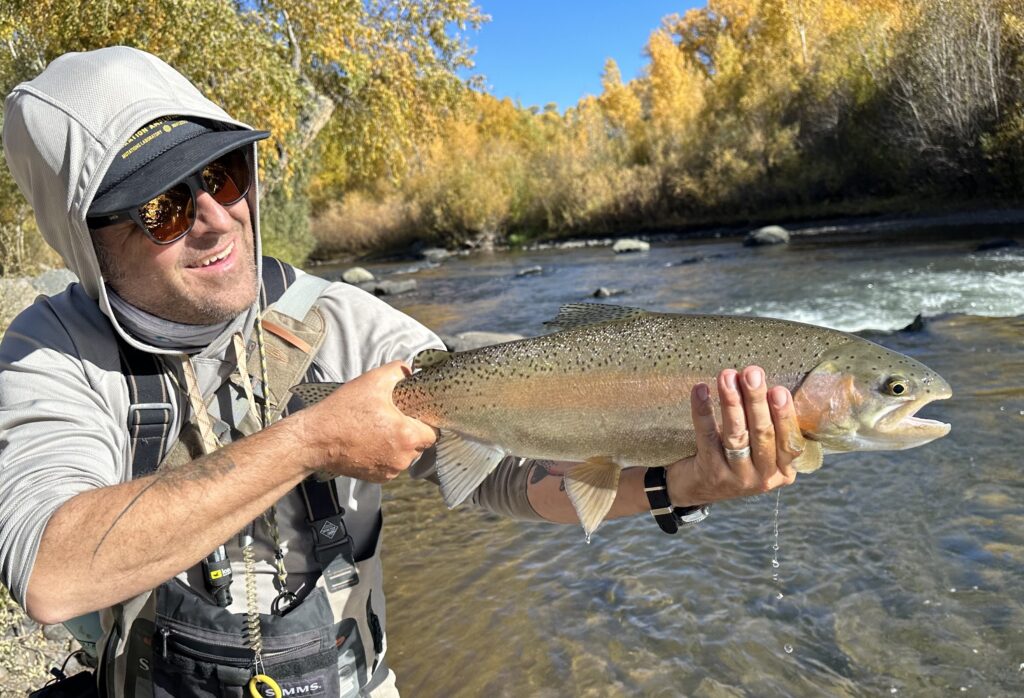
Here’s how Spencer likes to fish it:

  • Double dry fly setup using size 16 elk hair caddis
  • He ties each fly on a separate tag end for a better drift.
  • He uses a 9 ft 4X leader with 16 inches of extra tippet for the second fly.
  • He’ll switch to a dry-dropper rig with a pupa pattern underneath when needed.
  • Caddis Pupa – He ties his own with bright green dubbing and some brown ostrich herl near the eye for motion.
  • Bonus Tip: Spencer keeps bright flies and Prismacolor markers handy to tweak the shade depending on the light.
New Mexico Fly Fishing

New Mexico Fly Fishing: Fishing the Drake Hatch

By mid to late June, Spencer shifts his focus to rivers northwest of Taos, especially the Conejos River and Los Pinos. That’s when the big hatches start, and the fishing gets wild. It begins with green Drakes, then switches to gray Drakes a few weeks later. These big mayflies are protein-packed, so fish go crazy for them.

Here’s what he’s throwing:

  • A double dry setup with his custom split hair wing Drake (with a deer hair that’s been dyed green), he calls the Dude.
  • For gray Drakes, he uses super light gray dubbing because it darkens naturally on the water.

What Happens When the Water Warms Up in August?

August gets hot and slow, so Spencer heads up to cooler spots like Upper Culebra Creek near San Luis. The water there stays cold, thanks to a spring-fed creek on a big private ranch.

Tips for the Gorge:

In October, Spencer returns to the Rio Grande. Floating the river isn’t an option. It’s too dangerous unless the water is high, and if it’s high, it’s not great for fishing anyway. That part of the Rio is all about walk-and-wade missions. Here are some tips from Spencer:

  • Go with dry hiking shoes and quick-dry pants.
  • Stay dry and safe: wet feet + slick rocks = wipeout.
  • Some folks even wear helmets.
  • Best to fish with friends or stick to easier-access trails unless you know what you’re doing.

Fall Fly Fishing Tips on the Rio Grande

If you plan on hitting the Rio Grande in the fall, here are some solid tips from Spencer to help you have a good time — and maybe even land a few fish.

  1. Dress right. Skip the bright colors and go for camo or earth tones to blend in better. Even light blue is okay since it matches the sky.
  2. Get comfortable with a 25-foot cast and a soft laydown, especially if you’re fishing dry flies.
  3. Bring the right gear:
    • Rod: 9 ft, 5 wt rod for trout
    • Bonus rod: 7 wt for pike
    • Footwear: Something grippy — rocks get super slick when wet
  4. Always check the weather.
  5. Come with an open mind.

Tying Classic Flies

Spencer is big into classic salmon flies and says the best way to get started is by skipping the new books and going straight to the old-school stuff, like How to Tie Salmon Flies by Captain Hale.

His advice is to start simple and post your flies online, but be ready for tough love. It’s all about getting better.

New Mexico Fly Fishing

Check in with Spencer on Instagram: @zia_fly

Visit Ziafly.com


Related Podcast Episodes

762 | The Feather Thief with Kirk Johnson: The Natural History Heist of the Century

Syd Glasso, Dyeing Feathers, Fly Tying & Steelhead with Dave McNeese (WFS 155)

In the Bucket #15 | Steelhead on the Dry with Adrian Cortes & Richard Harrington – Classic Flies, Painting

Read the Full Podcast Transcript Below

Episode Transcript
Dave (2s): We recently published a podcast on the Feather Thief Story, A spectacular felony heist by a person who wanted rare and exotic feathers for fly time. The story in the book written by Kirk Wallace Johnson started through a connection to today’s guest. Today’s guest is also a guide and expert on the waters of New Mexico. And today we’re gonna get you dialed into the hatches and the water that make this part of the Southern Rockies so unique. This is the Wet Fly Swing podcast where I show you the best places to travel to for fly fishing, how to find the best resources and tools to prepare for that big trip, And what you can do to give back to the fish species we all love. Spencer Siime Fly fishing guide and classic fly tires are gonna take us back into the world of the Feather Thief, this crazy, amazing story and what his take home message is on the overall book and the story. Dave (53s): We also find out why he loves the dray catch, why Cas should be on your list and on your radar throughout the year, and what else he has going in the fly tying space, including making his own hooks. Plus, we’re gonna find out why anglers are wearing helmets, fish in the Rio Grande, and why you can fish it without touching the water. Heading into Taos. Here he is, Spencer Siime from zia fly.com. How you doing, Spencer? Spencer (1m 24s): Hey, I’m great, Dave. Thank you for having me on. Dave (1m 27s): Yeah, yeah. This is gonna be a fun one today. I’ve been on the track of the, a couple things going. The Feather Thief definitely is that We have an episode that’s out there now with Kirk Wallace Johnson who talked about the Feather Thief. You were a part of that, I think, early on in some of getting Kirk on. We’re also gonna talk about what you do in New Mexico, some of the famous waters you fish and guide and, and kind of all of that. I think we might have a, a big New Mexico episode today. But before we jump into those big topics, why don’t you give us a rundown on your background, kinda what’s your connection to Fly fishing? Have you been doing this a while? Spencer (1m 59s): Yes. So I started Fly fishing at eight years old, was the first time I picked up a fly rod. Now I’m not from a Fly fishing capital at all. I learned my ABCs in Lubbock, Texas, you know, one of the flattest places on earth. They say it’s so flat, you can watch your dog run away for three days, but yeah. But, but we would take vacations into the mountains of Northern New Mexico, and I fell in love with the area from a young age, and I actually didn’t have anyone start me into Fly fishing. It was born out of sheer curiosity, and I saved up money to buy my first fly rod and started fishing on the Cimarron River as a kid. Spencer (2m 45s): And then, you know, I, I kept coming back each summer to do more fishing, and then I started working for Philmont Scout Ranch, the Big Boy Scout ranch in the mountains in New Mexico. And I worked there throughout the nineties. And it was then that I could really explore the rivers in the Southern Rockies on my own time. And it’s been an addiction ever since. I’ve been fly tying since I was 12. Hmm. And my first fly was a wooly booger. Yep. So many of us started with, and I’m still tying flies to this day. And, and I am fortunate to be able to call myself a Fly fishing guide here in Taos area for the last 23 years. Dave (3m 28s): Amazing. So, yeah, you’re in Taos, one of the, probably the most famous, probably the cities, you know, at least for this, you know, outdoors and Fly fishing that, you know, we’ve done some episodes around that area and the rivers, and we’re gonna talk about that today. I think it’s gonna be cool to hear your background from somebody who’s been there for so long and give people kind of a guide like we were saying to New Mexico. But I maybe wanna, you know, start this off with the Feather Thief because I feel like it’s such a interesting, crazy story. You know, and I feel like, you know, Kirk, we said we’ll have a link in the show notes to the episode we did with him, and there’s obviously a book that he wrote, but the story of this kid essentially who goes and breaks in this, this heist of the century, right. To break into steal these exotic birds and millions of dollars of all damage. Dave (4m 10s): And, you know, Darwin and just this amazing story. But it kind of comes back to you a little bit, I think from the start, at least we’re Kirk connected. Why, why don’t you tell us that story? How do you connect with Kirk first and get him on this little lead that he, that he this journey? Spencer (4m 24s): Sure. Well, and it was out of pure luck that I met Kirk. I actually guided him. He had booked a full day guided Fly fishing trip on the Red River with me in the year 2010. And we hit it off right away. He told me that he was hanging out in Taos. He had been done with U-S-A-I-D and working in Iraq. And he was here in Taos writing for the Zer Foundation. And he was writing books about wartime and things. And he really was trying to focus on something that wasn’t such an intense topic. Spencer (5m 6s): And so we got right into the fishing. And while we were on the river, I had a couple of, I’d been tying classic salmon flies for a couple of years before I met Kirk and a jock Scott Salmon fly, fell out of my fly box when I went to change flies. And it caught his attention immediately. I was kind of, I was like, oh, darn, I didn’t mean to drop that. And he picks it up and he just starts studying it. And he starts asking me these questions about, you know, why do you have this fly in your box? Which was the first question. And I’ve been, I’ve had a theory that, you know, since brown trout are related to Atlantic salmon, then they would respond really well to a Atlantic salmon fly. Spencer (5m 51s): And I, my intent was to swing it across the Rio Grande and see if I could hook a big fish on it. It, and I hadn’t yet. So and so, he wanted to know about the community of tying these things. And, and also the biggest question was, where are you getting the feathers to tie such a beautiful fly? ’cause I kind of went over in the fly of what each fiber was, what bird it came from. And at that point, I was pretty heavily involved in the classic salmon fly time community. And I had no, I had known about this museum heist that had happened, and several of us tires were talking about it. Spencer (6m 34s): And a lot of these museum specimens were showing up on this forum for sale. And so when I told Kirk that, you know, I heard this, this kid had broken into the Natural History Museum to steal feathers or steal birds for fly, fly tying for these flies. I think it really took Kirk back. And I had no idea how far he was going to go with this. Right. And God, so that night we ended up having a beer together and he’s writing notes on a napkin, and he said, I’m gonna write a book about this. And so he and I were inseparable for, for the months that followed. Spencer (7m 18s): And then it took about seven years, I think, to write the book Hmm. For him to complete it. But I was giving him, you know, names of people to interview and, you know, he actually, he found out more than I even knew about the heist that had happened, about the break in and, and, and stuff. So it was really interesting to help him put that story together. And, you know, it turned out being stranger than fiction. Right. You know, you get into the book and you’re thinking, oh my gosh. Like, there’s so many layers to this story. And of course, me being a classic salmon fly tire as well, and also being part of this community, I’m still tying classics to this day. Spencer (8m 1s): Hmm. But it certainly has changed my perspective on where are we sourcing our materials from to keep tying these flies. And it really should be about good tying rather than what’s the, what’s the most rare bird I can strap onto a hook? Dave (8m 17s): Right. Right. Yeah. That, because I think that’s one of the, the messages in the book that you get, you realize like, I mean, there’s a few of ’em, like one thing is a lot of these guys that I guess tie these classic flies don’t also fly fish. And that’s part of the, I think part of the strange thing about it, right. Because I said in the episode when I was talking to Kirk, I was like, Hey, conservation is a huge part of everything we do. You know? And, and I think a lot of fly anglers, ’cause they realize if you don’t protect their species, you’re not gonna have anything to fish for. And it’s the right thing to do, but Right, right, right. But it feels like a lot of these guys in this classic form, you know, or not the forum, but just in the classic world, really want the feathers regardless of the impacts to, you know, endangered species or birds of paradise. Right. They just feel like, and, and again, I don’t wanna stereotype, but I, but I feel like, you know, there’s, that, that’s a message that came out in the book. Dave (9m 2s): Do you see that message? Yeah. And did you see that in the forums? Spencer (9m 5s): Yeah. What that caused, what that book caused is kind of a split within the community. And I’m still very close friends with a lot of members of the, of the classic world. Definitely the heist being so notorious. It, you definitely, we still have a lot of people in the community who refuse to use substitutes. They still feel like they need to use the exact call for species for a certain fly pattern, which, you know, I’m a little bit, I really do follow the historical accuracy. However, even the old books recommend substitutes. Spencer (9m 45s): And so you can be historically accurate and sustainably tying these at the same time. But it did wake up a lot of people in the community once we realized, you know, hey, one of our own has just committed a felony heist. And it really, a lot of people started to wake up and start asking questions of, Hey, where are these? Where did this bird of paradise feather come from? You know, did it come from vintage taxidermy or an old fly tying kit? Or is this something that came right off of a museum specimen? And that’s a big thing to me that it’s getting people to ask the right questions. Spencer (10m 26s): And I’ve been really surprised. I, you know, on the salmon fly forms, which are now on Facebook, I’m seeing a lot more flies come up that are tied unbelievably well and don’t contain a lot of the big no-no birds that could be questionable. Now, since this has also happened, there has been an obsession with some of the tires of just getting into the rarities. And, you know, there have been more heists that have taken place since the Feather Thief was written. As a matter of fact, right when the book came out, they were having a party at the Los Angeles Natural History Museum, and someone had broken into the case the night before and stole a relent kaz all, which was very ironic that something had disappeared from that museum the night before the book dropped party happened. Spencer (11m 22s): Oh, right. So, I mean, but, and I don’t know if that was connected to the salmon world or not. There are a lot of other people who want these rare birds for other reasons. It’s not just fly tires. But there’s certainly, you know, there still are some trading that’s still going on and stuff. But it’s interesting to me. Yeah. Dave (11m 41s): Yeah. And I, I think the other big part of this, I think why it’s important, I think Kirk kind of talks about this and did a lot of research on it, was the connection to just the birds and Darwin and that history there of how important these birds are. You know, it’s just, it’s not just like losing a few kind of, you know, endangered species or whatever. It’s like we might’ve lost something that could help, you know, human history. Right. Evolu, we can understand more about these animals. Right. That’s kind of, that feels to me like one of the biggest losses on this. Right. And that’s why I think he was really trying to get people like, where are those missing Right. Hundred skins or whatever. Right. Which I think they’re still out there. Spencer (12m 16s): That’s it. It’s through these species that we found out that DDT was harmful. We can find out how their diets have changed over a hundred years because we have these specimens, which are a timestamp of the day they were collected and that location. And when these things were collected, largely, a lot of them in the 18 hundreds and the early 19 hundreds, the collectors didn’t know about DNA at the time. They didn’t understand DNA yet. We didn’t know anything. And these specimens could still hold secrets that we still don’t know about, that we’re still learning. One of the big things is the evolution of color and what colors exist in nature. Spencer (12m 59s): It was through these bird specimens that we found out that the color blue is actually a very rare color in nature through the, the blue chatter specimens. And it was amazing because of, you know, just through the fly tying and then through working with Kirk on the book, it was really interesting to me because the stuff we were finding out about how these museums operate, and it is just amazing to me the knowledge I’ve gained Yeah. About how the science that we’re, that we have on this, the, the studies that the knowledge belongs to all of us really. And it wasn’t up to one fly tire to, as someone quoted, liberate these birds from these dark drawers. Dave (13m 45s): Right, right. You know? Yeah. That was the, that’s what made the, that was kind of the argument on the other side. I think that who was the, the Heister drawing? Spencer (13m 53s): Edwin. Dave (13m 53s): Yeah, Edwin. Edwin. That was part of his argument was like, Hey, these birds are just kind of being sitting there in this dark drawer and they’re kind of wasted, you know? Oh, Spencer (13m 60s): Yeah. And I, I think he was even making up his own scientific facts in those early interviews of, he said that you can’t collect DNA off of something that’s over a hundred years old. Which that was completely made up on the spot. Dave (14m 13s): Yeah. Yeah. Exactly. That’s why the story was so crazy. Right. It’s just such a ed and it all comes back to this Edwin character who is this kid who was, you know, the phenomenal that, you know, I think people even coined him and I think was one of the magazines The Greatest Fly Tire, the Next Generation. Right. The most, you know, magnificent fly tire. And he turns out to be a pretty smart kid that did some things that I don’t know, you know what I mean? You look back. But he, he essentially got away with it, which is kind of inter, I kind of got away with, he didn’t even see any jail time. Right. Which was kind of an interesting part of the story. Right. A little turn of the story. Spencer (14m 47s): And to your listeners, they’ll have to read the book as to, to find out why he didn’t go to jail. Dave (14m 52s): Yeah, yeah. Exactly. Yeah. We don’t, we we, yeah. We don’t wanna give away the whole thing. We’ve already given away talking to Kirk most of the story and, you know, in the Oh, nice. In the first episode. So I was kind of going with the assumption that many people had had seen it, but I’m so interested in it, I just wanted to hear the backstory of it. And Kirk did a good job about that, but, well, where do you leave it? I mean, I want to get into more of our fishing side of this episode, but Sure. When people, I’m sure you probably occasionally hear of, of this since you were connected to the book, where do you leave people? Like they’re, they want to, I don’t know, do more help, I don’t know, learn more. Do you do, is there anything people can do now, or, or maybe to learn more about the story? Do you think it’s like, it’s good enough just to read the book and kind of end it there? Spencer (15m 29s): Yeah. Well, so the story, this is, I’m gonna bring Kirk back into this, and I know he’s not on the call, but the key takeaway that I wish, or that I really want people to take away from this book and the whole story is the fact that we need to be asking questions about where did our materials come from? You know, where did this come from? And I remember in the weeks right before the book dropped, Kirk and I were having a heated discussion over the phone, and I had just come back from California from his wedding and all of that. And he was saying, you know, Spencer, you’re still tying these flies. Spencer (16m 11s): Are you asking where are these feathers coming from? In which now, of course I have been. But it was very interesting to me because I had told Kirk, I said, listen, I saw the size of that diamond that you slid on your wife’s finger. Did you, you know, where did the diamond come from? And so, you know, it’s interesting, it’s convenient for us as humans to, you know, just basically be ignorant as to where things come from as long as we bought it legally, because everything has a source. And we need to start walking with a little bit more consciousness about where are our materials coming from. Spencer (16m 50s): And it’s been exciting to me because I’ve been actually getting into dyeing feathers, teaching my children how to dye feathers. And I’ll take a Turkey feather and, and I’ll silkscreen it to give it bars. And then I’ll gradient dip diet in different colors to make it look just like a bench in cockatoo tail feather. And so we’re getting a lot more creative as far as coming up with the right look for these flies. I don’t think classic salmon fly tying needs to go away. I think it needs to keep going forward. But just in a little bit more of a conscientious way, Dave (17m 33s): Stonefly nets build handcrafted landing nets that are as tough as they are beautiful. They’re shaped, sanded, and finished by hand from premium hardwoods. You’ll feel the difference the moment you land your first fish light in the hands, strong at the hoop and made by someone who knows what it means to earn your trust. You can head over to stonefly nets.com right now and see what they’ve got in the shop today. That’s stonefly nets.com. Discover Smitty’s fly box for premium flies. Their monthly subscription service delivers expertly crafted flies and materials tailored to your fishing environment, boasting over 30 years of experience. Smitty’s is your trusted source for a diverse range of flies, enhance your fishering experience and make life easier with their carefully created selections. Dave (18m 18s): You can subscribe right now at smitty’s fly box.com and join a community of passionate anglers. You got me thinking when you’re talking about dying. We had an episode with Dave McNeese. I’m not sure if you know about him, but Oh yeah. You know Dave. Spencer (18m 31s): Oh, he’s my hero. Dave (18m 32s): Oh, there you go. Well, well, we had him on way back, and I’m, he’s probably due for another episode 1 55, but he talked about the story, I’ll have to re-listen to that one. But he talked about the story with, I think it was like eight federal black cars driving up to his house to confiscate all of his flight time materials. Spencer (18m 47s): Oh Dave (18m 47s): My gosh. So it was a similar thing, right? This happened back in the day. I can’t remember the exact dates, but they took everything Right. Because he was, I can’t remember exactly what he was doing, but he was doing something in the, I think he was selling, and you know, you know feathers, but Right. Totally different than what we’re talking about because you know, obviously, but yeah, it’s interesting. Right. So there is a history here. This is not a new, and actually you go back to the, the Birds of paradise. I mean, think about Right, which Kirk talked about the hats. Right, right. Back in the day when the women wanted these beautiful hats. So they were just killing birds left and right to get the Spencer (19m 16s): Right. Yeah. Well, and you remember back in the early two thousands when women were starting to put saddle hackle feathers in their hair. Oh Dave (19m 25s): Yeah. Spencer (19m 25s): That’s right. And so these ladies were going into fly shops and totally just cleaning out Dave (19m 31s): This, I Spencer (19m 32s): Remember that, Whiting Farms and things like that for fashion, which in the 18 hundreds it was the men going into the plum maiers into the hat stores to get feathers for fly tying. It’s been very interesting to see how fashion and function go back and forth. Dave (19m 50s): It’s amazing. Yeah. It’s such a crazy story. Well, like we said, we’ll put links out to the episode, the Feather Thief episode, and we’ll put a link to the book as well, because it’s definitely worth a read. But let’s jump into a little bit on what you do. ’cause you’re not only the, you know, the person that got Kirk interested into this, but you also guide out there. So maybe take us there a little bit. What is, you know, maybe we talk about your home waters or where you’re guiding now and what that looks like. Spencer (20m 14s): Sure. Well I’m, I’m based in Taos, New Mexico, which we are the northern part of New Mexico. I’m about 40 miles south of the Colorado border. The Rio Grande is our local watershed. And I like to, basically, I’m introducing people to the Rio Grande itself, as well as the tributaries through fishing. Of course, I guide Southern Colorado, which you know, is just a short jump away. And of course northern New Mexico. And the cool thing about Taos is that I can drive an hour and a half in any direction, and there’s lots of, of creek and rivers to fish. Spencer (21m 1s): It’s just amazing here between tail waters and spring Fed creeks. We have a whole lot to offer here. And Taos has a very rich culture. We’re very unique place. It doesn’t feel like you’re in the United States here, the architecture, the people, it’s just fascinating place to be. I do guide the Cornejo River, which is the largest tributary to the Rio Grande. And the eus has a reputation for being feast or famine. It’s a tough nut to crack to be successful on that river. And I’ve actually put a lot of my time and energy into learning that river. Spencer (21m 41s): And I’m always learning, but connecting people to fish on that river. And then of course, the Rio Grande itself sits in the bottom of this 900 foot deep gorge that’s just a giant crack in the earth. So it takes some work to get there. But once you’re there on the river, the fishing is very unique around here. They say it’s unique because, unique up on ’em, but Yeah. Yeah. But you know, we have, we have a lot of wild browns. Our native fish here is the Rio Grande Cutthroat, which is coming back beautifully in a few of our streams around here. Spencer (22m 25s): We’ve had cutthroat restoration projects happening. The Rio Grande itself, we also, on the lower part of the river, there’s a lot of small mouth bath. We of course have carp, we have pike, we have all kinds of things in that river. Yeah. It’s an adventure getting in the gorge. And then after a day of fishing, trying to get yourself out of the gorge is fun. And then the other thing that’s also exciting here is the human history of this area goes back thousands of years. So, you know, you can be hiking out of the gorge, look on the side of a basalt boulder. And there’s petroglyphs right there that, I mean, you know, and who knows how long that was done, 1500 years ago, maybe the anasazis, you know, and and stuff. Spencer (23m 12s): And then I’ve seen on a lot of rocks where someone had, you know, carved a turtle or an elk on the side of a rock, you would see that someone else came by and carved a giant cross over that. And what that was is the Spanish conquistadores who came through the carving, crosses over all of what they thought were pagan symbols. And so it’s just fascinating. The fish lead us down this road of learning about culture, you know, architecture, geology, all of it. And it all comes together here in Taos. Dave (23m 49s): Yeah, it does. Wow. That’s really cool. So, and, and New Mexico, when you look at it, it’s got a few hubs. I mean, Taos is one you hear a lot about. You know, you’ve also got kind of outta Albuquerque in that, down that direction. I mean, what do you think are the kind of the top, I mean, you mentioned the Rio Grande. What do you think are the, say the top five six streams that people are coming to New Mexico that are kind of coming to fish? Spencer (24m 11s): Yeah. The Costilla Creek is one, which is the home to the Rio Grande Cutthroat. Anyone that’s wanted to go after that, that’s a great place for it. The Rio Grande is, is also on that list. And the s being it is just over the border into Colorado. But we still consider it our area. The Cimarron River. Oh yeah. Which is my home waters where I learned how to fly fish. That’s a tail water goes right through a, a state park there. There’s also the Rio Chaa, which is another Rio Grande tributary that’s to the west of Taos. Spencer (24m 51s): And the Los Pinos is another river that winds in and out of the Colorado, New Mexico border. That was a very well kept secret up until about 10 years ago. The secret got out and there’s more people on that river. Those are the main highlighted streams here. Dave (25m 11s): Yeah. And that’s kind of when you’d say maybe that Taos area, like how far does that extend? Because there’s other areas around New Mexico right. That people would probably know about too. Spencer (25m 21s): Right. So, you know, when people think of Fly fishing New Mexico, the first river that comes to mind is the San Juan. Yeah. The San Juan. Right. You know, the San Juan’s a three hour drive from here. And I’ve got, I don’t know, great stretches of the trauma, which I would have to be passing by to get to the San Juan. So the Taos area, I would say is gonna cover, you know, about an hour and a half north, south, east, or west from here, is all accessible from someone who’s staying here in Taos for day trips to check out different places to fish. Dave (25m 58s): Yep. Gotcha. So yeah, there’s plenty up in that area. I mean, I think of, I mean, if we were coming in, you know, it’s, I mean, this episode, I always kind of go back to that when these are, you know, it’s April, you know, may, June. When does the season start for you? Are you fishing year round out there? How does that look? Spencer (26m 14s): We, there is real, there is year round fishing here. The Rio Grande is fishable year round. It never completely ices over. Even in the colder winters, there are a lot of warm springs that feed into the Rio Grande, keeping the water temperatures just perfect for fishing in the winter. And then there’s also the Red River, which is fishing year round. Now, I would say, you know, the winter fishing here is a little bit more for your diehards. And if you’re fishing in the gorge in the winter, you’re probably gonna have about an hour and a half of the sun being on the water. Mm. Right. Because our gorge runs north south, you know, This year we are, we have a very low snow pack year. Spencer (27m 0s): Right now we’re actually really well below normal snowpack. So normally I would say in early May runoff starts and really stay thumping till about mid-June. And then we’re fishing all the way into late October on most of the streams here. But this year I think we’re gonna be fishing, you know, we’re fishing great. Right now the cat hatch on the Rio Grande is something that’s just incredible right now. And you know, I think we’re gonna be fishing probably up until late July, early August, unless we get a monsoon. Spencer (27m 44s): ’cause water temps could be our issue this year. Oh, right. You know, but yeah, it’s, you know, Taos is wonderful because if you’ve got runoff when you’re here, you know, next year maybe if we got the snow pack, if we do have the runoff, there’s always the simmer on and the Costilla Creek, which are both tailwaters to go to. So, you know, there’s always something that’s fishing, well, 12 months a year. Dave (28m 9s): Gotcha. So right now, as you’re saying, April, the cas are on right now? Spencer (28m 13s): It is on right now. Yeah, it is. Dave (28m 16s): What’s that look like for the cas? That’s always a, a fun one to look into. What, what do you guys, how are you fishing that hatch? Is that something that you’re hitting in the evening or what does that look like? Spencer (28m 24s): Yeah, it’s, you know, they’re, the cadis hatches are going to start off. We do have a late morning hatch that takes off. And then the evenings is when it starts to get really thick. Anytime after four 30 going all the way to like seven. You’ve got bugs in your glasses. I mean, they are all over the surface film. And it is, it is on. And you can, every fish is looking up Right now. It is because our water is actually clear enough to where the fish actually see the hatch. Some years we have the bugs, but the water’s too high and muddy and the fish Dave (29m 0s): Don’t see it. Oh, right. Yeah. Yeah, that’s right. Because this time of year you would typically have, when is the typical runoff, we’ve heard that’s been changing, like a, typically you might have a, a June like high water time, but it’s maybe a little earlier now. What, what’s that look like for you guys? Right. Spencer (29m 14s): So this year, any bit of runoff, I mean, I’ve heard that the Rio Grande is already peaked and right now it’s April 14th. Yeah. Being a low water year. But yeah, it’s, it, it has been happening, you know, our springs have been getting warmer faster and so therefore it’s gonna start bringing the runoff down earlier every year is what we’ve seen. It’s been really interesting. But generally, you know, when, when people are calling me wanting to come out to fish and they wanna be pretty much guaranteed that we’re in optimal time, I always let the people know that, you know, the best fishing starts around Father’s Day. Spencer (29m 58s): That’s when I can say that every river in our area is fishing well Dave (30m 2s): Really. So Father’s Day is a good time. Okay. Spencer (30m 4s): Amazing time. Amazing Dave (30m 5s): Time. Well, and before we get into that time on the Cadis, give us a couple, what does that look like? How are you fishing the cadis hatch? Are you using dries mostly? What, what’s that look like? Spencer (30m 16s): I’m using, I, I start off a lot of times with double dries. If I’m fishing, the lower stretches that have bigger water features, larger eddies, not a lot of variants in currents, I can go double dry, combine that with a couple of different cas patterns. Our cadi around here are gonna be fished roughly about the size 16 Pan elk care cadi. Yep. And of course, with there being so many bugs on the water, you’re having to compete with the natural bugs. You need yours to look better. And so I like to fish double dry. I don’t like to fish ’em in tandem. Spencer (30m 57s): You know, I don’t do the tying to the bend of the hook. Oh, right. And all that. ’cause I don’t get a good drift. I like to fish two different patterns that are tied on separate tag ends of the leader of the tip of there. And yeah. But I try two different variants and then when I figure out what they’re keying in on, then I’m gonna switch to one fly. I very seldom would run a dropper off of a cadi fly while we have a hatch on. Mm Dave (31m 26s): Gotcha. So what does that setup look like when you have the two flies on? How are you doing that? You have a main fly and then you have, what, what’s your dropper look like? Spencer (31m 33s): So if I’m fishing, two flies, if I’m doing two dries, I’m gonna run a nine foot, four x liter. We can get away with four x on the Rio Grande ’cause there’s enough color to the water. And then, but up about 10 inches up into the tip of that liter, I’m gonna tie on about 16 inches of Tippi material, a four X Tippi material. So I have two ends of my liter that I can tie a different bug on. And now if I’m, if I do run dry dropper, if I’m starting to see that maybe I need to get something down there into the fish a little bit lower, I will run a, a pupa off of it and just do dry dropper that way. Spencer (32m 21s): And yeah. That’s trying to cover my bases. Yeah. Dave (32m 25s): Yeah. That’s it. Catastrophe and the pupa. What would be a, a pattern that, there’s a lot of different patterns, but essentially you’re just imitating the, the, the bug as it’s kind of getting ready to hatch. Is that kind of what you’re doing or coming up? Spencer (32m 36s): Yeah, yeah, exactly. I’m, I’m, I like to, and, and even with the pupa, I do change different colors of greens. Sometimes I’ll use a little bit more of a bright lime green. And there are times that I go a little bit more Kelly Green even. And with that, it depends on the day entirely and how the sun is showing down on the fly. That can really help us determine what’s the perfect color that day. It never hurts to actually have several really bright green flies in your box and then carry some prisma color markers and shade ’em in a little bit as you go until you get locked in on that right color. Spencer (33m 17s): You know, a lot of us fly tires know that naturally when a fly gets into the water and gets wet, the color will change. Typically it’s gonna go darker most of the time. So that’s always something to keep in mind. But when I’m tying my ca flies ca patterns, I do tend to air on the brighter side first. Dave (33m 37s): Yeah, that’s a good tip. Right. ’cause it’s gonna be a little bit dark and once it hits the water. And what is the pupa, what, what is that pattern? What would be one that you would be tying? What would that look like? Spencer (33m 46s): So there is the, the, oh, I’m trying to remember the originator of the fly. It was the pupa. Oh, Dave (33m 53s): The pupa, okay. Spencer (33m 54s): Right. Yeah. And just a little tiny bit of chail. Dave (33m 58s): Oh yeah, yeah. The pupa. Right. Spencer (33m 60s): And I really, really like that fly. It really works well here. And then there’s also another fly that was developed years ago by Gary LaFontaine. Yep. And it’s a, it’s basically, it’s not a freeform body on the fly or on the hook. It’s tied directly onto the hook, but it’s a, what I’ll do is actually dub really bright green, dubbing, very sparsely up the sink of that hook and then add a little bit of some brown ostrich URL on the very front right behind the eye or right behind the bead if I’m using a bead head. And what that ostrich URL does is it gives motions of legs just a little bit. Spencer (34m 45s): And sometimes a little bit of motion can really trigger some of those picky fish, especially the fish that are looking at a whole lot of naturals. You want yours to look way better, you know? Dave (34m 56s): Right, right, right. That’s awesome. Yeah, definitely the pupa, the, the Sparkle pupa, I think that is part of the Gary LaFontaine, Gary Borg. There’s a few guys that were involved in all that, but those were huge. Yeah, I mean, depending on how you tied it, but that’s essentially a little, like you said, size 16, kind of a green imitating what, like a green rock worm or something like that. Right, Spencer (35m 15s): Right. Exactly. Yeah. Yeah, yeah. Dave (35m 17s): Yeah. Perfect. So, cool. Well, that’s a little bit on the cata. Let’s take it to a little bit later, like you said around the, the June time period when things start heating up. What, what does, how do things change there? What, what does that mean on, on those rivers? And are you still fishing? I mean, you’ve got all those rivers you mentioned. Are you really starting to focus on one during that time? Spencer (35m 33s): Yeah, that is when I’m heading up northwest of Taos, I’m gonna be focusing heavily on the S river as well as the Los Pinos. And the reason why is because mid to late June is when the Drakes start to come off. We start off with green Drakes earlier in the season, and then after a few weeks of the dray catch, we start to see more gray Drakes on the river. The dray catches are just spectacular. I mean, it’s a big giant may fly that offers a ton of protein for these fish and they’re quick to take ’em. Of course, on the Los Pinos we also have yellow Sallys taking off at the same time. Spencer (36m 18s): All of a sudden you get some golden stones, you’re gonna get some salmon flies coming off the big giant stone flies. But the Drakes tend to be the most exciting of all of the hatches around here for early summer. That’s where you can look up the river and you can literally locate just about every single fish just from the rises. Oh wow. God, it’s amazing. Oh yeah, it’s amazing here. Wow. Dave (36m 43s): And and are you fishing the Drake Hatch, is that totally different than how you’d be fishing some of these other patterns as far as where you’re finding the fish and presenting the fly? Spencer (36m 52s): You know, it’s interesting. If I’m fishing the dray catch those fish are keying in on those and the riffles a whole lot. You might be able to trick a fish into eating your fly in some of the eddy’s, but a lot of times that’s where the fish gets a better look at the bug. And so you might get refusals there. I like to always keep those flies in moving water so that the fish have to make a split second decision. And just like with the cat hatch, if the Dre Hatch is on, I’m gonna start with a double dry, I’m gonna use a, oh, I use, I tie a split hair wing Drake with, I use a deer hair that’s been dyed green. Spencer (37m 36s): I actually have, I did a Lebowski series of flies last year and my Drake dry flies actually called the dude. Oh, nice. And, and so I always like to start off with the dude because he’s the one that, that the fish key in on the most. I do also, and I know that the fly shops sometimes don’t like me saying this, but a hatch like the Drake Hatch, that’s such a prolific thing. I’ve had customers go into the local fly shop on the Cornejo River and look at what Drakes are in their bins and don’t use those. Yeah. Spencer (38m 16s): Right. And I know those guys are gonna hate me for say, I still say go in and support your local fly shop. But when it comes down to Drakes in Midseason, look and see what those fish are looking at because yeah, those fish know the inventory of all the local fly shops. Dave (38m 33s): Right. Good point. Spencer (38m 34s): Yeah. Come up with your own variant. I do, you know, sometimes if I’m hacking, I’ve got a, a thick nice hackle around that wing on my Drake. If I get refusals on it, sometimes I’ll try to get that fly to sit a little lower by clipping off some of the bottom hackle off of the fly. Just change it just a little bit and maybe that’s gonna trigger the strikes. Now the gray Drakes are a lot of fun. I do recommend if you’re tying flies for the gray Drakes to tie with the lightest gray you can find because it will naturally get a little darker when it hits the water. And of course we get into those golden stones that start off in around early July. Spencer (39m 16s): And that’s stimulator season. Dave (39m 18s): Yeah, stimulators. Okay. And do you guys get, you mentioned some bi, the Big Stones. Is that a hatch that you’re fishing as well? Do you get many of the big stones? Spencer (39m 25s): Oh yeah. It’s, and it’s talk on the river. I mean, you know, I’ll be getting together with my guys that are guiding upstream on the cohos and I’m downstream and they’ll come down and say, man I the goldens, they’re starting right now, you know, and boy, we gotta start getting up there. And typically on the Cohos River, the hatches start earlier in the year on the lower stretches. And then as you go up the river, it starts later and later and later. Dave (39m 54s): Today’s episode is brought to you by Grand Teton Fly Fishing. They’re a top guide, service and fly shop with access to some of the most prized waters in western Wyoming. And their guide team brings together over 200 years of local experience. Their goal is simple to share these amazing resources and help you experience the thrill of a native cutthroat rising to a single dryly all in the shadows of the Tetons. It’s the kind of experience that stays with you and fosters a deep appreciation for the waters we love. You can check ’em out right now at Grand teton Fly fishing dot com. And if you book a trip, let them know you heard about them through this podcast today. If you’ve been holding off on getting a new fly rod because of the price tag San Juan Rod works, just change the game. Dave (40m 38s): These rods are dialed in with the right action, clean design, and built to fish hard without the high price tag. Whether you’re stripping streamers tight lining or dead drift andries, they’ve got a setup that feels right from the first cast. And the best part is you can try any rod reel or fly line for 30 days risk free. And if you’re not 100% satisfied, you can send it back for a full refund. Check ’em out right now. That’s San Juan Rod works.com. S-A-N-J-U-A-N Rod works.com. You support this podcast by checking in with San Juan now. So it sounds like Yeah, pretty much. I mean you’ve got everything all, all the big hatches for the most part out there, all the western hatches is, is it does. Dave (41m 20s): And then as you get into the season, I guess depending on the, the temperatures and things like that, do August, does that start to get a little warm up there? What does that look like? Spencer (41m 29s): August is a pretty slow month and you know, we are puddling around in the high country quite a bit more often in August, I start moving a lot of my guided trips to a stretch that I have access to on the upper Collibra Creek, which is outside of San Luis, Colorado. There’s a creek that’s flowing right out of this mega ranch and we can find cooler water up there in August. But yeah, water temps are really something to keep an eye on. And you know, a lot of times if it’s August we’re gonna be fishing first light in the morning and we’ll probably be wrapping it up around noon or one o’clock when that water temps up above 67 degrees. Spencer (42m 13s): Might as well give those fish a break. Dave (42m 15s): Yeah, it’s gonna, right. And then, and then the fall transition is kind of, when does that typically start? When do you start getting some of the hatches there? Spencer (42m 22s): Late September is when the fall stuff starts to take off. We have quite a nice trico hatch in late September. Lasts all the way through a lot of October. That’s gonna start around 10 in the morning and go up until about noon. And that’s just clouds and clouds of bugs. Fall fishing is interesting because the water is low and clear and they’re usually, you’re gonna be doing a lot more dry Fly fishing in the fall because there are a lot of grasses Oh right. That grow in the river and stuff. So droppers, you’re sometimes gonna do it a disservice on that. And then when we get into October, I move back into the Rio Grande and the Rio Grande Fall fishing is the, it is the place to be. Spencer (43m 9s): And you know, try to find your own personal goat trail that no one knows about. Get down into the gorge and see if you can trick some fish. Dave (43m 17s): Right. That’s awesome. No, I love that you brought it back to the Rio Grande. ’cause I feel like that’s one that would be cool. You know, I mean they’d all be cool to fish, but that one for sure because of, you know, because of what it is, the name, what is the gorge? So are, is this something where people, it’s mostly hiking in or people, are you able to get boats in the, in that gorge? Spencer (43m 34s): You know, the, our area is very unique on that. So if it’s high enough to float, it’s probably too high to fish. It is an extremely technical boating river. There’s, you know, for the boater, the area like the wild and scenic rivers that we have on, that’s a, a section of the Rio Grande National Monument. It’s called the razor blades there. And it is class five even in class six. Oh wow. Just because of the steep gradient and the giant boulders. So everything, you know, for most purposes is going to be walk in and wade. I don’t recommend, like if you’re going into the Wild Rivers area, I don’t recommend wearing waders. Spencer (44m 19s): I really seen more accidents happen from people aspiring to wade the river up there. And if you keep your feet dry and you just play frogger and you just jump up on and you just go from dry rock to dry rock, you can access all the river you need to and dry feet will keep you a lot safer. That basalt just turns into slick as ice if your feet are wet. So I recommend just, you know, wearing nice pair of hiking shoes and quick dry pants in case you do take a dip and, and all that. I have seen people down there fishing wearing helmets and protective gear because it is, it’s pretty unpredictable. Spencer (45m 0s): You hook into a fish of a lifetime and you’re trying to keep that guy on. You’re hopping from Boulder to Boulder trying to Wow. Not let ’em break off. It’s, it turns into a contact sport. Dave (45m 12s): No kidding. Spencer (45m 14s): I do. You know, but it’s a, it’s a unique experience, that’s for sure. Yeah. Dave (45m 19s): So it’s just a series of, it sounds like it’s a series of just giant boulders that you’re able to, not even, you don’t even have to touch the water necessarily. Spencer (45m 26s): Right. You don’t really have to get your feet wet. Now downstream of the Red River. The Red River dumps in at a place called Junta. Downstream of that there is, you know, it’s, it’s totally okay to weigh the Rio downstream of that confluence. But above the Red River Confluence. Yeah. It’s dry foot zone. Dave (45m 47s): I see. So above the Red River. And that’s the area that you’re usually covering? Spencer (45m 53s): Well, we’re all over the place. Really? Yeah. You’re everywhere. Yeah, we’re all over now. I try to, you know, being a guide for as long as I’ve guided here, I’ve got enough horror stories of having injuries, you know, having a customer getting hurt Oh right down in the bottom of the gorge and you’re thinking, how am I gonna get this guy outta here? So I typically, if I’m actually guiding, I’m not usually gonna be in wild Rivers unless I’ve got someone who I know is perfect for that setting. I’ll send people over there on their own risk. ’cause the fishing can be just fantastic. But there’s a couple of easier trails to get down into and longer riffle runs and bigger areas to wade right through the Rio. Spencer (46m 40s): Yeah. And I can produce a really nice guide trip on a lot of that stuff. But yeah, the’re really hard to get to stuff. I like to keep that one as day off water. Dave (46m 52s): Yeah, I gotcha. Day off water. Yeah. And then when you’re in there in that fall period kind of hopping the rocks or you and you’re just fishing dries mostly, is that what that looks like in the fall? Spencer (47m 2s): Yep. And I use a lot more attractor patterns in the fall if I’m hopping from rock to rock and I’m sight fishing quite a bit and you know, that’s, it’s, it, it’s a lot of fun. You can start picking up some rocks in the Rio and finding out the bug life that’s in there. You know, they will be very eager to grab a size 16 olive pheasant tail if it’s drifting in front of ’em the right way. You know, you can go with your standard fare in there, you know, late fall the browns actually start to spawn. They start running up the Red River to spawn and I like to leave those guys alone when they’re up in there Dave (47m 45s): In October. Is that Spencer (47m 47s): Yes, late October. Late October, all through November you start to see Browns start to run up the trips and to spawn. And I like to leave those guys alone during that time. Let the fish factory generate some more fish for us. Yep. Dave (48m 3s): Right. And are browns, so you got the Browns, you mentioned the cutthroat, the Rio Grande Cutthroat. Are there other species in that Spencer (48m 10s): Reach? Yeah, in the Rio Grande, you know, of course the Rio Grande Cutthroat is the, is the native fish that we have that should be here. Our Trot unlimited group here works with New Mexico game and fish. And we actually backpack fingerlings in to the Rio every year. Every year we go down in there with a whole bunch of fingerlings. Dave (48m 32s): Yeah. In the gorge. Spencer (48m 34s): Down in the gorge. And it’s, they turn it into a big party, you know. But yeah, we have browns, we also have carp. Hmm. Some nice big, big carp. Some pushing five pounds. Wow. And we do have Northern pike in here as well. The northern pike I believe were introduced in the 1920s to kind of control the pop the carp population and we know how that worked out. Yeah, right. It kind of, it, it really hurt our cutthroat numbers, the browns as well. I mean, they’ve been doing a job of keeping the cutthroat numbers down as well. Spencer (49m 15s): But yeah, it’s, it’s neat in the Rio because you just never know what you’re gonna hit. I mean, heck, we’ve got river otters like crazy. We’ve got, it’s, it’s really neat to get down in there and see you’re not just in a trout stream. It’s a living, breathing thing that’s just got all kinds of wildlife. Dave (49m 35s): Amazing. Yeah. That, that seems like the real grande for sure would be on the list once to get out there. And you’re, and you’re saying if you had to pick a time that October, maybe September early October would be a good time to go. Spencer (49m 46s): Exactly. Exactly. That’s when the water temperatures are coming down. The fish are, they know that the famine is coming and they’re gonna load up on calories. Dave (49m 56s): Yeah. Awesome. Well let’s start to take you outta here with our kind of, this is our tip segment we’re gonna get into. You’ve, you’ve actually shared a number of these great tips to get us focused. But I’m thinking about, you know, again, we’re putting together a trip. Let’s just take it to that fall period on the Rio Grande. What are a few things you’re telling somebody, you know, either maybe they’re on the water with you to kind of have more success, you know, while you’re out there? Spencer (50m 16s): Well, sure in the fall, some of the biggest tips that I like to pass along is to wear natural colors. You know, you can leave the red hat or a yellow hat, orange, any of those non-natural colors. Leave it at home. Almost dress like a hunting trip. Dave (50m 33s): Right. So camos. Okay. If you wanted to go like, full on Yeah. Spencer (50m 37s): Camo is good. Yep. There you go. Yeah. And even blue is okay. I mean, heck, the sky’s blue. And I do recommend taking a casting lesson, really get to where you’re proficient at a 25 foot cast with a soft lay down if we’re gonna be hitting dryly. And then also I do recommend bringing at least a nine foot rod. Five weight is ideal for the trout. Bring that seven weight if we’re gonna go after some pike, after some northerns in which I’ll bring the steel leaders. Yeah. And all that. And then also just being aware of what the weather is doing. Spencer (51m 20s): If I see rains in the forecast for that afternoon, I mean those storms, if you’re in the bottom of the gorge, you can’t see ’em coming from a distance. So when it comes, it could come hard. And you know, we get mudslides and we get, you know, those rocks are just slicker than snot if it’s raining and things are wet. So always being really, really aware of the weather forecast is a huge thing. And also being prepared to hike down into the gorge. We sit at an altitude of 7,000 feet above sea level, which is fine for, for most folks, but if you’re from sea level and you don’t exercise much, probably might not wanna hike down into the gorge. Spencer (52m 6s): The Rio Grande actually does have a few vehicle accessible spots where we can be successful. I mean, we’re gonna see some people and maybe be more stocked trout ’cause they do stock a lot of rainbows still. But for the wild stuff, getting into the areas that are kind of been held secret and things like that, you know, you kind of have to come with your A game and be prepared to get skunk ’cause they could happen. And so expectations, the realistic expectations just need to be in check of, Hey, I’m gonna go down to the gorge and spend some time on the water today. It’s gonna be a lot of fun. And that’s what we’re looking for. Spencer (52m 48s): We’re showing up with an open mind. You might wanna see some big horn sheep, some petroglyphs, some geology that you probably hadn’t seen before. So coming in with an open mind, realistic expectations is huge. Dave (53m 2s): That’s it. Nice. And that’s, I mean, and it sounds like you’ve, you’ve said what makes this unique? I mean, it’s got all the hatches, but also it’s more than just the fishing kind of, it’s a, it sounds like a pretty unique area. Is that, is that how you explain to others how this is different than different parts of the West? Spencer (53m 17s): Yes, absolutely. Yeah. It’s very much unique. Dave (53m 20s): Nice. Well, we will definitely, well, and we’ll have some links here. I wanted to get into a couple random ones for you, with you here before we get outta here. And you mentioned some injuries, things like that. But I, I, I did hear did you have a little bit of music in your background? Spencer (53m 34s): Oh, not too terribly much. Yeah. I mean, you know, I’ve got a, I’ve played guitar since I was a kid and, and stuff, but you know, there I went through a phase when I was trying to sing old cowboy songs and folk songs. Okay. Yeah. And stuff. But now, after, you know, I’ve got so many things that I’m into these days, aside from fly tying and fishing, I’m also a, a salmon fly hook maker. I make hooks Oh. From scratch. And over the last year I’ve gotten into watchmaking as well. So it’s needless to say I, I’m always working to keep a steady hand. Spencer (54m 16s): Yeah. Dave (54m 16s): Wow. So you’re actually making, you’re actually making the, the hooks, the classic salmon hooks. Spencer (54m 21s): Yep. I make ’em myself. I use a kneeled steel that shows up to me for, that’s completely soft. You can bend it with your bare hands. And I actually have a barb cutter that actually cuts the barb into the steel if I’m doing something for display to look like the old salmon hooks. And then I do all the hook point shaping with files in a vice. And then I have bending jigs that I bend the hook steel around to get the hook shape. And my neighbor is a gunsmith and we actually do all of our hardening, tempering and finishing of the hooks at his place. Spencer (55m 2s): And I do my own Japan black recipe, which is the same stuff they use for Ford Motor Company for the Model Ts. And I make that mixture myself and put that on the hooks and bake it in. It’s a long, long process, but the cool thing is, is that I can, I can make any shape that I’ve ever dreamed of in a hook because now I have that freedom to do so. Wow. Dave (55m 28s): Yeah. Taking it to the next level. That’s awesome. What would you, what would you tell somebody who was interested in getting into tying classic salmon flies? You know, like maybe they’ve tied a little bit that were, you know, where would they start? What, what do you think is a good place to start to learn about and Spencer (55m 42s): Get? So the, the first thing is to ignore the, I’d say to ignore a lot of the books that have been written recently. Go back to the source. There’s a book that was written by Captain Hale, HALE, and he had a book called How to Tie Salmon Flies. And it’s a thin book. It doesn’t have a ton of recipes in there, but his techniques are spot on. Nice. And also I recommend we have a new classic tire get in. I know that Facebook is probably an easy way to get to be a part of the community express that you’re wanting to get into tying these things and start with a pattern like a Red Rover that, or a Kate, a pattern that’s really simple that doesn’t have a lot of extras and work on tying that fly and then post the fly on one of these groups and you better have thick skin. Spencer (56m 46s): ’cause some people are gonna tear you apart. Yep. But it’s all for your own good to becoming a good fly dresser. Dave (56m 52s): Yeah, that’s right. And this is a lot different than, is it a lot different than just regular fly tying? You know, when you think about tying a, a steelhead fly or something like that, this is a, a whole different level. Spencer (57m 3s): It is a whole different level now. The steelhead tires definitely use a lot of crossover techniques that come from classic fly tying. Dave McNeese being one of the masters, is unbelievable at tying these, these flies and he’s more of a steelhead guy. But yeah, so I think, you know, the materials are gonna be different. I try to always avoid using modern threads. I do recommend getting a hold of real silk thread. A lot of the fly shops online, fly shops carry it. It’s a company called 54 Dean Street. Spencer (57m 44s): They actually make a, a real silk thread and don’t use dubbing wax. You’re actually, there is a recipe to make your own wax really easily. Or some of us, if any of your listeners are wanting to get into tying the classics, they can get ahold of me and I’ll send them some wax. Oh, Dave (58m 2s): Nice. Spencer (58m 3s): Yeah. And, and you know, it’s difficult but it’s not impossible. It’s a lot of fun once you can start tying flies that look good. Dave (58m 11s): Yeah, exactly. What are the, the groups out there, you mentioned the Facebook, are there, could you just search classic, you know, salmon flies sort of thing. How would you find the groups? Spencer (58m 20s): The, the first group is classic fly tying. It’s all one word on Facebook. And then the other one is classic salmon fly tying all separate words. Those are two groups on Facebook that I recommend anyone check out. You’ve got some of the greatest tires in the world as part of this and everyone is willing to help. We’re not setting up anyone for failure. And it’s a worldwide community. So if you post a fly, you might get someone from Scotland or the UK chiming in on some pointers. And that’s what I love about the Salmon Flyting community is that it’s worldwide. Dave (58m 59s): Do you occasionally see guys out there swinging one of these flies for a salmon, Spencer (59m 4s): You know, in this area? I see I’ve got some guys that practice some spa asing on the lower, on the lower Rio Grande. And you know, that hasn’t, we don’t have really a wide enough river. I think micropay kinda works and switch rods is a good way to go for the lower Rio just to practice your swing. But if I’m gonna fish one of my classics, I’m gonna fish it with a single hand, six weight rod. And, and I’m just, I like to cast across the stream, let that fly swing across the current as I maintain tension. Spencer (59m 44s): And you’ll feel that strike if, if and when it happens. Yeah. Dave (59m 48s): You mentioned at the start that Jock Scott, have you had any success on with the Browns with that one? Well, Spencer (59m 54s): That particular fly, I actually had a feeling that something was gonna come of this story. So that fly has, I, I put it aside. Oh, right. I put it away. I still have it. It’s actually that fly is in the book itself. It’s, there’s oh, a photograph of it and that fly is actually the cover of the Swedish copy of the Feather Thief. Oh, okay. But, but yeah, I’ve actually had a lot of success on a fly called the Fiery Brown, the Jock Scott. I kind of, I was still a little green when it came down to what would these fish take? And a jock Scott being king of the classics has so many elements making it very difficult to tie. Spencer (1h 0m 37s): And so I kind of, I don’t need to go that fancy, especially if I’ve got a brown that’s got teeth that’s gonna tear that fly up. Anyway. Yeah. So I stick to some simpler patterns. I definitely, the fiery brown is by far and large my favorite fly to swing here. There’s another one called Old Blue, which is an old Irish fly that’s a little bit simpler to tie as well. And I forgot to tell you that a lot of my salmon flies that I’m tying, I’m tying ’em traditionally, which means that I’m not using a vice. Oh. Dave (1h 1m 10s): Or a Bobby. Wow. Spencer (1h 1m 12s): I still do tie a lot in my vice, but I do tie in hand a lot Dave (1h 1m 16s): In hand. Right. Wow. Okay. So you’re, you’ve got the, you’re you’ve got the extremes going here. You’re, so, you’re, you Spencer (1h 1m 22s): Know, well, you know what’s cool about tying in hand is you can tie anywhere. You can go to a kid’s soccer game and tie, fly. Oh yeah. Dave (1h 1m 28s): Right, right. That’s really cool. So that’s not an easy thing to do, right? I mean, have you been doing that for quite a while? Spencer (1h 1m 34s): I started tying in hand about six years ago, and my son was only two years old. I have an 8-year-old son and he was two and I was hanging out at home with him and I really wanted to, I, I couldn’t just sit at my desk and tie and watch this crazy kid at the same time. So I had to come up with something more portable. And one of my fly tying mentors, his name is Adrian Cortes. Oh yeah, Adrian, right. Adrian is just, he’s really the one that got me into tying in hand. I met him when I was tying at the 2016 Atlantic Salmon Fly International in Seattle. Spencer (1h 2m 14s): And I started seeing my heroes tying in hand and I was like, man, I gotta try that. And it’s a learning curve. Yeah. But it’s a lot of fun once you can look at it. Once you can hold up a fly you’re proud of and say, I did this with my hands. I Dave (1h 2m 28s): Know. God, that is great. We’ve got an episode with Adrian, I think it was a while back. Well actually he was on In the Bucket or in the Bucket podcast series with Brian Ska. So that was, that wasn’t too long ago here, earlier this year. Him and and Richard were on, they talked about, you know, that was a good episode as well. So, we’ll, we’ll get a link out to that one too. So this has been good. Spencer, I think that this has been awesome to hear. I mean, Roy starting out from the, the Feather Thief and ending back with the Feathers has been great, but you obviously have everything going on. We will, we’ll leave everybody a link to zia fly.com if they have questions for you. And any last words for anybody as we head outta here as far as your program? Dave (1h 3m 8s): Or do we cover it pretty well and I mean, high level? Well, Spencer (1h 3m 11s): Yeah, just if you got any questions, please ask. I’m happy to help with anything from fishing to fly, tying hook, making questions, fire away. And I’m very accessible. So if you plan on coming out here to Taos, just know that we are a low water year this year. The earlier you can get here, the better. I think July and August might be a little warm and low for us here. So if we want to come to Taos, either hit it in the first part of the summer or wait and come out this fall. Dave (1h 3m 43s): Okay. And then, yeah, then the fall, we’ll circle back around when temperatures cool down. Spencer (1h 3m 47s): Exactly. Perfect. Dave (1h 3m 48s): Okay. Awesome. Spencer, we we’ll be in touch and thanks again. Spencer (1h 3m 52s): Thank you Dave. I really appreciate it. Dave (1h 3m 56s): Call to action today. If you haven’t yet, check in with Spencer. You can do that@ziafly.com. Go to Zia Fly on Instagram, let me know. Let him know you heard this podcast and let him know you are interested in learn more about New Mexico. And if you have a Feather Thief question, he might be able to answer, especially when it comes to the classic flight tying. If you haven’t already, you can subscribe to this podcast and make sure you get that next episode delivered right to your inbox. The next one is, as always a good one. CJ’s Real Southern podcast. Chad Johnson is back for his monthly series on fishing trophy trout, and not only on the White River, but around the country. Dave (1h 4m 37s): Chad Johnson’s here, he’s gonna be bringing it. So I hope you can check that one out. If you haven’t heard Wet Fly Swing Pro, this is the shop where we’re doing stuff, building our own trips, building trips together. We’re doing a launch and we’re doing this four times per year. And if you wanna go to wetly swing.com/pro, you can sign up there, get your name on the list and I’ll follow up with you. And we get that next launch going out there. And you can get access to Wetly Swing Pro and I’ll fill you in on the more details there. All right, I gotta get outta here. Hope you have a great evening. Hope you’re having a great morning, and if it’s afternoon, hope you’re having a good lunch or maybe you’re on the river. Appreciate you for stopping in today and look forward to hearing from you and maybe talking you on the next episode.


New Mexico Fly Fishing


Conclusion with Spencer Seim on New Mexico Fly Fishing

If you haven’t yet, check in with Spencer at ziafly.com or find him on Instagram. Tell him you heard him on the podcast. If you’re curious about fly fishing in New Mexico or have a Feather Thief question, check in with him. He’s super generous with his knowledge and might even send you some of his homemade dubbing wax to get you started!

And don’t forget, subscribe to the podcast so the next episode lands in your inbox.


Great Lakes Dude #12 | Float Fishing for Steelhead with Tom Blotzer – Rigging Tips, Winter Tactics

Episode Show Notes

In this episode of the Great Lakes Dude Podcast, the spotlight turns to the southern shores of Lake Erie and the legendary Steelhead Alley—also known as Rainbow Alley. Jeff is joined by a longtime friend and the current president of the Ohio Central Basin Steelheaders, Tom Blotzer. Together, they dive into what’s happening with steelhead programs in the region and what anglers can expect over the next four to five years.

Hit play to start listening! 
👇🏻
🎧

apple podcasts

Find the show:  Follow the Show | Overcast | Spotify

Subscribe on Apple Podcasts

Subscribe on Android

Subscribe via RSS

(The full episode transcript is at the bottom of this blogpost) 👇🏻

Sponsors and Podcast Updates

They also discuss land conservation efforts, the latest fishing updates, and the overall state of the fishery. Jeff shares a bit of history too—recalling how, back in 1984, he sat in the Rod Maker’s Shop in Strongsville, Ohio, as part of a 12-person steering committee led by the shop owner. That moment marked the beginning of what would become a powerful movement to establish a steelhead program and club. At that time, they weren’t even connected to Ohio—they operated as a chapter of the Michigan Steelheaders. Jeff fondly remembers Mike Spino, the club’s first president, who has since passed away. Now, nearly 40 years later, the club has grown exponentially, and Jeff is proud to introduce Tom, the current president, as the leader taking the organization into the future.


Visit their website at 👉🏻 Ohio Central Basin Steelheaders


Related Episodes

Full Podcast Transcript

Episode Transcript
Jeff (2s): Welcome to the Wet Fly. Swing, great Lakes. I’m your host, Jeff Liske, AKA Great Lakes dude. Well, I hope you enjoyed the last episode with Darcy Egan, longtime playing dealer editor for the sports section, longtime friend. But this episode is gonna get pretty interesting if you’re listening and wanna hear information about the southern shores of Lake Erie and what’s going on in the famous steelhead alley, AKA Rainbow Alley. I have a longtime friend and the active president from the Ohio Central Basin and Steelheaders. We are gonna dive into what’s going on with the programs, what to expect in the next four or five years. Jeff (48s): We’re gonna talk about land praise, we’re gonna talk about some fishing. We’re just gonna talk about everything to bring you up to date. And Tom is the guy, and it seems like only yesterday in 1984 that I was sitting at the Rod Maker’s shop in Strongsville, Ohio, and I was in a steering community of 12. The owner Don Gun Ling wanted us to start a steelhead program and a club, and he was the driving force that started it. And then a good friend of mine, Mike Spino, bless his soul, he’s now not with us, but he was the first president and we were not involved with Ohio at all. Jeff (1m 31s): We were a chapter of the Michigan Steelheaders for the first couple years, but it seems like just yesterday that I was sitting in a basement. And now Tom is at the helm of this great club that is advanced 200 folds, 40 years later, and I’m proud to present him today. Tom, welcome to the show. Tom (1m 54s): Thank you, Jeff. Like you said, I’m the current president of the OCBS. I joined OCBS back in 1990, and I really moved here from Pittsburgh. Didn’t know a whole lot about steelhead fishing or anything back then, but I would often see in the newspaper stories about Jeff Quey and Mike Spino chasing steelhead all around Ohio and, and Pennsylvania, and thought, boy, this is pretty good. Actually, I originally wanted to start fishing for salmon, but then my couple of bikers, oh, you don’t wanna catch a salmon, you want to kill steelhead. They got a much better fight, and they’re a lot more fun to catch. So started fishing for, for them in 1990, and it just became an addiction maybe, or a passion is probably more it. Tom (2m 37s): And I’ve been fishing for ’em ever since I joined the Ohio Central Basin Steelheaders back in about 1990. And like I said, I moved from Pittsburgh, didn’t really know anybody here, and it was a great way to be able to meet other like-minded anglers out in, in Ohio to, you know, network with and, and learn about the fishery. I was, I became vice president in 1998 and I was vice president under Joe Movic was our president prior to that till 2016 and then 2016 to President I, I, I’ve been the president and it’s, it’s, it is a lot of work, but it is a lot of fun too. There’s a lot of, a lot of great things that we were able to do, you Jeff (3m 16s): Know, to, I can’t thank all the work that all the past presidents have did and how much we’ve advanced. And I think as we dive into what the club really does, is I think it’s really important for people to understand that any fishing club, the board and the president, and the vice president and all the volunteers, this is a non-paid volunteer position. Tom and all the past presidents put in hundreds of hours a year to make this clubs and these clubs successful. And when we started the club and we got, our goal was to get more fish stock because the program was not really strong. And then Tom’s leading the charge to make sure it continues that way. Jeff (3m 58s): But Tom, why don’t you give us a little of intel like, you know, about the club, where we at members wise and things like that, man. Tom (4m 5s): Yeah, we we’re currently at 330 members, which is really our all time high. There’s a lot of interest in steelhead fishing as, as I know, you go out on the rivers, you could see lots of, lots of people out there fishing for them. But our club really is trying to promote and protect the steelhead fishery. You know, we’re really trying to work with the division of wildlife, with landowners, with, you know, the Scenic river groups, different people to protect and, and promote the, the steelhead fishing. The club focuses on angular education, river conservation and, and river access. Those are some of our primary things we, we work on. And really, the Ohio Division of Wildlife has really created a great fishery here in Ohio for us to enjoy some of our activities. Tom (4m 50s): You know, we start out the year with a, with our OCBS fishing Expo, and we’ve actually been doing that also for 30 years. We always hold it in September. The first 10 were actually held at the pen penitentiary Glen facility in Lake County. And actually back then we called it the steelhead conclave. And then we, because of some construction things, we couldn’t have it there. So we moved at that point, we moved to the Rocky River Nature Center in North Olmsted, and we’ve been having it there for the last 20 years. It’s a great facility. There’s a lot of room there for vendors to set up. We always have eight hours of steelhead seminars from the top, top anglers. Tom (5m 33s): We try to cover all the different techniques. We’ll have the Division of Wildlife give an update on the Steelhead fishery, and we will have seminars on how to catch steelhead, both with the fly and spin center pin as well as spay fishing. So we try to have something for everyone and it really, it, it kicks off the steelhead season right about then is when the fish start, start poking in the lower sections of the rivers. We have also a great group of vendors, conservation groups and fishing clubs. A lot of fly fly tying there, demonstrations going on, and you know, a lot of vendors there to sell you and demonstrate all the, the latest products in steelhead fishing, but that, that kicks off the season. Tom (6m 18s): Then we have monthly meetings from September to April to April. We split those meetings from the, between the east and the west side. Our east side location is the firehouse and Willoughby Hills. Our, our West West location is actually at the mouth of the Rocky River, at the Rocky River, Emerald Necklace Marina, and both are very nice facilities. And for each meeting we try to bring in a, a very good speaker, someone that’s going to, you know, help our members members learn about how to catch steelhead. As well as, you know, some conservation topics we go over as well. Tom (6m 60s): We have an excellent Christmas party. That’s the one meeting that we don’t have actually a speaker at, but it’s a great time to celebrate the holidays and have some comradery with, with your fellow fishing buddies. And we ha we hold that at the winking lizard in, in Bedford Heights each, each year. Another popular item that we do is we have the, our, our catch and release steelhead tournament. And we’ve been doing that probably for 40 years, and it’s a, it’s evolved over the years, but right now it, it is five separate events. We have two in November, one in December, and then two in March. And like I said, it’s a catch and release tournament. You have to fish with a buddy and you know, they verify your catch. Tom (7m 42s): And then the top six fish that you catch throughout the five days, the five tournament dates are what’s used to determine a winner. And, you know, the winner gets a small prize but gets bragging rights and gets the, gets gets the plaque or a silver buckle is the other option. Jeff (7m 60s): Let’s, maybe we should backtrack before we dig into what the club does for conservation too, because I think we should talk about why get into a club, right? So think about it this way, even if you only get the chance to steal head fish once or twice, but you’re passionate about it or any, any club that’s protecting the fishery, it is the speaking voice from the anglers to the Division of Wildlife divisions, regardless of what state you’re in. If it’s Michigan, steelheaders, New York Steelheaders Guide Service. But Tom is the leading driving force to keep, you know, I don’t like to use the word pressure on the OD NR, but I think we should say maybe keep ’em in check, Tom. Jeff (8m 40s): I think that’s a really good thing is that we have 330 members and it’s nothing to do with votes, but I think a, it’s like, oh geez, you know, the Steelheaders really are taking notice that we’re not stocking enough. We should, you know, they throw us a little dog bone or appease us with some type of meeting, but I think it’s really good for clubs and the division of Wildlife divisions to, to communicate well, which they do with you. Excellent. They invite us. So that’s one reason you need to join the club. And then the tournaments, you know, some people aren’t into the tournament thing, but it’s a catch and release tournament. But I will say one thing that’s really interesting is it gives the platform of how the fisheries health really is like are, we’re not, if we send out 25 anglers out there that day and no one gets, if the fishing conditions are good and we only bring in four or five fish, we can bring that data to the state and saying, Hey, it’s sort of like a mini, you know, a mini Creole survey, you know, Tom, but that’s, just, think about getting in your local club. Jeff (9m 39s): Think about join the Steelheaders even if you’re in the West Coast, just to keep up on the notes and the newsletters to see what’s going on in that area, our area. But now let’s dig in a little bit about conservation. That’s something that I think people don’t realize that we do too, is why don’t you explain what else we do for maybe the, you know, the river cleanups and stuff, Tom? Tom (9m 57s): Yeah, we’ve been supportive of river cleanups pretty much probably for the last 25 years, roughly, man. Yeah, it’s been, it’s been a while. It’s a time flies. It really does. We had, you know, one of the ones I’m most proud of is we had, we started an as Bulah River cleanup. We were, well the Bulah River actually came off of the EPA listed, you know, pollution list that came off of their about four or five years ago. And, and I was at a meeting, we were talking about that, and it’s like, well, you know, they, they cleaned up the water, but there’s, there’s really a lot of trash, there’s a lot of homeless people that live along the, the river and there just a lot of trash here. Tom (10m 39s): I said, that river really needs a good cleanup. So we partnered with the Chue Soil and Water District and started the cleanups and, and this year we will be our fourth annual one on Saturday, April the 12th. But every year we’ve, we’ve taken out six to 10 or 12 tons, actually tons of, of litter off of the ASHRAE River. I mean, it’s really made a big improvement. Just, you know, that’s, that’s probably the one I’m most proud of. But we also partner every year, and this is our 22nd this year with the Coot Creek cleanup, and that’s gonna be the Saturday, may the third. And we’ve been working, we originally started with the Friends of Coot Creek and they evolved into the Scenic River Advisory Group. Tom (11m 26s): And we have been there to support all, all 22 of the cleanups. Often we have more people coming from our club than, than from the local area to do the, the cleanups. And, and that has really made, I think, a big difference in the, in the fishery there and the watershed. Grand River also has a cleanup and we, we, we’ve been supporting that over the years. That’s gonna be the Saturday May the 24th. And we started supporting the, the Grand River cleanups back in the 1990s in partnership with the old Grand River Partners. And that was the group that, that evolved into the Western Reserve Land Conservancy, or they had been absorbed by the Western Reserve Land Conservancy. Tom (12m 6s): And right now Western Reserve Land Conservancy does take the lead and the Grand River cleanup, and it’s a land and a canoe based cleanup, generally from Harpers Field down to Hidden Valley and also the Rocky River cleanup. This is gonna be the 23rd annual Rocky River cleanup this Saturday, June the seventh. And we worked with the Metro Parks and Rocky River Watership Partners, watershed Partners over the last 23 cleanups. And that’s one of the rivers, it’s actually pretty clean. The Metro Parks does a good job of keeping that area clean, but, but there is still trash for us to pick up there, so, Jeff (12m 44s): Yeah. You know, it seems like you said you don’t realize how fast, you know, one good thing about getting old is that, you know, you have a lot of experience, but it’s like the first time we cleaned up Conant, I remember that we get assigned to our little areas. You didn’t have to go really far to get like your entire day’s worth. And it was like, now 20 years later, we go back and we assign geographic areas along the river and it’s sometimes hard to find trash now. So I think 20 years of hard work, 75 tires ki you know, we’ve had canoes in back busting ropes and tractors getting stuck. Remember the last time we got, we got Andy’s tractor stuck cleaning up another section. Tom (13m 25s): I do remember that. And yeah, Jeff (13m 27s): Right. So it’s like the cleanups are really good for the, you know, the ecosystem. But I will say it is a great place to interact with the other club members, right? We have a good time afterwards. We don’t do it eight hours, we just basically do it for a half a day. We eat pizzas, we talk fishing stories. And so if you have time, even if you’re not in Ohio or if you have your favorite river cleanup in your own home state, I highly recommend that you get into it just a, it’s a good way to interact with your fisheries and keep the water systems, you know, clean. But Tom (13m 57s): One other comment I wanted to make on that too, there’s one thing I’m gonna try to promote more with the cloud this year is I take the, just when you go to the grocery store, you get the little plastic bags, I try to take a couple of those and put ’em in my vest. Yeah. And when I’m out walking back to my car or I’m in a parking area and I see some trash, I always pick it up. I said, you know, you want to keep our rivers clean and you want, you don’t want to have that, you know, bad impression of the anglers here going in littering. Jeff (14m 22s): So, right. And you did a great job leading everybody, all the presidents and everybody. It’s peer pressure, right Tom? I think, I don’t think it’s members that are involved with an association or a club that are doing the trash and getting the, you know, the bad, you know, the bad black eye on that whole fishery. I think everybody is really nice to each other. I think that, you know, but that’s a great tip. Put the bag in the back back or backpack or stuff it down your waiters. Put a beer can or two in there. It can’t hurt. It’s a great tip, man. But so talk about a little about Tom (14m 51s): The, the grant, you know, the grant project and the Scenic River, how things changed. Talk us a little bit about that. Yeah, we, we’ve been supporting kids fishing really ever since I’ve been in a club generally. You know, in the beginning we would, we would send volunteers to the, the kids fishing derbies and we would also, you know, pay for lunch or donate some, some money towards the event. But the Division of Wildlife created a, a grant program about 10 years ago. And we apply for grants from the Division of Wildlife where they get money from the, the sale of licenses. I think it’s coming from a federal, a federal fund. And we apply for grants as well as we put club money into each event. But we’ve been donating about $10,000 to the Cleveland Metro Parks, who has three events. Tom (15m 37s): They have the two East and West side Kids Derby in May, and then they also have a fall family fishing derby. We donate money to the Medina Kids fishing derby that they have as part of their Earth Day celebration. And we also donate to the Lake County Metro Parks. They have a, a Spring Spring Kids fishing derby and then also a fall family fishing derby. And, you know, we’ve been doing that. Our members also volunteer to go and, and help teach the kids to fish. ’cause that basically they are our, our our future. And, and basically the money we donate generally goes to, to mostly to stocking as well as, you know, buying, you know, different supplies that are necessary to run the events. Tom (16m 21s): And we also get very involved with the, we’re trying to get more involved now with the, with the Scenic Rivers Committees. We are regularly attending the Cognac Creek Ash Debu and Grand River Scenic River meetings, try to support conservation on all our steelhead tributaries and, you know, trying to get involved. And I know at the last co Creek advisory meeting, which was last week, we, we agreed to, to put up some new signs for, for the, you know, along with the Division of Wildlife there, there’s one we’re gonna be putting in at, at Kefi Road and a new sign that we’re gonna be putting in at the, at the, the center or the Creek Road Bridge area. Dave (17m 3s): Fish to Fly Guide Service is dedicated to sharing the incredible fly fishing opportunities around Jackson Hole. Whether floating the Scenic Snake River in search of native cutthroat trout or hiking into the mountains to explore pristine tributaries every day on the water is an adventure. You can join them for an unforgettable fly fishing experience in the heart of the Tetons at fish, the fly.com San Juan Rod works started with a simple belief, great fly rods and gear shouldn’t cost a fortune as a family run company. They focus on building high quality fly fishing products that perform on the water without the premium price tag. You can try San Juan Rod works for 30 days risk free right now, and if you’re not satisfied, send it back for a full refund. Dave (17m 45s): You can go to San Juan rod works.com. That’s S-A-N-J-U-A-N rod works.com. Jeff (17m 53s): That’s great. Tom, you know, I think the Scenic River program, and then we should probably now this would be a good time to interject and just for the info and what exactly and how, when, if you do approach any of the streams in Ohio and in Pennsylvania to do some steelhead fishing along the south shores of Lake Erie is, let’s talk a little bit about, just because it’s not a, it’s a deemed, a scenic river doesn’t allow you just to roam freely like a national park does it? Let’s talk a little bit about, you know, the rules, the dos and the don’ts about stream access. Jeff (18m 36s): Yeah, Tom (18m 36s): Like you said, if it’s a scenic river, that’s really just putting in some rules to, to protect the fishery where you cannot, you know, cut down all the trees up to the bank that is gonna create erosion and things. It’s, it’s sort of an agreement between the landowners to, to preserve, you know, basically the, the wild and scenic aspects of the river. So no, that does not give you permission to fish there. You really, obviously there’s only scenic rivers. They, they all have either the ULA or Lake County Metro Parks have public access areas. But if you’re not on a metropark area or a public fishing area, you really have to ask permission from, from the landowner. Tom (19m 18s): And that’s whether it’s posted or not. Obviously, if someone doesn’t want you there, they’re gonna post it. If it’s not posted, you’re still really not permitted to to go there. The landowner owns the, the, the land underneath the, underneath the water. So if you’re waiting in or fishing in the, in the water on their property, that that’s trespassing. So you really need to get permission from the landowners to be able to, to fish even though it is a scenic river. Jeff (19m 43s): Yeah, no, you know, the interesting thing is, is that, you know, we have these little runoff rivers and let’s just, if people are just tuning in, let’s just make sure this is Ohio and Pennsylvania. This is not in Michigan. So Michigan has different rules and regulations, but in the majority of New York and Pennsylvania and Ohio, these rules apply. And I think the best way to to access this is if you go to the DNR sites, they actually have stream maps that will show you the public access areas in the private ones. Every river has quite a bit of public. And I think as we dig into this, Tom and I will start talking a little bit about reasons why you stock certain streams is just how many miles of public access compared to private. Jeff (20m 32s): We’ll, we’ll dig into that a little bit, but I think it’s important to know where you stand, that the landowners own the bottom of the river and for sure that you should be as polite as you possibly can if you are in doubt of where you’re at, if you get, get approached to make sure you approach it like the landowner’s talking to you. Not some rude angler that has the right to go fishing there, but, well, that’s good. Tom, I think we clarified that. You wanna add anything else about that? About the access and that? Tom (21m 3s): Not really. I mean there is a lot of public access. Yes. You know, the metro parks have really done a great job of, of you know them along with, I know the Western Reserve has purchased a lot of property along, but if you, you’re fishing Coot Creek probably has the least amount of public access. But, but from Creek Road down, you know, it’s, it’s pretty much the good majority of that’s public. You know, the ash bulah, you know, from, from the hospital area all the way up to the Covered bridge, that’s all a public area. And you know, the Grand River has quite a few metro parks there and as well as the chagrin and, and Rocky or Rocky River is almost all public access. And the Vermilion has quite a bit of lake or Lorain County metro Parks access there too. Tom (21m 45s): So all these rivers, there’s plenty of areas and good, good areas too to fish, you know, you know, you can get on a public access there. Jeff (21m 54s): Yeah, I mean thanks to Steve Madewell, he was the deputy director of Lake County, which has a lot of the streams flow and the tributaries flow in it. He had the foresight to really put pressure on the board of directors to purchase land in advance to give us lots of areas. But maybe we should touch base about how Pennsylvania was able to instill a Lake Erie access and trout salmon sort of stamp a little extra fee and what they’re doing with that buying land. Can you maybe elaborate a little bit on what they’ve got going? Tom (22m 27s): Yeah, they have a, a, a, a trout stamp, the steelhead or Lake Erie stamp, I should call it, that they, that you pay for with your fishing license each year. And they use that fund either to purchase land or to purchase easements. In the case of the easements, they, they’re, you know, the landowner still owns a property, but they’re giving permission to anglers to access the, the river in their, in their area. And, and that has been a very successful program. I, I don’t have the exact numbers here, but it’s many miles of additional access that they’ve opened up for anglers with that program. Jeff (23m 1s): Yeah, I think, I think the foresight of all this, it won’t happen when I’m on this side of the dirt, but if you get a little piece of easement, it might only be a small piece that really is not enough to open to the public. And then you get another mile away, you have another landowner that deeds it over to the children or whatever. And now you have these two small pieces and then all of a sudden the connected properties between the two 15 years later comes available. It, now you can open up this cord door like recently opened it up that it could be over a half a mile of river section. So it’s a, it’s a waiting, a wait and see type game. Jeff (23m 40s): But it’s like very important to look down the future for the generations to be able to access these rivers. And you know, like I said, for me and you, we’ve seen a, we’ve seen a lot of growth, but, you know, I think it’s only gonna get better as we understand how to manage this, the fishery and how to get the, you know, the, the landowners and on board with the farmers, everybody else too. But yeah, Tom (24m 1s): And you know, one of the things I’d have to add to that is, is definitely be respectful when you’re out there on the rivers that if you are, if you have permission to fish in someone’s property, you know, be, be very careful. ’cause sometimes when they, the reason some of the properties get shut down is because of, you know, bad behavior by, by, by certain anglers, you know, they, Jeff (24m 23s): Yeah. Not only to the landowner, but imagine yourself to be, be kind to the, you know, the etiquette to the other anglers that are on the stream. Everybody from people canoeing to, you know, the aluminum hats up in Michigan, everybody has the right to the water. We’re all fighting to get there on the water and enjoy a day. But I would say, you know, always ask permission from your fellow angler. Like if it’s really crowded, you know, say, Hey, do you mind me jumping in on the top of this run and fishing with you? Or, Hey, how long you been there? And just open a conversation rather than assuming that, you know, you’re gonna squeeze in there. Pennsylvania’s a little bit different, you know, there’s a, it’s got a high pressure amount of anglers as you know, and it’s shoulder to shoulder and I think what they call it combat fishing, right? Jeff (25m 6s): Anywhere. Yep. New York has it too, but everybody work with everybody. Support if there’s any excess stamps or extra fees, support that. And then, I don’t know, let’s, let’s see, let’s move on to, maybe let’s move on to the steelhead program because it’s changed dramatically. So maybe we should just start and fill in everybody how it’s going and where it’s going. Tom (25m 34s): Yeah, you know, the history of the, of the Ohio steelhead basically, I, I think they originally started stalking salmon, didn’t they? Jeff? Jeff (25m 42s): They did. They had the coho and the Chinook salmon program. And my first club that I involved with was the Chagrin River Salmon Association in 1971. And Salmon, of course brought out legal, legal snagging, which you can only imagine what type of circus that was in the Great Lakes. So, but those eventually, and me, I should probably clarify about this. So the salmon, because of the, you could, you know, you could snag them and then they out loud snagging. So then the people would do the, the take a doll fly jig and turn the, the hook sidewards and they would still snag them. The drawback with the salmon is, is that once it returns into the river system to try to reproduce it perishes, it goes away. Jeff (26m 28s): So you’re paying the same amount of money for that, comparatively speaking to a rainbow or a genetically steelhead type strain that will, they don’t die after they spawn, they go out to the lake regardless if it’s the ocean or the, or the Great Lakes. And they come back in multiple times, sometimes as many as six years. But generally speaking, three to four, five being that six is a questionable. But yeah. Tom, so maybe you can just start, elaborate where it started and we can work our way through. Tom (26m 54s): Yeah. So they weren’t getting the best, I guess, return for their money. They, they, they didn’t have enough Sam and returning, I guess, for the investment, so that they made a decision around the late, around the 1980s that they were gonna switch over to a steelhead. And they started out with a, a London strain, which was a, an Ohio developed strain of, it was actually a domestic rainbow. It actually wasn’t even a steelhead, I think they called it a steelhead, but it was really domestic rainbow. And it returned in pretty good numbers in the fall. But that was it. It didn’t really come back in the winter, in the spring. And one of the issues they had with these fish, because they were domestic rainbows, not steelhead, is when they’d s stocked them in the lower section of the river is a lot of them just stayed there and they didn’t really go back out in the lake and then return, they didn’t have that genetics of a steelhead. Tom (27m 43s): So they went along with, with that. And then, and then around 1993, they went with a false stocking because they wanted to try to save some money. So that way, you know, they would hatch the eggs in the spring and they’d raise them to be maybe three or four inches. They would s stock them in the fall. That way they didn’t have to pay to feed them, et cetera, to, to grow them until the spring. Well, well that was a a, a bad decision. I actually, I mean it, they did that for three years and, and the fishery pretty much crashed. And that was one of the times when with the club, there was a lot of controversy, a lot of discussion with the division of Wildlife, you know, what are you guys doing? We, we, you know, the program’s really fallen apart. Tom (28m 24s): And, and at that time, you know, Phil Hillman, he, they, him and his, and I think Kevin Kale, they, they, they studied different options and they wanted to go to, they decided to go with a, a wild steelhead, which was coming from the little Manistee River in Michigan. So they, and they, and they decided at that time that the, the fall stocking wasn’t, wasn’t working. So they, they went to a spring stocking and, and one of the big differences there is is having a fish that’s seven, eight inches, maybe nine inches long they’re stocking that has a better survival rate. You know, I think a lot of the smaller fish they stocked in the spring just became fish food and never, never grew to mature fish that that would come back. Tom (29m 6s): So, so starting in 1996, we started stocking 100% Manistee fish, which was a major, major improvement. That’s a, a true steelhead, a wild steelhead. It was, you know, excellent at survival, being able to go out where they were estimating, I think the Londons were coming back at one or 2% return. The manes were coming back at 10, 12% returns, which was great. That’s amazing. Yeah. And then in 19 97, 1 of the big things, additions or the, the key one to, to our steelhead fishery today is that there was a private trout farm, I guess you’d call it in, in cast, that that went bankrupt and, and it was up for sale and some of the people in the club as well as some of the other local politicians and, and anglers really advocated for purchasing that. Tom (30m 3s): And, and the, and I know some of the club members worked with Governor Voinovich to convince him that, hey, this is a, a good, a good, a good deal. So they ended up purchasing the Castelli Fish hatchery for 1.35 million in 1997. And that really gave them a, a, a real, a really great facility as well as, one of the biggest issues with, with raising trout or steelhead in, in Ohio is, is having that cold water source. So with the blue holes there, they had a great cold water source. So, so starting in 1997, they were able to get IED eggs from Michigan that were from the Manistee and they were able to start raising them. Tom (30m 46s): And we had manistee, they, it went great. They went from about two, 200,000 the first couple years of the hatchery up to around two the year 2001. They, they, they went over 400,000 and stocked manies all the way up through all the way. It was about 20 years all the way up through 2016. And the manistee created a great fishery. There are strong fish mostly come back in the winter and the spring, but if you have, you know, good, good fall rains and that you will get some fish coming back in in the fall as well. And then in, in 2016 we started to have some, some issues. Tom (31m 27s): Michigan wasn’t able to supply us with all the eggs that we needed for the program. So, so the Division of Wildlife reached out to Wi Wisconsin and started to get the Chambers Creek and Rosca strain of fish. And from 2016, really until 2020, there was a, a mixture of Manistee, chambers Creek and ROSCAs. And that created an excellent fishery. Yeah, we, we really thought the manistee fishery was good, which it was. And then when you added in these Chambers Creek and Rosca fish, you really had a, I mean the, the diversity I think really improved the, the, you know, the steelhead returns for sure. Jeff (32m 10s): So, you know, this is really good point now. So there’s a lot of veterans maybe gonna listen to podcast here and there’s gonna be a lot of just, just, people are just like in wonder of like, why is the fishery better in the spring, better in the, you know, the winter when, why in the fall? Mother nature has a lot to do with it, what we’ll get into. But let’s just clarify one thing is that there are spring spawning fish, there are winter spawners and then there’s fall. So depending on the strain depends on when the run’s gonna be. But let’s, the 20 years of manistee, it was very predictable. These fish, like Tom said, would come in, but when we get a fish in the hatchery, if it’s a, if it’s the eyed egg, it takes an entire year for that fish to mature to what’s called a smelting stage. Jeff (32m 59s): And that’s generally in April. So we get it in April, the, they get the eyed eggs, they hatch and the hatchery one year later they’re around anywhere from what, six to nine inches. You know, Tom was saying that when they go through that smelting process is when the states sort of wanna stock these fish because that’s sort of like their homing device. That’s when they imprint to the rivers and hopefully the rivers that we stock, those fish come back. So when we put ’em in the river systems, they’re already 1-year-old. So when they come back to where they usually around 19 to 21 inches first year or something like that. Yep, Tom (33m 32s): Yep, yep. Jeff (33m 33s): So, you know, they get about that. And then what, 5-year-old, like a 5-year-old manistee, you usually I’d say is close to 30 inches, right? Tom (33m 42s): Yeah. Easy 30 or over 30. That’s really a trophy in Ohio. Yeah. 30 inch and above fish, that’s a trophy. Jeff (33m 47s): I think it’s a trophy anywhere. British Columbia, Alaska, 30 inch fish, regardless of what it is, that’s a, that’s a heck of a fish to be swimming around in a little, these little runoff rivers that run into Lake Erie, Michigan on an average, you know, coming into Lake Michigan stuff there average is probably a little bit larger than ours. Overall, I think that’s declined a little bit, but they have a potential to get a 20 pounder, like, like Ontario fish too. But we’ve only seen a few of those in Ohio. But, so now Tom was talking about this, this potpourri of a mixture of spring and fall diverse fish. And I I agree 100% these fish from Wisconsin adapted quickly. We had a really, we’re still catching a few of them and I think it just made a great diversity of fish. Jeff (34m 34s): And maybe Tommy tell us experiences, like what, what did you, what made that program that diversity, what made it so special for us in the last four or five years? Tom (34m 42s): Just the returns of just big fish. I think that’s what everyone was really impressed with, that, you know, these are just such hard fighting fish, you know, they come in outta the lake and they just, you get ’em on your line and look out, they’re going to make four or five jumps, they’re gonna tail walk and you know, you really gotta be on your game to be able to land some of these fish. And they were just the Wisconsin in the, in the, in the Michigan, the little manisty fish there, just like hard fighters and, and they’re true steelhead. They have that genetics that make them, you know, want to come back and, and spawn in the rivers as opposed to a, a domestic rainbow. But they’re just a, an excellent quality of steelhead. Jeff (35m 23s): Yeah, I agree. The Dave from wet fly swing came up and we had a couple years where we posted a trip and Dave came in and he was pretty impressed about the fishery and he happened to hit that potpourri fish, but I do believe those fish came to a swung fly better, even better than the manes. ’cause the manatees have a tendency to like jump gravel really fast and they get in the boom boom room and they, they just get a little hard to get on the swung fly once in a while till they get done spawning again. But the Wisconsin fish, they seem to be, seem to be getting on it. And I, and then we talked to their, you know, the outfitters and everybody and they, they tend to agree with it. So we had that. Let’s see, according to the paperwork we got here, Tom, it looks about five years of that potpourri, didn’t we? Jeff (36m 5s): Yes, Tom (36m 6s): We did. And that really, like I said, that created a great fishery then in 2021 with COVID. Not that this is really a bad thing, but Right. The, the weirs in both Michigan and Wisconsin were, were closed. So the Division of Wildlife went to a backup plan, were able to go to the US Fish and Wildlife Commission, they were able to get Shasta, which are Shasta and Fish Lake domestic rainbows. And they were able to stock almost 500,000 of those in, in 2021. And since then, I guess we’ve had a combination of Michigan and Wisconsin fish for the last five years. Tom (36m 51s): And, and the fishery has still been very good. I mean, the majority, about two thirds is, is the, the, the wild manes as well as the Wisconsin strain. And about a third has been the, the shastas. And I guess there’s some, some studies going on right now to determine the, the return rate on the, on the shastas to see if they’re gonna return in, in, in good numbers. But our, our preference, and I guess what our club has advocated for is, is to get back to the, a mixture of the little manisty fish and the, the, and the Chambers Creek and Roca strain of steelhead. Tom (37m 31s): And we, we really would like those three and the shastas are probably okay rather than missing a, a year class of fish. But, but there’s the, the word is still out. I know the Bowling Green is doing a study right now for two years this year and next year where if people are harvesting a steelhead, they, they’re asking for the head and then they, they’re studying the olif bone, which is the ear bone and they’re able to determine, you know, the origin of the fish and a lot of the details of it. So they’re trying to study the, you know, the return rates of the little manistee, the Wisconsin fish as, as well as the, the Shasta and, and try to have some, some facts to back up, I guess what what what we all know is that the, the wild fish, the, the actual steelhead do return better. Jeff (38m 16s): Sometimes they need it on paper, right, Tom? Tom (38m 18s): Exactly. We need some data and charge to support that. Jeff (38m 22s): But there’s the fudge factor in there too. Yeah, Tom (38m 26s): And you know, one of the things too though is a lot of people say they know how to tell the difference between them, but honestly I don’t, I mean I, I look at it one, I say I think that’s a man Steve, but you know, you really have to take a, a skin, a scale sample and, and have it tested to really, really know for sure, Jeff (38m 41s): Yeah, everybody says, oh that’s amania, that’s this and that. I was like, the only way you could really tell is when you had 20 years of stocking manistee, it was pretty obvious what they were. But when you start throwing in the mixed bag and PAs fish and everything else, I think you can’t tell ’em like you said Tom. And Tom (38m 59s): That’s a good point too. I know in Ohio we get a lot of strays from, from Pennsylvania to help supplement our, our fish. And I’m sure some of our fish stray over to Pennsylvania and New York as well Dave (39m 9s): When it comes to premium flies that deliver results. Drift hook.com is the name to trust this season. Whether you’re chasing trout with dryly, swinging streamers, or dialing in those euro nmps, they’ve got everything you need. Here’s a quick story. I was fishing a tricky Spring Creek earlier this year and nothing was working then. I pulled out a royal wolf from the drift hook box. I cast upstream letting it drift effortlessly toward a holding fish. It was textbook one of the biggest fish in the run. Rose si the fly and the fight was on. That’s definitely a moment I’ll never forget their fly kit. Ship free straight to your door, fully stocked and ready for action. You can support a great small business right now in this podcast by heading over to drift hook.com today. Dave (39m 51s): That’s drift hook, D-R-I-F-T-H-O-O-K. Use the code swing at checkout to get 15% off your story. Step into the world where the river whispers and the fishing is nothing short of legendary. This year I ventured into the heart of Eastern Idaho’s Yellowstone Teton territory where the fish were larger than life and the waters held the secrets of the best fly fishing out West Yellowstone Teton territory is not just a location, it’s a gateway to adventures that will etch themselves into your memory with crystal clear rivers like the Henry’s Fork and the South Fork of the Snake and enough lakes to keep you going all year long. Make your way to Yellowstone Teton territory and embark on a journey to one of North America’s finest fly fishing destinations. Dave (40m 35s): Whether you’re planning your trip now or just dreaming it up, the YTT is where those dreams turn into reality. Remember Yellowstone Teton territory, that’s Teton, T-E-T-O-N. It’s time to experience eastern Idaho for yourself and support this podcast at the same time. Jeff (40m 54s): So where does that bring us to, like, the most important part we have to start thinking about as an angler when we do this is that because these fish are only in the systems and within our grasp for about four to five years since COVID now we’re getting to that. So what, what’s, what do we got going on in the program now? Tom (41m 11s): Well, right now in Castella they have about 450,000 fish. They’re raising 250,000 are from Wisconsin, actually 10,000 are from Pennsylvania. They, they’re doing a little experiment to see if gathering some of the eggs from Pennsylvania, if that’s a good egg source I guess. And there’s also 190,000 Shasta domestic rainbows in there. So, so roughly 60% will be steelhead strain and, and about 40% will be domestic rainbows. It’ll be stocked this spring. And the goal this spring is, is to really get all manisty and Wisconsin eggs for the program. Jeff (41m 49s): Yeah, that’d be great. I mean, we can only, you know, hope we had a lobby when we were very beginning, like you said, Tom, we’re down here in Columbus just to get this London from London, Ohio strain. We lobbied down in Columbus and we, we, we, we tried to be a squeaky wheel and that worked, but their hands are sort of tarred with tied with the divisions of like, they can only supply so many eggs. And just to go on record, there’s a lot of people are trying to think that why doesn’t Ohio just get our own, like our own like hatchery and our own little weird that we can wear ’em on. But it’s a little more complicated than that to be self-sustaining, isn’t it? Tom (42m 24s): Yes, it is. I mean there has been a lot of discussion about getting aware in Ohio, but you’d have to close down a, a section of one of our rivers or a tributary for a period in the springtime to collect the eggs and, and, and that, and that may be an answer in the future. But, but for right now, actually, my, my preference is really to get the little manistee is a great strain as well as the Wisconsin fish. So as long as we’re able to get eggs from them, that, that, I think that’s really a, a great fish and and it really improves the genetics of, I think the steelhead in Lake Erie. I mean it’s, you’re bringing these wild steelhead in and you know, like, like they’re, they’re gonna, they’re gonna spawn with this, the other fish there, here and it’s gonna I think, improve their genetics. Jeff (43m 7s): Yeah, absolutely. And you know, we could, we could, this podcast alone, we could just talk about this because you know, most of the Canadian fish that are going up into the Canadian waters are wild or self-sustaining ’cause they don’t stock that many there. So we got a pretty diverse fishery all over the Great Lakes. And so let’s, let’s take a little look now we’ve got the stocking program. We’ll talk a little bit about how to approach spring fish and fall fish when you have different weathers later on. But let’s just see, you know, what about the, the, the latest stocking in 2024? Pretty big event when we stock the river, that burned a couple of times, right? Tom (43m 45s): Oh yeah. The Cuyahoga River, right? That, that’s a real success story. I think, you know, and probably most everybody listening knows, but what was it that was back in the sixties that the Cuyahoga River burned and really got a lot, it actually burned many times back then. Just that once at one time it burned, it burned really, really bad and got national news and that was really what started the Clean Water Act and the Cuyahoga River, you know, was the poster child for being a polluted river. And what would that be? 50 years probably of a lot of work has cleaned that river up to the point where now it can support a run of steelhead. Tom (44m 26s): And it did have, you know, some stray steelhead that would run up in there. But starting last spring we, we stocked it or the state of Ohio stocked it with 65,000 steelhead and plan to stock it each spring from this point forward. And you know, the fish, it, it opens up a whole lot. And we talked about access, being able to fish the Cuyahoga opens up, I think it was like 35, 36 miles of, of additional public access through the national park as well as the Cleveland and Summit County Metro Parks also have a lot of public access there. So it’s, it’s really, and, and the Cuyahoga is really a very beautiful river and there’s a lot of great fishing opportunities there. Tom (45m 9s): And it also opens up fishing for the people down more in the city. So the, the mouth of the Cuyahoga is right in the middle of downtown Cleveland and there’s a lot of people down there that really maybe can’t afford waiters or can’t, don’t have a boat to go out. So they’re able to, you know, fish, fish from, from the piers and, and the rocks and you were able to catch steelhead. Jeff (45m 29s): Yeah, it’s, it’s, I think it’s gonna offer a challenge for the walking weight angler. It’ll offer more opportunities for somebody that wants to float and get away. But there’s something to say about, yes, could you go down to a, you know, your local river and catch a, you know, catch a few fish, but you’re, you know, you’re gonna have a pretty good community with you. But there’s something to say about when you get to a bridge and you get away from the bridge and you start fishing the river with an opportunity to catch one of these fish and you look upstream and downstream most of the day and you don’t see another angler. I I think there’s the Cuyahoga is gonna bring that asset back that we haven’t had for a while in our area. ’cause the fisher, you know, the fishery’s so popular now, right? Jeff (46m 10s): Oh Tom (46m 10s): Yeah, yeah. That’s solitude of being able to get away and just, you know, chill out and enjoy the day. The nature, you know, you see eagles flying by and all kinds of other types of birds, docks, geese, deer, who knows what else will become running otters. All kinds of things running by you. Jeff (46m 27s): Yeah, man, it’s, it’s gonna be, I’m excited to dive into all this. I’m excited for everybody who’s gonna try. We’re gonna, the od NR sort of went against the national park, didn’t want these fish stocked and the od NR stuck a took a hard stand and thanks to Scott Hale and Kurt Wagner, they said, Nope, we’re putting him in. Hopefully we can keep it going. ’cause I think it takes, you know, one year doesn’t make it a successful fishery, but you know, we give it two or three years of, of stocking the river and we find out that it’s not being utilized, then we can make adjustments. But we, it’s, it’s a good, it’ll be a good test platform, don’t you think? Yep, Tom (47m 2s): Yep. Exactly. Jeff (47m 3s): Yeah, I mean, just like anything else, like you bring out a product, it’s like, it takes a little while for people to realize it and figure out how to get in there and everything else. Let’s talk a little bit about, you know, we can’t talk Michigan and New York or her lot, but let’s talk someone’s a little closer to home, which is the p then the PA stocking that, and you’re highly involved with the PA steelheaders with the presidents and the Chris over there. Why don’t you fill us in what they got going on over there. They got a a little hiccup in their program too, don’t they? Tom (47m 31s): Yes, they do. And OCBS does work with the PA Steelhead Association, which is a, a very similar organization. It’s based out of Pennsylvania and we try to work together on different things. But they had an issue with V-H-S-A-V-H-S scare two years ago, and they had the US Department of Agriculture as well as the PA Department of Agriculture came in and looked at what they were doing and said they really should not be taking eggs from the Lake Erie or Great Lakes Basin out of it. So they were taking some of their, they were raising half of their fish at their Ty Nesta hatchery and half of it at the Fair Fairview Hatchery, which is right on the lake. Tom (48m 13s): And, and it was a risk of when you take eggs, I guess the Great Lakes are considered a disease, the VHS disease waterway. And if you’re taken outta there to the Ty Nesta hatchery, you could risk, you know, spreading that to, to other waterways. So they had to stop raising or using their, the eggs that they take out of trout run at Ty Nesta. So what that does is that reduces their capacity from about 1.1 million steelhead to about 500,000 steelhead. Wow. Jeff (48m 41s): It’s Tom (48m 41s): Half. Yep. Yep. So last year they started to see that, I think they put in 800,000 instead of 1.1 this spring they’ll be putting in about 500,000 and they have a plan to correct that. The primary plan is to build a new hatchery in Fairfield Fairview, I should say, that will raise about 1 million plus fish a year. Nice. And the last I heard they were in the process of getting the money, I think it’s about $25 million approved and, and they were working on trying to find enough cold water to support the hatchery there, which they have found that. Tom (49m 21s): So, you know, they’re, they’re probably, you know, another, you know, four or five years away from having the new hatchers. What it sounds like one of the other options that, that they’re looking at too is they’re studying the shastas similar to what Ohio is stalking and seeing if they could get the Shasta from the US Fish and Wildlife and, and be able to raise those at t Nesta. One of the things that they’re doing this year though too is because of they couldn’t raise steelhead at at t Nesta. They, they’re, they’re gonna put in some bonus brown trout, so they were gonna stock, it was like 300,000 brown trout. Yeah, Jeff (49m 56s): That’s what I heard, Tom (49m 57s): Heard to make up for that. Jeff (49m 58s): So everybody’s sort of like, that’s the whole, like everybody in Ohio PA is like brown trout, brown trout, trout trout, brown trout. Right. But, so that could be exciting. Yeah, Tom (50m 7s): I think brown trout are real pretty fish. I love to catch them too, but, but my honest opinion is I like steelhead better. Jeff (50m 13s): Yeah, they say, they say that the brown trout do not return as well and don’t adapt to Lake Geer as much as that we thought they would. It just, all the gobies and bait fish, you figure this deep water off of Erie pa that thought they would just thrive. But even PA says that they’re not as, I dunno why we’re be the not a healthy system, but they just don’t get their bang for their buck. Yeah. Tom (50m 34s): And that’s what Ohio did. I know back in the, I think the early nineties they, they experimented a little bit with brown trout and decided that that wasn’t a good return either for their money. Jeff (50m 46s): Yeah, you think New York has got a bo you know, they got it going on, but it, you know, they really have a big program. But, so that, you know, that brings us sort of up to date where we’re at with the program. We’re sort of just glazing over it. You know, feel free to reach out to Dave and myself and even Tom at the Wild Central Basin Steelheaders, if you have any questions. And we can direct you to get all this information that we gather and stuff. But Tom, let’s talk a little bit about, we had two years of unseasonably mild winters and then this year, 2025, we’ve had a typical, typical weather pattern of winter. And let’s talk a little bit about fall fish, winter fish and how it affects your expectations of the fish. Jeff (51m 32s): You’re gonna try to catch, elaborate a little bit on that. Yeah, Tom (51m 36s): And you know, the last year, the fall, we, I think we had one of the driest falls we, we’ve had in near, near term memory and you know, most of our rivers were too low and clear to really support the fish coming back. And I know most of last spring I was actually fishing in the, the Bule harbor and my kayak or the lower grand, which is our largest river that hadn’t had some flow you’d be able to get, you know, some fish coming in there. But, but really the whole fall up until after Thanksgiving was really, the fishing was, you know, because of the environmental, you know, not, not getting the rain. And it was rather warm too. We didn’t really have that much of a, a round of fish. So starting in December we really started to have a lot of fish coming in. Tom (52m 20s): The runs were pretty good. And then we had a hard freeze, which we haven’t been used to lately. Yes. Yeah, I think I, new Year’s, new Year’s Day, I think I had a very good day fishing on the ash dela. And then basically things froze up from most of the month of January and February. I guess if you are a real diehard, you could go out and maybe catch one by standing at the edge of the ice, the shelf ice or something. But really that shut down fishing until really just ice hunt was about a week ago. Jeff (52m 50s): Yeah. So this is where some of the, the anglers that have been involved, like yourself and myself and the club members compared to somebody who’s just starting out now, you see ’em running around in April, you know, they’re, they’re looking in the shallows looking for the fish to, you know, on the gravel spawning in the boom boom room and you know, do the flossing thing. But that fishery, you have to have spring spawners to come in in spring. And if we, if as Tom and I went over, as you do the research, is that we predominantly have been stocking a little more the Shasta fish or any rainbows are a fall spawner. Then we have the Wisconsin fish, which are winter spawners. So we, and we’ve had some little manistee stock, but this is the reason why Mother nature, of course, too, will have influence with the rain flows. Jeff (53m 38s): Like Tom says, you have an influence of like the last two years, April fishing has been pretty non-existent in this our area because of the lack of spring. So that’s why I was like, what’s happening to the fish? Well, you basically just have to adapt to what those fish are. So the, if you have to fish in some crummy weather conditions through the slush in the winter, but we were blessed that we had some mild winters that we were able to really catch a bunch of nice fish, but they’re pretty much done by April. So now I saw that we did get a good push of little manistee in 2024, so that over 300,000 of those, I think that’s gonna, I think just by us, that shotgun approach, whatever we can get, it actually will keep just enough spring fish for us to get catching the fish, don’t you think? Jeff (54m 26s): Yeah. Tom (54m 26s): Yeah. And you know, I think the last couple years too, with a very mild winter, you know, those fish were spawning almost all winter. I mean, we never really had, you know, that that, I mean, I don’t think the fish really care. I think once the water temperatures warm up to over 40 degrees and the conditions are right, they’re gonna spawn whether it’s April or or February. So I think the last couple years we didn’t have a lot of fish in, in the spring, late spring because they all had spawned in January and February. Whereas this year, I think where we have a lot more fish coming in in the spring. ’cause you know, I think most of ’em are still out in the lake waiting to come in. Yeah. Jeff (55m 1s): Let’s, we had this conversation before we started the episode is that, so the interesting thing now is that we predominantly have had fall and winter spawn fish stocked, but they weren’t able to get in with low wall, low water and with a really severe winter. There is a thing that happens when a steelhead can’t get into its natal river because of unforeseen conditions and it can’t find another adjacent river to go up to spawn. They can actually reabsorb their eggs and they, a steelhead does not have to spawn every year. So we’re in this holding pattern, holding our breath, the fishing now we’re getting a few fresh fish in now where we’re, we’re still catching the ones that have came in and over over the winter, but the fish is still a little slow. Jeff (55m 50s): And we’re wondering if these fall fish can genetically adapt and say we’re coming in now and spawning in the springtime comparatively speaking, or are they gonna go back out and just stay in the lake and not come in? So the consensus is still out. Tom, I think that’s gonna be you, you and I are gonna find out everybody else, right? Yep. Tom (56m 8s): Hopefully, hopefully they’re still coming in. Yeah, Jeff (56m 10s): We, you know, Tom educated me a little bit. We did a little research like if you ever, we don’t bunk many steelhead and keep ’em, but some of the boat anglers that catch these fish out in the boat early season in May and that they’re have egg sacks and melt in them, but there’s a black residue that’s up on the top of their body cave that is eggs that were reabsorbed into their system and we will be interested to see what happens here. Yeah. I Tom (56m 39s): I never realized years before that they did reabsorb their eggs. I I always thought that they just spawn no matter what. But but I was surprised to learn that they, that some of them just don’t spawn and reabsorb the eggs back, back into them. Yep. Jeff (56m 51s): I think mother nature just protects itself Yep. One way or another. Yep. The ones that squeak in when there’s no water on their up, upside down, squeaking through two inches of water and the other ones are saying, not for me, I’m going out to the lake and go get fat again. Tom (57m 2s): Yeah. And I think some of them might spawn in the, like in the harbors too, in some of the, some of those areas. But Jeff (57m 8s): Yeah, I would expect especially like, you know, the lake trout and the brown chop for sure. And I, and even like the Mount of the creek, right? You could get a mount of the creeks that come in as long as there’s a little flow and you got the right com, you know, the composition of the bottom, they can definitely spawn there for sure. Yep. But, well, I think let’s, let’s move on. We got a little bit of time left. Let’s talk a little bit about a fishing tip. Like, so we talked about all sorts of things, but let’s give them a little nugget. How, what would be a really good tip? Like when you’re going, you’re, I mean, you catch a lot of fish, what would be a good tip for a beginning angler to sort of like focus on first? Tom (57m 47s): I, I guess it depends on the style of fishing, but let’s just say you’re, I I really think the easiest way to catch a steelhead is usually with a jig under a, under a under a float. You know, that that’s, a lot of times I’ll, I’ll tell people you don’t have to worry about, you know, the getting that right drift or anything, but getting just a, a jig. I, I know I like voodoo jigs, but there’s all kinds of jigs. A lot of people tie their own jigs, but just suspending a jig, like a one 32nd ounce, like a black marabou jig under a float about three foot under a float and j just work it around a pole or, or through, through the runs. I think sometimes that’s the easiest way really to, to, to catch your first steelhead. Tom (58m 29s): Yeah. Jeff (58m 30s): Yeah. I mean it is pretty important to get, you would say like a specialty steelhead jig that has a little better hook, right? Yeah. Tom (58m 36s): Oh yeah. You gotta have a, a strong hook for sure. Yeah. And that’s one of the things with voodoos, they have a very, very strong hook. I’ve never seen any of them straighten out. Jeff (58m 45s): Yeah. I mean the crappy jig would work, but it might not work out real well in the, in the long run. Yep, yep, Tom (58m 51s): Yep. And you know, for fly fishing, you know, using, use a, you know, a 10 foot seven weight and you know, u usually a good setup is to have a, like a bead head nymph along with the, with an egg fly. A lot of, a lot of people and, you know, Ohio use, use the, the double double rig set up and there’s a lot of books written about it. I know John Nay has a book that goes into great detail as, as well as Carl Wexman has a, has a new book out on that. But, you know, just, just being able to, you know, drift that, that egg pattern with that beheaded nymph, you want the bead headed nymph to be able to get the, get your offering down to the bottom where the fish are. Usually the steelheads gonna be in the bottom of the whatever you’re fishing, usually in the bottom, you know, one foot of water. Tom (59m 36s): So you wanna get your, your offering down there to them and you wanna have a natural drift. You wanna make sure it’s flowing at the same speed. Your, your drift, your your bait is, or your fly is drifting at the same speed as, as the water is down there. It’ll look natural or, or a little slower sometimes. Jeff (59m 50s): Yeah. I think a lot of anglers, and this goes for fly with an indicator or center pin or a spinning rod, is that they don’t use enough weight, do they, Tom? Yep. Tom (59m 60s): Nope. A lot of times the, the flies and or bait are going right over the steelheads head and when the warmer water, you know, they’ll move more maybe to take something, but when it’s colder, when it’s, you know, in the thirties and forties, you know, they don’t, they don’t move quite as far to take something. So you really wanna put that offering right in front of their face. Jeff (1h 0m 18s): Yeah. Last time you and you fished, I noticed that you actually don’t use a lot of split shots. You actually use like a torpedo weight system to, to balance your float and then you add smaller shot closer to that. Can you maybe, maybe elaborate a little bit why you’re loading the float that way? What makes it effective and Tom (1h 0m 36s): Yeah. That, that’s when I, when I’m center pin fishing, a lot of people will use a button down shot pattern, but it, it takes a lot of time and effort to be putting all those split shot on. So basically it’s a, it’s about a one eighth ounce it line sinker that I use. And that’s kind of like bulk, that’s like bulk shoting it so that you’re, you’re getting that bait right down, right down to the bottom where the fish are. And then I, I’ll go with about a 20, 20 inch liter, usually fluorocarbon about six pounds. I might put about one BB on there and depending on, you know, the, the size of the river and you know, I’ll, I’ll go with maybe a six six or an eight gram float and I’ll add a couple pieces of split shot like right below the float kind of to balance it out. Jeff (1h 1m 28s): Oh, okay. And that just gets that bait right down, right away. We wanna Tom (1h 1m 31s): Get it right down to the bottom. Yeah. Jeff (1h 1m 32s): Right Tom (1h 1m 33s): Away. I actually learned that trick there from Brian Kelly who’s one of the top steelhead fishermen in this area. Yeah. Jeff (1h 1m 40s): He just texted me now he’s fishing and we’re talking, which is Tom (1h 1m 43s): Good. The, Jeff (1h 1m 45s): So monofilament or braid from the, from the real to that float into your inline sinker mono monofilament or braid? No, Tom (1h 1m 54s): I always use mono. Okay. Yeah. Yeah. Braid doesn’t have stretch to it and you really want to have stretch when you’re fighting these fish and, and, and the braid does tend to freeze up when it gets colder. It doesn’t, doesn’t fish as well in the cold weather. So I, I just go with, with mono. Jeff (1h 2m 10s): Okay, great. And you mentioned that, you mentioned the jig to start out with, you wouldn’t, would you use the jig with the inline sinker or is that something you wouldn’t Tom (1h 2m 19s): No, usually if I’m fishing the jig, I will, I’ll take that inline sinker off and I’ll just run the jig under the float and maybe balance the float with a couple split shot underneath. Okay. Underneath the float. Jeff (1h 2m 30s): Okay. But you Tom (1h 2m 31s): Really want that. I’ll tell you what I, what, what’s the best way I I like to do it is I, I like to put a slip float on. Oh. And, and that way I set the, the, the, the float stoppers. So there’s about maybe a, a foot of play. Okay. So that you kind of give it a little twitch and that gives that jig a little up and down action while it, while it’s, while you’re drifting it. And that’s Jeff (1h 2m 52s): A good Tom (1h 2m 52s): Tip. A lot of times that little twitching, that little movement will get the steelhead to strike. Jeff (1h 2m 57s): Yeah. Especially in those really slow tanky winter pools when the water’s cold, huh. Tom (1h 3m 0s): Yep. Yep. Absolutely. And you know, I’ve seen, you know, where, you know, you’ll have a pack of, or a school of steelhead sitting there and it’s pretty clear water and nobody seems like they want to hit it and you kind of twitch it a couple times and then one of those steelhead, for whatever reason for that pack just comes out and just bangs it, Jeff (1h 3m 17s): Change the speed, change the direction, you get the bully of the Tom (1h 3m 19s): Pack. Right. Kamikaze. Yeah. Jeff (1h 3m 23s): You know, well that’s, those are great tips. I really, that one with the slip float that’s like inside intel from an ly like yourself who spends countless hours on the river, now you’re retired from your full-time job, you’re running the club. I can’t thank you enough for that, but I’m gonna leave a little story that me and you had, and this is over 20 years, right? I’m sure it was Tom, right? Yeah. Thinking so there’s always a little fishing story. And just to go on record, I’ve been to a lot of places and I’m sure Tom has two and we’ve been to Michigan together, but you could catch as many fish as you want. But the story that always sticks in your mind has nothing to do with the fish catching. It’s always about what happens and that, well we were on Elk Creek a long time, time ago and we’re running around with our chickens with the head cut up ’cause we wanna catch as many fishes we can. Jeff (1h 4m 10s): It’s pouring down rain. And I have my Patagonia raincoat on and Tom was smart enough to take his off and he throws it in the back of the truck and we jump outta the truck. And I wasn’t even thinking, I’m already wearing my raincoat and I took your raincoat ’cause it’s a little bigger, put it on top of mine and then you go, where’s, where’s my raincoat? And then we’re swearing, we’re cussing, we’re thinking where we are. And then you looked at me and you’re like, Jeff, you have two raincoats on. Tom (1h 4m 39s): That was, that was funny Jeff. I was, remember like, Jeff (1h 4m 43s): I was so like in the zone, I didn’t, I was like, only thing I could think about was like catching like fish bri catch another steelhead. But that was a pretty good time. Tom, I, yeah, I can’t thank you enough for coming on. Could you maybe tell the listeners where they could get ahold of you and the club and how to, how to go about being a member, whatever, anybody? Tom (1h 5m 1s): Yeah, we have a website. It is. You could go to www Ohio steelheaders.com and if you have any questions for me or, or anything about the club or fishing in general, we do have a a contact me tab there that, that email goes directly to me. We do have a membership tab there on the website too that, you know, you can join, you know, and pay for your membership with a, with PayPal there, right online or you know, everyone’s always welcome in our meetings. You don’t have to be a member to attend. We do have a, on our website, we have a scheduled meeting, so if you’re interested in the club, just show up and, and see if you like it. Tom (1h 5m 43s): Like I said, we earlier, we, we all our meetings, we do have, you know, a very good speaker. Someone’s gonna be, you know, hopefully providing some information to make you a better angler as well as there’s a lot of camaraderie at the meetings, you know, a lot of networking, you know, you could talk to other people and see what they’re doing, where they’re fishing, you know, everyone’s usually pretty, pretty open. And our next meeting actually is gonna be on Thursday, March the 27th. That’s a west side meeting, which will be at the Emerald Necklace Marina. We’re gonna have Roger Hinchcliffe who’s the Steelhead Manifesto. He’s a lamb mcass pro. In fact actually he’s now I think vice president of Lamb Mcass. Tom (1h 6m 26s): He’s based outta Michigan now. He’s gonna talk about spring float fishing for drop back steelhead. So that’s appropriate for that. And then we have our last meeting of this season, which is gonna be April the 17th. That’ll be an east side meeting at the firehouse. And we’re gonna have John Brohu, who’s the Orvis Westlake manager, he’s also a fly fishing instructor and he’s gonna talk about spring small mouth bass on the fly. And, and I know we’re a steelhead club, but we have a program about small mouth, but typically most of our members will transition from steelhead into small mouth in the spring, usually starting around April, may. Tom (1h 7m 7s): And we also have a very good round of Lake Ron small mouth in most of our rivers that we catch some, some monster smallies that are not as much fun as steelhead, but almost as much fun as steelhead. It’s a crossover Jeff (1h 7m 22s): Man. That’s a lot of great intel. I mean it’s a remote drinking location. All the speakers generally get a great, great, great, lots of information. Wanna thank all the listeners again for tuning in. Thank Tom again. And if you have any suggestions or you want to hear a certain podcast about something, reach out to Dave or myself and we would be more than happy to answer your questions, get a podcast you want. I’ve got a couple coming up, one of the Fishies dudes I know here, Phil Cook in Michigan. We’re gonna talk all about really getting into some fish brain stuff. And then I’ve got Eric Kki who’s gonna be the muskie star of Lake Sinclair. So that’s what’s coming up. Jeff (1h 8m 3s): Thanks for the listen and catch you on the what next one.
     

763 | Urban Fly Fishing in Phoenix with Derek Rivchin – Carp on the Fly, Canal Tactics, Lo Water Guide Service

When you hear “urban fly fishing,” what comes to mind? Trash? Pollution? Or carp?

But today’s guest is here to flip that idea on its head. He’s a full-time guide who chases fish in the heart of Arizona, exploring canals, lakes, and small streams right in the city.

By the end of this episode, you’ll see carp in a whole new light and pick up some solid tips to help you fish with more confidence in your own local waters.

Hit Play Below to Listen to Derek Rivchin on Urban Fly Fishing in Phoenix. 

apple podcasts

Find the show:  Follow the Show | Overcast | Spotify

Subscribe on Apple Podcasts

Subscribe on Android

Subscribe via RSS

(The full episode transcript is at the bottom of this blogpost) 👇🏻

Sponsors and Podcast Updates

Derek Rivchin, Phoenix Guide and master carp trickster, will walk us through how he catches fish in urban fisheries.

Derek Rivchin didn’t have a big plan when he started Lo Water Guide Service. He just knew he loved fishing and wanted to stay close to home.ear about the key differences between grass and common carp, when to use a dry fly, and where to place it for the best shot. Derek also shares his go-to fly color for canal carp and gives us a look into fishing the flats.

Show Notes with Derek Rivchin on Urban Fly Fishing in Phoenix

Derek Rivchin really had no big plans when he started Lo Water Guide Service. All he knew was that he loved fishing and wanted to stay close to home. So he got his LLC, insurance, and permits, and started guiding in Phoenix with zero blueprint. Six years later, he’s still at it, building his business one day at a time.

Urban Fly Fishing in Phoenix 

Derek spends most of his days chasing grass carp in Phoenix’s canal systems. These canals are stocked with grass carp so they can eat weeds and algae and keep things clean without using chemicals. Aside from carp, other species can also be found there:

  • Grass carp
  • Common carp
  • Striped bass, wipers, white bass
  • Largemouth bass and sunfish
  • Random aquarium fish like cichlids and pacu
  • Even tilapia, snapping turtles, and trout

Difference Between Grass Carp and Common Carp

Photo via https://www.lowaterguide.com/phoenix-az-fishing-guides-photos

Common carp are the golden, chunky ones most people recognize. They feed off the bottom, using their little feelers (barbels) to find food in the mud. Some have weird features like big, scattered scales (mirror carp) or long, flowy fins (fancy fantails or koi).

Grass carp are longer and silvery, like a milkfish. Their eyes are on the sides of their head, and they don’t dig in the mud like common carp. They eat from the water column and even the surface.

Derek says Grass carp are basically city workers in their area. They’re put in the canals to eat weeds and keep things clean without using chemicals. Because of that, they’re federally protected. That means no eating or keeping them, and you could get hit with a $500 fine if you do.

Photo via https://www.lowaterguide.com/phoenix-az-fishing-guides-photos

What’s the Carp and Bass Game Like Around Phoenix?

Derek says beginners do great in the canals and trout streams since the casting is short and easy. But once the weather heats up, it’s all about chasing grass carp and bass on the flats.

When it’s cooler, grass carp stay deep and out of sight. But they move up into the shallows in spring to spawn and feed. That’s when Derek and his team head out to the lakes in their skiffs. You can catch fish year-round in the canals, even on dry flies.

Lo Water Guide Service

Derek started out guiding by himself, but he slowly got burned out. He didn’t want to lose his love of fly fishing, so he brought more guides. Each guide does what they enjoy most: bass, trout, or floating the Salt River in a raft.

You can find all the trip options, prices, and info on their website.

Fishing the canals in Arizona is actually great training for the saltwater flats. Derek says carp are like “practice fish.” You get tons of shots, and it’s all about sight fishing and accuracy. That makes it perfect if you dream of chasing bonefish or permit.

What Flies Work Best for Canal Carp?

One of Derek’s go-to flies is the Rivchin Special, a dry fly with yellow foam and a rabbit strip. For colors, chartreuse is the clear winner on the canals, though some guides also like red. When it comes to streamers, Derek uses his old bass patterns, especially in black and chartreuse. He figures they probably look like baby bluegill to the carp.

Photo via https://www.instagram.com/lowaterguides/

Flats vs. Canals

It’s mostly the same gear on the flats or the canals. Derek keeps it simple with a 6 or 7 wt rod, weight-forward floating line, and a leader at least 9 ft long. The main difference is in the flies.

  1. For flats fishing, go with natural stuff like dragonfly nymphs and crawfish patterns.
  2. Flashy Cheeto flies are the go-to on canals.

You can sometimes even strip streamers or try a cottonwood seed dry fly on some lakes, when carp are cruising the top.

How Big Do These Carp Actually Get?

Derek shared a crazy story about a giant grass carp caught in a community pond. The carp was 62 inches long and weighed about 62 pounds!
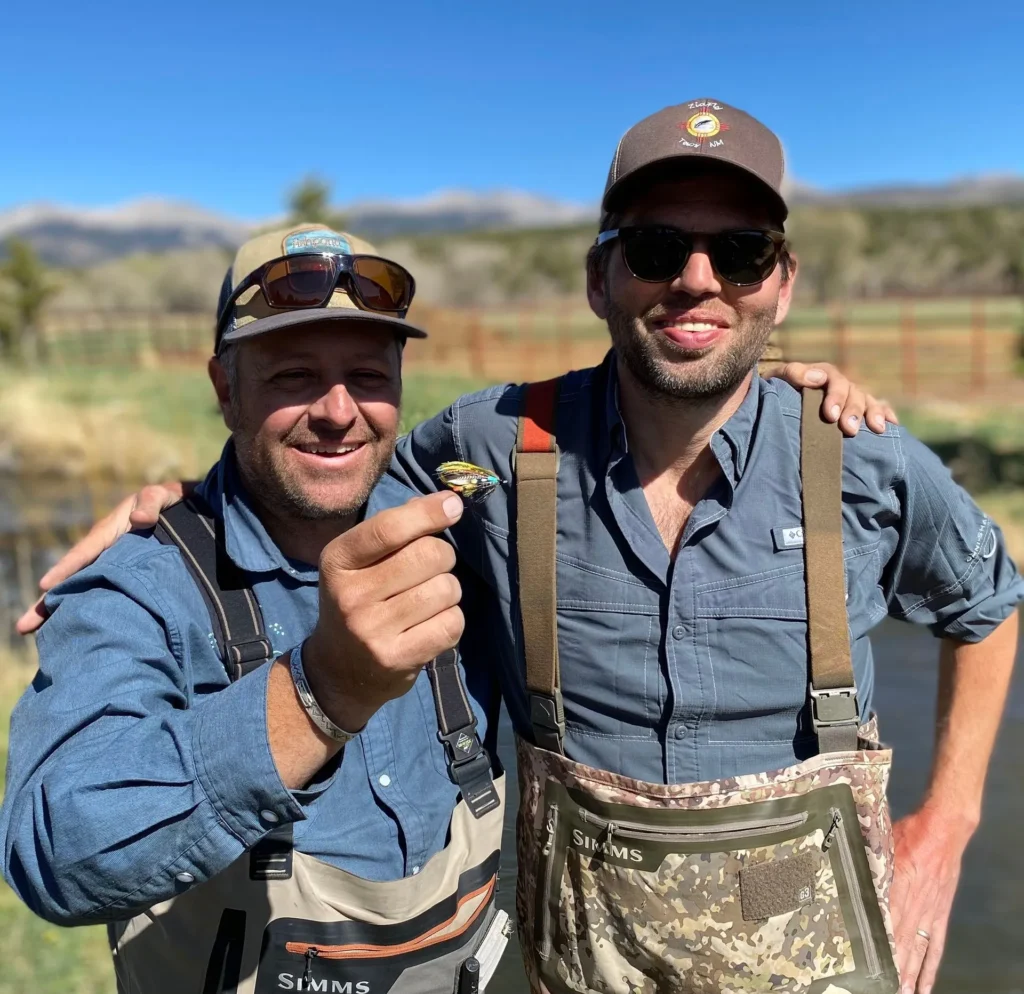
These big ones are smart too. They’ll sit just under the surface and won’t move much. Derek says it’s all about making a huge cast to reach them and then waiting to see them actually eat the fly. In the lakes and canals, Derek sees fish in the 30–40 inch range, maybe 25 to 30 pounds.

Ancient Waterways of Phoenix

Did you know that the canals in Phoenix are over a thousand years old? Some of the canals running through Phoenix were dug by the Hohokam people. They created a huge irrigation system by hand, way before settlers came around. When settlers did show up, they just reused the same routes, added check dams, and rebuilt parts of it.

Follow Derek on Instagram: @lowaterguides

Visit their website: Lo Water Guide Service


Related Podcast Episodes

762 | The Feather Thief with Kirk Johnson: The Natural History Heist of the Century

Read the Full Podcast Transcript Below

Episode Transcript
Dave (2s): When you hear the words urban Fly fishing, what pops into your head? Maybe trash, pollution or carp. Today’s guest flips the idea on its head. He’s a full-time guide who explores the canals, lakes, and streams of Arizona right in the middle of the city. By the end of this episode, you will see carp in a whole new light and walk away with some solid tips to help you fish more confidently in your own backyard waters this year. This is the wifi swing podcast where I show you the best places to travel to for fly fishing, how to find the best resources and tools to prepare for that trip And what you can do to give back to the fish species we all love. Derek Chen Phoenix Guide and master carp trickster is gonna walk us through how he catches fish in urban fisheries. Dave (44s): You’re gonna find out what the difference is between a grass carp and a common carp and how to fish the fly to them. You’re gonna find out when to use a dry fly and where exactly to place that fly. We’re gonna talk about that today, where to put the fly to get the most action and what his number one color is for carp in canals. We’re also gonna talk about the flats. Lots of good stuff today. Plus you’re gonna find out why these carp species are federally protected and some history behind the canals and indigenous people out there. All right, here we go. Let’s get into it. Derek Riv chin from low water guide.com. How you doing Derek? Derek (1m 21s): Good, how are you Dave? Dave (1m 22s): Great. Yeah, I’m excited to jump into this one today. I always love a good urban Fly fishing kinda journey We’ve had, we’ve done some episodes in Arizona and we’ve definitely talked about carp, which is a species I’m sure we’re gonna touch on today. But we’re gonna get into all of that and maybe give people some tips on if they’re, you know, I’m, I’m guessing some of the stuff we’re gonna talk about today might apply to other areas. But take us back a little quickly to your background. Like how’d you first get into it? What’s your first memory on Fly fishing? Derek (1m 48s): Well, thank you for the podcast. I know we’ve been trying to get on here for a long time, so I appreciate it. It’s privately happening, but yeah. Yeah, so I was born in Phoenix, Arizona. I was raised here. I fished a little bit on spin gear growing up, just messing around and then got into Fly fishing and that just kinda took over everything like it does for many people. And then I, I got into a wildland fire and that job put me in Montana for three years where I was really able to fly fish, some of the best country in the world or I guess the country even. And then made it to me, New Mexico and St. Derek (2m 29s): John did the same thing, air fished all over, eventually got tired out, wanted to start a family, wanted to be home. Just thought maybe I can make a guide service here in Phoenix. I knew, I knew we had the, the tourism for it, the people, but there was nothing really going on here for guides. So I just kinda, no business plan nothing, just kind of got my LLC, got insurance and got the permits I needed and just started promoting trips and six years later doing the same thing just day by day in it really. Dave (3m 2s): Right. So has it in the last six years, has things changed? I know there’s at least one fly shop out there. Has it changed a little bit on the interest? The people out there Fly fishing, you see? Derek (3m 12s): Yeah, yeah. It’s changed a lot. When I first got into it, we had one fly shop that went out of business around the same time that I started and they just couldn’t keep it open. I don’t know why. I know at one point they were the largest sage salt HD distributor in the country. So that just talks for the volume when the amount of people we have here that are getting trip and going to Belize or The Bahamas or whatever. So that shop closed there. The new shop opened up a flash shop and just kind of took everything over and we had like a lot of different companies looking at us now ’cause they’re like, what the hell is all this noise going on down there? Derek (3m 53s): And then that one took off. Now we have pheasant tail fly shops now we have two fly shops on top of Bass Pros and Sportsman’s and all those. But yeah, so we went from no fly shops to two fly shops. Dave (4m 7s): Wow. Derek (4m 7s): So it’s been a little bit of a roller coaster. I mean the people that Fly fishing year, we’ve always just done it and kind of operated in the shadows of just getting gear online, getting what we need and making flies at getting the materials from craft stores to make do and just getting by until we actually had all these fly shops now. Dave (4m 26s): Nice. Yeah, I mean you, you start there six years ago thing, you lose the fly shop and now you got some more action there people out there. What are the, maybe let’s start on the urban Fly fishing. I think that’s a lot of what you do. The Phoenix area. What are the species that you are focusing on? What are, what are the top species and then you know what is out there? Derek (4m 43s): Yeah, so like working as close to Phoenix, we kind of have the canal systems and some reclaimed water ponds. Those are full of the canals are full of grass carf, which are all like stocked in there by the kind, not really a state agency, but a governing agency for the water rights. Yep. And they’re put in there for like a herbicide to keep, they basically eat all the weeds and algae and just tend to keep everything clean so they don’t have to use chemicals in the water. And then with those canals, they kind of touch a little bit of all the reservoirs in some way or another. So we’ve gotten striped bass in ’em, wipers, white bass, all the sunfish, large mouth. Derek (5m 30s): I’ve heard stories of biologists seeing a gar in ’em. Trout snapping turtles, people dump their sick lids in there, their pcos. And now we have all these crazy aquarium fish in there. Wow. Giant common carb, giant catfish. There’s this, it’s a whole smorgasbord of just everything you can, every warm water species you can think of. Dave (5m 52s): Have you caught a lot of those species? Derek (5m 54s): Not really. So like they’re pretty, the grass, I’m like so tuned in on the grasses that even like the bass are kind of hard for me to catch out of the canals ’cause they’re so skittish and they like, we’re like, we’re all, we’re sight fishing everything. Yeah. So to try and like by the time we’re on a bass, he’s already onto us and he is freaking out, but Oh yeah. Yeah. They’re the bastard’s. Very weird. And the canals. But not even like as a byproduct, have I caught anything really. But you see ’em in there and I, I do throw flies that kinda look like baby, like blue gill like bait fish and the grass carp will eat ’em. So yeah, there’s something going on in there. Yeah. Dave (6m 28s): Right. Cool. So it’s mostly what you guys are doing is the grass carp? Derek (6m 31s): Yeah. Yeah. And the canals. And then like as we kinda scoot 30 minutes outside of Phoenix, we have a a God, we have a lot of reservoirs. All those reservoirs hold large mouth and then like common carb, we do a lot of guides for the bass too. Now that’s become its own little thing. And that’s all on the fly rod and a ton of fun. And then the, the flats at the lake are where we target the common carp on our like John boat skis and stuff like that, which is super fun. Dave (7m 2s): Gotcha. So you have common carp in the lake and then mostly in the canals is grass carp. Derek (7m 8s): Yeah, exactly. Yeah. No grass seed have gotten into the lakes. Tilapia are in there. I did see some tilapia last year and that was kinda crazy to see ’em up in the flats just hanging out. Yeah. Dave (7m 19s): What is the difference between a a grass carp and a common car? Do they act differently? Do they look differently? Derek (7m 25s): Yeah. Yeah. So you know, a common carp we can all kinda picture like that golden. Yeah. Stereotypical carp. That’s your common, that varies. That can be a mirror carp, which has kind of like a very large scales that are kind of erratically placed. They could be coy, they can, what’s the other one? Fan tales where they get really long fanny wavy thins. The common car, they kind of are set up to bottom feed. Their mouth is on the bottom. They have their barbells for like feeling around in the soft mud eyes are kind of a little more frontwards so they can kind of see out in front of ’em. Derek (8m 7s): And then you go to a grassy, which kind of looks like a milk fish. Kind of like a, a long weird silvery scaled fish. And it has its eyes are way more broadside on like the sides of its head. So it’s really like watching you as you’re walking along on the canal. Its mouth is more on the front of its face. So it’s not really set up to pick up stuff off the bottom, but it can. But they’re usually looking like bottom column up to the top of the water surface. And they’re just kind of, they’re just feeding constantly. Derek (8m 48s): They’re always feeding, they’re always looking for something to eat. They’re always looking for that Cheeto to float by or a bogan leaf or Dave (8m 55s): Right. What is the, anything like that? Have you, like what is the crazy thing? Have you seen some of that one that, that you’ve caught a grass curve on? Derek (9m 2s): I mean we see ’em a bunch of like you’ll see Cheetos go by and you be like, ah, Cheeto hatch. And you’ll see ’em start coming up and they’ll start eating. I’m like, no kidding. They’re very opportunistic. Like I, they act like they’re not gonna eat again. So they’re constantly eating I think SRP estimates that they eat like their body weight a day. Right. And just vegetation and junk like that. Like you’ll see ’em just sucking on these big moss balls that float down and they’re just floating with the moss ball. Just chewing on God syringes floating around. I’ve seen a catfish. There was a video going on of a catfish that was eating a pigeon. It was like a dead pigeon and it was just sucking on it in the canal. Geez. Dave (9m 38s): So you’re not eating, people aren’t eating grass carf out here? Derek (9m 42s): No, no. And the grass carp are federally protected so you can catch and release ’em, but you have to release ’em. There’s like a $500 fine if you get caught with one. Oh wow. Yeah. Yeah. So they’re protected. They’re like city workers pretty much. Dave (9m 54s): Oh right. They’re protected on that way. Right. Yeah. Not that they’re endangered species, but which they’re not there. Yeah. No, Derek (10m 0s): No. They’re like, these are our workers. Dave (10m 2s): That’s crazy. Derek (10m 3s): But everything else in there, it’s like they want ’em out. They want everything out except their grass car. They’ll clean the canals. They come through, I think it’s like a 10 year plan for certain sections. And they come through, they lower the water, they herd all the fish and then they catch ’em in these giant nets, just like big nets. And they use excavators to lift them up into a, like a water truck. And they load all these fish up in there. A lot of times they’ll leave anything that’s not a grass carp and then they just let the water dry up and then they clean the canal and then they fill it back up, let the fish in. But yeah, so there’s sometimes you’ll be like six inches of water and there’s a 20 pound catfish just like hanging out in this puddle. Derek (10m 50s): Just barely. Dave (10m 51s): Oh wow. Yeah. Derek (10m 52s): Yeah. So that happens a lot. But yeah, those grass seed are pretty cool. Dave (10m 55s): So you have common and grass carpet in the canals? Derek (10m 58s): Yeah. Yeah. The commons are in there too. The commons are giant in there. They’re super smart. Some of the guides are really good at catching ’em. I’m better at catching the grasses for sure. They’re a little stupider. The commons in, there’re big anything in the canal. It’s big and it’s smart ’cause it’s been in there for so long. Dave (11m 14s): Right, right. What is the, you know when people come to you, if they’re new to it or you know, they hear about you guys, what is the trip you are, they’re either asking for or you’re telling them would be the big one. Derek (11m 26s): If somebody’s really new to it and they like are learning casting or need to learn casting, it’s usually the canals or trout just because we don’t, they’re not, they’re like 30 feet at, they’re widest. Our trout streams are like five feet if they’re widest. So it kind of gets rid of the giant casting aspect and we can kind of just focus on smaller shots, 15 foot shots and just work on accuracy. Dave (11m 50s): Yep. But Derek (11m 50s): Yeah, those are the two big ones. Those Dave (11m 52s): Are the big ones. So, and then, then the, and the canals is, I mean definitely you have a chance at some pretty, it sounds like some pretty big fish and, and on the ser. And are you doing that on the, what is the, the canal versus the the lake that, is that a pretty different game? Derek (12m 6s): Yeah. Yeah. Beginners can catch ’em at the lakes too ’cause we’re on the skiff there, we’re waiting for ’em. So we’re like within a fly rod distance to ’em half the time just sneaking up on ’em. It’s a lot like hunting. I kind of say like stalking, you’re kind of out there. It’s all visual. So you’re just like looking for these fish and then sneaking into position to put a cast on ’em, putting that one accurate cast on ’em and hoping that they eat it. Yeah. But yeah, it’s a lot different on the canals. We do, since I’m really targeting the grasses on the canal, I’m mostly throwing, sometimes I’ll do a mop, like drag and drop, just typical carp stuff. Derek (12m 46s): I’ll swing streamers for ’em if I see them kind of stacked up in some fast moving water. And then dry flies will do a lot of dry flies. Especially this time of year is when the mesquite trees are kind of having their little flowers bloom or everything’s really blooming here right now. Yeah. So they’ll just come up and eat stuff on the dry. It’s kinda just looking at the fish and reading their body language and seeing what they’re kind of doing. Seeing what Dave (13m 11s): They’re doing. Where Derek (13m 11s): They’re holding, yeah. Where they’re holding it in the water. And, Dave (13m 14s): And this is for like mainly for the grass carp? Is that kind of where you’re reading their body? Derek (13m 17s): Yeah. Yep. Yeah. Yeah, for sure. On the grass carp, it’s kind of like trout fishing a river really. They kind of hold in the same places and they kind of act the same. They just aren’t as efficient as swimming through. Moving water is the big thing with them. Dave (13m 32s): Oh right. And are these waters just kind of more like pools or is there some a little bit of current? Derek (13m 38s): There’s a current, yeah, there’s usually always some current. Sometimes it’s less, sometimes it’s coming out of like a overhead dam and it’s just ripping through. But yeah, there’s always usually some current, unless they’re cleaning ’em. Yeah. Yeah. Dave (13m 52s): Okay. Yeah, I mean it seems like the grass cart would be, you know, definitely it all, it all sounds cool. But I can imagine somebody’s either coming through, stopping in, maybe, you know, visiting in the, the winter time. I mean, so that’s the thing too. It’s Phoenix. Right. So you guys have Yeah. Crazy 140 degree temperatures right. In the summer and then the winter, what, what’s it like right now we’re kind of in the April, you know, may I think this episode’s gonna go live and kinda later in May. What’s that like, what’s that period like there? Derek (14m 20s): I’m trying to find my thermometer. We’re at like, we’re sitting in like the high seventies right now and it’s kind of colder this week. It was last week, it was in the night. We had a couple days I think touch 90 90. Wow. I know I had in my, the intake in my truck was saying 98 degrees. So, and that was while driving. Yeah. But it’s, there’s not a cloud in the sky right now. Blue skies, it’ll warm up. Perfect shorts and t-shirt weather. I’m from here so I’m kind of a wuss with cold weather. But like wintertime I’m freezing. So people from the Midwest come and they’re like, dude this is like summertime back home. Dave (14m 57s): Yeah, it sounds like that would be a good place to, yeah, you go take a vacation to Phoenix like a lot of people do. Yeah. And so, so you could, so what would that be like? So you kind of think November, December pretty much, you know, November through, you know right now it’s still freezing and snowing and you know, in the west, but yeah, no say November through April. What does that grass carp fishery look like? Derek (15m 18s): So the canals will fish year round. They’ll fish 365. The fish are always in there when they clean the canals it gets a little weird ’cause we gotta find them. When Dave (15m 27s): Do they clean them? Derek (15m 28s): Yeah, typically. Usually back in like February I think they usually do it. Okay. So they’re usually a scramble ’cause we’re getting busy and then we’re like, where’s the fish at? And we’re a little scrambling to find them. Right. Yeah. And then as it kinda warms up, we just started, the carp just came up in the flats about, they came up about three weeks ago now. So they’re pretty well up there and established. Dave (15m 50s): And what do you mean came, so are they migrating up into the flats or what? What do you mean there? Yeah. Derek (15m 54s): Yeah. Like they kind of, during the winter they will hold in deeper water and so for the wintertime they’re nowhere to be seen. And then around this time they start like coming up in the shallows for the spawn to spawn mostly look for food, just get back to their normal routine. So we’re always like start checking the flats. We go out there with our boats and just look for ’em and they’re all up in there right now. So they just, yeah, they just kinda go deep for the winter really. Oh Dave (16m 23s): Okay. So wintertime you guys are doing, that’s where you’re doing something, it’s different there. You’re getting down deeper fishing to ’em? Derek (16m 29s): No, we won’t even chase ’em. We don’t even chase them in the lakes until they’re in the flat. Dave (16m 33s): Oh I see. Yeah, I gotcha. Yeah, so the lakes, you guys are out there so they go deep. You don’t worry about in the winters but in the canals you can fish you around. That’s what you’re saying? Yeah. Yeah. Derek (16m 41s): And and also when the canal, we have the salt river, which kinda leads into most of the, some of the canals. But that’ll fish year round too. It’s like a huge recreational area. It’s very controlled by electricity kind of uses. So they’ll drop the flows like super way down in the wintertime and let the reservoirs all fill up for winter or for summertime. So that’s another good option for the winter. And, and Payson, our trout streams are always good all winter. ’cause we have, we get snow but they’re pretty mild for the most part. Yeah. So we’re able to fish for all those. Todd, the our, my basket guys, he’s been fishing for bass all year, catching fish every week. Derek (17m 22s): So I mean there’s a lot of like year round opportunity for sure. Dave (17m 26s): Yeah. Those are large mouth bass. Derek (17m 28s): Yeah, large mouth. We have some smallies. He did pretty well on the stripers and the white bass. And the wipers too. Dave (17m 36s): The wipers. Right. Which is a mix between what? What’s a wiper? A mix. Derek (17m 41s): The white bass and the striped bass. Dave (17m 42s): Yeah. White bass and striped. Okay, gotcha. That’s it. So like you said, so you guys, so you fish the canals year round and then as soon as things start warming up, you hit the lakes for the flats. So right now have you guys been out on the flats? Derek (17m 56s): Yeah. Yeah, we’ve been out. I have like a whole week next week that I’ll be out there. We have a trip tomorrow on the flats. Yeah. So like as soon as the flats go off we’re just like, if we get something that hits us up and they don’t know what to do and they’re, that trip’s so cool that it’s usually a pretty easy push on people. Yeah. But yeah, we definitely push that one a lot. Yeah, Dave (18m 16s): The flat. Yeah. And that fish is your, does that fish all the way in until things start cooling down in the fall or winter? Yeah. Derek (18m 21s): Yeah. You can almost fish that like November-ish. Usually that’s pretty shutting down. But yes, we’ll hit them really hard for right now. Gotcha. Dave (18m 32s): Flats. Okay. And, and what are the, and these are reservoirs like just essentially lakes but reservoir and are there a number of different reservoirs or There’s just a few big ones. Derek (18m 41s): We have man, we have, we have five on the Salt River, which are all like within an hour drive of Phoenix. And then we have two on the Verde River that’s also really close. And then we have Lake Pleasant, which comes from the Colorado River out on the California border. And they pump it all the way to two different lakes before they send it down via canal to like Central Arizona for irrigation. Oh yeah, that’s the spot that has a lot of the striped bass, the wipers. Giant gizzard Chad, it’s crystal Clear Water Lake Pleasant’s a really cool spot. We’ll do a lot of trips there. Dave (19m 23s): Trout Routes by Onyx is built for fly anglers who want better intel without spending hours digging for the information. You’ll get access to public land maps, stream access points, regulations, and even road and trail maps all in one place. It’s become my go-to app for scouting new trips. You can check ’em out right now. Go to wetly swing.com/trout routes and download the app today. Fish to Fly Guide Service is dedicated to sharing the incredible Fly fishing opportunities around Jackson Hole. Whether floating the Scenic Snake River in search of native cutthroat trout or hiking into the mountains to explore pristine tributaries every day on the water is an adventure. You can join them for an unforgettable Fly fishing experience in the heart of the tetons@fishthefly.com. Dave (20m 9s): So yeah, it sound like you guys have a quiet and then you have a whole, you have some guides that are doing other trips, other species. Yeah. So is your focus in the year, it sounds like you’re on the carp, that’s your main focus. Derek (20m 19s): Yeah, you know, I’m kind of becoming an outfitter going back, I don’t know, I did like the first three years I think all by myself and it was just getting too much, I was getting burnt down. I didn’t want to lose any appreciation for Fly fishing so I was like, I need to get some other guides to spread it out. Yeah, that’s when Ryan came into the picture and Ryan was, he had his own guide service going, but he was busy doing other stuff so I kind of just stepped in as a outfitter and now I’m just kind of plugging these guys into the trips that they like to do. Like Todd likes to bass fish, so all he does is bass trips. Ryan’s good at pretty much everything so he can do carp, trout canals, salt River. Derek (21m 1s): And then we have guides with rafts that just float down the Salt River. And then we have guides that only do weekends. We have guides that only do trout up north. So kind of just spreading it all out, making it easy on all the guides and not burning anybody out. And just keeping it fun. Keeping it fun and having fun doing it. Dave (21m 19s): That’s cool. On your website, is there a place where people can go and take a look at all the different options you guys have and all these, the salt and all these different fisheries? Yeah, Derek (21m 29s): Yeah, yeah. We have a lot of options on our website. All the pricing’s there, it’s all upfront. There’s no hidden costs. The canal’s a popular one ’cause it’s a three hour trip. It’s our shortest, cheapest, super convenient right in town you just hop out, go get some fish and get back to your day pretty much. Dave (21m 47s): Yeah. Okay, cool. We’ll we’ll have a link there to, to low water guy.com and people can take a look there. So, but yeah, I wanted to get back, I think the flats fishing is interesting ’cause partly, you know, just sounds cool. But also there’s probably people that are maybe thinking salt water too and saying hey, I can get some experience. Is that, is there a lot of overlap there? Is that something where if you get that, you know, go out with you guys that might help you for a, a permit or a bonefish trip? Derek (22m 12s): Yeah, yeah, for sure. We get a lot of clients that are snowbirds here and they’re like, what the hell? I didn’t know you guys existed. Like I didn’t know why kids fish year round down here. Yeah. So they’re blown away. Even on the, the canals is, we call ’em practice fish ’cause it’s so many shots. It’s all about accuracy, it’s all about sight fishing, it’s all about watching them eat. It’s big fish so you gotta learn how to fight fish properly. And at the end of the day, if you bust it off it’s just a carp so you’re like whatever. It’s not a big deal. Yeah. And then going to the flats, it’s very much so like I’ve only bone fished with Jeremy out in Oahu, but it was so much like that that after I did that trip with him, I came back here and I was like, okay, I know the car in the flats now I just need to figure out how I can get there. Derek (23m 1s): And, and I went out on his skiff so I was like, I’m gonna build a John boat skiff. Oh cool. And then a year later I was out chasing him in the same manner. You’re not really like stripping flies away from him, but they’re still tailing, they’re still face down in the mud. You still gotta sneak up, you still gotta make a good presentation and you still gotta trick ’em. They’re, they’re very smart fish. They’re super smart. Great eyesight, great feeling. Yeah, they’re not an easy fish to catch really. I don’t wanna sound like they’re easy, but they’re definitely a learning curve. Right, Dave (23m 33s): Right. Well what are some of the common mistakes somebody would make out there if they’re, you know, new to it? Derek (23m 40s): Really on the canals it’s a lot of accuracy. So like I’m always like, you gotta hit that fish right in the head with most of the flies that we’re throwing. Dave (23m 49s): Oh, is that what you wanna do? Is that you kind of want to, you’re not really leading them, you just wanna plop it like right on top of Derek (23m 54s): ’em? Yeah, yeah. For on the, I mean there’s always scenarios but this is usually, I especially dry flies. I’m like smacking them in the head with that dry fly and a lot of people are like, ah, I think I need to like drift it to ’em. And I’m like, no, you got it. You gotta hit ’em or they’re not gonna see it. Dave (24m 8s): And do you mean literally hit ’em or you mean just put it above ’em? Derek (24m 12s): Yeah, like put it on their head. Dave (24m 14s): Yeah. They’re not coming up to the surface eating other, well I guess they are eating Cheetos and stuff like that too, but, but Derek (24m 19s): No, no, they would be like subsurface kinda look. I would see ’em subsurface just hanging out and then I would put the fly within six inches of their front of their face. ’cause it seems like if they don’t notice it, they don’t even care. Like if you dead drift it to ’em from way up high, they’re, if they don’t see it, they don’t aren’t even gonna make a move. But if it plops they’re either gonna spook or they’re gonna eat the flies. So I’m like, let’s go with that route for the sake of just fishing fast and guiding fishing. Yeah. Dave (24m 51s): Wow. So you put on top of ’em and, and, and like you said, there’s different things you’re doing. This might be a dry, what would be some of the dry, you’re fishing and then like out there? Derek (25m 1s): Oh God, I don’t know. One client called it the rif chin special. I think it’s kind of, it kind of looks like a weird, I don’t know if you’ve ever seen Wco fly. He did a kind of like a grass carp lar looking thing. Oh, okay. And it’s, it’s kinda like that. It’s just foam and a rabbit soer to me it looks like a mesquite pod, like a little yellow flower, but they eat it year round. So I don’t know. I had a client that came out once and he was like, this is the greatest thing ever. And then he booked the next day and he came out with a bunch of bees and like wasp flies and, and the fish wouldn’t touch ’em there. Oh really? Because he was like, he was like, these fish want a bee. Derek (25m 43s): Like that’s what they’re eating. And I’m like, I don’t know. And they wouldn’t touch the bees or anything. And then he put my fly on for like the last hour and caught fish. Dave (25m 50s): Right. So it’s basically a lot of white foam and then like a zonker strip sort of thing? Derek (25m 54s): Yeah, yellow foam. Yellow foam. Oh, yellow Dave (25m 56s): Foam Derek (25m 56s): Chartres. Yeah. Yeah. A lot of chartres out there on the canals. Chartreuse Dave (25m 60s): The truth. So that’s the color. If you had to pick a color for the canals, it’s chartreuse. Derek (26m 4s): Yeah, for sure. And I know Stan, one of the guides he’s been saying red has been a big color, but yeah. Dave (26m 9s): Okay. Derek (26m 10s): But chartreuse for sure. Yeah. Dave (26m 11s): Okay. So you got the, and that would be a fly, A big, and what size would that foam big thing be? Derek (26m 18s): It’s on a size eight hook. It’s probably the foam part of, it’s smaller than a dime, but the whole fly would probably fit pretty well on a dime. Probably fit better on a nickel with the overhanging fluff from the zander, but Dave (26m 32s): Gotcha. So not super huge. Okay. So pretty small. Oh. But Derek (26m 35s): The streamers that I throw for ’em, they were like my bass streamers and I was like, man, these fish are acting weird. Let me swing a bass streamer here. And they ate it. So, and I’ve just ran with that pattern ever since. And it’s just black and chartres. But I think that those chartreuse tails, I think it’s like baby blue gills. The only thing I can think that it’s really imitating. Dave (26m 57s): Yeah. So they’re eating, so these car, not just eating vegetation, they’re eating other fish and all sorts of stuff. Yeah, Derek (27m 3s): Yeah. They gotta be, I haven’t like ever seen them like boil or anything, you know, like after a bait fish but swinging that fly, there’s no other thing that it can be. Yeah. Like there’s not Cheetos that are presenting themselves that way. Right, Dave (27m 17s): Right. Gotcha. Yeah, so they’re just opportunistic, super opportunistic, eating whatever. Yeah, very. Yeah. Is there any, during the season, whether that’s you know, now or may or in the year where were changes in environmental conditions, do the water temperatures pretty much just stay warm? Like or, or is there times when it’s better to fish for a morning night? Stuff like that? Derek (27m 38s): The water doesn’t really, it doesn’t seem to have any like great temperature swings or anything like that. It’s pretty steady, just as it gets warmer and stuff. The canals are so shallow too that they’ll stay pretty warm just with the sunlight on them and on the canals usually all the, all the carp trips we’re kind of fishing midday and the only reason is, so we can see the fish really well with that sun, like super overhead. They don’t seem to have like a feeding frenzy certain parts of the day or morning or afternoon. They’re just kind of feeding all day. It’s kind of just when the food presents itself, they’re going to eat it kinda deal. Derek (28m 18s): Gotcha. Dave (28m 18s): And are you seeing out there on the car? So how does that work on the canals? Are they all, are these public canals where anybody can just go and fish and are you seeing other people out there fishing? Derek (28m 28s): Yeah. Yeah. So most of the canals in town are operated by SRP, the Salt River project. And they manage a lot of our, they manage all the Salt River dams. All the verde dams. They’re like a power company here. So they’re not really like a government agency. They’re like a private party electrical, but they have a, they do a lot of governing of the water and they have like government plates on their vehicles and stuff. So I don’t know, it’s kind of weird. Yeah, those are all open. It’s usually state trust land that runs parallel on like the banks of the canals. And in Arizona state trust lands, like if you’re pretty much good to go unless it’s posted. Derek (29m 8s): But then we also have like the Central Arizona project, which pumps water from California, Colorado River to Alamo Lake to Lake Pleasant, and then down to Central Arizona. That one is gated off its entire entirety. The whole entire thing has a gate on both sides of it. They don’t want anybody in there. It’s posted, it’s monitored, patrolled, I don’t know. I don’t know why. But yeah, that one’s like that. And then there’s a, some other smaller private ones that kind of zing and zing in between, maybe like farmers have ’em. So a lot of those are private, they’re pretty much posted if they’re private. But for the most part they’re all public access. Derek (29m 50s): A lot of ’em all have like a, a sidewalk on the side of ’em. So people are always riding their bikes on ’em or running or just like walking, going to work even like Yep. They’re kind of like a highway system. All the transients obviously rules zone, there’s a lot of Dave (30m 6s): That. Is that a issue? You know a lot of, A lot of states. Well, warmer states especially. Yeah. Yeah. Is that an issue out there for you guys? Do you see a lot of that? Derek (30m 14s): Yeah, we do see a lot of that. I wouldn’t say it’s an issue. Yeah. They kind of just stick to themselves. They’re kind of just curious what you’re doing. Dave (30m 22s): Yeah. They’d probably be interested in some of those fish. Right. I’m sure they’d be eating some of those fish if they could. Yeah. Derek (30m 27s): Yeah. And I mean we’re out there with a fly rod, so we look just as crazy as they do. That’s true. Right. It’s weirdo. Dave (30m 33s): Gotcha. So, so cool. Well there is this system and I mean it sounds like it’s pretty easily accessible. And then we were talking earlier about the lakes and the flats. Maybe let’s take it back there real quick on the flat. So is that a lot different in the gear set up the flats versus the canals for the carp? Derek (30m 51s): As far as your rod? No, it’s gonna still be six, seven weight weight forward floating line, but still about a nine, a minimum, a nine foot liter. Really the only thing that kind of changes are the flies at the lakes. We’re throwing a lot more dragonfly nymphs, crawfish nim or you know, crawfish patterns. Stuff that’s more, more natural. Not Cheeto flies. Right. But yeah, so that’s really the only difference. And then we’re doing a lot of dragon dropping. I will say that there are some reservoirs that the carp will chase streamers stripping streamers and that’s a lot of fun. Derek (31m 34s): That doesn’t happen too much though. But that is a blast when it happens. And a little bit of dry flies on like the cottonwood seed flies and stuff like that. You can sometimes strip a common at the lakes with one of those cottonwood seed flies. But for the most part it’s a lot of dragon fly nims Dave (31m 50s): Dragon fly. Okay. And then, and then it sounds like you create, you put this kind of skiff put together, this skiff on with the John boat or the platform. Yeah. Take us there. So how do you, how do you get in on the fish? You know, describe that process. Derek (32m 4s): Yeah, so yeah, so I have my John boat flat boat converted. And then Kyle has a Sabine skiff that’s like a legit skiff. And so usually we will usually start those trips like 9:00 AM just so we have time to get out there and we just drive, launch the boat, go straight to the flats. We have a casting platform up front and then a polling platform out back. So we’re kind of just ease our way in and just start listening. You’ll usually hear a lot of fish flopping around as they kinda get ready to spawn. And that’s just like once you hear that, you’re like, all right, we’re gonna have have a good day. Dave (32m 40s): Oh, so they’re spawning. Is that right now? Or when? When are they spawning? Derek (32m 43s): They’re up in there thrashing around right now. I wouldn’t say they’re, they’re probably pres spawning right now. They’re not full on spawning. But even when we still chase ’em, when they spawn, I don’t believe that fish don’t eat when they’re spawning. If anything we throw big streamers at ’em that make them think it’s another carp that’s trying to get on their girl until they’ll eat it. Yeah. So it kind of works out in our face. Just like a basswood with a on its bed, you know, and a brown trout and everything else. Yeah. But yeah, so yeah, we’ll kind of do it that way if they’re spawning and then we’re just looking, we’re just looking for fins, we’re looking for any weird water, any nervous water. And then it’s just drag and drop. We’ll kind of have a couple first shots and kind of warm up at it and get the feel for ’em. Derek (33m 26s): And it’s a numbers game, so there’s usually a lot of shots that we can take at. Dave (33m 30s): So as you’re coming up, you see these splashes and you kind of know where the fish are and then are, are you having to sneak up on ’em or are you just kind of get out in the middle and, and they’re not really, you know, that worried about you? Derek (33m 40s): They kinda use highways. So like if I hear ’em, I’m like, okay, I know they’re over here. So then I’ll kind of throw my trolling motor in, make some noise, not really worried about splashing or making noise. And I’ll get up into the, about a foot and a half of water and then I’ll start really picking it apart, looking in there. Sometimes the water’s super muddy, so you have to like look at sticks that are like twitching a different way than the wind would push them. This sounds crazy, but in my head I’m like, it’s like perfect sense if I showed you. Right. And same with like the splashing, you just hear ’em splashing, you’re like, oh yeah, oh yeah, they’re over there and you just go to ’em. So Dave (34m 19s): You literally, there’s so many fish in the area, they’re like hitting sticks and stuff like that and you can kind of see ’em that way. Yeah, Derek (34m 24s): Yeah, yeah. They get in like these highways and they just, they all kind of like just feed through the highway system so you can kind of post up right on the side and you just take shots as they come through. They kind of, it’s kinda like a clock. And this is true on the canals too. I’ve had drone footage and the fish will kind of come in on one side of the canal. You shoot your shots out on take your cast, they kind of spook out and then like literally like a clock, the next group will just circle back in and pick up where they left off. And you cast it a new group so you’re kind of, you’re not just like fishing for the same fish. ’cause they’re, they’ll spook every now and then, but new fish come in. So you’re just like, all right, cool. Derek (35m 4s): Gotcha. Dave (35m 5s): Wow. So this is, and this is kind of sounds like the, everything’s pretty steady so you can sit out there all day and fish for these guys. Derek (35m 12s): Yeah. And that’s best case. There’s are days we get out there and there’s not, we’re like, I swear to God there’s place, there was fish here yesterday. Yeah. And there’s not a sole around. Right. And that’s usually a little more maybe wet waiting around walking on the shore, maybe pulling in some more shallow water and just trying to pick it apart. Sometimes in the year there’s only certain flats that are really like open and have fish on ’em. Or we have eagle closures on Lake Pleasant and that’ll kind of shut off half the lake for access. Dave (35m 44s): Oh, eagle closures. Derek (35m 46s): Yeah. Like bald eagles. They have a nesting pair. Oh yeah. They have a couple of nesting pair. And for some reason Lake Pleasant’s very big on protecting ’em. Lake Pleasant is a state, no, it’s not a state park. It’s like a, A county park. Mm. So they don’t really, they’re not forest service or BLM or anything like that. They can do kind of whatever they want. Dave (36m 7s): So they close down the park to protect the bald eagles. Yeah. Derek (36m 10s): They’ll close down the aga arm, like a huge section of it to protect a couple nesting pairs of baldies. But it’s silly ’cause if you go to Bartlett, which is, as the crow flies 40 miles away, their bald eagle goes all over the place and no closures anymore. Right, Dave (36m 27s): Right, right. Derek (36m 28s): Yeah. So it’s just like some old person was like, we gotta protect the bald eagles. And they are sitting on it, not budgets. Dave (36m 34s): Right. No, nobody’s budget. Gotcha. So you mentioned some bigger fish. What is the largest carp you’ve ever seen or heard of out in either the lake or the canals? Derek (36m 43s): Our state record is, well we don’t have a, a record for length, but just looking at the weight of ’em, God, I need to double check this. I think it was 62 inches or, yeah, it was 62 inches and it weighed a pound for every inch it weighed. And that was a grass cart that was in a pond in like one of the LA community ponds in town. Dave (37m 3s): Wow. So 62 inches, which is like, yeah, which is big. Is it five feet? Yeah, that’s, I think that is five feet. Yeah. Somewhere in there. Yeah. Derek (37m 10s): It was five Dave (37m 11s): Foot. So a five foot fish and it weighed a inch a pound for every inch. Derek (37m 15s): Yep. And it was caught out of a little pond. And we’ll see ’em, I’ve seen ’em out there and they, they’ll like sit in these community ponds and they just sit in the middle. They, they’re like a couple inches under the water and you just see ’em and you have to make the biggest cast on earth to get it over to ’em. Dave (37m 34s): Oh right. Derek (37m 35s): But then you can’t even see it because they can grass, car can like eat your fly and spit it out like with insane precision and not help themselves. So you have no idea if they’re, that’s why it’s so important to like be able to sight fish ’em and see ’em eat it. So that’s Dave (37m 49s): Key hook key. So that’s a key when you get these guys. So if you make the cast, you get in front of ’em, they turn up and they touch it. How do you talk about the hook set? How do you do it? Derek (37m 58s): It’s even on the carpet. It’s just a trout hook set. Nothing crazy, but I don’t know if it’s intimidating, but that’s definitely a big thing that people struggle with. And I’m just like, it’s just a trout set. Like don’t overthink it. Just wait for that fly to be in. And it’s usually me going set, set, set, Dave (38m 13s): Set. Yeah. And is it a set, is it a set up, a set over or just a number? Derek (38m 16s): Yeah, just a set up. Yeah, Dave (38m 18s): A set up. Derek (38m 18s): Yep. Yeah, it’s usually always a setup. Yeah. Dave (38m 20s): And then, so 60, I mean 50 60 pound fish. What is the biggest one you’ve, you guys have ever seen hooked on the fly out there? Derek (38m 27s): Oh man, I can picture this one COI that a client caught. I count that as me catching it. Yeah. Oh yeah. I don’t know. I didn’t weigh it. I haven’t really put a scale on any of ’em ’cause it’s just, I don’t know. Yeah. But now they make the scales that have the nets in ’em, so it’s worth chasing. There’s been a couple carp rallies and we have like measuring boards and stuff, but nothing really, nothing even close to that other fish that six two inch. Dave (38m 55s): No. Yeah. But you guys are getting some that are what, 30 inches in that range or something? Yeah, Derek (38m 59s): Like yeah, 30, 40 is pretty Dave (39m 1s): And those are probably, and those are maybe what like 30 pounds, 25 pounds? Derek (39m 6s): Yeah. Yeah. And you can go out pretty easily and catch one of those like Dave (39m 10s): Oh you can just go target Derek (39m 11s): Up. Dave (39m 11s): So you can literally go out there and you could have a good shot at a 20 or 25 pound carp. Derek (39m 16s): Yeah. Yeah. Especially if you’re like, let’s just hunt big fish. Like yeah, you can just go around and do that. Dave (39m 21s): Okay. And the big fish, like you said, are, are kind of out more on their own, just hitting in those deeper spots. Is that kind of what they’re, or how would you find a big carp? Derek (39m 31s): Same way. So you would just be going along looking for it, spotting it that way and then putting a cast on it. They aren’t like super secluded or anything, but they’re definitely super smart. They’re very smart ’cause they’ve been in there so long. So they’ll kind of like hang out behind a couple little fish, see what the little fish do and kind of make their moves like that. And just kinda like use their little fish as their ponds to test out flies. Right. But you could fool ’em. They’re fool both still. Dave (39m 58s): Yeah, they’re still right. They’re still fish. They’re not that smart. Derek (40m 0s): Yeah, exactly. Dave (40m 3s): Stonefly nets makes nets with soul. Each one handcrafted to stand out and built to last. When you spend time on the water, your gear matters. And these are the kinds of nets you can pass down for generations. I know my stonefly net goes with me everywhere and has seen the abuse, but it seems to get better each day. I’m on the water. Every net is shaped from premium hardwoods, balanced by hand and finished to handle a lifetime of use. We all love a big fish story, but it’s the moments around it that stick stonefly helps turn every one of those into something you’ll remember. Head over to stonefly nets.com right now to see what stories you can create with this beautiful custom landing net. That’s stonefly nets.com. Dave (40m 44s): Is that what the, I’ve heard the, you call ’em like ditch dragon. What? What is the ditch dragon? Derek (40m 49s): I’ve been calling ’em sewer salmon lately. Okay. Ditch dragon. There’s some golden bones. There’s so many. Yeah, yeah, yeah. Sewer salmon’s mid mind. The people really get a kick out of Oh, the Midwestern guy. Like, ah Dave (41m 1s): Yeah, right. Sewer salmon. Because this is not, but this is not the sewer, you’re not fishing in the sewer. Right. These are canals. Water. Derek (41m 7s): Yep. And it’s our drinking water. Like people always like, Ugh, people are like gross. But I’m like, it’s barely treated before it hits our TAF water. Dave (41m 14s): Right. So this is the water that’s coming out of the where? Where is this coming from? From the Colorado or Derek (41m 23s): For the Salt River? These are all coming out of runoff from eastern Arizona and a little bit of northern Arizona on the Verde. The Salt River would be like the east side. And that has, it has Roosevelt Reservoir, it has Apache, it has canyon, and then it has Saguaro and then it dumps into the Salt River and then that turns into a canal and just goes for 150 miles or so. And then there’s a CAP one and that’s the one that’s coming from California. I’m sorry, I forgot the initial question, but that Dave (41m 58s): Was a, yeah, just overall I, I was just thinking of like the water. It’s interesting ’cause you got this water that’s the drinking water, but it’s coming from some river systems. Right. But it’s a big network. There’s probably huge. Right. But what you’re saying is yeah, the water’s not necessarily nasty water. It’s actually just water that’s flowing by that’s eventually gonna be in your sink. Derek (42m 17s): Yeah. I mean people treat the canals with no respect. So in that regard, that part is nasty. Like I see where they’re coming from, but I’m like, yeah, Dave (42m 25s): These are open. Yeah. Open ditches or I guess they’re not ditches, they’re canals. Right. Are you guys, yeah. Is a ditch in a canal the same thing or are there ditches that you’re fishing? Derek (42m 34s): I don’t know. I never thought about it. I would consider, I don’t think I’ve ever really fished like a ditch. I would picture a ditch. Like dirt. Dave (42m 41s): Yeah, like dirt. Derek (42m 42s): I guess we have ’em, but I don’t know if I’ve ever caught anything out of ’em. Those are more like in rural parts of Phoenix E like kind of on the outskirts ish. Yeah. Dave (42m 52s): Right, right. Gotcha. Okay. What are some of the challenges? It sounds like what you’re painting a picture of, it’s not easy ’cause it’s carp, right? But what are some of the urban fishing, Fly fishing challenges out there for you guys? Derek (43m 4s): On the urban side of it, there can be days that the fish just aren’t really doing anything. You know? Dave (43m 11s): So there is days where it’s like one day you’re catching fish. The next day you go out there, nothing seems like it’s changed and they’re not on. Derek (43m 17s): Yeah. Yeah. And it can like they’re, I don’t wanna say they’re sensitive, but they’re sensitive to some point in far as like the weather and pressures and rain and clouds. And they’ll be a little more skittish if it’s super clear out on a weekend and everybody’s out riding their bikes. Like I always tell people the fish are used to seeing people going by them, but when you stop and now you’re sit in parallel with them and they’re not used to that. So that’s like strike one and then you hit a fly on ’em and they’re like, what the Dave (43m 50s): Like that’s two. That’s usually, Derek (43m 52s): Yeah. So it’s like Dave (43m 53s): Gotcha. You gotta be wary of that stuff. Derek (43m 55s): Yeah. But it’s not, you’re usually always getting shots at ’em. There’s never like a day we go out and there’s like, oh, the fish are gone. Like they’re gonna be around if they’re super schooled up, sometimes they’ll get school like mentality and they’ll just kinda follow off whatever the other fish do that’s not good. And then if there is an actual steady food source going on, like if somebody’s cutting their grass up the road and they’re throwing all their clippings in the water, those grass seed will get dialed in on that specific thing and they won’t touch anything else. And that can kind of ruin a day real quick. Dave (44m 29s): What are they eating? Just literally the grass. Derek (44m 32s): Yeah, they’re like grass leaves. Like the landscapers like blow their leaves in there and the fish are like, all right, sweet. We’re eating these leaves now. ’cause they’re such a steady supply and then you throw a chartreuse thing and they’re like, that doesn’t match what we’re eating right Dave (44m 44s): Now. Oh right, right. Crazy. Derek (44m 45s): Yeah. There’s a mode, they’re opportunistic and then there’s a mode when they’re like dialed and they’re like, nah. Dave (44m 50s): Gotcha. So if you go out there and there’s not much going on, what, what is the, when are you choosing, I guess that’s the thing between a dry or a streamer? It just depends on what’s kind of, like you said, what’s going on out there? Derek (45m 0s): Yeah. Like you’ll notice like when the, it’s another one of those things, you just gotta see it. But like when the fishers like point it up and they’re just looking up at the water, you’re like, they know something has been coming on the top, so I’m gonna throw a dry at ’em and just see what they do. They’re usually pretty responsive to stuff. They miss drys a lot. They miss flies a lot ’cause they’re, they’re big, they’re kind of lazy. They don’t have like that real slimy coat on ’em, like a trout. They glide through the water so they, they’ll come up for the fly a lot and they just totally miss it. And you’re just like, oh my god. Dave (45m 33s): Oh Roy. So they’re not, they’re not refusing it. They literally just are not, you know, kind of don’t have the Derek (45m 38s): Sight. They’re just, they’re just missing it. Yeah. It happens so much. And it’s the funniest thing ’cause we’re just like, all you can do is laugh. It’s, Dave (45m 45s): Do they come back if you put it on, do they come back for it again? Derek (45m 48s): Sometimes, but usually not really. Usually they’re like, that was my shot. I’m good. They’ll, they will like circle back, especially on the lakes. Like if they miss a fly and they’re like, what the was that? They’ll definitely circle back, but they’re still wide and long. Their U-turns are like big A five foot radius. Yeah. So they’re like all over the place trying to find it and you’re like slapping this fly everywhere. And it usually just ends up and then spooking. But they definitely will be like, they’ll go to like the epicenter of where that fly initially touched on the surface and they’ll circle right there and they’re just like looking for whatever it was. Like they’re pissed off with it. Yeah. Dave (46m 24s): Wow. Is there any place to see this? Do you guys do any videos or are there any, like any of that stuff out there anywhere? Derek (46m 30s): I know on our Instagram I have some dryly eats and dryly misses of me and like me and the clients just laughing. Oh, Dave (46m 37s): Okay. Yeah, Derek (46m 38s): They’re definitely out there. Dave (46m 39s): That’s at low water or guides on Instagram? Derek (46m 41s): Yeah. Yeah. It’ll be on there. I should probably repost ’em all ’cause they’re probably buried. Yeah. And they’re, they’re so funny. And we have drone footage, footage and stuff that’s just buried in there and they show them like circling and swinging streamers at ’em and watching them connect and stuff like that. Gotcha. Dave (46m 57s): Wow. So back to kind of today, so it’s we’re, what are we at April, early April. Now what, what do you got going like this week, next week? What, what, what are your plans looking like? Derek (47m 7s): So this week we didn’t, I don’t know if last week we did about five trips. We did two on the Salt River, I believe, and a canal trip and then some lake trips. And the lake trip was really good. Shout out Lindsay and her boyfriend. They caught a trout princess. Her boyfriend caught a big old giant striper that I haven’t seen one that big in a while. So that was really cool to see. Oh wow. And then tomorrow we have a flat strip that Nico’s gonna do and he’ll just take my skiff out there and take some people out. And they’re split in the half day between bass and carp. So like, we’re pretty flexible with all our trips, so we have like birding trips. Dave (47m 47s): Oh, cool. Yeah, Derek (47m 48s): I don’t do any of ’em. We’re in a big migration route. We get a lot of cool birds in the flat where like they’re supposed to be, you know? Yeah, right. So that’s always a bonus. People really get a kick if there’s some fly fishermen and women that are birders too. So that’s always like, they’re like, it’s a corn, corn ranch. Dave (48m 5s): It’s a car. Right, right. You got all these, those are the birds, right? These are the migratory birds that you’re talking about there. Yeah, the ants, the, you know, whatever. Yeah. Derek (48m 13s): Ants are here year round. But like, I guess we have a lot of ’em and people are, I like, I’ve always considered ’em like a coup. They’re just like a trash bird. Oh Dave (48m 21s): Really? Ants. Yeah. Because Derek (48m 23s): We have so many of ’em and like Western breeds. We have North American Pelicans here right now. Dave (48m 28s): Oh wow. You have pelicans. Derek (48m 30s): Yeah. They usually come right in the beginning of our carp season and they’re hanging out in the flats. Dave (48m 35s): Those are huge, right? They’re giants. Derek (48m 37s): Yeah. I just posted a video with some that were just hanging out. Yeah. Dave (48m 40s): Every time. Now I I, when I hear birds, I, I just got done with an episode. It’s out there with the ever heard of the Feather Thief that book The Story of the Feather. Yeah. It’s really interesting. You should check it out or listen to the podcast. But it’s a long story short, it’s basically all the, you know, the classical fly tires that tie, like the Atlantic salmon flies. There’s this sector of ’em that they use. I mean, those flies use exotic birds, right? Yeah. Some of ’em are birds you can’t get illegal to get and stuff. But anyways, there’s this kid, this 20-year-old kid who, this is a, a little bit ago, 15 years ago, he broke into like the European museum of that held all the birds of like Darwin and all these birds that they, all these guys collected and he stole a bunch of birds for, to Ty flies. Dave (49m 24s): Oh my God. Yeah, totally. He stole a bunch of these birds Worth, worth, you know, millions. Yeah. And it’s the story of him basically getting caught. It’s this crazy story and I interviewed the author Kirk. Oh yeah. And I have Derek (49m 35s): To check that out. That sounds amazing. Dave (49m 37s): Yeah. It’s fricking bizarre, the story, but yeah. But it just gets you thinking like, man, birds are cool, you know, and looking at birds is cool and there’s like, yeah, I’m, I’m into all that stuff for sure. Derek (49m 48s): Yeah. I was never like really into it until like, I had a couple clients that were like, dude, this is amazing. And they like would pull out their, they like turned the flat strip into just a burning trip and they were like, this is so amazing. And I was like, yeah, I guess it kind of is. Yeah. I just didn’t took it for granted, I guess. Dave (50m 5s): Nice. That’s awesome. So cool. Well we’ve touched on this. Anything else? We’re gonna take it outta here in a bit. But yeah, any, any other items on kind of your program or anything you wanna shed light on before we get outta here in a bit? Derek (50m 16s): I always like to touch on how the canals, their origins in Phoenix and how they were dug here. Probably over some of ’em over a thousand years ago. Oh wow. By the natives. Yeah. The Hoho comms, I might be butchering that. But they were down here way before any of you know, and they were doing irrigation, doing their own canal systems, digging ’em all by hand. They had like a vast network for irrigation going on. And as settlers kinda came over, we just kind of took them over red, dug ’em, repaved them out, put some check dams in and just kinda redid ’em. Derek (50m 58s): So I always find that really interesting. Wow. Yeah. I always think that’s like one of the coolest things about it. Dave (51m 3s): That is cool. Gosh, so thousands before or thousands of years, they, those canals essentially were, were there, that was just the Yeah. Indigenous people were using them. Yep. Derek (51m 11s): And there’s still some that are in like Tempe Phoenix that are still like untouched. There’s like runes right next to ’em and you’re just like, oh man, that’s so crazy. Dave (51m 21s): Can you fish out there? Can you fish near those? Or Derek (51m 24s): You can, but I don’t think there’s really fish in ’em. Oh, Dave (51m 27s): Right. Yeah. It’s not the Derek (51m 28s): Same. Yeah. I wonder though, back in a thousand years ago, man, I wonder what it was like, Dave (51m 32s): What would’ve been, yeah. Derek (51m 34s): Some orange suckers just ripping up there and Yeah. Right. Maybe some of our native hela or Apache trout and, yep. Dave (51m 40s): Yeah, that’s right. Cool. No, that’s really awesome. Well, we’ll try to find some, maybe in, do a little research and find a couple links to that, some of that information on the indigenous people out there. Yeah. Well let’s take it outta here. This is our play of the week. Plays of the week segment. And I’m thinking about, well think about this. I’m gonna think of, I always go back to sports ’cause I love sports, but this today is presented by, on Demark Lodge. They’re a, an outfitter out in Montana. We’re gonna be fishing the Missouri this year. Nice. My first time, which is gonna be amazing. It’s that area. You hear all these stories about these giant fish out there. So we’re gonna give big shout out to on Demark. Do you know that area at all? Derek (52m 15s): I know the Missouri, where, do you know what town you guys are launching out of? Dave (52m 20s): So we’re gonna be right out of their lodge. It’s a small lodge right on the, it’s, it’s right near Craig. I think it’s down Craig. Yeah, yeah. Right near Craig. Yeah, yeah, Derek (52m 29s): Yeah. That would be awesome. That place is crazy. Yeah, when I worked up in Montana, we had a drift boat there and floated that a lot. Dave (52m 34s): Oh, you did? So you know the Yeah, you know the Missouri. So that’s the thing we’re going in. I think it’s, well we are, it’s, it’s October. We’ve got a few spots that are open. We’ll put a link out there, wetly swing.com/missouri. So if people want to get in on that. But yeah, I mean that’s, we’re gonna be hitting, I think there’s still gonna be some dry fly action over there. What did you guys remember about your Missouri, about that time in there? Derek (52m 54s): You said November? Dave (52m 56s): No, it’ll be October. Like kinda Derek (52m 57s): Like Oh, even better. Yeah. I remembered as soon as the pumpkin pie blizzards came out at Dairy Queen, we were throwing giant articulated Cheech leeches a lot and just swinging streamers everywhere there. Yeah, Dave (53m 9s): Nice. Derek (53m 9s): Because that’s like when the Browns will start attacking stuff. Yeah. Dave (53m 12s): Yeah. A lot of, yeah. Derek (53m 14s): So streamers, I don’t even know if I streamers big old suckers. That’s some good fun. That’s a lot of fun in that country during that time of year. Dave (53m 21s): That’s cool. Yeah, that’s gonna be on the, on the list for sure. We’re gonna try to hit it all. So, so cool. Well there’s our big shout out to on Mark Lodge. So the plays of the week segment, this is where we’re kind of getting, I always go back to, I’m not sure if you’re a sports fan, but I always go back to like ESPN and they have these plays of the week and it’ll be like, you know, of course whatever, LeBron James, all the crazy dunks. But for you Fly fishing, what’s your, if you think about it, you know, that play of the week, if it was to go on to, you know, SportsCenter, this Fly fishing play of the week, do you have a, and it doesn’t have to be this week, but just as you’ve been out there the last six years, is there any story or play that you think of, you’re like, man that was like epic. How did that happen? Anything like big fish, crazy fish, any of that. Derek (54m 0s): You know, some of the biggest moments that stick out in my head are the fish that miss the fly eats because they’re so fun because it’s, I mean, it sucks that you miss them, but it’s just right in front of your face and it’s such a good laugh because it’s, you know, like I can remember all my, I can remember Ty when me and Tyrone went out and he tried to catch one and missed and just had a good laugh at it for a whole while. Dave (54m 21s): Yeah, yeah. Like missed a, a big fish on a, a Cheeto fly or something like that. Derek (54m 25s): Yeah, yeah. And you’re just like, oh my. It was, you did everything right. Like you didn’t do anything wrong. It was just that fish missed it. Yeah. But that stripe bass that Todd just caught was pretty cool with his clients. That was pretty cool. Dave (54m 37s): Oh yeah. Yeah. So the stripe, so the stripe bass is something, again, you have to focus on those species for the day when you’re fishing for ’em. Derek (54m 44s): Yeah. Yeah. And they’re like, they can be a big grind on a fly rod ’cause they kind of like to stay in 30 feet of water and we all know that presenting a fly in 30 feet of water isn’t very beautiful. No, Dave (54m 55s): No. It’s not easy. Derek (54m 56s): That’s cool to see. Dave (54m 57s): Yeah. So they’re down. So the stripers are kind of down deeper. Derek (55m 0s): Yeah. They will boil though. They do boil but it’s not as frequent as they used to. Dave (55m 5s): Yeah. Gotcha. For Derek (55m 7s): Whatever reason. Dave (55m 8s): Yeah. What, what is your, do you have a, are you thinking, are you kinda like big fish? Are you thinking like, man, I want to get that giant carp. Is that on your list and what have you caught some big ones? Derek (55m 18s): No, no. I’ve never been like a numbers chaser. I’ve always been more of a finding new areas for carb or for fish. It’s always been like the adventure part for me. Kind of like getting to the fish. Yep. More than just like catching that giant fish. It’s always cool. But I’ve changed so much since I’ve started guiding where I’m like, I just want to be out on the water. You can fish. I just want to be out there helping you. Like I don’t need to catch a fish anymore. You catching one on my boat is good enough. Right. Dave (55m 48s): I love that. Yeah, we, we had Josh Miller on, he’s in Pennsylvania, does a lot of the euro sniffing team, USA and he was saying the same thing. He was saying that he doesn’t fish the same water ever. Like he’ll fish one spot and then he won’t even, he might not fish that same spot until like five years later. And so he’s always fishing new water, you know what I mean? And he feels like, yeah. And I think that’s a cool way to do it because not only does it let fish rest, but it keeps you always learning. Right? You’re always on. Yeah. And so that’s, I thought that was kind of cool. Kinda like, sounds like that’s kind of how you roll too. Derek (56m 18s): Yeah. I’ve always felt like there’s so much here that I haven’t done too. And like everyone’s always like, let’s go to these foreign destinations. I’m like, I haven’t even been to San Carlos reservoir yet. Yeah. It’s a hundred miles down the road. Like I got you got bigger things to do here. Dave (56m 33s): Yeah. I love that. That’s it. I know, man, there the, your bucket list is is right. You know, right. In your home. It doesn’t have to be across the world to the Seychelles, right? Derek (56m 42s): Yeah. Yeah. I mean I would like a red, I I want to try red fish. That’s about it. That’s really my bucket list. Dave (56m 47s): Nice. Good, good. Well give us, before we get outta here, give us a, a couple, two or three tips on carp. So we’ve been talking a little on carp. What would be, somebody’s getting ready to do a big trip with you, they’re gonna be fishing out there, let’s just say for the grass. So it could be grass or common. What, what are two or three things you’re telling them to get ready? Derek (57m 3s): One of the biggest thing is just listen to your guide. Trust your guide. We’re out there a lot. We know what the fish are doing. Trust the process, trust the flies and then just listen. Yeah. Already said listening. Yeah. But I don’t know. Dave (57m 19s): Trust the guide’s a good one though, right? Because Yeah, for sure. You hear that sometimes I’ve heard that where people are guy, you know their guides and they’re saying, man, sometimes people don’t listen. They tell ’em something and they don’t listen and they don’t catch fish. Right. It it seems like that’s obvious but yeah. Derek (57m 32s): Yeah. I’m like, I’m like, I look at it like we’ll put a fish in your lap but you have to do it but you have to listen to how we tell you to do it. Yeah. It’ll happen but you gotta do it. Sun protection eyewear is huge out here. It can get really hot. We’ll try and do trips early if it’s hot. But Dave (57m 49s): How do you, how do you stay cool when it’s one of those days where maybe you weren’t expecting as hot, hot as it gets? How do you stay cool out there Derek (57m 57s): In the canals? There’s not a lot you can do. We’re usually pretty close to the vehicle so we can kind of like fish for an hour, go cool off fish for an hour, go cool off at the lakes. We can, wet weighting is a huge way to cool off. Even if it’s just your ankles in the water. It’ll do a lot. But besides that, I mean we just, we all wear our sun hoodies, our hats, our sunglasses. We’re not really putting on a bunch of sunscreen ’cause you sweat a lot. But yeah, we’re just kind of just Dave (58m 25s): Keeping covered. Derek (58m 26s): Yeah. Yeah, definitely keeping covered and just enduring it. A lot of water. Probably drink two gallons a day in the middle of summer. Yeah. Summer’s a tough, we’re pretty, we’re pretty slow. As soon as we hit triple digits things just fall on their face. Oh because nobody’s coming here. Dave (58m 40s): Right. Which is when, I mean that could, could that happen in May? And and have you seen changes with, have you guys been seeing some climate changes? You, we always hear the climate changes the other way where these cold places are getting warmer. But what about you guys? Derek (58m 52s): No, I don’t think we’re really, I know that we had, I think last week there was a day that they were thinking we were gonna tie with the hottest day but that was recorded in 77. So it doesn’t really seem like anything crazy. There’s years that we don’t get a lot of rain, which in affect reservoirs. Obviously. Like this year the agua hasn’t ran yet. It might, we got a late snow it might run but it hasn’t usually it’s already running by now and it hasn’t. So that whole area is dead right now where it’s usually everything is running up there. Dave (59m 26s): That’s where you could see it. Yeah. You could see it in changes in water up higher in the the areas. So you might see less water potentially. Derek (59m 33s): Yeah. But most of the reservoirs are sitting pretty full. There’s definitely, if certain reservoirs get low enough, we can’t launch a boat there anymore ’cause the ramp’s out of the water. So there’s things like that, like water changes. But as far as like temperature and stuff, it’s, it’s just once it’s over like one 10 it’s just hot. Dave (59m 53s): Yeah. One 10. What is the caught, is it, does it really get up to one 40 there? What? What is the hottest temperature you’ve seen? Derek (1h 0m 0s): Maybe if you’re like looking at your dashboard, you know? Dave (1h 0m 3s): Yeah, I guess that’s downtown, right? If you’re in the city with all the concrete, you’re right in the Derek (1h 0m 7s): Building. Yeah. And maybe like in your car, but I don’t think actual, like if you’re standing outside it’s not gonna be one 40. No, Dave (1h 0m 12s): That seems crazy. It’s Derek (1h 0m 13s): Not terrible. Dave (1h 0m 14s): You get used to it. Yeah. Derek (1h 0m 16s): People do it every year. People die too. Right, Dave (1h 0m 19s): Right. You gotta be careful still. It’s just, yeah, it’s like anything. Okay. Yeah Derek (1h 0m 23s): It could definitely get bad. But no, I mean I’ve had locals that were like, no, I can handle the heat. And they lasted 30 minutes and I’m like, oh sorry. Like I told you. Yeah. Dave (1h 0m 32s): Yeah. That’s it. Well and you mentioned the wild back to the start, just one more here and we will take it outta here. The, the wildland fire. That’s really interesting ’cause you talk about hot, right? You were out. Was that something that you did for quite a while and what was that like being a wild, were you a, you know, describe that. Was this something where you’re jumping out of a plane or just Derek (1h 0m 49s): Oh yeah. Yes. I did it for five years. So it was my longest profession until guiding is now six years this year. So now this is my longest job. Yeah. But I did, I wasn’t a hot shot or a smoke jumper. I was on an engine crew. I filled in with some hot shot crews for a few roles, but for the most part I was just assigned to an engine. It was cool ’cause I was only dating my wife at the time. No kids, not really any responsibilities. So I was away from her. So I just fished constantly. I would get off work and just go fish. So that was really nice. And then the weather though, I was in cooler temperatures and I was away from Phoenix in the summer. Derek (1h 1m 32s): So it was kind of like a break from the summers here. Even though it was on a fire, the fires probably weren’t, the surrounding areas were not as hot as Phoenix. Yeah, that’s for sure. So it was kinda like a little break. But no, it was a great job. I would definitely do it again if I didn’t have a kid or responsibilities. I wish I got into it when I was 18 and just retired in 20 years. No, Dave (1h 1m 53s): Right. That’s true. Yeah. Because of the danger and all that stuff. That’s what what it is. Yeah. So you enjoyed the work. So the work is basically, you guys are out there. It’s cool because you’re outdoors, you’re, you’re doing fire lines and stuff and you’re not really, were you ever in any danger that you thought was kind of a dangerous situation? No, Derek (1h 2m 9s): No, no. Like I never had to deploy or anything. And it took me to like more cool places that like people just couldn’t go like the Tongue River and Yellowstone Park and making a fly rod out of a piece of stick the inside of a paracord and a couple flies that I had and catching Yellowstone cuds Oh wow. In Yellowstone where nobody can fish with buffalo walking around and wolf packs and just like, so wild. And we just have this whole area to ourselves ’cause we’re watching it. Wow. So there’s a lot of cool stuff. Dave (1h 2m 41s): That’s awesome. Yeah, the Yellowstone area is, is unbelievable. We’ve been doing some stuff out there and it’s, it’s the, you know, obviously it’s the epicenter of, of all the volcanic. It’s been really interesting. I’ve been doing a little research on the geology and stuff and it’s been migrating, you know, across for millennia across the country as these faults and stuff and all this. But it’s now, right now the epi that is the epicenter of, of all this volcanic stuff. And then, yeah, it’s just crazy with wildlife. Right. Derek (1h 3m 4s): Yeah. It’s scary. I’ve always read about it like, God please don’t pop off. Dave (1h 3m 9s): Yeah, right, right. Don’t, don’t blow up now. Yeah, Derek (1h 3m 11s): I’ve been doing this next week I have three days out at one of the reservoirs with some geologists that are monitoring a fault line and I just, they found me randomly and I just take ’em out and kind of like take ’em to the area. They hike up, they walk back down, I take ’em back to the boat ramp. Dave (1h 3m 29s): Oh cool. So you’re, they’re not a fishing trip, you’re actually just taking ’em out for like a, to get ’em to do their work. Derek (1h 3m 33s): Yeah, yeah. They’re like, you can go fish while we wait. And I’m like, alright. And so I just kind of camp out there for a couple days Dave (1h 3m 39s): And Oh that’s amazing. There you go. Derek (1h 3m 40s): All the limb around. Yeah. So that’s pretty cool. So there’s, there’s more than just fishing happening but Dave (1h 3m 45s): Yeah. Sounds awesome. Cool. Cool Derek, well this has been great. I think definitely would love to connect with you and stay in touch. Maybe get out there, hopefully some people will connect with you on this. It sounds like an amazing area you got going here. Yeah. But we’ll send everybody out to low water guide.com and they can also check you out on Instagram. But yeah, thanks again for all the time today. This has been awesome. And we’ll be in touch with you. Derek (1h 4m 6s): Well yeah, thank you Dave. I appreciate it. Dave (1h 4m 10s): All right, that’s a wrap. If you get a chance, check in with Derrick, that’s low water guide.com. Check in with him and if you’re interested, see what he has available for trips and let him know you heard this podcast and, and that you’re interested and we would love that. If you get a chance, please if you haven’t already subscribe for all this show on your app of choice, you’ll get that next episode delivered to your inbox. I wanna give a heads up before we get outta here. We still have the Missouri trip if you’re interested. Wetly swing.com/missouri. We talked about it on this episode today. Big streamers, we’re gonna be doing it all and focusing a little on dry flies out there to the area. Some called the Land of Giants. Dave (1h 4m 50s): We got some opportunities to get some, a lot of fish there. So if you want to get into this, I’ll be there this year. Gonna be a great trip. Alright, I gotta get outta here. Hope you have a great morning. Hope you’re having a good afternoon. And if it’s evening, you know, if it’s early in the evening, maybe you’re just getting ready for dinner, throwing a snake on the barbecue if that’s what’s going on right now. And you’ve got this in your earbuds. I appreciate you for listening on the podcast today and we’re excited for that. Next one. Can’t wait to to get going. We’ll talk to you then.


Urban Fly Fishing


Conclusion with Derek Rivchin on Urban Fly Fishing in Phoenix

That’s a wrap. We got into sewer salmon, urban canal carp, and even a quick history lesson on Phoenix’s ancient waterways. Big thanks to Derek for keeping it real and sharing what makes Arizona’s scene so unique. If you’re ever in the area, check in with Derek. You might be surprised what’s swimming in there.


762 | The Feather Thief with Kirk Johnson: The Natural History Heist of the Century

the feather thief

Kirk Wallace Johnson, author of The Feather Thief, joins us to share the wild tale of a world-class fly tyer who broke into a British museum and stole nearly 300 rare bird specimens—all to tie classic salmon flies. We explore the strange subculture behind the heist, the science lost with those birds, and how a flute-playing prodigy nearly got away with it. This conversation digs into conservation, obsession, and the ethical line between passion and crime.


Show Notes with Kirk Johnson on The Feather Thief. Hit play below! 👇🏻
apple podcasts

Find the show:  Follow the Show | Overcast | Spotify

Subscribe on Apple Podcasts

Subscribe on Android

Subscribe via RSS

(The full episode transcript is at the bottom of this blogpost) 👇🏻

Sponsors and Podcast Updates


the feather thief

Episode Chapters with Kirk Johnson on The Feather Thief

How Fly Fishing Helped Kirk Johnson Heal

Kirk didn’t grow up fly fishing. In fact, he was taught it was just for the rich. But after surviving a year in Iraq and a near-fatal accident triggered by PTSD, everything changed. While recovering from serious injuries, a friend invited him to try fly fishing in Maine. At first, he resisted. But within minutes of casting, he knew this was something different—something he’d do for life.

Fly fishing gave Kirk peace when nothing else could. It helped him sleep, eased his mind, and became his escape from the stress of daily life. He says it best: the world faded away, and it was just him and the trout.

How a Fly Fishing Trip Led to an International Crime Story

Kirk first heard about the bizarre true story behind The Feather Thief during a guided fly fishing trip in New Mexico. While chasing trout, his guide casually mentioned a young man who broke into a British museum and stole nearly 300 rare birds—all to sell feathers to a niche group of Victorian salmon fly tyers. That moment changed everything for Kirk.

What started as a casual cast on the river turned into years of investigation, deep dives into museum records, and exposing an underground world few anglers know about. Kirk reveals that most of these elite fly tyers aren’t even anglers, yet their obsession with rare feathers has fueled a black market—one that’s still active today. He didn’t plan on writing a crime story, but the deeper he went, the more twisted it got.

A Jock Scott salmon fly, tied according to the original T.E. Pryce-Tannatt recipe.Timo Kontio (Photo via: https://www.thisamericanlife.org/extras/salmon-flies)

Meet the Feather Thief: Who Is Edwin Rist?

Before becoming infamous for one of the strangest museum heists ever, Edwin Rist was just a gifted kid who loved fly tying. He was a flute prodigy, a national fly tying champ by age 13, and completely obsessed with creating perfect salmon flies. But he didn’t have the exotic feathers needed to tie the “real thing.” Those rare feathers cost thousands—and Edwin didn’t have that kind of money.

the feather thief
“Edwin Rist on his way to the court hearing, 2010. Source: The New York Times” (Photo via: https://www.thecollector.com/feather-thief-story/)

That obsession eventually led him to break into the British Natural History Museum and steal nearly 300 rare bird specimens. Why? To tie flies with feathers most anglers wouldn’t even fish with. Kirk sat down with him for a rare, hours-long interview. What he found was a mix of genius, obsession, and a community willing to look the other way when it came to the birds behind the art.

Turns out, the heist wasn’t just about birds—it was about identity, status, and a hidden world where some still refuse to give up endangered feathers in the name of tradition.

Photo via: https://www.nhm.ac.uk/our-science/services/collections/zoology/birds/skins/wallace.html

Was It Just Obsession — or a Crime Against Science?

Edwin wasn’t some cartoon villain. He was smart, gifted, and deeply obsessed. But obsession doesn’t excuse theft, especially when the victims are priceless scientific specimens, some collected in Darwin’s time. While Edwin walked away with barely a slap on the wrist, the damage to science—and trust—still lingers.

“Your values or your ethics are meaningless until they’ve been tested, until you’re alone in a situation and it’s up to you to decide how you’re gonna act.” —Kirk Johnson

“Birds skins from the Natural History Museum. Source: Natural History Museum London Twitter” (Photo via: https://www.thecollector.com/feather-thief-story/)

Preparing for the Interview with Edwin Rist

When Kirk finally sat down to interview Edwin, he didn’t take it lightly. He flew to Germany without even knowing if Edwin would show up. With over 100 hours of prep and a detailed question flow, Kirk planned the interview like a chess match. Every early question was designed to lock Edwin into answers that couldn’t be contradicted later. Even then, Kirk found Edwin sharp, calculating, and quick to adapt.

In the end, while Edwin left plenty of digital breadcrumbs, he still managed to dodge real consequences. No jail time. No real accountability. And for Kirk, that made the story even more haunting.

The Feather Thief and the Ethics of Fly Tying

Kirk leaves us with a clear message: he’s not attacking all fly tiers—only the dark corner of the hobby where ethics are ignored. Most fly anglers and tyers care about conservation and protecting wildlife. But there’s still stolen bird skins from museum heists out there, and parts of the salmon fly tying community continue to trade them.

Kirk’s challenge? If you’re in this world and you see or suspect something, do the right thing. Report it. Return it. Because whether it’s 1800s bird skins or warming trout streams, it’s all part of the same conversation about how we care for what’s left of the natural world.


You can find Kirk Johnson and his books at kirkwjohnson.com.

the feather thief


Resources Noted in the Show

the feather thief


 Read the Full Podcast Transcript Below

Episode Transcript
Dave (2s): The story in today’s episode is pretty bizarre. Why would a Phenom fly tyer who fly Fisherman Magazine call one of the great fly tyers, commits a felony robbery to steal almost 300 rare birds? And this gets even more bizarre as we find out how today’s guests avoids jail time after committing a felony robbery. And today, you’re gonna find out the why behind the Feather Thief and the crazy characters that make up this real life thriller. This is the Wet Fly Swing podcast where I show you the best places to travel to for fly fishing, how to find the best resources and tools to prepare for that big trip, And what you can do to give back to fish species we all love. How’s it going? This is Dave. Dave (42s): We’ve got Kirk Wallace Johnson on the podcast today, author of The Feather Thief, and one of the greatest books that you likely will read this year if you’re new to it. We find out about the Victorian salmon flies, this classic fly tying forum, and the members who purchased some of these stolen goods. We get into some of that background. We find out about Edwin’s diagnosis with Asperger’s and how that actually changes this whole dynamic in the book here Today, we find out how Sasha Baron Cohen’s cousin was actually the man behind this diagnosis. Another interesting spin, and it’s just one bizarre turn after another. Definitely conservation. We talk about, you know, pretty much everything around the salmon flies that we talk about here today. Dave (1m 27s): Plus you’re gonna find out why this feather thief and the person behind the heist is now covering Metallica Master of Pub’s albums on his flute, and why he’s not tying flies in the public. Anymore respect, here he is, Kirk Wallace Johnson. How are you doing, Kirk? Kirk (1m 45s): I’m doing great. Thanks for having me. Dave (1m 46s): Yeah, I appreciate you putting some time aside today to talk about this topic. I think this is really an interesting topic, the Feather Thief, the book that you wrote, which, you know, in our world of fly fishing, I feel like, you know, even though this is so extreme, I feel like it’s not too far off because we’re all so dedicated to fly fishing that you feel like almost you can almost put your place in the yourself in his place a little bit. You know, these fly tires, we get so addicted to it, but we’re gonna talk about this crazy story about a person who essentially commits a crime. And, and then we can talk about that a little bit around tying flies and stuff. But first off, take us back to fly fishing real quick. What’s your experience in fly fishing? Do you have a kind of a first memory? Kirk (2m 26s): Oh, yeah. Well, so the truth is, I grew up in the Midwest, in Illinois where my dad taught us that fly fishing was really just for like elitist snobs. And that’s not, that’s not what our family did. And so I, I grew up, we had a, literally a radioactive river running through our backyard that I would just spin cast for, for carp and bullheads and things like that. And I, I just never once even considered fly fishing. And this will seem like a crazy detour, but I studied the Middle East and Arabic and college, and I ended up in the war in Iraq. I was working for the US government. Kirk (3m 6s): I was in charge of the reconstruction efforts in Fallujah, which was a, I don’t expect people to even remember it at this point, but oh yeah, it was not a, not a friendly place. And after a crazy year, that was capped off with, ironically, after surviving all kinds of stuff. I had a, a near death experience while I was on vacation from the war. I sleepwalk out of my hotel window. It was some PTSD triggered thing, but I was, I was in what’s called a dissociative fugue state, but I basically fell a couple stories to concrete, geez, broke both my wrists, my jaw, my nose. I cracked my skull in a couple places. Kirk (3m 47s): I had, you know, 150 stitches in my face. And I was like, kind of circling the drain. But I, I survived and basically came back to the states for a year of surgeries and just general badness. I, I just was totally screwed up by the war in all of this. And at the time I was living in, in Boston and a friend of mine said, Hey, you should, you should try, come out and do some fly fishing. Let’s give it a shot. And I did the ki I kind of hemmed and hawed and just had some mental block up about it that was really, truly just like a hereditary, nah, no, I don’t, I don’t fly fish. Kirk (4m 28s): But I went up, we hired some guide and it was on the Pset River in Maine. I think we, it must have been two hours north of Boston and had my guard up was being just generally close-minded. And then it was about, honestly, it was about like eight or 10 minutes into casting for the first time and realizing what was being activated in my mind that it sounds so melodramatic, but like I, I knew I was gonna be doing it for the rest of my life. I was, you know, in a loving way, annoyed with my dad that I hadn’t been exposed to this earlier, but I saw this whole world of knowledge and skills and things that had nothing to do with my normal life at that point. Kirk (5m 16s): ’cause at the time I was in a very intense battle with the US government, which took up the better part of a decade. But to help my Iraqi colleagues who were being assassinated because they worked with us during the war. When I got back from that first day fishing, I slept better than I had slept in years. I remember closing my eyes and I could, I could see trout kind of fanning on my eyelids, and I just, I just fell into this deep sleep. And that really became something of an addiction where any chance I could get, I would just throw my gear in the trunk of the car at four in the morning and just basically flee up into the mountains. Kirk (5m 58s): I was trying to get away from the stresses of my job, the, my cell phones. I would excitedly wait until my cell phone signal dropped and, and the world kind of just would be walled off and it would just be the trout in me. And however much I had sort of absorbed or learned or improved from the last time that I went out fishing. And that really, I just, I think I kind of unwittingly or luckily just stumbled into fly fishing as some form of, I don’t know, therapy or Yeah. Or mental health. It was just right. Your listeners will all know this better than I will, I ever did at that point, for sure. But it was, it was demanding enough of my concentration that I would be relaxed at the same time, but I would be so focused on trying to balance all these different variables that nine hours would truly feel like about 45 minutes to me. Kirk (6m 52s): And now, I mean, my wife, like I don’t, I live in Los Angeles now, and I, it’s not a mecca for, for anglers, right. But she knows that if we are in a spot in the country where I’m, I can go fly fishing, and I, you know, she knows if I tell her that I’m, I’m just gonna go out for the morning, I’ll be back by noon. Like, she, she knows that I, I may not be back for until after dinner. So that, that’s really the origin. But I didn’t, I did not cast a, a fly for the first time in my life until I was probably 27. Dave (7m 22s): That’s amazing. I think that’s the great thing about fly fishing or any of these hobbies or sports or whatever, right? You, it doesn’t matter when you start. We’ve talked to people that have fished for, you know, 80 years and people that just got started yesterday. And it’s always, there’s very similar, right? That passion seems to be the thing with fly fishing and the project healing waters, you know, we’re doing an event with them, the project, and they’re, I mean, I think that’s kind of what you’re speaking to, right? This stuff, you know, people that are in war and things like that, and what fly fishing can do, you know, to help you, right? So you’ve, part of that is what you’ve seen. So how did, how did for you, you know, you have that going on, and when did the, the whole Feather Thief, when did you first hear about that, this story, about this kid essentially committing this crime? Kirk (8m 2s): So it was a, I believe the fall of 2011, there’s a writer’s residency down in Taos, New Mexico. So I was, I was running my nonprofit, but I was also supposed to be working on, on a book about this whole sort of battle on behalf of my Iraqi colleagues. And I’m down in New Mexico. I was not really making any progress on the book. I didn’t really know how to write a book at that point. I didn’t even have an agent. I didn’t have a book deal, and the war was still kind of raging. And so I just felt really trapped. I wanted to do something else with my life. At some point, the nonprofit that I started had gotten thousands of people out. Kirk (8m 46s): And So that, it was rewarding, but I just, I felt like if I didn’t have some big change, that I was gonna be doing this for the rest of my life. And I, I wanted to try other things, things. I didn’t even support the war in the first place. And now I was, I had spent almost like a decade of, of my life trying to kind of mitigate the consequences of it. So that was my, my mental state was basically just feeling trapped. And I brought my, my fly fishing gear down with me to Taos. But I, I was still pretty, I mean, I still think of myself as, as pretty nude to it all, even though I, I probably always will feel that way, but I was like, all right, I know there’s, there’s waters all around here. I gotta hire a guide. Just ’cause I had done enough on my own to know that I needed to just fork over the money for a guide, at least the first, first time out on, on a new stream. Kirk (9m 33s): So I go on Google, it’s just like a few results. I just honestly picked one at random and I get this guide by the name of Spencer Simon. He takes me out, I think the first day we went out was on the, on the Red River, and I just want to fish. I’m like, I’m drilling him with questions about fly fishing. And he had like, Googled me. So he’s trying to talk to me about the war, but I didn’t really, I didn’t really want, like, I wanted to escape all that, right? But I mean, it was a, it was a good conversation. We were like quickly becoming friends, but he could tell, like I just, you know, what my priorities were, we’re like hooking into some, some decent fish. And then at some point he opens up one of his fly boxes, we’re like in the, the middle of this, of this stream. Kirk (10m 20s): And I catch this glimpse of like, this just hulking huge fly in there that was unlike anything I had seen before. And I was like, what is that thing? Like, it was just had a dozen different colors on it. It was, you know, whatever, 15 times the size of a, of a normal fly. I had never seen a, a salmon fly, much less a sort of Victorian dress salmon fly. And so he starts sort of introducing me to the, that realm of fly time and about the species and about the Victorian era that gave rise to it. And he starts talking to me about Kelson and blacker and these other, you know, the, the feather trade and you know, we’re fishing and working our way up this stream, but I’ve, I’m just pumping him for, ’cause I just had never heard of this world much less this subculture of, of guys that are tying it. Kirk (11m 12s): And I swear I’m in the middle of a cast and he is like, like mean, man, if you think all this is so interesting, you ought hear about this kid that just broke into the British Museum of Natural History. And he, he stole like, like a million dollars worth of these dead birds in order to sell to this, this cultish community of Victorian salmon fly tires. And as he was saying it, I kind of just froze because it was, it was such a bizarre idea that it didn’t even seem like it could be true. But I felt like I could see like the whole book right there in front of my eyes. And for the rest of the day, I just, like, I was peppering him because he, he knew the, the feather thief at that point. Kirk (11m 57s): He, Spencer is a, you know, one of the best salmon fly tires there are. He is an incredible guide. And at first when I got back to my place, I, I didn’t even think, you know, it’s like all love to Spencer, I’m guilty of it too, but you know, the, it rises the closer you get to a a, a riverbed, right? Right. And so it’s like, right. And so I was like, how much of this is really happening? Like, how much of this is true? And I just started this descent into this forums and then into these private Facebook groups. And I, I had never, I did not think of myself as even a journalist at that point, or an investigative journalist I had, again, I had never written a book. Kirk (12m 39s): I had this dream of writing this memoir about my Iraq stuff, but it became this truly like an obsession for me. So whenever I couldn’t fish and whenever I was not working on my nonprofit work, I was basically just following this crime, figuring out how to get people to talk to me, doing screenshots and just amassing this, you know, mountain of evidence and information and trying to basically figure out what happened. Because at that point there were still tons of aspects of the crime that had not been solved. Kirk (13m 19s): That’s Dave (13m 19s): Right. So the crime just, when did it happening? Was it 2009 or 2010? Kirk (13m 23s): 2009 was the crime. And then Dave (13m 27s): They caught him a year later. Kirk (13m 28s): Caught him, yeah, I think around 15 months later. And then I think he had just received what they call a suspended sentence. But basically, you know, they said, go on your way. No real punishment. Dave (13m 42s): Let on de Mark Lodge give you the Montana fly fishing experience you deserve. The gin clear waters of the Missouri River offer a world-class experience with one of the finest rainbow trout and brown trout fisheries in the world. Whether you’re a seasoned angler or new to the sport, their family of guides will tailor a trip just for you. You can head over to on demark lodge.com to fish one of the great trout streams in the country. One of the things about this story, I mean the whole book, you’re on your edge. It’s one of those books where you can’t put it down, you just gotta keep going on it. But I think that’s partly ’cause you don’t know what’s gonna happen. You’re really good. It’s amazing. That was your first book at the time, because the way you wrote, the way you wrote it, you just, you kept everybody on to see their pants. Dave (14m 23s): But I’m interested, you said, you know, you could see the book at the start, like early on. Did the book that you saw early on, how did that compare to the book that actually came out later? Kirk (14m 33s): I would say that there’s something about this story that every step of the way got way more absurd and crazy and bonkers than I expected back on the river that day. And so there are, there are times where even now, like, I mean, sometimes I’ll think about it, I’m like, I can’t believe that happened. And we can get into this, but it’s not an isolated incident anymore. Dave (14m 54s): Now what, what do you mean what’s not an isolated? Kirk (14m 57s): A month ago I would’ve said that I’m at five separate museum heists that have been done in the name of stealing these exotic birds for fly tires. Edwins was the most egregious, but now we’re at six because a, a museum in France in a kind of smaller town museum in France just got, there was a big heist of I think roughly 600 birds. And I’m figuring out where, like I’m talking to all these ornithologists and curators ’cause we’re trying to get the, the list of species to see if they match those that were, that are mostly targeted by this community. But the demand for these things is only increasing. Kirk (15m 37s): And I think one of the consequences of the book is that, I mean, I’ve been told by several sources that after it came out, it basically pushed the trade deeper underground and made it harder to buy and sell these feathers. And a result of that is that the value now has roughly quintupled. Dave (15m 56s): Oh wow. So it’s gone. It’s just getting crazier. That’s the really interesting thing about this story. I think you hit on that, right? The fact that, you know, you’ve got this kid essentially who was a kid who stole these things because of this addiction to fly tying, you know, but it’s really interesting ’cause you have this whole other piece, and you talk about in the book about the Darwin and, and Wallace, about how there’s this whole history of these biologists, ecologists, I mean most, I mean, Darwin, right? Nobody’s bigger than that. And there’s that piece where they’re doing it for research and to improve humanity, right? And everything and our knowledge. But then you have these fly tires, essentially they’re stealing it for fly tying, right? I mean, what’s your take on all that? Like, because it seems so crazy. ’cause at the same time I also think of fly fishing and fly tying is very conservation minded. Dave (16m 38s): Like I think that’s a big thing people talk about. We are, we’re all interested in protecting these species even as we see climate change and stuff going on. What is your take on the book? Did you think about that when you’re writing it? That that’s was gonna be a theme, a big part of it? Kirk (16m 50s): No, it’s a great question. I mean, when I started I knew Darwin, but I didn’t know anything about the historical stuff that’s in the book. And it really is just for people who haven’t read it, it’s kind of fascinating because some of the birds that were stolen by Edwin were central to us unlocking the theory of evolution. They have been used by scientists that have gone into the Natural History Museum for centuries. The same specimens have been interrogated by generation after generation of scientists. Each of them bringing new technology and new questions. Alfred Russell Wallace, the naturalist that gathered a number of the birds that Edwin stole, he really incredibly described these specimens as the individual letters that make up the words of the deep history of the earth. Kirk (17m 44s): And that if we allow these things to disappear or to be damaged or stolen, we’re basically losing a glimpse into the past. And so a, a biologist now can pluck a single feather. And with the technology that that exists with, you know, isotopes and all that stuff, like they can completely reconstruct what the food web was for that bird. At that moment in time, scientists have understood that these birds and all specimens in these natural history museums, they hold answers to questions that people haven’t even thought of yet. And you know, I started this investigation with basically a grade schooler’s understanding of natural history museums that I, I thought you just go, there’s a, you know, a hundred birds in glass cases and then that’s it. Kirk (18m 32s): I had no clue about the vastness of the scientific collections. And so the Natural History Museum in tr, which was the museum that, that Edwin targeted second largest collection, ornithological collection in the world behind New York, if my memory serves, it’s something like three quarters of a million birds in there. And these are not, their wings aren’t outstretched, they’re not on display. They’re in, everything’s drawn tight to the body and they’re in thousands of cabinets in tens of thousands of drawers. And they are, you know, it’s a vault you have to have, it’s not easy to get in there. Well, it’s not that easy to get into, right? Kirk (19m 12s): And literally some of them have been there for five generations of curators. So I didn’t know any of that. I had no clue about any of that. There, there’s two and a half miles of shelving just for birds that are preserved in spirits. There’s a half million eggs there, efforts to sort of ward off extinction. They’re drawing on DNA from these old specimens. Anyways, it’s endless what these things can be used for. The other touch point, since you talk about conservation is that in the Victorian era, you know, Victorian salmon fly time didn’t come out of a vacuum. It’s the result of what has been described as the single largest direct extermination of wildlife in the history of the planet was hunters killing all these exotic birds for women’s hats. Kirk (19m 58s): And anyone listening to this who’s tied a a classic or a salmon fly understands they know all of this. They know that there was the, everyone’s looking for their great grandma’s hat in the attic because it might still have some of these birds in it. And so all of the stuff, blacker Kels and all of that coincides with this sort of glut of literally hundreds of millions of birds being killed and showing up in the feather districts in London and in Paris and New York. And so they, all these guys started, you know, inventing their own salmon flies. And it was also just as women were using these birds to sort of display status, these guys were, were sort of showing off and flaunting what exotic feathers they could tie into their patterns. Kirk (20m 42s): So again, all of that I started out with zero knowledge of. Now there’s one point in your question that I like, I always feel like I always want to jump at, which is there is a like laser beam, bright red line in the fishing community between guys who actually know how to fish, who actually go out and fish. And then this tiny subset of Victorian salmon fly tires, the overwhelming majority of whom have never even fished with any of them. Dave (21m 16s): Oh, really? So most of these tires have not, are not fly anglers. Kirk (21m 19s): No. That’s Dave (21m 20s): Amazing. I didn’t know that. Kirk (21m 21s): To this day, I don’t think the feather thief has ever fished. Dave (21m 24s): Oh wow. No kidding. Kirk (21m 26s): Yeah. And so there is a, you know, I give talks all over the, everywhere about the Feather Thief. And if I meet an angler, I know, like, this guy’s a fan and he, and he loved the book. If I meet a Victorian fly tire, like I’ve got my, yeah. I’m like wondering, you got your work Dave (21m 43s): Cut up for, it’s gonna be a, it’s gonna be a battle. Kirk (21m 45s): Those guys hate me. They hate you. Oh yeah. And so, you know, which fine, no big deal. I don’t, I’ve got a full life. But, but there is a, so you talk about the sort of conservation ethos and, and fly fishing, that’s exactly what I’ve seen. But that’s because these guys are out there, they’re seeing the impacts of, of humanity on these streams that they love and on the fish and all of this. And so you’d have to be an idiot if you love fly fishing to not take up that call and to try to do something about it. These guys are completely divorced from reality. And as you know, there’s no f-ing fly in the world that looks like a green Highlander. No real bug in the world. You don’t have to be like a, some PhD biologist to understand that there’s no reason on earth that a salmon in Scotland is going to be naturally attracted to a bird of paradise feather from the highlands of New Guinea. Kirk (22m 38s): Those two creatures are never gonna meet each other. And so there’s, there’s an artifice to all of this. There’s a and like, listen, I haven’t done hardly any salmon fishing. I had tons of salmon anglers write to me and sent photos of flies that they’ve caught salmon on. I know they’re not easy to catch, but I also know that they, I have seen flies where it’s a literally a candy bar wrapper tied to a hook and desperation, you know, dog fur, everything. Everything. Yeah. And so these guys have all bought into this religion that the only way you can tie these things is if you’re using the exact species referenced in these 19th century books that they look to, like monks, look to religious texts. Kirk (23m 24s): When it was, it was then and it’s now, yeah, none of this stuff matters. And the result of this kind of monastic adherence to recipes that should be updated, that should be like, for God’s sakes, just dye some, some pheasant or chicken feathers or whatever. And, and it’s incredible what people can do now with dying. Oh yeah. But they won’t do it. And as a result, it is like a conveyor belt to breaking international laws. And I see these young kids that are getting hooked just like Edwin. And they’re, they’re being told that the only, the real deal, only the true tires are tying with CES’s protected species. Kirk (24m 7s): And lo and behold, I mean, some of the other crimes I can’t get into now, but they, you know, there’s a lot of museums that have been broken into where these guys, this is the end point of this obsession is basically just thievery and lying to others and lying to yourselves. And I’m just, you know, it’s like I sound like a moral scold, but no, if there’s an edge to my voice, it’s that one of the results of this book coming out is that Spencer, the fly fishing guide that first told me about this story, he has twice had to go to law enforcement for, for death threats that he has received from this community for the sin of telling me this story. So this is not like I’m so tired of the kind of crocodile tears that these guys have about this book, calling them out because they have not reformed at all and they cannot defend what they’re doing. Kirk (24m 57s): The only thing that we’re seeing here is that they’re not embracing sustainable tying, they’re not embracing dyed feathers. Because I get it, if you’ve spent stupidly 50 or a hundred grand over your life on exotic feathers, you’re gonna view suddenly tying with some, you know, whiting, chicken hackle dyed or something like that’s a threat to you. Yeah. You know, that’s a And so they, they, there’s a hostility that they have towards all this. Yeah. Dave (25m 25s): It’s a crazy story. So this is, and I didn’t even realize this. I mean, I’ve known about Atlantic salmon flies for a long time, always thought they were beautiful. Didn’t know this. In fact, I know I’ve had a few guests on who have tied Atlantic salmon flies and you know, I have some videos and stuff too. And they are actually fishermen, right? Steelhead fishermen, stuff like that. So I think there is some, there are some people out there, but this extreme thing you’re talking about is crazy. And, and I think Edwin is, is such a good example. That’s why your book does such a good part of it, because it explains about this person. So maybe take it there because you actually interviewed him, right? I mean, you, you sat down with this person and then there was other people who thought you were, may have been accomplices who you talked to. What do you say, you know, what, what do you talk for somebody who hasn’t read the book about Edwin, what did you learn about that person? Dave (26m 10s): Yeah. Kirk (26m 10s): So one quick thing about your friends that are fishing for steelhead. My guess is that they’re probably like, it’s not like I have some beef against salmon fly tying in, in principle. Like I, sometimes I always feel like I need to say, like, it’s not like I got, it’s not like I got bullied when I was a kid by fly tire and this is my revenge. But my guess is that they’re probably tying with, with dy with subs. ’cause some of these flies to tie them right, require thousands of dollars of feathers. So I don’t know, there’s not that many anglers that have that kind of money to, to chuck a $2,000 fly into, into a river. So they’re just so the audience understands, it’s like there’s a, these things are ultimately the ones that are tied with exotics are meant to be put in a display case. Kirk (26m 54s): They’re pieces of art. Okay. Dave (26m 55s): Yeah. And, and I am thinking about, now I think about the flies. I’ve actually got two of ’em on my, he tied me. They’re more like spay flies and defies. So they are a little bit different than the Atlantic Sam and stuff. Kirk (27m 4s): Yeah. So on Edwin, I’ve often said this, that if we had met in a different context, I think we probably would’ve become good friends. He’s a remarkable guy. You know, he grew up in like Hudson Valley area and was not an outdoorsy kid. He was homeschooled with his younger brother, you know, pretty gifted. He was a virtuo flutist. And So that was the kind of ordering influence in his life, was practicing the flute night and day. But when he was around 10, his dad, who was a journalist, was, was working on, I think it was for Popular Mechanics or something, but it was an article about the physics of casting a fly. Kirk (27m 51s): And as part of his research, he was watching one of those Orvis 1 0 1 videos. It was A-A-V-H-S back then. I don’t know if it was Rosenbauer doing it or what. Right. And there was a brief section on just tying a, a rudimentary trout fly. And young Edwin is walking through the living room at that moment when the host was demonstrating how to Palmer hackle around the hook. And Edwin saw this kind of ordinary chicken feather. And as it was coiling around the, the shank of the hook, it just transformed. And suddenly it was like just splayed out in every direction. Kirk (28m 31s): And, and how could something so ordinary just suddenly with this little bit of thread becomes something different. And for whatever reason, that just transfixed him. And he, he like sprinted to his parents’ room. He pulled some feathers out of his mom’s pillow. He went, he ran to the garage looking for hooks, and he just started trying to tie a fly very quickly. His parents doing what? You know, any, I mean, I would, I’m doing this now with my own kids, like they’ve just fed it. And so they, they set up trout fly tying classes at the, at the local fly shop. And that led to, he was so good at it and so sort of devoted to it that they start bringing him to fly time, you know, shows and festivals throughout New England. Kirk (29m 18s): And he starts competing as like a 12-year-old, 13-year-old in fly time competitions where, you know, they’re like, whoever ties the most perfect wooly buggers in an hour wins a trophy. And he, he is like, he’s like dominating, right? Just mopping up these older dudes that have been doing this forever. And in one of these shows he is, is wandering around, I think he is waiting for the, the judges to, to sort of tally up his flies. By the way, I think he was tying in one of them. I think he tied over 60 perfect flies in one hour. Oh Dave (29m 53s): Wow. 60. Kirk (29m 54s): Yeah. Dave (29m 54s): Wow. That’s amazing. Kirk (29m 56s): Yeah. My son is now getting into fly tying and he is a friend of mine was like, just make sure you don’t get him into the flute. Like, we’re right. But, so anyways, he’s wandering, Edwin’s wandering around this, this show, and he stumbles across the booth of a kind of legendary classic fly tire named Ed Seral out of Maine. Everyone calls him Muzzy. And it’s like this alien art form to Edwin. He’s been tying all these, you know, IES and stuff and, and they’re, they’re not beautiful. And suddenly they’re, here’s all these gorgeous, just other worldly looking colorful flies that have a completely different sort of heritage to them. Kirk (30m 41s): And he’s just gripped and he starts talking to Muzzy and, and he’s, how do you do this? And his dad sets up a, a weekend that they’re gonna go get private lessons with Muzzy to basically start learning how to tie a classic salmon fly over the course of the weekend. You know, they’re doing eight hours to tie a single fly. And Muzzy is kind of introducing him to this world that Spencer introduced me to when he was first telling me about fly tie. And sure enough, Edwins gifted at this too. And it’s, it’s different from, I mean, I can tie an LK or CAS that’ll catch me some trout, but this is like, this is a world apart, you know, you’ve gotta like, you’ve gotta marry fives together and Dave (31m 25s): Takes out, it’s the opposite of five dozen per hour. So literally these could take you hours to tie one flyer, right? Kirk (31m 30s): Yes. I had Spencer, I wanted to tie one just to see what it was like, and I think I was, I wanted to see if it activated anything in my brain. And after about seven hours, I’m like, yeah, okay, this is not like too much. Yeah. It’s just not, I don’t, I know not really getting it. But at the end of that weekend, during which they had been tying with dyed feathers, Muzzy gives Edwin a a little envelope and he goes, you gotta, you gotta earn the right to use these, you gotta work your way up here. But this is the real deal, essentially, this is what separates the men from the boys. Yeah. And Edwin opens it up and it’s, I think it was like around a few hundred dollars worth of, of exotic feathers. Kirk (32m 11s): They weren’t illegal, they were just expensive. But that sort of set up the kind of stakes of this all. So, you know, Edwin was, he starts just tying like a maniac, but he’s just using, you know, Turkey and chicken and pheasant stuff. And he’s, he is so good at what he does that he is hailed as the future of fly time in Fly Tire magazine. But as he told me, there was this, the way that he described it was he knew he was tying fakes. They weren’t the real thing because they weren’t the real species. And he said that the, he could tie one that looked almost virtually identical to a, a, a lay person, but that the knowledge of the falsity of the feathers would eat away at him. Kirk (32m 60s): Wow. But whenever he would find some bird that would pop up on eBay, he was always getting outbid by, you know, grownups who had disposable income. And so as good as he was, it was a sort of, there was this longing for, for more and for being able to tie the real thing. And there are some, this is getting into it, but there are some like series of flies. Like there’s a, something called the series, I think it’s maybe 20 or 25 flies, I can’t remember that literally only a few living people have tied the complete set. And so there’s huge bragging rights to basically have acquired enough of the feathers in order to tie the whole series. Kirk (33m 43s): And so he had kind of these, these dreams that could only be unlocked with real feathers. And so he, he’s still doing the flute. He wins admission into one of the best schools in the world, the Royal Academy of Music in London. And right before he gets there, one of his mentors in the fly time world tells him about this museum and says, you gotta, you gotta get in and see these birds. You’re all weak in the knees. Like it’s, it’ll change your life. Dave (34m 9s): And who was that? Who was that person that told him about Kirk (34m 12s): That? That guy was a, a French Canadian by the name of Luke Ture. Dave (34m 17s): Yeah. Kirk (34m 18s): Right. Yeah. And so he, who Edwin referred to as the Michelangelo of fly Time. And so basically that first visit, which he basically lied in order to, to get access to the museum and into that sort of research vault, from that point on, he started plotting the heist to go and, and, and ultimately steal these things. Dave (34m 39s): So that’s it. So that’s where the whole plot, you know, thickens and you know, and then he goes through the whole thing of doing the act and doing it, and then you’re unsure if he did it alone and, and everything. But yeah, there’s just so much going on. And like we said, we got these different ends of it, all the people. But at ultimately, you know, you’re, you’re wondering whether he did it alone at, at, are you pretty convinced now that it was just Edwin that was out there? It sounds like from the book that’s what you, you kind of, the conclusion you drew? Kirk (35m 7s): Yeah, I mean it’s, it was one of the most sort of devilish parts of the whole investigation, which is there were moments in my interview with him and it, it took me by the way, I think almost four years to get him to agree to an interview. Oh, Dave (35m 22s): No kidding. So it took four years to get him and then, And then you spent like eight hours with them or something like that, right? Yeah. Kirk (35m 28s): Yeah. And so there, there were moments in that interview where there were some answers where I was like, oh, that’s, that’s a little odd. That’s, I don’t know if, you know, I asked him like, what kind of suitcase? Right. How big was a suitcase? And then he didn’t, and then I asked him what color it was that he stole the birds in and he didn’t remember what color it was. And I was like, I might be weird, but I feel I, like, I know what color my suitcases in my life have been, you know? Right. But after a ton of back and forth and actual studying the, the specimens themselves, I do think that a single person could have gotten them all out themselves that night. Kirk (36m 8s): But I, I can never be 100% sure that he didn’t have some kind of help that night. And I, I certainly know that he did not act alone when it came to selling them. Dave (36m 20s): No. And that’s what you get into with the, one of the, the people you are you interviewed as well. Right. That somebody who was helping to get, and then it gets back to the whole fly time, right. Where you get into that piece where, you know, they sold ’em. So there was 299 right. That he stole. They recovered some. And then there’s about, I think, what was it, 60 or something like that, that, that were never recovered. Is that what’s left? Kirk (36m 40s): The numbers were always so frustrated. ’cause I was also going up against the Natural History Museum, which has always been trying to kind of minimize the severity of this to, as a sort of face saving exercise. ’cause they, they’re just embarrassed. But he stole 299 birds, I think about a hundred were recovered with their tags intact. Meaning that they were still good for science. There was about a third that were recovered in fragments. And so to me what that means is that they might have gotten like a breast patch from a red ruff fruit crow and then counted that as a red ruff fruit crow returned. But that’s, they Dave (37m 21s): Lost the best feathers. Kirk (37m 22s): Yeah. Yeah. That’s not like the, that’s not the whole thing or whatever. Right. And so it roughly broke down into I would estimate a hundred, a hundred, a hundred and the value, especially now since the book has come out. But I mean, it’s still, there are still hundreds and hundreds of thousands of dollars worth of materials stolen in this heist that are out there circulating. Right. Dave (37m 44s): And they’re circulating between, essentially, I mean, they’re the fly tires. That’s who these people they’re tying have these, these stolen necks and or whatever. Kirk (37m 53s): Yeah. And they’re, some of them, like I have tons of sources in this community that their heads are screwed on straight, but they, they still love tying classics and, you know, they were people calling me from fly time shows. I just got a call recently. The earlier ones were right before the book came out. Multiple sources called me to say they had overheard conversations of from the Fly Time show saying, we’ve gotta sell this before Kirk’s book comes out. Oh wow. And the feds come, come down on us. Another source just called me two weeks ago to say that they had the, I went to one of these fly time shows early on in my investigation, and I was a, apparently there were a ton of the T tring birds, a ton of Edwins birds being sold in the hotel room while I was there. Kirk (38m 41s): And so I was, I was right there when it happened. It’s just this one guy finally revealed this knowledge that he was in the room when they were discussing where they came from. And so again, it’s like there are Victorian salmon fly tires that have their heads screwed on straight that have not become sort of compromised by this. And they’re totally happy to tie with, with dyed feathers. Or they, they do the due diligence to make sure that they’ve got lawfully acquired feathers. There are also a ton who don’t ask questions because they don’t, they don’t wanna know the answer. And there’s also a kind of silliness that I have witnessed in parts of the subculture where they think that if they just say this magic phrase that this is a pre-site bird CES being the convention that will outlaw the, the trade of, of endangered species. Kirk (39m 39s): They think that if they just say this phrase, oh, it’s a pre-site bird that it, it gives them license to, to buy or sell it. It doesn’t, Dave (39m 49s): You think you need a bush plane to fish Alaska’s legendary waters? Think again. Fish Hound Expedition specializes in road accessible adventures that don’t skip on excitement. Picture yourself fishing for massive rainbow trout, arctic grayling, and plenty of salmon species all within Alaska’s epic road system. It’s doable. I fish the road system on our first day with Adam and the crew, and it did not disappoint. The largest leopard rainbow I caught and landed was right off the road system. And we’ll be driving up again this year, heading up from the lower 48 all the way up to Alaska to hit those streams again. You’ll experience the breathtaking beauty of Alaska’s wilderness from mountain streams to hidden rivers Perfect for anglers of all levels. Dave (40m 31s): Fish hound expeditions makes it easy to explore Alaska. Why wait? Your Alaska adventure is just a drive away. Book your spot now before spaces fill up. That’s fish hound exhibitions.com. F-I-S-H-H-O-U-N-D expeditions.com. Don’t miss out When it comes to premium flies that deliver results. Drift hook.com is the name to trust this season. Whether you’re chasing trout with dry flies, swinging streamers, or dialing in those euro nymphs, they’ve got everything you need. Here’s a quick story. I was fishing a tricky Spring Creek earlier this year and nothing was working then. I pulled out a royal wolf from the drift hook box. I cast upstream letting it drift effortlessly toward a holding fish. Dave (41m 14s): It was textbook one of the biggest fish in the run. Rose si the fly and the fight was on. That’s definitely a moment. I’ll never forget their fly kit. Ship free straight to your door, fully stocked and ready for action. You can support a great small business right now. And this podcast by heading over to drift hook.com today. That’s drift hook. D-R-I-F-T-H-O-O-K. Use the code swing at checkout to get 15% off your first order pre-site birds. So they’re saying it’s like grandfathered in that doesn’t sell because they’re old. Okay. Kirk (41m 46s): Right. And so what they don’t understand, and this is just the most basic like legal framework. If you find a Victorian hat in your grandma’s attic and you’ve got these birds, and obviously like society was 71, I think Okay, then yes, you can tie with those feathers, but just because you found it in grandma’s attic, even if it’s pre 71, you can’t then sell them. You’re not grandfathered in to sell. It bans the trade of these things. And so you can, you can go on eBay right now and there are people selling illegal species of feathers for fly tying and they do this little tap dance like, oh, it’s pre-site. It’s, it’s nonsense. Dave (42m 24s): Oh wow. So everybody and, and eBay’s not, I mean, it must be a, a big, so they’re not doing, how do they get around that? Because there’s a law there. How do they not get cracked down on Kirk (42m 34s): What they do is they’ll take a listing down if someone flags it. And so they, eBay when I started sending questions, when I was writing the book saying like, how can you explain like you guys are making money off of these sales. I would send them numerous listings of, in some cases critically endangered species that were being sold. And then the listings would just disappear. eBay would just swat them down, but it was just damage control. And so, so the, the fly tires are using, you know, slang words and things like that to try to, they’re not putting the, the Latin binomial name of the species on there. I gotcha. So at any rate, there are ways for them to get around it, but honestly, a lot of this now happens in private Facebook groups where they Oh, they’re quite clear. Kirk (43m 19s): They just, it’s a trusted community. They explicitly say don’t publicly talk about deals if you do delete it right away. So they they know what they know what they’re doing. Dave (43m 29s): Yeah. And it’s a private group, right. So, and Facebook, again, it gets into that whole thing of why Yeah. I mean you’ve got all these social media groups and ways to get around it. But, you know, getting back to Edwin, which I mean, there’s some amazingly crazy characters in this story, but one of them was, I think this is kind of bizarre too, Dr. Barron Cohen, right? Like Sasha Barron Coen is the, the LEG, right? I mean it’s his cousin or brother or which one was it? Kirk (43m 54s): It’s a cousin. Dave (43m 55s): A cousin. So literally Ali G’s cousin is this, well talk about him a little bit and how Asperger’s comes into this because did Edwin know he had Asperger’s at any point before this came up? Kirk (44m 6s): He told me that he had never even heard of it, if I recall. He certainly didn’t have a diagnosis or anything before all of this. But basically right around the, the time that Edwin was arrested, there was this huge case playing out in the UK of an autistic kid that had hacked into the Pentagon, I think, and had disabled something. And the US was trying to extradite this kid to hear, I mean, there it was a huge, there were members of Parliament, pink Floyd recorded a song like in, in support of like, to defend this kid against being sent to, and ultimately it was Baron Cohen’s diagnosis and recommendation against incarceration. Kirk (44m 54s): That was the decisive thing that allowed the Brits to basically reject the extradition request. Oh wow. So, right. That’s the kind of context of what’s happening. And so, you know, I can’t say exactly what discussions happened in the, or what was going on in the mind of Edwin’s attorneys, but here you have a gifted kid who had a obviously obsessive love of these feathers and a fly tie that the case or the theory of the case that they put forward was that it was a mental disorder. That it was an obsession. It was a compulsion driven by an Asperger’s diagnosis that he ended up getting from Baron Cohen that basically he wasn’t even really in control of his own, he was, he was almost like autopiloted into committing this thing. Kirk (45m 45s): And it was impulsive, right. And, and impulsive. Dave (45m 48s): And for this crazy, he’s a fly tire, this girl who would go for just fly tire, right? Yeah. He’s, because he is this passionate, impulsive thing, Kirk (45m 54s): Right. And that resulted from, I mean, and you know, I had some exchanges with Baron Cohen about this, that diagnostic that Baron Cohen invented to do this assessment. You could download it and you could also download basically like the grid for, for scoring it. And so I asked him, I was like, well, is it possible that it could be gamed? Could someone fake it? And Baron Cohen did tell me paraphrasing, but essentially yes, he said, yes, it could be faked, but you know, this is where expertise comes in, into it. But Baron Cohen, I don’t think spent more than a, a couple hours with him and was kind of charmed by him and really marveled that the beauty of these flies. Kirk (46m 37s): So he, he wrote a letter to the court basically saying, you can’t put this kid in prison. Like it’s gonna be bad for him. He cited the lawyers were able to cite another case of a kid with Asperger’s whose, whose sentence was tossed out on appeal because of that diagnosis. And so basically the judge’s hands were, were tied. And so Edwin was essentially given a slap on the wrist. He was, he was given a suspended sentence. So a a year or so for just don’t commit any other crimes and you’ll, you’ll be good. He had to cough up what money he had in his bank account, maybe like, I think it was maybe 15 grand or something. And then there was some kind of restitution that that, that he’s supposed to pay back, but that rarely happens. Kirk (47m 18s): Astonishingly, he was still awarded a degree by the Royal Academy of Music. Wow. After all of this, I’ve known people that have, you know, stolen a hundred bucks or something and they, they ended up, they get expelled from their university, you know, so and so, one of the hardest parts of the, the book to write was that one, because I wanted to make sure that, you know, I’m not a clinician. I don’t, I’m not some expert on this. So I wanted to treat it with the sensitivity it deserved, but I I think the reader can make their own conclusions about where I fall on the, the validity of that. Dave (47m 51s): That’s right. Did justice prevail, right? Is the, and you have this thing here and you kinda, that’s interesting about being an author, and you probably know this now obviously, is that you get in the characters of the people even when they’re potentially criminals or have done some violent, you know, even violent crimes, right? That you have these stories you get and you’re like, oh, oh, I could see how Edwin could do that. You know, oh, maybe it’s not that big of a deal. You know, like the birds, you know, do we really need 300 of those bird or whatever it is, hundreds of thousands of those birds. Right? And you start to convince yourself, I think that’s what Edwin probably did. And and I think a lot of people you can do that. You can justify it. Right. Do you find that that’s a common theme out there with a lot of the, your experience in talking to people with the story? Kirk (48m 33s): Yes. Yeah. I mean, it’s a great point. It’s that as outlandish as this crime was, I think all of humanity is on the same spectrum with Edwin. And I think all of us have something that we love so much that it might cloud our judgment a little bit. There aren’t so many hobbies that so quickly push you to the other side of the law as classic salmon fly time. Right. But to me there’s a simple clear moral line of like, Hey, I know you like this stuff, but sorry, it’s illegal. You may not agree with the law, but you certainly can’t go break into museums and steal this stuff. It’s not yours. Right. However, however much sort of moral justification you can sort of dupe yourself into, into buying like that, that’s on you. Kirk (49m 18s): But this is still like a, a theft from humanity because we don’t, we don’t have those birds And we don’t know what kind of breakthroughs they, they might have afforded because you can’t go back and get a bird from 1840 anymore and the world has changed since 1840. And so there might be something in that specimen that is crucial. Dave (49m 38s): Yep. That’s why this is such a huge, I think, story is that, you know, we’re talking about Darwin and the evolution and like the what, what is lost, you know, in those a hundred or 200 skins. But Kirk (49m 50s): You know, you and I are like, I mean I’m, I’m talking to you on an iPhone, right? It’s chockfull of rare metals that are rare earth metals that are being, in some cases there are armed conflicts where there are militias that are destroying countries and devastating communities in order to get access. The Democratic Republic of Congo has basically reinstated slavery in its cobalt minds. Geez, there have been, you know, allegations of like child labor on the, to assemble these things, but I’m using it, right? And we’re both, it’s, we’re benefiting from it. Like, there’s one of the bigger themes of this book is like, it’s about our relationship to a, a, a natural world that is kind of disappearing before our eyes. Kirk (50m 33s): And whether or not we can pull back from the brink, the Victorian feather trade is the reason why we have wildlife areas in the United States. The very first conservation laws were passed to stop feather poachers from basically pushing the, the eg grit into extinction. The very first game wardens ever appointed to protect wildlife in 1901 to two or whatever the first game wardens ever sent to protect birds were were murdered by feather poachers. And they were basically exonerated because people couldn’t imagine why there would be a law to protect wildlife or to set aside natural areas. Kirk (51m 16s): And so in some ways, the modern conservation movement emanates from the excesses of the feather trade. And it has been a, an incredible result, at least as far as the recovery of a lot of these bird populations that were pushed to extinction, near extinction. So this is a very niche crime, but what it is touching is are these central sort of veins of modern existence and we’re all complicit to some extent. And it’s impossible to live a, a kind of totally pure like, but you have to try, right? Yeah. Dave (51m 53s): You gotta do your best. I think that’s where it comes back to the, the recycling, all this stuff. It’s like, Hey, what am I gonna do by recycling one plastic bottle? But you know, that’s the wrong mentality, right? It should be like, I’m gonna do every bit, even if it’s small, and then that’s gonna add up the small, you know, these little small things will add up over time. Kirk (52m 10s): Yeah. And so I, and I think that’s the kind of central devil and angel on either shoulder. It’s like, you know, there’s a, yeah, whatever. I could do this and this’ll be mine or no, what’s, what are my values here? And like your values or your ethics are meaningless until they’ve been tested, until you’re alone in a situation and it’s up to you to decide how you’re gonna act. And I think a lot of people are surprised by how they act in that moment, but I can, at least for all of the kind of rationalizations, and I have critiques of the museums as well, but like, I at least can say very black and white. Like, sorry, this was wrong. Even people that bought this stuff that know it’s from Edwin to this day, years after the book came out, they should send it back to the museum. Kirk (52m 58s): Even though it will do nothing for scientific research. It’s wrong to have it. Dave (53m 2s): Yeah. It’s wrong. Yeah. I feel like when I look at this again, I’m trying to make comparisons and I, I go back to the, the kid thing in it. I mean, Edmond wasn’t a kid, he was an adult. But I think in myself, you know, and, and he probably shouldn’t say this, but when I was a kid, you know, I was probably 12, I don’t know what, I was 1110. I got around this one older kid who was stealing stuff from the local store. And I found myself eventually doing that and, and I got caught. And I remember sitting down with my dad that night, it was like the scariest thing ever. And it was like I had to wait for him to get home. I’m acting like I’m sleeping in my room. And he comes in and says, get up. You know? He has that conversation and it was actually a really good one. And to this day, I haven’t stole anything. Right. Yeah. And I feel like, like I, that’s a kid. Dave (53m 42s): Right. But do you think, like, looking at Edwin, yeah, I don’t know, You know what I mean, I’m not trying to make a comparison, but is there, does that mean anything? Like, does Edwin have some, maybe that’s the Asperger’s thing that you’re kind of more like on that mentality, if that was true. If that was true. Kirk (53m 56s): Yeah. Well, so anyone who, and by the way, Asperger’s doesn’t even exist as a standalone diagnosis anymore. Oh, it doesn’t. It’s just been folded into autism spectrum disorder. My son is on the spectrum, and anyone who has met anyone who is on the spectrum can tell you in a heartbeat, they have a heightened sense of right and wrong. They are deeply wounded if there’s something unfair or there’s something. And so from a young age, I mean my, when my son was four, we weren’t paying attention. He watched some, it was a documentary on, it was for grownups, but it was on the destruction of the oceans and all the trash and stuff. Kirk (54m 38s): And the next vacation, he spent the entire time not swimming, just combing the beach, looking for trash to pick up. Oh, wow. You know, to your point, I was five when I stole a pack of gum that my mom went by me, and I was a 5-year-old. I had a 5-year-old brain. And so my genius self, I started and I, I couldn’t wait to get home. And I started chewing the pack of gum in the car so she could, she could smell it. And she like whipped the car around and dragged me into that shop. And I was bawling. And, and the, the shop owner was upset and I, I had to basically do all of these chores to earn the money back. And I, you know, same. But I, that was a cauterizing moment. Yeah. In my, in my mind of like, oh God, no, you can’t just ’cause you can get away with something doesn’t mean you, you can do it. Kirk (55m 22s): There’s a such a thing as a, a, a value or, or, and so, you know, Edwin did tell me, he is like, well, I was homeschooled, so I never really got in trouble. I had to call up like some national homeschoolers organization, some advocacy group, and ask them like, Hey, do homeschool kids have like an increased Oh yeah, right. Like amount of, of crime that they commit later. And they were like, who told you that? Now? Of course not. And so I don’t think, and also just to close one point, like his lawyers argued to the court that this was impulsive. I don’t know how to just say it other than that they gave wrong information to the court in suggesting that it was only a couple weeks of planning. Kirk (56m 5s): He planned this thing for something like seven months. There was nothing impulsive about it. It was so deliberate. And he got away with it. Dave (56m 13s): He got away with it. Although he’s not really Italian flies anymore, I’m guessing. Or at least in the public. Kirk (56m 18s): Yeah. Not in public. If he, if he is, he’s not posting them anywhere. That I’ve seen, part of the reason why that diagnosis bothered me so much was there’s a, there’s a sense that like, people who are on the spectrum should be given a pass because they don’t know the difference between right and wrong. And I just fundamentally reject that and so does the sort of just evidentiary record. So no, I don’t, you know, I, if I were to guess this is just armchair analysts. Yeah. But I think as a general rule, I think Edwin usually is the smartest guy in the room. And I think, you know, when that’s the case, that can get you into trouble. That can lead to a sense of, I don’t wanna say Im immunity, but just sort of like, well, you know, they’re never gonna figure this out. Dave (57m 3s): Yeah. I mean, that’s on Edwin, I think that’s one of the interesting things. You know, he’s obviously the kind of the main character in this story, but, you know, in that interview, like how did you, and I’m interested on this because I obviously do these interviews too. How did you prepare for that interview with Edwin? What was that like? Did you have any, were you nervous at all to talk about there? Take us there a little bit. Kirk (57m 21s): I don’t think I’ve ever prepared more intensely for an interview than, than the one with Edwin. I was very anxious because I was flying halfway across the, the globe to meet him in Germany. And I didn’t, I didn’t even have any assurance that he was gonna show up. I didn’t understand ultimately why he even agreed to the interview because there was not much upside. He didn’t need to talk. And a huge part of my, my mind leading up to it was just whether or not I was gonna, I had just been played and I had just shelled out several grand to fly to Germany at the drop of a dime or whatever. And, but then I spent a hundred plus hours preparing the sequence of questions So that if I got him to tell me this in the first hour, this point, if I got him to acknowledge that, then he couldn’t then deny it in the fourth hour when I got to this question. Kirk (58m 18s): Because we’ve already established that he knew this person or he met or he was there. And that, and even with all of that planning, he was a formidable, I mean, if we’re viewing it like a chess match, he was a, he was a formidable opponent. Dave (58m 32s): He was good, he was good at it. Kirk (58m 34s): He could see my lines of attack coming way in advance. And if I didn’t have a perfect poker face, if my brow furrowed just a little bit, he would read it and then adjust on the fly. And so, I mean, he’s a, an incredibly savvy, smart guy, but I also didn’t know if he was gonna leave after 10 minutes. So I, I had to really kind of balance, like, let’s just talk about happy stuff and childhood and all that before we get into it. Right. Dave (59m 2s): Well, and that, I wanna break there just for a sec. This is the thing that gets back to me and maybe we could follow up after you wrap this question up, but he a savvy and smart guy, but he did this heist, which when you look back on, it seems like he was bound to get caught, right? It seems like kind of cra like he wasn’t that savvy and smart actually when you look at it. But keep going and we will follow up on that one. Kirk (59m 20s): Yeah, I mean, in my mind he had done things that were pretty brazen and in hindsight, not very bright. I mean, he had, he had a personal website that where he was listing photos of what are obviously museum specimens with their Latin names. And so that’s pretty obvious, like how you could track that down. But he had this great advantage, which was that the victim of the heist, the museum was not very aggressively trying to find out where it went, where all of its stuff went because they were just so embarrassed by this. And so the only reason this all came crashing down was that there’s a, a classic salmon tire who happens to be in the police service of Northern Ireland, whose identity I like, I can’t reveal, but he’s the one that, he was at a, a fly tying show somewhere in Holland, and he saw a suspicious specimen that one of Edwin’s customers was showing off. Kirk (1h 0m 20s): That customer was basically bragging and just happened to be bragging to like one guy in law enforcement that, you know, his moral compass was functioning. And that, that quickly led to the tip that, that then once you had that, that data point, then everything snaps into focus and you can see Edwins everywhere and you can see his website and all of that. So then it was Dave (1h 0m 40s): The way back machine and all of that. Kirk (1h 0m 42s): Yeah. But in my mind, I’m like, he didn’t get caught that night. He didn’t get caught immediately thereafter. He was, he was very diligent in terms of who he sold to at, at first. He was able to buy what he wanted to buy with it. And so it’s, you know, and ultimately he never spent a night behind bars. Dave (1h 0m 58s): Right. That’s true. That’s true. So I guess that is, yeah, he did achieve that. Kirk (1h 1m 2s): Yeah. Dave (1h 1m 3s): Well, I wanted to touch base before we get outta here on the classic flight. Is it classic flight tying forum? Or Describe that again. What was the name of the, the forum that those, the website that kind of where everybody was? You talked about it quite a bit. Kirk (1h 1m 14s): Yeah, well, it’s now defunct, but I, I think it was classic fly tying.com. I think so. I mean, I’m, I’m staring at a filing cabinet that’s just, I’ve been meaning to put it into storage, but it’s just, it’s literally like thousands of pages of, of printouts from that forum that are, is completely kaput now. Dave (1h 1m 31s): So that just go kaput because of all this, or just because of it? Just, Kirk (1h 1m 35s): I don’t, I don’t know. I mean, it’s, I don’t think forums are, I think they’re, but I don’t think they’re very costly to keep up. But I just, but I think a lot of stuff has now just moved on to Facebook and, and elsewhere. Gotcha. Dave (1h 1m 46s): Okay. Well, anything else about, I mean, I, I guess, you know, I think I’ve answered a few questions. This has been good for me. Anything else you wanna highlight about the book or just the story or anything that, you know, we could do to maybe help find those missing skins? Kirk (1h 1m 60s): I guess what I would say is it’s like, you know, because I, I’m sure you’re gonna hear from people in your audience that are like, Kirk’s painting us with two broad a brush, and they’re, they’re gonna frankly whine about that. Yeah. I just wanna be really clear, I have no beef at all with people who are tying with legally obtained feathers. I think there’s a lot of self-deception and kind of living in a fairytale land where at this point, sorry, I can walk you through like offline. But there are so many crimes that have been committed now to feed this market. There’s a university in America where the, their ornithological collection has basically, it has gone into kind of, there’s a lack of oversight on it, and there was a corrupt grad student stealing birds from there and selling it to these guys. Kirk (1h 2m 52s): Oh, wow. So there’s a point where I’m sort of like, who are you gonna believe me or your lion eyes? So that that’s one, and that sounds combative, I guess it is. But there are also, you know, I’ve gotten tips from guys who have read this book. You know, there was a guy, I won’t go into details, but who was working in a fly shop and some estate agent came in and said, Hey, one of my, I’m handling an estate of a guy that passed away and he was an obsessive fly tire. Can you come help me, you know, put a value on these bird skins? And that guy was like, these are probably, and that guy had been told that the deceased guy was bragging that these were from the Trin heist. And so if you’re in this world, like you’re probably getting hints of this. Kirk (1h 3m 36s): And I guess it’s just the challenge of like what you do when you’re, when that radar comes up, that this is all stuff that is part of a felony heist that where the, the stuff is still circulating out there. I don’t care about birds that have been legally purchased. Fine, go with God, show your license for it. Great. But don’t, don’t attack the messenger here. I mean, you can, I don’t care. My, like, I’m, my last book was about the clan. My wife was worried about like, am I gonna get taken out by a fly tire? I don’t, I don’t think so, but like, so I’m just, if people are mad with me, that’s fine. But like, none of the reporting of the book has changed because none of it has been factually everything in there. Kirk (1h 4m 17s): The last a hundred pages of that book are the end notes that show you exactly the date and time and the location of who told me what, where on the record. And my guess is the people that listen to this podcast actually know how to, you know, chuck a fly out. Yeah. And So that like, they’re, they’re not gonna, they’re gonna, they’re gonna understand. Dave (1h 4m 37s): Yeah. But they probably know some, I’ll bet you some of those people know somebody who knows somebody who has a Yeah, I mean, it’s flight time, the classic fly time forum, the, the fly time show Rimsky show back there. Right. That’s a major, I mean, that’s connected. He owns the whole flight fishing shows. Yep. Right. I mean, that whole flight tying, I mean, that’s all connected and those fly, are those flight tires still there? Are they these classic flight tires at that show? That’s an annual show, right? Kirk (1h 5m 1s): Yes. Although Spencer was told me that he was disinvited from that show. I don’t know if that’s Oh, no kidding. That he wa and that he was told that there’s no room for sustainable salmon fly tires. So I don’t, you know that, I don’t know if that’s still the, the case or if that was, was a formal policy. Maybe it was just a beef between Spencer and them. I don’t know. Dave (1h 5m 21s): Wow. Yeah, I think it’s such a, again, like we talked the conservation thing, I mean, there’s nothing more important than that, I think, right? I mean, the challenge is, like you said, if you’re a a a person, for example, I always go back to the person who is struggling defeat his family. You know, like you, you start there before you have to, you’re recycling, you know, so there’s certain things that happen in your life, but for most people, if you’re kind of just an average person, you know, I think that especially a fly angler, conservation is big. You wanna do everything you can. We know what’s going on with climate change. I’ve heard, I’ve done stories all over the country with conservation groups And we know water temperatures are warming And we, you know, we’ve gotta do some stuff. So I think it’s interesting to hear this connection now because in, you know, exotic birds is not that much different, right? Dave (1h 6m 3s): If you kill off all these birds and the history of ’em we’re losing, we’re losing out on this. Is that kind of, do you feel like now when you look at the book, that is kind of your, your message or maybe one message? Kirk (1h 6m 15s): Yeah, no, I, it’s certainly one of them. I don’t think these, I do know fly tires that are, that have poachers that they’re, they’re hiring for to go and kill these from the wild. But for the most part, their supply is stealing from museums. But no, this is like an ultimate question of like, how do you wanna exist in, in the planet that’s changing what kind of person do, and and that is ultimately like a, you are constantly gonna be confronted with decisions and I’m no saint. Yep. Dave (1h 6m 42s): You’re still flying, right? You still fly around the world. Kirk (1h 6m 45s): Of course. Yeah. I still, I still chuck stuff that I probably could recycle and I convinced myself like, oh, well LA doesn’t right? Sort it well enough or whatever. But, so it’s, I’m not, I have no holier than thou position in all of this. It’s just like, there is a virtue in the struggle of just wrestling with what it means to be a human in the 21st century and what our relationship is to the natural world. If you decide that you don’t give a shit about it, okay, fine. But if you do, then that creates certain obligations and it’s something that you gotta teach your kids and instill those values in them and hope that they stick and, and all of that. But I, I don’t really have any, you know, I try to live in a reality-based world and in a truth-based world. Kirk (1h 7m 32s): And so the truth is, there’s no number of rationalizations that could ever convince me that tying 19th century recipes with critically endangered species or stolen specimens is somehow justifiable or defensible when the salmon that you might conceivably hook with it aren’t even, it’s, you’re not even aping an insect. They’re just literally striking that out of aggression. And so there’s just, there’s all of it is just this river of fancy that they’ve, they’ve all convinced themselves means something when it doesn’t mean anything. And so if it doesn’t mean anything, then you can change it and you can change it to use totally ethically harvested feathers. Kirk (1h 8m 19s): And like, I have no, I’ve been to Tom Whiting’s operation. Yeah, Dave (1h 8m 23s): Yeah. It’s amazing. Kirk (1h 8m 24s): Whiting’s a pal of mine. Like I’ve, I’ve seen him, I’ve walked through his, these huge hangers where he is, he’s literally killing hundreds of chickens and baby chicks in front of me because he is culling the ones that aren’t up to genetic match. And I gotta tell you, like little discomforting, but I’m like, yeah, it’s fine. I’m okay with it. You know, like that’s what is, it’s, he is not taking him from the wild. It’s like, you know, I eat, I eat meat. I’m like, I’m a grown up with this stuff, but I’ve like, anyway, so I’m, I don’t know if I’m making any sense. Dave (1h 8m 54s): Yeah, no, you are. Well, and I was gonna say, I think, yeah, that, that is, that makes total sense. I think it, it’s kind of the whole thing’s a little bizarre, but that’s, and I think for me, the biggest thing that I didn’t really know about was the, that these tires are not even fly anglers for the most part. No, that’s the other, I think very bizarre part of this is that somebody that’s tying these salmon flies does not even fish. And that would change the whole thing. ’cause if they did, you know, it’d be a different thing. But one quick one before we get outta here, Edwin, I’m just curious. You pro, I’m not even sure if you know anything, but last time you heard of him, any idea what he’s doing? Because I remember, I saw, and I think I saw a video of him playing the flute, like Metallica song or something. Oh yeah. Any idea what, what he’s up to these days? Kirk (1h 9m 32s): Not really, no. I mean, I think he’s still, I think he’s living in Europe and I think he’s like a professional musician, but, but yeah, I’m, I’m, I’m not in touch. Yeah, Dave (1h 9m 40s): You’re not, you’re not in touch. Yeah. Okay, Kirk, well I think we can leave this one here today. We’ll send everybody out to kirk w johnson.com if they want to connect your book’s obviously out there everywhere. The Feather Thief, you know, like we said today, amazing book. I think of anybody who hasn’t read it yet, we’ve kind of given away some of the, you know, the take home message on it. But it’s really awesome and I appreciate all your time today. Oh, Kirk (1h 10m 3s): Thank you so much for having me. Dave (1h 10m 5s): Alright, here it is. Please check in with Kirk if you get a chance, get his book Kirk w Johnson. If you go to kirk w johnson.com right now, check in there. Go to Amazon, search for Feather Thief. Any place you get your books, you’ll find this book. If you haven’t read this thing yet, you definitely are gonna wanna check this out to hear a lot of the stories we didn’t talk about today and hear how all the twists and turns. And if you get a chance to say hi to Kirk while you’re out there, please subscribe to this podcast if you wanna get the next episode delivered to your inbox. And the next one’s a good one. We’re back with the Great Lakes dude podcast. Jeff Liske is back to bring his a game. Stay tuned on that and, and also wanna give one shout out to our Missouri River trip. Go to web fly swing.com/missouri and we’re heading out there this fall. Dave (1h 10m 48s): If you want, get involved with this, enter your name, your email, and I’ll follow up with you on details to let you know on availability the Big Mo this year. If you are in the Missouri River area, anywhere out there, Montana, around the country, you wanna check it out. We’ve got a spot in the trip for you right now. Alright. Hope you have a great afternoon. Hope you’re having a great evening. If it’s morning, maybe it’s early in the morning, you’re getting up for fishing, getting ready to get going, and you’re just listening to this. First off, I just wanna say Thanks for listening to the very end, and also appreciate you for supporting the podcast. We’ll see you on that next one. Outro (1h 11m 20s): Thanks for listening to the Wet Fly, swing Fly Fishing show. For notes and links from this episode, visit wet fly swing.com.

 the feather thief

Conclusion with Kirk Johnson on The Feather Thief

This episode is a deep look at how far obsession can go—and what it can cost. Kirk gives us an inside view of a true story that touches on conservation, science, and the strange corners of fly tying culture. Whether you’ve read The Feather Thief or are hearing about it for the first time, this one will stick with you. Check out the links in the show notes for Kirk’s book and more about the story.


761 | Tails of the Tides: Fly Fishing for Redfish in South Carolina with Caleb Andrews

Fly Fishing for Redfish in South Carolina

Caleb Andrews of Tails of the Tides is here to help you make the most of your trip if you plan on fly fishing for redfish in South Carolina.

We’re talking perfect trip timing, his go-to fly materials, how scent actually plays into hookups, and even what to look for when you’re creeping across those oyster flats. If you’ve ever dreamed of sight-fishing redfish in a truly wild place, this episode is for you.

Hit Play Below to Listen to Caleb Andrews on Fly Fishing for Redfish in South Carolina. 

apple podcasts

Find the show:  Follow the Show | Overcast | Spotify

Subscribe on Apple Podcasts

Subscribe on Android

Subscribe via RSS

(The full episode transcript is at the bottom of this blogpost) 👇🏻

Sponsors and Podcast Updates


Fly Fishing for Redfish in South Carolina

Show Notes with  Caleb Andrews on Fly Fishing for Redfish in South Carolina

Caleb is based in Charleston, South Carolina. He says that while redfish in South Carolina are around the whole year in their area, the way you fish for them will depend on the season. Here’s how he breaks it down:

  1. Warm months:
    • Redfish in South Carolina push into the grassy flats to chase fiddler crabs when the tide gets high enough. That’s when the real fun begins because you can actually see their tails sticking out of the water.
  2. Cold months:
    • The water gets super clear in colder months, and redfish start to school up. So even though you might not see many tailing fish, you’ll find bigger groups of 30 to 200 fish pushing through the water.

When to Catch Tailing Redfish in South Carolina

Fly Fishing for Redfish in South Carolina

Caleb says you can find tailing redfish over several months, but it still all comes down to flood tides. The tide needs to be high enough to flood the grassy flat, and that’s when redfish will hunt fiddler crabs. Here are some things to remember:

  1. These tides are tied to the moon phases. You’ll want bigger tides, which could happen around full moon and new moon.
  2. Certain wind directions can help hold water in and make those flats even more fishable. In some cases, wind can also push water out and ruin your chances.
  3. Caleb says tide charts are your best friend when planning a redfish trip. You can look months ahead to pick good dates, but remember that the wind is always the wild card.

But even on lower tide days, Caleb says redfish are still out there. Just moving in different spots like grass lines, sandbars, oyster beds, or other types of structures, they feel safe around. You can sight fish for them during those times.

Fly Fishing for Redfish in South Carolina

Fly Patterns and Tying Tips

Caleb’s go-to is a modified Borski Slider with rabbit fur, deer hair, bead chain eyes, and weed guard. He also uses both natural and synthetic materials, depending on what he wants the fly to do.

New synthetics like craft fur and others move well in the water and hold up longer than some traditional stuff. That said, nothing beats the way natural materials like chicken feathers or rabbit strips move in the water. They just have a certain flow to them that fish respond to.

Caleb also noticed that sometimes beat-up flies work better after being eaten a few times. It might be because those flies smell like real food, especially when they’re made with natural materials.

Fly Fishing for Redfish in South Carolina

Common Challenges for New Anglers

Caleb says casting is usually the hardest part of fly fishing for redfish in South Carolina, especially if the angler is not used to casting in windy or tricky spots like the shallow flats.

Spotting fish can be tough, too, especially for older anglers who may have trouble seeing fish because of the glare. Caleb always keeps a few extra pairs of polarized sunglasses for these instances.

Caleb’s Casting Tips for Fishing Redfish in South Carolina

Most anglers struggle because they don’t let the rod fully load with the line. This makes a big difference especially in windy conditions. Give your line time to roll out either in front or behind you to help the rod bend and store energy.

Why fast action rods help?

Fast action rods bend more toward the tip, which helps them load quickly. That quick load is super helpful when you don’t have time to wait, for example, when a fish shows up and you need to get your fly out fast.

Caleb’s Go-To Rod Setup

  1. A 9-ft, 8-wt rod is a good all around option.
  2. Lately, he’s also been using a 9-ft, 9-wt rod more often. This one casts like an 8-wt but punches through wind like a 10-wt, and it’s perfect for newer anglers who need a little more help with distance.
Redfish in South Carolina

Tails of the Tides

Caleb runs a charter called Tails of the Tides. It was inspired by a quote from Henry David Thoreau:

Follow Caleb on Instagram: @capt.candrews

Visit their website: Tails of Tides

Fly Fishing for Redfish in South Carolina


Related Podcast Episodes

Read the Full Podcast Transcript Below

Episode Transcript
Dave (2s): The flood tide is a fantastic time in the low country for one of the most popular species in this country. It’s time when red fish start to show themselves more and you get the opportunity to hunt. Today’s guest is going to walk us through his South Carolina program and the seasons and cycles of red fish. So this year you have a chance to experience that fishing story of a lifetime. This is the Wet Fly Swing podcast where I show you the best places to travel to for fly fishing, how to find the best resources and tools to prepare for that big trip And what you can do to give back to the fish species we all love. Caleb Andrews tails of the Tides guide and Eagle Scout takes us into South Carolina. Today you’re going to find out how to plan the perfect trip around the tides, what tides to look for the moon cycles. Dave (46s): We’re gonna find out what some of his favorite materials are and how you can get your fly to stand out. We’re also gonna get into a little bit on the hunting, the oyster flats and water clarity, why this is so important in some areas as the seasons change, where you can find these fish and still cite fish for ’em. Plus, we’re gonna talk a little bit about scent and how fish are smelling and how this can affect your hookup percentage. Here we go. Without further ado, Caleb Andrews from tails of the tides.com. How are you doing Caleb? Caleb (1m 15s): Doing well, thanks. Dave (1m 17s): Yeah. What’s going on with you right now? We are getting in close to April. It’s always interesting ’cause you’re down in a part of the world that I always think is, you know, having has a little bit better weather, although it’s today up here, it’s nice. But what’s that looking like for you? When do you start your season? Is it going right now or what do you have going? Caleb (1m 35s): So I would say that I’m in Charleston, South Carolina and I would say that it’s, we’re we’re ultimately a red fishery, I would say by and large. And it’s a year round, year-round fishery. I kind of break it up into you got your warm months fishing And then you got your cold months fishing. We’re kind of transitioning into that warm month period, or warm month time of the year. And so the red fish, the unique thing about Charleston’s fishery and just the, the low country fishing in general is it’s a very tidal fishy. And so we have these five to seven foot tide swings that happen every six and a half hours. Caleb (2m 19s): And so by and large, that’s kind of what you’re, what you’re going about trying to do is you’re fishing a tide swing basically, and that’s how you go about your business. In the warm months, the red fish will push up into the grass on a high tide when the tide gets high enough to flood the grass and the fish will kind of root around and dig for fiddler crabs and their tails poke out of the water. And I would say that that’s kind of the marquee, you know, feature of the fly fish in the low country basically is the idea of these red fish getting up into the grass and you know, their tails poking out. Caleb (3m 3s): And at that point you know exactly where the fish is. And so that’s a behavior that you get in the warmer months. You need a bigger tide for that. The tides obviously are a function of the moon, but that said, you can also have great time fishing for redfish in the winter too, because the water’s a lot cleaner. The fish will school up and so now you’re fishing for these big schools of, you know, 30 to 200 fish. All Dave (3m 32s): Right. Which aren’t tailing as much. Caleb (3m 36s): I wouldn’t say they’re tailing as much. I mean, not to say that you’re not gonna find them tailing, but a lot of times you’re seeing these big schools pushing through the water. I mean, at the end of the day, what I’m telling folks a lot of the time is these fish don’t want to get seen and it’s, they’re really good at not being seen, but sometimes they, they’re so big and they’re so shallow that they can’t help but be Dave (3m 60s): Seen. They can’t help their fish. They’re probably not just like fish, right? They’re not as smart as maybe they could be. What’s their, why are they, what are they hiding from? What’s their big predator out there? Caleb (4m 9s): I think by and large in nature, you got dolphins And then you got birds, obviously, Dave (4m 17s): Right? And they’re used to it as probably a, I think of these pictures of, of you guys holding these giant red fish and you’re like, wow, that thing is, you know, kind of out there top maybe up to the top of the food chain sort of thing. But really they, they’re, they start small, right? So they’re always, they’re hiding and probably they remember a lot about that. Right. Getting, I don’t know, I guess that’s part of their life history, right? Trying to not get eaten. Caleb (4m 37s): Absolutely. Yeah. I think one of the coolest parts about the redfish is it’s one of your older living inshore species, and so they can live 35 plus years in age. Yeah. And what’s cool about that is you can almost parallel it to humans lifecycle. And so when they’re juvenile redfish, when they’re, you know, really before they’re about five years old, it’s just, you know, they’re just trying to make it basically, and then by the time they hit about 35 inches or so, they’ll start migrating offshore in the winters and you can find these big bull red fish, you know, out in the ocean off of wrecks and stuff like that. Caleb (5m 19s): But in the warmer months, I think it’s just a, a, you know, kind of a behavioral thing that’s kind of ingrained into ’em. Sometimes these bigger fish will float in shore and so if you can get, you know, get close to the ocean, you can have opportunities to site fish these, you know, bigger red drum. So. Yeah. Dave (5m 40s): Right. And what are the, typically, when you say warm months versus coal, what, what, what are those months? Caleb (5m 45s): So I think if we, you know, it’s interesting ’cause I think if you look at just nature in general, we’re kind of seeing some seasonal trends kind of shift along. But I would say that sometime between March and April you kind of start hitting the warm months down here and that’s where the water temperature ultimately, ’cause that’s really by and large what’s governing things is the water temperature. And so once I think that water temperature gets into the high sixties, low seventies, that’s when you’re starting to see them turn into, break into their, you know, warm month pattern. And then when it drops below that, they’re starting to get into their, their cold month patterns. Dave (6m 30s): Gotcha. And what are they, and I’m trying to think about what they’re doing. So right now it’s kind of coming up to April, so things are kinda warming up and are they getting, what, what, what changes there? Does that get their feeding behaviors changed? Is that kind of what it is? Or is there more something around spawning as well? Caleb (6m 46s): I think that there could be a, a like smaller spring spawn that you kind of see they, they’re, it’s well known that they spawn around these parts in the fall, but I think that you could see kind of like a smaller spring spawn. But yeah, at the end of the day as it’s warming up, you’re going to start seeing more bait start to show up. And so as the bait starts showing up more, the fish are gonna be, you know, getting more and more active. Additionally, what happens here is in the winter months, the water gets cooler and so less stuff can grow in the water. The water gets a lot cleaner. The fish are schooled up together, you know, as a function of safety in numbers. Caleb (7m 31s): As it starts warming up, you can start, you know, algae grown in the water. And it’s not that it’s unh un you know, bad algae blooms or anything like that, but just, you know, the water’s a lot more of a coffee color at that point. And so the fish will kind of break up and they’re not, not as schooled up as they, they’ll be in the winter. Not to say that you won’t find groups of fish at times, but you know, they can go and roam around and do their thing and Dave (7m 57s): Yeah. That’s awesome. Yeah, so basically it’s, yeah, right now you’re starting to get into more of, it’s warming up, there’s gonna be, it’s gonna start getting some color. When can you catch the tailing fish? When do you think, is there a peak time of that or is there a wide bunch of months there where that’s good? Caleb (8m 12s): There’s a bunch of months that it’s good. By and large, the way you find those tailing fish is you need a flood tide. And so to get a flood tide, the water has to get to a certain height basically to eclipse that grass line. And so what ends up happening is tides, like I said, are by and large are, are a function of the earth’s gravitational pull with the moon. And so on your full moons and your no moons, you have bigger tide swings. And then on your ha on your, you know, your half moons, you got your knee tides, smaller tide swings. And so if you’re trying to plan a trip, look at the calendar and look at the moon. Caleb (8m 53s): And I would say when that, when you’re looking at a 70 or so percent full moon, that’s a decent time to start planning a flood tide around. Or when you’re on a, you know, 30 or so percent, no moon, probably a good time to start looking at a flood tide there. But then you got the, the wind and so the wind is also, you know, ever present in the game. And some directions of the wind are gonna hold water in and some directions of the wind are gonna push water out. And so you kinda look at the tide charts because one of the cool things about the tides is that that’s the most predictable of all our, our weather patterns. So we can, we can look, you know, eight months in advance And we can have an idea of what the tide’s gonna be, right, what the wind’s gonna do. Caleb (9m 41s): Eight months from now, we have no clue. But if we kind of have an idea that this is the water level that we want, at the end of the day, it’s a gamble, but we can gamble with, with more confidence, more information and hopefully we’re getting it right. Dave (9m 58s): That’s perfect. And then, and then, so as things, when they start cooling down, is that kind of more, when does that start? Is that more of a September, october, November, when does it start changing again? Caleb (10m 10s): Yeah, I would say probably right about mid-November at this point is kind of you, you, you get the, you know, I would say fall, probably starting right about September. It’s been interesting being here on the coast just ’cause we’ve been very fortunate to kind of not have any of these severe hurricanes that have kind of hit Florida and other parts of the country. And so that’s a big part of that, you know, that time of the year is hopefully one of those doesn’t come and crush you because if it does then you know, that changes the game for a month or so and you’re just trying to figure out the pattern. Right. But yeah, I would say that by and large, you know, you get a, a push of the Bull Reds in September, October, by November it’s cooled off enough to where you’re really starting to break into, you know, the winter fishery and then you’re kind of winter fishing through early March basically. Caleb (11m 9s): And then things are warming up, Dave (11m 11s): Then they warm up, then changes back. What is the, and what, what home or what town are you in? Caleb (11m 16s): Charleston, South Carolina. Dave (11m 18s): Okay. And what is it, do you think, I mean I’m not sure if you’ve fished in other areas, and I think we’ve talked about a little bit on this, but the distribution, I mean, how is fishing the redfish in South Carolina different from the other parts in the us you know, whether you mentioned a few, Florida, Texas, all those places, or is it pretty similar, like what you learn here? Does it apply in some of those areas and then also in kind of what makes your area unique? Caleb (11m 41s): Yeah, so it’s, I mean, at the end of the day it’s fishing, right? Yeah. And so there’s certainly plenty of parallels that you can draw from one fishery or even, you know, trying to compare one fish to another. But yeah, so I would say at the end of the day, the thing that makes Charleston’s Red fishery more unique than any other is, or, and I say Charleston, but it’s really, yeah, you know, South Carolina, Georgia, not North Carolina. So I, we can even touch on that at some point. Yeah. But really, Dave (12m 12s): Oh you said the low country too. You said the low country, right. And so that’s, And we could talk about that too, how, where is, there must be South Carolina that’s a little bit different than the low country. Caleb (12m 22s): Yeah. So really it happens right about at Charleston. And so if you look at a map, you’ll see Charleston Harbor’s formed from Three Rivers coming together. You got the Wanda River, the Cooper River, and the Ashley River. And then as you go south you’ll see, you know, you got the Stone River and so on and so forth. And so as you keep going south, there’s a lot more inlets that really cut into the coast. But then if you go above Charleston, there’s not near as many inlets. The next one above us is, is the Santee River system. And then above the Santee River system you got Georgetown, and then above Georgetown you got, you know, Merle’s Inlet and all that. Caleb (13m 7s): And so, And then you go up into North Carolina and North Carolina doesn’t have too many rivers really cutting into it. You know, you have have the sound and, and Hatteras and all that, but it, it, the coastline changes significantly as you go north of Charleston versus as you go south of Charleston. Dave (13m 27s): I see, okay. And the temperatures right, the temperatures also change as you go up north. Caleb (13m 32s): Exactly. And, and so there’s some great red fish in, up in North Carolina and even, you know, Chesapeake, Virginia, but the inshore red fishy, I think it’s tougher because those fish just, you know, there’s, there’s only but so many places for those fish to be. And as the, you know, as fishing gets more and more popular, how many people are fishing there, so on and so forth. So yeah. Dave (13m 57s): Right, right. And you’re, and you’re seeing that down there. Are you seeing the popularity increasing more pressure on the fish and all that? Caleb (14m 4s): Absolutely. And I think that’s one of the, one of the cool things, but it’s certainly cool Red fish are very patentable. Dave (14m 11s): Yeah. They’re they’re on the map, right? And and and the everywhere pretty much. Yeah. Any, anywhere you can find them, I’m sure it’s growing. Caleb (14m 17s): And so I think that like, at the end of the day, what I end up telling my clients a lot is what we’re trying to do is we’re trying to be in the right place at the right point in the tide. And when, when we’re in the right place at the right point in the tide, that’s where the fish are, Dave (14m 30s): That’s where they are. What happens when you get a, you know, it’s not a full moon or a new moon, it’s kind of a half moon where they’re may be not getting these giant flood tides. What’s that look like? Are you stable able to get some action and then, or is it just in, are you still seeing some tailing fish and it’s just not as crazy or what’s that look like? Would it be okay if you found this spot that wasn’t the prime high tide? Caleb (14m 52s): Yeah, so I think that, I mean at the end of the day when we’re fly fishing a lot, by and large we’re trying to sight fish ’em just ’cause it’s cool to see the fish and watch ’em meet your fly. Not to say that, like, I think there are times too where if you want to catch more fish that if you start blind casting a bit more that you know, maybe you’re gonna find someone, right? So at the end of the day, the those in, in-between tides, the fish are always gravitating towards structure. So that’s what we’re doing is on any given point in the tide, these fish are moving from one structure to another, be it a grass line or oyster bed or a sandbar or you know, whatever. Caleb (15m 40s): Yep. But they’ve got this pattern that they like to go through where they’re like, we feel comfortable here and then we feel comfortable here and then so on and so forth. And that’s kind of their schedule. And on any given day, the wind’s gonna be blowing in some direction. And so some of the spots that, you know, the fish are there, you can’t get to or you can’t see ’em. And so I think that’s what you’re ending up trying to do on any given tide. The way I’m going about my game is I’m trying to get us the best scene conditions possible So that we can see these fish if they tail, you know, you see the tail and that there he is polarized. Caleb (16m 20s): Sunglasses go a long way to being able to see the fish. You know, underwater oysters are a, are a structure that they really enjoy hanging out on. I think it’s a good source for them to, you know, it’s a good structure for them to be able to eat food and then also, you know, be in a position where they feel like, you know, they’re more comfortable and so they’re not having to worry about getting eaten as much. And the nice thing about oysters is their filter organism. So these oysters will clean the water around them a bit, so you can kind of see these fish sitting on the oysters because the water around this little patch of oysters is clean And then, you know, you shuffle off of it two yards and it’s coffee, so, Dave (17m 9s): Right. Oh wow. That’s cool. So some of these times in the warmer months where it’s coffee, you can find these oyster beds and it, and they’re, it’s clear enough where you could see the fish and they could see your fly And then you could still, I don’t know, are they still, and they’d be tailing, right? Potentially. Caleb (17m 22s): Yeah, yeah. They might tail on the oysters, but there’s one second that his tail was up. Hope you were looking there. But you know, you work around them slow and you look and sometimes they’re sticking out like a sore thumb. Dave (17m 35s): This year I ventured into the heart of Eastern Idaho’s Yellowstone Teton territory where the fish were larger than life and the waters held the secrets of the best fly fishing out west with crystal clear rivers like the Henry’s fork and the South fork of the, the snake and enough lakes to keep you going all year long, make your way to Yellowstone Teton territory and embark on a journey to one of North America’s finest fly fishing destinations. It’s time to experience eastern Idaho for yourself and support this podcast at the same time. If you’re looking for a world, world-class fly fishing experience, it’s time to check out Mountain Waters resort. Nestled along Newfoundland’s legendary Portland Creek. This spot has a history that runs as deep as the Atlantic salmon that caught home once they fly fishing retreat for the great Lee Wolf. Dave (18m 20s): Today it’s your turn to step into these historic waters and swing up your salmon this year. You can head over to wet fly swing.com/mountain waters right now and make it happen. That’s wet fly swing.com/mountain waters. Let’s get out there today. So is that something where you’re focusing, do you have all these oyster beds mapped? Is it something where you’re, you know, any given day you go, right, we’re heading out to this, that oyster bed again? Caleb (18m 48s): Yeah, yeah. There’s certainly banks that I’m like, they like this bank, like let’s work down this bank. We got good visibility, we can put the sun at our back and you know, let’s see what we see. Dave (18m 59s): That’s sweet. And then when you’re in there and then the flyer, you just tossing the similar flies that you’d toss anywhere else or you have different specific patterns in those, those areas. Caleb (19m 7s): Yeah, so I’m a big fly tire. That’s something that I really enjoy about the whole fly fishing game is I like the act of being able to go out and think I learned something and then go home and try and recreate it on the vice. And, and so by and large I think that I tie a lot of flies based on different sink rates. And don’t get me wrong, I’m trying to get ’em to imitate shrimp or minnows or crabs or whatever. But the more I’m out there, the more I observe these fish and I see them sitting in spots and it’s like, okay, I need a fly that’s going to be an easy fly to cast and I can throw it, you know, 60 feet or whatever. Caleb (19m 56s): But I also want it to land soft and I want it to sink really slow So that they have, you know, have some time to look at it. Or sometimes I want it to, you know, drop to the bottom ’cause they’re looking down or whatever. So I enjoy playing around with that and infinite possibilities. Right. Trying to get the right thing that, you know, never gets turned down or whatever. Dave (20m 22s): Yeah. What is your, what’s a couple of the patterns that you’re using out there typically Caleb (20m 28s): I would probably, my favorite fly is like a, a derivative of the Borsky slider. Okay. Dave (20m 38s): Borsky Caleb (20m 38s): Slider, you know, tie a little rabbit on a borsky slider and, and some bee chain eyes and a weed guard. And I would say that’s probably one of my go-tos. Dave (20m 48s): Yeah, the Bo Bosky side. Okay. Yeah, it’s just kind of a, is that deer hair mostly you’re using? Caleb (20m 54s): Yeah, it’s a deer hair rabbit and flash not too much to it kinda suspends in the water. Dave (21m 1s): Yeah, we heard, we had gunner gunner breer on recently. He was talking more about up north fishing, but he was talking about he loves tying flies to some of the, the really big stuff. And he was saying how he really loves the natural material versus the synthetic because it like, you know, it’s easier to cast. It’s, it’s just overall there’s no question to him. Do, do you find that you like tying the, you know, more of the traditional natural stuff versus that the synthetics? Or do you use both? Caleb (21m 28s): I use both. I think both have their place. I like the natural materials because I think you’re able to get some properties from the natural materials that they’re not able to emulate in synthetics. But then, you know, I also think that the way I’ve looked for bait plenty of times and the way I find it a lot of the time is I see the bait flashing in the water. And so I think that flashes is something that, you know, certainly helps your, helps your fly look a lot more realistic. I think that, you know, if the old timers had as much flash as we did now we would see more flash in some of the old classic patterns. Caleb (22m 14s): Yeah. But I do think that at the end of the day, you know, there’s properties that you get from these natural materials that are cool. And so Dave (22m 24s): What are some of those, do you know much of the, well we haven’t really got into your history, but I know you have a, a really long background in fly fishing, but do you know some of those old traditional patterns? Because I think of my, now I think about old, right? It’s funny, it’s all relatively, you know, as you get older you’re like, well man, those eighties days back in the 1980s that was actually, I guess that is old. Right. That is old now. And there was stuff back then, right? You had, you always had flashabou, you had some of these materials. But is is, have things changed a lot on the flash or are there a lot of things that other than crystal flash that people are using that are good, that are kind of newer materials? Caleb (22m 57s): Oh yeah, yeah. I’d say that that there’s, you know, I mean there’s tons and tons of synthetics now You got all these eps and all that jazz and you know, craft fur, all that stuff. Great materials, plenty of movement in the water. But yeah, again, there’s something to be said about the way a chicken feather moves in the water that, you know, or the way a rabbit strip or you know, mib boom moves in the water. And so I think that there are times that it’s, you know, you can tie these flies that are great because you can put in both old materials and new materials where these new materials, maybe they don’t move quite as good as the old materials do, but they’re a lot more durable. Caleb (23m 43s): And so that’s true. You catch five fish on a, on a bu fly, maybe all that BU’s ripped out at that point and it’s no longer a usable fly, but you tie a little bit of craft fur in with the bu and that flies life just doubled. So yeah, Dave (24m 0s): There you go. That’s it. So that’s a big bonus. And do you find that, so, so that’s one thing. So that are gonna be more durable for the most part. And are they kind of, you know, as those flies get chopped up, are they still working as effectively as the fresh fly out of the box? Caleb (24m 16s): Yeah, I mean I think that there are times that I’ve certainly had buddies argue that some of these, you know, a fly that’s been eaten is a lot more likely to be eaten again. And I, I almost wonder if it’s just because that fly now smells. Dave (24m 31s): Oh right. Yeah Caleb (24m 32s): That’s good’s. Good point. ’cause I think that the way salt water fish find their food first and foremost, maybe it’s all fish, but I think that it’s an element of scent first. Then I think it’s like percussion vibrations in the water. And then lastly I think it’s sight. Yeah. And So that kind of goes into, you know, my fly design, et cetera, et cetera. But I’ve questioned if maybe they prefer the natural materials at times because the natural materials still have just a little bit of, you know, scent to ’em. And so yeah, Dave (25m 11s): They don’t have the plastic smell, the new car smell. Right. They’re actually natural. Yeah. Caleb (25m 15s): The new car smell isn’t near as good as the old dead deer smell. Dave (25m 19s): Yeah. The old dead deer. Right. That’s pretty awesome. And so smell, and you said in sight cell, oh well smell vibration and then sight is kind of the last Caleb (25m 28s): Yeah, that, that’s my thoughts at least. Dave (25m 30s): Yeah, no, that makes sense. I think that probably does apply to a lot of species. ’cause you think about it, you know, there’s lots of times where you’re out there and you said it yourself, I’m sure this happens, you know, the water is not clear, not clear at all, and you’re still hooking into fish and you’re like, wow, how did that fish see the fly? I could barely even see it. You know, you barely, do you find that, like what is, does it get to a point sometimes when it’s too, the turbidity is too high where it’s just, you know, super coffee and you can’t fish at all? Or are you guys out there in all conditions? Caleb (25m 57s): Yeah, I think, I mean ultimately you can always go, I would say that there’s never an instance where I’m like the I, well maybe not never. I, yeah, you’re trying to find clean water at the end of the day. Dave (26m 11s): That’s the key, right? The cleaner the better. Yeah. Caleb (26m 13s): Go try and find the best water you can, but at the end of the day you’re gonna get what you get. And you know, if it’s dark water, a lot of the time I’m gonna throw a dark fly that gives me a profile in the water, you know, that put more flash in it to make it reflect more light. You know, there’s all sorts of different thoughts that you can kind of apply to trying to solve the problem, if you will. Dave (26m 38s): Okay. So I guess going back on it and, and you have, I was looking at I think a little bit of your background that’s, there’s something there talking about like conventional fishing. Do you still incorporate some of that? And I know we haven’t talked much about some of the nonprofit stuff you do, but is the conventional, is that something you’re doing out there, mixing that in? Or, you got me thinking when you mentioned the smell of the fly. Caleb (26m 59s): Yeah, so kind of, I mean the way it went for me is I grew up with fly fishermen and like fly fishing was, was the only, only way I knew. Dave (27m 10s): And this was up north, was this up in Virginia? Caleb (27m 13s): This was in Virginia there did this fly fishing camp with my dad, the brotherhood of the jungle cock. Dave (27m 19s): Oh wow. I think I’ve heard of that before. The brotherhood of the job. Is this a pretty big group that’s out there? Caleb (27m 25s): It’s probably smaller now, but it was the Federation of Fly Fishers at least somewhat affiliated with it. And basically it was a father’s gonna take his son fly fishing for a weekend. And so they did this, there was two chapters, one up in Michigan and one in Maryland. We did the Maryland chapter. Yeah. Dave (27m 50s): Is it still out there? Caleb (27m 51s): I couldn’t tell you. I know it was for a good while. I know when at some point the Federation for Fly Fishers became the international fly fishing whatever. And so yeah, I I, I honestly couldn’t speak to it. Dave (28m 7s): Yeah, there’s still a website. The Brotherhood of the Jungle Cock originated organized in Maryland. 1940. There’s a patch there. Yeah. Caleb (28m 14s): So that’s kind of how it started. Always fly fishing for trout. Ended up going to school at the University of Tennessee. I studied engineering there. By the time I got done with school, I, you know, I had been doing a bit of fishing. I kind of went into engineering with the thought process that I would work my way into the outdoors industry via the engineering background, Dave (28m 44s): Like designing products and stuff like that. Caleb (28m 46s): Yeah, that was kind of my thought. I actually almost got a job with Rio Outta school designing fly line, which would’ve been cool. But one thing led to another and engineering job moved me to South Carolina and then went fly fishing for red fish with a buddy of mine and, and I was like, man, that’s where it’s at. And so, yeah, figured I’d move to Charleston and finding an engineering job there. And then it was slower finding an engineering job on the coast than I expected. And so I was like, you know what? Like we’re here. Maybe we’ll just buy a Dave (29m 19s): Boat. Caleb (29m 20s): Yeah. Well I had already bought a boat at that point. I was fishing around a lot and one thing led to another and what ended up happening for me is a guy that I fly fished a lot with, got hired by a charter company down here, Redfin Charters. And I ended up taking a job with them and then taking a job with them. I ended up basically getting immersed into the bait fishing, charter game bait fishing for redfish. And so in doing that, I’m catching a lot more fishing than I was when I was fly fishing. And so I’m, you know, just taking notes basically the whole time and you can draw parallels between the two. Caleb (30m 6s): And so one thing led to another and, and so yeah, that’s kind of, Dave (30m 10s): Yeah, we’ve heard that and we’ve talked about that quite a bit. The parallels, you know, whether it’s, you know, trout fishing for streamers or steelhead or you named a species. There’s probably any species, you know, there’s conventional fishing and then, and, and some of the people that are the best people out there seem to be the people that have that conventional background or at least know people and talk to ’em. But what do you think is the, the, is there a few things you’ve learned from the conventional that you apply, you know, with the fly for redfish? Caleb (30m 36s): Yeah, for sure. I think that, you know, like we said, the scent thing’s certainly a big part of it. So, Dave (30m 44s): But scent, is there scenting because you hear this is like the extreme, I don’t think some people do this right, but scenting the fly, right? There’s some places where people have scent a fly. Is that something that people do out there or, or what’s that look like? Caleb (30m 56s): I’m sure they do. I mean it’s one of those things where, you know, unspoken and it’s kind, you know, it, Dave (31m 2s): Yeah. It might not even be legal in some place ’cause it’s kind of bait. Right. It is bait really if you’re adding sent to your fly. Caleb (31m 8s): Yeah. I guess. I mean, you know, is it bait when you put sent on an artificial lure and start pitching around? I don’t know. Oh Dave (31m 15s): Right, right, right. Caleb (31m 16s): Yeah. But yeah, I mean at the end of the day, like having done the bait fishing a bit, if there are times that you put a piece of cup mullet on the bottom and it’s out fishing a live mullet that’s sitting right beside it. Mm. And it’s just because they can smell that bloody piece of mullet right there. And yeah, it’s easy like right, just pick the thing up and the rod goes off. And so yeah, I think that, you know, that’s one of the cool things that you can kind of learn from the bait fishing aspect of it is you’re gonna catch more fish more quickly. So the learn you can sharpen your learning curve, catching ’em on the fly rod’s a whole lot cooler and a whole lot more challenging. Caleb (31m 60s): But I don’t know that any anyone ever started fly fishing for fish because they wanted to catch more fish. Right, Dave (32m 8s): That’s true. So if you went out there today or Yeah, any day you’re probably going to have a better chance of catching more fish with conventional tackle Caleb (32m 17s): Probably. Yeah. Yeah. Dave (32m 18s): Because you can get down to the fish better and you could use, can you use bait? Can you use actually live bait for red fish and stuff like or or just any type of bait? Oh Caleb (32m 26s): Yeah, yeah, yeah, yeah. Dave (32m 27s): You can. Whatever. Caleb (32m 28s): Yeah. And so I mean, you know, there are times where the question is are do we wanna fly fish or do we want to catch fish? ’cause it’s, you know, it’s gonna be challenging to do both. But I think that’s the fun part about fly fishing at the end of the day is it’s challenging and, and it’s, you know, it’s a team dynamic out there and you know, I’d rather fly fish any day than bait fish. But it’s also, you know, it’s a progression of the game. Right. So yeah, Dave (32m 55s): Definitely. Nice. Okay. I guess getting back to, I’m always thinking, you know, the, the timing, the trip. So if you, if somebody wanted to find more of those tailing fish you’d shoot for the warmer months, you’d shoot for, you know, either the, the full moon or no new moon where you have those bigger flood tides. So you’re in there. What, what is it once you get down, you talked a little bit about the oyster beds I guess, but what does that look like once the fish, you’re down on the water, you find the fish and you’re kind of making that cast. Talk about that moment a little bit. What does that look like for you? Caleb (33m 25s): So the reason why I say the tailing fish is kind of your ideal scenario is because one, it’s easy, you know, when you see ’em it’s pretty easy to see ’em. And two, I think my favorite part of fishing as an angler is the adrenaline dump that you get when you see a fish and you’re hunting that fish. That’s probably my favorite part of the whole game is like the, the adrenaline dump when before it’s even happened. But like you think that it’s gonna happen. And so that’s why I think the tailing fish is so cool because a lot of times you can see ’em from, you know, a hundred yards away and now you got two minutes of trying to get to that fish and he’s so shallow that he can’t really disappear on you hopefully. Caleb (34m 18s): Oh right. But like you’ve got that adrenaline pumping the whole time and that’s what’s cool about it. That’s Dave (34m 24s): Awesome. Right. And then you’re sneaking, are you, and you, if he is a hundred yards out, are you just kind of pulling yourself, how does that look like, what does that look like in the perfect situation where you’re, you have to make some distance on ’em, Caleb (34m 36s): Pull fast and pull quietly. Dave (34m 37s): Yeah. You just get, you get good at it. Caleb (34m 39s): Yeah. Yeah. But yeah, I mean it’s one of those things where quieter you are probably the faster you are too. Once they know you’re there, they don’t wanna play the game. Yeah. Dave (34m 50s): Say you’re a hundred yards out, how close are you trying to get? Do you just keep getting, trying to get closer and closer? Or do you say I’m gonna get to 40, 40 feet or 60 feet and be good with it? Caleb (34m 59s): I mean you can get really close to ’em sometimes. Oh you can. Like how close it’s all, it’s all different and I think that that’s part of the fun thing and the guiding is you’re trying to figure out your angler and figure out, you know, what they’re capable of doing. Well and so, you know, if the guy can only throw a 20 foot cast, I guess we gotta get, you know, get to 20 feet. But Right. If you’re a good angler and you can throw 60 feet of line, then we can kind of play the game a little bit more and maybe we are gonna throw a 60 foot shot at it just ’cause it’s more fun. But like we can also kind of take our time and maybe we’re able to get 40 feet from him And we, we got a slam dunk at that point. Caleb (35m 41s): Oh Dave (35m 41s): Yeah. Once you’re 40 feet. Yep. When you make that cast, if he’s tailing, what’s the fly? You talked about a little bit on the weight. What is that fly you’re likely dropping in there? It probably depends a little bit on how well he’s in shallow water. Right? So do you have something that’s got a little bit of weight or, or no weight? Caleb (35m 55s): I like something with just a little bit of weight. I mean you can throw a lot of the times, you can show ’em about anything. I mean half the time with a lot of guys that do it joke around half the time they’ll eat a shoestring if you put it in front of them. So at the end of the day I think what’s happening is they’re up in the grass feeding. That’s why they’re there. And so if you can put something in front of ’em and they don’t know how it got there, they’re like, I guess I’m supposed to eat that thing. Dave (36m 23s): Oh right. Yeah. Even if it’s not food, it just could be anything they’re, they’re curious a little bit. Caleb (36m 27s): Yeah. A grasshopper hops in front of ’em, they’re probably not eating a ton of grasshoppers, but like if it’s there, why not? Dave (36m 34s): Yeah, it’s interesting. Yeah. These aren’t permit, right? That this is the difference. Caleb (36m 38s): Yeah, sometimes they identify as permit, but yeah, by and large they’re red fish and I think that a red fish is going to eat what’s in front of ’em. However, there are the ones that identify as permit and then you’re just scratching your head. Dave (36m 54s): Stonefly nets makes nets with soul, each one handcrafted to stand out and built to last. When you spend time on the water, your gear matters and these are the kinds of nets you can pass down for generations. I know my stonefly net goes with me everywhere and has seen the abuse, but it seems to get better each day. I’m on the water. Every net is shaped from premium hardwoods, balanced by hand and finished to handle a lifetime of use. We all love a big fish story, but it’s the moments around it that stick stonefly helps turn every one of those into something you’ll remember head over to stonefly nets.com right now to see what stories you can create with this beautiful custom landing yet that’s stonefly nets.com. Dave (37m 35s): What is the, you mentioned somebody that maybe ha can’t cast as far, what’s the most common, you get somebody pretty new on the boat. What’s the biggest struggle new anglers have out there? Is casting the biggest one? And then what other struggles do you see? Caleb (37m 49s): Yeah, I would say casting. Casting is always gonna be the biggest one. I mean, certainly tough at times if you’re fishing with, you know, someone that’s a little older, sometimes it’s harder for them to see the fish. I try and bring extra pairs of polarized glasses with me to help folks out. But yeah, I mean I think that’s part of the game as well as a guide is you’re trying to articulate to them, this is how I expect things to go and so this is what I want you to anticipate. And sometimes that message gets received better than others. But you know, that’s part of the cool thing about fishing with guides multiple times is you know, your, your rapport gets better and better and you know, a lot of times you’re catching more fish the more times you fish with a guy than you are, you know, a one off. Caleb (38m 41s): So Dave (38m 41s): Yeah, I see it. And I saw some, a picture of, of your boat out there, but what’s your, the boat, do you have the same boat that you pick up your first boat? Or do you, is this something where you get new boats as you go? Caleb (38m 51s): I actually got the same boat I started with basically, I mean I started with a John boat but I bought a a 1998 Dolphin super skiff back in 2012 I want to say. And I’ve just keep repowering it, repainting it, it’s a solid boat. It does everything pretty well. There’s a lot of great new boats out there, but they’re also expensive. I got mine on a blue collar deal and so it yep, it floats good. It pulls good and you know, it’d be nice if it got a little shallower but yeah, it’s Dave (39m 28s): Got a little bit of a So is that the difference some of the, these other boats that that I guess if you get a boat that goes shallow then it probably loses on some other things. Right. Maybe going in heavier water, stuff like that. Caleb (39m 37s): Yeah, I think at the end of the day, you know, engineering law 1 0 1 is you don’t get something for nothing. Yeah Dave (39m 44s): That’s, we’ve heard that talking about fly rods and I always forget this but you know, you can’t have the fastest, most durable, you know, whatever the third thing right on fly rods you gotta pick. Caleb (39m 53s): Yeah, there. Yeah, you’re always gonna have to sacrifice a little something and maybe it’s cost is the third thing, right. So like yeah, maybe you know, you want the baddest skiff out there, well you’re paying a hundred grand for it, you know? Yeah. Dave (40m 7s): Is that what it’s, so that’s what it’s gonna cost you for that You get the, the best skiff for what you do. It’s gonna be a hundred k Caleb (40m 13s): Probably something like that. I mean I think chidas is how Chidas probably putting out, well not probably is putting out the best boat out there right now, but yeah, it’s also expensive so Dave (40m 25s): That’s interesting ’cause And why do you think, why is that boat the best one? Caleb (40m 30s): I think it’s the combination of everything. I mean the dude’s a legendary boat builder and then they’ve got the best materials going into it and so I would say that’s it at the end of the day. Dave (40m 41s): Yeah. The design is probably has dialed in as it gets it’s per, is it, is it a boat that has a more less V than your boat or is it more of a flatter bottom? Caleb (40m 49s): Yeah, he is. I mean they’ve got all different degrees on him now and, and all that. I mean, Dave (40m 55s): Whatever you want. Caleb (40m 56s): Yeah, they, I mean for the most part. Dave (40m 59s): Yeah, there you go. It’s interesting that as things get more expensive, you know, the, the boat that you know, just look at cars and trucks, I mean how much more they cost. It seems like everything costs a lot more these days. Caleb (41m 9s): Oh exactly. But my boat floats and I don’t mind pulling it right through or over an oyster. So like, oh that’s the nice thing is it’s Dave (41m 18s): Durable. Caleb (41m 19s): Well, less heartbreak too. Dave (41m 21s): Yeah. You, Caleb (41m 23s): You start putting scratches in a hundred thousand dollars boat, it cuts a little deeper than That’s Dave (41m 28s): True. Yeah. Well what are those things on the boat? So what are the, the gi you know, we talked about with fly rods, but what are the, the things, you know, if you had to say that, are there three things you, can you, you know, you can only get one or two of those things or what, what are those things you got? Probably weight. Caleb (41m 40s): Yeah, you got, I think, I mean what we’re all looking for is we’re looking for something that’s gonna, you know, float and spit basically we want it to ride in four foot seas. We want it to be cost efficient and then we want it to be dry. I think another one is quiet, we want it to be quiet. And so like you’ve got all these things that are going into it and at the end of the day, you know, what do you want to sacrifice? I’ve had guys ask me like, why don’t you see more aluminum boats in the Charleston area? Yeah, no, why don’t you, I think it’s, you know, it’s gonna be a louder boat and so, you know, but that’s part of the cool thing about it all is there, you know, plenty of designs that have yet to come about to you know, try and tackle the same old problem. Caleb (42m 30s): So yeah. Dave (42m 30s): Yeah, definitely. No that’s cool. I love, I love, I always love the boat talk, whether it’s talking about skiffs or rafts, you know, you name it. It’s always interesting because there’s, it is that you mentioned, you know, the engineering is interesting ’cause you’ve been through that, you know, I mean Caleb (42m 42s): That’s what do Yeah, I think that’s one of the fun things I’ve enjoyed with my boat is owning it. As long as I have, I kind of go through renditions of trying to make the thing more and more efficient. When I first got it, one of the things I always said, space is a premium on a boat and you’re never gonna get more of that. So like how can you, multipurpose is much of everything in the boat as possible So that you know, you’re bringing it on board because it serves five different purposes, you know, therefore it’s worthy of taking up that space. Dave (43m 17s): Is that how your boat, do you have it compartments through there? It’s all pretty much fully like decked, you know, standing. Caleb (43m 23s): Yeah. So my boat I believe was an old tiller skiff and then it eventually got converted over into a side console and I really enjoy the side console layout because it leads the center of the boat more wide open so you can, you know, oh war stuff and all that. But there’s no real storage on my boat. Dave (43m 48s): Yeah, there’s no storage. You don’t have any compartments below or Caleb (43m 50s): Understanding? I don’t, yeah, I bring dry bags. There’s one hatch and that’s where the gas tank is and I can kind of jam a little bit of other stuff up in there, but most of the spaces, or at least the quote unquote dry space is spoken for and, and so we’re filling up dry bags and stuff, but it’s been cool. Like I built a lean bar system for the boat and that Oh nice. That’s kind of kind of fun ’cause you know, if you’re fishing with someone that’s older you can, they, they now can feel a little bit more stable on the bow and if you’re, if you’re sight fish and I’ve found that the, the higher up you get the better better you can see the better vantage point you have. Caleb (44m 37s): And so, you know, you stand on the cooler sometimes you’re that cooler rocks, but then you can put that lean bar in and feel a lot more stable up there and so Wow. Dave (44m 48s): Yeah, this is awesome. It sounds like you got it pretty dialed in. Well let’s kind of start to take it outta here. We’ve been doing something, you mentioned casting a little bit. We have a casting challenge we’ve been doing where we’re trying to get some tips on casting and we’ve talked a lot about, we’ve had some expert instructors on here and just had Bruce Richards on talking about his, you know, basics, essentials of casting as well. But today this one’s presented by Togiac River Lodge. We’re doing a, we’re doing a trip down there this summer, but also they’re giving away a custom fly rod that Jordan’s dad, Jordan Zach’s dad built. So the challenges we’re getting everybody to take, do some tips that are from our guests. So for you, I think one of the things we hear about with the saltwater, or just in casting in general is that a full action rod can be better for especially a new angler, but there are times when fast action is good, right. Dave (45m 35s): Especially where you’re at. Talk about that a little bit. What would be your casting tip for somebody? They’re coming on, they’re getting ready to fish with you, what are you telling them, you know, to kinda have more success? Caleb (45m 44s): So I think probably the issue most people run into, at least in most instances is they’re not letting the rod load up with the line. Right. And so I think that that’s where a faster action rod will help folks in salt water, fly fishing. ’cause by and large you’re having to contend with that wind too. And so with the wind, you know, the wind’s blowing in some direction, you gotta let that line roll out either in front of you or behind you to load that rod up. And if it’s a, you know, full action rod, it’s gonna just take longer for that to happen. Caleb (46m 27s): Yeah. A faster rod, you know, it’s gonna happen faster. So I think that that that can help folks out but yeah. Dave (46m 37s): Yeah. So that is a big one. What is your, do you have, like rod wise, what’s your typical rod kind of length weight and do you have some brands that you, you like to use? Caleb (46m 46s): I mean your go-to is probably a nine foot eight weight. Yep. And I would say a, you know, a nine foot eight fast action rod. There’s, you know, tons of good ones. Yeah. Dave (46m 57s): Everybody’s got a good, yeah, nine foot eight weight is pretty common, right? Caleb (47m 1s): I started throwing a couple years ago, started throwing a lot more nine weights and I really like the nine weights because they kind of throw more similar to an eight weight but it, you know, it punches through the wind a lot like a 10 weight. So you can kind of, if you’ve got a less skilled caster, I’ll a lot of times give them a nine weight and they can throw it, you know, five, 10 feet further. They then they can throw the eight weight just ’cause it’s loading up a little bit harder. But it’s not quite heavy enough to where like you start getting those bigger rods and bigger reels, it’s getting heavier on the angler and it’s just harder for them to put enough force into that rod to get it to load up anyways. Caleb (47m 47s): So you know, that’s why the nine weight’s kind of one of my more favorite rods for this area. Dave (47m 55s): So the heavier weight gives you a little more, it actually helps kinda load it up even more a little bit and deal with the wind and all that. Caleb (48m 1s): I think so. Okay. Dave (48m 2s): And what about just on generally, so if we had like, you know, a few tips, you know, somebody just redfish in general, you’re gonna leave them with, you know, talk to somebody on the phone here or they’re coming on your boat tomorrow. What are like two or three things you’re telling them? Caleb (48m 16s): I would say ultimately we want to, you know, a good pair of polarized sunglasses and a hat is gonna be, be important for us. And then I think that just kind of getting our clocks coordinated So that we’re looking the same directions when we’re calling shots and stuff goes a long way. Yeah. Dave (48m 37s): So being in tune, how do you get those people in tune with you when you’re, if somebody’s brand new, you haven’t been with them before, you’re going out there and you’re talking about 10 and two and all that stuff, how do you get ready? Because is it something where you might some days only have one good shot at a, a nice fish or are you potentially getting multiple shots or what’s that look like? Caleb (48m 57s): I mean, for me that’s kind of how I evaluate the day is, is how many fish did we see? How many fish did we really get shots at? And then how many fish did we catch? And so somewhere in that is is the equation of a good day. But as far as kind of taking the angler, you know, a new angler, what we’re, I’ll get on the bow. I’m have no problem kind of doing a quick demo on casting to where I think if you’re coming from a freshwater background, I had never done a lot of backhand casting. And so I think a backhand cast certainly goes a long way in the salt water just ’cause we never know how we’re gonna have to have to approach an area based on the wind. Caleb (49m 45s): And so sometimes it’s necessary for our success to have a good backhand. But I know that generally everyone wants to throw an overhand. So like, yeah, that’s what I’m trying to do is I’m trying to get ’em the best shot that I think they can throw. And then, you know, the more shots you can throw, the more options I have and that’s kind of how we’ll go about playing the day. Dave (50m 9s): Do you, on your backhand cast, are you as accurate as you are with your forward cast? Caleb (50m 15s): No. Dave (50m 16s): And that, is that hard to get? How far away are you? ’cause I feel like I’m not either, but there’s sometimes where you make that backhand catch, you’re like, oh man, that was perfect. Caleb (50m 23s): Yeah. And I mean I would say I practice it just as much as the forehand cast and I think that, you know, if I’m a b caster on my forehand, then I’m a B minus on my backhand. Yeah. Pretty close. But yeah, I think that, you know, ultimately I, when I’m talking to new anglers and trying to explain the backhand cast to ’em, I’m like, it’s just the reciprocal of your forehand cast. So, you know, throw a forehand, cast the opposite direction and let it go on the backhand. And now we’ve got a good backhand cast. Yeah. So that seems helpful at times. Yeah, Dave (51m 1s): It’s the same. That’s the cool thing about it, the back cast, the forward forecast, it’s, I mean essentially they’re identical. You’re kind of setting it up. Right. But you should be kind of doing the same thing. Caleb (51m 10s): Yeah. Just casting on a different plane at that point, so, Dave (51m 13s): Yeah. Yeah. Nice. Well I got a couple random ones here And we then we’ll take it outta here. You mentioned the Eagle Scout was, I think, interesting. It sounds like that had a, a, a pretty large influence on you. I remember back in the day it was Cub Scouts for me, so I didn’t quite make it to the Eagle. But what, what was that, take us back there. Was that something that you did for quite a while? Caleb (51m 31s): Yeah, it was, it was just something that I got into and I had had a couple guys that you know were my age And we kind of went through it together and kind of enjoyed the whole aspect of, you know, hiking and camping and all that in, in the outdoors. And yeah, the, I think having done the brotherhood of the jungle cock fly fishing camp, that kind inspired the idea of doing a fly fishing camp for the Eagle Scout project and yeah. So, yeah, Dave (52m 6s): So that’s it. So that was, and how long is that typically? When did you get out of it? Is that kids are typically taking that into high school or when, when would you wrap it up? Caleb (52m 14s): So you, you gotta get Eagle Scout before you turn 18. So I did that when I was my Eagle Scout project I did when I was 17 and I’m 38 now, so, Dave (52m 28s): Yeah. So you did it, so you did it when you were 17. And then what happens after you turn 18? Do people stay in it for like, for a long time? Caleb (52m 36s): No, not really. After that you kinda, if you go into the military, apparently, you know, you can get some credentials for that. Oh, okay. You know, something to accomplish, but yeah. Yeah. Dave (52m 47s): Right, right. It’s, yeah, that’s it. Okay. So basically that’s it after you become an adult, no more Eagle Scouts there. Okay. And Whitten, you mentioned also on the, what was the group you were working with as you know that you, the nonprofit Caleb (53m 1s): Therapeutic adventures. Dave (53m 2s): Yeah. And was that your, what was your project, your Eagle Scout project that you worked on? Caleb (53m 7s): So it was Adaptive Anglers on the Fly, kind of what we called it. And basically teamed up with Therapeutic Adventures who is a nonprofit that takes folks into the outdoors and folks with different handicaps or disabilities into the outdoors and kind of take some skiing or paddle sports and, and fly fishing was the one that kind of, I went after. And so what I had done was for the Eagle Scout project, the project has to get approved by a committee. And so I went to the committee and I told ’em I’m gonna put on a fly fishing camp for folks with different disabilities. Caleb (53m 51s): And they were like, that’s all well and good, but it needs to have a lasting effect. And while this is a great thing, I, we, we don’t know that it’s gonna have an enough lasting effect. And so I’m like, well tell that to the people that are doing it. But what my thought process was, was at that point, what I’ll do is I’ll put on the camp and I’ll write a manual that’s a step by step as to how I went about putting on the camp. And now you’ve got a hard copy of how to do it, so now it’s lasting. And So that, that got approved. And so I wrote a manual about the camp, put on the camp, and then the nonprofit picked it up and basically has been doing it for the past 20 years. Caleb (54m 37s): So. Dave (54m 38s): Right. And so they’re doing that same, that same like manual probably, right. Some form of that. Yeah. They’re still doing. Yep. That’s pretty amazing. And are you still connected with that or is that just, it’s all in its own thing now. Caleb (54m 50s): I certainly stay connected, but it’s self-sustaining. Cool. Dave (54m 53s): Well that’s, I mean, I think, I guess, you know, before we get outta here, anything else we wanna talk about your program, what you have going as far as if people are interested in, you know, checking in with you. Caleb (55m 3s): No, my charter company is called The Tails of the Tides. The reason it’s called Tails of the Tides is I always enjoyed this Thoro quote, which is basically most people fish their entire lives only to realize it wasn’t the fish they’re in pursuit of. Yep. And so I always enjoyed that and I’ve thought to myself, if that’s the case, if most people fish their entire lives only to realize it wasn’t the fish they were in pursuit of Right. Then what were they in pursuit of? And what I’ve come up with is I think we’re in pursuit of a good story, don’t get me wrong, a lot of my best fishing stories, I’ll talk about a fish somewhere in the story. Caleb (55m 48s): However, if you go fishing enough, probably your best fishing stories, you’re probably not talking about Phish as much. And it was, but a moment in time that was just, you know, awesome. Dave (56m 2s): That’s right. And in fact, at the start of this, I was thinking about, you know, kind of, well, how do you catch a, a big red fish? You know, or something like, you know, but I mean, we haven’t even talked about really, I mean, we’ve talked about the fishing, but You know what I mean, that hasn’t even come up because really just getting your story of kind of what you do is always more interesting. Right. You know, than the fish. Well, I mean obviously we’re all here for, for the fish. I’ve had that question come up too a few times with guides where I say, yeah, is it, you know, it seems like it’s kind of half phishing, you know, and half the experience, you know, and sometimes you’ll get a guide, they’ll say, no, I’m, I’m a hundred percent it’s about the fish. But what about for you? Is it is, it sounds like the experience is about half for you. It’s equal. Caleb (56m 41s): I mean, at the end of the day, I really want to catch the fish ’cause I’m competitive. Yeah. And I feel like I’m losing if I don’t, you know, if I don’t catch the fish. But it’s also, there’s so much more to it than that, that if that’s, if that’s always the straw that breaks the camel’s back, then you’re gonna be disappointed. Probably, you know, probably more times than, than you really should. Dave (57m 4s): So yeah, definitely. Definitely. Cool. All right, Caleb, well I think we can leave it there. We’ll send everybody out to tales of the tides.com and, and if they have questions, they can check in with you or also we’re on social. Are you, where’s your best place you’re most active out there? I’m Caleb (57m 17s): On Instagram and that’s Cap C Andrews. Dave (57m 23s): Okay. Awesome man. Well, we’ll send people out there and definitely would love to stay in touch with you eventually. Get down in your neck of the woods. We’d love to get on the water. So yeah, appreciate all your time And we, we’ll definitely be in touch. Caleb (57m 33s): Yeah, be awesome. Thanks Dave. Dave (57m 36s): All right. Call to action today. Check in with Caleb right now. You can go to Tale of the tides.com. You can also check with him on Instagram and let him know you heard this podcast. And if you’re down in that area or if you want to get into Redfish, this is the trip to check out. We’re definitely gonna be hitting up Caleb as we move forward here. And can’t wait for that trip to South Carolina before we forget, don’t forget to subscribe to this show, apple Podcast. You could follow it there. However you get your podcast, whatever app you’re on right now, Spotify, follow the show and you’ll get that next episode delivered to your inbox. We’ve got some good stuff coming. We’ve got a, another not too far from this area in South Carolina. Dave (58m 16s): We’ve got another real Southern podcast episode coming up next week, so you don’t wanna miss that. Chad always brings, brings his good stuff and a great episode. So check out the show there. And, and that’s all I have for you today. I hope you have a great morning, great afternoon, or a fantastic evening, and we’ll see you on the next episode.

Conclusion with Caleb Andrews on Fly Fishing for Redfish in South Carolina

If you’re thinking about redfish or you simply want a great day on the water, now’s the time to connect with Caleb. Let him know you heard him on the podcast.

     
Support Our Podcast Sponsors         
Support Our Podcast Sponsors       
Support Our Podcast Sponsors         

Support Our Podcast Sponsors

         
Support Our Podcast Sponsors         

POPULAR ARTICLES