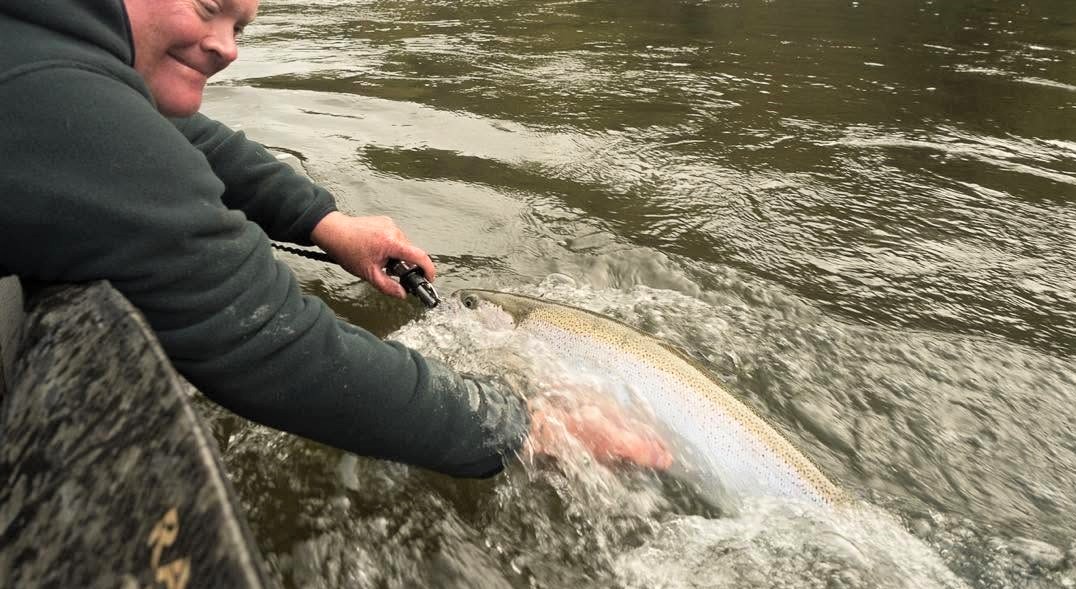
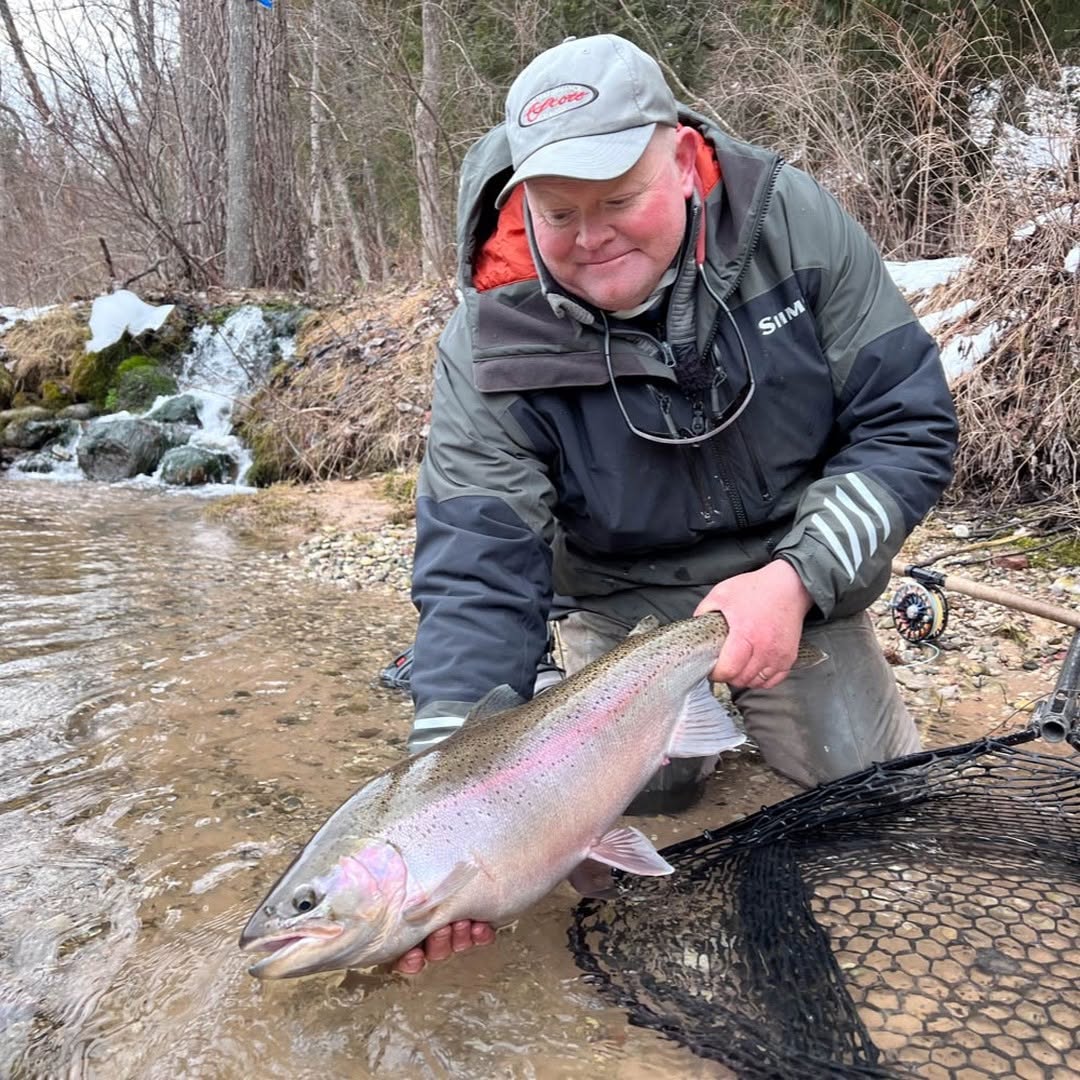
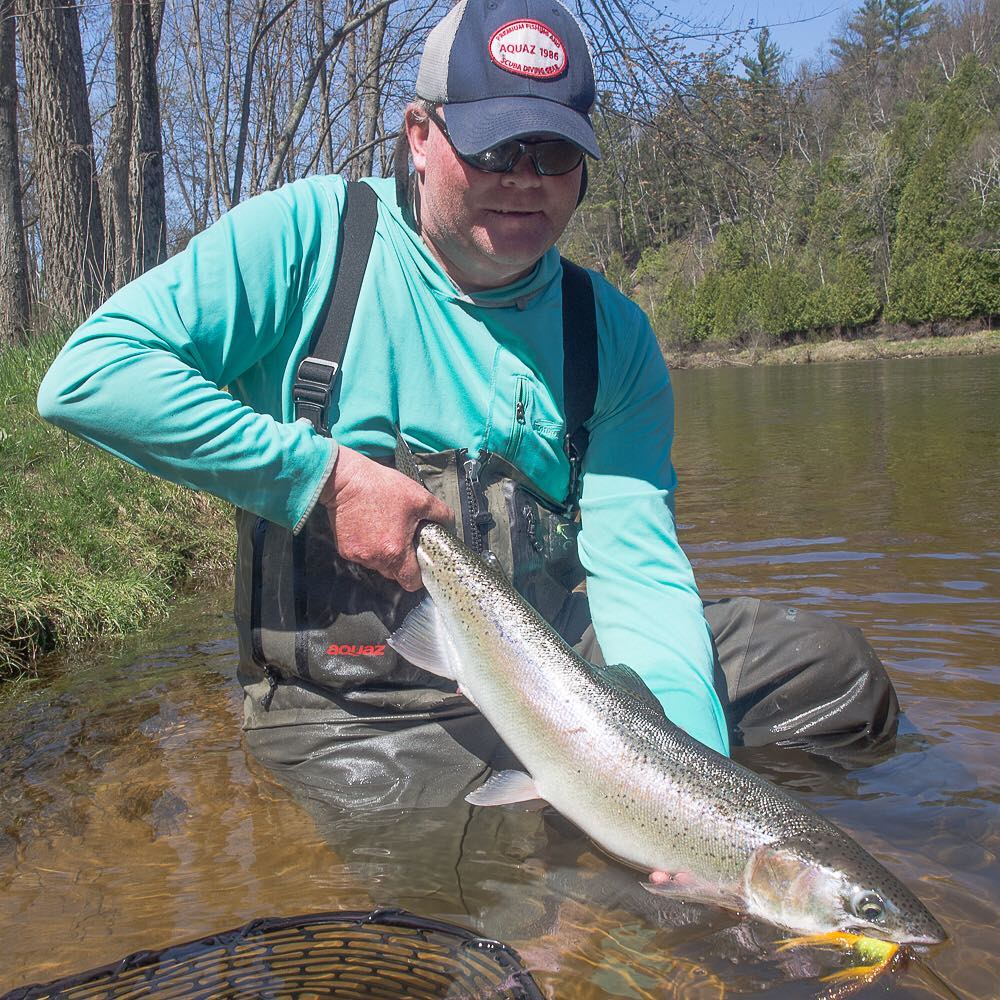
We’re bringing back one of the classics for this special summer re-release — an early episode that quickly became a listener favorite. Originally Episode 13, this conversation with Michigan guide Kevin Feenstra is packed with insights on swinging flies for steelhead on the Muskegon River.
Kevin breaks down his approach to fishing year-round, how he reads the water, and what makes the Muskegon such a unique place to chase steelhead. He also shares some of his thoughts on fly patterns, presentation, and how fish respond to changing water temps. If you’re into steelhead, two-hand rods, or just love hearing from someone who truly understands their home water, this one’s worth another listen.
Episode Transcript
Dave (0s):
This is the Wet Fly Swing Fly Fishing podcast, episode number 13.
Intro (5s):
Welcome to the Wet Fly, swing fly fishing show where you discover tips, tricks, and tools from the leading names in fly fishing. Today, we’ll help you on your fly fishing journey with classic stories covering steelhead fishing, fly tying, and much more.
Dave (22s):
How’s it going everyone? Thanks for stopping by the Fly Fishing Show. In today’s episode, I interview Kevin Fetra from FINRA outdoors.com. Kevin covers great lake steelhead Fishing in the Muskegon River. Gives us some single handed spay line resources, talks about using shorter Skagit heads in colder water and why he doesn’t fish for summer steelhead anymore. Kevin also talks about how to find fish in higher water conditions and gives us the Halloween leach and the aquatic nuisance, along with some other great Michigan flies. So without further ado, here’s Kevin Fetra. How’s it going, Kevin?
Kevin (57s):
Hey, it’s going great, Dave. Thank you very much for having me.
Dave (1m 0s):
Yeah, no, I appreciate you coming on here. I have a bunch of questions from, actually just got one yesterday, which I’ll, I’ll ask you a little bit later. But yeah, there’s a lot of people out there in your area fishing and a lot of people new to it and getting started. So be cool to dig into some of that. And I, I heard, heard your name for, well, I guess I’ve heard your name, a number of places. I mean, you’ve got a, a long history there being one of the first people to really get into the whole spay casting and spay revolution, however you wanna, You know, describe it. So yeah, this is great. You ready to get started here?
Kevin (1m 33s):
I am ready whenever you are. Yep,
Dave (1m 35s):
Absolutely. Okay, good deal. So I always start off just getting into a little bit of the history of, of my guests. So maybe you can give us a little background on how you got into fly fishing and eventually steelhead fishing and ultimately into your guiding service, which is kinda leading the way out there.
Kevin (1m 53s):
Sure, I’d be happy to do that. I, I grew up in West Michigan, a little town called Granville. Granville has become a much bigger town since I lived there, and I grew up fishing a small creek called Buck Creek. And when I was about 12 years old, my dad’s great uncle died and left him all his fly fishing gear. And my dad, though, he loved to take me fishing, had no use for fly fishing. So, so I kind of inherited the fly fishing gear and I read every book that I could and took up fly fishing, eventually started fly tying the small creek that I love to fish.
Kevin (2m 34s):
Had some environmental problems. They basically spilled some chemicals into it, so, geez. So I, when I was in my early teens, or 1516, I started looking for other places to fish and eventually found the Muskegon, which is now my home river. And when I graduated from college, a local outfitter, the Great Lakes fly fishing company, approached me and said, You know, you ought to guide for a year before you go to grad school just to tell people that you did it. And 10 years later, here I am, or 20 years later here, I’m, yeah.
Dave (3m 13s):
Cool, cool. And I mean, what were you at, at the grad school? What were you going into in school?
Kevin (3m 19s):
My undergraduate was pre-law, so I was gonna go to law school.
Dave (3m 22s):
Oh, wow. Wow. That’s quite a, quite a change. So you, I mean, I, I always talk about, You know, everybody that does that gets into steelhead. We all, You know, how addictive and all that stuff it is. So, sure. I mean, it must have hit you pretty good. The whole, the the tug is the drug.
Kevin (3m 36s):
Yeah, I mean, I always, even as a little kid, I fished a tremendous amount and I don’t think it was really that big of a surprise to anybody that I diverged, just that I waited that long to do it. So, yeah.
Dave (3m 47s):
Yeah. No, totally. That’s cool. So when you think about, I mean, I guess when I think about swinging flies for steelhead, and I think about kinda your area over there in Michigan, your, your name comes up on top of the list. Maybe you can describe how it all came to be, and did you, You know, were you fishing before the, the spay lions and all that for steelhead and just how you got to where you are?
Kevin (4m 11s):
Well, it kind of a big coincidence. You know, I kind of told you how I started fly fishing and as a little kid, I didn’t really know anybody else at Fly Fish, so I read everything I possibly could. And at the time, the only steelhead books around were West Coast steelhead books. So swinging flies was just, I just assumed that was how everybody else did it. And I caught the first few fish, You know, swung flies for a couple years when I was probably 16 or 17, I got into Nim Fing eventually, just everybody at that age loves to catch lots of fish. Yeah. And when I was, or in my early twenties, came back to swinging flies, found some kind of unique things that work in this region by accident.
Kevin (5m 1s):
And the next thing You know, it became my obsession. And here I am making a full-time living at it. So,
Dave (5m 8s):
Huh, that’s, that’s pretty cool. Yeah. So you jumped right in. Yeah, I guess the West Coast thing, it slowly worked its way over there. And you were one of the first pretty much in, in your area? Or is that kind of the, just the Great Lakes area? Were there other people that you heard of the swinging flies then?
Kevin (5m 23s):
You know, I think in my immediate region, I was one of, one of the first, I don’t know if I was the first, but I know that in other parts of the Midwest there were some really good guys pursuing it. Rick Tic for one, Dave Pinski was another one in Wisconsin. And You know, and then we had some other local guys that were starting to pick it up at the same time. Like a guy like Jeff, Jeff Hubbard would certainly be one that I would think of as well.
Dave (5m 56s):
So. Nice. Yeah, I love, it’s been fun doing these shows. You know, I’m still early on in this, but the more people I talk to, I’m just starting to connect all the dots and, You know, like pinch, pinch kowski and, and some of these Daves I’ve already, You know, heard of. And hopefully I’ll have ’em on the show eventually as well. Yep. And you mentioned the Muskegon River and other rivers, I think of the Manistee, the Pierre Marquette. Can you describe, you mentioned that Musk, the Muskegon was your home river. Can you describe how you guys catch steelhead on the, on the Muskegon? And Pete Humphreys was on, on a another episode and he described, You know, the whole boat fishing processes that pretty much how you guys do it as well.
Kevin (6m 37s):
Sure. The Muskegon as a whole is a, is a good wade fishery and a great boat fishery. Historically, I’ve done a lot of walk and wade fishing on the river, but these days, a lot of times when I want to just go out for a couple hours, especially when it’s this cold out, it’s a lot easier to run the boat and the guy for guiding purposes, it’s just a lot safer. The Muskegon is kind of a unique river. It’s 230 miles long and We have 47 miles of Steelhead River below the last dam, and it’s pretty much good that entire 47 miles to the fall and winter.
Kevin (7m 17s):
One of the other things that’s really unique about the river is that it, large parts of it never freeze. So when all the other rivers in the region are un fishable or most of them anyways, you can come to the Muskegon and you can have a reasonable chance at catching a steelhead through the anytime in the fall and winter. So I kind of came to swinging flies, the Muskegon kind of by accident. I I, at the time I was fishing the Rogue River, a smaller river to the south quite a bit. And I was in the summer months, we get summer run steelhead. And I was fishing, I was fishing a sculpting pattern for the small mouth that were in the river at the time, and I kept catching summer run steelhead.
Kevin (8m 5s):
So that fall I brought that to the Muskegon and thought, You know, if it works in the Rogue River for summer runs, maybe it works in the Muskegon for, for fall fish. And sure enough, it worked amazingly well, and I was really shocked how well it worked. And, You know, 15 years ago, almost every client that you take was kind of indoctrinated to nymph in this area. Yeah. So when I tied on a big sculp and in a sink tip, they would definitely raise their eyebrows and look at me like I was crazy. So yeah, I remember one, one particular guy took, he had done it for about an hour swing the fly just kind of humoring me, and he turned his back and, You know, the fly was dangling in the water and the the rod really literally jumped out of his hand onto the back deck of the boat, geez.
Kevin (8m 55s):
When a fish took it. And after that he held the rod really, really tight. And
Dave (8m 60s):
That’s awesome.
Kevin (9m 2s):
The kinda reputation of the type of fishing we were doing grew and took us to where we’re at now. So
Dave (9m 9s):
Yeah. Yeah, that is the, the big difference with, well, one of the difference in swinging that you get those that, well the tug again, You know, that powerful tug a lot of times and it’s a little bit different than nipping I know out here. I’ve done a lot of nipping as well, and yeah, you gotta be on it sometimes they’re really subtle and well, I mean, they are too with, with the swing, but you guys, you can see with a lot of your hits are pretty, pretty ferocious.
Kevin (9m 33s):
Yeah. Especially with the fall fish, You know, in the winter, as long as the water’s above say 35, it’s usually a pretty hard bite. So hard, hard to mistake the bite on the swung fly, so,
Dave (9m 46s):
Yeah. Yeah. That’s cool. Do you have, I was just talking to somebody yesterday was, and I, I didn’t have a really great answer for this, but as far as the rods you use, I know the, the longer rods on the boats are, are, are good, but if you’re on the bank, is there a, a setup you might use for more of a single hand spay type of setup? Or do you, You know, what, what would you recommend for somebody that maybe has a single handed rod and wants to swing flies for winter fish?
Kevin (10m 13s):
Sure, I’d be happy to do that because that’s probably one of the more overlooked things. Just as a preface, You know, when I first started doing this with clients, spay rods weren’t popular and I didn’t know a thing about ’em. So a lot of the early guiding I did with this was all single hand, a couple really good ways to go about it. If you’re gonna fish a big river like the Muskegon, You know, you could buy the typical teeny type line and fish that, but it’s gonna be difficult to cast from the shore. Probably an easier way is to get, You know, a single hand rod, but use something with a belly and add some T 14 to the end. Typically the bigger rivers, like the Muskegon require maybe eight to 10 feet of T 14.
Kevin (10m 58s):
You’ll always be fighting the same thing you will on any river and that you’ll need to back cast. And there’s a lot of times trees back there. So kinda learning some single hand spa cast would probably be a really useful thing if you’re gonna do it, but can be very successful with it. Honestly, some of the single hand lines fish just as well as the two-handed lines, so, You know, over short range especially, so.
Dave (11m 22s):
Okay. And these are lines that are a little bit, that are set up for spay fish or spay casting on, on a single-handed rod?
Kevin (11m 31s):
Yeah, I mean, I think these days you could easily purchase one of those single-handed spay lines and add some T 14 to ’em and be pretty successful. You know, bear in mind that the, You know, we’re in the Midwest here, our water temperatures for a lot of our steelhead season are below 40 degrees, so you’re never gonna get away from using a sink tip or heavily weighted fly, so,
Dave (11m 54s):
Yeah. Yeah, that’s true. Yeah, that’s the thing. And I guess that’s why people a lot of times go with a little bit longer rod and yeah. Maybe a little bit bigger. When you, just thinking of as far as again, on with casting, do you have a, I’m not sure if you do a lot of casting instruction, but do you have a, a tip or two as far as somebody out there that’s new to spa casting that that helps them get going?
Kevin (12m 20s):
Sure. I mean, you, you’ve, you’ve interviewed Peter and he’s the great caster and he is a great angler as well. Yeah, my advice, I’m, I’m guess I’m more the pure angling type of the thing I, my biggest advice to anybody who’s picking up spa casting, You know, especially in the Midwest here, is not to be intimidated by the casting and to keep your cast relatively short, because honestly, the vast majority of the fish that you catch can easily be caught in short, as long as you’re willing to put yourself on top of ’em. So, and when you’re fishing below 40 degrees, a lot of the times, You know, you’re gonna have to have at least some line control, and those shorter casts are gonna be much easier to manipulate than a long one.
Kevin (13m 5s):
So
Dave (13m 6s):
Yeah, that’s a great, that’s a great tip. I think people definitely, they, a lot of times yeah, you, you overlook water too. If you’re out there, just you feel like you have to cast a, You know, a mile across, but really those fish a lot of times Right, right out in front of you. It’s, it’s a good point. Yep.
Kevin (13m 20s):
Yep. Use your feet to put yourself over the fish or use the boat to put yourself over the fish and don’t worry so much about the distance that’ll take care of itself. So,
Dave (13m 30s):
Yeah. Nice. What is, we mentioned a few rivers here on the Manistee River. I know, I I guess that’s a bigger river as well. And can you talk about, You know, do you fish that the same way as the Muskegon and then on rivers, like the pier Marquette? How would you typically fish that?
Kevin (13m 46s):
Yeah, I don’t, You know, my, my experience on the Manistee would be very similar. There’s some really excellent guides on the manistee. John Ray would be a good choice for that. But, but the Manistee is similar to the Muskegon, maybe two thirds of width and maybe a little, little deeper on average than the Muskegon, but very similar, You know, it’s a Tailwater fishery and you could certainly use the same kind of gear, the pure Marquette’s a little bit different. You know, the Muskegon, you might fish a 13 foot rod, the banty, you might fish a 13 foot rod, but the, the pure Marquette and the white and the rogue, some of the smaller rivers are more appropriate for some of the modern switch rods that are out on the market.
Kevin (14m 31s):
So, but even in those smaller rivers, you’re still gonna have to use a pretty dense sink tip. It’s pretty common to use, You know, five to five to 10 feet of T 14 to get the job done, so, yeah.
Dave (14m 43s):
Yeah, that’s right. So you like, it sounds like T 14 is the, the, the weight that you like to use typically, and did you
Kevin (14m 50s):
Yeah. T well, t fourteen’s probably the, You know, the easiest just because it’s a standard and I, I’ve been using it for so long, it’s easy for me to understand exactly what’s going on below the surface when I’m using it. And for guiding purposes that’s important. But I also, certain times a year, like right now I use T 17 and even T 20 sometimes I don’t use it in the same way. You know, if I use T 14, I’d use a pretty long section of T 14. But with the, A lot of times I’ll use a short section of the T 17 and the T 20 and, and use it compressed and sounds kind of funny.
Kevin (15m 33s):
But the reason I do that is because this time of the year it’s really cold and a lot of times I’m just fishing the heads so that I don’t have to strip any line into the guides. Oh, right. ’cause I keep ice, ice off the guides, and if you do hook a fish with that really thick s gadget line, it’s gonna get caught in the guides if there’s a lot of ice. So, so that’s why I fish mainly the head. And that’s why those really compressed, compressed lines work well in that situation.
Dave (16m 1s):
So. Yeah, that makes sense. We, we talked a little bit about swinging and nipping. Is there, I know you’ve done both. Do you still do some nipping or would you recommend is that Sure, yeah,
Kevin (16m 15s):
Yeah, we do do some nim fishing, especially in the spring when the water’s high, You know, when the water’s high, dirty and cold. That’s pretty much the three most difficult things for swinging. So once you get to that, and by March We have kind of our big spring run meeting, our fall run. So the cost benefit to swinging versus nipping gets outweighed quite a bit. I mean, you could probably catch quite a few fish Ming and struggle to hook one or two a day swinging. So, so it, it kind of goes to that, that with clients, obviously, especially when you’re fishing, fishing in areas where everybody else is fishing, it’s hard to talk them into swinging when they’re seeing every other boat catching, You know, fish after fish after fish or whatever.
Kevin (17m 5s):
So yeah. But of course there are clients that know the game and will hire you specifically to swing, and we, that’s the kind of client we take a lot of times. So,
Dave (17m 14s):
Yeah. No, that, that makes sense. I, it is kind of an interesting thing ’cause You know, it’s the same way here. It’s, You know, You know, you can go out there and catch, You know, have a good day and catch a bunch of fish and then, You know, nipping, but maybe swinging, you’re only gonna get that shot at a, You know, a fish or two. But I don’t know, it’s interesting, I think that the numbers game is one of those, it’s kind of a men mentality thing, You know? I think yeah, we should kind of, and I’ve been a little bad at this as well, but You know, it seems like you go out there and you hook into a nice fish or two, you should feel pretty good about your, You know.
Kevin (17m 45s):
Absolutely. Yeah. So I
Dave (17m 47s):
Absolutely, yeah. So I’ve been, I don’t know, I guess that’s just kind of the way, as you get into it more, you start to realize it’s not about the numbers, it’s more about just the experience. So
Kevin (17m 55s):
Yeah. And, and, and then guiding, it’s the same way on a larger scale, You know, I mean, I, with our clients, You know, when when I’m guiding, I try really hard to sell them on the how great it is to catch a steelhead and Yeah. You get into real trouble when you start selling numbers of fish and, You know, one year We have a lot of fish and then the next year Yep. You know, they’re migratory fish and they may or may not be here, so That’s
Dave (18m 20s):
Right. Yeah. Then people are are mad because they don’t get their, all their fish. But
Kevin (18m 25s):
Yeah.
Dave (18m 26s):
No, it’s, I was just thinking we were talking about Pete Humphreys. I, I just looked up the episode for Pete’s episode seven, so if, if somebody wanted to Yeah, that’ll be there. And actually, I’ll, I’ll provide a link in the show notes for this episode that we’re doing here, which is episode 13. So if people just go to wetly swing.com and search for episode 13, they’ll find this one here. Okay. Yeah. So that’ll be a good way, what’s that?
Kevin (18m 52s):
Oh, I was just gonna give a little plug for Peter, because he’s awesome and he’s one of my best friends, and You know, he’s probably pretty entertaining in the interview and he’s very, very good at what he does. So yeah, if you want wanna little information about casting in this region, that would be the good resource for you.
Dave (19m 11s):
Yeah, no, that’s, that’s awesome. I, I, I, I never, I didn’t know Pete as well, but I listened to him on, on Anchored, and after I listened to him describe spa casting, I instantly, I think I sent him a message that during the episode I was like, Pete, I was like, Pete, you gotta come on to my show and describe what you did there. And, and he did the same thing. I mean, he pretty much broke down and all the tips. And I, I mean, even this morning I sent a message out to a good friend of mine. I said, Hey, you gotta listen to episode seven because Pete provides a bunch of tips, You know, the white mouse and, and all that other stuff, so.
Kevin (19m 43s):
Sure. Yeah. And if you can ever talk Peter into taking out fishing, he is one of the most enjoyable people to fish with as well. So, cool. Anyways. Cool. That’s my Peter plug stuff.
Dave (19m 52s):
Good stuff. No, that’s awesome. Yeah, it’s good. We, we could plug, definitely plug some stuff here today. So I was just thinking, You know, thinking about a memorable steel, I know you’ve, you’ve got into a lot of steelhead over the years. Is there one experience or You know, whether you or a client that got into that sticks out to you?
Kevin (20m 11s):
You know, I can think of, You know, just this year, You know, our steel had our, have been running really much larger than normal this year, but our numbers have been really low. And I take people, You know, the swung fly dry draws people from all over the place and even even in the Great Lakes region here. And I take a group from England that I’ve been taking for years and years and years, and usually they, they book one of the prime weeks in early December, and it’s pretty common for us to get between 15 and 20 fish in a week swinging, which that, that’s just the prime week. You know, this year was much bigger struggle.
Kevin (20m 51s):
Our numbers were low in November, and towards the middle of the week, we’d only caught one or two fish. And, You know, he finally hooked to fish. And it was, it was really exceptional, You know, for Great Lakes waters. Hmm. We typically don’t run as big as some places out west. So, You know, he fought this fish and we knew it was pretty big, but when I got it in the net, it was a 19 pound fish. Fish. Geez. Wow. And yeah. Yeah, and It just, It just made the, made the week and made the year. So That’s cool. It just kinda, one of the things about swinging flies you, You know, you might not get as many, but when you do get one, it’s probably gonna be something special. And that one was really special.
Kevin (21m 33s):
But yeah, there’s been a lot of those over the years, so that’s,
Dave (21m 37s):
That’s a, that’s a huge fish. Yeah. If you’re into the, into the tee upper teens, that’s definitely a nice fish. What do you remember what fly it, it took,
Kevin (21m 45s):
You know, it took razzle dazzle? It was, it was a Halloween leach, which is black and copper. Oh, cool. Something, something pretty common at that time of the year.
Dave (21m 54s):
So yeah, you, you guys fish a lot of, a lot of big dark stuff.
Kevin (22m 0s):
Well, black is always a good base no matter where you fish steelhead in this region. But yeah, You know, in the fall my thing is using a lot of flash, and it varies depending on the season, but as we get into winter, I use a lot of natural bait type patterns and it’s kind of a big change. But in November when I was taking that gentleman, it was, You know, big and gaudy and flashy and that’s what did it. So,
Dave (22m 26s):
Yeah. Yeah, for sure. And for, you mentioned earlier a little bit about summer steelhead. Do you, you fished a little bit for summers?
Kevin (22m 34s):
You know, over the years? I have, and I catch ’em occasionally, to be honest with you, they’re not my favorite fish just because when they come into our rivers, the rivers that they come into are typically quite warm. So it’s not really an ideal scenario. They’re terrific fish, amazing fighting fish, but in warm water a lot of times they’ll just fight themselves to death, so,
Dave (22m 56s):
Oh, yeah.
Kevin (22m 58s):
So it’s not my, not my cup of tea, but I certainly don’t, don’t fault anybody for fishing for those awesome things, so Yeah,
Dave (23m 5s):
For sure.
Kevin (23m 6s):
Yep,
Dave (23m 7s):
For sure. Yeah. Thinking more about, well, I guess we were talking about the, the flies a little bit. Do you have a few patterns that, I’m not sure if you tie a lot of your own stuff or whatever, but a few of your real popular flies you’d like to fish or you’ve done well on?
Kevin (23m 23s):
Sure, yeah. I do tie all my flies all year for guiding pretty much tie flies every night. You know, there’s a few patterns that I rely on really heavily. Generally, if We have big fish in the river, I use big flashy sculping type stuff in the fall, then I’ll start using the black and copper leeches like that Halloween leach. When the water gets a little colder, I’ll switch to blue and silver again with a black base. By wintertime, it’s a little different game. Some the steelhead that are in here kind of a acclimate to the river. One thing about the Muskegon and a lot of Midwest rivers is that it’s, they’re very rich with food.
Kevin (24m 8s):
So I’ll switch to bait fish patterns, typically sculpins or shiners or darters and, and, and invasive goby patterns as well. And those make up my winter, I fish ’em slowly and You know, once spring gets here, you, the water temperature rises and you switch back to the flashier stuff. So that’s kind of how a year goes, so.
Dave (24m 31s):
Hmm, nice. And, and are, do you have any, if I was gonna provide a link in the, in the show notes to, is there, you said the Halloween flyer, are there some names that, that people could find out there?
Kevin (24m 41s):
Halloween Leach, a grapefruit Leach. Yeah. Okay. Aquatic nuisance.
Dave (24m 46s):
Nice. That’s a good one. Yep, yep,
Kevin (24m 49s):
Exactly.
Dave (24m 49s):
Cool, cool. We talked about a, a couple tips on casting. Do you have something, a tip that’s more of a general steelhead that would help somebody get into a their, You know, first steelhead?
Kevin (25m 2s):
First steelhead? You know, my biggest advice to anybody is, especially if you come from the background of nymphing, is just to get away from the habit of being meticulous and start covering a little water a little more quickly. My other big tip would be to not overlook the pocket water, the obscure water, because with a swung fly you can, you can put a fly through a lot of places that you just can’t put a fly with the, A nymph or a bottom type rig. So
Dave (25m 32s):
Yeah. Yeah. The, the obscure water, I was talking to Rob Rice in episode 10, he’s up on the, up on the Chena, and that was a point that he made was that especially during the right water conditions, the higher water, these fish are gonna be off in the margins almost in the, almost in the side channel water where the salmon are. Yep. And yeah, he was saying that those are just key places, so that’s a, that’s a great tip for sure.
Kevin (25m 57s):
Yeah. You know, and when, when it comes to high water, just be aware that, You know, a lot of the, especially in on our Midwest rivers, which are typically pretty brushy along the edges, You know, as soon as the water goes high, a lot of that brushes in the water and that’s where a lot of the fish will be. So don’t overlook the changes in the river and expect the fish to be exactly where you left them if the water comes up. So,
Dave (26m 21s):
Yeah, there again, the more you talk, it’s great because it’s just reinforcing the, the stuff we’ve heard, You know, from other, You know, some of the other awesome guests. You know what I’m thinking back was Tre Combs who just Okay. Yeah. On, on episode. Yeah. Episode six. And he mentioned that was his, one of his biggest things was like, find one run and just know it so well that, You know, every individual pebble in Boulder in that run Sure. At all levels, You know, and that’s just a great tip because we do tend, especially with a boat, you typically, you’re like, all right, I’m gonna cover all this water, and at the end of the day, you look around and you didn’t cover one run that well. You know, so.
Kevin (26m 57s):
Sure. Yeah. Yeah. And that’s the other end of the spectrum too. I learned a lot from Tre Holmes by reading his stuff, You know, when I was in my twenties, and to some degree I probably owe him a little bit for that sort of thing. So it’s good to hear that you’re interviewing people like that as well,
Dave (27m 13s):
So Yeah, for sure. Yeah, Trey, Trey was a good one. And, well, since we’re on that line, as far as mentors and people, do you have a, You know, a, a mentor or two that, that helped you? I mean, you’ve noted a number of people along the way. Any, any other names you wanna throw out there?
Kevin (27m 28s):
You know, for the swung fly, there really wasn’t too many people to learn from, You know, in the area because of what we discussed. But, You know, there was one really good, great local angler that took me under his wing a little bit when I was younger. Bob, Brenda works for a local fly shop, and he certainly helped me to look at, to learn to look at things differently, You know, which, which helped a lot in the long run in my career, so.
Dave (27m 54s):
Nice. Okay. And what I was just thinking, what year did you start, just so We have a reference as far as when you first got into steelhead fishing?
Kevin (28m 5s):
Well, steelhead fishing in general, probably you’re talking, You know, early late eighties or early nineties. Oh, okay.
Dave (28m 13s):
Yep, yep.
Kevin (28m 14s):
Yeah. Cool. So, yep.
Dave (28m 17s):
And, and you said mostly now you do a lot of boat fishing just because for guiding it’s easier, but do you, do you still get out and do some, You know, hiking and that sort of thing?
Kevin (28m 27s):
Sure, yeah. Especially at this time of the year when I do have free time and I might just want to go out for two or three hours a day. It’s a, it’s just a cool way to spend a day. I do a lot of hobby photography too, so
Dave (28m 40s):
Nice.
Kevin (28m 41s):
It kind of, the two kind of go together. Cool. Do
Dave (28m 44s):
You, is the hobby photography, is that something you, you post on Instagram or other areas or just kind of, is that separate?
Kevin (28m 51s):
Yeah, I use Instagram. I have a smug mug site. I like doing photo essays for magazines whenever they ask me to, so, oh, nice. Yeah, I’ve recently done Eastern fly fishing, a couple, couple for that magazine, so, which is an excellent production.
Dave (29m 8s):
Do you have a, on Instagram where they, we could take a look at some of this stuff, or you wanna share?
Kevin (29m 14s):
Sure. Just my handle, Kevin Finra. I would love to have a few more followers, even though I’m not really big, a big social media guy, but hey, yeah.
Dave (29m 23s):
You know,
Kevin (29m 24s):
It’s, it’s a fun thing,
Dave (29m 25s):
So, oh yeah, no, you gotta, that’s thing, you gotta start somewhere. It’s tough anyways, these days. I mean, there’s so many social medias, You know, I you got the kinda the big ones. Sure. But yeah, you kind of have to focus. Yeah. What, what do you think as far as, You know, we’re talking about all this stuff and you’re, you started early and you’ve had a, a long career now and guiding people. Is there a, a turning point that got you into where you’re at as far as, I mean, I just think of some other past guests we’ve had where it seems like there’s been certain things that have happened, whether they got fired from their, You know, their guiding position or whatever. Is there anything that rings a bell that was kind of big for you?
Kevin (30m 2s):
You know, there’s a couple things, kind of funny things in hindsight that make me think this is what I was kind of meant to do. This might seem like a kind of strange one, but when I was 14-year-old, years old, I got cut from the baseball team, which was, I played several sports, and as soon as I got cut from the baseball team, I started fishing every day. Huh. And after, at that point, I fished every day until I was, You know, a teenager and all, even all through college, I fished an awful lot. So, sure. It was kind of a strange thing, but it, it, yeah. In a, in a strange fashion, it helped me get where I am right now, so. Yeah.
Kevin (30m 44s):
Yep.
Dave (30m 45s):
That makes sense. You
Kevin (30m 46s):
Know, from a career standpoint, You know, I started as the typical trout bum, You know, I was guiding 20 or 30 days a year in fishing, 270 days a year. Wow. And then the balance has turned now, so that at some point I became pretty serious about the business part of this, and, but now I’m guiding, You know, 200 days a year in fishing, 50 or 75. So, so the balance has turned and cool but’s, but I still kind of look at fishing the same way. And like I mentioned, you, I’ll probably go fishing today when we’re done, so.
Dave (31m 24s):
Yeah. No, that’s cool. And well, so in baseball, what, what position were you playing back in the day? You know,
Kevin (31m 30s):
I was a catcher. Oh, cool. It was kind of a strange thing. I was actually practicing with the older varsity team, and then I came, when the varsity team was done with me, I came back to the JV team and they’d replaced me with somebody else. Yep. So I was, I was pretty good baseball, I mean, I was as serious about baseball as I am about fishing, so I, I was pretty well hurt by it, You know, devastated as a kid. I came outta nowhere and, You know, fishing was my refuge at the time and Yeah. You know, I became, I, I’m somebody that when I get into something, I don’t get into very many things. So I am pretty hardcore about it when I do it pretty serious about it.
Kevin (32m 14s):
So when I shifted from baseball to fishing, it was, You know, a pretty serious thing for me to fish every day.
Dave (32m 22s):
Yeah. No, that’s, that is a good lesson. I, I, I have a couple young kids and I think that’s a great lesson. I like to remind them of that, You know, in life. And you got, You know, that was early, early things, especially for a young kid having a hit like that. But yeah, I mean, that stuff’s gonna happen in life, right? Those, those things Sure. That are gonna be, You know, terrible and gonna seem like the end of the world. But the, the point is you gotta realize, You know, that’s, that’s just life and you gotta move on and build and, and learn from it. Yep. So,
Kevin (32m 49s):
Yeah. And something good can come from it and that’s, that’s where I am right now. You know, I love what I do and wouldn’t, wouldn’t have it any other way. Totally.
Dave (32m 56s):
And which, which is really cool. ’cause if you think about it, You know, whatever the, the numbers are, You know, a fraction of a percent make it to the major leagues or whatever. So you’re probably, You know, not that you wasted time. I, I was into baseball as well, I I and basketball and, You know, I probably wasn’t gonna make it to the NBA regardless of how much I practiced, but Sure. Yeah. So fishing was good. Yeah. And you mentioned on fly tying that you tie quite a bit. What, what do you have a I have a little bit of a fly tying challenge that I have out there on, on Instagram that, You know, it’s just fly tying challenge 30. And it’s pretty cool. It’s a lot of people that are just getting into, and it’s like a 30 day challenge where they basically get a new tip every single day if you sign up for it.
Dave (33m 38s):
Okay. And I, I always love adding or just seeing if there’s a new tip. Do you have, You know, with fly tying, it’s not easy to, to think of one, but do you have a tip for somebody that maybe is tying flies either new or, or been doing it a while?
Kevin (33m 51s):
Well, You know, as a, as a guide? I mean, what’s happened over time? So, so I’m a full-time guide now. I’m 44 years old, and I also have a 4-year-old son and two 1-year-old twin girls. Wow. So, so my advice to anybody is that what I’ve done, just from a matter of time as I’ve stripped the flies down to their basic functionality and components. So if you’re getting into fly tying, don’t feel like you need to tie complicated flies to be successful. Yeah. There’s pretty basic things that’ll work for just about any fish. And as long as you understand those basics, yeah.
Kevin (34m 31s):
You can do a lot of things and have a lot of fun fly tying and not get too bogged down with time doing it. Nice.
Dave (34m 38s):
So, yeah, that’s, that is a good, I was thinking of the legs on, on some of these trout flies, You know, you wonder, that’s a good kind of example. Like, do you need to put little intricate legs on it that, You know, probably it probably helps, but I don’t know if it’s that big of a deal. Sure, yeah. Yeah.
Kevin (34m 54s):
I mean, in my fishery probably not, but, You know, yeah, I mean, certainly, I mean the, one of the beautiful things about fishing in general and fly fishing in specific is that there’s a lot of different facets and it can appeal to the kind of bull and China shop type people like me. Or it can, You know, apply to the very meticulous personalities that want to be very meticulous about the fly tying or rod building or, You know, all the other different things that you can do. So fly fishing’s good for just about everyone as long as they, You know, yeah. Put the time into it, so.
Dave (35m 31s):
Yeah. No, that’s cool. You
Kevin (35m 32s):
Know, so I cast, cast well, don’t cast far. That’s my try to make your line straight and at the right angle, You know, according to the current. And, and listen, listen to your guide every once in a while. It’s not a bad thing either. So.
Dave (35m 48s):
Yeah, definitely. Do you guys, typically when you’re, when you’re swinging flies, is it pretty standard as far as You know, how far out and across your casting or, I mean Sure. Are you guys hooking fish right in, I guess depends on the run, but right in near the boat,
Kevin (36m 4s):
It’s very possible to catch ’em near the boat. You know, generally I try to tell people they need to cast at least close to head length to be able to have a shot at a fish, You know? Mm. Which is pretty easy to ask. I mean, most people can roll the head out and Yeah. Anything past that is, You know, and it doesn’t hurt to fish in other, You know, 20 to 40 feet past that. It’s when you go further than that that you start running into other problems, You know, so you have to be thinking about what that sink tip’s doing once it’s out there. And, You know, if you’re using some kind of modern fly line, it might actually be pulling your fly off the bottom if you’re going long distance.
Kevin (36m 44s):
So, You know, in cold water, you have to think about things a little bit differently and be a little more concerned about keeping the fly down than keeping it a long ways out. Mm.
Dave (36m 56s):
Okay. Yep. And, and as far as lines, do you have a specific brand? I mean, I know there’s a few big companies out there that you like to use and types, types of lines?
Kevin (37m 8s):
You know, for the vast majority of what I do, I use sa lines. You know, they’re a Michigan company here, I use, You know, their, their freight line or Skagit line is pretty common. I’d consider that to be one of the more staples in this area. Okay. Very good line. The intermediate line for the fall, You know, and early winter. And then as we head into winter, the floating version works really well. So It just gives you a little more line control over the speed.
Dave (37m 39s):
Oh, cool. Yep. Cool. And you, by essay you’re talking about scientific angler? Oh,
Kevin (37m 43s):
Scientific anglers. Yep. Yep.
Dave (37m 45s):
Perfect. Just for those that are, that are new to it. That’s good. I, You know, again, it, this is, this is good to chat here because I was thinking of Jim Tini I had on in episode five. Okay. And he really did a good job of going back to the beginning when he was getting into some of his early lines Sure. And talking about that. It was really fun to hear that because, You know, scientific anglers, I mean, they’ve, they’ve been there since the beginning and, and they’re still out there going strong, which is great to hear.
Kevin (38m 12s):
Yep. And Jim Tini, of course, one of the class acts in our profession, so good to hear from him. So,
Dave (38m 20s):
Yeah. Yeah, it was, that was a fun one. What do you think, You know, I know there’s a lot of, you mentioned a local fly shop that, that help you along, and you got some other ones. Do You know any other resources that you would recommend for somebody that, that’s not either a local fly shop or guide? It sounds like, I don’t know if there’s a, a, You know, sometimes there’s local websites that people can go to forums and things like that. Do You know anything like that?
Kevin (38m 42s):
Well, You know, there’s some forums that are kinda universal. You know, historically the spa pages has gotten quite a bit of traffic. Oh, sure. You know, there’s other things that you have to watch in this area that are very, very important. You know, probably one of the more, You know, one of the more, if you’re coming to Michigan and you wanna fish, look at that USGS site for whatever river you’re looking at. ’cause that’ll tell you what the water temperature is, what the, what the depth is, if it’s safe to wade, You know, and Okay. Yeah. So I mean, those use those resources that tell you about the actual rivers.
Dave (39m 18s):
Okay.
Kevin (39m 19s):
For spay fishing, You know, you mentioned, You know, I would personally, I would look at some of the guide websites. You know, there’s a lot of fly patterns that are out there. The guides in this state are really good about sharing information on their websites. There’s not, they’re not trying to be secretive. And so you can go on, You know, like Jeff Hubbard’s website, Outfitters North, he’s always got great fly patterns. Okay.
Dave (39m 45s):
You
Kevin (39m 45s):
Can go onto Hawkins website and they have good fly patterns as well. So there’s a lot of good information there just as kind of secondary information flowing from guides. So, okay. I would use that.
Dave (39m 59s):
Good, good. And you mentioned guides. I, I definitely received some feedback from new guides or new people that are out there that want to get into guiding and the whole industry. Do you have any tips for, for them that would help them get going?
Kevin (40m 15s):
Yeah, I would have some tips. I mean, understand that you’re probably not gonna get rich guiding if you’re gonna guide, do it because you love the game and, You know, look after the resource, don’t get caught in the numbers game, which is kind of the pitfall if you wanna become a fly fishing guide. You know, getting wrestling into that numbers game is kind of the kiss of death in my opinion. So yeah. And just have a positive attitude and, You know, love your resource and, and try to do what you can as an advocate for it.
Dave (40m 53s):
So for sure that’s, that’s, yeah, that’s a awesome, awesome way to put it. For sure. It’s, if You know, especially, You know, you mentioned the runs were down a little bit there this year out, out west we’re having some, some declines and that’s just part of, You know, lots of, You know, a number of things impacts from human activities and stuff. But yeah, it, it’s, we got a lot of work to do to, to keep this thing going strong.
Kevin (41m 16s):
Sure.
Dave (41m 16s):
So good point. We, we mentioned the, again, the kind of the pr Marquette and maybe some of the smaller rivers. Can you describe how maybe some of the other rivers a a smaller type river, how you fish it and do you typically Sure. Swing, swing more or nmp more?
Kevin (41m 32s):
So if you come to the, the state of Michigan, you will come to basically two different types of rivers. You’ll come to big tailwater type rivers like the Muskegon, or you’ll come to smaller, You know, rivers that are, they’re not really small, but they’re may be a third the size of the Muskegon, maybe, You know, 75 feet, 50 feet wide. The, the, they’re freestone streams, so they’re, they’re naturally flowing. A lot of them, You know, both types of river systems work really well with Mphi. You’ll find that the larger river systems, because they’re heavy flows, it’s a little bit more medieval how you’re gonna have to approach ’em.
Kevin (42m 13s):
You know, you might have to bounce the bottom or whatever, but You know, if you go to a smaller stream like the pure Marquette or the white, a lot of it’s indicator fishing and you can think of it as almost a jumbo sized trout fishing sort of deal. If You know how to indicator fish for trout on a Western stream, you’d do just fine indicator fishing, any of these smaller rivers and you just pick the river apart, You know, those smaller streams, just like you would a big one, the old adage foam is home, You know, look for a bubble line and that’s, it’s universal. That’s where the fish will be. And in the winter months, they’ll be in a little slower water in the fall months, they’ll be closer to the current and have fun, enjoy the beauty of those rivers.
Kevin (42m 58s):
So
Dave (42m 58s):
Yeah. And, and probably are those rivers, you can still find some places hiking in, getting away from some of the traffic and things like that.
Kevin (43m 5s):
You can, some of the rivers, You know, are, are definitely more popular than others, especially the famous sections. The Pier Marquette has some famous sections that get a lot of foot traffic as well as boat traffic, but it also has quiet water. And if you’re willing to walk and look at a top of map and stuff, you probably could find some pretty good fishing. And there’s other rivers that are more obscure, You know, that just don’t get the fishing pressure because of their location. So, You know, you can, you can find out about those pretty easily and just hoof it. And you’ll typically find fish just about everywhere, so.
Dave (43m 40s):
Okay. Okay. And, and with those small rivers, if you were to, we talked a little bit about the, the single handed line. Is there a specific line you would recommend maybe a, a essay line that would be good for a, a single handed spay type of, so I mean, you mentioned the, the T 14. Yep. I imagine, are you still using T 14 there?
Kevin (43m 59s):
T 14? Yeah. You can use any of those spay light lines. Should they make ’em in light enough denominations to work with an eight weight rod. Oh, okay. You could certainly use a typical kind of, You know, big head floating line and, and add the T 14 onto the end of it. Sure. Maybe MPX line or a Titan taper or something like that. Okay. Could also work, so, okay.
Dave (44m 23s):
Yeah. Perfect. Perfect. And do you get out to any, I, we were talking a little bit about the, the Salmon River up in New York and I mean, are there, what are the other big, when you think of, I mean, I guess you spend most of your time fishing, kind of your, your area, but are there other areas you get out to?
Kevin (44m 40s):
You know, historically I’ve fished, I fished out east a bit. I I, I do some public speaking in Ohio, and so that draws me to their rivers. Oh, okay. Every now and then, You know, I fished the ous before I fished it with Rick, Sid, brother, Jerry, Sid. But the, some of the Ohio rivers are wonderful, the chagrin and You know, there’s a variety of ’em. Chagrin, cognac Creek, the grand, the Rocky, really beautiful rivers. Probably you wouldn’t think of beautiful rivers in, You know, fairly urban areas, but they really are beautiful.
Kevin (45m 20s):
They’re more susceptible to runoff than our rivers are, which they get huge runs of fish, but That’s right. It just difficult to time it. So there’s kinda key people, You know, in, in Ohio you might want to talk to a, a Jeff Lisky or Jerry Darkes. Really, really good resources. Jeff is,
Dave (45m 38s):
That’s right.
Kevin (45m 39s):
Yeah. Jeff is probably One of the best, just pure fishermen I’ve ever met. So
Dave (45m 44s):
Cool.
Kevin (45m 45s):
And he has a kinda a long history of spin in fly fishing, so he could Yep. He could be really interesting as well. So
Dave (45m 54s):
Yeah, good deal. Yeah, I’ve talked to both of them and I we’re hopefully gonna Okay, yeah. Set something up down the, down the line with them. That’s, that’s always the, the question is how, how many, the more I get into this, You know, how many people are out there that can help, You know, answer some of these questions and yeah, there, there, there’s a lot of great resources. It’s pretty cool.
Kevin (46m 12s):
Yeah. Hopefully I’m not dropping too many names, I’m just enthusiastic about
Dave (46m 15s):
No, this is
Kevin (46m 16s):
A lot of these guys, so Yeah,
Dave (46m 17s):
This is great. This is, this is pretty much what I, what I love because, You know, now they’re out there and these people who’s, You know, if you’re listening to this, you can go do your own research. I’ll provide some, You know, like I mentioned some show note, show notes, links, things like that. But yeah, I, I’ve dropped a few dates too of past episodes I, I’ve already had. So yeah, this is, this is a good deal when you get going, You know, single handed or, or two handed Rod, I mean, you, you pretty much passed up the, the single handed rod, well, 20 years ago, right?
Kevin (46m 48s):
Probably not that long ago. I was using two handed rods on and off when I was, You know, even 15, 20 years ago. But the technology in the lines was a lot different then. Yeah. And it wasn’t, wasn’t as practical, You know. That’s right. I mean, you’re talking pretty industrial, heavy duty fishing on this river that I’m on and the old style lines that we had just were not suited, You know, for what we’re doing now. So along came these intermediate lines at some point, initially they were European lines that really sprung things going here, You know, the, the guideline lines especially. And then, then the American company started making some really, really good stuff.
Kevin (47m 32s):
And You know, here we are now with just great technology that makes swinging flies in any conditions pretty easy. So the change in technology is really what boosted fly fishing in this area made it a lot more practical as far as the spay Yeah. Game goes. So,
Dave (47m 51s):
Yeah, for sure. Yeah, it made a lot easier. Did you, when you started s spa casting, what was the, I mean eventually did get, get to a point where you were, You know, I’m not sure if you would say how, how fast you got to the expert level or whatever, but how, You know, how, how did you get there? Because I, I know, You know, definitely people struggle with, with spa casting. Did you, did, were you guided by other people or how’d you do that?
Kevin (48m 13s):
You know, it was a slow process over time. You know, I was lucky once when I was probably 10, 12 years ago to fish with Simon, You know. Oh wow. And You know, he, I just took him out on the boat and, and there was things that I learned just watching him, You know, now there’s just so much good information. You could go to one of these spa claves for a day and learn every cast. Yeah. That didn’t exist at the time. You know, you’d buy a video and if you’re looking at a video and you’d never, never seen anybody spa cast before, it’s pretty hard to, at least for, for somebody, You know, for me it was hard to kinda look at a video and say, what the world is this guy doing? You know, and then you see it in person and it’s pretty obvious what, what they’re doing.
Kevin (48m 56s):
So when it comes to spa casting, anything that you can do in person, You know, and just go out with somebody that, they don’t have to be a professional, but just somebody that has some experience. ’cause it’ll cut your learning curve by a long, long ways. So
Dave (49m 11s):
Yeah, for sure. Yeah, I think you can do a lot in, You know, videos and even this show, this is audio, we’re, we’re talking a lot about tips at audio, but yeah, there’s no, you can’t replace getting out on the water with, You know, whether it’s a guide or just an instructor.
Kevin (49m 26s):
Yep, exactly.
Dave (49m 28s):
Yeah. Pete, You know, on that episode we mentioned he did provide a bunch of like really great tips that I think will help people get going. But on this, on the spa Claves, you guys have, I know there’s a bunch all around the country. Do you guys have any near your area?
Kevin (49m 42s):
Yeah, we do every fall. We have a really good one on the Muskegon, probably 10 minutes from where I’m talking to you from. Oh wow. Yeah, it’s at Henning Park and it’s usually the last weekend of September, they call it Spay Fest. And it’s been going for quite a long time and we’ve had some really good people there over the years. It’s put on by one of the fly shops that Great Lakes fly fishing company. So it’s, and there’s typically a lot of vendors there. So it’s, it’s a good event and if you’re in Michigan or the Midwest, You know, within some hours drive, you might wanna look into coming in late September because you can learn a lot about spa casting in a very short period.
Kevin (50m 26s):
The people there are very nice about sharing information. Hmm. And it’s just a great way. And then those types of events happen all over the Midwest and all over the west, so, and all up into Canada. So there’s places, places to go to learn. You just have to do a little research and go for it. So
Dave (50m 44s):
For sure. Yeah, and I’m sure down the one place I haven’t really hit on as much as like kinda some of the California stuff. I mean that’s kind of the, the tragedy Roy of, of kind of some of the steelhead runs is the further you go down south, least south on the west coast, the, You know, the lower the runs get just because Sure impacts. But I hope to, I hope to connect with some, some more Californian type of, You know, interviews as well. But yeah. Good, good. I’ll, I’ll make a note on that one as well in, in the show notes for the, for the spade la and yeah, so Kevin, we’re just about there. I, before we wrap up, You know, I occasionally love to ask, you mentioned the, the story about one of the big fish and You know, 19 pounder is cra it’s crazy.
Dave (51m 28s):
That’s pretty much, I think the biggest fish I ever caught was probably, probably in that range. And yeah, it blows you away, but do you have a, a crazy fishing story. Anything that rings a bell, like you’ve guided some people, You know, over the years. Anything that sticks out to you?
Kevin (51m 45s):
Well,
Dave (51m 47s):
I’ve had, yeah, this is a, the, the kids kids might be go, yeah, go.
Kevin (51m 52s):
You know, I’ll tell you one that’s not related so much to swinging flies, but I took a guy and a lady out fishing, nim fishing, and we were using pretty heavy gear at the time. The water was high and we were fishing for steelhead. And I just rigged the lady up and I was rigging the guy up, and I showed her how to cast and she threw it out there and got snagged. And I said, well, You know, just, just hang on a second. I’ll help you out as soon as I get your husband finished. And the next thing I know, I looked up and that sinker was coming out of the water about 150 miles an hour.
Dave (52m 28s):
Geez.
Kevin (52m 29s):
It hit me right in the forehead. Oh. I fell over in the boat, was unconscious for a couple minutes, so, wow. And, You know, later, later that person approached me at a fishing show and said, You know, you probably don’t remember me. And I was like, oh, I remember you. So,
Dave (52m 44s):
Right. Wow. Right, right in the forehead. That’s that. That’s intense. It
Kevin (52m 48s):
Knocked me over. I was, they were slapping my cheeks and, You know, there various,
Dave (52m 52s):
Wow. What, what was the, what was the last thing you remember? You before it, before you went unconscious,
Kevin (52m 57s):
You know, just watching that sinker come flying out of the water and hit me. Right, totally. Yeah. Yeah. And I, I fished, I guided the rest of the day. I had a huge welt on my forehead, looked like a softball.
Dave (53m 7s):
Wow.
Kevin (53m 7s):
Yeah. So anyways,
Dave (53m 9s):
That was cool, guys. Is that pitch online anywhere people get take
Kevin (53m 12s):
I know, I know I do have it though,
Dave (53m 14s):
So. All right. Good, good. All right. What, what do you have going on? Anything in the next six months or so, as far as, I mean, it sounds like you’re gonna be guiding a lot, but any, anything else you wanna, you wanna note? You know, something new?
Kevin (53m 27s):
You know, I do a lot of public speaking at this time of the year, various Oh, cool. Trout, trout unlimited clubs and around mid, around the Midwest. You know, I’ve been in Indiana last week and I’ll be doing some other ones over by Detroit this week, so, and down to Indiana again this weekend. So generally speaking, just big fly shows and talking to fishing clubs in the region. So look me up if you’re, if you’re in the area, it’s listed on my website where, where I’ll, where we’ll be, and not just me, but some of the other guides that work for us as well, so,
Dave (54m 5s):
Okay, cool.
Kevin (54m 5s):
Love to see you, so, yep.
Dave (54m 7s):
Yeah, that’d be great. And yeah, before I let you go here, did we miss anything? I mean, we covered a bunch of topics and anything you want to add before we get outta here?
Kevin (54m 18s):
No, just, You know, go out and enjoy these resources and try to, try to keep them like they are. Don’t let ’em get any worse. Try to either move them forward or keep them as good as they are right now. So wanna want our kids to be able to do what we’re doing, so. Yeah,
Dave (54m 35s):
For sure. For sure. That’s a good, good way to put it. So you mentioned as far as people, the, the best place would be, I guess finra outdoors.com, that, that’s one place just they can get to you, but also on social media,
Kevin (54m 49s):
Instagram? Yeah, I’m, I’m kind of arcane in my social media, just Instagram, so. Okay,
Dave (54m 53s):
Perfect. No, that’s, I think that’s pretty much one of the, one of the hottest ones anyways, right now. Good, good stuff, Kevin. Well, I appreciate you coming on to chat about this. You know, I, I think there’s, for sure at least a couple people I’m gonna contact today and, and answer a few questions because I, You know, we answered those today and I, I appreciate you coming on and taking some time to do that.
Kevin (55m 13s):
You bet. Thank you.
Dave (55m 15s):
All right, good. Well, we’ll look forward to hearing more from you and maybe eventually when I can get out to the Midwest, I’ll, I’ll give you a ring and, and catch up with you.
Kevin (55m 23s):
All right, sounds great. Thank you so much for having me, Dave.
Dave (55m 26s):
Okay, thanks a lot. See ya. Yep.
Kevin (55m 28s):
Bye-bye.
Dave (55m 30s):
So there you go. If you wanna find all the show notes with all the links that we covered in this show, just go to wetly swing.com and search for episode 13. If you like the tips In this episode, you can just go to wetly swing.com/free and get the steelhead tips, PDF Quick Guide, which includes a summary of all the great tips that we’ve had up to this point in the series. If you have a second, I would love if you could take a moment and leave a review on iTunes. This helps get the show out to more people and helps some of those people get into their first steelhead. Thanks again for stopping by to check out the show today. I look forward to catching up with you soon and hopefully seeing you on the river.
Outro (56m 14s):
Thanks for listening to the Wet Fly, swing Fly fishing show. For notes and links from this episode, visit wet fly swing.com. And if you found this episode helpful, please subscribe and leave a review on iTunes.