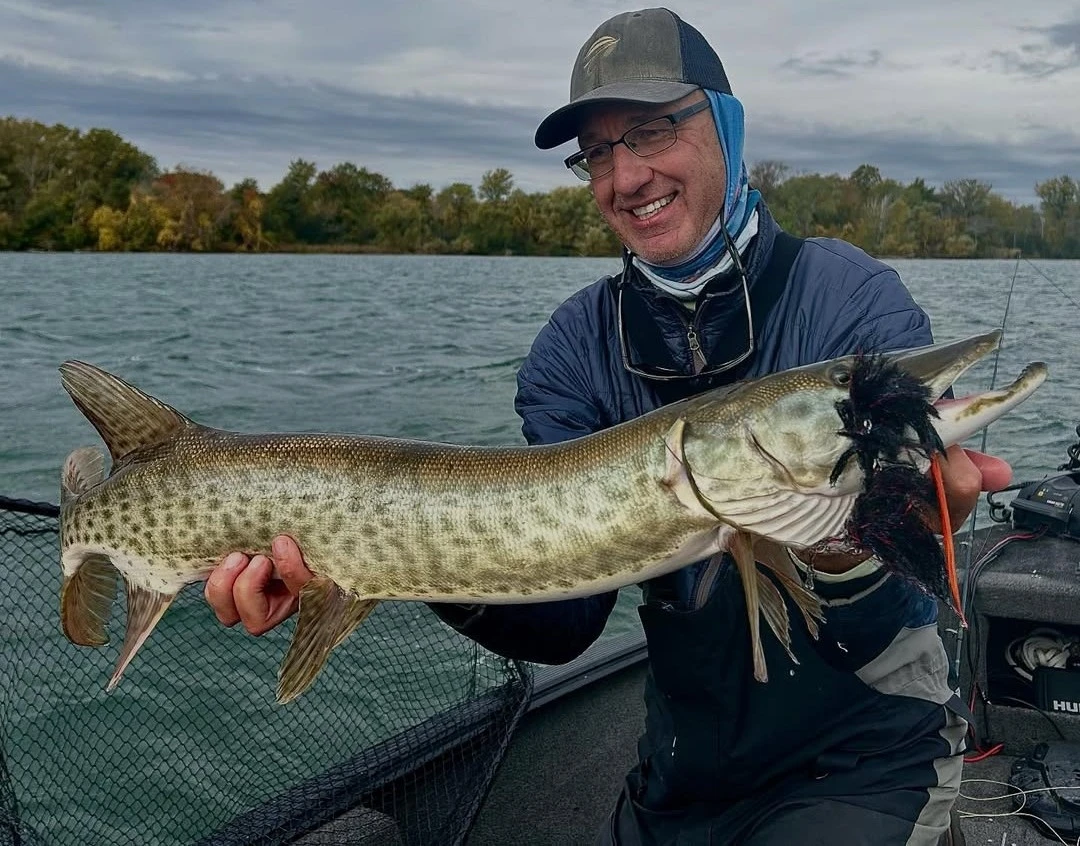
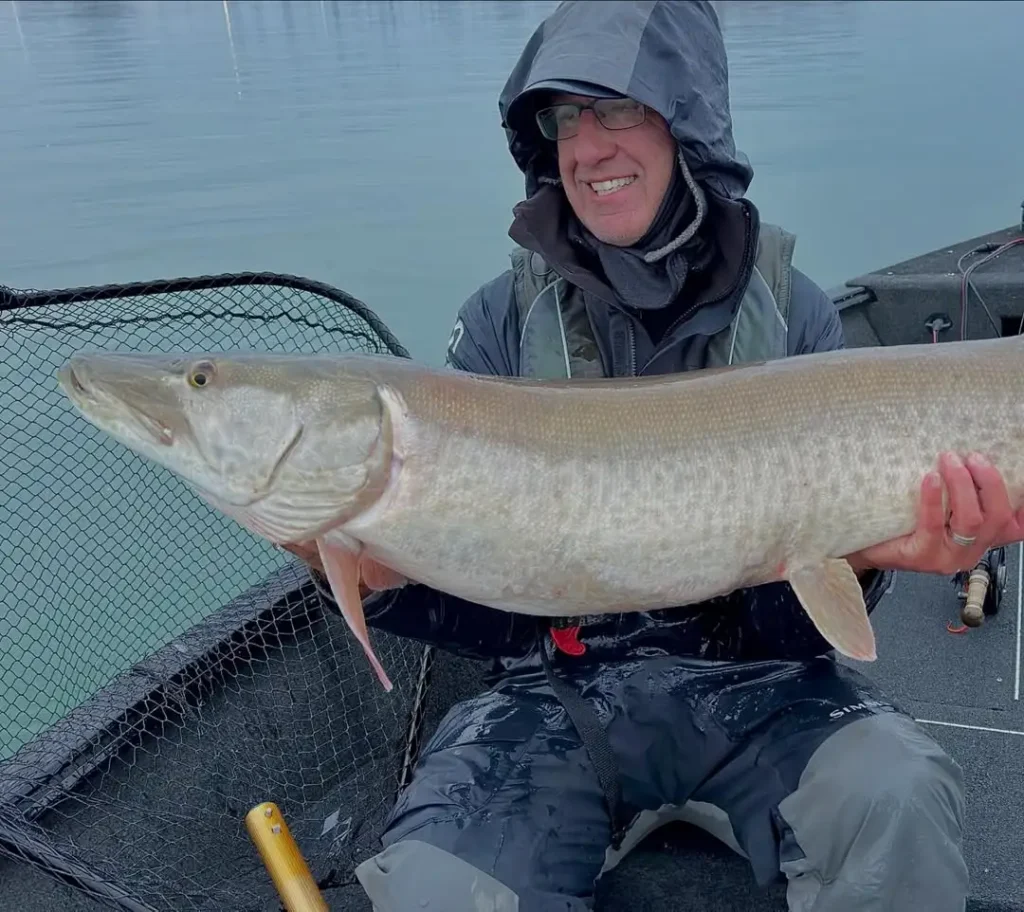
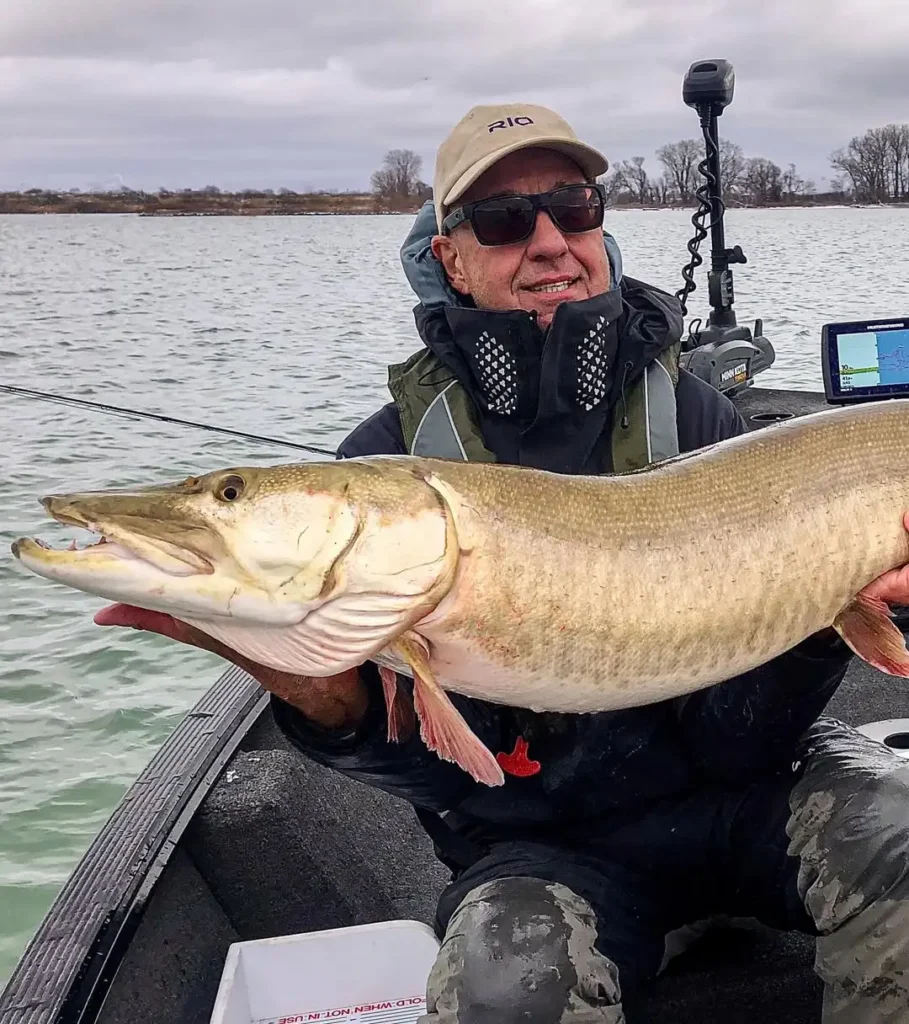
Musky fishing has a way of forcing you to evolve. You can put in the hours, make good casts, fish the right water—and still feel like you’re just missing something. In this episode, we break down a true musky fly fishing playbook with Rick Kustich, built from years of refining what actually works.
This isn’t theory. It’s a look at the exact adjustments Rick has made since writing his book—and how those changes have led to more consistency and more big fish.
If you want to tighten up your approach and fish more efficiently, this one hits the key areas.
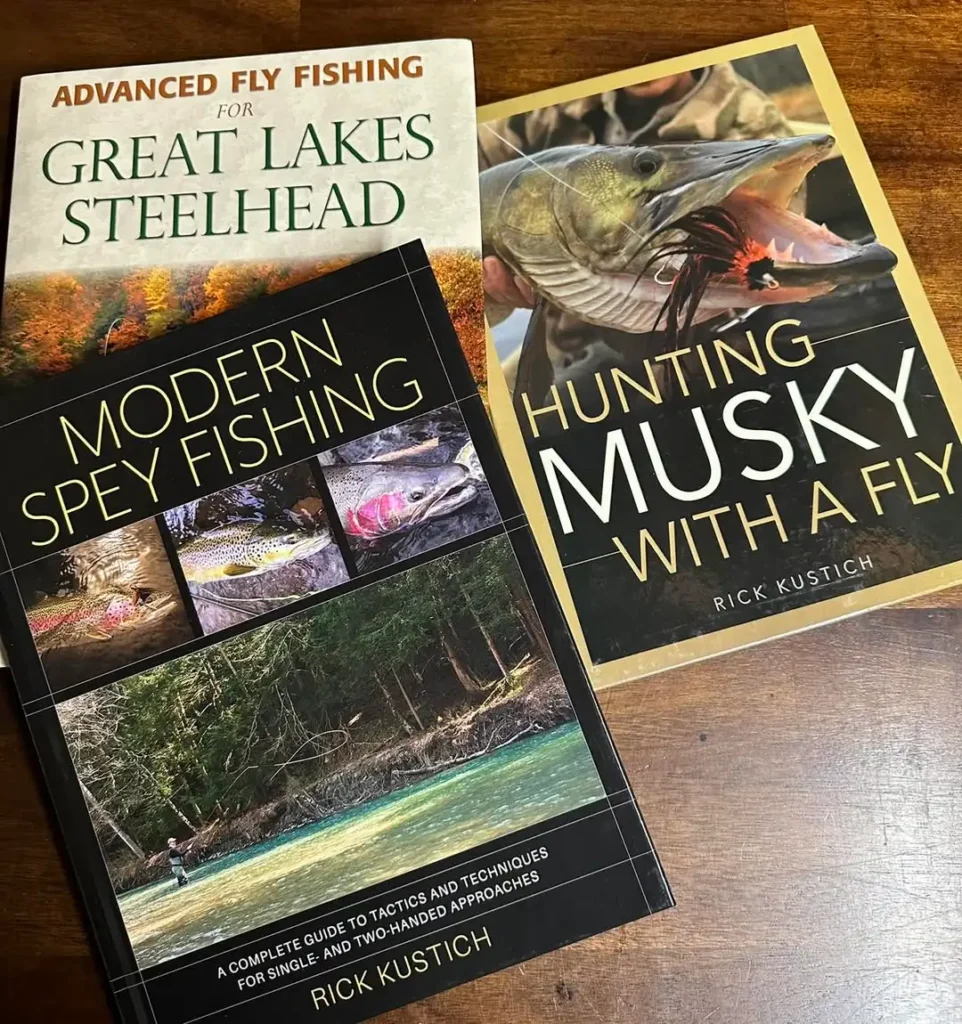
Rick opens by reflecting on his book, Hunting Musky with a Fly, which came out in 2017. While the foundation still holds strong, a lot has evolved through time on the water.
This episode acts like a next chapter—refining ideas and expanding on what’s proven itself since then.
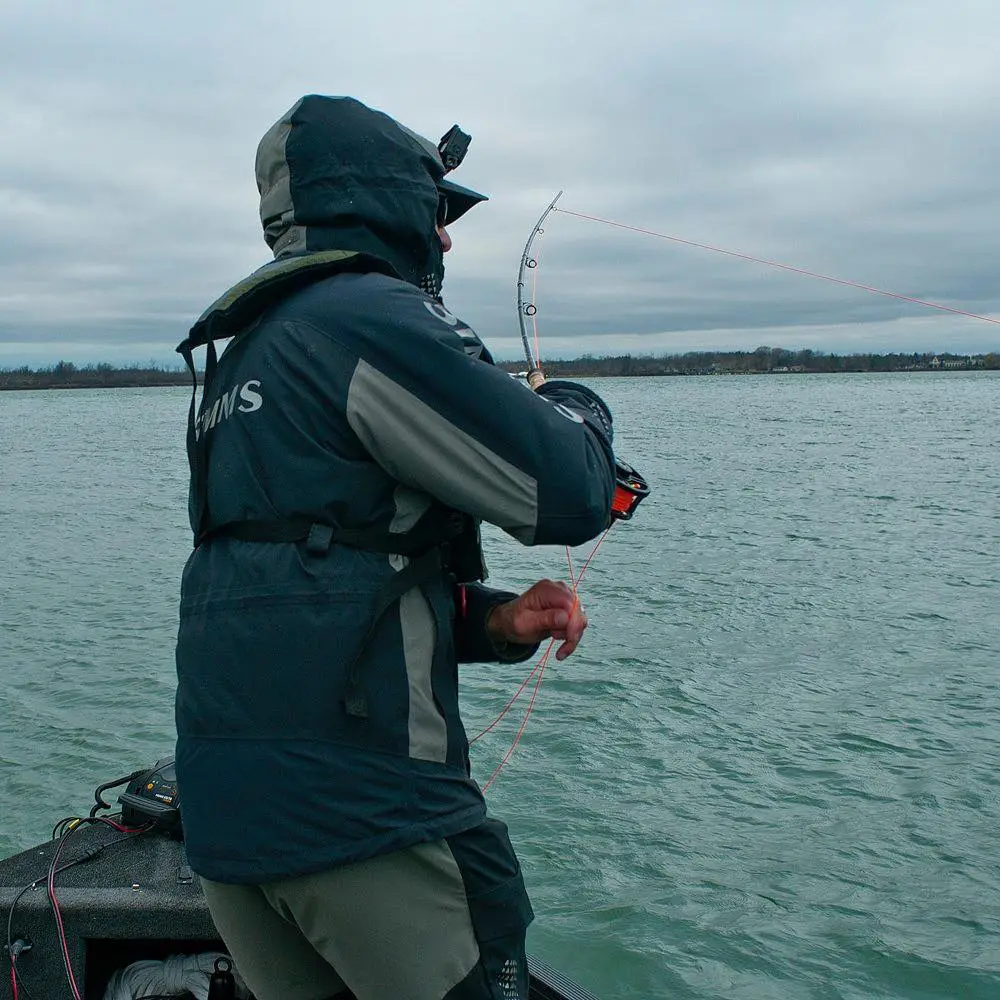
If there’s one thing Rick points to as a game changer, it’s two-handed overhead casting.
This isn’t Spey—it’s a standard overhead cast using both hands to create more line speed and reduce fatigue. The result is more efficient fishing and better coverage.
He also emphasizes shorter shooting heads (around 23–25 feet) to speed up the casting cycle.
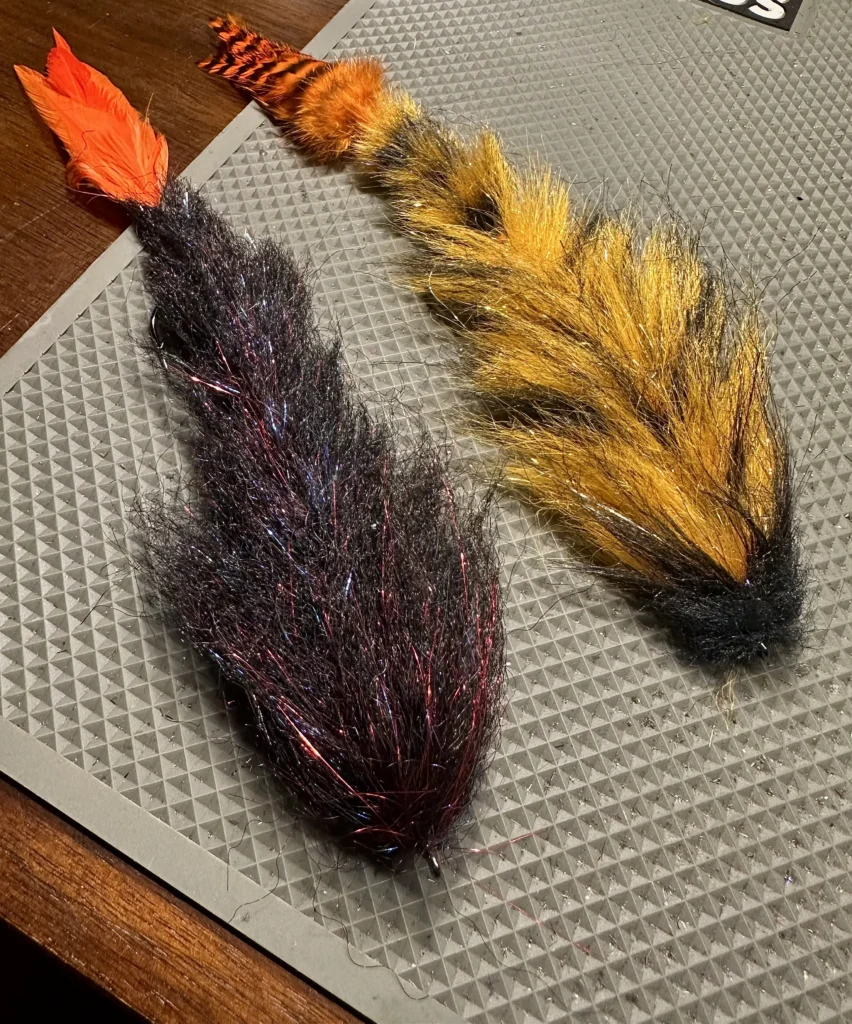
Rick has moved away from constantly experimenting with new patterns and instead focuses on a few proven designs.
He also warns against over-changing flies just for the sake of it—often that’s more about the angler than the fish.
A fly can look incredible in your hand and still fail in the water.
Rick pays close attention to how his flies behave during the entire retrieve cycle.
If the fly doesn’t maintain a lifelike profile, it’s out.
Rick has found that this improves hookup rates depending on how the fish eats.
This is one of the biggest takeaways in the entire episode.
That means every cast needs a strong finish.
He also mixes depth changes—deeper near the boat, higher further out—to trigger reactions.
Hooksets are a major difference-maker, and Rick has clearly sharpened this part of his game.
The rule is simple: if anything feels off, set hard—and don’t stop.
Sometimes fish eat and move toward you, creating slack. That’s where fast reaction matters most.
Once the fish is hooked, maintaining pressure is everything.
Rick stresses keeping a deep bend in the rod the entire time.
He notes that a lot of flies fall out in the net—proof that pressure, not penetration, kept them pinned.
This is the intangible that ties everything together.
Rick talks about building instincts over time—learning from every trip and using that knowledge to make better decisions.
Sometimes it’s not about logic—it’s about trusting what experience tells you.
Episode Transcript
00:00:00 Rick Kustich: This is Rick Kostick, author, guide and travel host, and you are tuned in to the Hunting with the Fly podcast, where we dive deep into the strategy approach, flies and culture surrounding the fly fishing pursuit of apex fish like muskie, pike trophy trout and saltwater predators. Fooling a fish at the top of the food chain requires the focus and commitment to understand the quarry’s habits, going beyond simply casting and retrieving a fly. Each episode is geared towards information to improve your angling and enjoyment of the quest. If it concerns big flies and aggressive eats, we have it covered here on the hunting with the Fly podcast. Please stay tuned. Welcome to the hunting with the Fly podcast. I’m your host, Rick Hostage. Instead of visiting with a guest today, I’m going to fly solo and the subject again will be Muskie. While in the future we will cover a number of other apex fish. I feel like one of the things I’d like to accomplish with podcast is to extend what I’ve written about in Hunting Musky with a fly. That’s my book that was released in twenty seventeen. And at this point, that information is about ten years old, and I think it’s very relevant still. Um, when I look through it and still receive good comments from, from readers that it’s helped them quite a bit. At the same time, I’m, you know, I fished a lot since then. I learned a lot when I was writing that book. And, uh, I have fished many days since writing the book and I, I think that there have been a number of, you know, concepts, approaches, things that I do maybe not necessarily differently, but that I’ve expanded upon that I think has helped my success in the last few years. I think it’s helped it significantly, as you know, really, in probably the last six, seven years have had some, some really, uh, some good success and particularly on bigger fish. And I do think there are a handful of things that kind of stick out, pop up that, um, you know, that have certainly led to that success. So I just wanted to go over those. I picked out five things today, five items that I would like to talk about expand upon. If after listening to the podcast, anyone has any questions, you know, certainly reach out and ask me. I think even in the future, you know, as I receive questions, I may use those as a future episode as well. So one of the areas that I’ve harped on, if you follow me on Instagram or on, uh, YouTube, something I’ve harped on for probably the last five, six, seven years is using the two handed rod for muskie fishing. And this isn’t Spey casting. It’s overhead casting where we’re using two hands, but making a standard back cast similar as you would with a with a single hand rod, and then delivering the forward cast by shooting line. Um, similar to when your muskie fish with a single handed rod. The key thing here is that you’re using two hands. You’re engaging two hands. That bottom hand pulling in, creating a fulcrum action with the top hand creates a tremendous line speed. And I think, uh, you know, even more so, you know, more speed than you would normally get just with, uh, a good double haul. And it’s simpler and it’s easier, uh, you know, on the body. So from my standpoint, you know, the, the two handed casting approach, you know, is the way to go. If you, if you, you look at gear anglers on Muskie, River Lake, almost all or, you know, essentially all are casting two handed rods and the reason for the same thing, that fulcrum action, you know, allows them to propel these huge baits, uh, long distances. And I think, you know, as fly anglers, you know, it’s, we should be kind of following suit, doing the same approach now, you know, it’s not for everybody, the two handed approach and I, and I can see some limitations. So I mean, everything in Muskie fishing tends you have to kind of look at it and see if it applies to where you fish. And, you know, if you tuned in to last month’s episode with Joe Goodspeed, we talked a bit about that, that environment’s certainly have an impact on how muskies react. And they live in such a wide range of environments. So if you’re fishing mainly smaller rivers, uh, areas where maybe you need to make really accurate acute casts, you know, possibly the two handed rod isn’t the best approach, but for just covering water for, you know, making good long casts every time and keeping that fly in the water. Uh, I think the two handed rod is, is certainly an advantage and something that, uh, really everybody should consider if you’re a, you know, a muskie angler. Uh, so the things that I think about with, with the two handed rod is that it creates a tremendous efficiency. So I’m able to get that fly back in the water. So I complete my figure eight, I’m able to get that fly back in the water and really just a matter of seconds. Um, sometimes I can do that and just one false cast. And I’ll also caveat this that I have fished with some very good single hand anglers who are also very efficient with their single hand approach. They can make, you know, a cast, get the fly back in the water, you know, with a, with limited back gas, usually one back gas and they got to fly back out there. Yeah. This is Muskies, a statistical game. It’s about flying the water. The more they fly in the water, it just. It’s not all just, you know, haphazard fly in the water. But if you’re fishing good water, the more your fly is in the water, the more you know chances you have of showing your fly to a muskie that’s, uh, that’s going to interact with it. So it’s, it’s sometimes I don’t want, don’t want to boil it down to just being that simple, but in some ways it is that simple. So the more efficient you can be with your cast, the more success you’re going to have. And getting back to that, the two handed cast, I’m able to get that fly back in the water, usually with one, maybe two back casts at the most, and then extend out seventy, eighty, ninety foot cast with the big fly. So really the efficiency is number one for me, uh, with the two hander. The second thing that I think is really important about it, from my standpoint, especially as I get older, is that really reduces the wear and tear on the body. I’m not making that cast with with one arm, you know, one one arm, one elbow, one wrist. Um, I have two hands involved, actually. You get your whole body, your whole torso involved in the cast. The the only the, the biggest fatigue I’ll feel at the end of the day isn’t in my arm. It isn’t in my shoulder, not my wrist. But, you know, I’ll feel it in my back. And it’s mainly because you’re using your entire body. So if you can spread out the energy that you’re using to cast and can spread it out throughout your body like that, you’re really going to reduce the fatigue and the potential injury to one of your joints. And again, that’s really become important for me as I get older. I feel like for muskie fishing, it’s important to stay in good shape. Typically at the gym two to three times a week, do weight training. You know, I think that’s all very important, you know, as, as, uh, as you progress in age to maintain that strength, to be able to make, you know, cast all day long. I want to be able to cast if it, if it requires eight, ten hours out there, I want to be able to fish for eight or ten hours. But the two handed rod is certainly helping me to do that. It’s not a substitute for staying in shape. And I’m not saying I’m going to the two handed rod because I can’t cast a one hander any longer, or I don’t want to, but it just makes perfect sense to involve the entire body when you can. Like that. The key to the two handed cast is line control, and I think that’s where anglers that want to convert from single hand to two hand have probably the biggest hurdle. I’m maintaining my running line, so I’m always, when I’m making the cast, just as you would with the two handed or with the single hand rod, you have to get the head of the line past the tip so that you can then propel that head and pull the the loose running line that you have at your feet. You know, so the motion to kind of get the head, I’m going to be stripping that fly back so that it’s within a foot or eighteen inches of the tip of the ride every time to do my figure eight, what I do is just kind of strip that or sweep the ride to get most of the head of the line past the the tip of the ride. Sometimes I can get the entire head past the tip. I’m pinching off the the line with my index finger or index and middle finger of my top hand. So you’re going to have your top hand, bottom hand on the ride. The top hand is typically going to be your dominant side, uh, your dominant hand. So I’m controlling the running line. Or the line with that is I make my back and forward cast. I’m trying to let some line out so that I can get to a point where the head of the line is past the tip. I’ll make you know one. Usually it takes good two good falls casts one to kind of get the head past the tip. The second falls cast just kind of line everything up and again, maintaining that tension with the index finger or middle finger of your upper hand. And then as you make the the forward cast pulling in with the bottom hand pushing with the top hand, releasing the line. Then with the index and middle finger, there’s a point where I kind of transfer that line. So I’m holding as I’m doing the figure eight, I’m holding the line with my left hand. Uh, and then as I begin to make that cast, I kind of transfer that control of the, the, uh, the running line or the line, you know, initially the head, than the running line over to the the fingers of my my top hand. I have a couple videos on YouTube and just under my name, Rick Husted, fly fishing. Uh, one kind of goes through the entire sequence of making the two hand cast and the other video then, um, just covers the, the line control and I think both of them in tandem work out. Well, I think they really kind of show how to, to make that cast and make it efficiently. And, um, it’s really something that I, you know, recommend that you consider, especially if you’re covering big water, if you’re, if you’re covering lakes, big rivers, anywhere where water coverage is the key. Uh, you know, I think the two handed rod is, you know, really an essential part of, you know, at least my success on bigger water there has, you know, the thing about it too, is it allows me, I, I make it’s not just making the cast, I’m also making quality casts. It allows me to get good turnover every time I get that fly fishing. You know, almost immediately you really don’t want, you know, Slack is, uh, you know, the enemy when you’re when you’re muskie fishing, you want to get that fly to turn over. You want when you start stripping that fly, you want that fly to start moving and, you know, just getting good turnover, good strong casts, um, making every cast count, you know, is really key. The one thing that’s kind of lagged behind in the two hand Muskie game, though, has been the lines and for a number of years. And you’ll even see that if you look in my video that I’ve had for a number of years, had to just make my own lines. Um, but in the last few years, the line manufacturers are starting to take notice that there is some growth here in the two handed overhead casting, uh, space and are starting to produce some lines. I, I was testing some lines, some prototypes from, uh, Rio last fall. Um, I thought they were excellent. And, uh, from my understanding, there will be, um, some versions of those lines being released sometime this year, hopefully. I know that S.A. is also, uh, produced some two handed, you know, muskie lines as well. The key for me though, is that the, the head be fairly short. And the reason for that is the shorter the head, the, the quicker, the more efficiently I can get the next cast started. And that’s really the key to me. If you’re, if you’re going to be efficient, uh, efficiency, you know, begins with being able to get that head past the tip of the rod quickly so you can really, uh, limit the number of false casts that it takes to get the next cast started. Like I said, when I can really get in a groove, if I can get it down to one false cast, you know, that flies back in the water almost immediately. So a long had thirty feet just becomes problematic to me. Anyways, getting the head past the tip of the rod. So I like somewhere in the twenty five foot range, twenty three to twenty five foot. Uh. If you go too much shorter than that, a lot of times you don’t get good turnover. But somewhere in that twenty three to twenty five foot range seems to be the, uh, seems to be the key for me anyways. Um, there’s a number of two handed, uh, rides on the market and there’s others that, you know, aren’t really designed, you know, they’re like nine foot four inches, maybe not really designed for two handed casting, but can be two handed cast. The one thing about most muskie lines, so a two hand, a good two handed rod has that extended lower butt so that you can get, you know, that fulcrum action so you have something to grip with the bottom hand. So you can pull in with the bottom hand as much as you’re pushing with the top. Uh, and there are a number of, um, rods on the market that are designed for just for two hand, I shouldn’t even say a number. There’s a few that are designed for overhead casting. And then there’s a number that because they’re muskie rods, um, they have that extended handle and the extended handle on a muskie rods just basically there to be able to do the figure eight movement. But it also, uh, accomplishes being a bottom grip for two hand casting as well. So anything, you know, in that nine foot four inch range and up to maybe ten feet, you know, make good two handed overhead casting rods. And again, I think as this style of casting fishing becomes more popular, um, there will be more options on the market as well. So again, I think that that’s enough on, on that topic. But yeah, I can’t, I, if there was, if I had to boil down the one thing that I’ve done differently in the last ten years that has led to success on Big Water. It’s two hand overhead casting. There’s no doubt about it. The next thing that I wanted to talk a bit about is fly design. And in the book, Hunting Muskie with the fly really I think goes into depth on various fly designs. And I know I’ve had good comments in the past from, uh, from anglers indicating that it’s just been a really good instructional guide in terms of various patterns. And, you know, I know things have advanced again in the last ten years since then. I see some wonderful patterns out on Instagram, great tires out there, and really have advanced a lot of the concepts that are in there, which is great. I, over the years have tried many different styles. You know, I’ve kind of relied a lot on Bucktail Sleepin, uh, Icelandic Sheep and some of my earlier patterns that, you know, were quite productive and a lot of flash. Um, if I look back at some of my patterns and again, they worked, uh, but if I look back at a lot of them, you know, they, they kind of condensed in the water. They got kind of skinny. They didn’t maintain the bulk and profile that I kind of like in a, uh, musky fly at this point. So really where I’ve kind of landed in the last probably five, six years. And I, you know, the one thing that that amazes me is I, I have a box of flies down in the basement that, you know, he kind of, and I’m sure this is not just me. I’m sure a lot of anglers do this. Um, you tie flies, you have a box full, you know, and then slowly you kind of go in a different direction and in different style. And then you take some of those old flies out of the box, and they just end up in a shoe box or a, a bin or something, you know, in your tying area And, um, that’s certainly the case with me. And I got a big, you know. Plastic bin down there with, you know, flies that are fifteen, twenty years old that. You know, I don’t just they got out of the rotation. Let’s just say that and. I look back at them and I think sometimes why did I move away from that style or that color or that that type of fly when, you know, some of those flies were quite productive. But it seems like you have this I, and I think most of us are this way, just have this need to try to keep improving and tweaking our flies. And, uh, you know, and I, and I think in musky fishing, the fly can make a huge difference. And at the same time, I’m not always sure it does. And I think, you know, really developing something that you have confidence in and that has worked in the past and sticking with it might be as important as is anything. So I’m kind of taking that approach going forward. Um, instead of trying to keep tweaking and, you know, changing just for the sense of changing and thinking that that’s going to be the cure all. Uh, I’ve kind of arrived at, you know, the style that, that I like and certainly nothing that I’ve developed myself. Um, but I’ve arrived really at just using game changer style flies. Um, you know, I’ve had the pleasure of being able to fish with Blaine a number of times and, um, you know, I’ve had the opportunity to kind of talk to him and, and pick his brain a bit on, you know, how he developed the fly and, uh, you know, what styles and you know, what types have worked best for him. And so through that kind of process, you know, I’ve been tying probably for the last I, I was tying a number of the game changers with, with Bucktail and, uh, sleeping for a tail. And those were pretty productive. Um, the one thing that I see with, you know, even, you know, when I support the bucktail up, I mean, they, they take a while to tie. I mean, they’re, they’re definitely time intensive. You know, the bucktail tends to break down a bit, particularly when you, when you catch a couple of fish and you get that bucktail in their teeth, you know, it just tends to, you know, you catch a few fish on a fly and all of a sudden it doesn’t seem to look as good as it used to. So where I’ve arrived is just a, you know, game changers with synthetic brushes. And if you look, if you follow me on Instagram, you’ll see I posted, you know, those style flies, the type of flies that I that I tie now, you know, quite a bit. And I really feel like in the last few years, you know, I’ve, I’ve, as I’ve condensed this down to really two or three different color choices that I can’t imagine that, you know, I’ve converted some big fish. I’ve converted a number of fish. You know, I’ve talked to Blaine about what he’s used in terms of, you know, what flies work the best for him. And, um, you know, I just developed such confidence in these flies that I’m trying to get my head in a place where I’m not thinking about changing too much in that area. Um, I want to, I want to just kind of stay the course, you know, with the, with the style. I’ve developed a lot of confidence in it. I think it’s an approach that I’ve also used with, with steelhead fishing. You know, you know, in my, my trout fishing for, uh, with streamers, you know, I get a handful of flies. And I think some of this comes from the fact that, you know, I fish and, you know, I think listeners can relate to this. You fish for so many different species that, you know, you’re tying a, you know, a number of different flies during the course of the year just to kind of, you know, keep your boxes full for everything you’re fishing for that, you know, for at least for me to kind of keep things simpler. It’s, it’s just so much easier if I can kind of just have my hand full of flies for each species. And that’s kind of where I’ve arrived at with Muskie is just kind of staying the course. Like I said, with this style, with this game changer style synthetic brush, just it has a great silhouette in the water, great movement in the water. I can, you know, the variety of different colors. Uh, so that, um, you know, I’m using my, my go to and my home water anyways is black, black and orange tail. Um, but I also have some, you know, tan and more natural colors, particularly when the water’s real clear. We get bright sun things of that nature. So, uh, yeah, that’s, that’s my at least my mindset. And, you know, I do encourage, you know, other anglers because I’ll fish with some, you know, some other muskie anglers that I think get hung up on the constant fly changing. If you haven’t seen a fish in an hour or two. You know, the idea that it’s it’s got to be the fly or that, you know, and sometimes making a fly change is, is good for the head. There’s no question about it. If you fish a whole morning, you haven’t seen a, you haven’t seen a musky. You know, sometimes just making that change is good for your, your mental psyche. But for the most part, you know, if we’re, if we’re making the changes mainly for us and not for the fish, I think in terms of even that one or two casts that you miss because you’re changing your fly is, you know, time that your other fly could have had in the water. You know, you just never know when that musky, that next musky is going to come along and, and when you’re going to encounter it. So, but the, the thing with that is using if you are, you know, going to change a number of flies during the course of the day using some type of a swivel or the, the quick connect to make fly changes at least makes it more efficient. And you’re able to keep the same length of your, your bite guard. The one other thing I’ll talk about with, uh, well, a couple things. A couple things with flies before we move on to the next topic. Make sure your fly looks good in the water. And I guess what I mean by that is not even just, I mean, a lot of flies look great at device. This isn’t just muskie fishing. It’s all kinds of, you know, everything that involve. I mean, it’s with my steelhead. It’s with with trout streamers and things of that nature. Sometimes a fly looks great. Put it in the water and, you know, it just doesn’t move or condenses down or proportion seems wrong. Um, you know, I always like a fly that, you know, almost everything, everything in the water has a more of a tapered look, you know, most most bait a little wider at the head, a little skinnier at the tail for the most part. So I kind of like having that look in the water. And sometimes you just you put a fly in the water. It just doesn’t look like that. And, uh, that certainly is something that first, you know, I don’t want to fish a fly that doesn’t have a life like look in the water. So I think that’s the first thing that’s important, but also how it looks when you’re retrieving or stripping the fly. I guess what I mean by that too is sometimes I’ve had flies that look good. You know, when I strip them, they look pretty good. But that in between, like when you strip and let that fly glide a little bit, you know, I’ve had some patterns that kind of just look bunched up, you know, so all of a sudden the shape of the fly kind of changes because of, of how it’s constructed and how it’s tied. I don’t like that. Look, I don’t like that something. I mean, I just don’t think anything natural in the water when you move it all of a sudden, you know, kind of just changes its silhouette dramatically. And I just don’t think that looks very natural. So I like to have my fly kind of look, no matter whether it’s swimming with a constant strip or during the strip or if it’s just gliding after it’s stripped. I like to make sure that that fly maintains the look of of a natural bait and um, you know, so take a look at your flies in the water when you, when you strip them, make sure and some, you know, I’ll say some flies actually fish better with a certain type of retrieve, you know, if you’re given a, just a really sharp movement, sharp stripping action so that, that fly really jumps. Uh, sometimes the fly looks better with that action. Sometimes it doesn’t. Um, so there are fly patterns and some that I tie that, uh, you know, that I’ll use with different retrieves just because they’ll one retrieve looks better than another with that particular fly. But look, your fly, just make sure it looks natural in the water. I do really think that that’s an important part of a, of a good and try to, you know, make sure that your retrieve, you know, coincides or accommodates the way that fly is constructed. And again, that’s one of things that I like about, you know, the game changer style is it really does seem to maintain that silhouette and that look in the water throughout the various types of retrieves that I like to perform during the course of a day. So that’s a really another vote for that. The last couple things I’ll say with this is just two hooks. I prefer two hooks in my flies. For a number of years, I used one just kind of positioned in the middle. And I think that’s fine. Um, but I have found where having a hook positioned in the rear and a hook positioned right in the front seems to make a difference. I have noticed that when a fish grabs the fly further away from the boat, that I tend to hook that fish with the rear hook. And when I get a fish that takes right next to the boat, figure eight or just comes out of nowhere and eats the fly, I tend to catch that fish on the front hook, I tend to. It seems like the fish, the muskie. Eat that fly head first when it’s, uh, you know, in that situation of, uh, of a turn or a, you know, an attack right next to the boat. So I like the two hook approach. Um, I think the key with it, and I’ve really had to work on this, but it’s to get those hooks positioned just right so that when you’re making your cast, you’re not following, you know, there’s generally if you make a good cast and get good turnover, your, your two hooks aren’t going to foul. But if they’re not designed properly, if that back hooks a little kind of too long, or if the proportions between the hooks are too long, or the hooks a little too free in the back, um, it can kind of either catch the other hook or catch the body of the fly, uh, and foul and you just don’t want that. Um, you know, if that’s happening, you need to, you know, redesign that fly. That’s one of the advantages of the single hook. At least it eliminates that. But I’m a big proponent now of the two Hawks. And I’m also a proponent of really sharp hooks and sharp out of the package. I like a long point, a long, straight point. I don’t like a point that kind of curves up a little bit. I want that point straight, long. It just feels like it seems like the longer points, straight points will get into that bone and cartilage a little bit more. And sometimes I don’t even think that the, you know, the hook gets in real deep. We’ll talk a little bit about this in just in a second here. But you know, a number of fish that I’ll get in the net, the fly will just fall out. And I know that it was just the, the point of the hook that was in there. That, uh, was how I could land that fish. And, um, you know, I really do believe having that long straight point is just enough. A lot of times to, to continue to, you know, maintain that connection with the fish. As long as you keep a deep bend in your rod when you’re fighting it. I have arrived at, and it’s not even really a musky hook, but it has served me so well that, you know, I’ll share this with you. But it’s a gamakatsu and they call it the heavy cover worm hook, but it’s a five hook. It’s kind of got an odd attachment to the, the front of the shank. Uh, and that’s there, I guess, to keep your worm on. But I wish they made that with, I wish they made this exact same hook without that on there. So it’s a, a little bit of, uh, an encumbrance when you’re tying on this hook, but it really doesn’t bother me too much. Um, but the success I’ve had both hooking and landing fish with this particular hook has exceeded anything else I’ve ever used. So, you know, not, not I designed as a muskie hook, not really designed as a predator hook, but it certainly is. You know, from what I can see, one of the best on the market in terms of, um, hitting the objectives that I want for a musky hook. So okay, well, that’s, that’s my thoughts on flies fly design. Yeah, I’m a pretty simple guy when it comes to trying to keep my, my flies straight. Um, I think some people that fish with me are a little surprised when they look at my fly box, and it’s not a little more extravagant, but, you know, I’ve come to know what works and have developed great confidence in that. And to me, that’s worth everything. And just going to continue to, uh, you know, continue to ride that until somehow some at some point that, um, I don’t think that’s the case anymore. But, uh, as long as it is, I’m going to continue to, uh, go along with that approach. So that’s, you know, covering flies. Um, the next topic I wanted to talk about was the figure eight and outside eats. I would say on a typical year, you know, I think I get this question. How how many, you know, maybe percentage or how many fish during the course of the year? Do you get an A figure eight or next to the boat? And for me, it seems to be quite a few this past year. Uh, if I, yeah, I’d say it was probably thirty to forty percent of the hooked fish occurred right next to the boat, either while I was aggressively or, you know, intentionally doing, you know, performing a figure eight with a fish following or where I started a figure eight and the fish came out of nowhere and ate the fly. So I would say thirty to forty percent. If you’re not paying attention to your figure eights, you’re, you’re really, you’re missing a large percentage of the opportunity to hook a muskie. I’m stripping that fly down. Typically how I’m rigging. And I do have a video on YouTube as well on how I rig my leader and my line. Um, but my leader will generally have about an eighteen foot, eighteen foot, eighteen inch piece of wire that goes to thirty pound or forty pound fluorocarbon for the leader. And then the other end is a, you know, quick attach connection to the fly. Um, but I’m going to strip down to that knot between the fluorocarbon and the wire every time. And, uh, that’s so I got that fly about eighteen inches away from the rod tip. So I’m going to strip down and I’m going to begin my figure eight. Whether I see a fish following or not. I usually do two to three rotations and I refer to it as a figure eight. A lot of times I just do an oval. So the oval, it just, I guess from, from a mindless standpoint, it’s just easier. Um, you just essentially strip that fly in. Got the line pinched off with my top hand, the right hand against the cork. I got the bottom. The line also pinched off against, you know, the the bottom handle with my my left hand, my non-dominant hand. And just in case I need to, to grab that line for line control, I do have. And again, another, another video on YouTube related to to the figure eight as well. Just kind of showing my approach, but I like just the idea of just doing these, these big wide. And you want to do wide turns. I often see where, you know, if I have an angler in the boat or a friend or client where they’re not making those wide turns, you really want to make sure that when you’re, whether a fish is following or just, you know, you’re just doing the, the figure eight, the ovals, you want those wide turns because that’s what shows the fly on a broad side basis to the fish. That’s really the attack angle they’re looking for. So if you don’t do the wide turn and a lot of times two, if you have a fish following you. If you don’t do a wide turn, you’re actually, you know, if the fish is following lazily, you’re going to move that fly right back towards the fish. And that’s, you know, the most, you know, unnatural movement you could have is moving your fly towards a towards a muskie. I’ve never seen one eat. When you do that, it always, you know, you don’t want that to maintain that position of being in a chase mode. So stripping that fly in down to the to the wire, making big wide turns. And I usually use a fairly aggressive approach on my water. And again, this is where things I think can be specific to how fish tend to react in different waters. Where I fish, the water tends to be clear from a good portion of the year. It’s, you know, a luxury when we when we can get some stained water definitely makes a difference in the number of fish that we hook on the water stained. So what I you know, what I like to do is try to engage that fish right away. So if I have a fish following, I tend to speed up that fly, try to get that fish to engage in the clear water. It just seems like the the enemy is yourself. You know, they’re coming up, they’re following the the muskies following the fly. And at some point, if it doesn’t really kind of engage in that fly, it sees the boat. I think more even more importantly, it sees, you know, you kind of hovering over the, the water with the rod. And I do think that is what tends to spook the fish. So if you can kind of engage that fish so that it’s clearly focused on the fly during the, during the figure eight or oval movement. And I think at some point it just forgets about you being there or so more intent on attacking the fly. Um, you’ve kind of one, you’re starting to win the game anyways, because I think if I keep it in enthused and interested in the fly, I have a good chance of catching that fish. So what I like to do then is really get aggressive with the with the movement, kind of speed it up, speed it up into the turns, continue to speed it up throughout the rotations. You know, I’ve had fish follow around four or five, six times. Uh, and then finally eat it. Uh, you know, as I continue to increase that speed. So that’s my one, that’s my go to approach, particularly on my water. And, um, you know, it works. And, you know, again, this year had some fish that took the fly on the figure eight had some fish that came out of nowhere when I was just starting the figure eight and ate the fly. So don’t ever half ass it. Make sure that every time you do the figure eight. And no matter if you’re you’re tired or not. I mean, it’s the one time you let you. You get lazy with it that there will be a fish following and you know, you’ll lose that opportunity. But like I said, there’s certainly a, you know, more than one way to do this. And you know, what I think is important to look at is how fish react in the water that you fish. And sometimes I’ve noticed in other places that, you know, this very aggressive quick movement that I employ for, you know, the water in my my home waters isn’t, as, you know, as effective other places. Sometimes just a little bit of a tease. So if you, you know, sometimes you just need to read the body language of the fish. You know, if you’re, if you’re stripping that fly in and it’s, uh, coming in fairly slow, if you’re using it just a slow approach, you know, trying to mimic an injured bait and then all of a sudden, you know, it’s not going to be natural for that, that fly to just all of a sudden take off and start, you know, going in a fast rotational movement. Sometimes continuing that tease can be what will trigger a fish to take, particularly as the fly gets closer to the boat. So if that fish is interested in, you know, this slow approach, this teasing approach, you know, sometimes continuing that on and then going in, just continuing a tease right into the figure eight can be effective. So sometimes, you know, it’s just important to read the body language of the fish. And if it’s showing interest in that slow approach, that teasing approach, you know, continue that and you can continue that right into the figure eight by just teasing it, maybe speeding it up a little bit as you go into the turns and then continuing the tease. Another trick with the figure eight or the oval is to change the depths. So go a little deeper when when the fly is closer to the boat and as as you reach out further away from the boat, either in the figure eight or with the oval, kind of bring that fly up a little bit as you reach out. So kind of changing the depth can be a good approach as well. So, you know, don’t just rely on, you know, this, I like the aggressive approach. But you know, I think the summary there is read the body language of the fish. If the tease is working, continue the tease into the the. Figure eight and utilize some speed into the turns of the. Figure eight to try to convert that fish into taking. The next area that I will talk about is the set the strip set, and I think this is an area where I know that I have really strengthened my game over the years. Um, I can think back, you know, twenty years ago or so where I had a few very weak hook sets that I wish I could have over again. I have trained myself to make sure that my reaction is to strip with my left hand or stripping hand and not use the rod unless then I’ll talk about a caveat on that. You know, close to the boat hook sets. Sometimes you need to use the rod, but I really have trained myself to strip set. I think one of the. And strong strip sets and we’ll talk about that here. I think one of the first step towards doing that is when you’re stripping your fly, keep your rod tip in the water. I think that helps a couple ways. It helps kind. You know, I think with stealth keeps the line a little quieter. It’s not ripping on the surface, but it also helps to prevent you from using the rod to set the hook. Because that rod tips down in the water, it’s hard to kind of lift it through the water. I think it helps to make a decision. Making your first reaction to be a strip, as opposed to thinking in terms of setting with the with the rod. And certainly if he, you know, it’s a bit of a, a transition if you’re if you, you know, your background is fishing for trout and you do use the rod to set the hook or, um, other, some other species where you’re using a rod set. It does take some time to train yourself to really focus on the strip, but that keeping the rod tip in the water is certainly one way to, uh, train yourself. You know, sometimes we get lucky and we’re just stripping the fly and all of a sudden, you know, you feel the weight of the fish. So you know that you’re fortunate that as you’re stripping the fly, you retrieve that at the same time a fish took it, turned on it, and you just strip into it and you get a really good corner of the mouth hook set and everything works well. And you land that fish, but not every eat is the same. And, uh, you know, sometimes a fish eats that fly. It will actually kind of drift towards you. You don’t really, you know, feel the weight of the fish. Uh, and, you know, unless you are aggressive with that hook set, that fish can drop that fly before you really even get a chance. So anytime that I fish and, you know, this is really one key thing to take out of this. Anytime you feel anything different. Strip. Set. Strip. Strip. Strip. If you feel a you know, a tick, um, just anything that feels out of the ordinary, you know, I think even the slightest tick can be, you know, a big muskie grabbing your fly or eating your fly chomping down on your fly, uh, has it in your mouth, has it in its mouth. And all you’ve really felt is just, you know, the, the tick of about the, the same as if, uh, you know, bluegill ate your fly or was, was nipping at your fly. So if you feel that strips that you can’t really harm yourself by stripping at that point and you know, all you’re going to do is continue to fly on its path. So, you know, you feel anything out of the ordinary. Another sensation that I have felt a few times and has resulted in, you know, being a fish, if all of a sudden your line just goes extremely limp where a fish has taken the fly and continued to move right towards you. I’ve had a few situations where when I’m stripping line, that line gets so loose it actually falls out of the the stripping guide. And, and it’s a weird sensation because all of a sudden, you know, you’re tight, you feel you’re tight to your fly and all of a sudden everything’s loose and it just feels really weird. But that’s a fish taking your fly, moving towards you so dramatically that it just makes everything in your system loose. And in that situation, you really need to to react quickly. You have to strip a lot of line just to get it tight again. And then you have to just, you know, continue the stripping motion to be able to set the hook. You know, what, what I think in terms of is the strip set just being continuous. It’s not just one set to get the fly in, it’s a continuous motion until you get that fish entirely tight, and then you can lift the rod and get a deep bend in the rod. But it’s again, think in terms of it being continuous. You know, I fished a lot with my good friend Nick piensa. And one thing that, you know, we’ve coached each other on is anytime, you know, you feel something and we’ll just keep yelling at each other. Strip, strip, strip, strip until you are tight to that, to that fish. And it’s really important. I mean, that can really mean the difference between whether you’re going to land that fish or not is how you react when it takes, like I said, sometimes it’s easy. Sometimes I mean, sometimes you can’t screw it up where a fish has taken that fly right at the right time turns on it. But that’s not every time. A lot of times the, you know, the fish are taking at weird angles and you just have to really get on it and be, you know, aggressive and meaningful with your strip set, you know, thinking in terms you’re using thirty, forty pound test, you know, if you have good knots, you’re not going to break anything. So it’s just important to to get them tight. And then after that, like I said, once you get that with a continuous hook set. Once you feel you’re tight to that fish, maintain a deep bend in that rod. And I think that’s critical. If you don’t have a really good hook set, particularly on, on fish that have taken the fly and then kind of continued towards you so that they haven’t really turned on it, um, there’s a good chance that it just hooked in some bone in the jaw or some cartilage on, you know, on the top or, you know, to, you know, somewhere in the, the lower mouth. You know, if you keep a deep bend and don’t let that fish have a lot of slack, you’re going to have a good chance of landing that fish, even if it isn’t hooked deeply. And yeah, I mentioned this earlier a number of times. We’ll get a fish in the, in the net and um, there just won’t be, it won’t be any need for players because of the fly will just drop right out. So and you know, really maintaining that deep bend is is important with that. A lot of the fish that I land, I just, you know, are just stripping line so they’ll never get on the reel. And I kind of prefer that because with that approach, you can gain line quickly. And that’s how I can keep a deep bend in that rod is by gaining line and keeping and really keeping that pressure on the fish. And I can get that better by stripping line and letting my index finger or index and middle finger be my drag, essentially, you know, pinch of my right hand pinched off against the cork. But I want to strip from behind that hand. And I just want to keep that that rod. I can’t overemphasize the importance of keeping a deep bend in that rod throughout the entire and throughout the entire fight. Uh, sometimes, you know, they will get on, on your reel. I had a big fish this past fall that just kept running and running and took all my loose line, even though the fish ate right at the boat and, uh, didn’t eventually get on to my reel. And in those situations, they’ll. Then you’re going to fight that fish from the reel. And, you know, you just have to really be careful because with just that one to one ratio on a, on a typical fly reel, you know, when that fish changes directions quickly, it’s hard to pick up line that quickly. So sometimes, even if I do have a fish on the reel and, uh, you know, I have it under control if it changes directions quickly starts coming at me. Um, you know, I’ll strip line, uh, and forget about, you know, using the reel and take up line by stripping it again. So, you know, just, again, anything you need to do to keep that, keep that deep bend in the rod all the way until you get that, uh, fish in the net. So that that’s the strip set part of it. But sometimes, you know, when you get a fish. So we’ll go back to the figure eight approach here. Sometimes when you have a fish that takes right next to the boat, or most of the time you’re in a position where you can’t really strip set, so you’re going to be kind of handcuffed. Or maybe you still can if it’s far enough away. But if you’re it’s right next to the boat. You’re starting to figure eight. Most of the time you’re going to rely on using the rod. And a couple things that I’ll say with that. First of all, just your rod design. You know, we. Talked about that last episode with Joe. Uh, it’s really important to have a strong tip of your rod. That you’re using. And I like a stronger tip for two reasons. One, it allows me to figure eight better. You don’t get that with the real soft tip. You kind of get a lag in moving the fly. So I’m able to. To control my fly better, closer to the boat. But it gives you that that strength. When you do have to. Use the rod to set the hook. Um, so I think that’s, you know, that’s an important part of your. Equipment selection. The other thing there is, and it can be difficult sometimes. And I’ve had this happen to me a few times. We’re official. Take the fly near the boat and still facing your position and it doesn’t turn. And there’s not a lot you can do in that situation. I mean, you can try to change the angle of the rod so that the fly is going to set from a from a side angle. But what I will say is when you do have a situation, if you can react when a fish takes a fly near the boat, try to have the angle where that fly is pulling back into its mouth as opposed to an angle where you’re pulling it out. So I even think in terms of that while I’m figuring I’m trying to position my rod so that if a fish takes, it’s going to be in a position where I’m, you know, kind of pulling back and it all it’s all happening so quickly that a lot of times that’s, you know, might be impossible. But I do think in terms of that and trying to get the right angle, if you’re going to make a boat sides sat on a fish a. You gotta make sure that it has the fly in its mouth and be, you know, firmly in its mouth. And b try to get that angle so that you’re pulling back into the fish so that you can maximize, you know, the hookset. But those are the those are the big things with, with the hookset and the strip set. And, um, again, I, I, I, I feel as though you, I’ve talked about, I talk about that in the book extensively. Probably these thoughts aren’t too much different from, you know, what I talk about there, but it’s an area that I know I’ve improved my game over the last five to ten years dramatically. And, uh, it’s led to putting more fish in the net. And, um, it’s just an area that, you know, I, I think you’ll develop with experience, but it’s just extremely important, you know, for continued success and kind of taking your muskie game to the next level. The last item that I’ll talk about here is just a pretty simple approach. Pretty simple concept, but it’s just using your instincts. And I guess what I mean by that is, you know, I’ll fish with some anglers that the other new to muskie fishing and maybe haven’t developed enough experience and developed enough instincts to know where to fish or how to fish. I’ve also fished with others that I think rely a lot on theory. You know, where this should be at this time of year. Um, but there is nothing that can beat the experience that you have on water that you regularly fish. And, um, what I really try to do is I try to learn every time I’m out on the water. And my typical approach is to, you know, visit my repertoire, I’ll call it, of spots that either have produced in the past or are showing signs that they’re a good spot for that particular year. For whatever reason, we growth eight. Whatever. And I’ll try to, you know, hit those spots maybe once a couple times. Every time I’m out, you know, my better spots, I’ll try to hit when the conditions are right. Like, you know, when I got a major or my minor, uh, feeding period, you know, relative to the moon phase or the moon, uh, position of the day. But I also almost every day try to just hit a couple other spots, you know, experiment a little, tweak a little, try to find that next hot spot. The one thing that I’ve noticed from year to year is that some spots, you know, are good every year, you know, or pretty good every year, or you can always find a few fish there every year, even though some years maybe they’re better than others. And then there’s other spots that, you know, I have fish that were really good for one or two years, three years where I saw a lot of fish and all of a sudden they kind of just fall off. And again, we growth bait patterns, you know, changes in just, uh, you know, the, the food chain structure of, of the water, all those things can kind of lead into whether spot’s good near or not. So I tend to kind of have almost a hierarchy of, I have my spots that have been good for twenty or thirty years, or at least, you know, where I think there could be a fish there. There have been spots that then are just more, you know, have popped up and then maybe have, you know, gone away. And I try to I try to recognize that. So I don’t beat up spots that no longer seem to have good potential. But then I’m also don’t want to rely on just what I know from, from years of experience. I do want to try to always be thinking and adding a, you know, a potential new hot spot. Um, so I do some experimentation, But I really think that, you know, maintaining some mental notes or, you know, written notes and you know, what you’re experiencing, what you’re seeing, and let that be a guide that, you know, sometimes a particular area is fishing better in one year and make sure that you visit that spot every time you go out every couple times. Don’t get locked in to areas that have just produced in the past. Try to always be updating your your knowledge base. But I think really the instincts I feel have helped me a lot in that, you know, and I’ll just give an example of, you know, one fish this year where I happened to see a fish in an area didn’t even follow, but it was just really clear water and saw it in that area like two weeks earlier and really just went back to, you know, kept on hitting that spot, but I didn’t want to overfish it. And, um, you know, on a day where I had dirty water, uh, and things were just perfect, perfect moon phase, we had a moonrise and hit that spot and really hit exactly where I wanted to hit and caught a big fish there. And it’s really just thinking in terms of, I mean, it sounds simple, but it is, you know, using all your information all the time. Um, that I think is what really what instincts is all about, you know, and a lot of times it’s, it’s not even just the thought process. It’s something that just naturally leads you to thinking that’s the right place or a good place to be at that particular time. So trust that, you know, especially I, I think this applies more to, you know, all angling and muskie angling and particularly to those that have developed some experience, particularly experience on your own water, You know that developing those instincts and letting them come natural, I think, is really the key part of this. I mean, you know, even this whole podcast series, hunting with a fly is really about the hunt. And the hunt is about, you know, understanding your quarry and, um, trusting your instincts to be that pursuer or hunter. And, uh, you know, I really think that’s a, you know, and I know that’s a, you know, that that topic really isn’t as concrete as the previous four. But to me, it’s, you know, I think as, you know, it’s almost a, an intangible that has developed that has certainly led to a lot of success. So I think those are really the, the areas I want to talk about today. I hope that this is helpful. Um, I think if you kind of dissect that and pick that apart, um, there’s something in there probably for all skill levels when it comes to all spirits levels, when it comes to, to musky fishing and, um, really appreciate that I’ve had this opportunity to expand upon some of the concepts that I had in the book, and hopefully you’ll find this find this helpful. Next month, I plan to interview Vince Tobia, and we’re going to switch it up a little bit to talk about Barracuda. And it’s going, I guess from my standpoint, Barracuda is the muskie of the saltwater. Uh, I’m really excited about that interview and, uh, looking forward to, to talking to Vince about his many years of experience, you know, in pursuit of barracuda in Florida and the Bahamas and other places in Mexico. So thank you for tuning in. Hope to keep this, uh, you know, the content fresh every month and, um, look forward to, uh, you know, a number of good discussions with guests and some other, uh, flying solo podcast here in the future.
This playbook really comes down to refining the details. Better casting, smarter fly choices, stronger hooksets, and finishing every cast with intent.
It’s not about doing more—it’s about doing the right things consistently.