Stephen Collector has spent decades combining photography, writing, and time outdoors. From photographing John Gierach for book covers to fishing in Alaska and documenting people and places, his career has connected him with remarkable anglers, writers, and storytellers.
Stephen Collector is a professional photographer, writer, and angler whose career has taken him from Colorado trout streams to the Florida Keys and Alaska. His work includes photographing John Gierach for book covers, documenting writers and anglers, and telling outdoor stories through both images.
[00:00:00] Stephen’s story brings together photography, fly fishing, literature, and the people who have influenced his life. From Colorado trout streams to Key West and Alaska, his career has taken him into the company of writers and anglers whose work has left a mark on outdoor culture. We begin by exploring how those connections developed and how they shaped his approach to photography and storytelling.
[00:04:46] Stephen reflects on the friends and writers he knew when he was younger, including Jim Harrison, John Gierach, and Russell Chatham. Looking back, he says a life of excess doesn’t necessarily lead to wisdom. His memories of these friendships add a personal dimension to the photography and stories that have stayed with him.
Gil and Linda Drake, who guided on the flats, were also part of the Key West fishing scene. The assignment brought together fishing, writing, and photography in a way that would remain an important part of Stephen’s career.
[00:10:28] Hemingway’s writing helped draw Stephen toward storytelling, and he was fascinated by the places Hemingway visited and the people around him. When Stephen was about 60 and fishing Wyoming’s Laramie River, he imagined Hemingway enjoying the river and wrote The Big To-Hearted Laramie, a tribute to Hemingway’s Big Two-Hearted River. The piece was published in Southwest Fly Fishing, where editor John Shuey allowed Stephen to write about the outdoors.
[00:17:53] After beginning to assemble his manuscript, Stephen reconnected with Ice Cube Press through a book project involving Russ Chatham’s Dark Waters. Stephen had written about Chatham as a writer, rather than focusing only on his better-known work as a painter and lithographer. That connection led to an invitation to a book launch in Livingston, Montana.
[00:21:47] Stephen explains that choosing stories for a collection means deciding which experiences belong together and which must stay out. His writing comes from curiosity and an interest in places where the natural world takes center stage, rather than from a single region or type of fishing. The stories in the book reflect that broad outlook.
[00:28:45] Stephen sees photography as a way to pay closer attention to the beauty already around us. A camera, he says, can act like a mirror with a memory, helping a photographer notice and preserve details that might otherwise pass by. That approach works just as well with a phone camera as it does with professional equipment.
[00:29:40] Stephen studied literature and took creative-writing classes, but after college he wasn’t sure how to make a living as a writer. Photography offered a more practical way to build a creative career, and he worked with black-and-white images and spent long hours in the darkroom. His background in literature remained part of his work, shaping the stories he looked for in the field.
[00:37:58] The conversation turns personal as Stephen talks about his father, who served as a B-17 gunner during World War II, and the lasting effects of combat. The discussion connects family history to how people carry difficult experiences through their lives. It also reinforces the episode’s wider theme of looking back with greater perspective.
[00:42:14] Stephen and Dave reflect on aging, time, and the importance of counting to pursue the things that matter. Across Stephen’s stories, fishing and photography create opportunities to pay attention to places, friendships, and moments that might otherwise be missed. That perspective gives the episode a thoughtful counterpoint to its practical photography advice.
[00:44:26] In 2012, Stephen spent time as an artist in residence at Frank Waters’ estate in Arroyo Seco, New Mexico. Waters wrote The Man Who Killed the Deer, and his widow Barbara, had discussed a book combining excerpts from his writing with Stephen’s photography. After Barbara dies, the Frank Waters Foundation invited Stephen to join its board, and the project may still move forwards.
[00:46:16] After returning from Wyoming’s Bighorn Mountains, Stephen talks about a possible Alaska trip with Don Thomas. The plan could involve a mothership and exploring tributaries in Prince William Sound. Stephen has fished steelhead once before, on the Anchor River near Homer, where he had a grab but didn’t land the fish.
[00:47:54] Stephen first visited Alaska in the late 1960s, and a later trip gave him a chance to fish Lake Creek and Indian Creek for coho salmon. At Riversong Lodge, he fished with Casey Maness, an accomplished angler and photographer known on Instagram as Cooper Lost. They took turns fishing so each could enjoy the water while Stephen also had a subject to photograph.
[00:52:34] Stephen returned to Alaska’s Lake Iliamna region hoping to fish again with Casey, but the lodge assigned the guide to wealthier clients. Stephen stayed, and the experience became the story “Slack is Evil.” It’s a reminder that even a carefully planned fishing trip can take an unexpected turn.
[00:53:18] Stephen’s advice begins with a simple point: be there and take the picture. Pay attention to the light and the time of day, and consider backlighting a subject at roughly a 45-degree angle with fill flash or a reflector when needed. He also recommends getting closer and checking all four corners of the frame for distracting details.
These ideas apply whether you’re using a professional camera or the phone in your pocket. Good outdoor photography starts with observation and a willingness to make small adjustments before pressing the shutter.
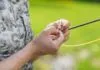
He remembered seeing John and fly tier A.K. Best making coffee beside a river on an earlier occasion. For the cover photograph, he asked John to bring his coffee pot, then arranged a campfire and had John settle into the scene with his bamboo rod. Stephen stepped back with a long lens to soften the background. The result was a carefully composed image built around the details of a familiar fishing ritual.
[00:59:40] While staying in the Florida Keys, Stephen discovered that a house near his lodging had once belonged to baseball great Ted Williams. He began researching Williams’ decades in Islamorada and his reputation as a serious fly angler, including stories from Stu Apte, who first met Williams while fishing for snook in 1948. Stephen felt Williams’ fishing legacy deserved more attention alongside the better-known Hemingway connection to the Keys.
Episode Transcript
00:00:00 Dave: One photography assignment with John Gierach turned into seven book covers. Years of friendship and a front-row seat to a remarkable period in fly-fishing history. Today, we’re going from Colorado trout streams to Key West, Alaska, Hemingway country, and behind the camera for a few simple photography lessons you can use the next time you’re on the water. This year, this is the Wet Fly Swing podcast, where I show you the best places to fly fish, how to find the best resources and tools to prepare for that big trip, and how to give back to the fish species we all love. Stephen Collector is a longtime professional photographer, writer, angler, and author with a new book that’s out right now. We’re going to get into all that today. We’re going to hear about the nineteen eighty eight Key West assignment that put Stephen alongside Jim Harrison, Tom McGuane, Russ Chatham, and a whole slew of some of the great writers and anglers out there. We’re going to find out why Ernest Hemingway became a major influence in Stephen’s life. We’re going to jump into that story today. And we’re also going to look into Alaska steelhead. We’ll talk about some of Steven’s upcoming trips. We’re going to hear a ton of great stories. We’re going to go deep into all sorts of background. You can find Steven at Stephencollector.com, and you can also see him on Instagram. Stepehncollectorpthotog. Here he is. Stephen Collector. How are you doing, Steven? 00:01:25 Stephen: I’m great. How are you, Dave? 00:01:27 Dave: Great. Good to have you on the show today. We’ve got a lot to cover. This is going to be exciting today because you’ve got a long background in photography. We’re probably going to get some tips and tricks out of you there. You’ve also been connected to a bunch of outdoor topics and fly fishing. Hunting. We’re going to talk probably a little about maybe Hemingway and John Gierach as well. I know R.I.P. John Gierach; you’ve had a connection there, but, um, maybe we can start there from the top. You’ve done some covers for Gear Rock. Can you talk about that a little bit? How did you get into photography and those covers? 00:02:01 Stephen: Okay. So what happened was, gosh, this might have been in the nineties, Dave. I get a call one day and it’s an art director from Simon and Schuster, a guy named Michael Accordino. And he goes, uh, listen, we’ve got a book cover. We’re looking to have shot some guy by the name of John Gerak. And, uh, I kind of covered the mouthpiece of the telephone so he wouldn’t hear me laughing. 00:02:24 Dave: Right? 00:02:25 Stephen: Because I had known Gierach, and he lived down the road from me, and I’d known him for a long time. Uh, we kind of ran around with some of the same people and we were front range anglers, blah, blah, blah. I used to read his column in the newspaper. So long story short, um, we do a cover shoot and it turns out pretty well. Back then, of course, everything was shot on film. And, uh, I would take him down on the Saint Vrain. He used to live in kind of a little hovel. At least that’s what AK best called his home across the highway from the Saint Vrain Creek. And we would literally. I’d meet him at his house. Try not to get bitten by his Dalmatian ranger. And then we would, you know, look both ways, run across the highway, get down to the creek. And my. I would have an assistant and he’d hold a reflector and we’d get him in the stream and. And away we would go. And what happened is that one shoot actually became seven covers over the years. And then when John sadly passed several years ago, um, I wrote kind of a, I don’t know, a memoir piece about what it was like to photograph him for all of these covers, a story that was published in the Drake and, uh, John was the real deal. I mean, we would go up high in to the high country. He was very, a very, very expert fisherman. And he was an expert fly tyer. So John was not only an incredibly wonderful storyteller, but he was he was an expert. 00:04:08 Dave: Yeah, he was good. Yeah. He was the, he kind of wrote for kind of the general guy. Right. He could make it feel. It’s hard to describe his writing because he’s talked about it. He’s been on the podcast a few times there. But yeah, a pretty unique guy. What was your what was your feeling on? You know, I feel like, you know, as of late, you know, I had I’ve had some my dad passed away this year and we, we kind of go back to some of these things to think about, you know, how to keep them around longer, right? These people, I feel like John had some things smoking, probably alcohol, some things like that. Do you get into that much? Do you think about that much with your own life? Like how do you stay around longer so you can kind of do more of this great stuff? 00:04:46 Stephen: Well, absolutely. I mean, it’s easy. When I was young, I ran around with some bad boys and we had very, very nasty habits. And, And it was all about the road to excess, you know. 00:04:58 Dave: That’s right. 00:04:59 Stephen: The William Blake quote. Only it doesn’t really bring you to wisdom. I’ve come to realize. 00:05:05 Dave: No. 00:05:05 Stephen: In fact, just the opposite. So now that, you know, I think one of the reasons, Dave, that, um, my book just got published is because so many people have passed over. I mean, so many of the giants in these industries are outdoor industries, people like Jim Harrison and, you know, Ghioroc, uh, Rush Chatham, who published my first book of photographs. I’m sure you’re very aware of Russell Chatham. Chatham was a dear friend of mine and a mentor and gave me probably the biggest break of my life. But Russ and, uh, had very, very nasty habits. 00:05:42 Dave: Did he? Russ did. 00:05:44 Stephen: Oh my gosh. Yeah. He was the ultimate wild man. Yeah. Speaking of Russ, I was very fortunate. In nineteen eighty eight, I had been working a lot with a writer you might be familiar with a guy named Jim Fergus, and Fergus was at that time a tremendous journalist and was writing for the sporting press quite a bit. And through his friendship with Jim Harrison, rolling Stone magazine found out that Harrison, Tom McGuane, Russ Chatham and Guy de la Valdene were going to be fishing together in Key West in the spring of nineteen eighty eight, and Harrison kind of railroaded the editor at rolling Stone and said, I’ll let you guys do a feature on me, but you have to use my friend Jim Fergus to write it. And then he said, you have to use Fergus buddy Collector to shoot it. Otherwise, neither of us would have ever gotten the assignment. And so, um, we went to Key West and spent about six days following these guys around. And that’s where I met McGuane. 00:06:44 Dave: Was this an eighty eight? 00:06:46 Stephen: Eighty eight? Yeah. But of those four guys, I really connected with Russ Chatham. He was kind of the most available to me, the most kind of down to earth, the most the least pretentious or the arrogant. And, uh, and later on, little did I realize he would publish my book, first book of photographs. But Russ made a statement. He goes, go ahead. Um, one morning they were fishing with a guy named, uh, Gil Drake and his wife, Linda Drake, who were tremendous flats fishing guides who had a, a residence right on a canal in Key West. And you would actually just motor right out of their backyard and then head out toward the flats. Well, Russ shows up early in the morning and he is just massively hung over. And I hope I’m not talking out of school or going to offend his daughter or anybody, but but, you know, Harrison and McGuane started really mocking him for being, you know, so trashed. And he goes, go ahead and make fun of me all you like. But I’m the guy who makes these trips interesting. Don’t forget. 00:07:51 Dave: It. 00:07:52 Stephen: And it was really, really true. He was the glue that held all those guys together. 00:07:57 Dave: Right. And that goes. And we recently had, I don’t know, the other guys as well, but we had Tom McGuane on the podcast and we talked about this. And, you know, it was interesting because Tom said it on that podcast that we did. He was like, man, the common thread is, is that all those guys are dead except him, you know? And really what goes back to is he quit drinking, I think in his forties, mid forties, you know what I mean? Like I feel like, and I’m at that same place. I’m kind of in that range right now being like, oh, you know what? God, maybe I do want to potentially live longer. And I feel like some of that. Right. Do you think about that with your own your I mean, you’ve been around these people and you’ve seen it. Is that kind of does that come to your mind? 00:08:34 Stephen: Well, I I’ll say this and I and forgive me, readers, for being the voice of reason here, but, uh, you know, it’s one thing to want to have a rockin good time. And you’re talking to somebody who, by every definition, was an addict on multiple platforms. Addict. But I’m seventy five now, and I can tell you I’m not doing much of anything in terms of drugs and alcohol, because what I’m trying to do, it’s not that I want to live longer so much, but I don’t want to be broken down by these kind of, uh, proclivities, so to speak. You know, this stuff is very unforgiving the older you get. 00:09:21 Dave: Exactly. And enjoy. Right. The time that while you’re here, you’re seventy five now was Russ Chatten. What was he doing when he was seventy five? 00:09:28 Stephen: Well, Russ, by the time he got to be seventy five, he was not in good shape physically. He was heavily overweight. He liked to bend his elbow way too much. 00:09:37 Dave: Yeah, yeah. That’s right. That same thing again going back to the you know, I think it is it’s an obvious thing. I mean. Right. But without going too far into this, I think it is interesting because, you know, a lot of these guys, you’ve been around them And, you know, it’s kind of an interesting conversation because they talk about that, you know, that era in Key West was kind of crazy, right? Uh, drugs and women and all sorts of crazy. Right. Which we’ve all been a part of. A lot of people have. But I think it’s that, you know, you kind of get out of it at some point, but, um, well, tell me this about, you know, you have a long history. We’re not going to be able to get into everything today. We talked about a little bit about John Gierach, maybe talk about some of your other influences. I know you mentioned Cuba. You know, I think Hemingway is is a name that comes out a lot to a lot of writers we’ve had and people, you know, kind of out there. What was he one of your biggest influence or who are some of those people that really influenced your, you know, who you are? 00:10:28 Stephen: That’s a great question. And it’s actually kind of a deep question for me in the sense that Hemingway had a quote. He said, as you get older, it’s harder to have heroes, but it’s sort of necessary. And what happened, oddly enough, and I didn’t really understand this. I was a literature major in college, and I read a lot of Hemingway, and I was a huge fan of Hemingway’s. And then, of course, the tide kind of turned and Hemingway kind of started to get a bad rap for his quote unquote, toxic masculinity, blah, blah, blah. And to be honest with you, I can remember Tom McGuane and Jim Harrison at dinner one night where Jimmy Buffett’s house ripping Hemingway to shreds. And, and basically what, what Tom said, I, if I recall correctly, is that, uh, that he wasn’t the same kind of sportsman that they were. You know, he was all about what Tom said, a big fish. I believe Tom said. 00:11:26 Dave: Yeah, like killing stuff, killing fish, killing animals, going the safari, going over there, just killing as many animals. Right. That whole thing. 00:11:32 Stephen: Yes, but here’s I when I turned sixty, I became that’s like fifteen years ago. Hemingway, in an odd kind of roundabout way, influenced me to start writing stories. I, um, I started reading all these memoirs about his life. I mean, I was reading stuff by his ex-lovers, his ex-wives, his son. There’s a tremendous amount of material about Hemingway. And what’s so fascinating about Hemingway isn’t strictly Hemingway. It’s how spot on he was about finding these spectacular places on the planet places like Cuba, Key West, Kenya, the Sun Valley. It just went on and on. Paris in the twenties. And not only that, it was the circle of people around him who you don’t hear so much about that people like Peter Viertel, who was a screenwriter and a writer, he actually wrote the screenplays for The Old Man in the sea, and he also maybe for death in the afternoon. Irwin Shaw and, uh, it just goes on and on. Morley Baer and who was a Canadian journalist. And what I didn’t realize Dave was my fascination for him had something to do with suicide. It’s suicide was something that I, I wasn’t obsessed with, but I the whole idea of offing yourself had some kind of morbid appeal and the fact that he killed himself. And I was one year younger than him when he did it, uh, was, I think, on an unconscious level, why I started reading about him. I wanted to understand, why did you kill yourself? 00:13:22 Dave: No kidding. So when he killed himself, he was. How old? 00:13:24 Stephen: Sixty one years old. 00:13:26 Dave: Sixty one. And you were? 00:13:28 Stephen: I was sixty when I went into this deep dive about him. And it wasn’t until I had read everything that I put two and two together. So cut to. I’m sixty, it’s early June. I’m on the Laramie River in southern in Wyoming. I’m by myself and I’m looking down the river and there’s an old cabin. And I have this strange thought. Hemingway would love this river, and I wish Ernie was with me. And when I got back from fishing that day, I wrote a story called The Big Two Hearted Laramie in tribute to his famous The Big Two-hearted River. And lo and behold, my younger son David had brought a fishing magazine home called Southwest Fly Fishing, and I had never seen it. And I pitched my story to their editor, John Shuy, over in Oregon. You might know John. 00:14:24 Dave: Oh, yeah. Yeah, we know John well. 00:14:26 Stephen: Oh, yeah. And he’s a great guy. And John really kind of gave me my first break as a, you know, outdoor writer. And he, he published that story. And that story is in my book. So, um, Hemingway, you had an enormous impact on me in a variety of ways. He was somebody I, I idolized, actually. 00:14:50 Dave: Yeah, yeah. His life. I mean, it’s just it’s unbelievable really, if you think about where it went and then how it ended as well. So okay, well, tell me this. We want to hear a little bit about you have a new book out. I want to make sure we don’t miss that. Give us a highlight of, first off, the title and how this book came to be and how this connects to fly fishing and some of the stuff you have going out there. 00:15:12 Stephen: Absolutely. Um, yeah. And I’m happy to speak about this. Um, so the title of the book is No Do Overs in Paradise. And then the subtitle is Journeys to Wild Places in Inner Landscapes. And the subtitle of the book was actually written by my former editor, Terry MacDonald, who’s one of the great magazine editors of our generation. I used to work with Terry when he was an editor at Esquire, and he was briefly at a magazine called Sports Afield, where I was kind of his main shooter. But that title actually comes from one of the stories in my book. They’re thirty two stories in the book, and the book is, in a way, my sporting memoir. And it really starts, gosh, you know, in the seventies, I guess, and takes you to current times now. 00:16:07 Dave: Outpost on the Noosh is remote, even by Alaska standards. They give you access to one of the most unique river systems in Alaska. Every day starts with cold mornings, endless daylight in the land of the midnight sun, and a maze of channels that invite exploration around every corner. What I love about this place is it doesn’t try to be easy. The fishing isn’t about racing from spot to spot. It’s about slowing down, reading water, and making the cast that counts. Beautiful, stubborn, and a little weird, the Noosh attracts anglers looking for something beyond the typical lodge experience. If you’re thinking about your next adventure to Alaska, check out outpost on the new dot com. That’s outpost on the new n u s h dot com. Check them out today. Check out Sullivan Fly rods if you’re looking for a rod made in the USA, every rod is handcrafted using American made components with blanks. They design. After years of working with top guides and they offer different actions built for different styles of fishing, from dry flies to streamers and saltwater and beyond. Check out Sullivan Fly Rods dot com right now and build a rod you’ll be proud for years to fish. That’s S u l l I v a n Sullivan fly rods dot com. Check them out today. How did you start that book? If you look, I know when we had John Gierach on, it was really it was fun with him because he talked about his process and he said that, you know, the first thing I asked him kind of a similar question, how do you get into your writing? And he said, the worst thing you could have is a book that starts like your uncle’s trip to Hawaii, you know, starts here and then goes to the end. Right? Some boring thing about that. How did you write your book? So it wasn’t boring? And did you take inspiration from people like Yurok and Hemingway? 00:17:53 Stephen: Absolutely. What drove me to write these stories was really curiosity and an innate restlessness, and really my love for the natural world. Uh, geographically, it wasn’t specifically the American West, which I adore. It was anywhere on the planet where nature is predominant. And I hope in some ways these stories resonate with other readers who are like minded. But, uh, what? Oddly enough, um, a couple of years ago, I’d been writing for the sporting press for about fifteen years. A variety of outdoor magazines, uh, bird hunting magazines, fishing magazines, and, uh, my oldest son, James, who was a journalism major and has actually written a failed novel and is just finished a second novel. And lives in San Francisco, has a. At the time had about a year and a half old son who’s three now and. And he said, you know, and his name is Wesley. And he goes, dad, you know, you ought to put your stories together in a book for Wes, because, you know, when he gets older, one day he’ll be able to read something about your life. And Dave, I’d never even thought about doing it until my son proposed it. And I thought, wow, that’s that’s a very interesting idea. So it happened to be late fall. And that winter I sat there, another kind of dreary Colorado River. My knee was acting up, I wasn’t doing much downhill skiing. And I sat there and I started assembling all of these stories and, you know, creating a manuscript. And oddly enough, that spring, I got a phone call from Russ Chatham’s daughter, Leah. And it turned out that this small press in Iowa, Ice Cube Press, was going to reissue Russ’s fabulous book of stories, Dark Waters. So Leah said, Steve, would you would you blurb the book? And I said, I’d be happy to blurb it because I had written a feature about Russ Chatham, not as the painter that he’s known as and lithographer, but as a writer. Russ Chatham was a phenomenal short story writer. And most people don’t even know this. So I wrote a piece for American Angler, and that’s why she asked me to blurb the book. And I blurbed it. And then early in the summer, she said, okay, the book’s out. We’re going to have a book launch in Livingston, Montana. Would you come up here? We’re going to do a kind of a book launch deal at Elk River books, and we’ve got Rick Bass, and I’d like you to say something along with Rick. And I said, sure, I’ll come up. So then the night that evening, before we went over to the bookstore, I meet Steve Simkin, his publisher, and he asked me, you know, I’ve never been to Montana and where should I go fishing? And I was like, oh my gosh, you’re in Livingston. I mean, look around in a one hundred mile radius. It’s endless where you can go fishing. But I had written a story about the Yellowstone River for the big Sky Journal, and I sent him a link to the story in case he wanted to drive into Yellowstone National Park, which was about an hour down the road. Next day I bump into Simkin at the Murray Hotel and he goes, you know that story that you shared with me? That was a pretty good story. And I went, okay, thanks. And, uh, and he goes, do you have any more? And I said, well, Steve, as a matter of fact, I have a whole book of them. And he went, really? And I went, yeah. And he goes, well, why don’t you, when I get back, send me the preface to your book and a couple of stories. So I did, and a couple of weeks go by and he goes, how about sending me the whole manuscript? And I do, and a couple of weeks go by and he goes, I want to publish your book. 00:21:34 Dave: Yeah. Is there anything you left out that you wouldn’t want Wes to read? You know, like, is there some parts of the stories or is it all in there? Is there some, like you think of Hemingway, his crazy life. Did you leave it all in there or do you leave out some stuff? 00:21:47 Stephen: Well, I mean, obviously you kind of have to leave out some stuff. You know, here’s here’s something kind of that occurs to me when you ask me that question. When we were in Key West and Jim Fergus was writing that piece, there was some shenanigans that were going on. 00:22:04 Dave: Like some illegal type stuff. 00:22:06 Stephen: I mean, like, that’s the tip of the iceberg, right? 00:22:10 Dave: What was it about that, that era? Because we’ve heard about that before. That’s been written. There’s been movies. What’s the movie that, um, McGuane actually directed? 00:22:18 Stephen: Um, ninety two in the shade. 00:22:19 Dave: Yeah, ninety two in the shade. I mean, it’s this crazy, like just that movie, right? How it goes and ends and it’s just kind of a bizarre thing, right? But that was the thing. How do you describe that era to people listening now? Like, what was that like? You were kind of around the surface. You were a little bit after. Were you right in the middle of that time? 00:22:37 Stephen: Well, I was no, I was in the middle of that time. I mean, we used to have a saying where I lived in Boulder when I was in my twenties. Boulder at that time was just about as wild as Key West or anywhere on the planet. I mean, there was a lot of misbehavior, and there were a lot of beautiful women to go along with that misbehavior. An unusual amount of them, actually. And back then, some of these kind of woke terms were really not discovered yet. And, uh, and so it was kind of it was, you know, balls to the walls. 00:23:06 Dave: Yeah. All else, like, as long as you people weren’t dying, it was all good to go. 00:23:11 Stephen: Right. And, but there was, of course, some of that also. But what happened is Fergus pulled a couple of punches. I mean, he didn’t really reveal what we were witness to. Uh, let’s put it this way. I can’t believe I’m going to even say this, but, um, I was off in a motel room by myself. Jim was staying at Sam Lawrence, a very famous New York Publishers bungalow in Key West with some of the guys, and I was off in a motel and I get a call from Fergus around five o’clock one day and he goes, listen, um, there’s a woman, and, uh, she’s from New Orleans, and we don’t know what to do with her. We’re going out to dinner. Can she come to your can she come to your motel room? And I go, um, what am I going to say? Yeah. Go ahead. So a little later, there’s a knock on the door, and there’s this incredibly beautiful woman standing in my door, and she’s a dark haired beauty, and I let her come in, and she’s there as, uh, someone’s, uh, kind of, uh, entertainment for the week. She’s a professional. Okay. And here I am, laying next to a professional on the bed, and she goes, do you mind if I smoke a joint? Now, I’m a photographer and I’m in my thirties. I mean, you know, the thoughts that were going through my mind, right? Were just absolutely ridiculous. So there’s a little kind of something that did not make it into the story. 00:24:41 Dave: No, no. Did you get a photo shoot at that moment? 00:24:44 Stephen: No it didn’t it didn’t go there. I actually was, uh, incredibly, um, conservative because I thought, just imagine if so and so finds out I kind of put a move on her, right? Things could go extremely badly if that gets out. So I was actually on my best behavior. I was I was a choir boy, I guess I was ashamed of it right now. 00:25:09 Dave: Right, right, right. 00:25:10 Stephen: But it was the old kind of saw of, you know, the woman telling me her sob story, the story that you’re never actually supposed to ask a woman of that nature. 00:25:22 Dave: It’s interesting because again, the, the I mean, this comes up occasionally on this podcast, right? We had, uh, you know, uh, we were talking about back in the days you mentioned Yellowstone, but back in the days, the early days, we were hookers and all that stuff. I mean, that stuff is just that’s kind of everywhere, right? That’s not just to that area. This is something that, you know, is kind of out there, but it was interesting because you were kind of part of that and you knew all those guys, and there were stories and movies written about it. And, you know, of course, Hemingway is kind of part of that whole process. It’s an interesting thing for people that are on the outside looking at have never been connected to that. Right? It’s kind of like, wow, it’s like movies, right? It’s what movies were made of, you know, being a part of that. How do you summarize that whole era? 00:26:06 Stephen: Well, Hemingway had a line that’s kind of appropriate. The only value we have is human beings are the risks we’re willing to take. And listen, don’t get me wrong, um, there’s a lot not to like about Hemingway. The first story in my book, which is called Famous Potatoes, is actually about Ernest Hemingway and Richard Brautigan’s time in Idaho. And so about five years ago, my wife and I, my bird dog, we jumped in the truck and we drove up to Ketchum, Idaho. And I basically using Richard Brautigan’s famous novel Trout Fishing in America. I used that as a guide. Dave and I followed Brautigan through Idaho, and I fished the places that he fished. And at the same time, I also referenced Hemingway. And we took a Hemingway tour, which is very corny, and we ended up on the Big Wood River right behind his house. And then, you know, we fished Silver Creek, where he actually used to duck hunt Silver Creek in addition to, to, uh, fished. And, uh, Brautigan is somebody who we don’t really hear a lot about. And of course, Brautigan was in with that group, which was McGuane and Russell, Chatham and Harrison. He was very much a part of the gang. He had actually moved from Northern California, bought a place in Livingston because trout fishing in America kind of made Richard wealthy. Um, he was a penniless poet for much of his life, but then he had a windfall, and he spent a great deal of time in the summer and the fall and Livingston, and then he would go to California for the winter. So, you know, you talk we talk about suicide. Of course, sadly, that’s what Hemingway did at sixty. And that’s what Brautigan did. I think at fifty eight, believe it or not. So for whatever reason, I guess as a photographer, I had a degree in English. I’m a big reader and, uh, and I have a literary bent. And actually the narrative, the whole idea of storytelling informed my photography. If you want to know the truth. I mean, they do say a picture’s worth a thousand words. So. 00:28:18 Dave: Yeah, exactly. That’s right. No, that’s interesting. And I did want to touch on some of that just on your photography to help people, you know, that are out there. We’ve all got cameras now in our pocket, essentially. It’s kind of interesting. Talk about that a little bit. Things have changed. You’ve been there. You’ve seen this. What’s it been like for you being you know, this is your profession and seeing cameras slowly go away to just the normal population. Right? Talk about that. What’s your process now? How has it evolved? 00:28:45 Stephen: Well, before I do that, I should say that the definition of a photographer, a professional photographer, is someone who has at least five cameras and a spouse who works two jobs. 00:28:58 Dave: Right? 00:28:58 Stephen: So yeah, so and according to Ansel Adams, a camera is a mirror with a memory, right? 00:29:05 Dave: And that’s cool. 00:29:06 Stephen: Yeah. And I’ve long felt that art and the sporting life overlap. And because I always felt that a life of field was a direct response to a deep appreciation of the natural world, I felt that photography was a way for me to hold my mirror up to the beauty. The spectacular beauty that this planet abounds with. Actually. 00:29:29 Dave: Yeah. It is. No, it’s. And that’s. And did you, um, it sounds like you got in writing and then photography was right there along the way. Like, how did that become your, the big part of your life? 00:29:40 Stephen: Well, actually no, really, I, so I, I had taken classes in creative writing, you know, when I was nineteen years old or whatever. But really when I got out of college, I, it looked very much like I was going to be drafted and ended up in Vietnam, to tell you the truth. And, uh, I barely, I almost got drafted, but right at the time I came out of school, uh, the draft number had moved up my, and I had a mediocre number of one seventy five, which would have gotten me drafted six months earlier. But somehow, by the grace of God, I have, you know, I avoided going and seeing combat Southeast Asia. So, so I just could not see how you get out of college, you don’t really have any experience. How do you make a living as a writer? I just didn’t know how that would work. Now, I had taken a photography course in college also, and I thought, well, I’m going to try to just make it as a photographer. I mean, that’s not going to be easy, but being a writer just seemed to be utterly out of my realm. So, so I, I kind of scrapped around and I made next to nothing. And, you know, I lived on potatoes. And at that time period, rent was cheap. Gas was twenty five cents a gallon when I got out of college. And so to survive was really not that difficult. And it today to have taken a risk like that would have been utterly impossible. It’s just too crushingly inflated right now to be able to do something like that. But somehow or another, I clawed my way forward as a photographer, and it took me about ten years to kind of get a toehold. And I was all in Dave as a photographer. 00:31:27 Dave: You were. So you pretty much were like, this is my thing. I’m going to either die on the, you know, on the or I’m going to like, make it. Is that kind of how you were thinking at the time? 00:31:36 Stephen: Oh, yeah. I mean, you know, it, it photography was a vehicle like a flying carpet and the camera was like my talisman, like a charm that allowed me to pursue my interests. So pictures at first objectified my passions, but eventually writing became my new pathway forward. 00:31:56 Dave: Oh, did. I’m not sure if you’ve heard of Steven Pressfield, The War of Art that we’ve talked about this before, but I feel like that’s kind of the moment. You know, you were in where you were kind of you were kind of all into it. Right? Like, I think Steven Pressfield in that book talked about how the fact that he like, literally lived out of his car for like ten years or something like that as a struggling writer. And he was like determined to make it. He got to a point where he literally was living out of his car. You know what I mean? Like that feels like that’s the same space you were in. 00:32:25 Stephen: It was. And, you know, I mean, and I pulled incredibly long hours in the darkroom. And I mean, my my thing was black and white photography from the jump. Okay. And I shot color commercially because I had to. 00:32:38 Dave: Oh, wow. Like trout bum. Right. Trout bum. The cover. Right. That’s what makes that cover so amazing. It’s it’s shot in that kind of that really unique black. It almost looks like art. Like not not not a photographer. It almost looks like somebody, you know, kind of drew that photo. 00:32:53 Stephen: Well, now you have to understand that I didn’t shoot the first cover of Trout Bum. Okay. That was, you know, I think John Gierach actually shot that picture. 00:33:02 Dave: Oh, really? Okay. 00:33:03 Stephen: Yeah. But when they reissued, when Pruitt Press did a reissue of Trout Bomb Iraq, and I went way up high on the Saint Vrain up above a place called camp Dick. And, uh, we got way up in the backcountry. And, uh, I had, um, you know, a backpack with a bunch of thirty five millimeter gear. 00:33:23 Dave: Okay. Which one was the one you had? What was the photo of? 00:33:27 Stephen: The photo that I’m referring to is he’s sitting by a campfire with a cup of coffee. 00:33:32 Dave: Yeah, I see it, I see it. Okay. Yeah, that’s just about as good, actually, because see now, now that one looks like, you know, when you look at that photo and I’ve never seen that before. This is pretty amazing. It’s it’s John sitting there on a campfire. It’s it’s a sticks holding the pot over the fire. He’s got his bam. It looks like a bamboo rod. 00:33:49 Stephen: It is. 00:33:50 Dave: And he’s got his Hemingway type shirt on. He looks like it looks like a photo. The other one actually looks a lot like what happened with the two. That that other photo. Do you know how that was taken? How it looks so kind of different and maybe non-photo like. 00:34:03 Stephen: Well, I, I think what the publisher did is they kind of desaturated that photograph to somewhat. Yeah, you know what I’m talking about. So and that’s what gave it that look that I think you’re referring to. 00:34:14 Dave: Right. Gotcha. 00:34:16 Stephen: But in nineteen eighty, for instance, there used to be a guy in the Denver Post named Red Fenwick who had a column called Writing the Range, and he was kind of a cowboy folkie type of journalist. And he talked about a stock detective who was, uh, up in southern Wyoming around a town called bags. And at that time period, I was very interested in doing portraits with my view camera. Okay. So I thought, well, I’m going to track this guy down. So I call up and Red Fenwick is ill and I can’t get Ahold of him. And then the guy dies. So, uh, I’m rooting around, trying to find this this, this stock detective. And somebody tells me to call a guy named Dean Prosser, who’s the head of the Wyoming Stock Growers Association. And I asked Prosser, um, who’s the stock detective? He goes, I don’t know who you’re talking about, but the guys who deal with cattle rustling are called brand inspectors. And I’ll give you a couple of names of some of the good old boys. So with those four names, I. I went up to Wyoming and I photographed these four guys, and then I, I got in touch with the chief brand inspector, a guy named Jay Rowe in Denver and got four names. And I did like a portfolio of these eight portraits of guys who do catch cattle rustlers when it happens. And, and it still does happen, oddly enough. And I was fascinated by it. And I pitched these eight portraits as a photo feature to a startup magazine called Rocky Mountain Magazine in Denver. And they put me together with a writer who was going to write the introduction to the little portfolio, and it was Jim Fergus, and it turned out Fergus lived in North Park, Colorado, which is a fabulous place for a trout fisherman. And, uh, we became great friends and collaborators for many, many years. So, so I did this, this project, it took me eleven years to do it. And then Russ Chatham ended up publishing this book called The Law of the range. 00:36:21 Dave: This episode is brought to you by AVC Rig Adventure Vehicle Concepts out of Colorado. These guys build next level adventure vans designed to help you explore farther and stay out longer. Are you dreaming of a full van build? Or maybe you just need the best aluminum cabinets and storage for your DIY rig? AVC rig makes it easy to turn your vehicle into the ultimate mobile base camp. You can check them out right now at avc dot com, that’s a v c rig dot com. Check out Jackson Hole Fly Company today. Premium fly gear straight to your door without the premium price. Jackson Hole Fly Company designs and builds their own fly rods, reels, flies and gear. Delivering quality you can trust at prices that let you fish more and spend less. Whether you’re picking up a fly rod for the first time or guiding every day, they’ve got what you need. Check them out right now. That’s Jackson Hole flight company dot com. Jackson Hole flight company dot com. You mentioned back to Vietnam. I think that’s a really interesting period. Obviously in this country with a lot of people. I mean, I always, you know, similarly, you know, I’m a little different era, but I always knew war was not going to be a place that I was wanting to go to, you know, but I feel like, you know, you had that period where you kind of luckily escaped it. But people like we mentioned Hemingway, I mean, talk about war like that guy, right? He kind of searched out war. That was like part of his calling almost. What was your take on that and how and why were you a little bit different on the, you know, not being your calling sort of thing? 00:37:58 Stephen: Well, okay. To back up a little bit. My father was a combat veteran in World War Two. Oh, wow. And he was a belly gunner and a tail gunner in a B-17. 00:38:07 Dave: Holy cow. 00:38:08 Stephen: Stationed in England. And and the movie catch twenty two, Joseph Heller’s triumph about World War two was really about my father. Because what happened is they told him, you’re going to fly twenty missions, and then twenty missions became twenty five missions, and then twenty five missions became thirty missions, and then thirty missions became thirty five missions. And by the time my dad, uh, the war ended, my father was sent down to Florida to what they called, um, a hospital for what they termed battle fatigue, which today we know of as PTSD. Yeah. And, um, the truth is, is my father physically survived his combat experience, but it actually destroyed him. And sadly, uh, because PTSD was so really unknown and people didn’t understand about the trauma of warfare and what it did to combat veterans, um, nobody in my family could really understand. My father, um, he was very inscrutable. He didn’t talk about the war. He would show us his Purple Heart and his distinguished Flying Cross and things like that. But. But he was very reticent to talk about it. And my mother, who was very vivacious, couldn’t really kind of liberate my father from this kind of doom that seemed to follow him. And, uh, so I had seen growing up the effects of being in battle, and there was nothing remotely romantic about it. Now. Oddly enough, my father, it was the most exciting time period of his life. And he, he cherished it. And but at the same time, it destroyed him. And so, you know, when it came my time to serve, there was no way I was going to go to Canada. I mean, I just my father had served. So of course I’m going to serve. 00:40:07 Dave: Yeah. You were going to go if you had been called up, you were going. 00:40:09 Stephen: Absolutely. Now, the problem was I had always been shooting and I was always a pretty good shot. And my mom and my dad split when I was sixteen. And my stepdad was a former game warden. And, um, he was a big time sportsman. He was a fisherman and he was a crack shot. He was mostly a waterfowl hunter. He, you know, his family were hunting guides in back Bay on the Virginia, North Carolina border and used to guide the rich folks from New York down there and for waterfowl. So I did a lot of. I did a lot of hunting. I did a lot of duck shooting as a kid and dove hunting and all of this stuff. So. And I also knew after the divorce that I was kind of an angry, mixed up kid, and I instinctively knew that if I, if somebody gave me an automatic weapon and they put me in combat, it was very likely that, um, emotionally I was not going to be able to have a lick of sense or decorum or honor or anything. And the likelihood is, is I was just going to go bat crazy, right? 00:41:21 Dave: And not make it. 00:41:22 Stephen: Yeah. And if I did, I think what’s so troubling about all of this is, okay, so basically you’re given a license to kill and then let’s say you survive it, you come home, you know, those kind of experiences dog you for the rest of your life. 00:41:38 Dave: So they do. I know we’ve heard. Yeah, lots of those stories. And you mentioned the suicide, things like that. When did your your father pass away? 00:41:46 Stephen: Well, my father passed away. It was actually about ninety two. So that would have been about nine years ago. He made it a long time. But the thing about aging, you know, and there’s a lot I could say about this subject, but I think I’ve heard it said that everybody is a mirror for you. And they either show you how to live or how not to live. 00:42:11 Dave: Right? That’s exactly it. Yeah. 00:42:14 Stephen: So what happened with my dad and a lot of this, unfortunately, was a direct function of his war experience was, um, he lost his perspective in the sense that, um, you know, life is, is it’s all ups and downs, it’s pluses and minuses. I mean, these are cliches, but it’s true. And the pitfall for him was self-pity. So, you know, when you start to break down your physical body, it’s so easy to feel sorry for yourself. And of course, you don’t have to be old to feel sorry for yourself. And he showed me that that is really not the way forward. I mean, there’s really nothing to be gained about feeling sorry for yourself or feeling sorry that you’ve been caught in this kind of wheel of time. And, uh, you’re on the, the back end of the wheel, so to speak. So, you know, for me anyway, kind of moving into this, by every definition, I’m a greybeard now. There’s no kind of way to, there’s no way to sugar coat this now. 00:43:26 Dave: Right. But you it’s possible, you know, you could have twenty years or more right left in your life, which is actually a substantial amount, a quarter of a century potentially. Right? 00:43:36 Stephen: It absolutely is. And it’s funny you say that, because I think the conventional thinking is, you know, that twenty years, for instance, between the time you’re or thirty years, really between the time you’re twenty to fifty. Look how productive a time that is for most of us adults, right? 00:43:54 Dave: Yeah. 00:43:54 Stephen: It is. But, but who’s to say from fifty to eighty doesn’t also give you the exact same amount of time to be productive in. 00:44:04 Dave: It can be just as productive. Now as you look out at that, you know, because you’ve done a lot. You’ve got I mean, we’ve only touched the surface on a lot of the stuff you’ve done. We haven’t even talked about fly fishing really today. But, you know, I mean, the funny thing is, is that the great thing is, is that you’ve got this time now as you look out, what do you have left to do? I mean, what are you thinking about? What’s your next chapter in this, in this, this amazing thing you have going? 00:44:26 Stephen: All right. So this is kind of a complete left turn here. I’m going to make a pivot about in twenty twelve, I actually got an artist in residency as a photographer in Arroyo Seco, New Mexico on, um, at the estate of, uh, fabulous southwestern writer, long deceased named Frank waters. And he wrote a very famous book in the forties called The Man Who Killed the Deer, but he wrote twenty five books. And, um, I was lucky enough to meet his widow, who invited me to spend a month up on his property up there. And what Barbara Waters wanted me to do was collaborate on a book. It would be excerpts from his books and my photography, and we were going to collaborate and do this thing in about five years later, Barbara passed on, and shortly after that, it turned out there was a foundation, the Frank Waters Foundation, which is a literary foundation whose goal is basically his literary legacy. So I was asked to, um, to join that foundation, become a board member of the foundation, which I did. And then it turned out that the, the president of the foundation said, listen, we’re going to do that book even though Barbara’s gone. So we’re now at the. We’ve been we thought we had a book deal with the Museum of New Mexico Press, but it kind of fell through a couple of years ago. But my next project is actually to see this book through this kind of the southwest of Frank waters book. And it’ll be my photography, of course. And Frank’s writing. So I’m going to basically go from writing, and I’m going to pivot back to being a photographer right now. 00:46:13 Dave: Nice, nice. So that’s the next project. 00:46:16 Stephen: Yeah. And I also just came back from a road trip up in the Bighorn Mountains in Wyoming, where I did some fishing and, and I wrote about it. And so I’m still writing stories. The summer issue of the Drake’s Got a Story I wrote about the Gunnison River in it right now. So yeah, that’s a new piece. So so I’m hoping to maybe, uh, keep doing some writing. I, I might be up in Alaska this spring chasing steelhead of all things. Oh, wow. Finally. Yeah. 00:46:44 Dave: Wow. Steelhead. So you kind of like southeast Alaska. 00:46:47 Stephen: Uh, Prince William Island. 00:46:48 Dave: Okay. 00:46:49 Stephen: Yeah. 00:46:50 Dave: Nice. 00:46:51 Stephen: Yeah. I got an invitation from, uh, from a tremendous angler, Don Thomas, to go do that. So I’m hoping to fish with Don and, uh, kind of stay on a mothership and explore some of those tributaries. Yeah. 00:47:06 Dave: Have you done much steelhead fishing over the years? 00:47:08 Stephen: No, I went steelhead fishing one time in Homer, Alaska, on the anchor River. Yeah. And got one grab and missed him. 00:47:16 Dave: Yeah. There you go. 00:47:17 Stephen: All I’ve done. Yeah. 00:47:18 Dave: There you go. Yeah. It’s amazing. It’s the, uh. And you’re in Colorado, right? Currently. I am, yeah. It’s kind of a different you know, Colorado obviously is amazing too, with the trout fishing. But, you know, you don’t get any of the anadromous fish, right. And steelhead is this whole culture of it’s kind of one of those species, right? It’s like all these the really tough ones in some places, like fishing is closed. And, you know, it’s not getting easier to find steelhead, it seems like. But it is that one that it just takes one, one fish to change your day. Is that what you’re excited about? What gets you excited about thinking about that trip? Is it more the fishing or is it just the Alaska or what is it? 00:47:54 Stephen: So I’ve spent nowhere near enough time in Alaska, but I have spent some. And of course, you know, living in the Rockies, you know, I was under the impression, you know, this is kind of a major range of mountains. Well, I think my first day in Alaska, I found myself in a bush plane. And I’m looking up at the Aleutian range. 00:48:14 Dave: Yeah. 00:48:15 Stephen: And? And they look. It looks like the Himalayas or something. And, uh. And I realized, oh, my God, this this makes the Rocky Mountains look like the foothills. 00:48:24 Dave: No kidding. 00:48:25 Stephen: Because Alaska is just insane. 00:48:27 Dave: Yeah. It’s just way bigger, right? I mean, it’s. 00:48:29 Stephen: Oh, my God. 00:48:30 Dave: Everything’s bigger up there. The land mass. And I mean, Colorado is spectacular. I mean, the Rockies are spectacular, but it’s just it’s not Alaska. 00:48:38 Stephen: It’s not Alaska. No. I mean, it was it was so cool. My son, you know, James, who actually was the, the, uh, catalyst for me writing the book, had spent a summer, uh, working as a deckhand in Prince William Sound. I think it was. And, uh, told me, dad, I can’t believe you haven’t been to Alaska. So when he got back, He sent me a round trip ticket to force my hand. He made me go. I was in my late sixties. This is maybe about. This is about eight years ago. My first trip to Alaska. And so I go on a. So I call my editor a guy named Bill Sisson at Angler’s Journal at the time, and I go, Bill, um, I’m going to Alaska and I’d like to write something for you. And he goes, look, Steve, do you know how many stories we published about Alaska? He goes, you need to have a you need to have an angle. And he thinks about it for a minute and he goes, okay, here you go, Alaska for the first time. That’s your angle. All right. 00:49:37 Dave: So he gave you that angle. 00:49:38 Stephen: He gave me the angle. He he asked me for the angle. 00:49:41 Dave: Now tell me that’s what you’re giving to angle because it’s interesting on the podcast, I always try to have an angle too. And it doesn’t always go that way, right? Sometimes podcasts tweaking, which is what’s great about the podcast. Did you, did you stick with that angle or did it evolve a little bit? 00:49:54 Stephen: No, I totally stuck with the angle. I mean, it was perfect. And the way I and then because of my friendship with John Shuey. John turned me on to Don Thomas. Don Thomas had lived for years in Alaska as a big game hunting guide. He guided bear hunting. He’s a world class angler. He was an emergency room doctor for a while in Alaska and. And Don basically set my trip up for me. So for a rookie, I had an incredible itinerary from a locals perspective. 00:50:27 Dave: Was it to a lodge or was this like a remote, like camping out? 00:50:30 Stephen: Okay. So no. So here we go. So first it was a fly in to us, a lodge up off the Yentna River north of Anchorage, where I fished Lake Creek and Indian Creek. And, you know, it was for Cohos and I was up there at the perfect time. It was raining like crazy September, August, August. And it was raining and there was a massive run of silvers. And, uh, I remember thinking before I left Colorado, I’d never caught a salmon before. I wonder if I’ll be able to catch one. 00:51:00 Dave: Did you get tired? Did you get tired of catching? 00:51:02 Stephen: Well, I was fishing with a young angler named Casey Maness from Michigan, and in fact, the place I was staying at Riversong Lodge, it was all Michigan guys. The owner of the lodge, the guys, everybody’s from Michigan. Speaking of Hemingway. And, uh, turns out Casey Maness is on Instagram as Cooper lost and he’s turned himself into this world class outdoor photographer, but he’s a marvelous angler. So. So I catch my first silver, you know, on an articulated like a. 00:51:34 Dave: Dalai Lama or something. 00:51:35 Stephen: Yeah, it was a Dalai Lama, I think. And, and I go, here’s what we’re going to do, Casey, you’re going to fish and I’m going to fish. And he goes, really? And I go, yeah, I’m going to catch one. Then it’s going to be your turn. And we’re going to shuffle back and forth. And so of course, as a photographer, I absolutely had to hand have somebody fishing to take pictures of. So it wasn’t me totally being generous, right? So, so we just had a spectacular experience. And, um, and because of that experience, I booked several years later, a trip he had moved over to, to the Lake Iliamna region and was guiding over there. So I booked a trip there hoping to guide with him, only to discover that the lodge owner, uh, had placed. He was their best guide, had given them to a bunch of guys much richer than I am, and kind of pull the rug out from under me. I only got to fish with him one day in five days, and I wrote a story about that also, which is in my book. 00:52:33 Dave: Oh, that’s in the book. 00:52:34 Stephen: Yeah. Called Slack is evil. 00:52:36 Dave: Slack is evil. No, this is great. Well, I think people, if they want to listen more to the, um, you know, any of these stories, they obviously have your book. I think it’s interesting. We mentioned the angle because the angle I was going in on this podcast, I was at first thinking photography tips and some tricks and stuff like that. And of course, it’s tweaked a little bit to be even better and bigger, but I do want to take it away today with some of those tips, because I think that, you know, we’ve got a photo shoot kind of going here next week and we’re doing some stuff. I’m always thinking about this, you know, and people just have phones again in their pocket. What would be a couple of things you would be telling somebody now maybe a couple of tips to get a better photo. They’re out there fishing. Maybe they’re by themselves. Maybe they have a friend. What’s the advice you would give somebody? 00:53:18 Stephen: Okay. So here, here, here. You know, photography is really kind of simple. We make it complicated. But the most important thing is to show up. I mean, what you’ve got to do is just get the camera out and make the exposure, okay? 00:53:33 Dave: Like take the picture. 00:53:35 Stephen: Take the picture. 00:53:36 Dave: What about the thing where it’s like you’re taking because you have these digital things now you take one thousand photos. What about that versus just taking one? That’s perfect. 00:53:44 Stephen: Well, the way that you would try ostensibly to take one that’s perfect is to actually put a camera on a tripod and, uh, and wait for the light. So what I used to try to do was ambush the light. So listen, you can’t because the camera is simply a mirror. You can’t really make the sky look different than it really is. Um, you’re really very limited in a way with the cameras, but what you’re not limited in is where you take the picture, what the location is and what time of day you take the picture. So if you’re really trying to craft something, which is of course what I always try to do, you want to ambush the light. Now, what I used to love to do with people is I like to backlight them, but not actually have the sun directly behind them, but off to the side about forty five degrees. And that’ll create kind of a rim lighting effect. But then you need some flash or a reflector to bounce light in so that their face isn’t totally in shadow. So I like to backlight in front. Phil for portraits. okay. And then there’s the saying, too. There was a very famous photographer, New York street photographer, who went by the name of Weegee. His actual name was Arthur Fellig, and he came up with this saying F a and B there. And what that means f a is the middle aperture. You know, when you actually have a lens that you change the aperture on. But what he really said was you need to be there. So the idea of photography, because we have phones and if you have your phone with you, that guarantees you are being there. Okay. And so the most important thing, all that camera really is, is a recording device. Okay. Now there’s also sayings like at National Geographic, if your pictures aren’t really, you know, doing it for you. Get closer. So that’s another thing to think about doing. Get closer. 00:55:54 Dave: Yeah. Get an angle that you don’t see all the time and get it might be zooming in on. It’s like a fish’s scale or a spot or something, right? 00:56:02 Stephen: It really can be. I mean, there used to be this idea that, that these twenty large format photographers had where you should look at the four corners individually and make sure that there is no extraneous information in any of those four corners. 00:56:19 Dave: Right. Well, this is great because I’ve had this screen pulled up and I want everybody to look at this because that photo you took of John Gierach for Trout Bum, the older, you know, the photo, I’m looking at that photo now. I’m not sure how well you remember it, but describe that. How did you set that up? Did you set that up? Did you put like, describe how you got that photo? 00:56:38 Stephen: Okay, so I completely set that photo up. What I had been doing is I had been tagging along and John had been catching fish, jumping around from rock to rock with a bamboo rod. 00:56:48 Dave: Yeah. And his hip waders. Right. He’s got looks like he has hip waders on. 00:56:51 Stephen: And his hip waders. And I actually had my fly rod and everything. But I realized if I bring my rod, I know what’s going to happen. You know, I’m not going to take any pictures. I’m going to start fishing with him. So I was disciplined enough to leave the goddamn fishing gear in the back of his truck. Okay. That was the best thing that I did of that day. But at a certain point, I started, the clouds started to build up, and I realized I’m going to lose my light. I and I had done all of this kind of, you know, uh, you call that b roll where, you know, you get it’s the same old fishing shot of a guy waving a fly rod. Right. And I, I didn’t feel anything was cover worthy. And years and years earlier, once in February, on a fairly mild day here in Colorado, I had driven over to the South Platte River to go fishing because I had cabin fever. And, and I thought, well, you know, that was kind of a tail water. There might be some fish on the bite and, and, um, I’m driving down the road and I look out in the river and I see a couple of guys and I think I recognize them. And I pull over and I walk down there and lo and behold, it’s Archie Bess. AKA Bess, the famous fly Tyer. And it’s J-Roc. And I knew both of them. And so I run back to my truck. I get my camera with a long lens, and I run down there, take a couple pictures, and they wade out. They come out onto the shore and they make coffee in the in the cobble. 00:58:18 Dave: Okay, so AK Bess was here on this shoot. 00:58:20 Stephen: Oh he was. Oh, I well, Archie was the best. Yeah. Um, yeah, he was a dear friend of mine. And in any case, I knew about this coffee kind of ritual that they had. So I had told John when we went up on the same frame, bring your coffee pot. So I said, why don’t you let’s build a fire, make some coffee. And, uh, and we set it up carefully the whole thing. And then I backed off and had a long lens and so I could throw the background out of focus. And so that shot was very, very curated photograph. 00:58:54 Dave: It was it was I mean, yes. And the fire in the bamboo rod, the backpack. But it’s interesting just seeing the coffee pot because it’s kind of hanging there by the stick wedged between some rocks, you know, it’s not sitting on the fire. It’s kind of above the fire. It’s an old blackened coffee pot. It’s pretty classic. 00:59:10 Stephen: Well, that’s classic gierok. And he learned about that technique in Labrador, by the way. 00:59:14 Dave: Oh, he did in Labrador. 00:59:15 Stephen: Yes he did. 00:59:16 Dave: Yeah that’s right, that’s right. Good. Well we’ll have a we will definitely have that photo in the in the show notes so people can take a look. Well take it away. Let’s just do a quick one on. We love some random. Let’s just go into baseball. I know baseball we talk about. I always think like I was a baseball player. Yeah. I think about the greatest hitter of all time. Talk about your connection to Ted Williams real quick. Take us out with a little maybe a Ted Williams story. 00:59:40 Stephen: Okay, so, uh, about five or six years ago, I was in La Mirada. I had taken my wife down to Key West, and I was supposed to go out to the Marquesas and fish and the weather blew us off, which was a great pity. I was going to fish with Mike Pollock and, uh. And that went up in smoke. So we go up to Isla Morada and I hire Alex Zapata and who takes us into the Everglades. And we’re staying at this really cute kind of boutique hotel in Lower Key. And next door to our unit is this phenomenal house. And there’s all this carrying on and people jumping in the swimming pool. And I just keep looking at this house. I’m just thinking, what is going on over here? And, uh, I get back to Colorado and I go on like Zillow, and I look this house up and lo and behold, that house used to be Ted Williams house. So I went, oh, that was what was happening. My sons played baseball. I’m a huge baseball fan. It’s my favorite professional sport, always has been. And, uh, in fact, the playoffs are coming on. Oh, yeah. I’m super excited. I’m a Dodger fan. Oh, cool. Don’t help me for that. And in any, in any case, um, I tell my wife, you know what we’re going to do. We’re next winter, we’re getting out of Colorado. So I, I load the truck up with my mountain bike and the bird dog and blah, blah, blah. And we drive to marathon where I rent a place. And so we’re, we’re in marathon for February and March. And I decide I’m going to write a story about Ted Williams because what I noticed was we had gone to the Hemingway house in Key West, which is the biggest tourist attraction in Key West. Oh it is, it was packed. I had been many times I’d never gone, but I went this time. We also, when we were in Cuba, went to his finca in Cuba, which is absolutely phenomenal. And in any case, I’m wondering where is the Ted Williams stuff? Ted Williams lived in Islamorada for thirty years, and I felt like it was an injustice, right? So I spent two months. I ended up out on a skiff with Stu Apte, who met Ted Williams in nineteen forty eight on the Tamiami trail fishing those canals there, the Tamiami Canal for Snook. So, um, I just had the most incredible time for a couple of months actually researching Ted Williams and his time in Islamorada. And he was one of the great pioneers, uh, and one of the great actually fly fishermen in American history. You could say I asked a bunch of old anglers who was the better angler, Hemingway or Ted Williams. And hands down everyone, said Williams. 01:02:16 Dave: Yeah, I think I can’t remember the quote exactly, but he had a quote about fly fishing and the the three hardest things to do in sports to do are fly casting, you know, throwing a baseball. And there was another one, right? But he was the great one of the greatest at all of those, right? Yes. He was, was he the great? Was he the greatest hitter of all time? 01:02:34 Stephen: Yes. He was. Nobody’s hit four hundred since he did. That was over eighty years ago. 01:02:39 Dave: Really? 01:02:40 Stephen: No one’s done it since. 01:02:42 Dave: He hit over just over four hundred right in a the season, and nobody who’s the closest they’ve come to that. 01:02:47 Stephen: Like, I don’t know, maybe Tony Gwynn. 01:02:49 Dave: Was thinking Tony Gwynn. Yeah. Tony Gwynn probably. 01:02:51 Stephen: Maybe. But but Williams you know, I somebody in an article said he was the first person that had the word angler and athlete in the same sentence. And when they started doing the Gold Cup, the tarpon competitions, he won the very first three. And then he never entered another one because no one could beat him. Oh, wow. He just felt like, you know, it’s not even a contest. So I’m going to just beg off of doing it. 01:03:17 Dave: That’s amazing. 01:03:18 Stephen: So the only, the only tribute I could find to Ted Williams in Islamorada is one photograph. And, uh, but Mary’s tackle shop there over by the bridge and there is a Ted Williams way. Uh, so they named a street after him and that’s it. So, so the story I wrote that ended up in the Drake is called Ted Island Murata’s lost legacy. 01:03:47 Dave: Ted Williams right, right. Okay. Well, this is good. Uh, Stephen, I think, um, you know, definitely would love to keep chatting with you. We’ll, uh, definitely respect your time and let you get out of here today, but we’ll send everybody out to Stephen collector dot com if they want to check out the book. And obviously you’re on Instagram as well. But yeah, I just want to thank you for all the time and all the stories and looking forward to keeping in touch with you. 01:04:07 Stephen: Well, thank you Dave. In closing, it’s Ice Cube press. If you go on that website and go to upcoming books, you can find my book and you can order it now. 01:04:18 Dave: Oh, perfect. Ice cube press. And that’s not the that’s not the rapper Ice Cube. That’s just the. 01:04:22 Stephen: No. And that’s two words. Ice cube press. 01:04:26 Dave: All right. We got it. All right, Stephen, thanks again. 01:04:28 Stephen: Take care. 01:04:30 Dave: All right. Your call to action today is to check in with Stephen. Let him know you heard this podcast. Let him know you’re interested in seeing some of his stuff, maybe getting a few photo tips from him. I want to give a big heads up our boot.
Stephen Collector’s career shows how photography can preserve more than a moment. His images and stories connect us with rivers, writers, anglers, and places that might otherwise fade from memory. From John Gierach’s campfire to Alaska’s coho runs, Stephen’s work is rooted in showing up, paying attention, and finding the story in front of him.
His advice is a useful reminder for anyone who enjoys photographing the outdoors: be present, watch the light, and don’t be afraid to get close. Which moment from your next fishing trip would you most like to capture?