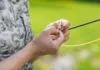
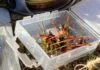
The San Juan River gives anglers a chance to work on three very different approaches in one day: streamers, nymphs, and dry flies. John Hunt joins us to talk about why that variety makes this New Mexico tailwater such a useful place to learn.
We get into the water people pass by, including slow, shallow stretches that can hold a big trout. John also explains why a small change in fly depth can make all the difference on a pressured river. Then we head to Mongolia, where the fishing shifts to mouse patterns, large baitfish flies, and the search for taimen.
John Hunt works with Moccasin Fly Club to connect anglers with fishing trips and instruction. In this episode, he talks about programs on the San Juan River and a lodge based trip in Mongolia.
His approach centers on helping anglers learn enough to use a technique beyond a single guided day. That runs through both the San Juan schools and his advice for people planning their own visit.
Hot weather and low flows have changed where John sends anglers during the summer. His team may suggest stillwater, high alpine fishing, or the cold water below Navajo Reservoir when a planned river trip no longer makes sense.
He also points out that anglers tend to gather at the fisheries that remain fishable. Finding a good trip means thinking about both conditions and the experience on the water.
John describes three nights of lodging, meals, guides, and instruction. He gives November 5–7 and $1,800 per angler for the first camp, but the year and current availability should be confirmed before publishing those details.
John also discusses a spring Euro nymphing school and a separate streamer program. He says the Euro school did not yet have firm dates at the time of recording.
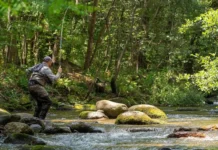
A quiet, shallow bank or slow stretch may look less promising than a classic trout run. John says to give it a careful cast anyway, especially when looking for a larger fish that may be holding away from the obvious water.
Streamer fishing changes the pace. It lets anglers cover water and search for trout that are willing to chase a larger meal, while repeated hookups on other methods help build the skills needed to land one.
John describes roughly three miles of quality water and nine miles farther downstream that he calls bait water. The upper section offers the well-known fly fishing experience, while he enjoys exploring the lower river for its different structure and lighter traffic.
He discusses different rules for the two sections, including hooks, bait, and keeping fish. Check the current New Mexico regulations before turning that part of the conversation into a trip guide.
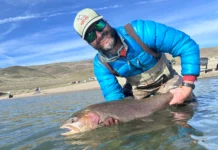
Cold water from Navajo Reservoir gives the San Juan more consistent conditions than many freestone rivers John fishes. That does not make every day easy: pressured trout may take a fly just under the surface while refusing one presented above it.
Anglers can practice deep nymphing, dry flies, and early morning streamers on the same trip. John calls a fish on each of those three methods in one day the San Juan Slam.
The conversation also touches on San Juan worms, small tailwater flies, and how a subtle adjustment to a rig can change the fishing.
A boat opens up more of the river, but John also describes places to fish on foot. Hiring a guide for a day can help a visitor learn the water before heading out alone.
He packs mouse patterns for the smaller species and baitfish flies of roughly four to nine inches for taimen. His practical travel picks include sound waders, a light puffy coat, and a small inflatable pillow.
Episode Transcript
WFS 999 Transcript 00:00:00 Dave: This episode begins in northwest New Mexico, where cold water flowing from Navajo Reservoir has created one of the country’s most talked about trout fisheries. It’s also where a new series of fishing schools is bringing together some of the best instructors in the sport. And today, John Hunt is back on the podcast to take us inside the San Juan River. The new fishing programs they’ve built there, and a second adventure that carries us halfway around the world to Mongolia. Today, we’re going to talk about how the new San Juan Boot Camp combines streamer Nymphing dry flies into a two full ten hour day session on the water. We’re going to find out why anglers at different levels can attend the same school and leave with techniques they can use in their home streams. We’re going to find out about these overlooked, slow, shallow sections of the river and how these can hold some of the largest trout, and how anglers can complete the Grand Slam on the San Juan. Catching a fish on a streamer dry fly nymph all in the same day. Plus, John’s going to talk about the difference between some of the species out here and where you can get some lodging if you’re interested. He’s got a great program down there at the Rod and Rifle. We’re going to be talking about that as we build out this boot camp and this trip coming up here. So I’m excited. The Euro school is going to be on the San Juan River this year. So if you want to check in with John, you can do that right now. Moccasin Fly Club right. Here he is John Hunt. How’s it going John? 00:01:26 John: Good man. It’s a hot summer, but, uh, enjoying all of it, man. It’s it’s a good time. 00:01:31 Dave: I know I was just looking at the temperatures in, you know, where I’m at in Montana and all over. It’s it’s it’s in the mid nineties this week. Is that what the Colorado and where you’re at is looking like? 00:01:41 John: Yeah, I would say, uh, I would take low nineties yesterday. Got up pretty high this whole week. It’ll be up there again. But yeah, it’s a, it’s a high temp, low water type of, uh, summer around a lot of the rocky corridor for sure. 00:01:55 Dave: Exactly. How do you, when you’re getting these temperatures. How do you guys deal with that on? I mean, you’ve got this program where you’re fishing all around, not just the Western US, but all around the world, but how do you guys adjust your things based on the weather and things like that? 00:02:10 John: I mean, here in Colorado, the past couple of years, we’ve we’ve had a bunch of things. I mean, Cpi-w, the Department of Wildlife and all that stuff. Like there’s a, a voluntary closure when they issue that that’s more, you know, the, the commercial aspect and not the public aspect, but the lower Colorado. Most of the Colorado’s closed for fishing. The Roaring Fork is now closed for fishing. The eagle is closed for fishing. The frying pan is still open and available. The. The crystal. And then I mean, you got like the Yampa has no water in it, and a bunch of the Freestones are already done because it was a low snowpack year. But for us here in Colorado, it’s just not usually this early in the summer. But we’re not able to float a lot of moving water. You know, you have to get up into the high alpine or you have to, you know, do something with the Stillwater and the reservoirs for us at moccasin. You know, our our place hook and hunt that is in, uh, silt by Glenwood Springs. That place is already booked and there’s already people there. So, you know, we’re having the guides and the people that are staying there or anybody that is fishing and looking for activities, move to the Stillwater, moved to the high Alpine. The people that start calling us in June about wanting to come out and fish or where they should go. We start early and kind of get proactive and let them know they should probably get down to New Mexico, maybe fish the San Juan, where the water’s always forty three degrees and the fish are always going to eat, and there isn’t an issue of water temperature. You do get in to everywhere, all over the country. When this happens, you know, the the pressure moves and there’s a migration of anglers more than there’s, you know, migration of fish, so to speak. So, uh, we try to help people out, finding new spots where they can get to and, and understanding that, you know, if you do go to the San Juan, you’re probably going to see a couple more boats because a lot of people are going to go where they can. Same thing up in like Wyoming and Montana and other places. Like you gotta, you gotta be where it’s okay to catch the fish, but you also need to be somewhere where you’re going to have a good experience. So, I mean, we, we work a lot on just finding those, those avenues and those aspects to let people know, like, you know, if we have a family that’s trying to leave the East Coast and come to Colorado and they have to be in Colorado, we have options for them so they can get on to Stillwater and High Alpine and have a different experience than standing in a river. But we do suggest for a lot of people, if you don’t have to come to Colorado or you don’t have to come to Wyoming, then there are other options and other destinations that are probably going to be a better fishing experience. But it all depends on what we’re trying to work with, with their itinerary and what they want to do. But for me, I tell everybody, if you want to come out and be around a bunch of people and want to be in ninety five degrees and not fish in a river, that’s okay. I always tell people, you know, maybe September, October, November are going to be better and you can fish here or we can get you to fish in other places at that point. Like, as you said, we we have tons of options, but that doesn’t always work for every client. Some clients need to be in some place or, you know, they have a bachelorette party that’s coming out here, or they’re coming to see their friend or they’re coming to see family. You know, we gotta, we gotta make those work too. 00:05:12 Dave: Yeah, definitely. Yeah. You got to adjust. And that’s something that we’re and we’re going to talk about that today. I think some cool programs, you know that you have coming here. We we talk about our boot camps. We do these online sessions where we have some great speakers come on and do presentations. And, and you’re also doing a boot camp this year. And it sounds like you got a few more coming, uh, with, uh, the crew. James. And we’ve had them on the podcast as well. His crew down there is awesome. But, but talk about that kick us off because I want to talk. I always love talking trout fishing and what you guys have going. So what was this idea on your boot camp? Where did this start and what. Describe what it is. 00:05:47 John: You know, coming into the spring and the summer, we’re always talking about trout. I mean, it’s a huge domestic thing here in the US where there’s a ton of places to go do it. And there’s a lot of people that want to go trout fishing and probably want to do it on their own and DIY, but you also want to kind of get, I don’t know, get the right arsenal of things together, you know, learning different techniques, learning how to throw different, uh, things, streamers, nymphs and dry flies, you know, different techniques on doing it. And a lot of that we get into somewhere where people can practice, you know, we want people to catch fish. We want people to be able to get on the water, but you also want the availability of them. Like, you know, learning how to hook set, learning how to fight fish, learning how to read different parts of water, learning how to tie up different techniques on their line. And that came down to this thing in the fall, because the summer is hot and low water, and there’s not a lot of options for it. We’ve come up with with an option now where the spring, the fall in most likely the winter will come up with, uh, a program for people to be able to get out and get on water where we know there’s fish. So this brings us to the San Juan and New Mexico again, where there’s a ton of fish and there’s a ton of different ways in a single day or on a trip to do different techniques. You know, some days you may get into a pocket where fish are rising and we’re able to slow down and kind of work on the dry fly fishing. We get into real deep aspects where it’s best to nymph and sometimes even walk in wading euro nymph, and then other aspects. Early in the morning, you’re able to throw meat and get the streamers out and see what’s up. So this November, we’ll start our first one, which is coming up when this airs. I think it’ll be right before this one happens. But we have what’s called the Trout Boot camp November fifth to the seventh. And what that’s going to allow us to do is get people on the water for extended days. Usually when you go out with a guide, you get an eight hour day. We’ll have two ten hour days, which is what we call a super day. Plus one of the evenings we’re doing a fly tying clinic. So I think that’s the big thing with our boot camp program, is just allowing people to have practice and on water application. So the first one is November. Uh, then I think we’re looking at another one that’s probably going to be like March or so. And then we’ll, we’ll try to figure out where to squeeze in the the last streamer one, but the Euro, Euro Nymphing, the streamer and the boot camp, which it covers all of them. Uh, and the fly time, those are kind of the new three programs we’ve come up with to have down in New Mexico. 00:08:07 Dave: Cool. So in the November one is going to be now. Is that going to be focused on just general high level, or do you have a specific technique you’ll cover? 00:08:16 John: Uh, no. So I mean, we, we would say it’s kind of just general and basic and even beginner. We’ll have streamers. So during that ten hour day, we’ll probably have a early morning run where we’ll cover the quality water and throw some streamers and talk about that. Then we’ll have a break and we’ll probably get back into it and do some nymphing. And throughout the nymphing, we’ll have fly, uh, dry flies setups ready to go on the boats. When we get into some areas where that can happen, we’ll get into the dry fly stuff. The first night everybody gets in, we have an opening dinner, we’ll have everybody taken care of. Lodging, meals and guides and everything are all taken care of on that trip. But the first ten hour Super day is kind of seeing the different techniques, looking for the different techniques. Then that night we do the fly tying clinic and we talk about those techniques in depth. And then the second day, which is another ten hour day, we’ll have them applying those and probably using the bugs that they tie and trying to catch fish and going through that aspect. And then the lodging on that last night is also included so that everybody can fly out the next night. So first night is the opening dinner. Second night is the fly tying clinic. And the third night is kind of a recap and talking about all of those different techniques, where to use them. And I think with the people that we have there, we’ll probably go in depth more of like where they want to go fish and where they like to go fish, and how you can apply those techniques on their home water. 00:09:34 Dave: Nice. So this is going to be kind of three nights, two days full on. 00:09:39 John: Yeah, yeah. So you get, yeah, you get in the first night. That’s not a fishing night. Kind of a rig up, set up whatever day two ten hour fishing day. plus the fly tying clinic. And then day three ten our fishing day. Plus, you know, the the class that night we’ll be talking about how and where and what to use it on. And then the people will be out that day. The next morning they’ll fly out, but that one is eighteen hundred dollars per angler. I think we have two or three spots already filled. So we have a couple other ones, but it’ll have all your meals, breakfast, lunch and dinner, all the lodging, all the guides and the fly tying clinic. And the second night when we cover your home water and how that works. Also the opening dinner the first night, everything other than the shuttle from the airport is included in that, plus gratuities. But trying to figure out a way to get beginners, intermediates and advanced people to come out and try new stuff. And I think if you are more high level, that’s where like the Euro Euro nymph class and the streamer class are going to be more in depth on a certain technique. But I mean this you’ll learn a great, great deal of stuff from the about trout crew. Plus the fly tying is another thing for people just to be able to see how that works and if they want to get into it, or if they already are into it, and then the home water stuff is just, we’re trying to make sure that the people that are going elsewhere and going back home have a way to understand how these techniques, how this dry fly technique, how the nymph technique, how the streamer technique, when to do it, how to do it, what you’re looking for, how how to read the water the right way. And I hate to say it, but I mean like twenty hours on the water in two days is a ton of fishing too. So we hope everybody’s going to be all right with that. I mean, a lot of times you’ll get an eight hour day and that’s fine. You know, you’ll get two and a half days kind of in two with the way that we’re doing this with the super days. 00:11:24 Dave: Exactly. No, this is cool. I love where you’re going with this because it basically gets people out there for a little less money. And then they, I’m sure can stick around, right. And fish on their own or maybe, you know, yeah, that sort of thing for sure. 00:11:36 John: Yeah. We, we talked to a couple people already where they’re going to come in for this and then they want to stay at the lodge a couple days extra and just walk and wade and fish a little bit more, which, you know, having a day that you come in and then two days fishing, adding another day on or two more days on before you leave gives you the whole week also. We kind of focused early November just because in New Mexico it’s not super cold. It’s not super hot. Uh, the fish are happy. There’s not not as many crowds, but, um, yeah, I mean, it’s, it’s an educational piece to it. I mean, we, we used to do classes and clinics like this in Colorado, but now with the water and the heat issue, we have to figure out, you know, new creative ways to get around it. And I mean, as you guys have had the about trout crew on a bunch of times, those guys are super knowledgeable. They’re great teachers. They work great on the water teaching people all these new techniques. And that’s we just all wanted to figure out a way to come together again and, and make it. I mean, it is super affordable, but it’s also something where anglers can come and take notes and rock out with us, but also learn a ton in three days. 00:12:36 Dave: Yeah, exactly. Get a ton of value from some of the best out there. And the river, again, remind us, well, this what’s the main river will be on. 00:12:43 John: So yeah, we’ll we’ll be on the San Juan. We’ll be in the quality water is probably super early in those days, but we do now have ways that we can float through the bay waters. I mean, there’s three miles of quality waters and nine miles of bay water, and we’ll probably be covering all twelve miles of that throughout the trip. We’ll have some ways that we can, you know, fish later in the day, get a little bit further down in the river. And that’s when we’ll really be working on like some of the tactics that you can get into to real practice and not just, you know, the drift and the mend, but also the hook up and playing the fish on the line and how all those techniques work really well in different types of water, deep water, shallow water, bank water, structured water, all that kind of stuff. 00:13:23 Dave: That’s right. Yeah. And I know when James was on, he was talking about, I think the last time talking about streamers and talking about how some of the water he fishes is like that froggy water, which a lot of people maybe pass by not realizing that it holds, you know, some of those big fish. And I think that, you know, we just got off of a trip. We were fishing in northern Saskatchewan for Northern Pike and man, I’ll tell you what, those froggy areas that are slow and backwaters and stuff were some of the biggest fish were at. Right. I mean, Pike’s a totally different species, but yeah. Do you see that around the world, a lot of your travels that some of that frog people pass up some of the best water sometimes? 00:13:58 John: Yeah. I mean, I think it’s no matter where you go in the country or in the world, there’s a bunch of old, old lines and funny quotes from people, you know, you can’t catch a fish if a hook’s not in the water. There is stuff that looks like it’s supposed to be super fishy and things that, you know, people get into certain areas like, oh, this is perfect, and this is where the fish should be. You got to also realize that the fish know that that’s, you know, where everybody’s casting and where all the hooks are. So I think you got to treat all water, no matter whether you think there’s a big fish or little fish, you gotta treat it like there could be something in there. But I do think that there are a lot of times when you’re getting into a zone that you’re like, oh, well, there’s no current whatever at the beginning of that, the middle of it or the end of it. You know, you could hook into something mega because there’s a reason why there’s not a lot of fish around because maybe there’s a predator there. There’s also, you know, that’s a safe spot. And big fish get big because they’re smart and they stay big because they’re smart. And that’s, you know, what you got to start thinking about is that some of the, the abnormal or undesirable or things that you don’t think are necessarily going to be the best. I would agree, especially with when you talk about like Pike and Golden Dorado and peacock bass and like when you start getting into the predator mindset and not just, you know, regular fish everywhere, but big fish that eat little fish, they usually have a home somewhere that may not be around all of the little fish. And that’s where you got to get into where that, you know, you got to treat it all the same and put a nice cast in it, put it as best of a mend and put a best of a drift as you can. That’s also where you starting to get into like, uh, hawk and meat and the streamer mentality and some people that like just don’t care about little bugs and only want to throw some sort of T-Bone steak streamer in there, because those are the situations where you do have those big predators that come out and ambush that type of fly and that that’s a whole different mindset in general of from the angler point of view. But it’s also, you know, a different mindset of how you fish water. You’re going to cover more water with streamers. You got to treat it all the same. You know, you could get into something that’s got knee high water and you’re like, there’s no way there’s this. And you put one right on the bank and, you know, right as it hits, there’s an explosion. And you never thought there was a fish that big there, and you never thought it was going to eat what you were throwing. And all of it comes together. And the the most unusual type of water. 00:16:21 Dave: That’s so good. Yeah. That was those were kind of the two of our revelations is, man, seeing these fish, some of them were twenty five inches and bigger that had giant wounds from being eaten by bigger fish. Right. You know, but, but it was also the surprise factor. You know, that’s a great thing about fly fishing. Like you make this cast and you just, you know, don’t even know you have a shot and all of a sudden you get this trophy fish on, right? I feel like fly fishing is always the amazing thing. But but tell me this. So you mentioned on the San Juan, the bait water, the quality water. Describe that a little bit on the San Juan because we’re kind of building this. This is going to be a cool trip. What do we need to know about the river itself? And are those waters different types of regulations? 00:16:57 John: Yeah. So in New Mexico, they have red Chile water and green Chile water at the San Juan in in most places, a lot of them call them like quality water and bait water, which again, you know, I’m not, I’m not one to, to have that type of perspective. So the three miles of quality water are going to be single hook barbless fly fishing only. So no, no scent, no anything else. You know, you can throw your lures and etc., but not treble hooks. You got to have single barbless hooks. So most of that leans to the quality. Water is the fly fishing aspect. And the first three miles, once you get out of the the dam area and come through the braids, which is quality water, but walk and wait weight only doesn’t have boats on it. You’ll get down to Texas, Hull and Texas holes where the first boat ramp is, and then from Texas all the way down to Crusher. You got about three miles of strictly quality waters, which is usually the fly fishing aspect. All catch and release and a certain type of of regulations that works for that three miles of water. Then once you hit Crusher all the way down to village, all the way down to the Hammond boat ramp, which is nine miles of water. That’s what’s considered the bait water. You can keep fish there, you can throw treble hooks and powerbait and everything else. And there’s still a ton of people that that fly fish, that hole water. You also see a bit of a change in the water itself. You know, when the water is coming right out of the dam, it’s pumping out at, you know, forty, forty three degrees. It gets into the braids, it gets down into Texas hole. It’s still around that same temperature as you start getting down river, you know, say five, six, seven miles from the dam, you’re going to see a slight bump in that temperature as well. I still think that there are some massive brown trout that hold further down in the river. There’s all kinds of stories about, you know, there’s thirty inches all over the San Juan, but I think you start to see more big browns and less big rainbows. Once you get past crusher hole and you start working down towards village, and you also start working down towards Hammond. There’s big fish. And I think that has to do with some of the temperature of the water and the type of the water. You know, you get real deep holes, a lot of structure up in the top section. You do have some areas where it could get a little shallower in the the lower sections and the, the bait waters. But I mean, we, we’ll cover all twelve miles of those. I mean, from the three miles of the quality water down into the nine miles of the bait, you know, from Texas Hole to Hammond, everything in between. I personally enjoy a lot of the lower stuff just because there’s less boat traffic and there’s usually a little bit less foot traffic. I personally enjoy just less crowds every now and then, and I think that has to do with traveling around and seeing a bunch of it. You know, I, I do think that there’s a fun day of catching a ton of little trout and having fun and learning certain things. Then I also think there’s a, a huge advantage of going out, trying to trophy hunt, only throwing streamers in the middle of where, you know, those big fish are living. All of them are unbelievable experiences. I think in in general, in any angler’s journey, you want to have days that are of quantity of fish and you’re just catching fish after fish after fish, you’re getting your hook set, right. You’re learning how to fight a fish in and how to, you know, how to not horse them in the wrong way, but being able to decrease the time, fighting a fish and netting it, getting the hook out and getting it back in there and doing the same thing. And if you can do that over and over and over and over again all day, I think you get better as an angler. There’s also the aspect of that, like when you want to go out and try to really trophy fish and get after big fish, it’s a whole different mentality and mindset, and that’s where every cast has got to be. All right. This could be the one. But when you do look into that trophy, I mean, I think, you know, going back to that element of surprise and you guys talking about big wounded fish, you know, I think for a lot of anglers, they want those the big trophy fish and they want an unbelievable story. But if everything doesn’t line up the right way, when that fish strikes, that fly or streamer, usually you don’t get to hold that fish or net that fish, the fish gets away. And that’s because you need to have a ton of practice on how to fight fish. You know the right way to get them into the net. So, you know, if you’re not used to making the right cast and always having your finger on the line, and as soon as that streamer hits the water, you get a strip in and you’re ready for that hook set and the hook sets, right. The fish eats it and you know, then you fight it the right way and you get it in and you get that all of those things have to come together. And the more you practice doing that, I think the better you get at it. So but yeah, the, the quality water versus the bait water is a big conversation. Those regulations are, are a lot of the same. The red chili water, the green chili water is how New Mexico labels all of that. 00:21:33 Dave: They do. So what’s the red? So the red and green chili water. That is what’s there between the red and green. Which ones? 00:21:39 John: Which the red chili water would be the quality waters where there’s single barbless hooks, no artificials, no scented. 00:21:47 Dave: Etc. fly fishing only. 00:21:50 John: Yeah, it’s all catch and release. And then you get into the green chili water and that’s going to be the one that is the you can keep what you have. You can roll the treble hooks, you can have the power bait and etc.. 00:22:01 Dave: Gotcha. This is awesome. So, I mean, I think what you’re painting here, the picture is, which is cool with this boot camp is that, you know, you’re putting together a couple of days, you know, three nights of short little blasts where it’s the value is just packed. And then people take this and they’re learning from people like you and James and Norm, right? You got this whole crew down there and we’re on the San Juan, which is again, this famous river. What is it about the San Juan that makes it that level? Why? Because when I hear it, I’m always thinking, I haven’t been there yet. I think this is going to be the year I’m going to do it. But what makes that river special down there? 00:22:33 John: I mean, I think a lot of it is just the the consistency is a big part of it. I mean, there are definitely things being impacted all over the country. So I can’t say that, you know, the San Juan is the same as it was ten years ago. 00:22:46 Dave: But it’s a tailwater. The San Juan, correct? 00:22:48 John: Yeah. So the Nob, the Navajo Reservoir, which is right above where we’re talking about fishing, is the largest reservoir that’s in New Mexico. It collects most of the water from the San Juan Mountains up into Colorado, like where Pagosa Springs and Wolf Creek pass down through Chama and some other aspects that water all rose west and gets into the Navajo Reservoir. And that reservoir is is real deep. And whether it’s a low water year or a high water year, there’s kind of a consistency that comes through. And when we talk about like CFS and water flow, it’s a lot slower than, you know, your your mountain and steep topography type stuff. You know, in Colorado, we may see runoff being it two thousand five hundred cfs down at the San Juan. They may see runoff season when they open the dam a little bit, go up to like a thousand or eleven hundred cfs. And sometimes it gets all the way down to like two hundred, three hundred. So there’s a slow, a slow roll and a slow trickle that comes out of that dam. And that water is super deep and stays super cold. So, you know, year round you can fish the San Juan because the water stays consistent and the habitat of the fish stays very consistent. Yes, it could be snowing outside for the humans. It could be rainy, it could be windy, it could be one hundred degrees. But that water is always staying very consistent. So the fishing aspects are are stable, consistent. And you also have a huge population of fish. The browns are not stocked. So the browns are, you know, populating on their own. They are wild. They’re not native, but they do, you know, spawn and make their own offspring. And then the rainbows, the rainbows are stocked and the rainbows don’t reproduce, but you’re still seeing consistently large fish. You know, I think most of the guides down there would tell you that they probably touch a twenty inch trout every day, that they’re out and their clients are fishing. There’s a ton of unbelievable photos of thirty inch trout that live there as well. So we use it, as you know, when I get back into that, that batting cage or practicing shooting on a goal or practicing catching fly balls, all of that is very possible. Now, that doesn’t belittle the fact that the San Juan is a very technical place to be. Some days people are catching thirty, forty, fifty fish, some days people are catching ten fish. It all depends on what it is. But because it’s so technical, there’s a bunch of different techniques that people use there. Like, you know, you maybe throwing dry flies, but they’re not hitting the dry flies, but then you throw a suspended rig that’s two inches under the water and they hit the stuff that’s two inches under the water. Or then you’re, you’re fishing some stuff that’s super deep and they’re hitting those nymphs or in the morning, they’re hitting streamers. So I mean, the, the technicality and the amount of pressure makes the fish smart. And it also makes the guys really good on understanding what different techniques you need to do and to hit the San Juan Slam, which is a fish on a streamer, a fish on a dry and a fish on a nymph all in the same day, you know, to hit the San Juan Slam, you got to be throwing all that different stuff and changing up and using all of those techniques. So I mean, that that all comes back to why it’s a great place for people to come practice, to learn all the techniques, to see how they’re doing it, but hopefully apply and catch a bunch of fish doing all of that. 00:26:03 Dave: Yeah, exactly. Yeah. I think that you’re hitting on a couple of things. You know, we mentioned the crew down there, but then being able to hit all of it, right? Because you’ve got the streamers, which we talked James, about, you’ve got Euro, which I think you’re looking at March right? For potentially have a norm who’s one of the all stars in Euro because of his team USA experience. Right. And then you’ve also got the streamer coming back on the other end sometimes, so I feel like it’s the trifecta, right? Of these things. And then the tying is blended in during the session. So one of those nights you’re going to be tying, right? 00:26:35 John: Yeah. So one of those nights we’ll probably tie some of the smaller stuff. I don’t know if it’ll be a dry or a nymph or something. I don’t think we’ll get into tying streamers yet. But yeah, I mean like the November one, we’ll keep the boot camp there. Um, and I mean, as soon as this November one hits, we’ll start talking about next November with that one. You know, I think, you know, hitting it with Norm and talking about March and Euro nymphing obviously right now while we’re recording Norm in the women’s USA team just got over there and they’re going to be competing this week. By the time you guys hear this, I assume it’ll be talked about all over how they did and if they medaled or whatever. 00:27:08 Dave: That’s right. Where they compete at. Do you know where that’s at? 00:27:10 John: I think they’re I know they’re over in Europe somewhere. I don’t know if it’s in Scandinavia, Europe or somewhere. 00:27:15 Dave: But yeah, that’s right. Because the right now, when this goes live this fall, team USA, the men’s are going to be in eastern Idaho, right? 00:27:22 John: Correct. 00:27:23 Dave: So they’re going to be hopefully, uh, maybe because Norm and the crew and the youth took gold last year in eastern Idaho. Right. But now they’re over in Europe. 00:27:31 John: Yeah. Now the women’s team is over there. And that’s who, you know, in March when we talk about the Euro nymph class, that’ll be the same type of thing. It’ll be two days on the water and then we’ll have a class. One night. We’ll probably have fly tying one of the other nights, and then we’ll get back into the streamers, which won’t be during the summer, but it’ll again, I think it’ll probably be like early fall, as opposed to us trying to have something in like early winter with the November stuff. 00:27:54 Dave: Right. Is there a bad time over there on the San Juan? It sounds like. 00:27:58 Speaker 3: I mean. 00:27:59 Dave: Yeah. 00:27:59 John: It depends. If you want to talk about like the crowds and the people, I think the summer is where you see the most people. We also see a lot during the shoulder seasons, like the spring and the fall. There’s a lot of lot of crowds and a lot of people in there because of the campgrounds and just the aspect of lodging. I think the summer you see a little bit more, uh, human traffic. But I mean, for the for the fishing aspect, I tell people all the time, you know, if you have the availability to go there. I tell people to go there anytime. I’ve been there in December and caught fish. I’ve been there in in April and caught fish. I mean, yeah, whenever you go down there, there’s just different techniques. I’ve been there in the middle of a snowstorm. I’ve been there in the middle of the rains. I’ve been there in the middle of the heat. 00:28:38 Dave: And the fishing’s always right. You said the water is always pretty stable. That’s the good thing. 00:28:43 Speaker 3: Yeah. The. 00:28:43 John: I mean, they have a couple cool, really cool things that happen there that are just like natural, but like after the first big rain. So they have what’s called the ant hatch. Nobody knows when it happens. But, you know, in the spring when it gets hot and the ants come out of the ground, there’s always like a big rain. And then through the arroyos and the washes, I mean, there are billions of of ants that get washed into the river and the fish are just rising like crazy. And if you’re there and on the water, when it happens, it’s the craziest thing ever. In the wintertime, you get into some warm spots where like May it snowed the day before, and then it’s nice and sunny the next day, and you have fish rising on bugs that are just like, you know, coming off different areas. Usually they’re suspended in bugs that are coming off from the riverbed because it warms up just a couple of degrees. That’s really cool. I prefer the early morning streamer bite. I usually get out there as early as I can right at sunrise, and love throwing the streamers and just seeing if you can wrestle up one of those gigantic, huge trout that’s hungry and been chasing fish all night. But yeah, no, it’s it’s it’s a great fishery. It has some stability that the rest of the Rockies don’t have. 00:29:51 Dave: Is it a lot different than, you know, because we talk a lot about Colorado, a lot about New Mexico between Colorado and New Mexico. Are there quite a bit of differences between the two states? 00:29:59 John: I mean, I think you get into the tail water topic, you know, there’s tail waters all over Colorado. I mean, I think tail waters are technical and and have pressure and they have some stability. Um, I think the biggest thing that a lot of a lot of talk about is more of like the topography and the water itself. Like, you know, you may drop a thousand vertical feet here in Colorado. I don’t know a lot of places in New Mexico where you can drop one thousand vertical feet into flow. And what that means is that there’s less rapids, there’s less steepness. The water isn’t going to flow as fast. It’s not going as intensely downhill. And I think, you know, when we talk about topography and water flow, I think you need to just like understand the slope. If you’re on a nice, easy, gradual rising slope, the water doesn’t move as fast as if you’re on like a really short, steep slope. And I think that changes some of the stuff that also changes like what the riverbed looks like. You may have some more like shallow rolling aspects where you want a real long drift in New Mexico. In Colorado, you’re probably trying to pocket pick little holes as fast as you can because you’re moving faster on a boat. And the walking and waiting aspect, it’s just, you know, what you can access and what you can expect or can’t access. But yeah, I mean, I think Colorado, New Mexico has a, a bunch of variety of water. You can fish sodas, Colorado sodas, Wyoming. So I mean, I don’t think there’s a, there are some similarities and there are some differences. I think the biggest similarity is a lot of the bugs and a lot of the things are the same. I mean, I would be remiss to say that most of the listeners know what a San Juan worm is, right? 00:31:28 Dave: The San Juan, that’s the favorite. I can’t wait. That’s going to be great when we finish San Juan Worm on the San Juan River, right? 00:31:33 John: Yeah. And then, you know, you get into the San Juan Worm is there because of the San Juan and the annelids and what are on that water and what comes out of that reservoir. Just like in Colorado, a lot of people fish the the white shrimp underneath tail waters. And that’s, you know, the, the spicy shrimp is what comes out of the bottom of a lot of the reservoirs. But I think, you know, all of those things are the same tail water techniques, the tail water, itty bitty bugs that you get into the fact that fish see more pressure on tail waters. And they also, you know, eat different and have different feeding schedules. All of that comes into play no matter where you’re at in any of the mountains. But yeah, I mean, I think the biggest issue we’re seeing in Colorado is that if we don’t have enough of a snowpack, we don’t have enough water and we don’t have enough water, it gets too hot and then we have to stop fishing in June, July, August to make sure that the fish aren’t dying and getting overstressed. Some of the places in New Mexico, you certainly have that happen once you get further south, because it’s super hot. But on the San Juan, you know you have a little bit more accommodation for the fish habitat because of Navajo Reservoir and the temperature and the way that it’s, you know, procured plus, I mean, good on New Mexico and the regulations, like, you know, one barbless hook is way different than other things. The catch and release is obviously a big part of it. And those those are all things that, you know, conservation needs to happen no matter where we’re at, whether you’re in Brazil and you’re putting peacock bass back so they don’t get eaten by pink dolphins, or you’re in Mongolia and you can only use one hook and catch and releasing taimen. It’s, it’s all the same way that we have to conserve the fisheries around the world. 00:33:09 Dave: Amazing. Yeah. I think the I’m already picturing now, I know when we were talking to some listeners recently, Euro Nymphing is fingers coming up. It always is a hot topic, but I can picture this the San Juan Euro nymphing, you know, school, right? This is kind of what this is what we’re talking about here. And I know people are listening now thinking, yeah, I’m in on this because yeah. 00:33:27 John: And they can reach out to us. Like we, we have aspects. I mean, the Euro nymphing class will be in the spring. We don’t have exact dates. 00:33:34 Dave: How is the spring on in New Mexico? What is that like on the San Juan? Is it the springs good. Like March? 00:33:39 John: Yeah. Springs real good. I mean, I like anything that’s not really hot, not really cold. Like if you can get in with that, you know, outside it’s fifty to sixty five degrees. You’re obviously wearing your waders because it’s forty degree water. But like those things to me are more enjoyable because the fish are still the fish and it’s still their normal habitat. But, you know, outside of the water, you’re not too hot, you’re not too cold, you’re able to get into them. Hopefully it’s not blowing crazy sideways winds as always. But I mean, we, we will have the Euro nymph class coming up in the spring. But that shouldn’t deter you. Like if you want to get out there on a different time, you can always stay at Rod and Rifle down there. Norm and the about track guys are always doing that. 00:34:18 Dave: Tell us about that because I know you you highlighted that before, but what is the Lodge going to be like whether you’re staying the November one or maybe the Euro school? What is the lodging look like there that you have? 00:34:27 John: Yeah. So I mean, we have a lodge that’s on three acres. It’s sleeps ten total. It’s got three bathrooms for everybody to use. That’s also where the about trout office is. So they’re there and we I mean we have the availability that people can stay there when they want to. So you know, if you want to come out in April, not May or you want to come out in June, not whatever. Like we, we can accommodate anybody that wants to come. You can bring your own group. We do have a lot of we have a lot of fly shops that come out and do Euro nymph classes or streamer classes. I mean, James and the people at about trout cover, all of it. You can urine nymph on foot with Norm. You can Euro nymph from the boat. So I mean technically you can contact us and stay at the place and have a guide whenever you want to do it. It may not be the same exact structure and curriculum as the classes, but you’re going to be learning from the same instructor. You’re going to be fishing the same water. You’re going to be staying at the same lodge. I’d say the biggest thing between the classes and coming out on your own is you just got to do your own food and cook your own meals and be ready for that when you do the classes. We include all of the breakfast, lunch, and dinner we have the opening thing. We’ll also probably do the fly tying clinic. Plus we’ll talk about some other Euro nymph stuff in a class one of the nights after we fish. But I mean, you can come to Rod and Rifle whenever you want. It’s on the Moccasin Fly Club website under lodging, and it’s all available now. I will say that the Lodge definitely stays pretty busy year round down in New Mexico because of the fact that you can. I mean, during the hunting season, it’s big because of hunting, but you can fish the whole rest of the year. So I would tell everybody, you know, figure out your dates, you can contact us directly, we can get the lodging secured for you. You can be there. You’re a five minute drive from the village boat ramp. You’re probably a twelve minute drive from Texas. Whole. 00:36:11 Dave: Should people be bringing a boat when they do this, or there’s just as much access by foot? 00:36:16 John: No, you can get if you go up to Texas, or you can walk and ride the braids, you can walk and wade Salmon Canyon. I mean, there’s tons of accessibility on foot. If you do have a boat, you obviously want to bring that boat because there’s a bunch of stuff you get to do at the San Juan from a boat. I mean, because the flows are low, there’s a lot of back rowing. You can hit the same hole three or four times if you want to. I would say that if you are going to come out and walk and wade the first day, I would come out, probably hire a guide from about trout and float and fish and ask them all the questions you want to ask them about the braids. Hey, you know, what do you think’s working up in the braids? You know, are there certain flies? Those guys are most likely going to tell you where to go, what hole to go to, what stuff to throw, give you some split shot because all the split shot you have will be way too big for the crazy split shot that they put on. They’ll probably tell you, you know what’s up with that and you’ll catch fish for a whole day, floating parts of the river that you won’t see while you’re walking and waiting the braids and other pieces. Now, if you’re one hundred percent DIY and don’t want a guide book, the place and I. I can help you out with some of that. And while you’re there, you can talk to me about trout guides and ask them what’s up with the braids and what’s happening. They will do walk and wait trips. They will do float trips, they’ll do Euro nymph trips, they’ll do streamer trips, they’ll do anything you guys want to do as a client. But if you are looking to be one hundred percent DIY, I would tell you, if you’ve never been to the San Juan, it’s worth having conversations before you get there. The bug size is different, the bug selection is different. The techniques are a little different. I mean, literally just your fly being an inch and a half higher or lower in the water column will change. Whether you catch a ton of fish or don’t catch a lot of fish. And there’s a lot of that stuff that you also just gotta learn and do, you can come out there and do it all on your own. It’s just going to take a little bit more time to get it all to click. And I think that’s, that’s a fun part about the San Juan is that, you know, a lot of people come out and they’re throwing indicators and deep nymph rigs and their catching, you know, twenty thirty fish. This is amazing. And then you see somebody on a different boat pull up some twenty eight inch gigantic that’s on a streamer and you’re like, wow, that’s, you know, it’s a different technique and it’s a different type of fishing. It could all happen in Texas. And Texas whole is probably, I don’t know, eighty five yards long and fifty yards wide. And there could be thirty people walking and waiting and five boats in that thing. And everybody’s catching fish different ways. 00:38:36 Dave: Amazing. Well, this is cool. I’m glad we highlighted this because and we’re gonna, I think what we’re going to do is bring, uh, you know, you back on James, maybe Norm and we’re going to kind of build up this and get some more education here on the podcast, get people pumped for, uh, heading out there because I’ve been talking about this a while, right? The San Juan is, is on the bucket list. So hopefully this will be the year. 00:38:55 John: When you’re ready to go. That bucket list item is pretty easy. We can get you there no problem. I mean, now, if we were gonna talk about Mongolia and Mexico and all kinds of other stuff. 00:39:04 Dave: Yeah, that’s the perfect segue, John, because I wanted to talk Mongolia. We on the, uh, you know, again, we’ve been chatting with listeners on the podcast, and Mongolia is one that’s been coming up from some of our pro members. You know, I think that’s a destination as well that people and obviously Mongolia is different than, than what we’re talking about here. But but give us the high level on Mongolia. You’ve been there. Right? So what is that experience like? Maybe give us the thousand foot view of Mongolia. 00:39:27 John: It is an experience in travel just as much as it is an experience in fishing. In August we take a group there. So, I mean, as we’re airing this podcast, I’ll be leaving on August fifth or sixth, and I come back on the seventeenth because it takes two days to get there and two days to come back. It’s a little bit longer of a trip. 00:39:47 Dave: Oh yeah. So you’re gone for basically ten. It’s a ten day. You’re gone. 00:39:51 Speaker 4: Yeah. So I mean, yeah, you get seven. 00:39:53 John: Days out there plus two days on each side. You know, from where I’m at, I fly out of Denver, Colorado into Nayarit, Japan, then Nayarit, Japan, to Ulaanbaatar, Mongolia. That’s a whole like day overnight flight. Then we take a domestic flight an hour north to the most northern airport that’s in Mongolia. And then we have a six hour drive through the mountains, and we go up to a place called kugel, which is literally like there’s a little like bump of Mongolia that sticks into where Russia is. But I mean, we’ll be probably a two hour drive from where the Mongolia Russian border is. And we fish a bunch of these tributaries. There’s three or four different valleys within the the mountain system. And all these rivers come out. And that’s where the the timing live and where we’re fishing it. So, I mean, I think it’s amazing. It’s a, you know, different food and different community and different people. It’s a different type of travel. The fishing is, is also slightly different. Like you’re not going to go over there and throw San Juan worms and prince nymphs. You’re gonna be throwing, uh, so the, the three main species are grayling lenik and taimen, the diamond eat the lenik and the graylings. I mean, you’re throwing a real dark kind of like olive brown grey baitfish. 00:41:13 Dave: How big are the. How long are the flies? 00:41:15 John: I have stuff packed from like four inches to nine inches. 00:41:18 Dave: Nine inches? Yeah. Same flies. You’d probably be fishing for pike that we just fished for northern Pike, right? Just this giant stuff. 00:41:24 John: Yeah. So but different colors for sure. But yeah, like, you know, we have some four inch flies and some stuff now also we take a ton of, of mice patterns. So, you know, the mice patterns are maybe two to three inches, all topwater stuff, but we take a lot of mouse variations because the lennick and the grayling and sometimes the taimen will come up for some top water in between the lulls of trying to find the big timing. You’re using like a six and a seven weight and hitting a bunch of top water lennick you know, in a day you can catch eighty of them. There’s zero pressure and they love coming up and hitting the mice on the top water. So, I mean, you get top water explosions to kind of ease the time between trying to find these Gigantic dark colored logs that you’re trying to sight fish to in the bottom. 00:42:08 Dave: Oh. Your sight fishing. So for the time being, you’re actually finding them. And once you find them, then are you swinging flies to them? 00:42:14 John: Casting and swinging and also stripping and all kinds of depends on it. But yeah, with the, the big timing, you kind of your guide is more of like a spotter and they’re, they’re looking while you’re fishing and getting into it and you’re like, all right, you know, you see that huge, gigantic log looking over there. So that’s one. And we’re going to try to get from here. Now just as much as we’re sight fishing them, they’re they’re sighting and spotting us. So, you know, you have a bunch of different aspects. Plus with the timing, you’re probably throwing like eight, nine. I bring a ten weight just because I hope I hit some just dinosaur sized thing. And also I like to cut through the wind. And if there’s any issues, I like to have a little bit more power just to get across. You know, it could be, you know, you’re standing behind a little like Rock Island and you got to get sixty feet to put it on this timing. And I’d much rather have more than less on that. But yes, I mean, we have a variety of different assets. Our trip is lodge based, so we have a main lodge that we stay at. We jet boat all around the river system. I love the aspect of like staying out in a tent or a yurt over there is called a gur, but you can stay out in a gur or in a tent. I love that just because it feels even more remote and crazy. I mean, it’s kind of like you’re I try to assimilate it to people where like, if you were talking about going to Alaska thirty years ago and heading out into the wilderness to fish water that nobody had ever fished to see if there were trout or salmon or whatever there. A lot of it feels the same way. I mean, you’re out in the landscape and the flora and fauna seem a lot like that. It’s kind of the same longitude latitude of of what that is. You know, you’re talking. We’re Alaska and BC and all that stuff is if you go around the globe, that’s that’s where kind of Mongolian Russian border. It’s so you know, you’re out there in places that are green and brown and yellow and you’re you’re, you know, sleeping on the rock pebble beach right next to the river if you want to or you’re in the lodge and enjoying some warmth if it is a cold day. But it is a lot like hunting. I mean, you gotta put in the time, you gotta put in the days. The reason why we’re there fishing for for six and a half days is just because once you make all that travel, you might as well put in as much time as you can trying to land that gigantic, beautiful timing. 00:44:29 Dave: So I’m guessing it must be kind of like steelhead fishing or Atlantic salmon, right? Sometimes where you’re maybe going for one hookup in a day or a session, something like that. 00:44:39 John: I mean, with the lednock and the grayling, you can get into, you know, tens and twenties and whatever. So you have a lot of activity when you want to. On the timing. A lot of it is more just locating where they where they are and if they’re feeding or not. Like if you swing a couple times past them and they’re not moving, I mean, they could have seven lednock in their belly and not care about your fly. If you, if you can get on the right ones, man, you know, and they’re hungry and they’re feeding and it’s some of the right situations with the day, the sun, everything else, and it all comes together. I mean, there are a lot of people over there that have caught, you know, three or four in a day. And when they, you know, when they eat, they’re jumping, they’re huge. They’re, you know, I don’t know, we, we go by centimeters. So, you know, you’re talking about, you know, seventy, eighty, ninety centimeters. You know, you’re talking about three foot of fish. That’s, that’s going nuts. They don’t get hugely like girthy and gigantic and tall as much as they get, you know, super long. And they just have, they have an unbelievable paddle. Their tails are gigantic. All of it comes together. But it is, you know, in the realm of trips that that five thousand to six zero zero zero plus, you got to buy a more expensive flight. Plus you got to have the days for it. I mean, we are, we are happy to talk to anybody that wants to talk about twenty twenty seven, because we have a week in August twenty twenty seven. We’re already filling the group that we’re taking over this time is a smaller group, but that’s a lot because of the geopolitical aspects of the whole world and the travel and what’s going on right now. 00:46:04 Dave: So yeah, I’ve heard that. Yeah. The Mongolia especially. Right. Everything, there’s always changes going on. 00:46:09 Speaker 4: Yeah. 00:46:10 John: And the people that we work with over there, they’re down for the year because of those issues. Our group is a little smaller. But August of twenty twenty seven, we’ll be doing the same thing again. And you know, you the travel to get there is really cool. It’s also something in my experiences, like driving through the Mongolian mountains and seeing how people live and what people do. And then you get there and you start fishing for these huge time in, you know, when you hold one and when things come together, you’re kind of like, man, like it, you know, this is why there is travel anything travel, hunting, travel, fishing, going to Everest. The accomplishment that you get out of it is a whole different level. After you put in all of those, you know, reasons on why you get to stand there. And like, even for me, like, you know, I send the coordinates to our clients and I’m like, look, you know, you need to look on a map because, you know, when people want to talk about the other side of the world, this is one hundred percent the other side of the world. The food, the culture, all of it’s different and it’s unbelievable. On the remote aspect, like you get out there and you start to to understand how small we are as as as big as everything is over there. 00:47:15 Dave: God, it’s so good. I mean, that’s what’s cool about the whole thing. We’re talking about the travel. Is that the trip we talked about to the San Juan is equal. You know, in a lot of ways it’s just different, you know what I mean? So it could be that’s somebody. But in fact, these are two of my bucket list trip to San Juan and Mongolia are two on my list. Right. And I feel like different experiences, but both amazing for sure. 00:47:35 John: And I tell people all the time, like, you know, going to the San Juan in the northwest New Mexico. I mean, I may date myself, but it’s a lot like a Road runner Wile E coyote cartoon. Like you get there and you look around and you’re like, man, these boots are crazy. The the stones are different. The water’s different. 00:47:51 Dave: Different culture to different culture. I mean, Norm, talk about that, right? Norm’s got the his native tradition with the Native Americans is amazing. 00:47:58 John: Yeah. It’s great. And I mean, it’s also just the fact of like, you know, you go experience those different types of things and like the closest thing you can get to a wild, wild West, you know, old cowboy movie is being at the San Juan because it’s also not very developed. You know, when you’re at the San Juan of Texas Hole, you’re thirty five minutes from the closest gas station. You know what I mean? Like you’re out there and you’re in it and it’s cool to see it, much like anywhere that you travel in the world. Like when we take people to the rainforest in Brazil, the Amazon is crazy in remote. Mongolia is crazy in remote, like some of those bucket list fish are because they live in certain areas. And I, I think a lot of that comes into the play. Like, you know, if Golden Dorado were everywhere, it wouldn’t be as cool. You know, if certain fish are all over like trout are, you know, we all love fishing for trout, but I think there’s a lot of people that you’re like, yo, you can catch trout forever. You can catch smallmouth bass forever. You could catch arapaima forever. They may pick the ear of Pima because they’ve never caught it. And it’s huge and gigantic, and those things come into all of it. But I think in any event, no matter what journey you’re on as an angler, if you love the DIY or if you love the the exuberant travel fishing, it’s all still a real fun journey. And finding new water is possible no matter what you want. If you like thin blue Line creek fishing and little hopper droppers for for creek trout, there’s a ton of that all over the world. If you like. Huge, big, you know, inshore, gigantic jack and rooster fishing, there’s that all over the world. Like there are things to expand what you’re doing within your own journey. 00:49:31 Dave: Love it. Well, let’s take it out of here, John. A quick little rapid fire round. We’ve been getting back to this. There’s been a lot of fun. Maybe a tip or two. We’ll get out of you in a quick, rapid fire. So let’s just start on the trip. So you’re going to Mongolia or you got this Mongolia. What’s your luxury item you’re taking on Mongolia? That’s that one thing that maybe is the bonus item for me. 00:49:49 John: I don’t really have a lot of luxury stuff. I’d say because of being an avid traveler, there’s a few things that I take that may not be considered luxury, but to me they are. I take a little inflatable camping pillow everywhere that I go. I’m one of the people that likes a really firm pillow. And no matter where, wherever I go in the world, that usually doesn’t happen. So I take a little inflatable camping pillow and I put it in the pillowcase underneath whatever they give me, and it instantly makes it firm. And I really like that. I don’t use it on the planes. I don’t really use it anywhere else, but whenever I get to where I’m going to be sleeping, that’s what I use. Other than that, I would say on this trip specifically, I’ll probably take like some doctor pepper jelly beans or something. I don’t have a lot of vices, but doctor Pepper is one of them and I know I’m not getting I’m not getting any Diet Doctor Peppers or anything out there in Mongolia. So I’ll probably take like some jelly beans or something. That’s a little taste of home. And I don’t know about the last one. I mean, I think it’s very overlooked, but a good pair of non-leaking waders and probably like an ultra light puffy coat will be the other thing because I die soon. That’ll be my uniform every day. And I may even be sleeping in the puffy coat if I sleep in a tent or something. So, like, I don’t have a lot of crazy luxury stuff. I’ve dealt in making sure that there are some crazy luxury stuff for, for clients over the decade. But I, I’d say for me that that camping pillow is a big one for me because if I get somewhere and there’s not, not a firm enough or big enough pillow, I’ve learned to just adapt with that thing. But yeah, I think that’s. 00:51:19 Dave: A big. 00:51:19 John: one. That’s probably it. Yeah. 00:51:21 Dave: Love it. And just take it out of here with, uh, we talked tame and let’s just go there. What is the, um, the biggest taming that you’ve kind of heard of out there or seen. 00:51:29 John: I think with the outfit that we have, I want to say it was two years ago, there was an eighty five centimeter and I’d have to do the conversion on you for that, but I believe that’s over thirty six inches. I would say that in the world of pictures of taming, there’s a lot of fisheye lenses used. So you see a lot of stuff. 00:51:49 Dave: Oh, right. It looks bigger than it is. 00:51:51 John: Could be I. I have I mean, now I know that there is definitely ninety centimeter ish huger ones in different basins. I’ve heard that there are, you know, four and five foot sized ones in places that it’s very hard to access and you’d have to pay for helicopters and all this other stuff. You know, if you want to get into like the biggest ones, whatever, I think the one a couple years ago through the outfitter that we use, I want to say it was eighty three or maybe eighty seven. And that’s the biggest one. Like I’ve seen a picture of somebody I know holding. And I think that’s the, uh, that’s the other thing is that, you know, everything is now the graylings over there could be six pounds and that’s a gigantic grayling. 00:52:30 Dave: Yeah. So how big, how many inches can a grayling get out there? 00:52:33 John: Oh, I’d say what you’re talking about. You know, probably sixteen to eighteen inch grayling. You’re talking about sixteen to twenty inch lennick. Lennick is kind of like a soft mouthed trout type of thing. So I mean, you get into a bunch of those too. I mean, the grayling over there are are, you know, trophy grayling, no matter where in the world you would ever catch those. And then I mean, even smaller taimen are better than catching no taimen. Well, I think it’s, you know, it’s all dependent on that. But yeah, I mean, the, the listeners that really want to talk about Mongolia, I think it’s something, you know, planning and understanding what it is. You know, I’ve had clients that need cpaps that go over there and that can be an accommodation. Like I don’t, I don’t want anybody to think that they can’t go do it because of age or health or whatever. Like if it’s something that you want to do, there are ways to do it. Instead of doing the hour flight and the six hour drive, there are ways to, you know, charter a flight the whole way. It’s just really expensive. But I think a big a big part of all of it is like wherever you want to go, fish amoxin we’re, we’re down to talk to. I mean, you know, I’ll be in Mongolia in August and then Mexico in September. Then in November we have the San Juan. Then from November to February we’re doing our normal, uh, redfish program. We have a ton of trips for redfish in New Orleans that are very affordable. And then April, we have red stag hunts in Patagonia, and that turns into fishing for gigantic brown trout in Patagonia. So, I mean, we stay on the move. All of our hosts, you know, stay busy and on top of what’s going down. And you’ve had a bunch of them that’ll be on this, this podcast, which is awesome. But yeah, you know, if you want to talk about your nymphing in New Mexico or New Mexico or you want to talk about Mongolia, or you want to talk about anywhere else in the world, we’re here for you whether or not you want to book the trip, even if you just want to talk fishing, that that helps us make our day go by too. 00:54:18 Dave: That’s right, that’s right. Awesome. John. Well, I think we’ll leave it there for today. Like you said, we’re excited because we’ve got a number of trips here, including this, this boot camp and some stuff coming here on the San Juan. So yeah, we’ll send everybody out to moccasin Flyklubb dot com for any questions or any follow up here, John. But thanks again for all your time and we’ll look forward to that next one. 00:54:36 John: Yeah. Awesome, man. I appreciate all the time, guys. 00:54:40 Dave: Hope you enjoyed that one. Uh, if you want to get a chance, check in with John at moccasin flyklubb dot com. If you want to check in with me, Dave at webplace dot com. We’re looking forward to putting this one together with you. If you’re interested, I know people are out there. I’ve talked to Euro Nymphing. The school is going to be back here. So if you want to get in on the San Juan and check out this amazing river and join us on this event with some of the best down there, you can do that now. I’m going to get out of here. We got a big day on the water. We’ve got more trips coming up here this year, this summer. Hope you’re getting out in the water and and having a good time. And I hope you can join us on the next episode. And I’m wishing you a good evening, a good morning or afternoon. And I want to thank you again for checking in and stopping by today. We’ll talk to you soon. 00:55:24 Outro: Thanks for listening to the Wet Fly Swing Fly Fishing Show. For notes and links from this episode, visit Wet Fly swing dot com.
The San Juan offers room to practice, experiment, and look more closely at water that is easy to overlook. John’s Mongolia stories take that same curiosity much farther afield, with a very different fish waiting at the end of the journey.