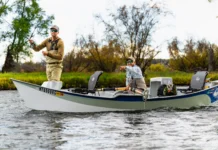
Fishing big bugs isn’t just about throwing something large at the bank and hoping for an explosion. What really matters is precision, realism, and getting that fly exactly where it needs to be.
In this episode, I sat down with Ken Burkholder to dig into the details that separate a decent drift from one that actually gets eaten. We get into fly design, fishing tight banks, and why small tweaks can make a big difference when fish are locked in. Ken brings decades of experience from the South Fork of the Snake, plus a deep background in fly design with Fulling Mill. This one covers everything from stoneflies to cicadas and a whole lot in between.
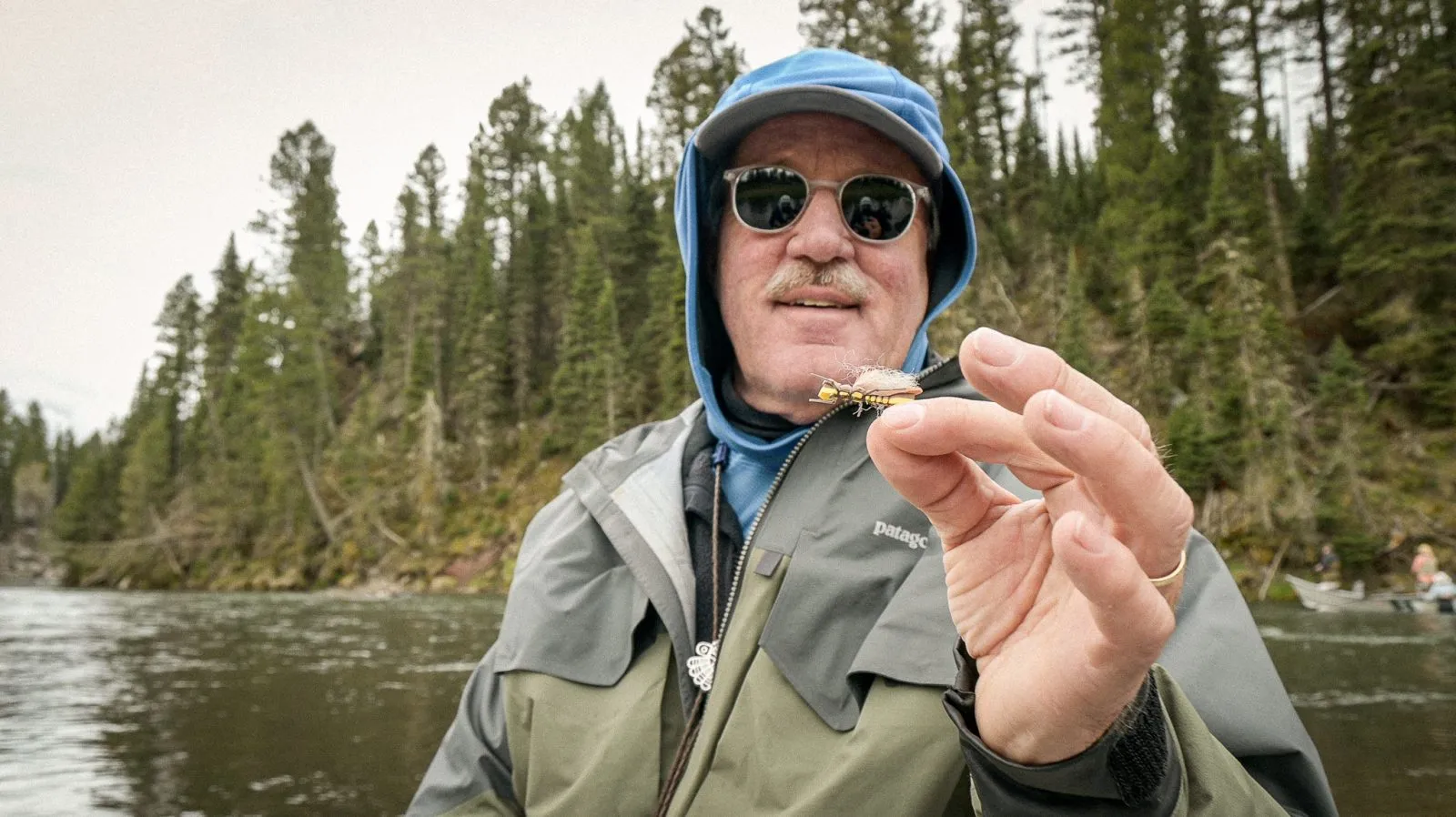
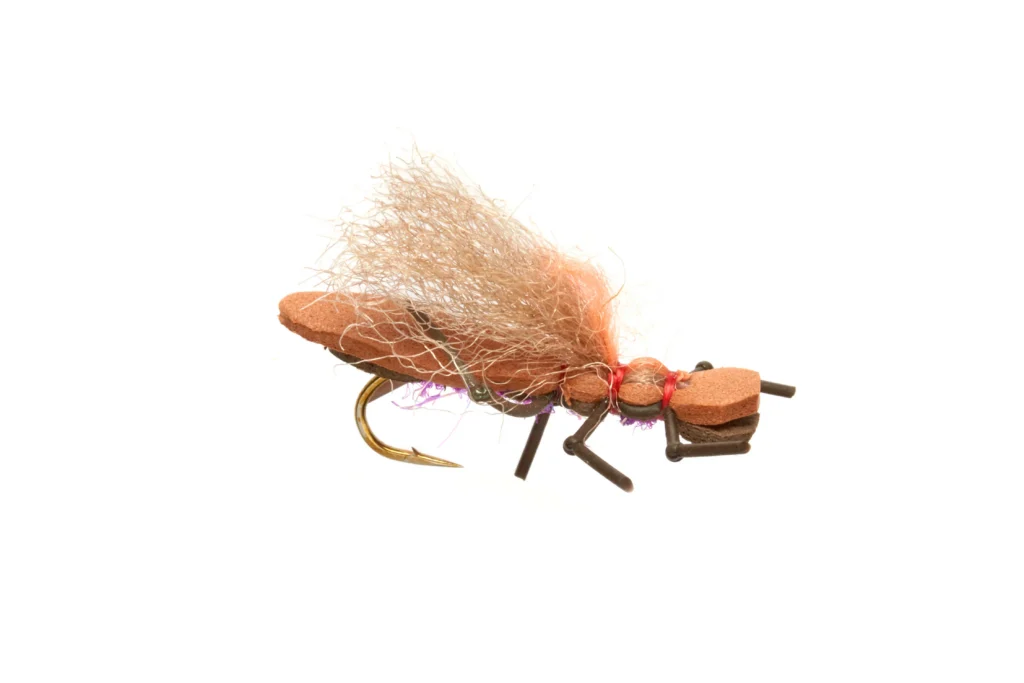
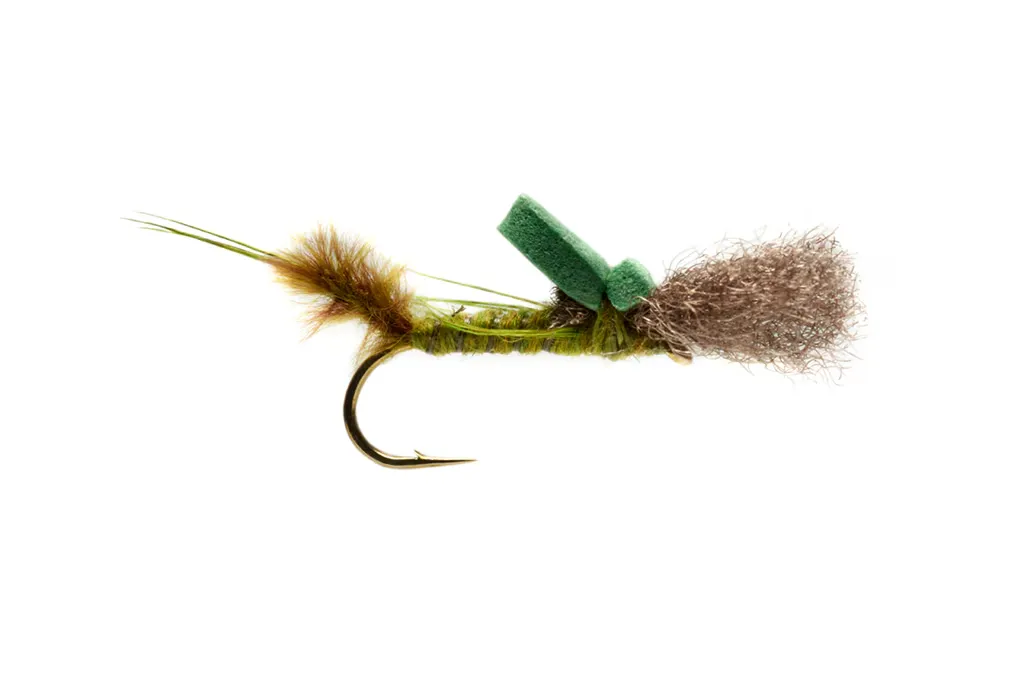
Ken’s Bareback Rider came from a simple idea: make the fly match the real insect as closely as possible. That meant measuring actual bugs and dialing in proportions. He used macro photography and exact measurements to replicate stoneflies, especially golden stones.
Fishing tight to the bank requires precision, and droppers get in the way. Ken avoids them entirely when targeting fish holding tight. When trout are tucked in close, accuracy matters more than depth coverage.
Fish holding “like a tick on a hound” demand a clean, single-fly presentation.
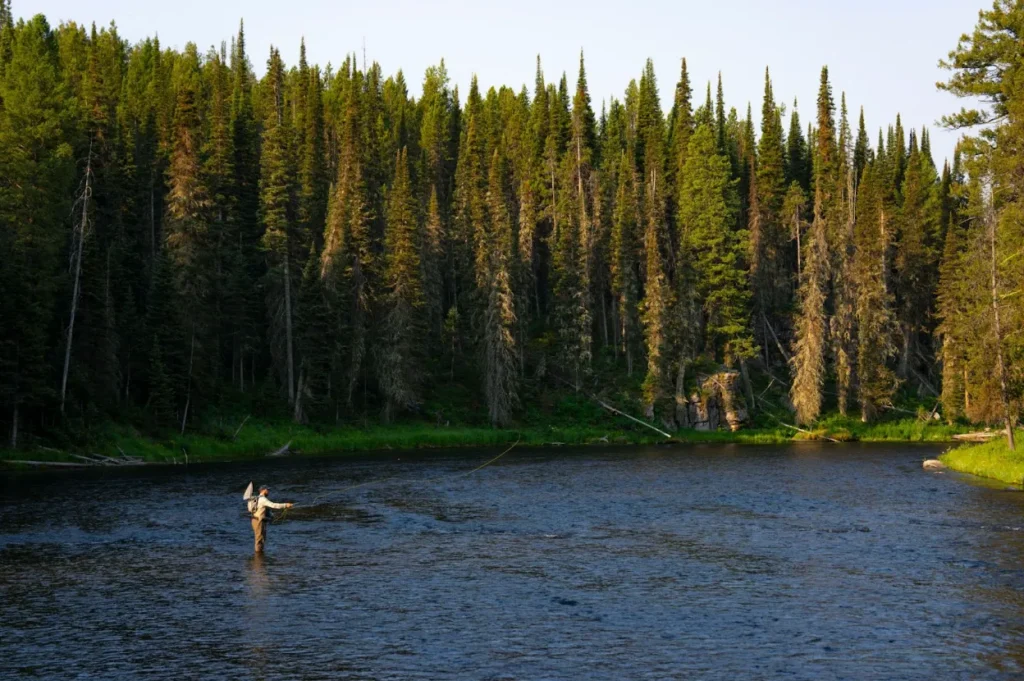
The South Fork of the Snake offers two distinct games: bank pounding and riffle fishing. Early in his career, Ken focused on riffles, earning the nickname “The Rifleman.” Now, he balances both approaches depending on conditions.
The real magic often happens at the transition from shallow to deep water.
One of the biggest takeaways from this episode is reading water effectively. Fish often sit right where shallow “brown” water drops into deeper “green” water.
This transition zone is where trout intercept drifting insects.
Most anglers reach for salmonfly patterns during the hatch, but Ken often does the opposite. Pressured fish start rejecting big flies and switch to smaller, more subtle golden stones.
Fishing a golden during a salmonfly hatch can be the difference-maker.
On Silver Creek, Ken focuses on cripple patterns early in the hatch. Fish key in on vulnerable insects that are stuck in the surface film.
Timing is everything—this window happens right at the start of the hatch.
PMDs can be one of the toughest hatches to figure out. Fish shift quickly between emergers, duns, and spinners.
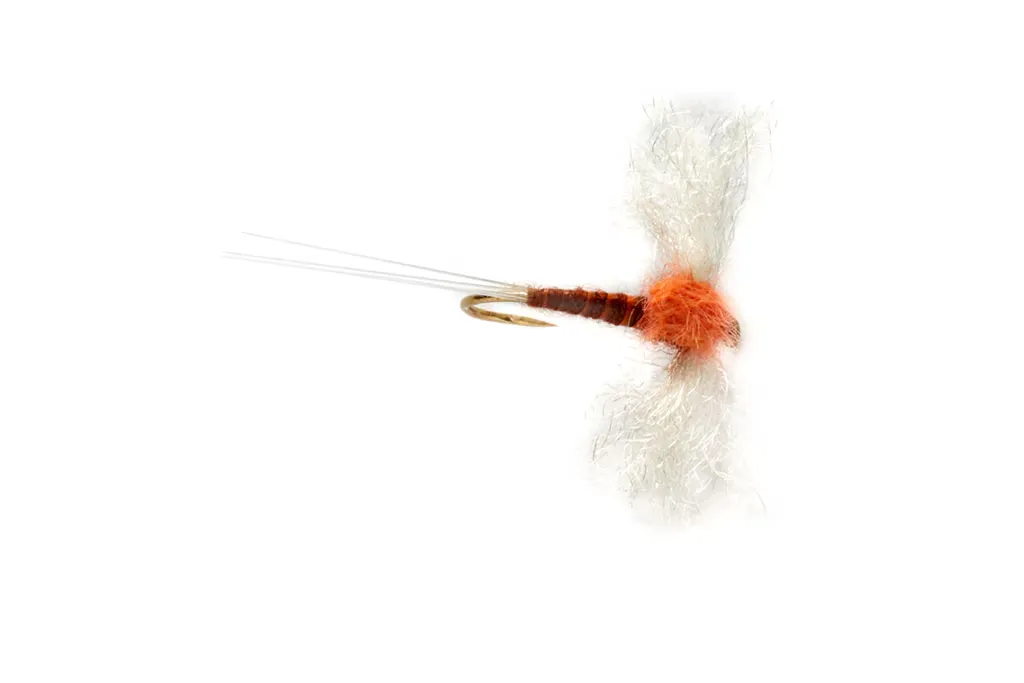
One angler even won a tournament fishing only a rusty spinner all day.
The Chernobyl Ant wasn’t originally designed as a generic attractor. It imitates a specific stonefly. The Clausena hatch in late August is a major event across the West.
This hatch is all about motion. Don’t dead drift it.
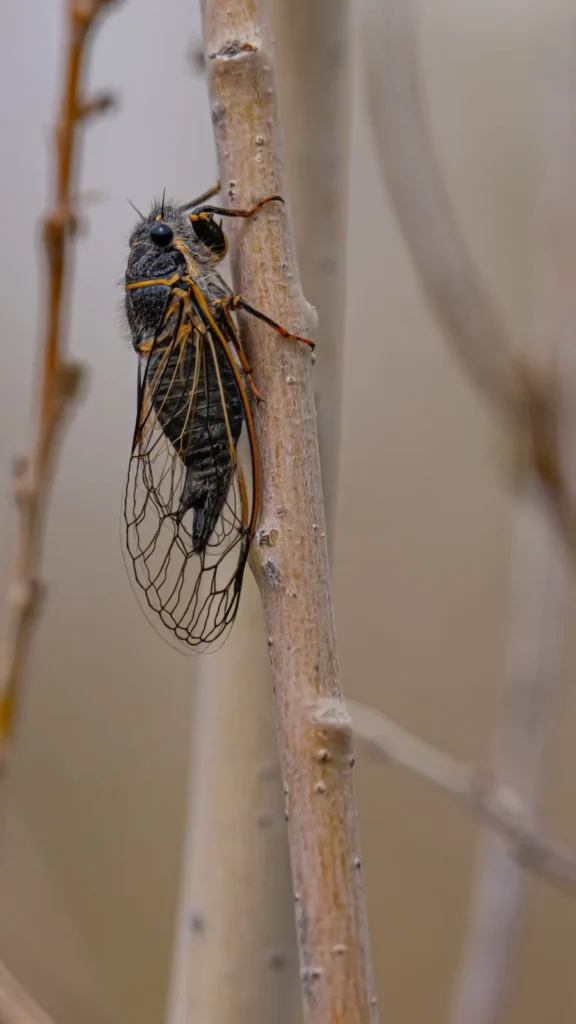
Cicadas aren’t just an East Coast phenomenon. They show up in Western rivers too. Ken has been fishing cicada patterns since high school, long before they were common.
Episode Transcript
WFS 916 Transcript
00:00:00 Dave: Many people think big bugs are about throwing something loud at the bank. But what if the difference isn’t the size of the fly at all? It’s how close you can actually get it and how real it looks when it lands. Because when fish are tucked in tight, like Ken says, like a tick on a hound, you don’t get many chances. And today we’re breaking down the small details, placement patterns, and presentation that turn a good drift into one that actually gets eaten. This is the Traveled Podcast series where we bring you the best places to fish in the West, and the stories of how this region became what it is today. Ken Burkholder is here to dig into the flies he’s designed with Fulling Mill, his time guiding the snake River and what actually matters when you’re fishing big bugs and technical hatches. Today we’re going to talk about the real reason Ken avoids the dropper and how this can change your accuracy. We’re going to find out about this bareback rider fly and how it was built from actual insect measurements. We’re also going to get into the subtle difference between golden stones and salmon flies, and how most anglers miss these key differences, and why pressured fish will stop eating big bugs and switch to something smaller. Plus, we’re going to find out how to read that brown to green transition and how this will help you find feeding trout fast. Today’s episode is presented by Visit Idaho’s Yellowstone Teton Territory, home to some of the most diverse and wild trout waters in the west. Okay, here we go. Here he is, Ken Burkholder. Let’s do it. How you doing, Ken?
00:01:28 Ken: I’m doing great. Spring is here.
00:01:30 Dave: Yeah, spring is here. That’s good to hear. I’ve heard lots of stories around, you know, this winter about, you know, snowpack. Some places good. Some places not so good. But the cool thing is, is that, you know, we’re coming out of winter and fishing’s right around the corner. Right. I think people are already out there. But, um, but today we’re going to talk about fulling mill some of the patterns that you have some really killer patterns and probably get into some fishing and tying tips and stuff like that. But, uh, maybe take us back on your connection to fulling Mill. Have you been with them quite a while?
00:02:00 Ken: I think it’s been about six or seven years now. Brandon Prince, who I guided with years ago on the Snake is the fulling mill rep and he called me up. He got a hold of me and asked me if I would be willing to submit some flies to Fulling Mill. So that’s how I got started. And then I have a friend who is in the audio visual business, and we set up in a nice room at a fly shop, and he brought all this nice equipment and he filmed me tying a bareback rider, which I then sent to Fulling Mill. And that’s what they worked off of.
00:02:47 Dave: This is good because I want to hear about we’re going to talk some different hatches today. And insects. We just recently had the salmon fly project on and they went in depth on entomology. It was really cool to hear about all the different hatches and. And the bareback rider is a stonefly. So I want to hear maybe, you know, I know a little bit of the story, but take us back to how that one first became a pattern, how it’s different maybe than some of the other stonefly patterns.
00:03:09 Ken: Well, I used to play in the Philharmonic in Boise, the Boise Philharmonic I did for thirty five years. And it worked out well with guiding because it was a nine month season. So I could I could start guiding in the summer, usually in July through September through the Jackson Hole one fly. And then I would come back home and we would start the season at the end of September. Well, after I got out of the orchestra business, I kind of sadly sold my oboe. It was a really good one. But then I invested in camera equipment. So I got a nice canon dSLR and a great macro lens. And I started taking pictures of insects. And I learned a long time ago that if you take a cold blooded critter and stick it in the freezer for a while, they really cooperate. So I could capture these stoneflies and then I could put them in the freezer, chill them down, put them against a side by side against a metric rule, and I could get the measurements dialed in exactly what the bug looked like. So the goal was to create a fly that had anatomically correct legs. And most of these bareback riders are imitating golden stones fully. Mill does have a bareback rider salmon fly, and the difference between salmon flies and golden stones leg wise is salmon flies. Hind legs are more towards the head halfway, whereas golden stones, the legs are slightly beyond halfway. So what I did is I, you know, measured it out and I started putting the legs where I thought it should be. And then I would divide the middle leg and the front leg. So they were equal, equally spaced. And then I would not them. And I found from an old friend that I used to fish with. He’s gone now, but he turned me on to Hedren’s perfect rubber, which is a silicone rubber. And it is durable and it is the easiest stuff to nod because it’s kind of slick and you can manipulate it easily. So I can get these legs just right. And then you just simply you get them all right. And then you put a little drop of super glue on there and they stay put.
00:06:01 Dave: That’s it. And then the wing. What’s the material there?
00:06:04 Ken: Well, I originally was using bear hair, but for fulling mill I can’t get bear hair off shore.
00:06:10 Dave: Oh you can’t.
00:06:11 Ken: No, I wish I could, I could have made a million, but, uh. No. So they used a synthetic and I’m not sure what they use exactly.
00:06:21 Dave: But initially you were using bear hair on the. Do you still use bear hair for your. The flies. You fish.
00:06:27 Ken: I do.
00:06:27 Dave: Yeah. What does bear hair. How is that different than, say um, what’s the other stuff like other salmon flies tied with probably synthetic. Right.
00:06:36 Ken: Oh, people use elk hair. Deer hair. Well, one of the differences is, is that deer hair and elk hair are hollow and they compress. So if you bind a clump of deer hair or elk hair on a hook. It’s pretty steadfast. It won’t slip. It won’t come apart. But bear hair, on the other hand, is not hollow and it’s slick. So you have to use super glue carefully. Well, this year I came up with a different method, and that is, I take a bunch of bear hair and comb it out. Take all the guard hairs because the bear hair close to the hide is what is the wing? It’s not the tips of the hair. So what I was able to do is I was able to comb it out, clean it up, put it in a piece in a pair of tweezers, and then take some thread, wax it like three ot make a triple surgeon’s loop and make a knot and totally compress that where I’m going to tie it on the fly and then drop a little super glue. So what it does is it flares the hair perfectly. And then after I tie it on, I just put a little more super glue in as steadfast. It will never come out.
00:08:04 Dave: Nice. And this one is. And the body is mostly foam. Is that segmented foam or what are you using for the body?
00:08:11 Ken: What I do is I will use a dubbing loop and put on my dubbing material. Normally I started usually using ice dub of some kind and then putting that on a dubbing loop and twisting it on and then wrapping it, palming it down the hook. And then I will trim the excess fibers with a pair of scissors. So a bareback rider has two pieces of foam. It has one color for the first layer, and then it has another color for the top layer and Tony Thompson of River Road Creations. Have you heard of him?
00:08:54 Dave: Uh, River road? Yeah, I think I’ve heard of him. I haven’t had him on yet, though.
00:08:57 Ken: Well, he’s he makes foam cutters and he has made probably fifteen custom cutters for me. And he has really changed my foam output. I mean, he’s been so incredibly helpful. So anyway, the top layer of foam now has a different shape. And Foley Mill is incorporating that in all the bareback riders for twenty twenty seven. So there will be a slight modification coming up which I think is good. So essentially what I do is I will to make them all the same. I’ll put my hook with dubbing on it, and I’ll take a caliper and I’ll put it in the eye and it will direct me to the exact halfway point I’m looking for to start my thread, and then I bind my bottom layer with that. And then I tie it off on the end. I divide that in half and then in half and half. So I have five segments and then I do the head, and then I have the thorax region and I divide that in half. So that’s giving me my leg placement, the halfway point on the fly, and then the halfway point in the thorax, and then the area right behind the head, right.
00:10:22 Dave: So all the legs are in the upper half of the body as far as the hook shank, they’re all in the top half.
00:10:27 Ken: They are. But on these goldens, it’s just slightly back of halfway.
00:10:33 Dave: When you have that, when you’re out on the water fishing that are you fishing it different than you would fish a a salmon fly or any other stoneflies?
00:10:41 Ken: No, not really, but I don’t I don’t use a dropper.
00:10:45 Dave: Yeah. Because the dry dropper. You hear that a lot. You know, people talk about the the big puffy whatever the fly is, you know, like we’re talking about here and then a dropper. So why don’t you do the dropper?
00:10:54 Ken: Well, because a friend of mine, I got it with three years. He still guides on the snake. His phrase was these trout are dug in on the bank like a tick on a on a.
00:11:07 Dave: Right.
00:11:07 Ken: Pound.
00:11:08 Dave: Yeah.
00:11:09 Ken: Okay. So if you have to get within a hand’s width of a bank and you have a dropper, you’re going to get tangled on the branches.
00:11:17 Dave: Right. You don’t want that and you can’t get close enough.
00:11:20 Ken: No you can’t. And they aren’t always close. But sometimes they are. I mean dug in so tight and you have to be really accurate. And that’s primarily what I’m doing with that fly.
00:11:33 Dave: Yeah. And that’s on the so is the snake River. Sounds like that’s the river you guided. Is that the river you fished most?
00:11:38 Ken: I did for thirty years.
00:11:40 Dave: Yeah, for thirty years. Okay. So you were you living in that area and then or have you always been in the Boise area?
00:11:46 Ken: No, I just left my wife for three months.
00:11:49 Dave: Oh. You did? Oh, there you go. Yeah, just left for three months. So basically. So you’ve been in Boise the whole time I have. Oh, cool. So you got the West and the East Idaho covered.
00:11:57 Ken: I do.
00:11:58 Dave: Nice. Okay, so the snake rivers and we’ve definitely talked quite a bit about that. That’s a big river, but it’s um, pounding the banks is the key to that one to get in some of those fish.
00:12:08 Ken: Well, with big bugs, but they have great PMD hatches. They have great caddis hatches. And some of the riffle fishing on that river is just unbelievable with dries. With dries.
00:12:22 Dave: Yeah, that’s the thing. So the timing, that’s what it’s known for, right? Because of all the, the species, the fish that are over there, that you can get a lot of fish on the surface.
00:12:30 Ken: I only catch fish on the surface.
00:12:32 Dave: Amazing.
00:12:33 Ken: I always have. When I first got hired in eighty four, I started working in eighty five and the shop I worked with, we didn’t even have a nymph.
00:12:43 Dave: Oh, really? No nymphs at all?
00:12:45 Ken: No.
00:12:46 Dave: That’s awesome. What was the shot? What was that shop you were working with there?
00:12:49 Ken: It was South Fork Expeditions. John Hill owned it. They did have a fly there, though. That was a wet fly called a super renegade. And this fly was of various different colors by colored. It had a dark hind end and a brighter front end, and it was like a double renegade. So you have a hackle on the rear, a different hackle in the middle, and a lighter colored chenille, and usually a white hackle in the front tied on a pretty heavy hook. And when these salmon fly nymphs are migrating to the bank, you can cast a super renegade in there, let it sink and twitch it out. And I’m telling you, what is some of the most fun fishing on earth? Because you can see it. It’s visual. It’s not dredging.
00:13:46 Dave: It’s not dredging. Right. And this is the renegade.
00:13:49 Ken: Super renegade.
00:13:50 Dave: Super renegade. So the difference between the renegade and the super is that describe that again. Is there more hackle?
00:13:54 Ken: Well, a renegade typically is just a furnace hackle peacock a white hackle. And it’s a dry fly. And it’s usually no bigger than a size twelve. But these things are tied on like three x long sixes. So that was really about the only fly, only wet fly that we ever fished.
00:14:16 Dave: And you would fish it. Same thing hitting the banks cast towards the bank and let it sink a little bit and.
00:14:21 Ken: Let it sink and let it drag out, and then put a belly in the line and twitch it upstream, and it’ll accelerate the movement downstream. And that’s when they hit it. They hit it going downstream like a nymph getting caught in the current, right?
00:14:37 Dave: Like it’s trying to get to the bank, but the current gets it and it’s sweeping it down.
00:14:41 Ken: Exactly.
00:14:42 Dave: Oh that’s cool. And it’s kind of half in that super renegade sits in pretty much in the surface of the water.
00:14:47 Ken: No, it sinks about oh six inches.
00:14:51 Dave: Okay. Yeah. So it’s down in there. So it’s sunk and then it’s, it’s tumbling and doing its thing. And then the fish hit it. That’s that’s cool. How would you know when to fish that versus say the, the bareback rider during a hatch. I guess if you call it that.
00:15:06 Ken: Well, salmon flies typically come out a week earlier than Goldens, but they do hatch simultaneously. So the south fork of the snake has a lot of jet boat traffic. So you have all these people running jet sleds.
00:15:24 Dave: Oh really?
00:15:25 Ken: With oars on them. So what they do is they will find a hot bank and kill the motor and use these big fluffy salmon, fly imitations and just go back and forth and back and forth and then change a bank. So what happens is that these fish start getting really wary of big flies, and they start tuning in more to a smaller golden. And that’s I mean, I love fishing salmon flies, but generally speaking, during a salmon fly hatch, I fish a golden.
00:16:04 Dave: That makes sense. And what section of the snake are we talking about here?
00:16:08 Ken: Okay. The snake, of course, starts in Yellowstone. It goes south through Jackson. It makes a bend at Alpine Junction. It forms Palisades Reservoir, which is about twenty five miles long, and it’s backed up by Palisades Dam and from Palisades Dam to the confluence of Henrys Fork, which is at Menan Buttes, which is downstream about forty five miles, is the section we fished. So it’s about forty five miles of river.
00:16:40 Dave: Okay. And this is what’s the closest town to that area.
00:16:43 Ken: Oh, the biggest town is Idaho Falls.
00:16:45 Dave: Yeah. So Idaho. So basically Idaho falls down to whatever the next dam I guess you got the American Falls is down below, right?
00:16:52 Ken: Right. But I never guided down there.
00:16:54 Dave: Okay, so this is below Idaho or Idaho Falls.
00:16:57 Ken: It’s above Idaho Falls.
00:16:59 Dave: Yeah. So I didn’t realize that. I didn’t realize there were sleds. I thought it was mostly a drift boat game, but it sounds like there’s plenty of sleds out there too.
00:17:06 Ken: Well, it is mostly a drift boat game. That’s what most of the outfitters have is. Uh, most of them do not have a powerboat license, but some do.
00:17:15 Dave: Yeah. Some do. It sounds like it’s an advantage. Maybe if you do it because you can kind of go up and down and hit different spots multiple times, it can.
00:17:22 Ken: I actually did that last August for the first time. I fished with a friend who I guided with who now is a saltwater guide in Key West, and he came up and with a buddy and rented a home and invited me to come up and fish with him. And I fished three days out of a jet boat. And it was really fun.
00:17:43 Dave: It was.
00:17:43 Ken: Well, because you could go to all these riffles and get out and walk and hit the, you know, hit the hatches in the riffles, and then you could row down the banks and throw big bugs at the bank.
00:17:57 Dave: That’s it. So you basically, yeah, cover more water. What is the on the riffles. How are you fishing those out there and are you still using the big bugs there.
00:18:06 Ken: Well I’m using mostly mayfly patterns pmd’s and sometimes caddis and sometimes yellow sallies. So years ago, the thing that’s really cool about that river is there are these areas that are brown, which is thinner water, Gravelly water where the bugs hatch, and then it turns into green, where it drops off. And all these trout are hanging from brown to green in the green, waiting for these bugs to come to them. So I mean the brown to green. I wanted to write a book called Brown to Green, but I never did. I don’t, I don’t write very well. So it’s really the demarcation of that is really easy to see. And they’re really easy to find. They’re everywhere in water like that.
00:19:03 Dave: And that transition more. Yeah, yeah. Not not in the brown, not necessarily in the brown, but the transition.
00:19:08 Ken: Correct. So when I first started, I was really not that into fishing large bugs. I was so excited about what was going on in the riffles. I was actually nicknamed the Rifleman.
00:19:25 Dave: The Rifleman. That’s a great name.
00:19:27 Ken: Because I was just concentrating on riffles. I was going from riffle to riffle to riffle all day long, and getting out of the boat and helping people read the water and helping them get a good drift. And that’s what really excited me. But now I’m kind of into the banks. I mean, I really like the bank fishing too. And that’s, you know, that’s why Foley Mill has so many of these bigger bugs. But they also near Boise there is the famous world famous Silver Creek. Have you fished that?
00:20:07 Dave: I haven’t, but we’ve had some episodes on it before. I know it’s really technical. We did a we did a Euro nymphing kind of thing with Pete Ericson and a couple years ago.
00:20:17 Ken: Oh yeah. Yeah, yeah. Um, well, locals in that area, the guys have always said that Silver Creek has trout. Well, no, no, trout has a PhD. They’re just trout. But in early June they have a brown Drake hatch. And it’s an evening affair. And these bugs are big. They’re an honest ten. And I came up with one and um Foley Mill took it on and it’s called the burka struggling brown Drake. Well that’s my handle on fulling mill. Oh, gotcha. K u s apostrophe.
00:20:58 Dave: Yeah. The struggling brown Drake.
00:21:00 Ken: Right.
00:21:01 Dave: Describe that sounds like something that’s, uh. Well, is this like more of a crippled sort of.
00:21:05 Ken: It is.
00:21:06 Dave: Yeah.
00:21:06 Ken: Because these, these bugs hatch in the creek and when the hatch starts, these trout are not keyed on duns. They’re keyed on cripples. So if you look in the fly shops in the Sun Valley area, most of their brown Drake imitations are Cripples Quigley style type with a wing sticking forward. So anyway, that fly worked really well for me. I was really pleased with that pattern. So Foley Mill took it on and it’s taken off. I’m happy with.
00:21:39 Dave: It. Berkeley’s struggling and it’s a. How would you describe how you tie that pattern?
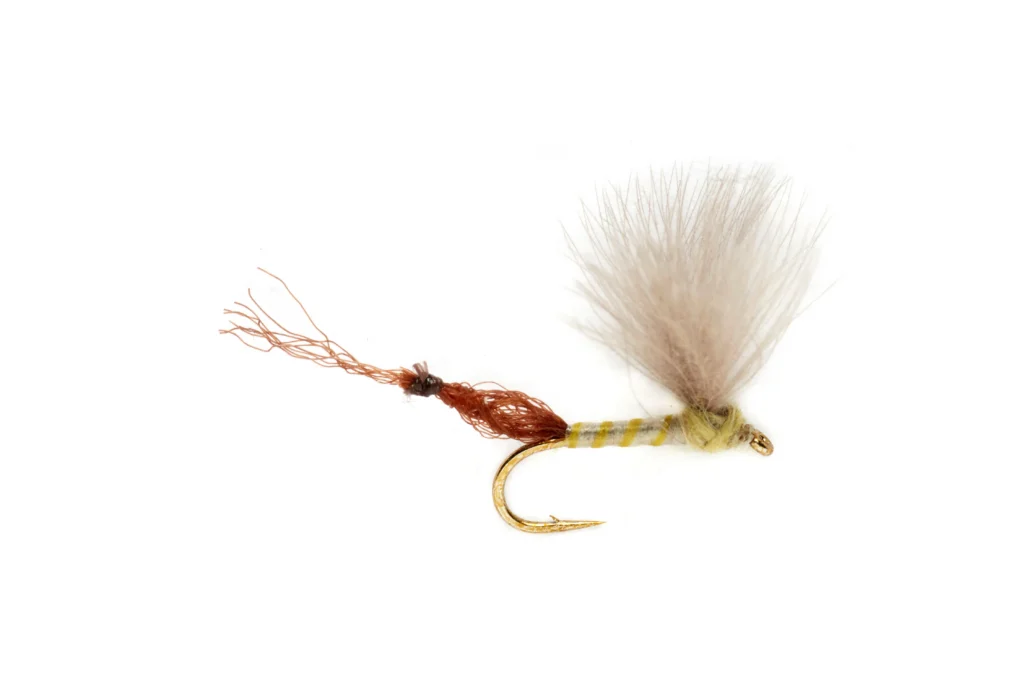
00:21:44 Ken: Well, it has a trailing shock and it has a dub body and it has ribbing with silk thread. And then it has I think the legs are made out of pheasant tail three on each side. And it has a CDC wing.
00:21:59 Dave: Oh, so that’s CDC that’s kicking out out the front.
00:22:03 Ken: Correct. And I’m a big CDC freak. I love that stuff.
00:22:08 Dave: And how do you fish that one during it and describe maybe the hatch, the the brown Drake hatch and that’s in the time and then how you fish that.
00:22:15 Ken: Well, first of all, what you have to do, I mean, it’s, it’s world famous. People come from all over the world to fish that hatch. So you’d be shocked at how many people are there.
00:22:26 Dave: And this is on all of those streams or no.
00:22:29 Ken: This is Silver Creek. And Silver Creek has an area that the Nature Conservancy owns and that has no brown drakes. It’s all below highway twenty, and it’s in the slower moving water with a silkier bottom. And what you have to do is you have to park about three in the afternoon and hike up and find a place and sit your butt and wait for maybe four hours. And once the sun gets really low, you might see a bug or two. And then sometimes you see clouds of them. I mean, it’s a phenomenal natural history event. I mean, it’s unbelievable.
00:23:10 Dave: Yeah. What part of the hatch are you catching these on when you’re fishing your this pattern?
00:23:14 Ken: The beginning.
00:23:15 Dave: Yeah, it’s right at the start. It’s right when they’re starting to starting to try to get through that surface film.
00:23:20 Ken: Correct.
00:23:21 Dave: And how are you fishing that when you’re out there at that time? So you’re waiting, you’re waiting to this this point in the evening that it’s just right. And then are you casting? Is there a way, a technique that you’re using to, to fish it?
00:23:32 Ken: I do, I usually, I don’t, I do not cast upstream. I want to have a absolute dead drift. So what you want to do is you want to find a rising trout and you want to feed the fish. You want to, I mean, you want to stick it right in front of their face and about four inches from the face, you want to give it a little twitch and then they’ll just come right up and slurp it down.
00:23:57 Dave: Yeah, because they love the cripples and those patterns because they know that they’re, they’re not going to fly away. Right? Or at least they got a better chance to eat it.
00:24:05 Ken: Yeah. They’re pretty vulnerable.
00:24:08 Dave: Yeah. Right. Okay. And so that’s what you’re fishing with the brown Drake. You don’t worry about coming back and fishing duns or spinners or any of that stuff.
00:24:16 Ken: You know, people do fish early in the morning with brown Drake spinners. That’s something I have not done fully. Mill does have a green Drake spinner though, of mine, and that’s really important because on the Henry’s fork, they do key on spinners later in the duration of the hatch. So that can be an evening event. I mean, green drakes hatched during the day. So if you wait around towards the evening, then they become spinners and you can have really good luck with spinner flies.
00:24:50 Dave: Okay. Yeah, I see the I see the western green Drake spinner you have here. That one looks pretty cool too. And how many patterns do you have with Fulling Mill?
00:24:58 Ken: Well I have two, four six eight ten thirteen. But the bareback riders I have in four different colors.
00:25:07 Dave: Okay, so take me back on. So it sounds like timing wise on this. And if let’s just stay on the South fork of the snake. When is that golden stone? When would you be fishing that that golden stone we talked about? or is this something you.
00:25:20 Ken: Can start fishing that. Okay. The South fork of the snake really is kind of an interesting river because it’s essentially divided into four sections. You have the dam to the Swan Valley Bridge, which people sometimes call the ditch because it’s primarily just wall to wall water. Okay. It’s just bank. I mean, it’s funny looking until you get down to an area called the Fall Creek area, and then it opens wide open and it is channelized and the and the PM, I mean, the riffle fishing down there is unbelievable. And then below that is the canyon section. And then below the canyon is similar. But once you get down past the canyon, the gradient is flatter and it’s more channelized and the bugs start hatching there, generally towards the end of June, and then they work their way up. So the fishing with these bugs can be really good for about a month through about the twenty fifth of July.
00:26:34 Dave: So you got about a month there to fish somewhere in those four sections you could, you got about a month to fish.
00:26:39 Ken: Correct.
00:26:40 Dave: Then these other hatches, you mentioned one of the brown drakes, green drakes fitting into this mix.
00:26:45 Ken: Well, the brown Drake, they don’t have brown drakes on the snake but they do have green drakes now, which forty years ago they, I did not know of any green Drake, but now it has become quite an event. But it only happens on the lower third of the river, which is interesting.
00:27:05 Dave: The lower third of the snake or the Henrys fork.
00:27:07 Ken: The snake or the gradient is flatter. They like the slower gradient.
00:27:13 Dave: That’s interesting thing about stones, right? Because they kind of like a little more gradient, don’t they, than some of those drakes.
00:27:20 Ken: They do like good gravel.
00:27:23 Dave: Okay. And I guess that’s why the snake is kind of cool because it’s it’s got some diverse habitats. You mentioned the riffles. It’s got I know lots of pools. Is that why it’s it’s kind of one of the things that makes it kind of famous is the diversity of the habitat and hatches.
00:27:37 Ken: To me, it is the quintessential dry fly river in the world. Well, that’s my view, but I’m prejudiced.
00:27:45 Dave: Yeah. Well, I guess if you go by hatches and fishing and, you know, we hear about those species which are the is it the Yellowstone cutthroat in there?
00:27:53 Ken: It’s the snake River. Cutthroat.
00:27:55 Dave: Snake River cutthroat. Yeah. There’s a few different species, but yeah, the snake River cutthroats, the main one in there, and they’re known, I guess they’re all kind of known for being very aggressive on surface, right? Compared to rainbows and browns.
00:28:06 Ken: They are. And some people say cutthroat are the stupidest trout in the world. Well, that is so entirely false. It’s like, okay, I’ll take you to a riffle now. Do you want to try to crack the code or do you want to? You want me to help you do that? Because I’ll tell you what. They get keyed on to something, and if you don’t have the right bug, you will not catch them at all, ever. So making the right fly, fishing the right fly is critically important during those hatches.
00:28:38 Dave: What is the difference between, say, you know, you have we talked about your bareback rider and some of these other, you know, fluffy like the chubby Chernobyl’s another one you hear a lot about. Do you think it’s important? You know, you talked about the difference in the legs, those little subtle differences. Do those make a big difference? Or what is the biggest difference between your flying some of those other ones?
00:28:57 Ken: Well, I think it makes a big difference. And the reason why I think it makes a difference is because why not give them something that looks close to the bug? The chubby chub is a very popular fly, and it’s become a very popular because it floats a dropper. Okay. And hopper dropper. Chubby dropper is a real popular way to fish. I just don’t fish that way. So I had a friend a couple of years ago. I guided with a guy, the same guy that filmed my bareback rider video for Foley Mill. He came over and fished with me and he goes, okay. And he ties on a chubby, chubby, I call him chubby Chubbies. And he was just getting rejections. I mean, they’d come up and look at it, but then they’d go back down. So I said, okay, Dave put on a bareback rider and see what happens. Let her buck, boy. He started fishing a bareback rider and immediately started catching fish. And then he burned through about a half a dozen. And then he said, well, I feel real bad. I’m going to go back to these these flies I have. And then he was not catching fish, and he just went back to a bareback rider and started catching fish again.
00:30:14 Dave: There you go. That’s pretty awesome. And it’s just yeah, like you said, any fly that’s going to be, you know, that looks more I guess you have flies that look more natural and then also flies that stick out, right? Because you’ve got a lot of different patterns. How critical is that having something that looks different than what everybody else is using and or like the actual bugs that are floating down, or it sounds like you want to make them look as much like those bugs, the real ones I do. Yeah. So you’re not putting a hot spot like something that the fish can see some pink thing or anything in your flies.
00:30:44 Ken: No, I don’t. The thing is, is that if you have the right synthetic for the wing, it’s close to bear hair. But if you if you hold bear hair backlit, it glistens like a natural stonefly wing. And to me, bear hair is magic.
00:31:04 Dave: And this is grizzly bear, not black bear.
00:31:07 Ken: Brown bear. Yeah, well, if you had a cinnamon blackberry, it would work too. If the hair was long enough.
00:31:15 Dave: There’s a place where every bend in the river feels like it’s been waiting for you. Where the air smells of sage and pine. And trout. Rise beneath the shadows of the Tetons. That places visit Idaho’s Yellowstone Teton Territory, the heartbeat of fly fishing in the west, from the legendary Henrys Fork to the winding South Fork of the snake. This is where big fish and bigger stories live. You’ll find endless waters welcoming towns and locals who still wave as you drive by with drift boat in tow. This is your starting point for world class fly fishing, year round recreation, and wild country that stays with you long after you’ve packed up your gear. Check it out right now that’s wet. Fly swing dot com slash Teton T e t o n. Visit Idaho for yourself and support this podcast while you go. And we talked about a few of the hatches here. What do you think is a hatch people maybe maybe get wrong or mis ID or fish. You know that you see mistakes out there made. Do you think. What do you think is the toughest hatch on the. If you keep it on the snake to get right.
00:32:17 Ken: I would say the toughest hatch are the Pmd’s. I used to get beat so badly in the riffles. I mean it would just make. Irritate me when I first started. So I’d go back to my cabin and I would tie flies and hopefully the next day I would. My catch ratio would improve, and over the years I just came up with some stuff that worked. You know, I originally one of my first patterns, which was not mine, was the Tufts indispensable. Are you familiar with that fly?
00:32:52 Dave: No, it’s the tops indispensable.
00:32:54 Ken: Tufts g u p apostrophe s.
00:32:56 Dave: Okay, no, I’m not.
00:32:58 Ken: A top is a ram.
00:32:59 Dave: Okay.
00:33:00 Ken: And around the scrotum. This came from England. Around the scrotum. The urine would discolor the fur the the wool into a pinkish hue. So what they would do is they would use primrose silk thread for the abdomen, and then they would use this urine stained pink wool for the thorax and only a ginger hackle in front. They had no wings. It was a real simple pattern and I had really good luck with that originally. But then I started using CDC and I thought it improved the pattern.
00:33:37 Dave: Tufts indispensable. I’m looking at it. Yeah, it’s a pretty basic pattern that looks like it could be fished as a dry or a wet fly. Is that.
00:33:44 Ken: That’s correct. You can.
00:33:45 Dave: Yeah, it looks like a cool classic wet fly. And it’s. And then the ginger. Yeah, it’s a very sparse. So your pattern that you tied has a little CDC in there.
00:33:55 Ken: It does. You’re familiar with tube flies, right?
00:33:58 Dave: Yeah. Yeah.
00:34:00 Ken: Okay. Well, h m h out of Maine cells. Tubes for two flies. All right. Well, what I discovered was CDC is that if you take a a select pair of CDC wings and strip them accordingly from the tip down, say twenty five millimeters, for instance, and put them in a tube. So you align the tips perfectly. You can rest that on top of the hook and tie it off. And you have a beautifully divided wing. You can also take these feathers and put them concave side up and put them in the tube and then tie them on. So you have a, what I call a spinnaker wing. Do you know what that spinnaker sail is?
00:34:54 Dave: Oh, a spinnaker right. Yeah. On a sailboat.
00:34:56 Ken: Right. So I came up with a that was a new one for me this winter was a. I have a whole new series called the Spinnaker Series, and you can have the wings tied, cripple forward with a wing concave side up, or you can have them backward to where you can’t them more vertically. But the cool thing about that is, is that all waterfowl have a inside of their feather and an outside, and the outside of the feather is what repels the water. So if you have the concave side up, you have the natural part of the feather that repels the water facing down. Mayflies. The cool thing about a mayfly hatch is that they do key on emergers to begin with, but there is a very short window after that where they. All they want is a done. So you have to have a done pattern. And that’s like I said, that’s a short window can only be an hour. I was on the Missouri with a friend in. oh, it was probably in May. And we ran across a March brown hatch and these fish came up and started eating duns, and it was over in forty five minutes. But you had to have a dun pattern at that. They would not eat any merger. They only wanted it done strangely.
00:36:21 Dave: And the pale morning dun. When is the time of year when that one’s coming off?
00:36:25 Ken: The pale morning dun hatches start in July and they go through. They continue for a couple months. It’s a really long hatch.
00:36:34 Dave: And then there’s also the um the pale evening dun. Right. Is that another pattern that’s that you’re using out there thinking about?
00:36:41 Ken: Well, on the Missouri, the fly shops call them peds, but I don’t know. I’ve never, I never personally got that involved with the difference of the two.
00:36:54 Dave: No, it seems like it’s the PMD is the one you hear more about out there.
00:36:58 Ken: Well yeah, I mean Pmdd. I don’t know who coined that phrase. I think it was probably Swisher Richards and selective trout would be my guess. And then they also talked about pale evening dones, too.
00:37:11 Dave: Yeah. And so what you’re saying is on the hatch, how do you I guess you just got to be out there to figure out when they’re on those wets, when they’re on the dones. And then is that one you’re not really hitting on the spinners.
00:37:23 Ken: That’s a really good question because when I was active in the Jackson Hole one fly, I took a guy fishing, Peter Moyer, who fished a rusty spinner all day, and he caught about fifty. And he won the tournament just on a rusty spinner. And I fished rusty spinners. In fact, Foley Mill does carry one. And that’s a that’s really critical to have. I mean, you really need one of those. And especially towards the later part of the day and into the evening.
00:37:54 Dave: You do to imitate the Pmd’s are on the rusty spinner is one that works.
00:37:58 Ken: It works. It can work really well. Yeah.
00:38:01 Dave: Okay. And then also, like you said, back to the you got the wet flies and then you’ve got this cripple, right? This kind of in between the dones. Is that something also that what’s the one that you are fishing? That’s the longer part of the hatch. Is that or is the cripple a separation or is it a little mix between the two?
00:38:18 Ken: I had a fly. I had a fly that fully milled. I think they’ve discontinued it for some reason. I guess it just didn’t sell very well. It was called a riffle robber and on the Owyhee River in Oregon, which is an hour and twenty minutes from Boise, I was out there and I noticed that these pmd’s were coming off the water with their shock still attached, and I got a really good image of one. So what I did is I thought, hmm, how am I going to make a trailing shuck that looks like a tube. So I just took some Antron Zellen put a triple surgeon’s knot on the back, dropped a little bit of glue on it, trimmed a, trimmed the back to have about four tails, and I had a tubular trailing shuck with a CDC wing and it worked great. It was completely different, which was cool.
00:39:21 Dave: The riffle robber.
00:39:22 Ken: Sadly, it’s not being sold anymore, but but that’s okay.
00:39:27 Dave: But you still fish it, but you still have it in your in your box.
00:39:30 Ken: I still, I still fish it. Yeah.
00:39:32 Dave: Oh yeah. Yeah I got you. Yeah. It’s got the cool trailing shuck. And then it’s got the tuft and then the wing is um what is that you’re using for the wing there.
00:39:40 Ken: CDC.
00:39:41 Dave: Yeah. That’s CDC. Yeah. Gotcha.
00:39:43 Ken: But see I’ve already changed that pattern in a way. And the reason I did is because for several years, three years in a row, I would go to the Upper Columbia A river which is out of North Port Washington. Are you familiar with this area?
00:40:00 Dave: Yeah, a little bit. We’ve done some stuff on wet flies. I haven’t fished that yet either, but we have some some cool wet fly episodes on the Upper Columbia.
00:40:08 Ken: Well, there’s an outfitter. Uh, there’s a lodge there called Black Bear Lodge.
00:40:14 Dave: Yeah. Black bear, that’s Jack, that Jack’s Lodge, right?
00:40:17 Ken: Yeah. Jack owns that.
00:40:19 Dave: Yeah. Jack. Yeah. We’ve had, he’s all over the place. We’ve talked steelhead and stuff, but he mentioned that to me. He said I’ve got to get up there to the Black Bear area. I’ve heard about it.
00:40:26 Ken: Well they have an amazing green Drake hatch in late June. First ten days of July. They call it the great red Drake Taxonomically. It is a green drake, but unlike the green drakes on the Henrys fork, this bug is larger and more red. And the reason they call that he calls his outfitting business. The evening hatch is because these bugs come out in the evening, and so you’re fishing when the sun goes down until you cannot see anymore.
00:41:05 Dave: Oh, there you go. So it’s after this, Drake.
00:41:07 Ken: Well, one of my guys, they also had some caddis going on. And so my guide one and they were feeding on some caddis and he put on a missing link. Mike Mercer’s missing link. And we started catching a few fish and I thought, hmm, I kind of like that idea of a missing link. I like the legs on the side. So what I’m doing with all my mayflies now, I’m incorporating, uh, what I call outriggers for legs. So what I do is I take some zylon or Antron. And at the very, very beginning of the fly, before I do anything, I’ll take four strands right behind the eye and fold it back so I have legs sticking out the front, and once I have the thorax on, I fold the legs back. I have the outriggers, I put the wings on, and then I have this fly without riggers. Had I had that on the riffle rubber, I think it would have worked a little better. But there’s just another thing, you know, I mean, doing something new in fly tying is almost impossible.
00:42:15 Dave: Is it? So everything at this point, it’s kind of been it’s been done.
00:42:20 Ken: Well, that’s the challenge.
00:42:22 Dave: Yeah. That’s always the question. Right. How do you make it different enough to if you, you know, to.
00:42:27 Ken: Call.
00:42:28 Dave: It something else? Yeah. Right. What do you think is your answer to that? How do you know when you’re, you know, when the fly. I don’t know what makes it different enough.
00:42:36 Ken: Well, the bareback rider was entirely new.
00:42:39 Dave: What was the biggest thing that was new on that.
00:42:41 Ken: The legs.
00:42:42 Dave: Yeah. The legs. So before that the legs were just like rubber legs that were just just tight on straight.
00:42:47 Ken: Correct. And this spawned a whole new generation of flies like the water walker. You’re familiar with the water walker.
00:42:56 Dave: The water walker? Yeah, it sounds familiar. I’m not quite sure.
00:42:58 Ken: Will Dornan’s fly?
00:43:00 Dave: Okay.
00:43:01 Ken: See, before the bareback rider, I had not seen stonefly patterns with knotted rubber legs. And years ago, I came up with a fly called the Club Sandwich, which is a grasshopper imitation. And this was probably. I came up with this probably in the early two thousand, maybe. And the reason I tied that is because I had a friend, Carter Andrews, who you may have heard of, who had a pond in Swan Valley. He was the head guy at the lodge at Palisades Creek at the time, and he had a pond that was full of large trout, and there were hoppers everywhere, and they were big and they had no wings. So I went to his pond and I was using like a parachute hopper or a Henry’s Fork hopper, and I was not catching anything to speak of. Well, that night I went to bed, and about two o’clock in the morning I got up and I put on. I made a fly with three layers of foam, three strands of rubber knotted. So I had two hind legs and front legs, and I went back to his pond the next day, and I caught every fish in that pond. So that became manufactured and it became wildly popular.
00:44:29 Dave: And which one was that?
00:44:30 Ken: The club sandwich. And then all of a sudden there were triple deckers.
00:44:37 Dave: Oh, really?
00:44:38 Ken: There were triple clubs. There were all kinds of foam constructs with three layers of foam and knotted hind legs.
00:44:46 Dave: Yeah. Three layers of foam, which gives it the three layers. Gives it what more floating? Just the coloration. What is the biggest thing the three layers does?
00:44:53 Ken: Well, there are these grasshoppers had kind of a striated look. They weren’t just one color. They had kind of a stripe on the side. So I wanted to imitate the stripe on the side, but I didn’t put a wing on it because it didn’t. These hoppers didn’t have any wings.
00:45:09 Dave: And lots of foam. So you don’t really need a wing. It’s going to float high with all the foam.
00:45:13 Ken: Yeah. Anyway, that was that was a fun one.
00:45:16 Dave: When you were getting going on the foam stuff, it sounds like quite a while ago, were there a lot of foam flies out there then or.
00:45:23 Ken: There were not.
00:45:24 Dave: There were not. Yeah. So foam was kind of new. I know we’ve heard from foam from, um, like Rainey’s, you know, we had them on Rainey’s Flies. Jesse was on recently. He was talking about how his mom was doing some of that, you know, but, but there wasn’t a lot there weren’t a lot of people back then. And this was in the this is what the nineties, early nineties.
00:45:42 Ken: This was probably yeah, I would say early nineties. There was a guy. Now, I’m not sure if this is factual or not, but there was a fellow in Idaho Falls named Alan Woolley, who, as far as I know, created the Chernobyl land. And he did that because there’s another golden stone hatch in late August called a Claussenii. And this is an absolute major event. Claussenii sabulosa. And the males do not fly and they. As the water drops, it precipitates this hatch. And these males will hatch on exposed stones. And what they do is that once they are able to get out of their shuck, they swim. They race on top of the surface to the banks, and then they crawl under this dry gravel and wait to find a female. So years ago, what I did is I captured a specimen and I sent it to Richard Bauman at Brigham Young University, who’s a stonefly specialist. And I had him identify it for me and the Chernobyl. And he wrote back and said, oh, that’s a handsome specimen of Clausena sabulosa. They can travel on water and that’s what they do. So and this Chernobyl end is it’s all about the twitching action and the rubber legs. So I was working at South Fork Lodge, and there was a guy, a friend of mine named Andy Kohler, and he decided to use two layers of foam black and tan tan on the bottom and black on the top with legs on the back and legs in the middle, I mean in the front. So we had eight legs. And at that time we were doing double floats and then going to the lodge and having a hamburger with our guests. And boy, he came, he came in and at lunch and he said, I cannot believe what happened with this fly. Well, it became so popular, it ended up winning the Jackson Hole one fly that year.
00:48:08 Dave: Oh, really?
00:48:09 Ken: Yeah.
00:48:10 Dave: And what was that fly he used?
00:48:11 Ken: It was a Chernobyl lamb with black and tan. It was a double layered foam Chernobyl land. And it took the world by storm. I mean, the Chernobyl ant became so wildly popular every fly shop in the West had.
00:48:24 Dave: Yeah. So that was the so he was the essentially the creator of that bug or that pattern.
00:48:30 Ken: Of the double layered Chernobyl and not the single layered foam Chernobyl. And I credit him with that.
00:48:38 Dave: Yeah. And so that’s a good example of a fly something that’s unique enough to be a new named pattern. Or is it still. I guess it’s not. It’s still the it’s still the Chernobyl ant.
00:48:47 Ken: No, it’s it’s a it’s an ant.
00:48:50 Dave: It’s still an ant.
00:48:51 Ken: Well, it became so popular and so commonly used in the Jackson Hole. One fly. The Jackson Hole one fly was nicknamed the Ant Derby for a long time.
00:49:03 Dave: It was. Yeah, the ant Derby. That’s amazing because every year if you had the right ant, it was winning.
00:49:08 Ken: Or variations thereof. It did really, really well.
00:49:12 Dave: And why is that pattern? Because it’s not because it imitates also a golden stone and all sorts of different things.
00:49:19 Ken: Well, Claussenii is our golden stone.
00:49:21 Dave: Oh, right. It is golden, right? Right, right.
00:49:23 Ken: And the thing is, is that this stonefly hatches throughout Jackson Hole, throughout the whole snake River drainage. It’s a major hatch on the Yellowstone. It’s a major hatch on the Missouri, on the Madison.
00:49:38 Dave: And when does that when does this hatch happen?
00:49:40 Ken: This happens. This happens usually around the third week of August.
00:49:45 Dave: Okay. So a little bit later. So you have those earlier stones. The big ones we all think about.
00:49:49 Ken: It is it’s a completely different golden stone.
00:49:52 Dave: And it’s Ksenia and is the name and the pattern, is this the pattern that would be most known to match the.
00:49:59 Ken: Attorney? Yes. That’s what it was originally designed to imitate, was a was a glycinea.
00:50:06 Dave: And so why it gets the ant. How does that that part of the fly, you know, why isn’t it the Chernobyl stonefly?
00:50:13 Ken: I have no idea.
00:50:14 Dave: Right.
00:50:16 Ken: I wish I had an answer for that, Dave, but I don’t.
00:50:18 Dave: There you go. Because it could. I guess if you tied it right, it could. It’s black. It’s got black on top. You could tie it so it looks like an ant.
00:50:25 Ken: Oh, there became so many variations of that fly.
00:50:29 Dave: Yeah. Right. But the brown the multi like you said these different layers is what made it because you had the brown on the bottom, the black on top, you know different colorations of foam.
00:50:38 Ken: Yeah.
00:50:39 Dave: Yeah. Cool. Wow. So that one. Now, if you had to pick between the Chernobyl ant and the bareback rider, which one are you? I guess it depends on the time of year.
00:50:48 Ken: It would depend on the time of year. But casinos, casinos are really interesting because compared to their cousins that hatch in earlier in the year, like in July, their legs are a lot bigger, their legs are a more, they’re just longer and they move. If you capture one of these things and throw it on the water, they are swimming on top of the surface. I mean, there is an incredible event.
00:51:20 Dave: Oh, wow. And it’s going.
00:51:22 Ken: Crazy. That’s why it’s the twitch. Man, you got to do the twitch.
00:51:26 Dave: How do you describe the twitch?
00:51:28 Ken: What I like to do. Well, see, during the Clausena hatch, they’re hatching around islands frequently, and they will go to the banks. On the islands. They will go to the banks on the main river, and you’re fishing a lot of flats, not tight to the bank. And you’re you’re casting towards the bank. And I use a high tip rod with a little wiggle on it and move it towards the boat. Ideally, one would want to fish from the bank and cast it out and bring it to the bank, because that’s how that’s that’s the motion of the bug. That’s what they’re doing. They’re migrating to the bank.
00:52:11 Dave: Yep. So that’d be a good one. If you can get out and park the boat and then walk down the bank or up the bank.
00:52:16 Ken: Absolutely. You get on these islands and you can cast it out and move it towards the bank. It’s. And they just explode on those things. It’s it’s exciting fishing, I’m telling you.
00:52:27 Dave: Wow, is this now we’ve been talking a lot about the snake. Does this hatch also occur, say on the on the Boise and down in your area there.
00:52:35 Ken: You know, I have never seen one on the South Fork of the Boise.
00:52:39 Dave: Yeah. And I and I haven’t heard about it in other areas. You know, this maybe it’s unique to this part of the the West.
00:52:45 Ken: Well, according to Richard Bauman, who sent me his book on stoneflies of the Rocky Mountains, they’re all over the West. It’s not unique to the snake River drainage.
00:52:59 Dave: That’s good to know. Cool. Well that’s awesome. I mean, August is a cool time because August is typically super hot, right? And so I guess, do you want to fish these earlier in the day or later or does it matter?
00:53:08 Ken: You want to get your butt out of bed and get out there at daylight.
00:53:12 Dave: Get out there early before it gets hot.
00:53:14 Ken: Well, they hatch at night.
00:53:16 Dave: Oh, right.
00:53:17 Ken: And I mean, if you get out there even before the sun rises and just cast towards these islands in the shallow gravel and twitch them, you’re just kind of waiting for the noise of an explosion on your fly. I mean, if it’s dark, you can’t even see what’s going on.
00:53:36 Dave: Oh, that’s so much. That’s good. And this is this also the is this the we hear about the mutant stone? Is that a different.
00:53:43 Ken: The same thing?
00:53:44 Dave: Oh it is. So this is the mutant. Okay, cool.
00:53:47 Ken: The mutant, the midnight. And the reason it was called a mutant is because people thought it was it had mutated.
00:53:57 Dave: Yeah. Mutated. Right.
00:53:58 Ken: Well that was, I proved that to be totally false. It’s a totally separate specie.
00:54:05 Dave: Amazing. This is good, Ken. Let’s take it out of here in a few minutes here with our kind of tips, tools and takeaways segment. We covered a lot today, but we’ll have to maybe follow up with you here. But we’ve been talking about some of your patterns. First off, maybe, and you’ve talked about a bunch of tips, anything we missed. First off, as we take it out of here, any bugs you want to, you know, talk about that that we didn’t cover here that you got out there. Have we done a pretty good job? You mentioned thirteen I guess at the start minus the the four variations. So it sounds like you got ten fulling mill patterns.
00:54:34 Ken: Well, there’s another there’s another fly that I came up with. It’s a cicada pattern called a barkada.
00:54:42 Dave: Barkada. Cool.
00:54:43 Ken: Okay. Now, cicadas are kind of a funny critter because they’re all over the West.
00:54:49 Dave: Oh, they are cicadas. And you don’t hear again. You hear more about the cicada stuff?
00:54:54 Ken: Well, yes, it’s a different bug. I mean, it’s a different it’s different in color. They’re green with red eyes in some areas, but out west here, they’re black with orange stripes and they aren’t as large. It’s a major event on the green River below Flaming Gorge, and it’s a big event on the South Fork of the Boise. They come out every year. Some years they come out in greater numbers, but they do hatch every year. So when I was in high school fishing the South Fork of the Boise and killing trout and looking at what they were eating, I discovered that sometimes they were full of cicadas.
00:55:39 Dave: Wow.
00:55:39 Ken: So my buddy and I would we came up with these crude cicada patterns with moose wings and stuff, and we started catching fish. A lot of fish on cicada patterns. And frankly, there were no cicada patterns in any fly shop anywhere.
00:55:55 Dave: No.
00:55:56 Ken: There might have been on the green because that’s a well-known hatch. So I wondered, what am I? How am I going to make one of these bugs? So I originally tried it out of spun black deer hair with a furnace hackle wrapped through it and trimmed short with a moose wing and a little white antron for the top. And it worked really well. But then I thought, hmm, how am I going to get the wings that look more like a pair of cicada wings? And there was a jeweler down the street, Art Smiths jewelers. And I go in there and I go, I’m wondering if you could make me a wing burner for cicada wings. So what I had done is I had captured a cicada. I took the wings off, I put them together, and I xeroxed them to where the idea was. I could fold them in half and then I would have a pair of wings. So they made me these wing burners and I’m now burning organza. You know what organza is?
00:57:06 Dave: No.
00:57:07 Ken: Oh it’s a it’s a fabric they use on wedding gowns. And I was able to burn them with that and put them over the top. And it seems to work pretty well. Blaine chocolate. You know who he is.
00:57:21 Dave: Yeah. Oh yeah.
00:57:22 Ken: Well, he, I saw him in February at at Bob in the hood. And he’s been tying cicadas for years, and he now has a wings made in Sri Lanka that are plastic but are not solid plastic. So they look like a cicada wing, but they have vents in them so it doesn’t twirl. It doesn’t helicopter on you.
00:57:50 Dave: Mhm. Right. Is the cicada the is it kind of May, April, may, June. Is that the time when those are out?
00:57:56 Ken: It’s a June thing.
00:57:58 Dave: Wow. Well, okay. Well that that was good. I’m glad you mentioned that because that’s something I. I wasn’t thinking about cicadas. This is. And on the green and you mentioned the the Boise, are they not as prevalent on the south or on the snake?
00:58:09 Ken: You know, they are in one particular area and that is an area from the dam down about three miles. And I took this guy fishing one time, and at the time I was, I was hearing a buzz in the trees. And I said, okay, Dan, let’s put on this cicada. And he caught six absolutely terrific trout on that thing in about an hour. But then below there, there were no more cicadas. It’s just a weird it’s a weird section on that river where they where they are.
00:58:45 Dave: We’ll have to do a little more research on that. And then and then the one fly you mentioned a couple of times, is that something that you did for a few years? And how long were you doing that for?
00:58:54 Ken: Oh, I guided in that probably for twenty years. I fished in it four times, probably.
00:59:01 Dave: Yeah. What was that? How do you how do you explain what that’s like for people that haven’t been there or seen it?
00:59:07 Ken: Well, it’s a cool event. First of all, there are fifty teams of four and the waters that are fished are from Jackson Dam all the way down through the whitewater section, which is above alpine, Wyoming, about fifteen miles, and then it is fished on the south fork of the snake and its one fly. That’s all you get.
00:59:31 Dave: You get to pick one. And what are your flies? Did you use a different one every year?
00:59:35 Ken: Well, when I was fishing I would use a different one every year, but I fished it one year and I just finished a CDC pmdi and caught forty and I caught them all in riffles. The riffle fishing is where I concentrated, but people use streamers. People use. They use all kinds of stuff and it depends on. There are so many fly tyers in Jackson. I mean, it’s a Mecca of fly tying really. So contestants will have their secret guide and they’ll give them a secret fly. And you know, if the guy doesn’t dissuade them, they’ll use it. And sometimes it works and sometimes it doesn’t. But most of these people in that tournament are good anglers. They’re seasoned. They’ve been doing it a long time, and you only get one fly, you lose it, you’re out. You can keep fishing, but you can’t score.
01:00:34 Dave: Oh. So if you lose, so you it’s literally one fly. It’s not like you can just the same pattern if you lose that one fly.
01:00:40 Ken: No no no no. Only one fly for oh wow. For seven hours. Six to seven hours of fishing. So you have to have a fly that will not fall apart.
01:00:52 Dave: No. And will not break off or an elite in a setup that’s not going to break off.
01:00:56 Ken: Yeah, well, I had this one guy I was guiding one year. I had a guy from Australia and he was fishing a small dry with one X.
01:01:06 Dave: Yeah.
01:01:07 Ken: Because he didn’t want to lose his fly.
01:01:09 Dave: Right. Does that does that make a difference. Do you think he’s catching.
01:01:11 Ken: Absolutely. It makes a difference.
01:01:13 Dave: Yeah. These fish aren’t dumb right. They’re not.
01:01:15 Ken: No. I mean but when you’re using a small dry you want to have a smaller tippet for sure. I was on the Missouri last year in June during their PMD hatch, which is a phenomenal event, and I started off with five X, and as soon as I went to six x I started catching more fish.
01:01:37 Dave: Tell me this, Ken, as we take it out of here. You mentioned the Philharmonic at the start. I’d love to hear, you know, what was that like being in. I’ve been to a few events with, you know, orchestras, but what was that like being part of that or being, I guess your career sounds like that was a big part of your life.
01:01:52 Ken: It was a big part of my life. I actually started playing that in the Boise Philharmonic when I was in high school. In seventy two and seventy three, I started playing in the orchestra, and then I went to college, and I came back and played principal oboe with them for a while. And then I started taking lessons, going to master classes from a guy named Ray still, who was the principal oboist of the Chicago Symphony for thirty years and got involved with him and ended up getting a master’s degree in oboe performance from him at northwestern. That was in eighty four.
01:02:34 Dave: Wow.
01:02:34 Ken: I’ve told people, I said, well, if you think fly tying is tricky, try to make an oboe, Reed.
01:02:40 Dave: Oh, really? Yeah. And the oboe is like, what would be most similar to another instrument people might know.
01:02:46 Ken: Well, it’s it’s a woodwind. It’s smaller than a clarinet. It’s a double reed, like the bassoon. And it’s high in pitch. It has a it’s a high reed. The out boy, they call it in French and it’s a high double reed. So in the orchestra it sits next to the flutes. Then the clarinets and bassoons are behind them and then the horns behind them.
01:03:15 Dave: And you guys played, I guess, in a symphony you kind of played everything. What was your. Did you have a favorite composer that you liked to play or version?
01:03:24 Ken: Oh, there’s so much classical music out there.
01:03:26 Dave: I know there’s so much. I always go back to the, uh, for me, I have this CD. It’s called it’s an old. Well, it’s not even a CD. It’s just a digital. But Mozart makes you smarter, you know. That’s always I have this whenever I’m kind of takes me back to focuses me, but I guess I’m sure you had plenty of Mozart in your sessions.
01:03:44 Ken: We did. Well, he’s one of the. He’s one of the most brilliant minds that ever walked the planet.
01:03:50 Dave: Yeah, it’s hard to beat that.
01:03:51 Ken: I mean, imagine imagine writing a symphony in forty eight hours, all with a pen on manuscript paper with no mistakes. He could write a symphony. He could write a symphony in no time. Whereas it took Brahms four years to write his first symphony.
01:04:12 Dave: Oh, wow. So he is. Yeah, he’s he’s he’s the guy.
01:04:16 Ken: Well, he’s he’s one of them, but I mean, but I love Gustav Mahler. I mean, his his first five symphonies are terrific. His musical language is unlike any other composer. And it’s I’m a big Mahler fan. I love that guy. I mean, his stuff is unbelievable. But Brahms, Mozart, Haydn, Beethoven, Bach, you know, they’re all unbelievable. I mean, Mendelssohn, Schubert, it was great. But transferring oboe reed making into fly tine did apply because in oboe reed making, I used a lot of measuring devices. And I still use a lot of measuring devices all the time with every fly because once I, I like to tie a gross or so and I want them to all look the same. And we all know that a carpenter without a tape measure wouldn’t be able to cut his wood very accurately.
01:05:18 Dave: That’s it. Wow. Well, I think, Ken, we have a lot to. We’ll follow up with you. This is a great episode today. We will. Like we mentioned, send everybody out to at Ken Burke five five on Instagram if they want to follow up with you and have any questions. But but yeah, this has been amazing. Thanks for all your time today and appreciate all the insight.
01:05:37 Ken: Well, thanks for having me, Dave, I appreciate it.
01:05:39 Dave: All right. We’ll be in touch. Thanks again.
01:05:41 Ken: You bet. Thank you.
01:05:44 Dave: If you enjoyed that one, if you found one little nugget in there that hit the spot that is going to help you on the water, you can check in with Ken on Instagram. That’s Ken Burke five five and let him know you heard this podcast. We’d also love to hear it as well. If you get a chance, you can email me Dave at webflow dot com anytime. Always love to hear what’s going on with you, especially if you’re brand new to the show. Also want to let you know. Next up, we’ve got a big episode hunting with a fly. Rick is back. Our new series, hunting with a fly, where Rick is diving deep into all the background of his many years of experience on the water. Rick’s great show, hunting with a fly and also this week later. Stay tuned in. The bucket is back! Brian Niska, our other big host covering Western Spey and Steelhead in the bucket. Brian’s back and he’s got a good episode launching into. And this one I can tell you right now is explicit. So you want to we had to mark this one explicit because Eric was on there and and so stay tuned for that. But I’m glad you stuck in all the way to the end here. I really enjoy always putting these out and keeping this series going. If you have any questions, check in with me anytime. And I just want to thank you for tuning in today and hope you can explore a few new waters this season and explore that road less traveled. Talk to you then.
Ken brings a level of detail and precision that really makes you think differently about fly fishing. It’s not just about size or splash; it’s about placement, realism, and understanding what fish are actually doing.
This one is packed with small adjustments that can make a big difference next time you’re on the water.