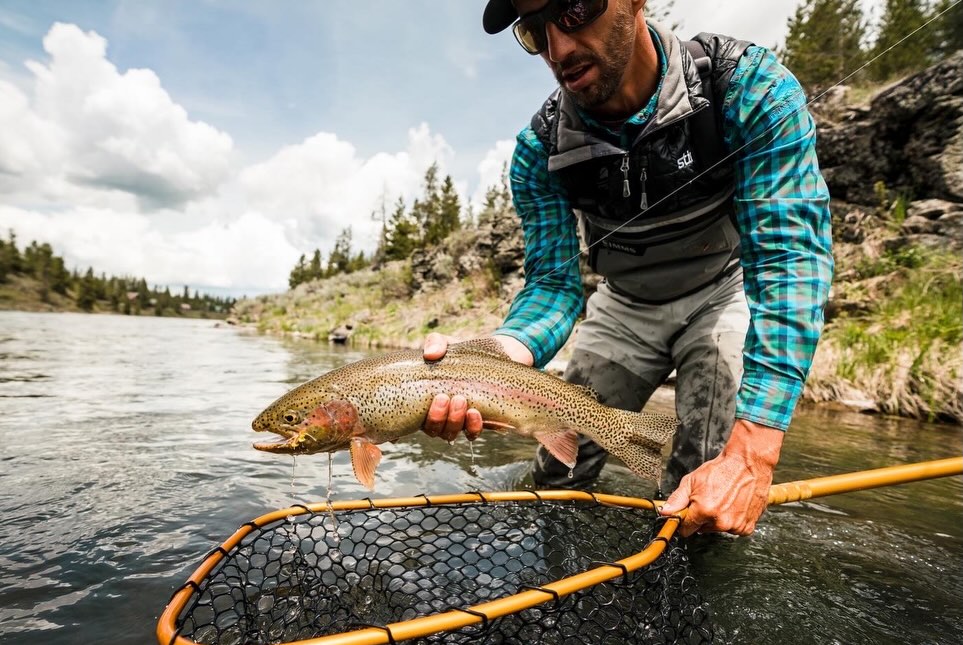
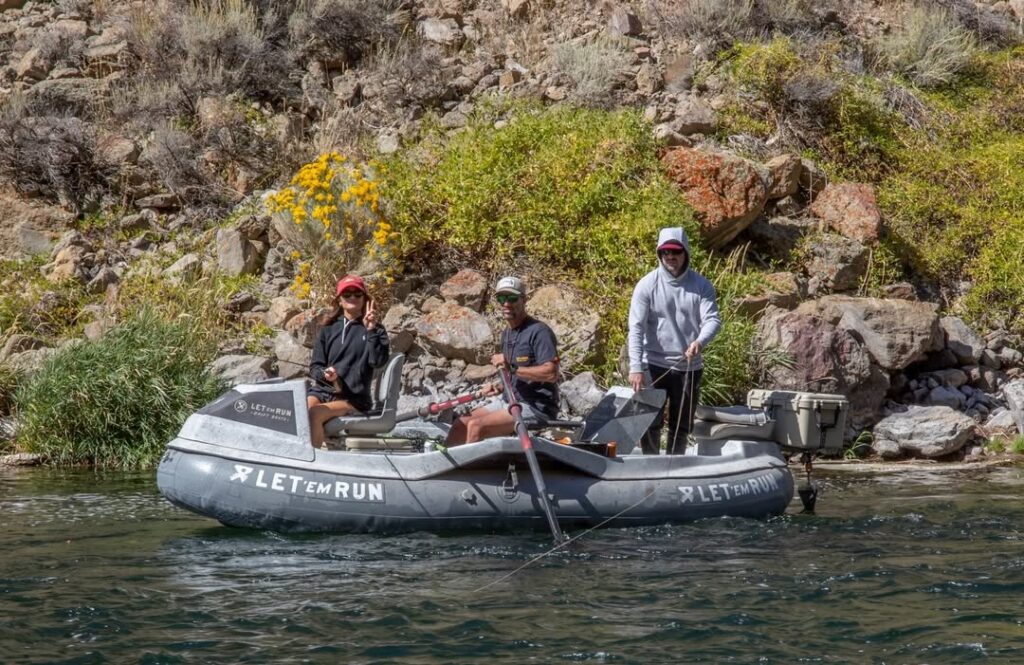
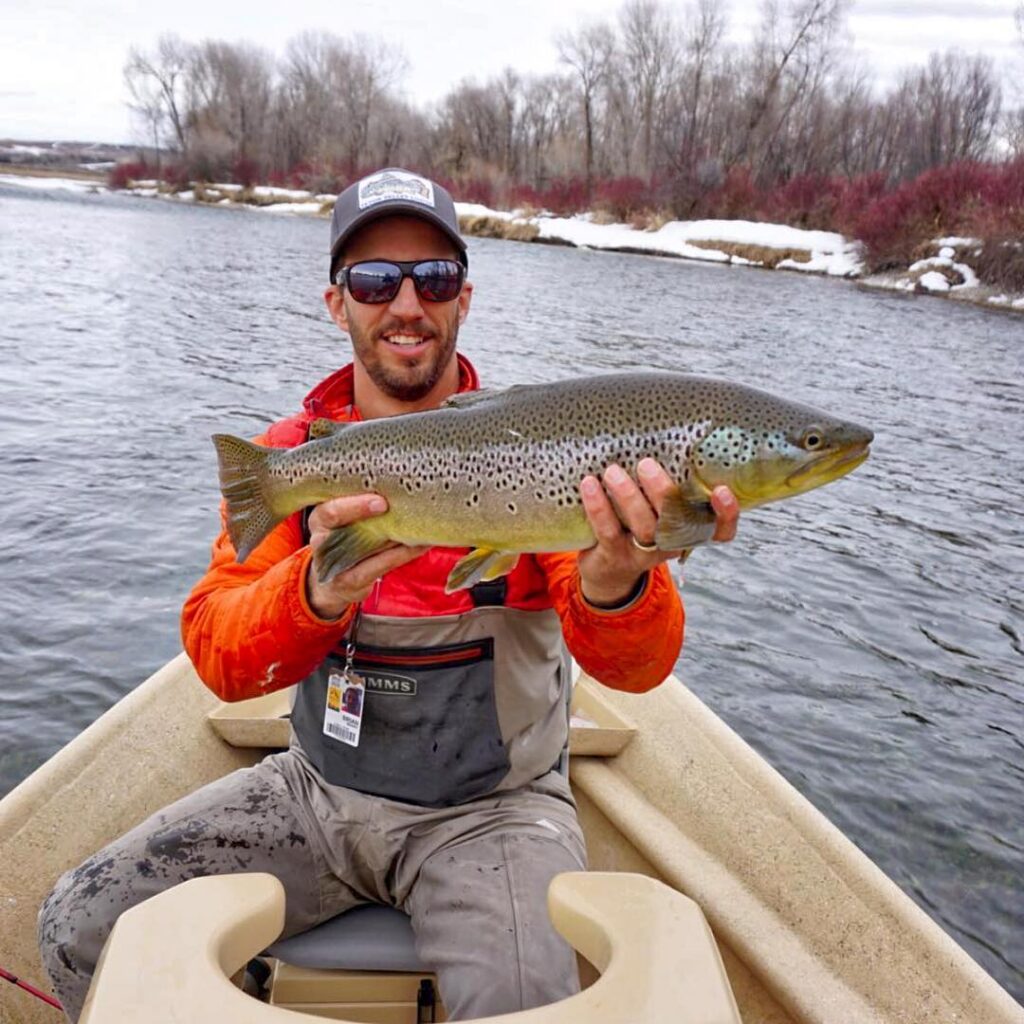
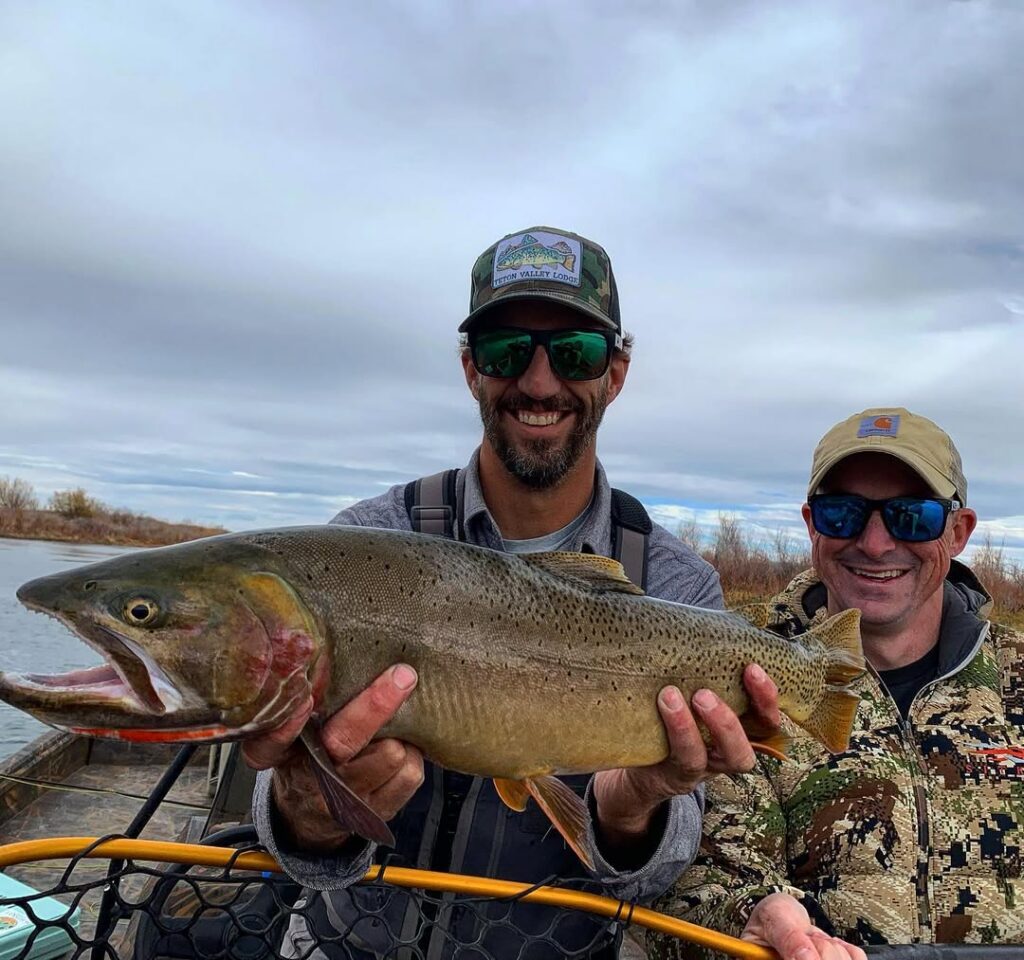
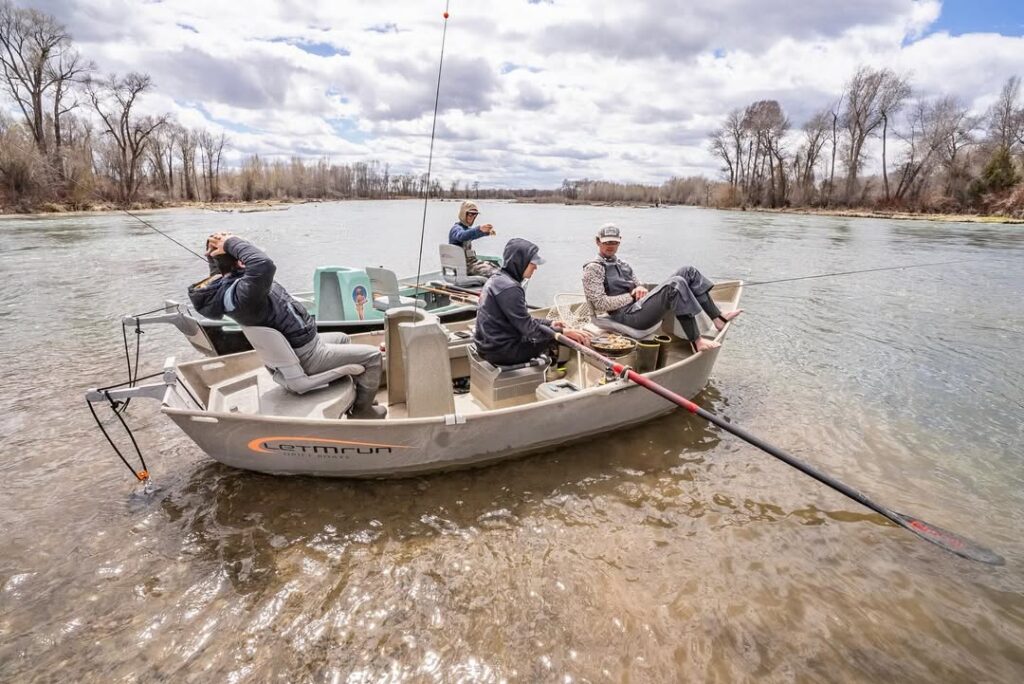
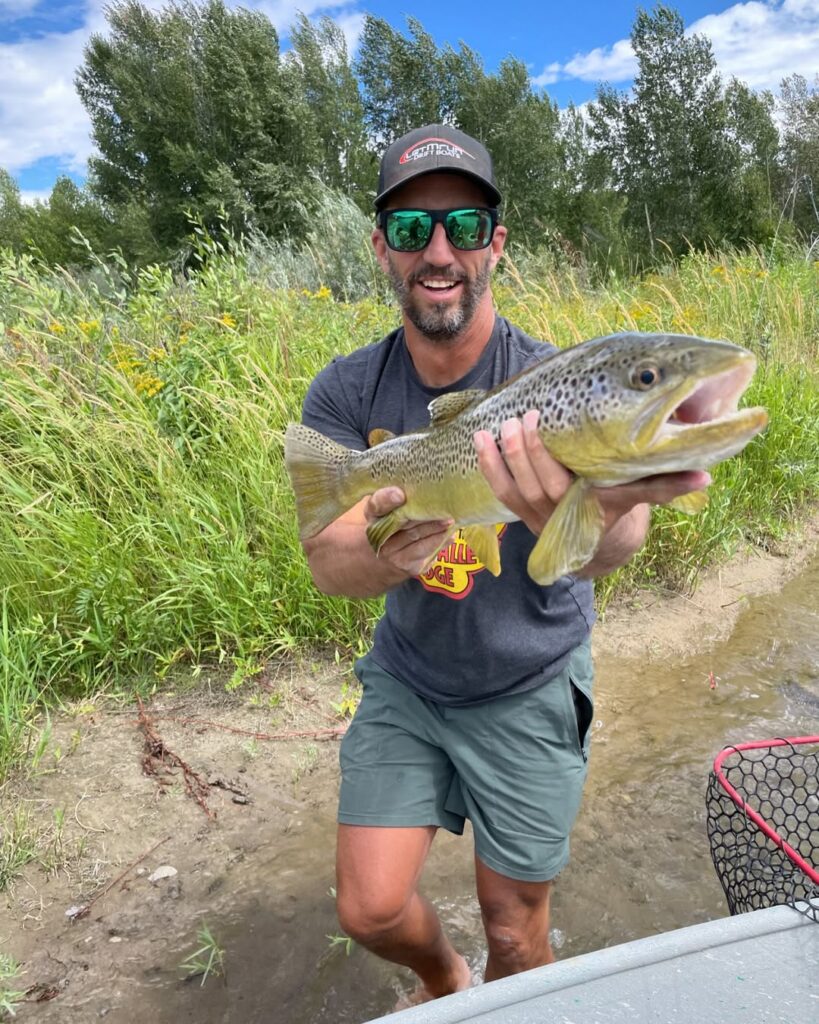
Not every trout river fishes the same, and eastern Idaho might be one of the best places to see that firsthand. In this Traveled episode, we head back to Teton Valley Lodge with Brian Berry to explore how the South Fork Snake, Henry’s Fork, and the Teton River each bring a completely different challenge depending on flows, seasons, and how you approach the water from a drift boat.
Brian walks us through how fishing changes throughout the year—from winter nymphing and streamer tactics to the explosive Mother’s Day caddis hatch and summer dry-dropper fishing. We dig into boat positioning, reading subtle holding water on technical rivers like the Henry’s Fork, and why staying flexible with river choices is often the key to a successful trip in eastern Idaho.
Episode Transcript
00;00;02;00 – 00;00;23;13
Dave
Not every trout river is built the same. Some are wide and forgiving, some are technical and precise, and some are reshaped by a dam failure that sent a wall of water through a canyon and changed the river forever. Today, we’re heading back into eastern Idaho, where the South Fork, the snake, the Henry’s Fork, and the Teton River brings something completely different to the table every day of the year.
00;00;23;28 – 00;00;43;04
Dave
Big water, technical drifts, whitewater canyons, mothers day cats, winter nipping from a boat and a stretch of river carved by one of the most dramatic dam failures in Western history. This is the Travel podcast series where we bring you to the best places to fish in the West and the stories of how this region became what it is today.
00;00;43;24 – 00;01;06;04
Dave
Brian Barry is back on the podcast today from the Teton Valley Lodge. He’s going to talk about how they fish big Western rivers and how they differ from the smaller technical streams that they’re working on out there. We’re find out how the fish nips deeper and shallower during different flows throughout the year. How to adjust when fishing from a drift boat to get natural presentations.
00;01;06;28 – 00;01;30;22
Dave
We’re going to dig into that Mother’s Day hatch and talk about positioning drift boats. We’re going to find out about the new boats that Brian launched this year. A lot of good stuff here, including a big trip giveaway if you want to get a chance to win right now. We’re going to announce that as well. This episode is presented by Visit Idaho and Yellowstone Teton Territory, home to some of the most diverse and wild trout water in the west.
00;01;31;22 – 00;01;39;15
Dave
All right, let’s get into it. Brian Barry, you can find him at Teton Valley Lodge, AECOM. Here he is. How are you doing, Brian?
00;01;39;24 – 00;01;40;21
Brian
I’m great. How are you doing?
00;01;41;01 – 00;01;56;26
Dave
Good. Go ahead. Yeah, we’re. We’re back for round two. We had you on on the podcast. I guess it was last year. You know, we talked a lot about. Yeah, a lot going. You got a lot of history. The Teton Valley Lodge is what? The lodge you owned there. And you run it and everything. Got really cool history with the family.
00;01;56;26 – 00;02;11;29
Dave
We talked about that in the last episode. We’ll have a link in the show notes and also a couple of other things. You got this boat launch we’re going to talk about today. And then we’re also giving away a trip to go to your lodge for two. So this is somebody this week, as we’re kicking this off, we’re going to be announcing the winner next week.
00;02;12;09 – 00;02;23;12
Dave
And and somebody is going to go on this amazing trip. So I’m excited to I always love announcing those. But first off, Brian, just tell us what’s been going on since the last maybe the last six months or so. You’ve been busy getting ready for the boat launch?
00;02;23;24 – 00;02;53;02
Brian
Oh, yeah. Yeah. It’s been pretty busy. So usually is pretty good around here for the lodge. Anyway. You know, we closed down in the end of October, so Winters kind of chasing kids around skiing just booking trips and getting ready for summer, but kind of taking a break from the whole lodge deal. But yeah, we’re doing a big launch and let them run Jeff Boats and we just built a giant, beautiful new shop manufacturing facility in Victor, Idaho.
00;02;53;17 – 00;03;09;12
Brian
And yeah, we just launched our website about a month ago and it’s led Amazon.com and we’ve got five different models of boats on there. And we do rafts drift boats. We’ve got a skiff and yeah.
00;03;09;23 – 00;03;10;04
Dave
Wow.
00;03;10;05 – 00;03;16;06
Brian
It’s we’ve been building a lot of boats and getting things ready to go to start shipping boats out.
00;03;16;06 – 00;03;31;25
Dave
Nice, nice. And yeah, On the last episode, you talked a little bit about it, the fact that, you know, these boats are kind of like it’s almost like it’s a raft that you put together, but it’s a raft that performs like a driftwood kind of right. As far as the fishing out of it, is that the big change, the big difference between some of the other boats?
00;03;32;07 – 00;04;03;04
Brian
Well, on the raft, it is for sure. So when we started doing the raft, we started using rafts where we were using drift boats. In some places where there’s big rapids or we’re dragging boats down into the mountains, down the cliff, like in the narrows of the town or below meets falls on Henry’s Fork. And just because we were beating our boats to death and also, you know, there’s danger in going through rapids in drift boats, it’s a little more forgiving having a raft as opposed to a drift boat.
00;04;03;16 – 00;04;09;26
Brian
You know, you think about once in a while with a drift boat, which is less than ideal when you’re getting that.
00;04;10;02 – 00;04;11;27
Dave
Now, has that ever happened to you guys out there?
00;04;12;11 – 00;04;18;08
Brian
Oh, yeah. You know what they say. There’s those you have and those that will. That’s right. If you’re in white water enough, you’re going to.
00;04;18;10 – 00;04;18;28
Dave
You’re going.
00;04;18;28 – 00;04;43;01
Brian
To sink. Yeah. Yeah. So we’ve we’ve sunk dozens and dozens of boats. Actually, I, I’m sure it didn’t even count, actually, over the years that we’ve been good. But actually it’s kind of funny. The last one I sunk was actually I flipped a pontoon boat. Oh, wow. 18 foot pontoon raft. I flipped it in a rapid in the Narrows.
00;04;43;01 – 00;04;44;07
Dave
Amazing.
00;04;44;07 – 00;04;45;01
Brian
Yeah, like, flipped.
00;04;45;01 – 00;04;48;06
Dave
It, like over. Like that goes up from the top and dumps over on top of you.
00;04;48;19 – 00;04;51;26
Brian
Like a cartwheel like that. And even I didn’t even know it was possible.
00;04;51;29 – 00;04;55;08
Dave
Yeah, And a pontoon. Right. Those are hard to flip. Right. Those pontoon are pretty stable.
00;04;55;18 – 00;04;58;26
Brian
Yeah. It didn’t flip sideways and flipped. It ended.
00;04;59;01 – 00;04;59;29
Dave
That’s a major.
00;05;00;05 – 00;05;13;11
Brian
Yeah. I was. It was insane actually. But it was went upside down, down through there rapid as I was flipping it back over, I was by myself, middle of nowhere with two fairly young fishermen. With me.
00;05;13;11 – 00;05;13;28
Dave
Oh wow.
00;05;14;08 – 00;05;23;16
Brian
I was flipping it over. Underneath my boat was the side of one of our wooden drift boats, probably from the seventies.
00;05;23;16 – 00;05;24;04
Dave
No way.
00;05;24;12 – 00;05;25;20
Brian
In the rock under.
00;05;25;21 – 00;05;27;07
Dave
Like, Oh, that’s crazy.
00;05;27;07 – 00;05;33;12
Brian
I brought back with me. You know, it’s it’s been a generational sinking of boats generator.
00;05;33;12 – 00;05;48;19
Dave
Right? Right. Well, I’m looking at a picture on here on your website, the Let Them Run scheme, which is amazing. You got some killer photos of boating and one of them is a I don’t know if this is on Instagram. It’s a wood boat going through, which is a nice huge drop rocks ever. What rapid is that? You know, the photo I’m talking about.
00;05;48;28 – 00;05;52;06
Brian
Yeah, that one that when we called the big chute on the narrows of the teeter.
00;05;52;07 – 00;05;53;17
Dave
Dang, that is.
00;05;53;17 – 00;05;54;03
Brian
Big.
00;05;54;03 – 00;05;57;23
Dave
That is a huge drop in is that that’s a wood boat to going through there.
00;05;57;25 – 00;06;01;17
Brian
Yep. That’s a key steel wood built back in the seventies. That photo.
00;06;01;22 – 00;06;06;20
Dave
Holy cow. You guys are like. I didn’t realize. Yeah, you had some high level. You’ve got some whitewater there.
00;06;06;29 – 00;06;09;09
Brian
Oh, yeah. We go through some serious stuff, man.
00;06;09;17 – 00;06;10;02
Dave
That’s really.
00;06;10;02 – 00;06;24;12
Brian
Cool. Which was the catalyst to start using rafts, which was, you know, and my dad and the gentleman in that photos, John Pearson, was my dad’s partner forever. You know, the idea of using a raft was insanity to them.
00;06;24;12 – 00;06;25;05
Dave
And rain or.
00;06;25;09 – 00;06;44;13
Brian
Sacrilegious like we’re doing that, you know, and well and for one reason, fishing out of rafts is awful. Yeah that’s horrible. And you know, the satellite catches on everything. The floor is terrible. Your feet are coming up and down. Your feet get wet. It’s just if you’re fishing in a boat forever and then you get in the raft, it’s just a nightmare, you know?
00;06;44;24 – 00;07;06;18
Brian
So when we started, we did get rafts and we started using them because of the problems we were having wrecking boats. And then also on the Henry Fork on lower mass falls, which we called Bear Gulch, that section, they made it so you had to have an inflatable boat drag it down the hill. They wouldn’t let you take hard boats for it.
00;07;06;23 – 00;07;24;13
Brian
I don’t think it really makes any sense. But they thought it was causing more erosion or something by using a hard boat, which, wow, I don’t think if you actually looked at it, it does. It doesn’t do that. But anyway, they made it so you had to have a raft. So we had to start using rafts. But every raft that we bought was we hated.
00;07;24;13 – 00;07;43;21
Brian
It wasn’t up to our standards and our customers hated it and the guys hated it. So that caused us to start making our own raft frames. And it took us about 15 years to get one that was worthwhile. But then we finally got it to where it was pretty awesome. And the way that I knew it was good was the guides quit complaining about it, the customers quit complaining about it.
00;07;44;03 – 00;07;59;16
Brian
And then the guides started asking if they could take them on days off or in the off season. And once that happened, I’m like, We got something here, so maybe we should try to start selling this thing, which that was the beginning of the rafts, the drifts that you’ve always made the drift boats.
00;07;59;17 – 00;08;01;27
Dave
Oh, you have, right? You’ve always made the drift boats.
00;08;01;28 – 00;08;14;02
Brian
Well, since they made the leap and this was when I was a little kid, I had nothing to do with it. When I was a little kid, they it was what fiberglass came into vogue for drift boats.
00;08;14;03 – 00;08;16;25
Dave
Oh, and when was that? Was that in the 1880s or nineties.
00;08;16;27 – 00;08;44;01
Brian
Was in the early eighties. Yeah. Yeah. But all the boats that were being made were pretty big and heavy and was nothing like one of those wooden boats like you see in that photo, in the maneuverability and the reliability, you know. So they wanted something that if they were going to do it out of fiberglass for the durability and not having to maintain the wood and do all the things you have to do with a wood boat, they wanted it to perform like the wooden boat.
00;08;44;16 – 00;09;09;12
Brian
So there was a guy out in Rexburg, Idaho, named Munns, was their name, and they had started making a film called Drift Boat, and they brought one up and my dad loved it and bought one. And then they decided that they could make it better. And one of our one of our guides just got it for us forever and ever and was basically our family member, Tom Finger.
00;09;09;26 – 00;09;35;28
Brian
He took it upon himself to start making the boats and figured out how to do it in a better way and making a phone cord sandwich construction boat. So it’s super light and making it the way we wanted it in our design and everything. And so between Tom and my dad, they kind of just designed the boats around for years and years and years and brought it to where, you know, got it to a great level.
00;09;35;28 – 00;09;42;22
Brian
And then Tom and I started let him run together to take it to another level where we could market it and try to sell it.
00;09;43;03 – 00;09;56;19
Dave
Gotcha. Wow. Yeah, that’s it. So, Tom, so so Tom has been building the boats since day one. And then the the new thing is the rafts. So you have this raft which has maybe described out a little bit the frame on this raft and how it’s different than some of the other ones out there.
00;09;57;01 – 00;10;19;20
Brian
Yeah. So the first one we made, well, it was a lot of iterations to get up to it. First ones were cat or rafts we made and then we turned it into the, you know, a traditional raft. But one of the main things well, two things that we hated about it, about the rafts that we could buy was one thing was not being able to have a solid floor to stand on, which was a big pain.
00;10;19;20 – 00;10;44;02
Brian
And also then, like most of the knee braces or her casting, you know, leaning braces that people had were just bent pipes. They were uncomfortable and you’re actually lying on them. And then you just cut your line on the boat. You know, you get straps everywhere. There’s nowhere to put your stuff. So you got stuff laid in the bottom of the boat, an incline just getting cut and everything and your feet are wet and standing up and down and stuff.
00;10;44;08 – 00;11;04;28
Brian
So the first thing we did was in the cataracts. We made fiberglass floors out of the same construction. We made the drift boats out of and which was Tom’s idea. And so it’s just foam with fiberglass on either side of it. So it’s super lightweight and you can put texture on it and paint it, you know, just like a boat, like a drift boat.
00;11;05;19 – 00;11;29;16
Brian
It give you a really solid platform to stand on and is lightweight. So that made a huge difference right away. And we did those drafts first and then we just kept redesigning the frames to get the least amount of nuts and bolts and connections and areas to catch line on, you know, your line going underneath the boat and then cut out straps, whatever, everything.
00;11;29;16 – 00;11;51;04
Brian
There’s just so many things to catch your light on, which is a real nightmare when you’re fishing, fly fishing, anything else. So it was just years and years of work. We can get rid of this thing or we can bend it this way, or we can make it that way to get rid of anything that caught line. And then we decided to try to make one completely out of fiberglass instead of using metal.
00;11;51;16 – 00;11;55;15
Brian
So we made a cataract frame first out of.
00;11;55;28 – 00;11;56;24
Dave
Fiberglass.
00;11;56;24 – 00;11;58;19
Brian
Just fiberglass, fiberglass and foam.
00;11;58;25 – 00;11;59;06
Dave
Well.
00;12;00;11 – 00;12;25;02
Brian
And no metal pipes. And so you could get rid of all the line catching problems, you know, And that boat was it was okay. It was a little heavier than we wanted. And it didn’t sit quite right. And then we just decided cataracts. They were just big. They were 16 feet long. Great. Big, almost like a barge, you know, which they were a great platform to fish out of.
00;12;25;02 – 00;12;49;07
Brian
But they were very hard to row and the guides didn’t love them. So then we switched over to a smaller raft and started with the air Super PUMAs, which are fabulous, terrible, great boats. And then we so then we just started chopping up the fiberglass frames that we were making and putting them in the super pumice and using the hard floor in there.
00;12;49;22 – 00;13;13;26
Brian
And then it just kept morphing and morphing. Until now we have one that’s a metal frame with a with a solid fiberglass floor and has fiberglass knee braces, but still has the metal piping all through it for the frame, which is a great boat. And then we have one that’s completely composite. So we call the Oso and has no no metal in it at all other than the anchor bracket.
00;13;14;00 – 00;13;15;16
Dave
Oh, the assistant.
00;13;15;16 – 00;13;23;23
Brian
Yeah. Also or the bear. We call it the bear, because a Bear Gulch is kind of where is one of the places that kind of burst our raft fishing.
00;13;23;28 – 00;13;44;07
Dave
So gotcha. Wow, This is really cool. I’m looking at them now. Yeah. You have some great photos on the website of the different. So yeah, you’ve got the the Oso is the all fiberglass and then you’ve got the metal, so you’ve got a few different options. And what is the price point on these raft? Do you buy them as just the raft or just the frame or how does that work.
00;13;44;07 – 00;13;49;08
Brian
You can do it either way you want, You can do it, you can do it. You can buy just the raft like we make our own raft now.
00;13;49;09 – 00;13;51;20
Dave
Oh, you do? So this is your raft? This is you guys raft?
00;13;51;24 – 00;14;10;19
Brian
Yep, yep. Yeah. We design our own raft and we traded, you know, most rafts or most fishing rafts are not all of them, but a lot of them are a white water set up. That’s retrofitted to become a fishing frame. You know, So we try, you know, you don’t need all the drinks, you don’t need all the straps.
00;14;10;19 – 00;14;28;23
Brian
You don’t need that you would need if you’re doing like major white water down the Grand Canyon. And, you know, most people are taking this boat down the Henry Fork or, you know, whatever, some smaller river, but the big hole or, you know, they’re not going through gigantic white water. So you don’t need a million straps holding everything down and then having it be a line catcher.
00;14;28;23 – 00;14;46;18
Brian
So we eliminate a lot of drinks. We moved the valves. So the valves are in a good spot or you don’t catch your line. And it’s easy for the guy to fill the boat up and then just made it super durable so that we can take it the places that we want to take it. So yeah, so we designed the raft and then built the frame around the raft.
00;14;47;06 – 00;15;08;26
Brian
So yeah, you can, you can buy it with a trailer, you can buy it without a trailer, you can buy the thing by just the rubber, you can buy just the frame If you’re ever after, they’ll fit in. Or you can get the whole you can get the whole package. So and you know, a lot of guides, you know, if you’re a guide and you’re like, I need a raft for some places, but I don’t want to buy another trailer that fits exactly on a drift boat trailer.
00;15;08;26 – 00;15;09;13
Dave
Oh, it does.
00;15;09;22 – 00;15;13;12
Brian
Yeah, that fits. We just use it on the same trailer. We put our drift boats on.
00;15;13;13 – 00;15;13;26
Dave
Oh, that’s.
00;15;13;26 – 00;15;29;14
Brian
Coaches, which is an Adams trailer at Idle Falls or Shelly had which are great. Okay. Yeah. So it’s, it’s like interchangeable. So, you know, just depends on what your budget is and what you want to do. It’s nice to have your own trailer for each boat that you just hook up to it. You don’t have to mess around with it.
00;15;29;22 – 00;15;31;19
Brian
But if that’s not in the cards for you, you know.
00;15;31;26 – 00;15;32;22
Dave
You can do it the other way.
00;15;32;23 – 00;15;40;15
Brian
You can do that. You can switch your rowers and your cooler back and forth between them or whatever, you know. Okay. Or if you want to have a whole setup, you can get the whole setup.
00;15;40;15 – 00;15;50;24
Dave
Yeah. And you’ve got the Yeah. Have you got the haymaker which is the red, the 14 foot, you got the crossfire, the 13 and then the, the Oh so right is the 13 as well. So in the CROSSFIRE is the aluminum frame.
00;15;51;03 – 00;15;53;29
Brian
Yep. The crossfire is a 13 foot aluminum frame. Yeah, yeah, yeah.
00;15;53;29 – 00;15;58;12
Dave
That’s cool. And then you have the two driftwood. But what you’ve been making for many years, Those two.
00;15;58;18 – 00;16;16;12
Brian
Yeah, well, the skiff. We just started making the skiff. This last year was our first year making the skiff. We’ve always done just drift boats, But, you know, a lot of people like skiffs and some of our guides really like skiffs. So we decided to make one of those. We guide most one of the rivers that we get a ton on.
00;16;16;26 – 00;16;43;15
Brian
Like on this giveaway, we go to South Fork, the Henry Fork. In the key to the South Fork is a really big river. If you if four people have fish South Fork, it’s a monster like compared to other rivers, you know, most other trout streams, it’s a behemoth and it has very large hydraulics, big, you know, whirlpools and giant seams and, you know, a skiff on that river.
00;16;44;01 – 00;16;50;17
Brian
If you’re not a very accomplished rower, could be a treacherous boat on that river.
00;16;50;20 – 00;16;55;04
Dave
Oh, Roy saw the skiff on the South Fork. Could be rough for some people. If they don’t have the skills.
00;16;55;15 – 00;16;57;10
Brian
It could be high levels, you.
00;16;57;10 – 00;16;58;09
Dave
Know, high levels, Right.
00;16;58;22 – 00;17;11;10
Brian
You know, you can think about on the South Fork for sure. It’s a people die in the South Fork every year. The South Fork is it’s just a and it doesn’t look no. If you don’t understand water.
00;17;11;14 – 00;17;15;07
Dave
Yeah, it’s kind of sneaky. You can get in a tricky place pretty quick if you’re not careful.
00;17;15;09 – 00;17;19;04
Brian
Yeah. Like you look at that picture on Instagram of that big rapid.
00;17;19;04 – 00;17;19;17
Dave
Right.
00;17;20;07 – 00;17;26;08
Brian
So that rapid is scary. Like if you were to go up to it and go to float down that rapids.
00;17;26;13 – 00;17;28;01
Dave
It looks scary looking at it.
00;17;28;01 – 00;17;50;19
Brian
Yeah. And you’re in the boat like at the top of that. It can be intimidating, right? Yeah. But I would I would wager it might be easier to think about on that rapid. But the South Fork is a more dangerous river just because of its sheer size volume. Yeah, and it’s just a monster, you know. So that being said, a drift boat is more especially a little bit higher.
00;17;50;19 – 00;18;03;24
Brian
Side drift boat is a much safer boat on the South Fork. So we’ve always just been drift boat people because of that and skiffs are somewhat newer, you know, kind of a newer thing, although there is the South Fork skiff, which is probably the original skiff.
00;18;04;03 – 00;18;05;17
Dave
Oh, it is a South Fork. Yeah.
00;18;05;26 – 00;18;19;04
Brian
Yeah. Which was made here, you know, out of Jackson or Driggs and named after the South Fork. But okay, but it’s just a big river. So Drift boat is a little bit safer. Boat on the South Fork.
00;18;19;05 – 00;18;31;03
Dave
Yeah. On the South Fork. And then, and then you have the other rivers. That’s a cool thing about what we’re doing here is somebody is going to win a chance to fish. Maybe all these rivers right? If you had three days to fish, would that be doable to hit the Teton? The Henry Fork in the South Fork?
00;18;31;08 – 00;18;48;18
Brian
Definitely. But a lot of people, as something that they really want to do is be able to fish all three rivers now. Well, we say to people and people call the book a trip like, I want to go on this place on this day. And we say, okay, well, we’ll write that down, but it’s January and I have no idea what the water’s going to be like in July.
00;18;49;10 – 00;19;04;23
Brian
You know, every year is very different. Like this year. It’s a pretty low snowpack right now, but it could change a lot between now and the end of the year. You never know. So we try to stay very flexible and we’re very we’re very blessed that we have so many rivers of fish and so much different water to fish.
00;19;05;05 – 00;19;22;15
Brian
But there’s always somewhere that’s fishing Well, but year to year you never know what’s happening. But some people really want to fish all three rivers. Some people want to just basically turn some people on and just fish it out for everybody’s different, but it’s definitely doable to fish all three rivers almost all any time of the year.
00;19;22;23 – 00;19;39;00
Dave
It is. Yeah, that’s right. Yeah. And so and I think if you know, we’re going to be, like you said, this event, this giveaway event is going to be over are probably going to be shooting for this summer some time to get the winter up there. When is when is the time. Yeah. Your season opens spring and then when does it when do you wrap it up.
00;19;39;00 – 00;19;39;22
Dave
In October there.
00;19;40;03 – 00;19;53;23
Brian
Yep. So we open the 1st of May for the lodge and we close right before Halloween in October. We guide year round. I actually was guiding today. All right. But yeah, we will guide you around. But the lodge doesn’t open until.
00;19;53;23 – 00;19;55;07
Dave
Oh, gotcha. Okay.
00;19;55;07 – 00;20;14;25
Brian
But yeah, and everything has a little bit different timing. Each river, you know, the Henry Short, South Fork and Teton all have different timing on patches and things. So, yeah, it’s it’s just varies throughout the summer. But they all fish all year round. Yeah. Your depends on which one’s better. It serves an area.
00;20;14;25 – 00;20;21;24
Dave
So right now we’re getting Yeah. We kind of have a low snowpack out there. What do you guys fish in this time of year. This like late February and March.
00;20;22;02 – 00;20;42;07
Brian
Today we went on the Hunters for the last couple of days. I was on the South Fork and typically parts of the Henry Fork are not accessible because of snow and you can’t get into places this year. There’s still a little bit that you probably can’t get into on the upper Hunters fork in the canyon anyway, But most of it’s pretty accessible.
00;20;42;07 – 00;21;08;16
Brian
It’s it’s remarkable how little snow there is in the valleys. The one saving grace that we’ve had is December was the second wettest December in like 40 years. But it was weird that a lot of it came in rain and snow, which is really weird. But we’re like, we’re above 100% on water for the year, but we’re below on snow.
00;21;09;03 – 00;21;13;16
Brian
So it’s going to be interesting to see how that plays out as the summer comes along.
00;21;13;16 – 00;21;21;00
Dave
Mm hmm. Yeah, we’ll see how that goes. And so the Henrys fork right now. So what did that look like? Were there any dry flies or what? How were you guys fishing it there?
00;21;21;09 – 00;21;31;11
Brian
No, we were Newfoundland streamer fishing. Yeah. There’s not a lot of dry fly fishing this time of year. In gets midges here and there, you know, a little bit there. And there were midges out today, but nothing really.
00;21;31;11 – 00;21;37;07
Dave
Yeah, nothing makes sense. So nip and then are you what’s the, the nipping you’re doing. What’s that look like this time of year.
00;21;38;04 – 00;21;59;09
Brian
You know the Hendricks fork has a massive amount of aquatic insects, so, you know, stone flies worked, eggs worked, even though nothing’s really spotted right now. But there’s always something laying eggs, you know? So, you know, the eggs are always kind of a good shot in the wintertime, either whitefish or suckers or something. Got some eggs coming out.
00;21;59;09 – 00;22;12;28
Brian
So they’re always kind of looking for those or they might even eat them just as in the track. And you never know. But there’s all kinds of bugs don’t flies, just different mayfly nymphs and worms. Also, there’s always a lot of worms going on in the winter.
00;22;13;13 – 00;22;20;01
Dave
So. That’s right. Yeah. You guys fish in the Henrys, fork out of a boat or just walking, wading about. Yeah, you are. Yeah. So it’s out of a boat?
00;22;20;09 – 00;22;22;15
Brian
Yeah. Yeah. It’s really skinny.
00;22;22;15 – 00;22;31;08
Dave
It is? Yeah. How do you break that down with the Henry for. Because I always think of it, you know, more of a walking way but it’s not, there’s, there’s sections. If you know how to do it, you can boat it.
00;22;31;21 – 00;22;50;05
Brian
So yeah, we boat it every day actually we, we rarely if ever do just a waiting trip. Now we do that personally for like, for fun, you know, in the winter. But we almost I would say 99% of the time we’re taking a boat. So this out the hands for starts. I mean, for all intents and purposes it starts above here.
00;22;50;05 – 00;23;11;08
Brian
But for really starts at Box Canyon. So we float, you know, there’s the box candy, and then you go into the railroad ranch, and then there’s a couple of sections in the canyon through Cardea Canyon, and then we call it the Warm River section. And then you go below Ashton Reservoir. There’s several floats down to Saint Anthony. So, yeah, we do.
00;23;11;08 – 00;23;24;13
Brian
We float today. We’ve floated fairly short because the water’s so low. We only floated to Orange Vernon, but which is only about five miles. But typically you’re floating about about ten miles a day.
00;23;24;25 – 00;23;26;26
Dave
Ten miles a day? Yes. It’s like a normal float. Yeah.
00;23;27;04 – 00;23;45;16
Brian
Yeah. And then there’s further water that we don’t get on below there before it’s the South Fork. But yeah. Yeah. It’s very float able. Yeah, for sure. Yeah. It’s about, you know, in the summertime and fortunate in between 300 CFS and a thousand CFS usually it’s a good size river.
00;23;45;27 – 00;23;51;12
Dave
Nice. Nice. Okay. So that’s, that’s really cool that you guys are floating. Is that rafts or drift boats in there.
00;23;51;24 – 00;24;09;09
Brian
The drift boats down there. Yeah. Sometimes this time of year there’s so much snow that you can’t get to the boat ramp and we’ll take a raft so you can just drag it over the snow. Really easy. But there’s no snow on the lower end of the entrance, really. So you can drive in and out of all the boat ramp easily right now, which is very weird.
00;24;09;09 – 00;24;09;21
Brian
But.
00;24;09;21 – 00;24;21;04
Dave
Right, right, right. Okay. And then then, of course, the South Fork has lots of boat ramps. It’s the big river. And then and then you guys also hit the Teton, which we talked a little bit about last time. But the Teton is also one. You’re floating quite a bit.
00;24;21;15 – 00;24;41;21
Brian
Yes, not really so much this time of year. Usually this time of year it’s mostly frozen. The Teton, the Cheetah and the Spring Creek and quite slow moving in comparison to the South Fork in the earlier the hunters work. But so normally we don’t fish at much or at all in the winter because it’s frozen, but this year it’s open.
00;24;41;21 – 00;24;46;13
Brian
You could float it right now and it’d probably be fine. But I haven’t floated yet this year.
00;24;46;23 – 00;25;00;05
Dave
Okay. And what do you think? So if we’re if we want to go there with three days, the person that takes this home, is there a good time where you can All three rivers would be fishing. You know, is there a time when maybe it’s not the best to get out? There? Is the whole summer pretty, pretty much wide open.
00;25;00;16 – 00;25;31;03
Brian
The only time. Well, and it all depends on water, you know, and how the snow how the runoff comes down. But the only time that you really don’t fish, the Teton would be at peak runoff. When it gets really high. The Teton is the only one that’s not dam controlled. So that’s the only one that there’s a period of time that we don’t fish, which is typically in like intimate through through the middle of June to the 1st of July.
00;25;31;18 – 00;25;46;10
Brian
But this year, that probably was not going to be as much of an issue. Looking at the snowpack. But yeah, that’s the only time really in the last few years it’s been a little bit lighter. Snowpack like mid-June is one that really has been getting going, so.
00;25;46;13 – 00;25;54;18
Dave
Oh, okay. Yeah, mid-June. Okay, so you got the Teton, so probably sometime in July might be good to hit all the in a normal year. Hit all three pretty easily.
00;25;54;26 – 00;26;07;10
Brian
Yeah. Yeah. July for sure. July, August, September and even May. The only real time is like the middle of June, but that is like some of the best time to hit the south fork in the and the.
00;26;07;12 – 00;26;08;00
Dave
In the Henry’s.
00;26;08;03 – 00;26;08;18
Brian
Henry Spring.
00;26;08;18 – 00;26;08;26
Dave
Yeah.
00;26;09;16 – 00;26;11;09
Brian
Prime time on the fork really has made.
00;26;11;09 – 00;26;12;06
Dave
You May June the.
00;26;12;06 – 00;26;14;18
Brian
Two prime months for the entries for. Yeah.
00;26;14;19 – 00;26;16;02
Dave
Oh it is May June is the prime.
00;26;16;08 – 00;26;35;04
Brian
Yeah. That’s when the you know that time of year the Teton in the South Fork do not have Hatch is going on for the most part. The main hatch is on the Teton in the South Fork start sometime in the end of June to the 1st of July. So it’s more name, thing and stream running on those rivers that time of year.
00;26;35;13 – 00;26;41;17
Brian
The Henry Ford starts out with bang for the Mother’s Day carries hatch at the 1st of May is mass so.
00;26;41;17 – 00;26;42;06
Dave
It is.
00;26;42;06 – 00;27;00;26
Brian
Amazing cars hatch yeah and then that goes into stone flies which is the end of May is when the salmon flies come out and then you get the golden stones and PBDEs and green drink and brown drinks and all that stuff in June. That’s just massive on this, on the Hendricks for Yeah.
00;27;00;26 – 00;27;07;00
Dave
In the head. And then in the Mother’s Day case which we’ve heard a lot about before. What is that like? Are these big cats just everywhere?
00;27;07;09 – 00;27;10;26
Brian
Yeah, it’s like clouds of cat. It’s. It’s massive. Yeah.
00;27;10;26 – 00;27;13;29
Dave
And are they. What size bag are those. Those canister.
00;27;14;09 – 00;27;18;29
Brian
You’re probably like eight to a 14 somewhere in there. Those different sizes.
00;27;19;04 – 00;27;25;24
Dave
Okay. Yeah. 8 to 14. So Yeah. Eight or that’s a big cat is. Yeah. I think of the you know I guess you have the October cats over there too.
00;27;25;24 – 00;27;31;17
Brian
Yes. Yeah. We get a lot on the Teton especially but South we’re going to get them too. But yeah a lot of October cats.
00;27;31;17 – 00;27;35;04
Dave
Yeah. And those are kind of more like whatever those are for sixes rates or something like that, right.
00;27;35;04 – 00;27;38;17
Brian
Yeah, they’re big. Bigger. Yeah. They’re big. Yeah. Like a little stone flake.
00;27;38;17 – 00;27;50;01
Dave
Yeah, yeah. Like a little stuff. But those mother’s days are bigger than your typical cats. Yeah. These aren’t just the little 16 or the 14. These are a little bit bigger than your typical, you know, the whatever. I always think of, like, 12 or 15. Yeah, these are big guys.
00;27;50;10 – 00;27;56;09
Brian
I’ll tell you, one of my favorites is the is Mike Mercer’s a missing link.
00;27;56;15 – 00;27;57;11
Dave
The missing link?
00;27;57;12 – 00;28;10;15
Brian
Yeah. That’s a killer name. Well, that’s killer for for green Drakes, too, actually. But that thing’s a killer for. But yeah, just or just a big mother’s Day, you know, just too big l care or something. Like a like a size ten. L care.
00;28;10;15 – 00;28;26;02
Dave
Candice, this is sweet. So may. So we’re really. We’re like that, and that’s not too far. I mean, it’s literally almost March, April, maybe we got a few months. Couple of months. So that’s right around the corner. Yeah. So if somebody was here, they could be thinking that would be a good time to hit the If they’re only the first time in the Henry’s for it, that might be a good time to fish it.
00;28;26;10 – 00;28;43;20
Brian
It’s great. Yeah. And it’s a little bit less crowded that time of year. You know, once the salmon flies come out, it gets pretty dang crowded and then green drinks. It gets really crowded, too. Mother’s Day is a little less crowded, but can be fantastic fishing. And it’s really the South looks amazing that time of year too.
00;28;43;20 – 00;28;46;04
Dave
Oh, it is. It makes good for the south fishing, that’s all that stuff.
00;28;46;10 – 00;28;50;07
Brian
Near finished stream or fishing on the South Fork. It can be fantastic in May.
00;28;50;19 – 00;28;57;19
Dave
And the only x factor is water is or can may be a pretty before you know you got to time it so it’s not blown out right that’s the only issue.
00;28;57;29 – 00;29;19;05
Brian
Yeah but even that time of year you know the blown out it really gets you on on the drive for ice but really actually higher is almost better that time of year. Okay for the for the nipping in the stream or fishing on the South Fork if it’s high enough color it can be fantastic actually. Okay which is kind of counterintuitive, but yeah, actually it could be really, really good.
00;29;19;09 – 00;29;19;19
Brian
Could be.
00;29;19;19 – 00;29;19;27
Dave
Good.
00;29;20;00 – 00;29;20;12
Brian
Yeah.
00;29;20;16 – 00;29;26;29
Dave
And those missing lakes. So you’re fishing, you know, What are you doing? Is it just kind of your typical How would you fish that Kat us there for those.
00;29;27;02 – 00;29;50;18
Brian
Those on the energy work, you see them blowing up on them, those fish and then, you know, the, the hunter’s fork is like a lot of Idaho is volcanic rock. And so they’re just like great big boulders and pocket water all over on the Henry’s fork. And, you know, they’ll just fit in those seams, you know, coming off of those rocks and just chowing down on those carrots.
00;29;50;18 – 00;30;07;26
Brian
But they also eat the nymphs a lot, too. So like, you know, like a size size 12, size, 14 carats, nymph image, big clouds of them in the water floating down and dropping that off off of a missing link or off of some other dry, you know, can be really effective.
00;30;08;17 – 00;30;10;03
Dave
Just so dry drop or sort of thing.
00;30;10;11 – 00;30;22;04
Brian
Yeah dried your paper or just to dry and they they really hit those things hard cause cancer you know you think about presentation on a dry fly you know you know your mind goes to drag free drift.
00;30;22;04 – 00;30;22;13
Dave
Yeah.
00;30;22;24 – 00;30;33;17
Brian
You know, whatever. But cats, they hop around a lot, you know, they’re trying to bounce their eggs off there for their abdomen or whatever. And it really they don’t just sit on the water, you know, on the water they’re jumping and.
00;30;33;17 – 00;30;34;12
Dave
Flying up and.
00;30;34;20 – 00;30;41;03
Brian
Mountain. So those fish will get very, very you know, they’re not just sipping all the time sometimes.
00;30;41;28 – 00;30;43;24
Dave
Yeah. You want to kind of hop morale a little bit.
00;30;44;04 – 00;30;52;26
Brian
Yeah. You can skate them and touch them and whatever and, and and they get some real explosive takes on them. It’s a lot of fun.
00;30;53;05 – 00;30;59;05
Dave
Mm hmm. Okay. So that’s that early May. And then on the Teton in May, that’s not really happening quite yet.
00;30;59;05 – 00;31;19;09
Brian
They’re you can get them, you know, streaming fishing in May pretty good for sure And if you get windows between runoff and there’s not but there’s not a lot of dry fly action. No. You know if you get a real big runoff, they could be eating worms when they’re you know, there’s a lot of mud in water in the bank.
00;31;19;09 – 00;31;46;09
Brian
You kind of collapse in a little bit. You get a lot of worms in the water and that can produce pretty good. But it’s mostly a streamer thing. The Teton really doesn’t get kicking off until once the the dirty water subsides from runoff and then hatches will start to emerge. And the first ones usually are going to be salmon flies down low and then followed by the Sally’s and please go get going.
00;31;46;20 – 00;31;54;27
Brian
And that’s usually, you know, sometimes from the 20th of June until the 4th of July, somewhere in there is when that’s going to kick off, depending on runoff.
00;31;55;09 – 00;31;55;23
Dave
Gotcha.
00;31;55;27 – 00;31;56;18
Brian
On average.
00;31;56;22 – 00;32;11;22
Dave
On average, yeah. And then in back to the nipping. So you guys are on the river. Is that nipping now? Is it going to be pretty consistent, the same type sniffing you’re doing through say in the march until like you know spring’s over or are you changing things up is a pretty standard. The technique you’re doing.
00;32;12;01 – 00;32;32;16
Brian
You know, the only thing that’s going to change is once the water starts to warm up a little bit more, probably in April, depending on the winter. But sometime in April, you’re going to start to get a lot of blooming olives. They’ll start coming out in April on the Henry Fork, which can be really, really good, actually. But it’s still a month or so off before that happens.
00;32;33;00 – 00;32;41;28
Brian
But once that starts happening, that really gets the fish a lot more active and then you can get some really good dry fly fishing and anything on those.
00;32;42;09 – 00;32;51;20
Dave
Oh, sure. BW Yeah, okay. So that’s a little bit later. So right now, so that nipping, what is that? What’s your set up look like for that? Is that an indicator type fishing or how you guys get to know the boat?
00;32;51;26 – 00;32;58;22
Brian
Yeah, I mean, there are people that are doing your own different stuff. I’m not your own name for, but yeah, it just is an indicator.
00;32;58;29 – 00;33;01;18
Dave
Yeah. Just like a oros or something like that or what?
00;33;01;18 – 00;33;03;26
Brian
Yeah. Yeah, totally. Yeah. I love them. Yeah.
00;33;03;29 – 00;33;10;10
Dave
Yeah. They’re also pretty sweet aren’t they? They seem to be the one that’s pretty. I don’t know. It seems to be pretty easy to use.
00;33;10;22 – 00;33;12;29
Brian
That’s great. And it doesn’t kinkier your leader, you know.
00;33;13;03 – 00;33;15;19
Dave
And it doesn’t make the leader. It’s easy to move around easily.
00;33;15;19 – 00;33;21;24
Brian
Yeah, Yeah, You can move it around and then your leader’s not messed up. If you want to start dry, fly fishing on the same rig or something.
00;33;21;27 – 00;33;29;00
Dave
Yeah. When you set up the length, how do you know how far from the indicator to put your flier? Where are you trying to get that? You know, to the bottom or.
00;33;29;06 – 00;33;50;03
Brian
You know, as a rule of thumb, I like to go like one and a half times the depth of the water. Now, that’s hard sometimes because like today, fishing, you know, you’re fishing a hole that’s like six feet deep and then your flow down a little ways and it’s inches deep. But this time of year, I just kind of skip over that super shallow stuff because it’s so shallow.
00;33;51;06 – 00;34;13;00
Brian
You go down to the holding water or find, you know, a little bit deeper spot now later in the year when there’s a more average flow and there’s, you know, there’s more than a few inches of water over a lot of those flat areas. The headers fork is a unique river in that the fish are really bank to bank on that whole river, you know, like South Fork.
00;34;13;16 – 00;34;29;15
Brian
It’s real fast and real deep places that a fish would, you know, be like running on a treadmill, stay in that place, you know, so they’re in on the banks. You’re at easier. The edge is whatever the headers work. They’re literally bank to make. You mean they.
00;34;29;18 – 00;34;31;12
Dave
Make the you mean they’re just stacked all the way across the whole.
00;34;31;12 – 00;34;35;13
Brian
River? Yeah, they could be almost anywhere on that river. There’s there’s not really.
00;34;35;22 – 00;34;38;13
Dave
Because it’s slower and there’s more holding water throughout the whole.
00;34;38;13 – 00;34;58;11
Brian
Run. Yeah. Yeah. And it’s in there, it’s covered in, you know, a lot of Iraq, the whole river. So there’s holding water everywhere and just slight depressions. We’ll make a place for them to hold like really, a lot of times you’re not fishing the bank at all on the end for you. Fishing in the middle of the river or off the bank?
00;34;58;12 – 00;35;16;19
Brian
Definitely. There are times when they are on the bank for sure, and in certain places where there’s more depth. But the majority of the river is fish in the whole river. So and it could go, you know, a very slight depression like, say, on the South Fork. You’re going to look for like a ripple that drops off of an edge.
00;35;16;19 – 00;35;34;06
Brian
And it’s pretty dramatic and real easy to tell where you know, the fish you’re going to sit on. Henry’s Fork. It’s much more subtle and small depressions, you know, maybe it’s like six inches deeper than the than the bottom of the river just to the left or right of that spot. And that’s where those fish are going to sit.
00;35;34;06 – 00;35;37;14
Brian
So it’s a lot more subtle, more technical kind of.
00;35;37;26 – 00;35;43;03
Dave
How do you find those? How do you find if you’re new to it, how do you find those little indentations, those little tiny spots just got a fish.
00;35;43;03 – 00;36;00;02
Brian
It yeah, you just kind of fish it in this kind of really pay attention to what’s there. And if the water’s off color, it’s kind of hard to tell. But yeah, you just kind of work that and really be able to read the water. You can really tell from the current on top of the water a lot of times what’s going on underneath.
00;36;00;14 – 00;36;18;12
Brian
So just really, really learning and paying attention to knowing how to read water and be able to tell where you get depth variation on the bottom. And you know, watching what the if there’s rising fish watching where they’re at and what they’re doing. But a lot of it’s just trial and error, you know, trying to really learn that river.
00;36;18;12 – 00;36;22;28
Brian
It’s a it’s a very technical railroad. So the entries for.
00;36;23;01 – 00;36;26;22
Dave
It is is it the hardest one to fish out of the three are most technical.
00;36;27;04 – 00;36;38;03
Brian
Yeah it’s definitely the most finicky you know it’s the least forgiving I would say for. Sure. You got to know what you’re doing. You know, it can humble you. And even when you do know you’re doing. Yeah.
00;36;38;20 – 00;36;39;15
Dave
It still can.
00;36;39;17 – 00;36;54;22
Brian
It can really kick your butt. Sometimes you get you got you got to really be on your game and you know, there’s other days where, you know, you can just do whatever you want and it’s easy fish but it’s definitely the most technical of the three rivers. Be fish.
00;36;54;25 – 00;36;55;05
Dave
Okay.
00;36;55;07 – 00;36;56;08
Brian
Or the least forgiving.
00;36;56;15 – 00;37;03;04
Dave
Place for you. What are the what were some of the nymphs you’re using there this week on the Henry Fork when you guys are nipping?
00;37;03;04 – 00;37;04;27
Brian
We were just using a regular old egg.
00;37;05;13 – 00;37;05;22
Dave
Yeah, just.
00;37;05;23 – 00;37;18;26
Brian
Staying. And I like Oregon cheese or pink eggs. And we were just using the river legs like a like a girl bug or something. Yeah, Girl bug. Yeah. Yeah. Just the black bean coffee.
00;37;19;04 – 00;37;22;24
Dave
And like, with weight or just no way or split shorter. How do you guys do the weight?
00;37;22;25 – 00;37;28;27
Brian
No, I mean, their weighted lead body did them but not add it didn’t need any extra weighted so low.
00;37;29;03 – 00;37;30;25
Dave
Oh it’s so low. Right. So you just Yeah.
00;37;30;25 – 00;37;50;05
Brian
You didn’t need a lot of weight even though you know some of those pools there’s some pretty good current going in them. But those things which are fairly weighted so they were getting down good and then we were using what we use a Spanish bullet, like a Spanish bullet, and then a bunch of our own flies that we tried.
00;37;50;05 – 00;37;58;24
Brian
But, you know, similar to a pheasant tail or also one that worked today was the Duracell work. Oh, yeah, the Duracell. Yeah. Work today.
00;37;59;29 – 00;38;00;20
Dave
Right?
00;38;00;20 – 00;38;02;28
Brian
Yeah. So stuff like that. Yeah.
00;38;03;06 – 00;38;08;04
Dave
And you’re just doing are you guys doing one fly single fly already do multiple rigs. They’re No.
00;38;08;04 – 00;38;19;05
Brian
Two flights. Usually two flies. Yeah. Usually like a, like a girl bug above or a bigger worm above and then like a mayfly nymph, like a pheasant. Taylor So I’m off the back.
00;38;19;10 – 00;38;29;06
Dave
Oh, off the back, Yes. The bigger one. And then the first two off the back. And then you’re like, you’re saying if it was six feet deep, your leader might be say nine feet or something like that off below the Oros indicator.
00;38;29;16 – 00;38;38;28
Brian
Yeah. Yeah. Something like that. But shorter than that for the most short, like the river is slower now. So we were, I was fishing between a three and a six foot leader today.
00;38;38;28 – 00;38;50;29
Dave
Three and six. Yeah. And that’s it. And then what about this from your you know, you got your line between your line where you put the indicator and you always have a little bit. Is it matter how close the indicator is to your line or what do you do there.
00;38;51;10 – 00;39;03;18
Brian
I mean, I don’t like having a lot of distance between the line and the leader just because of I think the closer the indicator is to your line, the easier it is to turn over your leader.
00;39;03;19 – 00;39;04;11
Dave
Yeah, it is.
00;39;04;11 – 00;39;09;28
Brian
So I try to keep it up there and not move my indicator and I adjust the length of my leader.
00;39;10;03 – 00;39;12;14
Dave
Oh, you just change your leader. So to just keep in the key. Yeah.
00;39;12;26 – 00;39;32;08
Brian
Yeah. And I’ll tell you what I’ve started doing, which I really like, is I use a short but section very heavy but section leader and I use it actually, I like it. It’s a real I can’t even remember what they call it but to streamer leader and then it has a it has a little swivel and a and and a ring on it.
00;39;32;12 – 00;39;32;27
Dave
Oh cool.
00;39;32;27 – 00;40;01;04
Brian
So it’s like, it’s like three feet of heavy butt section and then I just tie whatever tip it is off of that ring and then adjust the length of that to my first fly. And then I usually go about 18 inches off of the back of, say, like the girdle bug to my small below and then just adjust that, tip it, you know, a long piece of like three X or whatever, three or four x that I’m using from the ring down to the, the first fly.
00;40;01;14 – 00;40;02;05
Dave
Right. Okay.
00;40;02;06 – 00;40;08;11
Brian
And then having that heavy butt section makes it a lot nicer too, to turn over your leader to place, you know.
00;40;08;21 – 00;40;11;25
Dave
Okay. And then is the indicator going on that heavy butt section?
00;40;12;03 – 00;40;18;10
Brian
Yeah, yeah. Right below the loop. Just a loop to loop from that tip from that, from that leader to the line. Yeah.
00;40;18;13 – 00;40;30;07
Dave
There you go. Okay, so, yeah, so nice. So that’s easier to cast. And so that makes sense. That’s pretty much the set up. And then when you’re fishing it out of the boat, are you typically drifting or are you guys anchoring much casting of the boat or what does that look like?
00;40;31;03 – 00;40;49;03
Brian
So we did a lot of anchoring the day and you do that a lot of the work or get out and walk the boat a lot because you get into these areas where they’re where the fish are. Well, or not so much fear killer get you spooky, but it’s like you just want to work that water. You know, they’re in this holding water.
00;40;49;03 – 00;41;11;23
Brian
Yeah. And that’s the case all year, but especially this time of year when so much of the river is so low that there’s not a lot of habitat or, you know, place for them to live. So they’re kind of congregated in these deeper, you know, runs where there is enough water to hold them. So I like and that’s the thing, you know, you’ll see a lot of hunters for guides walking their boat a lot.
00;41;12;11 – 00;41;31;01
Brian
So it’s nice. Just get out and walk and hold it and work that area. So when I’m holding the boat or anchored on the boat, what I try to do is I kind of try to have a system where you got to have the two guys. There are two fishermen you can never get in the front in the back of the boat working together so that they can get the best drift.
00;41;31;01 – 00;42;04;27
Brian
So what I like to do is I have when you’re holding the boat, if you cast straight out or downstream, it all your drift gets very short and your nymphs don’t have a time to sink and you don’t have much time with your flies in The zone. That I try to do is I’ll have the guy in the front cast first cast upstream above the guy in the back of the boat, so cast upstream a long ways and give your nymphs time to think, think, think because it’s coming down to you and then get a good man in it when he gets down closer to you and let it float all the way past you.
00;42;05;09 – 00;42;23;20
Brian
And as soon as the guy in the front line gets out of the way or the guy in the back way, have him cast upstream and then follow them down and then work all the way through. And then you got to tell the guy that’s in the front of the boat, be patient, let your fly float past and have the fly.
00;42;23;20 – 00;42;46;11
Brian
And, you know, you get the leisurely lift vehicle, you know, or the the fly rises to the top. Sometimes they’ll hitting on that rise. But then just until the guy in the back of the boat line has enough time to float all the way through so they can get the whole drift, be patient. And then his line is straight down below, casting right over the top of that guy’s line back upstream.
00;42;46;26 – 00;43;11;04
Brian
Start your drift and then have the guy in the back strap his line under. And as soon as that line gets passed, throw your line up and get your drift through. And then if you just take a little bit of patience and everybody’s working that together, you can get a real good rhythm and everybody gets a good long drift, you know, and you kind of work together as a team to get the it gets a little thrown off when somebody gets a hit or something happens and they pick it up.
00;43;11;04 – 00;43;29;27
Brian
But then you just got to kind of wait, let the other guy finish his deal. And then if you just keep working it together, working it together, you really cover a lot of good water. Nobody’s getting worried about getting out of each other’s way and avoid tangles, and it works really well If you can get everybody to be on the same page, which isn’t always the case.
00;43;29;27 – 00;43;35;07
Dave
But now, now and then when you’re drifting, are you able on the Henry’s fork to fish while you’re drifting is there?
00;43;35;08 – 00;43;55;27
Brian
Yes. Yeah. Yeah. So then when you drift in, that’s not you don’t need to throw it up stream because the boat to move in with the fly. Yeah. And you can get a lot longer float, you know, so when we’re not anchored up or walking the boat and we’re drifting. Yeah. Have them cast more of a of perpendicular to their, to the boat and just get up, get mended it and float down through those runs.
00;43;56;05 – 00;43;59;27
Dave
Okay. And do you guys do a little bit of streamers during this time of year too.
00;44;00;07 – 00;44;14;01
Brian
Yeah. Yeah, we did streamers today. Streamers today didn’t really work very good. But the last couple of days we were on the South Fork and we pretty much exclusively streamer fished over there, which was working. So it was, yeah, yeah. Over there it was working good.
00;44;14;11 – 00;44;23;24
Dave
So that’s cool. Yeah. So there’s, I mean they see that’s the cool thing. There’s a lot of opportunities and then I guess you guys out there fishing depending on the day, if there’s a bunch of dry flies coming off, you’re probably going to switch to that.
00;44;24;04 – 00;44;49;26
Brian
Yeah. And in the summertime I would say that’s the majority of the time you drive fly fish and we’re doing some form of dry dropper. You know in the summers not a lot of name thing and streamer fishing especially is not really as good. Once the bugs really get moving, you know, they’re just more keyed in on bugs rather than streamers But so yeah, a lot of dry, a lot of dry drop or a lot of big foam hoppers don’t fly patterns.
00;44;49;26 – 00;44;53;13
Brian
We had a lot of we get a lot of stone fly action.
00;44;53;22 – 00;44;56;24
Dave
Yeah. Work on all of them. All of them on all.
00;44;56;24 – 00;45;18;15
Brian
Of them really. Yeah. Yeah. And then you get a lot of mayflies too, so it’s nice to have like a dry dropper rig or a big dry dropper rig and then also have like a smaller rig with, you know, either Qantas or may fly smaller bugs on a, on another rod. So you can go back and forth depending on what holding water you’re in or what water your fishing, you know.
00;45;18;24 – 00;45;23;24
Dave
Yeah. Yeah. And species wise on the fish, is it the same species for all three of the rivers.
00;45;23;24 – 00;45;47;11
Brian
You know, it’s a little different for each one. So you know, historically the only thing that would have been native to any of these rivers would have been cutthroat. But browns and rainbows obviously were introduced a long time ago. So the Henry Fork, which would have been all cutthroat, actually, my guy today, he was hooked into a big fish and it got off, but you could see it and it was really yellow, you know.
00;45;47;22 – 00;45;53;17
Brian
And he said, Do you think there was a curry or a brown? I said, Well, it’s definitely brown because I’ve never got cutthroat on the hawk in my life.
00;45;54;13 – 00;45;54;24
Dave
Okay.
00;45;54;27 – 00;46;14;14
Brian
So when they put rainbows in their rainbows, really took that river over. They’re all really hybrids in there. But you can see faint slashes on almost all the fish. But they’re for all intents and purposes, they’re rainbows. So the Henry Fork has rainbows throughout the whole thing from the box all the way down to the confluence of the South Fork.
00;46;14;29 – 00;46;40;29
Brian
But below me, Sioux Falls there Browns, above massive falls are no browns. They were never put in up there. So browns and rainbows depending on where you are. And then on the Teton, it’s primarily cutthroat and there are a lot of rainbows, but it’s mostly cutthroat. And then there are a few browns and there’s more and more browns starting to show up in the Teton.
00;46;41;13 – 00;47;02;07
Brian
But you don’t catch very many Browns. But there are some and there are also a lot of brook trout on this Teton, but they’re all little, you know, they don’t really get over 12 or 14 inches would be a giant one. But there are a lot of little britches on the teeter. And then the South Fork has has all of them as browns number does.
00;47;02;07 – 00;47;23;10
Brian
Got everything got through. Yeah, an occasional Brookie here and there but and then once in a while you get a lake trout that comes out of the dam on a hole Roy on a heavy water area. But they, they don’t survive in the river for some reason. I’m not really sure about the biology of those, but if you have a really high flow year, once in a while you’ll see a lot of lake trout and actually a kokanee from time to time.
00;47;23;10 – 00;47;24;29
Dave
That’s okay because.
00;47;24;29 – 00;47;26;07
Brian
Once in a while, but not very.
00;47;26;07 – 00;47;30;22
Dave
Often. Yeah. And Mesa Falls is that’s like a giant waterfall that nobody’s running.
00;47;30;26 – 00;47;45;25
Brian
Yeah. So in Kodiak Canyon on the Henry Ford, there’s, there’s several waterfalls, but the two big ones is upper and lower bass Falls and Upper Mesa is 110 feet. It almost is 68 feet. So they can’t swim up.
00;47;45;25 – 00;47;49;26
Dave
Those in the you guys are putting in below that below the falls.
00;47;50;02 – 00;47;57;16
Brian
Yeah. So you take out not very far above Upper Mesa Falls a few miles above Upper Mesa Falls and then you put in just about a mile below.
00;47;57;27 – 00;48;07;11
Dave
Wow. Sounds like an amazing canyon. Are they all do they all have their own scenic or is the Henry’s fork that canyon the place to be as far as the scenery?
00;48;07;17 – 00;48;29;07
Brian
You know, the headers fork is very diverse and very beautiful. Actually. All the rivers are completely different than each other, even though they’re very close proximity to each other. But they all have a very unique look and characteristics. All three of those rivers. But the Henry Fork, especially from the Box canyon, is completely different than the railroad ranch.
00;48;29;19 – 00;48;56;08
Brian
The ranch is completely different than like the Cardea Canyon. And then once you get out of Cardiac Canyon, you get down to Warm River, and that’s different than the neck sections down below, or they’re all very different. They fish differently, they look different and yes, they interface super cool because of that. You know, you could fish three or four different sections on the Henry Fork and have a completely different experience.
00;48;56;20 – 00;48;57;00
Dave
Yeah.
00;48;57;10 – 00;49;06;01
Brian
Which is cool. That’s cool. The South Fork is a little more similar from top to bottom. Okay, But there’s 60 miles of the south for.
00;49;06;08 – 00;49;08;08
Dave
I was out the length or 60 miles you could fish.
00;49;08;18 – 00;49;33;14
Brian
Yep. 60 miles. Yeah. And you know, the further down you go, the more browns are, the further up you go, the more rainbows are. There’s cutthroat throughout the whole thing, and each one has a little bit different personality. Definitely, but it’s a little more similar from top to bottom than the hunters work. The initial work is dramatically different, you know, each section and then the Teton in the Valley, we kind of we call it two different.
00;49;33;14 – 00;49;44;05
Brian
They really it’s one river, the Teton, but the upper T to honor the teton in the Valley. And then the Narrows, which we just call it the Narrows, but the narrows of the Teton are like different planets.
00;49;44;11 – 00;49;45;08
Dave
Oh, they are different.
00;49;45;08 – 00;49;45;24
Brian
Yeah. Yeah.
00;49;46;03 – 00;49;46;12
Dave
Totally.
00;49;46;23 – 00;49;56;00
Brian
Open up in the valley. It’s a Spring Creek looking Oxbow. Very. You know, you’re going through willows and, you know Mucci.
00;49;56;09 – 00;49;58;06
Dave
So really nice. Very.
00;49;59;00 – 00;50;16;08
Brian
You know, Spring Creek, you know, more delicate, dry flow kind of stuff. Then it drops into the canyon at the north end of the valley and it turns into rapids and rattlesnakes and giant deep can, you know, thousands maybe canyon And it’s, you know it’s just that are resemble each other at.
00;50;16;08 – 00;50;18;22
Dave
All They don’t there’s so there’s some whitewater in the teton.
00;50;18;27 – 00;50;22;08
Brian
Yeah so like that picture that’s in the Teton.
00;50;22;08 – 00;50;23;00
Dave
That’s the Teton.
00;50;23;08 – 00;50;29;18
Brian
Yeah that’s a detailed teton has the biggest whitewater in our area by far. Yeah.
00;50;29;21 – 00;50;33;16
Dave
Oh it does. Cool. So the Tetons, the one where you definitely take in rafts down that thing through that.
00;50;33;16 – 00;50;48;19
Brian
Little section and a lot of that, some of those rapids were they’re naturally put there by God, but a lot of them were put there by Frank Church and the government when they when they built the Teton down when the dam broke.
00;50;48;29 – 00;50;49;26
Dave
Oh, wow.
00;50;50;06 – 00;50;54;14
Brian
Yeah. So the dam broke in June 5th of 1976.
00;50;54;21 – 00;50;58;06
Dave
Oh, this is Frank Church, right? The wilderness, of course. Right, Frank? He was a Yeah.
00;50;58;06 – 00;51;18;26
Brian
Well, he was. He was he was a representative for Idaho Congressman from other. Oh, you got the dam built on the teacher dam that broke. And when it broke, it was 300 feet deep of water. And like just, you know, the canyon walls of the Teton collapsed into the river and filled the river up with.
00;51;18;26 – 00;51;19;14
Dave
Really.
00;51;19;26 – 00;51;23;19
Brian
Who even knows, like billions of yards of dirt rock. You know.
00;51;23;26 – 00;51;25;11
Dave
What year was this when the dam broke?
00;51;25;18 – 00;51;26;10
Brian
76.
00;51;26;14 – 00;51;28;03
Dave
76, a 76.
00;51;28;09 – 00;51;32;28
Brian
Look it up. You can see it on YouTube. You can see videos of it. It was three feet deep of water.
00;51;33;00 – 00;51;34;16
Dave
So they have videos of the dam breaking.
00;51;34;24 – 00;51;35;21
Brian
Yeah. Yeah, totally.
00;51;35;21 – 00;51;45;24
Dave
Oh, wow. We’ll be looking at some videos and then we’ll throw some links in the show now. So this thing breaks and it just wipes out like just torrents through the canyon and just creates giant whitewater eventually.
00;51;45;25 – 00;51;50;16
Brian
Yeah. So when they when they built the dam, my dad sued them with Trout Unlimited, actually.
00;51;50;16 – 00;51;52;24
Dave
Oh, right, right, right. Because your daddy, of course, right?
00;51;53;05 – 00;52;03;11
Brian
Yeah. They tried to stop them from building it. And it’s really funny because there’s a real big push right now in the state to rebuild the dam. Any time there’s a drought, any time there’s a drought.
00;52;03;14 – 00;52;04;04
Dave
Right.
00;52;04;04 – 00;52;08;28
Brian
Or a low water year, we have a very short memory. We think it’s the end of the world and we’re never going to get water.
00;52;08;28 – 00;52;09;06
Dave
Yeah.
00;52;09;17 – 00;52;13;12
Brian
Yeah. So they want to build a bunch of dams and the Teton Dam is always the first one they want to.
00;52;13;12 – 00;52;14;06
Dave
Build is.
00;52;14;15 – 00;52;30;28
Brian
Yeah. And even though it was, you know, the biggest disaster ever built of a dam in the country, and when my dad took them to court, the Corps of Engineers testified in federal court that the dam was going to break before they built the dam.
00;52;31;09 – 00;52;31;23
Dave
Wow.
00;52;32;05 – 00;52;33;11
Brian
And they built it anyway.
00;52;33;16 – 00;52;35;13
Dave
Holy cow, It’s not good.
00;52;35;22 – 00;53;02;01
Brian
So it was just a political debacle, you know? Yeah. Yeah. But yeah, it was. So before they built it, they went in and they chopped down all the trees. And I was born in 78. The dam was, was broke in 76 so I never saw it before the, before the dam broke. But my dad would tell me that it was the most incredible piece of water he’s ever fished his turn life.
00;53;02;01 – 00;53;03;23
Brian
And he said that to me till the day he died.
00;53;04;02 – 00;53;05;26
Dave
What section was the best water?
00;53;06;04 – 00;53;07;05
Brian
The whole narrows of the teeth.
00;53;07;12 – 00;53;08;14
Dave
Oh, the Narrows.
00;53;08;15 – 00;53;28;08
Brian
Yeah. So Which is where the dam was. Which was the dam filled up. The whole narrows. Oh, yeah. Yeah. So it was wooded, the whole river. He said there wasn’t one inch. And we have aerial photos of it that are unbelievable. But he said there wasn’t one inch of the bank that did not have a giant tree on it the whole way down there.
00;53;28;08 – 00;53;29;11
Dave
No kidding.
00;53;29;11 – 00;53;51;09
Brian
They went in there, they chop down all the trees from the river’s edge all the way up to where the water high water line would be before they built the dam. And you can still see tree stumps, sawn off tree stumps all over the river. Some of them are underwater, they’re all over the place. But they saw it all the trees down and then they brought in a tugboat.
00;53;52;00 – 00;53;57;10
Brian
My dad said the guy was from Texas. They brought up to collect all the lumber off the top of the water.
00;53;57;10 – 00;53;57;23
Dave
Right.
00;53;57;28 – 00;54;31;08
Brian
And he was only doing it for about three or four days before the dam broke. So one of the put ins you put in, which is the main, would have been the main boat ramp, ski boat ramp, which there’s a concrete boat ramp that’s like a couple hundred feet above where the river is. Yeah, right there. We drive over it every day, but you put it in there and you float down a little ways and there is about, I don’t know, 30 or 40 giant trees cabled together with this two inch steel cable with turnbuckles all the way around, you know, all the way down.
00;54;31;08 – 00;54;36;02
Brian
And they’re just strung up along the side of the the river. They got left there when he.
00;54;36;22 – 00;54;37;00
Dave
When the.
00;54;37;00 – 00;54;37;20
Brian
Dam broke.
00;54;38;01 – 00;54;38;17
Dave
Crazy.
00;54;39;01 – 00;54;59;04
Brian
Yeah, but, but all that water going out, just as you can see, it’s clear as day. You can see like these giant landslides coming down this canyon. And then there’ll be a huge rapid where all that dirt and rocks and debris filled up the river and basically created a dam until the water breaks through and washes over it.
00;54;59;04 – 00;55;06;12
Brian
And so you got these giant rapids all the way down through the river where these mudslides or rock slides, cloud.
00;55;06;13 – 00;55;09;21
Dave
Cover up, the big boulders, just giant boulders in there that are buried in.
00;55;09;21 – 00;55;15;27
Brian
Yeah, huge rapids. Yeah, yeah. And it’s but it’s all natural. That river is completely unnatural because of the hand breaking.
00;55;16;07 – 00;55;16;14
Dave
Yeah.
00;55;16;14 – 00;55;22;01
Brian
So it doesn’t resemble anything what it looked like before the dam. But it’s still an incredible fishery.
00;55;22;06 – 00;55;30;06
Dave
Yeah. And it’s still in col fish and it’s cool. The whitewater just adds I think in the whole story. Right. How cool would be to do this, right? I mean, just the floating in.
00;55;30;06 – 00;55;44;21
Brian
The river would be. It’s a lot of fun. Yeah. Floating. It’s amazing. Yeah. It’s, there’s not a lot of access which makes it hard. There’s not a lot of roads in there. It’s kind of in the middle of nothing. And the rapids are quite intimidating, you know? So not very many people floating here.
00;55;44;25 – 00;55;51;07
Dave
Yeah. Wow. Oh, this is exciting. So hopefully we’ll be out there floating with you here someday soon.
00;55;51;25 – 00;55;53;10
Brian
It’s a really cool piece of water.
00;55;53;11 – 00;56;14;28
Dave
Yeah, this is great. Okay, well, yeah, I think Brian, I think that’s probably a good place to leave it today. You know, I think we’ve got more. We’re going to follow up with John. Of course, we’ve got this event we’re doing here this week. So if anybody wants to enter that, they can do that. Well fi swing dot com slash giveaway and maybe just give a shout out anything we missed on on the boats you’re basically go to the website let them run dot com is Yeah.
00;56;14;28 – 00;56;35;19
Brian
Go to the website give us a call they are you know we’ve been making those boats for or building boats since the eighties and we’ve never built what I like to tell people is hey, we didn’t build these boats to sell them. We built these boats for a real job which is being guides and we built them to meet our standards, which are the highest standards you could have in Katie.
00;56;36;04 – 00;56;58;02
Brian
And we tested them and beat them. And we’ve done everything you can ever think of in a boat. And they’re as lightest, strongest thing you can make. And every inch of them has been thought out to be. Make it so you can guide better and fish better out of air if we can’t break them and nobody else is ever going to break.
00;56;58;02 – 00;57;01;27
Dave
Right. So, yeah, sounds like it sounds like the water you guys are running. Definitely.
00;57;01;27 – 00;57;04;19
Brian
You’re you’re doing very hard things.
00;57;04;19 – 00;57;12;09
Dave
Yeah. This is cool. Yeah, cool. All right. Well, and also, we’ll send everybody out to Teton Valley Lodge AECOM if they want to check in on trips. Yeah, and you bet.
00;57;12;16 – 00;57;13;25
Brian
Yeah. We’d love to see you.
00;57;13;25 – 00;57;20;04
Dave
Yeah. Yeah, definitely. Definitely. Okay, Brian. Well, thanks again. And, yeah, we’ll be checking back with you and keeping in touch, so we’ll talk to you soon.
00;57;20;16 – 00;57;23;18
Brian
All right. Sounds good. Thanks a lot.
00;57;23;18 – 00;57;49;16
Dave
All right. Thanks for checking in to. I hope you enjoyed that episode of the Travel podcast. If you want to get any links checking with Brian, go to Teton Valley. Logical or let them run dot com and find out and take a look at those new boats. Some good stuff going on right now. We mentioned at the start the giveaway is on it’s going on right now just launched so if you want to get action where face to income slash giveaway and you can find out more right there.
00;57;50;11 – 00;58;19;20
Dave
All right. We are off and we are getting ready to travel ourselves. So hope you’re having a good day. And I want to thank you for tuning in all the way until the very end of this podcast, and I hope you can get out and explore a few new waters this year and experience that road less traveled. We’ll talk to you then for.
Eastern Idaho stands out because anglers can experience dramatically different trout fisheries within a single trip. Brian Berry shows how success comes from adapting techniques, boat choice, and expectations to each river’s personality rather than forcing one approach everywhere. From subtle technical water on the Henry’s Fork to powerful flows on the South Fork, understanding seasonal timing and presentation makes all the difference. This episode highlights how travel fishing becomes more rewarding when flexibility and observation guide every decision.