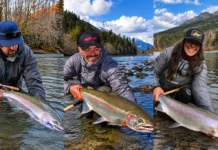
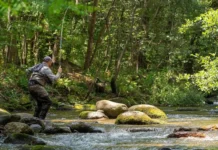
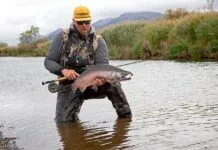
Today’s story bridges two very different worlds: the tight banks and icy tributaries of the Great Lakes, and the raw, tidal power of Western Alaska. Bailey Adamavich learned to fish where forty-foot casts matter and low water forces precision, then carried that foundation straight into blown-out rivers, chrome-bright kings, and some of the most intense Chinook grabs you can imagine.
This episode covers Bailey’s full arc as an angler and guide, from running charter boats on Lake Michigan, learning Spey casting in Alaska, to guiding full seasons on the Togiak River.
We break down Chinook techniques, fly choices, sink tips, Midwest brown trout strategy, and what it’s really like living and guiding in Alaska for an entire season.
He arrived in early June to high, flooded banks and spent the first stretch getting the lodge ready and learning the river by fishing with other guides. He stayed through mid-September, which meant seeing the river at every stage. King season started with high, bank-full water and heavy Spey fishing, then shifted in mid-July into gear season with kings, chums, and sockeye.
By late summer, the river looked completely different, and there were windows where anglers could realistically check off all five Pacific salmon in one trip.
(07:56) We dig into the day Bailey guided us on the Togiak. It’s one of my best days swinging flies for fish. I still needed an adult Chinook at that point, having already landed a few “super jacks.”
Super jacks are typically five- to ten-pound fish (giants by trout standards), but just warmups in Alaska. The spot we fished was a high-bank run with deep water tight to shore, loaded with boulders and structure. It didn’t require long casts. Just turning the fly over and getting it fishing was enough to trigger grabs.
The rotation system at the lodge means each group fishes with a different guide each day, and Bailey took us to a spot that had been consistently producing adult fish. Getting there early made all the difference.
Back home in Wisconsin, Bailey targets fall-run Chinook similar to Columbia River tule fish. These fish enter rivers ready to spawn and are far less willing to eat swung flies.
In contrast, coho, steelhead, and lake-run browns in Wisconsin aggressively eat flies. Bailey often swings when water allows, but during ultra-low flows (as low as 75 CFS), he switches to stripping flies to maintain movement and trigger strikes.
The biggest difference remains water size. Wisconsin rivers are dramatically smaller, requiring lighter rods, lighter tips, and shorter casts.
13:31 Bailey guides from a raft on Wisconsin tributaries near Sheboygan and Manitowoc, about an hour north of Milwaukee. These rivers often lack boat launches, so he uses a small, maneuverable raft that can be handled solo.
Most fishing is done by stepping down runs, swinging methodically. In spring high water, clients often fish from the raft while Bailey wades and walks the boat down the run.
Fall-run browns and steelhead hold all winter, leading to excellent post-spawn streamer fishing in spring. Bailey noted that about 40% of steelhead arrive in the fall, with 60% arriving in the spring.
Big lake-run browns are the primary draw, with fish commonly exceeding 10 pounds and occasional fish reaching 20–25 pounds.
Bailey shared a memorable moment from his early Midwest days when he looked over his shoulder while landing a fish and realized Ed Ward was watching.
Ed said only a few words—“good fish”—before leaving. Bailey had to approach him to start the conversation, knowing Ed wouldn’t initiate. It was a quiet but meaningful moment early in Bailey’s Spey journey.
Bailey works with Guideline and relies heavily on their rods, reels, and running lines. He pairs those with Scientific Anglers shooting heads and tips.
Lighter Midwest water demands sink rates slower than T8, leading Bailey to rely on SA Spey Tips in sink 2–4 ranges.
Chinook eats are often subtle at first—just weight. Bailey coached anglers to wait, let the fish chew, and then set hard.
When necessary, Bailey parks the boat at the bottom of runs to allow downstream pursuit by boat.
Episode Transcript
866 Transcript 00:00:00 Dave: Today’s story bridges two worlds the tight walk, the bank grit of the Great Lakes and the raw tidal edge power of Alaska’s Togiak River. Bayley Adamovich learned to fish where forty foot casts and ice cold tributaries shaped. Anglers, then cut his teeth on chrome kings, long rods and blown out Alaskan rivers. By the time he reached Kodiak, he’d lived the full arc, scouting runs, watching big rivers on the rise and guiding anglers, and the kind of eats that turn casters into believers. This is the Wet Fly Swing podcast, where I show you the best places to travel to for fly fishing, how to find the best resources and tools to prepare for that big trip, and what you can do to give back to this fish species we all love. Bailey Adamovich is here today. He’s going to take us in and let us understand what it feels like stepping into an Alaskan guide season and his experience there. We’re going to find out how he’s adapted from eighty foot wide Wisconsin rivers to the big rivers of the Togiak and beyond. We’re also going to get a feel for what this Chinook game feels like from the violent eats and how he coaches anglers. He was our guide on the river when we were up there. So we talk about the story of having one of our best days with Bailey, so that’s exciting to share that we also hear the story about how he looked over his shoulder one day, and Ed Ward was watching him land a fish. He had an Ed Ward encounter. That was an interesting one. And we also get in some ultralight Great Lakes gear, how it transfers over to some of the other stuff he’s doing throughout the year. All right. Bailey’s got a good program. Uh, like all of the guides that we’ve been connecting with here, he’s pretty passionate. So it’s gonna be exciting to hear how he’s chasing Kings Browns and how he’s bringing it all together. You can find Bailey, uh, at crazy for Chrome Guide service, and you can also check him out at Togiak space. Com let’s jump into it. Here he is. Bailey Adamovich. How you doing, Bailey? 00:01:46 Bailey: Good. Dave, how are you doing? 00:01:47 Dave: Not too bad, man. This is, uh, great to reconnect after a trip up in Togiak this year. We, um, I’ve talked quite a bit about it because we had a pretty awesome day, I think. I think the day I was out with you was probably, you know, my best day as far as fish. We, uh. And we’re going to talk about that today. We were swinging for king salmon. But also you’ve got in your home waters, um, in kind of the Midwest, uh, Great Lakes, Wisconsin, you fish for salmon and anadromous fish there as well. So we’re going to we’re going to get into all things, uh, chrome and Anatomy fish. Does that sound like a pretty good plan? 00:02:21 Bailey: Absolutely. Dave. Sounds great. 00:02:22 Dave: Nice. Okay, cool. Well, well, yeah. Let’s take us back before we jump into it. Um, you know, into Wisconsin. Let’s take us back to the, um, you know, that day, uh, maybe on Togiak. Let’s start there. What’s your experience? First, we’re going to dig into that day, but how did you connect to Togiak and kind of lodge up there? 00:02:41 Bailey: Yeah. So this was my third year in Alaska. I did two years over on a place called Lake Creek. And then this past winter, I contacted Jordan, uh, over at togiak and was, uh, seeing if they were looking for anybody for this upcoming season. And sure enough, they were. So I landed that position and that took me over to Togiak this summer. And it was it was wonderful. Great fishery. 00:03:04 Dave: Yeah. So did you know, I guess before that, were you doing a lot of swinging? Was that pretty much some of the techniques you were already doing before that? 00:03:13 Bailey: Yep. Yep. Had, uh, two years, uh, swinging for kings over on Lake Creek? Uh. Oh, okay. Yep. 00:03:19 Dave: And where’s Lake Creek? 00:03:21 Bailey: Uh, it would be kind of south central Alaska, um, on the north end of the Cook Inlet. 00:03:26 Dave: Oh, okay. South central. Gotcha. 00:03:28 Bailey: It’s a tributary of the river. 00:03:31 Dave: Okay. Yeah. Lake Creek. So it’s one of the. I’m trying to get my bearings on some of this because there’s some places that are, you know, have closures now, I think, around the Kenai and stuff. 00:03:40 Bailey: That place is now closed. 00:03:42 Dave: Oh, it is really? Yep. Gotcha. So the same thing you guys, were you seeing some, uh. Was this mostly a, um, kind of like Togiak is where they’re, you know, transitioning mostly a swing fishery for kings. Is that the way Lake Creek was? 00:03:55 Bailey: Uh, we did a lot of gear fishing as well. I would say probably a fifty fifty mix. 00:04:00 Dave: Yep. Gotcha. Gotcha. Wow. Okay, so now you know that day on Togiak. Let’s go back there. So how easy was it for you to get into Togiak and to, you know, understand the system and the river did that. Was that pretty quick and easy or was it quite a bit different from your fishing at Lake Creek? 00:04:16 Bailey: Um, no, it was totally different. Over at Lake Creek, we were fishing much smaller water. Um, more like holding water. Um, the creek, you know, we were fishing was maybe the size of one of the side channels on the togiak. Oh, wow. So, yeah, much, much smaller water. Um, so my first day on the togiak when we fished, you know, some of them bigger main stem runs, it was pretty overwhelming, you know, trying to pick apart that big water. 00:04:44 Dave: No kidding. Yeah. So it was a little bit different. How do you explain togiak. The the river itself, the whole experience up there. You guys are up there for like what, like six weeks. Is that what it is? 00:04:53 Bailey: Yeah, I was actually up there the whole season. But a lot of the what the Spey guys do, they’re up there like Larry and Floyd and Chris are up there for about six weeks. Yep. Uh, but I was there the whole season. I was there till mid September. 00:05:06 Dave: Oh, really? Oh, okay. You were there the whole season. 00:05:08 Bailey: I got to see it all. Yep. 00:05:09 Dave: Oh no kidding. Okay. So yeah, I didn’t realize that. What was that like. So you this was your was this your first year or second year? 00:05:15 Bailey: Togiak first year at Togiak. Yep. 00:05:17 Dave: Gotcha. Right. Okay. First year. Togiak. And and you got up there and when did you first get up there? 00:05:23 Bailey: I think like June sixth, I arrived and you kind of saw it, uh, during King season, the water was super high. Um, yeah. You know, kind of up to the top of the banks, even over the banks in some spots for a while. Yeah. But then during, you know, during, uh, end of July and then into August, I got to see it all the way, basically bone dry, you know, a whole different river, the whole thing. A whole different river system. Yeah, it’s completely different. So. 00:05:47 Dave: Gotcha. So you got up there June, and then what does that look like? Are you jumping right in guiding or talk about the. Yeah. 00:05:54 Bailey: I would I would say it was about, uh, eight days of lodge work, you know, getting stuff ready, fixing stuff that was broken. And then, uh, about five days of, uh, kind of scouting, you know, fishing with all the different guides throughout the program that we had there, uh, each different day. Um, and then I think the first clients showed up on the sixteenth, if I’m correct. Um, and then the six June sixteenth through, I think July sixteenth, somewhere in that range. July fourteenth was our space season. Yep. So we were guiding that portion of the year for Kings. Yeah. 00:06:30 Dave: And then after July. So we wrap that up, we had uh, we were up there. I guess I’m trying to think now. I think it was earlier July, but you wrapped up in mid-July. And then what did you go to next? What was after that? 00:06:40 Bailey: Togiak we kind of switched over to what would be their what they consider their gear season? Uh-Uh, um, like, uh, gear fishing for kings, chums and then sockeyes as well. Um, kind of a mixed bag. Uh, we did do fly fishing as well during that time, but it was not Spey oriented like the first five or six weeks were, um, mainly, uh, you know, stripping flies for chums and backwaters and stuff like that. Yeah. Um, and then, uh, and a lot of sockeye fishing, too, for people that wanted to harvest fish. Yep. 00:07:10 Dave: Right, right. Sockeye. Yeah. So you have so basically up there, they have pretty much everything. Right. All five Pacific salmon. Did you, uh, at that time are you getting, uh, I guess, yeah. July. August. You’re kind of have a chance at everything. 00:07:22 Bailey: Yeah, absolutely. Yeah. End of July, early August. You can get the grand slam with all five. Yep. 00:07:28 Dave: Yeah. Grand slam. That’s amazing. So you go up there. So that’s, uh, through August. September, and then you head out in, like, September. 00:07:34 Bailey: Yeah, I was home, uh, September seventeenth this year. 00:07:38 Dave: Yeah. September seventeenth. Okay. Well, take us to that day because I think I’m not sure if you remember it. Uh, completely, but we were we jumped out. I don’t even remember what day it was on, you know, but we were up there the week. But we get out there with you and you take us up to a spot. And do you remember that day when we were up there and we had some action? 00:07:56 Bailey: Yep. Absolutely. Vividly. 00:07:58 Dave: Oh, you did. So I remember um, I don’t remember exactly, but I think we got into a number of fish and I think I sat back there, we kind of took turns. Right. But talk about that. What was that day? The spot we went to talk about the you know, how you chose that spot. How does that work at Togiak? Because you’ve got your other guides going to different places, right? 00:08:18 Bailey: Yeah. So we kind of do like a rotation, um, each day with a different each client will fish with a different guide each day. Um, yeah. So you’re not fishing the same guide each day. Uh, so you guys were paired with me and I, I think either you. I think you still needed a fish, if I’m correct. And adult fish. Um. 00:08:36 Dave: That’s right, that’s right. 00:08:37 Bailey: Yeah. Um, and this spot that we are talking about was kind of consistently putting out, you know, nice adult fish. So we had first pick at it. So we went there first thing in the morning and we did pretty well. 00:08:49 Dave: Yeah, that’s right. That’s what it was. Yeah it was I had got they called what do they call the fish uh, Super Jacks. Is that what. Yeah. And those are fish that are. What are the Super Jacks versus the adults. 00:08:59 Bailey: Yeah. We call super Jack like a five to ten pound fish. 00:09:03 Dave: Yeah. So most people the trout fish, that would be a, uh, you know, a giant fish. Right. Five to ten pound. But in Alaska that’s just a super jack. Right? So I was pretty stoked actually, when I got into, you know, the super Jack and stuff. But yeah, we get up to this spot and, um, describe the spot a little bit because it’s kind of, you’ve got this bank. It’s not like a big, wide, uh, floodplain. Right? You’re kind of right in against the bank, but it’s a deep slot, right? 00:09:27 Bailey: You’re fishing a high bank. Yep, yep. It’s a pretty short cast. You know, it doesn’t have to be anything special. Just get the fly out there. Uh, just turn the fly over, get it fishing, and if you get it fishing, you’re very likely to get a grab in that spot, right? The fish hold very close to shore. There’s a lot of boulders in that spot. Um, yeah. Great spot. 00:09:47 Dave: That’s it. And we definitely had some action there. What is the you know, that experience kind of swinging there. How similar is that to what you do out. Because you fish for salmon right. Chinook up in your home waters in Wisconsin. Is there are there some similarities there. 00:10:02 Bailey: Yeah. So our fish are fall run fish like the tule fish, you know, in the Columbia stream. Yep. Um, so they’re not too keen on taking flies. Uh, when they come in the rivers. Um, I do a lot of bait fishing for them with bobber and eggs. Um, but our cohos and steelhead and browns are absolutely keen to taking flies. Um, do a lot of swinging for them when we have water. Um, this fall, we had probably the lowest water I’ve ever seen at around like seventy five cfs. So, uh, at that low, we did a lot of stripping flies just to keep the fly animated and keep them enticed. 00:10:38 Dave: Right. 00:10:39 Bailey: But our water is way smaller than the togiak. It is way, way smaller. Yep. 00:10:44 Dave: Yeah. Gotcha. Yeah. Togiak. Bigger river. What is it? Describe that a little bit on those rivers. So you’ve got, uh, coho, steelhead, browns and Chinook. Um, but what are the. Yeah. Describe your your operation up there a little bit. 00:10:56 Bailey: Yeah. So I do, uh, float trips out of a raft, a smaller raft than you would consider. Um, you know, for out west, um, we don’t have boat launches here in Wisconsin on a lot of our places. So I need something that I can maneuver, you know, by myself or with my clients super easily. Uh, so we do the floats in a raft, and we get out typically in the runs. We’ll, you know, if we’re swinging, we’ll we’ll get out in the raft and step down the runs with typically using switch rods here, uh, like eleven or eleven and a half foot, seven or eight weight rods, depending on what you’re throwing as far as sink tips and size flies. But yeah, a lot smaller stuff. I don’t use hardly any T material here, uh, because of our low flows. I use more of those scientific anglers. Uh, T.C. tips, those lighter, um, sink rate tips. Okay. And, you know, in the spring, you can get away with some T material here. But for the most part, in the fall when we’re swinging, it’s super light. Um, sometimes even just along monofilament leader with a, you know, a weighted fly. 00:11:59 Dave: Okay. Yeah. And what’s the timing on there? When is the area you’re covering for? Salmon up there or I guess salmon, coho or steelhead. 00:12:06 Bailey: Yeah. Our king started in like mid September. And then they’ll go through mid-October and then they’ll start to spawn. And then when they start to spawn, I’ll kind of take about a two or three week break and kind of wait for the trout to come in. And then I’ll start back up like around, uh, first week of November, uh, for steelhead and brown trout and coho fishing. And then that’ll go through until we freeze, uh, which is kind of different every year. This year we’re actually frozen right now. 00:12:33 Dave: Oh. 00:12:33 Bailey: You are. It’s actually eleven degrees outside right now where I’m sitting. So. 00:12:37 Dave: Yeah. So December and it’s kind of December second range right now. Right. 00:12:41 Bailey: Today kind of an abnormal year. Uh, typically we’re fishing until about Christmas time with open water. But winter decided to come early this year. 00:12:50 Dave: So yeah. So what does that happen when it comes early. Does that pretty much shut you down completely? 00:12:54 Bailey: Yep. I do a little bit of ice fishing here and there, but a lot of ice time, you know, time flies. Uh, yeah, I do all my own tying for Alaska, so I spend a lot of my winter time prepping for Alaska. 00:13:06 Dave: Yep. Right. And so. And does it, uh, potentially. Is that I. If you get a warm snap, can you be out there fishing again, or is this pretty much close up. 00:13:14 Bailey: On our Lake Michigan tributaries? Not so much. Now we do have I’m pretty close to what we consider the Driftless Region. And those, uh, spring fed creeks will open up in the middle of winter if we get a warm snap, but our Lake Michigan tributaries will stay frozen until probably mid March on average. 00:13:32 Dave: Yeah, I’m in March. Okay. And describe that again. Like kind of geographically where you’re located or where were you physically now? What’s your town? You’re in there. 00:13:41 Bailey: So I live in a little town called Baraboo, Wisconsin, which is about an hour north of Madison, kind of central Wisconsin. But I do all my guiding over, um, about an hour north of Milwaukee, uh, in the Sheboygan Manitowoc area. 00:13:57 Dave: Gotcha. And what does that describe the, um, you know, so you have it sounds like it’s not a super long season. You got the fall, the winter season. And is there also a spring season there? 00:14:06 Bailey: Correct. Yeah. We have our spring run steelhead season, which so in the fall we have about six weeks of fishing. And in the spring we have about six weeks of fishing. Uh, for our trout. 00:14:16 Dave: For your trout. Right. And that’s the steelhead, the migratory rainbow trout. 00:14:20 Bailey: Correct. 00:14:21 Dave: Yep. Yeah. 00:14:22 Bailey: And so our our fish that come in and fall will sit in the river all winter long and then even well into springtime. So we’ll catch spawned out brown trout uh, well into April typically. And then we’ll get, I would say about forty percent of our run for steelhead comes in in fall. And then the other sixty percent comes in in spring. And then in spring is when the majority of them do their spawning. 00:14:44 Dave: Okay. Yeah. And and then what do you think is the most out of what you do. What’s the species that most people are coming for? And, you know, in Wisconsin there. 00:14:53 Bailey: I would say our big lake run brown trout for sure. 00:14:55 Dave: Oh, so Brown’s right. 00:14:57 Bailey: Yep. 00:14:57 Dave: And that’s the one that we haven’t talked quite as much about. You know, we’ve definitely talked steelhead salmon I guess coho is another one that you don’t hear as much about but is coho. Is that a similar to Alaska where the fish are really aggressive and stripping, you know, flies and stuff? 00:15:12 Bailey: Correct. Yeah. Our coho love to eat strip flies here. Actually, you know, very similar to what we would do in Alaska with bunny leeches and, um, just simple, you know, Clouser style patterns on a floating line with a eight or nine foot leader and a slow or medium, uh, Retrieve back to the boat. 00:15:33 Dave: Right. That’s awesome. Okay, so and then you have the Browns. And is the Browns pretty similar to, you know, steelhead or what is the you know, what are you guys doing. Are you swinging there. 00:15:42 Bailey: Yep. Yeah. Swinging I do a little bit of indicator fishing as well. But um the tight line grab is what I’m there for when we have the water. Uh, like I mentioned earlier this year, it was a single hand kind of stripping game just because our water was so low. But yeah, our Browns will come in and fall and they’ll do their spawn, so we’ll target fish, you know, kind of staging up before they move up onto the reds. Uh, we’ll target them in the deeper poling pools and the deeper runs. Mhm. Um and then they’ll do their spawn typically that like end of November time frame and then uh in the springtime when they’re, when they’re postponed, we’ll get a real good post-spawn brown trout bite eat first streamer fishing again in the spring. 00:16:26 Dave: So November. So basically now yeah the spawns done but it’s frozen now. So did you get a what’s the window look like for fishing for browns in the kind of fall winter? 00:16:34 Bailey: Yeah. Typically like November first till about mid December is our average time frame. Uh, this year it was, uh, we ended two days ago, so like the November thirtieth or thirty first. But typically, like I said, we’re fishing till mid December or even up to Christmas on an average year. 00:16:52 Dave: Yep. Okay. And then you swing around and then when does it kick off again? Just after. Kind of ice out the next year. 00:16:57 Bailey: Yep. Yep. Kind of like mid March like the March fifteenth time frame somewhere in there. Yeah. And then it’ll go all the way till mid April okay. 00:17:06 Dave: So take us back a little bit. We haven’t heard about your kind of uh you know your story getting into it. Have you been fly fishing for a while or did you get into this a little bit later? 00:17:14 Bailey: Uh, I started fly fishing when I started my business, which would be, uh, four years ago now, so I haven’t I haven’t been fly fishing a ton. Um, but in the four years I’ve put in a ton of time, um, three of those years were guiding in Alaska, so. 00:17:27 Dave: All right. 00:17:28 Bailey: That’s a lot of time. 00:17:29 Dave: That is. Yeah, that’s what they say. The the Alaska thing. You go up there and guide where you, um, I don’t know, it kind of breaks you in. Right? Is that what it was like? 00:17:37 Bailey: Yeah. It’s where a lot of people cut their teeth. Yep. 00:17:39 Dave: Yeah. What was that, like your first year in Alaska? You get up there. This was at the lake. Uh, was it Lake? Creek? 00:17:46 Bailey: Lake. Creek? Yep. 00:17:47 Dave: Yeah. What was your first season up there? Was it just, uh, was it a whirlwind or what was that like? 00:17:51 Bailey: Yeah. Yep. I had no idea what to expect. Um, I had done, uh, so we’ll kind of backtrack. I worked on Lake Michigan for nine years as a deckhand and then as a captain, uh, running a charter boat out there for trolling, you know, deep water salmon and trout. I did that for a number of years and got tired of that. And and Alaska had always been, you know, in my back of my head as a dream to go up there and guide. So finally, one day, I just out of a whim, applied to this place and got the job. Yep. So fast forward to June. I’m up in Alaska and I’ve never been there before. It’s extremely overwhelming. You know, the rivers are are huge compared to the rivers here in in the Midwest, in Wisconsin, a lot more fish than we have here. Yeah. Typically, um, a lot brighter fish as well. A lot lots more silver fish. 00:18:45 Dave: Um. 00:18:45 Bailey: But yeah, it was good. I did a mix of fly fishing and gear fishing my first couple of years. Um, and it was good. We had all five species there as well, so it was a good, good time. 00:18:55 Dave: So you go up there and you don’t know. Basically, you haven’t been fly fishing and you’re in Alaska learning to. How did you learn? 00:19:02 Bailey: Yeah, I had fly fished for maybe two years. Oh, okay. Yeah. And, uh, really just single hand fishing? 00:19:08 Dave: Yeah. Single hand. Okay, so you’ve been fly fishing. You got a couple years under your belt. Now you’re in Alaska kind of doing the guiding thing. And are you are guys up there? Is there a Spey casting going on or is it mostly single hand there? 00:19:18 Bailey: Correct. No. For our Chinook season we were doing, uh, Spey fishing. 00:19:22 Dave: Yeah. That’s right. So was that something you had to pick up while you’re up there? The spay or did you? 00:19:26 Bailey: Were you a little bit? Yeah. Um, I had kind of went up there with the intention of, of learning, um, it was something that I always wanted to do. And especially for the Kings. They’re probably the number one fish you can target on a two handed rod. 00:19:39 Dave: So definitely, definitely. And what was the what was your journey like when you first learned to fly cast. Did you kind of teach yourself. What what did that look like? 00:19:47 Bailey: Yep. I’m all self-taught. Um. Basically everything. Yeah. I spent a lot of time on the internet, uh, at night and then going out, you know, the next day and and just practicing it over and over and over again. Yep. 00:20:01 Dave: Exactly. Yeah. I think a lot of people do that. We that’s basically how I taught myself to Spey cast. And you know obviously there’s you know can be some struggles and things like that. But um, but yeah I think casting is that number one thing when you’re up in Alaska. People come up there. What’s the biggest hurdle like let’s just take it to Togiak. So you got the Spey, you got somebody coming up there. What do you find? Do you find more people are experienced or are kind of new to the Spey casting? 00:20:27 Bailey: I would say not experienced. 00:20:29 Dave: Not experienced. 00:20:30 Bailey: Especially for that size of water that we’re fishing. 00:20:33 Dave: Yeah that’s right because you have to. There’s some areas right where getting a longer cast is beneficial. Do you think that’s um, on the togiak is, you know, having a long cast. Is that going to help you out out there? 00:20:45 Bailey: Um, yes and no. Uh, you know, there’s plenty of places where the fish are close to the bank, you know, within, within fifty or sixty feet. But there’s also, you know, a few spots where the farther you can chuck it, the better. 00:20:59 Dave: Yeah, yeah. And who are the guys? Remind us again on the guys that you mentioned. A few of them. We had Floyd. Uh, Chris, uh, who else were the guys? We had the fly guy. Uh, Spey guides. 00:21:08 Bailey: Yeah. So, Floyd. Chris. Uh, Larry. 00:21:12 Dave: Larry. 00:21:13 Bailey: Um. 00:21:15 Dave: Who are we missing? Floyd. Chris. Uh, well, Aaron wasn’t guiding. 00:21:18 Bailey: Yep. 00:21:18 Dave: Big Aaron. 00:21:19 Bailey: And Ryan. Pitcher. 00:21:21 Dave: Oh. And Ryan. Yep. Yeah. That’s right. And Ryan and those guys are all, um, a mix. I mean, everybody’s kind of coming from different areas, right? Fishing around all over the place. I think Chris is out in Oregon doing some stuff and yeah. 00:21:33 Bailey: He’s on the Deschutes. 00:21:34 Dave: Yep. 00:21:34 Bailey: Deschutes Floyds kind of based out of Portland, but he guides on the Klickitat and the. 00:21:39 Dave: That’s right. 00:21:39 Bailey: Forks area. Larry’s over here in my area up on the southern end of Lake Michigan. 00:21:44 Dave: Okay, so he’s on the southern end. Okay. 00:21:47 Bailey: Yep. He’s down in Michigan City, Indiana. So down in Indiana. 00:21:51 Dave: Oh, really? 00:21:52 Bailey: Yep, yep. 00:21:53 Dave: Michigan City okay. 00:21:55 Bailey: And then, uh, Ryan Ryan is near the Clearwater system in Idaho. And Aaron, uh, is kind of in that Grays Harbor area, I believe. 00:22:06 Dave: That’s right. Yeah, yeah. So, yeah, you and you and Larry are definitely the furthest out of the the the. 00:22:11 Bailey: We’re the odd ones out of the, out of the bunch here from the Midwest. Yep. 00:22:15 Dave: Yeah, exactly. But you guys are still we do a ton of stuff, you know, with, uh, folks out there. So I think there’s obviously tons of overlap. And there’s I think, as you know, I’m not sure if there’s as many, but I think some of the best Spey anglers and. 00:22:28 Bailey: Absolutely. 00:22:29 Dave: Anatomy fish are from the Midwest, you know, because it’s it’s pretty cool that evolution. You’re a younger you know, you’re younger to this. But do you know a little bit of the history. Do you read up. Do you know about how kind of that Spey revolution happened and stuff? 00:22:43 Bailey: Uh, here in the Midwest or just in general? 00:22:45 Dave: Yeah, just in general or in the Midwest? 00:22:47 Bailey: Yeah, I’ve, I’ve listened to a lot of your podcasts, you know, with the OG guys. 00:22:50 Dave: Okay. Yeah. You’ve heard them. 00:22:51 Bailey: So I kind of know the history of it. Um, as far as, uh, actually, Ed Ward used to live in my hometown. 00:22:58 Dave: Oh. No kidding. 00:22:59 Bailey: I’ve actually, uh, had a few chats with Ed. Oh, cool. Back in the my earlier years of fly fishing. Nothing too in depth, but great guy, uh, super willing to help out. 00:23:09 Dave: Where was that hometown? Your original hometown? 00:23:11 Bailey: Uh, in Sheboygan. 00:23:12 Dave: Oh, Sheboygan. Okay. Yeah. That’s okay. That’s where he was from. Yeah. Ed is definitely a quieter. He’s one of the quiet. Um, whatever you call that, you know? 00:23:20 Bailey: Yeah, absolutely. 00:23:21 Dave: He’s the man. But he’s hard to get Ahold of. 00:23:23 Bailey: Absolutely. He watched me catch a fish behind my back one day. 00:23:27 Dave: Oh, really? 00:23:28 Bailey: I had to go up to him and get some words out of him before, because I knew he wasn’t going to come up and say anything. Yep. 00:23:33 Dave: Now what happened? So you were on the river with Ed and he was watching you? 00:23:36 Bailey: I was just fishing by myself, and I was landing a fish, and I kind of looked over my shoulder and I was like, Holy man, there’s. There’s that ward. 00:23:44 Dave: Really? 00:23:45 Bailey: Yep. 00:23:45 Dave: Yeah. And he was just hanging out. Just kind of like fish in the same area. 00:23:48 Bailey: Yeah, he was watching me. Fish? Yep. You know, we were kind of near a public parking area, so. 00:23:53 Dave: Oh, okay. 00:23:54 Bailey: He kind of. I’m sure he noticed me fighting a fish and kind of walked down and. 00:23:58 Dave: Yep. 00:23:58 Bailey: Yep. 00:23:59 Dave: And what were your words? What did you say to him? 00:24:01 Bailey: I you know, I kind of was like, man. Hey, man, are you Ed Ward? You know, I was a little nervous, you know? Right. Kind of had watched some of his videos, you know, Skagit master and stuff like that. 00:24:11 Dave: That’s awesome. What did he say? Did he say. He just said. Yeah. Yeah. 00:24:14 Bailey: You know, he didn’t say much. He said maybe a couple of words, you know. Good fish buddy. And. Right. I think he left. He had his dog with him and and then he left after that. 00:24:23 Dave: Yep. That’s it. Yeah. That’s it is kind of. It is. I haven’t kept up with Opst recently. I think they’re still going out there, uh, you know, going strong. But, you know, I mean, there’s a lot of obviously all the brands, you know, spay even though it’s a tiny it’s a tiny little niche. Right. Spay is still I think all the companies have a real focus. Like there’s a line of rods and lines and everything. 00:24:43 Bailey: Absolutely. Yeah. I think if you’re brand specific, you can stick with one brand. Yeah. You know, FA Bank makes a lot of good stuff. Uh, I work with, uh, guideline with Max. Oh, yeah. They make a lot of good stuff. Um, scientific anglers. I run a lot of their lines and sink tips and stuff, so. 00:25:00 Dave: Oh, cool. Yeah, we just had. I can’t remember the name of the episode. I think we just had it, um, with, uh, a guideline episode. We talked about kind of some of the history of, of that brand. It’s it’s yeah, it’s pretty cool because they, they’re on the other side, you know, over on the other side of the pond in Europe, you know, and stuff. But they, um, you know, doing the same things just a little bit differently. Right. What do you think? How is guideline, you know, is it seem differently than maybe because they have lines and everything, right. They kind of cover it all. 00:25:29 Bailey: Correct. Yeah. They cover it all. Yep. They even have waiters and packs and fly boxes and everything. Yep. 00:25:34 Dave: Are you guys mostly using or were you mostly using rods or were you using other gear from guideline? 00:25:39 Bailey: Yeah, I mainly use their rods and their running lines and then um, rods, running lines, reels. Uh, and then I used a lot of the scientific anglers for shooting heads. Their Skagit short is probably my go to here. 00:25:52 Dave: Skagit short. Okay. Is that the line you use for, uh, in Wisconsin or, uh, both in Alaska? 00:25:58 Bailey: Correct. Uh, just in Wisconsin. Here. Uh, they don’t offer, uh, that line in, uh, more than, like a five seventy grain. Okay. So up in Alaska, we’re throwing, you know, six fifty to seven fifty grain Lines. Um, so there I’m throwing I believe I have a airflow Skagit and, uh, a real game changer for, uh, one of my setups. 00:26:22 Dave: Yep. Gotcha. Yeah. So it’s all heavier stuff. It’s up there for the Kings. It’s, uh, nine and ten weights. Right? Bigger stuff. So where you’re at? You’re fishing more. So the Skagit short and then you mentioned the the tips. What were the tips that. So you’re not using any of the Te because it’s just too heavy. What’s the lowest Te I guess they have. Is it kind of uh, you guys use. 00:26:41 Bailey: Uh, T8 is what I believe most companies offer as far as te material. Yeah. So the tips I’m using are from Scientific anglers. They’ve renamed them. I think they’re called. They’re spey tips now. 00:26:52 Dave: Okay. 00:26:53 Bailey: Um, but they used to be called their TK tips. 00:26:55 Dave: Gotcha. 00:26:56 Bailey: Um, but they offer them from a floating tip. Um, and then they have, like, a sink one a sink two, a sink four, a sink five and a sink. Six. So they’re all all of those sink tips. Sink lighter or slower, I should say, than the lightest T material. I think T8 sinks at like seven inches or six inches per second, um, which is just too fast for the slower, shallower water that I’m fishing. 00:27:24 Dave: Yep. 00:27:24 Bailey: So a lot of times I’m fishing. I would say my go to sink tip here is a ten foot of a sink. Two sink four. Uh, it’s kind of a dual density tip from scientific anglers. 00:27:36 Dave: A dual density. Gotcha. So you’re kind of going light, and it even sounds like when the waters get low, you’re even going with, like, no tip at all or just. Right. 00:27:44 Bailey: Yeah. Correct. Even lighter, like a sink one or an intermediate tip or even just casting, uh, like a floating leader or a floating tip with a long monofilament leader. 00:27:57 Dave: Right. That’s awesome. And that’s. Is that more a, I guess depending on the conditions, you could be using that in the fall or the spring, correct? 00:28:04 Bailey: Yes. The the lighter, lighter game is typically in the fall. Uh, we typically have a dry summer and a dry fall here in the Midwest, so our waters are typically pretty low. And then in the spring, we have our snow melt here and our ice push out. So our waters are typically high and very off colored in the springtime. 00:28:23 Dave: Mhm. Gotcha. Okay. And so on that I mean like we said there’s some overlap. But the big difference is the biggest difference between salmon fishing. Let’s just take it to steelhead salmon. You know versus that versus togiak is just the size of the gear you’re using. Is that pretty much the big or what are some of the other differences. 00:28:40 Bailey: For the most part, yeah. So in Togiak we’re using, you know, thirteen and a half to fifteen foot rods. 00:28:48 Dave: Mhm. 00:28:48 Bailey: Um, you know more in that fourteen or fifteen foot range, nine and ten weight rods, you know, T14 in a lot of places, even T17 or T20. Um, here I’m using, uh, eleven or eleven and a half foot switch rods in that six, seven or eight weight range with a lot shorter heads just because our waters are so much smaller. Yeah, I would say the rivers I fish on average are eighty feet wide. 00:29:16 Dave: Yeah, eighty feet wide. Right. So that’s still decent. I mean eighty feet. It’s. Yeah. But you’re like you said in Togiak that could be a side channel. 00:29:23 Bailey: Correct. Yeah. That’s a side channel on the Togiak. Yeah. 00:29:25 Dave: Right. Yeah. I’m not even sure how wide the togiak is, but I remember we were looking at the CFS numbers. I mean, there’s lots of variation from, you know, high and low, but it’s pumping. I mean, it’s a big, bigger than a lot of the western rivers even out. 00:29:38 Bailey: Absolutely. Yeah. I think a lot of when I looked at the gauge during our King season, it was hovering around twenty thousand. 00:29:45 Speaker 3: We’ve heard many of the stories on this podcast. Togiak River Lodge is one of the great destinations for swinging flies, for Chinook, stripping for coho all day, and unwinding in a lodge right on the riverbank of the Togiak River, with access to all five. 00:29:59 Dave: Salmon species plus rainbows, Dolly Varden and more, Togiak offers a true Alaskan experience. Picture over thirty miles of river, seasoned guides, high quality boats and low fishing pressure. It’s fly fishing. Alaska at its best. I’ll be heading up this summer, so reach out to Jordan and the crew to see what dates they have available this year. You can learn more right now at Wet Fly. That’s togiak. Alaskan fly fishing like you’ve always dreamed about. What is the. So we talked about that, um, kind of week we were there. But take us through the whole King season when you were up there. So you get up there, you guys kind of get, uh, you know, a few days of scouting, checking stuff out, making sure, you know, you’re dialed in on everything. And then. And then the first crew comes up. What was that like when the first group came up there? I guess that was right before us, I think. Right. That was probably, uh, maybe a crew or two before we got there, correct? Yeah. What was that like when you get the first group and you’re like, all right, we’re sitting there because you guys are visiting. I mean, when we got there, you were at the airport. I think you all came in and helped, right? To pick up the at the the runway. Right? 00:31:07 Bailey: Yep. So, uh, a few of us will go down, uh, to. Town in the boats. Um, there’s two vehicles that we take. One is a van, the other is a Ford Excursion. And we pull the boats out of the water and we head down to the Togiak airport, and we pick up the customers. Pick you guys up? Yeah. Um, and then we drive back to the beach and then, you know, offload the boats again, drive back up to the lodge. It’s about a four mile run or so. 00:31:32 Dave: Yeah, we roll up there and that first phase we’ve talked a lot about a little bit, but it is, you know, coming into Togiak Lodge, right, is a whole you realize right away you’re not in the you’re not in the lower forty eight. Right. It’s kind of. 00:31:43 Bailey: No. 00:31:44 Dave: No. 00:31:44 Bailey: Yeah. It’s a huge, huge river system. It’s kind of cool that you actually enter from the bay. You actually kind of come up the same route. The fish come up. 00:31:52 Dave: Yeah, right through Bristol. That’s Bristol Bay right. 00:31:54 Bailey: Yep. That’s western Bristol Bay. Yep. 00:31:57 Dave: Yeah. Which is a name I mean definitely. We’ve heard about that for years. So that’s Bristol Bay. You’re literally sitting there and and what you get there is I guess Bristol Bay can bring in that part. Anywhere in Alaska can bring some pretty decent storms. Did you guys see that throughout the season when you were there? Did you get some big rain events? 00:32:12 Bailey: Absolutely. Yep. Yeah. Uh, during our King season, it rained quite a bit on June, but then again in August. August is the rainy season. 00:32:21 Dave: Oh it is. 00:32:22 Bailey: Yep. 00:32:22 Dave: Right. So you had that. And and what did it blow out at all. Did it come up. 00:32:26 Bailey: Oh yeah. 00:32:27 Dave: Yeah it did. 00:32:28 Bailey: Absolutely. Yeah. It went from you know bone dry super super low to up over the banks in one night. 00:32:35 Dave: And one night. 00:32:36 Bailey: Yeah. 00:32:37 Dave: Holy cow. So when that happens, you kind of just batten down the hatches and hold tight for a little bit and then wait for it to start dropping again. 00:32:44 Bailey: Uh, you know, we were actually still out fishing, but, yeah, it was tough. Fishing was tough. Yep. 00:32:49 Dave: Right. Because the. Yeah, obviously the water’s up. It’s good, but I’m guessing. Yeah. Depending on what goes on, you know, the river can drop back in into shape pretty quick. And we’ve heard some of those stories. I know Floyd was talking about the first year before he was up with, um, with Togiak. They had their operation where they were camping. Um, and he told the story about how same thing, you know, the river came up and it was like flooding their camp, and it was just like, crazy, right? And and I think that part that’s partly how they connected with Togiak and Jordan and, you know, and the guys. But, um, okay. So obviously, yeah, fishing is fishing and you’re going to have some different conditions. But overall like what was it like fishing wise you saw? I mean, you were there for us when we got in. I got into my first adult Chinook. What’s that like for you seeing these chrome bright fish come in, you know. And is it a little bit different than when you see a Chinook come in through Wisconsin? 00:33:39 Bailey: Oh, absolutely. Yeah. We rarely see a chrome fish here in the Great Lakes. 00:33:44 Dave: Yeah, because they’re just turning quick. They’re chrome in the out in the Michigan in Lake Michigan they’re chrome and they turn dark quick. 00:33:50 Bailey: Yeah. It’s just a lot of it is our strain of fish our fall run fish. Uh, enter our rivers ready to spawn. Yeah. Versus those Alaskan fish are coming in, and they’re not spawning for another two or three months yet. 00:34:04 Dave: Oh, right. 00:34:05 Bailey: So they’re coming in. And where Togiak is situated on the river, it’s, you know, down in basically on the upper end of tidewater and you’re catching fish with sea lice on them every single day that are fresh off the tide. Yeah. 00:34:18 Dave: And how do you explain that, that, uh, that take of, you know, the togiak, uh, you know, just the Chinook just down there on in Alaska. What’s that? The swinging. You’ve done a little bit. The Lake Creek thing, it sounds like was similar, but what’s that tug feel like? How do you explain it? 00:34:33 Bailey: There’s really nothing. Nothing that compares, really? Um, a lot of times it gets heavy, you know, there’s some times where they smoke it, but a lot of times it just it gets heavy and then, you know, you gotta wait. I know you had a I had to coach you a few times to wait. 00:34:47 Dave: Yep. That’s right. Yeah. I farmed a few before uh, that’s pretty much the, you know, again back to the, the George Cook, the the chewing the gum. Right. You let him correct you, let him chew the gum, and then you got to set it hard, right? 00:35:00 Bailey: Because, yeah, they got a nice, hard, nice hard mouth. Yep. 00:35:04 Dave: Yeah. He said it hard. And then there’s that little question mark there for a second where you’re like okay what is that. Is that a Chinook. Is that a chum. Is that something else? 00:35:13 Bailey: Typically you can tell within the first two to three seconds if you got a Chinook or not. 00:35:17 Dave: Yeah. What is that in the two or three. How do you know it’s a Chinook. 00:35:20 Bailey: Uh, a lot more aggressive head shakes than a lot of times they’re pulling line off off your reel. 00:35:25 Dave: Right there and they’re going. And then you’ve probably seen some of these fish. Have you seen some people. Just the fish is going and they’re pretty. Then they’re not stopping it. 00:35:33 Bailey: Oh yeah. Absolutely. I watched a few that you know, you can’t do anything about it. You just gotta hang on and hope something doesn’t give. But unfortunately, a lot of times something gives on those big ones. 00:35:46 Dave: Right. Have you guys had to, uh, have you done the boat thing where you jump in the boat and chase it down, or is that something? 00:35:51 Bailey: Absolutely. Yeah. Yep. 00:35:53 Dave: Seems like that would be kind of a crazy moment where you’re somebody got a fish and you’re falling down. Does that usually turn out where you’re landing the fish or how’s that look? 00:36:02 Bailey: Um, you know, it’s a it’s kind of angler driven. Um, I usually park my boat at the bottom of the run so that if a fish does decide to leave, we can walk, you know, walk down with the fish and then get in the boat and chase it, right, rather than walking back up to the top of the run while the fish is running down. 00:36:19 Dave: Right, right, right. Good idea. Yeah, because they’re typically not running up. They’re going to be heading out downstream. 00:36:25 Bailey: Yeah. They’re typically when they’re taking off they’re going back towards the ocean. Yeah. They’re going. 00:36:29 Dave: Right. 00:36:29 Bailey: Path of least resistance. Yep. 00:36:30 Dave: Gotcha. That’s smart. Yeah. So park down below. Um. That’s cool. Well you’re I mean basically you’re sitting there now kind of hanging out, getting ready to tie some flies. What are the what are the flies that you’re, you know, for toga you’re getting ready for next year. What are the flies that you’re using there. 00:36:45 Bailey: Yeah. Uh, a lot of just super simple marabou patterns. Um, you know, pink is a great color on the togiak. Blue and chartreuse is good. Black and blue is good. Um, really, I, I learned now the last three years. Uh, just keep it simple. Uh, so you’re not, uh, you know, getting butt hurt when you have a client send one into a tree, which there’s plenty of. And, you know, in certain spots, there’s a lot of sunken wood on the togiak in spots, but, uh, yeah, just simple, weighted and unweighted. Um, okay. And sparsely tied. So they’re easy to cast and turn over. 00:37:20 Dave: Oh, right. So weighted. So how what wait, what would you use for the weight? 00:37:24 Bailey: Uh, I like, like a medium dumbbell I yeah. 00:37:27 Dave: So dumbbell just enough to get down and then and sparse being you’re using marabou what would be uh, you know, like the body on one of those flies. What would you be using? 00:37:36 Bailey: So I use a lot of, uh, uv polar chenille. Um, uh, so like two or three wraps of UV polar chenille and then either one or two marabou feathers over that with some flashes is all you need. Really. 00:37:49 Dave: Okay. Yep. So pretty simple. And and like you said, the bulkier the fly, the harder it is to cast. So you want to keep it at the least material as possible. And probably if you can, when would you be going to something? You know, you’ve got a weighted fly and unweighted fly. When are you going to, you know, what’s the conditions where you would throw on the weighted fly? 00:38:06 Bailey: Uh, so I’m going to fish a weighted fly when, uh, we’re fishing a high bank area where the the water is fairly deep, close to us. I’m gonna throw an unweighted fly when we’re fishing. More of that. Gradually tapering, you know, quintessential swing run, um, where it’s kind of gradually tapering. And you want that fly to hover on the inside and not get hung up on the bottom right. Then I’ll typically throw an unweighted, uh, when I’m trying to get that more hang down fish on that. Yeah, that last third of the swing. But a lot of the pools, you know, like the one we were talking about earlier, that’s a weighted fly. 00:38:43 Dave: That’s a weighted fly pool. Yeah. Yep. That’s right. How do you work your fly when you’re swinging it for, you know, on Togiak or is it pretty much, you know, downstream and across. Are you doing anything while the fly is swinging? 00:38:56 Bailey: Uh, you know, you can pump it. Um, if a lot of guys will pump it for Chinook. I don’t, I like to let mine just come across, but yeah, like a sixty degree angle cast. Typically, you know, if we’re just talking on average, um, and I like putting a belly in mine so that that flies coming across broadside. So they get a nice big profile to that. 00:39:17 Dave: Oh okay. So put a like a downstream mend in it. 00:39:20 Bailey: Um, you know, depending on the situation. Uh, yes. But really just casting and a lot of times not mending or doing a pullback mend instead of an upstream mend. 00:39:30 Dave: Oh, right. Okay. Um, yeah. 00:39:33 Bailey: It seems like when you get that fly to come across broadside, you get a more positive hookup to. 00:39:38 Dave: Yeah. And you don’t need to cast like straight out. Right. There’s no reason you’d be you’re usually casting down and across at that sixty. 00:39:45 Bailey: Yeah. Sometimes we’ll cast straight out at ninety if we’re really trying to get down, you know, deep. Um, but for the most part, it’s like that sixty sixty degree angle seems to be like the sweet spot. 00:39:56 Dave: Yeah. The sixty degree. Okay. So, yeah, get it out. And then and then you’re just kind of working slowly, just like steelhead. Right? Methodically through the run, taking a couple steps, working down through these runs. Right. 00:40:07 Bailey: Yep. I kind of tell people, um, you know, base it how clear the water is. So if you have four foot of visibility, you know, step three to four feet each time. Um, typically one or two steps in between each cast. 00:40:19 Dave: Yep. Gotcha. What is it like? Uh togiak. Up there at the lodge. Is that similar to Lake Creek? Do they have a lodge setting out there as well? 00:40:27 Bailey: Yeah. Very similar. Um, you know, main lodge with, uh, guest cabins on one side and, uh, guide cabins on the other. Very similar setup. Yep. 00:40:36 Dave: Is that hard to get used to? To go up to Alaska and be up there for the. Sounds like you’re up there for a good part of the summer? Or is it, uh, what’s the hardest thing up there to get used to in Alaska. 00:40:46 Bailey: For a lot of people probably being away from family and, you know, their significant others. Yeah. Which is, you know, that’s definitely one of mine. Um, I would say for me, it would be the twenty four hours of daylight. 00:40:58 Dave: Right? Yeah. That’s a hard thing to get used to just because you’re. What is it about that? Because, I mean, we were up there that time and. Yeah, you wake up at midnight and it still looks like it’s early morning. Right? It’s light. 00:41:10 Bailey: Yep. It’s hard to fall asleep. It feels like it’s eight o’clock at night when really, it’s two in the morning. 00:41:15 Dave: Right, right. And are you typically more of a night owl when you’re back in Wisconsin, or are you kind of. 00:41:21 Bailey: Uh, no. Not really. 00:41:22 Dave: So that makes it even harder. So you’re kind of. It’s weird. Yeah. Getting up. Um, but yeah, I guess you have the, uh. What is the shut out blinds, right? Something like that. Is that kind of. Does that help? 00:41:32 Bailey: Blackout curtains are in almost every room, I think. Yep. 00:41:35 Dave: Yeah. What about the bugs? We always talk about the bugs and the bears. I know we didn’t see. You guys don’t see a lot of bears up there. Although there was one bear I think they did have at the upper pool. Um, but, ah. The bugs. Is that something you’re, uh, you get used to, uh, up there? No problem. 00:41:49 Bailey: Yeah. You know, the a lot of the clients, you know, it takes a while for them to get used to it, but. Yeah, for being a guide out there. You’re out there every day. Uh, you get pretty used to them. Yeah, but they get bad. They’re. They’re the worst I’ve ever seen, that’s for sure. 00:42:04 Dave: Yeah, we joked about it. I can’t remember who I was talking about, but that mosquito hole right up there, which is also kind of a bang, not a high bank, but it’s a deep slot. Man, that place is. That was some serious mosquitoes up there. 00:42:16 Bailey: Yep. Mosquito. And then, uh, Stevie Morrow has a spot he calls malaria. 00:42:21 Dave: Malaria, right. Yeah. Well, this has been good. I want to hear just a little bit before, you know, we take it out here. I want to give a quick shout out to our wet fly swing pro, uh, kind of group there. We’ve got, uh, I was just chatting with Adam, who’s up in Alberta. He’s a new member of Wet Fly Swing Pro. We’d love to give a shout out to our members in the group there. Um, we’re kind of traveling around looking for trips, you know, and all that stuff. He’s, um, he’s talking a lot about Stillwater fishing, right? Getting into a little bit more in stool and fly tying. I think that’s a big part of it. What’s your experience on fly tying? Is that something where you. It sounds like you’re pretty into it. Have you been doing that since day one or is that something more recent for you? 00:42:57 Bailey: Yeah, no, I kind of started tying when I started fly fishing, so about four or five years ago now. Yeah. Um, but I’ve tied I tie all my flies, uh, for my own guide service here in the Midwest, and then all all my own flies for Alaska as well. 00:43:11 Dave: What are your flies on the Midwest? If you’re. Let’s take it to brown trout. What are your typical similar type of flies for that? 00:43:18 Bailey: Yeah. Um, I throw a lot of Kevin Feenstra patterns here. Oh, yeah? Yeah, like a grapefruit leech or a Halloween leech or probably my go tos, but yeah, just a simple, you know, reverse marabou with, you know, some polar chenille, you know, marabou and some flash catches fish here too. 00:43:34 Dave: That’s it. But how far are you from the, uh, what are Finster’s rivers? 00:43:38 Bailey: The Muskegon. 00:43:40 Dave: Yep. Yeah. 00:43:41 Bailey: Uh, so I’m, like, directly across Lake Michigan from Muskegon. 00:43:44 Dave: Oh. That’s right. Yeah. You’re across. 00:43:46 Bailey: Yep, yep. So he’s over in Michigan and I’m in Wisconsin. Yep. 00:43:49 Dave: Yeah, I forgot about that. So he’s in Michigan. What is that like, uh, on Lake Michigan? How what does that take? If you’re in a boat and you’re gonna motor across, are you? How long does that take to get from Milwaukee over to the other side? 00:44:01 Bailey: Uh, roughly like four hours. 00:44:03 Dave: Oh, wow. Four hours? 00:44:04 Bailey: Yep. 00:44:05 Dave: And what’s your boat there? You’re running typically. Are you doing lake stuff? Are you mostly in tributaries? 00:44:09 Bailey: Uh, now. Now, on my own guide service. I’m all tributaries out of a raft. Uh, but when I did work on Lake Michigan, it was out of a thirty foot, uh, Baja cruiser. 00:44:19 Dave: Okay. Right, right. That’s awesome. Yeah. And what’s your raft? What are you using there for your boat on the water? 00:44:24 Bailey: Uh, I got a fourteen foot up river boat works out of Georgia. 00:44:28 Dave: Oh, really? Up river boat. Okay. Yeah. I haven’t heard of those guys. 00:44:31 Bailey: Yeah, they’re fairly new. Pretty good boats. Pretty pretty nice. Nice guy to work with as well. 00:44:35 Dave: Yep. So are you running like a twelve foot or fourteen. What’s your length? 00:44:39 Bailey: It’s a fourteen. 00:44:40 Dave: Yep. Fourteen. And you got the frame. Is it a custom frame or is it like DNR’s? 00:44:44 Bailey: Yeah, it’s a frame that comes with it. Yep. 00:44:47 Dave: Okay. 00:44:47 Bailey: It’s, uh. I got a seat. One seat in front, one seat in back, and then the, you know, myself in the middle. Rowing. 00:44:54 Dave: Yeah. So it’s your standard kind of fly fishing kind of frame where people can stand up and and do all that. Are you guys doing mostly are you doing any fishing out of the boat, or is it mostly getting to spots to swing and all that? 00:45:05 Bailey: Uh, it’s kind of, you know, water level dependent in the fall and we have low water will absolutely get out and walk down the runs. Uh, in the spring, though, when our water is high, we do a lot of fishing from the raft. 00:45:16 Dave: Oh, you do right. When it’s high, you do. And what is that? Is that kind of nymphing or what do you do in there? 00:45:21 Bailey: Uh, we do, so I do a lot. Yeah, a lot of chucking indicators in the spring when the water is high, but a lot of swinging as well. And if the client, you know, isn’t, uh, very wade friendly, I’ll just have them stand in the front of the boat, and I’ll actually just walk the boat down the run. Oh, right. Like you would. But I’ll hop out and wade because I’m a little stronger. Wader, you know, than most clients. So a lot of times I’ll walk them down while they’re standing in the front of the boat swinging. So. 00:45:48 Dave: Yeah. Yeah. And they’ve got a standing platform that they’re using there. Yep, yep. Nice. Yeah. That’s one thing I think would be cool when I was up there last kind of on, um, you know, more towards Ohio. We were swinging. It was, you know, I got a brown but it was steelhead fishing. Right. And I haven’t, but I know that would be cool. What is the brown how size wise. What do you see in there? What would be a large, uh, see or not see run, but a lake run Brown. 00:46:13 Bailey: So a a large one for a lot of people would be, you know, over in that ten pound plus. 00:46:19 Dave: ten pound. 00:46:20 Bailey: Uh, but we see fish in that twenty twenty five pound class range every year. 00:46:25 Dave: Oh you do. 00:46:25 Bailey: Yeah. With a lot of fish in that, uh, you know, fifteen to twenty pound range as well. Um, a lot of, you know, our fish are Tierra del Fuego sized fish here. Oh, right in Lake Michigan. But yeah, they’re big fish we have here. Definitely. You know, over thirty inches is a big one. Yep. 00:46:41 Dave: Yep, that is a big fish no matter where you are. Is the Milwaukee side a lot different? Have you fished any of the Michigan side? Are there a lot of similarities. What’s the biggest difference. Or is it you know because there’s browns. They’re going both sides right. 00:46:54 Bailey: Uh yeah. So they the Michigan doesn’t stock a lot of browns but they do still have some. Okay I would say Wisconsin has more Browns than Michigan does. Yeah. So it’s more of a steelhead fishery in Michigan. Uh, especially in the fall. And in Wisconsin, it’s more of a brown trout fishery with the chance that steelhead I would say. 00:47:15 Dave: Yeah. Gotcha. 00:47:17 Bailey: And then, um, our rivers here in Wisconsin are a lot smaller. Our drainages are a lot smaller here, as far as, you know, square mileage. A lot of those rivers in Michigan are tailwaters, too. So they have consistent water kind of year round. Yeah, for the most part, a lot of our rivers are kind of precipitation dependent. So when we don’t have, you know, water coming down in the sky, we don’t have water. 00:47:42 Dave: Oh, right. Yep. That’s right. Wow. So cool. Well, and I mentioned, um, we mentioned our wet fly swing pro, uh, shout out with, uh, with Adam. I want to he had a couple questions. Actually, some of his challenges he mentioned were, you know, identifying holding water. He’s got, you know, a few things he noted. What does that look like when you’re, um, you know, let’s just stay on the brown trout when you’re out there in your streams. How do you identify holding water for fish? What are the biggest things that you’re you know, if you’re on a new water? 00:48:10 Bailey: Uh, I’m looking for water where I can’t see the bottom typically. Um, you know, that slower, kind of slower than walking speed. Pace, water. Yep. You know, three to six feet deep, typically, you know, sometimes deeper. But yeah, I tell people a lot of times that that water where you can’t see the bottom. Yeah, a lot of times, even if it’s, you know, two and a half, three foot of water and there’s some chop on top of the water, there could possibly be a fish there. Absolutely. Um, but yeah, like your typical trout holding pool is kind of what we fish here in Wisconsin. You know that four or five, six foot of water, you know, right behind a a riffle. 00:48:50 Dave: Right, right, right behind a riffle. So the riffle dropping into like into a pool sort of thing. 00:48:54 Bailey: Correct. 00:48:55 Dave: Yep. Okay. Yeah. Yeah. And that would be similar for the same advice for steelhead is there. I mean there’s a lot of overlap right between steelhead and browns. 00:49:02 Bailey: Absolutely. Yeah. Our fish sit in the in the same water here. 00:49:05 Dave: Yeah. Right. So you could be swimming. When is the best time where you could have a chance at hooking a steal. It is a spring or a fall. Better for hooking a steelhead or and or brown. 00:49:14 Bailey: Uh, for a chance at both. Uh, I would say in the fall. 00:49:18 Speaker 4: The fall? 00:49:19 Bailey: Yep. Uh, anytime in November. Uh, so our, our browns are in spawning that time of year. Uh, and we get steelhead in as well that come in to eat. They eat the salmon and brown trout eggs that are coming. 00:49:30 Speaker 4: Down the river. Right? 00:49:32 Dave: Yep. And then the spring, you’ve got the browns, which are well, I guess they’re all coming out of the ice sort of thing. And they’re. But is the spring not as good to catch? Is it easier to catch a brown or a steelhead in the spring? 00:49:42 Bailey: Um, there’s more steelhead in our rivers here in spring. Okay, so you’re more prone to catch steelhead? I would say, than a brown trout. 00:49:50 Speaker 4: Okay. 00:49:50 Dave: And, uh, another thing that, uh, Adam was mentioning is, uh, you know, getting accurate with this cast. Uh, that’s another challenge, I think, for a lot of people. Right. Getting whether you’re a dry fly fishing for trout or, you know, trying to hit that spot. Is that something? Do you find, uh, you’re using these switch rods, right? This eleven and a half foot with the Skagit, is that. I mean, you’re kind of teaching folks. Is that pretty easy to get accurate? Do you have to be pretty accurate on that using those? 00:50:15 Bailey: No. Definitely not. For the most part, we’re casting past the fish and bringing the fly to them. Yeah, but the swing, you don’t have to be super accurate. And a lot of times on the rivers I’m fishing if you can cast forty feet, you’re in the game. 00:50:30 Speaker 4: You’re. 00:50:30 Dave: Yeah. That’s it. So you cast and then if you make a bad cast, you, just like you said, pull it back, straighten it out, and you’re fishing. 00:50:36 Speaker 4: Yep. 00:50:37 Bailey: Just pull it under tension and you’re fishing. Yep. 00:50:39 Speaker 4: Yeah. 00:50:39 Dave: That’s it. Nice. Well, this has been good. Uh, I think we can, uh, take it out of here. Bailey. Here. In just a couple of minutes. I was going to get a couple of, you know, take it away with a couple of togiak tips. Um, so again, we’re out there. You know, I think the Chinook thing is obviously a little bit different in where you’re at in Wisconsin. You got these fish that aren’t biting as much. But you know, what would be your tips on kings? Uh, for togiak. So somebody coming in there, what are you telling them? You know, day one to have a little bit more success. Is there something that you tell all your clients that come through there? 00:51:10 Bailey: Um, for the most part, I think a lot of people are overwhelmed when they get there. 00:51:15 Speaker 4: Um. 00:51:15 Bailey: Um, especially at the size of the water. But for the most part, you know, you don’t have to cast far. Um, I tell a lot of people to, you know, let your cast fish, you know, even. 00:51:25 Speaker 4: If. 00:51:26 Bailey: You pile up a cast and it’s a terrible cast, if your fly’s fishing, you have a shot at a fish. I saw it plenty of times where people would strip their bad cast back in and, you know, not have a shot at a fish. And then the guy behind him would play cleanup, you know, all day long. 00:51:40 Dave: Oh, right. Right. Because. And the same thing with steelhead and really browns, all those species. Right? You if you make a cast and it’s crappy, you could easily hook a fish on that. Just as easy as any other cast. 00:51:51 Bailey: Absolutely. 00:51:51 Speaker 4: Yep. 00:51:51 Dave: That’s right. Yeah. There’s a lot of microcurrents and stuff going on. But at the end of the day, you know, you don’t know what those fish are yet to fly their fish. And it’s they might take a crap cast just as easy. 00:52:04 Bailey: And those fish there haven’t ever seen a fly in their life. They, you know, they they just showed up from the ocean, right? 00:52:10 Speaker 4: That’s the other thing. Yeah. 00:52:12 Dave: That’s right. Yeah. They also haven’t seen any. That’s the other big thing. They have not seen a fly. It’s brand new, which is pretty crazy to think about. Which in your area up in Wisconsin. Right. These fish have seen they’re coming in from the lake, but some of them, they’re getting some pressure, so they’re probably seeing some lures and stuff like that. 00:52:27 Bailey: Absolutely. There’s a lot of pressure here. Yep. 00:52:29 Speaker 4: Yep. 00:52:30 Dave: Cool, man. Well, I guess your program wise, you’re, you know, as you go in, like you said, tie a lot of flies, get ready for the spring. And then, I mean, it comes quick, doesn’t it, because you got your spring time in when you get going on fishing there. How quick does June come for you as you’re in the middle of the winter? 00:52:45 Bailey: Yeah, it comes quick. Yeah. March will be here before you know it. And I’ll be guiding for steelhead here. Yeah, and then I’ll kind of do a little bit of smallmouth bass fishing in May. But then, yeah, June comes quick and then I’m back up there for four months. 00:52:57 Speaker 4: Yeah. It does. 00:52:58 Dave: What’s kind of your, um, you know, uh, cold weather. You’re up there in the cold. Do you have any tips for. We got a lot of anglers that are in some places where they can fish throughout the winter. How do you stay warm up there? You know, Togiak or even the Wisconsin. What’s your big tip? 00:53:13 Bailey: Uh, I like wearing wool fingerless gloves. 00:53:15 Speaker 4: Yep. 00:53:16 Bailey: Uh, to keep my hands warm. I know a lot of people don’t like wearing gloves, but that’s probably my biggest tip for a lot of people, uh, even when they’re wet, they still keep your hands warm. 00:53:25 Dave: Totally. 00:53:26 Bailey: And then just wool wool socks for Alaska and for Wisconsin. 00:53:31 Dave: Yeah. Well, so do you do, like, a double wool sock? How do you. Because you got your waders and it’s just one pair of wool socks or. Yeah. 00:53:37 Bailey: So it depends on how warm the water is. 00:53:39 Dave: Yeah. What if it’s cold? What if it’s super like it’s freezing. Like the temps are super low. What would be low in Wisconsin but like thirty nine degrees or something? 00:53:47 Bailey: Uh, below freezing. 00:53:48 Dave: Oh, right. Even below. Okay. 00:53:50 Bailey: Yeah. So this past weekend, it was a high of thirty. Most days, thirty degrees. Yeah. So we’re fishing, you know, the twenty to thirty degree range. A lot of times this time of year. So below freezing here in Wisconsin, uh, up on the togiak. A cold day, I would say, is, you know, forty during our King season. Um, later in the season, in August and September, it’ll get below freezing up there as well. But during our King season, it’s forty to fifty degrees. A lot of days. 00:54:17 Dave: Yeah. And on the fingers, gloves I agree. I think that’s a big thing because it’s just, what are your gloves? What do you use? Do you have a special brand? 00:54:24 Bailey: I think they’re Fox River glove company. 00:54:26 Dave: Oh, yeah. Fox River, we got the same one. Yeah. I found those, I can’t remember where I first found it. It might have been from Rei, but they’re just basic, super lightweight. Right. And they’re just nothing to them. But they’re the best because you almost. You really don’t even feel like you have them on. 00:54:40 Bailey: Yeah, I love them. Yep. 00:54:42 Dave: They’re the only gloves. I’ve recommended those before. Good. I’m glad you brought up the Fox River. So they’re still out there going strong and, uh. Yep. Cool, man. Well, I think we can leave it there. Bailey, this has been awesome to catch up with you on the trip. Um, yeah. Like I said, I think we’re going to be, um. Definitely. I don’t think I’ll be up there this year, but I’m hoping to get back up there and, um, you know, we’re going to. I would love to get out to your neck of the woods, too, in Wisconsin. I think that’s a place where I’ve done some driftless fishing, but I haven’t done anything with the anatomist fish. Right. So I think it’d be awesome to catch up with you eventually there as well. 00:55:11 Bailey: Yeah, definitely. Maybe we could line something up with, uh, with Mister Jeff. 00:55:15 Dave: Yeah. Yeah, totally. Yeah. Sounds good. All right, Bailey, we’ll, uh, we’ll send everybody out to crazy for chrome net. That’s crazy. The number four or crazy? The number four. Chrome net. If they have questions for you. And then also you’re on Instagram and remind us again where you’re at on Instagram. 00:55:30 Bailey: Yep. So my personal is Bailey Dot Adamovich. And then underscore crazy for Chrome uh is my business. 00:55:39 Dave: Yeah. Underscore crazy for chrome. Perfect. All right Bailey thanks again. And, uh we’ll be in touch. 00:55:44 Bailey: Sounds good Dave. Thank you. 00:55:47 Dave: Before you take off, uh, please, uh, check in with Wet Fly swing pro. Uh, we’re doing a bunch of good stuff in there. We’d love to hear from you. If you’re interested in taking this conversation further and connecting to a community of like minded anglers and doing stuff on the inside building trips together, check out Fly Swing Pro. You can go to Swing Pro anytime and check in there. We’ll let you know when the next, uh, launch and cohort opens up. Also want to let you know we have a big week coming. Next week. We’re launching into Montana Week. So Montana we are going to be fishing some waters that you probably haven’t heard of before. This is exciting next week because we’re going into some Spring Creek, some cool areas that doesn’t get as much press. So I’m excited to share that big event, big giveaway next week and all the trips we have going. So, uh, that’s all I have for you today. I hope you’re enjoying this one. If you get a chance, send me an email. Let me know if you heard this one to the very end. And, uh, and I hope you’re able to check in with Togiak River Lodge as well, if you’re interested in chasing kings this year. Uh, that’s what I got for you. Thanks again for stopping in today. Uh, this afternoon. And I hope you’re having a good day, a good evening or good morning. And we’ll see you on the next one. Have a good one.
This episode shows how much overlap exists between Midwest chrome and Alaska kings when you strip things down to fundamentals—presentation, water reading, and patience.
Bailey’s story proves that you don’t need decades of fly fishing to become deadly with a Spey rod—just time on the water, good mentors, and a willingness to learn.