Nearly 90 years after Grand Coulee Dam cut these fish off from the ocean, Steven Bird still fishes Upper Columbia rainbows that act a whole lot like steelhead. Today, we’re getting into Trout Spey, wet flies, reading water, and the history behind this unique fishery.
We also cover dead-drifting Bombers, leader setups, the Leisenring Lift, and what has changed on Steven’s home water over the years.
Steven Bird has spent decades fishing the Upper Columbia River near the Canadian border, where large resident rainbows still show some steelhead-like behavior. We get into the history and current challenges of that fishery, then move deep into Trout Spey tactics, soft hackles, dry flies, leaders, reading water, the Leisenring Lift, and choosing lines and sink tips.
He’s currently working on two more books. One is a collection of short stories that he hopes will be out before Christmas. The other, Spiders and Speys for Salmon, Steelhead and Larger Trout, focuses on wingless wet flies and is currently on the back burner.
(04:03) Steven lives in northeastern Washington near Northport, about a mile from the Canadian border. Above Grand Coulee Dam, salmon and steelhead no longer reach this section, though large rainbow trout remain.
The fishery has changed with introduced northern pike and walleye, along with stocked sturgeon. Steven says the Colville Tribe has been continually fishing for pike, while a recent walleye survey showed the highest numbers yet.
Steven remembers mountain whitefish, pikeminnow, and other forage fish when he moved there in the early 1970s, but says they have largely disappeared.
(11:20) Grand Coulee Dam cut off sea-run fish from the Upper Columbia around 1939–1940. Steven also recalls David Thompson’s account of Kettle Falls, where salmon and steelhead once passed in remarkable numbers.
Across the Canadian border, Steven describes a giant freestone river with gravel bars and structure. An older estimate put it at about 700 mature trout per mile, and the rainbows average around 19 inches, with some reaching 24 inches.
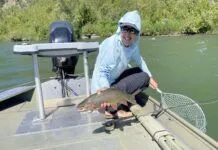
Spring hatches and fall October caddis help concentrate these fish. Steven’s biggest trout on a fly measured 32 inches and ate a size 14 soft-hackled Hare’s Ear during a caddis hatch, showing how even very large Upper Columbia trout can stay focused on insects.
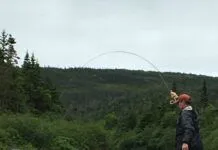
Some smaller dressings were tied on size 12 hooks for more hook when swinging. Steven used a 12½-foot 4/5-weight two-hander, a floating Scandi line, and a 15-foot leader ending in 6-pound fluorocarbon.
Many Missouri anglers use lighter 3-weight Trout Spey rods, but Steven found the 4/5-weight was not too much rod. Compared with a single-hand rod, the two-hander gave him more casting range to cover water.
The fishing was strong during their June visit, at least until the afternoon wind picked up. Steven also got his first look at busy Craig, Montana, a big change from his quiet home water, right down to an angler walking around in a brown-trout-pattern leotard.
Steven says it is difficult to fight for every fishery, but focusing on the water you know and fish most is manageable. He also sees fishing clubs as one way anglers can organize around their local waters.
There is an extensive fly section with about 200 patterns, including dressings and photographs. Steven also spends significant time on reading water, something he thinks anglers often overlook.
He remembers experienced traveling anglers getting into his boat, reaching a piece of productive water, and asking where they should cast. For Steven, learning to recognize useful depth, current speed, seams, tailouts, and other holding water is a basic Trout Spey skill.
His complete floating-line steelhead leaders usually run 15 to 20 feet. Steven likes having stretchy mono behind the tippet to help absorb the hit when a fish grabs a swung fly.
(49:01) When trout are feeding during a hatch, Steven tries to match the emerging insects. Two soft hackles cover a lot of his fishing:
He follows the fly with his rod tip, then stops the rod as it reaches the fish. The resulting tension lifts the fly only two or three inches, imitating a rising nymph and potentially triggering a grab.
For anglers who only want one Trout Spey line, Steven considers the Rage a good all-around option. A section of old floating fly line can become a floating tip, while different poly leaders cover sinking presentations.
(01:03:15) When Dave asks for another Spey or Trout Spey book recommendation, Steven points to the Swing the Fly anthologies. Each year, Swing the Fly puts together a hardcover collection around a different subject, with much of the material focused on practical how-to information.
Episode Transcript
WFS 986 Transcript 00:00:00 Dave: Nearly ninety years after Grand Coulee Dam cut these fish off from the ocean, Steven Byrd still fishes Upper Columbia rainbows that behave remarkably like steelhead. Today we are heading to the far northeastern corner of Washington to talk about space swing and soft tackles, reading water and what Stephen has learned from decades spent fishing the Upper Columbia River. Steven Byrd is back on the podcast today. He is the author of Trout Spey and the Art of the swing, and associate editor at Swing the Fly. In this episode today, you’re going to find out how Steven breaks down good swing water. We’re going to hear about how a thirty two inch Upper Columbia trout took a size fourteen soft tackle hare’s ear during the caddis hatch. We’re gonna hear some good stories there. Also, how Steven learned swinging small spiders on the Missouri and why he often dead drifts a bomber instead of skating it hard across the surface. It’s gonna be good to catch up on this one with Steven. You can catch with him anytime. Like we said, Trout Spey in the Art of the swing and also through Swing the Fly magazine. All right, let’s jump into it. it. Here he is, Stephen Byrd. How are you doing, Stephen? 00:01:04 Steven: Good. Dave. 00:01:05 Dave: Awesome, awesome. This is exciting to have you back on here. It’s been too long. I think since we had our first episode. I didn’t even look up when it was exactly, but it was a number of years ago. Um, you’ve got a lot of great things going. Kind of really swinging flies, you know, trout, Spey. We’re going to get into all that today, maybe give people a few tips on, you know, how they can maybe catch more fish out there, maybe have a better experience, that sort of thing. But before we get there, give us a little update. It’s been a while since we chatted. What have you been up to? I know the Soft Taco Journal. Maybe you’re not writing on that as much, but what’s keeping you busy these days? 00:01:39 Steven: Uh, recently, I don’t know if I had published Trout Spey in the Art of the swing the last time we spoke. 00:01:46 Dave: I don’t think so. 00:01:47 Steven: Okay. Well, we’ve. I published a book that, uh, Swing the Fly press a couple years ago, trout Spey and the Art of swing. It’s the first ever book on the subject of Trout Spey, and it’s been overwhelmingly popular. I can’t believe how it’s going and people really like it. The reviews are really good. Did you ever Google yourself? I never have. 00:02:14 Dave: I try not to just because. But you know, mine’s easy. You’ll see a bunch of podcast episodes for me. So. 00:02:20 Steven: Right, right. Well, anyway, I took a job as associate editor at Swing the Fly Press, and I have a items appearing there. That’s why I haven’t been doing the blog as much, because I’m busy writing for Swing the Fly. We went from a print magazine. We had to because of mailing costs. We had to go from a print magazine to an online magazine. It’s still really good. And anyway, I’ve been busy writing with that and we published the book, uh, currently working on a book of short stories that we’re going to publish later on, hopefully before Christmas. there. Uh, not really about fishing there. Fishing in them. We want to expand our publishing frame. Kind of make it more like, uh, put more literature in there beyond how to just to how to stuff. So I’m really excited about that coming out. I think people are going to like it. My beta readers like it. And then, uh, we got a, I have another book on the back burner called, uh, spiders and spades for salmon, steelhead and larger trout, which is about, uh, wingless wets. And that’s going to be, I put it on the back burner to finish the short stories, but that will be coming out next year as well through Swing the Fly Press. So I’ve been busy writing. Wow. I took a local writing job for, uh, North Columbia Monthly, which is a regional magazine that comes out monthly. And so I’ve had so much writing stuff on my plate that I just haven’t been really inserting anything into the Soft Tackle Journal blog online. But there is a lot of good stuff to read. Anybody wants to go over there and and read any of that? 00:04:03 Dave: Yeah there is. We’ll have a link in the show notes to that. That’s the I think if they just search Soft Tackle Journal, it’ll come up. And I was just kind of cruising it before we got on. And there’s a ton of. I always love the history and you got a bunch of just you got it all covered there, right. So we’ll have that link to so people can check out. And you’re also in a pretty unique location. The episode we had was back in twenty one, twenty twenty one that we did. So it’s been a number of years. So we’ll have a link out to that. But talk about where you are located and how it’s a little bit different than just your normal lower Columbia kind of rivers. 00:04:36 Steven: Yeah, quite a bit different. I live in extreme northeastern Washington, a mile from the Canadian border. So I live right where I live, beside the river, right where it comes into the States from Canada. We’re above Grand Coulee Dam. We don’t get salmon and steelhead up here anymore, But, uh, we have big trout. Uh, it’s also like everywhere else nowadays, very troubled. We have a lot of vectors affecting our fishery. Uh, mostly introduced predatory species, walleye, northern pike that aren’t native here. They’re really wreaking havoc with the trout fishery here. The, uh, Washington Fish and Wildlife in conjunction with, uh, with Canada, the, uh, the BC Hydro in Canada decided that we didn’t have enough sturgeon up here, which we did that we had, you know, the right number for the truncated system. But yet they went and stocked hundreds of thousands of more in, uh, they’re sucking up the trout eggs. They wanted to create sturgeon fishery. Uh, so we’re having a lot of problem now with the sturgeon. I worked with a biologist who wants to remain anonymous. They admit they put too many in. So it’s not a good story. And I really, uh. The last time we spoke, I would have considered this portion of the river. Uh, there is guides operating on it. It’s overly guided. Uh, the fish are overly pestered. 00:06:10 Dave: Uh, right. There’s a lot of people. 00:06:13 Steven: Yeah. 00:06:14 Dave: What’s the nearest town? 00:06:15 Steven: That’d be Northport, Washington. 00:06:17 Dave: Oh, yeah. It’s. I’m looking at. Yeah, Northport. Okay. Yeah, you’re right there. So, Northport, it’s about nine miles from there. So people are. You’re floating. 00:06:25 Steven: Yeah. 00:06:26 Steven: Riverine habitat. That’s good for trout. And then another twenty on the Canadian side, the Canadian reach. And, uh, you know, the trout don’t know borders. So they’re all affected. Uh, everybody knows what’s happening. Uh, we don’t, we don’t see any real. We’re trying to find solutions, but, uh, the Indians, the Colville tribe is. They got a boat fishing continually for the pike, trying to get the pike numbers down. Uh, the walleye survey they did last year showed the largest number yet, and they’re showing signs of stress and overpopulation. There’s not enough food. All the forage species that used to be here, I moved here in the early seventies, and at that time there was a lot of mountain whitefish, uh, pikeminnow, a lot of soft ray, uh, forage fish. Those are all gone. I haven’t, you know, haven’t seen a mountain whitefish for years. So I kind of really hate to relate. You know, that story? It’s not. 00:07:28 Dave: Good. No, it makes sense. 00:07:29 Steven: I wouldn’t consider it a destination any more that you would want to charge anybody to come fish. 00:07:34 Dave: Right? Right. So things have changed quite a bit. 00:07:37 Steven: Right? Yeah. The baseline has definitely slid. And, uh, I did an article in Swing the Fly a couple issues back about the sliding baseline and just how we get used to wherever it is. If you’re a steelhead fisher, I am. If you’re fishing the coastal streams, you know, back in the fifties, you know, maybe a five fish day was pretty common. You know, we’d that would be the baseline and then the sixties, you know, maybe a three fish day and then on and on. Now, if you catch one steelhead on a five day trip, you know, you’re having a whiskey and supper celebration afterwards. 00:08:13 Dave: So yeah, I think part of the challenge is, is that, um, you know, there’s a few things going on and we’ve talked about this all over the country. You’ve got climate change, which is affecting, you know, a lot of different species. Um, but you also have changes just like hatchery production and some of these areas people are, you know, that’s probably a difference. Like some of these places have, you know, there’s less hatchery fish, maybe there’s more wild. Um, but then you have these numbers, like, I think the Skeena system is having one of their largest returns of steelhead in a long time. Right. And so it’s kind of, you’re trying to figure out like, okay, what’s going on? Like why? And then at the same time, the Deschutes is closed. Right? Right. Like, and then but you guys are you’re obviously above steelhead. So it’s a little bit different, but the things you’re talking about are invasive species, right? I mean, it’s a little bit of a different story, right. 00:08:59 Steven: That’s the problem here. 00:09:01 Dave: Yeah. Which is not an easy one to to solve. You know climate change is probably the hardest one. Invasive species is not quite as hard, but it’s pretty hard. But tell me this, you know, because I think, you know, obviously we will cover some of these important topics. The swing, the fly. Now this is, is this Zach’s? Um, this is the program that Zach kind of started back in the day. 00:09:20 Steven: That’s right. Zach Williams it started out as a magazine, you know, a paper and ink magazine. And, uh, like I said, we had to go to an online journal. It’s a quarterly, uh, still the articles and info and the photos and the work and it is great. Uh, I would think, well, if I’m prejudiced because I work there, but I really do think it’s probably the greatest angling quarterly out there right now. And, uh, if you like to swing the wet fly, you know, for trout or salmon and steelhead, it’s definitely one you want to do. 00:09:58 Dave: You cover just swinging flies, or do you also cover nymphing and streamers and other stuff? Dry flies. 00:10:05 Steven: Yes we do. We mix it up. We mix it up, but it’s basically swing the fly. But yeah, no, we do and we’re starting to do some more. So so yeah, we’re posting stories as well. So it’s, it’s very eclectic. You know, there’s how to stuff, there’s literary stuff, there’s uh, essays. So it’s really eclectic. And if you subscribe, you have access to all the previous material that’s ever been put on there too. I mean, if you want to, if you want to read, if you want to do read about angling and wet flies, it’s just like this days and days of reading there. It’s like being in a library. You could read in there forever. 00:10:47 Dave: Have you guys put the. Because you’ve got all the back catalog of the physical magazines, have you transferred that onto online or is this mostly just when you started doing. Or have you always been doing online? 00:10:58 Steven: No, we didn’t transfer the physical magazines material onto the online. It’s just what’s there, what’s archived. There’s what’s what we’ve had there since we started it. And it’s been, oh gosh, I think we’ve been doing, I want to say four years now since we’ve been doing the online scene. 00:11:19 Dave: Yeah. That’s awesome. What is the, um, just looking at the area you fish, you know, and maybe thinking about the trout, what is the difference? You know, if you fish a lot of steelhead to the difference between those trout that you’re swinging up on the upper Columbia there versus, say, a steelhead, you’re swinging up on the lower Columbia because they’re the same species, right? They’re just one’s been described that because it’s been how long? Seventy years or more since they’ve been disconnected. 00:11:44 Steven: Well, it’s been since nineteen thirty nine, nineteen forty, when Grand Coulee was completed. Yeah. So it’s been shut off for quite a while. They were steelhead and, uh, there was, uh, sea runs here twelve months out of the year. So you can imagine how it was at one time. Uh, Henry David Thompson, when he first was the first white guy to drift down by here. And he went to what, present day Kettle Falls, which the Indians called it, Calliope, where there was a low falls there and they had a fishery set up. And Thompson. Thompson described it in his diary as a flock of birds, the salmon and steelhead coming over the falls there as a flock of birds day and night, continually above the falls, the fish just coming over it. So you can imagine how it was. There was, uh oh, there was a race of hundred pound Chinook that ran, you know, the fish that had to run this far up were bigger because they had to have enough meat on them to get this far. Yeah. We had, you know, the, you know, Chinook up here that approached a hundred pounds, the Salmo River in Canada and the Ponderay and, uh, and the Spokane River, of course. 00:13:00 Dave: Right. Because they made the ponderay. Did they make it? Lake Ponderay flows in just above the Canadian border. Did that have salmon up there? Was there or there’s probably a falls up there eventually. 00:13:08 Steven: I’m not sure. 00:13:09 Steven: About Lake Ponderay. I’m not sure. I know they were up the South River, which runs into the the Ponderay River. Okay. A couple of the other tribes here that are just above us, the Ponderay joins the Columbia right at the border, just a mile from my house, and it’s bringing in about half the water that’s going by me here. So I fish a lot in Canada. I just go up here to the border and cross the border. You cross the ponderay and you get on the Canadian reach. It’s half as much water as what’s going by us here, and it’s up to a quarter mile wide in some spots down here. But up there’s like a it’s more like a giant freestone, like a freestone on steroids. There’s more. There’s gravel bars, there’s more structure. It’s the same number of fish per mile. Last survey I heard this was a long time ago and we may not have that number now. We never had a lot. We only had seven hundred mature trout per river mile here, which is not a lot. I mean, compare that to the Missouri with three thousand or more per mile. Right. 00:14:15 Dave: But these are steelhead right. These are steelhead though. 00:14:18 Steven: No these are trout. Oh they are. But yeah this of course we’re above the dam. So I’m talking about here where I am. Yeah. And but they were at one time steelhead and fishing here. Now like I swing from the bank. There’s a lot of good runs. I generally fish dry flies when the, when hatches are going on. That’s in the spring and again in the fall. For October caddis, we get good October caddis hatches here and the fish are really go off on them. So it concentrates fish more on the spots. When you only have seven hundred per river, mile and river as large as the Columbia, you definitely, you know, want to fish where the fish aren’t everywhere. They’re concentrated on certain areas and the hatches will concentrate them on some of the runs. But you have a really good long swinging runs, say, where you could swing October caddis imitations and do pretty well. Generally, I’m fishing the bank with a two hander. Uh, going to start here pretty soon. We got some cooler weather now and that should be getting going pretty soon, usually by the second week in September that gets going. So I’m looking forward to that. Got cooler weather. It’s cooling down. I might even have a look this evening, see if there’s anything around. But anyway, I was getting back to like fishing here is a lot like steelhead fishing. You know, the trout averaged nineteen inches with fish up to rarely. You know, every year I’ll catch a few two footers, twenty four inches. The largest red band I’ve caught here was sixteen pounds. That was on a red and white Ebinger daredevil years ago in the early seventies. The largest one I ever caught on a fly was, uh oh, thirty two inches on a number fourteen soft tackled Hare’s ear during a caddis hatch. 00:16:11 Dave: Trout Routes by Onex is built for fly anglers who want better Intel without spending hours digging for the information. You’ll get access to public land maps, stream access points, regulations, and even road and trail maps all in one place. It’s become my go to app for scouting new trips. You can check them out right now. Go to webflow dot com slash routes and download the app today. Golden Fly Shop isn’t your average fly shop. They have a twelve foot shark painted like a cutthroat, hovering over a huge selection of the best rods in the business. A massive assortment of tying materials and their famous steakhouse streamer display. And it’s the hub for a community of anglers who never stop tinkering with new ways to catch fish. Sometimes the conversation behind the counter includes what hatches are going off and what techniques are working best. Then tales of destination fishing, adventures, sought after species, or a good old congratulations when a customer brings stories of finally connecting with that fish they’ve searched for forever. With a growing online store and a budding YouTube channel, you’ll be able to follow along with their fun antics, international adventures, and helpful fly fishing tips. Golden fly shop where the community is hanging out even if they’re supposed to be working. That’s Golden Fly shop dot com. Check them out right now. Where was that fish? That thirty two incher? Where was that fish growing? Where did it get its size? Are they going, are they going? Are They migrating up or down to a lake system or they just feeding in the Columbia. 00:17:38 Steven: No, they’re stuck between Lake Roosevelt, which is pretty sterile. So I don’t think they’re they’re feeding in there. Our portion of the river was more riverine from Northport to the border is got the most insect life. So that’s where they’re where they’re feeding. So and we have trout because of the lack of baitfish, because of the predatory fish. I’ve noticed through the years that the larger trout of, you know, a lot of places they go to, they become piscivorous at a certain point, you know, once they get big enough. But here they pretty much stay on the bug. So it’s possible to catch a really a really large fish here on the bug if one stays on the bug. Yeah, yeah. 00:18:28 Dave: So do you think the trout spend. 00:18:30 Steven: A lot like steelhead? 00:18:32 Dave: It is your swinging flies. You got your trout spamming. A lot of people have those questions, right? Because I think there’s a lot more trout obviously around the country than there are steelheads. So I feel like the trout Spey is something a lot of people could try out and have tried out, but what does that look like? How would you describe, you know, what Trout Spey is to you or are you swinging spiders mostly, or doing streamers like steelhead type flies? What’s that look like? 00:18:54 Steven: A steelhead flies work fine. 00:18:56 Dave: Yeah, like throwing a green but skunk a size a size six green. 00:18:59 Steven: But yeah, sure, they function as lures, right. So, uh, right. You know, most flies don’t imitate anything. They’re lures. 00:19:08 Dave: But the interesting thing about this is that, you know, like you said, these aren’t steelhead. It’s been almost one hundred years since they’ve, you know, so they’re not steelhead. So they’re trout, but they’re still taking, you know, a steelhead fly. But if you go to the Missouri and fish in Montana, not many people are swinging steelhead flies, right. So they’re not. So it’s different. What do you think is the difference between, say, the that Columbia system and say any other system that I don’t know. Say something. One of those Montana. 00:19:34 Steven: Why are the fish here? 00:19:35 Steven: More steelhead like and habit. 00:19:37 Steven: Yeah. 00:19:38 Dave: Uh, I mean, I guess they are steelhead. I guess that would explain it. 00:19:41 Steven: Well they are, they’re rainbow trout. I’d say maybe to be more precise, they’re kind of like, I don’t know, they’re like halfway between being trout. They’re trout in some behaviors and they’re steelhead like in others. They’re more steelhead like than any other river I’ve fished rainbow trout in. I wish I knew the answer to that, but I know it’s true. So, you know, I can’t say specifically why. Could have something to do with the geology of the river itself. Uh, the lack of. 00:20:12 Dave: I guess regardless, uh. 00:20:14 Steven: Yeah, I just, I really don’t know. 00:20:17 Dave: Yeah, it probably doesn’t matter. I think the point I’m thinking is like, does the stuff you’re doing up here, could people apply this to other trout? Spey River, you know, if they want to go trout Spey. Could they do what you’re doing there in other areas? Let’s just take it to your typical. What would be if you’re going. Yeah, okay. 00:20:32 Steven: You know, I mean, if you want to. I fished trout Spey. I fished the Missouri actually earlier this year. Uh, we attended a oh, it was a Duncan and I attended a Spey Clave in Calgary. And on the way back we stopped and stayed with a Joe O’Brien. And we fished the Missouri and we fished dry flies and we swung also. And what we. When we were swinging there, though, was a small spiders, you know, number twelve fourteen, uh, you know, number fourteen and sixteen tied on number twelve hooks. You know, you get one a little bit more hook when you’re swinging. But, uh, but we did really well swinging. Uh oh, uh oh, soft tackle nymphs, uh, spiders. Uh, uh, I think, uh, just a partridge in, uh, pheasant tail and also partridge and Hare’s ear. This basic little ones, they worked really great. 00:21:36 Dave: What was the setup? What was your setup you’re using there for the on the Missouri, like your rod and line and stuff using a. 00:21:44 Steven: Well, most guys, they use lighter rods, like three weights. Uh, I was using a four or five, uh, twelve and a half foot four or five fifteen foot leader to a six pound fluro tippet and just a single, uh, uh, spider. That was it. Just basically the same setup a guy would, you know, the terminal set up a guy would use with his single hander, you know, to swing soft tackles. So just, you know, a lighter that was the lightest dispay I had. And uh, the four, it was a four or five. That was fine. It was a really fine. It wasn’t too much rod for those fish at all. Really? 00:22:29 Dave: What were you using for a line? 00:22:31 Steven: I was using a, uh. Oh, gosh. What did I. Oh, it was a, uh. Uh, I was using a Scandi. I’m trying to think what it was. Oh, uh, it was. I forgot to make on it. I just got a bunch of lines here, but it was, it was a, you know, just a Scandi full floating line. 00:22:47 Dave: Yeah. Just full float. Yeah. No tips or anything. Just a scan, I guess. On the Scandi probably. Yeah. You can just throw. I guess most of these. You want to have some sort of a tip, a dry or clear or something. Right. But I guess regardless, you were dry fly fishing and somebody probably could have gone out there and fished a single hand rod and done the same thing. And like, were you fishing? You said spiders. Yeah. 00:23:08 Steven: Exactly. They wouldn’t be able to cast as foreign cover as much water. But yeah, you certainly could could have done it with a single hand as well. 00:23:15 Dave: Yeah. Okay. What’s the, um, part of the challenge always is, you know, for anybody reading water Finding Fish, when you guys were out there, how did you do that? Because the Missouri is a pretty decent sized river, you know. What were you looking for to find? Um, you know, the fish or the good, good slots. 00:23:31 Steven: We were just looking for good looking water. Good looking swing water. You know, a little bit of depth. You know, two feet, two to three feet. That’s not real deep there. And a lot of places. But it seemed like the fish were holding two to three foot water. Uh, you know, there’s three good swing speeds that slow walk, walk and fast walk. So, you know, we’re looking, you know, like walking speed water, you know, a little bit of riffle on top. Anything, anything you’d be looking for with, with your single hand, just, you know, looking for good water to swing. Uh oh. Tail outs from riffle sections, you know, uh, tail outs from, uh, slot chutes, stuff like that. 00:24:15 Dave: Mhm. Yeah. That’s right. Yeah. We were just there fishing more kind of, uh, during like a little bit of the Trico hatch. And we’re, we were doing a little bit of everything, but, um, but yeah, that river is kind of crazy because it’s got a mix. There’s like heavy vegetation in it now or when we were there. But yeah, I can imagine it’s not easy always to find the fish. Right. And there’s some decent sized fish. Did you guys have, you know, when you’re out there are you trying to find the bigger fish or are you just trying to find any fish? Or what does that look like when you’re when you’re swinging out there? 00:24:45 Steven: Just any fish. We were there in June. It seemed like there were fish everywhere. We were staying at Joe O’Brien’s house, which is right on the river. And one night we were sitting there in the dark and, uh, and, uh, Duncan says, let’s go look at some fish. And those guys grabbed some flashlights and took me out in the backyard, started shining the flashlights in the river. Oh my gosh, the river was just full of fish. You could see them with flashlights. Wow. Out there it was just loaded with fish. So I don’t think a guy has to. Maybe they concentrate, I don’t know. I haven’t fished it a lot, but, uh, they were there was just fish everywhere in there and it was in June, and it seemed like everywhere we threw a line there was fish. We had a really good fish in it until the wind blew us off in the afternoon. So it was great. But a lot of lot of people, a lot of boats. We went to a little town there. I can’t remember the name of it. It was in the morning when the guides were loading up their clients and stuff. 00:25:43 Dave: Oh, and. 00:25:43 Steven: Craig. 00:25:44 Dave: Craig. 00:25:45 Steven: Craig. Oh gosh. I felt so out of place there. 00:25:48 Dave: Right? Yeah. Craig is interesting because it’s got, uh, there’s three fly shops, right? It’s the whole town is basically a fly shops and a couple in food. 00:25:56 Steven: Exactly. Yeah. I saw a dude wearing a, uh, a leotard, a brown trout patterned leotard. They’re really bright colors and. Oh, man, you know, this guy’s out here fishing. This guy’s out here fishing in leotards. I must be. 00:26:12 Dave: Right. Right. What’s your what’s your, uh. Why did you feel out of place there? 00:26:16 Steven: I’m so isolated out here, Dave, and I’m. I’m an old guy, you know, and I just never seen anything like that. It just blew me away. It was like a. And I felt like, oh, man, this is really ain’t this ain’t fly fishing as I remember it or as I idealize it. 00:26:34 Dave: Right, right. 00:26:35 Steven: Yeah. 00:26:35 Dave: I mean, it’s a busy place. 00:26:36 Steven: Getting anybody down or anything. It’s just like that’s where we’ve come to. And it was, I thought it was just kind of ironic that, you know, in a time when we’re having so much trouble with the water heating up and, you know, the lack of fish and stuff that, you know, that I’ve just never seen a scene like that, you know, related to fly fishing. Like here we’ve come to like this abundant human market scene while the baseline diminishes, you know, to the point of nonexistence in some places already. And it was just I don’t know what to think of it really. 00:27:11 Dave: Yeah, that’s what it is. Yeah. I think it’s, it’s this um dilemma we have, right. Which is the, the more people that get into fly fishing, The harder the more pressure. Like you said, you have places like Craig, which there’s a lot of people there, but the more people also are conservationists potentially, right? I mean, so you kind of have that going. Some of those people are going to be supporting, protecting. 00:27:33 Steven: I will say that. And when I when I wrote my first book, Upper Columbia Fly Fishing, I didn’t want to give away locations and I didn’t in that book. But the reason I wrote that book was because the river was confronted with other problems at the time. A lot of it was pollution. They were dumping from the smelter and trail, and they quit doing that. And I like to think it helped in the effort to stop that. But I really I really I wanted to shed light on the fishery, call attention to it because I thought if fly fishermen knew about it, because I know a lot of them are activists and that’s a good thing that it would help it. But it didn’t it didn’t help. And it’s like I was talking to Poppy Cummins. He went to the fisheries meeting in Lewiston. Write about regs for the Clearwater. And here are the plates. He says the hall was full of bait fishers. He was the only fly fisher there. And there’s so many guys that love the clear. I know it’s a lot far for a lot of guys to travel, right. To get to Lewiston for the meeting. But he was the only fly fisher at the meeting. So, you know, as bad as things are, and as much as people complain, and I do know probably in the whole angling world, you know, the fly fishing and spey fishing is even smaller demographic. I mean, we’re nothing but a really tiny slot. And a lot of guys are active, you know, and calling attention and helping, you know, trying to help with what’s going on. But I really don’t think we’re that active. I really don’t I don’t think that many of us are either. Right. I’ve queried when I guided here for twenty years, and I queried a lot of my clients about that. And I found actually a very small percentage who were actually active or writing letters or contributing in any way, you know, to it. So I really do think fly fishermen really, I’m a little disappointed with fly fishermen right now. And I really think there’s a lot more we could do in this time when we really need to be doing something. 00:29:34 Dave: Yeah. What do you think the one thing somebody could do if they’re listening now and they’re thinking, yeah, I haven’t been putting enough time in. I haven’t been doing whatever. What would you tell them right now? What would be your advice that they could do something. You know, this week. 00:29:47 Steven: Well, most of us have a home water that we fish a lot. Yeah. I would think if you can do nothing else, monitor your home water and write a letter. If there’s a problem there, you’re seeing something going on. Write a letter to the folks who need to know about it or, or get together with some friends and write a letter and all of you sign it or whatever, and just keep hitting them with, you know, I I’m to send him to the fisheries officials and the governor, you know, and, uh, just get it out there. 00:30:20 Dave: Right. Get the word out there. 00:30:22 Steven: But I mean, it’s it’s hard to spread yourself really thin, you know, and, like, try to, you know, activate for the entire fishery. But if you can just do it for one water, just your home water, you know, and I know a lot of clubs do that. And that’s a good thing about their clubs. But, you know, I speak at clubs occasionally, and I’ve noticed that most club members nowadays are old guys, right. And women and women and, uh, and so you’re seeing very few of the younger guys joining clubs, you know. 00:30:54 Dave: Yeah. You do. 00:30:56 Steven: I don’t belong to one myself either. But, you know, they do help in that way. 00:31:01 Dave: Where do you think those younger kids are going? Do you see any of the younger kids out there in your area or, or where do you think the what are the younger kids doing if they’re not doing the clubs? 00:31:10 Steven: Well, some of them are going to the store and buying or ordering up, uh, you know, brown trout patterned leotards. Uh, so, you know. 00:31:18 Dave: Right. That’s right. 00:31:20 Steven: Yeah. 00:31:21 Dave: That’s right. I know. 00:31:23 Steven: Uh, I wish I knew what the younger guys were doing. Most of the guys I know are activated, you know, and help trying to do something, you know, help, uh, our our older guys, you know, and maybe, maybe the younger guys are just too busy working, trying to chase a buck. Uh, you know, it it’s hard to say. It’s hard to say. I mean, there is some young guys, you know, young guys who are active and out there, but actually they are they’re mostly older guys that I know of that are members, you know, to you to you members and, you know, stuff like that involved with stuff like that. Mostly old guys. 00:32:05 Dave: Check out Jackson Hole Fly Company today. Premium fly gear straight to your door without the premium price. Jackson Hole flight company designs and builds their own fly rods, reels, flies and gear. Delivering quality you can trust at prices that let you fish more and spend less. Whether you’re picking up a fly rod for the first time or guiding every day, they’ve got what you need. Check them out right now. That’s Jackson Hole Fly company dot com. Jackson Hole fly company dot com. Today’s show is brought to you by Visit Idaho and Yellowstone Teton Territory place that should be on every angler’s list, from the Henrys Fork to the South Fork of the snake, and all the hidden creeks and alpine lakes in between. This region is built for fly fishers who like a little room to roam. You can head over to Wet Fly swing dot com right now for guides, lodges, and trip ideas to plan your next adventure. That’s Teton T e t o n. What is the, um, you mentioned your book, the, um, uh, Trout Spey and the Art of the swing. Describe that. What was the book? What, before you started it. Did it turn out exactly the way you were thinking? Maybe describe the book a little bit for somebody who hasn’t read it. 00:33:16 Steven: Yeah, I usually don’t like anything I write, and it’s probably one of the few things I’ve ever written that I really like. And, uh oh, it covers a lot of ground. It starts with, uh, some history, you know, and then it goes through, uh, tackle, you know, lines, rods, reels, uh, there’s a fly section in it, quite an extensive fly section with about two hundred fly patterns with dressings and really good photographs. And, uh oh, there’s a section on reading water. Uh, so it pretty much covers it. 00:33:53 Dave: Uh, it does, it does. What did the section on Reading Water. I’m not sure if you remember exactly, but what did that section, how do you break that out in a book? Is it easy to, to break down a step by step in a book on reading water? 00:34:07 Steven: Oh, you know, I did the best I can. Like I said before, you know, I talked about the water speed, you know, and and what you might find in the water. I think reading water is a really important part of our game. Uh, you know, I’ve had guys, experienced guys, you know, telling me about how they’ve been fishing in Chile and, you know, they have a lot of money to travel and fish in a lot of places. And then getting my boat, you know, and I pull up alongside some good water and have a guy spin his head around and go, where do I cast? Yeah. So, you know, I think it’s a portion of our sport that a lot of us don’t pay as much attention to as we should. You know, and, uh, so yeah, I don’t, I don’t even have a copy of my own book here. 00:34:57 Dave: Oh, there you go. Yeah. Where can we get that book? 00:35:00 Steven: You can definitely, you can order it from, uh, swing the fly online. Just go. Just Google swing the fly and you can go to the store without subscribing. You can get in there and go to the store it’s in, it’s in the store. So yeah, you definitely want to go there and check it out. Yeah. 00:35:19 Dave: Okay, good. 00:35:21 Steven: I was talking about earlier, if somebody said, do you Google yourself? I said no, I said you should Google yourself. See what kind of reviews you got for that. And I did, and I was amazed. The reviews were actually humbling. Holy cow. You know, this is this is being found. People have found this useful, you know, so. 00:35:40 Dave: It looks. 00:35:40 Steven: I’m happy about that. 00:35:42 Dave: Yeah, it looks good. I mean, I haven’t read it yet, but I’m just kind of looking through some of the, the online stuff. But you’ve got some. Yeah, some great patterns and, and on the Swing the Fly book, I will, I will, I’m going to get a copy. 00:35:54 Steven: You call yourself swing. You’re the wet fly swing. You have to read that book. 00:35:58 Dave: Right, right, right. 00:35:59 Steven: What the heck. 00:36:00 Dave: Well like you guys, the we the first year I’ve told this story before, but the first year I started this in twenty seventeen, I was thinking, okay, wet fly, swing. I love the history, I love traditional stuff. And so I kind of started out as that this was going to be a steelhead focus. And then after the first thirty episodes, I was like, you know what? I don’t think I want to be just steelhead fishing. I would love to. I love all fly fishing. So since then and now we’re approaching a thousand interviews, you know, and I’m like, okay, I think we’ve, we’ve done every topic in fly fishing now. And, and I’m happy that I made that choice to kind of go to go broad because it’s opened up a lot of, you know, a lot of doors and a lot of information and education. Right. I think it’s kind of cool. It sounds like you guys are at that place with Swing the Fly, where you’re, you’re expanding beyond just swinging flies. 00:36:46 Steven: Oh yeah. Oh, yeah. Well, you know, we’re casting, uh, well, it’s basically, you know, it’s, it’s geared towards guys who are fishing two handed, two handed rods. But, you know, we are talking a lot about, uh, casting dry flies, Mainly bomber types. Let me divert. Let’s talk a little bit about dry flies on the two handed rod here. 00:37:11 Dave: Good idea. Good idea. 00:37:12 Steven: And I tried it a lot. And I’ve come down to this with fishing dry. I generally if the situation calls for dry fly, I’ll go to my single hander. Single handers are a lot easier. I would say better to fish dry fly with except for one exception. And that’s bomber type dries, uh, you know, clipped air hair bomber type. And they died small for trout, you know, I mean, there’s lots of ways you can tie those and then pre-soak them and fly again, whatever, twenty four hours before you fish them and get something that’ll they, they will float. You know, generally the problem with fishing dries with two handers is you can’t really force it’s they’re, you know, they’re, they’re wonky to. 00:37:58 Dave: Force. 00:37:59 Steven: Them off with out. Right. So something that’ll stay floating. And that’s really the one that I found that that works really well with the two hander. If you want to fish dries with and actually they catch fish really well too, you know, especially steelhead and trout. 00:38:14 Dave: So okay, so the bomber is interesting for me too, because I, prior to this year didn’t really know much about bombers. And we went up and fished eastern Canada for Atlantic salmon and we were fishing, we had some bombers. And up there, it’s really unique. You know, the way they fish them and this dead drift thing. Talk about how you fish a bomber for trout. 00:38:33 Steven: I fish them dead drift, I fish them dead. Drift. People talk about skating, uh, flies. And I think some guys think skating is just, you know, getting that thing just ripping across the surface. Right? Personally, this guy’s a catch fish that way. Personally, I’ve never caught very many fish that way. I do a lot better dead, drifting the thing and giving it maybe a little bit of a one inch pull. Maybe that’s all the skate I’m giving it. It’s just a little one inch pull now and then just a cause, you know, just a tiny wake. But I don’t like to activate it in a way that, you know, something living. And I know October caddis a lot of times when they’re taken off from the water, they’ll skate, you know, real quickly. But generally the better fish won’t chase that because it’s getting away. You know, they don’t waste a lot of energy chasing something that’s looking like it’s getting away. 00:39:24 Dave: Are you casting upstream or how are you fishing that bomb? Are you casting upstream or out or down or how are you doing it? 00:39:30 Steven: Well, it depends on what the water and the geography dictates. Uh, I might be generally I’m casting it at ninety degrees, which would be straight out to the side. Yeah, giving it a bend, you know, and then following it with my rod tip. But, uh, there is situations on slower water where I do throw may throw if upstream, you know, a little bit. 00:39:56 Dave: Yeah. And the mend is that Amanda downstream is that like a downstream mend or upstream? 00:40:02 Steven: Maybe be an upstream mend. But if the water is very, very slow, I might do a downstream mend. You know, get a little bit of belly downstream and let the current, you know, speed it up, but generally, generally not. Uh, like I say, I like to pretty much fish, like with any dry fly, a dead drift, you know, maybe with a little bit of a one inch pull every now and then. But no more than that, it’s hard to do a one inch pull, you know? Right. How did those trout eat? 00:40:33 Dave: How do they eat? Uh, what’s that like? What’s the take like on a bomber or really any dry fly when you’re swinging or doing that? 00:40:40 Steven: Well, generally steelhead will just really nail it. You know, you’ll see a big commotion when steelhead grabs it. Right. And generally trout here as well. You know, I don’t I’ve never had one sipped right. Like like a like like PMD and stuff like that. So usually the, you know, that larger one. And generally, you know, when I’m fishing a bomber, I’m fishing them probably no smaller than a number eight. Okay. So it’s a pretty good size bug out there. And I found that it’s good to fish them like during grasshopper season or over October caddis, particularly if you’re fishing for trout. Uh, so, you know, any time when there’s a large insect on the water, maybe Drake’s. I haven’t finished them over Drake’s yet, but I’ve had other guys say they have, you know, they’ve done okay good with them over Drake’s. But again, you know, you’re you’re fishing probably nothing any nothing smaller than a number eight. So it’s going to float. Well you know, you’re going to chunk of deer here or there. Uh. 00:41:50 Dave: Yeah. That’s cool. So that’s a good time. And so you’ve got the, the big bombers. And then what about the, when you’re just kind of doing the other, um, dries, you know, maybe swinging something where it’s, I don’t know if you guys are doing the riffle hitch, that sort of thing or describe that. How are you doing the dries when it’s not a bomber? 00:42:06 Steven: I’m actually well on a single hander. Uh, basically when I’m fishing with a two hander, generally the only dry fish, like I was saying with the two hander, is a bomber type. And, uh, I have not riffle hitched that I riffle hitch wet, but dries. Yeah, I generally fish on a loop not. 00:42:30 Dave: Yeah. Right, right, right. Yeah. On the wet on the riffle hitch. Is that something that you’re doing a lot? Or when would you switch from a riffle hitch wet to just a straight wet? 00:42:40 Steven: You know, I generally just go with a gut feeling on that one. Uh, you know, this is maybe you know this or nothing’s happening. Generally I’ll usually fish, uh, if it’s a up, I generally, you know, I fish it, you know, with a, you know, nodded behind the eye. Right. And, uh, and if things are slow or whatever, I’m changing patterns. Nothing’s happening. Uh, you know, I’ll riffle hitch it, see if that works better. Often, though, I’m fishing my wets on a loop. Not, uh. I’ve gotten into that habit the last few years, you know? And like I say, if it’s if it’s slow and I feel like I. You generally start that way without a hitch. But, uh, generally, you know, sometimes I’ll riffle hitch if I think that’s might, might be what it takes, you know, if things aren’t going, I just experiment with it. But there’s nothing in particular unless I’m fishing with somebody that’s really killing it, you know, riffle hitch in their fly. Oh, I better, you know, riffle hitch. So but there’s nothing, you know. 00:43:47 Dave: No. 00:43:47 Steven: Indicator really. That tells me to switch to a riffle hitch. 00:43:51 Dave: No, no that’s right. No it’s cool. Yeah. That’s a yeah, we fished that for Atlantic salmon too, and it was up where we were at. It was pretty much all riffle hitch all day long. And it was cool to see a little bit different because those fish were really, really active on the surface, right. Coming up and stuff is different. But you also mentioned on your leaders that you kind of, I think you’ve written about this, that you fish a kind of a stiffer leader overall, but then the tippet is softer. Maybe talk about that. How do you build is that an important part of the, the, the program here is your leader setup. 00:44:23 Steven: Uh, I don’t know how that came out, but generally I’ll fish a, uh, a like say for trout Spey or I’ll use the same actually leader for steelhead too. I’ll usually use a thirty pound mono, but oh, about two feet long on the. But somewhere between two and three feet generally like for steelhead, I’m using a, uh, fifteen to twenty foot leader, uh, with a floating line, you know, grease line style and generally generally around fifteen okay. Fifteen, seventeen generally and two to three foot mono, thirty pound mono, but fairly stiff mono like big game, Berkeley, big game, something like that. Right. And then I buy a get them at Walmart, the Cortland, uh, leader. But sections, they’re very inexpensive. They have a lot of stretch, which I like. And, uh, generally I’ll buy the, uh, seven footers that, uh, they taper to. Uh, oh, well, depends like for trout, I’ll get one that tapers to ten pound test, uh, for steelhead, I get them to taper to fifteen pound test. Either they’re available either way, most Walmarts have them. That’s a seven or eight footer. So that gets spliced to not looped but spliced, uh, to the butt section, and then to that I’ll tie a ring or a tiny swivel. And for steelhead, generally, I’ll use the little swivel trout. I generally use the rigging ring and then just fasten my tippet to that. And generally I’m using a fluorocarbon tippet with that. So, uh, and my section, the. Yeah. So generally it’s just my tippet that’s fluorocarbon. I want some, some, uh, plasticity behind that. You know, when the fish really slams the fly on the swing, you want to have something behind it. There’s some elasticity. Sure. And then generally I use, uh, you know, my tippet will be fluorocarbon, whatever the size of fish calls for. And generally if I’m fishing soft tackles for trout. 00:46:37 Dave: Yeah. What does fluoro do versus mono. Why do you like fluoro for your tippet? 00:46:42 Steven: Uh, well, because it’s sold as being invisible to the fish. Probably be the basic reason why, you know, I don’t know if it is or not, but that’s the way it’s, you know, supposedly is. So that’s why, you know, and I think I’d like to use this heaviest string I can get away with. You know, I went through my like tackle period back in the sixties, you know, with three pound tests and stuff like that. But right now I like to use a heavy I can get away with it here on the river. I mean, as light as I can get away with our heavy as I can get away with. But here on the river, like you really can’t get away with anything less than six pound test, you might get broke off. And here I use six pound test. Uh, mono. Yeah. You know, because it’s stronger than six pound test fluoro. So, you know, depending on the situation, most places like the Missouri, uh, we were using six pound fluoro tippets, you know, and that worked fine. It seems like the lighter you go, you know, the more grabs you get. But then you get to a point where those grabs start breaking. You don’t want that. So. 00:47:52 Dave: Right. 00:47:52 Steven: You know. 00:47:53 Dave: You don’t want that. 00:47:55 Steven: So you go with, you know what you can get away with. But generally six pound for fishing, small spiders, you know, six pound fluro most places will work, you know, here on the river I’ll go to six pound maxima, you know, which is quite a bit stronger than you can’t even stuff like cable. But uh. 00:48:19 Dave: Yeah, it is, it’s. 00:48:20 Steven: Or even for sometimes if I want to go a little bit lighter, four pound maxima even, I think the four pound maxima is about the same as, uh, I like, uh oh, I’m trying to think of the name of it right now early. And not only that, but I think Dave, I’m starting to get dementia and I forget, but oh. 00:48:41 Dave: That’s all that’s all of us. As you were talking there, I was thinking about and I haven’t used this yet, but I was thinking about noms. They have a new. They’re a brand out there that has this leader that’s supposedly super strong. It’s a lot of the steelhead. Some people are talking about this that it’s like way stronger than maxima, yet it’s still thin diameter, right. And so it’s kind of. 00:49:00 Steven: What’s it called. 00:49:02 Dave: It’s called nom n a m nom. And and I know Brian, we’ve been. Yeah. Check it out. Yeah. He’s been talking a little bit about it on our on the space stuff we’ve been doing. But, but yeah, so I mean, there’s a lot of different ways to do it. But I mean, you know, leader, you know, I think that like you’re saying the movement, adding movement to your fly is never a bad thing. It seems like. Right. So having a little bit of flexibility there is probably good. And then yeah, what about on your fly? You’ve got these spiders. You had to say, yeah, like a color wise, do you have a certain, you know, fly that you really love on your, you know, color scheme pattern on those spiders? 00:49:40 Steven: Well, if I’m fishing over hatches, mainly what I’m doing Is, uh, trying to simulate the merger, which. Right. Which is going to be drab color, like the nymphs. Uh, so in most situations, I found that, uh, oh, a pheasant tail, right? Uh, a pheasant tail and partridge or, uh, hare’s ear and partridge pretty much covers a lot of things. You know, if you have it in the right size, you know, and generally these things are, oh, you know, twelve to, to, uh, sixteen. I sometimes go as small as eighteen. You know, if it calls for them generally, I’m, I tie that on a number. Fourteen hook because, you know, I want enough iron there to, uh, to hold them. But, uh, I would say if you just use those two, if you just only had nothing else but a, but a, a pheasant tail and a hare’s there, you could really cover a lot of stuff I found. Yeah, I like the partridge in yellow for some things. I think that’s a good one for, uh, imitating, uh, spent, uh, pale. Evening, Duns. Uh, the partridge in yellow is a good one because a lot of them on the water. So there is some. I’ll go. Partridge and orange is a good one for, uh, spent pmd’s. You know, uh, so there was some with a little bit of color in them that imitate more, you know, spent, uh, or the duns or the, uh, you know, spent spinners. But generally I’m trying to imitate a merger. So the more drab colored ones and I mean, you know, they’re mostly, they’re mostly the nymphs are mostly the color of the universe, you know, they’re brownish, you know, whatever. So, so just those two alone will really cover a lot. 00:51:36 Dave: That’s awesome. So yeah, you’re definitely imitating flies. You’re not just throwing on a steelhead fly that’s kind of going to get their attention. You’re really thinking more, at least with those spiders, about imitating something that’s in the water. 00:51:49 Steven: Exactly, exactly. That’s the difference. I think somebody asked, well, what’s Trout Spey? Right. Well, I would say, okay, there’s a difference between, uh, you know, Spey for anadromous fish and Spey for trout is one of the basics of swinging for trout with a two handed rod is, uh, swinging over hatches of small insects, you know, so that’s awesome. Definitely. You want to have a box of I like soft tackles and I like to have a box of soft tackles, you know, and that’s really most of the Trout Spey I do is, uh, you know, is, uh, fishing over some type of a hatch that’s going on, right? That’s that hatch like October caddis where they’re, you don’t get big hatches on them every day, but they’re always a presence. You know, they’re sporadically hatching So, you know, the fish know they’re out there and they’re, you know, they’re glad to see them when they do. 00:52:46 Dave: That’s so cool. I’m not sure if, you know, I mean, I always think about back to a little bit of the history were there, you know, wet flies and swimming flies, were they back? Do you know a little bit of that history when they were they swing in wet flies. Was that mostly what it was? I know there’s other types of ways to fish a wet fly, but when did the swinging of the fly. Do you know some of that history? 00:53:05 Steven: I know a little bit. I know, uh, well, you know, the, the traditional way of fishing spiders like, say, in Yorkshire, the Yorkshire Spiders was they’re fished upstream, right? Mhm. You know, you cast it upstream and then it’s kind of like a high stake nymphing. Right. What they call Euro nymphing. Now, people have been doing it forever. I don’t, you know, we used to call it high sticking, right. And basically that same approach, you know, I started out when I was a kid fishing and but first I read James Licensing’s book. Right. And I really got into it and, uh, you know, we were fishing them upstream, you know, maybe with a single split shot, right? You know, and just, you know, keep in contact with the fly as it drifted down. And that’s a really great method. Uh, as far as swinging them goes. Uh, Leisenring in his book does describe swinging, actually, when he describes the leisenring lift, he’s, he actually describes swinging the fly. So I imagine as long as people have been fishing them, you know, and as long as water dictates, you know, you’re, we’re really, you know, especially if you’re like small streams where you have a lot of obstacles, there’s a lot of geography and geology and bushes and crap in the way and stuff, you know, you gotta, you gotta deliver, you gotta, uh, pretty much the way, any way you can. You know, you might be fishing upstream. You might be fishing downstream, you know, depending on what you can get away with right there or what works. So I found, you know, of course, in that situation like that in a small stream, I wouldn’t be using a two handed rod. But you get like out here on the river where it’s pretty wide open, you know, and you can deliver any way you want to. It kind of it kind of begs a downstream approach, you know, or crossing down generally, I’ll throw it when I’m fishing over a hatch. I will position myself upstream from my target. So you got a pot of fish that are out there rising on the seam right there, working that one spot. Well, you don’t do like an Atlantic salmon deal. You know, where you, you know, make a cast, you know, and then fish it out, then make another cast and walk it down three steps, you know, and then repeat. Right. You don’t do that on a, you know, if you locate some rising fish and you’re fishing your two hander, well, you, you stay there, right. And fish them, you stay. What I do is position forty five degrees above them. So I’m casting at ninety. I want my fly. I want at forty five degrees. You know, when it gets to them, that’s about ideal, right? So, uh, so I’m getting a dead drift down to forty five degrees about that’s about where it’s going to start to swing, get under tension and start swinging. I want to position myself. So my fly is at about forty five degrees when it gets into the fish right there. And then, uh, so I got a dead drift into my fish right there, but I got control. You know, I’ve got a tight line control. So actually, in a way, you got an advantage over an upstream penetration by doing that if you can get away with it. So I think that’s I don’t know when people started doing that, but I suspect, you know, our ancestors were just as smart, if not smarter. You know, they’ve probably been doing it ever since, you know, the Pleistocene whenever you know. 00:56:28 Dave: That’s right. 00:56:29 Steven: Started fishing. Yeah. Licensing the licensing lift. 00:56:31 Dave: Was a good book, right. The licensing lift is when was his period? When was he out there doing that? Right in that book. 00:56:39 Steven: I think that book came out originally in nineteen fifty, and then Pete Hidy did an addendum to it, and I think that was released. Oh, gosh, maybe sometime around nineteen seventy or so. Anyway, I had an old copy of the book I read when I was in junior high school, I think, or something. It was. 00:57:00 Steven: Yeah. 00:57:01 Steven: So he does describe fishing down both upstream and downstream approach there, you know, and the leisenring lift. Now, here’s a lot of people. A lot of people have the leisenring lift wrong. They think that when you come to the end of your swing, you lift your rod and it makes the fly come up. Well, that’s not true. By the time you come to the end of your swing, your fly’s in down there near the shore. And it’s pretty. It’s already come up. And when you, if you lift the rod, it just pulls it towards you. It doesn’t do anything. 00:57:31 Dave: Yeah. 00:57:32 Steven: The Leisen lift, I do describe it in my book too, but the way Lees-milne describes it is you position yourself so that your flies at forty five degrees from your position when it comes to the fish, and then you stop, you follow it with your rod, you stop the rod and that makes the fly lift. So that’s the. 00:57:54 Dave: Fly. So you don’t lift at all. You just stop. 00:57:56 Steven: You don’t lift at all. You stop the rod and the fly lifts. So you follow the fly with your rod tip. And then you stop the rod and the fly lifts. Now if you’ve got feeding fish on the surface, your fly is not going to be down there that deep. You’re using a floating line, right? So you come down into him and when you follow it with your tip and when you think your flies in the fish stop the rod right now, the fly is going to lift. It’s going to come up tight on the line and lift. It’s only going to lift maybe two or three inches, right? That’s all it’s going to be, but it’s right there on the surface and it’s going to look like, you know, a nymph rising right there. Just a little three inch lift, right as all it takes, you know, the fish is going to catch the fish’s eye and he’s going to nail it. So that’s really all it is. It’s not lifting the rod at all. 00:58:46 Dave: So it’s not really the licensing lift is not a lift. It’s literally a stop. And the fly lifts out because you’re stopping the fly or you’re stopping fly lifting. 00:58:55 Steven: It’s the fly lifting, not you’re good. 00:58:57 Dave: There you go. That’s really awesome. And are you also. Yeah. Go ahead. 00:59:02 Steven: It’s a killer technique during hatches. 00:59:05 Dave: It is. Yeah. Like if you had a if you had a hatch coming off, let’s just say you had some mayfly hatch pmd’s or something that were coming off, you could imitate, have a PMD and then imitate that emerging insect with that, that technique. 00:59:19 Steven: Exactly, exactly. Yeah. Whereas a guy might just go ahead and let his fly drift right on through that group of feeding fish. Right. Maybe get a bit. Maybe not. Right. Right. That little. That little bit of a lift. That three inch lift. Right. When it’s in them, you know that’s going to draw their attention and that’s awesome. 00:59:42 Dave: That’s a huge tip. That’s a huge tip. Do you ever use sinking lines for trout out there? Are you ever using sinking lines? What does that look like? 00:59:50 Steven: Oh yeah. Absolutely. I liked when I’m fishing for the river here. Uh, I like the, uh, rage compact for fishing. Uh, sink and sink tips. 01:00:03 Dave: Yeah. The rage. You know, Tom Larimer, you probably know Tom. He was on the podcast, actually, probably not too long after you. We did that first one in twenty one and he talked, he told the story about no, no, no, no, you don’t know Tom. Yeah. Well he’s done um you know he’s done. Oh gosh. Who’s he with now. He’s kind of worked with everybody. I think he’s with with Loomis and TFO and everybody. Um but he did this podcast a while back and um, he was talking about this guy in the Deschutes that was in his. I think he said he was in his Speedos. He was on some rock and he was just like hawking this giant, uh, you know, this fly out in the middle and just this guy, you know, it’s just a scene. But he was hawking mega hawking this fly on his fe rod. But he came up to and I guess the guy had the rage on or something that the story goes something like that. But I think and I’ve been fishing that rage too, since that it’s it’s a cool, it’s like a, it’s a mix between a, it’s not a Scandi, it’s not a Skagit. Right? It’s kind of in between is that. 01:00:53 Steven: It’s a hybrid. 01:00:54 Dave: Yeah. It’s a hybrid. Yeah. 01:00:56 Steven: That’s right. 01:00:56 Dave: Yeah. Yeah. So it’s, it’s good for. 01:00:58 Steven: Way better than a gadget. 01:01:00 Dave: Yeah. The gadgets a little too much of the you get the fire hose. Right. 01:01:04 Steven: Right. It won’t turn over as heavy ahead as, as a Skagit. But for, uh, poly leaders, it’s perfect for poly leaders, you know, like here on the, on the Columbia. And it’s deep here too. I use like a when I go down, I use a rage with a ten foot I actually a five to ten foot seven foot is okay poly liter, you know, six to eight inch sink rate, you know, for per second. And, uh, that’s all I need. And the, uh, the rage turns out over beautifully. And it’s way more pleasant to cast than a Skagit. Yeah. So, yeah, I like the rage for Trout Spey. I think if a guy was going to get one all around and could, you know, if, you know, don’t have a lot of money, you can only afford one line. You want to put Trout Spey together. The rage isn’t really would be a really good one for that because you can cut an old fly line for a float tip to go with it, you know, and then, you know, buy some poly liters for it and you’re all set. 01:02:06 Dave: Yeah. That’s right. 01:02:07 Steven: Yeah. Great line. I use that a lot here on the river. Like I say, when I use a when I use a tip, you know, and I like I say I use a five to ten foot, uh, poly liter. 01:02:17 Dave: five to ten. 01:02:17 Steven: With a six to eight inch. 01:02:19 Dave: And those poly leaders are just, uh, they’re just basically like little sink tips with different weights of sink. 01:02:25 Steven: Exactly, exactly. Yeah. You know, they call it a leader, I don’t know. I don’t really think that’s basically accurate. It doesn’t really function as a leader. You want to use a leader with it. Uh, I’ve had people come along, you know, they got like a two foot leader they’re using. Well, I got a poly leader. Well, it’s not really a leader. 01:02:44 Dave: No. You want to have a leader. 01:02:46 Steven: For trout like I stole? Yeah. Even with the poly leader, I’m still using like, I don’t know, for trout like seven foot, you know, leader with it. 01:02:57 Dave: Yeah. Yeah. You want to. 01:02:58 Steven: Throw and mono. 01:02:59 Dave: Yeah. That’s awesome. Cool. Well, this is sweet. Steven. I think we um, like, like always, you know, it’s hard to cover everything in these episodes, but I want to try to take away here with our rapid fire round we’ve been bringing back here and just got a few questions for you and we’ll take it out pretty quick. Um, but you mentioned, uh, books. We talked about a few. Is there another good book you mentioned the license rings book. Is there another one that you love out there? That would be something we might pick up on Spey or Trout Spey or anything like that. 01:03:28 Steven: Yeah. See the swing? The fly. If you subscribe and the subscription isn’t much. 01:03:34 Dave: Yeah. What is the subscription for Swing the Fly? 01:03:36 Steven: I don’t know. You have to get a hold of. I don’t know what it is right now, but at the end of the year, you get a free book. And every year we do an anthology, you know, on, on, you know, it’s mostly how to stuff. And, uh, you get a free book at the end of the year every year, which is worth as much as the subscription usually and the, uh, the swing fly anthologies. I would highly recommend for anybody interested. They’re great. Uh, so, you know, we do them on different subjects. It’d be like, uh, Rick Custer is one of the writers. The writers are all really great. 01:04:13 Dave: Tofer Brown Yeah, for sure. 01:04:16 Steven: Yeah. We do stuff on flies. Uh, you know, we’ll pick a subject, you know, and, uh, yeah, books are available in hardcover. Great. And, uh, yeah, I would say they’re my favorite. Yeah. Besides my own, I would, I would highly recommend buying my book. 01:04:33 Dave: Oh, yeah. No, we’ll put that in the show notes for sure. Um. So good. Yeah. I’m looking at now swing the fly has. Yeah, very reasonable memberships, thirty bucks a month. Fifty. Looks like they still got swing the Fly membership print and digital. I guess that’s a little bit older. But yeah, for thirty bucks you can get the digital. 01:04:47 Steven: For a year. 01:04:47 Dave: Per year. 01:04:48 Steven: Yeah. Okay. You said a month. Oh, sorry. 01:04:50 Dave: Yeah. Per year. Yeah. 01:04:51 Steven: And plus you get the book. 01:04:53 Dave: Yeah. Yeah. There you go. Yeah. That’s awesome. So you get your, your money back in the, in the book for sure. This is good. Okay, so we’ll have that out there and people can take a look at, uh, swing the fly and yeah, you guys have a lot of great contributors to that. Rick and Topher and all those guys are awesome. We mentioned the one thing we haven’t talked about a ton is on caddis, but is there a caddis pattern when you’re fishing that October caddis, you like to swing out there? 01:05:17 Steven: Uh, there’s a whole section of October caddis in my book. 01:05:22 Dave: Okay. 01:05:23 Steven: I think there might be at least at least a half a dozen October caddis patterns that are included in my book. 01:05:30 Dave: Yeah. And are these just like a spider pattern or is this more like a like, I think my dad used to fish this pattern, which was almost like a, an elk hair caddis style, right? Just bigger. But, um, but what would be like is that kind of the style you’re talking about? 01:05:44 Steven: Yep. Yeah. Yeah. There’s actually some winged some not. Yeah. If you’re imitating the, uh, the, uh, the nymph, they leave the case, uh, several days before they emerge. And so they’re naked there and they’re pretty active too. They’re very simple, you know, uh, as in that stage, they’re basically a, you know, like a pumpkin orange body with, you know, orange and black legs, mainly orange, very simple. But anyway, like I say in my book, I think I give at least a half a dozen October caddis patterns. 01:06:26 Dave: That’s it. 01:06:27 Steven: And they’re really important. It’s a really an important bug here. So so I, you know, over the years, I’ve developed quite a few patterns for fishing with them. And I put the best ones in my book. 01:06:39 Dave: Well, we’re definitely gonna pick that up. What about your, um, you know, you mentioned a little bit we talked about caddis. You know, I guess there’s stoneflies too. I mean, there’s a lot of different bugs out there that people could be using, but, um, you know, it sounds like maybe how critical is the bug, you know, versus say the presentation? Is it kind of that thing we’re getting it right? Or do you think it is important to get the right pattern on there? 01:07:02 Steven: Well, as far as the right pattern goes, I’ve always been more into simulation than imitation. I think more the most important part of of simulation or imitating a bug is, uh, size and silhouette. and color a distant third. Like, say, you’re fishing a really, really heavy caddis hatch right of an evening and you’re competing against a bazillion naturals, right? Yeah. Uh, you want to have the right size and silhouette, which is a soft tackle, fly covers that, maybe the color, maybe a little bit more flashy and maybe something slightly different, but not way different than, than what’s coming off, you know, to make it stand out a little bit more. So, you know, a guy could, could mess around with that generally, uh, what I do, what I’ve been doing lately is I’ll under the body with, uh, with tinsel, either gold or silver tinsel, depending, and then dub over it with a really light, really light dubbing. So when it’s wet, that, uh, that inner glow from the tinsel kind of shines through the dubbing, what I call inner light. And I found those work really good when you’re competing against a lot of naturals. 01:08:25 Dave: That’s sweet. What about your, uh, you have a single hand. Let’s just say this single versus two hand. You can only pick one rod for the rest of your days. Which one are you going with for trout Spey? 01:08:36 Steven: Oh, for trout Spey. Well, I definitely have a double hand then. 01:08:40 Dave: So you pick double. 01:08:42 Steven: I would say that would depend on where you fish the most. Now, say if I was going to be the Missouri. Right. Say, if the Missouri was my home water and I was just going to pick a rod for that, I would say a three or four weight Spey. And I would say as a general for the size waters, that most of us fish most of the time, I would say I would probably choose an eleven and a half foot to twelve foot, uh, three weight or four weight or three. Four. Uh. So I would say, you know, generally that that would probably I was just going to have one. It would probably be that, you know, I like a little bit longer. I know the guys, uh, fishing the Madison, they really like that, uh, eleven and a half foot, uh, three weight. Uh, yeah. 01:09:38 Dave: That’s it. 01:09:38 Steven: That’s a, that’s a pretty good all rounder if you were just going to have one. 01:09:43 Dave: That’s perfect. What about, uh, our, you know, you’re on a, uh, you’re heading out to the Missouri. You’re on your road trip. Are you listening to on your own? Are you listening to a podcast or you listen to music? What’s in your, what’s on the road trip? 01:09:54 Steven: Well, the radio in my truck’s not working. So I sing while I’m driving. 01:09:59 Dave: Oh you do? Are you like a musician? Is this like an actual, uh, you know, legit thing? 01:10:04 Steven: No, I, I am a musician, but I’m not a good singer. I sing like a frog. 01:10:09 Dave: Okay. What type of musician? 01:10:10 Steven: I play guitar, banjo, mandolin a little bit. 01:10:14 Dave: So awesome. Awesome. Is that something we could hear out there somewhere? Do you have any recordings of your banjo? 01:10:20 Steven: No. Probably not. You’d have to come over here to my house. Okay. Probably get me primed. A little bit of whiskey before I broke out the instrument. 01:10:28 Dave: Okay. Good, good. We’ll have to. We can work on that. What about your. The last one I’ll leave you with is on your vice. We got the vice is your your vice that you’re tying with, and then your vice that you have in your life. Like as far as maybe something that you’re, you’re doing that you might have to quit eventually. What do you think is the first off, what’s the vice? Are you tying flies? And then what’s the vice you’re going to be giving up? 01:10:47 Steven: Oh yeah. 01:10:48 Steven: I am still using the Thompson model, a vice that I’ve been using ever since high school. 01:10:55 Dave: Oh wow. The model A. That’s amazing. That’s so good. All right. Hope you enjoyed that one with Stephen. Uh, please, if you get a chance, check in with me anytime, Dave at web dot com. We’d love to hear from you if you haven’t checked in in a while or new to the show, we’ve got some good stuff coming up this year. The fly fishing boot camp, wet fly swing dot com slash boot camp. You can get more information. This is going to be our biggest boot camp ever. We got more speakers, more content, more action items to increase your level up your skills this year. So stay tuned for that. The boot camp is going to be a big one this year, and if you want to check in with me, like we said, anytime, send me an email or check out Wet Fly Swing Pro and we’re heading out of here. We got a big week coming up here and we’re looking forward to getting out on the water as well. So hope you’re able to do that too. And we will talk to you soon. See ya. 01:11:43 Dave: Thanks for listening to the Wet Fly Swing Fly Fishing show. For notes and links from this episode, visit Wet Fly swing dot com.
Steven Bird gives us a simple way to think about Trout Spey: find water with the right speed and depth, pay attention to the insects, and let the current do most of the work. Small presentation changes, from a dead-drifted Bomber to the Leisenring Lift, can make a big difference.
And while the Upper Columbia has changed over the years, Steven’s message on conservation is just as important. Know your home water, pay attention to what is happening, and speak up when something needs attention.