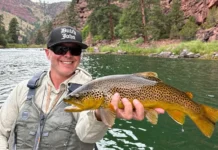
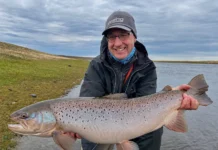
Huey Lewis spent decades making music that defined the 1980s, selling millions of records with Huey Lewis and the News and helping bring Back to the Future to life with “The Power of Love.” Today, he’s spending much of his time on the rivers of Montana and British Columbia, chasing trout and steelhead with a fly rod.
Huey joins us to share how his father’s early fishing lessons eventually led to a lifelong passion for fly fishing. We get into his love of dry flies, the 19 steelhead he caught during a recent season, and why watching a steelhead rise to a skated fly is one of his favorite experiences on the water.
Huey Lewis is the lead singer of Huey Lewis and the News, the band behind hits including “The Power of Love,” “Heart and Soul,” “I Want a New Drug,” and “The Heart of Rock & Roll.” The band became one of the defining acts of the 1980s, with Sports selling millions of copies and their music reaching audiences around the world.
Huey has also worked in film and television, including the movie Duets with Gwyneth Paltrow, and has appeared in several television productions. After hearing loss prevented him from continuing to perform, Huey devoted more time to fly fishing. He now spends much of his time fishing Montana trout streams, traveling for steelhead, and exploring saltwater destinations.
Huey’s father was a fisherman who introduced him to both conventional tackle and fly fishing when he was young. They started with bass fishing and a Pflueger Supreme baitcasting reel before moving into fly casting. Huey admits he wasn’t particularly interested at the time and would rather have been playing baseball.
His interest returned in his early twenties while playing with the band Clover. He and fellow musician Alex Call took a road trip through the American West, bringing their fly rods and musical instruments along to fiddle conventions. They fished between performances, and the experience renewed Huey’s enthusiasm for the sport.
Music eventually took over his schedule. During the busiest years of Huey Lewis and the News, he might manage a week of fishing during a summer vacation in Montana. It wasn’t until his hearing loss forced him to stop performing that he began spending considerably more time on the water.
Huey now fishes extensively in Montana, Wyoming, and Idaho, along with trips to Mexico, Florida, the Bahamas, and Belize. But steelhead fishing has become one of his biggest passions.
During a recent season, he caught 19 steelhead while fishing British Columbia’s Dean, Sustut, Bulkley, and Morice rivers. Eighteen of those fish came on dry flies, with one caught on a wet fly when difficult water conditions forced him to change tactics.
Huey describes arriving at the Sustut to find the river high and muddy. After conditions improved enough to fish, he switched to a sink-tip setup and caught a steelhead on a wet fly. Otherwise, he remained committed to skating dries.
He explains that catching steelhead on the surface requires confidence and a willingness to spend long stretches without a grab. The payoff is watching the water rise beneath the fly and knowing a fish is about to take.
For Huey, dry fly fishing offers something beyond the opportunity to catch a trout or steelhead. He enjoys the visual experience, the casting, and the challenge of presenting a fly on the surface.
He particularly enjoys fishing small dry flies on Montana spring creeks, where accurate casts and careful presentations are essential. His preference carries over to steelhead, where he often chooses a skated dry fly even when other techniques might produce more hookups.
He acknowledges that dry fly fishing may result in fewer fish, but he believes anglers can still catch some of the largest fish in a river on the surface.
That philosophy also connects with his views on fish conservation. Huey advocates single, barbless hooks and catch-and-release fishing. He believes anglers should think carefully about how their methods affect the fish they pursue.
Huey’s interest in Spey casting began when a Montana friend returned from Canada with a video of steelhead fishing. After watching it, Huey knew he wanted to learn the technique.
He explains that Spey casting feels substantially different from single-hand casting, even though both share some basic principles. The movement, timing, and mechanics presented a new challenge.
One of his biggest difficulties has been casting off his left shoulder. He admits that he doesn’t practice as often as he should, but recent steelhead trips have helped him improve. The casting itself remains a major attraction. Huey enjoys the physical act of making a good cast, regardless of whether a fish takes the fly.
He also describes how fishing encourages him to pay closer attention to the natural world. Rather than simply walking through a landscape, he feels that trying to understand a fish and its environment creates a deeper connection with nature.
Before Huey Lewis and the News became one of the biggest bands of the 1980s, Huey spent years playing in smaller groups and working toward a career in music.
Radio dominated the music industry, and getting a hit single was essential. Rather than build the album around one musical style, the band recorded a collection of songs designed to work individually.
“Heart and Soul” became an early hit, followed by more successful singles. Huey says Sports eventually sold 10 million copies, a number he happily corrects Dave on during the interview.
One of the most interesting stories in the episode is how “The Power of Love” became connected to Back to the Future.
Huey recalls meeting with filmmakers Steven Spielberg, Robert Zemeckis, Bob Gale, and Neil Canton. They explained that Marty McFly, the film’s lead character, would be a Huey Lewis and the News fan and asked whether the band would write a song for the movie.
Huey initially hesitated because he didn’t know how to write music specifically for a film. But the filmmakers told him the song didn’t need to be about time travel or even relate directly to the movie’s title. He and Chris Hayes were already working on “The Power of Love,” so they finished the song and submitted it without having seen the script or any footage.
Huey explains how the song’s rise on the charts helped build excitement around the movie. He also describes the importance of the film’s success in opening international markets for the band. The song and movie became closely connected, but their relationship began with a straightforward request for a Huey Lewis and the News track.
Huey speaks openly about the hearing problems that eventually ended his performing career.
He explains that he lost hearing in his right ear decades earlier and was diagnosed with Ménière’s disease after experiencing vertigo, tinnitus, and hearing loss. Years later, his hearing deteriorated significantly in his other ear.
Fly fishing became an important part of his life during a time when his musical career had changed dramatically. He continues to spend time with family, travel, and pursue creative projects, but the rivers have become central to his daily routine.
Huey shares the story of introducing Jimmy Kimmel to fly fishing, something Kimmel still credits him for.
During an appearance on Kimmel’s show, the two began talking about Montana. When Kimmel mentioned that he’d always wanted to try fly fishing, Huey invited him to visit. Kimmel eventually traveled to Montana for a Skwala hatch. Huey arranged for his friend Andy Carlson to take him fishing, and Kimmel caught a 22-inch brown trout on a dry fly.
It was an impressive introduction to the sport. Huey laughs about Kimmel later saying that it took another eight years before he caught a dry fly trout that large again.
Huey keeps his approach to Montana dry fly fishing relatively simple.
One of his favorite patterns is the Purple Haze, a fly developed by his friend Andy Carlson. Huey describes it as a variation of the Parachute Adams with a purple body, and it’s one of his regular choices for mayfly fishing.
He also mentions larger stonefly patterns, Brindle Chutes for March browns, and hopper patterns during the fall. Rather than carry an enormous selection, Huey says a relatively small group of proven flies can cover much of his fishing.
Huey owns both a drift boat and a raft, choosing between them based on river conditions and access. On the Bitterroot River, he prefers the raft for shallower, more technical upper sections and the drift boat where the river allows it.
Huey’s musical career began long before the success of Sports. He first became interested in the harmonica when folk musician Billy Roberts, who had written “Hey Joe,” rented a room from his mother and gave him several harmonicas.
After graduating from prep school at sixteen, Huey’s father encouraged him to take time off before college. Huey traveled through Europe and North Africa, playing harmonica and gaining experiences that helped shape his interest in music. He eventually attended Cornell University but spent much of his time playing in bands before leaving school and returning to San Francisco.
After playing with the Hereford Heartstrings, he joined Clover in the early 1970s. Clover later toured with Thin Lizzy, where Huey developed a close relationship with frontman Phil Lynott. He remembers Lynott as an important mentor who taught him about performing, working with a band, and navigating the music business.
Those experiences helped prepare Huey for the success that would come with Huey Lewis and the News.
Episode Transcript
WFS 1012 Transcript 00:00:00 Dave: Huey Lewis spent decades making music that millions of people grew up with, but these days, you’ll find him spending much of his time on rivers, chasing trout and steelhead with a dry fly. Today, we’re going behind the music from the success of the album, sports and the film back to the future, to his friendships, fishing trips and unexpected turns that have shaped Huey Lewis life. This is the Wet Fly Swing podcast where I show you the best places to travel to for fly fishing, how to find the best resources and tools to prepare for that big trip, and what you can do to give back to the fish species we all love. Huey Lewis joins us today to share the stories from years with Huey Lewis and the news, one of the biggest bands of the nineteen eighties. We’re going to talk about number one hits. Number one albums and how they rose to the top of the world in the nineteen eighties. Huey Lewis and the news. We’re going to hear the stories behind ten million copies sold of the sports album. We’re going to talk about the Power of Love song and how this helped to turn back to the future. How it helped kick off that movie into one of the greatest movies of all time. We’re also going to get in and hear about Huey’s hearing loss, and how he actually lost his hearing completely and had to give up music. We talk about that journey, and also how he got Jimmy Kimmel into fly fishing and some stories around that. Some pretty funny stories here. Huey Lewis is also going to take us back into the early years of playing the harmonica, touring with Thin Lizzy, and finding success in the music business. It’s all here today. I’m very excited to share this podcast with you today. All right, let’s get into it. Here he is, Huey Lewis. How you doing, Huey? 00:01:39 Huey: Good. Nice to be here, Dave. 00:01:41 Dave: Yeah, it’s great to have you on here. I think these are pretty amazing, obviously, because you’ve you’re a little bit older than me. And I remember your music in the eighties. You were bigger than life. You sold millions, I think, thirty million albums. You were the biggest rock star in the eighties, essentially. Right. You’re one of the biggest out there. So that’s amazing. We’re going to talk about that a little bit today. But you also love fly fishing. And I think that’s something really cool. Obviously we talk about fly fishing. So we’re going to get into your background on fly fishing, a little on music. Back to the future. We’ve got some fans there. I know that movie put you on the spotlight a little more, but maybe start us off with fly fishing. How did you first get into fly fishing? Was this a new thing or how did you get into it? 00:02:19 Huey: Well, my dad made me go fishing when I was a kid. He was a fisherman. And, uh, we started bass fishing with a one of those bait casting reels. You know, you turn sideways and a Pflueger Supreme and learn how to thumb it. So you didn’t backlash. And then he got into fly fishing. And, you know, I wasn’t much into it, to be honest. I would rather play baseball. But he insisted that I go with him. And we fished and I learned how to cast a little bit. And then I really pretty much never fished. I went away to prep school, went to college for five minutes over a two year period, and joined bands and played music and never fished until I was in a band called Clover, and I was probably twenty two or twenty three, and the lead singer, Alex, Carl, and I took a little road trip through the West and brought our fly rod. He was a fly fisherman, and I just started and I got a fly rod and we, uh, we did a little fly fishing trip through the west and, uh, boy, I really got reinvigorated. So then I fished a lot more. 00:03:25 Dave: Wow. That’s amazing. So you got in back into fly fishing when you were in clover before Huey Lewis and the news started. 00:03:30 Huey: Yeah, but of course, I never did get much of a chance, you know, to fish that much because I was always on the road. So when I lost my hearing, you know, I can’t perform anymore. I can’t hear music, I can’t it’s a so I’m, you know, forced retirement, as it were. But, uh, it gives me a lot of time to fish. For the last eight years or so, I’ve really done a lot of fishing. 00:03:52 Dave: Where was that first trip when you went out with on the road? You said out west. Where did you hit the weeds? 00:03:57 Huey: Right. Oh, there’s a there was a fiddle. Fiddle convention in in Weezer, a famous fiddle convention and a harmonica player. And he was a guitar player. So we took our fly rods and, and musical instruments and we went to these various fiddle conventions and, and then between times we’d fish. So it was a little road trip. 00:04:16 Dave: Nice. That’s awesome. So, so you kind of had fly fishing there from an early age, which is interesting because we hear that a lot where kind of the seeds planted by somebody in your life early and then everybody gets busy and then you come back to it, but now you’re, you’re fully into it. What does it look like now? Are you kind of out there once a year? Are you doing more than that? 00:04:32 Huey: No, I fish lots. I mean, I live in Montana, so I fish here a lot. I have a drift boat and a raft. And. And I fished Montana a lot. And I fish in Wyoming a little bit. And then we go to Mexico and fish for, uh, permit and bonefish and tarpon and stuff. And I fish for tarpon in Florida. And I’ve been to the Bahamas a couple of times, been to Belize a couple times, but I still had fish like crazy. It’s probably my favorite thing. I caught nineteen steelhead this season on a dry fly. 00:05:03 Dave: Holy cow. Where were you fishing for? Steelhead? 00:05:06 Huey: Well, I fished on the dean for five days and I fished on the sustut for five days. Then I fished at the Bulkley in the Morris for a couple days. 00:05:16 Dave: Yeah. That’s it. Wow. Yeah. So we’ve talked a lot about the dean and the Skeena system, right? All that. It’s probably some of the top steelhead numbers are up and down. 00:05:24 Huey: Well they’ve been. It’s amazing, you know, because they were kind of collapsing on us three years ago. We had that great run and the next year was okay, still good. Pretty good. And then this year is pretty good. I’m really good. That almost never happens, you know? It’s so nice to see fish in the river. 00:05:41 Dave: Yeah. That’s awesome. No, it’s so good to hear your steelhead egler too, because that’s we got a lot of anglers that are into steelhead, but, uh, but good. So and you know, the fishing is something that seems like you’re fully into it now. You had this period where you. Huey Lewis took off right when that took off in that time, did you. Was the rod put it set aside? And for this long period of the eighties, when you were going strong. 00:06:02 Huey: I had no time to fish. You know, I mean, I that’s not true. I would fish like a week, a year. We’d go vacation in summer. I come to Montana and fish. But I had done almost only bonefish a couple times. The only steelhead fished a couple times. But now, since I lost my hearing in up for lost time. 00:06:21 Dave: Wow. Yeah, we heard the story. I was watching some old interviews. Letterman. You’re on Letterman, you know, and back in the day, and Jimmy Kimmel, of course, he’s a fly angler as well. I think you were on his show. You’re talking about your Broadway. Maybe we’ll cover that today. I think you had a couple of musicals that came out in the last few years, but what was the thing for you? What was that song? Was there a song when everything took off, or is there a point where it all took off for you with Huey Lewis and the news? 00:06:45 Huey: Well, yeah, it was our our sports album. You know, we insisted, you know, we weren’t spring chickens to begin with. I mean, I was like twenty nine years old when, You know, I turned thirty with three hundred dollars to my name, but I had a record finally. Yeah. So, uh, our sports album, the first single on that was called Heart and Soul, and it was a hit. And then we had, you know, you have to kind of think back. Uh, sports was released in like eighty two. So we were recording it in eighty, eighty one. And you gotta remember, the radio was king. There was no internet, there was no jam band. There was only one avenue, one path to success. And that was a top forty hit record. Used to be called, you know, top forty was invented with the advent of push button radio, where a programmer, uh, figured out that people would stay on that same station until they heard something they didn’t like, and then they pushed the buttons. They could switch to another station right away. So the theory was, narrow your playlists and just play the hits all the time, and people won’t ever switch off the station that became top forty. But by the late seventies, early 80s. And of course, top forty started on AM radio. And when FM radio started as an alternative, the fidelity was great and all that. But but they were playing sort of anything and everything, and they didn’t have much of an audience. But within a short period of time, all the cars had FM radio and FM radio was the favored format. And so they called it contemporary hit radio, which was top forty for FM. And that was the only format that mattered. And in fact, there were probably only twenty three songs on their playlist. They would just play them over again. And if you were one of the top five, you got like nine, ten planes a day. They play a record all the time. So that was the climate when we came up. So you had to have a hit record and everything needed to be truncated. You had to get to the hook in 30s, the complete opposite of jam bands and all this stuff. And so that was the hard thing for us. But we insisted on producing ourselves because I wanted to make those commercial choices. I didn’t want to, you know, to have somebody else. You know, I didn’t want to do a one eyed, one horned, flying purple people eater kind of deal. You know, they want it to be too novelty. I wanted it to be so, um, so we insisted on producing ourselves, and our manager went to bat for us and allowed that to happen, which is a very rare thing in nineteen eighty two to produce your own record. You know, the conventional way to go was to get a, you know, a big LA producer and do it that way. But we really wanted to produce the record ourselves, and we did. And we aimed every song on that sports album to radio, to a three minute radio. And that’s why it’s, it’s kind of as I listen to it now, that sports album was a record of its time in that it’s a collection of singles, and they don’t necessarily have anything to do with each other. I mean, what’s kind of a rocker? One’s kind of a bluesy. One’s a ballad. Well, because we didn’t know what was going to hit, but we knew we needed a hit record. And so we ate everything right at radio. We knew we needed a hit single. We didn’t didn’t know we were going to have five of them, you know? 00:10:07 Dave: God. And you knocked it out of the park. I mean, that album I think is over seven million. Hit the seven X on the platinum, right? Because it went over seven million in the US. I mean, that was your big album and then you had another album, right? You had multiple top. I can’t remember the numbers, but you had like I think twelve songs in the top one hundred right up there. 00:10:24 Huey: Yeah, no, we had, I think we had, I think twelve top five songs. Uh, we actually sold ten million. Finally at the sports record. So you’re, you’re, you’re lowballing me a little bit. 00:10:35 Dave: My numbers are off. No, I’m I’m building you up here. That’s good. I’m glad you’re keeping us straight. 00:10:39 Huey: Oh, no. It’s the record. The the. Funnily enough, the record kind of keeps selling somehow. 00:10:45 Dave: It does? 00:10:45 Huey: Yeah, a little bit. 00:10:46 Dave: When that record went out and you know and it hit and it was you saw it was a success. Who were the other bands? Because the eighties was an amazing time, right? You had a lot of big names, I think of Madonna, Prince, other were. How did it feel? Were you when you were on On Top there? What was that like? 00:11:02 Huey: You know, you try and keep your head above water, to be honest. I mean, you know, our object was to play our own music, original music and make a living period in that if you wanted to do that, you had to have a hit single. And so, you know, we had we had the hits of the record just went through the roof. So at first we were just trying to keep our head above water, you know, and but yeah, and then of course there was MTV, you know, we were with videos. I mean, we were an audio act to begin with, you know, pretty much all audio. And now all suddenly, you know, it was kind of a necessary evil. You had to make a video. So we actually decided we were going to do the videos ourselves. What the heck? We’d already done. The records are, you know, we’re writing the songs or producing the record. Might as well do our own videos. And so the theory there was to absolutely avoid a retelling of the song. We don’t want to have to tell the same story. So zig zag when the song zags kind of thing, and just be funny and have fun and make it a kind of a silly medium. And that’s what we elected to do. And then the videos got kind of popular. 00:12:06 Dave: They did. What was that like doing? Because I’m kind of in the same way. It’s audio only, but video is becoming bigger and bigger and probably video will take over the podcast eventually. But for you, was that hard getting in front of the camera and doing being that that because you were the spotlight, you were Huey, right? You were the man. Was that a challenge for you? 00:12:23 Huey: Yeah, it was a challenge. And, but you had to do it. It was it was a necessary evil. So we embraced it. You know, I, we tried to say, let’s have fun with this and be funny. 00:12:34 Dave: Why not love it, love it. You mentioned just off air. Before we get going, we talked about our podcast, the brand Wet fly swing, you know, but you love dry flies and fly fishing. I think that’s pretty cool. Have you always been into dry flies since back to your dad? Or is this something you’ve been getting more into as you’ve gone? 00:12:51 Huey: Well, now that I fish a lot more, I’m more into it. I mean, I’ve caught plenty of fish, you know? So, I mean, I love dry fly fishing because first of all, it’s visual. And the aesthetic of the cast is much more fun. It’s more fun to cast and it’s more fun to see. And my deal with myself, and I think it’s fairer to the fish, if you want to know the truth. I think, um, my deal with myself is if conditions allow for dry fly fishing, then you know you’re a sissy if you don’t, if you don’t fish with a dry fly. Having said all that, this year we went to, uh, the Sustut I did and the for day one, we got blown out. The river was chocolate. It was chocolate milk, I forgot it. And so day two, it may a little, little bit better. Everybody wanted to go out and wet a line, so I threw my tip rod. I have a tip rod and I do fetch it from time to time. And I actually caught a steelhead on a on a wet fly. 00:13:51 Dave: On a sink tip you got down right. 00:13:53 Huey: The other eighteen. I caught on dry flies. 00:13:56 Dave: Yeah. That was on dry flies. That’s hard to do. I think that, you know, we’ve had some great spey anglers that have talked about that. Like if you want to get a fish on a dry fly, a steelhead, especially, you just got to put the time in to do it right. What was your journey like in Spey? 00:14:09 Huey: If you want to catch a steelhead on a dry fly, you have to fish with a dry fly. 00:14:14 Dave: Exactly. 00:14:15 Huey: And honestly, you can do almost just as you probably don’t. You won’t catch as many and you probably don’t catch maybe quite as big as large, but those are just generalizations. You can catch the biggest fish in the river on a dry fly. 00:14:30 Dave: Exactly. Yeah. We had, uh, Jeff Hickman, who owns the lodge there, and the dean and he, he was talking about how he does a lot of dries. Like he was talking about respecting the animal, right? The fish, the steelhead. Do you think about that out there when you’re fishing, when you’re like, where’s your head at when you’re fishing? 00:14:47 Huey: Absolutely, absolutely. I’m a total advocate for the fish. I mean, I advocate we have terrible regs here in Montana. Montana, you know, you can use two flies and and barbed and and it’s horrible. I mean everybody should be single. Barbless. Catch and release period. I think like they do in Canada makes some sense. You can still fish with a spinning rod, you know, and a spoon with a single barbless hook. And you could fish with a nymph, you know, but just one. You only need one. 00:15:18 Dave: I agree, I think it takes slow, right, the evolution to get there. I think we’ll get there eventually. But, uh, but you know, on your Spey talk about that. What was your journey like there? Is that something you got into later after the trout fishing? 00:15:29 Huey: Well, I had a friend here in Montana who was a steelhead, and he brought a video back from Canada and showed me the video and I was hooked. And I said, like, I got, I got, I gotta figure this out, you know? Yeah. And it’s remarkable how Spey casting is so different from single handed. I mean, really the two things are there are some similarities. Of course, you know the stroke, you got to still stop the straw, all that stuff. But but it’s it’s remarkably different. I love the casting. That’s why that’s why we fly fish is because it’s fun to cast. 00:16:06 Dave: Fly fish with me. Utah discover year round blue ribbon trout fishing on the famed Provo River. Choose a guided walk and wade or a scenic float and experience big trout, stunning canyons and unforgettable days on the water. You can book your adventure right now at Fly Fish with Utah dot com. World class water. Incredible fishing. That’s fly fishing with me. Utah dot com. Fishing Expeditions offers world class fly fishing right off Alaska’s incredible road system. From monster rainbow trout to feisty Arctic grayling, you’ll chase big species in the stunning landscape. Whether you’re a seasoned angler or just starting out, their expert guides ensure an unforgettable adventure. Book your trip today before spots fill up and experience Alaska’s diversity like never before. Check them out right now. That’s Fishing expeditions dot com. What was your biggest challenge with the Spey rod? Your biggest hurdle to getting to that next level? 00:17:04 Huey: Working off my left shoulder, you know I’m not as good cack handed as I am forehand. But this last trip I got a lot better. I’ve only really been steelhead fishing since I lost my hearing, so I only go a couple weeks a year. And of course I don’t practice. You know I should, but I don’t. But I’m I’m okay now. I learned a lot in this last trip and I just love being out there. You know, the real appeal of fishing for me is to be with Mother Nature and the resource. You know, I think you can just walk through the countryside and have a great time. But if you’re trying to outsmart one, a Mother nature’s creatures, you have to connect on a deeper level. That’s so exciting to me. I feel smaller and and a part of something. And I just love Mother Nature. That’s my, uh, a pantheist, I think a pantheist. 00:17:55 Dave: Yeah. Wow. Yeah. I think it’s something that. That’s it. And fly fishing too. It’s like sports, you know, where something can happen out there. You don’t expect you catch the giant fish or you catch a fish on some and this moment happens. You’re like, oh my God, I can’t. Did you ever I mean, I’m sure you’ve had some of those moments. Did you have those moments in fishing and can you transfer that over to music? Do you do that? Do you make a comparison between the two things? 00:18:16 Huey: Yeah, yeah, I don’t know. I mean, I suppose there are similarities. I mean, the thing about music is, and I guess it’s a similar thing when you, you know, the kind of music I especially like is band music. I like band stuff. Not sort of. So I’ve always been a band guy. And, and the thing that’s neat about a band is it’s kind of a Rubik’s Cube of music, you know, everybody. It’s synergistic when you’re when you all get in the pocket, as we say, man, it’s just this great place where the song begins to play and sing itself in a way, and you just kind of ride that wave, you know? And it’s just effortless. Doesn’t happen all the time. Sometimes you struggle to find that, to find that pocket, but that’s what we’re looking for a place for where the song just begins to play and sing itself. And fishing, I guess, is somewhat similar in that sometimes, I don’t know, conditions just allow for a for it to be effortless, you know? 00:19:12 Dave: Well, you’ve done I mean, you’re doing the ultimate, you know, the dry fly, but dry fly steelhead, right? Is that doesn’t get any harder than that. What are you thinking out there when you’re swinging that fly? And are you going for a time without a touch? There’s no touches. 00:19:24 Huey: Well that’s the thing. I mean, it’s you think you’re going to get it eat all the time. You know all you need. It only takes one and all you need one. And oh, now you’re now you can fish for another six hours. Exactly. So but what’s amazing about steelheading with skating dry flies for steelhead when they go to eat it. You know, you can’t touch your trout set and you see the water rise up above it. It just takes your breath away. 00:19:52 Dave: Wow. What do you do? So when you see that. What do you think? And what are you doing? Just waiting. 00:19:56 Huey: Yeah. He looked down his throat. You know. 00:19:59 Dave: Well that’s amazing. I mean, it’s amazing to hear you’re in Montana. And are you fishing? Kind of. All sorts of waters around Montana. Spring creeks, big water, small water. 00:20:06 Huey: Yep. All kinds of stuff. Yep. I really do like Spring Creek fishing and, uh, tiny dry flies. Real like that, too. 00:20:14 Dave: You do it all. And are you with your boats? Are you out there rowing your boat down yourself? 00:20:19 Huey: Oh, yeah. It was much fun guiding as I do fishing. You know, I have a lot of friends who come up and we call ourselves our outfitting. I tell them I’m not very good, but the price is right. 00:20:31 Dave: Right. Exactly. I’m the same way. I’ve, uh. I’ve done some guiding. My dad was a guide, and I’m. I learned that I wasn’t a very good guide and I didn’t like it either. So, you know, my guiding is the same thing. Taking out friends and it’s like, hey, you’re not going to catch as many fish as a guy, but at least you’re out here. 00:20:47 Huey: That’s right. No, I’m with you. It’s not. It’s fun to guide. It’s not. It’s not all that fun if you have to. You know what I mean. 00:20:54 Dave: Right. Exactly. Have you been. I’m guessing you’ve been on a few guide trips yourself, though. 00:20:59 Huey: Oh, yeah. And I got pals that are fishing guides here, too. And tires and stuff. You know, it’s a small world. It’s funny. I was in Mexico, uh, fishing in, um, Espirito Santo Bay for permit and stuff. We got a group of guys that were ten guys, one of whom was my son, but the other eight guys, we did a toast, and I realized that these fishing pals of mine are like my best friends at this point. And I didn’t know any of them ten years ago. And I’m seventy six years old. 00:21:33 Dave: No kidding. 00:21:33 Huey: And so, I mean, it’s it’s own world, you know, Like I met Tom McGuane through, through. And, uh, he’s become a good friend and, you know, just a wealth of experience and stories and, and all that sort of stuff. So I have a whole, the world is, is a very small world, really. 00:21:53 Dave: It is a small world. And it’s cool to hear about Tom because he has all those stories from back in Florida back in the day. Did you do you remember those hearing those stories? Do you remember that time you were probably you were around, right. But you weren’t into fly fishing. Really all the salt back then? 00:22:05 Huey: Yeah. I wasn’t tarpon fishing though. I was just I was just trout fishing back then. 00:22:09 Dave: So Jimmy Buffett, right? The fellow Jimmy Buffett was one of the you know, they were out there in that fishing for tarpon in that crazy time with sex, drugs and rock and roll. Right? All that stuff down there and fly fishing. 00:22:18 Huey: Yeah. But Jimmy was a stud man. He was a really great guy. We, we did shows together and it was really a great it’s funny because, you know, I only met him toward the end of his our both of our careers really. And we hit it off so well. And it was so, so wonderful doing those dates with him. And then, um. But I never did fish with him. I had never caught a permit. When I know by now I’ve caught more than a few. But then I had never caught a permit and I told him, I said, I’ve never caught a permit for it. He said, I’ll get you a permit on a fly rod. 00:22:52 Dave: I’ll get you for it. There you. 00:22:53 Huey: Go. And he never did. But he was a. He was a wonderful guy, not only generous, but, you know, smart and and a real I mean, a great fisherman and a surfer and flew his own airplane. He was quite a. 00:23:07 Dave: Yeah. Real deal. Kind of like you are. You’re the because we’ve had a few of these people at your level of stardom who aren’t, you know, they’re fishing once a year, you know, or something, like I said, like you’re fully into it. And I guess, you know, like you said, your career ended with your hearing loss, so you had more time. But it’s pretty amazing. It sounds like, is that your hobby that’s keeping you busy or do you have a lot of other hobbies you’re doing? 00:23:27 Huey: Well, yeah, I mean, I play golf too, you know. 00:23:29 Dave: Oh, there you go. 00:23:29 Huey: But the thing is, they say you can play golf and fish till you die, I but you. And they say you can play golf till you die. But if you give a. You can’t, you know. 00:23:41 Dave: Right. 00:23:42 Huey: My golf game is collapsing. 00:23:43 Dave: Yeah. It’s going downhill fast. 00:23:46 Huey: But I learned something. Fishing almost every day. Uh, you know, I’m a better fisherman today than I was yesterday. 00:23:51 Dave: No. It’s amazing. What is the, you know, again, going back to the history, the back to the future was one of my favorite movies. Like it’s probably I think people have said it’s one of the greatest movies of all time in that series. Right? How did you get involved in back to the Future? Michael J. Fox and what was that like being in that scene? 00:24:08 Huey: Well, Steven Spielberg, uh, Bob Zemeckis, Bob Gale, and Neil Canton, that’s the executive producer, the director and the writer all asked to take a meeting with us, Amblin Entertainment, and they said, um, they’d just written this new film, and their lead character, Marty McFly, would be a Huey Lewis and the news fan. So how would you like to write a song for the movie? and I was flattered. But I don’t know how to write for movies necessarily, and I don’t honestly fancy writing a song called back to the future. And they said, oh no, no, you can write whatever. It just we just want one of your songs. I said, really? Yeah, okay, well, I’ll tell you when I’ll send you the next thing we’re working on. And Chris and I had already started to work on Power of Love. We finished it up, sent it down. I had never seen a script or footage or anything, so I had no idea to know whether it was going to work or not. And when I finally, I sent the tune down and then they had a script that they sent up. I realized I didn’t think it was going to work because there was no obvious love object in the in the film, but they, they used it very well. And, um, you know, it was, it was a big deal. 00:25:21 Dave: The rest is history, the power of love. Yeah. That’s such a I don’t know what it is about that song. Well, you had a number of those songs that. And you said there were a lot of them were different. What was Power of Love was a big one. What were your top. You had a few that in that top six songs. What were those? The heart of rock and roll. Right. You had a few. Did you write all those songs? 00:25:37 Huey: No, no, no. Just most. Our theory for producing records is to. Was to record the best eight songs we could write, and the best two we could find is the enemy to hit. And that’s what we did pretty much with every record. Yeah. But we wrote, you know, most of them heart of Rock and roll. If this is it stuck with you, the one new drug. 00:25:58 Dave: That song sticks out to I Want a New Drug. What was. It’s funny you mentioned Tom McQueen. We talked about this because Tom, I think is in his upper eighties. We talked about how Jimmy Buffett and a lot of his friends had died. And part of it was, is I think they went in excess of drugs and rock and roll or, you know, all that stuff. What’s your take on that? Did you ever have a time where you kind of were in excess and you jumped out of it, and you’re healthier now because of it? 00:26:19 Huey: We experimented. Okay. 00:26:21 Dave: Yeah. Right. You experiment. Exactly. 00:26:23 Huey: Isn’t that what they say? 00:26:25 Dave: Yeah. You experimented. 00:26:26 Huey: But, you know, I was we were we had a lot to deal with. I mean, we were coming up and interviews and other stuff. Say you couldn’t be too out of it. You had to kind of look after yourself a little bit, you know? So it wasn’t a huge distraction for me. But I’m no saint either, you know? 00:26:42 Dave: So you’re no saint, right? Right, right. You’ve tried. Yeah. Well, I feel like that that’s part of the success, right? That’s part of sticking around and getting more days on the water, right. Staying healthy. How do you do that? How do you stay healthy these days? Is it just getting on the water and all that? 00:26:55 Huey: Well, you I go to the fitness center. My I hate it, but I go, you know, and, uh, at my age now I get sore, you know, everything’s like waiting. Oh my gosh, when I’m waiting for steelhead, I can only fish for like an hour and I gotta sit down. So exercise alleviates that a little bit. When I, if I, if I work out, I’m in less pain most of the time. 00:27:18 Dave: Yeah. So you’re preparing, you got a big steelhead trip coming up. You’re getting ready for that trip. How do you prepare for that trip? Or are you just kind of jump in and go. 00:27:25 Huey: Well, I just jump in and go, I’m all set up to go. My stuff is all set up to go. It takes me twenty three minutes and I’m ready to go. 00:27:34 Dave: And you’re ready to go? That’s awesome. So you talked about Montana. Are you fishing around the country to like other trout waters? Are you mostly hit Montana? 00:27:41 Huey: Yeah. Fishing. Fishing in Wyoming and Idaho a lot. My pal Jimmy Kimmel’s got the South Fork Lodge. Yeah, South fork of the snake. And it’s wonderful. It’s a great fishery. And and they’ve tweaked the accommodations or and the food there just unbelievable. Really, really great. I recommend it to everyone. I mean, it’s really a fun deal. And I fish in Wyoming a lot and Montana also different places in Montana. I go little Spring Creek over there and Dillon, I got some there and you know, I’m a fishing slut. 00:28:13 Dave: You are? Well, I’ve heard some, you know, jokes with Kimmel. I think some of those guys maybe don’t fish as much. But he’s pretty into it, right? He’s a big angler. 00:28:19 Huey: Well, he’s very into it. You know, it’s funny because he credits me with with turning him on to flyfishing, which which I did, you know, he was a fan. And, and now I do his show and he says, where do you live? And I said, Montana. He goes, what are you doing in Montana? I said, well, I fly fish. He goes, really? He says, I’ve always wanted to fly fish. I said, well, come on up and I’ll take you. You know. So he came up to my place for a squall, a hatch and, uh. And funny, I put him with my pal Andy Carlson, who’s a great guy. Carlson catches him like a twenty two inch brown trout. And so he was hooked. And he’s funny. He tells the story. Now. He says he didn’t realize then that it would be another eight years before he caught a fish that big on a dry fly. 00:29:05 Dave: On a dry. You got it on a dry on a squall. 00:29:07 Huey: Yeah, but he loved it. And just, uh, you know, he’s a real fisherman, Jim. Jim was a real fisherman. 00:29:12 Dave: Yeah, he’s the real deal. That’s so awesome. You mentioned your son earlier. I was thinking about your family. Did you? What did your parents do? Your mom and dad back when you were growing up? He was into fishing. 00:29:22 Huey: My dad was a radiologist by trade, but he was also a jazz drummer and piano player and a fly fisherman. He got into shooting heads back before spare rods for steelhead with the. That when they first started, you know, throwing shooting heads and stuff. And he loved the cast. And you know, it’s funny because I saw rediscovered it in my twenties. And fortunately my old man had made me learn how to cast. 00:29:49 Dave: Right. You were a good caster. 00:29:50 Huey: So it was there, you know? 00:29:52 Dave: Yeah. Casting is a struggle for a lot of people, you know, because it’s not there’s not one way to do it, right? There’s this whole thing. So you had that skill and where did you grow up originally? 00:30:01 Huey: I grew up in California. I was born in New York City but raised in Northern California. You know, we did a show called Buccaneers and Bones on Television for ESPN, I think. And, um, it was a fly fishing show. And, uh, Lefty Craig was one of our group. So lefty was an amazing teacher. He could describe what you do when you boom, come to a stop, let you drift. And he has a CD out called The Complete Cast. He’s like a six hour CD. It’s amazing because I’m not sure it helps in any way. It’s just when he describes the cast, you go, oh, that’s what we do, you know? Yeah. And, uh, but he was, um, he was a wonderful to be around. And I learned so much from him. You know, it was really a great experience. 00:30:50 Dave: That’s amazing. So you knew Lefty Kreh. That’s you’ve you’ve been around lefty. He was one of the greatest. 00:30:54 Huey: Yeah. I told him when we got together, I told him, I said, lefty, you know, I hate fishing. If I wasn’t married, I’d quit. He loved that. He thought he was a real jokester, lefty. And but he was a wonderful teacher. And, uh, really a lot of fun to be around. 00:31:11 Dave: Yeah, he was the best. We just had, uh, Bob Clouser on the podcast, and Bob was a friend of Lefty’s, the Clouser Minnow. And Bob talked about that whole history. 00:31:19 Huey: And Bob, Bob does the complete cast with him. 00:31:22 Dave: Oh he does. 00:31:23 Huey: Oh, he’s on that. The two of them do it. 00:31:25 Dave: I’ll have to look that up. Yeah. The Like complete cast. That’s right. I know Ed Jovanovski is another friend of Lefty’s who did some stuff with casting, too. 00:31:33 Huey: Yeah, I think cloutier’s on the on the. I think he is. 00:31:36 Dave: Yeah. And so yeah, your parents. So that brings you back there. And now your son, is he following in your footsteps a little bit with music or fly fishing. 00:31:42 Huey: Yeah. Yeah. He loves to fish. He’s a pretty good guitar player, but he doesn’t. It’s not what he does. Jimmy Kimmel hired him. He works for Jimmy Kimmel. 00:31:50 Dave: Oh, nice. 00:31:51 Huey: No kidding. Uh, but he loves to fish and play golf. When he was a kid, when he was young, I wanted him to obviously wanted him to fish and play golf so we could do that together. He was just not my thing, dad. Not my thing. I said, okay, whatever. So just so on my birthday, I would say for a birthday present, we’re going to fish and play eighteen holes, you know? And that’s what. So we play golf and fish on my birthday. And over the years, you know, he got got kind of hooked. And now he’s shoot, he’s forty years old and all he wants to do is fish and play golf. 00:32:26 Dave: You did good. You did good. You got him in. You got him hooked. That’s perfect. And yeah, you mentioned the we were talking a little bit about just the instruments. The harmonica is one that I’ve always loved. You know, just the sound, the harmonica. I think you mentioned that earlier a little bit, but when did you pick that up and was that always a big part of your music? 00:32:42 Huey: Yeah, it was my original. When my parents split up, my mother rented a room to a boarder whose name was Billy Roberts, and he was, uh, he wrote, Hey, Joe. He was a folk singer. 00:32:54 Dave: Oh, yeah, of course. 00:32:56 Huey: Harmonica with one of those braces. He gave me a whole bunch of harmonicas. I was like twelve or. And so I played a little bit of harmonica. And then I went to prep school in new Jersey, and I had skipped second grade. So I was a year young. And when I graduated from prep school, my dad said, um, he said, I’m going to make you do one, one thing. So he said, as far as I’m concerned, your life is your own. Your decision is your own. You do whatever you want to do, but I’m going to make you do one thing. One last thing. You’re sixteen. Don’t go to college yet. You’re. You’re young. Just take your off and bum around Europe. I said. 00:33:34 Dave: Nice. 00:33:35 Huey: Took the harmonica that played throughout North Africa and Spain and Greece and Scandinavia and Britain and all over. 00:33:46 Dave: Was this before you were a musician? Before you actually had the band and stuff? This was just you, as with your harmonica? 00:33:51 Huey: Yeah, I did harmonica and and I played and played and played. And then I took a year off bummed around like that, hitchhiked all over Europe and played harp. And then I went back to Cornell. I’d been accepted to Cornell Engineering School. And so I went up to my first day at engineering school at the engineering quad. And I looked around the classroom and I thought, you know what? This is not as much fun as I’ve been having for the last. 00:34:19 Dave: No. 00:34:20 Huey: I went to Cornell for two years, you know, sort of five minutes over a two year period. I’d had it all before because I’d had advanced placement and stuff in prep school, so I didn’t have to do much work. And I basically just played in bands. We played in different bands and fraternity bands and, and after two years it started to catch up with me. So I just dropped out and went back to San Francisco. This is now nineteen sixty eight, sixty nine. Oh, wow. San Francisco is on fire. So I went back home and the rest is, uh. 00:34:50 Dave: Oh my goodness. 00:34:51 Huey: That’s how it started. 00:34:52 Dave: Sixty eight. So nineteen sixty eight. And then that’s into the seventies. And that’s when Clover kind of came to be that, that first band, the big band. 00:34:59 Huey: Yeah. I didn’t join Clover. I went back sixty eight, sixty nine. Yeah. I played with a band called the Hereford Heartstrings for a couple years. They were bluegrass band. Two of their members were from Clover. And so Clover recruited me and our keyboard player, Sean Hopper. And so we joined them in probably seventy two, maybe seventy one, seventy two, something like that. 00:35:24 Dave: Check out Sullivan Fly Rods. If you’re looking for a rod made in the USA. Every rod is handcrafted using American made components with blanks. They design. After years of working with top guides and they offer different actions built for different styles of fishing, from dry flies to streamers and saltwater and beyond. Check out Sullivan Fly Rods dot com right now and build a rod you’ll be proud for years to fish. That’s S u l l I v a n Sullivan fly rods dot com. Check them out today. How did music. I always feel like the eighties was such a unique period in music. Maybe they’re all unique. When you look at the decade, how did the seventies 80s 90s you were in the middle of that. How did that change? 00:36:09 Huey: Musics changed amazingly. I mean, you know, it’s a visual medium anymore. It’s not an audio medium. It’s a TikTok world. Let’s face it. It’s a YouTube TikTok world. You know, if you want to show somebody your band. You don’t play them a record. You show them the video, you know. So and there’s, there’s so many different paths to success nowadays. It’s not as automatic as it used to be, you know. But and music has changed. I mean, you know, the, the American and I, I think one of the reasons the eighties music has held up is that it follows that formula for American popular music, which is, you know, most of it’s in four over four time or three, four time, mostly four, four time. And there’s, you know, eight bars of intro or four four. It’s in four bar phrases, four to eight bar phrases. So there’s an intro and then verse chorus, verse, chorus, bridge verse, chorus out. And that’s, that’s been American popular music forever. And the eight, most of the eighties songs follow that formula. When you get into the nineties. Now, suddenly there are no more bridges and more bridges, less harmony. And now just beat. But the beat is so good because you got the machines going. You know technology make this unbelievable rhythm and stuff, but there’s not as much melody, chords, harmony like that. So it’s changed. 00:37:38 Dave: And you guys had a unique like the doo wop part, right? You had some songs that were kind of that. What do you call it, a cappella. You know, that that real unique, like you don’t see that you didn’t see that a lot in the eighties. It feels like that was a throwback from earlier years. Or maybe there was. 00:37:51 Huey: I mean, that was for us. That was we just used to before we would go on stage, we would warm our voice. We want to warm the voices up. And so we’d all get together and sing some of our stuff. But it was more fun to sing, you know, doo wop stuff and, and old R&B things just to warm the voices up. And so, you know, then we just threw one in the show once and it was very well accepted. So we just made it part of our deal, you know? 00:38:18 Dave: That’s so good. Well, the hearing, you know, I think you’ve documented that. I know we know the story of how that happened. You had some hearing loss in one of your ears, and then you dealt with that and then you lost both. Right? And when did that happen? Did that happen more recently? Were you completely lost the hearing? 00:38:33 Huey: Yeah, that was probably January. It will be nine years in January because I lost my hearing. And, um, you know, it just was sudden. I lost my left, uh, sorry, my right ear like thirty five years ago. And I was diagnosed with something called Meniere’s because I had intense vertigo they called Meniere’s disease. It’s not really a disease. It’s a syndrome defined by symptoms. And if you’re, if you have crazy dizzy vertigo that like nauseous and tinnitus and hearing loss, usually in one ear, we call it Meniere’s. And so I have that. And, um, you know, and I lost my left ear, you know, nine years ago. And then I was struggle to get my hearing got so bad. Now I have cochlear implant that I got in clinic. There’s a disc inside my head and this clips to my ear. But the processors has got a little magnet that sticks on it, and it enables me to hear conversation. I still can’t hear music. Music is much more, much more difficult to hear than conversation because it occurs in all frequencies, right? You know, and with harmonics and overtones and, and all that. And so it comes at you and it sounds like cacophony to me. But I can hear with the cochlear implant and a regular hearing aid in my other ear, I can hear conversation. 00:40:02 Dave: Wow. Was that a hard period when you kind of that cut music off, did you? What was that like? 00:40:08 Huey: It was a horrible six months. I thought. I mean, I was so depressed. I just stayed in bed, you know, contemplated my demise and, um, you know, I tried everything from, you know, from acupuncture to chiropractic to all organic diet and no salt, uh, to, you know, all kinds of meds, Canadian compounded medicines and stuff. Nothing worked. And I was so depressed. Finally my kid says, come on, pops, let’s go fishing, you know? Yeah. That’s it. And that pretty much got me out of bed. And I found out that even though I can’t hear, you know, fish, fish don’t talk. So I’m good. You know? 00:40:50 Dave: So you’re good. So the fishing, the fly fishing helped when you went through that period? 00:40:53 Huey: Yeah. It did. It really helped. I mean, Mother Nature really is. Is it for me? I just love the outdoors. You know, I just I just love being outside. 00:41:03 Dave: Exactly. And you picked Montana, which is, you know, a river runs through it. You know, Brad Pitt, it’s probably one of the most famous places you can think of. Is that why you chose Montana to move there originally? 00:41:13 Huey: Yeah. More cheese, less rats. 00:41:15 Dave: Right. Yeah. Right, right. God, that’s so amazing. Well, we’ve been kind of jumping around a little bit here. I love hearing about the music. We talked about kind of the movie a little bit. What else is left for you now you look ahead. Are you going to just enjoy your your time fly fishing or do you, you know, do you think there’s going to be some tech that might change and get you back into music? 00:41:34 Huey: I got a few things working. I got a, I actually have a TV show that, that we sold to Fox, but now you know, it’s Hollywood. Yes. I’m sure yes. Means maybe in Hollywood, you know. So. And if we’ll ever get it up or not. But, uh, but yeah, I, I fish and, you know, I have family, I got two little grandkids now, two granddaughters. And, uh, I spent a lot of time with that. And, you know, just kind of just generally take it easy. But yeah, I fish a lot. 00:42:02 Dave: You fish a lot. That’s good. The movie you mentioned, we talked about back in the future, what movie were you in? That is maybe one of your favorites. One you want to spotlight. You enjoyed the process. 00:42:11 Huey: I did a film called duets with Gwyneth Paltrow that was really. And we had a hit record with that. Oh you did? I’ve done a few cameos here and there. You know, I like acting is fun when there’s real acting involved. But unfortunately, you know, nobody nobody’s coming to me to be an actor. They, you know, I don’t get I don’t get a lot of calls, right? 00:42:31 Dave: I get offers. 00:42:31 Huey: I used to get a lot of calls to play myself, but that’s no fun. So I’ve done some TV stuff. You know, I did, uh, several episodes of Hot in Cleveland and a blacklist. And it’s fun. Fun when there’s stuff to do, you know? 00:42:45 Dave: Yeah. Was that duets movie was that hard for you to to do that? Was that earlier when you started acting? 00:42:51 Huey: Yeah. It wasn’t that hard when his dad, Bruce Paltrow directed and he was great, you know, and he pretty much left us to us, to ourselves. And, you know, unfortunately, they cut up the movie before they. It’s kind of a funny story, but they marketed the they had us, you know, it’s a movie about karaoke. And Gwyneth and I sing a duet on a Smokey Robinson tune that’s already was a hit, and Gwyneth can really sing. We had this great version, so what they should have done was release the record and let the record go to, because the record went to number one in Australia, number one here and Stay. And then, you know, it takes like ten weeks to build, nine weeks to build, build a record and then release the movie, which is what they did, incidentally, with back to the future. It’s kind of interesting to remember that when back to the future came out, nobody knew who Michael J. Fox was really. He was on Family Ties or whatever it was that, uh, but we were huge. We did. Our sports album was big. And so power love was the first thing since our sports album. And it, when we released it, it got more ads and more, you know, it looked like it was going to be a big hit right away. In those days, it took nine weeks to get it to number one, which was as fast as you could ever get a song released to number one. And interestingly, back to the future. The movie holds the record for the shortest time between the end of principal photography and the release of the film, which was nine weeks. And it tells the story because as the single power of Love was just soaring up the charts and they were on Zemeckis’s back saying, get the film out there. Get the film out there. Yeah. Number one. 00:44:45 Dave: Right. 00:44:46 Huey: The week. Back to the future was released. Power of love was number one. So people forget. But everybody had heard of Huey Lewis and the news. Nobody had heard of Bob Zemeckis or Michael J. Fox or or any of that stuff. So we. And Zemeckis says it was the best promotion in any film ever had, you know, had a number one record that week. But of course, the film went on to be huge And for us, we weren’t allowed to put Power of Love on one of our records in America. 00:45:17 Dave: Oh, wow. 00:45:18 Huey: Because it was the MC, a project and we were on Chrysalis, but then we were allowed to put it on one of our foreign records. The records in Europe and so on. So it became a real, you know, big hit in all over Europe and Japan and Australia and Asia. And so we got to tour internationally based on on the success of love driven by back to the future. 00:45:44 Dave: Did you enjoy the touring out there with the large crowds and on tour? 00:45:48 Huey: Yeah, I mean, I love playing the shows. You know, the shows are great and I love the camaraderie. You know, the circus that is that is traveling through. Uh, the trouble is, is when you assemble those groups, you know, there’s, you know, forty, fifty guys involved and trucks and, you know, and so you got to work a lot. You gotta work as many days in a row as you can, because you’re paying for everybody out there on the road to do that. So we always did like six shows a week and that gets old. You know, that’s the thing. 00:46:20 Dave: six shows and you’re on the road every night. You’re going. 00:46:23 Huey: Every day. Yeah. 00:46:24 Dave: Wow. You mentioned Lefty Cray, who was a big it sounds like a big influence fly fishing. Who were some of your musical influences early on? Did you have a few that got you into this? 00:46:35 Huey: When I was in Clover, we were signed by Phonogram Records in Britain, and we had an English record deal, and we went on tour with Thin Lizzy, Philip Lynott, who was the bass player and writer and singer for Thin Lizzy and was an icon. What a great, really kind of took me under his wing and was a mentor to me in a real way, in terms of not musically so much, but how to handle, you know, how to be a rock star. 00:47:02 Dave: Right. 00:47:03 Huey: You know, how to work with a band, how to talk to them, how to deal with the, the promoters, how to work with the agency, how to do all that stuff. And he would dress me out of his closet and, you know, and he was just a really wonderful guy and an unbelievable on stage. He was a big, big influence for me. 00:47:22 Dave: He was. What was that like for you? You mentioned when you were thirty. I love these. We’ve heard these stories about people that have, you know, you work, you put in the work to get to that point and then you have success. What was it like when you had that success and you didn’t have to worry about money? You didn’t have to worry about like, did that change a lot? 00:47:37 Huey: It did. Well, it certainly improved the hotel rooms we were staying in. 00:47:41 Dave: Right. Yeah. 00:47:43 Huey: Uh, but I remember because again, I was no spring chicken. So when it became obvious, you know, our first single was Heart and Soul on Sports. I mean, do You Believe in Love was the first thing we had. They got a tickle. It got top ten. And then. But that was it for that other record. They they didn’t release working for a living and probably should have or it would have been a hit. But in any case, in the next record was sports. The first song was Heart and soul. And the second one, I think was one, a new drug either harder rock and roll, one new drug. When the second one hit, I went, oh man, this thing we have two. We’re going to have five, you know. So I remember distinctly having a little meeting with the band. And I said to the boys, I said, look, this is as good as it gets right now. We’re opening for thirty eight special. And people were kind of coming to see us and we were just killing it. And I said, this is as good as it gets. There’s no pressure on us as a headliner. We just show up, play our forty five minutes, and I said, the way things are going, we’re going to have to headline our own shows. We’re going to have to worry. The critics are going to be after us. I said, guys, just enjoy this. Enjoy this because you only go from nowhere to the top once, right? You can do it again, maybe, but that one, that first rocket ship ride to the top, you got to enjoy it. And I think for the most part we did. You know, for the most part we did. 00:49:05 Dave: Does the band, the news you know Helios and the news. Are they still out there playing music? 00:49:10 Huey: Well, individually they are. They’re not a band anymore. The bass players, our bass player John, is playing with Toto, and drummer Billy plays with the sons of Champlin and some other bands, and Johnny’s producing some guys, and so everybody’s still. Most of them are still in music, but not as a band. 00:49:28 Dave: That’s it. Well, I had a couple questions. I want to just jump into fishing and then we’ll take it out of here. You know, we kind of joke about this, call this our rapid fire segment. But you mentioned I love the boats. We had a whole series on drift boats. What is the boat you’re using? Tell me the brand of boat you got there. 00:49:42 Huey: I have a high pro series. 00:49:44 Dave: You got the low, Pro? The low? Yeah, yeah. And what about your raft? 00:49:47 Huey: My raft is a is a black foot strike. It’s a so da so da deal with a. The frame is made by Blackfoot Outfitters. The frame is really cool, I think. 00:49:59 Dave: Yeah. What’s the name of the frame again? 00:50:01 Huey: It’s called a Blackfoot strike. 00:50:03 Dave: Yeah. Good. Yeah. I’m in the market for a new raft right now, so I’ll have to look into that a little bit. 00:50:07 Huey: Oh, really? Oh, I’ll tell you. Well, sonar. 00:50:10 Dave: Sonar is amazing, I think. 00:50:12 Huey: I mean. 00:50:13 Dave: They’re the best. Yeah. They’re really good. They’re really a hard, rigid, strong raft. Pretty durable. 00:50:18 Huey: You could check if you’re looking for the frame, you should check out the Blackfoot strikes. They’re they’re pretty good. They’re not cheap, but they’re good. 00:50:25 Dave: How do you choose between a raft and drift boat in any given day? 00:50:29 Huey: It’s where I’m going. Right? Yeah. I love fishing from a drift boat, but where I’m on the Bitterroot River. So upstream, you need a raft. You can’t smash your boat, but downstream you can take the raft. So if I go kind of halfway down, I take the the boat upstream. I take the raft. 00:50:47 Dave: What’s your your dry fly fishing on the Bitterroot. What are your couple of top flies you always got to have in your box? 00:50:53 Huey: My go to is the purple haze because it’s tied by a guy called Andy Carlson. And Andy Carlson is a pal of mine. He’s a great guy, and he actually gets a royalty on the purple. He invented the purple haze. 00:51:05 Dave: He invented the purple, which is one of the great flies of the time. 00:51:09 Huey: He invented it. It’s a parachute Adams with a purple body, I think. But it’s my go to. And then we fish, you know, big stoneflies. So, you know, a big stone, and then the little purple haze for mayflies. And, you know, there’s brindle shoots. Work for March browns. We get out here a little bit. And so it’s you only need about, you know, half a dozen flies really Hopper for the fall you know. 00:51:35 Dave: Yeah. You’re you’re terrestrial. You got little fly. So yeah. That’s awesome. So basically you got your patterns. We also have we do a little Stillwater. Phil Roy is our Stillwater host. I just asked him for a question. He he said to ask you if you do any lake fishing. Is that part something you’ve gotten into yet? 00:51:53 Huey: You know, I never have. To be honest. I mean, I did when very young as a kid, but I never have. I don’t have a tube or any of that stuff, but it looks I mean, you know, because I don’t know. There’s only so much fishing you can do. 00:52:07 Dave: I know. 00:52:08 Huey: You. 00:52:08 Dave: Know, you got so much time on your hands. I know it’s interesting to hear your evolution of your fishing, right? How you’re you’re at this next dry flies, right? You’re dry fly. You know, I mean, that’s you’re kind of at the pinnacle. What’s what’s next in your fly fishing? What do you think is going to be your next thing that’s going to evolve into? 00:52:23 Huey: Well, you know, I’m just mad for steelhead. I mean I just can’t get enough. And I’m so happy that the runs seem to be improved. And, you know, and the main reason, you know, steelhead, all these fish are, you know, steelhead and permit are probably the two most oversold fish. And because there’s not that many of them, you know, that’s when eight guys go out and then one guy catches catches a steelhead and they come back and only one guy got a steelhead. That’s because the guy knew where the steelhead was. And but the next day they all go out and they got the same fly, same. 00:52:57 Dave: Right. 00:52:58 Huey: But I mean, it’s like the only reason they didn’t catch him is because there were no fish there. We give the fish a little too much credit, you know. And anybody that’s fished for very long knows that sometimes you catch one like right there, you know. 00:53:11 Dave: Right, right in front of you, like in shallow. What’s your one steelhead fly? If you had to put it on for what do you love. 00:53:17 Huey: Tom skater’s man. Just I mean I did. Tom skater’s anything. I have little closers that I you know little red flies that I can use. But I have a friend called Tom Derry. 00:53:29 Dave: Oh yeah. Tom Derry. Yeah. 00:53:31 Huey: And you probably know Tom. He’s. 00:53:32 Dave: I do know Tom. 00:53:33 Huey: Native Fish Society and he’s a wonderful guy. And, uh, he gave me a great little fly box full of these little closers. Oh, and I call him ever since. 00:53:42 Dave: So you bring in, you do your dry fly. If you don’t get them on the dry fly, you bring in the closer. 00:53:46 Huey: You know, I mean, if you get a boil, you get a boil again and then you get nothing. Now you got to try and close it because you know he’s right there, you know. 00:53:54 Dave: Yeah. He’s still there. Yeah. It’s an amazing thing about these fish because these are summer steelhead right on the dean. You’re fishing essentially there. It’s really unique where the dean is because it’s it’s coastal, right? It’s on the coast, but it’s these summer fish that are going up through the falls. It’s this amazing. 00:54:07 Huey: They are hot though. They will they’re, you know, you’re only seven or eight miles away, so they are hot. 00:54:13 Dave: We just had Trey Coombs on the podcast. We were talking about Atlantic salmon and steelhead. We I fish for Atlantic salmon for the first time this year. Is that something you’ve thought of done yet or thought about? 00:54:21 Huey: I’ve never done it. I know all about it. I you know a lot. I’ve never done it. I, I did have a great offer from a Canadian minister of Labrador Province, came to see my show in Toronto and found out that I was. He said, look, if you ever want to go Lennox fishing, I’m your guy. I got a place right in Labrador, Providence, right on the water, he says. I guided George Bush Senior for twenty years. I’m not commercial. I’m just private. But but I then Covid hit and I didn’t. We didn’t. So I’ve never been fishing. 00:54:57 Dave: Yeah. Never done it. Yeah. Yeah, we did this year. And I got my first Atlantic salmon and it was amazing always because a lot of the steelhead fishing. Well, you grew up in California. I mean, that’s where steelhead started in Northern California, right. And evolved. But those came from eastern fishermen that brought out their trout stuff. But Atlantic salmon, a lot of steelhead techniques came from Atlantic salmon, right. The little flies. And so it’s similar. The difference is Atlantic salmon are really even more aggressive on the surface. You know, they’re almost like a trout. They’re coming up quite a bit more. So it’s it’s worth it. It’s, uh, we’re going back. If I had to choose between steelhead and Atlantic salmon, it’d be it’d be tough because they’re both amazing. 00:55:33 Huey: The thing is, I know guys that have fished. I mean, I know I have a friend who’s fished everywhere all the time, and he’s never caught an Atlantic salmon. Got seven days in Iceland. 00:55:44 Dave: I know, I know. 00:55:46 Huey: So it’s I mean, I think whatever, it’s still it’s just fun being out there, let’s face it. And you have to you have to appreciate that. I always say whenever the fishing’s crappy, I think we’re just building karma for next fishing trip. 00:55:59 Dave: Exactly, exactly. That’s perfect. Well, take us away. I know sports was part of your life. Sports has always been big for us. Golf. My dad was into golf. I’ve golfed a little bit. But baseball. You had a period, right? Baseball was something you’re into. Describe that period. What was that like for you and how’d you get out of it back in the day? 00:56:16 Huey: Well, you know, I played in high school. I loved the game. Of course, I like the old game better. I mean, there now it’s guys throwing one hundred miles an hour and hitting over the fence. There’s no more small ball. You know, they don’t back of the runners, but nobody gets it over the fence. 00:56:32 Dave: It’s changed a lot. So you played high school and you were a pitcher, right? 00:56:35 Huey: Yeah, I was a pitcher and yeah. And played infield as well. 00:56:37 Dave: That’s right. What was your pitch did you in that day did you have a special pitch? 00:56:41 Huey: Was was breaking pitch. Actually it was. 00:56:43 Dave: A breaking ball curveball. Yeah. Nice. Love it. Love it. Cool. Well, Hughie, I think to respect your time, I’d love to chat more, but I think we could kind of leave it there today. Any last words you want to leave people with where they can follow up with you? Yeah. 00:56:55 Huey: Keep up the good work and fishing. I, you know, funny you’re your wet fly broadcast. And I’m a fly guy but. 00:57:02 Dave: And your dry fly. We just got it. We got some tips out of you today and, uh, and hopefully we’ll see you on the river someday. We’re doing a lot in Montana, too, so thanks. Thank you. 00:57:10 Huey: Didn’t hurt a bit. Good to meet you. 00:57:13 Dave: All right. Uh, if we had one takeaway today. I hope you enjoyed that. First off, that was a big episode. Huey Lewis doesn’t get any better than him. I hope you get a chance to, uh, download an album or listen to a song today of Huey Lewis. Check it out. Power of love is a good one if you’re not familiar with his work, but also give you a heads up, we’ve got some good stuff going on. Wet Fly Swing Pro if you’re interested. We just are getting ready to launch that. But we also have the boot camp is still live right now. If you want to get access, you can go to wet fly swing dot com slash all access. That’s your best chance to save all the recordings from the boot camp that we just wrapped up. They are still they’re going to be open for about a week. If you want to get access to those wet fly swing dot com slash bootcamp. And we won’t open up the next bootcamp for a few months here. So get in on that if you want right now. And we also have a big launch coming next week. We’re launching our trip to Noseeum Lodge. If you want to get involved in that, stay tuned. Next week, another big event coming here. We’re launching them. We’re packing them up all the way. You can expect the goodness to go through the rest of this year. I want to thank you again for stopping in and hope you really enjoyed that one. Huey Lewis and the news. Uh, I hope you stop by for the next episode and we’ll see you, uh, then and have a good evening, a good morning or afternoon and we’ll talk to you then. 00:58:36 Speaker 3: Thanks for listening to the Wet Fly Swing Fly Fishing show. For notes and links from this episode, visit Wet Fly swing dot com.
Huey Lewis has experienced extraordinary success in music, but fly fishing has become one of the most important parts of his life today.
His stories move from packed concert venues and the making of Back to the Future to quiet Montana spring creeks and the excitement of a steelhead rising to a dry fly.
Through all of it, Huey keeps returning to the pleasure of casting, the friendships built on the water, and the opportunity to keep learning. Even after decades of fishing, he says he’s still becoming a better angler.