Colorado trout fishing is just one part of Xavier Pul’s fly-fishing experience, which also takes him to remote saltwater flats and rivers around the world. From chasing bluefin trevally on Christmas Island to targeting peacock bass in Colombia, Xavier shares the fish and fisheries that make these trips memorable. He also explains how Golden Fly Shop organizes hosted trips and helps anglers discover new water.
We also cover fishing opportunities around Colorado, including tailwaters, mountain streams, and high alpine lakes. Xavier shares practical advice on finding trout in unfamiliar lakes, choosing the right gear, and knowing when a float tube is worth carrying into the backcountry.
[00:01:30] Xavier’s path into the fly fishing industry developed naturally. After working for the Forest Service and balancing seasonal jobs, he decided to pursue the activity that already filled most of his free time. He eventually joined Golden Fly shop and was given responsibility for its hosted travel program.
That opportunity allowed Xavier to develop a new trip and build relationships with anglers interested in exploring different fly-fishing destinations. Some trips come through lodge relationships, while others begin with recommendations from customers who have already visited a location.
[00:03:33] Xavier explains that Golden Fly Shop doesn’t follow a strict formula when choosing its fishing trips. Some opportunities come through lodge relationships, while others begin with customer recommendations. Their Alaska trips developed through connections with Naknek River Camp and Katmai Trophy Lodge, while customers helped introduce Xavier to the Colombia fishery.
The hosted trips also focus on building a fishing community. Xavier wants to be present throughout the experience, helping anglers with flight and travel arrangements and ensuring the trip runs smoothly. For anglers interested in fishing somewhere new, having someone familiar with the destination can make a big difference.
[00:07:43] The Mexico trip focuses primarily on permit fishing, with opportunities to encounter large schools of bonefish as well. Xavier mentions that some Central American bonefish can reach around eight pounds. Anglers may also find migratory and resident tarpon, snook, and jacks on the flats.
The Baja program offers a different experience, targeting roosterfish, mahi-mahi, and various jack species. Xavier explains that fishing is often concentrated in the morning because the wind can pick up later. That leaves time to explore the beaches and enjoy other activities between fishing sessions.
[00:08:24] Christmas Island was Xavier’s first hosted trip, and he describes the fishing as worth the long journey. The remote island offers room to spread out across different fishing areas, with opportunities to catch bonefish, triggerfish, smaller giant trevally, and bluefin trevally.
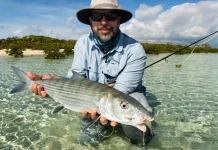
One of his standout catches was an approximately 20-pound bluefin trevally caught off the reef on a nine-weight rod. He used a chartreuse-and-yellow Clouser Minnow, a pattern that also attracted other trevally species and even bonefish. For Xavier, the bluefin trevally is one of the true highlights of fishing Christmas Island.
[00;13:54] When Dave asks where Xavier would go if time and money were no obstacle, he names northern Australia and Oman. Both destinations offer unique things to find elsewhere
Oman is especially interesting because of its two permits: the African and the Indo-Pacific permits. Northern Australia offers its own permit, along with permits for tusky, queenfish, and other flatfish species. Xavier describes the tusky as one of the most unusual and beautiful flatfish, with striking coloration and a distinctive appearance.
[00:17:47] Colombia became one of Xavier’s favorite fishing experiences after customers encouraged him to visit. He quickly understood the excitement around peacock bass, describing them as incredible game fish with impressive strength for their size. He considers them among the best game species in the world.
The trip also brought an unexpected challenge on the Orinoco River near the Colombia-Venezuela border. When the boat motor failed, the group spent about two hours trying to get it running again while drifting in a remote area. They eventually got moving, stopped near the meeting point of three rivers, and continued their journey in the dark with help from their local boat driver.
[00:21:28] Even with all his international travel, Xavier still spends as much time as possible fishing in Colorado. The Denver Front Range offers access to tailwaters and freestone rivers, mountain streams, alpine lakes, and larger still water. He enjoys moving between different types of water rather than sticking to one style of fishing
He also discusses a difficult summer when low water levels led to voluntary fishing closures on rivers including the Arkansas, Colorado, and Eagle—the warmer conditions made exploring other fisheries especially important. For anglers chasing Colorado trout, his experience reminds them to pay attention to water conditions and be willing to try somewhere different.
[00:26:23] Xavier talks about Golden Fly Shop’s distinctive Steakhouse streamer display, designed like an old-fashioned meat cooler. It holds flies ranging from large patterns for musky and giant trevally to smaller streamers and bonefish flies. The Display reflects the variety of fisheries the shop helps anglers prepare for.
He also takes pride in the shop’s fly-tying section, which carries materials for everything from roosterfish flies to tiny midges. Golden Fly Shop hosts classes, demonstrations, and events featuring experienced anglers and fly tiers, giving customers opportunities to learn and connect with the local fishing community
Big flies are exciting, especially when targeting large predatory fish, but Xavier points out that smaller pattern can still be important. in Colorado, clear water and fishing pressure can make downsizing useful, even when targeting larger fish. He mentions crayfish flies as one example of a smaller pattern that can produce musky.
The display reflects the variety of fly fishing destinations Golden Fly Shop serves. A shop that helps anglers prepare for trout, saltwater species, and large predators needs a fly selection that covers very different fisheries.
[00:29:21] Beyond travel planning and the streamer display, Xavier works on shop content, inventory, product selection, and customer service. He takes particular pride in the fly-tying section, which is stocked with a wide range of patterns, from roosterfish flies to tiny midges. The goal is to help anglers find the materials they need for the water they plan to fish.
Golden Fly Shop also runs classes and events to help anglers build their skills and connect with others in the community. Xavier mentions presentations and demonstrations from Andy Mill, Blane Chocklett, and Ron Belak, as well as plans for beginner and intermediate tying classes and informal tying nights. These events help anglers learn from experienced fishers while strengthening the local community around the shop.
[00:36:24] Xavier has spent many miles hiking into Colorado’s alpine lakes in search of cutthroat and brook trout. He enjoys the scenery as much as the fishing, but he is careful about sharing specific locations because high lakes can be sensitive to fishing pressure and environment changes.
[00:38:16] Xavier explains that improvements in backpacking equipment have made backcountry fishing more manageable. Lighter packs, rain gear, and shelter systems can reduce the weight anglers carry into remote areas. He advises balancing affordability, weight, and durability rather than choosing equipment based on how light it is.
A float tube is not always necessary at high-elevation lakes. At some lakes around 12,000 feet, fish hold in shallow water close to the drop-off, making shore fishing practical. At lower-elevation lakes where fish hold deeper or trees limit casting room, a float tube can be much more useful.
He also recommends being prepared, staying safe, and adapting to the lake. If fish are not showing after an extended effort, consider moving to another lake in the same basin.
[00:41:50] Xavier recommends considering travel insurance, emergency rescue coverage, and insurance for fishing gear before heading to a remote fly-fishing destination. He shares an example from the group’s return from Colombia, when an aircraft problem in Bogotá caused an approximately 18-hour delay. Their flight insurance helped them manage the disruption.
When Dave asks about essential travel gear, Xavier emphasizes bringing a good, durable rain jacket rather than relying only on an ultralight packable one. Even in tropical areas, heavy rain can cool conditions quickly. Staying dry makes a major difference when fishing far from the comforts of home.
Episode Transcript
00:00:00 Dave: Golden Fly Shop has become a launching point for fishing trips around the world, with destinations ranging from Alaska and Mexico to the rivers of Colombia. Today, we’re talking about chasing peacock bass, fishing the remote flats of Christmas Island, and what happens when your boat breaks down on a river near the Venezuelan border. This is the Fly Fishing podcast, where I show you the best places to travel to for fly fishing, how to find the best resources and tools to prepare for that big trip, and what you can do to give back to the fish species we all love. Our guest today is Xavier Puls from Golden Fly Shop in Colorado, where he helps organize and host fly fishing trips around the world. Today we’re going to find out about Christmas Island and why this is worth the long journey, including a chance at bluefin trevally, bonefish, and giant trevally, and find out why Xavier considers peacock bass one of the greatest game fish in the world. And also, we’re going to hear about the Golden Fly shop’s famous steakhouse streamer display and how they’re bringing this all together with not only musky-sized flies, but smaller, tinier meat flies. We’re also going to find out what Xavier knows about high alpine lake fishing and when you don’t need a float tube. All that. Plus, we’re gonna even get some tips on travel insurance, fishing gear, and preparing for your next international trip. You can find Xavier at goldenfleece.com. All right, let’s get into it. Here he is. Xavier Puls. How are you doing, Xavier? 00:01:29 Xavier: Great, buddy. How are you doing? 00:01:30 Dave: Great. Great to have you on the show here. I always love to get started with a little travel talk. And you know, I know you’ve been around fishing, not just in Colorado. We’re going to talk about some of the areas you guys are doing in your hosted program. And we’re going to dial that in. I know that’s a big question we get from listeners. You know, they’re thinking, okay, where are we heading next? Right. And I feel like you got your, you got your finger on the pulse there. So, but before we jump into that, give me a heads up on Golden. How did you come to be working that out at Golden Fly Shop? 00:01:58 Xavier: Yeah. Um, Golden Fly Shop. It was a, uh. I don’t know, just like, kind of a natural journey, I should say. You know, I was kind of tired of working for the Forest Service, you know, having a summer job and a winter job. Bouncing back and forth. And I just, you know, I’m like, you know what? I love fly fishing. This is all I do in my free time. I’m gonna jump into this and, um, ended up working at another company in the Denver area, and yeah, just one day, I just made the jump over to Golden, and yeah, Michael’s a great boss, great owner to have. And you know, he’s given me the ability to grow. So I’m very thankful for that too. 00:02:35 Dave: That’s awesome. Did you jump right into, like, travel, or has that always been something on your mind? Have you always thought, like, man, it’d be great to not just stick around locally, but get out around the country, the world? 00:02:46 Xavier: Well, I would say that’s probably every angler’s. 00:02:49 Dave: Yeah. Right. Yeah. That’s all of us. Right? Yeah. 00:02:52 Xavier: But um, you know, I think it was just I kind of took what I could get. You know, I would just do whatever was asked of me, and the opportunity presented itself. Michael said, hey, you know, uh, this is something that I’m going to be offering you guys. Is this something you would want to do? And I said, absolutely. The only caveat was I had to take full ownership of it. So if it did well, good on me. If it did bad, I had to pay the consequences. And, uh, you know, which is a fun, fun journey to go about because, you know, I can really, I guess there is no leash on me. And I could just go out and do it as long as I could sell the trip. And so far, customers seem to enjoy traveling with us, right? 00:03:33 Dave: That’s awesome. How do you go about these days choosing, you know, kind of the next spot, you know, the next destination, and maybe talk about where you guys have been, kind of where you’re headed, and how you kind of choose where you’re going next? 00:03:45 Xavier: Sure. Um, you know, I wouldn’t say there’s kind of a formula per se. I think it all kind of happens in different ways. Like our Alaska Lodge, we work with Naknek River Camp and Katmai Trophy Lodge. They’re sister companies. That just kind of happened real naturally. You know, I heard some good things about the company from our customers that had been there before and just, you know, through social media and stuff like that. So I just reached out to the owner. I’m like, hey, you know, is this something that you guys do? He’s like, well, yeah, but how about you come check out the lodge first? Whereas, you know, like our Mexico, you know, the owner of that actually came in to us and asked if we could do that with him. Our Colombia trips, you know, another customer said, hey, you got to go to this place, you got to go do this. And I had about five different clients kind of twist my arm and say, hey, you’re taking us to Colombia. 00:04:38 Dave: Nice. 00:04:38 Xavier: So let’s do this. So I would say the formula is just it. 00:04:42 Dave: All over the place. 00:04:43 Xavier: It’s all over the place, which is the fun part. 00:04:46 Dave: Yeah. Well, the, the common thread there is that I think that, you know, you’re, you’re listening to your people that are coming to your customers, right? You know, it sounds like people are telling you, giving you the Intel of where to go and you’re picking places, obviously. I mean, you can’t go wrong with Alaska, Mexico or South America, right? It feels like those are all top and pretty, pretty close by. That’s the nice thing about where Colorado is located, right? I think you guys, you know, just as a state, you’re kind of right in the perfect spot. Do you feel like for travel, Colorado is the best place to be? 00:05:16 Xavier: You know, I think it ironically, it’s not center located, but in the airport world it is pretty centrally located. And I think Denver is a perfect jumping off point to get just about anywhere. You know, it’s like a two hour flight to Houston, two hour flight to L a X. If you got to get over to Atlanta, it’s only three and a half hours. Um, so yeah, I mean, I think as far as traveling, it’s perfect for us because I talk to guys that live on the East Coast and they have to, you know, travel much, much further. And, you know, they’re going against the jet stream when they’re doing that. 00:05:50 Dave: So. 00:05:50 Dave: Oh, right. 00:05:51 Xavier: Yeah. So, uh, it adds like a full hour plus a lot of times. 00:05:55 Dave: Oh, yeah. At least at least. And then if you’re on one of the coasts, like, you know, for me, I’m on the, the west coast. So to go to eastern Canada or eastern US, right. It adds on a nice chunk, a nice, probably a half a day or a day, you know. 00:06:09 Dave: Absolutely. 00:06:09 Dave: Right. So it is, it is cool. Um, okay, so that’s your program and then talk about what you have going. Do you do, uh, a few hosted, how do you choose where you’re going to be actually hosting or, and do you guys mix it up? Do you have some trips that are just not hosted? Do you have a mixture of things? 00:06:24 Xavier: So we don’t really send our clients out on like a non hosted week per se. The whole point of these trips for us is to build a community with those who shop with us, near us or just, you know, travel here and there. And so we don’t really do a non hosted week because we want to be there and be a part of that community. Um, so with that, you know, that’s something that we focus on is being there, being very attentive, making sure things are going well, being there for every single flight, all that kind of stuff. But as far as deciding, yeah, I mean, just kind of like I talked to you before, you know, I just like say the Alaska one, you know, that was one that I had in mind and that’s the one that I stuck with Columbia. My clients kind of twisted my arm to it and I fell in love with that one. Uh, peacock bass are probably the best game species in the world. I know a lot of Florida people are going to hate on me for that one, but, uh, yeah, pound for pound, those are incredible fish. So yeah, as far as selection goes, like I said, it’s it’s the same. We don’t really like rotate trips by any means, you know, um, if it’s something that we started, you know, I might hand off one week or something like that. I did that this year. Uh, I didn’t want to spend two whole weeks in Alaska after traveling to South America twice already this year. 00:07:38 Dave: So. Oh, wow. 00:07:39 Xavier: Yeah. Poor me. But, uh. 00:07:41 Dave: Yeah, yeah. 00:07:42 Xavier: So that’s kind of the preference. 00:07:43 Dave: What’s the Mexico trip? What species are you doing in Mexico? 00:07:47 Xavier: Yeah. So our, uh, outfitting manager, Tristan, he does a Mexico trip down to Mexico. 00:07:54 Dave: With. 00:07:54 Xavier: A Casa Lodge. And so that’s primarily permit focused, of course. But anglers, you know, have great shots at big schools of bonefish and including some very large Central American bones, which is really cool. You don’t see, you know, eight pound bonefish in that area too often. Um, so having those around is really cool. Tarpon, both migratory and resident juveniles. Uh, and then yeah, your Snooks, Jax, all that kind of other stuff. So classic flats, classic flats. 00:08:24 Dave: What about one that we have have talked about a little bit. Um, you know, I haven’t been there yet, but is Christmas Island right. I feel like that’s one I know Greg shout out to my buddy Greg. He was the first one that I heard about that trip on. Is that one that you’re you guys are doing kind of or is this like an annual trip sort of thing? 00:08:41 Dave: Yeah. 00:08:42 Xavier: Um, that was actually my inaugural hosted trip was over to Christmas Island. 00:08:46 Dave: Oh, wow. 00:08:47 Xavier: And what a journey that was. 00:08:49 Dave: Yeah. 00:08:49 Dave: Was that like the ultimate when you think of travel, was that like the ultimate travel? It takes a little bit of effort to get there. 00:08:56 Xavier: Yeah. I would say as far as, you know, with budget in mind. Yes, absolutely. Yeah. You’re traveling halfway across the world to get there. But I would say it’s absolutely worth it. Um, and as far as you saying, if it’s an annual one or not, you know, that’s one that we want to continue. I think we just, you know, we’re probably going to add that something like that next year. But yeah, just kind of rotating through other trips right now. 00:09:17 Dave: So. Right. 00:09:18 Dave: Yeah. So if you get, uh, enough people that are interested and maybe describe that a little bit on Christmas Island, what is the, you know, that was your kind of inaugural, you know, kind of travel. What was it like? Describe that trip a little bit. What were the species and just take us there. 00:09:33 Dave: Yeah. 00:09:34 Xavier: So you know, it’s a long flight. You’re getting to Honolulu. Um, you’re going to stay overnight and then take your three and a half hour flight to then Christmas Island. It’s a small island and it’s very, very rugged. There’s no standing fresh water on the island, so everything’s imported. So when you show up, so is all the food. So is all the water. So are all the drinks, which is very, very interesting as far as the fishing goes though. Even though it does have multiple lodges across the island, you still have room to spread out. And I think the fishing is phenomenal. We were catching bonefish triggers, smaller giant trevally, bluefin trevally, which I think are one of the true gems of that island. 00:10:16 Dave: Yeah, the. 00:10:16 Dave: Bluefin, I think I think the photo you guys have on your website is, is a bluefin. Is that true or. I’m trying. You might not know what photo that is, but. 00:10:24 Dave: Yep. 00:10:24 Xavier: Yeah. That’s, uh, that if, uh, I’m thinking of the right photo, that is a roughly twenty pound bluefin trevally. I caught off the reef on a nine weight. 00:10:33 Dave: That’s amazing. Fish on a. Yeah, it looks like on a yellow fly. Yep. 00:10:37 Xavier: The chartreuse and yellow claws are classic. 00:10:39 Dave: Oh. Claws are. Oh, so you got that on the Clouser Minnow? 00:10:42 Xavier: Yes, sir. 00:10:42 Dave: That’s amazing. Yeah, we just had Bob Clouser on the podcast, so we just heard the history of that fly, which is really interesting one. 00:10:49 Xavier: Well, uh, shout out to Bob because that fly just seemed to crush every single trevally species and even some bonefish on that island. I would be throwing for bluefins, and suddenly a bonefish would come up and try to attack it. 00:11:02 Dave: So wow. 00:11:04 Xavier: Very cool. But, uh, to go back to Christmas Island, it’s a very beautiful island. It is incredible because it’s so rugged and remote. You have to consider that your accommodations aren’t necessarily going to be the best. And your food also isn’t going to be like, you know, top end stuff, top end. 00:11:21 Dave: Well, and that’s another thing. It’s interesting to travel because I think everybody, we’re all different, right? I think you have some people that love the, the highest level of it. And then you have some people that like, you know what? I don’t need the highest level. I could just give me whatever food I’ll take whatever. Right. And, and obviously you’re going to probably with, you’re going to save some money maybe if that’s part of what you’re thinking, right? Or if money’s not an option, then you know you can go big. But it sounds like this trip is a little more probably price is going to be maybe not quite as high as some of the high end lodge sort of thing. Lodges. 00:11:51 Xavier: Correct. Yep. Yeah. I, I would say, you know, they have been increasing, but so has everything, you know, so I’m not going to put any blame on any ownership in Christmas Island. If anything, I justify even more for them because when they’re flying in their, uh, food and water and also then having a boat from New Zealand come up, I can understand why, you know, that’s going to get more expensive. 00:12:14 Dave: You know, just the price, if you’ve heard that with the travel programs, is that just I mean, literally the fuel, right? That’s gone crazy. And and that affects everything. So it’s like they have to, right. They have to increase the prices somewhat. 00:12:25 Xavier: Absolutely. Yeah. Our Alaska lodges, they were nice enough to kind of swallow the extra cost for fly outs this year, but I don’t foresee that next year because it’s only going up. So. 00:12:36 Dave: Okay. Perfect. So so that’s a little touch on Christmas. And then also we mentioned Mexico. So is that the big one there? Is that looking at, uh, roosterfish or what’s the one down there? 00:12:47 Xavier: The Mexico. Yeah. That’s the, the classic flats that we have going on over in. 00:12:52 Dave: Oh, okay. Yeah, yeah. I’m thinking, I’m thinking, sorry, I was looking, I was mixing up. I’m on your site now. I’m kind of cruising here. I’m looking at I’m looking at Baja Mexico. There is one. Yes sir. Yeah. That’s the Baja. Okay. 00:13:03 Xavier: Yeah. No. All good. Um that’s actually the program that kicked us off into okay. Yeah. The hosting world. So that was even before I was working here. Um, at Golden it, um, yeah, we take our customers down to Baja fish for roosters and mahi mahi and, you know, various jack species. And you know, that Baja fishery spending some time myself there, it’s not a full day fishery. You know, it’s not like your classic eight to four o’clock. And then you come in and then you have your dinner, that wind kicks up and you got to be off typically at the latest. One o’clock so a lot of the time, you know, you’re spending having fun, you know, trying to kill some time up on the beaches and stuff like that. So that was a fun one. You know, having a group of guys taking ATVs out and just skirting around for half the day and fishing for the other half of the day. 00:13:54 Dave: So yeah, there you go. Wow. So, so and now, and as you look ahead, what are the trips you’re thinking like, okay, this is one that I definitely will be going on or I want to go on. Do you have that lined out the next and are you looking ahead for a year or two? Or how many years ahead are you kind of looking on this stuff? 00:14:11 Xavier: So for the, the shorter, the shorter trips, travel wise, I should say, you know, like you’re Alaska’s, you’re Mexico’s, Colombia’s, which ironically, getting to Colombia is very, very easy. Yeah. You would not think that. But on that note, typically I’m looking at about a year. I think a year is plenty for that kind of stuff. Whereas, you know, man, I, I can’t tell you how many trips that I want to do. Uh, right. 00:14:35 Dave: Yeah. What’s your top? Give me your, like, time and money and all of it was no issue. You could just go wherever. What would be your top say few you’d have there. 00:14:44 Xavier: Absolutely. I think the the two and you probably have not heard these ones before. Maybe you have the two that are on the top of my list are Northern Australia and Oman in Oman. Yeah, yeah. Very different flats, fisheries and the, you know, for both of those, you know, unique species, then you have kind of the offshore inshore fisheries. I would say those are certainly the top of my list. Absolutely. 00:15:09 Dave: We’ve heard we’ve done one episode on Oman. Then that’s permit right. Those unique permit over there. 00:15:14 Xavier: Yeah. So they have two different species of permit. They have the African. And the Indo-Pacific I believe is what they call them. But um, so two different permit, which is incredible. I mean, there’s no other place in the entire world you can go do that. 00:15:27 Dave: Yeah. And then northern Australia, I think we’ve heard about that a little bit too. That’s that’s off the coast. So you’ve got what’s the big species there that you’re looking for? 00:15:34 Xavier: Yeah. So it depends on the area that you’re in. But there’s a permit which are unique to the Australian waters, um, kind of similar to your africonus, but they behave much more like your Atlantics. You know, they’re, they’re in bigger schools or solos. They’re in that typical flat stuff that you’d see in other permit. So you have those. There’s the bastard species, which are another flat dwelling fish, the Tusky, which if you have not seen a tusky, just look at a photo. They are the probably the most unique and beautiful looking fish you can find on a flat. In my opinion, that is. Yeah. And then, you know, you have your you have your queenfish and bunch of other cool stuff. So. 00:16:16 Dave: Oh yeah, the tusky. I have seen those. Those are the amazing. Yeah. They’ve got the that blue iridescent blue. The coloration is amazing. 00:16:24 Xavier: Yeah. Oh, it’s, I mean, it’s like a triggerfish and a blue gill net, right. 00:16:29 Dave: Yeah. It’s got the mouth and the mouth almost looks a little like a piranha. 00:16:32 Xavier: I know it’s it’s very, very weird, very unique. And it’s, it’s cool that there’s not really anything else like that out there. And yet they’re on these flats in northern Australia. 00:16:43 Dave: That’s so good. It’s pretty cool to. You must kind of pinch yourself sometimes to think about it because, you know, like I had Bob Clouser on, you know, earlier and he was talking about this fly and how Lefty Craig going back to the eighties. Right. You know, probably well before you were born and they were and lefty was traveling, you know, but it wasn’t big back then, right? Not many people were traveling around the world. You know, lefty was doing it catching eighty five species and all that stuff. And of course, we have people that are doing it. But now it’s it’s kind of common, right? It’s common to be doing what you’re doing. Do you feel like you’re pretty lucky to be kind of in this era right now? 00:17:15 Xavier: Oh man. Yeah, I’m incredibly lucky. Um, for multiple reasons. You know, for one, where I work at, you know, I can’t do it without Golden fly shop. But then, you know, second off, I mean, just having the access with the internet and vehicles and planes. And, you know, everything is just so much simpler today that even twenty years ago, you know, I mean, you see the journey that the guys at the Seychelles had. 00:17:39 Dave: Oh, I. 00:17:40 Xavier: Mean, even just twenty years ago, how difficult that was. And now it’s just a run of the mill trip. Yeah. So yeah, incredibly blessed. 00:17:47 Dave: Definitely it is. Do you like the I always love kind of hearing whether you kind of really love the travel or is the travel, you know, you’ve probably had some travel issues along the way, but what’s your take on that? Just the getting to the place. 00:18:01 Xavier: Yeah, I love traveling itself. I don’t really mind, you know, jumping from place to place. I will say I have a hard time sitting still. So being in a plane for a very long time, if I don’t have the opportunity to get up or it’s a red eye, you know, I get a little get a little stagnant, a little stale. But, you know, I’m not going to complain about that because at the end of the day, we’re traveling for fish, right? Yeah. I don’t really mind the the whole travel aspect. I I think it’s fun. I think it’s part of the adventure. We had some we had a boat die, uh, going down the Orinoco River this year in Colombia, and we were just free floating down the river in the middle of nowhere. 00:18:41 Dave: No kidding. 00:18:41 Xavier: Uh, yep. Uh, yeah. In between Colombia and Venezuela border. It was. We had nothing we could do. 00:18:48 Dave: Yeah. What would you do? What was the plan there? So you just you. So your motor’s out, you just kind of float until you get was camped downstream or what was your plan? 00:18:55 Xavier: Yeah. So the plan was there wasn’t much of a plan, right. Because if we had free floated it would have taken a long, long time. Plus we’d have to go up another tributary. So we luckily after about two hours working on the boat, we were able to get it idling just long enough where we could put our way back upstream. Luckily, we were in the slowest part of the river so we could putz back up, and we stopped at this little boat shop on the corner of where Three Rivers meet, and we just hung out, um, with some native Colombians for the rest of the night until another boat showed up, because that’s where they had, um, Starlink. So we were able to call back to the main town. That was about an hour and a half boat ride from there. And, uh, yeah, then we drove the boat, uh, in the dark pitch black for multiple hours at two and a half hours in pitch black. 00:19:50 Dave: No kidding. 00:19:50 Xavier: Yes. 00:19:51 Dave: So no flashlight or anything off the front. 00:19:54 Xavier: We had a little headlamp that our native boat driver would pick up and flash the sides of the river, make sure there’s no logs, make sure there’s no rocks. 00:20:02 Dave: Right, and. 00:20:03 Xavier: Put it back down and just keep going. 00:20:05 Dave: Oh, man. Just cruising. Like going super slow. Just kind of taking your like. 00:20:09 Xavier: Absolutely not. No, he was, he was cruising. So we were, we were going pretty fast actually. Oh right. 00:20:14 Dave: Wow. 00:20:15 Xavier: But it was impressive. I mean, he could, he would turn on the lamp right when he knew something was there. He just had to find the exact location. 00:20:22 Dave: Right. 00:20:23 Xavier: And sure enough, every single time he’s like, oh oh yeah, there’s a boulder. And he was already away from it. So I’m watching him do that in the dark, even though it was very, very nerve wracking. That guy’s been up and down the river so many times that we all felt safe. 00:20:37 Dave: Yeah. No, that’s that’s the we’ve talked about it. You know, that’s why you do the hosted and the guides. You know, I mean, you could probably there’s a way to do it on your own in some of these trips. But you know, that’s the thing you get in a situation. I’ve been in a few of these around, you know, around the world up in Alaska and stuff where you’re, you know, your boat breaks down or something like that. And you’re, and you’re kind of on your own figuring things out. Right? And so it’s, yeah, I feel like that’s part of it. It’s a good story. Obviously, we’re sitting here talking about it now, right. And you survived. 00:21:04 Xavier: Oh yeah. No, it was it was quite the adventure. And you know, me and my clients, all we could do is just laugh and wait till it’s over, you know? And, uh. But yeah, no, like you said, you know, traveling by yourself can be. It can be a lot. Yeah. And you’re totally by yourself. So having that extra assurance with the lodge or something like that, if you don’t have all the time in the world, is very beneficial. 00:21:28 Dave: Yeah it is. Yeah. I think that the cool thing about what you guys have here, you know, for us is I know we have listeners shout out to Mike out there. We were just chatting. He’s trying to, you know, we’re looking at trips and stuff like that. And, you know, I obviously can’t go on every trip. So having you guys as a resource, you know, to be able to like talk about some of these and maybe go on a trip here, right? Like of interest, maybe Christmas or whatever that is. So that’s a cool thing. But, um, let’s get into a couple tips and maybe fishing wise. Uh, first off, are you fishing Colorado a lot or are you getting out doing some stuff around there? You stay in more to this, the travel stuff we’re talking about. 00:22:03 Xavier: That is a great question because I do have a lot of my customers and clients kind of joke that, oh, well, since you’re out traveling, you don’t want to fish when you’re at home, right? And I think that’s hilarious. 00:22:15 Dave: Because you’re in a great spot because you’re in a pretty amazing spot. Just Colorado itself, right? 00:22:19 Xavier: Oh, I mean, yeah, I mean, the amount of great fisheries we have so close to us in the Denver Front Range is unbelievable. You know, sure, you’re driving a little bit further than, say, your folks in Montana or, you know, even up where you’re at, right? You know, a lot of our drives are over an hour or two hours, but I would say it’s worth it at the end of the day. Um, plus you’re in the mountains, so who’s complaining? But I’m a fish head at the end of the day. And that’s why I travel is to keep finding something a little bit more, you know, something a little different. But at the end of the day, I still want to fish at any moment I can. And so long story short, absolutely. I’m fishing in Colorado as much as I can. 00:22:58 Dave: Yeah. What’s your in Colorado? What? You’ve got a mixture of things, right? The still waters, the tail waters, the mountain streams. What’s your favorite out there? What do you what do you do most of the time when you get, when you get a chance. 00:23:09 Xavier: You know, um, the guys kind of joke with me because I, I just jump around so much. 00:23:15 Dave: You do it all. 00:23:16 Xavier: Yeah, I do it all. And you can kind of see it in my travel program as well. I’m just kind of jumping. Uh, but I just like seeing everything. So, you know, I’ll fish the tail waters real hard for, you know, like a month and then suddenly we’ll spend, you know, my entire summer up in the alpine hiking, trying to find cutthroat and brook trout. Big still waters are a ton of fun as well. Those are probably the biggest fish in the state are going to be in those, you know, mid elevation stillwaters. But yeah, I’ll do it all. Absolutely. 00:23:45 Dave: That’s cool. How’s it been going this summer, specifically this summer. Because as we’re talking, it’s, uh, well, it’s October, so the summer is kind of behind us, but we’ve had a low water year. How did the summer go? I’ve heard some of the reservoirs were drained and stuff like that. But overall, how are things looking out there? 00:24:02 Xavier: Yeah. Um, you know, it was difficult, but I wouldn’t say it was horrible. 00:24:07 Dave: People were still fishing. 00:24:09 Xavier: Yeah. We we still had plenty of water to go fish. I mean, we have our tail waters, right? Those are always going to be cold except, you know, in their lower stretches where it begins to heat up, you know what? Like it does. But yeah, some of the stuff like our free stones that we can jump to a lot of times the Arkansas, the Colorado, the Eagle, those did see voluntary closures. Unfortunately, Colorado does not have mandated. 00:24:33 Dave: Oh it doesn’t right. 00:24:34 Xavier: No. Um, so you can’t even, you know, get a ticket for fishing on seventy degree water, which is. 00:24:40 Dave: Right. So waters did. Yeah. You had some of those places where it did get above the whatever the temperature is sixty eight or seventy. 00:24:46 Xavier: Absolutely. And you know, most of those rivers aren’t they’re used to seeing that. But with the extremely low water levels, they heated up so much faster and for so much longer. So far, it’s looking like it did not hurt the fisheries, thank goodness. But it was a difficult summer. But I think, you know, we didn’t see a down tick from anglers. I think people were just trying to, you know, find something a little different. And I think this was a year for exploration for a lot of our customers. 00:25:14 Dave: Love it, love it. No, and we’ve talked about that before. I think that, uh, you know, it’s, uh. You look for the positives, right? And I know we had Rick, Michael was on the podcast and he was talking about carp fishing right there in Denver, like right downtown, you know, and he, he was describing the, um, just how epic that fishery is, right? People could literally fly in and within looking at the skyscrapers, you can catch carp. Are there some other species around there other than trout that you guys are thinking about, or I’m guessing bass and some other things that people are interested in? 00:25:42 Xavier: Yeah, absolutely. You know, the trout is obviously huge. I found that, uh, each spring, you know, we get a large ticket customers that start looking into carp and bass fishing just because it is in our backyard. And that’s like the peak time for runoff, which is also a great time for both of those fish. Right? Um, so we do see a lot of that, like you were talking about. And then, uh, in recent years, we’ve been seeing a lot of people targeting Pike, Muskie, and, and even though this is a trout lake. Trout. You fish for them very, very differently. Yeah you do. So all three of those people, we’ve been seeing a huge uptick in those three species. 00:26:23 Dave: Right? Huge. And and that kind of goes in line, you know, back to the shop. I know we’ve talked about this a little bit that you guys have the steakhouse streamer display. Is that still when you when you take the shop, is that take us in there a little bit or streamers? Is this, you know, because you talked about lake trout, muskie, all these fish really streamers are huge for them, right? 00:26:42 Xavier: Absolutely. Yeah. I mean, big, small, medium. I mean, it’s kind of funny being in Colorado. You know, we’re the home of midges, you know. Right. Yeah. Yeah. And sometimes fishing for those large predatory fish in Colorado, I think because of the water clarity and our pressure, you do still have to go small sometimes. And you’re not talking like three inch flies, you know, like the woolly bugger or anything like that. But, um, I’m seeing a lot of muskie caught on. You know, crayfish flies, for example. 00:27:15 Dave: Oh, right. Right. 00:27:16 Xavier: So very unique. But yes, absolutely. I think the goal for all of us is to throw the biggest fly we can because it’s the most visual eat ever. And the steak house is very, very funny. The previous owner set that thing up and when I first came in, I got an absolute hoot of it. 00:27:33 Dave: Is there a place we could see a photo of that on the website or somewhere online? 00:27:37 Xavier: Absolutely. I think you’ll be able to see plenty on our Instagram. Okay. Um, as well as Google images. But absolutely, if people take a look at our Instagram, they’d be able to be able to see that. 00:27:46 Dave: We’ll get a, we’ll get a link in the show notes for this episode too, so people can have a look at the steak house streamer. Yeah, I’m seeing one now here. Yeah. It’s just basically it’s just a ton of, of like, you cover it all there from the big to the small and everything in between. And is this is a mixture of, of streamers. 00:28:04 Xavier: Oh yeah. I mean, um, the steak house is something that I, being a streamer junkie myself is something that I work on pretty often. You know, as far as revitalizing what flies that we need new flies. Bringing back some classics. Keeping the salt section well filled. Um, so it’s a perfect blend of, you know, your muskie and GT flies all the way to tiny little bonefish, bitters and wooly buggers. So yeah, it’s got everything. 00:28:33 Dave: So you’re there in the display and the display is essentially it’s like a, it’s like you go to the, in the, you know, the old meat market or something, right? Go to that. 00:28:40 Xavier: Is exactly what it is. 00:28:41 Dave: It’s a cooler. 00:28:42 Xavier: You are correct. 00:28:43 Dave: You’re going to the cooler and it’s got the. Which is pretty awesome because I feel like I feel like that era, whatever that was the fifties, I don’t know, somewhere there it feels like there was this perfect era of the country, you know what I mean? Like after the war where there was this, you know, everything was kind of cool back then. And that’s, that’s what you’re taking out, right? That’s what this display is a little bit. It’s kind of a throwback to that. 00:29:04 Xavier: Yeah, yeah. I yeah, I mean, the aesthetics of that time frame, which is far before me is, uh, yeah, something that we should strive for again, because it was very cool, very fun, very colorful. And, uh, anyways, the steakhouse kind of embodies that a little bit. 00:29:21 Dave: Yeah. Good, good. Okay. And so we could check that out and on the fly shop, you know, again, we’re in the shop, you’ve got the display. What else is keeping you busy in the shop? So when you’re not doing the travel stuff and you’re doing some writing too, right? Like blogs and stuff like that. 00:29:34 Xavier: Yeah, yeah. Um, I absolutely do a ton of the blogs. Um, I help out our video editor from time to time, you know, doing stuff like that. I don’t do any editing, but as far as, you know, the, uh, wording and stuff goes for titles and descriptions. So I’ll help out with, you know, pretty much anything like that. Customers are always number one. Of course, you know, it doesn’t matter what we have on our plate. Customer comes in, that is what we are doing. You know, that is what we strive for, is to greet everyone at the door and make sure that they’re at least being, you know, you know, saying, hey, how’s your day going? You know, I’m busy, but I’ll come to you in a second. You know, stuff like that. I, I think, um, customer service is what separates us from everyone else. So, um, but aside from that, you know, if it’s not customers selling rides or, you know, helping guys, you know, pick out recipes for a pheasant tail or whatever, typically, you know, running through inventory, ordering new product or just filling product, stuff like that. Always merchandising, as you know, with the shop goes. So, uh, it is retail at the end of the day. So, but yeah, I mean, standard day to day retail stuff. And aside from that, yeah, making schedules and doing all that fun stuff. 00:30:48 Dave: So yep. That’s it. It sounds like you’re out there. You’re doing a little bit of everything in the shop, which is cool, right? That’s probably one of the cool things about being in a shop is that it’s pretty diverse. You’re and do you guys have a, a fly tying material section that’s pretty diverse there as well? 00:31:05 Xavier: Absolutely. Yeah. We, have a very large time selection. Um, and that’s something that I have been working on for about the past two weeks, you know, getting refilled and making sure inventory is all good and all that kind of stuff. But aside from the steakhouse, the fly tying section is something that I, uh, I take with good pride because it’s so diverse. It’s good for everybody, you know, just like our customers who travel everywhere, they should be able to, you know, get materials so they can tie flies for everywhere. So that’s something that we focus on. So guys can tie roosterfish flies, size thirty two midges and anything in between. 00:31:41 Dave: That’s sweet. That’s really sweet. Yeah. It’s, uh, I feel like going back to the shops, you know, all shops are different, right? Depending on where you’re at. But I feel like having the fly tying materials is a big part of, of a good solid fly shop, right? I feel like that separates sometimes, right? When you can, you know, because again, not everybody’s into tying, I don’t know what percentage of people tie, but it’s, you know, it’s probably maybe half, maybe more. But you know what I mean. I feel like having those materials is just something that’s just like it makes it a fly shop. Do you kind of feel the same way? 00:32:10 Xavier: Oh, I think it’s a huge part of it, you know? And I think I’m going to guess for our. 00:32:17 Dave: Yeah. What do you think it is. Yeah. Your flight tires. 00:32:19 Xavier: Yeah. Yeah. I was going to say I think with our customers it’s it’s a metric that’s much slower. Um, I’m going to say anywhere from ten to fifteen percent, you know. 00:32:27 Dave: Oh no kidding. Yeah. Right. Yeah. So that’s so there’s a lot of room. So that’s what’s cool thing is there’s probably a lot of room for people to grow into it or, you know, get into it. 00:32:34 Xavier: Yeah, absolutely. You know, that’s the cool part is introducing people into it. You know, during the winter, we’ll have classes that, you know, we’ll rotate through, whether it’s like a, a basic, uh, one on one class or more advanced, like streamer time classes will do. So that’s pretty great. But you know, to your point, I think if you don’t have a good time selection, it does hurt the shop almost a little bit, even if you only have ten percent of people, right? Because at the end of the day, if they’re looking for one material and you don’t have it, then they’re going to go somewhere else, right? 00:33:07 Dave: Yep. 00:33:08 Xavier: So yeah. And you know, tying is, I mean, at the end of the day, every single fly that you buy or tie yourself is tied by somebody. And so it is a center core of what fly fishing is. So yes. 00:33:21 Dave: Yeah. It is. Yeah. The flies are definitely your not fly fishing without without the fly. That’s it. And all that. So good. Okay. And you guys do some classes. It sounds like throughout the year maybe give us a little rundown on that. What can we expect now? Like we said, it’s October. This episode probably goes live in November. What do you have coming? Do you have like during the winter time? Do you have like some events still or is this more in the spring? 00:33:44 Xavier: Yeah. So that’s one thing that I’ve been working on this year is expanding our events at the shop. You know, other than like classes and like the two, you know, spring and fall events that we’ll have, you know, I, I was looking to do some smaller ones here in between, just like I said, with the traveling aspect, you know, build that community with our customers. And so we, um, we actually had Andy Mill. 00:34:07 Dave: Oh, nice. 00:34:08 Xavier: Come through, uh, August first. That was really, really fun, uh, talking all things tarpon. 00:34:14 Dave: Did he come in for was this like a at the shop? He spoke at the shop? 00:34:17 Xavier: Yep. Yeah, absolutely. Yeah. He was here in person at the shop, you know, presenting, doing active demonstrations on casting and, you know, pulling on a heavy fish with light tippet. Yeah. Uh, it was, it was a great class. Great class. Uh, we just had Blaine Chocolate in the house as well. Uh, we had a big old thing. Um, streamer fest is what we called it. So tying demos and active presentations. And it was a great fun weekend. And, uh, so those are like the two big ones we had, we had, um, Ron Blaylock come through, talk about all things alpine fishing. Yep. 00:34:50 Dave: Yeah. He has the, um, Ron has the book. Right. Is that the Colorado book on fishing lakes? 00:34:55 Xavier: Yep. Eight hundred lakes. And then he’s got another one. I forget the name of that one, but both are great books. I would say the eight hundred lakes book is the Backcountry Bible, in my opinion. I’ve owned a lot of alpine books, and I would say that is by far the most helpful. So anyways, yes, to your point, I’m always looking to get more events going on in the shop, and I don’t have anything right now on the books, but doesn’t mean things aren’t going to turn around here in a sec. But certainly since this is coming out in November, we will have time classes coming up. 00:35:26 Dave: Oh, good. 00:35:27 Xavier: Yeah. So we’ll have a wide variety of time classes that we’re going to offer primarily in that beginner and intermediate level. And then also we like to do open time nights where people just come in, bring your vice people will bring some beers or whatever, and they just, you know, shoot the crap for the evening. So that’s always good fun. So I would certainly look out for that post. Thanksgiving is typically when we start that good. 00:35:52 Dave: So yeah, so some tying coming up classes and an open night is good. No, this is great. It sounds like. Yeah, you guys. And you’re probably going to be adding some to this as you go. It sounds like. And and yeah, Ron, I think that’s the the lakes is something with you know, I feel like that’s another level where you can’t get that sort of thing, especially the alpine lakes everywhere. Right? You guys are in the heart of the Rockies, right? You’re right there. So you’ve got them probably hundreds, thousands maybe of lakes. Describe that that a little bit. What do you love about the lake fish. Have you done a little bit of those alpine lake lake trips. 00:36:24 Xavier: Oh my goodness. Um yeah. I’ve spent too many miles on the trailhead chasing alpine fish. I, I would say, you know, the alpine fisheries are incredible. One thing that I always tell our customers and, you know, err on the side of caution when talking about locations, however, because they’re not a river, right? A river is constantly got flowing food and flowing oxygen. You know, they can just feed away even after you catch them. Whereas these fish, you know, they’re the food is not readily available or you know, as much I should say. Their growing season is much shorter. And because there’s no moving water, they have to move themselves to get oxygen. So they’re expending a little bit more energy. So with that, they don’t respond to pressure quite the same as river fish do. And so when people start talking about locations, more people are going to find out about it and it’s potentially going to ruin a fishery. Now, I’m never going to say that you should shame anybody for actively doing it, but I think education is always a good thing. Um, so I always tell customers like, hey, I can’t give you an alpine lake spot. Like I, I just cannot do that. But get Ron’s book. And there is so many options. You don’t even realize, like you said, we are in the heart of the Rockies and we have, I would probably say thousands of lakes. Now, not all of them have fish, but sometimes you find out the hard way. So, um, and the, the whole thing with the alpine thing that I enjoy is even if it is a slow day of fishing, I got to go hiking. 00:37:57 Dave: I know exactly. 00:37:58 Xavier: Yeah. You know. How terrible is that? 00:38:00 Dave: Yeah. You got some exercise in. You saw some beautiful country. Yeah. Even if you don’t catch a fish or even go fishing, it’s. That’s a pretty cool day. 00:38:07 Xavier: Yeah, exactly. So I think alpine is great. And I think it’s still very underutilized, but I don’t think that’s necessarily a bad thing either. So. 00:38:16 Dave: Yeah. Yeah. No I love it. I think that I’m always and we had an episode recently where we were talking about some backcountry gear, you know, and the stuff. And that’s what’s cool too with the hiking. You probably are aware of this, but I mean, back when I was doing a lot of this back in the day, I mean, stuff was heavy. You know, you had these giant packs now. I mean, God, there’s so much light stuff. You know, you can go in the backcountry with a, whatever, a twenty pound pack, you know, if you wanted to do you find that the gear has really made things easier for you? 00:38:43 Xavier: Yeah, I would say so. Um, particularly, you know, when you’re talking about the backpack itself and like rain gear, you can really save a lot of weight and space just from those two components right there. Intense too. I mean, heck, like the Tarp tent technology, I use a tarp tent, so it’s just single ply. Put a stake up. Yeah. You know, trekking pole and call it good. 00:39:07 Dave: And you just save yourself tons of weight in room, right when you go with that. 00:39:11 Xavier: Oh my goodness. Yeah. So I think just the overall advancement in technology has helped the entire, you know, hiking world. But yes, us anglers who are in the middle of nowhere off of a major trailhead, I would say that helps tremendously. 00:39:26 Dave: Yeah. Do you are you on the gear with the backpacking gear? Are you have the best lightest stuff or do you just kind of have a mix of, of gear or, and are you doing the remote? Are you like camping out there is, is mostly day hiking in. 00:39:38 Xavier: Yes. And yes, I’ll do both. It just depends. Typically I’m day tripping it. But you know, every once in a while I’ll do, you know, a longer trip, you know, backpack in me and a buddy one time went out and yeah, we did a multi night Tonight. Golden trout and brook trout mission and, uh. Yeah. Uh, so having that light gear helped because we were pretty deep in there and it was absolutely worth it. But I, I don’t dive into everything as far as the backpacking side goes, because I’m not doing, you know, those fifty mile traverses that a lot of people are doing. Um, I would say get the gear that you can afford. And that’s the lightest and also the most durable. So there’s a kind of a threshold because you’re not going to be able to meet all three of those if you’re trying to do that all together. But yeah, no, I don’t dive into the gear necessarily. Now fishing, that’s different. 00:40:27 Dave: But yeah, you’re in the fishing gear. Yeah. You’ve doubted the fishing gear for sure. 00:40:31 Xavier: Exactly. 00:40:32 Dave: Yeah. Cool. And are people, I guess with the those high alpine lakes are people bringing in float tubes and all that stuff, or is it more you can do this from the bank. 00:40:41 Xavier: So I do have people ask about bringing a float tube up to lakes that are at, you know, twelve thousand feet, for example. I think it’s incredibly unnecessary because most of those fish are going to be in those shallow zones right off the drop off, because that is the warmest part of the lake. And those lakes still barely get above forty five degrees all summer at that elevation. So you don’t need a flow tube because the fish are right next to the bank. Most time your casts are fifty feet and within. Whereas I used to live out west, living out west in Grand Junction, western Colorado, I should say out by Grand Junction. There is a lot of that lower elevation alpine stuff. So ten and a half thousand feet and below. And that’s in the trees where things can warm up and things have a little bit more bug life and so on and so forth. So those yes, I would recommend hiking in a float tube. And that’s what I used to do because a lot of times those fish were sitting at thirteen to, you know, fifteen feet of water and you can’t reach that from the shore. Plus, you can’t cast because there’s trees everywhere, so. 00:41:50 Dave: Yep. That’s it. No that’s cool. So yeah, you obviously and again, back to Colorado. You guys have a good mix of different types of fisheries and all that stuff. So you have it covered. Um, well, let’s, let’s hear I just want to kind of start to take it out here on we talked travel or we’re talking travel a little bit, maybe some tips on travel. And as we get out of here, you’ve mentioned, we talked about the program where you’re traveling around the country. What are you telling your clients, your customers who are going on a trip with you? Do you guys, it sounds like you guys take care of a lot of the details. Or do you have a, you know, kind of a few tips that you tell them to make sure that they have a good experience on the travel? 00:42:24 Xavier: Yeah. I mean, so we carry, you know, do all like the finite details, um, as far as logistics go, but having different insurance, um, whether it’s like a global rescue for rescuing or like insurance on your gear, you know, travel insurance, just some people have upwards of like four plans when they go on these trips because you never know what could happen in the circumstances. That is something that we aren’t liable for. Nor is the lodge. So I tell people, hey, it’s a cheap thing and you only need it for ten days of the year. I would certainly get multiple levels of insurance just to protect yourself, and I never hear of anything really happening. It’s just insurance. Yeah, exactly. It’s in the word itself. So, um, that is the biggest thing I can recommend to people. Good tip. Yep. Travel insurance, rescue insurance, gear insurance, all that kind of stuff. 00:43:17 Dave: What about the airline when you buy the plane ticket. The insurance there? 00:43:21 Xavier: Yeah. Yeah, absolutely. I think that’s another one too. And I recommend that to everybody is, hey, make sure when you’re doing it, you know, get that fully refundable option. Yeah. You’re spending more in the long run. But you know, we were coming back from Columbia this year and there was a mishap with the plane in Bogota, and we were stuck in Bogota, which not a terrible place in the world to be stuck. But, uh, we were stuck in Bogota for another eighteen hours because of that. But we all had the insurance on the flight itself, so we were totally fine. 00:43:52 Dave: Yeah. How does that work with the insurance? So you had the insurance. What would happen if you wouldn’t have had the insurance potentially on that? 00:43:58 Xavier: Yeah. So that circumstance was special because it was the airline’s fault. Right. So we would have been rebooked regardless. But in a circumstance where they’re not liable for what occurred, you’re not getting a refund or. 00:44:12 Dave: Oh, right. So if you yeah, if something happens where it’s not the plane’s fault, the airline’s fault, it’s just something happened and you missed your flight. They’re not liable for that. That’s your thing. And they’re not necessarily going to reimburse you for that. You might have to buy another ticket. But if you have insurance that actually that insurance covers you for that sort of situation one hundred percent. 00:44:31 Xavier: Yeah, yeah. In most in most scenarios, you know, there’s never a always and a never, but most of the time you’re going to be taken care of, which is a nice part in those scenarios. So yeah, you don’t want to be stuck out on a limb now. That’s kind of where we are in that area. That’s why we travel with our customers as well as we’re facilitating so that stuff doesn’t occur. But we always tell them, get the insurance. So if it’s something out of my control Tristans control, we can still get you taken care of. 00:44:58 Dave: Yeah, exactly. Yeah. That’s it. So you guys are you guys are there and you got it. You know, again, that’s why it’s cool to have a travel partner essentially, right? Have have a group so you can kind of take care of that stuff. So that’s a great the insurance is huge. That’s an awesome reminder. You know, take me to gear a little bit. We talked gear. What is your, you know, if you’re traveling, do you have a gear item you love? And I’ll, and I’ll kick it off this one because I was just thinking on the backpacking we had, um, we did this episode and we were talking about like footwear and they were saying the guest I had said that the toe socks are key under, you know, under your wool socks, you have this. Right? And I was like, oh, toe socks. I don’t have any toe socks. So but he basically said, you know what? It keeps you from getting blisters. He loves the toes. So I want to go out and get some toe socks this year, but. Okay. But what do you got? Do you got any gear? You’re out there, whether that’s backpacking or just traveling around the world that you gotta, you know, you don’t leave home without. That’s like a, maybe a luxury item or something like that. 00:45:52 Xavier: Sure. Yeah. I mean, there’s so many different things, right? When you’re traveling that you don’t even realize that you have at this point because you’re so accustomed to it. 00:46:00 Dave: Right? 00:46:01 Xavier: So yeah, I guess we’ll, we’ll stick with the travel theme. Yeah. Two things that I would say are so incredibly important that some people just do not think of when they’re first traveling is a good rain jacket and do not get a, like a packable, you know, super lightweight one. Get a heavy duty like Patagonia swift current, like the sky jackets, right. Um, even in the middle of the jungle, guess what? When it rains, it’s called the, you know, the rain forest for a reason. So you’re going to get dumped on. And even though yeah, it’s hot, you know, when that rain hits in the middle of the Amazon, you it cools off pretty quickly and you don’t even realize that you have that jacket on because you’re dry. 00:46:42 Dave: Oh, right. So even in the Amazon, even the Amazon, it rains. Even if it’s the Amazon, you still want to have the solid protection to stay dry because there is a. You’re right. I mean, it sounds like it’s not super. It’s not hot all the time there. 00:46:55 Xavier: No, I, and I would say the closer you are to the equator, the better it is. I would say, you know, if you are more in that subtropic zone like, uh, Bolivia and northern Argentina, for example, that gets way hotter than it does in your, you know, your Colombia, northern Brazil zone. But yeah, you know, to go back, yeah, having that heavy duty rain jacket, even though it might take up a little bit more room and it might be hotter in that moment when you first put it on. Like I said, in the middle of the jungle, it cools off so quickly you don’t even realize you have that jacket. So yeah. And when it rains, yeah, it gets cool fast because you’re so used to the heat from prior. 00:47:34 Dave: Yeah, exactly. Exactly. Cool. Well, this is kind of part of our random segment, but are you? I think I saw somewhere out there whether you’re interested in music or going to some shows, are you doing some of that around around Colorado? Are you into music? 00:47:47 Xavier: Um, I don’t know if that was me, but. 00:47:49 Xavier: Maybe I do enjoy concerts, but I’m not doing a ton of concerts. 00:47:52 Dave: Okay. Give us a little rundown on your music. What’s your flavor? What’s your taste out there? 00:47:57 Xavier: Oh, no. 00:47:58 Xavier: Um, I like everything, honestly. Um, you know, I’ll go to, like, straight Texas country concerts to rap. And, you know, I was at a hard rock concert the other night. Uh. Oh, really? So yeah, so I, I do, I listen to everything, I enjoy everything. I would say my playlist is not stale or stagnant. It’s constantly shifting around. The mood never changes. 00:48:21 Dave: Sounds like you’re getting out and going. I mean, at a hard rock concert. That’s pretty awesome. What was the was this like multiple bands or one band? Who was it? 00:48:28 Xavier: Yeah. Um, I forget what the who. 00:48:30 Xavier: The first was, but then it was Chevelle and breaking Benjamin. So. Oh, okay. Um, a couple of guys from the shop and I, we, we all went and just had a night to ourselves after the shop closed up. So it was fun. 00:48:41 Dave: Nice. Yeah. Colorado has a good music scene, right? There’s quite a bit of that coming through. 00:48:45 Xavier: Oh yeah. Yeah, we’re, we’re very fortunate with that. And you know, with that, you know, we get a lot of fish tourism as well. So, uh, Red rocks is at most fifteen minutes from the shop and. 00:48:55 Dave: Oh, is it really red rocks is only fifteen minutes away. 00:48:57 Xavier: Oh yeah. Yeah. And it’s just right down the highway. The longest is sitting at the light before you turn into it. Right. Um, so yeah, it’s right there. So we have a bunch of people that come in just for the music and then they go fishing with us, which is awesome. 00:49:10 Dave: Right, right. So there you go. You just added a huge bonus. I forgot that that you guys are so close to Red rocks, which is probably one of the most famous, you know, venues to, to listen to music in the country. 00:49:20 Xavier: I would say so. Um, you know, obviously it’s in our backyard, so I’m a little bit biased, but even if there’s not a concert, it’s a incredibly beautiful venue. And you know, I’ll just hike around in that area. I see people, you know, just working out in the stadium and the stands. So it’s pretty cool. Pretty unique in that sense too. 00:49:39 Dave: That would be an event. It would be cool. And I’ve seen this. I there’s at least one other one going there. I think it’s on the East coast. They’re putting together like a fly fishing slash music event. Right. But I feel like that’s kind of cool because who doesn’t love music, right? And bringing those two together, you know, if you can seems like kind of a cool deal, right? A little bit of music, a little bit of fly fishing. And, and I’d imagine for me, it’d be kind of cool to come in to Colorado, do some fishing, and then hit a concert one of the nights. Right. Or the night before you get started. 00:50:06 Xavier: Oh, absolutely. Yeah, absolutely. You know, I tell everyone, you know, if you’re coming in and you got like three days plus, you know, wherever you can jump in. I mean, even if you’re up in the mountains and you go to one of the free venues, I mean, there’s always like good bluegrass going on Friday nights and, you know, in smaller towns, like I was up in steamboat this June for a buddy’s bachelor party, for example, and we just stopped at the park and it was free to go in. And it was amazing music and it was one hundred percent free. And then guess what? We went fishing the next morning and yeah, it was a quick two and a half day trip and it was fantastic. So you don’t necessarily have to go to Red rocks. And if it’s not in the budget, still plenty of good stuff. 00:50:46 Dave: Yeah. Good. Okay, well, I want to get two more quick ones out of you and then we’ll be out of here. So one will be a fishing question. One will be kind of a random. Do you want to start with a fishing question first or a random question? 00:50:58 Xavier: Oh, let’s take the random. I like. 00:51:00 Dave: The random. All right. So before you got into flight and maybe you’ve been into fly fishing your whole life, we didn’t get that whole story, but was there something you were completely obsessed with that was before fly fishing, that kind of you were just fully into? 00:51:12 Xavier: My goodness. Um, so that that’s, uh, that was a little long. Uh, yes, absolutely. So I used to be a big bow hunter and I played lacrosse like crazy. And, um, so that’s what I was totally infatuated with if I wasn’t on the field, um, or at practice for lacrosse. I was shooting my bow. 00:51:32 Dave: You were shooting your bow and they were both equal. Were they both equal? Uh, hobbies, I guess, or sports? 00:51:37 Xavier: Yeah, yeah, I would say so. You know, the fall was a lot of, you know, bow hunting because of deer season. And then the spring was lacrosse season. So it kind of balanced itself out pretty well, which was nice. But I hurt my shoulder and playing lacrosse couldn’t shoot the bow anymore. And that is how I picked up fly fishing. 00:51:55 Dave: Oh, wow. So there you go. So you got injured and you got into fly fishing from that? 00:51:59 Xavier: Exactly. Couldn’t shoot the bow anymore. So I said, you know what? That looks pretty cool. 00:52:03 Dave: Wow. 00:52:04 Xavier: That seems like the bow hunting equivalent to the fishing world. That’s right. Do that. 00:52:08 Dave: Yeah. It is. I feel like bow hunting. The hunting. There’s a lot of crossover, right? Hunting, wing shooting. Um, but lacrosse is definitely unique. Right? You don’t hear about lacrosse. That’s a sport that. So if you were to pick it up right now or jump back in. Could you were you at a pretty high level? Could you still. You know what I mean. Like, could you still do it? 00:52:25 Xavier: Uh, stick’s been down for a better part of, you know, nine years. So I don’t know, but I think I’d be able to pick it up again. It’s like riding a bike at the end of the day. 00:52:34 Dave: So yeah. What is lacrosse? What is the comparison like the sports, if you had to compare it to other sports, is it like a mix of sports? What is it more similar to? 00:52:42 Xavier: Yeah, I mean, it’s a, I guess I like to call them the transitional sports. So your your soccer, your basketball, your hockey. Um, it kind of fits in that mold, right? I would say it’s pretty darn similar to basketball in my mind, but I would say a lot of guys would say hockey, hockey. So, um. 00:53:00 Dave: Yeah, yeah. Shooting in a net. You’ve got a, a stick or well, it’s not a stick. It’s a net. Right. Net. What do you call the, the stick thing. 00:53:07 Xavier: Yeah. Just call your stick. It’s your stick. You know it’s. Yeah. And then the head is on top. So yeah, it’s uh, multiple different sized sticks stick, but, uh, hey, um, kind of similar. 00:53:18 Dave: Kind of similar to hockey and little mix. Okay. And, and on the tip, let’s just get a fly fishing tip as we take it out of here. Um, we mentioned the high, the mountain lakes. What is the. Somebody’s getting ready right now. They’re listening. They want to go do the alpine. What’s the tip you’re telling them to have maybe a chance to get a fish out there. 00:53:35 Xavier: I would say finding fish is lake dependent. Whereas you go to tail water you’re probably going to find fish pretty easily. Right. I’ve been to some lakes where I’m I just where are the fish? I cannot find them. You know, you walk around the whole lake and you’re, you’re in that that zone, you know, the shallow meets the drop off and you should see something. 00:53:54 Dave: Right. There’s nothing going on. Right. You’re looking around going on. Right. 00:53:58 Xavier: And so my tip is, you know, since it’ll be this be a little bit later into the season, so alpine season’s over. Um, this would be multifaceted I guess is it’s okay to give up on a lake, but sometimes don’t give up on a lake because like I was just saying, I do a walk and not see anything for an hour and a half and kind of beat my head in just kind of blind stripping, you know, some leeches or whatever. And suddenly the lake wakes up and there’s fish everywhere all of a sudden. So that’s one thing I would say too. More importantly than anything is just be in decent shape so you can hike, not hurt yourself. Be well prepared. I think that’s far more important than the lake itself is being well prepared, being safe. You know those storms, when they come, it comes quick. So safety. But then after that, you’re all safe. You get to a lake and you’re just not finding anything. You know, sometimes the lake is just a dud. I would say stripping leeches is going to be your best bet on an intermediate line. You know, just you can get down. I don’t like the full sinks because they pile up in the rocks below your feet, and they can sink sometimes too deep. Or just run an indicator with a chronometer and a balanced leech and, you know, get like ten feet down off that drop off and just try to find something. Or if you’re in a string of lakes, you know, if you work your way all the way to the top, then just work your way back down. You know that or opposite, you know, if you started at the bottom Like you’re not seeing anything. Just start working. Lake, Lake, Lake. 00:55:26 Dave: Okay. 00:55:26 Xavier: And a lot of these basins, we’ll see multiple lakes, you know, at least two, three lakes. So that kind of, unless you’re in like a weird Cirque, a lot of times you do have a backup plan that’s fairly close. 00:55:40 Dave: Yeah. Right. So you want to cover the water still cover the water out there? 00:55:43 Xavier: Yeah, yeah. Just hike to the next lake and try to, you know, walk around with a good pair of polarized glasses and sight fish into the shallow zones, you know, close to inlets or outlets or drop offs. 00:55:55 Dave: That’s perfect. And does the, uh, the eight hundred lakes book, does that have some tips on fishing or is that more like where to go? 00:56:01 Xavier: Ron’s book, the eight hundred lakes has some, some tips in there. Absolutely. Um, it’s certainly more location dependent, you know, focused. I wish I could remember the name of his other book off the top of my head. 00:56:13 Dave: Yeah, we’ll track it down. Well, Ron Bielak is a b e e. I can’t remember how to spell B e l a k. 00:56:19 Xavier: Yeah. 00:56:19 Dave: Ron. 00:56:20 Xavier: Yep. Ron’s other book is far more informative than I could ever be when it comes to information about, you know, techniques and tactics. 00:56:28 Dave: Yeah, he’s got it right here. He’s got actually he’s got a good website. He’s got Ron black dot com. It’s, um, fly fishing, Colorado’s backcountry. Yep. Is that the book? 00:56:36 Xavier: Yeah. And that is one that we sell. Um, we sell both of them in the shop. You know, Ron’s right in our backyard. So yeah, we love supporting Ron and awesome. A wealth of information. So. 00:56:46 Dave: Perfect. Okay, well, we’ll add show notes to that and we’ll definitely be tracking down Ron as well. So cool. Xavier. I think we could leave it there for today. Really appreciate all the, uh, the time and we’ll send everybody out to Golden fly dot com if they have questions and definitely on all the hosted trips as well, we dug into that. So if people want to connect and follow up with you, we’ll have a link there. But thanks again for all your time today. 00:57:07 Xavier: Yeah. And I just want to say, if folks, you know, have any questions about travel. Yeah. And they’re not necessarily traveling with us still feel free to reach out to us. We, we more than happy to help at the end of the day, you know? Yeah, we want you to join us on a trip. But you know, we’re not these pushy used car salesmen, right? We’re we’re trying to help people, you know? Um, we’re excited that people are traveling with or without us. We just want to help them out. So. Call the shop, email us, whatever it might be if you have any questions as far as travel or fishing in general. So yeah. 00:57:37 Dave: We’ll do that. That’s a good reminder. So, um, so yeah, any, any other last words or I guess the best way is just to either call the shop or go to the website and check it out. 00:57:46 Xavier: Yeah, yeah. Um, yeah, my email’s Xavier X a v I e r at Golden fly shop dot com. I tell people to reach out to me via email. Um, you can just do that direct and then yeah, call the shop. Um, go on our website, Instagram, this golden fly dot shop and uh, our YouTube as well. So, uh, we, yeah, Tyler does a great job and creates some really good videos for us. Uh, including when this comes out, we’ll have multiple Alaska videos out. 00:58:14 Dave: Oh, there we. 00:58:15 Xavier: Go from this year’s journey. Good. And, uh, yeah, Good. 00:58:18 Dave: We’ll follow that. And are you guys. I think you’re doing a little bit. You had a YouTube channel you’re building there as well. They could check out. 00:58:25 Xavier: Yep, yep. Um it should just be Golden Fly shop. Uh, you’ll find us on YouTube and be full in depth. You will have, you know, just fun fishing videos. Others are more informative or gear reviews. So we do a little bit of everything just to, you know, that’s all what we do all things fly fishing. 00:58:41 Dave: Well, thanks for your time. We’ll, uh, we’ll be in touch and looking forward to the next one. 00:58:44 Xavier: All right, boss. Well, I appreciate you having me on. And you have a great rest of your day. 00:58:49 Dave: Big takeaway for today. If you get a chance, check in with Xavier. And, uh, and if you’re interested in learning more, go to Golden Fly shop dot com. We have a big opportunity right now with Fly Swing Pro, if you want to get access to that right now, all of the boot camp sessions that we just did are actually gone. But you can get them in wet fly Swing Pro. So if you want to join right now, you can get access to all those amazing courses, All the amazing bonuses and everything that we have to offer there in webflow. Swing Pro, we’d love to have you in there and build some trips together this year. Also want to let you know know Sam Lodge if you’re interested in Alaska. Big rainbow trout know Sam Lodge an experience. They’ve been doing this for fifty years. Check in with no Sam Lodge. We’ve got a big giveaway going on right now. All right. It is getting very late in the evening tonight. And if you are in the evening yourself right now and it’s late in the night, I want to wish you a very good evening. And if it’s morning, have a great morning or afternoon. And I appreciate you for stopping in all the way till the end here. And we look forward to checking in with you on the next episode. Please join us then. Thanks again and we will talk to you soon. 00:59:59 Speaker 5: Thanks for listening to the Wet Fly Swing Fly Fishing show. For notes and links from this episode, visit wet fly dot com.
Fly-fishing destinations offer much more than a chance to catch new species. Xavier Pul’s experiences with Christmas Island, Colombia, Mexico, Alaska, and Colorado show how travel, preparation, local knowledge, and community shape a successful fishing adventure. His advice is also a reminder to protect sensitive fisheries, carry the right gear, and plan for the unexpected.
Whether you’re dreaming about bluefin trevally on a tropical reef, peacock bass in a remote river, or cutthroat trout in a high alpine lake, there is always another fishery to explore. Which fly fishing destination would you put at the top of your list?