In this episode, Adam explains the hatches, flies, access, water conditions, boat fishing, wading, and presentation skills that matter on West Branch Delaware. He also shares how to recognize feeding rhythms, when to change flies, and why slowing down before the next cast can make a difference.
The West Branch Delaware is one of those rivers where a trout can be holding in a narrow current seam and ignore a fly that passes only an inch or two away. Adam Franceschini has spent 15 spring seasons on the West Branch Delaware, learning how to approach its wild trout and technical dry fly fishing.
Adam Franceschini has spent 15 spring seasons guiding on the West Branch Delaware, where technical dry fly fishing, wild trout, major mayfly hatches, and changing water conditions create a demanding but rewarding fishery. He breaks down what makes the West Branch Delaware special, from the Hendrickson hatch and locally tied flies to cripple patterns, dead drifts, stock mending, streamer fishing, and choosing the right rod.
Adam also shares his background in fly fishing, his work at West Branch Anglers, his connection to the American Museum of Fly Fishing, and his guiding experience in Alaska, Chile, and other destinations.
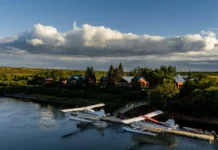
[00:01:58] Adam’s guiding career takes him well beyond the West Branch Delaware. He explains that he was preparing for his 19th year at Tikchik Narrows Lodge in Bristol Bay, where he works with silver salmon, rainbow trout, and Arctic char. He also discusses upcoming trips to Mongolia and Chile before returning to the West Branch Delaware for another spring season.
That intentional schedule is part of what makes Adam’s story interesting. Although he fishes many destinations, the West Branch Delaware remains an important part of his annual rhythm, with approximately 15 spring seasons spent guiding there.
[00:03:48] Adam grew up in northwest Connecticut, where his grandfather introduced him to fishing. His early experiences were more focused on spin fishing, including time on Woodridge Lake and the Housatonic River.
That background eventually led him toward fly fishing and guiding. The contrast between the Housatonic and the West Branch Delaware helped shape his appreciation for different types of trout water. He describes the Housatonic as less pressured in some areas, while the West Branch Delaware offers wild fish, technical presentations, and plenty of opportunities for dry flies and streamers.
[00:04:35] Adam describes the West Branch Delaware as a tailwater that can be fished more like a freestone river. It draws significant angling pressure, yet it still offers wild trout and technical opportunities. For dry fly anglers, the West Branch Delaware can demand precision. A good drift, the right fly, and the correct position all matter because the trout may not move far to take an offering.
[00:05:54] One of the first major events on the West Branch Delaware is the Hendrickson Hatch. Adam also recalls an excellent early black stonefly hatch and mentions olives, March Browns, and sulphurs as other important insects throughout the season.
The Hendrickson hatch is particularly important because it can create a period when trout become more willing to move for a dry fly. On the West Branch Delaware, that combination of insects, wild trout, and technical water creates the kind of fishing Adam enjoys.
[00:06:53] Adam points out that the broader Delaware system has a long history of fly-fishing innovation. He mentions the East Branch, Beaverkill, Willow, and the Roscoe-Livingston area, explaining that many modern dry flies have connections to this part of the country. That history is still visible in the way the West Branch Delaware is fished today. Adam uses many flies tied locally around Roscoe because he values having local knowledge represented in the patterns he puts in front of his clients.
[00:07:39] Adam says his first trip to the West Branch Delaware is usually during the first week of April. Conditions can still be cold then, so nymphing and streamer fishing can be important. As spring develops, the West Branch Delaware offers more dry-fly opportunities. Adam explains that anglers need to be prepared for the conditions they encounter rather than expecting one technique to work throughout the season.
[00:09:50] Adam says May is generally what people look toward for better weather. He places the Hendrickson hatch in the second or third week of April downriver, continuing into early May. For an early-May West Branch Delaware trip, Adam recommends bringing black stones, olives, caddis, Hendricksons, buggy patterns, and streamers. He also emphasizes being comfortable enough with multiple techniques to change when the river changes.
[00:11:02] Adam gives an example of fishing the West Branch Delaware when there are no visible bugs or rising trout. He may start the day nymphing or streamer fishing and then suddenly find a pod or fish rising. That is why he recommends being prepared to change tactics on the West Branch Delaware. A day can shift from one technique to another depending on what the trout are doing.
[00:11:28] Adam describes the Delaware system as a large system that is mostly fished in the Western drift-boat style. At the same time, he says there are wading opportunities on the East Branch, West Branch, and main stream. Early in the season, higher water can make boat fishing particularly relevant on the West Branch Delaware.
[00:11:57] Adam explains that water temperature changes through the Delaware system, with warmer water farther downriver. He also talks about public ramps, including a New York public ramp in Deposit. He estimates that roughly 90 miles of floatable trout water on the West Branch Delaware and the main stem can affect how Adam approaches the West Branch Delaware.
[00:13:07] Adam often fishes the upper portions of the West Branch Delaware, including the Tower Road area. He describes the rivers as the most consistent and user-friendly of the three major sections of the Delaware system. The West Branch Delaware still requires anglers to read the water carefully—depth, current speed, structure, and the location of rising trout all influence how Adam approaches.
[00:14:15] Adam describes dry fly fishing on the West Branch Delaware as a style of fishing where guests may spend a lot of time sitting, looking, and hunting. He gives the example of an experienced friend who will sometimes pass on a rising fish because he thinks it is too small. That approach shows the patience that can be part of fishing the West Branch Delaware.
[00:15:33] Adam explains that the approach changes depending on the run, depth, and location. In a smaller riffle, an angler can wade and blind cast March Browns or Isonychia. Anglers can fish a larger dry-fly pool on the West Branch Delaware from a boat. The river therefore gives anglers different ways to approach the same basic goal: presenting the fly to a trout.
[00:23:49] The primary fish people target on the West Branch Delaware are brown trout and rainbow trout. Adam also mentions smallmouth bass, largemouth bass, stripers, lamprey, shad, and American eel throughout the system. Adam explains that the system eventually flows down to the Delaware Bay. The episode’s main focus, however, remains freshwater trout fishing on the West Branch Delaware and the surrounding Delaware system.
[00:24:44] For early May, Adam recommends caddis, early black stones, blue quills, blue-winged olives, and Hendrickson’s. As May progresses, he adds March browns and light Cahills. On the West Branch Delaware, Adam emphasizes being prepared to match insect size and use the appropriate hook size. The goal is not simply to carry a large number of patterns but to have useful options for what’s happening on the water.
[00:29:13] Adam explains the Last Chance Cripple in detail. The mayfly has hatched but can remain stuck in the shuck or meniscus, leaving it lower in the surface film and vulnerable. For the West Branch Delaware, Adam uses dark CDC for Hendricksons and adds a tiny pink tuft so his client can see the fly. This gives the cripple a useful combination of visibility and a profile that represents a vulnerable insect.
[00:29:13] Adam’s description of fishing the West Branch Delaware emphasizes precision. He wants the fly right next to the fish when the situation calls for it. That is part of what makes the West Branch Delaware a technical dry-fly fishery. The angler has to account for the currents and place the fly where the trout can actually see and eat it.
[00:30:20] Adam says he avoids chasing pods of fish on the West Branch Delawer. Instead, he describes unusual floats and using a low-profile 16-foot ClackaCraft. The approach keeps the focus on finding productive water rather than constantly chasing every visible fish. That Patience can be important on the West Branch Delaware.
[00:31:28] Adam does not consider rowing especially technical. For beginners, he suggests a less crowded river, such as the Housatonic, as a place to learn. Once anglers move on to the West Branch Delaware, boat control becomes part of the overall fishing process. The river is large, and boat positioning can affect the opportunities available to the angler.
[00:32:45] Adam says the river can be fished year-round. He mentions winter floating and night mouse fishing, showing the West Branch Delaware isn’t limited to one short spring window. He also notes that fish can experience pressure year-round. That is another reason the West Branch Delaware can require anglers to pay attention to presentation and fish behavior.
[00:34:10] Adam talks about the main stem’s National Park Service wild, scenic, and recreational designation and the rural character of the area. That history and setting are part of the broader Delaware experience surrounding the West Branch Delaware. The river combines a long fly-fishing history with a landscape that remains an important part of the experience.
[00:35:50] Adam’s preparation advice is straightforward: practice before arriving. He wants anglers to be comfortable making a dry fly presentation down and across at approximately 40 feet. He also recommends practicing stack mending and setting the hook at a distance. Those skills can make a West Branch Delaware day more productive and help anglers stay focused on the fishing.
[00:36:33] Adam explains that his stack mend involves throwing line toward the fly so the loop tracks behind it. He lifts the rod and throws his arm toward the fly, snapping his wrist. The purpose is to improve the drift on the West Branch Delaware. When the fly is moving through multiple currents, line control becomes an important part of the presentation.
[00:37:44] Adam recommends a controlled lift when setting the hook. Once the trout is hooked, he watches the fish’s direction and responds accordingly. This matters on the West Branch Delaware, where anglers may make long presentations and fish lighter tippet. A controlled hook set gives the angler a better chance of staying connected.
[00:38:35] Adam says to watch for water displacement when looking for larger trout. Fish can move or spawn, so a small sip doesn’t necessarily mean a small fish. That observation is useful on the West Branch Delaware because a subtle rise can come from a larger trout. Watching carefully can reveal opportunities that are easy.
[00:39:55] Adam says dry-dropper can work on the West Branch Delaware, particularly in riffles and around Isonychus. He also tells a story about a wet fly emerger and sulphurs. The point is to remain open to changing presentations. The West Branch Delaware can move from one feeding situation to another, and Adam’s approach is to respond to wat the fish are actually doing.
[00:41:09] Adam explains that he became involved with the American Museum of Fly Fishing through his friend Alex Kinsey. He discusses the importance of fly-fishing history, the sport’s future, and youth. He says the museum is in Manchester, across from the Orvis shop, and that its website provides information for visitors. The museum connection also fits with Adam’s appreciation for the history surrounding the West Branch Delaware, particularly the long tradition of fly development in the region.
[00:42:32] Adam says Sage picked him up more than 10 years ago. On the West Branch of the Delaware, he primarily fishes nine-foot-six weights. For dry flies, his go-to is the R8. In calm conditions with smaller bugs, he may use the softer R8 Classic and drop to 5X.
[00:44:14] Adam says some of his best streamer days have been on the West Branch Delaware. He uses an eight-weight R8 for streamer fishing and may use a nine-weight depending on the sink tip. He uses the heavier rod partly for client comfort. When fishing the West Branch Delaware all day, he wants clients to have enough power to cast heavier lines and flies without becoming overly fatigued.
Adam also says he rarely fishes tandem streamers and has moved away from some of the larger, guadier flies. He now uses more traditional, streamlined Clousers in different colors and weights.
[00:45:19] Adam says this is his 15th year working for West Branch Anglers on the West Branch Delaware. He describes the property as having 30 cabins, three miles of private water, a restaurant and bar, a fly shop, and knowledgeable shop staff. He specifically mentions Ben and Jake, who spend considerable time on the river and help anglers with questions.
Adam also explains that West Branch Anglers has a private boat ramp, allowing anglers to launch and retrieve at the property. He describes it as a user-friendly, one-stop location on the West Branch Delaware.
[00:46:34] After Mongolia, Adam says he heads to Chile for eight years, working at Kawaki River Lodge. He then returns home to Charleston, South Carolina, before heading back to the West Branch Delaware. The West Branch Delaware is therefore one part of a much larger annual guiding schedule that includes Alaska, Chile, Mongolia, and other destinations.
[00:48:13] Adam explains that he became interested in remote travel at a young age. He wanted to pursue mountaineering and expeditions, and eventually realized that fishing could take him to many of the remote places he wanted to experience. His guiding career has taken him around the world, yet he still returns to West Branch Delaware, each spring. The West Branch Delaware is one of the recurring destinations within that larger career.
[00:49:41] During the rapid-fire round, Adam is asked what he does when a trout will not take. On the West Branch Delaware his progression can include switching to a cripple, an emerger, or a size 16 rusty spinner. If the trout still is not moving or feeding, Adam says to move on rather than overcast it. On the West Branch Delaware, knowing when to leave a fish alone is part of his approach.
[00:50:51] Adam says to watch the feeding rhythm. Pay attention to how often the trout eats, when it eats, what it lets go, and what it actually takes. That observation can be especially useful on the West Branch Delaware, where trout can be selective. Rather than changing flies immediately, Adam encourages anglers to learn from fish before making the next decision.
[00:53:58] Toward the end of the conversation, Adam talks briefly about his background outside fishing, including basketball, competitive swimming, and working on a road crew. Those details add context to the path that eventually led him to professional guiding and to spending 15 spring seasons on the West Branch Delaware.
Episode Transcript
00:00:00 Dave: A Delaware trout may hold in one narrow thread of current and ignore a fly drifting only an inch or two away. Today’s guest shows how precise casting, controlled stockman’s and a trout’s feeding rhythm comes together when fish and dries for trout. Adam Franceschini is here. He spent fifteen seasons on the West Branch of the Delaware, and today he’s going to walk us through one of the country’s most technical dry fly fisheries. We also hear about how a kid from Connecticut built a guiding career that now carries him from Chile to the Delaware, Alaska, Mongolia, and beyond. Adam is here, and he is going to talk about his experience fishing the East Coast trout waters. You’re going to find out how he identifies the largest trout by the water they displace. We’re going to hear about the Hendrickson hatch and some of the other great hatches in this part of the world, and also how size, profile, and position on the surface can matter more than the exact imitation; we’re going to get into dry fly tactics. And also why Adam often chooses cripples and merges and spinners, and how he fishes them. Today we’re going to get a whole background on fishing the Delaware and his story. Today, you can connect with Adam on Instagram, or you can check in with West Branch Anglers if you want to fish this. All right, here he is. Here’s Adam from West Bank Anglers. How are you doing, Adam? 00:01:25 Adam: Doing well. Thanks, Dave, for the call. 00:01:27 Dave: Yeah, yeah, I know you’re a busy guy. You took time out of your day. You’re up in Alaska right now getting ready to get people flying around Alaska. And, uh, but you’ve got a lot of background here. You kind of grew up on the East Coast. We’re going to talk about that today. Um, you’ve got a lot of connections, really; it sounds like lodges all around the world. So we’re going to really touch base on a lot of this, but maybe before we get into it, give us an update. I always love to hear about Alaska what’s been happening up there. You guys have a focus on the species that you’re chasing or you guys cover everything? 00:01:58 Adam: Yeah for sure. This is my nineteenth year working for Tic TAC Narrows Lodge, Bristol Bay, Alaska. I’m the third head guy in the history of Lodge since the sixties. We are a big fly out lodge. We have twenty four guests for airplanes. This time of year. We’re focusing on silver, salmon, rainbow trout, and more recently we’re known for our giant pumpkin Arctic char. Uh, that’s mainly the focus this time of year. 00:02:22 Dave: It is. Yeah. Arctic char. Cool. And and then what are you doing after you head out of Alaska? Are you leaving in, uh, like later in September? Or when do you head out of there? 00:02:31 Adam: I actually leave this Saturday on the twelfth. And, uh, this time next week, I’ll be in Mongolia. 00:02:36 Dave: Oh, wow. You’re doing the, uh, the taming the big. 00:02:38 Adam: Yeah, yeah, I’m going for about a month with one of my clients. Uh, and we leave. Yeah, we leave on Tuesday. 00:02:46 Dave: Wow. Yeah. That’s it. Yeah. So are you pretty much as your are you always traveling throughout the full year? 00:02:52 Adam: Pretty consistent. I get back from there and then I’m the head fishing guy down in Chile for the winter time, and then I head up to the West Branch of the Delaware. I’ve been working for West Branch Anglers for the past fifteen springs. Yeah. Always traveling. 00:03:06 Dave: No kidding. 00:03:06 Adam: Yep. 00:03:07 Dave: Wow. Fifteen springs. When does the west branch? When does that start popping out there? 00:03:11 Adam: You know, the state moved it to open year round a couple years ago. And so guys are floating it throughout the winter. Dry season usually opens up right around my birthday around the eighth of April. And I stopped before the Thursday before Memorial Day because I come back up here to Alaska. 00:03:28 Dave: Oh, gotcha. Yep, yep. So you hit the spring time, and then by before summer hits, you’re already heading back to Alaska. 00:03:35 Adam: Yeah. Just hit those prime spring hatches before the crowds and all that. Just get out of there, you know? 00:03:40 Dave: That’s cool. How did you get into the. I know you grew up in Connecticut. How did the this whole life of guiding and and travel come to be? 00:03:48 Adam: Sure. Yeah. Uh, just as a kid, I spent a lot of time at grandparents houses. You know, parents get divorced early. Both of my grandfathers were very influential in my fishing, and I grew up spin fishing like most kids with red and white bobber. It was awesome. When my mom got remarried, my stepfather grew up in the town of Falls Village, Connecticut. My grandfather was the dam operator for Connecticut Light and Power at the time, and it was just one of those things that I really enjoyed. Um, our home was on Woodridge Lake. If anybody knows Connecticut, Goshen, Connecticut is where I grew up, Woodridge Lake, a great bass fishery, private lake. And then we’d spend time on the Housatonic and then it just took off from there. 00:04:27 Dave: I did. What’s the, uh, the Housatonic? How does that compare to, uh, some of the, maybe the West Branch or other big river out there. 00:04:35 Adam: You know, the houses is, is probably the prettiest of all that in that area, in my opinion. Uh, it gets a lot less people. Uh, I think the reason it gets less people now is probably because the fishing is more, um, supplemented by stocking than wild fish. And the hatches have weaned off a lot, uh, since I was a kid due to like maybe railroad spraying, all that kind of stuff. There’s a lot of topics on that. I would say I enjoy the Housatonic mostly because of the solitude. It is probably one of the prettiest rivers I’ve ever fished, particularly in the fall up and by Cornwall Bridge. Just historic leaf peeping, beautiful, beautiful river. Whereas the West Branch, you know, um, although it’s a tail water to me, it fishes like a freestone. Um I think we see that in the hatches. It’s certainly a lot of people, um wild fish and the fish are, are pretty techy, you know, you gotta, you gotta have make sure you have a good drift on your dry flies, good strips on your streamers, all that kind of stuff. 00:05:37 Dave: Right? So lots of pressure, technical tail water sort of thing. You can’t just go out there and throw on a, you know, whatever, fly, random fly and catch a fish. You’ve got to kind of match the hatch. What are the during that time when you’re fishing there before you head out, what is what are the hatches that are popping out there. 00:05:54 Adam: You know, last spring we had an awesome black stonefly hatch. Early black stones. They lasted for a long time last year and that was great. Uh, primarily what kicks us off is the famous Hendrikson hatch up in that area. Um, that really is what kicks us off. And it was good last year. It’s fun. It’s beautiful. The fish are eager. Um, at that time of year, they’ll move off their line just a little bit, you know, haven’t pricked as much. We go from there and we get to the olives. Um I’m there for the March Browns. A little bit of the sulphurs depending on which year it is. Yeah. Just a whole abundance of it. 00:06:31 Dave: Wow. And I want to get into some of the hatches because I think that’s a big part of I mean, and you have a little bit of the history. We talk about the fly fishing museum that you’ve been an ambassador of. So I’m sure, you know, a little bit of the historic information there, but what is it on the West Branch is that do you think about that a little bit? Kind of the history. And it must be one of the most famous rivers out in that area. 00:06:53 Adam: Yeah, I know for sure. I mean, you know, most of our a lot of our modern day dry flies were invented off that system. You know, you look like even the Emperor don, you know, by coochie and all that stuff. Um, the history there is awesome. You know, I just, I just like being, knowing that I’m fishing in waters that not necessarily the west branch, but the east branch to the beaverkill, uh, the willow, all that stuff. You know, that whole Roscoe Livingston area, you know, the history there is just unbelievable. And it is important to me. Most of the dry flies I use with my guests come locally tied from Roscoe because that to have that that local knowledge on my line. I think that’s important for guests. 00:07:31 Dave: Yeah, exactly. So the West Branch, I mean maybe you mentioned when you’re starting out that remind us again, when is that first trip that you’re going to be putting together out there? 00:07:39 Adam: Yeah, the first week in April is usually when I’m up there. And so that time of year, you know, we may have a beautiful day with some, some stone flies hatching. Typically it’s, it’s cold. Um, I would say over more recently the more people have been nymphing there, not that people have never been nymphing up on the Delaware system, but it’s gotten super, super popular. So guys are doing it that time of year. Um, you could have some really good streamer fishing as well that time of year. 00:08:07 Dave: Yeah. Do you find the, the nymphing that comes up a little bit, right. Because I think depending on your level where you are in fly fishing things, we all evolve, right? You have somebody that maybe is just getting started, you know, maybe nymphing is their way, they’re getting into fish, but as you get into it, you kind of evolve, right? And it feels like the dry flies or surfaces where you typically evolve to is that, have you seen that in your, you know, I mean, you’re a guide, so you’ve been in a while, but do you remember that as you changed early on when you were kind of out there? 00:08:35 Adam: Sure. Yeah. No. And my first fishing really started on that home water in Connecticut. So to be fair, it wouldn’t be as pressured or as techy as they say as the Delaware system. Um, but yeah, you know, you start off and, uh, nymph and catching as many fish as you can, and then you want to go for the fish, and then you want to do it the way you want to do it. Um, that’s how I started. I’d say now in my career, I do it all. I even love trolling for lake trout in a big boat. It’s one of my favorite things to do now. Oh yeah. 00:09:01 Dave: Trolling like flies deep. 00:09:03 Adam: No trolling spoons. 00:09:04 Dave: Oh, spoons. 00:09:05 Adam: Right right. 00:09:06 Dave: Yeah yeah. 00:09:07 Adam: Yeah. 00:09:07 Dave: Yeah. Nice. 00:09:09 Adam: But I think I think most people, you know, that’s what they want to get to. They want to get to the hatches and they want to get to seeing the fish eat the fly. And, and I, and I really fooled that fish for sure. 00:09:18 Dave: Right. Which which is why. Yeah. It’s cool. And then you add the history and, and all that. So, so yeah, I’m always thinking if we were heading out there and we have been talking, you know, shout out to Cliff who I think you’ve, you’ve fished with or he’s been out on trips with you, but we were talking about maybe putting something together out there, you know, in the coming years, maybe, uh, some sort of a trip or meet up, you know, on, on the Delaware, just because I know we have a lot of people that are interested in that area. Um, but if we were doing that, it was going to be, let’s just say may, I’m guessing the weather is a little bit better in May or is April May pretty equal out there, or does it vary depending on the year? 00:09:50 Adam: You know, May is really what people are watching for the calendar for the better weather, but it’s the mountains that could change at any time, right? I mean, um, but yeah, typically it’s May. 00:09:59 Dave: And the Hendrickson when does that hatch? If you had to say a timing of that one, when is that typically. 00:10:04 Adam: You know, I’ve seen them early. Typically it’s, I would say for me, probably that low down river, second week, third week in April, but to the like the first of May kicking off you, you could expect them in that time period. 00:10:18 Dave: Okay. Yeah. If we were going to say, you know, one time that maybe it doesn’t have to be the Hendrickson really just to catch a good hatch. 00:10:25 Adam: May you want to be there in May. 00:10:26 Dave: Somewhere in May. Yeah. Because things are just warming up enough that things are going. And and when we’re there in May, what is the let’s just say the advice. We’re coming in there early May for a few days to fish. What are you telling us to get ready for as we’re preparing like hatch wise. 00:10:41 Adam: As far as hatch wise, I’d bring some little black stones. I bring some olives. I might have some random caddis, some hendricksons. Just any kind of buggie confusion fly too. It could be a combination of those. You know, those guys are really being creative with what they’re tying. Stuff like that. Be prepared to throw some streamers. 00:10:59 Dave: Yeah, it’s a little bit of everything. Even maybe even nymph. 00:11:02 Adam: Absolutely. Yeah. That’s a great time. Yeah. For sure. Even nymphing just just be well-rounded in your skills and be open to do it all. There’s certainly been days where I’ve been down on the main stem and we’re nymphing or streamer fishing. We don’t see any bugs or see any rises, and all of a sudden we’re pulling our anchor out after lunch and there’s a pot of fish rising right next to us on the main. And we get our our dry fly fisherman for the day. 00:11:23 Dave: Okay. And are you guys mostly drifting that or what does that look like for the day? 00:11:28 Adam: Yeah. The Delaware system is a big system. Um, it’s mostly Western drift boat style, although, you know, if you know where you’re going, there’s plenty of wading opportunities both on the east and west and the main stem itself. Uh, that time of year, the water is pretty high, so it’ll probably be boat fishing, probably boat. 00:11:43 Dave: Okay. And are there are many different ramps and put ins and depending on the you know what you want to cover. How does that work? How would you choose? Let’s just say somebody was heading in there for the first time and they wanted to fish the West branch. How would they figure things out? 00:11:57 Adam: Yeah. You want to look for water temps that time of year, right at that time of year, early season we’re chasing water temps typically, uh, the warmer water is going to be downriver the ramps. I would say this, both Pennsylvania and New York do an okay job as far as ramps. Uh, to my knowledge, the only public ramp that the state of New York has is up in deposit. And we’re talking about a system of ninety miles of floatable trout water, uh, that’s on the west, uh, and so on. The main stem, I would say the Pennsylvania side has better, more usable, user friendly access ramps than the, than the New York side. 00:12:35 Dave: It does. Yeah, yeah. And where does the West and East come together? What’s the town there? 00:12:40 Adam: Right in Hancock, New York. That’s the junction pool or or Bard. Parker. 00:12:44 Dave: Right. Right there. So and then and then. Are you fishing? Depending on water temperature. Are you fishing that whole section there through the west branch, then into the lower the main stem? 00:12:54 Adam: Yeah, exactly. That’s typically where our hatches start first is. Yeah. Down, down river. 00:12:59 Dave: Yep, yep. Gotcha. And then how far can you go down where things change enough that you’re really not getting hatches? When does the river start changing away from a trout river? 00:13:07 Adam: Um, we’re, you know, I’m typically guys are flowing way down. I’ve seen guys float all the way down to, uh, like Damascus and stuff like that. I typically try and stay up on the upper stretch. I know at best I’m not there as long as those guys. So I’m going down to like, uh, let’s say like a place called like Tower Road. 00:13:26 Dave: So okay, well, I’m just trying to narrow it down. I think it’s always fun to kind of think of a section. The West branch is you definitely hear the West branch more than the east branch. Is that is there a reason for that or are they both kind of equal? 00:13:38 Adam: You know, I’d say it’s the most consistent probably out of the three day in and day out, you know, talking to our shop manager, Ben at West Branch Angler, she’s been there forever. He agrees with that, too. Um, I actually stole that from him. But yeah, I’d say typically day in and day out, it’s probably the most user friendly, um, of the three. 00:13:56 Dave: Okay. And when you’re out there, let’s say we’re out there in that may, early may, we’re looking for really just finding some fish. What does that look like as far as kind of finding the water, finding, you know, rising fish, how do you kind of go to that, you know, that period? And I guess it depends, right? How much pressure and all that stuff. Where do you start there? 00:14:15 Adam: Yeah. So mostly for me, it depends on my angler. You know, I would say the traditional, uh, dry fly guys. I get the clients that I fish, guests that I fish with. Now, most of their guides have gotten out of the game up there. And I was just, you know, the young guy that that gave me a shot. And now they’re my regulars a day with those guys. It’s a lot of sitting and looking. It’s very little fishing, to be honest with you. Um, we’re hunting fish, you know, I have a friend that I fish with. He’s been up there fishing there thirty years. He all past up rising fish because he doesn’t he doesn’t think they’re big enough that he wants to cast to him. And that’s not for everybody on a on a typical day, let’s say I get a beginner up there or a first timer up there, you know, they, they want action and they want to they want to move. And so, you know, we’ll put on the boat and, you know, if you’re into nymphing, we’ll, we’ll probably bobber fish a little bit and then maybe stop at spots that, you know, historically have held fish or hatches that time of year and just wait a little bit and see if they’re interested into it. And if they start to enjoy the process and looking through it, we’ll spend some time if it’s going and they just want to hit it quick and move on, that’s fine too. But you know, a lot of it’s sitting and looking and hunting, right? 00:15:26 Dave: That’s cool. So taking your time hunting and are you guys fishing the hatches? Like if you’re seeing heads, are you fishing out of the boat or are you getting out or both? 00:15:33 Adam: I do do that at times depending on the run, the depth of the water, where I’m the location I’m at in the river, I can get out like let’s say, um, later in the year, if I’m, I’m in a small riffle. I see some, some bugs, some heads I might get out and, uh, Wade fish blind casting March browns or ISO nikias ISOs. Um, that’s a great way to do it. But if I’m on a big dry fly pool, we’re working from the boat, working together with my guests. Uh, he’s working with me as the guide, and we’re trying to get in the best position possible to present that fly to that fish. 00:16:05 Dave: Right. So it all depends on the situation, correct? Yeah. And there might be some times where you get out and are you fishing down? Is the, is the West branch fairly, um, you know, kind of low gradient. Are you fishing down to these fish like dropping, you’re flying down to them or casting up. 00:16:20 Adam: Yeah. Down and across is how we traditionally do it there. We want that to feed them the fly first, you know, and that’s a couple things. Uh, number one, we’re trying not to spook the fish because they see a lot of pressure. Number two, we could feed the fish a fly on heavy tippet. I see a lot of people when I’m up on the Upper West Later in the year I had to put on six X to catch him. You know, typically I’m not fishing below five X ever on that system. Most of the time I’m fishing my dry flies down across on four X. So yes, down and across, you know, let the fly float past the fish. He doesn’t eat it. So you’re not spooking them all that all that traditional stuff. 00:16:59 Dave: Yeah. What’s the out of the in that period April May. What’s the most technical hatch that you might fish or maybe the smallest or whatever you’re doing there. 00:17:07 Adam: The smallest would probably be olives. Um, we do get some olives at that time of year. Some blue quills too will get early season, but those blue quills early, the fish aren’t super spooky. They haven’t been pressured a whole lot. They’re a little more forgiving. Uh, it’s more, more for the angler. Being able to see the fly. 00:17:24 Dave: Golden Fly shop isn’t your average fly shop. They have a twelve foot shark painted like a cutthroat, hovering over a huge selection of the best rods in the business, a massive assortment of tying materials, and their famous steakhouse streamer display. and it’s the hub for a community of anglers who never stopped tinkering with new ways to catch fish. Sometimes the conversation behind the counter includes what hatches are going off and what techniques are working best. Then tales of destination fishing, adventures, sought after species, or a good old congratulations when a customer brings stories of finally connecting with that fish they’ve searched for forever. With a growing online store and a budding YouTube channel, you’ll be able to follow along with their fun antics, international adventures, and helpful fly fishing tips. Golden fly shop where the community is hanging out even if they’re supposed to be working. That’s Golden Fly shop dot com. Check them out right now. Fishing expeditions offers world class fly fishing right off Alaska’s incredible road system. From monster rainbow trout to feisty Arctic grayling, you’ll chase big species in the stunning landscape. Whether you’re a seasoned angler or just starting out, their expert guides ensure an unforgettable adventure. Book your trip today before spots fill up and experience Alaska’s diversity like never before. Check them out right now. That’s Fishtown Expeditions dot com. What is your typically look like if. Let’s just stay on that dry fly. If you’re fishing, you know, like you’re saying one of these hatches in that period. Break that down. 00:18:52 Adam: Early season, let’s say I’ll just go with the Hendrickson as most most people know. Um, so we’re fishing a bug, you know, um, twelve fourteen and even a smaller one, you know, the Hendrickson X, uh, sixteen later in the hatch, I’m typically running, let’s say early season like that. I’ll probably run a ten to an eleven foot mono just factory tapered leader. I fish fluorocarbon tippet even on my dry flies. I don’t believe it sinks. I know there’s that discussion about it. And my thing is, okay, if it does push the fly down a little bit, I like that advantage because the flies and the meniscus, right? It’s a little bit lower in the water for the fish. So I fish about a foot, foot and a half of fluorocarbon tippet off my leader to a dry fly. And then that’s my basic setup there for my dry fly game, early season. 00:19:38 Dave: That’s it, that’s it. So pretty simple. Basically get a ten foot lead and then add on your tippet with fluoro. 00:19:44 Adam: Yep. With fluoro your fly. And then you’re ready to roll. 00:19:48 Dave: Yeah that’s it. What’s the knot you use to tie in your fly on. Does that matter at all. 00:19:52 Adam: I use an improved clinch for me. I’ve always told people just just get two knots you’re comfortable with. You have confidence in time, you know. So I try and say to just a few. 00:20:01 Dave: Yeah, exactly. What is the Hendrickson. What are the flies. What would be the a pattern. You know, are they is it maybe describe that a little bit the style. 00:20:09 Adam: Oh. So, uh, the best dubbing color I could think of is actually from the Delaware River club. It’s a color they call red brown. They mix up their own dubbing there. Um, but you could tie any, you know, you could tie comparison, you could tie an, a merger, uh, you know, any just different variation of the, the cycle, the hatches, the stages of the hatches. Um, you could even do a parachute Adams style one. 00:20:35 Dave: How do you know when you’re out there? How do you know when you’re fishing? A comparison or a like you said, any of these styles? 00:20:42 Adam: Good question. Most of the time I’m fishing. I’m fishing. Flies is in the surface, so I’m mostly fishing cripples and mergers. 00:20:49 Dave: Right down in. 00:20:49 Adam: The spinners, things like that. Very rarely do I go to a comparison or a right wing. 00:20:55 Dave: Or even the one that always comes up. I love because I love the tradition, and you probably do too, because you have that museum. History is the Catskills style, which is this tradition, right? From what I’ve heard from people, it sounds like nobody really fishes those ever. 00:21:10 Adam: You know, I have some in my box. I don’t typically fish them a whole lot. No, it’s it’s more messy flies now. I would say more confusion flies, stuff like that. You know, there are guys that still fish traditional Catskill style. There are style flies. Yeah. 00:21:25 Dave: Would you fish that differently? Would you fish a Catskill style differently than you would fish a parachute Adams or a parachute style? 00:21:32 Adam: Um, it might be a situation. You know, I might, I probably wouldn’t. Well, that’s not true. I have fish, Catskill style flies in shallow riffles, and they do ride well. Uh, dressed properly. Um, but I probably would go to a parachute Adams because my guy could see the white calf post a lot better in the riffle. 00:21:50 Dave: Yeah, it seems like that’s a part of it. You do have the history, but I think like a lot of the stuff, even nymphing with Euro nymphs and like things evolved and the gear is better than it used to be, including some of the flies. Absolutely. Yeah. Yeah. Um, but it would be fun to be out there and catch one on, on one of those. Right. 00:22:08 Adam: Oh, yeah. 00:22:10 Dave: Yeah. 00:22:10 Adam: It’s awesome. Yeah. And like I said, most of my flies I get locally tied from Roscoe. Most of my dry flies, almost all of them. Um, it’s just a shop I’ve been going to for a long time. And, and, uh, they take good care of me and it’s locally tied flies, so I like that. 00:22:23 Dave: Yeah. That’s great. Yeah. It sounds like. And what is the is it Roscoe? They say, um, Trout Town USA or whatever. Is that is that Roscoe? Yeah. 00:22:30 Adam: Yeah. Roscoe. Yep. That’s Trout Town, USA. 00:22:33 Dave: There’s a couple of them, right. Because you have we were in another trout town, USA, which is Craig Montana this year, which has, which is kind of a crazy little town because it’s got, I mean, basically the whole town is like fly shops and places to eat. 00:22:45 Adam: Yeah. Fly shops and Isaacs. That’s all it’s out there. Yeah, yeah, I fished them. I fished them a bunch. 00:22:50 Dave: Oh did you, you fished the Missouri lot. 00:22:52 Adam: Yep. Yeah, I fished it quite a few times. I, I, I used to guide out in Montana. 00:22:57 Dave: Oh you did. Where did you guide. 00:22:58 Adam: I got not there. I got it, uh, outside of Missoula, Montana on the big Blackfoot River and a little town called Ovando, Montana, outside of Seeley Lake. 00:23:06 Dave: Okay, cool. Yeah. That’s sweet. What is the, um, you know, the West Branch versus the Missouri River up there in that Craig area? Are there a lot of similarities? 00:23:16 Adam: Yeah, I’d say there’s a lot of similarities. I think the biggest difference is those guys want you to sit down when you’re presenting a dry fly down there. Out there. I don’t really understand that. But but there’s a lot of similarities. You definitely big water number one, slow meandering water, you know. I’m more talking about the main stem comparable to the Missouri. Now, uh, slow moving water, big hatches, big fish, uh, technical fish at both. Yeah, I’d say there’s comparison there for sure. 00:23:42 Dave: Quite a bit. What are the, uh, species in the West branch? What are the bigger fish that you’re seeing there? And then what are the, the other ones? 00:23:49 Adam: Uh, the big fish that we’re seeing are that people are targeting are the browns. Yeah. Browns. Rainbows. Uh, we get bass up there, smallmouth bass, largemouth bass, stripers will come up and even to the bottom of the West branch. Uh, I’ve seen lamprey shad. Yeah, we get a bunch of stuff. I know they local on the East branch and the West branch. We get American Eel up there too. Um, just a lot of stuff moving all the way up the system. 00:24:15 Dave: Right. And where does it eventually flow into? Where does the West branch flowing in the Delaware. Right. Where is that heading? 00:24:22 Adam: Oh, it’s down to the ocean. To the Delaware Bay. 00:24:24 Dave: Yeah. So it goes right in. It’s straight in. Yep. Exactly. Okay. So that’s a good start. And then, you know, kind of back to that, focusing on that dry fly period. So we’re there. And you said like, what would be a selection of flies? Is it pretty standard? Um, it sounds like you get a bunch of local tide flies, but what would that look like if we were putting together our box for that trip in early May? 00:24:44 Adam: If you’re putting your box, the box together for early May, um, you know, I’d have a couple of different types of caddis, you know, grams tan caddis, maybe little black caddis, camara, caddis, uh, stuff like that. Um, and then as far as, uh, mayflies, you’re putting your box together for dry flies. Uh, like I was saying, early black stones. And now you can tie those in different, you know, jet black, maybe, you know, more of a brownish black, different colors like that. I’d have some, uh, some blue quills. I’d have some bluing olives, I’d have some hendricksons. I’d probably be pretty comfortable going out. Um, you know, if I’m coming a little bit towards middle of May, I might have some marsh browns with me or some light cahills as well. 00:25:29 Dave: Is this on all these? Could you just take, um, a few styles of dry as you like and just are you really just changing the body color and the hackle a little bit for each of these? 00:25:38 Adam: Yeah. And the size of the hook as well. Right. Matching the bug. Right. Yeah, exactly. 00:25:42 Dave: So that’s it. So it’s kind of color. It’s size or what is that process. We’ve here that right. You got size and then color is size. The first thing we’re looking at trying to match that. And then you go to color or is color. Are they both equal. 00:25:54 Adam: Depending on the time of year. My first couple days out there, you know, we typically fish Hendricks is on a fourteen. My first couple times out there, I’d probably fish him. I could probably get away with a twelve until they start seeing more flies. And then I want to scale it down to get more accurate size. The color can be important. You know, I’ve, uh, I’ve been on the West branch before. Blanket hatches. I mean, so many bugs. It’s just a matter of bugs flying down and you don’t really have a shot. You might as well just watch it. But what? I’ve been there. What I’ve seen before is the female hendrickson’s particularly talking about that hatch are more of a pinkish color, whereas the males are more of a red brown color. So I’ve seen it where the fish do key in on the pink. The pink females. Now I don’t carry a ton of pink females with me. It’s just a random one off couple days, but um, but yeah, I have seen that happen where they do switch on color for sure. Mostly it’s more for me it’s size and profile, right? Size and profile. 00:26:48 Dave: Profile and profile would be just like we’re saying, it might be a little compare done versus say something sitting up a little higher or yeah. 00:26:55 Adam: Yeah, yeah. And again, I fish a lot, a lot of, uh, a lot of emergers and cripples. Like the Last chance cripples a great pattern for up there. Um, and you just, you just match the colors to whatever hatch you’re trying to target. 00:27:07 Dave: Yeah. Last chance. Cripple. Are there a bunch of those styles of the cripple type patterns up there? Is those the flies you’re getting from kind of some of the local tires? 00:27:16 Adam: My Hendrickson last chance cripple. I tie that myself. I tie mine on, uh, the tmco, the the one hundred and two wise, the the in between sizes. So I’ll go with like instead of a twelve, I’ll go with a thirteen instead of a fourteen. I go with a fifteen instead of a sixteen. I go with a seventeen. And I like that hook for a couple different reasons. Number one, it has a downturned eye. So if I do get messy around the eye of the hook when I’m tying that wing over it, I have it out of the way to put my tippet through so that that. 00:27:43 Dave: Helps. 00:27:44 Adam: If you’re a new tire, you know what I mean? How you crowd the eye. 00:27:47 Dave: Oh yeah. Oh yeah. 00:27:48 Adam: Um, and then that in-between size, it’s got a nice long shank and I just feel like it could give the fish a little more confusion. Now whether they’re looking at that or not, I don’t know, but it plays in my head. So it plays on the water. Yeah. 00:27:58 Dave: Yeah it does. Yeah. The last chance. And then I think is that one of Renee Harris. I see her name here. There must be something he tied. But that’s yeah. It’s got the you know the wing kind of sticking pointing out right. Not not up but it’s more out. So it’s imitating a a fly that what is that imitating a fly that kind of hatched and didn’t quite make it out and is just floating on the water. 00:28:18 Adam: Correct. Yeah. It hatched out. It got stuck in its shuck or it got stuck in the meniscus or it just is deformed, you know, whatever, you know, nature is different. And yeah, just to me, it looks more vulnerable. It sits lower in the water. Now. It is hard for the guests to see at times. And so that’s when I would play around with the wing color. Typically I’m using um, my hendrickson’s. I use dark Dawn CDC, which is hard for some guests to see. Um, and so I might put a little tuft of pink off the back just the slightest or something like that, just to make it different so they could see it. 00:28:50 Dave: Yeah. Something so they can see it. Do you think there’s any of that pink where the fish to throwing it on. There is not, not a bad thing if the fish see it as well. 00:28:57 Adam: I don’t know. I think I use it more for cider. I don’t really you know, I don’t I’d rather fish not know that that pink is right for sure. Yeah yeah. 00:29:04 Dave: Yeah. That’s it. Okay. Yeah. This is great. And then are you when you’re getting these drifting these down, is it a total dead drift or are you ever putting any sort of movement or anything on the fly? 00:29:13 Adam: No. We’re trying to achieve the perfect dead drift and the tough thing on these slow, meandering rivers. Right. We’re talking about the main stem, the east branch, the west branch, the slow, meandering pools. Although the current looks all one consistent current, there’s so many micro currents. And so I think that’s what that down in the cross also helps with. You’re trying to get your fly in that one little micro current that the fish is in and then stack mending. So it keeps in that line again, in the beginning of the season, you could squiggle or make a sloppy cast or drift, and maybe the fish will move a couple inches off his line. But by the end of May, June, certainly those fish are there glued to that line. 00:29:53 Dave: Yeah they are. So you got to get like you got to get it within. What is the you see a fish head popping up. Where does that fly? How many inches does that fly have to be to where that fish is coming up? 00:30:02 Adam: You know, I’d like to line it up right next to him. Will he move an inch or two? For sure. Have have I seen him move more? Absolutely. But you know, when we get to that tough season and and you see a boat ahead of you, pull an anchor off that pod and your guest wants to try that pod. You gotta you gotta be better, right? And so to be better, you got to get that line. 00:30:20 Dave: So you’ll do that. You’ll, you’ll have anglers in your boat where there’s somebody that’s below you fishing a pod. They leave and you can jump right on that pod and feel like if you’re more accurate, you can hook those fish. 00:30:31 Adam: No, I don’t, I don’t, I, I don’t, I don’t play that game. I know for me, guys do. And, and you’ll see a lot of that up there for me. I try and get away from the crowds and it’s hard. It’s hard. I try and be creative with my floats and mess up and try and confuse people with my floats. Like do shorter floats. Do oddball floats. 00:30:49 Dave: Right, right. Hop in the middle. What’s your boat you’re using there? 00:30:53 Adam: I have a sixteen foot low profile clacker craft. Yeah, yeah, that’s what I bought. That’s what I bought. 00:30:59 Dave: What’s it look like on the boats out there? Do you have do you have a lot of the same style or is there just a mix of boats? 00:31:04 Adam: It’s a hodgepodge. You know, I, I think, you know, and, and certainly since Covid as, as everybody’s selling their drift boat, everybody’s buying drift boats, everybody’s just got whatever they get their hands on right now. 00:31:14 Dave: All sorts of stuff that’s cool. 00:31:16 Adam: Mostly hard boats, though. We don’t see a ton of rafts. Typically if we see rafts, we know those guys are are probably first timers are not locals, right? 00:31:23 Dave: Yeah. Yeah. Because the rat because you don’t need the raft is there’s not a lot of rapids in this river you don’t need. And you’re. 00:31:28 Adam: No, I would not say it’s technical at all, you know. But that said, I think you need to be comfortable and confident and respectful on your oars. And if you’re a first timer, I don’t think it’s appropriate for you to learn how to row your boat. On the drift boat, go to a place like the Housatonic where I grew up, and there’s nobody there. And then you’re not, you’re not, you’re not hurting yourself and you’re not messing, ruining up anybody else’s day. 00:31:53 Dave: Yeah, yeah, yeah. That’s the worst. When you get somebody brand new and there’s even at the boat ramp, right, you put in and there’s like ten boats sitting there waiting. You got somebody who’s trying to learn to back up the trailer. Yeah. 00:32:04 Adam: And we’ve all, we’ve all been there. That’s not what I’m saying. But there’s, there’s more user friendly systems to do that on. Yeah. 00:32:10 Dave: Yeah. Right. Okay. Well, that kind of touches on a little bit on, you know, when the Hendrickson was one that I think I feel like that’s one you hear a lot about. Is it, you know, you mentioned a few of the different hatches. What is it on that Hendrickson that makes it kind of unique versus some of the other ones? 00:32:25 Adam: I think it’s the first it’s the first spring hatch, and everybody’s been sitting around all winter and they’ve been tying and, um, and it is prolific. Um, and, and, uh, and I think, yeah, I think it’s just the start of spring in an area where we had opening day, you know, and it would get everybody going and everybody’s waiting on those Hendricksons it just kicks off the year. 00:32:45 Dave: Yeah. It’s a, it’s just basically that’s it. Everybody’s sitting around depending on the year and, and are you able to fish, I guess depending on the year. Are people fishing out there throughout the, throughout the winter if conditions are aligned? 00:32:56 Adam: Yeah. Again, the state opened it up to year round fishing a few years ago. So on mild days you will see people floating throughout the winter, even, you know, I don’t know about the winter time, but you know, everybody’s floating in at night now. 00:33:10 Dave: Oh, really? At night? 00:33:11 Adam: Yeah. Yeah. There’s a lot of mouse fishing going. 00:33:13 Dave: I mean, oh, sure. 00:33:14 Adam: These fish are getting pressured twenty four seven. 00:33:16 Dave: And year round now. 00:33:17 Adam: Yeah yeah yeah yeah yeah. Which adds to the challenge, honestly. 00:33:21 Dave: Right. It’s not getting easier. These fish are not getting right. Yeah. No, man, that’s got to be. It sounds like it’s probably one of the most pressured rivers, which makes sense because obviously it’s it’s probably maybe one of the first rivers that people started fly fishing in this country, right? That’s kind of where it started. 00:33:35 Adam: Yeah. Well, and it’s so close to all the major cities, right? Like New York City’s two and a half. Philly’s for Boston’s for, you know, Jersey’s not that far away. So you have all the major populations that not that far away. 00:33:46 Dave: It’s cool that it’s still, you know, with all the stuff you hear about with conservation and impacts and fish species and everything, it’s cool to hear that it’s still it sounds like it’s still going strong because it’s right there in the heart of, you know, all the population. And is it just because it’s that’s the thing people don’t realize about New York is that New York has a lot of wild land, wild areas, right? It’s still in that wild part of the state, right? 00:34:10 Adam: Yeah. No, it’s very rural up there. And I think, you know, the, the the main stem itself is part of the National Park Service system. It’s a wild and scenic recreational use area, but it is policed and regulated by the National Park Service. It does feel very rural down there. I would say probably you see the most homes in civilization, probably on the Upper East, and certainly you’re floating through deposit on the West. That said, those rivers are just as beautiful and you could feel just as remote at times on both of those. 00:34:44 Dave: This episode is brought to you by AVC Rig Adventure Vehicle Concepts out of Colorado. These guys build next level adventure vans designed to help you explore farther and stay out longer. Are you dreaming of a full van build? Or maybe you just need the best aluminum cabinets and storage for your DIY rig? AVC rig makes it easy to turn your vehicle into the ultimate mobile base camp. You can check them out right now at ABC dot com. That’s a v c rig dot com. Red flies is built for anglers who don’t want the same fly box as everyone else. Premium patterns, upgraded hooks and flies selected to show pressured fish something different. And every order also helps support conservation. With ten percent of profits going back to protecting the waters we fish. You can check in with Reds flies right now at reds flies dot com. That’s reds R e d d s flies dot com. Check them out today. Any other tips of advice you’d be giving people if they were coming in? You know, getting ready for this trip? What would be your just high level advice? 00:35:50 Adam: Yeah, no, I, I definitely would, um, would practice, you know, you’re coming with the guide. You’ve read about the Delaware, whether it’s Adam or whoever, you know, do yourself a favor and just practice. Um, you know, maybe study up your bugs a little bit. You know, there’s some great, uh, resources throughout there. There’s many resources out there on insects. Um, but yeah, get dialed in, really try and focus on what you want to accomplish on this trip because, you know, it’s a lot to process. And so, you know, just really dialing what you want to do, um, make sure you’re comfortable presenting a dry fly down and across at forty feet. Um, make sure you’re good at stack mending, setting the hook at distance, all that kind of stuff. Um, but, but keep in mind it’s supposed to be fun and this process does take time. 00:36:33 Dave: It does. What is the, is the stack or there’s different ways to do that. Or is that where you’re just kind of stacking it, lifting your rod up? Describe the stack man a little bit. 00:36:42 Adam: Yeah. So the stack man, um, I always tell people, so you’re trying to throw line at your fly, right? I’m not trying to hit my fly with my line, but I want that loop of mend to go right in line so that it’s right behind my fly. So it tracks the same. And there’s a couple ways to do it. I, I, I’m a big guy. I’m about six five. I got big arms, but I always tell people, lift your rod up and throw your arm at your fly with a snapping motion of your wrist. That’s, that’s how I like to do it. Some guys will squiggle back and forth, like on a of horizontal. I’m more of an up and down, like a heartbeat. Yeah. Doo doo doo doo. You know, find that heartbeat of your stack mend. Um, but also don’t, don’t over mend. You know, I find times where guys are, they’re flies coming into the zone where we think the fish might take it and they throw another mend. And then they go to set the hook and there’s too much slack. You have to read your system as it’s floating. Okay. Do I have enough slack to get past this fish if he doesn’t eat it? But am I tight enough to set that hook? If so, if he does eat it, I’m connected. 00:37:44 Dave: Right? Right. And what does that look like on the. What’s your tip on the setting of the hook. So you’ve got the fly coming down. You see. Describe that. How do you make sure you don’t miss that fish. 00:37:54 Adam: So that flies coming into zone. I’m working with my angler. Uh okay. Stop. Stop mending the lines. You have enough slack. The line’s going to straighten out. He comes, he takes it right. And just a nice, easy lift. You don’t ever want to do that, Jimmy Houston. Hook set. Right. Just a nice, easy lift. Easy, right. Get that rod up. And sometimes I’ll even suggest, hey, why don’t you pull down with your fly line? It takes more line out of the system. And once you’re tight and you could feel those first couple head shakes, that thump, thump, thump, then maybe bring your arm down and relax a little bit. But you have to keep your arm up at first until you feel what the fish is doing to be able to react. Maybe as he’s swimming at me, do I need to strip more? Is he going away right away? Do I need to let line out right away? 00:38:35 Dave: Right. Yeah. That’s cool, that is cool. And when you’re down there, do you find that on if you’re looking for a big brown, are they easy to see when you’re looking at heads? And then also, do you have a certain habitats where you’re looking for those pools versus say other, you know, riffles and things like that? Or are they kind of scattered everywhere? 00:38:52 Adam: They can be scattered everywhere. Certainly we have our spots, right? Everybody’s got every guy’s got their historic spot keeping in mind these fish move, these fish move. Long range is what the fish and game is telling us in New York, particularly during the spawn on these systems. A lot of them move up into the West branch during the spawn year, so they’ll travel. A lot of times when I’m looking for big fish. I’m looking for the amount of water they’re pushing. They can’t hide their mass. Right. Particularly on on slow meandering pools. Their bodies going to come up. It’s going to displace water. Now if you’re a bigger person, you’re going to displace more water. And so I’m trying that’s that’s a lot of where the sitting and looking comes from. We have four fish here. Let’s try and find the biggest one. That’s not always easy to do. Sometimes the littlest sip is a big fish. And that surprised me many a times there too. But that’s part of the sitting and hunting is okay. Which fish is moving the most? Water? 00:39:45 Dave: Yeah, that’s part of it. Do you ever do on this kind of technical dry fly stuff, a dry dropper where you’re doing like something behind it? Or is it usually just one fly? 00:39:55 Adam: For sure. I’ve had fish before during the sulphur hatch. I remember at one time in particular, it was a tough day. It was hot, it was sunny. There wasn’t much going on every. All the boats were looking at each other. I got to a spot on the main stem. There was one fish rising. We worked it. We switched all of our flies out. It was during a sulphur hatch. We had everything going over. It couldn’t dial in the code, so I said, okay, let me try on a little, uh, wet fly merger, sulphur sort of soft tackle thing and first cast over the fish. The fish came and ate the dry fly off the fly. We’d already presented it. So I do fish dry dropper there. That was one instance that just fooled me back to. I should have just kept with the dry on. But the dry dropper does work, particularly in the riffles. I would say my best dry dropper fishing is in the riffles, like when the isonychus are out. I love it there. Yep. 00:40:42 Dave: And is that a is the ISO? Is that that’s a mayfly. Yeah, yeah. Mayfly. And it’s just a different a little bit different color variation, different timing. 00:40:50 Adam: Dark mayfly dark, dark dark. 00:40:52 Dave: Yeah. 00:40:52 Adam: That’s right. Dark one. 00:40:53 Dave: Yeah. Okay. Well you talked about, well, we mentioned that the, the museum out there, we’ve definitely talked to and heard about that over the years. Describe that a little bit on your experience there. How did you first get involved in that? And do you have like kind of a passion for kind of that, that history out there. 00:41:09 Adam: Yeah. You know, um, when I was living in Connecticut, I had a, I had a good friend, Alex Kinsey, who was on the junior board of the museum. Um, he asked me to join. Uh, I was into it. I was about the history. I’m always gone when they’re doing their events. Yeah. So I haven’t really been to the museum. I know it’s, uh, I’m just part of it because I. I think the history of the sport is important. Um, and I think that, uh, if we lose that history or we don’t understand the process in the history, I sort of feel like, I don’t know, for me, I’m sort of steeling myself from the sport and the experience. Right. And so for me, I just wanted to be connected and support something for the future, the youth, um, whatever I could do to, to, to help, uh, with me being on their, their team. 00:41:56 Dave: Is that something where if, if people were coming there, could they stop by? Are there multiple museums or is there kind of one out there? 00:42:03 Adam: No, there’s one. It’s it’s up. It’s across from the Orvis shop in Manchester. Um, yeah. You could stop by the museum. Uh, again. I’ve never been there. I don’t know their hours or anything like that, but yeah, their website will tell you all that and I’m sure they have a visitor center and all that kind of stuff. 00:42:16 Dave: Yeah, yeah, we’ll follow up on that. Cool. What about a little bit on the gear? So we talked about that. Do you have I know you’re fishing for these species all around the world. Are you do you kind of have a few brands you’re loving on the rod, the reel all just kind of all that gear side or are you kind of using everything? 00:42:32 Adam: I’ve been with sage, the sage picked me up more than ten years ago, so I fished sage rods. Now, depending on the day I’m fishing nine foot, mostly nine foot six weights, uh, standard rod there. I have anything from fast action rods to medium or what people would call soft rods, soft rods. 00:42:51 Dave: Is that what you like for if you’re fishing these dry? If you’re fishing the Hendrickson hatch, what would be your go to sage rod? 00:42:56 Adam: My go to sage rod. I’m probably fishing the R eight. Um, so it’s not a soft rod at all. I need distance and I think it’s supple enough in the tip to protect that tip. But again, I’m fishing forex fluorocarbon, so it’s pretty strong stuff. But that said, if I if I’m fishing and there’s no wind, I’m going to go to, uh, what is it, the RA classic, the more softer rod. Um, I used to fish with, I still fish with r trout l ls I love that rod, but um, something more more traditional, more softer, no wind, smaller bugs. Maybe I’m dropping down to five x. I’ll go something like that. But typically a stiffer rod. That RA is real good for me. I use it in a six weight when I’m presenting dry flies. 00:43:36 Dave: Oh you do? Yeah. So you stay with the six weight even on the dries just because bigger fish and maybe wind and all that stuff. 00:43:41 Adam: Yeah. And longer leaders, you know, I’d say that, you know, and, and it’s been a hard place for me. We’re talking about tradition right on the West branch. I, I streamer fish with eight weight rods. Um, and sometimes I streamer fish with nine weight rods depending on how heavy my sink tip is. I want to make it as easy as possible for my guests in the boat, so they don’t have to feel fatigued or feel like they’re pushing too far to get that fly. And so why not have the right tool in my quiver for that? And so that’s my belief. 00:44:08 Dave: That’s it. Are you doing quite a bit of, uh, or have you done quite a bit of streamer fishing on the West Branch? 00:44:14 Adam: Yeah. Some of my best streamer days have been on the West Branch. Uh, typically I’m using, like I said, I’ll use the R8. I use it in eight weight. Um, but that also depends on how heavy a fly lines I’m using. Let’s say it’s early season. I’m throwing big flies. I’m using heavy sink tips. I want that eight weight again, because if we’re going all day and that bite is in the, the last third of the day and my guy’s tired and that bite comes and he can’t set the hook. My thought is he’s not as tired because he’s using that bigger rod to throw more mass. So his arm is fresher. He could set that hook and then we have a good day. And so typically that’s how I’m throwing my streamers. I don’t really I rarely throw tandem streamers. It’s usually singles. And I found that that the big gaudy stuff I don’t I used to use it a lot more, which was. It was awesome for a few years. I’m not using it as much anymore. The big gaudy flies. 00:45:05 Dave: Right. You’re using more. A little, but just smaller. A little more streamlined or. 00:45:09 Adam: Traditional cleansers and stuff like that. Just in different colors and weights and things like that. 00:45:14 Dave: Yeah. That’s cool. And you’re working out of you said West Branch Anglers. Is that kind of. 00:45:19 Adam: Yeah, correct. Yeah. This is my fifteenth year working for West Branch Anglers up on the West branch of the. 00:45:24 Dave: That’s cool. And they have a place they could. People can call them and there’s a resort or they can stay there at the at the lodge. 00:45:30 Adam: Absolutely. We have thirty cabins there, three miles of private water, a full restaurant, bar area. No kidding. Um, our fly shop is more like a traditional big western fly shop than some of the ones you would see around Connecticut where I grew up. And our shop manager, Ben’s been there for over twenty years. He’s a kid that lives on the river for the past twenty plus years. Uh, Jake is our other shop guy. He started the same year I did. These guys are knowledgeable dudes that spend a lot of time on the water, that are willing to answer questions for anybody and help anybody out. 00:46:01 Dave: Wow. Yeah, it looks like it’s on a cool, um, on a big bend in the river. Yeah. The west branch bends around and you’ve got the, the resort kind of right there on the bend. 00:46:10 Adam: We have a private boat ramp right there where you could put in and take out. It’s a really, really good spot on the system for a boat ramp as well. So yeah, it’s super user friendly. You know, one stop shop, you come, you hang out. 00:46:21 Dave: Got it. 00:46:22 Adam: All. Yep. Got it all. 00:46:23 Dave: That’s it. Okay, good. Well, and just give us a run. We talked West Branch and then. So you’re heading to Mongolia, and then what happens when you get back from that trip? What are you doing during the summer? 00:46:34 Adam: Uh, yeah. So? So I get back. I leave, uh, I’ll be in Mongolia next Thursday. I get back from that. Um, and then I head down, uh, for my eighth year down in Chile, I work. 00:46:44 Dave: Oh, yeah. 00:46:45 Adam: Yeah, yeah. I work for, uh, Kawaki River Lodge. It’s my eighth year working for those guys. Um, I fished there till the middle of March, come home for a day. My home is in charge. City of Charleston, South Carolina. And then I head up to the West branch to the Delaware. 00:46:59 Dave: Oh, wow. How’d you land in Charleston from. You grew up in Connecticut. 00:47:04 Adam: So, uh, I met my better half up here in Alaska sixteen years ago. Oh, cool. And she went to College of Charleston. And I found my way there. And I’ve never left. I love it there. 00:47:13 Dave: Yeah, that’s what you hear. It sounds like that whole area down. And, you know, the Carolinas are a lot of people. Once you’re there, you don’t leave. It’s just something. It must be the weather and just the. You kind of have it all down there, don’t you? 00:47:25 Adam: Yeah. It’s, uh, you know, listen, I, I love growing up in, in northwest rural Connecticut. It’s a special, special place. I know where I came from, I’m proud of where I came from. But, you know, as I got older, I just found the weather and the people and just just the, the pace of life is just a little bit more conducive to what I’m looking for now. 00:47:43 Dave: Yeah, yeah, a little slower, even though you’re it sounds like that’s your break because you’re, you’re traveling. Do you ever get tired of all the traveling? Or is that something where you just kind of get more energy when you’re on the planes and trains and all that stuff? 00:47:54 Adam: Yeah, I’d say once I get to location, it’s been a passion of mine. You know, I was as a young kid, You know, when I graduate, I graduated from high school in Connecticut. And at that time, you know, all these Everest books were popular. And I wanted to be a high end mountaineering expedition guy. 00:48:08 Dave: Oh. No kidding. Oh, right. Yeah. Everest. Like climbing all the. Yeah, I remember, I remember reading some of those too. Yeah. 00:48:13 Adam: But being a giant man, I’m six five, about two forty. And so I realized I’m not made to climb mountains. And so fishing was really my passion and I, and I learned, I knew at an early age, I was trying to figure out how could I go to all these cool remote places? Well, I had to I had to make it my profession. And so I’ve, I’ve been fortunate enough through a lot of friends and certainly a lot of family supporting my traveling habits over the years as far as, you know, uh, phone calls or, or hotels and stuff like that, you know, arranging that for me, I feel very blessed and very lucky to be able to do this full time for this long. 00:48:46 Dave: Yeah. It’s amazing. It sounds like you’ve got the, you’ve got all the corners nailed. You got you got Alaska right on that part of the country. And then you’ve got the East. You’re still hitting the east side, is it? As you look ahead, do you plan on just staying with the path, or are you going to focus down more? Or maybe even try some new areas to focus on throughout the year? 00:49:04 Adam: Yeah, no, there’s definitely places. I think as far as work, this is probably my path. You know, I’m forty six now. Um, I’m not trying to reinvent the wheel. I’m just trying to make the places I am better and more enjoyable for the guests. I would say personally, there’s, there’s a lot more on the list, you know? Uh, yeah, I got Mongolia. 00:49:22 Dave: Well, so you can check out Mongolia. Uh, what’s your next one after that that you haven’t been to that you’re thinking? 00:49:27 Adam: So my bucket three since I was a late teen would have been the Seychelles, Mongolia, New Zealand. I got the Seychelles. I was in Providence on the mothership in twenty twenty three. This year will be Mongolia. So the next big one is going to be New Zealand. 00:49:41 Dave: Yeah. That’s it. Yeah. Awesome. Yeah. Cool. Well, maybe just take us out of here. Where, uh, do our little rapid fire around here. And we were talking dry flies a lot today. If you had to give us again, we’re on the water. We’re we’re trying to. We’re getting that fish that really isn’t taking. What’s your advice? What’s a tip or two that, you know, if we’re not that you’re seeing the head the fish isn’t taking, what are you telling us? Are we kind of moving or are you sticking on that fish for a while and doing something different? 00:50:06 Adam: Yeah, I’ll play it out. I’m sort of on the fly, sort of in my head. It might be okay, we’re staying. And then also we’re going, um, no, I, I would say if he’s not taking again, um, a cripple, an, a merger, even anytime during the spring, a size sixteen rusty spinner. 00:50:20 Dave: Oh, the rusty spinner. 00:50:21 Adam: Yep. And typically if I’m going through those and the fish isn’t moving or he’s not feeding consistently still, we’re probably pushing on. I would say don’t over cast that fish. If he doesn’t eat your first or second drift, maybe give him a second. So he still stays in his rhythm. 00:50:36 Dave: That’s it. That’s a big part of this, isn’t it? Because you get that rhythm. That fish you’re seeing is coming up and you’re seeing its head, and it kind of gets in a rhythm. Are you trying to time it at all? Because that’s another tough thing. You’re trying to because you’re you’re trying to get it within an inch of the fish, but then trying to time it. Are you trying to do both of those at the same time? 00:50:51 Adam: Yeah, absolutely. And that’s part of the watching process is, okay, let’s try and get a let’s try and get a pattern on his rhythm right. And see what see how often he’s eating, when he’s eating, what he’s letting go, what he’s eating, um, all that kind of stuff. 00:51:03 Dave: Yeah. That’s cool. There’s a lot to it. Well, a couple random ones and then we’ll let you get out of here today. Um, you mentioned. Well, I’m glad we talked a little bit on flies. We talked a little bit on travel. I did see something out there. I’m not sure if this was true or if this was AI, but something about a reality TV show. Is that something you were involved in in the past? 00:51:21 Adam: That’s true. Twenty fifteen, they did a travel channel, came out here and filmed for nineteen weeks. And they did they they did. They got seven half hour episodes. It’s called Guiding Alaska. It’s on iTunes. 00:51:32 Dave: Oh, they came up to Alaska. 00:51:34 Adam: Yeah. They came to our lodge here in Alaska. And for nineteen weeks I literally had a microphone and a camera crew follow me around. And I will say, if you’ve never been on TV, you might want to rethink it before you’re. 00:51:44 Dave: Yeah. What was the worst part of that experience? 00:51:47 Adam: The worst, the worst part, man, was, um, uh, they had a bunch of different producers come up throughout the season and each producer tried to recap the beginning of the season, and I think most people know for me, I’m pretty real guy. Um, they tried, you know, they tried to do all this fake stuff stuff and just. Yeah, exactly. Yeah. So one of, one of the ones they tried to do was we have a, we have a, we’re a remote lodge. We use float planes. They land on the water, but we have a hard runway here at the lodge. And one of the things they wanted us to do was have our owner have all the guides go down to the runway and practice bear safety shooting school, which we’ve never done, which would be ridiculous on TV. 00:52:24 Dave: But wait, wait, bear safety shooting school. 00:52:26 Adam: So I don’t even know what that looks like. Yeah, I don’t even know what that looks like. But they wanted us to target practice pretending we were simulating if a bear were to charge us. And you can imagine how ridiculous that would be on TV. And of course, our owner said absolutely no, because we don’t do that anyways. 00:52:39 Dave: Right. So you didn’t do that? 00:52:41 Adam: No, no no no. 00:52:43 Dave: It’s so funny because we had we did an episode a while back with aerial torpedo and she was a guide bush plane pilot and her dad was a plane up in Alaska. And, and she told the story, a similar thing. They had the I think it was the Discovery Channel. There was some program that they were doing a whole. They had a whole TV series on it, and they went to her dad. And after a couple of seasons, they were basically saying, hey, you know, instead of flying, we’re just going to fake this thing and we’re going to act like we’re doing it. And he was like, nope, we’re done. Yeah. And pretty much broke the contract. He’s like, we are not going into it. So I feel like that. Yeah, the production thing, when you take Alaska and try to make it into something, you know, try to make stuff up, that’s not what people are into, right? 00:53:19 Adam: No, no, there’s so much real stuff that’s more dramatic that happens every day that you want to capture, as opposed to stuff that you could try and create in your brain, you know? 00:53:27 Dave: Yeah. Right. That’s funny. So and what was the name of the program? The show again. 00:53:30 Adam: It’s called Guiding Alaska. 00:53:32 Dave: Guiding Light. Okay, we’ll look that up. We’ll throw a link to that in the show notes today. So people can take a look at that and say, you guys have a pretty good year. Did you focus was it Dolly’s then or what were you guys. 00:53:41 Adam: Oh no no no. Um, no we did, we did everything in that show. We did trout, salmon and pretty much our whole program. We do everything up here at this lodge. 00:53:50 Dave: Yeah, yeah. You do it all. Yeah. Okay. Yeah. And what’s your and you mentioned your, uh, six, five, almost six, six was your sport. Did you have a sport growing up that your. 00:53:58 Adam: So in Connecticut, we had really good basketball. Even though I went to a tiny school called Wamego. Very low class, um, a school, but our team was really good. I didn’t get a lot of playing time. I grew up competitively swimming, so I swam through high school and road crew. 00:54:13 Dave: That’s cool. Yeah. Right on. Yeah, yeah. Thanks, Adam. Well, I think we could leave it there. You know, again, appreciate all your time today. We will, uh, we can send everybody out to AP fly fishing dot com or follow you on Instagram and remind us again, your Instagram handle, where can we find you? 00:54:27 Adam: Yeah, it’s francischini fly fishing. 00:54:30 Dave: Yeah. Francischini fly fishing there. And then of course, hopefully we’ll be getting up to you on the West Branch. I think that’s something talking to Cliff. Uh, we’re hopefully going to put something together and it sounds like we can maybe check in with West Branch anglers to put together maybe a, a place to bring some listeners up and check in there. But yeah, I appreciate all your time today. This has been great and we’ll keep in touch with you. 00:54:48 Adam: Thanks a lot. You guys have a great day. 00:54:51 Dave: Right. Today’s takeaway is to slow down before that. Next cast. Take your time. Watch the Trout’s position feeding rhythm and and how it moves on the water before making that cast. If you want to take this conversation further, we’ve got the boot camp coming up. Fly fishing boot camp. Uh, this is coming up very soon. At Wet Fly Swing Pro, you can learn more information. And, uh, and we are going to be having twenty of the best instructors, anglers from around the country coming in for this presentation, uh, this summit, it’s going to be next level. Hope you get a chance to meet us there. We’ll be sending out some more information on that and appreciate you for stopping in today. Hope you’re having a great morning, afternoon, or evening. We’ll see you on the next episode. Thanks again. 00:55:33 Speaker 3: Thanks for listening to the Wet Fly Swing Fly Fishing show. For notes and links from this episode, visit Wet Fly swing dot com.
The West Branch Delaware offers wild trout, technical dry-fly fishing, major spring hatches, and a long fly-fishing history. Adam Franceschini’s experience shows that success can come from understanding the hatch, getting the fly close to the fish, creating a good drift, and paying attention to what the trout are actually doing.
Perhaps Adam’s biggest lesson is to slow down before making the next cast. Watch the trout, study its feeding rhythm, and let that information guide the next presentation on the West Branch Delaware. What part of the Adams’ approach would you want to try first?