In this episode, Chris takes us from that first Alaska salmon encounter to some of the biggest conservation efforts Trout Unlimited has worked on, including the Roadless Rule, Bristol Bay, the Klamath, Yankee Fork restoration, and Apache trout recovery. More than anything, the conservation shows why Trout Unlimited believes anglers can make a real difference when they speak up, stay involved, and protect the waters they care about.
Chris Wood joins Dave to look back at the experiences that shaped his career and 25 years with Trout Unlimited. They discuss roadless public lands, why public comments matter, Bristol Bay, and Pebble Mine, long-term river restoration, the history of Trout Unlimited, carp during warm-water conditions, and the recovery of Apache trout. Chris also explains how Trout Unlimited chooses its conservation priorities, why collaboration is central to the work, and why even one angler’s voice can make a difference.
[00:02:40] Chris grew up in New Jersey and discovered fly fishing while attending school in Vermont. After college, he took a trip to Alaska that changed his direction.
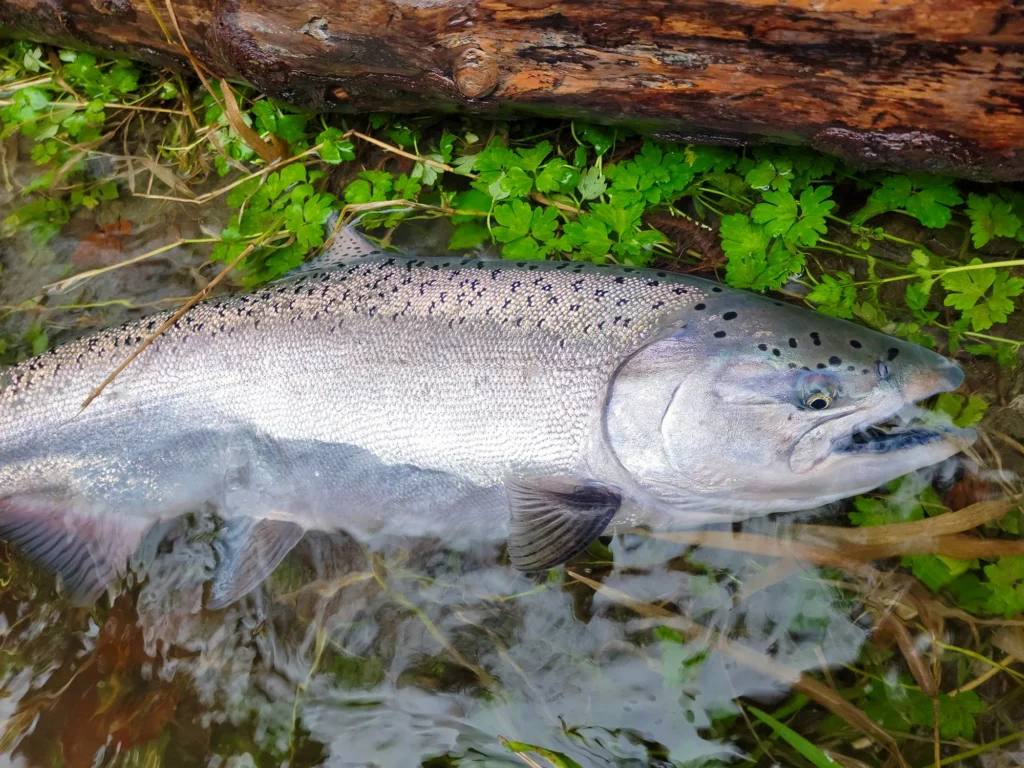
[00:04:11] Chris came across dead and dying salmon along an Alaska river and initially thought pollution caused it. After learning that he was seeing the natural end of the salmon life cycle, he went to the Anchorage Public Library and started reading. He became fascinated by salmon traveling enormous distances back to their natal streams, spawning, dying, and returning the nutrients to the ecosystem.
That experience set Chris on a path toward salmon and steelhead conservation and eventually to Trout Unlimited.
[00:07:52] Chris eventually worked for the Bureau of Land Management and the U.S. Forest Service, where he became involved in protecting 58.5 million acres of roadless public lands. He says the Forest Service already had roughly 370,000 miles of roads and a major maintenance backlog. Roadless areas also provided important habitat for trout, salmon, steelhead, and wildlife. Chris said that what stood out was how little he heard from hunters and anglers during the debate.
It helped shape what he later wanted to accomplish through Trout Unlimited: give sportsmen and women a stronger voice in protecting their public lands.
[00:13:28] Dave asks the question many anglers have probably wondered: what can one person do? Chris says public comments and calls to elected officials matter.
He said that roughly 1.6 million people participated in the original Roadless Rule was developed and about 90 percent supported roadless protection. Trout Unlimited continues to encourage anglers to participate in the public process.
[00:21:16] Chris explains that roadless doesn’t mean wilderness. Forest thinning and other management can still happen. Grazing and authorized vehicle use can continue, mining can occur, and roads can be built under certain circumstances.
The main idea was to limit unnecessary new roads and industrial-scale timber operations. Chris says poorly maintained roads can erode or fail, sending sediment into streams below. That’s why Trout Unlimited sees intact, roadless watersheds as important for trout and salmon.
[00:23:31]Chris’s starts his week with a restoration tour in Idaho, work on Capitol Hill, a video for Backcountry Hunters & Anglers, board preparation, media interviews, and Roadless Rule advocacy.
[00:25:20] Chris says Trout Unlimited has hundreds of volunteer-led chapters and staff around the country. Partners he mentions include the U.S. Forest Service, U.S. Fish and Wildlife, and the Theodore Roosevelt Conservation Partnership.
[00:26:22] Trout Unlimited doesn’t try to take on every issue. Chris says the organization focuses on relatively few major priorities, but once Trout Unlimited commits, it stays involved. Bristol Bay took 17 years. Roadless protection required 25 years of defense. The Klamath effort took about 20 years, and Yankee Fork restoration has also been a decades-long project.
Trout Unlimited uses roughly 200 Priority Waters to help decide where its staff, science, restoration work, partnerships, and advocacy can have the greatest impact.
[00:27:48] Trout Unlimited began in 1959 with about a dozen anglers on Michigan’s Au Sable River. They were frustrated that hatchery stocking was masking habitat degradation and wanted the focus returned to healthy rivers and wild reproduction. Included among those anglers were Art Neuman and George Griffith.
What started with a handful of anglers eventually grew into Trout Unlimited that exists today.
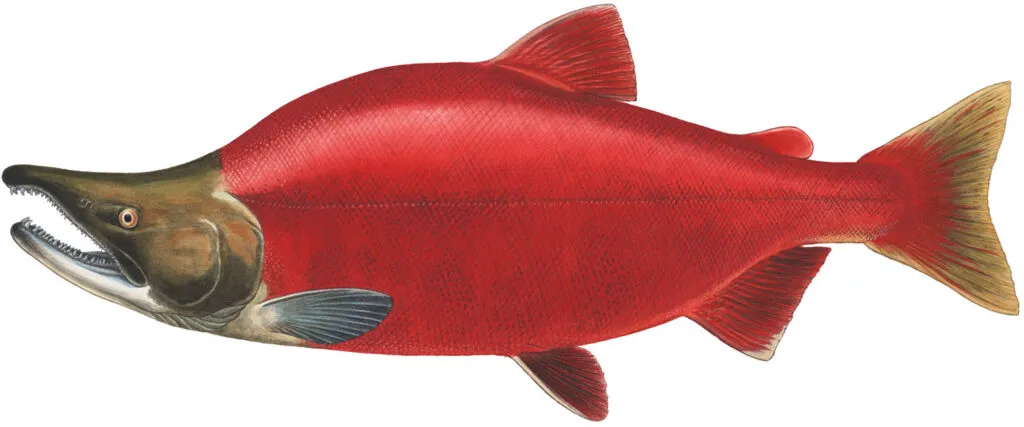
[00:31:49] Chris talks about declining Chinook runs and the problem of salmon being killed as bycatch. At the same time, Bristol Bay’s sockeye runs show how productive an intact salmon system can be. Chris points to their genetic and life history diversity as one reason the system remains so resilient.
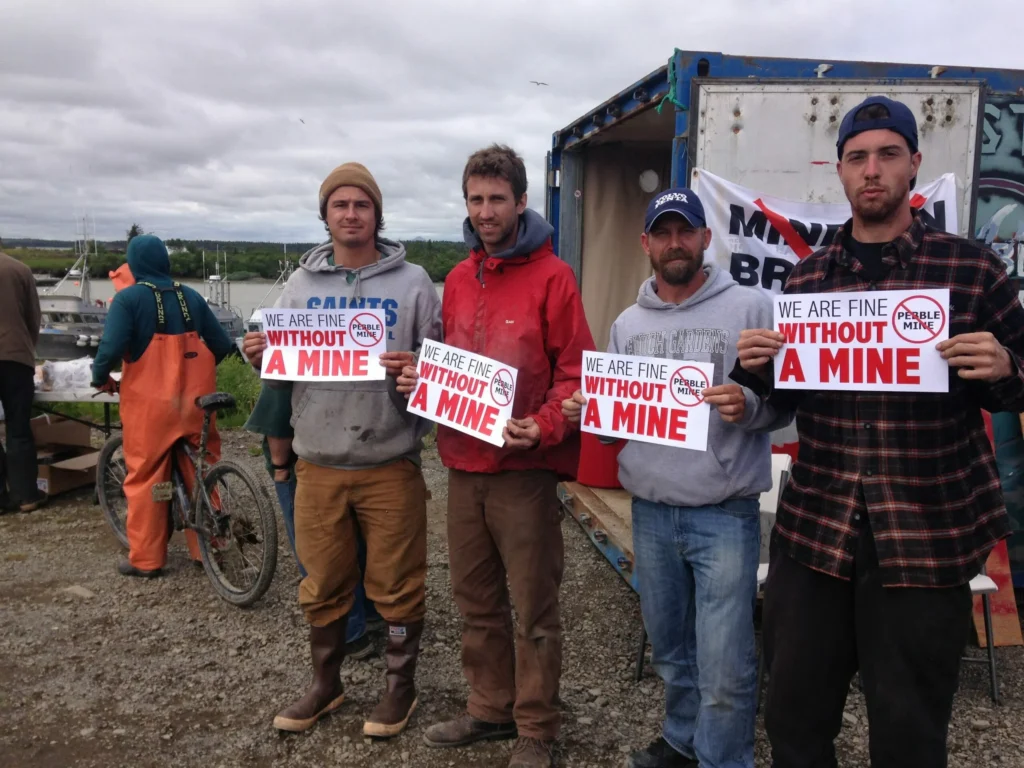
[00:33:32] Chris describes the Pebble deposit as a broadly mineralized landscape that would require large-scale open-pit mining. For Trout Unlimited, the biggest problem was location. The proposed project sat near the headwaters of one of the world’s great salmon systems. A key federal permit was later denied, followed by additional protections, but Chris says vigilance still matters since the minerals haven’t disappeared.
[00:38:48] Chris says conservation groups often spend too much time arguing about the small percentage where they disagree. His definition of conversation is:
That helps explain why Trout Unlimited works across political, government, nonprofit, business, and community lines.
[00:42:54] If Chris had ten minutes to make the roadless case, he says he would start with economics. Why build more roads when the Forest Service already struggles to maintain those it has? Then he would point to fish, wildlife, clean water, and the value of leaving future generations more choices.
[00:45:22] Chris enjoys fishing for carp, bass, gar, shad, and blue catfish around the Potomac. He connects that to responsible angling. When trout are stressed by drought, low flows, and warm water, anglers can fish for something else.
That fits Trout Unlimited’s philosophy: put the health of the fish first.
[00:52:10] Chris looks back at the Northwest forest debates and growing concern around declining Pacific Salmon. He mentions Pacific Salmon at the Crossroads, a paper documenting salmon stocks that had already disappeared or were considered at risk. Chris also credits mentors and fisheries scientists who helped shape his understanding early in his career.
[00:55:51] Chris points to an Apache trout as an example of what successful recovery can look like. The White Mountain Apache Tribe began protecting the fish decades ago, and the long-term effort involved government agencies and Trout Unlimited. Apache trout were ultimately removed from Endangered Species Act protection because of recovery.
[00:58:16] Chris mentions the Utah Cutthroat and a former Trout Unlimited employee, Brett Prettyman. These programs help anglers learn more about native trout while generating support for conservation. For Trout Unlimited, they’re another way to connect fishing directly with stewardship.
[01:00:38] Chris remembers advice about turning something you love into your life’s work. Fly Fishing led Chris to salmon. Salmon led him to conservation. And conservation led him to Trout Unlimited.
Episode Transcript
00:00:00 Dave: Chris Wood once stood beside an Alaska river surrounded by dead salmon and thought something had terribly gone wrong. What he learned next changed the direction of his life. Today, we’re following the story from the Ancre River all the way to some of the biggest conservation fights in the country. We’re going to talk roadless public lands, Bristol Bay, the Klamath native trout and what happens when anglers decide to get involved? Chris Wood is the president and CEO of Trout Unlimited. And in September, this marks his twenty-five years since joining the organization. Before. To. Chris worked with the U.S. Forest Service and helped develop protections for fifty-eight and a half million acres of roadless public lands. We’re going to talk about that today. That experience at the Forest Service, how he was there with some of the biggest names helping get that going. We’re going to talk about how and why. Chris says individual anglers need to speak up right now, and it makes a difference. Every single voice makes a difference. We’re going to find out about how Trout Unlimited decides which battles to take on, including what they did at Bristol Bay. The Klamath, and how all these actions took many years to get accomplished. We’re going to hear about that Bristol Bay fight, how they did it, and also get the story of how a small group of anglers from Michigan’s Au Sable started Trout Unlimited back in nineteen fifty-nine. And the idea still guides the organization today. Take care of the fish and the fishing will take care of itself. You can find Chris at Trout Unlimited, t u dot org. If you want to find out more information and get your voice heard, you can do it right now. You can take action. Head over to t u dot org right now. Listen to this podcast and get excited. Here he is, Chris Wood. You can find him at tu.org. How are you doing, Chris?
00:01:44 Chris: I’m good. Dave. Thanks for having me.
00:01:46 Dave: Yeah, yeah. Thanks for setting some time. I know you’ve got a busy schedule out there. We’re gonna get a nice update on Trout Unlimited today. What you guys have going. We’ve talked a lot about you over the years just because you’re obviously one of the big players out there doing great work. So we’re going to touch on that and maybe even talk a little on fly fishing. But before we get into it all, some of the big concerns, I know we’re going to talk about the roadless, um, concerns and some changes, public lands and stuff like that today. But um, as to always been on your, your list, uh, for, for work or where did you first get into all this?
00:02:18 Chris: It’s funny that you asked that I’m, I’m actually writing this down now because I’m giving a talk on Monday at the Outdoor Writers of America conference. And, and I was recounting how I got involved in all this. There’s a long story and a short a short story I’ll do an abridged version of the long one.
00:02:39 Dave: Okay.
00:02:40 Chris: You know, I grew up in new Jersey and had never left the confines of the Garden State until I went to college, other than to go visit mom’s family in Ireland. And, um, I discovered, uh, fishing, fly fishing in particular when I was at school in Vermont, and after I graduated, I was putting my liberal arts degree to good use, making ice cream, bartending and coaching high school football.
00:03:08 Dave: Nice. Yeah.
00:03:10 Chris: Incidentally, we won the state championship that year.
00:03:13 Dave: Oh, wow. There you go.
00:03:14 Chris: It was really cool. It was the first time we had won a state championship in like forty years.
00:03:18 Dave: Wow.
00:03:18 Chris: Saint Peter’s Prep in Jersey city. Or for your listeners? Anyway, my buddy Mickey was bartending in Alaska, living in a tent on the Homer Spit, and he invited me to come out and visit him, and I did. And while I was out there, you know, he said, why don’t you take my car and you can go, uh, fish the Kenai Peninsula. And and he told me there were salmon running and I had never heard of salmon. And I, uh, walked. I got to the Anchorage River and I parked the car, you know, on the sand well away from where I thought the tide line was and, you know, made my camp and went to bed. And I woke up in the middle of the night with water lapping into the tent because the the tide in new Jersey is like, you know, a foot and a half, two feet.
00:04:10 Dave: Right.
00:04:11 Chris: The tide in Alaska was like ten feet. And, and the problem was that my car was actually parked in front of the tent. So it took a while to get the car out. And it took a lot of gum out to get the engine clean. Uh, but I got it started and I started walking up the Ancre River late in the afternoon, and I saw these dead and dying fish, and I thought that something had happened. I thought that maybe a train had derailed and dumped acid in the river because these fish, they were all deformed. And they had these, you know, hook jaws. And I saw a guy fishing in the river, and I was watching him and I didn’t step foot in the Ancre River and we were on the anchor. I was on the anchor. And so. After a while he looks at me, looking at him, and he looks over his shoulder and he says, what? And I said, what are you doing? He said, I’m fishing. I said, aren’t you worried about, you know, being in the river with all these dead fish? Like whatever I killed them might have might get on you. And he’s like, dude, those are salmon. That’s like, that’s part of their life cycle. And I was like, yeah, sure. And so I left. I got in my car. I drove to the Anchorage Public Library. This is a true story. Yeah. I took out two books on salmon. And I learned that that is, in fact, part of their life cycle, that these remarkable fish, which in the Yukon can travel a thousand miles to go back to their the very stream they were born in and have sex one time before they die. And then their bodies provide the nutrients that keep the whole system intact. I thought it was the most remarkable thing I had ever heard. And. And it was there and then that I decided I wanted to. I wanted to basically dedicate my life to helping protect salmon and steelhead. And through a long and winding process, I won’t go through the whole story. I ended up volunteering for the Forest Service as a seasonal employee. And then I started as a volunteer, became a seasonal in Idaho, and I wanted to get back to D.C. because I was dating a girl who lived here at the time, and I ended up working for the Bureau of Land Management. And then I worked for the U.S. Forest Service, which ties into one of the topics I think you wanted to talk about. And we worked there. I worked there for a guy named Mike Dombeck and the leader of the Forest Service. The c e o, if you will, is titled The Chief. And so I worked for the chief. And one of the big things that we did was propose protecting And a half million acres of relatively pristine lands that didn’t have roads in them, so-called roadless areas. At the time, the Forest Service had a three hundred and seventy zero zero zero mile road system. That’s enough to encircle the earth fifteen times. And they were carrying an eight and a half billion with a B billion dollars maintenance backlog on that existing road system. And so we had and these roadless areas are just remarkably important for fish and wildlife. It’s basically they’re they’ve become refuges. And so we propose protecting those fifty eight and a half million acres. And one of my jobs at the Forest Service was to take all the meetings that the chief didn’t want to take on roadless. And that was about all the meetings.
00:07:42 Dave: Right. That was all of them. Yeah. That was a big issue. Was that a big issue back then?
00:07:45 Chris: It was huge. It was the most controversial issue. It was facing the Forest Service. Yes it was.
00:07:51 Dave: Yeah.
00:07:52 Chris: And every time we would propose building a road in a roadless area, typically in order to facilitate a timber harvest, it would create just intense local and national controversy. Well, so so I heard from the regulated community, you know, all the oil and gas people, the mining people, the timber people, all of them came in and chewed on my ear. And then I heard from all the environmental community, you know, the Wilderness Society, the Sierra Club, Defenders of Wildlife, all those groups. They all came in and they all wanted us to be more aggressive, protecting these so-called roadless areas. But the one set of groups that I never heard from were hunters and anglers. And as I said, they stood to gain the most from the protection of these fifty eight and a half million acres. I didn’t have a single meeting request from a hunting or angling organization. And, you know, from a hunting perspective, you have the longest centerfire rifle seasons in roadless areas and places like Wyoming. You’re ten times more likely to actually bag an animal in a roadless area than you are in other parts of the state. States like Utah, ninety eight percent of the roadless areas in the state are critical habitat for mule deer. And from a fish perspective, it’s exactly the same. You know, more than seventy five percent, for example, of all the salmon and steelhead that come from southeast Alaska are found in roadless areas. And, you know, similar numbers for all of our native trout. You know, basically we’ve forced these creatures to move into those high elevation areas because we’ve developed the lower country. And so they’ve become these refuges. And so anyway, when I left the Forest Service, my objective was to find an organization where I could help to create an analog to the environmental community, but with hunters and anglers. And, you know, often, you know, hunters and anglers are, are more conservative than traditional, you know, environmentalists. And for a long time, they had been taken for granted by one political party and ignored by the other. And so I wanted to help change that. I wanted to basically try, through the good offices of Trout Unlimited, to try to engage more sportsmen and women in defense of their public lands, including including roadless areas.
00:10:26 Dave: That’s amazing. Yeah, that’s an amazing story. It’s, uh and you, you know, going back to that, the Forest Service. So you found yourself working with the head. Was that that’s who that was the head of the Forest Service. Yeah. you were right there in the middle of it. And you were basically leading kind of this roadless when when the road in what year was that? When the road this when it went into effect.
00:10:47 Chris: two thousand and one.
00:10:48 Dave: two thousand and one. So two thousand and one when it went applied and then fifty eight million and a half acres of areas were protected. Is that essentially what happened?
00:10:57 Chris: That’s it. Yeah, yeah, it withstood twelve separate lawsuits. It stood up to twelve separate lawsuits. It was deemed legal by all the courts across the country.
00:11:07 Dave: Really. So it stood there and it got it got hammered by, you know, industry, whoever wanted to try to take it down and it withstood up until describe now what’s going on. Like how is how is what’s because I just heard this on a Patagonia feed out there that, you know, support, you know, something’s going on. Now give us the update on what’s now happening.
00:11:25 Chris: Yeah. So for twenty five years, that rule has withstood the test of time. And the Department of Agriculture has proposed rescinding the roadless rule, and they just released the government’s required to disclose the effects of its proposals in something called an environmental impact statement. And they just released their draft environmental impact statement, basically to rescind the protections to remove the protections of the roadless rule.
00:11:57 Dave: Has this happened in twenty five years? Has it ever been rescinded?
00:12:01 Chris: No. Uh, the first Trump administration tried to rescind it in Alaska, and they were successful, and it was reinstated by the Biden administration and the Bush administration going, you know, into the Wayback Machine here. They did something novel. They asked the states if they wanted to create their own roadless rules. And many states applied initially. But as the two thousand and one roadless rule continued to withstand these various legal challenges. They dropped their petitions except for Idaho and Colorado, and they went forward and developed their own unique roadless rules that protect about eight point nine million acres and four point four million acres of roadless areas in those two states, respectively. Those are great rules, by the way. And they were they were exempted from this rescission.
00:12:59 Dave: Oh, right.
00:13:01 Chris: And he was very proud of the role that we played on helping to organize hunters and anglers to defend roadless areas in the states of Colorado and Idaho. Those are two of our, you know, signature victories over the past twenty five years.
00:13:16 Dave: Right. Wow. The Alaska, it sounds like that got rescinded in the first Trump administration, but then Biden put it back in place. And now if it gets rescinded again, how will that play out?
00:13:28 Chris: So they’ll have to go through this, you know, whole what they call, you know, in government parlance, it’s a rule making process. And there’ll be a public there’s a public comment period right now. And it’s really important that sportsmen and women make their voices heard in this public comment period. And I know there’s a certain cynicism to these things where, you know, people will ask, you know, does my voice really matter?
00:13:58 Dave: Right? What can I do? I’m just one person.
00:14:01 Chris: Exactly. And it’s kind of like, you know, taxes. What are you going to do? You know, you just throw your hands up in the air. Well, I’m telling you, it makes a huge difference. It makes a huge difference for for three primary reasons. One is reaching out to elected officials definitely matters because elected officials who don’t listen to the voices of their constituents quickly become unelected officials. Yeah.
00:14:28 Dave: Right.
00:14:29 Chris: So reaching out to members of Congress is really important. And then reaching out to the administration through this rulemaking process, as Byzantine as it sounds, we make it super easy. You can go to our website, we have an action alert right there. And the reason it matters is these are our lands. And for most of us, it’s all the land will ever own. But they’re our lands. And these folks are managing them in trust for us. And so I just think it’s almost irresponsible not to weigh in on how your lands are being managed. And, and the final reason that I think is connected to that second one is when the roadless rule was developed twenty five years ago, ninety percent of the the one point six million people who participated in the process supported the protection of roadless areas. If we can get even stronger numbers today, it will make it that much easier for a future For administration to reverse this. What I think is a mistake.
00:15:34 Dave: When it comes to high quality flyers that truly elevate your fly fishing game, drift hook dot com is the trusted source you need. I’ve been using drift hooks expertly selected flies for a while now, and they never disappoint. Plus, they stand behind their products with a money back guarantee. Are you ready to upgrade your fly box? Head over to Drift Hook dot com today and use the code swing at checkout to get fifteen percent off your first order. That’s drift hook. D r I f t h o o k dot com. Don’t miss out. This episode is brought to you by AVC Rig Adventure Vehicle Concepts out of Colorado. These guys build next level adventure vans designed to help you explore farther and stay out longer. Are you dreaming of a full van build? Or maybe you just need the best aluminum cabinets and storage for your DIY rig? AVC rig makes it easy to turn your vehicle into the ultimate mobile base camp. You can check them out right now at ABC dot com, that’s A v c rig dot com. So that’s a big issue. I mean that’s huge. And we’ve we’ve heard about similar things and over the years, but this is the big time. So we’ll have a link in the show notes to that where people can take action and they can sign up there. We’ll make sure we can get the word out, you know, and there are a lot of concerns out there. I mean, what is it that’s keeping up other than the roadless, which is a big one? What else is taking up your time during the week? What do you focus on? What are you thinking about?
00:17:01 Chris: You know, it’s we practice this unique form of conservation at two. We call it collaborative stewardship. And that collaboration is one of the hallmarks of everything we do. So we do, oh, probably close to a thousand miles of river restoration every year across America. And that’s done in partnership with a whole host of others. We do almost nothing alone. We do everything in tandem with others. And, you know, as fate would have it, one of our biggest partners in conducting restoration is the US Forest Service. Because when you think about the Greenlands on the map, most of them are high elevation areas. And, you know, most of our native trout are found in mountainous regions of the country. And so, you know, as, as, as it turns out, an example of my week. This is a good this week is a good example of my week. And it’s a good example of this form of collaborative stewardship in action. On Monday or Tuesday, I guess, no. Monday I was in Idaho with the person who is the undersecretary for Natural Resources and environment. That’s a political appointee who leads the Trump or leads for the Trump administration, who leads the Forest Service. And we were reviewing about twenty years of work that we’ve done on the Yankee Fork of the salmon. Just so your listeners can sort of get get an image of this. This is a tributary to the salmon River in Idaho that was literally turned upside down in the fifties by dredge mining. And we’ve spent twenty years recovering habitat there. And I was showing Secretary Boren the work that we’ve done. And it was super cool and super inspiring. We actually saw Chinook, a pair of Chinook fanning a red. And basically it was, you know, seven hundred miles from the ocean, probably seven thousand feet in elevation. These fish made that journey traversing eight dams, never feeding, never feeding once to go back to the place that they were born to create that next generation of steelhead, or in this case, they were Chinook. And literally it was right in the middle of where we had, you know, done some restoration in the stream. I mean, it was just it’s the coolest thing you could imagine. And then I get back the next day, I’m at the airport and I hear the announcement that the Forest Service is.
00:19:39 Dave: Oh, man.
00:19:40 Chris: Proposing to undo the roadless rule.
00:19:43 Dave: So you were talking to now, was this the head of the Forest Service? This is the undersecretary?
00:19:47 Chris: Yeah, he’s he’s the political head. So he’s you know, he’s the political appointee in charge of the agency.
00:19:52 Dave: So different than the person that you worked for originally. The different type of position.
00:19:56 Chris: Yeah. Different than the chief. The chief, but but very similar. You know, he’s basically the chief’s boss.
00:20:02 Dave: Yeah. He’s the chief.
00:20:03 Chris: Yeah. And he, I mean, he actually, you know, in jest, we, he sort of said, yeah, it’s kind of ironic that we’re here when, you know, you’re, you’re the guy who kind of created that this roadless thing and I’m the guy who’s going to undo it. And I was like, yeah, until next administration. And he said.
00:20:20 Dave: Oh, right, right.
00:20:22 Chris: We kind of laughed about that.
00:20:23 Dave: That’s interesting. Yeah. Because you guys are there. I mean, that’s the thing about it is that it’s kind of hard from the outside to figure out how this works. Because when I look at it and probably people see this, you think, you know, it’s just like, like you said, we all own this land together. It’s public lands. And it seems it’s amazing that one person that feels like can change this whole thing even then. I mean, you got a huge agency, right? The Forest Service there giant.
00:20:46 Chris: Yeah. And it’s it’s in I mean, that that opens up a lot of avenues for conversation. I mean, you know, about the Forest Service. You know, when we did this back twenty five years ago, the Roadless area rule conservation rule was probably a little controversial inside the Forest Service because, you know, nobody wants their decision space limited. And that’s basically what we did. You know, we basically said you can’t can’t build roads in those places anymore.
00:21:10 Dave: And is that is that all when when you do that, is it you can’t build roads. Are there other things that go with that that you can and can’t do?
00:21:16 Chris: Yeah. So what we basically said was you cannot build roads into roadless areas unless you have a right to do so, or unless you need to build a road, for example, to fight fire. And we also said you can’t conduct industrial scale timber operations in roadless areas, but you can still do thinning, manage.
00:21:39 Dave: Yeah. Manage the forest.
00:21:40 Chris: You can still manage the landscapes. And, and in fact, the Forest Service’s own data demonstrate that on a per kilometre basis, we’ve actually done proportionately more management in roadless areas than we have in the eroded portion of the landscape. So we really tried to build flexibility into that roadless rule in order to, you know, allow for, you know, things like thinning to reduce, you know, to help prevent forest fires. They call those forest health treatments. You can ride ATVs in them. You can graze cows in them, you can mine in them. You can do all the multiple uses we just said, given the fact that we’re sitting on an eight and a half billion dollars maintenance backlog, you can’t build roads in them. And the agencies, they still have that maintenance backlog. They haven’t gotten ahead of it. And, you know, from a fishing perspective, you know what happens when you don’t take care of a forest road, you know, typically built in higher elevation areas, like most of our forests are often with, you know, erosive soils. Those roads have a tendency to fall off the hillside and into the creeks below.
00:22:52 Dave: Yep, yep.
00:22:53 Chris: So that’s, that’s all we said. You know, it wasn’t like a wilderness light kind of concept. It was just no, let’s be smart. It was the height of conservatism is what it was like. If you think about, you know, the roots of the word conservation, it’s the Latin word is conservare to hold or keep in a safe state. and we were simply trying to maintain options for future generations because we couldn’t afford to take care of the roads that we already have. And that dynamic hasn’t shifted at all.
00:23:23 Dave: Wow. So that was your your Monday. So you talked to the undersecretary and then describe the rest of your week so we can get a feel for what your week looks like.
00:23:31 Chris: Yeah. I mean, again, it’s a blur. I know I’ve got to travel on Sunday to go out to Madison to speak to the Outdoor Writers Association of America. But so yeah, Monday and Tuesday we had the, the project tour. Uh, Wednesday I was up on Capitol Hill advocating for things like the farm bill, which is our, uh, provides about five and a half billion dollars of conservation for private lands around the country. Yesterday I, I filmed a little video for our partners and friends over at Backcountry Hunters and Anglers. You know, uh, I’ve been preparing for a board meeting, which is, I can tell you as a CEO is never all that fun.
00:24:17 Dave: Really, the board meetings aren’t your favorite thing to do during the month.
00:24:20 Chris: No, I mean, no, we have a great, uh, very collegial board. It’s a great group of people, but most of this week has really been spent on this roadless issue, both writing about it and advocating for it, talking to reporters, just trying to get the word out there that, you know, again, these are your public lands. They’re managed for you by the Forest Service. And it’s just really important that people make their voices heard. And again, we make it really easy for you to do that.
00:24:48 Dave: No, I think like I said, we’ll get the word out here as much as we can. And, and people listening right now, they can go take action. They can actually make a difference because it is, you know, I think like you said, it goes back to that small group. You know, it’s been that way for many years now. These small groups are able to change. And, you know, when we talked to Patagonia or any of the other, um, you know, a company or groups out there and they’ll say the same thing. It starts with that small that small group. Do you guys, it sounds like you do the same thing out there. You’re working with lots of groups around the country, small and large.
00:25:20 Chris: Oh yeah. I mean, so we have trout unlimited has four hundred chapters, all volunteer led around the country. We’ve got about four hundred staff at this point too. All around the country. We we have a very small headquarters here in Arlington. Only twenty five people. We try to put our people where the resources are, but we work in collaboration with a ton of other organizations, like for everything from state and federal agencies like the Forest Service and Fish and Wildlife Service, state departments of DNR groups. Like I mentioned, b h a, but National Wildlife Federation, Theodore Roosevelt Conservation Partnership, all great partners of ours.
00:26:00 Dave: You know, again, thinking of getting people involved so they can kind of connect, you know, is important. But how do you choose? You know, I mean, there’s lots of issues out there, right? How do you know what issue to go to double down on? You know, I mean, the roadless one seems like a big one, you know, and maybe Bristol Bay is another example where I think you were involved with. But yeah, you know, how do you know which ones to jump in on and which ones maybe to hold back on?
00:26:22 Chris: Yeah. It’s such a good question. You know, we, we work on very few things at Trout Unlimited. But the few things that we work on, we we are committed to for the long run. Bristol Bay is a great example. It took seventeen years for us to protect that landscape. We’ve been defending the roadless rule for twenty five years. We you know, we were big players in helping to take out the four dams on the Klamath that started twenty years before those dams came out. Even that work on the Yankee Fork that I was sharing with Undersecretary Boren, you know, that started twenty years ago. So, you know, we and the way we pick the places or the issues to work on, we we’ve gone through this process of developing two hundred priority waters around the country based on various attributes. And. And that plays a big role in helping to decide where and when and how to will engage on a certain issue.
00:27:19 Dave: Gotcha. That makes sense. Okay.
00:27:21 Chris: You can check out those priority waters at two dot org. By the way.
00:27:24 Dave: Oh, good. Yeah, it’s all there. Yeah. And your website looks great. You guys have done a good job making this clear and.
00:27:29 Chris: Oh, good.
00:27:30 Dave: Yeah, yeah, it looks awesome. So, um. So good. So you’ve got the priority waters and you mentioned Bristol Bay. I want to talk a little bit about that. But before we get into that, I wanted to hear on a little bit of the history, you know, because Trout Unlimited, I know it started somewhere back in the Midwest, maybe on an issue, maybe talk about that. Who were the people there when Trout Unlimited got started? How did it get going?
00:27:48 Chris: I mean, it goes back to something that you just said a minute ago, Dave, about how a small group of people can make a real difference. There’s a famous quote attributed to Margaret Mead about that as well. So we were founded by a group of about a dozen anglers on the banks of the Ausable River in Michigan. You know the holy waters, we call it, and they. And it was people like Art Newman and Art Newman who owned and ran the. He was a machinist, but he also had a rod company that he ran out of like a shack in his front yard called the Wanigas Rod Company, which is Saginaw spelled backwards.
00:28:32 Dave: Oh, right.
00:28:33 Chris: Yeah. And, uh, guys like George Griffith, you know, George was a he was a salesman, basically a closed salesman. In fact, I think he was a pantyhose salesman. Huh. Uh, yeah. As a job that probably doesn’t exist anymore. And you know what? They were frustrated by the state of Michigan masking the effects of habitat degradation on the Ausable by pumping out ever more cookie cutter hatchery fish. And so that’s how the state would mask degradation. And the lack of either native or wild reproduction is they just pump out a bunch more hatchery fish. And so Art Newman famously said, if you take care of the fish, the fishing will take care of itself. And that’s been our mantra now for, you know, sixty years. We were founded in nineteen fifty nine. It started with one chapter in Michigan. And then slowly, you know, it just began to spread around the country where, you know, today we have four hundred chapters. When I started at t u, we had thirty staff. Twenty two of whom worked here in Arlington. And today we have about four hundred staff and about twenty five work in Arlington today.
00:29:52 Dave: And you’ve been there for a good chunk of that. Sounds like. When did you start up a t u.
00:29:56 Chris: Yeah, right after. Uh, the Forest Service gig ended. I came to see you. And so that was in September of two thousand and one. And this blows me away to even say this, but this September will be my twenty fifth anniversary with.
00:30:14 Dave: There you go. Twenty five. So you’re in the same. The great thing is you’re in the same. You mentioned these issues. Bristol Bay, you know, many decades, couple decades. Right. All this stuff you’re I mean, you were involved really, you were there. I mean, in all this stuff. I mean, these big Klamath. Right?
00:30:28 Chris: Yes. I’ve been I mean, I was there’s a fellow, a friend named Brian Kraft who owns the Alaska Sportsmen’s Lodge on the Jack River in Alaska. And I can point to the place on the river where crafty and I were fishing, where he convinced me that Trout Unlimited had to be the lead sled dog in that fight. He flew me over the proposed mine site and I fish up there every year. Now, you know it’s a. If you haven’t fished in the Bristol Bay region. Put it on your bucket list.
00:31:01 Dave: Yeah. This is Bristol Bay, right? This is the. Yeah. And we had a we had a biologist on recently who was talking about the, how big the sockeye runs have have been recently. But on the negative side the Chinook runs. Right. And I know Bristol Bay maybe as a whole around Alaska. That’s a big challenge. I’m sure you guys are aware and thinking about that one.
00:31:20 Chris: It’s a huge problem. The the Chinook runs or as they call them up there, the Kings are really down and no one’s exactly sure why.
00:31:29 Dave: Well, what I hear, what I hear, and again, I’m not sure I’m not in on all this, but I hear one of the big issues up there is, is the ocean trawlers that’s fishing. And I mean, you’ve got, you know, again, I’m not sure how much, but it sounds like the people I’m talking to, that’s a big thing. Some of the local groups in Alaska are really focusing on that. Right.
00:31:49 Chris: You got it. That’s exactly right. I mean, they’re there and you know, this is they call. So they’re not targeting the Chinook. They’re targeting other species. The Chinook are bycatch, right? And, I mean, think about that for a minute. Bycatch. That means they’re, you know, they’re just getting thrown overboard, dead. So yeah, that’s that’s a big problem. And to your other point earlier, I mean, the sockeye run in Bristol Bay is amazing. The reason they can catch, you know, tens of millions of fish from there, half of all sockeye in the world come from that system is because of the. And I’m sure your, your your guest talked about this, but there’s just incredible genetic and life history, diversity in those sockeye. And so even though, you know, they’re getting intensely pounded by commercial fishermen for a, you know, a truncated period of time, the run is able to persist because of the different lineages and life histories of other sockeye in the system that will come up either earlier or later. You know, either before or after the season is over. And you know, that system is so special. And it will it will remain that way in perpetuity if we have the wisdom to simply keep it intact. That was the reason that we fought so hard to oppose the construction of the pebble Mine.
00:33:14 Dave: Right. That was the big. And that’s a good success story, right? Maybe high level. Give the background on how that all went down. And I know it’s still it’s one of those things where it’s still out there, right? It still gets there’s groups that bring it back and try to bring back these mines. Talk about how you guys were able to protect that.
00:33:32 Chris: Yeah. So there’s seven major rivers in the system and in the headwaters of two of them, the Queen Jack, which we’ve talked about, has this incredible sockeye run. And then the Nushagak, which used to be among the top Chinook or King producers in the state, in the headwaters. They wanted to build this so-called pebble mine. And the reason they called it the Pebble Mine was that this wasn’t like a traditional mine where you had a deep vein of ore. It was the entire landscape was mineralized. And so to effectively mine it, you’d have to use like an open pit mine technique. And they were talking about, you know, storing the toxic waste in perpetuity, for example, behind an earthen dam that would have been like four miles long. And if you’ve ever flown over that area, Bristol Bay is a sponge. It’s like driving through the air or flying over the prairie pothole region. I mean, it’s like.
00:34:26 Dave: Yeah, water, water.
00:34:28 Chris: Everywhere. And it was just a patently bad idea. You know, we’re talking about an area that’s, you know, they’re going to build this giant earthen dam in a highly seismically active area. You know, they had an earthquake in the sixties in that area of like nine point two on the Richter scale magnitude. It was just it was the absolute worst place in the world to want to build a massive. They would have had to build a power plant that was. Is larger than the one that Anchorage relies on today to fuel the mine. I mean, the whole thing was it was just a recipe for disaster. And so it’s a classic campaign where, you know, we, we worked really hard to convince the first Trump administration not to build a mine in that area. And, you know, I know that President Trump’s sons had fished up in that area. I’ve actually gone fishing up there. I fished up there with Tucker Carlson and took took him up there. Uh, Tucker was pretty instrumental in, I think, helping to convince the president not to allow that might be permitted. He did two back when he had a show on Fox. He did two shows once with Johnny Morris of, uh, Bass Pro and then once with Brian Kraft, who I mentioned earlier.
00:35:51 Dave: Oh yeah.
00:35:52 Chris: You know, in the final hours of the Trump administration, they denied the key permit that the mining company would have needed under the Clean Water Act to build the mine. And then during the next the intervening the next four years, we worked with the Biden administration to basically protect the area from large scale industrial mining. But you’re right. It’s it is a little bit like a zombie because, you know, the the gold and the copper, it’s not going anywhere.
00:36:23 Dave: Right? No. Right. It’s there.
00:36:25 Chris: It’s there. And so, you know, we’re going to have to remain vigilant, but it’s, oh, that’s not bad. I mean it, you know, again, half of the world’s sockeye salmon come from that one system. I mean, it’s when you see it in the fish, Dave, the sockeye, the way they spawn, the way they migrate is they come up the banks of the river in rows. And when you see these rows of fish like.
00:36:50 Dave: They could.
00:36:51 Chris: It could be like fifteen deep, thousands of them moving up the river. It’s it’s truly an awesome spectacle.
00:37:00 Dave: That is amazing. Wow. So so yeah, all these issues and that’s important to remember all these we have to stay on top of, you know, it’s not like.
00:37:06 Chris: Yeah, I mean, you know, yeah, vigilance matters. And, and, you know, and one thing I should say, just to provide a counterbalance to the Bristol Bay story last week before I went to Idaho, I was actually up in Fairbanks with the CEO of Kinross, which happens to be a major mining company in Canada. And we were celebrating the launch of the restoration of a place called Cripple Creek outside. It’s right. It flows through Fairbanks, and they’re committed to working with us and other partners, including the land Trust up there to return Cripple Creek to health and hopefully help to restore Chinook runs in there. We worked with that same mining company, Kinross, at a place called and the Forest Service at a place called Resurrection Creek, the aptly named Resurrection Creek, which had been, you know, really devastated by placer mining. And we recovered that area. And so, again, you know, I want to make clear that, you know, just because we oppose the pebble mine, we still work with mining. Yeah, we still work with mining companies. In fact, you know, that that company Kinross, they, they helped to support our efforts to pass good Samaritan legislation, which makes it easier for would be good Samaritans like to to clean up abandoned mines across the western United States. So, you know, that’s that form of collaborative stewardship that I mentioned in action.
00:38:38 Dave: Definitely. You’re not really burning your bridges necessarily, you know, that you have to work. It’s better to to be able to be across the table from. Right instead of not talking at all.
00:38:48 Chris: I just fundamentally think that’s accurate. I, you know, I just, I just, I mean, I know I’m sure that some of my friends in the conservation community would look askance at the fact that I, you know, spent a day, you know, touring the Yankee Fork with an undersecretary who’s, you know, opposed to the roadless rule. But I think so often in this conservation work, you know, we, we spend ninety percent of the time arguing about the ten percent of differences that we have, you know, and that’s just not our way. You know, we our definition of conservation is the application of common sense to common problems for the common good.
00:39:28 Dave: Right. Well, it sounds like, you know, in that example with Tucker Carlson and we’re hoping that I know Brian in our network here, he’s talking he’s been talking to Tucker. So we’ll let that one. Hopefully we can get Tucker on the podcast here, but he did a good job, right?
00:39:42 Chris: Yeah. I fished with him for Shad on the Potomac. He used to live here in D.C. when he lived here. I would fish for him for Shad and I. I fished with he and his son up in Bristol Bay a few years ago. Yeah. He’s a he’s a serious angler.
00:39:59 Dave: Reds flies is built for anglers who don’t want the same fly box as everyone else. Premium patterns, upgraded hooks and flies selected to show pressured fish. Something different and. Every order also helps support conservation. With ten percent of profits going back to protecting the waters we fish. You can check in with reds flies right now at reds flies dot com. That’s reds R e d d s flies dot com. Check them out today. Golden Fly Shop isn’t your average fly shop. They have a twelve foot shark painted like a cutthroat, hovering over a huge selection of the best rods in the business. A massive assortment of tying materials and their famous steakhouse streamer display. And it’s the hub for a community of anglers who never stop tinkering with new ways to catch fish. Sometimes the conversation behind the counter includes what hatches are going off and what techniques are working best. Then tales of destination fishing, adventures, sought after species, or a good old congratulations when a customer brings stories of finally connecting with that fish they’ve searched for forever. With a growing online store and a budding YouTube channel, you’ll be able to follow along with their fun antics, international adventures, and helpful fly fishing tips. Golden fly shop where the community is hanging out even if they’re supposed to be working. That’s Golden Fly shop dot com. Check them out right now. And I feel like with, you know, folks that aren’t, I mean, that’s the biggest thing you mentioned at the start, the hunters and anglers. I mean, when you’re not a hunter and angler or even into the outdoors or anything, you just don’t get it right. It’s hard. Like I’m imagining Trump probably isn’t a big guy, although his sons are right. So they kind of know a little bit there, but what would that be if you were sitting there? Let’s just take this roadless action and you’re able to, you know, like Tucker did get across from Trump and you’re just sitting there chatting with him. What would be your what would be your pitch to get the president to take some action on, you know, on protection?
00:41:51 Chris: Well, I, I invited the president to fish Bristol Bay with me, I guess, six years ago. And I never heard back.
00:42:00 Dave: Never heard back. No.
00:42:01 Chris: And then I also invited him this year to come fish on the Potomac with me. We have a wonderful shad run out here.
00:42:10 Dave: Oh, yeah.
00:42:11 Chris: And, um, I often take members of Undersecretary Boren and I, that’s where we met. I took him fishing for Shad this spring on the Potomac. And, uh, in fact, the, the Republican senator, Senator Jim Risch and the Democrat, Martin Heinrich, who led the effort to pass that Good Samaritan legislation, I got them to agree to be the leads while fishing for Shad on the Potomac with him. So first thing I do is I try to get the president out in a boat on the Potomac. I know that’s probably not his thing.
00:42:48 Dave: No, I bet it’s not.
00:42:49 Dave: Yeah.
00:42:50 Chris: Yeah. I think his thing would probably be more of a golf course.
00:42:53 Dave: Yeah. Right.
00:42:54 Chris: But I think the the argument that I would make if I had ten minutes with him is there’s no demand for the wood fiber for the trees that are found in roadless areas. It’s completely illogical to lose money building a road into a roadless area on a timber sale that you will lose money on when you can’t afford to take care of that road. And so it eventually it’s going to fall off the mountainside into the river below. I mean, that’s the most base level of our argument. And there are, you know, for those of us who are more steeped in fish and wildlife. There’s other values too. But for him, I think I would just stick with the economics of it. But I mean, you know, you’re talking about roadless areas represent two percent of the American land base, and yet twenty five percent of all of our endangered species have habitat in them. Sixty million Americans get their drinking water. It starts in roadless areas. I mean, you know, it’s just these places are the vestiges of the lands that tested the character of America as we as we migrated westward. We should do everything in our power to leave them intact and pass them on healthier than they were to our kids and our grandkids. And if if in the future, there’s, you know, an invasion from Mars, and we find out that the only thing that’s going to stop the Martians is found in roadless areas, well, then we can make that decision in the future to go into those places. But for now, just leaving those choices for future generations seems like the most logical approach to me.
00:44:36 Dave: Yeah, it does, it does. No. That’s awesome. Well, we’re going to get out of here in a little bit, but I wanted to touch on just a couple of more kind of questions I had. And one of them was we were talking about carp. We were talking about Denver. And I think two was supporting a really cool event in Denver on carp kind of event.
00:44:55 Dave: They have the carp slam.
00:44:56 Dave: Yeah. The carp slam. Yeah. And it’s been a real it sounds like it’s been a really positive event. That species necessarily isn’t, you know, a native fish. You know, it’s a little bit different, but things are changing, right? I mean, you got climate change, um, some places you can’t even fish for trout during certain times of the summer. What’s your take on all the maybe that carp, how you know, the support there and then how that might apply to as you look ahead and climate change and stuff like that.
00:45:19 Chris: Yeah, man. Um, we did a whole series on this.
00:45:22 Dave: Oh you did?
00:45:23 Chris: Yeah. I actually wrote a piece about it. I am a full throated advocate for putting the hammer on the carp, and I also fish aggressively on the Potomac for blue cats. Blue catfish.
00:45:35 Dave: Uh huh.
00:45:36 Chris: You can use a full sink line. And I mean the fullest sink you can find.
00:45:41 Dave: Yeah. Get down!
00:45:42 Chris: Dan Clawson. I we’ve got large and smallmouth bass here that we fish for. We also fish. Fish for gar with rope flies.
00:45:52 Dave: Yeah.
00:45:52 Chris: Uh, those are actually a native fish, but yeah, I mean, look, I want to be clear. Carp are a problem. Blue catfish are a scourge in reality. They just. We’ve been invaded by them. But in, you know, we have got we got hoot owl restrictions in Montana right now. You know, I think as anglers, it’s our responsibility when we have, you know, low flow years, not a lot of rain. We’re in a period in the midst of a mega drought out west.
00:46:21 Dave: Yeah.
00:46:22 Chris: Find other species to fish for, you know. So yeah, I’m all for it. I, I love fishing for carp. We catch them in the Potomac, but we also target them. We’re lucky enough that we have something called the C and O canal that runs along the Potomac. And it’s empty now because the Park Service is doing work on it. But, you know, we, we, we walk that or we ride our bikes on it and with our rods strung up and you look for tailing carp and it’s just a hoot. I mean, they’re super, as you know, they’re super fun to catch.
00:46:55 Dave: Yeah.
00:46:56 Chris: So yeah, I think it’s good to turn, you know, when it gets as warm as it’s been in many parts of the country, it’s good not to target the trout. You know go out and give some of these other especially the invasive species a shot.
00:47:11 Dave: Yeah.
00:47:11 Chris: And and are about as invasive as they get as they get.
00:47:15 Dave: Right. They are. Yeah.
00:47:17 Dave: Definitely. Yeah. They’re everywhere. Okay. Now it makes total sense. Um, and you mentioned, um, you know, at the start you were with the Forest Service? I was just kind of curious on that one. You. What got you out of the Forest Service? Sounded like you were kind of there towards the top. Was that something that you look back and say, well, I could have stuck with the Forest Service and maybe done some stuff in there.
00:47:35 Chris: I’m not sure they wanted to stick with me. So what.
00:47:37 Dave: Happened? Right.
00:47:39 Chris: I what happened was when I was a seasonal out in Idaho, I worked with this great guy named Louis Wisniewski. And Louis said, hey, you ought to meet my uncle Mike when you go back to DC. And that turned into Mike Dombeck, who I worked for at the BLM, the Bureau of Land Management, and later went with him to the Forest Service. And I worked for him there. And although I was a career employee, meaning, you know, I was a civil servant, I wasn’t a political appointee like Undersecretary Boren, you know, I had been so intimately involved in, in not just the roadless rule, but we did some other things like we protected five hundred, zero zero zero acres of the Rocky Mountain front. We had proposed a prohibition on the logging of old growth in the United States on national forests. And basically, Dave, what we were trying to do was to the Forest Service. They’ve had these historic issues that they’re like festering sores on them.
00:48:41 Dave: Right.
00:48:42 Chris: And they keep them from being able to gain the social license that they need to do the things they should do. So roadless is one of those issues. Old growth. The harvest of old growth trees is another. I was also very involved in reforming a policy. We used to have a policy in America, believe it or not, when in nineteen ninety seven, that we would fund rural schools and roads with timber sales.
00:49:09 Dave: Yeah, with.
00:49:10 Dave: Timber.
00:49:10 Chris: And so when when the timber harvest declined.
00:49:13 Dave: God.
00:49:14 Dave: It hurt the schools. Geez.
00:49:15 Dave: Yeah, yeah.
00:49:16 Chris: Then the schools didn’t. Rural schools didn’t have any funding. It was.
00:49:19 Dave: Crazy. That’s crazy.
00:49:20 Chris: So we fixed that. But so we I had been involved anyway to finish the thought about the Forest Service. You know they cut right now about two and a half billion board feet of timber a year back in the halcyon days from nineteen sixty to nineteen eighty nine. They would harvest as a frame of reference from nine to twelve billion. So they’re down a fraction of what they used to do. They were cutting way too much back then, and they took all the old growth, most of it anyway. But they’re not cutting enough now. And I bet I would warrant if we could take off the table issues like roadless and old growth, they could gain the social license they need to practically double the cut because we do have these forests are all out of whack. They evolved with frequent fire, which we have suppressed now for a hundred years. So where you might have had, you know, back in the old days when fire was running through Periodically. You know, you might have twenty or sixty stems per acre. Now there’s like two hundred. And so they need to go out there and thin these trees. And I think if they if they took off the hot issues of roadless and old growth and all those controversial things that they waste so much time on and focused instead on protecting communities by thinning around them to protect them from fire. I think they could double the cut. But to directly answer your question, it was made fairly clear to me by the incoming Bush administration that I probably should be looking for other work.
00:50:53 Dave: And so that was it. Yeah, that was it.
00:50:56 Dave: That’s awesome.
00:50:57 Dave: There you go. They didn’t.
00:50:58 Chris: Fire me, but.
00:50:59 Dave: You know. No.
00:51:00 Chris: And in fact, the person who was the political appointee there, the counter to this fellow Under Secretary Boren that I mentioned, Mark Rae, was and remains a very good friend of mine, but I was fairly certain he didn’t really want me around.
00:51:15 Dave: No, no. That’s right. Wow. And I go back to one thing that happened was pretty big was kind of before your time a little bit, but was the, um, the timber, the forest conference summit that, uh, Clinton had back in ninety three. Right. That was a, that was a major thing where there was this deadlock, right between the, the old growth, the spotted owl, all this stuff. And Clinton, you know, he, he, I think it was a successful thing what he did. Right. He came here and he brought together. Talk about that. Do you do you know that whole thing that happened there.
00:51:42 Chris: I do yeah, I, I was just just getting I was like a g a seven is like one of the lowest.
00:51:47 Dave: Yeah.
00:51:48 Chris: You know, government service levels you can have. I was a GS seven at the time, but I was, I was on the Fish and Wildlife program at the BLM. And one of my great friends and important mentors, Jack Williams, was one of the leaders who helped to. Everybody remembers the old growth fight. Basically, just to recap for your listeners.
00:52:09 Dave: I mean, yeah, recap.
00:52:10 Chris: We had the northern spotted owl was listed as a threatened species and their habitat was in these old growth forests, which were being liquidated, basically. And just to give you a sense of what I mean by that, there’s one forest out there on the West Coast. And, you know, you had the big pumpkin pines there that were like four or five hundred years old. The Willamette National Forest, they harvested a billion board feet of timber a year from that one forest, because they were taking all those big pumpkin pines. And that happened to be the exact habitat that the owl needed. And so where I played a tiny, I mean, infinitesimal role, but where Jack Williams, my mentor, played a huge role was while they were dealing with the whole spotted owl controversy, we were also realizing at the time that Pacific salmon were in big trouble. And there was a seminal paper, your listeners can look it up. It’s still worth reading, called salmon at the Crossroads. It was published in fisheries, which is the journal of the American Fisheries Society, and. And Jack Williams, Willie Nelson and Jim Kotowicz.
00:53:21 Dave: Right. Yep. That’s right.
00:53:22 Chris: They were the authors of it. And they documented one hundred and six stocks of salmon that had already gone extinct in two hundred and fourteen that were at risk of extinction. And Jack and other really brilliant minds like Jim Seidel and Gordon Reeves at the Forest Service, they came up and developed something called the Aquatic Conservation Strategy, which is still in effect today, and that basically it created much larger buffers on streams. And what I mean by a buffer is that you’re not supposed to cut trees within this buffer. And they develop concepts like watershed analysis and the in the need to do the kind of restoration that t u does, you know, across the country. They basically documented the need for all that and, um, it was an amazing time. Dave to start your career. And I was so lucky. And it’s one of the reasons that I never turned down a phone call from a kid or a young person who wants to get involved in conservation. I had people like, you know, Jim Seidel and Jack Williams and, uh, Rick Williams and, uh, just all across the row. I mean, just some brilliant, uh, fisheries people in particular who took me under their wing. And, you know, I want to be clear, like I’m a, I’m a great faker. I can talk about this stuff, but I was a political science American literature major.
00:54:50 Dave: Oh, right. Yeah.
00:54:51 Chris: Yeah, I, I mean, I didn’t even know what salmon were.
00:54:54 Dave: Right.
00:54:55 Chris: two years before I was working for the BLM.
00:54:58 Dave: Yeah.
00:54:58 Dave: That’s amazing. And ninety three that’s the other interesting thing that happened there is that a lot of the salmon and steelhead populations got listed.
00:55:05 Dave: For.
00:55:06 Dave: Endangered Species Act during that period because it was a big. I remember that time because in the late early nineties, the runs up to Columbia were really low because my dad was a guide and he fished for steelhead on the Deschutes. And and I remember he quit fishing. He was a guy and he quit fishing in the early nineties and didn’t even because there were no fish coming back.
00:55:25 Dave: Oh.
00:55:26 Dave: Right. And it’s this thing. It’s amazing because now that was the early nineties. And you see what happened, right? This year. You’ve got the numbers of steelhead overall. The Pacific Rim are definitely on the downward trend, right? Although the Skeena had a big year, the dean had a big year. There’s a lot going on here right. With steelhead. What’s your take? I mean you must be involved in that a little bit. Do you guys when you look at the S A and listings, how do you focus on the species you focus on.
00:55:51 Chris: Yeah. I mean the Endangered Species Act is it’s an amazingly powerful tool.
00:55:57 Dave: Yeah.
00:55:57 Chris: And it’s such a testament. I’m sure it wasn’t passed for this reason, but it’s a testament to the power of wanting to protect God’s creation. The notion that we won’t allow a species, or at least we’ll try not to allow a species to go extinct. But quite often it’s been used in just that way. It’s used to basically prevent extinction. And I’d like to see it pivot just a little bit. And so I’ll just quickly tell a wonderful story of there’s a trout species in Arizona called the Apache trout. And back in, you know, twenty years before the Endangered Species Act in the fifties, the White Mountain Band of the Apache tribe closed their reservation to fishing because the Apache were basically, as we talked about earlier, they were holed up in a couple of high elevation streams on the reservation. And they had been, I can’t remember the exact numbers, but they had like four hundred square miles where they had been, and now they were in like eight. And so they basically shut fishing down and they began a long program of working with the Fish and Wildlife Service, working with the Forest Service, working with t u to bring back the Apache. And two years ago I had the great, great privilege of being with the Secretary of Interior and the Governor of Arizona as we announced the delisting of the Apache trout, not because it went extinct, but because we recovered it. And it’s the first time in the history of the Endangered Species Act that a trout or a salmon was removed from its protections, not because it went extinct, but because it was recovered. And that’s what I’d like to see us do with other rare trout, you know, around the United States and, you know, all across the country.
00:57:49 Dave: Yeah.
00:57:50 Dave: That’s amazing. That’s an amazing story.
00:57:52 Dave: Yeah, yeah.
00:57:53 Dave: Yeah, that’s the goal. And, and we’ve heard about the Apache because and it’s cool. There are a number of, um, I think people, I don’t know if things are changing, but there’s a lot of people we talked to out there that are into the finding these small native populations, and they call it the slams, right? They got different trout slams. I think it’s kind of cool because it raises awareness right, to these other species. Are you aware of that program? I think some of.
00:58:15 Dave: The.
00:58:15 Dave: States have them.
00:58:16 Dave: Yeah.
00:58:16 Chris: Yeah. One of our former employees, uh, Brent Prettyman, helped to create the Utah Cut Slam.
00:58:22 Dave: Yeah.
00:58:22 Dave: The Utah.
00:58:23 Dave: Right.
00:58:23 Chris: Yeah. And yeah, so that’s what they do. Like, you know, you’ve got four species of cutthroat in Wyoming and Colorado, and you go and you find these fish. And if you can document, you know that you’ve actually caught them. Some of the states give you like a cool.
00:58:40 Dave: Yeah, like.
00:58:41 Chris: A, like a token.
00:58:42 Dave: Exactly.
00:58:43 Chris: Yeah. I don’t know how to describe it. Like a lot of the military branches have these tokens they give out. It’s kind of like that. And um, yeah, it’s a super cool program. It raises, it doesn’t just raise awareness. It also raises money for conservation. And, you know, so no, I think those things are great. It’s a, it’s a great tool to get people focused on native fish and to, you know, get out there and enjoy them.
00:59:06 Dave: Amazing. Well, I’ve got one random one for you, Chris, and then we’ll let you get out of here. Um, and, uh, but before I jump into that, I just wanted to touch on just one word of advice. You know, somebody listening. Now, maybe they’re thinking about starting a group or connecting with a group. What’s your advice for them to have make some difference out there? What would you tell them?
00:59:25 Chris: Oh wow. What a good question. You know, I get asked by I’ll answer your question. And it may not be as tactical as you’re hoping, but I get asked by young people all the time, like, how do I do it? How do I we have interns here every.
00:59:39 Dave: Year, right?
00:59:40 Chris: You know, they’ll all sit down with them at the end of the summer and they’ll say, well, I really want to get into conservation. What do I what do I have to do? And I know I’m not supposed to say this because, you know, I’m supposed to be focused on work life balance, and I do for everyone else. But what I tell them is just work harder than everyone else, right? All you have to do is work hard. It’s the one thing you can control, you know? And then what I’ll do is I’ll ask them their SATs. We have yet to have an intern come through. And, you know, they think they get a little offended when I ask that question, but we’ve yet to have an intern come through Trout Unlimited, whose SATs weren’t higher than mine.
01:00:15 Dave: Yeah. Right.
01:00:17 Chris: And I tell them that, and I just say the one thing you can control is, is how hard you work. And if you work harder than everyone else around you, you’re going to do fine. And then the other thing that has been a gift to me, and this is, believe it or not, I heard this from Robert F Kennedy Jr back when when he worked for the Riverkeeper.
01:00:37 Dave: Oh yeah.
01:00:38 Chris: I had I knew someone who introduced me to a bunch. He knew I wanted to get involved in conservation. He knew I was clueless. He’s one of these nice people who was a mentor to me. His name was Jim Whitaker, and he introduced me to a whole bunch of people. One of them was RFK Jr, you know, kind of doing the informational interview thing aha! And RFK Jr and I have never told him this. I need to, I need to tell him and I don’t know him. He doesn’t know he wouldn’t wouldn’t know me from Adam. But he said, you know, if you can make your advocate because I told him I love to fish. He said, if you can make your advocation, you’ll never work a day in your life. And I have lived that advice. I mean, I come to work every morning like it’s Christmas morning, and I’m not kidding. I mean that I wanted to be a priest when I was in high school.
01:01:25 Dave: Oh, wow.
01:01:25 Chris: Yeah.
01:01:26 Dave: And there you go.
01:01:27 Chris: I could handle the vow of obedience. And I could handle the vow of poverty. The vow of chastity became a bridge too far.
01:01:33 Dave: Yeah, but the.
01:01:34 Chris: I mean, I this is the next best thing, because one of the great things about conservation is we are literally making the world a better place for people. And I think that’s such a gift.
01:01:45 Dave: It is.
01:01:46 Dave: Yeah, it’s pretty amazing. Well, the random one, Christopher, you talked about football. I always love checking in on sports a little bit. So you mentioned you won the state championship. Take us back there. And I’m not sure what year that was, but what was that like? Is that something you still think about occasionally?
01:02:01 Chris: Oh, I think about it all the time. So I went to Saint Peter’s in Jersey city. When I got to Saint Peter’s the year before I got there, two years before I got there, they were zero nine. The year before I got there. They were zero nine. The year I got there, we were zero nine and then we went. My sophomore year we were zero and nine, so we had four seasons in a row. We didn’t win a game. Then my sophomore year we went three and six and my I’m sorry, my junior year we went three and six. And then my senior year we went six and three and just missed making the playoffs. And then I went to college and I played football in Vermont at Middlebury Division three. And my younger brother Nick’s team, Nick was two years younger than I. Nick was. I was captain of my team. Nick was the captain of his team. They went to the state championships and they played at a giant stadium. I’ll never forget. I went to the game and then four years later, after I graduated, I came back to coach at Saint Peter’s and we went nine and oh, we went into the state playoffs. We played the first team, we played. I can’t I’m not going to remember all the schools, but I’ll remember the last one. First team we played were twenty point favorites in the Newark Star Ledger, which was was our biggest paper, and we beat them by twenty. The second team we played were seventeen point favorites. We beat them by twenty for the third and final team that we played for the state championship was Saint Joe’s Montvale. They were the mirror image of what I described about Saint Peter’s when I first started there. They hadn’t lost in three years. They were ranked number one in the state and number two in the country. And so this, you know, raggedy ass bunch of kids from Hudson County, we all got on a yellow school bus and we went up to Bergen County. None of you were probably. Few of your listeners will appreciate the difference between Hudson County and Bergen County. But the income level is vast.
01:04:03 Dave: Sure. Yeah.
01:04:05 Chris: And we went to the stadium. There were thousands of people there. I mean, we had we had never had more than one hundred people at a game.
01:04:11 Dave: Oh, wow.
01:04:12 Chris: There were thousands of people. And then we had our kids and their parents. And Saint Joe’s mom had a running back whose name escapes me. But he was all everything. And he played Division One after that.
01:04:24 Dave: Sure.
01:04:24 Chris: And the whole game went like this. Fourteen yards. Nine yards. Seven yards. Eighteen yards. Fourteen yards. Nine yards. Eight yards. Fourteen yards that he had so many yards during that game. And but somehow we were only down fourteen. I think we were to return a kick for a touchdown or something, but we were only down fourteen to seven with five minutes left in the game. They get the ball fourteen yards, ten yards, nine yards, eight yards, seven yards, six yards, fourteen yards. They’re on our one yard line with two minutes left. And this running back, who had had probably the greatest day I’ve ever seen a high school running back have gets the ball on the one and goes airborne, which you really shouldn’t go airborne. No, if you can avoid.
01:05:09 Dave: It because.
01:05:09 Dave: It opens up the football, right.
01:05:11 Dave: That’s it.
01:05:11 Chris: That’s what happened. And our linebacker who had, you know, just had a rough day. The whole he hit the ball with his helmet.
01:05:20 Dave: And.
01:05:20 Chris: It popped out and we recovered. We recovered the ball. I’m getting goosebumps as.
01:05:25 Dave: I tell you.
01:05:25 Chris: I’m not kidding. We recovered the ball on the one yard line. And so my I was a receiver and I called my coach would ask me to call the passing plays. And I also coached the defensive backs. And so we ran three pass plays that got us down to like the eighteen yard line. And then with like two seconds left, the coach looked at me and said, what do you what do you want to do? And I said, let’s run the wagon. And the wagon is where you have the motion going in one direction. But a receiver scrapes across the direction of the motion and, you know, hopefully it gets open. And he did. And this kid, uh, Tony Guma, threw the ball to a kid named Jimmy Francesco in the corner of the end zone. And now the game is we’re down by one. And so Coach Hansen, Rich Hansen, who’s in the new Jersey Athletic Hall of Fame because he went on to win three more state championships after this, I just presaged what’s about to happen, he says. We’re going for two. And we called. We went for two two point conversion. He knew if we if we played them in overtime, you know, we we we didn’t have a chance. And we got the two point conversion and there was like four seconds left and or maybe it was like eight seconds left. So we get the two point conversion. I still have a photograph at home of me hugging Coach Hansen. Both of our, you know, mouths open, just shouting with joy, hugging each other. And we kicked the ball off. They put their stud running back way deep. He gets the ball. He returns it sixty yards to our twenty.
01:06:58 Dave: Damn.
01:06:59 Chris: And with one second left they went for a field goal that they missed. And we won the game.
01:07:04 Dave: No kidding.
01:07:05 Chris: Yeah.
01:07:06 Dave: Wow.
01:07:07 Chris: They took the state championship. It was the first state championship in many decades for Saint Peter’s. Since then, Coach Hansen built a football powerhouse in in new Jersey. And they’re always ranked in the top ten.
01:07:20 Dave: They are? Yeah, yeah.
01:07:21 Dave: Wow. So you kicked it off so that that team kicked off the run.
01:07:24 Dave: Yes. Yeah. Wow. Yeah. Wow.
01:07:27 Dave: There’s something about sports, you know, no matter what. I mean, the high school, whatever level it’s like that. You just explained it. You know, you have this amazing ending that like, probably everybody that was at that game probably still remembers that, you know?
01:07:39 Dave: Yeah.
01:07:39 Chris: Yeah. I mean, and, you know, and this, I mean, it’s so visceral.
01:07:44 Dave: Yeah.
01:07:44 Dave: Visceral.
01:07:45 Dave: Right.
01:07:45 Chris: It’s like you were talking earlier about hunting and fishing. It’s almost the same thing. I’ve never thought about this before, but it’s like it’s this visceral thing that happens, especially, I think with sports like football and basketball, which were my two sports, but I’m sure it’s every sport. It’s I remember walking off the field. I mentioned that we went six and three my senior year in high school. We had just lost to my head coach Bellotti was his name Jerry Bellotti? God bless his soul. He passed away a couple years ago, but we were walking off the field and Coach Bellotti had gone to Saint the different Saint Joe’s. He had gone to Saint Joe’s, the team that we needed to beat to make the playoffs. And he. He actually went on to play four years as a starter in Division one at Villanova. But we’re walking off the field and I. I remember I came up to him and, you know, practically in tears and I said, coach, I, you know, we so wanted to do this for you. And I’ll never forget to this day what he said. He said, Chris, you already did. You know. And so it’s those experiences. I think you only get them in the field or on the water. You know, it’s crazy.
01:08:51 Dave: You do, you do. It is. Yeah. It’s I we’ve talked about that a little bit here. Just the analogy, the sports, you know, I mean fly fishing isn’t really a sport necessarily. It’s it’s what it is. But but you have hunting too, you know, and the visceral thing about it is, is what’s. And I’m not a huge hunter, but I’ve hunted since I was a little kid, deer hunting, mainly just because my family did it. And I mean, man, talk about a visceral moment. You’re out there, you’re, you know, getting an animal for the family, you know, and you’re in there and you’re getting it out and you’re deep into this whole thing, right? I mean, it’s this whole moment. And so there is some similarities between that and it’s just the visceral thing. I think about it, right? I think and fly fishing is a little bit different, but same thing when you’re in the stream and you’re crouched down, you’ve got this fish that, you know what I mean? You’re in the moment and all of a sudden you catch this giant fish of your lifetime.
01:09:36 Dave: Yeah.
01:09:37 Dave: Right. That’s what it’s about. I mean, that’s what kind of you remember.
01:09:40 Chris: Amen. You nailed it. You nailed it. I mean, I, I, yeah, I mean, I’ll never forget the first time I ever shot a deer. The first time I ever shot. And I, I like to hunt with a, a recurve.
01:09:50 Dave: Oh, nice.
01:09:50 Chris: And I only hunt from the ground. And that’s even more visceral.
01:09:54 Dave: Oh, yeah. You’re more into it, right?
01:09:56 Chris: It is. You’re you’re right there. And you know, I always say a prayer of thanks after, um, after taking an animal because, you know, for a long time, you know, uh, whitetail was a, you know, an important source of protein for my growing family.
01:10:09 Dave: Sure.
01:10:10 Dave: Yeah, definitely. Definitely, I hear you. Well, this has been great, Chris. Um, like we said, we will send everybody out to, uh, to dot org and they can connect with this and take action today. I think everybody listening now can hop on this and get on the roadless issue right now. But yeah, I appreciate all your time today. This has been really awesome and looking forward to keeping in touch with you.
01:10:29 Chris: Yeah, Dave, I really enjoyed visiting with you and thank you so much for asking about those old sports experiences. That was fun.
01:10:35 Dave: You bet.
01:10:36 Dave: All right. We’ll talk to you soon.
01:10:37 Chris: All right. Take care.
01:10:40 Dave: Big takeaway. Call to action is clear on this one. The roadless rule is in jeopardy. It’s your chance right now. It’s simple. It literally doesn’t even take a minute. You can go over there and sign your name. Go over there right now. Just scroll down the page and search for public roads. The roadless rule. And and click on that and fill out and show your support. If you want to support this podcast, Wet Fly Swing Pro is the best place to do that. You can go to pro dot web dot com. Uh, we have a boot camp coming up very soon, and we’re going to be launching out some new content. We’ve got a really cool feature inside Wet Fly Swing Pro. Now it’s a private podcast feed. So if you want to get bonus content and listen to it on the way, wherever you’re heading for private, uh, members only you can get access to that through Wet fly swing Pro and we’ll let you know this week. We’ve got a couple of big episodes coming up. Karen Knight is on casting champion. She just came out of, uh, San Francisco and took away the grand prize there. So we’re excited to share that story with Kara Knight this week. And, and if you’re interested in swinging for sp-a in Alaska for Chinook, uh, swinging with the Sp-a Sp-a fish in Alaska for Chinook Togiak River Lodge. Uh, we’re going there this year. Would love to have you on that. If you’re interested in getting one of these one of a kind experiences, Togiak River Lodge is the place to go. And, uh, and that’s all we have for you today. Appreciate you for stopping in and hope to catch with you soon. If you haven’t checked with me in a while, Dave at Wet Fly swing dot com is the place you can go. I always love hearing from people who are new to the show or haven’t talked to you in a while. Please do that now and I hope you have a great afternoon, evening or morning wherever you are in the world, and we’ll see you and talk to you on the next episode.
01:12:16 Speaker 4: Thanks for listening to the Wet Fly Swing Fly Fishing Show. For notes and links from this episode, visit wet fly dot com.
Chris Wood’s story shows that Trout Unlimited’s work is built around patience. Bristol Bay took 17 years. Roadless public lands have required decades of advocacy. Yankee Fork restoration has taken about 20 years. Apache trout recovery required generations of work. But Trout Unlimited started with about a dozen anglers beside one Michigan River. That may be the biggest lesson from the episode. Trout Unlimited can provide science, restoration, partnership, and advocacy, but anglers still have to show up. Chris’s message is simple: speak up, work with others, and take care of the fish first.