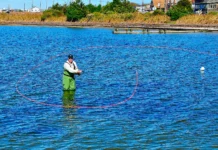
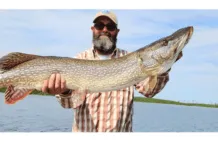
Fly fishing in New Mexico offers an incredible range of water that many anglers overlook. From tiny mountain creeks hiding in the Sangre de Cristo Mountains to the famous San Juan River tailwater, the state delivers everything from technical dry fly fishing to big trout below dams.
In this episode, I sat down with Trisha Valdez to talk about growing up around the Mora River, how she found fly fishing later in life, and why local rivers often shape us more than destination trips. Trisha also shares the story behind New Mexico Lady Anglers, the community she founded to help more women get comfortable with fly fishing.
We get into small-stream fishing, the San Juan River, conservation challenges, and several New Mexico trout streams worth adding to your list.
Trisha Valdez shares how summers in Mora shaped her connection to rivers and how those early experiences eventually led her to fly fishing. We talk about the Mora River, the San Juan tailwater, and the growth of New Mexico Lady Anglers.
New Mexico Lady Anglers began with a simple goal: to make fly fishing more welcoming for women who are curious about the sport but unsure where to start.
Trisha experienced firsthand how intimidating fly shops can feel when you do not yet understand gear, flies, or terminology. A single dismissive interaction can discourage someone from ever coming back.
New Mexico Lady Anglers creates a space where women can learn fly fishing in a supportive environment while connecting with others who are exploring the sport.
Working behind the counter forced her to learn the details of fly fishing gear quickly. Instead of asking for a “black fly with white stuff,” she had to know exact fly names, sizes, hooks, and patterns.
That experience helped her understand what beginners face when they first walk into a shop. Today, she uses that knowledge to help new anglers build confidence when learning fly fishing in New Mexico.
Trisha’s connection to fishing started long before she picked up a fly rod.
Although she grew up in San Diego, she spent summers in Mora, New Mexico, with her family. Those months were filled with exploring the Mora River, turning over rocks, and spending long days outside.
Her father first introduced her to fishing there using spinning gear. Over time, the river became more than just a place to catch fish—it became part of her identity.
The Mora River is a small stream that holds primarily brown trout. Because the water is narrow and clear, anglers must approach quietly, crouch low, and make careful casts.
Evening dry fly fishing can be excellent when conditions line up.
Because the Mora River played such an important role in her life, Trisha eventually wrote about it for Fly Culture Magazine.
Her stories explored the history of Mora, the culture of the area, and the personal memories tied to the river.
It was an opportunity to share how fly fishing in New Mexico is deeply connected to the communities and landscapes surrounding these rivers.
New Mexico Lady Anglers officially launched in November 2024.
The group began as a social media invitation for women across the state who were interested in fly fishing. Since then, it has grown into a network that hosts casting clinics, meetups, and educational sessions.
The goal is simple: make fly fishing accessible and enjoyable for anyone interested in learning.
During the interview, she noticed a photo of her interviewer holding a fish and used it to start a conversation. That connection helped her land the job and eventually led to her first exposure to fly fishing.
Her boss later gave her her first fly reel and planned to take her fishing on the San Juan River.
Although that trip never happened before he passed away, Trisha later honored that promise by taking a road trip with her son and fishing across several Western states.
The San Juan River is one of the most famous trout fisheries in the Southwest.
Flowing below Navajo Dam, the river provides consistent cold water that supports a large population of trout. Compared to small streams like the Mora, the San Juan offers a completely different style of fishing.
Anglers often focus on small midges and technical presentations while targeting large rainbow trout.
For many anglers, the San Juan is where they first experience tailwater fly fishing in New Mexico.
Beyond the San Juan River, Trisha recommends several rivers anglers should explore across the state.
Each river offers a different style of fishing, from small mountain creeks to larger canyon rivers.
Many members of New Mexico Lady Anglers enjoy fishing solo, which means safety becomes an important topic.
Trisha shared a recent encounter with a mountain lion while hiking out from a stream near Valles Caldera National Preserve.
She spotted the animal before it saw her and slowly backed away.
Experiences like that are a reminder that anglers fishing remote waters should carry basic safety gear and remain aware of wildlife.
For people curious about fly fishing in New Mexico, Trisha recommends keeping things simple.
Take a casting lesson or book a guided trip before investing heavily in gear. Spend time in a good fly shop asking questions and connecting with local organizations like Trout Unlimited.
The most important step is simply getting on the water and enjoying the experience.
Episode Transcript
00:00:00 Dave: Fly fishing means something different. When you grow up around the river, you learn lessons by watching flows change. You learn respect by seeing what happens when water is stressed, and you learn stewardship simply by spending enough time to care. Tricia Valdez is here to talk about growing up fishing in New Mexico, and how her early experiences on local rivers influenced the way people fish later in life, and why connection to place often matters more than chasing the next destination. This is the Wet Fly Swing podcast, where I show you the best places to travel to for fly fishing, how to find the best resources and tools to prepare for that big trip, and what you can do to give back to the fish species we all love. In this episode, Tricia Valdez is going to share some of her background, and we’re going to find out about someone who’s fishing roots were shaped by the Mora River, the Moore River in New Mexico. And we’re going to find out how this path grew and fly fishing and how she started the New Mexico lady anglers. We’re going to get into that whole story and all of her connections around there with community. Plus, we’re going to get some fishing tips on New Mexico, one of the great places. All right, let’s get into it. You can find Trisha Valdez at Trisha Valdez dot com. Here she is. How are you doing, Trisha? 00:01:11 Trisha: I’m good. How are you, Dave? 00:01:13 Dave: Pretty good. Pretty good. Yeah. We’re gonna we’re gonna jump into, uh, New Mexico, which is a place that I have. I still haven’t been to yet, although it’s got to be close to the top of my bucket list because it seems like you have everything there. The good weather mountains, you got the desert, all that. But we’re also going to jump into New Mexico lady anglers and kind of maybe talk about some rivers and streams you fished there, but um. Yeah. How’s it going? What is it? Uh, this time of year? Is it still pretty awesome to be in Mexico when it’s kind of the middle of winter? 00:01:41 Trisha: You know what actually it is. I mean, we’ve had such a balmy winter, if you will. The winter’s just been so warm that pretty much a lot of things are still fishable. Of course, you’ve got the San Juan River. That’s always fishable all year round. But, um, yeah, you can go out there and find some chunks of ice and dig underneath there if you want to get a fish. 00:02:01 Dave: Nice. You can so you can do it. All right. And so I think part of this, I think you first. Uh, San Juan roadworks. Gary, who we’ve been working with, I think he was the first person who mentioned your name. And I’m always interested to connect, you know, with more lady anglers, because I feel like that’s a big struggle of ours, you know, connecting with more women out there and maybe start there. Talk to us a little bit about that. How did New Mexico lady anglers or maybe just fly fishing in general? Have you been doing all this, uh, working with the group and doing this for a while? 00:02:29 Trisha: Yeah. Well, first of all, thanks Gary for like the, the shout out. 00:02:33 Dave: Yeah. By the way, Gary has talked about you probably have some of his rods. Have you ever used the San Juan rods? 00:02:39 Trisha: Yeah I did, I bought the frying pan. 00:02:41 Dave: Oh yeah. Frying pan. Yeah. 00:02:42 Trisha: I bought the frying pan. Um, I had like, okay, so with New Mexico lady anglers, we have like a monthly meet and one of our meets was to, I like to incorporate anybody in New Mexico that wants to talk about what they do, their fly shop. It doesn’t matter who we don’t like. Stick with one certain person or one certain venue. We’re like, all over. 00:03:01 Dave: Yeah, it’s just like us. We interview everybody because we love it, right? 00:03:04 Dave: Exactly. 00:03:05 Trisha: Yeah. It doesn’t matter what kind of fishing you do. I don’t care just as long as you get out there. But, um, with Gary, I wanted him to introduce that fly rod to our ladies, because a lot of ladies think that they have to spend a lot of money in order to do this. You know, to do fly fishing and you just don’t. And so he came out and he brought his rods. He showed us how they work. He put them together. He talked about the different weights and how they swing. And I mean, things like that are important to the ladies because when they go into a fly shop, they don’t really know what they’re looking for unless they’re educated on it. And that can be intimidating. And that’s the whole pretty much premise of why I started, um, New Mexico Lady anglers. 00:03:42 Dave: Oh, wow. So you started. 00:03:43 Dave: It. Oh, yeah. 00:03:44 Dave: Wow. Okay. So good. So we got the founder on here. This is going to be great. I think that, you know, we’ve talked a lot about this over the years. Um, you know, going back, I think the Orvis fifty over fifty movement always is a big, you know, part of it because there was that big movement. But I mean, just in general, it feels like I mean, what’s your take on it? I know there’s been some struggles because you’ve heard stories about women going into fly shops and not feeling, um, I don’t know, supported. Right. And kind of what’s your take? Have you been do you think about that a lot these days? 00:04:12 Trisha: Dave, was I a victim? Yes. 00:04:15 Dave: You were a. 00:04:16 Trisha: Victim. I was a fly shop victim. 00:04:17 Dave: There you go. 00:04:18 Trisha: Let me tell you what happened. So basically, I didn’t really know a lot about fly fishing, but I’ve been doing it for a long time, so I didn’t know the specifics of it. Um, I think one of the best things that I did to help me was to actually go to a fly shop and beg for a job. So one of the fly shops that I worked at was Los Pinos fly shop here in Albuquerque. And I worked there for, I don’t know, maybe a year, year and a half. Um, during Covid and a little bit afterwards. And I was in charge of the flies. So instead of saying, hey, can you hand me that black thing with the white stuff on top, I had to learn like the names of everything, the sizes, the hooks. I mean, you have to tie it how to sift the whole inventory of a fly shop. And that was probably the best thing that I could do. And I told the ladies, you know, like you might want to go and see if you can volunteer at a shop. It’s probably the best, you know, education you can get. So starting out there was, was probably the best thing. But yeah, was I a victim? Of course. I mean, especially I’m not dissing you Colorado, so don’t write me. 00:05:18 Dave: Right. 00:05:20 Trisha: Um, but Colorado can be kind of harsh sometimes. I think all the fly shops in New Mexico are really friendly and they’re willing to help and they’re not they’re not one to look down on anybody if they don’t know anything. But when you go into Colorado, it’s like, you know, either they pay attention to you or they say, well, can I help you? And it seems like you’re kind of like bothering and, and that kind of thing. Sometimes I’ve seen that it’s happened to me and I, I know that that can be intimidating for the women. So a lot of them want me to go with them either shopping for flies or to help educate them. So they don’t look like that, and they know what they’re doing and they don’t have to worry about asking for help. If they don’t need it. 00:05:56 Dave: Yeah, exactly. Do you feel that that’s, um, gotten better over the years? Some of that. 00:06:01 Dave: I mean. 00:06:02 Trisha: Yeah, of course. 00:06:03 Dave: It’s still there. It’s there still. It sounds like. So there’s still some of that there in recent years you’ve seen still seen that. 00:06:08 Dave: Yeah. 00:06:08 Trisha: I mean, it was kind of a bummer. One day I was taking a, a woman who wanted to go out to the San Juan and she didn’t know what she needed. So I said, well, meet me at the shop. And, you know, the person that was working there gave the waiters to her, gave her the boots. And I said, hey, I’m going to walk out to my car real quick and get something. I’ll be right back. So she put her waders on over her shoes she was already wearing. And so, you know, one of the guys was like, oh, um, do you not know how to put this on? That’s not how you do it. And I was like, oh, you know what, I got it. I’ll take care of it. Don’t worry. So I mean, to talk to somebody like that, right, can really dismiss their energy to want to go out there and fish. And that’s what we’re trying to. 00:06:51 Dave: Like. 00:06:51 Trisha: Eliminate. You know what I mean? 00:06:53 Dave: That’s it. Yeah, that’s the thing. Because even somebody who’s brand new to fly fishing, right. Never fly fish in their life. Maybe never even fished if you come to the shop. I mean, everything is everything is foreign, right? I mean, like, it’s like, how would you know about the waiters or really anything? And and yeah, it seems like if you’re the person behind the shop, you would know, you know, pretty quick if the person’s fairly new, if they’re putting their boots on or putting their waders over their shoes, you know what I mean? There’s certain ways to, I don’t know, right. To address it in a better way than, say, some snarky remark. 00:07:25 Trisha: I’d be like, what are you doing? 00:07:26 Dave: Yeah, yeah. 00:07:27 Dave: Like make a joke out of it or something. Right? You make it. Yeah. You’d make a funny joke out of it or, you know, you’d you’d make it so it wasn’t weird, you know, and you’d show them how to do it. 00:07:35 Dave: Or I’d say. 00:07:35 Trisha: Like, okay, you got your shoes on, you got your waders on, and now you got to put on your boots. How are you going to do that? 00:07:40 Dave: Right? 00:07:40 Dave: You know what I mean? 00:07:41 Trisha: You do stuff like, but conversely, I mean, what happened to me one day was, um, when I was working at Los Pinos fly shop, you know, you’ve got the old guys that have been doing this a long time, and when they come in, they want to talk to the males that are working there. And so the owners wanted to have a woman in there to make the women feel a little bit more comfortable. And it’s kind of funny because I remember one day, um, I think I was, I don’t know when it was, it was during Covid. And Tom, one of the workers there, they asked him about fishing and Pecos and stuff like that. He goes, I have no idea. I’ve been up there in a while. But you know who just went up there and killed it with Trish? And they’re like, oh, who’s Trish? And I’m like, that’s me. 00:08:21 Dave: Yeah. 00:08:21 Trisha: So they’re like, oh, what did you use? And they said, oh, let me show you. I go, you got to do this and this and do a dry dropper here. And then you got to do this. And they’re like, where were you at? And I said, well, I was over here. And then I’ll tell you a secret spot if you don’t tell anybody. So I’ll give you some Intel if you ask. Nice. 00:08:36 Dave: But yeah. 00:08:37 Trisha: Not all the time. 00:08:38 Dave: Right? Yeah. 00:08:39 Dave: Right, right. No, that’s good I think. Yeah. Part of it is it is, it is just kind of um, feeling comfortable. You come into a shop. Yeah, I think I mean, I always go back to this diversity thing, not only men and women, but just, um, you know, everybody, you know, the more diverse fly fishing is with different people, the better it’ll be. Right? It feels like it’ll just be a better place. And, and so fly fishing struggle with that. You know, the old white guy. That’s always been the funny joke, right? That’s what fly fishing always used to be. But we’re working on it, right? We’re still trying to get to that place where we’re fifty over fifty. 00:09:11 Trisha: Don’t get me started. Yeah. For real. I mean, like, even on the wand, if I’ll go with my buddy Pete, sometimes we’ll go fishing out there, and some guys will walk by and we’re both fishing, and they’ll ask him, hey, how’s it going? But they won’t talk to me. And I’m like, it’s cool. It’s okay. Because, you know, I’m the one that’s been giving him the flies. I’m the one who’s been catching the fish. 00:09:33 Dave: Right? 00:09:34 Trisha: So it’s funny because they’ll say, oh yeah, I saw you catching fish. What’d you guys see was and I’m like, all right. But yeah, it’s gonna take a long time. 00:09:42 Dave: It’ll take some time. Yeah. Change takes time. You know it does. It’s not. It’s not going to happen. There’s going to be steps back to right. You’re going to two steps forward. Right. And so so we’re all hanging in there. And I’m definitely trying to do my part to, you know, that’s part of the thing where I’m always thinking, I look at the podcast and I see we’re still heavily male dominated, right? I mean. 00:09:59 Dave: I saw that, Dave. Yeah. 00:10:01 Trisha: Take a look at that. 00:10:01 Dave: I know, and I’m so whenever I get people like you and others on it, it makes me feel better because I’m trying, but, um, but well, tell me this. You mentioned kind of off air about the the Mora mora River. Talk about that a little bit. It sounds like that’s one of your little sweet spots. What is when do you like to fish that river? 00:10:19 Dave: So that river. 00:10:20 Trisha: Is good to fish. Like right now there’s probably some parts that are frozen over. And of course, with the winter being not as great as it has been the best part to fish, that is probably like, of course, right in like early, late June, I’d say late June all the way to like November. If it doesn’t get too cold, that place just pops off or dries right when the sun goes down, when it heads down back behind that Sangre de Cristo mountain range. I mean, it just goes insane. But the cool part about that river is that it’s all browns. They are introduced a while back. You know, back in the, what was it, early nineteen hundreds. And that’s all it has. There are no other species of fish in there. And, um, they’re skittish. I mean, you look at a shadow just darting out from underneath the banks. And, um, sometimes you’ll see a big old tank go by. It’s just nuts. But right now we’re having an influx of beavers, which I love my little. 00:11:20 Dave: Yeah. That’s good. Making those dams. 00:11:22 Trisha: Yeah. It’s good. It creates a new wetland. So, um, the Moore River has been special to me for a very long time because that’s where I grew up. Um, I grew up with Maura on, in the summers. I’m from San Diego originally. 00:11:35 Dave: Oh. You are? Yeah. 00:11:37 Trisha: I’m from San Diego, and my mom and my dad shipped me off every summer to Maura to go hang out with my aunt and my uncle. 00:11:43 Dave: Yeah. Cool. 00:11:44 Trisha: And that was fun because I learned so much because they were really old. They didn’t want to have anything to take care of. You know, they didn’t want to take care of a little young person that I was. So they say go outside. And that’s like the best thing that you can do. So I’d hang out in the river. I’d just like hang out in the cottonwoods. I’d go up and down flipping rocks. And my dad’s the one who actually taught me how to fish because he’s actually from that town. And so he’s the one who introduced me to fishing. At first it was spin fishing, and we’d fish like the mora. We’d fish up in the sangres, like in Fritos is what it’s called, where there’s a ski lodge up there called Sipapu and there’s some rivers up there. And he showed me how to do that. So but he actually didn’t catch fish with a rod. He used his hand. 00:12:29 Dave: His hand. 00:12:30 Dave: Yeah. 00:12:31 Dave: Wow. 00:12:32 Dave: Yeah. 00:12:32 Trisha: So a lot of the people and you’re going to probably, maybe some people will chime in on this or not, but a lot of the older gentleman from back in the day. We’re talking back in nineteen thirty four. That’s when he was born. They learned how to fish under the banks because that’s where the fish kind of hang out when it gets too hot in the summer and they hide there. 00:12:50 Dave: Or so the brown trout, the brown trout hiding. 00:12:53 Dave: Yeah. 00:12:53 Trisha: And so they would just dip their hands underneath the bank, get a big old baddy. 00:12:59 Dave: Really? 00:13:00 Dave: Yeah, it’s pretty cool. 00:13:02 Trisha: He showed me how to do that. We did that one time and that was amazing. 00:13:05 Dave: That’s crazy. So your dad basically was catching brown trout with his hands, which I’ve never heard about. I’ve heard about catching, like, catfish or where those people stick it up in the bank and the cats or I think it’s catfish. They cling on down in the southeast. But how would you catch a brown? I mean, so they’re sitting there and they’re just sitting there. Is this pretty easy to do? Have you ever done it? 00:13:23 Dave: I have done. 00:13:23 Trisha: It. I’ve done it one time and it’s really kind of creepy. I won’t do it. I don’t like to do it. 00:13:27 Dave: It’s gross. Right? 00:13:28 Dave: Because what do you do when you grab don’t the fish just spook once you touch them? 00:13:30 Trisha: Not really. Because they’re kind of docile already. They’re just kind of hanging out because either they’re it’s too hot and so they’re seeking some kind of shelter or they’re just resting. And that’s the bigger fish. Of course, not the smaller ones, but yeah, they usually just hang. Underneath the undercut of the bank because most of the banks just like. Curl under and then you’ve got the grass that’s right there. And then just like right there hanging out, waiting for something like a nice string. Something to go by now. 00:13:57 Dave: Are you still on that same river? Do you go back to those places where you caught them with your hands? And can you catch them with flies? 00:14:02 Trisha: Oh yeah. 00:14:02 Trisha: I’m still in the same room, still catching them with flies. Dries for sure. Guinea’s elk hair caddis articulated like streamers, would work their eggs. A lot of people poached, though. And that’s the hard part, right? I don’t really want to get into all that because it’s so political. 00:14:19 Dave: But no kidding. 00:14:20 Trisha: You know how when you have private property, it’s kind of hard to keep somebody off? And then there’s the whole argument about, you know, anybody can go on that, that water, as long as they don’t go onto the land. Right. And I’ve never been I’ve never had problems with that. As long as they put the fish back and they take care of the way that they left it. But a lot of times we just see stringers of like salmon, eggs and hooks and stuff hanging off of the banks to catch the fish. And there’s been a depleting population in the brown trout there, not because of the fires only, but because of the poaching. 00:14:51 Dave: The poaching. And these are people just going up there with like, bait, spin rods and stuff using bait. 00:14:55 Trisha: Yeah. 00:14:56 Trisha: For sure. 00:14:56 Dave: Yeah. And then you have it sounds like you have like a property there on the on the river. 00:15:01 Trisha: Yeah. 00:15:01 Trisha: The family has property there on the river, right in the town of Mora. And so, you know, they used to call my dad and ask, hey, can we fish your property? And my dad wouldn’t have a problem with it, but a lot of people don’t. Or they’ll just like tie the line to like a, I don’t know, like a little branch or something and just like, let it hang overnight and then get their fish in the morning. 00:15:21 Dave: Oh, geez. 00:15:22 Trisha: Yeah. It’s sad and I know it happens in other places too, but that’s the only bummer part about that. Other than that, I mean, the fire was a big mess. That was a bummer. And, um, so that’s just the hard part. And it’s just been droughty. We’ve just had tons of drought. 00:15:39 Dave: Yeah. The droughts. Yeah, that is the challenge. Yeah. You’re in a place where the weather’s kind of seems like it’s perfect, but as climate change seems to come in, it might make it even potentially hotter. Right? More droughts. It could be coming. Who knows. Right? 00:15:53 Trisha: Yeah. 00:15:53 Trisha: The water temperature for sure is like increased. And so that’s been a factor. So there’s a lot of things that that are kind of hard about that. But I was fortunate enough to write about it and like my background when I was asked to write for fly culture, fly fishing. 00:16:10 Dave: Fly culture. 00:16:11 Trisha: Yeah, yeah. 00:16:12 Dave: Where’s that magazine out of? Is that up in Canada? I can’t remember. 00:16:15 Trisha: Based out of the UK. 00:16:17 Dave: Oh that’s right, the culture. Right, right, right. 00:16:18 Trisha: Yeah. 00:16:19 Trisha: So Pete Tyga’s asked me to write up for him a couple of stories. So I’m in about, I think four for magazines. 00:16:29 Dave: Oh, right. 00:16:29 Trisha: Cool. Yeah. So it’s cool. He let me write about that. And I thought that was so nice because that’s like, I’m really important to me. And he wanted to know about like the whole culture of Maura and all that, which was cool. 00:16:41 Dave: Yeah, I see it now. I’m looking at, uh, Fly culture magazine. Um, yeah, there’s, there’s some content out here online. It looks like. So well, this is good. So we got a good start and we’re going to circle back to the probably the more river and some other areas. But talk about the New Mexico um lady anglers. Why did you get that started? Because I’m sure that that’s not an easy I’m sure there’s a lot of work involved in that. Talk about that. 00:17:02 Trisha: Alma. Okay, I will let’s see. I kind of get dragged into things and I have a hard time saying no. I don’t know if anybody else is like that out there. I’m sure there are, but I’m the type of person that will just take on whatever I can. So I was, um, at a board meeting and I got kind of caught up in, hey, do you want to be a part of the board for Trout Unlimited chapter? And I’m like, um, what does that mean? And they’re like, oh, you’ll be fine. And then it was like, hey, we need to get more women on the board. Can you help us with that or more women with this? I’m like. 00:17:33 Dave: Sure. 00:17:33 Trisha: What does that mean? And they’re like, oh, you’re going to do great. 00:17:36 Dave: Easy. 00:17:37 Trisha: No problem with all that. I was like, dang, what do I do? What do I have to? Start another social media account. How do I do all this? And so I actually talked to. And I can’t think of her name right off the top of my head. I have it and I lost it. But she is the founder of United Women on the fly. And anyways, we had a long conversation on the phone a couple of years ago, and we talked a little bit about how to get it started, but I don’t want to be as big as her. That’s too much work, and it’s really hard nowadays to try and get volunteers and people to like, help out with things. So I knew I would have to do a lot of legwork. And, um, so I was a part of that. So I started that in November, November twentieth of twenty twenty four. I posted that online and I said, hey, this is an inclusive place for women to learn educational and other venues of fly fishing. If you’re interested, you know, hop on, I’ll get everything started. And it just kind of took off. I mean, not that it was like anything viral, but I mean, we’ve got about five hundred people that follow on Instagram, which I know that that’s nothing. And in Facebook, we have more because I mean, the population that has been within New Mexico, lady anglers is like anywhere from like, I had a twelve year old all the way up until like eighty. And so the dynamic and the diversity of that is just cool. And I’ve got anywhere from African American people to Native American to Mexican American to whatever. And so that to me is what I want is to get anybody and everybody in here involved. And so I have about maybe three hundred, four hundred people on a mailing list. So basically, I started the Instagram, I did Facebook, I would get people coming in for that because we did casting clinics with the New Mexico game and Fish. So I would do the casting part of it where another person would do the educational part of it. So it just kind of grew. And it’s just been a nonstop thing to where we will hit up as many Trout Unlimited chapters in the state and do something with that chapter. So down in the Hilo, we spent a weekend. I’ve been taking video and pictures and I usually do the films every year. We have like a film every year that we show for the fly fishing film. But instead of doing outsourcing, we’ve been doing a lot of local films, which is really cool because a lot of people want to see what’s going on in the state, rather than in a saltwater area where they’re not familiar with and where they probably may not go. So that’s where it’s kind of come into play. So I hang out with people in the Gila chapter up in the northern New Mexico chapter, Taos chapter, Santa Fe chapter, and make sure that all the ladies are incorporated and something is happening in each chapter as I can. 00:20:20 Dave: That sounds sounds like a good idea. You get around all the two groups and you’re basically bringing new people in to your group, to the New Mexico lady anglers. 00:20:29 Trisha: Yeah. And it’s so much fun because I guess there’s there’s only. So I’m central. So I’m in Albuquerque, which is kind of central New Mexico. And so whenever we have like our monthly meetings, I’ll try and do it somewhere else. I’ll incorporate a different fly fishing shop or a different venue, and we’ll just have a blast with whoever’s out there. And it may just be like twenty people that show up. It’s nothing that’s exponentially like huge, but that’s still good, you know? 00:20:54 Dave: Yeah. It’s awesome. Sounds like you got a good program going. And and how much does that take up? Quite a bit of your time running. Like what do you do as the, I mean, the founder? And do you have other people helping out with, with the events? 00:21:05 Trisha: So, um, to get something going to get something started, it’s just a lot of social media stuff. I have to make sure that I do some really fun and simple, I guess graphics. So I have to learn how to do Canva, I have to learn how to post it all. It’s just, it’s a lot, but it’s fun. Um, I want to make sure that it’s something that the ladies want to do. So I always ask them, what are you interested in? So if it’s tying or if it’s doing knots, or maybe they want to learn how to cast, I mean anything, I’ll do that. And then I like to like I invited Gary to show his, his rods off and somebody else that’s doing their rods is um flat creek rods and they would come and they would do their stuff. But in Taos, so they went and they showed off their work in Taos. And so the ladies from Taos would come home. So what I’m trying to do is just make sure it’s inclusive not only to women, but to like all the vendors and all the people that incorporate fly fishing across the state, which takes a lot. Luckily, I had that connection working through the fly shop and just a lot of people kind of kind of know me. So I’ve been fly fishing for over thirty years. 00:22:14 Dave: Oh, right. Yeah. You’ve put your time in. Well, you said you started with your dad. He was he wasn’t fly fishing or. How’d you learn? How’d you pick up the fly rod? 00:22:22 Trisha: Oh, no, we’re getting there. Okay, so, no, my dad did not like this at all. He didn’t. He doesn’t know about fly fishing. And the only reason why I got interested in this is because I worked. When I first got out of college, I had my degree in communications, and I wanted to be like the next Barbara Walters and be on TV and all that fun stuff. 00:22:42 Dave: Have your own show. 00:22:43 Trisha: Right, right. And so, um, I ended up working at channel thirteen, which is Krqe here in New Mexico. And my boss, I went and I had a interview because I was like looking to work at a TV station because I wanted to be an anchor. So my boss interviewed me and it was going bad because I didn’t have any experience. I was tanking and so I like looked around the office. I’m like, what the heck can I connect with this guy? What can I make him like me? And all of a sudden I saw a picture of him holding a fish. I was like, there we go. That’s it, that’s it. So I was like, so, um, I understand that you’ve got, um, touched by an angler for your programming, right? And he goes, what did you say? And I said, touched by an angler. And he goes, you mean touched by an angel? And I said, yeah. And he goes, why do you say angler? And then I said, I don’t know. I thought that’s what it was called, and I. And then he starts laughing and he goes, well, son of a. Do you like to fish, Trish? And I said, really I do, I do. I go, do you. And he goes, well, look at that picture right there. And I said, yeah, I go, where was that? And he goes, that’s over there. And he goes, The Animas River. And we have a place up in Durango where we do some of our, uh, news stories. And he goes, you know what? If you work here, you know, you can go up to Durango and you can fish and maybe I can show you how to fish the San Juan. He goes, do you know how to fly fish? And I said, no. And so his name was John Tischendorf. He was a Navy veteran and he was gruff. And he’s the one who kind of showed me how to do this whole stuff. 00:24:11 Dave: And that’s amazing. And gave you a job too. 00:24:14 Trisha: Gave me a job. I was his favorite. 00:24:16 Dave: Look at that. You pulled it out. That’s a great interview tip. You’re you’re struggling in an interview and you just. 00:24:21 Trisha: Look around. 00:24:22 Dave: You got to make a connection. And you find the fish which you have no background fly fishing. At least you had caught fish with your hands, right? With your dad. But but that pulls it out and it’s actually it was touched by an angel. You said it wrong, but it was funny. 00:24:34 Trisha: No, I know I did that on purpose. 00:24:36 Dave: Oh, you did okay. I did that on purpose. 00:24:38 Trisha: I do things weird. I’m kind of weird like that. But yeah, so he was cool. Gave me my first fly reel during lunch. We would go to Rei and like, he would show me stuff, go to Charlie’s fly fishing box or Charlie’s. 00:24:49 Dave: Oh, yeah. Charlie’s. Yeah. Charlie up in. That’s in Colorado, isn’t it? 00:24:52 Trisha: Oh, it’s right here in Albuquerque. 00:24:53 Dave: Oh it is. 00:24:54 Trisha: Yeah. And then he took me to Los Pinos when we first had that fly shop here and show me all the stuff. And I was like, super stoked. And I ended up leaving the TV station. And so where I went, he was like, hey, we still have to go fishing. We’re making this crafting up this whole plan to go fishing because he would hunt up at our property and him and my dad, my dad and, and he were very good friends. They became very good friends. 00:25:20 Dave: So after you worked for him, your dad and this guy became good friends? 00:25:23 Trisha: Yes. And so they went hunting and up in Mora, and he was supposed to go fishing up in my place. But he goes, I gotta take Trish fishing at the San Juan, because that’s where she’s going to learn. And he got cancer and he passed away before we were able to go. 00:25:37 Dave: Oh, wow. 00:25:38 Trisha: So I promised him before he died that I would go fish Idaho, because that’s where he said was the best place to go fishing. I did, I fished Idaho, Washington, Colorado, Utah, Oregon, all in five days. 00:25:50 Dave: Holy cow. 00:25:51 Trisha: In Wyoming. 00:25:52 Dave: five days. You hit all those states? 00:25:54 Trisha: Yeah. I did a road trip with my son, and we hit up five or six different states, and we fished in every single one. 00:26:00 Dave: Doing that in five days is. That’s a feat right there. 00:26:03 Trisha: That was a blast. But yeah, I did catch one of my biggest brands on the reel that he gave me. 00:26:08 Dave: No kidding. Wow. Yeah. What a story. So and what was the job you had? What was your job at the TV station? 00:26:14 Trisha: Program director. So I was responsible for putting on all the programming. I was in commercials and I never was behind the the camera for the news or anything. And I ended up getting other degrees because that’s why I became a teacher. 00:26:28 Dave: Oh, yeah. And you became a teacher at the university. 00:26:30 Trisha: So I am part time faculty at UNM right now. Um, and then I am also full time, um, special ed head teacher at Albuquerque Public Schools for a middle school. So I’ve been teaching for twenty two years now. Special ed. 00:26:44 Dave: Uh huh. Geez, that’s pretty amazing. 00:26:46 Trisha: So all that incorporates into what I do as New Mexico Lady English as well, because I do a lot of education and the way that I work with the ladies is very. And I hope they agree with this. I feel that I’m very comfortable to them, and I feel that I incorporate a little bit of humor and just like, there’s no shame. Like, I don’t care if you don’t know what you’re doing, I don’t care. Whatever. We’re just going to go have fun because it’s what it’s all about. To me, that’s what it’s about. 00:27:13 Dave: It is, it is. Do you find a lot of the women coming in there are pretty brand new to fly fishing. 00:27:18 Speaker 5: Oh, yeah. Yeah, yeah. 00:27:20 Trisha: They have no idea what they’re doing. And I kind of like that because you can really work with somebody and mold somebody and not have to work with some of the things that they were taught in the past. 00:27:31 Speaker 5: Yeah. 00:27:32 Trisha: So same thing with kids and teaching. 00:27:36 Dave: If you’ve been holding off on getting a new fly rod because of the price tag, San Juan Rod works just changed the game. These rods are dialed in with the right action, clean design, and built to fish hard without the high price tag. Whether you’re stripping streamers, tight lining, or dead drift and dries, they’ve got a setup that feels right from the first cast. And the best part is you can try any rod, reel, or fly line for thirty days risk free. And if you’re not one hundred percent satisfied, you can send it back for a full refund. Check them out right now. That’s San Juan rod Works.com. S a n j u a n roadworks dot com. You support this podcast by checking in with San Juan. now. And what do you when you have somebody new in fly fishing, how do you get started? What’s your first steps? 00:28:24 Trisha: So if somebody contacts me and they say they’re brand new in fly fishing, they don’t know what they’re doing. Um, I’ll ask them if they want to join, um, one of our monthly meetings just to get to know people. But if they just want to like do a one on one, I’m totally down for that. I’ve met people in the parks, I’ve met people at ponds, and I’ll show them the basics of what they have or I’ll bring rods. Luckily with to you Boski chapter, we have like fly tying kits and we have fly tying rods that we bought that we can use for people that can use the equipment, check it out, see if they like the sport in the first place, because they may not. And then if they want to do more than we just work on that. But some of the first things I do is just introduce the basics of the equipment and like how to open up your reel, how to clean it, how to look at the line and all that stuff. Because a lot of times when you start talking about the line weight and the weight of the rod and all that stuff. It can get a little complicated until they actually understand what they’re doing and if they want to continue in it. So I won’t bring that up right away because I don’t want to scare anybody off. 00:29:23 Dave: Yeah, yeah. Just let them figure out how to set it up, put the line on lidar and really just get them casting right. That’s the first thing. Just get them feeling the rod and get them casting out twenty feet or thirty feet. 00:29:34 Speaker 5: Yeah. 00:29:35 Trisha: So we have hoops, we have casting out there that will do. And we do it in the park. We can do it in a pond or in a river. Sometimes I’ll even bring somebody who’s never fished before, and I’ll just take them to the San Juan, and I’ll just throw them in waders and boots and just let’s go. 00:29:50 Speaker 5: Just go for. 00:29:51 Trisha: It. That’s how I learned. 00:29:52 Speaker 5: Yep. 00:29:53 Trisha: So I never went to that San Juan fly fishing trip with John Tischendorf at Channel thirteen, but I went with a friend of mine, Deborah, because nobody else that I knew knew how to fly fish. But my son was dating a girl, Cassie, and her mom was a huge fly fishing person, and he hooked us up and we became really good friends and we’ve been fishing for twenty years together. 00:30:14 Speaker 6: Oh, wow. 00:30:15 Speaker 5: Yeah. 00:30:16 Trisha: So my first thing of going to San Juan was going with her and her little Toyota truck that had no air conditioning. It barely made it to the San Juan. 00:30:24 Dave: Oh, cool. This is like a little Toyota Tacoma or a little pickup. 00:30:27 Speaker 5: Yeah. 00:30:28 Trisha: We’re talking no air two seater. Barely made it to the San Juan. I didn’t know what I was doing, but I didn’t want to let her know. And so I can tell that’s what a lot of ladies do when they kind of show up. They don’t want to let you know what they don’t know because they’re afraid to be made fun of. 00:30:43 Speaker 5: Sure. 00:30:44 Trisha: So I just remember going with, you know, these waiters that weren’t worth a crap. And then I had a net. That was it was the nastiest net. It was like a metal wired net with that could like strip the gills off of anything. And then I had, um, boots that weren’t even waterproof and then a rod that I think it was like unbendable, like there was no flex in this rod whatsoever. And so when she saw that, she was like, what the hell, girl? You should be coming here looking like that. That’s embarrassing. So she’s like, put me in my place. But I had bought. I will tell you, Dave, I did spend a lot of money on my my glasses. I paid three hundred and fifty dollars for a pair of Evos. 00:31:23 Dave: Oh, these are for your polarized glasses. 00:31:25 Speaker 5: Yes. 00:31:25 Trisha: I went and I bought polarized glasses for three hundred and fifty dollars. And like, we went down this one place in the San Juan. And I know everybody who knows the San Juan knows this place. I call it Vietnam because you have to walk down literally. It’s like a vertical traverse that you walk down. And as you get down to the bottom, it’s like all like in the summertime, it’s like full of mosquitoes. The water’s like up to your hips. It’s nasty, wet, gross, scary. And then you walk out and you’re just like right there in the San Juan and the dam is just right there. And it’s just beautiful. But the sand in there, the mud in there is silty. So like when you walk in, you will actually kind of almost like sink in. And it’s really, it does a section where like you try to get your feet out and it sucks it up and it’s hard. Well, I lost my glasses in that mud that day. 00:32:17 Speaker 6: That’s too bad. 00:32:18 Dave: The reviews are the glasses. 00:32:19 Speaker 5: Yeah, three to fifty bucks. 00:32:21 Dave: Yeah, I haven’t heard of those. Yeah, there must be. They look pretty cool. I’m looking at them now. Oh, and I did look up, uh, earlier. Heather Hudson. 00:32:28 Speaker 5: Heather Hudson. Yes. Thank you for saying Heather Hudson. 00:32:30 Dave: Cool. So this is good. So we got a good background on what you have going here. Um, we mentioned the more reviews. How is the Mora different from the San Juan River? They look a lot different a lot. 00:32:41 Trisha: So I mean, the more river, the highest, the, you know, cubic feet CFS will go is probably like literally a good CFS for more would probably be like about maybe twenty five. 00:32:54 Speaker 5: Oh, it’s tiny on a good day. 00:32:56 Trisha: But then normally in the summertime, it goes down to like maybe about four to ten where the San Juan can go anywhere from like one hundred and something to like five thousand. 00:33:06 Dave: Right? Yeah, it’s much bigger. Okay. 00:33:07 Trisha: It’s huge. Yeah. Huge. Yeah. This is just a small little river that comes down from the Sangre de Cristos. And. And it just holds browns and it’s just so much fun. 00:33:17 Dave: It’s a dry fly Mecca. It sounds like a dry fly Mecca. 00:33:19 Trisha: Super dry fly Mecca. Super like get on your knees and crunch down and like stalker fishing. It’s the best. 00:33:27 Dave: Yeah, right. What’s your rod? What length rod do you like use on that on that stream. 00:33:32 Trisha: Okay. Um, I would do a seven six. But my arms, I know I’m probably going to get a lot of flak about this and I don’t care. I have T-Rex arms and you can say whatever you want about that Dave. 00:33:44 Dave: Right? 00:33:45 Trisha: So what? So what I usually use is like an eight five, and I’m definitely not going to have it too slow. I want at least a medium fast action. So if I’m going to throw a streamer or if I’m going to throw a dry, I want a precision cast because a lot of times you have to go sweeping around the willows. Um, because there are willows along the bank, which I know a lot of people don’t like, but to me, they’re my friend because I know that I’m going to be able to cast and the fish aren’t going to spook off. The areas where you have no willows, forget it. You won’t. You won’t catch anything there unless you’re casting like at least twenty or thirty feet back. And if you see somebody rising, you are back there and you’re just like casting it like and literally almost at night. That’s how spooky they are. 00:34:30 Dave: Oh, really? So is there a lot of pressure? A lot of people fishing it? 00:34:34 Trisha: Yeah. 00:34:34 Dave: Yeah, there’s people up. 00:34:35 Speaker 7: There, but not. 00:34:36 Trisha: Fly fishing. 00:34:37 Speaker 7: Okay. 00:34:38 Trisha: There’s fishing. And, um, right now I’m going to say no just because of the fires and the water has been contaminated and I really haven’t done a count. However, the more I fish hatchery is up there and they, um, produce hella trout. And so I’ve been working with the guy up there to kind of figure out what we can do to help the fish and more. 00:35:01 Dave: That’s right. Because Gila trout are the really unique, um, native fish to that area, to that base or that area, right? 00:35:07 Speaker 7: Yeah. 00:35:08 Dave: Yeah. Okay. I’m looking at the, um, Upper Pecos Watershed Association protecting and maintaining looks like so there’s some, some of those groups who do you connect with? Many of those like watershed groups in the area too. 00:35:21 Trisha: Does. 00:35:21 Speaker 7: Yeah. To you does. Yeah. 00:35:23 Trisha: You does. And if there’s any kind of volunteer opportunities with any of the other partners like that, we will definitely work with them to plant willows or to build up the banks. So that way there’s no corrosion or erosion because that’s that’s a big thing too. Also making water areas for like cattle and elk and different things like that. So they don’t go into the river because that’s a big problem at our river. 00:35:49 Speaker 7: And we’ve got. 00:35:50 Trisha: Cattle and we don’t have a way to keep. 00:35:52 Speaker 7: Them out. So. Mhm. Yeah. 00:35:54 Dave: It’s not fenced. What are you on your property there? Your family property. You have, uh, animals there. What is that property look like? 00:36:01 Speaker 7: Um. 00:36:02 Trisha: I don’t know how many acres, more or less. I want to say about three hundred. Oh, and it’s got the river winds like a snake through it. There’s probably about maybe sixty head, if that of cattle and my horse. A couple other horses. So I mean, it’s not like it’s trampled or it’s bad or anything. Um, it’s just it’s just such a pristine piece of property that’s really special. And you just want to keep it that way. And a lot of times it’s hard to, to show or to get that across to some of the people that live there. You know, we just want to keep it the way it is pristine. 00:36:38 Speaker 7: Yeah. 00:36:39 Dave: Do you have fences to keep the cattle out of the stream on the property, or do you guys do some of that? 00:36:45 Trisha: No, I think right now, um, I think my son’s working with FEMA because of some of the things that were happening with the water. And so I’m not really sure how that’s working in. There may be a possibility that the person might not have his cattle there for a lot longer because of that. But yeah, it’s just something that a lot of private owners ask to you to do support with, to make barriers. So that way the cattle don’t go in there or at least water troughs for them, so they don’t have to go into the river. 00:37:14 Speaker 7: Yeah. 00:37:15 Dave: On your website you have a bunch of great, really nice photos. Is that like your work down there at the. Tricia Valdez dot com? 00:37:21 Speaker 7: Yeah. 00:37:22 Trisha: So, um, on the side, when I don’t have time, like I always say yeah. To everything. So yeah, I do, um, photography on the side. So I offer photos for whenever I go out for fly fishing, I’m always taking photos for anything. And then I do some other things with photography. But yeah, I love outdoor photography. 00:37:42 Speaker 7: Yeah. 00:37:43 Dave: You do, you do a good job. These are great. What’s the key on getting a good photo on outdoors? How do you how do you get these photos? Do you have any little few tips? 00:37:52 Speaker 8: I’m glad you asked. 00:37:53 Trisha: Um, and the reason why I’m glad you asked is because that’s going to be one of our focal points. Um, for one of our meetings because a lot of women will take pictures of the, you know, the grip and grin and that kind of thing. And I’m not mad about that. I am I am a huge advocate for keeping the fish wet as much as you can. So, you know, I like taking video. And so my thing is like, if you have a fish, I’m gonna take video of it and I’ll get a screenshot of that so we can just like quick, really quick. 00:38:20 Dave: Oh, so you got video. So instead of taking the photo, you just video and then you’ll get. So can you get a high quality photo off of the video after you take it? 00:38:27 Speaker 7: Yeah, absolutely. 00:38:28 Trisha: You can get really good shots off a video. 00:38:31 Dave: You can’t. Okay, so a lot of these photos are coming. I see there’s one with this brook trout looks like a brook trout. And so yeah, you basically take with your phone, could you do it? Take a video and then use that to get it. Get photoshopped screenshots. 00:38:42 Speaker 8: A lot of those photos on there. 00:38:44 Trisha: A lot of them, I’m going to say about seventy percent are done on my iPhone. 00:38:48 Speaker 7: Yeah. 00:38:48 Dave: That’s great. 00:38:49 Trisha: And so what I want to do is tell people, you know, you can use your Nikon, your canon, your whatever, your whatever you want, but It’s hard to carry around that equipment when you’re out. I know that I’ve fallen and I’ve messed around and I’ve messed up my camera, so it’s kind of cool just to know how to use your iPhone. I don’t use androids, but I’ve always used my iPhone whenever I need to, and the settings are just the same as a different camera, but I also use my Nikon. 00:39:18 Speaker 7: Yeah. That’s cool. And my canon. 00:39:19 Dave: And your canon. Okay. 00:39:21 Speaker 7: Yeah, I’m a canon. 00:39:21 Dave: Gotcha. There’s a, um, there’s a drift boat in some of the photos is you had a drift boat that you got rid of. Is that what you were saying earlier? 00:39:28 Trisha: Yeah. So, gosh, when I first got really heavy into fly fishing, probably like about thirteen years ago, I found this drift boat for sale for three hundred bucks in Farmington. And when I went to look at it, you probably wouldn’t say wow. You’d say, yeah, I wouldn’t even pay three hundred dollars. 00:39:44 Speaker 7: For it, right? 00:39:44 Trisha: It was literally growing out of the grass and there was like holes in it. And it was just like, my son’s like, uh, mom, I don’t even think that you should get this. And I said, no, I’m going to put it together and everything. So here’s another caveat on the side. We, um, we rebuilt Chevelles. So we rebuilt six or seven chevelles and we sell them at Barrett Jackson auction. 00:40:07 Speaker 7: No kidding. Yeah. 00:40:08 Dave: The Chevy Chevelle. Like what? What year? 00:40:11 Trisha: Um, seventy, seventy one, sixty four. 00:40:13 Dave: Was the Chevelle around for many years. 00:40:16 Speaker 7: You know. 00:40:17 Trisha: Chevelle has been around for a long wave. 00:40:19 Dave: Well, I’m not a big car. I mean, I know, uh, I’m not a huge car, but I know the Chevelle. It’s like it looks like a it’s a big muscle car, right? 00:40:27 Trisha: It’s a big muscle car. We’re talking. Four fifty four. We got three fifty big block, all that good stuff. Yeah. No. That’s fun. My son is the one who’s into it with his grandpa and my husband. And then my son is now doing a seventy two. He’s doing a Mopar now. And it’s a challenger. 00:40:44 Dave: Oh, it’s a challenger. Okay. Dodge. 00:40:46 Speaker 7: Yeah. Yeah. 00:40:47 Trisha: And so I think that photo is on my website, but it’s him putting it together and. 00:40:52 Speaker 7: It’s just wow. 00:40:53 Trisha: A badass car. Okay. But anyways, yeah, so one of these days I’m going to get myself a sixty seven Chevelle, which I did have. And I took it back because it was too much work and I didn’t have time for it. But I am going to get another one and I’m going to take that fly fishing. But anyways, the reason why I brought that up is because the guy who does our cars rebuilt this drift boat, which was built by somebody from to, and I can’t think of his name. I have it somewhere and it’s a birch drift boat. And he put some fiberglass where there were some holes and he fixed it up and we made this thing was sweet. It was so much fun. But I had to like, fix it several times because you know how Birch can be so flexible. 00:41:28 Dave: So was it a homemade boat? It was a homemade, like wood boat. 00:41:31 Speaker 7: Yes, yes. Wow. 00:41:32 Dave: That’s great. And where does that boat today? Do you know where it is? 00:41:35 Trisha: I did, I sold it to my buddy Dave, and I don’t know if Dave has it. Dave, you better still have it or I’ll beat you up. But, um. Yeah, so I sold it to Dave. It had rope seats. I actually changed those out because those are really hard to row in and I just put like an oak bench. And then I had like compartments built in the front and the back so I can hold my stuff. And it was cool. Yeah, I liked that boat. It was hard to maneuver, I’ll tell you that much. And the first maiden voyage that I had of that boat was at the San Juan, and it was in the winter. And we took it in the river at about two o’clock. And we got so stoked that we were in a boat that we just fished this one area for like hours, and then it turned dark and we didn’t know where we were going. 00:42:19 Dave: Oh, no. How’d you learn to row the boat? 00:42:22 Trisha: Sit in the bench and row. 00:42:23 Dave: You just jumped in one day, like with the boat the first time and just floated down and figured it out? 00:42:27 Speaker 7: Yeah. 00:42:28 Trisha: And hit rocks. 00:42:29 Speaker 7: And. 00:42:29 Dave: Hit rock. I say the same one doesn’t have a ton of, like, rapids. Is it pretty safe? 00:42:34 Speaker 7: Yeah, it’s pretty safe. 00:42:34 Trisha: Especially when like the water flows pretty high. But like when it’s like at two fifty or something or three, it’s like pretty rough, especially with the drift boat because it’s going to hit bottom. And we did quite a bit. I’ve hit anglers. What else have I hit? 00:42:48 Dave: You’ve you’ve hit anglers. 00:42:49 Trisha: Yes, yes. I’m not going to I’m not going to be shy about that. I did hit someone. I said, just push me. 00:42:55 Speaker 7: Push me off of you. 00:42:56 Dave: Right, right, exactly. 00:42:58 Trisha: And then. 00:42:59 Speaker 7: Yeah. 00:42:59 Trisha: So I get. I’m not afraid. I am not afraid to go into that water and just have fun. 00:43:06 Speaker 7: Yeah. 00:43:07 Dave: That’s awesome. Well, I want to take before you take it out of here, I wanted to here again, I’m kind of focusing. I’m definitely going to fish the Moore River when I get up there. And along with the San Juan, everything else. What are the other rivers you would be fishing other than those two? Is there anything else you love hitting in New Mexico? 00:43:22 Trisha: The heel is really awesome, especially during spring break, like right before the spring runoff. So I’m going to go hit that up again. If I were you, I would definitely go up to the Vidal Villa Castilla and we’re talking like in the summer and in the fall. Definitely hit up Cimarron, Red River. Coyote Creek wouldn’t be bad. Okay, Maura, for sure. You got the Pecos River that you. 00:43:45 Speaker 7: Got to hit? Pecos. Yeah. 00:43:47 Trisha: Yeah, Pecos is great. Um, and I can show you a really cool spot there. 00:43:51 Speaker 7: Okay. 00:43:51 Trisha: But yeah, usually I just like the little rivers. I’m not. Oh. Rio Grande, I’m sorry. 00:43:57 Speaker 7: Oh, yeah. Rio Grande too. Yeah. 00:43:58 Trisha: You got to go hit that up underneath the bridge. Got to do the hike down. 00:44:02 Speaker 7: Yep. 00:44:03 Trisha: If you haven’t done that, you haven’t fished. And like, one of the things that I did was I hiked down one time. I got so stoked and this is me. I’ll just stay down there and I’ll just like, get fixated on fish and I will forget that it’s dark and I have to hike a mile back up. And I ended up spending the night down there. 00:44:19 Dave: Oh you did? Wow. You spent the night overnight? 00:44:22 Speaker 7: Yeah, it. 00:44:22 Trisha: Was a trash bag in a granola bar. Oh, I’ll do whatever. 00:44:25 Dave: Dave, how do you stay? Was this in the summertime? Was the weather pretty nice? 00:44:29 Speaker 7: Yeah, it was pretty cool. 00:44:30 Trisha: I fished at night. I caught a bunch of suckerfish. 00:44:32 Speaker 7: Gotcha. 00:44:33 Trisha: Um, the moon was super bright. It was scary as heck. But, I mean, if you don’t do things like that, are you really living? 00:44:40 Dave: So it wasn’t free. This is like a summer. So you weren’t freezing in the middle of the night up there. 00:44:44 Speaker 7: Yeah, it was cold. 00:44:45 Dave: It was. 00:44:46 Speaker 7: Yeah. 00:44:46 Trisha: I put that trash bag on. 00:44:48 Dave: Wow. So you had a, like, a survival trash bag sort of thing. 00:44:52 Speaker 7: I don’t know. 00:44:53 Trisha: Why. Where did I get a trash bag from? I don’t know. 00:44:55 Speaker 7: Yeah, I. 00:44:56 Trisha: Was like really young. This is like I was probably about twenty three when this happened. 00:44:59 Dave: Oh that’s cool. Well, we had a I love the survival talks. We had somebody I’ll put a link to the show notes to a episode we have on survival. It was basically we talked about this, you know, you get stuck down. There’s a few things. There’s a lot of misnomers out there in the survival space, you know, and there’s a, there’s a little this guy sells a really cool survival pack that lets you start a fire anywhere, even with wet wood. And, um, anyways, it’s, I always love it because, you know, you never know, right? Your, your car might break down, you might flip your boat, you know, you want to be safe out there. 00:45:27 Trisha: No, in fact, we just had like a meeting like that not too long ago about what are you going to do if you get lost? What are you going to do if you’re by yourself? Because a lot of women fish by themselves. I’m one of them. I was up by Cascade Creek up in Colorado, and I had my waders and boots on, and I tripped on a vine and I literally, like, was like millimeters away from a boulder, like hitting my head on that. What would have happened? Right? So we had to think about things like that. So a lot of us get together and we think, hey, we gotta do this. You got to get a Garmin, you got to do this, and there’s this and take this with you. And, and then the other day I came across a mountain lion. 00:46:02 Speaker 7: Oh, wow. 00:46:03 Trisha: Caldera. And that’s another place that you need to fill. 00:46:05 Dave: You saw. 00:46:05 Speaker 7: one? Yeah. 00:46:06 Trisha: You want to know what happened? 00:46:08 Dave: Yeah I do. Yeah. Let’s hear it. 00:46:10 Speaker 7: Okay. 00:46:10 Trisha: I am scared to death. Okay, so I was at the caldera fishing with my buddy Pete, and we were down fishing in the caldera. Has. It’s like a really skinny, skinny, skinny stream. Okay? And there’s streams all over that. You can fish mostly browns. You might catch a rainbow every now and then. You might catch a cutthroat, but mostly browns. And so we’re fishing. We’re having a good time. But about two years ago, I fell and I tore my tendon and I tore my hamstring. So I cannot run at all. And so I told my friend, I said, hey, I’m going to hike back to the car because you walk faster than me and I’m going to just take off. So he goes, okay. So instead of going around the other way that we went. That has a trail. I went over the mountain. As I’m going over this mountain, the wind is blowing towards me, so my scent is going behind me. And as I’m getting closer, I see like this like little bunched up thing and it looks like an animal. And I’m like, okay, I wonder what that is. So I get closer and I’m like, oh, I wonder if that’s like a baby elk. Because, you know, it’s that time where they were having babies. And I got closer and I’m like, Holy crap, man, that’s a freaking mountain lion. And I sat there and I was like, what am I going to do? I don’t have any spray with me. I don’t have a knife. I don’t have any. 00:47:18 Dave: There’s not much you can do. 00:47:19 Speaker 7: No. 00:47:20 Trisha: And his head was down and his ears were down and he was licking or eating something and he hadn’t seen me. And so I just like backed away really slow to where I didn’t see him anymore. And then my friend comes up and he goes, why are you coming back down this way? And I said, there’s a mountain lion. 00:47:37 Speaker 7: He goes. 00:47:38 Trisha: Where? And I said, over there. And he goes, well, I’m going to go see. And I said, oh my God, go. I said, give me your keys before you go see. So. 00:47:46 Dave: Right. 00:47:46 Trisha: I’m not going to go chase his ass. He’s gonna. 00:47:48 Dave: Know. Did he go? Look at him. 00:47:50 Trisha: Did he go see it? I think he did. But I don’t know. 00:47:52 Dave: And he was still there. 00:47:53 Trisha: I don’t think so. 00:47:55 Dave: Wow. That’s a scary. Yeah, because it sounds like it was a male. Full big male. 00:47:59 Trisha: I don’t know, I don’t want to know. I just know that I’m alive and. 00:48:03 Dave: Yeah. You’re alive. Is that the first cougar you’ve ever seen in the wild? 00:48:06 Trisha: Yes. And that terrifies me. It terrifies me. And you know what else gets me mad? I must say this really quickly before we go. 00:48:12 Dave: Yeah. 00:48:13 Trisha: Do not say if I get eaten by that mountain lion or whoever. Do not ever tell me that she died loving what she did. Because that is not true. 00:48:20 Dave: Because that’s not. 00:48:21 Trisha: True. 00:48:21 Dave: I know right. 00:48:22 Trisha: I did not die getting eaten by a mountain lion. 00:48:25 Dave: Well, you’re outdoors, but. Yeah. 00:48:26 Trisha: No, I don’t like that, so don’t do that. Yeah. 00:48:28 Dave: No, no, it’s I I’ve run into I’ve seen only two in my lifetime too. And they were both. Yeah. They’re, they’re scary because you realize there’s not if the thing wants to take you down, it’d do it in a second. Oh yeah. You can do about it. 00:48:42 Trisha: If he would have seen me or he or whatever it was that would have been that would have been it. And I can’t run so. Right. Whatever. 00:48:48 Dave: You did the right thing, though. You just backed away. 00:48:50 Trisha: I bought bear spray. 00:48:51 Dave: Yep. That’s good. 00:48:53 Trisha: Big old thing of bear spray now. Just because. 00:48:56 Dave: Yep. 00:48:57 Trisha: I think you need it. 00:48:58 Dave: That’s a good thing to have. Cool. So you’ve, uh. Well, and that’s cool. And this is, uh, that part of New Mexico. Probably lots of wildlife, not only cougars, but do you have everything else out there? Do you have bears out there? 00:49:07 Trisha: Yes, sir. 00:49:07 Dave: Yeah. You got bears because you’re up in the mountains. You got the. Yeah. Right. Yeah. 00:49:11 Trisha: There’s deer, mountain lions, cougars, bobcats, I mean everything. Yeah. Wolves. 00:49:17 Dave: Well. Oh, right. Wolves too. 00:49:19 Trisha: Mhm. 00:49:19 Dave: You have wolves. God. Yeah. That’s right. Well, tell me this. Let’s take it out here with our a few tips here on we talked about, you know, kind of getting started. What is it? You know, if somebody is listening, if they’re new, what are the few tips you tell them? If they’re asking you like, hey, I want to get going. What do you once they can cast and do some of that. 00:49:36 Trisha: Once they can cast, I would definitely the first thing I would do is go and take a lesson somewhere. You don’t have to pay for it, or you can whatever you want to do, like. 00:49:45 Dave: Take a casting lesson. 00:49:46 Trisha: I would definitely go on a. 00:49:48 Dave: Oh, like a guy trip. 00:49:49 Trisha: Yes, I would definitely do a guide trip because the guides will show you what to use. Although it’s a lot different than doing a waiting trip, you could do half day wade half day boat, but I highly recommend doing that. Yeah for sure. And then after that, see if you really like it because don’t go spend a lot of money on something that you really don’t like. And this can be such an affordable sport if you just look for the right things. And um, yeah, that’s what I would do. I would go to the fly shops and just say, hey, I want some help. Show me what these flies are, what are the best flies for here? And then hook up with your Trout Unlimited chapter. 00:50:28 Dave: That’s another good one. Yeah. 00:50:29 Trisha: Wherever you’re at. And, um, they’ve got to have some kind of a women’s group or something that you can hook up with. But I know that people, even though like I’m in New Mexico, if somebody contacted me from like New York or whatever, I’ll tell you whatever you want to know. I don’t know about New York, but I’ll tell you what I know. 00:50:45 Dave: Yep, definitely. What’s your recommendation for the guys listening now? Let’s say maybe they’re in the fly shop working or just guys in general to, to, you know, because probably sometimes guys don’t realize what they’re doing being, you know how they are, but how would they be? Do a better job to make it welcoming to women out there. 00:51:02 Trisha: Be patient and don’t think that you know why they’re there. Because sometimes they’re not. They’re shopping for their husband or getting a gift card. Maybe they want to learn something and they want to see what the vibe is before you approach them. You know, just kind of say, hey, how can I help you? What are you looking for? Have you ever fly fish before? You know, is this something that interests you? Talk to them, ask them questions, and, um, make them feel comfortable because that’s all people want. 00:51:27 Dave: Yeah. Perfect. Good. Well, I think we can leave it there. And we will send everybody out to either Trisha Valdez or what is the website for the New Mexico Lady Anglers? 00:51:37 Trisha: So I don’t have a website. I just have, um, Instagram and Facebook and it’s just New Mexico lady anglers. And I do have an email which is, um, New Mexico lady anglers at gmail.com. 00:51:46 Dave: Okay, perfect. So people can check in with you there. And would you recommend if people are listening? Uh, pretty much New Mexico, it sounds like that’s your focus for that, for that those clubs is the group as far as like, if there are other women listening now or they’re interested in connecting or going to New Mexico, is that could they connect with the group even if they’re not in the state? 00:52:04 Trisha: Oh, absolutely. Yeah. 00:52:06 Dave: Okay. 00:52:07 Trisha: Yeah. We’re listed. Come hang out with us, come fish with us and totally inclusive and we have a blast. It’s not anything weird. We actually have a lot of fun. 00:52:17 Dave: Perfect. All right, Tricia, well, thanks for all the time today. We will definitely put those links in the show notes. And hopefully I’ll be able to get out there and hit the Mora or the San Juan in the next year. And I’ll let you know if I do. 00:52:27 Trisha: Let’s go. I’m ready. 00:52:29 Dave: All right. We’ll talk to you later. 00:52:30 Trisha: All right. Thank you for having me on. 00:52:33 Dave: All right. Last thought before we get out of here, if you haven’t yet, check in with Tricia. Follow her on social media. Let her know. Check out some of those photos. Tricia Valdez dot com. Some beautiful photos. They’re definitely going to be staying in touch on that. Next episodes coming up. As always, we got some good stuff coming with our expert gurus in the bucket is right around the corner. If you want to listen to some of the West Coast Bay that Brian has to offer, check that out. And of course, as always, we got the boot camp going wet fly dot com slash bootcamp. If you want to bring your skills up to the next level and actually have a chance to ask some of our guests get answers to your questions. The fly fishing boot camp right now, you can go to boot camp. All right, I’m out of here. Thanks again for checking in all the way till the end. Look forward to seeing you on that next one and hope you have a great afternoon, morning or evening. We’ll talk to you soon. 00:53:24 Speaker 9: Thanks for listening to the Wet Fly Swing Fly Fishing show. For notes and links from this episode visit wet Fly dot com.
Fly fishing in New Mexico offers a mix of quiet mountain streams and world-class tailwaters. From the Mora River to the San Juan, the state has an impressive range of trout water waiting to be explored.
Through New Mexico Lady Anglers, Trisha Valdez is helping more people discover those rivers and build a stronger community around them.
All links, products, and host promises have been flagged inline throughout the post.