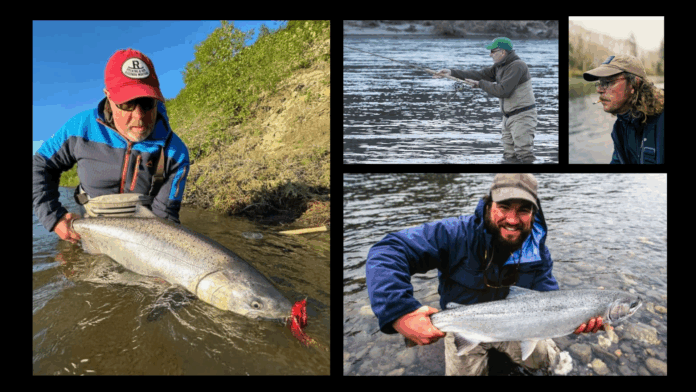
Home Blog Page 15

Traveled #31 | The Best-Kept Secret in Idaho Fly Fishing with David Raisch of the Lodge at Palisades Creek

idaho fly fishing

Episode Show Notes

If you’ve ever wondered what it’s like to truly dial in Idaho fly fishing, today’s episode is for you. We’re joined by David Raisch, longtime guide at the Lodge at Palisades Creek and co-founder of Hawgfish, who has spent the last 25 years exploring some of the most diverse and overlooked fisheries in the West.

From the famous Henry’s Fork to the sprawling South Fork of the Snake, all the way to the ledges of American Falls, David has seen it all. And today he’s sharing the lessons learned. You’ll hear why Idaho might be one of the most underrated fly fishing destinations, how to rethink your setup for big winter trout, and why those smallmouth bass flats deserve way more of your attention this summer.


Hit play to start listening! 👇🏻🎧

apple podcasts

Find the show:  Follow the Show | Overcast | Spotify

Subscribe on Apple Podcasts

Subscribe on Android

Subscribe via RSS

(The full episode transcript is at the bottom of this blogpost) 👇🏻

Sponsors and Podcast Updates


idaho fly fishing

Show Notes with David Raisch on Idaho Fly Fishing

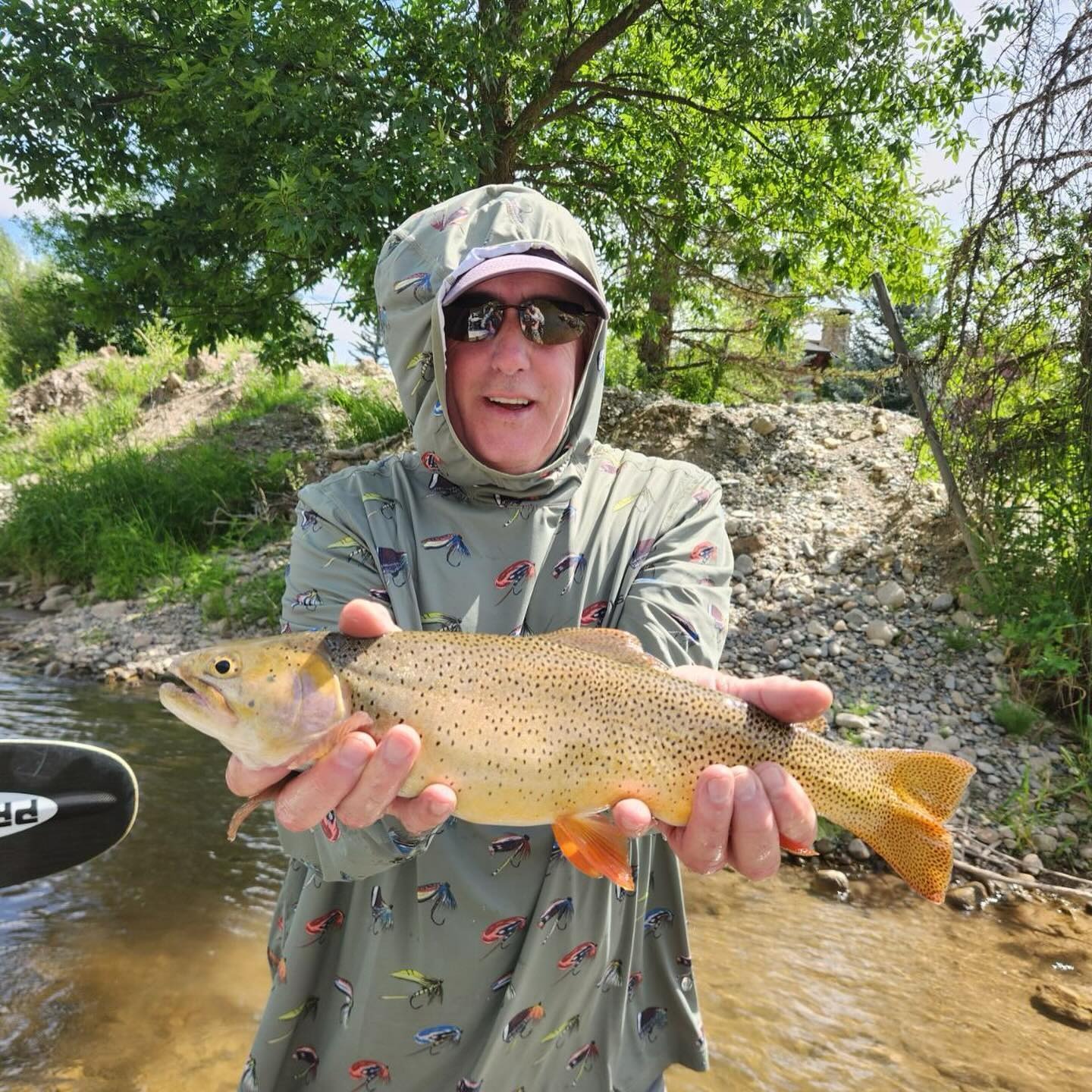
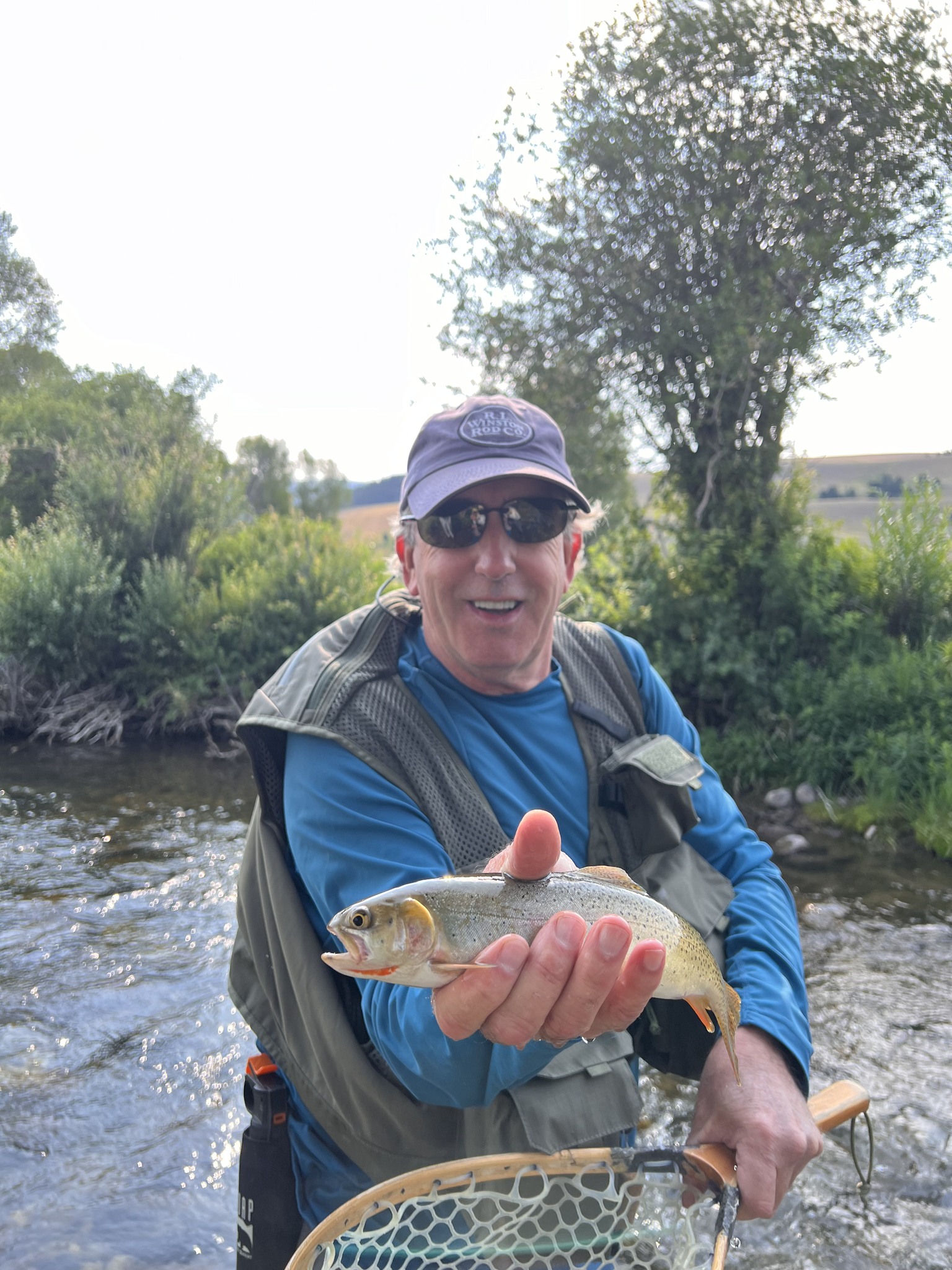
Winter Trout Fishing Below American Falls

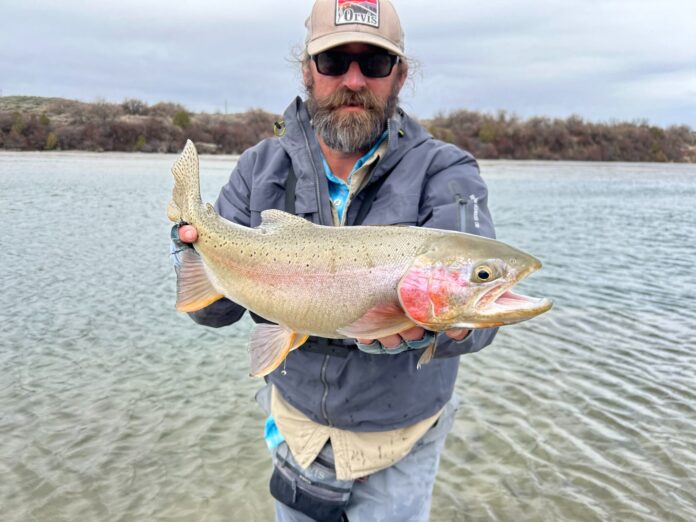
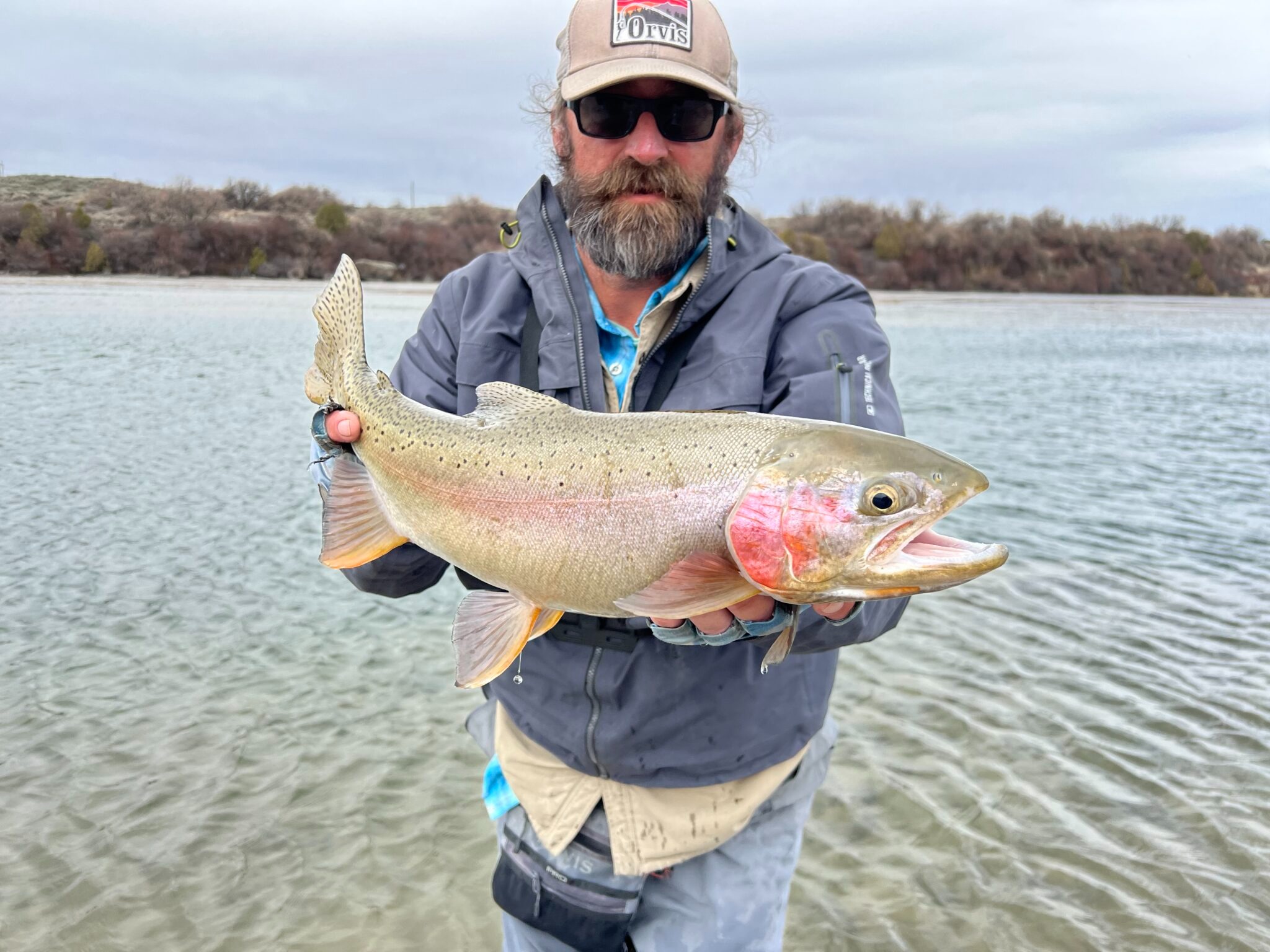
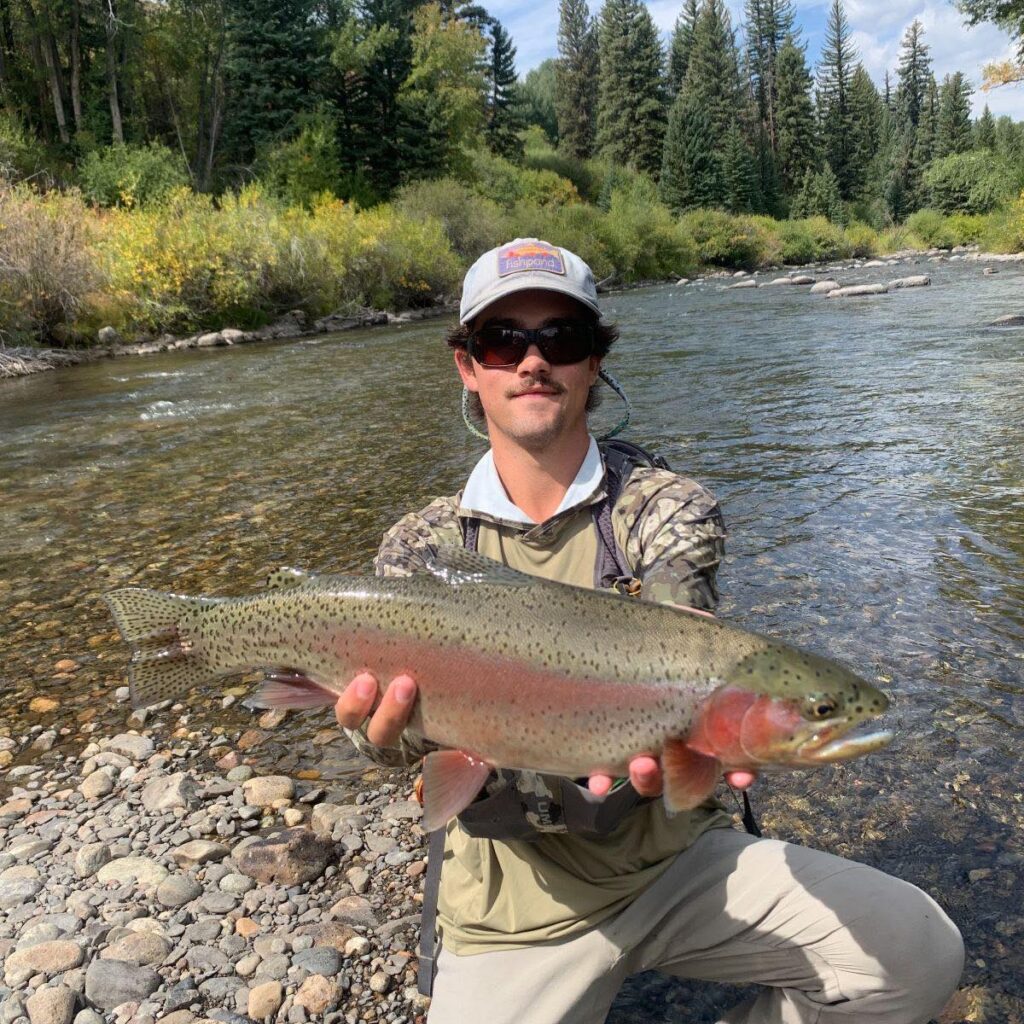
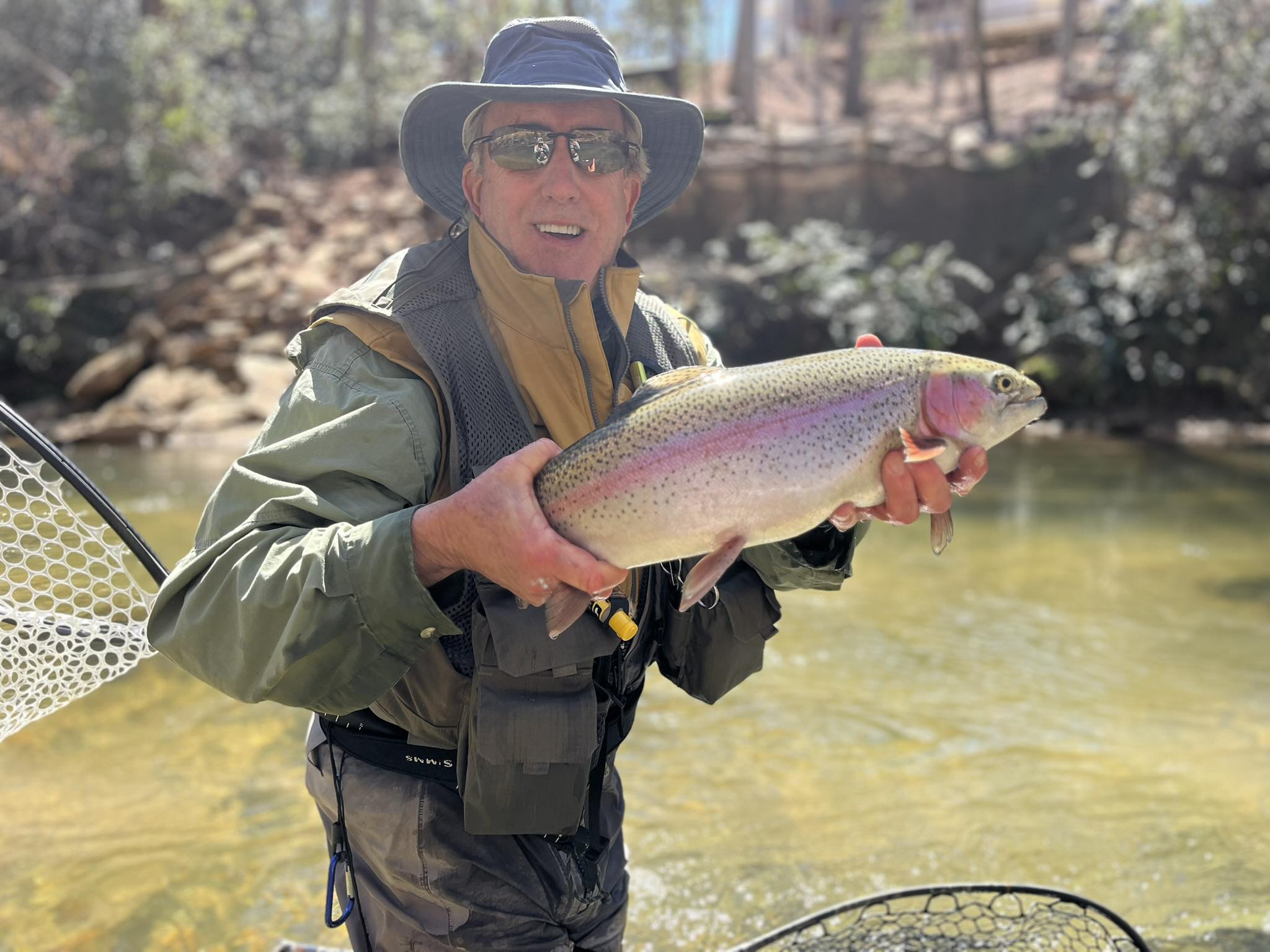
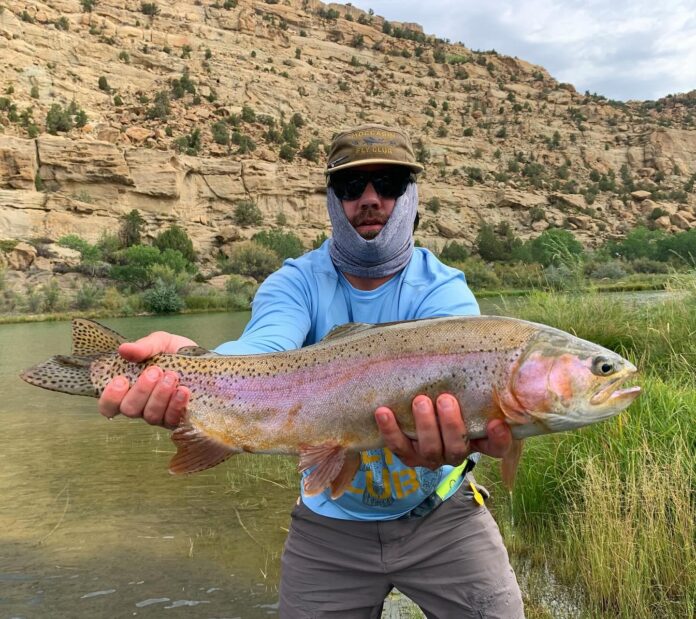
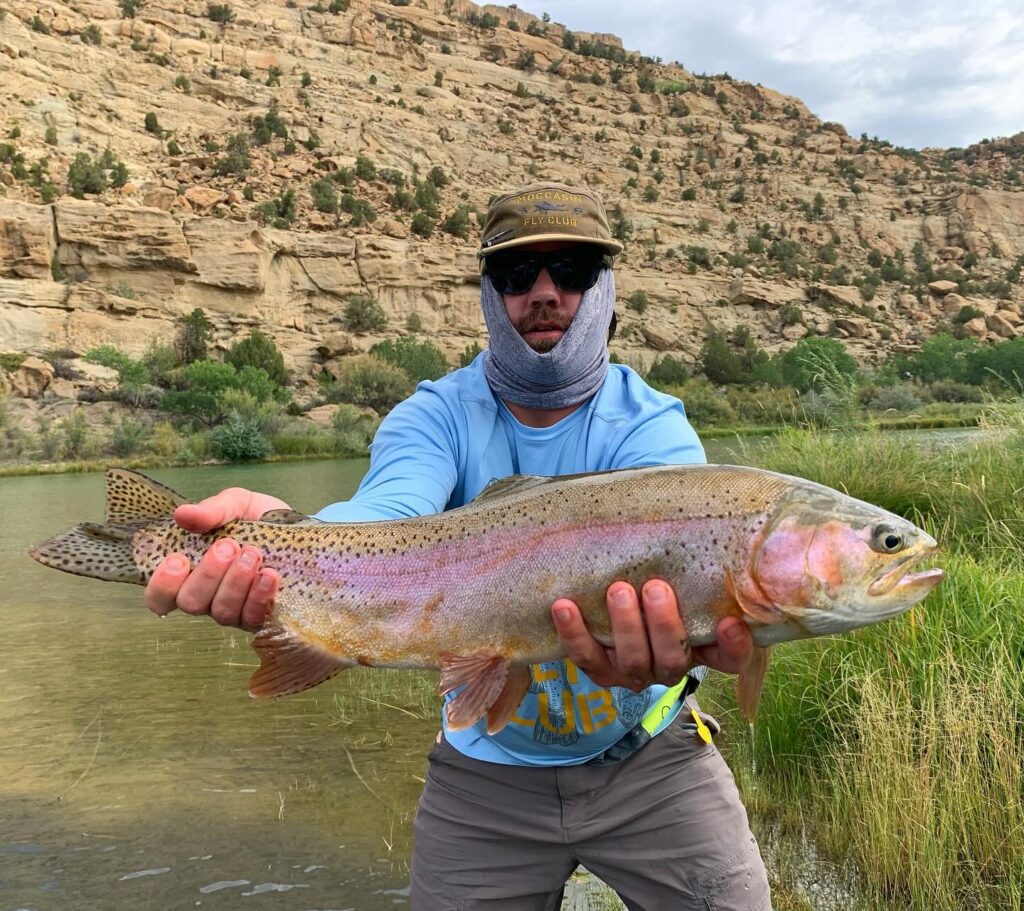
David has spent years dialing in the waters below American Falls Reservoir and it’s not your average trout spot. This section of the Snake River offers some of Idaho’s best winter fishing for big trout.

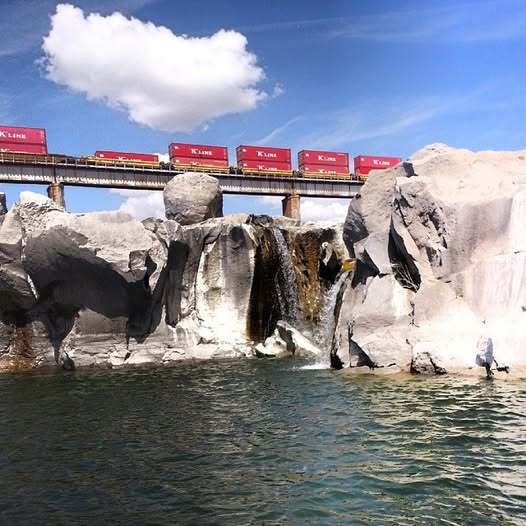
The secret? It’s all about timing. When irrigation season ends in October, the river drops, making the water perfect for walk-and-wade fishing. The fish get packed into smaller areas, especially along the lava rock ledges that line the riverbed.

idaho fly fishing
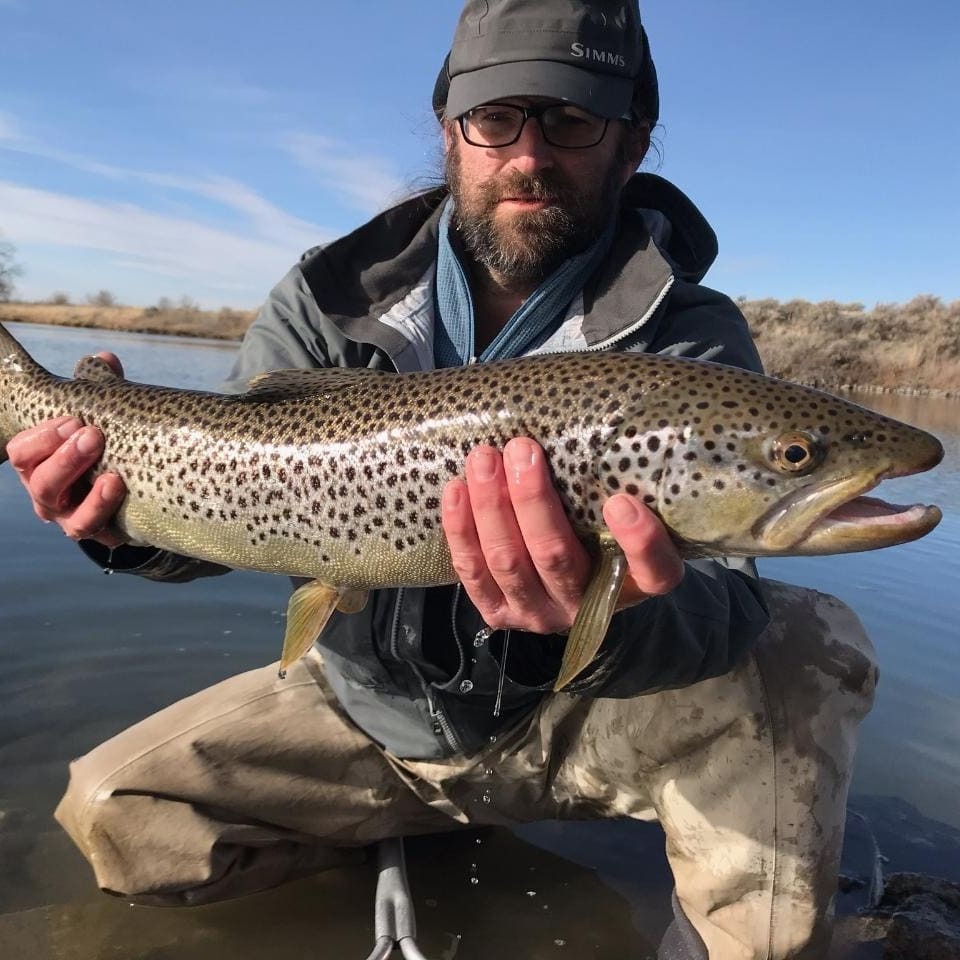
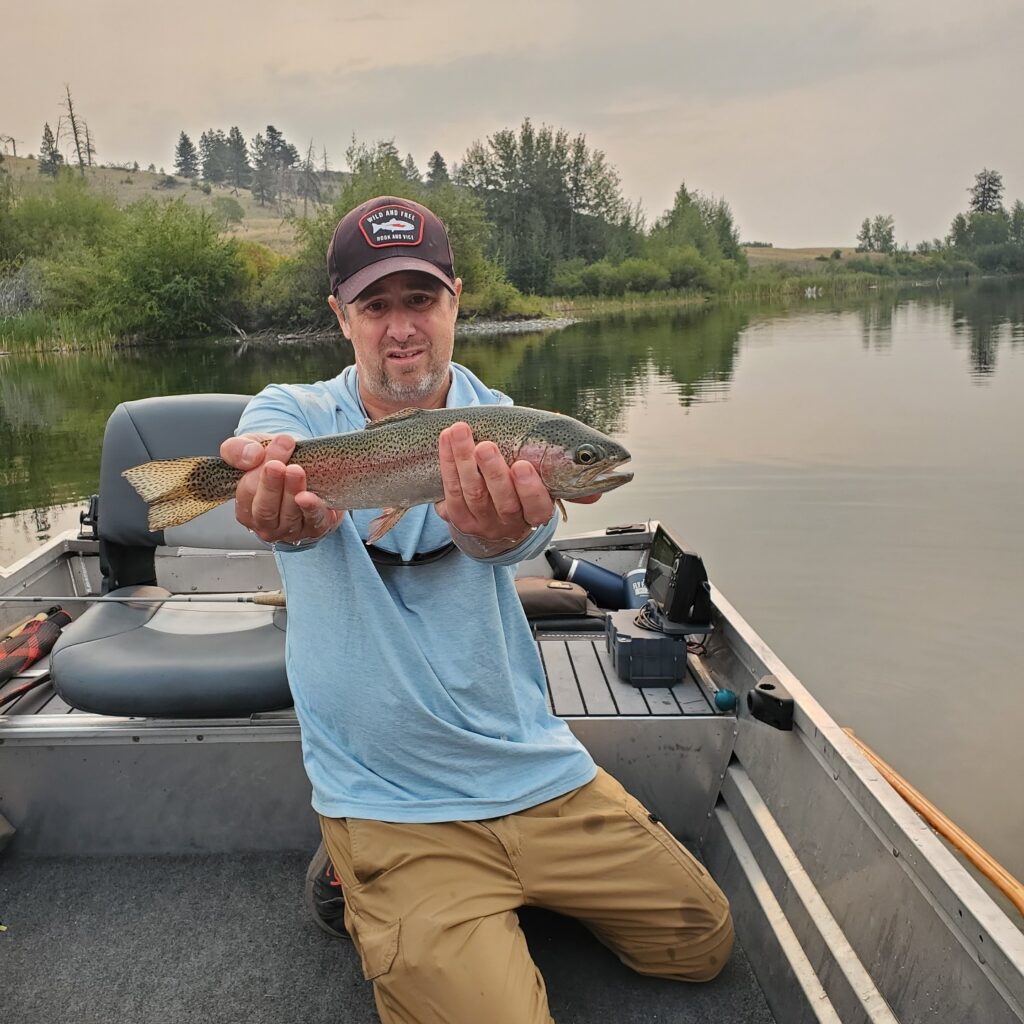
“April 10, 2024 Fishing American Falls.” (Photo via: https://www.facebook.com/PalisadesCreekFlyFishing)

How to Nymph Fish the Snake River in Fall

When the water drops after irrigation season, it’s prime time for nymph fishing around American Falls. David keeps it simple with a Thingamabobber for his indicator and uses tungsten nymphs like size 14 or 16 Frenchies. Big fish? No problem. David isn’t afraid to fish heavy tippet like 1X or 2X. The fish aren’t that picky.

Pro Tip: Let your drift run long even below you. Most hits come right in front of you or just downstream. And in colder months, get your flies close to the bottom, about 6 to 8 inches off. Warmer days? The fish might come up for your fly, so you don’t always need to hit the bottom.

idaho fly fishing
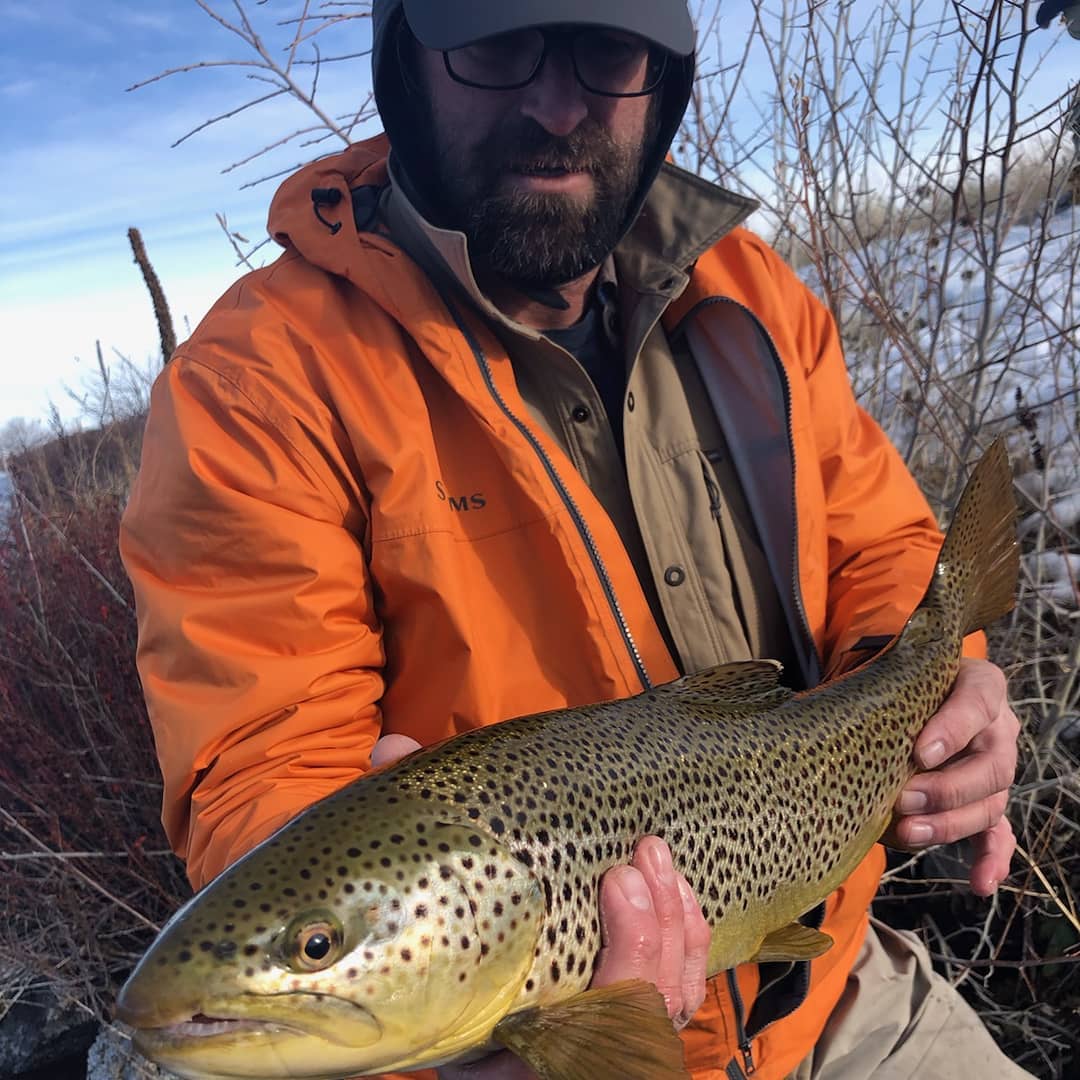
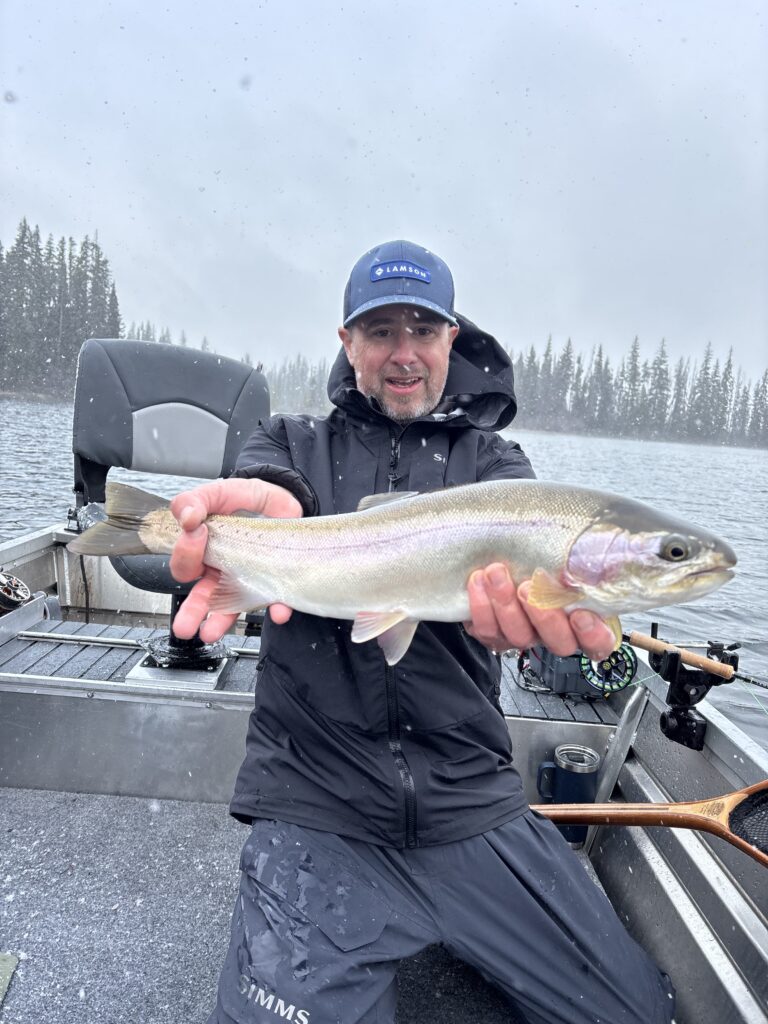
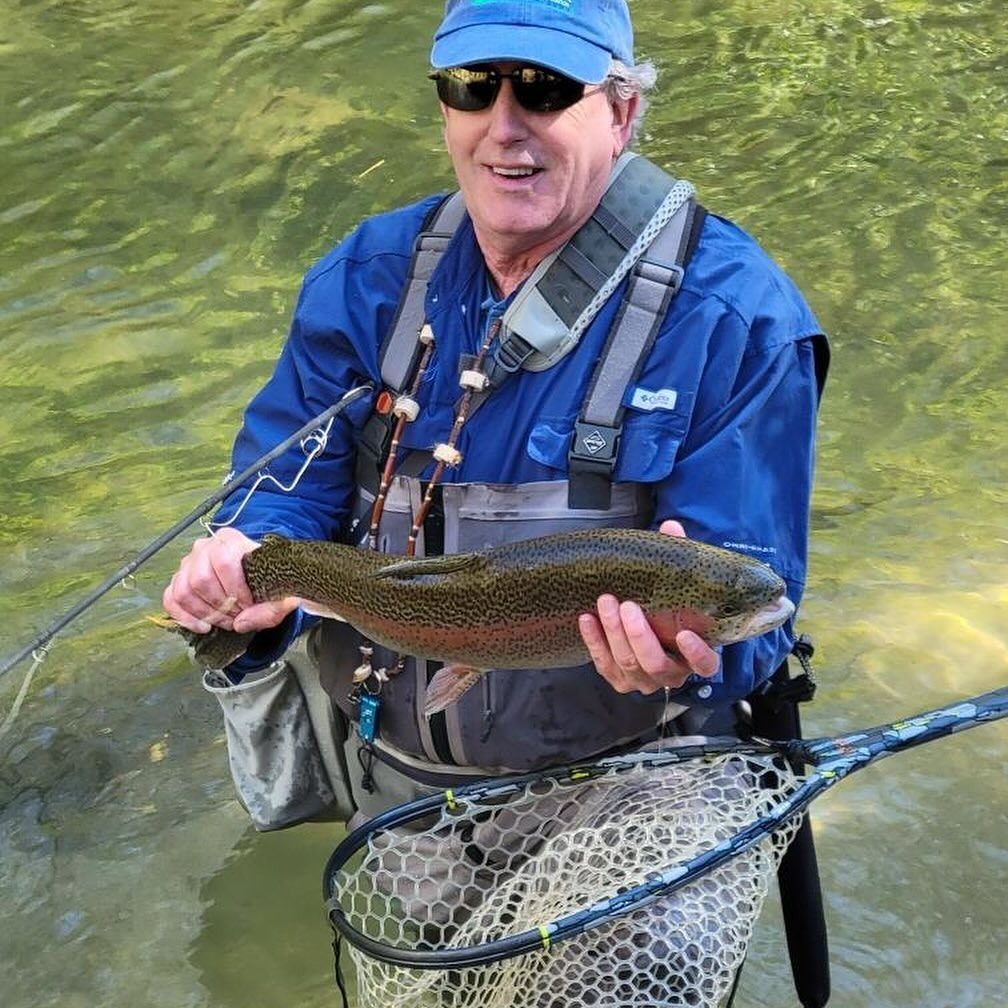
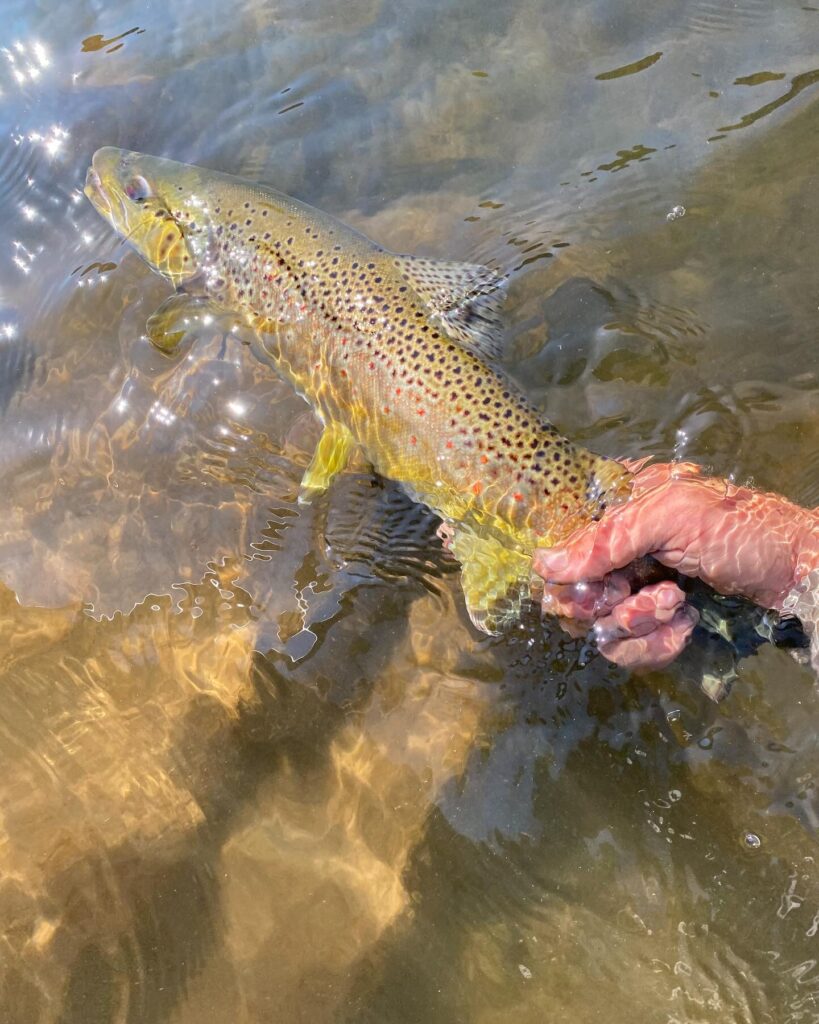
Photo via: https://www.facebook.com/PalisadesCreekFlyFishing

South Fork Hatches and Fly Choices

If you’re fishing the South Fork in summer, you’re in luck. It’s packed with hatches from now through fall. You’ll see stoneflies, yellow sallies, PMDs, and plenty of caddis. And when July rolls around, hopper season kicks off — one of the most fun ways to fish this river.

David says you can’t go wrong with a Chubby Chernobyl. Foam, rubber legs, and that big white wing make it easy to see and trout love it. Some anglers also like the Morrish Hopper for a different look.

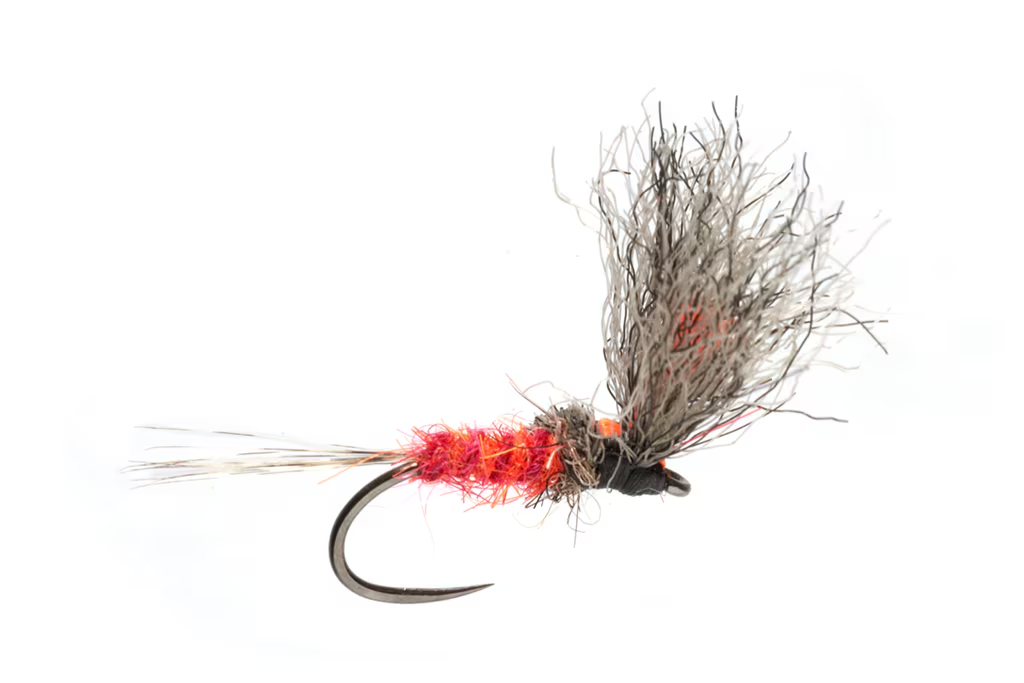
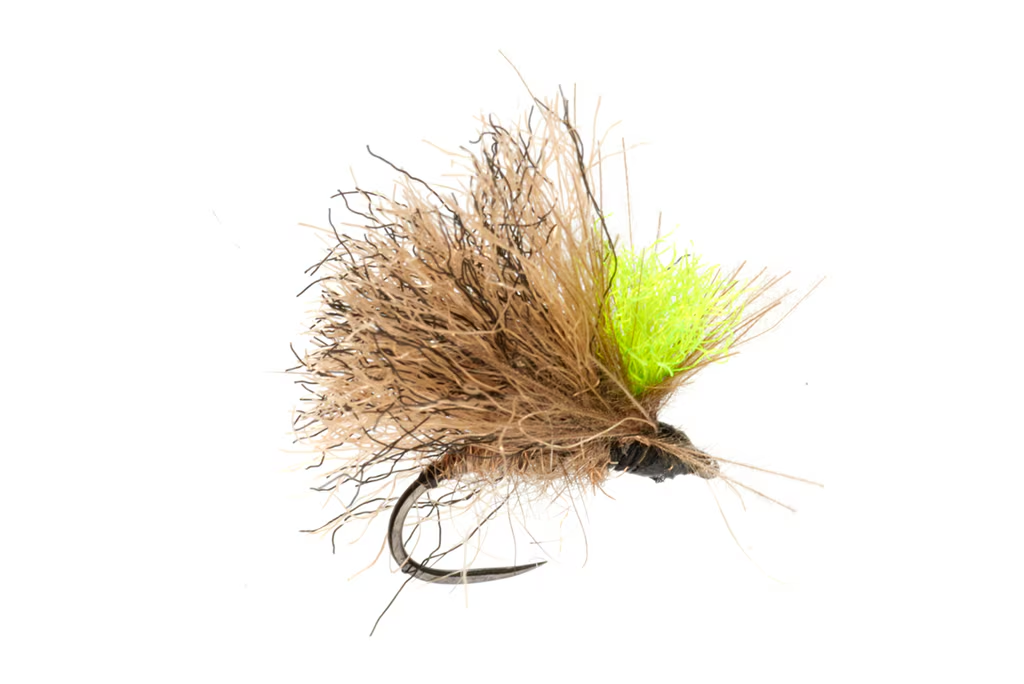
David’s other go-to? Simple, tough dry flies with good floatability. He ties them using materials from Hawgfish.

Photo via: https://www.instagram.com/hawgfish/

Best Time to Fish the Snake River

If you’re trying to plan the perfect trip on the Snake River, timing is everything. David breaks it down simple:

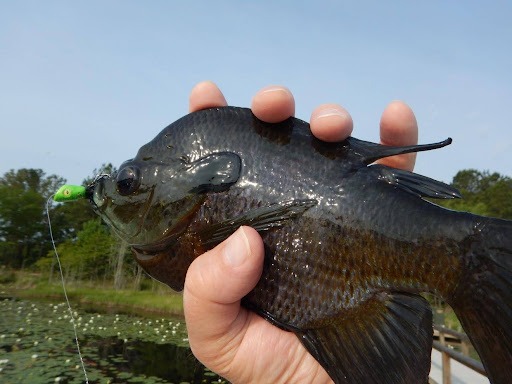
  • For Smallmouth Bass: June, July, August, and September. Hot weather, easy fishing, and lots of action. David says catching 100 smallmouth a day isn’t unusual. If you want fun, flip-flops, and non-stop bites. Summer bass fishing is the ticket.
  • For Big Trout: Late October, November, February, and March. That’s when the big fish are stacked up below American Falls. You’ll mostly be nymphing or throwing streamers in colder water.
idaho fly fishing
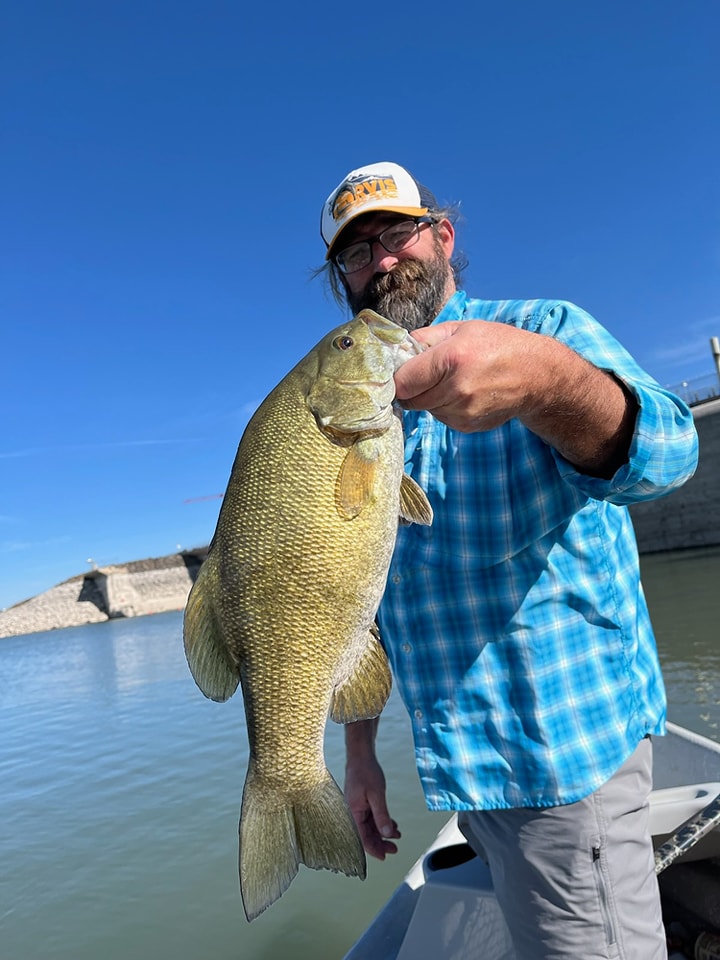
“Sept. 26, 2024 @buckeyeflytying bringing up some big smallmouth bass. Nice job Dave! We offer trips on to American Falls reservoir for a number of different species. Call our shop for more details. 208 483 2222” (Photo via: https://www.facebook.com/PalisadesCreekFlyFishing)

Where to Eat, Stay, and Explore Around Pocatello

If you’re heading to Pocatello for a fishing trip, you’ve got a few great spots to grab a bite. First stop? 5th Street Bagelry, owned by David Raisch himself. It’s a local favorite for breakfast and lunch, serving up best-selling bagel sandwiches like the Adobo and the California. Perfect for a quick breakfast or grabbing guide lunches before you hit the water.

For dinner, David recommends the Sandpiper for steaks and seafood or Jakers, a solid Idaho favorite.

Things to do besides fishing? Mountain biking and rock climbing, hot springs at Lava Hot Springs, bird hunting and big game hunting, and whitewater rafting or kayaking.


You can find David on Instagram @buckeyeflytying and @thelodgeatpalisadescreek.

Facebook @PalisadesCreekFlyFishing

Visit their website at tlapc.com or hawgfish.com.


Related Podcast Episodes


Full Podcast Transcript

Episode Transcript
Dave (2s): Today’s guest packed up for Idaho in the late 1990s chasing powder and trout streams, and never looked back from the technical waters of the Henry’s Fork to the sprawling South Fork and LA ledges of American Falls. He spent the last 25 years dialing in some of the most diverse overlooked waters out west. By the end of this episode, you’ll rethink how you rig for big winter trout. You’re gonna hear the secrets to catching fish during the fall irrigation dropped, and see why smallmouth bass season just might be Idaho’s best kept fly fishing secret. This is the Traveled podcast series, and I’m gonna take you on a journey today. We take you to new places, give you tools, and the success you need to travel. Dave (45s): This year, David Raisch, Guide for the Lodge at Palisades Creek and co-founder of Hawgfish is here to help you get into more fish this season. And maybe think twice before skipping over that, that small mouth bass flats in the summer, we’re gonna help you cover hatches, dig into trophy trout, and learn everything about the Snake River. This episode of travel is presented by Yellowstone Teton territory home to some of the best fishing and wild country out west, and we encourage you to visit Idaho this year. You ready to rethink Idaho? Let’s jump into it. Here he is, David Raisch. How are you doing, David? Doing David (1m 24s): Great, thank you. Dave (1m 25s): Yeah, thanks for coming on here. We are gonna dig into a bunch of stuff. You know, we’ve mentioned Lodge at Palade Creek. We’re doing a amazing event here. We’re doing a giveaway event, giving away a couple of spots here. We’ve got a bunch of brands on board, but you also have a bunch of other stuff going here, which I’m excited to hear about around fly tying and some of the other stuff you do. It sounds like some other businesses and, and things in fly fishing. So we we’re gonna get into that and maybe just remind us right off the top, your flight tying, you have kind of a a site. What’s the best place there for that? David (1m 55s): We have myself and a partner. We’re a small company called Hogfish, H-A-W-G-F-I-S h.com. We sell innovative and, and new fly tying materials to the market. I do a lot of expos. You can find us there at some of the big expos. Dave (2m 11s): Perfect. Awesome. Well, we’ll get into that today. I think it’s gonna be a, a fun one. We always love to chat on flight tying, but, so we’re gonna talk about, you know, basically fishing the South Fork of the Snake. I mean, you know, a famous river that’s out there. We’re gonna talk about that today. Maybe just take us back real quick here. Have you been out in that part of the country for a long time or what, what’s your story there? David (2m 30s): Yeah, I was born in pa but grew up in Ohio, Dayton, Columbus moved to Idaho in 98 to pursue, you know, skiing and fishing, fly fishing, and ended up back in graduate school at Idaho State University. Didn’t plan on staying in Idaho more than about five years, but fell in love with it. The South Fork of the Snake beat was the obvious favorite river right off the bat. I mean, just driving through there without even fishing, it kind of fell in love with it. Although I cut my teeth a lot on the Henrys Fork, which is its neighbor and the port enough river here out of Pocatello where I live. David (3m 11s): But the South Fork was a bigger river and just provided opportunities at bigger fish and less people when I first moved here in 98. And you could just, you know, fall in love with it very easily. Dave (3m 24s): Yeah, that’s right. And how far is it from Pocatello up to, if you’re gonna fish the, like at the lot to the lodge at Palisades Creek there, David (3m 32s): It’s about an hour and a half to the lodge up to Swan Valley where I like fishing. It’s about an hour. So the lower South work there, you know, in the past there’s less people there, a lot of good streamer fishing, bigger fish and opportunities. And it’s a little bit closer to home at this point. Yeah, it Dave (3m 52s): Is. Okay. And you, but you spend a lot of your time these days down near Pocatello. Is that more of your time guiding? David (3m 58s): That’s correct. We’re about 20 minutes from American Falls Reservoir and that includes, you know, the dam and the waters below it. There’s 10 to 15 miles below it, all the way down to Masco Rocks. I fell in love with that because it has huge fish. They grow quick. There weren’t the crowds at the South Fork or the Henry’s work receives it. And it’s a very diverse fishery down here. Summer, it’s a, it’s a bass fishery and then our off season on the South Fork further up in Swan Valley is prime time down here for trout. So we’re talking October, November, January, February and March we have an amazing trout fishery, and then it switches gears from June, July and August to a bass fishery. Dave (4m 43s): Right, right. Gotcha. So, so is the way you have American Falls, which is, is that a natural falls there? Is that what’s going on there? Describe that a little bit, that whole system in that area. David (4m 53s): Yeah, American Falls Reservoir is a bigger reservoir. It does have a dam. You’ve got Palisades further up river towards Jackson, and those two reservoirs are the largest in southeast Idaho, mostly for irrigation, flood control, some energy production, but really they grow a lot of fish quickly. That one of my favorite parts about American Falls. The lake itself, it’s shallow and it’s big. So it’s actually a food factory in that it has cooler water temperatures, but receives more nutrients from agriculture, which allows the rate of fish growth to just be excessive. David (5m 35s): You go further up the Snake River towards the South Fork, you have much cooler water, not as many nutrients, and the fish grow slower. So we’re right at the sweet spot with American Falls and that it has a, a good nutrient content and cold water temperatures, which allow trout to grow some of the fastest in the state or the fastest in the world. Dave (5m 57s): Right, right. Awesome. And where is the confluence? So the Henry’s Fork and the South Fork come together. Where is that, where does that occur? David (6m 4s): That is close to Manan, Idaho. You know, you, one of your last kind of towns on the Henry’s fork is St. Anthony, and then you have Rigby, which is really close to the south work there. So just below that, a few miles, a place called Manan is closest to the confluent. Dave (6m 23s): Gotcha. Okay. So they come together there and then it becomes the snake and then through Idaho Falls and then down, like you said, an hour or so down to where you’re at down there. Let’s talk about that. You mentioned, I mean, I, the cool thing is you have the winter fishery right up there. What, what does that look like? So come October, you could still fish the South fork snake, but eventually, you know things right, the weather changes and things get colder and all that. So are you in November, December, describe that a little bit on the, you know, American Falls area. David (6m 50s): Yeah, it’s a lot of, it’s tied to irrigation. So we have an irrigation season, which runs, you know, the second week of April through the second week of October when irrigation season ends, you have a marked drop in flows that come out of those dams. And what that does is sets up a fishery that’s walk and wade accessible. There’s some floating available down to about 2000, but when the river drops below that, it tends to become a walk and wade fishery. So there’s quite a bit of large fish squished into a much smaller volume of water with a great lava substrate. You, you don’t tend to have a lot of dry fly fishing. David (7m 33s): What happens after you leave Idaho Falls? The Snake River kind of becomes a predatory fishing system with not those classic hatches. It becomes more bait fish and cray fish oriented, so it grows fish a little bit quicker on those, those diets. Dave (7m 50s): And then as you get down into, so talk about that maybe if you know the area that you’re guiding or you’re out there most often, how long of a section is it and is it, are you pretty focused in a, you know, a little area down there? David (8m 2s): Yeah, it’s, it’s actually, you know, there’s at least 10, 10 miles before the water starts to back up into a flat water, slow moving, you know, river. So we have enough moving water through that, up that stretch below the dam to keep the trout in there. October and November is great fishing. You know, I don’t fish a lot in December and January, even though it still is a, a good winter fishery, it’s just colder. But by that time you hit February and March, it kicks back in the mid start hatching. There’s blue wings down there, but once again, you’re not throwing dries. It’s, this is all gonna be subsurface, snis, worm patterns, you know, some streamers right off the bat, once the water temps get cold enough, I’ve noticed a little diminished return on streamers. Dave (8m 54s): So that’s what you’re doing doing mostly, you’re kind of nipping, is it kind of a nipping game nipping in streamers throughout like October through the winter? David (9m 1s): That’s correct. And by, by Thanksgiving the water temps have hit, you know, not rock bottom, but they’ve, they’ve definitely gone cold enough where the fish metabolism slows down. You’re getting a lot more fish on nymphs or balanced leches. I do a lot of leches, slower moving leches under a strike indicator. You can still strip leches just a little bit slower and works the fine. Dave (9m 25s): And so That, and, but, and this is in the river, it’s a kind of a more of a slower moving river type. And maybe describe that a little bit. What does that look like when you’re fishing a balanced leach in the river? David (9m 33s): Yeah, the typical depths, you know, there’s holes that get over 10 feet deep, but a lot of what I’m fishing is four to six feet deep water. The substrate in this stretch is not a free stone gravel stretch like you might have in the South Fork. It’s a sheeted lava rock, much more like you would see on the up, you know, parts of the Henry’s Fork where it’s this big black lava sheets. So you can walk out on these sheets and then you’ll walk up to a ledge, which has four to eight feet deep water, very slow moving, but that’s where the trout holt all winter. And it’s, it’s really unique substrate down there. David (10m 13s): If you haven’t fished, you know, sheeted lava, it’s a lot of fun. You can spend time, sometimes you’ll walk up to a ledge and one more step will be over your head, right? Dave (10m 24s): You gotta be careful. David (10m 25s): It doesn’t gradually get deeper. It just, you know, kind of drops off. And often I’ll tell people, Hey, don’t, don’t walk up to that ledge and just throw to the middle. You might stand back from the ledge and actually run your flies right along these drop-offs. And the bigger fish will get the spots they like so they can, they can be right next to the lava walls. Dave (10m 46s): Oh, right. That’s awesome. So six to eight feet and they’re in this, this water. What, what is it, what’s your typical setup look like when you’re nipping? Is it, is that more often, are you more often nipping than you are like doing pulling streamers or something like that? David (10m 59s): Yeah, I mean, I, I’ll throw streamers as soon as the water drops in mid-October into the first week of November, those first three weeks. I mean, the, the water temps are still warmer, they’re perfect for streamers, they’re perfect for nipping. But if you really wanna throw streamers that, that three week opportunities there, as the water temperatures drop, you’re gonna throw nymphs. It can be anywhere from two feet under a strike indicator and you’re just slaying fish. Or if you find the deeper spots, you might be six to 10 feet deep under a strike indicator. But they’re more than willing. I mean, the, the fish there tend to eat first and think second. David (11m 41s): The beauty of this irrigation season ending is these trout haven’t been fished for possibly for months. It’s not got the summer pressure that the, the Henry’s Fork and the South Fork do. So right out of the gate, mid to late October and November can just be a fantastic bite. The fish are large, their bellies are full and they just keep eating. Wow. Dave (12m 7s): No, that sounds amazing. So that’s, you know, it gives more options, right? The snake, that’s the cool thing about it. It’s a pretty diverse river from what you’re talking about up higher, which is interesting this year because they’re, the championships are coming, you know, team USA, the youth and the women are gonna be fishing the South Fork and, and the Henry’s Fork this year and some still waters. So, but that’s a totally different game it sounds like, than this area. And then how does it, how does it work as you go down? Have you spent much time down below? Is there a continued trout fishing as you go down the Snake River? David (12m 37s): It does there, you know, you might have some, some gaps in the river between say, massacre rocks and Rupert and Burleigh, there’s another dam anywhere. There’s some either a dam or cold water spring inputs, you’re gonna, you know, see more of a trout population all the way down past Twin Falls. But you, you need some kind of an input. It tends to flatten out. The river can be really wide and shallow, so they have to find the right spots to have either moving water, colder water, there’s brown trout, there’s cutthroat trout, there’s rainbows, there’s hybrids, and they all get to well over 20 inches if not 30 inches. David (13m 23s): And they just, they’re fast growing. Right, Dave (13m 25s): Right. Nice. So, so yeah, we’re talking mid, you know, mid October, November, and let’s go back to that nymph kind of setup really quick. So you’re talking about, maybe describe that a little bit if somebody’s gonna be fishing that, you know, those nymphs kind of in that period, the fall, it sounds like it’s pretty diverse, like you’re kind of run your indicator. What, first off, maybe talk about your indicator, what are you using there? David (13m 46s): I mostly do thema bobber. It just, for me it’s, it’s easier to move and they hold up fairly well. Other folks like the newer, you know, twist ons and and so on to each their own on that. I tend to prefer the small thingama bobber if I’m fishing up by the waterfalls and kind of, there’s a deep four bay up under the dam where we will use the drift boat and a lot of times I’ll use the medium or three quarter inch thing bobber. Typically there’s not a ton of weight on these flies. I’m not throwing extra split shot. A lot of my nymphs are tungsten size fourteens and twelves and sixteens. David (14m 29s): So you know, if we’re gonna hook a good size fish, 20 to 30 inch fish, try not to hook ’em on size eighteens and twenties. You just don’t need it. The other thing that is imperative is a really solid, strong hook. If you bring the light wire, cheapy nymph stuff, you’re gonna, the fish you came to hook, you’re gonna be disappointed. It’ll bend you out or break you off if you’re using too light a tip, it so think big and, and the fish aren’t that picky. So you’re getting away with larger nymphs, heavier tipt so That you’re able to land the big ones. Yep, Dave (15m 7s): There you go. So you’re not afraid, you’re not really worried about spooking many of these guys? David (15m 12s): No, no. A lot of my tidbits one x two x, you know, at the, for the most part, if I was doing streamers I’d be using zero X and so on, but, Dave (15m 23s): Okay, cool. Yeah, I’m on your site here taking a look at the, at Hogfish and you got some, you know, basically yeah, you got a mix here. Like you said you got some balance, some leches and you’ve got some stones a mix here and then yeah, you’ve got a, and then some streamers. What do you find yourself tying? What, what do you like these days? Do you have anything you specifically kinda really enjoy tying? I’d David (15m 45s): Like the new stuff. Balanced leeches, using the new materials. You know, I kinda get bored with some of the nymphs and so on. So it’s fun to build something that’s a little bit bigger. But also, you know, most of my flies are guide flies. So three minutes, three to five minute bug, two or three steps. And that was part of hog fish’s design wasn’t to necessarily sell the angler a a, a ton of materials just to sell them effective materials, simplify some patterns so kids can get into it easier. If there’s one fly I would have at American Falls, it would probably be a Frenchy. And in fact there’s times I’ll tie two frenchies on rather than anything else. David (16m 27s): Yeah. But worm patterns have worked great. You know, squirmy worms still work, that kind of stuff. But all the midges are gonna work. I use a split case, nymph quite a bit down there. There’s a flight called a blue pill that I came up with. That’s, I mean, it is dynamite down there and works in a lot of other places. Dave (16m 47s): Nice. So that’s good. So we got a couple of good pads of the frenchie definitely is a good one. On your, on that nymph setup, so you would have, what would be a typical with the frenchie, let’s just say, or a size what, 14, 16? Is that typical or are you going a little bit bigger? David (16m 60s): Yep, yep. 14, 16, a decent sized, you know, gold or copper, tungsten head on ’em. Dave (17m 7s): How do you fish that frenchie? So you got the indicator, are you typically casting upstream, sinking down? Like let’s say you’re fishing off those ledges, what would be your tip there to get the fly down and are you having to get down to the bottom or are you, where are you at in the column? David (17m 21s): Yeah, because the currents aren’t very fast, your flies should be able to take you down to the depth you need pretty quickly. As anywhere in Idaho, a long drift is great. So not only am I throwing ’em, you know, up river, I’m gonna let ’em float by me and continue about the same amount of distance down river, even though most of my hits are gonna happen right in front of me or below. So in Idaho, that’s kind of the classic drift is a long drift. And the further you can let it float below you, the better downstream. I will say this about American Falls, it’s really been a fun fishery as a fly tire because things that you would not traditionally throw on the South fork or the Henry’s fork may work very well down there. David (18m 9s): So we come back to the fish not being so picky, you know, be creative, try something new. Dave (18m 15s): Yeah, that’s right. No, it’s pretty, it sounds like a pretty diverse area down there, so, okay, so, and that’s it. So let you want to get a drift out. So if you’re flies are drifting down, how do you find that depth? Let’s just say, do you typically down there, if you know the depth of water is six feet deep, are you trying to get it down to a certain level, you know, above the bottom of the river? What, what does that look like? David (18m 35s): I would say early in the fall, you know, after the water has dropped, you’re going to get away with your nymphs being in different parts of the water column, we’re talking mid-level and deeper, where at the deeper and colder it gets in the winter, you’re typically finding yourself running those flies a little bit deeper, trying to, you know, keep ’em six or eight inches off the bottom, where when the water’s a little bit warmer, the fish will come up, eat your fly, and then dive. So if, if you’re in that scenario, don’t, you may not want to put your nymphs right on the bottom. You may not detect the hits as well. David (19m 15s): And also if you can get a fish to swim up, eat your presentation, and then dive, you get a much better look and hook set with your strike indicator as well. Gotcha. Dave (19m 27s): Are you fishing the, when you’re fishing the indicator, say with a balanced leach versus like a Frenchy? Are you fishing those differently or is it a similar drift? David (19m 35s): Similar, same depths. The, you know, it’s not uncommon to tie a nymph on first and then that second fly might be a leach. So it doesn’t always have to be two leches. It could be a Wireworm and a Frenchy or a Wireworm and a Omi Scuds is another popular food down there, scuds. Yeah, Dave (19m 57s): It sounds like you come outta the summer on that section, we’re just talking about this section of, I mean, do you call it American Falls? Is that what you call that area? Yep. Yeah, American Falls. So you have this American Falls, which is, it’s hot in the summer, obviously you’re in the desert, so it’s super hot and it’s a reservoir. So you’ve got these warm temperatures and lots of the, the great warm water species we all love, right. Bass and everything. But then there’s this, is it a quick switch when they like turn the water? Talk about that. What happens when, how does it switch over from that summer, that warmer to October, where it sounds like the things switch? Is it, is it pretty drastic like that? David (20m 30s): It’s pretty major. You’re gonna see, you know, August the irrigation demand starts to drop a little bit in September it drops a little bit more. Typically your reservoirs in September in Idaho are pretty low. So we, we start seeing some color in the water coming through the dam in September. And then when we hit that, that hard irrigation end, the second week of October, you’re gonna have a reservoir that’s almost empty, could be 5% full, or it could be 25% full, but it’s very rarely over 50% full, which means you’d have much cleaner water coming through. David (21m 10s): So right out of the gate down there, it’s a hard drop. In September it might be 7,000 or 5,000. And then as soon as irrigation ends, we go down to 2000 and then we go to 300 CFS. Wow. Yeah. And that is within a week you may see the off color water coming through, But I can tell you, as soon as it’s down to those levels, the fish are going to eat. Even if, even if the water’s off color, it’s still gonna be a smorgasbord. Dave (21m 37s): Oh, wow. So in the summertime, what are all these trout doing? Are they hunkering down in around springs, or how are they surviving that warm water David (21m 44s): Depths, that’s really it. You’ve got, you’ve got a, a really wide river channel in the summer, very shallow. And then if you think about the winter channel, which has dug down deeper in the lava rock, it’s basically like cracks in the lava that go a little bit deeper. That’s where the trout are gonna be. And they, they hold there in the summer. They also hold there in the winter because there’s nowhere else that’s deep enough for them to be, so they’re very inaccessible in summer for fly guys. And then they drop, you know, they’re in those, most of those same spots after the, the irrigation ends. Dave (22m 22s): Wow. And so, so that’s it. And then at some point that irrigation changes in the springtime again, or, or when water flows, when does that switch back to where you start getting the, the flows again? David (22m 32s): The second week of April. Dave (22m 33s): Okay. So they just turn it on. So David (22m 35s): Assuming we have an average water year flows are not gonna go up much in February and March, and then second week of April hits, boom, you see flows go to 2000 and 5,000. Now you’re out of walk and Wade range, you’re in a drift boat at that point. One other phenomenon that kind of happens right when they, they take that water down so quickly and you have all this porous lava rock substrate. Well, the cadi that is in that pore space is biblical numbers of cadi. So if you’re there when that water drops from 2000 or 1200 down to 400, you are gonna see little small pools of cadi by the thousands. David (23m 21s): Oh Dave (23m 22s): Wow. Are these all sorts of different species of cadi? David (23m 25s): No, mostly just the, the, you know, the little green standard. Dave (23m 29s): Oh, the free living, the green rock, rock worm or whatever it is. David (23m 31s): Yep. You know, they’re good size, they’re fourteens and twelves when they’re, when they’re dry in the summer. But what these fish, they’ll just sit at these exits where these cat are pouring outta these little pools back into the, the channel right. Where there’s deeper water and the trout will just sit there with their mouths open. Wow. And, and gorge on cadi, even though I’m still using Frenchies and, and some other flies, Cadis are gonna work great, but the fish are just fattening up. So right off the bat, as that water drops, there’s a feed that happens that’s, that’s just insane. Dave (24m 7s): That’s cool. And is that, that can sounds like it’d be, it can be timed pretty good because the, the change is usually a similar time during the year. David (24m 13s): That’s correct. I’ve seen people swing flies cat presentations during that period and do really well. I mean, not gonna catch ’em on the surface, but anywhere in the water column while that seed is happening, those first couple weeks of the water drop. Dave (24m 29s): Yeah. Okay. And is the, the ca you’re fishing, so the Frenchy works, do you have a specific CAS pattern or do all those nips, those euro nip style flies work Well, yeah, David (24m 38s): You know, the little bright green cas, any or olive colored cadi nymphs are gonna work fine with, you know, a little blackhead on ’em. And same thing a 14. Dave (24m 50s): Okay, so kind of like a, like a nymph or more of a, well you, like you said, or a wet fly, people are swinging fly, so, but it’s somewhere in the surf, in the column water column. Yeah, David (24m 58s): Yeah. I mean they’re gonna do a little better a little bit deeper, but the swing thing where you see water pouring off of the little channels, pouring out of the lava rock swinging cas sometimes is the trick there. Gotcha. Dave (25m 13s): Okay. Let’s switch a little bit here and go back up the river. And you know, Justin at the lodge of Palisades Creek, we’ve had him on the podcast, we’ve talked about that. We’ve done a number of episodes in that upper area. Let’s say somebody was coming in out to where the lodge is located in that upper part of the, I guess do you consider that the upper South fork? Or what do you consider that? Where, where the lodge is? David (25m 32s): The South Fork? Yeah, Dave (25m 33s): Yeah, just the South Fork. Yeah. Yeah. David (25m 35s): Anything below where it comes out of Palisades Reservoir all the way down to the confluence with the Henrys, I would refer to that as just the South Fork. Dave (25m 44s): Okay. So that’s the South fork, and that’s what basically all the other guides that are there out of the lodge are fishing. Right. You guys are covering that with drift boats throughout the whole season? The summer, yeah, basically. Yeah. David (25m 54s): Yep. From here on out into October, it fishes very well. It stays cold. Right now, the water temps there are, you know, 56 degrees. So the stones are, are really starting to pop hard down. Where I’m at, we’re already at 69 degrees. Oh wow. Yeah. Okay. So the, the bass game over the last three weeks to a month has been kicking in, I mean, just phenomenal. But up on the South Fork you got all the classic hatches. We mentioned that the green Drakes are gone right now the stones are starting to pop, which includes the giants and then the yellow Sallys, that’s, that’s a prolific hatch that goes much longer into the season. David (26m 36s): You’ve got plenty of mayflies. And then the cataly probably are the biggest or the longest hatch throughout the season. They start early and they go all the way into fall, where eventually you’ll go into Blue Wing olives and Midges. Yep. Dave (26m 51s): Are you fishing the up there is the Cas just as popular as the other hatches, the yellow Sally stone flies all the other stuff. Yeah, David (26m 58s): They’re just widespread and you know, if I, some of the like evening fishing, if you’re gonna fish right up until dark, sometimes that cat is, is the best pattern. You’ll still do well with PMDs in the evening times all afternoon long where, you know, your giant stone fly hatch moves through an area and you’re getting ’em on those dries, but the other one’s grasshoppers, you know, so once, once you kind of end the big bug in late July, they’re still goldens around. So we have both the goldens and the Giants and then Salas early in the season. So, I mean, stone flies actually have a pretty long season there too. Dave (27m 39s): Yeah, they do. That’s right. Yeah. You forget, I always forget about that. There’s a lot of different species of stone flies as well and may fly. I mean, that’s the thing, it’s a diversity of, right. The South Fork has that a very diverse, and then you go to the Henry’s Fork and you got everything there, which is known as a little more technical. Is that what you’d say? The big difference between the Henry’s Fork and the South Fork is, David (27m 58s): I would agree with that. You know, I spent plenty of time on the Henry’s Fork in the first 15 years in Idaho and it was, you know, I I, I’m not gonna say easier water to fish, it’s smaller and it’s, it’s not as deep. But the South fork man, if you, if you dry flies all year, if that’s what you like fishing, you know, I mean that’s, that’s the reason a lot of people come there. Dave (28m 23s): Right, right, right. That’s awesome. Well, we mentioned at the start the, the giveaway we have going, this is pretty awesome because you know, there’s gonna be a couple people that are gonna win this trip to hit the lodge. I’m not sure exactly where they’re gonna fish. I’m gonna leave that up to Justin to figure that out. But you know, they do have a South fork. They’ve got a lot of water here. Maybe let’s just take it back to the timing right now. So it’s July, it’s early July as we’re kinda, you know, publishing this July into later July into August. So you’re, the hatches that you just mentioned are all out there. Stone flies ies PMDs pretty much is July, August, is that where it’s really like the most productive as far as hatches? Or does it kind of get hot there and a period and slows down a little bit? David (29m 5s): I think that’s right. The most diverse for sure. And then, you know, your studies later in the season, August, September, a lot of hopper dropper rigs, I mean, you can’t go wrong with that. A good hopper day is hard to beat. You’re still gonna see PMDs. That one actually goes for a pretty long time for the midday hatches sitting on riffles and so on. You’re gonna do, you’re gonna be able to fish PMDs all year. The bigger bugs early in the season, especially with some cleaner water, are gonna do really well as you get into August and September. You know, you might be looking for a little cloudier day if it’s gonna perk everything up, whether you’re throwing grasshopper dries or streamers. David (29m 52s): So, but you might scale down a little bit during that time of year, size wise. Dave (29m 57s): Okay. What’s your, as far as Hoppers, the hopper dropper, what’s your go-to? Is it, does it matter what hopper you have on there? Or just something big and and bulky? David (30m 6s): Yeah, I, I think it, I mean it matters a little bit between different, different folks. I still use a lot of just chub les and some years it’s, you know, a certain color purple or yellow. I like something with a little, once we get the hopper season, a little bit of red flash in the butt, you know, but not, it’s not the grand hopper. What’s that other one that Moish or something? Dave (30m 30s): Oh, the Moish Hopper. Yeah, he, yeah, he does have a hopper. David (30m 32s): That one it became real popular for a couple years there. Dave (30m 36s): Yeah, Morris Hopper, it’s got a, it’s got the bright foam on top David (30m 40s): And it’s a little, just shaped a little different where the, the grant hopper’s a little more squared off. You know, the Morris Hopper had a little different profile to it, but we’re still gonna throw chubs and water walkers and so on. Dave (30m 55s): Yeah, the chubby, I I, that’s one that you just keep coming back to. It feels like you can’t go wrong with the chubby. I’m not sure why that thing works so good. Why do you think that is? Is it because it’s got so much foam or what, what is it about that fly? David (31m 6s): Yeah, you know, that’s a, that’s a good question. I mean, it obviously has to have the right profile. Sometimes I wonder if it’s the, you know, the wing, what we use is to see the fly. Is that kinda white bushy wing on it or something? Maybe it, it just is a little bit softer look to the fish and they’re attracted to something that’s, that’s a little more flexible and goes down the gullet a little bit easier. Dave (31m 32s): Yeah, maybe. Yeah, because it’s got the big, the big white, I mean it’s a pretty basic fly too, that’s the thing, right? It’s just foam tied on top with some rubber legs and the big, the big white poly yarn. Right. David (31m 43s): Yeah. The indicator, you know, I think can make a difference. Or the belly, sometimes it’s their trigger and with that, a little sparkle in the belly. Oh Dave (31m 52s): Right. Yep. David (31m 53s): Some duck or something under there and you know, people have their favorites whether purple or something. Dave (31m 60s): Right on. What do you got as you’re behind the vice these days? Do you have some new materials, some things out there you’ve been testing you love working with out there? David (32m 9s): As far as dry flies, I do more kind of a bear hair style. Some of the winging material, the hog wing that we carry with Hogfish is old school makes a fly one float really well, but it’s just that the visibility and the light penetration that can come through that material looks like a natural wing. And that’s, that’s hog wing and you can get it in a lot of different colors, not just white, you know, whether you want it in pink or purple or a tan or done colored, I think that matters a lot. Sometimes I’ll put a couple pieces of C, DC, other guys prefer the bear hair, which obviously floats really well, but it’s harder to come by. Dave (32m 51s): Now this isn’t bare anything to do with a real bear, but this is the name of the, what you call your material. Because these are all synthetics for the most part you have on your, your site. David (32m 59s): That’s correct. I mean, I don’t sell bear hair, but No, but trust me that, and you know, if you’re seeing bear hair flies, it might not be a $3 fly, it might be a $20 fly. Dave (33m 10s): Right. Yeah. Bear hair is hard to come by. Right. David (33m 12s): ’cause of its float ability. Yeah. Dave (33m 14s): Not, not illegal. Probably not illegal to use bare hair. Right. But you don’t see it that often out there. David (33m 19s): Exactly. Dave (33m 20s): What about the Area 51? What’s that? Is that like a chail David (33m 24s): Those were, you know, products that were kind of test worthy and were, you know, I didn’t know what category to put some of them in. So when you think of experimental materials, that’s where we kind of put some of the stuff into there. Dave (33m 39s): Gotcha. So are you guys, are you now kind of creating these, making these materials or sourcing them from somewhere? Or they David (33m 46s): Yeah, that’s correct. There are products and we wanna keep developing, you know, part of the idea behind Hogfish was to bring new materials to the market that don’t overlap with, with what is already available. The other idea was, hey, you know, let’s let fishermen and shops help steer what they would like to see. Sometimes it’s colors, mixtures and things like that where we’ve had the same ideas in our dubbings forever. We just felt like there’s room for, for new items to come out, whether it’s the rubber legs that are there, one of a kind hog legs and then a lot of our dubbings incorporate UV in ’em and so on. David (34m 26s): We’ve had really good luck there. But the Dubbings have been a top seller of the last two years at the expos and just leads people into the other stuff as well. Dave (34m 36s): Yeah, okay, perfect. Yeah, and we will, like I said, we’ll get a link out to that, to Hogfish in the show notes here. So, well let’s take it to the person. So there’s gonna be a couple people that are gonna win this trip with, you know, the lodge, the Palisades Creek. And if they came to you and they said, Hey, we’ve got these, these spots, we wanna go fishing anywhere in the, you know, the Snake River, what time of year, what would you be telling them if you could pick any, you know, the best time, let’s just say they have some experience they can cast and they’re, you know, they wanna just get out and go for it. Yeah, David (35m 5s): Down here there is year-round fishing and it’s pretty awesome right now if somebody wants to catch a bunch of fish, if they wanna learn to fish streamers, if they want to just have a fun day and flip flops and you know, get some sun and catch fish, we’re catching about a hundred smallies a day, really? Eventually. And it’s the easiest good fishing. It reminds me of just being a kid like, man, I can’t believe it’s this incredible, Dave (35m 35s): Are you just, are you fishing off the bank or floating or what are you doing? How do you get in the small mouth? David (35m 39s): Yeah, we’re in a drift boat. Yeah. Yep. Absolutely drift it and work. You know, just pitching flies back, usually dry dropper rig works really good. If you would rather throw streamers or for someone that is new to streamer fishing, I would totally recommend the bass game. If you’re after Big Trout, you know, that’s, that’s the last part of October. All of November, all of February and all of March down on this end of the river. Okay. Those trout seasons aren’t necessarily what you go to the south for. For, I’ve had good fishing into October on the South Fork and then, you know, the water temps are cold for such a long time. David (36m 24s): I would say wait till March and April or May even to go up to the South Fork. So it, it just depends what they’re after. If you’re after that classic mountain, you know, kind of teton feel, deep river, big system, you know, this summer up on the South Fork’s gonna be great Down here where I’m at American Falls, you know, you have a transition to more of a desert. So we have mountain desert down here, lots of sage brush. Nice. But once again, there’s not a lot of people down here. Dave (36m 53s): Oh, there isn’t. So it’s not crowded for fly fisher, just fishing in general? David (36m 57s): Both. I mean, I don’t, I don’t hardly see a fly fisherman on the river. Dave (37m 1s): That’s amazing. David (37m 2s): All, you know, most of where I’m fishing all summer. Yep. Dave (37m 5s): There’s a big bonus right there. No pressure. David (37m 7s): Yeah. You know, you’re getting a few walking wade people if that come in for the trout season in October, November. But there’s still plenty of space. Like we’re gonna take, you know, we’re gonna go places that there aren’t a lot of people. We may fish up by the dam some out of a drift boat, so it could be an option. We just kind of feel it out and decide what, what kinda trip they’re after. If you’re after a classic drift boat trip in the summer on the South Fork, that’s fine. And then you come down here it’s, you know, for the trout it’s mostly Ming and streamers. If you come down here for the bass right now they’re actually eating size two grasshoppers off the surface. David (37m 49s): They’re eating leeches under the surface. They’re eating streamers readily. It’s not uncommon to catch two bass on two flies down there. Dave (37m 57s): Oh David (37m 58s): Yeah. So it’s you, you’ll see ’em, you know, friends show up and they start charging flies and it just becomes a berserk. Dave (38m 5s): That’s why the bass is great. So, so you got streamers with small mouth bass and trout. Is it, which one do you prefer? David (38m 12s): You know, because I fish trout almost exclusively for the first 20 years living in Idaho right now. My favorite’s the bass and it’s just, it’s warmer. They eat everything. They’re not small bass. I mean we catch bass up to six pounds, smallies nice in the summer. We’ve got sturgeon down here up to eight feet below American Falls Dam. Dave (38m 36s): Are you catching, or that’s one thing I haven’t heard about it. Is anybody catching a sturgeon on a fly that seems like one species, you can’t do it. David (38m 42s): Nobody’s catching sturgeon on a fly. I’ve seen it. But he was targeting big trout and swinging flies and he had about a six foot sturgeon on and, and I see this guy, he is in a pontoon. He is like, what do I do? You know, I’m sitting on the rock. I knew what he had, I was like, come over here, you know, I’m anchored on the rock. And he came over and we finally landed this, oh, you did this six foot sturgeon on his fly rod. What, Dave (39m 9s): What’d he landed on? What did, what did he eat? David (39m 12s): Just a big streamer and this guy’s a streamer junkie and chases big trout, but he was hooked into a sturgeon. We landed it, took some pictures right up in the lava, lava rocks and, but you know, you’re not gonna target ’em. I guarantee you. I’ve seen him lay in there, I’ve tried to throw at ’em, but it doesn’t happen. Dave (39m 31s): Doesn’t happen. But smallmouth, yeah, they do. So That, that’s pretty good. So yeah, that is one option. I think coming down there being, if somebody wanted to focus, like right now, I mean it’s, it’s summertime, but you know, as you get into the prime, reminds us again the prime time season for Smallmouth David (39m 47s): Prime time. June, July, August, September. Even October. But June, July, August. Dave (39m 55s): Yeah. So ju you have to pick three. Abby, June, July, August. All right. So you’re, so that’s what you’re gonna be focusing on here for yourself the next whatever, couple months here? David (40m 3s): That’s correct. Yeah. Dave (40m 4s): Okay. So how does it work with, you know, at the lodge? So you, you work with, I mean I, I don’t, we haven’t talked to everybody up there, but are you still doing some stuff or do you kind of have your own showdown where you’re at or describe that or how’d you connect with Justin on the first time? David (40m 18s): I guide through Palisades Creek. There’s, I don’t have a permit. They’re pretty rare down here. So every trip I run is out of Palisades Creek. Dave (40m 26s): Oh it is? Okay. Yeah. So all those trips are out of Palisades Creek. Okay. David (40m 30s): That’s correct. We are licensed from Palisades Reservoir all the way down to Massacre. But you know, it’s not a ton of trips that I do like the bass trips. It’s not, you don’t gotta be there at seven or 8:00 AM We can show up at noon and slay bass, you know, and it’s a little different down in Pocatello when guests will stay here in October through March. They’ll typically stay in Pocatello when our guests are here for the lodge of Palisades Creek in the summertime, they’re typically staying either at the lodge in the, in the cabins or the A-frame or they might come over from Jackson Hole, they might come in from Idaho Falls. David (41m 12s): But when we have people down here for the trout season, our lodge is closed so they’ll stay at a hotel close to Pocatello. Oh, Dave (41m 20s): Gotcha. So yeah, you guys have a lodge. So you have the lodge of Palisades Creek and then that’s the only lodge in that people can stay at or is there another lodge there? David (41m 27s): No, just the one up in, in Swan Valley. Yep. Dave (41m 30s): Okay. Yeah, yeah. Gotcha. And what is that for? Reminds again on that lodge I think, was there, is there a new fly shop there or has there always been a fly shop or describe that the lodge again, what people would expect there. David (41m 40s): Yeah, there’s always been a fly shop right at the lodge in Irwin. It’s probably at least two years, maybe three years that the lo or the fly shop down at the T where you turn to go up to Victor and Driggs or back to Idaho Falls, you know, kind of a main intersection there. We have a fly shop there as well. Dave (42m 1s): Oh, okay. Yep. So there you go. So there’s the connection and, and good. And I think we’re gonna be doing a little more as we get into this event and hopefully I, I’ve been out there but it’s been a little while and I’d like to get back, you know, going on it again. I think, again, I feel like the small mouth is a pretty good opportunity. But like you said, the dry fly is another thing that I’ve been thinking a lot about. So, and right now dry fly is, are gonna be going what through, like you said, through the summer, you could probably get some action up on the South Fork too. David (42m 26s): Yeah, no, I, I still run a, you know, a trip once in a while. If I have one of my return guests and they would like me to take them to the South Fork, I’ll go up there and do it. And I, I don’t run as many trips as the guides do up there that are going back to back to back all summer. Mine are a little more spread out and we target, you know, specific windows where it’s gonna be the best. If they really want to catch a bunch of bass, let’s time it. And same with the trout. My, you know, my peak guiding for trout down here, trophy trout is, you know, October 20 through November 10. I mean it’s good outside of that. And then once again, the last two weeks of February and all of March, because we can predict that irrigation hasn’t kicked in. David (43m 15s): That happens the second week of April and it just gets better and better in March. Big fish, a lot of colored up fish, you know, that’s spawning season for rainbows and cutthroats, so you’re seeing a lot more color in them if you’re targeting brown trout down at American Falls, that last part of October and all of November is your best season. ’cause they kind of disappear by the time we get to December and so on. So you can kind of pick the fish you, you know, you would want Chase. We were talking about it, me and a friend yesterday about the bass and why, you know, a lot of fly anglers just they really want the trout and probably more so on dry flies and why the bass does not appeal to everybody just blows our mind, but Right. David (44m 0s): That’s how it is and what we’re okay with that. Yeah. Dave (44m 3s): ’cause they’re just as exciting, right? The, you get a bass eat or a whatever, right. They fight, they fight fine and all that stuff. David (44m 10s): Oh man. I mean it and it’s just nonstop. A good bass day is like nothing, you know? Yeah, right. It’s not the same. Lots of doubles, lots of good size ones. These aren’t small bas a lot of these bas you’d be happy if you caught in Minnesota or y you know, up around Great Lakes in Michigan, these are, you know, a lot of ’em are two to two to three pounds and some between five and six pounds. So Dave (44m 37s): Yeah, I feel like it’s, it, it’s probably slowly changing. I think that, you know, we’ve been talking more about it, you know, and, and not just smallmouth bass like all species, you know, it seems like there’s somebody out there chasing just about everything. Right. And I feel that as time goes on, people realize, well yeah, I mean it’s not just about the trout, although, you know, I still struggle with dry fly fishing, you know, I always talk about that, how that’s something I could get better at, like a lot of these things. So it’s kind of a lifelong, you know, lifelong journey. Is that kind of how you feel with where you’re at? I mean, you’re guiding, you know, you’re at a higher level. Do you feel like you used to have a lot to learn in, you know, fly fishing and different types of techniques and topics, stuff like that? David (45m 16s): I, I do. I feel like, you know, the more you fly fish, the more you have to, you know, the harder it is to break outside of that box. So for me now it’s going to pyramid and chase, you know, real big trout or it’s going after stripers in the Delta or it’s going to Florida and chasing saltwater fish. But for, you know, 20 to 25 years, trout was enough. And Idaho has has plenty of that. I’ll quite often get my first trip with a guy and his friend, you know, a couple, a combo there. You know, the first trip will be pretty good anglers. They come in, they go, wow, this is, this is really cool, good fishing, easy to get ’em to eat. David (45m 60s): And then they start talking about, hey, and I would like to bring my kid here. I would like to bring my wife here because of how simple some of this fishing down here at American Falls is. And they feel like they’re gonna have a, a good day versus going to more technical waters and, and you know, throwing size 18 cripples all day and, and missing fish, you know, we’re these fish down here are gonna eat it and they’re gonna hold on. And so we land almost all the fish, we get chances at we and they say, whoa, I, I think my my son or daughter could do this very easily and have a great day. So, right. David (46m 40s): That’s the difference. And, and that’s partially why I love it down here after fishing, the Henry’s fork in the South Fork for so long is the diversity, the ease of which it can happen. Yeah, Dave (46m 51s): Yeah. No, you’ve, yeah, I mean I think, like I said, you that you’ve evolved too, right? You’ve had trout forever and, but now you’re kind of on your different journey and traveled around the country and hitting all these different species too. So yeah, everybody’s on a different thing. I mean at some point, I remember when I was there, right? It was all about the same thing. Trout, I feel like that’s the more common thing, right? Everybody, you start in trout a lot of times and then as you get into it more you realize, oh, there’s this other stuff, you know, and that might be in your backyard or across the country or world. Right. Maybe as we start to take it outta here, maybe we could talk about that. Like what do you have on your list? Sounds like you’ve been a few places. Do you have any species around the country, the world that you’re thinking, man, this would be cool to hit before, you know, I head outta here sort of thing. David (47m 33s): Yeah, I, I just got back from Florida and had a blast down there the first year I went down there, it was like all about fly rod and catching fish on a fly rod and, and some species you’re just not gonna get on a fly rod. But, you know, trying and I, this last season I was like, you know how many, how many people throw a strike indicator in salt water and nobody, it’s pretty much the answer. So I started doing some of that and caught some snapper and some of these other smaller species haven’t, you know, hooked a tarpon under an indicator or anything like that. But I think Golden Dorado would be fun to go and try some South America stuff, whether it’s the RA or you know, there’s one species, Barracuda, I haven’t gone on a fly Rod would love to go do that. David (48m 21s): And there was a phase where, you know, I was in, in Idaho here and for about 10 years wanted to do nothing but throw streamers like on south work and it, it paid off. I mean we started hooking the, some of the biggest and best fish we could in the south work. But then you change gears and you, you’re like, man, I can’t give up on Ming. And so having the diversity makes it a, a much more fun situation to be able to just switch and say, I’m going back to nipping or dry flies and so on. But yeah. Dave (48m 54s): Yeah, it sounds like you kinda have the best of both worlds there, right? You got the winter time you can fish, I mean year round, which is cool. You know, not everybody can say that fishing year round in your home waters. Right? David (49m 4s): That’s right. You know, and one, one of the best things about guiding one, you know, I had caught so many fish and did it my way. And then to be able to give back, you hope people learn some new techniques and so on, but really you’re trying to inspire, you’re trying to inspire people to love what they’re doing and where they’re at and to try new things and, and open your mind that way and it’s gonna happen. So. Dave (49m 28s): Yep. Awesome. Well give us, before we head out here a couple. And so you’re in Pocatello, right? That’s your kind of hometown? That’s David (49m 34s): Correct. Dave (49m 34s): Yeah. So let’s say some of these coming in here, you know, this, this summer. Where’s a couple of places, if they’re staying in Pocatello, where, where would they be? Where would you send them to get some, some food? Let’s just take it out. They’re having dinner out there. Is, is there some pretty decent options there? David (49m 49s): Yeah, Pocatello doesn’t have a ton. The bagel shop that I own is, is Oh really? One of the places, if you’re looking for breakfast or lunch, it’s one of a kind, it’s called Fifth Street Bagely. Oh wow. There’s now two locations. Dave (50m 3s): Amazing. So you own, you own a bagel shop in Pocatello? Yeah. David (50m 7s): Yeah. Cool. Nobody, you know, I tell that some of the employees, it’s like, you have no idea why I own a bagel shop. Dave (50m 14s): This is awesome. I love bagel It it, is this bagels and coffee or is it just bagels? David (50m 18s): Oh it’s bagel sandwiches. It’s, I mean we, we win all kinds of awards there for our hot sandwiches. We serve breakfast all, Dave (50m 26s): What’s a good, good bagel? If I was gonna like try to make a good bagel sandwich or what would be one you have that people love? David (50m 32s): You know, our top sellers, we’ve got the Adobo, which has a Chipotle, mayo, Turkey, and a bunch of other goodies. And then the California, it’s got avocado and sprouts and Turkey. Yeah, Turkey sounds good. And so on as far as breakfast sandwiches, we have the spicy red and white, the Vos, which is really good. Green chilies, nice take the meat and stuff. But getting a mural done in there, we’ve got a lot of southeast Idaho flavor there. Some of it fly fishing, big brown trout on the wall. But I love it. I can, I get all my guide lunches from there or down in this neck of the woods. The lodge has their own program there so the guides can pick up, you know, the, the client’s lunches before they go out that day. David (51m 18s): But down here we can touch base, figure out what kinda lunches to do out the bagel shop, coffees in the morning, if they forgot anything, we can certainly get ’em fed and get ’em a good coffee to start the day. Dinner restaurants, probably the Sandpiper. Okay. It’s by far, you know, steaks and seafood there. Jakers is a favorite in Idaho. We just don’t have a lot in Pocatello. I mean it’s growing, it’s growing fast. But those are my recommendations. Dave (51m 46s): Those are perfect. Okay, and, and then other than fishing in Pocatello around there, what is there to do? What would you be doing if you came in other than fly fishing? David (51m 55s): Yeah. Desert Mountain, you know, bike riding, rock climbing, people come in for the hunting, you know, bird season, big animals there. But a lot of guys like the birds Whitewater. I mean there’s Idaho’s full of whitewater if you’re a kayaker or a rafter and all those rivers have fish in them too. Hot springs locally. There’s lava, hot Springs. Dave (52m 20s): Oh yeah, lava. That’s right. David (52m 22s): Yep. There’s good fishing right out of there. Close to, you know, close to Pocatello. Dave (52m 26s): Yeah, that’s right. So Pocatello awesome. Yeah, I haven’t spent a ton of time. And then you got Twin Falls, which is the, probably the bigger city, just down downstream of you there. David (52m 34s): Yep. To the west. Yep. And then Idaho Falls, so it’s, you know, the eastern side of the state, Idaho Falls and Pocatello. And then as you get Central Twin and then Boise. Right, Dave (52m 46s): Right, right. Yeah. So you’re still, yeah, you’re definitely, Pocatello is Eastern Idaho. David (52m 49s): Yep. You could fly, you know, I’m two hours from Salt Lake, so you know, if people are gonna fly in from somewhere, you could fly into Salt Lake, be in Pocatello the same day. I would recommend, if you’re gonna get lodging stay here, American Falls just doesn’t have anything that’s, that’s gonna put people up. Dave (53m 8s): Oh, okay. So there is a town. Yeah, American Falls. There’s a town there that’s smaller. David (53m 11s): Yep, yep. Kinda reminds you of, you know, Midwest little small towns in Pennsylvania where I was born, you know, and Dave (53m 20s): Cool. Well I think we can leave it there. David, this has been awesome. I, I think, you know, we’ve talked a little bit on past episodes about this area, but never, you know, quite the full year round. So it’s good to check in with you here. We’re like we said, we’ve got this giveaway event we’re doing. We’ll send everybody out to swing.com/giveaway. They can enter to win this thing. And then we’re gonna be following up with you and, and Justin here as we move forward. And hopefully we’ll get on the water with you. But yeah, thanks again for all your time today and we’ll be in touch. Alright, David (53m 49s): Glad to be on the show. Dave (53m 51s): If you’ve ever thought about chasing trout and bass across Idaho’s High Desert with nothing but a fly rod drift boat and a few good streamer patterns. As you can tell, Dave showed us today, so please connect with him. If you get a chance, you can do that right now. Go to TA pc.com, the lodge, Palade Creek or hogfish.com. And I wanna appreciate and thank you for stopping In today and checking out this episode of Travel. We got a lot going on. If you get a chance, would love to see you out on the South Fork or any part of Idaho this year. We’re gonna be out there as well. So check in with me anytime, dave@webflyswing.com and hope you have a great day and we will talk to you soon.

idaho fly fishing

Conclusion with David Raisch on Idaho Fly Fishing

Idaho has no shortage of famous rivers, but as David shared today, some of its best fishing still flies under the radar. Whether it’s chasing winter trout, dialing in the fall irrigation drop, or exploring the smallmouth bass flats, there’s more to discover than most anglers realize.

A huge thanks to David for sharing his stories and knowledge from the Snake River and beyond. If you’re planning a trip to Idaho or looking to level up your fishing this season, keep an open mind — the best-kept secrets might just surprise you.


779 | BC Stillwater Fishing with Greg Keenan – Stillwater Edge, Chironomids, Leader Setups

Stillwater Fishing can feel like a mystery if you’re not sure where to start. Should you go with a balanced leech or a chironomid? Use an indicator or not? And hey, does trolling still count?

In this episode, we’re joined by Greg Keenan, host of the Stillwater Edge podcast and a guy who lives and breathes lake fishing. Greg breaks down his systematic approach to Stillwater, shares his hybrid leader setup, and talks about how to actually find fish, not just cast and hope.

We also get into stripping techniques, when to troll, and the new resources he’s rolling out to help you level up on the lake.

Hit play to start listening! 🎧🎶


apple podcasts

Find the show:  Follow the Show | Overcast | Spotify

Subscribe on Apple Podcasts

Subscribe on Android

Subscribe via RSS

(The full episode transcript is at the bottom of this blogpost) 👇🏻

Sponsors and Podcast Updates


BC stillwater

The Stillwater Edge Podcast

Greg saw a real gap in Stillwater education. A lot of anglers just didn’t know where to start. After years of running schools with Phil and teaching on the water, he realized more people needed that kind of guidance. That’s where The Stillwater Edge came in.

BC Stillwater Fishing with Greg Keenan

Greg is based in Kelowna, right in the heart of BC’s Stillwater mecca. He’s got access to about a hundred lakes within an hour of his house, and one of them (Okanagan Lake) is just three minutes away.

These lakes are stocked, well-managed, and the fish grow fast. A lot of them are part of a put-and-take system, but there are some gems with wild rainbows too.

Reach out to Greg to find out about his guided trips. He can build your day around whatever you’re looking for. Want a ton of fish? Greg’s got lakes where 40-fish days are possible with indicator fishing and chironomids.

But if you’re chasing a giant trophy fish, there are other lakes he’d recommend, where you might only get a couple of bites all day. Those fish can be huge, like 24 to 30 inches, but it takes patience. Either way, Greg’s got a spot for you.

BC stillwater

Why indicator fishing is so popular

Greg says that indicator fishing with chironomids is still the best way to catch big trout in BC lakes. People love it because there’s mystery and excitement. You’re staring at your indicator, and suddenly it disappears underwater, and you know there’s a big fish on. Everything comes together:

  • You found the right depth.
  • You picked the right chironomid pattern out of thousands of possibilities.
  • You got the wind just right to tighten your line.

It’s tricky, but that’s what makes it fun.

How to Find Fish on Any Lake

Greg says it doesn’t matter if the lake is huge or tiny, you look for the same things every time. That’s where everyone gets it wrong.

  • Look for structure.
  • Look for weed beds.
  • Look for drop-offs.

These three spots are key because that’s where the food is, and that’s exactly where fish will be.

Where to stay when fishing BC Stillwaters

Greg suggests starting near Kelowna, especially along the connector highway (97C). There are numerous lakes in close proximity, making it easy to hop between them. Here are some top lakes you can try:

  • Corbett Lake
  • Douglas Lake
  • Skeena Lake
  • Many lakes also have BC forest recreation sites for camping, if that’s your thing.

Leader Set Up for BC Stillwater Fishing

Greg uses a hybrid leader setup for stillwater fishing. Here’s how he builds it:

  • He starts with a floating fly line, then attaches a 12-foot fluorocarbon Rio Indicator leader.
  • He adds a quick-release foam indicator. These indicators slide up and down the line, which is key for landing fish in deeper water.
  • He connects a barrel swivel, then another two feet of fluorocarbon tippet.
  • Adds a split shot about one foot above the fly to keep it down, especially on windy days.
BC stillwater

Fishing from Shore in BC Lakes

Fishing from shore in British Columbia lakes definitely works, and you don’t always need a boat. Most people think the biggest fish live way out in the middle, but that’s just not true. Fish stay near the shore because that’s where they find their food. You can fish indicators and chironomids right from shore because those bugs come up from the muddy bottom.

  • Stay close to shore. The mud can get deep quickly.
  • Use indicators and chironomids. They work great from the bank.
  • Fish the littoral zone.

Chironomid for BC Stillwater Fishing

Greg says you don’t need super detailed chironomids to catch fish. Here are his top picks if you’re heading up his way:

  • Black, Red, and White (Ice Cream Cone): Black body, red wrap, white bead head. This one’s a classic.
  • Black with Silver Wrap
  • Gray with Black Head
  • Green Chironomid
  • Chromie

Best size to start with?
Go with size 14. It’s a bit bigger, but these lakes have big chironomids. Fish see movement and profile better than small details down at 20 feet.

Check out Greg’s video on mastering Chironomid hatches on YouTube:


Follow Greg for more Stillwater insights:
Instagram @stillwateredge

Podcast: Stillwater Edge

YouTube: Stillwater Edge

BC stillwater

BC Stillwater Fishing Videos Noted in the Show


Related Podcast Episodes

Full Podcast Transcript

Episode Transcript
Dave (2s): Steel water fishing is still a big mystery to many of us out there in the fly fishing world. Is it better to use a balanced leach or a carotid? Should I use an indicator or not? Is trolling still a valid method to catch fish in lakes Today we have an expert who is gonna walk us through BC fishing and carotid fishing under an indicator. So you have a few more tools in the toolbox for your next Stillwater trip this year. This is the Wet Fly Swing podcast where I show you the best places to travel to for fly fishing, how to find the best resources and tools to prepare for that big trip, And what you can do to give back to the fish species we all love. Great. Keenan, my good friend and Stillwater Edge podcast host is gonna give us a big update on what he’s got going with his new resources out there. Dave (44s): You’re gonna find out how to systematically fish steel waters, what his hybrid leader looks like, and what you should know about fishing these leaders and how to find the fish and what stripping method you’re gonna be needing to use with these hybrid leaders. Plus, we’re gonna find out, like I said, if trolling a fly is still something you should be thinking about doing this year. Let’s get into it. Here he is, Greg Keenan from the Stillwater Edge. How’s it going, Greg? Greg (1m 13s): Great, Dave, how are you? Dave (1m 14s): Good, man. Good. This is gonna be exciting to jump into more on Stillwater and hear what you have going. Really. You’ve got a, a bunch of new, I guess, channels and things like that out there. The Stillwater Edge is your new focus. I, I love this because I think niching down is really a good way to do it because you’re serving a specific audience, but we’ve been doing a lot of things. You know, the school fishing basically has been a big thing we’ve been working on the last couple years. We still have that going. And now this is Roy, your chance to may maybe talk about that first. Give us a little update on why did you start the Stillwater Edge? Greg (1m 49s): Well, I think one is I saw a need for it. First of all, I saw a need for the education space in Stillwater because a lot of people I find, you know, a lot of anglers either just don’t know. And that was all through the schools that I’ve done with Phil, and then just the school of fishing itself. And I’m, when I saw that gap that needed to be filled, I’m like, Hey, you know, I know a lot of information that I can, you know, help those anglers get into that, you know, fit, you know, educate them and help ’em get into that, that space. So That was kind of the main reason why I did it. I also wanted to, you know, try my handed fishing guiding as well. And, you know, I took, I always took people out on an education side of things where I took ’em out fishing, so I wanted to get into the guiding aspect as well. Greg (2m 33s): And I know the lake’s like the back of my hand up here and Yep. Quite frankly, you know what? Hey, you’ve known me forever and yep. Man, I, I love Stillwater and it’s something that I know I, I might not be the best saltwater angler. I admit that. And I might not be the best river guy, I admit that. But Stillwater, I mean, yep. You know, you’ve always known I could catch a fish in a lake pretty easily, so. Dave (2m 53s): Yeah, that’s right. And you’re in one of those kind of meccas for Stillwater fishing. I feel like Greg (2m 58s): This, this, yeah. This is the area, Dave. Dave (2m 60s): Yeah, this is, and so you’re in, physically, you’re in Kelowna. Do you guys have, like, what do you consider your area of like, you know, I guess it’s southern, the southern interior, what, what is that? There’s lakes everywhere, right? Greg (3m 12s): There is, yeah. Within my house there’s, I don’t know, a hundred lakes within an hour. You know, I’m, I’m three minutes away from a major lake, which is Okanagan Lake. It’s a hard fishery. It’s more of a wintertime fishery for still waters. And it’s a big water. It’s big. It’s a hundred kilometers long or something like that. So it’s not something you’d really want to go out on with a little boat. But yeah, I mean, this is a mecca. I mean, these high mountain lakes, they’re well managed, they’re well stocked. A lot of them are, it’s a put and take fishery up here. So these fish get big. They get big fast, and the, the government comes in or the ministry comes in and restocks them. You know, there’s a few of them, few lakes around here that actually do have the natural rainbows, which is great. Greg (3m 55s): Like, you know, those fish are, and in one of the lodges, skein is, is a great example. That’s all natural as well, all around there. Yeah. But you know, it’s just, it’s the mecca. It’s exactly where you need to be if you want to catch big fish on still water. Dave (4m 8s): Yeah. And do you have, I mean, maybe let’s talk about that. Start there with your, somebody’s coming up there to fish. Where do you, you know, where do you start with that? Like, well, let’s talk about your guiding, you’re gonna be guiding up there. Where is this, where could people first connect with you there, and then where are you gonna be taking people or how’s that look? Greg (4m 26s): Absolutely. So I think the biggest thing is if someone wanted to do a guiding trip is to reach out to me, you know, our prices are competitive with every other grinding company, and then reach out And we would build out the day based on your needs. So if you wanna catch a lot of fish, I got lakes for that. If you want to catch that, you know, elusive trophy fish, I have a few lakes for that as well. Right. Yeah. It’s just gonna depend on what your needs are. If you’re new to still waters And you want to get into, like, a lot of people, most people wanna get into indicator fishing, right? They want to get into chron fishing. Yeah. That is the bread and butter, that is the holy grail. And they want to get 40 fish days. Okay, well, if you’ve never indicated fish, then we need to time that to go to a lake where you’re gonna get for close to 40 fish. Greg (5m 8s): Right? I can, I don’t ever guarantee that, but you know what I’m saying? Yep. So those fish could be anywhere between, you know, 14 to 20 inches long. If you wanna get something above the 24 into the 24, 30 inches, there’s where you might only get one or two hits all day. There’s lakes that we can do that too. Right? Yeah. Those are long days, especially if you’re just beginning. It’s, you know, a lot of hunting. Dave (5m 32s): Let’s take it to, let’s, for my example, I always go back to this, I think I’ve talked about this a little bit in the podcast, but, you know, I remember my dad, and this is one of those things where you remember stuff, right? You always, everything was bigger back in the day, but I remember my dad come going back when I was a little kid going up to BC and bringing home these photos of these giant camloops fish. You know what I mean? But let, let’s take it there. If I want to get, go out with you and get a big fish, what’s our day gonna look like? I don’t know. We don’t have to give away any secrets on where we’re going, but, you know, talk about that a little bit. Is it, it’s gonna be some work to find that big fish, but can we do it with indicators and Chrons? Greg (6m 7s): Absolutely. A hundred percent. Okay. In fact, that’s the biggest way of doing it. Dave (6m 10s): It is. Yeah. Yeah. Why is the, because Keds, you have a different techniques why kran and mid fishing or, and with the indicators, why is that something that, you know, is so popular right now? Greg (6m 21s): I think it’s, it’s a mystery of it. I think people are just drawn to it. It’s the mis, I think there’s two folds to it. One is the mystery, and there’s honestly, like the high is watching that indicator get just pulled right under water. You’re staring at something and all of a sudden it just goes right underwater. And you know that there’s a big fish on the other end. I think that is truly what it is about indicator fishing, right? You know, you’ve worked hard, you put in the energy, you, you found the right depth, you put on the right fly. I mean, all the, all the puzzle pieces have come together and then you watch that indicator go under. That’s the magic. Yeah. I think the other thing with indicator fishing is it’s complex. It’s, it’s a complex leader system. It’s a complex, it’s a completely different cast. Greg (7m 5s): You know, it’s a big wide cast. If you do in tight loops, you just made a, a mess of your indicator leader, you know, so there’s a lot of complexity in, in indicator fishing, timing it so That the wind is pushing your, your indicator out. So your line is tight to the indicator itself. Finding the right depth, finding the right fly. I mean, there’s millions ofid patterns that guys are tie in. You know, the possibilities are endless. So finding that and having a fish take that, I think that’s what it’s all about. Right. Dave (7m 32s): Yeah, definitely. What is that, I wanna get into some of the details on all that leader set up, you know, casting, but talk about, are there any areas up there? I mean, are pretty much all the Stillwater areas known, or is there some secrets, or could you point out a few areas? Like if we were gonna be, we are gonna be potentially driving up there, you know, because we’re heading up to Alaska, so we were, if we were gonna stop in for the night, you know, maybe somewhere where would you, what would you say, are they, are there any se nons secrets up there? Greg (7m 60s): Yeah, there’s a lot, lot of nons secrets. I think the big thing is a lot of the lakes have forest, like BC forest rec sites that you can use. And I would just, if you’re to do the camping method, I would stay there and, and, you know, fish those, I can give you a list of those lakes or Yep. And you can put ’em in the, the notes if you want. Yep. And the, all the lakes that I’ll mention just for the, the record or lakes that I feel that can abstain pressure for sure. Right. So I wouldn’t give away anything that, you know, sent a hundred people to. Yeah. You know, the, the lakes up here in this region, like I said, there’s so many lakes and they’re just so close together within like kilometers to like, you know, spitting distance to each other. So, and that like, we’re truly blessed. Greg (8m 41s): It is, you know, it’s like you guys with your, your rivers down where you are, Dave, like you’re truly best as well. Right. That’s why it’s so good. So if you were to drive up here through, you know, Kelowna And you were to hit the connector highway, the 97 C, that area is just, is ary with lakes, and that’s my fishing grounds, you know, it’s like, it’s an endless possibility. Some of the, some of the top lakes, if you wanted to stay at a lake with resorts around our area, there’s, there’s what is there? There’s Corbett Lake, which is fantastic. There’s Douglas Lake, which is fantastic, both of which we do schools out. There’s Skain, which is, you know, a another smaller lake. It’s a bit outta the way, but it’s, you know, a great off the grid bike. And, and all these are, are able to accommodate people with sleeping quarters and whatnot. Greg (9m 24s): But yeah, start there man. Dave (9m 26s): Okay. And so there’s plenty. So we, we will, and we’ve had a few episodes where we’ve talked about, you know, kind of BC and travel and up that way. So that’s good. Well, let’s get into a little bit on, you know, the system that you talked about. So if we were going up there, we’re going to find one of these lakes, you know, we’ll find a campground to hit on the way up. What does the setup look like? Talk about, I guess the leader is the big thing. Describe that. How you build your leader setup. Greg (9m 50s): Absolutely. Yeah. So mine’s a hybrid leader design between what most guys do and then what Phil does. You know, having taught many schools with him for, for many years, he has a different leader system, but we’ve kind of adapt, I’ve adapted over the years between the two. So mine will start with your coming off your, your, I always use a, you know, floating line. And then I’ll come down with everything I have with fluorocarbon and I’ll use a 12 foot out of the package fluorocarbon leader indicator leader. Again, I’ll use like a Rio indicator leader on that. I’ll have a strike indicator from there. I work it down to a barrel swivel. And then from the barrel swivel down, I’ll add about another two feet of fluorocarbon tip it as well. Greg (10m 36s): I add a split shot about a foot above the fly if I need to extend that liter. So that’ll give me 12 and then two, so that’s 14 feet. If I need to extend it and say fish is 17 to, I don’t fish anything deeper on an indicator past 20. So if I needed to extend that leader, I would tie onto the real leader and use that as a working end. I would always have that two foot section from the barrel swivel to the fly as my fly section, if that makes sense for you guys. It does, yeah. I mean, that’s it, it’s simple. It’s easy. If I break off, it’s easy to tie. The other end is my more of a working end, and that’s where I chop and add leader to it. Greg (11m 18s): So. Dave (11m 19s): Gotcha. So the swivel is key because you can just cut off, put on new tip it, and then from the sw and then you’d have your, if you needed a split shot, the sw Greg (11m 27s): Yeah, yeah. The SW is key for two reasons. One, it actually acts, it, it’s a weight. Oh, Dave (11m 31s): It’s a weight. Yeah. My Greg (11m 32s): Fly in the zone, especially on wavy days. And two, it’s a bit of a pla like a pendulum. So my fly will swing and it won’t swing out of the, out of the zone because that swivel holds everything down is, and is on top of that. I have a split shot as well, particularly when I’m doing longer, like fishing in deeper water. Right. I really wanna make sure my fly’s in the zone that is a hundred percent key in Stillwater. I, you know, is finding that right area in the right zone. Yeah. Dave (11m 58s): The right zone. Where would your indicator be and what is the indicator you you’re using? Greg (12m 2s): So the indicator that we use is a foam indicator, like a quick release foam indicator. And it’s because of the longer, longer depths that we have in still water. So That indicator is a, with a quick release foam indicators, when you release it, it allows that indicator to slide up and down your line. Right. So if we were to use, say, an indicator for a river system, you know, one of those new Yeah. Dave (12m 28s): The thing about, about or so, Greg (12m 29s): Or say an Yeah. Thinking about Bob or an oros or something like that, that that’s actually locked onto the line. Right. That, you know what I mean? Yeah. It doesn’t allow you to slide. So if you have a 20 foot liter, you’re not gonna be able to pull that fish into the boat. Right. Because you’re 20 feet out. Yeah. So that’s why we use those foam quick release indicators, which are, you know, they’re fantastic. They don’t last as long as the other ones, especially in a day you’ll go through a couple pegging and repre pegging and stuff like that, but they’re great for what it’s doing up here. Dave (13m 1s): Yeah. So those are the ones where if you get a fish on it, it releases and it, it slides up and does it slide up? It stays on, it just slides up your leader? Greg (13m 9s): Correct. It’ll slide right down to the fly. Well, it’ll slide right down to the swivel is where it Dave (13m 13s): Goes. Oh, to the swivel. Yeah. I gotcha. Yep. Greg (13m 15s): Okay. Right. That’s exactly how far that indicator should slide down. Dave (13m 19s): Yeah. Perfect. Okay. And then, and then you can adjust this thing, and then do you adjust this indicator based on the depth that you’re at? Greg (13m 25s): Absolutely. Yeah. That is key. So again, if, you know, if we we’re fishing, the bottom of the lake is, let’s say it’s 20 feet down And we wanna start off at, you know, 19 feet, right? So you’re gonna, if you have a, a liter and say the liters 20 feet, you’re gonna peg it down, you know, a foot from the, from the fly line, right from the top of there. Yep. So That you’re a foot above the bottom. That’s about, that’s the prime feeding zone. Yeah. Dave (13m 53s): Gotcha. When you make that cast out there with that setup, I mean, how are you counting, how do you know when you’re down, when it’s actually straight down or deep enough below you? Greg (14m 3s): That’s a good question. So again, with that split shot that I put on there, it allows that fly that tiny little chron. And for those that don’t know what acro, like it’s a midge, right? Yeah. So it allows that to sink a lot faster, and again, gets me in the feeding zone a lot faster. Hence why I put that on there. Right. As opposed to waiting for that natural drift to fall. So you can do a countdown method, or you can just sit there and wait and you’ll kind of see your fluorocarbon, your lead just sort of slowly pull, and then you’ll see the indicator shift, and then when the indicator shifts, you know, you’re straight down. Right. It’s a, it’s funny, it’s a 90 degree, it’s the only way to fish a 90 degree in with a fly line if you were to take that indicator off. Greg (14m 44s): That method is called the naked wine fishing. Yeah. And to fish a naked wine, you would have a natural arc in that line just due to the water and everything like that. So, which is another Stillwater technique, and it’s fantastic. Dave (14m 56s): It is. Right. So we’re, we’re kind of focusing right now on just the indicator, but there’s Yeah, there’s a whole bunch of other ones. You Greg (15m 2s): Know what, there’s so many different, that’s the cool thing about stillwaters. There’s so many different techniques to fish lakes, right. And they’re unexplored, but the Yeah. With the indicators, I mean, that is the big thing. That’s what everyone loves, right? Dave (15m 15s): Stonefly nets build handcrafted landing nets that are as tough as they are beautiful. They’re shaped, sanded, and finished by hand from premium hardwoods. You’ll feel the difference the moment you land your first fish light in the hands, strong at the hoop, and made by someone who knows what it means to earn your trust. You can head over to stonefly nets.com right now and see what they’ve got in the shop today. That’s stonefly nets.com. Fish to Fly Guide service is dedicated to sharing the incredible fly fishing opportunities around Jackson Hole. Whether floating the Scenic Snake River in search of native cutthroat trout, or hiking into the mountains to explore pristine tributaries every day on the water is an adventure. Dave (15m 55s): You can join them for an unforgettable fly fishing experience in the heart of the tetons@fishtofly.com. And I think today we’ll see how many of these we can get to. But I wanna stick on the indicator because this is, this is good. You’re painting the good picture, so you get down to the depth. And then I guess that’s another thing that’s always the question is how do you get down, how do you know when you’re at the fisher at 19 feet, let’s just say in this example, how do you know what depth they’re at? Greg (16m 20s): Well, first of all, your best friend is sonar, right? So when you know is to locate the fish in the lake is, is key. That’s actually the hardest part is finding fish in a lake. ’cause the Lakers, like the fish in the lake, have to go find food. They don’t stay in one area, like in a river. It’s, you know what I mean? Yeah. There’s kind of like a little area that they stay in. The food comes down to them in a lake, they have to go find the food straight out. Yeah. So you need to isolate that lake and break it down into like, how do you find fish in a lake? Right. And, you know, like drop offs And wedges or key weed, ves, underwater structure, those are your three main primary sources. If there’s an inflow of a river or something like that, then that would be another way to find fish in a lake. Greg (17m 3s): Right. Once you’ve isolated, once you’ve located an isolated that then you just, you know that they’re the prime feeding zone. If it’s sonars telling you it’s 20 feet, you know that you start at 19. Hmm. They could be mid column, they could be at 16 in, in nine, in 20 feet of water. But start at 19 and work your way up. Dave (17m 22s): Gotcha. Is this like the sonar or forward facing sonar, the stuff for you? It’s like a super detailed or what, what Greg (17m 28s): No, I, no, no, you just, you know, you honestly, some of the, the, the cheapest, when I say sonar, I mean, you’re not looking for fish, you’re looking for bottom Oh, Dave (17m 36s): Right. Structure. Gotcha. Yeah. Greg (17m 37s): Most guys are looking for bottom, they’re looking for those drop-offs, right? Yeah. Anything that goes from, you know, that horal feeding zone and just slowly drops down. That’s the key areas. That’s what you’re looking for. That’s Dave (17m 50s): The key cutoff. So if you’re in a, yeah, so you’re looking at the bottom of the structure. So if you see the bottom’s like super flat and say it’s 30 feet deep, and then all of a sudden you see it go up to a ridge and there’s some, you know, Greg (18m 0s): Yeah. That Dave (18m 0s): Would be, that might be it. Greg (18m 2s): That’s prime Dave. Dave (18m 3s): And then you wanna get your fly within a, typically, like within a foot of that bottom. Is that where you’re starting? And then working your way up, Greg (18m 9s): Start there and work your way up? Absolutely. Right. Yeah. Yeah. Because that’s because the, the food source comes from the bottom of the lake and swims up to hatch. Yeah. Right. Those chrons Right. Come up. Or if you’re fishing leches or, or blood Dave (18m 23s): Worms, the same thing. They’re all coming from the bottom Greg (18m 25s): And all, it’s all coming from the bottom and working its way up the water column to either hatch or go find, you know, other food sources or to scoot away. I mean, if it’s mid call, maybe it’s, you know, something that wants to swim away. Yeah. Dave (18m 37s): Right. Nice. Okay. So That helps us get there to the fish. And is this going to be something where you need a boat or are there any situations on some of these lakes where you might be able to even fish off the shore? I can imagine, you know, some people, and we’re probably gonna be up there without a boat, you know what I mean? Yeah. I might be a place for a, well, we’ll just pull off the can, can you find fish right off the shore? Greg (18m 55s): You can, it’s a bit difficult here in British Columbia because all our, our, the bottoms of our lakes are all like, it’s muddy. Like you’ll be up to your, see. Yeah. So you literally, when I say close to shore, you literally have to stay right on shore, right? Yeah. Maybe, maybe a foot or two into the, into the water. But once you get past that, it’s just, you’ll sink up to your Oh, okay. Neck and mud, which is good. Which is why our lakes are so rich with like, food, right. Because that’s what grows in that mud. But yeah, absolutely. You can fish from shore, you can indicate fish from shore, because that again, is the primary area, anything close to shore. So again, if you’re on shore And you have the, the room to back cast and everything’s good, you, you’re fishing in that primary, that littoral zone, right. Greg (19m 37s): Is, you know, from shore out. Yeah. It’s just, it’s where the food is, the food sources in still water is, I mean, the biggest myth is everyone thinks the biggest fish live in the middle of the lake. No. That’s just so wrong, right? Yeah. So yeah, absolutely. You can fish from shore and you know, like, think about it, like how many times do you see kids out there, they don’t have boats, they’re fishing from shore and they’re catching fish. It’s great. Like, yeah. Dave (20m 1s): Yeah, definitely. Yeah. And you should, yeah. So that’s a good thing to know. So we can, you know, make our cast out and you know, again, find the littoral zone, which we’ve talked quite a bit about, you know, especially with Phils, the stuff he’s been doing and everything. So it’s good. Well, so we have that, so we know kind of where we’re finding fish. Talk about the flies. How do you know what pattern? There’s so many CIDs, whether that’s like bead colors, like what, where simplify this for us so we can say, Hey, we wanna throw on a a cid. Do you have a few top patterns you love? Greg (20m 27s): Yeah, absolutely. I think, and you know what, and that’s like a black rabbit hole. It’s kinda like, yeah. You know, you’re scrolling and, you know, there’s so many colors and there’s so many great tires out there that tie these k chronos that men, I wouldn’t even want to fish. Some of them have like gill filaments and like, you’re just like, wow. The amount of detail to these K chronos is crazy. I actually did a whole podcast on that myself. Oh Dave (20m 48s): Really? Greg (20m 49s): Yeah. You know, does it need to be that detailed? Right. Dave (20m 52s): Talk about that a little bit, Greg, before you get into it. Where Yeah. This podcast is this, is this on the, on YouTube or where could we find this podcast? Greg (20m 59s): Yeah, it’s, it’s, it’s on my, on the Stillwater Edge YouTube. It’s on pod, what is it? Pod beams in my house, so, Dave (21m 5s): Oh, yeah, yeah. And you got it out there on Apple Podcasts and all that. Greg (21m 8s): Yeah, it’s all the Stillwater Edge. Right. So it’s one of my episodes that I talked about, because again, you know, doesn’t need to be that detailed. ’cause there’s, like you said, there’s so many chron patterns and some of these things are works of art and Yeah. You know, people are like, does, you know, if it’s not seven segments within a chron and it’s not realistic, you know, there’s a lot going on. But you know what, if you stick with like few core patterns, you know, I’ll, I’ll like five patterns, like a aroy, a green, anything with a, a black, red and white, like that’s like the typical ice cream cone, like that, it is just so black body, red wrap, white bead head. Like that’s just your classic pattern, you know, same thing. Greg (21m 50s): But with silver wrap, those again are, you know, your classic chron patterns that you can’t go wrong with a gray with a black head that’ll have you covered if you came up here with those five patterns, you should be covered. Dave (22m 4s): Okay. And what about size? What’s your typical size if you said just in general? Greg (22m 8s): Yeah, I would, again, if you go fourteens, fourteens would be good. I like to stand out, right. So yeah, Dave (22m 15s): 14. So fourteens, is that a little bit on the larger side or smaller size for Chrons? Greg (22m 20s): It’s a bit on the, the larger side, you know, but we get some big kronites up here, right? These lakes get some big K CIDs and when you’re down, and that’s, again, when I talk about that on the show, when you’re, when you’re down, say, you know, 20 feet, the, the fish can’t zone in on things like that. So it’s more based on, on, in Stillwater it’s more based on movement and profile, right. Shape, movement and profile. That’s what they zone in on as opposed to detail. Right. That’s what’s gonna catch a fish’s a attention. So yeah. Dave (22m 48s): Perfect. I’m seeing it now. And the, I’m glad you mentioned that, the Stillwater Edge podcast, because you’ve got the, the full thing here. And I’m looking at some of these mastering cron, mid hatches, you got Leach versus Woolly. Bugger, you got a bunch of episodes already here. Talk about that a little bit on the Stillwater Edge. So if people are coming in to that podcast, and for me, I obviously love listening to new podcasts, so I’ll be, you know, kind of binging that as I go up there. But talk about what your plan is on the podcast. How are you choosing topics? What are, are you doing like weekly? How often are the episodes coming out? Greg (23m 19s): Man, I’m crushing, I’m doing biweekly topics. Dave (23m 22s): You are? So you’re doing two episodes every week? Greg (23m 24s): I am, yeah. Nice. Yeah, so, you know, as a former podcaster, I, I wanted to do something, but I actually wanted to do something different. I, I wanted to do it where it falls on me and something that’s just completely different to, I feel like the podcasting world for phishing. And that is like just short, punchy, snappy little episodes, right? Which are hyperfocused on one specific topic. So, you know, leach versus Willy bugger, there’s a great topic. So again, having taught, you know, many students over the years, like they, they always ask you like, a lot of this is from student questions or school of fishing and all, like, when we were doing all this stuff, like people ask us like, what’s the difference between, you know, a leach versus a willy bugger, right? Greg (24m 9s): And you know, like if five or six people are asking that I know more are thinking it, and then those that are thinking it aren’t saying anything. So it’s like, well, let’s do a topic on that, right? Because there is a difference, right? Totally. So it’s a, it’s a hyper focus. Like, you know, say for, I don’t know how long that episode is, but it could be anywhere from five minutes to 15 minutes long on what the difference is. And it’s literally just me explaining the difference in a super hyperfocused basic easy way so That everybody can grasp it. You know, like I said, these, these are short, punchy episodes where it’s just, just myself. So if you’re focused on still water, I mean this is, this is it, right? This is the easiest way to do it. Dave (24m 48s): This is it. This is the place to go. I love this. And I think when you were originally talking about it, I was so stoked on it because I think it’s a great idea. I think that, you know, we’re doing this interview style right now and it works really great for a lot of people because you’re the expert. I get a, we gotta all learn from you today. Right? And that’s the cool thing about the show you’re doing is that you’re over there just doing these quick little, you know, if you don’t have an hour, you can go get 10 minutes. And like the leaches versus woolie buggers. I’d love to hear that. Seven minutes. Okay, let’s figure out. And, and so let’s talk about that real quick. We have a link in the show notes to the Stillwater Edge podcast. But tell me, just ’cause I’m interested, I know this is off topic, but Leach versus woolly bugger. ’cause I I love both of those flies. How are they different? Greg (25m 25s): Well, they’re, they’re completely different. A leach mimics a natural food source right? In a lake. So a leach mimics a leach, a woolly bugger can mimic many things, right? So there’s a few, there’s about three differences. So a willy bugger can mimic, you know, it can mimic a leach, it can mimic a bait fish, it can mimic a cray fish, right? Due to its bigger profile. Why has it got a bigger profile? Because of the materials it’s tied with, right? And the, the next thing is, is a leach is streamlined in the water. Willy bugger is designed to push water. It’s in more of an attractor pattern. It’s a great searching pattern when you don’t know what’s going on. And, you know, the lake’s kind of at a tougher time fish, a woolly bugger. It’s a classic fly. Greg (26m 5s): I mean, I, I kind of tossed it aside for many years, but then I started thinking about it. I’m like, this is a great all around searching pattern. And it, man, it’s a classic fly, right? Yeah, yeah. You know, and a leach is, it’s a natural food source that’s in a lake that fish feed upon. Dave (26m 22s): Mm. So yeah, the balanced leach versus the woolly. But yeah, it’s just one’s more general. Yeah, it makes total sense. You Greg (26m 28s): Know, so that’s, and that’s why, right. So, and the time materials are completely different on the two one’s, you know, often rabbit strip. Dave (26m 35s): Yep. Yep. Cool. All right, well that answers that question. So let’s get back into, you know, kind of where we were at with the, you know, the CIDs and the indicators. So we talked about the leader. I think we got that Dow we talked about finding fish. Let’s talk about the, the casting, you know, so That is a tough thing. You got all this weight, you got a long, maybe a 20 foot liter or now first off, on the line, are you using, is this typically a six weight? What’s your rod line set up? Greg (26m 60s): You know, I, unless I’m going for going for smaller fish, I, I only fish two rods. So I fish either four or a six. That’s how I do it. I stay away from the fives and I more often use a six, you know what I mean? Unless I go to these smaller lakes, I’ll use a four paired with a fly line. ’cause it’s windy. When it’s windy, you need that line to punch through the wind. So, you know, so I definitely do that is the, is fish that’s six weight most often. Dave (27m 30s): Yep. Six weight. And that’s, is that a nine foot or a 10 foot? Greg (27m 33s): So that’s the thing too. So I’m actually, I using the lamps in radius. Oh cool. Yeah. Fantastic rod. And that’s the 10 footer for Stillwater. Dave (27m 42s): So you’re using a 10 foot six weight. Greg (27m 44s): Yeah. 10 foot six weight for indicator fishing. You want that? We, we, again, another episode. But you always want that leverage And you need that leverage for so many reasons. You know what I mean? On Stillwater, I can think of like five reasons why you want that, but you definitely want do that. But don’t, you know, what if someone has a nine foot rod? I need to say this, and this has always been my disclaimer. Yeah. If you have a nine foot rod, you can absolutely 100% still fish indicators and still catch fish, right? Yeah. Yeah. It’s, it’s, it’s key, right? But you know the best tool for the job, right? You can still build a house with a hammer or you can use a nail gun, right? Like, you know what I mean? Like, but we’ll get the job done. Dave (28m 21s): Yeah, totally. That’s awesome. So 10 foot six weight is a good rod for a number of reasons, but yeah, nine foot, five weight would work. You know, too if, if you had one, you betcha. Yeah. So we have the setup, we got that. So if I’m out there, we find a little lake and now talk about size. What if you had this little tiny lake versus you said the giant, you know, lakes. Do you, are you changing your tactics based on that? Or, or is this is gonna work in small or big? Greg (28m 44s): It’s gonna work in for the tactics? The tactics are always gonna be the same. This is where everybody fails is the, is exactly what you just said. Is there a difference between a bigger lake and a smaller lake? And it’s, if you know how to break down the lake, you’ll know how to find the fish. And what you’re looking for are those three areas. It doesn’t matter if the lake’s, you know, the size of an ocean. Yeah. You know, like, or if it’s a tiny little, you know, backyard pond, you’re looking for structure, you’re looking for weed beds, you’re looking for drop-offs. Those are your key areas. That’s where the fish are gonna be. Right. So as long as you always approach a lake with, with that in mind, you’ll be able to find fish. ’cause that’s where the food sources are right in still waters. Dave (29m 27s): Yeah, that’s right. That’s so structure, weed drop-offs. Yeah. Greg (29m 31s): That whole la toro zone area. Like that’s, if you’re, that’s how you do it. Yeah. You’re fishing those areas and, and that’s breaking down that lake. Dave (29m 38s): If we were to go to, let’s say we were go to one of these lakes that you know of that you think you can get into one of those potentially 30, you know, I, my my guess is a lot of people are thinking like, how do I, the 30 inch is the big mark, right? That’s, yeah. That’s how do you, how do you, if you’re on that lake, how are you finding that 30 inch fish? Or is this something where you kind of might even know, or, or can you go generally say this is where the bigger fish are? Greg (29m 59s): Yeah. So those are trophy lakes, right. And trophy lakes required a bit of a different tactic and di bit different, you know, presentation trophy lakes get a lot of pressure because a lot of guys go out there thinking they can catch that 30. Yeah. You know, 28 to 30 inch rainbow, you know, consistently. And I gotta be honest, like it’s not a consistent game. It’s not a game. No. You can put in as much time as you want And you won’t always have that consistency. It’s, it’s a hard, it’s a hunt. It truly is. It’s like when I went permit fishing and that was a hunting game and you know, I’ll tell you like, it’s the same thing going after those big fish and it’s a game of a bit of skill and luck together. Greg (30m 39s): That’s where that kind of rubs in together. But things change. Your presentation style changes, your approach changes on how you present your, I mean, these are big fish and they didn’t get big for a reason. Right. Like they, they’re smart, they truly are smart. But it’s fun. Right. And, and can I get you on there? I, I can’t guarantee a fish, but I can get you to the zone. I can get you, we can get hits all day, you know? Yeah. It’s up to the angler to I can, Dave (31m 2s): It’s up to the angler. Greg (31m 3s): Yeah. It’s up to the angler. Dave (31m 4s): So, so you just gotta put your time in, like you said. So whether if you’re, if there’s a 30 inch fish you’re chasing, you’re gonna use the same method of trying to find out, you know, where they’re at starting, whether that’s, if it’s 20 feet Yeah. Greg (31m 13s): Yeah. We’re breaking down that lake, going there based on what the day is based on where the wind’s blowing based on everything. Gotcha. I don’t know until you get there. Dave (31m 22s): Yeah. Until you get there. Yep. Do you guys have lakes up there? I mean, it’s always, always compare the thing, you know, the us more people, things are super pressured BC or just Canada general, less people. Do you find there’s places that are super busy, like your crowded lakes or, or is there most lakes not that so, Greg (31m 39s): So yes and no. So at the beginning, because we, you know, our, our lakes freeze over up here, you know, come December, December to about about a week or two. So April, let’s say mid-April. Okay. They, they freeze over. So when a lake has its ice off and it’s within close within a region, and it gets announced that lake will receive a ton of pressure because everyone’s itching to get out. Right. Right. Yep. As the lakes slowly start to open up, other guys will start dissipating and hitting other lakes. You do have your, your commercial lakes. So like your, you know, your, I’m gonna call ’em family lakes where, you know, someone comes up here, they don’t really know what they’re doing, they’re gonna fish these lakes and it, it, it can be busy And you know, they’re fishing in some of the worst times like July, right? Greg (32m 28s): Like, Dave (32m 28s): Oh, right. So July is not a good time to fish. Greg (32m 32s): It is definitely a harder time to fish. And when these people that come up here and they’re camping and stuff like that, like they’re fishing, you know, midday hot day July, and they, you know what I mean, that’s a hard time to fish. You can still catch fish if you again, know what you’re doing, know where the fish are. Right. So it is, you know, it’s totally doable, but if you don’t know what you’re doing, it’s, it’s gonna be a, a challenge. Dave (32m 52s): Yeah. And it could be busy. So the family lakes or the areas and are they stocking? I mean, are these lakes where they might be stocking fish more regularly? Greg (32m 60s): Yeah, a hundred percent put and take a hundred percent. Because they, because those lakes will get hammered and, you know, anything that’s, you know, you’ve all heard the term pan fry. Well everything’s a pan fry then, right? Dave (33m 11s): Yeah. You can kill, you can go. So you can go up there and get some small fish to eat on the fire. Right? You bet that Right. Which is cool. Which Greg (33m 17s): Is great because that’s the, like, again, it’s a put and take fishery stillwater. And that’s what’s great. And that’s why Stillwater’s growing because there’s so many regulations on different fisheries in British Columbia. Yeah. That, you know, this is a sport fishery that, you know, someone that is a, let’s called them a three time a year angler, they can come up here, they can catch a little rainbow and with their family and have that experience. And you know what, that’s great. It’s it, I avoid those lakes when I’m taking my guide, when my we’re taking clients out guiding. We don’t need to go to those lakes, let let other people go to those lakes. Right? Yeah. So that’s what’s cool, right? So it works for everybody. Dave (33m 52s): Patagonia just launched the next evolution in waiters and they’re built for anglers just like you. The swift current line includes ultralight, packable options for the hiking crew and expedition ready waiters. If you’re hard on your gear like me. They’re designed for comfort, built from recycled materials and backed by Patagonia’s ironclad warranty. You can check them out right now at wetly swing.com/swift current. That’s wetly swing.com/s W-I-F-T-C-U-R-R-E-N-T Swift current waiters, check ’em out now. We wrapped up a 5,000 mile road trip to Wisconsin last year. Dave (34m 32s): And our project m from four wheel campers made the entire journey better than we imagined from remote camp size to spontaneous detours. We had the freedom go where we wanted in total comfort for over 50 years. Four wheel campers has been building ultra durable, lightweight pop-up campers that fit almost any truck bed. The popup design sets up in under a minute. And with the project m like we have, I can set up and still use my tailgate and truck bed whenever I need it. Whether you want a minimalist setup like mine or something fully built out like the premium orvis edition for real campers as a camper to match your adventure goals. Do you have a truck head over to four wheel campers.com right now. Dave (35m 12s): Customize your camper, find a local dealer. See upcoming events and more. Trust me, you’re gonna love checking out four wheel campers And these techniques, we’re talking about this, you know, the carotid, I mean this works everywhere, right? PR probably everywhere in the world, right? You can use this technique to fish. Yeah, Greg (35m 29s): Absolutely. I mean, down where you guys are. I, yeah, I mean, yeah, I mean people are, they fish tiny little midges of pyramid. Dave (35m 36s): Oh yeah, they do. So pyramid, they fish midges too. Yeah. Yeah. Greg (35m 39s): Right. And then, I mean, Henry’s lake right down where you guys are like, yep, ING’s fantastic. Dave (35m 45s): It’s all good. Yeah. That, I think that’s the one cool thing about this is that yeah, you can learn this technique from you, you know, from Phil, from whoever, the experts, and then just take it to your home water and like you said, absolutely. And the kids, I think the still water is actually a really cool place for kids to get started because especially if you have a boat, you can get ’em out there in the boat. Right. Talk about that a little bit. You have some kids that, I think your kids are a little bit older than mine was that, are you still, are the kids at the age where they’re still loving? Do they get out there fishing with you? Yeah, Greg (36m 11s): I, you know, I brought them out two weeks ago And we, we went to a lake ’cause we wanted to, I I was telling ’em about this strain that the government put in called the horsely strain. And these fish grow big and they’re aggressive and whatnot. So I put, I brought the fish, or sorry, I brought the kids to fish And we were out there and then they just, they did so well. Dave (36m 30s): What were you guys doing? What, what was the technique you guys were doing? So Greg (36m 32s): We were, we were indicator fishing. And it’s funny because I’m at the, ’cause the kid, my kids are 12 and 14. Okay. Okay. So I’m out there where I’m like, okay, I’ll cast ’cause there’s two of them in the boat. I’m like, I will cast for you guys the indicator’s out And you guys do the rest. And I swear to God, so they landed 10 fish, big fish we’re talking, you know, like four to six pounds and wow, what is it called? So they did that. They landed 10 of those, but they lost 20. And, and what I mean by that is because I’m like, Hey, your indicator’s under, and they’re like, really? Is it? And I’m like, well pay attention to it. Right? Like it’s an inch and a half under the water. Right. So I’m like, they’re like, well, and again, it’s a teaching moment and they could have had way more. Greg (37m 13s): And they’re like, we could have had a big better day. I’m like, you could have, but I go that it was a teaching moment. Dad can do that for you, but it’s, I want you guys to learn. Right. And it is really cool. And they’re learning, right. And they’re trying to, yeah. You know, the, the older boy was getting in where he was sat, but he didn’t, you know, he didn’t strip in or, or something like that. And he’d lose the fish. And I’m like, I’m like, it’s just a fish. Cause we’re, you know what we, we’ve already caught a lot today. Dave (37m 34s): Yeah. Is that what it is on the, on the fish when you’re, when that indicator goes down? Is it, can it be super subtle? Like, talk about that. How do you know when Greg (37m 42s): Oh, absolutely. That that is, that’s what’s one of the best things. Right? So Stillwater fishing is, is, again, I love talking about this is because in Stillwater that fly, so That chron bit is, you know, sitting there on the bottom. Dave (37m 56s): Yeah. It’s just sitting there. Right. I mean, it’s sitting there literally like a foot above the bottom just doing nothing. Or maybe moving, maybe it’s moving a little bit with the wind current. Yeah, Greg (38m 3s): Exactly. Yeah. There’s always a, a natural current. So, and I’m a fish, I can come, you wouldn’t know. Right, right. Because it’s, you know, 19 feet down, I’m a fish. I could be an inch away from that fly inspecting every little thing on that fly and I could eat it or I could swim away And you would never know the difference. So the cool thing is, is like, so when you’re doing that, sometimes they just quickly sucked it in or they nose it or mouth it or swirl around it. And you see that indicator, that indicator’s indicating to you, which is what its job is to do right. Is indicate that something’s going on. Dave (38m 37s): Yeah. Will it turn, will that indicator like turn a little bit, or what will it do with a real subtle Greg (38m 42s): Absolutely. It’ll turn, it’ll, if they suck that chron it in and they feel that that line touch their lips, they’ll spit it out really quickly. So That indicator it’ll kind of go under and then pop back up. And then you’re like, oh, that was a fish. Dave (38m 55s): Oh, right. How do you set the hook on that thing when it’s doing that? You, Greg (38m 58s): You, you tip to the sky. So as soon as that indicator is moving or under, or you think it’s a fish tip to the sky, Dave (39m 4s): Is it a hard, is it like a, a super, like rip it as hard as you can? Or is it more like answering your phone? Answering Greg (39m 10s): Your phone? Yeah. A good answer in your phone, A solid answer in your phone. And then you wanna get, make sure you get that tension on that line is when you hook them, they’re gonna swim. Right? Yeah. If they swim towards you, you make sure you start stripping in some line. If they’re, you know, you, the, the key is when I say, and I guess I should point that out. So Yeah, tip to the sky. Make sure that you’re holding the line And you, your other finger, like in your ru like one of your Oh, right underneath the rod, you need that tension on that line. Right. Gotcha. And that’s where, again, when I, that story I was saying is my kids were, would tip to the sky, but they wouldn’t have the tension on the line. So therefore the fish could easily, you know, as soon as you put that tension on that line with the rod tip to the sky, it’s, you know, it’s came hard then Dave (39m 49s): That’s it. So if you’re a right hand caster, you’re gonna have, like, your index finger will have your line in holding it. So you could stop it and put pressure on it at any point. Perfect. Greg (39m 57s): There you go. Well, yep. Dave (39m 59s): Yeah. Okay. And then is it typically, you mentioned lamps And we love Nick at Lampson and all the good stuff they’re doing, of course they’re known for the one, the lightest reel in the world, right. In Lampson. But is it typically that you’re just stripping them? Or are you getting ’em on the reel in a drag A lot. Greg (40m 14s): Yeah. You’re stripping, you’re doing both. So if you can get them on in a boat situation, if you can get ’em on the reel And you need ’em on a reel, and there’s a, a variety of reasons why is number one is when you start getting all that fly line around your feet in your boat, you know, next thing it is wrapped around an or or a seat or you know, a gut like a Gunter. Right. And that fish takes a run. It’ll, if it, that fly line catches on, you know, a rivet in your boat, you’re done, boom, it’s gone. And if we were out fishing that day and that’s your 30 inch rainbow, and that fly line stops that fish, the chances are that tip it’s gonna break. Right. And you’ve lost that fish. Yeah. So having it on the reel is, is absolutely critical in, in that. Greg (40m 56s): Okay. Now there’s times when that fish is swimming towards you, you don’t have the opportunity, you have to strip that. You have, again, keeping that pressure on that fish, you have to strip that line in. And then once you have that fish under control and you’re managing that fish, hence why those 10 foot rods are so great. Oh yeah. You can start reeling in that, that slack line that’s around your feet to get it on the reel. And I highly suggest someone does that right away. Yeah. You know, it’s definitely key. Dave (41m 21s): Well that’s, that’s killer. I mean that’s a big part of it, right? Once you get a fish, if we go back to the, before you get the fish, and I saw you do a video, I think it was a video, or it was, maybe it was a, a reel. It was great. ’cause you were showing your stripping, you know, different. And you’re talking about the point you’re making was different, you know, mix it up. You know what I mean? But talk about that. So if you’re on indicator, are you actually also now can you strip in that or is that mostly you’re letting it sit there? Greg (41m 45s): Yeah, absolutely. So you can do is, so sometimes when you’re indicator fishing, trout wanna move and fly. And other times too is when you’re indicator fishing as an angler, it can get boring sitting there staring at an indicator. Right. If you’re not getting a hit. So what do you do? Well, to keep yourself engaged in the fishing and, you know, slowly pull that line in, like give yourself a tiny little one inch pulse and move that indicator. Remember it’s a chron, it’s not, you know, a fish. Yeah. Dave (42m 16s): What do AEDs do? Do krons? Like what do they, they kind of like just swim constantly up to the surface or they kind of, Greg (42m 22s): They swim. They swim straight up the water column. Dave (42m 24s): Yeah. Straight up. Yep. So Greg (42m 26s): They’re in the bottom, they swim straight up, they hatch, they fly away and they move on. Dave (42m 30s): Okay. So you wanna do like maybe an inch strip, and then do you also wanna maybe mix up and do longer or faster and everything in between? Greg (42m 38s): I don’t, I kind of do a a one inch, you know. Yeah. One inch, one two inch pull, you know. And the biggest thing is stopping a pause is, and like Dave (42m 46s): The pause, Greg (42m 46s): The pause. You know what? Same with to you guys with the river stuff, man, it’s the pause, Dave (42m 50s): Right? That’s when they hit is the pause Greg (42m 52s): Always when they hit is the pause. It doesn’t matter. Like, like so many different fisheries I’ve fished and you know, whether it’s salt or, or fresh or rivers or, you know, steelheading like, it, it’s always the pause. Dave (43m 3s): It’s the pause because they’re following it. They might be following it for potentially maybe a minute, right? Or, but who knows, right? Yes. And then you’re on it, and then as soon as it stops time to eat. Greg (43m 11s): Yeah. It’s the pause. It’s crazy. The only fishery that I can think of is like, if you’re trolling, you know, in the salmon fishery where there’s never a pause, right? You’re just, that boat is moving. I mean, maybe on a turn it hits it on a turn often. Yeah. Yeah. So, which is a bit of a pause ’cause that Dave (43m 28s): Oh yeah, same deal. Greg (43m 28s): That bait would kind of drop. Yeah. I guess it’s, it’s always the pause. Yeah. Dave (43m 32s): It’s always pause. Okay. Greg (43m 33s): But yeah, but to get for the chron, yeah, switch it up. Pull it in. If you’re gonna, if I’m gonna do a fly change, I’ll slowly strip that other fly in. And quite often you’d be so surprised. And like now again, like when you’re trying fishing, like, you know, five, 10 feet from the boat, boom, you get hit because you’ve stripped that in it is chased it, which is really cool. Yeah, Dave (43m 52s): I gotcha. Okay. So that’s cool. So That gives a little summary on kinda some of the techniques, indicators, stuff like that. Let’s go back to, you know, looking at the high level again. You’re in, essentially, this is Camloops, right? Kelowna, they’re kind of all, it’s all, would you consider it kinda the same area? Or is Camloops a little bit different area? Greg (44m 9s): Well, we have a bit of camaraderie between the two of us, of course, but Dave (44m 13s): Right, yeah. More similar than like Burns Lake. Yeah. Greg (44m 16s): Oh yeah. Oh yeah, yeah. We, I’m, I’m an hour and a half from Camloops. Dave (44m 20s): Yeah. Yeah. So Prince George, all that is more like, you get up in the Kvichak system. Greg (44m 24s): That’s the north, that’s, that’s the north, that’s northern British Columbia is what they call that area, for sure. Yeah. Yeah. No, I’m, our area is a great area. It’s, you know, Dave (44m 33s): Yeah. Yeah. It’s so big, you know, what I mean, that’s the thing about Canada, the provinces, is it’s, they’re so giant. I mean, literally, if you look at it on a map, just from looking at it, I mean it pretty much put California, Oregon, Washington, probably some in Mexico together. And you might have the coastline of British Columbia. Yeah, it’s massive. Greg (44m 49s): It’s insane. I mean, hey, but we’re the second largest country in the world, right? So, Dave (44m 53s): Yeah. Right, right. Totally Greg (44m 55s): By landmass. That is Dave (44m 56s): By landmass. You are. Right. So you’re the second. So what’s the first Greg (44m 58s): Russia? Dave (44m 59s): Russia, of course. Yeah. Russia’s first. So we’re exploring this little area of kinda southern bc you know, And you’re not far from a couple hours, right? From Vancouver. Greg (45m 8s): Yeah, I’m four hours from Vancouver. Dave (45m 10s): Oh, four hours. Yeah. Greg (45m 10s): Yeah. Four hours, which is pretty close. Yeah, it’s, and this is, this is the Mecca. I mean, if you wanna catch, you know, big rainbow trout. This is the Mecca. Dave (45m 20s): Yeah. This is cool. I’m excited about this. And we’re gonna talk more. So let’s take it outta here in a little bit where, this is our Instagram story segment here. And we’re going to, I’ve got a few more questions for you, and then we’ll start to take it out. But for the Instagram stories, I know you’re doing some stuff on Instagram. Give us a, give us, do you have a fishing? You talked about one with your kids, but do you have a big fish story? Have you, have you landed some of those big rainbows up there or something you could share with us? Greg (45m 45s): Absolutely. Yeah. Yeah, yeah. Dave (45m 46s): What’s your, do you remember one, like what, what’s one memorable one where you think and, and talk about how you caught that fish. Like what were you using? Were you using indicators of what that Greg (45m 54s): Look like? Yeah, I, I mean, been at some trophy lake, been working hard, worked all day, and all of a sudden, you know, you see, start seeing that little light coming on and you’re just like, man, this has been a, a grind of a day and nothing really happening. And, you know, you’re slowly starting to pack up a few rods. ’cause I have about, you know, eight rods in my boat at all times. And all of a sudden I just watch that indicator go under and boom, lift it up. There it is. And you’re bringing in a nice, you know, 28 inch rainbow. Yeah. Right. All on agronomist. Dave (46m 25s): On the indicator. Greg (46m 26s): On the indicator. And those are, those are great days. I can tell you another great one too was last year, actually, last year at ice off with my son, he had a, a massive fish. And again, he just, he couldn’t fight it. Beat a new fisher. And we were at a lake and it was ice off. He was fishing a balance leach under an indicator that leach slowly went under. I’m like, you have a fish long lift up. He did. And it was just a tank of a fish. And we got it right to the boat. The water was gin clear and yeah, my estimate on that would probably be about a 28, 29 inch rainbow and Wow. And we just went to get it, that fish just darted right under the boat. He’d just being a new angle, couldn’t get the no on there. Greg (47m 7s): And boom, the fly, actually the fly came apart. Dave (47m 11s): Oh, it did. Greg (47m 11s): When we came in, we brought that in and the eye was still attached to the fly. Dave (47m 17s): No kidding. Oh, so the hook, did the hook bend Greg (47m 19s): The hook bent. Oh Dave (47m 21s): Wow. Bent the hook Greg (47m 21s): Because it was a balanced leach. Right. That he was on. Ah. And it just came apart and it was right at the ball. Ready, just net in hand. Ready to grab that. Dave (47m 30s): No kidding. What, what was the, do you remember the color of the balanced leach? Greg (47m 34s): Yeah. Oh yeah. So it was a vampire leach classic, classic, classic pattern that you need, if you’re gonna do Stillwater Ice off. Dave (47m 41s): Okay. Vampire Leach. Greg (47m 42s): Vampire Leach. Great pattern. Yeah. It’s actually a Stillwater must it needs to be in your box. Dave (47m 47s): It does, Greg (47m 48s): Yes. Dave (47m 48s): Yeah. Awesome. All right, VAPA. And that’s what today, we’re not gonna get into all the techniques. We’ll have to bring you back on and talk more about some of this other stuff. But, you know, we did talk, I think, CIDs, anything on the CIDs you wanna, anything else we missed or you wanna highlight just on the CID fishing? You know what, Greg (48m 3s): It’s not as intimidating as people think. I think that’s what I need to highlight is it’s not as intimidating as you think. Listen to the podcast. Build the same leader setup that I’ve done. It’s, I’ve been doing it for years. You know, I got 20 years of doing this. So, you know, use that leader system. It’s, it’s, it’s there. It’s a tool. Follow it. Have fun. Dave (48m 22s): Yeah. Perfect. And what is the, what is your, you know, we talked about July. I think that’s gonna be the time we’re probably gonna be swinging up to there. But what is your favorite? I, is, is ice off better or is more the fall? What, what times do you like to really hit it Greg (48m 34s): Hard? I like to spring in the fall. Dave (48m 35s): Spring and Greg (48m 36s): Fall. Yeah. Spring. In the fall, particularly when the water, so it’s when the water temperatures start getting to that 50 mark. Mm. Oh man, it swipes out for kran fishing. I mean, there’s days where I, we can put two anglers in a boat and we’ll get 60 fish. Wow. You know, 30 a piece or Dave (48m 54s): So. It just warms up enough or it gets in that Right. Where it’s just the prime time eating and feeding Greg (48m 58s): The prime time it’s indicators down. You, you can’t keep them off, you eat. Actually, those are the days where you can’t even eat your lunch. Like Yeah. You know what I mean? Like Yeah. Dave (49m 7s): They’re Greg (49m 7s): On it and, And you have to tell clients, it’s like, do not let that rod, you know, it needs to be in a holder or it needs to be in your hand. ’cause that rod will just get pulled right in. So those are those days. Right. Those are massive times. And the, you know, obviously the feed’s on, you know, but when you’re coming up, it’s a great time too. It’s, you know, as long as we hit it in the morning or in the late or evening. Dave (49m 29s): Right. Hit it when it’s cooler. Right. Yeah. Greg (49m 31s): And then, and then you change tactics during the day for when it’s that higher tempera go deeper, right? Yeah. We go deeper and, and do different tactics, like a long lining chron mid tactic, which, you know, we’ll talk about another day on a show, but, you know, that’s how we get them then. Right? Yep. Dave (49m 46s): Wow. What are the, just quickly, you know, like rapid fire here, what are the other techniques? You know, you’ve got balanced leaches. Sure. You’ve got what other types of techniques? Greg (49m 55s): So there’s a naked type technique. There would be long lining technique. There’s a, a washing line, which isn’t so much allowed up here, but in other regions it is. There’d be the dangle, which is what we would probably be doing when you came out. That’s a highly effective technique. So those are a few good techniques. There’s always the cast and strip as well. So That wouldn’t be with Aron so much, but that would be, you know, within tractor patterns or leches or other bigger bugs that are gonna be out at that time of year for still water. So yeah, those are some crazy techniques. Dave (50m 30s): Wow. This is great. Okay. So I guess, yeah, a couple things I, I wanted to touch on here. One thing I, I was thinking about Brian Chan, you know, I think he is a guy up there. That’s the legend. Who’s Phil? Is Brian still up there going? So I know he’s not working anymore, but who’s filling his spot? Or is he’s still doing a lot of stuff. Greg (50m 47s): You know what, I, I don’t think anyone could fill Brian’s spot. Dave (50m 50s): He’s just like a famous Yeah, he’s the guy. It’s Greg (50m 52s): Hard fills. I don’t think anyone could actually fill Brian’s shoes. Yeah. I mean, he did so much for the lakes up here and he built a lot of this fishery that we’re actually talking about today. He’s been in all these, as a biologist, that’s what he’s done. So I don’t know of anyone that could fill it. I know, you know, Phil and I, we were business partners in a few things Yep. Up here. And we’ve taught schools for, for many years. And you know, like Phil’s doing it, he’s killing it. He, he, yeah. With the education department, he’s absolutely killing it with his schools. His, you know, his podcast and his Dave (51m 25s): Show everything. Greg (51m 26s): Right. His show, Dave (51m 27s): His show circuit. I mean, he is a that guy. You know what Phil is? And you know this better than anybody. I always talk about Phil Roy because he’s like probably in his sixties, right? Somewhere in there. Oh yeah. Yeah. He’s, and he, the guy is like, he could just go all day long. He’s a rock star. He’s a rock star. He could party with like, whoever, he’ll stay up and then he’ll get up and just do a full session. Right. He’s like, well, how, how does Phil do it? What, what’s the deal with Phil? Greg (51m 48s): I don’t know how he does it. I’ve been to times where I’m like, Phil, I gotta go to bed, man. He’s like, oh, come on. Right. And you’re like, Jesus. Like, you know what I mean? Like you’ve been there with that. Oh Dave (51m 58s): Yeah. Well it’s che we did that first sketched trip where we were there. Yeah, Greg (52m 1s): I remember you did like a straight shot drive and stuff. And Phil just goes, he’s like, I’m just like, wow, this guy can go, you know? And he’s just a machine and he is and he’s always on. He’s always on. Yes. He’s always on. You know, like it’s just, and it’s cool ’cause he just speaks with such passion and for me to learn, a lot of what I learned from him was like, you know, I can’t thank him enough. And I, you know, like, the guy’s awesome. So Yeah, totally. You know, Phil definitely. Yeah, he is. He’s the legend up here. So, so who else has taken the spots? I really don’t know. I mean, Dave (52m 33s): So there’s, nobody’s filled the spot yet. Greg (52m 35s): Phil’s no one’s filled the spot. I mean, like, there’s myself, like we, you know, we’re offering a great education program up here, you know, guiding I think who else would Yeah. Be up Dave (52m 47s): Here? Well, let’s take it to that with the guiding. So if somebody is listening right now and they’re thinking, man, this all sounds awesome, you know, I wanna learn more about this. What is, you know, what, what are you telling somebody if they’re calling you? Is that the thing you’re, you’re saying, Hey Greg, I wanna go fishing. What are we doing? You Greg (53m 2s): Know what, Hey, like my web designer is, is backed up. I mean, you know that. Yep. Dave. So I do have a website coming guys, and it’ll be moments right within the, within months. But I would say reach out to me on, on social media, reach out to me on my Instagram account. Let’s get you, let’s get you booked in. I have everything set and ready to send you like an email of like, boom, here you are. And then we book you in and get you a trip and Yep. Dave (53m 26s): Are you gonna be doing, are you gonna be doing more like, like are you gonna be open all months of the season or what, what’s that look like? Greg (53m 33s): Yeah, well I’ll basically, the guiding season is, is gonna be from, is from April to pretty much the end of November. That’s what I’ll guide. Yeah. I don’t do the ice fishing stuff, at least not right now. And then, you know, the bigger water here in Kelowna, I, I would need a bigger boat for that. Dave (53m 50s): Yeah. Oh, gotcha. Yeah. The bigger stuff. Right. Greg (53m 52s): But you know, that’s the still water fly fishing season for us. Right. And you know, Dave (53m 59s): That’s a big season though, April, I mean, you’re talking over six months, so, and they’re gonna come out, meet up with you, are they gonna meet up in the morning and hop on And you do have a boat. I mean, you got a, a decent sized boat, right? Greg (54m 9s): Yeah. You had to buy a new boat this year to accommodate two anglers at the, so if two full, you know, grown men wanna come Right. Or or whoever it is, two full grown adults wanna jump in that boat. We’re totally good and able to accommodate that. It’s comfortable. The boat’s been customized and decked out. It’s a Stillwater machine, Dave. I mean this is Yes. What we do, right. You know, it’s ready to go. So Yeah. To basically reach out, we meet at, there’s, there’s a certain spot that I meet at, ironically, it’s Canada, so there’s a Tim Horton’s Dave (54m 40s): Oh yeah. Meet at Tim Horton’s. Of course. Greg (54m 42s): That’s right. So yeah, we, so we would meet at the Tim Horton’s in West Kelowna and we’d either jump in my truck and drive up together to the lake, or if someone said, Hey, I wanna take my home car, that’s fine. Here’s where we’re going. Follow me. And we drive up to the, to the lake of that day. Again, a lot of it depends on that pre-meeting conversation of what your, what your objective is. If you’re going after a 30 or you’re going after, you know, a 30 fish. Right. Dave (55m 5s): Right, Greg (55m 5s): Right, right. That’s the biggest key. I wanna make sure that we’re able because, ’cause we can’t do both. Dave (55m 10s): Yeah. I feel like it’d be cool if I was coming up with you to be like, Hey, let’s go for the 30, let’s go for the numbers the first day and then maybe if we book another day, we’ll go for the bigger. Right. Because you get the technique down. Is that maybe a better way to do it? Greg (55m 22s): A hundred percent. Yeah. That’s exactly how you do it. Dave (55m 25s): Yeah. ’cause I, I mean, I would love, I, I’m not a crazy fish sno, you know, I don’t have to catch, try to catch the biggest, I’m, I love catching fish. So if I caught a bunch of even, you know, whatever, just learn the technique and then that’s cool thing is now you take that technique to your home water And you do it. Right. Greg (55m 39s): That’s right. And that’s key. That’s how you manage. ’cause when you’re, when you’re hunting for 30, it is a bit different, to be honest. Dave (55m 46s): Oh yeah. Well I think it’s probably, we’ve heard this a lot on the podcast recently. ’cause Chad Johnson, he’s been talking a lot about big fish and we’ve, you know, muskie, there’s all this stuff that they all say the same thing. Whether it’s brown trout or giant trophy fish, you’ve gotta put your time in and you’re, you likely will get skunked and it is still water. It sounds like catching a 30 inch still water is the same thing. Greg (56m 7s): Yeah. I mean, we might catch fish that day in that lake, but it might not be a 30. Right. You know, going for those big fish, it’s just, it’s just a different hunting method. Right. Like everything’s changed up. Right. What we, you know what I mean? And it’s not everything changed up. I shouldn’t say that. It quite a few things change up. Do you know what I mean? Because we’re hunting a trophy. You’re hunting a trophy. It’s, you know, and, and Chad’s a hundred percent right. Like you do have to put your time in. Dave (56m 33s): Are those trophy trout, those say the 25, 30 inch? Are they eating other fish? Greg (56m 38s): Some, some lakes they do, yeah. Dave (56m 40s): But they’re not lake trout. Obviously Lake trail’s a little bit different, but like a big, for the most part, you guys have big rainbows as the species. Greg (56m 46s): Correct. It’s big rainbows. Yeah. So, but in like 99% of the lakes up here that we’re, they’re they’re eating bugs. Right. But there could, you know, there could be mins in there. And I will tell you this though, this year, one of my goals is to try and get a big fish on a, a mouse in Stillwaters Dave (57m 5s): Oh, on a mouse. Greg (57m 6s): Yep. I want to get one on the, on a mouse pattern. And it’s, you know, obviously it’s at the d at the dusk in the evening, like, like late dusk evening and try and fish those shells and get a mouse on there. And that to me is gonna be an ultimate goal. Dave (57m 20s): That’s amazing. Yeah. I feel like the, back to the wooly bugger, I mean, I think the wooly bugger we’ve said it many times, I think is the greatest fly pattern of all time, you know, because it just, it does everything, you know what I mean? But yeah, it could imitate Right. You could be imitating a a, a minnow with that. Right? Greg (57m 34s): Absolutely. It’s an attractor pattern. It’s a, it’s, it’s like, you know, it’s like walking by a, a chocolate bar. It’s bright and colorful and it catches your eye for a reason. It’s an attractor pattern, right. You’re like, oh, I I’m gonna eat that. Dave (57m 46s): Well, one technique I, we’ll take it out here pretty quick, Greg, but I had a kind of another random question. So one technique I, you know, I used to do a lot back in the day when steel waters was, was trolling. You put on a wooly bugger or something, maybe a sinking line, And you literally in your float tube And you slowly, you troll cross or a boat or whatever. Well do, is trolling something you’ve ever done? Or why is trolling not as effective as, or, or do you think it is effective? Greg (58m 8s): All right, so if you’ve ever, ever listened to my podcast in episode one, I talk about how for many years I was a troller and that’s how I got started. And I built up my confidence and I talk about it on the Instagram. Dave (58m 20s): Oh, cool. Greg (58m 21s): Where I had, I do a video, I said, if you wanna catch a fish today in Stillwaters And you don’t know how to cast And you don’t know how to indicator fish. Yep. Get a sinking line tie on a a, on a pattern, like a woolly bugger and troll, you will catch a fish as long as you concentrate on these three areas, drop offs, weed, beds, and shoals. You’ll catch a fish. Dave (58m 41s): Right. Greg (58m 42s): You’ll catch a fish. It’s the easiest way to get started in Stillwaters and build your confidence up if you’re taking kids out. If I’m taking my kids out with a, a kid that I don’t know, I, I’m not gonna put ’em on indicators. We’re gonna troll long leaders and just troll. No, the kids get big fish. They still get the fish. Not as many, but they’re still getting fish and hey man, like that’s what it’s about. Get that confidence up. I don’t know anyone that’s gonna be like, oh, I only got, you know, I’m upset I got a fish. Right. Yeah. Dave (59m 9s): That’s why. Okay. So, so that’s still a valid technique. A Greg (59m 11s): Hundred percent. As long as you’re trolling with purpose, not, you know, like in the middle of the lake not knowing what you’re Dave (59m 17s): Doing. Yeah. Just mindlessly. Greg (59m 18s): So yeah, it’s, it’s an incredibly effective technique and it covers a lot of water fast. Dave (59m 23s): Perfect. Perfect. Good. Well, I think, I think we can leave it there, Greg, for today. I mean, this has been awesome. I do want to, one random one, you mentioned Tim Horton, so I do wanna know, I, and I’ve been there, you know, before, is it, what is it about, is it the coffee or is it the food that’s the better thing at Tim Horton’s? Greg (59m 37s): Well, you know what, Dave? I’m celiac so it’s not much for me, but Dave (59m 41s): Oh, right, that’s right. You don’t have any, yes. So it’s more just the, just the fa and who was Tim Horton? Who is Tim Horton? He was a Greg (59m 48s): Famous hockey player actually. Oh, course Dave (59m 49s): Of course. Hockey Greg (59m 50s): Was the case. Yeah, so he was a famous Toronto Maple Leaf and he invested in this coffee shop called Tim Hortons, I mean, based after him. And, and it kind of morphed from there. And you know, here we are now. It’s, it’s completely lost its roots. It’s sold out. I think it’s, you know, owned by an offshore company and Dave (1h 0m 9s): Oh it is. Sure. Just like, yeah. All, all good capitalism, right? Eventually. Exactly. So, Greg (1h 0m 13s): And now I don’t know what, now I don’t go there at all because again, I, you know, I can’t eat. So it’s it’s a donut shop, right? Dave (1h 0m 21s): Yeah. Well hockey is great because, you know, it’s, well obviously Canada, you guys still dominate. I think most of the great players have come from Canada and you know, probably are in US because they get paid more, right. Something like that. But, but what’s the hockey, are your kids still into it? Oh Greg (1h 0m 36s): Yeah. Oh yeah. It’s, yeah, we are, we’re a huge hockey family. Kids are into hockey, kids are doing the spring hockey now and Dave (1h 0m 44s): Yeah. Yep. They’re doing it. I love it. What are the chances? I always think of the NBA in my thing is that I, when I was a kid, I wanted to be in the NBA and I think 300 people make the NBA, you know, so it’s, you know, one in a million is hockey kind of similar Greg (1h 0m 58s): Hockey’s, even worse, I think, Dave (1h 0m 60s): Oh, it’s even worse. Greg (1h 1m 1s): You spend more on equipment, more on gear, more on ice time and everything like that. And Dave (1h 1m 6s): You know, of course it’s not about that, it’s about just the kids. Yeah. Yeah. Greg (1h 1m 8s): I mean these, I think it’s the parents that just have this illusion of, or, or disillusion, whatever it is, if Yeah. Kid making it. And you know, we, we’ve explained to our kid that you’re not gonna make it and there’s not a scholarship in sight, so don’t worry about it and just keep playing for fun until you say no. Yep. You know, it’s just, it’s not in the cards. He’s just, you know, Dave (1h 1m 28s): It’s a good way to remind No, I think, I think any activity is good as long as you’re, you know, doing something right. That’s always for the kids staying busy. Greg (1h 1m 35s): Absolutely. Right. You know, for for kids to get out there and whether it’s fishing or hockey or NBA or you know, like basketball, whatever. Right. It, yeah, just get out, have fun, you Dave (1h 1m 44s): Know? Perfect. Cool. All right, Greg, well, we’ll send everybody out to Stillwater Edge out there on YouTube on the podcast. Yeah, I love it on Instagram and yeah, man, this has been a lot of fun. I think we’ll definitely be following up with you and keeping up and, and hopefully getting a trip sometime soon. Well, Greg (1h 1m 59s): You’re always welcome here, David. You know that, so you know. All Dave (1h 2m 2s): Right. All right, man, we’ll be in touch. All Greg (1h 2m 3s): Right, buddy. Dave (1h 2m 5s): All right. Your call to action today is go check in with Greg on YouTube Steelwater Edge, subscribe to his channel, follow some of those shorties he’s got there. Also his podcast, Steelwater Edge, subscribe, follow that show and you’ll get some nice nuggets, like you said, 10 minute bite-sized nuggets to get little updates. And in an hour you could watch six of those probably. So go get your feel of content if you need more of Stillwater right now. Just wanna remind you before we get outta here, we have a CJ’s real Southern podcast will be live next week, and I wanted to make sure you can go after and chase some bigger fish on flowing rivers. Dave (1h 2m 47s): Chad Johnson, the Southern CJ’s Real Southern podcast, this one is epic. I appreciate you for stopping in today and listen all the way till the end. I hope you have an amazing morning. Hope you have a great afternoon. If it’s evening, if it’s late in the evening and you’re still listening to this one, maybe on a road trip, I always think of the road trip or maybe you’re flying across the country. I appreciate you for sticking all the way to the end, And we will see you on that next episode.


BC stillwater


Conclusion with Greg Keenan on BC Stillwater Fishing

If you’re fired up about Stillwater fishing after this episode, go check out Greg’s stuff! Head over to Stillwater Edge on YouTube and hit that subscribe button. He’s got quick, bite-sized videos that pack a punch.


Traveled #30 | Dry Fly Competition Tactics with Jack Arnot – Team USA Fly Fishing

Jack Arnot, Team USA angler and dry fly competition tactician, is here to break down what it really takes to fish on the surface when the pressure is high and the fish are picky.

We get into everything from rod setup to leader length, hook casts, and how to fish when nothing’s rising. Jack also shares why the Euro approach to dries might just out-fish your favorite chubby.

If you’ve ever struggled with 7x or 8x tippet or wondered how pros read the water with zero surface action, this one’s for you.

Hit play to start listening! 🎧🎶


apple podcasts

Find the show:  Follow the Show | Overcast | Spotify

Subscribe on Apple Podcasts

Subscribe on Android

Subscribe via RSS

(The full episode transcript is at the bottom of this blogpost) 👇🏻

Sponsors and Podcast Updates


Dry Fly Competition

Show Notes with Jack Arnot on Dry Fly Competition Tactics

This episode is presented by Yellowstone Teton Territory – host of this year’s Youth and Women’s World Championships and next year’s Senior World Championships. Check them out to get connected with some of the best waters and events in the world.

About our Guest

Jack Arnot grew up in Eagle, Colorado, right in the Vail Valley. He didn’t start with fly fishing right away. His first fish was caught with power bait, sitting on the bank with his grandpa. But when he got a fly rod around age 12, everything changed. After school, he’d run down to the creek (still in his school clothes) and fish until dark. He said that’s when the obsession really kicked in.

Jack started competing around age 14. He is now a member of Team USA’s Senior squad, together with Cody Burgdorff, Mike Komara, Devin Olsen, Michael Bradley, and Austin Shoemaker.

Jack’s journey to Team USA started by total accident. He was just out fishing when someone from the youth team noticed his cast. It turned out to be the mom of world champ Gabriel Wittosch.

Dry Fly Competition
Fly Fishing Team USA – Photo via https://flyfishingteamusa.com/

Competition Fishing

Most people hear “Team USA” and immediately think Euro nymphing. But that’s just one tool in the box. Competition anglers need to be way more well-rounded. You’ve got to know:

  1. Loch-style lake fishing
  2. Bank fishing techniques
  3. How to fish streamers on a Euro rig
  4. And of course, dry flies under pressure
Dry Fly Competition
Photo via https://www.facebook.com/jack.arnot.2025

Jack Arnot’s Dry Fly Competition Gameplan

Jack says it’s not about grabbing that 9-ft fast-action rod and a beefy 5-wt line from your local shop. Jack’s box is full of flies you won’t even find in U.S. fly shops. Most of his techniques came from learning the ropes in Spain and France, where dry fly fishing is on a whole different level. Jack picked up a lot by fishing with David Arcay.

Here’s a quick look at his setup:

  1. Rod: 10 ft 3 wt Diamondback Aero Flex
    (One of Jack’s mentors is Joe Goodspeed, who revamped Diamondback after his time at Thomas & Thomas.) Jack sticks with Diamondback rods across all setups (lake, river, dry) to keep things consistent.
  2. Line: Often a 2-weight line for extra finesse
  3. Flies: Euro-style dries inspired by top Spanish and French anglers (think tiny, sparse, and not your usual shop patterns)
Dry Fly Competition

Jack’s Line and Leader Setup

Jack says a lot of fly lines these days are heavier than you think. That 5wt you grabbed off the shelf might actually cast more like a six or even heavier. So instead of over-weighting, he’s under-weighting his lines to match his softer, longer rods, especially when dry fly fishing under pressure.

He’s mostly using a 10 ft 3 wt or 4 wt rod, and pairing it with something like a 2 wt line, max. That gives him better control and presentation, especially in technical water.

Here’s his recommendations:

  • Airflo 2 wt
  • Cortland 444 Silk (2 wt or 3 wt)

Why Dry Flies Matter — Even When Nothing’s Rising

Jack doesn’t wait around hoping to see fish rising. In fact, he’s often casting dries when there’s zero surface action. For him, dry fly fishing is more of a probe — a way to test a new river quickly. He’ll usually spend the first 15–30 minutes tossing dries to see what’s up.

Sometimes, just trying a dry fly first tells him everything he needs to know. And sometimes, it lands him more fish than any nymph rig ever could!

Dry Fly Competition

How Jack Finds Fish When Nothing’s Rising

Jack doesn’t wait for a hatch or rising fish. Instead, he targets weird water. He described this as places most people walk right through. He calls them A, B, and C zones, and it’s often the “C water” where fish are hiding. This could be slack water, shallow spots, or inside edges, most folks ignore. He works the water like a grid. If he catches a fish in ankle-deep water with big rocks, he looks for more water that matches that setup.

🔑The key is knowing which waters are “dry fly water” and which aren’t. Jack skips the fast, choppy stuff where a dry would just get sucked under too quickly. That’s nymph water. But if the water is soft and slow near the bank, he’s all in.

Dry Fly Competition

Jack doesn’t stick to the usual “match the hatch” rule when he’s dry fly fishing. Instead, he likes to throw stuff that fish don’t see every day. Sometimes, even colors that don’t show up in nature. His top flies aren’t always about being realistic. They just catch fish.

He breaks his flies into two groups:

  • Searching patterns – These help him find fish when nothing’s rising. A go-to is his version of the Red Baron, a bright red dry fly tied with Fulling Mill materials and a bit of glow thread for visibility.
  • Match-the-hatch patterns – These come out when there’s an actual hatch. If he sees BWOs coming down, he’s not reaching for a caddis or something flashy. He keeps it true to what’s on the water.
Dry Fly Competition
Photo via https://www.fullingmill.com/Products-US/Dries-US/Arnots-New-Age-Red-Quill-Barbless-US

What’s Inside Jack Arnot’s Fly Box

Jack ties all his own flies and works with brands like Fulling Mill to bring some of his patterns to life. One of his favorites? The Silver Surfer, a slick Drake pattern that crushes during summer hatches in Colorado. It’s one of his go-to searching flies.

He also uses a competition-style CDC Caddis made of synthetic materials. It’s durable, holds up when nymphed under, and still fishes great solo. Like most of Jack’s flies, it’s built from years of picking up little tips from other anglers and tying them into something that just works.


Jack also has a go-to caddis pattern he calls the “New Age Caddis.” You can find one version through Fulling Mill, or tie your own using just three materials.

Photo via https://www.fullingmill.com/Products-US/Dries-US/Arnots-New-Age-Caddis-Brown-Barbless-US

How Jack Arnot Lands Fish Fast

In a competition fishing, landing fish fast is the name of the game even when you’re hooked into something big! Jack says all about rod control and timing.

Here’s Jack’s quick landing strategy:

  1. Let the fish take its first big run. Don’t fight it too early.
  2. Use rod angles to control the fish and bring it to the surface.
  3. Once the fish’s head turns, that’s your window. Move quickly and net it.
  4. Always keep the fish above you; never let it drop downstream.
  5. Keep your rod tip low, turn the fish toward the bank, and scoop.

Dry Fly Tips from Jack Arnot

  1. Throw your program out the window and start from square one.
  2. What Jack does might not work for you, and that’s okay. Everyone in the world team fishes differently.
  3. Use a little bit of what Jack said, and then try your own little thing.
  4. The biggest thing is eliminating drag and lengthening your leader.

Follow Jack on:

Instagram: @jackarnot
Facebook: Jack Arnot

Check out New Age Fly Fishing

Related Podcast Episodes

Read the Full Podcast Transcript Below

Episode Transcript
Dave (2s): Today’s guest grew up casting in Colorado’s Eagle River Valley. Joined team USA as a teen and now test his dryly game against the best anglers on the planet from the Freestone Creeks of the Rockies to the ultra technical beats of Europe. In this episode, we break down what it really takes to succeed with drive flies under pressure YA 10 foot three weight with a two weight line might be your next best friend to how a longer leader and a hook cast can change everything for you today. By the end of this one, you’re going to rethink what’s possible with seven x and eight x tip tippet. You’re gonna find out how to fish even when nothing’s rising. And you’re gonna see why the Euro approach Tories might just out fish that chubby Cher Noble Jack Arnaut team, USA angler and dry fly master is here to break down what it really takes to succeed with surface flies, especially when the water is technical and the pressure is on. Dave (1m 0s): You’re gonna find out how he scouts new rivers without seeing a single rise. The rod and line set up that we talked about earlier and why most anglers are fishing flies that look too much like the rest of the flies. All right, there’s so much on this one. You’re gonna love it. I know it. I want to give a big shout out. This episode of Travel is presented by Yellowstone Teton territory host of this year’s World Championships for the youth and the women’s team, and the host for next year’s World Championships for the senior team. You are gonna find out how to connect here. We’ve got some great stuff going. Check out Yellowstone Teton territory right now. Wetly swing.com/teton. All right. Here he is. Jack Anot. Dave (1m 41s): You can find him at Jack Anot on Instagram. How you doing, Jack? Jack (1m 46s): Good. Good. Thank you guys for having me. Really appreciate it. Dave (1m 50s): Yeah, yeah. This is gonna be a good one. Today we’re gonna talk about a, you know, at least one topic tonight, today talking about dry flight fishing competition. Specifically. We’ve been getting some questions from some of the listeners about that. You’re a, you’re an expert. I mean, it really doesn’t get any higher level than I think what you have under your belt of what we’ll talk about some of the championships and team USA, we always love digging into that. So we’re gonna get into all that today. I know you’re traveling as well, and I want to hear an update, but take us back real quick to the beginning. Right to the start. Like how, what’s your, yeah. You’ve been doing fly fishing most of your life or how, how’d you get into it? Jack (2m 23s): Yeah, yeah. I actually got into fishing through my grandpa and that was, you know, fishing power bait on the bank, spin fishing, and yeah, just quickly developed a love for fishing in general. And then I got a fly rod from my parents when I was about 12 or 13. And yeah, I would run down to the creek after middle school with my school clothes on and, and just till dark and yeah, yeah, I just, I immediately fell in love with ply fishing. Dave (2m 54s): Where was that? Where’d you, when you were 12, where were you living at? Jack (2m 58s): Yeah, so I grew up in the Vail Valley in Eagle, Colorado. So lots of fishing opportunities up there and actually the, the spot of two World Championships up there. So, you know, it’s usually pretty good fishing. Dave (3m 11s): Oh, right. So that’s where some of the worlds have been. They’ve actually been held at that at your hometown? Jack (3m 17s): Yeah. Yeah. We had a, a Youth Worlds, which I was able to participate in, and then we had senior worlds a couple years after that, Dave (3m 26s): Senior worlds. And, and I always confuse myself on this because I think golf, but seniors is the actual, the younger of the older guys. Jack (3m 33s): Yeah, yeah. A little confusing. But the youth team, I think you age out at 18 and then the seniors team I think is like 18 to 50. And then the master’s team is 50 plus from my understanding. Dave (3m 45s): 50 plus. Yeah. So, and are you now on the seniors team? Jack (3m 49s): Yeah. Yeah. So I, I, I am currently on the seniors team. I was on the youth team from about the age of 14 to I think around 17. And then when I went to college, I think I joined the senior team my sophomore year of college. So it’s been, I think like four or five years, give or take. Yeah, Dave (4m 14s): Four or five on the senior team. Jack (4m 17s): Yeah. Yeah, correct. Dave (4m 18s): Yeah, on the, that’s right. So who’s the current, because does it vary a little bit, but who is the current senior team right now as we speak? 2025. Jack (4m 25s): Yeah, so it’s me, Cody Bergdorf, Mike Kamara, Devin Olson, and Michael Bradley. And then we’re taking an alternate this year, which that’ll be Austin Shoemaker. Dave (4m 38s): Oh yeah, Austin. Okay. And, and then there’s Jack (4m 40s): And who’s the 15 guys? Dave (4m 41s): Oh, there’s 15. What? Jack (4m 43s): There’s 15 guys that make up the, the rest of the, the US fly fishing team. And then the five get selected or make it in points for the, the world’s team. Dave (4m 53s): Oh, gotcha. Okay. So there’s five that make it to actually go compete. And then there’s 15 others that are there just as alternate support, that sort of thing. Jack (5m 1s): Yeah, yeah. On team USA, you know, everyone’s, everyone’s got a shot, so it’s a pretty awesome group. Dave (5m 6s): And who out that group? Who’s the oldest out of that group there? Jack (5m 10s): Oh man, I think, I think Devin Olson is ranking at the top these days. Dave (5m 15s): Yeah, I was gonna say. Yeah, I thought Devin. ’cause all those names you throw out, there are all people that I’m not totally familiar with. In fact, I think Devon’s the only person we’ve had on the podcast, so it’s cool. Yeah, it’s Jack (5m 23s): Cool. Dave (5m 24s): Yeah, Jack (5m 25s): I’ve always usually been the youngest guy around. I think Mike Kumar is about same age as me, so we got some younger, younger guys on the team these days. Dave (5m 32s): Okay. And, and how is the, how is the team doing these days? Like what was your last championship world and what, what’s coming up here? Jack (5m 39s): Yeah, the last world championship we had in France, we actually earned a bronze, bronze medal as a team, which is a pretty big deal. It’s one of the few, few medals the US has won ever in the competition world scene, super hard championship. I think it pushed us all mentally and physically. And then I leave in two days to go to the Czech Republic and that’ll be 32 countries there. Dave (6m 5s): Wow. So Czech. Yeah. So you’re leaving right around the corner for now. It’s 2025 as we’re speaking. So, and are they typically held about this time of year? Usually Jack (6m 14s): It depends. Most times it’s in the spring to summer timeframe. Dave (6m 20s): Gotcha. Okay. So you’re head now how is, when you head out to these, on these events, do you, is it kind of like you have no idea how well things are gonna go? Or do you ever ever have kind of a, an idea? Jack (6m 31s): Yeah, some places, like when I went to Slovakia, I think two years ago for worlds like Devin had already been there, Lance had already been there. They fished a world championship there like I think it was like eight or 12 years prior. Devon’s also fished a worlds in the Czech Republic before and we’re lucky enough to have the ladies a world fly fishing team compete over there and the master’s team compete over there last year. So I feel like we have a pretty good handle on things, which is not the norm. ’cause we usually have to do a lot of traveling. Dave (7m 5s): Right, you do. And and I think this year the youth and the women are in kind of Idaho Falls. Right. So they’re back on our home turf. And then are you guys gonna be back in 26? Is the, are the seniors gonna be there in the same area? Jack (7m 17s): Yeah. Yeah. That’s kind of how the schedule is seeming to take shape these days. But yeah, we’ll be on home turf, which will be awesome. No, no long flight abroad. Dave (7m 26s): Yeah. Right, right. No, that’s gonna be great because it, and for you, it sounded like you when you won or or the, when you were in the youth, was that in your hometown? How did that all come to be? How did you, maybe take us back there real quick. How did you get in connected to team USA? Jack (7m 40s): Yeah, a little blast from the past, it was really by a freak accident. We went up to a lake called Sylvan Lake to go fish and I think my mom may have heard there was like some fly fishing event going on. So we, we rolled up there and it was the youth team I think doing the America’s Cup or some form of nationals. And one of the kids’ moms, Gabe Witta, who was a world champion, she just came over to me and was like, Hey, you have a great cast and do you like fly fishing? And I was like, yeah, that’s all I do. And she started talking to my mom. And then I think a couple weeks later my mom sent me out to North Carolina by myself to go attend a, a youth team clinic, which they hold quite a bit to find new talent and sharpen everyone up. Jack (8m 29s): And yeah, I just went out to North Carolina and met some awesome friends that I’m still friends with and it took off from there. Dave (8m 35s): Who was at that, who were the teachers at that clinic? Jack (8m 38s): Yeah, yeah. My old coach, Paul Bork. Oh yeah. Great guy. And led us to quite a few medals on the youth world championship. I think multiple back to back years if I remember correctly. Dave (8m 51s): Yeah. Right. Do you guys still keep a connection now that you’ve been in the seniors for a while with the current youth team? Because they’ve been, we’ve talked, we’ve had Josh on and we’ve talked to recently talked to Jess Westbrook about things. Nice. Yeah. And it’s, it’s been cool. I mean they’ve, I think one two, I think two right. Recently. Do you know the, the kids that are, you know, the guy, the kids that are on there? Yeah, Jack (9m 12s): Yeah, absolutely. Cody and I are actually doing a, a light clinic for them this summer when we get back from worlds to make sure they’re in tip top shape for, for their world championship. But yeah, you know, mainly know all the youth kids and I try to give back to the program that I had so many amazing mentors growing up, so it’s really the least I can do. Dave (9m 33s): Right. That’s right. And probably some of those mentors are people that we’d probably all have heard of some of the names out there past. Yeah, A lot of them past, yeah. Past com, you know, competitors. Right. You know, we always go, I mean, and you grew up in, you know, Colorado, so I mean that’s obviously a super hot spot for fly fishing kind of a mecca. Is it also, are there a lot of team USA people that came outta Colorado or currently or in the past? Yeah, Jack (9m 57s): So when I first started I was kind of in no man’s lane. It was a really east coast dominated pool of kids on the youth team. And I was the only one in Colorado for a long time. But as the sport’s grown and everything else has grown, yeah, there’s been, we, I think we have one of the harder regions competition wise just ’cause we have so many people who competition fisher youth, adult women, every, everybody. Dave (10m 24s): Yeah. It’s awesome hearing the stories. ’cause now that we’ve been putting these episodes together, we’ve, you hear how it’s changed from all the way back to Jack Dennis, you know, the story of him starting. Yeah, yeah. You know what I mean? Like when it was this kind of crap, you know, whatever you call it kind of show, right? Where people not Jack (10m 38s): As organized, Dave (10m 38s): Not as organized, I guess show that’s probably not, maybe not the best way to say it, but, but it came to now where it’s like super organized, right? You got nationals and people compete up to a level and then they choose them to go to the next and then eventually you get the best in the country for the worlds. And then you got all of these clinics and everybody’s supporting everybody. It seems like it’s really super organized and you’re seeing, you know, USA winning now, right? Which in the past that wasn’t happening. So it must be working. Does it feel pretty good now? Jack (11m 5s): It felt really awesome to get a a, a senior medal. I think that’s one of the hardest things you can do is get a medal and especially a team medal at a world championship. It takes, you know, everyone being dialed and you have to do it as a team, which we preach that a lot. But yeah, it’s, I think in years past we were always playing catch up to some of the European teams and I, I really feel confident that we’re gonna have a really strong team for the next few years. Dave (11m 35s): Yeah, perfect. Well I think part of this, you know, you always, whenever we talk about the team USA competition, people always think Euro nipping, you know, I feel like that’s always, and it’s so, it’s such a killer effective method that there’s no question, you know, it’s awesome, but there’s other things you guys do, right? So not, it’s not just Euro nipping. So we’ve been getting some listeners that have been asking about dry fly fishing. In fact, one person reached out just yesterday I think, and was like, Hey man, I would love to hear something about competition dryly fishing. Like what is that? You know? And so how do you talk about dry fly? If you were teaching coaching somebody, maybe the youth talking dry flies, where do you start on that? Or how would you describe it? How, how, how is it different than say just the normal dry fly fishing? Jack (12m 15s): Yeah, yeah, absolutely. I guess to kind of touch on the broader point here is a lot of people do think competition fishing is, is just you’re on Ming. And it, it couldn’t be further from the truth. We do lock style lake fishing and bank fishing. That’s techniques taken from England, Scotland, the Irish, those are all predominantly pretty solid lake fishing countries and countries who excel well we need to know how to fish streamers on a tight line Euro rig, you need to dry fly fish. So it takes everything to do comps. You cannot get away with just your own ming. You would, you would do very poorly if that’s all you were doing. Jack (12m 57s): So yeah, it takes everything And I think dryly fishing is the pinnacle of that. I think that’s what separates mediocre comp anglers from really good comp anglers because quite frankly, you know, we’re kind of in a, a nymph dominated world, especially in the comp scene. So if you can drive fly fish, you will make it. And I’ve, I’ve had a lot of sessions at worlds in comps where I’ve won sessions. Just fishing drive flies while there might be nymphing. Yeah. Dave (13m 28s): Yep. Right. And is the dryly selection, has that, has that changed the dry flies you’re using? You know, you hear a lot about CDC maybe now more than before, but what’s that look like? If you had to say your box, do you have a, you know, is it similar to where, you know, you own NPHs, you got all these patterns that everybody knows about? Or what’s your fly box look like for the dries? Yeah. Jack (13m 48s): Stuff that you are never gonna find in the us like not in fly shops. Oh yeah, it’s completely, I’d say we take a lot of inspiration from French style dry fly fishing and Spanish style dry fly fishing. Those guys are the best dryly anglers in the world, especially competition wise. They’re insane. I’d say the Spanish are, are really good as well. But that’s how I first learned about how to fish rise and comps was from David Aai in 2016 for Youth World Championship where we got a silver medal and it kind of flipped my world upside down and that’s where things started clicking and I was like, okay, this is, this is how you need to dry fly fish. Dave (14m 30s): Really. So you were learning from like actually watching other competitors from other country like the Spanish and French, what they were doing? Yeah, Jack (14m 38s): He was our guide. Dave (14m 40s): Oh right. Yeah. So you have a guide. So you had a Spanish guide that was showing you like giving you pointers. Jack (14m 45s): Yeah. And he’s gone on to win multiple, multiple, multiple world championship team and individual titles. But yeah, that’s, I kind of adopted some of that style from ’em. That’s where patterns started clicking for me. Dave (14m 59s): Hmm. So what is it that David was doing or teaching or what, what were you seeing from him that, you know, you weren’t seeing in other, in that you might not see just in the us other places? Jack (15m 9s): Yeah, absolutely. So in the US we have this like stigma of like, you’re gonna go down to your fly shop, you’re gonna grab a nine foot tapered leader and you’re gonna fish it on a fly line. That’s probably way too overweighted for your rod and it’s probably a five weight and you know, life is good. Right, right. Dave (15m 27s): Fast action too, right? The rod’s gonna be super fast Action. Jack (15m 31s): Yeah. Our setup is like the complete opposite of that. So I mean there are situations where I’ll fish a four weight or five weight rod. Can’t say I’ve ever done it in comps, but I usually start with a three weight rod, I fish a Diamondback arrow, flex Joe Goodspeed and I are really good friends. He sent me some of the first models of the Diamondback fly rod. So I talk with him about fly rod design and whatnot. But I’ll start with the 10 foot three weight. That’s a big factor in my mind is rod length. So most guys in the US are probably fishing a nine foot rod or even a sub nine foot rod and you’re just, you’re hurting yourself because the rod’s an extension of your arm and 10 foot really is a sweet spot for me. Jack (16m 17s): And I think most competitors and people who are pretty dialed with dry fly fishing are at least fishing a a nine six or, or a 10 foot rod. Dave (16m 26s): 10 foot rod. And is this a similar rod would you say to your typical 10 foot or 10 and a half foot euro nipping rod? Or is it totally different? Jack (16m 34s): Yeah, I’d say a lot different. Like there’s true dryly rods, there’s a lot of European companies that make rods specifically for dryly fishing. They’re all great. I try to keep my rods all the same. So like if I fished sage rods, then I’d find a sage dryly rod that worked in an mro. I do that with Diamondback. I have my Diamondback Lake Rods, river rods and dryly rods and that’s what I use for consistency. Dave (17m 2s): Gotcha. And the, the Diamondback fly rod is something I’m not as familiar with, although we’ve had Joe, it’s Joe, right. Joe, good go. Is it Joe or Joe? Good speeded Jack (17m 14s): Joe. Good speed. Yeah. Dave (17m 15s): Yeah. Joe. Yeah, we’ve had him on quite a while ago. We had Joe on he, I think it was when he was working for one of the other bigger companies. I Jack (17m 23s): Can’t remember. Thomas and Thomas probably. Dave (17m 24s): Yeah, Thomas and Thomas I believe. Yeah. So did he, so he moved and now he’s with Diamondback. Is that, tell us about that company a little bit. Are they focused on specifics? Jack (17m 34s): Yeah, he kinda revamped an old company. Joe is one of the best rod designers in the, in the US bar. None incredibly talented fishermen as well. And yeah, kind of took a brand and, and put his own twist on things. And the rods seem to work really well for competition anglers and that usually trickles down into the average rec angler as well. So yeah, it’s been pretty awesome to watch his success. Dave (18m 4s): Yeah. ’cause I think Diamondback, I mean they’ve, that company’s been around for quite a while, right? Jack (18m 9s): Yeah, Dave (18m 9s): Yeah, yeah. Okay. Yeah. ’cause I remember them from I think quite a few years ago, hearing more about them. So they took a little, something changed with the company and then Joe, then you get one of the best designers on there and he can change the, kinda like the, the Tim rage after any of those other guys. Right. And they can do some big changes. Yeah, Jack (18m 23s): It’s been pretty cool to watch. And he was awesome mentor of mine growing up. So nothing but good things to say about him. Dave (18m 30s): That’s awesome. Nice. So, so there you go. So there’s a, a good start, you know, it’s the rod. So you are using more like a 10 foot three weight for your dries eyes, Jack (18m 38s): 10 foot, three weight, 10 foot four weight. Yeah. Yeah. Somewhere in that range. Dave (18m 41s): Okay. And then what is the, what is the line? Are the lion also different if we keep on this track like we’re talking, is it David? What, what’s David’s last name? Jack (18m 49s): David. RKR Kai. Okay. That’s his, his full name. Dave (18m 55s): Gotcha. Okay. So what Dave, what was the, so they were, and what, what about Lion? Talk about that a little bit. Lion’s leader, how do they do it different than we? Yeah, Jack (19m 1s): So it’s the most important thing and we’ve kind of put our own adaptations on all this stuff. So yeah, in the comp world stuff moves very fast. Like one thing you may be doing one year is not the thing you’ll be doing the next year or even month to month. So what I’ve ended up on is basically underweighting all these lines. So the way the fly line manufacturing game has gone in the past 10 to 15 years is manufacturers have totally overweighted these fly lines as rods get a little more stiff, a little more fast, right? So you think you might be buying a five weight fly line, but it might be more towards a six weight fly line or, or six and a half weight fly line. Jack (19m 43s): So we’re going the opposite direction of that. So I’m fishing two weight fly lines at the very max. I’m fishing a three weight fly line, like for drive flies. Like that is, Dave (19m 54s): Isn’t that, it’s so crazy, right? We’ve talked about this a little bit on the podcast for a few people that have talked about how one of the, we had like a couple casting champions actually, Chris Koic, who’s the guy who took Maxine McCormick, the, you know, I think at like 14 or 15 to, to win the casting. And he went off on the whole thing about how it’s this nuclear arms race to faster, faster, faster. And he was saying, man, yeah, we’re using like 1980s rods to win championships on the casting stuff. Jack (20m 23s): I can believe it. He probably knows a lot more about that area than me, but I can, I can absolutely agree with him on that. Dave (20m 30s): Yeah, but you’re saying the same thing. So essentially you’re having to now instead of getting a four weight, you know, you got a three weight rod, instead of getting four, just get a three weight or get a rod the balance. So you’re going, and is the line just a typical weight forward line? Anything special there with the, the actual line? Jack (20m 45s): No, I mean all fish lines, everything from Cortland to airflow. I think right now I’m on the airflow two eight. Oh man, I don’t even remember what it is. Yeah, I know on the other Rod I have the Cortland 4, 4, 4 silk in a, in a two or three weight. It’s, you know, when you get to a line of that size, you know, tapers start getting a little more irrelevant on what they’re doing Right. Because it’s such a small line, but it’s, Dave (21m 14s): So Jack (21m 16s): Yeah, there are tweaks and differences which with each line, like my airflow lands a little softer than my Cortland and like I’ll bring out my cortland line if it’s a little, if I know it’s gonna be a little windy for the day and I need to punch out a little more line. So just those kind of minute details. Dave (21m 34s): Yeah. What is the, you know, a 10 foot three weight versus a 10 foot four way versus say a 10 foot five way? What is the biggest thing you get with going lighter on on the drive flight rod? It’s, Jack (21m 45s): It’s tip protection. Like with these, what we’ll get into the more terminal side with like leaders and tip it is, I’m, I’m fishing seven x eight x with these drive flies primarily seven x in Colorado. And you know, there’s times where I go out of state and yeah, I’m gonna fish five x and I’m gonna drive fly fish, but for comps it’s standard seven x for me. But yeah, that’s kind of where the, you know, that’s just one piece of the puzzle with dry fly fishing is making sure your line is matching your rod and then is protecting your tipt. And I don’t care if it’s a two weight dry fly rod or a five weight or seven weight dry fly rod, everything needs to be focused on what size tipt you’re fishing. Jack (22m 33s): Gotcha. Dave (22m 34s): Okay. Yeah, that makes sense. And, and if you do have the wrong protection, then you’re just, what gonna break things off, break off your leader, break fish off. Jack (22m 42s): So yeah, you’re just gonna be breaking off fish. And the reason for the small tipt, it’s, you know, I don’t like fishing seven extra dry flies. It’s, it doesn’t excite me very much. Right. But it’s less drag on the water, so the less surface area you have, the better drift you’re gonna get. And same with the fly line as well. I mean there is a massive difference between what you can do with a three weight fly line and more technical aspects versus what you can do with a five weight or six weight drive fly line. Dave (23m 12s): Yeah. Right. Okay. So that’s a big part there. Well you guys are gonna be, I mean you’re probably focusing already on what, what is the country you’re leaving to heading out to in a couple days? Jack (23m 22s): Czech Republic. Dave (23m 23s): Yeah, Czech Republic. So as you’re heading out there, are you already thinking, knowing kind of what to expect for dry flies? Are you, you have your gear set up or is that something that you do when you get there? Jack (23m 32s): Yeah, that’s all I’ve been thinking about for months. Yeah, really the past year is what I’m gonna do over there. Dry fly fishing from the sounds of it is not gonna be the most important thing. There’s always surprises when you go to a worlds, like when we went to France, we thought we would have a little better dry fly fishing over there and turns out nim fing for these super small spooky fish was really the way to go. Or maybe a little dry dropper. But yeah, I don’t think dryly is gonna be, be the thing for Czech Republic. But you know, like I just said, there’s always surprises. Dave (24m 9s): Yeah, there always is. Well, let’s fast forward to, you know, you know, 26 is not too far away. You know, that’s probably, I think it’s, you guys might be in the July of 26 heading out to Idaho Falls. Have you fished that water? Do you know the, the, the, I’m not sure what you’ll be fishing there, but all the Henry’s fork and all that stuff. Jack (24m 26s): Yeah, I’ve done some regionals out there when I was in high school, so did some comps. Yeah, definitely have fished a couple comps out there. I wouldn’t say I know the water like the back of my hand whatsoever. Dave (24m 39s): No, but it is, it is known as a technical, I mean, I think right dry flies, you could definitely fish dry flies there a cutthroat and, and, and Henry’s fork is kind known for that, right? Jack (24m 48s): Yeah, absolutely. I think, you know, that’ll come into play and, and the main thing is with dry fly fishing and some of the more finesse competition tactics is you just need to get a fish on it. So like if I’m nipping my session and I have 25 minutes left and I’ve nipped all I can nim I’ve dry dropped all, I can dry drop, I’ve streamer fished it up and down right. And I see a fish rise in a little corner, I need to be able to go plop one cast on ’em, catch ’em, and that, that’s the difference between gold medal, silver medal, first place, seventh place. Like, so there are situations where you’re not using it all the time, but you need to be very well versed in, in what you’re doing just for one little snapshot. Dave (25m 34s): So that could make or break it right there. And it is, could that fish be, say a, a 10 inch fish that could make or break it if you catch that fish? Jack (25m 41s): Yeah, yeah. I mean there, I think our legal legal fish length is somewhere in that range and it’s, you know, it comes down to millimeters. I’ve lost comps off a couple millimeters, you know. Oh wow. There’s, oh yeah, it’s pretty crazy. Dave (25m 59s): It’s that tight. How do you do that when, so is the rules, we don’t have to go into all of it, but you catch a fish, are they, they’re not measur, are they measuring every fish or how do they, what, how does that work? Jack (26m 9s): Yeah, kind of how it works is, you know, there’s five venues. Usually a lake is a venue. There’s five people on each team, right? Each teammate goes to a venue and, and what it kind of looks like. So in the Czech Republic there’ll be 32 beats. What a beat is, is a section of water and it could be 200 yards long. We’ve had beats up to a mile, mile and a half long. And that’s your section, you’re stuck there. It’s a random draw on the bus. So you don’t know where you’re going until you step off the bus and you have a controller with you and they are there to enforce the rules. So there would be 32 controllers on one section of that river, and you scope out your beat, you kind of give it the, hey, that’s my A water, that’s my B water, do a little mental map of how you want to fish it. Jack (26m 59s): And then you catch a fish, they ensure that the fly is, is in the mouth. So forward, the gale plate, they measure it and then you sign for your fish. At worlds they measure in millimeters. And most comps, we just do centimeters, I think is usually how that works. And then, yeah, there’s different point systems on, on how it all works, but basically at the end of the session, like if you had 25 fish and I had 25 fish, then they would add up the millimeters and then I would, I would beat you. Dave (27m 34s): Gotcha. Okay. So, and, and if you’re, let’s take it back on the dry. So you’re there, you’ve got, you know, you see some action, maybe talk about that you’re going to, let’s just take it to the stay on the Henry’s fork of that area. If you were going to a new stream, how do you approach a new stream? If you’re thinking focusing on dry flies, what’s that look like? Are you looking for heads all the time or are you doing anything different than what people would normally be doing? No, Jack (27m 56s): Quite the opposite. I’m not looking for rising fish at all. I’d say a good example of this is Cody and I hosted a mini comp on a creek called Clear Creek in our front range of Colorado. And we actually made it a dry fly only comp. So no nim fing, no dry drop range. Nice. Everyone was forced to fish a dryly. I think Cody and I ended up with about a hundred, I caught somewhere 60, 70 fish. He caught 60, 70 fish. And that was just for, for one day. And we caught more fish than, than we would’ve been nipping. Oh, right. It’s a stream. We fish quite a bit, but there were no risers the entire day. Jack (28m 39s): So I’ll use it as kind of like a, a probing tactic. So if I roll up to a new river and I have no idea what’s going on, I’ll probably spend the first 15 to 30 minutes drive, fly fishing, weather permitting, especially in the summer. So you will, I actually, yeah, when I came back from France, I didn’t nymph for months. I fished dry flies all the way till That’s great. September. That’s great. Dave (29m 5s): Yeah. So you come in here and the, and the conventional wisdom, or at least for some people, especially here, is like, yeah, if you wanna get some action thrown a nph, get down to ’em. But what you’re saying is even without any fish rising, maybe not, there’s no hatches. You come up there and, and what are you looking for on the water? Are you looking for, are you trying to identify, how are you reading the water to find these fish? Jack (29m 24s): Yeah, slack, I mean, slack waters shallow water. I’m looking for stuff. People would walk through step in, like people see a, a juicy seam and they’re like, okay, I’m gonna walk out there. They’re walking over so many fish. So I’m looking for kind of like, I call it like a, b and c water. I’m, I’m looking for water that doesn’t get fished even with a nymph, you know, kind of your oddball weird kind of nothing water. Dave (29m 54s): Yep. So you might go out to a, an area and see what looks like, yeah. Seam or something looks great and then, but you got this slack water maybe on the inside that’s kind of slow or kind of whatever. And so you’re fishing everything, you’re starting off like right in tight. You’re, are you kind of fishing everything or are you still picking spots within that run or that area to hit? Yeah, Jack (30m 14s): That’s a great question. Working it super methodically. So I kind of been trained to use like a, a grid system. So you know, if someone were to watch a comp, it might seem a little haphazard what we’re doing. Like we’re running up and down the river, we’re putting a cast here, cast there, and then you slow down and you’ll start working a section. But it’s the same thing with dryly fishing. It’s like if I catch a fish in ankle deep water and I can see like bigger rocks underneath the water, my mind immediately goes to what else looks like this? Right. Or I’m catching fish in knee deep water with a little bit of chop on the surface and there’s no big rocks, there’s just pebbles. Jack (30m 59s): I’m gonna start scanning and looking around for stuff that looks similar. Dave (31m 3s): Yeah, I see. Okay. So you, and the grid thing is basically you’re breaking up rev, you’re fishing and you’re pretty much hitting everything. You’re systematically going through, you’re not leaving any you stone unturned, right? You’re you’re hitting it all Jack (31m 17s): In a way. Yes. I’d say for the water that I’m targeting, yeah, I’m gonna fish the heck out of it. But for water that doesn’t need to dry, I’m not gonna fish it at all. That might be, you know, your nipping water, your, you know, stuff that deserves subsurface flies. Dave (31m 36s): Yep. And what would be the, yeah, what would be that water? So you’ve got dry fly, you know, you’re fishing dry fly water. What is the water that’s definitely not dry fly water? Is that pretty specific? Jack (31m 47s): Yeah, yeah. I would say it’s like your wave train water, right? It’s, it’s stuff that’s gonna suck your fly in and out a little too quickly. And then yeah, depending on the water temperature, I mean when fishy dries they tend to gravitate closer to the bank in my experience, unless it’s super, super flat water. But yeah, I’d say stuff that does not deserve dry flies is, is it’s more of a speed issue. Dave (32m 18s): Okay. And what about, there’s always this interesting thing and euro nipping is so perfect because it’s the, you know, the matching the hatch versus the hot spot, all that stuff. Is dryly the same way with comp? Are you guys, are you thinking about, oh, this is the exact match of this may fly that’s hatching or what? Talk about that a little bit. Jack (32m 34s): No, yeah, I am like I am way off the beaten path there. I mean there’s a lot of flies. I fish there colors you don’t find in nature and they’re my best performing flies. I kind of break it up into, into like two sections. Like I have my searching dry flies and that’s stuff that will maybe tell me if a fish is there. One of the flies I can mention is it’s popular in Spain, it’s called a a red barren, and I tie my version of it with foing mill. It’s commercially available and it’s, it’s a red dryly and it could be a red quill, you know, maybe if you want it to, but it’s just a great searching pattern and it’s not a, not a color. Jack (33m 17s): You see hatching a lot. So that’s a good searching pattern. And then like you said, yeah, there are match the hatch style flies, you know, if there’s a BWO hatch coming down the river, I’m not putting on a cadis, I’m, I’m not putting on a red quil. I I will target phish accordingly. Dave (33m 38s): Yeah, right. Okay. So yeah, you have that part and the searching patterns, are those typically just what, what, describe that, what what is an actual searching pattern and, and just talk about that a little bit. Jack (33m 48s): Yeah, it’s usually a size 16 for me and they’re, they’re built with a VW platform, so they’re split wings, but they’re, they’re upright and there’s a little bit of globe right in there for just viewing pleasure, which is just hot thread. And I’ll time with synthetic materials, I’ll time with c, DC really anything that that floats. Dave (34m 13s): Yeah, that floats. Okay. And and are these flies typically, are you also, you know, it’s always again that thing like dry fly, traditional Catskills dryly versus say a fly that sits more down in the surface film. Is that kind of, what do you, what types of flies are you using? Jack (34m 28s): Yeah, I don’t fish anything with hackle. Dave (34m 31s): Okay. No hackle. Yeah. Jack (34m 33s): Yeah. I just, I think that why, Dave (34m 35s): Why do you think that is? Well is that just a traditional, you think about, is that one of those just fly fishing traditional things because Catskills are beautiful flies, right? Do you, yeah. And I know they, I’m sure they work too, but what, why is it that those flies in the surface are working better say at times than these other ones they’re sitting up? Jack (34m 52s): Yeah, I mean I love traditional dry flies. You know, I I I really enjoy fly tying. I take a lot of inspiration from, from older patterns, you know, that’s why they’re, they’re there. But you know, we’re, we’re in a new age of fly fishing, you know, there’s no reason not to be fishing synthetic materials or pushing the envelope on, on things, especially dry flies that, you know, the fish just might not see as often. And I think a good case study is this, of this, as Cody and I have both witnessed it, Cody Bergdorf, we’ve seen Phish in Colorado. Like what’s the most popular shop fly in Colorado for the summer? Jack (35m 32s): Chubby Chernobyl. Dave (35m 33s): For which one? For dries? Jack (35m 35s): Yeah. Like find me a rec angler or really a lot of people that don’t have a chubby Chernobyl in their box. Oh Dave (35m 42s): Yeah. I was just gonna say it’s a chub, somebody, we just did a podcast this morning again, the chubby, it’s a chubby for sure. That’s like the number one dryly. Jack (35m 49s): Yeah. Like that’s what people use. And what are they all tied with? Their tied with white wings. Right. And how many dry flies do you see in shops tied with your classic white wing? A lot of em, I would say. And fish gets smart to those. Like I’ve seen fish turn off white wing dry flies. I’ve many times I’ve even seen it in my own fishing too. So, you know, you switch it up to a gray wing or you know, blend some colors together and you’re off to fool fooling fish again, you know? Dave (36m 24s): Yeah. So subtle. And are you doing all your tying, getting ready for these events, these big comps? Yeah, Jack (36m 31s): If you could see my room right now, it looks like a fly fishing explosion. It’s about halfway right? Dave (36m 37s): Is that what it looks like? So you’re two days out. Are you, are you fully organized and ready to go two days or do you still got a lot of work to do? Jack (36m 42s): Yeah, I’ve been in panic mode for like the past month. Yeah. But things are organized, they just need to be put in a bag. But yeah, it’s, I’ve been prepping for the last eight months and a lot of that is fly tying. Dave (36m 54s): Ah, this is awesome. And, and you do a lot of, you mentioned Foley Mill. Talk about some of your patterns because I know you have some other name patterns out there. Yeah, yeah. What do you have going there? The silver surfer right? Is one of them. Yes. Jack (37m 6s): That’s an awesome Drake pattern. I fished that on a river in Colorado that gets some really awesome Drake hatches. That’s another searching pattern for me in the summer. And then yeah, I have like a standard, kinda like a competition cas, it’s synthetic materials, holds up nymphs really well and also fishes standalone on its own pretty well. And yeah, they’re just, you know, I’d say with fly tying, like if you’re super serious about it, you pick up so many tidbits from people over the years. So those are just kind of my renditions of what works for me. Dave (37m 42s): Yeah. What works Do you fish the much, have you fished the stone flies, the salmon flies, any of that stuff over your career? Jack (37m 50s): Yeah, yeah. In high school I used to hike into the Colorado River and, and, and Fish, the Stonefly hatch. It’s, it’s awesome. That’s a place where we’re not fishing a three weight and Dave (38m 1s): No. Jack (38m 1s): Yeah. Dave (38m 2s): That’s the difference, right? Yeah. You don’t need a three weight, you’re Yeah, we’re going big. Jack (38m 5s): Yeah, yeah, exactly. So I don’t want people to take that out of context, like only fish a three weight. Like there’s a time and a place for every, every setup, you know? Yeah. Dave (38m 16s): And the stuff you’re talking about. And that’s why I think like the question at the start, you know, we had a listener ask like, okay, competition dry flight and what you’re focusing on is these places, especially in Europe, are super heavily fished, right? Pressured. So you’ve gotta be subtle and you can’t just throw size 14. Right. You, you gotta go super. Is that kind of why this, why you’re going with the 10 foot and all the super light stuff? Yeah. Jack (38m 37s): Yeah. I’d say like for the most part the fishing in Europe makes the fishing in the United States look like child’s play. Hmm. I mean there even like a, a recreational angler over there would come over to the US and like clean shop. Dave (38m 54s): No kidding. Yeah. So they’re, so the anglers just their general, they’re, they’re just better just because the fishing is harder over there in Spain and you know, France Jack (39m 2s): It’s harder and they, they’re, you know, they’re not fishing orange bobbers and like they’re fishing competition techniques over there. Even your standard fly fishermen, you’d, you’d grab off the street. No hate for indicator fishing. I I do it all the time, but yeah. Yeah, they’re just, I think, yeah, they’re used to harder scenarios. Dave (39m 23s): Yep. Gotcha. Okay. You mentioned Cadi. I always love whenever I hear Cadis because that’s always been a, a, a challenge for me at ties. What, what does that look like for you? Do you have some confidence cas patterns that you can, that are out there anywhere? Yeah, Jack (39m 36s): Absolutely. The one with Foing mills. Great. That’s like kind of more of an indicator dry and then, yeah, I tie some super simple CDC cadi flies. I, I really try not to overcomplicate fly tying, just keep it, yeah. You know, anything with more than three materials, I’m not gonna tie it. Yep. Dave (39m 55s): Okay. So the Cass, the Foing mill, what was the name of that one again? Jack (39m 58s): I think that’s just called my, my new age. Cadis. Dave (40m 2s): Yeah, the new age. So that one is, describe that one a little bit. What does that one look like and how would, when would you fish it? How would you fish it? Jack (40m 9s): Yeah, that kind of came about through guiding and in my own fishing, but it’s got a, a blended synthetic wing, so kind of multicolored. I got pretty fed up with like elk care cadi getting sucked under the water. So I think that synthetic materials hold, drive, fly, floating a little better and it’s got a nice high vis post. And then instead of hackle I put C, DC on there. Dave (40m 38s): Okay. Instead of hackle. That’s C, DC. So you have Yeah, it’s, it’s a And what is the wing material? Jack (40m 44s): That’s just like blended polyon? Dave (40m 46s): Yeah, just polyon. Yep. Gotcha. Wow. So yeah, it looks like a kind of, not really like, you know, I mean it’s similar, similar in profile to Elker Cadis, but it doesn’t have the tough, what do you think on the elker cas that little tough? Do you know? Do you think that has any benefit? Your fly doesn’t have that tough right? No. What what is that tough imitating? Jack (41m 5s): I have no idea. I think fish are pretty dumb and I, I think if you have a good drift it’s going to usually trump whatever fly you ha you have that’s applicable for everything. This Dave (41m 18s): Is great. I love that you’ve showed this fly because I’ve always, the elker always been a pain for me. I’ve never, I’ve never really liked that fly, has never really worked that, I mean it’s worked obviously, but you know, how important do you think the flies are with dry fly fishing? How critical is this like compared to say nip fishing or any other thing do you think, you know, it sounds like it’s not that important. Jack (41m 38s): I’d say the flies with dry fly fishing are, are more important than the flies you would fish nipping. But I think, you know, when we fish and we’re fishing on longer tapered leaders, so our leaders are about 20 foot long, 18 to 20 foot long. And the main thing is it’s reducing your drag. So I think a lot of people, if you’re fishing a nine standard, nine foot liter to your elk, her cas or whatever you’re fishing, the moment your fly line starts dragging, it’s gonna yank on that dryly. And so with these longer leaders, you’re protecting your dryly from drag ’cause you have a, a lightly weighted dryly line. Jack (42m 20s): And yeah, I mean I think dryly fishing is so complex because you can get micro drag that your eye doesn’t even register. But you know, when you see fish come up and sniff your dry fly, it’s probably not the fly. It’s, there’s something going on there with drag. Right. Dave (42m 40s): With drag. How do you, how do you avoid the drag? Is that something, is the long lead, is that typically, is the 20 foot liter a typical length for your liters? Jack (42m 48s): Yeah, 20 foot is, is max for me. And then I grease it up with gel fly floating and then obviously the smaller tippet sizes in the six and a half, seven x eight x range. Dave (42m 60s): Okay. And so the fly floating that, that’s greasing up the line, that’s something you’re always doing? Jack (43m 4s): Always. And I fish fluorocarbon for my tbit, so I know that goes against like mono floats, fluoro sinks and it does sink and that’s what I want it to do is sink under the bit. Dave (43m 17s): Exactly. Yeah. You want it actually, everything else is floating, but that gets down and so it’s not maybe spooking the fish a little bit. Is that casting its shadow? Potentially something like that? Jack (43m 26s): Yeah. I mean, you know, there are smart fish out there that will pick up on that stuff, but when you get into seven x tip sizes like fish can’t see that. Dave (43m 35s): No. How do you, what’s the largest fish you think maybe you’ve landed or you’ve hooked on seven? I mean, can you land pretty big fish on seven x eight x? Jack (43m 46s): Yeah, you Dave (43m 47s): Can, yeah. Jack (43m 47s): Big fish upwards of 25 inches. Yeah, Dave (43m 50s): Right. And just using the, the, and that’s where the subtle, the rod, the, the tip is it is the tip of, or is the, you know, the euro nim rods are known? Well, you could talk better than I can, but describe that. What, what is the tip flex? What, what is the dryly rod? Is it really a, a soft tip? Jack (44m 6s): It’s a softer tip on Joe’s rod. It’s not an overly stiff dryly rod. I’d say a a pretty medium flex. But yeah, the tip matters for sure. You know, you just don’t want a rod that you’re instantly breaking fish off like a broomstick rod. Dave (44m 25s): Right. Okay. And then once you hook a fish, let’s say you have a, a nice fish on here, what, what is your recommendation? How are you landing that fish? How are you turning it so you don’t break ’em off? Or what would be your just general tip for somebody? Jack (44m 37s): Yeah, I think, I think a lot of people think like comp guys are just fighting these fish for like 15 minutes on seven x and it’s really the opposite. I mean, when you get to a point, especially in comps, like that’s the whole thing is to land the fish as fast as you can. So I think if I were to hook a fish upwards of, of 25 inches on seven X today, you know, I’d be puckered up a little bit. Not gonna lie, you know, that’s never, it’s never fun. But yeah, it’s rod, rod angles, you know, letting them get their big run out and then getting them up to the surface and just letting them do the work for you. Jack (45m 17s): And once you turn their head once you just need to capitalize on the, on the net job. Dave (45m 22s): Right, okay. So yeah, so let ’em, if they’re gonna run, make that first run and then get ’em up higher. Keep ’em higher in the surface, calm, and then turn ’em kind of in towards the bank. Keep the rod tip low, turn ’em down. Is it downstream? Do you want ’em down below or above you? Jack (45m 37s): Never, never below me. Always. Dave (45m 39s): Always above. Never below you. Jack (45m 40s): Yeah. Dave (45m 41s): Gotcha. So always above. So you turn ’em always above your rod tips pointed down and now you’re just turning ’em in towards the bank And we and you have your net. Jack (45m 48s): Yeah. I’ve got a funny story about keeping fish above you. When we were in Slovakia for worlds fishing for Grayling, they have these funky shaped mouths and they don’t hold hooks very well. So you’d, you’d hook a GH grayling and then run like 20 feet below it so you could get it. So you could net ’em, net it, like have them coming down to you. ’cause it was, you would drop against every single one if you were fighting ’em step by side. I’m Dave (46m 16s): Gotcha. So you hook ’em and then you run down so that you can get right below ’em and then drop basically drop ’em into your net. Yeah, Jack (46m 22s): Absolutely. Dave (46m 23s): Oh man, that’s cool. That’s definitely a species on the bucket list probably for a lot of people listening. Is those the European grayling, right? Because yeah, they’re different. They’re different than the Arctic grayling. I’ve heard Jack (46m 33s): They’re finicky, finicky little creatures and weird. They’re just flat out weird. Yeah. Dave (46m 39s): Nice. No, this is, this is awesome. I think that, again, this conversation is great because you’re, you’re saying a lot of stuff that I think people aren’t thinking about necessarily, right? I think it’s, it’s perfect. Yeah. What else would you say? You know, we’re gonna probably take it outta here in a little bit, but any other high level, you know, tips, if somebody’s listening down, they’re thinking, man, I really wanna have do better with dry flies, I really struggle. What else would you give them kind of on some tips there? Jack (47m 2s): Yeah, yeah. I mean I would say, you know, just throw your program out the window and start from square one, you know? Yeah. Just be different. You know, if you tie flies, experiment with wing colors. If you like fishing, hack old parachute dry flies, that’s great. Like what, what I do maybe isn’t applicable for everyone. And I would say, especially on the world’s team, we all fish different, right? Everyone’s, everyone’s got different rods and different leaders and and whatnot. So whatever I do might work for me, but it, it might not work for you. Right. So that’s where you adapt and you say, okay, I’m gonna use a little bit of what he said and then I’m gonna try my, my own little thing. Jack (47m 48s): Right? Dave (47m 49s): Right. Exactly. Jack (47m 51s): Yeah. I would say the biggest thing is eliminating drag and lengthening your leader for drive flies. I would say if you’re not comfortable fishing a 20 foot liter, start with 12 and then work yourself up to 15. Dave (48m 7s): Yeah. So longer has been, that’s mainly because of the giving. What, why is the longer leader, why is that helping you? Why is it 20 better than a 15? Jack (48m 15s): Yeah, so when I fish dry flies, there’s no mending, so I don’t Oh right. I don’t have to mend with the way, like, we’re casting this in a way where it creates like kind of a hook. So you’re not casting that dryly and laying it out perfectly straight. That’s like the opposite of what you want to do. You want your dry fly to land to the left or to the right of you. And then the tip, it will actually crumple in a little stack and then the leader hits the water and then when your leader starts gaining momentum down the river, then it pulls on the tipt stack. But your flies, your flies in in its place. So like I can wiggle my rod tip and mess around with it in the air and my fly’s not gonna move. Dave (48m 58s): Oh wow. So you’re getting a, a lot of many seconds on the water with you having to do nothing. It’s just the flies. You made the ca what is that cast called? What would you call that cast? Jack (49m 10s): I’d call a A hook. A hook. Cast hook. Hook cast I think, I think Devon calls it a A J hook. Dave (49m 16s): Oh, a J hook. Okay. So you’re j hooking it to get it in position essentially, so you don’t have to mend or do anything and you’ll just Yeah. Let it do its thing. Jack (49m 25s): Yeah, I will, I am big anti, anti mender. I will, I will not mend because if you’re in a competition and you need one fish to win and you mend at the wrong time and you don’t hook that fish, then that’s a shame for you. But the whole reason of this platform is you don’t need to mend, I mean not saying I never do, but you don’t need to do that big classic swing to mend everything back upstream. Dave (49m 53s): That’s it. Wow. Yeah. The mend always feels like you’re always afraid you mend and you’re like, oh man, it never feels really good. Right. And we’ve had a lot of people talk about, you know, the reach cast probably is the one cast we’ve heard people say a lot, the reach cast. Sure, sure. And it sounds like this J hook is a little like a reach cast, kind of a different type of reach cast. Yeah. Jack (50m 13s): Yeah. You’re correct. And I know I’m not the only one that’s that’s mended at the wrong time and and missed a fish and you’re like, oh man, why did I do Dave (50m 21s): It? Or not even known it. Right? Like, how many fish have you not even known you, you actually, they never even saw the fish that was coming up. Or Jack (50m 28s): You see a fish trying to come up and eat your fly and you mend it and you pull it right away from ’em and you’re like, oh, there we go. Yeah. Dave (50m 33s): Right. Wow. Awesome. Well this is good. I guess maybe talk a little bit about, you know, as we take it outta here, your program, so you do some guiding new age fly fishing.com. Talk about that. What, what do you guys, do you have availability? What types of clients are you, you know, attracting out there? Jack (50m 51s): Yeah, I will say I have zero availability. Dave (50m 54s): That’s right. I figured I could tell after this conversation that you know what I mean, that it’s gonna be hard to track you down, but yeah. What would people do if they go to your site? What would be the recommendations that, to kind of figure out how to get ahold of you? Jack (51m 5s): Yeah, I can get them in touch with some youth team kids here and some awesome Colorado guides that know competition tactics. I guided all four years in college and I absolutely loved it. I work a full-time job now and with the amount of competitions I have to do in practice and training, there’s very few guide days that I have available and most of them are long-term clients of mine. But yeah, if anyone did want a guide trip, you know, there’s a rare chance that I might, might have some time or I’d find a, a suitable replacement for me. Yeah. Dave (51m 42s): Perfect. No, I think that would be a good, that would be well worth it to find somebody you’d recommend would be, would be great. So what about, let, let’s, a couple of these ones we’ll get outta, these are just kind of typical questions. We get a lot of here, you know, there’s lots of flies out there. How are you preparing, you know, building your box. Let’s just stick on the dry flies. Sure. So are you, are you getting, what, what is your dryly box preparation? What does it look like? Do you have one box, like 20 boxes? How, how do you prepare? Jack (52m 10s): I got a lot of boxes of flies. Yeah. I’ll start there and not all of them even come with me on a trip or even make it to the river, but I tie kind of like stock boxes. So I’ll tie my flies in there and then when I get to a comp it’s like, oh, this Cass with the little green ass is working pretty well. And then I’ll go look at my box. I’m like, cool, I got those in a 18, a 16 and a 14. Let’s grab a couple sizes and give ’em, give ’em the whole platter In terms of sizes. Yeah, anywhere from 22 to to 14 is really my, my go-to size range. Jack (52m 52s): And they’re all on barbless dryly hooks. Dave (52m 56s): Yep. What hooks do you like? Jack (52m 59s): I use the Foing Mill Dryly Hook. Okay. That’s, that’s my favorite. And I use that for nymphs as well, but that’s a phenomenal dryly hook. Dave (53m 8s): Okay, perfect. Awesome. Yeah. So 20 twos to fourteens. What do you think is a, a common mistake you see? You probably see lots of anglers out there fishing. Do, do you like dry fly fishing? What, what’s something common you see? Whether that’s comp or just general fishermen, Jack (53m 22s): It’s just the lack of length on the leader. Yeah. Or the fly’s way too big. Like I love fish and hoppers in the summer. Like I’ll go out of state and I’ll fish hoppers on fourex all day long or in elk care cat like, it’s great, but for most scenarios it’s probably not gonna be the thing you’re gonna do for the whole day or at least for technical dry fly fishing. So I’d say just downsizing flies and lengthening the liter past 10 feet would be an awesome starting point. Yep, Dave (53m 57s): That’s right. And can you go too small on dry flies? I mean, why not? You know, you can, you can’t, so at 24 you don’t have to go like super duper small all the Jack (54m 7s): Time. No, yeah, I mean my standard size is like, I fish a size 16 in the summer all summer long. That’s my jam. But yeah, when you think about smaller flies, less surface area, easier to have more drag on ’em, you know, bigger flies are gonna help aid in that, that whole scenario. Dave (54m 27s): Yep. Gotcha. What about, we’ll leave, maybe add one more casting tip here. I think that’s another big struggle for people, right? Casting, you know, you might have some wind tree, stuff like that. What is your, maybe talk about your casting. Are you a person that’s always practicing your cast? Are you, you know, what, what’s that look like for you? Jack (54m 46s): I do not practice casting. No, no, I, yeah, I don’t know. I mean, I guess just grown up around in the competition scene from a young age, like for lakes you need to be able to drop an 80 foot cast on a, on a dime and it kind of just trained me to get, get great saltwater fishing has trained me to get good at casting. Yeah. Dave (55m 13s): Who is your original, who is your original person? Was it your grand grandfather that taught you how to cast the first fly rod or your dad? Jack (55m 19s): No, no, he was a spin fisherman. So it was, I was self-taught for Dave (55m 24s): Oh you were Jack (55m 26s): I think a year or two and then yeah, hopped on the youth team right away and that’s, that’s where, Dave (55m 31s): That’s where it came. I Jack (55m 32s): Started garden things. Yeah. Dave (55m 34s): Yeah. So you, you were self-taught so you probably had all sorts of things that weren’t great. Then you hop on the youth team and you have somebody, some big great caster is teaching you how to do it. Jack (55m 45s): Yeah, I had a lot of things wrong with my game and I’m always improving. Right. Yeah. There’s, yeah. You know, no one’s, no one’s ever the best and I try to stay humble and, and just, you know, yeah, I’m always trying to just improve my game. Dave (55m 59s): What do you think is the, is there a, a tip you were given back then? Do you remember early on that really made the difference on, on your cast? Or was that too long ago to, to remember back in those days? Jack (56m 11s): I don’t know. I’d say for drive fly fishing it’s just, it’s do the, do the opposite of a river runs through it if anyone’s Oh yeah. Like I think you can cast too slow, but you can’t cast too fast in terms of rod speed. Dave (56m 28s): Oh really? You can’t cast too fast. Jack (56m 31s): Yeah. The, the way we’re casting these rigs is not at a typical rod pace is it’s much faster than you would expect. Dave (56m 38s): Okay. And that’s because why is that because it’s so light because it’s lighter than your typical Jack (56m 44s): Yeah, yeah. You kind of just need that energy to to to flow through the rod, to the leader, to the tippet pretty quickly. So I’d honestly compare it more to like a nymph cast in, in a way. Dave (56m 56s): Yeah. Right. If you’re on the water and you see what you think is the spot, you get that fish for the gold and you gotta make it, are you, can you make that, how, how within inches, you know, or were you making it within a pie plate? What, what’s your focus? How are you getting pinpoint on that? Jack (57m 12s): Yeah, you know, in my head I like to think I can do it every time, but that’s just never the scenario. But yeah, I mean you try to lead ’em a little bit, but yeah, you try to drop it, drop it on a, on a dime size thing every time. Dave (57m 27s): And is that partly, I always feel like that that’s not always easy, right? Sometimes you go too far, sometimes too short, but any, how do you do that? How, how do you, is that just kind of, I always think like, you know, you’re on fire, right? Like these sports athletes, so you must have been in that situation, right, where you’re just like hitting boom, everyone is perfect. Perfect, perfect. And then have you been in that moment a few times? Jack (57m 47s): Yeah. It’s, I call it the, the flow. The flow state. Dave (57m 50s): Yeah, Jack (57m 50s): The flow. And that’s when things are going really, really, really well. And I would say for people to practice is the water is lava, so don’t let your fly line hit the water and then don’t even give yourself a false cast. Right? Like you will get a lot better at dry fly fishing if, if, if you tell yourself, okay, I’m gonna give myself one cast for this fish and you don’t do it, then you know it, it shortens your, your window. Right. It’s kind of like, it’s kind of like golf, you know, the less swings you can make the better. Dave (58m 25s): Right. Yeah. Is that, is that what golf the less swings Oh right, the like on the course. Yeah. The less strokes, the better your score so that that’s a, so water is lava and try to make your cast without a false cast. So come back and just, that’s a great, even if it’s a 60 foot cast, see if you can do it. Jack (58m 42s): Yeah. And if you botch it, like give yourself a little 32nd break and pretend you’re doing it again and yeah, give yourself one cast. Dave (58m 50s): Cool. Do you have to ever do the false cast to dry your fly off or are you using certain flies and everything you use? You don’t really worry about drying your fly off? Jack (58m 58s): Yeah, yeah, I use, yeah, I’ll do the little kind of whip around, dry it off and then bring it in close to me and use whatever dry fly floating. Yeah. I have on me for the day, but absolutely on that, Dave (59m 12s): That’s it. Okay. Awesome Jack. Well I think, you know, again, I wanna, we wanna keep talking to you all day here, but I think we’ll respect your time and let you get outta here and maybe we’ll hope to talk to you later about some more of these techniques. We’ll send everybody out. We, we set the start new age fly fishing.com and on I guess Instagram Jack Ornot. Is that the best place to find you? Jack (59m 33s): Yeah, yeah, that’s perfect. Dave (59m 34s): Okay, cool. Well thanks again for all your time Today. We will definitely look forward to keeping in touch and yeah, we’ll be rooting you on the world’s. How can people follow this? You guys are gonna be in a couple days, I guess it’ll probably be over by the time this episode goes live, but can they watch video replays? What, where, where could they see how you guys did Jack (59m 52s): No video? I know on Facebook there’s links to everything through the team USA page usually, and then on standard Google or whatnot, there’s a place called FIPs Moosh and that’s the governing board that runs everything and that’s where they’ll have the, the point totals and everything’s stacked up. Dave (1h 0m 16s): Gotcha. Yeah, it’s interesting. What, why do you think it is that fly fishing isn’t, you know, on on ESPN with golf and you know, baseball, everything else? What, what is it? What is it about it? Jack (1h 0m 28s): I mean bass fishing’s on tv but yeah, we’re hoping to have it televised one day and yeah, people would have a blast watching it. Like it should be, you think it would be super cool and I think we’re lobbying towards that one of these days. Dave (1h 0m 42s): I was gonna say you should, we got time. You know, there’s only about, we got a year now the, the Idaho Falls is right around the court. It seems like the perfect time going back to near where Jack Dennis first started, you know, team USA. Yeah. You know what I mean? Like, like it seems like this is the time to bring it on and, and maybe we could work on that a little bit. And I know there’s actually, I mentioned Chris Kotch, the, the casting story he told me, I maybe shouldn’t say this, but he told me that they are working, the Olympics are coming to LA I think in a few years and, and he was saying they’re trying to get it potentially casting comp at the Olympics. Jack (1h 1m 19s): Yeah, I’ll have Dave (1h 1m 20s): To make sure I’m same for, same for team USA. Jack (1h 1m 23s): Yeah. You know, there’s a lot of lobbying and it’d be cool if it works out and I think, I think Glade might even be trying to get portions of our world’s televised ’cause he’s hosting and putting together the worlds, which is a huge undertaking, but I’m sure it’s part of the conversation somewhere. Dave (1h 1m 39s): Oh cool. Cool. Yeah, we’ll have to check in with Glade. Awesome Jack. Well I think we’ll leave it there for today and thanks again for all your time and look forward to seeing how you guys do out there. Yeah, Jack (1h 1m 50s): Dave, really appreciate it and thanks for having me on. Dave (1h 1m 54s): If today’s episode got you thinking differently about dry fly fishing, if you’re curious what it takes to fish at the highest level, you could head over to new age fly fishing.com right now to learn more about Jack’s approach, let him know you heard this podcast, let him know you’re interested and if you’re interested in a guide trip, although Jack doesn’t have availability, it sounds like he’s got some connections to get you rolling here. We’re definitely gonna have to have Jack back on the podcast down the line. So appreciate you for stopping In today. We’ve got some big trips going out in this part of the world. Idaho Falls, we’ve got a Steelwater school, we’ve got a lodge at Palisades Trip going, we’ve got all sorts of good stuff going. I appreciate you for hanging into the very end and I appreciate you for checking out the travel podcast day. Dave (1h 2m 38s): I hope you can live that dream trip this year and I hope you can get off the beaten path and experience that road less Traveled. We’ll talk to you soon.


Conclusion with Jack Arnot on Dry Fly Competition Tactics

If today’s episode made you look at dry fly fishing in a whole new way or if you’re just curious what it takes to fish at the highest level, check in with Jack and let him know you heard him on the podcast.

If you’re interested in a guided trip, Jack’s schedule is packed, but it sounds like he’s got some solid connections that could help get you on the water. We’ll definitely be having Jack back again soon—there’s a lot more to dig into.


In the Bucket #19 | Steelhead Spey Fishing Arts and Culture with Dec Hogan, George Cook, Scott O’Donnell, and Joseph Rossano

Episode Show Notes

In today’s episode of In the Bucket podcast, we’re joined by George Cook, Dec Hogan, Scott O’Donnell, and Joseph Rossano—four deeply respected voices in spey fishing, fly culture, and steelhead conservation. With decades of experience guiding, designing flies, telling stories, and fighting for fish, this crew brings insight and emotion to every swing of the conversation.


Hit play to start listening! 
👇🏻
🎧

apple podcasts

Find the show:  Follow the Show | Overcast | Spotify

Subscribe on Apple Podcasts

Subscribe on Android

Subscribe via RSS

(The full episode transcript is at the bottom of this blogpost) 👇🏻

Sponsors and Podcast Updates

George Cook

We dig into the heavy realities facing steelhead today—closures, declining returns, and tough conversations around catch and release. George and Dec reflect on the evolution of gear and ethics from the early days of two-handers, while Scott shares hard-earned wisdom from guiding Alaska and beyond. Joseph brings an artist’s lens to the discussion, weaving together fish, people, and talks about The Salmon School – one of his recent projects.

Dec Hogan

We also hear about legendary waters, once-booming runs, the responsibility of the angler, and how mentorship and storytelling can keep the heart of fly fishing alive—even as the rivers change. If you’re here for history, honest talk, or a deeper connection to fish and community, this episode is for you.

Scott O’Donnell on the right

Resources Noted in the Show

The Salmon School www.thesalmonschool.com

Joe’s websitejosephrossano.com

Book Scott through – flywatertravel.com

Instagram 👇🏻

Joe – @josephgregoryrossano
George – @stateofspey, @muledeer16
Dec – @dechogan
Scott – @flywatertravel

Joe Rossano

Books Mentioned


Related Videos

Related Episodes

Full Podcast Transcript

Episode Transcript
Dec (2s): But I’ll never forget the first day he goes, Hey, we got a day off. Shoot. We go fishing deck. What you would actually fish with me? And we went out. And that guy, he fished that dry fly all day long, all day long. And he caught six fish that day on the dry line. On, on, no, on a floating fly. Half of ’em were dead drifted. So That whole, that everything that I was intrigued about him all came to fruition. And by gosh it was true. So Brian (37s): Welcome to In The Bucket, the podcast that explores the culture of spay fishing in the Pacific Northwest. A spectacular land of mountains and wild rivers where every cast has a story to tell. I’m your host, Brian Ska. In today’s show, we’re gonna talk to some true legends in the Northwest spay fishing community. We’ve got George Cook back for another episode, joined by deck Hogan, Scott O’Donnell and Joseph Ano. I truly cannot overstate the tremendous contribution this group has made to steelhead spay fishing, arts and culture, space casting instruction, fly design, and many of the tackle innovations we enjoy today. This bunch has a long history of fishing together, so I’m excited to hear their stories. Brian (1m 17s): Let’s get into it. Right on folks. I am stoked for today’s show. We are blessed today to have George Cook, Scott O’Donnell and deck Hogan on in the bucket. George, why don’t you go ahead and tell our listeners a little bit about yourself. George (1m 34s): Well, good morning, gents. I’m George Cook. I live in Washington State and I have been with Sage Fly Rod since 1987 and a rep since 1990 in Oregon, Washington, Alaska. And I’ve known these two characters that are with us today since about 1988. And sometime today, I will tell some colorful history of this. Scott (2m 4s): I’m Scott O’Donnell here in Oregon, Troy, Oregon on the Grand Ron River. I’ve got a fishing lots Bay Water Lodge, still guiding Oregon Coast in the spring and been a Sage ambassador and Rio Ambassador for quite a while now. Don’t even know how long and yeah, I’ve known these guys a long time. And you too, Brian. Brian (2m 28s): Yeah, I remember running Tin on the Thompson ba basically. God bless the Thompson. I wish we were still able to fish there. Scott (2m 35s): Yeah, me too. Dec (2m 37s): Me three. Cool. Hey guys, I’m Deck Hogan. Started back with these guys way back when and and guided on the Skagit, cut my teeth there and, and Skagit Sky Coleman still gomish from 89 to 2003 ish and then had a big life change. But in that time I moved to Utah, and if you ask me where I fish for steelhead in Utah, I always say Washington, Oregon, Idaho, and British Columbia. And, and through all that, I wrote a book called The Pass for Steelhead, which proud to say that it, it’s pretty well received and it’s 20 years now. And I we’re at that spa claim last week and I signed probably two dozen of them. Dec (3m 17s): So I’m just, I love this stuff. Still have, still just as passionate today as I was the, the day I met George Cook in 1988, so, and Scott O’Donnell in 1987. Brian (3m 28s): Yeah, I, I gotta say this is probably the most firepower we’ve had on this show, George, this is the second time we’ve had you on here. The last time we saw you, we were all excited to talk about the upcoming Sandy River Space Clave. So let me ask you, was the event as big of a success as we thought it was gonna be? George (3m 44s): Yeah, I think, I’m gonna tell you, there was about three, 400 people there in two days. There was a great percentage of new people that had never been to it, even though it had basically a, but it, there were a lot of new faces and these two boys along with myself, we all got to speak on the various days. And I think it was, it was a great success. And me and Marty, Marty, you know, passes all the ACC claim onto Mia, but between the two of them led by Mia, they did a great job. A fantastic job. Dec (4m 22s): They did, yeah. They really did. They were 150% dedicated to that too, just nonstop all day and proceeding and I’m sure, and even afterwards with her follow up, pretty cool. Scott (4m 34s): Mia did most of the work though. Dec (4m 35s): Yeah, of course. Brian (4m 38s): In that episode, George, we talked a little bit about the history of the clave and you know, the one thing with this community that never ceases to amaze me is the willingness of the, the OG members to share with the beginners. Right? I think that’s, that’s pretty unique. And you know, you three guys a little bit older than me, and I think that we’re really neatly positioned because you guys were there at the beginning and if there was anyone doing it before you, you knew who they were and you’re still doing it. So you’re not in that camp of, oh, everything sucks now and everything used to be good And you guys don’t know what you’ve lost, you’re still out there doing it. But I think there is, there is a real shifting baselines thing when it comes to understanding, you know, what used to be there. Brian (5m 21s): And, and certainly we’ve lost a lot of stuff along the way. I wanna open this with this question that’s been bugging me a lot and it’s, do closures actually do anything? Is there an example you guys can think of where we’ve seen a river get closed and then the population of fish comes back to a sustainable fishable number? Dec (5m 40s): I personally haven’t seen that defer to Scott or George, but I, I personally have not seen that, Scott (5m 46s): I think the Green River, but I, that’s an un unusual, that’s a different situation I think than what you’re talking about. You know, that after Mount St. Helen’s blue and they closed that river system up there and, you know, they thought, you know, that all those salmon and steel were just gonna get wiped out. And then, what was it not five, six years later, just huge returns started coming back in there after it had been closed for a while. But I, I think that’s a little different than what you’re talking Dec (6m 17s): Yeah, yeah. Yep. Even the then fish start returning to the Tootle River too, but that is a different situation. Yeah. But like, you know, for the Skagit for instance, you know, and Theus, you know, they close those rivers and they remain closed and then we’ll open them occasionally and numbers haven’t improved. They opened the Skagit this year thinking they had a bunch of new fish and they wound up emergency closing it during the midseason, the special season. I’m not a doom and gloom guy. Like you said, we’re all still here doing this and we’re still passionate, but, you know, it’s things, some things aren’t the same. Some things might be as good or better. I don’t know. Dec (6m 58s): Well, tell me where they are. George (6m 60s): Well, we’ve seen, you know, over the years, all of us, you know, all four of us, most certainly including Brian and British Columbia, but, you know, I never thought we’d ever fished in Wenatchee again. Right. But it’s been open a time or two, the met, how a time or two, I hunt archery, early archery up on the Okanagan every year up in that twist country, and I drive along the Okanagan, and there’s plenty of fish that have been in that the last couple of years. But, you know, the back and forth with the tribe has never quite allowed it to, you know, be open and there’s a lot of yummy water even on that ditch. George (7m 42s): But you watch these closures, we see ’em a lot in Alaska, right? With, you know, Chinook, the Chinook that, and I guess my viewpoint is Brian, is by the time, you know, let’s take Alaska for an an example. They’ll close something maybe, you know, it might be open five days and then suddenly it’s closed. There’s Joe, you know, and by the time they close it, the damage that led to it being closed, well that damage already occurred. And in the case of the Chinook, most of that damage is out in the big blue. So, you know, I think it’s reactionary and like deck says, you know, once they’re, they’re closed. George (8m 30s): Well, it’s a far cry to see ’em reopened, no question. Dec (8m 36s): Yeah, Brian (8m 36s): Right on. I, I wanna keep going on this topic for a little bit, but we, we gotta introduce our fourth guest. We’ve got Joseph Rosanna joining us here, fighting against the tech and prevailing nice work. Joe, Joe (8m 49s): It was the other link that you sent that worked nice to see everybody, Brian (8m 53s): Joseph. So we, the other gentleman already introduced themselves to our listeners. Why don’t we just take a minute and why don’t you tell everybody listening who you are and a little bit about yourself, please, Joe (9m 3s): In less than 20 words. In less than 20 words. My name’s Joe Rosano, and I’m an artist and I live in the valley of the Stillaguamish. I guess I’ve been here for 37 years or something like that. And I’ve had the benefit of bumping into each one of these individuals at least a couple of times. And we shared a, a unique period in time together, and I’m grateful to actually be on this call with them. And you, Brian. Brian (9m 36s): Wonderful. So once again, discussing this idea of closures and recognizing that fisheries managers have a, you know, they have a, a tough task in front of them, but they really have this one lever that they like to pull, and that’s taking away the anglers. And I just don’t believe it does anything. I think our impacts are so low, and I think in a lot of ways we, you know, we, we sort of self police ourself in the sense that if fishing’s slow, there’s not that many fish being caught. There’s not that many anglers participating. And there’s, you know, there’s I think a real legitimate upside to keeping people on the water, which is, you know, dissuading, poachers and Absolutely. And Scott, you and I were talking before the show started about these test fisheries that we use in bc these gill nets that we kill fish to find out how many of them are there. Brian (10m 22s): And you said, man, I, I could do a better job doing it with my rod and reel. And I, I think I truly believe that. So, you know, down the road, maybe there’s a way we can move away from these, these silly gillnet test fisheries. But Joe, what’s your thoughts on, on closures? Do you think that there’s any examples of a, a river that’s been closed and then saw some form of recovery when it comes to steelhead, Joe (10m 41s): This is a giant can of worms being introspective. I feel like I have to understand both sides of the, of the argument. And I agree with, you know, the whole concept that if you close the river down And you forget about it in your, you know, in your heart and your mind and in your annual activities as an angler, it’s hard to get that back. I mean, we’ve seen that play out multiple times. At the same time, I do think that, that we, we have a responsibility to bring people together. You know, we see things in a different way than a different type of fishermen might see it. And with the way steelhead fly fishing and see other fishing in general has become popularized. Joe (11m 27s): Certainly, you know, my home on the Skagit, I’m seeing many more non fly fishermen fishing in Kero East fishery. And they’re much more successful than us, much more successful than us. And I just, I know that what they, they calculate that there’s a 10% mortality, and if we’re not encountering a lot of fish and there’s a 10% mortality, does that equate to something grand in the, in the larger scheme? I don’t have an answer to that, but I’m not going to say that it, it doesn’t, because I think that’s hubris and that we have to sort of be aware that we have all had an impact regardless of our background or demographic, et cetera. Joe (12m 8s): We have to be responsible. Then they’ll maybe be opening for us because we show that we care. At least that’s my perspective. I could be naive, I could be an idea. I am an idealist. So, but that’s my opinion. Scott (12m 21s): 10% sounds really high to me for mortality rate on catcher release. That sounds absurd to me. I have a hard time believing that I kill one out of 10 fish that I release. George (12m 33s): Well, one thing, Brian, that, that I’ve kind of talked about around campfires and in stores with retailers is the idea that rather than close these rivers, put them on a permit, draw, put ’em into a situation much like big game where say the Skagit or the hoe or the Wenatchee or you know, pick your ditch, right? You put ’em on a draw and say there’s a six week season on the Skagit, on the sky, comish on the hoe, and you’re only gonna draw a certain number of bodies. Doesn’t matter if they’re fly or they’re gear, we kick the bait game out of the way, of course. George (13m 14s): And can you imagine a guy that waltz us into the local fly shop and says, Hey man, I drew the sky comish first week of April, I gotta get ready. I mean, can you imagine it’d be like a guy drawing a moose permit in northeast Washington or a sheep permit anywhere in the country. It would just be this. And then you’ve got these people that are absolutely the garden guardians of the galaxy. The galaxy being that steel had river that they’ve drawn a tag on, not to mention the revenue basis that could drive for this. I mean, fish and game could put whatever price they want on that permit and not dissimilar to what some of the big game tags are. George (13m 59s): They’d have a hell of a revenue source and at that point, the enforcement question ought to go away about not being able to afford enforcement. It would solve a lot of things in my opinion, but that’ll be my rant for today. Dec (14m 17s): Cool. Sign me up, Scott (14m 19s): Brian, on your test fishery situation. You know, something similar to that would be beautiful. You know, say put a hundred people, you know, a hundred anglers on the river for one day or maybe two days and put a draw permit on it and, and charge a premium for it and they’d make some money on it. Yeah, Dec (14m 37s): That’s a good idea. Brian (14m 39s): And we’d release them and, and I gotta say, Scott, I really agree with you. I think 10% sounds really high. I recognize that there’s science out there to support it, but when you, when you actually look into a lot of the catch and release studies that have been done, they’re not handling phish the way that that we do. And I, I think in you guys’ tenure, I believe deck you started guiding in the late eighties. We’ve seen phish handling practices, I think generally improve. We’ve done a few things, and I think anglers have driven these changes up here. We’ve got, you know, single barbless hooks. George talked about removing the bait. I think generally speaking, you know, we’ve done everything that we can to improve the survivability of an encounter with these magnificent creatures. Brian (15m 20s): What do you guys think? Is there more that we can do, you know, keeping fish wet, et cetera. What else can we do to, to lower catch and release mortality? Dec (15m 28s): We need to educate, educate, educate, educate. But we need to educate to other user groups as well. Because as fly fishers, we, we tend to be better at handling the fish. And I know there’s guys that hold ’em out for 27 fixtures for their Instagram posts, but in general, it’s, some of the other user groups would be nice if they, they got on board, and I know a lot of ’em are good at it, Barbara, you know, it was kind of tongue in cheek, but a few years ago when they were closing the Deschutes, you know, when the Deschutes river’s getting closed, you know, things are rugged, things are bad. And I’m still guiding over on the grand run, and we had some guys drop out very close to the, to the trip because they didn’t want to be responsible for killing the last wild steelhead. Dec (16m 13s): And my reply to one of these gentlemen who was a regular client of ours, I said, so when it was really good three years ago, arbitrarily, how many did you catch? Well, it got blank that week with you guys. Okay, why don’t you come on out? Yeah. So anyway, but yeah, but that’s how I feel, Scott (16m 35s): You know, on catch and release mortality. I mean, what, what’s the cause of death, right? I think probably what has to be the most significant cause of death on catching release fish has gotta be, you know, getting that hook just in the perfect spot in a gill r or the back of the tongue where they bleed out and oftentimes they’re dead when you land them, right? Yeah. Yes. And so I don’t believe that barbless hooks are, are the thing, I I don’t think a barbed hook or a barbless hook is a big deal nowadays with modern hooks. The barbs are tiny and it’s very easy to remove those fish without doing a bunch of damage. Scott (17m 16s): But I think if you put a barbless hook, or I know for a fact you put a Barb’s hook in the gill r right in the middle of that gill r you know, it’s gonna bleed out just as much as if it’s a barbed hook. I don’t think that, Dec (17m 28s): Or in the back of the tongue, like you said, yeah, Scott (17m 30s): Maybe the size hook is gonna make a big difference. You know, I think if the hooks are too large, they tend to grab ’em deeper. Certainly if it’s a double hook or a triple, you know, a a treble hook, they don’t slide out to the mouth like a single hook does. You know, I don’t know whether offset or non offset hooks make a difference as far as, you know, hooking ’em deeper. I think probably offset hooks tend to hook ’em a little deeper, you know, and we, you know, we want the hook to slide. Once they engulf the hook, we want it to slide out to the lip and get ’em in the corner or on the lip somewhere. Scott (18m 10s): And so you have to have hooks that will do that. But I don’t think barbed or barlass makes any a big difference. Dec (18m 17s): I I fish barbless for me. Scott (18m 19s): Yeah. Yeah. George (18m 21s): I would say guys, just based on Chinook in that idea, Scott, that it’s at Deep Hook, it’s at Gill Raker, and you’re right, they, you land them, they suddenly have that all of color. And when they’ve got that all of color that, that critters is dead as the last deer I shot. And I would, I would tell you guys It is probably if, if somebody said, well, what do you think you guys are killing, you know, eight days of Chinook fish in between three of you? I think we’re killing one fish out of every 70 that we know that, you know, oh yeah, this guy, we’re gonna feed him to the Eagles, right? George (19m 7s): Or Brown Boo is downstream, he might get this one. But yeah, I mean, I, I think 10% is probably just a number and it’s probably a number of convenience for somebody somewhere, because it’s just rare that you get one that that does that. And I would tell you guys on Chinook, it’s more often a jack that does that, you know, the big swallow than it is a mature fish that’s, you know, say north of 15 pounds Dec (19m 41s): Personally, if, if it would truly was 10% And you could prove that to me, I don’t know if I would fish anymore. Scott (19m 47s): Right? Yeah. Dec (19m 48s): Yeah. I can’t be responsible for that. I mean, like a lot of days my years guiding on the Deschutes, we’d have been killing a fish a day. Joe (19m 55s): I think the ratio that that George just, you know, put out there is about what my experience has been with steelhead in terms of, you know, them not reviving. And I found that the longer the hook, the greater the incident of that happening. So back in the days when we used to use those long carry Stevens before we started using tubes as much, that was more common. And yeah, so I think the number is more about having a built-in error that is in favor of the fish if we’re gonna have a catch and release fishery, not that it’s a real number. Does that make sense? So it’s probably 3% in reality, but they’re gonna say they’re gonna, they’re going to, in their model use, we need to talk to a biologist and a statistician, because that’s not me. 6 (20m 47s): When it comes to high quality flies that truly elevate your fly fishing game, drift hook.com is the trusted source you need. I’ve been using drift hook’s expertly selected flies for a while now, and they never disappoint. Plus they stand behind their products with a money back guarantee. Are you ready to upgrade your fly box? Head over to drift hook.com today and use the code swing at checkout to get 15% off your first order. That’s drift hook D-R-I-F-T-H-O-O k.com. Don’t miss out this year. I ventured into the heart of Eastern Idaho’s Yellowstone Teton territory where the fish were larger than life and the waters held the secrets of the best fly fishing out west with crystal clear rivers like the Henry’s Fork and the South Fork of the Snake, and enough lakes to keep you going all year long, make your way to Yellowstone Teton territory and embark on a journey to one of North America’s finest fly fishing destinations. 6 (21m 39s): It’s time to experience eastern Idaho for yourself and support this podcast at the same time. Brian (21m 50s): Well, I did pose the same question to John McMillan, and I got a, a fairly similar answer to the number you guys are, are using, maybe slightly higher, but in the same ballpark. And essentially the point that John made was that like everybody on this call, you know, his, his game is pretty tight. He knows how to treat fish. And when we’re looking at these numbers from a management standpoint, we need to take into account Joe Bagga Donuts who, you know, doesn’t treat fish the way Scott O’Donnell does. And once again, that comes back to education. And I, I look south of the border and I’ve never fished down there, but I know you guys have a, an interesting regulation where you’re not allowed to take a wild steelhead out of the water. And we’ve talked about that up here. Brian (22m 30s): And for whatever reason, that was never, you know, a discussion to, to turn into a regulation here, but becomes more of an educational thing. And I think in my view, education goes a lot further than regulation kind of goes, like, catch and release limits is a good example. How do you kill less fish? We’ll catch less of them. Should we make it a law that you can only catch a couple or, or should we just, you know, hopefully over time people figure out that, you know, when you’ve had your fill just to hang out and do something else for a little bit. Dec (22m 56s): Yeah. And then at the same time I kind of question how, like Joe’s saying, opening a can of worms. I mean, how much effect do we really have on, on the big picture? Some guys would, you know, out fly fishing who most of us suck anyway, you know, And you just get a lucky fish now and then because steelhead are aggressive. But I don’t think we’re, we’re the problem. We have to make our contributions, obviously, you know, anytime we’re connected to one of those fish, we have a responsibility. But I think that the much, much, much bigger than, than a few fly fishermen on the river. Scott (23m 31s): I think there’d be a big difference in technique too. I mean, we’re swinging, right? And so I don’t think they tend to get the flies as deep as somebody fishing a bobber in a bead that’s dead drift. And those, those go immediately to the back of the mouth. And so they, they probably hook, you know, those fish deeper a little bit more. I can’t speak for it from experience, but, you know, trout fishing in Alaska, you know, we’re catching 30 to, and these are, you know, I mean they’re as big of fish as I’m catching here on the grand run, right? And we’re catching 30, 30 to 80 of these fish a day and we’re not killing a fish every day. You know, we might kill one or two a week, but that doesn’t equate to 10%. Scott (24m 14s): Now I watch other guides and I think they’re killing more fish. I see ’em, you know, using nets and they gotta get that fish. They’re chasing ’em around out in the middle of the river with a net, and then they get ’em in the net and then they, you know, because they think they’re treating the fish better by netting them, and then they, you know, carry the, you know, they net the fish, they’re, you know, 80 feet away from the angler and then they carry the thing out of the water all the way back to the anger and set it down on the bank, you know, to get pictures. And then after about four or five minutes, they, they, they’re gonna hear me screaming from way down river, you know, Hey, put that fish back. You know? Scott (24m 54s): So there’s, yeah, there’s definitely a higher mortality rate with some people, but Dec (24m 60s): What’d you call ’em Joe or Brian Joe, bag of donuts. I like that. Scott (25m 4s): Yeah. Yeah. Brian (25m 7s): This kind of speaks to George’s point though about limited entry and managing, managing fish the way that they manage wildlife, because we’re way behind how they manage big game wildlife. And I’m just not convinced that, you know, our, our Canadian manage fish managers at least can make the distinction and fully understand the difference between how we fish and may maybe how another user group that dresses similarly and looks kind of like us and the impact associated impacts that can be assigned to technique. Once again, this educational thing, right? And to what role do the angling public help shape the way we’re managed? And the thing that, that I sort of see my now is when you have these closures, you get this waterbed effect, right? Brian (25m 50s): They close one river, boom, puts the pressure on another fishery. It’s a poor strategy. Joe (25m 55s): There is a, a strategy employed in Atlantic Canada where there is, there are zones of environmental conservation on each river, and there is public water on each of these rivers. And you can go in the day before or the day that you’re going to fish And you go into the office and they allow a certain number of rods on a given section and there’s some unlimited water where they don’t limit it. And then you pay your $10 or $15 or you know, $400 if it’s really exclusive water And you get to fish. And, you know, I’ve spoken to our brethren here about, you know, would we do, would something like that work? And there were a lot of people whose immediate response is, well, you know, I pay my state taxes, I pay my federal taxes, I don’t wanna have to pay to fish every day. Joe (26m 44s): And I don’t know that I completely disagree with them. You know, we might wanna have a different approach here, but I mean, George’s approach is something I’d never thought about. You know, like you pull its egg to fish the skagit, you know, this week. I mean, I do think people would be excited. I, on the other hand would be disappointed to put a fish every day. Hence we’d be great if we had sections of open water. But yes, some combination of that could work. And then there’s also, you know, this concept that, that we live in a technologically advanced world. I’m not gonna, my actions study do not prove that, right? But if we had an application that you, when you signed up or paid for your permit, you had to agree to participate in, and a non-interaction means you have nothing to report And you had to report so That we actually became directly involved in the management or the monitoring in a meaningful way. Joe (27m 46s): There’s another way that we could then become real stewards of the river. You know, some combination of those three things. One, Brian (27m 54s): One thing that you know, strikes me right away just looking at this crew is I think, man, between the group of us, we’ve put a lot of new anglers on the water over the years and, you know, now these folks need to find some water of their own to fish. And when we see this, this loss of opportunity, this loss of access, not everybody can afford to fly around the world and fish somewhere remote. You know, you need to have your local fishery. And it’s a tricky thing, right? Because I’m sure all of us at one point or another have caught a little bit of flack for creating these new anglers and, you know, maybe contributing to a river being a little busier than certain people like, like the way it was. So it’s, it’s a tricky one. Brian (28m 35s): And I, you know, as I get into my fifties here and I have these kids and I start to think, are they gonna be able to have a similar experience to what we all got to do? And you know, I I think you guys in particular had a really neat go of it because you saw the first spay rods on the water. You tied new flies that no one else had seen before. You know, you, you got other people excited. People looked at you probably at one point and said, what, what the heck are you doing? What, you know, I I’ll never fish a two-hander. And then they’re coming to you for lessons so no one will have that experience again. Right? Spay fishing’s just too, too widespread. But let’s get outta the politics for a minute. And let’s, let’s go back to the beginning deck. Brian (29m 15s): I know you started guiding in the late eighties. I’d asked George at our last show, you know, who put a spay rod in his hand the first time. And my memory’s not too bad. I remember it was the hardy rep at Kaufman Stream Board on a visit, but who put a spay rod in your hands? The first time deck? Dec (29m 29s): So first of all, the, the, the first guiding I did was in 1989. And then it was limited. And then I really started up in the nineties. The very first two-handed Rod I touched is the same one I believe Scott O’Donnell did. And that was our buddy Ed ward, the three amigos. We were hanging out together back then. And Ed got one, it was a Orvis unfinished, I think it was a nine weight, 13 and a half foot, something like that. But e either way, that was the first one that I touched. And then after that, if we wanna go that far, was that first 91 40 dash four that Sage did. Dec (30m 9s): And George George actually handed me one. And that was in 1990. While I’ve got the floor. I can tell you that when I grabbed that rod for the first time, even with Ed, it wasn’t about the cast. The thing that struck me most was now my rod tip is that much closer to my fly. So it’s swimming slower. And we talk about that mixer run on the s gadgets. We’d broad run and fish can be way out there. So we would cast our single handed rods as far as we could. We’d wait out pretty far and cast as far as we could and hold it out there to slow the flight out there. So when I grabbed that rod for the first time and put it out there, oh my gosh, you know, the, the clouds parted and the angels sang. Dec (30m 50s): My fly was swimming slow way out there. That’s, that’s what hooked me. ’cause none of us knew how to cast. We just overhead the ding thing for quite a while until George came along. He didn’t know how to cast either, but he was putting on a good show Brian (31m 5s): Deck. The mixer is that there’s that, you know, I’ll call it a famous photo. It’s one that sticks in my memory of you casting on the Skagit. I think maybe it could have been an airflow ad. I hope I didn’t get that wrong. Was that the mixer? Dec (31m 18s): No, that’s a, a run up above the mixer called Sutter Creek or Swift Creek. Same background, same beautiful background of those amazing mountains on the Skagit. But yeah, it’s upstream a little bit from there. Yeah. And that was originally the Fly logic ad took us two weeks to shoot that thing with a crazy guy called, named Walter Hodges, if any of you know him. But yeah, it’s a beautiful river and that’s a beautiful backdrop. Brian (31m 42s): Heck of a photo. Yeah. Heck of a cast. Dec (31m 45s): Yeah. Yeah. Took a while. Good. That cast was, it was off shoulder Snap t Brian (31m 51s): Oh yeah. Nice. Dec (31m 53s): Yeah, we were doing double spades getting it and then the wind blew up river and, and, and, you know, compliments to the wind. I mean, man, Brian (32m 3s): How about you Scott? So it was a, a rod of George’s, that was the first spay rod that you cast? Scott (32m 7s): Not George’s was Ed wards. It was Brian (32m 10s): Oh, ed, sorry. Ed. Scott (32m 11s): And, and I still have that Rod. Dec (32m 12s): It’s you have that 31. Oh Scott (32m 15s): Wow. And I have the one that Eddie built. Dec (32m 18s): Oh wow. No kidding. Remember that one? Yeah. Scott (32m 20s): Wasn’t that the one that got stolen that that, that you got back from the guy at the mouth of bakery who tried to sell it to you? Oh Dec (32m 27s): Yeah. See, I forget. I love, I love talking to you guys ’cause you remember stuff that you, you know, are reacquainted with things that you totally forgot about. That’s right. Scott (32m 36s): Yeah. And that was a 10, 10 weight, 13 foot, 10 weight, 10 weight. And yeah, we had a teeny 300 on it. That was our Yeah. But I don’t remember overhead casting it that much. I remember us trying to spa cast it Dec (32m 48s): On with Ed’s rod that day. Yeah, Scott (32m 50s): Yeah. Because, and, and what got us going, I remember, you know, ed spent one full year with it before we, we, we kind of, we poo-pooed it. We were like, you know, that’s, that’s silly. You know? Yeah, yeah. Because, you know, we’re fishing all together a lot back then and, and Ed couldn’t fish anywhere or cast any further than we could with our single handed rods. There’s nothing he could do Yeah. That we couldn’t do. And we were totally happy with what we were doing. We were catching fish. Yeah. And, and so was he. But, but then that by after that first year, he started being able to, you know, cast from those high bank spots Yep. Scott (33m 32s): What we used to call plug water. Yep. And that, you know, the, and and he was really getting it done. And we were like, okay, it’s time to step it up. And, and then we started using those rods. George (33m 44s): You Dec (33m 44s): Remember he used to where we, the three of us fish goes, you guys go ahead. I’ve got the long rod here, I’ll you, I I come in behind you. I, I, ’cause I’m gonna, I’m gonna fish water. You can’t water. I’m like, okay, thanks dude. Scott (33m 58s): Yeah, yeah, I remember that. George (34m 0s): Well Brian, this might be a great time to tell my story of meeting these two. I think Joe, I think I’d met you when I was working in Kaufman’s and I wanna say in the early eighties. Scott (34m 15s): Yeah. Probably like 87. George (34m 18s): Yeah. Yep. But I guided Brian, I guided, I ran the Isaac Ranch in Eastern Washington over in Douglas County for 29 years. For, I handed it off to my head guy, Darth Kenoble, who’s still running it. In fact, I fished it a month ago. And lo and behold, young Scott and Deck booked a trip with me and I had these two on, on what we call the upper lake on that ranch. And I got ’em out there casting single handers. Were probably fishing Willy buggers or Chrons or back and forth. And let me tell you something about these two A, they could cast and B, they could swear because they were both pretty fresh out of the Navy. George (35m 5s): And man, they could swear they, nobody had these guys beat on that. And it was about every seven words. And, but, but the coolest thing that happened the day I guided them Is that I was almost like a host to them talking about what they wanted to go do. Scott was freshly out of the Navy deck, I think you were at Boeing. Yeah. And those two about, you know, 30 feet apart on the, on the shore of a lake. These two were plotting the Steelhead Guide game. They were lit. I got to watch them plot it on a lake in Eastern Washington. George (35m 49s): And these two hauled off, they didn’t just talk about it, they made the break and it, and they talked about the fact that they were gonna have to drop what they were doing, make a break for the unknown and go for it. And by God they both did it. I mean, they both did it. And I’m not gonna tell you I was at the moment where this idea got hatched ’cause I didn’t, it had been hatched probably along with Ed Ward and the, the, you know, the, the three amigos. But I got to see it kind of get out on the table maybe a little further than it had. And I just stood back and listened to these two. And in between all the swear words, there were some real ploting Go on. Dec (36m 35s): That’s so cool to hear because Yeah, I mean Scott preceding that trip and we were just obviously ate up with all this stuff and we saved our money and went on that thing with you. And I remember Scott and I saying, I’m like, I was intrigued by you ’cause you were somebody that was doing what I wanted to do. And Scott wanted to do be in that industry somehow I remember foaming at the mouth and we knew that for us to, we, you know, I remember, you know, if you remember this, I was asking you how you got your start and what did you do? I got it in Alaska. Like, well then I’m gonna guide in Alaska and recruit Steelheaders. And yeah, that was pretty cool. Scott (37m 13s): Yeah. George taught us how to double haul that day. We were still very much in the learning Dec (37m 19s): Yes. Scott (37m 19s): Phase there. But you know, that was monumental, you know, and deck picked it up right away too. It took me another month or two to really get it going, but, but that’s where we learned how to double halls with George. Dec (37m 32s): That is absolutely a fact. Yep. I remember we were on the standing, we weren’t even, we, well we were over the water, but we were right there at the park at the top of the, the, the upper lake just below the parking area. Right. In that first George (37m 45s): You were in the Bay of Pigs, as we call it. Dec (37m 47s): Yeah. And I remember you. Yep. And kind of getting it, I, and I had that wiggly old little pal signature series Rod And you said, son, son, he is like, he’s 30 and I’m 29 or 26. He goes, put this in your hands. And he gave me a site, a five 90 RP and Sage rp. And I’m like, oh man, all day long. I’m like, God, I hope he lets me have this, I’ll need that back decker. Scott (38m 18s): There was no doubt we were actually way more excited to fish with George. Oh yeah. And to eat him than to fish Isaac Ranch. It was more about being with George and Yeah, Dec (38m 28s): Yeah, for sure. We watched him on the Kelly Watt video. Scott (38m 31s): That’s Dec (38m 31s): Right. Yeah. About 20 times. Didn’t they guide Joe (38m 35s): With you on, on Isaac Ranch? George? George (38m 38s): Probably. Joe (38m 38s): Jack did. Yeah. Dec (38m 39s): Yeah. Oh, I did. I started that, that for years, that was a big gap between my Skagit season and my Alaska season. Joe (38m 47s): You were working there part-time and with Tom Avid angler as I recall. Dec (38m 52s): Yeah. In the wintertime. But, but I would go work with George in May and in the month of May with George at Isaac wrench, I made more money than I did the whole season in Alaska in one month. George is smiling. He knows I was a cash cow. You would, George (39m 10s): You would call me after your, your sojourn And you would tell me about the lake steelhead that were hooked in the lower lake and Yeah, well, Brian, I did beat these guys to Alaska. I was guiding the same river system. These, these characters would be on, you know, ack. And I was there 83, 84, 85, and I was guiding with the likes of Jerry Sea, JD Love boy, just kind of a host of OGs both in the fly and the gear game, including some longtime Skagit guides that had gotten recruited to Alaska. George (39m 55s): And it was great. You know, 8, 8, 10 years later, these boys are up there going at it and I got to fish with ’em up there. So I, I kind of came full circle on that river. You, you know, you brought up Tony Sar and he harassed me to come up there and fish. He harassed me so hard. It, it just fundamentally became easier to say yes than to keep saying no. So yeah, I got some wonderful years in with Deck up there and we had a great go of it. Dec (40m 29s): He had some fun, Brian (40m 30s): That’s Kame, right? George (40m 31s): He was in Kame. I was at a Lana Lodge and JD and some of these other guys were at what was called a Branch River Lodge, which was owned by Bob DeVito Middle River. Brian (40m 46s): So question for you guys when it comes to Alaska, the episode I initially did with Eric Leininger, and I know it, everybody knows Eric, how could you not? Eric was a little critical of his initial Alaska experience. He felt that his compensation wasn’t at the level it should have been. And you know, some of the stuff that the guy you brought up with, I’ve heard over the years is that there’s this kind of experience in Alaska as a new guide where you get brought up there with illusions of, you know, catching all these fish and when you get there, it’s chore time. And the compensation on an hourly basis is, is far less than lower what you, you would call minimum wage. Brian (41m 27s): Was was that your experience? Obviously there’s, there’s levels to it and as, as you move up through the ranks, you can do better. But for the starting Alaska guy does it, is it really as bad as they say? Dec (41m 37s): Yes, yes. And then some, first of all, Eric is an angry person to begin with, but Brian (41m 48s): I think since he quit drinking, he’s a little bit more upbeat. Dec (41m 52s): But Oh yeah, for sure. I just, after his presentation at the spa claim, any questions that I said to him, ask him why he’s so angry. But he has, and he quit smoking and drinking. He is chilled out a bill, but, but you know, it’s all, it’s all a fun act with him. Anyway, was yeah, just fun. And Brian (42m 11s): You know, we’ve got to know Eric pretty good over the years. He started out doing a one week coasted thing at, at our lodge here on the Skiena. And this year I think we’re gonna see Eric for four and a half weeks total. So he’s, you know, obviously growing his clientele. Everybody likes him. He is a positive guy, but he, you know, he, he’s got a personality that is hard to ignore. And that this, this last show I did with him, which actually comes out before this one. Well, you know, I had him and a guy named Zach Cruthers. Do you guys know Zach? Anybody know Zach? Dec (42m 43s): Oh yeah, I know Zach. Brian (42m 45s): All right. Okay. So this to me, this is one of the most interesting stories in fly fishing. Zach was one of the original members of a band called Portugal. The man, they won a grammy, they had the song of the summer in like 2017 or something. Yeah. And Zach gave up the lifestyle of a touring musician to become a beginner fishing guide. So he’s in his first year of guiding there in Oregon, taking out the beginners and loving it. So yeah, I had, on that show I had Eric, who’s a pretty seasoned guy, and I had Zach, who’s pretty new and, and it was a good contrast. Joe, I never did ask you, how did you get into spay casting? When did you first get to cast a two handed rod? Joe (43m 23s): I would have to say that the first two handed Rod I saw somebody use was probably Harry. And that would’ve been on the mixer. And we might’ve all actually been there the same day. And then the first one that I really got close to was Ed’s. And Dec (43m 40s): That’s three of us. Yeah. Yeah, because we all started the same day. Joe (43m 45s): And like Scott Ed has bestowed rods upon me as well. I I have the, the 12 floor or you know, that that was on the, that he had, that he was fishing on, on the cover of the Sage catalog, like 96 or something like that. So yeah, so I’ve gotten a couple of rod, a couple of those, a couple of those rods from him. And then, and then I remember early on that we were certainly at that point when I tried the, the rod that Ed had, it had an 10 weight double taper with a sink tip. And then pretty rapidly everybody with one exception went to the, you know, went to the heads, you know, Harry and Bob were working with Jimmy Green in the development of these frauds. Joe (44m 37s): And George probably has much more, you know, background information on what was happening inside, inside Sage. But they really promoted the concept of the head. And that is the direction that I think everybody’s gone in now. And certainly I think a lot of that had to do with exactly what, you know, what deck and Scott were relating to fishing on the high side of the river when so many people are on the side that, you know, we normally swing from, gave you access to other fish and the head is really the, the best way to, to do that. So yeah, so That was my experience. And then I went on to work with, you know, I, as I said in the earlier conversation with you, with you, Brian had limited interaction with the industry, so to speak, although I imported stuff for Bruce and Walker right now. Joe (45m 25s): Yeah. That’s, that’s how it went. And, and I ran into these guys frequently. I have a fond memory of before we actually all went to the double-handed rod meeting Scott at the, at, in the parking lot there at the end of the, at the end of the road to go into the mixer. And he was in his, we were in his van tying flies. And then we went out onto the mixer and we were all talking about whether we, he and I were talking about whether 7,100 was good enough, you know, because there was a, a conversation about whether you, whether whether was really important to go to a double landed rod. Well, time has proven it was Brian (46m 6s): Nice and it’s interesting for me to hear, you know, that, that Ed Edward was kind of at the beginning of this story for most of you, wasn’t he? Scott (46m 13s): He had the rod. Now I think it’s important to say, you know, he didn’t start the spay rod experience on the Skagit, right? He, he got it from like, like Joseph’s a Harry lame and Mike Kinney and Albert. Yep. And, and so there was, and Strobel, so there was that small handful of guys, you know, John Farra, that that started at what maybe a, a, a couple of years before, before that. And, and it was their influence. They got him started on it. Brian (46m 46s): And up here, you know, Mike Maxwell is a big part of that story in Canada. And I was very fortunate. My first guiding on the Chena system was for Mike and Denise. And this would’ve been, this would’ve been like probably about 1998. And you know, at that point Mike was using pretty big stuff still. He was using like 15 foot eight weights and nine weights, those tiger eye blanks. So really soft, full flexing rods. But you know, Mike, I dunno if you guys knew Mike, but Mike was pretty set in his ways. Very opinionated guy, but in a lot of ways ahead of his time. And he was, the year I worked for him, he was filming a lot of video, him and Denise. And they were doing these VHS, you know, casting videos that they would push out into the world. Brian (47m 30s): And, and I have that stuff, I just don’t have a VCR to watch it anymore. But, but it, it was fascinating to, to think that over time, you know, Georgie, we, we talked in the last episode, we would see these rods get shorter, right? And we would see the lines get shorter. And you made a great point and I’ve actually brought it up to people a couple times since then. You said that there were, there were great rods that sage made that were probably underappreciated at the time ’cause we just didn’t have the right lines for them to shine. George (47m 59s): Yeah, no doubt. There was, well this, this whole little sequence, I had hardly been around the rods in his first year rep for Sage Deck, Scott, Joe, I’m sure you guys hadn’t heard this one, but you’ll probably like it. Gary Sandstrom, who owned the morning hatch in Tacoma, asked me one day when I was calling on him, can you teach a spade class? And before my brain really engaged, I said yes. And he would book it. And we did it on the upper Puyallup in a particular spot that wasn’t a bad river left spot. George (48m 41s): And before the class, number one, I had to come up with some rods. And so I had X amount of largely 14 for nines, probably a 15 foot 10 and maybe something out of the European basket that was shorter. You know, 12 something, eight weight. And then coming up with lines was like pulling teeth, double taper 10 if you could find something. Double taper, nine triangle taper, two handed line. I remember, which was probably the best casting one right at that moment. And I’ve never, hell, I’d hardly cast much less teach, but I signed up for this. George (49m 26s): So my antidote to get ready for the class was on the Friday before the Saturday class, I drove from my house in SBO over to the sage factory. I sauntered into the president’s office, Bruce Kirschner Kersner. And I said, Hey man, I know there’s a tape laying around here, Hugh FCUs Alki on casting. And he goes, yeah, yeah, lemme go find it. And he brings it to me. I go home, I watch Hugh FCUs from three 30 to 4 29 on Hugh Faki on casting at four 30 to 5 29. I watch it a second time and I go teach a class the next day. George (50m 8s): And I got enough out of it with the single spa in the double that I was able to go function with these characters. You know, what, what do they call it? Fake it till you make it. That was probably a pretty early rendition. But I mean, the Rods, you know, yeah, I knew Mike Maxwell ’cause I saw him at all the shows. And Mike was an imposing figure to physically as well as that booming voice and that ever booming opinion. And he lived and died on those monster rods. But as time would go by, yeah, we had some fabulous rods at Sage 91, 26 in the original GFL. George (50m 57s): We had various stuff, 12 foot eight weights, 12 foot 4 81 24 I can remember. And we just didn’t have the lines to support these things. You know, if we had the lines that we had just 20 years ago, much less today, we’d have been just insanely good business As casters. As promoters. I was just on the Umpqua the last few days, lower Umpqua at Reedsport fishing stripers. And I was fortunate enough that I hooked eight, landed all of them. And I’d fished down there in the early 1980s with the Dean of Striper Guides in Oregon, a guy named Denny Hannah who put me onto all sorts of these things. George (51m 45s): And I couldn’t catch my ass with both hands. We didn’t have the lines. We, we barely had some flies and we had floating fly lines and I didn’t catch single striper on those two days with that guy. And there were giants in there then. And I go down there on this trip and I got a striper sink tip and I’ve got a intermediate outbound and I’ve got this and I’ve got that hell, I’m equipped to the teeth and because of that and flies, you know, that are newfangled, this, that and the other. But it was, you know, I, I was in on all sorts of stuff that was infancy that we look back on now and just go, God, if we’d only had this, I mean, I think about Deck one. George (52m 31s): One of the things I saw with Deck and Ed and Scott in those early years, late eighties, early nineties, is we’d all kind of run around with a little packet of photos. You know, the original Instagram was a bunch of photos and these guys were no exception. And I remember one session that the three of them, and I think Deck, you were the one who had ’em, but it was largely a view three in a Jerry French photo, you know, dropped in there and it was just you guys holding one slob steel head after another, just long after another. And it was like, and of some big dollies. George (53m 13s): I remember Ed showing me a picture of what looked like a 12, 13 pound dolly from the Skagit or maybe the sock or you know, somewhere up there. But these guys, Brian, they weren’t just talking about it, they were doing it and they had the photos to prove it. Dec (53m 33s): Hit that one hour photo, man, get off the river, go right to the photo. I mean, speaking of that, I remember this is the George thing that the, oh, I forget when, but I caught a nice, a good sized fish on the Skagit. And I called George, you know, I was just, again, just new to it and all heat up and, and I said, man, George, I got a big one. I got a big one. He goes, how big? I said, I don’t know, 13 or 14 pounds. And he goes, I thought you said big. Dec (54m 15s): I since have come to appreciate where you were coming from, but to me it was ginormous at that time. 6 (54m 23s): Not many companies are building their own gear these days. But Intrepid Camp Gear is changing that. Based in Boulder, Colorado Intrepid designs and manufactures some of the most rugged, technically advanced rooftop tents and aluminum cargo cases on the market. Their gear is built in-house with patented designs that stand up to the elements and the miles. Whether you’re chasing elk deep in the back country hunting for fresh powder, or heading out for your next fly fishing trip. And Trepid gives you the confidence to go further. Their rooftop tents keep you warm, dry and off the ground. Their cargo cases bombproof weather tight and ready for just about anything. So stop settling for flimsy mass produced gear, level up with the gear that’s built to last and engineered for real adventure. 6 (55m 6s): Go to web flight swing.com/intrepid right now to get started. That’s I-N-T-R-E-P-I-D Intrepid Camp Gear get started right now. Brian (55m 20s): Do you guys think that social media and Instagram in particular has, has really screwed things up? Or do you think it’s, it’s good because it inspires people to get out and fish more. George (55m 30s): Who goes first? Boy, Joe (55m 32s): I’ll take it this way. Okay, Dec (55m 34s): You guys go. Sorry. We’re ready to do it. Joe (55m 37s): I, I think that social media, so I’ll just say this. I think that people like George and Deck and Scott are full-time professionals you know, there are guys like me and others like me that have been involved in this, you know, since we all started together and have chosen, you know, we have a different path, but we are all connected by fish. And instilling that connection and the appreciation for the resource in the the client and those that are around you is sort of the role of mentorship that, that these guys take on with hundreds of people a year. That to me is a very personal thing. Joe (56m 19s): And that is lost when all you see is a picture on Instagram or there’s a soundbite and we’re talking about it. And I don’t think it’s a replacement. I think it’s great advertising, but I don’t think it’s a replacement for how we appreciate resource. And if in reverse it brings people to where we’re all fishing and they get to have that experience with us, we’ll then we then have to think about maybe how our role changes a little bit. I don’t know. That’s my opinion. Dec (56m 48s): I have mixed feelings about it. You know, it’s, it helps me with my business. I can tell you that what I do now. It just keeps you kind of relevant and out there. And, and, and it’s a, a super way to communicate. Like you asked at the, at the beginning of this, so you said Brian, at the end, you can give a chance to give your contact info, whatever you want. Well, my contact info is, you know, deck Hogan and Instagram. Anybody in the world can reach me. Right. Without giving out phone numbers and emails and as regards putting people on the water. Yeah. I think it’s, it’s exponentially changed things since, since back when we were doing it prior to, to internet. Dec (57m 29s): I remember one, one guy whom we all know, I won’t say his name, but he was up on that Skagit sock system and he was the very first person that we knew that was posting on the internet about what was going on in the river. And he posted a daily journal, and I remember it drove us crazy. I could speak for at least Ed and I and Scott. I couldn’t believe what this guy was sharing with people. And it was putting people on the water. And I thought, why would you do that? And, and we’re all promoters of the sport. But that was something new. And it was, it was, it was intrusive and it was ugly. And you know, now at least people aren’t always naming names and where they are, you know, people, a lot of people are protective of that, but, you know, a lot of these places you can tell where they are. Dec (58m 18s): Doesn’t mean that someone’s gonna go and catch all your fish, but it brings people to the river. Absolutely. Anyway, and then, you know, we can joke about, well, we could say that about anything. It’s not just fishing, right? There’s all kinds of activities, whether it be mountain biking or biking in the alpine meadows or golfing or what, you know, what have you, or has effect on resources by bringing more people. Social media has undoubtedly changed the face of that landscape. Outdoor recreation among others. But Scott (58m 50s): It definitely has changed the, or my outlook on what we used to call the Roderick gr Hague Brown factor, right? We deck, and I used to talk about this all the time, the Rod Roderick Hague Brown factor. Of course, you know, we’re promoting ourselves and our guide service, and so we’re promoting our rivers. I remember, you know, when they closed the Skagit and I moved to the Oregon coast and I told Mike, I, I started working with Mike McCune and we started doing shows together and we started doing all this stuff together, promoting our guide services down there on the coast. And I told him, I said, look, you know, this is gonna be the new Skagit. I said, you know, in 10 years, you know, ’cause there was nobody down there. Scott (59m 32s): I mean, guys were floating the very lower section of those rivers and all, all the rivers down there upper reaches that, you know, with the good fly water, it was empty. We were floating those rivers every day by ourselves. I mean, there was just nobody. And I told ’em, I said, you know, we’re gonna be promoting this and, and we’re gonna change it in 10 years. It is gonna be crowded here, it’s gonna be, and and it was, it was right up at about 10 years. But, you know, we used to call it the Roger Hague Brown Factor where, you know, and, and I think that social media changed that the, the Roger Hague brown factor is this, it’s, he would say, he would tell everybody everything, right? He’d be on the Campbell and he’d be, you know, I don’t know, catching kings on dry flies or something. Scott (1h 0m 15s): And he would go and tell, I mean yeah, right? It wasn’t Kings on drives, but you know, Steele had on dry had drift in the bee, right? And, and, and he would go tell everybody this, and he would tell ’em where he caught him this exact spot and what time of day and exactly how to do it. And every day he would go to those spots and he’d expect some to see somebody there because he gave out all the information, but he’d never see anybody. And so you’re telling this your, your secrets, your phishing secrets, but nobody’s taking advantage of it. Right? And, and, and we saw that, you know, free internet. Scott (1h 0m 55s): And so we were really free with, with all our information because of Roderick. Dec (1h 0m 60s): Let me interject there, Scott, you, if you remember, Hey Brown also said that we had a moral and ethical obligation as anguish to share information. Scott (1h 1m 10s): Yep, that’s right. Yep. Yep. And we believed in that. Dec (1h 1m 14s): Yeah, we did. Yeah. Yep. We were kind of silly, silly, fluffy guys. We’d get on the riverbank and read to each other. Sometimes I would one day go, ed, I have some stuff I wanna read to you. And we sat on the riverbank and I’m reading from a Heg Brown book, and then you and I did at the house all the time. That’s kind of shaped and molded us. George (1h 1m 36s): I think it’s a full mixed bag. There’s no doubt it’s put bodies on the river, it’s put bodies into certain sections of rivers, watersheds of all type. But on the other hand, it’s allowed a messaging. Right. You know, the, we just, all three of us spoke at that. It was a great enabler of getting the word out for that. And I’m, I’m rather sure that of those 400 people that showed up those two days, if there was a way to survey ’em all, I would imagine most if not damn near all of them, were touched in some form or format by a social media post on that. George (1h 2m 21s): I think the other, I think maybe the coolest, I can certainly harp on it, both from a fishing and hunting perspective, because the, it’s impacted hunting, which is far more pressure sensitive than any fishing ever thought about being. But it’s allowed us to meet people that you randomly might have no shot ever meeting. You know, somebody from Michigan, you know, time flies. Somebody, you know, in Argentina with something to offer. It’s a great meeting place. And from that perspective, I think it continues to be pretty fascinating. George (1h 3m 4s): I bass fished two places this year that, you know, one in California on Clear Lake, and I’m going to Fish Lake near one of my deer leases in Texas in October. And they’re both with guides that I, I probably could have never stumbled into without some form or fashion of seeing something they were up to on Instagram. So there’s some great opportunity that comes out of that. And it’s gonna be a pro con thing, I think forevermore, right boys? Yep. Brian (1h 3m 38s): I wanna go back to the, the book for a second. ’cause you, you talked about Hague Brown and obviously Hague Brown’s probably the most important person in Canadian fly fishing history. Maybe it goes beyond that and definitely George (1h 3m 50s): Does. Brian (1h 3m 51s): Yeah. You guys were inspired, right? You guys were inspired. Yep. And then, you know, move this forward a little bit and, and deck a passion for steelhead, you know, the very comprehensive book. You didn’t miss anything in there. There’s people who read that book and were inspired and go back and refer to it. Right. And, you know, nowadays, I don’t know if Instagram replaces that, but it’s doing the same thing, right? People, it’s inspiring people to get out there, which is good. Obviously the, the danger is the information can travel a little bit too fast in real time. But one of the neat things, and I I said this at the beginning of an event, like the spa clave you guys just attended, someone’s reading their book, you know, you’re inspiring them to, they’re reading your book, they’re, you’re inspiring them to get out there and do this, and they show up at a spa claim and get to actually meet you. Brian (1h 4m 36s): That’s pretty fricking cool. Right. And has there been anyone for you guys that you know in, in your time that was essentially, I don’t wanna call, say hero might not be the right word, but anyone who really inspired you in the early days that you got to meet later on or even fish with? George (1h 4m 51s): I got one Joe Brooks. So I learned to fly fish when I was 11 years old. My first day of fly fishing was on the Henry’s Fork in Idaho. I was 11-year-old. And needless to say, I lost all my green Drake dries to some awfully good rainbows that day. And I had these Joe Brook books that my dad let me read his, and then he bought me one, one summer called Joe Brooks Trout Fishing. And that same summer, I’m sitting in a restaurant with my parents in Last Chance Idaho, and there’s Joe Brooks sitting at a table across from us. George (1h 5m 35s): And my dad just kinda looked at me and nodded. And I dashed my little butt out to the car, got that book, came in, walked up to him and asked him to autograph it. And he did. I mean, just the randomness of the whole thing, right? But, but no, that was a huge thing. And I looked back at that as an 11-year-old kid reading his stories, you know, striper fishing in Oregon, which is the what led me to even go down there was him talking about it, you know, this, that and the other. So yeah, it’s just, those are fabulous stories. I can’t wait to hear some more right now. Joe (1h 6m 15s): I’ve been very fortunate to have met some and hung out with some great steelhead fishermen. And I think before I hung out with Harry or, you know, officially the Monda Thompson and whatnot, I was really influenced by Lee Wolf and I was very interested in his hair, harrowing flies. And, and I was able to, I eventually, I took an Atlantic salmon fishing class with Lee Wolf and for some reason I was eaten up with Atlantic salmon fishing. And I actually called the house a couple of times after the fact and he picked up the phone and talked to me as if, you know, here’s this young kid that’s really interested in it. Joe (1h 6m 57s): And I saw him at a couple of shows and, you know, really changed my perspective on all this stuff because I, I had this, and I still hold this belief that, you know, you could pro experimentation is gonna lead to something that will, you know, make you better. And, and that was sort of the takeaway that I, that I, that I had from him because he instilled this sense of confidence in doing that. You know, doing the abnormal, you know, whether it was a short rod or whether it was no rod at all, whether it was, you know, dry flies, tiny waking, dry flies, I mean, tiny dead drift dry flies, or how it translated to what we had on the steely with the Walt Johnson and Mike Kenny and others, you know, with these 90 waking drive flies. Joe (1h 7m 48s): And, you know, and then that had, you know, so early on that had, that had a profound impact on me to the point that I called George one day and I said, George, you guys have a seven foot, four or five rp, you know, you probably don’t remember this, George, but you pulled the rod aside and I came to your office. I can’t remember where it was, it might have been out on Bay Bridge. And I picked up the rod here and I went down and lived in my Lee Wolf moment. You know, I went down to the Klamath, I put a mudman on, I was fishing with Kevin Perkins, the name you all remember. And this steelhead, like the first day I have the rod, the steelhead takes my fly. Joe (1h 8m 29s): And all I remember is strip, you know, this, the fly went straight stream. So it had a tremendous impact. Dec (1h 8m 37s): My Lee Wolf moment, I remember I was influenced a bit by Lee Wolf because of you, you know, I knew who he was prior to that and everything. But you’re intrigued because I thought you were pretty cool back then. I later came to learn, you know, the truth. But I thought you were pretty cool, by the way, Scott and Ed, or, or Scott, ed. Ed. But Scott and Joe were with me the evening that I caught my very first steelhead on a two handed rock, and which is kind of cool and a, a forever moment. So thanks guys. Good memories. I think that night we all caught something, but it was my first one on a two-hander. And, and, and I can tell you how far back it goes. I was still, you know, I was in the Navy with Scott and I worked on the flight deck of the aircraft carrier. Dec (1h 9m 20s): And my turtleneck shirt under my shirt is a flight deck jersey in the photo. So kind of cool. Yeah. Yeah. But my, my Lee Wolf moment, just for fun, quick was, I know, you know, Lee cast, I think all of us can cast a line without a rod, right? We can all do that. And I had fun and did it quite a bit just for fun. And I thought, man, Lee Wolf did it on the water. I’m going to go do that. And I went it to one of those bars on the lag neck and I was gonna catch chum salmon without, without a rod. So I tucked that reel in my pocket in my waders, and I was a pretty proud Rod was caster. Dec (1h 10m 0s): And I’ll tell you what, out on the water no can do. I couldn’t do it. I tried and I tried and I tried and I could not cast that fly and deliver it on the water without a rut. So kudos to Lee Wolf, the person I met that was greatly an influence. Yeah, we all say Harry Lumiere and those guys, but they were right there. We were, I was by them already. But as far as somebody who, whom I, I looked up to and influenced me that I finally got to meet was Bill McMillan. I read all his stuff and was intrigued with him and down in the Washugal River and all his exploits with the dry line and surface flies and all that good stuff. And I actually wrote him a letter, a handwritten letter, and didn’t know who to mail it to. Dec (1h 10m 45s): So I don’t know where it went. You know, I was very young then. I wish I still had it, but all of a sudden, one day I’m on guiding on the Grand Ron River that George hooked me up with. And I think 91 was my first year there. And Bill McMillan was brought in to do his dry line steelhead school. I was just floored. So I’m going, taking my clients to watch Bill McMillan all morning long, put on his his little clinic and, and show all those techniques that I read about. And then I would take the clients out in the afternoon. We would, we would practice the methods that he taught us. But I’ll never forget the first day he goes, Hey, we got a day off shoot. We go fishing deck, what you would actually fish with me? Dec (1h 11m 28s): And we went out and that guy, he fished that dry fly all day long, all day long. And he caught six fish that day on the dry line on the floating fly. Half of ’em were dead drifted. So That, that whole, that everything that I was intrigued about him all came to fruition. And by gosh it was true. So That was my moment. And then meeting Scott and George and Joe was also, and now today you, Brian, I’ve, I’ve watched your exploits over the years because why social media? I wouldn’t know who you were without social media at this point in, in the game for me. Yeah. Brian (1h 12m 3s): And I’ve come to really pull back a little bit from social media myself. I feel like I just don’t really know what the heck I’m doing. I got a young guy that works for us, Esteban, he makes our videos that you see on Instagram and stuff and you know, you guys talked before about this network that one can create online. And you know, this kid’s got friends all over the world that he’s never met in person, but they’re good friends and they interact. It’s a real friendship and they collaborate on things creatively. And yeah, I just, I haven’t made an Instagram post in a long time for the business ’cause I just get him to do it. ’cause honestly, full disclosure, I hate the Dec (1h 12m 39s): Yeah, right. Brian (1h 12m 40s): I absolutely hate the, but I do recognize the power of it. And like you said, deck, it’s, from a business standpoint, it makes it so easy. George, what about you? George (1h 12m 49s): So in 19, I think it was October of 1984, it was a 22 page article in Sports Illustrated about Christmas Island. It was 22 pages, not not whole pages, but it was 22 pages. And I, I don’t remember who wrote it, but I damn sure remember by the time I finished reading it, I had to go to Christmas Island and I would go in March of 1985, which was pretty early on in the game. In fact, Randall Kaufman only beat me there by three weeks. George (1h 13m 30s): But two key factors to my trip, had I not heard them from a couple of legends, I’d have been completely lost upon arriving on the island. And one thing was Andre Pian from California, he told me, whatever I did, don’t take gray sunglasses. He said, you better find a pair of yellow or amber. He said, you’ll need that to see these fish. He said, if you have gray or bonefish you, you’ll never see ’em. You’ll, you’ll never see ’em. And so I managed to get a pair of teeny locators, Jim Tini locators in Amber. George (1h 14m 15s): Oh yeah, man. And I saw fish, right? And then the other guy then inspired on that trip was Mel Krieger. He told me what flies to Ty, little crazy Charlie’s, he said, A yellow body with a white rabbit wing with a little bit of pearl flash boo and tie a, a clear body with a tan calf tail. And he said, just take those two. Well, by God, that’s, yeah, I, I tied away. But had I not run into those guys, which both of them were at the Seattle Sports Show, I believe in the kingdom. In fact, I’m pretty sure it was in the kingdom. George (1h 14m 57s): Had I not talked to those two guys, I’d have showed up at Christmas Island probably with some, who knows what flies, who knows what sunglasses. I wouldn’t have gotten all stupid done. And so those type encounters of yesteryear are potentially daily encounters for any of us today on Instagram. So in a way, you know, those random meetings where just that they were random, right? But they were so informative and so helpful. And now some of that stuff, you know, I’m sure I’ll check one of my two feeds. I’ve got two of them a hunting one, a fishing one. George (1h 15m 37s): I’ll see something That’s cool. I’ll see something that’s informative. I’ll see something I didn’t know. Yeah. ’cause I can’t imagine if I’d have shown up at Christmas Island with gray sunglasses. What an unmitigated disaster that would’ve been. Dec (1h 15m 57s): Talk to us, Scott. Scott (1h 15m 58s): Well, first of all, you know, Joe mentioned Kevin Perkins and you know, I want to, I want to say that, you know, meeting Joe and Kevin Perkins was really special to me because, you know, those guys founded the Atlantic or the Seattle Atlantic Salmon Fly TTY Guild and you know, their flies, you know, were on a level that I, I had just never seen before. I, not in a book or anywhere, you know, I just never seen anything like those flies. And that was inspirational. But as far as idolizing anglers and then meeting them, I mean, there’s two that come to mind that would be hard to, to pit against each other. One was, you know, deck and I were headed to the upper sock and we were gonna launch in Darrington. Scott (1h 16m 45s): And I don’t know if that was the first time we ever did that, but it was close to it. And we ran into Harry Lame on the way. And, you know, it was, I mean, we were giddy just to talk to the guy and then, but deck, you know, had the gonads to just walk up to the guy and say, Hey, we’re going to float the upper sock. You want to come with us? And he said, yes. Dec (1h 17m 8s): Never turned down a chance to go fish. And Scott (1h 17m 12s): That’s right. And so we, that was an amazing day that I will never forget. And of course he caught two and we caught none. And, but there were lessons to be had there that I still talk about to this day. And then of course, the other one is, it was also with Deck. We had just got our steelhead Shangrila books. Oh. And we went and knocked on Ralph Wall’s door to get them autographed. And he invited us down to his basement. That that was Yeah, buddy. The most easily the most magical fishing, non-fishing day of my life. Scott (1h 17m 54s): That was incredible. Dec (1h 17m 56s): Holy. Scott (1h 17m 57s): We got to listen to, he had a, a giant filing cabinet right of that was completely full of hundreds of cassette tapes. Those guys, you know, they didn’t have YouTube, so they took a tape recorder with ’em and they would record on, on a, on a cassette tape. They’re fishing. Dec (1h 18m 19s): And Scott (1h 18m 19s): So he put one in where, and we sat there and listened to it with Ralph Wall of Ralph Wall and Enis Bradner Fishing Mystery Lake Dec (1h 18m 30s): Mystery Scott (1h 18m 30s): Lake in British Columbia. It was, it was Bel you could hear the creaking of the oars. That’s right. Oh, I got Dec (1h 18m 44s): Scott. Scott (1h 18m 44s): Yeah. Dec (1h 18m 45s): Yeah. He had that one that he set to music. And it sounded like old timey Disney music frolicking through the forest. And it was him reading from his journal, April 19th, 1952. It was a fine day at Grandy Creek Riffle. I landed three steelhead. One of 18 pounds, two of 14. Do you remember that? Great. I had recorded all that and I had lost it. I don’t know where it is. But that was a magic day. And he gave us each a fly. Scott (1h 19m 16s): Yep. Dec (1h 19m 17s): And I believe that I was, the photo I took of him was the last photo of him that was published. And I it was in that Skagit River Journal. Yep. And bless his heart. I remember we cropped it out because he had gravy on his shirt from his laus berry steak. That is lady. He made him awesome, Scott. Scott (1h 19m 42s): Yeah. Dec (1h 19m 42s): Yeah. Brian (1h 19m 43s): That’s good stuff. I wonder where those tapes are today. Eh? Scott (1h 19m 47s): I hope they didn’t get tossed out. Dec (1h 19m 49s): No, they didn’t. You can actually go listen to ’em. They’re at a, I forget where it is. It’s somewhere in, in the museum. This guy Sam Roka, speaking of, of social media. He, I can contact him ’cause I’d love to see him. There’s some library maybe in, in, in Vancouver that has all of that stuff. And you can, can listen to all of it. Joe (1h 20m 9s): I wanna thank you, Scott, for your, your kind words about that period of time. But I, I think I just, I need to say this with all of you guys on, on, on the call and that is that for as much as you might have been inspired by the ties, the flies that we were tying, I will tell you there was once why, I might get emotional telling you this dude, because we talked about it. But, you know, there are a lot of people who, especially when you’re young and you’re, and you’re steelhead fishing, you really focus on, All right, what fly are they gonna take? You know, if you really think that the fly is, is probably the most important thing because that’s what they connect themselves to. And Kevin and I used the so Scott religiously for a couple of seasons because we’d fish the, we’d be on the mixer at different times. Joe (1h 20m 59s): We’d run into each other at different times. And so this is a fly, Scott, you should give everybody the recipe if they dunno it. And there was a way to fish the fly, which, you know, in the evening required using a, a photo flash to activate, you know, the bioluminescent body so That fish in waning light, you know, kromer is coming in from the sea and the waning light would see that fly. But the influence goes both ways, my friend. So thank you. Scott (1h 21m 29s): Yeah, thanks. Dec (1h 21m 32s): Very cool. So I was with Joe, well, we had been up there a couple times when the sky’s been open when I was just up there two months ago with Joe and he was fishing his version of the sock Scott still. And yeah. And Kevin, speaking of Kevin Perfects, he was also there also there that night that I got that first steelhead on the two-hander. And I have one of Kevin’s flies, I never really put it together till just this moment. And it’s the color theme of the, so f Scott (1h 21m 60s): The green, blue and purple. Dec (1h 22m 1s): Yep. Scott (1h 22m 2s): And the tide, you know, the inspiration, you know, we were all using them, we call them Marus, right? They were George Cook’s Popsicle series that he had come up with Phish in the e agac earlier in the eighties. And everybody was using Marus. And nowadays they call ’em space flies, Just rabbus wrapped on a hook. And you know, it’s so funny, at tho at that time, the development of flies, there were, there were rules and we were constantly breaking those rules. I remember when Hogan first tied a purple and yellow mbu and everybody was just disgusted by this squad. Scott (1h 22m 44s): I mean, purple and yellow. You can’t put purple and yellow together. This, this has never been happening. It looks horrible, right? Yeah. Now it, now it looks beautiful to me, right? Because it works. But I remember, you know, you know, learning, you know, for dirty water, you know, the last colors that a fish can see before he loses all color is green and, and blues, blues and greens, right? And, but I, but the, the color that we were catching so, so many fish on was purple and especially the gentian violet, right? And so I wanted to mix that with Kelly Green because I wanted to use glow in the dark flashabou, and I wanted to put that on the Kelly Green backend. Scott (1h 23m 27s): And I couldn’t put green and purple together. It just clashed, right? It, it went against, I wasn’t willing to go there that far outside the box put green and purple in the same fly. So I bridged it with blue in the middle. And that was, that’s the So Scott story. Dec (1h 23m 46s): And you got fish on it the first night you used it, George (1h 23m 48s): You gave me one Scott. And I remember looking at it thinking probably Chinooks would eat this. I remember you talking about the colors. These would be the last ones to fade out. And of course this was all making sense in your world because you had coined the phrase, I’m fishing plug water now. Scott (1h 24m 7s): And George (1h 24m 8s): Yeah. And so it made a lot of sense. One of my great fly encounter stories was with a guy that you guys all know well, Scott, how? Scott (1h 24m 19s): Oh yeah. George (1h 24m 20s): You guys guided it with him on the Agac. And he was guiding on the Umpqua one year for old Jim Van Loan and Steamboat Inn and I, I was one of the few reps who actively called on Steamboat Inn, largely because with Jim Van Loan, you always learned something could be about fishing or history or some world news or event. He was fascinating to be around. And Scott guided for him one year, and I was working for Solitude Fly Company at the time. And Scott came in the library there to meet with me. George (1h 25m 0s): And Scott started out the conversation with, you know, George, I just couldn’t decide at this meeting if I wanna beat the out of you or I wanna hand you some flies. And I put out my hands Scott (1h 25m 18s): Because George (1h 25m 19s): Anybody who’s been around Scott Howell deck, you told me one of the great stories of all time about him hauling a motor by himself down a dock. Scott Howell’s the size of NFL linebacker and a division one college one by the way too, not NIAI. And I thought, holy shit, I’m fixing to get beat up here in the steam bone end. And he says to me, he goes, I’m bringing you my flies. He said, there’s all these versions of an Adams, you know, there’s an Adams standard, there’s a female Adams, there’s an Adams parachute, there’s an Adams this. George (1h 26m 1s): And he said, there might as well be a bunch of versions of intruders and I’ve given you mine to put into solitude. And he handed them to me and they were all the OG gangsters, all the colors. And I would get ’em into solitude, lty split and proceed to sell a metric ton of them. But it was quite a moment where I was, I was wondering if I was gonna make it back to my car. Yeah. Dec (1h 26m 32s): Sounds about with, George (1h 26m 33s): There’s a great intruder story, Joe (1h 26m 37s): You know, there, there’s been so much focus on focus, everything Skagit, you know, Skagit lines, you know, intruders, all this stuff. I think that we were all very fortunate to be at that place bumping into each other. And there were piles of influences that came out in different ways. And the Zeit guy stuff, Skagit is the proving ground or the, I don’t know, help me out you guys. It’s sort of the, it was the melting pot for so much of what modern steelhead fishing is today. And I don’t feel as though anybody has a, a monopoly on that. Joe (1h 27m 18s): I feel as though it was the outgrowth of, of these different little tributaries. All of which we represent a different part, you know, from clearly George’s popsicles and how those evolved into the things that we just talked about today. I get goosebumps now when I think about how we were all sort of, you know, telling that or evolving that story through this moment in this fall, Dec (1h 27m 43s): Definitely collective process. Yep. Pretty cool. Thank you Brian (1h 27m 47s): Joseph. We talked the other day about, you know, the importance of some locations is gathering points. And you know, the one that that I always think of to bring it back up here in Canada is, is of course Spence’s Bridge, the Thompson, you’d meet people from all over the world at that time of year and you know, the shared human experience and you know, see what everybody else was up to. I’ve heard it alluded to as the World Series of Steelheading, but maybe that’s a silly way to put it. I don’t know what you guys thoughts, what other places have been important in the history? Obviously we talked about the Skagit. What else has there been? Scott (1h 28m 18s): Gotta throw that in there. You know, the California boys, right? Mike Kennedy’s and those guys down there, you know, fishing the Klamath and the Trinity and e and Eel and yeah. And the southern Oregon coast rivers. You know, there’s, there was that group down there show too, you know, elk Dec (1h 28m 38s): Heller’s bar on the Grand Run, Joe (1h 28m 40s): The Klamath, George (1h 28m 41s): The fortune hole on the North Fork of the Distillery. Dec (1h 28m 44s): Hey, yeah, there you go. No doubt. No doubt you would, that was, you’d show up there in a who’s who, good point. Oh Scott (1h 28m 52s): Doubt. Picnic. Picnic. The picnic table just downstream from, right? Yep. That’s where you went when the fortune hole got too crowded Dec (1h 28m 58s): Getting, And you get in a lineup even there. Yeah. Joe (1h 29m 6s): I think though that I would change the definition of the Thompson. I would say that, I would say the Thompson is the Super Bowl of steelhead fly fishing, the rocks, the fish, the fact that they like floating lines. And every time you hook one, it’s jumping upstream because it’s taken your entire line across the river. And that giant river has changed the angle pull on that fish. You don’t see it if you’re looking downstream, you see that at the corner of your eye the first time that of that. And then you have to decide what are you gonna do? Are you gonna hold your ground or what are you gonna do? And then I think there’s been a lot of other places that are like the Pro Bowl, meaning that, that you have different groups of season anglers that know that place and they show up, you know, whether it’s, you know, the Umpqua, whether it’s, you know, Howard Miller, steelhead Park, whether it’s the list goes on, but Grand Ron. Dec (1h 30m 4s): Yeah, I mean the mouth of the, the Ron that’s a, you know, that Heller’s bar man, we’re down in there. Everyone shows up. It seems like most of the name brand, if you will, steelhead Rivers have that one or two spots. You know, the potato patch on the kiss, the Ben Howard on the sky COEs back in the day. Joe (1h 30m 26s): Wow. Dec (1h 30m 26s): Yeah. Yep. Or and hole stock bar. Well we called it Stock bar the mixer. Joe (1h 30m 32s): So Brian, can I ask you a question? Brian (1h 30m 35s): Please Do Joe (1h 30m 37s): Your most memorable fish? Brian (1h 30m 39s): My most memorable fish, well, landed or lost? Joe (1h 30m 45s): Doesn’t matter. Doesn’t matter. Hmm. Brian (1h 30m 48s): I got one that sticks with me. And it’s, you know, I, I was fortunate enough we talked about this in the episode we did before. It’s, you know, George, you’ve helped a lot of people along Kenny Morris, you know, blames you for putting him in Oregon in a good way. Trevor Kovich, you got him started guiding in Alaska or Elite, or sorry, out on the Sandy and I’m sure the list goes on. But I got my opportunity to go to the connect talk because of you. And you get a lot of positive reinforcement on the connect talk. There’s a lot of, a lot of connections there. You know, you see the fish blb, you know, you can grow as a Chinook angler pretty quickly there. And previous to that, I’d fished a river called the Lilette. And the Lilette might be the coolest Chinook River going, I dunno if you guys have heard of it, but it’s a, it’s a big river at the north end of Harrison Lake. Brian (1h 31m 36s): So these fish come up the Fraser, they go up the Harrison River, they go through Harrison Lake and then they’re in the Lilette. So these fish are quite a ways inland, but they come in early, they come outta the ocean in February. That’s right. February and March. So we’re fishing these fish in like late March, April, maybe a little bit into May. These are resh at Chinook in a system that has a couple giant lakes. And what’s gonna happen is after these fish go through the Lilette, they’re gonna go up into Lilette Lake. And then from there they’ll go into a river called the Birkenhead. And they will actually spawn in August and September. So these fish are in freshwater a long time. So, you know, there’s not huge numbers to them. But that’s where I really got, you know, the, the first Chinook I ever landed on the fly was in the Lilette. Brian (1h 32m 22s): And it was Chrome bright. And I, and I caught it on a big giant blue, I called it a sea creature. This big thing made outta Lama hair, if you can imagine. So there’s that, that’s the, the most, the most incredible one I’ve landed. But the one that got away that is I’ve never forgotten, was when we could fish the Chena for Chinook, I hooked a fish and I never saw the thing. It cleaned out a hatch 12 from the take I to this day. I don’t know if it was just a really angry 40 pounder or, I mean we, we get some big ones here, right? But I, I never saw this thing and I’ve never ever forgot that those are my two first, first Chinook landed and, and that one that got away that I never got a chance to see. 9 (1h 33m 2s): Nice. George (1h 33m 3s): Well I’ve got two great ones that involved two of the five guys sitting here, three including me. So I hooked a fish on Z bar one year with deck and on a spay rod, I think I, I think it might’ve been a 91 40, maybe a 10, 1 60. And this fish made it to what we call coffin corner on Z Bar. Which means you either getting in a boat or you’re kissing all your goodbye, it’s A or B and deck. And I got in a boat and chased this fish and this fish and, and we saw it deck you, you’ll recall it, it, it came outta the water and both of us went 50 plus. 9 (1h 33m 45s): Yep. George (1h 33m 46s): We got that fish off seven root wad snags. And on number eight we lost it. And so, but it was quite a story. And then a different year, Scott, I was in a boat with you and Brian O’Keefe. We went down to Manhattan Beach, which is right where she dumps into the Delta and Scott, you hooked a fish outta the boat and that fish breached. And I remember saying to you and Brian, 52, 54 and that thing got off and it was just like those giant ones just, they won most of the battles. But it was great to see ’em and it was great to see ’em with guys like you guys because it made it all the more memorable both then and now. George (1h 34m 30s): Yeah. Scott (1h 34m 31s): Yeah. You remember I launched you guys up onto a gravel bar that day when I was shit in the jetboat And you were, you were bragging on me ’cause I’d done it once already that day. And I, you know, went over to this dry bar, right Put push a wave up over this little dry bar and just rode the wave over the bar. And, and, and I remember George looking to Brian O’Keeffe going, that’s a lag kn train. And then, and then I was gonna do it again later in the day and I totally messed it. It would just put us high and dry up on this bar. We had to push that boat out, that bar, that was that day. That’s funny. Dec (1h 35m 10s): Wide trading. I have a bunch of them. I, well first of all, that’s kind of cool that for as much as you’ve kingfish George, that your two most memorable moments were with Scott and I and I, you know. Yeah. And I distinctly I could still picture that whole thing that we did running down that thing. One of my, it just made me think about it. One of my fun experiences was with a, a Chinook, a king, and I’m throwing this in ’cause we’re talking kings, but we used to, on the lag neck, after hours we would go, a bunch of us would get, get in a boat and like probably six of us, way too many. Dec (1h 35m 50s): And that was part of the game. And we called it no pussies. I wrote about it, I called it No wimps, but we call it no pussies. And we’d go fish for jacks in the spot where the jacks would load up And you, well were they five to 15 pounds, whatever, five to 10 pounds. And no pussies was, we were on anchor and using single handed rods. And no matter what that fish did, you weren’t allowed to pull the anchor. Right. No pussies. And we went out there a few nights and did it. And we had some fun antics and one night flu, I hit this fish and it just takes off ripping. And I’m going, boys, boys. And they’re like, no pussies dad. No pussies. And I distinctly remember this thing came out of the water, like I like the term breach for a big king salmon full breach. Dec (1h 36m 34s): And those guys were like, get the anchor, pull the anchor. I didn’t have to say anything. They saw that fish and the gate chase was on. I was using the 8,100 RPL. We chased this thing all over the place and laughed. And I got it in and we weigh it was 46 pounds. George (1h 36m 51s): Oh my goodness. Dec (1h 36m 51s): Yeah. Yeah. So That was a fun one for me with the Chinook bunches more. George (1h 36m 57s): Well, Brian, the Lana, when those guys, when I was guy Neil Lana, 83, 84, 85. And I felt like this prop, ’cause I fished it in the early nineties, up until 95, I felt there was, there were weeks within the Chinook run where one in eight fish landed was over 40 pounds, one in eight and we didn’t see, but maybe a, I don’t know how many you guys saw over 50, I didn’t see, but one or two in those years. George (1h 37m 37s): But it was incredible the level of ’em that were over 40 within, you know, the sample group, a lot of people don’t know this or remember this, but the knack knack had the, the highest number of fish over 50 was actually the knack by far the most over 50. And, and the ak, which had the most fish had very, very few over 40. I think I saw, I think I saw one or two, one summer when they had me stuffed out there for the whole event. So yep. George (1h 38m 17s): It it, the 50 pound king, you know, outside of the Kenai and probably, you know, the Chena and the, you know, the Columbia proper back in the, you know, early 19 hundreds. It’s a rare bird man. It’s a, it’s a rare critter. Oh yeah. Rare critter. Dec (1h 38m 36s): Yep. On the Al Agac I saw two, I saw they were gear caught by our guides. Herb Jacobson came in one day with a 62 on the aac. I saw you got the remember that. And then I think John Clark’s got got one that was 60 or 61 once with massive, massive, and you know, that’s all meat and stuff. But one thing I loved about the connect talk a few times I fished did it for Kings is I I like the size because they were for somewhat manageable Joe (1h 39m 6s): 2025. Dec (1h 39m 8s): Yeah, yeah, yeah. Brian (1h 39m 11s): Well Joe, we, you joined us a little late, but we’re happy that you made it, but we haven’t talked about your art and I think we should, we should take a few minutes here and, and talk about what you do. I’ve been checking out your website. It’s, it’s pretty damn cool. And I know you’ve got a, a phish related project on the go right now. Can we discuss that? Joe (1h 39m 30s): Yeah, so I would not be making the art that I’m, that I make if it were not for steel it fishing and not for developing a healthy respect for places through which steelhead rivers go. I mean, there are places, there are places like in the Palouse or you know, in Min Okanagan where river, you know, where we have steel that, but a temperate rainforest like a river going through a temperate rainforest, chrome bright creatures and that temperate rainforest, you know, sort of like the brooding clouds that permeate the valleys of those forests that we get to like hang out in it’s blink flies for those majestic creatures. Joe (1h 40m 15s): That is hopefully I’ve successfully conveyed that mood to whoever’s listening to this. That is the impetus behind why I do what I do. And I’ve been here fishing since 1987 and for steel bed. And I wanted to be able to use my voice as an artist to bring people together for the benefit of the fish and those forests. So I started a project called The Salmon School in 2019, and the goal was to get a group of people together to make something out of glass. A school of salmon out of laps, glass is, you know, fragile and transparent. Joe (1h 40m 56s): Reflective. And then mirror these fish that are made by contributors from around the world. Then assemble them in a school, in a quantifiable space like a basketball court and show the world what an endless resource looks like and travel this around the world and show people what an endless research looks like. And then have youth go out on streams with, you know, scientists and indigenous people and others and learn, you know, what’s really there. And then tell us the story of that’s happening in that big, bright, shiny object made of many grown salmon. So yeah, so that’s sort of my way of giving, of giving back to this place that has fed me as far as, as far as my art’s concerned. Joe (1h 41m 41s): So it is a, an experience, it’s a conceptual endeavor. And it was first exhibited at the Valor Museum, then it went on to the United Nations Global Climate Change Summit in Glasgow where it hung over, you know, a hundred percent of the international delegates and heads of state that could make a difference for salmon and steelhead round the world. And then subsequently it’s been to, you know, barrel mor castle. I got, I got to fish at ba mor at B Mors. Got, and then, you know, other, and it’s been to another other, a number of other places like Macallan Distillery on the spay and most recently was exhibited at the Museum of class. Joe (1h 42m 25s): And it will be shown in part at the Gale Severing Gallery in Ketchum, Idaho in, I think opens the 7th of August and it’ll be there for a couple of months. So that’s what I do. And you and anybody who’s interested in, in learning more about the salmon school or participating or making fish with us, you can go to www.thesalmonschool.com and we’ve had notable steelhead anglers that have come in and squeezed fish with us. Jerry French came in, I don’t know, I think you’re close enough, George. We may be able to, maybe able to get you to come up to the Museum of Glass and make fish with us. Joe (1h 43m 6s): John McMillan has been part of it, A list of people. You can see everybody’s name on the, on the website. So it’s a symbol. So my art in this instance is a symbol for the things that we’ve been talking. Brian (1h 43m 18s): Excellent. Well guys, I’ve, I’ve enjoyed speaking with you a lot and I, I feel like we could keep going for hours, but I know everyone’s got stuff to do. So before I let you go, I got a couple of questions and I wanna make an acknowledgement here, Scott, the mo tip. Okay. The mo tip is so crucial to our program here on the lower sche now. So what we do is we just pretty much fish the lower schema for steelhead. We don’t do much on tributaries at all. We’re focused on trying to connect with these fish in places that they rest as they’re moving through, you know, from tide water up almost to kitwana, but especially from, you know, the vicinity of the copper down to tide water. Brian (1h 43m 60s): And the idea of fishing a short sink tip enables us to fish proximity to structure, to keep the fly within six or eight inches of the bottom and have great control without snagging up, without the mot tip, we couldn’t do what we do here on the lower Chena the way we do it, whether or not it’s a, the two and a half sink or the five and five, it’s a hundred percent of what we’re fishing. So I know you, I know you were a big part of that. You’re the, you’re the o and Mo, so thank you for that. Scott (1h 44m 29s): You’re welcome. Brian (1h 44m 29s): How did you guys come up with that concept? Scott (1h 44m 32s): Long story short, you know, it was really Ed Ward who came up with phishing, the short tips, the and, and not just short tips, right? They had to be fast sinking, right? So really heavy or fast sinking, shorter tips, you know, four feet, five feet, six feet long. And so he was coming up and fishing with me and McCune on the Oregon coast rivers like the Neal and stuff. And, and so he caught us going on that. It was obviously something because of the versatility and presentation that it, that it gave you, you know, you, you could do more of a, of a grease line sunk fly technique, you know, where it’s downstream a little more downstream presentation. Scott (1h 45m 17s): Not quite dead drift. But anyway, so you had that, you know, and, and when it turned on the turn, it didn’t, you didn’t have all this fly line lag. You didn’t have this big belly, right? It came around much quicker. And so your fly wasn’t upstream and you’re not rubbing line on fish before the fly gets there. And so it, we thought that was brilliant. We, Mike and I started doing it right away, but the first thing you discover was when you put a five foot heavy sink tip on the end of your, your head, it windmills, right? It, it does a, a windmill effect as it’s going out. It it, you’re not gonna get, get a nice turnover cast with it, you know, it just didn’t work. Scott (1h 45m 58s): And so it was my idea to, to weld the, the floating section onto it. And I remember when I told Mike about that, I remember where, where we were standing and within seconds he left and went straight to his house to make those tips. And the next day he gave me a couple five and fives and we went out with ’em and they were brilliant and they, they cast beautifully and they fished, you know, the same. And so that’s, that’s basically the story. I’m also the o in schmuck. My and my crew calls me the o and a different word that rhymes with schmuck. Dec (1h 46m 40s): That’s quite the distinction that be in the o in schmuck. I know it right. George (1h 46m 45s): Well Scott, you’ve, you guys made me a lot of money ’cause I’ve, you know, sold the MO system since it came out for Rio and you know, what you guys brought to the table and the, your initial theories and theories and use that would, you know, literally spawn after that was nothing short of brilliant with you guys. And I actually have a huge writeup that I hand out at SPAN events, the brilliance of the most system and talk about you guys as I refer to you as the three spa ERs, the three of you. George (1h 47m 28s): And, you know, each one of you always gave a little bit different background or use, you know, care feeding usage and each one of ’em had something really great to take, take away from each one of you because I’ve listened to each one of you. I also was in the board meeting at stage when Mark Bale brought it to the table that this was something we could do. And I’ll never forget, Simon Goss were sitting there as a classic, you know, Englishman, he could not see his way around it for love nor money. George (1h 48m 9s): Nope. And you know, he was, he was absolutely the doubting Thomas in the room. Mark Bale wanted to give it a go. And it, you know, it was spay anything in my mind it was like, bring it, bring it. But, you know, eventually Simon got his head around it. But it was pretty amazing to be sitting there at the, the point of interaction. And in fact, I gotta get in the car here in nine minutes, Brian, to drive up to the factory to meet two new reps that just got hired for Far Bank Sage. And so, you know, what a great way to end it. Brian (1h 48m 49s): All right, so I said I, I said I had a question, so here it is. And so what we’ll do is we’ll go around. You guys can each answer my question real quick and let the listeners know how to find you. So I’m gonna start with, with you Joe, then we’ll go to George, then Scott, then deck. So the question is this, and it’s kind of redundant, we talked a lot about this. For anybody listening who wants to learn more, really get into this, give me one book that they should go and find. So Joseph, the book and then how people can find you though you did already throw out the, the Salmon website. Joe (1h 49m 22s): One book for steelhead fly fishing, Brian (1h 49m 25s): Any book, any book that’s gonna inspire people who on their fly fishing journey, if you will, or their spay fishing journey doesn’t have to be steelhead specific. Joe (1h 49m 32s): I’ll give you two books other than Decks book. So The Fish in the Fly by John Aon and 75 Years as a Drought and Salmon Fisherman by Edward Ringwood Hewitt. And those two books are available through your favorite Antic book deal. No, I’d add one more. And that is Flying Salmon by Balfour Caner because that is a bay book and it actually Flying Salmon by Balfour Cane. Those are the three I would pick. Brian (1h 50m 3s): Thank you. And, and if, and how can people find you and see your work? Joe (1h 50m 7s): Okay, so you can find me@josephrosano.com or the salmon school.com. Brian (1h 50m 14s): Awesome. Thank you George. George (1h 50m 17s): Well, I’m gonna tell everybody out there to read textbook most certainly, but then go find the Combs work and read ’em both because they’ll both tell you lots of great antidotes and lessons stories. I think those two would be my choice. Where to find me, I’m on Instagram at state of spay and then I’ve got a hunting, one separate known as Mule Deer 16 Mule Deer one six. So see you out there. Brian (1h 50m 53s): Thank you. All right, Scott. Scott (1h 50m 56s): So the books I’m gonna, I mean obviously add, just to add to the books these guys are are talking about. I mean, deck’s book is, like you said earlier, Brian is incredibly comprehensive. And then, and then you, you have to put Tra cos Steelhead Fly Fishing in Flies, it’s called. And then I’ll add, you know, jock Scott’s Grease Line Fishing, which I mean is con brilliant. And then I’m gonna add one more. What that I think is one of the most, I’ve read again recently, one of the most inform informative fly fishing books, it doesn’t have anything to do with Rivers or steelhead, is Randall Kaufman’s Lake Fishing With a Fly. Scott (1h 51m 39s): That, that is an truly incredible informative book. And then getting ahold of me, if you want to fish with me, get ahold of me. I’m exclusive with fly water travel, just find fly water travel online and they do all my calendars and bookings and everything for me. And, and those guys do a really great job. Brian (1h 52m 3s): Wonderful reason to give Kenny Morris a phone call. One of my favorite people to talk to out there. Scott (1h 52m 8s): There you go. Brian (1h 52m 9s): All right. Deck. Dec (1h 52m 11s): I’m jealous of Scott because he just has to show up. Scott (1h 52m 14s): You know, I love dry water travel. Dec (1h 52m 21s): Absolutely. So for thanks for the compliments on my book, and I, I I get it, you know, I’m humble about it, but I get it. I remember when I, it first came out, Scott came up to me And you are, you know, and it’s been 20 years now, I’m a little concerned about what my peers will think and what I might have missed and what they think might, you know, they different. But Scott came up to me and he had this little kind of the mean Scott look face and he said, you know, what’s wrong with your book? And I’m like, what? And he goes, you didn’t leave anything for the rest of us to say. And I thought, awesome. What a great compliment. So anyway, I’m gonna add to, to everything including a HA Wood, including Randall’s Lake book. Dec (1h 53m 1s): Do you remember? You and I used to just live in that thing, especially back in the day when we were meeting George and doing all that lake fishing. Pretty cool. So I love from my influence, and I said this in that book, Hague Brown should be required reading Joe (1h 53m 16s): Absolutely. Dec (1h 53m 17s): To all, to all those that venture forth to the steelhead rivers with Rod in hand. And my first book that I read of Hague Brown and I’ve since read it multiple times is a Western angler. So anything by Hague Brown is pretty good. Pretty influential Brian (1h 53m 32s): Deck. Anyone wants to work on their casting with you? How do they get ahold of you? Dec (1h 53m 36s): Yeah, so I teach well, and I’m with Sage in Rio now. Like Scott and George are pretty proud ab about that. It’s a big deal and I don’t think there’s been any real public announcement of it, but here you go. I’m with Sage, say, what do you call the elite ambassador? So it’s pretty fun and, and man, I just, I plugging, I, and I’m not just plugging, I’m saying this from my heart. I have not been so excited about a two handed rod since the R eight came out. I just am goofy over that. And we all cast, we can cast anything. All of us have been at it a long time. We can cast whatever we want, however we want where, and I’m excited about that. Dec (1h 54m 16s): Rod, you know, it’s up to this point, it’s been, oh, here’s another tool, here’s another tool. I can cast this one all day long. But man, that R eight, I’m excited about it and everyone I put in their hands is very excited about it as well, including my wife. So I teach these schools all over the place, and if any shop people are listening, you know, you can dial me up. And for any individuals that want private lessons or wanna attend those schools, it’s just Instagram, it’s Deck Hogan, all one word. D-E-C-H-O-G-A-N. That’s how you find me. Brian (1h 54m 47s): Awesome. Any, anything we missed, guys? Any last comments before I let you go? Yeah, Joe (1h 54m 53s): I should probably, I should probably say that you can reach me on Instagram at Joseph Rosano and that I, I’m an ambassador for Vision Fly Fishing and so if you have any questions about vision, gimme a shout. And I’d just like to thank everybody for the opportunity to be here with you guys today. It’s great. Dec (1h 55m 15s): Me too. Super fun. Brian (1h 55m 17s): Awesome guys. Well, I, I really appreciate you taking the time. It’s a real pleasure and I hope one day we get to get to all Fish together. Wouldn’t that be fun? Up here on the Skinna? Dec (1h 55m 26s): Oh, Brian, who’s coming up next year? When Eric’s there, by the way, are Brian (1h 55m 29s): You gonna come join us? Dec (1h 55m 31s): Hell yeah. Did we talk about it? Brian (1h 55m 32s): Yeah. Oh yeah. I didn’t realize it was a lock. So we’re, we’re good. All right. So we’ll have Deck Hogan up this spring. This is awesome. I’m stoked. Right on. You guys, enjoy the rest of your day. It’s been an absolute pleasure. Pleasure. Thank you. Thanks Joe (1h 55m 44s): Amigos. Thanks so much, Joe. Thank you. Brian (1h 55m 51s): Well folks, that was a treat for me to get to chat with this group. I hope you enjoyed this conversation as much as I did. I wanna thank Scott Deck, George and Joseph for taking the time to share their stories and expertise with us today. Thank you as well To everyone tuning in. We’ll be back with another episode for you in the first week of August. In the meantime, please feel free to send in show comments and questions by email to info@skeenaspay.com. You can find in the Bucket podcast online at www in the bucket podcast.com. If you’re on Instagram, you can follow us at in theb bucket podcast. Thanks again. I’m Brian Ska and you’ve been listening to In The Bucket Podcast, brought to you by the wet Fly swing.
         

777 | Fly Fishing the Bow River with Josh Nugent of Out Fly Fishing

Fly Fishing the Bow River

In this episode, we’re joined by Josh Nugent from Out Fly Fishing to talk all about fly fishing the Bow River. Josh shares what makes this river so special, how to plan your trip, and even some surprising lessons from his time studying the world’s best fly casters.

When it comes to legendary trout rivers in North America, Alberta’s Bow River is near the top of the list. Flowing from the Rockies just outside Banff National Park, the Bow is known for its big browns, healthy rainbows, and endless opportunities for anglers. If you’re planning to go on a fishing trip in Alberta, this episode is for you.


Hit Play Below!

apple podcasts

Find the show:  Follow the Show | Overcast | Spotify

Subscribe on Apple Podcasts

Subscribe on Android

Subscribe via RSS

(The full episode transcript is at the bottom of this blogpost) 👇🏻

Sponsors and Podcast Updates


Fly Fishing the Bow River

Show Notes with Josh Nugent on Fly Fishing the Bow River

How Josh Got Started in Fly Fishing

Josh Nugent’s fly fishing story began when he was just six years old. His dad and uncle were the ones who got him hooked. Later on, Josh started working at a fly shop. That’s when fly fishing really became his full-time passion. Besides one sturgeon trip, it’s been fly rods only for the past 25 years!

Today, Josh owns Out Fly Fishing, a fly shop and guide service in Alberta. Funny enough, he never planned to buy a shop—it happened over breakfast with a friend. Now, almost 10 years later, the shop is still going strong, with a history in the community that stretches back over 20 years.

fly fishing the bow river
Photo via: https://www.calgarysflyshop.com

The Bow River and Beyond: Alberta’s Hidden Fishing Gems

The Bow River gets all the attention—and for good reason. It’s like the Vegas Strip for trout. Big fish, healthy bug life, and stable tailwater flows make it famous. But Alberta has way more to offer if you know where to look.

Just outside Calgary, anglers can chase trophy pike, fish prairie reservoirs, or explore mountain streams for cutthroat trout. Down south, rivers like the Oldman and St. Mary’s hold incredible fish in stunning Rocky Mountain scenery.

Head way north? Things get remote fast. Beyond Edmonton, road access fades, and float planes are the only way in. Up there, it’s all about pike, walleye, lake trout, and even native grayling. And tucked near Jasper National Park, you’ll find Alberta’s only native rainbow trout—the Athabasca Rainbow.

fly fishing the bow river
Photo via: https://www.calgarysflyshop.com/pages/full-day-lower-bow-float-trip

How Josh Built His Fly Shop and Guide Program

Josh didn’t just buy a fly shop—he built a whole fly fishing community. It all started with long days on the Bow River and a simple idea: work harder than anyone else. To stand out as a young guide, Josh even offered a 20-inch fish guarantee. If clients didn’t land a fish over 20 inches, they got a half-price trip.

But he didn’t stop there. He saw that new guides often struggled to get started—no clear rules, no real training. So he created a full guide training school. Now, whether someone wants to guide for a lodge, start their own company, or work for Out Fly Fishing, they all get the same tools to succeed.

Even today, many guides and outfitters on the Bow River went through Josh’s program. It’s not just about competition—it’s about making the whole fishery better.

fly fishing the bow river
Photo via: https://www.calgarysflyshop.com/products/guide-school

Planning a Fly Fishing Trip to Calgary? Here’s Josh’s Advice

If you’re heading to Calgary for a fishing trip, Josh says don’t just stick to the Bow River, mix it up! For the best all-around experience, plan for at least three days. Here’s what he recommends:

  • Day 1-2: Float the Bow River. This is where the famous big browns and rainbows live. It’s a top trout fishery with lots of chances at fish over 20 inches.
  • Day 3: Head to the mountains for West Slope Cutthroat trout. These fish love dry flies and live in some of the most beautiful streams around.

If you can add more days, even better. The area offers pike fishing, hidden mountain creeks, and cutbow hybrids that fight hard and grow big.

fly fishing the bow river
Photo via: https://www.instagram.com/outflyfishing

The Truth About Dry Fly Eats (And Why You Miss So Many)

If you’ve ever missed a fish on a dry fly, you’re not alone. Josh explains why those takes, especially on big foam flies, are tricky.

When trout in a drift boat fishery like the Bow River come up to eat, their mouth faces you. If you set the hook too early—before their mouth closes—you’ll yank that fly right out. The trick? Wait until the mouth closes, even if it feels like forever.

Big fish especially roll slow and carefully. They’ve learned to avoid danger—thanks to predators like eagles, herons, and us anglers throwing sharp, fake bugs. Josh even filmed it in slow motion: some fish open their mouth, roll on the fly, and only close their mouth underwater. Set too soon? You miss.

Bottom line: Watch the eat. Stay calm. Set the hook after the mouth closes. Missed it? Don’t worry—sometimes they’ll come right back for another shot.

Quick Casting Tips You can Use

Josh didn’t just guess his way into better casting—he studied it in university. His master’s thesis focused on how expert fly casters use their eyes to improve accuracy.

  • Your eyes are your targeting system. If you don’t look at where you want the fly to land, your brain won’t send it there.
  • Find the target early. Don’t wait until your last false cast to look where you want to land the fly—lock your eyes on that spot from the start.
  • Focus on the exact spot. Don’t look at the rings from a rising fish. Look ahead to where the fish is going or where you want your fly to land. The more precise your focus, the better your cast.
  • Stop watching your back cast. That’s great when you’re learning, but when fishing, your eyes should be locked on the target, not the rod or line.

Final Thoughts from Josh Nugent

Before we wrapped up, Josh dropped one more simple reminder for improving your casting: your eyes are your targeting system. Whether you’re casting at a rising trout, a permit on the flats, or practicing in the yard, lock your eyes on exactly where you want the fly to land. Reps matter—but where you look matters more.


You can find Josh Nugent on Instagram @outflyfishingoutfittersflyshop.

Facebook @outflyfishingoutfittersflyshop

Visit their website at OutFlyFishing.com.

fly fishing the bow river


Related Podcast Episodes


Read the Full Podcast Transcript Below

Episode Transcript
Dave (2s): There’s at least one great river in almost every state and province across North America and for Alberta, that’s the Bow River flowing along the eastern edge of the Rockies. Not far from Banff National Park. The Bow River is a fly fisher’s dream. Today we’re gonna be diving into what makes this river so special, how you can plan your next trip, and what we can learn from the guy who guaranteed a giant trout on every trip or your money back. This is the Wet Fly Swing podcast where I show you the best places to travel to for fly fishing, how to find the best resources and tools to prepare for that big trip And what you can do to give back to the fish species we all love. Josh Nugent, Bow River Outfitter and fly casting university masters grad is going to share how he does it all today. Dave (45s): You’ll find out why the bow is like the Vegas strip for trout, why big browns aren’t the only game in town and the 3000 mile river that cuts its way all the way from the base of the Rockies to Hudson’s Bay in the Eastern Canada. Plus you will find out about Josh’s master project that we talked about where he studied 10 of the greatest fly casters in the world and what you can learn from these guys today. Here we go. Another big epic episode. Josh Nugent from outflyfishing.com. How you doing Josh? Josh (1m 18s): Good. You Dave (1m 19s): Great? Great. Yeah, I’m doing well this morning. We, we are rolling here with the podcast. I, I’m interested really in, you know, we’ve had some episodes around around all over Canada, you know, and Alberta. I think today it’ll be great to talk some high level and then zoom in on out fly fishing ’cause you have a great shop out there. I want to hear about the shop and some of the trips you do and your program. But before we get into all that, I’d love to take it back to the start real quick. Have you been fly fishing since you were a kid or did you get started later in life? What’s that look like? Josh (1m 48s): I was pretty lucky. I got started when I was six years old on the Sheep River. Actually. My dad and my uncle were two of the big influences for me there. My uncle had actually taken like an intro fly fishing course, kind of what we offer a 1 0 1 type course. Loved it was so excited about it that he was showing my dad. My dad had taken up bow hunting and showed my uncle and my uncle took up fly fishing and, and showed my dad. And I remember my brother and I were out with my dad and my uncle and when you’re a 6-year-old kid and you watch someone fly fishing and you’ve got a little push button spin casting reel, you’re like, what they’re doing is way cooler than what I’m doing. I need to be doing that. And that was just kind of it for a lot of years. Josh (2m 30s): We did the typical like you take your fly rod and you take your spinning rod because if you can’t catch fish on the fly rod you would resort to the spinning rod. And then it wasn’t until I started when I was in university and I started working at a, at a fly shop that I was like, okay, I don’t really have an interest in touching anything but the fly rod anymore. And you know, in the last almost 25 years, I’ve only had one time that I’ve fished anything but a fly rod and that was buddies took a sturgeon fishing and fly fishing wasn’t really an option there. So other than that, that’s the only time I’ve really touched a rod that wasn’t fly fishing in the last 25 years. Dave (3m 9s): Nice, nice. And the shop’s interesting too, I think, ’cause in Canada you don’t hear of as many fly shops. I feel like there’s more of just kind of conventional stores, but you have a big shop. When did the fly shop start for you? When, when did that idea come to be? Josh (3m 24s): I would say I bought a fly shop by accident. I had no kind of plans or intention to, I was getting back from Christmas Island and my buddy Steve Gardner was messaging me when I was sitting on a layover on the way home. And he is like, how are you getting home from the airport? And I’m like, I don’t know man, that’s tomorrow. I haven’t figured that out yet. He’s like, I’ll pick you up. I’m like, okay, thanks. I’m like, I’ll take you to breakfast for picking me up. And then we’re eating breakfast and like Steve had been on a bunch of the hosted trips we’d done. ’cause even before I had a fly shop, I had been hosting trips to Cuba and to Belize and, and and various places. And he’d been on several of our hosted trips. And so he was interested in Christmas Island or so I thought that’s why he wanted to go for breakfast. And then like five minutes into breakfast, he’s been asking all these questions about Christmas Island and I’m telling him about GTS and triggers and this and that and all of a sudden he is like, Hey, do you wanna buy a fly shop? Josh (4m 11s): And I literally just was spit food all over the table. I’m like, no, why would I do that? Like I already run longer days than everybody else is doing. Why, why would I do that? And he’s like, just hear me out. And I told him it was a terrible idea and 20 minutes later we were driving down to what, at the time it was West Wind’s Fly Shop at the time, which was one of the older shops of town. And that’s kind of the neat thing for us right now. Like May 1st will be our 10th anniversary since we bought and rebranded it. But that shop has been around for, you know, 20 plus years before that. Oh wow. So the wow, the history of that shop. We’ve got both ends of it. We’ve got kind of the oldest shop in town now because of, you know, Westwinds is what I bought before West Winds. Josh (4m 53s): It was Smallman shop that Peter Smallman owned. And now we rebranded 10 years ago to the, the guide service that I’d had. ’cause I started a guide service when I was a 21-year-old kid and just trying to pay for my undergrad and graduate school. And that was what I did. I didn’t take out any student loans, I was just working and yeah, guiding paid for that. And I was coaching college basketball. Oh wow, interesting. They were kind of the two perfect off seasons of each other because other than September, September was a nightmare because I had tryouts at everything. Plus September was also busy. But with it being university students, most of them, most white boys all had jobs and stuff, part-time jobs as well as going to school. Josh (5m 36s): So they could go to their classes, go to their job, and then we would have practices at like nine o’clock at night so I could still guide all day and then run practices at night. Dave (5m 45s): Wow. Yeah, Josh (5m 46s): I did that for six years. Dave (5m 48s): There you go. That’s sweet. Yeah, I love, we’re talking basketball, a little sports and then we’ll have to hear some of this too. So, but you get this shop and, and now yeah, you have this basically, you know, more than 30-year-old shop, but you’ve had it for, for 10 years. What is it, what has it been like? I mean it’s pretty much, I mean the Beau River is kind of the famous, right? One of the famous rivers. Is that, has that always been the your your focus? Josh (6m 10s): Yes and no. Like the thing I tell people, it’s kinda like if you go to Vegas, like you’re gonna go to the strip and see all the flashing lights and all the casinos and MGM grand and you’re gonna see the, you know, the fountain display and all that stuff. But there’s a lot of cool things like you can go see the Grand Canyon, right? Right. So the bow is kind of like the Vegas strip. It’s what everybody comes here for. But then we have such phenomenal fisheries around it. Like Calgary has one of the furthest south populations of native, northern pike. Like again, they’re called northern pike, not southern pike. Right. Yeah. So yes, there’s places as far south I know of as Utah, maybe even further south than that where they’re in reservoirs and places like that. Josh (6m 54s): But for native populations of incredible trophy fish, like I’ve guided at flying lodges up north. And it’s incredible to have people at these lodges that might only get fished by, you know, a handful of people each year, but their growing season can be like five months shorter than what we have here. Right. So our ice comes off way earlier and then our ice doesn’t go back on until way later. And so we’ve got up to five months compared to some of those northern lodges in like Alaska and Northwest Territories, Yukon or Saskatchewan, places like that. So our fish aren’t incredibly long by comparison. They’re heavy. So like we, like most of the time we never weigh fish, but using the formulas and stuff for, for length and g we’ve had fish that would be triple the body weight of some of the fish I’ve caught like of a 44 inch fish up north. Josh (7m 42s): Oh wow. Right. And so we’ve got this exceptional pike fishery. If you go east, like for anyone that doesn’t know Calgary, it’s very much like Denver. It’s in the shadow of the Rockies, but it’s right on the edge of the prairie. So as soon as you go east of town, you’re getting into the prairie reservoirs that have, you know, these incredible populations of pike in them. And then if you go west, you’re getting like 10 minutes west of town, you’re into the foothills, 10, 15 minutes past that you’re getting into the Rocky Mountains or maybe half an hour past the Foothill. So we’ve got so many different fisheries, like Calgary is this perfect little hub and I can kinda, I guess start from Calgary and spread out. So if you go south of Calgary, it’s only a two and a half hour, three hour drive and you’re at the Montana border ’cause we’re directly above Montana. Josh (8m 28s): And so from there you’ve got a bunch of really cool Tailwater fisheries down there that are exceptional fisheries. Like we’ve got the St. Mary’s, we’ve got the Waterton, we’ve got the Old Man river, you’ve got the really cool Tailwater fisheries that down there that are right in the shadow of the Rockies because Alberta’s basically shaped like a rectangle. That’s the bottom left corner has just been cut off at a 45. And that 45 degree angle is the Rocky mountains and the great divide. And so the further south you get, the closer the mountains come to you when you go and sell to Calgary. And then our mountain fisheries, like you’ve got the crow’s nest river and that whole drainage, you’ve got that old man drainage that has so many different tributaries and like they’re, they’re phenomenal cutthroat fisheries you have by TJ Roy. Josh (9m 18s): He works for Orvis and like high up in retail where all the district managers for Orvis all report to tj. And when he was here and on the old man, he was like, this is the most incredible cutthroat fishery I’ve ever seen. Like the size of the fish is exceptional, the number of those big fish is exceptional, but just the scenery that you’re in, like the shoreline of the river can be, you know, a a cliff face that goes up thousands of feet. Dave (9m 42s): Yeah. But Banff right, you’re not far from Banff National Park. Josh (9m 45s): Yeah. So Banff National Park is, if you go straight west of Calgary, and that’s the thing that most people have heard of, kind of like most Canadians might have heard of Yellowstone, but they might not have heard of other places that are, you know, might be better fishing than inside the park. Banff National Park for us is a little bit different because up there it’s so close to the glacier. Like the Bow River starts in Banff National Park and you’ve got the glacier and it goes into Bolle or Mty Jaw is the name. And then it flows out of there and through the park and it’s small and it’s that beautiful aqua veva blue, but it has almost no nutrients in it. So it’s got little to no bug life. So it’s got very few fish and the fish that it have are very small and they’re very skinny. Josh (10m 29s): It’s not until you start to get downstream at Calgary that you’ve got three water treatment plants that are putting, you know, treated effluent back into the river. And it’s clean. It’s supposedly drinkable. I wouldn’t drink it personally, but it’s supposedly drinkable. Yeah. But it’s high in phosphate nitrate concentrations, which supports a ton of weed growth. We drove its bug life. Bug life turns out that’s fish food. So it’s a really weird situation where a city of a million people is actually where the good fishing starts. Whereas we have so many guests from all over the world that look at it like, oh, we need to fish the bow up in the mountains where it’s still clean and cold. Because once it gets past town, it’s obviously a toxic waste dump. And it’s the complete opposite of that, that this is where the trophy fishery starts, is downstream at Calgary through the tailwater section of it. Josh (11m 14s): When you go upstream, that water’s super cold. It’s like postcard beautiful, but it just isn’t a great fishery. And if you go back probably 25 to 30 years ago, like when I was first getting into guiding, it was just kind of tapering off as a decent fishery. It wasn’t like the lower bow, but it was decent. It was a respectable fishery that if tourists are up there you could take ’em. And then for years it just kept declining. People were like, man, what’s happening there? People in their conspiracy theories that they’re like, yeah, there was a railroad spill and they hit it or you know, there’s this slough and that’s what, 30 years ago the towns of Lake Louise and Banff and Canmore put in state-of-the-art water treatment plants and went, you know, if we’re gonna be green eco-friendly communities, we shouldn’t be putting basically just treated sewage into the river. Josh (12m 3s): We need to clean that up. And so they did. And so they took the only nutrients out of this glacial river that it had and the bug life just started to peter out and the fish started to get skinnier and fewer and, and it just, it’s reverted back to kind of more of that native fishery that it was, that’s not an incredible fishery up there. It’s not until you get downstream of Calgary. Dave (12m 24s): Oh, downstream. So the Bow River, so the, where you get into some of the famous waters is downstream of Calgary. Josh (12m 30s): Yeah. All of it is what’s your downstream of Calgary and your downstream of that, that dam. Like there’s a dam on the immediate upstream edge of Calgary. And so we’re in a tailwater here. And so we’ve got more stable flows. You know, the bug life is exceptional. The weed growth is exceptional. And so that’s why it’s such a incredible fishery downstream of Calgary, but upstream of Calgary, it’s like, it doesn’t get fished very much because it’s, it’s fishing in a postcard. Like it got to the point, Dave, that for people, like we used to get people that wanted to fish it all the time and they would be like, well we’re staying in ban So we wanna fish the upper boat. We’re like, well it’s not gonna fish anywhere near as well. It’s not the river that you’ve heard of. They’re like, yeah, we still wanna fish it. Josh (13m 10s): And every time the same thing happened is that because they were staying there an hour and a half away from Calgary, they didn’t wanna drive down to Calgary, they wanted us to go up there. So we would go up there and guide them and then the end of the day everybody was like, man, that was really disappointing. We thought it would fish better. And we’re like, we told you, like I had a lady that we literally, I had 13 phone calls with her trying to convince her. She’s like, okay, we’ll do the lower boat and then reverted back, oh no, we’re gonna do the upper. I talked to you and then wrote a review that we’re like, we were really disappointed that the fishing wasn’t that great. Oh we thought it would be better. I’m like, so like, and I told her like, I need you to understand that if we’re fishing up there, it’s, you’re not wanting to catch fish. You don’t care about fish at all. Josh (13m 51s): The only way we’ll take people on the upper boat is if they do not care about catching fish at all. And their only interest is casting in a scenic environment. If all you wanna do is cast in a postcard, we’ll do it. If you wanna have any chance at catching fish, we can’t guide up there because everyone is disappointed And they’re like, man, it didn’t seem like the guides really we’re that into it. It’s like because they wanted you to have a good day and you didn’t wanna have a good day, you wanted to cast in that poster. Dave (14m 15s): That’s crazy. Where does the bow, so it’s flowing out like you said, from the the national park out. Where does it eventually go into? Where does it flow Josh (14m 24s): Into the Hudsons Bay eventually? So the Atlantic Ocean. Dave (14m 26s): Oh wow. No kidding. It goes all the way across Canada, Josh (14m 29s): All the way across the country. That’s unbelievable. So the bow joins up with the old man river in the south eastern corner of the province. From that point on, it’s considered the South Saskatchewan River, the South Saskatchewan River and the North Saskatchewan River that runs through Edmonton. Those join up and it’s considered the Saskatchewan River. Those run through Lake Diefenbaker, it runs into Manitoba. Wow. Dave (14m 49s): And it’s all connected. Could, historically could Atlantic salmon, like what was that like historically? Say, you know, whatever a thousand years ago before dams and stuff Josh (14m 58s): Still too far ’cause we’re, we’d be talking about thousands and thousands of kilometers. So they’d be dead before they got Dave (15m 4s): Oh right, yeah, yeah. Josh (15m 5s): Too far like Oregon Trail pretty much, right? Like that’s like pack a couple lunches. Yeah. But yeah, historically that would’ve been potentially possible. There was somebody years ago that actually did buy Kayak. I think he went from the headwaters all the way out to the Hudson Bay. Dave (15m 22s): No kidding. Yeah. Josh (15m 23s): And like just had to portage around dams and stuff like that. But other than that, was able to do that whole journey, which is pretty neat ’cause yeah, that water from here ends up in the Atlantic Ocean because we’re on the Eastern slopes Dave (15m 35s): Here. Oh because you’re, yeah, because you’re literally, yeah, you’re on the east side of the, of the Rockies. Right. So crazy. Yeah. Josh (15m 41s): And the very western edge of it. So our water has a very long journey by the time it gets to the ocean Dave (15m 49s): Fish to Fly Guide service is dedicated to sharing the incredible fly fishing opportunities around Jackson Hole. Whether floating the Scenic Snake River in search of native cutthroat trout or hiking into the mountains to explore pristine tributaries every day on the water is an adventure. You can join them for an unforgettable fly fishing experience in the heart of the tetons@fishtofly.com. Patagonia just launched the next evolution in waiters and they’re built for anglers just like you. The Swift current line includes ultralight, packable options for the hiking crew and expedition ready waiters. If you’re hard on your gear like me. They’re designed for comfort, built from recycled materials and backed by Patagonia’s ironclad warranty. Dave (16m 31s): You can check them out right now at wetly swing.com/swift Current. That’s wetly swing.com/s WI ft C-U-R-R-E-N-T Swift current waiters. Check ’em out. Now what is just in generally Alberta? So you talked about a few of these places, the the Tailwaters, you know St. Mary’s the old man, the pike fishing. What else is like as you go up north, you know you got Edmonton above you. What is that northern Alberta that you know? Does it just get more remote and harder to, to get to areas to fish? Josh (17m 6s): Yeah, so as you get past Calgary, you get up kind of we’ll jump before we get to Edmonton is that Red Deer, the Central Alberta area. And it’s interesting because like we call Red Deer Central Alberta and then Edmonton, Northern Alberta, if you look on a map, Edmonton is still in the bottom third of the province, but it’s something like 90% of Canada’s population is within a hundred miles of the US border. Once you get a couple hours north of Edmonton, the population is extremely sparse and so the population density is super, super low. So everything above that, there’s a lot of it that doesn’t get fish a lot. And the, probably the top third of the province doesn’t even really have road access. If you’re not going in on a float plane, you’re not getting into it. Josh (17m 47s): So the, that top third is probably just kind of float plane or like winter road access stuff up there. You’d be a lot of pike walleye, lake trout in those lakes. Rivers would have grayling in them pike in a lot of those lakes as well. And then as you come down around that Edmonton area, it would be that same sort of thing where you would have a lot of Pike Lake. You still have got some stock trout lakes around Edmonton, but most of it would be pike and wildlife fishing that you would have around the Edmonton area. And then if you go west again far enough west towards the border with bc, then you’re gonna start getting into like around Lake Athabasca. Or not Lake Athabasca, it’s nowhere near, it’s been the Athabasca River. Josh (18m 28s): Sorry. That would have bol trout in it. And it actually has the Athabasca Rainbow, which is the only rainbow trout that’s native to Alberta. Oh wow. Everyth scene else. All the other rainbows were just stocked and brought from Europeans famous brown trout aren’t native to here. Dave (18m 44s): Wow. And you can find those in kind of in the, in the Rockies up there. Yep. Josh (18m 48s): Up closer to to Jasper National Park and hitting that type of Dave (18m 52s): Area. Oh, to Jasper. Yeah. Yeah. And which is Jasper is similar. Yeah. Just kind of, you know, a little bit south of Prince George, you know, in that whole area. Yep. So BC okay. Josh (19m 1s): Exactly. And so if you’re going from Calgary to Banff, you go straight west to get to Banff and then you start going north from Banff and that’s how you get to Jasper. And then Jasper like we just got back two nights ago from Terrace. We’re up there Steelheading. Oh you were? Oh cool. And came through Prince George and then you go through Jasper and then down through Banff and then back to Calgary. And so Jasper’s five hours from Calgary and then PG is eight hours. Yeah. So yeah, terrace is a 16 hour drive through the night. Dave (19m 32s): 16. That’s not bad. How, how was, did you guys, where were you guys at? How was fishing? Josh (19m 36s): Fishing was really good at washing flies and lines. It was just typical steel. So we drove through the night. We had our last Thursday night fly time of the year. So all through the winter we do Thursday night fly tying and then that ended at nine 30. We left at 10 o’clock, drove through the night, 16 and a half hours, got to the river and third cast hooked to steelhead. Absolute chrome fish certainly made that drive worthwhile. But we were going back two weeks ago, we went with two of the staff members, Keith, who does all of our social media and marketing. Ty who does, you know, all of our fly tying lessons. One oh ones two oh ones three oh ones. He does all of our fly fishing. Josh (20m 17s): 1 0 1, 2 0 1 3 0 1 lessons and dust guiding for the shop as well. He’s called Lennox Salmon. He’s an incredible fly tire. Actually did a film on him when he was like 14. He started working in the shop when he was 12. Wow. Did Oh wow. Did a film that went in IF four about him ties flies ’cause he did these incredible classic Atlantic salmon flies and you know, so I, I took him when he was a, a young kid out Atlantic salmon fishing but he’d never caught a steelhead. So we went two weeks ago he hooked one reel, kind of froze up and then free spooled on him with the fish like right at his feet in the shallows and he lost it. Josh (20m 57s): So he was heartbroken. So wanted to go back. So we went back for the Easter weekend ’cause it was the only like between now and July, I don’t have any weekends that are free. Every single weekend is booked with something with an event. And so this was the only chance over Easter. So it was kind of hard being away from my family for Easter. But it was nice being up there with my fly shop family so to speak. ’cause I had Steve and, and Keith and Ty, Steve’s a good buddy of mine that guides with us at the shop and did like a huge amount of the rentals for anybody that’s seen all the rentals we did in 2022. We like completely expanded, knocked out the wall, took over a new space, tore it down to bare concrete floors, tore the whole like ceilings out rated or wrote, you know, floor to roof. Josh (21m 40s): There’s nothing in there that’s the same type thing. And Steve did like a huge amount of those renos with me. Really good buddy. So, oh gosh. Yeah. Those were the three people that I desperately needed to get steelhead and Dave (21m 52s): I got a Josh (21m 52s): Fish in the third cast and that was it. Yeah. Dave (21m 55s): Were you guys, what were you guys doing? Were you staying at a lodge or just camping out there? What were you doing? We Josh (21m 60s): Just stayed at, I had a hotel. Oh hotel. Cool. I’ve done the camp thing but at the same time I like when you’re going into another town in a like region like that to try and support the local economy. And so having money flow back into Yeah that that’s good region and that town by staying at hotels and you know, we went into the fly shop in town and everyone who, I mean we’re carrying thousands of dollars in flies and we all went in and bought a bunch of flies, walked there and it’s just like Joe didn’t say anything and they had no idea that we worked at a fly shop or that’s why they owned a fly shop. But it was Dave (22m 34s): Like, what was the, what was the shop there? What’s the name of the shop there? Josh (22m 38s): I could have told you if he didn’t. This is in Terrace so Dave (22m 41s): It’s fish, fish tails. Josh (22m 43s): Fish tails. That’s what it’s, yeah. Fish tails. And So that was the one super friendly. They were really kind to everybody in there when we went in. So it was really nice and great experience and whatnot. So it was fun. I love going into fly shops. I used to go into fly shops all the time now in town. I don’t visit fly shops anymore ’cause there’s lots of other fly shops in town. But I always feel like if you go in there, someone’s gonna think you’re a spy or Dave (23m 5s): Something. Oh right. How, how many are there? Josh (23m 8s): So there’s four fly shops in town now and then another one just opened up outside of town about half an hour outside of town. Dave (23m 14s): Wow. So there’s five fly shops in, in Calgary and around Calgary. Josh (23m 17s): Yeah. And there used to, when I first bought the shop there was eight. Wow. And we also have, or at the time we also had four box stores with a dedicated fly department in them. Yeah. ’cause there’s a bass pro of Cabelas, there was a wholesale sports, there’s a fishing hole and so yeah, there’s not as many as there used to be. A few have closed down. Yeah. In the, in past years and whatnot. But Dave (23m 41s): I feel like Calgary is it, when you think of Canada it’s probably hard to compare because you know go over to Ontario and things like that. But it feels like Calgary’s a hub of like maybe, you know, I always think of like fly fishing, USA, there’s a couple people the places people talk about in New York and, but it feels like Calgary’s one of those places that’s just like a hub for fly fishing. Is that what it feels like where you Josh (24m 1s): Yeah, a hundred percent. It’s got the highest density of fly shops in the country. Like you look at Toronto, which is around 8 million people. It has one shop. You look at Calgary that has 1.2 million people and we’ve got five. Right. Edmonton has one. You go to Vancouver and I think they only have one dedicated fly shop. I guess it’s got two locations, Michael and young fly shop. But everybody else is fly and light tackle. There’s only one dedicated fly shop. They’ve got two locations in Vancouver and in Surrey. But yeah, like in terms of trout, this is the hub for the country. Dave (24m 36s): Why is that? What makes the Calgary area, you mentioned it probably already, but why is it that, you know, is it the place to go that you should be checking out Josh (24m 45s): For one, it’s the bow, like the, the quality of the fishery is incredible. Like I, I haven’t been able to do this anymore when I have other people guiding for me. But when I was a a university student, it’s just trying to pay for school and when you’re 21 years old you can’t tell people yeah, I’ve been doing this for 30 years, you haven’t been alive that long. No. Right. And they’re expecting the white hair, the gray beard and like I got treated by other guides like I was this kid in diapers that didn’t deserve to be alive, let alone guiding on the river. You can’t charge less than anyone else because now you’re gonna be undercutting the going rate and that’s not fair to everyone that’s doing this. So like what can you do? I grew up on a farm where it was like pulling your body weight if you were skinny as I was, wasn’t good enough. So you just gotta work a lot harder than that. Josh (25m 26s): And so I was like, well how hard can I work? What can I do? What can I do to differentiate myself? And for 12 years, I think the first 12 years I offered a 20 inch fish guarantee. Oh wow. If you didn’t land a fish over 20 inches, I would rebook you a half price trip. That’s in 12 years, that’s did two half price trips. No kidding. That’s the type of fishery. Yeah. And so there were other days that I had that people didn’t get like land a fish over 20 that people were like absolutely not. We caught the most fish we’ve ever caught in our life. We caught like we hooked countless fish over that size. We landed so many fish that were like 19 and a half, 19 three quarters. You didn’t lie, you didn’t try and BS on any of those fish. Like there’s no way we’re taking another half, like a half price trip, we’re rebooking at full price. Josh (26m 10s): And I was like cool, it’s there. It’s offered. Dave (26m 12s): That’s so good. The 20 inch guarantee is like, I mean from a marketing perspective is like, it’s so good because even if you don’t get it, like you said, the people that likely are gonna have a good trip and it’s probably gonna not be a big deal anyways. But I’m sure that got, did you see that after a while that, that you started to hear that started to that 20 inch guarantee kinda started to spread? Josh (26m 31s): Yeah and I would hear from other guides that would come up in a boat live. They’re like, wait, I heard this thing from someone, you’re not actually doing that are you? And I was like, yeah. They’re like whoa. And they just kinda walk away and it was kind of funny and people were like, well how? And I was like, well my days are, you know, six hours or seven hours either. Right. And you know, there were certainly some days that we spent a lot extra time on the water trying to make sure that we got that fish for people. Dave (26m 54s): Right. Yeah you put your time in. Josh (26m 56s): Exactly. But it was also like, again I was a 21-year-old kid and you’ve got guides that have been doing it for 20 years besides you on the river, how do you differentiate yourself? Right. You can’t say you’ve been doing it for 20 years, you’ve just barely been alive that long. And so yeah, it was just like work hard row back up through the sea. I literally did, I had guides like when I first started it was very much this old boys club and there was no like helping new people or trying Dave (27m 25s): Who’s the, who’s the old timer? We’ve had him on the podcast, I’m drawing a blank on his name. The old, the big guy Barry White. Yeah, Barry Josh (27m 30s): Barry White. Yeah. And so like, you know, Barry been doing it for long time. Barry’s been doing it for I think 40 years now. And so when I first started though, it was that old boys club, you don’t belong here, you don’t have white hair, you don’t have a gray beard, you’re just some kid in diapers that doesn’t deserve to be here. But then I had happy customers and I had people that were catching fish and I had, I literally had guides pull me aside in the parking lot and say you gotta stop this whole rolling back up crap. I was like what? This whole like rolling back up and going through a seam another time like enough of that you, you can’t do that. I’m like, what do you mean I can’t go back up? What? Why? Like, well you’re making other people look bad. And I was like, dude, from my angle, I swear you had orders in your hand too. Josh (28m 13s): Like it looked like it. You know if you pull on those it slows the boat down. Right. And you pull hard enough you actually go back up. Right. And so yeah, things have changed a lot. It was why like when I started our guide training school, like there wasn’t one in Western Canada and it was like there were all these people that wanted to get into it. Coaching was my background. You know, one of my buddies that is our hosted travel manager at Kasha B, you know he’s a school teacher coaching his background as well like, but he’s also an administrator where leadership and and developing curriculums. That’s his background. And so when I sat down and laid out the curriculum, it was like there’s so many young guides and I shouldn’t say just young guides because there’s a lot of people, new guides, people that had retired from their job, they wanted to get into it that they were there for a year or two and they were gone because whether it’s one of the, you know those unspoken unwritten cardinal sins or faux PAs, there’s so many things in fly fishing that we have all these rules in this etiquette, but it’s not written down. Josh (29m 14s): People don’t talk about it. But if you ever do something wrong, you know an outfitter will never book you again and you’ll get blacklisted and people say like never use that guy. He’s gonna card clients or they’re gonna do this or that. But there’s nowhere, like you go to a golf course and there’s rules and on a river there’s just as many expected rules but people don’t talk about them and people don’t post them and people can’t even agree on them. And so it’s one of those things that I’ve seen so many people that they would’ve been phenomenal guides if someone had actually just helped them and told them like, you’re doing so many good things, you just can’t do that man. ’cause that’s, that’s not okay and you’re not being malicious and you’re not trying to do something. Josh (29m 55s): But like when that customer asked you at the end of the day, do you have a card? And you’re like yeah and you handed it out. Well somebody else saw that. Now they think that you’re trying to steal that customer because that, you know, that trip didn’t come from you. That trip came from an outfitter. Oh right, right, right. And they didn’t know to just say, you know what? The outfitter knows how to get ahold of me. And for them to know and trust that if you’re requested by name, it doesn’t matter if their head guide has been working for them for 30 years, doesn’t have a trip that day if you’re requested by name and that’s your second trip of your life, you get that trip ’cause that’s how the industry works. But if no one’s told you that, it’s hard to know that and it’s hard to have that trust. And so there’s so many things like it’s funny when people come and talk and the first year we started that guide training school, it was because every single person in that school had come to me and said like I wanna get into guiding, I’ve heard you’ve trained other guides, can you help me? Josh (30m 48s): And it was at a point that it was like I don’t have the time to keep training guide. Plus I trained a whole bunch of guides that as soon as you train, they’re like cool, thanks so much. Now I’m gonna go start a company and compete with you. Right. Wait. And so that’s why we did the guide training school because it’s like, you know what here it’s a 60 hour course. Like I don’t care who you guide for, whether you go and guide up north at a lodge, whether you’re gonna be starting up an outfitting company and directly competing with us, that’s fine. We’re gonna give you all the same information because like information is power. If I could have had some of that information going, I would’ve killed to have that information. When I first started my company, all I knew is I had one guy that told me like, yeah, just don’t ever, you know, don’t ever start guiding for somebody and then all of a sudden try and do your own thing and then try and steal all their clients. Josh (31m 34s): And I was like, oh yeah that sounds terrible. So I just started my own company straight out of the, out of the gates. But obviously when you’re a 21-year-old kid, you don’t have this big client base to draw from yet ’cause you’re brand new. So it took a long time to build things up. And so, and and that’s the really cool thing is to see like there’s outfitters on the river that went through our guide training school years ago, like some of ’em up to whenever we started it for around 10 years ago. That you know, they employ a handful of guides that have taken our guide training school as well. And I love seeing them out on the water and yeah, technically they’re competitors of ours, but who cares? Like the more people on the water that do a better job of representing our industry, the better that is for the industry. Dave (32m 18s): Yeah. The better experience, the better experience for everybody, which is great. Josh (32m 21s): Yeah. The better experience a customer has, the better their stories are when they go back and tell everybody about the be river that like man the guides were great, they worked hard, they did this, they were super professional. You know, they never took the rod and fished. You know? Right. Any, any of those positive things that they’re sharing, they’re sharing that about our fishery. Now when that person hears it and they’re like, oh cool, maybe I’ll go to the Bow River, they might find that outfitter, they might find us, they might find one of our competitors. But it’s going to be bringing people back to this industry, which is just a good thing. Which Dave (32m 53s): Is what you want. If we were gonna be, let’s say, grabbing some listeners here on the podcast and heading up to your area and setting up a trip for say a few days, what would you recommend, what would be a good all around trip in the Calgary area would you say? Would it be hitting the bow for three days or, or mix it up? What would that look like? So Josh (33m 11s): I would mix it up for sure. And this is one of the things I tell people when they ask that, and it’s a great question Dave, because people ask that all the time. It’s like, okay, I’m coming up there, I’ve got four days, what should I, and I try and tell people like if you’ve got some flexibility trying to at least three days because the chance of you getting in the months of July, August and September, that’s our peak season. So our season kind of starts, April may bring a super feast or famine. I don’t encourage people to travel here at that time of year because it could still snow, it could still be minus 20 Celsius or it could be plus 25 Celsius. And so there’s such a broad range what we could get. The fishing could be absolutely lights out. And I feel like in the spring you’re always telling people it’s not always like this either. Josh (33m 55s): You’re getting like some of the craziest dry fly fishing I’ve ever seen where fish like you can pile up your leader. And I’ve had first timers out that I, I literally watched that when he was our former chief of police and he was first day fly fishing. His false cast hit the water as the fish was coming up to sip bluing dolls, it ate and while it was eating, his false cast hit the fish in the face with the fly. And so it whips it in the face and the fish flares and you see it be like, it’s okay, I can still see outta this eye. And it came back up and ate his fly. Nice. Like when he laid it down on the next cast, you know you couldn’t spook a fish if you tried. And so those like insane days often happen April, may, but you can also have the very next day where everything that you can record and and measure well like you can have the identical conditions. Josh (34m 43s): So the, the flows are the same, the water temps are the same, the turbidity or the amount of clarity is exactly the same. The barometric pressure is the same, the air temperature is the same. Like anything that you can write down or record is identical. And you work all day to put one fish in the boat and you’re like, what happened? Like yesterday I felt like a hero Today I feel like a zero that’s spring. And I always tell people like when you get one of those epic days in spring, you can’t ever come back and tell a guide like, oh last time when I fished with now or last time I was fished with Steve, you know we got 200. No, no no for that. Like that was exceptional. Enjoy it. That’s awesome. But it’s not typical. And that’s spring you’re always like, it’s not always like this his, you know, and then the next day you’re like, it’s not always like this. Josh (35m 26s): Sometimes we catch fish on it. Right? That’s spring once runoff happens in June and typically June’s a write-off. And that’s where we do a ton of our pike fishing is when the river blows out in June, July, August, September. In those three months we’ve got super stable weather patterns. We’ve got stable water conditions, stable insect hatches and stable fishing. Like it is very rare that you would ever have a really brutal day in those three months that you couldn’t put your finger on it Exactly. And be like, oh this happened. And that’s why it got really tough. ’cause if that hadn’t ne like the water all of a sudden bumped up two and a half feet or all of a sudden they dropped the water like crazy or we had this epic storm come through and there was hail and lightning and you know, that put the fish up. Josh (36m 8s): But like it would almost, it would so rarely happen that you can’t put your finger right on what it was at that time of year because it’s such a consistent time of year. So if you have three days, it would be so rare that you would ever get three tough days of fishing. The more days you have the better chance you’re gonna get one of those really epic days of fishing and the more chance that if you do get one of those tough weather days or tough conditions, that it’s one day and you’re still gonna see good days on either side of it. I would never come here and just fish the bow. I shouldn’t say never. Yeah. Like superlatives are dangerous. Sure. But I wouldn’t recommend it typically because we’ve just got such incredible fisheries. Our mountain cutthroat fisheries are amazing and there’s, you know, there’s a couple fisheries that everyone goes to and they get just pounded but there’s so many mountain streams that don’t receive a lot of pressure. Dave (37m 0s): Yeah. Are these cutthroat, what are these cutthroat? Are these, what species of cutthroat are these? Josh (37m 4s): West Slope Cutthroats? Dave (37m 5s): Yeah, these are West slopes. So these are, which are the super aggressive fish, right? Josh (37m 9s): Yeah. And so those are the, the ones that are native to here. We’ve got a, a bunch of our cutthroat streams where you can consistently, like if you’re just looking for big fish, you could fish do nothing but 18 plus inch fish all day. Now those are gonna be harder fish to catch ’cause they’re much more educated. Like people forget catcher release works really well. We get much bigger fish. Like we’re getting way bigger fish now than when I was a kid. But they’re smarter now because when I was six years old and started fly fishing, if someone hooked that cutthroat, like it might not have gone into a net, it might have gone straight into a frying pan. Right? Right. And So that gets removed from the gene pool, it doesn’t get any smarter. Whereas now we release that fish and it’s like, oh wow, that hopper had a sharp pointy butt. Josh (37m 52s): I’m gonna avoid those in the future. Right. And so fish get smarter, they also get much larger. Dave (37m 57s): How big do those fish get? Josh (37m 59s): So for Pure West Slope caddies like 22 inches is probably the top end of what we typically see. Wow. Dave (38m 5s): You can, you can get West Slope Cuties up to 22. That’s amazing. Josh (38m 9s): Yeah. We’ve got some mountain streams that have a similar level of nutrients that you would see on a tail water. And so the insect hatches are so incredible crazy. It’s, and it’s usually where you’ve got multiple trips that are dumping into a main stem or something like that. And because of that you’ve got more nutrients, you’ve got more bugs and you’ve got these big super healthy fish. We had some of those rivers that also started, they got rainbows in ’em. And So we started seeing cut bows and cut rows are just kind of these freaks that we had cut bows up to. I think 26 and a half was the biggest cut bow. Wow. That somebody, and so you’re in this little mountain stream that like you can reach the other side of the river with your rod tip almost in some places. Josh (38m 54s): And then you’ve got a 26 inch fish that came up and ate a dry fly and is now like going over a ledge and like into your backing going downstream. Wow. And you’re like, I’ll be back. Hopefully. Dave (39m 4s): So it’s got a mix of, so it’s the kebo, so it’s got the slashes like a cutthroat, but it’s like how does it look like a rainbow? Just how could you tell? So Josh (39m 12s): A, a lot of those fish look very little like the rainbow other than the fact that they have more spotting through their side. Whereas those cutthroat, you know, you’ve got heavy spotting tail and on the back, but through their side there with the we west slopes, there’s very little spotting going down their side. Those cut bows have more spotting throughout the side. They’ve got the pink in the cheek of a rainbow. It’s a little bit lighter colored. It’s not as that kind of like those west slopes are that kind of nice golden ish, you know, yellowy, peachy color. They don’t have as much of the yellow in ’em at all. They’re much more silver sided. But for whatever reason the hybrid, like, and I get it like the west slope, cutthroat is such an important fish and we don’t wanna lose those pure genetics. Josh (39m 58s): But when we had those hybrids everywhere, they were just these genetic freaks that they got heavier shoulders, they were deeper than the, is deeper than the cutthroat. So they just turned into this like specimen. They took the best of both worlds where Right. They fought like a rainbow. They jumped like a rainbow. They came to the surface for dries like a cutthroat, they live in the most beautiful parts of the world. Wow. Like cutthroat did. Like they were just this exceptional fish and, and yeah you could commonly have fish in that 20 to 24 inch range that were cut bows. That’s crazy mixed in there too. And they were super territorial. Like cutthroat too. So you knew where they Dave (40m 35s): Lived. Right. And then on the bow river is it now those are mostly rainbows down there and then same thing, you just get big rainbows down there Josh (40m 43s): And browns like the, I would say like especially from a guiding standpoint as a photography standpoint, if I could talk Yeah. I prefer the browns because like a rainbow looks like a rainbow. Looks like a rainbow. We’ve got incredible rainbow, the original rainbows that were stocked in the boat. Like there’s, there’s been no stocking in the bow since the 1970s. So we’re going on like 55 years. Wow. Without any stocking. These are all wild fish. It’s all wild genetics. And it shows like they’re super strong fish. I’ve had people, I think I’ve guided people from 53 different countries in the world now. And so many people are like, these are the strongest rainbows that I’ve ever fought that have ever hooked. Because Dave (41m 17s): It’s a big river. It’s a big river. Yeah, Josh (41m 19s): It’s big river, it’s big water. There’s lots of food. They’re that are healthy fish. They’ve got big shoulders. Like again, it’s the same as a person. You can have someone like coaching basketball. I coached six foot 11 or this guy I played with is seven foot one. Wow. But he’s 185 pounds Dave (41m 34s): What? Seven foot one and 180 5. Josh (41m 36s): 180 5. Wow. Right. Super, super skinny like bean pole. But then you’ve got a guy that’s five foot one and he is a bodybuilder or he is into juujitsu and like he can break your body in half, he can tear your limbs off your body. Right. Fish are the same way that you can have a 20 inch trout that if it’s super skinny, it’s not that strong. You take a 16 inch fish that has, you know, more body weight than that 20 inch fish because of its girth. Because of a stroll. Like what is that extra body weight coming from? It’s coming from mussel on those fish. And when they’re fighting heavy current, just to stay in the current on a river like the boat, you get heavily muscled fish, but then you also get on a tail water. You get soft enough pockets. Josh (42m 16s): It’s not like when you’re up in the mountains where there’s nothing but heavy fast water that they’re fighting all the time and they’re on a treadmill and now they’re more of an endurance runner. Now we get fish that eat enough that they can bulk up and they can get big and they can be way more heavily muscled. Dave (42m 31s): Yeah. And they can use the current right. They can. Well they can get out in the current and take you on that too. Josh (42m 35s): Exactly. And they use it against you very well. And so the browns are exceptional here. Like for most people we wouldn’t consider ’em a big fish on the bow until it’s over 24. So 24 is usually that benchmark that’s, that’s a big fish. Dave (42m 49s): Let’s take a break and check in with Jackson Hole Fly Company right now. The right gear can turn a good day on the water into an unforgettable one Jackson Hole. Fly company’s combo kits are built to match the rhythm of the river, giving you everything you need in one simple package. Each kit pairs a perfectly matched rod and reel with essential accessories ready to fish right outta the box. From the beginner friendly Crystal Creek to the high performance Flat Creek, there’s a setup for every angler. And don’t forget about their packs and slings. I’ve been loving my Jackson Hole sling pack for a number of years now. The perfect size to fit all your gear but not too heavy and not too big to drag you down. Dave (43m 30s): Check out their slings and rods and much more at Jackson hole fly company.com. And you can support this podcast by checking in with Jackson Hole Fly Company today. If you’ve been holding off on getting a new fly rod because of the price tag, San Juan Rod works just changed the game. These rods are dialed in with the right action, clean design, and built to fish hard without the high price tag. Whether you’re stripping streamers tight lining or dead drift andries, they’ve got a setup that feels right from the first cast. And the best part is you can try any rod reel or fly line for 30 days risk free. And if you’re not 100% satisfied, you can send it back for a full refund. Dave (44m 11s): Check ’em out right now. That’s San Juan Rod works.com. S-A-N-J-U-A-N Rod works.com. You support this podcast by checking in with San Juan now. So if we’re on the boat with you, we’re gonna be, we’re gonna be thinking 24 plus inch Phish was is gonna be a goal out for us. Us. Josh (44m 31s): Yeah. And it’s, it would be a fairly rare occurrence that you wouldn’t have an interaction with a fish that size. Now whether you hook that fish, whether you land that fish Dave (44m 40s): Totally. The 20 fish guarantee, is that still, is that still valid or you still work at that these days? No, Josh (44m 44s): No, that’s it. No, that’s So as soon as I got to the point that I was no longer doing all the trips or even the majority of the trips, so when it was just me, I could do that. But it was different when it, it became other guides and the pressure that they felt from that was one of those like, and it also became that that thing that it was more about the experience and how much you’re actually teaching someone. Like the way I guide now is so different than I used to guide back then. And when I was young in my head trying to pay for university, like this is such an expensive day. I would want every second I could out of it and I would want the most fish I could get out of it. And it was just, you fished through the people in your boat, like they would cast too far and you would move the boat to drag the flies in line with where they needed to be. Josh (45m 29s): They would have too much tension and they couldn’t mend properly. So you’d move the boat towards it to take the tension off the line. ’cause you knew you were about to hit a bucket. They would hit that fish and they’re like, oh, I think it’s bottoming. You’re like, it’s a fish. You would turn the bow of the boat to tighten the line and oh it is a fish. Right? And now like they’re paying the fish and they put too much tension on it and it’s gonna break. So you row out the fish, right, they lose tension. And so you row away from the fish and you would land fish through your guest and at the end of the day people are pumped. ’cause they caught their fish. And I’ll never forget Dave, it was the worst feeling. I saw a guest that I really enjoyed the day with them. They were so much fun. They had hands down the best day of fishing of their lives on the river in my boat. Josh (46m 10s): And that like as a young guy that made me so proud to know people were having these great days. Well I see him five years later and he is booking a trip and I’m like, you know, he shows up for his trip and I’m like, how’s it been You’ve been fishing, like getting fish on the bow now? And he is like, no, I haven’t caught a fish on the bow since I fished with you. Oh wow. I was like, oh you’ve been too busy working. You haven’t been fishing it. He’s like, no, I’ve been fishing a ton. I was like, what do you mean? He’s like, no, like, and I realized I was catching fish through my guests. I wasn’t teaching my guests how to catch fish when I wasn’t there. And I did everything in my power to give them the best possible day that day. But that was only helping them for eight to 12 hours. Dave (46m 51s): The teach Man to Fish. Right. That the old story. Right, exactly. Josh (46m 53s): Yeah. And it completely changed the way I guided where I was like, okay, we can’t just be focusing on how many fish did I catch today? Like did I catch 12? And that that whole like you know, you get into a marina in Mexico and how many flags are up and you get into the boat launch, you guys are, how many fish did you catch? Well like when we stopped just indicator fishing and we started like hunting fish and we started teaching people how to cast better and we started drive fly fishing. You are not gonna hook as many fish a day. Or you might have like we’ve had days like NATO and I would talk about days where we’re talking about like 50 and 80 eats on dry flies. Yeah. Wow. And you had guests that maybe landed two of those and so they go home and it, that was always the thing where it’s like what is the best way to do this? Josh (47m 34s): Like what’s most important? Like is it just about them getting fish? Because sure if you’re just trying to put fish in that, sure you can float down with bobbers on beside the boats and you are gonna catch a whack load of fish even if you don’t know where you’re going, you just let the current take you. But does someone know what they’re doing to be able to replicate that? Because if you’re floating down the middle of the river in the main channel, well an angler on shore can’t do that. They can’t replicate that. So how have you helped them? So yes you can take them to shore and get them outta the boat and teach them how to fish it from shore and you can do that whether it’s an indicator or stream or fishing or drive flies. But are you actually helping them become a better angler So that he or she can catch more fish on their own when they go out? And that was the thing that changed. Josh (48m 16s): And when we started doing all of this drive fly fishing, it was amazing where it was like, man, we’re seeing similar or higher numbers of fish that are eating dry. Then we were having landed fish on indicators but they’re just not landing as many fish. Dave (48m 32s): Is that what you guys were doing where you focused more on like indicators and and streamers and Josh (48m 36s): When it was young? Yeah. ’cause you look around and you see most of the guide boats and you’re like, huh, virtually everyone is running indicators, so I guess we should be running indicators. And you’re like, yeah, they’ve got a bent rod, they’ve got a bent rod. And you’re like, okay, you know it’s hopper season or stonefly season, I’m gonna run dry flies there. But so much of the, even then, the best ever day I’ve had of like fishing foam, so it was stone flies non hoppers. They had 114 eats in a day Dave (49m 3s): On like a foam. Like a A grasshopper Josh (49m 5s): Or what? A single foam stonefly. So fishes, donly, no droppers, just one fly, two people in the boat. There were two brothers, they had 114 eats and I, I don’t often count, but it was just getting so silly that we kept track and kept counting out of those 114 they landed 14 fish. Oh wow. Right. And I didn’t count any fish that looked like it was anywhere near or below 16 inches. So, and I mean that’s the nice thing also about fish in a size six foam bug. You weed out a lot of those small fish that they can’t wrap their lips around a bug that big. And so you’re gonna see more of the big fish than you know you’re not gonna get an eight inch fish outta Dave (49m 42s): Those 114 that day. How many were actually hooked where they had ’em on for a little bit? Josh (49m 46s): I don’t know how many were hooked. There were 14 landed out of the 115. Dave (49m 49s): Yeah, 14 landed. Yeah, Josh (49m 50s): 14 of those were landed. Some of those were hooked and fought and came off. But so many of ’em were just missed on the take. And honestly if there’s anything that people ask how they missed that many fish, it’s so different when you’re in a drift boat because most of us grew up or learned to drive fly fish out of a boat fishing upstream. And you watch fish rise and as you see its nose come up, you set the hook and its mouth is still wide open but it’s facing away from you. So you can set three seconds too early and there’s a good chance that you’re gonna pull that hook and it’s gonna catch the corner of their mouth because it’s facing away from you. When you’re drive fly fishing out of a drift boat, you’re leading the boat. So now the fish’s mouth is facing you. So when that fish rolls, and especially with really big foam bugs like our fish know that that meal is not the most important thing, not drawing attention to yourself and the attention of predators is their number one priority. Josh (50m 43s): So it’s not a big aggressive, they don’t smoke it, they roll super slow and they’ll roll and you can have a 25, 26 plus inch fish that they roll and there’s hardly rings because their number one priority. Don’t draw attention to yourself. We’ve got bald eagles, we’ve got herons, we’ve got ospreys, we’ve got corts, we’ve got pelicans, we’ve got McCanns, we’ve got tur. Every stage of a fish’s life there’s a bird that’s trying to eat them until they’re probably over that 24 inch range. But at that point it’s still so ingrained in them. Yeah. To watch out for birds. So those fish roll super slow and they roll with an open mouth. So what happens when you see a, a giant snout appear and it rolls on your fly. Josh (51m 23s): Everyone get excited and they set the hook but their mouth is still open and it, and I mean I’ve sat on a bank and photographed Phish, I’ve spent hours, like if I have a day off now I’m more likely to be on the river without a rod just with a camera photographing phish or filming phish than I am to actually be fishing. And I can promise you I have learned exponentially more while just observing and photographing Phish than in almost 25 years of guiding and watching them while we’re trying to put a a shirt pointy object in their face. You’re distracted by so many things and you see a fish rise once and then you cast to it and you hook it. And what did you learn that fish is willing to eat my fly. Josh (52m 3s): But that’s the only thing you learned when you watch a fish for four hours, you learn man, he’s ignoring every single PMD and he’s only eating cadi. He hasn’t eaten a single cadis that’s sitting still. He ate every cas that was actually running and moving or vice versa. Right. And I’ve sat in the mountains and watched cutthroat that they will ignore green drinks and only eat midges. They’re ignoring hoppers and they’re only eating midges. And you’re like, why? Well chances are, if every angler throws a giant bug, they get really scared of giant bugs. Very few anglers throw that size 22 midge. So that becomes a safe thing. If every angler’s throwing size 22 midge, well that becomes the dangerous fly. Josh (52m 43s): And that size, you know, two grasshopper might be the safe Dave (52m 46s): Fly. That’s amazing. When you’re casting that dry out there, you mentioned you know the take, so the big fish, it’s coming you, how do you, when do you set the hook? Talk about that. If it’s coming up the mouth is open. How do you coach somebody to make sure Josh (52m 59s): Once the mouth is closed and that’s, people are like what? And they’re like, how do you see that? I’m like for one it does take some time in practice because the first time you see a fish at your dry fly it’s just full panic and that’s okay. Like it’s not gonna help you catch fish. But that’s part of the learning curve, right? Yeah. The first time you see it, it’s so exciting. You freak out and you rip the fly outta their mouth. And I tell people all the time, I’m like, that was awesome. I’m like, you just saved that fly’s life. That fish was about to annihilate that fly. Right. Fill it full of tooth. I’ll, I’m like, if there was a bunch of tooth marks in that fly, there’s no way I can resell that fly. So you just sell, save that fly’s life. People are like, you’re prick. Yeah, right. But it’s waiting till that fish closes. If you can see the white of the mouth, it’s mouth is still closed. Josh (53m 40s): And I used to tell people like wait till it drops, wait till it’s underwater. And my buddy Steven Palmer, he’s a fishing manager at the Orvis Plano store in Texas and he was up here with a group of clients. He was hosting a trip with us and he had missed a couple fish. I like you gotta wait till it drops. So this next fish rolls and it drops and it like they’ll roll super slow where it’s coming up, it’s noses just breaks, it grabs the fly, it rolls, it’s slowly roll ’cause it doesn’t wanna make a ripple, it doesn’t wanna draw any attention to itself. It dropped, it was underwater completely. He set the hook and he missed it. And he’s like, what? He’s like, I waited so long, I’m like, you did you 100% waited but I could see your fly and I could see the white of its mouth six inches below the surface of the water that fish rolled for whatever reason it hadn’t closed its mouth yet. Josh (54m 27s): If its mouth is still open and the fish is facing you when you set the hook, you will pull it out of the mouth every single time. So you have to wait until that fish is mouth is closed. And I’ve taken high speed video where we’re like filming like at 300 frames a second and you watch fish that they roll and you can see ’em and they’re sometimes like six, eight inches below the surface and they haven’t closed their mouth yet. There’s other fish that have closed their mouth when their mouth is still outta the water. So there’s not a rule like count to one, Dave (54m 55s): What do you do with all that video that you’re taking there with all the cool. Josh (54m 58s): So a lot of that video was always like, I would do that for B-roll for a bunch of the shows. So my buddy Nick IC used to do a a ton of like, I don’t know, I think we’d done probably between 40 and 50 different episodes of TV shows together. But TV’s not really a thing anymore. So like I haven’t done TV show in probably 10 years. Dave (55m 16s): Like what type of tea? Where were, where were those shows aired? Josh (55m 19s): So like Fly Nation was one of the hosts on like that’s where I met NTO who was our head guide and like that’s where I met April and that’s where I met Paul Castellano and that’s where, and like so my closest group of friends, we were all a host of Nick’s show Dave (55m 31s): And that was just on like broadcast was Fly Nation on broadcast television. Josh (55m 34s): Exactly. So it was on broadcast. So it was on WFN at the time. But that was the thing is that I was just guiding or or helping with filming on those shows. But those shows were then sold the network. So the networks own the rights to it. So it’s not stuff that’s on YouTube and stuff like that. Dave (55m 48s): Yeah. So it’s hard to find. But you have video, you’ve seen lots of Phish out there, you know, basically doing this. Josh (55m 55s): Yeah. So there’s a bunch of the video we also used when we were filming April’s the Anchored Outdoors masterclass. So we did a masterclass for her. The first one was on tailwater fishing, but the second one we did was on like fishing to very educated spooky fish. How do you target those biggest fish? How do you target the smartest fish? How do you target the fish that are in high traffic areas that they see a ton of pressure? How do you catch those fish? Because so many people, that’s where they’re fishing, they’re not fishing to stream that gets walked twice a year. They’re fishing to stream that gets walked twice every five minutes. Right? And so how do you help those people still catch fish? Josh (56m 36s): And so that’s, that’s why we did that masterclass and some of that footage, there’s a lot of that footage that was, that was put in there and we saw some crazy, I saw something in there. This was when you talk about the reactions of of pressured fish. So we didn’t have any rods with us. We went and caught grasshoppers like a bunch of little kids run around trying to catch grasshoppers in your hat. I went to a pool that’s at like, it’s at a provincial park. It’s right below a waterfall that gets a ton of foot traffic. Tourists fished all the time. So much pressure there. But it has fish in it too. And it has some nice fish in it too. But they’re so, so heavily pressured. I threw a grasshopper and we filmed it going through the pool, it got rushed by three different fish. They got to it and they flared on it, the hopper kicked and they raced back to it and they looked at it, they’re like, oh I want to eat it so bad. Josh (57m 21s): And then they would flare on it and then the hopper kicks again. They’re like, it is real. And they would race back to it and then they would flare on it and then they let it go through the pool and then hatch to, I threw 28 grasshoppers through that pool before even one of them got eaten. Once one of them got eaten, the first one that got eaten, it actually blew me away. What happened? So we saw this on high-speed camera three oh oh frames a second. You could see this fish came up and ate it immediately. Pun we couldn’t see this by the naked eye. I had no idea this happened until I looked on camera after fish ate it, spit it out. As soon as it got under the water it spit it out. And then there was this brief pause where it was like, no that was real. And it grabbed it again. Josh (58m 2s): And because of all the bubbles and the whitewash from the E, you couldn’t tell that that happened. It just looked like he came up and ate it. But he ate it immediately, spit it and then went, no, no that was fine. And you think about like the wing case on a grasshopper, if you’ve ever held hoppers in your hand like a little kid, I used to, we had a pond on our farm and when I was going to like fix fences or move cows, I would be grabbing like frogs and grasshop anything I could throw in the water to watch a fish eat it. And so you can get poked by that. It’s sharp, it feels like a hook. So trout probably very used to biting down on a real grasshopper, getting poked. So that’s why like when you miss ’em on a fly, like leave the fly there, they’ll often come back and eat it. And So that fish ate for the crazy thing Dave, this blew my mind. Josh (58m 42s): So 28 grasshoppers went through that pool. I had probably, I have no idea how many different fish in total, but I would guess up to where of 10 different fish that race stepped to that grasshopper, looked at it, flared on it and then didn’t eat it. As soon as the first one got eaten, we threw 56 grasshoppers through that pool. Not another one made it out to tail out a lot. Every single grasshopper got eaten after that. ’cause it’s such a heavily pressured part of their, that they, they’re hardwired, they want that bug so badly because it’s so much food. And winter’s coming like this was late September, early October. They know winter’s coming, it’s gonna be cold, it’s gonna be, that’s so much food value in one package. Josh (59m 23s): But like I ask people this all the time, on your best day of hopper fishing that you’ve ever had in your life, how many natural grasshoppers did you see on the water? Dave (59m 31s): Right? That’s true. Josh (59m 32s): Almost none. Now if you saw a hundred anglers that day, how many anglers had a hopper on their rod? Yeah, 95, 98. So now 98 out of a hundred hoppers have a sharp pointy butt. So those are dangerous. Now when there’s a mid hatch or there’s a blueing olive hatch, how many of those do you see on the water? Tens of thousands. And outta those a hundred anglers we saw maybe or those five, someone’s probably throwing a beetles, someone’s probably throwing ant, someone’s throwing a green drag. One Midge, one blue on olive. So we’ve got one Midge or one blue on olive or little ant or little beetle, one small fly. And like how many like, I don’t know the number, but how many midges do you have to eat to equal one size two grasshopper? Josh (1h 0m 14s): It’s probably a ton. So now they’re eating all of these naturals and virtually everyone and so tens of thousands of those are safe for everyone that had that sharp pointy butt and that one’s not safe. Dave (1h 0m 26s): That’s it. Wow, this is cool. So this is great Josh, because I think we’re gonna have to bring you back on here. I love that there’s so much information, we’re just touching the surface on this. But I want to talk some tips before we get outta here. You’re on this track here, but fly casting, I think you have some background, tell me if I’m wrong, but kinda your college or university background. Like you studied like tracking and this applies to fly casting. Maybe describe what that was. You studied in college and am my right on that track a little bit. Yeah, Josh (1h 0m 53s): So my master’s thesis was a eye tracking study where I looked at the visual characteristics of expert fly casters and how manipulating attentional focus will affect outcome accuracy. I always try and do that in one breath. Yeah, Dave (1h 1m 3s): There you go. Well done. Like, Josh (1h 1m 5s): Like we’ve all done, right? Yeah. And So that was, I can can nerd out on casting so much. Dave (1h 1m 12s): So you literally in college at your university you actually studied flight casting specific topic. Josh (1h 1m 19s): Yeah, So that, that was my thesis title that I just rattled off there. Yeah, it’s so I was, I was doing eye tracking study so I was monitoring the eye movements. I was looking at master certified casting instructors because I was trying to look, the premise of my thesis was there’s no question that proper mechanics are necessary for an accurate performance. But does that mean it’s sufficient? Right? So if you’ve got, like we’ve got missiles that you can send, you know, around the world and it can land within meters of a target. But what happens if you launch that missile and you don’t put in the proper coordinates? Can you expect it to hit a target? So I was looking at master certified casting instructors that should have not only this exceptional level of mechanics in place, but the ability to break down anyone’s cast and their mechanics. Josh (1h 2m 5s): So if they all have this exceptional mechanics in place, why were some of them hitting two and three targets outta 20? And some of them were hitting 18 and 19 targets outta 20. And what they, the huge difference we saw is there’s a big difference with what they did with their eyes. And like that’s where I met Tim Ray, Jeff, he was casting my study, became good friends with him, one of the greatest casters that we’ve ever had. Oh for sure. And one of the greatest human beings. Like I know you’ve had him on your podcast. Yeah, like I became good friends with Tim because I was this 20-year-old kid, like grad student that’s used to being treated like six steps below dirt. And now you’ve got a world champion caster who’s calling me like a giddy little school girl excited. He’s like, have you seen my data? Josh (1h 2m 45s): What can you tell me? Awesome. And I’ll never forget as like a 20 something year old kid talking to Tim and telling him like I’d, I’d looked at some of the data and telling him what I’d seen and like you know, finding the target early and like the most hits you had were when you found the target earliest and you locked your eyes on the target. And he was like, so he was super locked in and he started practicing that stuff. He called me up and for me at that point in my guide career and just even as a a university student, it was one of the most influential phone calls I’ve ever had because he is like, dude, I was just at IFTD, they have the fly casting competition, I did it. He’s like, I was thinking about all the I stuff that you talked about and I was focusing on the target and focusing on my eyes. Josh (1h 3m 25s): He’s like, I got the first ever perfect score in the accuracy round. Oh wow. And I was just like, that’s amazing. He’s like, in the second round I got a perfect score again. I was like, are you kidding me? I’m like, so you won it? And he’s like, well no I actually didn’t. I’m like, what The last thing where they had to cast your, your loop through a hula hoop hanging, he’s like, it’s the easiest thing. But he was like, I was so focused on the eyes and trying to think about like looking at the middle of, of the target. Oh right. But the hoop was hanging and he is like, there was people walking by in the background and I got distracted and I screwed it up. So I got second. I was like, but it was the coolest thing because I had a Tim Raje tell me, he’s like, I teach people for a living and this is one of the first times in a long time someone has actually helped me become a better caster. Josh (1h 4m 8s): And I was just like, could you put that in writing please? Right. You’re a little kid that’s so excited. Dave (1h 4m 14s): How would you describe that again? So what the study break it down to just the, for the basic what it was it that you, you yeah somebody could take away from that. Josh (1h 4m 21s): So someone’s wearing a set of glasses that has an eye tracker attached to it. So there’s two cameras off of this set of glasses. One is right in between your eyes on the bridge of your nose and that’s called the scene camera. So it just captures wherever you point your head, it’s looking at that scene. And so it captures your visual field essentially there’s a second camera and an illuminator light that reflects off a monocle or a prism into your eye based on pupil edge detection and corneal reflection. We can tell where your fovea is. The fovea is the only point in your eye that you have acute vision So that you can actually like read something that you can tell any type of detail. So that’s your fovea. Josh (1h 5m 2s): We would then have each of the people look at a nine point grid and I, I would tell you if you’re wearing the eye tracker Dave, look at 0.1 while you’re looking at 0.1. I tell the computer, Dave’s eye is now looking at 0.1 and we do that one through nine. Once we’ve told the computer that now that software tracks your eyes and there’ll be a little red circle called the gaze cursor, GAZE, that moves wherever you look. So wherever you look it follows your vision around. And so while they were casting these targets, I was monitoring all their eye movings. And what I was looking at was basically, you know, if you’re focusing internally on your own body movement, so thinking about your arm where it is in space and more the mechanics versus if you’re just solely focused on look at the target, lock in on the target, that’s it. Josh (1h 5m 50s): Which is more conducive to accuracy. And that external focus was much more helpful in terms of accuracy. So it was about neuromotor control and is an internal focus or an external focus more conducive to accuracy. But it’s one of those things too that from my standpoint, when you have and there and there was another video camera that’s just a regular video camera that shot from the side that would sync the two videos in time. I would have to to splice them and put them together So that while Tim was wearing the eye tracker on the left hand side, I saw Tim casting just a regular video camera. But on the right hand side I could see what he was looking at with the gaze cursor, wherever he looked. Josh (1h 6m 34s): So I had to go through every single frame of data one frame at a time and account for what was he looking at? Was it an eye movement, was it a fixation on a stable point? Was it a blink, was it a like an eye movement? A Sade? So it’s Sade just means that it’s an eye movement. I’m like your eyes move so quickly that your brain actually suppresses visual information during an eye movement and then as soon as your eye gets somewhere stable and slows down, then you get the information back again. Wow. And so I had to code every single, so for an hour and a half of data for each of the 11 participants, I had to go through one frame at a time and say the gaze cursor is on the target, it is fixation or this is now a blink that lasted for four frames. Josh (1h 7m 20s): Every single frame of data I had to account for where their eyes were. So it was looking at eye movements, it was looking at mirror motor control. But from my standpoint, it’s one of those things where if you have video footage of some of the best casters on the planet and you don’t look at it and break it down and learn from it, you’re an idiot. What Dave (1h 7m 42s): Would be, say somebody listening now how could they use this knowledge for maybe a few tips for their casting? Like today Josh (1h 7m 48s): One of the big things is like your eyes are the targeting system for your brain. And it sounds intuitive but at the same time we forget that where like master certified casting instructors would be casting to these targets and they had never actually had a fixation. So a fixation is a hundred milliseconds. So three frames of video, they had never had a single fixation at the target that they were casting to until the point of their fi. They were allowed three false casts and had to deliver on the third false cast. ’cause I didn’t want them just like false casting continuously until they measured the distance. Oh right. And then just laid it down. Yep. So they only had three false casts to deliver the fly, which did make it challenging and they all complained about and said it was too hard. Josh (1h 8m 29s): But some of them had never looked at the target until their final false cast. And at that point, like we know physics says that the line is committed to the path that the rod tip comes to a stop. Once it comes to a stop, it has to go in that direction. So they’ve already committed the flys there and that’s the first time they’d looked at the target. They’d been looking at everything in their visual field. So they looked at the near target, the far target, the edge of the paper, the spout of the paper. Someone that ran by on the track in the Jack Simpson gym and their eyes. It looked like it had Tourettes. Like it was just all over the place. And and in all of those movements they tried to look at everything and your brain is then able to process nothing. So what is your relevant cue that you’re looking at? And people forget too, if you’re casting to a rising trout in a lake, well that cruising fish when you see the rings, that ring isn’t your relevant cue anymore because you know that fish is cruising. Josh (1h 9m 18s): You have to go, did that fish rot, is it going left to right? Is it going right to left? Is it going away from me? Is it coming towards me? And now you have to reference your distance from that point and then look at the point that you want your fly to land. If I’m staring at the rings and I know that that fish is going left to right and I continue to look at the rings where that fish no longer is, there’s a really good chance my fly is gonna go to the rings not to where I wanted it to go. Right. Yeah. If I’m like when people are skiing, you tell people if you’re skiing in the trees, like look where you want to go. Not at what you’re scared to Dave (1h 9m 48s): Hit or the other great one, and you’ll, you’ll appreciate this as as a Canadian is Gretzky the famous quote I go where the puck is going to be not where it is. Right. Or whatever that is. Josh (1h 9m 57s): Exactly. Yeah, exactly. And that’s the exact same thing that we need to do with the fish is if you’re casting to a rising fish on a river, I’ve seen so many people short of fish and short of fish and short of fish and sometimes they’re scared to line it. And so that’s where some of that comes from. But so often, and it took me a while as a guy to realize they’re casting to where they saw the rings not to where the fish ate. Right. And you think when a fish is in a river, as it rises up off the bottom, what is happening to that fish? The current’s pushing it backwards and then it eats on the surface and as it eats it doesn’t sink straight down from there. It returns to its lie that depending on the speed of the water, it might be three feet further forward. It might be a foot and a half, it might be six feet further forward. Josh (1h 10m 39s): So where is the fish sitting and where is it looking? And that’s where you need to be looking because if you cast to where the rings were, the rings are four feet behind that effect. Dave (1h 10m 48s): Yeah. So you’re estimating, so as you’re to put this into knowledge on the river, you’re kinda like Gretzky was, you’re kind of predicting like okay this is where I think that fish is gonna be. And then I, I’m laser focused on that spot and that’s where I’m casting Josh (1h 11m 0s): On that spot and that’s where I need to cast Dave (1h 11m 3s): That one little spot. And I’ve heard this before people talk, I’ve had some instructors on here talk about instead of casting into the ring, you know that little pipe plate or whatever actually our focus on a blade of grass in the middle of it and that’s what you focus on, right? Is that kind of, that’s kinda what you’re saying. Josh (1h 11m 17s): Yeah the, the more narrow your focus is, the more likely you are to hit it. It was interesting like one of the participants in the study, they were supposed to be casting to the middle of the target. He was looking at the edge of the target. And I could see it on the monitor while he was casting. He was looking at the, because naturally the first thing that her eyes detect is movement. There’s no movement on a stationary target. So what’s the second thing that her eyes detect Edge detection. That’s how we like we use the profile of something to figure out what it is. I look at the edges of it and find out that’s person look at the edges of that. Well that’s a spruce tree, right? He was looking at the edge where this bright blue target meant white paper and so his eyes were locked on that he had about eight casts that touched the edge of the target. Josh (1h 12m 0s): So he was actually one of the most accurate in terms of in that trial the number of hits that he had. But it was also measured off of the middle of the target ’cause the instructions were be as accurate as possible and try and hit the center of the target. So his numbers looked like he wasn’t anywhere near as accurate as some of the other casters, but he was actually very accurate in hitting where he was looking. He just wasn’t looking in the right place. Same sort of thing. He was looking where the rings were not where the fish is. That type of analogy. Amazing. And so it’s like your eyes are the targeting system for your brain. You can’t expect your brain to put that fly somewhere that you haven’t pulled it. Where that exists in space, you have to enter coordinates before you send the missile. Josh (1h 12m 42s): You have to enter the coordinates in your brain by taking a stable look at that target. And you see people like we’ll tell people when we’re teaching them to cast like watch your back cast, watch the tip of your rod. Yes. When you’re learning mechanics, when those mechanics are second nature and you’re trying to catch fish, you shouldn’t be looking at the line on the back cast. You shouldn’t be looking at your rod tiff. You should be focused on that target and you should find the target early. The earlier you find the target and the better chance you give your brain to understand where that target is in space, the more likely you are to be able to hit that target. Dave (1h 13m 13s): And that’s where the reps come in. Where you hear again a lot of great guides and casting instructors. They say, you know, get the reps in, they’re still doing, you know, the more you practice because then when you’re in the moment just like Michael Jordan, you know, at the free throw line or whatever the clutch shot, you know LeBron James, it’s like well guess what? He’s already taken that shot like a thousand times in practice. Exactly. He doesn’t have to think about it. And Josh (1h 13m 33s): It was one of the best example. I’m so glad you said that ’cause I was gonna bring it up earlier and I’ll say it now. Michael Jordan, the clutch shot, but do you remember it was mid nineties, Michael Jordan in the All-Star game shoots a free throw with his eyes closed and he hits it. Dave (1h 13m 47s): The great thing is is I’m a huge basketball fan and Michael Jordan since I was like eight years old, had was always been, was always my hero. Yeah. And so I’ve seen every, every Michael Jordan thing so yeah, I know exactly what you’re talking about. He is like, so Josh (1h 13m 59s): The interesting thing about that, ’cause like growing up as a short white kid in Canada, like that’s iter. Everyone assumes you play hockey. You’re like, no, I play basketball. And they look at someone five seven and they’re like you. Yeah, thanks. But it, it was funny because I was al like I, Michael Jordan was a favorite player. I’d idolized Michael Jordan and I watched him do that and I thought that was so amazing. And then when I did all of my research on, on my thesis and my supervisor actually did studies on free throws with the University of Calgary DNOs basketball team. And one of the things they learned doing that study is the moment that someone was shooting a free throw when the ball occluded their vision. So when the ball passed through their line of sights, they couldn’t see the basket. Josh (1h 14m 40s): They actually thought the eye tracker was broken ’cause their eyes just like stopped paying attention to anything. And so it’s such a brief moment that you don’t really notice it until you’re going through a frame at a time. But the look at the target at the point like, so it’s called this quiet eye period that that’s the period that you have to have that stable look at the target, what you do after that final movement phase. So with a free throw, that final movement phase was defined as the first upward movement. Once you started that upward movement to start your free throw, what you did with your eyes did not matter anymore. Everything was about what you’d done previous to that point. And so it was so funny to see that like Michael Jordan does, he looked at the target, like he looked at the back of the hoot, he stared at, he spins the ball, he looks at the guys, he kind of heckles the guys, then he closes his eyes and he shoots and he hits it. Josh (1h 15m 31s): And I was like, that is so amazing. And then I did the research and looked at the papers that my supervisor had published and looked at it and realized at the point that he started that upward movement, which is when he closes his eyes, he’s already told his brain where the target is in space. It didn’t matter what he looked at at that point. So yeah Dave (1h 15m 48s): That’s Josh (1h 15m 49s): Amazing. Like it was one of those like, oh that was kind of sad like that that kinda, you know, myth busted one of my hero’s big moments in my mind. But it was important to know that it’s like the look you have at your target before that is what matters. Like at the point that you start to deliver that cast physics says that the line’s already committed to that direction. It’s too late. You had to have seen it before. Get your look at the target in early and the longest kind of stable look you can have at your target. But again, your target is where you want the fly to go. Not necessarily where the fish is. It’s like if I’m fishing to a permit, you know, if I’m dropping it on his head, sure that’s my target ’cause he is tailing. But if he’s moving and I need to lead him by five feet, I can’t look at the target. Josh (1h 16m 30s): And he, and how many people have thrown a cast at a bonefish or a permit? The guy’s like, oh you landed it on him, you spooked to him. I told you to lead him. They’re like, yeah, sorry. It was just a bad cast. Maybe it wasn’t a bad cast. If you’re staring at that permit while it’s swimming and then you cast, you’re probably gonna hit the permit. You needed to be staring five feet in front of the permit if you have any expectation of the fly actually landing five feet in front of the Dave (1h 16m 53s): Permit. I love the, I love all of the sports analogies. This is always a fun part, you know, for, because again, and I was I LeBron again, I, we will just do one more out here. I watched, I went to a a game recently, it was the first time I’ve seen LeBron live and I’ve always, you know, followed LeBron just, you know, whatever. He is one of the great, but man, I watched that guy in warmups. I was pretty close. Actually shout out to Ben in our wet fly swing pro community. He actually hooked me up with tickets there. Nice. But we had, we had, I need to know Ben. Yeah, yeah, you should check with Ben. He’s, he’s amazing. He’s, he’s actually, he does all the, he’s the production manager for the Los Angeles Lakers and the Los Angeles Dodgers. Right. So he actually gets, I Josh (1h 17m 30s): Wanna know him even Dave (1h 17m 31s): More now. Yeah. So he gets tickets. So he, he there’s a Portland game. Hi Ben. Yeah, exactly. I’ll, we’ll hook you up. But he was, there’s a Portland game. He is like, Dave, I know you love basketball. And he got us tickets. So we went there and I was, we were really close on the, we were in the LA side, right. Because we were on his team. Yeah. And man, I watched LeBron and shooting in practice. It was crazy. Just warmups. And he like shot seven three pointers in a row. Some of ’em were fading away. Some were. And just swish, swish, swish, swish seven in a row. And I was like, damn. And being able to see that guy, I’ve been watching a lot of more video highlight stuff. I mean he, I think, again, this is gonna be hard to say you’re a Michael Jordan fan. I am too. But I think from the stats, there’s a lot of evidence to say maybe LeBron is the greatest just because of the time he’s been doing this and what he’s done. Dave (1h 18m 13s): Yeah. Josh (1h 18m 13s): How long he is done. It’s impressive. His staying power doing it on multiple teams. I’m still gonna say Jordan. Yeah, me too. Final Dave (1h 18m 19s): Answer. Me too. Me too. I Josh (1h 18m 20s): Know I got to see him play my buddy and I Kosh that. Our hosted travel manager, we were down in Florida. Dave (1h 18m 27s): You saw Jordan? Josh (1h 18m 28s): No, I gotta, I never gotta see Jordan. Yeah. My parents got me tickets when I was in grade 12 or no Grade 11 to go see him play the Vancouver Grizzlies, because that’s Grizzlies were still there. And that was gonna be my birthday present. And it ended up, the game was the night before my math 30 diploma. So like the government diploma that’s worth 30% of your final grade. Oh yeah, I would, I had always done math like a year ahead and on my own through school. And so I was only like first semester of grade 11 writing the grade 12 math final. That’s worth 50% of your final grade getting into university, everything like that. And so like that had been my birthday present and I couldn’t go because of that. Remember the school thing. But we were in Florida and we were supposed to do a trip in Everglades. Josh (1h 19m 12s): I’ve fished the keys a lot. I’ve been like, I’ve got friends down there that I go down and fish with, but I’d never fished in the Everglades. And we booked this trip with a guide and there was a tropical storm. The weather wasn’t great, but the guide just bailed on us. He’s like, nah, it’s not gonna be good. I’m gonna cancel. And we were like, man, we’ve already flown here. We’ve already paid for our hotels, we’ve been here for four days. Like let’s just go. He’s like, nah, I won’t be good. I’m like, man, we get it. Like, we hadn’t mentioned this before, but like we guide, we do this for a living. You can’t control the weather, you can’t control the fish. We totally understand that. We just desperately wanna fish. He’s like, no, it’s gonna suck. So we’re not gonna go. And he is like, I’ll, I’ll give you your deposit back, but I’m not going. And we’re just like, man, we’re like, what are we gonna do? But we took the money from the trip and it was game one of the heat versus the Spurs. Josh (1h 19m 57s): Oh yeah. In NBA finals. Right. And we’re like, when in our lives will we ever get to go? I met Kash when he was coaching for the junior, like the University of Calgary’s club team. Akasha, our hosted travel manager who I fish all over the world with. He and I met coaching basketball at the University of Calgary. They’re club teams, not the university team but the club team for the university. And So we were down there, we’re like, let’s go. We took the money from that. ’cause I mean, to fly to a city, to get the hotel hotels everyth to pay for the tickets would’ve been, it would cost so much money to be able to afford that. I would never be able to do it. But I’m like, we’re already here. The money we had towards the trip, we just put into the tickets and they’re like, we were in the nosebleeds. But I mean you had so many hall of famers in there because Tim Duncan was there. Josh (1h 20m 40s): You had Ginobili there, you had Tony Parker there. Sure. That was great. And then you had Dwayne Wade and you had LeBron James, you had Chris Wal and you had Ray Allen. It was just Dave (1h 20m 50s): Like, oh, Ray Allen. Right. That’s when they put Yeah, they had, right. Yeah. Josh (1h 20m 52s): And so there was just so many hall of famers there. And we got to see that game because the guy bail him. Damn. Damn. Dave (1h 20m 58s): Wow. What, what was that? Did LeBron, I can’t remember. They win that series. I don’t even remember. Yeah, they must have won. Josh (1h 21m 4s): I don’t even remember, man. I know that the Spurs won that game and I did not want them to, I love Tony Parker, but I Dave (1h 21m 11s): Came, yeah, me too. But not Josh (1h 21m 11s): Like gin. Dave (1h 21m 12s): The Spurs were, the Spurs were a powerhouse. They were definitely huge. This is good. They were, well this is Josh. This is gonna, I always hate to leave these conversations when they’re like this because I, I think we could talk hoops probably for hours as well. But Yeah, for sure. I think I’m gonna respect your time here and, and cut this one off. But I think we’re gonna be following up with you because I feel like a trip up to your neck of the woods is something I’ve heard a lot of our listeners talk about. So I think we’ll have to catch up with you. But we’ll send everybody out to out fly fishing.com right now if they wanna connect with you and you know, find out more of what you have going and yeah, man, appreciate all the time. This has been really awesome and look forward to staying in touch. Josh (1h 21m 46s): Awesome. Great talking to you man. Appreciate it. Dave (1h 21m 50s): All right. Amazing. Right. Your call to action today, if you shall wish to choose and take it, is to check in with Josh Lev. Know you heard this podcast, and if you’re interested in trips, definitely check in with him. Pick his brain. Definitely this guy could bring the good stuff all day long. So check in and if you’re interested in a trip with us, I think we might be putting something together here. Check in with me, Dave, at webify swing.com anytime. And, and let me know if you’re interested in a trip to the Bow River. All right. If you haven’t already, please subscribe and follow this show. You’ll get the next episode delivered to your inbox, which is in the bucket in the Bucket podcast. Brian’s back with another big episode and wanna give a shout out before we get outta here as well Lodge at Palisades Creek. Dave (1h 22m 30s): If you’re interested in heading that direction, fish in the South Fork, check in with at the lodge at Palisades Creek. Check in with the lodge at Palisades Creek. We’ve got that one going right now. I wanna thank you for listening in all the way to the very end today. Appreciate you for stopping by hope you have a great evening. Hope you have a great morning, and if it’s afternoon, if it’s afternoon, maybe you’re on a, on a road trip, mid midday, you’re hanging out, maybe it’s sunshine, maybe it’s warm and, and you’re getting ready to fire it up. I hope you have a good trip and we will see you on that next episode. Outro (1h 23m 1s): Thanks for listening to the Wet Fly Swing Fly fishing show. For notes and links from this episode, visit wet fly swing.com.

fly fishing the bow river

Conclusion with Josh Nugent on Fly Fishing the Bow River

Whether the Bow River is already on your bucket list or you’re hearing about it for the first time, Josh’s insight will help you appreciate what makes this fishery stand out. From chasing big browns to sharpening your casting game, there’s something here for every angler. Ready to plan your Bow River trip? Check out Josh’s guide service at outflyfishing.com and start dreaming about your next adventure.


Great Lakes Dude #13 | Sight Fishing for Smallmouth and Salmon with Phil Cook – Fishing Tools, Backeddy Sales

Episode Show Notes

In this episode of the Great Lakes Dude Podcast, Jeff is joined by industry rep Phil Cook, one of the most respected fly anglers in the region. Phil shares his journey from growing up fishing Michigan’s Au Sable River to leading Backeddy Sales, where he represents top fly fishing brands. They talk about the evolution of Great Lakes fly fishing—from streamer innovations to smallmouth bass tactics, the rise of Atlantic salmon, and hunting Cohos in skinny water. Phil reveals his passion for sight-fishing, his approach to gear testing, and why movement, research, and Google Earth are anglers’ best tools.

They also dive into fishing philosophy, rod design, cutting-edge materials, and even the upcoming cicada hatch—Phil’s next big adventure. It’s a deep and fishy chat that celebrates curiosity, craftsmanship, and time on the water.


Hit play to start listening! 
👇🏻
🎧

apple podcasts

Find the show:  Follow the Show | Overcast | Spotify

Subscribe on Apple Podcasts

Subscribe on Android

Subscribe via RSS

(The full episode transcript is at the bottom of this blogpost) 👇🏻

Sponsors and Podcast Updates

“Phil grew up in Northern Michigan and learned to fish on the rivers and lakes of Northern Lower Michigan, as well as along the banks of his family cabin on the banks of the famed Au Sable River. He started tying Wooly Buggers for a local coffee shop at age 13, and has been in the fly-fishing industry to one degree or another ever since.

Having seen things through the eyes of a full-time fishing guide, a Fly Shop Manager, a Customer Service Representative at Scientific Anglers, and now currently an Independent Sales Representative for several major manufacturers, Phil offers a unique perspective on the inner-workings of the fly-fishing industry.

As expected Phil’s passion is fishing…for anything and everything. New water, new species, and new methods is what keeps him up at night, tying flies, rigging gear, rigging boats, and generally living with fish on the brain.”

Visit BackeddySales.com

Follow Phil on Instagram 👉🏻@philfish85

Resources Noted in the Show

🎣 Fishing Tools


  1. Google Earth – Highly recommended by Phil for scouting Great Lakes shoreline, hard edges, and flats for species like carp, smallmouth, and drum.


  2. Navionics, Garmin, Humminbird, and Lowrance – Topographic mapping tools for anglers with boats looking to explore deeper water.


  3. Michigan DNR Stocking Records – Used to track where species like Atlantic salmon and rainbows have been planted, aiding in seasonal and location targeting.


🧵 Fly Tying Materials & Tools


  1. Montana Fly Company – A brand Phil represents, and the source of several fly materials he discussed.


  2. Eno Satin Chenille – A new material Phil uses in most of his tying lately, particularly for propping, twisting, or pairing with other materials.


  3. Shadow Flash – A subtle flash material from Montana Fly Co that complements Satin Chenille and allows for tuning flash intensity.


  4. Aqua Veil, Polar Reflector Flash – Used in combination with chenille to create two-tonal wraps or synthetic feather effects.


  5. Dirty Bird Dubbing – Another material mentioned late in the episode, useful for detailed fly design.


  6. CNF Hackle Pliers & Hemostats – Tools Phil uses for twisting materials in his fly tying setup.


🧠 General Tips & Mentions


  1. Cicada Hatch Mapping (Brood Maps from 2008) – Phil references past brood emergence maps to plan for the 2025 cicada hatch, especially in the Midwest and Southern U.S.


  2. Scott Fly Rods, Echo, Abel, Ross Reels – Brands Phil represents and uses regularly, with insights into their rod designs and applications.


Related Episodes

Full Podcast Transcript

Episode Transcript
Jeff (2s): Welcome to the Wet Fly Swing podcast. Great Lakes. This is your host, Jeff Li. KAKA Great Lakes dude. Well, we’ve had a couple good podcasts. We had Darcy Egan out local plane dealer writer for 50 years, but super stoked to invite a good friend. And one of the fishies guys that I know in and around the Great Lakes lives in Michigan. It’s gonna be Phil and wait till you hear about what he has to say. And Phil Cook has been a long time fishermen in Michigan. He’s been in the fly fishing industry for at least over 30 years that I know of. Jeff (44s): But wait to hear what we have to say. It’s gonna be super fun. We’re gonna talk and get fishy. We’re gonna get down the details more than just talking about it. So welcome to the show, Phil. Phil (55s): Thanks, buddy. Yeah, I appreciate the kind words, man. ’cause you, you’re one of the fish people I know too, so Jeff (1m 1s): That’s how we’re gonna have a good time today, right? Oh, yeah, Phil (1m 4s): Yeah. Always a good time. Yeah. Jeff (1m 6s): Well, why don’t you tell us a little bit about yourself, Phil. Like, you know, how you got in fishing when you know, what do you got? Sure. Phil (1m 12s): So, I mean, you know, I was, I was lucky enough to have a family cabin on the Sabel River that I used to go to pretty much every summer. The Sabal River is up in Michigan and near Grayling, Michigan. It’s a Trout river. And every summer I would go there and spend a, a large chunk of time with my grandparents, you know, playing in the swamps around the cabin, catching frogs, catching trout on worms, catching trout on flies, you know, probably getting into some things I shouldn’t. But, but it was, it was really fun and really caught kind of inspiration for, for being around water and at that point in my life, flowing water. So, you know, took that and took some early night fishing experiences with my dad. Phil (1m 57s): And really, I would say that really lit a fire under me for fly fishing and, and, you know, fishing in general, but mainly fly fishing and kind of went from there, you know, started, I think I got my first tying vice when I was eight, tied my first fly, you know, shortly thereafter. And, and, you know, kind of took off from there. I guess my first official job in the fly fishing industry would’ve been tying woolly buggers for a local coffee shop called the Woolly Bugger. No Jeff (2m 28s): Way. Yep. Phil (2m 29s): Yep. And then started tying flies and doing some walking guide trips for a small, now defunct shop out of Petoskey, Michigan. And from there, actually went out west for school. Didn’t really get good enough grades to, to, to stay out there, but, but I will tell you, but I will tell you that, that I learned a lot about trout. I actually got bored with trout in Wyoming, and in the, the summers I would work for a shop called The Fly Factory in Grayling, Michigan, and live at my cabin. And then did that full-time, became a guide full-time there while I was going to school down at Saginaw Valley. Phil (3m 9s): Eventually got my degree in political science and biology with plans to go into environmental law. And during that timeframe, I was working as a guide and then also worked at Little Forks Outfitters in Midland, Michigan. And once I got my degree from Saginaw Valley, I took a year off to kind of gather myself for law school. And the plant manager from Scientific Anglers came down to Little Forks and said, Hey, we wanna bring customer service to Midland, we wanna hire you. So I started working for scientific Anglers and worked there for five and a half years. And then in 2017 started working with a colleague of ours, Jerry Darkes, also a mentor of mine and yours, I guess, you know, and started working as a sub rep for him with plans to take over his rep agency. Phil (4m 0s): Now I operate that rep agency, which is called Back Eddie Sales. And you know, we do Scott Fly rods able reels, Ross reels, airflow, fly lines, Montana, fly echo, fly fishing among, among a bunch of other really nice brands. So Jeff (4m 16s): Yeah, that’s pretty good. That’s how we sort of have our bond is that, you know, I work underneath your umbrella as a pro, but there’s a difference of what I call like business reps and then phish reps. I think you, you balance that very good platform between the two. Like, there’s something to say about phishing reps that are, have gained respect in the industry because when you go to a shop or something, it’s just not like, oh, this is a great, this is a great product. You can say, no, no, I go here, I use this, and they see you there. So I think there’s something to say about that. Don’t you think, Phil, like a a somebody that’s actually on the water, you’re probably on the water 200 days a year one way or another. Phil (4m 60s): Yeah. And yeah, I mean, like, I mean, one of the many things that, that I learned from my dad is to really, like, if you’re going to present something to somebody, whether it’s like a sales thing, like whether it’s a sales item, like a product, or whether it’s an idea, like you should have some conviction in it. And you know, for me, that conviction comes from time on the water and using a product, right? So, so like if I pick up a new brand or there’s a new product that’s brand new, new to me, like I don’t feel fully comfortable recommending the product unless I’ve used it myself and can speak to, you know, its effectiveness or non effectness for that matter. Phil (5m 41s): So, you know, I mean, like, I think that there are guys in the industry that, that are out there to sell mainly. I think there’s guys that are out there in, in the industry just to fish, you know? And I do try to tow that line, you know, sometimes maybe leaning one way or the other, other, but, but I, I really do try to tow that line and, and recommend products that I personally use or, or can recommend with conviction. You know, you’re Jeff (6m 7s): Right, you’re, you’re on the water, you’re testing it. And then I think there’s some, you know, when you go into a shop where you’re talking just a just an average angler, you’re like, Hey, no, no, this is, this is it Like this is the what now this one’s probably not as good as what I, you know, would like it to be, but you know, these are the bullet, like the shining stars of my lineup. Wouldn’t you say something like that? Phil (6m 29s): Yeah, it’s, it’s, it’s okay to not like something you are, right. Yeah. You know, it’s, it’s okay to have something in your brand portfolio that maybe doesn’t, doesn’t pass the, the mustard test, you know? And it’s okay to say that. And, and I mean, honestly, it’s, it’s less that than stuff that just doesn’t really cater to our fisheries. You know, like, like for instance, there’s a lot of, there’s a lot of products in the fly fishing industry that cater to small flies and long leaders and light tippet. And I mean, I grew up fishing the ble, which is one of the, considered one of the more technical trout rivers in the, you know, at least in my region that I cover. Phil (7m 9s): And the reality is, is that we rarely use flies smaller than a size 18. You know, there’s many trout streams I can think of in Colorado and Wyoming, where, where that’s considered a big fly in 18, or at least a medium sized fly. And, you know, they’re, they’re using flies down to a 24, 26, 28 on a fairly regular basis. Jeff (7m 32s): Well, that’s sort of where I cut my teeth to, right? It was on the Bel Pen rods, you probably remember it. Phil (7m 38s): Oh yeah. It, it was right across the street from Fly Factory where, where I got my start, you know, so, Jeff (7m 42s): Right. Yeah, there cabins that, you know, they, you could drop a marble in the one corner, it would just ping pong its way out the back door, right? Oh, yeah. But, so let’s move on. What is new? What fish are you chasing? Like you’re always on the cutting edge, you’re setting the bar, I think for everybody in your area. Like, Hey, yeah, you got the trout game, you got this. You’re like, Hey, what, what’s on the cutting edge? What’s on your plate now? What are you chasing? Like what are you doing besides the sales stuff? Phil (8m 10s): Yeah, so I mean, it’s, it’s kind of funny that you mentioned trout, right? Because I mean, that that is the root of, you know, my knowledge and, and it’s kind of has transferred and, and transformed into many different avenues, I would feel like at this point. But, but still, one thing fascinates me more than anything else, which is seeing the eat. So I like to see the eat. If I get to see the fish before the eat, it’s even better, right? So, so I think that that really stems from my love of dry fly fishing. But at this point, I almost don’t care. I almost don’t care that much what the stripes or spots or, you know, the shape of the fish or even the species of the fish as much as I care about the situation. Phil (8m 59s): And, and what I mean by that is I wanna be able to see the fish before I cast. Okay? So if that’s a fish eating dry flies great. If that’s a carp mudding on a, on a big sand flat, also great. If that’s schools of, of cohos swimming down a beach, awesome. You know, I don’t, I don’t weight those any differently as better or worse. But if I get to see the fish before I cast, you know, or see like a blow up like blitzing bait fish or whatever it is, that’s what I’m most passionate about. You know, the second thing that I, I just absolutely love doing is fishing flies over and around structure, you know, so streamer fishing, and those are really, I would say my two favorites. Phil (9m 43s): But my big disclaimer with, with that and picking and choosing what I like to do is there’s no kind of fishing, I don’t like fly or conventional. There’s only kinds of fishing that I like more than others. Jeff (9m 57s): Yeah, right. I think we’ve covered this before, you know, that I think a great fly angler has to have an open mind and understanding conventional gear as much as fly, right? I mean, I think when me and you go out, if the wind’s blowing, I, I’m gonna be honest, we’re not throwing a fly rod. We’re gonna do the research, but then, you know, if the wind dies or we’ll fight the wind as best we can, but that is the key of understanding to be a great fly angler, is understanding how to manipulate the fly to imitate what the conventional gear anglers can do. Way better than us. Wouldn’t you say? Phil (10m 36s): Absolutely. I think it’s, I think there’s a bunch of crossover for that. And, and once you kind of migrate outside of the rivers and start fishing big water with some depth, you begin to understand that, that, you know, only fishing, only limiting yourself to the top 10 or 15 feet of the water column is eliminating a whole lot of possibility. And, and once you, once that gets drilled into your head, you start thinking about ways to get deeper, both of flying conventional and then crossing over the two, right? And, and some of the best flies that I can think of off the top of my head actually came from trying to imitate a lure. You know, anything with lead eyes jig anything like Tommy’s drunken disorderly is designed to be like a sha wrap, like a jointed rapa, right? Phil (11m 26s): So, you know, I mean, a lot of, a lot of the best flies that I can think of, I know a couple that, that imitate tube jigs for instance, are actually just, you know, our best version, our best possible version of a, of a lure, you know, or bait that’s been used for, for years and years, Jeff (11m 43s): Right? I mean, the Great Lakes, and correct me if I’m wrong, but I mean between Russ Madden, you know, and Tommy Lynch, I mean the articulating, floating fly, and then this, you know, with Tommy Drunken historically, then you’ve got, you know, Russ Madden of course was like the first, you know, one of the first with the articulating fly and you’ve got Kelly Gallup. This seems like our geographic area was pretty on the cutting edge of these flies, wouldn’t you think? I don’t know that, but I mean, and correct me if I’m wrong, Phil (12m 13s): So, so I would say yes, and I, you know, I think that, I think that that, that comes from, from necessity, really, I think innovation is, is bred from necessity. And I think that that, you know, like you look at a circus peanut, right? And, and one of my at Russ is a good buddy of mine, but I mean, like one of my favorite things that he said, I’m like, where’d you come up with the idea for a circus peanut? He said, well, I just put two of the best flies that were ever invented back to back the wooly bugger, you know? Right. A d and DI think can take quite a lot of, you know, like the d and d can take some, some, some, I guess the roots, the roots of that would be a zoo cougar. Phil (12m 54s): And the roots of the zoo cougar are a muddler minnow mixed with like the old version, the old flat wing, gray ghost, right? So these are all, like, all these flies are derivatives of something that came before it. It’s not, it’s not like, you know, Russ or Kelly or Tommy just sat down at a vice and whipped up this thing without, without any prior knowledge of any prior flies. You know, what they did is they, they improved an existing pattern. And in, in the case of Michigan, our forage is generally bigger, okay? Because, because a lot of our trout streams are on the cusp of being too warm. So like, our crayfish are bigger, our mayflies are bigger, our bait fish are bigger, you know, and to imitate a bigger bait, you had to put it on two hooks, right? Phil (13m 41s): Because if you only put it on the single hook, the fish would eat the back half of the fly inevitably and not get hooked, you know? And there’s another good good Russ story where he had Mark sad in the boat, okay? And the sad slammer is a single hook in the front, in the head of the hook, and it’s got these big long tails. And, and Russ tells me like, he’s like, mark brought that fly here. And it was like, fish had never seen anything like it, you know, he had like a bunch of fish eat this fly, but for whatever reason, they didn’t, like, they weren’t getting hooked because they were eating midway through the fly instead of right at the head of the hook. Like a striper would, you know, it was just what he designed them for. Phil (14m 23s): So he took, took the slammer, modified it a little bit, made it a little bit lighter, set the hook back, and that’s where like the flash monkey came from, right? So I mean, there’s, you know, when you talk about all these fly patterns that, that people know and love today, they’re almost always derivatives of something that came before it, Jeff (14m 42s): Right? Everybody says, oh, you know, what’s your patterns? I says, my pattern is just window dressing on another one, right? It’s just like, there’s always something that goes, goes on. It’s like, okay, I had more weight, I take this off, it sinks more, whatever. But it’s all about, like you said, that base fly. But, so we talked a little bit about that sable net. Let’s dig into, ’cause a lot of, a lot of anglers aren’t aware of how great and how many locations there are in and around Michigan in the Great Lakes from the Upper Peninsula, which is like another state in itself, right? To New York, Ohio, Pennsylvania. And on the Canadian side too, that needs to be explored. Jeff (15m 23s): But maybe you could just say, Hey, where would an angler like wants to explore the Great Lakes are, you know, where would they be? Like, what’s a good location? Like, maybe just give ’em some like, okay, this is what you’re sort of looking for, Phil (15m 35s): Google Earth. Jeff (15m 37s): Okay. Wow. Yeah. Phil (15m 38s): Great. Yeah. I mean, you know, you like certain predator fish are gonna use like hard edges, right? So you can actually locate a lot of this stuff on Google Earth and walk into it where there’s hard edges and those predator fish try to push bait fish up on the hard edges, right? Okay. You find you use Google Earth for that. You use Google Earth to find the flats that you want to go fish, right? Whether they’re like little rock spits where small mouth and drum might hang out, or big sand flats that carp would use. You can use it for a variety of different or different items, both whether you’re on foot or in a boat, you know, once you do have access to like a big water boat, then you can start looking at like topographic maps, Navi, OnX, your Garmin, you know, hummingbird Laurent units, whatever you have, you know, those become a lot more helpful. Phil (16m 30s): But in terms of just like the foot soldiers out there, just looking at Google Earth and taking a chance will pay off a lot, Jeff (16m 38s): Right? I can’t tell you how many times that I, the first day when I get to a new area that I really don’t even, we a line, I do the Mafia drive by, right? Oh yeah. You just, oh yeah. Like you, you see something on Google Earth or Onyx or whatever, whatever. You’re using the platform, it’s like, okay, this is the area I want to, I wanna fish. And then you look at it, it’s like, it doesn’t turn out to what it really wants to be. So you move around and then you, I guess it would be like, prove that that’s viable for me to fish. And you might make it like, okay, I gotta stop there. Right? Okay, perfect. Phil (17m 11s): Right. And, and a lot of times, like, like what happens is, is you’ll have a list, right? And then, and then like, and then like you’re, the weather just turns to complete dog, you know, dog crap, you know? And then you’re like, all right, I’m gonna go and I’m just gonna scout today. And, and I mean, like, I, I mean, I probably have six to 10 of those days a year where I’ll go and just like, drive, you know, the kids are at school, whatever, like drive for six hours, go check out a few different accesses that I had marked and then just put ’em in the storage bank. You know, I’ve used some of those. I haven’t used some of ’em, you know, at this point. But, you know, I think that that’s important. If, if, if somebody is really adamant about learning new water and learning new techniques and all that kind of stuff. Phil (17m 55s): I think that that scouting element is as important as any other element in that, you know, in that portfolio. 2 (18m 3s): Patagonia just launched the next evolution in waiters, and they’re built for anglers just like you. The Swift current line includes ultralight, packable options for the hiking crew and expedition ready waiters. If you’re hard on your gear like me, they’re designed for comfort, built from recycled materials and backed by Patagonia’s ironclad warranty. You can check them out right now at wetly swing.com/swift current. That’s wet fly swing.com/s W-I-F-T-C-U-R-R-E-N-T Swift current waiters. Check ’em out now. Check out Jackson Hole Fly Company today. Premium fly gear straight to your door without the premium price. 2 (18m 44s): Jackson Hole fly company designs and builds their own fly rods, reels, flies, and gear delivering quality you can trust at prices that let you fish more and spend less. Whether you’re picking up a fly rod for the first time, or guiding every day they’ve got what you need. Check ’em out right now. That’s Jackson hole fly company.com, jackson hole fly company.com. Jeff (19m 8s): So we have Google Earth that gives us the spots, the sand and the rocks and the points and that. But you know, there’s another thing with the visual confirmation, like you said, is that we want clear enough water for this, you know, for the SIDS and the steelhead and the small mo to see our fly, but we still still wanna have that little bit of mystery to it so they really bite. Good. So there’s that fine window of sometimes we have these five or six melt runs that we have that we’re looking for that that sweet spot of water. Is that what you’re sort of looking for to, is that little bit of mystery that’s not crystal clear? Phil (19m 42s): Yeah. Yeah. I mean, and, and the great thing about the Great Lakes is, and maybe the maddening thing is, is that, you know, even on what feel like identical days, you know, whether, whether like a s moves in and, and like the water moves out and then all of a sudden the water you were fishing that was 68 degrees drops to, you know, 50 degrees. I’ve had that happen. I’ve had literally the same exact conditions two days apart. One day we slam small mouth and then two days later they’re gone. Jeff (20m 14s): Do the, when the water cools, do the mountains move in then? Phil (20m 18s): Yeah, a lot of times in those same spots. But I mean, like, like it’s when, when you’re dealing with open water in the Great Lakes, like it is unpredictable, you know, and, and you really have to start each day with essentially a new puzzle to solve, right? Like, you can’t go and, and plant, I mean, you can go and use that as a starting point, but you can’t go and beat up on the same fish you did 2, 3, 4 days prior, let alone a couple weeks prior. You know, most likely they’ve moved, most likely the situation has changed. And you gotta refigure figure everything out, Jeff (20m 55s): Right? And I think that would be, as you know, your son’s in tournaments, you fish tournaments, I fish tournaments. It’s the angler that can figure the puzzle out the fastest, right? Right. So like sometimes as a fishing guide, we don’t figure it out to almost the end of the day, right? But if you’re out the next day, it sort of like shortens a learning curve. But that’s the, I think that’s the major stumbling block that the weekend warriors, like, they wanna expect to go there and they expect to catch that day. Well, that’s the difference between a fishing guide who spends 200 and some days on the water that believe me, we get skunked. Oh yeah, we get skunked, but we have days that we don’t get skunked because we are learning from those days that we get skunked. Jeff (21m 40s): So that’s pretty important. Let’s narrow it down to, maybe let’s talk a little bit about the smallmouth. I mean, everybody, you know, the ditch pickles we get beat up ’cause because we love ’em, but that is our bread and butter. They love to eat chicken. Fs. Maybe just talk a little bit about the smallmouth. Phil (21m 56s): Yeah, I mean, smallmouth are, are fascinating native species to Midland and the Great Lakes, you know, I mean, they bike good, they fight good, they’re hardy. You can, I mean, I fished ’em in like gin clear water where they’re super spooky and they’re on the fin like in New Zealand, I fished ’em where you cast anything within 30 feet of ’em out in, out on a Great Lakes flat and they’ll eat it. I’ve seen them incredibly, incredibly receptive to eating. I’ve seen ’em be real difficult too. They just have this, this just huge variability and really a tendency to, to drawing on patterns that makes ’em fun to fish for, right? Phil (22m 40s): So, you know, you can, you can like, you can go through the variables, you can go through the checkbox and like figure out what the trigger points are and then you can put together a really good day because they are patentable, you know? And, and the other thing that’s really fascinating about smallmouth is how much they migrate, right? So in the Great Lakes, like I said, you know, I, I’ve been like here today, gone tomorrow type situations with smallmouth for sure. I’ve also been here today, here tomorrow type stuff, and here the next day too, you know, but, but generally speaking in the Great Lakes, like I rarely see a pattern last for more than a couple weeks, Jeff (23m 18s): Right? Phil (23m 20s): And then you can couple that up with, with the migrations in the river, right? They migrate from way up river miles, miles and miles downstream. And we have 30, 40, 50, 60 miles up downstream to fall winter in early spring water. And then they, they do it all again. They migrate back up into the rivers to where their, their feeding stations are spend, you know, ladder spring, summer, and early fall in those areas and migrate right back. Jeff (23m 49s): You know, we just had a presentation here in Ohio where they’re actually doing some pit tagging and location of small mouth and they found out that, you know, the spring spawners of course run up the rivers and then they go back out. But there is definitely the river runners that doesn’t seem to migrate too far from the rivers along the Great Lakes, but there are some that show that, you know, those never run up the river. That’s how mother need to protect themselves. But those are those ones that I struggle to really get a pattern on, like you said, right? I mean, in this is something about fly fishing is that, you know, because we, me and you both have a boat and there are times that those pelagic fish, they’re 28 to 30 some feet deep. Jeff (24m 30s): But there are gonna be, wouldn’t you think there’s always a, for the angler that doesn’t have all the bougie stuff that me and you have, is there, there’s always a resident population within for the foot soldier, like you said, don’t you think? Phil (24m 43s): Yes. But you know, I think that, I mean, if you’re willing to wait chest deep, you know, you know, I mean like, you’re not always gonna be able to find him in the super shallow stuff you can sometimes, but more often than not, you know, you’ve, you gotta be willing to do that. And then, and then, you know, you can almost always pick off a few in the rip rap like around piers, like around, you know, jetties, that kind of stuff. You guys have actually a wonderful Lakeshore down here around Cleveland that I’ve, that I’ve kind of explored a little bit with you. We have less of that in Michigan, but you know, that kind of stuff almost always holds fish, whether it’s bass drum, catfish, you know, I mean name your flavor of the day, but, but that rip rap almost always holds some sort of fish. Phil (25m 29s): So, you know, I mean that’s, that’s easily walkable before or after work, you know, an hour or two here or there, you know? Jeff (25m 35s): Yeah, I mean, I just got back from Toronto with Drift Outfitters, who’s their shop’s right in downtown Toronto. They got a beautiful harbor there, over 5 million people there. And they’ve got a vibrant fishery that you could just basically get out in the downtown Toronto area Right on, you know, right. On Lake Ontario. And that they got a viable fishery, like you said. Is it? I think it’ll be the Giants probably not, but there’s still plenty of opportunities for the foot soldier too. But Phil (26m 4s): Our I’ve heard Chicago’s like that too. Okay. Yeah, yeah, yeah. So, you know, I mean like lower, like Southern Lake Michigan, I mean, there’s, there’s spots where you can walk in down there. And I can tell you that for me personally, I’ve walked in down there and seen some huge drum and carp that would be accessible on the fly. You just gotta put the time in and, and you know, put the miles in and, and I mean, you can find some stuff in your backyard that is pretty cool. Jeff (26m 27s): Right. And I think, let’s look at this. Like, let’s just say we’re gonna be a foot soldier, and I think that me and you, we have ants in our pants and we’re looking for moving water, right? That’s what’s, we’re gonna find some active fish. But if you’re going to be that along, you know, without a boat, you have to be mobile, right? Like, you might hit six or eight different areas in that harbor just to find the fish. I mean, what you think is like, I have so many people that just take the spoon, they go out there, they cast the same spot, they don’t get, they leave, but you gotta be mobile, right? Phil (26m 60s): Oh, absolutely. I, I mean it’s probably the most critical thing is being willing to, to, or being willing to move. And, you know, I mean like, you can even relate that to some of the rivers, like some of the undammed rivers that I fish for steelhead. You know, for a while there I was, I was pretty adamant about floating. I still enjoy floating those rivers, but you know, if you float a stretch on an Undammed river and there’s no fish there, you’re gonna have a tough day. But I mean, if you are walking in and you fish a couple holes, don’t get anything, and then move 20 miles up river or down river, you can get into ’em, right? And you’re more mobile. Or let’s say that river, you know, isn’t even fishing. Phil (27m 42s): You can drive 45 minutes away to a different river and see if there’s fish in there. And you know, I mean, I think that people are quick to, quick to say, oh, well, you know, people with boats have all the, like, they’re gonna get ’em because they have boats. But, but sometimes being on foot, you know, makes you slow down. It makes you observe a little bit more and, and in turn be more successful in some cases. So, Jeff (28m 7s): Right. I mean, they can go on the foot or in your vehicle, you could go from port to port where for a boat angler you gotta relaunch, relocate, which we do do if it things are bad. But I might be able to hit, and you might be able to hit three locations in a day, right? Oh, Phil (28m 25s): Yeah, yeah. Sometimes more. I mean, you know, and I have, Jeff (28m 29s): So let’s talk a little bit, you know, the small mob bass, that’s, that’s one of our passions. But I think the hidden gem, which has been a fishery that’s been starting to develop, and you’re right on the cutting edge of this, is the cohos that are being reintroduced to Michigan and then also the Atlantic salmon. Let’s talk a little bit about that. You know, you don’t have to give away any secrets, but let’s, let’s, you know, just chit chat a little bit about that. Phil (28m 56s): Well, I mean it’s, I think it’s pretty commonly known at this point that the state of Michigan is, has wanted to, you know, bring Atlantic salmon in the fold and for that matter, even co-host Salmon, simply more into the fold with the collapse of the kings and Lake Huron and, and to a lesser degree, certainly Lake Michigan. And, you know, there was a lot of crying going on about, about, you know, the disappearance of the kings, you know, for better, for better or worse. The Atlantics are awesome, they’re cool, you know, I was, I was lucky enough to, I caught him on a, a small East side river in the, the early 20 2010s, you know, like, I think 2011 or 2012, and then found him below foot on the ble, which was like kind of the first major one that where the, where the DNR Michigan DNR had planted them. Phil (29m 49s): And we found out the eight streamer really good, you know, in clear water sometimes off the surface, you know. So that was a really cool discovery. It’s, it’s, you know, it’s gotten more people, but, but you know, it’s pretty easy to look up the stocking records on Michigan and see where those Atlantics are stocked and give you a good idea of where to go. You know, one of my, one of my, I think, big pushes for the spring is to really figure out the, the springtime Atlantic fishery. That’s one that I haven’t really, I haven’t really dialed in yet. We have caught some cohos so far the spring. But the springtime coho Fisher is pretty well known, especially on the west side of the state. Phil (30m 31s): The springtime Atlantic fishery is, is something that’s new. And, you know, rather exciting to me because as I had mentioned, you know, Atlantics and Cohos were kind of a replacement for Kings after they, they dropped off. And the big thing for Atlantics and coho that they have in common is they tend to eat invertebrates. They eat stuff other than Alewife, right? So they’ll eat smelt, they’ll eat shad, they’ll eat, they’re very, very much opportunistic feeders as our steelhead. And whereas kings were solely like strictly eating ale life. So what that does is it, it opens up all these different doors that you could possibly, you know, catch coho or Atlantics on. Phil (31m 15s): Like, you could hypothetically get ’em on dry flies. You could hypothetically, you know, you could get ’em on, you could get ’em on a small, a small like rabbit strip, you know, type honker. You could get ’em on, you know, these big smelt type patterns, right? I mean, you could, like, there’s just, there’s so much variability that it makes ’em more fun than kings. ’cause kings you’re just fish in one fly, right? Or, or one bait. It imitates an ale life. So, you know, like, like for instance, this year I was fishing 15 feet of water a couple miles from this, from this one port that I, I frequently launched at last fall. Phil (31m 58s): And, and there were, there were rainbows out there, right? Well, they just started planting rainbows in the last like, three or four years. And there were rainbows out in 15 feet of water blitzing bait, right? Like striper style coming out of the water, like, like dolphins, right? I mean, it was, it was sick, right? It was super cool. And I had flies and I mean, the first day skunked, you know, second day I went out there, I mean, I had a couple follow to the boat, right? Second day I went out there, I got one. And actually I was with Jake Wright when I was out there and I got one. And then, and then I slowly begin to begin to figure it out. And I think the last couple days before they, they got outta there, I think the water temps got too cold. Phil (32m 42s): But the last couple days, you know, we were up in like that 14 to 15 fish hookup and you know, it was a process of dialing it in. It was a process of figuring out the size of the forage. It was a process of figuring out when to cast, how to cast, you know, figuring out if you could see which direction the fish were going to and they were blitzing, all that kind of stuff. And you know, it took some days, it took some time, but eventually we got to the point where we could go there and, and put together a consistent, you know, positive day. Jeff (33m 12s): Right? I mean, the last time I did it, I was, fishing flies way too big. Yeah. And I think the spring thing, like you’re talking about with these Atlantics are that because they’re not oriented to the spawn, and it’s like the spring, I think that’s gonna be the next level for us to like really ex, you know, really score around those fish because they’re gonna be in there. Like the cohos not thinking about the spawn. They’re gonna be in there to just do their main thing, just chow down. But maybe talk about like downsizing. ’cause that’s what I saw was more like smaller buggier flies rather than, like you would think, like you said, they’re very opportunistic and Atlantis can get pretty finicky, don’t you think? Phil (33m 53s): Oh, yeah. And I mean, you know, most of my stuff was maybe the length of like length of the diameter of a quarter. Right? Okay. Yeah. So I mean, it was small. Jeff (34m 3s): You might wanna say that one more time. Yeah, yeah. Phil (34m 5s): I mean, I mean it was like, it was like one to two inches in length essentially. Right. You know, and light, I mean, really small and then fished on light line too, which is key. But you know, like eight pound, eight to 10 pound test generally. Jeff (34m 18s): Yeah. I mean, so Atlantics are really cool. They’re great fish and they are, they will eat chicken feathers, but you should probably really think about, there are salmon still, they’re not as easy as the rainbow, you know, steelhead, they’ll just keep attacking. But you do have to like line down and do some, do some research on like maybe if you’re not getting them and you can see them. Right? Definitely with first step would be to line down and then maybe do the smaller fly. Is there any certain colors, you know? Phil (34m 49s): No, mostly dark, dark, you know, any, anything in dark tones. But, but I, I will say, and just add to that, like I, I had a bunch of situations this year where the rainbows were really selective too, you know, I mean, you can call ’em like they’re, you know, I was calling ’em rainbows. There’s like, they’re the same thing as, you know, what we would call steelhead. I mean, they, they come in near shore and, you know, they were picky. You know, they would not eat a bigger, a bigger, you know, hair jig or, or fly. They were eating small stuff, you know, in that one to two inch class. So, I mean, you know, my, my only theory behind it really is that there must have just been an overload of that size bait around, you know, and that’s what the fish were, were tuned into seeing. Phil (35m 33s): I see it with trout, you know, really picky trout and they only eat one type of bug or one size bug. It was very, very similar out in big water. Jeff (35m 41s): Was the water really super clear when that happened? Or was it No. Okay. So that’s usually, that’s what my go-to would be. It’s like if the water got a little mystery to a little chalk to it or something, the wind’s been blowing and disturbed it, and you’re on that. Like, okay, this is the day we got the perfect disturbed water, but sometimes they just want to match the hatch. Phil (36m 1s): Yeah, it was, it was in, it wasn’t what I would call stained like Ohio stained, you know, because Ohio stained is pretty stained. But no, I mean, you know, it, it, there was a little bit of stain to the water. Like I was surprised that they were eating that small forage. Jeff (36m 17s): Yeah. So if you’re not, if you haven’t tried it, Michigan is a great place to, I would say probably easiest to catch an Atlantic salmon from the St. Mary’s river all the way down through Huron. Currently, there’s only very few on Lake Michigan, correct? It’s just mostly Huron. Phil (36m 33s): Yeah. But there are some inland lakes in Michigan that get ’em. Okay. And, and they grow large. Okay. You know, like they grow, they grow over 20 pounds and there are some really good site fishing opportunities there. And I mean, I would, I would just, I would urge, you know, any listeners out there to really look at what the stocking records are, utilize those and you know, like fish around blakely areas, you know, whether it’s a, a river outlet, you know, a big gravel bar in a, in a lake of sand. I mean, whatever it is, you know, use, use your existing knowledge to, to seek it out. Jeff (37m 10s): Okay. So now we know that we’ve had a decline in the kings, and then there are some super nice kings have been coming back. Is it throwing a fly to king still viable, I mean, right? Oh yeah. Yeah. Right. Phil (37m 22s): Yeah. I mean it’s, it’s, in my opinion, it’s the best streamer fishing we got. Right. And, and what, what I mean by streamer fishing is, is casting a structure and watching a fish pop up outta structure and chase your fly down. And why is it the best? Right? You’re talking about a 15 to 30 pound fish doing, you know, essentially cartwheels and opening and closing its mouth behind your fly. And I mean, it’ll put your poop in a groove is all I’m saying. You know, and I mean, like, when they, when they chase it 30, 40, 50 feet and then eat next to your boat, it’s, it’s, it’s something, I mean, you just, we don’t have that. Phil (38m 3s): And then I always tell people, I think it’s the hardest thing that we have on the streamer because, you know, I understand, I, and I understand and know that muskie are hard, right? In terms of the numbers and stuff. I would, I would say kings are probably right in there, you know, like similar numbers. One a day is great, that’s a great day, but the fight from a king is what sets ’em apart. Oh yeah. You know? Oh yeah. Because I mean, you hook one and it’s, you’re, you got 10% done, you know, you, you got 90% more to go. You gotta keep ’em out of the wood. You gotta, you know, I mean like fly lines blow up on those things, you know, like, like, like I’ve had ’em, I’ve had ’em eat a crank bait in half. Phil (38m 44s): I’ve had ’em, you know, I mean, like, they are, they are, I think that they’re the baddest, baddest fish that swims in the lakes and you know, in Michigan and, and really in over in New York and, and some of the other like really king heavy lakes, they’ve gotten this bad reputation and I think they get a bad reputation ’cause of the people that fish for ’em, you know, I was since, shouldn’t say I guess the people that fish for ’em, but the methods that are used to fish for ’em and have been like the snagging, the flossing, all that kind of stuff. I mean, to me, they’re one of the baddest fish that swims. I’ve never seen a fish move as fast as a king. I have never had a fish pull as hard as I’ve had a, a king pull in fresh water. Jeff (39m 25s): Yeah. I mean that is, that is our titan of the all the fish that we chase. I did notice one thing stripping streamers. You’re in a river and you’ve got this, you know, you’ve got the, the posse that’s in the wood, or you’ve got the main, main pod that’s in the, the gut, right? Okay. There’s 20 to whatever 30 in there. Those don’t bite, but you get those little stragglers that are coming on the inside bend. There might be one, two, or three that are away from the pack. Those seem to be the ones that I can get to grab. Phil (39m 55s): Yeah, I would say that’s true. And then, and then, I mean, the, the most likely of streamer spots I would argue for pretty much just about any fish that I’ve ever streamer fished for is almost always in the top or the tail out of the pool, right? Like right when the, the, not, not even where you can’t see the bottom at the top of a pool, but like where you can like kind of make out the bottom before the second drop. A lot of times they come off of that stuff and then tail outs and it’s like, it’s like, there, there have been days where I’m almost like we should just skip the gut of the pool. Right. You know, like whether we’re, whether we’re fishing salmon or bass or whatever, you know, because all the bites are coming from the top or the bottom or like you like the aforementioned, you know, kind of intermediate water in between. Phil (40m 40s): Yeah. 2 (40m 43s): Step into the world where the river whispers and the fishing is nothing short of legendary. This year I ventured into the heart of Eastern Idaho’s Yellowstone Teton territory where the fish were larger than life and the waters held the secrets of the best fly fishing out West Yellowstone Teton territory is not just a location, it’s a gateway to adventures that will etch themselves into your memory with crystal clear rivers like the Henry’s Fork and the South Fork of the Snake, and enough lakes to keep you going all year long. Make your way to Yellowstone Teton territory and embark on a journey to one of North America’s finest fly fishing destinations. Whether you’re planning your trip now or just dreaming it up, the YTT is where those dreams turn into reality. 2 (41m 25s): Remember Yellowstone Teton territory, that’s Teton, T-E-T-O-N. It’s time to experience eastern Idaho for yourself and support this podcast at the same time. Jeff (41m 38s): You know, these are the gl, these are the glamor fish. But I know that, you know, whatever’s on the cutting edge, Phil, you seem to always manage to like be diving in headfirst. So after last year’s, and we’re gonna switch really big gears here from Samans over to something that’s not sort of in the Great Lakes, but I really need to ask this question to you. Yeah. So last year, Cicada Hatch right? Was crazy. It’s coming again. What are you thinking? Phil (42m 8s): Oh, I mean, I’ll be there. I mean that’s, you know what I mean? That’s, that’s about that, you know, Jeff (42m 16s): Where’s it gonna be, man? Like, Phil (42m 17s): What’s, so, so, I mean, you know, it’s gonna be Tennessee, Southern Ohio, Southern Indiana, Kentucky. So I mean, I call on the states of Ohio, Indiana, and Kentucky. Right. So I will have a good place dialed in. I mean, I think, I think the last time I was here with you in, in February, I think I was scouting some spots. Still scouting some spots, but yeah, I mean, it, it’s really everything, everything that I love about fly fishing, you know, it’s dry fly fishing, you’re catching big fish. It’s all sight fishing. It’s, it’s weird, you know, I mean it’s, you know, you know, like the, I mean, cicada camp, right? Phil (42m 58s): That I did in 2024 was, was an experience. I mean, we had, I think 23 attendees from all over the country. We had the owner of Montana Fly and the sales manager came out, the two owners of Ray Jeff Sports, which who owns, you know, echo fly fishing and airlock came out. And then I had several dealers from my territory join us at an Airbnb. And I could spot in this, because it’s gonna be 17 years until it happens again then, but spot. But it was, but it was, it was on Decatur Lake in Illinois. Okay. Which, you know, you do a little bit of research, you find out it has the, the highest amount of carp per acre of any lake in the entire state of Illinois. Phil (43m 44s): And it also happened to be where the convergence of a 13 year and a and a 17 year cicada hatch, they were both coming off at the same time. And I can only describe Decatur as maybe the, the corn processing capital of the world. And it, it actually smelled like it. Right. So, so Russ Madden actually pointed this out, but, but the capitol building did look like an ear of corn. There was a horrible smell, a horrible smell coming from a factory over like one section of the lake. You know, I think, I think I also heard from him that it, you know, it smelled like, like death and fried chicken I think or something, you know, so, so, but anyway, it was, it was, was an odd smell. Phil (44m 32s): But, you know, that lake was unbelievable. You had these trees that, that overhung the lake and were dropping cicada and, and carp were just cruising down these banks like tarpon. And I mean, 30, 40, 50 fish days, you know, on, you know, eight generally like average eight to 12, eight to 15 pound fish with some bigger right on this lake. So then that lake was a reservoir on the Sangamo River and below the Sanga, below the dam on the Sangamo River, where tons of common carp, which we were catching up, up above in Decatur Lake, but also grass carp and Asian carp, one of which jumped in my boat when I was on plane. Phil (45m 17s): But, but that’s right, that’s a story for a different day. But Jeff (45m 21s): Did you have the Viking hat on? Phil (45m 23s): No, no, no. Actually I had Jared May from, from Kling, he was in the boat and the thing like narrowly missed, it was a narrow miss, you know what I mean? Like, it was inches, it was, you know, and yeah, the sink flopped in the boat, you know, and like, like crapped all over, you know, So yeah, it was, it was, it wasn’t the best experience, but, but they, it, that river was full of grass carp too. And those grass car were very surface oriented, so they were munching down cicada. Right. So, and it, it flowed through like a very untouched section of, of, you know, the world. Okay. So the Sanon River was like being in the, in the jungle, right. Phil (46m 4s): There were no houses near the shore or anything. I mean, it was, it was beautiful. And, you know, seeing the difference between Decatur Lake, which was, you know, like pretty, like, I mean there, there were like really nice houses all around it, everything like that. And then seeing the, the, the difference between the Sangamo, which is really untouched earth was pretty cool, you know, and, and really unexpected. And that’s, that’s kind of the best part about the cicada hatch is, is it happens in different spots year after year, after year. So like, you’re fishing something new, you know, you’re fishing something new every time. Right? Like this year, one of my goals would be to try to find some stripers, eating cicada, you know, some freshwater Jeff (46m 47s): Stripers. Oh, see, you’re always on the cutting edge. I Phil (46m 51s): Can feel it. I may or may not find that. I might find a dozen car, dozens of car beaten, I mean, whatever, you know. But, but what I have found, and the big commonality between all this, there’s only one fish I’ve found that won’t eat cicada. And that’s those Asian carp, ah, the, like the big head carp, not the grass carp, but the, the, the ones with like the, the loaf set eyes, you know, like the ones that people are real fearful of getting in the Great Lakes. They do not eat the cicada. Jeff (47m 18s): Okay, well if you’re not thinking about it, you might wanna do some research and check out the cicada hatch. This is gonna be probably not our last chance, but it’s gonna be a really good chance this coming year, correct? Phil (47m 34s): Oh, yeah, yeah. And it’s a, it’s a big territory. Okay. Right. So, I mean, some of these broods are they, they hatch in a very small, small territory this year it’s gonna be fairly widespread and cover a bunch of different watersheds. And I mean, there’s some really good maps of the last emergence, which would’ve been I think 2008. ’cause it’s a 17 year brood. So, you know, where they emerged in 2008 is very likely where they’re gonna emerge in 2025. Jeff (48m 4s): Well, I’m hoping to join you, but mostly I’ll be like, probably deep into guiding. 4 (48m 10s): You never know, man. I’ll, I’ll try to, I might, I might come and kidnap you. Yeah, that’s good. Yeah. Yeah. Jeff (48m 15s): Let’s, you know, we’re gonna shift gears, you know, we’re gonna, we gotta keep moving on here. Me and you could talk for hours. But let’s, let’s talk a little bit, you and myself, both who’ve been involved with Scott Rods, echo rods, you know, let’s talk a little bit about what’s going on in the, in the rod business. The reels are pretty good. You know, you’re with Ross and Abel, they’re like our platform of go-to saltwater freshwater. But let’s chit chat a little bit about rods. I mean, you know, we’re gonna move and switch gears a lot. Let’s chitchat a little bit about rods. Phil (48m 47s): Sure. So I mean, you know, for me, I think that people start to get caught up in like, well, I own more than three fly rods. Right? Or, or whatever it is, right? I mean, you and I hear this all the time. So what I would challenge all the listeners out there to do is go and watch even just 15 minutes of a bass tournament and tell me how many rods they have on the deck of their boat. And you know, the reality is, is that they probably have 10 on the deck of their boat and probably another 20 to 30 under the deck of their boat. And they are using those rods. They might not use all those rods every day, but oftentimes they’re using, you know, six to eight to 10 of those rods in a single day to cover water and cover different applications. Phil (49m 35s): Now, all that said, there are cheat codes to being able to fish rivers and stuff like that. But I can guarantee you that, like for instance, some of the stuff that we are had already addressed in the, the pod, like, like for instance, casting a rip wrap, you’re gonna want a different line in a different rod than you, than you’re using fishing for, you know, trout dry fly fishing. Right? You know, you, you need to, you need to have the right tool for the job. And like with, you know, obviously Scott with Echo now air light, like each one of those rod companies, you know, are designing tools to, to meet a specific need. Phil (50m 20s): And I’ll give you an example of that, right? So Scott originally, I think they’re, I think they’re the original, if not I, I would be mistaken, but I’m, I’m pretty sure the original, they’re the original US made rod company that came out with an eight foot four inch rod. Right? So those eight foot four inch rods, you know, according to, according to like Jim Barce, ’cause I’ve asked ’em about it, you know, they were, they were actually, especially in like the 10 weight designed for pulling up sounding fish off the bottom. But a secondary purpose of those eight four rods that I would argue they’re even better at than that is casting the short headlines of today. Phil (51m 3s): So like the, the integrated shooting head table type lines, the sa titan, the airflow sniper, the Rio outbound, right. Those short rods are uniquely suited to, to cast those short headlines, or I’m sorry, the shorter rods, the eight foot four inch rods are uniquely suited to cast those shooting head type lines. Jeff (51m 24s): We proved it just about an hour and a half ago, right? Right. We were just out yanking on him. Yeah. Stretching some string out in the grass here before we got in here. Right. And you don’t have to have a long route duty duty, do you? Phil (51m 39s): No, no. And, and I mean actually I would, I would argue a shorter rod is, is super nice to, because, you know, eight inches or 10 inches of graphite, whatever it is, or fiberglass in some cases doesn’t seem like a lot. But if you’re waving that around all day, right, and you’re doing repetitive casting stream or fishing, whether it’s to structure or out in open water, whatever it is, like by the end of the day, it makes a difference on the amount of fatigue that you have in your elbow, forearm and, and your general casting mechanics. And, you know, it just, it feels lighter in the hand. It is lighter in the hand because it’s, you know, eight to 10 inches shorter and by the end of the day, like you feel better than you would swinging around a nine foot rod. Phil (52m 24s): Or, you know, some people are are fans of nine and a half or even 10 foot rods for that, which I, I just, I can’t do, you know. Yeah, Jeff (52m 31s): Well you, you basically were casting the whole line with an eight foot, four inch rod, right. With a couple of false casts. So it’s nothing to do about distance. Right. So I sometimes look at fly rod designs as there’s casting rods and then there’s fishing rods. And that’s why I’ve been with Scott for 25 years that they just sort of talk to the angler, I feel. Phil (52m 56s): Yeah, yeah. So I mean, you know, like I, you’re probably not gonna hear this from many sales reps, I guess, but I would tell you that like there’s not a bad high-end rod on the market. Okay. Right, exactly. Like, like they all perform really well. I mean, the reason why I choose and love Scott is two things, mainly two main things, right? The look, okay. They use really great components. They use top end cork, like the, the guide set, the aircraft grade aluminum that they use on the real seat of like their, you know, the sector for instance. I mean, all that just makes a fantastic looking rod. You pair that with, you know, the hand inscribed, you know, name, serial number model that’s on the rod, and then the unfinished blank and like the see-through wraps and just all the details on Scott, in my opinion, really set it apart from any other high-end rod, rod manufacturer on the market. Phil (53m 54s): The second reason why I like Scott as a performance reason and that is, is because scotts tend to have a little bit softer tip than almost any other high-end rod on the market. Okay. And what that softer tip really helps you do is pick up at a shorter distance and recast at a longer distance because that softer tip lets you feel the rod load on your initial back cast. You know, if you’re going back cast to a false cast, then your, your presentation cast and a softer tip also, I, in my opinion, like it loads the rod, it creates like kind of a springboard to get, to get the cast going, to get the recast going. Phil (54m 35s): The other thing about a softer tip, and this is kind of a a second tier reason though I really like it, is it protects lighter tip it really well, you know, and I would argue that a softer tip protects pet tip it better than a, than a stiffer tip rod. And a fiberglass rod protects better tip better it, it protects tip it better than a soft tip rod, right? So Jeff (55m 1s): Yeah, we just cast casted the echo badass glass and I will say you’ve, it’s pretty nice rod. Phil (55m 8s): Yeah. Yeah. And I mean, you know, and, and like it’s funny because, you know, I mean, And we could go into the weeds on this, but I mean, the thing to remember is, is that people oftentimes make a, what I would call a misjudgment that, you know, fiberglass is like a weaker material. It’s just a different material, right? And you can, you can load a fiberglass rod with the same exact lines you would in an equivalent graphite rod. And in some cases I would argue heavier. And the fiberglass rod is gonna deliver it. It’s gonna deliver it well, it’s gonna deliver it probably with providing a little bit of cushion to your casting mechanics. I often recommend fiberglass to people that are having, you know, thumb, forearm, wrist, you know, elbow type issues. Phil (55m 56s): And then it’s really hard to pull a hook out of a fish with fiberglass. ’cause you have all that cushion in the tip, you know? Jeff (56m 2s): Right. Phil (56m 3s): You know, so Jeff (56m 4s): There’s something to say about fishing and casting. Phil (56m 6s): Yes. Yeah. And there’s, there’s definitely a difference between those two rods, you know, and, and those two type of odds. And I, you know, I, I do think that most high-end manufacturers create some type of a mix of both of those. Some lean heavier on the fishy side, some lean heavier on the casting side, Jeff (56m 24s): Hence why we got lots of rods. Correct, correct. Like the bass angle there. Yeah. You know, let’s move on. So, you know, we’re gonna, we need to like maybe speed up ’cause we could probably take this into two podcasts. But let’s, what’s new, you know, you, you represent Montana Fly and there’s lots of new fly patterns, but is there anything in the new fly tying materials that has sort of like rocked your world here with lately Phil (56m 51s): The Eno, sat and chail. Jeff (56m 53s): Okay. Phil (56m 54s): I have, man, I use that stuff. I mean, probably at least three quarters of the flies I’ve been tying has that eno sat and chail in it. I mean, I use it to prop up other materials. I will use it to twist with existing materials like aqua veil, polar reflector, flash, whatever, and create kind of a two tonal wrap. You can almost create like a synthetic feather, essentially. Like, like if you’re tying a circus peanut or whatever Right. With that combination you can do, you know, really sweet sparkle minnows, I showed you those. You know, like, like the, I do most, a lot of the collars on my swing flies with that stuff to kind of create a, a vortex in the front. Phil (57m 36s): I’ll even trap rubber legs in between like aqua veil and that satin chail. This is a trick I I learned from Greg Sanil, but in between and then Palmer it on the hook and pull him back and create like a, like a rubber leg thorax. Right. Or like a skirt. And I mean it’s just, it’s such a cool material. And now he introduces this new shadow flash to kind of go with it, which is like a really low reflective flash. And you know, essentially what we’re trying to create is a system to either tone down or tone up your flash in a fly versus just having all flash or all dull, you know, we wanna be able to adjust it Right. Phil (58m 18s): And fine tune what you’re looking for. And man, that sat and Chail has really been a, that’s been a game changer for me. Jeff (58m 25s): Yeah. Let’s, we should probably clarify to the listeners, you know, Phil, what, when you say twisting, do you mean in a dubbing loop or like what do you, when you mean the term twisting, what do you, let’s, let’s go over that. Sure, Phil (58m 37s): Sure. So, so what, what I’m talking about when, when I say twisting right, is a satin chail. It’s a chail. So it’s a, it’s a strong chail on accord. And, and what I’m doing is I’m twisting it up with another chail on accord, another corded chail. And, and oftentimes, you know, I really like the CNF Hackle pliers, but oftentimes I’ll just use hemostats, right. And clamp the two chails in the tip of the hemostats and then twist ’em. And then I usually have like a, like a steel brush to just pull the fibers out and really like, kind of give it the, the good body. But essentially I’m just twisting two pieces of chail together. Jeff (59m 15s): Okay. Yeah. And I, and sometimes if you tie like the satin flash forward facing and as you’re twisting the two chails together, you can just keep bringing back like a sort of like a horse main Yeah. In between each. Yeah. So as you’re wrapping one wrap, you, you, you have your forward facing cha, you know, your shadow flash going forward, then you pull back a couple strands, make a twist of the chails, then you can layer that like a horse man going through the chails. Correct. Phil (59m 46s): Yeah. You can do it like that. I mean, you know, like my, most of my flies though is it, they’re gonna be like, they’re gonna be two chails twisted together and then Palmer Okay. As one. Right. Okay. So like, you know, that’s, that’s generally how I do it. And what that ultimately looks like is like a lot of times the eno satin chail is like 10 millimeter and then the aqua veil is like 30 millimeter in length. So it creates like a core with the, with the satin chail and then like fibers like a lot sparse or fibers with the aqua ve Jeff (1h 0m 17s): Gotcha. So it’s like the, it’s sort of like a, you know, a typical steelhead fiber where we’re propping up with the finer fibers, giving it the bulk without the, you know, giving it the illusion of profile without the bulk. Correct. Okay. Phil (1h 0m 29s): Easier to cast. Okay. Jeff (1h 0m 31s): Any, anything else that’s in the works that you don’t want to maybe divulge, but is there anything else going on or, Phil (1h 0m 38s): Yeah, I mean there’s, there’s a couple of things in the pipeline that we’ve been like trying to figure out in terms of color, in terms of like sizes, that kind of stuff that, I mean, it’s, it’s coming, there’s, there’s gonna be more additions to like being able to tune up and down your flash in a fly, like along the same side, same lines as the, the San Sat and chail and, and there’s, there’s one other material that actually Greg San also came up with, which is a dirty bird dubbing. And I’ve been using that a lot too. But I mean, those, those are two that like, I would tell any hardcore fly tire out there, like you should, you should pick up some of that stuff and the colors that, that, you know, that call out to you and, and you know, you should pick up some of that stuff and really give it a go because I think that it’s, it’s gonna change your experience, you know, and, and give you a, a more positive experience on, on a lot of even existing patterns you may tie. Jeff (1h 1m 32s): Yeah. I mean that whole theory about like, there’s flash in your face flash and not, I mean I, I remember back in the day when the silver plate, silver plate, you know, when I was a big time troller and then they came out with the matte silver plate, which was silver plate, but before they actually came out with it, we would just take fingernail polish and go right over top of the silver plate to give it the doll flash under those days, like you said. And there’s something to say about it, flashes sometimes could be too much, right? Phil (1h 2m 1s): Yeah. Yeah. And if, and I mean like take a snorkel, you know, take a snorkel out there and go look at bait fish on the bottom, see how much flash they give off. Jeff (1h 2m 10s): Right. Phil (1h 2m 11s): I think you’d be surprised to see how little they give off actually. So Jeff (1h 2m 15s): Yeah. You know, this has been really great. I mean, mean you can go down the pipeline talking about flies and everything else we’ve been going on for, you know, at least an hour now. Let’s, let me, let’s just ask you, you know, I know your dad got you into it, but let’s talk about the learning process. I’ve had more mentors and I’m super blessed myself to have from casting mentors to ang mentors, to lure building mentors. How about yourself? What, I mean, isn’t that the part of the stepping stone? Like, like you said about a fly, there’s always like that base fly, but there’s also the person that people don’t give credit to is our mentors, don’t you think? Phil (1h 2m 53s): Oh, I think, I think absolutely that’s the case. And, and I mean, it really to me, I mean, I don’t think either of us would be, would be where we are without, you know, having the mentors we did. And I mean, to be honest with you, like it, it’s probably one of my favorite parts about the industry is like, is like now being in a position where I feel like I, I could impart, you know, some of the things, some of the nuggets I’ve learned like through the years, you know, and then, and watch people go out and be successful with that. Like, that’s one of the, the major joys of this, of working in this industry for me. You know, my dad obviously, he got me into, into fishing, you know, I remember fishing like I, he was a, he was a Presbyterian minister and I remember, I remember fishing off of one of his congregants docks, right. Phil (1h 3m 43s): And we were fishing bobbers. I was like three years old, right? And he hooks this fish and it’s, it’s humongous, right? And it’s under us. And I don’t even remember what the fish is. I, I think it was a walleye. ’cause I’ve asked my dad about this story, you know, and he, of course he has no idea, you know, but I think it was a walleye. But I just remember seeing this enormous fish thrashing under the dock. And I mean, it was like, it was like, it’s imprinted. I mean, I still remember it, you know, it, I mean, it could have been a pike, could have been a walleye, whatever it was, you know, but, but it was memorable, I’ll tell you that much. And then, and then, you know, just going along, like my grandpa, I don’t think he had a very much interest in fishing, but he saw that I had a fire under me, so he would take me out on trips and salt water, you know, and I’d hook into lady fish that pulled, you know, and, and all these other saltwater fish and red fish and everything. Phil (1h 4m 35s): And like really began to, I mean, it just stoked the fire. And then, you know, it was funny because when I was out west, I fished a ton, you know, I had obviously fished the eSense a bunch, and when word gets around in Grayling, Michigan that you’re becoming a guide, you know, there’s some mixed reactions, let’s just put it that way. But, but there were a couple, couple gentlemen that like really spent the time to, to help me get better and improve my skills. Jerry Regan and Ron Ozzi were two of those guys. And, and you know, Ron really helped me with like how to properly pull a riverboat, how to do a, a well done dinner, right? Phil (1h 5m 18s): A dinner spread for, for your boat or for multiple boats. You know, he, he showed me a lot of things about how to be a professional, right? And then you, you go kind of further on and, and you know, I had this guy Jim Johnson in Midland who had been bass fishing since the mid sixties, right? Since way before it was cool. You know what I mean? Yeah. And he was very uncool, but he was, but I mean, he was a heck of a bass fisherman and, you know, he fished things for bass that I had never seen people fish for, for bass. Like little Dave’s hoppers, like, like ants. I mean, he was, he was very much a, very much a student of the, the local rivers where we lived. Phil (1h 6m 1s): And you know, him, him kind of taking me under his wing and showing me, showing me his process. I mean, I’m, I’m, I’m grateful for all of it and I’m grateful for the people that that took time outta their day and their life to, you know, educate me with nuggets big or small. I mean, I think that you and I can say here and honestly say that we’ve learned people or we’ve learned things, you know, whether about fishing or even in life from people that might’ve been the least fishies people we knew are are in that class, you know, but, but they thought about things in a different way. They, you know, they helped us along in a, you know, the stepping stones of fishing or in life, you know, and, And we can look back today and just be really thankful for, for those people to, that they, that they did that, you know? Phil (1h 6m 51s): And, and I think that, like I said, you know, at the beginning, and I, I really truly feel like this, we, we wouldn’t be sitting here having this conversation, you know, talking about our joy for fishing, you know, without, without those guys and gals that, that did that for us, Jeff (1h 7m 6s): Right? I think my job as an ambassador and your jobs, as you know, in the industry as a professional sales rep is to pass a torch to the next generation the right way, just like it was passed to us. But you know, that when it was passed to us, it wasn’t as, it was more low keyed, right? Because there was no social media or none of that, right? They just did it because that’s what you do. And now that you know, there are like myself and you, that’s what we’re gonna do to the next generation. So think about mentoring, think about that. I have mentee like you, you know, many mentors myself, Phil, we’re gonna wrap this up. We are gonna do another one of these because me and you can go on forever with all over the Great Lakes. Jeff (1h 7m 50s): And if you have any questions, be more than happy to reach out to Dave or myself at the Wetly swing. Of course. And I’m sure you might get quite a few questions to ask Phil about your local fisheries, if you’re in Michigan or have another fishery around the Great Lakes, do you wanna apply to her anywhere else? Reach out to you, know myself and we’ll get the questions answered. And thanks for the listen and looking forward to the next episode. I think we’re gonna dive into some maybe brick trout fishing up in and around the North shores of Lake Superior. But thanks again for the listen and catch you on the next one.
         

775 | South Carolina Fly Fishing with Mike Watts – Southern Appalachia, Clemson University, Rivers and Feathers

south carolina fly fishing

In this episode, we head to the Southeast to explore South Carolina fly fishing with Mike Watts of Rivers and Feathers. From chasing wild trout in the Southern Appalachians to building community through Clemson University’s fly fishing club, Mike shares what makes his home waters so special. If you’re curious about Southeast fly fishing, small stream tactics, or want a glimpse into a growing regional fly fishing scene, this episode is for you.


Hit Play Below to Listen to Mike Watts on South Carolina Fly Fishing.

apple podcasts

Find the show:  Follow the Show | Overcast | Spotify

Subscribe on Apple Podcasts

Subscribe on Android

Subscribe via RSS

(The full episode transcript is at the bottom of this blogpost) 👇🏻

Sponsors and Podcast Updates


south carolina fly fishing

Show Notes with Mike Watts on South Carolina Fly Fishing

How Mike Got Hooked on Fly Fishing

Mike started fly fishing in the mid 70s. He wanted to level up from spinning gear, so he joined a Trout Unlimited chapter in Greenville, South Carolina. That’s where it all began. He learned to tie flies, build rods, and fish with a group of buddies he’s still close with today.

He later taught fly fishing at Clemson University for over 20 years. His class started with 25 students and grew fast. Some had never even caught a fish before. He made the class fun and simple, with just three short papers and a test you could take home.

south carolina fly fishing

How Mike Taught Fly Fishing at Clemson

Mike didn’t just teach fly fishing—he made it real. First, students learned the basics in the classroom: how to tie knots, what each piece of gear does, and how to set up a rod from reel to tippet. Then they practiced casting outside and tied on their own flies (no help!). If their knot failed, they had to walk all the way back for another one—lesson learned.

Once they had the basics down, Mike took them up to the mountains to fish real rivers. His fishing buddies came along to mentor. Even if someone only caught a 6-inch trout, it was a win. One student’s first fish ever? A 7-pound bass on a fly rod.

Fly Fishing in South Carolina: Mike’s Favorite Spots

Mike knows South Carolina like the back of his hand. He’s fished from the mountains to the salt flats. If you’re looking for freshwater trout, head to the Chattooga River near Burrells Ford. It’s a big, beautiful river with hiking and year-round stocked rainbows and browns.

For warmwater fishing, check out Lake Hartwell (big lake, fun for bass), Lake Murray (near Columbia), and Broad and Saluda Rivers (striped bass run here).

South Carolina doesn’t have many true tailwaters, but Mike remembers when the Savannah River below Lake Hartwell used to be prime water before it got flooded.

Rivers & Feathers: A Blog That Tells Real Fly Fishing Stories

Mike launched Rivers and Feathers after retiring from the business world. He had a file cabinet full of fly fishing stories and wanted to do something meaningful with them. With help from a friend, he started a simple blog—and it grew fast.

Today, it’s home to 400+ stories from 15–20 regular writers, many of them published authors. The blog features short, easy-to-read posts that are free to access.

Mike also published a book, Riverbank Memories, which blends stories about fishing, friends, family, and the outdoors. If you just want to sit back, read a good fishing story, and maybe laugh a little—this is your place.

south carolina fly fishing

Teaching, Tying, and Starting a Club

Mike didn’t just teach fly fishing at Clemson—he helped build a fly fishing community. After teaching classes and fly tying part-time, he helped launch the Clemson University Fly Fishing Club about nine years ago. Today, it has nearly 200 student members.

The club gives students real access to fly fishing:

  • They can check out rods, flies, and even waders
  • It’s part of the national Five Rivers program
  • Students run the club themselves

Mike still stays connected. He’s written reference letters, given job advice, and keeps in touch with many former students.

south carolina fly fishing
“Tigers take on the Wild West 🐴🐅🐟 #clemsonflyfishing #clemson #flyfishing” #trout #browntrout (Photo via: https://www.instagram.com/clemsonuniversityflyfishing/)

Conservation in South Carolina’s Trout Waters

Mike got serious about fly fishing through Trout Unlimited, and conservation has been part of his story ever since. In South Carolina, TU chapters are making a real difference:

  • Saluda River focuses on conservation through education and citizen science
  • Mountain Bridge Chapter focuses on upstate South Carolina
  • Chattooga River Chapter maintains the Coon Branch Trail along the primitive Whitewater River between the falls

One big concern in the region? Rising water temperatures. Trout can survive in some deep pools, but most streams are managed as delayed harvest—meaning they’re stocked and fished seasonally.

Fly Fishing 101: Mike’s Top Tips for Beginners

Mike has taught fly fishing for over 20 years, and he keeps it simple for beginners. Here’s how he starts every new angler:

✅ Start with Knots – Learn the basic knots before anything else. It builds confidence fast. Mike teaches: clinch knot, triple surgeon’s knot (great for connecting tippet to leader), nail knot (for attaching fly line to leader, using a tool), and uni knot (strong and useful for bouncing flies along the bottom).

✅ Learn the Roll Cast First – Everyone wants to make that long, “river runs through it” cast. But Mike starts with the roll cast. It’s simple, effective, and works in tight spaces—especially in the South.

✅ Practice Setting the Hook – Knowing how to cast is only part of it. Mike teaches new anglers how to set the hook and play a fish so they don’t lose it once they’ve hooked up.

✅ Try for Bream – Bream are everywhere in the South. They’re fun, fight hard, and are perfect for beginners. Bonus: You might hook into a bass while targeting them!

south carolina fly fishing
Photo via: https://riversandfeathers.com/sign-me-up-for-camp-woodie/

You can find Mike Watts on Instagram @riversandfeathers or at MikeWattsOutdoors.com.

Visit their website at riversandfeathers.com.


Resources Noted in the Show

south carolina fly fishing


Read the Full Podcast Transcript Below


Episode Transcript
Dave (2s): It all started with 25 college kids, a field full of fly rods and a box of safety glasses no one wanted to wear. What came next was a decades long journey mentoring first time anglers, building a grassroots blog from scratch and creating a fly fishing class. So popular it had a waiting list every semester. By the end of this episode, you’re gonna find out how to make fly fishing simple again, what the most important knots are to know when starting out and what happens when your first fish is a seven pound bass and you forget how to land it. This is the Wet Fly Swing podcast where I show you the best places to travel to for fly fishing, how to find the best resources and tools to prepare for that big trip And what you can do to give back to the fish species we all love. Dave (44s): Mike Watts, educator, writer, and founder of Rivers and Feathers, joins us to share what it’s like teaching a fly fishing group of college students who have never held a rod before. We’re gonna find out where he starts with the basics when teaching people how he built a fly fishing class that is still going strong today, and the secrets around that and what’s what it takes to turn a one page writing assignment into a lifelong connection on the water. Plus, Mike reveals a story behind his students and how 40% of them had never even caught or touched a fish before. And, and the challenge was good, but Mike has a great story here. Dave (1m 23s): Alright, we’re heading down the southeast with Mike Watts from Riversandfeathers.com. How you doing, Mike? Good Mike (1m 32s): Morning. How are you? Dave (1m 33s): Great. Great. Yeah, this is gonna be a fun episode. You know, a lot of our episodes come from either listeners or guests who’ve been on the podcast and, and we were talking to Jerry IC and he recommended you. And I’ve heard a little bit of the story that I think there’s probably a story there about how you guys connected, but that was an awesome episode we have with Jerry. And today we’re gonna talk a little about, kind of more south of where he is, kind of southern Appalachia and that area and your website that I think has grown. I wanna hear that story as well, how this has grown into maybe bigger than you thought it would originally, but then your books and your teaching. You also are a fly fishing teacher, which is also a topic that I love down, you know, at Clemson. Dave (2m 16s): So maybe start us off first on fly fishing. We always love to hear that. How’d you get into it? What’s your first memory on fly fishing? Mike (2m 22s): There is something special about fly fishing and I started fly fishing back in the mid seventies, 76, 77. There was so much history about the sport, you know, we had trout fished and spinning rods and I’m just like, I want to take it to the next step. And got involved with the Trout Unlimited chapter back then in Greenville, South Carolina. And I would always advise folks that are wanting to get in it to check out their local TU chapters. They’re just a great resource. Mike (3m 4s): And started there, met folks and kind of learned how to fly fish. And the guys that taught me how to fly fish, a couple of them, they’re still alive. Yeah. And they’re great guys. I fish with, I’ve been fishing with the same group of guys since the late seventies and early eighties. Wow. We just formed a brotherhood bond and fly fishing has kept us together and we’re just a big fly fishing family through all the speed bumps of life. We still go out and give each other a hard time. But I started there and just kind of developed and learned and started tying flies. Mike (3m 50s): And I built a few fly rods just so I could understand the components and the action of the fly rods and, and what everything was supposed to do. And just kept fishing and got really involved in, in the tr unlimited chapter there. And from there we, we did a lot of mentoring and as we other people, when you teach other people, you become better at it yourself because you have to know and you kinda regurgitate everything that you’ve learned. And it, it creates a good base. And I just love taking people fishing. Mike (4m 30s): It was fun. And I watched, you know, adults have catch a trout on a fly for the first time and I thought it was just the greatest thing because I always remembered what I felt like to catch one on a fly. Dave (4m 46s): Yep, that’s right. You also had a number of, you know, we’re gonna talk about your books here as well, but You taught at Clemson, maybe talk about that. How did that, because I think that that’s not something you see at all universities around the country. I think there’s certain specific areas. How did, how did that fly fish? I think you had over a thousand students over the years. Mike (5m 6s): Yes. We had, Clemson had a program started through the parks, recreation and tourism department called the Leisure Skills Program back after the turn of the century. Doesn’t that sound like a long time ago? Dave (5m 22s): It does, it makes it sound, yeah, it makes it sound old, right? That 20, yeah, we were 25 years of this century. It’s kind of crazy. Mike (5m 31s): But they, they started this program and they wanted to get kids outdoors. They wanted the kids to be able to experience what it’s like to bass fish, to to shoot a gun, to hunt and do other things to broaden their academic exposures. And part of it was outdoors. And then they had other types of leisure skills. They have whitewater kayaking, women’s hunting, shotguns, rifles. They have a sket club now, huh? With a complete range. Mike (6m 12s): They, they shoot competitively now. Oh, right. So has a bass fishing team. Amazing. And you know, it’s really grown. And they approached me back in 2001 somewhere right in there about taking over. They had taught one class there and they wanted somebody to come in and kind of wrap their arms around it. And I did. And I walked into a class for the first time, fly fishing 1 0 1, and there were 50 pair of eyes looking at me. Wow. And I’m standing at the podium thinking, wow, Dave (6m 54s): Had you ever done, had you ever done anything like that before? Have you, had you ever taught No. You’ve never taught? Mike (6m 59s): I had never taught in a big group setting. I’d done Boy Scouts, I had done Girl Scouts, but when you walk into a structured class, I prepared all summer putting things together. We had to have a syllabus. Wow. They get hours worth of credit. Dave (7m 16s): You know what’s interesting about college, I remember this times because it was a, it was a, it was a fun time for me, but I struggled some and I remember those classes. I was kind of a shy, it’s kinda interesting that I do this now because I was, I was really shy back in college and I, I wasn’t the kid in front of the class speaking. You know what I mean? So it was always intimidating being in those giant college lecture halls. Did you find, how did you deal with the kids that were those quiet kids? You know what I mean? How did, how did you deal with that? Mike (7m 43s): What I did with the kids is I went around the room and had everybody, let’s put everybody on it. And I did this all the way to the bitter end 20, 22 years later, is tell me about yourself, where you’re from. Try to find the connection somewhere. And have you ever fished before? What did you catch? How did you catch it? And they didn’t have to stand up. They could sit down. And I always started with, there’s always one in a crowd that’s kind of a fun guy. And that’s the guy you start with. Dave (8m 20s): Oh, that’s like a fun, like a, he’s the louder guy. Mike (8m 24s): Yeah. Yeah. He’s good, you know, you know, he knows the guys in the class. Right. And the ladies and kind of start with them and get everybody relaxed. And in the meantime between, there’s usually I have a story to correlate with wherever they lived, or a funny fishing experience and try to just put their fears at ease. And what’s interesting is that, you know, these are tomorrow’s conservationists, our business people. And I found that almost 40% of the students had never ever caught a fish. Dave (9m 6s): No kidding. Mike (9m 6s): And I thought that was the first semester, the first day I was just in shock, like, oh my God. Dave (9m 13s): Like no fish, not just fly fishing. None at all. Not even a, a not even a spin rodder. Right. Mike (9m 18s): They don’t know how to do anything. Yeah. And I like, okay, I took it on as a challenge. This is going to be fun. So we started the class and went around the room and we did that. And there were 25 students in my first class. And for the first two or three years, it kept getting bigger and bigger and, and that’s more than one person could handle. Oh yeah. And I guess rumor went around that, Hey, how’s a fun guy? You ought to go take this class, you know? Yeah. And I would have the students write three papers and one on, on casting, one on equipment. Mike (10m 6s): And the last one was, if you could fish anywhere in the world, where would it be? What equipment would you use? What P flies would you use, where would you go? And what kind of fish would you catch? Hmm. That’s cool. And I told them, I said, don’t make this hard. All I want is one page. I don’t wanna sit up all night looking at dissertations, just keep it one page. ’cause I try to get them to engage using the internet to help learn and support what we do in class. Then I had to give them a test and told ’em. I said, I just, I want you guys to just recall what you learned at the end of the semester. Mike (10m 50s): I would give them a test and I said, if you wanna take it home and phone a friend, that’s okay. But bring it back next week. Dave (10m 58s): Yeah. Nice. Made a deal. Well, is that te now, did you guys get out in the, on the water during this class? What, what would that look like? Mike (11m 7s): Right. We fished all around Clemson’s ponds. And I had access to quite a few ponds around the university, but most of the time we fished near the football complex now, but there were two or three ponds over there that the kids could fish and not get caught up in trees a lot. Oh yeah. And we would start casting in this big field. And the rule is everybody had to wear eye protection. And so, and I said, if you don’t furnish glasses, I’ll furnish ’em for you and you won’t, next week you’ll have your glasses. Mike (11m 49s): ’cause I had some big ugly safety glasses. Dave (11m 51s): Right, right, right, right. Mike (11m 52s): You know, so it didn’t take but about one class for two or three people, not, and a half glasses. And, but we did that and it was really fun watching them develop and learning how to cast. We, we did overhead casting and then we learn how to roll cast. Dave (12m 10s): Right. Is that the first part, when you come in, you’ve got this new group of kids, 25 kids that are in the class to you, how did you walk ’em through the process? Is it kind of a, a day in the class and then you go out right into the water, the ponds to learn how to cast? Or what’d that, what would that look like? Mike (12m 25s): We would go in the first couple classes, we would sit in the classroom. We had a formal classroom and I taught ’em how to tie knots and how the equipment worked, how the, the leaders and what the real did. And we primarily concentrated on trout fishing, you know, dealing with five weights and single actual fly reels. But just, we put equipment together. They put, they put backing on the reels, they attach the fly lines, they attach the leaders and learn how to tie, tip it and tie knots. Mike (13m 6s): I had ’em, I start off with a one off hook and then I would scare ’em. And at the end of that class I would have ’em tie five or six x depending on what I, what I had with me on size 16 or 18 hooks. And I told ’em, I said, after today, I don’t tie any flies on for you. When we go outside, you have to tie your flies. And the first class or two, we would go through four dozen flies because they, their knots wouldn’t hold. Yeah. You could see a truck, you know, they, they would have to truck back up to my, my truck and walk back up the hill. Mike (13m 53s): And I was like, I said, okay, you know, you’re killing your fishing time. Yeah. You could be down there fishing and you’re having to tie on a fly. Think about it. And then we, after we got ’em comfortable casting on the ponds and, and throwing little wooly boogers and some popping bugs depending on the time of year and what was what going on. I would actually take ’em up in the mountains and put ’em on a river. I would waiter ’em all up, put ’em in state vans and take off up the mountain. And when we first started, my fishing buddies all jumped in and mentored. Mike (14m 37s): And it was great because that way I could put three or four kids with a mentor and we had excellent success rate on people catching fish. It may, may just be one six inch trout, but That’s okay. Dave (14m 55s): San Juan Rod works started with a simple belief, great fly rods and gear shouldn’t cost a fortune as a family run company. They focus on building high quality fly fishing products that perform on the water without the premium price tag. You can try San Juan Rod works for 30 days risk free right now. And if you’re not satisfied, send it back for a full refund. You can go to San Juan rod works.com. That’s S-A-N-J-U-A-N Rod works.com. If you’re looking for a world class fly fishing experience, it’s time to check out Mountain Waters Resort. Nestled along the Newfoundland’s legendary Portland Creek. This spot has a history that runs as deep as the Atlantic Salmon that call it home. Dave (15m 35s): Once they fly fishing. Retreat for the Great Lee Wolf. Today. It’s your turn to step into these historic waters and swing up your salmon this year. You can head over to wet fly swing.com/mountain Waters right now and make it happen. That’s wetly swing.com/mountain Waters. Let’s get out there today. What is it like? Well, first on those pools, what kind of fish were in those ponds around Clemson? Mike (16m 2s): There were some bass, brim and crappy. The first class I took ’em over to the dairy farm pond and we walked down to the pond and it was grown over. And I told the class, this is a great place. We need to roll cast here. And the kids scattered around the pond and class was like four 30 to seven. It was like two and a half hour class. But I didn’t care. I they wanted to fish to dark. I don’t, I didn’t have any issue with that. And a couple guys walked around on the far side, you know, kids disperse. Mike (16m 45s): And I was standing on one side and all of a sudden I heard this kid scream. I was like, what? What’s going on? And I looked and he had hooked about a seven pound bass. Oh nice. His first fish ever on a fly rod. He couldn’t catch one out of the other ponds, but he hooked a large bass and it was tail dancing and jumping. And this kid was hollering and screaming. And the next thing I know, Dave, he’s walking North Pond. Oh, going for it. He’s going after it. Yeah. And he was hollering at me. You taught me how to calf Mr. Watts, but You didn’t tell me how to catch a fish, how to land him. Mike (17m 26s): So I had students run into him and he was waist deep in the water. Wow. Playing a fish. And of course the fish broke off and I made notes of that. And you couldn’t get the kids out till after dark. They would not leave. It was over. But it was great. It was great. Dave (17m 48s): That’s so awesome. No, this is cool because I think you’re also painting the picture of, you know, the area you’re you’re at. Right. And we’ve done some episodes down around your neck of the woods, but I don’t think we’ve had a ton in, you know, like South Carolina and kind of where you’re at. But now where is, For those that don’t know, where is Clemson University located and is that where you are currently today? Mike (18m 10s): I’m actually up in the north Georgia Mountains today. Dave (18m 13s): Is that where you live or where do you live currently? Mike (18m 16s): I live in Greenville, South Carolina and have a little hideaway on a river up in the north Georgia Mountains. Gotcha. Dave (18m 23s): North Georgia that’s in, that’s where it’s Clemson up in the, more in the mountains. Mike (18m 27s): Yeah. Clemson is in the northern part of South Carolina where Clemson’s located. You can be in Georgia, the northeast part of Georgia, and the northwest part of North Carolina in about 30 or 40 minutes. Dave (18m 42s): Oh, okay. Yeah. So you’re not far from Atlanta. Could you drive there in a couple hours? Mike (18m 46s): Yeah. Atlanta’s about two and a half hours. So it’s not bad. Dave (18m 50s): Is it Greenville? Is Greenville where Clemson is. Mike (18m 53s): Greenville is about 30 minutes east of Clemson. Dave (18m 56s): Oh yeah, Clemson. I gotcha. Okay. Yeah, Clemson’s right on. I see it. Yeah, there’s a lot of, what is all the water? There’s a ton of water out there. Around there. Mike (19m 4s): Oh, you have Lake Hartwell. You have, which is the biggest impoundment in the state. That’s huge. Then you have Lake Kiwi and also Lake Joe, Cassie. Wow. Dave (19m 18s): Yeah, those are all just essentially reservoirs out there. Mike (19m 21s): Yeah. And then we have, we have the mountains and most of the streams are put in, take delayed harvest. We have the Tuba River, which is beautiful. Dave (19m 33s): Yeah, I was gonna ask you that. What is, if you look at South Carolina up in that start in the north part, what are some of the popular places to fish out there? Mike (19m 41s): You have the Chattooga River, which is designated as a wild incent river. And it’s great hiking. You can go into the Burrows Ford and you know, fish up, fish down. It’s beautiful. It’s a big river. And there’s some smaller streams that are around that are delayed harvest. You can fish. Dave (20m 6s): What is, I mean I know South Carolina has a connection to the ocean. So you have some of the salt stuff. Do you know, have you covered a lot of South Carolina? Do you know the whole state? I Mike (20m 16s): Grew up in South Carolina. Yeah. So you, so yeah, I’ve trout fished in the mountains, fly fished on the I empowerments, especially Lake Hartwell. It’s huge. It’s a fun lake to fish. The bass Masters have a big tournament there. And then you head south and go to Columbia. You have Lake Murray and then there’s some waterways in there that come in. You have the Broad River that comes in from North Carolina down and the Saluda River in Columbia. And they form the ee and the stripers run in the river from Lake Mary and the Multry, which is further down towards the coast. Dave (21m 5s): Okay. Mike (21m 6s): And then the salt water fishing in South Carolina is great. You have red fish, you can go off the coast. We’d gone off a couple miles and, and tried to chase sharks on fly rods and amberjack bonitas, some Spanish macro run and the, the red fishing is good. Dave (21m 29s): Yeah, that’s right. And so you have the red fishing and so yeah, you mentioned about, I mean Lake Hartwell. Lake Murray, you talked about some bigger rivers, the Broad River Saluda Chattooga. So it sounds like it’s a mix of like the impoundments, the big reservoirs, some of the mountainous streams, which are, are those mostly, do you have brook trout there or is those, those mostly like rainbows? Mike (21m 52s): There’s a few small, I would call ’em creeks or than I would streams where they have been working with some brook trout restoration, but not like it is in North Carolina. In, in Georgia. Dave (22m 10s): Yeah. There’s just more mountains up there. Right, right, right. Gotcha. Okay, so if somebody was coming into South Carolina for whatever reason and they were gonna wanting to fish, what would you tell ’em if they had one spot? Let’s, let’s maybe take out the salt and just say for fresh water, where would you point a person for a, if they had a few days, Mike (22m 27s): If you were coming into Greenville, you could come up and go into the Chattooga around Burls Ford and Fish. That’s pretty popular. Dave (22m 36s): And is that mostly like rainbows? Mike (22m 38s): Rainbows and browns? They stock it almost year round. Yeah. Dave (22m 42s): Yeah. That’s awesome. Yeah, that’s kind of the difference down in some of these areas. Right, because you don’t have necessarily, well it’s interesting ’cause we’ve been talking about the Arkansas and the White River because we’re heading there this year for a, an event with Project Healing Waters. And, and it’s interesting ’cause Dave Whitlock originally stocked that river with Browns like way back in the day. And now over, you know, 30 years later there’s this great population which are, I’m guessing, you know, holdovers because it’s Tailwater in South Carolina. Are there not any like tailwaters where you have those cold waters throughout the year? There Mike (23m 12s): Used to be a fabulous tailwater 50 years ago, 40 years ago, down below Lake Hartwell, it was the Savannah River. Dave (23m 21s): Mm. Oh Savannah, right? Mike (23m 23s): Yeah. And it was for about nine miles. It was fabulous. And the Corps of Engineers completed Lake Russell, which in turn flooded all that. And they still put some fish behind the dam. But You know, you only got few hundred yards to fish versus nine miles and it’s, it’s kind of hard to wait around. So, Dave (23m 50s): Well, yeah, that’s it. I mean, but again, it’s without being there, I, I’m assuming you kind of just have to get there and explore to understand. Right. Yeah. You know, what is it about South Carolina that you love? You’ve been there your whole life, what has kept you there and not, you know, gotten you moving to some other place? Mike (24m 5s): I like the diversity. I can be in the mountains in on the chat toga in an hour. I can be up in Western North Carolina fishing in Brevard and all up through, you know, in just an hour and a half or two. I can be on the South Holton or Waga River in East Tennessee in, in two hours. Or I can run to the coast, which I’ve done this based on the tide. And I can run down to the coast in the summer. And if we have a king tide or new moon tide, I can go out and there’s some marshes you can actually go out and wait. Dave (24m 43s): Oh Mike (24m 43s): Wow. And yeah, so you know, just the diversity and South Carolina DNR does a good job managing the resource to this day. Dave (24m 54s): Yeah, it sounds awesome. Yeah, that’s the thing. You have South Carolina, which has its own unique, you know, streams and waterways, but then you also are surrounded by all these other places. Tennessee, North Carolina, and I guess Georgia you don’t hear as much about, but as far as the mountains, right, North Carolina, Tennessee, you hear a lot about the South Holston is a famous river. Right. And you’re, you’re not too far from there. Right. Mike (25m 15s): So it’s, you know, it’s quick access. What’s a couple hour drive with the interstate system? What used to take three hours or three hours and a half with the interstate system. Now you can get up just a couple hours on the wga, which is great. You know, you get up early, you fish and then they generate it one or two o’clock, you figure out how long it’s gonna take for the water to get to you and you, you’re home by six o’clock. Dave (25m 42s): Yeah. Sweet. Well this is good. I’m glad we kind of started with that little intro on the area. Let’s talk about your books. I think this is really kind of fascinating because of, you know, the growth here, rivers and feathers.com. Talk about that. When you started that, what was your initial idea and did you ever imagine it kind of would grow to where it is today? Mike (26m 2s): I was actually a journalist major in college that, that took a left, I was a advertising public relations marketing and Oh right, wow. I took a, I took a left into the business world and used the writing, my writing skills for business purposes. But I decided when I re when I retired, I wanted to get back to my roots. So during all these years I had been writing stories and books and journals and composition books and kept everything in a file cabinet. And I said, you know what, I have a bucket list but I want to do something different. Mike (26m 44s): So I hooked up with my good friend Charles Carter at Web Speak Media and he said, Mike, don’t you just, I’ll just fix you a blog and you just write stories and just put it on your blog. I said, okay. So I started writing a few fly fishing stories and then I get calls and like, Hey Mike, I saw your blog. Can I post a story? And so my buddy started posting stories and then their friends sent a story or two. And from there it was growing. And I reached out to Larry Chesnut who was a former editor of Sporting Classics magazine. I said, you wanna come help me edit stories? Mike (27m 27s): He said, man, I love to, this is fun. So he kind of joined me and between he and I, we have quite a few nationally acclaimed authors now that contribute stories. And it started with Meri just writing a fishing story to now there’s over 400 stories Wow. On the website now from all these wonderful writers. Anything fly fishing. Dave (27m 56s): Yeah, anything fly fishing. So that’s a cool thing. So this is not just you out there writing this is that you’ve built this whole, you know, unique. And how many total writers do you think have written with you Mike (28m 7s): For Probably between 15 and 20 have written stories. And a lot of them are regular, I’ll get a story a month. We get 10 to 15 stories, new stories a month that we publish. Dave (28m 20s): Yeah. 15 to 20. Yeah. So how did you go about finding those 15 to 20? ’cause it seems like that’s always the right, how do you get the right people? How do you know you know who to have in there? Mike (28m 30s): Well, I got involved in the South Carolina Outdoor Press Association and met a lot of writers there. And Larry Chesney knew a lot of writers. And between all of us, we reached out and a writer would know somebody else, Hey, you ought to send this guy’s story. This is a really cool website. And word of mouth, you know, that’s the best advertising. Yeah, it is. And it’s free for people to read Rivers and Feathers. There is no charge to, to go on the website and spend hours or five minutes after being in the business world. Mike (29m 10s): It was like, I like to read fly fishing, but I don’t wanna spend a lot of time doing it. So I said, well, let’s just have a website with short stories. The average read is, is four to six minutes, there’s 900 to 12 to 1300 words. I said, you can read, you can escape, you can relax, chill out, and then pick back up where you left off. Dave (29m 33s): That’s it. So just short, short stories essentially. Right. And on your books, did your books come first or did they come out of the website? Mike (29m 41s): The first book came a year and a half ago with the encouragement of my wife and daughter. ’cause I still had, I still had a file cabinet full of stories. So I put those together. There were a couple that had been on the website and a couple I had written Freelance for South Carolina Wildlife Magazine. And I just combined all those into River Bank Memories. And it’s just a collection of heartfelt observations from being outside, whether it’s wading rivers, creeks, streams, salt water, you know, it wasn’t just a, it’s not just a fly fishing book. Mike (30m 22s): There’s stories about friends and family and dogs. And you know, the funny thing is when you, when a fisherman tells a story, people kinda, is this really true? But when you write it and put it on paper and publish it, it’s nonfiction. Dave (30m 39s): Gotcha. Yeah. This is great. No, I’m just looking through the, the blog a little bit. You have a diversity of topics. Where do you, where do you send somebody if they’re brand new to your website, to the blog? Like where do they start? Mike (30m 52s): When somebody first comes to the website? I just have come to the look at the main site and go to the, on the homepage, there’s six stories right there, right off the bat. Dave (31m 8s): Hmm. Just go to the homepage. Those are the most recent stories. Mike (31m 10s): Yes. Then they can go to the, to the blog. And once they go to the blog, you can just keep going. And if there’s a particular author that you’ve read a couple of his stories and you like, then you can also go back and click on our authors and you can go down and find your author and read all their stories. Yeah. Dave (31m 34s): I’m looking at the last one you posted on this is just planning fishing trips. And it’s, I’m just going through, I see a photo of one of the big boat, I’m not sure what those are called. The, the long narrow boats with the big motor on the back. Mike (31m 47s): That picture was actually taken, that was on the White River. Yeah, Dave (31m 50s): I was gonna say we just, the The Chad Johnson. Chad Johnson was just talking about those boats. Yeah. Because I thought that was a White River boat. Mike (31m 57s): Yeah, actually Chad Johnson was the guide on the boat that’s not in the picture behind This one. Dave (32m 3s): Oh, he’s not in the, okay. Mike (32m 4s): Yeah, yeah, yeah. Dave (32m 8s): We’ve heard many of the stories on this podcast. Togiak River Lodge is one of the great destinations for SW flies, for Chinook stripping for coho all day and unwinding in a lodge right on the river bank of the Togiak River. With access to all five salmon species plus rainbows, Dolly Vardon and more Togiak offers a true Alaskan experience picture over 30 miles of river season guides, high quality boats and low fishing pressure. It’s fly fishing Alaska at its best. I’ll be heading up the summer. So reach out to Jordan and the crew to see what dates they have available this year. You can learn more right now@wetflyswing.com slash togiak. That’s togiak. Dave (32m 48s): T-O-G-I-A-K Alaskan fly fishing like you’ve always dreamed about. It’s been interesting because I’m similar to what you’ve done. We’ve done something I think is pretty unique in the podcast space in that I brought on a few, I’m not the only host anymore, so we have actually hosts that are, you know, and Chad Johnson’s our kind of, you know, white River, really big kind of big trout host. And so he’s doing a select number of episodes and it’s kinda like you right, you’re doing the same thing. You have people that are writing for your blog and yeah, I think it works out pretty well. Have you had any, I mean, where do you go moving ahead with this, with your blog? Do you just keep doing what you’re doing or do you have plans to change things as you go? Mike (33m 30s): I wanna keep the short stories, I want to keep the whole stories about anything fly fishing persona about the website because that makes it so unique. You know, the stories are so diverse. There’s a story from Charles Raymond Hills who was actually in Hawaii and you know, he used to write stories about fishing in Hawaii and then you had the fire and he talks about the water and the people and the fire and how it relates. Jerry IC is, writes wonderful stories and Jim, my who’s been referred to as one of the next Patrick McManus, he’s, he’s a wonderful outdoor humorous and he writes regular stories for us and a good friend of mine. Dave (34m 23s): That’s awesome to hear. Another Patrick McManus for sure. Mike (34m 25s): Yeah. It’s, it, they’re hilarious. They’re great and the stories on the website are entertaining and they, they make you feel good. And the fly fishing is, the community is a large community and there’s so many people doing wonderful teaching videos and how to, and it’s great. But for guys like me, I just wanna read a story. Dave (34m 53s): Yeah, you want a story. Yeah. You wanna be entertained, right? That’s the thing you have, you educate, you have entertaining. I always think of the three E’s, you know, emotion in any sort of podcast, which I’m sure applies to this too. But yeah, you don’t have to have everything. I mean, just entertaining. You don’t have to be a, like getting a tips and tricks every everything. Right. Every blog. Mike (35m 12s): Yeah. It’s just, and our authors seem to find the connection between, it’s not just about throwing a fly and catching a fish. A lot of ’em have underlying stories that you know, well I had a great day, I caught one horny head. You know, so, Dave (35m 30s): Or didn’t catch anything. Mike (35m 32s): That’s true life that happens. Dave (35m 33s): Yeah. What were some of your, I always go back to John Gear Rock just because he was such a, you know, we had him on the podcast a few times and hearing his story about how he wrote, but who are some of your big influences in, in the writing world? Like other authors? Mike (35m 48s): I’ve read just about all of John RA’s books. ’cause I can, I can read them and laugh. Dave (35m 55s): Yeah. What do you think is about John’s writing that was so, you know, that put him, you know, it seemed like he was close to the, the top of fly fishing. Like what did he do that was different than other people? Mike (36m 5s): I think he identified with a common fly fisher, the way he wrote. He invited you in with him, he took you on the trips and you would just sit there and laugh like, yeah, I can, I’ve been there, done that. Yeah. You know, that’s kinda why I, I wrote the story planning fishing trips. Oh really? I started thinking about all the funny, stupid stuff that, you know, we’re supposed to be grown adults, but if you fish long enough it’s gonna happen. Dave (36m 36s): Yeah. So the playing fishing trips is just about just that, just kind of a trip and some of the the quirky things that happen. Mike (36m 43s): Yeah. It’s, you know, when, when our group goes fishing, when we used to drive to Michigan in the early eighties and salmon fish and we didn’t ever get guides back then, we were just, it was all do it yourself. We stayed at one hotel one one year back in 1981 and the guy came down, the hotel came out the next morning after we checked in and fished and we’re getting ready to go fishing again. He says, guys, he said, how did you sleep last night? And I was like, I slept good. Of course we drove 19 hours fished all day and had a cocktail and went to bed. Yeah, right. Mike (37m 23s): But yeah, we slept good. He said, well, I got new mattresses. I said, you did? He said, yeah, the Holiday Inn down the road had a sale. So it’s just great. We take road trips and the first guy drives, takes a Benadryl and wakes up when he is there. Right, right. Dave (37m 40s): That’s, that’s it. Gosh. Well this is good. I think we’re on on a good tracker. I think I’m always trying to picture, you know, let people know what is the easiest way to take things further. And it sounds like just going to your blog and start searching around there is a good, good place to start. Mike (37m 54s): Right. Just go to rivers and feathers.com. You can click on the homepage or click on the blog and kind of peruse through it. Dave (38m 3s): Yeah. And do you guys cover everything from, is it mostly trips you guys are going on, things like that? Or do you cover topics all over the US or maybe even world? Mike (38m 12s): We really don’t have a set agenda as far as topics. If when you go on there, there is a story, fly fishing 1 0 1. I had written for South Carolina Wildlife and published on here, but there’s Posh in The Jolts by Tom Keer about striper fishing. And Once in a Lifetime by Patrick Hunter and Serendipity Lake by Jim, my, who decided to write a story on fishing for cutthroat 50 years earlier before he lost his memory. Oh, you know? Yeah. He said he better write it now before he forgets it. Right, Dave (38m 50s): Exactly. Yeah. Mike (38m 52s): So there’s no agenda. You, you have a good story and it’s entertaining and it, it has to deal with fly fishing, you know, we’re open. Dave (39m 3s): Yeah, you’re open to it. So, I mean, I guess getting back to the, the education, which I’m always kind of thinking about, was that all you did at Clemson? Was it just fly fishing? You, you taught that and then did you eventually just, how did you wrap that up? Or are you still doing that? Mike (39m 16s): No, I, I taught fly fishing and then I taught some fly time classes and after I re once I retired, I spent more time over there. But that’s all I did at Clemson. It was a part-time gig, but it wound up, I didn’t mind the time that it took spending time with these kids and, and taking ’em fishing. And we also, 11 years ago, eight of us, me being the administrator, maybe it was nine years ago now, but give or take the need and want to learn to fly fish. It was growing exponentially. Mike (39m 58s): So we set up and finally got it chartered at Clemson, a chartered fly fishing club. The Clemson Fly Fishing Club. Yep. Dave (40m 8s): Clemson University Fly fishing club. Mike (40m 10s): Yes. And today I’m excited ’cause it most, almost 200 members, Dave (40m 18s): 200 members. So kids that are either present or past students. Mike (40m 23s): Oh, they’re all just students. They’re all present. Right. And we’ve got the program set up now with the Five Rivers program, so they can get their equipment, they can get waiters. They have enough equipment now that students can go check out a pair of waiters and a fly rod and have some flies and go fishing. What’s interesting is, I told somebody the other day, their kid was going to Clemson and wanting to learn to fly fish. And I said, I’m not gonna scare you, but there’s at least two Clemson kids fly fishing somewhere every day of the calendar school year. Mike (41m 3s): Like what? Yeah. Isn’t that great? Dave (41m 6s): Yeah, that’s it. That’s so cool. Yeah. I mean, do you know, I I I wonder, I, this is just kind of random question, but around the country, how many of these universities have programs like this? You know, I, I’m guessing it’s not, not that many. Mike (41m 21s): Georgia has one Western Carolina up in Colory, north Carolina’s got one. There’s several along the East coast that have fly fishing clubs, I would presume especially Montana, Colorado. All those guys have have fly fishing clubs. Yeah. And they may be set up different. Ours was more structured that they could come in and they had some programs. They had fundraisers. We even got a grant from Clemson, we got a raft. Hmm. Nice. Yeah. Yeah. Mike (42m 1s): That’s a whole story. That’s another day. Yeah. Dave (42m 3s): Yeah. The cl the Clemson raft. Okay, well we’ll have to hit you up on on the next one for that. Mike (42m 7s): Yeah, yeah. But it, but we’ve got plenty of equipment and, and the kids have a good time and they, it’s where it governs itself now, which is what needed to happen. And the kids managing kids. And it’s exciting because I still know so many kids and after 20 something years, students have become my friends and stay in touch with me. We chat, we talk, I get emails, texts, I’ve written letters of reference for, I see three letters of reference from medical school in the last couple years. Dave (42m 48s): Oh wow. No kidding. Mike (42m 49s): Yeah. Yeah. I’ve helped them get, I’ve, I’ve coached them on job interviews. They will come sit and talk to me while the kids are fishing and we talk about their interview or we talk about what they wanna be when they grow up. You know, because I was in the business world. I understand. And we just communicated and it was, it was, it was as wonderful for me as I think it was for them. Yeah. Dave (43m 17s): That is wonderful. Well, let’s, let’s take it outta here. We’re gonna, I’m gonna get a few more 1 0 1 tips out of here on fly fishing for somebody who’s new. But this is our conservation corner segment. And today it’s presented by Patagonia, a great company. They’ve got a new, well they’ve got their, their swift current waiters, which we’re, we’re helping get the word out about and, and I can’t wait. I haven’t actually put mine on yet, but I will soon. So I’ll be talking more about, but I know we all know Patagonia is one of the greatest companies out there. Right. All the conservation work they do. So big shout out to Patagonia and Swift current waiters for you. You know, trout Unlimited, it sounds like that’s where you got started. Was, was that your start? Like did you, had you done any fly fishing or was tu, was that the first connection? Dave (43m 60s): I Mike (44m 0s): Had Piddled with it, but really getting involved with Trout Unlimited. What’s the driving force? Dave (44m 8s): Yeah, that’s it. So that got you going. And then what is it like, maybe talk about that in your area just for this Conservation Corps. What in South Carolina, what are the big issues you’re thinking about down there? Is there one or there a bunch? Like if you had to leave us with something maybe people can think about, get connected to help out with, Mike (44m 26s): There’s two TU chapters in South Carolina that formed the South Carolina Council and the Columbia chapter has worked closely with Duke Power and South Carolina Electric and Gas for a while on the dissolved oxygen content below their tail race. And they’ve done a excellent job. And then the South Carolina Cha or the Greenville Chad, which is called the Mountain Bridge Chapter Tribe. Now they’re working on some projects up in the mountains on some stream improvements. So they’re, both of them are active as far as conservation cleaning up alongside the rivers. Mike (45m 9s): And there’s the Chattooga River chatter too. They do a lot on the chattooga in the Chaga River. Some stream improvements and working with the Forest service. And I haven’t got into weeds too much with those guys as far as what they’re doing. Yeah, Dave (45m 25s): Yeah. We’ll get a link out to the trout unlimit and the TGA and some of the other ones you mentioned there, just to follow up with it. But yeah, I’m always interested in that because it seems like everybody’s got different topics, different things they’re focused on, but it seems to always come back to water. Obviously, you know, the fish need water, you know, water temperatures, you know, we hear a lot about that rising water temperatures and impacts and I can imagine down south that would even be, you know, like, I don’t know, maybe different but Right. If there’s water temperatures and already warm waters, what does that look like? Mike (45m 56s): Yeah, the water temperatures seem to be rising. Some, we kind of monitor it on the Chattooga River and we do get some holdovers, especially down in the deeper holes where the trouts stay, but they’re still pretty much delayed harvest, put and take. Dave (46m 14s): Yep. Put and take. That’s right. Well, let’s, let’s hear on these kind of back to 1 0 1. So fly fishing, take us away with this. So we’re gonna be thinking of somebody here that’s, you know, we’re gonna give this to them. They’re new, they’re just getting into it like you were back in the day. What do you tell them? What are a few, like five or six kind of big things to get started? What would do you, you know, is it you start with casting? Do you get your, like all that stuff? What, what’s your top list here? Mike (46m 38s): The first thing I would tell somebody that getting in a fly pissing is let’s sit down and let’s learn the knots. Dave (46m 45s): Why not? Why are the knots? So, I mean, they’re obviously super important, but why start with the knots and why not the cast or you know, something else. Mike (46m 51s): If you start learning the knots, that gives you a good base. It gives you just a hint of confidence as you start moving to the next step. And you know, if you can tie your own fly, we take for granted, everybody can tie a knot. And it’s been my experience that that is not the case. They can tie their shoes, but, but when it comes to that past that, you know, that’s Dave (47m 19s): True. I have heard of stories on this podcast where people have been on guide trips. This is probably the extreme, but You know, somebody’s paying lots of money for a guide trip and then they literally can’t tie their fly on. Right. They never wanted to learn that part or didn’t learn. Mike (47m 32s): Yeah, exactly. And it is happened to all of us. Yeah. But if you can tie a knot, then when you get hung up and you have to break off, you at least know how to fix yourself. And otherwise if you do go fishing, you’re sitting on the side of the bank waiting on somebody to help you. You know, so you gotta be able to, to start learning to help yourself. And I’m kind of a, let’s get the, the base of the pyramid. This, and then let’s understand fly rods and we’ll start casting a little bit and the basics of the cast and around here in our neck of the woods and, and Clemson, we all know how to double haul and we can do this and we can do that. Mike (48m 21s): But it’s primarily roll casting and you can get students to learn how to roll cast. But everybody wants to be a river runs through it. Right. And reach out and raise their arm up and raise the fly rod and sling it and Dave (48m 38s): The shadow cast. Mike (48m 40s): Yes. Let’s learn how to roll, cast, and learn. I like that about the dy the dynamics of casting that it’s that when you stop the rod, you’re transferring the energy. And don’t get too detailed. I call it fly fishing made simple. Let’s do that and get you where you can, can get it out on the water. ’cause if you can’t get the fly on the water, you can’t catch a fish. Dave (49m 2s): I love that. So start with the roll cast and keep it simple and then, and then build up from there. Mike (49m 7s): Right. ’cause they start with the roll cast. They start understanding the impact the rod makes on the cast. Dave (49m 13s): Yeah. Once they get the, the knots, you know, and then the roll cast and maybe eventually into the casting. What is next after that? What, what’s the next in the teaching? Mike (49m 23s): I have learned to tell ’em how to set the hook. Dave (49m 26s): Right. And, and land the fish. Mike (49m 30s): Yeah. Let’s talk about playing fish and how you play fish and, and you know, if it’s a trout or, or it’s a brem or a bass. And we talk about strip setting for a lot of the bass, but they may catch in the pond. But You know, lifting up and setting the hook and keeping it firm on the fish. Dave (49m 52s): Yeah. Keep it firm. What is it on the smallmouth bass I think are, obviously they’re everywhere. You know, people love ’em a small and large. Right. But brim is a fish that you hear about, but not as much. Maybe talk about that real quick and we’ll start to take it outta here. Is that a pretty popular fish? What, what are your thoughts on, on brim and, and how do you actually spell brim? Mike (50m 13s): B-R-E-A-M. Yeah. It’s a pan fish. They live in the rivers here. You may be trout fishing and, and catch, there’s different species, sunfish, red eared, whatever. But they’re all just brim and brim. They’re real prevalent, especially farm ponds. Most farm ponds have brim. And I take my grandson out and we fly fish and catch brim on little tiny popping bugs or little limps in the water. And they’re really abundant and they’re fun to catch. And they pull really good. If, if a brim ever got to be five, six or seven pounds, you’d never landed. Mike (50m 54s): Oh right. Yeah. But most of ’em are just hand size or a little bit bigger. Dave (50m 59s): God, that’s great. So yeah, essentially it’s like a, yeah, it’s kind like a, a type of sunfish similar to a croppy or a bat or any of Yeah. But maybe not as, maybe not found everywhere around the country. I’m guessing. Like small mouths, large, smaller. I’m not sure Mike (51m 13s): They’re real prevalent in the south, in the lower part of the state. They even, they get pretty good size. They’re called shell crackers. Dave (51m 21s): God, they’re they’re pretty, yeah. Mike (51m 23s): They can get to be a pound. Dave (51m 25s): Yeah. I’m looking at some photos on a website here. Have you done, have you cover brim on your, on the blog? Mike (51m 31s): There are some stories about brim fishing on a pond. I’ve actually written a couple myself. Yeah. It’s brim fishing is fun. It’s just a good relaxing little, a flower rod. Sometimes a, a popping bug in a small dropper or, or a popping bug depending on, you know, what’s going on and what time of year. But you’re brim fishing and you’d be surprised at the bass you catch. Dave (51m 56s): Right, right, right. And in the same, same territory. That’s really cool. Well, I wanted to finish up with the knots. So you mentioned the knots. What are the, what are the knots you start out with? What are the few of the top knots that when you’re teaching the, the, the 1 0 1? Mike (52m 8s): I start off with the cinch and we’ll do a cinch and improve cinch. And then I’ll go to the uni knot. That one they struggle with a little bit. And then, we’ll, I keep it simple. We’ll do a triple surgeon’s knot to connect the tit to the leader. That one resonates really easy and it’s easy not to follow and it holds pretty good. Dave (52m 31s): Yep. Surgeons. And then do you do more or do you leave it there with those three? Mike (52m 35s): We’ll do, when they’re connecting, we’ll use nail knots to connect and we have nail knot tools and we’ll, we’ll do that. Dave (52m 43s): Okay. And then what is the uni knot? What’s that one used for? Mike (52m 46s): More like the Dunking Loop, same thing. It just has a greater hold ratio. I like to use it fishing. ’cause you’re bouncing it on the bottom a lot, hitting rocks and stuff and you don’t wanna pull. And it just gives them another knot in their repertoire to use. Dave (53m 6s): Yeah. So it’s just a little bit different than the, the improved clinch knot or any of that stuff. Right. Just time. Yeah. Okay. Mike (53m 12s): And we’ll tell you that in the classes when we started, it was strictly all male. And 20 years later it was about 30% women. Oh, wow. Yeah. Which is wonderful. The women call own faster than the men. Hmm. Yeah. Especially knots. Yeah. Dave (53m 34s): Right. That’s great. And how do you, when you people came to class, do you know where, how are they finding it? Like the, the fly fishing class, you know, it seems like it’s a, you know, I guess it’s just an elective. People want to, to have some fun or what are your thoughts there? Who’s, how are they finding it? Mike (53m 48s): Well, it’s an elective and the seniors register first. So most of my classes consisted of seniors, grad students, and a few juniors. And getting one hour of credit, it gave them something fun to do and Clemson urges them to take a leisure skills class. So I guess my class had a really good reputation. We always had a waiting list. Huh. Which was good. It, it actually grew so much that when one of my fishing buddies from the seventies retired, he took over, I had him teach another class. Mike (54m 28s): So we actually had two fly fishing classes and a fly tying class going on in addition to the fly fishing club. Oh wow. At Clemson. Yeah. Dave (54m 38s): Is there still a fly fishing class? I know there’s the club. Do you, is there still a teacher doing the class? Mike (54m 43s): Yes. One of my former students is teaching it. Nice. Yeah. And he’s now the admin over the fly fishing club when he was a former president of the fly fishing club seven or eight years ago. So I like to see my legacy is still there. My students are, are still carrying the torch. Dave (55m 3s): They’re still doing it. Nice. Right on. Well, this has been a lot of fun, Mike. What, I guess, where do you wanna leave us with anything else we haven’t touched on you wanna make sure we have, we know about before we head outta here, Mike (55m 14s): I’d love for folks to take a look@riversandfeathers.com and just peruse the website and read a story. It’s totally free. And just sit back and relax and enjoy a fly fishing story. Dave (55m 29s): Love that. Nice. Well, we’ll put a link out to the show notes to that, and we’ll have everybody go over and take a read and, and maybe check in with you here this year on all that. But, but this has been a lot of fun, Mike. I’m glad you know our journey continues connecting with the, you know, as many people as we can. And I’m excited that we had a chance to hear a little bit of your background and, and we’ll send everybody out your way. So thanks again for all your time, Dave. Mike (55m 51s): Thank you. And have a wonderful day. Dave (55m 54s): All right. Please, if you get a chance, check in with mike@riversandfeathers.com. Let him know you heard this podcast, follow him on YouTube, follow him on Instagram, check in and let, let him know you’re interested in what he has going. If you haven’t yet, please subscribe to this podcast and you’ll get that next episode delivered right to your inbox. And we’re gonna be swinging right back this week with the Great Lakes Dude podcast, Jeff Liske. He is back this week with the Great Lakes. Dude, you don’t wanna miss that one. It’s gonna be good. Alright, that’s all I have for you today. It is so late in the night. It’s almost morning. Hope you’re enjoying This one. I hope you enjoyed this episode. I appreciate you for hanging it to the very end. And I hope you have a great evening, great morning, or great afternoon, wherever in the world you are. Dave (56m 38s): And we’ll talk to you and see you on that next episode. Outro (56m 41s): Thanks for listening to the Wet Fly, swing Fly fishing show. For notes and links from this episode, visit wet fly swing.com.
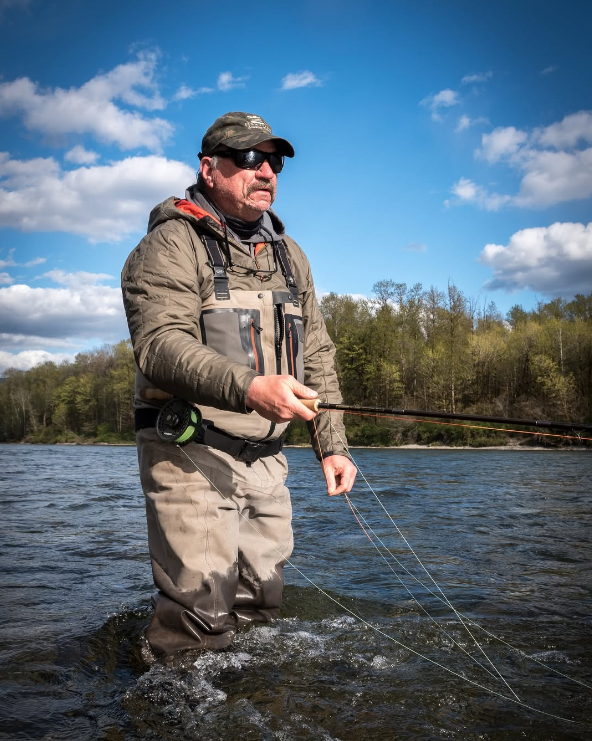
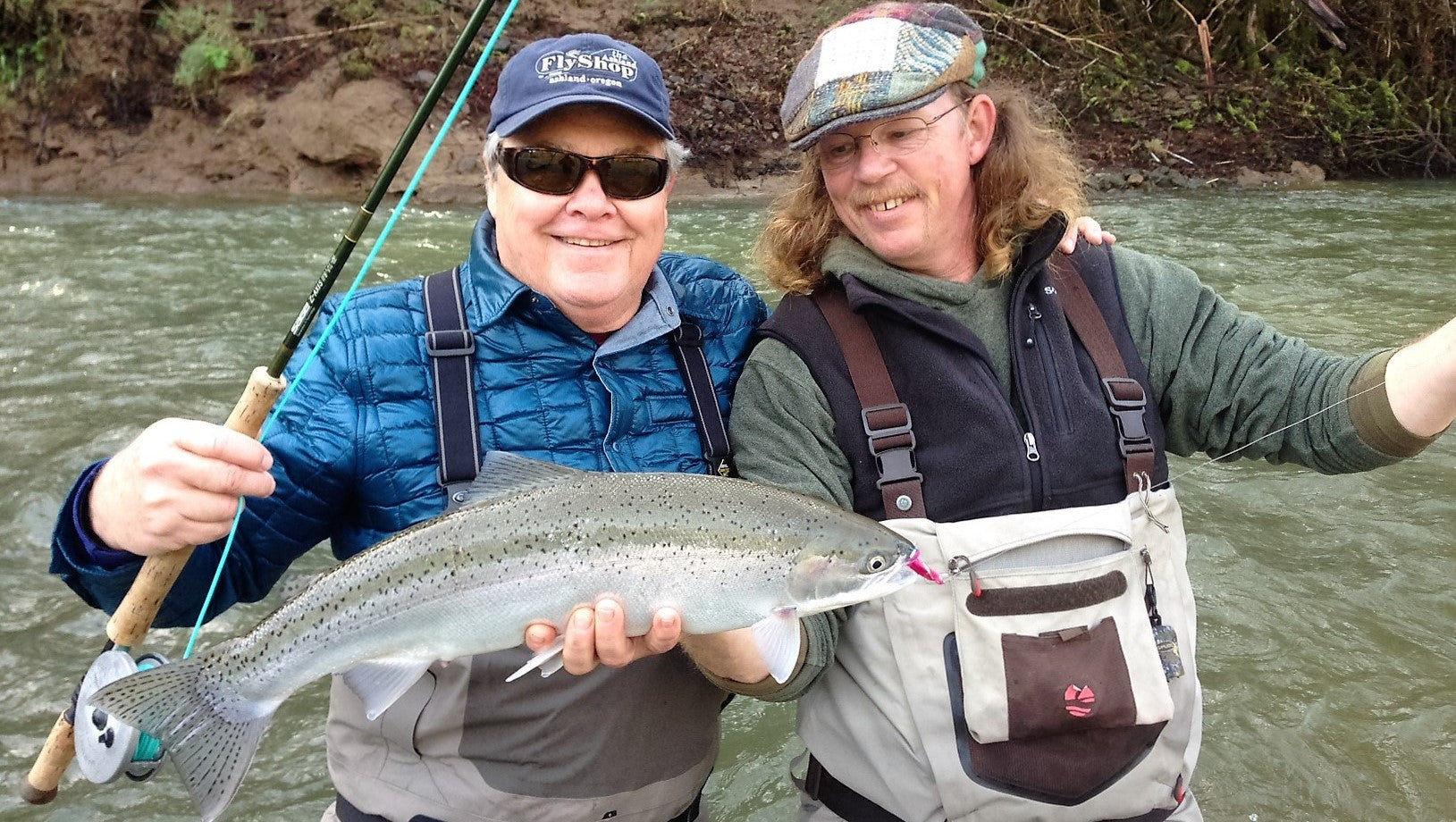
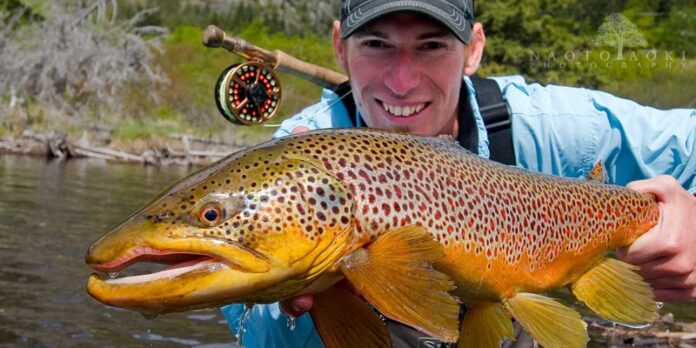
south carolina fly fishing

Conclusion with Mike Watts on South Carolina Fly Fishing

Whether you’re planning a trip to South Carolina or just want to learn more about fishing overlooked mountain streams, Mike brings local knowledge and passion that’s hard to beat. Don’t forget to check out RiversandFeathers.com for more stories, tips, and updates from the South Carolina fly fishing world. And if you’re near Clemson, you might even cross paths with Mike on the water.


774 | Fly Fishing the Ozarks with Brian Wise – Fly Tying Videos, Streamer Flies, Fishing Missouri

Episode Show Notes

Brian Wise, streamer fanatic fly tyer, and the guy behind fly fishing the Ozarks, joins us today to share some of his hard-earned lessons that he’s picked up from guiding and fishing Missouri’s famed trout water. You’ll find out why weightless streamers might be your new best friend. How slack kills a good presentation and what fly design really matters when chasing big browns. Plus, Brian’s gonna walk us through the rules of streamer fishing. Spoiler alert, there’s only one… and why the 10-pound trout can still live and hang out in 10 inches of water. We’re heading to the Ozarks with Brian Wise of Fly Fishing The Ozarks.

Hit play below to start listening! 👇🏻🎧

apple podcasts

Find the show:  Follow the Show | Overcast | Spotify

Subscribe on Apple Podcasts

Subscribe on Android

Subscribe via RSS

(The full episode transcript is at the bottom of this blogpost) 👇🏻

Sponsors and Podcast Updates

Missouri might not be the first place that comes to mind when you think of trout fishing, but Brian Wise is here to change your mindset. Today, from the spring-fed waters of the Ozarks to the wild rainbows of the North Fork of the White River, Brian’s been chasing trophy trout and designing streamer patterns long before it was cool. By the end of this episode, you’re going to hear how he approaches streamer fishing, why slack kills, and how to tie a fly that actually swims, not just sinks to the bottom like a wet sock.

Resources Noted in the Show

Facebook:
🔗 https://www.facebook.com/FlyFishingTheOzarks

Instagram:
🔗 https://www.instagram.com/flyfishingtheozarks/

YouTube Channel:
🔗 https://www.youtube.com/@flyfishingtheozarks

Related Videos

Related Episodes

WFS 374 – Getting Started in Fly Fishing with Brian Flechsig – Mad River Outfitters, Midwest Fly Fishing School

Full Podcast Transcript

Episode Transcript
Dave (2s): Missouri might not be the first place that comes to mind when you think of trout fishing, but Brian Wise is here to change your mindset. Today from the spring Fed waters of the Ozarks to the Wild rainbows of the North Fork of the White River, Brian’s been chasing trophy trout and designing streamer patterns long before it was cool. By the end of this episode, you’re gonna hear how he approaches streamer fishing, why Slack kills, and how to tie a fly that actually swims, not just sinks to the bottom like a wet sock. This is the Wet Fly Swing podcast where I show you the best places to travel to for fly fishing, how to find the best resources and tools to prepare for that big trip, And what you can do to give back to the fish species we all love. Dave (43s): Brian Wise, streamer, fanatic Fly Tire, and the guy behind fly fishing, the Ozarks joins us today to share some of his hard-earned lessons that he’s picked up from guiding and fishing Missouri’s famed tr water, you’ll find out why weightless streamers might be your new best friend. How Slack kills a good presentation and what fly design really matters when chasing big Browns. Plus, Brian’s gonna walk us through the rules of streamer fishing. Spoiler alert, there’s only one. And why the 10 pound trout can still live and hang out in 10 inches of water. We’re heading to the Ozarks with Brian Wise from fly fishing the ozarks.com and check out his YouTube channel of the same name. Dave (1m 27s): Here we go. Brian Wise, how’s it going, Brian? Brian (1m 31s): Good. How’s it going, man? It’s been a while. Dave (1m 33s): Yeah. Yeah, it’s been a while. September, 2020, so we’re looking at a good, almost five years since our last chat. Things, you know, a lot’s changed in the last five years, as we all know. What’s, what’s been going with you? Anything new in the last five years that you wanna give us an update? Since that one? We’ll get a link to that episode in the show notes. Brian (1m 50s): Oh, gosh. You know, the last five years, I, it’s, it’s been absolutely crazy for me, to be honest with you. We, we went from, we went from COVID to empty nesters and Wow, it’s exceptional. Dave (2m 5s): Is it, are you liking the empty nest? Is that a good thing? Brian (2m 7s): It’s a great thing. Yeah. Dave (2m 10s): Yeah. I always wonder about that. You put in, you know what I mean? All the amazing times, the all the hard work. Right. And then finally, you know, and that’s the worry too. You always hear these stories about the kids coming back, right? They’re like, so are they, are they, are they off? Do you think there’s a chance they’re gonna swing back on you here in a bit? Brian (2m 25s): No, I, I don’t, I don’t see that. I don’t see that coming. They’re, they’re all, they’re all just like super, we, we just married one off, which is crazy. Dave (2m 33s): Oh, wow. Okay. Yeah. Holy cow. Brian (2m 36s): So there you go. But yeah, yeah. I don’t, I don’t see coming back. If they do, if they do, they can, I don’t know. They can sleep outside, right? Dave (2m 43s): Yeah, exactly. Cool. Nice. Well, so I mean, what you have going, you got quite a bit going. I think last time we talked about your, your channel, your YouTube channel, fly fishing, those arks we talk streamers you’re known for, or you do some guiding as well. I was thinking Today we do some high level, maybe talk Missouri, you know, the state of Missouri, and then talk streamers and kind of fishing, go a little bit deeper there. Does, does that sound okay? Brian (3m 6s): That sounds fantastic. Dave (3m 8s): Good, good. Well, let’s maybe on the, let’s just start high level. I always like to kind of bring it up high. So Missouri, maybe take us to where you are and because the White River, we’re gonna be actually heading out there later this year, which is amazing. We’re heading to fish the white for the first time. And so I’m really interested to hear this, you know, get some tips here, but describe where you’re at and what you’re fishing. Brian (3m 30s): So I’m, I’m basically like extreme south central Missouri. Like, I’m, I’m due west of Branson by 40 miles, 50 miles, stuff like that. But I, like, we can, I can throw, I can almost throw a rock to the Arkansas state line. That’s, that’s where it’s Oh, wow. But, but I always like to say I’m definitely not from Arkansas. Yeah. You know, the border war thing, there’s a, a big difference. Dave (3m 56s): Right, right. Yeah. That’s interesting. Right. So it is a different state, but you’re right there. Yeah. You’re near the, the Dogwood Canyon Nature. Well, I guess that’s a kinda nature part, but Yeah, there’s a lot of water. So is all that water around Branson, what is, was that part of the white, or where, where are you fishing? Brian (4m 12s): Technically? The White River. It comes from a, a chain of lakes that, that starts in, actually kinda starts in Arkansas, goes up into Missouri, then comes back into Arkansas. It’s, it’s several lakes that starts this white river chain and the Branson Water Road, Tany, KOMO and, and stuff like that is just a, a part of the whole system, basically. So yeah, there’s, there’s a lot of water around me. I’m, I’m surrounded by, I’ve got SHOs Lake and Norfolk Lake. SHOs Lake is, is a, is what actually the White River is formed by, I mean, it’s the, the dam for SHOs Lake creates the white, the actual White River in Arkansas. Brian (4m 53s): And then Norfolk Lake creates the Norfolk River in Arkansas, the two famed rivers in Arkansas. And I’m, you know, like 30 minutes away from one 40 minutes away from the other. And I don’t live in a horrible spot. You really don’t. Dave (5m 9s): No. You’re in a, a spot. Yeah. And we’ve talked definitely because we’ve been getting prepared to head out there. We’ve been talking a little bit about the white in the area, and it’s pretty cool. What about when you look at Missouri, that’s one thing in general, you always say, you know, we always look at this kinda, the states down the middle. You’re in this area, which we haven’t talked a ton about, but maybe take us high level on Missouri. Where have you fished around the state A little bit. I Brian (5m 30s): Have actually, like a lot, let me take a step back. So like, Missouri, I feel like is really, really is just not even on the radar for most fly fishermen. We have over 20 trout streams in Missouri, all within the, the bottom, mostly within the bottom half of the state. So it’s that we’ve got a load, like tons of miles of trout streams. We’re, we’re kind of the redheaded stepchild in the Midwest, I think, you know, we we’re so close to the White River and then, and then, you know, you’ve got the Driftless region and, and then you go east and into Tennessee and, and stuff like that. You got that stuff. Brian (6m 11s): But when it comes to like the heart of the Midwest, I feel like Missouri’s just kind of forgotten about as when, when trout fishing, when you’re talking about trout fishing in specific, but, you know, small mouth fishing, it’s incredible the amount of, the numbers of different game fish species. You can come here within an hour of where I am and catch it’s, it’s ridiculous. It really is. Dave (6m 34s): No kidding. So, and you’re like you said, you’re more in the southern half. So as you go up north, the, what does the state do as you go from the southern half up to north, like towards Iowa? Brian (6m 43s): Missouri’s really, like vastly different. So, so basically you’ve got the Ozark region, which is where I am, which is super hilly, you know, very car, just a very, the topography is crazy. It’s like, just crazy. Dave (7m 2s): And what is the o what is the name? The Ozarks? Like what is that, what is that area of the Ozark? What, where is the O Ozarks? It’s Brian (7m 8s): A very, very large area. The map, it kind of changes, depends on, depending on where you see the map, but it kind of goes from, well north of me, south of like the highway 44 corridor down well into Arkansas. So like the Boston Mountains in Arkansas and like down around like the Buffalo River, the famed Buffalo River, Arkansas, stuff like that. It’s, it’s a, it’s a very, it’s a large, large area. It really, really is. Dave (7m 34s): Yeah, I’m looking at it on the map. I’m kind of just roughly, it looks like it takes up most of southern Missouri and like northern Arkansas. Right. It’s Brian (7m 40s): Giant’s, it’s a large area. It’s like the Ozark region is as large as a lot of the states on the East coast. I mean, it really is. Yeah. Dave (7m 48s): Right, right. And, and the Ozark, and is it kind of just the, the hills, the topography, the environment? Is that what makes it the Ozarks? Brian (7m 55s): I think so. I, I think that’s it. If it’s not what started the quote unquote Ozark region to begin with, it’s definitely what we’re known for now, for sure. Yeah, Dave (8m 5s): It is. Okay, cool. So that’s kinda it, but you spend most of your time down, and when you do in on guiding, you’re down in kind of the White River in that system, the Norfolk. It’s the Norfolk, right? Brian (8m 16s): Well, we have, we have some lingo that we may have to go through. Dave (8m 21s): Yeah, let’s hear it. Brian (8m 23s): So you’ve got the North fork of the White River, which is my, what I call my home river. What I, you know, kept my teeth on guiding when I, and I have to say, when I was guiding technically Dave (8m 35s): Yeah, you’re not guiding currently as as Brian (8m 37s): Much. Right, exactly. And I’ve, I’ve taken some time off. I, I may open some books in the future, but yeah, we’ll, we’ll see where that leads us. But, so you have the North fork of the White River, which flows in, flows into Norfolk Lake North Fork as in N-O-R-F-O-R-K. Dave (8m 58s): Oh, gotcha. Brian (8m 59s): Okay. And then below that is Norfolk River, Arkansas. N-O-R-F-O-R-K. Like, I don’t know why we had to make it so hard. Yeah. Dave (9m 9s): Norfolk. So is nor just literally take off two letters, or is there some more to the Norfolk? I can’t even say it. Norfolk, Brian (9m 17s): You know, it’s N-O-R-F-O-K, but I don’t know where it came from. I don’t, okay. Yeah, that’s, I dunno, the history behind why we have to have different names. The way I always like to think about it is, you know, the way we talk around here is we just basically shorten everything. So they just took North Fork and just said Norfork. Right. So that’s it, I think, you know, and just, just as, just as a, a side note, I, I would like to just stamp that and say, okay, that’s, that’s exactly where it came from. We can rewrite history books if we need to, but Dave (9m 53s): Yeah, no, that’s it. I mean, literally it’s that simple. It’s basically, and it’s interesting because, you know, we’ve been chatting with Chad Johnson, you know, recently, and he’s doing some stuff on the podcast, and, you know, when you listen to Chad, his, his southern accent is definitely different than yours. Like, you don’t really have a, so is that, now, is that a big thing between Missouri or is it just that you’re coming from a different area? Brian (10m 14s): Well, first, like, Chad’s from Mississippi, technically. Dave (10m 17s): Oh, right. He’s not even from Right. He’s even further. Yeah. Right. Brian (10m 20s): So, so it’s even more pronounced. Yeah. And, but you know, it, we, my wife and I, my wife is from just outside of Chicago and, and she’s picked up on this whole accent thing, especially, especially around where we are, you know, I honestly, truly in my heart believe that it’s, you know, and the accents around here, which vastly are, they’re totally different. I think it depends on how, how you’re raised so much. I, I really do. Because like, like I don’t have much of an, I like to think I don’t have much of an accent. My Dave (10m 52s): No, you don’t, you don’t, you don’t have barely, no, I would know. You could be living in any state right now, and I have no idea. Right, right. Brian (10m 59s): Yeah. But then, like somebody I grew up with that I’ve known my whole life, well absolutely sound like a hillbilly. Dave (11m 5s): No kidding. Brian (11m 6s): And, and it, it’s just, it’s, it’s really kind of funny the way it works. I, I, you can’t put your finger on it. It’s kind of odd. Dave (11m 13s): Yeah. Nice. All right, well we got the important stuff out of the way on the terminology and the, and all that, but if we take it too, so you said the north fork of the white, which is interesting. I think that would be cool to dig into that a little bit. Alright. Now is streamers, you’re kind of known for, I guess with tying especially, but what’s that look like for you on the water? Are you focusing on streamers or are you doing a little bit of everything? It Brian (11m 34s): Kind of depends on where I’m at. You know, if I’m in a, in a tiny little stream away from here that I’m, you know, like I just not, I’m not overly confident in throwing a streamer. I’ll, I’ll pull out some NPHs and, you know, kind of fill some things out. But, you know, if it’s a, if it’s a river I’m gonna float, or if it’s a medium, I say medium even. Like, if it has some body to it and I have a chance to throw streamers, that’s the first thing that I’m gonna do. Just period. That’s just, that’s where I wanna be. Yeah. So, like, doing what I do and, and everything now it’s like, well, I can just go fish the way I want to fish. Brian (12m 15s): You know, I was just that this is the way I want the fish to eat, so I’m gonna, I’m gonna force them to eat this way. But yeah, that’s, that’s what I do. It’s, it is, I don’t, I don’t think it’s it, and it’s nothing against nipping, you know, you hear a lot of streamer, fishermen that are like, oh, nipping, no, I, you know, I made a career outta nipping, you know, for guiding for years and years and years. I, I appreciate it. And, you know, there’s no, there’s no more efficient way to go catch fish than nipping just period. But man, you know, you don’t, you don’t get to see the eats nipping like you, you’re pulling big streamers, Dave (12m 52s): So Yeah. Right, right. And, and you’re tying some of the big streamers, right? That’s the other thing. Or on your channel, do you still spend quite a bit of time focusing on streamers on your YouTube channel? Brian (13m 1s): Yeah, I, I really do. Like for, it’s in the last couple years, actually, since our last podcast, I’ve, I’ve added some things to the YouTube channel. I’ve, I’ve expanded, you know, just a little bit because it was for, for years and years, it was, Brian Wise is tying streamers only, and that’s all there is on that channel. But, but it’s, I’ve, I’ve kind of added some different series and stuff like that, that, you know, I mean, if you wanna, if you wanna talk about later or you wanna talk about now, we can Yeah, we can kick it off. Dave (13m 31s): Yeah, let’s hear it. Tell us what’s, because I, I think you are known as the streamer of the Flies and all that on the YouTube channel, but yeah. What’s, how’s things changed? Brian (13m 38s): I’m the guy that speeds up his videos to ends and sets it to music and, and stuff like that. And yeah. That, that would be me. But I figured out that there’s, I’m one of those people that I know what I’m good at and I know what I’m not good at. And, and I feel like that’s a, that’s a blessing to me. You know? I, I feel like, and I’m very honest with myself, if, if I’m not good at it, I know I’m not good at it and I wanna get better at it, but I just, I know that that’s not something that I’m overly good at tying dry flies. Yeah. Man, I am not good at, that’s hard that I try to stay away from it as much as I possibly can. But one thing I am pretty good at is teaching. Like, I feel like I have a, a pretty good style, and I can, I teach in a way that may, that I hope isn’t gonna lose you. Brian (14m 25s): You know, you’re gonna be, you’re gonna be entertained a little bit, you know, and, and stuff like that. I’m not just gonna be like a monotone, boring kind of guy. So when I started doing this, I, I started adding some different materials that I would do, like a product spotlight on a, on a new material that, that a company had sent me, or an old material like Mallard flank, you know, just anything. So I’m kind of, I’m kind of working through all the materials in the fly tying world. I, I’m, eventually, I will make it through every single material. There will be a, there will be a product spotlight video on, on how to use every single material in the fly tying world. Brian (15m 7s): That’s my goal. So it is massive. And, and I’ll be honest, I’ll probably die before, before I make it through. Dave (15m 15s): Yeah. But you’re gonna go for it. Are these coming out? Like, are you doing a, a series of these every month? And then how do you, how are you choosing what materials is it mostly, I guess, what you’re tying with to tie your streamers? Brian (15m 27s): Well, you know, honestly, like I’m using everything from, you know, from, from dubbing that’s, that’s only gonna be on like nymphs to wet flies and, and a little bit of everything in between. I, I say a little bit of everything in between. If I, again, if I tie a dry fly, it’s probably gonna be something with foam because I’m just not good at dry flies. But, but you know, it’s, it, it’s not, it’s definitely not streamer specific. That’s where, and, and I did that on purpose. I was just like, I need to expand a little bit because, you know, the, the YouTube niche in fly fishing is tiny anyway. And, and if I just make it streamers only, it’s even more tiny. Brian (16m 7s): So I needed to expand and I expanded. And, and to be honest with you, these product spotlight videos and tying tips videos that I do now are quickly becoming my favorite things to do. I really like doing these. They are, they’re a lot of fun. It’s, it’s more interactive with the people that watch me, which is still weird to say, but Dave (16m 31s): I know. Brian (16m 33s): But that’s, I think it’s really quickly becoming my bread and butter, like what I really kinda lean on and, and, and definitely, you know, the, the numbers don’t lie. The, the people are, are really liking those videos. So they’re fun. Dave (16m 49s): San Juan Rod Works started with a simple belief, great fly rods and gear shouldn’t cost a fortune as a family run company. They focus on building high quality fly fishing products that perform on the water without the premium price tag. You can try San Juan Rod works for 30 days risk free right now, and if you’re not satisfied, send it back for a full refund. You can go to San Juan rod works.com. That’s S-A-N-J-U-A-N Rod works.com. Stonefly nets builds handcrafted landing nets that are as tough as they are. Beautiful. They’re shaped, sanded, and finished by hand from premium hardwoods. You’ll feel the difference the moment you land your first fish light in the hands, strong at the hoop and made by someone who knows what it means to earn your trust. Dave (17m 32s): You can head over to stonefly nets.com right now and see what they’ve got in the shop today. That’s stonefly nets.com. Wow. Cool. So that’s, that’s a little update on the channel and we’ll probably talk a little more about that as we go, but yeah, well, let’s just dig into the, let’s, let’s stay with the North fork of the White ’cause I think that’s pretty interesting there. So let’s take it to streamer day. You know, you’re on the water and are you typically floating? Describe that. What does that look like when you’re fishing outta a boat or, or more off the bank Brian (18m 2s): Anymore? I’m older. I think I’ve waited in maybe twice in the last three or four years. I just, I just, I, we float. That’s, that’s what we do. We’re gonna be in drift boats. We’re gonna be in, in, in something like that, or paddleboards. We do a lot of paddleboard fishing and stuff like that. So, but yeah, the Norfolk of the White River is a, what I would call like a medium to larger river. It’s claim to fame is, its rainbow population is a hundred percent wild. They, they have stopped stocking. They haven’t stocked rainbows in that river since the mid sixties, which is really cool. Brian (18m 42s): Like in, in Missouri, you know, and Missouri has, you know, several rivers where either they have supplemental stockings to help, you know, a a naturally producing population of, of rainbow trout or they’re just completely wild, which is really, really cool. But on the other side of that coin, we have large brown trout. We have large, huge stripers and like seasonal stripers that move into the river and stay for a while. And so, like, we throw big streamers, like yeah, every chance we get, Dave (19m 15s): You do, you do, you’re telling big stuff. Okay, so you’re in the boat, you’re floating down. Maybe talk about that. What are the streamers you’re throwing these days? Are they, are they these giants? Talk about the design, what, what you’re, what you’re working on these days. Brian (19m 28s): Sure. When the big streamer thing really started to kick off. Dave (19m 32s): Yeah. And when was that, take us back there. Was that a while back? When, when do you think is, are you talking specifically for your area on the white? Yeah, Brian (19m 40s): I would say it’s really hard to judge. Yeah. Right. Because it was, it was a long time ago and it was still, I don’t wanna say it was early internet days, but it was still pretty early. Like it was before YouTube, before, you know, it was like the message board days if you, if you remember that. Dave (19m 57s): Yeah. I’m trying to think now. So we’re talking probably the, the nineties, right? Somewhere in that, in that late, late nineties, Brian (20m 3s): This probably, I was thinking 2005 to Yeah, Dave (20m 6s): 2005, a little bit later. Yeah. Brian (20m 8s): Yeah. Something like that. Somewhere in there is, is when we, we started doing it like guide’s day off. You know, you would go do this and, or, or we would go, we would guide during the day, and then after we, we got our fishermen off the river and stuff like that, we’d get together and go to our streamers after that, you know, after spending a whole day on the water, we would go take another float and go throw streamers. And we were learning so much, but we didn’t offer this in fishing trips for years, like Right. We didn’t think anybody would want to do it. Dave (20m 46s): Yeah. Because it’s hard, right? Because it’s still not easy to catch fish Brian (20m 49s): And you don’t Yeah. It’s work and you don’t catch that many fish and, you know, it’s, there’s just a lot to it. And so as went on and time kind of progressed, we were fishing these big huge ungodly streamers. There were just, you know, they were huge, Dave (21m 7s): Like seven inch, seven inch range Brian (21m 10s): North. Yeah. Oh, north. Yeah. Nine, nine inches. And some of them we were throwing musky stuff to trout, what we consider Musky stuff. Now. We were throwing to trout back then, just because we didn’t have a limit, I guess, you know, if, if you, if you don’t have a limit, you need to figure out what that limit is or there is no limit. So like, like on when size comes into play, you know, we started off with maybe like a four inch streamer and then boom, we got eats and caught numerous fish on that. So we would go up to six inches, we’d go up to 7, 8, 9 inches just for the listeners. We never found that limit. Dave (21m 48s): Right? Right. You kept going. Brian (21m 50s): Yeah, we did. And we kind of stopped at that 10 inch mark, give or take some, just because, but God, you know, Dave (21m 58s): Can’t cast it. Brian (21m 60s): At what point do you just say, okay, this is ridiculous. We need to like hump the brakes. And So we did. And, and I think that was the best thing that happened to this streamer game. We started figuring out that it’s not just big bulk, you know, that we need to do, that’s gonna just, that weighs a lot that’s gonna wear you out to fish. And we started paying attention to how flies are designed, and that’s when the streamer game that, you know now really ramped up and everybody, that’s when it became mainstream, I guess. So, so, you know, we were, we were going through the paces, you know, trying to figure stuff out and, you know, fishing these big, huge heavy flies because that’s what we thought we needed to do. Brian (22m 46s): But then things shifted and I think we’re in the coolest part of the streamer game that we’ve come across right now. You know, it’s just, it’s incredible what people are coming up with. Dave (22m 58s): Like materials that are, that are lighter, not as bulky, they’re easier to fish and, and then do things. Right. The, the flies doing what you want it to do. Brian (23m 6s): Absolutely. Like just trading out a whole fly. ’cause I, I remember early I was tying flies that were almost solely bu just palmer bu and, you know, you, you palmer say four four bu feathers up a fly. Like that’s gonna get heavy really quick when it gets wet. Yeah. You Dave (23m 27s): Know, wet sock, wet sock Brian (23m 29s): You. Yeah. Right. If you take one of those maroo feathers and then hold it up, quote unquote, hold it up with bucktail, you have immediately a fly that’s half as heavy when it’s wet. It sheds water when, whenever you cast and, and just, just by trading out, you know, half of the bu you’re already into a better fly that looks exactly the same and probably swims better. You know, those big heavy flies don’t swim. They, you know, they just, they don’t swim. They a big heavy fly will jig. And, and I’ve said it a lot, I’ve, I’ve caught a little bit of flack for it, but I’ll say it again. A jigging fly is great for rainbow trout. Brian (24m 11s): You know, if you’re looking for big brown trout, a a hard jigging fly that’s just gonna jig in the water. Yeah. I couldn’t care less about that fly. Dave (24m 19s): And what is a jig versus what you’re talking about The other, what, what is the jigging fly doing? Brian (24m 23s): So a jigging fly will like literally go straight up and straight down in the water column. It’s, it’s head heavy enough that it literally jigs you, you think of a jig, like a bu jig, a bu jig in the water will, if you lift it up, it goes straight up. When you let, when you give it slack, it drops straight down. And there’s literally not a single bait fish in the world that I know of that does that. And a lot of people Dave (24m 50s): That probably go straight up or, or straight down. Right. Exactly. Brian (24m 52s): They don’t do that. Even when they’re fleeing. They definitely don’t do that. And you’ll get people that’ll say, well, it’s, it’s, it’s imitating a wounded fish. And I’m, I’ll tell you right now, like, you give me a double deceiver, that doesn’t weigh anything. When you strip that just right, that’s the best wounded fish you’ll ever come across. Just period. I mean, you know, it’ll just, it’ll turn almost in a complete circle, you know, and, and stall. And that’s all you have to do. You’re in control of everything. And once you’ve kind of figured that stuff out, you can do so much with a weightless, a completely weightless fly with zero added weight to it that’s still like six, seven inches long. Brian (25m 35s): That’s not hard to cast. That’s that you can take a beginner and really give them at least a really solid look at what streamer fishing is about. So, yeah. Dave (25m 45s): Gotcha. Okay. That makes sense. So, so you’re, what you’re saying is the jigging, the jigging style, the rainbows will eat, but the browns won’t. Well, I Brian (25m 52s): Fish or fish, you know what I mean? Yeah. Dave (25m 54s): Other fisher fish. Right. Brian (25m 56s): But what you’re gonna find is more consistency and, you know, there’s, there’s always an anomaly. There’s always some stupid fish out there that’s that’s, that’s gonna do something crazy. But for the extreme vast majority of what you’re gonna run into, you know, jigging just, it just doesn’t work very well for big brown trouts, big stripers and stuff like that. If it, like, you know, jigging may work pretty well on big stripers when they’re 70 feet in deep in the lake, but they’re down there for a reason, you know, that type of stuff. So, but when they’re actually actively pursuing bait fish, jigging is just, it’s just throwing things out, throwing everything out the window. Brian (26m 39s): Yeah. Dave (26m 39s): So you’ve got these on your fly. You’re making the, you’ve got the wounded fish versus say the flinging fish. Is that a different tie that you’re doing? Talk about that. Is that a whole different style of how you’re retrieving out there? Or is that more the fly, how the fly’s designed? Brian (26m 54s): Technically it could be a little bit of both. I, right off the top of my head, I can’t think of any just completely like wounded bait fish flies that are, I take that back, like gallop’s gallop’s got a fly that he ties that, that is basically tied on its side. And that would be, that might be considered more of a, you know, of a wounded bait fish kind of look simply because the way it was tied and how you’ll fish it. But the way I look at it is you can create a wounded bait fish. A fleeing bait fish. A bait fish that is just completely getting out of town, or a bait fish that’s just kind of hanging out all with the same, the same fly. Dave (27m 36s): Oh, the same fly, yeah. Brian (27m 37s): Yeah. Like say you’re gonna throw like one of my knuckleheads or, you know, a knuckle deep or a double deceiver. Dave (27m 43s): Let’s take that to the water. Sure. Let’s take that to the water. Let’s take this example. Let’s say you’re on the boat, you are getting ready to cast. Talk about Yeah. Describe that. How you would be doing that with this fly. Brian (27m 53s): Okay. So for the most part, you’re always gonna, like, especially from a boat and, and, and pretty much anywhere brown trout, brown trout, like being in places where they can ambush things. So, and what a lot of people think is, you gotta fish super deep for them, but that is not the case. So we’re gonna, we’re gonna start off by first rule is if you can reach the bank, you’re always gonna land it on the bank. Dave (28m 20s): Oh, okay. Number one rule. Brian (28m 22s): Yep. Number one rule. Get it on the bank. You’re gonna lose flies. You’re gonna hang flies up in the limbs above the bank, you’re gonna do it. Don’t get frustrated because that’s what comes with the game. You know, Dave (28m 36s): So you want to get this thing as close to the bank as possible. ’cause they’re sitting up under undercuts or just, that’s just where they are. Brian (28m 42s): A couple different things. Most of the time the water on the bank is nowhere near as shallow as what you think. Right. There’s all sorts of little cuts and there’s a big rock here that drops off to, you know, say knee deep four feet off the bank. And that’s a great holding spot for brown trout. You know what I mean? They’re, they’re kind of out of the, they’re out of the, the main push of the main part of the river, but they’re still close so they can get in it and get out. They’re always close to ambush zones and places that if a predator comes at them, they can get out quickly as well. So like a, a hard seam or a, you know, a soft seam. Brian (29m 23s): Just any seam, any change in the river bottom, I don’t care if it’s a change in color on the river bottom, that’s a little trigger point. But we’re fishing mo, like I said earlier, most of these flies that I’m using are completely weightless. They’re big and, and stuff like that, but they have no added weight to them. They don’t have dumbbell eyes, they don’t have a, a cone head or anything like that. So what we are required to do in the, in that instance, is we have to throw a sinking line, right? So the sinking line is what actually force the fly to get a little deeper and, and, and swim better as well. Brian (30m 3s): So you’re throwing, you’re, you’re casting that fly up onto the bank for those fish that are right there to ambush. And sometimes it’s the craziest thing, like landing it on the bank. And by the time you have to pull your first strip, it’s already in a fish’s mouth and they’re shaking their head like it’s the craziest thing. And in water that you don’t think that would ever hold a brown trout. I like to tell people, you know, a 10 pound fish can be in 10 inches of water, like a 10 inch deep fish from, you know, from the top, from its back to its belly. A 10 inch deep fish. That’s a big fish, man. Yeah. It’s, Dave (30m 41s): That is big Brian (30m 41s): Fish. Really Dave (30m 42s): Big fish, big fish’s, gigantic Brian (30m 43s): Big fish. So, you know, it doesn’t take much at all to hold a big fish, so you want to, no, so number one, you wanna take that, that scenario out and cover that water. So you landed on the bank, you’re covering that water. So as you, as you’re stripping it back to the boat, you’re also fishing the drop off that is inevitably coming. You know, there’s, there’s gonna be a drop off somewhere. There’s gonna be, you know, some greasy water that, you know, you just, you have to fish through. So you have the ability to kinda, as you’re floating downstream, to kinda look at what’s coming slow your, your strip down so you can, you know, swing it around a rock or speed your strip up so you can make another cast to hit this other spot. Brian (31m 25s): Yeah. You know? Dave (31m 26s): And are you doing this for the most part while you’re drifting down the river without an anchor? Brian (31m 29s): Absolutely. A hundred percent. If you’re anchored up doing what we’re doing, you’re gonna lose so much of the movement of the fly. Dave (31m 37s): Oh, really? So you want to be moving pretty much all the time, just going with the flow. Brian (31m 41s): Absolutely. Yep. If you kind of think about it, whenever you’re waiting and you’re throwing streamers, you know, most people think of it as, you know, you’re casting like quartering downstream and you’re just swinging them, you know what I mean? You’re using the current that is moving around you to move the fly, and then you strip it back and I mean, you might strip it as it’s swinging and, and stuff like that. Yeah. But Dave (32m 3s): So it’s kind of swinging. So you, you make a cast the bank, and then the current’s just obviously pulling it downstream, so you’re kind of slowly it stripping it. So it’s, it’s almost a swinging fly. It’s almost a swinging technique. Brian (32m 14s): Absolutely. I mean, if you are, if you’re anchored, that’s what it’s gonna do. It’s gonna get swung downstream really, really quickly. But you don’t have near as much control. Like the river’s gonna take it no matter what. It’s, it’s just those times. So when you’re drifting, you’re going roughly, it’s not exactly, but you’re going roughly the same speed as the river. So what you’re doing is you can add slack, like in between strips, in between strips, the fly is not getting pushed out and swung out in between strips. The fly is just keeping up to the same speed as the water, so it has a chance to perform. Does that make sense? Like Dave (32m 50s): Oh yeah. Totally. Brian (32m 51s): Right. So like during the strip, whenever you are stripping the fly, that is not, when the fly is quote unquote performing at all, it’s going in a straight line and that’s all it’s doing. It’s, it’s right at the end of the strip that the fly performs and it does cool things. Right? So that’s when, that’s when you get to see these flies do like incredible stuff. Like they, they really do. Dave (33m 18s): That’s cool. Brian (33m 19s): And that is when a, a fly is, is working Dave (33m 22s): And that’s when you get the eats. That’s when you get the eats. When you stop on the pause, Brian (33m 26s): It’s just all over the place. It, it can literally be in the middle of it drip. It can be just absolutely anytime. And that’s what’s, I think that’s what’s so cool about it, you know. Dave (33m 38s): So you mentioned some rules. I, I wanna hear are there some more of these rules? You talked about the one get, are there a few here? Brian (33m 43s): Absolutely. Dave (33m 45s): Let’s break out a few. I’m not sure if you have, if you’ve covered this before, but maybe we can talk about a few more of these rules. Brian (33m 51s): Right. So I, like, I’ve been on several podcasts and I don’t think this has ever come up. This is kind of cool. Dave (33m 58s): Oh, nice, nice. Here we go. This is great. Okay, Brian (34m 0s): So let me get my rule book out here. Dave (34m 2s): Oh yeah, let’s get the rule book. This is, this is gonna be awesome. We love a good rule book. Brian (34m 7s): The first thing I say rule number one, and all these rules have caveats, every single one of them. But it’s, it’s great. So rule number one, there are no rules. Dave (34m 18s): Oh, okay. There you go. That’s good. I like that. Brian (34m 20s): Right. So if you, if you limit yourself that, because the only reason that we started doing this stuff is because we found out that, and I’m, I’m just gonna be blunt, we found out that what the old, the rules that the old timers had like passed on to us were totally freaking wrong. Really? Like, they were, they could not have been more wrong. You like, whenever I was like cutting my teeth and like, and like getting into this and really growing in the sport. But you know, old timers would tell you, you don’t throw streamers. And, and we’re, and they, and back then they were talking like, you know, wooly buggers and size four wooly buggers or whatever. Brian (35m 1s): You don’t throw streamers during the day. If it’s a bluebird sky, you just don’t do it. Oh, right. And if you go back and look through like my hero shots of, you know, the extreme vast majority of the big huge brown shot that we’ve caught, they’re on a bluebird sky day Wow. At one o’clock in the afternoon. Yeah, there you go. So don’t hinder yourself with rules. Okay. That’s kind of the main thing. You know, they’re the rules that are hard, fast, and, and they are set in stone are very set in stone and Yeah. Dave (35m 31s): Well maybe we call these the new rules. We’ll call these your, your new rules. I like that first rule though. So there are new rules, but there are, there could be some rules, some new rules, Brian (35m 41s): Right? Like the only real rules are you don’t want to trout set. Dave (35m 46s): Oh, Brian (35m 46s): Right. Number one, you know, everybody hears about that. Don’t trout set, don’t trout set strip set only. And yeah, that’s, that’s the case for the extreme vast majority of the time. Dave (35m 55s): Yeah. And why is that? Why is the trout set? Because you are fishing for trout. So why is the trout set the, like you’re raising, you’re answering your cell phone, right? That that’s, don’t do that. Brian (36m 4s): Exactly. Exactly. So it’s so many times what you see when you’re, especially when you’re streamer fishing from a boat, it’s a very, very visual game. So, so you’re watching this fly swim back all day long. Dave (36m 19s): Oh wow. So you’re seeing this, you, you’re seeing this fly and you’re actually seeing the fish eat it. Brian (36m 24s): Absolutely. But wow, what you’re also seeing is the fish come up and take a big swipe at it and completely miss it. So if you trout set every single time and that fish didn’t even get close to your fly. If you had left it in the water, chances are that fish is gonna come back. Dave (36m 42s): Oh, right. Brian (36m 44s): So, you know what I mean? You, you pull it outta the water and you just killed it. It’s done. Gotcha. Dave (36m 49s): So the strips that you’re actually not pulling outta the water, you’re just pulling it faster and they might come back on it. Brian (36m 54s): Well, a strip set is literally what it is. You, you keep your, as you’re stripping, the way I strip a fly is super short strips, maybe say 18 inches long or something like that. But they are crisp. Dave (37m 7s): Oh, you mean like a So you’re doing a 18 inch long strip, but it’s fast. Brian (37m 11s): Super fast. Because Dave (37m 12s): That’s a pretty long strip. Right? That’s a decently long strip. 18. Brian (37m 15s): Well, I mean, it, it kinda depends on how you’re looking at it. Like if you’re talking about a, like a bonefish strip. Yeah, that’s a really long strip. Like that, that would be a, that would be a, a strip set on a bonefish flat. Right. Where you’re sitting there like four inch strips, little four inch strips. You know, what we need to do is we need to move heavy line and a bigger fly. So it takes a, it takes a little bit longer of a strip and it takes a little bit more crisp of a stop of a strip. I hope that makes sense. Yeah, it does. Does that’s one of those things that Dave (37m 47s): It does. It’s almost like a fly cast. If you think about your fly cast, you wanna stop. Right. Same thing. You wanna do that with your strip. Brian (37m 53s): You could not be more on the money. Yeah. Yeah. Okay. You wanna do that with the end of your strip. Dave (37m 57s): Oh, right. Because that kind of jolts it, does that kind of get the fly doing the action? Brian (38m 2s): Exactly. Yep. You’re you’re, you’re seeing it now. Nice. Yeah. Nice. So that’s, that’s what gives the fly better action. But it’s also, if that’s what you’re doing, it’s a great strip set. You know, you’re already strip setting every time you strip so, so Sure. Your, your adrenaline’s gonna give you more. Gotcha. Dave (38m 21s): Yeah. So your strip, so literally every time your strip setting, so if the fish hits, you’re already doing it. Yep. Brian (38m 26s): You’re already doing it that No, like I said, whenever as you’re stripping the fly back and it’s working, its, its way back to the boat. When a fish does eat, trust me, you, you’re not just gonna normally strip set and it’s just gonna be this little, you know, you’re, you’re adrenaline has kicked in and you’re definitely gonna strip set farther and harder than you, than you normally would’ve. Dave (38m 47s): Yeah. What’s the closest fish you’ve ever hooked at the boat? Like how close do you get these fish near the boat? Brian (38m 54s): Oh, okay. This is brown trout in specifically Yeah. Are so much like muskie that it Oh really? It’s, it’s incredible. Yeah. There’s been times where I’ve told fishermen, you know, figure eight, the keep the fly moving. ’cause there was still a fish. Dave (39m 10s): No kidding. Yeah, Brian (39m 11s): Absolutely. They, one of these days I’m gonna do it. I’m gonna take like a charging cable for my phone. I know, but stick with me, bear with me. Yeah. Right. I’m would take a charging cable for my phone and tie it into the fly and just loop to loop that to my fly line and prove that brown drought don’t care. Dave (39m 33s): Yeah. Right. Because Brian (39m 35s): I like, seriously, you could put a chain on it. Yeah, Dave (39m 38s): Yeah. And Brian (39m 38s): They’re not gonna care. I’ve literally lifted my oe like as I’m rowing down the river, I’ve lifted my oe to give a fisherman that much more, you know what, a room for a fish that’s following. Oh wow. So yeah, they’ll touch the boat. Dave (39m 56s): Dang. Yeah. No kidding. Brian (39m 57s): So yeah, it’s incredible. Dave (39m 59s): They’re on, I mean they, I’m sure they kind of see the boat, but they’re just so focused on this fish that that’s like, that’s it. They’re just going for it. Predator. Brian (40m 6s): That’s the way I look. Yeah, it’s absolutely predatory. They are predators. There’s no if ands or buts about it. They are, they are predators and they act like it. They are not, they’re not rainbow trout. They’re not, they are so extremely opposite. Dave (40m 21s): Are there any brown trout that are close to 30 inches out in the north fork of the white? Brian (40m 26s): Absolutely. Yeah. So I am one of those people that’s, it’s driving me crazy. It’s frustrating, but it’ll happen. I’ve never touched a 30 inch. Well I’ve had, I’ve touched 30 inch fish that I’ve had clients catch. Dave (40m 38s): Right, I see. I I love that. I love that you’re saying, ’cause I, I know Chad has been talking about that, how he’s saying there’s a lot of people out there that come in and they say, Hey, the guy said he got a 30 inch, but it was Roy, maybe a 25. And so he, hes it absolutely. He thinks it’s important. I think it’s interesting because, you know, he likes, because he wants to know what’s going on in the river. He wants to know, honestly, like, what did that person catch it on? And so, because it helps everybody to know, so I, I feel like the fishing stories Right, we all have that because we’re fishermen. But, but what you’re saying is there are legitimate 30 inch fish, you just haven’t ever caught one yourself. Brian (41m 10s): I myself have never caught one. Dave (41m 11s): Yeah. Either have I, to be honest with you, I’ve never caught a 30 inch fish. I don’t think I’ve come close. Brian (41m 15s): Oh wow. So I’ve caught like, you know, 40 inch stripers and Yeah. Right. And you know, but that brown trout, that 30 inch mark, I’ve yet to clear it. I’ve, I’ve hit a 28 and, you know, and stuff like that. But I, I haven it cleared the 30 inch mark and I’m, I’m dying to. Dave (41m 30s): Yeah. It’s interesting. Why do you think that? Yeah, I guess that’s because it’s that, you know, just the fish’s life Right. The way it, it lives eventually it, it’s gonna die. You know, it only grows so much. Right. And that’s the older fish. Right. A 30 inch fish is probably pretty old. Brian (41m 43s): Oh yeah. The oldest fish in the river is typically the biggest fish in the river’s. Oldest fish in the river. And unless they have some sort of malfunction that probably die before that anyway, if that’s the case, but Dave (41m 53s): Yeah. Good, good. So, okay, cool. Well now on rules, back to the rules, we, we’ve got a couple here. Anything else we wanna throw in there? Anything else? I guess we could call it a rule or just call it a recommendation. Brian (42m 3s): Absolutely. There’s one thing, like what I kept running into before I closed the books on guiding what I was doing was a whole lot of real new streamer, fishermen that, that had watched my videos and, and and stuff like that and, and wanted me to kind of give them a primer on streamer fishing for a day. You know, spend a day with me fishing and teaching as much as anything, you know, which was really, really cool. Like those were some of my most memorable and I made such good friends with so many people that I still, and I’m still in contact with today. But what we run into a lot is, you know, the godfather Kelly Gallup starts talking. Dave (42m 48s): Right. Brian (42m 49s): And people will listen to every word that dude says and rightfully so. Rightfully so. If I knew half of what he’s, as much as he’s forgotten Right. I’d go catch a 30 inch fish. Yeah. Yeah. But, but Kelly really pushes a certain style of retrieve that can absolutely get you in trouble. Dave (43m 12s): Is this like the jerk strip thing? The Brian (43m 14s): Jerk strip. Okay. Yeah, the jerk strip. So let me, let me take a step back to, we were talking about stripping that fly back to the boat, right? Dave (43m 21s): Yeah. Yeah. There Brian (43m 22s): Has to be a straight line from your rod tip to the fly. Dave (43m 27s): Oh, Brian (43m 28s): Dead straight line. Okay. Okay. For two reasons. If you wanna move the fly and get the most movement out of the fly, the line has to be totally straight or you’re just gonna strip slack. Right. The more slack you have, the less movement you’re gonna get on the fly. Just period. The more slack you have, the lesser of a chance that you’re gonna actually hook that fish. If you get an eat. When you get an eat right. So Kelly’s jerk strip, if you don’t do it perfect, like perfectly, the rod tip moves, right. Say, say the rod tip is gonna move to your left. That’s the way you’re gonna do the jerk strip. If you don’t pull the exact amount of line you need back to straight at your fly, you got slack and something happens in between that time, you cannot set the hook, you can’t do it. Brian (44m 19s): Right. Dave (44m 20s): Right. Brian (44m 21s): So the jerk strip, so basically the way Kelly talks about it is he watched a professional bass fisherman walk, walk with a, with a, a lure. Right? And so the only way you can do that is if, if you are like a jerk bait, you know, you’re moving your fly like a jerk bait. So, so it’s that, it’s that in between. So you move it really quick to your left, like boom, like real quick to your left. But it’s in between when you make that movement and you go back to straight in front of you, that things have to be perfect. And if they’re not perfect, you’re gonna miss phish. It’s going to happen. Dave (45m 0s): Yeah. So it’s the jerk strip. So you’re kind of jerking it and then stripping it. But if you don’t get that, that timing right, then you’ve got slack and then that’s a mess. Brian (45m 9s): Exactly. And then people will jerk strip and it’s so funny, like they’ll jerk strip is say you’re in the, the bow of my boat and you’re fishing in the front of my boat. You’re jerk stripping off the, off the side of the boat. Say to our left, I’m trying to give a visual here. Dave (45m 24s): Okay. To left to the river. So we’re looking, we’re on river, right? So or river left floating down or in the middle, we’re Brian (45m 30s): Just floating in the river. Yeah. You make a cast to river left. Okay. And you’re gonna start jerk stripping. Okay. So what I’ve seen more times than not is they’ll start jerk stripping and strip. So it’s a jerk strip jerk strip, but they know they need to keep good contact with the fly. So instinctively they will start to pivot and they will almost turn around and face me as I’m rowing. Does that make sense? Just to keep the slack out of things. Dave (45m 57s): Oh, because they’ve got too much slack. So they’ll start turning to you to get the pick up the slack. Brian (46m 1s): Exactly. They’re physically turning their body. Right. And if you turn your body, you’re turning your rod and if your rod ends up upstream facing straight upstream or straight downstream and your fly is coming back straight from riverbank left, you cannot set the hook. If you hook that fish and you get an eat, it’ll be completely luck because Dave (46m 21s): It’s not straight. So, Brian (46m 22s): Yeah. Yeah. So the jerk strip is, is something that Kelly has obviously mastered and does a really good job of, of fishing with it. I don’t tell even myself, like I don’t think I have the, to do that and do it right without some point messing up. ’cause I’m one of those people that, you know, we get so few eats. Yeah. You know, it’s just part of the game. Right. Compared to nipping, it’s just part of the game. We get so few eats. If I mess one up in a day by messing with, you know, a different kind of strip or something like that, that may be the only eat I get all day. Yeah. Dave (46m 57s): That might be it. And I’m Brian (46m 58s): Not willing to sacrifice Dave (46m 59s): Meat. No, this makes total sense. So on the strip that you were talking about, the 18 inch, the straight strip. So is it your fly the way you design it that’s doing all that work that maybe makes it look like a jerk strip or make makes it do something similar to that, that other style or something like that? Brian (47m 14s): Well I think ultimately the fly in the water, like, like how the fly moves in the water will be fairly close to it. Whenever you do a jerk strip, you are moving the fly. You are partaking in that fly moving quite a bit farther than you would if you’re just stripping it. Which is, which is not not good and not bad, you know, it, that’s just, it is what it is. But I think if it with the jerk strip is, you know, I was telling you how we have to, we strip really like really sharp. Yeah. A jerk is kind of the same movement right. With the fly, you know what I mean? Yeah, yeah, totally. It’s sharp and it’s sharp. Yeah. It’s abrupt. Brian (47m 54s): Yeah. Anything that’s sharp and abrupt will give that fly the same movement, but the way you do it can hinder things as you keep going, I guess. If that makes sense. So what what I would ideally, and I, I’m one of those people that has to like tell a huge story just to Yeah, yeah. Dave (48m 15s): Let’s hear it. We love stories. Stories are good. That’s what the only, the only thing people are gonna remember outta all this are gonna be the stories. So, so go for it. Right. Brian (48m 23s): So like the, the only thing that you can, you can really, really say that is going to hurt your streamer phishing is slack at any time. You know, be it during the cast, be it whatever that just slack kills. Dave (48m 39s): And the same for, again, our analogy, the fly cast slack is the, the thing that kills you on a fly cast. Brian (48m 45s): Absolutely. Yep. Slack is bad in every sense unless you’re nipping and you’re forced to have slack as a dead drip. Right. You know, that’s no, you know, there are ways that you can add a little bit of slack that’s controllable, especially when you’re floating from a boat. You can add a little bit of slack that’s controllable because you see what’s going on. You can see your line, you can see the fly. As long as I know I’ve got, like say I’ve got three feet of slack that I’m just waiting as I go downstream. ’cause I don’t wanna pull the fly outta the water because it’s 10 feet away from a drop off or something. I’ll just leave that in it, you know. Brian (49m 26s): But if I’ve got a pool of slack underneath my rod tip, you know what I mean? That’s the killer. Dave (49m 33s): Pescador on the fly offers a full spectrum of fly fishing gear for any angler at any budget. By bringing high performance rods directly to the angler, they eliminate the middleman markups saving you time and money. The top tiered l ray series is designed for serious anglers with the L ray G six being the most packable high performance rod on the market. And most anglers who try the G six can’t believe it is a six piece rod. It performs just like a four piece. There’s no difference in performance, whether you’re fishing local streams or embarking on your next adventure across the world. The G six delivers precision and power wherever you go. You can get 10% off your next order right now if you use the code wet fly swing at checkout, that’s pescador on the fly.com. Dave (50m 14s): Use the code wet fly swing for 10% off, never fly without your G six. Discover the L race series and more at pescado on the fly.com on the sinking lines. So that’s part of it. You mentioned the, the sinking lines. H how is, maybe talk about that. What is the sinking line you’re using and, and the setup? Are you using a few different types of lines depending on water? Brian (50m 35s): Right, exactly. So, so I, I always come over prepared. I will have at least two sinking lines ready on, on two different reels at any given point. So I will always have, and, and it depends on the river actually. So, so say for the white, I will always have a T three and a T six, like, so a three inch per second line and a six inch per second line. But on big, huge water, I will always have a six inch per second line and a nine inch per second line. You know? So just covering everything. I don’t want to, I don’t wanna have any surprises. Brian (51m 16s): Yeah. When I get to the river, Dave (51m 17s): How do you know what line to put on, on the river? How, how do you know to go, whether it’s a three or six or whatever else? Brian (51m 23s): So, speed of the water is one thing, you know, if you’ve never been to a river or something like that and, and you get there and you’re, and say, you come prepared, but this water is like all moving really fast and, you know, it’s, it’s maybe not even that big of a river, but it’s moving really fast. I would go with a heavier line just to compensate on that faster moving water. Dave (51m 48s): Yeah. Because you wanna get it down. Do you wanna get it down a certain depth of, but it sounds like sometimes they’re hitting on the surface, like how far typically are you trying to get it down the fly? Brian (51m 58s): Oh, that may be the most loaded question in Dave (52m 1s): The world. Yeah. That one’s hard. That one’s hard. Brian (52m 3s): You know, every cast is a little different. Yeah. Right? Yeah. As you float, every single cast is a little different. Dave (52m 10s): Yeah. Again, why There’s no rules, right? There’s no rules here, Brian (52m 13s): Right? Yeah. So the previous cast you just made may have been on pretty flat water that’s not very deep. And then the very next cast could be after a drop off and you drop off to nine, 10 feet of deep water. Right. So what you need to do is, is be ready for the deepest part of the water and still be able to fish the faster part of the water. Yeah. So, you know what, you, you don’t want to, every time, every single time the, there’s a drop off, you don’t wanna just switch rods real quick and then hit it because you’re wasting a cast. Yeah. Or two or three casts. Right. And like I said, like I’m, I think efficiency is, is one of the biggest things in this game. Brian (52m 55s): You know, it’s not, the more casts you can make, it’s how many great casts are you gonna make up on the bank and fish it effectively off. You know, I’ve, I’ve seen guys that really do just absolutely flog the water and they, but they don’t take advantage of things. So you can sit there and make two 5,000 casts in a day, but if you’re not fishing that water specifically, like the way you need to be fishing it, you could have made a hundred casts in the day and fished the water even better. Dave (53m 27s): Right? Yeah, yeah. Covered it. So, right. Brian (53m 30s): So, yeah. Yeah. So it’s not just to go out there and grip it and rip it and, and like, like the, like the streamer, Dave (53m 36s): Same thing every time, Brian (53m 37s): Right? Like, and streamer fishing gets a little bit of that, grip it and rip it kind of, you know what I mean? It kinda gets that. Yeah. Dave (53m 44s): You get stuck in that mode of just, and you never wanna do that. Right. Whether you’re steelhead fishing or whatever, where you’re stuck doing the same thing, like, you know, the same, same, same. You really wanna be thinking about what that fly’s doing Right. And fish in the fly, and you’re thinking about the fish. Like you’re, you’re down there. Right. I think that’s what you’re kind of going to don’t get stuck in the same monotonous stuff. Brian (54m 3s): Exactly. That’s because it may seem monotonous as you’re doing it, but as you’re floating, there’s nothing monotonous about it. There’s, you’re never gonna go over that same water in the same day as you did. Yeah. Dave (54m 16s): Right. It’s always gonna be changing. Brian (54m 18s): Right. So, and as far as like changing flies, speaking of kind of monotony and, and stuff like that, I’m one of those people that if the situation is, is very extreme one way or the other, say it’s it’s gonna be rainy all day and the sun will never come out, then I will, I will probably go to, if I have two people in the boat, I’ll probably have one with a very natural fly, you know, like a, like an olive or olive and yellow or, you know, something like that. But then I’ll still have somebody with just white, you know, just like, if you wanna talk colors and, and how often, you know, you’re changing colors. Brian (54m 58s): Myself, me, myself, when I go to a river, there’s so many days I’ll never change the color, like at all. Well, just, you know, if you don’t, if you don’t need to, you, you don’t have to. But, but I’m one of those people that I would rather, I would rather spend the time fishing fly, because this is the way I look at this. We’re not trying to feed these fish, you know, we’re trying to get a, an aggressive something out of why big browns trout, you know, we’re, we’re going knocking on doors to see who opens the door and punches us in the face. Yeah, Dave (55m 31s): Right. You know, Brian (55m 32s): I mean, that’s, that’s what we do. That’s the Dave (55m 35s): Reaction. Brian (55m 35s): Yeah. So I, yeah, I think, yeah, I think it’s more of a reaction. So if you’re trying to feed the fish and they’re actively feeding, there could be differences there. But the way I look at it is I don’t think we’re actively, we’re trying to feed active fish. I, I think we’re trying to, to punch the schoolyard bully and see what Dave (55m 55s): He does, see what, see what happens. Right. Brian (55m 57s): And, you know, just, yeah, just, just get in his, get in his area and see if he hurts us and takes our milk money. Dave (56m 3s): That’s awesome. That’s great. Well, let’s start to take it outta here. We’re gonna do our, our travel segment. And I want to hear, I know you have some top pro fly tire habits. I think there was a video out there. So we, I wanna talk a little about that and we’ll, we’ll wrap it up here with some flight tying stuff. But today’s travel segment is presented by Intrepid camp gear intrepid camp gear.com. They do the rooftop tents, they do some other stuff too. But we see a lot of those around our area. You know, tons of these rooftop tents. They’re, they’re pretty awesome. So that’s, we’re gonna give a big shout out to Intrepid Camp gear. So before we get into the tips, tell me about that. Do you guys see any of these rooftop tents or what, what are you seeing around, what are people, I’m sure they’re camping right around your neck of the woods. Brian (56m 41s): Oh, tons. We like every Jeep and every Jeep Gladiator that has a, you know what I mean? Ha has a rooftop cant on it. Dave (56m 51s): Yeah, there you go. Okay. So there’s plenty out there. Yeah. They’re, they’re, they’re definitely pretty cool. Yeah, they’re awesome. Yeah, we’re gonna be doing some more stuff with them and, and hopefully getting out and, and you know, I haven’t actually been in one yet, so that’s gonna be awesome to do more of this, but they’re kind of doing some good stuff out there, so. Super cool. Yeah. So shout out to Intrepid here today. So what about on your travels? Are you, what are you up to? Are you planning any, you got any trips coming up here? You’re looking, going outside of Missouri or what, what’s your, you’re looking like Brian (57m 17s): Right this second? Like, typically I do have something cooking on the books. Just, you know, just ready right this second. I really don’t, but it’s really kind of funny. Just a little, I don’t know, a little personal side note. My wife’s a nurse and she and I told you we, we are like Dave (57m 37s): Empty nesters. Brian (57m 38s): Empty nesters. So, but she just took a school nurse job, so she’s gonna have all summer off. Dave (57m 45s): Oh, nice. Brian (57m 47s): So I, we purposely didn’t plan anything. Yeah. So we can just go, that’s great. Dave (57m 51s): Go. That’s smart. I love that. So Brian (57m 52s): Yeah, that’s, that’s what we’re gonna do. It’s, that’s a good idea. It’s gonna be different and cool. But yeah, that’s, that’s what we’re looking for to, so that’s the, I’ve got a good reason for not having any trips on the Dave (58m 2s): Books. Yeah, totally. Well, what would be, if you were thinking bucket list, like, you know, trip of a Lifetime, what is something that you would, you haven’t done yet that you’d wanna go for? Oh, Brian (58m 10s): Like Trip of a Lifetime stuff. It’s gotta be salt water. Dave (58m 13s): Salt water. Okay. You like the salt? Brian (58m 15s): Yeah. I’d probably have to be like Cosmo Lito, you know, something like, just, I think I would die happy if I died on a GT flat. Right. You know, from a heart attack from A-G-T-E-D. I know a sandal. Dave (58m 29s): I know. It seems like that would be pretty hard to beat. That’s, that’s it. Nice. Okay, cool. So we got a couple here. Well, let’s, let’s talk about this. Did you remember, I guess it was pretty recent, like the the pro tire habits. What, what was this video about? And, and tell us a little bit about what, why you did that. Brian (58m 43s): Yeah, so number one, I, I think I kicked that video off with the caveat of something along the lines. And I’m, I hate to quote myself, but I’m not, I’m, but I’m not above it either. Yeah. But I say, I say something along the lines of what separates a pro tire from everyday tires like me and you, and I really truly believe this. I, I don’t want to, I don’t wanna put anyth, I don’t want to tell people that I think I’m this big pro tire that’s just phenomenal and stuff. But I’ve just noticed several things that really phenomenal fly tires do that, that some people that would help some people if they would take it, newer people, if they would take it on, you know, like organization is huge. Brian (59m 30s): And I was one of those people for a long, long time that my tools were kind of everywhere and you know, I, you know, I was just trying to tying like that. And when I stopped that and I started like having very kind of, I don’t wanna say regimented because I’m not a regiment kind of guy, but you know, something like that. And this is where this goes, this is where that goes. I know where everything is and, and, and if you’ve ever seen any of my videos and stuff, like I’ve got a fly shop, like literally worth of materials you Dave (59m 60s): Do. You’re organized, you’re organized in there. Brian (1h 0m 2s): Right. And if you’re not, you’re wasting time trying to find materials when you could be tying. And, and I, that’s, I’m just one of those guys. I’m an efficiency guy. You know, we, we’ve said that a couple times on this podcast. I’m an efficiency guy and, and every step, every time you have to stand up and get away from your vice, that’s time that you could be wrapping thread on a hook. Dave (1h 0m 23s): Right. How do, how do you do your, without going too deep, I guess we could probably see, look at some of the videos, but what’s your organization style? What are you using? Is this like, you know, plastic boxes or bins or how, how are you organizing stuff? Brian (1h 0m 34s): Well, actually, Lu Outdoors came up with these bench rings. They’re basically a, a stainless steel cable that has like yellow, yellow plastic wrapped around it basically. And it’s got a screw on one side. And you know, it’s got male and female ends on both sides. So what you could do is like loop your packages from where they’ve hung on the shelf on these bench rings and it keeps everything all on one bench ring. So I’ve got like, I’ve got like my, my MSC dirty bird dubbing, that’s, I’ve got, mm, 18 different packs of that all on one bench ring. Brian (1h 1m 14s): Oh, Dave (1h 1m 14s): And what’s it called? Is it called a Loon Outdoors Bench Ring? Brian (1h 1m 17s): Yep. They’re called, that’s bench rings. Something like there’s, there’s nothing to them. Oh, Dave (1h 1m 23s): Bench rings. Right. So you actually put your, right, so it’s a ring and you put your stuff on the ring and now you’ve got all your stuff for that flyer or whatever. Brian (1h 1m 31s): Exactly. Yeah. So I’ve seen guys, I’ve seen guys do that. If guys are gonna tie a, an olive wooly bugger and they know they’re gonna tie a bunch of olive wooly buggers, they’ll just put all the stuff that it takes to tie an olive wooly bugger on one bench ring. That way they can just go grab that one bench ring and they’ve got everything they need. You know, Dave (1h 1m 52s): That’s, so you literally, and then you could have these bench rings just wherever hanging on your shelf or, and, and this is good. I love it because I got actually Matt, Matt Callie’s is gonna be on the podcast tomorrow. Oh, nice. Yeah. So we, yeah, So we will, we will chat about this a little more. So. Awesome. Okay. So bench rings. So that’s one thing. So basically you have all your stuff on bench rings for the most part when you’re tying in production. Yep. Brian (1h 2m 12s): And they’re hanging, I can see at any glance. So, so for those that haven’t seen my, like my setup, I’ve got this, I’ve got this nine foot tall, six foot wide open shelved unit thing. I don’t even know what to call it that I put little things, you know, little plastic things that have a hook on ’em that I can just hang the bench rings on. And I’ve got, it’s ridiculous. Dave (1h 2m 39s): Do you have a bench ring for every fly big fly pattern you’re tie in? Or is this like for categories or how, what are the bench rings? Brian (1h 2m 45s): Well, I’ve got so many different materials and so for the most part I’ve got one of each color of every material as well. Like, I don’t do it specifically by fly, I do it specifically by material. So yeah. So one bench ring will have all my ice dub on it. One bench ring will have, you know, my flash and, and, and stuff like that. Dave (1h 3m 10s): Gotcha. That’s awesome. Yeah. Yeah. So you don’t have stuff, you don’t have everything stuffed in drawers where it’s buried away. It’s actually sitting out. Brian (1h 3m 17s): Yeah. Almost all that material is within eye shot of me right this second. And you know, my bucktail, oh, that’s something else too. So sorry to Totally, yeah. Yeah. Shift gears. But bucktail just a little tip. So I have, I don’t know how many bucktails I’ve got, say I’ve got 50 bucktails bucktails are, there’s no great way to store Bucktails, but, you know, have you seen those shoe holders that go over like a door, Dave (1h 3m 46s): A shoe holder? Yeah, Brian (1h 3m 47s): It’s like a, it’s like a, a shoe holder that will go on like a closet door or something like that. It has, you know, five or six like stalls wide. Dave (1h 3m 56s): Oh yeah, yeah, yeah. Like put your shoes in. Yep, sure. Brian (1h 3m 58s): They hold bucktails exceptionally. Dave (1h 4m 1s): Oh yeah. Okay. Yeah. Brian (1h 4m 3s): So, so I’ve got like, I’ve got like 50 bucktails and I can see ’em. ’cause you can, it’s, it’s all plastic that you can see through, they’re Dave (1h 4m 10s): Hanging in your shelf or whatever. Brian (1h 4m 11s): Yeah. They’re just hanging on my door, on your door and, yep. So, you know, just, you know, organization is really, really good. And, and I, that is honestly something that I wish I had learned way earlier. I, I really feel like I’d be, I’d be leaps and bounds in a different place if I had learned that way earlier. Dave (1h 4m 29s): So organization is used. No, I, I think that’s probably, yeah, that’s probably where we could keep that tip. I mean, there’s a whole bunch more. So I guess that’s a good thing right now. People can go check out your YouTube channel and watch this video. Right. ’cause it’s fairly recently you, you put that out. Brian (1h 4m 42s): Yeah. And, and actually it’s funny that we talk about this today. I’m starting a, like a studio revamp video. Oh, nice. So there’ll be one of those out, easily out by the time this, this podcast Dave (1h 4m 56s): Stays. Okay. So Stu, that’d be great. So we’ll look for that. So studio revamp and we’ve got your YouTube channel. Well, a couple random ones and then we’ll take it outta here today, you know, of course music, we can’t pass on that. I, I can’t remember what we talked about last time, but maybe talk about some music. We wanna take us away and look at the Spotify and listen to something on the way out today. What would you be listening to here? Or, or if you were on a road trip? Brian (1h 5m 16s): Oh, road trip. You know, number one, I’m, I’m definitely gonna be listening to podcasts of Dave (1h 5m 21s): Some kind. You, you’re, Brian (1h 5m 22s): So you got podcast on? Yep. Yeah. I, I’m a, I’m a big podcast guy, but like if you’re talking music, you’re gonna see everything on my playlist from like old school stuff from like seventies rock all the way to nineties rap and, ’cause I am, I’m a nineties kid, So Dave (1h 5m 40s): Yeah. What is the nineties rap? Who is it? Is that like who would be a nineties rapper? Brian (1h 5m 44s): Gimme Biggie and Tupac. Oh yeah, Dave (1h 5m 46s): Tupac, right? Brian (1h 5m 47s): Yeah. Just, yeah, Dave (1h 5m 49s): There Brian (1h 5m 49s): You go. I’m showing my age. Yeah. Dave (1h 5m 51s): I love it. Well I think Tupac, I think Biggie or Tupac maybe. They’ve got some stuff to, yeah, I guess they do. We’ll we’ll find something for that from them. Okay, so good. So we got some music. We’ll throw that in the show notes as well. We can listen to that here. And then, and what about the Ozarks? We talked about that at the start. What, do you have any fun facts? This might be a hard one, but on the Ozarks itself, I always think of the show that I think maybe put it on the map, the, what was the, the crazy show Brian (1h 6m 17s): Ozark with Jason Bateman. Dave (1h 6m 18s): Exactly. Bateman, that show was like intense, you know what I mean? But I think obviously you got that. But any other fun facts about the Ozark? What should we be known about this area? Brian (1h 6m 27s): Well, you know, I really truly think, especially like fishing, the Ozarks Ys, like the amount of game fish. I said it earlier, I don’t think people understand, like Dave (1h 6m 39s): No, they don’t. It seems like you’re just like, well they got, yeah, there’s not much, but you got everything. Brian (1h 6m 43s): Yeah, right. You almost have to talk like the Amazon to get, because many like different species as we can. Dave (1h 6m 51s): So name some of those. Well, what are some of, So we talked about some, what, what do we got? We got small mouth bass, we’ve got large mouth, all the trout. What else do you have out there? Brian (1h 6m 59s): We’ve got muskie. We have all the temperate bass. So you’ve got the white bass, the hybrids, which, you know, I still say, I still say to this day, give me, gimme an eight pound hybrid over a 15 pound striper any day. It’s just, but it is, it’s incredible. Like one of our, one of our old fly shops here, it’s just iconic. And Chad Johnson was a, was a big part of it was Dally Ozark, fly Fisher. They had a tournament that was just an all species tournament. Just it’s not, go catch the biggest fish you could catch. It didn’t matter how big they were, just go catch as many species as you could possibly catch. And it took like 15, 16 species to win it. Right. Wow. So it’s just crazy what we’ve got around here. Brian (1h 7m 41s): Yeah, it’s amazing. Yeah, it’s a lot of fun. It’s a, it’s a really, it’s a beautiful place. It really Dave (1h 7m 46s): Is. It is. No, I, I’m excited. Like I said, we’re gonna be going down to this year and I’m really excited ’cause I haven’t been down. I’ve been close, but I haven’t been down in Arkansas and I’m not sure if it’ll actually hit Missouri, but it seems like it’s pretty close by. So, so you never know. Brian (1h 7m 58s): Yeah, the white, you’re gonna love the white. It’s a, it’s a different beast. Yeah. It Dave (1h 8m 2s): Really, is there any out there, what are the, the other tourists, are there touristy things to do out there? If you were coming into that area that, that people are maybe coming for, not for fishing or is it all fishing? Brian (1h 8m 12s): Oh, it’s, well, I mean, we’ve got Branson. Dave (1h 8m 15s): Oh, Branson Brian (1h 8m 16s): And, and I, I don’t, I don’t say that with like a, you know, with a gfa. Yeah, I kind of say it with a gfa, but you know, we’ve got Branson, we’ve got, you know, the granddaddy Bass Pro is in the heart of the Ozarks in Springfield, Missouri. Like there’s tons to mountain biking. I don’t, I don’t know. The new, the new capital of the world of mountain biking is northwest Arkansas. Oh Dave (1h 8m 40s): It Brian (1h 8m 40s): Is. I mean, it it is, it is that northwest Arkansas and mountain biking is rolling and that’s the heart of the Ozarks. Yeah, I gotcha. There’s all sorts of stuff. Anything outdoors, hiking, biking, fishing. Yeah, it’s incredible. It really, really is. Dave (1h 8m 53s): That’s it. Nice. Awesome. Cool, Brian. Well I think we can leave it there and like we said, we’ll send everybody out to fly fishing the Ozarks pretty much everywhere they can just search that YouTube, your website I think eventually will be going strong. And yeah man, this has been a lot of fun. Again, we’ll, we’ll be in touch with you. I’ll be in your neck of the woods this year, so thanks for all your time. Brian (1h 9m 12s): Of course, man. Thanks for having me. Again. Dave (1h 9m 16s): If you wanna see Brian tie and phish some of these patterns in real time, you can check out his YouTube channel right now, fly Fishing The Ozarks, check in with him, let him know. You heard this podcast. It’s packed with tons of tips, tons of goodness. And like he said, he’s gonna be stepping you through all of those materials. So if you’re in the flight time, you gotta subscribe to Brian’s channel today. Do it right now before you head outta here. You get a chance, please, like this podcast, follow, do whatever you can to get that next episode. We are gonna be jumping into more of our good stuff. Lato Zone is around the corner and we’ve always got good ones. If you have an idea, I’d love to hear. If you had another podcast series you’d love to hear, send me an email, dave@wetlyswing.com. Dave (1h 9m 57s): Are we not covering your neck of the woods, the area you live in? I would love to hear that. And if you had an idea for a show or a series, I’m always here. So send me an email, dave@wetlyswing.com. All right, I’m gonna get outta here. It is definitely a late one tonight, burning the midnight oil, getting ready for, for a day tomorrow. And we’re not too far away from kicking off some of these trips. We got some salmon, some salmon, multi salmon. We’re talking Atlantic and Pacific, some big ones there this year. I’m excited for that. If you’re interested in any of these trips and hear more details on them, as always, check in with me and, and we’ll take from there. Dave (1h 10m 37s): I’m gonna let you get outta here. Hope you have a great evening. Hope you have a great morning. And if it’s afternoon, maybe it’s hotter than a popcorn fart out there right now and, and it’s smoking. But for some reason you’re still listening to this podcast if that’s the case. If that’s you, I appreciate you for sticking in right now until the very end and I hope you can connect with me and let me know you’re enjoying the podcast. We’ll talk to you soon. 3 (1h 10m 60s): Thanks for listening to the Wet Fly, swing Fly fishing show. For notes and links from this episode, visit wet fly swing.com.
         

Top Colorado Fly Fishing Spots with John Hunt of Moccasin Fly Club 

We’re back with John Hunt from Moccasin Fly Club, and this time he’s giving us the ultimate fly fishing and hunting roadmap for Colorado and New Mexico. From the Colorado River to the South Platte and even into New Mexico’s San Juan, John lays out his top 10 spots to hit this year — some big names and a few hidden gems too.

Hit Play Below!


apple podcasts

Find the show:  Follow the Show | Overcast | Spotify

Subscribe on Apple Podcasts

Subscribe on Android

Subscribe via RSS

(The full episode transcript is at the bottom of this blog post) 👇🏻

Sponsors and Podcast Updates


John Hunt - Moccasin Fly Club

Show Notes with John Hunt on Top Colorado Fly Fishing Spots

In this episode, we’ll talk about when to go with a guide and when to DIY, how to save money without cutting corners, and what gear he’s loving right now. You’ll also hear about some cozy lodge options near the San Juan and the one trip he says every angler has to take at least once.

If you’re planning a trip out west, this episode is packed with smart tips to make your season easier… and way more fun.

If you missed our first episode with John, check it out here: 760B | Moccasin Fly Club with John Hunt – Curated Fly Fishing Travel Experiences

John Hunt’s 1940s Langley Rod

John Hunt has a cool tradition with an old 4-wt Langley graphite rod from the 1940s. It’s been passed down in his family, from his grandfather to his dad, and now to him.

He takes it off the wall every year just once to catch a fish, then puts it back. Even his oldest kid has landed one on it!

John Hunt - Moccasin Fly Club

Top Colorado Fly Fishing Spots

June or July is when the snowmelt starts to slow and rivers get back into shape. John says the runoff season starts to ease up and everything opens up, from high alpine lakes to big rivers and private waters.

John says float fishing is the way to go if you want to cover more water. You’ll drift through amazing scenery, hit miles of river in just a day, and learn a ton from your guide.

Here’s what John recommends if you’re heading out this season:

  1. May is chaos, so stick to Stillwater then. But by June, rivers start shaping up again.
  2. Good spots include Rocky Mountain National Park, Estes, Yampa, Eagle, and the San Juan in northern New Mexico.
  3. For private water access, check out Boxwood Gulch, Bartle Lakes, Troublesome Creek, Hidden Valley Ranch, and Abel Ranch.
  4. Hook and Hunt (their lodge near Glenwood Springs) stays packed all summer. It’s a great home base for fishing the Roaring Fork, Fryingpan, and lower Colorado.
  5. If you want to land big browns, hit the waters right before the spawn in September.
John Hunt - Moccasin Fly Club

Float Fishing

John’s go-to for float fishing is the Lower Colorado River. From Glenwood Springs to Rifle, he says it’s packed with fish, more than anywhere else per mile. They also run their multi-day trips: three nights lodging and two days floating, based out of Silt, just a few minutes from the river.

If you’re planning your own Colorado adventure, here are some spots and tips from John:

  • Lower Colorado
  • Silt
  • South Canyon and Rifle
  • Arkansas River
  • Roaring Fork
  • Frying Pan
  • Eagle River
  • Cheeseman and Deckers

The best way to cover good water is by boat, but it can get tricky because landowners can own the riverbeds, so anchoring isn’t always allowed. His team works with solid guides out of Grand Junction and uses their in-house lodge for trips.

John Hunt - Moccasin Fly Club
Photo via https://www.instagram.com/moccasinflyclub/

Where Else Can You Fish with Moccasin Fly Club in Colorado?

John’s crew pretty much covers the whole state. From Boulder down to Pueblo, and out west to Durango, they’ve got someone on the ground (or in the water) just about everywhere.

You’ve got:

  • The Yampa River
  • Rocky Mountain National Park
  • Fort Collins
  • Down through Boulder, Denver, and Colorado Springs
  • The Eagle and the Blue in the mountains, plus Green Mountain Reservoir.
  • Southwest Colorado
  • Downtown Vail – Gore Creek runs right through it, and it’s public water, so you can fish between shops if that’s your thing.

Once you get past Fort Collins or Pueblo and head out toward Nebraska or Kansas, there’s not a whole lot of water for fly fishing. You might find a pond or two, but John says their team doesn’t really guide out there. Still, that doesn’t mean you’re out of options.

Here are a few good ones to look into:

  • Rudi Reservoir
  • Harvey Gap & Rifle Gap
  • Grand Mesa Lakes
  • Black Lakes on Vail Pass

Hunting with John Hunt of Moccasin Fly Club

Hook and Hunt is based in Silt, Colorado, right in zone 32. Colorado uses a lottery system for big game like elk, deer, bear, and even rams. Tags can take 6 to 10 years to draw in these hot zones.

John and his team work with four local guides and have hosted hunters using everything from ATVs to horses to plain old boots on the ground. This isn’t a high-fence, guaranteed kill kind of deal. It’s real-deal public land hunting. And when you come off the mountain, you’ve got hot meals, a warm bed, and a place to recharge.

Can you fish and hunt at the same time?

Fishing and hunting seasons don’t always overlap in Colorado. Around late October, things start shifting more toward hunting. It gets cold, rivers freeze, and most anglers pack up for the season. John says that hunters mainly stay at Hook and Hunt from Thanksgiving to February.

But if you’re in New Mexico? It’s a totally different story. Their Rod and Rifle property sits right near the San Juan River, which flows year-round. That means you might see anglers one part of the week and hunters rolling in the next.

John Hunt - Moccasin Fly Club

Chasing Big Browns on the San Juan

John’s team owns a lodge right in Blanco, New Mexico. It’s a 12-minute drive to Texas Hole. They usually run hosted float fishing trips in May (when Colorado rivers are blown out) and again in September for brown trout season.

If you’re into float fishing or just want to land a big brown, John’s got you covered.


Follow Moccasin Fly Club on Instagram@moccasinflyclub

 Visit their website: Moccasin Fly Club

Related Podcast Episodes

Read the Full Podcast Transcript Below

Episode Transcript
Dave (2s): Colorado is a top destination for both fly fishing and hunting in the us and for good reason. We’re heading there this year to explore some of the state’s most iconic waters from the Colorado River to the South Platte from Boulder and beyond. In today’s episode, you’ll get a guided tour of these legendary fisheries, along with some tips to help you plan your next Colorado trip more successfully and smoothly this season. This is the Wet Fly Swing podcast where I show you the best places to travel to for fly fishing, how to find the best resources and tools to prepare for that big trip, And what you can do to give back to the fish species we all love. John Hunt, founder of Moccasin Fly Club, is back on the show to share his favorite spots for fishing and hunting across Colorado and New Mexico. Dave (42s): He’s bringing his top 10 places to check out this year, along with insider tips on when to go DIY when a guided trip makes sense, and how to stretch your budget without skimping on the experience. We’ll also get the details on what it’s like to float the sand Juan right now and here about the cozy lodging they have ready right now on the San Juan just for you. Plus, John shares his go-to gear, picks a few hidden gems you might not find on a map, and the one trip he says every angler should make at least once. Here we go, round two, John Hunt from moccasin fly hubub.com. How you doing, John? John (1m 20s): Good, man. Thanks for having me back. Dave (1m 21s): Yeah, yeah, this is, I’m excited to get into This one today. Last time we did a, a wide range on your program and kind of had your founder story about how you got into it. You had a, a grandfather there with a, a cool bamboo rod, which sounds like you still have next to you there. Is it a bamboo rod? I guess first off, was it a bamboo? John (1m 38s): No, it’s, I wanna say I think it’s a Langley, it’s a, it was a four weight graphite Langley that’s from Oh, okay. The forties or whatever. And I, I have a, a weird superstition, but since, like, I want to say, when was it? So 2018 I think is when I, my father finally gave it to me, but every year I go try to put a fish on it somewhere. Oh, Dave (1m 58s): You do? So you still use it. Yeah. John (1m 60s): So my grandfather caught a fish on it. My dad caught fish on it. I’ve caught fish on it. My oldest has caught fish on it. My youngest still has to catch a fish on it, but he is only three. But yeah, every year I take it off the wall for like one day, go catch something on it, put it right back on the wall, and I, I, I feel like all the fish, god, karma should be okay at that point after. Dave (2m 20s): Yeah. Well, well, if you’re okay with it, we’ll have to get a photo of that and put in the show notes so people could take a look at it and see what, what it like looks John (2m 25s): Like. Yeah, I got you. No problem. Yeah, that, Dave (2m 26s): That’d be awesome. So, so yeah, we’re gonna talk Today, you know, mocks and fly club. You told the story about that, how you ended up forgetting your boots and your travel day in Colorado, hiking in your moccasins, and yeah. And so that was a really awesome story. And then the program you guys built, which is this really worldwide, but You specifically have a lot of stuff domestically, and I think the cool thing that you do is your trips aren’t just one price, right? You guys cover everything from the DIY angler all the way up to, you know, like you said, you’re going to Mongolia. So, so today we’re gonna talk about one of these places. I mean, this really is your home water, I think Colorado. It’s a hot place. Yeah. Maybe it’s the, the hottest state in the country for fly fishing, at least one of them. But, and then it has hunting, I think the big game hunting, whether that’s elk or deer or, you know, like anything like it has that too. Dave (3m 9s): Right. So we’re gonna talk a little about hunting talk Colorado, but first off, give us a little update on, you know, maybe your program. This is gonna be going live probably in the, you know, early summer period. What, what’s that look like for you guys? If somebody’s coming in right now and they’re saying, you know, man, John, I want to go fishing. It’s June, that range. What, what are you telling them? John (3m 27s): So June is kind of the end of our runoff season. So usually May is pretty bonkers and you gotta be on Stillwater, right? So we have a lot of snow in Colorado. April is considered mud season. The snow melts, it rolls down the mountains, it rolls into the rivers. So rivers, our runoff season in May is usually pretty large, so your float fishing is kind of blown out. It, the, the flows is just too fast. So walking, waiting and high alpine still water ponds, rivers, all that kind of stuff are still there in June. I mean, it’s, it’s a great time of year just because there’s so much available. I mean, we have, I mean, pretty much everything from Rocky Mountain National Park and Estes up by Fort Collins. John (4m 12s): Then you go over towards like the Yampa and you have Steamboat. So during your runoff season, your true free stones to get technical Yep. Nomenclature going. So the Yampa, the Eagle, and some true free stones. That’s the time of year to be on them is when runoff season comes through and when the flows are correct. Then you also get into stuff all the way over in like Durango with the animus. You can even go down and like dip into like that northern New Mexico at the San Juan, which is another Tailwater, but You got the Taylor, any of those things. And we have, I mean, everything from, like you said, DIY, walkway, days, guided float fishing. If you want to even do like, you know, another step up, we do have a, a plethora of private water that we have available from like Boxwood Gulch, long metal goats, Bartle Lakes, troublesome Creek, hidden Valley Ranch, Abel Ranch. John (5m 5s): I mean, there’s just a a ton of Yeah, there’s a ton. Yeah. And I mean everything from, you know, June, July and August is the summer. So if you’re not in Colorado, that’s usually the time that people are coming to Colorado. And that’s when Hook and Hunt, our lodge over by Glenwood Springs stays packed during the summer. So you could do the Roaring Fork, the frying pan, the lower Colorado. You could also do Harvey Gap, rifle gap. You could go up and do the flat tops, you could do Grand Meses over by Grand Junction, you could do the White River. And that’s when all of it kind of is ready to go for the people that live here in Colorado. A lot of us talk about August and September, obviously being great because there’s not much summer traffic. If you’re looking for big Browns, I would tell you, you, you want that September-ish time, the Browns come out and get real feisty before the spawns go on. John (5m 54s): So that, that always happens and we’re staying off of Reds and staying off of all the spawns. But prior to and after they get active because they’re bulking up and then they have to feed and bulk up again afterwards. So I mean, I think in June, July and August, if you’re looking for something, I always recommend people just to try float fishing. If wherever you live, if you fish the majority of your year in waders and boots standing in water, it’s a big change to be on a boat moving while you’re casting. It’s also just way more water that you get to cover. I know there are anglers out there that are covering, you know, two to three miles in their waders walking around all the time. But a half day in a boat here in Colorado, you’re probably gonna cover six miles of water a full day. John (6m 36s): You could do anywhere from eight to 12. I mean, it gets you a lot of water. Plus there’s two people, you’re in a boat, you’re pretty much whitewater rafting through wherever you’re gonna be. So the scenery is amazing, the fishing is amazing. What you learn from a guide is also probably gonna be a great thing to take back home wherever you’re at. So I mean, those are are easy things. Also, you know, for us here, it’s a lot of time to get into the high alpine. I don’t mean you need to get up to like, you know, 12,000 feet, but if you can get up to eight, 9,000 feet and fish some cutthroat ponds or you can fish some brookie ponds, those are other things that one, you know, you get a hike, you get a, an easy workout, you get out in nature, you’re most likely fishing some new waters, probably some fun stuff with terrestrials and foam. John (7m 21s): You could probably throw streamers as well for any of those diehard meat chuckers that are out there. So, I mean, I think tho that opens up everything you can do. But I mean, for us in Colorado, being our home state and being a place that we spend a ton of time, you know, we start float fishing in April before runoff off do, Dave (7m 39s): Yeah. Okay. So you start in and what is the float Fishing river? What would be one that you guys are covering that and is, is This one where you would do your multi-day trips as well? John (7m 48s): Yeah, so I mean, my personal favorite is the Lower Colorado, and there’s is some easy facts. One, it’s got the most fish per, you know, length of whatever you do, whether you do a hundred yards or a mile or a half mile, whatever. So from Glenwood Springs down to Rifle is probably the, the richest part of the lower Colorado. The upper Colorado has a lot of traffic and does have fish in it. It’s just a different experience for us for when we do our, our trips, we do three nights lodging, two days float fishing on the lower Colorado, and you stay in a place called Silt, which is right outside of Glenwood Springs. So that would be an easy one. John (8m 28s): We, we have people already staying there and fishing in April. Then usually in May it’s a little downtime, but people are fishing, still water as opposed to the river. And then you get back into June, all the way to October, people will be float fishing that if you want a different one, the Arkansas is real good. And that one runs north to south pretty much from like, you know, Buena Vista down into Salida. And if you know where Copper Mountain is, where people ski, if you go south of Copper Mountain, that’s kind of where the Arkansas headwaters start and it rolls all the way down. And you can get into the eagle, the frying pan, you can’t float, but You can walk and wade the Roaring Fork. John (9m 9s): You can float, it gets a little bit more blown out. The Independence Pass water system comes through the Roaring Fork. So in May it gets pretty blown and that empties into the lower Colorado. But for the best blood fishing, you know, a lot of people love saying the Arkansas, I personally love the Lower Colorado. Dave (9m 27s): Yeah, that’s the Glenwood Springs to, what was the, the rifle? John (9m 30s): Yeah, rifle to rifle, yeah. Gotcha. And I mean that’s, you’ll you’ll see a lot of rafting activity that isn’t all fishing like. There’s a lot of just rafting, whitewater rafting. Glenwood Canyon is pretty infamous for some of their hellaciously dangerous rapids and stuff that goes on. Hmm. So you don’t really fish in Glenwood Canyon, but right when you get to Glenwood Springs, the town, that’s where it all starts. And you know, if you’re, if you guys are out there looking for technical boat ramps, you’d be at like two Rivers boat ramp to rifle, boat ramp and anywhere in between. And I want to say off the top of my head, it’s, that’s like 26 miles of water. Dave (10m 6s): Oh, it’s a good float. Yeah. But John (10m 7s): There’s multiple places. You know, I, I personally love South Canyon. The silt is great. You can get out right there where our place is and you know, off the boat ramp in three minutes, you’re back at the house in the backyard hanging out. You can do silt to rifle. That’s usually a lot of bigger fish, but less numbers of fish. All of that is great. And then also, like, if you’re trying to do a multiple day or something, you know, you can float the Colorado River one day, you can go walk and wade the frying pan the next day and, and be in the, you know, infamous scenery of the frying Pan River and all the crazy fish that are 20 years old and have names that never get caught and all the crazy that happens there. Yeah. And that’s more on the Western slope and a little bit further away from Denver. John (10m 50s): If you’re trying to be, you know, on closer to the front range, you can do any of the Cheeseman and Decker stuff is still bumping and rocking all year round. And you have the Arkansas, you could do the Eagle, which is kinda like veil all the way down to, I think it’s 10 not to gypsum. Dave (11m 9s): Okay. What is the front range For those new to the Colorado scene? What is Glenwood Springs? John (11m 14s): So yeah, good, good question. Yeah, my apologies on all the, so when you’re in Denver, you’re in the front range or the eastern side of the Rockies. So everything from like Boulder and Red Rocks, the concert venue all around the Colorado Springs, we’re all considered on the front range of the Rockies or the Eastern slope of the Dave (11m 35s): Rock Eastern. Yeah. Okay. John (11m 35s): Then you get into the Rocky Mountains proper, which would be Breckenridge Bale Veil, Keystone Copper, all of those few resorts that are actually in the middle of the mountains, that’s called the Rockies. So you, we the Blue River, Dylan Reservoir, the Eagle. But yeah, any anything from like Eisenhower Tunnel. Eisenhower Tunnel to Glenwood Canyon. Dave (12m 2s): Okay. So Glenwood Canyon, you get out now you’re out of the mountains and into the west. As John (12m 7s): Soon as you get to the west side of Glenwood Canyon and you’re in Glenwood Springs, then you’re in, in the West Slope. Oh, Dave (12m 13s): The West Slope. Gotcha. And John (12m 14s): If you think about it, you know, when we’re in the front range and in Denver you’re driving uphill, and then in the mountains you’re kind of like in up above. Then as soon as you Glenwood Springs, you start driving downhill again. So the two slopes are the up and down parts of it. So in Colorado, you know, the Western slope reveres themself as the best slope and the, yeah, east, east front range slope, reveres themself as the best slope. And then there’s also the, the mountain folk, which live in the mountains and will tell you that that’s the best, be the one of the slopes is where you want to be. But yeah, like, so if you wanna stay towards the Denver side and the front range side, you know, you have Pueblo, Colorado Springs, Denver, Boulder, Fort Collins, all the main metropolitan areas are on the, the front range Dave (12m 59s): Where it’s sunny, where you don’t get as much precipitation. Right? John (13m 1s): Correct. And then when you get into the mountains, you’re in the, the, the actual mountains all the way down, which is like, you know, Pagosa Springs to Buena Vista, Salida Copper, Frisco, Silverthorne, and that goes all the way up, which most of the northern part of all of those rocky mountains is Rocky Mountain National Park. Yeah. And they have a ton of water that you can fish. And then you hit the Western slope, which would be Glenwood Springs, I guess technically not Aspen and Telluride and all of them. ’cause those are in mountains, but that Glenwood Springs to Grand Junction area is all, that’s Dave (13m 35s): The big part. John (13m 35s): Yeah. Dave (13m 36s): Yeah. And that’s where this run we’re talking about. So people, so who is that on that, who are the guides? Like how does that work? On this Colorado Springs float trip, John (13m 44s): We work with a great group of guys out of Grand Junction area, which is Colorado and Western Slope. But that’s who we use at our lodge is our in-house lodge. There are probably 30 different outfits of guides, and most of them will do boat and walk in. Wade, if you’re talking about the frying pan and the Roaring Fork, you can walk and wade the frying pan. Only you can walk and float the Roaring Fork. And you can pretty much only float the Colorado just ’cause it’s so big. There are people that like to fish from the banks. Yeah. But it’s a large body of water. And the best way to cover all the good spots is mostly in a boat because a lot of the banks are all privately owned. Dave (14m 23s): Oh, so you’re casting over toward Yeah, that’s the thing with Colorado, right. So you’re not anchoring up, you’re, you’re just drifting as you go. John (14m 31s): So if they own both sides of the river, which on the Roaring Fork happens often, you can’t anchor. So an easy way to think about it, in Colorado, the water is public, the riverbed and the earth underneath of it is still considered owned by the, the landowner. When you get to Wyoming and Montana and other states, the high watermark on the bank is where their property line ends and all of the water and the river bed is public. So here in Colorado, you can anchor on a non-public or a non-private side of the water because the middle of the river bed is kind of where that line ends. Now both sides of the river are privately owned. You can’t anchor up there. You Dave (15m 9s): Can’t anchor up. And, and is it the, the trout routes and the apps like that? Or are those the places, like how are you figuring out where your, where’s private, where public, or you just kind of know that, John (15m 18s): I mean, for us, most of it’s just the, the years of being there and knowing. Yeah. A lot of landowners will let you know by sign. Unfortunately, some landowners will come down and let you know in person, which is always a, an awkward kind. I’ll Dave (15m 31s): Bet. John (15m 32s): Yeah. It’s seven o’clock in the morning and they’re having their coffee at their fence post, letting ’em know that you can’t fish there and as long as you’re not anchored up or touching a bank, you can fish there as long as you want. So, I mean, it’s an interesting thing, like the Roaring Fork has a bunch of both sides being private. The biggest one that gets talked about is the blue, the blue river. It was in a big controversy, a bunch of other stuff where it’s about to be considered all private because the owner has lobbied to do that. And so there’s about probably 15 miles where you can’t anchor or touch a side in the blue whatsoever. Yeah. But in the Colorado, there’s public boat ramps, there is pseudo privately owned land, but there’s not too much of it. John (16m 14s): The the good and bad thing is that 70 i 70 highway runs next to the lower Colorado for a little bit. And wherever the highway’s next to it, it’s public. Oh, Dave (16m 23s): It is? John (16m 23s): Yeah, yeah, yeah. So we can get in and out of a bunch of stuff that way. Now if you come down the Roaring Fork and dump into the lower Colorado and then float the lower Colorado down and through, I mean, you can do long days with a bunch of awesome water. And I think those are all, you know, depending on what people want to get into and, and what they want to have for their day of fishing. But that lower Colorado is my personal Dave (16m 49s): Favorite. Yeah, that’s the easy one. John (16m 50s): Yeah. The Arkansas is another one that a lot of people float. It’s not as big. It does have some traffic on it, but a lot of that is public land also. So you get to stop and fish, you also go right through like downtown Salida, which is a big rafting community and there’s a, a waterpark in there where they have some rapid set up and all kinds of other stuff going Dave (17m 11s): On. Yeah. It’s not just fly fishing. John (17m 13s): Yeah. When you float fish, you get to be a part of other stuff other than just fishing or ripple on foot, you know, you get to see a lot of stuff, you get to see other people, you interact with other people in the water. So those are things I would tell people for multiple day trips. Like, do a day float fishing, see how you like it. Then also do a day doing, you know, what you normally do or whatever. And then you could do another, a different day where you, you know, go to a reservoir or high alpine lake and try to get on some fish that you haven’t caught before. Like in the Grand Mae South by Grand Junction, there’s tigers. If you go to certain places, there’s goldens. I mean there, there’s all kinds of species to go find. Dave (17m 48s): There’s a bunch. So another part of this is the kind of the, the hunt part, right? So you guys have this dialed in for fishing and all these locations we’ve talked about just a couple here. What does that look like with the fishing hunt? Is this something where you can get on one trip, do both of these things? Or maybe talk about your hunt program a little bit? John (18m 4s): Yeah, so we have a property in Sill Colorado that’s located in zone 32. So again, another, another lead up story here in Colorado, there’s a lottery system where you have to have entered into the lottery. Then you get points when you don’t win. And when we say don’t win, like most people go six to 10 years without everyone to tag. Dave (18m 24s): And this is for like big game? John (18m 26s): Yeah. So this would be for elk and, and I would also say it’s in the most desirable zones. There are some zones that don’t have elk that people can get tags easily, but you’re most likely not gonna see a elk there. You want to be in that mountain region to try to find elk. So we have, we have ram, we have elk, we have deer, we have bear, obviously we don’t have Dave (18m 49s): Wolf. No. What about bighorn sheep? John (18m 52s): The rams and the sheep are in there, but those are are hard tags to get as well. So every year when the tags come out, a certain amount of people get certain tags. And that’s only a limited amount of tags per zone. So our property is in zone 32 and it borders 31, 33 and 42. So we spend a lot of time with those four zones. The guides are out there scouting, trying to find stuff. We have hunters that’ll come in and stay at our place and then they’re out every morning going to try to find stuff and then come back late at night. But we do have bow, we have rifle, we, you know, everything that’s in between with the hunting seasons. John (19m 32s): But for our hunting program, we have four different guides that we work with. And what usually happens is that as soon as the tags come out, the seven people that get tags in those four zones reach out to certain outfitters to see what’s going on. Now if you wanna hunt, if you wanna hunt a trophy elk that’s on private land with high fence, none of that applies to what we’re talking about. True. You know, over the counter lottery tag. Dave (19m 56s): Right. So there are places you can go and literally like hunt animals that are like kinda caged in. John (20m 2s): Yeah, Dave (20m 2s): I mean, or fenced in or like is that same John (20m 4s): Yeah, fenced in. Yeah. Yeah, fenced in. Like you can go to certain places out here that may have 10,000 acres and they have animals within those 10,000 acres and they help you find them. And it’s, I will put it this way, what we’re talking about for our hunting program is more like you going to public lands and trying to catch a trout on your own, which is different than going to private property and catching trout, you Dave (20m 25s): Know? Yeah. Private pond. Going to a private pond where there’s, yeah, whatever. John (20m 29s): I don’t, I don’t, I mean, I know both sides of the story and I’m involved in both industries and, and, and I understand it all for our place in the zones that we’re in, usually as soon as the tags are drawn within the next 10 days, there’s only a certain amount of people to get tags in those zones. So those people either reach out to the outfitters and the guides or they reach out to us and then they’re, they’re booking our place to stay. When they do that, then they’re able to get in and out all the time. Like this last year we had guys with ATVs the year before that we had guys that had horses. The year before that we had people that were on foot. So there’s all types of different methods to, for Colorado hunting, the biggest thing is that we wanna be able to have a place for you that you can rest, eat, get a hot shower, and get back out into the hunting world. John (21m 17s): As of right now, we have had a good success with our clients that stay at our property that they’re filling tags, which is a big thing that those hunters want to do when they get the tag. You’re not trying to have a tag and then not fill it and then have to try to work with the state of Colorado to come back and try to fill it. So I, you get the tag for this year, you get a certain amount of time to try to fill that tag. After that, it’s all over. And our, our property’s name is Hook and Hunt. So I mean we, we, we cater to both fishing and hunting Dave (21m 46s): At the same time. Are there people there both fishing and hunting? John (21m 49s): So usually the end of October and Halloween, when it moves from fishing to hunting, there’s not a lot of people trying to be outside in the cold fishing as much. We would take anglers year round, but October to February we’re mostly hunting. And then the whole rest of the year it’s mostly fishing. Dave (22m 7s): Okay. Yeah. Oc Yeah. So October to February, the time when the, eventually the fishing gets, there’s lots of snow. Right. You’re not really doing a lot of fishing out there. Right. And that’s okay. As soon John (22m 14s): As like from Thanksgiving until the end of February, it’s very frozen and cold. And I mean, same thing that we have another property called Rod and Rifle that does the same thing in New Mexico, but we have people that are fishing and hunting in the place in New Mexico at the same time because the San Juan River is flowing year round no matter what. So we may have a group of, of anglers in Monday to Wednesday, and then from Thursday to Sunday we have a, a group of bull that are in there trying to get after it. And that place is done, done very well with, with huntersville and tags. But in Colorado it’s, I mean it’s a very small amount of people that get tags in those zones that we can help facilitate. John (22m 55s): Now if you want to do like a over the counter cow tag for an elk, you can do that. And then you gotta go out and find a cow wherever you can in those zones. Those are, are are different tags. But I mean we’ve had, you know, bird, we have bird hunters waterfall, we have elk, deer, Turkey. I would say for us, the biggest conversations that we have are about elk because they are really high in elevation that time of year when it gets cold and everything gets covered up, that they can eat down low, they’re going up high. So I mean, you got guys that are spending most of their day above 10,000 feet. Oh Dave (23m 34s): Wow. And why are they going up high? Why, why do they go up higher when it gets snowier and colder down low John (23m 39s): Just so they can find stuff to eat? You know, when when the ground scores and the, the food is covered up with snow low, they go up high and that’s where they know that they can find some stuff that may be edible. And I mean, it’s not that they won’t come back down. I mean they cross val, they cross valleys and do other stuff. But if you’re trying to get up high enough to glass and see everything that you need to see in a day and you’re out there, you know, we have people that’ll come, you know, stay at our place for a week, but maybe three of the nights there at a camp in the mountains. And then they come back, you know, change out clothes, get a hot shower, make up some more food, and then go back out to the camp. So the hunting in Colorado is rugged and cold and it’s also just hard. Like there’s a lot of places that are hard. John (24m 20s): It’s easier to get a tag in New Mexico than it is in Colorado. It’s real hard to get a tag in Colorado and Wyoming and Montana ’cause there’s just so many people putting in for tags. Dave (24m 29s): Yeah. Especially for elk and the big, yeah. Prize species. John (24m 32s): Now if you wanna do, if you wanna do real big stuff for Grizzly Bear and Black Bear and Wolf in Moose, we have an outfitter in Alaska that we deal, we deal with a lot and most of the guys that spend a lot of time at Hook and Hunt here in Colorado eventually try to get up with the guys in Alaska to go after something next. Dave (24m 52s): Oh, okay. And what part of Alaska is that? John (24m 55s): So our outfitter’s based around Lake Elna. So you fly into Anchorage and then you got an hour flight out to Ilena to stay there and then you’re, you’re out with them until it happens. The big ones for them are Grizzly and moose. Those are the, the big attractions. But brown bear, Ram and sheep and wool for the other ones that they have. Right, Dave (25m 15s): Right, right. Gosh. So there you go. So that’s a little on your hunting operation. Well you know, taking it back to again, sticking in Colorado and you guys, we’ve mentioned at the start, and we have the first episode we did where we talked more about broadly about all your places. But if we stick in Colorado, take us again around Colorado. You know, you mentioned a little bit the frontline, the East, where else you got the place in Glenwood Springs, the Colorado, you mentioned the Arkansas. What other operations or places would you recommend or you know, hot spots for you guys? John (25m 41s): So Steamboat Springs in the Yampa River are always a hot conversation. It’s the, the Yampa is a fun one. It is a free stone. It, it’s kind of hit or miss depending on the time of the year. So you gotta get there when it’s going. Right. So that would be, what is that Northwest ish, then you got Rocky Mountain National Park, which has an abundance of stuff. You can do DIY fishing. There, there are, we have guides that can work within the, the national park with you as well. So that’s where you can find a lot of the Dave (26m 11s): Smaller species and higher stuff. John (26m 14s): Yeah, smaller species, but you know, cutthroats and San Juan Cutthroats and, and different fish that are up in the National Park that is, you know, able to, you you fished and caught fish, you know, fly fishing in, in Rocky Mountain National Park is cool. Then you get into Fort Collins, which would be northeast and there’s a, a bunch of stuff in Fort Collins from, you know, horse Tooth Reservoir into the Puter River. Then you come down into the Boulder, south Boulder Creek, you got Denver, the South Platte, Deckers, Cheeseman, Colorado Springs and Pueblo has the Arkansas and Pueblo Reservoir. Once you get into the mountains, then you’re, you’re all over the place with, you know, the, the Eagle and the Blue Green Mountain Reservoir. John (27m 1s): Wow. Dave (27m 2s): And you guys are covering all these places you mentioned you have guides and operations and John (27m 6s): Yes, so we have, yeah, pretty much the entire state. The only, well I guess no we still have, we have Durango and the Animus and Pagosa Springs and the San Juan. We have all that covered as well. And then the Colorado River. The Colorado River runs, you know, all the way from the upper Colorado coming outta Rocky National Park all the way through Glenwood Springs, then out into Grand Junction and, and down. So I mean, yeah, the, the whole state in some realm over another, I think Gore Creek and downtown Vail is public. Dave (27m 41s): So Vail, so they’re even in Vail in the middle of the Rocky Mountains. There’s some the town. Oh yeah, John (27m 45s): Yeah, yeah. I mean the Gore Creek runs, right? Like when you’re in Vail walking through downtown Vail from like one part to the other, gore Creek runs right through the middle and you, it’s public so you can fly fish on your own in there. And I think one of our guide services works on that one. So you have the eagle that comes out by minter, the gore runs into the eagle. The eagle then runs into the Colorado, the frying pan runs into the Roaring Fork. The Roaring Fork runs into the Colorado. Dave (28m 14s): What about the North east and southeast part of the state where you’re getting towards Kansas, Nebraska, which is the places you don’t hear a lot about fishing is there, is there, right. John (28m 23s): Yeah. So there’s not a lot of water out by, I think it’s Sedgwick and Hope. And so yeah, when you get out towards Nebraska, the the after Fort Collins, the next part would actually be in going into Nebraska to go fish some of those lakes that are there. And there’s a big walleye lake that a lot of people like to try through in Nebraska. And then in the Southeast, once you get past Pueblo in the Arkansas, there’s not a lot out there that’s available FishWise now I think there probably, you know, are ponds and some things around that you may be able to get to. Yeah, we don’t know or have access to those. But that’s the other part of, you know, what we’re talking about is river and creek systems. John (29m 4s): But there’s a huge aspect of high a pond lake and high reservoirs and stuff like that that some, you know, reservoirs may have a function into a tailwater. Like if you’re at Rudi Reservoir, you’re a fish in the water that goes into the frying pan. Yeah. But like Rudi and Rifle and Harvey Gap and Grand Mesa Lakes, I mean there’s 30 something lakes above Grand Junction in the Grand Mesa system that, I mean they have tigers and brookies and browns rainbows and all kinds of stuff. And there our guides don’t work those. But we have a lot of clients that DIY fish, all of those zones. And I mean that’s the allure to Colorado I think with fly fishing in general is that not only are there river and streams that are worlds famous like Deckers and Cheeseman and the frying pan. John (29m 51s): Yeah. And gold medal, blue, whatever. We also have an abundance of other water that is just, I mean, right off the top of Ba Pass you can do the Black Lakes, which is like two different lakes at the pull off at the summit of Vail Pass. And those have trout in them if you want to go catch something there while you’re just driving on I 70. Dave (30m 9s): Yeah, gotcha. No, it sounds like, so there’s, I mean, a ton of opportunity in Denver and then as you move down into New Mexico, is that Yeah, yeah. The San Juan, is that a more focused on a certain river system or what does that look like down there? John (30m 22s): So the San Juan starts up in the San Juan Mountains, comes outta Colorado and goes down into New Mexico. And the reservoir is called Navajo Reservoir, which is the biggest reservoir in New Mexico House boats, party coves, bass, fishermen, powerboats, whatever are on Navajo Reservoir. And that reservoir, the dam flows and starts what’s called the San Juan River underneath. So if you’re talking about the, the quality waters and the Barbless only hooks, the braids and the San Juan and all that stuff are directly below the dam of the Navajo Reservoir and the Pecos and some other stuff. There’s one, the Pecos is the one that’s down closer to Albuquerque. John (31m 4s): The Pinos. The Chama. There’s some stuff by Santa Fe and Taos as well. Yeah, Dave (31m 10s): Taos. Right. John (31m 11s): Our lodge that’s down there is, is right off of the San Juan River. And it’s in a, a bunch of, of specific hunting zones as well. We have a lot of people that will fish all over Colorado, but then every now and then they’ll go down to New Mexico at the San Juan. You just have a chance at that, that infamous 30 inch fish that we talked about last time, about 26 or 28 inch trout. Yeah, there’s big browns, big rainbows, there’s carp, bunch of stuff in the San Juan where it’s, I mean there are guides there in a day doing a hundred fish in a net a day. Dave (31m 43s): Oh wow. So this is the Tailwater. So this is outta the Navajo dam. The most popular, the, that place is that the Tailwater, that section how many miles down then it goes into like Farmington, how many miles have John (31m 53s): River? Yeah. Yes. Your top, like half of a mile is called the braids and it’s walk and wait only then from Texas hole to Crusher Hole is three miles, which is considered the part of the quality waters that’s fly fish. Only once you hit crusher hole all the way down, you can then, you know, as they would call like bait fish or spin fish. And I have done the braids, I’ve done the quality waters a ton. I’ve fished all of the bait, the lower waters as well, I think from Texas hole all the way down to Bloomfield, which is the closest town city is like 16 miles or something. Okay. Dave (32m 29s): 16. Yeah. John (32m 30s): And there are some real lovely big browns that aren’t in the quality water and in the fly fishing only water, but the water itself coming out of the dam runs 24 7, 365. It’s always 43 degrees. Oh wow. So it fishes year round. It never freezes. Hmm. The only thing that changes a lot is the flow and what’s going on around the river. Right. So like you, you have the ant hatch at some point throughout the year when the ants come out and the first rain comes and it rains all these ants into the river. Yeah. You got a lot of other things where, you know, hoppers may work, streamers may work, dry flies almost work year round in certain places. But when you get past crusher hole and you get out of the, the fly fishing only water, there’s not a ton of guys that are running their boats and float fishing and stuff in there. John (33m 18s): There’s, there’s millions of people that go there a year to fish. So there’s a lot of pressure. And so Dave (33m 22s): Is it float? Can you float fish there? Float out of a boat? John (33m 25s): Yeah, so you can go pretty much from Texas all all the way to, to Bloomfield. You can float, you may have to put it around some stuff here or there, but the lower part, the non-quality water lower part is what I kind of have, have decided this year will be my focus from our, our lodge that’s there. ’cause I can put in right at the town boat ramp by where old school apes used to be. And then float down and check out all kinds of new water that still has a bunch of fish in it. And I mean, the line at the San Juan is every day you’re gonna hold a 20 inch fish. Dave (33m 53s): Really? It’s that good. John (33m 55s): Yeah. I mean there’s just too many fish to speak of. Dave (33m 57s): It’s crazy. Wow. And, and, and what’s and where is your lodge located? John (34m 1s): So our place is three acres right in Blanco. So where, where like San Juan, the, what is it called? Navajo Village Dam is a community which is where Abe’s and the post office and everything is. We’re five minutes down river from where they’re at. So I mean we’re 12 minutes from Texas hole by car. Dave (34m 21s): Okay. 12. Yeah. So Blanco and then, and then what would be a trip? So you guys are putting together like a, do you have a time of year that you’re setting this up? Or what would be a good if you had a few days? John (34m 30s): Usually we do one in May, like we talked about in Colorado it’s runoff time. So like a lot of the rivers are kind of blown up here. So we usually do a three night, two day float fishing in May. And then in September we do another three night, two day float fishing because the weather’s still pretty in September. Here in Colorado it may be getting chillier, but down there in New Mexico it’s still pretty warm. Plus again it’s big brown season. So we, we kind of focus around that. The angler that loves big Browns is a, a a a truly demented person. ’cause they’re just, they want big browns for some reason. Big rainbows are cool, big cutthroats are awesome, big Brooks are fantastic. John (35m 10s): But there’s a whole group of people out there that just really like catching big brown fish. So Right. Dave (35m 14s): Which are not easy always to catch right? In the big ones. John (35m 16s): No, it’s not, not. So, yeah, so we do, we usually do a may trip down there that’s hosted with one of our people and then we also do a September one down there and we do a September one in Colorado also. Usually it’s like the second week in September we’re up here in Colorado and the third week in September we’re down in, in New Mexico. But those lodges are open year round. So you know, if, if you need a place to stay or wanna get out there and fish on your own, we have dates and rooms available you can go do that. Oh, Dave (35m 44s): You do. So this is lodge you guys Yeah. Do this year round. John (35m 47s): Yeah, so we, yeah, we own the place in Silk, Colorado and we own the place in Blanco, New Mexico. So I mean it’s year round facilitating it. Our own moccasin hosted trips are those May and September. Yeah. But I see. But You can go there and fish on your own. You can go there and stay there and hire a guide if you want to. Dave (36m 5s): Gotcha. So this is a cool, so if you, they could check in with you if somebody’s listening down, they’re like, man, I’m gonna be down there in August. Yeah. We, they just call you up. And, and what does that look like? Is the place, like, could you get a, do you book the whole place? Is it a, a house or what, what does the lot, what does it look like? John (36m 20s): Yeah, so the, the New Mexico place has seven beds, sleeps eight to 10 people and that’s one 60 a night. And then the place up here in Colorado is six beds, sleeps seven to nine people and is 180 a night. And when you do, you do rent it, you get the whole place. We initially started with doing different rooms, but with cleaning and et cetera, it’s easier just to have it all to yourself. Dave (36m 44s): Yeah. Oh wow. So that’s awesome. So you can just rent basically. And, and this is, is this like on your own, not through VRBO and all that stuff? Or is it, John (36m 53s): I mean we, a lot of people run it through Airbnb just because it handles everything. We have some people that reach out to us directly and we can figure that out too. It doesn’t really bother us how you decide you wanna do it. We are there for it. And I will say for any groups that are listening, like if you’re a veterans group or you’re a women’s group or you’re a what, whatever type of charity or or group or something, we’re always open to having people come. We had the Healing road down in New Mexico about a month ago. We have healing waters that uses the one in Colorado. Like if, if you have something that’s going on, we’re more than open to figure out how to get there. You get a full kitchen the whole place to yourself. They’re both three bedrooms with two or three baths. John (37m 35s): You get the whole front yard backyard, there’s a fire pit at the one in New Mexico. That’s sweet. But yeah, I mean it’s a, it’s a whole kind of like central hub to have your group there for, for the fishing trip. And that’s fishing or hunting, neither one that you gotta do. We’re open to any of Dave (37m 49s): It. Yeah. So hunting and same thing with down there, you got the same, the hunting opportunities down there. John (37m 54s): Yep. Dave (37m 54s): Yeah. Gotcha. Okay. That’s cool. Yeah, so if you wanted, you could look into that or if you wanted to get more of the all-inclusive now do you do the all-inclusive down there for this trip? Do you cover food and stuff like that? John (38m 4s): I mean we can, we, we call it more of like grocery list stuff. Like you have to hire the guides to do the, the grocery list part just because the guides are the people on site that’ll be going to get everything. But in Colorado or New Mexico, if you wanna do a grocery list and have, you know, a case of beer and some food in the fridge when you show up, if you hire the guides then we have an an extra cost and they’ll go pick everything up and and have it there before you show up. Mm. They have the codes to be able to get into the places and set everything and we do the same thing, grocery list thing like that for our New Orleans trips. Like Dave (38m 39s): Okay, same thing. John (38m 40s): Yeah. So you know, we’ll do, there’s a certain, well you gotta do a a, you gotta pay for all the groceries obviously and then there’s a fee on top and then we have somebody go pick it all up, drop it all off, put it in the fridge when you check in at three or four o’clock or whatever, everything’s already there waiting for you. Gotcha. Dave (38m 55s): That’s John (38m 56s): Cool. We do that for the Colorado house. We do that for the New Mexico Lodge and we do that for our New Orleans trips. Dave (39m 2s): Okay. So yeah, it’s kind of like a hybrid a little bit. It’s not fully all inclusive, although it’s pretty much everything except for cooking the food for you. Right. Sounds like. John (39m 10s): Yeah. And then the, I mean the other thing that can happen too, like on our New Orleans ships we’ll stop at a grocery store and let everybody get their own thing. If you don’t want to have it there ahead of time. In Colorado and New Mexico, the majority of people that are flying in, they’re gonna stop and get what they want on the way in or you know, if you’re already on the road driving around, you probably have a ton of stuff. So you do have, and there’s washers and dryers and everything too. So people are doing laundry, getting ready and stopping over and fishing in between their next spot or whatever. But yeah, all of that’s part of it for sure. Dave (39m 40s): Wow, this is great. Okay, well I mean I guess we’ve been kinda zooming around Colorado and New Mexico. Any other highlights? We, we kinda went through the rundown in Colorado, so in, in the New Mexico, is this your main area? Is it this section that you guys are fishing for? Yeah, yeah, John (39m 55s): Yeah. I spend, I probably do about 20 or 25 days down there. One just being on site to check on the property, do any work that needs to happen. Fish I love doing evening floats in Texas holes, so I’ll just put the boat in at Texas Hole and fish for a couple hours till sundown and then take the boat out at Texas Hole and, and go back home. Yep. I love walking the braids. I mean you can get into some gigantic fish up in the braids above where the, the floating section starts. But yeah, the, the San Juan River is, is the main part. The only other thing in that area that’s worth it is during the summer there’s a lot of high alpine, you know, stuff in the La Plata Mountain stuff in the San Juan Mountain, stuff in the Rocky Mountains. John (40m 37s): If you wanna do like a three hour drive and get up up high in elevation, you can get into some unbelievable stuff in that zone too. Dave (40m 43s): What’s that may trip look like for the San Juan? What are you guys fishing? Is this something where you’re getting dry fly or is a little mix? John (40m 50s): So at the San Juan there’s a, a thing called the San Juan Slam, which is a streamer, a nymph, and a dry fly. You gotta catch a fish on each in one day. Oh yeah. So we usually put that challenge up to everybody that comes in May and September that, you know, if you hit the, if you hit the San Juan Slam on this trip, we have like a little sticker that guide to give out that says San Juan Slam. But almost year round, I still think it’s possible that you can do streamer dry and nymph all on the same day, out of the same boat to get the San Juan Slam. I personally love the streamers and I love the top water eats, so I love the dry flies. Sometimes it, you just gotta, you gotta be subsurface with an indicator and that’s just how it goes for that day. John (41m 33s): Day. Dave (41m 33s): Yeah. When something’s going on, something’s changing. They’re not on the dry eyes. Streamers is unique. Right, because that’s not easy to do either, I mean right. John (41m 40s): No, no, no. And especially not in such a, a technical place. Yeah. You can only have one barbless hook per fly per the, the laws in New Mexico for that area. So you’re already not you, you can’t throw articulated anything. You gotta throw a single hook. Then there’s certain times of day that I think the streamers are, are what they would say is the best. Yeah. Dave (41m 59s): When is that? When, when, when are stream, when are you pulling out streamers during the day? John (42m 3s): I mean I, I think, you know, you generally you can’t be in there after dark, but I would imagine a streamer after dark would probably go bonkers. Dave (42m 11s): Oh, gotcha. Yeah. ’cause those browns are, they’re out there hunting. Yep. John (42m 14s): Yeah. So that, that end of the day Texas Hole float around that. I, I do, when I’m done with working on the property, I, I’m usually hucking meat as, as far as I can on that one later at night right before sundown. And then I think, you know, you’ll find earlier in the morning is probably better, much like anything. But I mean my, the biggest fish I’ve ever caught down there have eaten the smallest bugs pot. I mean there’s throwing size 22, 24, stuff like that. It, it’s a, that works very technical wild place. So Dave (42m 44s): Yeah. Gotcha. Wow. And is it in May, I’m guessing, is it not quite as busy as it will be in the summer or is that river always gets some pressure? John (42m 52s): Yeah, so same thing as we talked about before, like trying to stay out of the June, July, August when it’s like top season. So we like to do May September just because it gives us a little bit of like what, what we would call the shoulder seasons. I love June, July and August. It’s just we’re trying to have experience all the lodges as available as possible, all the guides as available as possible. So for us to do a trip in the middle of July is not the same as people just coming through. So yeah, the May trip it’s not, I mean in New Mexico at that point it’s full fret spring, it’s gonna be warmer and nice. Probably won’t have too much wind looking in some great fishing and it’s not the summer and then in September it’s just the fact that it’s, it’s after the summer bustle and it’s also big brown time and Dave (43m 35s): Big brown. Is that when you guys start, is it kind of September that’s when the, you really start getting back on the Browns? John (43m 39s): I think so. I mean you’ll get into Browns year round, but You, everybody will, will notice that, you know, before the brown spawn in the fall, Browns start to eat a lot more because they need to bulk up for the spawn and then after the spawn it gets a little colder but they need to to replenish after spawning for however long. So like before the spawn brown trout get real pissy. Yeah. So they snap at a lot of stuff. They maybe eat some stuff that they maybe wouldn’t have eaten. Sometimes they’re looking for a bigger meal maybe. So streamers will work but those aggressive browns are, are out there and after it, before they’re gonna go spawn and that’s a great time to try to get one of ’em on the line. Dave (44m 19s): Yeah, perfect, perfect. Well on the last episode we talked a little bit about the DIY and kind of chatting about some tips there and you mentioned that it’s a good thing to do your work, right? If you’re coming down to do this trip, let’s just think somebody’s thinking San Juan, they’re going to either maybe do that hosted trip with you or just grab, you know, the the thing, but they wanna get information what today’s Friday, so we’re gonna do a fly shop Friday today. But do you have a shop down in that area that you would recommend they could check in with or, and you could talk Colorado as well? John (44m 46s): Yeah, two of ’em. So I mean our place is called Rod and Rifle but our in-house guides are about trout. Dave (44m 51s): Oh, about trout, yeah. John (44m 52s): Yeah, James at About Trout is probably one of the top three fishies human beings I talk to on, yeah, on a, on a regular basis. I mean that not only are there is there YouTube going crazy but they are finger on the pulse on what’s happening at the San Juan. So about trout.com would be the one to check out. As far as a fly shop, Tom at Los Pinos outta Albuquerque is, you know, remarkable at what’s going on at the San Juan and other places. He’s got guys that were on the US Gold medal team that are working with him and doing different stuff with Norm and the boys that are at the Los Pinos fly shop. John (45m 32s): So specifically for the San Juan Trout and Los Pinos would be the two hands down. They also are, I mean, great friends of mine and all three of us handle the, the river cleanup every March. So usually Mar March 1st every year we do a big San Juan River cleanup, which is about trout, los Pinos and Moccasin are the, the three parts of it. So I mean, if you call up Los Pinos, tell him Hunt at Moccasin says hi. If you call up about trout, tell James that Hunt and Moccasin said that he catches bigger fish than he does or something like that. Yeah, Yeah. Those guys are, I mean, heart and soul of what happens at the San Juan. Dave (46m 10s): That’s cool. Yeah, I think the San Juan, there’s a number of, you know, these rivers that are well known and San Juan for sure sticks out. You know, I think it, yeah. Is it mainly because of what you’re saying, it’s this year round tail water where you can catch these giant potential browns? Or why do you think that this river? Yeah, John (46m 25s): Yeah. I mean I think there’s, there’s a long history at the San Juan, I mean, New Mexico decided that this was gonna be an outdoor revenue stream. So I mean there’s millions of people a year that come to the San Juan just to fish. They stock and protect and take care of that stretch of river like no other. The rangers are are great people. They’re always there. They’re always looking out for what’s going on. They’re real friendly. So, I mean, I think that there’s, there’s also a history of like, your grandfather may have fished at the San Juan and caught big fish there. Your father probably had gone there and caught big fish there. I mean, for me, being a, a Coloradan, I had heard about it for years before I ever went down there. John (47m 5s): And then finally I talked to James, I think for like an hour or so on the phone, and he was like, look man, like come down and just see what it is in person. And ever since then, you know, I’ve held 20 inch fish, 26 inch fish. I have caught a nine pound 30 inch brown down there. That was ridiculous. Like, I mean, I’ve, I’ve gotten into those fish and it, and it’s remarkable to take people there. And while you float in the river, you see hundreds of fish. I mean, and they’re well taken care of. They’re big. It’s all barbless catch and release fly fishing only. I mean, it puts it into one of those fly fishing meccas. Like, you know, the flying pan is real challenging and you may get a big fish. John (47m 46s): The White River is a whole different type of fishery, but You could get a big brown. The San Juan is just that place that’s in New Mexico where, I mean, you’re standing in the middle of like a Roadrunner Wally Coyote cartoon. Dave (47m 58s): Oh, right, yeah. You’re kind of in the desert a little bit. It feels like that. Yeah, you’re, John (48m 1s): You’re in that high mountain desert, you’re fishing to big fish. You could have a 60 fish day and out of those 60 fish you could catch, you know, 10 that are 20 inches or so. Or you could just have the craziest day and, and catch one big gigantic fish. But I mean, the, the San Juan used to be even bigger than it is now. I mean, like in the eighties it was a thriving fly fishing mecca because of how many fish and how big and all the browns, I will say, I think there’s a a, so all the browns in there weren’t native. I mean they’re, they’re now, they’re now wild though. The rainbows don’t reproduce. Only the browns reproduce. Dave (48m 39s): Oh, gotcha. Like the John (48m 40s): 30 inch brown hen that I caught. That’s a wild self-made reproduced. Dave (48m 47s): Right. For years progeny of wild progeny. John (48m 50s): Yeah. The rainbows don’t reproduce because that’s how they worked out the whirling diseases and some of the issues with the rainbow trout. So they’re restocking ’em. The rainbows are still super old. They’re just now reproducing on their own. When those browns come out and spawn the browns are, are making themselves and making their population bigger all on their own. You’re not catching a native brown, but You are catching a wild brown that has survived down there. And I think there’s something to be said for all of, depending on how, you know, how deep you want to get into that. But yeah, I mean, I mean the, the San Juan has some crazy legends and crazy stuff going on it. There’s nothing else around it. It’s still very rugged and raw. Yeah. And you get down there, I mean there, the closest gas station to where we’re at is probably 20 minutes. John (49m 35s): There’s no grocery store, there’s no fast food. Oh Dave (49m 37s): Yeah, yeah, because you’re in Blanco, there’s nothing you gotta go to. Like what? Farmington is the first town. John (49m 43s): Yeah. You can get to Bloomfield is a little closer and they’re smaller. I mean it’s got a sonic and a gas station, whatever. And then if you go to Farmington, it’s, it’s an actual city. Kinda like Durango. Yeah. Farmington is probably 40 minutes. Bloomfield is like 30, but I mean, when you get there, the stars are out at night. You’re in the middle of the sage brush. Oh, amazing. Dave (49m 59s): You John (49m 60s): Feel like you’re in a John Wayne Western going out to fish. It’s an awesome experience. Dave (50m 3s): That’s what’s cool. Yeah. And then Albuquerque is down kind of in the middle of the state a little more. And that’s where you’d be flying. John (50m 8s): Yeah. So it’s like two and a half hours south you’d be in Albuquerque. Dave (50m 11s): That’s cool. Well, I think this year, or, well maybe not this year, but maybe next year we’ll be talking more because I think I’d love to, I’ve been talking about this for a while, so I think this might be the time that, you know, the San Juan is coming to fruition. Yeah. John (50m 24s): As we say moccasin when and where, man, you just tell me when and where. And we got you. Dave (50m 27s): Yeah, you got it covered. Cool. Well, we started off This one today talking a little bit about the Colorado and hunting, you know, and the, the hunt program you have there, the fishing and, and we kind of moved south, but we didn’t talk about everything else you have coming. So we’re gonna be following up with you on another one. But before we get outta here, John, do you wanna, anything we missed today just about Colorado and Jenna? I know we didn’t hit it on all, but any high level about this or you know, San Juan, you want to John (50m 49s): No, I mean, I, I, the easiest one is, you know, come out to Colorado and see what it’s like, you know, on your own. If you’re close to Colorado, it’s easy to get here. If you’re back east and you’re looking at places to go, give us a call, we can figure it out. I mean, there’s a lot of places back east that we could probably help you find, but it’s always cool to be in the mountains and be in a boat, whether it’s New Mexico, Wyoming, Colorado, wherever as we talked about last time, right? Like it’s just come out and find new waters and experience some new stuff and, and you know, become a better angler. And that’s what we’re here for. Dave (51m 20s): Yeah, I think it’s cool because like we said, this operation, we really focus it today on, on the San Juan. But the cool thing is, like we said on the previous episode is you’ve got all these options, you know, you can spend, do a hosted trip or you can spend less, just get a night or two, right? And you got this place in, in Blanco there where you can just grab the place and just hang out. Sure. I mean, for a thousand bucks, I’m guessing you could probably have a pretty good trip on your own down there, right? John (51m 43s): Oh, I think, I mean you can probably get for six, 700 bucks. You can get three nights, four nights in at the house and fish on your own. I think if you want the guides and the other stuff, then it’s a little bit different. But yeah, I mean there’s, there’s ways to make it all work, but I think that, I talked to a lot of people that are trying to figure out if they want to go travel and I think it, I always try to change that and it’s when you wanna go travel, even, even if it’s next year, let’s start figuring something out and get you out to some new waters and let you see what’s out there and then, you know, you can decide if you like it or not. You can always go back to the same place or you can decide to go somewhere new that’s on you. Yeah, Dave (52m 17s): Yeah. It’s, and that’s a cool thing about the connection with all the guides because you’re gonna for sure learn something Even if you don’t catch the trophy fish on that trip, right? John (52m 24s): Yeah. I mean, any day you go out and fish on your own, you pro and you talk to other anglers, you may learn something when you talk to a guide, you know, you may have 10, 15 years of experience that you get to cover in a day. So there’s a lot of things to learn in that one day on a boat. Dave (52m 38s): Yeah, amazing. Cool, John, well we’ll send everybody out to moccasin fly club.com if they have questions, they can check you out on Instagram as well. And yeah, this has been awesome, man. I, I love that we’re going deeper down kinda the rabbit hole of what you guys have and, and the more we get into it, the more you realize like, this is a, a cool operation, you know what I mean? And it’s just about giving people opportunities. So I appreciate your time today and we’ll look forward to that next one. John (52m 59s): Awesome man. Thanks a lot, Dave. Dave (53m 2s): All right. If that doesn’t get you fired up, I don’t know what will. San Juan, Colorado. If you’re interested in any of these trips, go to moccasin fly club.com, check in with John, let ’em know you heard this podcast check in with me as well. If you’re interested in us putting together one of these trips, we’re gonna be bumping our way around the country and, and always want to hear from you. If you’ve got some interest, Colorado, New Mexico hunting, fishing, check in right now. All right, I want to get outta here pretty quick, but just wanna let you know, if you’re interested in checking out Wetly Swing Pro, go to wetly swing.com/pro and this is the best chance to get some of our travel discounted details and, and we can follow up with you there. Dave (53m 43s): All right, we’re excited for the next one. I gotta get outta here. I hope you’re having a great evening, a great morning, or a great afternoon, and we look forward to hearing from you and seeing you on the next episode. Talk to you then.


773 | Kirk Deeter – Behind the Scenes with Trout Unlimited

kirk deeter

We sit down with Kirk Deeter, editor of Trout Magazine and one of the most recognizable voices in fly fishing media. From the challenges facing today’s fisheries to the stories behind the stories he publishes, Kirk opens up about the role of journalism, conservation, and storytelling in the fly fishing world. Whether you’re a weekend warrior or deeply involved in river advocacy, Kirk offers insight on how you can engage more deeply with the sport—and the issues that matter.


Hit Play Below to Listen to Kirk Deeter on Trout Unlimited

apple podcasts

Find the show:  Follow the Show | Overcast | Spotify

Subscribe on Apple Podcasts

Subscribe on Android

Subscribe via RSS

(The full episode transcript is at the bottom of this blogpost) 👇🏻

Sponsors and Podcast Updates


kirk deeter

Show Notes with Kirk Deeter on Trout Unlimited

How Kirk Deeter Got Hooked on Fly Fishing

Kirk’s fly fishing journey started in college—thanks to his wife’s family. Her dad and grandfather were big into fly fishing in Michigan. Kirk picked up a rod to stay in the family’s good graces and ended up falling in love with the sport.

Over time, he mixed his passion for writing with fly fishing, eventually landing freelance work with Fly Fisherman magazine and then Field & Stream. But when Trout Unlimited came calling, Kirk took on the role of editor for Trout Magazine, where he’s now working on his 52nd issue.

He keeps the magazine both informative and fun, balancing inspiring stories with real conservation wins. Instead of focusing only on bad news, Kirk highlights the progress—like dam removals that help trout instantly. His goal? Make readers care, laugh, and learn—while reminding us all to protect the rivers we love.

kirk deeter

Remembering John Gierach and Shaping the Future of Fly Fishing Writing

Kirk reflects on the late John Gierach as one of the greatest fly fishing writers of all time. Gierach’s gift? He made fly fishing feel personal. Readers saw themselves in his stories. He was humble, funny, and down-to-earth—on and off the page.

As editor of Trout Magazine, Kirk is keeping that spirit alive while bringing in new voices. Writers like Tom Rosenbauer, Christine Peterson, and Russell James are helping shape what modern fly fishing stories sound like. Kirk doesn’t shy away from risk—he’s run stories about punk rockers on the water and doesn’t mind a little pushback if it brings fresh energy to the sport. Here he wrote about John Gierach.

John Gierach

Celebrating Public Lands and Fly Fishing’s Many Tribes

Kirk shares what’s coming up in Trout Magazine—and it’s all about public lands. But instead of focusing on threats, this issue is celebrating the good stuff: the rivers, trails, and experiences you can have on public land, coast to coast. From Vermont to California, the magazine aims to showcase places you can actually visit and fish.

He also breaks down how the magazine keeps things balanced—covering every region and giving love to lesser-known spots like eastern Tennessee. Kirk explains how fly fishing isn’t just one thing. There are striper fanatics, steelhead addicts, classic fly tiers, and even shark chasers with fly rods. And Trout Magazine is trying to tell all their stories.

Why Casting Still Matters

Kirk says casting is one of the biggest things that scares people away from fly fishing—along with tying knots. But learning to cast well can really make fly fishing more fun. He used to think casting wasn’t that important. Now, he believes it’s a big part of what makes the sport special. It’s not about being perfect—it’s about slowing down and enjoying the process.

At places like the Golden Gate Angling & Casting Club, people of all kinds come together just to practice casting. It brings joy and connection. Kirk also talks about fly rods. He prefers medium-fast graphite rods with good feel, not super stiff ones. Companies are now making rods that are easier to cast and more fun to fish.

Honest Gear Reviews and a Bigger Picture

Kirk breaks down how he approaches gear reviews: with honesty and balance. If a product doesn’t meet the mark, he’d rather skip it than go negative just for clicks. Instead, he focuses on gear that truly works—like the high-end Helios rods.

Photo via: https://www.flylab.fish/reviews/orvis-helios-9-foot-5-weight-fly-rod

But it’s not just about rods and reviews. Kirk reminds us that how we fish matters just as much as what we fish with. He encourages anglers to think about their impact on rivers, from barbless hooks to catch-and-release habits. At the end of the day, the gear is important—but being mindful on the water is even more so.

Minimal damage occurs with a single, barbless hook. So no matter which gear you use, do the fish a favor.” Photo via: https://www.tu.org/magazine/fishing/the-true-cast/the-true-cast-it-isnt-about-the-gear-its-about-the-hook/

Final Takeaway

Kirk continues to shape the industry—not just through Trout Magazine and FlyLab, but now with a book on the horizon that promises to blend travel, fly fishing, and food. The book is set to drop in 2026 and sounds like a fresh spin on the Anthony Bourdain-style journey, but through the eyes of an angler.


You can find Trout Unlimited on Instagram @TroutUnlimited.

Visit their website at TU.org.

kirk deeter


Related Podcast Episodes


Read the Full Podcast Transcript Below

Episode Transcript
Dave (2s): Today’s guest has had as big of an impact as you can probably have in protecting the species we love. He produces a product that allows us all to appreciate the winds in fly fishing and in conservation. And today, you’re gonna get a behind the scenes look at one of the largest groups in fly fishing so you can better prepare your gear, your trips, and your life for more success on the water this year, this is the Wet Fly Swing podcast where I show you the best places to travel to for fly fishing, how to find the best resources and tools to prepare for that big trip And what you can do to give back to the fish species we all love. Kirk Deeter, editor of Trout Magazine, who has been working as the editor there for 13 years now, is gonna take us behind the scenes into Trout Unlimited. Dave (44s): We find out how he looks for wins in his stories, whether conservation or otherwise. We find out why he thinks we are actually in the golden age of outdoor riding right now. And what he also thinks about the $1,200 fly rod and why you might not need one. And also he’s gonna get into fly lab and what he has coming here and the success of this project and how it’s coming together with angling trade. And I don’t wanna miss, he’s got a new book coming. He announces it for the first time today, the title. You Get It All. We love trout. Let’s get into it. Here is Kirk Deeter. How you doing Kirk? Kirk (1m 22s): I’m doing well, thanks Dave. Thanks for having me. Dave (1m 24s): Yeah, thanks for, thanks for putting this together today. You know, it, it seems like I get in these episodes and we, we’ve done a lot and I, we’ve heard your name a lot out there and, and it’s great to have you on here, whether that’s, you know, through TU or some of the other stuff you have going. But we’re gonna get into Trout Magazine, which you, you have, you know, been the editor for. We’re gonna talk about that. We’re gonna talk about some other things you’re in, you know, interested in, in fly fishing. But before we get there, let’s take it back real quick on fly fishing. As far as your, your start. Do you remember, kinda, do you have a first memory out there? Kirk (1m 53s): Yeah, I, I learned to fly fish when I was dating my now wife in college. I, her dad and grandfather were big into fly fishing. They had a family cabin on, on the pier. Marquette, well, it’s on the Baldwin River in Michigan, and I was visiting and I, I wasn’t gonna make the cut, I don’t think. If I didn’t take up fly fishing, I’d always, I’d always, I grew up on the Wisconsin side of Lake Michigan and always loved fishing, but I was a gear angler until I met my wife. And then, you know, ever since I’ve, I just really took a shine to it. And one thing led to that, I always been a, you know, a hobby and then started mixing the writing with the fishing and one thing led to another, and years later it’s become a career, so, Dave (2m 43s): Yeah. Right. And, and you’re with one of the biggest, I mean, we talk about this a lot, about the conservation groups out there, you know, tu is one of the biggest for sure, but we always talk about, you know, how big Right. Are there others out there and all that. So we might talk a little bit about that today, but how did your, did your writing come first and then when did the tu and kind of Trout magazine and all that come to be? Yeah, Kirk (3m 4s): So I was, I was a sports writer after college, and I had a news local newspaper in Philadelphia. And, but I had always liked the fishing as I said. So I started to dabble and I got a chance to write a magazine story for Fly Fisherman magazine in the mid nineties. Terry Gunn, who’s from Lees Ferry and owned that operation down there, he was gracious enough to make an introduction to John Randolph. And I wrote a story for Fly Fisherman. I thought, wow, this is pretty cool. I get to write stories about fishing. And then I was about to, though I wanted to be an outdoor writer, and I was about outta money and we were about to move back and take a corporate job back east, but I sent in my resume on a whim to Field and Stream and Sid Evans, who was the editor at the time, invited me in for a, an interview and he asked me, I live in Colorado. Kirk (4m 1s): He asked, he said, but I came to New York to go to this interview, and he said, Dieter, how, how many days a year do you go fishing? I was, I wasn’t doing a lot of work at the time, so I told him the truth. About 150 days a year, I’m out on the river. And he said, and why would you want to come to New York and ride a train and work in a cubicle in a city? And I said, because it’s field and stream. It’s the, the Yankee Pins stripes of the outdoor world. It’s as good as it gets. And he looked at me in the eye and he said, why don’t you stay in Colorado and write stories for Field and Stream Magazine? And it was the coolest thing that anybody had ever done for me. And I took that ball and ran with it and still have fond connections with the Field and Stream group. Kirk (4m 45s): And I’m proud of Lump there. But, you know, about 13 years ago, tu came, calling Charter Unlimited, wanted me to edit their magazine, and realizing that none of this stuff has been possible without the conservation first, you know, you don’t take care of the water. There is no fish in, I really couldn’t say no. So I’ve been doing it for, I don’t count in years or months anymore. I counting in issues and I’m working on my 52nd issue of Trout Magazine right now. Dave (5m 17s): Wow. 52nd. Amazing. Kirk (5m 19s): Yeah. Quarterly publication. So it adds up after a while. Yeah, Dave (5m 24s): Yeah. 52nd. That’s so cool. And yeah, there’s a lot of great things about Trout Unlimited, obviously, probably so much that we can’t even, you know, cover it all today. But what is it like going from like Field and Stream versus Trout Unlimited? Is there, are there a lot of similarities there between your, you know, your job and just the, the publications? Kirk (5m 43s): Well, I try to make it, you know, when I came to Trout, I wanted to make it a fun read, you know, and, and yeah, there’s a conscience and we talk about conservation stuff in there. But we also, I was lucky enough to have worked with John AK and edit his stuff and work with Dave Whitlock and, and some of these Paul Bru now. And I’m also really proud that we have a lot of really talented women authors and editors involved with Trout Magazine. So Aaron Block and Christine Peterson and all that. So we try to make it equal parts inspiration and information, and not be heavy handed on the conservation stuff, rather make it fun so that you wanna, you wanna read the magazine cover to cover, and you wanna be entertained, you wanna learn stuff a tip or a trick or two. Kirk (6m 37s): But then, you know, you trip over the, the message obviously that it’s important to take care of these rivers. And, and fortunately we have a, a really loyal base of people who care. And that’s, it’s an honor for me to write and edit a magazine for that, that audience. ’cause I, I consider it talking to the people who care the most about fly fishing. Dave (7m 1s): Yeah, no, I, I agree. I, and we had John Gear Rock on a couple times, and one of those times, you know, we were talking about just the conservation piece, and I can’t remember exactly what I was saying, but I was asking him like, you know, do you find it, you know, like important to always cover some conservation topic right. In your writing, however you do it. And he said, yes. You know, he said, yeah, he thinks it is important, you know, and I think that the conservation, I think is sometimes a struggle because like you said, it gets this down, especially, you know, now and things, right. There’s lots of struggles out there, whether that’s Alaska, Chinook or other issues, you know, I feel like it’s a big down, there are some downer messages, but it sounds like you, you’re able to keep through Trump magazine, keep it more upbeat. Dave (7m 43s): How do you do that exactly? Is that, first off, you know, I mean, getting John Gear Rock, somebody like that is amazing, but How are you able to do that? Kirk (7m 49s): Yeah, well actually John came to me, they had a nice long run, John and Bob White with Fly Rod and Reel Magazine for years and years. And then sadly, fly Rod and Reel went under and they needed a home. And John called me and said, how about Trout? And I said, absolutely, you’re welcome. And he, you know, now obviously he’s gone and we, we miss him. Yeah, very much. But believe it or not, we still have a few of his stories in the can that we’re gonna run. Oh, wow. The last Unpublished Gear Act stuff. And Bob White is still working with us. And anyway, I felt really honored that they would think well enough of trout to want to have that become their new home. Kirk (8m 34s): And a lot of people do. I think a lot of, I, I get a lot of queries, I get a lot of people who aspire to write for Trout Magazine because it is the largest print publication in fly fishing as far as our reach and audience. Oh, it Dave (8m 48s): Is, yeah. Yeah, it is. Okay. By Kirk (8m 50s): A lot, actually. And I have 150,000 subscribers who get the magazine whether they want it or not. Right. Dave (8m 60s): Yeah, right, right. Well, and that’s amazing because if you think about, you mentioned Field and Stream, which is a gigantic, right. At one point was gigantic, but they’re probably not as big in the fly space, maybe as they used to be. Kirk (9m 11s): That’s right. Back when I was writing for Field and Stream in our print heydays 20 years ago or thereabouts, we would mail 5 million copies of Field and Stream. So, wow. Yeah, and I mean, it was a good learning experience for me as a writer, because I mean, you’re bearing your soul for a lot of people, and you gotta develop thick skin. You, no matter what you do, someone’s gonna have a, a complaint. But most of the time, if you’re making people happy, if for an audience that large, it’s, it’s a boost to your own spirit and, you know, really fuels your imagination. And that’s fun. And then, but you’re right, as far as Field and Stream was all things, it’s hunting, mostly gear fishing mostly, and fly fishing was a tiny little niche. Kirk (9m 56s): And yet now fly fishing for Trout Magazine is, is the big draw. So I, I feel like I’m kind of still relating to a similar type of audience and similar demographics. So it was a pretty easy transition, actually. Dave (10m 14s): Right. That’s amazing. And on the issues, it sounds like, as far as keeping things upbeat and stuff like that, how do you do that with the, with the issues out there? You know, because you’ve got some pretty big things. I mean, the, you know, climate change, water temperatures, you know, and all this stuff. How do you do that with the magazine to keep people, you know what I mean? Like keep it a little more like people wanna read, even though there’s some downer stuff. Kirk (10m 34s): Well, you look for the winds, right? Show me the money. So people wanna know what, what works and climate change, you mentioned huge problem, huge challenge for sure. But actually the stuff that we do can mitigate the effects of climate change. You know, planting trees along the river and taking out obsolete small dams to keep currents flowing, reduce the temperatures of those rivers by three or four degrees, you know, in a world where everyone’s running around like chicken little, the sky is falling, what are we gonna do about this climate change? There’s nothing I can do. Well, truth of the matter is, is that we can roll up our sleeves and get some stuff done and make a big impact now. Kirk (11m 17s): And I mean, it’s not gonna be 20, 30 years before we see the results of some of this stuff. Taking out some of those dams has made an immediate impact. And so with a nationwide network of volunteers and people, and our, our staff, we’ve got 300 people working across the country for tr to Unlimited. And I think people don’t realize how big Tr Unlimited is. It’s approaching a hundred million dollars a year in and Yeah. And, and the stuff, and the vast, vast majority of that is plowed right into fixing rivers, you know, so, you know, the, the fodder is there. Kirk (11m 57s): There’s a lot of really ripe opportunity to talk about winds, and that’s what I focus on most, you know, every once in a while is, you know, we’ve got this challenge and Dave (12m 6s): Right. Bristol Bay or whatever the issue is. Yeah. Well, Kirk (12m 9s): Bristol Bay, we won, you know, that’s Dave (12m 11s): Yeah, you did Kirk (12m 12s): So far. And that’s a, that’s a great example, taking out the El wa dam and you know, the, the fish have come back already. Dave (12m 19s): Yeah. The Klamath dams. Kirk (12m 20s): The Klamath dams have come out and they’re, they’ve already seen fish moving up in some of that water. I mean, it’s, it’s never a hundred percent done. And I guess that’s a frustration I have. You, you still hear the specter of, you know, what could happen in Bristol Bay and you gotta be diligent and all that stuff. But, you know, I, I, as a member of Trout Unlimited, which I was long before I became the editor, I like to know that the money’s well spent and we’re getting results. And we’re not just agitating people or getting them worked up so that they, you know, they say the sky is falling. And, and the other thing about Tu, and I’ll say this, and I’m obviously a homer for Tu, but we do actual work. Kirk (13m 3s): I mean, there’s science, there’s bulldozers, there’s hydrologists, there’s engineers that, people who actually do more than just advocate or lobby the government. We’re much more than a lobbying organization. We do a lot of boots in the water work. And I think that that’s an aspect for me as an editor, again, it’s easy to find stories when there’s actual work being done. Right. Dave (13m 27s): That’s easy. Awesome. Well, I think, I think that’s a great start on Tu I, I have so many questions and like always, we won’t be able to get to all these, but one big one I have is on, you know, just tu itself, like with the area it covers, you know, I think tu a lot of the things we hear about, or, you know, kind of us focus, but is it, does it go outside of us, outside of North America? Is it, are there projects in other areas or, or what’s the focus there? Kirk (13m 51s): You know, I think we’re, we’re not officially, you know, we don’t have like chapters and councils and Argentina and Australia and other places, but we do have partnerships, you know, for example, we’ve had good friends from Australia, Tasmania specifically come and tour, and we do a co-op type information sharing with that group. And they come to Colorado and they work up and down the Rockies and see what we are up to and take some of those lessons home and, and vice versa. I’ve been lucky enough to go over there and see what they do and how they manage fisheries. And so, especially in this day and age, digital connections allow us to share ideas and stuff. Kirk (14m 34s): So, yeah. Dave (14m 34s): Yeah. So there’s a little bit overlap, but, but obviously it’s trout, you know, trout unlimited, so I mean, the focus is trout species, right? I mean, you’re covering all, and there’s a lot of interesting trout, you know, species and of interest that come up here. But when you go back to John Gear Rock, who we mentioned, you know, how does that look? Obviously his passing was, was definitely, you know, a tough one to see a guy like that. Probably, I mean, I would say right, one of the greatest, maybe the greatest fly fishing writers. I mean, how do you put, where do you stack him up against, you know, all the fly fishing writers in history? Kirk (15m 7s): I think, I think John had an uncanny knack of being every man. I think that the reason that he was so successful was that he could, you know, you would pick up the book and instantly relate to him, right? He wasn’t on some, never put himself on some pedestal and was very much plain spot. And it was that way in real life too. I mean, I would go and we’d have lunches and chat about stuff, and I was lucky enough to have him come up to our cabin in Michigan and spend a few days up there and fist with him, and he was just a real down to earth, easy going, didn’t like the spotlight necessarily. He’d like to, you know, he promoted his books and did the obligations to move that forward as a career. Kirk (15m 53s): But it was never really about John, it was about the, the, the sport. And he was a, a player and medium to share some of those ideas. His humility in his writing I think was his greatest asset. And it’s missed. I don’t think a lot of people can replicate that. But I would also say that there are a lot of great voices, and I’m lucky to work with a number of ’em, you know, and Tom Rosenau is now writing some Troutman stories. And again, Christine Peterson is a really great young outdoor writer from Wyoming family, you know, neat approach to her columns and her writing, if you look hard enough, there’s a lot of great voices, but, you know, there’s, in this day and age, it’s hard to find them because people are self-publishing and self blogging and all that stuff, right? Kirk (16m 53s): And back in the day to get published in Fields and Stream Magazine, you had to be really good, you know? Yeah, Dave (16m 60s): Yeah. That was, yeah. Things have changed a lot. You’ve seen, you’ve seen that right. Over the years. Has that been a interesting place to be as an editor to see the, the digital and the changes over the years? Kirk (17m 10s): Yeah, it has, but I, I also think, you know, the, the reverse of that is that it forces you to transcend even more to get above the average stuff. So those who are able to be a gear act, for example, and transcend the blogosphere, I think there’s some really good work being put out now that’s a hundred years from now, this is gonna be considered a really good golden age of some outdoor riding. Dave (17m 43s): Yeah. It’s amazing. Well, and, and so, and I guess finishing that gear Rock point there, so you’ve, I mean, filling that role right, is a tough one, but how have you been able, have you, you know, to do that Kirk (17m 54s): Well, next person up? You know, we, we have lots of people. Tom Reed has come back and is writing more. Russell James just did a really cool thing in this issue. Voices that are gonna be more and more prominent as we keep going. Andy Peg, man, there’s a lot of really good talent out there. So I think it’s just a matter of handing off the microphone and seeing what works. And I’m a risk taker as an editor, and I’ll run things up the flagpole out, you know, I’ll run a story about going and fishing with a, a punk rock musician in Trout Magazine. And, you know, granted the trout readership is not typically a bunch of punkers, but Yeah, right. Kirk (18m 40s): But there’s something to be said and something to be explored, and it’s working. So until they tell me otherwise, I’m gonna keep taking risks, Dave (18m 48s): Keep taking risks. I think that’s a smart move. We, we try to do that in the podcast too. I think podcasting and, and what you do is a little bit different. But we’ve had definitely some episodes I know where we’ve gotten some hate mail, you know, like we had episode 4 0 7, we had David Gravette on, he’s a, a professional skateboarder, and he dropped so many F ball. I mean, I, I got the feedback there was pretty crazy. But I loved it because the guy is so passionate, you know, he’s so passionate about what he does and it was just like, you could hear it and you still see it out there. So I feel like anybody with the passion is worthy of a conversation. Like how do you see that? Have you guys received some, some hate mail? And how do you deal with that? Kirk (19m 24s): We do, but you know, I try to, at the end of the day that I agree with you that the more diverse the opinions are, doesn’t it really underscore the beauty of fly fishing that someone who’s a professional skateboarder who’s dropping F-bombs and all that is, you know, equally enamored with this pursuit. Yep. You know, some cardiologist, doctor from suburban Washington DC or some woman who’s a librarian in Boulder, Colorado, or whatever. There’s the fact that we can all kind of find common ground, especially in this day and age, it’s a uniting thing. And trying to get ourselves as far away from the stereotype of the old white man in tweed smoking a pot, you know, walking along the river. Kirk (20m 12s): That’s just a fallacy these days. And showing the reality that it is a diverse and interesting and challenging and youthful and energetic sport, I think is the future. Dave (20m 26s): Pescador on the Fly offers a full range of fly fishing gear for any angler at any budget. With premium rods delivered directly to you, the L ray G six is the most packable high performance fly rod on the market, performing like a four piece rod, but with unmatched portability in six pieces. And you can get 10% off your next order right now if you use the code wet fly Swing at pescador on the fly.com. Never fly without your G six. Discover the L Race series and more at pescador on the fly.com. Fish Hound Expeditions offers world-class fly fishing right off Alaska’s incredible road system for monster rainbow trout to feisty arctic grayling. You’ll chase big species in the stunning landscape. Dave (21m 5s): Whether you’re a seasoned angler or just starting out their expert guides, ensure an unforgettable adventure. Book your trip today before spots fill up and experience Alaska’s diversity like never before. Check ’em out right now. That’s fish hound expeditions.com. Maybe let’s jump into a little bit on the magazine. For those that maybe haven’t been keeping up with Trout Magazine, can you give us a little update on what you’ve been working on, either, you know, recent issues or what’s coming up here? Kirk (21m 35s): So we have themes for every issue. And believe it or not, I’ve got ’em charted out for a few years and it’s just a way to collect stories and kind of keep bumpers on the lanes. And so the theme we’re working on right now that’s gonna come out in June is public lands and going out. And it’s not so much, again, a focus on the threats to the public lands, which are plenty. But rather we’re focusing on the celebration of the great experiences to be had on public lands and calling out some really neat places that anyone can go and en enjoy. And one of the things I’ve learned, my takeaways, I’m very lucky in that I’ve gotten to go to all over the world to write stories about fishing. Kirk (22m 21s): Right? Somebody has to take one for the team. So I did, but I’ve been all over the world in every single place I’ve gone. While it’s wonderful and people are excited about the opportunities, the thing of it is there’s uniform admiration for the United States in our public land system. You know, people in England while going and fishing, the pristine beets on the river test is an amazing experience. At the end of the day, they’re like, wow, you know, you’ve got literally unions of acres of walkable land that it’s really kind of an, a unique thing in the world. Kirk (23m 0s): So celebrating all that is, Dave (23m 2s): That is amazing. Yeah. And that kind of goes back to are you a big, I’m not sure if you’re a big history buff, but you know, do you know, I mean, I guess that kind of goes back to Teddy Roosevelt, right? Kirk (23m 11s): Yeah, absolutely. And you know, that’s the greatest idea in America, right? Yeah. National Parks is considered our, our greatest idea and our greatest treasure. And so, and again, I think that it’s one of those things where the cause is uniting and not dividing. Yeah, it’s been politicized a little bit lately and there are some on one side of the aisle that are advocating for divestiture of public lands. And, but at the end of the day, people who hunt and fish and hike and camp realize that that’s such a great asset. They don’t want to get rid of that. And that doesn’t matter what political walk of life you’re from or that’s something that we can all agree on. Kirk (23m 53s): I mean, it’s pretty nice to be able to look across out my window now and look up on the national forest land and know that there’s tens of thousands of acres and dozens of little creeks and streams that I can go walk out and fish anytime I want to. We’re lucky. Yeah. Dave (24m 11s): That is really lucky. That’s amazing. So you guys are spotlighting the kind of the public lands, and does that look like, are you focusing on a specific area or just covering it more in general? Kirk (24m 21s): No, in fact, one of the things that we really endeavor to do with Trout Magazine is have geographic balance. So we’ve got stories from California and up and down the Rockies, the upper Midwest, new England, they’ve got a really cool story about northern Vermont. So we really try to balance every issue with north, south, east, and west as well. Dave (24m 41s): Yeah, you do. Right. And that’s always a, you know, that’s a, I think a struggle for sometimes, you know, I know when we got started we were really focused, you know, kind of western. We’ve now been around long enough to expand over the whole country. But again, I don’t know it as well. That’s one of the challenges, right? Like part of the southeast, I haven’t fished down there, you know, as much as I would like. Do you have places for you that you’re thinking like, okay, we gotta really put more time in this state or this, this region to do, you know, in the upcoming years? Kirk (25m 8s): Yeah, believe it or not, I, I’m reminded of that by readers, you know, some of those, Dave (25m 13s): Oh, you are right. Yeah. Kirk (25m 15s): You haven’t really written about eastern Tennessee in a long time. Maybe you ought to come down and do it. I’m like, okay, I keep an open mind, do that. But you know, the, the squeaky wheel gets the grease sometimes. But we try to balance it out and, and going back to the original thought, we also chase the best story, right? So I try to run stories, even if it’s a story about a place in Wyoming, I want that to be compelling and interesting for the person in Grand Rapids, Michigan, or you Knowto Vermont or wherever, Atlanta, Georgia. We try to have national appeal, or at least lessons that either can be lifted and transposed to their world or inspires them to go and seek that adventure wherever that is. Kirk (26m 5s): So that’s another really important part of the, of the editorial mix. Yeah, Dave (26m 10s): That makes sense. Yeah, that’s a, you know, it seems like from my perspective, I don’t know as much, obviously I’m not an editor, but just being running a podcast, there are some similarities, you know? Sure. And the story is the biggest one. I think that’s kind of what podcasting really excels in the fact that, you know, that’s kind of what we’re doing, but we’re tell you’re telling the story today, right? You’re actually telling the story of, of tu and, and kind of some of the people you’re connected with, which is cool. Well, one story, and again, we’ve been on this a hot topic. I kind of came to the game a little late, but did you guys ever cover the story of the, the Feather Thief story? Kirk (26m 43s): I sure did, yeah. And, and I’ve actually fished with Kirk Johnson. Oh, you did? And yeah, several years ago, right when the book was coming out, nobody knew who Dave (26m 52s): He was. Nice. Kirk (26m 53s): Super cool guy and great writer and a great book for sure. Dave (26m 56s): Yeah. Great book. Yeah. I mean, he’s definitely got the skill for sure, because you read that one and it’s, it keeps you out the, well the story is just kind of bizarre. But we’ve, we had Kirk on and we talked about it and, and I’m kind of following up with a few people just to, that’s an interesting story because I think for me, I didn’t realize it. I mean, I’ve been in fly fishing most of my life and I didn’t realize the classic that little sector of, of the fly tires, right? That some of ’em don’t fish. It’s really this really highly prized exotic species which are endangered and, you know, and the theft and stuff. What, what’s your take, did you connect with that, the classic fly tying groups? Do you know much about, you know, those folks? Kirk (27m 33s): Well, you know, you hit the nail on the head, but you can talk about lots of little niches in fly fishing, right? So there’s this big umbrella and we all fall under it one way or another. But you’ve got carp people, for example, right? You chase carp religiously, and, and that’s all they do. But they’re fly fishing for carp and they’re kind of this, I’m gonna say this affectionately, you know, they’re this own group of weirdos, right? And I’m part of that. Then you’ve got the fly tying obsessed weirdos who do their thing, and then the steelhead weirdos who stand in. That’s true. Sideways sleet storms and catch Yeah. Every season, you know, are Dave (28m 12s): And the striper weirdos, right? All the weird, yeah, the stripers, everything. You’ve Kirk (28m 15s): Got the saltwater junkies of the people, you know, my buddy Conway Bowman who chases sharks with fly rods. There’s all these weird wild little sub stories that kind of in mosaic make up the whole fabric of, of fly fishing. So that’s been an interesting thing for me as an editor, is you go from being a writer, which is like playing the lead violin in the orchestra to conducting the orchestra as an editor. And so learning how to bring in different parts at different times and to play all those little niches and dive into those subjects is really fun and fascinating. And I think that that’s also part of the appeal for the everyday consumer of stories or listener of podcasts that you can flip something on and, and find something that flips your particular switch and tune out if, you know, turn the page if it’s not your cup of tea. Dave (29m 10s): No, that’s a great point. Yeah. Somebody listening now can just press stop, you know what I mean? That’s the basic thing about it. And maybe follow up, you know, later. Kirk (29m 17s): I hope they don’t, I hope they, I did not done that. Dave (29m 20s): We have more good stuff to cover here today, so Yeah. We hope they don’t, but no, I think you, that’s well said, because yeah, the Feather thief story is just one little niche within fly fishing and there’s tons of niches, you know, whether that’s what you talked about or anything else. And we’re all, I feel like pretty much fly anglers are super passionate. Do you find that, ’cause you’ve kind of been in the sports world, do you think fly anglers are a similar, as passionate as say NBA or any other sport? Do you think they’re they’re more passionate? Kirk (29m 47s): Yeah, I think that for sure there’s a, a deep seated passion. ’cause it’s, it’s a community, right? It’s a tribe, it’s a culture. And I think that there are other sports, particularly participant sports that are the same way. Like scuba divers are equally passionate. They travel, they seek adventure, they’re doing that kind of stuff. Golfers, you know, there’s a tradition rules that go back. And both sports are rooted in Scotland 600 years ago. And, you know, traditions that, that have been carried for generations and so forth. Baseball is, you Dave (30m 28s): Know, or American sport, Kirk (30m 29s): Americana, apple pie. Yeah. You know, so I see a lot of, a lot of that as well. Dave (30m 35s): Yeah. That’s awesome. No, I, it was, we had a recent episode we were talking about Ted Williams, you know, he was a, you know, obviously a great athlete, maybe one of the greatest hitters of all time. But we were talking about how he had this quote that said that toughest things to do in sports are to hit a golf ball, to hit a baseball and to cast a fly rod, right? Kirk (30m 53s): Like, Dave (30m 54s): Like that’s what Ted Williams coming from Ted Williams, who was the greatest ba you know, hitter of all time and a good fly fisherman, I think. But what do you think about that on the, you know, on the fly, the casting, you know, I wanted to get a little bit into the gear here ’cause I know you do some gear reviews and things like that. Sure. What is it about, you know, it all starts with the cast, right? Whether that’s like people seeing it like, oh my God, that’s, the river runs through it, right? The shadow cast, whatever. But what’s your take on the casting? Do you guys try to hit that in some of your content? Do you try to get new people into the sport? How does that look with fly casting? Do you think that’s the hardest step? Kirk (31m 26s): It’s certainly, I mean, there, there’s been research done by scientific anglers and Orvis and other companies where they’ve, you know, focus grouped and all this. And it comes down to the two inhibiting factors that keep people away from fly fishing are being intimidated by the cast and intimidated by complexity of tying knots. Dave (31m 47s): Oh, knots. Kirk (31m 48s): Yeah. So knots and casts are the hurdles that people need to climb over. My feeling about casting has evolved over time and that if, you know, 20 years ago I thought, it doesn’t matter how you cast and it shouldn’t be a, you know, an obstacle and you shouldn’t feel bad if you don’t have the greatest cast. And, and that’s all still true. I mean, I don’t think you have to have a perfect cast. But then again, we’ve created so many methods now where you don’t have to cast and instant gratification of pulling on fish by flopping a weighted mig upstream, and I’m not condemning that, but have grown to appreciate the commitment to learning to cast and to do that is really filling out of the whole fly fishing experience. Kirk (32m 42s): And I think people kind of cheat themselves if they don’t endeavor to learn the casting and, and figure out some of those things. Again, I’m not trying to be snobby about it, but I, I think that dedicating yourself to learning how to cast and do it well, like dedicating yourself to learning a golf Swing and you know, you, you’re gonna play the game better and, and it’s, it’s the basis for the whole sport. So, you know, I’m not, you know, some people, I went to this the Golden Gate Casting Club a a couple years ago Oh yeah, yeah. With my friend Jim Dawson and watch that. And you know, at first I thought how silly that you would have just casting all these people are obsessed with casting. Kirk (33m 23s): And then you go there and you see this and you think, my goodness, first of all, it’s the nucleus for so much that’s developed in the sport. I know the rods, the, you know, the traditions, the techniques, you know, everything can be kind of traced back six degrees into that one spot Golden Gate Caco club. But then you see people from all walks of life and the diversity factor that I was talking about earlier and see the sheer joy that people are able to share and the common ground that they’re able to find and how they’re united in this casting culture. And I think it’s an ex exquisite thing. I think it’s wonderful. Kirk (34m 4s): And I’ve, you know, so I’ve kind of grown away from thinking, oh, those casting snobs, all they care about is this. And then it’s too many complicated physics lessons and you’re, you’re overcomplicating things and you’re making it less accessible for people. Yeah, you can say some of that’s true, but on the other hand, if people are willing to jump on or off the learning curve at their own pace, I think casting’s a really cool vehicle to keep people attached to the sport. Dave (34m 32s): Yeah, I think it’s really cool. We’ve actually done quite a bit on casting recently this year. You know, we’ve had, you know, Tim Ray, Jeff on, and we’ve talked a lot about, and he obviously goes back to the Golden Gate we talked about, we even had Jim Dawson on because I met him down there. So we’ve been going on this, this part and it’s been cool because we’ve got into the history of fly rods, and I’ve talked about this a number of times, but how fly rods have gotten faster and faster, but the actual people winning, you know, the casting championships out there are actually people using old, you know, medium action rods from the eighties, you know, because they’re more flex you’re feeling it, you know, we’ve talked about that. What’s your take on, you know, the fly rod? Do you have a take on what is the best rod for, you know, somebody getting into it or there’s so much out there, you know, what do you say on the, on the fly rods type? Kirk (35m 17s): Yeah, I like to say I’m like the will rods of fly rods. I’ve never met a fly rod I didn’t like. So they’re all good for different reasons. I will say that a lot of the fast action rods to me are intentionally designed to compensate for casting flaws. So it’s just like oversized drivers in golf or bigger sweet spots on your irons. And the best, the best players in golf who can shape shots and do amazing things are still playing with blades. And I think it’s the same thing with fly fishing. I like to, you know, I have a couple bamboo rods and just recently gotten into that, but just because I just recently have been able to afford that. Kirk (36m 2s): But I like the, that slowed down deliberate action. I like a good meat. I’d still say I medium fast, graphite rod would be my first choice. I’m not really into the super, super fast stuff ’cause I like the sensitivity, but I think that, I think that the market in general is coming back that way. If you look at what, you know, Avis is touting with their new Helios and Scott with centric and the new classic R eight from Sage. People are coming back to the art of casting and making rods that people can feel and appreciate that and promoting them accordingly, which I also think is good for the sport. Kirk (36m 45s): Right? I think it’s good that we as anglers don’t simply go out on a seek and destroy mission every time we’re out fishing. It’s not about numbers, it’s not about shouldn’t be, it’s not sustainable if everyone just goes out and the only day that’s a good day is a day when you catch 30 or more fish, right? Not sustainable for the resources. So slowing down, slowing down your actions, slowing down your cast, considering more about making, you know, mixing up your approach. Go for a technique, slam in a day, throw dry flies streamers and nms in the same day, try to catch one fish each way. That’s the kind of stuff I think generally speaking, the, the fly fishing community is moving more toward and I think that’s a healthy place to be. Dave (37m 33s): Yeah, it is. Yeah. It feels like, like you said, there’s a lot of the analogies of the golf and fly fishing, but yeah, you kind of have a club for every, you know, whatever you need, right. Whether that’s a, a euro nipping stick or a, you know, a trout spay or whatever that is. One of the rods, I was actually outcasting, I know you reviewed this one was the, a pesco on the fly, the L ray G six, it’s a, it’s got some unique, you know, I mean the six piece part of it is definitely unique, but I was outcasting it, I probably cast it for, you know, 30 minutes and, and recorded myself because I wanted to see Yeah, you know, what it looked like. And I haven’t done that really looked at my cast, I was like, wow, I, I’ve got some work to do. But tell us about the el ray, the G six, the review you did. Maybe talk about maybe some features, you know, just kinda what your overall take was. Kirk (38m 17s): Well again, I think we, you’re referring to fly lab and we’ve done some, that’s where we’re doing product reviews. Tim, who’s been my partner with handling trade for years, Andrew Stucky, we’ve launched this site called Fly Lab. It’s a fly lab fish and we do honest reviews of products there where we’re, it’s not so much what the manufacturer wants us to tell tell you, but it’s what we really feel about this stuff. So Romano was actually into that route and he passed it on to me. And obviously the unique appeal is the six pieces and you can take it anywhere, but I’m impressed that the, the action, you know, back in when I started it was two piece rod and you were making a big, big sacrifice if you went down to four pieces because they just couldn’t maintain that good casting action and, and durability and all that stuff. Kirk (39m 8s): Well, technology now and the resins and graphite that they use and everything, it is such that they can, and so I was impressed that I thought that the feel and the bend that went all the way down toward the grip was something that the responsiveness of the rod I think was something that I was more impressed with than I thought I would be. So yeah. You know, and then the components, you know, that’s where the money, the, the fancy bells and whistles and the rod tubes and frankly that’s where we’re gonna see pricing pressure if tariffs go through and aluminum Dave (39m 46s): Oh right. Kirk (39m 46s): More and all that stuff. So we’re gonna find out how much people really care about their aluminum rod tube. Dave (39m 52s): Oh right. Yeah. That’s, it’s all gonna get more expensive. Kirk (39m 55s): But those are things that I think this company’s doing a pretty good job with. So Dave (40m 2s): We wrapped up a 5,000 mile road trip to Wisconsin last year, and our project M from four wheel campers made the entire journey better than we imagined from remote camp size to spontaneous detours. We had the freedom to go where we wanted in total comfort for over 50 years. Four wheel campers has been building ultra durable, lightweight pop-up campers that fit almost any truck bed. The pop-up design sets up an under a minute and with the Project M like we have, I can set up and still use my tailgate and truck bed whenever I need it. Whether you want a minimalist setup like mine or something fully built out like the premium Orvis edition, four wheel campers as a camper to match your adventure goals. Dave (40m 42s): Do you have a truck head over to four wheel campers.com right now. Customize your camper, find a local dealer, see upcoming events and more. Trust me, you’re gonna love checking out four wheel campers. And what is the, you know, you mentioned the, the fly lab, how does that look when you get, you know, I think that’s part of the challenge, right? You get a, you know, maybe a rod or any piece of gear that maybe doesn’t stand up to the, you know, the review or how do you deal with that when you’ve got maybe some issues, you know what I mean? How do you do the review? Because I think that maybe is a struggle for some people. Kirk (41m 13s): If I really hate something I won’t, I just won’t write about it. Yeah. It’s too small a world and the walls are too thin in the fly fishing industry that, well it might make a splash if I really pan something. There are too many good things to focus on. Same things we were talking about with Trout Magazine. There are too many wins and good news to focus. Dave (41m 34s): Yeah. Well and I also think it seems like in this day and age with all the politics, you know, and it seems like that’s part of the problem out there is that like, just with social media and everything, right, the more negative you are and the more that seems like, the more views you get, right? You take aside and you, it’s like, so it’s growing this kind of a polarized thing, right? I feel like that’s not a good thing, right? Kirk (41m 56s): But on the other hand, you gotta tell the truth. So if there’s something that, if I, if it’s you know the, or we’ll talk about it right now, the Orvis Helios Rod, the new version four of Helios. I love the Rod, it’s great. I’m not sure that any fly rod in the world is worth 1200 bucks, right? That’s expensive. You can buy a shotgun for 1200 bucks or you can buy a set of golf clubs or you can buy a lot of things, skis, poles, bindings and boots. But on the other hand, it’s American made craftsmanship. I’ve been in the factory, I’ve seen the 50 some steps that it takes to make one rod and I know the thought that goes into it from design to production. Kirk (42m 39s): So just talking about things in balance I think is really important. And you know, if I think that the fighting butt was too small or could be a little bit longer, sure, I’m gonna say that, but by and large I focus on things that I really like and I, I really like the Orbis Helios rod. Just wish it weren’t quite as expensive as it’s Dave (43m 3s): Yeah these rods, they definitely, things don’t get cheaper necessarily. Right? There’s probably, I mean if you go back 20 years, I’m not sure what, what the prices look like, right? Were things a little bit less expensive, I guess things always are going up, right? Kirk (43m 16s): Yeah. But you know, I think it’s also one of the truths that nobody really says, but I’m willing to, is that the technology, like in golf, you know, every year they come out with a new driver, you know, and you gotta feel like you gotta go spend 500 bucks on a new driver. ’cause of course the driver’s gonna fix your game has nothing to do with your crappy Swing, right? So you do that and it’s the same with fly rods, you know, every, only, it’s every five years they’ll come out with a new improved whizzbang model. And what happens though is they don’t put the, the old technology that was the greatest thing since night baseball five years ago. They don’t put that in a vault and, and seal it up and never use it. Kirk (43m 56s): They just rebrand it as their mid price point rod. So like, I’ll tell you the, the Scott, the, the Scott session rod right now, it’s got cool greenish hues on it and so forth. You take it out and you cast it and cast it right next to a Scott Radian, which was the best thing going 10 years ago. And if you closed your eyes or blindfolded yourself, you wouldn’t really feel the difference. They’re, I think they’re essentially the same rod and this one costs, you know, 700 bucks instead of 1200 bucks. So people should be on the lookout for that. And I, and I, that’s been fun for me is to try to identify sleeper products that, you know, maybe are a little bit below the radar that people don’t really know about that are really worthy and will last you a lifetime and you’ll have a ball fishing with. Dave (44m 49s): Yeah, that’s a good idea. Finding those sleepers and yeah, like I was saying, they got the, some of the casting, you know, champions and Maxine McCormick is somebody who we’re, you know, hopefully gonna have on and hear some of her story about, you know, how a 14, 15-year-old girl wins, you know, the world championships, right. And and casting and part of it was this rod that they created. It was totally unique and fitted to her and she obviously was a hard worker. But yeah, I think it’s really interesting. I think the fly rod is interesting. I think that fly lines have obviously evolved with rods and there’s, you know, challenges and, and cool stuff there too. But, well let’s start to take it outta here with kind of our, you know, our conservation segment. We’ve already talked at the start and obviously TU is all about that. Dave (45m 32s): But are there a couple of topics that, you know, again, big ones we should be, that are on your radar, you’re really thinking about that we can, you know, you mentioned the public lands. Any other big ones coming up that people should be getting involved with? Kirk (45m 43s): One of the thoughts that I’ve been working on and kind of flushing out in my mind as an editor, the more I think about it, the more I believe that we as anglers, how we interact with the resources is in and of itself a conservation issue. Maybe second only to climate change. In other words, the pressure we put on a river collectively, how many fish we catch, how long we fight the fish, the techniques we use to, to catch the fish, the how we handle fish. You know, keeping them wet or you know, taking photos and all that stuff all together. Kirk (46m 24s): You know, at the end of the day if conservation by definition is really kind of a measurement of how many fish are gonna be in the river next year and the year after and the year after that, how we go about our pursuit of fishing is in and of itself a major conservation issue. And I think fortunately more anglers are taking stock in that and being self-aware and there’s a growing level of conscience about all that. And I think that’s something that we wanna keep pushing, not be heavy handed. People love to be taught how to fish and they hate to be told how to fish. You know, it’s a subtle difference. Kirk (47m 6s): But encouraging that conscience, realizing that there’s only so many cookies in the cookie jar and we all are sharing and not being a selfish angler and thinking about what you’re paying forward and how you’re doing that. I think that that’s kind of the, the wave of the future. So that’s, that’s my number one conservation Yeah. Stump that I’m standing on right now. Dave (47m 30s): That’s awesome. Yeah. And that goes for, and you mentioned a lot of things we can do out there, whether it’s keep ’em wet or you know, you hear all lots of different things, you know, keeping your, wetting your hands before you touch the fish and you know, how long you play the fish. There’s all sorts of things. Barbless is that something that you guys will be like, is there something coming up in, in an upcoming issue where you’re gonna be focusing on on that topic? Kirk (47m 55s): Yeah, absolutely. You know, we’ll, we’ll talk about trouble hooks and Oh trouble. Yeah. You know, ’cause spin fishing is fine and you know the where the regulations are so that people can keep and eat fish, that’s totally fine. But if you’re gonna just catch and release, you know, there’s really no room for trouble hooks. They do more damage than they’re worth. So if you’re gonna use a Panther Martin, great, just use a single hook on it, switch it over. But having said that, you know, we also need to make sure that the fly angler, even if you do all the right things, there’s a certain level of mortality associated with catch and release. You know, whether it’s 2%, 5%, 10%, whatever. Kirk (48m 37s): And a lot of that has to do with the water temperature, how long you fight the fish, what type of fish it is, the type of water you’re fighting them in, all that kind of stuff. But going and catching 50 fish in a day with barbless hooks and catching a leash and keeping your hands wet, you are still making an impact. You are still pressuring the resource and maybe more than the guy who goes out and catches one or two and puts ’em in a smoker and eats them. So we need to be respectful and understanding of all aspects and try to do what we can do to make sure that there’s sustainability as the popularity of the sport increases, which I think it is gonna continue to grow. Kirk (49m 21s): I saw some data last week that, you know, we’re up 4% all outdoors up 1% and some of ’em are flat, all fishing is actually down. Conventional fishing’s down a touch fly fishing’s up 4%, which is not screaming, but it’s moving in the right direction as we grow, it’s more and more important as we get younger people into the sport. That’s awesome. I want that. But more than anything ’cause they become stewards, but let’s make sure that we’re teaching the conscience as part of all that. Dave (49m 53s): Yeah, that’s part of all that. What is out of the, you mentioned 150,000, you know, people that are subscribed out of those, what percentage, you know, are most of those fly anglers or do you have a chunk of conventional or even other, you know, outdoor related people in there? Kirk (50m 9s): 97% of tribal, unlimited members are fly anglers. And 60% will say that they do both kinds of fish. So most of our members do all kinds of fishing, but 97% are Fly Angus. Dave (50m 25s): Yeah, that’s right. And that’s why the trouble hook issues or any of those, you can get that message out to that, those 60% and then, you know, you can move the needle a little bit, right? Kirk (50m 34s): Yeah, absolutely. But that’s why people ask, you know, why aren’t you run more stories about conventional fishing? Or why don’t you have a cover with a Panther Martin hanging outside of a brown Trout’s mouth? And I’m like, well, 97%. And they did do that. If you look at old trout magazines Oh really? From the eighties. Oh yeah, there’s treble hooks and meps and all that stuff. And it, it shows how we’ve learned and evolved and well for the better or worse in some ways. You can argue both sides. But yeah, it’s, it’s fun. So, but yeah, we we’re focused on, on fly fishing mostly, but open to other ideas too. Dave (51m 11s): Yeah. Gotcha. It reminds us again, on the fly lab, where can people go find, you know, what you mentioned about the El Ray reviewer? Any of the reviews you guys do? Yeah, Kirk (51m 20s): We do reviews and it’s also, there’s a membership program, so like people can get discounts on products by going there. So it’s just fly lab fish, FLY fish, fly lab Fish is our URL and you can go and we do a and sign up, you get a newsletter for free every other week and that doesn’t cost anything at all. And the reviews are on the site and everything. That’s all free access. But if you pay a small membership fee, 25 bucks, that opens the door to some discounts with our partners, which is how we float the boat. How we support the thing. Yeah. Dave (51m 57s): How you support it. And this is connected to, to you? Or is this a separate thing? Kirk (52m 2s): It’s a separate thing. I’ve done in partnership with Tim Romano and Andrew Stucky who are, well Andrew and I are cousins and Tim and I have been partners with Angling Trade, which covers the business of fly fishing Oh yeah. For like the last 20 years. So angling trade is gonna fold into fly lab and we’re gonna have a business specific section newsletter. Dave (52m 23s): Oh, gotcha. So angling trade is gonna become fly lab or they’ll become one. Kirk (52m 27s): Yeah, there’s, we’re gonna keep the angling trade section. It’s kinda like the business section of a newspaper, right? Yeah. That’ll be the angling trade section, but Fly Lab as it continues to grow, and it’s grown quite a bit in the last year. We’ve got, you know, 15,000 subscribers now and growing, hopefully more and more and more As it keeps going, it’s gonna, that’s gonna become the predominant brand and, and trade inside of that. Dave (52m 52s): Gotcha. So basically you go there, you get a bunch of, essentially the value would be gear reviews and discounts on, on gear, on Fly gear, Kirk (53m 1s): Yeah. Gear reviews, discounts. We also do, you know, those tips in there, you know, how to, where to travel, A little bit of everything. It’s kind of an online community, so Dave (53m 10s): Amazing. And to be Kirk (53m 11s): Honest with you, it’s, it’s kind of full circle. Like my day job obviously is Trout Unlimited and making Trout Magazine and, but this is my little bit of creative outlet where I get to say what I, yeah. What I really think, especially about products so much like this podcast has been, it’s been refreshing for me to say what I really think. Dave (53m 31s): Yeah, that’s amazing. That’s what I love about the podcast because I think that, again, like we said earlier in the podcast, we’ve gotten, you know, some hate mail occasionally, right. But that’s what’s great about it is that I feel like I am, you know, I’m the host and my goal as a host is to let my guests talk and tell their story and you know, even if, even if I don’t agree with the story, you know what I mean? Like, I just want to like hear your, what your story is and that’s what’s cool about, I think what I’ve always loved about the podcast. And it sounds like that’s what you’re trying to do at Fly Lab too. Yeah, Kirk (53m 59s): That’s right. We’re there to drop the puck, the game from there. Dave (54m 4s): Right. What about, we’re gonna get out here pretty quick, but you know, a couple other topics and things that have been coming up. So Patagonia, you know, the company, you know, we’re, we’re gonna be doing some stuff with ’em. They got this, you know, they’re kind of promoting their new waiters and or some the swift current kinda line stuff like that. But what’s your take on Patagonia? Do you, have you followed that company for a while? Do you kind of keep up with what they have going? Kirk (54m 26s): I love Patagonia. I’ve, you know, I just got a box yesterday from Nick Blixt, oh wait, see, I think I, I’m haven’t opened it yet ’cause it’s in my car still, but pretty sure that there are some waiters in there. Dave (54m 38s): There you go. There you go. Right. Kirk (54m 40s): I’ve heard wonderful things about the Swift current waiters so far. I’m eager to put ’em on and fishing them myself. Most importantly, obviously, you know, the ethos, you talk about conscience, right, right. And putting back and conservation, I mean, they, Pentagon is in its own league. Dave (54m 58s): Yeah. Nobody’s, nobody’s close right out there and fly fishing or really kind of in the world outdoor, right? Kirk (55m 4s): Well, yeah, I mean there are some other comp, don’t get me wrong. There are some other companies that do a lot of really great Orvis, 5% into conservation. There are some companies that do really good things, you know, and Swing above their weight. Scott does great st stuff. I think, you know, I, I can go on and on. I’m not trying to Fish Pond does nice stuff, but Patagonia pretty much wrote the book on that. And I have nothing but respect and respect for the products themselves, how they’ve lasted, how I’ve fished in ’em, and how they’re made, the processes, the, the overall conscience is something to be admired and acknowledged. Kirk (55m 49s): And I think that that’s just the way it is. That’s Dave (55m 52s): Right. Yeah. I love Yvonne Chenard. He said his quote, we had him on the podcast and he said, you know, basically that they’ve done everything the opposite of other businesses throughout his entire career and it’s always worked out even better. You know what I mean? When they’ve done the opposite, everybody says, you know, don’t do this. They do the opposite. It seems like that’s, he’s such a unique guy, right? From Yeah. From being the dirt bagger, sleeping out of his car to having the same car, to giving his company away because he doesn’t wanna be a billionaire. Right. It’s kind of this unique, amazing, inspiring story. Kirk (56m 22s): Yeah, it is. And I think that that, to put a wrapper on it like that is fly fishing in a nutshell is that it’s really about the story. Fly fly fishing isn’t about pulling on fish, fly fishing’s about the people, the community, the places, the landscapes, the natural beauty, all those things we wrapped together into a compelling story that evolves. And that’s to me what Fly Fishing’s all about. Yeah. Dave (56m 51s): Perfect. Well I think we can leave it there Kirk, you know, again, I would love to chat with you, you know, down the line again if we get an opportunity. But have we missed anything today, anything you mentioned Fly Lab, anything else you have going or topics or anything you wanna shed light on before we get outta here? Kirk (57m 5s): No, I’ve got a book coming out in a year from now, and so I won’t talk about it now, but I’ll tease that, that it’s in process. It’s gonna be a cool one. Yeah, Dave (57m 14s): Well, what give it guess a little upside, because this episode we’re gonna get probably, you know, a year from now is gonna come quick. Just give us a rough idea. Did you have a title yet or do you know what Kirk (57m 22s): The rough Well, yeah, we’re gonna call it a fishable feast, like Movable Feast and it’s, it’s Food and Fly Fishing adventures from around the world. And I’m doing it in partnership with Matt Zinsky. I just let the cat out of the bag. That’s the first, it’s been published by Oli and it’s a Spring, spring title 26 and it’s kinda like Anthony Bourdain goes fishing. So hopefully people will like it and get some, some of the flavors of that and it will remind them of places they’ve been or inspire them to go to places and fish and, and, and find those adventures. Dave (58m 2s): Perfect. All right, we got a little, some unique, some new stuff on the podcast here. This is, this is awesome. Good. All right, Kirk. Well, like we said, we’ll send everybody out to tu.org if check in with you there or Fly Lab Fish. And yeah, this has been really great to catch up with you finally here and get an update and hopefully maybe down the line we will get follow up with you and see what else you have going new. But appreciate all your time today. Kirk (58m 25s): I appreciate the opportunity and really, you know, wish you luck and thanks so much. Dave (58m 31s): All right. If you haven’t yet, go check in with Kirk, go subscribe, get a membership to Trout Unlimited and you will get, one of the big bonuses is a subscription to Trout Magazine. So everything we talked about here, everything coming up, it’s all in there. And all you gotta do is check in with Trout Unlimited. You can also check in with Kirk at some of the other stuff he has going, let ’em know you heard this podcast and let ’em know. And if it’s, if the book’s out, go and pick up that book. All right. If you’re interested, wetly Swing Pro, this is our membership group, go to wetly Swing dot com slash pro, sign up there and we’ll follow up with you on details when we launch this out for the next, the next cohort. If you wanna be part of the next cohort that goes out with Wetly Swing Pro, you can do that right now. Dave (59m 15s): Sign up there wetly Swing dot com slash pro and I’ll follow up with you on details. Big announcement next week for us. We are launching the Project Healing Waters big trip next week to the White River, and this is an awesome event that we’re doing with Project Healing Waters. Really excited about this one. If you, if you’re interested in supporting one of the best groups out there, again, check in next week. We’ll have a great episode to share all of the details. All right, that’s all I have for you. I appreciate you for listening all the way till the end. I appreciate you for listening to this episode and if you have any questions, check in with me anytime. I hope today, if it’s morning, if it’s afternoon, or if it’s evening. You’re having a great day and I look forward to talking to you on the next episode. Outro (59m 55s): Thanks for listening to the Wet Fly, Swing Fly fishing show. For notes and links from this episode, visit wet fly Swing dot com.


kirk deeter

Conclusion with Kirk Deeter on Trout Unlimited

Kirk reminds us that fly fishing isn’t just about the next fish or the best cast—it’s about protecting the waters that make the whole pursuit possible. If you’ve ever wondered how you can make a bigger impact as an angler, this episode is for you. Be sure to follow along with Kirk’s work Trout Magazine and Trout Unlimited, and stay connected with what’s happening on your home waters.

         
Support Our Podcast Sponsors         
Support Our Podcast Sponsors       
Support Our Podcast Sponsors         

Support Our Podcast Sponsors

         
Support Our Podcast Sponsors         

POPULAR ARTICLES