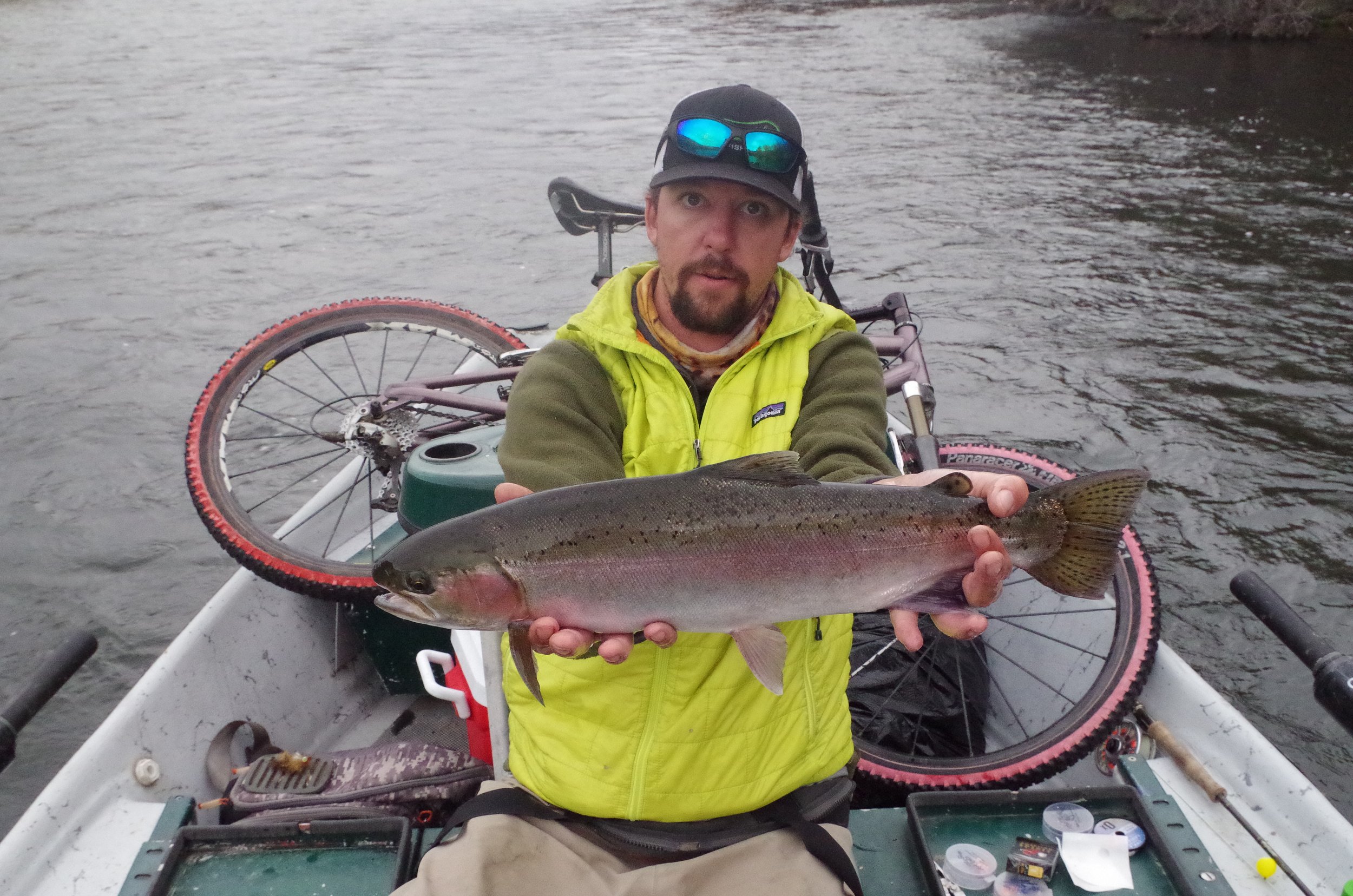
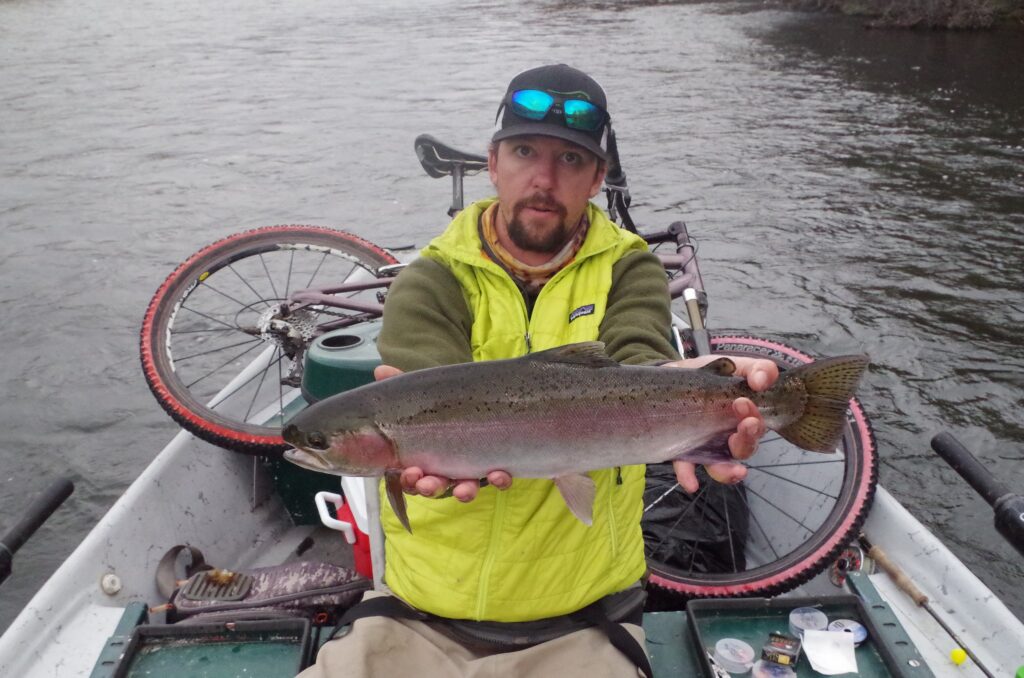
In this episode, I’m joined by Orion Good, a Fishhound Expeditions guide who’s quietly dialing in what actually works when the salmon don’t show and the bead bite disappears. We dig into nymphing in Alaska trout nymphing, why the Duracell fly keeps producing when nothing else does, and how Orion locates fish in constantly changing systems.
If you’ve ever wondered how to stay effective in Alaska when conditions shift, this one’s packed with real-world guide insight.
Every season in Alaska looks completely different than the one before. Orion describes it as “consistently inconsistent,” where water levels, salmon runs, and trout behavior change year to year.
That unpredictability is what keeps things interesting, but it also means guides have to pivot quickly when their go-to patterns stop working.
Orion’s nymphing breakthrough came during a season when salmon numbers were low and the bead bite disappeared. With months left to guide, he went back to basics.
Dry flies and nymphs replaced flesh and beads, and the trout responded immediately. What surprised him most was just how aggressively Alaska trout ate traditional nymphs when given the chance.
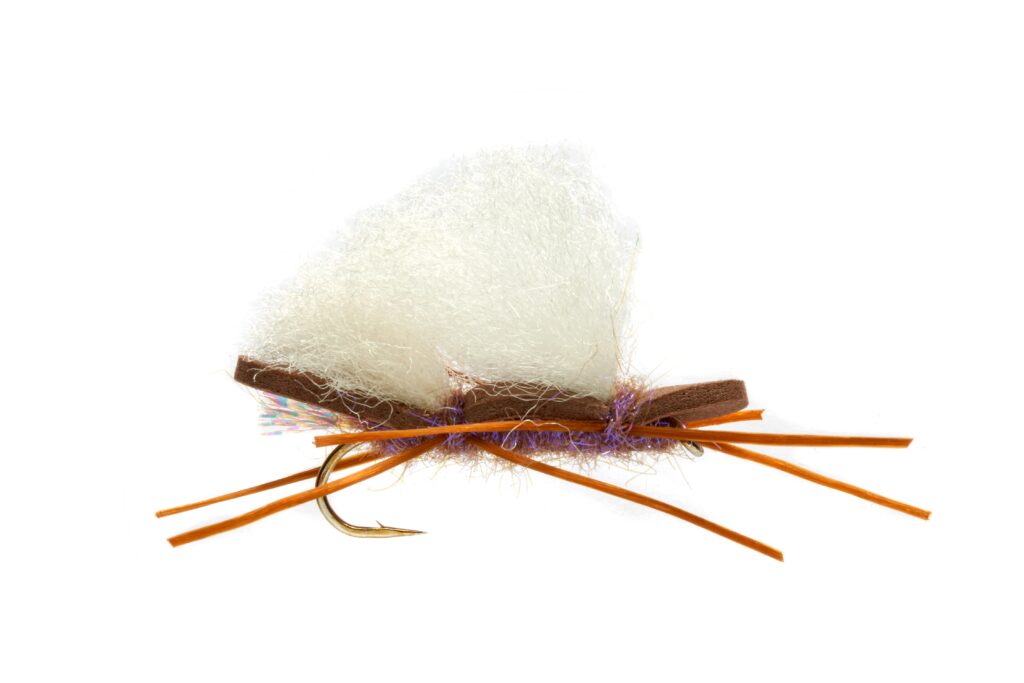
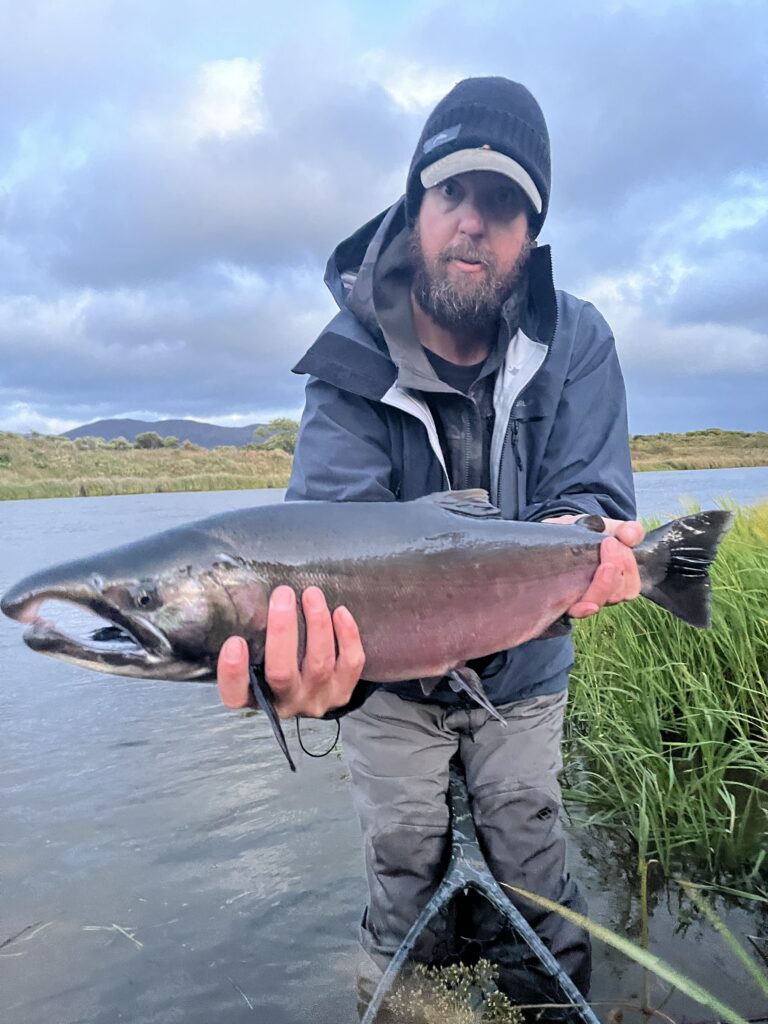
From grayling to rainbows and even salmon, the Duracell proved to be a fish-finder everywhere Orion tried it. Since then, it’s become his go-to locator fly when he needs to find fish fast.
Orion suspects it imitates everything from smolt to caddis pupae, but the truth is simple: fish eat it.
Rather than tight-line Euro setups, Orion prefers running the Duracell under an indicator. It’s easier for clients and deadly effective in Alaska’s variable flows.
If he needs a quick read on a run, he’ll drift the Duracell through first to locate fish, then refine depth and presentation.
Orion keeps it simple. If he can see the bottom, he dials depth visually. If not, he starts heavy until he’s ticking bottom, then backs off.
Once a fish eats at a certain depth, he sticks with it for that section. Move spots, adjust again. Alaska trout move constantly, so yesterday’s depth won’t always work today.
One of the biggest mistakes Orion sees is hesitation. Alaska trout hit hard, but subtle twitches still happen.
If the indicator moves, twitches, or pauses, he tells clients to drive the hook home. Full commitment hook sets lead to better hookups, even if it means occasionally ripping the fly out of the water.
Unlike many lower-48 rivers, Alaska trout don’t sit in the same spots day after day. Pods shift constantly as fish move through the system.
The Duracell helps identify where fish are right now, not where they were yesterday. If a run goes cold, Orion doesn’t force it. He moves until he finds fish again.
When targeting giant rainbows, Orion often gets clients out of the boat. Big trout hold tight to wood for protection from eagles, bears, and other predators.
Fishing from shore allows for precise presentations and often leads to visual eats right at your feet. It’s slower, more deliberate fishing, but it’s where the biggest fish live.
During strong salmon years, trout stack behind spawners, feeding aggressively on eggs. Some of the biggest leopard rainbows show up in shallow, fast water that most anglers would normally ignore.
Orion encourages blind faith in these spots. When the indicator drops, anglers better be ready because those fish are thick, heavy, and angry.
When he’s not guiding in Alaska, Orion spends his winters fishing Pyramid Lake in Nevada. Once considered nearly lost, Pyramid is now one of the greatest trout recovery stories anywhere.
Today, fifteen-pound cutthroat are common, and fish over twenty pounds are caught regularly from shore. The key is respecting the lake’s rapidly changing weather and staying safe.
Orion highlights ongoing dam removals on the Klamath River and renewed efforts to restore steelhead runs throughout California.
Protecting habitat remains critical. Without healthy systems, none of these fisheries exist long-term.
Episode Transcript
WFS 879 Transcript
00:00:00 Dave: Alaska has a way to change the way you think about trout. The water is bigger, the fish move more, and the playbook you relied on in the lower forty eight doesn’t always hold up in Alaska. Today’s episode is all about adapting, and it’s coming straight from the river with Orion Good, a guide at fishing expeditions, and one of the guys quietly figuring out what actually works when conditions flip and the salmon aren’t always doing what we want. Orion grew up in Northern California, cut his teeth on Guiding in Colorado and Montana in the last four seasons, has been working in Alaska. He’s been floating the willow walking creeks and and today we’re going to talk about what he’s doing with Nymphing and how he finds fish up in Alaska. We’re also going to find out what is all about this Duracell fly. We talk about it today. Why the Duracell is such a such a money pattern up there. We’re going to get into it all today with Orion. So if you want to check in with Orion or Fishhound Expeditions, you can do that right now. Fishing Expeditions and excited to share this one with you. Let’s jump into it. Here he is. Orion. Good. How’s it going, Orion?
00:01:06 Orion: Doing good. Dave. How about you?
00:01:08 Dave: Great. Yeah, yeah, this is going to be a fun one today. I always love talking about Alaska. We’re going to get into some Alaska. We’re going to get into, I think Nymphing. When I first heard about you, I think it was Adam or one of the other guys was mentioning that I think it was the Duracell or one of the flies was working really well, and it was a little bit different than maybe past years because it wasn’t all flesh and you were the man. So we’re going to talk. We’re going to talk nymphing probably Euro nymphing and all that stuff. But before we get there, maybe take us back real quick on fly fishing. What’s your first memory? You’ve been doing this a while.
00:01:38 Orion: My background is I started I caught my first fish when I was five years old, out of Hat Creek here in California on a conventional tackle. And then my first fish on a fly rod was twelve years old, and then it pretty much just exploded from there. I’ve been chasing fish ever since then.
00:01:55 Dave: Nice. Did you grow up in, uh, Northern California.
00:01:58 Orion: I did northeastern California. Yeah.
00:02:00 Dave: Oh, northeastern. Right? Yeah. Northeastern. Cool. What was your journey? I know you’ve guided some other places. What? What was that like? How’d you eventually get up to Alaska? Was that a long journey up to get there?
00:02:09 Orion: It was a long journey, yes. Yeah. So I started out originally in Gunnison, Colorado. Um, did a few years there, went to work for a lodge as an assistant manager in Montana. Um, did that for a summer, left Montana, took back off for southern Colorado. So I guided out of southwestern Colorado for a while. Northern New Mexico area did that for a brief bit and then made my way up to Alaska.
00:02:33 Dave: That’s it. And how’d you run into Fish Hound? What was the connection with Adam and the gang there?
00:02:37 Orion: So I found Adam through angling trade media dot com.
00:02:41 Dave: Oh, okay. Yeah. Angling trade.
00:02:43 Orion: Yeah, yeah. Found his post on there, applied and had basically a thirty minute conversation with him one day. And I was up there within a couple months.
00:02:50 Dave: Nice. Really. And then what was your first year up there? Was that, uh, this year or was it the year before? Or how long you been up there?
00:02:56 Orion: No. So I’ll be this will be my fourth season coming up. Going on with Adam. So yeah, I’ve been with him for a minute now.
00:03:02 Dave: Gotcha. What is the biggest difference between I always think of it as, you know, Alaska is its own thing. What’s the biggest difference between Alaska and all the places you fished down in the lower forty eight?
00:03:12 Orion: I would say the the meat up there. The meat program is definitely different than the lower forty eight, let’s put it that way. The streamer game, the A game, the mice game, that whole thing all plays a role in up there.
00:03:23 Dave: Yeah that’s right. So that is and that’s what you have that. And then you have you know obviously you guys have been you’ve been up there for four seasons. So you’ve probably seen some some diversity in the years. Right. Depending on water levels and stuff like that. What’s that been like for you? Is every year kind of totally different a new surprise or how’s that feel?
00:03:40 Orion: It is every year is complete. Complete one hundred eighty from what the year was before. You know, consistently it’s inconsistent.
00:03:47 Dave: Right.
00:03:48 Orion: Which makes it interesting. I like that for me personally I need that in my life. Um, I need that constant challenge to keep going. You know, if it was easy, everybody would be doing it, right?
00:03:57 Dave: Right? Right. That’s true. Yeah. And Alaska is you got some experience in the lower forty eight and then went up to Alaska. I hear sometimes stories about people starting up in Alaska and then going back down the other way. What’s your take now doing four seasons. Do you do you plan on sticking Alaska? Do you plan on moving up to Alaska? What’s that look like for you?
00:04:16 Orion: So I plan on fishing with fish on for quite a bit in the years to come. I mean, uh, Adam just runs a really great program up there. I mean, the diversity of what we can fish and what we can get into is just incredible. So it’s tough to beat that, you know? And then we got aircraft up there, too. Access to helicopters and fixed wings. That’s a game changer.
00:04:35 Dave: Oh, right. Right, right. Have you been part of that? Uh, like the heli or the flying into places?
00:04:41 Orion: I have, yes, yes.
00:04:42 Dave: Nice. Well, what’s been your, uh, fly in? I know when we did it up there with Nick and Lampson, we had a great trip. It was into one of their remote. Have you done? Is it just one main basin that you go into, or is there multiple?
00:04:55 Orion: No. So doing the heavy stuff, we stay mostly in the Clear Creek basin there. Um, outside of Talkeetna. And so I do a lot of those trips, the fixed wing stuff, as you’re looking more, say, when we’re doing our Kodiak program out there out west, we do fixed wing. And then we started doing last year a little bit was, uh, the Pike Lake stuff out at Trapper Lake.
00:05:14 Dave: Oh, you did. So you started doing Pike?
00:05:16 Orion: Yeah, yeah, yeah. So we started that thing last year. Um, we’ll event, uh, first got it going, and then I went out after Will on a couple on a trip out there, and, uh, really started to figure out the nuts and bolts of what was going on in that lake.
00:05:28 Dave: Right, right. Yeah. And I think we’ll mention this on the podcast. We did. So so that’s part of the fishing operation now. So people, if they wanted to go up there and get a a day or two in Pike, they could do it.
00:05:38 Orion: Correct. Yes. Yes.
00:05:39 Dave: Oh that’s amazing. Yeah I think that’s pretty cool. We’re doing a like we’re heading up to northeastern. Um, well, not northeastern, just north Saskatchewan way up north. And it’s, uh, you know, it’s going to be amazing. You know, and I wonder, I always wonder how things compare. What’s that Pike fishing like? Is that something where you definitely are going to get some action or you got to work for them?
00:05:57 Orion: Uh, the Trapper Lake that I was on that particular day, it was some of the best top water fishing I’ve ever seen. I mean, it was almost in every cast sort of deal with these two gentlemen. It was pretty bonkers out there. Yeah.
00:06:10 Dave: And these are all just pike that. Are you actually seeing the pike? What’s that look like?
00:06:14 Orion: So we were blind casting the bank, bringing the, uh, poppers out of the weeds and stuff like that. And, I mean, if they made it five feet, that was a long distance. Mhm. I mean, just getting multiple hits just as soon as they basically landed, sometimes just getting walloped on it. So it was really fun.
00:06:31 Dave: That’s great. Nice. Well so that’s another part of this I think Pike we can maybe hold that for either later or maybe another episode. But I did want to talk about a little focus on trout because that was we were up there this summer. We didn’t have you. We must have missed you for that. That week we were there. But, um, but we had a, you know, a great trip. It was, you know, a little bit different the first time I went. But talk about that. What is the the talk on some of the nipping. Is that something that you learned down in the lower forty eight and brought up to Alaska?
00:06:58 Orion: Yeah. So the Nymphing came about was my first season. We were up there. We had a great salmon Rudd be bite was great. Everything was perfect. Next year rolls through. Um, we had a lack of salmon in the system. For whatever reason, they didn’t show up there. And so when I started to recognize that as a guide, I was like, oh boy, things are going to have to change quick because I’m not going to have a bead bite this year. And I still got a couple months left of the season, so I better go back to the basics. And the basics were back to the streamers, back to the underneath the indicator game. And so I really started messing around with dry flies and nymphs at that point, just to kind of see what would really happen out there, see if I could get them to eat it. And lo and behold, I started fishing dries and nymphs, and they started eating it like crazy. And I was I was putting a lot of fish in the boat, and I was like, oh, this is pretty fantastic. You know, I don’t have a bike, but I got this other bike that I can still fish, you know. Thank goodness. So I kept the, uh, kept me going there for a while.
00:07:54 Dave: Wow. And so dries to what was the what are the dry fly patterns like? Because you don’t think of Alaska necessarily as a big dry fly river. What were you fishing there?
00:08:02 Orion: You really don’t. And I think at least in our little general neck of the woods right there, I’ve found some really, really terrific dry fly fishing at the right times in there. Um, and the patterns I’m throwing are chubbies, humpies, general attractor patterns, the grasshoppers, beetles, ants, stuff like that. You know, I mean, nothing real specific. I mean, we do have mayflies. We do have stoneflies that hatch off occasionally. Are they really keying into that? I don’t know how much. I think they just like seeing something float on top. You know, they’re curious. They’re aggressive. They got a really short window to eat, so they’re packing on those pounds.
00:08:36 Dave: Yeah. Right. Right, right. And and what was the. So you have that. And then what about the nymphing. What does that game look like for you. Is that something pretty straightforward.
00:08:44 Orion: Yeah, yeah. So the Nymphe and I brought a lot of that stuff up from the lower forty eight, from Montana, from Colorado, from northern New Mexico there where I guided, um, and when I went up to Alaska years ago, um, I fished the Kenai with a guy out of, um, I think he got it for trout fitters down there. And so I remember fishing with him that day and the amount of, like, woolly Bugger streamers, but he threw dries. He threw nymphs, like, really small stuff. Stuff. I was surprised he was tossing on the Kenai and we’re catching loads of fish, so I knew that that stuff would work up there. I just didn’t know how well it would work. Right. Coming back to the Duracell, I’m surprised we’ll mention that. And Adams Adams big mouth is blabbing it out there. But right when I found that pattern up there, it was with another guide. We were working together that day and we were having trouble trying to put some grayling in the basket. And I remember he put it on, tied it on, had his client cast out and the first cast boom, it goes under fish on. And we’ve been working this stretch for forty five minutes now and I’m like, wow, that’s kind of weird. I Well, maybe it’s just a fluke. So second cast. Boom. Another one. I’m like, ah, something’s going on. Third cast. Boom. And it just kept going.
00:09:48 Dave: Really?
00:09:49 Orion: What in the world is this fly?
00:09:50 Dave: Every cast. Every cast.
00:09:52 Orion: Yeah. Every cast. And he shows it to me. He’s like a Duracell man. You never heard about this in Colorado. And I was like, I never saw this one. I’ve seen a lot of Euro stuff and another five. I never saw the Duracell. And I was like, what in the world is this? And so I picked up a dozen. I was like, maybe it’s a fluke day. Maybe it was just that spot. And I started working it down the willow fishing at other places there in Alaska. And I was like, every place I go and I throw this thing in, it just pulls out fish. Wow. It doesn’t, it does. Salmon, trout.
00:10:20 Dave: Everything. So we’re not talking just grayling. We’re talking. Everything’s going to hit this thing.
00:10:23 Orion: Yeah I mean everything’s eating this thing.
00:10:26 Dave: Wow. Including salmon. So you guys got some salmon on on the Duracell.
00:10:29 Orion: Yeah. Accidentally. Yeah. I have hooked a bunch of salmon on the Duracell.
00:10:32 Dave: Wow. Wow. What is the technique you’re doing for, you know, if you’re typical, like that day when you had it and you were getting one every cast, what was your setup? Look, would you have like an indicator or a Euro style or what were you doing?
00:10:43 Orion: I do, I normally run a cater with it. I’ll put it underneath an indicator.
00:10:46 Dave: Oh put it underneath an indicator.
00:10:48 Orion: Yeah yeah yeah yeah. So depending on depth and speed of the water that depending on the depth and weight for that sort of section. But yeah it does really well underneath an indicator up there. Yeah.
00:10:58 Dave: Yeah. Gotcha. What’s your indicator of choice. Do you have one you really love.
00:11:01 Orion: Oh I like the airlocks right now. I like those the best right now. For me they seem to stay on. They’re easy to move up and down the line. I mean, I went through the gambit on them, but the airlocks for me on the small fluoro liters, that’s what I like doing. Sliding it up and down that way.
00:11:14 Dave: Okay. And are you using, uh, what’s your leader set? Because that’s another thing with Euro. You’re fishing for potentially some big fish there. Are you. What is your leader setup look like?
00:11:22 Orion: Oh, so I’m going twenty to say twelve pound on most of it all fluoro.
00:11:27 Dave: Gotcha. Okay. And then and then you have that set up and are you just running one uh Duracell. And we’ll put a link in the we’ll try to find a video on Duracell. But describe the Duracell for somebody who isn’t seeing it right now. What is that? Is that just your standard super thin Euro nymph?
00:11:42 Orion: Yeah, yeah. So think of like a jig hook. Think of a. And the thing about the Duracell is now it’s commercially tied depending on where you get it from, to do a lot of different colored beads up front. And the color bead I like up front is a silver tungsten bead up front. And it’s specifically a pattern through Orvis. And I think they buy it through Fulling Mill on their website. And it’s almost got like a purple light purple UV body dubbing.
00:12:07 Dave: So this is a fulling mill. So Orvis sells this but it’s a fulling mill. It’s on fulling mill site.
00:12:11 Orion: It is a fulling mill fly correct. Yeah. And it’s through the Orvis website. And that’s the one I prefer. There’s, I don’t know, probably ten different patterns of the jury still out there. Colored beads, sizes, hackles. But that one from Orvis with that silver bead and that purple body. Whatever it is about that thing, it’s good thing. Hang on. If you’re tossing that in some water up in Alaska, right?
00:12:32 Dave: Yeah, I’m looking at it now. Yeah. So it’s it is. It’s just you’re saying it is. I mean, that’s the cool thing about it because most of these, um, look similar. The body morphology of these little flies, right? They’re thin, you know, there’s not much to them, but this thing is something about it, right? It’s got the color. And it’s funny because we just had Davey McPhail on and he obviously is a great fly tyer. We were talking about this. He does he’s kind of working with Fulling Mill and he was talking about the dubbing blend. I’m guessing this is part of it is that he says he always mixes synthetic and natural in his dubbing. When he’s blending dubbing, he always does that. Is that now? Are you a are you a fly tyer or are you usually just buying these things?
00:13:09 Orion: I am a tire. I do not tie, sit down and tie all those tourists. Also, I think last year I went through about two hundred and fifty of them.
00:13:15 Dave: Oh wow. No kidding.
00:13:16 Orion: Yeah, yeah. It gives you an idea how many I’m tossing out there in a season. I mean, I’m working that Duracell pretty darn hard during the season.
00:13:24 Dave: You are. So the Duracell is you’re like when you’re out there day day one. So coming let’s just say next year. Right now we’re talking in December. It’s kind of in middle of December. But when you’re looking at starting next summer when you get going and whenever that is July, June, July. Are you going to be having that Duracell rod ready to go?
00:13:40 Orion: One hundred percent yeah. I mean, if I need a fish real quick, if I need something right off the bat like that, Duracell goes on and I just put it to work. Or if I just want to start just moving it, you know, maybe fishing it from the boat as I’m drifting down, you know, have people cast out either side or both sides and then run that Duracell through a stretch of water and see where they pick up the fish in there, because I’ve been surprised sometimes where that fly picks up fish and I’m like, oh, okay, there’s fish there. And I didn’t know that they were in there before. And I’ll go back and I’ll start working that pod of fishing in with that fly. It’s a great locator fly. I mean, you just cast it out, send it through. If there’s something in there, it’s going to get hit on that. Duracell. I one hundred percent believe it every time. Yeah.
00:14:18 Dave: How do you know how far how deep to go below the surface with your indicator or your fly.
00:14:23 Orion: So that’s a good question. Um, a lot of it’s just repetition being there. If I can’t actually hopefully I can see into the water. You know, that’s what I realistically like to do is to be able to know the depth I’m fishing at. If I don’t know the depth I’m fishing at, there’s, um, you kind of just run somebody through it real heavy. I always start off real heavy at first.
00:14:42 Dave: Start, so go down towards the bottom.
00:14:44 Orion: Yeah, just hit the bottom immediately. Just put on a bunch of weight until you find it and then work your way off that bottom. You know, that’s how I like to do it.
00:14:52 Dave: Yeah. That’s awesome. Yeah. We’ve had some guests that have talked about the fishing of, you know, euro nymphs and stuff. And they and they say that I think a lot of people think of like it’s just down and me, my self included, you know, get down and dirty sort of thing. But but really you can fish these nymphs in all sorts of, you know, you can fish them deep. And then as it swings out, you know, you can fish it in the emerging part of it. Right? There’s a lot of different places in the water column. You could even on the same, same drift. Yeah, that’s what’s really cool. But so you got the air lock so you got your indicator. You’re trying to find that depth. Once you lock in where a fish hits it do you you pretty much then you know okay I’m locked in at that level and you pretty much stick there, you know, throughout the day or when you fish that again I do.
00:15:31 Orion: Yeah, I’ll stick on that depth for that specific spot in particular. Yeah, I’ll keep running that depth. Um, and then if I move somewhere, I’ll change the depth depending on where I’m at. Right.
00:15:40 Dave: Gotcha. Okay. So you have your urine.if. You got that set up and what else are you having ready for the day? When you’re out there, you’re doing your. Do you have multiple rods set up there and ready to go?
00:15:49 Orion: Normally I don’t like to have a bunch of rods rigged up on the boat just because the tree limbs. I’m moving around the boat. I’ve seen those disasters more times than I’d like to admit.
00:15:57 Dave: It happened to us on the on the trip. We did? Yeah. We I can’t remember. God. Who was it? Yeah, we had a little run into the trees, and it was it was not quite a yard sale, but it was. It was kind of a craziness.
00:16:08 Orion: Yeah, yeah, it can a lot of rods on the boat, especially up there moving around. Things can get weird fast.
00:16:14 Dave: And so what’s the, uh, what are the boats, you guys? It’s interesting because I’m in the market right now for a new raft, and I’m always thinking, I know there’s some great companies. Do you run something down the lower forty eight, or do you, uh. Or what’s Adam running there first?
00:16:26 Orion: So Adam runs kind of a mixed selections of boats just because he’s adding him over the years. There’s definitely been a trend. The last two boats that he bought have been the slipstreams up there.
00:16:36 Dave: Oh, okay. Nice.
00:16:37 Orion: Yeah, yeah, yeah. So we’ve been running those slipstreams with the fishing frame set up on there, and we’ve been having a lot of luck and success in those boats. Great. Two row, maybe a little bit smaller for a big guy like me. I’m six three two hundred and twenty pounds, so it’s a little bit tight fit in the water seat for me. But, um, the maneuverability of those small boats is just amazing when you can get them into and out on those creeks, you know.
00:16:59 Dave: Yeah, I know, and these are like, mostly I’m trying to think what we ran. Well, actually, Adam and I, when I, he took me down one day we had one of the tiny his little mini boat. It was fun. It was like, I think it was a eleven foot or ten footer. It’s super small, but, um, but yeah, they’re like twelve footers, right? Or something like that for the most part. Somewhere in that range.
00:17:15 Orion: Yes. Correct. Yeah.
00:17:16 Dave: Yeah. Okay. So you’ve got the boat. What is the on the creeks. You guys fish. Are you mostly fishing? Uh, Willow. And you know when, when the conditions are right, are you kind of hitting all sorts of those tributaries on, on the road system there.
00:17:29 Orion: So when we’re floating, we’re mostly floating either willow, upper willow or little willow. Those are our float systems right there that we drive to in the basin. Um, if we’re walk waiting, we’ll go into the upper. We’ll go up into Montana, Sheep Creek, stuff up north like that to for walkway stuff. It’s a little bit tight to get in boats in there for the most part, depending on the water levels. So we prefer to walk those systems mostly.
00:17:53 Dave: Yeah. Okay. And and on the boats I wanted to highlight we like I said I’m in the market for new boat. I know there’s a bunch of great boats. NS is obviously a great company. There’s a new one out there in the Teton Valley Lodge. It’s called the Let Them Run. It’s a brand new boat coming out, and they have these really cool. Um, the internal frame is like it’s basically molded into the raft. It’s almost like you’re in a drift boat, but it’s got a raft underneath it. Oh, wow. Yeah. So I’m gonna be I’m gonna be testing some of those out this year, which is going to be fun because we do, you know, we do some steelhead fishing out where I’m at and stuff like that. So I’m excited to see how those run. But yeah, I always feel like the boats is kind of the X factor, right? It gets you out, you cover the water. Have you been doing that down in your other stuff? And are you now throughout the year when you’re not in Alaska, what part of the country? And now?
00:18:38 Orion: So when I’m not up in Alaska for the summer, I go back to Northeastern California here. And so where I’m located at, I’m basically an hour, hour and a half from Pyramid Lake in Nevada. I’m three hours from the Trinity River north of me. Um, so I’m kind of centrally located for some really, really good fishing where I’m at jump off spots.
00:18:56 Dave: So yeah, the more Northern California, well, just California. I mean, it seems like there’s some awesome fisheries, right? I mean, you mentioned we’ve talked about the Trinity, we talked about pyramid. You know, you got the Sacramento, you got like all these I mean it seems does that because I always say, you know, you hear a lot about Colorado obviously. And you know, the eastern part of the country. But California seems like it’s definitely a hot spot. Does it feel like a kind of a Mecca for fly fishing where you’re at?
00:19:20 Orion: It does. Yeah. Yeah. Especially growing up as a kid and stuff. I mean, the stuff I could shake a stick at in a couple hours was pretty incredible. It was like, wow, got some world class stuff right here next to me, you know? And it doesn’t it doesn’t seem like it gets crazy busy either, you know? I think most people think of Montana and Colorado in that summertime area and go out there and do that. Yeah.
00:19:40 Dave: Well, let’s let’s keep it on that last, because I really want to get this thing kind of doubt in a little bit more. What do you think when you’re out there on the boat? Let’s just say you got somebody new to Nymphing. Maybe they have some experience and all that. What is the the biggest mistake you’re seeing them make? Or what are you telling them to make sure they’re having success? Or is it is it pretty straightforward even with somebody who’s new to it?
00:20:00 Orion: Um, you know, I’d say probably set the hook a lot. You know, don’t be afraid to really set that hook. Too many people are hesitant or they miss something and they’re just like, oh, is that was that one? Was it not one? I’m just go for broke. You know, if you think that thing moves, set the hook. You know I’m going to know what it is before you know what it is. Most times I’m sitting there watching the line. I’ll see the line. Jump or catch the Cuts the indicator twitch or bob or do something different. And I know what the drift is. I’m looking for right? People are getting good drifts in spots and they’re not hooking up. I need to change something. Depth, weight, or I just need to move out of that zone. Maybe those fish are not there. That’s one thing about Alaska. These fish are so migratory, coming up from the lower forty eight that you used to fish sitting in certain spots in the lower forty eight, maybe you name them, maybe you don’t. You know where the big ones are. You know where you know, you know their general lies. But in Alaska, these fish move so much through a system on a given day that what I see one day is not going to be there the next day most likely, you know. So if I see something big, a big fish in a spot or something, I’m going to try to take advantage of that situation while I’m there with that person. I’m not going to wait till the next day, and I’ll come back tomorrow for that big fish, because I come back, it might not be there. So I want to try to take advantage of that situation while I have the shot.
00:21:09 Dave: That’s right. And then they’re they’re basically migrating for, you know, they they’ve spawned for the most part, I guess we’re talking rainbows, but also grayling. It’s kind of similar, right. They’re spawning and then they’re just trying to eat. Do you find grayling are the same up there where they’re just trying to stuff themselves before the winter? Or are they all the species doing that?
00:21:25 Orion: They are. They are as well. Yeah. And then they move around too. Like I’ll find pods of them and I’ll beat on them for a couple days and maybe I’ll show up on day five or six. And I’m like, all right, I’m gonna roll in here. I’m going to pick up my three four out of here, and then I’ll move on. Um, and I’ll roll into a spot and run the Duracell through there. And sometimes it’ll be a ghost town and it’ll be like, wow, yesterday just whacked them in here. But today I can’t, you know, I look down and I’ll be like, look into the water column and I’ll be like, hey, I don’t see them in there. Maybe they they shifted out for whatever reason. Maybe somebody fished it after me and beat on him some more. For whatever reason, they migrate somewhere else and it’s always trying to find that next pod of them, you know.
00:22:00 Dave: Right? Right. So you’re always searching when you’re using the indicator. I’m not sure if you’ve used much of the different style, but it’s like Euro where you have the cider and stuff like that. Where is the indicator versus the cider work better? Why would you choose or is the indicator just easier to fish for clients?
00:22:16 Orion: The indicators easier to fish for clients because most people don’t come up there with a check. Nymphing background I have had guys do that with me up there. I’ve had guys check nymph off the raft as I’m going down the river too. I had a gentleman do that, which was interesting, something I hadn’t done in a long time.
00:22:30 Dave: Did that work better than the indicator?
00:22:32 Orion: No, it didn’t really know. For whatever reason, it just didn’t. That day in particular.
00:22:37 Dave: Yeah. I feel like you got to be the check. Nifty. You’ve got to have another level of skill, right? Because you got to be able to keep it from getting snagged. And then also, you know, really work the fly with the indicator, pretty much toss it out there and let the indicator do the work. Right. And then you set the hook one hundred percent.
00:22:52 Orion: Yeah, you’re at that set depth the entire time, you know.
00:22:55 Dave: Yeah. How do you set the hook. What’s your what’s your set. Is it a, uh just a quick little lift up so you can keep it, uh, drifting if it’s not a fish or. How would you describe that?
00:23:03 Orion: I like a full blown hook. I like that thing coming out of the water. Oh. You do? Okay. I like putting some aggression on that thing. I like smoke penetration. So. Yeah, I’ve hammered down on that thing. You know, I think twitches, dives. You know, worst case, it comes flying out. You know, you’re casting it back in, you know? Not a big deal. You know, worse things have happened.
00:23:20 Dave: Yeah. That’s right. Okay. So. Yeah. So we’re setting the hook hard. So when the thing goes down, you’re setting.
00:23:24 Orion: Yeah, yeah, one hundred percent.
00:23:26 Dave: Okay, okay. And then. And what do you do when you have somebody out for that first day they come in? I know people are sometimes out there a day or multiple days. What are you telling them on that first day to get ready for this. Like what’s your little coaching segment look like?
00:23:39 Orion: Oh, we’re gonna have a lot of opportunities that fish. Let’s just make them count. You know, let’s get good hook sets in there. Let’s get good drifts in there. Um, if I’m fishing somebody multiple days in a row, kind of just see what they’re what they want to learn. You know, if you have multiple days with them, what do you want to learn? Do you want to get better at streamer fishing? Do you want to get better at Nymphing? Do you want to throw dries? It kind of gives me more time to play the game of what can we get away with today sort of thing, you know?
00:24:01 Dave: Right? What if they say, I just want to catch the first thing, I want to catch a giant rainbow, I want to I want to get one of those leopard rainbows that you know. What’s that? What are you telling them after that? If that’s the thing, what are you guys doing?
00:24:13 Orion: Yeah, probably going to the streamer game to start off with going in the wood, jigging the wood and really searching through some of that heavy timber in there, doing some head hunting deep in that timber. Yeah, those big boys like that.
00:24:23 Dave: Would they do? And why and why is that? Why are the big. Because they’re still eating right. They’re still doing the the egg drop and all that stuff. But why are they in the wood. Is that what’s the main reason they’re.
00:24:33 Orion: I think they feel more comfortable in there from predators and stuff like that. We have big bald eagles up there, big golden eagles, right.
00:24:39 Dave: Bears. Right. Everything.
00:24:40 Orion: Yeah. Bears. Yeah. They’re used to stuff coming down from on top of them. So if they’re if they get some wood in there and I found that when I stalk them in the wood and I get up close to them, you can get really, really close to these fish. And they’re for the most part in the springtime. They’re not superhuman, shy, yet they haven’t been stung a lot. A lot of guys aren’t getting out of the boats and getting into the wood like I do.
00:24:59 Dave: Yeah, you guys get out. So you stop and get out of the boat one hundred percent.
00:25:02 Orion: Yeah. If we’re in a boat, we’re definitely getting out of it at some point. If you’re physically able to, I’d like to get you out of the boat and get you on the shore. Yeah, because you see a whole different dynamic from the shore, right? When you’re going past something in the boat, you’re getting quick shots at it. When you’re on a shoreline, you’re able to get in there and really work it. Like the amount of opportunity you have greatly increases, and you can see the hits that way too. A lot of this stuff, I’m visually watching the fish eat the streamer right at our feet, you know.
00:25:26 Dave: Right? Right, right. That’s awesome. Yeah. So you’re it’s interesting because it’s kind of a, you know, I’m the same way. I mean, I love fishing out the boat, but I love the getting out to. And we did a little bit of both when we were there. And I know we had one place where the Chinook, you know, they were in. That was the cool thing. There were Chinook there and just seeing him was amazing. Right. These big red, you know, salmon. But it gives you a better chance to fish right. To fish for we were trying to get the rainbows behind the salmon. What does that look like when you got the when they’re on that they’re sitting there. Describe that egg bite for somebody who hasn’t seen that before. Did you guys have a little bit of that this last season.
00:25:57 Orion: Oh yeah I think every yeah almost every year that you have a good population of salmon, you’re going to be fishing pretty darn close to those guys if not on top of them. It’s pretty it’s pretty bizarre coming from the lower forty eight and seeing a big, you know, three, maybe four foot sized red salmon there, sitting in a couple inches of water, and you’re casting literally directly at that thing’s face and drifting this indicator right across its body, waiting for that indicator to drop some point in there because there’s rainbows holding right below that fish, you know, and the way those leopard bows are, they’re camouflaged so well that unless they move really quick or something like even the guy dies, you’re going to have trouble picking that fish up in that shallow stuff. They blend in so well to that rock, you know? So a lot of it, you just got to have blind faith that they’re right there tied to those salmon and just hang on. Because those rainbows, when that drop happens, are thick and heavy and they’re not happy.
00:26:48 Dave: No. They’re into what is that. So the leopard rainbow versus say again back to the comparison the lower forty eight. How do those compare overall and kind of how they look and then also how they fight and just kind of overall.
00:26:59 Orion: So the fight’s going to be a lot bigger up in Alaska a lot harder. Those are all wild native fish, you know, and they’re fighting current. They’re fighting other fish and they’re battling up there. You know, it’s not your stalker rainbow that came out of the San Juan River that came out of a truck. You know, they’re angry. They’re not happy, you know. And then the spots on them, too. That’s what separates from a visual standpoint of a fish from other ones. In the lower forty eight is the ones in Alaska. The rainbows have really, really definitive spots and a lot of them across their body. So that’s how you normally see a classic rainbow trout from Alaska is gonna have a lot of spots across its body. A lot of black dots, really small.
00:27:34 Dave: Right. So yeah. So they’re obviously stick out. And then I think depending on the year, right. If you get a a good feed eventually towards the later and later you go right. These fish get bigger. Do you is that always the case in towards. You guys are heading out there. What in October or how long are you staying there.
00:27:49 Orion: Yeah I’m staying there until about the middle of October.
00:27:52 Dave: Middle of October? Yeah. So are you seeing some of these fish by the end of the season? Kind of fattening up.
00:27:56 Orion: Oh, yeah. Oh, yeah. Yeah. They get real big during that glut season. Yeah. That egg drop. Yeah. Because they have to put that weight on. They’re going to be frozen over you know. So they’re going to have to win her over. They’re gonna have to pack those pounds on pretty quick, you know. So that’s what’s nice about the egg drop, right? Those big boys come out of the wood. They get into zones where you can actually target them easier then and they become. They become really susceptible at that point to eating beets, you know?
00:28:20 Dave: Yeah. The big guys come out too. During that they’ll come out.
00:28:22 Orion: Yeah. Yeah. They get reckless. Yeah. They’ll push in the water. I mean, some of the choppiest shallowest stuff. I’ve had guys just look at me and they’re like, what in the world are we casting in this for? And I’m like, just wait. Just when that indicator drops, you just pin it to the wall and you hang on. Yeah. All you gotta do for me, bud. Yeah, because a little bit of faith in that shallow when that beat drops going in that shallow ripply stuff. I mean, just screaming fast water stuff that you would normally just look at and go, nah, I ain’t fishing that. But during that bite time, it’s worth a cast or two in there because those big boys will push into that real heavy ripply stuff and sit there and be just mowing down.
00:28:58 Dave: Yeah, right. Wow. That’s cool. What is your you know, so when you do your Alaska, let’s just take it through. So now we’re like we said it’s December. When do you start getting ready to head up? Head up north.
00:29:10 Orion: So I’ll start heading up north probably around the end of May. Try to focus on being up there around June first, June second, ready to roll.
00:29:17 Dave: Okay. June first. And are you just. Are you driving up there?
00:29:19 Orion: I am yes.
00:29:20 Dave: Yeah. So you drive. What’s your road trip are you doing? Uh, taking a few days to get up there a week. What’s that look like?
00:29:26 Orion: Yeah, it takes me about five days. Eight to ten hours each day of driving.
00:29:30 Dave: Yep. Do you just kind of take your time, chill up there, camp along the way, do all that stuff?
00:29:34 Orion: Yes. I’ll stay at motels, hotels along the way. The the truck’s all packed up full of equipment and gear, so I can’t sleep in that. Otherwise, I would like to, but. Yeah, just motels and hotels on the way up there. Just kind of cruise up and yeah.
00:29:47 Dave: You do it and then. And are you. I know Adam’s got when we were out there the first time we stopped by the house, he had a, you know, basically the guides were there or some of them were, you know, kind of that were on site there. Right. Are you in that group? I’m not sure what you guys call that, but Adam’s got the property there and all that stuff.
00:30:01 Orion: Yeah, yeah, it’s basically a homeless encampment.
00:30:03 Dave: Yeah, right. Exactly. Yeah. You got Will. Will’s got his camper there. Are you? Dude, I can’t remember which one are you doing, the tent or what? You’re set up?
00:30:11 Orion: No, I’m in the camper. I’m right next to Will up top there. So.
00:30:14 Dave: Right? Right, right. That’s awesome. And who are the other who’s the other gang like up there? Because we’ve talked to Will. Um, our guides were, um, I want to say Guy. We had a couple other guys, but. Yeah. Describe the other guys there.
00:30:25 Orion: Yeah, yeah. So we got Dan. Dan’s probably been with the company the longest after me.
00:30:29 Dave: Yeah, yeah, Dan was with us. Yeah, we had Dan.
00:30:32 Orion: Yeah, Dan, we got Ryan. Ryan’s been with the company quite a while. We got Sean. He just started. He’s been with the company two or three years now working for us. He does a lot of our multi-day stuff up on Upper Clear Creek up there. Uh, we got a local kid named Wyatt started with us last year, so we picked up Wyatt, which is a great asset.
00:30:50 Dave: Yeah. Wyatt’s awesome.
00:30:51 Orion: Yeah, we got Tyler. He came up from Montana. He’s a firefighter full time down there, so he comes up two weeks on, two weeks off. We get him for that sort of stuff. Great guy, great guide. We got Hayden picked up Hayden last year. He’s good. And then we had two other Clear Creek guys too I can’t. Kyle and Carson were their names and they were running multi dose. They’re really good multi day experience. Really good fishermen as well.
00:31:15 Dave: Yeah. Right. Yeah it’s a good crew. It’s definitely a big crew I think uh there’s a lot going. It’s packed in right. You’ve got Alaska. You’ve got like you said June through October you’ve got that summer. And then things set in. Have you been up there during the winter in Alaska? Have you ever felt that winter?
00:31:29 Orion: I have not, no. Yeah. No, no.
00:31:32 Dave: Yeah. Right. Is that something that it’s definitely, uh, it takes a unique person, I think, to live up to that, that winter. So you’re. Yeah, you’re Northern California, so your winters are pretty, pretty mild for the most part.
00:31:43 Orion: Yeah. Yeah. Compared to what Alaska is getting. Yeah. Pretty mild for sure. I just like fishing too much. And I’m not an ice fisherman. I’m not into the snow machining thing side of things. So. Yeah.
00:31:52 Dave: Yeah, yeah. That’s your thing. Cool. What else should we know about? Kind of, um, you know, fishing the nymphs that we talked about. What else would you be telling somebody? Is this pretty straightforward on what you guys do there?
00:32:02 Orion: Yeah, I mean the nymph, if something’s not working, keep changing it. You know, I fished a lot of variations of the Duracell last year thinking, all right, I’m going to figure out something that’s just as good as this fly that looks similar to it. You know, I probably fished a dozen patterns that were very similar to that Duracell that just didn’t produce, and it kind of blew my mind was like, I can go a dozen different ways off of this pattern, and nothing works as well as this for whatever reason.
00:32:28 Dave: Really? Yeah. So there’s something about it. So there’s some. What do you think it is? Do you think it’s a that, like you said, the little color combination of the because the body is dubbed right. It’s a dubbed body.
00:32:37 Orion: It is, it is, it’s a purple dubbed body. I think it has more to do with that CDC wing being that gray, that CDC wing, that color that goes all the way around it, a three hundred sixty, for whatever reason, when that thing gets wet, it gets like translucent. And I don’t know what they think it is if they’re part of Me’s got to believe it’s the salmon smolt, you know. Yeah. That translucent color when it’s going through the water, and they’re looking at it from down below, looking up, you know, that’s gotta it’s gotta be a small to some sort to him, maybe a caddis pupa at some point as well. I’m not one hundred percent. All I know is they eat it.
00:33:09 Dave: So yeah. Yeah. No, I think you’re right on that. Yeah. And going back to David Mcville, you know, we were talking about fly tying and what he, you know, he’s obviously one of the best out there. And he was talking about the same thing, how he fishes like dry flies and these emergers. And he thinks that’s a big part of it depending on the day. Right. If it’s a cloudy day versus sunny, you know, the material you use makes a difference because it might be a little flash of something that catches their attention, right, versus not having that. So I’m sure that’s what it is.
00:33:36 Orion: Oh, one hundred percent is awesome.
00:33:37 Dave: Cool. So so basically we get our setup and are you guys running. What’s your typical like five weights or what’s your typical rod there?
00:33:44 Orion: Uh, mostly six weights to start off with, jumping into eight weights when the salmon show up.
00:33:48 Dave: Okay. So you do. So when you go when the salmon show up, you’re still fishing trout, but you’re going to eight weights.
00:33:53 Orion: Yeah yeah, yeah. We’ll bring eight weights on the boat to switch back and forth to.
00:33:56 Dave: Okay. And and do you guys is the salmon I know the Chinook has been closed there because of the the runs but are you getting you know, the other what is the other three species. You don’t have sockeye right. Because there’s no lakes but you’re getting into the other ones.
00:34:08 Orion: Yeah. Yeah I think Chum’s and silvers. Yep.
00:34:10 Dave: Yep. So then that’s all. And and this is Sitna which is the bigger the massive giant river. So that has no that’s the unique thing. There’s no lake. That’s why there’s are there no SOC in that system at all.
00:34:21 Orion: You know last year we had a couple stray sockeye show up up there. So there is some sort of sockeye somewhere in that system. Yeah. And it could be down at a desk. I’d have to look at the numbers again on desk, but there could be a lake on desk or two that they run up to. So I remember seeing a couple, yes, last year in the system, which was a surprise. We’re like, wow, that’s that’s kind of cool, right?
00:34:41 Dave: Right. That’s cool. What’s your I always love getting a little take on the kind of the conservation and status update and stuff. I know Adam is a big champion of that, you know, protecting what we have, and he’s doing a lot of great work. What is it like down where you’re at? Are you focused on, um, you know, because we’ve I mean, there’s the history there is amazing. Right? We’re in Northern California. Talk about you mentioned Hat Creek. I mean, that’s a famous stream, but there’s been some challenges right over the years from all sorts of stuff. What are you hearing down there, things on the way back up or what’s your take?
00:35:10 Orion: You know, we’re moving a lot of dams. We got that one. We got those couple out on the Klamath system. The salmon and steelhead are coming back there. It’s a it’s a great thing. You know, there’s been a huge push for Southern California steelhead to oh really deadbeat dams out of Southern California. Yeah I think a lot of people forget that. There used to be great runs of steelhead up and down the coast down there. I mean, San Diego, Los Angeles, I mean places where people would not think of steelhead being there’s steelhead there and they’re still trying to push through those systems down there. It’s just a balance between the dams, the farmers, the irrigation stuff. You know, there’s a lot of politics in that stuff, too, you know, going on. I think we just as anglers is we just gotta keep fighting for that stuff, you know?
00:35:51 Dave: Yeah. Protecting the habitat. Doing what we can now. Are you out there? Fishing? Is steelhead your big like during the year? Once. Is that what you’re doing during the winter?
00:36:00 Orion: Not really. No pyramids. My focus in the winter time being an hour, hour and a half away from that place is just. There’s nowhere else like it in the world, you know?
00:36:09 Dave: No. And pyramid starts, right. Pyramid gets going later. Right? So it’s open. Describe that. When is the best time? When are the times for pyramid?
00:36:16 Orion: So pyramids from October first to June thirtieth is the open and close on that time.
00:36:21 Dave: Yeah June thirty. So the perfect time. The perfect time when you’re not in Alaska. Pyramids open.
00:36:25 Orion: Yeah, one hundred percent. Yeah, yeah. I can roll from Alaska right down in the pyramid, basically, which is really, really cool.
00:36:31 Dave: Yeah. What is pyramid? We’ve talked a little bit about pyramid over the years, but give us a little summary on that. Is it um, you know, is it getting better. Are the fish getting bigger because there are already these giant cutthroat trout. What’s your take on pyramid. Is it getting busier up there?
00:36:45 Orion: Yeah. So pyramid’s a success story. It’s one of the few. I mean, there’s a few success stories out there, but pyramids just really the the kind of the golden ticket in the fisheries realm as far as I’m concerned. You know, it came back from the brink of extinction, right? You know, through Fish and wildlife and the tribe out there, they’ve built something up that’s really incredible now.
00:37:03 Dave: And yeah. So if you would have went back, if you would have went back like a certain, what, twenty years ago or something, you would go into pyramid and, and there just would be not that many big fish.
00:37:11 Orion: Yeah, yeah. So twenty years ago when I was fishing there, ten pounds was the big fish that was considered a trophy fish. Right. You would see some in that fifteen category that was just like, oh my God. The fifteen are you know like, holy moly, that’s the fish of the month or whatever, you know. And now we’re routinely seeing fifteen pounders every day. Basically, there’s multiple places during the day where people will catch twenty pound fish out there right off the shoreline.
00:37:34 Dave: That’s nuts.
00:37:35 Orion: Yeah.
00:37:36 Dave: That’s nuts. Yeah. I think ten pound, ten pound is solid. You know, fifteen pound is I always I like to compare it between steelhead because it’s, it’s, you know, the one I know probably the best. But yeah you get a fifteen pound fish and you’re like dang this is like a probably the fish of my lifetime. And if you get above twenty or anywhere close to twenty, you’re just in that realm of like, this is like unbelievable. And so for pyramid is it sounds like that you have. And what is the largest fish that you’ve heard of out there in pyramid?
00:38:02 Orion: So I think the world record weighs in at forty six pounds out there in pyramid. In pyramid. Yeah.
00:38:07 Dave: So that’s the world record for a cutthroat.
00:38:09 Orion: Yeah, yeah, yeah.
00:38:10 Dave: Right. Forty six pounds. Okay. Yeah. Now you’re just crazy. Crazy numbers.
00:38:14 Orion: Yeah. It’s nuts. Yeah. So that rebound that’s happening right now I mean we’re seeing fish multiple fish in that twenty pound range. We’ve seen some pushing into the mid twenties. There’s been talk and pictures of stuff maybe in that low thirty range. So I mean they’re getting big. They have the food out there. They have the the water out there to get big. I mean everything’s set up for them to get really big. But it’s also gotten popular. Social media has blown it up.
00:38:38 Dave: Yeah. It is. You see everybody I mean everybody has got a ladder or whatever. They’re out there doing the thing, right?
00:38:43 Orion: Yeah, yeah, one hundred percent. Yeah.
00:38:44 Dave: What’s your tip again for obviously more. You know, there’s more people listening now. But I mean, if somebody wanted to has never done that before and they’ve heard about it. What’s your advice to them on pyramid?
00:38:55 Orion: Go out there, check it out, enjoy it. You know, just go out there, get boots on the ground.
00:39:00 Dave: Do you need a ladder? Do you have to have a ladder to fish it?
00:39:02 Orion: You do not need to have a ladder to fish it. Some of those drop offs are right there. And I mean, people would be surprised how deep some of those beaches really are. I mean, what am I to cast it out of Castle Depth Finder last year on and I was like sixty feet of water within four feet.
00:39:16 Dave: Oh, really? So you don’t have to have a ladder. What about the boat? Why aren’t there. Are there a lot of boats out? That seems like a boat would be handy to have there.
00:39:23 Orion: So a boat would be great out there. The only thing is, the weather changes so fast out there that that wind comes up and a lot of those boats end up capsizing or flipping.
00:39:31 Dave: Oh, wow. So you see boats flip out there?
00:39:33 Orion: Oh yeah. Yeah, yeah. You’ll see every year a boat or two sinks out there every year.
00:39:36 Dave: Really. Like like what type of boat you’ll see. Like a like a drift boat or what’s the boat.
00:39:40 Orion: Like an aluminum craft. Something like that. With an outboard.
00:39:43 Dave: Like a John boat. John boat or something like that.
00:39:45 Orion: Yeah, yeah, something like that. Yeah.
00:39:46 Dave: Wow. Some people are dumping their boats.
00:39:49 Orion: Yeah. It’s not to be not to be messed with.
00:39:51 Dave: No, no. Yeah. Because it can be. You can, like, turn around and in an hour you can see like huge, like four foot whitecaps and stuff like that.
00:39:57 Orion: Oh, a matter of minutes out there. That thing can turn on a dime. Yeah. That wind gets picked up out there and it’s. It’s. Oh, boy, here we go.
00:40:04 Dave: That’s it. So it’s a safety. Yeah. So there’s definitely a safety piece there. Gotcha. Okay. Well if somebody wanted to figure out more about pyramid and all that, where would you send them to kind of learn, you know, any resources or is there a, you know, where would they follow up on it?
00:40:17 Orion: Well, you know, I think there’s a lot of great articles written about pyramid out there. I would search, just Google Pyramid Lake, drop off stuff like that, you know.
00:40:25 Dave: Yeah, just do the Google thing. Okay. Well, I’m glad we went down that track a little bit. Let’s take it out here. We’ve got this, uh, segment that we’re doing here, which is uh, which is pretty fun for me. It’s called wet fly swing trivia. This is our, uh, shout out to basically having some fun on social. We’re going to give this one today obviously is presented by Fishing expeditions and and you know, we’ve talked a lot about them just because I know the first trip, I go back to Nick at Lampson. I always love to go back to that one because it was this epic road trip. You know, we all we both flew in, we drove up from Anchorage. We had this epic thing. We did the heli stuff. But so I want to give a shout out to to Fish Hound. The the way this works here with the trivia is I’m just going to ask a simple question and then anybody right now can go and all they have to do is at mentioned fish underscore expeditions and at wet fly swing. And then I’ll go over there and as I have time, I’m going to go choose a winner from whoever I see first when I go to social media. So that’s how it works. The question is, um, is going to be the Duracell. I love that we talked Duracell. So the question is, is who invented the Duracell. And you don’t have to say it if you know it. Uh Orion. But that’s the question. So if you know the answer to who invented the Duracell, just go to social media and write wet fly swing trivia and uh, and then put your answer there and then I will choose a winner. And guess what? The winner is going to win a fish hound hat. I’ve got my fish hound hat. So we’re going to send out a fish hound Expeditions trucker cap. So. All right. So we got that one. So what do you think Orion is that. Do you. First off, without answering, do you know the answer to that? That question.
00:41:50 Orion: I did. I looked up the backstory on it. Yeah.
00:41:53 Dave: Okay. Good. So you know the answer. So so you’re going to we’re going to build a check. You’ll be our check on the on eventually to see who gets it right. But um, and I don’t even know right now. So this is what’s great. We’ll go over there and social and I’ll find out right now as soon as I go check it out. So. So there we go. So there’s our there’s our wet fly swing trivia. This is a new segment we’re doing here. And uh, and we’re going to obviously shout out to fish out. So so tell me this again on resources. Now for uh, what we’re talking about. Nymphing, you know, kind of that what are any like how did you learn, do you have a couple of any books, videos, resources? How did you kind of learn this, this system on Nymphing?
00:42:28 Orion: Uh nymphing. I kind of just picked up just from doing it myself, you know, just watching other people do it, that sort of thing. Um, and then I got into check Nymphing, too, and I was in Colorado when it first came out years back, and I realized that, I mean, if you’re really efficient at Czech nymphing, like, you could put a lot of fish into the net. Let’s be honest. Right. It’s deadly effective, you know. But don’t get stuck in that hole. Let’s just use the weighted fly thing. Make it your own. You know, when I started researching it and looking at the way Europeans were doing it through their flies and stuff, like nobody ever talked about putting split shot on any of these setups. Like, like it was arcane or something bad or it was taboo. It was like, don’t do that. Don’t put the hook shot on there.
00:43:06 Dave: Or is against the rules too. And some of the comp raids against the rules, I’m like, yeah, whatever.
00:43:10 Orion: You know, it’s fly fishing. Do it however you like. I like putting split shot on my Euro nymphing setups. I didn’t have a whole lot of flies back when I was doing it to start off with. And so I was like, oh, split shot will make the difference in some of these situations. You know, I can get it down to the bottom, jig it around. But really effective technique. Euro fishing.
00:43:27 Dave: Yeah it is, it is. So basically yeah. So you pretty much taught yourself and you’re just going with it. I mean and there are a ton, a ton of resources now from, you know, going back to George Daniel on if you’re talking Euro nymphing and dynamic Nymphing and Devin I know, uh, Devin’s got a bunch of good stuff and Lance, they’ve got videos, right? So there’s a ton of resources. I think you could probably just go right now and search, you know, Euro nymphing or even the Duracell fishing, the Duracell. I’m sure you’ll get some some good stuff that pops up there.
00:43:54 Orion: Yeah, one hundred percent. Yeah. I mean, the amount of information out there with the internet now is just unreal. From where I started, it was VHS tapes and books and magazines.
00:44:01 Dave: Oh, yeah. So you’re old enough to know the V8. You remember the VHS? That’s awesome. Yeah.
00:44:05 Orion: Oh, yeah. Yeah, that’s how I learned how to cast this on a VHS tape.
00:44:09 Dave: Oh, you did, you did. What was that? Do you remember the tape? Who was the what was the tape?
00:44:12 Orion: So it came in a Cortland.
00:44:15 Dave: Oh, yeah. Cortland.
00:44:16 Orion: Yeah. It came in a Cortland four hundred forty rod and reel. I remember that down in Reno. Yeah. And I don’t even remember if that rod was, was, uh, graphite when I got it. It could have been a fight, but it was right around that time where it was wild. And so I remember putting in that, watching the tape and doing all that stuff.
00:44:32 Dave: Right. What was that? Was that like nineteen, uh, nineteen nineties?
00:44:35 Orion: It was. It was in the nineties. Yes. Correct.
00:44:37 Dave: Yeah, in the nineties. Yeah, I remember I remember the Cortland stuff. Well, that was I grew up with Cortland and Orvis and back in you know there’s had these two. It’s kind of interesting because the companies have you know there’s these eras, right. Like some of the longer companies we’ve talked, we just had a history episode we did on Just Fly Fishing. And I mean, the history is amazing. And all these people that influenced, you know, like Davey McPhail mentioned that, you know, there’s been people that influenced him. And I don’t know, I love the history. Do you find that with fly fishing, is that something you’re interested in kind of knowing that? And or is that something that’s just secondary for you?
00:45:09 Orion: No, I do like knowing the history and the background of that stuff. You know, it’s really interesting and why why it came to be and how it came to be and that sort of thing.
00:45:17 Dave: Yeah, yeah, it is, it is cool. So yeah, I think that I think we’ve covered this pretty well. I’m excited. Always excited because Alaska I feel like is, you know, on a lot of people’s bucket list. If you haven’t been there or if you’ve been there getting back, you know what I mean. And I think for you must feel pretty good to know you’re going back to Alaska every year. Is that something? Was that always in your game plan? Have you always been thinking about Alaska, or is this something that just kind of surprised you?
00:45:39 Orion: I had no, I’ve always been thinking about Alaska, always wanted to guide up there. I just needed the right time to get up there. I had buddies, and when I got in Colorado that would go up there and come back and they told these great, wonderful stories about it and how I had to get up there. I knew I had to go up there at some point and see the salmon and fish the salmon and really see what was going on up there. And I had an idea in my head of what it was going to be like, and it was nothing what I expected in my head.
00:46:02 Dave: What was the biggest what do you think the biggest difference for you was coming up on what you thought it would be like. And then you get up there and you’re like, okay, I’m here. What was the big thing or anything that surprised you?
00:46:11 Orion: Um, how migratory the fish really were, you know, surprised me a lot. I came from lower forty eight. Used to being like they say in certain spots, you know, where they’re going to be, but how migratory these fish really are, you know, and then once you tie into one how hard they really pull too, you know, that’s the other thing that surprised me was like, whoa, all right. This is this is the big playground up here, you know?
00:46:31 Dave: Yeah. Like you said, these are native aggressive fish that are. Yeah. There’s no hatchery. There’s really no hatcheries at all. I don’t think for rainbow trout up there anywhere. No, no. Yeah. So that’s it. Cool. And you mentioned a couple of other notes. I think obviously we’ll we’ll send folks out to Fish Hound if they want to check in on more here. But, um, yeah, I think what we’ll do is kind of leave it there for now. Orion. And I think if we have some more questions on, you know, pyramid, Northern California, those are all good topics. Maybe we could follow up with you at a later point on everything, but we’ll keep in touch with you through Fish Hound and hopefully, maybe someday we’ll, we’ll be able to fish with you and kind of take it from there. Does that sound good to you?
00:47:07 Orion: Yeah, one hundred percent.
00:47:08 Dave: All right. Thanks again. And we’ll be in touch.
00:47:11 Orion: Yeah. Sounds good.
00:47:13 Dave: Hope you enjoyed that one. Uh, with Orion. That was great. Uh, as always, if you’re interested in a trip to Alaska, check in with fishing expeditions. Comm. All right. If you’re interested in checking in with us anytime. Wet Fly Swing Pro is the place to get access to trips. Get access to some of our challenges or everything we have going inside the group. If you want to take this conversation the next step further. Wet Fly Swing Pro is the place. Go to Wet Fly Pro and we’ll let you know when we open up that next cohort. And and we’ll give you an update. And we’re going to be jumping into some good stuff there. All right I’ve got a lot to do today. So hope you enjoyed this one. Hope you’re out on the river now and hope you’re getting some, uh, some time on the water. Uh, looking forward to staying in touch. Check with me anytime, Dave. I hope you’re having a good morning. Good afternoon or evening, wherever you are in the world. And I want to thank you for stopping in today. We’ll talk to you on the next episode. See you then.
00:48:06 Speaker 3: Thanks for listening to the wet fly swing fly fishing show. For notes and links from this episode, visit Wet Fly com.
Alaska rewards anglers who adapt, and Orion’s approach proves that traditional nymphing still has a powerful place up north. If you’re heading into unpredictable water, the Duracell might just be the fly that saves your day.