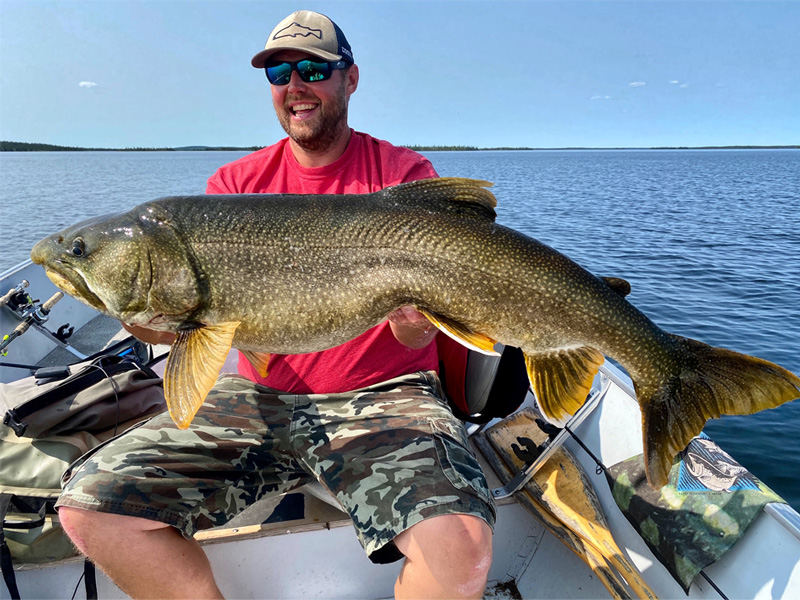
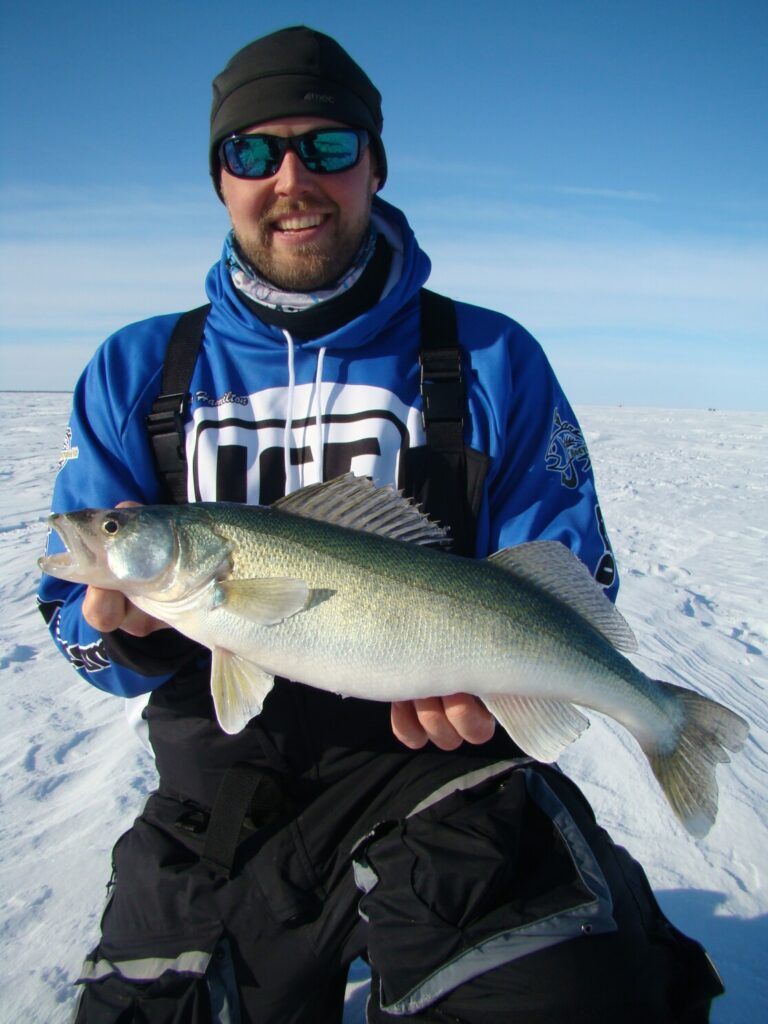
Northern Saskatchewan might sound remote, but by the time Jason Hamilton and I were done talking, I was already mentally standing on that casting deck, looking into three feet of clear water for a log-shaped shadow. If Scott Lake Lodge pike fishing has ever crossed your mind, this episode is your full preview of what it’s like to chase big northerns, lake trout, and even grayling in a wild corner of Canada that feels like its own little floating town.
Jason has been at Scott for fifteen years, and a bunch of his guides have more than two decades on the oars. They know every warm bay, cabbage bed, and river seam where these fish stack up through a short but intense northern summer.
In this post, I’ll walk you through the travel, the lodge, the fishing program, and how to get ready for that first cast at a big, toothy pike in two or three feet of water. We’ll also touch on swinging flies for lake trout, grayling options, and what makes Scott’s staff culture and conservation mindset so strong.
02:04 – Jason shares how he grew up on the Great Lakes, gear fishing for brook trout and migratory rainbows, which eventually pulled him into guiding. He stepped away for about a decade to work as a biologist in far northern Canada before coming back to the outfitting world.
07:01 – Jason breaks down July, which is when our hosted trip and giveaway winner will be fishing. As the season progresses, pike gravitate toward temperature differentials between the main lake and back bays. They feed in deeper water and come shallow to warm up and digest.
12:57 – Jason talks about late-season fishing. As August progresses, pike slide a bit deeper, holding more on weed and rock in about 10 feet of water, which is still reachable with sink-tips and sinking lines.
45:16 – On fish handling, Jason notes that a 40-inch pike might be 20–22 years old, and high-40s fish can be 30+ years. That’s why they emphasize:
51:00 – I ask Jason what he tells someone on the boat on Day One to help them be more successful. His top points at 00:51:10:
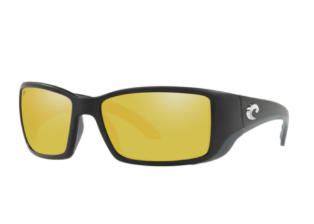
54:43 – Jason calls out one piece of gear that really makes or breaks the experience: polarized glasses.
This is a perennial #2 spot in our gift guide. In our professional opinion, a quality pair of polarized sunglasses should be at the top of your gift list (you can give a pair to yourself you know). Costas are probably our Guide Team’s top choice, but Maui Jim and Oakley make great glasses as well.
Episode Transcript
852 Transcript
00:00:00 Dave: If you’ve chased predators long enough, you’ve probably heard the legends. The big water pike that act like muskie, the lake trout that hit a swung, fly like chrome, and the kind of northern fisheries you tell stories about the rest of your life. Today’s guest is behind one of the most iconic fly in operations in Canada, a place where three hundred and fifty thousand acres of water surround a twelve acre island and where guides with twenty and thirty year tenures still cover new weed beds, new bays and new fish every season. Today we get into shallow water ambush points where mid-summer giants slide in to warm their bellies to the remote tundra lakes where lake trout crushed swung flies in three feet of moving water. This is the Wet Fly Swing podcast, where I show you the best places to travel to for fly fishing, how to find the best resources and tools to prepare for that big trip, and what you can do to give back to the fish species we all love. In this episode, Jason Hamilton of Scott Lake Lodge is going to walk us through what makes their location in northern Saskatchewan. Such a unique opportunity. We’re going to get into the early season temperature differentials and how this dictates where fish are holding and hanging. We’re also going to find out the underrated world of swinging flies for lake trout. We haven’t heard about this before. We’re going to get into lake trout on a swung fly. You don’t want to miss this big Lakers pike. We’re even going to talk Grayling today. So here he is Jason Hamilton. You can find him at Scott Lake Lodge. Com. How’s it going Jason.
00:01:25 Jason: Very good Dave how are you doing this morning?
00:01:27 Dave: I’m doing great. I’m really excited to get into this one today. Northern Pike. Um, you know, just pike fishing in general. We’re going to talk about, you know, your guys’s operation at Scott Lake Lodge, what you do, how it’s different. I’ve heard a lot about your lodge over the years, so I’m excited to jump into that. And and then also, the great thing we’ve got this trip we’re putting together and we’re actually doing a giveaway right now as we speak. We’re launching this off and somebody can go to giveaway and get a chance to win a spot to come up to your live. So we’re going to paint the picture of what that looks like, uh, before we get there, Maybe take us back a little bit. Have you been at the lodge a while? What’s your history? Have you been fly fishing since a youngster, or what’s your story there?
00:02:04 Jason: Oh, I wish I could say I started fly fishing earlier, to be honest with you. Uh, I grew up in on the Great Lakes. Um, not fly fishing gear, fishing for brook trout and migratory rainbows that took me into the fish guiding world and had been doing that for quite a number of years. Um, took a brief hiatus for about a decade to be a biologist, uh, up in the far north of Canada, and got back into the outfitting world here and been at Scott Lake for fifteen years now, which still kind of the new guy, which is a testament to the culture that we have with our staff because most of our guides have been there twenty plus, nearing thirty years in a lot of cases. So it’s a fun place to work for them. A lot of water and excited to be a part of it.
00:02:46 Dave: That’s amazing. Yeah. So so what is it about? You know, because we’ve talked about just about every species. What is it about Pike? And we are talking northern pike because there’s just one species of pike. Or are there multiple subspecies?
00:02:57 Jason: Yeah, I think there’s some some subspecies further south, the chain pickerel and things and things like that. But you know, we’re chasing northern pike Esox Lucius. And they’re muskie sized pike up in our part of the world. You know, we we sometimes eclipse that fifty mark. It’s not something that happens every day or every year. But we certainly have caught fish over fifty inches. And it’s just an incredible predator. And kind of the good thing about going farther north is we’re pretty opportunity rich. You know, in a day you’re going to have a lot of chances to cast to to fish and quite often a number of chances to catch, you know, cast a big fish. So then it’s kind of up to the conditions of the day and the angler to make those fish get excited enough to hop on the hop on the fly or the lure.
00:03:39 Dave: Right. Wow. So and this is going to be sight fishing a lot of this talk about that. What does that look like when you’re out there in the water. Are you seeing these fish coming up? Are you doing the. We’ll probably get into some of the tips and tricks as well, like the figure eight and all that stuff. What does that look like when you’re on the water with the fish?
00:03:54 Jason: You know, typically what we see for for the pike fishing is it’s happening in under ten feet of water. And for the big part of our season, which is relatively short, you know, we start the second week of June and go till the second week of September. So the first six weeks of that season or eight weeks of that season, the fish are in two or three feet of water. Um, they’re feeding in deeper water. They’re coming up to the shallows, increase their body temperature, digest the food, and we’re targeting them there where you’re able to get up on the casting platform on the boat. The guide is going to be, you know, slowly creeping around these back bays and you’re seeing the fish, you know, you’re they’re often being pointed out. And even if you don’t see them, if it’s a cloudy or wavy day, the boat side strikes. You see it all happen, right? It’s it’s clear water, crystal clear water in most cases. So it’s all happening right in front of you.
00:04:44 Dave: Wow. And what is, um, maybe let’s let’s talk a little on the gear. So somebody coming in there, you know, we’re always getting ready for trips and, like, okay, I got to get that new rod. What is it? Typically, if somebody is getting ready for this trip, let’s just say somebody’s going to win this this one. What rod reel line are they using out there.
00:04:59 Jason: For the early part of the season? A nine or a ten weight fly rod. You know, floating line. And we’re just a straight thirty pound fluoro or mono liter to bite wire tippet. You know, typically that twenty pound DFW or thirty pound reel, that’s kind of the setup that we run that works really, really, really well. Really liking the outbound short. A lot of our guides have adopted adopted that as a real quick one, because the casts are often not that not that long you get into some of these small back bays. You’re not trying to cast the full fly line, you just need to pick it up and put it down quickly. And so that sort of has has been a line that’s loaded up the rods quite nice even for some beginning casters for us. Um, and you know, we kind of have a multitude of rods where we’ll, um, have some softer rods for, you know, newer casters and easier on the instruction. But then we’ve got, uh, you know, our fleet of Helios, uh, fours for more advanced casters. So that’s where an Orvis endorsed place and use their fly gear.
00:05:59 Dave: Perfect. And so you have different. Like, is this set up your program for, let’s say, somebody who’s new, never fished for pike or maybe even newer to fly fishing isn’t probably done some fly fishing, but doesn’t have a ton of casting experience. Or maybe it doesn’t consider themselves a great caster. Can they go out there and have a chance at a pike?
00:06:16 Jason: Oh my gosh. Yes, it is a perfect way to learn fly fishing. There are so many opportunities of fish of all sizes, and we have every year like just a ton of people that say, hey, you know what? That looks like fun. Let’s give it a try. And our guides are good teachers. If you can get it out ten feet, you’ve got a real good chance of catching catching a pike, you know.
00:06:37 Dave: Oh that’s it. So yeah, just all you need is ten feet. Yeah. Right. Because they’re because what they’re doing is, like you said, they’re let’s take it to July because I think that’s when we’re going to be giving away the spot for the winner on this is I think it’s July, early July when they in July. What’s going on there? So things are warming up a little bit. These fish, are they eating down their predators. So they’re eating fish. Then they come up to the warmer water. They’re shallow to warm up and digest it.
00:07:01 Jason: Yeah. And what we’re looking for is this differential between the main lake and these back bays. And before the back bays get too, too warm. So, you know, those fish will, um, sort of gravitate toward the warmer water. And then, as I was mentioning, they, you know, they’re digesting food. It speeds up their metabolism. We’re trying to catch them in there because that’s just beautiful sight fishing. But a lot of times that we’re focusing on just great ambush places, you know, the mouths of these bays. In July we’re going to start to see cabbage weed and milfoil kind of grow up. And so you’re fishing to these shallow weed beds. And again, it’s a very visual style of fishing. So, you know, a weed bed in three or four feet of water, you’re still being able to pick out those fish and you’re still seeing the follows. I’m seeing the strikes. So it’s it’s really exciting at that time of year.
00:07:44 Dave: Wow. That’s awesome. Yeah. So and you guys maybe take us back a little bit. We’re going to get into some on more on the fishing as well. But take us back to the lodge itself. What does that look like when we’re coming in there? Um, maybe talk about big picture. So let’s say somebody flying in from, you know, lower forty eight or something up up there, where do they fly into what’s what’s the airport. What does that look like.
00:08:04 Jason: So they’re they’re going to fly into Edmonton, Alberta, Canada. And it’s a ton of good connecting flights direct from major US cities. Once you get there, you head over to our charter hangar and you hop on our private private charter that takes you on a two hour flight up to a town called Stony Rapids Way on the far north of Saskatchewan. Right. You know, right on the border, Northwest Territories pretty well. You hop on some float planes there. We’ve got some otters and caravans. Then it’s about a twenty minute flight into the lodge. So it’s quite a travel day, but really cool part of the world.
00:08:36 Dave: Awesome. That sounds amazing. I feel like people with the travel is there’s some people that maybe don’t like the travel as much. I’m one of those people that love the all the stuff and stuff, especially this is kind of cool. This is like so you hop on a float plane, which is something I’ll bet a lot of people haven’t been on for the first time on that experience.
00:08:53 Jason: It’s just this iconic way to explore the North, right? It’s the northern Uber. It’s been up there opening up this country for for so long and just this cool experience to fly down low and see the trees and see, you know, lakes and maybe animals and things like that. It’s really neat.
00:09:10 Dave: That’s so cool. Yeah. That’s exciting. So you fly and then when you come into the lodge, describe the lodge a little bit. Is it, is it on? Um, you know, describe the area. It’s on a big lake. Uh, where are you flying in? Right down through the lake, near the lodge to describe that a little bit.
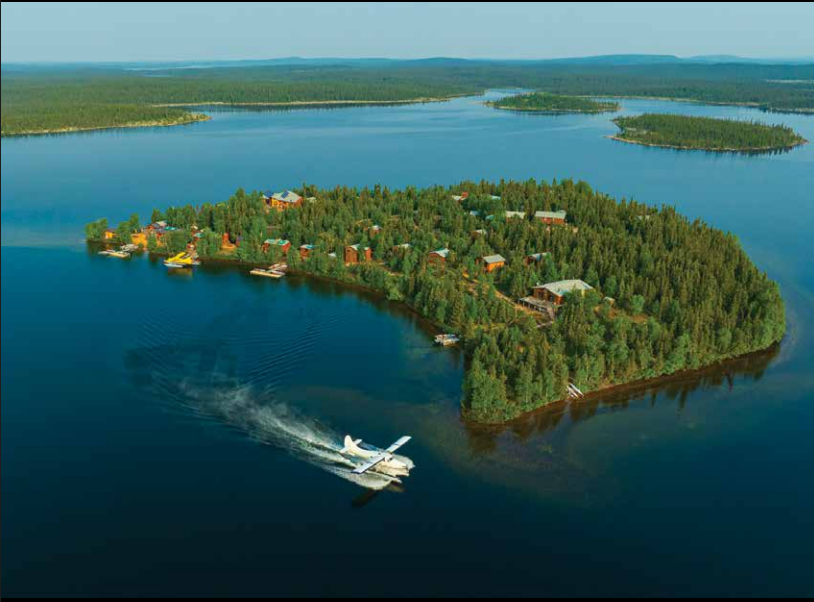
00:09:23 Jason: Yeah. Scott. So Scott Lake is a huge lake itself, and there’s a couple lakes that are connected. So right from the dock, there’s about three hundred and fifty thousand acres of water that’s available. So right in the middle of, of this kind of five armed lake, it’s almost star shaped is this twelve acre island. And that’s where the lodge sits. So you fly in there on a float plane. You hop off, there’s this crazy community of, like, sixty people on there. You know, you’ve got twenty six guests at a time, and you know each guest, each pair of guests share a cabin. You know, they’ve got their own standalone cabin. It’s really nicely appointed. And there’s about thirty five staff with our pilots and, you know, all our different departments. So it’s a wild little community on this twelve acre island.
00:10:06 Dave: Yeah, I’m looking at it now on the map. Yeah. Well so yeah, you’re right there, close to, like you said, to the border to the Northwest Territories. And so is. Are you fishing? Do you head out on. Describe that. Like we fly in there. I’m guessing we get there in the afternoon, get settled in and then get ready for dinner that first day. Is that what it looks like? And then then hop out on on the next day?
00:10:24 Jason: Yeah. You you bet you’ll get in. Just just about time for happy hour. We’re going to get you checked in. We’re going to, you know, get you fed, have some cocktails if you want and and then do an orientation. Make sure everybody knows what’s happening and when. Um, next morning you start fishing. You’ve got five full days of fishing on a trip. And then about four o’clock the next day or the fifth day. Pardon me. You get off the water, you know, get cleaned up, packed up, and then you head head down south to Edmonton again. Get there about nine p m at night. So five full days of fishing and kind of packs in as much as we can. And in that trip.
00:10:58 Dave: Right. Wow. What is that day on the water. So talk about that first morning. Uh, what does that look like? We get up, have some breakfast. What are the boats we’re heading out on?
00:11:06 Jason: Yeah. So you’ll get up and have breakfast, and you chat with your guide the night before and kind of come up with a plan. Um, one thing that it’s always tough for folks to to reconcile the first day. They’re so excited to get out. I want to get out at dawn. Pike fishing is not necessarily better. First thing in the morning, we want the water to warm up in those bays and fish become more active. And, uh, often the best fishing in the day is the last few hours of the day. So we’re, you know, trying to encourage people like, don’t break the door down, have breakfast, relax, get organized, kind of go through a little orientation with your guide, throw a few casts and, you know, let’s get on the water by about eight or nine o’clock, fish till about six. And then it’s, you know, it’s typically up to the group if they want to do a shore launch, the guides do these incredible launch preparation shoreside. Or you can get a packed lunch to go from the kitchen and fish hard all day, which, you know, that’s what we do on our fly outs. You know, flying to these different lakes for for the day is a big part of our program. And so we’ve got a couple float planes and a bunch of pilots sitting on our dock and we’ve, you know, got two dozen other lakes that you can hop on a plane and have your own lake for the day. And it’s just it’s just wild. The fishing pressure is spread around like two million acres of water, right?
00:12:19 Dave: Yeah. There’s there’s not a lot of people you’re probably seeing, I’m sure some occasional plane float planes flying by or around. Right. But there’s no other. Hardly anybody else out there.
00:12:26 Jason: Very few. It would be a rarity for us to see somebody else on the lake a little bit exploration, you know, work is happening up in that part of the world for mining. But, uh, by and large, you know, we’re we’re just seeing some wildlife. And the other boat that might be with you in your group.
00:12:41 Dave: What is the. So we’re we’re talking about that July. You said June, July, August kind of that summer period. Is it similar throughout that whole period, the fishing or does it change and then what happens? You know, um, kind of as you get towards the end of the season, does the fishing just shut off? Do the fish move? What’s going on, say, in October?
00:12:57 Jason: Um, you know, we haven’t been up in October in quite a while, so the fishing is pretty consistent. You know, we do see the pike as you get into sort of first, second week of August. Depends on that water temp. They’ll drop a little, uh, you know, a little lower and start to stage on, on weed and rock much more, you know, in that ten ten foot range. So certainly achievable with the sink tip or, you know, a sinking line. Uh, we can catch a lot of fish in the cabbage weeds late season. But what the limiting factor is for us as we go into the second week of September, it just gets to be fall up there.
00:13:31 Dave: Yeah. Let’s get right. You’re up there.
00:13:32 Jason: Yeah. It can be variable weather. It can get cold, it can snow. And so we’ve just found that there’s a, there’s a kind of law of diminishing returns with fog and cold and, and weather. Uh, once you get into that second week of September, it really starts to, to feel like, feel like fall.
00:13:49 Dave: Yeah. That makes sense. Yeah. When you look at when you spread out and you look at the map you, you go across, I always compare everything to Alaska since that’s kind of what I’ve spent more time in. And if you go straight across, I guess the latitude it puts you right in, right in near Anchorage. You know, you’re kind of in that same range. So, yeah, I mean, the same thing up there by the time you hit. I’ve been up in northern BC and all that and October can come quick. Right? The weather can change really quick from September to October.
00:14:14 Jason: Oh, indeed. And if you look at how the tree line runs. So the further east you go, the lower latitude the tree line goes. So it’s it’s just colder, colder climate as you get towards that interior of the continent. So we really see, you know, September this this third week of August, fall starts and you might really get some great weather later in the season. And we have this cool phenomenon where the lake trout come up shallow, you know, getting ready to spawn. And it’s phenomenal fly fishing. It’s just really incredible. But as you get towards the end of the, you know, second week of September, I mean, we could have nights in the teens and twenties and daytime highs of the thirties. And then the big factor, the lake in the air, you know obviously are different temps and fog comes in in the fall. Being a fly in only place, we need, uh, VFR flight regulations to be able to see where we’re going in the float planes. And it just it becomes a, a much tougher way to move people.
00:15:11 Dave: No. And you mentioned the lake trout. I think that’s another big piece of this. I know a lot of listeners of the podcast love talking about, you know, new species. So Pike is definitely one. But lake trout is also one that we hear a lot about, but it’s hard to get to. So talk about that is in July. In that period these fish are not going to be weighed down at the bottom. There’s going to be a chance to get them higher up in the column.
00:15:30 Jason: Yeah, there are certainly going to be a chance the trout won’t really set up into the deep holes until later in July. There’s going to be fish down there, and there’s a couple ways that you can target them at that time of year. Um, around moving water, you know, inflows and outflows, we’re going to see still some trout hanging on depending on weather and water temps up there. Um, I know a few of our guides have been, you know, casting Trout Spey for them in some of the rivers that flow out of Scott Lake and catching them into July. Really, really neat opportunity. And they’re just great fighters again on a windy day on shorelines, you can cast, you know, sinking lines and and have a chance to target them in July. And then I know that we’ve been playing around with, uh, you know, a full twenty foot section of T20 and you just drop it down and let it settle down to eighty feet, two hand, strip it up and he’s fish, you know, come rocketing up and it’s a it’s different fishing. Right. It’s not, uh, the visual side of it, but on a lot of our fly out lakes, which are often a hundred miles or more north from where Scott Lake sits. July still shows a bunch of lake trout shallow. You know, we’ve got a couple lakes up on the tundra that the trout are going to stay shallow when the rivers all year round. There’s, you know, chances to swim for them and chances to really, really have some cool opportunities that big fish in two or three feet of water is that.
00:16:52 Dave: So yeah, you guys go across the Northwest Territory and you’re fishing. You’re able to fly into there and fish those areas up there.
00:16:57 Jason: You bet. Yeah. And the ice doesn’t leave a lot of those locations until early July. So, you know, it could be still icebergs floating around if you guys head up there when you when you’re up.
00:17:08 Dave: Nice. Yeah, I see it. Yeah. That’s huge. Obviously, it’s kind of a crazy world when you look at a map, because it’s far up there. North and northwest territory goes all the way up to the, I guess. Is that the Beaufort Sea?
00:17:18 Jason: Yeah, that’s the Arctic Ocean there. And really, there’s not much north of us, you know, between us and the Arctic Ocean. We we fly up to a couple lakes about two hundred and fifty miles away. They’re just gigantic lakes on a tundra. Their fishing pressure has been extremely minimal over the years.
00:17:35 Dave: And is that like the great is the Great Bear Lake up there?
00:17:38 Jason: Uh, that’s that’s a little out of our our purview. That’s a fair bit west, but we go kind of straight north of Scott Lake and a lake called the Brant Lake, which is, you know, about sixty miles by forty miles. And it just needs a ton of exploration. There is so much water to explore there. And it’s a giant river system that that comes right north of Scott Lake. The headwaters are very close and we fish a lot of their the headwaters lakes on this river and then eventually dumps into Hudson Bay up by Baker Lake, which just a, you know, huge system.
00:18:11 Dave: So that gets us in, you know, perspective as far as the geography a little bit. What does. Let’s take it back to Pike, because I think that’s going to be the species, I’m guessing day one. Are we going to mostly be going out in boats, or are there going to be some people that might be flying out each day, these different areas and our pike, how far up are Pike? Are you getting Pike all the way up north into the Northwest Territory?
00:18:30 Jason: You bet. Well, our pike seemed to taper off about one hundred and fifty miles north of Scott Lake. That’s. That’s about where we see the productive pike fishing. Uh, taper off. It really becomes more of a trout fishery and grayling at that point. But we’re going to have a real good mix. There’s going to be half half the camp is going to hop on float planes, fly out to these different lakes, hop in boats there, and they’re going to be fishing, you know, fishing up in the territories. And the other half of the camp is going to be jumping in boats at Scott Lake, and you’re going to be fishing around there. And, you know, there’s Wiggins Lake attached to Scott Lake, Premier Lake attached to Scott Lake. So the guides will sign up for their own section. And each boat has their own section of the lake for the day. So you’re not fishing dirty water. You’re not kind of in competition with the rest of the group. You have your own your own deal that day and get to explore.
00:19:21 Dave: Experience the waters of Bristol Bay at Togiak River Lodge, where fly fishing meets Alaska’s rugged beauty. This is the place to complete the Alaska Grand Slam with all five salmon species, rainbow trout, Arctic char, and more. Where each day offers a new Alaskan adventure, you can visit Togiak Lodge right now to start planning your Bristol Bay experience with Togiak River Lodge. If you’re looking for a world class fly fishing experience, it’s time to check out Mountain Waters Resort, nestled along Newfoundland’s legendary Portland Creek. This spot has a history that runs as deep as the Atlantic salmon that call it home. Once a fly fishing retreat for the great Lee Wolf, today it’s your turn to step into these historic waters and swing up your salmon this year. You can head over to Wet Fly Mountain waters right now and make it happen. That’s what fly. Let’s get out there today. Wow. This is awesome. Yeah. Okay, so we’re kind of setting the stage here. Like we said, what is on the pike? Let’s let’s take it to the water. So we’re out there. We’re heading out. Not super early. We get out there at eight or nine or ten and that that range. What does it look like when you’re on the water? Are the guides, I’m guessing going to an area where they know there are fish maybe working? What is that first cast? Describe that day? You know, that first maybe morning on the water. What are we doing there?
00:20:39 Jason: Well, I sure hope that they’re given a safety briefing. And orientation is the first thing before you leave the leave the dock, let you know how to work all the inReach gear and stuff like that. So what I would expect is, is the guides would would not go probably right to the juiciest big fish spot right off the bat. I think they want to, you know, gauge the skill and get people warmed up a little bit, make sure the knots are good.
00:21:03 Dave: For somebody, somebody like myself who has never fished for pike before. You know, we’ve done lots of podcast episodes of but I haven’t fished. So somebody new to it, there’s that piece where you want to say, hey, okay, can they cast, you know, like all that. So yeah. So that’s the first step. So take them out to an easier place, maybe where they can get more fish and save the big ones for a little bit later.
00:21:23 Jason: Yeah, exactly. And I think if it’s a, you know, let’s just say it’s perfect conditions. It’s a sunny day. There’s a little bit of south wind. There’s a little bit of chop. Okay. Once that sun gets a little higher in the sky now we’re going to go start hunting some bigger fish. And then they’ll go into these back bays. And often there’s like a kind of a shallow rocky front to the bay. You’ve got to trim the motor up and back in over that. And all of a sudden you’ve got this, this pocket that’s kind of silty, dark bottom, you know, heats up real quick. And these fish are just laying laying in there. You kind of look like logs at first. These, these big pike. So what they’ll try and do is get the sun at your back, you know, so you’re able to see them. Polarized glasses are absolutely critical to this this process. And you know then all right there’s the fish right out there facing this way at thirty feet or twenty feet. And and try and put it right on them and, and see if they’re going to, uh, going to bite. I think, you know, a lot of times the guys are using larger flies to start. And if the fish turn out to be a bit, uh, indifferent or sluggish. Then we’ll sort of trim down on the size of the fly. And I know we’ve been having great luck on this tiny leech, you know, as the last resort, like an inch and a half black bunny leech, this tiny presentation. And then all of a sudden, this fish that has just been neutral and indifferent to all the things you’re throwing at it, you throw this tiny little fly at it and it just comes up and sucks it in.
00:22:44 Dave: And what is big? What would be a big fly you might start with out there for Pike. For Pike.
00:22:49 Jason: We’re probably not throwing muskie sized stuff too often later in the season when we’re trying to get get deeper in the weed beds, we would. But, you know, like a five, six inch, uh, you know, any sort of baitfish imitation, a lot of loud colors, you know, a lot of black and orange and and red and yellow and, but classic, you know, classic, shallow water classic early season when you guys are going to be joining us. Uh, bunny strip leech, you know, and that’s three to four inches typically that’s going to be uh, was taking a pile of fish every day.
00:23:22 Dave: That’s it. So literally, I mean, a simple bunny leach with a bunch of flash, whatever colors you want to throw on. And you’re imitating your. What are you imitating? I mean, there’s these bait. What are the bait fish that are out there like the species? Is there a bunch of different ones?
00:23:34 Jason: Yeah, there’s, uh, burbot, which, you know, the leech. The leech could imitate a burbot. And in Cisco, which would be more of a traditional sort of white silver, uh, you know, bait fish mimic. But but there are leeches in the lake. And so it’s just this shallow water snack that we sometimes see. Pike. Pike feed on, you know, they’ll go and eat themselves or lake trout or burbot or whitefish down deep and that smaller meal in the shallows, because they’re if they’re in the shallows, chances are that they’re already stuffed. And we see a lot of tails of fish, you know, when we catch these fish. So you’re trying to give them like the, you know, one more wafer thin mint here to, to tempt them into feeding a bit more that day. Yeah.
00:24:16 Dave: Yeah. Like that to see if they. Yeah. they’re just sitting there stuffed and they’re like, you know what? There’s such predators they can’t pass up even though they’re full. They’re still eating.
00:24:25 Jason: Well. They’ve gotta they gotta have that opportunistic outlook because winters are so long up in our part of the world, and I’m sure that they do feed under the ice a little bit, but it’s like an eight month period of ice cover almost. So they’ve got to recover from the spawn, which is under the ice in late May, early June, and then kind of put on that weight and get ready for a long winter ahead.
00:24:46 Dave: That’s awesome. So. So yeah. So you start, you’ve got these bigger patterns you’re working and then but when you’re seeing these fish out there, you’ll see them just sitting there just hanging out, warming up. And when you make that cast, are you making it kind of right in front of it and letting it sink down to them, or talk about that first and then and then what is the take look like when you when you do that?
00:25:04 Jason: Well, you’re you’re trying to get it close, especially with the big fish. You don’t want to cast too far away and then bring it by. Because what happens in a lot of cases, the smaller fish are going to be maybe a little more aggressive and dart in and try and you know, steal that fly. So you might spook that big fish if you cast twenty feet past it. You know, I think you want to get within three or four feet of it. That’s, you know, land it softly as possible. Sometimes, though, a little commotion works to wake them up. Um, typically a pretty slow, methodical strip. And the strikes are extremely varied. It just depends on the mood of each individual fish. Sometimes you might have to drop that fly in the bottom and just shake it there for 30s. And all of a sudden you see this, this big torpedo tip up, and then just a puff of silt in your fly is gone. Other times they hear the fly hit the water. You see them look around for what’s happening, and they’ll chase it twenty feet as you strip it back to the boat like it is kind of, you know, kind of variable. And, um, you know, you’ve probably heard this in a lot of lot of senses, but, uh, strip sets. We love strip sets.
00:26:09 Dave: Yeah. Strip sets. That’s the key. No, no, no, uh, no. Trout sets out here. Strip.
00:26:14 Jason: No. Pike are generally pretty forgiving because if they’re going to eat it, they’re gonna they’re going to eat it. But, you know, especially on some of the larger patterns, you know, they get, uh, with all the teeth, they get all the feathers and fur kind of tangled in their teeth. You got to move the fly to actually set the hook, right?
00:26:29 Dave: Yeah. You don’t want them to just be stuck with a little bit of a feather, and then he’s not even hooked up. You got to make sure to set it.
00:26:34 Jason: And we do see that a lot of times. I’m sure you’ll see that a number of times throughout the trip that the flies just kind of stuck in there and all the teeth and it’s, you know, easy to pull out.
00:26:43 Dave: Crazy. What are these teeth like when you pull that fish in? In your guide, I guess your guides. Do you ever have a client that holds that fish up? Do you get are you still getting some good photos and stuff? Is the client ever holding the fish or is it usually the guide?
00:26:55 Jason: We really try and focus on the guide holding the fish. Uh, I know there’s some there’s some clients that have had a lot of experience with it, you know, reaching up into the pike’s mouth, they’ve got a bunch of rows of teeth. The gills or gill rakers are very sharp. And there’s like a large ring of teeth around the outside of the mouth, but the top of their mouth and their tongue have these backwards facing facing teeth as well.
00:27:18 Dave: Right. So the predator. So the prey can’t get out once it’s in.
00:27:22 Jason: Oh, exactly. And if you make a wrong move, it really is going to ruin your day. We’ve had a number of people have to go for stitches, and the guides, you know, included. You’re not lifting them like the base.
00:27:33 Dave: No. How do you how do you when you get that in? Do they just tail it and then. Or do you net them first or how do you.
00:27:40 Jason: We’ve got great great big catch and release nets. So these are like muskie sized nets. Um, you know, the smaller fish the guys have handle so many fish. Typically what they’ll do is they’ll, you know, just grab the line and then unhook the fish with the barbless hook boat side. You know, if we’re not trying to get a photo of it and we’d really try and promote like, hey, if you’ve caught a big fish before this trip, let’s not take it out of the water. Um, the fish grow so slowly in our part of the world like a pike. That would be forty inches, you know, could be twenty, twenty two years old. A pike that’s like in that higher forty range, you know, could be older than thirty years old. So we really want to take care of them and make sure that they, you know, don’t don’t get injured in the sport fishing side of things.
00:28:21 Dave: Is that when you guys do, it sounds like maybe I mean, obviously we’re all fly anglers, but also we have a good chunk of people that are doing conventional stuff too, you know, in listeners, I’m sure. Do you guys have that up there where you actually have people if they want to do conventional or fly up there?
00:28:35 Jason: You bet. Yeah. We’ve been getting more and more fly every year. We certainly, you know, love those single barbless hooks and and the fly anglers, uh, just it’s a great fit for them. But we probably are like sixty conventional forty fly at this point. And you know, again we, we go barbless hooks and we, we try and make sure that that’s as easy as we can on the fish.
00:28:57 Dave: Is it uh, is the fly fly versus conventional. Is it easier to catch them with conventional gear or the flies fly guys do pretty well.
00:29:05 Jason: I think in the shallows the fly guys do better. It’s a more subtle presentation. You can control it a lot longer at a, you know, a certain part of the water column. So you’re able to show that fish to fly for a lot longer in a lot of cases than, you know, if you if you’re reeling a spinner by it, you know, you’re going to get a reaction strike, but you might not be able to kind of tease them a little bit, um, you know, as, as they get later in the season into into August and September when they’re on the rocks and, you know, it’s a little bit snottier whether I do see the, you know, the gear guys kind of catch a few more because they can get heavier lures, heavier gear, and you’re easier to fight the wind.
00:29:44 Dave: So so that’s a little on Pike, I think. Um, you know, we’re going to talk more about this too, as we go. And I think we’re going to have probably a follow up episode to dig more into this. But I also want to hear the lake trout. So. So is there a possibility we go out, let’s say, for a couple days fishing for pike? We have great days. We get pike. And then somebody like, hey, I want to, I want to go hit lake trout the next day. Do you focus a full day on lake trout or is there still a mix during that that day?
00:30:07 Jason: It’s it’s really up to you guys, uh, for the most part, that the the trout fishing, if they’re shallow, it’s going to be near good pike fishing. And so what we do is we try and get out to a lake, uh, you know, or a spot on the lake that has that inflow or outflow water. And typically that’s a spot where we see good weed growth for pike. And if we can get into some trout below the rapids, awesome. You know, we can certainly do that. Deep the deep drop, it just takes a little bit more patience. You know, I for myself, if I was, uh, went out, caught a handful of them doing that. That’s probably okay for me, but I like catching them, uh, you know, in shallow water on a swung fly, if at all possible.
00:30:48 Dave: Right. So that’s it. And so you’re able to catch these lake trout swinging flies down. So you got the, the pond you mentioned or the bay where the pike have got into and they’re hanging out, but then you got a little riffle to get in, like you said, where you where you trim up the motor to get in. And then below that, in that area you’ve got these areas you can swing that are kind of like runs. And then it goes out to the bigger lake.
00:31:07 Jason: Yeah, not not always. Like there’s a few spots that I’m thinking of that if you’re going to really go target lake trout and look for a big one on the fly that time of year, it is a full river system. You know, it’s we’re a lake just completely outflows into a river. And there’s three or four long, long runs and rapids. And actually what we’re really excited about is we just flew a jet boat into one of these giant lakes, and now we’ve got a real cool jet sled to go fish up and down these rapids. So I think the opportunity to go do that and, and try for some trout that have maybe never been messed with before is going to be really neat.
00:31:46 Dave: Amazing. Count me in for that one. That’s I know there’s people I mean we have a diversity of listeners, but I mean, there’s definitely a good chunk of swing anglers who are loving different species, whether that’s you name the species, you know, and I think that for this would be cool because you’d probably be using, you know, we were fishing for Chinook at Togiak Lodge this year, swinging for Chinook. And we’re using like nine or ten weight Spey rods. So I’m guessing is it a is it a spey rod thing up there or could you use you could probably use a heavy two hand or a single hand rod to for him.
00:32:14 Jason: You bet. Yeah. You know we’ve caught them on the single hand rods. You know, the nine and ten weight’s just fine. And the smaller rivers, we’ve had a lot of fun with the four and five weight Trout Spey setup. But if you’re going to go to some of these big rivers and try for fish, that could be twenty to thirty or more pounds, then you’re definitely going to want something in an eight or nine weight. You know, just kind of like that salmon steelhead setup.
00:32:38 Dave: Same thing. That would be amazing. Yeah, I can imagine for me this trip, you know, getting a lake trout, getting a pike even just that. But if you can get into one of those big trophies on a whatever that would be, that’d be pretty epic.
00:32:50 Jason: Oh, it’s it’s just incredible. I mean, you know, often when you catch them on gear, they have that depth. You know, they have one hundred feet of water to, to fight, but all of a sudden that you get them in moving water in three, four feet of water, they’re just gone. I mean, they pull poll extremely.
00:33:04 Dave: Is that what they do? Do they go? So if you hook them in the in the rivers, they’re just like they’re just going, you got to slow them down.
00:33:09 Jason: Yeah. And it just seems they seem to have the real big ones. Don’t even act like they’re concerned about being hooked. It’s just a slowly like, we’ll see you later. Get ready to come and chase us.
00:33:21 Dave: Yeah. Wow. And is the swinging is it just pretty standard, like any swinging for any other trout species where you’re just casting kind of across and letting it swing down and then working your way down through the run.
00:33:31 Jason: You can certainly do that. Actually, what we see a lot more, uh, moving the fly, any sort of unnatural movements, anything that makes them want to chase. There’s so much, uh, lateral behavior triggered by Chase. You know, they’ll follow things for a long time, but that erratic sort of. So you’re moving it a lot. You know, you’re kind of putting a bunch of movement in it that you would normally, you know, normally see. And then certainly on that, on that dangle, on that hang down, if you kind of strip it really, really fast, like you’ll have fish that fall into the, you know, from the run and are just coming up and nailing it.
00:34:06 Dave: So yeah, because the when you look at the species, the lake trout are kind of like, you know, the char, right? They’re more similar to brook trout, Arctic char, all these species. So it’s different than a well, Atlantic salmon I guess there’s some similarities too because Atlantic salmon are known as you put a lot more speed on them. Right. They’re aggressive versus say a steelhead, which isn’t necessarily as much. So. And what would the flies be that you’re using for those when you’re swinging for lake trout.
00:34:29 Jason: Very, very, very similar to the stuff that you’d swing for salmon and steelhead. Salmon and steelhead. Yeah. You’re looking for big flashy patterns. Certainly a little more in like baitfish, you know, white silver type things. Um, even even blue purple. Because a lot of times in the rivers, these lake trout are feeding on grayling. That’s like lake trout candy. So something that kind of has, has a little bit of flash, has a little bit of blue or purple in it really isn’t a great fly for the rivers for trout.
00:34:57 Dave: That’s right I forgot. So so you could actually if you wanted to, if you hadn’t caught a grayling, you could probably catch Grayling to there.
00:35:02 Jason: Yeah. You bet. If you go to some of the. We don’t have them on Scott Lake itself, but on the lakes, the, you know, the inflow and outflow of of those lakes, you can get grayling and, you know, it’s starting to be a time when you guys are there in July. We get the, the freshet or the spring runoff is starting to taper off and rivers set up. So they’re a little more fishable. You know, in the first week of the season, we have, you know, water kind of usually backed up into the willows. And it’s tough to really, you know, find a spot because the fish are right in your feet in the willows.
00:35:32 Dave: And is the summer up there. What are the summers like? Is it pretty much. You never know what the weather could be like. Or is it pretty nice July August in that period?
00:35:40 Jason: It is, you know, really variable. But typically July has pretty stable weather. You know, we wouldn’t see a whole week where it’s going to be snotty rainy weather. It’d be very unusual in July. You know, we would expect to see that first two weeks of July would be something that’s like, you know, wake up. It’s high. Fifties. Sixties. Overnight you get into sort of high sixties to low eighties for, you know, for your day. Then it just depends on which way the wind is blowing from, you know, south wind, little warmer north northeast wind. You’re going to have certainly a little cooler conditions.
00:36:14 Dave: That’s it. And so after, you know, you go your season September, you start to close things up. When do you what are you doing in the off season? You got eight months out of the year. Are you heading out? Going? Uh, you’re done with Scott Lake. I’m guessing you guys kind of lock things up.
00:36:28 Jason: Yeah, we we certainly, uh, you know, close things up, boarded up. Uh, but then then it’s back to sales and marketing. It’s back to hiring and procurement. And, you know, we’re we’re pretty blessed. We’ve got a great following on Scott Lake. So we don’t have a whole lot of spots that come open every year. And we try and, you know, try and do a little hunting and fishing in the off season because it’s a spot, you know, it’s a deal. I’m sure you’ve talked to a lot of other guides and outfitters that when you’re in the season and you’re running the lodge, it’s not necessarily a recipe to go fishing. A whole pile. So try and get out and chase steelhead with some pals on the BC coast and try and, you know, do some fishing in the saltwater.
00:37:07 Dave: That’s it, that’s it. So you get your time. That’s your your vacation time is in the right. The the off season for everybody else.
00:37:13 Jason: You bet. Yeah.
00:37:14 Dave: And I guess that’s the cool thing is that you do have. Yeah. You’re not too far, really. I mean, British Columbia, a little flight across and you’re out down south and wherever you want to go, hit some steel. I bet you’re also kind of in the middle when you look at it. I mean, you could head the other way. That’s the cool thing is you can go for Atlantic salmon potentially right out to, uh, you know, the whole Gaspé, you know, kind of Newfoundland, all that stuff. Right?
00:37:34 Jason: Yeah. You bet. That’s something I’ve been really hoping, you know, hoping to get to. But, uh, boy, our summer seasons are just intense, and we’re, you know, we’re up at the lodge for that. That period of time. And even in May, we’re, you know, we’re in full construction mode. Um, really been kind of doing a bunch of, um, improvements on the place over the last ten years. And so it’s a, a list that we kind of talk ourselves into every year like, oh, would it ever be nice to, you know, have that cabin renovated or build something new like this and in like over a beer? At the end of the day, you talk yourself into about ten more projects.
00:38:07 Dave: That’s right, that’s right. There’s always something to work on out there. But it’s pretty cool because yeah, when you go out there, like you said, you guys are, you guys are kind of right on this. I mean, it’s this island or not island, but it’s. Yeah, I mean, you’re essentially on an island, right, right in the middle of this huge body of water, the lake. But then you have all these little channels and bays and everything. And that’s. Do you guys have everything? I mean, I’m sure you don’t have everything marked, but how much of an area do you guys have you fished a good chunk of it or is there still like, you know, most of it that you haven’t even seen yet?
00:38:37 Jason: Oh, there’s on Scott itself. Scott is pretty well known, especially with our guide group. You know, so many of them have been there like over twenty years. So they have spent a lot of days, you know, uncovering all crannies. Um, you know, any more. The guys have, uh, these fish finders and GPS units with forward facing sonar and the ability to to really dial in depth charts and kind of look for weeds and things like that. So we’ve found some more, uh, weed beds in the last few years just using this new technology. But a lot of the fly out lakes, they’re giant. They’re bigger than what you can fit two or three Scott Lakes inside of these lakes. We have got a ton of exploring to do. Uh, up, up on these lakes.
00:39:20 Dave: When you look at the, uh, the island that Scott Lake is on, it looks almost like a little town. I mean, it’s kind of, you know, it’s not just these couple buildings right here. You’ve got places spread. You got float planes on both sides of it. You got multiple docks. Is it just. Is this just the Scott Lake? Um, this is just your your team out there, and it’s just those are all the lodges. All those buildings are just different lodges.
00:39:42 Jason: Yeah. So they’re all, you know, the waterfront on the south side would all be guest cabins. And then as you go up to the top, you know, the top of the island, that’s where the staff live. And Living in our north side is our industrial, you know, sort of mechanical complex. And in the main lodge is sitting on the southwest side of the island, right up on top of the esker. It’s a a pretty spot with a great view to have, uh, have dinner and look out over the lake.
00:40:08 Dave: Right. What does that view look like when you look out over the lake? Are you seeing mountains out there, or is it pretty flat up here? This is, like, more like tundra.
00:40:15 Jason: No, it’s it’s hilly. Uh, you’re certainly seeing, you know, some measure of topography. Uh, we’re probably about fifty, sixty feet above the water there, up on top of the hill. So there’s, uh, not mountains, not big hills, but you’re going to get, uh, you know, a couple thousand feet of of differentiation in the topography there around Scott. And it’s just you’re looking south over the big portion of Scott Lake, and you see this beautiful, uh, beautiful view. And you guys are going to be up there, uh, waiting for sunset a long time because it’s near twenty four hour daylight at that time of year.
00:40:50 Dave: Oh that’s right. So you’re getting the light. So you’re gonna have the full. That’s the other amazing thing. Yeah, I’m a big fan of, uh. Yeah. It seems like it’s cool to be there at that time. I mean, I think you probably don’t get the Northern Lights as much right as the fall or when you get. There’s too much light there in the summer, right?
00:41:05 Jason: Well, I’m sure the northern lights are happening, and we just we just can’t see them. You know, that second week of July, you’re going to be able to, you know, read your book or be outside almost twenty four hours. It gets a little dusky around two or three in the morning.
00:41:18 Dave: Yeah, I’m kind of that late at night owl sort of thing. I love that thing. Where and we did this at Togiak Lodge up in Alaska is that it was the same thing, man. It was whatever. Midnight, one in the morning, you can go out and you sometimes wake up and go out there like, wow, this is just like it’s like morning, you know, it’s light and it’s so it’s really this unique thing. How do you guys is that something is hard to get used to. Every year when you go up there and you have all this light in July.
00:41:43 Jason: It takes. I can’t speak for everybody, but I think that folks have been doing it a while. It’s second nature. Like, we don’t really worry about two blinds on the windows or trying to, you know, sleep blackout like the cabins that the guests are in are all blackout cabins, you know. And so it’s very dark in there, but you just kind of get used to it. And it’s more of a job where you sleep when you’re tired and when you know there’s things to do, you’re up and ready to go.
00:42:06 Dave: That’s right. In the off season. Do you know the history of Scott Lake? It seems I mean, like you said, it looks like it’s its own town. How did, um. You know, how long has this been out here? Is this something that’s owned by. Has it always been owned by a private company, or. Describe that a little bit.
00:42:21 Jason: So Scott Lake started out, uh, it was a commercial fishing enterprise. They had looked at, uh, getting into commercial harvest of whitefish and lake trout in the late sixties and what had helped us out, I guess, as a fishing lodge. The it wasn’t, uh, the top grade of whitefish they were looking for. And because there was no, uh, winter road in there, it was expensive to undertake this. So it transitioned into the seventies. In this tiny fishing camp. There was one building, and I think they had four or six guests up there at the time, and that had gone through two different owners into the early nineties. And so the current ownership regime had had taken things on in the in the nineties and since then kind of really been improving it, making it into, you know, the lodge that you see today. So it started out with much fewer guests and much fewer staff, and the infrastructure needed a lot of work. But it’s been been pretty wild to watch for the last fifteen years.
00:43:20 Dave: Right? Yeah. The last fifteen. You’ve really seen this thing where I mean, what do you think? What do you attribute the success of it to? Is it kind of just word of mouth or people, you know, getting up there and seeing this or, you know, because it sounds like you guys are pretty well booked up now. And it’s and I’ve heard, like I said, I’ve heard a lot about it over the years and haven’t been there, but it sounds like you guys have some good, some good stuff going.
00:43:38 Jason: It’s just a great culture. It’s a culture of like very intense and personalized hospitality and customer service has been set up there. The team buys into that. People feel like they’re friends. They’re well taken care of. We’ve got very nice infrastructure that we’ve been putting together, but it’s the community of people. It’s, you know, we put our staff and we trust them to be with the guests all the time having drinks at the bar, having fun, you know, in the service roles. And they’re great ambassadors and form these friendships and relationships with the guests and the guests form these relationships with the staff. Keep on wanting to come back.
00:44:16 Dave: And we’re and so do you. Where do you live during the off season? What town are you staying in?
00:44:22 Jason: Uh, we just moved to a place outside of Calgary, Alberta. So we’re in a place called Water Valley and pretty excited to get a little, uh, river fishing in through the winter months when it warms up. Now, before, it was all ice fishing.
00:44:34 Dave: Right. And the great thing is Calgary. Yeah. I mean, talk about a famous place. That’s definitely as far as, you know, up in Canada. That’s one of the, the what’s the big river that goes through Calgary? The, um.
00:44:45 Speaker 3: The boat. Yeah.
00:44:45 Dave: The bow. Exactly. And we’ve done some stuff there. What about your guides? Do they. Are your guides coming? Sounds like they’ve been up there. Why are they coming from all around doing other things throughout the year, other areas guiding and stuff like that.
00:44:56 Jason: Yeah, they’re anywhere from Costa Rica, Nicaragua to almost all the provinces of Canada. And a lot of them do, you know, traveling in the off season or they’ll guide for big game or waterfowl or other fishing. So it’s a pretty diverse group that have a pretty cool skill set of seeing a lot of things in the in the outdoor space.
00:45:15 Speaker 3: Nice.
00:45:16 Dave: Well, I want to take it out of here. We have a segment we we kind of call our our coffee talk segment. Again. We’re sitting here, uh, it’s morning drinking a little bit of coffee. But I want to get into, you know, maybe just a few tips and talk a little bit more on gear. And I always love to start off with Patagonia. Today’s sponsor is Patagonia. And we’ve been wearing their swift current waders. It’s been it’s been really awesome this year because they’re a great company. They do a bunch of stuff for conservation, all that. So the first question for you as we take it out of here, is is on that the conservation piece? I know Patagonia really focuses on that. Do you have have you guys seen anything up there? It seems like you’re so far north. Have you seen changes in climate, changes in water temperature or things so far up there that things are pretty stable where you’re at?
00:45:58 Jason: Well, it seems like there’s more variability. Even in the last ten or fifteen years since I’ve been there. It seems like summers when you speak to people that have been there quite a while, they had a pretty good expectation of how the summer weather was going to progress. It seems like things have shifted a little bit, so we’re nicer into the fall, maybe a little cooler in June. Again, that’s fairly anecdotal with a fairly small sample size, but it there was a number of years where the guide team has kind of shared with me where they said, you know, you could expect that June and July were very nice and hot months. And by about the third week of August with a couple of, you know, cold fronts interspersed in there, it would cool down. But boy we’re seeing like mid to late September. Just great weather now. Um, the last five years. So we’re hopeful that, uh, just keep stable. Stable is good for fishing.
00:46:52 Dave: Stable is good. Yeah, I think that’s probably what it is. The fact that you got these giant deep water, you know, reservoir, not reservoirs, but lakes versus, say, some of the other areas where maybe it’s brook trout fishing in a stream, water temperatures are warming up and fish are struggling. It feels like you guys are. And you’re up north. You’re up in the place where as things warm up down south, you know, people are probably going to migrate, you know, further north as we go. You know, in the long term maybe depending on what happens. Right.
00:47:17 Jason: Yeah, we’re insulated from a lot of those water temperature, uh, you know, related issues that you see the hoot owl restrictions on some, some rivers and things like that are ice free. Season is so short that we never really get these, like, water temperatures to a point where we’re, uh, it’s unsafe to fish in them, you know, irresponsible to to continue fishing. So.
00:47:37 Dave: Yeah. Do you guys have I know Phil Roy is a big partner with the podcast. He does our Littoral Zone podcast and he’s, well, he’s probably not far from where you are. I think he’s he’s definitely in. Um, I can’t remember if it’s he’s somewhere up in Alberta, but, uh.
00:47:50 Jason: Yeah, he’s not far, far at all. Phil’s actually been up and visited us one time up at the lodge. He filmed us. He filmed a show with us.
00:47:56 Dave: Oh, cool. Yeah. He did. Okay, I’ll have to. Yeah, I’ll have to. That’s right. I knew that might have been the first place I heard of your guys’s operation, but, um. But. Yeah, I mean, the Stillwater thing is, you know, again, is is huge. I think a lot of people are are. I’ve always loved Stillwater fishing, but do you guys find that? Do you do you think that that’s growing? Have you seen more growth in just on your end from Stillwater Fishing and kind of for fly fishing?
00:48:19 Jason: Indeed. It just it seems like there’s more acceptance for pike from fly anglers that this is a cool predator and there’s a lot of opportunity and you get a chance of catching some real big fish, you know, fishing, maybe up to thirty pounds. So we’re seeing a lot more people that I think were real focused on, you know, stream trout and, you know, anadromous fish on the coast being like, man, pike is a cool fish. Like, I didn’t realize that they would fight like this. I didn’t realize we could sight fish, you know, to them. And I didn’t realize that I could get maybe fifty chances a day to to throw cast at these fish.
00:48:57 Dave: Yeah. So, so and that’s the other and we haven’t talked about that. But that’s the other big thing is that when you compare a muskie versus pike, muskie is really that fish that’s a cast or a fish of ten thousand casts or whatever. Right. But pike, which are kind of, um, you know, very closely related. Right. Are you get a lot more shots just because of the species?
00:49:15 Jason: You bet. I mean, you know, we just have more pike in our system than a typical muskie, you know, system would have muskie. So you’re it’s not crazy to think that you could catch fifty fish for one fly angler a day. You know, we have many, many stories of people catching more. But I was out in a boat with a gentleman last year and he kept on telling me to fish like you. Throw. Throw the fly to catch the first fifty and I’ll jump in. You know when you’re done. And son of a gun. By mid-afternoon, he’s like, hey, this is forty nine. Next one. Like, you got to get off your butt and start casting.
00:49:47 Dave: That’s awesome. So you did it. So you got out. That’s I mean, that that is amazing because the numbers thing, it’s not all about numbers, you know for sure. But when you hear that, it makes you think, like, wow, I’m probably going to have some action and likely have a chance at a big fish too. That’s the other cool thing, right? A thirty pound, a fifty inch fish. Whatever it is, it would be crazy. What’s the when you hook one of those fish? Is the fight varied too, or is it. What’s that fight like?
00:50:12 Jason: You typically you get a couple a couple good runs right off the bat. It’s not going to be like something, you know, a bonefish taking you way into the backing. But a big fish is going to move some line in a hurry. You know you’re going to get the fly line out. And then there’s a if you have any sort of depth in the water, they’re going to try and stay down. You really can see the bigger fish are going to stay. Stay down on the bottom and you’re going to have to, you know, really turn them to pull them up. If you’re in that real shallow water, they’re going to be a lot more dirty. They’re going to be, you know, kind of moving laterally around just because there’s no place to really bulldog down.
00:50:45 Dave: And so as we take it out of here, I have a couple of random questions, but I want to get some tips. I always love to get a few tips. So we’re we’re going to be gone. This boat we’re going to be looking for Pike. What are you telling me? Or whoever’s on that boat that first day to have more success? Is there a couple tips you would you would recommend?
00:51:00 Jason: Keep your fishing area neat. You know, make sure that you don’t have a bunch of gear and things like that open on the, uh, the casting deck beside you.
00:51:10 Dave: And are you on a and you’re on a deck here. Describe that a little bit. Is this like a what type of boats are you using and what does the deck look like.
00:51:16 Jason: Yeah, they’re they’re at sixteen or eighteen foot um aluminum hull boats. And so it’d be like a walleye style multi-species boat. There’s an elevated casting deck on the front. And then we have a smaller casting deck in the middle for, you know, for the two anglers, but really making sure that you’ve got your, line able to get that out quickly, make a good cast. Um, that’s that’s really a big part of it is, is if you, you know, flop the cast and scare that big fish away, it might only be one chance at that fish. Often there’s more, um, but just keeping a clean house and taking the time. If you’re changing flies with your guide to, you know, make sure that you’re passing your fly box back and your tools back so you don’t have have one of those moments where the big fish strikes and then all of a sudden you’re wrapped around your your foot and away she goes.
00:52:05 Dave: And most people just out there in, you know, uh, what are they wearing? What’s the what’s the clothes? You know, I’m guessing not waders because you’re on the boat. Or are you just sitting there and your regular clothes or what is that like?
00:52:15 Jason: Yeah, just regular clothes. Often, you know, some flip flops or bare feet or, you know, those sort of ankle boots or more than enough for for what we’re doing. We’ve got a bunch of waders up at the lodge. So if folks want to, you know, jump in the water and fish some of the rapids, we can accommodate that. We that. We got boots and waders ready to go, but typically like just summer fishing stuff, you know, sun shirts, lighter pants. And if you’ve got to, uh, if you’ve got to layer up for a colder day, then it’s just the, you know, the standard sort of deal where you throw on some mid layers and then your, your rain gear.
00:52:47 Dave: Well and so and like we said, so we’re going to be on we’re going to be on the water. The the tip. It sounds like there’s not too much I mean I guess casting is something I always think about. You’re using a heavier rod, like you said, like a ten weight is typically a nine foot ten weight. Is that your typical.
00:52:59 Jason: Yeah, nine or ten weight. I really like the tens. Um, because on the bigger fish, the nines work perfect for your average pike. The bigger fish, the ten gets them to the boat quicker. You just kind of speed that fight up. You have a little more control. The fish go back, you know, release a little quicker.
00:53:17 Dave: Yeah. Okay. So so so the ten weight’s good. And I guess kind of practicing. If you’ve never casted a ten weight it’s a heavier rod. So that’s probably a good tip also to maybe practice and work on your what do you think distance wise. Thirty feet being accurate at thirty within a you can land it on a pie plate. Is that kind of like the saltwater thing a similar deal?
00:53:34 Jason: That would be more than enough. You know, again, Pike are pretty accommodating. Um, the bigger fish, though, if they’re thirty years old, there’s a good chance that they’ve seen this show before. And you don’t want to do something that’s completely crazy and, you know, just drop it on their head with a big splash and, you know, send them out of there. They’re kind of ambush spot. Um, but definitely being able to, uh, cast and and cast without a whole bunch of back casts, you know?
00:54:03 Dave: Um, yeah, like one back and then cast.
00:54:06 Jason: Yeah, that that’s great. Especially if fish are moving. You know, sometimes you’re going to see a cruising fish and you don’t want to waste a bunch of time trying to trying to get lined up there.
00:54:16 Dave: So you might see a fish actually in those shallows cruising. And you want to put it a few feet in front of it. And so it sees it and goes.
00:54:22 Jason: Yeah.
00:54:23 Dave: You bet. Yeah. Wow. This is great. Okay. And, um, I guess the last one here I’m kind of thinking I want to, you know, again, get ready for this trip. We’re going to be heading up there. The pike. Any other you know, I guess on the gear. Gear thing. Anything else to think about that would be? We don’t want to miss you. I’m guessing you guys probably have a gear less you send out to clients beforehand, but is there something, something important that’s different?
00:54:43 Jason: Typically, you know, just the clothes packing list. We’ve got a pile of rods and reels up there for, you know, ready to go for everybody. We got all all the flies up there for everybody. You know, we’ll send some some things out to both the type of flies that you want to tie. And, you know, if you get a chance to talk to some of our guides, they’re going to tell you all their all their favorites and everybody’s got their, their personal ones. Um, we’re seeing a few of the guys going towards Sparser flies, not as much material on them, and they seem to move a little bit more in the water. But what I would I’d really encourage is good pair of polarized sunglasses. And if it’s in the budget or you already have them, you know, something in that like Silver Sunrise or a I’ll higher light transmission lens and then something you know for the afternoons with the higher sun, you know, an amber lens with a green coating would be really, really important because we find people that, uh, that don’t have, you know, great sunglasses are missing a little bit of the show. And the show is so much a part of that pike. Pike fishing in the July season.
00:55:47 Dave: So the glasses. So the the amber are good for the afternoon with the high sun and then for the lower sun earlier you’re saying the more the silver. What’s the best lens for that?
00:55:56 Jason: Like the Costa does a silver sunrise. And I’m sure that the Maui and Smith, you know, do something similar, but it’s more of a yellow or copper lens and it’s a higher a higher light transmission.
00:56:07 Dave: Yeah. And I love the yellow for, for. Yeah. Just a little lower light conditions. You get more light coming in so you can still see really. Well.
00:56:14 Jason: Yeah. And if you get some cloud or you get some smoke from wildfires, which in our part of the world is it happens every summer, it just depends on, you know, how close or Closer with the wind direction is just makes for a little flatter. Flatter light.
00:56:27 Dave: Yeah, the fire stuff is definitely I mean, you know, where we’re at every year. You know, I think August, you know, on the East side, there’s always going to be fire. You know, it’s just that’s part of probably the climate change thing. Right. Things are changing a little bit on us, but um, but good. Well, the one random one I have before we get out of here is it’s kind of our music, movies or podcast question are you throughout the year, if you’re traveling, are you listening to more? Are you watching YouTube movies sort of stuff, or are you more podcast or music? What’s your go to?
00:56:54 Jason: Oh, in the truck. It’s been podcasts, podcast, study. I spend a lot of time in the truck driving around this central part of Canada. So it’s it’s podcast ninety percent. And then, you know, sometimes if I gotta stay awake, I’m putting on, uh, some classic rock or some old punk rock or something like that.
00:57:11 Dave: Awesome. What’s your do you have a podcast, uh, show that you love or, you know, what’s your what’s your. Do you listen to all sorts of stuff?
00:57:18 Jason: Yeah. Anything with the outdoors. Um, you know, Niska and in the bucket. I mean, it’s some kind of beat.
00:57:25 Dave: Oh, good. You’ve been catching this stuff.
00:57:29 Jason: Yeah. Yeah, some, you know, B.C. steelhead fishing. Like, obviously listening to that stuff, but anything, uh, hunting, fishing, conservation. I try to to listen to a lot of that and just keep up to date with what’s going on in in the outdoor space.
00:57:43 Dave: Nice. And what about music? What’s your what’s your classic rock? What’s one group or song or something?
00:57:49 Jason: Zeppelin.
00:57:49 Dave: Zeppelin. Nice. Love it. I’m gonna put some Zeppelin in the show notes for this one. I always love to get a chance to, uh. There’s there’s so much. Is there a album or a song that you a favorite album of theirs.
00:58:00 Jason: So far away? It was in a skateboard movie from when I was, uh, when I was a kid, and it was always, uh, it just it just always resonated just great.
00:58:08 Dave: I know Zeppelin was so good because they had that thing where they started out slow, you know, that slow. And then they build up, build it, and then it’s just. And then they’re just rocking out, right?
00:58:17 Jason: Oh, man. It’s just it’s just great Instrumentation. You know, it’s great guitar, great drums. It’s yeah.
00:58:23 Dave: That’s awesome. I’m going to listen to that right now. I’m gonna hit that up on Spotify Over the Hills. And that’s a song, right? So that’s the song. And that’s also I’m not sure if that was one of their albums or not, but that’s definitely one of their songs. Right? Yeah. Good. All right. Jason. Well, I think we can leave it there. We’ll send everybody out to, uh, Scott Lake Lodge. Com. And, you know, I’m excited. First of all, we got this giveaway. So somebody lucky winner is going to win a trip and all the gear up to to yours. And then also get to go on this trip. It’s amazing. You know, having a chance. And we’re going to be sharing the good word as we go. So thanks again for all your time today and we’ll talk to you soon.
00:58:54 Jason: Oh thank you. It’s been a pleasure and we look forward to hosting you guys up at the Lodge.
00:58:59 Dave: There you go. If this is in your bucket list, if you’re thinking about lake trout or pike, definitely check in with me Dave at com. We’re going to be going up there this year. We’d love to hear if you’re interested. The best way to get access to some of these trips is go to Fly swing Pro. Also want to let you know this is on YouTube right now, so if you’re interested in watching the full length and watching me and Jason are talking heads chatting. You can do that right now on YouTube and would love if you subscribe there and follow us. I’d also like to hear if you listen and watch on YouTube. Send me an email Dave at com. Always love to know if we should be doing more of that. We’re kind of testing the waters right now just to see right now, I think most people still listen on Apple Podcasts, Spotify and other apps. But if if YouTube is a place I would love to hear from you. And, uh, and that’s all we got today. I just want to remind you again, uh, we’ve got a good week this week later, we’ve got James Gerritsen talking about the New Mexico. Uh, we get into some big fish. They’re catching down here as well. So if you have anything else, check in with me anytime. This is Dave, and I hope you’re having a great afternoon. A great morning or great evening wherever in the world you are. And we’ll see you on the next episode. Talk to you then.
01:00:08 Speaker 4: Thanks for listening to the Wet Fly Swing Fly Fishing show. For notes and links from this episode, visit Wet Fly com.
If you’ve ever wanted a trip where you can learn quickly, see big predators eat flies in clear water, and explore lakes most people will only ever see on a map, Scott Lake Lodge belongs high on your list. Between pike, lake trout, grayling, and the fly-out program, it’s a classic northern adventure with a strong conservation ethic and an island community feel.