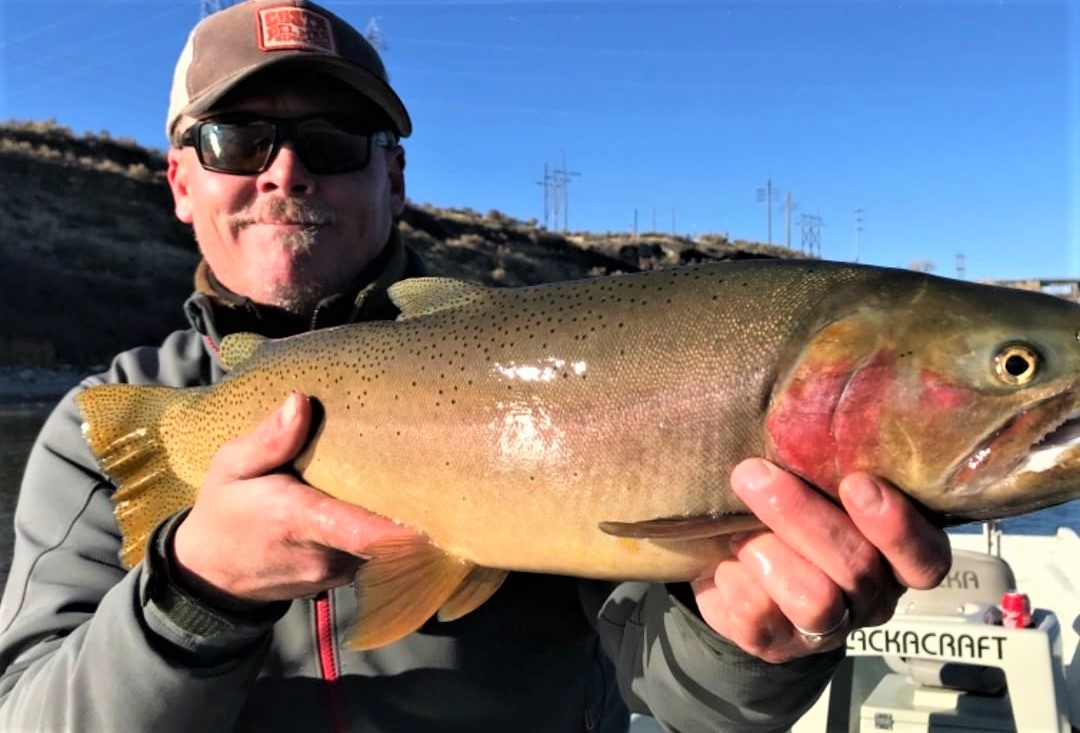
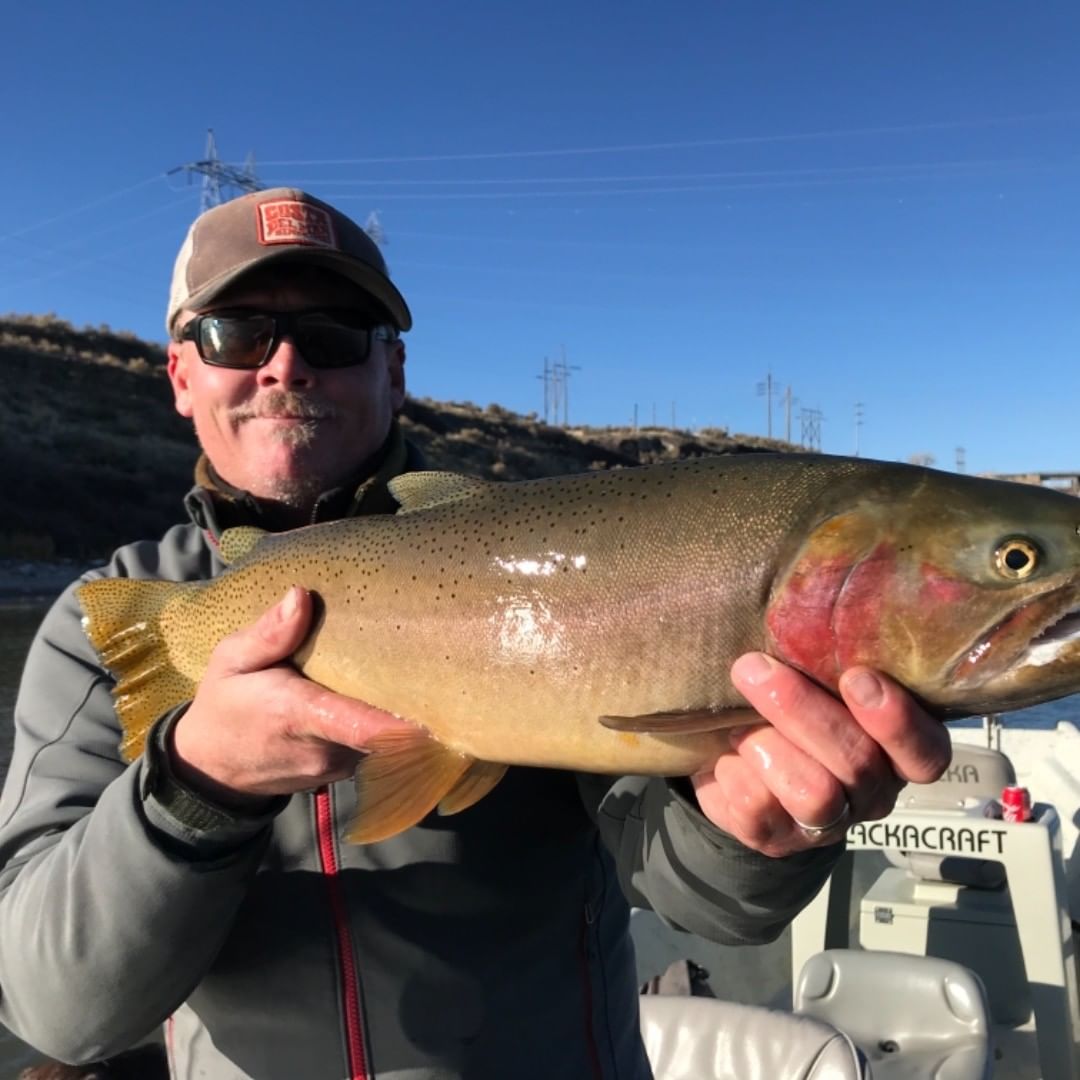
Larry Larsen from Snake River Fly is here to break out some good stuff. We got a little inside look into a really cool tailwater fishery that is not quite as well known as the section upstream. He’s got some really amazing fly-tying materials that we talked about and what I call a cult following around fly-tying, material, and just some amazing fishing. We also talk about their YouTube channel and what they have going at the fly shop.
Time to experience the road less traveled. Let’s jump into the Basalt Canyon of the Snake River and find if bass, carp, or big giant trout are the biggest traction. Here we go…
11:50 – The Mayor of the town of American Falls, also a fly fisherman, pushed for catch and release, artificial only season.
21:55 – We talk about where they find steelhead from where they are.
34:30 – We talk about how they get ready for the smallmouth season.
39:00 – We talk about what they use for boats.
40:30 – As far as tailwaters, Larry considers the Madison River the best.
49:00 – Larry recommends a 6 or 7 wt fly rod for smallmouth.
54:45 – We dig into carp fishing with Brandon Morrison.
59:10 – Tip: When fishing for carp, do not blind cast. Observe the water and watch where they rise.
Episode Transcript
Larry (3s):
And I started just cutting fibers off of the stem of Maribu into a big jug. And then I threw some of our solar flash, which is a straight ice dub into it. And I blended it. And I remember calling Brandon, I said, you gotta get down to the shop now. And so that started zero G, where we were doing a lot more Malibu full length to a little bit of flash.
Dave (31s):
Larry Larson, on the beginning of zero G, we were traveling to Pocatello and the Snake River today on Traveled. Welcome to Traveled where it’s all about the journey we are all on and fly fishing in life. This is our chance to take a deep dive into a specific area around the country so you have a better feel for the people, the resources, and the community that make this part of the country so unique. Before we jump into it this week, I wanna share some love with our Traveled sponsor. This podcast is powered by our swing outdoors and the Wetly Swing podcast. Head over to wetly swing.com/teton right now. If you get a chance and you can check out all the hotels, lodges businesses that you can support and support this podcast in one easy click this week.
Dave (1m 14s):
Larry Larson from Snake river fly.com is here, and he’s here to break out some good stuff. Here we’ve got a, a little insider look into a really cool Tailwater fishery that not quite as well known as the section upstream. He’s got some really amazing fly time materials that we talk about and what I call a cult falling around flight tieing materials and, and just some amazing fishing time to experience the road less traveled. Let’s jump into the Basal Canyon of the Snake River and find out if bass carp or big giant trout are the biggest traction. Here we go. Larry Larson from Snake River fly.com. How you doing Larry?
Larry (1m 54s):
Doing good, Dave. Thanks for having us on. Appreciate
Dave (1m 57s):
It. Yeah. Yeah. Thanks for coming on here. We like most of our episodes now, we listen to our, well, we listen to our listeners and most of our guests come from them now. And we’ve had a, a few people that have reached out to us and said, Hey, you gotta get Larry on the podcast. And, and so that’s why we’re here. You got a good following of your own. Right. So that’s always a good thing.
Larry (2m 17s):
Yeah, I agree, man. It’s, you know, we have to love our customers for sure.
Dave (2m 21s):
Exactly. Well, you’re in a Kuri. We’ve been talking a lot. It’s been good because the Snake River has been a hot topic as of late. We’re gonna be heading out there later this year heading over to like the South Fork, but I think you’re in a little different section, so we’re gonna talk about that. Maybe we will dig in, I’m not quite sure all the areas you guys cover at your fly shop, but you guys have a quite a bit going. So let’s, before we jump into the shop and kind of where you guys are fishing, let’s just take it back to yourself how you first got into fly fishing, and then we’ll jump into the fly shop.
Larry (2m 49s):
Sure, you bet. Yeah, well, well, you know, I grew up in Idaho Falls, which is, is basically just downstream of the confluence of the Henry’s Fork and the, the South Fork of the Snake in O Idaho Falls. And, and I lived there and, and started fishing at a pretty young age, tying flies at a really, you know, pretty much, I think I tied flies before I maybe even casted a fly rod. We had a McRay shop in my house. My mom was the MCM lady in Idaho Falls and the ceramic shop. And, you know, turns out having a craft shop in your basement was pretty good for, you know, free if you will, flight tire materials.
Larry (3m 30s):
But, you know, we grew up on the South Fork, it was 25 minutes to the east, and then Henry’s Fork, which was only in, you know, 30 minutes up to the lower Henry spo or you know, 75 miles or so up to Island Park where the ranch in the box and all that kinda stuff are. So lived in Idaho Falls until the early nineties and came to Pello to go to school, met a redheaded girl from Twin Falls, Idaho, and we’ve been here ever since. There you go. So like little Pella of town. And you know what’s funny, our fishery down here was kind of unknown to me because, you know, I guided up on the South Fork for a bunch of years, you know, maybe 20, I don’t know, harder, hard to remember, you’re right.
Larry (4m 18s):
But, so I would spend my fishing seasons up there, you know, and, and lived right here. So I think in 2008, our first kid was born and in 2010, I, I quit guiding up on the south fort of the Snake and came home and gosh, finally started getting to fish around, you know, my hometown. And, and it’s pretty funny. I remember one of the first times I fished over on the Snake, or Buddy Carter Andrews, you know, of Fish and fam, he used to be our head guy at the lodge, Palisades Creek fished with me and he goes, now where do you live in location to this river? And I’m like, seat up on that hill, that’s my house.
Larry (4m 59s):
He’s like, you’re an idiot. You know, like, well, Carter man, I’ve been on, I’ve been living in a trailer on the South Fork for, you know, 20 years. So anyway, our fishery down in this neck of the woods, the main snake after the confluence of the Henry’s and the South Fork becomes known as the main snake. And it, you know, takes on some different characteristics. It’s a little flatter, not as steep agriculture driven, so you gotta pay attention to, to, you know, there’s times of the year when it’s really big and then there’s times of the year when it’s, it’s really small and it comes south of IOL falls and makes a turn to the west about 15 miles, I guess, north of Pocatello.
Larry (5m 45s):
So we’re located in Pocatello in Old Town, and we have a 4,500 square foot retail area, you know, on Main Street, which is pretty cool. There you
Dave (5m 57s):
Go on on Main Street and this is the Snake River fly.
Larry (5m 59s):
Yeah, yeah. This is the shop. And so, you know, while I was guiding, I was packaging and doing some materials and, and you know, selling some flies to the lodge and stuff like that. We even had a short stint in, I think 2008, got involved with the boat builder and opened a little shop in Swan Valley and that didn’t end up going well. He wasn’t real responsible with funding and stuff like that. So anyway, but we’ve always kind of been in the game of producing or coming up with some new fly time materials, you know, as a tire. Oh, gotcha. As a tire, you always, you can really can’t create anything new unless you got something new to do it with.
Larry (6m 45s):
But it was a good testing ground where we live now, so kind of fallen into this fishery that is less known, doesn’t have, you know, maybe the glory, the romance of the Henry’s fork in the south floor definitely doesn’t have the amount of fish per mile, but the quality of the fishing and, and the lack of crowds is a bonus and we have some really quality fish associated with this lower river.
Dave (7m 15s):
That’s the good summary. And, and this is one of those things where, I mean, I definitely didn’t plan this. That’s what’s cool about this. It seems like we’ve just been working our way up from the headwaters, the Henry’s fork and, you know, and down river. And this just happened to fall in line. We just had, you know, trout hunter on John Steele, he told the story of the Henry’s Fork. Right. And I mean, it’s a pretty, it’s it’s amazing that you’re here because I didn’t even, like I said, didn’t plan this, but it’s the perfect fit because he took us through that part of the region. And now you’re here to talk about basically the next section and what is, so where does the South Fork, and for those that didn’t hear that episode, where does the South Fork and the Henry’s Fork, where do they, what town are they near? Were they the confluence?
Larry (7m 54s):
So they really kind of come together right in a little community called Manan, Idaho, which is just downstream, which would be west of the highway between Rigby, Idaho and Rexburg Idaho.
Dave (8m 9s):
Oh, Rexburg,
Larry (8m 10s):
Yeah. Yeah. And they join and it’s kind, you know, we’re not familiar with southeastern Idaho. It’s kind of unique, you know, if you look on the, the US map, you see a big smiley face in the middle of Idaho and, and we’re kind of at left bottom of that smiley face. And that, that big smiley face is created by, you know, the Snake River. And it’s where it comes together. There’s a lot of ancient hotspots. So you have a lot of buttes, which are dormant volcanoes, and they kind of, they kind of draw a straight line up to Yellowstone. And when it hits that Manan area right there, it flattens out a lot.
Larry (8m 50s):
There’s a very large cottonwood forest, I think, think, gosh, don’t quote me on this, but it’s the second or the first and largest living organism in the North America because of all the cotton woods that are connected together down there. So it’s a huge cottonwood canopy down there. It’s really, it’s really cool. All right. And, but the river does flatten and turn a little bit more industrial at Manan, and it has some spring influence because of those hotspots. Runs to the west a bit and then starts running south through the town of Idaho Falls.
Dave (9m 27s):
Right. Through Idaho Falls. That’s right. And so good. And then it comes down through Idaho Falls and pretty much follows Yeah. The, the highway, right? 15 Yeah. Headed down until into where you go into the American Falls Reservoir. Right, which is just west of Pocatello.
Larry (9m 40s):
Yeah, exactly. You know, there’s a town called Blackfoot, Idaho, in between Idaho Falls and Pocatello, which is about 50 miles and, and just south of that along the Fort Hall reservation, it kind of peels off a little bit and, and goes into that really large shallow reservoir that’s pretty much designed, you know, a hundred percent to, to grow potatoes.
Dave (10m 6s):
Hmm, that’s right. We’re still on Potato Co. I mean, pretty much that’s Idaho, right? It’s all potato
Larry (10m 10s):
Country is, yeah. Yep, yep. So you know, that whole river all through there is, you know, big barley and, and more recently and, but traditionally all potato country.
Dave (10m 21s):
There you go. So, and where is the section? I mean, what are, if you just say the reach that you guys are fishing mostly, what is that area?
Larry (10m 28s):
Well, the famous, well, I can’t say famous, but the stretch is probably most popular in the last, you know, half dozen years or so, has been below American Falls where it definitely turns west. And in American Falls is where the dam is for that large reservoir. And what happens over there is during the summer months, it may run as high as 25,000 cubic feet per second. It’s basically used for irrigation down there and it holds fish, but it’s really hard to fish at that level.
Larry (11m 9s):
And then what happens is, as the harvest season ends over here, the growing season ends and maybe mid-October, that 25,000 will eventually trickle down to less than a thousand cubic feet
Dave (11m 24s):
Percent. Oh wow.
Larry (11m 25s):
Very cool. So early on, I would say, you know, 10 years ago I was fortunate enough to have somebody take me down there, but what would happen is our general fishing season would end October 31st, and so you’d only have two weeks to go down there and maybe fish this amazing tailwater that was finally small enough to, to fly fish. And a really great thing happened seven or eight years ago, the mayor of the town of American Falls was also a fly fisherman. Oh, cool. And, and he had been a school teacher and he had taught fly fishing and fly time at the high school.
Larry (12m 6s):
And when he became mayor, he pushed for a catch and release artificial only season from October or from October 31st or November 1st through until the next Memorial Day. And that opened up that fishery in the winter and made it accessible.
Dave (12m 25s):
Right. So now you have the, even in the winter when it’s, I’m not sure what it’s like there. I know in Victor it was like 10 degrees. What, what’s it looking like there today?
Larry (12m 33s):
You know, we’re finally starting to see just a little bit of reprieve from this beautiful long winter. Yeah, it’s probably 35 here today.
Dave (12m 42s):
Oh, nice,
Larry (12m 42s):
Nice. You know, we saw some sun we’re getting down to 15 at night. Yeah. Or so. Gotcha,
Dave (12m 47s):
Gotcha. So basically that’s it. So this is, is this your typical Tailwater where throughout the whole winter you’ve got the temperatures just right, you can fish the whole season all winter,
Larry (12m 56s):
Pretty dang good. I mean, in the coldest months when we start seeing sub-zero stuff, you know, we start getting some surface ice and stuff like that. And you know, I’m sure if you fished, you’re talking Victor, you know, you know about ice and the guides and, and how many fly rods break and really cold weather. So, you know, we’ll get a couple weeks of where not many folks are fishing, but you can count on an angler group or some anglers down there pretty much, you know, every day of the year now.
Dave (13m 25s):
Nice. Yeah, this is good. Well, we’re gonna dig more into, I wanna dig into the, the, you know, what you guys do on kind of the daily fishing out there, but I wanna go back to that boat builder. I’m always interested, you know, with the boats, we had a season we did on drift boats. What was that? Take us back. It sounds like you had some sort of a business around boat building or how, how’d
Larry (13m 42s):
That? No, not so I, I was involved with the person, I won’t say his name because there’s probably legal issues, but it was a company that had built foam boats in the mid two thousands that was from that area. And he built foam boats with Linex or Bedliner.
Dave (14m 6s):
Oh, and by foam you mean just like a plastic, like what what do you mean? Like foam? Like,
Larry (14m 11s):
So there’s a really, imagine the foam, you know, like the chrome covered foam that you would put on a house for insulation, that type of thing under siding, this was a really high grade marine grade foam. And so what you would do is you could cut the parts out of the boat and then you could basically glue them together with spray foam and then he would cover them with Linex, you know, and it’s long enough now you say, you know, the company was Freestone and they really actually had a product, some of the other guides that I guided with for a long time, we enjoyed the boat. I mean, it, it, it really, it was pretty innovative and it, it was a wide boat with a rounded shine and you, that was the problem.
Larry (14m 57s):
It wasn’t so good. It
Dave (14m 59s):
Wasn’t, I, I saw some guy talking about, I think it was from somewhere in Montana, but they were, they were down on the aluminum boats. They’re like, Hey man, you gotta have a boat up here. You can beat up No, no aluminum. Right. It’s gotta be all the fiberglass.
Larry (15m 11s):
Right, right. Yeah, I definitely have friends over on the Missouri and stuff and it’s, you know, they still, Gary Wayne is a cousin of my wive’s that has Montana Fly Goods in Helena and Big Sky Expeditions. And you know, I asked ’em when I first started fishing over there, I’m like, why are you guys running aluminum? They’re like, you’ll see. But anyway, but the boat never ended up being that durable and, you know, doing business is tough. You got, you gotta answer all your commitments and I’ll just leave it at that.
Dave (15m 42s):
Yeah. Gotcha. Nice. So, so that’s it. And then, so tell me about the Fly Shop. So maybe, you know, when did this idea of the fly shop come to be?
Larry (15m 51s):
Well, it’s more, it was, it was kind of a funny long story is, is I was kind of doing a little bit like a lot of folks are now, you know, while I was guiding, you know, I was doing in the off season, I would tie some commercial stuff for lodges and, and my deal as a guide, I was always more of a fly tire I guess if I described myself than a real hardcore guide. And you know, and I guided with some of the best I’ve met and they were better at, at rowing the boat and getting in position and all that kinda stuff. And probably better anglers. But I understood the flies a lot better and I always tried to bring, you know, my own stuff to, from the hobby background, you know, tried to time my own stuff and do my own thing.
Larry (16m 40s):
And so that, that worked pretty well, a pretty good following. You know, we used to guide the one flag contest at a Jackson hole and that really accentuated, you know, the need to have flies that everybody wasn’t throwing, you know, any pressure fishery for sure. And most of ’em are pressured nowadays. Fish get to see that stuff. And so that’s where it spawned from. And so the fly shop, you know, when I did quit guiding, I ha I actually opened a small shop behind my house, you know, and converted a pole barn and put a little deal in it and, and whatnot. I was selling some materials and whatnot, but the opportunity to buy this shop came up 20, probably 2014.
Larry (17m 29s):
But we hung out for a little bit and waited until it was right. And we bought in the fall of 2016 and the first thing we knew was that our community down here isn’t known for fly fishing. Like, you know, even Victor nowadays, or Bozeman or, or Sun Valley. And so we knew that, that we needed to sell tying materials and we probably needed to do it online and we needed to stand out. So we really just kinda went down that path of the lot of stuff I down I’d already done, done laminated foams because it tied better CHS and already made plenty of, you know, weird doubling dubbing blends.
Larry (18m 11s):
And the thing that I took from the old macay shop was, there was a product out there that, that we carried at our house, the, the Macay yarn that was like a hundred percent polypropylene and then maybe even treated with stuff that, that was like pretty flammable. And so it made, when you combed it out, it made this awesome synthetic wing. And so, you know, as a, as a, I guided on rivers that had a lot of storm flies and so we started using that as a wing material and you know, and there’s a couple companies out there commercially that, that we source it too as well. But that kind of started it.
Larry (18m 51s):
And so when, when we got this big shop, we, you know, started blending our own dubbings and, and I had already sourced, you know, like the leather for our bowl whip worm, which was a real nice soft leather that was dyed all the way through. And, and so that started bringing us some more traffic, some more business, some more, you know, clout I guess if you will with tires cuz they’re pretty critical people and you know, and anyway, so now we’re at the point that I think we have, I don’t know, we’d have to ask Brandon 20, 25 products online, couple on Amazon. There
Dave (19m 30s):
You go.
Larry (19m 31s):
We have a retail, full retail shop, you know, with all the standard stuff, flies, rods, all that stuff, teach some classes and that kind of stuff. But we’re probably most proud and always moving on, on, on the tying aspect, the material aspect.
Dave (19m 47s):
Yeah. So the materials, that’s awesome. And that is a nice little different spin on it. You guys have your own unique stuff and I know Brandon, you know, the, the person, I can’t remember exactly who it was that, that I talked to last, but they definitely gave a shout out to Brandon too and said, Hey, he’s, I think, is Brandon into, is it, is it the carp or what, what’s Brandon’s specialty?
Larry (20m 6s):
Brandon loves fishing. The carp man. Yeah, carp, you know, it’s amazing. So when I met Brandon, I’ve taught a class at ISU through our outdoor program through the PE department, I don’t know, for almost two decades now. A pretty good little program, you know, and they can take that aspect of it to work towards their outdoor recreation degree. But Brandon took my fly time class, a beginning flight time class and I remember watching the, watching him in the back, you know, and I’d be like, man, this guy’s, he already knows how to tie this fly. And anyway, towards the end of the course he says, one day he says, you mind if I just tie some stuff that I’m like using to go fish tomorrow?
Larry (20m 49s):
I was like, no, you bet. You know, you’ve already got an A, you’re doing great. And I go back and he is doing, you know, this was shoot seven, eight years ago and he is whipping up these complex twists and you know, articulated stuff and I’m like, Ooh, that’s right up my alley. And, and then he showed me some of his bucktail stuff and I’m like, you need to come down to the shop and talk to me. And anyway, that’s how we stumbled into, there you go. And he’s just a fantastic dude, you know, he is half my age, but he’s got his dad’s my age and you know, they’ve been fishing since he was a little dude and Ty flies, in fact he used to tie flies up on the Salmon River when he was in sixth and seventh grade and saw him to the North Fork shop for steelhead and stuff.
Larry (21m 34s):
Oh yeah, that’s, but he’s right. He’s just a super good dude and, and you know, he’s starting to learn to fish.
Dave (21m 39s):
Yeah. That’s it. So, and this is just this, this is just my own curiosity. I always love hearing a steelhead factory. So how far are you guys from, from where you’re at? Where do you have to go to get to some steelhead? I know, I know the runs haven’t been great overall in the Northwest, but you got a little bit of a drive,
Larry (21m 55s):
Right? You know, I mean we have two opportunities, well kind of really three, I guess we’re in southeastern Idaho. So if you look at the map, like I said, we’re kind of there in the, the smiley face. But if you go, we’re about, I don’t know, an hour north of the border above Salt Lake. And so to go get to Steelhead, your closest is gonna be C Idaho, which is, you know, probably about 60, 70 miles downstream from the beginning of the Salmon River in Stanley or you know, had a red
Dave (22m 29s):
Fish. Oh, stand, okay.
Larry (22m 30s):
Yeah. But, but we do, we have still had to come all the way inland and come up to Salmon River, which is the longest Undammed River I think in the US
Dave (22m 38s):
Oh right. So they come up the salmon. That’s right. Nice.
Larry (22m 41s):
Yeah. And so they come 900 miles, but our numbers are looking better this year. We good. Got a customer in right before we did the podcast this evening that just got back from the Clearwater, which is way north in the state and they, they hooked some fish in the last four or five days. So, and then there’s some fish as well on the, on the lower snake.
Dave (23m 3s):
The lower snake. So do you guys consider yourself where you are? You’re still, I mean it’s just, you’re below the confluence so this is still, yeah, I mean obviously this is Eastern Idaho, this is still all upper Sta. I mean what is the, if you look at the snake, like what is the next zone? Do you go downstream where things change? Well,
Larry (23m 19s):
And so we kind of skipped that zone we talked about below the dam below there it goes down into Mendoki. You got about 30 miles of river that really kind of resembles a large prairie lake, but it’s moving and that’s, you know, really our smallmouth habitat.
Dave (23m 37s):
Oh, okay. Is this like east of Twin Falls or in that area?
Larry (23m 39s):
Yeah, it would be east of Twin Falls. You know, I think you lose the, the river somewhere around Burley, it kind of burley little turn and you don’t see it for a while. Yeah. But we also fish that water in between, you know, up above our large reservoir, American Falls. We fish that in between Blackfoot if you will, I guess. And, and I, Idaho Falls and you know, and there’s a couple sections in there. Like I said, you’re not seeing numbers per mile like you’re seeing on the Henry SP and South Park, but there is an opportunity down there to get some quality fish.
Dave (24m 18s):
Quality fish and some big trout. Right. You guys have some big trout in there. We
Larry (24m 23s):
Do anything kind of associated with that reservoir for some reason really produces big fish. I mean so you know, a three year fish and a lot of river systems might be, you know, three, three and a half, four pounds. They might be five to six pounds here. You know, typically below American Falls. Damn For sure. Just cuz they’re concentrated down there. But it’s a really good sampling of the overall area. You know, if 16 inches is your bottom end and you know, 28 inches is
Dave (25m 1s):
Possible. All right. Wow. So 20. Yeah. These are, and these are rainbows, these are just fish that are basically just lots of food because of the lake system or
Larry (25m 8s):
Yeah, yeah. You know, we have a lot of agriculture influence so everything kind of grows big around here. Deer have big antlers and, and you know, I mean you’ll see cata flying around that look to be fourteens, but when you look at the, the larva like, you know, some of the free living catalyst, they look to be almost tens, you know, so it really does, it produces pretty good sized stuff. Our midges are still standard.
Dave (25m 36s):
Cool. Yeah, this is great. Now I knew this was gonna be a good one because there’s like, you know the, the topics, right? We got big trout, we’ve got small mouth, we’ve got carp. Maybe we can just go through a quick little kind of year in review of what you guys do. Are you fishing pretty much year round? Maybe we can just start right now it’s, we’re going into, you know, it’s March. What’s it look like right now and over the next few months now?
Larry (25m 58s):
Well, you know, given some better weather of course, yeah. You know, I’m, I’m 50 so I don’t go out when it’s real but, but right now we’re starting to trickle into some rainbow spawning time. Midge fishing’s still really good through our area. We’ve, I have warmed up enough to where the surface ice and stuff like that’s kind of, kind of receded and stuff, you know, and we, and we’ll fish small stuff, it’s moving slow this time of year. We’ll fish midges leeches, but we’re really trickling into eggs and worms soon as we start getting some water temps up in that upper thirties, slow swinging. You know, swinging is pretty popular nowadays cuz it is a pretty big river down there, you know, so swing in shallow small streamers and stuff like that and then that’ll kind of go into a river bump up and we, you know, we’ll start seeing some flow coming outta there.
Larry (26m 54s):
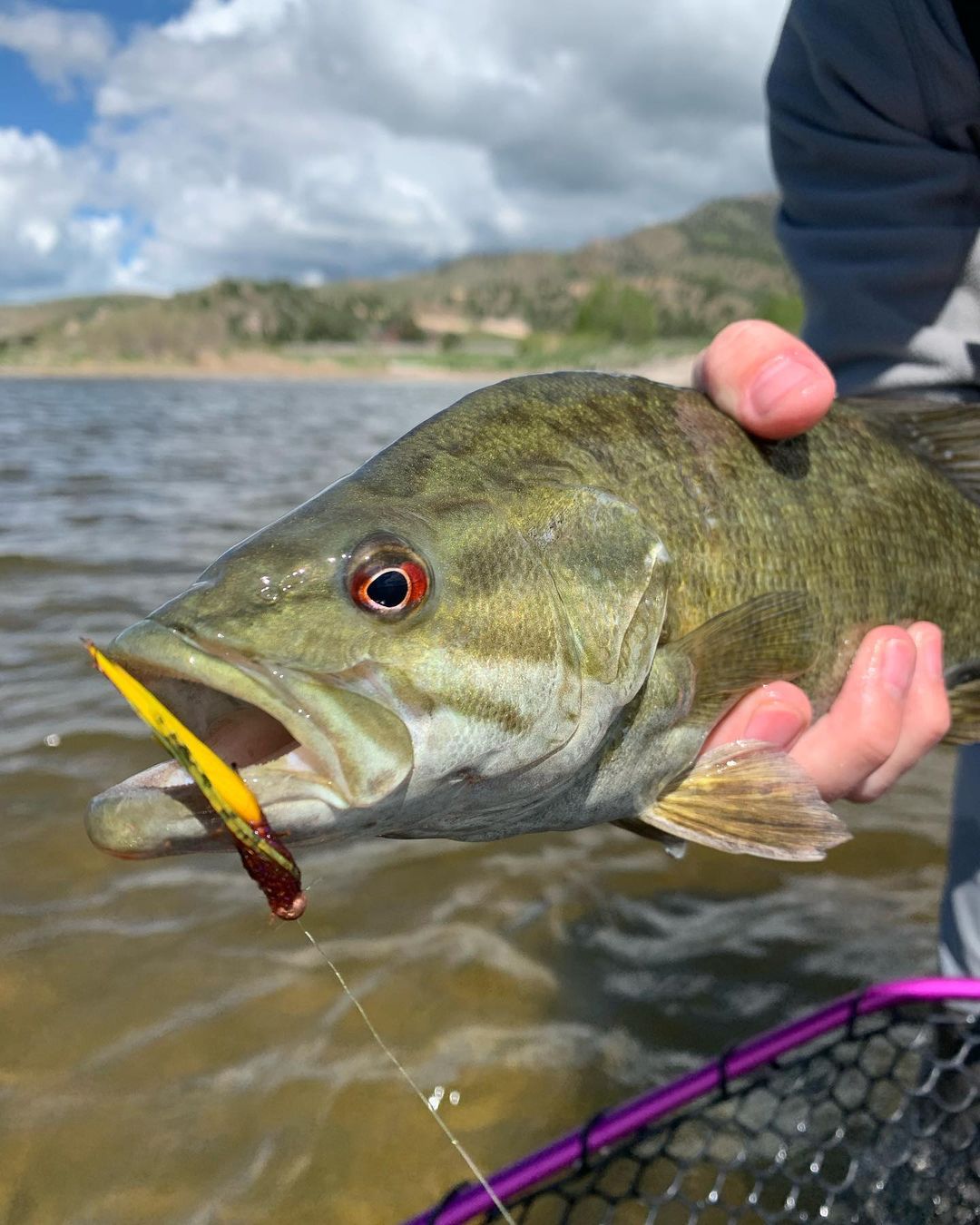
Maybe it’ll get up to two or 3000, which is about when you can put drip boats on it and that’ll roll until about Memorial Day during that time. We’ll we’ll be looking for spawning rainbows fish eating some streamers and the small mouth will really start defending their, they’ll start staging up pre spawn, get pretty active and then start bedding in May in early June. And then, gosh, we’re lucky and the river doesn’t get too big then we start throwing a few poppers and stuff at ’em in July.
Larry (27m 35s):
Slows down quite a bit after that on the small mouth. The trout of course have always been kind of going during that same time. I’ve talked about a really going, gosh, what do you think Brandon? What are we active carp feeding? What tip do we need Another week?
3 (27m 51s):
Another week for sure. But I mean it’s definitely going on
Larry (27m 55s):
And so there’s a lot of fish down there that are spawning. We’ll start seeing spawning fish from now until, gosh memorial day maybe. And you know, we don’t really necessarily really focus and target ’em, but you just have a lot more fish activity. You know, the carp thing will go really good up until June. And then what we start doing late summer is we kind of get a little period where the agriculture water is really pushing the river’s, you know, pretty big and whatnot like that and fish will kind of clamp up and then we’ll kind of wait a little bit for fish to be looking for cold water, you know, by a year, like last year that we had pretty low snow pack early on, there’s so many springs that pour out down below that that you’ll start seeing fish going to cooler water, you know.
Larry (28m 48s):
Gotcha. Almost all the way in October.
Dave (28m 50s):
And this is in like the below American Falls section?
Larry (28m 53s):
Yep. Yeah, I’m just pretty much talking just about
Dave (28m 55s):
That’s above Lake Walcott.
Larry (28m 57s):
Yeah. Yeah. I mean, you know, we probably need another two hours if we start expanding, but yeah. Yeah,
Dave (29m 2s):
Let’s stay in that, let’s stay in the range. We’ll stay in the range close closest for sure. Yeah,
Larry (29m 6s):
Good. You know, and then, and then we’ll start seeing some pretty good activity in that cold water stuff until, until it starts cooling down, then you get a pretty good little period of small mouth getting ready for winter. There’s low and lethargic and whatnot. But the carp definitely start packing on pounds and I mean we’ve had some days carp fishing down on these big basalt flats that, you know, it’s 200 yards of two foot deep clear water with carp tipping up on them and, and you can weight it cuz it’s basalt and it’s pretty fun.
Dave (29m 44s):
Nice.
Larry (29m 44s):
And there are a few browns in the system, you know? Oh yeah. So we’ll get a little activity down there, you know, going into October. Okay. And then November goes straight to Tailwater fishery, you know, small stuff, nipping all that stuff. Some of the best fishing comes after that water drop in October up until it gets real cold.
Dave (30m 5s):
Gotcha. Well there’s, you know, again, more, more good questions coming up here. But you know, let’s go to the swing. I don’t wanna miss that one again here. But what does that look like? You know, you’re talking about Swing and flies is kind of just like trout space stuff or what are you using? And this is in that same area swinging for trout.
Larry (30m 21s):
Yeah. Right now. I mean, one of our good customers did some swinging today swinging soft tackles, you know, swinging. They’re swinging and it’s an odd fishery. You don’t really match the hatch so much down there as you try to just show ’em a food source, that type thing. But he was swinging, what was he swinging? March brown soft tackles fourteens and there’s no March browns down there. Right. You know? Yeah. But and that was with probably what, a five or six Brandon? Yeah, yep. Trouts Bay. Yeah. So, you know, we’ll swing anything down there. There’s, it’s broad water, it’s slow. It’s a great place actually to learn how to throw a two-hander. We’ve had couple different, I think clinics down there with Klaus from Loop.
Larry (31m 5s):
Oh
Dave (31m 5s):
Yeah, yeah.
Larry (31m 5s):
Klaus with he’s
Dave (31m 7s):
Awesome. Oh yeah, Klaus is, Klaus is
Larry (31m 9s):
Awesome. He’s a dandy for sure. Yeah,
Dave (31m 12s):
He’s, he’s one of the good guys. Yeah.
Larry (31m 13s):
Gosh, if it wasn’t for him, I think I had a broke my two hand and half, three times. Oh
Dave (31m 18s):
Yeah. Yeah. He’s with what, what’s his, what’s his Bri is, he’s with Loop, right?
Larry (31m 22s):
I think Loop, yeah, yeah, yeah. But he’s awesome. And so that, we’ll go do that small stuff in the fall right when it stops, you know, I’ll swing some bigger stuff for sure. Even up into some Gallup stuff, you know, some monkeys and stuff like that when the, when the big fish.
Dave (31m 39s):
Oh yeah. So you’re swinging some bigger stuff.
Larry (31m 41s):
Yep. You bet. It’s a great place to swing. It’s a good place to learn how to swing. Cuz if, if you’ve been in the West or, well not just the west, but southeastern Idaho, northern Utah, we have a lot of basalt canyons, shallow canyons. And what that river is down there is basically running down one of those basalt canyons. So you have a lot of flat stuff on top, and then you’ll have a curvas, if you will, of sometimes it’s five feet deep, you know, as far as you could cast, but moving pretty slow. Maybe it’s, you know, maybe you’re only, you know, even though it’s five feet deep and, and you gotta throw a 40 footer to get across it, you might not ever hang up with a dry line and a, and a small clouder or
Dave (32m 31s):
Something. Oh. Because these are like slots, they’re, the fish are holding in down in
Larry (32m 34s):
Slot. Yeah, yeah, totally. So, so it’s really actually set up great for swinging and I think we, we haven’t really messed with it too much, but in the summer months when that water starts getting up into that 10,000, there’s a lot of inside turns, gravel bars you could get on and really take advantage of the swing doing that. We just haven’t had the time to really mess with it yet.
Dave (32m 55s):
Sure. So yeah, some of those areas where the water, you hit the turn and it’s slow, just the right flow, not too fast and, and you’re just swinging, just downstreaming across, just kinda like swinging for steelhead sort of thing.
Larry (33m 6s):
Totally. Yeah, totally. A hundred percent. You know, and we, we have a lot of leeches. There used to be a really large population of perch. There’s still quite a few of them, but, but there’s still a lot of golden shiners stuff like that and a lot of crayfish. So pretty, you know, a lot of the stuff that you would swing works great.
Dave (33m 27s):
Today’s episode is sponsored by Eastern Idaho’s Yellowstone Teton territory. Idaho’s most renowned zone for fly fishing from the Henry’s Fork, the South Fork of the Snake, and all the high alpine lakes and streams in between Yellowstone Teton territory provides anglers and other outdoor enthusiasts with all the information they need to plan their next big trip. You can visit wetly swing.com/teton right now to get the full list of outfitters lodges, fly shops and all kinds of inspiration to get you started on your next trip to Eastern Idaho. That’s Teton, t e t o n wetly swing.com/teton.
Dave (34m 8s):
Well, let’s dig into, let’s dig into bass a little bit. And we’re talking smallmouth, right? That’s, that’s the focus here for you guys,
Larry (34m 15s):
Right? Yep.
Dave (34m 16s):
Yeah. So we’ve done, you know, a number of episodes actually a lot in the Midwest. We’ve had a lot of smallmouth episodes talking about all that over there, and we haven’t done a ton out here, so this’ll be good to talk, you know, hear about how you guys do it. So let’s just dig into that. When does, so you just mentioned it, but when does that, when do you start getting ready for smallmouth?
Larry (34m 33s):
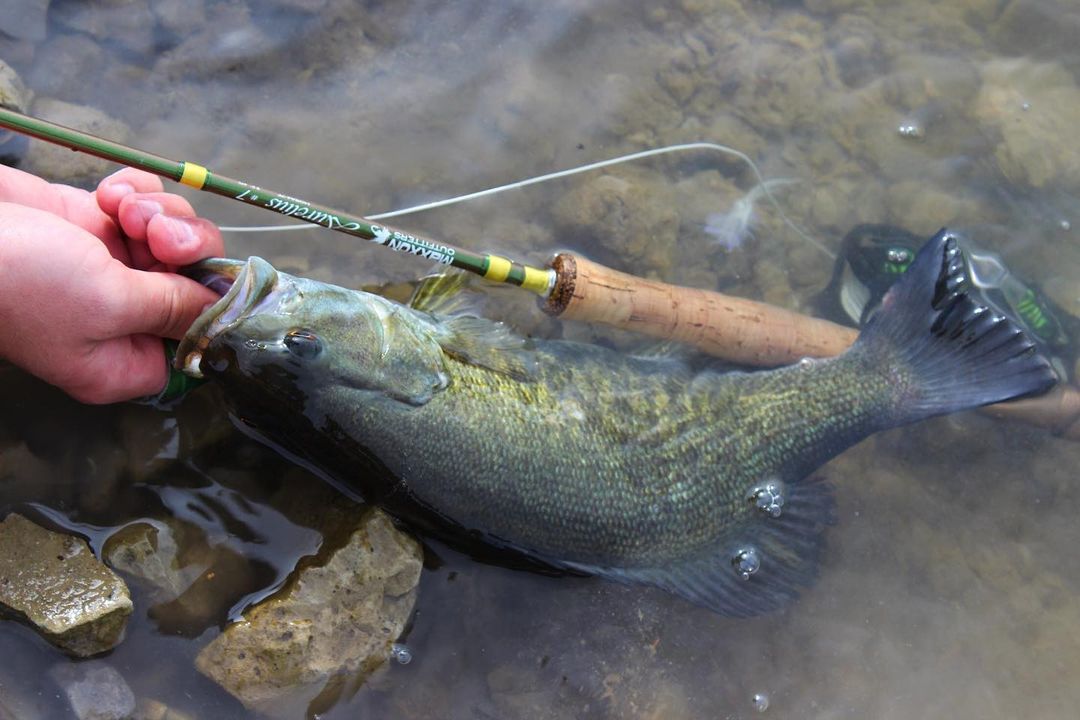
You know, we’re kinda starting to gear up now. It’s all weather dependent and seasonal, but, you know, last year, I think third week of March, Brandon and I had a pretty dang good day. You know, fishing real low and slow and, and we’ll typically fish six, seven weights. I think that both of us are fishing sa titan, you know, short tip and we’ll fish some weighted bugs and we just crawl ’em back, moving slow, covering ground. You get a lot of ledges down here because of that basalt. And if you know where those ledges are, you can do pretty good.
Larry (35m 13s):
But as Western as we’ve had to kinda learn how to catch ’em, you know, it’s a whole, it’s like your first time tarping fishing when you, you feel like an idiot and you just want to get off the boat because you’ve been trout setting all day. It’s taken us quite a while to learn to slow it down and, and make sure we strip set
Dave (35m 32s):
’em all right. So that’s the biggest thing.
Larry (35m 34s):
Yeah. So we’ll really start getting going. Hopefully if the weather breaks, looks like we’re in for at least another couple weeks of, of, of snow, thank goodness. But you know, by, by April we’ll be down chasing some pre spawn fish and we’ll start putting boats in down there as soon as the water gets, you know, up above 3000. So it’s a little easier to float it. You got a three mile stretch and then another access down another couple miles below that gets a little gnarly. There’s a couple waterfalls and stuff, but that’s plenty of water to, to have all the fun you ever want to have. And you know, then we’ll go until it really starts getting big.
Larry (36m 15s):
Memorial Day is kind of usually when you can count on that river getting big, but when it gets that big 2,500 or so on that top half mile, it’s a four bay and you literally can, you know, row a drip boat upstream a little bit and straight across and you can take out at the same boat ramp. Oh wow. And when it gets like that, and then the water’s pushed all the way up into like vegetation is when it really gets fun. Oh, no kidding. And and that’s when you get a lot of those fish that are, you know, right up there tucked under the bank, under the brush and, you know, a, a good shiny clauser, that kind of thing.
Larry (36m 57s):
Very visual and a lot of fun until the water gets hot and they slow
Dave (37m 4s):
Down. Okay. And that happens what, in July?
Larry (37m 8s):
Yeah, typically in July. You know, we’re just barely figuring it out too. I mean, you know, the folks that you’ve been talking to, we try to follow those guys over there as well in the Midwest is this is a kind of a only a decade long thing for us, you know, so we’re learning a little bit as we
Dave (37m 24s):
Go. That’s pretty cool. Yeah, it’s, it’s cool how it goes, you know, around the country when, you know, because we kind of talk to everybody right. All around the country and it goes back and forth, right. It’s like, it’s like the Kelly Goff thing, you know, I mean, starting the Midwest and then I just talked to John Bond and he was over, he’s in Norway now right? At Lodge, but he talked about how he was, you know, I mean he’s in your area just right up there too, right? And, and every, everybody’s influence in everybody. And so it’s not like, Hey, you know, anybody’s hi, it doesn’t seem like anybody’s really hiding things anymore. Do you guys feel like it’s just kind of an open venue? You, you know what I mean? Like learned from everybody?
Larry (37m 56s):
Yeah. You know, I mean I learned a long time guiding, you know, on the South Fork that it’s like you don’t have to keep it a secret because it’s gonna change tomorrow or the next day, right? So if you just had that like, oh my God, you guys wouldn’t believe how the expat has crushed them all day long today, for me it’s okay to tell the other guides and stuff that, because it’ll probably changed tomorrow. Right. That’s kind of the way that we feel about that stuff. We definitely don’t like to, you know, hotspot or anything like that. But yeah. You know, the worst is, is the person that calls and you know, asks how the fishing is below the dam and by the time you’re done, he is like, well how far far should my dropper be and where should I stand?
Larry (38m 37s):
Right. And that takes the fun out of it. Yeah, yeah, yeah. You know, geez, you at least I think that’s why half of us do this stuff, I know is because of the learning curve. But so yeah. You know, I think five years from now if we had the same conversation, I, I could probably tell you that we really understand how to catch small mouth now, but right now Yep. We’re just glad we’re getting them.
Dave (38m 59s):
Yeah, you’re doing it. What, and what are you guys doing for boats? What are your boats out there now?
Larry (39m 4s):
You know, we do a variety of stuff. I have a clock low Pro 16. Yep. Yeah, it’s like my second one and, and it’s just a really great boat for our area, but I also have a Crest liner 16 foot flat bottom with a, with a 60 jet on it.
Dave (39m 21s):
Hmm. Oh, there you go. Yeah. So you can run a jet in that section too.
Larry (39m 24s):
You can, you know, like I said, that top five miles, there’s a, there’s a, about six miles, seven miles down it goes, there’s a one waterfall called Duck Falls. You kind of skirt that at high water. But then the next one’s called Angel Falls and some really good boaters better than me in the past to of, so boats and stuff in there. So we just avoid it, you know. And then if you go to Massa Rocks, which is the state park, just down below that from there down to Lake Walcott, it’s pretty flat water. Okay. But, but yeah, the sleds work good in a lot of that stuff like that. You definitely wanna have experience, you know, with a motorboat
Dave (40m 3s):
With a motor. Exactly. Wow. And so, yeah, like you said there, there’s not, I mean the difference down here is that you don’t have quite the fish per mile, but it sounds like you have plenty of big fish and, and maybe not as much pressure. So it seems like maybe in a lot of ways it might even be better than fishing some of that upper water because Right,
Larry (40m 20s):
Right. It can
Dave (40m 21s):
Get little crazy.
Larry (40m 23s):
Yeah, I mean, I fished a lot of Tailwaters, you know, Henry’s Fork, south Fork being two big ones, worked on the Missouri when I was in college, been to the San Juan, fished the Madison quite a bit, you know, I mean as far as Tailwaters go, don’t quote me, but this might be the best one there is. Hmm. I mean, as far as quality fish, I mean they’re, we’re talking big fish in general over here and you know, it’s on one of the biggest rivers in the country.
Dave (40m 51s):
Right. Yeah. It’s not the snake. It doesn’t, it’s it’s the Snake River you guys called you. Is it just the snake when people ask you where you’re fishing?
Larry (40m 58s):
Yeah, just the snake at that point, you know, and, and once you get over to Haggar, twin Falls area, I mean that’s where most of the rainbow trout for the world are raised.
Dave (41m 7s):
Oh they are.
Larry (41m 8s):
You know, if you think about that, you know, oh wow, there’s a double combo there. You’ve got amazing fish habitat and a big river.
Dave (41m 16s):
That’s right.
Larry (41m 17s):
But like I said, it’s, we’re still trying to crack the code too. There’s places I haven’t even fished that are 40 miles away that I haven’t even been into yet.
Dave (41m 25s):
Right, right, right. Are you guys in, are there a few other fly shops around in town and through that section along the highway out there?
Larry (41m 32s):
Not really, you know, really we’re the only pro shop in Pello and then 50 miles North I, Idaho Falls. You got one of the best ever, you know, Jimmy’s all season anglers.
Dave (41m 43s):
Oh yeah, that’s Jimmy’s, okay.
Larry (41m 44s):
Yeah, that’s, that’s these, anyway, yeah, I’m a little, I’m a little biased, but Jimmy Shop’s amazing, but really nothing. There’s the new shop that I think has opened up, down in Twin Falls, but nothing in American Falls or stuff like that. So we probably are your closest, you know, source or whatnot for fishing that stretch.
Dave (42m 5s):
You got it. Okay. Well let’s, let’s hear about some of the, you, you mentioned the flight tying stuff. So maybe take us into the shop and talk a little bit about that. So are you guys tying, I mean, do you have everything for whatever weather bass or poppers? You kind of covered all
Larry (42m 19s):
We do. You know, we’re always changing, but gosh, I think if I had to start at, you know, we started at the beginning of some of our products, I talked about the McRay yarn and you know, talked about the two millimeter foam that we, that we’ve been laminating for years with felt product. But gosh, it goes from there, it goes to a lot of body wraps. We
Dave (42m 44s):
Oh right. Body wraps. Yep.
Larry (42m 45s):
You know, body wraps weren’t really a thing. I remember tying at the Wasatch Expo gas price 10 years ago and there’s a little company called Goat Headgear that did spikes for boots, but they also had this wacky stuff from like Joanne’s fabric that was Tinsel Hackle. Right. That was like polar Chanel. And I think at that demo I tied with just, just that stuff. I was sitting with Gary Barnes Froms fly and we just started screwing around with it. And so that kind of perked our interest and I think we have 40 colors now.
Dave (43m 21s):
Oh wow. And this is the body wrap,
Larry (43m 23s):
This is the body wrap, the hydro hackle and you know, and it’s, it’s pretty popular now. There’s three or four other companies that are definitely doing it. And it’s the same thing. What
Dave (43m 32s):
Would it be used for? What, what, what sort of patterns would, would you be using the body wrap?
Larry (43m 35s):
So what we really like it for is like, let’s say you’re tying a bugger or you know, you’re tying a peanut or something like that. You versus putting down shail and then wrapping hackle or slopping, you know, this is a one wrap deal. It has the fiber sticking out of it plus the core. And so we do, we do a S R F hydro bugger that that fishes great. And we use it in the substitute for that kind of thing instead of using, you know, a body and then a fiber to Palmer through it. This is a one-stop shop and like, so I think we have 40 colors or something.
Larry (44m 17s):
We do a lot of other stuff. We ripple ice fiber is a fantastic material carried by hairline. We accidentally stumbled onto it, I don’t know, half a dozen years ago we ordered the wrong product and it showed up and it was more like five inches long and a little stiffer than Ripple ice fiber. And we were bummed when we got it, but then we started tying clouds with it and now we have I think 16 colors of it, you know, so that’s a pretty cool one too. And then I remember one night when I was, I remember seeing a mebo dubbing out there, I can’t recall who it was from.
Larry (45m 1s):
It might even, it may have been fly fishing. Right. And, and it was just a little teeny bit of mebo with like, you know, some ice. And I was like, well that is not what you really want. So I remember sitting in the shop one night, I was all by myself and I started just cutting fibers off of the stem Malibu into a big jug. And then I threw some of our solar flash, which is a straight ice dub into it. And I blended it and I remember calling Brandon, I said, you gotta get down to the shop now. And so that started zero G, where we were doing a lot more Malibu full length to a little bit of flash.
Larry (45m 45s):
And that’s probably, is that our number one seller Better crinkles on, we sell ’em both. But nowadays we’re really working on a lot of different stuff. Brandon and these guys have really been into the Musky and they’ve been trying to drive me around and, and trying to get me a Musky. So, you know, we have a new fiber we’re gonna launch in the next two couple weeks Fish with, which is really similar to a slinky fiber, but we’re gonna sell it for less and we got it in a zillion colors and Wow. We also make a dubbing that has some, it’s like a seal sub long seal sub that has some acrylic fibers in it that we call Grease Leach dubbing.
Larry (46m 27s):
We have a lot of leaches around here, so we do a lot of different leach stuff.
Dave (46m 32s):
Right. Do you guys do the Stillwater? Is that, is that popular around there lakes and all that?
Larry (46m 36s):
Yeah, we do have, we have some really awesome Stillwater all the way around us, but like I said, even that, even that Snake River, we kind of jokingly call it moving Stillwater.
Dave (46m 47s):
Yeah, it is kind of right during the
Larry (46m 48s):
Right. Yeah. Yeah. So Leaches work really well. We have a ton of Mohairs. We tried to do our own hooks. We, we finally got some decent ones, but then we just partnered up recently with Matsu, M A S U and their hooks are fantastic. And so we’ve been about two months, three months into the Matsu Hook and, and really enjoying their products, so.
Dave (47m 12s):
Nice, nice. Yeah, you guys have a lot going. So I mean, how many Mat sounds like, like a lot of your stuff is your own stuff. Do you guys have, is it a majority of the materials you guys have your own kind of creations?
Larry (47m 23s):
Yeah, I would say probably a 50 50 in our shop. We, we definitely love our friends hairline and, and you know, we carry a lot of semper stuff as well. But yeah. You know, if we can, if we can source it, absolutely we do
Dave (47m 36s):
It Nice. So that’s it. And pretty much, I mean, yeah, it sounds like bass, you know, trout, I mean you guys are, what do you think when you look at throughout the year? Yeah, it sounds like you get fired with everything, but is there one time of year that you really get excited for? Is that a hard one to, to say?
Larry (47m 53s):
Yeah, definitely. For sure. I mean, if I’m talking just our river down here, I mean obviously, I mean, if we’re talking Henry’s Fork in South Fork, we’re really blessed to live where we do. It’s, it’s an hour trip that two of the best rivers, you know, arguably out there. But in our area, you know, myself, I really like that pre spawn small mouth, which is coming up, you know, I really like that because they’re aggressive, they’re not pinned on a bed and, and it’s tough. It’s not super easy, you know, but gosh, a five pound small mouth, you know, kind of makes that 26 inch brown trout look a little wooy
Dave (48m 34s):
Does it Roy?
Larry (48m 35s):
They’re tough man. Yeah, they’re tough. Really tough and, and, and I appreciate it all. But yeah, I’m, I’m a fair weather guy nowadays, so, hey,
Dave (48m 43s):
There you go.
Larry (48m 44s):
I like fishing, you know, from
Dave (48m 45s):
Weather’s getting better.
Larry (48m 47s):
Yep. When the weather’s better. Yeah,
Dave (48m 49s):
That’s, no, that’s awesome. And, and what does that look like? If we were gonna get somebody prepared for that, what should they be thinking about? Like as far as flies? What would you give ’em if they’re getting ready the next, you know, this month, what should they have in their box?
Larry (49m 0s):
Well, you know, they definitely should, should have, you know, a six or seven weight with, and probably a dry line and having a short sink, fairly aggressive, three or above. And they should look at having, you know, if, if chau flies that are just out there and available a near enough sculpin in a couple different colors would be good. Clouser in white, white and charr perch colored would be great. Our crinkles on klauser buggers in two or three different sizes. Everything roughly size four, we don’t go really crazy big. And then some specialized stuff if they want, there’s some really amazing bass bugs out there.
Larry (49m 44s):
We personally do the tube sock sculpting, which is a synthetic rabbit that Brandon came up with. It’s amazing. Got tarpon on that one too. And then the bass beetle, the, that I came up with, it’s kind of a traditional, if you will, hardware, bass beetle, you know, so it’s got rubber legs out both sides on the back, synthetic two-toned body with synthetic rabbit. Those work really good. You definitely want something with clouds or eyes and you’re gonna crawl, you’re gonna crawl it and keep a tight line
Dave (50m 20s):
Crawl. And so what is that? So if we’re on the water, you come to an area, you know, what does that look like? It sounds like you’re, you’re on the basalt, so you’re finding slots where you think fish are holding, but also you said once the water gets higher, they’re, they’re spreading out into the vegetation.
Larry (50m 34s):
Right, right. You know, so if you, you know, maybe streamer fish, the Madison Streamer fish, the South work Henrys Fork or, or the Missouri, and you’re casting a flight into the bank in destruction. Right. You know, allowing that thing to sink as much as you can without snagging up, you know, and then varying your retrieve as it comes off the small amount around here, they like to eat it on the drop, you know, so you really don’t necessarily get that trout tug is the drug thing. Your fly might just disappear or you just feel a little bit of something weird. But as you’re moving along those ledges, you can see that ledge and so you have a pretty good idea of where it’s gonna happen.
Dave (51m 17s):
Right. Yeah. They’re, they’re in, they’re down in, so these fish are down in the, just like the trout will be, they’re down in these slots.
Larry (51m 23s):
Yep. Setting off those ledges, you know, think about a staircase. Yeah. You know, from from bank to center on a both sides.
Dave (51m 30s):
Right. So you’re just dropping the fly, you’re basically just kinda sliding it off the ledge and just Right in their wheelhouse, just they’re just sitting
Larry (51m 37s):
There. Exactly. Exactly. Those aren’t push points, you know?
Dave (51m 41s):
That’s cool. That’s cool. Yeah, it’s interesting. Again, I think back to the episodes, you know, George Cook, we had on, he was talking about Chinook fishing up on the connect talk and stuff, and he was, he called it the pillow water. He was like, you know, you gotta go to the pillow water. Right. Not, not in the deep right now. I mean, is it, is it pillow water there? It seems like it’s a little bit slower. Yeah,
Larry (51m 58s):
Yeah. Totally. Yeah. Totally makes sense. You know what I mean? I mean, if you were a fish, where would you be?
Dave (52m 3s):
Yeah, right. Exactly. Yeah. You’re not gonna be in the tank, you’re gonna be in the soft, whatever,
Larry (52m 8s):
Sitting out getting a sunburn, you know, or, or, or hiding from food. But no, there’s so much to learn, you know, that’s the cool part.
Dave (52m 17s):
Yeah. Good, good. So, okay, so we got some flies here. We got the, the gear is, like you said, the sink three or five or something like that is good enough just to get down. You don’t need to be dredging the bottom for small mouth.
Larry (52m 28s):
No, no. I mean, typically they’re gonna be a little bit more structure oriented, you know, I mean, I’m not saying that you couldn’t just swing it out into the, the abyss, you know, definitely catch fish, but, but you’re gonna have a lot more fun, you know, trying to pick ’em off.
Dave (52m 41s):
Yeah. Pick ’em off. And then as it spreads out into the vegetation, is it a similar thing, like you said, just casting towards the bank into the weeds and just kind of letting it stay above and, and doing your strip or whatever?
Larry (52m 51s):
For sure. You know, the better the cast usually the better the bass.
Dave (52m 54s):
Okay, good. And are you doing any swinging for smallmouth?
Larry (52m 58s):
You know, we, we’ve caught fish doing that, but, but we haven’t targeted ’em that way yet. But I bet you would be really good on some of the, some of the places that we have down here, you could probably really pick up some numbers. Yeah.
Dave (53m 9s):
That, that was the one thing John Bond, I, I noted, he said in that episode, he was talking about how with his dreamer stuff, you know, he started doing, I, I think his fly was like the dragon. I think one of his flies is the dragon. He was talking about how Yeah. He was just, you know, casting it out and then putting a bend in it and letting the, the current basically swing the fly across fast. Sure. You know what I mean? Instead of doing the, the casting and stripping, like everybody does, you hear everybody do, he was like, Hey, this is, this just worked for me. And that’s what he does. But again, right. There’s all sorts of ways to do it. There’s no, that’s the cool thing.
Larry (53m 39s):
Yeah. You don’t have to do it like everybody else is doing it, you know? I mean, you just don’t.
4 (53m 44s):
Yeah.
Dave (53m 45s):
Nice. Well, I mean, you got Brandon there, so I, I don’t wanna leave the carp on the table. Maybe we could, do you wanna just talk carp a little bit as we kind of start to think about wrapping this up here?
Larry (53m 55s):
Yeah, I’d love to. Is it cool if we just kind of Yeah. Pass it
Dave (53m 58s):
Over to him? Yeah, bring Brandon in here. Let, let’s, let’s, we might actually do a follow up episode because we probably won’t be able to do it justice here, but yeah, let’s get Brandon on here.
Larry (54m 6s):
Yeah. He can get into it. Cool. Well, hey man, appreciate it. I’m gonna turn you over to Brandon.
Dave (54m 11s):
Yeah, thanks Larry. You
Larry (54m 13s):
Bet, Dave.
Dave (54m 13s):
All
4 (54m 14s):
Right. What’s going on, my man?
Dave (54m 15s):
Hey man, this is good. This is, this is like, wasn’t planning, you know, I didn’t know how this was gonna go. Again, this is why the, the podcast is great because we’re getting two for the price of one. Yep.
4 (54m 24s):
I love
Dave (54m 24s):
It. Nice. So, so, yeah. And you know, you obviously know the carp, so let’s, let’s dig into it real quick. Maybe first we’re not gonna go deep into all your background. I think maybe we’ll hold, we’ll get you back on for another episode. But you, Ben, we heard a little bit there about your story. Let’s just dig into carp. So talk about that. If somebody’s thinking about carp, what time, when should they be thinking about this? Again, just remind us there.
4 (54m 44s):
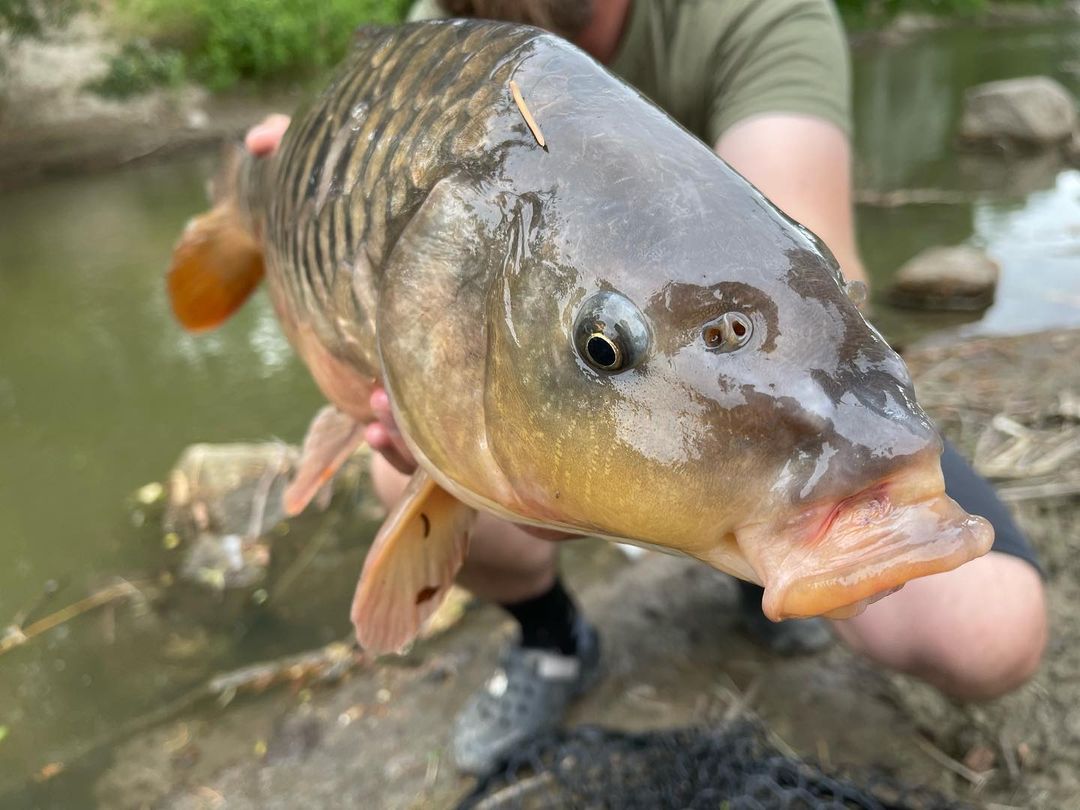
Well, I mean, like the beauty about Carpenter neck of the woods is, I mean, you could do it 365 if you really wanted to, but the big thing probably starting like end of May, June rolls around water temps are, are big on that. I don’t have an exact water temp. I mean, you definitely want it things to warm up, but cool thing, you know, they call ’em the what, the bonefish of the west tarp, all that kind of stuff. You know, once those flats start heating up, those fish will start getting moving. But we have a, like a weird thing, like Memorial Weekend, we have the, the Johnny Boyd Carp Tournament that goes on, on Blackfoot Reservoir every year. Right. It’s great cause it’s fun, but the hard part about it is those fish are usually like mid, like right in the middle of the spawn.
4 (55m 28s):
And if there’s one fish on the planet that you can’t catch during the spawn, like legitimately it’s a
Dave (55m 33s):
Carp. Oh it is. And when is that? When’s the spawn?
4 (55m 35s):
It generally, like for us it’s in that May, June, like early June, pretty much all of May timeframe. Okay. They’re heavy into it, but they can spawn up to twice, like twice a year. Part of the reason we can’t get rid of them, which is okay. But really if a guy were to come out like in our neck of the woods, like mid-June, through most of July, you have some really awesome opportunities, whether you’re fishing, you know, Blackfoot, you know, the American Falls reservoir below American Falls Dam. And then even, you know, later in the year, you kinda get some, some dirty water in that August timeframe. But September and October can be really good too, you know, if, if Okay.
4 (56m 15s):
Weather permits.
Dave (56m 16s):
Yeah. Yeah. And, and what is your, just talk a little bit briefly about kind of maybe some flies and gear. What are you using for him there?
4 (56m 22s):
You know, fish a, a lot of leeches similar, you know, Carper are very opportunistic. They’re gonna take every opportunity that a tr to bass, a stur, you know, whatever’s living there, whatever the food is, they’re gonna eat it too. And so, like Larry touched on, we have a lot of leeches, a lot of CRA ads, you know, honestly, a tan mop fly, we’ll catch more carp than you know what to do with whether you,
Dave (56m 45s):
Okay. There, you,
4 (56m 45s):
You go dab in it. I mean it flat out fish.
Dave (56m 49s):
Perfect. Love it. Love it. The off fly. Okay. And, and so why is in the carp? I mean they just, so they’re out there in the same areas throughout the year that you’re gonna find the, the rainbows and the and the bass.
4 (56m 60s):
Yeah, I mean just I guess if we’re just talking American Falls in river and the reservoir in itself, I mean, you could be fishing an indicator set up down there with a balanced leach under it, and every cast you make, I mean every hookup, it could be a rainbow, it could be a sucker, it could be a chub. Oh wow. Fish harp. I mean, you don’t know. It’s, it’s endless. They’re all hanging out in the same thing because when that water gets low, like this time of year it aquarium affects. But even in the summer months, when you do have all that water, you know, they’ll spread out a little bit, but they’re all hanging in the same stuff, eating same things. But the cool thing is when you know that flow gets up to that eight, 10,000 plus a lot of the flats that are dry for most of the year, you get that kind of somewhat saltwater experience.
4 (57m 44s):
A lot of site fishing, dabbing fish stocking, fish casting, you know, distance. You, you get a good, good feel for all of it.
Dave (57m 52s):
Oh, right, right, right. So same thing, just like the bass. So as the water spreads out now these fish are out there kind of like on the flats.
4 (57m 59s):
Yep. The carp in the bale, you know, they’ll hang in similar areas. The trout will definitely in the summer months, it gets harder to catch those trout and that’s why we kind of switch gears and really start targeting the bass and the carp down there.
Dave (58m 11s):
Perfect. So that’s the perfect transition. So when things warm up, it’s like, all right, put the, the trout on the back burner until the fall and then just go for a carp
4 (58m 19s):
And yeah, got the seven and the eight weights broke out and you’re ready to rock and roll.
Dave (58m 22s):
Oh, sounds great. And are you guys doing this, is this you’re just kind of a walk in waiting or are you still doing the boat thing?
4 (58m 28s):
You know, definitely utilizing the boats. It’s cool in the aspect of a lot of the flats that are down there, like there’s a couple flats down on the lower section of the river, I guess in that top three miles where you’ll go rolling in and you could park the boat and hop out and you have a a hundred to 200 yards of knee deep water that’s, I mean, perfect sandy bottom, not squishy, you’re not gonna sink into it that you could, you know, site fish carp and then cast out into the deep rocky pockets and there’s small mouth on the other side of you. So it’s, it’s pretty cool that way.
Dave (59m 1s):
Nice. What’s one of your, like again, you know, somebody’s kinda new to the carp and they’re going out there, what, what would be a tip you’d give somebody if they’re kind of hidden out and they haven’t really done it? Much of it,
4 (59m 10s):
You know, definitely my biggest tip with that is the thing with carp is blind casting forum is, is never a good idea. You can, you can spend all day just casting into the abyss so
Dave (59m 23s):
I can pumpkin fish and stuff like
4 (59m 24s):
That. Exactly. So taking the time to, you know, when you say you got a tip or you, you’ve seen fish there before, sit on the bank, take you know, 10, 15 minutes to just sit there and just watch you see a fish roll, you see a tail, maybe some nervous water and just kind of absorb all that information. Cuz a lot of it is, you know, site fishing, you know, I’d say, you know, 65% of the fish that I actually hook up with in catch are within a rod length of me. You know.
Dave (59m 52s):
Wow.
4 (59m 52s):
It’s very up close and personal and so taking the time, taking it slow and you might spend all day and only catch six fish, but all of those fish were, I mean, right underneath your rod tip when you did
Dave (1h 0m 3s):
It. Oh wow. So if you, if you’re out there, you’re sitting back for 10 minutes or whatever and you see some stuff going on, you, you see a carp, you make your cast, let’s say take us there, what, what does that look like? Like,
4 (1h 0m 13s):
You know, like say let’s talk, you know that that the pipeline boat ramp for instance, you walk out, there’s the, you know, a pretty good little flat right there. You can walk out on it, it’s got a whole bunch of different stuff. You’re, you’re walking up that deal, you got cattails on one side of you on the bank side and it’s deep water on the other side. You could have fish cruising either way. And I mean I’ve been walking that, you know, taking itty bitty little steps really slow working it up, just waiting, watching and next thing you know, you got fish on either side of you, you can either make your cast out to the bigger fish that’s there or maybe you got the, the six pound fish that’s, you know, tucked in the cattails and if you hook him, you know, who knows if you’re gonna land cause he’s gonna get buried in all of it.
Dave (1h 0m 53s):
Oh
4 (1h 0m 53s):
Right. Just mayhem.
Dave (1h 0m 55s):
Yeah. So you make that ca and what would be a fly, what would be one fly for carp that you’d be be tossing out there?
4 (1h 0m 60s):
You know, I just did, I mean, I guess just one little shout out to like our YouTube channel here. Yeah. Oh yeah, s Snake River Fly. You can look that up. I just did a tutorial a couple weeks ago on the baby jj Oh perfect. Special is, you know, a streamer pattern that was born here in Idaho and there’s probably been more trout bass car caught on that thing than anything else. Great. Pretty great. Just a yellow rubber legs, brown and yellow Malibu streamer. And when I, I first found that, fished it a ton and then just sized the whole platform down just into a carp snack in a sense. And I, I catch a ton of fish on that through the port n through, I mean, anywhere that there’s carp and there’s crowd ads, they, they eat it up pretty good.
Dave (1h 1m 44s):
So the baby jj. Yeah, I’m glad you mentioned that cause I wanted to talk about resources. So that’s, so you guys have a lot of the stuff we’ve talked about, some patterns you have over there.
4 (1h 1m 52s):
Yep. I was gonna say like patterns in shop and then, you know, like Larry touched and when we talked about, you know, materials that we’re doing here, a lot of our stuff on YouTube is, you know, based around our materials, whether it’s, you know, new patterns or you know, putting our materials into classic patterns just with a new vision that shows everybody how to use ’em, work with ’em and that kind of stuff. And we got probably a hundred, I think a little over a hundred tutorials right now. So
Dave (1h 2m 21s):
Right on. And is the baby jj, what does that describe that pattern a little bit? What, what is that thing? So
4 (1h 2m 25s):
I mean it’s super simple. It’s like number 10, number eight, real short shank cook, real heavy wire with a wide gap. The one that I tied, one has a tungsten bead, but anytime you’re fishing for carp, you wanna make sure you got the same pattern in unweighted, a lightweight and a heavyweight at least two or three of each. Cuz you never know your situation. It’s got a like brown mabu tail, olive body and then two little rubber legs coming out each side and yellow.
Dave (1h 2m 53s):
There you
4 (1h 2m 54s):
Go. And it’s, we cut a ton of fish on that.
Dave (1h 2m 56s):
Right, right. So it’s kind of a, yeah, it’s like a, it’s a, I mean like a lot of these patterns, right, it could look like a leech or a bugger or something like that, but it’s
4 (1h 3m 3s):
Guess and that’s kind of the thing like not even just in carp flies, but a lot of our patterns, you know, at least in my box I like having flies that cover a lot of bases instead of very specific.
Dave (1h 3m 15s):
Right. So that fly, could you also catch small mouth on that fly,
4 (1h 3m 18s):
Been there down that
Dave (1h 3m 20s):
Small mouth tr even trap, right?
4 (1h 3m 22s):
I mean my cart box is always with me even in the cold months and I mean it’s, it’s equated for a lot of the traffic I caught to, you know, those tight
Dave (1h 3m 29s):
Spots. What, what makes a good carp fly?
4 (1h 3m 32s):
You know, the biggest thing, I wouldn’t say it’s just one thing. Like I just touched having flies and various weights
Dave (1h 3m 41s):
Is gonna, oh, weights right
4 (1h 3m 42s):
Is huge. You know, cause I mean you could have fish that are, you know, let’s say here’s a situation, you got a a flat that’s got five foot of water over it, it’s a hundred yards long. You’re gonna have fish that are tailing and feeding on the bottom and maybe you got a little bit of current, so you need a fly that’s got some weight that’s gonna get down a little bit quicker and get in their feed zone. Also, you’re gonna have fish that are cruising, you know, and they might be halfway down in the column or they might be up top and you might have fish that are super spooky. So having a, you know, if you had just like a black and red, like semi sill leach, you got the j the baby jj, all of those, you know, backstabbers, classic cart bugs like that in various weights and whatnot and colors that match your forage, it’s just gonna make you that much more successful just because you never know where those fish are gonna be hanging.
4 (1h 4m 34s):
You know? I mean we even have situations, you know, later in the year on the reservoir like August and September where we’re catching ’em on, you know, mid-size trenoble ants cuz they’re feeding on stuff on the surface, all the algae scum and stuff.
Dave (1h 4m 45s):
Right, right, right. Cool. And then, and when you see that carp, you make that cast, what, what, what’s your first action after you, you drop the fly near it,
4 (1h 4m 54s):
You know where it is. So visual, it, it kind of depends on, you know, clarity, whatnot. But I mean, making the cast, you got, you know, your average dinner plate size, you know, feed pocket in front of ’em, their eyesight isn’t the best. It’s a lot of feel and it’s a lot of scent, you know, based feed. And that’s one of the reasons it’s so hard to catch carp, you know, on All right. Synthetic
Dave (1h 5m 16s):
Fries. So they’re not, their site isn’t as good as a bass or a trout?
4 (1h 5m 19s):
Nope. You know, bass are very visual feeders. So are trout, we were trout, we’d have dinner plate sized eyeballs on the side of our heads and we could see everything. Carp on the other hand rely very heavily on, you know, lateral line. And then, you know, they’re there. Watch some, some dude they like the carp scientist, I think is what they called him mean. Some dude over in England and apparent like, I guess the science behind it at carp pad, more or less taste buds from the tip of their nose to their, all the way up their face to their pec fins. So I mean, they’re very keyed in on, you know, scent, all of that movement, that kind of jazz, like the vibration. Gotcha. And that’s why one of the reasons they’re so spooky too is they can, you
Dave (1h 6m 2s):
Know, they can feel it all. So you gotta, so you gotta be subtle, you gotta make a good cast to drop in there so you don’t spook it. But then don’t wanna wa yeah,
4 (1h 6m 9s):
Why you want to have some unweighted or mid weighted flies too, because I mean, you could have a pot of fish and they, if you spook one and there’s 10 on the flat within, you know, their range, they’re gonna let everybody know that you’re, you’re creeping around and, and trying to stick ’em in the That’s cool.
Dave (1h 6m 23s):
That’s right. So you’re out there, you’re just in stealth mode. I mean, that’s it.
4 (1h 6m 26s):
Yep. It’s, it’s really fun that way.
Dave (1h 6m 29s):
Nice. All right, well I think, yeah, like I said, maybe we’ll leave more of the carp. Talk to our next one if we can put something together with you. So yeah, I guess looking ahead, I mean, Larry mentioned this, but I guess if you look, you guys look out the next few months into the summer, are you getting excited? I mean, what is it for you? What’s the one? Is it, is it carp for you? Is that the one species?
4 (1h 6m 47s):
Yeah, carp is definitely, you know, I, I love catching trout. I grew up in Pocatello, born and raised here my whole life and you know, fished it all in our neck of the woods and like the trout thing’s always exciting, the steelhead thing, you know, that’s going on right now, like, oh, that’s really cool. But the carp thing probably for the last 10 years is where I’m really starting to get Jones. As we creep into that end of April, into May, things start warming up. That’s when it gets real exciting. So.
Dave (1h 7m 16s):
Perfect. So Larry, you’ve, how long have you been working there in the shop?
4 (1h 7m 20s):
I think I’ve been down here, I mean, pretty much since the beginning. I mean like, I think 2016 is when they opened, when Larry opened this location. And I, you know, met him through I s u started time wise, you know, for the shop kind of part-time. Started doing a few things and then, I mean, pretty much since the, the very beginning of all of it. So I, 20 16, 20 17 been involved with
Dave (1h 7m 45s):
It. Yeah, you’ve been going and has there been, I mean, have you, what is, you know, has there been something you’ve really learned from Larry or has this kind of been a back and forth from both of you guys?
4 (1h 7m 53s):
Tons that I’ve learned from Larry and like, just like fishing, fly tieing, all of that. But it’s been really fun to be able to kind of bounce off, you know, we, we both have the, the, you know, the creative mindset where we’re not real satisfied with, you know, one bug or, you know, we’ll tie one fly and then I’ll, you know, we’ll take it out and fish it and then both of us will tinker on it and then it, you know, the final product. So it, it’s pretty cool that way.
Dave (1h 8m 17s):
Perfect. All right, Brandon. Well, and give us a heads up. What, what your last name and we didn’t catch that. Morrison Morrison, Brandon Morrison. Okay, perfect. Perfect. Well, we’ll I’ll send everybody out, like we said at the start. We’ll, we’ll head over to, well you can give us a shout out what, where’s the best place to go if we want to learn more and dig deeper into this.
4 (1h 8m 35s):
You know, I mean, snake river fly.com, I mean, we got a, we got a ton of stuff on there. Materials, you know, tons of blog stuff. Our YouTube channel, which you can find just by searching Snake River Fly. And then also like our Instagram page also just snake overfly, you know, if you guys are messaging us on any of those, you’re either gonna be talking to me or Larry, but I mean, we’re usually back to you within, you know, a couple hours. So.
Dave (1h 8m 57s):
Perfect. And tell us as we get out here that part of, you know, Idaho, what, why is it such a cool place to live? I mean, there’s a lot of amazing, obviously the resources and stuff like that, but what, what do you love about living out in that part of the world?
4 (1h 9m 9s):
You know, I’ve had, you know, a lot of opportunities. You know, I’ve got a bunch of family down in like Phoenix, done the carp thing down, super cool. My wife’s got a ton of family in Nebraska, been over there fishing and whatnot. But I think the thing that I love about, you know, our southeast Idaho just in general is it’s growing just fast enough. It’s not, you know, too crazy big like some of our neighboring cities, but like the hub aspect of, you know, Pocatello where I hop on the interstate in any direction, I drive an hour, hour and a half, I
Dave (1h 9m 39s):
Can, you’re there
4 (1h 9m 40s):
The West’s best.
Dave (1h 9m 42s):
That’s right. Yeah. It’s not quite, and I guess the neighboring days will be like Boise, right? Boise’s one that’s definitely growing fast.
4 (1h 9m 47s):
Yep. I mean they’re growing big, but I, it’s just really cool to have, you know, still kind of the quiet town aspect of it with, you know, a ton of awesome outdoor resource. So if you love being outside, whether it’s hunting, fishing, hiking, biking, you name it, it’s
Dave (1h 10m 2s):
Not it all. And how far do you have to go west before you leave Eastern Idaho, would you say?
4 (1h 10m 10s):
I would say
Dave (1h 10m 10s):
Twin Falls. Is that still?
4 (1h 10m 12s):
Yeah, probably say Twin Falls is when you
Dave (1h 10m 14s):
Start kind Central. Yeah. Twin Falls is now you’re, you’re on the west side of the state, so pretty much everything east of Yeah. And that’s what we talked about today. I mean, we talked about American Falls down to, you know, essentially Twin Falls. I mean, we didn’t dig into all that, but you guys could probably fish all that river right. All the way down there.
4 (1h 10m 29s):
Yep, yep. And I mean, we have, that’s one thing too that’s kind of cool about it, you know, like Larry said, born and raised Idle falls, that kind of stuff. Me here in Pocatello this whole time. And I mean even like just branching out, there’s so much packed into our little neck of the woods that we’ve only kind of taken the top off of a few things. You know, some of the more well known stuff around like the Hagerman area and whatnot, you know, I guess that direction fishing wise. So, I mean, it’s endless. It’s, it’s really cool. Snake is very big.
Dave (1h 10m 59s):
It’s a cool area. Yeah, it was just, well we were up, I mean, craters of the moon, right? It’s just north of you guys across that we were, last time we went through there, we stopped and camped the night up there and I mean, yeah, it’s a, it’s amazing, right? It’s all, I mean, build on volcanic right activity, the whole, the whole thing.
4 (1h 11m 12s):
It’s crazy cool. And I, I mean you could even get into like the, the Bonneville flood. The Missoula flood. I mean there’s
Dave (1h 11m 18s):
Oh yeah, that ripped right through there, didn’t
4 (1h 11m 20s):
It? Yep. And like, I guess one li one thing, like if you ever put a boat in at Massacre Rocks and you drive, you know, motor upstream towards Eagle Rock, you can actually see the sediment lines in the cliff walls through one of those sections from the Oh wow. And the Missoula flood like,
Dave (1h 11m 36s):
Like hundreds of feet up.
4 (1h 11m 37s):
Yep. It’s, it’s super cool in that aspect. I mean even like just that the geology and the history aspect of it too. Yeah. There’s
Dave (1h 11m 44s):
Just nice, nice. Well that’s good. Well maybe we’ll dig in more on the, the, some of the other stuff you guys have going on. The next one I have lots of other questions for you, but I think we’ll leave it there Brandon. And definitely wanna thank you for your time today and let Larry know, you know, we appreciate him as well and we’ll be in touch. So thanks again for all the time.
4 (1h 12m 1s):
Nope, it sounds awesome. We really appreciate the opportunity to be able to chat with you. My man,
Dave (1h 12m 6s):
Snake River, fly on travel, part of the Wetly Swing podcast and Swing Outdoors. This podcast is supported by Eastern Idaho’s Yellowstone Teton territory. You can support this podcast in eastern Idaho by heading over to wetly swing.com/teton right now. And you can let check out some of the brands and companies that are on that website and you can let them know you found them through this website. Don’t forget to check in with me. If you have an area you’d like us to follow up with around the country, if you’d like us to dig deep into a specific part, maybe something you’re planning on heading out to, maybe an area, you can send me a message anytime, dave@wetlyswing.com. And just put school in the subject line.
Dave (1h 12m 47s):
We just closed the Stillwater giveaway last week, but you can grab a slot if you want to check out right now, see if we have anything available. My guess is we’re probably getting close to wrapping this thing up. Wetly swing.com/trips, T R i ps to find out if you can jump on, just enter your name and email and we’ll follow up with you as soon as we get that. All right, I’m gonna run on and get on to the next one. I hope you enjoyed this episode of travel and I hope you have a chance to head to Eastern Idaho and check in with all the great companies fishing shops and, and just the great area that this, that makes this part of the world so unique. Excited to see you on travel. Have a great day.