In this episode, we dig into the science of a perfect fly cast with legendary casting instructor Ed Jaworowski. We talk about rod loading, loop control, timing, and the small mechanics that make a cast efficient and accurate.
Ed also shares how he learned alongside Lefty Kreh, and why mastering these details can keep anglers improving for decades.
A lot of anglers plateau in fly fishing and don’t even realize it. They catch fish, and their casts look fine from a distance, but something quietly stops improving. Distance stalls, accuracy drifts, and wind start exposing weaknesses.
In this episode, we dig into the science behind a perfect fly cast. What actually loads a rod, how loop control works, and why most casting problems start long before the fly lands. We talk about timing, tracking, and the small details that separate a cast that works from one that holds up in tough conditions.
Since then, Ed has stayed busy studying fly casting and teaching private lessons. He even consulted with a physicist to confirm some of the ideas he teaches about how a fly cast really works.
He still works one-on-one with anglers, and some travel long distances just to spend a few hours learning from him. His lessons usually run two to three hours and focus on how the cast actually works, not just how it looks.
Ed says the most important concept in casting is simple. A rod can only do one thing. If it’s bent, it can straighten. And your job as the caster is to put the bend in the rod and then get out of its way.
Many anglers push forward at the end of the cast, trying to throw the line. Ed says that’s where most problems start. Here are the key ideas he teaches:
Most casts take about half a second from start to finish. In that short window, the rod loads and unloads.
Watch Ed break down acceleration and rod loading in this short YouTube video below:
Ed says the best place to practice is on grass, not on the water. Casting happens in the air anyway, and so practicing on grass makes it easier to focus because you don’t have to strip line or deal with current.
You can also reverse the drill and practice the back cast the same way. Ed says he doesn’t teach people to cast. He teaches them about casting, and then they have to practice and discover the motion themselves.
I asked Ed if the best casters all end up developing different casting styles. Ed said the styles may look different, but the physics behind the cast is always the same.
He compared it to golf. Every golfer has a different swing, but at impact they all have to produce the same speed and motion. Ed believes many casting problems come from anglers following rules instead of principles.
Ed says these kinds of instructions can actually hold anglers back. Instead of fixed positions, the focus should be on what the cast needs to accomplish.
Ed also shared an interesting way to think about casting mechanics. A fly rod works as a class three lever, the same type of lever used in sports like golf, baseball, and tennis.
I asked Ed where people should go if they want to learn more after this episode. He pointed to two main resources.
Ed says the book and video work well together because they explain the same ideas in different ways.
When I asked Ed about preparing for windy conditions and long casts, he brought the conversation back to the basics. The less energy you waste fixing slack in the line, the better your cast will be.
Check out the video below where Ed breaks down how to focus on and improve your backcast.
For shorter casts, a smaller angle works fine. But for longer casts, opening that angle wider lets the rod load much deeper and more efficiently.
Many casting instructors teach rules first. Things like where the rod should start, where it should stop, or what position your arm should be in. Ed says those rules only work in very specific situations.
Instead, he focuses on function first. Every cast depends on the conditions: the wind, the distance, the fly, and what’s around you.
Once you understand what the cast needs to do, the form naturally adjusts to fit that situation.
Most anglers assume that if they have an 8 wt rod, they should use an 8 wt line. Ed says it’s not that simple.
The problem is that many lines labeled with the same number can actually weigh very different amounts. Two lines, both marked as “6 wt,” may have very different grain weights in the first 30 ft.
Ed says this is why anglers sometimes feel like a rod works better with a “heavier” line. In reality, the lines being compared may already be very different in weight.
Lefty made a long cast in the middle of telling a joke, and everyone watching focused on how far the line went. Ed noticed something different. It looked like Lefty barely did anything, yet the line unrolled perfectly.
That moment stuck with him. Ed said he realized Lefty understood something about casting that most anglers didn’t.
That meeting led to a 42-year friendship and partnership. Lefty had an incredible instinct for casting, and Ed spent years studying the mechanics and physics behind why those movements worked.
We’re giving away a copy of Ed’s book, Perfecting the Cast, to one listener. To enter, head over to the Instagram post for this episode and tag a local conservation group you support.
One person will be chosen to win the book.
Episode Transcript
897 Transcript
00:00:00 Dave: A lot of anglers plateau in fly fishing and they don’t even realize it. They catch fish. Their casts look fine from a distance, but something quietly stops improving. Distance stalls accuracy drifts. Wind exposes weaknesses. Today’s conversation is about breaking through that ceiling. Today, we’re digging into the mechanics behind an efficient fly cast. What actually loads a rod, how loop control works and why most problems start long before a flyover lands. We talk about timing, tracking, and the small details that separate a cast that works from a cast that holds up in tough conditions. This is the Wet Fly Swing podcast, where I show you the best places to travel to for fly fishing, how to find the best resources and tools to prepare for that big trip, and what you can do to give back to the fish species we all love. Today in this episode, we’ve got Ed Jovanovski on, and he’s going to be stripping back the cast and breaking down the fundamentals. Not in a beginner way, but in a precision way. This is going to be an amazing episode, the kind of refinement that keeps someone improving for decades instead of just years. In this episode, you’re going to find out how he got started and how he mastered his cast with Lefty Kreh alongside lefty. He worked with him for years. We’re gonna find out about the book, his first book, the cast, and perfecting the cast and why you need to get your hands on this book. We’ll also find out about the technical way he breaks down casting. Loop control. Rod. Loading how he teaches. This is going to be a good one. The first episode was one of our best ever, so hope you enjoy this one. All right, let’s get into it. Here he is, Ed Jovanovski. How you doing, Ed?
00:01:36 Ed: I’m doing just great. Dave, good to hear from you.
00:01:39 Dave: Yeah, yeah, it’s, uh, this is going to be a fun one. It’s been a number of years. I think we had you back on or last time was episode two thirty three back in twenty twenty one. Twenty one yeah. Twenty one we’re going to get caught up on what you’ve been up to, and we’re going to get into, because you’re pretty much about as high of a level as you can get in casting. We do some casting episodes, but I feel like when we get somebody like you who’s written books about it and stuff, it kind of takes us to that next level. So before we jump into all that, give us the heads up on, you know what you’ve been doing anything new the last few years for you?
00:02:08 Ed: Uh, well, I just continue, believe it or not, studying casting, I consulted another physicist about some of the things that I talk about for confirmation. You know, the physicists always tell you, you know, you don’t know your math. I said, that’s why I’m talking to you. You do the math and just confirm what I’m saying. I just want to make sure I’m not, you know, throwing out junk there for people. So, uh, you know, doing that and, uh, fishing, obviously now this past year, I’ve had little problems at home here. My wife’s been sick, so I haven’t been doing anything recently, but I’m basically doing studying. I’m doing a private lessons, a lot of private lessons, people coming from all over. I had people drive down from Toronto. I had a guy flew in from Montana for a lesson, things like that, you know?
00:02:48 Dave: And what are your lessons look like? What do you do? Is this like a day lesson?
00:02:52 Ed: It’s a long it’s a long thing. I send them a long letter. It’s two to three hours. And what I do is I go over how it all works, and I can talk about some of that right here as we go into.
00:03:03 Dave: Yeah, let’s do that.
00:03:04 Ed: Yeah. And you’ll get an idea of where I’m going with, you know, how I approach all this.
00:03:08 Dave: Okay. Yeah, we can talk about that. I think we also, the last time we had you on, we talked about the the three principles of fly casting. I think we, I definitely heard from a lot of listeners that love that. So I think we’re going to kind of dig deeper into the principles and how people can apply them and maybe, you know, get better at casting, right? That’s ultimately the thing. But maybe talk about the physicist that’s kind of taking it to the next level. What is when you talk about physics, how does talking to a physicist help you do what you do?
00:03:33 Ed: Well, the problem is people want to hear the word physics. They sort of panic, you know?
00:03:37 Dave: Yeah, they do. Right. Like right now I’m like, it brings back memories. Bad memories of college.
00:03:41 Ed: Yeah, exactly. In high school, I didn’t do well in physics or something, but what I’m talking about is physics in its generic sense. It’s basic sense, how the universe works. Things like two kids on a seesaw. That’s physics. You open a bottle cap on a beer bottle or soda bottle or something. That’s a class two lever. I mean, that’s physics. It’s how things. Everything works. That’s all. Motion and force. Hammering a nail into a board. It’s physics. Take a pair of scissors and cut a piece of paper. That’s physics. That’s a class one lever working. You know, it’s. I’m talking about common sense. Everyday movements and motions.
00:04:18 Dave: Gotcha. That helps. So that clarifies. So we’re all we all understand physics. And then on the fly cast, what’s the most important physics to understand of the cast?
00:04:27 Ed: Well, the most important single thing, let me preface it by saying this. There’s two elements involved here, and this is the way I approach it now. The materials are the same, but I have found other ways to express it, to get through to people. A rod can only do one thing as one function and that’s it. The only thing that a rod can do any rod, if it is bent, it can straighten. That’s all it can do. It can’t bend. So people say to me, well, it can bend. I said, well, let’s stay in here and wait for this. Look at this rod and wait for it to bend. No, the rod itself can only straighten. The casters job is to put the bend in it and then get the heck out of its way. People have been abusing this. Every problem that anybody has either is involved in that loading process, which is what I spend all my time on, or the unloading process when the rod is straightening, people are getting in its way, you know. It’s causing issues. I can’t tell you how many people I’m talking eighty, ninety percent of the people that I’ve worked with in fifty years. At the end of the stroke, you see their arm pushing forward. They’re trying to throw the line at the target. That’s not your job. Your job ended. And I’ve got videos of all these clips. When your hand starts to move and when you get the load in the rod, and I’m going to talk about how we get that load. The only way you can do it, you get that load. And I freeze the video right there. And the rod. I have it bent into the cork and I said, now watch what I’ll do now. And I start the video up. Nothing. Just let the rod straighten. That’s the most efficient you can be. So I want to talk about how we get the rod loaded and don’t interfere with it when it’s trying to straighten. So what you want to do is understand that the most important element of all by far is acceleration, right? That means you start out. Now I’m speaking in relative terms. Now you start out slow and it gets faster, faster, faster. There’s only one motion involved. There’s no power stroke. I know people talk about good casters. They say power stroke. Know what they’re feeling is that final, final part of the acceleration curve. And I’ve got graphs. I’ve got images. You can see that in the average cast. You know what the length of the. And I’ve done this for hundreds of people. How long does it take to make a case to get that rod loaded? It’s between one half and one second closer to one half. I’ve got a lot of my time, four tenths of a second. Now, the trick in the act is in that four tenths of a second in that half second. You’ve got to speed up and stop. Stop applying force. You know, your hand may move because it’s like a follow through in golf or something. You know, the rod straightens, your hand can move a little, but you’re not applying any force anymore. You stop applying the force, you stop accelerating. Let the rod straighten. And so to do that in that short length of time and I’m saying that rank beginners, pros, everybody, it’s somewhere between a half a second and a second from start to finish. To do that, to accomplish that, to speed up, you’ve got to I don’t like to use this word if there’s mixed company out there, but you’ve got to practice, practice, practice.
00:07:46 Dave: Practice.
00:07:46 Ed: Practice. Who practices more in golf than the best golfers in the world. Exactly. These guys spend their life practicing. They’re still going to blow it when the time comes. Maybe on occasion. But the point is, I have videos one after another of students who I’ve worked with over the years, and you’ll see them going fast. They think that faster and harder is going to bend the rod. It doesn’t work. And I can show you. Do this. Get. I tell people have somebody video you. Okay. Just making a cast. It was hard as much as you want. Put it on a computer. Slow it down. Do it in slow motion. The first thing you will notice is that there’s almost no bend in the rod. And I’ve got pictures of people who stroke their stroke on the back cast and on the forward cast is blindingly fast. I mean, you hardly see their heart. It moved their hand move. But when you slow it down, one thing you realize they got this hard, gentle, gentle curve in the rod. I’ve got other ones where the hand moves Eighteen inches. Say. And you stop the video. The rod is bent like a horseshoe right into the corks, because the one accelerate it. The other one did not accelerate. What I call it is the windshield wiper stroke. People go like crazy. They their arm comes forward, boom, and you slow it down. There’s no bend. It’s like the windshield wiper on your car. It never changes speed. Once it starts up, it immediately goes to a speed and it goes across and back and forth and back and forth.
00:09:16 Dave: Yeah. You don’t want the windshield. You don’t want the windshield wiper.
00:09:19 Ed: No. And that’s what the vast majority of people are doing. I see it all the time.
00:09:24 Dave: Yeah. What’s the exercise for that to go from the what you want is to start slow and then fast, fast, fast, fast and then stop. How do you what’s the exercise to get better? Just practice on the water.
00:09:32 Ed: Not on the water, on the grass.
00:09:34 Dave: On the grass.
00:09:35 Ed: You can do it on the water, obviously. But here it’s easy because if you foul up, you don’t have to go stripping anything. It’s easier to rectify it. No, because casting takes place in the air, not on the water per se. The way I recommend people, and I tell them to do this just for the learning of this, you’re going to k a sidearm, put stretch some line out behind you thirty feet or whatever you have. Now you’re going to cast sidearm and you start out slowly. I mean, you would exaggerate this slow and just keep going faster, faster, faster. And so that in the later part of your stroke, it’s going a whole lot faster than it was in the early part of the stroke. And then the best thing you can do is reverse it if it’s not straight out there, okay. Straighten it out on a grass. That’s easy. Step back or something and then practice your back cast. Start bringing your hand back. Faster. Faster. Faster. And stop and see where it goes. And what I do is I put a rope down on the ground for them. At the same time, you can be practicing the control of that stop. So that you try to throw a back cast and lay it right next to or parallel or on top of this rope on the ground. And you keep doing that and you doing it. And. And little by little you start going a little faster, you start speeding up sooner, and you get faster and faster and you teach yourself. I’ve worked with thousands of people around the globe. I’ve never taught anybody to cast. I really, literally haven’t. I teach them about casting. And as you just ask, here’s how you can practice that. You have to find it. I can’t do it for you. Yeah. It’s like you take a music lesson and you go to your music teacher and he sits down at the piano and he plays this concerto or something, or this Bach etude, and he says, okay, that’s how you do it. Now you sit down and do it.
00:11:20 Dave: Yeah.
00:11:20 Ed: Well, come back in ten years, you know?
00:11:22 Dave: Yeah. So what you’re saying is like, everybody kind of finds they practice, they find their own style of caste. So could you look at say, you know, lefty and all the great casters of now in the past and see that their casts are quite a bit different between all the best.
00:11:35 Ed: They’re not different in what they’re accomplishing. They have to be doing the same thing according to the physics. You look at all these golfers. They all have different swings, seemingly, but at the moment of impact, they’re all at the same thing. If you want to hit it, you know, three hundred yards, it’s got to have so much speed to it. If you want the fade or draw the ball that’s built into the stroke. So the one thing you can tell is just from the result. Uh, there’s no rules for casting. There are no rules. And I’d like to talk about that a little because those rules are the key to the mistakes we’re making. We’re told to do things which are counterproductive.
00:12:12 Dave: Yeah. What’s the difference between a rule and a principle? Because we’re talking about three principles. Okay. Rules are different, right?
00:12:17 Ed: Yeah. This is my big thing here. Yeah. You go to get a lesson or something and people say, well, stand this way, face the target square to it and so forth. Other people will say, now when you come back, you bend your elbow at forty five degrees. I heard a famous, famous, very good, excellent fisherman and so forth. Good caster. He says the forearm and upper arm should be bent at the elbow forty five degrees. That’s a rule. Some people will say, well, start your back cast by holding your rod at ten o’clock. Okay, that’s a rule. And incidentally, it goes against physics, which I’ll talk about in a second. Stop your back cast at one o’clock. Right. Again, they’re telling you specifically what to do. Instead of approaching it from what has to happen, people tell you it’s very popular here now among trout fishermen. Move the rod back and forth between ten o’clock and two o’clock. This is. I’m telling you, you’re never, ever going to be really good. You can’t. And I’ll explain these things. People will say, oh, the back cast and the forward cast have to be in the same plane. We’re not talking about planes here. We’re in a three dimensional world. You know, um, the rod tip always has to travel in a straight line. Well, there are a lot of casts now that you can’t make. Here’s a recent popular one. The back cast is an upstroke and a forward cast is a downstroke. Many times that’s obviously true. But when I’m out in the boat fishing for striped bass on the ocean, about ninety percent of my casts, the forecast is going upward.
00:13:41 Dave: All right.
00:13:42 Ed: And I love this one. Everybody’s heard this one over and over again. Let your back cast straighten before you go forward.
00:13:48 Dave: Yeah. Straighten.
00:13:49 Ed: In fact, I showed that on the screen when I’m doing clinics and stuff. I said, I’m going to modify that. Let your back straight and I put over top of it. Never let your back straight.
00:13:57 Dave: Yeah, that’s not good.
00:13:58 Ed: In a short cast. If you’re in a little just, you know, stream making sure the damage isn’t so bad. It’s not, it’s not going to make a great difference, but you’re building in a stroke into your stroke. You’re feeling that thing going and it’s going to kill you. You’re never going to have be able to do a lot of things with it, right?
00:14:17 Dave: What do you do instead of that, instead of letting it load? Talk about that. What do you want to be doing there?
00:14:22 Ed: It doesn’t load the back. It doesn’t load it. Yeah. The back. When the back end straightens, it means we’ll go there right now. The back cast unloads.
00:14:30 Dave: Yeah it’s unloading. You’re losing your energy.
00:14:32 Ed: Exactly. You’ve got to start forward. Uh this this is kinetic. The line is unrolling to the rear. It’s pulling against the rod tip as it’s unrolling back there. Right? Yep. You want to start forward just before it straightens out. I’ve got videos of this. Stop. I mean very slow motion stop thing that we did when we were making our DVD. Lefty and I and I show here’s what happens. It stops and I stop the film right when the line goes perfectly straight. And then, you know, we do this in slow motion, so you’ll see things that people don’t even notice. And I start forward then and the line is falling, falling, falling, falling, falling. And then it picks up again. Well, in the meantime, about four negative things happened, which I can’t go into all this. Obviously I can, I can talk on this twenty four hours a day for a month. But so the point is what you want to do. And then I make this the next case. I got two camera boats filming this.
00:15:27 Dave: Oh, wow.
00:15:28 Ed: And I start forward when that thing looks, what do I call it? Like a candy cane or something back there just before it’s going fast. So it’s going to be great. And love it. The other thing is, so you start forward then, mainly because I say you don’t want the line to straighten because it releases the pressure on the tip. But you also have to understand reaction time. And I’ve read, I’ve studied these things. I’ve talked to, you know, scientists about it. Reaction time, typically for most of us is around one quarter to one third of a second, somewhere in that range. So when that straightens that one quarter to one half, remember my whole stroke’s only a half seconds. So you know you’ve blown it already. So you want to start. You’ve got to allow for that experience.
00:16:16 Dave: The waters of Bristol Bay at Togiak River Lodge, where fly fishing meets Alaska’s rugged beauty. This is the place to complete the Alaska Grand Slam with all five salmon species rainbow trout, Arctic char and more. Where each day offers a new Alaskan adventure, you can visit Togiak Lodge dot com right now to start planning your Bristol Bay experience with Togiak River Lodge. When it comes to high quality flies that truly elevate your fly fishing game, drift Hq.com is the trusted source you need. I’ve been using drift hooks expertly selected flies for a while now and they never disappoint. Plus, they stand behind their products with a money back guarantee. Are you ready to upgrade your fly box? Head over to Drift Hook dot com today and use the code swing at checkout to get fifteen percent off your first order. That’s Drift Hook d r I f t h o o k dot com. Don’t miss out. So the candy cane is a great that analogy is great. So if you look back, you want it to be just kind of like a candy cane, maybe no more than a candy.
00:17:16 Speaker 3: Cane or a fishhook or a fishhook. Yeah.
00:17:19 Ed: And so what you have to do is you’ve got to look at it when you’re practicing until you train yourself to start forward, just when it’s got that candy cane shape to it. And because by the time the message goes from your brain all down all the synapses and gets to your hand and you react.
00:17:37 Speaker 3: To.
00:17:37 Ed: All this is just human nature. What’s going to happen? That line will just straighten and never stop moving. It should never stop. And it just turns and reverses and goes the other direction. And you’re loading the rod. And then I did these two casts. First one where I let it straighten. Second one where I started just before it was straight. And we filmed that second one and my hand moved about eighteen inches and we froze it. And the guy, I’m telling you, the rod is bent. I mean, took horseshoe shape. I mean right into the cork because I started that fraction of a second sooner.
00:18:12 Dave: That fraction. Do you have is that DVD? Can you find that out there anywhere that DVD or.
00:18:17 Speaker 3: You know, I don’t you might.
00:18:19 Ed: I don’t know if it’s in production now. It was the one that lefty and I made. But all this, a lot of this stuff, most of it’s in there, but I have some new stuff I really want to talk about here a little bit.
00:18:28 Dave: Yeah. And is this where can somebody find so maybe talk real quick on your book. Is that the best place to. After we’re done today, do people follow up on what we’re talking about? Is to grab your book or where would they go?
00:18:37 Ed: Well, there’s two things. That video which we did called, um, you know, the complete cast and that was lefty and I did that between we worked on it for three years. I don’t know if it’s available right now, but you might find a copy around here and there. You can.
00:18:50 Dave: Yeah, we’ll work on it.
00:18:51 Ed: You can get that. Uh, and my latest book, which had just come out about the time we had our, we did this, you know, four or five years ago, uh, is, uh, perfecting the cast because what it is, it’s a summary of what I have learned from coaching for fifty years. And, uh, so with a book and again, book and video are two different media. You learn either one one’s not better than the other, right? They’re different and they complement one another. So with those two things, I mean, you’re going to get most of what I know, except that since that book came out, I’ve been pushing ahead and learning some new things which are just blowing my mind. And, uh, it started when somebody. Now, this is an instructor with all kind of credentials, supposedly. And he said to me one time, you should never turn your body when you’re casting. Huh? Well, let me tell you something. If you can convince Tiger Woods not to turn his body, if you can convince a baseball hitter not to turn his body, or a pitcher or a javelin thrower or anything like that, it’s in every sport, and I. That’s what set me off on a long study about these class three levers, because the body is loaded with class three levers, and a fishing rod is a class three lever. And it’s even complicated because it’s tapered and everything flexible and all. But it’s a there’s three kinds of levers. Class one, class two, class three fishing rod is a class three really?
00:20:16 Dave: And what would be a class two lever.
00:20:19 Ed: A class.
00:20:19 Dave: two?
00:20:20 Ed: Every lever. There are three factors involved here. One is the load. That’s what you’re moving, right? It could be a heavy rock. You want to move or a box or something. The words they use, that’s called the load.
00:20:31 Dave: Okay.
00:20:32 Ed: At the other end of the lever, some or somewhere in the lever is the effort. That’s where you with your hand or so apply the force. And somewhere along there, there is a fulcrum at the pivot point. If you take a simple lever, you’ve got a big rock, you want to move, you stick a board or something or a stick underneath the rock, and then at the other end, you’re going to push down to move the rock. But in between you have to have a fulcrum, a block of wood, another rock you push down at this end and it lifts the rock at the other end, but it pivots around that fulcrum in the middle. It’s like a seesaw. It’s a seesaw is of class one lever, a class two. The load is in the middle. A good example would be a wheelbarrow, whereas the wheel is the fulcrum, right? It’s not in the middle now it’s at one end. At the other end is the effort. That’s where you apply your effort with your hands. In the middle is the bricks or the dirt or whatever’s in that wheelbarrow. That’s a class two. We get to class three and class three levers have the effort in the middle. It’s a whole different world now. There’s no mechanical advantage, but what you have is golf clubs, baseball bats, tennis rackets, brooms, shovels, and especially fishing rods. These are class three seconds. In other words, just picture a rod there with the lines coming from the tip. The line. And if it were a spinning rod, it would be the lure of the plug, the sinker or something. That is the load. That’s the thing that you’re moving that you’re trying to project. You go down the rod and your hand is on the grip. That is the point of the effort. That’s where you apply. A force doesn’t have to be a great force, but you’re applying a force to move that thing. Now where is that fulcrum? The fulcrum is in the human body. Do this. I advise anybody listening to this. Just pretend you’re holding a rod in your hand and just flex up and down with your wrist. Up and down or side to side. Makes no difference. Okay, where is the fulcrum? It’s your wrist.
00:22:36 Dave: Yeah.
00:22:36 Ed: Okay. Now you’re not moving your upper arm, your forearm. Move your forearm up and down. Don’t bend the wrist. Just move the forearm. Where’s the hinge coming from? The hinge. Pivot. It’s the elbow.
00:22:47 Dave: The elbow. Right.
00:22:48 Ed: Right now you weren’t moving your upper arm. Move the upper arm up and down or side to side back and forth. Makes no difference. Where’s it coming from. The shoulder. And I hear instructors say now the cast all comes out of the shoulder. That’s nonsense. At some time, certainly. Sometimes it’s just the wrist, the elbow or the shoulder. Now turn your body, rotate your body, turn your torso right and left. Where’s the pivoting coming from?
00:23:13 Dave: Hips.
00:23:14 Ed: Your hips. Certainly you can continue this all the way down into your ankles. I’ve studied this in one hundred sports that I know nothing about, and I see it happening. I see what they’re doing. So the point is this third class lever? My God, when you’re making longer casts, you can’t believe the difference it’s going to have now. Oh, here’s the thing. Here’s the principle behind this. When you just did your wrist flexed with your wrist, the distance between the effort and let’s just measure it from where our thumb is on top of the grip, say to the wrist, it’s about four inches, right? It’s about four inches long. That’s called the effort arm. Okay. The distance between the effort, where the effort is applied and the hinge or the pivot, the fulcrum, it’s about four inches when you go to your elbow. It’s a now a total of about. They don’t have to be in a perfectly straight line, but it’s about fourteen inches now. Huh? Aha. Now when you go to your shoulder, take your shoulder, take the saw off to the side. It’s about twenty four inches long. The effort arm you go to your hips. Your effort arm is now forty inches long. Obviously it depends on your height and so forth, but on me it’s around forty inches. Now here is the principle. The longer the effort arm is in a class three lever, you don’t get mechanical advantage, which I could go into and explain that in detail, but you don’t get mechanical. What you do have, and they point to. Physicist wrote me a letter and he spelled this out so clearly because I confirmed it years. Years ago, many years ago. But then last year I wrote to another physicist and he said the same exact same thing. The longer the effort arm is, the faster and farther you can move that hand. That’s the trick. I’ve got pictures of me with a two handed surf, a fly rod on the surf casting, and it takes as long to make that as it took me to, like, just making a short cast on a trout stream, because you can move so much faster and farther, and the farther you’re moving it, of course, the more you’re getting faster, faster, faster, faster. And it’s so easy to throw long, long casts. And I have pictures where a bunch of casts where I freeze it when the rod is at maximum bend and I just again repeating, but just watch what the caster does does nothing. I had a guy come from Colorado for lesson. He’s a good caster. His hand came forward. He moved about twelve inches and I stopped it and the rod had a real nice bend in it. I said, now watch what he does now. And I started the video again. He does nothing. The rod just springs itself straight and he’s got a tight, tight loop.
00:25:50 Dave: Yeah, I.
00:25:51 Ed: Said wow because he got the load by accelerating and stopping. The number one problem in casting I’ll get you back to. But number two is not accelerating using that windshield wiper stroke. Number three is not stopping the acceleration and letting the rod do its work. People are getting in its way, right? Yeah. And here’s number one, the biggest single problem, which every so many people are taught to do, people will, they say to a beginner to get started and I’ve got videos of this, so don’t tell me different. Start with a rod at ten o’clock. You know, now right off the bat, you’ve just created a liability and are about four problems that come back to haunt you depending on the various casts you’ll make. So if you stand there at Rod Point, let’s say at ten o’clock or so, and the line is, it’s why it’s good to do it on grass, you can study it, it comes down and it hits the grass and runs across the grass. And let’s say you got twenty or thirty feet of line out. You can’t bend the rod until you make the end of the line move until you’ve gotten rid of all the slack. Well, you’ve just put by holding that rod at that position, three or four feet of slack in that, have somebody stand on the far end out there and just slowly bring your rod back. It’s not going to start bending till the line comes tight. I mean, it’s as simple as that. But yet we’re told to do this up front and it’s contrary to physics. That’s what I’m talking about.
00:27:17 Dave: Right. So slack. Well, and you’ve probably talked about these and well, let me say first I did actually on TF. Oh we haven’t talked about TF. Oh, obviously you’re connected to them. They do have the complete cast on. They said they have it on the site. So I’ll follow up with them to see if we can track this down because I think, okay, it looks like.
00:27:34 Ed: While it was, I think it was out of production or something.
00:27:36 Dave: But well, it is, but it says TF oh, it says, um, they have a digital version now, so we’ll try. Okay.
00:27:41 Ed: Fine. That’s fine. You know. Oh gee, I’m glad to hear that. I wasn’t even aware of that.
00:27:45 Dave: Yeah.
00:27:46 Ed: It’s something lefty and I know we cover a lot of different things in there and cleaning lines and everything else.
00:27:51 Dave: Yeah, yeah. No it’s great. This is why what’s great about this is that, you know, we’re talking now. You’ve learned a lot. But I mean, I love also going back to the old because I’m sure there’s stuff in there. I mean, you and lefty in a video would be probably blow our minds a little bit, right. I’m sure there’s probably some jokes along the way. Do you remember the video pretty well?
00:28:06 Ed: Oh yeah, very, very much so. Yeah, yeah, we spent three years doing that.
00:28:09 Dave: Wow. Three years doing the video.
00:28:11 Ed: Well, one of the reasons was the company that did that. The video team was in down in Dallas. and when lefty could get together or I was available and when they were available, we went down there and we did several sessions there. And I’ve got pictures we took at that time, two stills. And, uh, then they came up with us to Pennsylvania on two occasions, and we went up to Barry Beck’s water on in Pennsylvania on trout streams. We went down, they filmed with us in Louisiana on the, you know, down in red fishing.
00:28:44 Dave: What year was that when you guys did that? Those three years?
00:28:46 Ed: Uh, it was, uh, yeah, I can tell you exactly. The first session we had was in a park in Dallas. We did it on a park then that was in twenty. I could actually find the dates. Exactly. Yeah. It’s in twenty twelve and in twenty thirteen and fourteen and fifteen.
00:29:03 Dave: Oh, wow. So this is fairly recently really. I mean, this is twenty twelve. So this was not long. I’m not sure when.
00:29:09 Ed: The video was released. Twenty fifteen, I think in December of twenty fifteen, I saw something in my head tells me.
00:29:14 Dave: Oh, wow. Okay. Yeah.
00:29:16 Ed: But yeah, and you see this thing about getting rid of the slack. We kept talking about getting rid of slack and lefty and I kicked that around and we said, just get the end of the line moving. And you know, and there’s different ways you can do that. People, what people do, they get a lot of slack in the order. They start false casting back and forth and back and forth and back and forth. I mean, and instructors are telling you to do that.
00:29:39 Dave: That’s not good. You should should you be able to because I’m taking well, let’s take this example. We’re heading to Newfoundland to fish for Atlantic salmon. There’s probably going to be some wind out there. Sure. I have in my past fishing with a single hand, a nine foot eight weight. I’ve struggled sometimes with wind, especially when you’re trying to cast very far. So describe that again, if what would be the thing I could do to get ready for this trip? Right? I want to make a long cast and you mentioned it, you know, but talk about how again, maybe take us back to the three principles, what those are, remind us again and then what we can do to get ready for these long casts.
00:30:09 Ed: Okay, the first thing we’ve got to understand is the less energy that you waste just getting rid of slack. Okay, so you’ve got to make sure so you don’t hold that rod up. You point it as much as possible. Now. Obviously the conditions have changed. See, that’s the whole thing. Conditions, fishing change from cast to cast to cast to cast. It’s like golf. You never do the exact same thing on a golf course twice in a row. Nobody does. So it’s very similar to that. So I’ll get back to the wind. If you were just standing there casting and making twenty, thirty, forty foot casts straight ahead. Okay. And that’s fine. Now you move yourself five feet to the right. Well, now there’s a tree behind you or a bush. Obviously, you can’t do what you were just doing a minute ago, right? No, things like that. So you’re going to have to alter something. What are you going to change? How are you going to change it? Why are you going to change it? So in a situation like that, you’ve got wind and so forth. Okay. I’ve got pictures taken down in a Baja with a friend of mine, and we’re fishing in a surf at mutton snapper out there and the winds coming strongly to his right.
00:31:14 Dave: Okay, so it’s blowing against him.
00:31:17 Ed: If you’re right handed, I’m saying, you know, and it’s blowing against your arm. Well, strong wind, you’re going to get killed, you know? Yeah. So what do you do? You can’t turn off the wind, but you can change what you’re doing. The best and most. And I’ve got three or four things I could go into, but I’m not going to go into one. Turn around. Put your back to facing the wind. Now your arm and the rod are on the downwind side. You ain’t ever going to get hit. I mean, I can show you three or four other ways, but this is the most efficient. Which means now that you have to shoot your back, cast seventy, eighty, ninety feet.
00:31:50 Dave: Oh, right. So just you’re shooting the back cast out.
00:31:53 Ed: I fished for two days up on Cape Cod with a great guide, Dan Marini, and I was in the bow of his boat with his skiff. And we’re fishing the right side, the starboard side of the boat. I couldn’t keep my right arm on that side, my rod, because there’s rod racks there. There’s junk in the way, you know. So for two days, morning till night. I never delivered to fly one time with a forward caste. I used my forward caste as a shooting to the left, you know, to the to the port side as a, in effect, a back cast. And I shot the back. Caste back. Caste back. Caste back caste. And that’s all I did for two solid days. Lefty came over in a boat and he says, boy your back. You really got the back end down. I said, lefty, I’ve been working on that for three years. And he says, well, let me tell you something. You got it down. We all laughed, but that was you can deliver. Just a back cast is nothing but a forward cast going the other direction.
00:32:49 Dave: So a back cast. So you should be able to cast just as accurately and as long with a back cast.
00:32:54 Ed: You should do everything with the back cast. I spend more time working with people. I spend three times as much time working on the back as I do forward casts, because if that back cast is, you know, got a glitch in it, it’s going to affect your forward cast.
00:33:07 Dave: Yeah. When you make that back cast, when you, let’s say you’re doing it. So you’re going to make the backcast. And that’s going to be your cast that goes out to the water. Right? Right.
00:33:14 Ed: That’s my delivery.
00:33:15 Dave: Yeah. Is your hand does it switch? And because, you know, normally your thumb or whatever your fingers push putting power into it. How are you getting power when you’re when you do a back cast?
00:33:23 Ed: No. Well, it’s if I’m normally I will say if my thumb is on top of the grip, it helps me to push it. If I’m going to back cast, my fingers are pushing it from the other side of the grip and there’s not a whole lot of force. It’s the movement. You just have to have a grip and you don’t squeeze the hell out of it. Just make sure you got control of it. And you know what? It’s like a little bit. I even showed on screen throwing a frisbee just for an idea. It’s a little far fetched, but take a Frisbee and I’m holding it off to my left and I’m going to throw it to my right and I release it. Okay, if I want to go to my left, I start from the right and I go across and release it. You want to throw two frisbees? Picture in front of you and one goes to the right. One goes to the left. This is the best drill I use to teach them how to haul because the two movements are both accelerating, but they’ve got to be coordinated when you haul. And that’s the big problem. You know what they tell you? Oh, they’ll pull the line down past your hip or something. Nonsense. I have video of a guy pulling it past the hip. So worst case you ever saw.
00:34:23 Dave: Yeah. Wow. Well, give us a little haul description. How could we do the haul better?
00:34:28 Ed: Well, look, the right hand is moving the handle of the rod. Faster, faster, faster to a stop. Think of the left hand as simply pulling on the line at the exact same time, same rate and so forth. And so the speed up of the rod hand, the acceleration loads the rod. The pull on. This also loads the. That increases the load even more. And so they both contribute to loading the rod. I mean, you can cast without the hall, but the hall is. I get each hand. In other words, what I’m saying contributes fifty percent of the load that I’m putting into the rod. And of course, the other thing, the third thing that is so mandatory. Is like critical angle. I mean, nobody I went back three hundred years and I’ve never found anybody even paid attention to that or noticed it.
00:35:16 Dave: Yeah. What is the critical angle?
00:35:17 Ed: The critical angle is the angle between the tip of the the rod and the line. For example, if the rod were pointing straight up, we call it twelve o’clock. Okay. Yeah. And if the line behind you when you’re coming forward is ninety degrees, it’s like parallel to the ground. That’s ninety degrees. Now, I had this explained to me very carefully. This is where I started it. I started late eighties and I spent three years doing all sorts of tests. And he said that. He said that if the rod and the line were at ninety degrees, that is the least efficient. Mechanically. It doesn’t mean it’s wrong. It doesn’t mean you shouldn’t do it or anything. Right? It means from a mechanical standpoint, standpoint of the physics, it’s the least efficient. So if I’m only making a short cast on a trout stream or something, ninety degrees works fine because what it does, it puts keeps the load up in the tip of the rod. Now I said to myself, if ninety is the least efficient, what is the most. I did all sorts of tests. The most efficient position you could be in is one hundred and eighty degrees. When you start to move my rod and line. This. This is for extreme chaos. Now you want long cast. This is the best thing you can do. And I see people aren’t even doing that. They’re just going harder and harder. Get that line and run at one hundred and eighty degrees. Because as soon and again we start before the line straightens all the way. And as soon as you start to come forward, you’re rotating. Also, rotation is part of the stroke. Just as it’s getting faster, it’s rotating faster and faster. So as soon as your hand starts to move, you’ve already gone to one hundred and seventy nine degrees and one hundred and seventy eight and so forth before you stop. Let’s face it, it’s pointing to the back. When you start, it’s pointing to the front. When you finish, it had to rotate, right? People say there’s no rotation. I said, are you kidding? Of course it is. So the point is, you’ve got to practice that. And what it does again, it brings. We did when we were. Oh, you’ll see on that video. Video lefty and I did. Yeah we were down and this was my baby because I, I deleted my life and I’ve had a number of people say this was your contribution to the sport. No one’s ever talked about it. I couldn’t find any reference to that angle between the rod and the line.
00:37:26 Dave: Now and go back to the angle again. So I got the ninety. So your rod’s pointing straight up, the line is straight behind you, right? It’s parallel to the ground. That’s ninety degrees. Then one eighty would be what would one eighty be then.
00:37:37 Ed: The rod and the line are parallel to the ground.
00:37:40 Dave: Oh, the rod and the line are.
00:37:42 Ed: Straight up coming from the rod. Tip the line. And I’m glad to clarify that for me, the rod is the line is coming straight out from.
00:37:48 Dave: Oh, straight out. Yeah, yeah. So everything’s basically just laying on the ground parallel to the ground. Well.
00:37:53 Ed: When you’re casting, of course, it’s going to be a couple feet above the ground. Yeah, that’s.
00:37:56 Dave: But that’s the one eighty.
00:37:56 Ed: When you’re practicing. Yeah. Start it from the ground and just have the rod pointing right down the line.
00:38:00 Dave: Yeah. With no slack and all that.
00:38:02 Ed: Right, Right. Yeah. What we did in that video Leslie and I did in that complete chaos. We went to a darkened film studio in Dallas, and we had one camera mounted on a boom overhead, shooting down another one at ground level horizontally. And what we did. I wanted to verify this, and I had the rod at ninety degrees. You can see from the aerial shot because I’m sidearm. And what we did, we tied the line to a scale and I started bringing my hand forward. Like I’m making a cast sidearm and I’m pushing and I’m straining and straining my arm. I mean, it was aching. And we looked at the scale. I put far less than one pound of bend into that rod. Now that’s crazy because I thought I was going to break the I couldn’t I’d break the rod before I get much leverage on it. Then I started with one hundred and eighty degrees, pointing straight back, straight down the line, straight toward us, and I started bringing my hand forward. And if you look at the aerial thing, you’ll see it’s bent right into the handle. And the first one, I got less than a pound of load on that rod when I started from one hundred and eighty and started moving forward, and I didn’t kill myself, it was easy. I got seven and a half pounds of bend in the rod, because I’m into the lower part of the rod, the strongest part of the rod, you know. Yeah. And the rod’s just a it starts to come forward, but it’s still got a heck of a long way to go. And so you can see the one all the bends and I’ve got pictures of casting on streams. And if you make a short cast with a small critical angle, it could be, you know, ninety, one hundred, one hundred and ten degrees. That’s what we typically use in those situations. And that’s fine. Take the video, take the pictures and you will see it’s just got a gentle bend and it’s all up in the upper part of the rod, which is what you want for that cast when they take it way back. Open up that critical angle. I’ve got one here with one hundred and seventy degrees or looks like to me as I come forward, that rod is bent right into the handle again. You see.
00:39:59 Dave: These.
00:40:00 Ed: So the whole and the critical angle coupled with the acceleration. This is the magic. This is what makes it work.
00:40:06 Dave: And are those the. And what are the. In your book, the Three principles, if you had to lay. Is there like one, two, three. I know we’ve talked.
00:40:13 Ed: Well in the book we say four things, but one of them is just a corollary to, to, to the other. But they’re in the book. I mean, they’re spelled out, they’re in chapter, but nothing’s changed. I mean, I wrote my first book in nineteen ninety or so, but, you know, I just learned a lot more and much more in depth. And that’s why the perfecting the cast. My most recent one is the culmination. And I say right up front, Suzi read page one and I say, you know, this is about fishing. It’s not really casting. It’s, yeah, I’m explaining the casting, but I’m doing that so that you can meet any kind of fishing situation you run into. And since then, again, I get into these leveraging this class three thing and oh my God, it just again reinforces and proves the point.
00:40:57 Dave: There’s a place where every bend in the river feels like it’s been waiting for you. Where the air smells of sage and pine and trout. Rise beneath the shadows of the Tetons. That places visit Idaho’s Yellowstone Teton territory, the heartbeat of fly fishing in the West. From the legendary Henrys Fork to the winding south fork of the snake. This is where big fish and bigger stories live. You’ll find endless waters welcoming towns and locals who still wave as you drive by with drift boat in tow. This is your starting point for world class fly fishing, year round recreation and wild country that stays with you long after you’ve packed up your gear. Check it out right now. That’s. T e t o n. Visit Idaho for yourself and support this podcast while you go. I see it out here. Yeah. Perfecting the cast. This is your most recent book, twenty twenty one. And it’s got. Yeah, I mean, right now people can pick it up. It’s on Amazon. It’s oh yeah, four point nine reviews. I mean, you got about as good as you can get as far as reviews. This is people are loving this book, so this is a good resource.
00:41:59 Ed: I’ve had some fantastic I mean, from real celebrities that the, uh, you know, one person said, no author has ever done this in terms of text, photos or anything else. And it’s just a different approach. My whole approach comes down to this that if in fact, in that book, page one, the first three words of the book after the preface or whatever, you know, the lead material forwards. And so the first three words is the title of chapter one, which is also the theme of the entire book. And it says form comes last.
00:42:34 Dave: Form comes last.
00:42:35 Ed: Yeah. Now listen, form follows function. This is the, the architects, you know, principle. You say build me a building. Oh, okay. I’ll go out and build you a building. Now what’s the first thing you have to know? What’s it for? You know, is the school rooms at a hospital? Is it a store? So in casting, and as I look back and I looked at instructors, Instructors for the past since I started. They give you rules. They tell you to do this, do this, do that. Those rules will change. We just talked about that, you know, move between ten and two. Well, you know what it might call for moving from nine fifteen to two forty five, you know. Right. It’s going to change and change and rules change. They can only give you a specific thing to do for certain conditions. So if you’re teaching somebody new. Sure. You got to give them some sort of instructions because you can’t go into all this. But the only thing I beg instructors, I keep telling them, look, you’re going to cast twenty, twenty five feet of line or something. Just persons never held a rod. Pick it up. Lay it down. Okay, fine. Anybody can do that in five minutes. If you just. The one thing you have to be aware of is that you don’t give them the impression that this is the way to cast. It’s one way because. But they never do that. They tell them do that, you know, and people build habits from that. So just emphasize to them, look, we’re going to cast twenty five feet or something. Okay? We’re standing out here. There’s no wind, there’s no branches overhead, there’s no trees behind us and so forth. And we’re only casting a little tiny fly or a piece of yarn or something. So under these all these circumstances, this is going to work fine. Okay. But once you get out on the water, everything I’m telling you to do now will have to change, you know, depending on the circumstances and the conditions. That’s all I ask them to do so that the person isn’t walking away with this thing as mine. Oh, I know how to cast now. No, you know how to make that cast. And that’s my whole approach to fly casting. It’s that, you know, form follows function. Form comes last. A golfer walks up to that ball and he’s standing there talking with his caddie. And what’s the first thing he’s got to decide.
00:44:43 Dave: Where it’s going?
00:44:43 Ed: Where’s this ball supposed to end up next? Is it sixteen inches to the cup? Is it two hundred yards down the fairway? Do you want to put a fade in it or a draw. You want to put backspin. And now the guy says, I think he needs to use this seminar. No, I think I could do it with an eight. And they kick it around. And the last thing you do is you create a stroke for right now for this specific situation. And that’s the way I approach Flycasting. It’s going to change. You know what people don’t realize I’ve done, oh, I’ve put so much research into lines in the fly lines. If you get a spinning rod and you got a quarter ounce lure on there, and you untie that and you put it on a half a three quarter ounce one, that’s three times as heavy, right? You’re aware that you’re casting a different weight in flycasting. What people don’t realize was the ruination. And the biggest single problem in tackle is the number system on fly lines. Because most people believe that if I buy a seven weight line, it’s heavier than the six I have. And they think that, you know, uh, I got a whole I mean, I got detailed session about that. I’ve got boxes with six, seven, eight and nine are on the boxes. Wade all to all. The line’s first thirty feet on green scale. And they’re accurate. Okay. Yeah, I found four other lines. Exact same weights. It was one sixty one, eighty two, fifteen, two fifteen or something and two thirty five. Everyone on the box was listed as a six.
00:46:14 Dave: Oh, wow.
00:46:15 Ed: Oh yeah. Oh yeah. And I explained why and how that happens and so forth. But the thing is people assume, oh, do you overweight your rides? Well. Two guys were on the web and I found it. I don’t I never go into those things and I never answer them. The guy wrote in, he said, I have this eight weight rod, okay, blah, blah, blah. He says, but it doesn’t cast well with eight. I have to put a nine on it now. First guy that wrote in and this was crazy. People start writing in now. Now we’re going to talk apples and oranges. He says, well, I got the same rod, he says, and mine works fine with an eight. Well, this is really getting to be a stupid conversation. He said, my eight is too late for it. Which eight are you using? Number one, because some weights weigh the same as tens. I’m in the first thirty feet.
00:46:59 Dave: And you’re saying the difference between like scientific anglers versus real different companies?
00:47:03 Ed: I’m talking about individual lines. I don’t care who may I check?
00:47:06 Dave: Oh, so within so you could pick up a whatever the company is the same exact line and it’s going to weigh different.
00:47:11 Ed: Oh, absolutely. In fact, the same company. Catch this. I found one company has six different series of lines, and they boast that these lines are right on with the after numbers. And the next one a half. We have this series. They’re a half size heavier. This series they’re one size heavier. This size. They’re two sizes heavier. Well, wait a minute. If you’re selling me a five weight line that is two sizes heavier, that’s a seven, right?
00:47:35 Dave: So what is going on? This is good. I love this track because I wanted to give a shout to Dick Segarra. I know you know Dick. He. Oh he was chatting before. Yeah. And he sent me an email. He said, talk about fly lines. He said, that’d be a good topic. So I love we’re going down this track, but. So talk about that. What is going on there? Why wouldn’t. The line companies want to have the exact. Everything exactly the same. Wait, if it’s a seven. Wait.
00:47:53 Ed: And here’s one problem right off. Comes to mind instantly I started saying if you change your lure on a spinning rod. You change the weight of the sinker or the plug. You know that you’ve changed a different thing, right? Yeah. Fly fishing every now. It’s changed now because there are about four thousand lines on the marketplace. Four thousand if you want to buy a wait a six, a wait forward six or wait forward nine, you have well over one hundred choices. Wow. Yes. With all these manufacturers, all the different papers, the lengths and blah, blah, blah. And I’ve got all that listed with charts and showing it in my presentation. So where are you going to start? And here’s the thing, if you have a six, wait, let’s just say and you’re casting a six. Wait, if you’re casting thirty feet and it is an accurate six, let’s say, okay, what’s happening is every time you get in, you strip in a couple feet or you let out a couple feet. You’ve changed the weight that you’re casting. The spinning rod, it’s in a lump sum on the end. We know you changed it, right? People don’t realize that. If you let out the. Get back to the head of a long head on a rock. I have an eight weight. Once you get the head out, it’s three hundred and fifteen, three hundred and thirty grains. That’s a ten or eleven, but it’s an eight weight rod. You know, and the rule of thumb we always used was every five feet or so. And it’s again, it’s got to be approximate because there’s so many lines. But the rule of thumb generally to take into account is if you take in four feet or five feet or so and you or you let out, you’ve changed it one line size. If you pick up an eight weight, okay, and you’ve got thirty feet of line, okay. And you pick up the thirty feet. All right. And let’s say it’s accurate. It’s two hundred and ten grains. Okay. You’re on a boat and a fish breaks, you know, not too far away. You pick it up and you throw the fly there. It works. Right? All rods work with a very, very wide range of weights. People don’t accept that the fly rods are the only companies that the only types of tackle they tell you use a specific weight. They have these numbers. If they had stayed with grains sixty five years ago, things would have been fine. Archers use grains to measure arrows. Shooters weigh bullets in grains. Grains works just fine.
00:50:07 Dave: But did that change because that was the right space? Still does. They use, you know, the grain?
00:50:13 Ed: Well, it makes more sense any rod. And when the guy says, look, these two guys were arguing, one guy says, my eight weight line is too late on this rod. I got an overweight this rod, it ain’t the rod. The next guy writes in and he says, no, it works fine for me with an eight. There are more. I can almost guarantee you they’re using totally different lines and they’re not using the same length. So if the guy with the eight weight who’s claimed is too late, let’s just say the line he has. If he put it on a scale, you’ll find out it’s the low end of the eight. Number eight. You know, window. And maybe he’s only got twenty seven feet out. I mean, nobody’s going to go out there and measure it with a tape measure. So he’s got three feet short. You know he’s casting a seven and he’s telling you that his eight is too late. The guy that writes back says mine works fine with an eight. Well, he’s got an eight if you put it on a scale. Maybe it weighs two hundred and seventy. And he’s using a couple extra feet. He’s casting it nine or ten.
00:51:08 Dave: Yeah. So what you’re saying is let’s just say we take it to a let’s say we stay on this Atlantic salmon. I’ve got a. Well, I like to stay seven. Wait, you got a seven weight rod. You’re casting it with thirty feet out there. That same line, if you cast a sixty feet or some longer length, you’re saying that that’s right there with the same line. It’s just a heavier. It’s acting more like a nine weight.
00:51:28 Ed: Absolutely. If you put it on a scale. Yeah. What I’m saying is thirty feet of eight or forty feet of eight weight could weigh the exact same as thirty feet of ten weight. So in effect, you’re loading it with a ten or something, you know, And when you’re talking, you got a long line there. You’re going to shoot some line, obviously. But if you pick up forty feet instead of thirty, you’re picking up a couple sizes heavier. You’re loading with.
00:51:50 Dave: More. Yeah. So knowing that, how do we go about choosing the right line? I’ve got a whole.
00:51:55 Ed: Section on that in my presentation on lines and I. Oh yeah. Oh absolutely. And here’s one of the factors. And I did as much checking as I could with twenty manufacturers. The majority of lines on the market do not comply to the after standards. I’m sorry. You know, more than half of them don’t.
00:52:12 Dave: And what are those standards. That’s a thirty foot standard. Yeah. That’s the.
00:52:15 Ed: thirty foot. Now even when they started with that sixty five years ago. Right. That was an arbitrary thing.
00:52:21 Dave: Yeah. And why did they do that? Why didn’t they do grains sixty five years ago?
00:52:24 Ed: I don’t know what they did see lines up till that point were measured in diameter. The first line I ever had was an h, d h. And you think you have problems today? The h d h meant that it started to taper. At the front end was thirty thousandths of an inch in diameter. It meant the belly was forty five inches in diameter.
00:52:44 Dave: Wow.
00:52:44 Ed: Yeah. My first order line or bass line was a g, b, f, and each one was a diameter. Well, you had to have a micrometer to be sure. The problem was that that was measured in the days of silk lines, and they were all pretty similar. If you replace that silk line now with a h d, h, the synthetic, the synthetic material, the polyurethane or whatever, the PVC or something is lighter than that silk was. So you bought the same line because it was the same diameter, but your line is lighter now. And so they decided back then, which made sense. It was a good move. Said, look, we’re not casting diameters, we’re casting weight. So they said, let’s weigh these lines. And they started out by saying, well, let’s take thirty feet as just an arbitrary figure. And back then in the fifties. And so it was okay, you know.
00:53:33 Dave: That was enough. Yeah. Nobody was casting one hundred and twenty feet back then.
00:53:36 Ed: No, exactly. I have a whole list of all the things that have changed in this sport and so forth, from tackle to destinations to everything.
00:53:43 Dave: It’s like the basketball hoop or it’s like sports, right? Absolutely. Change the ball.
00:53:47 Ed: Changed.
00:53:47 Dave: Everything.
00:53:48 Ed: But it was a good idea. The only trouble was, and they took the latest lines on the market. And then they went to the heaviest lines and they weighed them on a scale. And they said, okay, there’s so many grains, so many grains. Okay, fine. If we had stayed with that by this time, everybody would have been comfortable with it. It’s the same as shooters do. And archers, they thought grains, all they talk about is grains. So we could be doing, I guess five fishermen were thought to be too stupid or something. They what killed the whole thing? What set this whole thing rolling? They put these numbers and the numbers are problem because that’s the only thing fishermen refer to. Oh, what wait line you’re using, you know.
00:54:28 Dave: And it matches perfectly. And when you think about it, it’s like, okay, I got an eight weight rod. I need an eight weight line.
00:54:32 Ed: And they say, yeah, it’s like Goldilocks and the three Bears. You put a six. Wait, this line is too late. We put a ten. Wait, that’s too heavy. We put an eight on an eight and I’m just perfect. That’s nonsense.
00:54:43 Dave: Well, and talk about this because this is something we’ve talked about with other casting instructors on the podcast is since those days as we got to present day lines, rods got faster and lines got to keep up with them, right?
00:54:54 Ed: That’s one of about seven or eight factors that I bring out. Yes, the rods are different. People are fishing for species. We never even, you know, people didn’t fish for carp and peacock bass and so forth.
00:55:05 Dave: Very. If you look at like Lee Wolf, I always go to Lee Wolf because we’re going back to the lodge that he used to fish at in Newfoundland. The rod he was fishing in, say, the sixties versus what I’m going to cast single hand rod is totally different. Right. And everything’s different, right? It’s not even no comparison, right?
00:55:18 Ed: There’s I mean, there’s the differences in the tackle. There’s differences in the species. We change the flies. Hey, Blane. Chocolate’s, uh, yeah.
00:55:26 Dave: Game changer.
00:55:26 Ed: He’s got he’s got those and there’s bigger ones. There’s T-Bones and all. I mean, it’s like trying to throw a dead chicken, for crying out loud. Yeah. You know, there were no closers. You know, you didn’t have these old Bob Popovics big flies and so forth were. It’s just so, so many things have changed. The problem is that numbering system is the key. And I don’t know exactly what because it’s you’re going to change every time.
00:55:50 Dave: Well, the simple thing would be to just go to grains, right? Why not just change it and just go to grains?
00:55:54 Ed: That’s my solution, you know? But now everybody’s going to balk because, oh, I’ve been doing this, but they don’t realize that when they start sticking with those numbers six, seven, eight, nine, ten. What do you say? I’ve got I’ve got six weights that weigh the exact same as nines. I’ve got eights that weigh a ten. I’ve got seven. I’ve got sixes that are heavier than sevens.
00:56:13 Dave: So given where we’re at, how does somebody select a line knowing that.
00:56:16 Ed: Well, what I tell them, what I tell them in my program, I say, whatever you do, do your homework. If you’re thinking of buying a thing, there’s two things I suggest here. One is to I’ve got some notes here. I’m just flipping through real quick. Okay? Okay. First thing you want to do is consult the manufacturer’s specs. You can go online and a lot of them are doing well with that now. And you could also have a diagram and it’ll show you the length. You got to see you see because you’re looking for something to suit your sport.
00:56:47 Dave: Right. Let’s take it to that fishing steelhead or Atlantic salmon. Say you are casting sixty, seventy, eighty feet regularly, right? Knowing that now you can figure out what now exactly.
00:56:56 Ed: If you’re going to be fishing just in a small trout stream, that’s one thing. You’re going to be throwing these big flies, you know, and a lot of times too, it’s not just distance. You might be fishing. Uh, I’ve got films of fishing for redfish down in Louisiana in close quarters. Now you’re throwing a pretty heavy fly, so you’ve got to have a lot of weight up front on that line. And, you know, you aim the leaders aren’t too long and so forth. So you’ll use a different line for that. Or if maybe you’re fishing on a bass pond and you’re just throwing, you know, deer hair bugs into pockets in the lily pads, you’re using big or bulky flies, but with short casts. So you get a line that has shorter front tapers, that has a shorter belly on it, a little heavier up in the front end. What you’re talking about the steelhead, where you have to make longer casts with comparatively light, smaller flyers. You know, smaller flies. So you want a different line for that purpose. So you’ve got to first of all consult the manufacturer’s specs. That’s all. You don’t walk into a car dealership and say give me a car. Right?
00:57:57 Dave: Right.
00:57:58 Ed: You go in there and you say, I either want a compact or I want a convertible or an SUV. You don’t just buy any first thing. But see, everybody thinks, oh, this is going to solve my problem. I got a seven weight rod. I put a seven weight line.
00:58:09 Dave: It’s too clear, right? It’s made it very like it seems like it’s very easy. But what you’re saying is there’s a lot more research you have to do before you buy a line.
00:58:15 Ed: Oh yeah. But the first thing consult the manufacturers, you know, specs and get yourself a green scale. They’re very inexpensive. I’ve got two. I’ve got one. You know, I’ve got two I’ve been using.
00:58:26 Dave: Yeah. Just an electronic scale.
00:58:28 Ed: Yeah. Just a little digital thing, you know.
00:58:30 Dave: Yeah. Digital.
00:58:31 Ed: What you do, you can take the first thirty feet or something in the first. In fact, I weigh these things at thirty feet, forty feet, fifty feet and so forth. So when I’m doing testing, I know how much I’m weight. I’m casting. I mean, it takes me days and days to test the rod because it is. But otherwise I don’t think you got any right to make any. So if it says seven, you’re seven weight rod will handle it. If it says ten, you said ten, but you got different weights of lines. So consult the specs. Get a grain scale. You can take that spool thirty feet of line on a little empty spool. And you can deduct the weight of spool separately and just deduct that. And you’ve got an accurate pretty accurate weight. And the main thing then is deciding what are you going to use it for. That’s where it starts really. What are you going to use it for. What conditions that long cast with small flies on a bonefish flat or something? Or a steelhead river? Or is it throwing heavy flies, bulky flies, short distances. And that’s going to affect not only the weight, but again, the profile. The front and rear tapers, the belly and so forth. If one rod has the short belly, a short front taper, and a short back taper, because you’re going to use this to turn over big bugs or something. Poppers. Okay, that’s going to work great for that. And your casting is supposed to be let’s call it a eight. I like eight because the math works out for me in my head. Yeah, let’s do it. Okay. So okay, but all that that you weigh it on a scale and that son of a gun weighs two hundred and eighty grains. Well, that’s a ten by after standards, but it’s listed as an eight. Now I get this other one. It’s listed as two ten for the same thirty feet. But I’m not just fishing thirty feet. It’s got a longer head. I’m making longer calves. So when you get back to the head out there, it weighs the same as that short heavy line.
01:00:17 Dave: Oh right.
01:00:18 Ed: I mean, I’ve got the charts to this to show you statistics and all this. It’s just, you know, it’s crazy.
01:00:22 Dave: That’s crazy. Yeah. That’s something we’ve never really talked.
01:00:24 Ed: People and people never think about it as the thing.
01:00:26 Dave: Because it’s thirty feet because it goes back to at thirty feet, it’s all standard or it’s supposed to be, right. That’s your standard.
01:00:32 Ed: Well, it’s supposed to be, but it’s no longer true because all these lines at thirty feet, more than half the lines. And I went through a couple hundred lines and I ran out when I got to three thousand five hundred, I didn’t. Yeah. It was. No, they’re not the same at, you know, thirty feet. That’s the problem. And they still have the same. We’re sticking with the same number.
01:00:51 Dave: And do you now as far as brands I know you’ve been affiliated with TFO. Are there any line companies that you you know, you’re kind of working with talking about this?
01:00:59 Ed: Not necessarily. I mean, I’ve used an awful lot of air. I mean.
01:01:04 Dave: Yeah, airflow.
01:01:05 Ed: I’ve used airflow. I used it more I for depends what I’m fishing for. I use airflow, I use psi anglers. And I used a lot of Rios and I had two hundred and fifty fly lines, you know, I mean, I can have six or in fact, I had about, I think fifteen or more eight weights. And they were all different, different profiles, different shapes. So if I’m going on a trip, I got to understand what am I doing? What kind of testing do I expect to do?
01:01:32 Dave: Well, what is the maybe talk about? I know you haven’t been out too much recently, but what are the trips you’ve over the last four years that you’ve been doing? Mostly like, what would those what have you been chasing?
01:01:40 Ed: Well, you know, I’m going full circle now. You know, I started out and I caught my first trout on a fly on June the fifth, nineteen fifty eight, and I had been casting for several years before that, before I could manage it.
01:01:52 Dave: And where was that? Where was that? June fifth fish caught.
01:01:55 Ed: In Philadelphia, in park in the in Philadelphia.
01:01:58 Dave: In Philadelphia, in city.
01:01:59 Ed: In the city limits. Uh, I lived close.
01:02:02 Dave: And what’d you catch?
01:02:02 Ed: I live close by there. And I caught it. There was a stock trout. And so but it was when I caught it, it just turned my life around. I got that that flies in a little box in the Pennsylvania Fly Fishing Museum.
01:02:12 Dave: What was the fly?
01:02:13 Ed: It was a little thing I tied. It was just a. I started fly tying about nineteen fifty four fifty five and that’s when I got my first rod.
01:02:19 Dave: Oh, wow. So you started tying flies before you fly fished.
01:02:21 Ed: Well, but at the same time, when I first got the rod, it was given to me by an uncle. I was fishing worms with it, you know. And then I said, well, I just started hearing things and reading things. So I started and then I got into fly tying and it was a little tiny number ten streamer. It had a white body. It’s in a museum right now here in Pennsylvania. Yeah. It’s just it’s just.
01:02:42 Dave: Like a white like a white. What museum? Could you go there and see it?
01:02:45 Ed: Oh, yeah. Well, it’s the Pennsylvania Fly Fishing Museum. It’s in Carlisle near the Letort. Okay. And cool. It’s it’s dedicated to Pennsylvania fish heritage and so forth. Lefty and I were both inducted in twenty fourteen into that and.
01:03:00 Dave: Oh, wow.
01:03:00 Ed: Yeah. Oh yeah. And a lot of people, I mean, you know, the Beck’s and so forth, lots, lots of people. And it was a little white body with a silver tinsel up the body and over the white silk. And it had red wings, red.
01:03:13 Dave: It was a tractor.
01:03:13 Ed: It was a little kind of, I guess that’s what now we call it. Yeah. Back then I didn’t know. I was just playing with materials and I. That looks cute. Well, here was the thing. I went back here to this local stream. I lived not too far away. And these guys were all fishing bait. And. Hey, hey, look at the kid. He’s just come out of a tackle store because I had a vest on and, you know, and they were.
01:03:31 Dave: All right.
01:03:31 Ed: Well, next thing you know, I throw behind this rock and I get this fish. Well, he was about a ten inch rainbow. Well, I mean, boy, did my chest pop out. These guys. Hey, the kid caught a fish, you know?
01:03:42 Dave: So nice.
01:03:43 Ed: You know what I did? I took it to hook out, and I just reeled in and walked upstream where nobody could see me anymore because I thought, I’m at the top right now. I don’t want to because I’ll probably never do this again.
01:03:55 Dave: Right, right. You’re at the top of your game.
01:03:57 Ed: And the other thing was, as I’m taking the hook out of the fish to fry, the head is unraveling.
01:04:03 Dave: Oh, nice.
01:04:04 Ed: I still had a lot to learn about fly tying too.
01:04:06 Dave: Sure. What was the rod in line you were using there?
01:04:09 Ed: I have no idea.
01:04:09 Dave: Was it bamboo?
01:04:10 Ed: No. Oh no no, no. I got into bamboo when I got started getting serious into trout. I wouldn’t fish anything but bamboo for trout until in nineteen seventy one, seventy one.
01:04:19 Dave: But fifty eight were those. Those were fiberglass rods.
01:04:21 Ed: Oh, absolutely. I was fishing all fiberglass. There was no carbon carbon fiber yet. And then throughout the sixties and into. I was using bamboo. I started collecting bamboo rods. I had a very fledgling collection and I had favorites for this and that. But then a thing came along. They called graphite carbon fiber, and my life changed. I said I could do at that stage for the fishing I was doing, I could do make the cast with either one. But I found out the carbon fiber was so much more efficient as a tool. I have no, I have a. If people collect rods, that’s part of your thing that turns you on. That’s what you should be using. If you get more delight and more joy out of using that cane rod, to me, it’s a liability, okay, because I can do things that I couldn’t do with a bamboo rod. And that’s all. That’s all, you know, it’s I don’t I’m not, you know, panning anybody’s favorites. We do whatever turns you on. If that’s what lights you up, then that’s what you should be fishing.
01:05:18 Dave: Yep. When did you go from the. When did all this come to be? Were you really were starting to take it next level and learning about casting and all that?
01:05:27 Ed: Well, I was I started meeting people and through the sixties and in the seventies, you know, you learn a little more and you get collecting tackle and blah, blah, blah, mid seventies. My life changed. I met a guy by the name of Lefty Cray.
01:05:41 Dave: Oh, that was it, nineteen seventy five.
01:05:43 Ed: He turned my I saw him, he was doing his demonstration watching him, and he made a cast. And I know he was just holding back for a while and he just. And in the middle of a joke, he makes the package. Tell you about the guy that says to his wife, I don’t remember the words. I saw him make this cast and hundred heads just turned around like a tennis match or watching this line unroll.
01:06:07 Dave: Really?
01:06:07 Ed: And everybody’s oohing and aahing because he didn’t. But the main thing I said, everybody here just missed the whole point. They missed the whole point. The cast didn’t wasn’t the impressive. It was an impressive cast. I’m not saying that wasn’t that. Yeah, I said what impressed me. I just kept looking at him. What the hell is he doing? He didn’t do anything, I said to myself, and I kept saying, he knows something. This son of a gun knows something that none of us here know. And I swore right then and there. I wrote about this. If I don’t find out what it is that he knows. I just might as well cut my wrist because I’m never going to finish. That was the day that we started forty two year friendship and we became partners very fast. And what we did as we were exploring and testing all these kinds of things and these theories and these casting principles. Lefty was so intuitive, so instinctive. He was the natural. I don’t have those skills. I had to go and I was teaching at the university. I spent forty years in a university and I’d go talk to physicists and engineers and so forth. Then I went to Kinesiologists from two universities and running things by them, and little by little. So I became like the techie side of things. And lefty said, before he died, he said, you have shown me more about casting than anybody in my life, he says. I could do all those things and he could. I’m no match for his things.
01:07:24 Dave: So he was a natural. He was like a natural.
01:07:26 Ed: He is common sense. He says. Why the hell do they tell me to do this? I can do this. And it’s a lot easier. Bingo, I. Then he said, you explain to me why. He said, because you had access to all these techie people, you know.
01:07:38 Dave: Right. What did his cast when you watched him cast? For those that I guess we could hopefully get this video, we could watch or see some. What is it about his cast that was so, you know, unique? Or how is it so effortless?
01:07:48 Ed: Because it was efficient because he complied with physics without knowing that it was physics?
01:07:53 Dave: Yeah, he was just doing it perfectly.
01:07:54 Ed: He just did it. Look, he said, I mean, Joe Brooks got him his first fly rod. He fished with Joe Brooks and Joe Brooks talked him into starting with fly. And he gave him his first lessons. And then and they went to a tackle shop and he got the same routine, you know, pick it up here and stop it at ten o’clock and blah, blah, blah. And he said, he goes out in the Potomac River and he said, wait a minute. He says, I take my arm way the hell back here. I can throw this thing across the river. What the hell is all this? Instructions. See? He found that for himself. That’s what impressed the hell out of me. That. And then he just. He. He was just thrilled to learn he had a thirst for knowledge. Like. You’ll never understand. He stopped. The lady in a restaurant who was playing a harp in the corner were having dinner. He disappeared. I’m looking around. He drags a chair over, sits next to the harpist, explained to me how this thing works.
01:08:42 Dave: Oh, wow.
01:08:42 Ed: Yeah, a harp. I mean, he’s not going to play the harp. He’s just fascinated by any kind of machinery or by anything. Everything. So he said, if I can bring my arm back and do this, why the hell would I use this? He says for some things, yeah, you’re only going to do that. But yeah, that was the that was that’s the start of my life. And I just went crazy with it. I, I took it and ran.
01:08:59 Dave: No kidding. Seventy five and then he passed away in what was it, twenty. Right.
01:09:03 Ed: No, no, no.
01:09:04 Dave: Eighteen no.
01:09:05 Ed: In fact, it’s coming up on March fourteenth. March fourteenth. It was the day the lefty died in twenty eighteen. It was eight years. It’ll be this March.
01:09:13 Dave: Right? Right, right. Well, I’m looking at some of your other books here. That one of them, I think one of the first ones, the cast.
01:09:20 Ed: The cast was the first book I did. And again, it was a different approach. It’s just a different way of going about it. It’s a different way of looking at casting. And that was thirty five years ago almost. And so there’s nothing in there to unlearn. But I’ve learned so much more in between. And then I did a small thing with just troubleshooting the cast with just line drawings and thirty two common errors and problems. But I have to tell people, you know, if you collect books, okay, but one book, I mean, my book that says it all is perfecting, is that up till that time, that was where I’d taken it. This stuff about the third class levers and a few other little refinements. And all I’ve learned, I’ve learned more in the meantime, and I’m still trying to learn things and understand things.
01:10:04 Dave: Are you going to come out with a more perfect next book, or is that the one?
01:10:08 Ed: No, at my age, believe me, I’m in my mid eighties and I.
01:10:12 Dave: Yeah, yeah. You’re good.
01:10:13 Ed: I just it just takes too much time, you know? And too much work.
01:10:16 Dave: It’s cool to hear because you’re still going strong. You know, just the the energy. You know, you haven’t lost it in since seventy five, right? You’ve had this going all the time.
01:10:23 Speaker 4: Yeah. I mean, I just I love.
01:10:26 Ed: Teaching it, I love teaching, um, but you know, the trouble is people expect, oh, show me what to do. I said, I can show you what to do, but you ain’t going to do it. Just like the piano player says. Here, go this here. Now you do it. No, I try to explain how it works. What’s happening, why it’s happening, show you how to get there. But if you’re not going to dedicate yourself. I’m sorry. You’re taking. You’re wasting my time.
01:10:49 Dave: What do you think? If somebody’s listening now, it’s probably likely they’ve been casting for a long time. Quite a while. They probably got struggles, right? They’ve got things they’re doing. When you get out there in practice, do you think going out there for, you know, ten minutes a day, an hour a day, a couple times a week, what is the, you know, how much should we be going out there to get to that? You know.
01:11:07 Ed: As much as you can. I, when I when I would go down to Lefty’s, I drove down one time I asked him one thing, one simple question. He said, I got it. He told me when I called him, he said, well, I can’t stay. I got an appointment, blah blah blah. I said, I’ll come down. I drove one hundred and fourteen miles. He came out of the house. We’re standing on a street in front of his house. He’s showing me something, and then he gets back in his car and takes off.
01:11:29 Dave: Yeah. So you’re there for a short time. He showed you something real quick.
01:11:32 Ed: Oh, we were there twenty minutes.
01:11:34 Dave: There you go.
01:11:34 Ed: But I went home, and every single day for the next two to three weeks. I spent two hours or more doing that one move, that one. So I trained my hand to do that repeatedly. Repeatedly. And I did that for fourteen years with him before I even thought about writing.
01:11:52 Dave: Oh, wow.
01:11:52 Ed: Oh, yeah. And I kept doing this. I got down there, he says, what do you want to know now? I says, well, we do this, this. And he shows me something. He explains something, and I practice. And I spent literally, I’ll tell you all those years I spent thousands of hours.
01:12:05 Dave: This is amazing. This is amazing because I mean, this video I’m excited about because we got to get this three plus hour video. But the perfecting the cast is great because not only is it you bringing in all of your stuff, the technical and all that, but you’ve also got all this years of lefty. Basically it’s lefty is in this book. It sounds like as much as you’re in this book, right. Because you learned from him.
01:12:23 Ed: Well, I mean, I got started through lefty and what mine does is just take in depth. I’m taking a deeper dive into every aspect of this. Uh, when I first started talking about the critical angle lefty booked, he says, oh man, he one of his constant terms was he said, he said, uh, it sounds too technical. He says, I only went to high school and he said, he gets a toe in the sand. Okay. Oh, I’m just too dumb, you know, redneck. And I said, lefty. I said, watch the six o’clock news. I promise you, you will hear the word critical used, you know, out on the highway, somebody got run down or something. He’s in a hospital in critical condition. I said, I don’t care what you call it, it’s not the words. And so pretty soon, within all the next year, lefty, every time he’s talking to somebody now, you get widened this critical angle here, you know. Yeah. And he he ate it right up. But yeah, he, he did stuff intuitively and naturally. And that his roll cast. Look, a principle of physics is simply this one example. When a rod straightens, you load it. You got it bent. Now just let it straighten the direction that the tip is traveling. When the rod goes back to straight is the direction the line has to keep going. That’s like saying the bullet’s going to go the direction the gun’s pointed. That’s as simple as that. You can’t argue with it. So why then when people are doing roll cards, why do they teach roll casting? Take it back. Here we go with the clock watchers again. Take the rod back to eleven o’clock. What the hell are you talking about? And chop down. You’ve seen it over and over again. You chop down. They got people show you on a video with a meat cleaver or a hatchet. You chop it down like that. Now, I got a question. If you want the line to go straight ahead, why are you stroking it downward and I turn it back to them. You know, and I said, what are you talking about? So lefty showed me early on in the game. He takes the rod way back and makes a forward cast, and his loops are about two feet high, unrolling on a roll cast. Nobody made roll casts like that back in those days. And there’s still guys are still teaching. You know it’s again, it’s counter to physics. You want it to go a roll cast. What is a roll cast? My definition a roll cast is a forward cast. Period. I’ve got videos. I show people roll casting, but I don’t. I cut off from the back. You can’t see where it’s coming from. You just look at the forward stroke. It’s a forward cast. It is nothing but a forward cast. The only thing is you used a different modification. You know, modify the back cast. It’s a different use, a different setup. But the actual stroke is exact same as any forward cast. And I know this is what people come to me and they’re chopping this thing down. I said, why are you going there? We just talked about, it’s got to go there. Oh, so get the rod back for it. He did that instinctively, intuitively. And then when I, when I if you make a roll cast and you come down and it piles up. We did this in the video.
01:15:21 Dave: Yeah. It piles up.
01:15:22 Ed: Well, it and I’ve heard this from some of the biggest, biggest names in this sport say the exact same thing. Oh, if it piles up like that, you got to use more power. I’ve never used the word power when talking about.
01:15:34 Dave: That doesn’t.
01:15:35 Ed: Work. In other words, if you say to me, if you say to me, use more power, you’re in fact saying to me, this cast lacked power is a shortage of power, and the remedy is more power. And I’m going to show you in one second that that’s not true, because I’m just going to take it back and go forward. And I said, I use less power and I can do it with like a half or a third of the power.
01:15:57 Dave: Yeah. How do you get your power with the roll cast? Because the back cast, you’ve always got this line loading. How do you get the good power to shoot out the roll role cast.
01:16:06 Ed: The energy comes from accelerating. You’re accelerating. The only difference is you don’t have all that, you know, length of line stretched out behind you to use to load the rod.
01:16:14 Dave: You’re using the water.
01:16:15 Ed: Well, you’re only using a little bit of water.
01:16:16 Dave: That’s a crucial.
01:16:17 Ed: Thing. You don’t want want number one when so so you got this what we call the loop behind you. And that loop can go back twenty feet if it has to. But when you come forward, you want to have only a couple feet of line on the water. You see the Spey casters, they’re just touching the water and coming.
01:16:34 Dave: Yeah, it’s just the touch. It’s the leader and a little bit of the head of the line. That’s it.
01:16:37 Ed: So half of your load that you’re trying to comes from the line. And the other half comes from the resistance against the water. And one thing too, the more line you have on the water, people say, oh, stop. Let the line stop moving. They drag it across the surface, you know, and then they stop and they got twenty feet of line on the surface. You’re going to spend most of your effort just tearing it loose from the surface and never have the end of the fly line Online maximum more than about a rod link in front of you because you only need about two or three feet of line touching the water. And we do this over. I’ll make a thousand casts and it’s the same thing. I said, look, and it’s so effortless. And the guy said, we didn’t do anything. I said, yes, I did. I loaded the rod, I said with using half of the load from the line in the air and pressure on the rod tip, and I got the rod well back. And the other little piece comes from the line touching the water. And I got a good load there, you know, and it’s. And let’s go on and on with this stuff.
01:17:32 Dave: Wow. And is that in do you talk about the role cast in perfecting the cast?
01:17:35 Speaker 4: Uh, yeah.
01:17:36 Dave: Yeah. Cool. What about here’s the kind of a random question somebody has, uh, in spate casting, you have your top hand on your right hand on top, but the real good casters will switch and they’ll do their left hand on top if they depending on the wind with single hand casting. Why, why didn’t anybody you know, it seems like your right hand. You cast right hand. Why not cast with your left hand? Both hands.
01:17:56 Ed: I did that for years. Did you? Yeah. I would fish for like, hickory. Of course I’d go down to Maryland here. I’d be fishing for hickory shad in the spring before trout season started, and I would force myself to. And I used to practice with left hand and I would fish for these hickory shad. Little shad flies and I was fishing left handed. I was comfortable with it. I was very comfortable.
01:18:16 Dave: Yeah. So why don’t we do that? If we do it with Spey, why not do it with the single hand?
01:18:20 Ed: Don’t ask me. Yeah. I’m serious.
01:18:22 Dave: You could. I guess you could.
01:18:24 Ed: Yeah, and I don’t do it much anymore. Or when I was doing classes, I would. After I’d explain something, I’d go like ten people there. They’re casting. I have them each casting. I said, now watch. I’d tell people watching. I said, watch, watch his back cast what it looks like. Watch his forward cast. I am going to duplicate exactly what each person did, and I’d go down the line. I’d pick a seat at the cast and I would duplicate his back cast, duplicate his forward cast. I go to the next guy. He’s left handed. I would take it in my left hand. I’d duplicate his cast. Lefty taught me that at the very, very early stages of this. He said, any bad cast, you see a cast you don’t like, whether it’s got shock waves, whether it’s, you know, a bad case of sloppy. He says, practice doing it. Make sure you can duplicate that. Practice every bad cast you see. So you can do it on cue, he says that’s the only way you can be sure you know what you’re talking about. And that’s what I did. I don’t know if I talked about it last time, but I’m going to show and I said a person, I made it to the crowd. I said, I’m going to make a cast here. A forty, thirty, forty foot line unrolls nice, smooth cast. I said, is that a good cast? They said, yeah, that’s beautiful. I said, okay, now watch this one. This one is going to look similar. But in the last, you know, at the end of this thing, the line is going to cross over and tangle three feet prior to the the connection of the leader, the lead or not. Yeah. And I’d make the case. And sure enough, I made it. I got a tailing loop. It crossed over three feet from the front because you can control that. And I said, now, was that a good cast? Oh no, that was terrible cast. I said, I beg your pardon. I made that do to exactly what I wanted. You see, to me. I don’t want that to happen when I’m fishing. Obviously, that’s not the point. That’s not the point. I’m just showing that I know what causes that. And it ain’t what everybody’s been telling you. But that’s okay. We’re not going to go there and do another thing. No, but you know, and it’s just you got to practice it and practice and try it and do the do it this way. Okay. Everybody wants to say, oh, I can make this case now. Can you make it do this? Can you make it tangle? Can you change the size of this loop? Because you’re going to have to, you can use cast over your opposite shoulder. Can you turn around and shoot your back? Yes. Can you throw curves? Can you go thirty forty feet and take in the air, turn ninety degrees and go behind a rock behind a tree behind a bush, right or left? Now you know you can’t. If your rod tips traveling in a straight line, I can tell you that, you know, it’s all these things if you’re good. Well, you know, there’s a lot of things you want to be able to do. I’m not there. I mean, I’m still learning. And hell, it Hello was better ten years ago than I am now. But I’m slowing down. But I know what causes these things. I used to specialize in curved cast. Even lefty said one time we got together. He said, how the hell are you making your right hand for a right hander now? And it has to do with the ulna and radius in the forearm a little bit. And I said, how are you getting that thing to unroll there and go turn so sharply ninety degrees to the right? I showed him I’d show him two or three things I could do to make it happen because I spent a lot of time. I mean.
01:21:24 Dave: You have.
01:21:25 Ed: You know, it was crazy.
01:21:26 Dave: So it sounds like the next step now from if people, you know, listening now, they could probably just getting your book. That would be a good next step, wouldn’t it?
01:21:32 Ed: Well, that would be a good next step. And as I say, uh, you know, when it comes to lines, okay, find out what the manufacturers are offering, decide what you need for your fishing. Uh, and you know, because we’re talking about you cast according to the physics, the principles. Well, what is needed for your situation? That’s what you have to do. And that’s all. And yeah, and the book will help. The book ain’t going to make you a caster. The only thing that’s going to make you a castor is understanding what it’s telling you. Understanding what the video is trying to show you. And no book, no video is one hundred percent perfect. I get that, you know. Right? Everybody’s got different situation or they just don’t grasp it that way. I spent forty years in a university, and I know one thing. I got twenty kids in a class and the guy on the left over here, he understood so clearly. He’s falling asleep because it’s boring. The guy on the right scratching his head, he says, I don’t know what the hell you’re talking about, you know? Right. We all learn and we receive things differently. We. So what I do is struggle to find out for this particular student, what’s the best. You’re never one hundred percent. You know, you’re never going to be right perfectly in getting to that student. But most the vast majority. And so you look for different ways to say the same thing, you know. But when they tell you fixed, you do this, you stop there, you do this. Oh, I said, oh my God.
01:22:47 Dave: Yeah, that’s it. Okay, so we got a great way to take this away. This is our conservation corner. We love doing these. And today This one’s, um, presented by Patagonia. Patagonia Swift current waders. We do a bunch of great things. They’re a great partner this year. They’re doing great stuff with conservation. The way this conservation corner is going to work, we’re going to actually give away a book to one lucky winner. One of your the book we’ve been talking about perfecting the cast and whatever. Anybody that’s listening now, what they can do is go on Instagram. There will be a post on Instagram and they just have to basically mention their local conservation group. So whoever that is, whether that’s T u or whatever, just make it at to whoever that group is on the post. They can also go to Netflix. Uh, Instagram cast and they’ll get right to that post. And then you can just basically leave your, uh, nonprofit group at mentioned them. And then we will choose one lucky winner out of those people. And we’re going to give away a book, one of your books. So, so that’s the conservation corner today. Big shout out to Patagonia. They’re doing great stuff out there and with waders and all their gear. So, so cool. Well, I’m glad we got that one going here. Also the DVD, we’re going to try and track that down or probably the video. We’re going to try and get that video. Just give us a last takeaway today. What are you telling somebody as they’re taking it out of here? What’s your last words about? What would lefty say if he was sitting here? What would he be telling us?
01:23:58 Ed: Well, he say just be careful and be wary of any fixed instructions that you’re being told as far as casting.
01:24:06 Dave: Okay, nice.
01:24:07 Ed: For certain situations, what the person tells you might be absolutely perfect, right on the numbers. But if one situation or one circumstance changes, what you’re doing could be totally wrong. So the rules are okay for certain things, but sometimes they’re just always wrong. Many times they’re right and they’re good. But as long as you qualify it and say, hey, for this situation, under these circumstances, this works, going to work fine. It’s not going to work fine for everything. That’s why you have to understand from a standpoint of biomechanics or physics or something, how it’s happening, why it’s happening because you want to change something. Well, you got to apply those principles differently. It’s just different applications of a basic idea.
01:24:51 Dave: Amazing. All right, well, we’ll leave it there and appreciate this. We’ll definitely have to bring you back on later. We’ll talk more. We’ll keep this conversation going. But thanks for all your time today. This has been amazing.
01:25:00 Ed: Thank you so much, Dave. I really appreciate the opportunity to to at least spread some of my gospel.
01:25:07 Dave: Definitely a good reinforcement today. Uh, progress is all about consistency and practice. We’ve learned that today for sure. And having mentors, uh, lefty Cray, one of Ed’s biggest, as we talked about today, amazing to get those stories in. I want to give you a shout out before we head out of here. Right now as we speak, the fly fishing boot camp is going, if you want to get access to this, you can go right now to fly fishing bootcamp dot com. And you can watch and access all the videos there. You can get access and actually watch real time as we’re launching this thing out. If you want to get in and ask some questions. The fly fishing boot camp, this is a live as we speak. It’s going right now. Get access to this and you can check out what we have going. We’d love to have you in there and see you in the group. I also want to give you a heads up on Denmark Lodge. The Dry Fly School is on this year. If you’re interested in grabbing one of the spots, you can reach out to me Dave at fly dot com. This is to the Missouri River, the dry fly school we’re doing a little bit earlier this year to hit another hatch on the Big Mo. We’re also doing some great conservation work, uh, with the Upper Missouri Watershed Alliance as well. So big year for us and hope to see you out there on the water. Uh, and if you get a chance, check in with me by email. Hope you have a great evening, morning or afternoon. And I appreciate you for stopping in all the way till the end here. We’ll see you on that next episode. Talk to you then.


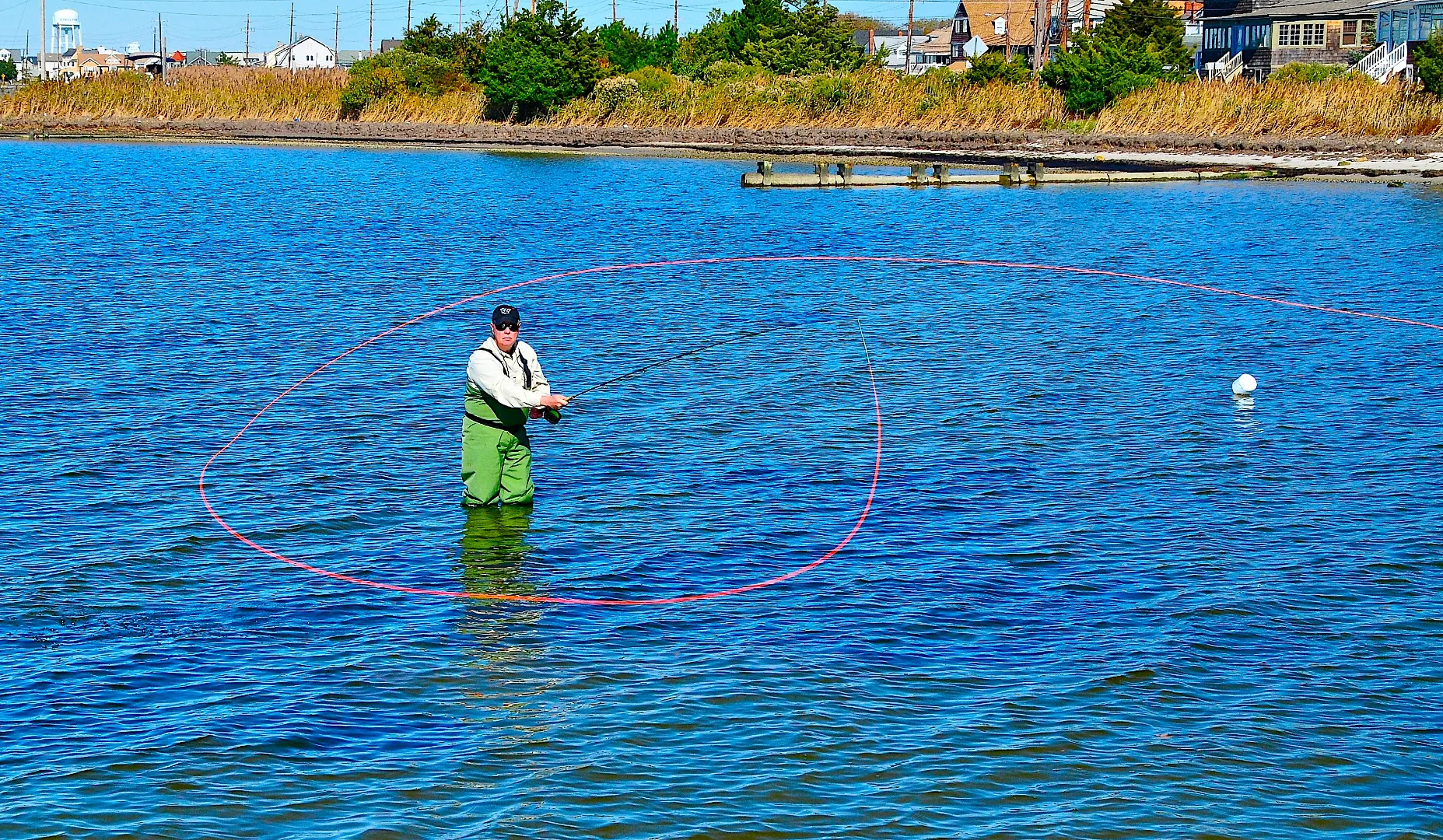




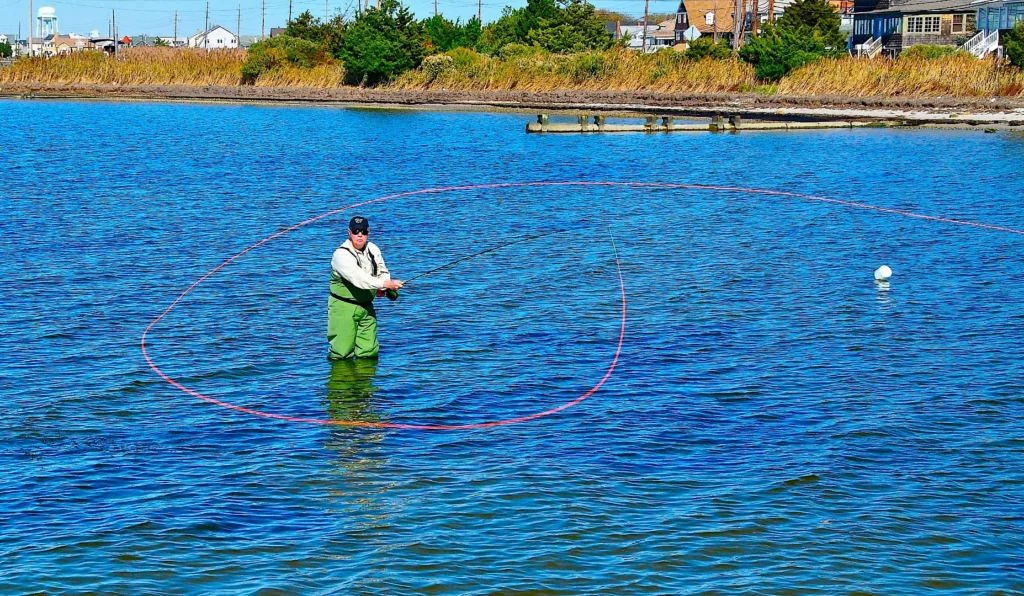

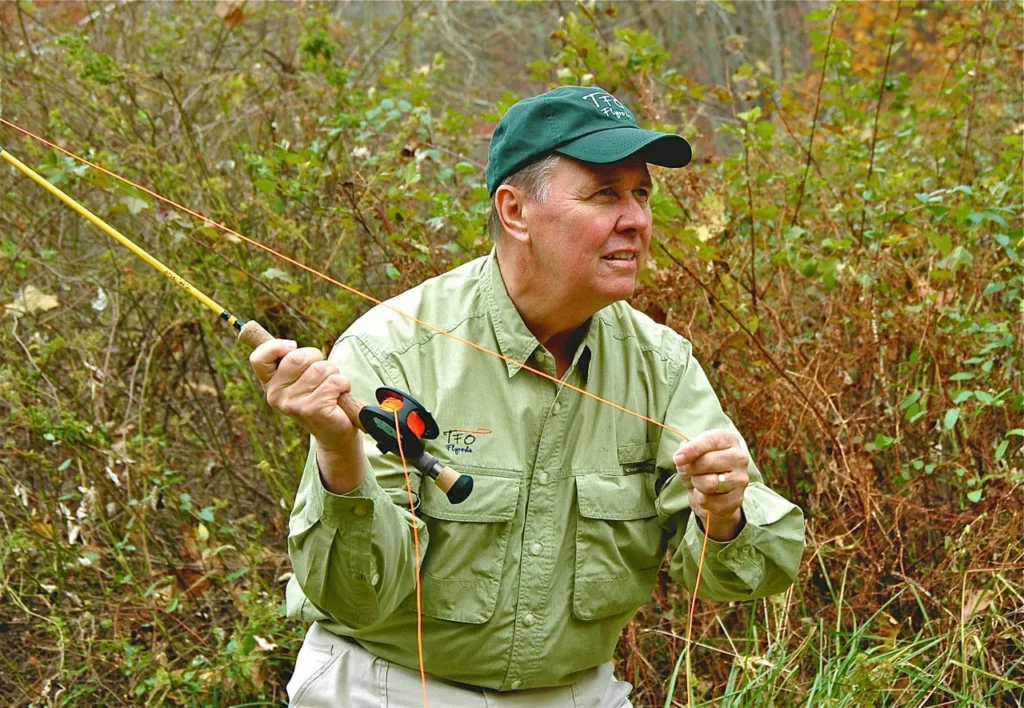
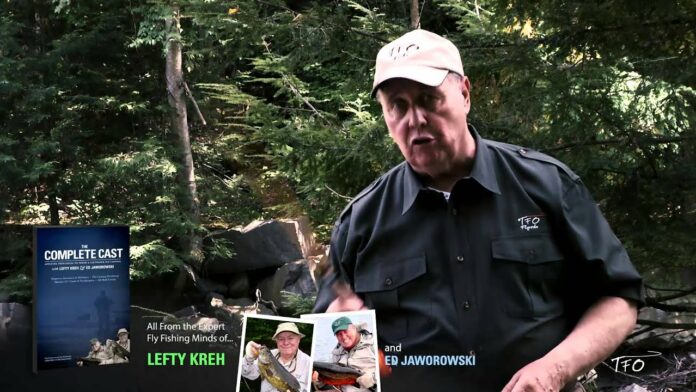
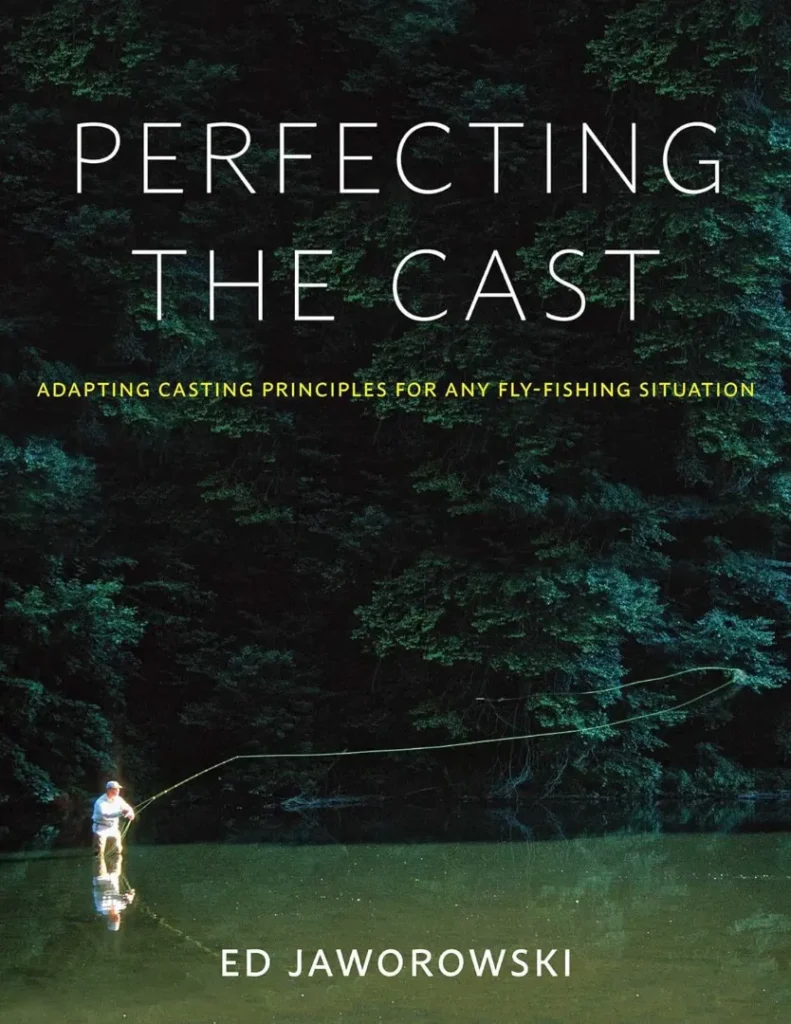

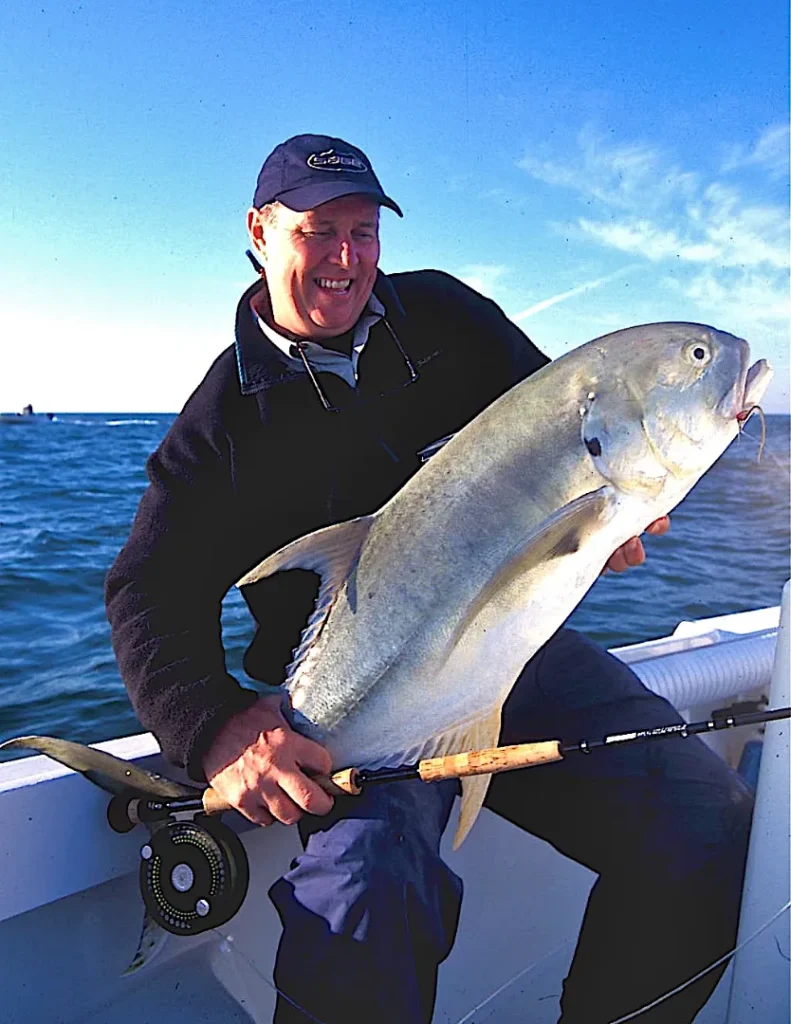






Just listened to your podcast with Ed Jaworowski – as a devoted reader of his books since the first publication of “The Cast,” you did a nice job of leading Mr. Jaworowski through his voluminous data base in a very short period of time.
One request – tho maybe this is for TFO – I cannot find the Jaworowski/Kreh video on Vimeo. The link at TFO doesn’t lead there, and a word search doesn’t yield results. Have you found the video doing the search?
I also tried the link on Vimeo. it doesn’t work. The dvd is also unavailable. Is there contact information for Ed ? I would like to take a casting course with him.
Thanks