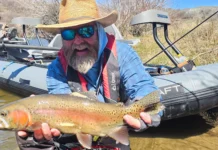
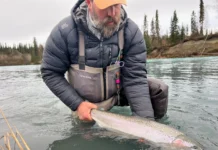
Cameron Mortenson is back on the podcast as he walks us through the quiet revival of fiberglass rods, why glass still connects you to the line, and how a lifetime of tinkering with rods turned into a giant, searchable blog that helps anglers choose gear and find water. We talk about the TroutRoutes mapping app on a big Driftless trip, five practical questions to ask before you buy a fiberglass rod, travel-packing rules for bringing a quiver, and the joy of slowing down to feel the rod load again. It’s practical, curious, and full of those gear-and-travel moments anglers love.
02:00 — Cameron’s recent season, family, and Beaver Island.
08:00 — Trout Routes use case: Driftless trip & Oak & Oscar weekend.
18:57 — How The Fiberglass Manifesto started and grew (6,200 posts).
23:10 — Why fiberglass connects you to the cast (rod load discussion).
26:00 — Cameron shares the five questions to ask before buying a fiberglass rod (budget, line weight, taper, length, availability).
29:27 — Two-handed glass options and budgeting for trout spey.
40:00— Rod stories (shark / tarpon / travel quiver tips).
52:35 — TroutRoutes features: offline maps, easements, gradient layers.
1:05:39 — Closing notes, Wet Fly Swing Pro mention.
Episode Transcript
Dave (2s): Since 2008, the Fiberglass Manifesto blog has grown into a hub for anglers who wanna slow down, feel the rod load, and rediscover what makes fiberglass so unique along the way. Cameron Mortenson has worked with companies like Echo highlighted boutique builders from Japan to the Driftless, and proven that fiberglass isn’t just nostalgia, it’s an innovation with soul. By the end of this episode, you’ll discover what’s changed in Glass since our last chat back in 2019. Why Trout Routes has become his favorite tool for exploring new water, and how family adventures from Alaska to Beaver Island keeps shaping Cameron’s approach to fly fishing. This is the wifi swing podcast where I show you the best places to travel to for fly fishing, how to find the best resources and tools to prepare for that big trip And what you can do to give back to the fish species we all love today. Dave (51s): Cameron Mortenson is gonna take us in on fiberglass rods and show us what’s changed from the rods of the 1970s and eighties. We’re gonna find out what five questions you should be asking before you buy your next fiberglass rod. Why carrying too many rods on a trip might actually be a good play and how fiberglass can actually connect you with the fly line in your casting even more. Here he is, Cameron Mortenson. You can find him@fiberglassmanifesto.com. How you doing, Cameron? Cameron (1m 20s): I’m doing great. Thanks for having me on. Dave (1m 22s): Yeah, Thanks for putting this together. It’s been a little time since our last episode. I, I went back into the archives. Gotta go back to 2019. So pre COVID Wow. We had you on. Yeah, it’s been, it’s been a little while. So we’re gonna get a update from you what’s been new in the last, you know, six years in that range. And talk about fiberglass rods. Get a little update on that. I know that’s always an evolving kind of thing in fly fishing. And, and we’re also gonna talk about trout routes as well, because I think you’re doing some good stuff with them. We’ve been working with trout routes and, and they’re kicking some butt out there now, so, so this is good. So maybe just give us a heads up now we’re kind of right in the middle of summer, kind of mid-August as we’re talking. What, what’s, what’s going on this summer for you? Cameron (2m 3s): You know, This year has been a lot of family. Our daughter wrapped up college, her first year of college up in Michigan. So flew up there and we had a great weekend. We had a day in Chicago. We went to the Ben Queller concert. We went back to Michigan Saturday night, I think Sunday we packed her up. Monday I went Steelheading with Steve Martinez, who’s a guide friend up there. And then Tuesday we unpacked her at my parents’ house to leave as much as we could there. And then Wednesday we drove all the way back to South Carolina. Two weeks later I was back up in Michigan for my Beaver Island week. Along with some extra days where I had to do some, some fly fishing and even some birding and some golfing. Cameron (2m 49s): Tried to fit a lot in, yeah, Dave (2m 50s): Packing it in, Cameron (2m 51s): Packed it in, came home. And then it’s just been, you know, chasing our son who plays competitive golf. So he’s had tournaments all summer and then doing things with our daughter and pool time and fishing time. And I don’t know, it’s been a blur. Our daughter headed back up to college yesterday. Our son’s finishing his third week of school. So I’m hoping that like next week things just kind of start going back into a more of a routine, repetitive routine. So I would say we’ve been living without a routine since like mid-May. So Okay. Dave (3m 27s): I’m kind of mid May. Cameron (3m 28s): Yeah, Dave (3m 28s): I’m kind Cameron (3m 29s): Of kind of exhausted right now. Dave (3m 30s): Right. That’s awesome. So, and well it’s just taking the six years since we last talked. What we take it back to that what, what grade was your daughter in then? Cameron (3m 38s): She graduated from high school and then she spent an entire, like a year and a half in Alaska. Oh wow. She worked to summer our church, summer camps there and then stayed on as a student missionary. So that was an adventure. And then she came home the end of last summer and then she went up to college. So she was, that gap year was really well spent. There was a lot of, oh, I think as parents, you know, you have a plan of what’s supposed to happen and then the Alaska deal changed it. It was like caught us all by surprise, but it worked out great ’cause my wife was able to spend, spend a week with her like two weeks before she came home. Cameron (4m 19s): And then I flew, my wife flew back on Saturday. On Sunday I flew to Alaska and we were able to do a lot of hiking, fishing, some fly fishing. So Dave (4m 30s): Where was she at in Alaska? Cameron (4m 32s): So she was in Palmer for the school year, Wasilla area. And then my wife and daughter did like Homer Seward and kind of everything in between. There’s a lot of things that Hadley wanted to show both of us. And then when I got there, we’ve got friends that live in Wasilla and they were actually camping down in Homer. So we were able to jump on their boat with them for two days and limit it out on halibut for two days in a row and saw orcas, saw otters. I mean we just had a phenomenal, phenomenal time. Saw a ton of moose and it was just a really neat way to wrap up Hadley’s time in Alaska. Cameron (5m 15s): And I really think that once she gets through college she’ll be headed back and that place left a mark on her. So fingers crossed that she’ll be back there and then that’ll give us good excuses to go back ourselves. Dave (5m 25s): Exactly. Yeah, I’ve heard of those stories on this podcast before from people that live up there now, it seems like it’s always the same story. They go up there for a visit or something and then they turn around and it’s 30 years later and they’re like, man, we, you know what I mean? They, it just, it’s something about Alaska, right? It’s something that just kind of holds you up there. You gotta be able to battle a little bit, but it’s pretty amazing. Yeah. Cameron (5m 44s): So, and then our son, he is 16, he is a junior in high school and he’s been playing competitive golf since seventh grade. And so that’s kind of a, an endless season that school golf turns into spring and summer tournaments which turn into fall and winter tournaments and then it’s golf season again. So between my wife and I and in-laws, it seems like we’re on golf courses like multiple days a week and he’s on a golf course six and seven days a week. So I would say in the last, since since we last talked, like golf, competitive golf, Dave (6m 18s): Golf has taken over, Cameron (6m 19s): Taken over and then I still wedge in TFM and I still work full-time in law enforcement and Oh yeah. So yeah, life has gotten a lot busier. You Dave (6m 29s): Got a full schedule. What has been going on with the TFM over the, this last five, six years? Has anything changed there or you just been doing more of the same? I’ve seen, it looks like you got some, always some new content on there, right? Cameron (6m 42s): Yeah, so you know what’s interesting is, is that before COVID I kind of felt like blogs were kind of on their way out. And I would say like in the bigger scheme of things, probably blogs are not as popular as they were and you know, 10 years ago, but during COVID it was amazing how many people were like looking, had time for new hobbies, new interests. And I received a lot of feedback and a lot of emails and a lot of, you know, more readership, which has really continued past COVID where you know, those numbers all were elevated and it’s been interesting how many people have gotten into fly fishing through COVID and beyond. Cameron (7m 23s): So that a lot of the same conversations that I’ve been having for the last 17 years, you know, continued. And what’s really nice about TFM is a lot of that content’s evergreen. So you know, somebody jumps on today and starts scrolling backwards and reading through content. I mean there’s a lot of things that are, that are still, you know, a great read. And for me it’s just been a, a wonderful creative outlet and I guess it was like right place, right time, you know, years ago when, when glass was just picking up momentum and you know, we’re still there and it’s still niche but you know, it’s really a lot of fun to see how many anglers enjoy it, new builders that get involved, see new ideas in glass that come out and all of that’s, you know, continuing, you know, since I started messing around with it in the early two thousands. Dave (8m 18s): Right, right. Early two thousands. There you go. So almost a quarter decade or a quarter century. Yeah. So, okay. Well and, and I wanna dig into the website ’cause I know it’s a great resource and, and we do have the episode we mentioned episode 88 back in July, 2019. We’ll have a link to that in the show notes, but, but let’s jump into a little bit just on trout routes ’cause that’s something we’ve been doing quite a bit on connecting with them. What’s been going on, what’s your experience with Trout routes? Have you, as you’ve been out, have you been using their app and maybe just tell us about that connection. Cameron (8m 49s): Well I’ve been using it locally but I think that when you use it locally you’re always going back to the same places. So it maybe doesn’t feel like as a great of resource as it would be if you’re going somewhere else. So last September I was going up to the Driftless area in Wisconsin. I was going up there to hang out with, there’s a boutique watch company in Chicago called OK and Oscar. And to kind of back it up a little bit, when I turned 50 last year, I’ve got all the fly fishing things that I think I could ever want. And so I was trying to think of something special that I could gift myself to celebrate turning 50 and early in the year had thought about, you know, getting a nice watch. Cameron (9m 33s): And that kind of quickly led me to Oak and Oscar because the companies somewhat aligned with fly fishing and I’ve gotten to know Chase who is also pretty deep into fly fishing. It was pretty neat that just like with a lot of the, the fly rod companies and small shops that I deal with, it was neat that either through Instagram or through a text, like I could talk directly to Chase who’s, you know, the founder of OK and Oscar and you know, I could have invested in a watch from another company and never knew like anyone, you know, in any of the process of, of designing or building the watch. And so it was really neat to connect with Chase early last year and, and invested in a Humboldt GMT, which I took to Brazil taking it on a lot of adventures since then. Cameron (10m 24s): And then kind of the lead up through last year was that I was gonna attend their Built to Discover Weekend up in the Drift list. And so another friend of mine, Brad, who is also affiliated with Oak and Oscar, he and I planned not only to go to the Built to Discover weekend, but also to meet up a couple days before. And we had planned to Fish and to golf together prior to that event. So Brad is in the Chicago area, he’s pretty familiar with the Driftless area, but what we found was that the Trout Routes app was an unbelievable resource for us. ’cause Brad would be like, I know of this stream, but I’m not quite sure about like access or where it’s at. Cameron (11m 7s): And the app made it really easy for us to dial in, not only like this is, you know, this is where the stream is, but this is the easements, this is how we can get onto the stream. This is the class of water that it is. So it’s, it was immediately apparent to me that an app that I kind of used at home but you know, didn’t feel maybe I wasn’t taking advantage of all the, the features like through the course of that three or four days that we were messing around on the Drift list, like every day we were in the app trying to figure out like where we could go next, you know, where we needed to walk in on to get on to, you know, different easements and accesses to the water there. Dave (11m 46s): Yeah, definitely. Cameron (11m 48s): The other neat thing was is that Eric from Trout Routes, who I’ve known for years, even before he worked at Trout Routes lives in the area. And so we were able to spend a morning with him. The bad news was is that it had rained like heavy rained the night before and so the streams were all like chocolate milk. And so we fished together for, I don’t know, maybe a couple hours and Eric caught a couple fish and it was just fun to catch up with him and talk. But it certainly, the two days before were unbelievable. In fact you can go on to TFM and there was I think, what’s the title of that post A Day in the Drift lists with a couple of favorite three weights. Cameron (12m 29s): And I spent the morning with the, in June Rod seven foot three weight in the afternoon with the Chris Barclay six eight p. And so it was really neat and caught like some pretty sizable browns, you know, on Hoppers through the day, really small water. So it was just like the perfect day and really T Trout routes was, was a part of that from start to finish because we had found a really neat access to a stream that Brad knew about but wasn’t quite sure how we could get on it. So. Right. It’s a really neat app. I’ve used it a lot since then. And you know, I think it’s a, a really great resource for folks that adventure and, and explore a lot. And then I think it’s an even better resource like when you travel that you, it connects you with fly shops that are, you know, local to where you’re going. Cameron (13m 16s): It also connects you with areas that you can get on the water and and know for certain that you’re not gonna get in trouble for trespassing. Which for me being a police officer, like the things that I worry about is like being found out that I was trespassing or I didn’t have a fishing license and get busted for that. So. Right. Always gotta be lawful. Dave (13m 34s): That’s right, yeah. Especially, yeah, you gotta make sure we should all be lawful, but yeah, it’s, that’s my kind of, I guess my favorite too is just, just having such accurate details on all that, you know, I think that, you know, we’ve heard the other things, you know, like River the gauges, right, the gauging system now you can get it all there, but it’s cool too in Onyx, you know, the fact that now they’re with Onyx essentially that’s huge because you know, they’ve been leading in the wild, you know, kind of hunting area for so long. So I feel like there’s a lot of amazing stuff that’s gonna come even on top of what’s already there, right? Cameron (14m 8s): Oh yeah. It’s robust and I just, just gonna see that grow in the future and it’s just, it’s also really neat to see the different relationships and collaborations and partnerships that they continue to grow along the way. So, and I also think it’s really neat that, you know, as a, something that you subscribe to that the fact that they do masterclasses and updates and they really want users to know all the different features that are involved in the app and that’s continual, it’s continual learning for, for you and I, it’s continual learning for somebody that just downloads the app this weekend or or tonight and you know, wants to jump on it to figure out where they’re gonna go this weekend. Dave (14m 45s): Exactly. No that’s perfect. And and so Eric, you knew before Trot Routes, what, how’d you guys first connect out there? Cameron (14m 51s): You know what he used to tie a lot of Musky flies, weights and measures was his Instagram feed and so Fly Tire and just, you know, like good dude on the internet. And so we had never, I don’t think met in person and then early on he was like, Hey, I’m at Trout Routes now. And so we continued, you know, to connect that way and it was fun spending a half day with him. I’d love to spend some more time on the water with him because yeah, definitely good dude, family guy and so there’s a lot of things that, a lot of good reasons to be able to connect with somebody like him. Yep, Dave (15m 27s): For sure. Yeah, Eric’s awesome. Nice. So, so cool. That’s a little, you know, snippet on trout routes and we’ll probably circle back at the end as we kinda get into this, but you know, I wanna start with, I wanna talk about the website, but just maybe give us an update on fiberglass rods. Has there been much that’s changed in the last, you know, six years? I know it seems like the Echo definitely name is still out there, the badass class. What, what a classic, you know, we hear about that a lot, but you know, what about the tech is have things, what’s new out there? Cameron (15m 55s): You know, I think technology continues to evolve and you know, there’s more and more companies that are, that are working with S Glass and that you’re seeing where they’re just pushing the envelope on what you can do with, with that material and you’re seeing makers that are continuing to deep dive into niches. You know, I think a Chris Barclay like strong small stream technician I think of, you know, caboodle and, and, and Japan not only has like a wide array of rods that he’s offering, but now he is starting to mess around with two handers. So I mean there’s innovation that keeps happening. You got people like Shane Gray that like have their hand in a 12 different things going on in the class including, you know, taking over Stephan Brothers to keep that brand going. Cameron (16m 44s): And then also investing like in his, his rod maker 24 7 side where he offers blanks for rod makers that are super high quality echo that you, you know, talked about like, you know, it was pretty neat before Echo offered glass. Like Tim reached out to me and he’s like, what’s not out there? And I was like, well there’s not heavyweight glass at that point and there wasn’t two handers and he is like, we can’t start there, we gotta start with, you know, trout weight rods and you know, echo’s done trout weight rods in several different generations. They’ve done two handers and two different generations. They’ve done, you know, heavy line weight glass with their badass glass in two different generations now. And so I think what’s neat for me is that we’re seeing companies that take on glass projects and it’s not something that they do just for a little while and they’re like, okay, that was fun but we’re done with it. Cameron (17m 34s): We’re doing a glass project and they’re innovating a new generation, they’re innovating the generation after that. So you think of somebody like Redington, I think they’re on their third generation, Orvis has had two generations of glass out and then there’s companies that have offered glass in the past that haven’t jumped in yet, but I can think of one or two that a glass project is either in the thought process or in the work. So that’s exciting and it’s, it’s just neat that there’s, it’s not something that people have like latched onto and then have just given up on. It’s something that they see it’s not a fad and you know, I never think that, you know, ever have a thought process that that glass will ever surpass graphite. Cameron (18m 21s): It’s always gonna be a, a wonderful little niche within fly fishing. But it’s just neat that when I started the website in 2008 there was maybe a dozen fly rod companies, blank makers and builders. And now that number is like well over a hundred, probably pushing 200 if I like knew of every single builder, you know, throughout the whole world. I mean that number might be two or 300, who knows? And so just the, the interest of it from a builder side, from an innovation side, I mean all that stuff is continuing to move forward. Dave (18m 57s): Yeah, that’s interesting. Yeah. So 2008 you started it, the website at least and, and then, and you’ve been like, what have you been, do you post, maybe talk about that a little bit, what can people expect if they let, let’s just say we have somebody here that’s maybe thinking about, you know, getting a little bit deeper into glass. They haven’t tested out. Where do they start on this? Is there a place they can go to your website and read some articles at your site or what would you recommend? Cameron (19m 19s): So publish posts or are almost 6,200 posts now. Dave (19m 24s): 6,200. Cameron (19m 26s): And Google does a really good job that there’s a little search button down on the bottom right hand side or if you just go to Google and you can find a lot of things, there’s also a page that’s fly rod maker’s page, so that’s all your builders, blank makers, fly rod companies. So I try to keep that up to date, actually try to go through that, you know, once every other month just to make sure, you know, websites are still good, links are still good there. And then a lot of times things, you know, conversations start either with a, a direct message on Instagram or an email, get multiple of those a week which are, you know, really fun to help somebody either. Dave (20m 6s): So that’s a good way to do it. Cameron (20m 7s): Oh yeah, I love that. Okay. And I think it’s just a, a really neat way for me to answer a lot of questions quickly and if somebody is new to fiberglass, like I was, you know, you know talk about like if somebody’s gonna invest wants a new, you know, let’s say a four weight, like we talk about budget, we talk about length, we talk about line weight, we talk about what type of taper, like what are they going to do, use it for, is it just gonna be dry flies only or do they want something that has a pretty progressive taper that they could nm if they want to, they can throw dry flies, they can, you know, throw streamers. You know, fortunately now there’s multiple choices in all the different type of rod tapers. Cameron (20m 50s): So there isn’t just that, well this is the rod you want, it’s like here’s four or five rods for you to consider. Here’s, you know, a builder or here’s multiple builders that, you know, build on those blanks. So it’s really neat to be able to give folks options for, you know, whatever they are looking for. Dave (21m 8s): Yeah, okay. So, so it depends And is, does fiberglass kind of cover all ends of it now or are there people doing, you know, you named the species and there’s a salt water or there’s a fiberglass rod for it out there? Cameron (21m 19s): Yeah, I mean I, somebody popped up from Oman where they were catching permit on glass rods, you know, I mean it’s just, I mean that’s the stuff, the weird stuff I do. But it’s neat to see like other people have like committed to just fishing glass for everything from little tiny trout and tiny streams to chasing tarp and sharks and salt water species and red fish and carp and small malt bass and you know, if you can catch it then it can be caught on glass and there’s a lot of options for I think of my own collection. I think the, the lightest rod I have is a two weight, the heaviest rod I have is a 12 weight and then I’ve got multiple two-hander rods, you know, up to eight or nine weight so Oh you do? Cameron (22m 8s): Yeah, it’s, yeah, there’s, there’s a lot of things that you can do and a lot of fish that you can chase with glass rods now with Dave (22m 15s): Glass. And what do you find for yourself is the, the biggest advantage of a glass say if you’re comparing them to a graphite? Cameron (22m 23s): You know, I think it comes down a, I think that you can really feel the rod load and so I think for new casters that’s very helpful and you know, fly casting is supposed to be fun and I think part of that fun is that the rod does a lot of the work. You can feel the rod load up and it’s just, to me there’s much more connection to the cast with a glass rod than forcing a graphite rod to try to bend while you’re casting it. I think that it’s exceptional for protecting tt. So if I trout fish and you’re using five x and six x and seven x tipt, I’m much less worried about breaking a fish off on a light tipping on glass rod because that glass rod is acting like a, a shock absorber. Cameron (23m 10s): I mean the whole rod is bending and even with heavier tipt I never worry about breaking fish off. And I also feel like I can leverage and turn fish really easy with, I feel like can, I can fight fish more effectively with class. And I think maybe on the more philosophical side of things, like actually touching the fish is not really the big deal. Like I’m much more like it’s so fun to feed a fish a fly because a lot of the fishing that I do now is sight fishing. It’s flat fishing, it’s being able to see that fish come up and take the fly or chase the fly. And so that’s like 90% of it for me. Like if the fly comes out after a a couple minutes fight or the fish, you know, like this summer on B Island had a huge pike that ended up taking, I was fishing to a group of carp somehow this, this big pike materialized, fought this pike for like a minute and a half, two minutes and then all of a sudden I guess he just opened his mouth up and the fly came out and that was right after he like did this big barrel roll and he had this huge like Labrador sized head that came out of the water. Cameron (24m 18s): Geez. And then he was off and it was like, well that was good enough. I think 15 years ago I would’ve been like upset and yeah cranky the rest of the day like that fish was gone. But it was just awesome having that moment, you know, till then. So Dave (24m 32s): Yeah, it’s even better I guess it’s kinda weird about that, right? Because yeah touching the fish and playing it longer is probably, is definitely not better for the fish. You know, the quick release is probably the best thing to do but sometimes you know, you’re like you wanna get a photo but I guess the older you get to once you’ve done it all maybe it’s not as important but, well you mentioned the rod load, I think that’s interesting. I’ve heard that from a number of casting instructors we’ve had on here where they talk about, especially for beginners getting into it that feeling the line and the rod loading is really critical. You mentioned I think when, when I was, when you, we had you on here on that first episode you mentioned a couple good beginner rods I think for my kids and I and they they were the, what were they, the yellow, you know the fiberglass? Cameron (25m 13s): Yeah the eagle cloth feather light. Is Dave (25m 14s): That still your recommendation? Yeah, Cameron (25m 16s): Still the best bang for your buck. I mean go to Walmart, you’re gonna find it for you know, go to a hardware store, you’re gonna find it for $25. They actually make some really fun claw featherlight spinning rods. So like start your kids on that and then get a couple of the fly rods to mess around with. You’ll probably fish the spinning rods more than your kids do and it’ll like reignite an interest in spin fishing like it did me. But yeah that’s a great like first entry into it and you can’t beat it. Dave (25m 48s): Yeah, you can’t beat it. What’s the next, after you get past that level, what do you think is the next rod for say it could be either your kid as they grow up or maybe just somebody listening now where they want to get that, you know, what, what’s a good recommendation on on a rod? There’s so much out there, where do you start? Cameron (26m 2s): So I would say there’s econ feather light and there’s kind of like a jump up to that maybe 150 to 250 window. I think Moonlet fly fishing is doing some phenomenal things with their lunar S class are unbelievable. Like I’ve talked about those to so many people and they go on sale, they’re like 1 59 or 1 79, they’ve got a two weight through a 10 weight. So you’ve got every choice for line weight. I would say they’re great for a primary rod or if you’re going somewhere and you just wanna take a backup and that’s a great choice. I think the bump up from there is that you’ve got your red trucks, your redingtons, your echoes are kind of in a, in a pool together. Cameron (26m 46s): And then the next step up are the orva super fine glass USA made. I think the entire series is great from two eight to eight weight, very much a favorite rod of mine. And then after that you’re kind of getting into the epics either getting them, you know, directly from Epic, you know as a factory rod or then you start getting into your more, you know, high-end custom built rods that you have a tremendous choice of boutique blanks that you can pick up from Mike McFarland or Dusty Smith or you know from Shane Gray was was Stephan brothers get the epic blanks. There’s a ton of choices from Japan and even in Europe for different choices in blanks. Cameron (27m 31s): So it really depends on, that’s where it goes back to those five questions like yeah, line weight, your budget. Yeah, Dave (27m 38s): What are those five questions? Cameron (27m 40s): So I always start out with what their budget is because if somebody’s budget is $200, that’s gonna be a different conversation than somebody that wants to break the piggy bank and and spend 5, 6, 7, $800. So figure out budget, we figure out what line weight they’re looking for and length of rod and then what type of taper they’re looking for. Like what are they planning to do with it. So is this gonna be a dry fly only rod, is this something that they want all around performance that they can do dry flies, they can swing soft hackles, they can nm with, they can throw streamers and then is it something that they need next week for a trip or is this something they can wait for? Cameron (28m 22s): So are they looking for a factory rod built rod or are they looking for something that may be coming from a, a small shop builder and then yeah and then just that availability, like how long until they expect to have it in their hands. ’cause there’s a lot of off the shelf rods that you can, you know, bite your fly shop tomorrow. But to get on the list for some of the more popular boutique small shop builders, you might wait 3, 6, 10, you know, 12 months to get a fly rod. Dave (28m 54s): Right, right. Those are the The custom custom operations. Yes. Yeah. Okay. So those are the five things. So we got everything you mentioned there and maybe we could just start with a two-hand, let’s talk trout spay. We’ve got Tim Flagler who is gonna be on soon, we’re gonna be talking trout spay a little bit, so maybe that’s a good, let’s talk about that. What would be a good, if we take, you got line weight and length, so if we’re saying you know, trouts Bay, I guess what, what would be your typical, what do you think would be a good rod to look at for that and budget wise? Let’s just keep it in the middle. Maybe we’re talking for kind of the 3, 4, 500 range somewhere in there. Cameron (29m 27s): Yep. Your best choice. Just because there’s not a lot of choices in do Anders. Your best choice right now is gonna be either to find either the last generation of echo two handers or just the spring. They brought out a updated new generation of two-hander glass rods that are a hundred percent glass. There’s only three models so there’s gonna be something in that three weight, I think it’s three eight or three six and eight weight are the choices there. And I haven’t really gotten to mess around with mine much. I’ve got lines all set out ready to do it. That’s gonna be a, a fall project for me to get those squared away and spend some time on the water with them. Cameron (30m 11s): But really neat to see a choice that’s kind of on the budget end of things in a specialty area with two handers, if you’re gonna break the piggy bank know that like Kabuto and Japan is working on a two hander project, those are gonna be phenomenal when they get released. You’ve got blank makers like Mike McFarland that have done some two handers in the past. So you know, there’s some high-end options. But really for that, that budget area you’ve got Echo and then actually I think Shane Gray with his 24 7 rod maker 24 7 lineup has at least two or three different blanks that you can choose from or have him build ’em out. Cameron (30m 53s): And I think when he builds ’em out they’re kind of in that four to maybe in that five to 600 range depending on components. Dave (31m 0s): Oh cool. So you can get a custom ride there for like 4, 5, 600 bucks? Cameron (31m 4s): Yeah, I think so. I would have to look at, I know the, the 200 blanks aren’t terribly expensive. I’m not exactly sure what he charges to build those out, but the couple that I’ve seen are, are pretty exceptional looking. Dave (31m 17s): Okay. Yeah, I’d probably go with that three weight since I don’t that currently have something in that range. So a three weight glass. And is that, are those still called the badass glass that they’re two handed rods for Echo? Cameron (31m 27s): No, I think those are called, they’re glass spay lineup. Dave (31m 32s): Today’s episode is brought to you by Trout Routes by Onyx, the ultimate mapping app for trout anglers. Whether you’re planning a big road trip or sneaking away for an afternoon session, trout routes helps you find and explore new waters fast. You’ll get detailed maps that include public land boundaries, stream access points, regulations and other extras like hiking trails and parking spots. I’ve been using it to plan my trips and it’s taken the guesswork out of the process. No more bouncing between multiple tools. Everything you need in one spot, give it a try right now at wetly swing.com/trout routes and download the app to start exploring smarter today. So you’re saying there’s a few rod companies, I mean overall if you look at all the companies out there, do most of them have glass or is it, you know, maybe half of them or, or not even half. Cameron (32m 22s): I would say it’s over half. Not all the companies have it, but some of those companies that don’t have it now, there’s at least two conversations that I’ve been having where they’re considering bringing ’em back or are bringing glass back to their lineup. So, and these are pretty, well both of these are pretty well known brands that are out there, so it’s pretty neat to see that that’s part of their consideration. And for some it’s like connected to a milestone for the company as far as you know, how many years that they’ve been in business. So it may be kind of a throwback project, which is pretty neat to see. Dave (32m 58s): Yeah, it goes back a ways, right? Cameron (32m 60s): Yeah, I mean it goes back to the fifties and sixties through the seventies, you know, that glass was out there. I just think the neat thing is that along with that, and you’ve got companies that are going back to the drawing board about like, okay, this is the glass rod that we, we offer now, but what makes this, you know, better the next go around and you know, looking forward to an, a new generation of glass from that company as well. Dave (33m 26s): And what, what changes when they get the next generation? It seems like you hear a lot with the graphite rods that a company, you know, comes out some of ’em every couple years, two or three years with the new rod and it’s not that much different or the old rod is a great rod still, right? Like do you find there’s big changes in tech and over when they come out with the new generation? Cameron (33m 44s): You know, a lot of times it’s, you know, that transition from like Orvis Super Pine glass went from a three piece rod to a four piece rod. They were able to tweak some of the tapers, make the like, I think the, the six weight is better and this new generation it’s four piece, it’s easier to travel with the eight weight is phenomenal. And so I don’t know if there was a lot of changes. So like the 2, 3, 4 and maybe five, but definitely the six and eight had a lot of changes and just the fact that they’re easier to travel with as a, as a four piece rod is a big deal. But you know, I think that there’s things that carry over from their latest generation of graphite with the different resins that are available and then just the different technology and fabrics that are available in glass. Cameron (34m 34s): You know, sometimes you’re able to marry some of those things together. So it is just pretty interesting to see, you know, when you go back to the drawing board, it’s not just cosmetics, you know, a lot of times, and I don’t think this is something I see so much now, but maybe 10 or 12 years ago, like people were like, oh I want a purple fly rod and they didn’t even care like what it casts. Like, you know, in fact I think there’s an article that I wrote like Forget about the damn color. Like we can get to color after we figure out like everything else you wanna do with this. That’s Dave (35m 5s): Right. Cameron (35m 5s): And it’s, I think even easier now to do that because if you do want a purple fly rod, you know, we can figure out like what you wanna do with that fly rod first and then try to find one of purple right. That that does that. So where, you know, years ago there weren’t as many choices and so maybe you just like, you know, a certain color and that’s what you wanted. Now that there’s multiple colors, but really more importantly there’s performance and there’s angler suitability and what you wanna do with on the water with that fly rod should be the, the first focus and then we can match up aesthetics after that. Dave (35m 44s): Right, right. Yeah, the the, it’s interesting ’cause yeah the colors, they got all the colors is that I guess that’s unique for fiberglass or with fiberglass you can do that but with I guess graphite it’s not, you can’t really make the colors is that I get what, what is the situation there? Is that a lot easier with fiberglass? Cameron (35m 60s): It might be easier with fiberglass ’cause of the fabric you can get the fabric and you know, fiberglass fabric in different colors. I mean you can paint fly rods any color you want. I would just say that it’s maybe less so with graphite you see them, you know. How many different graphite rods have you seen in different colors? I guess Winston Green. Dave (36m 18s): Oh, okay. Cameron (36m 19s): You know, a lot of ’em are black but there’s some out there that are, that are painted and or graphite comes in different colors. But I would say that’s probably something more suited and you find more often with With glass. Yeah, Dave (36m 33s): With glass. And what is the, you know, the, the glass now is, you know, I think we talked about this the on last time, but the difference between the old versus the, the newer glass, is it considerable that the difference of you pick up a glass now versus say something from the eighties or somewhere in there? Cameron (36m 50s): I think there’s some exceptional glass that was from the seventies and eighties. I think that there’s probably overall there’s more, more better a word. Hmm. Or a term and more better it’s, it’s more better now you’re gonna find more options that are better now across the board. You know, we talked about moonlet for $179. It’s the performance of those rods, you know, are close to, if they don’t match rods that cost three and four times that. So you probably would not find that back in the seventies as as much, you know, as probably one-offs. This rod’s pretty exceptional and it is still exceptional today where you don’t have to spend six, seven, $800 now to get a high performance glass rod. Cameron (37m 37s): There’s a lot of options that are much more budget friendly. I think that if you’ve always wanted brands such and such than you’re gonna be willing, you know, you’re willing to spend more or if it’s things that are important to you like made in the USA is extremely important to me. And so, you know, there’s a lot of times I push folks to Orvis rods or tho Thomas or Scott, you know, fly rods because, or to a boutique builder who rolls the blanks in the United States, everything is sourced and you’re gonna get a better fly rod from them for the same money as as you know, something that’s maybe, you know, built offshore. Cameron (38m 17s): So, and I haven’t heard a lot in Rod building in fly rods about tariffs, but you know, I’m sure there’s an effect that we’re gonna see as those things move forward. Dave (38m 28s): That’s right, that’s right. Yeah. And it’s always good. It seems like it’s always, yeah, if you can buy, you know, American mate and they’re not, the price isn’t that much different and that seems like a no brainer. Cameron (38m 37s): Yeah and you know with with your small shop builders, you know, a $700 fly rod that comes from a fly rod company, you’re likely, if you spent $700 with a small shop builder, you’re likely getting a better rod as far as components. The cork is gonna be better. You know, if you think about a fly rod that comes from a fly rod company being sold at a fly shop, there’s like margins. You know, the fly rod company has a margin that they have to meet, the fly shop has a margin. Then there’s material costs when you’re dealing with a boutique builder that it might be one person. You know, those margins are different because they’re only building a profit in for themselves and then their materials cost. Cameron (39m 19s): So you’re probably getting a better fly rod overall for the same amount of money than you are from a, a fly rod company that’s selling through a fly shop. Dave (39m 28s): Yep. Okay. And what else, you know, let’s just kind of wrap that up on the, the choosing of a rod. It seems like there’s a lot of options they can call you or connect with you online. That would be a good way. What are the other features somebody should be thinking about? Is there, you know, obviously color isn’t a critical thing, but it’s more about like what you’re fishing for. So we talked about the spay rod. Let’s say we were, let’s say we were doing a salt water trip. Let’s just take it to let’s say a bonefish sort of, you know, trip. What would be there and our budget range, let’s say is a little bit higher. Let’s say we have $800 to go out after some permit bonefish sort of thing. What would we be looking at there? Cameron (40m 2s): Well I think my kit that I always take is I really like the badass glass rods and the kind of secret sauce on that is not only do I take like the six, or excuse me, the eight and the 10 badass glass with me, but I’ve got extra tips for both of those rods. So if you know it’s 40 bucks to get a tip from Echo and it’s just a nice insurance package. Last January I went to Brazil and having those extra tips for the eight and 10 just, I felt a lot better about just having that insurance on those. So those always go on trips. Orva super fine glass eight weight always goes epic. 8 8 8 epic bandit best 10 weight and glass still, it’s short, it’s fun. Cameron (40m 49s): It has a very like light swing weight. I’ve caught everything from small mouth all the way to an 80 pound shark on it. The 80 part on shark is probably not recommended like I heard. Oh no. Like fibers popping the entire time. Dave (41m 2s): Oh wow, really? It Cameron (41m 4s): Was, yeah it was, it was. I would not advise. Dave (41m 7s): So, but you didn’t break it. Cameron (41m 8s): Yeah, I’m surprised. And then even afterwards, like I kind of figured like I would catch a red fish or a carp on it and it would explode just from the stress of the shark, but it’s, that rod’s still alive like years later. Oh Dave (41m 21s): Cool. Cameron (41m 21s): And then I’m trying to think, oh epic, Boca Grande, that’s the 12 weight that’s gone on a few trips for Tarpon. And then some of the, you know, know the lately like the moonlit eight weight’s gone on trips, red truck has an eight weight. That’s pretty fun. That went to Beaver Island with me this last year, went to Louisiana for red fish. I’m always the guy that brings too many fly rods on a trip. Dave (41m 47s): Yeah, you got, you got the, the ton of rods. Yeah. Cameron (41m 49s): A it’s the opportunity to take ’em along and there’s so many different ways to carry rods now that, Dave (41m 55s): How do you do that? What’s your way when you’re traveling? How do you, you got a bunch of rods. Cameron (41m 59s): So I’ve got a couple different, like fail safe ways. I’ve got a Vita vu makes a, a roll that I can put four rods pretty easy, super lightweight. So that’s certainly a good way to travel. I’ve got a, one of the new River Smith convoy bags, so not only can I put a ton of fly rods in it, I think I’ve carried up to like eight or 10 rods. I can also put all the fly rails, fly lines, sunglasses, accessories, et cetera, et cetera. And it has backpack straps, so it’s pretty easy to carry. And then, then you’ve got kind of more of the traditional rod cases, which I think Orvis has a really nice rendition of. Cameron (42m 43s): Patagonia has a slightly larger one, so if I’m taking longer rods, that’s handy. And then kind of the primo way to carry rods is the C run cases. Those things are bombproof and they’re a little bit heavy but maybe can’t carry as many rods, but it’s a great way to carry your, your items secure. Not three locks on ’em. And so I would say like part of the, and I’ve kind of talked about this on social lately and is like, the buildup to a trip is almost as fun as the trip because you’re like picking rods reels. Like if I’m really being good, like I’ve stripped off lines from the last trip and then I’m picking out fly lines for, for the trip coming up. Cameron (43m 28s): And so everything’s getting clean fly lines that are, you know, it’s kind of special for that trip. And then making sure that I’ve got all the accessories and tools and tidbits and then figuring out which Rod case and gear bag is gonna be the perfect match, either to fit under an airplane seat or go as checked luggage or if it’s a road trip or what’s gonna fit best in the boat. So there’s always like, I probably, well I overthink those things. I’m, I’m not probably OCDI am OCD. Right. Once all that stuff’s figured out, like throwing clothing and waiters and boots, that’s the easy part. Cameron (44m 11s): It’s, it’s trying to hash out fly rods reels and fly lines is the part that probably vexes me more than anything else. Yeah. Dave (44m 19s): When you have a lot of choices. Yeah, that is, this is good. Well, back to your side, I, I noticed you’ve got a couple of videos i i I was kinda searching through there. You had a, there was eventually a Lefty crave video, an old video with him and flip palette and then you have this Patagonia video series. What, describe that a little bit. What you, what goes to the top or, or you know, what, what’s coming up next? Cameron (44m 41s): You know, I always have looked at it like a puzzle and so it’s like every day, I mean there’s what almost six, 200 posts. I can’t be about glass every day all the time because not everybody reads TFM for that. It’s a nice little diversion, you know, for folks while they’re at work or, and so I always want to be that resource for, for glass, but it’s really fun to, to talk about things that are within outdoors and fly fishing. I thought that series from Patagonia about disaster style parenting. You know, our kids are three times as old as their kids, but you know, it was, as young parents there’s a lot of things that we, you know, dealt with and thought about in different ways. Cameron (45m 23s): But it’s neat to see how parents approach those things. So I think some things I share because I think they’re cool and then sometimes there’s things that I share because I think other people, you know, I’m sure that there’s a lot of people that read TFM that have young kids that hopefully watch three of those, those three videos and, and got something out of it. So I always look at it as like a creative puzzle where we’re gonna put two or three pieces on today and if I have time to write TFM tomorrow I’m gonna pick two or three pieces. And it might be a video, it might be an online magazine and it might be, you know, like some stuff that’s coming up. Like CTS in New Zealand, they released all their new colorways for the different colors that you can get their flower ride blanks. Cameron (46m 4s): And so they’ve got examples of, oh, there’s probably three dozen different new colors that you can order their fly rods in. And so it’s continuing to be that resource about fiberglass, but then also understanding that there’s a lot of other cool things that, that are out there and it’s fun to shine a light on it. It’s fun to shine a light on, on small shop builders and makers. You know, if I highlight a rod builder or a gear maker and then I get a text or email the next day saying, Hey, I got three orders from that, I really appreciate it. Like I feel good about that. Like I don’t make any money off of it. Like that doesn’t mean anything, you know, like I’ve never wanted any decision I make with TFM to be monetary, like motivated. Cameron (46m 51s): It’s been really fun to just kind of share whatever I think is cool and if it’s, it fits into the puzzle piece of today or tomorrow or next week, it’s, you know, just part of the process. Dave (47m 3s): Right, right. So there’s a mix of some stuff that you’re writing and just posting of other, a mixture of just things that people would find interesting about fly fishing. Cameron (47m 12s): Yeah, and you know, like I’m scrolling back right now, like Joel is an artist up in the upstate. He’s actually a pilot, but he does a lot of art and I thought it was pretty neat that he took pages from a complete angler and, and painted flies on him and then very cool like vintage video with lefty and flip fishing for carp and then, then you jump into images from being on Beaver Island in May. And even though we literally almost got iced out, I mean Oh you did? It was like the coldest trip that I’ve ever had up there. Like the lake on the last day was 41 degrees. Dave (47m 50s): No kidding. Cameron (47m 51s): And so saw car, but they were just like looking for a warm place to hide and they would come up on the flat and just kind of mill around. They were like not interested in eating. So that was kind of a, that was disappointing. But there was tons of small mouth around there was bike around and then just the island is just such a, such a cool vibe and someplace that I really enjoyed spending a week at every summer or late spring, early summer. Still a worthwhile trip. Hopefully next year the carpool be in warmer water and we people to have some, there you go. Some gamers, but there Dave (48m 26s): You go. That’s cool. So you got more trips coming up. I mean as you look out, you kind of put these out a year out, you’re saying, I’ve got this many trips or they kind of come up on the spot as you go. Cameron (48m 36s): So some trips are like in the books yearly, typically Louisiana. I’ve got set dates and I’ve got set dates for Beaver Island and then I try to fit in, you know, extra trips along the way. Like I’ve got Bahamas with a couple friends, photographer friend Dave Fa is putting together a trip in March, so we’ll do that with him. Beaver Island and June, I’m sure that there’ll be some family trips planned for next year and our daughter turns 21. So I think we’ve got something later on the year planned for her. I think that when our children were really young it was easier for me to just go on fly fishing trips and then as everybody gets older there’s more say that spread around the family on where we’re going and what we’re doing. Cameron (49m 24s): So. Right. Yeah. Maybe not as much fly fishing focus trips, but you know, it’s, Dave (49m 29s): You’re still doing the travel. Cameron (49m 30s): Oh yeah, it’s, Dave (49m 31s): It’s, yeah. Are the kids, do the kids love it? Are they all into all that they like going on the family travel excursions? Cameron (49m 37s): Our daughter especially, so she, she wants to go and be everywhere. I think our, our son, he’s a homebody and he wants to be able to golf with his friends every day, but as he gets older, like there’s places that he wants to go that, you know, we’re trying to work out and make happen and hopefully that means maybe golfing and Scotland and you know, there Dave (49m 58s): We Cameron (49m 58s): Go. Finding a reason to fish there and some other places as well. Dave (50m 1s): Yeah, that’s, I think that’s what’s cool about it is that all the travel, no matter where you go, there’s gonna be some fishing if you wanna do it right. That it, you name it. Cameron (50m 10s): Yes. I think whether, whatever that hobby is, and for me it’s fly fishing and in the last several years is golf is that there’s always a reason to carry, you know, bring a fly rod along and bring golf clubs along that you know, you can have an experience wherever, wherever you’re going doing those things. Dave (50m 29s): Perfect. Cool. Well let’s, let’s take it outta here real quick. I want to follow up on some of those couple of random questions as we get outta here. But this is our wet fly swing pro segment. I can’t remember, I think when we started, we definitely, when we had our last podcast, we didn’t have this going, but now we have our wet fly swing pro community where people can check out and go a little deeper and connect with the community there. We recently got back from a, a trip, we were up in Alaska as well and we had a great trip. Alex was one of the, one of the guys that was there and he was awesome, had taught a ton of music and he had his quiver rods too, kinda like you’re talking about, he had a bunch of pretty much all glass. That was his thing. So he would pro, I’m sure he’s probably connected with you. He probably, if if not Alex, you gotta connect with Cameron here. Dave (51m 10s): So I wanna give a shout out to wifi week probably ’cause everybody can connect there with our community. And today also we wanted talk about trout routes real quick before we get outta here again. And so first off, if Alex does want to connect with you, just like you said, best way would be to go to social media and maybe just DM me on Instagram Cameron (51m 27s): Dms or send an email. And the email’s, the fiberglass manifesto@gmail.com emails are probably an easier way for me to keep track of ’cause DMS kind of get crazy and I like share a lot of different things like on stories and when I do that than it like also shares over in dms and so I can kind of get lost on those. Yeah, so email emails are great ’cause those are kind of right in front of my face every morning when I wake up. Dave (51m 50s): Okay. And then what is your email again? Cameron (51m 52s): The fiberglass manifesto@gmail.com. At Dave (51m 56s): Gmail. Good, okay. So we’ll get, we’ll get that link there. So yeah, so let’s go back to trout route real quick. I’m just looking through, you know, again, we mentioned some of the features, the, you know, from the extreme coverage. I mean that’s probably one of the biggest, right? ’cause they have like, pretty much everything’s mapped in the lower 48. I don’t think they’ve hit Alaska yet, but that might be in their list. Or, and I’m not sure about Canada, but the lower 48 is covered, right? They’ve got everything pretty much mapped. They’ve got all the access the filters, that’s kind of a cool thing. The features where they got stream classifications, is that the one you, you mentioned is, or maybe talk about that. Have you tried other, some of these other things where it classifies the streams based on, you know, different stream levels? Cameron (52m 35s): So we definitely use that last summer when we were traveling around Wisconsin. ’cause there was, the amazing thing about the Driftless area is that there’s no shortage of different creeks and streams and rivers to choose from. And so knowing what class and you know, blue ribbon water or you know, what we could anticipate on different streams was helpful. And then the ability to take maps offline is, you know, a pretty neat feature. Especially there, we, you know, where we stayed, we camped, there was very, very minimal service and as we were traveling through a lot of those back roads that it was, is pretty frequent that we’d lose service entirely. Cameron (53m 16s): But we were able to make sure that we’re still on the map and going to the correct place. So for me, I just, I get really freaked out about the possibility of, of trespassing. And so being able to see those easements and see exactly where I was at on that map at all times was really reassuring that like we were in the right spot and I wasn’t gonna have some angry farmer No you that storming across or tractoring out across the field God to, to confront us. So Dave (53m 44s): No, you definitely don’t want that. So. Okay. Yeah, and the, the other thing I, I know we’ve heard from a couple people on the podcast is some of the gradient too, like figuring out where to fish based on the gradient and the layers that they show there in the trout routes as well. You can actually tell where to plan your trip, you know what I mean? So as you’re going down, especially if you’re doing a longer float trip. So that’s kind of some other features. But, but no, this is good. I think that as always, we mentioned we swing pro. So the cool thing is if people get in there, if they join, we fly Swing Pro, then they’re also gonna get connection to a, a free version of Trout route. So that’s a little bonus shout out there. That’s Cameron (54m 18s): Very cool. Dave (54m 19s): Yeah. So let’s, I wanna get a couple tips too on maybe some casting, well first off, do you consider yourself a kind of an expert, a fly casting instructor or have you got into that with the fiberglass stuff? Cameron (54m 32s): I have not. And I’m a passable caster. I’m a decent caster. But there’s been several trips that Tim Ray, Jeff has come along. He’s been to Louisiana with us Oh nice. And New Island with us. Yeah. And talk about like making everyone on the trip like freak out, right? Dave (54m 48s): Yeah. How was that? So tell us that Cameron (54m 51s): When you like email everybody like, hey Tim Ray, Jeff has entered the chat, he’s gonna be on the trip and like start getting text messages. Like what are you doing? Like bringing him on the trip, like he’s gonna just make fun of my cast. Right? There’s no one better in the boat to like, he won’t say anything, but if you ask him, he is an incredible instructor, he wants you to cast better, right? It was really fun on Beaver Island ’cause Kevin and Steve were the guides up there. After they got known their summer session, they were going to Belize to fish for permit. And so he spent several afternoons out in the draft just like going over different casting techniques and even simple stuff like in the boat with me, he is like, Hey Cameron, you’re like letting your kind of letting your back cast fall apart instead of keeping it, you know, more of a wrist at that two o’clock. Cameron (55m 38s): And it’s amazing. Just little tiny tweaks to your cast can be pretty incredible as far as how you perform on the water. So there’s a lot of things that Tim has said in the boat that you put into play and you’re immediately casting better. And he’s just phenomenal to like watch cast. And I think the other thing that we laugh about is that you might be an incredible caster, but when a big carp is up on their nose or a red fish or a black drum, your nerves can make you make bad decisions as well. So to see him, I don’t wanna say struggle, but just like be frustrated with himself that he didn’t, you know, perform how he expected. You know, even the guys that win casting competition’s gonna have times where, you know, they’re disappointed themselves. Cameron (56m 22s): So nobody’s perfect out there, but the big thing is there’s probably nobody that has more fun on the water than him or on a trip. And so it’s been a real pleasure to have him along for several trips and hopefully we can talk him into coming along on future adventures as well. Dave (56m 38s): Yeah, that’s great. Yeah, Tim’s awesome. We’ve had him on the podcast a few, I think two or three times and yeah, he’s just, he’s just one of the guys, you know, it’s, he’s got the personality and he’s got the, the super smart nerdy knowledge that’s probably above most everybody out there. Right. So it’s cool. Cameron (56m 56s): Well, and I think that he does have the nerdy knowledge, but he has a way of putting it into sense, not only like how he talks about it, but then how he shows you. And, and so he understands it on a very like mathematical, mechanical, like physics area, but he can break that down into just do this and this is what happens and it’s like, oh wow, that actually works. So it’s, it’s pretty neat to see how he can take things that are pretty, pretty complicated and, and make it easy for everybody. Yeah. Dave (57m 30s): That is sweet. Nice. Well, a couple random ones and we will get outta here. I I, I wanna go back to the golf. I always love talking sports. With your son there, did he get into golf because of, was that something you were into or how, how did that all that come to be at a young age? Cameron (57m 44s): No, my dad was really into golf. I golfed a little bit with him growing up and he was working, so he really didn’t start golfing a lot until he retired. And that was about the time we started having children. And so when we’d go up and spend, you know, a week each summer in Michigan, my dad started ’em out with like a little tykes plastic, you know, golf club and that turned into like hand me down golf clubs and that turned into, you know, when I would be on Beaver Island, Finn would be with my dad for the week and, and they would, you know, go to the golf course and man, it just Dave (58m 21s): Snowballed Cameron (58m 21s): I guess. And yeah, snowballed. And I think he was in seventh grade. He is like, I think I wanna try out for the golf team and man, talk about Right. I thought fly fishing was expensive. Dave (58m 32s): Oh really? So golf’s more expensive just because you have to pay to play sort of thing. Cameron (58m 36s): Pay to play, pay for each tournament. There’s fitted clubs, there’s, you grew out of this set of clubs. Oh right. You know, it’s time to get fit for a new set of clubs and Dave (58m 45s): Yeah. And what does, what does a new set of clubs, like just, you’re out, let’s take it to the, we talked about low, high, medium, what, what’s that for? Golf clubs look like. Cameron (58m 53s): Well, and then you’ve got parent guilt. Like, are we giving our child like every opportunity? Like there’s instructors and swing Dave (58m 59s): Goats, right? Oh man. Geez. Cameron (59m 1s): I mean we just spent way too much money on three wedges and Dave (59m 5s): So you could spend on a club. I always, I always go back to, I’m old school so I always go back to the big birthday, you know, the, the big driver back in the day when they but one driver could cost you like a, a fly rod. Is that kind of the Cameron (59m 16s): Situation? Oh yeah. I mean, and just like fly fishing, golf has the same, like the latest greatest and there’s a ton of media wrapped up around it. There’s a ton of promotion wrapped up around it. So it’s amazing that the $700 driver, that’s the latest greatest is way better than the driver from last year that’s now on sale for half price. Right. So you can get really into that like performance. This is certainly gonna make me better even though I’m a terrible golfer. I’m a terrible golfer, I’m an 18 handicap. And what I’ve found to like, give me enjoyment is the last year I’ve been golfing with old ping laminate wood set and irons that were probably from the eighties. Cameron (1h 0m 2s): Sure. So, Dave (1h 0m 2s): Yep, that’s it. Cameron (1h 0m 4s): It tracks the dude that fishes fiberglass rods also golfs with same vintage gear and I’m having like way more fun golfing ’cause it just keeps me in that mindset of just having fun. Dave (1h 0m 14s): Oh, right. Now, does your son, is he beating you out there on the course? Oh Cameron (1h 0m 19s): Yeah. He’s, I think right now he is like a one point something handicap, so Dave (1h 0m 23s): Oh wow. So he’s almost a par basically scratch Cameron (1h 0m 26s): Golfer. He’s, he’s almost a scratch golfer right now. Wow. So, and he’ll get down himself like, I played terrible dance. Like, buddy, you and your friends are better than like 95% of golfers in the entire world. Dave (1h 0m 38s): And he’s what? And he’s a freshman or how old is he? Cameron (1h 0m 41s): He is a junior. He is 16, Dave (1h 0m 42s): Yeah, 16. Okay. Cameron (1h 0m 43s): So yeah, almost a scratch golfer at 16. Dang. So it’s, it’s fun to watch him and his friends or like competitions. It’s really fun to watch him play. ’cause I mean, it’s high level golf, it’s amazing. High level golf for 14, 15, 16, 17 years old. Yeah. You know, Dave (1h 0m 60s): Does this keep going for him? Does this potentially go into college and Cameron (1h 1m 3s): Potentially, you know, that’s something he’s working towards. And you know, I think the biggest thing when you have children that are in competitive sports is that he’s got a way out like opportunity with what he wants to do in college with what he wants to do in a career. So, so we’ll see, and I guess if we get through high school and there’s not competitive golf after that, then, you know, it kept him focused through high school and it opened a tremendous, you know, just like TMS opened doors for me that I never would’ve had otherwise. Like, you know, he’s a caddy at Old Barnwell, which is 45 minutes away and he is a caddy at Broomed, which is an hour away. And those caddy experiences have been unbelievable, you know, for a 15, 16-year-old on, I would say both of those courses are in the top 100 courses in the in Dave (1h 1m 51s): Oh wow. Cameron (1h 1m 51s): The United States or maybe in the world. And so pretty neat to see opportunities that he’s having as a, as a teenager that, you know, he’s finding through his hobby that’s turned into something that’s, you know, kept him very busy for the last, you know, four or five years, Dave (1h 2m 9s): Which is good with the kids. Right. That’s always the thing. You gotta Oh yeah. Keep him busy. You don’t want ’em to get bored and get, get into trouble out there. Right. Cameron (1h 2m 15s): He’s never home, but it’s, he’s not home for a good reason and it’s given him a, a circle of friends that he wouldn’t have had otherwise. And so Yeah. Yeah. Dave (1h 2m 24s): That’s awesome. Cameron (1h 2m 25s): I think you, you talked about in the beginning like what’s changed in the last five or six years is that watching your children like turn into adults. Right. And seeing the things that our daughter’s done, you know, as a, as a young adult, it was pretty amazing. And, and same with her son. And so I give a lot of credit to my wife for everything that she does every day to make sure that, you know, they’re on the right track. But it’s neat to see your, your children turn into to need adults. Dave (1h 2m 54s): To need adults. Yeah. It’s another five or six years, hopefully we’ll be talking to you sooner than five or so years out. But if, you know, if that happens again, I mean, my kids are gonna be kinda 16 right in that range, 16, 18 kind of the same thing. Right. And your kids are gonna be in wherever they’re at in their twenties. Yeah. In their twenties. Yeah. So it’s, it’s pretty awesome. Yeah. Yeah. Our daughter Cameron (1h 3m 12s): Just turned 20 last week and sun turns 16 in May, so yeah, five years they’ll be in mid twenties and early twenties, so wild that’ll Dave (1h 3m 21s): Be going strong. Cool. All right. Well Cameron, I think this has been definitely a good one for me. Always love catching up. You know, as far as all the fiberglass rod stuff that’s easy, they can just track you down, like we said, either email or check out your website and we’ll put a link out there. And from everything we talked about today, the fiberglass manifesto.com and also on social. Yeah. Anything else you wanna leave people with today as, as they take it out here when they’re thinking about fiberglass, if they’ve either used them in the past or maybe thinking about what would be your words of advice for somebody to take it away today? Cameron (1h 3m 52s): Well, don’t judge it off of what the guys at the fly shop say, because sometimes fly shops just don’t have a lot of experience with glass. And so they’re, you know, they’re gonna sell you what they have experience with and, you know, figure it out for yourself. And the best way to do it is maybe not grab an eight weight and glass, you know, start with a, a three or a four weight. Okay. And then if you like that, then try a five weight. And if you really like that, try, you know, a six weight. And if you are now thinking like, well maybe I need something for, you know, small mouth fast or a red fish trip, then maybe get an eight weight, kind of build it from there. Like you start at the, the eight or 10 weight maybe. It won’t be exactly what you’re looking for, but if you start on the lighter line weight end of things and kind of build it from there, that’s a, a good first experience. Cameron (1h 4m 40s): Have a good first experience and then see, you know, what you wanna do after that. Dave (1h 4m 44s): Go from there. That’s great advice. All right, Cameron, we’ll we’ll leave it there. And yeah, thanks again for all the time and we’ll look forward to keeping in touch with you. Cameron (1h 4m 51s): Yes sir. Thank you. Dave (1h 4m 54s): All right. You can find all of Cameron’s work over 6,000 blog posts@thefiberglassmanifesto.com blog, and you can reach out to him as well on email the fiberglass manifesto@gmail.com. Let him know you heard this podcast and check in with him right there. If you wanna get more access, more details, always Wetly Swing Pro, you can go to wef fly swing.com/pro. That’s where we’re building trips together, we’re exploring the, the country and the world check in right now. Two other reminders, I wanna give you a heads up on our next episode. We’re jumping right back into the Western Trout challenge next week. So if you’re interested in finding out how to find all of the western species, all of the trout species in the United States, we’re gonna dig into it next week. Dave (1h 5m 39s): And we also have a big launch mid month. We’re heading out to Skeena country. And if you wanna get entered into that giveaway, wetly swing.com/giveaway is the best chance. All right. I’m gonna get outta here right now. I hope you’re having a good evening and if it’s morning, I hope you’re having a great morning. If it’s afternoon and I’m not sure right now, it might be hot where you are. If it’s scorching, you’re in your AC listening to this, enjoying it. Please enjoy your ride. Stay safe and enjoy why podcasts are great and that’s being able to listen to ’em while you’re on the road. Hope you’re enjoying and I hope you can check in with me soon. If you’re brand new, this podcast, first episode, you can as always send me an email, dave@wetflyswing.com and I’d love to hear if you check this podcast out for the first time, or maybe it’s your hundredth time. Dave (1h 6m 24s): Either way, let me know you’re listening and we’ll look forward to talking with you soon. Have a good one. 3 (1h 6m 29s): Thanks for listening to the Wetly Swing Fly Fishing Show. For notes and links from this episode, visit wet fly swing.com.