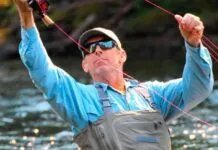
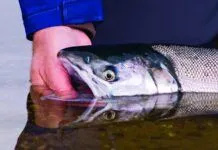
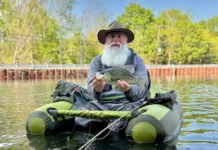
When Kelly Galloup shows up, you know it’s about to get good. In this episode, Chad sits down with one of the most influential voices in modern streamer fishing for a deep dive into Best Streamer Strategies for Giant Trout, wild eats, and the stories that shaped today’s big-fly game.
If you’ve ever thrown a streamer and wondered how the masters make it look easy, this conversation is your front-row seat.
Morgan breaks down what to expect on the White this fall. The pattern from November rolls straight into December, with cold snaps settling things into a steady rhythm.
Chad also clears up the hatchery news. The river is fine, fishing is good, and the issue is being handled. No need to worry about your winter and early spring trips.
Kelly kicks things off with a quick update on what he’s been doing lately. He’s based in Montana now, running the Slide Inn on the Madison after starting his career back in Michigan. The shop and online store are growing, and they’re even expanding their fulfillment center.
He talks about seasons out West, how things used to slow down for hunting, and how the rhythm has changed over the years. Even now, when elk season hits, the river goes quiet and the shop shuts down for a bit.
Kelly shares how streamer fishing grabbed him long before it became the big thing it is today. Back in Michigan, almost nobody was nymphing. It was mostly dry flies, hex, and traditional patterns. Streamers weren’t even a thought yet.
The shift happened by accident. Kelly was watching bass legend Larry Nixon work a topwater bait and talking about reaction bites. It didn’t make sense at first, but Kelly tried to copy that “walk the dog” motion with a homemade fly.
Then it happened. A giant brown blew up on it in the middle of a hot July day.
From there, Kelly dove into the river, literally. Mask, snorkel, everything. He saw big fish sitting in spots nobody targeted with dries or nymphs. That sealed it. He dropped everything and spent a couple of years fishing nothing but streamers. Russ Maddin joined in soon after, and that whole era of modern streamer fishing was born.
The first patterns were simple. The Zoo Cougar and the Woolly Sculpin came early, and Kelly still swears by them. He says he’s caught more big fish on a Zoo Cougar than almost anything else. Those flies came from trial, error, and a lot of blown-up fish that showed what worked.
As he pushed faster retrieves and bigger profiles, he and Russ started playing with articulation. They weren’t the first to ever use two hooks, but they made it do something different. They wanted a fly that moved like a real minnow, not a passive trolling pattern. That led to ideas like the Circus Peanut and the first builds that really pushed water.
Kelly explains how streamers really took off when he realized big trout were smashing the front of the fly. That pushed him to build patterns that moved, kicked, and stalled instead of just drifting. He didn’t want passive swings. He wanted a reaction.
That’s where the early articulated stuff started to make sense. He also saw the streamer world go way too big for a while. Huge flies with no movement weren’t getting it done. Action mattered more than size. And when fishing gets slow, you don’t size up. You go smaller.
He explains how the real breakthrough was learning to move the fly with the rod, not the reel. That idea shaped the way he ties and fishes streamers now.
Chad and Kelly break down why big and small flies work so differently. A big seven-inch bug can trigger anger, but on slow days, a smaller fly feeds them better. Kelly says the “hero days” don’t count. Anyone can catch fish then. The real game is when they’re picky.
For reaction bites, the fly has to move the second it hits the water. Trout feel that splash right away. If the fly sits still, you have already lost most of your chances.
Kelly says the biggest separator between average and advanced streamer anglers is the slow game. Slowing the fly down without letting it die is one of the most important skills you can learn.
Kelly switches colors quickly and avoids fishing one color for too long. He keeps his rotation simple and uses contrast to find what fish want.
Light also matters. When the river turns yellow in late afternoon, tan becomes the best option. These windows are short, so anglers need to change fast.
When fish are inactive, Kelly changes cadence before changing flies. Speed, rhythm, and timing matter as much as the fly itself. He adjusts how the fly moves long before he thinks about switching sizes.
Learn the slow game.
Most anglers know how to burn a fly. Very few know how to slow a fly down, keep it alive, and hold it in the kill zone long enough to trigger the eat. This is the biggest leap you can make as a streamer angler.
Episode Transcript
843 Transcript part1 00:00:00 Chad : Welcome to CJRS Real Southern Podcast. I’m your host, Chad Johnson, fly fishing guide, storyteller and southern soul through and through. From the front porch to the riverbanks. This podcast is going to be about connection, friends, and maybe learning a trick or two about trophy fishing. So grab a sweet T tie on your favorite fly and let’s go fishing! Hey, we’re back with CJRS Real Southern Podcast. We’ve got some great guests for you today. Going to be a good time. First, we’re going to join in with our buddy Morgan Gus from Diamond State Fly Shop to give us our monthly fishing report. How are we doing, Mr. Morgan? 00:00:48 Morgan: I’m good. Chad. 00:00:50 Chad : Good, good. Anything new going on at the shop these days or anything you want to, um, chat about? What do y’all have going on for the winter? 00:00:58 Morgan: Um, so coming up in January, wintertime, November, December, we don’t have really much going on just trying to get through the holiday seasons. Um, and turn over the next year. And January twenty third, twenty fourth is Streamer Love Fest. 00:01:15 Chad : Awesome. 00:01:16 Morgan: Got that coming back. 00:01:17 Chad : So tell us a little bit about I know that’s changed now that Dalli’s changed. So what does that look like these days? 00:01:23 Morgan: Okay, so streamer love Fest on Saturday night. The twenty fourth is going to be exactly like Streamer Love Fest used to be over at Dalli’s. Um, same program. Steve’s helping us out a lot. Um, put that together. Um, it’s still going to be Dalli’s streamer love Fest okay. Hosted at Diamond State Fly Co so it’s going to be at this shop, not Dalli’s. Yeah. Um, but everything on that front with Streamer Love Fest Saturday night the twenty fourth, pretty much the same program as as. 00:01:58 Chad : It wasn’t all. 00:01:59 Morgan: The. 00:01:59 Chad : Bad guys y’all are hearing this for. I’m hearing this for the first time, just like you guys are. I mean, obviously, I knew the boys were working on something, but this is pretty exciting. We’re pretty, um, you know, we lost the shot, but we’re still in the area doing the thing. It’s just really cool that we’re going to be able to continue this. This was like, our funnest event of the year. And so I’m really glad you boys have picked this up. I’m going to move on with that. Yeah. Um, it’s my understanding you also have a contest going on with it. Tell us a little bit about that. 00:02:30 Morgan: So we are currently running through, uh, streamer submissions for the Fly Battle. The fly battle is going to be on January twenty third, and that’s going to be over at Rapp’s Barren. And kind of how that’s been working is amateur tires. So if you basically if you don’t have a pattern with a fly company already, you can submit a streamer, um, an articulated streamer. We’re rolling through submissions right now, we’re going to choose out eight of the top tires that we get out of those submissions. And those eight are going to be invited to the fly battle, which is going to be hosted at Rapp’s Barren. I believe Brian Weiss is going to be emceeing that. So it’s going to be a really fun night where we’re going to pair these up, these tires up, head to head, and they’re basically going to be a one on one battle. Whoever ties the best streamer in fifteen minutes is fifteen or twenty minutes, moves on to the next round, and it’ll come down to two. And the last one up gets a seat at the love fest table, among other things. Um, I think there’s a four hundred dollars cash prize, a new vice and that fly that or whatever their pattern is that won them the fly battle is going to be submitted to Rainey’s, um, to be looked. 00:03:46 Chad : At guys. 00:03:47 Morgan: To potentially go into that catalog. Um, for Rainey’s, it’s not guaranteed that it’ll make the catalog, but it’s going to get a good a good look. 00:03:57 Chad : We’ve been promised a good look. Yeah. Um. Heck, guys. That’s awesome. What a great addition to the love fest. I think a little, um, friendly competition is good. I’m not gonna be. So the competition part of it is really cool. I think it gets their juices flowing. I always know, like I used to say, I hated, like, casting competitions and all this stuff because that isn’t fishing. And actually, the last couple I’ve been in have really made me work on my casting some. It’s made me work on my accuracy, it’s made me better. And once I actually got in them, I realized, like, I kind of liked that adrenaline of a of a contest, you know. 00:04:34 Morgan: It’s gonna be fun. It’s going to be over at Rapp’s Barren. We have the the top deck at Rapp’s Barren there. Yep. That’s going to be for us. Okay. So everybody’s going to be able to pile in up there, watch these tires go head to head. Like I said uh, Brian’s going to be emceeing it so he’ll have some fun banter. 00:04:51 Chad : Yeah, that’ll. 00:04:52 Morgan: Be those. 00:04:52 Chad : Guys. Yeah. 00:04:53 Morgan: And then we’re going to have a panel of judges, which, uh, Chad will most likely be voluntold to do. 00:04:59 Chad : Yeah. Voluntold. I like that new word. 00:05:02 Morgan: Um, along with some of our other, you know, Steve Dalley, some of our other professional streamer Tyers, um, to judge that up and with, uh, that along with, uh, the fan reactions. Mhm. Um, so it should be a really fun event. It’s going to be that again. That’s the night before Streamer Fest. So Friday night over at wraps. Uh, a little bit. Just different venue uh, just to change it up. Yeah. And, uh, I think it’s going to be a really fun addition to the streamer Love Fest weekend. 00:05:32 Chad : So I think that, like, that’s a thing right now, like all of a sudden it’s a weekend, right? Like there’s events, right? Like it’s not just this you drive all the way over here, you come in for one event and you leave like we’ve got a couple of nights going where it’s actually now it’s a weekend event. And that to me that’s cool because you get more than one opportunity to see everybody. 00:05:51 Morgan: Yeah. You come in Friday night, watch the fly battle fish Saturday during the day, and then pop over to the shop Saturday night for the actual Love Fest event, where that’ll all. We’ll start announcing all that stuff on Instagram and like Facebook a little bit more. Um, posters and flyers are going to go out with all the tire lineup and whatnot, all our sponsors, stuff like that. So yeah, be on the lookout for streamer love Fest information, uh, either on Diamond States Post Daily’s posts. Um, so we’ll have all that information going out about Love Fest. 00:06:25 Chad : Okay. Awesome. One of the things I think that’s cool about that is like, I know a lot of the people that come, they’d love the opportunity to talk to some of the tires. Mhm. Well those tires, because we’re professionals we can’t tie in it. And so but we’re all going to want to be there. And so you’d actually have the opportunity to talk to some of the tires that tie at Love Fest on Friday night. Yeah absolutely. Getting to hang out and have a beer. 00:06:53 Morgan: Yeah. They’re going to be there milling around, judging. 00:06:55 Chad : So so that’s just a great opportunity for maybe you guys to get to pick our brains a little bit or get to chat with us a little bit, when sometimes there’s just not enough time for that. So that’s just a great addition. I’m glad y’all are doing that. Yeah. Um, so, uh, we’ll get down to business here. Um, tell us what we’re going to be looking for. This should drop mid-November, so. So we’re still going to give the November fishing report, guys. Um, and just to be honest, there’s not a huge change between November and December, so we feel pretty confident giving you November’s in the middle of November. That’s going to last you for, you know, a month until we get out the next one, because you aren’t going to see just a whole lot of changes over those two time frames. Once we get our first couple of cold snaps, which we’ve already gotten, it seems to settle in for our for our fall fishing. So Morgan’s going to talk with us a little bit about some bugs and, and kind of what we can be expecting to see for this fall. 00:07:56 Morgan: Yeah. So, um, this fall, end of the year kind of wrap up of our season is a lot of nymph fishing. Um, a lot of bobber doggin. Yep. Uh, low water. Great time to have the five weights out. Uh, six weights work great, too. I like throwing the five weights. Small indicators, small bugs, low water, one unit less, you know. Yeah, about three thousand five hundred cfs is what we typically see a lot of through this time of year, if not minimum flow. Um, we might get, you know, as we start getting more of those cold snaps, we might see a little bit of water start bumping up, um, either in the mornings or the afternoons. Um, but I’m not. I wouldn’t be surprised to see some bumps here and there. Um, but typically and generally lower water. 00:08:40 Chad : Lower water for the fall. 00:08:41 Morgan: Yeah. So a lot of midges, um, the classics around here, rubies and root beer, midges always work good. Um, egg patterns are fishing good. Keep in mind, especially as we as the season goes on, fish are going to start building reds looking to start spawning. So just super important that we’re looking out for those on the river especially, you know, if you’re fishing, but especially if you’re waiting as well. Um, avoid those reds and leave those fish alone. I believe it’s perfectly fine to fish an egg. Just don’t put it over those. 00:09:13 Chad : Just don’t put it over their beds. Yeah. Like, dude, when they’re trying to breed for us, let them breed. 00:09:18 Morgan: Don’t fish the spawning fish. Mhm. Stay away. It’s totally fine to fish an egg. But yeah let’s not be raking them over the reds. Um, midges. Small streamer stuff too. You know, it’s kind of fun to bust out the six weight and a floating line and small streamers or even, like, an intermediate line. Yep. Um, this time of year and fish. Small stuff like wooly buggers. 00:09:40 Chad : I had a great woolly bugger week last week. I fished wooly buggers a couple of days last week and they just wanted to see something moving. And it was fun for the customers to see those fish reacting. And so like, yeah, I love doing that this time of year. 00:09:53 Morgan: I like doing that a lot too, instead of, you know, break up the monotony of, you know, just nymphing. Yep. Um, but Nymphing is definitely king right now. 00:10:01 Chad : It is. Yeah. 00:10:02 Morgan: Um, so, yeah, a lot of midges, uh, we’re seeing kind of wrapping up, uh, but still kind of seeing a fall caddis a little bit. Yeah. Um, so throwing stuff like a Sunday special. Waltz, worms fishing. Good. Yeah. Um, we’re also starting to see, uh, some small blue wings coming off, so fishing small, like pheasant tails or. Yeah. Um, Egan’s iron lotus. Mhm. In a smaller size, I mean, the blue wings are pretty small. We’re not seeing a ton of them but that is a player. So you know just this week I’ve been just throwing a pheasant tail um in a Sunday special and that’s been working pretty good. 00:10:38 Chad : Yep. I um last year kind of picked up on that little blue wing olive thing, actually, for the first time. Um, I never felt like they were significant enough to for me to spend much of my time on. And I still believe that when it comes to the dry fly. Oh, yeah. Um, part of it. But man, do those rainbows eat those nymphs. 00:11:02 Morgan: Yeah they. 00:11:02 Chad : Do. Um, we’re catching mainly rainbows right now. And just like Friday, I got twenty two inch brown come up, made a freaking blue wing olive. You know. 00:11:12 Morgan: I feel like we’re starting to see those blue wings. Those bwas start coming in a little bit earlier. Um, that season is expanding. I feel like I didn’t used to see him till January into February. 00:11:23 Chad : Yes. 00:11:24 Morgan: Um, so seeing him. November. December. 00:11:26 Chad : Yeah. 00:11:26 Morgan: A little bit different for us. Um, but I think that it’s just that expansion of that hatch a little bit. Yeah. Um, hopefully. 00:11:32 Chad : That could be since minimum flow. 00:11:34 Morgan: Correct. You know, um, to me, I think it’s the next hatch that we’re going to see, start to see develop out here. It’s going to take a long time for it to get anywhere near our sulphurs or, or caddis. 00:11:43 Chad : But it’s on its way. 00:11:45 Morgan: But it’s on its way, so definitely be on the lookout for that. I’m seeing a lot more blue wings out there. Uh, year after year. Still, not that it’s prolific, but they’re eating the nymphs. 00:11:53 Chad : They’re definitely eating the nymphs. So, um. All right, guys, we are kind of getting a feel for what we’re doing through the fall, but I just feel like I need to take this opportunity. Everybody reads the papers, everybody sees the internet. Everybody knows there’s something going on on the white right now. Um, so just to put that in a little better time frame, a little better box. What’s happened is we’ve had some issues at the hatchery and they’ve had to dump and start over. And so it’s going to take a little bit of time to get our brood stock back up, get everything going on that at least for my listeners and my customers through here. We’ve kind of got a saving grace in that. You know, we don’t really fish much. I don’t fish December, January. I start back at the end of January. And when we do start back, we’re kind of chasing Browns for those couple of months. And so the rainbow stocking program isn’t gonna have much to do with that. And so I believe it’s gonna kind of allow them time to get things back on track before we even before it affects us. And so we have a lot better chance of that coming true for us just because of the seasons that are coming up that, um, guys, I like. We’ll let you know if it goes south. Don’t be afraid of the river. River’s fishing. Fine. Everything’s good. I believe that, um, before it’s over with, they’ll bring in some of those supplement fish for us. They’re all jumping through hoops right now. But in no manner is there anything wrong with the river or anything wrong with our fishing. Shane. We just have a hatchery issue that’s being worked out. So just to clarify a little bit with you, I know it’s one thing when you read it in the paper and you aren’t hearing things, but from us guides, we can just tell you like everything’s fine. Come see us. Fishing’s good. And, um, what I’ll do is I’ll touch base with y’all on the next podcast, and I’ll give you another update. As as they begin to update us, I’ll begin to update you guys. But as of right now, we’re not going to worry about it. So, um, we’re fixing to go in and get to talk to, uh, my other guests for the day’s Kelly Gallop. Very excited about it. Maybe we can all learn something and, um. Yeah. All right, we’re going to push Morgan off and pull Kelly on, and we’ll get right back with you. 00:14:30 Morgan: Sweet. Thanks, Chad. 00:14:32 Chad : Hello. We’re here today with CJ’s Real Southern podcast. Really excited about today’s Is a podcast with the guests we got. We got Mr. Kelly Gallop coming to visit with us today. Um, if you’re watching my podcast, you know who he is. And, uh, we’re just really excited to kind of get some information from, you know, the godfather of streamer fishing here. How you doing, Mr. Kelly? 00:14:58 Kelly: Great. Chad. Thanks for having me on. 00:15:00 Chad : Oh, man. Thanks for being on. I, um, I was just telling my Michael that helps me with everything. It’s really nice, you know, that in the past, being able to help with a couple of projects that now that I’m doing something myself, that all of you guys are so willing to come and help me with my projects, I’m very thankful of that. I never would have thought in the beginning of my gig that I would be in the position that I’m in. It’s pretty cool. You know, we follow you guys and then all of a sudden get to be involved is a pretty big gig for us. It’s a little, you know, a milestone, man. I’m getting to talk with the guys across the country, which is just really cool. And you’re one of those guys everybody knows you that does any type of streamer fishing. And we all kind of look at you guys and want to learn from you. You know, you have seen and done so much. Um, I find myself a lot of times I’m out trying to figure something out and I’m going, crap. I bet Kelly and those guys have already been through this. They already know what the crap. I just why am I trying this? I ought to just call Kelly, you know? So it’s just things like that. It’s just very cool. Um, so first and foremost. Well, thank you. I’m trying, but I never feel like I deserve to be in the spots I’m in, but, um. So just real quick, Kelly, why don’t you tell people before we get started? And I’ve obviously, you know, I got some things I want to learn from you. So I’ve got some questions. But before we get started, just tell everybody, um, that may know your name, but don’t know where you’re at or what your business name is? Or just like, what are you doing these days? Tell us about your shop. Tell us about your, you know, any events you might have going on. Just kind of catch us up with you real quick. 00:16:48 Kelly: Uh, you know, I’m out in Montana now. I started out in Michigan with, you know, Russ and I and that group and Alex and, uh, I moved out here to the slide in twenty five years ago or so. And so I’ve been on the Madison pretty much, you know, and surrounding rivers, uh, we’ve got, you know, pretty good online store that we push pretty hard. That’s we have two stores, one in Ennis. The store is about to take a massive expansion. Uh, it’s going to be a pretty big one, closing ten thousand square. But, um, that’s our fulfillment center on the, um, you know, from the online business. So. But out here right now, we’re getting close to closing this one down. We closed this one November first. Uh, elk season starts today. That. You know, I’ve said this a lot of times in podcasts that I really miss seasons. You know, when I grew up, um, actually one of the first year round rivers there was, was the Madison, I mean, the Pere Marquette in Michigan back then, you know, and almost all were out here when I got here. There were still seasons, right? And so it was kind of cool because people went elk hunting. They went deer hunting back home, deer hunting and grouse hunting and, you know, but now it’s a year round thing. And so but even so, uh, elk seasons a massive draw. You know, everybody, everybody. We lose a lot of hunters or fishermen, I mean, and so it slows this one down. There’s, you know, close it down the lodge gets we’ve also got a lodge here. Uh, so we closed everything down and just moved down to that one and everything goes out of there. 00:18:25 Chad : That’s the same way it is here. I mean, you can literally look and go, okay, deer season opens tomorrow and all the gods disappear. Yep. 00:18:38 Kelly: It’s forty two miles to my shop in Ennis, and I drove up the river today. Now, if I do that in July, it’s nothing for me to be able to see fifty boats just because it kind of highways near the river sometimes. 00:18:52 Chad : Sure. 00:18:52 Kelly: Um, I didn’t see a soul. 00:18:55 Chad : Isn’t that amazing? 00:18:56 Kelly: It’s sixty. Gonna be sixty degrees today. It’s going to blow like hell. But right now, it’s absolutely dead calm. And not a boat on the river. Yeah. Not one. 00:19:04 Chad : Yeah. No deer season, man. I mean, you know, when obviously we’re dealing with outdoorsmen and most of our outdoorsmen do do several different things. And then even if they don’t and they stay on the fly fishing gig, they’re all headed south or headed to, you know, the Bahamas or headed to, you know, they’re traveling not to obviously not to you guys. They barely travel to us through that time. Um, and so of course. 00:19:33 Kelly: I kind of like it, actually. I like the reprieve for the river. 00:19:37 Chad : I do too. I think it’s a great time for the river to have a break. It’s a great time for us to have a break, you know, and so know that part of it doesn’t bother me so much. We do have, um, we kind of get all four seasons here. It’s really cool, you know, we’re back where I come from, we get fall and summer. Yeah. And I say fall because our winters feel like falls up here, you know? And then it goes straight into summer and it’s cooking. And so like up here we actually get a true spring, summer, fall and winter. And so that’s it’s it’s really kind of nice to get all four of those seasons. And each one of them bring a different type of fishing to the area. Absolutely. Um, I get guys going, oh, we want to come fish. Well, okay. Well what do you want to do? Well, we want to catch browns. Okay. Well, how do you want to catch them? Well, what do you mean? And I’m like, well, do you want to catch them on a dry? You need to come at this time of year. You need to catch, you know. And so it really it keeps it interesting because with each new season brings a new tactic. 00:20:42 Kelly: Yeah. I’ve been in Arkansas for winter where no cars move for three days. 00:20:49 Chad : Yeah. Isn’t it crazy? I remember one time specifically I had a group down at one of my lodges, one of my friends lodges, and we got a big icing and snow and we could not get down into their lodge because of a hill that goes into it. And so we’re all up at the fly shop. We had went and fished through it for the day and was like, okay, we’ve got to get these guys back home. But like, we can’t. We were talking about maybe putting them in a boat in Qatar and literally carrying their stuff to the lodge. And um, two of the guys there go, guys, we’re from Michigan. We’re used to driving on this stuff. We’ll go down there and get our stuff. And I was like, guys, there’s a difference between snow and black ice. And what we got down here is black ice, and there’s such a difference. And like all you Southerners just don’t know how to drive in it. And so they we pat them on the back and off they go. And thirty minutes later they come pulling back up at the shop and they go, oh God, that black ice is just different than that snow. And they did not make it down there. And we ended up having to pull a Houdini. But, um, yeah, it’s just it’s, uh, it shuts down around here when that kind of thing happens. We don’t have all the snowplows and the the salt trucks and the. We just shut down for three or four days and go back at it when it leaves. 00:22:13 Kelly: Yeah, twice. I’ve been at, uh, rim and snowstorms have come in and it’s the greatest thing there. Not another boat on the river. It was spectacular, you know. 00:22:24 Chad : Yes. You’ve already got your boat down there so you’re able to get in. 00:22:28 Kelly: I’m praying for that to happen. Come on. Give me a three day rain storm. 00:22:35 Chad : And it’s so weird, too, that I don’t know exactly what it is, but a snow is so different than a rain. Those fish eat on snow days. I don’t know exactly why. I don’t know what how that snow hitting the water different. But we’ve just learned over the years that if you get that snow day, that ain’t the day to back out. That’s the day to dig in. Yep. And so we usually weather we’ve got to go to the slow boats and push them down a ramp to be able to get in, or whether we have somewhere we can get our jets in. We’re going to get to the river that day. Uh, we’re going to go out the night before. Salt ramps do whatever we got to do, because those days are just days you can’t pass up. So, um, I’ve got a couple of questions to catch people up on, kind of where you are and who you are. So I know, you know, back in the day, streamers Looked quite a bit different than what we use today. The old Mickey fans imitating little minnow patterns, the salmon fly type streamers. But if I’m not mistaken, you and Russ and those guys were kind of, you know, some of the first guys to put streamers together the way you did, bulk them up the way you did. Um, what started that for you? What put you in the streamer mindset versus nymphing just like everybody else. Our dry fly fishing like everybody else. What made you think this was the route to go? 00:24:04 Kelly: It was for me. We didn’t nymph fish in Michigan. We did for steelhead. But way back there weren’t fly shops and there was one in the whole state. There’s two, but, uh, one was only open part time. But, um, nobody really nymph fished that much. It was all dry fly in Michigan, I think, mostly because of the influence of Swisher Richards with selective trout and all that stuff that really revolutionized the world, in my opinion. And then the streamer thing happened by chance. Kind of. I saw Larry Nixon, who you should be familiar with. He’s from your area, one of the greatest bass anglers in history. And he was I’m a big bass fan, too. I love bass fishing, always have. And like a lot of people know about my diving when I was writing the books, I, you know, did hundreds of hours of diving, but I did more in the Great Lakes, following smallmouth around, and then started trying to go to the river mouth and look for steelhead and stuff like that. But, uh, I was watching Larry walking the dog, and he basically said something I didn’t even I didn’t think about too much because he I thought he was wrong. And actually because he said when the fish are set up in dour, meaning that the temperatures have pushed him deep, he would do a reactionary bite, which was a he was running a spook. And of course, you get this big fish blows it up. But that seemed counterintuitive to me because I thought we were always taught to go to the fish. Right? If they’re there, down there, you know, we go to them. But it was really cool watching him walk that stick bait. And I thought, I just thought I’d try it. So I went and tried it on the river and blew up a really big fish I was trying. Basically, what it was was a glorified woolly sculpin and a marabou tail and a little bit of body, but not much. And just a big head, right? Kind of a long head. 00:25:57 Chad : Big pushing head. 00:25:58 Kelly: Yeah. I was trying to walk it back and forth and I couldn’t I couldn’t get it to go the river. I was on the right side. We were going down so I could make it turn to the right, but I couldn’t make it go upstream very well. And I get down to the corner there. It’s just below Garfield Road on the Boardman River and in Traverse City where Russ and Alex live. And I got a giant to blow up on it, and he ate it. I mean, it was pretty amazing. And so I went back, I sat there, I knew, and it was eighty four degrees sunny. I think it was July ninth or something like that. And I knew that wasn’t a mistake, but I really didn’t know why. You know, I didn’t really know because growing up in Michigan, eighty five percent of the people when I grew up only fished the hex hatch. And that’s how I got my start. Like, I got my start guiding hexes, you know, and, and evening fishing and and so everything was night mousing. And I mean, it was mostly just the hex. And, um, so I went back and I got my mask and snorkel and snorkel and went back and I dove that really short section of river. And I’ve always used the same line about us, you know, how do you how can you tell if there’s a guy in the room? Don’t worry. He’ll tell you. Yeah. How do you know if we’re right? We’re always right. And I. 00:27:21 Chad : Was. 00:27:22 Kelly: Pretty damn because, you know, about my taxidermy stuff. And so I had mounted a lot of the major player fish in that northern region at that point, and I was pretty convinced there were very few fish over twenty in that whole river and my way bigger than that that I got. And I let it go. I don’t know why. I wish I had knocked it in the head, to tell you the truth, because it really. But it was I really I’ve never mounted one of them, and I’ve done thousands and thousands of fish and I’ve never mounted one for myself. But at any rate, I. I dove that river and, uh, I saw two fish that were probably eighteen to twenty before I got to the one I caught. And then I went another half mile or so and saw two more giants. And that was when I decided to I was just going to go and basically I just quit doing everything else for a couple of years. And we just fished Fish streamers. And Russ came in. In there. He showed up. I think we were about a year into it, and then Russ was working for me. He’s guiding and then, you know, and then working at the shop. But, um, that was pretty much it just went because I knew something was on the table. I knew there was something we’d missed. 00:28:40 Chad : Well, now you’ve found fish in the fishery that you had fished forever that you weren’t producing because of what you were fishing. So you said, okay, how am I going to catch these fish? Correct. Okay. 00:28:52 Kelly: And then we did. And so as we were doing that, you know, the first real fly that showed up on that was the cougar and the woolly sculpin and the cougar and the woolly sculpin. Still two of my favorite. I would say I’ve caught as many fish over two foot on a cougar as any fly. And including a dungeon. Maybe the Slick Willy’s closing in on it right now, but I have said for almost five years, I’m going to do a year of the cougar again where I don’t do anything but cougar. I might take it to two a woolly sculpin and a cougar, but. But that was the first we started designing flies. Dave Whitlock’s fly was around before that, but it was a you know, that fly had a little problem spinning when it was retrieved quick. And there was just I don’t really know how you would take the fly. And I was trying to make the fly do something. I was taught to streamer fish by swinging and it was so passive. Right. And I and I really just didn’t get that many big fish swinging flies and or matter for that matter, fish. I mean, you get a lot of juveniles on the smaller Mickeys and Blacknose dace and gray ghost and and the wooly buggers and stuff like that, but it just kind of came out of necessity for real, because when I got that big fish I was, I ripped that fly, right. I threw it in and I threw it downstream. And there’s a there’s a crick comes in right there and it’s a big back. Eddy and I flipped it the other way, and I chugged it twice really hard with my rod tip. And that fish came out of nowhere and blew that fly. I mean, just annihilated it, right? And so I kind of put that together, that it was a trigger and, you know, started just going and doing and and faster and faster and bigger. And the articulation thing we did not invent, I mean, that’s been going on since the beginning of time, but. And exactly how we did it too. We didn’t know that. We didn’t. We thought we did it. But, uh, yeah. You know, a lot of the main, the main trolling flies have always had, you know, they always had a little one in the back like that. 00:31:09 Chad : Mhm. 00:31:09 Kelly: And so we were doing that, but we were making a fly that moved like one minnow like those things are like a Dodger almost behind him. Right. The the minnows in there. But that little thing behind us? Not really. It’s just a stinger hook, is what it was. You know, it doesn’t have a body. It’d have a floss body, maybe some tinsel, but really didn’t do, like, what we were trying to do. And then again, they were all trolling flies. And so we just went on with that and and just kept, you know, Russ and his mad scientist mind, his shit was coming up, was crazy. And I think the first articulated fly I did was a double, uh, Darkside Deceiver. Put two of them together and then the circus peanut I think that was the first like duly and definitely the first with the rubber lay I’d never seen that thing looked like it was alive when we saw that sumbitch should have been illegal that first two years. Same with the zoo cougar. 00:32:01 Chad : I still catch the crap out of fish on the circus. Peanut. It’s one of my top bass flies. 00:32:08 Kelly: His original version is my still. He. You know, he’s morphed it a few times, and I still. I never leave without an original. 00:32:16 Chad : Uh, that’s the one. 00:32:18 Kelly: Yeah, exactly how he tied it the day he threw that sumbitch on the desk. And I was like, what the is that thing? And so it just went and. But the dual hook thing had more to do with the original. Flies were tied on. Carrie Stevens trolling hooks. So they’re this long? They’re five inch hooks, right? Oh, wow. And you could see him eating the head. They would smash that fly in the front end and you’d never hook them. You just jack as hard as you could pulling on that rod, and you just weren’t hooking them. So we. The first one I did, I did a woolly scalp, and I wired a hook on top of the hook and they would knock it over. That that didn’t work at lick. And then we did the articulation thing and started getting two hooks, but they would hit the front and we were positive hooking. Okay. And it just morphed. I mean, like I think the next one was the TNA bunker, which had the shape that was the first of the shaped heads. You know, where there’s stacked wool and the head’s shaped up and had an eye and, you know, it was profiled. That was, you know, like an actual minnow. 00:33:25 Chad : Yeah. More true to the profile. Yeah. 00:33:28 Kelly: Yeah. We did, you know, a lot like Blaine’s stuff. We, you know, we did multiple Platte. We’d do a tail, and then you’d do a small wrap of marabou, and then a bigger map of wrap of marabou and a bigger one, and you put a color over top of it. Then we joined it, and you had that big wool head that was very I really think that partly came about because Russ wanted to troll him out in the Great Lakes, and I was trying to do an alewife because I think the first one Russ might remember better. I know there was two impetus for that first style with that shaped head, and one was Bob dropped a fish, or Jerry, I think it was Bob, I don’t remember. Somebody dropped a fish in the quality trophy rider of the sable, and it puked up rainbow. And the rainbows aren’t supposed to be in there. They weren’t supposed to be planning those. That was kind of like, where’d the rainbows come from? Right? So we find out that they’re planting them. And so. And we couldn’t after they would plant, you’d have trouble catching fish. And so we did the rainbow style. But I’m pretty certain it’s either that or it was Russ because Russ was doing him and John were doing a lot of trolling out in the lake, and I’m pretty certain we did an alewife. And, you know, it’s kind of like a gizzard shad. And so I was I don’t know. But then it just kept rolling. I mean, and the funny thing is, we wrote the first book and there was no articulated flies in it, but we had already come up with six really good articulated flies and they wouldn’t stop the press. We wanted to just put a page in, just let me rewrite a little bit and they wouldn’t do it, which kind of sucked because that would have got way more people designing earlier. Mhm. Right. And so which for me has been one of the coolest things of the whole journey here, um, has seen like your sluggo and just a ton of other bugs that show up. Right. And it was just all these young guys and gals and guy that flies were just coming out of everywhere. It was really cool to watch that. 00:35:42 Chad : And y’all had such a huge influence on that, right? Because we seen what y’all were catching. We seen that it wasn’t what we were catching. We seen that y’all had come up with something, but we had no idea how to do it. You know what I mean? I mean, you guys were just learning at the time. And so you have sparked many, many, many young tires interest in this game just by the multitude of flies you put out. 00:36:10 Kelly: It’s been pretty cool to watch. You know, there’s only so much you can do on a hook and all the shit you put on it, but there’s been some just some incredible looking flies come out, but. 00:36:19 Chad : Well, one of the things that I enjoy so much about the streamer fishing is like, you know, you can go, okay, well, there’s a deceiver. Yeah, but does it swim right? Does it act right in the water column? There’s a hundred different ways to time, but there’s probably ten that work really well, you know. And so I really like the aspect of like when I tie nymph, it doesn’t have to swim. Right. It’s just got to look right. And as soon as you get into the streamers, it’s so much more about the action of the bug that I think that’s where you guys really come in, and that you weren’t just tying a bunch of materials on a hook, right? You were. You were developing. 00:37:03 Kelly: Quite the contrary. 00:37:04 Chad : Yes. You were developing flies for specific reasons to make them move specific ways, and you had to use specific materials to make that happen. 00:37:14 Kelly: And we didn’t have the number of materials then either. 00:37:17 Chad : Oh, God, y’all didn’t have anything, right? Y’all are basically using I mean, I guess I’m asking this as a question. Y’all were basically using everything that they designed for nymphs and small streamers and just using it in a bigger manner. They didn’t expect even American Rooster saddle was to be wrapped. It wasn’t to be put eight inches out of the back of a bug. So y’all were just having to use materials you already had in a different manner. 00:37:47 Kelly: And we didn’t have any. And we really, other than flash a boo, which was pretty new back then. You didn’t have body wraps. You know, none of Greg’s stuff, which I think was revolutionary. Uh, some of his stuff. I mean, we were basically hair fur in marabou, you know, and I think the first really can’t remember what it was called. Estes, like Russ put on the circus. Peanut. That was one of the first really reflective value things. We had some braids, tight braids, but the body, you know, wraps weren’t around and wasn’t just, you know, it was action was critical in shapes. But then we’re doing by prey. I mean, is it a crayfish? Well, how does a crayfish part of my diving in those hundreds of hours? Once I did this, I did a seven hour thing, partly in Lake Michigan, but five hours of it was in the river. I’m watching crayfish and watching them. They never swim. Never. I’ve never seen one swim in my life, including the Great Lakes, unless something chased it and then it would go very little. And one of the revelations I had underwater was I would take a stick and poke them right and getting these flats. And then one day I remember I was fishing with Jerry. Jerry Dennis was Is so instrumental in writing this book and nobody he’s a he writes the foreword in the first one, but Jerry was the guy a lot of times would let me get out and dive and row the boat and fish and he and Jerry Wilson or or Russ, whatever. But I would dive sections and look for fish and where they were and where they weren’t. That was probably the biggest deal, was finding out where they were and not where we thought, uh, you. 00:39:27 Chad : Know. 00:39:28 Kelly: The insides and the flats. And that was probably the biggest difference maker in the beginning is that everybody was thrown to the same. They still do. Everybody throws the fucking bank and pulls the rope back at the same cadence. They don’t change anything. Swim a freaking crayfish like it’s a shiner minnow. And it’s like, but the crayfish would they would pop up and go back down. And they’re very they do not like to be in the water column. They crawl ninety nine percent of the time. But then I started poking them and I would watch them as they swim. And I saw this. There’s this. They put their pinchers across in front of them, they scoop with their ass, and you see this light and dark as all you see a flash. A reflective thing of the belly is always lighter, right? And you’d see them turn sideways and you see this light, dark light, dark light. Dark light. Dark. And you look at their pinchers are out in front of them crossed. And there’s this total gap going in there. And I had Jerry throwing, uh, I think it was Jerry Dennis was throwing all the crayfish we had, and there was a bunch of them out, and they’re all really fixed. You know, they got fixed, uh, glued to their pinchers are out like this. Every one of them. Some bitches spun like a cork. I mean, this is just going like this, you know, absolutely nothing. Like a crayfish. Nothing. I don’t give. 00:40:44 Chad : A shit. 00:40:45 Kelly: How much you look at it in your hand. And you’d say, oh, man, that really? But then you, you know, people miss that about going out and actually throwing the thing and seeing what you can do with it. And so Jerry threw a the two top woolly, the woolly bugger and the JJ were the best crayfish patterns I saw. They were so accurate to shape and how they swam in. The JJ in particular had yellow and brown, so it would turn like this. And it gave you a two tone effect. 00:41:18 Chad : I guarantee you of that belly. 00:41:21 Kelly: Yep. And I guarantee you and the black woolly bugger was so damn close. And other than the colour. But if you had two toned a woolly bugger, it was the most accurate crayfish of one actually swimming right now, dragging one on the bottom, which is impossible. But if you could do that with those other ones, it might have worked, but it was just what it was, that kind of thing. So we’re doing this development and I’m going through these things. It’s like, how can we make one look like a sculpin, you know, and how can we? People would talk about mudbloods looking like sculpins don’t look anything like a goddamn smoke. Sculpin. I don’t even know how we came up with that theory. I mean, they do look like juvenile sculpin if you take a tiny little sculpin, but you know, a two and a half three inch slimy or mottled sculpin doesn’t look anything like that. And so we broadened the heads and we start. We just all we were doing is trying to be more. And you have to understand, growing up where we grew up, the influence of the dry fly, going from generic hackled flies, and very few of them really. And if you going back in history and you look at how few the atoms, by the way, was invented on the river, I was diving this all that I was talking about the Boardman is where the atoms fly was invented and the most, you know, famous thing. But then you go from that to no hackles. And those guys are also the guys Swisher and Richards. Well, coochie Nastasi also and other and others. There was people way ahead of every. It’s always a progression. There’s no one person. But any rate, they were the ones that started identifying Pupating caddis along with Gary Lafontaine and and, you know, emerging mayflies and humps on their backs and shells and, and, you know, exoskeletons that that shine because. 00:43:09 Chad : Of gas and everything. 00:43:10 Kelly: Yeah. And all this stuff. Right. And so you’ve got these super innovative tires of that era. And so now we come along and the streamer thing. But we grew up in that. Right. And so now we’re looking at the streamer going well that doesn’t do anything. At least that’s how I’m looking at it. Well that doesn’t Russell is probably too young because he didn’t grow up through that. But, uh, but, you know, he was thinking the same thing. Well, how do we get it to look more like. And what do we get? How do we get a whiptail? How do we get something? And you look at take a minnow and throw it in the water and see how fast that took off. Right. And so you’re starting to try to develop things into that also, you know, understanding of the influence of the hooks and what they’re doing to it and what a short shank front hook does. And we were looking mostly for the hit because you kept seeing the fish eating the front end. And it was such a different world, just like the white the first time I fished the white in eighty two. It was very different than it was when I met you, you know? But it was still spectacular. But because nobody was throwing streamers, right? Remember when you first went out and threw streamers? 00:44:12 Chad : Oh, God. Everybody told me I was crazy. Yeah, yeah. And every fish is eating it. Yeah. Oh my God. 00:44:19 Kelly: Well, try being the first zoo cougar down a river. I remember the first time I saw zoo cougar hanging in a tree and I’m like, oh, shit. Because I knew it wasn’t mine. 00:44:30 Chad : Mhm. 00:44:31 Kelly: Right. And I’m like. 00:44:32 Chad : So you knew somebody else was already throwing it. 00:44:36 Kelly: Maybe it was Russ I don’t know. But I’m thinking oh got it. Because I really didn’t talk about it much. But in the same with the woolly sculpin. But anyway that was just we went into then very specific body shapes and materials to stall the front end and accentuate the rear end. You know, we had the when we did the TNA, it was just two Gartside minnows, which was the first kind of just all marabou minnow. And we hooked them together and you could see them swimming, but then if you bulk the front end, you could kick the butt. Now you can stall the fly. Now you can do stuff because we, you know, like everybody, we started out pulling the rope. But then. And you fished me. I never pull the rope. I mean, I like to jig flies. I like to stall them. I like to, you know, I like to jerk them, you know, jerk. Strip them. And so the fly started to be developing for a style of fishing also, you know, that came a little later. But like, with all my bang tails and the Nancy P, all the crayfish stuff, everything was designed to go up and down like this, as opposed to. 00:45:42 Chad : Like a jig versus a swim. 00:45:46 Kelly: Yeah. And so and then you got to change your materials, you got to change your everything has to switch, right. 00:45:52 Chad : Your tactics, your stripping technique. Everything’s different. 00:45:56 Kelly: Everything. And what I saw, I mean, I don’t know if you have this question, but what I saw happen in our world is in particular now where you are with the influence of a couple big fish on musky flight, everything got huge. And what I think went wrong there is the flies got really big, but they couldn’t with the exception. Like what was William Kiss when he got that big one coming across the river? I forgot, but that was a huge fly. But you know what? The difference is that some of those flies one. There’s different types of styles to retrieve them and flies didn’t when the flies didn’t move and they were just big. And people got this sense that we just got to go big and, you know, they’ll eat it, which was totally stupid. I mean, when in doubt, don’t go big. You know, when the shit’s going south and you can’t catch something. 00:46:52 Chad : You go smaller. 00:46:53 Kelly: Go small. Don’t go big. And we had a five, ten year generation of people just making these flies, that giant nine way worthy flies. And I was like, Holy shit. Yeah. I mean, I just couldn’t get them to swim. I mean, the only ones I could get to swim were really big marabou stuff. But, you know, I rolled that for about a year and went, yeah, my numbers are going down. And I actually went, I don’t think I’ve, I got a board here to kind of showing it. I made up that, uh, I just looked at where we went up to the nine inch flies, but I kept seeing flies that didn’t swim. Unlike your sluggo, your sluggo is a foot seven and a half. So that tail swims. Yeah, that’s a fly that swims. Right. And so. And for me, once you get past the first ten years of learning curve, then it became how do you perfect those things. Right. How do you get flies that do something. And then it’s from a commercial standpoint I have to make sure that you can catch fish with it. It’s one thing for you and me to go make a fly or swim. It’s another thing for a guy that’s going to pull that thing and not going to animate it with his rod. I mean, I wrote about this in the book. I was doing a seminar once with God, the top five best guys in the world, Van Damme, Dance God, Shaw, Grigsby, both Linder brothers, Jesus, Babe Winkelman and there’s a couple of new guys that are now the best in the world. They were there and I asked Shaw Grigsby we were going to lunch. Shaw was getting into fly fishing pretty hard, and I asked him, I said, uh, because, you know, he was pretty old. Not that old then, but he was in his forties. And, you know, that’s a young guys sport keeping up with it, right? And and he was always in the top fifty. And I asked him what’s the difference between the top fifteen. Because the top fifteen ten of them are in everything. They’re always there right. Like Van Damme, you don’t win everything, but you’re going to be in the you’re going to and you got to qualify for every one of these things, right. But they’re always there. And I said, what is the difference? And he said, it’s their ability to move their lure with their rod and not their reel. And I’ll tell you something that’s sunk into my brain deeper than a Louisiana tick. That thing came in and I’m like, oh my God. Everybody just pulls her fricking rod. Everybody just pulls the rope. How do you get people to understand that? You can if you’ve worked jerk baits you don’t cast a jerk bait out, reel a damn thing straight back. If you could do that. Every guy on earth would be Kevin Van Damme, right? 00:49:30 Chad : Absolutely. I always say the worst thing people do is throw it out and rake it back in. And they’re not fishing their flies. 00:49:39 Kelly: They’re not even thinking about it. And that’s what I, I, you know, I liked about the jerk strip is I like to watch people animate their fly, but ninety five percent, especially if as the flies got big. It was virtually impossible to do that. The giant fly. And so you saw people just doing big strips more and more and more and more. 00:49:58 Chad : Because they were trying to get those big bugs moving. I think what I found in my short career, anyway, with the big bugs versus the small bugs is and I’ve had people tell me I’m wrong and that’s fine. But in my mind at least, the way I fish them and the way I approach it, is that seven inch mark is big enough to get an aggression bite. And when I’m fishing the smaller bugs, I feel like more than I’m trying to get a reaction bite. I’m trying to actually feed them. Yeah. And so I think there’s a feeding bite and a reaction bite. And when a three to four inch fly is in their face that really isn’t aggressive to them, it’s just another minnow in the water versus a seven inch bug that might can piss them off and get that aggression bite. And when they’re not going, when they’re not on and on fire, you’re going to do better feeding them than you are getting a reaction bite out of them. And I don’t know if I’m thinking about that process. Right. But that’s kind of been the way that I’ve approached it anyway. Schooled me on it. Kelly. 00:51:06 Kelly: Hey. Well, I agree with a bunch of one thing that we miss in a lot of things is that you have super bites. You have days where everything goes right? Right. You have to throw that shit out the window. It doesn’t matter. That’s the day when everything works right. 00:51:22 Chad : Where everything’s going and they’re aggressive, and you can throw a turd in the water and strip it fast and get something to eat it. 00:51:29 Kelly: Or it’ll flop there and sit there and they’ll still eat it. I mean, it’s just you got to bring the work days into it. You can’t play off those superstar with every boat in the river is going to catch a bazillion fish. And, you know, and they’re all feeding. But one thing I think. And this Reactionary bites. And, you know, I would like to from my experience on that river, your river and all the other ones. My belief is that they work on a, on the, the wavelength process, that they feel the fly and they are so fast. When you throw out a seven inch fly and you hit the water. If that fly doesn’t initiate a move immediately, I think you’ve missed eighty five percent of your fish, maybe ninety if it sits, no matter how realistic you think this fly looks. I mean, think about it. They don’t they don’t look like much. Some of them are pretty close, but not most of them. You know, they’re just there. Especially on reactionary bite flies when the what if it’s chartreuse? What the hell’s chartreuse. 00:52:30 Chad : In the world? Right. 00:52:32 Kelly: And and I’ve caught more giant fish on chartreuse. But to me the fly hits the water and it better engage itself instantly. And I say this in every seminar I do, I’ve got research that I looked up where they say a three inch minnow can be tracked because of the sensitivity, in particular brown trout’s lateral line. They can track a three inch minnow in a distressed flight which is seventeen to twenty three wavelength thing, and it’s something spooks it, right? That fish can feel that one hundred yards upstream or downstream from itself. 00:53:10 Chad : Two hundred yards. 00:53:11 Kelly: Upstream. Upstream. 00:53:14 Chad : Right. 00:53:14 Kelly: So now a fly hits the water, sits there like a pile of shit. And I personally believe any fish within fifteen feet of your fly hitting has already already knows and is already in contact with your fly. Mhm. 00:53:28 Chad : Right. Absolutely. And then they’ve got to make a choice. But they know the second it hits the water. So if they look over to see that it better be doing something that entices them to eat it. 00:53:39 Kelly: And it better be in that wavelength of saying, I’m getting the hell out of here, right. It doesn’t have to be the whole retrieve, but it has. You’ll see people hit their fly down and then they’ll be messing with their shit, trying to catch up with their line. And that fly might float a foot, maybe two foot, and nothing happened. You’ve already lost your fish. 00:53:58 Chad : They’ve already looked at that and went, ah, that’s trash. 00:54:01 Kelly: A fish can go in half. Its body length can go thirty miles an hour. Well, if you’re ten feet from that, that’s imperceivable to the naked eye. Just go out and get get ten free from a car doing thirty miles an hour. And just think about it. I mean, you’re dead. You’re not even going to get to blink an eye before you get run over. That fish is already he’s if he is going to trigger the first impetus was you hitting that fly in the surface. So I encourage people to slap their fly down right now, especially on reactionary stuff. Not so much shallow water minnow stuff, but if you’re going to play the reactionary game, you better play that really fast and you better have a fly that was designed to hit the water and already move. 00:54:43 Chad : And start moving. Yep. 00:54:45 Kelly: So gotta. 00:54:46 Chad : Move. That’s right. I often say so, like the mentality of what you’re thinking. Like a lot of times when we throw over onto the bank or wherever across the scene, whatever, and boom, we get hit immediately, we go, oh, we must have thrown on his head. No, he could have closed that from fifteen feet away immediately. So yeah. Right. Immediately. Because you called him from fifteen foot and it takes a second for him to close that gap. And so you hadn’t thrown on his head. You threw ten feet above him. He’s seen it. And he got there that quick because he was in that charge mode. 00:55:24 Kelly: Yeah. And but they’re either in that mode or they’re not. And not everyone’s going to do it. You know, they’re great eaters. They eat half their body length as often as they can. I mean, they just do it. I got a great picture. Johnny sent me of a probably a four inch, maybe a five inch scope, and it’s got at least a five or six inch rainbow in its mouth halfway down his throat. That’s how they make a living. They just go out and eat the neighbor’s kids, man. They just. They’re looking for food. And then. But then you go back to that how we went from that. And people just stayed with that big game. And you kept hearing this. You know, I remember saying to me once, well, I’m looking for the one. I said, yeah, but we haven’t, you haven’t caught a fish, haven’t got a rise on it. And you gotta yeah. You know that I, we got so dialed in to like and people do that in, in colors a little like yesterday. They kicked ass. And so today today’s not yesterday and two hours ago isn’t right now. You better be flexible enough to figure this shit out in a hurry. But back to that smaller thinking. 00:56:29 Chad : Forward thinking. Because what you always say, my my saying is always don’t get caught fishing to yesterday’s fish. 00:56:36 Kelly: Yes yes, yes. Or a two hours ago. I mean, a two hour bite is a pretty damn good thing. 00:56:43 Chad : That’s solid. 00:56:44 Kelly: Wouldn’t that be great? Yeah. 00:56:46 Chad : If you got a solid two hour bite in a day, that would be. Oh my God. Yeah. Those are the days. 00:56:51 Kelly: Yeah, that’s a killer, right? Yeah, that’s one of them days. But you go two and a half hours. That last half hour, you haven’t caught a fish. That’s your fault. We hang our egos out and, you know, put a badge on it. Look at us go. Well, you just wasted a half hour. You missed. Because then. Then you getting somebody off that fly or having them change your cadence of the retrieve. It’s impossible to have those two hour bites. But two hours ago isn’t right now. 00:57:18 Chad : That ain’t right. 00:57:18 Kelly: And I mean, and you know how that river, it’ll go to shit and come on and go up and up and down and we’ve ever been moving with it. 00:57:25 Chad : So here’s a good follow up question. So I know, you know, you have been the jerk strip and you’re able to get like a charge off of that jerk strip that you can’t get stripping. But we kind of touch base here a while back, just when we were chatting. And so I was going to just bring it back up because I feel like so many of our streamer fishermen miss this part of it. And as y’all were learning and as you were going and you were learning, okay, I need to speed this thing up. Well, obviously, just like the big flies that can become overwhelming where you go, okay, this is the way they’re eating it. At what point did you realize that you had to throw a slow game in with that jerk strip? At what point did you realize that? Almost immediately. 00:58:16 Kelly: I mean, I also had the luxury of fishing with another guy, Tom knobs, who’s a really great, uh, but he was a dredger, right? He would throw it upstream, men downstream, and basically let it just dead drift down the river. Okay. And he caught a lot of big fish. It’s a I can’t do it. I think it’s an arduous task. It just it just don’t enjoy that. 00:58:37 Chad : You’re trying to create that bike versus fishing port. 00:58:41 Kelly: Yeah, but you know, having the luxury of fish to other styles, jigging in particular for everything, jigging for trout, jigging for, you know, everything. Everything will eat a jig. Right. And you’re going back to the bucktail jig zone. And they ate the hell out of those things in the river. And so it just makes sense that not everything is going to be a speed bite. And so, you know, in the beginning it was so easy and fun and exciting with these reactionary bites. But we were also fishing scope and size flies. We were fishing sculpin. We were popping them in and out. We were stalling them. We were doing things that we really didn’t get that we were. And remember, we didn’t have led eyes back then in Coneheads. We did that. They were really I don’t know if we had lead ice, but I don’t think so then. But we might have had plain lead ice, I don’t remember, but that wasn’t a really big. There was bead heads, but the cone head was kind of new back then. And then it started showing up. And that allowed us to get a fly that goes up and down. Well, it makes sense if you’re going to jig something. And again, if you fish with people who are gear anglers, they have multiple techniques, right. Like a Johnson spoon, you know, used to jig Johnson spoons with a minnow on it and you’re getting a flutter. Right. So now we got this flutter bait, and now we’re running flukes like my, you know, fluke style. Things were getting to come up and down, but it just stands to reason if you go out and you if you’re a pro jock and you throw a fly to the shore and you’re ripping it back and you know that’s what your game is, well, at some point it should come to you that if you’ve done any other style of fishing, there’s always a fast and a slow game. And I’ll tell you one thing, that was an eye opener on that slow game or that fluke style, you know, soft, plasticky stuff where it zooms. It’s all up and down, right? It’s all about the drop. I have a whole new series of flies coming out about this drop thing. I watched a trout, a really big trout, and I was with, uh, Mark. Uh oh, man, don’t get old. I forgot his last name. Second. I’ll think of it. I mean, he’s one of my favorite fish guys ever. And we saw this two footer, maybe bigger clobber a minnow. And it looked it was a trout. And, I mean, he had it in his mouth, and he comes out of the water and he lets it go. And we’re like, it got away. It didn’t get away. He bit that son of a bitch and killed it. And then we see the trout, and we’re on this run on the Manistee. It’s a long, slow run about perfect speed, kind of, you know, and it’s just going down. And we see the minnow and it’s just flopping around. It’s barely mint, and this fish runs downstream about ten feet and comes back and he can see him sharking. His fins are out to the side and he’s just like crazy looking. And he sees that minnow and eats it head first and just the whole damn thing. It’s like an eight inch rainbow gets eat head first. Well, what we do when you get a bite like that, and this was a really hard thing to get in our mind’s eye. The first day I’d ever worked for me, I was with Jerry Dennis. We’re on the Boardman River, and one comes out and just annihilates me. I mean, one of those ones where it pulls your rod and then there’s no fish, and you’re like. And everybody says the same thing. Oh, shit. He missed her. Whatever. He got off. No he didn’t. He ate the son of a bitch. He tried to kill it. And he’s looking and he’ll run downstream and look for what he’s doing. And we’ve been talking about it. After seeing that attack, I took a box of Cheerios out, and I thrown them in the water and I would watch. How long would it take for them to get down eight feet. Right. And I go to different speed runs and throw it out there. And I’ve watched these stupid Cheerios and I go, okay, you got one, two, three, three seconds, okay. You got four seconds. You got. Yeah, whatever. And I’m looking at that thing I kept telling Jerry, I says, they’re hitting these things and killing them. And then they’re going down looking for them. And I said, you gotta throw the flight. And what everybody does, they’ll get a bite in one spot and they’ll throw right to it. The fish isn’t there anymore. You throw just above it and mend the fly downstream and let it dead drift. And particularly with zukuri style flights with articulated flies, you gotta still tap it a little bit, because you don’t want the thing to start bending over on itself, right? But you see it. And this fish came up. I didn’t set the hook. I saw in my mind what I saw was I saw a leaf turn over in the water. What I saw was this was not a big fish like a nineteen inch brown. I saw its mouth open and inhale my cougar. Right. And my cougars gone. And I see the thing. But my brain’s telling me there’s fleas in. Because it was. I think it was fall and there was leaves. And I’m like, oh. So I’m like, shit. I set the hook. And I swear to you, Chad, we probably have a picture somewhere. That fish ate my entire zoo cougar straight down its mouth. And it was stuck on the tongue. And I landed the fish in like, no time whatsoever. It probably was just painful. I never hooked the fish. I reached in and grabbed the back of the hook and pulled it straight backwards out of his mouth. He was never hooked. He just ate the entire fly, and I set the hook and wedged it in his throat. And then he comes in. Chris. She actually comes in pretty, pretty fast. I didn’t want to fight with that thing in there, you know that that was more impetus that we needed a bigger. And if you fish bait or if you fish crayfish, you know, you’ve gotta it. You still have to move the bait, you know. You know, you got. You still. You’re still lifting. It’s just, you know, like, you know, drop shot and a minnow rig. You’re still kind of touching it up and touching it up and touching. 01:04:41 Chad : But no big movements. You’re going more into a death drift at that point. 01:04:46 Kelly: Yeah. Or just not making him race. This thing right here is designed. It’s a body less fly. It’s just feathering head. It’s designed to drop shot under. I’m going to drop shot that and just see if I can do the same thing Crainer does with his stupid minnow rig. And I’m going to see if I can do with this. And then the the flies that are being developed for it are the same thing. There’s no body. They’re meant to go straight down, just like a fluke. I’ll show you one. You see that? There’s nothing. There’s nothing to it. It’s meant to go straight down because it’s got a three sixteenths tungsten bead there, goes down, gets caught in the currents, made a fish on a dry line. And it’s a blast, right. Because you’re just you’re kind of jigging it and letting it go up and down. You see fish swirling around that thing like it’s just like it’s exciting, right? 01:05:36 Chad : They love that fall and that slow flutter down river. Um, uh, me and you have talked about it. I mean, that’s something that over the I had a scenario that kind of got me to looking at that fall and that fall kind of converts into every fish that I fish for in fresh or cold water. Doesn’t seem to be. It’s not the same effect in saltwater. Saltwater. Most of those fish that I’m fishing for want it crawling on the bottom. But any freshwater, whether I’m fishing for, you know, bass, white bass, trout, all of those fish love a jig fly, a falling fly at a given time. Uh, you’ve hit on a couple of things where you’re talking about bass fishing. Um, I’m a huge bass fisherman from Mississippi. I love bass, and I think that I probably because you get more data with bias. I think I’ve learned as much off of my streamer fishing for bias that I’ve been able to bring to the trout world than I have learning in the trout world. With as little data as we get from these brown trout at times. You know, I learned the fall on bias. We have this thing on one of our creeks. It’s really cool about midsummer or so. You can take a like the four inch little Mini Johnson, put on a floating line, and that fly won’t get six inches under the surface. And they love a little slow twitch fly where they’ll come and eat it out of mid mid to upper column. And then I had a scenario down in Mississippi where we were fishing this little pond. Nobody was catching anything. Finally, the boy that was throwing a spinner bait throws on a little chartreuse crankbait and he starts getting them, And so I pull out a little like three inch party crasher and put on a floating line. And I start working it super fast with small strips. And every one of those bass wanted that thing running at Mach ninety. And so it really is like there’s we get in and we do the same thing on trout every time, every day. Same strip, same tactics, same bug, same everything. And when you go to that bass world and you’re actually getting data, you see that for each given season, they want it stripped a different way. You know, one time they’re hot and heavy and it’s middle of summer and those bass are hotter than crap. They may want that thing moving Mach ninety. And you can get out there and slow strip all you want and you’re not going to get them, and vice versa. As soon as it gets cold, you go out there and you start ripping and stripping. You’re not getting anything. You’ve got to slow that bug down and keep it in the zone. And so to think that that doesn’t happen on our child is kind of asinine. Like of course it happens on our trout. And so if if you’re going out with one game and you’re going everywhere and you’re throwing giant bugs and you’re ripping them as fast as you can, you’re literally missing out on sixty percent of maybe even seventy percent of streamer bites that you could get just by stripping differently on a different scenario and potentially the different bugs. So like, it’s funny how we get hung up. Um, as soon as we started throwing big bugs and catching them, I got hung up throwing big bugs to the bank and ripping them off as quick as we could. And that was just what you better be doing. And I got hung up in that a few years. And so that’s why I asked when you finally had the realization, because with me, I got stuck for about five years, and I thought that was the only thing to do and the only way to do it. And by God, I’m getting them to realize that I was missing out on half my trophy fish because I wasn’t changing my game. And so I have learned so much about trout fishing through bass fishing and watching their reaction to flies. And it’s made me play the trout game different. 01:09:42 Kelly: Yeah, I like what I mean in every seminar I’ve ever done, I said virtually and I’ve had people, you know, on my podcast or whatever YouTube shit where they write in and say, you’re nothing but a glorified crankbait fisherman. I said, God, thank you. 01:09:57 Chad : Yes, yes. 01:09:59 Kelly: You’re right, because bass anglers actually know what to do other than pull up. There’s something else you hit on there. You hit on the, you know, there’s the speed of retrieve the temperatures. There’s a lot of light conditions that do it. There’s a lot of things that trigger feeding and, you know, current flows and temperatures and, you know, moon phase, all this shit fast. Guys have been talking this shit for fifty, one hundred years, right? My my my my theory start, you know, match your sky color. Start with this and then move, move, move, move. Don’t just fish what you fish yesterday, but you hit something else. Hit in the bank. You know this bank only fishing. I don’t understand where that got locked in. Because, you know, you missed so many mid-river fish in that river in particular with all those drop the shoals and underwater sometimes and some aren’t. Oh my God, those that day that you and I were fishing and you said you saw it. And I saw that giant one. Remember? We were down. 01:10:59 Chad : Below down at Ram. Absolutely. I tell that story all the time. 01:11:03 Kelly: We weren’t on a bank that was out in the middle of the river. 01:11:06 Chad : Dude, that was on a flat gravel bar out in the middle of the river. There’s no structure there. There’s that gut and that hump. And that’s what was holding him. There was no log around. There was no bank around, there was no rocks around and it was a giant. 01:11:23 Kelly: You’re mid river fish here. I mean, most of the really huge fish I’ve got or had on in the weight, there’s been a few bankies. I mean, but usually it’s high flow, right. And that one that Mamie got, that was a bank fish. But the river was up right. And it was pushing things down. But the biggest one I’ve ever had on in there was in a big insect. Well, you know where it is. It was. I don’t want to say it on here, but Crainer knew where it was because he saw me fighting the fish. 01:11:57 Chad : I know exactly where it is. It’s where we go to catch our crawfish. Yeah. 01:12:02 Kelly: And he was like, I saw you in there. I’m playing dumb on his ass, right? 01:12:06 Chad : I’m like. 01:12:07 Kelly: He says, how’d you do that this morning? I’m not too much. I was hooked on that fish for it went around me. I got to see its back. And then I thought it was thirty, thirty five pounds, probably. And it went around my boat. Huh? 01:12:21 Chad : How ridiculous that you went to a crawfish hole and fished a crawfish and hooked a big one. 01:12:27 Kelly: And was slow jigging, and it went around the boat, I think three times and just barely. Just wasn’t like getting after giant hen, right? And God, it was just massive across the back. But. And then it just came unbuttoned. Right. So it’s like, oh, but it was kind of off color while I couldn’t see. Great. But plus, she’s digging up that freaking mud, you know. Exactly. 01:12:48 Chad : Oh, dude, I think it was. 01:12:50 Kelly: Comes to me and he says, how’d you do? I didn’t I never tell anybody what I do. I’d rather say I got skunked every day of my life and say, oh, yeah, crushed it, you know? And God help you if somebody posts a picture. But, uh, he says, I says, why do you ask? He says, I know right where you were. He said, what were you doing in there? And I said, he goes, don’t you mess with that big old girl. You ain’t gonna get her anyway. 01:13:15 Chad : Oh. 01:13:17 Kelly: I said I had her. He goes, I watched you. I just walked around that boat like. I mean, it was just had me caulked right to the bottom and went around three times. It was God, it was cool. But then he’s like, you’re never gonna get her anyway. 01:13:34 Chad : Yeah, because he couldn’t. Yeah. 01:13:38 Kelly: Um, I mean, Landon’s thing was like, Holy shit, it was giant. I don’t know how you would have got it anyway. 01:13:43 Chad : Well, that’s another thing. Like hooking these fish is one thing. Landing those caliber fish is a whole nother ball game. 01:13:50 Kelly: Yeah, that thing was just like. I mean, in the Great Lakes, you see those things and you’re in the river. But this one was so fat. God, it was giant. Anyway, that was a slow jig game. The next day, the river went way up and down there a little ways. There’s a channel on one side there, and I went in there and I slow jigged, um, two flies and I rotated that run. I’ll bet you for an hour and a half, and I never didn’t get at least one fish per run. Never saw a human being. I’m up in the jungle jigging those things just like you would a soft plastic. Holy shit. Was it unbelievable. And just then go home and everybody’s. How’d you do? Got my ass kicked. 01:14:36 Chad : Yeah, I guess. But yeah, I lost. Yeah. 01:14:41 Kelly: And I did. I lost one, but I got a lot. But it was one of those things where, like you said, if you’re if you’re not one, you gotta, you know, bass anglers go to all the lake. We fish lots of shoreline stuff, but you know, they don’t stay there. I think that’s the thing that I see done poorly more than anything is the fact that I. And on this river, this is a bell curve river, kind of like the it’s got the, the, you know, the ledge on the side comes through a hump, goes back to the other side. Seldom see people fishing anything but the the bank, right. They just fish the bank. They fish the bank. They don’t fish the mid river. I mean, my guides do. They’re pretty hip to it. But you just. And it’s so and so you’re asking and you think about it. How many other boats just did the same shit. 01:15:29 Chad : They just put flies through that same gig. And had you just gone to the inside bend and fished the drop off into six feet of water, that’s probably where he was sitting. 01:15:38 Kelly: Yeah. But everybody, they leave it. If they left a jet trail, there’d be ten thousand yellow lines out that outside. 01:15:45 Chad : Down one side. Absolutely. 01:15:47 Kelly: Yeah. Not even taking a minute. Especially when you got a jet, especially when you got low water like, oh my God, you’re running these rivers. I mean, same with here. I don’t care where you are. The fact that we aren’t identifying anything other than the bank is so ludicrous that it’s like, you know, after the fiftieth boats went through there, you really think that giant is still sitting there? You really think he. And he really wants your fly? Because your rope pull is a little bit better than the other guys, you know? 01:16:18 Chad : Well, and think about this. You know, Donald and all of his guys, they never fish a bank. No, they never fish a bank. And so those big giant fish you’re seeing come off the white by these bait guides literally never throw to a bank. So that’s just the writing on the wall. You know. 01:16:40 Kelly: I have learned more runs on that river by setting up and eat lunch when I see his boat goes by and following his ass while I’m eating lunch. 01:16:49 Chad : Yep. 01:16:50 Kelly: I never once, I always say hi and I just watch his boat lines and I go, huh? You know, and here you guys. Well, he’s bait fishing. I don’t give a shit. He knows more about this river. Look at where the guys at that run above Wildcat. Oh my God. I watched him, I pulled my boat over and ate lunch for an hour while he circulated that, I followed that run. Oh my God. I followed him every for years just watching him. Just seeing where he and oh, you know, thinking, oh, okay. And he’s got an advantage in that when you’re drop shotting or, you know, however he’s rigging. 01:17:26 Chad : Oh sure. I mean, they still I mean, even if we’re fishing the same water, they definitely have an advantage. I mean, we’re we’re imitating the real thing. They’re fishing the real thing. 01:17:35 Kelly: Remember that line I told Crainer? Is it Crainer or Crane? How do you say Crane? Crane. I said, do you remember? We were in the shop and he’s standing there and we’re all shooting the shit, and and he’s. I said, hey, listen, Crainer, you hear beeping coming out of the back of your boat? Don’t don’t don’t pay it no mind. He says, oh hell boy. He says he said oh hell boy. He says you can fire me anytime. He says you just think they’re gonna eat that fly. I know they’re going to eat this. Mentor. 01:18:00 Chad : Yeah. Manner. Yeah. Oh, yeah. 01:18:03 Kelly: He says you just think they’re going to eat that fly. That’s so great. He’s one of my favorite. 00:00:00 Chad: Oh, I had a huge awakening one day. I went out with one of the guys and he says, hey, watch right here. You’re going to, you know, these fish. Water was coming up because these fish are fixing to push right over here to us. We pulled over on the bank a little pod of twenty inch brown start pushing over to the boat. He’s rigging up. I’ve got a minnow on. I throw up stream of this wolf pack of probably ten browns, and this live minnow drifts past them, and four of them break and turn around. They all let it pass them. Four of them break and turn down stream and go back and let it pass them again. And then two went downstream, turned around, looked at it, and then one went downstream again and came back and ate it. I seen them systematically go, nope, nope nope nope. And that fish ended up making four turns before he ate a live minnow. I started thinking they wasn’t going to eat our flies either. Kelly. I was going, My God, if they’re passing this up this many times, how many times are they passing up our fake flies? Uh. 00:01:14 Kelly: You just think they’re going to eat that fly? I know they’re going to eat this many. I’ve used that line oh, times. 00:01:24 Chad: Dude, it’s so. I mean, and it is wild over here. I mean, the caliber of fish that can get in here and that type things, and we usually don’t get that. I mean, I don’t have a twenty pound fish in my boat, you know what I mean? I’ve got fish over thirty inches, but I don’t have no twenty pound fish in my boat. I don’t get my hands on those things. I think I’ve had one hooked up, and I always said it was way too early in my career. I was right across from Crooked Creek in that big old hole that Crooked Creek makes. And it was probably. It may have even be near one of my streamer fishing and I just throw over, get the big E and make a crappy big trout set and like, you know, I get to fight him for two seconds before he spits me out. But it was enough for him to come up top and show me what he was. And I think that’s the only one that I’ve had in that caliber, um, in twenty years, you know. 00:02:22 Kelly: Um, fishing as much as anybody. I mean, how many days you put. 00:02:26 Chad: Yeah. Those fish. Well, I mean, it’s like even the bait fisherman. One of the bait fishing guys, he says he’s trophy hunted his whole life. And his biggest fish came going through the middle of rainbow hole, dragging a wax worm, trying to catch rainbows. And he gets his only fish. He has over twenty pounds, so it’s always a fluke, man. We get these. Um, so we had one guy goes over to the lake with his grandson and they’re fishing, um, crickets for brim. They aren’t doing any good. They decide to come back over to the white and he goes, huh? Those boys catch fish on hoppers and wonder what would happen if I put a cricket on this bell sinker. And he throws out in the middle of the state park and gets a thirty six pound brown trout. Yeah. Uh huh. And then two years later, there’s a guy fishing off of Rainbow Drive dock or off their ramp, and he doesn’t know what they’re eating. So he asked, somebody said, hey, what are they eating this time of year? And they said, well, minnows are spoons. Well, this guy didn’t realize that a spoon was supposed to imitate a minnow. And so he went and got spoons and minnows and put a minnow on the spoon, throws it out on the bottom, lets it set like he’s catfishing, and he catches this fish and he he’s got it. He’s got it up to him. And he turns, literally turns around to the couple of guys behind him and goes, hey guys, I’ve never been trout fishing. Uh, do y’all know? Is this a good one? It was thirty nine pounds. 00:04:08 Kelly: Wow. 00:04:09 Chad: And so every year when one of these things get caught of that caliber, it is always some fluke, something. It is never the trophy guy out actually targeting that fish. 00:04:22 Kelly: Did I tell you the story when I was staying at River cliffs? Is that what it’s called? Just below the state park. Those cabins. 00:04:30 Chad: River copper johns? 00:04:32 Kelly: No, no. 00:04:33 Chad: Below that. Oh, yes. River cliff with Jimmy T. 00:04:37 Kelly: I don’t remember who, but that’s who. He has two. 00:04:39 Chad: Houses. 00:04:40 Kelly: And he’s got a launch and he’s got a dock. And there’s a guy named Steve and his wife, and I can’t remember his wife’s name. And he comes up from Memphis, and he spends a week in the little house, and I’m in the big house. 00:04:51 Chad: Mhm. 00:04:52 Kelly: And he would catch five fish twice a week or something like that, five or ten rainbows and do a fish. They do two fish fries. And he said, what do you do with them guts? Because I know they eat those guys. I think that’s how they get huge eating gut piles. But he goes, I just throw them out there, he says. And there was a real low flow. And he said, I says they were there the next day. He goes, no, I says, those giant trout are eating those things, I guarantee you. So this guy goes down and the rivers were pretty low, and he kills six fish and he guts him and throws him off the dock. You know, he got that little cleaning station on that dock, right? Throws the guts out. And he says, you know, he had a deal. We’re sitting up and we’re just hanging out, and I couldn’t sleep. And it was a beautiful night. So I went down and got that mercury light on the on the thing. And he there’s these gut piles out there. And he says, I kept thinking about what you were saying. And he walked out of the dock and he said, he’s sitting there and he’s looking and he says, four gut piles. And he says, then all of a all of a sudden there’s only three. And he says, and he’s looking down and there’s no flow, right? There’s no generation. 00:05:59 Chad: It’s like so he can see. 00:06:01 Kelly: Yeah. And he. But he can’t see the fish he just sees. And then finally it gets up to him where he can see right below him. And it eats the final gut pile. So he doesn’t know if it’s the same one eight. But he saw the three go away, and he said that this shadow is just there, and then there’d be no guts, right? And then it happens again. And I said, how long is it? And he’s standing there. He goes about this long. 00:06:27 Chad: Oh, God. 00:06:28 Kelly: Puts his hand to his hip and he goes about this big. 00:06:32 Chad: Good lord. 00:06:34 Kelly: Never caught anything but a rainbow in his life. Only stockers his whole life and he doesn’t know, has no reason to exaggerate anything. And does it? That thing to your hip. And I’m like, Holy shit. 00:06:46 Chad: Yes. 00:06:47 Kelly: Uh. 00:06:48 Chad: We call them doc cause they never leave that dock. They sit there and wait on that three o’clock dinner bell for them guts to hit, and they don’t have to go nowhere. And those fish are very hard to catch. 00:07:02 Kelly: Oh, God, I can’t imagine. 00:07:04 Chad: Well, the biggest rainbow I ever caught out of here was like that. I was down on a spot and somebody had cleaned some fish. And I look over and there is a, like, a eight, nine pound rainbow. Just eating guts like crazy. And, uh, I done the old bait and switch I took and put on a white bunny leach and threw out there and let it sit on the bottom. Eventually she made it over to mine, and I put her in the in the net, you know. But, um, those things, there are so many good eaters in our river, and so many of our brown trout live off of the dying rainbows as well. They sit below these boats, and when these bait guys pull the gills out of them and bleed them, those fish don’t make it either. Either a big brown trout or an eagle has them in five minutes. Yeah. They are not floating down the river below those boats. You’ll see them. And then, just like those gut piles, they’re gone. 00:08:00 Kelly: Which is more reason to have another retrieve style than just a burning ass retrieve style? What about a downstream kicking, where you’re stalling your fly and getting your fly to move and doing something? The problem is, is it’s just not as fun to do. 00:08:14 Chad: It’s not as fun. You got to be patient. 00:08:16 Kelly: You gotta be way better. And you got to be better with your control. Your fly. Mhm. You gotta practice. 00:08:22 Chad: I get that whole mentality of make your fly look alive and then give them a chance to eat it. That’s the way I try to get my guys thinking about it. 00:08:31 Kelly: And if it’s a reactionary day they’ll clobber the thing. 00:08:34 Chad: Oh you’re gonna know. 00:08:35 Kelly: Yeah. You’ll know when that happens. That day that, uh, Mamie hooked that giant, which I asked. You know, she had a twenty three inch brown on, and it T-boned her brown trout. Remember I told you that? Yeah, but it wouldn’t swim. And it was right beside. It was just the last big house above the rim, you know, on the on the left side of the river looking up, you know. 00:08:59 Chad: Yeah. 00:08:59 Kelly: River. 00:09:00 Chad: Mhm. 00:09:01 Kelly: And she just got that thirty on the other side and she gets this one eats it and she’s up on it. And the fish won’t swim because it’s got it right behind the head. And it’s killing. It’s what it’s doing. It’s a giant female brown. And she’s floating. There’s not much current. And she’s floating beside those docks which are every the every pillow is forty eight inches long. 00:09:23 Chad: Mhm. 00:09:24 Kelly: Right. And there’s sixteen inches I mean it’s barely moving. It’s not even shaking its head. She’s got that brown trout which is a really fat twenty three and a half. And it’s got it right. Its gills, you know, it’s just crushing it right behind the cleithrum where its heart is. And she backs it and I get to watch it. This fish is fifty five, fifty six inches long and it, you know, finally lets go of the brown trout and she never sees the giant. I mean, it’s, it is the biggest thing I’ve ever seen in Great Lakes. You see these things a lot, right? Giants. Not that kind of giant, but when it came in, it had a four and a quarter inch bite across. That’s a muskie bite. 00:10:06 Chad: Whoa. 00:10:06 Kelly: Go measure that. You got a world record sitting there. Go measure the inside of that mouth. You’ll see it’s less than three inches across. It squeezed the brown trout. She just let it go, right? And she reels it in. It’s deader than shit. It’s got a four inch plus bite radius or width. And it was like, wow, what was that? Right? 00:10:31 Chad: What was that? 00:10:32 Kelly: What was that? Yeah, yeah. Go ahead, tie the fly. Go tie yourself at twenty three and a half inch brown trout fly. 00:10:38 Chad: Yeah. 00:10:39 Kelly: But that fish, that fish that doc I was in charge never got him. 00:10:43 Chad: Chris, you need a you need a big fish on or some guts. That’s the only way you’re catching that fish. 00:10:50 Kelly: Yeah, I’m wondering if I can’t. Maybe we’ll tie up some rubber gut flies. 00:10:57 Chad: And just go at three o’clock every day and start fishing the docks. 00:11:01 Kelly: And they call and ask him to make me a gut. A gut jig to cast the rubber in. Um. 00:11:10 Chad: Um. Let’s see. Oh, I know one other question I was going to ask you. Just because people coming from your world to my world, and what kind of start getting it wrapped up, I know you got. It’s Saturday. You got other things to do? No. Um, so, um, what do you think the differences are? And you’re such a great person to ask this question to because you you’re getting so much of both, which is so foreign to me because to be honest, I’ve done very little, uh, streamer wade fishing. What do you think the major differences are between trying to wade Fisher River with streamers versus boating? Because I know a lot of your guys up there, you know they would be wade fishing it. So like, what do you think the major differences are? What what tactics do we need to change when we go from a boat to the wading. 00:12:07 Kelly: In a river the size of the whites? A little tough, but you’re going to be fishing a little water. So we do a lot of upstream fishing for one, if I can get in the middle of the river and fish shorelines, you know, if it’s a shoreline type. But for example, I have a river north of me called the Missouri, you know, little tiny river, and it comes down to you. But, uh, the Missouri River is a giant thing, right? And in certain areas, it is the worst bank fishing river I’ve ever seen in my life. And it’s so big. I mean, it goes it has trout in it for a thousand miles. I mean, the thing just you get below these dams, there’s always trout below them. And but the thing is, is not every river is a bank river. And so but if you have them and the one thing I would implore, implore, beg people, beg people to do is to. When you see water called frog water in crest beds, fish the living shit out of them, and trout are particularly they will rest in those things and they are so ambushing it goes over their head. But pay attention to your weed sources. You know, your crest, beds, your witchgrass, whatever you’ve got, whatever you’ve got in your zone because most guys blow through them. And that is my favorite, my favorite. If I can get green, I don’t care what kind of grass it is. I call it a checkerboard. And if you can get gaps between it, there’s one just below rim that is so spectacular. Acular. And there’s one way down there, you know, by between Buffalo and Ranchette, that is, I can spend six hours making my way through that weed bed. And, you know, if you get the gaps, if you get a gap, particularly between them, not necessarily, you know, towards the shores, but between them where they can sit underneath it like they’ll sit right beside it. Crayfish heaven. Those are great. Pay attention to those. But we do a lot of upstream waiting. And because the speed of our river now, you won’t have that in the speeds that you’ll be wading in. And so again, you really got to take time to read the water again. I particularly like to go from whatever zone it is. I like to go across the river. I like to go diagonally to the diagonal, to the flow. Right. I’m perpendicular to the flow. I mean perpendicular to the flow. Come across the weed beds, across behind the rocks looking for structure that can hold a fish, you know, just like you would if you were dry fly fishing. It’s no different. They’re still going to be there. But in particular, I find it important to fish upstream and small creeks and, uh, because you just don’t have the ability to get everywhere to manipulate your fly. And I, I would tell you, if you’re fishing upstream, pay particular attention to the distance you retrieve. It’s so hard to fish. And I don’t like to fish articulated flies so much upstream because they’ll fold on themselves, but I generally. 00:15:11 Chad: Pushing the tail back into the head. Yep. 00:15:14 Kelly: And you get a fold and you don’t you know, you can’t. You can jig pretty well doing it. You can do a good job jigging. But I usually tell people to run about thirty foot of cast and retrieve about eight. Oh because you’re going to lose control. 00:15:26 Chad: Mhm. You’re going to gain slack too quick. 00:15:29 Kelly: Yep. And I love cougars. Uh, I like bucktail like stacked lines and stuff that don’t bend over on themselves or loose or profile woolly sculpin. But again, you got to be careful that your tails don’t fold on you, but you should be able to keep up for six to eight feet. And then what I do is I take a like in this river, I’ll fish from shore. And, you know, you wouldn’t have to do that there. But if I pick and I go in two foot increments, I’ll go to my target two foot each side of that target and move up. But I don’t dilly dally around on it. I don’t waste time. Fish. You know, they’re gonna it’s a special situation because you’re. If you can get cross-current and perpendicular to your flow and cast to that stuff, you know, in particular weed beds, any structure, any structure you can get. But it’s definitely harder to do on foot because if you try to throw, if you’re going cross-current, you’re all right. But if you’re going upstream, you know, you just lose control pretty quick. 00:16:34 Chad: Okay, let me see if I can break this down a little bit for everybody. Make sure I’m understanding it. So one of the main reasons that you’re casting upstream is because you’ve come to find out in the past that swinging your flies does not produce brown trout as much, because your flies on the swing. So you can impart the action that you can when you cast upstream and you’re able to give that slack line, you’re able to get actually action on your bugs because the water tension isn’t just keeping it on a swing. Is that why you’re fishing upstream? 00:17:11 Kelly: Not exclusively. Mostly because I’m relegated to only being able to fish the shores here. And so you can’t get in the middle of this river, and instead, if you can get in the middle, if you can get doesn’t have to be the middle of the river. But if you can get where you can walk between, you know, if you’re on sand flats and stuff like that, where you can walk or shoals and gravel shoals and things like that. But let’s say I want to go up this edge of Armstrong’s. I don’t want to, you know. I’ve got to hit that from the back. Right? I’m going to hit that fly up there. There’s no way for how would I get anywhere else? And those fish should be, you know, on the drop. And I’ll get my fly across it better than I’m not opposed to swinging a fly. I don’t get the I’m swinging to me is a dead drift. Kind of a tail first thing. I’m not a big fan of tail first flies, you know if I can. But if wade fishing like I, I just it’s more stealthy, you know, you have to be. You’re waiting right there. And if I can get to that, like I said, if I can get where I can throw across, you know, perpendicular to the flow, where it’s coming at me and I can get both sides, or I can hit one good side and then wade up and, you know, or wade down and come up again. I would do that. But my upstream for me on this river is. So have you ever been out here? 00:18:36 Chad: Um, once. 00:18:37 Kelly: There’s very few places you can get in the river and not get swept downstream. You know, you’re. 00:18:44 Chad: It’s very fast. Yeah. Shoaled flows for the most part. 00:18:48 Kelly: Yeah. And so, like like what you are, though, you’re going to be in that river. You’re not going to be able to get out there until you’re low flow. Mhm. And so you’ll have the opportunity to wander around. But you’re still going to find your fish on your insides and your water. That’s not pushing them. You know they’re still going to be in the same spots. So I’m just saying that if I have to, if I can not get out and fish to it. 00:19:13 Chad: Mhm. 00:19:14 Kelly: Or from there I’m going to be going upstream a lot. Okay. Because I’m going to get a better shot at those inside bends and the seams, you know, the drops on the edges of them. I’m going to have a better shot at that. 00:19:27 Chad: Okay. 00:19:27 Kelly: And any creek you’re anything under twenty feet. That’s pretty much you’re kind of relegated to Throwing straight up. 00:19:35 Chad: Yeah, that’s the program. Okay. 00:19:37 Kelly: Yeah. And it’s one time that I will pull the rope, by the way, if I have to. I’ll strip my fly if I can keep up with it. But I find it easier usually to throw upstream. Do about three jigs with it coming back at me to manipulate the fly and pick it up and go again. Okay. And then if I retrieve six, seven feet eight maybe, and I make my other additional casts and every two foot on each side or whatever I’m looking at, and then I move up eight feet. I don’t waste much time on Wade fishing. 00:20:10 Chad: Well, and because once you I mean, once you put that bug through there, I mean, basically we know they’re either going to eat it or they’re not. You’re not usually going to present a streamer to a fish on the third time and catch him. 00:20:24 Kelly: Just think about the minnow thing you just told me. Just think about those fish passing a live minnow that’s swimming. Right. And eight of them didn’t eat need it, right? If they all had the opportunity to, we’ll throw it fifteen more times through. There probably isn’t going to say, okay, maybe I’ll do it. 00:20:41 Chad: Mhm. No, I’ve had very few scenarios um, where that’s worked well for me. I had one just here a couple of years ago. Uh, I had a fish that I could see and knew where he was and presented a couple of flies to him. He come out and chased one, but I could tell he wasn’t going to eat it with that tail pointing at him. And so I ended up throwing on the bank, letting my line get down in the ditch, twitching it off the bank. But basically I just sent it to him head first and the second it turned downstream. Head first. He came out and clobbered it. Um, yeah. So there are those scenarios where you might be able to get that fish to eat, but those days are few and far between. That’s not your typical deal. Once you’ve run that fly through that zone, you feel like you’ve covered that zone. 00:21:36 Kelly: Yeah. And he’s had the opportunity. And you can and especially when you’re talking triggering fish, you know, reactionary stuff that doesn’t come with the third trip. 00:21:46 Chad: Mhm. And the reality of it is, is if you’re only moving over two foot, if that fish was hot enough he did want it. It ain’t like he couldn’t close that gap and finish it out on the second one. So it’s not like you’re giving him no other opportunity. You’re just if that fish is there just by casting in a different even two foot over, you’re presenting it to him different. So you’re giving each one of those zones, two or three cast, even if it’s two foot apart, to give that zone the opportunity to feed. And then just very quickly, you’re moving on to the next one. Yep. Okay. Yeah. We’ve always said once you run the school bus through there, you’re kind of, you know, you’re kind of pissing in the wind at this point. We might as well move on. 00:22:32 Kelly: And yet, on your reactionary in particular, if you. I have had better luck on small. I can do multiple retrieves through a zone, and maybe I go down a little bit deep further, you know, maybe the fish, because he didn’t react to the giant flies. Not if it’s a food based bite I have had that I can produce by changing color or fly or shape or something like that in a pool that I, you know, on foot and say, this doesn’t want this, right? 00:23:02 Chad: Right. But the bigger that bug gets, the less that happens. 00:23:06 Kelly: Yeah. I mean, we’ve kind of in this shop in my guides, you, you, you’ve in the last four years, you watched this to the point of like, this is a traditional dungeon. This is a micro. I don’t know if you can see that. Right. Yeah. That is I mean, the mini is this one, But you’re going from the regular dungeon just that big. And then this thing which is two inches long. And the other thing that we do or I do, I don’t, you know, some people don’t like to in particular if I’m having a tight but I’ll run tandems and I run like this the, the barely legal for example, you fish the barely legal in there. That’s a barely legal. That started with this, that started with the single hook version. Okay, I run those, I run these singles and and I do it down there a lot on the white. I’ll run a two foot behind my regular fly, run, that little tiny smoke wagon and almost always that fly. And it’s amazing how many times that fish come up and, you know, swirl around my big fly and turn and eat those little ones and just eat it like a Scooby snack. 00:24:21 Chad: Just like I’ve made this big move. I might as well eat something while I’m out here. 00:24:26 Kelly: It’s my best day on this river in my life was, I don’t know, twenty years ago. Fifteen years ago. And I had a day up between where I got ridiculous close to two dozen fish in that twenty two to twenty five range, and almost every single one of them swirled on a it was back in the when I still fishing a lot of butt monkeys, and I was throwing a black or olive butt monkey and two foot behind it. I had this on. They’d come up, swirl that fly, and just turn around and eat that thing on the way out. Every single one of them, every single. So when I get fish, when I have fish pushing down there, uh, when they’re, they’re showing, but they’re not committing, I’ll do the same thing down there. I’ll run it two foot behind me. I always want it behind. People like to fish them in front. The whole predatory like one’s chasing the other one. I don’t buy into that. I like it hanging back there as a Dodger. It’s just back there. And they. It was just unbelievable that day. I’ve never had another day like that, so it wasn’t really a good. But I’ve had hundreds of fish where I’m fishing a bigger fly and have that behind it, and they but they almost always show on the big fly. It’s pretty rare to have them come up and just eat that little fly. They’ll show up and eat it, but we don’t do a lot of that. And I don’t do it always. I just do it. I’ll get a feeling or I’ll see how efficient I’ll get fish swirling my fly, and I’ll throw on a little micro thing like that or a micro, you know. Now we, we’ve taken almost all of our flies into micro like this is a micro Nancy P I mean that’s traditional. That’s micro. Right. And so those things are taken off huge running that that little baby, the baby crayfish behind a real fly. And I know it’s a it can be a code cracker in particular on those tight little water things too. 00:26:27 Chad: It’s like it reminds me of something Dave Whitlock told me whenever I was hanging out with Dave, I would always go over to the shows. I’d show him a couple of pictures of the big fish that he planted that I’d caught, and then I’d give him some flies that I caught him on, you know. Well, I remember him telling me one day he goes, all right, Chad, I want to tell you something. He goes, I like what you’re doing. Don’t change what you’re doing. It’s working for you. Like you’re catching giants. He goes, but I do want you to remember something. It takes a special fish on a special day to eat that seven inch fly. But every one of those fish will eat a three inch minnow. And that just set home with me. And then I started thinking, like, okay, you know, when the bait boys are fishing, they’re catching all these giant fish and they’re never using anything more than a three inch minnow. And that just really set home. That was actually what broke me from, like, just throwing giants everywhere. That was that one statement and I was going, hold on. Yeah, I mean, this is cool, but I’m missing out on something. And that’s when I started working on my small game and my minnow game and my, my slowdown game was once I kind of when he said that, it just like all clicked for me, you know, and, uh, that’s very much what you’re doing and saying like, yeah, those fish are interested in that big fly. But it takes a special day for them to eat that fly, but they’re very happy to turn around and eat that two inch minnow. Yep. That’s awesome. 00:28:01 Kelly: By the way, I heard you say that before. I’ve used I gave you credit for that. I’ve used that line before. Uh, but, you know, for me, I have this one or two habits. Like, I like to start with a medium sized white fly for my day. I always start there because it gives me a rhythm, you know, I’m on. But then I like to go big and bold, and I fish that to start my life. And if they aren’t on that, I get off of, you know, how fast I change. I mean, it’s nothing for me to change. 00:28:31 Chad: Yeah, you change a lot. 00:28:32 Kelly: Yeah, constantly. And just looking for the reaction right where I’m going to get it. Which databases for me. Like I will give that big fly a rotation. I’ll give a five and a half seven inch fly rotation. Maybe one out of six flies that I’m going through. I’m looking for a fish to move in some respect. I don’t care if he eats it. Just tell me that. Like if I was ripping it and he came at it. Okay, well, maybe I’ll slow it down a little bit and then see, you know, I’ll have the first thing I do. I go through color and I go through cadence. Right. My speed is always it’s always start fast as hell and burn the shit out of it. Because if that’s that day, get that reactionary moment. 00:29:15 Chad: I want to know. I want that bite. Yeah. 00:29:17 Kelly: Yes. And you’ll know really quickly. But don’t waste Three hours practicing something you know you should know if you know your water on this river. You know, I got four thousand fish per mile. I might float. I’ve been with Johnny. When he makes two casts and changes his flight, he knows he passed a fish and nothing happened, right? And I know runs where you’re at. You know your runs better than anybody. You know. In ten casts over great water that you passed a fish. Doesn’t matter if he’s sixteen inches or he’s twenty pounds. 00:29:52 Chad: What? Interesting. 00:29:53 Kelly: Nothing interesting or something interesting. And so I go color, size, cadence. And then I do I start all over. So I go fast, big and maybe not big. It doesn’t have to be that. But I go burning fast, you know, reactionary stuff. Give that one or two, you know, color changes, see if anything’s happening. And but then if I do get response to a fly that doesn’t eat or a fish. I mean, it doesn’t eat the fly. I always look at the eat itself. You know, look, if it was a swirl, did it come up with its mouth open and just close it and go away? That’ll tell you that it was going to eat it. But you fucked up, right? 00:30:34 Chad: Mhm. It wasn’t just a looky loo like you’ve done something wrong. 00:30:38 Kelly: Yeah you did it. So then you changed your cadence. You know just ask yourself. But that’s hard to do if all you do is pull the rope. It is once you understand that the fish is responding to something. I would hope that you you know that, not you. But if some whoever’s listening, like if you fished enough, you should be able to identify that. Well, what was that? What did that just do? Why did it happen? Right. Why did it eat or not eat? And even more importantly, watch the damn eat. People just go. Oh! Got em. Right. But you should be analyzing that thing coming at it. So in one in particular, you see a mouth open that’s a mouth is open, meaning it’s a sealed deal. And he closes that mouth. That is. 00:31:19 Speaker 3: You. Mhm. 00:31:20 Kelly: That’s on you. You, you usually stopped your flies. What happened. You froze on that. You saw it coming with air and froze up. Like you’re gonna let him eat the minnow. No. 00:31:31 Chad: But exactly what you always tell people. If one’s coming for it, you need to continue to do exactly what you were doing to get him to come in the first place. 00:31:41 Kelly: Don’t decide to feed him. 00:31:43 Chad: Yes. I remember one time we were down on the little red. Me and Alex laughed, and this other guy and the other gentleman was very new to fly fishing. They, you know, barely cast out there like he’s very green and, um, he makes a. Alex is in the front. I’m on the sticks. He’s in the back. He makes a cast, he draws like a twenty one incher over to the boat. And Alex, whenever he lifted his rod on a big trout set. And Alex looks over and had read his body language and goes, put it back in. He’s still looking for it. Yeah. And my buddy is just, you know, standing there going, duh. You know, and not doing anything. Alex was so convinced that that fish was still ready to eat, that he took his rod jammed down in the front of the boat off the front of the boat, and starts figure ating under the front of my drift boat. I watched this fish swim under my oar and come over and pile it. So like reading these body languages and watching how these fish react. I get to do a lot of that on the bass fishing, which I just love watching the way they’ll like, sit there and look at it and look at it and look at it and like they’re fixing to eat it. And I can just with a bass, I can just stop smallmouth stop. And the second it touches the bottom of the river, they’re going to eat it. And so like that is a total like and you got to have confidence in yourself and that you’re reading it right. But that is a total read of body language. Yep. I’m stripping. He’s not eating it. I’m pausing. He’s not eating it. Hold on a second. Let me let it touch the bottom. Boom. He picked it up and ate it. And so like reading these fishes, body language is huge in gathering your data on a streamer trip, because we know as a streamer trip we don’t get lots of data. And so like every little bitty thing matters and you better be paying attention to the nuances if you really want to get on to the bike for the day. But, um, kind of hard to pick up on at times, to be honest with you, you know? I mean, we do read their body language. We can tell what they’re doing. I get to see it again. Really big when I’m bonefishing. I feel like you can read those fish’s body language so well that, uh. yeah. People aren’t paying attention to that. You’re not gathering all the data that you could be gathering for the day. 00:34:20 Kelly: Yeah, exactly. And that’s the only thing. And that that data is the only thing that gets consistency in your life, right? I mean, you get there’s like one of the things one of my I always give a shit about this. That day we were fishing and he wouldn’t get off that lap dancer. And I’d had a couple fish. And I kept telling him, you need to change something. Steve. Just change. Right? Not picking on you, Steve. Just telling the story. Uh, but it turned one of the things that I learned a long time ago. How? I don’t know. Um, but when you get yellow light at five o’clock and it turns the grass yellow, you switch to tan, right? It is just. That’s an observation thing for me, like. And it lasts twenty to thirty minutes if you’re lucky. And I put it on and I told Steve, I said, oh, could have been a rainy day all day. And the sun comes out and it’s like, boom, here’s this yellow light. And I go, switch to tan, switch to tan. He goes, uh, you’re full of shit, mate. And I go, switch up. Boom! First cast. POW! Get one. Bring it in. He goes, let’s get a picture. No, it’s a good fish. And like, no, no, the bites on and I get another one and soon. And he goes, all right, I buy into it, mate. And I says, nah, never mind. Clouds came back in. It’s like it’s over. It’s over. You missed your window. And he says, I think you’re full of shit, mate. And I go, whatever. And so we went upstream and we had the same thing. It’s light conditions. And he says he’s going to switch and he switches to tan. I said, don’t waste your time with it. It’s not going to work at night. And just what do you just put that out. And it was just low light right. And and then we get another one and then he’s he’s switching but he’s not switching it. I said no don’t worry I said I think you should go to black. And he kind of looked at me like I was messing with him. I said, no, man, it’s just it’s I’m just telling you that what I’m seeing from years and years and years of doing it, there’s these windows of observation you get and you really should database or write them down. I mean, and you should have more than just the way the fish looked. And what was your water temp? What was the speed of the current? How were the flow rates, particularly in tail races where you are where that thing goes up and down? Man, you got so many variables. It’s just like, but yours happens daily. So it’s pretty consistent, right? And that variable should be data based. The color should be the speed. Head up head down, cross stream. I mean it’s just a million little things that you just tick tick tick tick. And the you know you just add them up and you just kind of stopped going like one of the most common errors I see people do is they’ll had a great day yesterday and Olive and they’ll burn three and a half hours on Olive. And it’s just and that’s, you know, then they’ll start with that shit of the the band aid on their ego. They’ll start with a shit about the barometer or whatever. I’m like, you haven’t done anything to change your like, you don’t watch bass guys go out and just decide, today’s a spinnerbait day and and burn eight hours and never change. 00:37:32 Chad: Never. 00:37:33 Kelly: You’re gonna go, okay, I thought it was a spinnerbait day, but five minutes, ten minutes in and go. Yeah, I guess it’s a jig day. 00:37:39 Chad: That’s right. And they got eight rods rigged on the deck, and they’re throwing something different everywhere they go. 00:37:45 Kelly: And and they’ll get there and go, okay, this. And then they’ll set a rod down and switch and go right to the another lure and boom pop. Right. Yeah. We don’t do that. We kind of hang tight. And I tell the guys always give me shit about my color thing. I says, I don’t give a shit how you fish, right? I says, I got thirty five years of databasing things and I get stuck in ruts. Everybody does. I get stuck in it. Yeah. And finally, you know, be like, oh, shit. Well, there’s twenty minutes of my life not getting back. And I switch it up and you start getting fish. But. And it may be, you know, people need to know color, size, cadence, and that’s it. I mean, it’s your your size and the color of your fly, the shape, whatever it is, then the speed you’re doing it and then the are you were you jigging or were you burning, you know, have at least if you do nothing else in this game have two freaking speeds of retrieves. You know, just if that’s all you can. 00:38:42 Chad: Do, at least. 00:38:44 Kelly: Have two, right? And particularly hopefully you can jig one. I mean, it’s not hard. Just pick it up and let it go. It’ll add a whole new game to your arsenal, but, you know, have at least have two speeds that would be. 00:38:59 Chad: You know, have at least two games. You know, I mean, it’s um, I mean, I’ve gotten stuck in that rut. I know that I have had days where I go, nope. When they start eating for the day, we don’t want to have on some stupid fly. This is what they’re going to eat when they start eating. We’re good. I’ve been in that rut before, and it took quite a bit of time to realize that, like with every light change, with every flow change, like, all of that can change and should change if you’re going to stay in the game. And that took a while, you know, because when you first figure things out, you’re like, oh, I finally cracked the code. I got it, you know? And then you realize and you start going, well, yeah, but that streamer fishing, it’s really like I get two really good days a week, you know, and it’s like, well, yeah, but you could have had three to four good days if you had changed a little something with the changes around you. And it had taken quite a few years of streamer fishing, both good and bad, to kind of begin to realize a lot of that stuff. 00:40:07 Kelly: And particularly guiding you can, you know, if you’ve got gamey anglers that are ready to play, your duration can be longer. So because sometimes that’ll it’s hard on people to I mean, it’s hard on some pretty good anglers that I’ve fished that. But if you’ve got two anglers you can say, you know, just give me one hour and I’m going to I’m one guy will be on, you know, for five minutes or whatever, and you know, the other guy will be on for five and we’ll switch and we’ll see if we can crack that code a little quicker, because I’m in a guinea pig, both of you. Right. And so that helps if you’ve got gamey, you know. And then guiding is different than you and I going fishing. 00:40:51 Chad: Oh yeah. 00:40:51 Kelly: One of the things that drives Johnny ups all these guides. As soon as I catch a fish on a fly, I take it off. And that just drives them nuts. And I’m like, well, we know they’re eating this. Let’s see if they’ll do a variation of Ation of this, right? And that for me, the reason I do that is that when I get bored but two I if I I pretty I database what’s happening and I’m all right today it’s it’s you know sixty degrees. It’s overcast it’s gray. They’re eating gray and they’re eating white but they’re not really eating olives so much. And you get one. And I just said let’s see what else they’ll eat. So when I go back with that person I’m actually getting I’m guiding. I don’t have just oh, I’ll just wait till it comes on. 00:41:37 Speaker 3: You know. 00:41:37 Kelly: So I, I kind of done that my whole life, just like see what they’ll eat. But it’s in a guide world. You have to have the right. And that’s your life, right? Your, your life is you’re getting paid to be out there. You know, at the end of the day, you’re to produce. Yeah, that’s your tip at the end of the day is like, yeah, well, thanks for the fifty changes of life. But you didn’t catch anything. Well I was trying, but but I mean, so you have to have a little bit of. you have to fish long enough for a client to know that they’ve put in their time, right? They’re like thirty minutes or one fly. Boy, that would be eternity for me. But fifteen minutes is a lot of casts, right? And if there’s not a show on anything and you ask them to slow down or speed up or do this or do that and still nothing. You know, if you were a bass angler, you would have been changed a long time ago. But as trout guys, you know, that’s why I came up with that rotation of colors, how I do mine. So there’s actually something that gives them that, you know, white, black, tan, olive, yellow, chartreuse, whatever. It gives you a starting point. And then you kind of diverse off of that. Like you say, Brown is going to be or yellow is going to be orange or whatever. And so tan is going to be brown. But to do these things like that. But at least if you got a system, usually the client sees that you’re working your ass off, right? 00:43:05 Speaker 3: Mhm. 00:43:05 Kelly: And for me, I mean I’ve had guys that say, you know what I’m gonna fish should kill whitey all day. I don’t care what happens. Hallelujah. That’s good with me too. You know, hopefully they come on the bite. But from people that are trying to learn. I mean, what’s usually. That’s how I look at all these podcasts and things about trying to teach people stuff. You can’t do it by going out and fishing two colors and just all day, all day. You aren’t going to get any data points. You’re not going to get, you know, and if all you do is burn it and, you know, the first days you go out and you start jigging a fly slow and, you know, trying to like, I love to jig Nancy’s or or these new flies, right? Those fluke style flies. I love to do it because it’s engaging. Right. 00:43:51 Speaker 3: Mhm. 00:43:52 Kelly: But just like in the bass world when you’re jigging a crayfish of any sort, they’re going to eat it on the drop. They’re going to eat it every time on the drop. We talked about this before. I don’t know if you and I did, but about push sheets. Right. When Mamie got that giant down there, that hurt. She never felt that. That fish pushed her line forward a foot. I saw the line go slack, and I screamed so loud at her. She set the hook right. And nobody feels those. And the first time I bass fished with a worm. And I was with a pro. And he gets five fish in the boat. And I haven’t had a feed a bite. And he said to me, looks at me and I go, Holy shit. He goes, are you ever going to set the hook? I go, what do you mean? He goes, I’ve seen you get five or six eats. I was waiting for him to pull the damn thing. Right. 00:44:42 Speaker 3: He goes, yeah. 00:44:43 Kelly: Eat it on the drop. And we were drop shot. Right. And pick it up and and see her line move. And I would I just wasn’t paying attention. I was waiting to feel it. 00:44:52 Speaker 3: Mhm. 00:44:53 Kelly: The first time I ever fished a soft plastic like that. And then I realized when I’m jigging my flies here you You. I watch as much for the mouth to open as I do anything. Because I seldom feel that. Eat. And that’s really hard on new anglers. That one. So when you’re jigging, you know. Just be aware of the fact that they’re probably going to eat it and you got to watch. Just but for me it makes it even more engaging. It makes it more exciting. You know, it’s like. I got an another something to do. 00:45:25 Chad: I have really no, I’ve really enjoyed since I’ve started doing it. I mean, I kind of was talking to another streamer and I was kind of crushed his world, I think a little bit when I was, you know, he’s working on all these swimming flies and all. And then I tell him the story about, you know, how I’m slowing down into a slow game and jigging and how they’re eating it on the fall. And he was just like, oh, Chad, I just got to where I tie these, and I thought I was on the right track. And now you’ve got me totally thinking in another manner and like, screw you, Chad. And I was like, yeah, well, I mean, I just. 00:46:00 Kelly: Should have said, you’re welcome. You should have gone. You’re welcome. You’re not anymore. 00:46:05 Chad: Yeah. But, um. 00:46:07 Kelly: Look like look at this flight. I want you to tie one of these. Right. Okay. You can do it on any worm hook. It has nothing. It’s a little head and a wing, and it’s just got this bead a three sixteenths. See it? 00:46:20 Chad: Move to your left a little bit. There you go. Right there. 00:46:23 Kelly: Okay, so there’s nothing to it, right? It’s just nothing. And you turn it. You see the bead. Right. But there’s nothing to it. And it’ll drop because the width of the head like the old, you know, a bunker stuff. 00:46:36 Chad: Mhm. 00:46:37 Kelly: But the width of that it’ll drop and you can pick it up but it’ll get caught in the current just like a fluke does. 00:46:43 Chad: Mhm. And it’s just washed out and kind of flutter up. 00:46:46 Kelly: Just pick it up and, but you see the it’s almost all of them. But it is a two minute fly at best right. Maybe three to trim the head out. But it’s so fun for people to get, you know, to start that jig because you watch the whole thing. There’s no weight to it. It goes up and down. You see it doing all its stuff. It’s one where I when I try to teach people to jig like a Nancy or something, a crayfish fly and it goes invisible on them. It’s no fun anymore, right? Just that’s part of this whole streamer game. 00:47:15 Chad: And they don’t know if they’re getting bites and they don’t feel confident. 00:47:20 Kelly: And you can see this one and it’s light and it’s easy and it’s easier to jig like I when I would try to teach people the jig, I frequently would use a barely legal. It’s a great play, right? It comes up, it does its thing, gets around, and they could see it. Especially for beginning. Not necessarily beginner anglers, but newer streamer people. Just that visual is such an attraction to the whole game, right? To see. 00:47:45 Chad: That sexy. 00:47:46 Kelly: Yeah, yeah. You’re engaged. Every second that fly hits the water, you see that thing turn and you’re like, whoa, I’m on. Right? And you know you’re doing it. That’s good. I mean, the slow game is tough on the bass guys too. That’s, you know, the people are when you’re, you know, you’re Kevin Van Damme doctor, you know, Doctor Frankenstein. Well, he also has a great slow game, but it’s not as much because I had done a lot of surface bass angling, a lot of mid stuff, a lot of Johnson spooning the Johnson spoon like the guy did with the minnow. That’s how you know Johnson spoon with a three four inch minnow on it and jigging that thing. Most deadly thing on God for Pike. Oh my god. But I mean it’s just kind of the same thing. You could see it when, but when you went into that soft plastic on invisible stuff, it’s like it’s a little bit different, right? Not quite as sexy as burning a spook on the surface, but that’s right. 00:48:40 Chad: And we have that said, well, I mean, like how hard it is hard for me to get my customers to fish black just because they can’t see it. You know, they want to see that bug. You know, I think as my anglers get deeper into it and I get deeper into it, I’m finding it less and less hard to get them to fish that block. But I would say early on, like the bulk of them just didn’t want me to put it on. It’s like, ah, Chad, can I fish something else? And I’m like, well, do you want to catch fish? Or do you want to like, look at your fly? And, uh, most of them wanted to look at their fly. 00:49:13 Kelly: Yes. 00:49:13 Chad: I was going to say I bet. 00:49:15 Kelly: Said the fly. You know, my day start always with. Wait, I don’t care because it’s in it. But it might be five casts for me or it might be five minutes, I don’t know. Right. It’s just how I. I want to see the fly. I want to see if Kelly can do what he’s supposed to do today. In your head, in the game or your head up your ass. And then where do I go? Black. I do full contrast on my colors. Always so white to black, you know, tan to olive and yellow. Chartreuse. I mean, it’s just that’s my rotations, right? 00:49:51 Chad: Don’t change slightly. Make a change. 00:49:54 Kelly: Make something? Yeah, which is nice. If you have two customers, you can start white and black, and then you can go tan and olive. Right. And you can go chartreuse and yellow, and you can see in twenty minutes you can see if there’s a color that’s happening, and then you can profile it and, you know, do your shape things and all that. But it’s really I had the same thing. I mean, Olive is another one that people I mean, Olive, if you had to die with a color, you’d I don’t know what you’d be black or olive, but but. 00:50:23 Chad: one of the two. 00:50:25 Kelly: Yeah, I mean, that’s going to be your fly. But I had the same thing with that. People can’t see it. And yeah, it was. 00:50:33 Chad: And they miss some fish, especially if they’re jigging. Yeah. 00:50:37 Kelly: Oh yeah. 00:50:38 Chad: Where they’re getting into a deeper water column. It’s just so hard for them. And I found like especially over on some of my smallmouth stuff like I mean black is the color. Yeah. And jigging is the way to catch them. So you’re having to sacrifice like there’s times where that flies out of sight and you don’t know, and you really have to pay attention to what’s going on. But if you want the best fishing out of it for the day, it’s jigging a black fly. And so you better get your head around it, you know, if you want to get them, you know, if you don’t love it, learn to love it and see that it produces. And like this needs to be a part of your game whether you want to do it or not. Do you want to produce? And there’s days that call for black or that dark olive that you just don’t get to see as well? Yeah, yeah. All right, Mr. Kelly, I think we’re wrapped up about a couple of hours here. We done good. We did? Yeah. When you get a couple of guys chatting, it doesn’t take long to to blow through a couple hours. 00:51:40 Kelly: So good. 00:51:41 Chad: Time. If you had, um, not our new angler walking in. These are one on one. Guys. We love you. We want everybody to start. But if you had one thing that you would give to what is an already started up streamer, fishermen that are kind of stuck in these ruts and all. What’s the one thing you would tell them to like? Hey guys, if nothing else, try this. Add this to your game and see if you don’t like it. Like, what’s the one thing you think that most people do wrong? Or the one thing you think they could do better? What would be like your number one streamer tip perfect. 00:52:26 Kelly: Your slow game. Everybody can burn a fly. Everybody. And when I say slow game, I draw in in your water is particularly good for it. A stall game, a stall doesn’t mean you’re jigging it. I mean, you need to be able to kill your fly. I like in particular I have rock shoals, or if I’m coming into a crest bed or something. I burned my fly and stole it to drop something and change its cadence like it’s suddenly had a heart attack or some shit, right? But a slow game and a stall game stalling. Something that I find to be. I do it a lot with hair flies, with the bunny flies. I’ll stall them over a shoal and let it do its freaky thing and install the me. Can’t be more than a second two seconds at best before it engages again. But you got to have a slow game to do that. You got to have the ability to, you know, rip rip rip rip pop pop pop pop pop pop pop pop pop pop pop, go right that stall. And that’s indicative of you being able to read the water, to be able to drop it on the edge to where it’s coming across this or going across that, and you stall it over. But I would say learn your slow game because everybody I mean, anybody can throw a fly out and rip it back fast. Everybody can do that. But if I could resend that, I would say the first thing I would say to learn to read your what? Everybody thinks they can read their water, but you really need, you know, you’re not in a game, you’re not in this game until you can read water and you need to read it in, particularly in a boat, you need to be able to read it thirty to fifty feet below you. And so probably the most common mistake I see people is that they’re they’re going to hit every, every, every, every right. Instead of saying, well, this is dogshit water, but I see a big bucket coming up and I don’t want to be in midair when I want it to hit. So learning to peripherally read your river downstream before the guide tells you or before your buddy tells you that is so critical. If you can’t read or looking for mid river flats or you, you know, buckets in the dumps in the middle of the river, everything where your head’s on a swivel. But peripheral reading is the most critical thing to all of it, is the most critical thing to all fishing in the world. I don’t give a shit if you’re in the ocean. It’s reading the water, right? 00:54:52 Chad: No, that’s one hundred percent. 00:54:54 Kelly: That is my biggest take. But then knowing that you can rip a fly back, everybody can learn your slow game doesn’t necessarily mean pure jig, just means be able to slow your fly down and keep it alive. It’s got to stay alive. It can’t go dead on it. That’s there’s a big difference between Dead Drift and a slow game. 00:55:18 Chad: So yes. 00:55:19 Kelly: That would be my two cents. 00:55:21 Chad: I remember Alex one time we were teaching a class and he goes, well, you know, we’re going to go down this bank and we’re going to put fifty cast on this bank, when in reality there’s like four places you need to cast. 00:55:37 Kelly: Yes. 00:55:38 Chad: You know, and so reading that water and not wasting time and just if you are just putting your boat in on a fishery and going down and fishing the banks, you’re not getting the best of it. It’s not that we don’t catch fish off our banks. We love banks. But that can’t be your only game. And that slow game has changed my streamer fishing like fifty percent. You know what I mean? I’m catching fifty percent more fish because of my slow game. Yeah. And so I think that’s spot on. That’s exactly what I see. The bulk of the people in my boat doing wrong is throwing it out and raking it back in. And so yeah, I agree one hundred percent. That’s as far as like putting if you’re going to go and you’re going to add something to your game. The slow game is the gig. 00:56:26 Kelly: And really try that stalling thing. But I loved what Alex said because, you know, in the old days we’d tell them to pump it, you know, get get, go go go go go go. Because we wanted every inch of that bank, because nobody was reading the water because of their big flies, and they’re just hucking them, right? The guide’s reading the water. Well, I gotta read two people write. I need to read you. But I’m going to see that bucket down there, and I need you to be on it. And I frequently the guys would throw right in the middle of it or, you know. 00:56:53 Chad: Just. 00:56:54 Kelly: Ruin it. And like Alex said, in reality you need this flying three or four places, but you got to be able to read that letter. But that stall thing to me is so, so slow game, so critical. In particular, I’m thinking about just below Carter River. Right. That big rock wall, I mean, start coming out of that bank and coming off and drop, stalling a fly over the edge or the other side, the inside to off that gravel shoal, stalling that thing as it drops over that thing. Oh my God, that kill that. Go go go go go go go go go thing is so critical. It is so critical because that water is so much volume to it. Something has to give. It’s almost like it gets a cramp and it’s it’s like, oh, shit. You know, just like when you’re stalling a bass bug, you just. Yep. It is where it comes, and it gives you an opportunity for a reactionary bite and a bite. It gives you that stall like, ooh, it’s food I’m eating. 00:57:58 Chad: And you’re keeping it in the zone longer. Yeah, yeah. You know, and so a lot of these fish I’ve seen over the years where I may start to move a fish. And if I race out of the zone too fast, he gets turned off. Yeah. You know, it depends on what bite their on, obviously. Because if they’re on a hot bite he’s done close that distance. And you don’t see any of that. But I’ve noticed that big time. 00:58:20 Kelly: I see that on Rockwell’s a lot like I was talking there below Kotter. Mhm. Rockwell’s where they either get it, but if it gets out too far, they’re not going to go out in that big current. Just you know they don’t they aren’t running the treadmill. They want to be on the couch. 00:58:35 Chad: You outraced them. And so some of that slow game when they do get in that mode is also. And that’s where I get that whole make it look alive and then let them eat it. That’s kind of that’s we’re saying the same thing. Absolutely. And, um, I know for a fact that I’ve caught more big fish. And whether we’re talking about trout, bass, small mouth striper, I’ve caught more fish on a pause than I have ever caught in mid strip. Yeah. 00:59:11 Kelly: It’s a kill zone. That is the kill zone. You made a mistake. You’re going to pay for it. 00:59:16 Chad: You know that minnow slipped up and he stopped for a second before he turned left and boom, I got him. 00:59:22 Kelly: Yeah, you shouldn’t have got that cramp. You should have. 00:59:25 Chad: Yeah. 00:59:25 Kelly: Drink more water. 00:59:26 Chad: I’m gonna make you pay, buddy. Oh, shoot. Well, Kelly, you know, um. Heck, man, as we go through this thing, if there’s anything you need me for, I’d hope you’d holler at me and I’ll do the same. We’ll have you back home. We’re going to see where this thing goes. We’ll look at numbers at the end of the year and see how it’s going and all, but I kind of was saving you here towards the end of the year, because I knew it would be a big one and all. And I just, um, you know, I appreciate you guys like you taking time to work with. Of course, I’m not all that much younger than you. I just started my fly fishing career so much later than you. But sharing like that and, like, wanting to teach the next generation versus, like, sticking it under your hat and going, yeah, I’m better than all of y’all. You know, we need that in our sport right now. I feel like there’s a lot of big heads in our sport right now, and I just love seeing the teaching aspect coming out in some of our guys as we get older. Right. And, uh, so I just commend you for that. Like over these last few years, dude, you’ve done a great job at teaching us guys. Kind of, um, at least what you’ve learned anyway and your your way of thinking on things. And it’s just really nice to see people of your caliber sharing not just, you know, trying to make money off everybody. You’re actually out trying to share and grow the sport. And anyway, I just I think that’s great. I’ve seen so many people that didn’t. I just think it’s great that you’re doing that. 01:01:00 Kelly: I gotta tell you, for me, the coolest thing in my career is now learning from you. I mean, you know, when I get to go fish with you, I never thought of. Every time we’ve gone, I’ve had a shit. I never thought of that. You know, I think people get locked into this so-called fame. It’s like we’re supposed to know everything. Shit. Every time I fish with Russ or you or Alex, I learn something every time I learn something. 01:01:25 Chad: Yeah. 01:01:25 Kelly: I mean, the idea of being an instructor is that your student gets better than you. I mean, you know. 01:01:31 Chad: Yeah. Now, here you go. This is what I got, boys. Let’s see what y’all can do with it. Exactly. You know, it’s cool to see the progression. 01:01:40 Kelly: And ideally you make it better, right? You’re right on the water as much as you are. I’m not. And I, you know, you can only process so much. And then you see a young guy like, you know, well with with Russ, it was so cool watching him go, you know, he was just waiting. He’s a, you know, powder keg waiting to explode. And just you can’t come up with all of it. You know, some people think they have, but it’s just it’s all learning from each other and it’s. 01:02:09 Chad: It really. 01:02:10 Kelly: Is. I daily I get such a gas at it. I’m at the shop and guys walk in and they want to show me their flies. And I’m like, I bet you once a week I go, shit, I wish I’d have thought of that. 01:02:24 Chad: Yep. No, that’s right, that’s right. 01:02:27 Kelly: And it is so cool. And there’s so much better than I am. I mean, Johnny, you know, Johnny’s been with me for twenty three years. He is so much better than I am. Well, I would hope that’s how it happened. He’s taken everything I know. And then he’s expanded it. And so. And there’s dozens of guides and anglers I know like that. They go and they change something and and hopefully everybody gets elevated. You know, like they say raises all the ships. You know. 01:02:55 Chad: Yes. 01:02:56 Kelly: High tide raises them all. So that’s the cool thing for me. And it’s it has been so such a blast run I mean getting it like this and getting to see guys you come along and yeah, it’s just cool as shit for me. 01:03:11 Chad: Well, good. Um. All right, man. Well, like I say, you know, I’m always here for you if you got anything going on, and, um, you know, all you guys know. I mean, y’all know how to get in touch with Kelly. He’s over at the slide, and he’d love to have you guys over. And he’s got two great shops y’all should visit. And, um, yeah, if you’re going to that area, he’s obviously the guy to go to. So anyway, all you guys already know him, and, um. Kelly, I appreciate you coming on today. 01:03:41 Kelly: I’ll be down there this winter, too, so. 01:03:43 Chad: Ooh, let me know before you come. We’ll set some fishing dates. 01:03:47 Kelly: I’ll let you know. 01:03:48 Chad: All right. Well, let’s stay in touch, buddy. Is it? Good morning. 01:03:51 Kelly: It was a blast. Thanks, Chad.