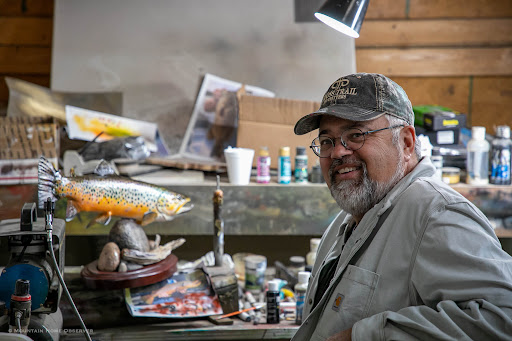
Duane Hada joins Chad Johnson for a thoughtful conversation on what actually creates trophy trout fisheries—and why stocking alone isn’t the answer. Duane breaks down the importance of catch-and-release regulations, managing pressure, and letting fish live long enough to reach their full potential. Drawing from rivers like the White River and the San Juan, he explains how conservation-first thinking shapes not only fish size, but the long-term health of entire fisheries.
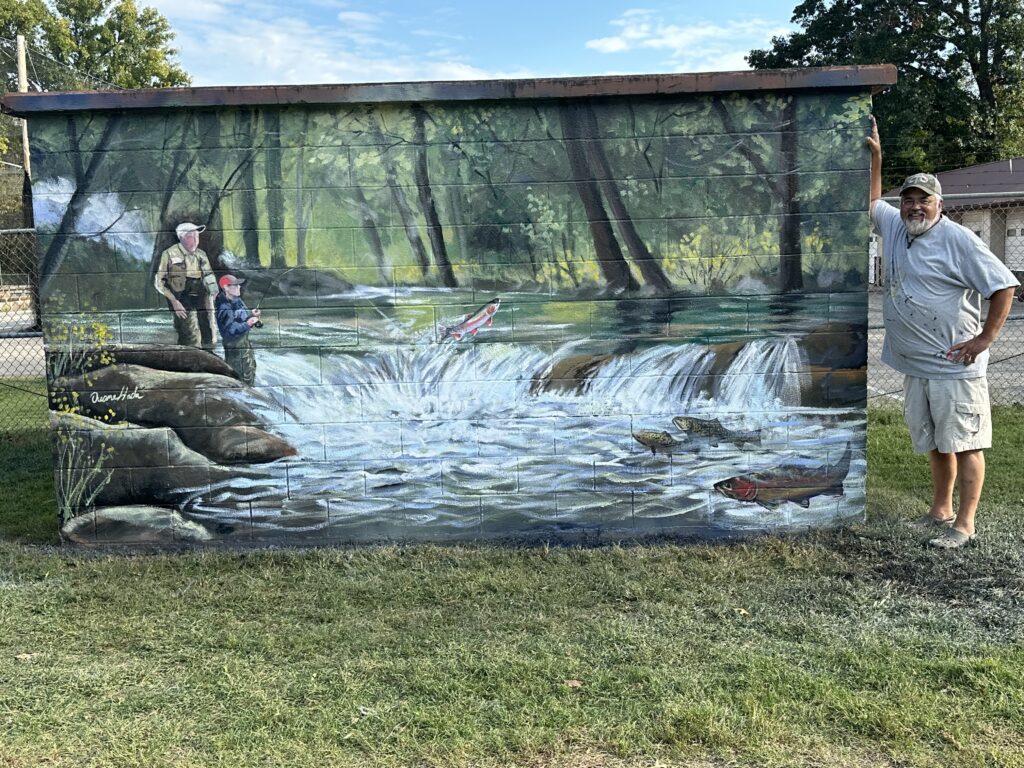
Beyond fishing, Duane opens up about his life as an artist and how creativity, patience, and observation carry over from the studio to the river. He talks about seeing fisheries as living “gardens,” the influence of Dave Whitlock on both his conservation mindset and artistic outlook, and why mentorship—on the water and off—matters just as much as catching fish. This episode is about legacy, restraint, and approaching both art and angling with intention.
Episode Transcript
Chad (00:02)
Welcome to CJ’s Real Southern Podcast. I’m your host, Chad Johnson, fly fishing guide, storyteller, and southern soul through and through. From the front porch to the river banks, this podcast is gonna be about connection, friends, and maybe learning a trick or two about trophy fishing. So grab a sweet tea, tie on your favorite fly, and let’s go fishing.
Hey, this is Chad Johnson with CJ’s Real Southern Podcast. I’m here today with our guest, Mr. Dewayne Hada. He is an artist, a guide. He’s been a shop owner. I believe he’s coached the U.S. fly fishing team. I hope I’m getting all this right. He’s kind of been around the block and he’s a, we consider him our small mouth guru around these parts. But,
Duane (01:03)
Hey Chad, this is awesome. Thank you for having me.
Chad (01:06)
Yep. So, first off, I mean, I kind of said what you do, but tell us, ⁓ a little bit about kind of how you got in the area. know you, I know you grew up here, like, tell us how, you know, kind of how you got started. How’d you end up here?
Duane (01:21)
I’m
a native of Boone and Newton County and Crooked Creek. mean, my earliest fishing memories were definitely on Crooked Creek. It was a long bike ride. I tell people it was a bike ride and I take them over and like, man, you rode a long ways, but back then you did, know. You had wheels, you’d go. ⁓ Crooked Creek and then the Buffalo River definitely were my home waters. So I feel very blessed to have lived not only in Boone County, but when I was a teenager, we moved over very near the Buffalo River over near a little community called Hastie.
which is kind of towards Jasper and so
Chad (01:54)
Okay. So I’m going to set gas for you guys that don’t know we’re talking 45 minutes to an hour away.
Duane (01:59)
here. So winding up in Mountain Home, ⁓ actually it’s Yellville that was the draw. ⁓
Chad (02:07)
Don’t skip over though, isn’t it via Greer’s Ferry first? Yeah.
Duane (02:11)
Okay,
right. I started guiding right out of college, okay? And down the little Missouri River, of all things. met up with, you have to keep in mind back then, ⁓ you guys, you know, there’s fly fishing guides, it seems like, about every third resort. ⁓
Chad (02:28)
Yeah. When
I got here, there were eight. Yeah. years ago. Yeah.
Duane (02:33)
Yeah. Right. But
there was probably not that many fly fishermen, it seemed like in the whole state. It’s apparently new phenomenon really in a lot of ways in Arkansas, but what an amazing place for it. But anyway, so I started guiding down on the ⁓ little Missouri river, both in the tailwaters below Grease and Dam, but mostly in the Albert Pike waters up there through the winter months, they would stop crowd in there. And I don’t know if you’ve ever been there, but you think you’re on a little Colorado stream. It’s got waterfalls and boulders and-
Chad (02:39)
Right
Duane (03:02)
And you know, it’s, kind of hokey at best, but when that’s the closest thing you have, you make the best.
Chad (03:08)
People coming and they won’t guess and now you’re working.
Duane (03:11)
You
bet. So, ⁓ but also did a lot of small mouth on, the Washington river, the Caddo river, the cost and mountain fork and all down there.
Chad (03:19)
Now, when you first got started, those people were coming there paying you for guide trips for trout. ⁓ And you were, you were killing. yeah. Were there anybody that got small mouth trips back then?
Duane (03:26)
$25 I’d get for a trip 85. I’m rolling in it
Wendell Heiss was a guy on the Caddo River that was doing some. And other than that, for fly fishing for smallmouth, that was a desert. Dave Whitlock, you know, I both are great. He’s our man, you know, as far as a mentor and father figure and a lot of things about him. But, you know, he was amazed that somebody could make a living guiding smallmouth in the Ozarks and Ouachita. ⁓ Not that the resource wasn’t there, it was just so untapped.
Chad (04:06)
And people didn’t look for smallmouth trips in the Ozarks.
Duane (04:11)
So he
did a lot of great things to help promote because of course he was, you know, he’d rather fish for a smallmouth just like us. ⁓ It was a growing business. I remember when I did move, my wife got a teaching job is how we wound up in this area in Yellville. And so we moved to Yellville and from Heber Springs, I was guiding for trout real heavily. Left the teaching profession. just got a carrot dangled in front of me to move to Heber Springs and started guiding business.
Chad (04:17)
yeah.
on the little red.
Duane (04:40)
And I remember going into the bank because I had two or three guys that were willing to help back me and get a place going and really get it going well. Out of Oklahoma city area and went out of Fort Smith. And I remember going in the bank and sitting down with a guy and he kind of looked at me he said, now where are you from? And I said, well, born and here in Arkansas. And he pulled out a drawer and he got this big envelope and he says, these are resorts here that are having a tough time paying their mortgages that I’ve got the note on. And he said, and they corn fish and they’re having a tough time making it.
He said, what makes you think you can promote fly fishing and make it go here? He said, we’re not Colorado, we’re not Wyoming. I mean, he just was very negative to me, you know? And just like I had a dream that was This is a hard- Yeah, like you need to go have a reality check, young man. And I appreciate your enthusiasm and all that, but this is never going to fly here in this part of the country. ⁓ anyway, but anyway, I persevered.
Chad (05:23)
Yeah
That was…
Yeah, yeah.
Duane (05:38)
They
stayed with it and loved it and, you know, it’s paid my dues for sure. But when I got up here to Yellville, you know, Crooked Creek, I really established a guide service on that, but that’s really kind of seasonal, you know? So the trout game, I was on the Norfolk and I was on the White River and we were in kind of a, there was about an eight year period that we were in a very low water cycle during that time. So I wade fished a lot and guided out of a canoe a lot.
And love that I didn’t use power boats a lot and nobody was really using them to the ⁓ extent that they are. The minimum flow thing has just changed the whole guide business around here. I would just marvel at how you guys and like my son-in-law and guys like that have adapted to techniques that are so effective and it’s increased the season and allowed you to make good livings, know, out of where we used to like, well, they’re blowing eight generators, we should stay home or drive.
Chad (06:10)
No, but no. ⁓
Duane (06:35)
I just bring river a lot, you know, because I just, and I, and I still do this day. I just, nothing against boat fishing. love going with my son-in-law and doing that, but there’s something to me about stalking and I’m a big site fisherman. love it. love being in the water, my feet on the ground. That’s just kind of who I am, but, but still, mean, each his own. just, again, I love the adaptability of the guides today and how they’ve made it work.
Chad (06:38)
because it was always waitable.
It’s just different. I mean, it’s even different than when I came. When I came before, you know, 20 years ago, before minimum flow and before all of this, I mean, we would have cycles. Yes. It seemed like we would have a couple of years of higher water and then we’d have four or five years of nice, low, wavable water. mean, you know, ⁓ for the bulk of the year anyway. Right. And that just seems, that’s kind of the thing of the…
Duane (07:25)
But anyway, I guided heavily, then as, ⁓ I don’t know, my art business, you know, I’ve always, it’s kind of neat how in my life, I’ve always had, I do have a degree in art education and love art and I’ve always done it, but that’s a difficult field to make a living in. And so it was always like I guided as my primary income with a few of my guide clients being my art clients. Well, now it has switched to where it’s, the art business for me has been very good. I don’t know, don’t want to…
sound like anything and all that, but other than you finally get enough of a foothold and hopefully your work is connecting with enough people that you develop a following. I’ve been able to make a very good living out of that over the last few years. And it’s not that I don’t want to guide. It’s just, it’s hard to do both. So,
Chad (08:13)
And again, love your art and you got it for all those years.
Duane (08:17)
I
guess I added up the other day, my wife said it’s 32 years of, you know, that’s a career in most anybody’s book. And I still take people on occasion. I just don’t advertise heavily for a couple of reasons. My son-in-law has just stepped in. I could not be more proud of this young man the way he’s, you know, and it’s just to what for me. Yeah. Well, if you, yeah. I didn’t know if I’d allowed to promote him on here, but.
Chad (08:37)
about Tad for.
Duane (08:44)
He’s amazing and to see him succeed at that, and that’s a whole story in its own of how he, it’s amazing how that all those doors opened up. That’s the story in itself.
Chad (08:54)
Yes, I work
I was just telling my customers today that he’s, as far as one of the young guys that’s come in, he just kind of walked in and found a spot very quickly.
Duane (09:08)
Well,
he’s the real deal. That’s kind of ⁓ cool.
Chad (09:11)
and he’s a nice
guy so you like spending the day with him. That’s enough about that.
Duane (09:19)
We’re gonna have him so bucked.
But anyway, that’s been my guide experience, my art experience.
Chad (09:30)
Okay. was I right? Did you do some work with the US Fly Fishing?
Duane (09:36)
I was
in 1998 and 1999. They had not ever had a junior Olympic fly fishing team from the USA. Okay. And John Wilson, think you might know him. He was working with some of the guys on the U S adult team, which back then, no one embarrassed them, but they were not very good. I think they had never finished higher than 13th ever in a competition at that time.
Chad (09:50)
Yep.
Duane (10:06)
So we’re not big tournament fishermen in America, but you go overseas and it’s like the Bassmasters for fly fishing. And when you have six team members on their national team, they are literally these six that qualified to that level to become that. Here in the States, they were like, well, you donate $40,000, we’ll put you on the team and you’re-
Chad (10:28)
You buy your way onto the team.
Duane (10:30)
You know what that will give you and that’s mediocre at best fishermen. People go to a lot of parks and they are not talking them down, they weren’t the true keen guys. So John Wilson asked me if I would be interested in coaching it. And I’m like, wow. And we had to do our own fundraising, everything. He said, leave me in charge of the fundraising and all that. You go find a team. And I said, I will do it under the condition that you…
hands off, allow me to find the boys based on their merit as fishermen. I said, not because grandpa owns this or donated that or whatever. said, I want to put some, and so I got with Davey Watten. Dave Whitlock said, you need to call Davey Watten because the tournament was being held in the country of Wales and he’s a Welsh native and I’d never met Davey Watten. So I called him up on the phone. He was living in Chicago area, I think at that time.
And we talked and he was amazing. And I was like, got to meet this cat. know, if you’ve never been around Davey Watt, there’s no, yeah, it’s awesome. So, and Dave Whitlock said, you you said this guy, ⁓ for the European, he said, you can’t just go over and sling all of Woollybuggers and catch a hunter trout like you can here in Arkansas. It’s a totally different. And I thought, really? You know, and I got quite an education. I learned Euro nymphing back then with 11 foot rods. learned the, frayed, ⁓
Chad (11:27)
I’ll have him on here.
Duane (11:52)
It’s almost like a balloon drift that you do out of a boat where you take yarn and you fray it out like it’s like a wind sock. And then you put three caddis flies on about a 12 foot leader and skitter them on the surface out of a row boat. ⁓ pretty cool. So those, those guys, we keep thinking here in America, we invented fly fishing. Now we brought it over from the. So these guys have been at it far longer than we have and it’s unique and they’ve got different types of flies and.
Chad (12:12)
Thank you.
Duane (12:18)
You know, they would never use a nine foot rod. That’s too short. You know, they’re, they’re 11 to 12 foot, rods because never understood that until I started fishing over in those waters and understanding there’s a reason it’s not just to have a long rod. You know, our rods are bigger than yours here in America. No, it’s not bad. It’s for a specific purpose. And these guys are very keen fishermen. So anyway, cut the short, short here. They never expected us team to do much. Okay. In fact, the Canadians were a little bit rough on us, just really making fun of us.
Like, we’re glad you guys came. You know, we never had a U S team, but you you guys were in a league that way over your heads and everything. But I had, know, Ben Levin was one of my team members and the young man, all of my, I’m so proud because that whole team is now in the guide business. Norman McTimer. Okay. He is out in, New Mexico and, several of the other guys, you know, run fly shops, guide services and all.
Chad (13:09)
successful.
They made it in the end.
Duane (13:11)
⁓ and, so anyway, they, great, great, great, great. So I went over with the attitude of we’re going to win this thing and everybody’s like, yeah. And I’m like, no, no, I mean, put your game face on. We practiced hard and all that. We got over there. We showed them how, how it’s done. We put it on them. The first day the U S team was in points leading and my number one angler, Norman McTimer, a little, ⁓ Native American out of New Mexico was the gold.
medal finalist. His individual score was, I still laugh about this. I want it on a billboard. So his individual score alone was higher than both Canadian teams combined. Okay. That’s how, okay. It’s like they do these, these standings on the rankings. You go in and check and they put your name up. His name is like way up there. And then it’s like several spaces before anybody else even ranked. And Ben Levin was ranked number nine out of like 78 world-class anglers. So he wasn’t.
Chad (14:11)
I always tell people Ben is hands down one of the three vicious dudes I know.
Duane (14:17)
Well,
Ben went, I’m jumping all over here, but Ben, he’s 14 years old, okay? He couldn’t get a driver’s license, but his dad pulled enough strings to get him a hardship license so he could drive to guide with me when he was 14 years old. So that’s my relationship with Ben Levin. And I knew within a year, I said, this kid, you know, he’s he’s half Osprey and half something, but because he is one fishy dude.
Chad (14:21)
That’s what this is, is that my-
It’s just
fishy and it doesn’t matter where we go. it matter what we’re fishing for. It don’t matter if it’s saltwater. He pays so much attention to detail, which if you know Ben is kind of amazing.
Duane (14:46)
Perfect.
Yeah, yeah, yeah, yeah. yeah. You got stories.
Chad (15:01)
Because
he doesn’t always pay the best attention to us, but ma’am, when it comes to the fishing, he is on every little minute detail and he knows how to put it, he knows how to put it to paper, pen to paper. does it. Yeah.
Duane (15:18)
He’s one of a kind. He definitely is. So
anyway, we brought home the silver medal. We got beaten the last round by the Czech Republic. And they’re like, what? But those dudes, okay, they’re the rednecks of ⁓ the Czech Republic. So these guys, and they’re a very poor country. And ⁓ it was amazing though, but one of the most beautiful things, I remember Ben Levin taking a
Chad (15:35)
Like yellow, yeah.
Duane (15:46)
That time is about a $600 Sage 11 and a half foot RPL plus fly rod and giving it to the top angler on the team from Czech Republic. And I mean, because this guy beat us with two broken rods put together to make one rod. One half of his rod was blue. The other half was yellow. I have no idea what, probably could have bought the thing at a pawn shop for 10 bucks and he beat us on that. And his waiters had no names on them, but had a lot of duct tape on them.
And here we are in our beautiful Orvis and Sims and.
Chad (16:17)
these new rods, the best of the best.
Duane (16:19)
We
were boys together and I said, look, I said, here’s an amazing thing. I said, you have been blessed beyond. I said, you keep what you want for souvenirs and mementos. But I said, look who beat us and what they beat us with. And I said, a great thing, a gesture would be just go and watch my boys just go and pick out one of the team members.
brought tear to my eye. and I went to the coach, I traded a lot of stuff with him, you know. And I remember when we were sitting at the big banquet dinner, you know, and I was talking, I said, you guys have always been one of the top teams, you know, and he just kind of smiled. said, yeah, you know, and he’s speaking broken. I said, what makes you guys so consistently good? Without hesitation, he took his big finger and he shook it in the air and he goes, in our country, we fish for food. I thought that would make a difference.
Chad (16:58)
Ha ha!
That’s great.
Duane (17:03)
But
that’s also why they can’t host the tournament in their country. They don’t have a river, uh, healthy enough with a population. So every year they win, they have to defer the, because they don’t have the conservation yet, but they’re getting, the, the U S team now has, they have done very, very well. And I’m so proud. keep up with Norman. He coached, uh, the adult team. He’s fished for the adult team. He’s doing amazing. And I keep up with those guys.
Chad (17:13)
post country
Yeah. But because they’re efficient.
Duane (17:31)
Nick Stright, who’s big famous in the New Mexico area. His dad has guided for years and so many guys on that team that are out there making a living, whether one of them is with Umpqua. I think still to this day, a lot of them, you know, they made
Chad (17:50)
just in the industry. yeah. They’re in some.
Duane (17:52)
Either
guiding or working resorts or something with a rod company or whatever. So we never got really the due publicity that we, because tournament fishing wasn’t real big back then, you know.
Chad (17:57)
that may
No,
so once y’all got done with that and come back here, there wasn’t nothing really.
Duane (18:08)
There was no, you know, it was just a handshake and job well done. But those who were there, Davey Watten knows what we did.
Chad (18:12)
Good job.
Well,
I’m just the experience of it.
Duane (18:21)
He’s like a celebrity over there. mean, just everybody, you know, from, uh, mayors to public officials to game and fish people to lords. Okay. They still have lords and such, and you know, that are kind of the uppitys of, know, the own four and 500 year old mansions with, uh, game farms on them that have private trout streams and like, you know, Davey come catch them.
come catch some of our trucks sometime, know, and David, I’ll take care of that, you know? So it’s pretty cool. That was an amazing journey and eye-opener for me. And what an experience for a 16 year old kid, you know.
Chad (18:57)
⁓ man. You’ll never forget it. Well, I was just thinking that means that in, even in the beginning, you had a pretty good eye, you know, just saying that those boys are all making it in the industry. That man at a young age, at a young teenager, you were able to pick out the boys that wanted to go and needed to go and weren’t just a fly by night.
Duane (19:14)
and they were so re-
I wish I could.
The hardest thing for me was whittling the team down to my top six. I could take, well, we had about 15, but that’s hard. Anyway, you have alternates that can fish on the team. Sean Taylor, his son fished for me one year. Aaron, yeah. No, he was one of our strikers and did well. On the next year, we did it in Ireland.
Chad (19:26)
How many did you start with?
as an alternate.
Duane (19:49)
We did not bring a medal home. It was a little tougher environment in Ireland than it was in Wales anyway. But that inaugural team was nothing. We set the tone for. And I’d love to see them today. mean, when they had their blue blazers on and red ties and looking, know, presidential and strutting down, they had a huge parade for it. And they kept emphasizing the Native American with Norman. know, there’s the Native American.
And he was wearing some of his regalia that his tribal members had given to him. He had a neat little hand carved bear, spirit bear on a necklace that had given to him by his grandfather. I said, you got some hoya hoya going on there. That’s unfair, buddy. No, he’s a great dude. And I love keeping up with him and all that. So anyway, that’s that experience.
Chad (20:31)
You got ⁓
Well,
no, I ask for a reason. That’s very cool. I mean, there aren’t very many people in the world that have had that experience, you know? And probably not a lot of our fly fishermen that even know we have a US fly fishing team. I think that’s a big deal. You know, I don’t, don’t talk about it. We don’t see much from it.
Duane (20:49)
It was awesome.
We’re not in the, but over there, and Davey Watton, could tell you, know, ⁓ public trout fishing, it’s like playing golf here. If you want to play good golf here, you got to go to a private course and pay a fee, you know, to get a tee time and all that. Over there, if you want to fish the prime trout rivers, you must go to the Riverkeeper to a gate house, ⁓ a pub type place and see what beats are open.
And you just don’t get free rain of the river. You’re like, okay, you can fish between posts 10 and 11, which may be only a hundred yards. And that’s yours for the day for a fee of certain amount of money. And you don’t go beyond those two posts. That’s yours. And then they tell you, you’re allowed to keep like two grayling and one brown trout out of that or something, you know. They’re just now starting to embrace catch and release over there. But they don’t have a lot of wild fish. The grayling, which I thought were the coolest thing, they look like
grayling in Ketchil, Alaska, but much bigger and much more golden red, gorgeous fish, man. And they get up to four, five, six pounds where, you know, most grayling two pounds of the
Chad (22:13)
mean, how big are these streams?
Duane (22:15)
Most of them are cricket creek or smaller. A lot of them in, and again, Davey will, a lot of spring fed, weedy spring creeks over there that are really cool. Okay. So ⁓ the brown trout is the big thing over there. And then they have sea run brown trout, which are like our steelhead that live out in the ⁓ ocean. And they migrate back up into the rivers. And then Davey.
I forget, they were the coolest brown trout. He and I one day, when the team was ⁓ fishing, he took me some peat bogs, okay, which are like black water ponds. It looked like we were fishing in oil. The water was black, like coffee. And I thought, trout in here? And he said, yeah. And so we’re throwing little caddyslides and we’re catching these little eight inch brown trout that look like Rapala lures. You know how you’ve seen the old Rapala brown trout, jet black on the back because the bottom is peat black.
peat moss, ponds, and the sides are brilliant gold and then every spot is bright red on them. I think Davio have to tell you the name. There’s about 10 different subspecies of brown, but he said these are some of the oldest pure generation brown trout. It’d be like bluegills here in the States. They’re common in these peat bog, heather bogs and stuff that were all over the countryside. And you can just go fit, they don’t have a lot of trespassing unless you’re on estate property.
But you just pull over the side of the road and you see something, you go fish it. It was pretty cool. Yeah. It was a neat experience to share that with Davey.
Chad (23:48)
Yeah.
Yeah. All right. Well, hey, let’s bring it back home. Yeah. ⁓ Like you say, you you fished so many of these creeks around here. I think at one time, God, this was years ago. You told me how many creeks you thought there were in Arkansas and how many of them you had fished and that you only had X number left or something. Am I thinking right?
Duane (23:54)
We’ve been
I was invited to be part of what was the small mouth bass task force back in the nineties, okay, early nineties, I think 94, a five year term with the game and fish commission. Volunteer didn’t get paid for anything, but I was crazy enough like, yeah, I’ll do that. Sound like great. And what we were to do was to basically fish all moving waters in the state of Arkansas. And we were given a notebook with different criteria and information. were doing our angular surveys, but we also to check for.
was called sediment embeddedness of rocks. In other words, pull and document whether the stream was impaired by gravel mining or not, whether siltation was a big factor, what the water quality, we had ⁓ ways of doing that. Also sampling the fish, they appeared, most of the fish you caught were in a certain size range and they give the stream kind of a rating. ⁓
four or five times a year, we would come together because we’re, wasn’t just me, there was other biologists and other anglers. And that was a neat thing the Game of Fish was doing. They involved the public as anglers because they knew we were pretty serious about it and pretty passionate about it and we would do it. And so we would come together and meet at different lodges and such. And it was a cool time. And they bring in these wonderful biologists and we would present our findings and they would talk about what we’re finding and what they had found and put the biology science to what our footwork.
And then a lot of times we’d go out with backpack electric shockers and travel all over the state from the Washtenaw’s all the way. I fished 88 different small mouth streams in that period and documented all of those. And there’s, think four that I know of that I have not fished and now I will.
Chad (26:05)
You will. Yeah. There’s only four left. You gotta do it just to say you’ve done it.
Duane (26:10)
Right.
But, and it was amazing because that information then led to the new regs that we needed desperately back then. And we went to the blue ribbon. We designated 15 streams in Arkansas that are blue ribbon, small mouth streams and put special regs on them of a two fish, 14 inch limit, uh, which it desperately needed. And we also put a one 18 inch, uh, trophy status on like the lower Buffalo and, they did it on the Washington. They did it on, um, the Kings river, I believe.
few of the others that had trophy growing.
Chad (26:41)
Everywhere that had potential yeah, I’m not Cal
Duane (26:43)
It
would amaze me though, the amount of resistance we had to that even back then, you know, it was a hard fight. ⁓ But I think people are, the smallmouth angler today is realizing, first of all, there’s more of us out there. Used to I’d fish Crooked Creek on a Saturday and if I saw one or two other guys, was people I knew, you know, and now it’s like, whoa, you know, sometimes the flotilla of kayaks in the middle stretch is just unbelievable. And so, you know, you know, we…
We’re using the resource and that’s, guess, okay. I kind of pine for the old days when it wasn’t that way, but selfishly I wish it wasn’t, but it is. But what we’ve got to do now is how are you going to keep it so my grandkids, when they float Crooked Creek, can at least experience what wild smallmouth are like in both size and numbers. Hopefully like I experienced as a kid, knowing that if we don’t protect them, it’ll never happen. They’re just too slow growing and there’s, we don’t stock them. We don’t need to stock them as long as we protect them and keep the water quality.
Chad (27:41)
Those fish don’t need messing with their stocking and all that stuff. No, and what we’re doing them and they’re already, they’re doing their thing. Right. Wow, there’s plenty of fish. There’s like…
Duane (27:51)
But they have a hard time of it. mean, ⁓ you know, there’s not always successful spawning due to flooding, due to all kinds of things. But the bottom line is, think is educating the angler. When the angler is out there and he realizes that catching that wild smallmouth bass out of the creek is more than just making a fish stick out of it. You know, he can, he can choose some other fish that’s far got the upper advantage than a ⁓ smallmouth bass. It’s tough on a smallmouth bass.
I learned so much from these biologists. I’m not a biologist. not trying to, I love these guys. I love sitting down with them and letting them explain to me through their scientific knowledge, what I observe as a lifelong passionate angler. And sometimes we’re on different pages, but you know, we, they need to hear from me. need to hear from them and we need to work together or we’re going to lose our greatest native fish that we have.
Chad (28:45)
That’s right, that is our night at big.
Duane (28:47)
Well,
especially now we have this Neosho, which I’ve known, I didn’t know what they were called necessarily so much. And that’s kind of become a big buzzword in the angling world with our native smallmouth up in the Northwest part of the state for the most part down through the Ozarks. And that’s the Neosho bass, which is a strain of smallmouth that was native here. And then we now have this Little River bass, which is over in the Oklahoma, Washtataws. And then they have genetically determined that the Washtataws strain is its own. But what they’re also finding is that…
I’ve talked to some biologists in Oklahoma that said that back in the 1940s through the 60s, they went to Missouri and caught brood stock from Missouri streams that they brought down into the Washtenaw and turned loose. They didn’t know any different. wasn’t that they were trying to… Right. What they did is they genetically have… See, we got that happening over on the Illinois River now with those Tennessee strain.
Chad (29:34)
It was different back then.
Duane (29:43)
My goodness, they’ve grown to seven pounds in the river. That’s Canadian size or bigger, that Tennessee river string. And who’s going to complain about them other than the fact that we are now encroaching on the Neosho native waters and you’re getting hybridization or who knows what will happen. So I definitely respect the fact of keeping native fish in their native waters and all that. But there’s also a side of me like hooking a 24 inch small mouth out of them. The river is kind of a cool thing.
Chad (30:11)
Yeah ⁓
Duane (30:13)
really
doesn’t belong there. yeah, it’s, and we’ve always thought, well, a small mouth is a small mouth is a small mouth. And that’s actually not.
Chad (30:22)
Not the case. no. Yeah. Just like with a large mile. Right, right. You know.
Duane (30:27)
You
have different subspecies and all. love, I’ve got friends in Alabama, Georgia, and love keeping up with them and all those cool, different genetically pure bass that they catch in all these little mountain creeks that look like little ⁓ trout, look like brook trout creeks flowing through the mountains of Northern Georgia and North Carolina, South Carolina places. they catch these red-eye bass, Cusa bass, Barton’s bass, and they got about seven or eight cool little bass that are all.
distinctly different genetically and color wise and all that thing. So it’s neat. It’s neat.
Chad (31:01)
It is. So, what do you think these days about like kind of, things have changed a lot. ⁓ you know, on the river, in the area, that type thing. And you’ve got every since the minimum flow, we’ve got, like you say, river boats, no wading, that type thing. There’s been a, a certain group of people that it’s ruined the river for, so to speak, because they,
can’t wait like that kind of thing. Like they thought that maybe they would still be able to.
Duane (31:38)
feel bad for the guy who retired, worked his whole life up in wherever, you know, at a job like I can’t wait to retire down and buy my place in the white river. And he does, and he comes down and now he’s got eight generators flowing out of his backyard every day and he can’t ever wait. You know I’m like, ⁓ man. You know, and he thought he would get to Wadefish his dream years of fly fishing. And that’s, that’s a sad reality, you know, that that has.
with minimum flow. And I was very reluctant in a lot of ways to sign off a minimum flow. And I was part of the committee when they were doing that. And I was digging my heels in. thought, I kept thinking, you know, and then I finally, ⁓ and talking to biologists, I know Christy was ⁓ big on this at that time. And ⁓ when the transition was taking over, but it had been long before her, it took a long time to that. So it had been brewing for a long time and all that.
Forest Wood was really the guy that pushed it through and everything. And when I finally came on board was this, is one of the limiting factors with trout ⁓ production and growth and populations. When I guided a lot, man, I’d love to go all the way down to Boswell Shoals, okay? All the way to Round Mountain, all the way, I’ve caught big, beautiful rainbows below Batesville, okay? So they will live and they will exist.
Chad (32:51)
Yeah.
Duane (33:01)
Now, if you get low water for a long, time, it can heat up and it can be lethal. don’t think there’s been, the die-offs have been from hauling hatchery trout, which are weak and putting them in warm water from hatchery water and they get shocked and they don’t live long. I think a lot of the trout that were down there would kind of sort of, you know, adapt anyway to that and find there’s lots of springs all.
That whole stretch down there around Boswell is full of springs flowing in off the banks and all up around Mount Olive anyway, all the way to Calico Rock through there. And I would fish all day and guide people and we would never see another person. know, then I come up here and I guide from the dam to Cotter and it’s bumper cars, you know, it’s pretty fierce competition. And I’m like, why are we not establishing good trout numbers, say from Norfolk all the way to Batesville?
Okay. Or at least the guy, and that’s what we advertise as trout water. And with minimum flow, I was told and sold and several of us that that would now become a, that we can do trout management on those stretches.
Chad (34:09)
Yes, because now we have water, now we can do truck managements.
Duane (34:12)
And
what a beautiful thing. We’re really, yeah, it gets fished on, but it doesn’t. ⁓
Chad (34:18)
It does.
In the grand scheme of things, it does.
Duane (34:22)
So
we can spread this pressure out all the way down. There are great guides down in the Mountain View area that I look at their post of what they catch and there’s cookie cutter stockers every photo they have. I’ve never seen a fish over 14 inches on any of their stringers. And I go down and talk to these guys and it’s just like, well, that’s what we have. And I’m like, but you could have so much more. These rainbows will grow. They’ve grown big. Well, shoot, our state records almost 20 pounds, guess where it was caught? Almost down the Mountain View.
Okay, below Calico Rock. ⁓ I have a friend that grew up down there at Guyana Farm and he shows me old photos from back in the 60s and 70s of eight to ten pound rainbows that they caught not every day but at least regular enough to know that those fish were in there.
Chad (35:05)
Yeah, and that it could support them and that they could grow to that.
Duane (35:09)
And I caught a monster ⁓ one time down in below. Have you ever been to ⁓ the old dam? There’s two more dams coming up from Batesville. They’re just big concrete walls all the way across the White River. Up, you gotta say Guyon, we’re southern, but Guyon. That quick, no, not too silly, Guyon. ⁓ We’ll get made fun of here. But anyway, the younger access.
Chad (35:22)
Like, my Galleon?
Yeah
Why? I’m sorry.
Duane (35:36)
Go down there sometime. You got to drive way back through the middle of nowhere. And it’s just a big concrete slab with huge boulders and all down in below it. And I’ve caught nice big smallmouth. I’ve caught Kentucky’s. I’ve caught walleye. There’s a lot of walleye down in there. You’re probably gonna get in trouble for telling everybody that. But there’s also some really nice trout. And I’ve talked to some of the locals down there and seen some of the pictures. Just gets no publicity because nobody’s down there. Nobody’s guiding down there. No resorts down there. Beautiful. You think we got pretty bluffs along the river here?
Chad (36:00)
No.
Duane (36:05)
You go down between Guyon and Batesville, some of the bluffs along the river there are Buffalo river size. ⁓ beautiful. And you’ll fish all day long and never see another person, you know? ⁓ So anyway, I guess what I’m saying is let’s look at what we can do to increase the trout holding. Not just stocking. And I really have a problem with this. You everybody’s upset with how the hatchery and that’s a bad thing.
Chad (36:11)
beautiful
On the
Duane (36:30)
Okay. Sure. And nobody’s to blame on it. It’s, it’s, it’s just the way this aging lake and this toxic water is coming through is deadly to the trout. Okay. And that’s fixable in time. I think there’s, there’s people on that and the solutions and it’s a huge economic boom, but I think we got to get away from this mentality that when we stock X number thousand millions really of trout in, we stock tons of fish and they produce a number like 94 to 96%. Those are game and fish commission documented.
numbers that they say of those rainbow trout that they stock are harvested within a maximum of 45 days. that’s, Mark Huddy used to call it the trout sucking monster. We come up, we dump the truck, within 45 days everything out of that truck. How are rainbows ever going to get to grow to be those big 20s? The only place that happens is where do you catch your, if I’m paying you tomorrow and you can do it, I’ve seen you do it, I’ve seen you.
Chad (37:20)
2530
I
am. ⁓
Duane (37:27)
Okay,
I say you have got to get me a trophy rainbow. Where are you going to go? How long was the stretch is that?
Chad (37:31)
going to the damn
freaking half a mile. ⁓
Duane (37:37)
Okay.
But there are more big rainbows in that half mile than the whole rest of the river is what Mark Huddye used to say. He said your chances of carrying a 20, no, he even needs to say a 16 inch and over rainbow. Your chances are 200 to one times greater in that one half mile than the whole 90 miles of the rest of the river. To me,
Chad (37:56)
That’s right. That’s right. That’s
I would say that. Yes. Yeah, absolutely.
Duane (38:01)
Basically they do not exist. ⁓ they used to. I’ve got Dave Whitlock, I fished with him one time we were, and I caught, he was like, just couldn’t get giddy enough. It looked like a steelhead. One of the biggest rainbows I’ve ever caught in the Norfolk river. And he was just, I mean, perfect fins. That thing jumped head high three times. I mean, you know, he was woohooing, I was woohooing, you know, and I need to dig through my files and find that photo. Cause that fish had every color in the rainbow on it.
Chad (38:29)
Yeah.
Duane (38:31)
and not a scar on it, long, perfect white tip fins. I’ve never, I’ve never, I’ve fished Alaska. I fished out West. I fished famous rainbow waters. I’ve never caught a rainbow that trembled me and stuck in my memory more than that right out of our Norfolk river. And we can, you you look at that one that Dale Fulton called it years ago. He had it mounted, you know, which it’s like 17 pounds.
Chad (38:57)
Yeah. Well, if you go on the wall and look at the pictures that caught her boat round and those rainbows, they were catching back then with thompers. I would. The average was like three, four pounds. And the good ones were six.
Duane (39:07)
They look like pieces of-
Well, and the biologist,
well, we ran through a string of good biologists and we’d have these meetings. Now I love the fact of how the bait guides and you know, it’s, we don’t have the war like we used to. ⁓ my goodness. We used to go in and it was like, you know, just, know, and we’ve learned that the money in the bank is the fishery.
Chad (39:29)
It’s me real bad.
Yeah.
Duane (39:35)
You
know and just don’t kill them. Okay, if you want to throw a sculpin just don’t let him swallow it and bleed out You know if you want to throw a jig or a crankbait or a fly or whatever Okay, but the thing is that fish put back in the river is what is money in the bank? That’s you know, we’re a famous fishery for not the number of stalkers we have but for those 25 to 35 inch Browns rainbows cutthroats and all that. Yes. That’s why people will come here and yes, there is a place for catching some stalkers and all but
The whole river? remember Mark Huddy did that study and he… Exactly. And he said, look, I can have, he stood up and I’m, you ask anybody that’s still around here and remembers that was at that meeting. There’s plenty of them. know ⁓ the smucker boys were there and he stood up and he said, he said, I will have you a three to five pound average on rainbows within three years, all up and down this river. And everybody’s like, whoa.
Chad (40:06)
Right. Why not the other way around? ⁓
Duane (40:33)
And he said, here’s the plan to do it. But he said, I need at least six miles of unbroken catch release water. And I mean, everybody turned on him. But I remember back then the old McClelland, they looked at each other and I remember Ruby and John like, would you please do that on our stretch? And everybody looked at him like, you’ll go broke. And I thought, geniuses right there. They get it. I saw Gary Flippen say, man, please do that in my backyard. And he did. ⁓
And they did it down a mountain view and never caught on down there because it’s such short stretches. None of our catch and release areas.
Chad (41:05)
Right. They
aren’t big enough to do anything. What they done was they us a place.
Duane (41:09)
They do- no.
I did
phenomenal for how short they were, which is just a small example. If you stretched it out, how good it could be. Once you experience up to the dam, if you can imagine that being 10 miles long. my goodness.
Chad (41:25)
Right. You don’t go into rim and do that though. And rim’s longer than it. You did for a little while. Now you could go into the catch and release at the North Fork and catch.
Duane (41:38)
Well,
there were some problems. was some real serious poaching going on. ⁓ People just ignoring the law. Grim shoals never got a good chance, but it did respond for a while. ⁓
Chad (41:47)
Okay. That’s fair. Yeah.
as
slow as further down on the creek is closer to the banjos.
Duane (41:57)
And that’s no slam to game and fish. mean, they can’t be everywhere, but there again, that’s where the angler and the resort owner and the guides have to set the tone. If you want quality, you’re the direct educator to your client in your boat. I love this guy. Okay. I’ve got to know him. I’ve known him all my life, but I really have. ⁓ And that’s up at Lily’s Trout Dock there in Branson. Okay. Now they’ve got, that’s the same river.
Chad (42:12)
Yes.
Duane (42:26)
Yeah, Tanecombo is the white river. And they do have some very large trout up there. And he says, here’s what we do. I get somebody that books us in here for three days. Day one, they come and say they’re from, I’ll pick on your home state, Mississippi. How many trout did you catch in Mississippi growing up? Okay. But you always wanted to, right? Did you know how to trout fish? No. You knew how to do what? Catfish? Yep.
Chad (42:42)
None.
Duane (42:49)
a slip sinker and a chunk of worm or whatever. Okay. Throw it out there and tighten the old rod down on the fork stick, wait till it bends over and reel them in. Okay. So you come up here to the white river and you fish trout that way and you’re going to catch some stalkers. Okay. And he said, that’s what we get. Okay. We generally, our population of people come from Southern States like Texas, Louisiana, Mississippi, Tennessee, even Southern Arkansas or whatever.
Chad (43:14)
It’s just the first trout fish.
Duane (43:15)
And trout aren’t exotic to them, you know, and so they go out and he says, on day one, we bait them up with, you know, whatever from your corn to your ⁓ wax worms to your bait, whatever. And we go out and we catch, everybody gets them, if it’s a good day, a limit of 11 inch, nine, 11 inch stockers. Okay. And we come in, we cook them up for them that night and let them see how terrible they taste and everything. And they think that.
Chad (43:27)
Bye.
Duane (43:41)
you know, like, wow, this don’t taste like good old Southern catfish or crappie or whatever, but you know, they, can make a good meal out of them. I’m not, know, but, their flesh quality is not.
Chad (43:49)
⁓ they’re not a great fish thing. No, no, no, no.
Duane (43:53)
Now I love to eat trout. When I go to the mountains out west, I will catch non-native brook trout. And as much as I hate to kill one, because they’re so beautiful, I will take some because they’re like bluegills out there. They populate and they encroach on the native cutthroats. So I’ll stick one like a hot dog over a fire and man, is he good. And his flesh, get what color it is. It’s like a hunter vest. It’s fluorescent orange and like salmon. It is delicious. Okay. So.
What he says on day two, he tells his clients, okay, yay, we had fun and all that. Tomorrow you’re going to get to do something even better. We’re going to go out and we’re going to learn how to lure fish. I’ve got these ultra lights here. They got little Missouri minnows on them. They got little Cleo’s and rooster tails and jigs. And we’re going to out and you’re going to cast and we’re going to teach you how to read water. And you’re going to catch some bigger fish and all that. And we’re going to turn them loose. They’re like, oh, okay. And you’re to have a ball doing it. And they do it because the guide set the tone for the day. And they come in, man, it was a great day. And we’re going to go to.
Jojo’s catfish and he catfished a night instead of eating trout and really enjoyed it, okay? And so on the third day he says, okay, you guys did great at that. We’re gonna learn something even more. I’m taking you up in the catch release area and you got a chance to make our Lunker Board and it’s gotta be so big, but that’s where these big boys are and we’re gonna learn how to fly fish. Well, we’ve never done that before, you know? And he said, well, I’m gonna teach you, okay?
and they go up there and they put a strike indicator on, a little scud or whatever. in 30 minutes, you’re a guide. can take a chimpanzee out there and catch a trout, fly fish and everything. it’s so difficult. If you have a good guide and a good instructor, you can have a client just banging fish. I guarantee you, I’ve seen you do it. I can do it. Tag can do it. All these guides that are instructor guides. And they’re going to like, wow, I’ve always wanted to do this and experience it. And all of sudden they hook this.
25 inch Lunker and they are just beside themselves and you’re like, Hey, we have to turn this loose. Now you can choose to get a replica of it. We’ll take good photos of that one, but let’s teach this fish, treat this fish with respect and it’s getting back in because he’s going to be twice as big in three years. And we might even grow a world record here. We’re getting awful close and you caught this fish, but somebody else is going to catch it. And again, you only eat supper tonight. We’ll go, we get whatever, you know, so we haven’t harmed the fishery. what he.
Chad (46:06)
He’s growing his fish.
Duane (46:07)
Growing
his clientele and Clint Gaston is now doing the same thing. loved ⁓ when Jim was living and I was on a committee with him at the college there on different things for such. And he said, here’s why it’s getting better, Dwayne. said, one of my jobs as I get older, they find things for me to do around the boat dock and the place there. And one of them is to keep the inventory of the ice chest for our clients. He said, there was a time when we were putting out 300 ice chests to go home with people a month.
And he says, then it went down to about 30. And he said, I bet you it’s not any more than three. He said, people aren’t coming here to fill up ice chests full of every stalker they caught to take home, to stuff them in the freezer and watch them freezer burn. And then like, what are we going to do with these things? Okay. If they want to eat trout while they’re at Gasson’s, take them in, let them, and everybody should do that. You should experience that. Okay. And my solution that I’m pushing on this horrible trout kill, you know, it takes 18 months to grow them to be 11 inches.
Chad (47:06)
Sure.
Duane (47:06)
That’s
expensive. Posts are vulnerable the longer they stay in that hatchery to these little water hiccups that we’ve had and various things. My thing is if you’re going to eat a trout, why not eat a 16 inch rainbow? Think about this for a minute. You get one that’s been in the river for several months, his flesh is going to be salmon quality. Okay. He’s going to be a good eating fish instead of this white mushy gray finless stalker. It’s going to look like a trout. He’s going to be beautiful. And if you choose.
Chad (47:30)
Right.
Duane (47:35)
When you catch him to make your dinner at him, you get to keep two 16 inches. If we had that regulation, keep the Browns in their trophy status, keep their cutthroats at their trophy status and all that. But you know, if you want to eat a rainbow, but you don’t have to see, we’ve got to get past this idea too. So many people, I bought a trout stamp, I paid for a license. Therefore I must have X number of trout to take home where my trip was. We have got to get away from that.
Chad (47:58)
It’s unfortunate,
but I think time is getting us away from that. Well, no, meant time is getting us away from that as in ⁓ the men that are, it’s really your older men that do that. For me it is anyway.
Duane (48:06)
Happy talk forever.
Chad (48:20)
So like, like my dad, yeah. My dad would be like, do you mean we’re going to throw it back?
Duane (48:28)
I
grew up in a different era and I remember taking my dad and trying to get him hooked on fly fishing. He’s just an old flatland Oklahoma cat fisherman and bass fisherman, you know, and he enjoyed it, you know, and when he landed his first rainbow, I mean, he put a claw hold on that thing so it wouldn’t get away and all that. And I’m trying to get him to gently, you know, and like, we’re going to release it, you know? And I said, yeah. And he’s like, well, I guess if it’s good for your business.
He’d rather burn the $20 bill. I had no big problem if we wanted to eat it, but I wanted to, you know, we were going to catch several that day, you know, and it was, but anyway, It’s more of us. Okay. We’re all enjoying the resource and why not make the resource? Okay. The white river is and let it live up. know, Dave Whitlock said it best. The white river is the most perfect acre of garden spot in the world.
Chad (49:01)
just a different
It’s just different time.
Duane (49:24)
I think about this for a minute. The best soil, the best rainfall, the best fertilizer, it will grow world record tomatoes and corn and whatever. But we mow it every week. We mow it and we mow it and we mow it. But he said, over there in that corner is that place where the mower can’t hit. And that’s that huge stock of corn or whatever. Those are those world record 40 pound Browns that suddenly pop up. Like how did that happen? Well, he lived under a pipe under a dock or under a culvert where nobody, a hollow log where nobody could get to him.
The truth is you could have several of those up instead of the odd fish. It could be…
Chad (49:58)
know, that’s such a great illustration way to put it. I’ve never heard it put like that.
Duane (50:03)
We basically mow our crops everywhere. 96%.
Chad (50:05)
crap every week.
God, dude, that… I don’t like that. No. ⁓ I don’t like that analogy at all.
Duane (50:13)
You and
so, you know, and I don’t know, there’s people that are like, but you think of any, you’ve traveled quite a bit and I have too and all, and name one famous rainbow trout fishery in North America where you can go and just slaughter the way we do here. Okay. You can’t do it on the San Juan river. Okay. It’s a one fish, 21 inch limit in the upper part.
And then they’ve got a slot in the, I think the middle stretch there. They do have an area where you can go and catch and keep, but guess what? When I go out there, you’d never see anybody fishing there. Why? Cause who wants to fish for stalkers? And look, the San Juan river, you might as well go to the moon. That’s what it looks like. It’s that old white, cliche, it’s not pretty country. And yet you’ll see a license plate from every state out there. Okay. People go there like Mecca. Okay.
And it’s because they’re catching 20 to 25 inch rainbows in great numbers. Okay. They’re not going there to see how many they can stuff in a bag to put on an airplane or in their cooler to take home. Okay. You go to the bow river, Calgary, Montana. Okay. Very restrictive on what you can keep. You go to the, the, uh, bighorn river, very restrictive. And those are some of our top, the green river has that two fish.
Chad (51:29)
The ones that are protected are our best ones.
Duane (51:32)
Well,
you can’t, you got to let them grow by letting them go. Okay. In order, if you want to get a 20 inch trout, he has to be 10 inches first and then 14, 15. That’s how it works. I’m sorry. It’s simple math. Yeah. Yeah. And, and everybody’s like, well, you guys are all just about trophy and blah, blah, blah. And you guides and all that. Well, what’s good for a healthy river is good for everybody. I’m not saying you can’t have spots for mom and pop and the kids go out and.
Chad (51:45)
I saw it, but they gotta grow.
Duane (52:00)
throw their marshmallow in a soupy pole or whatever and catch a…
Chad (52:04)
But
there’s room for that as well. why make the whole?
Duane (52:09)
I didn’t share it. Right. When we’ve got this whole huge, since we did this minimum flow and there’s quality oxygen and you go down that stretch of the river, there are more sculpins and big crawdads per mile. seems like then the whole rest of the entire, some of these other areas. So, anyway.
Chad (52:30)
Well, I hope some of that begins to get worked out. Yeah. Yeah. ⁓ but, ⁓ you know, I feel like the river’s changed, but I mean, and those, lot of those things have changed, but at the same time, like I still choose it over anywhere else. know,
Duane (52:48)
Marks
are just a unique, very special place, you know, and, but I think we need to start emphasizing the quality over the idea that we just quantity, you know.
Chad (53:00)
If we ever could, like you say, with the piece of ground that we have, if we could ever get it done, it would be… You’d be able to see it pretty quick, I think.
Duane (53:09)
And I think, you know, I love some of these new ideas, some of these bait fishing guides, quality men. I’ve got to meet them, the Donald Craners, the Craig Yowls, and, you know, there’s lots of them. Even, you know, ⁓ like ⁓ Hot Dog, I’ve got to know him very well and love and respect, you know, and they, you know, they’re not, you know, they’ll never stand and say a guy doesn’t have the right to take a trout if he wants to eat one. And I’ll defend that too. Okay. You should be able to do that. But.
He’s never going to make it as a big time guide if he kills everything. You know, you’re just
Chad (53:46)
Yeah.
If you kill everything you catch, that’s not gonna, it’s not gonna work. We’re, we’re, I mean, as there’s more people, people are getting better at catching fish. Da da da da da da da. I mean, there’s gotta be some protection that comes in there as well. Yep. That’s right. So, um, what are you doing these days? Like, uh, I mean, as far as like, um, if you wanted to plug something or you had something going on or anything.
Duane (54:13)
The ⁓
big thing in my life right now is I’ve been consumed by this thing called cross trail outfitters. It’s a calling. I woke up one day, honestly, and it’s a story in itself, but I just realized how many, it came from my wife being a school teacher and she’d come home and say, man, I got this kid and no dad in his life, no men whatsoever. And he’s making some poor decisions, but he’s a good kid. ⁓ could you take him hunting or fishing or whatever?
and I would do that and see the difference it would make in their life. I think every boy has a wild side in them that needs to be nurtured. And they also need mentors. A man has to show a boy how to become a man. It’s just the way it should be. And not that a woman can’t do that, but it’s just the way it’s designed to be. So Cross Trail Outfitters does that. And you know very much with my organization, and we take these boys, we use the outdoors. We’re faith-based. We don’t shy away from that whatsoever.
Because I feel like the full spiritual development is along with the physical, mental and everything is what makes you a whole person. And you’re searching your whole life until you complete those answers. Okay. So I find that with our boys, the sooner they can do that in life, the better life goes for them. And they gain purpose instead of having a 25 year old that has no clue what he wants to do or can do. And he’s never worked a day of his life and he’s, he’s, he’s soft and you know, we want to make men out of these boys. ⁓
So they become good husbands. become good business people. They’re actually working and they become good conservationists. We love to teach them fly fishing. I do a great fly fishing camp. Our fly fishing camp is probably one of the top notch. mean, our boys come away and they can, you’ve seen them, they can double haul a full fly line after taking lessons. They know how to tie great flies. They catch amazing fish and they develop a brotherhood.
And it’s, and again, it’s all a God honoring faith-based and they’re fun camps. really are. And we do hunting and all too. We just, the outdoors is a great place to grow.
Chad (56:14)
Well,
you do hunting, y’all do sporting clays. You do, y’all are shooting bows. You’re like, my God. Like you are pretty much every weekend. You’re somewhere with these boys. seems like anyway.
Duane (56:19)
normally
We just finished up. had nine boys take nine deer at a deer camp two weeks ago.
Chad (56:35)
Nine boys took nine days.
Duane (56:37)
None of
them had ⁓ ever hunted, ever. That’s pretty amazing. Two weeks before we did the camp, we were out at the gun club with some of the locals here, teaching them gun safety, marksmanship, and we do it with like 22s. We don’t let them fire a high-powered rifle till they’re in the deer stand and we’re not trying to trick them, but we don’t want them to develop bad flinching habits. Okay. And when that gun goes off, you know, it’s like they didn’t even phase them one bit, you know.
Chad (56:42)
And everyone of them took one.
Yeah,
yeah, yeah, because they’ve been shooting it 20 times.
Duane (57:09)
And they’re so focused on that deer, they, it doesn’t even, you know, and that’s how you make good marksman out of them and good ethical shots and all that. So it’s cool. It’s, it’s, and my boys now, a lot of them are up in their twenties now that we’ve had over a five or six years or seven year period. And to see them, you know, marry well and get jobs and become good people in the community. ⁓ that’s rewarding, That’s good stuff. You know, some of them.
Chad (57:30)
Yeah. Yeah. I
feel like you’re giving back so much. Yeah. Yep. Yep. Yep. And that’s you and your wife and y’all. could not do it without.
Duane (57:41)
My wife is amazing. And, and so our whole thing right now, we got our grandbabies close by here and, and I’m painting more than I’ve, you know, I’m just, I just hope I can stay healthy. And my wife said, look, you’ve got about two years worth of commissions piled up. If you, you go down, she said, I can’t do that. So she’s like on me about staying healthy and stay away from that fried catfish buffet.
Chad (57:59)
Yeah, I can’t do these paintings.
Stay out of the deer stains. ⁓
Duane (58:11)
I’m in them quite a bit. love it. I love traditional bow hunting. There’s something about that, Ted Nugent calls it the mystical flight of the arrow. There is something to be said about that. Just the pure and simple of a stick and string, the old Indian way. And I’ve taken four deer this year with all, I don’t hunt with anything but a traditional bow now. And I love it. There is no reward greater than watching that arrow fly and hit its mark and do the dance.
Chad (58:39)
Dwayne still got a, he still got his camo on. just got, he just got one right before the podcast and he still got to go home and do work. ⁓
Duane (58:49)
I’ve
got one laying out there. I shot tonight, so it was a great experience. It was awesome. It was awesome.
Chad (58:55)
That’s cool. You bet. So on that note, and I don’t even know, you kind of mentioned that your boys are getting older and that kind of thing. do you have some? I got it.
Duane (59:05)
a
whole new recruit. got a bunch of nine, 10, 11 year olds, whole new recruit class. group that hunted that shot the nine deer, most of those were 10, 11, 12 year old boys. That’s the new recruit.
Chad (59:17)
Okay. that’s the.
And do you have any of your old boys kind of hanging out, helping you now?
Duane (59:26)
Bailey,
now are apprentice guides. They come back and help us. So ⁓ that’s the cool thing about it. If you want to, like when you turn 18, 19, 20 years old and we know you and we know your heart for the ministry that we do and everything, you come back and you give. there’s nothing greater than that big brother type bond of, they love it. So it’s good for them, good for the boys, good for me, because I don’t have to drag deer with my old…
shoulders and knees get like, here you shot it, you drag it out of mountain.
Chad (59:56)
Yeah
I used to do.
And that just need a good Christian mentor.
Duane (1:00:03)
Yeah, it’s a, you know, I don’t, you know, we’re not in your face or anything, but it’s such a successful ministry. Cause I think if you take Johnny and unplug him from the internet and all that stuff and get him out in the woods, like here’s Johnny and here’s what God made this world. You two need to get to know each other. And so we, and then having mentors who are good men who, know, I always sit down and just tell them my life story. And,
And it’s not me. I get a lot of credit for all this. Well, God’s allowed me to do that. I would be nothing. It can all go away like that too. So I know that. And I’m very, very, very loving what God has allowed me to do. And I appreciate that. And I’ll share that with anybody. I’m not ashamed of it whatsoever. You’re not even living. You think you may be, but you’re not even living until you get that right, number one.
It’s amazing. It’s amazing. You bet.
Chad (1:01:02)
brings it all together.
Well guys, I don’t really know what else I got to talk about here. I mean, I’m sure we could sit and talk for a few more hours, but so is there anything that you have coming up or anything that’s like.
Duane (1:01:20)
I’ve not
been to my gallery, Rivertown Gallery. I’d love to put ⁓ a, selfish plug in there for that. Christmas season’s coming up. We also have a space in the vintage home market ⁓ there. So we try to keep everything in every price range, whether it’s from originals down to prints to t-shirts. I design a lot of wearable art t-shirts. We’ve got ⁓ beautiful pottery, wood carvings, everything. So definitely stop in at Rivertown Gallery right there. ⁓ As you’re coming into Mountain Home, that’s my business and everything.
I’m there some days, not every day, but.
Chad (1:01:53)
And you guys don’t just think there’s a bunch of paintings in there either. The last time I went in there, he’s got a little bit of hair.
Duane (1:01:59)
Yeah,
we got, and I’ve gotten on this mural thing here lately and you’re going to shed a tear because I know your connection to Dave Whitlock. I did a memorial honor to Dave Whitlock. Miss that man every day. And every one of you that’s carrying a fly rod or tying a fly owes so much to this man’s genius and artistic creativity and conservation. Our brown trout today really would not exist in paradise without his Vibrate Box program.
I painted this mural and I’m keeping it under wraps cause we’re going to unveil it at the SILBUG. I wanted to get it up right away and everybody’s like, ⁓ So they’re wanting to do, there’s some podcast groups that are wanting to come. There’s going to be some big media. I think Trout Magazine is going to be there and some guys from different, the guys, the main guys promoting is with the Mad River Outfitters that Dave used to do a lot of his stuff with up there in Ohio and everything. So it’s going to be.
⁓ I’ve showed a couple sneak, I don’t want to, I showed it to Emily and she was just quiet for a little bit and like, then she’s like very solemnly like, Dwayne, that is amazing. Hear that out of Emily. it’s, it’s, I wanted to put his heart, soul and everything into it where even if you didn’t know him, you knew you’re looking at something here that a great man, his life inspired you. You know,
Chad (1:03:21)
So yeah, that’s okay
Duane (1:03:24)
You know, of course I made some money off of it and everything, but I would have done it for free. I don’t want to tell people that.
Chad (1:03:29)
No, no, but I mean know it was my
Duane (1:03:32)
Every brushstroke there was part of me just remembering every fishing. I got to share some pretty neat stuff with him and I know you did too on Inner Circle. He called us sons. ⁓ I know there’s a few of us out there, that’s humbling. And the stories of fun times, great times, know, everything. he is. ⁓
Chad (1:03:43)
Yeah.
And it’s a lot.
Duane (1:03:58)
everyday missed by me but what I want to tell the younger generation, this man did more in his lifetime to have fly fishing really to where it is today and we’re going to honor him and so that’s what this is all
Chad (1:04:11)
Very cool. All right, guys. Well, we’re going to wrap it up and get out of here. Let Dwayne go get his trophy out of the woods here and we will catch up with you guys next episode. Thanks, guys.
Duane Hada shares why conservation—not stocking—is the foundation of great trophy trout fisheries. He explains how catch-and-release, angler education, and thoughtful guiding practices directly impact fish size and river health. Drawing from his experience as an artist, Duane emphasizes patience and observation as essential skills on and off the water. This episode delivers a clear message: protecting fisheries today creates better fishing tomorrow.