Home Blog Page 18

In the Bucket #17 | Down the Path with Will Rice, Jason Rolfe, and Travis Bader – Fly Fish Journal, Outdoor Safety

Episode Show Notes

In today’s show, we’re gonna be expanding our discussion topics beyond the traditional scope of In the Bucket. Since we started the show, we’ve spent a lot of time talking about space-specific ideas like casting improvement, gear selection, and what to do when a steelhead grabs your fly. In this episode, we’ve got Will Rice, Jason Rolfe, and Travis Bader joining us. These guys are journalists, outdoor educators, and travel experts. Surely we’ll get into steelhead as we do, but today we talk about fly fishing, travel adventure in general, personal safety on the water, and dig into a fly fishing mystery or two. Let’s get into it…

Hit play to start listening! 👇🏻🎧

apple podcasts

Find the show:  Follow the Show | Overcast | Spotify

Subscribe on Apple Podcasts

Subscribe on Android

Subscribe via RSS

(The full episode transcript is at the bottom of this blogpost) 👇🏻

Sponsors and Podcast Updates

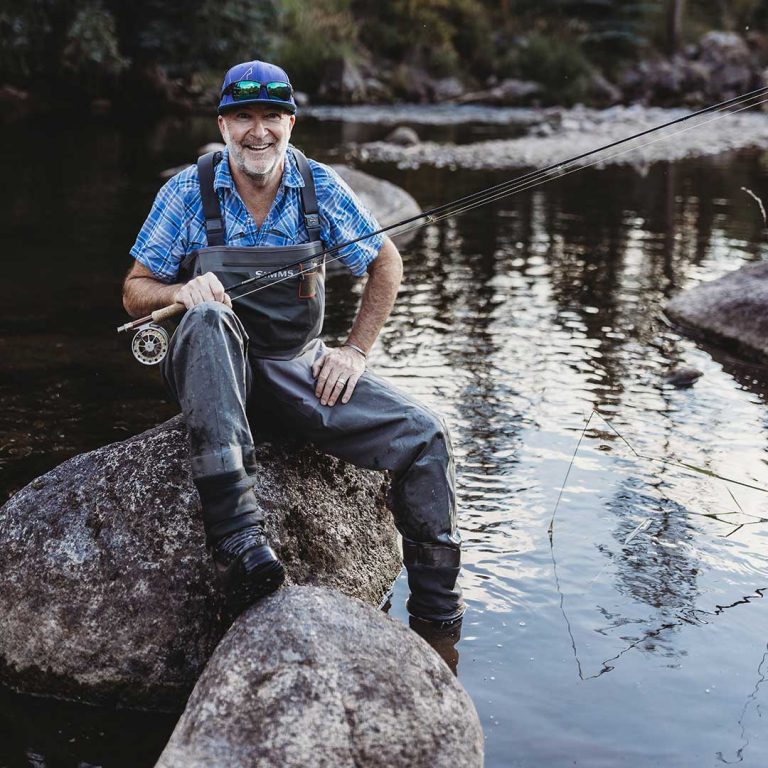
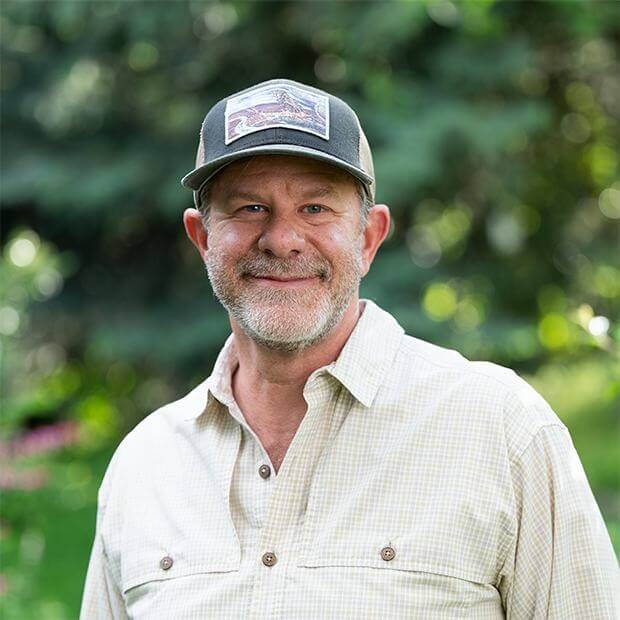
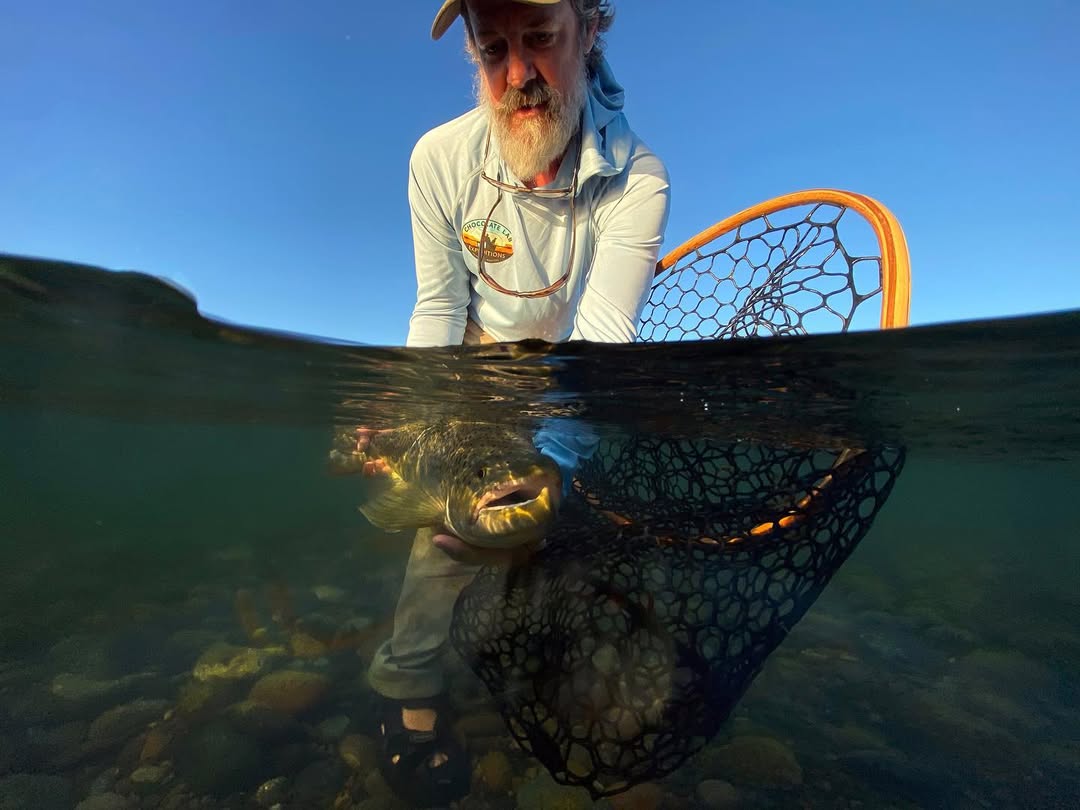
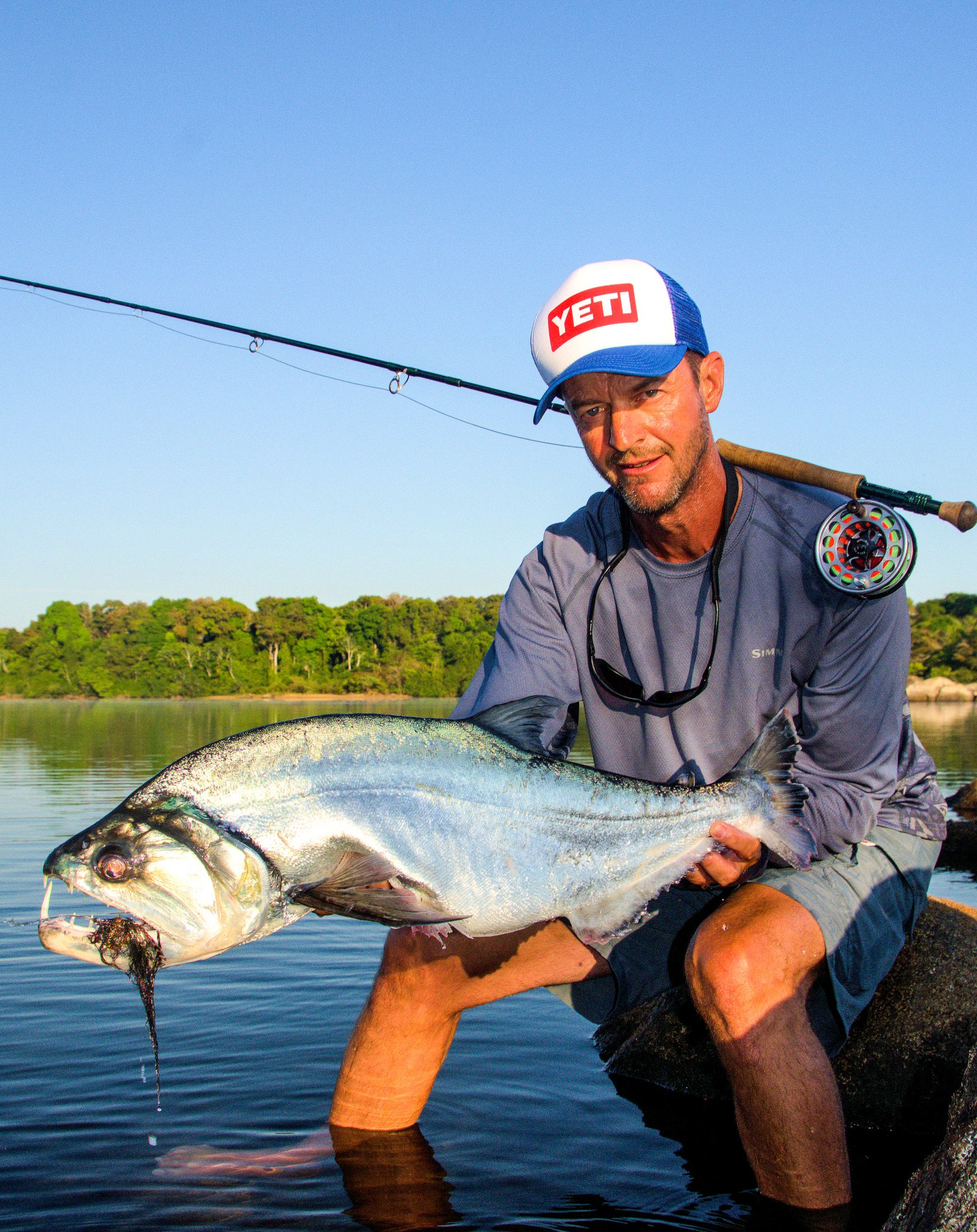
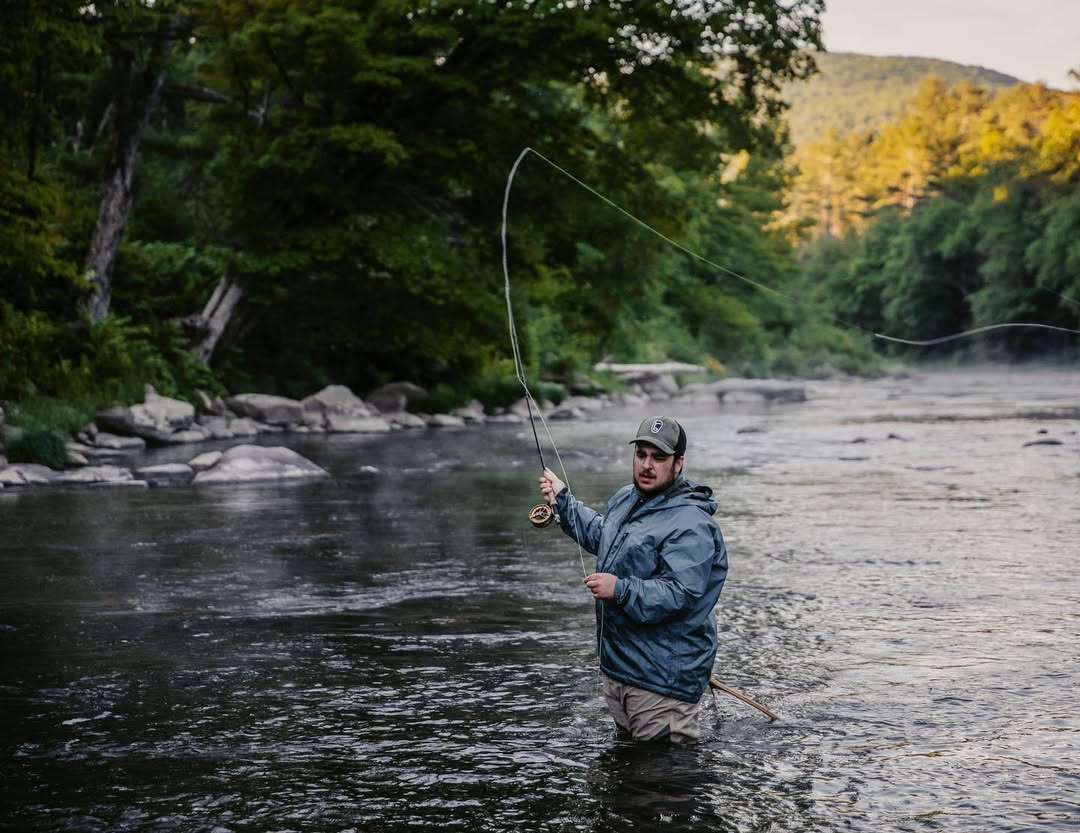
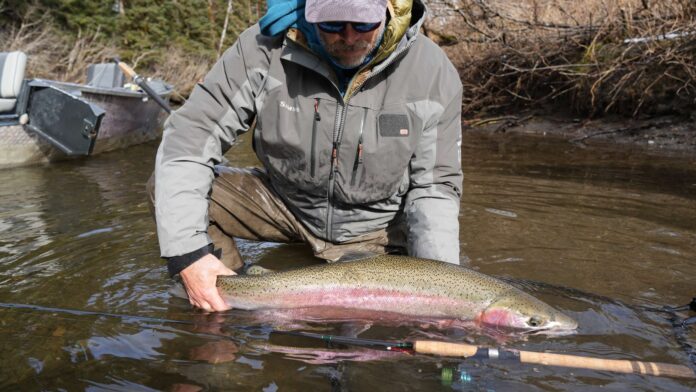
Will Rice

Follow them on Instagram 👇🏻

Jason 👉🏻 @writers_on_the_fly

Travis 👉🏻 @bader.trav


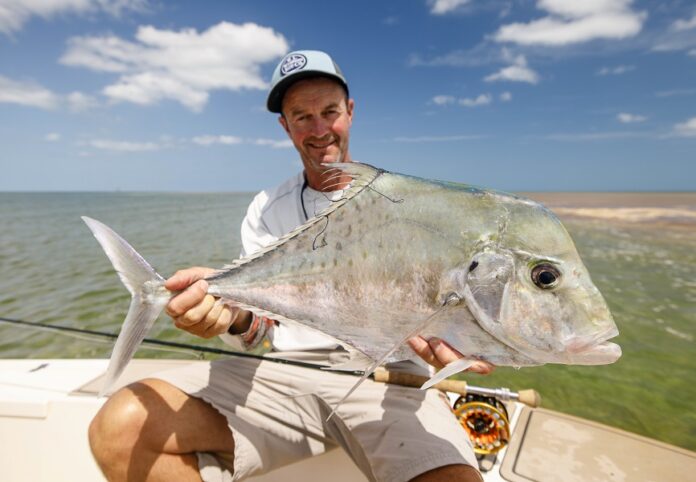
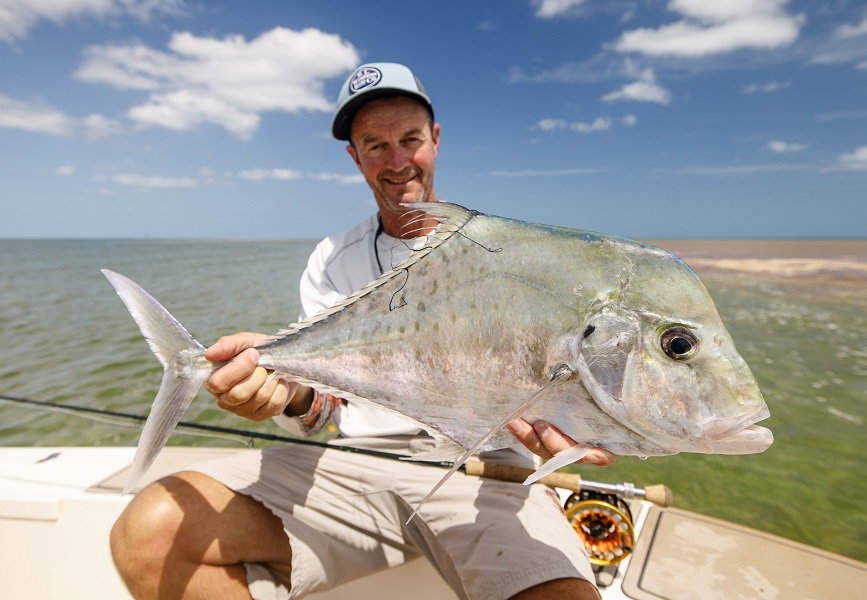
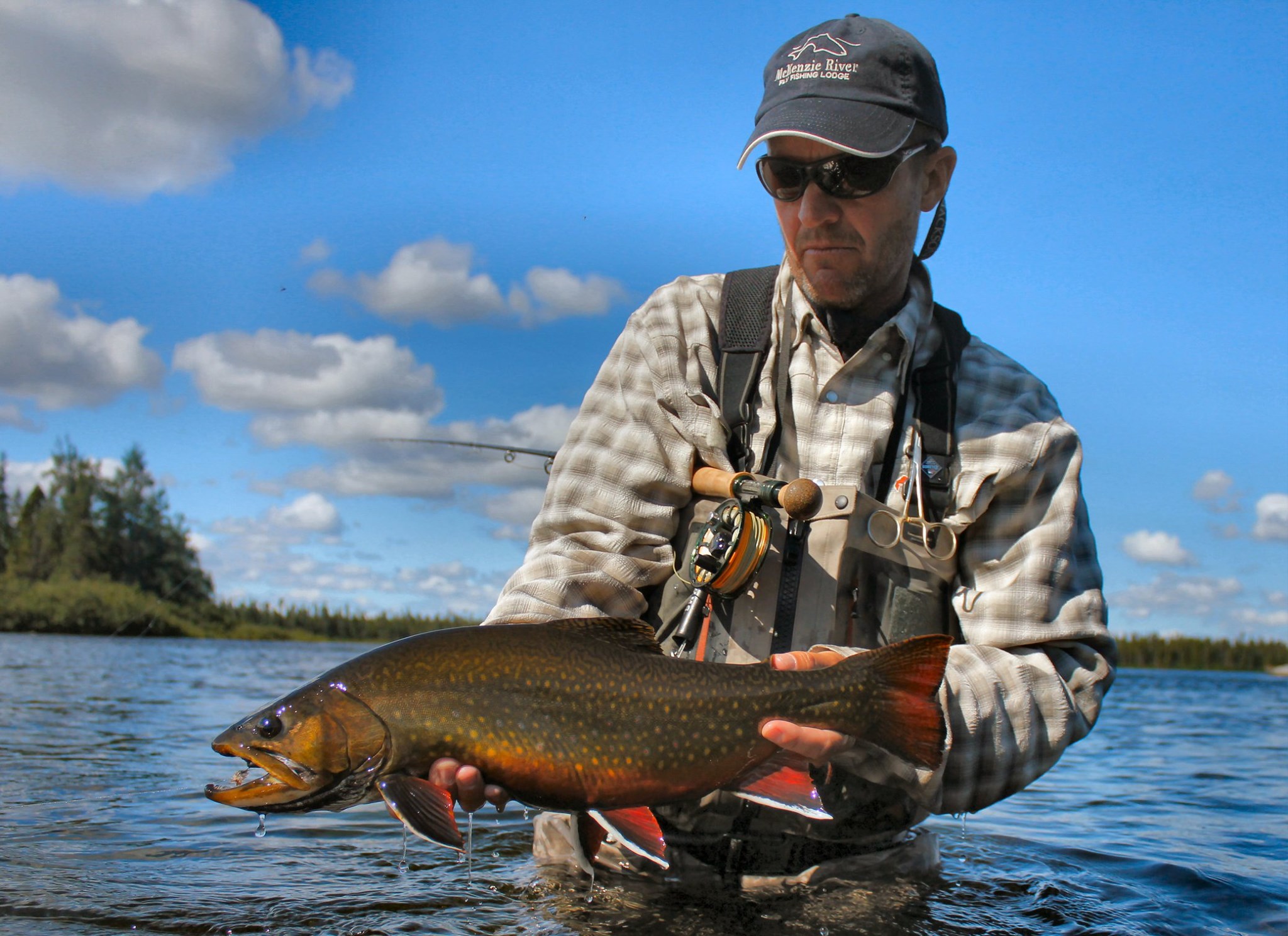
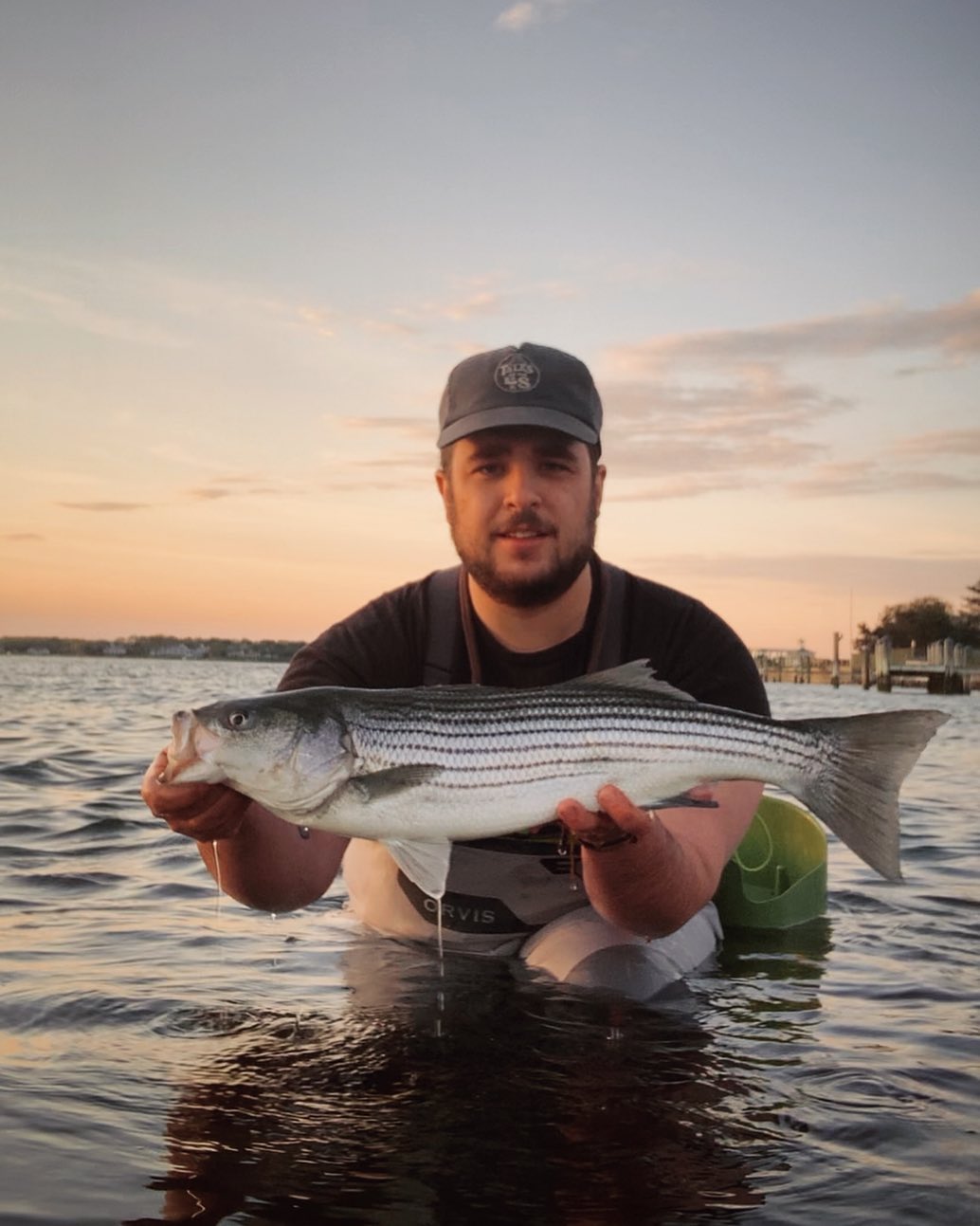
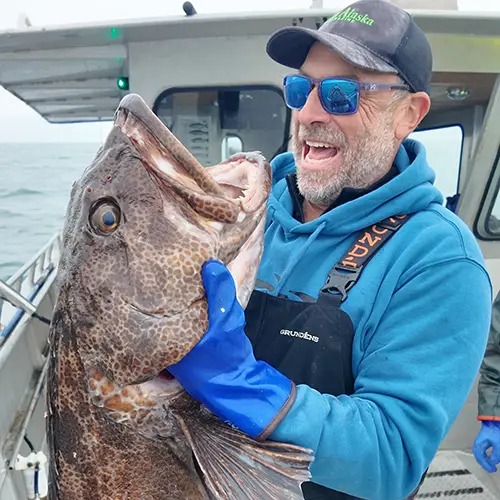
Jason Rolfe

Resources Noted in the Show

🎧 Podcasts & Media

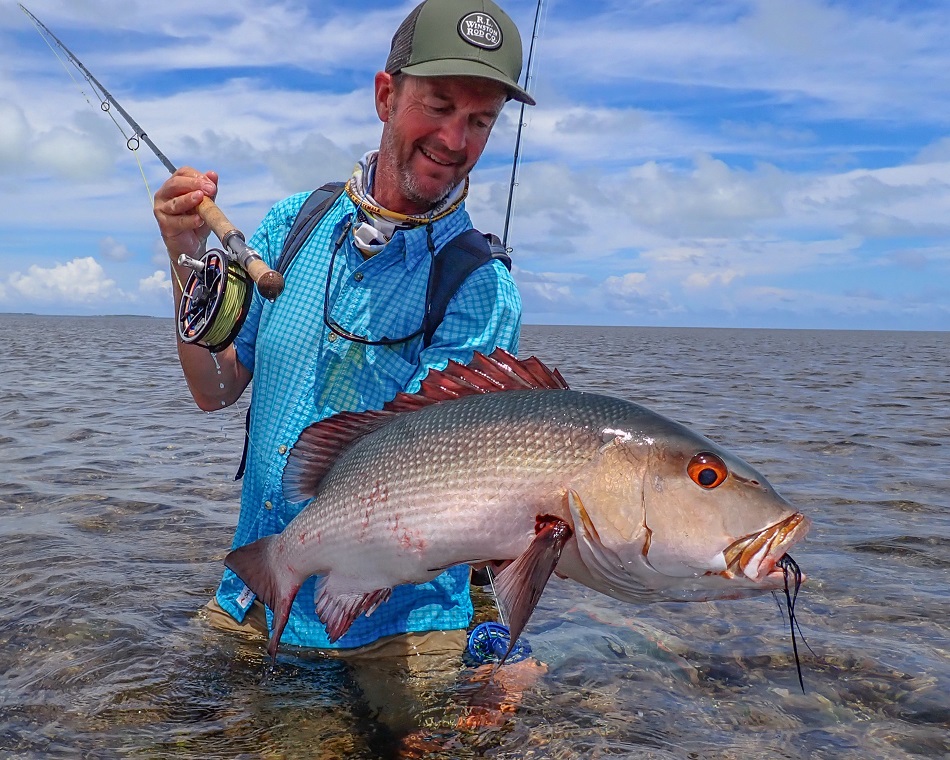
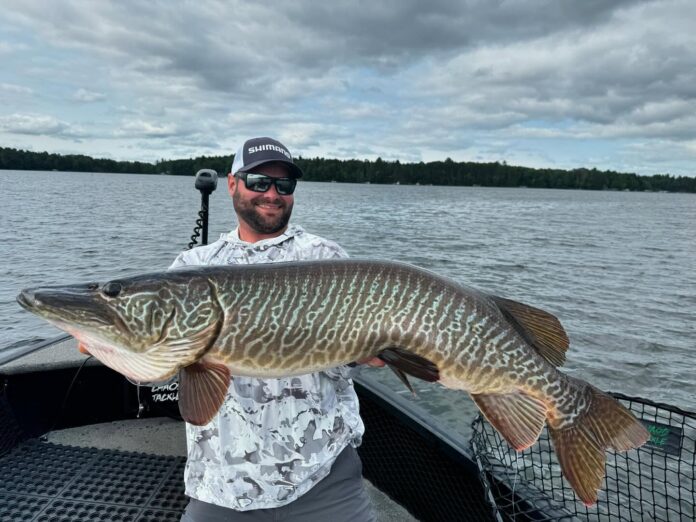
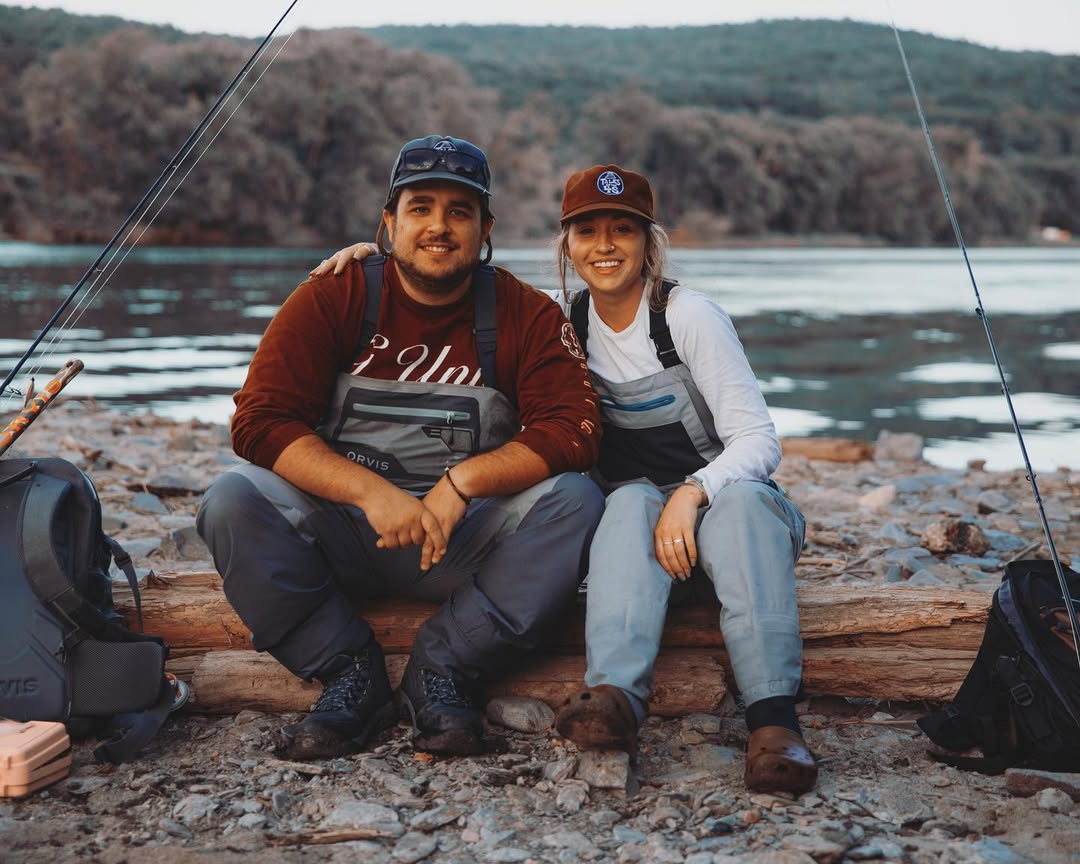
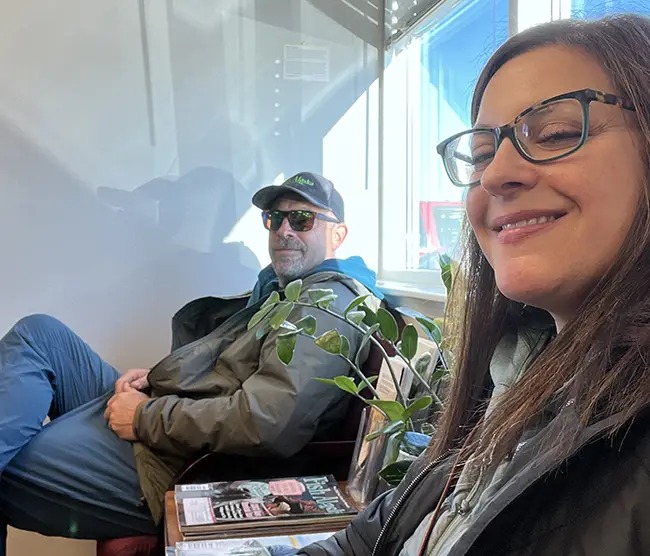
Travis Bader

📰 Articles and Stories


🛠 Products and Tools


📚 Books Mentioned


Related Episodes

In the Bucket #16 | Sandy River Spey Clave with George Cook, Mia Sheppard, and Josh Linn

Full Podcast Transcript

Episode Transcript
Will (2s): The saying, you know, I didn’t come up with it, but a friend of mine did. So many times you’re, you know, you’re out in these different places and it’s like, it’s so beautiful. And then you’re like, and we get to go fishing. You know what I mean? Like, the environment is so awesome and just amazing and beautiful And it’s blowing your mind. And then you’re like, oh my gosh, I have a fly rod here in my hand. And we’re gonna go deeper out there into the unknown and, and greatness and, and all of that. So that’s a very longwinded answer to why I love to travel and, and fly fish. Brian (42s): Welcome to In The Bucket, the podcast that explores the culture of spay fishing in the Pacific Northwest. A spectacular land of mountains and wild rivers where every cast has a story to tell. I’m your host, Brian Ska. In today’s show, we’re gonna be expanding our discussion topics beyond the traditional scope of In the Bucket. Since we started the show, we’ve spent a lot of time talking about space specific ideas like casting improvement, gear selection, and what to do when a steelhead grabs your fly. In this episode, I’ve got Will Rice, Jason Rolfe, and Travis Bader joining me. These guys are journalists, outdoor educators, and travel experts. I’m sure we’ll get into steelhead as we do, but today I wanna talk about fly fishing, travel adventure in general, personal safety on the water, and dig into a fly fishing mystery or two. Brian (1m 35s): Welcome folks. I’m really excited for today’s show. This is one I’ve been hoping to put together for a while. I’ve got three super interesting guests for you sitting with me today. I’ve got Will Rice, Jason Rolf, and Travis Bader. Will, why don’t you tell our listeners a little bit about yourself? Yeah. Will (1m 50s): Hey, thanks for having me on the show. My name is Will Rice. I’m originally from upstate New York, spent a lot of time out in Colorado and I’m now up here in Vancouver, British Columbia, I should say, back up here in Vancouver. And I’m a freelance writer and content creator and I love to love to fly fish. So that’s, that’s, that’s pretty much it. Jason (2m 14s): My name is Jason Raul from the editor of the Fly Fish Journal and the founder of a reading series called Writers on the Fly. I live in Olympia, Washington, lived here pretty much most of my life, so get up to get up to BC at least a couple times a year to go fishing or climbing or find some other adventures to, to do. Travis (2m 39s): Brian, thanks so much for having me here. Great to see you again, Jason and Will Great to see you guys for the first time. My name’s Travis Bader. I am passionate about the outdoors. I’ve got a company called Silver Core Outdoors, and for the last five years I’ve hosted a podcast called the Silver Core Podcast. Brian (2m 55s): Well, isn’t this fun where we got four podcasters here on the show, don’t we? Travis (3m 1s): We might be able to figure something out here, right? Brian (3m 3s): Yeah, I was joking with my wife that eventually there’s gonna be more podcasters than listeners, so it’s important that we all, we all stick together and listen to each other’s shows. Yep, Will (3m 12s): That’s right. Brian (3m 13s): So Will your podcast is really unique And it was honestly probably the first podcast I actually listened to, aside from, from Joe Rogan back in the day. You know, what’s the heck’s the podcast? Oh, comes Joe Rogan, my buddy says this is gonna be a big deal. And you know, sure enough he was right. So your podcast is a little bit different. How would you characterize that style of a podcast? ’cause really it, you know, it it told a story and there was chapters to it. Will (3m 40s): Yeah, well thank thanks for that. Yeah. Down the path, it was created a little bit of a science project really. I first had set out to write a long form story, so you know, an article that that might appear in a magazine or, or on a website. And as I was thinking about that story that, that I had originally started working on about 10 years before that I had listened to Serial, which is a, is a podcast that probably a lot of people have heard. And you know, in, in going through the, the process of creating the article, you know, you interview people and I record people and so the the dots kind of connected and, and I thought, you know, hey, in addition to writing this long form article, that at some point I’ll find, hopefully find a home for, I can do these recordings and maybe put together something like Sarah Kig put together with, with Serial. Will (4m 36s): So that was, I mean, there was a little bit of a lift and lay there as I was trying to think about how it could be done. And yeah, that’s the origin of it. And, and you know, it ended up, we, you know, we did publish the article on the fly fish journal.com and in the process as well, I, I talked to Jason about kind of my idea And it was just an idea at that point, very much. And we put our heads together and, and collaborated and, and I, I owe a ton of thanks to Jason, you know, for his, his style edits and, and he did all the digital sound and was a tremendous source of creativity when, when the whole thing came together. Will (5m 17s): So yeah, that’s kinda, that’s how I, how I would describe it or I guess the origin of the, of the podcast. Brian (5m 24s): Excellent. So essentially, if I’m picking up what you’re laying down, the story came before the podcast, is that right? Will (5m 29s): Yeah, absolutely. It really did. You know, in, in fact when I was interviewing people for the story, you know, I would always mention, Hey, you know, this could come out in some other type of digital form. I don’t even think I used the word podcast when I was talking to people and interviewing people that you hear in down the Path season one. It was more of like a concept like, yeah, there might be some digital form of this recording. And I would always ask them, obviously if, if I could record them and get permission. And, and that’s its own whole thing, you know, kind of getting people to do that and, and some of the folks I had to actually interview twice to get them to go on record for the recorded portion of it. Will (6m 10s): So yeah. Yeah, very much. We did not have a, a real firm understanding of what down the path was gonna look like when we started. Brian (6m 19s): And we’re definitely gonna do a bit of a deep dive on, on season one down the path. But before we do, I want to talk podcasting with our other guests. So Jason, your podcast is a, you’ve actually, I think, been involved with a couple different podcasts, but totally different style. Let’s talk about your introduction to podcasting. Jason (6m 36s): Yeah, you know, I come from being obsessed with writing background. That’s all I ever wanted to do growing up. And you know, after I got into fly fishing, then I discovered the very rich and massive world of fly fishing, writing and fly fishing literature and, and especially got to know a couple of, you know, really great writers that we have up here in the Pacific Northwest. And so, boy, I honestly, I think I started, so I think I started this thing called Writers on the Fly first, which is the reading series that I mentioned that it’s like a literary reading. Jason (7m 17s): The first one happened at a fly shop in Seattle called Emerald Water Anglers. And we’re actually having the 10th anniversary reading next month. But it’s just, I got a three different readers fly fishing writers and they get up in front of the crowd and they read a few stories or poems or whatever they have. And that really kind of came from just my love of that kind of thing. When I was in college, you know, there was a literary reading every weekend And it was fun and we’d drink beer and wine and listen to stories and totally nerd out about words and you know, that kind of thing. And then I think kind of similar to Will with the podcast, I was a big fan of a couple of podcasts, one being the Mark Marin’s WTF podcast. Jason (8m 3s): I really liked that, the interview style. And so I thought, well, maybe I can try to do that with some of these writers that I know. So Dylan Mina was one, Steve Duda, who at the time was the editor of the Fly Fish Journal, was another, and there’s been a handful of others. Will was a writer that I interviewed for the Fly Tapes. And so yeah, that, the podcast that I initially started was called The Fly Tapes, And it was interviews with writers and eventually artists as well. And just conversations really like this, hearing about people’s backgrounds, hearing about how they got into writing, how they got into fly fishing and just really having fun conversations was kind of where I came into it from. Jason (8m 49s): And I really, you know, was kind of learning as I went and figured it out. And one day will hit me up and he said, Hey, you know, there’s this story that I’ve been following for I think almost 10 years at that point Will, right Ron Sheep’s story. And he, he asked me if I would help him, you know, create a, a podcast version of the story. And I was like, yeah, let’s do it. Sounds fun, sounds like a challenge. Sounds like I will definitely be a fish out of water, but I think we’ll figure it out and we can, you know, I really felt like we could do something compelling and do something interesting and the rest is history. Brian (9m 28s): Well, I certainly found it to be interesting. I had to binge listen to the whole thing and I don’t wanna give anything away so I won’t express my thoughts or frustrations right now. Podcasting, art form, perhaps relatively new, evolving. We’re figuring it out as we go. Travis, I was the guest on your show and you were early in on podcasting. How many years have you had the Silver course show now? Travis (9m 50s): Oh man, I don’t feel like it was early in, but about five years. And now I’m not the target demographic for podcasting. And even now, if people say, oh, you’re a podcaster, I’m like, yeah, I guess so. Like I’m sitting in my studio, I’ve got a microphone and I’ve been putting a podcast out every couple weeks. I guess I’m a podcaster, but I, it was about five and a half years ago, my wife got me tickets for Christmas to go watch a live taping of a podcast and I’ve got a DHD and my attention’s all over the place and I don’t, I don’t really listen to podcasts and I’m not the average consumer of content like most people would consume it, a little dribs and drabs here and there. But I look at this, I’m like, what kind of present is this? Travis (10m 31s): I mean, I don’t listen to podcasts, I’ve never listened to one at that time. And it’s for this group called Meat Eater. I’ve never heard of Meat Eater, I don’t know anything about this. Right. Well, meat Eater was kind of a big deal even at that time. And we go down there, I ended up meet and greet getting to meet Steve and Janice and actually met this really nice girl who grew up in my hometown from Surrey and talked with her for a bit, our mutual friend April Vokey. And she’s big into podcasting and she was a big inspiration for me. So I kind of took the plunge Friend came by and says, everyone’s gotta be a media company. I’ve watched this guy called Gary Vayner Ju and that’s what he says. And I, again had no clue who this person was, but trusted my friend and turned my office into a studio, moved the staff to a different office and here we are now. Brian (11m 21s): So Podcasting’s just basically part of your empire down there. What else does Silver Core do? What’s Silver Core about Travis? Travis (11m 28s): Well, I guess again, a DHD, a little bit of everything, but I started Silver Core when I was in high school and it was basically firearm safety training in Canada under the new government program that the RCNP put out. I applied for policing in my early twenties at around 20 years old. They said, come back with more experience. I said, tell you what, I’ll start a business. That’ll be my experience. When it fails, I’ll come back and I’ll be a cop. Well, the business didn’t fail and I’ve been doing firearms repair and maintenance across Canada for law enforcement agencies and private security and public companies. And we do instruction for like mineral exploration and parks and ministry of forest, DOF on firearms, situational awareness, bear awareness, basic safety. Travis (12m 17s): And over the last number of years, I’ve been sitting behind a desk more than anything. Well, other very talented instructors are, are carrying the torch forward. So that’s a little bit about what we do online training as well. And then we’ve got the provincial contract for Hunter education training online in British Columbia. Brian (12m 35s): And if we could only go back in time and if, well, Ron had only picked you as one of his fishing partners, maybe he’d still be around. Travis (12m 42s): I don’t know. I don’t know. I’ve been looking a little bit about this case, but there’s always the benefit of being the armchair quarterback in, in hindsight and what we could have done. But hopefully I’ve got a couple of points here that might resonate with the listeners that can help them if they decide to go out and do something similar. Brian (12m 57s): So Will, let’s, let’s talk about how you first became aware of this particular unfortunate situation. Will (13m 5s): Sure. So back then, so 2009 I’d, you know, been writing different articles for fly fishing magazines and, you know, I never really was a kinda where to or, or how to writer and, and I was really trying to chase other types of stories that were interesting to me. And I’d written a story in 2007 about a lodge owner in The Bahamas, a fly fishing lodge owner in The Bahamas who went missing with a few of his employees and a few boats, which was a really interesting story for me. And that kind of got the, the door kicked open into the magazine writing on my end. Will (13m 45s): And then I did a couple other stories about people, you know, kind of just getting into bad situations while, while fly fishing. One guy in Montana who was, he was a guide who got hit by Lightning, another guy in Colorado who had an accident and had a self amputate his knee. Another story about an angler who was down in Florida and was, was DIY tarpon fishing, fell off his boat and nicked an artery. So kind of those just interesting off the beaten path stories, I guess. And so in 2009, a friend of mine had just sent me a random email ’cause he knew I was, you know, into those kind of different types of stories. Will (14m 26s): And it was super short. It was like, Hey, did you hear about this guy who went missing down in, down in southern Mexico? And I had not heard about it. And so that kind of kicked me into gear and I just started, you know, to see what, you know, what was being reported locally there ish, KLA, Mexico. I mean, there’s not a lot of infrastructure, it’s a super small village. So there wasn’t a lot of information about the story. So I just started kind of digging in and I pitched the idea, you know, like, Hey, let’s write a piece about this because, you know, he’d been missing for a couple weeks at that point. And you know, I’d reached out to people close to him and I wasn’t getting a lot of information and I reached out to people who were at the lodge he was staying at and they didn’t wanna talk about it. Will (15m 14s): And you know, maybe Travis, I’m like you a little bit, you know, that that kind of gets me going even more when people don’t wanna talk about things. And so, you know, at the time, you know, at the time, you know, there’s a deadline for that magazine issue. And it was just the basics. It was like, you know, who, what, when, where, why, what do we know? And I kind of figured, you know, in the next couple weeks, you know, he’d be found and you know, that would be it. And he wasn’t. And I would continue to go back just to look to see, you know, hey, what happened, what happened? And nothing. And, and that just kind of took me down the path, so to speak. Brian (15m 51s): Well, it’s a, it’s a fantastic title for the show and we’re giving the listeners here just a little bit of taste as we go, which I hope what we would encourage them to do to get the full story is to check out your show. So let’s take a quick moment and tell ’em how they can find episode one of Down the Path Online. Will (16m 7s): Yeah, you can check out episode one or there’s a short trailer. It’s like a five minute trailer. It’s still at down the path podcast.com. Or you can find down the path at, you know, apple Music or Spotify, just about anywhere that you listen to your, your podcast. Brian (16m 25s): Now, Jason, your magazine of course did a, a fairly large feature on this particular situation to access that. Is that online or do people need to find back issues of the magazine? Jason (16m 36s): No, we did that, we did that as a, as a online only feature. So it wasn’t in print. You just go to the, go to the website, the fly fish journal.com and just probably search down the path and it’ll come up. I think we’ve done a couple things with Will with Down the path over the last several years. So might find a couple things in there. But yeah, that original story about Ron Sheep’s disappearance is just on the website Brian (17m 6s): And it’s important for me to mention that, you know, there’s three seasons of Down the path isn’t there? Will, Will (17m 11s): Yeah, three seasons or three very separate stories. Yeah. Season one is about Ron Shera and his disappearance from Ishak Mexico. Season two is about the murder of a fly fishing guy named Mario Grene and his client named Gary Swank in Belize. And the third season is, it’s called The Disappearance of Stanley Bain. And that’s that original story I was telling you about, about the lodge owner who went missing from South Andros Island in The Bahamas back in, back in 1995. So that, yeah, those are the three distinct seasons, quote unquote, or, or, or stories. Dave (17m 51s): Stonefly Nets build handcrafted landing nets that are as tough as they are beautiful. They’re shaped, sanded, and finished by hand from premium hardwoods. You’ll feel the difference the moment you land your first fish light in the hands, strong at the hoop and made by someone who knows what it means to earn your trust. You can head over to stonefly nets.com right now and see what they’ve got in the shop today. That’s stonefly nets.com. Discover Smitty’s Fly box for premium flies. Their monthly subscription service delivers expertly crafted flies and materials tailored to your fishing environment, boasting over 30 years of experience. Smitty’s is your trusted source for a diverse range of flies, enhance your fishering experience and make life easier with their carefully created selections. Dave (18m 36s): You can subscribe right now at smitty’s fly box.com and join a community of passionate anglers. Brian (18m 46s): So what’s compelling to me with, with season one with Ron Shera is you were, you were in it right away. So essentially you were taking on the role of a private investigator and you know, you were talking to people much in the same way. Perhaps an officer of the law might be trying to extract information. And one of the things that really dug me into those episodes was people’s behavior wasn’t what I would expect. And I always think that when things aren’t what you would expect, there’s more to the story. And, you know, it was, it was a, it’s a heck of a mystery. It really is. Travis, I know you weren’t, you’re kind of new to this story, but I know you’ve done a little bit of looking into it. Brian (19m 27s): Can you give some quick insight into what Ron could have done pre-trip, you know, before he even got on the plane to help put himself in a better situation? And Travis (19m 37s): I like the way that you put that. Whenever I break these things down, I like to look at a before, during, and after sort of an outline. It helps me to be able to kind of think about like compartmentalize different things that I can do. So basic trip preparation beforehand, you want to take a look at what your risks are gonna be. I mean the, the fact that there are risks are what make these sort of adventures exciting. They make them adventurous. There’s a big question mark out there. You’re never gonna be able to eliminate all of those question marks, but you can manage them pretty good ahead of time and you can do that without even leaving your desk. You can get onto ai, any can start using that to say, what are some of the environmental risks that I could be looking at? Travis (20m 21s): What are the social risks that I could be looking at? What are basic things that I might wanna pack with me in this area at this time? You can call up police stations and given, depending on the place that you’re calling, they might be able to give you a little bit of insight like, Hey, I’m planted to stay in this area. Would you let your kids stay in this area? Like is this a place where I should be st staying around or would you recommend some other place? So a little bit of prior planning is helpful, putting together an itinerary, very itemized list of kinda what you plan to be doing. And even having a check-in if you’re doing this all by yourself and there’s an adventure to that. A quick way to help minimize risk is the buddy system. Like they say in Rex Kwando, we use the buddy system, right? Travis (21m 3s): So having somebody else with you can be helpful, but if you’re doing it by yourself, having somebody who knows what you’re doing that you can check in with, maybe if you’re gonna be with a guide, research ’em, I mean, it’s all online, it’s easy enough to do, get on Google, do a little bit of Google Fu and then you kind of wanna establish a baseline. And that can be done partially prior and when you first arrive and establishing a baseline will kind of tell you what the norm is. So you can establish a baseline for people and their patterns establish a baseline for the wilderness and what to expect. And that will allow you to more easily identify the absence of normal ’cause that is oftentimes when you will run into issues. Travis (21m 50s): That would be a few of my before tips. Brian (21m 52s): Those are great. And I always remember my mom growing up when I would, and this was before we had in reach satellite messaging, before cell phones. My mom would always wanna know when I’d go off my fishing adventures, you know, where I was going and who I was going with basic stuff. You know, I, I’m bouncing around a little bit as we do with this show, but season two will, you know, that was, you know, whereas the, the Sheep store case is, is really fascinating. We know exactly what happened in season two And it really seems a situation of someone who went on a fishing trip and ended up in the wrong place at the wrong time with the wrong person, didn’t it? Will (22m 30s): Yeah. And they’re very different, you know, season one and the, and the story of Ron, you know, it, it’s probably the most fascinating one for me just because the lack of any type of evidence that points to any one of the things that could have happened. I mean, it’s just, it, the sum is zero. Season two is very different. I I agree. It’s, you know, it, it’s pretty clear what happened in season two. It wasn’t clear when we started the podcast. That was one of the things. So you know about Midway, you know, these, these projects take, you know, anywhere from I think seven or eight months to a year plus. And so midway through the work on season two, the police in Belize, you know, released a report that, you know, was shocking in its detail in a way and really kind of outlined. Will (23m 20s): But when we started it was still kind of a mystery. And you know, to some degree, I think, I think you summed it up exactly right and that was just being at the wrong place at the wrong time with the wrong person. And you know, it’s, you know, I I think you can do as much preparation as, as you, you want and those things can happen. But I would say this too, you know, one of the things there is, I’ve talked to people in the travel industry, you know, working with some, some of the professional travel agencies there who do a lot of that pre-vetting and they know and they’ve been out with these people. I think there is a level of, you know, risk elimination. You know, if you work with some of these companies who have hands-on experience versus just, I mean, and I’ve done it, right, I am totally guilty of, you know, walking into a village and going knocking on a door because I got a name, you know, at the bar of a guy who’s who drives a boat and I go out with him. Will (24m 17s): So, I mean, I’ve done that many, many, many times and you know, probably that’s a little bit riskier than, you know, working with a travel company who’s really vetted these companies and guide services and guides. Well, Brian (24m 29s): So will, you know, to me you’re, I’ve guided you for steelhead. I can’t remember, I don’t think we caught any steelhead, but we tried. That’s right. But you’re, you’re a pretty well-rounded angler. You’re, you’re big into warm water, salt water stuff, aren’t you? Yeah, Will (24m 40s): I, I’m a I’m a dabbler of everything. I, I would say I’m a, I’m an expert of nothing and a and a dabbler of, of everything that swims. So yeah. That’s a good, that’s a good way to put it. Brian (24m 49s): Jason, I know you’ve done some, some guiding. We, we talked a bit about that before working with, I believe that same fly shop right? In Washington. Jason (24m 58s): Yeah, yeah. Emerald Water anglers. Brian (25m 0s): I’ve never been in there, but I’ve heard nothing but good things about that shop. So let’s talk about your fishing. So you’re down in Washington. Are you a steelhead guy primarily, or do you do a little bit of everything? Jason (25m 10s): Yeah, I definitely, when it’s steelhead season, I go fishing for steelhead, you know, something I enjoy every year, but I, I do like to mix it up the rest of the year. I don’t do a whole lot of summer steel heading because, you know, I’m usually out salmon fishing or trout or carp or bass, you know, I, I really do like to, to mix it up in the warmer months. But yeah, January through, you know, mid-April if I have a free day or a free weekend, I’m, I’m going out steelheading somewhere. And it’s something that, it’s something that, that I, I grew up with my, you know, there’s pictures of me as a little kid with steelhead on the Soul duck. Jason (25m 53s): And it’s funny because I, you know, I grew up steelheading and, and fishing for salmon, and then there was a long period where when I was younger that I, when I didn’t fish as much, and then sort of after college, I, when I got into fly fishing, I eventually got into fly fishing for steelhead. And that whole, you know, walk of, of misery, I guess that is swinging flies and, you know, yeah, that’s what I do nowadays. Brian (26m 23s): So, you know, for myself dabbling in this podcast stuff, I also obviously run a lodge and teach casting. Those are my main jobs and have a family. So I tend to record a bunch of the shows one after another. So I’ve got ’em sitting there ready to go. And yesterday I, I had a real fun one. I, I sat down with Richard Harrington, who’s also a podcaster. Richard has got a great show called The River Rambler, and another guest, a guy I’d never met before, but super interesting, Kat, a guy named Adrian Cortez, and not trying to scare you guys, but we talked for about three hours. I’m gonna have to edit that one down to make it work. But it, you know, we had just a fantastic discussion. Brian (27m 3s): And Adrian in particular is fascinating to me because he ties his flies in his hand. He doesn’t use a vice, he fishes bamboo, he fishes a dry line, prefers to fish a dry fly. So essentially Adrian’s made fly fishing for steelhead as challenging as possible, and doing it in a way that’s true to the history, you know, using, you know, established patterns. And once again, you know, not a numbers guy by any means. And I think, you know, steelheading is different to me than other types of fly fishing because it’s a bit of a mental exercise. You know, we don’t get that positive reinforcement of knowing that the fish are in the lake, or we can see the fish on the flats. We have to believe they’re there and we just have to, you know, one more cast, one more step, one more cast. Brian (27m 46s): Travis, you’re fairly new to Steelheading, I think, you know, less than a decade, right? Travis (27m 51s): Yeah, yeah, yeah. No, I’m, I’m newer actually. The first time I tried Steelheading was ski spay up there with you. And I got some amazing casting lessons and a very jealous wife as you were showing me some how to cast there. And I caught my first steelhead with, with Pat, pat Behan. I met him at your lodge, but I actually caught my first steelhead on the Squamish and, and then proceeded to catch another one right afterwards. So that was kind of, kind of a good day. It was pretty good. Well, Brian (28m 22s): That’s, that’s Steelheading, isn’t it? It’s just, it’s hilarious how things go. Squamish, widely regarded as a challenging place to catch a steelhead guy who’s never caught one goes out and gets two in the same day, right? Yep, yep. There you go. Yep. Will (28m 34s): You’re making me mad Travis. Travis (28m 37s): That was my first one, and then after I got, I was like, oh, this is easy. Oh God, I got another one. This is easy. About half an hour later, I got my second one. Brian (28m 45s): Travis, you’re at the core. Your company’s an educational company and the business that you’re in is, is teaching people and essentially sharing your passions. So you’re, you’re an outdoors guy. What is it about steelheading that speaks to you and and do you have similarities there with, with your hunting? Travis (29m 2s): I love standing in the water. I love connecting with nature. Any way that I can deepen my connection with nature and I view hunting and fishing as an excellent means to be able to do that. And people say, well, isn’t that a cruel way to connect with nature? You’re just out there teasing these poor fish or injuring these poor defenseless animals. But that’s a very, very small part of the whole process. And of course when you’re hunting all, everything you get can be used. You’re steel heading, we’re catch and release. And that was a whole new concept to me, which was, I know when we first came in there, and I think I probably just peppered you with 101 different questions about like, why are we letting these fish go afterwards? Travis (29m 44s): I mean, like, I, should I be buying a cooler? I can, that was new to me. But standing in the water, connecting with nature, the stillness is something that speaks to my A DHD in a way that nothing else ever has. Brian (29m 57s): Now will, what is it about saltwater fishing that gets you going? Is it the visual aspect? Will (30m 2s): There’s a couple of different things I would say about salt water fishing that really tip me over that, that’s what I would call it. I always liked to travel, I always liked the, you know, as Travis mentioned before, the, you know, the adventure, the unknown of travel. So even before I really got into fly fishing, I, I dug that, whether it was, you know, here in the states or overseas. And then I started to fly fish and then, you know, very quickly realized that like when you’re traveling, you know, you can bring a four piece rod and there’s fishing opportunities everywhere around the globe. And, you know, that just took like the, what I always think of the, you know, the puzzle of fly fishing, trying to put it together all the different pieces, whether it’s on your little local river or creek and the time of year and, and all that kind of thing. Will (30m 50s): And it just, you know, takes that puzzle and up levels it. And now you’re, you know, you’re visiting these, these amazing places and you’re checking out new species and there’s the culture to it, all of that, you know, just, you know, really kind of, you know, tipped me over, as I always say, it tipped me over. And that put me on a, you know, I, I always said I’m a better person when I have a, when I have a trip on the books and you know, maybe I’m tying flies or I’m doing research and, and then yes, finally like at the end of all of that, there is that, you know, visual aspect of saltwater fishing that you get many times, but not all the times. You know, the, there’s plenty of times you blind cast and that kind of thing, but, you know, permit bonefish, tarpon, you know, that visual aspect of stalking a fish, seeing a fish, making the cast, watching it eat, you know, that to me is, is pretty pinnacle. Will (31m 43s): I love that. And you know, and then again, I, you know, the the saying, you know, I didn’t come up with it but a friend of mine did. So many times you’re, you know, you’re out in these different places and it’s like, it’s so beautiful. And then you’re like, and we get to go fishing. You know what I mean? Like, the environment is, is so awesome and just amazing and beautiful and it’s blowing your mind and then you’re like, oh my gosh, I have a fly rod here in my hand and we’re gonna go deeper out there into the unknown and, and greatness and, and all of that. So that’s a very long-winded answer to why I love to travel and, and fly fish. Brian (32m 19s): So, you know, the trip Ron was on and once again, I, I hesitate to give too much information here ’cause I want people to go and, and check out your show because, you know, the way you’ve put it together, it’s such a good listen. But I think it’s important for people listening to have some idea of, let’s call it the trajectory, the decisions that were made and how, how Ron’s day went when he went down the path with this particular story had, do you fish the waters that Ron was fishing that day? Will (32m 46s): No, I’ve never fished ishak. I fished just south of there down at Belize and Agi Key. I think we actually fished probably illegally north into, into Mexico on, on one trip. And then I have fished quite a bit just north of, of Ishak in Ascension Bay. So I fished around the area, but never in Ishak per se. Brian (33m 7s): Jason or Travis, have either of you fished in that neck of the woods? Will (33m 11s): No. No, I haven’t, Brian (33m 12s): Never Jason (33m 12s): Have. No. Brian (33m 14s): You know what’s interesting Will is I have numerous friends who fish that area. I’m not a a burn in the sun. I’m not a, I’m not a warm water guy, but you know, the friends that I I have that have visited down there, none of them were aware of this. And I’ve, I keep pointing them to your, to your show, right? So it doesn’t seem like this is something that really gets discussed down there by anglers fishing it. I don’t wanna say it’s forgotten, but it’s not the topic of conversation I would’ve thought it would be. Will (33m 38s): Yeah, I think that, you know, generally is the case, right? It, it’s kind of a tourist, not tourist area, but you know, it, it’s not something that if you were running a business down there, I guess you’d probably wanna really advertise people going missing around your, your commercial place of business. So I, I get that for sure. And you know, the podcast was, was kind of popular, but it’s a pretty nerdy topic, so I don’t think it’s, you know, it’s not been widely, widely listened to. So yeah, that doesn’t, that doesn’t completely surprise me. Brian (34m 12s): Well, let, let’s summarize it a little bit. So Ron’s on a fishing trip with his buddies, people, I believe that he, he knew fairly well on this particular day. He makes a decision where he is fishing on his own. What was he fishing for that day? Will (34m 27s): I am guessing, you know, primarily permit, you know, Ishak is a place that’s really known as a, as a permit fishery. And then, you know, obviously, well not obviously, but there are bonefish down there, so I’m sure they were having shots at, at bonefish as well in that specific little lagoon area. I’d say those are probably the two, two species that they would be coming across as well as, you know, probably like smaller barracuda, that kind of thing as well. Brian (34m 55s): Nice. So he’s out there fishing, people see him leave, he doesn’t show up when he is supposed to. What happened then? Yeah, Will (35m 2s): That part of the day is kind of a mystery. You know, there’s about four to six hours there that, you know, I really dug into it and, and tried to get as much information, you know, hour by hour, minute by minute of like what actually happened. And as best I can tell, you know, there’s a couple odd things, you know, four people out there, they had two cars. That’s not normally how they fished. So that group of folks, four folks, they had fished there two years prior, so they knew the area. This, the third year was a little bit different. So they had two cars and Ron told his friends he wasn’t feeling that well and was gonna go back to the car and so he kind of walked out of the flat outta sight of his, his buddies and just kind of vanished. Will (35m 48s): And his buddies then left. They saw his car, they figured that maybe he didn’t go back to the hotel like he said he was going to, they went about and fished some more, went back to the hotel during midday, then went back out to the flat again. His car was still there. They went back to the hotel in the evening. And then later in the evening at dinnertime is when they, you know, let the staff know that Ron Ron was missing. So yeah, that six hours, that four hours, I mean everyone I’ve talked to, you know, kind of agrees. It’s just, it’s a little bit of a mystery and it’s not really well documented. Brian (36m 27s): Jason, when you guys came out with, you know, the online article, did you get any feedback from, from readers, people with ideas? Jason (36m 35s): I think that we probably got more feedback and theories from people listening to the podcast. ’cause you know, there was Will and I would get emails from people through the, the link on the down the path podcast website and, you know, ranging from messages, ranging from just surprise and amazement at this story and just wondering like what had hap ’cause it, it really is just such a compelling mystery. There is absolutely nothing to point in any one direction and Will in the podcast goes through kind of some theories of what the possibilities are, but there’s really nothing that points strongly, you know, in any one direction as far as I can remember. Jason (37m 27s): And, but we would, you know, I think we would get messages from people here and there that maybe pointed a little bit in one direction and then, you know, it maybe follow it up a little bit And it kind of would, would peter out, will might be able to speak to some of those things a little bit more. But yeah. And as far as, you know, through the, the online article that was on the website, I don’t remember whether we got any messages through that, but it was definitely, you know, we could tell after that first season of the podcast was released, I I think we could tell that it had struck a chord. Jason (38m 10s): People were certainly, certainly interested, certainly intrigued and, and that was fun. It, it was, it felt good to know that we had created something that was resonating with people Brian (38m 22s): And building awareness, right? Yeah. If the gentleman was still alive, someone’s, I mean, he’s gonna stick out down there, right? Yeah. Jason (38m 30s): You would think. Travis (38m 31s): And he walked off and that was the last will, that was the last anybody ever heard of him? He said he wasn’t feeling well, he walked off. Will (38m 36s): That is correct. Travis (38m 38s): Did anybody say anything like he didn’t look well as well? Or do we have an idea as to his mental health prior to going in here? Was there any indicators that perhaps there was a physical health issue? Will (38m 52s): So yeah, so Ron was a big guy. He was over 300 pounds. He was known to have some type of heart condition, you know, as it was explained to me, you know, he, he kind of was not behaving normally, kind of walking around in circles a little bit. And this is all relayed by his friends to Mexican law enforcement and folks from the US government afterward. So he was kind of not behaving normally, said he wasn’t feeling great and was gonna, you know, walk back now the mental health piece of it. And this was one that was, you know, you know, looked at very, I guess in depth by the US government and the consulate. Will (39m 39s): And that was the thought of like suicide. You know, was he, was his mental health not there. And from all accounts, I mean everyone, his wife, the proprietor of the hotel who, who knew him fairly well, his friends that he, he did not have any, you know, depression or mental health issues that would lead in that direction. And I feel like that one was pretty, pretty much ruled out within the first few days of the investigation. Travis (40m 8s): Interesting. When we’re talking before, during, and after, if we’re to jump to the after, his friends that saw him walk off have probably replayed this through their head 101 times, what would I do differently? Gavin de Becker wrote a book called The Gift of Fear. And aside from it being an excellent sales piece for Gavin de Becker, it also highlights some really valuable insights on how people can trust their gut reaction or should trust their women’s intuition or their gut feeling. And oftentimes people say, well how come I didn’t do something? Well, how come they didn’t? If he’s my friend’s not feeling well, why did I just let him walk back on a zone? Maybe something happened. And oftentimes it’s because people are are embarrassed or they, they figure nothing’s gonna happen. Travis (40m 52s): I would say as a ’cause Brian, you said, if I have ideas and thoughts to, to share these with the listeners, if it goes through your head as a possibility and now that you’ve heard this podcast, there’s a possibility, take that next step. So you never have to ask yourself that question later. What could have I done differently? It’s like a person who’s starts to choke in a restaurant, oftentimes they go into the bathroom ’cause they don’t want to cause a scene. They’re gonna figure this thing out on themselves, follow the person down who looks like they’re having a difficult time. If they look like they’re having a disjointed thought, they verbalize that they’re not feeling well. Take a few moments and spend that time and do that, that extra work with that individual. Travis (41m 34s): So you don’t have to ever turn around later and say, I should have coulda, woulda. Brian (41m 38s): So, you know, back to my mom, don’t go anywhere alone. You know, the relationship with a fishing partner is a special relationship because a lot of times you’re within sight of each other but not necessarily able to talk. So you know, you, you’ve got each other’s back, so to speak. And you know, when we’re out steelhead fishing, wildlife’s a bit of a concern, especially as we approach the river. And especially at the end of the day when we leave the river, when we’re fishing. You know, if, if the bears wanted us, they could just sneak up behind us and whack us and drag us off. We would be none the wiser. But, you know, when we’re moving to and from the river, that’s when we really need to pay attention to our surroundings. And the times that I’ve personally got myself in bad situations with bears, it’s usually a series of things. Brian (42m 21s): So I, I think back to the, the last one, I was with two friends, so I was doing everything right. There was three of us in the group. Now what we’d done wrong is we’d fish till dark. So it was, it was pretty dark when we were going out, there were salmon spawning in this little creek and the trail went parallel to the creek. So it’s, you know, it’s a single file trail and here we are hiking out and lo and behold there’s a just a black bear you fished away, oh look, it’s a black bear with a cub fishing in this creek. Okay? But what we didn’t realize because we weren’t as situationally aware as we should have been, is there was actually two cubs and the other cub was not with the mum in that cub, it was actually on the other side of us. Brian (43m 3s): Once the mother realized what was going on, she was not very pleased. And she expressed that to us in ways that we won’t soon forget. Luckily we at that point did something right and she gathered up her cub, her cubs and they sauntered off up the hillside the same direction we were going. And, and me and my two buddies sat there and said, huh, I wonder how, how long we should give her before we, we hike out in the dark with no flashlights Travis. ’cause this was, you know, a series of bad decisions. And, and so these are, these are lessons you learn. And I think it was probably honestly pure luck that that situation didn’t go bad. Will with Ron, is there a chance that, you know, he encountered some wildlife? What’s down there that’s dangerous? Will (43m 43s): Yeah, there, I think the biggest one, so when we, when we talk to folks it like it pretty quickly. There’s, there’s four like very possible scenarios that people would talk about. And I think the second one was an encounter with some type of wildlife. And I think the only apex predator down in that very specific area, which is these little back lagoons that are very, very shallow, would be a saltwater crocodile. And so that was definitely, you know, something that as far as I can tell was something discussed by local law enforcement right out of the gate. Like did he get eaten by a croc? Will (44m 25s): And I think that one was pretty quickly ruled out just because of the timing. So where he was and the, you know, the amount of time between a lot of people got into that area searching for him. The conclusion was that if a salt water croc did attack him, which is, you know, definitely a possibility there would be evidence of that, right? So like his fly rod or his pack or a shirt or a body part, you know, something there would have, you know, there would’ve been a sign of that kind of explosive attack that might have happened and there wasn’t, and people were on the scene, you know, within, you know, eight hours, within 12 hours, there was a lot of people all around that area. Will (45m 14s): So that was kind of ruled out. Brian (45m 16s): And I remember on the show will, one of the locals said, Hey, you know, the birds will tell us where to find them. Will (45m 22s): Yeah. That, that was the big thing. I mean everyone down there basically, you know, said, Hey, within two or three days, regardless of what happened, if he’s down there dad, like the vultures would be there. And that’s not from, you know, like other, like missing people. I think it was from like, you know, wildlife and, you know, that would be the signal that unfortunately, you know, Ron passed away and was there, but the birds would, would kind of be what shows everybody where, where he is. And once that didn’t happen, I mean the, it, it was interesting to me at least to interview people once that didn’t happen. The, everyone was like, he’s not here. Like, it’s just straight up. He is not here. However he left here, that’s unknown, but he’s not down in that log water flat. Brian (46m 6s): So whenever I’m steelhead fishing, you know, I’m, I’m thinking about wildlife, I’m thinking obviously about water safety. I’m thinking about, you know, not tripping and fallen as I, as I get older and a little more clumsy. I think the most dangerous thing we do is steelheaders is probably getting in and out of the boat. That tends to be a tripping hazard. But you know, there’s this whole other thing of, you know, there’s other people out there and maybe the most dangerous things that are you find in the woods aren’t on four legs, but they might be on two. And is it possible that, you know, are there, is there organized crime or any type of idea that he ran into an individual who would do him harm down there? Will (46m 44s): I think that scenario which, you know, we kind of called, you know, wrong place, wrong time with bad guys, that’s probably the one that his family member really thinks, you know, happened. That he ran into someone or some folks who for whatever reason they wanted to kidnap him or they wanted to rob him and something went wrong. I think that is the, you know, predominant theory that his family has. It certainly makes, you know, some logical sense, but you know, there was no ransom. So I mean, typically if you’re gonna kidnap somebody, it’s for, and that’s, that happens, you know, there’s gonna be a ransom involved. There was never any type of ransom call or anything like that. Will (47m 25s): You know, that part of Mexico is not a, you know, is not a, a drug transshipment point, meaning people don’t believe that there’s a lot of drugs coming up into Ishak and then going somewhere else. You know, they’re like, yeah, it’s come, you know, there’s things coming up from the south, but they’re going right by Ishak. It’s not a point that’s that people, you know, stop at. And one of the big reasons for that is there is a military base that’s like within miles of where Ron went. So it is a, it is an area that has quite a few military folks in the area. So most people I talk to just think, you know, thought like kind of a random kidnapping out in that area was pretty low probability. Will (48m 9s): But again, possible, you know, there’s nothing again about the story. There’s nothing that kind of points to anything including that. Brian (48m 16s): Jason, you’re down in Washington there. Jason (48m 18s): Yeah. Brian (48m 19s): Sasquatch reel or what do you think? Jason (48m 21s): Ha it’s funny that you ask, ’cause this is something I’ve been thinking about and I was, I just started reading this novel just the other day that opens with this discussion of sort of cryptozoology and I mean, you know, I think that it’s likely that Sasquatch isn’t real, but you know, you can’t really say what is the, the saying like the lack of proof isn’t, you know, you can’t prove a negative or, or whatever it is. And so that’s kind of where I stand. Brian (48m 55s): I bring it up because, you know, I know some people who hunt and fish and spend a lot of time in the back country who have stories that, well they haven’t seen a Sasquatch. They have stories that lead to, to believe that they may have been in the vicinity of one. And they’re, they’re interesting stories. Now the simplest answer is usually the right one. Who knows what the heck it was. But to them it, it created a question. Mark Travis and I had a discussion a couple weeks ago and I was telling him, you know, when, when I was in school, you know, being an a DHD person myself, I really didn’t excel with the regular school system. I had, I had real struggles with this idea that we were gonna do something for half an hour and then we’re gonna switch. I wanted to get into something and just go for it. Brian (49m 37s): So I, they called it the gifted program, but essentially they would give us, you know, just a couple of projects for the whole year. And I remember I did a, a really deep dive on Sasquatch encounters, and this is pre-internet of course, but I got my hands on, you know, whatever I could find detailing Sasquatch encounters. I had this big map mostly with Pacific Northwest, you know, different types of markers, this type of encounter. Someone heard something, this was a footprint, this was someone who saw something, this was a kidnapping, which actually, you know, there used to be a few of those stories, but two things stuck out to me. The first was the geographical area where most of these encounters took place was your neck of the woods and my neck of the woods, the Pacific Northwest and the rugged part of the Pacific Northwest. Brian (50m 22s): And the second thing was in the early days of, of what I was able to access, you know, kind of just post turn of the century type of thing, you know, forties and fifties, those encounters were taking place with people who were, you know, foresters or hunters or fishermen, people who were in the back country by themselves or in small groups. So if it was a situation where, you know, their buddies were trying to have a laugh at their expense, someone had, would’ve had to go to a lot of trouble to, to fake these footprints and, and put them on this, this creek bed, you know, a 10 kilometer hike from the, the nearest cabin. So they, they had some credibility to me. But one of the other things about the Sasquatch stuff that is kind of neat is, you know, we don’t have videos. Brian (51m 5s): Never seen one. I’ve never seen a cougar. I spent a lot of time in the back country. I’ve never seen a cougar, seen lots of cougar prints, lots of friends who’ve seen cougars usually scooting across the road or what have you. I’m a hundred percent confident that cougars have seen me and I’m just lucky that they didn’t want to chew on my neck at that time. So maybe with Sasquatch is, if they do exist, you know, they see us before we see them. Travis, you put me onto a, a fun podcast I’ve been paying attention to lately called the Telepathy Tapes. And for anyone listening it, it’d be probably interested to go check that out. It’s a a pretty neat show and you know, maybe there is different ways that things can communicate and know what’s going on, but when we’re talking about a, a true missing person’s case, we also have to think of, okay, well what’s the most logical explanation? Brian (51m 52s): And in this situation, maybe Ron wanted to disappear. Is that a possibility? It’s kinda Jason (51m 58s): Where my head goes. Yeah. Well, and I think that goes back to what I mentioned earlier is that it’s definitely a possibility that will, I think, investigated, you know, as, as much as he could and, you know, as much as these other possibilities. And I think maybe there’s a little part of me that thinks there’s a little part of me that thinks that might just a little bit sort of edge out the other possibilities as being most likely, but just barely. And it goes back to, you know, none of these sort of explanations, you know, there’s, there’s no evidence for any, any one of them that is that really kind of makes it stand out from the others. Jason (52m 49s): And that’s what, and you know, there’s, there were lots of other things around the story that made it difficult to come to a conclusion. And, and I think something that will, and I, you know, we spent a lot of time discussing how to present the story in a way that was responsible without sort of, you know, without sort of making too many assumptions and, and trying to sort of, you know, really push the mystery aspect of it, will really wanted to just stick to the facts and, and not try to go out on too many tangents. And I think when you do stick to those facts, you know, you just come back to this feeling of, you know, what the f happened. Jason (53m 37s): And that’s what makes it so compelling. Even, you know, it’s been 15 years now since Ron disappeared and there’s, you know, it’s never gotten any closer to resolution. Will (53m 47s): Yeah, I mean, the hardest question, interview question that I asked, and all of the people I spoke to was to Ron’s wife Cindy. And I, I had to ask, you know, I had the, the journalistic responsibility to ask her if she thought it was a possibility that Ron simply walked away, you know, which again, it’s not illegal, people can do it, people have done it. But, you know, I asked her that question point blank, and that was the hardest question that I had to pose to anyone for this entire project. And, you know, she was steadfast and her belief that that was not a possibility, as did many other folk that I spoke to, you know, who didn’t think that that was a possibility. Will (54m 29s): But again, there’s no, there’s no evidence that that really points to it. But you can’t rule it out because there are, you know, other cases of people who have self engineered their own disappearances. And sometimes it’s successful and sometimes it’s not. And there are cases where, you know, people are either caught or they come back and you know it is, it is possible. Dave (54m 54s): Trout routes is the most comprehensive mapping app for trout anglers. With over 50,000 trout streams, 350,000 access points, public land maps and more trout routes is the number one resource for navigating, researching, and exploring trout streams. And it deserves a place in every anglers toolkit. I was in New York fishing recently, my first time in New York fishing. I had the Trout Routes app, and I was able to check out and access public access points through the maze of private property on the rivers we were fishing. And after I got into the stream and was fishing down through a run, I wasn’t quite sure I saw a house down below. I wasn’t quite sure where the property lines ended, but given that I had trout routes, I was confident where I was fishing and I was able to assure that I wasn’t trespassing. Dave (55m 42s): You’ll be fully prepared With offline maps, you can get driving directions to points of interest, drop pins, add your notes in the app all while keeping all of your data private to your account. Only you can visit trout routes.com right now to learn more and download the Trout Routes app for free in the app store today. That’s Trout Routes. T-R-O-U-T-R-O-U-T-E-S. Start exploring today on Demark Lodge offers a world-class experience with one of the finest rainbow trout and brown trout fisheries in the world. Their family owned and operated in Missouri River Lodge offers comfortable accommodations, delicious home cooked meals and personalized service that make you feel like family days on the water are capped off by appetizers, beverages, dinner and stories on the back deck and around the campfire. Dave (56m 32s): Book your stay for an unforgettable fly fishing adventure where memories are made and the fish stories are real. You can head over right now to wet fly swing.com/on DeMar, that’s O-N-D-E-M-A-R-K on DeMar right now to book your magical Missouri River trip. Brian (56m 54s): I’ve always been obsessed with this, this idea of, you know, could I just walk off onto the woods, into the woods, disappear without a trace, reinvent myself somewhere else and never be found again. It’s really unfortunate. But there was a, a murder situation in Kitimat, which is south of Terrace years ago, and the gentleman that committed the murder walked off into the woods and no one’s seen him since. And it is a very remote part of the world. And, you know, did he hop a train? Did he build a boat? There’s also, if you know, talking about great books, Jason, you’re probably familiar with the Golden Spruce, right? Yeah. So that’s, that’s a pretty interesting story too. That gentleman was last seen getting, getting in his kayak and you know, no one’s seen him since. Brian (57m 36s): What, what the heck happened? So these, these missing persons cases where people disappear and with the idea that maybe it was self engineered, you know, how do you do that? But then we go back to the Sasquatch thing. Where do we see Sasquatch or where do Sasquatch encounters typically get reported? Well, it’s in these certain type of really remote terrain around Bella Kula, north of Harrison Lake, you know, exactly the type of places that if a Sasquatch did exist, that it could hide from people. So if a guy like Ron who is gonna stick out like a Sasquatch down there, 300 pound white guy, if he truly wanted to get away, you know, the first 24 hours is gonna be really crucial. He’s gonna need to get as far away from there as possible whether, and he’s gonna probably need an accomplice, right? Brian (58m 20s): He couldn’t have done that on his own. He would’ve need someone to come pick him up on his boat, right? Will (58m 23s): Yeah. I mean that, you know, to do something like that. And I, I’ve talked to, you know, I mean I talked to law enforcement, you know, the guy who investigated the whole situation who is from the Netherlands, and you know what he told me point blank was, number one, it’s massively complex and number two, it’s massively expensive. Those are the two things that, you know, would have to, you know, you know, you’d have to kind of solve for. One thing that makes it less complex is, you know, the proximity of where Ron was to the Belize border. I mean, that’s something that, you know, geographically, you know, I mean, it is right there on the border and I think I literally took a skiff from Belize up into that area and you know, there’s nothing really there. Will (59m 13s): So it is, the proximity to Belize is something that I considered at least that was, that was something there. But yeah, you know, it didn’t seem that, you know, at least from his wife’s per perspective, from Cindy’s perspective, that there was any like massive amount of money that was missing his passports were still in the hotel room. So, you know, it’s, again, as Jason said, you know, you just don’t know. Brian (59m 37s): So that book, the Golden Spruce, John Valent, I believe also wrote the Tiger Book, you know, two really interesting books, but they both kind of tie into with this discussion a little bit because the gentleman from the Golden Spruce went missing, whether it was an unfortunate accident at sea or whether or not he disappeared, no one’s seen him since. And then, you know, there’s the tiger thing, and geographically where that set is really interesting to me because it’s that part of Asia that looks similar to northern parts of British Columbia, but you’ve got cats now. A house cat is one thing, but you know, a seven or 800 pound orange colored tiger that hangs out in a, in a snowy forest, you know, cougars, cougars are scary. Brian (1h 0m 19s): But you know, that’s, you know, to me that’s like next to a polar bear. That’s probably the most terrifying creature there is. But those, those saltwater crocodiles will, are they something that you’re, when you’re fishing in these tropical environments, are they something that you’re concerned about Will (1h 0m 31s): A little bit here and there? You know, I certainly in Ascension Bay where I fished before and in Belize, you know, you see them, they’re not massive. They’re usually like tucked up in a mangrove and a lot of times we’re fishing out of a boat, so we’re, you know, we’re on the bow of a skif, so we’re not in the water per se. So you’re, you know, they’re not an issue there. You do, you know, you do think about them a little bit when you’re walking around a flat, you know, if you’re, if you’re covering a lot of ground on a flat, you know, you’re, you’re thinking about that a little bit. You’re also thinking about, you know, stepping on a ray. So you wanna have a bit of, of awareness always when you’re, when you’re out of the boat, that kind of thing. You know, lemon sharks, little black dip sharks, those kinds of things. Will (1h 1m 13s): But I did, you know, one thing, you know, I’ve never seen like a big, big one and in doing the research for, for this story, I did kind of go down the rabbit hole on saltwater crocs and, and attacks. And there’s a whole website that’s actually, they try to keep track of how many human attacks happen, you know, in Asia, in Central America, south America. And I did come across one video, I think I sent it to Jason of a crock down in Ascension Bay. That was massive. I had never seen anything like that. I know right where it was, it was like a, if you’ve been down to Ascension Bay and you cross the bridge south of Tulum into the area going down to Punta Allen, you cross this bridge and there’s a YouTube video out there of a crock. Will (1h 2m 1s): And I was like, wow. I had no idea that something that big was in that area. So, yeah, you know, kind of concerning. So, you know, spatial awareness, I guess, Brian (1h 2m 11s): Travis, when you’re out, out hunting, you know, obviously you’re, you’re the predator, but have you found yourself in situations where you felt that you were, you were actually actually the prey? Travis (1h 2m 20s): Sure, yeah. Yeah, A few times. I remember one time we were on a moose hunt, limited entry moose hunt. And I went up a couple days early, a buddy of mine who was organizing it doesn’t believe in dropping pins or GPS coordinates, he just gives kind of verbal directions of where this place would be hours out into the bush. And so I got a trailer in tow and I figure, you know, my son was, I think 11 years old at the time. I said, tell you what, I’m gonna take the side by side out, you drive it, I’m gonna give you a radio, you get ahead. I don’t know if I’m gonna be able to back this trailer down this place, but you know, we, we got some calms going here, we’re going through. He found a spot parked the trailer, sun’s going down. Travis (1h 3m 2s): And I mean, it got dark real quick. And as I’m in there trying to make some food for my son, a nice big black bear tries to get inside the, the back, the converted utility trailer that we’re, we’re sleeping in. So that was an interesting one. And I, I’ve had bears mama bear and, and cub 10 yards away from me. And you think you can get that rifle off your shoulder quick? Well, I don’t care how quick you are, it’s not quick enough whether that close, that one with the bear trying to get in, everything sorted out in the morning. We were checking it out. It had paw prints all around the side of the, the trailer ripped the seats outta the side by side. Travis (1h 3m 43s): I heard it doing that. I went out there with my shotgun and it, I had a head torch on which batteries were dying, barely illuminated the front side, couldn’t see anything but these giant glowing eyes. And it must have been up on its back legs on the propping itself up on the side by side. It turned out we had a gut pile right beside us in the area that we were camping in. And had we done a little bit more of a Iraqi around the area prior to, I would’ve said, this is probably not the best place for us to be setting up. We just popped ourselves right into an area which would be very enticing to a bear, which it was. So you brought up a bunch of different things that you’re talking about. Travis (1h 4m 26s): I took a few notes and I didn’t want to miss ’em ’cause I thought there could be some interesting points for the listeners. First one, as an aside, I think in Washington, I think it’s Spokane. There’s actually a law that says you’re not allowed to shoot Sasquatch. There’s no hunting allowed. And I think that was enacted because they didn’t want some guy in a costume to get shot at at the one of the areas there. They actually have something on the books about Sasquatch. I think there’s a lot of value to a debrief like this to like down the path provides where the general public can be made aware of situations where things have gone awry and maybe they can help bring closure to the family. Travis (1h 5m 6s): I don’t know if you guys have seen that Netflix series Don’t f with Cats, but this guy basically killed a few people here in, in Canada, but prior to it, he was a and torturing cats and he did it on the internet. And this online group dedicated their life and got more people in, not because of the people, but because of this whole cat situation that was going on. And they use Osint or open source intelligence to find, I think it was Luca, Magda I think was the name of the individual who was doing this. So huge power to the way that you guys are presenting just the information that you’re not tainting it with your own personal biases. Travis (1h 5m 46s): And I’d say that’d probably be a, a hard thing to do, Brian, you’re talking about going down and you fished too late and you ran into mama bear in the Cub, and whoops, there’s another cub in the security and law enforcement world. They call the rule of one plus one. If there’s one bad guy, there’s gonna be two. If there’s, if you find one weapon on a person, there’s gonna be two. And if non-security individuals can keep that mindset of one plus one, whoop, my spidey senses went off, there’s a threat or there’s something that’s outside of normal, look around, get your head on a swivel, where’s the second one? Maybe there isn’t. But that mindset will definitely help you. Travis (1h 6m 27s): And you talked about situational awareness. The listeners may or may not be aware of Colonel Jeff Cooper, who famously kind of put together some situational awareness protocol that the military was using. But he put into a color code system, white, yellow, orange, red, and black. And it provides a little bit of a mental and visual indicator for an individual and their own situational awareness. A situational awareness of white is essentially that of a victim. You’ve got the situational awareness of a victim, you’re the person on their phone, head down, walking down the street, you’ve got no clue what’s going on around you yellow, okay, we’re aware, we’re gutter heads up, we’re looking at what’s going on around us. Travis (1h 7m 11s): And that does a couple things that allows us to be aware of what’s going on. But it also sends a message to those two legged predators that you’re alert that you’re not a soft target. Orange you’ve identified a threat, red fight is on. And black would be, you’ve succumbed to what’s going on around you. You’re so overwhelmed, you don’t know how to respond. And the benefit of knowing black is if you find yourself in a situation where you’re that overwhelmed, you know, you can deescalate that, ah, I’ve identified ’em in black, I can bring it back down. So those are a few of the different points that, that I jotted down while you’re talking there. And then roleplaying, the other thing that people can do, what would I do if I ran into a bear? Travis (1h 7m 54s): I was, as I was coming down this trail, what would I do if somebody wanted to do me harm as I’m going back to my vehicle? The more we mentally role play and mentally prepare for these events that may never happen, the more likely we are to react in a way that’s gonna be beneficial to ourselves. Brian (1h 8m 11s): So to expand on that a little bit, and thinking about down the path, and specifically season two, the client there, you know, he really was, he wasn’t on his phone, but he, he really was pretty close to white there, wasn’t he? Will (1h 8m 24s): Yes, but I mean, I would say I’ve done that a million times, you know, not a million times, but quite a few times where, you know, there’s a level of, you know, trust that you just have to kind of put out into the world if you decide that you’re gonna go on an adventure or you know, a saltwater mission or whatever you wanna call it. And one thing I wanna point out is I don’t want, like, I never wanted down the path to do two things. Number one, I don’t wanna like scare people out of traveling and doing rad shit because like, that’s the opposite of what I wanna do. You know, I, I wanna encourage people to go out and to travel and to explore and find new species and do all those things that, you know, I think, you know, it’s at the heart of of travel. Will (1h 9m 7s): So I never wanted to do that. And number two, I never wanna scare people about some of these great locations like Belize or Mexico. I mean, I’m going back, I, I was just in Mexico like a month ago. I’m going back down to Mexico and a couple months from now. So I also don’t, I never want down the path to be some type of, you know, scare tactic for a certain location like Belize or, or Mexico or The Bahamas. You know, they’re great places. They’re wonderful people. These things are like one-off situations. You know, I, I can’t say that, you know Gary, you know that, that Gary Swank was a white ’cause I don’t know what was in his head at the time, and there’s just no, I mean, it’s like, that’s trying to be like, you know, you just walk across the street and you get hit by a bus, like, were you white? Will (1h 9m 54s): You know, were you in that kind of, you know, that situation I guess you got hit by a bus, you know, it, it’s that random of a thing. So I wanna, in defense of travel and you know, Gary Swank in that situation for sure, it’s just like, man, sometimes you’re at the wrong place at the wrong time and there’s no way that you would’ve known, you know, that kind of thing was going on when you booked somebody. I certainly wouldn’t have. And you know, I certainly have put myself in way, you know, more precarious situations than that. Brian (1h 10m 23s): Yeah. You wouldn’t, you wouldn’t expect him to quiz the guide and say, Hey, do you, do you have any type of beef with people that would involve them showing up with a firearm while we’re out fishing? Will (1h 10m 32s): No, you could never, never that. There’s no research that could’ve got you into that situ, you know, outta that situation other than, you know, you, you know, you make a diff totally different decision in the decision tree and say, Hey, I’m gonna go with a guide service that has been completely vetted by a, you know, by a travel company. Still, even if you do that, you’re not eliminating, you know, a hundred percent eliminating the risk. You’re just, you know, taking it down considerably versus just going with somebody that you’ve never come across before. Brian (1h 11m 2s): You know, with Jason and Will being super aware of, of how these stories and these situations transpired, has it affected the way that you travel and, and the decisions you make when you’re, you’re out in the back country fishing? Jason (1h 11m 15s): I’ll let Jason go. Yeah, I don’t know if these specific stories have, I mean, for one thing, I, I haven’t spent as much time in those kinds of locations as Will has, you know, my tropical fishing experience is a bit more limited. I’ve been to The Bahamas, I’ve been to the Keys, you know, but when I was in The Bahamas, I was with a pretty well known lodge and actually Andros South that I think Bain was a part of. And you know, I I would say that when I’m fishing closer to home or you know, around the west or up in bc, I think that my level of preparedness has to do more with just what I’ve learned growing up and, and just being in this area and knowing what some of the dangers are and knowing what it’s like to find yourself out in the woods after dark without a headlamp and how much the situation can just really change and really become a lot more difficult if you put yourself in that situation. Jason (1h 12m 22s): And another thing is, I’ve gotten a lot of this sort of preparation knowledge from my wife who is a mountaineer and an alpinist and who, she has this thing called the 10 Essentials, which is a part of her, you know, if she’s going to climb a mountain or if she’s even just going to go on a day hike, you know, she has these 10 things and I can’t remember that, you know, each thing, Travis, you might know exactly what the 10 essentials are, but it’s essentially, you know, have some way to make fire, have a light with you, have some form of navigation, have some food and water, you know, have a knife with you, you know, having just, and it’s something that it’s a little kit that you, you know, first aid obviously have this thing that you can easily grab and throw in your fishing pack anytime. Jason (1h 13m 14s): You know, if I’m just going to fish in town, I’m obviously not going to worry about that maybe. But if I’m going somewhere and I do, you know, one thing I really love about fly fishing is going and finding new places to fish. So I’m often going to places even within an hour or two of my home that I’ve never been to before, you know, up in the woods or on some river or whatever. And so I think, you know, having that thing that you can throw in your fishing pack and, and be prepared for, you know, things that might come up that’s really important. And then I think the other part, and Travis, you know, went into this, is just letting people know where you’re going, whether that’s friends or family or whoever, my wife, anytime she’s going on, you know, she’ll go and spend a couple days up climbing a mountain and in the climbing community at least they make these very, very detailed trip plans that explain when they’re going to start, what trailhead they’re gonna start at, what sort of route they’re going to be taking, you know, what would be the most likely sort of search and rescue agency that you would contact if they went missing when, when to contact search and rescue, if you don’t hear from them by a certain time. Jason (1h 14m 33s): And these things are very detailed and, and very long, and she does that anytime she goes out on one of these trips. And, you know, maybe might not need as much detail for a, you know, fishing trip to, you know, the upper hoe river, but still like some amount of detail and some amount of letting people know what your plans are and when you plan to be, you know, back in service and, and able to call somebody. And so that, you know, if you do, if something does happen and you’re out in the middle of nowhere with a broken leg, you know, 24 hours isn’t gonna pass before they, you know, somebody starts looking for you. Jason (1h 15m 13s): So I I, I think that for me has been the more, the more important part of it, you know, in terms of just thinking about being prepared for fishing trips and really any trip away from home where, where something can go wrong. But yeah, I don’t know will have, have you experienced that with, with reporting on this stuff and Will (1h 15m 35s): Yeah, I think, you know, like anything, right? Like, I mean I, you know, when you’re younger you do some things that are a little bit, you know, more wild and, and you know, carefree and you know, I probably wouldn’t operate in that same, or I don’t operate in that same manner anymore. You know, to the point of, you know, like the example I said, you know, talking to a bartender in Placencia and then getting a few names and directions and walking up and knocking on a door and you know, the next morning I’m out on a boat with somebody, I have no idea who that is. So like that kind of thing, you know, at this point. And, and part of it is technology, right? So now I love going to places where, you know, there’s not a lot of information about, you know, because there’s gonna be less fishing pressure, but I can do some things like, you know, talk to the person where I’m staying, Hey, do you know anybody? Will (1h 16m 25s): They might not be an angler, but they drive a boat. Okay, cool, you get a WhatsApp number, you make contact with that person. You might not speak that same language, but there’s Google Translate. And so you can start to like ahead of time, you know, create a communication and a relationship with the person you’re gonna go out fishing with and get a feel like, do they actually know what they’re talking about? Do they have, you know, do they have the right skill sets to take you where you want to go? And that’s actually turned out to be pretty fun. I’ve done that on a few trips lately where, you know, I might talk to a guy that I’m going fishing with two weeks ahead of time and we know what we’re going after, we know kind of where I wanna go, where I wanna explore what I don’t wanna do. Will (1h 17m 6s): And so that, that’s probably one of the biggest changes when I’m out, you know, in South America or Central America or you know, the Caribbean, that kind of thing. I do a lot more prep work with the person I’m gonna go with. So I think the answer is yes. And then to your point here, you know, up in BC I’m fishing a lot on my own now and I way over communicate with, with my wife Sarah, you know, I’m like, Hey, this is where I’m going, this is where I’m gonna be fishing, this is when I’m gonna come out. And, you know, and she’s always like, well, you know, I’m not gonna need this. And I’d be like, no, you’re probably not gonna need it, but you have it here in case I don’t show back up and that’s what I’m fishing on my own. So yeah, you know, you, you just start to be, to do those little things that, you know, kind of would contemplate a worst case scenario if something were to go wrong. Will (1h 17m 53s): And again, but it’s not like, you know, you’re not gonna not go fishing. So Brian (1h 17m 57s): Travis, it seems that, you know, when we, when we make these plans and we have this level of communication, and obviously Jason Mountaineers are, are doing this with the added consideration of, of weight, right? And, you know, they don’t wanna be stuck in the mountains for extra time. So when you make these plans ahead of time, what you’re doing is you’re facilitating a timely search or rescue effort, aren’t you? Travis (1h 18m 18s): Yeah, a hundred percent sure are. And you know, there’s always cool pieces of kit that we can bring along with us. There’s all, they got prepper forums, there’s all these different things that people can have. But I, I’d say the most important thing that somebody can have is some knowledge. And to be, to be forewarned is to be forearmed. If that’s, is that it is that even a saying, forearmed will, I really like your point about to not dissuade people, to not make them fearful from coming in and, and seeing these sort of events because with enough knowledge you’ll realize that these are sort of extraordinary situations. These aren’t the norm, but there are lessons that we can learn from this. Travis (1h 18m 59s): Now, if you’re out in a place where you can carry some sort of olem, capsicum or a bear spray, that’s a fantastic tool. ’cause it works on two-legged predators. It works on four-legged predators. If it means a difference between your survival or are we allowed to be using this on two-legged predators? They can, the states maybe in certain states and BC you can’t. But I know they’re saying I’d rather be judged by 12 than carried by six. There are things that you can bring with you. One of the biggest things somebody can bring is just that communication piece. Our phones, our new satellite enabled phones, as of I was out hunting in an area with zero cell service and a pop-up kept coming up, do you wanna send a text with satellite? Travis (1h 19m 42s): Do you wanna send a text with satellite? I’m like, what is this thing? Right? I’m like, I don’t have any cell coverage. And, and my wife, she’s like, Hey, I’m sending a text message with a satellite with our new iPhone. I mean, there really isn’t a, a reason why nowadays why people can’t have some sort of a personal locator beacon or a, a satellite enabled communication device or their phone. I’d say that communication piece would be a, a very useful one for helping effective self rescue and pretty lightweight. Will (1h 20m 12s): And for the record, when I’m here in BC I typically have two bear sprays on me, one on my hip, one in my bag, and I did just self detonate one for the first time, like in my face takeout earlier this fall. So that was, that was pleasant. Travis (1h 20m 31s): Yeah, that’s not fun when you inhale. I actually detonated one in this podcast studio, but we were doing hot wing challenges and I brought out the bear spray in a bag full of wings there. But yeah, breathing that stuff in, never fun. Will (1h 20m 43s): No, no, no, no. Brian (1h 20m 45s): So Travis, you’ve had a, a wide array of podcast guests, you’re not really stuck on one, one theme. Can you give us some three or four of your favorites so that if anyone’s listening and they wanna check out the Silver Core podcast, we can kind of steer ’em to specific episodes? Travis (1h 20m 58s): You know, I don’t know if I can label my favorites because it gets difficult to be able to disassociate the before talk and the after talk, which of course, that’s where all the, the juicy tidbits tend to come out. The during talk can be very good. But we’ve had some amazing guests on here. We’ve had Navy Seals and Green Berets and SAS Operation Nimrod, where they stormed the Iranian embassy. We’ve had you on here. I mean, the Silver Corps podcast is really a story podcast, and it’s about people who are bringing positivity, they’re pushing their boundaries, they are bringing something into the world that’s gonna be interesting. Travis (1h 21m 38s): And learning about those personality types and finding out they’re just like you or I, they’re just putting in a little bit extra sometimes in different little areas. Brian (1h 21m 48s): Yeah, I got this actually, I, I referenced Richard earlier, Richard Harrington at the River Rambler Podcast, and you know, rivers, the River Rambler podcast in a lot of ways is similar to this one. It’s just talking to people who love to fish and getting their stories, but podcasting’s all about stories and, and Jason, your, your podcast takes that to another level because, you know, you’re, you’re talking to writers who, who write these stories. So it’s, it’s essentially, it’s kind of multimedia, isn’t it? Jason (1h 22m 12s): Yeah, yeah. That, you know, I did the Fly Tapes and now with the Fly Fish Journal, you know, this last summer we started a podcast getting into it a little bit late, but called Side Channels that it kind of picks up where the fly tapes left off. ’cause soon after I started the Fly Tapes, my wife and I had our, had a kid who he’s six now. But that kind of put a, put a bit of a damper on things back then. But yeah, and so with the Side Channels podcast now, it, it’s a lot of the same thing. And it’s like you’re saying, I think that people’s stories are so interesting and so compelling that, you know, there’s just no shortage of what you can do with the medium and, you know, the, the stories you can get and the conversations you can have. Jason (1h 23m 6s): We, I talked to David James Duncan this past summer, which was just a phenomenal opportunity. He was so gracious and, and so much fun to talk with. But you know, everybody else, whether it’s a famous author like David James Duncan, or you know, a fishing lodge owner in The Bahamas, people’s stories are compelling and their, their backgrounds and how they got to where they are. And that’s, that’s what I love about it. That’s what I’ve always loved about podcasting as a medium. I mean, obviously I love the, you know, the, the sort of investigative journalism side of it too, like Will did with Down the Path. But, you know, my, the thing that I always fall back on is these, you know, more conversational interviews and just learning about people. Jason (1h 23m 51s): People are endlessly interesting to me. And, and I I like to find out what makes ’em, what makes ’em tick. Brian (1h 23m 59s): And your magazine and, and obviously magazines these days, there’s less of them than there used to be, but your, your magazines, you know, are, are still, still thriving. What is it about Fly Fish Journal that sets it apart? Is it, is it the writing? Is it the photography? Or is it the, the combination of both working together? I Jason (1h 24m 16s): Think it’s definitely the, the combination of both working together. So, you know, I’m, I’m the editor. I’m essentially responsible for the words, and then my colleague, Kobe Vota is the photo editor. And we work really closely to curate each issue and curate, you know, the stories and the photography and or art that will accompany each story. We put a lot of effort into that. And I think the thing that really sets it apart and sets any print publication apart that is still thriving and still doing well in this day and age, is creating something that you, you want to hold it in your hands. Jason (1h 25m 5s): You know, you’re creating something that you don’t want to look at on a screen. If you’re looking at it on a screen, something is being lost or, or it’s something that can just easily be found online. And so what’s the point of, you know, buying a physical object? And so we’re, you know, I we’re, we’re making something that the best way to experience it is holding it in your hands, sitting on your couch or sitting next to a river around campfire, wherever you’re reading it, you, you want to be flipping through it and having that tactile experience with it. And I think that, that, yeah, bringing it back, the, the combination of those two things together, the, the visual and the the words are really what has allowed us to, you know, keep going and, and keep thriving. Jason (1h 25m 54s): And it’s what makes it fun. I mean, I, even now, I don’t get to see each physical issue before anybody else sees it, because I don’t, I don’t work up in Bellingham where, you know, it’s made and where the, it gets shipped, so it gets shipped, each new issue gets shipped to me. And even though I know what is in each issue, I still get excited to get it in the mail and open it and hold, you know, look at the cover and flip through it and, you know, all this stuff that I’ve read, you know, maybe dozens of times by the time it comes to me in the mailbox, you know, it still is exciting to me because it’s this, you know, it’s this great physical thing that our team has worked really hard to create and it’s thanks to contributors, I I should say, like Will, will, has contributed since the very first issue of the Fly Fish Journal like 16 years ago, will has been a regular contributor to the Fly Fish Journal. Jason (1h 26m 54s): And it wouldn’t be without people like Will and the many other writers and artists and photographers who go out there and find the stories and write the stories and take the pictures and make the art. It wouldn’t be, you know, possible without the just wealth of creative people that the fly fishing world has. So thanks to them as well. It, it’s a fun job. I’m, I’m a pretty lucky guy, you gotta say. Brian (1h 27m 23s): So for your subscribers, how many issues do they receive each year? Jason (1h 27m 27s): Four issues each year, and I believe that we now, if it hasn’t started at starting soon, but subscribers now too, so you get four issues each year, spring, fall, winter, summer. And then you also, if you’re a subscriber, get digital access to our entire archive, I believe, don’t quote me on that, but I’m pretty sure that’s what we’re doing now. So, you know, you might read something from Will in a issue coming up and then think, man, that, you know, that was a great story. I wonder what else this guy has done. And you can go back to, you know, volume one, issue one and see the story that Will did there in like 2009 or, you know, 2013 or whatever. Jason (1h 28m 9s): So that’s a great feature that, you know, we’ve been working really hard to digitize it all so people can have that access if they want to go back and see. And, and there’s still back issues available to purchase as well. So, but yeah, four issues per year. Brian (1h 28m 25s): So essentially that’s evergreen content at that point, right? Jason (1h 28m 28s): Yeah, that’s definitely what we shoot for. We’re, you know, we will hit sort of current events here and there, you know, conservation topics are often a little more, you know, temporal and, and whatnot. But a lot of the content really is very evergreen. You know, there’s stories that I love to go back and read from, you know, 10 years ago or, you know, six years ago. There are stories that they still resonate. And that’s definitely, definitely the goal is, is evergreen content rather than really hitting the sort of current event type thing. Brian (1h 29m 7s): I’ve got one of my most valued possessions, so I am 51 years old, born in 1973, and I remember as a young kid, you know, always being obsessed with Phish. I got a picture in my office of, of me at four years old holding my first trout that I caught in Okanagan Lake while we’re kone fishing. And I, I remember the lures, I remember, you know, we were trolling, spinning, glows for the KI remember the bright colors. And I just, I’d get excited to go to Woodward’s to the tackle section, you know, I was just obsessed with fishing. And my dad had a collection of old fishing and hunting magazines. I think there’s a few different ones mostly about BC not like Western Fish and Game. And some of these would have these great illustrations in ’em, photography for sure. Brian (1h 29m 50s): But great illustrations. And the illustrations somehow stuck with me more than the photographs. And there was a style of journalism that was present in these older magazines that was very much about an adventure. It was like a, a travel log of a trip that someone made and, you know, it just, it took you on a journey. And I still have these magazines, you know, from the fifties, sixties, seventies, and, and a rubber made. I go back to them and, you know, the way they, I can smell ’em right now, the way they smell. You know, I’ll never throw these things away. And the problem with, you know, reading stuff online is, it’s not the same, is it? So to produce a magazine or a journal, a book, something like that, that you’re going to, you know, treasure and hold and keep going back to, you know, I think one of the things at the lodge that it has to happen organically over time, but one of the things that gets better every year at the lodge is our library. Brian (1h 30m 41s): Those days when the river blows out or people aren’t fishing and you know, they go find some interesting stuff and, you know, I don’t have those magazines in the library ’cause I’m, I’m not quite willing to share those just yet, but, you know, but I do have a bunch of other magazines. We talked Jason about Tom Perrow’s magazine and I had Tom on as a guest. Actually that episode just came out today. If anyone’s wondering the timeline on this stuff. That episode, here we are in January. That episode just dropped this morning. That’s Tom Perro and John McMillan and Tom used to produce this, this really cool book, I’ll call it a book, it was a magazine, I believe it was called Wild Steelhead Atlantic Salmon. And it, it was like 16 inches by 12 inches or something. Brian (1h 31m 23s): It was like bigger than a, it was a cumbersome magazine, but, but it really created this, this really neat vehicle to transport you to these far off places with these large photographs and everything. I imagine it was horrifically expensive to produce and cumbersome to ship and all the above and that’s probably why it was short-lived. But, but I have a bunch of those and we do have those in our library and I know our guests love to, to dip into those. So, so I really appreciate anybody, Jason, like yourself who’s, who’s documenting the culture and doing it in a way that’s tactile rather than, you know, just online. And I mean, I, I wonder about all this stuff online, you know, know, we, we snap all these photos on our, on our iPhones and maybe we look at ’em again and then they go off, they disappear into the cloud. Brian (1h 32m 5s): There’s so much clutter up in space or wherever they keep this stuff now, right? And meanwhile, in the old days, you’d take a photo and you’d keep that thing, you’d write on the back who it was and you’d go back to it. So it’s this sort of disposable media stuff is, is a little unsettling. And I, I think at some point maybe we will go back to, to actually printing, printing photos. Travis, I know you’re a big, big gear guy. This is something I I noticed about Silver Core. Obviously you’re, you’re training people, but you’re always kind of early in on any new technology. Is there anything that you’re carrying now in the back country or fishing that people might be interested to hear about? Travis (1h 32m 40s): Well, calm device, I mean I’ve, I’ve done the GPS mountaineering, backcountry skiing, really your, your phone’s gonna be the thing that they’re getting better and better. They’ve got their waterproof, their IPX ratings, so that would be the one thing that’s generally always with me. And now that it’s got satellite comms available with it, I always carry a knife. Doesn’t matter where I am in the world, I’ll have a knife very often I’ll have a flashlight with me too and which could be used as a striking object if I’m concerned about two legged predators. I will research the laws for the knife and I’ve never had to use it other than a tool, which I’ve used it as a tool a heck of a lot. Travis (1h 33m 23s): I think. What am I carrying right now? It’s a spider co PM two, one of their, their their newer steels. Aside from that, I try to go as minimal as possible if I’m going out into the back country, I really like what Jason was talking about, have a little bit of a kit that you can just grab and go with you. I’ve always got something in my vehicle. I’ve got a first aid kit in my vehicle. I’ve got the ability to stay warm if I need to, some sort of shelter, some hydration, be able to fix up injuries if I have it, be able to light a fire if I need to be able to do that. But all of the cool kit in the world, again is pretty useless if you don’t have the knowledge. And so being able to learn ways to start fires as minimally as possible and then carry the nice little piazzo igniter torch so you can get something going. Travis (1h 34m 11s): But the knowledge piece would be the one that I would encourage people more so than all of the cool kit, even though it’s easy to get stuck in that trap. Brian (1h 34m 19s): So investing in training is investing in yourself. Travis (1h 34m 21s): Training’s available everywhere. The, we just happen to curate it. You can go on YouTube and you can find everything for free. You can go on the internet and go through AI and start finding these things are free. I think the reason why people will pay for training or they will, the reason we even have influencers out there is ’cause they’re information concierges. You say, I like that person, I like what they have to say. I don’t have to sort through all of this other stuff in order to find out. I can likely trust their opinion on it. But yes, training would be what I would say would be the one that I would recommend to people. Brian (1h 34m 53s): Excellent. And will you, you’re talking about some upcoming fishing trips, some warm water, salt water stuff. Are you gonna be writing articles about these trips or is this pure recreation? Will (1h 35m 2s): I typically can find a story in a lot of my, my travels and fishing. And so it always kind of depends on, on what happens. I do have a trip coming up to Mexico again that I’m looking forward to, which is gonna be really focused on trying to catch a permit, which I’ve been really challenged with over my, over my lifetime, let’s put it that way. But, but yeah, so you know, usually, usually on those trips I can some something needle happen and, and my philosophy is that if something fun or interesting happens that, you know, I think other people typically are interested in hearing about it and you know, that kind of thing. Will (1h 35m 43s): So I try to keep it pretty simple. But yeah, I’m sure, I’m sure my words will continue to be on pages at some point. They better be. Brian (1h 35m 52s): Before we wrap up, I’ve gotta hit each with a question and we’re gonna talk a little bit about the fishing that you’re looking forward to doing in the coming year. But before we jump into that and, and there’s no way we can put a bow on it because it’s a great unknown. Are there any final thoughts about Ron Shera and will we learn more or is, is, is all the information we’re gonna get out there already? So let’s start there. Will, Will (1h 36m 16s): You know, I put it out there in the podcast, you know, an invitation to anyone who knew Ron, who might’ve been down in Ishak in April of 2009, who had any information, it’s still an open invitation. We could have a conversation on the record or we could have a, a conversation off the record, which means that, you know, I wouldn’t, you know, it would be in confidence. That is an open invitation. I continue to go back to see if anything ever pops up. But right now, I I kind of, I’ve exhausted my, my efforts I guess with what I’ve tried and who, you know, I always, I always end my interviews with people asking two things. Will (1h 37m 1s): I I always ask, is there any questions that I should have asked you that I didn’t ask you? That’s one. And then I always ask, who should I talk to? Who else should I talk to? Who else might know something? And I, I feel, you know, that’s a good way for me to always wrap up my interviews. And based on that I kind of, I got got to the end of the road and I’d love to hear more. If anybody has more information out there and you can still submit thoughts and ideas or questions through the little info at, there’s a spot on the website at down the path podcast.com where you can, you know, if you have information or you have questions, you can submit it anonymously as well. Will (1h 37m 44s): So I’m very open to it, but at this point, you know, my efforts have kind of ceased unless something pops up. Brian (1h 37m 51s): So Jason, what I I I hit you earlier asking you if you’d got any, any comments, theories from, from people who checked out the article online and obviously same to Will. I was hoping someone was gonna tell me that they, they’d seen this guy down in Chile or something, you know, fishing for Brown trout in Patagonia. There hasn’t been anybody any reported sightings has there, there Will (1h 38m 11s): Was one reported sighting in 2010, I believe, down in Argus Key Belize. And that was actually, that’s what brought a law enforcement officer from the Netherlands all the way to Belize to investigate that. And there was no, no conclusive identification made there at all. So that’s it. Jason (1h 38m 33s): Yeah, I forgot about that. When I think about the story and how inconclusive it is, I think about Ron’s wife in Texas. I don’t know if she’s still in Texas, but you know, if anything it would be great if, if she could get some closure and you know, just kind of know what happened. And I, I think that’s, you know, there’s a, there’s a few, I mean not a few, but you know, there’s people out there who really cared about Ron and for those people at least aside from hopefully Ron is alive somewhere, but, you know, just allowing those people to get some closure, I think it’s easy to kinda forget how much this story I is their story as well. Jason (1h 39m 20s): And that’s a real big part of this tragedy. So Brian (1h 39m 24s): We’re here talking about it essentially for education and maybe entertainment. But yeah, there’s a real human element to this And it is a tragedy and you know, you like to think that the guy’s waiting a flat somewhere casting to, to permit hiding out. But you know, that’s, that’s probably not the case. But I would encourage anybody listening to go, go check out the episode, check out the online story. It’s really, really well done. And like I said, it was, it was really my introduction to, to podcasting and that style of podcast. So here’s what we’re gonna do. I’m gonna abandon my questions I was gonna ask you ’cause Will, your questions are so damn good. I’m gonna get you guys to, to each answer the, the questions that will put out there, but I also want you to tell me two things. Brian (1h 40m 6s): The first is the phishing you’re looking forward to doing this year and second if anybody wants to connect with you, anyone wants to get a magazine subscription, book some online training with Travis, check out Will’s new article, how do they get ahold of you? Will, we’ll start with you then we’ll go to Jason and then we’ll go to Travis. So I’m, I’m hitting you with your own, your own two interview wrap up questions. Go for it. Who should I talk to next and what should I ask you that I haven’t asked you? Those are great questions. Will (1h 40m 31s): Oh man. Well you can, I’m on Instagram, I just kind of plot along there with some photos and such. That’s will underscore rise. RIZE, not RICE so will underscore RIZE Instagram. And probably the best way, if it’s like a down the path thing, go to down the path podcast.com and then you can submit a, you could submit a question there and I always, always, always write back, I’ve never not written someone back. So you will definitely get in contact with me if you submit through that, through that little forum on down the path podcast.com. Brian (1h 41m 9s): Okay. And so you, the questions for you, what should have I asked you and who else do you know that I should be trying to get on here? Will (1h 41m 15s): You should have asked me, Hey Will, do you wanna come up and fish the cheena? And I would, I would say yes, Brian, yes, that would be the answer to that question. And then, oh, who else should you talk to? I don’t, geez, I gotta think about that Babababababa. Oh, so many, so many great people. You mean for your podcast for this? Brian (1h 41m 39s): Oh yeah, yeah, for sure. Who, who else should we have for a guest? Will (1h 41m 42s): Oh gosh, you know, a guy who’s got a gazillion stories and you could just have ’em on strictly to talk about Brown trout is Kirk Dieter great guy, definitely has helped me out along the way. He’s in one of the episodes of, of Down the Path. He, he does a reading for me in the, in the podcast, but he’s got a gazillion great stories and probably caught more brown trout on more continents around the world than anyone else I know that I could kinda speak to. So yeah, Dieter is an awesome, awesome guy. Also, I would say Jason brought him up a great buddy of mine, Voda who is the, he’s the what photography director there at at FFJ Photo Jason (1h 42m 29s): Editor. Will (1h 42m 30s): Yeah. Get coppi on the show. Coppi Rocks. Brian (1h 42m 33s): Right on. And you know, you talked about your upcoming saltwater trips, but what other fishing trips do you have planned this year that you’re looking forward to? Will (1h 42m 40s): Well, I’m interested to get, to get up and do some steelhead fishing here in bc. Really looking forward to that. And then, you know, yeah I got, I got a trip, the salt trip coming up in, in May and then just, you know, maybe getting over and exploring some of the islands that are close by. I don’t talk about where I go too much. Jason (1h 43m 2s): Yeah, yeah, Will (1h 43m 4s): We’ll leave it at that. Brian (1h 43m 5s): Beautiful, right on Jason, so same two questions for you. Jason (1h 43m 9s): Well, I don’t know what else you could have asked me. I, I, this was a lot of fun. So thanks for Will (1h 43m 15s): Jason. Do you wanna come and fish the Chena with Brian and I? Yeah, Jason (1h 43m 19s): I’ll, I’ll take, I’ll take Will’s question people to talk to. I, I, my good friend another fly fish journal contributor Greg Fitz who he, he’s down here in Olympia as well. He’s one of the best steelhead anglers I know and works for Trout Unlimited kind of West coast. Really great guy, great stories, great mind for conservation and a lot of the conservation issues up and down the west coast. I think Great would be a good guy. If you haven’t had Dylan Tona on another fantastic storyteller. Dylan is full of stories, he’s spent tons of time up into your neck of the woods over the years. Jason (1h 44m 1s): I mean, he goes up there every fall. Dylan’s a great guy. So yeah, I think that’s a, that’s a couple people that I would, I would recommend chatting with. As far as fishing coming up for me, I’m actually going to Argentina next week for the first time. Really looking forward to that. I’m going to Terra Dego for Sea Run Browns and then up to Jurassic Lake for a few days. So I’ve got that going on a little, little further afield. And as far as just kind of closer to home, looking forward to just fishing some of my home, you know, steelhead Rivers, whose names I won’t say and, and just getting out and the local flows. Jason (1h 44m 42s): Yeah, yeah, just, just getting out and, and looking for a couple steelhead this season, hopefully that I won’t lose. I’m, I’m very good at losing fish, so I’ve got new hooks this year and new techniques and I’ve been just really not wanting to lose fish this year. Brian (1h 45m 3s): Okay. You brought it up. I, I gotta, I gotta ask, what are these hooks you’re switching to and, and what are your techniques? Because one question I have asked a lot of our guests, especially guides, is what do you do when a steelhead grabs your fly? The best answer to date probably came from, from Dax Mess, who I believe most of us know. And Dax is great answer was, you’ve worked really hard to get this bite, don’t interrupt this fish. So Jason, what, what techniques are you gonna try to hook more fish and not lose them? And what are these crazy new hooks you’re talking about? Jason (1h 45m 33s): The hooks were recommended to me by Greg, who I just mentioned. The, it’s the Gam Kasu big River bait hook. So I don’t know if you’re familiar with that one. It’s got kind of a more of a angle to the hook bend rather than like a circular hook bend. It’s got a little bit of that kinda angles down and then angles back in, is the best way to describe it. So I’m gonna be trying those out. Greg recommended them. I think, I mean, I think, you know, losing fish probably is a little bit of bad luck. But I think, you know, one thing I could probably do better is just in that initial 10 seconds or so of hooking a fish, just, you know, keeping cool, keeping my rod down and to the side, not moving, not backing up, not lifting the rod up, you know, just staying planted where I am and waiting for things to unfold. Brian (1h 46m 32s): Great advice. So lastly Jason, someone wants to get a magazine subscription or learn more about Writers on the fly or just connect with you of course. Is there a way they can get in touch? Jason (1h 46m 42s): Yeah, the Fly fish journal.com. Of course, the Fly Fish Journal on Instagram as well. My stuff Writers on the Fly is kind of a, a side project of mine and probably the easiest way would just be to look for writers on the fly on Instagram. I think it’s writers underscore writers on the fly with underscores in between each word. But just search writers on the fly. I’m, I’m not on there a ton, but you can get a good sense. And then the website is an old website URL that I’ve never changed, but it’s, you know, the, the website itself is somewhat up to date. It has a lot of information, even some films that have been made about writers on the fly. Jason (1h 47m 25s): And it’s syzygy fly fishing.com. It’s S-Y-Z-Y-G-Y fly fishing.com. So a lot of info there. One more time, Jason, for the listeners, that one just S-Y-Z-Y-G-Y fly fishing.com. Brian (1h 47m 44s): Right on. Okay, Travis, these questions, same questions for you? Travis (1h 47m 48s): Sure. If they wanna get ahold of me, silver core.ca, that’s a website or you can just google my name or the word Silver Core. It’ll come up, you can see the podcast. We on all major platforms. I can’t think of what you could ask me. I can’t think of a question better than what will brought up. I think I’m gonna be lazy and I’m gonna default and I’m gonna mirror what Will said there. Looking forward to coming up and fishing in the schema there with you in, in the not too distant future. Other people he should talk to on the Bear thing, interesting fellow, he is, one of my earlier guests was Colin Dowler, might be one that you want to get up there. He fought off a grizzly bear while in the grizzly Bear’s Jaws. Travis (1h 48m 28s): He was able to get his pocket knife out and stab it in the neck while it was just destroying him. Massive injuries. And then he crawled back, he says, you know, the worst part about it was the, how painful it was to crawl on the gravel back to his bike. He almost gave up there and then he got on his bicycle and uses one good lake to pedal back another seven kilometers and help affect his self rescue. So that might be an interesting one for your listeners. Amy Batam. So if go on social media, if you wanna laugh, I think it’s Amy Fly Fish is what her social media handle is. She’s like a female Russell Brandt. She is hilarious. New into the fishing world and really taken it by storm and I think would speak to a different demographic than what you’re typically speaking to. Travis (1h 49m 18s): So that might be an interesting thing for you as well. Upcoming trips, of course. Yes. Fishing zipper, mouth Creek here in, in bc but I was invited over the big island. I’ve never been to the big island. I’ve hunted and fished on most of the other islands over there in Hawaii. So I was invited to hunt over there. I always throw in a pair of flippers, mask and a snorkel. I learned I can use a little bit of silicon on the mask and actually make a seal with a mustache. So that was kind of nice to learn. And I just bring a stinger head and I find some bamboo, chop it down, make a little Hawaiian sling with some surgical tubing and they, and some paracord. Travis (1h 49m 59s): I really enjoy snorkeling and and fishing that way. Brian (1h 50m 2s): Right on. Well, hey guys, this has been a fun discussion slightly outside of the norm of, of how in the Bucket episodes typically go where we talk about click and pull reels versus drag reels. But I’ve truly enjoyed this and once again, I encourage anybody listening to, to follow up three really fascinating guests today, and guys really generous with your time. And yes, I would love to invite each of you up to the lodge. Woo-hoo. A silver Core hosted Week. Writers on the Fly and Artist in residence, you know, will Rice. Will (1h 50m 31s): There we go. Brian (1h 50m 33s): And, and hey Will, we’re in. Thank you for sending me those photos. Will, when I took you out fishing, I brought my dog Rayen and our, our new pub’s quite similar, so it was a nice trip down memory lane to receive those from you. Yeah, Will (1h 50m 42s): That’s nice. Well I appreciate the, the casting lesson. Brian (1h 50m 45s): Yeah, right on guys. Thank you very much. Thanks Travis (1h 50m 48s): Brian. Thank you. Brian (1h 50m 51s): Well, that was a bit of a different episode, wasn’t it? I wanna thank Will Jason and Travis for sharing their stories and expertise with us today. Thank you to everyone tuning into the show. I hope you’ve enjoyed this conversation as much as I did. I would encourage the folks listening to check out the podcast shows that Jason, Travis, and Willie host, I want to also take a moment and throw out additional thanks to those listeners that have reached out on email with comments and show ideas. I appreciate your feedback and ideas. Please keep ’em coming. You can reach me directly on email at info@skeenaspay.com. You can find in Theb Bucket Podcast online at www in theb bucket podcast.com. Brian (1h 51m 32s): If you’re on Instagram, you can follow us at in Theb Bucket podcast. Look for the next episode of In Theb Bucket Coming Your Way in the first week of June. Until then, I’m Brian Ska and you’ve been listening to In Theb Bucket Podcast, brought to you by the Wetly Swing.
         

Littoral Zone #17 | History and Tying Techniques of Balanced Flies with Jerry McBride

Balanced Flies

In this episode, Phil sits down with the guy who helped create Balanced Flies—Jerry McBride. You’ll hear how the balanced fly came to life, the gear that made it work, and why this style of fly has become a Stillwater staple.

If you’ve ever fished a balanced fly under an indicator—or just wondered what the big deal is—this is the origin story you’ve been waiting for.

Hit Play Below to Listen!


apple podcasts

Find the show:  Follow the Show | Overcast | Spotify

Subscribe on Apple Podcasts

Subscribe on Android

Subscribe via RSS

(The full episode transcript is at the bottom of this blogpost) 👇🏻

Sponsors and Podcast Updates


History and Tying Techniques of Balanced Flies with Jerry McBride

When Phil Rowley first came across a balanced leech nearly 20 years ago, he didn’t expect it to become one of the most influential flies in his Stillwater arsenal.

It was early in his 20-year tenure as a fly-tying columnist for BC Outdoors Magazine that Phil was introduced to a Balanced Leech by Trevor Shpeley. Little did Phil know back then how this would change his approach to fishing in Stillwater.

Today, balanced flies are his go-to pattern for lakes across Canada, the U.S., and even South America’s Jurassic Lake. If he could only choose one Stillwater fly, Phil says it would probably be the Balanced Leech.

You’ll find Trevor’s Balanced Leech featured in Phil’s book.

Balanced Flies
Photo credit: Bob Vanderwater

About our Guest

Jerry McBride grew up in Spokane, Washington and got into fly fishing thanks to his dad, who was an avid outdoorsman. Jerry has been at it for around 70 years now. He first learned to fish with old gear he found in the basement (think floppy bamboo rod and an automatic reel).

He spent his summers fishing at Deer Lake, where his dad built a cabin. Jerry also taught himself how to tie flies using a basic vise and whatever materials he could find.

Jerry’s been a proud Inland Empire Fly Fishing Club member since 1975. The club was founded in 1956 and is packed with experienced fly fishers who love to share tips and stories. Jerry even won the Letcher Lambuth Award, just like Phil. He believes every fly angler should join a club because it’s where you really learn the ropes.

The book Flies of the Northwest started as mimeographed pages passed around by the Inland Empire Club. Over time, it evolved into six editions and became a big moneymaker for the club. Although it’s no longer in print, Jerry and Phil agree it still holds up today.

Balanced Flies

The Bionic Worm

Phil remembers the first time he saw Jerry tying a Bionic Worm. It had a hot pink tail, a bright orange bead, and was tied on a gold hook—definitely not your usual chironomid look. He admits he was skeptical, but it turned out to be a fish magnet, especially in deep, dark water. Jerry also gave credit to his late friend Ron Pantzer, who actually created the Bionic Worm.

Want to see how it’s done? Watch Phil tie the Bionic Worm on YouTube:

Balanced Flies

Jerry explained how the balanced fly concept came to life. He and a friend started with woolly buggers, chironomids, and bionic worms, experimenting with different subsurface patterns.

One day, fishing with a peacock glimmer fly, Jerry’s friend caught 70 fish, and Jerry matched him fish for fish. While balanced flies aren’t always necessary, Jerry was happy to hear that Phil and Brian Chan tested them, and the balanced version outperformed the regular fly on the water.

Balanced Peacock Glimmer

Where Did the Balanced Flies Idea Come From?

It all started at a weekly lunch group Jerry jokingly called the “Still Liar’s Club.” One of the regulars, a dentist named Al Cunningham, had been trying to design a balanced fly. He handed Jerry some panfish jig hooks and said, “You’re an engineer—figure it out.” So Jerry did.

At first, he tried adding flotation to the hook bend, but it was too inconsistent. Each fly needed hand-tuning. So he flipped the idea: add weight past the eye to balance it instead. Using sewing pins, brass beads, and a bit of lead, he got it to work—sort of. The jig hooks bent easily under a decent trout, and wet thread caused the bead and pin to fly off mid-cast.

Eventually, Jerry landed on a much better setup: Mustad 3906 3X strong hooks, tungsten beads, and superglued thread wraps. He started tying classic patterns like the Pheasant Tail Nymph, Hare’s Ear, and the Six Pack.

Since the flies rode upside down, he skipped wing pads and tied them “in the round,” a style often used for soft hackles. The Six Pack worked well, probably because of the olive-yellow color from picric acid-treated pheasant tail.

Fun fact: Jerry shared the whole backstory of this fly in Fly Tyer Magazine back in 2006. It was his only published article, and he even got a Fly Tyer hat from the editor.

Read Jerry’s original Fly Tyer Magazine article here:

What Beads and Pin Sizes Work Best for Balanced Flies?

Jerry prefers using ⅛ inch beads because they’re heavy enough for casting but not too hard to manage. Larger beads, like 5/16 inch, can be a pain to throw and sometimes slide off the pin. He also mentioned using a heavier-duty pin for bigger beads to prevent that from happening.

Tip: For extra durability, Jerry uses UV resin on his beads. It helps the paint on the beads stay intact, especially when fishing in tough conditions.

Jerry also mentioned Tim Flagler’s new balanced fly pattern. Tim uses a squirmy wormy-type technique, where he melts the end of a thick monofilament to create a flat head that fits snugly into the bead.

Watch the video here:

Balanced Flies Resources Noted in the Show

Balanced Leather Leech

Developed by:  Matt Winkler @ Charlie’s Fly Box Arvada, CO

  • Hook: Daiichi 4640 (Bronze), 4647 (Black) or 4699 Barbless (Black) 60 degree jig hook size 10
  • Bead: 1/8” Tungsten Black Nickel
  • Pin: Straight pin cut to length – after securing pin to hook, coat the thread wraps with super glue
  • Tail: Black Winkler’s Leech Leather from Charlie’s Fly Box
  • Dubbing: Arizona Simi Seal Black/Purple

Balanced Orange Mop Fly

By Jerry McBride 2/5/2025

  • Hook: Daiichi 4640 (Bronze) 4647 (Black) 4699 Barbless (Black) Size 10
  • Thread: 8/0 Orange
  • Bead: 1/8 Orange Tungsten (after mounting on hook coat with UV resin)
  • Pin: Straight pin is cut to length. (After securing it to the hook, coat the thread wraps with super glue.)
  • Tail: Orange Mop Finger
  • Body: Orange Mop Finger unfurled
  • Collar: Micro Polar Chenille Hot Orange by Hareline Dubbin, Inc.

Balanced Peacock Sparklebugger

By: Jerry McBride

  • Hook: Daiichi 4640 or 4647 Heavy Wire 60-degree jig hook or equivalent size 10
  • Thread: Black 8/0
  • Bead:1/8” Tungsten black nickel
  • Pin: Size 20 1 ¼” Dressmaker pin cut to length or ¾” Applique pin
  • Tail: Black marabou
  • Tail Flash: Two strands of gold Flashabou on each side of Marabou
  • Body: Peacock Cactus Chenille
  • Superglue:Crazy Super Glue

Olive/Yellow Pheasant Balanced Filo Bugger Recipe

By Jerry McBride

  • Thread: 8/0 Olive
  • Hook:  Daiichi 4640 (Bronze), 4647 (Black) or 4699 Barbless (Black) 60-degree jig hook size 10
  • Bead: 1/8” Orange tungsten (Coat bead with UV resin after lashing to hook for durability
  • Pin: Straight pin cut to length. (After securing pin to the hook, coat thread wraps with super glue
  • Tail: Hareline Wooly Bugger Marabou Yellow Olive WBM386 or marabou part of dyed pheasant rump
  • Tail Flash: Two strands of gold Flashabou on each side of the tail
  • Body: Olive/yellow aftershaft feathers (filoplumes) from a pheasant rump patch twisted into a loop and palmered along the hook shank. 
  • Tying Note: Aftershaft feathers are the narrow-stemmed feathers under the rump feathers.  As an alternate, use the marabou part of the dyed pheasant feather from the rump patch placed in a thread loop, twisted and wrapped onto the hook shank.

History and Tying Techniques of Balanced Flies Resources Noted in the Show

Stillwater Flies with Phil Rowley & Friends

Balanced Flies Related Podcast Episodes

Read the Full Podcast Transcript Below

Episode Transcript
Phil (2s): Welcome to the Littoral Zone podcast. I’m your host, Phil Rowley. The littoral zone, or shoal area of the lake is a place where the majority of the action takes place. My podcast is intended to do the same, put you where the action is to help you improve your Stillwater fly fishing On each broadcast. I, along with guests from all over the world, will be providing you with information, tips, and tricks, flies, presentation techniques, along with different lakes or regions to explore. I hope you enjoy today’s podcast. Please feel free to email me with your still water related fly fishing questions and comments. I do my best to answer as many as we can prior to each episode just before the main content. Phil (48s): Thanks for listening. I hope you enjoy today’s show. For close to 20 years, I’ve been the fly time columnist for BC Outdoors Magazine. Early in my tenure, BC Fly Fisher, Trevor Spile introduced me to a novel fly called a Balanced Leach. Little did I realize how this initial introduction would shape my approach to Stillwater flies and how I fished them. In my recently released book, tying Flies with Phil Rian. Friends, you can find Trevor’s balanced Leach. I’ll make sure to include a link to my book in the show notes. A balanced lech has become one of my go-to flies. If I had to choose one Stillwater fly pattern to fish with, it would probably be a balanced leach. Phil (1m 30s): My favorite color combination features a body of black and blue dubbing or bruised, as I call it, in combination with a gold tungsten chartreuse, tungsten fluorescent pink tungsten, or hot orange tungsten bead. Balanced flies have performed well wherever I’ve had the good fortune to fish in Eastern and Western Canada, across the United States and into South America. Argentina’s Lago Strobel, also known as Jurassic Lake, has rainbows that adore balance leaches. Come to think of it, the giant cutthroat of Nevada’s, pyramid Lake love balance, leaches too. Since that initial introduction, I’ve been fortunate enough to meet Jerry McBride, one of the patterns originators. Phil (2m 13s): Jerry resides in Spokane, Washington and is an active member of the Inland Empire Fly Fishing Club. Over the years, Jerry and I have developed a great friendship. I recall Jerry joining my group I hosted to a trip to Manitoba. Jerry provided a memorable tying demonstration featuring some of his favorite balance flies for me and the other group members. I felt it was essential to talk to Jerry to learn how the balance concept came to be and how he ties his balance flies. In a future episode, Jerry will provide us with his presentation techniques, equipment choices, and favorite leader setups. If you’ll wanna learn more about balanced flies, these episodes will get you on the right path. Phil (2m 57s): So, hi Jerry. Thanks for taking the time to join us today. For those of us who don’t know who Jerry McBride is, I know I do. I know you do. Why don’t you tell us a little bit about yourself? Where do you live, how long you’ve been fly fishing, how you got into fishing, all of that kind of stuff. Jerry (3m 12s): Okay. Well, I was born and raised in Spokane, Washington. I went to grade school and high school here. After high school, I went to Down to Pullman, Washington, Washington State University and got a degree in mechanical engineering. I met my wife there at Washington State University and right outta school we got married and I went to work for my first engineering job in Beloit, Wisconsin. So we moved back there. We were there for like five years. Then moved back to Central Washington. I worked for engineering jobs several places in central Washington. Jerry (3m 54s): Eventually managed to get my back to Spokane in 1975. Went to work for a company called Re Pearson Company as a managing the engineering department. Eventually became the plant manager there. Retired in 2000. My wife and I have two sons. They each have two sons, so we have four grandsons. I guess that’s probably kind of about it as far as, and I currently live in Spokane. I was very fortunate to be able to move back to Spokane, ’cause Spokane didn’t have a lot of offer, a lot of engineering jobs when I graduated. Jerry (4m 38s): But I was very fortunate and managed to spend quite a few years there fishing with my dad. He and I were pretty much a hundred percent fishing partners, both streams and lakes. As far as, how long have I been fly fishing, I’m guessing approximately 70 years. I was very fortunate that my dad was a very avid hunter and fisherman and he was very willing to share his knowledge and so on with me. So I went fishing and hunting with him. Plus the other benefit was that I, he had a whole bunch of gear, old gear in the basement so I could drag some of that out. Jerry (5m 26s): And that’s what I did to get started. I had a, a bamboo, real floppy, heavy old bamboo rod with a automatic reel and started throwing that around. And my folks had a place up at Deer Lake that my dad built. So every weekend, pretty much we were at Deer Lake. And during the summer, my stepmother and I would stay all summer and my dad would drive back and forth to work. And I, I guess I didn’t realize how lucky I was. I thought every kid did that. But, so I went swimming and fishing and rode the boat around and did all kinds of stuff. Jerry (6m 12s): I found a, a, some fly tying equipment in the basement, a vice real rudimentary vice and bobbing and so on, just, and, and a little bit of, you know, materials. And so I dug that out and basically taught myself how to tie flies, you know, how to start the thread and so on. I don’t know whether there was a whip finisher there or not. I, I don’t recall now, but I don’t know if I could have taught myself how to use it. Anyway, as far as more recent times I won the Let Your Lambeth Award you dug years out. Jerry (6m 53s): So here’s mine. Phil (6m 54s): Yeah, we’re both, we’re both for blessed to be winners of that. ’cause there’s some, there’s some pretty good names on that plaque, isn’t it? Jerry (7m 0s): There’s, oh, you got yours there too. Yeah, I, I Phil (7m 3s): Got mine too. It doesn’t have other award winners, but it’s got me and you, so that’s good, isn’t it? Well, I was, I think Brian Chan is on there, I think. Oh yeah, I think Harry lame. Yes. And I’m sure I’m missing some other well recognized northwest fly fishers. Jerry (7m 19s): Yeah, I was extremely honored that I was in that kinda company that, that I would win an honor like that. Five of us from the Inland Empire Fly Fishing Club have won that award over the years. One guy for his paintings, the other three for Rod Building, Phil (7m 40s): Do you know their names? Do you remember their names? Jerry (7m 42s): Well, let’s see. Gene Lawrence and did the paintings. I don’t remember ’em right at the, right now. Phil (7m 51s): Well, if they pop up, we can give ’em credit, but that’s great. Now, you’re also a member of the Inland Empire Fishing Club. You’re a member then, and that’s, yes. That club’s got a lot of history to it, doesn’t it? Jerry (8m 1s): Yes. They started in 1956, and I’ve been a member since 1975, so I’ve been a member 50 years. When I showed up in Spokane in 1975, I thought it was a pretty s scum fly fisherman, or part of that was a, I was a young, relatively young man, you know, young man kind of think pretty highly of themselves. Anyway, in short order, I realized I had a lot to learn and, and which I did learn from members that had fished all over the world and were, you know, just really expert fly fishermen. Jerry (8m 44s): I, I, I encourage people to join the fly club. You’re, you’re instantly, I mean, like our club probably, it’s got thousands of years of experience, people that are there and, and people are willing to share their, their knowledge and so on. And anyway, I, I’m a, a big proponent of joining fly clubs. Phil (9m 8s): That’s how I got started. I was with the Osprey fly fishers, like you had mentioned. I was young and thought I knew everything. Turns out I knew little or nothing, but just to be surrounded with those years of experience and it’s just a great learning environment, isn’t it? You’re, that’s all we’re talking about is fly fishing, fly tying and telling stories. It’s a great atmosphere to learn. And you, Jerry (9m 28s): You know, you learn, I mean, if you do any reading about retiring, one of the things they tell you is to have something that’s a passion that you can pursue that gets you out socializing with other people and gives you something to think about that you kind of ponder. My wife is a, a genealogist and she’s, that’s her passion. So in fact, she was on Zoom earlier today with her genealogy club. They were talking, you know, I keep telling her, all you guys talk about is dead people. Phil (10m 6s): Yeah. We’re not there yet, are we? Jerry (10m 10s): Anyway, she kind of, it rolls her eyes At times when we spend, I spent a half hour talking with somebody about a Carmed pattern or something. She, so that’s my comeback is, that’s all you guys talk about is dead people. Phil (10m 29s): Now the Inland Empire Club is also, you guys have put a book together that was big. You know, I I I had early in my development and that was the flies to the Northwest, right? Correct, yeah. And how many editions you said that had in it? Jerry (10m 43s): Six editions. The first edition was like a mimeograph, just a bunch of mimeograph sheets that were circulated among the club members. Fenton Ross Kelly, who is a well-known outdoors editor and, and was the outdoors editor for the local paper here. The spokesman review kind of lent kind of a professional approach to it. And anyway, I’ve, I don’t think I have the first edition, but I have like second through the sixth and, And it was a real, at one time it was a real money maker for the club. Jerry (11m 26s): I’ve gone to, you know, outdoor shows, fly fishing shows, and met people actually from all over the world that had additions of that, of that book. We talked in more recent times about doing another edition, but as books are not very Phil (11m 51s): Well, they still work, Jerry (11m 52s): They still work fallen by the wayside. Unfortunately, they Phil (11m 56s): Have stood the test of time. I know I’ve got two, at least two editions of that book. And when I was, you know, starting out tying, that was one of the books to have if you lived in the Pacific Northwest. And me growing up in British Columbia had to have that. But it’s no longer in print anymore, is it? So you’d have to find it off Amazon? No. If you could find it. No. So I’ll see in the show notes, I’ll see if I can dig it out, look on Amazon, see if I can find it. And if I can, we’ll be sure to put a link in there so if somebody’s interested in picking that book up, which of course you and I would highly recommend they can do that. Yes, Jerry (12m 25s): Yes, of course. Your book, I think I’ve probably sold quite a few of ’em a year. Your patterns for Still Waters. Phil (12m 33s): Yeah, that one’s outta print now too. That one lasted 20 years, I think. And then, like you say, everything has a lifespan, so I guess you’d have to look for that on Amazon too. I, I get asked, but I I’m, I have no copy. I have one copy that’s mine. That’s it. Jerry (12m 48s): Yeah. I tell people if you want to, you know, if you want to know what kind of flies to fish in this part of the world, both the Pacific Northwest and bc, that’s the book to have. Phil (13m 2s): No, it’s, and those flies of work, just like flies of northwest, you’ll find fish don’t seem trout especially don’t seem to know any geographic borders or things like that. So if it looks like food, they’ll eat it. So now you we’re gonna talk about lake fishing today and bounce flies, but one question I gotta ask you is of course lakes, and I know you fish rivers, do you have a preference between the two or they each their own, they have their own thing? Jerry (13m 25s): I don’t know that I have a preference, it’s just that I do because it’s more available and so on. I fish lakes more than I do, but I fish over in Idaho. We’ve got two streams there that we fish on a regular basis for cutthroat. And I really enjoy it. That’s probably the most of the time that I get a chance to fish dry flies. Yep. My, my friend that I fish with Lee Funkhouser is he’s gotten to be quite a nymph fisherman. And typically he’ll catch twice as many fish as I do. Jerry (14m 5s): I’ll run through with a dry fly and he’ll come back through the nymph and catch way more fish. But, and I’m not against nymph fishing, but I I, if I get the opportunity, I’d fish a dry fly. Phil (14m 18s): Well, especially for cutthroat. So, but Jerry, we, we, we got you here today ’cause of what you contributed with the development of balanced flies. And that personally for me, that fly has proven to be a revelation and has really changed my approach on how I fish a variety of subsurface patterns, both under indicators or not. So why don’t we walk through how you came up with balance flies and then of course I think our listeners or my listeners are gonna want to know how you fish them because everybody fishes them a little differently. And I’d be interested to know your thoughts on how you like to fish ’em, your rods, your lines leader setups, presentation tactics, et cetera. But let’s circle back around and let’s talk about, you know, how did you come up with this concept? Phil (14m 60s): What staring at an indicator and just thinking that’s how some of mine come about? Jerry (15m 5s): Well, we, we start out fishing wooly buggers and stuff under, you know, we, well, we started out with Chrons and bionic worms and we had the idea to fish woolly buggers that would That work? And it did. There’s a, a local lake here, a friend of mine and I, he, he’s a real counter kind of guy. Well he is passed away now, unfortunately. But he was, he and I were in different boats with, you know, other people. But one day there a fly that we were, which I sent you a peacock glimmer and one day there he caught 70 fish and I think I pretty well matched him. Jerry (15m 52s): I mean, we just got fish all day long on that fly. So they don’t necessarily have to be balanced. However, I was kind of made me feel good that you said that you and Brian Chan actually did a test early on. Yep, Phil (16m 10s): I remember Jerry (16m 10s): That. And I mean, I don’t know that that would science stand up to scientific scrutiny. Phil (16m 18s): Probably not, but it worked for us. Jerry (16m 20s): But, well, I, I liked the result 2 (16m 26s): Since 19 72, 4 wheel campers has been building rugged, lightweight campers designed to fit almost any truck and every kind of adventure. Whether you’re keeping it simple like me with the Project M or gearing up for full-time off the grid travel, there’s a four wheel camper built to match your lifestyle. You can head over to four wheel campers.com right now to use the builder tool to find your perfect topper. Slide in or flatbed camper for your next journey. Located in Boulder, Colorado, Intrepid Camp Gear is dedicated to designing and manufacturing the best and most highly engineered automotive camp gear on the market. Intrepid Camp Gear specializes in rooftop tents and aluminum cargo cases designed for skis, rods, hunting gear, and any other gear you may be hauling. 2 (17m 9s): Elevate your adventure with intrepid camp gear right now. Head over to wetly swing.com/intrepid right now. That’s intrepid I-N-T-R-E-P-I-D Intrepid camp gear. Phil (17m 23s): Yeah, and for those who don’t know, Brian and I, were doing some, when we do our schools together, we like to try and a fish together and B, spend a little bit of time on the water before students arrive so we have some measure of what’s going on and, and that was, I was just starting to experiment with your balance fly concept and, and we were both fishing the same pattern under an indicator. One balance and one knot and the balance version on that day. Certainly out fished the regular version. Now you know, I know when I go down to Argentina and you’re fishing in four and five foot swells, I’m not so sure a balance fly may make that difference ’cause that poor fly is just being jerked and all over the place, up and down and side to side. But I firmly believe in it. Phil (18m 4s): So, but you did mention, it’s funny ’cause you mentioned one fly there, the bionic worm. And I think it’s appropriate to tell this story ’cause I remember you, I can’t remember what show you and I met up at. You were tying bionic worms and you gave one to me. And I gotta admit I gave you a rather skeptical look because Jerry’s bionic worm marbut tail, it was tied on a gold hook at the time. I think one of those, yeah, with Beit hooks with vri and a hot, it was a hot pink tail and a hot orange bead. Now that’s an atypical carotid larva color. And I freely admit, I kinda look went okay, that’s not terribly natural looking. But rest assured that fly is a killer, especially in when the waters are a little deeper and darker, those fluorescent colors really stand out and that it’s a must have pattern in the CID section of my fly box when they’re focused on CID larvae that even when they’re, they’ll just eat one ’cause they see one. Phil (18m 60s): It’s a great fly. So in additions to your bounce flies, Jerry, thanks for the bionic worm. And I’ll put a link to the bionic worm in the show notes as well so everyone out there can follow it. But let’s get back to bounce flies. I just wanted to give you the credit for the bionic worm. Freely admit, I was a little skeptical. Jerry (19m 18s): The one thing I need to say is my friend Ron Panzer is the guy that came up with that. He and I knew each other from high school. He passed away last October, but, Phil (19m 28s): Oh, sorry to Jerry (19m 29s): Hear because I get around a lot more than him and showed people the pattern and so on. And people thought I was the one that came up with it. But I wasn’t. It was my friend Ron. And I still remember the first time we fished it, we were at Chappa or no, we were at ESE Lake. It was my dad and I and my friend Ron and another guy by the name of Bob. And anyway, Ron, we weren’t doing much of anything, so Ron said, Hey, I tied something new and he, he had four of ’em. We gave each one of us one and it was like magic. I, it was just unbelievable how good it worked. And I mean, we had fish jumping and carrying on And it was, and fortunately he and I both brought our tying stuff. Jerry (20m 14s): We tied up some more the that night and went back out. And anyway, over the years, I don’t fish it as much as I used to. I, and I think it’s, I don’t know, I feel kinda guilty about that actually. But anyway, it was like magic how well it worked. It Phil (20m 33s): Still is today Jerry, so I recommend you pull it out again and fish with it. Jerry (20m 38s): Yeah, we, we, we got, I got quite a kick outta it ’cause my dad and I were at Chika and Fenton, Ross Kelly I mentioned earlier was there and he wrote up a little article about my dad and I and he, and put it in the paper. He didn’t name us or anything, but it said this father and son pair were the only ones catching any fish on a fly that doesn’t resemble anything in nature, you know, Phil (21m 6s): But that’s a good thing sometimes I Jerry (21m 8s): Think. And Fenton was also the guy before that, he was poo-pooing using an indicator. He thought that was a travesty. So anyway, dad and I show up at L Lake and there’s Ross Kelly, he’s, he’s an indicator and he’s got a bionic work. Phil (21m 30s): Your work was done. Anyway, alright, so let’s circle back to the balanced fly. What, okay. How did that come about? Jerry (21m 38s): Okay. Our fly club group has had a, a lunch group, mostly retired people get together every Tuesday. In fact, I’ll go tomorrow and we’ve gone to variety of restaurants over the years, but they call them Sell the Liars Club. And in fact, I think maybe we’ve had you there. Phil (22m 1s): I have been there Jerry (22m 2s): Still Liars club. I don’t know whether we allowed you to tell any stories or not, but, Phil (22m 8s): Well, you know, they would’ve been lies that would’ve fit right in Jerry (22m 12s): Anyway. There was a guy by a dentist by the name of Al Cunningham and he, he had been trying to come up with a balanced fly. He, I think a lot of people had the idea that if, if the fly was more like what a, the bug was in the water, that it made sense. Yep. And anyway, he gave me a bunch of little nickel plated jig hooks that like were made for panfish and said, you’re an engineer, figure it out. Jerry (22m 52s): Okay. So anyway, that got me thinking about it. So the first thing I did is I tried flotation. I thought, well, I’ll put a little bit of flotation on the bend of the hook. But I very quickly came to the conclusion that you would literally have to tune each and every fly that you tied Yeah. To get it to set right. So then of course the other end and, and having, being an engineer and taking physics and so on and went well, okay, go out beyond the, the eye on the other end and balance it that way And it will balance whether it’s in the water or in the air or whatever. And so I got my wife, some of my wife’s sewing pins and I just had brass beads, but I took and tucked some lead inside the counter board on the, and got it to balance. Jerry (23m 47s): And, and so then I tied some on those little jig hooks. Well they worked very well, but you know, about a 14 inch trout would just straighten them right out. Yep. And the other thing that I very quickly ran into was you’d go to casts and you’d go, that doesn’t seem right, you bring it in. Well, the pin and the bead were gone because the, and what I concluded was that the thread got wet and lost tension and so then the, the bead, the pin would just come out. So that’s when I started. So anyway, I went, I went to that must add 39. Jerry (24m 29s): I already had some must add 39.06, which is a really good hook And it’s three extra strong but down eye type hook. And I started tying them on those and got tungsten beads and started super glue in the thread wraps. And the first patterns I tied were mostly traditional patterns like the pheasant tail nymph and the hairs, ear six pack, some of those type patterns. And of course, very quickly you realize that since they run upside down, that putting like a wing pad on on the inside of the hook doesn’t make any sense. Jerry (25m 14s): But what I found was that they were, all of those patterns found patterns in books and stuff that were tied in what Joe Brooks called the in the round. Yep. And so it, that’s how I tied them. It’d be kinda like a soft tackle Yeah. Type pattern. And of all those, that six pack worked the best and I think it was because of the color that’s used, you know, pheasant tails treated with ric acid. Yep. And it gives it kind of a unique color that the problem with pric acid is that if you leave it sit around and it gets into a crystal in form, it’s very sensitive to any kind of movement or anything. Jerry (26m 3s): And it’ll explode and burn, burn your house down. Phil (26m 7s): Well that’s good to know. So hopefully none of our listeners are going out right now on Amazon and buying pick rick acid by the truckload. Jerry (26m 14s): But, but anyway, now there are, I don’t know how they do it, but they’ve come up with dyes that more or less replicate that, that color. Phil (26m 23s): It’s kind of a yellowish color, isn’t Jerry (26m 25s): It? Yeah, it’s kind of a olive yellow yellow, Phil (26m 27s): It’s perfect looking color. And that, for those that don’t know the six pack, it’s tired entirely with pheasant tail and pheasant rump, isn’t it the whole, yes. I think I was taught, it was called a self bodied carry I think was, Jerry (26m 38s): Yeah, it’s a takeoff from a carry special. And anyway, of all the, all the patterns I, I would say that was the most successful in the first go around. And then I started tying more or less wooly bugger type patterns. And then I did that peacock glimmers, a il that’s a mix of, of peacock green and black. And that’s one of my go-to flies today. Yeah. In fact I sent you a picture of that. Yeah, Phil (27m 15s): No, we’ll, and we’ll be sure to include that picture in the show notes as well. So you started with the down eye hook and I did the same thing when I was first introduced to this fly. And the one problem with that is that if you’re not careful, you can bury that hook eye. I always joke, you have a wonderful balanced fly, you just can’t tie it on. So those are the ones you give to your friends who say, you never give me any of your fly patterns. Jerry (27m 39s): Yeah, well my friend, my friend Lee gave him one of those and so he stuck the tipt through and tied a, a fixed loop knot and, and cast. Well what he didn’t realize, he just went through the, the chane, he didn’t actually get it through the eye. The wooded cast the fly just kept running off the door Phil (28m 0s): Going. So you went to jig hooks as well, right? That was the pardon? You went to a jig hook as well back to the jig hook. Jerry (28m 11s): Yeah, well I think that was one a year. I guess something in my mind, a couple of things that, that you contributed to this one was the, the jig hook and the other one was because of your commercial tying background, you brought some kind of measurements, kind of common sense measurements to how to tie the fly. Yeah. Which I thought made a lot of sense and, and certainly contributed. I guess that’s one of the things that I would say that just about anything that we do is kind of built off of what has been done in the past. Jerry (28m 50s): In this case, my friend Al Cunningham got me thinking about this. And then you made reference here to this Fly Tires bench side reference. Phil (29m 3s): Now you’d mentioned that to me in a previous conversation Jerry (29m 6s): By Ted, Ted Leason and Jim Scho Meyer, two big names in Fly Tank. Phil (29m 11s): And that’s a great book, isn’t it? It’s, there’s a lot of information in that book Jerry (29m 15s): Anyway in that book. And I think maybe it was a glass bead or something, I don’t remember. But anyway, he was lashing a bead to a hook to the shank of a hook. So that’s where I got the idea that to do that. So again, like I say, these things kind of one thing builds after the, the other. And I do would mention that your first choice on the, on the jig hook was, well let’s put it this way, the, the daiichi are a lot better. Phil (29m 45s): Yeah, they were, I I started with another brand of hook because like there wasn’t a lot of small jig hooks out there to find in a, I think the smallest I could find was a size 10. And they were designed primarily for panfish croppy sunfish pretty soft mouth fish. But a trout would, they could straighten them out, you know, pretty quick. Especially if you’re using heavier tipt. So when, you know, jig hooks became more and more popular in fly fishing, I think probably due to Euro nymphing now we have a whole host of long shank short shank, big small jig hooks at our disposal. And, and the reason I went to the J hook, like you mentioned is, is is for no other reason than when you finish the fly, that hook eye is above the body of the fly and I can see it to tie it on. Phil (30m 28s): So I don’t do what Lee did and think I had it tied on and threw it across the lake when it wasn’t. I’m not sure. Jerry do you get asked, you know, people often ask me a 60 degree or a 90 degree. I always tell ’em it really doesn’t matter. It’s just that that eye when you finish the fly is sticking up nice and visible so you can see it. So you can tie it on with the loop knots we both like to use. Jerry (30m 49s): Yeah, I think the, I think the 60 degree is more available than the nineties. There seemed like the nineties are kind of limited in size and so on, so, but yeah, I don’t think it makes any difference and I, I was quite impressed that, you know, you were talking about using that same hook on fish at Jurassic Lake. My god. Phil (31m 15s): Yeah, those, I’ve used the, the Daiichi 46 forties, which are a bronze finish. They make a 46 47 that is a black nickel. And now they’ve got a 46 99, which is a black hook barbless and it’s got a nice round bend. The other two have kind of a limerick bend. Right. Which holds very well. But they stood up, you know those down there, you know the fish size is disgustingly big, you know, I’d say 12 to 15 pounds and you’re fishing 16 pound tipt and with a big fish like that and that kind of tipt, the weak spot becomes the hook and it’ll straighten. You can probably tell me better as a mechanical engineer why I just, two big things, you know, the tip, it’s not giving and the fish isn’t giving. Phil (31m 56s): So the hook has to take the brunt of that And it ends up bending out as well. So that’s sort of why I become a, a big fan. But there’s other good hooks out there though, but I, I highly recommend those hooks. The other benefit to these flies too is they ride upside down, don’t they? So they’re, they’re really weedless. Jerry (32m 10s): I I think that definitely cuts down on the, the time you virtually never hook a fish in the gills and you know, typically you hook ’em in the kind of the roof of their mouth or, or even just in their lips. So it’s Phil (32m 26s): Very fish friendly Jerry (32m 27s): And the, and of course it, it’s somewhat weedless, it’ll pull through the weeds. You know, typically I try to fish above the weeds, but sometimes you encounter a weed, it’ll, it’ll slide over it rather than hang up on it. Phil (32m 41s): Well I’ve also, I know you design these flies to fish under indicators, but more and more I also just cast and stripped them on sinking lines and a variety of lines. ’cause they’re basically a little jig. So they’re riding hook point up, they got that seductive pitching motion. I’ve used them on bass over a wheaty rocky bottom without, you know, an indicator and they land on their nose right on the bead and hop up and they look like a regular bass fisherman’s jig or a ned rig and work very well in that regard too. So they’re just not an indicator fly. But you also had all the work you did and I think it’s important to let everybody know you actually had an article published in Fly Tire Magazine and I remember reading it and unfortunately that magazine, every issue is new stuff and you, you know, not everything sadly registers all the time. Phil (33m 29s): But that was a great article. I know you sent me a copy of it and I’ll see if we can, you took copies of it and I’ll see if we can get that in the show notes as a, something for people to read because there’s some great information in there on, on, on the history and how you came up with that fly. Jerry (33m 43s): Yeah, it was actually, I more or less developed this fly in 2003 and I thought, well maybe I could write a, this is the only magazine article I ever wrote in my life. I did consult with Fenton Ross Kelly, who was, you know, a professional writer and he helped me anyway. I’ve submitted it to Fly Tire Magazine in 2004, but it didn’t show up till summer of 2006. So I don’t know exactly. Anyway, I, I did go back to the editor and I said, well hey, Phil (34m 23s): Remember me, Jerry (34m 24s): Do I get anything? I mean I wasn’t expected to get paid. Yeah, but he sent me a hat. Yeah. So I have a fly tire hat. Phil (34m 33s): That’s ironic ’cause my first article I ever wrote, I had made submissions to some Canadian magazines and they didn’t seem interested. And then I approached Fly Tire Magazine the same way ’cause it was Fly Tire and American Angler, they were the same publisher. I believe they were the FI think it was Fly Tar. No, it was American Angler. But anyway, they, that was the first publication that ever took a a risk on me as a writer. So we shared alumni there. Jerry (34m 60s): Yeah. There is a even more extensive who is Fly of the Month for what was Federation of Fly Fishers. And I don’t recall now the the date on that, but there’s an even more extensive writeup that the guy that was doing Fly of the Month for was Bob Bates here who was a member of our long, longtime member of our fly club. He was doing that for anyway. So I kind of had an in there to get it into that. Phil (35m 36s): Are 2 (35m 36s): You an avid angler looking for the perfect fly selection or perhaps you’ve just started out fly tying? Smitty’s Fly Box offers a monthly subscription service that delivers a range of flies. Fly time, materials and fishing accessories. They tailor their selections based on your fishing location, ensuring you get exactly what you need. And Smitty’s isn’t just any fly supplier. They’ve been in business for over three decades delivering quality and expertise. I can personally vouch for their quality having picked up some dry flies and they were perfect. It’s a perfect time to stock up on flies for your next adventure. Check out their offerings at smitty’s fly box.com, buy subscribing. You’re not only getting top-notch flies, but you’re also supporting a small business that has had a significant contribution to the fishing community. 2 (36m 21s): Remember that’s smitty’s fly box.com and let ’em know you heard about them through this podcast. Phil (36m 29s): So let’s go back. We talked about the bead choices, brass versus tungsten and I, I think most people know that, but tungsten’s twice the mass of brass. Right, right. So it’s just a less of a, an extension needed and and readily available. You started on using a common sewing pin. Is that of all, are you still using that today or are you Jerry (36m 47s): Well I, I kind of went with the, I went with the sequin pins for a while. You kind of got me going on that. But what I found was that I don’t think they’re long enough and at least I had some problems with them getting bent and tearing out the, the, the thread wraps. So I’ve gone back to a regular sewing pin, which has a bigger head. So if you, what you’ll encounter with some like eighth inch beads is those sequin pins they’ll pull right through. That’s Phil (37m 25s): True. You don’t get a lot. Jerry (37m 27s): So anyway, I’ve gone back to the bigger pin and cut it to length and I don’t really have any problem. I mean I maybe once or twice a year or something I’ll cut my thread but that really isn’t a problem. You know, where, where you cut the bead and it’s much stronger pin and I I I make a point of lashing at the, right at the, the 90 or 60 degree bend. I make a bunch of wraps there and then right on the, almost on the end where the, where it’s caught. ’cause those are the two leverage points and then go real heavy or well then put some super glue on it. Jerry (38m 7s): Yeah. And, and I also do a thread dam behind the bead to hold it in position and put some super glue there also. Phil (38m 16s): Yeah, I, I used to do that and then I started, and I guess it’s just a commercial, as you mentioned, the commercial tire in me was, it was just eliminating steps. So the cutting of the pin was a step and putting the bead with the thread behind was the a step too because we’re putting the beads on. I think it’s important to tell people we’re putting the beads on so that the wide open tapered end pushes up against that bead head and kind of envelops the pinhead itself. So I was just using the body materials. Right. You know, the tying process to push that up because I used to do that. I used to actually cut the pins, put the beads on, build up a thread dam behind the bead to lock it in place and I’d kind of build them in production style. I cut all the pins, then I would put all the beads on and put the thread dams on and then I would lash that assembly to the hook and then I call that whole thing a chassis and glue it and set it aside and then come back when that’s all dried and then start tying the fly. Phil (39m 8s): So Yeah. Yeah. Jerry (39m 9s): Well I I, I do the whole thing on the hook, you know, I lash the bead to the hook and, and then just run up in front there and, and yep. The thread dam One, one thing that I wanted to mention about beads is your painted beads like pink and orange and chartreuse and so on, they’re all painted and what’ll happen very quickly is the fish their teeth chip those Yep. Chip the paint Phil (39m 38s): On or my bad casting. Jerry (39m 41s): So what I, what I have come up with, which works really well is I put some super glue on there, on the coat coat the, the bead was super glue and what what I do now is I build chassis just like you’re talking about and I’ll super glue ’em and set ’em aside and I kind of set ’em in in order. So then I take the one that I did first Yep. And put it back in the vice and super glue the, or not super glue UV did I say super glue? Phil (40m 12s): Super glue, but UV resm Jerry (40m 14s): UV resin on them and I found that the bead paint stands up much better. Phil (40m 21s): That’s a great tip. Do you have any bead sizes you like to use Jerry? I tend to use like the one eighth on Jerry (40m 27s): The side pretty much. One eighth Phil (40m 29s): Is, yeah. ’cause it gets heavy. They’re, they’re heavy to chuck after a while when you, I I know I’ve seen, I’ve been, I had some of your members out to when I used to do my trips to Manitoba and I know you joined me out there one time and, and were gracious enough to actually tie a balance fly for everyone on a less than great weather day. And I have a picture of that that I use in my presentations of you sitting at the table at Arrow Lakes Lodge tying those flies. So, but I know they were using some, were using five sixteenths and those are just not a fun thing to throw. Jerry (40m 59s): Oh yeah, I think five, yeah. Five 30 seconds. Yeah, Phil (41m 4s): Five 30 seconds. Yeah. They’re not fun to throw. And they also will slide over the pin heads sometimes as well. Jerry (41m 9s): Yeah, of course. If you use the bigger pin that’s, well in fact I even have some heavier duty pins. Yeah. One of the things that I do haven’t done so much lately, I do what I call a Google eye type balance fly where I take needle, nose blos and, and bend the pin at about a 45 or so and then slide the bead on it and so then I put two on there. Phil (41m 35s): Oh I see. Yep. Jerry (41m 36s): I think you’ve probably had some people tell you about Rufuss woods. Yep. On the Columbia River and a lot of times they’re fishing right next to the commercial net pens and there’s a certain amount of feed that gets through. So there’s a bunch of fish on the outside of the pens hanging around and we fish there with under indicators about 10 foot under an indicator. And what you wanted is to fly to, to sink real fast ’cause you get a fairly limited drift. Anyway, so I tied up some of those with 2 5 30 second beads and anyway, on the back cast it had one hit me in the face that a, a weld on my face for about two weeks afterwards and kind of went, you know, I think maybe I’m gonna quit doing that. Phil (42m 27s): People must have thought Maybe you’ve made one too many dead person comments to your Jerry (42m 31s): Wife, but, but it’s, it’s like we’re in like 50 feet of water there. Yeah. And these people that show up there to fish, you know, with bait and so on. They go, you guys aren’t gonna catch anything. But we catch a lots of fish doing that. I could tell you. Yeah. Phil (42m 47s): I’ve also used Brads or Escu pins, they’re called small nails basically. Jerry (42m 53s): Right. Phil (42m 54s): They’re short though. That was the only drawback to them. They’re, they’re not always easy to tie in but the few times I’ve used larger beads, it was just simply finding something with a bigger head on it that the bead didn’t slide over the end of the pinhead or the head of the nail in this case. Jerry (43m 9s): Yeah. Your friend Tim Flagler, he flag, he just came out with a new pattern. It’s tied, it’s kind of tied with squirmy wormy type, I dunno whether you’ve seen that one or not. Hmm. It’s a balanced fly he uses, you mentioned monofilament, he, he melts the end and lashes and slips it in the bead and, but he’s Phil (43m 30s): Got this Yeah, I’ve seen, I’ve seen some people do that with like thick. I, I haven’t played with it much but they basically take like a thick mono, I don’t know like weed wacker cord almost this just thin enough to go through the bead and then heat the end of it and turn it into a flat head and probably epoxy or crazy glue the whole thing together. And I might try that but Tim did feature the balance fly on on his, on his YouTube channel so I’ll make sure to link that as well. ’cause he, he got introduced to bounce flies when he was filming with the new Fly Fisher television back east. I think they were fishing for small mouth bass and we were using like, oh like Bruised Leach and he sort of the producer of the show, Colin McEwen, he introduced Tim to those balanced flies ’cause Colin had come out and spent time with me out west when we filmed as well. Phil (44m 19s): So he flies getting more and more notoriety And it and just, and rightfully so. So Jerry (44m 25s): Yeah, well it’s, I don’t know, I guess I was just kind of pleased ’cause that you did that test with Brian. Yeah because literally I had never, I mean it, it’s logical but I never actually had anybody that said they actually compared him side by side. Phil (44m 43s): Yeah. We did it just for fun. Fish were in the mood to play. So that’s usually a good time to do those kind of experiments and yeah, it was just something to try. ’cause I always get asked, well what’s the big deal? What’s the difference? Why do I need to do this? Does it make a difference? And I guess ultimately you can do whatever you want. But to me it, it makes a difference. And you know, I have a lot of confidence in balance flies and particularly balanced leches, not only out in the northwest but basically everywhere I go people I dunno about you, but you often get asked, you know, what fly do you start with? And mine is usually a bounce leach of some sort. ’cause I haven’t met a, a fish yet while I bass. I’ve even caught pike on them. Definitely trouts, you know, anything that swims likes it. Phil (45m 24s): I was even out fishing for false albacore off North Carolina a number of years ago and I wish I had some with me because those, the Albacore are usually pretty aggressive chasing bait balls. It’s kind of, you know, pretty exciting and pretty chaotic. But they have a phenomenon, they, the locals there called sipping Alies where they come up and they’re almost like, it’s like a trout taking a spinner on the surface. It’s a very delicate rise. And, and of course I’m out there with klauser minnows and things like that and the guy said, boy, it’d be handy just, just hang something about like a little minnow pattern, you know, six inches to a foot underneath the surface. And I’m like, why didn’t you tell me that before I came? ’cause I, I have a perfect answer for that answer. Phil (46m 4s): So maybe the next time some of, if some of my listeners get out there in Chase Falls, albacore, they can give that a a try and report back to us. So do, yeah. Do you still test balance Jerry or do you, are you like me? I tied so many of them. Jerry (46m 17s): I do, I’ll usually do, you know, I’ll do one, you know, I just lightly lash the pin to the, I do do the thread dam behind the bead, but then lightly lash the pin to the hook and take it out and put it on, you know, piece of thread or or a wire or something to, and I try to get it to tip the, the, the bin to be tipped up a bit. Yeah. And I just do one and then I set that one aside and then I’ll go ahead and do my, my, the rest of them. And I, I just bring that one up to gauge that I have the pin out where I want it and I finish those and then when I get all done I take the first one and finish it off. Phil (47m 3s): Yeah. You mentioned some, I think it was in your article, a teeter-totter effect. What Maybe you can explain it’s probably, you know, just better explain that to the listeners. They probably can figure it out by now. Well Jerry (47m 13s): I was just, I guess it was just trying to explain to people, you know, how you’re balanced. You got, you know, Maybe you got a, a little kid on one end and a big fat guy on the other end. Well he’s gonna have to be obviously much closer Yeah. To the pivot point. But I ju just because a lot of people, you know, they, they never took physics in high school or anything and they don’t think about stuff. In fact, I kind of chuckled because I’ll be out fishing with people. I’ve even people that were with me and they pull the fly outta the water and they go, well that’s not balanced. Phil (47m 52s): Yeah. That’s important because there is a difference between what I call air balancing and then balancing in water because it, it, you know, a fly can be in the air sitting not in a, you know, a true horizontal position and yet you put it in the water, it goes perfectly horizontal. Jerry (48m 8s): Yeah, well yeah. Be because the, the weight of the water on the Yep. On the materials. So anyway, they go, well that’s not balanced. They say, well put it in the water. Yeah, okay. ’cause it’s in a neutral Yeah. Medium. The same as it is in the air. And that’s exactly why I quit messing with foam. We have a guy in our club who is a tremendous tire and fisherman, but he, he seems to seek out the most near impossible Phil (48m 38s): Solutions. Jerry (48m 40s): The, you know, it’s like coming up with a cure to the common code cold or something. That’s kinda stuff he likes to challenge. So he ties these flies with foam and, and each one is like, you know, a masterpiece. Phil (48m 55s): Yeah. The thing too, I think some tires I get struggle. They’re always trying for this perfectly horizontal profile in the water and sometimes it’s, you know, I say to ’em, if it’s not totally perfect, don’t worry about it. ’cause under the indicator exactly Jerry (49m 11s): The Phil (49m 12s): Surface chop is gonna bounce the indicator up and down that’s gonna transmit down to the fly and make it sort of dance and move. But the seductive action these balance flies have under an indicator is I find fish just can’t help themselves. It can be a very slow day that fly just almost tantalizes and taunts them and eventually they sort of break down and go, what the heck? And eat it. Right. Jerry (49m 33s): Well I enjoy your, like your, a lot of your videos you actually show a fly just hanging. Yeah. You know, a conventional fly. Phil (49m 43s): Yeah. It looks like an old western off the hanging tree at the end of town Jerry (49m 47s): And then you show one that’s balanced and I’ve got a, a miniature of that. I took a a little plastic jar and drill a hole in it and then I tie a fly on a loop and put some water in there And it put a little handle. So people, and you know, a lot of times when I’m tying I’ll have that set in there and they kind of go, well what’s this? Well then they pick it up and they, they start kind of playing. They can see how it wiggles. Yeah. Wiggles in the water. Phil (50m 16s): So what are you balancing like I do leeches now you mentioned nymphs, like the, the pheasant tails and I do cous nymphs. I even balance my blobs. I know you’ve done that as well. Right. Even though that some might argue, well that’s a round fly, but the reason I do it is ’cause sometimes trout can take those flies ’cause the materials are kind of buoyant and they like the mouth and play with them and then I’ll end up sucking them down. And I found that by fishing them balance that stopped. I had a more, but the tungsten bead a tighter connection on my leader. I didn’t miss any any ’cause a lot of guys will fish like blobs without weight under an indicator. And that fly is, it’s not really tight to any leader or dropper. Phil (50m 59s): And I think those trout can just mouth it and suck it down their throat. I found once I started doing that, I didn’t have any fish taking blobs deep anymore. They were always, as you mentioned, around the lips or in the upper part of the snout and didn’t harm them. Jerry (51m 14s): Yeah. I was, one day I was fishing with some blobs the friend gave me and, and out of like 10 fish, seven of them swallowed the thing. Yeah. And I went the heck with it. I’m not gonna fish with ’em anymore. It just, ’cause I don’t know whether, you know, people say the stomach acid dissolves the hook, but I don’t know whether that’s true or Phil (51m 34s): Not. Yeah. Some of them I was like, I don’t know how that’s gonna, you know, but you just cut it and hope for the best. Right. But you feel horrible. Jerry (51m 41s): Yeah. You don’t have any, you, you look down their throat there and you can’t even see the fly. It’s in their stomach. Yeah. We had you on the phone, we discussed that or a blo zoom deal and you mentioned ha going to a a ts and bead and I thought that was a good suggestion that that would help. But I have probably, I don’t know how many fish I’ve caught on a balanced blob. Probably, I don’t know, maybe 75 or something like that. I’ve actually had a couple of ’em swallow ’em even. Yeah. I I, in that Phil (52m 14s): Instance I have, I, my trick for those is again, I, and I fish ’em off a dropper a lot and because the blob is round the fly itself, I’m not so sure the, to me the balance part may not be, you know, it’s, it kind of looks the same somewhat as it hangs there. But I use a short dropper, I use a very stiff dropper and I often tie a clinch knot to it just so it’s tight and I really watch the indicator. ’cause I find with blobs sometimes you’ll see the indicator, like it’s almost like a small fish is playing with it and mouthing it. And as soon as it starts to go, I strike on those. Whereas years ago I used to wait, they’d play with it and I’d say, okay, wait. And then boom down it goes, okay, now set the hook. Well the boom is he swallowed it, now he’s swimming away and can’t get, get it unstuck. Phil (52m 58s): So yeah, you, there are something, there’s a bit of a technique involved with there. Yeah. Jerry, this has been great just talking about the, you know, the design around here. We’ve been close to an hour now. What I’d like to do is sort of finish up here today and then let’s have you back and talk about how you like to fish them because I know you’ve got quite a, a way you like to fish ’em. So if you’re okay with that, what we’d like to do is we’ll sort sort of end it here. We’ve talked about balanced flies, how you came up with them, the be you the pin assemblies, how you like to tie them and sort of the history behind it. And then have you back on another episode and we’ll talk about fishing them. Phil (53m 39s): How’s that? Jerry (53m 40s): Okay. That sounds like a great idea. Phil (53m 43s): Okay. Is there anything else you’d like to add just to close up the fly tying is anything you wanna mention or talk about? Jerry (53m 49s): Yeah, you, you asked a question about head turner beads. Phil (53m 55s): Oh yeah. The inverting tungsten beads. Yeah. They’ve become quite popular. Jerry (53m 58s): Certainly streamlines the process of tying the fly and I think just tying a, a clinch knot there to more or less have the fly at right angles to the tip. It presents the fly in a horizontal fashion and certainly works. And the only, only thing I observed was that when you catch a fish then you gotta straighten that back up. Phil (54m 22s): Yeah. You do have to check because even if you’re an aggressive caster, your cast can knock it out of position. Jerry (54m 28s): Yeah. So I’ve continued to just go with the balance flies. ’cause I guess maybe I’m a little prejudiced maybe. Phil (54m 35s): Yeah. You you have a little dog in the fight as they like to say. Well, that’s great. Jerry, I really wanna thank you for joining me. I, you know, I, since I started this podcast, having you on here has been one of my, my bucket list items for this podcast because of, you know, the important contribution your ingenuity made to creating balanced flies and, and, and the impact it’s had on my tying and my fly fishing. And, and I believe on others too because I, I believe a balanced fly is a common component of any Stillwater fly box today. And I also know a lot of guy, I, I use them, you know, you mentioned Lee liking to nymph on your cutthroat streams. I use them when a Euro nymph. They work great under a dry dropper. They work great cast and retrieve. Phil (55m 17s): So they’re not just an indicator of still water fly. They have a wide range of applications on lakes and rivers as well. So Jerry, thanks so much for your diligence and for thinking out a problem so the rest of us can benefit. I really appreciate it. So thanks for joining me today. Jerry (55m 31s): You’re welcome. Phil (55m 33s): I want to thank Jerry for taking the time to sit down and discuss with me the origins of balanced Flies and how he ties them. We now know how balanced flies came to be, who introduced them, and perhaps most importantly, how to tie them properly. Be sure to check out the show notes for images and recipes of a few of the flies. Jerry and I discussed. I look forward to continuing my conversation with Jerry in part two as we step away from the tying bench and Get onto the water to learn how Jerry fishes his balance flies. Be sure to join us.


Photo credit: Bob Vanderwater


Conclusion with Jerry McBride on History and Tying Techniques of Balanced Flies

That was a fun deep dive with Jerry. Lots of gold in there on how balanced flies came to be and how to actually tie them right. Check out the fly patterns and recipes Phil and Jerry talked about in the episode. And stay tuned for part two, where we’ll hear how Jerry fishes these things. You won’t want to miss it.


752B | Western Wyoming Fly Fishing with Jason “JB” Balogh of Fish the Fly

If you’ve ever wanted to escape the summer crowds and get into Western Wyoming fly fishing, this episode is for you. I sat down with Jason “JB” Balogh from Fish the Fly Guide Service in Jackson Hole, Wyoming. JB shares what it’s like to hike into the high-country creeks around the Tetons to target cutthroat trout on dry flies. We talk about the gear, flies, techniques, and everything you need to know for a backcountry fly fishing adventure. Plus, JB walks us through some of the bigger water options like the Snake and Green Rivers, and even throws in a few local tips—like where to get the best waffle after a tram ride.


Show Notes with Jason “JB” Balogh on Western Wyoming Fly Fishing. Hit play below! 👇🏻

apple podcasts

Find the show:  Follow the Show | Overcast | Spotify

Subscribe on Apple Podcasts

Subscribe on Android

Subscribe via RSS

(The full episode transcript is at the bottom of this blogpost) 👇🏻

Sponsors and Podcast Updates


Wyoming Fly Fishing

Episode Chapters with Jason “JB” Balogh on Western Wyoming Fly Fishing

How JB Got Hooked on Fly Fishing

JB’s love for fishing started with night crawlers and a station wagon. Growing up in Memphis, he’d road-trip with his grandfather to Minnesota to fish for bass, pike, and walleye. But everything changed when he moved west.

What brought him out? A chance to ditch the cubicle and chase trout instead. Today, JB lives surrounded by public land and endless rivers like the Snake, Yellowstone, and Green. It’s the perfect spot for anyone who loves the outdoors.

Photo via: https://www.facebook.com/fishtheflyguideservice

Exploring the Backcountry with JB

JB and Fish the Fly Guide Service take fly fishing into the wilds of Wyoming. If you’re up for adventure, their backcountry trips are the real deal. You’ll drive an hour or more from Jackson and hike into remote creeks. No crowds, no cell signal — just pure fishing and stunning views.

Here’s what to expect:
– Remote creeks at 7,500+ feet elevation
– Lots of Snake River and Yellowstone cutthroat trout
– Mostly dry fly fishing in the summer
– Day trips into the national forest (with Tetons as your backdrop)

The best part? You can hike, fish, and totally unplug. JB calls it “recentering yourself” — and once you’ve fished these waters, you’ll get why.

Photo via: https://www.facebook.com/fishtheflyguideservice

Backcountry Fly Fishing: What to Expect and What to Pack

Planning a fly fishing trip into Jackson Hole’s backcountry? JB breaks it down. First, you’ll meet up in or near town, then drive 45 minutes to an hour into remote zones with fewer people and more wild trout. After that, it’s time to hike and fish some beautiful creeks.

Here’s what you need to know:
Timing: Best months are July through mid-September.
Access: Most creeks are public land — just grab a license and a map.
Flies to Bring: foam bugs (stoneflies, hoppers, beetles), ants, purple haze, parachute adams, soft hackles for deeper pools

Bonus Tip: Try fishing foam flies downstream and twitching them. Cutthroat can’t resist!

March 20, 2025 “Backcountry cutties have a way of putting a smile on people’s face! Memories made. 🤝
What’s your favorite memory fishing a backcountry creek/small stream?” (Photo via: https://www.facebook.com/fishtheflyguideservice)

Sight Fishing for Cutthroat in the Backcountry

In the Jackson Hole backcountry, sight fishing is a big deal. JB says you can often see cutthroat trout sitting close to the bank in shallow water, especially during flying ant hatches. These fish don’t move much—they’re just sipping bugs off the surface. And they’re easier to spot than you’d think with their golden bellies glowing against the rocks.

Here are a few tips JB shared:
– Don’t walk straight to the big pool. Fish might be in just a foot of water near the bank.
– Look for rise forms or movement before casting.
– Always scan the water first—especially in August when ants are out.

August 26, 2024 “This season has been epic on our backcountry creeks. Glad we still have sometime left in the season, but it wont be long until we are looking forward to 2025. #flyfishing #jacksonhole #wyoming #yellowstone #cutthroat” (Photo via: https://www.facebook.com/fishtheflyguideservice)

Big Water vs. Backcountry: Two Ways to Fish Jackson Hole

In Jackson Hole, you can choose between relaxing float trips on big rivers or adventurous hikes into the backcountry. Both are awesome—but totally different.

– Big water (like the Snake or Green): You’re in a boat, it’s chill, and you can crack a cold one while watching fish rise. Expect dry flies, nymph rigs, and some easy casting.
– Backcountry: It’s more rugged. You’ll hike, wade wet, and fish cold mountain creeks. You might not see another soul—and the fish love eating dries.

JB says it’s all about picking your vibe. Want comfort and views? Go float. Want to earn your fish and explore? Go hike. Either way, you’re fishing in a pretty epic place.

At Jackson Hole, Wyoming (Photo via: https://www.facebook.com/fishtheflyguideservice/)

More Than Just Fishing: Why Jackson Hole Is a Summer Hotspot

Jackson Hole isn’t just for fly fishing—there’s a ton to do in the summer. JB says most folks come for the national parks. Hiking is huge, but here are a few other favorites:

– Ride the tram at Jackson Hole Mountain Resort and grab a waffle at the top
– Go wildlife watching—bison, elk, moose, bears, and more
– Take in big mountain views from Snow King or Grand Teton trails
– Watch out for a “bison jam” on the road—it’s a real thing!

Photo via: https://www.facebook.com/jacksonhole

You can find JB Balogh on Instagram @fishtheflyguideservice.

Facebook at Fish the Fly Guide Service


Read the Full Podcast Transcript Below

Episode Transcript
Dave (2s): There’s no question that some of our home waters and destinations for fly fishing have gotten busier since Covid from the east, the West to the north and south. We have definitely seen a boom in new anglers, new people out there in the country, but there is still one for sure way to avoid these crowds and hiking into the back country might be the best way. Today we have a guest that makes his living taking people into one of the most spectacular areas in the country. And by the end of this episode, you will have a guide to Catching Fish in the Backcountry on the fly. This is the Wet Fly Swing podcast where I show you the best places to travel to for fly fishing, how to find the best resources and tools to prepare for that big trip, And what you can do to give back to fish species we all love. Dave (44s): Hey, how’s it going? I’m Dave host of the Wet Fly Swing podcast. I’ve been fly fishing since I was a little kid, grew up around a little fly shop and created one of the largest fly fishing podcasts out there. JB from Fish to Fly Guide Service is here today to take us into his world of western Wyoming and beyond. We’re gonna talk about the Green River, the Snake River, the backcountry waters. We’re gonna find out some of his favorite backcountry patterns. If you’re gonna put together a box in many places around the country, you’d probably want to have these patterns in your box. We’re gonna find out how to fish the soft hack with weight and the lift. This is an interesting way. If you’ve ever had struggled fishing soft tackles or swinging flies, we’re gonna talk about a new way here. Dave (1m 24s): And also how to approach a water if you’re new to some of these smaller streams and creeks, the best way to approach it so you don’t end up stepping on fish. Plus, we’re gonna get his number one mistake to avoid if you’re heading out this year and why people are riding the gondola to the top of the mountain in his hometown to eat waffles to start their day. All right, we’re heading to the current epicenter of geology formation in the us Here he is, JB from Fishthefly.com. How you doing jb? JB (1m 54s): I’m doing well, Dave. Yeah, thanks for having me on the show. Yeah, Dave (1m 58s): Yeah, this is gonna be a fun one. I, I’m always excited because, you know, we talk a lot. You guys do everything out there. We’re gonna cover what you do out in Wyoming and Jackson Hole and everything there. I think today we’re gonna focus a little bit on, on the back country, and you guys do it all. But I, I’m excited because I think that for especially those people that don’t have a boat want to get out and explore, I think that’s a good way to do it and fly fishing. But before we get there, let’s take it back real quick on, on your history. Did you get started early or when did the fly fishing come? What’s your first memory? And then, then we’ll talk fish to fly. JB (2m 28s): Yeah. Yeah. I guess my first fishing memories were actually like spin fishing with my, my grandfather I, I grew up in, in Memphis, Tennessee, and we used to load up in, in the station wagon Griswold style and drive two days to Northern Minnesota where my grandparents lived. And then when we get there that night, I’d go out and hunt night crawlers with my grandfather in his garden, and then we’d go fish the next day on, on, on the lakes there, catch some, some bass, some pike, walleye sunfish. The fly fishing thing really kind of got going for me when I moved out west into Jackson 28 years ago. JB (3m 12s): Yeah, no, I just kind of became a passion, immediately caught my first fish on the fly out here. It was actually in the Hoback River. It was a like a 10 inch cutthroat on a, a Turk tarantula, which was real popular back then. Oh yeah. Yeah. And it’s kind of been smitten ever since. Yeah. Love it. Dave (3m 33s): That’s it. Well, you guys were up in Minnesota. What were you like way up the grandparents? Were they way up north or what part of Minnesota? JB (3m 42s): Yeah, a little small town called Cloquet. So not too far from the boundary waters. Oh, okay. So you Yeah, way up north when we got up there. Like it would be light until super late at night, which I wasn’t used to. So I remember just being in awe of that be light at like 10 o’clock at night. That was kind of my first experience with that. And then, yeah, just, you know, creating those memories with my grandfather still brings a smile to my face. Yeah, Dave (4m 13s): That’s so cool. Yeah, I love, I love the the grandparents, the, the parents. Were your parents also into fishing in the outdoors, or was the grand granddad? JB (4m 22s): Mostly my granddad. My dad didn’t really fish a whole lot, and so I became the fishermen of the family and now I take all of them fishing when they come out to visit here, you know, like, let’s go do this. Dave (4m 38s): And, and what got you to Jackson Hole? Was it this typical just, you know, move out west, like a lot of, you know, or why’d you get out there? JB (4m 45s): Well, I was in engineering school in St. Louis at Wash U and was looking at desk jobs and, you know, the thought of a cubicle really kind of, well, it really wasn’t my jam, honestly. And I had a couple buddies that drove up to St. Louis on their way out to Jackson Hole and visited. And then when I was graduating, I, I gave them a buzz and they, they’re like, well, we’ve got a, a room in a three bedroom condo, you should come out. And so I, I jumped on the opportunity thinking I’d be here, you know, six months or a summer and kind of the classic Jackson story. It, it, you know, I fell in love and it’s been 28 years now. JB (5m 25s): Huh. Dave (5m 26s): What, what, I mean, I guess it’s, it’s just, we’ve talked a little bit about this, you know, on, on past episodes, but it’s kind of just, it’s everything, right? It’s the, it’s the mountains and the, the, it’s the outdoors though, right? It’s kind of that’s that’s the place. JB (5m 39s): Yeah, for sure. I mean, this town is surrounded by public lands, be it the national parks, the Forest Service, BLMI mean, the access to getting outdoors is just kind of amazing really. It just, it’s never ending. You could spend, you know, honestly, I could probably spend the rest of my life looking at new water and not really fish the same thing twice out here, we’re kind of up here in this, what we call the golden circle of trout. We’re at the headwaters of, of three major rivers, got the snake. Of course we’re not, we’re maybe an hour or so from the headwaters of the Yellowstone, and then roughly 45 minutes or so to the headwaters of the green, which goes to the Colorado and down to the, to the Baja there. JB (6m 34s): So you got so much water here, it’s amazing. You know, there’s so many things to do outdoors, be it fishing, skiing, hiking, whatever you wanna do. We got it going on here. Dave (6m 44s): That’s right. And, and this time of year, I guess we’re kind of close, you know, the, the season’s right around the corner. What are you doing now? I guess whereas we’re talking, it’s, it’s mid-March, you know, April’s right around the corner. What’s that look like for you? JB (6m 57s): So yeah, mid-March we’re finishing up a ski season. I, I work out at JHMR and help manage the host program. So I get a decent amount of skiing in in the winter, which is fun. But this time of year we started to get some, some warm spells, kind of goes cold, warm, cold, warm. And then like, like last week it was in the fifties and actually had a, a chance to get out and go float on the snake when slid the boat over snow banks and we’re catching fish on, well it’s mostly nymphs, midges and the little Blackstones, but there was a little bit of dry fly action and a decent streamer bite like midday, right? JB (7m 41s): Yeah, no. So we’re just kinda getting excited for the season. It’s coming around the corner real quick. You know, April is one of my favorite months to fish here, especially on the Snake River. Just those, those cutthroat are excited about it. They’re, they’ve lived through a long winter and you know, their first really major hatches, midges and the Blackstones and then Squalls and they, they get really excited about, you know, especially eating off the surface, which is, which is fun. It feels like it’s been a bit since I’ve seen fish do that. Right. Dave (8m 14s): How has the, you guys had a pretty decent winter. What’s that been like? JB (8m 18s): Yeah, it’s been good. I mean, overall I’d say it was warm, but we’ve got good snow pack. We’re I think like 105, 106% of our water in our snowpack, which is bodes well for our, our summer, upcoming summer season. You know, March, April and into may really kinda help determine how well that will go. But you know, it’s gonna, it’s supposed to snow this week. It’s kinda actually going back into winter for a minute here and then gonna be back in the fifties next week. So looking forward to getting on the river then. Dave (8m 55s): Right. Okay. So, so when you mentioned it, yeah, the exploration is part of the big thing there and I think backcountry is something we haven’t talked a ton about getting out there. Maybe we could just cover that a little bit just on the, you know, what that looks like. So if somebody’s coming in talking about, you know, getting into the backcountry or maybe they’re just gonna be out in that area, what, what’s that look like? Is it just, you know, do you guys guide for this? How does that look? JB (9m 20s): We do guide for this fish. The fly has some, some unique permitting that allows us to go into some of the tributaries and tributaries of the tributaries on the snake, honestly. So you going, you would probably come, if you were coming to stay here, you’d stay in Jackson and then we’d drive roughly 45 minutes, hour, maybe an hour plus in a few different directions honestly, and drive up into some drainages that don’t see as many folks and then hike a little bit. And those hikes, we’ve got seven different creeks or rivers that we fish. JB (10m 6s): And so the hiking can be, you know, and up and over and a little bit of elevation gain or you can be kind of just walking level along the stream bed. Then we fish. So this, these, all these waters are roughly 7,500 feet in elevation and got a lot of warm up a little bit usually ’cause we’re not Oh, right, yeah, we’re not fishing ’em until after snow melt ends. And late June is probably about the earliest. We do some of that early July and then into mid-September or so. It’s really kind of the season for our backcountry creeks. But when we get there, it’s usually, it’s usually a dryly thing. JB (10m 48s): Cutthroat trout love to eat off the surface. There’s no doubt about that. So we, we love ’em for it. Dave (10m 54s): Is there a mix of the, the cutthroat species or are these all like Snake River or what, what are the cutthroat up there? JB (10m 60s): It’s a lot of Snake River cutthroat trout and there’s a lot of Yellowstone cutthroat trout. The Snake River fine spotted cutthroat trout, I guess is what I should officially call it. It, it’s a subspecies of the Yellowstone Cutthroat. It’s a super unique trout. It’s, it’s the only subspecies whose historical range is actually lies within the historical range of another cutthroat. So the, which is would be the Yellowstone Cutthroat. So, and that’s because of, well these Snake River cuties of the fine spots evolved from the Yellowstone cuts. JB (11m 45s): It was roughly, I don’t know, 20,000 years ago or something that the last glaciation period came and then it kind of cut off our valley a little bit, kind of. So the fine spots range is, you know, from Palisades up to Jackson Lake roughly. And these glaciers kind of cut it off within that zone. And then there was a, like a genetic mutation that kind of created these, these fine spots. Like they’re, the only way to tell them apart from a Yellowstone cut is by their spotting pattern. You know, everything else, if you sent it, you sent a sample to the lab, it would tell you it was the same fish. JB (12m 27s): So they kind of evolved within that little range on their own and then became the dominant species in that range as well. So we do have a mix of those fine spots in Yellowstone cuts, especially up in our back country creeks. But overall in the drainage, the, the fine spot has out competed, you know, the Yellowstone cut and then any introduced species through the years as well. It’s, it’s a pretty hardy fish, honestly. Yeah, yeah. They’re really adaptable. They love, they’re not afraid of fast water. They’re used to having rivers and creeks that, that change with the snow melt and, and adapting to that. JB (13m 9s): So it’s super unique trout. Dave (13m 11s): Wow. So the only way to tell, I mean if you look at the two side by side is, well the fine spot is the Snake River just has finer spots. Is that the main way? JB (13m 20s): Yeah, so it’s got like these little smaller peppery type spots and it’s, it’ll be all over the body, whereas like on a Yellowstone cut, they’re rounded spots and they’re typically grouped more towards the tail. Yeah. So they’re, you know, that’s always kind of fascinated me that they really are the same fish except for this other, the fine spot, you know, kind of evolved and then became kind of the dominant species within this, this drainage. Dave (13m 50s): Right. And then are the ones in the Snake River, are you also down river when you’re floating, catching both species? Or is it mostly the Snake River? JB (13m 58s): It’s mostly the Snake rivers. You do find a couple of, of Yellowstone down there as well, but it’s mostly Snake River, you know, it’s once you get below there on the Palisades and over towards like Thes Fork that you see a lot more Yellowstone cuts again. Yeah, Dave (14m 14s): I’m, I’m looking at now, I, I see the photo. Yeah, it’s kind of, yeah, they have finer, maybe even more spots. The Yellowstone Cutthroats are kind of bigger and maybe not quite as spotted, is that the case? JB (14m 25s): Yeah, exactly. Both of which are, are beautiful fish for sure. I think. Yeah, they are, they’re gorgeous. You know, they’re kind of like golden yellow. And then Isabella, you take on like some yellowish orange shoes when they, when they get bigger, we call ’em the Yellow Bellies. Oh, right. Yeah, they’re, they’re fun. You know, our cuties get to, you know, maybe 16 to 20 inches would be the average, you know, 20 inches and above would be a fairly exceptional cutthroat trout. But they’re doing well, they’re doing really well in this drainage. Dave (15m 2s): Yeah. Do you guys do different on the, the day, is it mostly a day trip or do you guys do any like backcountry stuff out there and could you go out there? Is this going, are you in the National forest sort of thing or the park or what’s that look like? JB (15m 15s): We do day trips and then they are into, you know, these waters are within the forest, a lot of which the, you know, some of these creeks go from the forest and flow straight into the park, so you might drive through the park to get to the forest, you know, so you’re still kind of right under the Tetons more or less. But yeah, we do do day trips and so they’re, they’re longer days, which is great. You know, you kinda have a chance to get out into zones where your cell phone doesn’t ring mean you can detach a little bit, you know, and kinda, I think of it as, as recentering yourself and just kind of seems like I come back more relaxed every day that I go out to the back country once I return, I’m, I’m, I’m more relaxed than when I started. JB (16m 4s): Yeah, Dave (16m 5s): For sure. And you’re surrounded by it, right? The Tetons, are you seeing the mountain jagged peaks everywhere when you’re hiking in through there? JB (16m 12s): Yeah, there’s, yeah, in some creeks, yes, and in some creeks they’re filtered and then, you know, you’re in the, the Grove range, there’s also the Snake River range, you know, Jackson’s got surrounded by, you know, five different mountain ranges actually. So Oh wow. You got bits and pieces of it, you know, all kinds of different mountains depending on which way you look. Dave (16m 36s): Yeah, which way. And then of course you got the national park. And it’s interesting, I’m, there’s a geologist, he’s, he’s got like a YouTube channel. I’m trying to think of his name. I’ll, I’ll have to, I’ll put it in here. But he’s, he does these really great videos about geology of the west mostly. And one of them, he was talking about the geology of the Columbia River and how, you know, over millions of years things have evolved and how like basically the mountain ranges have developed and all the lava and stuff has flowed. But basically what he said is that hot point has migrated across the west, has moved east, you know, and now it’s obviously right in Jackson in Yellowstone National Park, right. With what is it, old, faithful and, and all that stuff. JB (17m 15s): Yeah, yeah, Dave (17m 16s): Right. You guys are in this hotspot, but that hotspot has been migrating over the millennia and you’re in the epicenter. I mean, that’s kind of, that’s what’s amazing about it, right? You have all these mount ranges, you’ve got the national parks. Do you partake, I mean, do you do a lot of National Park? What’s the difference between say the national parks and the National Forest? Or are they A lot of, a lot of similarities. JB (17m 34s): The national Park, grand Teton National Park, and then Yellowstone, like Grand Teton kind of encompasses the Teton range and then kind of comes out into the valley that, but you know, if you’re on the other side of the valley in the forest, you’re looking straight back at the Tetons. So you, I mean, it feels like you’re exactly in the, in the national park itself, but you might be on forest land. Some of the best camping is actually, you know, in this, it’s on forest land, it’s just on the other side of the valley from the, from the Tetons. It’s got an amazing view. Yeah, no, it’s super cool to be near the Yellowstone C era. You get a lot of hot springs from that, you know, molten laba that’s right down underneath this here. JB (18m 22s): There’s, yeah, it’s, it’s really cool. It’s, it’s super unique that way. And we got, you know, you got the geology, you get lava flows in mostly in Idaho you see more of those. But we’ve got, like, some of our geology have ash flows, which is called like a tough would be the, you know, when that ash kind of cools super quickly and then turns into rock. And then we have like Bri cliffs, so there’s a lot of surrounding the Tetons, there’s a lot of sedimentary drainages with those type of geology, but the Tetons themselves are more jagged and metamorphic rock and just kind of super spectacular. JB (19m 10s): Honestly, I never get tired of looking the Tetons. Dave (19m 13s): No, the Tetons are, I mean, it’s all amazing, but that’s, yeah, when you first see those things, it’s pretty crazy. And I just found, so it’s, it’s Nick Zentner and he’s, I’m actually, I’ll bet he has something on that area. I’m sure he does. The, the video I was watching is the geology of the Columbia River Gorge. Right. And essentially, I mean, it’s all connected. I mean, you guys, the Snake River is a trip to the Columbian, but it’s, yeah, it’s really interesting. He’s got a good way about stuff. So I’ll, I’ll have to look up and find a, a video on, on your area where you’re at. But, but yeah, so that’s it. So you’re gonna be hiking in, maybe take us to the day when, you know, it sounds like July, August, September of the prime for doing some of these backcountry. Where’s the meeting? Are you meeting out in the, you know, at the creek at your office? Dave (19m 53s): What’s the first step here? JB (19m 55s): We’ll probably meet you in town sometimes just north of town up towards Gron Junction or a moose maybe, and head north. And then from there we’re, like I said, driving 45 minutes, hour either north or going east up into the gron. We’ve got some tributaries that we fish south from there too. And then, so you’re driving through, you know, a lot of this terrain is you get out of kind of the busier national park zone and you get into bits and pieces of our valley and, and just off of it where not as many folks make it. JB (20m 35s): I mean the Tetons are, are so popular and for good reason, but you can avoid most of the people really quickly. Same thing with all the smaller tributaries in Yellowstone. They, you know, most folks don’t stray from the road, so walk 10, 10 minutes out into the back country and you’ve lost 95% of the people immediately by doing that. So it’s pretty easy to find some, some quiet space out in the hills around here. Dave (21m 4s): So that’s kind of the, the ticket. And is it, I mean, for what you guys do, it sounds like you have specific rivers or creeks that you’re fishing, but are you fishing, are people able, if they’re going there to fish anywhere, could they just get a license and hike off in the national park wherever and fish any creek up in there? JB (21m 20s): Yeah, that’s one of the beauties of, of the public lands around here, is that you do have access to those. I mean, down in the valley here, some of these, these creeks go through private land and you know, some ranches in the mountains as well, but for the, the majority of it, yeah, if you have a fishing license, you can fish a lot of this on foot on your own, takes a little bit of know how to, to read the maps. But you know, following the blue lines on the map, we’ll get you places around here. Dave (21m 51s): Right. So I mean, that’s one way to do it. I mean obviously the, the guide trip if you want to, you know, lower the learning curve or whatever, you know, check in with you guys. But they could probably also, yeah, just get a map or use your trout routes or you know, whatever and find like, you know, okay, here’s the stream. I go for it. If they were, let’s just take it in and we’re gonna be focusing this on, you know, that sounds like that summer period. But for you guys, what is the typical, sounds like it’s a dry flight game out there. What does that look like? What should the box fly box look like for dry flies if you’re heading out there in say, July? JB (22m 24s): Yeah, no, it is mostly dry flies. We do use maybe some droppers, like if you get there in the morning and the water’s still chilly and they’re not, they’re not fully coming to the surface, we might drop a, a niv below your, your bigger drive, maybe two feet, three feet tops. Yeah. So I would take my box for the back country. Well we got a lot of foam around here. Obviously we fish a lot of stone flies and a lot of terrestrials in general. So the beetles and hoppers, I definitely would not go into the back country without any ants. And since these are are cold waters, they’re actually water temps are kind of prime for mayflies on a lot of these creeks as well. JB (23m 9s): There’s a really good, I mean, you have, you have your PMDs your Drakes early season, but kind of through the season after those early season hatches wane, you get kind of these sporadic flas, which is kind of like a, a smaller green Drake. So that’s, you know, and I, I cover those with, you know, a lot of your typical Drake patterns. I mean you could get a, cover them with a parachute hairs ear, a parachute Adams, a fish like Fiskes Drake patterns ’cause they got a little foam body since a lot of our, our creeks have gradient, they’re coming right outta the mountains. JB (23m 50s): You want something that’s gonna float pretty well and that’s a good pattern for that. It’s really visible. It’s mostly dry flies, you know, I might go up the stream in the morning while a hatch is kind of working its way to fruition and fish a smaller fly. Another bug I wouldn’t be without is actually a purple haze. Oh yeah, that’s a really good one. Yeah, that’s a really good one out here. So, you know, maybe we fish the purple haze going upstream and then we get good action on that. And then coming down back through in the afternoon, I might throw on that bigger bug, your phone bug or maybe either a hopper pattern or a stone fly pattern. JB (24m 32s): And then fish it kind of quarter it downstream. So kind of non-traditional fishing it downstream, almost like you were swinging a streamer, men downstream and then kind of twitch it across the seam or across the pool, give it some action. You know, all those terrestrials don’t really, just, not a lot of ’em just sit there once they make the water, it’s a little foreign to them. They’re like, I gotta get outta here. Especially the stone flies, you know, our mutant stones, we got a ton of those down on the snake, but they’re, they’re also up on these, these back country creeks and rivers and, you know, really fun to fish. I like to, I fish a lot of patterns, you know, in that afternoon zone that could be a hopper or that stone fly like a, there’s like a tan, a Barrett’s hand we call it. JB (25m 21s): Or we’ve got a red belied Barrett’s hand. And then for the stoneflies I’ll fish the, what’s called a CFO amp. But those mutant stones, the males, they don’t have wings. They’re flightless. So by working that downstream end and then twitching across, you’re really imitating those males well. And then, you know, also the females, like they come back to the water in the afternoon on their egg laying flights. And so they’re, they’re dropping down to the water and scooting along it, dropping eggs, they dropping eggs from the surface to the, you know, riverbed. And so things that move get attention for sure. And it’s really exciting to watch fish not only come up and eat a dry fly, but you know, where you’re twitching like that they’ll be kinda launching themselves after it. JB (26m 6s): Oh wow. It’s a super fun way to fish. Dave (26m 9s): Yeah. So the twitch is just, so what you’re talking about, you’re casting it down maybe with a foam or something that’s a high floater. It’s swinging down, you’re putting them downstream in, so you’re speeding it up and then you’re also twitching. And what is the, what type of twitch? Just kind of doing your rod tip a little bit, like a little quick twitch. JB (26m 25s): Yeah, you can do the rod tip or just even a small strip, three, four inches with your, you know, your line hand. We’ll cover that if it’s a bigger flatter pool and say there’s not a lot of current to work with. A lot of people lift the rod tip, so it just kind of slides along the surface, you know, kind of the same way you would fish say a soft tackle under the water. But you’re, you’re fishing the, the foam bug on the top and just kind of, it skidders right across. It makes like a little ve wake right behind the fly. Yeah. Dave (27m 1s): How would you fish that on the soft tackle? That’s, I’m interested in that, that if you’re down kind of in the surface, right? What do you mean by kind of lifting it? How would you fish the soft tackle and what do you mean by like how you lift it in a similar way? JB (27m 13s): You know, a bug that we fish that I fish soft tackles is that we’ve got the heck yba out here. I think it’s Tim Noga Heba is what it’s called. It’s a, a great red quill western red quill, but it is a larger Drake pattern and basically it’s really well covered by a, a parachute hairs here with that red ribbing that, you know, matches that pretty well. At least the ones we see here. They can be different coloration in, in different drainages, but they emerge underwater and kind of swim to the top. So you, you know, we’ll fish like a soft hackle hairs ear. JB (27m 57s): And so I might use what say put on a seven and a half foot liter and then tie, you know, a stretch of forex fluoro usually to that and then tie it down to my fly. You know, a lot of times I’ll use a loop knot on that fly like I would a streamer and then put, you know, maybe a small weight right there at that knot where we tied on our, our tippet to help get it down but not, not too far down. And then, you know, fish it, like I said, across and then I’ll mend downstream and work the swing. So let the current kind of swing it across there and then when it makes it to the other side of the seam and is out of the current, then kind of strip it up towards, back towards you. JB (28m 48s): Oh yeah. But the lift works really well once it’s made it across that seam kind of into that flatter water see, and then you just lift the rod tip and then it kind of draws it back to you slowly. And then as you’re drop in the rod tip, you would use your line hand to, to pull out any slack so you can set the hook on the strike. That’s Dave (29m 9s): Awesome. And you have a little, a little split shot, like a, a tiny one that would be on it. Remind me again on that, where are you putting that split shot in relation to the, the soft tackle hole? JB (29m 18s): So I would put it, you know, where I tied on my tipt from my leader, so I’m, I’m maybe tying on two feet of, of tipt, so right at that knot. So I’d go above that knot so it doesn’t slide down to your fly, but it helps draw it down into the water column a little bit. And then that distance, you know, from the weight to the fly that, that the soft tackles are pretty much weightless. So the, the weight’ll be down lower than the fly itself. So it kind of makes it the fly go up and down in the water column when you’re drawing it back to you. It kind of gives it a little bit of a jigging action as well. Sure. Dave (29m 57s): Well in what size split shot would you typically be using? JB (29m 60s): Maybe a BB would be plenty for that. Gotcha, Dave (30m 4s): Okay. No that’s great. Yeah, JB (30m 5s): I mean I fished that on the, on the riffles in the snake lit way, but also on the backcountry. So these, these backcountry creeks aren’t super deep so you don’t have to get too far down into the water column. And the beauty of the, of the cutthroat is that they hold, you know, four to six feet down and look to the surface for their food. A lot of times, you know, a lot of times they’re, you know, suspended just below the surface, maybe a foot or two, you know, so there’s can be a lot of sight fishing associated with fish in those backcountry creeks that way, which is, yeah it’s super fun to see ’em just kind of suspended. It almost looks like in midair ’cause the water’s so clear. Dave (30m 48s): Wow, that is cool. Yeah. So you got some sight fish. So I love the yeah, the wet fly soft tackle ’cause that could, that technique could really work anywhere, you know, probably in most places. And it’s also probably imitates not only may flies but probably cadis and other bugs. Right. That soft tackle, that hair’s ear, is that, do you think it imitates a few different things? JB (31m 4s): Oh absolutely, yeah. I mean they, beyond the may flies, but the cadis and stone flies would be the top bugs. But you know, if you’re looking on the bottom of one of these back country creeks, you see cas everywhere, you know, and it’s, it’s typically your, your hydro psyche cas, which is tan, so that hairs ear that soft tackle hairs ear will cover it well. Okay. Dave (31m 31s): So you mentioned the site fishing. Is that something that you’re usually doing almost all the time up there for when you’re fishing the dries in the back country JB (31m 39s): You do? Yeah, you’re sight fishing in a decent amount, especially when the hatch is on or as the water drops, these fish will move up, you know, say from the pools in between the runs so they can be, we get a lot of good flying ant hatches, especially kinda, you know, as we get into August, a lot of flying ants. And so they’ll, they’ll move out into, you know, say there’s a, a trough along the bank that’s like a foot deep or something, they’ll kind of slide up into there and so it’s water that you would, a lot of folks would just kind of walk right straight through. ’cause you’re looking at the pool that’s upstream that looks so inviting, you know, but you gotta kind of keep your eyes peel for that, you know, and they, they tend to stand out, you know, that yellow belly will stand out against a lot of these rocks, but they’re just sitting close to the bank usually and just sipping when they’re in water like that. JB (32m 41s): Not a, making a lot of movement ’cause they’re out exposed. So, but barely just kind of bringing their nose up and sucking down the fly. It’s really fun to, really fun to watch, you know. Yeah, Dave (32m 54s): That sounds like a, a mistake that maybe is common, right? Somebody’s out there, they’re going up into the back country, you know, they find a stream they think would be good and then they, you know, walk over the fish. What, what would be your advice if somebody is coming up or how do you, do you guys do that? I’m sure you have some areas that you know, you know really well, but how do you choose, you know, like the reading the water, you come up to that stream and are we talking large stream, small and everything in between? JB (33m 19s): Yeah, kind of everything in between and then, then they fish at different times of the year. Some are early season and then the water drops too low and the move fish will move back out. But, and then those colder ones tend to be a little bit larger that we’re fishing in August when it’s just hot out and yeah, no I would say just, you know, I come to the stream, you know, obviously I’m looking for, before I tie anything on, I’m looking for bugs, what do I see? A lot of times as you’re walking through the sagebrush, you know, over to the creek you’ll see spinners or these clouds of, of black ants kinda hovering there and that’ll give you a good clue as to what to tie on first once you get there. JB (34m 7s): So, you know, just kind of observing and that’s, well that’s kind of the beauty of, of being in the backcountry. You just kind of get absorbed into the environment and you just, you know, you become present and that’s really what kind of, like I said, detaches you from, from the real world so to speak and really brings you into the moment and then really kind of makes it a special experience that way. Dave (34m 31s): Yeah, right. So that’s a great tip. So basically take a look at what you know you’re coming in on and bugs, things like that when you come up to the water, if you’re up to a new water, what’s your first, you know, like you said some of these fish might not be in the pool, they might be on a slot on the, are you just kind of taking your time and looking, trying to spot fish or look for risers or how do you know where to kinda start to make sure you don’t walk on the fish? JB (34m 54s): Yeah, after the, the water warms up, you know, it’s not unusual to see them rise. So you look for those rise forms and kinda yeah, you, you know, just look for that and then and fish to that. But yeah, Dave (35m 10s): That’s the easiest way to do it, just to look for risers. And if they’re, if they’re not rising, can you still get ’em on the terrestrials and ants later in the day, even if they’re, you’re not seeing a ton of risers or, or is it typical in those back country streams you’re seeing lots of fish rising? JB (35m 25s): Well, yeah, they, it’ll slow down the, the rise periods probably where they’re coming to the surfaces typically like 10 to two. But yeah, you can totally fish the likely water. And like I said, there’s some mornings where you get up there and it’s been colder overnight or we had a rain recently and the water’s cooled down a touch and so, you know, I’ll start with a, a foam bug and maybe something as simple as like a pheasant tail dropper or the hairs your dropper, you don’t have to get too crazy under droppers out there honestly. And then, you know, run it through the pool, just the likely looking water, you know, they’ll eat the nymph but a lot of times those cuddy will come right straight past the nymph and go eat that bug off the surface. JB (36m 13s): They love to eat off the surface. Yeah. And that’s when you know you’re okay, it’s time to, it’s time to cut off that NPH and we’ll just go, go single dry switch it up. Yeah, totally. Dave (36m 23s): So there’s no reason to do the dry droppers. Probably the best thing, you don’t have to use an indicator or go like euro nipping, I mean, or any of that stuff. You guys just pretty much dry drop or dry only JB (36m 32s): Yeah. On those creeks for sure. That’s really kinda, it’d be rare to m any of that you might might run into say some big beaver ponds where a small streamer like a little leach pattern usually is good or sculping pattern, like a smaller sculping pattern and you know, swing it through the pool but typically it’s dries or dry dropper and get to watch those fish eat your fly all day long. It’s kind of fun that way. Dave (37m 4s): Yeah, it sounds great. So I guess it sounds like you guys, yeah and like anybody listening, you know, if they’re out in that area they could get to a spot trailhead, you know, have your gear, it sounds like you guys hike up a bit, maybe a certain distance, get over a, a pass or something then drop on the other side. I mean you’re just kind of getting out away from the crowds a little bit. Is that the secret or do you have, is there a reason why you might wanna be hiking, you know, a longer period of time? Maybe hours potentially, JB (37m 31s): You know, the farthest we would hike from wherever we park the car is maybe like 45 minutes. But it we’ll get you well away from where anybody else that might have driven into there where they might fish. I mean you don’t see many people, but you know, typically folks fish closer to where their car is parked. So when you, you hike in, you get to that quieter water where you don’t see any people sometimes, you know, we’re using the hike to get up to, there’ll be forks of this, of a creek and you’re going up to fish one of the two forks and make your way up a specific drainage that way and fit versus bishop the mainstem below where they come together, you know, and, and those, those forks will be just that much colder than say the main stem, you know, as the, the water drops and the temps get higher during the summer, those cuties will definitely seek out cooler water. JB (38m 33s): That’s part of what allows them to kind of sit in that shallower water. They’re happy with that ’cause they, you know, if it’s colder they’ll go up into that shallower water. Dave (38m 43s): Gotcha. Wow, this is great. So that’s the, and you guys, like we said the star. You guys do a little of both. So you, I mean, what do you think is the biggest, you know, for somebody listening they’re thinking, okay, I could do the big water versus the small water. Are there some similarities there on, you know, the whole, you know, what you guys are doing or are they kind of night and day as far as the, the fishing or if somebody was kinda choose what they wanted to do? JB (39m 5s): There’s a lot of similarities, but they’re really two totally different experiences. The, you know, the boat is awesome, it’s relaxing and you float and, and you don’t really have to work quite as hard to get those fish and you still Dave (39m 20s): Right, you get a drink, a drink, a nice beverage like on the boat. Yeah, JB (39m 25s): Kind of, yeah. Relax and crack a beer and, and you still get to watch ’em come up and eat dry flies. You might nymph more on the, out on the snake. You might, you might use the nymphs more or like a, a indicator rig, but you know, so same bugs, similar bugs and you still get the watch ’em eat off the surface. But the, the back country’s totally different in that it’s a, a longer day. It’s really kind of more for an, an adventurous type angle or somebody that doesn’t mind getting out there wandering and exploring and seeing some new stuff. And it does require that, you know, you’re somewhat physically fit, you know, you’re up above 7,000 feet in elevation. JB (40m 12s): You need to be able to, to hike some, so that’s Dave (40m 15s): Amazing. JB (40m 16s): Yeah, they’re really two totally different experiences, but like I said, they do have similarities. Yep. Dave (40m 22s): What’s the gear real quick on that? Like when you’re doing this, it sounds like you’re in the summer, so it’s probably pretty nice. Are you just taking a, a backpack or what would somebody be, what would you need on this? You got a fly box or what does that look like? Do you have waiters and all this stuff of gear? JB (40m 36s): Well, definitely a backpack. You know, you’re gonna have your, your bugs liters, some bug dope lunch. You definitely want to have a lot of water with you. Typically that time of year we’re, we’re wet weighting. Okay. You know, so I’ll, I’ll even hike in from the trail head in in my waiting boots and then I’ll use weighting socks, you know, and kind of go that way. So you don’t, you don’t necessarily need those waiters. It’s the water will be chilly but the land around you is definitely warm. So it’s just fully refreshing to step into that creek and then be in it for a while. So, you know, I suggest that folks wear kind of like a nylon pant versus short sometimes when, when you’re along the creek you kind of, when you go up and out of the creek to move upstream, say to the next hole, there’s a lot of sagebrush around or willows and you know, don’t wanna scratch your legs all up. JB (41m 35s): So good way to keep your legs looking nice. Dave (41m 38s): Right, right. Got a lot of pain all the summer, all this because you guys are, is this on the east side of the, is this kinda like the desert side of or how does that work? Are you guys in the pretty much, it sounds like it’s deserty. JB (41m 49s): It can be. Yeah, like yeah, it’s kind of a high plains desert really. You know, once you get outside of the Tetons, the Tetons are very, they seem to suck every last drop of moisture out of ’em. But yeah, you’re in the rain shadow a little bit and you go, we go north, we go east, we go south, you know, outta Jackson for these creeks. So all different directions, but it’s typically drier landscape, sagebrush, like I said, the willows, you know, most of your vegetation, you know, tree wise or willows are, is right next to the stream. And then, you know, a lot of, a lot of sagebrush flats in between and around it. Dave (42m 31s): How do you guys choose where, you know, you’ve got all these streams where, you know, north, southeast, west, which ones you’re going to any given day? JB (42m 39s): It’s timing, it’s time of the, the season. Some of these are, are pretty small. You can almost even hop across ’em or do a nice leap and jump across some of these creeks and those fish well early season. But once the water drops it gets warm and, and those fish tend to drop back into a, a mainstem of a river or another creek. And then, you know, as we go through the season, like I mentioned earlier, we’ll we’ll seek out the ones that are just a touch bigger but colder on average. Sometimes when you, you know, you’ll do a stream crossing first thing in the morning and water temp will be say 48 degrees, 50 maybe. JB (43m 24s): So super cold. And so those are the waters we seek out kinda later in the season. You know, August and then that early, early September. ’cause they tend to hold more water. It’s colder, you know, that colder water made me think of another bug that we fish. What’s Dave (43m 41s): That JB (43m 41s): One that’s fun to fish is is the crane fly? Dave (43m 45s): Oh the crane fly. JB (43m 46s): Yeah, they, crane flies love, you know those colder waters that are flowing through a hotter or warmer landscape around them, that’s kind of their, that’s typically where you’ll find them is in that colder water. And so that’ll be a big bug. You can fish early in the morning and now when you put a lot of action on, you know, they’re moving quickly across the surface but you know, you could fish it pretty similar to, you know, we were talking about fishing that foam bug earlier where you’re swinging it downstream almost like a little streamer or soft tackle. Dave (44m 20s): Yep. So you can do that. Okay. And are you at times casting up into some of the pools upstream doing your, a typical dryly sort of thing? Or how does that look? JB (44m 29s): Oh yeah, absolutely. I mean typically we, you know, once you get to where you’re gonna fish, you move upstream to fish it during the day. So yeah, you would fish upstream and from behind where you, the fish are lying, Dave (44m 42s): Right. Casting up and looking for fish feeding or, or even spotting fish. This is awesome. Well that’s a little bit of a, a primer on some of the backcountry getting a taste for that. Maybe just take us, you know, through kind of your other, you know, I know you guys do the green, the snake, well what’s that look like? And you have some guides. There’s a cool picture of your guides that are, is on your website that I think you’re all in dry suits. It looks like you’re in some, you know, some big river trip. But, but yeah. What does that look like throughout the year maybe first off, where does that picture, was that like what, why were you all wearing dry suits? What was that picture and then what, what is the rest of your, you know, areas you fish look like? JB (45m 17s): Yeah, so those dry suits, that’s a, a swift water rescue course Oh right. That we took. So yeah. And so this, the snake is swift water and that’s definitely part of the training to be a guide here, especially on the snake is, is that swift water training and then, yeah, so I mean it’s, you know, just like the back country creeks, some of these rivers fish at different times of the year, say like the Green River fishes will kind of fish early. We’ll the snake will fish well say, you know, right now like mid-March till early May-ish whenever runoff decides to come and then it gets super muddy and then we’ll we’ll kind of head down towards the green in that zone through the month of May and in June because those brown trout, you know, you still experience runoff down there, but it’s below two large lakes, the green river lakes. JB (46m 19s): And so it’s not, you know, it can be some of the water, sometimes it’s muddy, but sometimes it’s just like tannin colored. Yeah. And they, they’ll feed well yeah, the brown trout that live down there are certainly not afraid of that kind of water. You know, they’re all browns are, are all light sensitive fish. So cloudy waters is what they love really. It kind of hides them, you know, when all the food’s out. But yeah, so we’ll fish that, you know, and there’s good stonefly hatches and then you get a really, really good gray Drake hatch down there Dave (46m 57s): On the green. JB (46m 58s): Yeah. It starts in, you know, kind of July typically. And it, you know, depending on what sort of snow pack we had and what kind of water the green has for the summer kind of determines how long that will go. And you know, usually, usually the more water, the more Drake you’ll see. They love that silt, you know, silty bottoms. So Yeah, no it’s, it’s really cool The green’s a you know, completely different experiences, smaller water. We, we, we float that Dave (47m 28s): You doing rafts or drift boats JB (47m 30s): In drift boats, you know, I’ll use, I’ve got a, a headhunter skiff that I’ll use down there on the green. So you got a little bit stealer profile on the boat. ’cause it is overall a smaller river than the snake like on the snake we, we use a lot of the, well what I use is a cl a it’s a 16 lp so it’s a, a low profile boat, but it’s got, you know, more kind of the traditional McKinsey style drift boat with a larger bow. You know, ’cause you’ll go through some wave trains, smaller wave trains on the snake, you know, ’cause it has gradient. But down on the green we’re using that smaller skiff. JB (48m 12s): You can even, you can sit down and kind of head hunt fish with a single dry, you know, sometimes, a lot of times when that, when that dra hatch is, is going, they start feeding early. So you want to get down there, you know, as close as you can to say sunrise and then, oh okay, yeah you can fish Drake spinners and then, you know, some cripple or emerging patterns and then adults and you know, when you’re in the middle of that hatch, it’s not so unusual just to fing fish a single dry, you know, sometimes the double dry as well because you’ll have PMDs or yellow Sallys that are, are, are popping at the same time as those gray Drakes. JB (48m 55s): And so you fish a double dry rig and the green up in that zone is, you know, not super deep. You know, it’s got some deeper holes but you know, there’s relatively shallower water for a major river and they, those fish like to eat off the surface ’cause it’s, you know, it’s closer to them, you know, so yeah, when those hatches are on, they’re, the greens are really, really fun place to fish. Nice. Dave (49m 20s): And, and this is the same green that flows down into like, like Utah right? And all that? This is more higher up is, or talk about that do, where is this at? Is this, are there multiple Green Rivers? JB (49m 32s): No, it’s the same one. This is near, this is the headwaters of the green where closer to where it comes out of the Wind River mountains near Pinedale or Daniel in that zone, you know, so as far as the Green River goes, it’s still like, it’s headwaters but it’s maybe where we fish it is maybe 80 miles downstream from the, from its source, you know. So it goes a long way. Like I said, the first thing it does, it goes into those two lakes and it, it filters out a lot of the sediment that’s coming straight from the mountains. So yeah, no, it’s, that’s roughly if we’re, if you’re staying in Jackson, we would drive down there, get that early start, you know, it’s 45 minutes to probably the first section of river you reach on the green, you know, an hour could be, you know, the farthest out we would be, it was an hour and a half from, from Jackson on your return trip coming back in that day. JB (50m 33s): So it, you get an early start fish that bug hatch and then, you know, as the green drops it gets a little warmer in the afternoons and then the sun’s fully high in the sky and those, those browns will just, they’ll just shut off. It’ll be like somebody flipped a switch, be like, all right, we’re done. You know, that’s it, you know, that’s it. And then once you start to see that, I mean, you can still, there are rainbows and there’s actually a, the Colorado River cutthroat down in the green as well. And so you still, you get some action on those, those guys. But typically we’re heading, you know, back to Jackson by like two in the afternoon a lot of days. JB (51m 18s): Gotcha, Dave (51m 19s): Okay. Yeah, it’s pretty cool to see it just, yeah. Where you’re at on the map is yeah, you’ve got the Wind River reservation kind of in the middle, roughly in the middle of the state. Yeah. And so you’ve got that right, the green’s flowing kind of out of that, that area For the most part JB (51m 34s): It would be actually, so the Wind River Indian Reservation is on the north side of the Wind River range. And so we’re kind of actually on the other side, we’re on the south side of the Wind River Dave (51m 47s): Range there. Oh, on the south side. Gotcha. JB (51m 49s): Yeah. And yeah, and, and Gantt Peak is the, it’s the high highest peak in Wyoming. It’s actually Oh, it is just a little, yeah, it’s a little bit taller than the Grand Teton by like, I think it’s 13,000 8 0 4, something like that is the elevation for Gannet and the, and the Grand Tetons 13 770. There you go. The wind rivers are, are really, really old mountains, the rock that’s exposed, theres, you know, I call it basement rock, it’s like, you know, 4 million years old or 4 billion years old. It’s really just kinda, Dave (52m 25s): Yeah. Or something like that, right. JB (52m 26s): Yeah. It’s crazy. Dave (52m 27s): It all said, yeah, 4 billion or 4 million to me is about the same. I can’t, you know, get a feel for it JB (52m 33s): With some of the oldest exposed rock that you’ll, you’ll see, you know, so I guess it’s, what’s it called again there really? The Wind River range. Dave (52m 42s): Oh yeah, the Wind River. Yeah. Yeah. JB (52m 44s): So yeah, no, they’re some super jagged peaks up into the winds, but that’s it. The Wind River. Yeah, they’re, they’re much larger mountain range than, than the Tetons all things considered. The, the Tetons are relatively, well the Tetons are relatively small mountain range, honestly. They go about 50 miles and they’re, you know, 10 miles wide or so, whereas the, the Wind River range is going 150 miles maybe, and then it’s maybe 20 miles to sit. Yeah. It’s a much bigger mountain range. Dave (53m 18s): That’s really, yeah, we’ve had at least one episode on, actually we’ve had a couple because we’ve done on the Wind River area, I know there’s a Native American kinda, I think part, right. And on the reservation, I think that’s the only people who can guide out there. We talked about some of that, that area up there. JB (53m 34s): Yeah, no, that’s would be kind of like closer on the Dubois side or up towards Thermopolis. Dave (53m 42s): Okay. JB (53m 42s): Yeah. And, and a lot of that is, yeah, you know, native Americans are the only ones that can guide there or hold or be an outfitter, but you can still get a reservation permit and, and fish on your own. That’s Dave (53m 58s): Right. Which is probably good advice too. Right. That’d probably be a good area to get away from some of the crowds out there. JB (54m 3s): Oh yeah, absolutely. And there’s definitely some zones where you can access with that permit. And then there are some, some zones where they know white man and beyond this side for sure. So there’s, there’re definitely some sacred ground for those guys that they don’t want you to go fish. Dave (54m 21s): That’s great. I think that, I think your tip at the, you know, the star of the fact that just getting out even in the national park of the busy area is just, just hiking for 15, 30, 45 minutes is gonna get you away from most of the people. Right. That’s probably the biggest, you know, one of the big tips today. Oh JB (54m 36s): Yeah, absolutely. Yeah. Not too hard to get away from the most folks around here. Dave (54m 40s): Yeah. Perfect. And I, like I said, I’m gonna get, definitely get Nick Zentner on the show. We’re gonna have a geology episode that I think that we’re gonna for sure focus on. I wanna learn about the winds, the wind river range and kind of all that stuff. It sounds, I mean it’s a hot spot obviously, right? It’s the place that kind of feels like it’s the epicenter for, you know what I mean? Not only a lot of this outdoor stuff, but all the geology and kind of everything going on out there. Well, before we get outta here in a little bit, JB just wanna check with you, anything else you wanna shed light on about your program? We talked about the green, the snake, anything else you guys are doing? The back country that you wanted to shed light on or, because we’re gonna be following up with you as we move forward here, but just before we leave today, anything else here? JB (55m 22s): Yeah, I mean those are kind of the, the main rivers. We also float the Salt River, which would be south of here. Another tributary to the snake salt’s, a really fun small river that’s really best fish from the boat ’cause there’s tons of willows along it. And then we also just for, you know, you’re, we get a lot of families in Jackson, so we also do some scenic floats on the snake where we’ll, you know, float under the Tetons. And usually a, our most popular one is in the evening where we’ll stop and cook you up Eisenberger along the way, and then you enjoy the sunset on the way out. JB (56m 3s): So, you know, for the non fishing folks in your crew, that’s Dave (56m 8s): Perfect. So you could do a little bit of a Yeah. Family and, and have, I mean, just kind of more of the scenic thing and that’s pretty cool. What, what do you guys get is, I guess that’s the thing with Jackson because you get a ton of people coming through probably for their first time right. Coming through there. And is that what that looks like in any given year? It must be a little bit crazy, right? When, when it starts getting busy in June, July, August? JB (56m 29s): Yeah. No, it’s definitely a busy spot. I mean, I think Jackson roughly has 15 to 20,000 people population year round, but I think somewhere upwards of 4 million come through here in the course of a summer. So you can imagine what that might look like. It’s, it’s super busy. Yeah, Dave (56m 49s): It’s a busy and in a, but in a large area, right? Like you said, there’s two national parks. What are the other, I mean, you got the national parks, the National Forest, what are the other tourist things in the summer that people are doing? I mean, it’s mostly right hiking, just getting outdoors. What is it that’s bringing people there? I guess mainly it’s the national parks, right? JB (57m 7s): Mainly it’s the national parks and, and then hiking in those national parks is, is certainly popular. You know, I obviously think that you can’t miss a, a day on the, on the river is just, you know, great way to experience the parks and, and the lands around them. And then, you know, Jackson, let’s see what, you know, folks will come to, they’ll ride the tram or the gondola. It’s snow king. And so you can go up to the top of these peaks and then, and have views out over our valley. Oh wow. And the, yeah. And then there’s a tram up at, at Jackson Hole Mountain Resort that a lot of people will ride up there, go up there and get yourself a waffle. JB (57m 51s): That’s what they’re famous for at the top of the tram. Oh, it was waffles. Yeah, Dave (57m 55s): Waffles. So you could take a, so like in the, in the summertime or is that kinda what most people are doing? Come up there in the summer, take a tram up to the top and get a view of the whole valley? JB (58m 5s): Yeah, that’s on the checklist. If you come through here, you know, go up the tram, get that waffle, you know, float the river, do some hiking. You’re out there looking for, for wildlife is a, a really big one around here. It’s Grand Teton and Yellowstone. What’s Dave (58m 22s): The wildlife? What, what are the one, I mean obviously it’s got some of the ones you won’t see anywhere, Buffalo and things like that, but what are people looking for out there? JB (58m 29s): Yeah, so we, yeah, we got a lot of those, the bison, and then we’ve got pronghorn, which is a cousin to the antelope, but a lot of mule deer, a lot of elk. You see moose out here bears, we got black bears, we got grizzly bears, you know, a lot of the, a lot of the big animals. So that’s a pretty popular thing to do is, you know, go on a, a wildlife tour. It is. And so you get, you see the parks and see the animals and it’s pretty cool to, to be surrounded by that many animals. It’s America’s Serengeti they call it around here. Dave (59m 11s): Yeah, that’s what it is. I mean, just the buffalo or the bison, you know, just seeing them out there or you know, sometimes you’ll be on the road, right. And there’ll be a close encounter, they’ll be right next to your window, some of those. And that’s really, oh, it’s, it’s amazing. I mean, just that right there is worth the price of admission. Right. JB (59m 27s): Yeah, it’s crazy. I mean they’re, well some of those bison are as big as your car, right? I know. Kinda walk out on the road and stare you down and like, well what are you doing here? You know? Right. No, it’s, it’s super cool. Like you’ll get what we call, call ’em bison jams where you know, the hurdle just kind of be crossing the road and they’ll for whatever reason decide to stop in the middle of the road. And so you’re not going anywhere for a while until they decide to move. Dave (59m 55s): No, exactly. Yeah, we had a, we had a cool moment on a stream. We were fishing in the middle of the park and yeah, just down, we hiked off a ways, right. But we were out with some bison and it was just really cool. There’s a herd of ’em and they were all walling in the, in the, the water, the mud flats or whatever. But yeah, it was just really cool. We’re sitting there, fly fishing, they’re like, we’re waiting for them to cross the creek, you know, so we don’t get in any, you know, any trouble with them. But it’s just a cool area, so. So this has been good JB I think we can leave it there today. We’ll put, we’ll send everybody out to fish the fly.com and they can check in with more on this. I think it’s been really cool just hearing, you know, the opportunities, right? You mentioned there, just the back country, the everything going on there. It’s not just about the fly fishing, right? Dave (1h 0m 36s): It’s about the mountains and there’s so much to do. So I think that that would be a good start for me when I think about it. I’d love to go, maybe get a day in the back country, maybe float the river for a day, maybe hit the green, you know, mix it up so you’re kind of doing a few different things and, and that’s awesome. Well, I appreciate your time today and we’ll definitely be in touch ’cause we’re gonna be doing more of this, probably connecting with some of your guides and some of the other areas. But definitely appreciate the time and we’ll be in touch soon. JB (1h 0m 60s): Awesome. Well yeah, thanks so much Dave. I appreciate you having me on. Dave (1h 1m 4s): All right. Your call to action is clear today. Head over to fish the fly.com and find out more information. Let JB know you heard this podcast and check in with him. Find out about some of these amazing backcountry hiking trips. Pick his brain on floating the rivers. It’s the best place to start right now. If you wanna get into it. And also please follow this show so you get updated when the next episode goes live. Click that plus button in Apple podcast and the next episode next week is gonna be awesome. We’ve got a couple of big ones in the, in the bucket and littoral zone are both coming up next week on Monday. The Littoral zone. Phil is always bringing his good stuff, so stay tuned for that. Subscribe. So you get updated right now. If you haven’t yet checked out Wetly Swing Pro, you can go to wetly swing.com/pro, enter your name there. Dave (1h 1m 51s): We’ll follow up with you some details on that. We are just doing a slow trickle out for those interested, I’m just kind of hearing back On the podcast before we kind of go all in on this. So go to wet fly swing.com/pro and and you can find out there. All right, I’m gonna get outta here. Hope you have a great morning, hope you have a great afternoon or an amazing evening, and we’ll see you on that next episode. Outro (1h 2m 14s): Thanks for listening to the Wet Fly, swing Fly fishing show. For notes and links from this episode, visit wet fly swing.com.
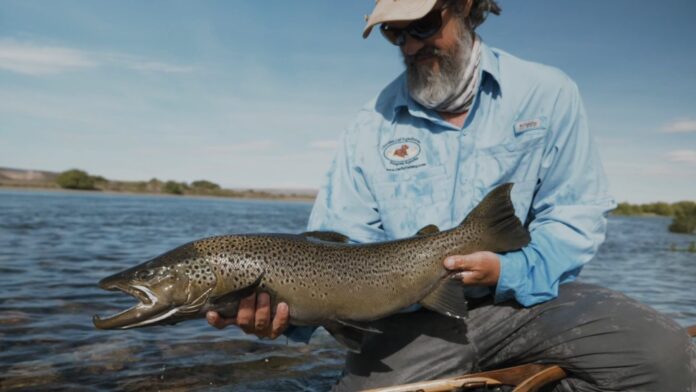
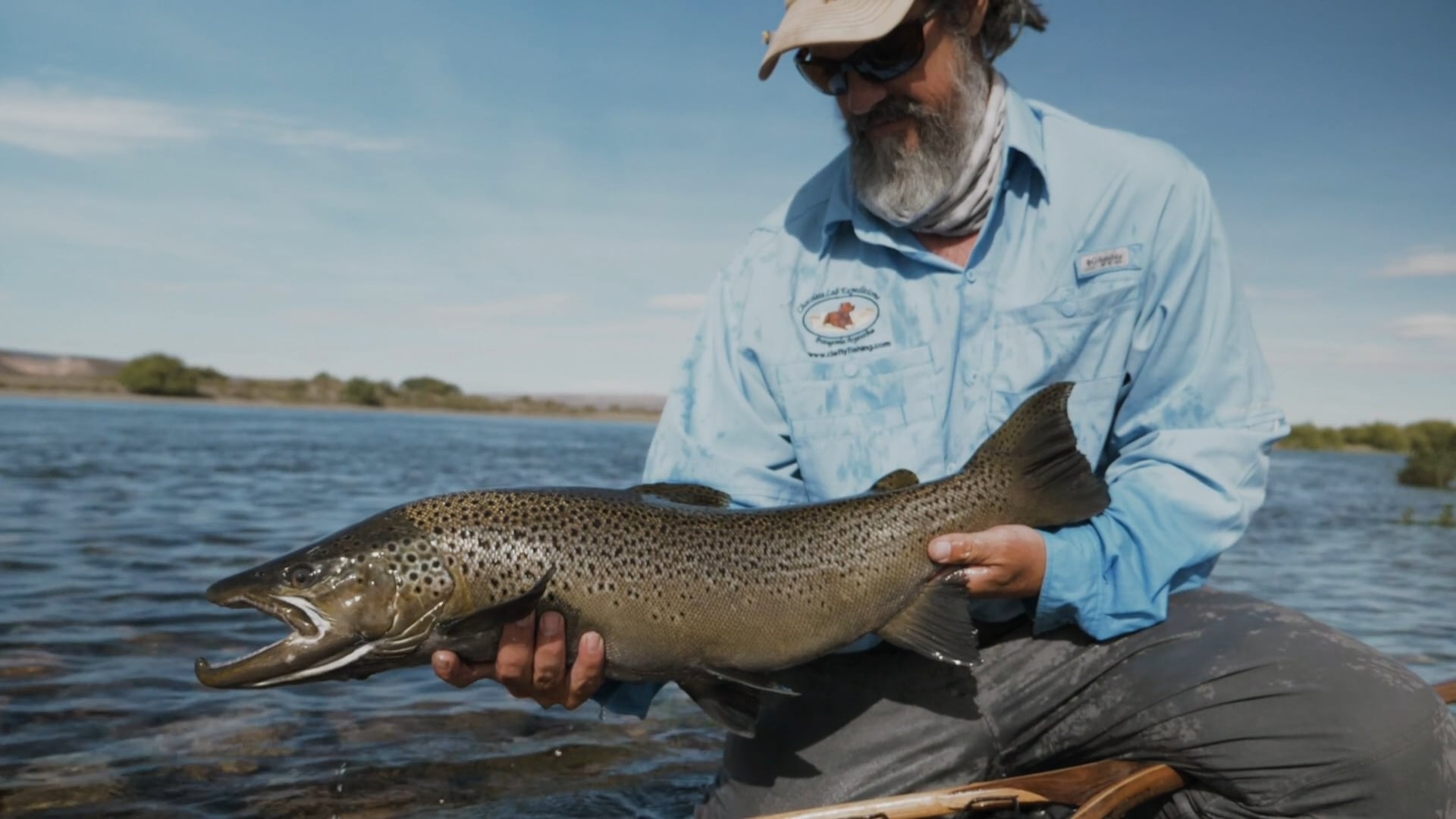
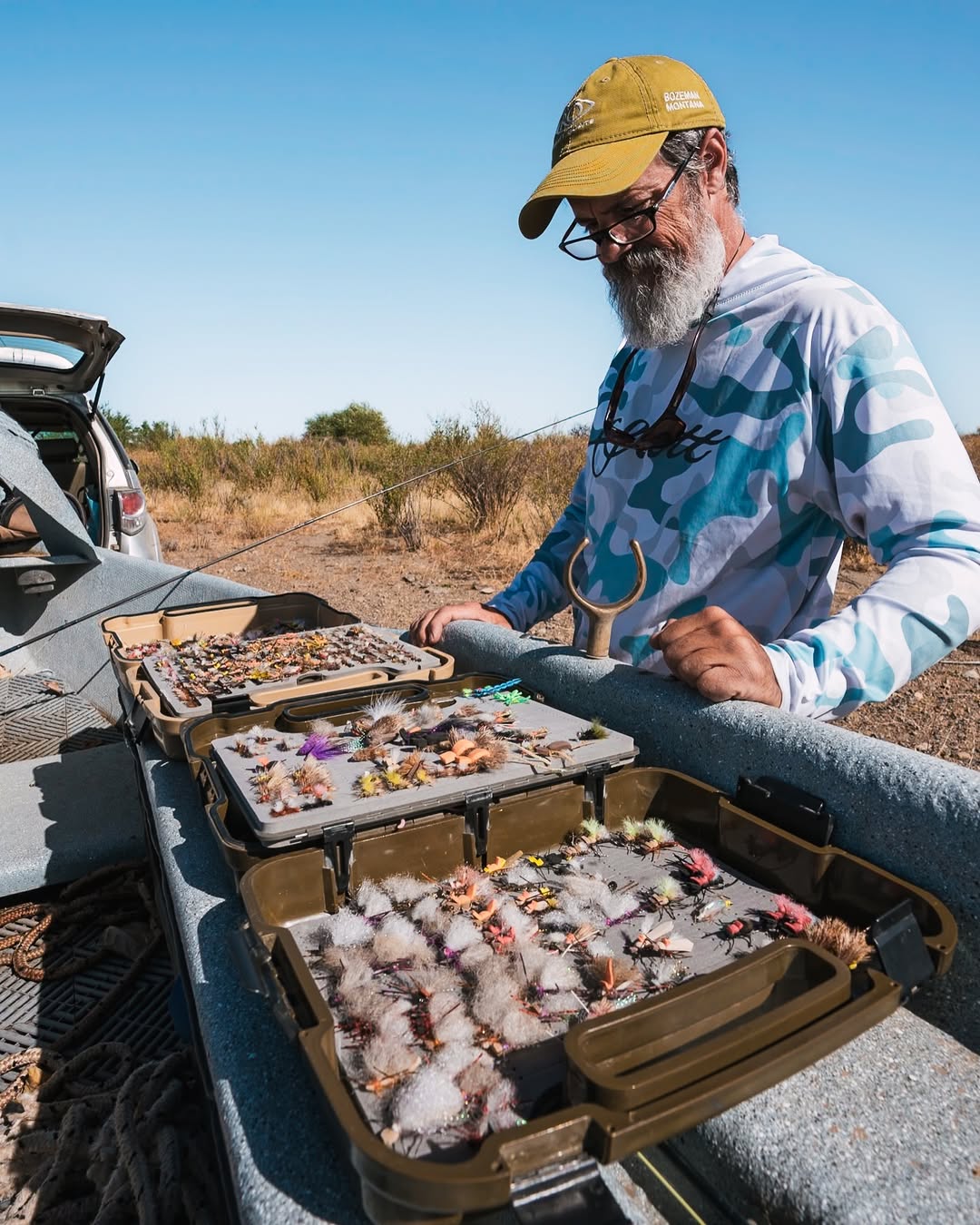
Conclusion with Jason “JB” Balogh on Western Wyoming Fly Fishing

Whether you’re chasing big cutthroat on the Snake or sneaking up on sipping trout in a quiet creek, JB makes it clear—this area has it all. You don’t need a boat, just a solid pair of wading boots, a good backpack, and a sense of adventure. Be sure to check out fishthefly.com if you’re planning a trip to Jackson Hole, Wyoming.


752 | Fly Fishing Patagonia Argentina with Ron Sorensen – Brown Trout, Limay River, Chocolate Lab Expeditions

Episode Show Notes

What if the river rose, the wind calmed, and a 30-inch brown slid into view—would you be ready? Deep in the heart of Argentina’s Patagonia, chances like this don’t come often. Today, we’re heading south to chase migratory browns in crystal-clear water and find out what it takes to hook up when it matters most.

Hit play to start listening! 👇🏻🎧

apple podcasts

Find the show:  Follow the Show | Overcast | Spotify

Subscribe on Apple Podcasts

Subscribe on Android

Subscribe via RSS

(The full episode transcript is at the bottom of this blogpost) 👇🏻

Sponsors and Podcast Updates

Ron Sorensen, owner of Chocolate Lab Expeditions, takes us inside the Limay River—where trout hit like steelhead, driftboats rule, and the hatches are still sacred. You’ll hear when to go, how to fish it, and why this might just be the most dynamic trout river in the Southern Hemisphere.


🎣 Featured Guest & Outfitter

  • Ron Sorenson – Owner and guide at Chocolate Lab Expeditions in Patagonia, Argentina


🏞️ Rivers & Regions

  • Limay River – Tailwater fishery in Northern Patagonia, Argentina

  • San Martín de los Andes – Gateway town near the Le Ma River

  • Missouri River – Referenced for similarities in fish behavior

  • White River, Arkansas – Compared for hydro-dam influenced trout runs


🧠 Influential Figures

  • Randall Kaufmann – Iconic fly tier and shop owner

  • Mike Lawson – Legendary angler and early mentor to Ron

  • Gary LaFontaine – Pioneer in fly fishing theory and writing

  • Jack Dennis – Known for Western fly fishing and tying videos


🧰 Gear & Shops


Related Videos

Related Episodes

643 | Fly Fishing Argentina with Gustavo Hiebaum of Set Fly Fishing – Golden Dorado, Patagonia, Travel

Full Podcast Transcript

Episode Transcript
Dave (2s): Today we’re heading to a magical land where you can swing for large migratory brown trout, hit some of those amazing hatches, and see some big game that are unique to the countryside. This place has been coined the Montana of 60 years ago, and today you’re going to get a glimpse into Northern Patagonia. So you know why this should be one of your bucket list trips. This is the Wet Fly Swing podcast where I show you the best places to travel to for fly fishing, how to find the best resources and tools to prepare for that big trip, And what you can do to give back to the fish species we all love. How’s it going? I’m Dave host of the We Fly Swing podcast. I’ve been fly fishing since I was a little kid, grew up around a little fly shop and created one of the largest fly fishing podcasts out there. Dave (42s): Ron Sorenson Chocolate Lab expeditions founder and fly fishing nerd takes us into his lodge on the Lee Ma River and some of the similarities between Montana and fly fishing outta Montana and guiding where he does his other half of the year. You’re gonna find out how to skate flies out of a drift boat for big brown trouts. We’re gonna find out how to hit some of the biggest hatches in this part of the world, and we’re also gonna find out what the twitch and sit is all about. Plus, we’re gonna hear how these 80 acre ranches started out as big sheep farms and now are meccas of fly fishing. We’re gonna get into it all today, including the Chewbacca Fly. Why you should be thinking about the Chewbacca fly fishing. Dave (1m 23s): This one, This year, this half streamer, half surface fly. All right, it’s all coming today. Here he is, Ron Sorenson from clea fly fishing.com. How you doing, Ron? Ron (1m 36s): I’m doing great, Dave. How are you today? Dave (1m 38s): Great, great. Yeah, I’m glad you put some time together today to put this together. We’re gonna talk about a couple of places that are always hot topics, Montana, Patagonia. We’ve definitely had some episodes on, it’s been a little while for Patagonia at least, but we’re gonna talk about all that. We’re gonna get into some brown trout fishing and whatever else we come up with today. But I first wanna start with a little on your background. I know we talked off air about Randall Kaufman, his name came up. You have some connection. I know Mike Lawson as well. But take us back real quick on fly fishing. Have you been doing this for a while or are you, you know, are you a little later to the game? Ron (2m 9s): No, I actually, I grew up in Portland, Oregon and fly fishing with my grandfather, actually. So around four or five years old, they would take me down to the Matius River, which you probably have a whole dear to your heart. And that’s how I spent most of my summers growing up. Fly Fish, the Crooked River, and not, not so much the Deschutes from my dad, but a lot on the Crooked River until I got older. So that’s Dave (2m 35s): Nice. That’s it. Ron (2m 36s): That was my youth. Dave (2m 37s): That was your youth? Ron (2m 38s): Yeah. Dave (2m 39s): What was the, I I always loved the Crooked River because it’s, you know, one of those local streams for Oregon. What years, do you remember, were you fishing the Crooked River for many, many years or what do you remember the year roughly? Ron (2m 49s): Oh, I, I probably fished it. So, let’s see, I was born in 71, so I probably fished it from 76 through 88, probably all are there. Dave (2m 58s): Okay. This is perfect. Do you remember that pretty well, the Crooked River back then? Ron (3m 2s): I do, yeah. I mean, we, we always went to the same little stretch that I remember. I mean, we are, I’d have to try to find it again on a map. Yeah, we, my dad bait fished and so we’d actually go and collect what he called perrywinkles. So we go collect case cadi and then that, that really was actually my first interdiction. And then later that sort of transfused into, into nim fishing later about weed, fish, ultralight tip it, you know, our line, and then run a split shot and then bounce those, the periwinkles down the river. And so then later that sort of, you know, like that translated over into, into nim fishing when nim fishing wasn’t, you know, initially when I was growing up with my grandfather, you know, he’d fish, you know, those bucktails and swing flies and they were all sort of, you know, approximations of salmon fly patterns or golden stone patterns, you know, so I remember when Pinch on Indicators first came out in the Cam Sherman fly shop probably in like 86, you know? Ron (4m 1s): Right. We were figuring out there they were, but nobody really knew how to use them. ’cause videos weren’t a thing yet. Dave (4m 7s): That’s great. And do you remember on the Craig River, were you guys getting some pretty large fish out there? What was the size look like back then in the eighties? Ron (4m 15s): I’d say the, the average fish were, you know, probably 12 to 16, 17 inches were probably the average. And then, you know, occasionally we’d, we’d find, you know, crayfish and then like my dad would fish with crayfish tails. And I think, you know, we, I probably over those long weekends that we go with my dad, you know, maybe we get two or three that were in that 20, you know, that were on 20 inch fish. Yeah. Dave (4m 40s): And then when did you get into like, the connection with Randall Kaufman and kind of start getting into more of the fly fishing end of it, the industry end? Ron (4m 48s): So, you know, with my grandfather, we always, you know, in the Matius we were purely fly fishing. And when my dad, it was always a mix. So we’d go to Crane Prairie Reservoir, and my dad just loved to fish. It didn’t matter in what, you know, in what sort of state it came in. He loved to fish. So we’d, you know, fly fish if that was what the rules were. And, and bait fish if that was, you know, acceptable. But I was 16 when we had actually had a, we had a, a school project where you were supposed to donate, you know, a couple weeks working in a local business. And so my mom wanted me to go down to the, you know, donate my time at the bank. And then when I figured out a bunch of my buddies were gonna go ski with, you know, up at ski patrol in Mount Hood, I, I figured that I should come up, come up with my own plan. Ron (5m 37s): So my mom wasn’t home one day when I came back from school, so I walked down to Randall’s door and I knocked on his door and, and offered to work for free at his fly shop for two weeks. Oh, wow. So that’s, that’s how I got my start. And Randall was of course, like, well, for sure, you know, free labor. That’s awesome. Yeah, so that’s how I, I got started was working at a shop on the sort of the school project and, and we hit it off. He was, he was fantastic, you know, to, you know, I’d never met anybody that was, you know, into it, like, to that level obviously. Right. And my grandfather liked to do it, but it was, it was as much as filling up the quota on, as, you know, at that point the mats was really a put and take fishery. Right. So, you know, my grandfather, the, the good, you know, the good accountant, you know, CPA, that he was, he’d go down and he’d, he’d fill in his, you know, his roster of, of hatchery fish for the day. Ron (6m 28s): And then that was it, you know. And so where I was, you know, it took me till I was about 13, I was like, well, what, you know, what if we just kept four and then we could, you know, just keep fishing for the rest of the day And we didn’t, we wouldn’t have to stop, you know, which, you know, grandpa that didn’t compute, but Randall of course understood all that, that you didn’t actually need to keep, keep any, and you could just fish all day. So that was really when, you know, things started to evolve and, you know, at a, a lightning, you know, fast pace, so to speak. So that, that was, that was really a fruitful relationship. And, And it was Randall that then, you know, wrote me my first recommendation and, you know, helped me get my first guide job in Montana, which was in 91. Dave (7m 12s): And when you were at Randall’s, I mean, that was a pretty, that was kinda one of the big places out. Did, was it kind of popping then? Was, was there a lot of, a lot of business, a lot of traffic? It seems like that was kind of the, the heyday of Randall, at least somewhere in there, right? A lot of travel. They were a big travel group and all that. Ron (7m 28s): Oh, absolutely. So at, at that timeframe in the mid, you know, I probably came in sometime in that, I guess it would be the mid eighties, so that it was, it probably was just at its peak. I mean, that was the, the catalog that, or Dan Bailey’s that you, you know, that had arrived at your house and you’d see, you know, all the, you know, all their fly tying products were in that catalog. I mean, that was sort of the, the end and the heyday of that timeframe before the internet came along. So it was, you know, it was probably Kaufman Stream born and Dame Bailey’s were probably the, at least the major players in, in my orbit at that time for sure. Yeah. So they had a whole library of all these VHS, you know, cassettes. Ron (8m 9s): And so at the end of the day, Randall, anyones that weren’t rented out, I could take home for the night and then bring ’em back in the morning. And so then that was, you know, sort of my first exposure to, you know, Lonnie Waller and like all these, all the, you know, Jack Dennis and his fly tying, you know, series. And, and that was really what expanded my, you know, exposure to the whole fly fishing world. Dave (8m 32s): Right. Yeah. That’s great. Yeah. And we just had, just had Jack Dennis on the show again here recently. It was good to catch up with him. He is obviously, yeah. Out in Jackson, Jackson Hole, kind of a, a different area, but still obviously out west. No, this is great. Well, let’s fast forward a little bit. So you, you get into the guiding eventually. Maybe let’s just jump right into the, is it the Le May River Ranch that you have out in Patagonia? Ron (8m 55s): May, right? Correct. LeMay, yeah. Dave (8m 57s): Le May, Le May River. So I, I’m not familiar, obviously I’m not familiar with the, the ranch there. Maybe talk about that. Fast forward us through until how you come to be running, you know, down in Patagonia in the, in the ranch there. Ron (9m 8s): Well, so after my first, you know, so it’s a continuation in some regards, right. So, I mean, I, I make it out to Montana. Randall, you know, said, you know, if you cut your teeth out there one season, then I’ll call up people that I know. And he actually know, he knew Jack Dennis and Mike Lawson very well, because that’s how he spent his summers when he was young. He, he tie all winter long, make money, and then he’d come out, you know, out to Yellowstone Park in order to fish his brains out all summer. And so he knew all the, like, Jack Dennis, Gary LaFontaine, Mike Lawson, they were doing that traveling like road show at that point. That’s right. And so that’s how Randall type, Dave (9m 46s): That was the Randall, right. Randall was with, was it Qua Feather Merchants back in the day where they were doing the Traveling Road show selling their flies? Ron (9m 53s): Yeah. That, and then, but then Jack Dennis, Gary LaFontaine and Mike Lawson, they, that, that trio, they were traveling together as well, like on a road circuit. And so, you know, all those things sort of tied together. So I ended up being able to work for Mike Lawson, thanks to Randall Kaufman. He put together, he basically called Mike Lawson up and, you know, I caught him in a, you know, in, in a building year maybe or something. And I was able to slip into Mike Lawson’s team. ’cause I, considering my guide history, I certainly had no business being there. But, and then my first training day with Mike Lawson, I actually rode Lawson and Gary LaFontaine down the river. Wow. So that was like a, an amazing first day out on the Henry’s fork for me. Ron (10m 36s): But to fast forward, because of my involvement at Henry’s Fork Anglers and the crossroads at that place is in, in the, in the fly fishing world, I ended up having a job offer to go down and guide in Patagonia. And so went down to Patagonia and guided there in the winters. I honestly, I didn’t envision, you know, staying in college or a graduate program, but then being able to go to Patagonia definitely trumped any other future life plans. I thought I had made my, for myself and met, you know, met all kinds of great people. And then one of the people that I met, my first, my very first year in, in Patagonia was a guy named Javier Ky, who was a, an aquatic biologist. Ron (11m 16s): And he was the one that actually introduced me to the, the le May the very first time that I went out and got to know it. ’cause he was working for the state and they were doing quarterly impact studies on the, on the river because the dams are privately held. And then part of the, part of the contract that the dam has with the province was to, was to do this quarterly impact study inversely, I think it was just the way that the province was able to fund most of the, you know, carry most of the, they passed off most of the, the costs, you know, for their aquatic bi biologist team. They just pass it off to the dam, you know, by slipping into this contract or what have you. So, but anyways, the, I was, I was able to go and because I was sort of, you know, I loved all the, you know, the insects and all the science side of, of fly fishing, you know, Javier and I instantly bonded because he was one of the few people that actually, you know, knew, you know, the science behind all these rivers. Ron (12m 13s): And so, you know, I was constantly bombarding him with all these questions like, you know, well, where are the, well, where are the big stone flies? Or are there any rivers with stone flies? I haven’t seen any salmon flies or golden stones. And so I could bounce all these questions off heavier. And you know, of course he, you know, he was sort of a fly fishing geek like, like I was. And so we, you know, got off on all this, you know, sharing all this information. And, and so he drug me out on sort of one of these like, fact finding missions to the LeMay. That was the first time I was introduced to the river. Dave (12m 44s): Yeah, that’s it. And, and then eventually you, and you have a lodge now that you, you own out there. Ron (12m 50s): Yeah, correct. So I mean, we, the first trip that I spent out there was just, you know, for me it was sort of earth shattering the nature of the river, you know? So I mean, some of the data that we were getting in was, you know, collecting these fish and we were, you know, weighing, measuring and then taking scale samples off these fish. And, you know, I learned actually so much on that first trip. I mean, I’d never, I’d never done that kind of, you know, sort of work before. And, you know, the first fish he looked at, he was like, oh yeah, it’s a 17 inch fish. It’s about, you know, it’s about three years old, which for me was, you know, hard to believe. And he was like, well, yeah, you can just take a scale sample and put it under a microscope and then you can tell exactly how many winters they’ve gone through. Ron (13m 32s): Which I had never seen the scale under a microscope before. So that was, you know, I thought that was just incredibly fascinating, you know, and, And it turned out to be absolutely true. You know, every dark line was a winter. Dave (13m 44s): Are those fish down there? They’re brown trout, right? We’re talking brown trouts, but are the brown trout similar? Is the fishing similar to Montana? What, what’s that like when you compare the two? I’m sure you’ve probably done that before. You could do that pretty easily. Ron (13m 56s): Yeah, so I mean, they’re, they’re exactly, you know, similar. I mean, they’re trout are not native to anywhere south of the equator. So they were all introduced, but we’re approximately equal distance from the equator in Patagonia compared to Montana, Idaho, Colorado, or what have you. So it’s in that like ideal trout band, you know, as far as distance from the equator. And, you know, in a lot of regards, you know, so we have, you know, Cadi and Mayflies and all the, you know, essential food groups were naturally occurring in Patagonia before the trout were introduced. So I mean, that they were just sort of missing that one, you know, that one key element in the rivers was the trout themselves. So they were introduced from, from northern, you know, the, from northern hemisphere, the, the eggs were brought down and introduced into Patagonia. Ron (14m 45s): So Dave (14m 45s): When was that? Do you know roughly when they were first introduced there? Ron (14m 48s): Yeah, it was between 1905 and 1911, at least on the Argentine side in Patagonia. That’s when there was an active sort of breeding and introduction program. And after that it was essentially, I wouldn’t say that abandoned, but it was sort of completed in that, you know, in a very short little window. But since originally there were no dams, the fish were introduced into a couple key rivers, and then from there they were able just to expand within the given niche and, and fill, you know, naturally sort of expand within these river systems and fill all the available niches, you know, from there until, you know, Joe Brooks and all those guys showed up in the late fifties, early sixties. Ron (15m 30s): I mean, they essentially had, you know, what, 30, 40 years to expand within these virgin systems and come into their own, so to speak. Dave (15m 39s): Right, right. And is that how it happened? I’ve heard, I’ve heard some stories around in the US where people like that, Mike laws, well not necessarily Mike Lawson, but some other people around, you know, around famous people back in those days where they planted, you know, trout like in the White River, and now these, you have these maas of trout in the white. Is that kind of how it worked down there, where you had these Americans or other people going down and just like building this program? Ron (16m 1s): Well, they definitely built a program, but it was an Argentine, and you’d have to reference back to Bill Leach’s book. ’cause he, he researched it pretty heavily. But it was, it was a private, a private party got the authorization from the Argentine government. But I understand that it was an Argentine himself that, that spearheaded the project, got the, okay. Went and collected the, you know, or asked, and they, and they were able to secure eggs out of the McLeod River in California. And then they got brook trout eggs from the Northeast and then brown trout eggs from Europe. And then, you know, shipped all these eggs down to Argentina and then had ’em on in refrigerated cattle cars, essentially, you know, that took ’em out to Patagonia. Ron (16m 47s): And then they created brood stock in, you know, like nine, you know, in these ponds and lakes in 1905. And then they were actively introducing, you know, the fish for about like 10 years essentially, and that, that, or eight to 10 years. And then that was about it. And so then all these sort of famous Americans or what have you, like Billy p and Joe Brooks, they came down in the late fifties, early sixties, but they were invited by Argentines, like Bebe and Reina and these famous, you know, the first wave of, of Argentine fly fishers that invited them down to help expose the, the Argentine fly fishery. Basically, Dave (17m 27s): When it comes to high quality flies that truly elevate your fly fishing game, drift hook.com is a trusted source you need. I’ve been using Drift hook’s expertly selected flies for a while now, and they never disappoint. Plus they stand behind their products with a money back guarantee. Are you ready to upgrade your fly box? Head over to drift hook.com today and use the code swing at checkout to get 15% off your first order. That’s Drift hook, D-R-I-F-T-H-O-O k.com. Don’t miss out fish. The Fly Guide service is dedicated to sharing the incredible fly fishing opportunities around Jackson Hole, whether floating the Scenic Snake River in search of native cutthroat trout, or hiking into the mountains to explore pristine tributaries every day on the water is an adventure. Dave (18m 11s): You can join them for an unforgettable fly fishing experience in the heart of the tetons@fishtofly.com. So, okay, so that’s, that’s kind of how it happened And it makes sense now. Yeah. It’s at the same from the equator. Similar. What, what else are, you know, when you, again, let’s say on that comparison, Montana versus, you know, Argentina, for those that haven’t been down there, what, what are, are there more similarities or more differences when you talk about the, you know, the fishing and kind of the area and stuff like that? Ron (18m 39s): No, I, I think that they’re very similar. I mean, I think it’s, it’s easy if you were, you know, if you parachuted outta the plane and had no idea what zip code you were in or, or country code, I mean, you’d be hard pressed to define that, you know, you weren’t in parts of Wyoming or Montana or, you know, or, or Colorado for example. I mean, it’s really hard to, to tell you instantly feel, you know, at home. And then over time you, you know, you started to start noticing differences in the floor, the fauna, what have you. But it’s, it’s very much what fishing in the American West would’ve been like 50, 60 years ago Dave (19m 17s): Because of less people, even though Montana is not a very heavily, well, it’s busier now, but is that the biggest thing, just the less people there? Ron (19m 24s): Exactly. Yeah. So I mean the, the trout, except for their naivety, you know, they behave exactly like they would in Idaho, Montana, or Wyoming. You know, the difference is just fishing pressure, which I think, you know, in talking with people in Montana, he is like, well, you know, why would I go all the way down there to, to trout fish? And it is, you know, because the essential part or the essential part, the experience of fly fishing is, you know, sort of stumbling around on a, on a mountain river with nobody else around. And, and I mean, I sort of have to go back to when I was 12, 13 years old to remember what that was like. Right. Ron (20m 4s): You know, anymore, you know, sadly enough, Montana’s not, you know, not the same, you know, if you try to fish in Montana around the Madison or Missouri in June and July, it’s, it’s not the same experience that it used to be. You know, the fisheries are still, you know, in some regards, some of the rivers have been able to hold up, like the Missouri has been able to hold up. It’s still a completely viable ecosystem, and others have not. You know, and that’s, that’s the sort of the, you know, the biological reality of these rivers. I mean, you know, like the big holes gotten a lot of, you know, press and, you know. Dave (20m 39s): Yeah. That, that’s what I was kind of thinking because we just had the big hole river foundation on, we talked about some of like what they’re doing to measure the, the changes and, and kind of stay on top of that or figure it out. So have you seen, I mean, again, they don’t quite know what’s going on the, you know, water quality, things like that, but have you seen the same, similar, not similar, but you know, anything, any changes down there in Patagonia? Ron (21m 1s): In Patagonia? No. I mean, you do see how fish adapt over time, the pressure that’s, that’s undeniable. Dave (21m 8s): Yeah. I’m just thinking more like what I’m going to is the fact that it seems like in the US and the episodes we’ve had all over the country, you know, climate change and water increasing water temperature seems to be a common thing. You’re not seeing that at all down there. Oh, Ron (21m 20s): For sure. Yeah. I mean, for as far as, you know, water’s getting warmer faster over the course of, of a season and when do our fall bugs start, you know, I mean, usually cross. Dave (21m 32s): Right. You have seen some changes. Yep. Ron (21m 33s): Yeah, that’s undeniable. I mean, you know, but I think, I think what’s interesting is, is you’re seeing, you know, those effects without the, you know, without the effects of, you know, maybe development, right? On those one thing, on those rivers thing. Yeah. So, you know, you, you can kind of separate, you know, what’s essentially still pristine fisheries, right? With the effect of climate change like that you can see because you can, you can see certain elements in the environment. So for example, like, I mean, it, it sounds cra a little bit crazy, but you can actually time hatches to when wild flowers bloom because you, you have the same effects of, you know, of heat and sunlight or what drive those flowers to bloom. Ron (22m 19s): And it, those are the same effects that like solar units that then would push your first like little stones to hatch in the spring. And then you need certain amount of frosts and water temperatures to drop in the fall to kick off your, your mahogany, you know, your mahogany may flies to hatch in the fall. I mean, so you see those cause and effects. And in Argentina and Patagonia you’re seeing it without like dewatering and, and you know, potential for all that ag. You know, I think, you know, I don’t know if you know fertilizers, I mean I, we’ve had clients from Ireland that talk about, you know, the farms are using so many fertilizers, how that affects, you know, fisheries. Ron (23m 2s): So what you’re, you’re seeing is the effect of climate change without a lot of the other human variables, you know, affecting the river as well. So it’s a little bit pure in that sense. So climate change is certainly happening and you see it in, in Patagonia for sure. Dave (23m 18s): Yeah. You see it there. It’s just, yeah, that makes sense. Just less of the other variables down there because it’s more wild. It’s Ron (23m 24s): Exactly. I mean, and so that’s, I think that’s part of, you know, that being a scientist, I think that’s part of what, you know, is so hard on rivers like the Deschutes or the big hole to untangle all those variables, right? So Dave (23m 37s): Yeah. ’cause it’s not just one thing, right? It, it’s, it’s a bunch of things and that’s what makes it challenging. But yeah, it was, it was interesting talking to the big hole foundation because they were just, it feels like they’re trying to get a handle of it, you know, and then they’re doing some good research, so that’s good. But yeah. Let’s talk about the, basically the, the ranch, the lodge you have there now, where is it exactly? Where would people be flying into to get down there? Ron (23m 59s): Well, you still fly into Chapo airport, which is just outside of San Martin. The lodge and the, and the river are about equid distance actually from either San Martin Che or the provincial capital of nail Ken. But because our operations base, all our guides live in San Martin, you know, that’s where my wife’s from. That’s where our house is, you know, still logistically it’s easier to tie in, you know, picking people up and dropping ’em off. ’cause we’re, we’re still fishing, you know, sort of multiple rivers in a given sort of trip. So we’re not just fishing lema, although that’s one element of, of the trip. And more and more people are sort of, you know, so electing to, you know, fish more days on the Li Ma or fish exclusively on the Li Ma. Ron (24m 45s): So the, the liai actually, if you look at the, the watershed comes out from Veloce out of a lake called N Wapi. And it heads, you know, east and then it joins up with another major tributary called the rum Quora. And then that heads into a whole series of these reservoirs. And then we’re fishing. It’s a, it’s a tailwater out from beneath one of these dams. But unlike the American West, which are predominantly all tailwaters, this is really the only tailwater and in like the whole area that we’re, that we fish. So. Dave (25m 18s): Right. And are these brown, mostly brown trout down here as far as the species? And are these not sea run browns? Ron (25m 25s): Correct. These are not sea run browns, but actually, you know, if you look at, you know, sort of cross section of the trout population in the river, you, it’s about 60, 70% rainbows and then 30%, 40, 30% browns in the river. And so what you have is you have sort of these resident, you know, fish that live in the river year round, and then you have these migratory browns that come up out of the reservoir, out out of the Choon reservoir and they move up into the river, you know, sort of periodically or seasonally. But it’s, you know, initially when I first went with Javier in, in the, in about 2001 is when we went out and were doing this sort of fact finding, you know, impact studies, you know, the li may as a fishery wasn’t unknown or what, what they call the LeMay me or the middle LeMay. Ron (26m 18s): It wasn’t unknown as a fishery, but all the argentines, you know, the sort of hardcore, you know, Argentine fly fishing society, I mean they all went in May because it was known as a, as a fall run of these monster brown trout. But what came to pass was in truth, they move up into the river much earlier in the than in the season than that. And that, you know, that’s sort of what we discovered. And we also sort of discovered a, a completely viable resident fishery in and of itself. So you have a very layered fishery. So it’s, imagine sort of like the Missouri River, if you had a run of steelhead except, you know, in this case you have a run of these migratory brown trout that they’re not coming from the ocean. Ron (27m 4s): They’re coming out of, you know, a reservoir that’s, you know, the size of Rhode Island essentially. Dave (27m 9s): Right. Yeah. And I think the Missouri kind of has some of that too. Doesn’t some of those fish that are going up into the lake and kinda rearing and then eating, growing and then coming back down. Well, there’s a lot of stuff going on there right, in the Missouri, Ron (27m 21s): Correct. Yeah. But, and there, as opposed to the part that I fish, which is, you know, near Wolf Creek Craig down to Cascade, that’s more up in the land of giants. And so that’s, that’s what you, you have there, you have a very, very short piece of river and then you have these migratory or these, this influx of these lake fish that are moving in and out of the river system, you know, over the course of the season. Right. But it’s not necessarily just a, a spawning run. So that’s, that’s what the liai was assumed to be initially. And then we, we found that in truth, that was much more dynamic than that. Dave (27m 55s): Gotcha. What, what is, if somebody was wanting to plan a trip down there to the lei, what is the, on timing, what, when are the, the good best times to, when are you seeing most of your people coming down? Ron (28m 6s): Well, so, I mean, a lot of our travel down south is more dictated or guided by when people wanna be out of the US right? So January and February is super popular ’cause that’s just when they don’t want to be in Chicago or, you know, whereas, you know, the, the fishing season are, are hatches actually run from, you know, around the end of November through, you know, mid-January and then you come into sort of terrestrial time through, you know, say around the first, you know, cold snap in mid-March. So right about now and then the fall starts, our fall bugs start around, you know, maybe the end of March and then run all the way into May. Ron (28m 49s): But the, these migratory fish, which sort of overlap, I mean, that creates a whole nother variable in the fishery. So you have, you know, your, your resident fish are running anywhere from, you know, 14 to 23 inches. And then you have these resident, these migratory fish that are coming up out of the reservoir. So, you know, Javier, my, you know, my aquatic biologist buddy who actually now guides for us, you know, these, these reservoir fish were getting to be 23 inches in, in three to four years. And they come up into the river, you know, anytime the first one starts trickling in, in December, usually through, there’s, throughout the system by mid-January. Ron (29m 31s): And then they’re in the system from, you know, mid-January all the way through May. And you have these sort of waves of fish that come in every time. ’cause it’s just like the White River in Arkansas. So you mentioned that the white earlier, it’s, the flows on the Le Ma are not based on ag, they’re based on electric, you know, hydro power. So you’ll have these massive fluctuations all the time. But from the inception of the river, from the minute they built the dam, that’s how flows were, were managed. And so the whole fishery generated, you know, or originated with that as a quantifier or what have you. So just like, you know, you talk to like the old boy, I actually went to college in, in St. Ron (30m 15s): Louis. So I, I fished the white, not very much, but I fished the white some, you know, and the old boys, they go out when it bumps. I mean they, you know, they go bounce, you know, crowd crud adds, you know, off the bottom in the light, you know, when the river bumps, that’s the time to get those big grounds. And so completely contrary to, you know, anything that you would, you know, so like on the Missouri, if they bumped the water, you know, 150 CCFs, it’ll totally screw up the fishing for the rest of the day. Whereas on the liai, you know, it doesn’t follow any of the, you know, normal patterns of what we’re used to, or at least what I’m used to in Montana as far as flows. And, you know, fishing goes, maybe it’s a lot more akin to like Lee’s Ferry or the White River. Ron (30m 60s): So just because the river comes up three feet doesn’t necessarily mean a, you know, it’s a bad thing. It’s just chain is Dave (31m 6s): Just still fishing it. How do you fish when you’re fishing, when it bumps up? How are you guys fishing that, like, talk about that a little bit. Are you guys out there in boats or how, how are you doing it? I find the big fish. Ron (31m 16s): Yeah. So we’re in, we’re in drift boats. I had a, a fortunate opportunity in, in the early two thousands road drift boats at that point, wa were being produced in St. Anthony, Idaho. And in the early two thousands they were making, making sort of their, their, their presence felt in the fly fishing world. And they were getting, you know, people like Lynn Sessions and, and the guides on the Henry’s Fork. They were getting those guides into their boats. And so right around those early two thousands is when Roe came out with their first drift boat, which was a, a skiff, a low sided boat. And then when I saw that, I was like, boy, that is the boat from Patagonia, you know, where we don’t have crazy whitewater, you know, our sort of the natural element we’re fighting against is the wind. Ron (32m 3s): And so we were actually able to make a deal with road drift boats and got one of their molds down into Argentina and started making row drift boats in the early two thousands. So we’re rowing row drift boats down in Argentina ’cause row basically facilitated and allowed us to build their boats in Argentina. So Dave (32m 23s): That’s cool. Yeah. Do you see, is it mostly down there, mostly row drift boats or do you see other drift boats too? Ron (32m 29s): There’s some other drift boats, but there’ve been boats that, you know, some somebody imported and then they splashed it and you know, sort of stole the model and, but ro is the only sort of legitimate authorized model of drift boat being, being used in, in Patagonia. Dave (32m 47s): Yeah. That’s the only one. Yeah, this is great. All right. I love a little drift boat doc. So, so you’re out there in the drift boats and, and you said again, they’re out there, these big fish are out throughout the whole season, kind of on and off wind. If you had to pick one time, you know, would you say is, it doesn’t matter whether it’s November or January or in March as far as when you wanna find those big fish Ron (33m 6s): For the biggest fish? I mean, we’ve had like peak weeks that will run anytime from mid-January through through May. I mean it’s, you know, as far as the big fish are going, you have to think about it much more like, you know, steelheading, I mean, you’re not gonna go get 2030 of these, you know, 23 to over 30 inch fish. You, you can have, you know, big fish number days on the Le Mi, but they’re not gonna be these migratory fish. So I mean, I think how dynamic the fishing experience is is part of what makes it such an interesting river. So you can go from like five x and fishing rusty spinners and, you know, finding cods of rising fish to, you know, fishing swung flies on zero x in within the given hour in the given day. Ron (33m 56s): So I think that’s what makes it such an intriguing fly fishing experience is that it’s not, you know, I love to steal that fish and I will go and swing a fly all day, you know, and I have, so for, you know, in the Clearwater and the salmon and up in BC and in Oregon, the Deschutes. But you know, it’s really fun to sort of hybrid that experience with a sort of true classic trout, you know, experience. So we’ve had peak days, you know, and oftentimes it’s right after one, you know, when the river bumps, it’ll turn on those fish in the, you know, within that first 40 minutes. And then those big bumps will also I think bring fish up outta the reservoir into the river. Ron (34m 39s): So not only do you turn on, you know, just like, you know, you need to rain on those coastal rivers in Oregon to, you know, turn those steelhead on or move them from one pool to the next and sort of re-energize them. You also get an influx of fresh fish into the river like you would on a coastal stream. So it’s, you know, these are all sort of working theories that, you know, apply. But again, you’re, you’re sort of looking at, you know, at these migratory fish and then also how it applies to how like trout behave. But you know, again, steelhead are migratory trout, so Dave (35m 15s): Yeah, they’re trout and, and is that how you fish the, those, those migratory you’re you swinging just like you would for steelhead? Exactly, Ron (35m 21s): Yeah. And so, I mean, think summer steelhead, right? Except these are brown trout, but they behave very, Dave (35m 29s): Or even Atlantic salmon, right? ’cause that’s probably the closer species to the or I guess, right? Ron (35m 33s): Absolutely. So I mean, you can, again, these fisher, when we first showed up, I mean we essentially during the summer months, my partner Diego Geyser, who I guided with, and then ultimately Javier started guiding with us in like 2006, 2007. I mean, we were applying essentially trout techniques, you know, while you were drifting down the river. You know, the classic way to fish the le May was sort of step swing, step swing. But now we’re applying, you know, drift boat, you know, now we’re in a drift boat, which nobody was using on the river at that time. We were using suddenly now, okay, well how do you, how do you copy, you know, step swing out of a drift boat and then yet we have to get between from one run to the next. Ron (36m 20s): So we might as well be drifting a fly from one drift to, you know, from one run to the next. So then what we’ll fish for these rainbows in between these big brown trout spots and then all your sort of, your techniques sort of blend together, right? So while you’re in between, you know, sort of these holding spots for these big migratory fish, you know, you’re fishing rainbows and then you end up as a bycatch randomly and accidentally catching these big browns. So then you figure out that they will react to trout techniques, standard trout techniques. So we were raising migratory browns on a twitch and sit, you know, like you would twitch a hopper or twitch a big terrestrial. Ron (37m 3s): We were catching, suddenly we were getting these 24, 27 inch browns to rise up to these drives. And so then we started mixing all these techniques and then given certain conditions, it’ll all work for both fish. So it’s really right. Interesting. Dave (37m 20s): So you guys aren’t necessarily doing the, the get in like the steelhead and getting a run and spend an hour stepping, swinging through a run? You’re not really doing that? Ron (37m 28s): Not as much because what we found was, was during the bright sun of the day, and a lot of this we were, we were staying in this local town and then, you know, you’d, you pay these local ranchers to come in to, you know, access the river. You’d put in, you’d pay this guy, you know, 15 bucks to drive in the car and, and you put in on one property and maybe take out on the same property or put in on the son’s property and take out on the dad’s property. But we couldn’t get in the river, it dawned. And so some of these, you know, we could catch those big browns in the heat of the day in the bright, you know, sun at one o’clock, two o’clock in the afternoon. But we were picking them up, you know, in these big drops and these deep runs that were like 20 to 30 feet deep. Ron (38m 13s): But you could do it during the day, but you couldn’t reach those spots. The majority of those spots you couldn’t reach on foot. And so most of our fishing was sort of, you know, and our tactics were, you know, out of the boat in deeper water. And what we have found in running the lodge and then being able to go to the river in steelhead type, you know, timeframes is that actually those big browns are coming out. And again, these are working theories that, you know, we certainly don’t have the, the final say or word on the river, but you know, the, it seems to be that they’re, those browns are coming out and foraging at night, and then if you’re there before first light, you know, you can actually jump ’em in water that’s less than a meter deep. Ron (38m 59s): Now you can actually walk and swing those, those runs with classic steelhead techniques, you know, at dawn and, and, and dusk timeframes. So. Dave (39m 10s): Gotcha. So that’s it. So the sun, yeah, so they are, so the sun, that’s cool. So you could swing, if you wanted to get out earlier late, you have probably a better chance ’cause they’re in little the shallower water. Ron (39m 20s): Exactly. Yeah. And then, so now with, you know, now with either a, you know, a single handed rod or a switch rod, now those fish are, you know, you can reach them in those low light situations. That’s what we’ve come to find. So I see. Dave (39m 36s): I mean, right. So there you go. Yeah, Ron (39m 37s): Most clients are still, you know, wanna have breakfast at eight and go out in the boat and not get up early and using a boat. They don’t have to, Dave (39m 45s): Right? They don’t have to. But you could, if you were a hardcore swinger, like spay, you wanted to like catch, you know, your thing was spay all around the world and you wanted to swing one up traditional style, you could do it there. Ron (39m 56s): Absolutely. Well, and what we ended up doing was we started using, and I, you know, because I’m a steel header, then I was applying these tactics and so we started using switch rods outta the boat. And so you can’t, you know, it’s, I’ve only been able to do it, or I’ve only seen it done once out of a drift boat where I had two guys using switch rods. But you can comfortably use a switch rod out of the front of the boat. And it’s really fun because if you think about it, and I’m, you know, I mean, while I’ve fished a spay rod since, I don’t know, maybe the late nineties, I’m, you know, I’m far from an expert, but you know, as you know, as you, as you wander down a run, you know, you’ll get little deeper pockets and shorter pockets, you know, and suddenly you’ll be within two steps, you’ll be a foot shallower deeper and then that changes your anchor, right? Ron (40m 46s): So, so outta the boat, your anchor and your distance from the surface of the water is constant. So then your anchor and your stroke is constant. So it’s actually, it’s quite easy out of the drift boat or outta these skiffs to, you know, do a snake roll or a, or a snap tee because your distance from the surface of the water is consistent throughout the whole day, right? So we weren’t teaching people to do that, but we were teaching lay people, you know, take a strip or two, do a big sloppy roll cast and then overhand cast it. And so that would allow even, you know, intermediate beginner anglers to consistently throw, maybe it’s just the head is, you know, maybe 40, 45, 50 feet line. Ron (41m 30s): But using the boat that was enough to cover the sweet spots and all these runs. And so initially we were using like, you know, six weight, you know, like 12, 11 foot switch rods. We were using that of the front of the boat just to help people cover water using, you know, using an overhand cast. And so that took a lot of the work out of covering water, you know, and what we found in the guide day was trying to balance out, you know, exposing essentially traditional trout fishermen to steelheading or steelhead techniques to cover these brown trout. So it was this whole hybridization of all these sort of techniques, right? Ron (42m 10s): That’s cool. Which was really, really fun inventing all this stuff, right? So, Dave (42m 13s): Right. And at the same time, you’re still getting those big, the hatches, right. In those times, which is kind of the what, March you said? February, March, April, Ron (42m 21s): Yeah. So in, in January we’re still getting cadu. It wasn’t until we were there from, you know, from November through December we started seeing all the mayfly hatches. And this all goes back to the first day that I was on the river with Javier. I was like, well, how are these fish getting to be 17 inches in three years? And he, and he handed me the keys to the kingdom the very first day. He was like, well, it’s all on catis and mayfly. Like, well, so there’s no mice, shrimp, or any of the, you know, power foods that we associate with tail waters, you know, like sow bugs or, or m mighty shrimp or lys and no, it’s all primarily, you know, cat and mayflies. Ron (43m 2s): Well, you know, by default all those bugs have to hatch. So, you know, we get March Browns in Cahills early in the season, November, December, and then the cat is start mid-December and it’ll run through January. And I mean, I remember, you know, what’s strange is, is those McLeod rainbows are so crummy, they’re a lot more like bonefish in color than say your Deschutes river red sides. And all of our trout in the American West have been hybridized. Like, so the matus is perfect, you know, so there’s probably, you know, if you look at, at those, at the genetics of the trout that are in the matatus today, you’ll see white tips on their, on their, you know, their fins and little, some of them will have little orange notches on their dorsal. Ron (43m 52s): Well, those are all, you know, harken back to those McLeod fish and then the standard, you know, the native Deschutes fish or those red sides. And that’s where you get, you know, those darker colors and those, you know, red cheeks. But the, you know, the native original, you know, strain that came outta the McLeod, those, they have very little pink, you know, they’re very crummy, you know, very little color to those fish. And so the, the rainbows that are in the, in the Levi are essentially, you know, a hundred percent pure genetics out of the, the cloud. And they have hardly any, you know, pink to them. So Right. Dave (44m 32s): The coloration. That’s interesting. Ron (44m 33s): Yeah. So the river is like New Zealand clear. I mean, at 15 feet you can see every single rock and pebble on the bottom of the river. And that’s why, you know, some of these skating floating line techniques works in these, you know, pools that are 20, 30 feet deep is ’cause the water’s so crystal clear. But when you’re floating down the river, you see hardly the only fish that you actually see are these monster brown trout. All the rainbows are, you know, all you can see is they’re shadows. You don’t actually see the fish initially. You think that there’s like no fish in the river ’cause you can’t see ’em. And how can I not see ’em when I can see every pebble? But then you get one of these hatches and suddenly there’s pods of tam 1520 fish, you know, feeding behind, you know, a willow and go, oh my god. Ron (45m 21s): Well there’s thousands of fish in here, you know? And true to any tail water, it has those kinds of trout concentrations Dave (45m 30s): On DeMar Lodge offers a world-class experience with one of the finest rainbow trout and brown trout fisheries in the world. They’re family owned and operated. Missouri River Lodge offers comfortable accommodations, delicious home cooked meals and personalized service that make you feel like family days on the water are capped off by appetizers, beverages, dinner and stories on the back deck and around the campfire. Book your stay for an unforgettable fly fishing adventure where memories are made and the fish stories are real. You can head over right now to wet fly swing.com/on DeMar, that’s O-N-D-E-M-A-R-K on DeMar right now to book your magical Missouri River trip. Dave (46m 12s): What was it before? If you go back before the rainbows were planted, what was the native species that were in there? Ron (46m 18s): You know, the largest fish were called are called perca, which are, they look like, you know, like a, a small mouth bass. Dave (46m 26s): Is that perca? Is that with a B or how do you spell that? Ron (46m 28s): With a p Perca. Dave (46m 30s): Oh, perca. Ron (46m 31s): Yeah. And the ENT final translate it to like, it’s a perch, but it has, you know, they don’t look anything like perch. They, they look, they look much, you know, a lot more like somewhere between a walleye and a and a and a small mouse bass Dave (46m 45s): On a bass. Right, right. Yeah. So do you guys still catch perk in there? Yeah. Ron (46m 49s): Yeah. And the, you know, I don’t know that the, the perca tend to like, you know, deep, slow pools, slow eddies, you know, they predate on the trout for sure, but they will, you will find them. I remember the very first, one of the first days I was floating the ura, which was one of the other, you know, rivers close to Barchi and SanMar, you know, one of the argentines we were floating behind as we scouted the river, like pointed out, you know, this Eddie. And there was a bunch of perca in there, you know, rising on, on may flies actually. And I spent, you know, maybe 15 minutes before, before I realized that we were throwing, you know, a non trout species and the Argentine thought it was really funny that he had, you know, waylayed us and diverted us throwing at these perca or what have you. Ron (47m 35s): But it was kind of funny leaf. Dave (47m 37s): God, that’s great. So, but the most of the fish you guys are catching are, are trout. You’re not catching a lot of perca? Ron (47m 42s): No, I mean, if you, if you threw thinking lines and streamers in the slowest, deepest pools, then, you know, then you’d catch perca and, and there’s still perca in all the, you know, in all the local rivers. But, you know, but they don’t live in the riffles and the, and the runs. They’re in the slowest, deepest pools as you know, the water that they prefer. And, and they do wet, they do better in the warmer water, like the cour and the illumine. Dave (48m 8s): Gotcha. Okay. So we’ve talked a little about, you know, on just the species, and again, the trip, it sounds like it’s pretty open depending on what you want to do. I mean, it, does it really matter, I guess, if you wanna hit a certain hatch or something? Do you find people are just coming whenever they have time off and, you know, hitting that area? Is there, you know, if we were planned a trip, what would you tell us? When would be a good time to start? Ron (48m 29s): Yeah, there thing to be two sort of avenues of how people plan their trips. And, and usually it’s either like, hey, this is, you know, this is the window I have, you know, that I’ve negotiated with my partner, my boss off, or when I can come down with my buddy or my wife, this is the timeframe that I have is one avenue, you know, and what’s the best fishing for these dates? Or, you know, I’d like to plan a eight to 10 day trip to Patagonia. When’s the best time to come? And then, you know, best time is quite relative to each individual person. And because these trips are all custom designed, then, you know, and we have access to actually like seven big ranches. Ron (49m 11s): So the, the Our Lodge on the Le May is on an 80,000 acre property where we’ve got, you know, over 30 miles of, you know, private access. And that’s really sort of the, the heart and the key of the beauty of these, you know, the trips that we’re putting together is, is being out on these monster, you know, big, you know, what used to be sheep, you know, and cattle ranches, you know, now converted into fishing properties. Dave (49m 36s): So that’s what they are now. They’re, they’re literally just fishing properties now. That’s the focus. Ron (49m 40s): Yeah. Originally, you know, in Patagonia, all these ranches really made money in wool and sheep. And then, you know, the wool market sort of crashed in the thirties and the forties. And Patagonia was, you know, quite a, a tough place to be a rancher until maybe the last 20 years where they could make money on some cattle. They’re not great cattle properties, but they could make money on cattle. And then if they were fortunate enough to have a great trout river flowing through ’em, then they made, you know, some money on, on trout and then, you know, and, and there’s some red stag hunting down there as well. Okay. Dave (50m 13s): Oh right. And there’s some hunting, so you get some hunters pride, a little, both guys come down there hunting and fishing on the same trip. Ron (50m 19s): Yeah. In March and April. You can do that on some properties. I mean, not, you know, not every property is a great hunting property. Not every great, you know, hunting property is a great fishing property, but there are, there are some overlaps for sure on some, on some of the properties, but a lot of it, you know, is you’re, your overtime is, we, we tend to get, people will come back year after year. I mean, most people, it’s like, you know, sort of a bucket list. You know, we, we need to go new New Zealand and Mongolian and, you know, we should go to Patagonia once. And I think that, you know, a lot of people are surprised just by the quality of the experience. And they, you know, we were probably at like 60, 65% return clientele because it surprises people, you know, just how special it is to fish Montana 60 years ago. Dave (51m 7s): Right. You know, that’s pretty much that, that’s what you’re, you’re providing, right. That’s kind of the big thing. Right. It’s less people, all the natural beauty. What, what about some of the animals out there? What, what are the, what are you seeing? Is there, are there many kind of, of the other animals that you wouldn’t see in Montana? Yeah, Ron (51m 22s): So the, you know, the native animals that, you know, that you would see on the, on the course of a, on the course of a trip are the kos, which is a type of llama actually. But it’s like a anaco is like an alpaca, but not, you know, not as heavy of a coat. They range, you know, in groups of 10 to 2030, you know, all over Patagonia. I mean, Patagonia is actually an area like the Rockies. I mean, it, it encompasses multiple, you know, essentially multiple states or provinces. And it actually goes between Argentina and Chile. You know, the most famous part is the, the part around the Andes, but the majority of it is wide open steps. Ron (52m 3s): Right. And that’s where the Kos really flourishes in big broad open steps. And then there’s a, a flightless bird that if you looked it up on a bird book is a lesser raya. And then depending on what part of, of Patagonia you’re in, or called Cho or Nandu. But it’s a, it’s a Flightless bird that, you know, if you saw, you know, passing by in the truck, you’d think it was an ostrich or a raya. And there’s lots of those. Those are native. And then, you know, red stag have been introduced out of Europe as long as wild Russian boar. And then there’s foxes. You have red foxes, there’s puma. Those are native. Dave (52m 43s): Oh, puma. Yep. Ron (52m 44s): There are puma, which is, you know, the equivalent to a, a mountain lion Dave (52m 48s): Cougar. Yeah. Yeah. Are you seeing, have you ever seen a puma out there? I have. Ron (52m 51s): I’ve seen three down in, in Argentina actually. You know, as I understand, again, this, you know, you’d have to check it with a biologist, but I understand actually there’s a higher concentration of puma now than there was originally. Because since they introduced the red stag and the red stag, the only, you know, natural predator they would have would be the puma, because there’s no, you know, the, the Dave (53m 15s): Nothing big enough. Ron (53m 16s): Right. The other largest predator are foxes and, and you know, essentially coyote sized foxes that aren’t big enough, even in a group, a pack to hunt the, the red stags. So their only natural predator are the cou, you know, would be the cougar or the puma. So there’s really high concentrations of puma now that they didn’t historically have. So you have maybe 160,000 acre property and they might, you know, the gouges, you know, just on natural reflex will, you know, it’s just part of their nature protecting sheep, you know, over, over multiple generations of, of gauchos. They, you know, they would just shoot a puma on site and 160,000 acre property. Ron (53m 60s): They might shoot 11 to 14 puma in, in the, you know, over a given year. So that gives you a sense of the concentration of Puma that are, that are out there. But I’ve, I’ve seen, you know, you fish in evening hatch until dark and driving clients back. I mean, you know, I’ve come across maybe, I guess I’ve seen four puma over, over my career since 1995 down there, you know, without going and looking for them, but just Sure. Stumbling across them. Yeah. Dave (54m 27s): Kinda like similar, that’s similar to Yeah. The cougars back home. Right. You, you might see if you’re lucky see two or three or four of those in your, you know, over your life maybe. Yeah. Ron (54m 35s): I’ve seen one in Orino. I mean, I think my dad’s seen two elk hunting in the, in the blue mountains and, and around. I mean, it’s not very common to see a, you know, to see a, a cougar in the, in the wild unless you’re trying to find them. Dave (54m 50s): Yeah. Awesome. Well, this is great. I think I want to get some tips, talk a few tips and tricks here, but let’s start to take it outta here in a bit. This is our kind of our, our travel segment. Obviously we’re traveling down there. We’re, we’re also putting together a trip, like we said, Atlantic salmon, that is a big one on our bucket list and wanna give a big shout out to Mountain Waters Resort. We’re heading out to Fish Atlantic Salmon in Newfoundland. And the cool thing is, is that, you know, we’ll have a group of people up there. I haven’t done this yet, so it’s gonna be exciting to chase those down. So we’re gonna give a shout out to Mountain Waters Resort on this part of the segment. I just wanna ask you, you know, it sounds like you’ve obviously spent in a couple of big places. Do you have anything trips out there you’re still looking at? Dave (55m 30s): Or do you even have time to get out and go chase, you know, fish other places around the world? Ron (55m 34s): Well, actually I just did. I just went up to BC for the first time, which was a life Oh, nice bucket list. And, you know, boy, it’s, it’s hard not to fall in love with that place. Holy Toledo. That was really magical. I fished the Suta with Sweetwater Travel was Dave (55m 50s): Oh, SUTA. Now is the sus stat, is that what system? Is that on the, or is that a different system? Yeah, Ron (55m 55s): That’s way high up in the Cheena. Oh, Dave (55m 58s): Okay. System, right. Ron (55m 59s): Yeah. So it was a phenomenal experience, you know, And it was the wa the water was really cold, but I, you know, I skated dry flies through my, through my whole week there and that, so it was really neat, you know? Dave (56m 11s): No kidding. That was, did you guys have any action? Yeah. Oh Ron (56m 14s): Yeah. I mean, I caught, I mean, I think I caught probably 80% of my fish that way. ’cause I just stuck with it. I, I, it was, that’s the only way I really wanted to catch ’em. So I was just as happy to turn one as I was to catch one. So it was fantastic. And then, you know, Jim Klug and those guys have turned me on and, you know, I’ve been able to jump on a, you know, a last minute canceled spot, you know, and Chase Tarpon down in Belize and stuff, so that was really fantastic. Dave (56m 42s): Amazing. Ron (56m 42s): But there’s tons of destinations all over the world to hit school. I Dave (56m 45s): Know. I know. Yeah. That’s, that’s it. Well, well you got a couple, you know, you’re in two of the hotspots, so you got that covered, but what was that fly you used in bc the skater? Did you use a bunch or just one main fly? Ron (56m 57s): I had a friend of mine, Steve Schmidt, that, that owns Western Rivers, fly Fishers in, in Utah and Salt Lake. He showed me some patterns that, that his, his favorite steelhead guy up there outta Smithers. And honestly, I wish I could do him justice saying, you know, who it was, I can’t remember now. But he showed me a pattern and then I sort of adapted it. But it essentially, it’s got like mouth, it’s got moose outriggers, and then, so I adapted it for, for steelhead. And then, and then that’s where I adapted that pattern. And I actually use it on the lemi quite a bit. So it’s just the foam and then with moose outriggers, and then you can tie it in different color combinations, you know, moose obviously it’s, it’s like one of the stiffest natural fighters. Ron (57m 41s): So, but you can get it bleached. It tends to, you know, the fibers aren’t quite as stiff if you bleach it, but, but you can bleach it and then you can get into tans and, and then combine that with pinks and, and, you know, but black and purple’s great and low light. And then, you know, you can use gold in tan, like those, your, you’ve got your muddler colors if you, you work in those color combinations or tan and pink. So I use those in, in BC and then use them on the lei Dave (58m 9s): And lei. Right. So you could use C up on the lei too. You could do that same stuff down there. Ron (58m 14s): Absolutely. Yep. Dave (58m 16s): Wow. So you could get one of those big migratory browns on a skated fly. Ron (58m 19s): Yeah, I mean, it, again, it’s, it’s hard to, you know, Dave (58m 22s): It’s hard to do, right? Ron (58m 23s): If you’re a steelhead, you know, then, then if you go in knowing, okay, my target is one or two fish a day, then you can, if you, I mean, in my guiding career, that’s all I did for the last 15 years, but there is a certain human element in not pulling the fly away, because the beauty of fishing that skated fly outta the boat in this crystal clear water is you get, you get to see the whole, you see the pre eat, which is so amazing. But, you know, if you’re a trout fisherman, then it’s really easy to pull the fly away. So if you’re a steel header, then you can sort of have your nerves of steel and wait and wade it through. Ron (59m 5s): Right. Wow. So it’s a lot easier to catch them on, you know, a swung streamer because you’re taking the human element out of it. But I’d say in general, your productivity, you will get as many fish to the fly, whether you’re fishing, floating line in a skated fly, or a, you know, or a th fly. I, in most days, it honestly doesn’t matter, but there’s a lot of days at two o’clock in the afternoon where you haven’t raised one. And so people are like, gosh, you know, you know, should we change the fly? And my response was always, well, let’s have it, we change the music, but, you know, if it’s easy to, to fall back on, ah, we, you know, we’ll just fish a streamer and you know, oh, at four we finally got one on the streamer. Ron (59m 50s): Whereas if you stuck with a dry, you’d still get the one on a dry. But it’s, it’s easy to fall into that. Yeah, Dave (59m 56s): You gotta stick with it. We have a series of episodes, actually it’s Brian Sket, the Ski of Spay Lodge. He hosts our, like West coast steelhead stuff. And he had, he, he was doing a, an episode recently where they’re talking about one of the guys there just fishes dry flies in the wintertime for steelhead. Right. It’s like, it’s, you know, that’s all he does. So again, it all comes back to what you want to do, you know? Right. You set, like you did up in bc you did the same thing. You’re like, Hey, I’m gonna, that’s, I’m not gonna fish any wet flies. Right. You fish dries the whole time, right? Ron (1h 0m 24s): Yeah. And I mean, I stuck with dry, and I mean, as far as fish to the fly compared to everybody else that we’re throwing tips and, you know, once the river’s stable, I honestly, I don’t, I didn’t notice any different in camp that week, for example. I mean, there was a definite difference when we got some rain and the water was off color, then, you know, that, that obviously switches everything. But when conditions were stable, I didn’t, you know, I didn’t see any difference whatsoever as far as fish to the fly. Yeah, Dave (1h 0m 55s): That’s it. Okay, cool. And, and I’ll put a link to that episode 15 of in the Bucket Adrian Cortez. Nice. And he’s, he’s the guy in the, Richard Herriton has the podcast, the River Rambler. So we’ll get a link out to that. Let’s give a couple of quick tips here. So if you’re thinking brown trout, let’s just think of Fish and Patagonia, are there any, you know, a few, two or three tips you would give that are you’d give somebody new to Paton down there fishing that also maybe might work in Montana? Or is it pretty specific? If you had to say somebody’s coming there, let’s just take ’em to that dryly, we’re not talking the swinging we’re talking just catching some brown trout on the surface. What’s the key there? What are some few things you should know before getting into that trip? They’re on their way down there. Ron (1h 1m 33s): Well, I think, I mean, I think for, for both the rainbows and the browns, like just trout fishing in Patagonia, I mean, they will react to a lot more movement on your fly compared to, you know, rivers out west. I mean, that might not be true of all, all rivers out west. I mean, I know on the South Fork they like to fish a hopper with a, an occasional twitch. But for the rivers I’ve, you know, that I guided on, you know, usually you’ve gotta work hard to achieve long drag, free drift for well-educated fish, you know, in Montana, you know, whereas in Patagonia there’s still, still so naive that they actually will oftentimes react a lot better to, you know, having movement on your fly. Ron (1h 2m 16s): And that’s just, you know, angle or pressure on the river. So they’re, they just haven’t been popped, you know, enough down in Argentina to, you know, educate them against reacting to that movement. Dave (1h 2m 28s): What is that, what, what you call it before, what, what’s the type of twitching or what, what do you do down there? How would you describe it? Ron (1h 2m 33s): I call it like the twitching sit. So like every, every like three to four feet, you know, you might like give it a little pop, Dave (1h 2m 40s): Just just kind of pop up your rod a little bit, pop your tip up. Yeah. Ron (1h 2m 43s): And then there’s also times where you’re essentially fishing, you know, top water streamers. So these are, you know, flies that wake like wounded minnow type patterns where the flies actually like a struggling minnow in the surface. Again, these, I think those, you think about those apex predators. So you see it on the White River, those guys are really successful with mice patterns at night, you know, but so those are low light situations where those predators come out. The difference is that, you know, we don’t seem, they’re feeding behavior doesn’t seem to be so nocturnal compared to, you know, compared to the states. So they’ll eat in bright light. Ron (1h 3m 25s): But the, it’s more like, you know, coming across an apex predator, you know, on the Serengeti, like those lions don’t eat every day, but when they do, they’ll, you know, those big brown trout will eat all kinds of stuff. I mean, I’ve caught ’em, you know, where they’ve burped up frogs. I mean, I found a brown trout one time with, with a, you know, with a, with a garter snake in its gut. I mean, Browns will eat all kinds of stuff if they’re ready to eat, if it’s worth enough calories. Right. So, Dave (1h 3m 52s): Yeah. And, and that top rodder streamer, what, what does that, what, what a fly look like that you’re fishing that Ron (1h 3m 57s): Well imagine like our early versions where if you imagine like a, a woolly bugger, like a white woolly bugger with a Chernobyl ant on top of it, we call those early, early manifestations, we call them Chewbacca, is we call those flies. Dave (1h 4m 12s): Right? That’s good. But Ron (1h 4m 14s): That’s essentially what it is. If you took a wooly bugger, a skinny woolly bugger, and then you put a Cher land on top of it. Dave (1h 4m 20s): Yep. So it’s floating, right? The wooly bugger’s just floating in the surface, right? And, and then you got some sort of waking thing on it, or how, how are you, how are you getting, what’s the action you’re putting on that fly? Ron (1h 4m 28s): Well, and then, And it would depend, I mean, we had, you know, because again, those browns, like when they were turned on, and they are exposed to lots of, there are still lots of native minnows in the rivers down there, so you could, you could fish those flies on like a, on a streamer strip. So just like you would strip a streamer, you could strip those top water flies as well. Dave (1h 4m 50s): Yeah, right. God, that’s great. Nice. So, so yeah, we got a, a couple tips of what, and what else, just generally, if somebody is, again, thinking about Patagonia, what do you think is the, you know, somebody’s new to it their first time. What, what do you think is the most surprising thing that most people when they get down there, they didn’t think of, they weren’t, you know, they, they were surprised to see when they get there. Ron (1h 5m 8s): I mean, I think it’s a mix. I mean, I think that people are surprised just, you know, like how friendly, how easy it is to, you know, to be in Argentina and Patagonia. I mean, people have the same reaction on the Chilean side as well, but just how welcoming, how easy it is to be there. You know, I mean the Argentines are, are really quick to make friendships and, and give you a hug. And I think that how, how, how open, you know, the, the, the people are is, is really welcoming and, and, and surprising. And then just how pristine those fisheries are. You know? And I think hopefully the distance away from, you know, the population centers will keep ’em protected and it’s sort of the very thing that makes ’em special is, is maybe what’ll be their downfall. Ron (1h 5m 58s): But, but I think, you know, ’cause certain fisheries certainly have, you know, five times, 10 times as much traffic as they do as they did when I was there when I first arrived. Dave (1h 6m 8s): Oh, right. Yeah. So it’s getting busier. It’s getting busier there than it was when you started Ron (1h 6m 12s): Undeniably. I mean, when Diego and I first, and Ja and Javier, when we first started floating the Liai, I mean, we literally didn’t see another boat for 10 years Wow. During the January to March timeframe. I mean, just nobody else was fishing the river. ’cause that’s not, when you went there, you went there, you know, like Montana guides go to the Clearwater, you go after your trout season’s over. So they would go end of April and May. And I mean, we essentially had the river do ourselves, you know, in December, you know, late December through March, we had it to ourselves for like a decade. And so eventually, you know, now maybe we see, you know, because the logistics of these properties are so massive, it’s, it’s not even, even doing an, it’s not easy doing an overnight flow trip. Ron (1h 6m 59s): I mean, it’s just not easy keeping ice cold for longer than four days. Right. And that’s what the logistics demand in floating through some of these properties where you have a public access to a public access or a public access to a, you know, a pay and play access. So it’s just not easy logistically floating through some of these properties. Dave (1h 7m 20s): And so that’s the cool thing about what you, with the ranch is that you guys have these areas where you can kind of do these like day trips and it’s essentially you have easy access. Is that kind of versus say somebody coming down there trying to DIY it or something like that? Ron (1h 7m 32s): Correct. I mean, DIY is, you know, I mean, yes, you can go and park on some public access spots and, and wade into the river because, you know, like Patagonia falls under the same laws as Dave (1h 7m 45s): Oh, it does, it’s public access. Ron (1h 7m 47s): Yeah. So once you’re in the water, you can hike up and down as far as you want. But you know, these properties, some of these properties have anywhere from 10 to 40 miles of private access. So I mean, a a normal person can, you know, is only gonna walk a mile or two in and then you, you still have to get back to your car. So, and then, you know, having all the infrastructure in order to do, you know, in order to do an overnight flow trip, you know, that’s not just something you can pack in your duffle bag. Dave (1h 8m 15s): Yeah, this is definitely right. Patagonia, this area is probably the DIY is tough, even though I know that there are some people that do it. It’s, you know, getting some sort of a, a connection. Do you guys do something where, you know, somebody could come down there, Maybe, you know, they go, maybe they’re gonna be down there for an extended period, they come and fish with you guys and then people are going off and hanging out? Or is it more people are coming down just for the week and then that’s that’s their trip? Ron (1h 8m 38s): Yeah, most people come down for anywhere from seven to 12 days of fishing. I mean, we’ve reti, you know, most, a lot of the people that come down are, are retired. So we’ve had people that, you know, come down for a month and we’ll do like, you know, fish four days and then take a couple days off and fish four days or what have you. I mean, I’ve always kitted and said, you know, we’re in the business of saying yes as much as possible, but there’s, there’s a, you know, a ton of, well, I wouldn’t say there’s a ton, but there’s a significant number of expats that, you know, come down and rent a house for the season and then you’ll rent a truck. And, and especially, you know, early and late in the season, there’s a lot of, you know, pretty quality public access water that you can fish. Ron (1h 9m 19s): I mean, in our area, I think it’s pretty well balanced that you have, you know, about half the rivers are easily accessible, you know, through public access. And then the other half is, is you need a boat or a private access. I think, I mean, I think it’s, in a lot of ways it’s a good model to show how, you know, diverse types of access can, you know, can really facilitate lots of different types of use. I mean, I think that, you know, you can make a good case in Montana now that the state’s reeling back and trying to figure out, well, how do we, how do we protect the experience of fly fishing that we’ve really overrun and then balance out that out with, you know, sort of the public, right, of everybody should have the right to go and fish, which everybody should have. Ron (1h 10m 11s): But how do you protect that with, you know, fisheries that are overused or you can even say abused. I mean, those are difficult issues right now that, you know, Montana’s trying to to deal with. And you can see in function how well it works in Argentina where you have high-end businesses that you know, ha are, you know, exist because of limited access and yet still hack the river is is openly accessible through public access and, and those people, you know, rent homes and, and pay for hotel rooms and pay for ranches. And so I think there, you see a, a potential working model for multifaceted use, right. Ron (1h 10m 56s): But of course the pressure’s always gonna be to, you know, cut down fences and we should have access to, you know, these what are essentially public fisheries, you know, but you can’t go through private lands to get to ’em. So these are working issues, right? That Dave (1h 11m 14s): Yeah, they are. No, it’s interesting. It’s, it’s cool to to hear the, you know, the, the differences, right? I mean the, and similarities between the two places. And since you’re there, it’s, it’s really interesting. Well, I think Ron, we can leave it there for today. We will send everybody out to clea fly fishing.com, that’s CE fly fishing.com for chocolate lab expeditions. And, and, and just give us on the chocolate lab, where, where does that, is that, do you have some, some dogs running around there? Is that, is that where the, the name comes from? Yeah, Ron (1h 11m 41s): Well, our first dog, when I, when I was, had the job offer and I went down to guy to Montana, I had just gotten my first, you know, my first dog, which was a chocolate lab, Molly. And, and so ended up traveling down with her occasionally on some, on some seasons. And so it was actually with my, my wife Vanessa. It was, it was one season where we didn’t know where we were gonna rent and live. So Molly stayed home with my parents, and so in a, in a moment of emotional weakness, we, we decided we would start our own business and, and Molly wasn’t there, so we named the business after her. Oh, Dave (1h 12m 16s): There you go. That’s awesome. Yeah. Cool. All right, Ron, well, we’ll send everybody out there and they can take a look and also check in with you on your, everything you have going there in Montana as well. But yeah, I appreciate your time today. This has been awesome and definitely I think what you’ve done is shed light, you know, again, like you said, some people are like, Hey, I’m in Montana. What do I need to go to Argentina for Patagonia or whatever. It’s like, you know, I think you spotlighted it today that yeah, it, it’s the experience and it’s, you know what I mean? It’s, it’s not the same. It’s a different area. So yeah, appreciate your time today and look forward to staying in touch. Okay. Ron (1h 12m 45s): Thank you so much, Dave. We really appreciate the opportunity. Dave (1h 12m 49s): Alright, that sounds unbelievable, right? You always wondered, I’m sure if I’m talking to some right here, you’ve been down there already, Maybe you haven’t been to this part of Patagonia, Maybe you haven’t been down there at all and you’re interested. This definitely is a place where you can mix it up, A mixture of migratory fish, trout, fishing on the surface. If you get a chance, check in with Ron at Clea, that’s c fly fishing.com. Let him know you heard this podcast and check in and find out what he has going on. Pick his brain a bit. If you haven’t already, please subscribe on Apple Podcast, Spotify, wherever you get your podcast, and you’ll get the next episode delivered to you inbox. I want to give a quick shout out before we get outta here. Dave (1h 13m 30s): We talked about the Missouri on this episode. We are doing a Missouri trip This year, this fall. If you go to wetly swing.com/missouri right now, you can find out how many spots we have available. We’re gonna be hitting this for some of the big hatches in Montana, switching it right around. We’re not heading to Patagonia, but we are going to Montana. So if you’re interested, check in or send me an email, Dave, at web fly swing.com. All right, take a deep breath and let’s get onto the next thing. Hope you have a great morning. Hope you have a great afternoon or a great evening, wherever you are in the world, even if you’re in Patagonia right now listening. Appreciate you for stopping in today. We’ll talk to you soon. 2 (1h 14m 6s): Thanks for listening to the Wet Fly, swing Fly fishing show. For notes and links from this episode, visit wet fly swing.com.
         

751 | Jeff Currier’s Quest for 500 Species on the Fly

jeff currier

We’re joined once again by one of the most well-traveled fly anglers in the world — Jeff Currier. Jeff has now caught over 480 species on the fly, and he’s still going strong with his goal of hitting 500. From the Amazon to Africa, Australia to the Himalayas, Jeff shares some of his favorite fishing destinations, species stories, and a few close calls along the way. If you’ve ever dreamed of planning a global fly fishing trip, this episode is packed with tips and inspiration to get you started.


Show Notes with Jeff Currier on his Quest for 500 Species on the Fly. Hit play below! 👇🏻

apple podcasts

Find the show:  Follow the Show | Overcast | Spotify

Subscribe on Apple Podcasts

Subscribe on Android

Subscribe via RSS

(The full episode transcript is at the bottom of this blogpost) 👇🏻

Sponsors and Podcast Updates


jeff currier

Episode Chapters with Jeff Currier on his Quest for 500 Species on the Fly

How Jeff Currier Started Counting Fish Species

Jeff didn’t set out to count how many fish species he’d caught on the fly. He just loved fishing and chasing cool fish around the world. But one slow day in the fly shop, he started writing down the different species he’d caught—and the list didn’t stop. His buddies finished theirs in minutes, but Jeff’s list took weeks. After going through old photos and journals, he realized he’d already landed over 200 species. That’s when things got serious. Now, with over 480 fish on his list, Jeff still works to add at least one new species every year—even saving a few “easy ones” like cobia and white crappie for when the list gets tough.

jeff currier
April 5, 2025 “Never pass up a cast to a coral head when walking the flats. Often times there’s a nice surprise! Bohar Snapper – last week at Providence Atoll in the Seychelles” (Photo via: https://www.facebook.com/jeffcurrier65)

Jeff’s Show Season and Fish Art

Jeff just wrapped up another full fly fishing show season, finishing in Denver. But his calendar’s still packed—he’s off to host a trip in the Seychelles and later hitting clubs in Arizona and Oregon. When he’s not fishing or speaking, Jeff’s drawing. His fish art is done from memory using Sharpies or watercolor and ink, and it all started when he illustrated his own books. At shows and events, he’ll even sketch your favorite fish right on your fly box or pack—no reference needed. It’s affordable, unique, and just another way Jeff shares his passion for fish with the world. You can check more of his art here.

jeff currier
Photo via: https://www.jeffcurrier.com/artwork/fly-box-art/

A Fly Shop Legacy That Stretches Far and Wide

Jeff spent 23 years at the Jack Dennis Outdoor Shop in Jackson Hole—20 of those as the manager. That experience didn’t just shape his career; it helped shape a generation of anglers. Each season, Jeff worked alongside dozens of staff and guides, and now, years later, he still runs into many of them at shows and on the water. Whether it’s fishing with a former employee in Georgia or reconnecting with someone in Florida, Jeff’s time at the shop built more than skills—it built lifelong friendships across the fly fishing world.

Too Close for Comfort: Jeff’s Wildest Travel Encounters

From being held at knife point while hitchhiking across Malawi to locking eyes with a Bengal tiger in India, Jeff’s not just chasing rare fish—he’s dodging danger too. He once came face-to-face with a tiger that later attacked locals in the area. And if that wasn’t enough, he almost crashed in a helicopter while flying through the mountains of New Zealand with Jack Dennis. For Jeff, exploring new waters sometimes means risking it all.

Jeff’s Favorite Species by Continent

Jeff has fished nearly every continent (yes, even almost Antarctica!) chasing the world’s coolest species. From smallmouth bass to golden mahseer, here are some of his top picks:

  • North America – Smallmouth bass, Grass carp, muskies, and redhorse suckers
  • South America – Payara (aka vampire fish); Found deep in the Amazon, these fish are tough, toothy, and full of fight.
  • Africa – Nile perch; Jeff chases them in remote Cameroon rivers, often fishing at night among crocs and hippos.
  • Asia – Golden mahseer; He’s landed some monsters up to 30 lbs. Bhutan is one of his top destinations.
  • Europe – European grayling; Smaller and trickier than their Arctic cousins, they test Jeff’s euro nymphing patience.
  • Australia – Golden trevally; Jeff fished up north with Aussie Fly Fishers and even tried (and almost landed) an Indo-Pacific permit.
jeff currier
October 24, 2017 “Payara, or vampire fish, are hard-fighting acrobatic fish that test an angler’s skill while providing a thrilling fly fishing experience. Jeff Currier Global Fly Fishing with a Kendjam payara. Ph: @Ben Furimsky” (Photo via: https://www.facebook.com/kendjamlodge)

Life on the Road (and in the Van)

Jeff and his wife have been living the fly fishing show life out of their trusty Dodge Ram Winnebago Solis van. It’s not fancy, but it gets the job done. After flying back from Gabon, Jeff hit the road right away—visiting his mom in New Hampshire, speaking at shows in Massachusetts, New Jersey, Atlanta, and even squeezing in some fishing in Florida. The van works great… except that one night it dropped to one below zero and the heat ducts were blocked by boxes of coffee mugs! They froze that night but still made it to Denver. It’s all part of the adventure.

jeff currier
Photo via: https://www.facebook.com/jeffcurrier65

Jeff’s Top Travel Tips for Fly Fishing Adventures

Here are a few that’ll help make your next fishing trip a lot smoother:

  • Always give yourself a buffer day – If you miss a charter flight, you miss the trip. Leave early so you have time to adjust to jet lag too.
  • Check your rods – Don’t count on TSA letting you carry them on. Jeff once missed a flight to Egypt because of this.
  • Avoid short layovers – Give yourself 2–3 hours between flights to make sure you and your bags arrive together.
  • Bring snacks and water – Jeff packs a refillable bottle and a few Kate’s Bars (his go-to energy bar) to stay fueled during long travel days.
Photo via: https://www.facebook.com/KatesRealFood

You can find Jeff on Instagram @jeffcurrier65.

Facebook at Jeff Currier Global Fly Fishing

Visit his website at jeffcurrier.com.

jeff currier


Read the Full Podcast Transcript Below

Episode Transcript
Dave (2s): Today’s guest might be the most well-known fly fishing traveler in the world. He has been chasing new fish species most of his life, and now is approaching 500 fly cot fish species. And today you’re gonna get his updated best places to travel to in the world so you can dream up your next adventure in fly fishing. This is the Wet Fly Swing podcast where I show you the best places to travel to for fly fishing, how to find the best resources and tools to prepare and what you can do to give back the fish species we all love. How’s it going? I’m Dave host of the We Fly Swing podcast. I’ve been fly fishing since I was a little kid. I grew up around a little fly shop and created one of the largest fly fishing podcasts out there. Jeff Courier artist, smallmouth, bass Nut, and our go-to angler for inspiration and travel tips is gonna take us into a big update today. Dave (49s): On the podcast, you’re gonna find out why some of his favorite fish to catch are some of the most common fish that we have right here at home. You’re gonna hear about what he still has at check off his list and how he’s gonna get to 500 and what his backup plans are and how the show circuit went this way. Plus, you’re gonna hear what it’s like to live in a van during the show season. He’s kind of doing this cool thing for a while now, half van while on the show season. And, and we hear this story about a little cold below zero night out there. So this is a fun one. Great to catch up with Jeff, as always. Here we go. Jeff Currier from jeffcurrier.com. Dave (1m 30s): How you doing, Jeff? Jeff (1m 31s): I’m doing good, Dave. Nice to hear you voice again. Yeah. Dave (1m 33s): Yeah. It’s been, it’s been a little while. I mean, I know I’ve seen you out there. I, I feel like I follow you out there because you’re kind of doing the show circuit and everything, but it’s been on the podcast episode 65, or, let’s see. No, did we do one before? I might be, did we have another one in between there? Jeff (1m 48s): No, no. I think it’s been a couple years. I think I’ve just done that one with you. Dave (1m 52s): Yeah, just the one. So it’s been, yeah. More than a couple years then we’ve been, we’re looking at, yeah. I mean, it’s been over a few years. So we’re, you know, obviously we’re pumping out the, the numbers at the, at the time I think you were at about 400 species caught on the fly. Is that, has that number changed a little bit since then? Yeah, Jeff (2m 8s): We’re at four 80 now. Dave (2m 10s): So you’re still working towards that big 500 mark. Jeff (2m 13s): Yeah, and I, I probably said last time that I didn’t know if it would be feasible, but yeah, it’s definitely feasible. It probably happened in the next couple years. Dave (2m 21s): Okay. So you got, you got your species on the, do you have a, a plan of, of which, are they gonna be the next 20? I Jeff (2m 27s): Really don’t, but I, that is my priority to do that. I’ve been so busy the last year that I keep saying I’m gonna do it and I haven’t. But you know, I’m headed to the Seychelles tomorrow and I’ve been there, I’ve been there five times, so I’ve caught most of the species I’m likely to run into. But I do have, I do have a couple, there’s the red tooth trigger fish that I’ll hopefully catch on this trip. He kind of hangs out there in the schools with milk fish. You know why everybody’s fishing? The milk fish, if I see the, the old red tooth, I’ll be trying to catch one really bad. Not a big glamorous fish, but a beautiful fish with a red teeth. Oh wow. So it’s kind of cool looking. Some people call it the vampire trigger. In fact, that’s what most of the guides call it. Dave (3m 7s): Gotcha. And is that a fairly challenging fish to find and, and hook? Jeff (3m 12s): Well, last time I was milk fishing was at Providence in 2022 and we saw a few of the Fang triggers, but we didn’t hit ’em too hard until like the last day. And then of course we thought it was gonna be easy and we didn’t, we didn’t catch one, so who knows. Yeah, Dave (3m 27s): Right. I circle back around with, you know, the last couple years. Have you been, it sounds like you’ve been real busy. What has been your, I guess it’s show season. What, what’s, has your year changed now that you’re up here in Wisconsin? Right, Jeff (3m 37s): Yeah, still in Wisconsin, you know, got here in late 2 21, early 2 22. And I know we love it here, so we’re gonna stay here. As far as my life changing it really, it really hasn’t I, my big difference, instead of flying out of Jackson Hole right. Oak Falls, I fly out of Duluth, but I go to all the same places and been really busy doing the same thing. It’s been great. Dave (3m 60s): Nice. Where have been some of the, like this last couple years, where have you been hitting or any favorite places you’ve new places you’ve gone to? Jeff (4m 7s): Yeah, I’ve had a, a couple, well, just last year I had two really new places. So I went to Columbia and I had never been to Columbia. I’ve definitely fished both sides of it. You know, I’ve fished Ecuador and the Galapagos and fished, you know, that southern part of Panama. But I had never set foot in Columbia. So I went to the Darien Gap and fished Darien Lodge. That was back in May. And that was, that was a phenomenal, phenomenal trip. It blew me away actually. And in the fall, I guess late September, early October, I went over and fished Cape York, the west side of Cape York with Aussie fly Fishers, Josh Hutchins. And that was a great trip. And I did, I fished a few new places in the Amazon last couple years. Jeff (4m 49s): I was down at Chingu with the Untamed guys, which is fishing, the, the Pi, the big PIs. Oh, right. Which, which wasn’t a new fish for me, but it was a new place to fish for ’em. And man, that was a fabulous trip. I was there in November and early December. Yeah. Dave (5m 4s): Are those the vampire fish? That’s Jeff (5m 6s): Right. Right. Dave (5m 7s): God. And you guys had some action out there. Jeff (5m 9s): Yeah, it was fabulous. We, we went after the end of his season because, you know, we were kind of doing some, I dunno, playing around research you could say. So it was the beginning of the rainy season, but Rodrigo s he’s one of the, you know, the founders of Untamed, he kind of thought that, you know, when the high water starts, when the big rain start, that the power run might get better than it actually is during the season. And he was right because it, it literally was right to the minute we, it started raining when we got there to the point where we were a little bit worried that the river is starting to blow out and we might be screwed. But it stayed just perfect. It was, you know, it never completely blew out. Just got slightly off color and the power were, were on fire. Jeff (5m 51s): Wow. I mean, they usually get, you know, maybe a half dozen fish a day, you know, with good anglers. And I, I mean, we were probably getting 10 fish a day, maybe even more than that some days. It was, it was phenomenal with other, other nice fish mixed in there as well. Dave (6m 5s): Gotcha. That is really cool. What has been, so you’re, yeah, I mean you’ve got the four 80 now, getting close to, you know, 500. Take us back real quick. You know, for those that didn’t hear the first, you know, episode or the last episode we did, when did you start thinking about getting, you know, some species, these numbers and I think, you know, up there a lot more than many people in the world, most in the world. When did that start? Jeff (6m 26s): Yeah, it wasn’t really me. It was, I’ve always been catching cool fish my whole life. ’cause I, I’m fascinated with, with fish, you know, I studied at Theology for a while in college and I just think, you know, every fish has its place and they, they’re worth taking a good look at. And when I was doing a lot of travel just starting out, you know, in my early twenties I was working at the, the Jack Dennis fly shop in Jackson Hole. And my, it was my customers that were like, you know, they’d come back, you know, come in the store to hear about, you know, whatever trip I was just on. And I’d be like, just, you know, foaming at the mouth talking about all these cool fish I caught. And they would be like, have you ever kept track of the amount of different species you’ve caught in a fly rod? And at first I was like, oh, you know, whatever this, you know, probably a lot. Jeff (7m 8s): I probably had, you know, 60 or 70. And they’re like, that’s amazing. And it went on for a couple years. And then one day it was a really slow day in the shop, probably a January day sitting in a fly shop in Wyoming. And me and my boys were kicking around and I said, let’s start our species list. And you know, they were done in about 10 minutes and mine just kept going for like weeks and weeks and weeks. And, and then I was going back to old photos and, and finding Phish I hadn’t recorded. And you know, to be honest with you, Dave, it probably took like two years of, you know, keeping that list really organized before I felt like, wow, I think I have everything I’ve gotten now. And I was like, wow, this is well over 200. Jeff (7m 50s): Then I started, you know, paying attention. Dave (7m 53s): Now as you get to the, we’ve talked about this a little before, but as you get to the close to 500 right, it’s not getting easier. Do are all the big species that people think of. I mean those have all been, you’ve caught those, what, what’s it like when you’re at getting close to 500 versus, say when you’re at 200? Jeff (8m 8s): It’s difficult to add fish now. So last year I probably, you know, even though I went to Columbia for the first time, went to that north part of Australia for the first time, I still think my season overall last year was maybe 10 species. And that’s good just ’cause I went to those oddball places this year. I do have one already this year. ’cause I started the year in Gaon and I’ve been to Gaon before, so it wasn’t like, it was easy to add species, but I added the brown snapper, which is pretty much only found in that western part of Africa there in the, in the estuaries. So that was cool. And it’s important to me to make sure that every year I get at least one species. Jeff (8m 50s): Now I haven’t even come close to only getting one, but I think in this next 10 years it’s gonna get that way. I just feel like if, if I can’t add a species one of these years that Dave (9m 1s): Yeah, that’s it. Jeff (9m 2s): That the, the fun is drying up. So I actually, you mentioned, you said, so I’m sure you’ve caught all, you know, the easy basic fish around the world. And I have caught 90, probably 99%. But I do keep a few in my back pocket just in case. I have one of these years where it’s come November, I didn’t add a new species. Oh, right. So for example, I’ve never caught a Kobe on fly. Oh yeah. And that’s a pretty easy one to get if you just go to the right place and targeted the right time of year. And I’ve almost like purposely not caught a co, in fact, an example that would be when I was in Australia, this, this fall, I was with my wife and we saw some coia and she was like, oh, you haven’t got a coia, you need to get one. Jeff (9m 43s): I’m like, no, why don’t you get it? So funny things like that. Another one would be like a white crop got plenty of black croppy, but a lot of people don’t realize there’s different species of croppy. But the white croppy is found more down in the south and he is very common. I just, you know, I just haven’t caught one yet. Dave (9m 59s): Right, right. That’s so you, yeah, you wanna make sure, even if you don’t add a ton of species each year, at least you’re getting one new one each year. Jeff (10m 5s): Yeah. I’m trying to be real careful about that. Dave (10m 7s): Okay. This is great. So yeah, so that’s the update on the species list. Let’s talk just quickly on the show season. I’m not sure where that’s at. I guess it’s, is it over now that we’re, we’re kind of in, well, when this goes live it’ll be in April, definitely be over. But are you wrap, have you wrapped things up now? Yeah, Jeff (10m 22s): So I did almost all the big, the fly fishing shows this year. I finished up in Denver, would’ve been two weekends ago. And this week I’ll be heading to Seychelles hosting for Yellow Dog. I’ll actually be over there almost the rest of the month. I don’t get back to the 28th of March, but, so my big show season’s done, but my speaking engagements are not done. Those go throughout the year. And I will have a pretty busy April when I come back. I’ve got a little tour through Arizona, which is great. I’m hitting all the clubs down there. I say great because number one it’s Arizona and getting outta Wisconsin in April’s not a bad thing. And also I get to do some carp fishing. I have not grass carp fished in probably two years. Jeff (11m 3s): So that’ll be my focus on this speaking tour. And then I go back to Oregon towards the end of April to to speak at Finn and Firefly Shop, do a full day seminar. And that’s good too. ’cause then I get to do some fishing as well. I fish with those guys when I’m out there. Probably go catch a few bull trout and who knows, whatever they put me on, I’ll have a good time. Right, Dave (11m 22s): Right. Nice. So yeah. So you do some of those, these are more like where you’re doing presentations. What, what does that, does that look like similar to what you would do at a, at a show at the fly fishing shows? Jeff (11m 32s): Yeah. So the fly fishing shows you, you know, you gotta be in and outta your room within an hour. So I try to limit my shows to 35 to 40 minutes so you get time for questions. But when I do, you know, speak at a club, you know, they usually want, you know, probably a 45 to 50 minute presentation and then you got a half hour to do questions answered and stuff. So that’s kind of fun. Usually it’s a whole event night. So a lot of speakers will go in and they’ll tie flies and mingle with the people and then have dinner and do their presentation. I, I’m not much of a fly tire. Nobody wants to see Jeff Kerr. Right. Tie, fly promise you that. So I’ll go in, I’ll do art. So whenever I do a speaking engagement for a club, I donate a cliff fly box with my art on it, and I’ll do the art at the club while people watch any fish they want. Jeff (12m 17s): And then they’ll raffle it off that night. So, oh, cool. You know, people gotta pay me to come speak. So that offsets their expenses a little bit. ’cause you know, sometimes they’ll raffle off those boxes for a couple hundred bucks. Right, Dave (12m 27s): Right. That’s cool. Yeah. I forgot. Yeah, you definitely, your art, is that something that you’ve been doing that a while, right? Is are you taking, what does your day look like with the art? Is that something that’s more on the side? Are you doing a lot, a lot more of that? Jeff (12m 39s): It’s on the side when, when I’m at the shows, people see me doing it all day long. ’cause that is kind of my gimmick. People can bring their backpack or fly box or whatever they have, and I’ll draw on it within, you know, 30 minutes to 45 minutes, any fish they want. And I try to do it without looking up any fish. Hmm. And most people can’t fool me. Once in a while, somebody will throw something crazy at me. But, you know, if, if you’ve caught most of ’em and you look, look at ’em and have ’em in your hands, usually you can remember enough to, to do a good Dave (13m 7s): Oh, that’s cool. So you literally, yeah, somebody will come up and say, you know, draw me a whatever, you know, skipjack tuna or something like that. Exactly. And you can draw it just from, just from memory. Jeff (13m 15s): Whip it out. Yep. Dave (13m 16s): That’s amazing. Once Jeff (13m 17s): While I’ll screw up a little bit, but if I screw up and I don’t notice it till the end, they’ll never notice it. Dave (13m 21s): That’s right. Well, and we remind us again on that. When did your art, you know this, well, it’s not a hobby, but when did that start? Jeff (13m 28s): Yeah, so I mean, I was always an artist as a kid, but I never thought about being an artist. But when I did my saltwater book, which would’ve been about the mid nineties, I illustrated it myself. And when it went to the publishing got accepted, which, you know, I was kinda surprised, I knew how hard it was. They said, let’s do all these illustrations you did in black and white in color, and that may entail having to hire somebody. We understand that, but whatever you gotta do. And I’m like, hiring’s not an option. So I taught myself how to do watercolor and yeah, so I do watercolor with pen and ink over the top, you know, commissions for people. And that’s how I illustrated my saltwater book and my warm water book. Jeff (14m 9s): And then, you know, and that gets expensive. So I don’t know, about 15, 20 years ago, one of my boys in the shop, you know, I managed that shop in, in Jackson for many years, asked if I could draw with a Sharpie on his fly box. And I said, yeah, what do you want? He said he wanted a muskie. So he drew a muskie on there in about 20 minutes and it looked pretty cool. And I said, you know what, now I got an art that I can offer to people that don’t have a ton of money to do a commission artwork. So like on those fly box, you bring me your own fly box, ask me to do a branch out, I’m just gonna charge you 50 bucks. Oh wow. You know, so it’s affordable art for everybody. It’s kind of cool. Dave (14m 45s): Yeah, that’s cool. Yeah. And we had glad you mentioned the shop we had Jack Dennis, he came back on recently too recently, and we had a good chat with Jack. It’s always, always fun to catch up on things. He’s Yeah. You guys, I mean, you’ve been there right since the, the beginning. You were there and you told that story last time about working with Jack, but do you keep up with him at all? Do you see what he’s up to? Jeff (15m 4s): We talk on the phone maybe once a year. Yeah. Yeah. I don’t, I don’t hear from him that much. Dave (15m 9s): Yeah, he’s, he’s a little bit older. Well, he’s quite a bit older than you. What, what’s the age difference? Jeff (15m 14s): He’s quite a bit older, so I’m 59. I turned 60 this year and Jack has gotta be 74 to 77, somewhere in there. That’s Dave (15m 23s): Right. Cool. And, and that was back to the Jack Dennis, I guess the Jack Dennis outdoor store. Right. You managed that store for a number of years. Jeff (15m 30s): Yep. I was in the shop for 23 years and I managed it the last 20 that I was there. Dave (15m 34s): And you probably see, do you see a ton of people out there that were, that came through your shop as guides and or just worked there? Is, is there a lot of people you see out there still in the industry? Jeff (15m 43s): Oh, it’s unbelievable. Yeah. So when you’re in a place that long, and that was a big shop, so our staff every summer would be seven, seven to eight guys in the shop. And then we always had a staff of a dozen to 18 guides. So you figure that 23 years I had at least a hundred different employees. So yeah, it’s amazing. Like when I’m doing the show circuit, for instance, when we went down to the Atlanta show, one of my old employees, Greg Allen, who’s, you know, he’s into, you know, he has a construction business now and he’s in his mid forties. But he worked for me when he was in his late teens. I mean, we visited them and went fishing for a few days before the Atlanta show. Then during the Atlanta show, a lot of my help over the years always came from the south. Jeff (16m 24s): So at least 20 different people came by to say hi. That worked in the shop at one time. And then after we went down and fished with some more of them down in Florida that were from down in Florida here. So yeah, it’s, it’s been a great niche having all these people around the country to still be friends with. It’s really cool. Dave (16m 41s): Let on de Mark Lodge give you the Montana fly fishing experience you deserve. The gin clear waters of the Missouri River offer a world-class experience with one of the finest rainbow trout and brown trout fisheries in the world. Whether you’re a seasoned angler or new to the sport, their family of guides will tailor a trip just for you. You can head over to on demark lodge.com to fish one of the great trout streams in the country. Well let, let’s you know, kind of review some of the places you’ve been to, you know, and talk about that a little bit. Maybe some stories are you told a story, I can’t remember. I think it was on that Yeah, the first episode where you got, you know, ripped out of the, the van. I think you, I can’t remember where you were exactly, but some guy at Knife point, right. Dave (17m 23s): You had this crazy story. Have you had any other stories, you know, crazy or is that still the craziest story you’ve had out there traveling? Jeff (17m 30s): That’s probably the only like, you know, potentially near death story other than, you know, that was in Malawi, by the way. Yeah. When Granny and I were hitchhiking across Africa. Yeah. That was bad. The only other one I probably told then too was the tiger that was in India back in 2008. Yeah. Dave (17m 47s): I, I don’t remember the Tiger one. Remind us again on that one. What, what was that? Jeff (17m 50s): I was fishing with Misty Dillon. It was, it was my second trip to India and it was 2008 and we were on the Rogan ga, which is on the border of Corbett’s Tiger National Park there. Oh. And you know, we weren’t in it though. We were about 50 miles out. It’s a long story. I mean, when I, when I really tell that story when I’m drinking beers like Dave (18m 11s): An Jeff (18m 11s): Hour. Yeah. But the, the short version is I was, you know, fishing on my own. I actually had one of Misty’s little guides, but he was way back hanging out with his buddy. So I was quite a ways ahead in the jungle and I felt that something was stalking me. I kind of had that sixth sense. And the short version is I finally came face to face with a Bengal tiger. Huh. And he was perched on a rock above hiding in the bushes. And I was about to walk right under him, so Dave (18m 39s): Oh, right. Jeff (18m 39s): It was a very good chance that he was going to pounce on me and I lucked out. I spotted him in time and had a steering contest with him. And you know, that’s the one thing you do with cats if you can keep an eye on ’em. And they usually don’t have the, the courage to make the move. Dave (18m 53s): Oh, is that what that, so that’s it. Keep, keep eye contact. Jeff (18m 57s): Yes. And I was lucky that my, you know, my guide and his friend came, came up behind me about within three or four minutes and Tiger stood up and headed back in. Wow. Yeah, it’s pretty wild. Dave (19m 9s): A Bengal tiger. So a giant, a big animal. Jeff (19m 11s): Yeah. It was a giant, I mean, we, we looked at our mountain lions in this country as big cats. This thing is four times the size. Oh Dave (19m 18s): God, that’s so good. I mean, well, it’s crazy. It was insane. Yeah. I, and I’ve, I’ve had actually a similar letter. I’m not sure if I’ve told this story, but I had a, it’s interesting ’cause the, the looking right, they always say, you know, you keep eye contact. But I ran into a cougar out, you know, on a, on a small stream, basically hiking in the woods and same thing went around the corner and it was like 50 feet down the road. And I just looked up, I was like, oh, wow, there’s a adult cougar looking at me. You know, like within, you know, it could just pounce on me easily. But, but yeah, I just kept staring at it. Right. I didn’t take my eyes off and I slowly backed away and, and then kind of got away. So Yeah, those moments are scary, aren’t they? That you, you get there and you realize like, hey, we’re just in the animal world. Right. We, we don’t have much of a chance. Jeff (19m 58s): Yeah. I mean, I can’t even describe how scared I was. It was, you know, it wasn’t a matter of just being frozen. My vocal chords actually were paralyzed because the first thing I wanted to do is scream to get, get the attention of my, you know, my guides that were Yeah. At that time they might’ve been a quarter mile behind me or whatever and there was nothing in the tank. Oh Dave (20m 18s): Wow. Couldn’t even scream. Jeff (20m 20s): I was trying to scream and nothing came out. Oh. And yeah, it was wild because when those guys finally caught up to me, you know, and it probably was only two minutes, it, then I just started screaming. Like it just came out and I wasn’t screaming anymore. It was like, it saved, saved it up. It was a close call that Tiger actually went on to take out some people in the next six months. It was, you know, according to Misty, who was guiding in that area that, that tiger took out a few people and they finally had to take out the tiger. Oh wow. And unfortunately it, it had two cubs. Geez. And it was damaged. It had, it had like porcupine quills in its paws and which was severely affected. Jeff (20m 60s): So the theory is that it just couldn’t hunt anymore. So it was looking for something really stupid like the human. And I could have been that one. And unfortunately a few other locals ended up being that one. So Damn. I was really lucky. Yeah. I was really, really lucky. Dave (21m 13s): That’s nuts. Have you had any close call, I’m sure you’ve been on lots of like, not just planes, but you know, bush planes, stuff like that. Have you been any, anything, you know, where you came close to or felt that you were scared about crashing in one of those? Jeff (21m 28s): The only time I felt like I was gonna crash was on a helicopter trip down in New Zealand. And it’s funny because we were just, you were just asking about Jack Dennis. Yeah, I was with Jack. Oh wow. And with a couple of his very high paying customers, which were customers slash friends. And yeah, we, we came close to getting the, the propellers stuck in the, some of those huge wires that they got these electric wires that go from mountain to mountain and the choppers. That’s why they never like to fly in bad weather because if, you know, they’re doing it most of their navigation by site. And yeah, that was a close call, so, geez. Yeah, it’s, I don’t know. Yeah, if you, if you fish and travel and do crazy things ’cause you thrive on it, you’re gonna run into some dangerous situations time to time. Dave (22m 14s): Yeah. That’s part of it. Have you, you know, the travel stuff, are you still fully stoked on that? Is, are you still enjoying all the travel as you get older and, you know, kind of all that? Jeff (22m 23s): Yeah, I, you know, I don’t think that I’ll hitchhike across Africa ever again, that type of caliber stuff. And I don’t think I’ll ride the buses and trains through India ever again or, you know, Pakistan or something like that. But I still love the travel. I still love traveling with my wife, but she wants it to be a little more organized than it used to be. We may, we may still wing it, but she’ll have a, she’ll have an idea where we’re gonna be staying that night. And you know, if I’m gonna be winging it with guides, I’m gonna check their motor a little more carefully than I used to. I know. Little things like that. You just get older and you get wiser. Dave (22m 58s): Right. You do. It’s interesting, I was at a show and I ran into kind of a survival, I’m, I can’t remember his name, we’re actually gonna have him on the podcast ’cause he was amazing. We sat there, he was over in the boats. There was a boat section and I was over there. He was showing me how to start a fire and the essentials you needed. It was like super awesome stuff. So super. Yeah. I mean that’s part of it, right? Do you have all that safety stuff? Are you ready to roll if something happens? You’re stuck out there for, you know, a few days or something like that? Jeff (23m 25s): Probably not as equipped as the guy you’re talking about. Yeah. I still wing it there a little bit. I mean, if I’m in cold environment, then I’m gonna be able to make a fire. Somehow I’m gonna have four lighters. But when I’m in the tropics, I’m probably a little careless still. Dave (23m 39s): Yeah, no, I’ll You’ll have to, I’ll I’ll show you, get you a link to this episode when it comes out. ’cause it’s gonna be good. He is, he’s got these, how I’ve drawn a blank on his name, but it’s just, even the fire stuff is so simple. He was talking about where you can get dry, you know, even in the Pacific Northwest where it’s super wet, you know? Yeah. Going under the tree and getting the bark right. There’s these places where you can get super dry stuff and start a huge fire and everything. But, so anyways, that’s all that, the safety stuff, which is very important. I wanted to get into today, you know, you’ve traveled, I think all over the world. I was hoping we could talk a little high level on places you’ve been to and maybe we could break it up by continents. This might be, you know, maybe a challenge, but could we pick some favorite places as we look at maybe all the continents? Have you been to all, have you fished all continents? Jeff (24m 19s): I have not fished Antarctica, but yeah, I’ve, yeah. Fished all, all the regular. Dave (24m 23s): Are there, is there some fish, is that a place you could still, is that you, you find on your, on your species list there? Jeff (24m 29s): I think there’s an Antarctic cod, which is, you know, a native species found only down in Antarctica. I’m not a hundred percent sure on that, but I’m, I’m pretty sure that they, they ice fish farm. But you’re drilling through like, you know, 40 feet of ice. Dave (24m 42s): Oh right. You’re not real. Well I guess you could still be fly fish, right? Drill through the ice and throw your fly Jeff (24m 46s): Around. Well, if it keeps melting, we might be able to fish for him with a fly, you know? I know. It’s kinda scary. Dave (24m 51s): It is scary. Yeah, definitely. So, okay, so no Antarctic, but the other six you have, maybe let, let’s go to the where we are home. So North, north America, I mean obviously there’s, you know, hundreds of species, whatever the numbers are, but what is one you really love? I know smallmouth bass is one of your favorites. Other than smallmouth bass, what would be another top species that you’ve, you’ve caught in on your list and then what number if you, do you remember the numbers of all of ’em? Well, Jeff (25m 15s): You’re right. Smallies are my favorite. That’s why I’m so happy to be, you know, up in northern Wisconsin. ’cause that’s what I grew up on. But as far as, you know, other North American favorites, I’ll give you three. Okay. So obviously, I mean, I love trout fishing. You know, I, I haven’t done a lot the last couple years, you know, ’cause I did it for, that was in my backyard for 34 years. So it’s, you know, it’s nice to be able to look out my window and go smalley fishing or muskie fishing or pike fishing or wildlife fishing. And I love that when I moved to Wisconsin, first thing outta people’s mouth, like, oh, you’re going for the muskies. But I really wasn’t, you know, I was actually coming back for, you know, smallies and for the variety. Jeff (25m 55s): But I have gotten pretty attached to the musky fishing in the fall here. It’s, it’s pretty cool. And I guess what I liked about it’s is it’s, it’s a really good learning curve. Like my first year was 2022, so that was my first fall. I think I caught four. Oh wow. And that was kind of, you know, I wasn’t really fishing hard for him. I might’ve picked him up while I was pike fishing. So, but that was cool. It got my interest. And then 2 23, I think I caught nine and I started focusing on it a little bit. And then 2 24 I caught over 20. Wow. So that’s been really fun. And you know, so there was some learning involved and I’ve, and I’ve got pretty good at it. I feel, I feel like 20 fish is pretty awesome and you know, your third year of fishing to ’em and I’m not really getting taught. Jeff (26m 39s): I mean, in the past I did do some guide trips with the famous Muskie guy, bill Sheer over in the Oh yeah. Recent part of the state. He’s a good friend of mine and he taught me a lot back in the day when I was lucky to be on guide trips with him. But, you know, I’ve been kind of working it over with a, with a buddy of mine here and just, it’s been great and now I’m into it. Yeah. So I look forward to next year. Dave (26m 59s): Do you think the Muskie is the, you know, obviously it’s a hard fish to catch out of everything you’ve caught, you know, the nor I guess the normal fish. Is it, is it the hardest one or are there things harder to catch than the muskie? Jeff (27m 9s): There’s definitely ones that are probably harder. I, I actually think that it, it’s pretty easy now that I’m here, I just keep my expectations in line. You go muskie fishing, you might get one, one or two in a day. If you’re thinking you’re gonna go out and pulver Verizon, then you’re gonna hate the sport and you’re done. Dave (27m 23s): Yeah. So it is kinda like, like a steelhead trip or something like that, or Atlantic season. Yes. Jeff (27m 27s): Yeah. Yeah. I mean, if you wanna pick something hard, go for grass carp. Dave (27m 32s): Oh, grass carp. Yeah. Jeff (27m 33s): Yeah. If you don’t know how to, I mean, they’re not that hard for me, but I’ve been fishing ’em 25 years when they, when I started chasing those guys, they kicked my ass. I mean they, geez, they were frustrating. Right. Dave (27m 44s): Is that on your, one of your top North American species? Jeff (27m 47s): He is one of my favorites. I absolutely love grass carpet. I’m so excited to be, it’s funny, I’m leaving to the Seychelles tomorrow, but I’m really excited for when I come home. ’cause I’m going down to Arizona to work and I, the opportunity to grass our fish. Dave (27m 59s): That’s amazing. That’s what I love about it. I love about, you know, the, the species stuff because I mean, you’re traveling all over the world and stuff and you can especially, you know, if you got, you have the funds and stuff, but I mean, in North America, in the US I mean we have tons of species. Right. Including the carp, which right here in your backyard are amazing. Yeah. Jeff (28m 15s): I’d say one of the funnest things I’ve been doing since I got to Wisconsin in the summer, being in Wisconsin is nipping up the Red Horse suckers. Oh, okay. So, you know, north America has numerous suckers species. I don’t know how many we have. I’ll make a guess. We’ve got 20 or something. And you know, it’s not a regular fish that you catch on fly rod, but I think anybody that trout fishes a lot has picked up a sucker or two in their day, you know, legitimately hooked in the mouth by accident. Dave (28m 44s): But suckers do eat, right. Suckers have to eat. So they, they will take dry fly, even dry flies. Right. At times. Jeff (28m 49s): I don’t think I’ve ever caught one a dry fly, but I’ve definitely site nit suckers. And it’s a process. I think the, you know, I was down in Arizona, you, I, I go to Arizona a lot to speak. And last time I was down there I wanted to catch the serranos, what do they call it? Dave (29m 4s): Oh yeah, the Sonora. The Sonora sucker. Jeff (29m 6s): The Sonora sucker. There you go. Yeah. You know, beautiful looking sucker down there. And then while I was catching, I finally got him, it took two trips where I finally got ’em. Well then there’s the desert sucker. I saw this weird sucker. I’m like, Mike, get over here. What is that thing? He goes, oh, that’s the desert sucker. He goes, I’ve caught a few, but they’re even harder. And I’m like, okay, then we’re not going anywhere. And two days later I ended up catching two of the desert suckers. But we have right here, we got the red horse suckers and there’s six different species of red horse sucker Oh wow. Here in northern Wisconsin. And so far, I got the river, I got the gold. And I think the other one is the, it might be the silver or something like that. But I mean, it has been a job trying to catch these guys. Jeff (29m 49s): But I’ve got maybe five now. Nice. And they’re big. Some of ’em are huge. If you go to my blog and you know, Google up Courier, red Horse sucker, you’ll see, you know, a couple of ones I’ve got. Okay. And they’re just, yeah. Awesome fish. Awesome. Dave (30m 1s): And if you, you said, so do you want keep, I guess that could be another, if you would say the North America, do you have another favorite North American species you want to add to that list? Jeff (30m 9s): Hmm. Yeah. Well I would definitely say the Red Horse has become one of my favorites. Dave (30m 12s): Perfect. I love that. And that’s one nobody has heard of or not, not as many people have heard of. So that’s good. All right. Let, let’s zip around. This will be fun to kind of go around and see, let’s go to South America. What is this destination South America do you think the most? Or where have you gone to most? Have you been down there quite a bit? Jeff (30m 27s): Well, yeah, I’ve been there a bunch. I’ve been to the Amazon maybe 15 times. And most of my trips have been to the Brazilian Amazon. But you know, that’s a massive country. So you got Minal, which is right in the center and that’s where all, you know, Brazil jungle trips start or you know, whatever you wanna call. Amazon trips start. And most people, Americans go north because of the season. So we want to go get out of the cold. So we go down there and you know, December, you know, November, December, January, February. And the timing for those trips is to, you have to go north of Manaus because you’re avoiding the rainy season. And south of Manaus during our winter months is the rainy season. Jeff (31m 8s): So it’s pretty much Unfishable for example, you know, I was down there with the Untamed guys, Rodrigo back in, in November. And that was the beginning of rainy season. And we just made it like, you know, we had great fishing because of the rainy season was starting and the Payara were running. But if we went in there two weeks later, I think the river would’ve been too blown out to fish. Yeah. So, you know, I love going to Brazil and fishing. That part of the Amazon I really enjoyed. Probably my favorite place was going to Chingu and fishing those big pe. So I love peacock bass, but I really love those PEs. They’re an awesome fish. Dave (31m 44s): And those are the vampire fish that what, what is the, what’s so cool about, I mean they obviously they look amazing, right? Why is that one of those fish to go for? Jeff (31m 51s): They’re a little harder to catch than other stuff. So, you know, they’d be more like, you know, the steelhead of the Amazon, like you, there’s a lot of ways that they feed. Like some days they’ll come up and hammer a popper. Not often, but they will. Very hard to hook though, by the way, in a popper because they got those giant teeth. And when they tend to hit a popper, they’ll, they’ll push it away most of the time. But you can catch ’em. And sometimes it’s really weird because they’ll slu shut their mouth and your popper won’t even be like hooked into the jaw itself. But it’ll be hooked around one of those big teeth. And because when they open their mouth, those teeth still barely clear the top jaw. Hmm. Because those teeth come out of the bottom. Your, your hook will be just wrapped around, just hooked around the tooth. Jeff (32m 33s): Oh right. And you still land the fish pretty amazing. That Dave (32m 36s): Is amazing. Right. Jeff (32m 38s): And then there’s other times where they’re not looking up at all and you have to go deep for ’em. So like this last trip we did a lot of stuff with like 300 grain, you know, jungle tapers, you know, the scientific angular makes those custom tips. And so you’re getting it down deep, you know, 15, 20 feet and then swinging your fly. So detecting a strike like that can be really tough for some people. I mean, it was tough for me until you get a grip on it the second day. And I don’t know, you know, I love the challenge. I don’t want my fishing to be easy. It’s, you know, it’s a game we play. If it’s, if it’s an easy game you get bored. So. Right. You know, I’m kind of passionate about those guys. And then just being in the Amazon in general, you know, this trip we didn’t see a lot of wildlife ’cause I think I was looking in the water too much. Jeff (33m 20s): But you know, there’s tapers, there’s jaguars, there’s various different species of monkeys. And the bird life is unbelievable. I’m a little bit of a bird nerd a lot. Oh nice. People don’t know that about me. But yeah, I don’t try to identify what species is, but I can see a cool bird. It just appreciate how cool it is. Dave (33m 36s): No, I love it. Yeah. You don’t get down to like the scientific names of birds, but just, just seeing ’em out there and seeing new birds is cool. Yeah. Yeah. I love it. Yeah, I, I love birds too as well. This is good. Okay, so we got, so we got South America, we got the payara, we got North America. I guess we’ll just put, if we had to say one small mouth bass, right? We kind of throw that on there. Yeah. What, what about let’s move across over, let’s go up to Europe. Have you done a lot in Europe? Jeff (33m 58s): I’ve done a lot in Europe. I’ve been very fortunate ’cause I fished for team USA fly fishing team. Both the men’s and then long after I retired in 2004, all of a sudden in maybe about 2020 or 18 or whatever, yeah, I would’ve been for people over 50. So actually it would’ve been probably 2016 when I was over 50, got the call. And so I gotta go back and fish all the best of Europe again. So I probably fished in Europe 20 times in some of the best waters. And I particularly like, first of all, European grayling, they’re different than the, the Arctic Grayling. They’re a little smaller, maybe a little more colorful and way harder to catch. You know, they, they take dries but they’re really hard to hook ’cause they’re, they’re smaller and, but the best way to catch ’em is, is nipping and which is not something I’m one of my favorite things to do. Jeff (34m 46s): But when it comes to European grayling, I’ll buckle down and do a little euro nim thing like, like everybody does. Dave (34m 52s): Okay. So grayling cool. What about, what about as you pop down to, well you’ve done a lot in Africa. What if you had to pick one species there, what would you be looking at? Jeff (35m 1s): Boy, I think everybody would expect me to say tiger fish. But I’m pretty passionate about Nile perch. Dave (35m 6s): Okay. Nile perch. Yeah. Jeff (35m 8s): And the Niles are much harder to find because unfortunately they’re one of the giant freshwater fish and they, they get netted and cotton eaten just about everywhere they existed. So there’s not many good places left. I used to fish in Egypt back in the, about 2006, 2007, 2010. I think I made four trips over there and it was phenomenal my first few trips. And that place literally got fished out in during the time that I was fishing over there. You could still find, you know, some here and there. But the big ones like we caught in my first trips on flies, those guys are gone. But they’re still good Nile perch fishing, you know, I got to go over to Cameroon and fish with the African waters guys, which are great friends of mine. Jeff (35m 49s): That’s who I was with in Gabon back in January. And they do have some rivers that have great Nile perch fishing still. And it’s pretty cool because, you know, in Egypt we’re a fishing lake Nassar, which is a huge, basically a giant reservoir formed by, you know, a dam on the Nile River and Cameroon, you’re fishing free flowing rivers and walking rocks and sight fishing and then doing the night thing with big streamers. It’s, it’s pretty special. I like that fish. Yeah. You know, when you’re fishing at night in Cameroon, it’s again, it’s about your surroundings. I mean it’s, it’s kind of creepy dark and you know, there’s hippos in the water that you hear ’em grunting, you know, they’re near you. It’s got, which is a dangerous animal. Jeff (36m 30s): You got the crocodiles, you got the, the crazy birds chirping at night. It’s, it’s special. Wow. It’s special. Dave (36m 36s): Yeah. That is cool. So Cameroon, that that is a place, so if you had to say yeah, one place you would go back to that sounds like that would be one of those places. Jeff (36m 43s): It would definitely be one of ’em. I’d go back to everywhere I’ve been in Africa. You would? Yeah, it’s Africa’s my favorite continent and you know, I’ve spent a lot of time in Tanzania doing the, the Tanzania Tigers. When my wife and I hitchhiked across Africa, we went to a variety of countries. I guess the one you talked about when we got almost got ripped out of the van in Malawi. I don’t need to head back to Malawi ’cause the fishing wasn’t that good either. Dave (37m 7s): Okay. It, where is Malawi? What, what country? Where is that? Jeff (37m 10s): If you Google up Lake Malawi, you’ll come up with this amazing lake that’s full of those, those pretty cool sick lids. But it’s nestled between Zambia, Tanzania, Mozambique, probably, oh, down south. Maybe even another country or two. Yeah, it’s in the south part South Africa. I got lot of friends there. I’ll go down there and yellow fish with those guys and just have a great time. Luc Sudo would be, you know, it’s one of those enclave countries inside South Africa that’s a great place to trout fish and fish for yellow fish. Especially the small mouth yellow fish. Okay. I mean I love it all. Yeah, Dave (37m 42s): You do. No, this is good. So let, let’s wrap this, this list up here real quick. We got, we got a couple left. Yeah. I mean Asia and Australia. What, what about Asia? What’s your favorite there? Jeff (37m 51s): Definitely Golden Mossier hands down. You know, they got, they got a few other species of Mossier there as well. I guess my other favorite would be the Chocolate Mossier. So I’ve fished in pretty extensively in India, a little bit in Nepal, but pretty extensively in India. And then I think maybe my last two times I was in the Himalaya was to Bhutan and I was there in 2014 with a World Wildlife Fund project with one of my good buddies, Mike Dawes. And that was really just trying to find out if the gold masier still existed there. And yeah, we found it. It was pretty incredible fishing. And then I was back there last year, so Bryant Dunn Himalayan fly fishing company have teamed up with us at Yellow Dog and we went over and did a film with Chris Patterson and Jim Glu and Bryant. Jeff (38m 40s): And it was an incredible trip. We did a, you know, 12 day float trip and the fish was still there. The Golden Mossier fishing was excellent because of the size fish we caught. We didn’t actually catch a ton of golden mass here. We got some really big ones. I think most people saw the video that we did there last spring. Dave (38m 56s): Yeah, what was that called? Jeff (38m 58s): It’s on the Yellow dog field reports. Okay. So it was a yellow dog film and they have field reports for all their destinations now. But the chocolate mossier fishing, something that I hadn’t done a lot of, I’ve done a little bit of it in Bhutan last time. But this place that we went was unbelievable. And we got chocolates up to 12, maybe even 15 pounds, which I didn’t know they got that big based on my first trip. But it was, it was awesome. And those guys, you know, you can catch Golden Sun dry flies once in a while. I’ve got a few big ones over the years. But you can consistently catch the chocolates. Dave (39m 32s): The chocolates good. Okay. And the Goldens, do they get a little bit bigger or about the same size? Jeff (39m 36s): Golden. Get way bigger. I’ve cut goldens up to almost 30 pounds. Oh. And I think the record now on fly is 48 pounds, maybe even over 50. One of the Indian friends of mine that I used to fish with in India, Bobby, Bobby Sappal, I think he’s broken his own record several times. He might have a fish as well in the fifties now. Dave (39m 56s): That was great. Nice. Well let, let’s wrap up this list real quick here in Australia. And you just mentioned it at the start there, but what is the one species there? Jeff (40m 3s): Well, I’ve trout fished there. Tasmania trout fishing is amazing. Fish in the brown trout in the lakes down there is, you know, something that I’m, that I’m passionate about doing. But this last trip, I’d have to say the, the salt water fly fishing I did with Ossie fly fishers and Josh Hutchins up in the north was incredible. I was there to try and knock off my fourth species of permit the antic. Huh. And we, yeah, I hooked one and I had it on for a while, lost it, which is always a bummer when you lose a Dave (40m 32s): Permit. Oh. And that doesn’t count right. You, you have to land it. Jeff (40m 34s): Oh yeah, of course. So, you know, I didn’t knock off the species, but we had great fishing and Golden Valle. It’s an overlooked fish. You know, they’re, they’re bonded up there in Northern Australia. But if you go to the Seychelles and try to catch a golden traval, you go down to Oman and try to catch a golden traval or you know, out of Dubai, they’re not easy. So I would’ve to say that it, they, the goldens, there were a lot of them up on the west side of Cape York and we caught a lot of ’em. It was great. And it’s one of my favorites. They’re beautiful and they’re fun to catch. Dave (41m 4s): Nice. Good. Okay. What about on, on these places? Where could you, you know, you have your website, right? Are you, you’re still, that’s a good place to see all of the, a lot of these species? Or are there other places that does Yellow Dog or where could folks see videos or any of that other content? Yeah, Jeff (41m 18s): I would say the best place to really see the species in, in hear a little bit about ’em and you know, the Latin names would be my website. So if you type in my name and any weird phish, there’s a good chance that it’s gonna come up to where when I caught it and I still do my blog. My blog is, is very in depth and I’ve written about every single day of Phish still since October of 2009. So, oh wow. Yeah. I’m actually behind one day I gotta get caught up. When I came back from Gabon, I literally, I pushed the envelope a little too much. I left on December 27th, got back on January 11th, landed in Wisconsin and, and just slept in my bed that night. Jeff (41m 58s): And the next day, by noon my wife and I hopped in the van and started the show circuit. So the last week was my first time home this year. Oh Dave (42m 4s): It was, you were on the road the whole time. That’s right because we talked about that last time. Yeah. You guys, have you picked up the van? Has the van been pretty awesome on the show? You’ve had that now a few years, right? Jeff (42m 13s): Yeah, we love that thing. It’s heaven. Yeah. So we just got moved outta the van. I mean, when I’m doing the shows, the show puts me up in a hotel Thursday night through Sunday night and then we’re back in the van Monday, Tuesday, Wednesday and moving to the next place. But we did three weeks. We had a, I dunno, maybe a 18 day break between the Atlanta show and the Denver show. So, and I had some one night speaking gigs down in southern Georgia and down in Florida. So we drove the van down to those. So we pretty much camped and fished outta the van for two weeks through Florida. And that, that was really nice. Yeah. And I’m not a big Florida guy ’cause it’s crowded, but you know, I gotta say we had a really nice time. Yeah. Dave (42m 51s): And what is the van again? This is a, describe the van, what you guys have there. Jeff (42m 55s): So it’s the Dodge Ram, it’s called the Solis Winnebago. So it’s like a, it’s the smallest van you can get. It’s not like the, the fancy Mercedes sprinters. Right. You know, the couriers had to do the cheap. Yeah, right. But it’s paid off really well. It’s, it’s been awesome. Dave (43m 10s): That’s really cool. Yeah, I, I love the, and so what you guys do is maybe describe that, let’s go back to the show. Where does it start? And then talk about your journeys, like where you’re going and where you’re traveling. So where, what’s the first show of the year? Jeff (43m 21s): First show of the year was the Mar board with Fly fishing show in Massachusetts. Dave (43m 25s): Is that January? Jeff (43m 26s): Yep. That was, I think it was around January 16th. So, you know, I said I flew in on the 11th. I immediately, we got in the van and left on the 12th. And our first stop before going directly to the show, I think the, you have to set up at the show on the 15th or 16th. We actually drove straight to New Hampshire to see my 83-year-old mom. Wow. Who’s doing great and you know, so we stopped and visited her for a couple days, then we drove down and did the show and then went back up, spent another couple days with mom ’cause it’s only a couple hours from that show. And and then we moved on to new the New Jersey show, which is, you know, that’s a big one. And then from there I did a one night speaking thing, you know, on the way down. Jeff (44m 7s): And then we went to, did the Atlanta Show. And these are all three day shows. Friday, Saturday, Sunday. And that’s another big fly fishing show. That was fabulous. And then from there is when we went down to Florida and kind of did our own thing for, you know, two weeks camped and fished and visited friends and did a really fun gig in Naples for their, their annual banquet. It was really awesome. Did I think it’s funny, they had me talk about trout fishing the world in Naples. Huh. But, you know, most of those people are snowbirds, so they, they come from, you know, trouty stuff. So anyways, a really good time. Got to do some fishing, caught a couple baby tarping and a whole bunch of snook. It was great. So Dave (44m 46s): That’s Florida then. Do you get around to the rest of the shows too? All the way out west? Jeff (44m 50s): Yep. So then we eased our way to the Denver show. So we did a week’s drive, you know, camping outta the van and we, we hit that awful cold front that was ripping through the center of the, the country, you know, three weeks ago. Oh my God. Oh, right. We had, the couriers are pretty tough, so we don’t use our heat in our van very often. Well it was one, it was one below zero Wow. When we were settling in, you know, drinking a glass of wine in the van and cooking dinner. And granny said, you know, I think we’re gonna use the heat tonight. We never used it. Let’s give it a try. So she gets up there and fires it up and I’m like, yeah, this is a great idea. Because in the van it was probably getting down in the twenties and she fires it up and within like 10 minutes things start feeling real snug in there. Jeff (45m 32s): And then I started smelling the burning. Oh. And I’m like, oh, we got some of the, the heating ducks in the back of the van are covered, you know, people see me at the shows and I sell my coffee mugs and beer steins. So I had a hundred of those in our vans kinda stacked in the back in cardboard boxes while they were blocking the heating ducts and we had to turn the heat off. So that was kind of a bummer. Dave (45m 52s): Oh, so you didn’t have the heat so you had to be sleep. And we froze. You froze. Jeff (45m 56s): Yeah, we froze. Dave (45m 57s): That’s right. Yeah. One below zero is not an easy one to God. So you, but you survived. You you didn’t freeze out there. Actually, Jeff (46m 3s): Yeah, we survived. You know, I got up probably six in the morning, fired up the van and so we used the heat of the coming off the engine and fired up the coffee. So we had the two burner stove going both burners going. So, you know, you get through it. But we made it to Denver and Denver was a great show. Normally I do continue on to do the, the California show and in the past I’ve been up at the, the show up in, in Washington, but the last couple times we took the van over the Sierras was just miserable with weather. Dave (46m 32s): Yeah, I know. The Sierras are tough. That area is not easy driving. We did that too, right? It’s tough. Jeff (46m 36s): Yeah. So we, we didn’t do it this year. I instead, I’ve chosen to go host in the Seychelles, which I think is a, a better, smarter idea. So we were talking about getting smarter as you get older. Yep. I think this might be my new gig. Dave (46m 48s): That’s it. That’s it. Cool. So, so that’s the tour and you’re getting around. What are, I’m interested, I was kind of thinking of travel tips, you know, like for people out there. What, well first let’s do this. I want to, we’re gonna take it out here with some travel tips really quick, but let’s do a quick shout out. This is our, let’s do our casting challenge. Shout out. This is pretty awesome. We’re doing a, we’re doing a giveaway of a, a custom made fly Rod Togiak River Lodge is giving this away. And what we’re doing is trying to get some casting tips from all of our best guests. So first we’ll give a shout out to Togiak River Lodge. And then what would be your, you know, casting like somebody’s out there struggling with the cast. What, what do you tell somebody? Like you’re, you’re hosting, right? So does that come up a little bit where you’re helping teach a little bit at times? Dave (47m 29s): Oh, Jeff (47m 29s): Absolutely. So the most of these guys are going to be on this trip to seashells are, you know, they were clients. Now they’re friends and so I can be hard on ’em ’cause they’re, yeah, they’re close enough friends and I tell ’em number one, they’re all pretty qualified but still practice. So a lot of these guys are like me. They’ve been, you know, in the cold all winter and even though their last cast in October was, you know, a great cast and their double haul was looking pretty good, I guarantee in four months that they lost some of that. And you we’re gonna get off the plane in the s sey shells with little jet lag and the wind’s gonna be blowing and you know, if they haven’t practiced a little bit beforehand, those first two days, they’re gonna kind of suck and it’s gonna cost you a couple fish. Jeff (48m 13s): So practice, practice, practice. And you know, I mentioned the double hall there. Yeah. That’s something everybody has to learn. I know I do. I teach the double hall at the big shows and I’ll have, you know, whatever, 50 people or 200 people depending on the show standing around the casting bond. And I’m talking the double hall and I know there are people out there that are looking at me that have been fishing, fly fishing for 40 years and they still don’t know the double hall and they’re convinced they don’t need it. But you do, it helps a lot. And you don’t just need it for salt water. It helps you with your fresh water fishing as well. It’s essential. Dave (48m 46s): It is. Yeah. The double hall is key. And that’s probably just like anything, right. Either get an instructor if you can. Right. Get a casting instructor or get a guide trip. Right. Get somebody who can show you the double hall. Is that probably the best advice? Jeff (48m 57s): That’s the best way to do it. And if, if that’s not an option and not everybody can afford a, you know, private casting lesson. I know I learned it from Mel Krieger. And if you type in Mel Krieger on your computer, how to learn the double hall, you’ll find some all Mel Krieger videos. Dave (49m 11s): Oh you will. Online. So they’re still out there. Jeff (49m 13s): Yeah, Mel’s been gone a long time, but his videos are still there and he has a great way of teaching it. Yeah. Dave (49m 18s): Okay, good. So there you go. So the double hall, I love that reminder as well. Well let’s, let’s jump into a few kind of just travel tips. I wanna talk to you, ’cause obviously you’ve traveled all over the place, you know, both by, by van and by plane. What would you say out there if, if somebody, you know, we’re, we’re getting ready for this spring summer season traveling, do you have a few things you’re always thinking about, like to make sure you have a good, you know, trip out there with the travel? Jeff (49m 40s): Yeah, so if you’re going on a big trip, I would say give yourself a buffer day on the way to your destination. So you know, I’m leaving to the Seychelles tomorrow and I really don’t have to be there until Tuesday because my charter flight is on Wednesday. But that charter flight only goes once a week. If I miss the charter flight, I miss the trip. So I’m leaving Saturday with the plans of getting there on Monday, Monday morning. So I’m gonna have a full day to just, you know, make sure I got there to catch that charter. But the other reason I’m dealing with almost a 12 hour time change. So I get a little bit used to that time change and I don’t waste a day on the trip being jet lagged. Jeff (50m 26s): That’s a killer tip right there. The other thing I’ll tell you, I mean I get this question all the time, you know, people send me little messages like how do you pack your fly rods? Right. You know, what kind of case do you like for carrying ’em on the plane? I check my rods. Dave (50m 41s): You Jeff (50m 41s): Do, you cannot trust TSA people around the world. They all have different opinions. And I missed a flight to Egypt one time, you know, I carried my rods from Jackson Hole all the way to Europe and then of course Air France had another TSA check in there before it. We board our flight to go to Egypt and they wouldn’t let me out with my rods. And so I had to get out of the system, go through, check in again, check my rods anyway. And then I missed my flight. So I didn’t get to Egypt till like eight hours later and flew into Cairo in the middle of the night by myself, which kinda sucked. So we have the ability to book our flights ourselves now, just give yourself time between flights, you know, don’t do a real, you know, 40 minute change. Jeff (51m 23s): If you can avoid it, do a two or three hour change, just lay around the airport a little bit and your luggage will probably make it nine times out of 10. More than that. I have good success. Don’t wanna jinx myself right now. Dave (51m 36s): Right. I love that. No, those are awesome. I’ve heard that one before too about the checking the raws that, you know, there, there are things Yeah, you could pull it on. There’s even, you know, real packable rods, like the six pieces that will fit in a backpack if you wanted to, you know, just to have a backup. But, but yeah, I think checking the rods, that’s a great tip. And then also, right, you have the, the air tags so you can kind of see where your bag is if you want to kind of track it and all that too. Jeff (51m 58s): Yeah, you can do it that way. Yeah, that, that definitely helps if, if your bag’s missing when you get there. But you know, I can see what my bags are doing when I’m flying Delta right there on my, on the Delta app. Dave (52m 8s): Oh you can? Yeah. Oh, you can see it on the Delta. Okay. Jeff (52m 10s): Yeah, you can track your own bags right there. It’s funny, my, I had some luggage lost coming back from Gabon and it was pretty cool that even after my, my bag got delivered to Duluth Airport and then it was driving to my house in Hayward. I could see my bag driving and to Dave (52m 26s): Hayward. Oh you could on the app. That’s amazing. Yeah. So how do they do that? So that, and that’s not your tracking device? That’s them. They, how, how do they, Jeff (52m 33s): Yeah, so Delta hands it over to their luggage delivering people. Dave (52m 38s): Oh yeah. They’re just all tracked. Yeah, they have, they’re all tracked. Right. Jeff (52m 40s): Yeah, it was awesome. I went to the Delta site and here’s my bag, you know, coming down the, the 53 to my house. I’m like, oh sweet, it’s gonna be here in about 20 minutes. There Dave (52m 47s): You go. That’s pretty cool. Yeah, I had a bag lost. Well it was lost for, again, same thing. If I would’ve probably had a buffer day, some extra time, I might’ve been okay. But yeah, I didn’t have it for a trip to the, to Lake Erie and, you know what I mean, for a week I had to get borrow stuff, but they ended up giving me a check, right. To buy some stuff, you know, the airline, which is kind of cool. So I don’t know if that’s another tip they do often, but because they lost my bag, they gave me some free stuff, which was cool. What about another, just one more travel tip, like it could be by road or by plane or automobile. What else would you tell somebody? Jeff (53m 21s): Have some snacks and water, you know, so I, I got my empty water bottle and my carry on for tomorrow and as soon as I get to the airport I’ll fill that baby up. So I’ll have it, you know, on my travels. But also if I’m, you know, traveling to the Van Granny and I fill up our, you know, our Yeti water bottles every chance we get. And then the energy bars are great. You know, I’m a Kate’s bar guy ’cause Kate’s were kind of invented in Victor, Idaho. Oh Dave (53m 43s): Yeah. Well now what are those? That’s Kate the Kate’s bar? Jeff (53m 45s): Yep. It’s called the Kate’s Bar. Okay. And Kate started, ’cause she was a ski racer and you know, hardcore outdoor sports gal and she was making these concoctions for herself and somebody said, you know, you ought to do something. Those things are amazing. And she did. So now they’ve taken off. Oh good. They even served ’em now on Delta. Oh wow. But yeah, so I always have, you know, I have six cape bars in my backpack for tomorrow. ’cause I’m gonna be flying for three days and you know, if I run outta food or feel like I’m hungry and I don’t, you know, on a long flight, I can just whip it out and I’m fine. And there’s a lot of nutrition in there. I mean there, I don’t wanna live on what I’m not, you know, traveling because you’ll, you get fat, but when you need some quick protein and some, you know, your body needs it, it, it Dave (54m 26s): Provides. Yeah. I’m looking at the, this is so good. I’m, I’m glad you batched this ’cause I’m a big energy bar guy too and I, I get tired. I’m on, I’m back to the Luna Bars right now just because I can’t think of another one. But yeah, I mean, yeah honey peanut butter, it’s all that. Yeah. All sorts of good stuff in there. So I’m gonna be hitting up the Kate’s bar. This is perfect, Jeff. I’m glad you mentioned this. So good. Well we got a few bonus tips outta you I guess. Anything else before we get outta here just on, you know, you want to leave people with anything you have coming with, you know, your trips, your travel, any of the hosted things you want to give a shout out to? Yeah, Jeff (54m 57s): I would say definitely about a week from now you wanna tune into my website and start checking out the blog. ’cause I will be posting my sey shells days. And I’m just gonna tell you the sage shells, I mean, I’ve, I’ve seen a lot of the saltwater destinations. It is, it is one of the best it is. And yeah, it’s nothing really compares. So there’ll be some cool fish up there and some good stories. Definitely check in on that. And then, you know, in April I’ll have that my little speaking tour, which will involve some serious grass carp fishing and you know, I’ll put tips on, you know, how I catch those things on there as well. And then it’ll be Wisconsin summer, it’s gonna be awesome. Dave (55m 34s): Wisconsin summer. Yeah, Wisconsin summer is great because like you said, the summers are amazing up there. Right. You have the cold winters, but are the summers the, I guess depending on how far north you you go, you get into some bugs, but are they just pretty much perfect up there? Jeff (55m 46s): They’re perfect. I mean, we definitely have bugs and it’s, it’s the same anywhere. The, the worst the bugs are the better the fishing. Oh yeah. So I’m happy to say our bugs are bad, so our fishing is good. But what’s cool about where I live is, you know, I’m also only, you know, so I have my, my smallies, my walleyes and pike and Musky right here. And I do have some really good trout fishing close to home here, but I’m also only an hour from Lake Superior. So I can go up there and chase some of the, the really big pike and the big smallies in Schwa Magan Bay. And we also have salmon steelhead in the bay. And you know, we have a pretty good spring steelhead run on the Brule River, which is Oh yeah. You know, I’m half hour from the Brule. I mean, I’m in paradise loving it. Dave (56m 27s): Yeah, no, it’s great. We, we did an episode recently on fishing Wisconsin with Carl, who is Oh yeah, yeah. He runs the fishing show. Right. One of the biggest, I guess it’s the biggest one of in that area, maybe in the Midwest. But yeah, it was really cool because I think he talked about, he took us around, you know, and then you also have the drift list, right. Or some of those areas too. Right? Yep. You talk about the Jeff (56m 45s): Trout, Driftless is a great spot as well. Amazing trout fishing down there. Dave (56m 48s): Yeah. So I feel like Wisconsin, I think, yeah, you made a good choice. You know, again, it’s, you got out of the, the really spendy stuff and get to the play. And it was funny because I think Mike Schultz, we were doing a call with him and he was talking about the phishing license in Michigan is like $14 or something like that. Right. Or, or one of those. Right. It’s not very much to even do a phishing, like for a day out there. Jeff (57m 8s): Yeah. It’s, it’s pretty, pretty ridiculous. Which Dave (57m 11s): Is good. Okay. All right Jeff, well I think we’ll leave it there. We’ll send everybody out to jeff courier.com or Jeff Courier 65 on Instagram if they wanna follow you. Yeah, Jeff (57m 19s): That’s perfect. Dave (57m 20s): Okay. Alright Jeff, well thanks for all your time again and definitely we’ll be following you on your blog and appreciate all your stories and catching up with you. Jeff (57m 27s): Pleasure, Dave. Thank you. Dave (57m 30s): All right. If you get a chance, check in with Jeff. Send him an email, Instagram, let him know you heard this podcast. Let him know you’re supporting his journey to 500 and, and maybe pick his brain about what’s other species we missed today. If you get a chance, please subscribe to this podcast or follow the show, apple Podcast, Spotify, any app you’re on, just click that follow button and you’ll get the next podcast right into your inbox. Alright, one shout out here before we get outta here. Just wanted to let you know, wetly Swing Pro is still going strong. If you’re interested, go to wetly swing.com/pro and I’ll give you some information on how to sign up for that. This is the place where we are building our best trips together as a group and, and it’s a good place to connect with me and follow up on some other information. Dave (58m 16s): I appreciate you for stopping by today. Hope you have a great morning. Hope you have a wonderful afternoon or if it’s evening, if it’s late in the evening, I hope you’re having a good evening and we’ll talk to you tomorrow. Outro (58m 26s): Thanks for listening to the Wet Fly Swing Fly fishing show. For notes and links from this episode, visit wet fly swing.com.

jeff currier

Conclusion with Jeff Currier on his Quest for 500 Species on the Fly

Jeff Currier continues to push the boundaries of what’s possible in the fly fishing world. With nearly 500 species under his belt and no plans of slowing down, his stories remind us why we all love the adventure of fishing. Whether you’re chasing local carp or golden trevally on the other side of the world, Jeff proves that there’s always another fish out there — and a story to go with it. Be sure to check out more of Jeff’s travels, species list, and art at jeffcurrier.com.


CJ’s Reel Southern Podcast #2 | Musky Fishing the Northwoods with Chris Willen

Musky Fishing the Northwoods

Today on CJ’s Reel Southern Podcast, we’re going musky fishing in the Northwoods with guide Chris Willen.

Chris breaks down how early-season smallmouth keep things interesting before musky season kicks off, and why northern muskies play a totally different game than their southern counterparts.

We’re talking fly patterns that move big fish, the water conditions that make or break a day, and the one thing you have to get right before your next shot at a musky. Or risk blowing your shot at a fish of a lifetime.

Don’t miss this one—especially if musky’s on your hit list this season.

Show Notes with Chris Willen on Musky Fishing the Northwoods. Hit play below! 👇🏻


apple podcasts

Find the show:  Follow the Show | Overcast | Spotify

Subscribe on Apple Podcasts

Subscribe on Android

Subscribe via RSS

(The full episode transcript is at the bottom of this blogpost) 👇🏻

Sponsors and Podcast Updates


Monthly Fishing Report with Morgan – April in the Ozarks

Musky Fishing the Northwoods
Photo via @morgan_guss_flyfishing

Let’s kick things off with a fresh fishing report from Morgan Guss of Diamond State Fly Shop. Here’s everything you need to know for fishing in the Ozarks in April:

Early in the month, fish are still responding to midges and minnows, but Morgan says the caddis are beginning to wake up. Even if you’re not seeing them in the air yet, trout are already eating them underwater.

The dry fly game isn’t quite there yet, but as we move into the latter part of April, you’ll see more surface activity in the evenings. Fish are starting to feed more actively on bugs, and that only gets better as the month goes on.

Black Bass Action:

As water temps rise, bass are pulling up into shallower water and staging near brush piles and pre-spawn zones. Morgan points out that while traditional fly tactics can work, this is a great time to adapt your approach by borrowing from conventional fishing. He’s throwing slow-sinking lines and using streamer patterns that move like soft plastics.

Bass Fly Tactics to Try:

  • Sinking lines (like S3 or S5) to get down over structure
  • Articulated streamers that mimic flukes or soft jerkbaits
  • Focus on points and brush where bass are staging pre-spawn

The white bass run hasn’t popped off just yet. Water temps have stayed cooler than usual, so the fish are hanging back. Expect them to move up and get more aggressive later in April, into May, especially as they start feeding on shad and prepping to spawn.

Musky Fishing the Northwoods
Photo via @cwguide

Fly Fishing in the Northwoods with Chris Willen

Chris Willen talks about fishing in the Northwoods, where he has a lot going on. He’s preparing for musky season, which starts in May. But right now, he’s focused on smallmouth bass.

Thanks to a rule change, bass are open year-round so that he can fish for them as soon as the weather breaks. Smallmouth in the Midwest migrate, so they aren’t in the rivers right now. Instead, they’re in the flowages, which are reservoirs formed by dams.

The rivers up north are home to both smallmouth and muskie, but certain areas are better for different species at different times of the year.

Catching Big Smallmouth While Musky Fishing the Northwoods

Musky Fishing the Northwoods
Photo via @cwguide

Chris shares how musky fishing in the fall can lead to some amazing bycatch. While targeting muskie, you might reel in big smallmouth and walleye, especially as the bass get ready for winter.

During the late season, musky flies, which are big, can attract larger smallmouth. While big smallmouth aren’t common, catching a five-pounder is definitely possible, especially in rivers.

Musky Season in Northern Wisconsin

Musky season opens the last Saturday in May in Wisconsin’s northern zone. Chris says early season can be unpredictable—some days muskies hit small flies, other times they want standard-size musky gear. It’s a challenging fishery that requires time and persistence. Here are some things to remember:

  • Season starts: Memorial Day weekend (Northern Zone)
  • Flies: Ranges from smaller patterns to full-size musky flies
  • Water: Mix of river fishing and large lakes
  • Expectation: Low numbers, but high payoff when it works

Musky Fishing the North vs. the South

Musky Fishing the Northwoods
Photo via @cwguide

Chris broke down the key differences he noticed while guiding for musky in the Northwoods versus Tennessee. It all came down to water clarity, diet, and how the fish behave. Here are a few of the standout contrasts Chris shared:

  1. Water color matters a ton down South. From gin clear to “yoo-hoo brown,” Chris had to learn how each condition affects fly visibility and fish behavior.
  2. In the South, you can fish pre-spawn, which means bigger, egg-loaded muskies. That’s off-limits up North.
  3. Southern muskies are mostly shad eaters, while Northern ones are into suckers, crappie, and rough fish—so tactics have to change.
  4. Clear southern waters let you see more fish reactions, even the ones that don’t commit. In the tannic Northern rivers, you often only see the fish that follow the boat.
  5. Tennessee rivers blow out easily after rain. In Wisconsin, that’s rare, and there are backup lakes nearby if a river is unfishable.

Musky Flies

Chris says a good musky fly has to be castable—period. If it’s too big or heavy to get where it needs to go, it’s useless, no matter how cool it looks. At the Bobbin’ the Hood event hosted by Schultz Outfitters, he tied up a sparse fly that’s become his go-to style over the years.

He breaks it down with something he calls the Anti-Fatigue Factor:

  • Use a rod and line that are easy to cast all day long
  • Don’t overdo the fly size—7 to 8 inches is usually enough
  • Make sure the fly can stay in the fish’s zone of awareness for more than just a second
  • Don’t be afraid to go simpler if it gets you more shots
Musky Fishing the Northwoods
Photo via @cwguide

What you should do before musky fishing the Northwoods

Chris says if you’re heading out with him, be ready to cast 50 feet with your musky setup. That’s the minimum. But the real game-changer? The hook set. It’s not like trout or bass fishing. You’ve got a small window to nail it, and if you mess it up, you’re probably not landing that fish.

These muskies are huge, and you can’t give them any room to shake loose. Practice that cast and dial in your hook set before you show up.

When a musky eats, everything happens fast—and often at the worst moment. Chris says the biggest thing to remember is to keep your rod pointed straight at the fly. Any sideways pull messes up the hook set. You need to strip hard, multiple times, and keep pressure when the line feels mushy. That’s usually when the fish is actually on.

Musky Fishing the Northwoods
Photo via @cwguide

Follow Chad on Instagram: @flyhead73

Visit their website: CJsWhiteRiverOutfitter.com

Find Chris on Instagram: @cwguide

Visit his website: ChrisWillen.com


Musky Fishing the Northwoods Related Podcast Episodes

Read the Full Podcast Transcript Below

Episode Transcript
Chad (1s): Welcome to CJ’s Real Southern podcast. I’m your host Chad Johnson, fly fishing guide storyteller and southern soul through and through from the front porch to the river banks. This podcast is gonna be about connection, friends, and maybe learning a trick or two about trophy fishing. So grab a sweet tea tie on your favorite fly and let’s go fishing. And joining us today is gonna be Morgan Gus from Diamond State Fly Shop for our fishing report and what to do in the month of April in those arks. Chad (42s): How are we doing Mr. Morgan? Good. Morgan (44s): Weather’s getting better. Chad (46s): Oh man. Dude, we had a few days Morgan (48s): Are getting longer there. Chad (49s): That work? We had a few days that were crazy there for us Arkansas folks we’re not used to No. 10 below windshield. No. So, yeah, I’m glad the weather’s changing much. Yeah. Morgan (1m 1s): Those days are behind us. Chad (1m 2s): Yeah, yeah, yeah. That’s right. Okay, so what’s going on this month, Morgan (1m 6s): April on the river, I start seeing bugs. Usually early April is when I’m starting to play with a lot of my cat nmps, doing a lot of that. Can still see a shy kill here and there, but not likely. That’s kind of been and gone gotten by then. Yeah. Kind of getting that way from our minow stuff and really starting to focus on bugs. Yeah. So Cadis are coming out early April. Chad (1m 30s): The funny thing, one of the funny things about those April cadi is, you know, when I first got here, I mean, we didn’t have near the hatch that we have now, obviously Right. But when we did, when it started, I could set my calendar on March 15th. Yeah. And they’re a little later now. They Morgan (1m 50s): Are a little later. Yeah. Like it’s early April is when I’m kind of starting to go to my nymph patterns. Right. That’s right. We’re not really seeing prolific hatches in the early parts of April. Kind of start seeing that later part of April, getting some of those better hatches. But you know, I started, we had, it was, it was last year or the year before. We just had one of those spring days where I’m like, these, and we, it was fishing a little tougher, closer to March. Sure. And I was, that’s when I kind of really, I was like, man, I need to switch to Cadi to stuff. And we just wore ’em out and, but not a cadis in the air. But just getting that mindset, I think those fish are starting to see, see those bugs become more active. Morgan (2m 34s): And so I definitely consider, you know, all up and down the river starting to transition to get a little bit more buggy. And that’s really, you know, April, that’s where we’re gonna see a lot of hang out into that evening part of the day and might catch a hatch here and there. And it’s fun. Hopefully you get some dry fly fishing. Chad (2m 54s): Yeah, that’s right. Yeah. And just as the years have rolled on, man, our hatches are just more prolific and more prolific and they just, as our river ages, they just seem to get better and better and Yeah. You know, add in the sulfur hatch, we’ll talk about that here in a couple months. Yeah. That’s, but that’s coming. But just all of our hatches in general are just really coming into their own. Morgan (3m 17s): Yeah. And I mean, like, it just, you know, all across the board in the Ozarks, we’re gonna start seeing fish become more active as they’re, you know, they’re warming up, you know, the insect life as well. So with the cas on the rivers, all your bass species up on the lake, your, your black bass species up on the lake, they’re gonna start transitioning shallow, getting ready for spawning and stuff like that. So getting out on the lake is, is really fun. Right. Chad (3m 44s): April Morgan (3m 44s): Transition Chad (3m 45s): If Morgan (3m 45s): Need to take a Chad (3m 45s): Be a great time to catch ’em. Yeah. Morgan (3m 47s): If you need to take a break from catching trout, which Chad (3m 50s): Everybody should. Morgan (3m 53s): I love going up on the lake and fish and brush piles, you know, submerged brush piles. Yes. As those fish are starting to make that transition. And Chad (4m 3s): I love black bass fishing. I mean it’s, I love it. But I’ll be honest, I haven’t done as much on these lakes. They’re very intimidating to me. I come from a, you know, my world in Mississippi, a 40 acre lake was a really nice lake, you know? Right. Yeah. Morgan (4m 21s): No, Chad (4m 22s): These are big. And, and I had to figure ’em out. Now you walk out here and we got 1300 miles of shoreline and I go, holy crap, where do I put my four inch fly? Right. You know? Yeah. So it can be a little intimidating, although I know if you put in the time and you know where to go and what to do, it can also be very rewarding. We have some amazing bass on our lake. Morgan (4m 41s): Yeah. And this is the time of the year where it starts to narrow, that window starts to narrow as they’re moving up closer to shore and getting ready for that spawn much Chad (4m 49s): More accessible to us. Morgan (4m 52s): And you know, I think as a fly angler, you know, it’s, you get more target fishing. So I mean, I, I fish it conventionally up on the lake as well, but I’ve taken a lot of that conventional, you know, April is when I really start to throw like little flukes and stuff and I’ve kind of just, I’m like, why can’t I do this on a fly Rod? You know? Sure. Slower sinking line. Chad (5m 14s): Yeah. You’re not getting deep anyway. No, you don’t. So why can’t be done on a fly don know Morgan (5m 18s): Rod. Right. You can run ’em on like, like something like your sluggo running that on like a S3 S five triple density line and just working it over the top of brush piles is Chad (5m 31s): So Morgan (5m 31s): Fun. Yeah, yeah. Yeah. So fun. I mean, that fly just walks so good. Just kinda like, so very similar to that fluke. Yes. And I was like, I can, we can do this on fly. And it’s, it’s, it’s fun. Chad (5m 43s): Yeah. It’s fun. That’s, and it’s, that’s kind of funny you said that because most people think of the, you mentioned the logo, they think of that as a trout fly. But I actually designed that for as a bass fly because I wanted to get action in dead water. Yeah. And I couldn’t get it with my deceivers and my other bugs. I could get a up and down action, but I couldn’t really get that swimming action. Yeah. And so that’s actually where it designed. I actually had a friend call me and go, Chad, man, I’m killing it on that bug. And I was like, oh yeah, where are you bass fishing? And he goes, bass fishing, I’m catching trout on it. And I was like, you are? Chad (6m 24s): Oh heck, I’ll have to try it. Yeah, Morgan (6m 27s): No, it’s a great, I Chad (6m 28s): Mean, yeah, Morgan (6m 28s): As designed, it’s a great bass bug Chad (6m 30s): And it’s a good still water bug. Yeah. But, okay. So do you start seeing some, is it time for the white bassa to start running up creeks and staging yet? Or is that gonna be a little later or? Morgan (6m 43s): It really depends on where we get with water temps. Okay. On that lake. Chad (6m 49s): Okay. Morgan (6m 50s): Yes, you can Chad (6m 52s): Maybe closer to May before we start seeing those. Morgan (6m 55s): Like I said, it depends, you know, I think this year with the colder, we’re still seeing pretty low lake levels or low lake temperatures, so it might be a little longer. Yeah, that’s right. Okay. But definitely like keep an eye on it and those, I tend to see it more as we start to get into the spawning sha. Chad (7m 16s): Yeah. Okay. Morgan (7m 17s): And chasing sha around. So I would predict, I mean, it’s not to say that it won’t happen, but I tend to see it closer to May. Chad (7m 25s): Okay. Morgan (7m 25s): Into May. Chad (7m 26s): And if guys contact you here at the shop, do you have contacts on the lake? I do. Okay, awesome. Yeah. Okay. Morgan (7m 36s): And I’m not, you know, here and Beaver Lake as well, we have contacts all over. Chad (7m 42s): So that’s with down state. If you’re looking at doing the black bass fishing, I actually don’t offer that. I don’t have guide program on the lake. So Mr. Morgan could take care of you on that. Morgan (7m 55s): Yeah. Yeah. Awesome. Reach out to us. It’s not something that we necessarily promote a lot. Chad (8m 2s): Right. But you Morgan (8m 3s): Have access. But we do have access to it. Okay. Chad (8m 5s): You have anything going on through the shop this month you want to tell us about or Morgan (8m 11s): Not? Not really much going on in the shop. Okay. We’re just pretty busy here. Okay. As you know, it’s busy time of month, so. Yeah, that’s Chad (8m 20s): Right. Morgan (8m 20s): We got, you know, between me and Logan we’re both out. Yeah. Running around guiding. Yeah. Trying to run the shop and it’s, it’s busy. It’s, so we’re kind of taking, you know, April, may we kind of Chad (8m 32s): Buckle, chill out, buckle down. Yeah. Yeah. Buckle Morgan (8m 34s): Down, chill out on doing like many events in the shop or anything like that. Yeah. Yeah. Chad (8m 38s): Save that for the slower time. Yeah. Plenty of people coming in right now. That’s Morgan (8m 42s): Right. Yeah. Yeah. Awesome. So, I mean, but we’re always here. Yeah. We’re always casting in the yard or tying, so Sure. Anybody’s welcome to stop in and hang out and Chad (8m 52s): Yeah guys, they have a great little gig here. You can overlook cot or it’s a beautiful place. Come in if you’re of age, have a beer with the boys, whatever. But, all right, Morgan, thanks for talking to us this week. Looking forward to hearing you on next month’s episode. I know may kicks off a lot of cool things, so. All right. It sounds like this month we’re looking at brown trout on Dries and, and black bass on the lakes, guys. And if you guys want to do any smallmouth fishing or any brown trout or rainbow fishing, don’t forget, just call my service CJ’s White River Outfitters. Chad (9m 36s): I also have CJ’s Crooked Hideaway, which is a rental property, beautiful cabin on a bluff over Crooked Creek that I can put you guys up. Has eight beds and so, all right. Until next month guys. And I want to introduce Chris Will. He is a muskie guide from up north. He’s been down and fished with me quite a bit, become good friends over the years and he’s got a lot of good stuff to talk to us about. How are you doing Mr. Chriss? Chris (10m 8s): I’m doing really well, man. It’s, it’s good to talk to you brother. Chad (10m 11s): Yeah. No long time. No. See we miss you guys down here. I know everybody’s busy these days. So Chris, what do you do up in the North woods? Give us a little little bit about what you have going on. Chris (10m 25s): Alright, now we got a lot of snow shoveling going on buddy, but come into May here while Musky season opens up. We got, as you know, you’ve been up here doing a little fishing, smallmouth fishing in the, in the neighborhood. Absolutely. Our smallmouth bass regulation changed a few years ago and we have a open season year round now. So once the weather breaks and all that stuff goes, we can start bass fishing as soon as they’re, they’re back. And I think you probably are super well aware of this, maybe some listeners aren’t that are Midwest small mouse migrate a lot. Chris (11m 7s): So our fish aren’t really in the river right now. They, they drop out out of the river and go to the flowage, which are, we call flows up north everywhere else in the country we call it a reservoir. Okay. Okay. Yeah. For some reason up here we call ’em Flowage. Well, Chad (11m 23s): That’s a good distinction between the two. People often ask me what they mean by flowage because they think of it because flowing. They think of it as just the river, but it’s not, it’s your reservoirs. Chris (11m 34s): Yeah. If it’s our, and a lot of ’em do have current through ’em. They’re damned up parts of the river. So they’ll be sections of river a lot of times or sections of river that had lots of lakes. Like the Chippewa Flowage, the big famous flowage in our, in our neighborhood here was seven lakes that the river connected and then they flooded it to make it one big continuous flowage or reservoir of usage. Chad (12m 2s): And that would have just multiple small dams on it. Chris (12m 6s): It would have two dams or, well, depending, you know, they have different forks that come in. But essentially you’d have one dam at the end that kind of flooded and, and held up everything and then something that generated power usually also, you know. Chad (12m 24s): Okay. So the rivers that you would be smallmouth fishing on, are these the same rivers that you would be targeting muskie or is that kinda two different places? Chris (12m 34s): Yeah, a lot of our rivers up here have both, so we do do a lot of the same, same rivers, but there’s also like, you know how it is, this river’s a little bit better for that. This river’s a little bit better for that. This section’s a little better for that this time of year, you know, with the migration of small mouses, they, they leave in the fall and they come back in the spring. And so, you know, that comes into play too, where wherever they’re gonna be at in the river. So even though when the ice goes out and everything looks cool, you know, we got a lot of water and it looks like you could go float down the river and have some fun. There’s actually not a lot of, Chad (13m 10s): It’s more like a salmon run. I mean, you, you’ve got ’em in at a specific time and they’re gone at a specific time. Chris (13m 16s): Yeah. And they’re there most of all the summer, you know. Chad (13m 19s): Would that mean, like you, you mentioned, I’m just playing in my head here, that you mentioned there was a couple flowage, I mean dams and they move in and out and then you said some will fish different than others. I would imagine that that lower end would have to be more small mile fishable water because they obviously can’t get past the dams. Right. Chris (13m 40s): They can’t get past the dams. That’s right. But sometimes they run up, you know, they’ll run as far as, you know, to the dam and, and depending on where you’re at, that could be many, many miles. You know, some of the stuff in western Wisconsin is, you know, the, the border and stuff like that. They, they go for many, many miles, you know? Yeah, Chad (13m 60s): I know when I was up with you that, I mean we had phenomenal bycatch, you know, I caught nice walleye, caught nice smallmouth while we were muskie fishing. Chris (14m 10s): Right. And that was because you were around in the early fall. So those, those walleyes are eating a little bit bigger stuff. The smallmouth are eating bigger stuff as they start to drop out. And then you start to, you can run into some really big small mouths muskie fish in late season. They, the big flies tend to bring ’em out. You know, you see on the conventional tackle side of things, a lot of the big bass guys using those big swim baits and glide baits and whatnot, you know, and Chad (14m 43s): Absolutely they look like musky baits. Right? Chris (14m 46s): Sure. And, and so that’s kind of what these big musky flies are to these bigger smallmouth and, you know, our big small mouse depending, you know, we’re, we’re not, we’re not getting anything much over six pounds ever. You know, maybe one a year that big if you’re lucky. Chad (15m 2s): Yeah. But a five pound smallmouth in a, in a river is, well, I mean, let’s be honest, that’s ridiculous. Chris (15m 9s): Oh yeah, yeah, yeah. That’s much more realistic. Chad (15m 12s): Right. A five pounder, not the three pounders people are calling five pounders. Right. Like Right. A true five pound smallmouth is a beast. I mean we get nothing like that down here. You know, if we get a three pounder, we freaking rocked it. Right. That that’s a amazing Ozark smallmouth. But for you guys, I mean, to get that 20 inch four pound or that 22 inch five pound, I mean, not that it happens every day, but it is very doable for you guys. Chris (15m 43s): Yeah. You know, I don’t do as many smallmouth trips as I’d like to do just ’cause I’m so musky based. Sure. So, you know, we do a lot of the pre-PA and stuff before Musky season is open. But my biggest smallmouth this year was during the summer on a smallmouth trip and it was just, was it 22 and something? And it was ginormous. It jumped a couple times and I was just like, oh no, nothing’s huge. Yeah. Yeah. Chad (16m 10s): When they show theirselves before we get ’em in the boat, it’s kind of freak out time. Right. That’s the holy crap, look what’s on the end of my line kind of deal. Chris (16m 18s): Well when they’re smallies and they don’t get their total tail out of the water, they just kind of get part of their body out of the water. You’re like uhoh. Chad (16m 24s): Yeah. That’s the action of a large mouth. Right? Yeah. When these big sows try to jump up and they can’t even get out of the water, that’s freaking amazing. So you talked a little bit, you said, you know, they would go after the big musky flies and before I’d jump into the fly gig, just real quick, so we talked a little bit about your smallmouth. I know that’s your pre spawn, that’s your early season. But once you get into muskies, what are you doing? What’s your game? Chris (16m 51s): So muskies last for us, so Wisconsin is broke into two zones and I’m in the northern zone, so our zone doesn’t open to the last Saturday in May and Memorial Day weekend. And you know, it’s real hit or miss depending on what’s going on. Sometimes they’re biting real small stuff, sometimes they’re biting, you know, quote unquote normalized musky stuff. Sometimes they’re not around, you know? Right. Chad (17m 22s): Sometimes. Well, I mean, we know, I mean, anybody that’s spent any time musky fishing knows that like, that is the hunt. I mean, where we’ll tell guys down here like our big two footers, oh, you know, it’s just like a musky hunt. Like you gotta put in your time and all, but it’s really not like a muskie hunt. I mean that you guys really grind it out. Like y’all have to go work for those fish. But then when you get ’em, it makes it all that much better. Which I would assume takes a special customer and to, to want to put in that kind of time for a fish. But like it’s, it’s so gratifying when you do. Chris (17m 59s): Yeah. It’s just with, especially with a fly, you know, it takes time. It takes time to get a really big one. You know, you can go out and, and catch ’em, just like you can go out and catch browns. Right, right. Chad (18m 13s): We’re gonna go catch some 20 inches. Chris (18m 15s): Yeah. And, but like to go out and get the muskie that you’re looking for, you know, the, the, the one it’s, it’s, it’s an amount of work and it’s a blast, man. I mean, I, I don’t know this, I’ve been doing it for a long time and there’s still nothing I like more. I’m lucky to get to do a lot of different stuff and at the end of the day, when it comes down to it, there’s not much else I’d rather do than go chase the muskies, whether it be with a fly or with a lure or what, what have you. Chad (18m 48s): Right. Just that bigger, not just bigger, but the more challenging fishing seems to be, like you say, just a little more gratifying. I know, you know, in all of my predator hunting when I came up there with you guys, I was there for a week. I had two eats and I’ll never forget ’em. Like Chris (19m 10s): That’s right. Chad (19m 11s): Which is very, I’ve caught a lot. I’ve been very fortunate. Got to go to some really cool places, got to catch some really big fish. But the way those fish eat and as hard as it is to catch ’em, when you actually get that bite, like I never, one of them, I got taken to a little kitty pool ’cause I had not caught one yet, and I got taken to a kitty pool and I literally done a figure eight in two foot of water weighed fishing and he ate at my Chris (19m 37s): Feet. Chad (19m 38s): That’s ridiculous. You know, and the other one that I had, I remember, I think I was with you, we were coming through a very, very skinny sho couple foot deep at best. I get close to the boat, my fly gets hung on a rock and I look down and there’s a muskie sitting right beside my fly. Oh yeah, Chris (19m 59s): Dude. Chad (19m 60s): And evidently he had followed it out and it was hung on the rock. So when I pushed towards the bank to get the fly off of the rock, and when it snapped off of that rock with that acceleration, he ate it. And it all happened so quick that I just totally muffed up the trout, I mean the hook set. And you know, no way was I expecting that fish in that kinda water. And so, but literally burned in my memory. I I, I’ll never forget the way he looked at me before he freaking took off to the left to the fly. Like, it, it just, the whole thing, you know, so it is, it’s a different bite. It’s a different type of fishing and it’s a different reward. Chris (20m 39s): Yeah. And just, you know, something about the environment where they, they live and if you’re talking river fishing, you know, I’ve pivoted a little bit and done a little bit more out on the bigger bodies of water with water level changes and stuff. And we can talk about that in a little bit. But just talking about river fishing and a fly and, and that stuff, and just seeing a fish that’s 25 to 30 pounds coming out of a spot and water that you could walk easily from bank to bank, you know, and it’s just like, it just sometimes to me it just, you know, and after seeing it so many times too, so I mean, don’t, don’t get it skewed, but sometimes it’s just like, what are you doing here? You don’t look like you, you belong in this little body of water, you know? Chad (21m 21s): Yeah, right. Just a giant in this little bitty flowage Chris (21m 25s): And it’s just, it’s cool man. You know, and like to your point, I don’t remember every smallmouth I’ve caught. I don’t remember every red fish, I don’t remember every trout. But if I think hard enough, you know, you can remember most of those muskies or most of those people’s muskies and, and just seeing all that stuff and how it unfolds and it’s just a different thing, you know. And for us up here, it’s just a regional thing, you know, it’s just our big top of the line thing, you know. And some people don’t, don’t dig it. You know, some people would rather go small mall fishing or walleye fishing or whatnot, but the guys that, that muskie fish generally muskie fish, and that’s what they do. Chad (22m 6s): Yeah. They’re diehards. I mean, we were talking about it in my boat yesterday, just how, you know, there’s no other thing in our lives that we give this kind time to receive so little back from it. Right. Chris (22m 21s): That’s the Chad (22m 22s): Truth. Chris (22m 24s): We Chad (22m 24s): Have devoted our lives and, and in saying we get so little back from it. I mean, just like you, I’ve met most of my friends in fishing. Some of my closest friends are from fishing. And it’s this predator hunting mentality that has brought us close together and give us this kinship. So like it does bring you more than just the fish you catch. Chris (22m 48s): Absolutely. Chad (22m 48s): It is very rewarding. But we put in a lot of time for a little payback. Chris (22m 55s): Oh yeah. If we put in a half the effort fishing that, you know, into something that actually had monetary return, we would all be all be doing a little bit better. We, Chad (23m 6s): We’d all be rich by now instead of living out of our trailers. Yeah. But it’s a give and take, right? Like that’s that whole, like, we only get one shot at life. This is what we’ve chosen to do with it. You know, I mean it’s, yeah. It’s crazy. Some people say we’re just beating our heads against the wall. But some of my best, best memories have been made in a boat. Chris (23m 27s): Absolutely. Chad (23m 28s): Predators, you know, the grind, the hunt together, they’re taking very little data and trying to put that together and make something out of it where we can target ’em better. Like the whole process is just different than all of the other fishing that I do. Chris (23m 44s): Oh yeah. And it’s a mindset, you know, the guys that really love it. And pretty funny story, not this past season, but the season before, I’ve had a group of guys that have been coming for a long time and we had the worst week of guiding that I’ve ever had and 15 plus years of this. And it was awful. I mean, we just, the fishing was not happening, you know, couple boats going every day and just, that’s how it went. And you know me, I don’t really tend to have too many alcoholic beverages. And we got done at the end of the trip and we all went out to dinner that night and I ordered a cocktail and everyone, you know, these guys know me and they’re like, wow. Chris (24m 26s): And I’m like, yeah boys, I am gonna need one after this. Like, yeah, Chad (24m 31s): That was a rough one. Chris (24m 33s): That was the worst week of guiding that I’ve ever seen. And they were like, that’s the worst you’ve ever seen. That was the, that was it. We were the worst. And I was like, yeah, it had nothing to do with you guys. The fish just weren’t biting, you know what I mean? Right. And it was just terrible. And all they did was rejoice. They were like, good. Yeah, it’s us. We were the last, we were the ones like yeah, we had the shittiest the ground trip. Yeah. And yeah, they were like, all right, well we’re gonna add a boat for next year and we’re gonna, you know, and they ended up not adding a boat. These guys ended up having to do a wedding. We just did two boats again, but they came out and we smoked them. You know, we, we got some big fish and we had a great trip. And I actually caught a giant one with them fishing a little bit with them. Chris (25m 16s): Awesome. Which had, doesn’t happen a lot, but it did happen that day. And it ended up being my biggest Wisconsin fish of the whole season. And one of the guys got it on video of us netting it. And I just grabbed this dude and I’m hugging him and grabbing him. ’cause it was just such a giant muskie, you know? And, and they were all about it. And this dude catches giant tunas and all kinds of crazy stuff offshore. And he gets the musky grind, you know, and then a couple hours later, his buddy got one that was like right around 45 inches. That was a, a tank. So it was, it was just a day, you know, like you, you, you have the year before where we got our butts kicked just continuously day after day of, you name it, we had it, bad weather, low water, yada, yada, you know, and they just didn’t bite. Chris (26m 4s): And then the next year we get two really quality muskies in a day. And you’re just like, that’s it. You know, you, you’re, you’re paying those dues and you’re getting tested and then you show up again and the magic happens. Chad (26m 17s): Well, let’s be honest. I mean, if they were trophies, I mean, if we wouldn’t catch ’em every day, you know, if they’re trophies, if these things are so hard to grind out. So like really our customers in a manner and, and they’ve gotta understand this, like you’re somewhat buying a lottery ticket. You know, the day you show up, the day you get there, is the water right? Is the sun out? Or do we have clouds? What are the conditions? Because I don’t know about you up north, but for me it’s all about conditions, right? When I get the right conditions we produce, when I don’t get the right conditions, it’s a grind. And so you’ve just gotta keep putting in your time and keep buying your tickets so that you are there on that day where everything lines out and everything comes together and boom. Chad (27m 6s): But I related a lot to permit fishing. You know, these guys have been going permit fishing for 10 years to get their permit. Guys, you’re not gonna come and catch a 30 inch or just because you come and bought a ticket on the White River, you’re not gonna go catch a muskie just ’cause you jumped in Chris’s boat. Like, you kinda gotta put in your time and go, well, but I know that I have a better chance with these guys and going out with these guys to get that fish and so I’m just gonna continue to put in my time. And so it really is, it’s a marathon, not a sprint Chris (27m 43s): With muskies too. I mean, pure point of the lottery ticket, I think with, with the guided muskie fishing, you’re getting an elevated ticket, you know, it’s just like, all right. Especially for a big muskie, like a really big one. It’s like, okay, I’ve seen this fish before. I know where this one is. This is the right time that I can, the best to the best of my ability. I’m gonna put you there at the time that it anywhere we’re in a river float, as you know, our rivers aren’t really set up that well for running around, right? So you’re in a drift boat a lot of times. So I may not be able to put you on that spot at sunrise or at sunset or at, you know, X, y, z, moon set, moonrise, moon under head, moon over foot, yada yada, yada. Chris (28m 29s): I can just put you there to the best of the ability and be like, okay, this is how she sets up, this is where she’s gonna be. And that’s kind of the stuff that I like to teach people these days. Like wherever you’re fishing, whatever you’re doing, like you can figure it out. You know, you can be like, okay, so why is that fish there? And then, you know, you can talk about it. I’m, I’m kind of famous now for being like the guy that drops the anchor and pulls over and explains what happened. You know, like, okay, let’s talk about this for a second. You know, Chad (28m 57s): I like that. Chris (28m 58s): And by, by Famous, I mean they’re probably annoyed of me by it, right? But I’m like, but I’m like, listen, hang on, let’s talk about what just happened. Like, okay, why was it sitting there? What was it, what was it doing? Why does it live there right now? And is it just a happenstance type of thing? Or is it like, okay, we’ve got deep water adjacent, or if it’s springtime, is there spawning ground adjacent? Is there this, is there that, what’s correlating to making that fish? You know, it’s not just, most of the time there’s a simple explanation, but there is an explanation, there is a reason It’s not just there outta happenstance most of the time. Chad (29m 35s): Yes. Whitlock used to give me, Dave Whitlock used to gimme info and he would tell me something and I’d come back to him after trying it and go, okay, so it’s really good that I know it works, but I wanna know why it works. Because if I know why it works, I can replicate it somewhere else. But if I don’t understand exactly right, why then I can’t replicate it. And so I think what you’re doing is great. Don’t worry about if they get annoyed with it. You are actually, that is a great thing to teach your customers because they can then use that information when they go back home. You know, that’s, that’s a very good teaching tool for your customers. Chad (30m 17s): I know that you have guided it up there a lot. You have guided down in Tennessee quite a bit. Talk to me just a little bit about like what’s the differences between the north and the south fishery that you fish? And I know you’re not going down to Tennessee anymore, I just kinda like to know like what were the differences you’ve seen in the muskie from up north and down south? Chris (30m 41s): Well, there was a, there’s a lot of differences, but a couple of the things that stand out to me is being able to fish ’em, pres spawn down there where you can’t, we’re not allowed to fish ’em, pres spawn in the north. So you see some really monster girths and big egg wagons basically. And that’s kind of cool. And how they behave, where they get on those feeds, pres spawned that are, that are kind of interesting and being able to figure that out and, and, and having to figure that out. Just ’cause I’d never been able to, you know, we don’t get to target ’em. So there was a learning curve there. Chad (31m 19s): Yeah. It wasn’t in your wheelhouse, it was a, a new venture for you, so to speak. What do they act like during that time? Right? Chris (31m 27s): Yeah, exactly. And then like, you know, just our fish up north, we don’t, and it’s not like this everywhere, but the fish that I fish for are a much more sucker based diet fish or in the lakes they’re birch croppy, you know, rough fish based. And in the south a lot of the fish are shad based and that’s a completely different approach than, than what we do up here. So that took a little bit of figuring out and that was cool. And just the, the clarity of the water is a big difference too. I mean, just to break it down probably to the most, the, the simplest factor is, and our water up here, it’s a little bit more tannic stained and you, you look, you can’t see in it quite as well. Chris (32m 14s): And a lot of the places I fished down south were very clear. So you would see the muskie activate to fly or lure further away from the boat. You’d pick it up further away. And what I would learn is that like a lot of times these fish would follow it for a ways and then just break off and they’d never even come near the boat where up north at home, I would never see that fish if it didn’t come to the boat because I can’t see it out there. Chad (32m 43s): Right. Chris (32m 44s): So you would see a lot more activity and a lot more, maybe for lack of a better term, curiosity from the muskie from them going down the river in a day because Chad (32m 55s): Back home you’re not seeing those looky-loos that are just coming out and checking it out. You’re only seeing the ones that come in for the boat play. Chris (33m 3s): Yeah. You’ll see ’em, you know, on a bright, sunny day low water Right. Conditions, you know, you might see ’em, but not generally, no. And then what we would have up north inversely to down south, I didn’t see a lot of this down south, is we would have the waken takes, you know, where we’re fishing shallow water and you cast a fly and then all of a sudden all, you know, here comes this tidal wave from downstream or upstream that’s coming towards your fly and you don’t have that as much down south, you know? So that’s a difference. But really the clarity, I mean the tannic waters in our rivers, like we very rarely in Wisconsin blow out. Like it takes a, a really a lot or a a a rather large water event or rain or whatever to, to have a blowout situation. Chris (33m 49s): And even if we do, we’ve got all these natural lakes to go and fish. So it’s, it’s, there’s never really a blowout at all. If you book a trip, we’re gonna fish somewhere. Tennessee blows out at the drop of a hat and with that comes all these different levels of clarity of water, which never really was a factor up north. But when you fish down south, you’re like, all right, we got super gin clear, we got the like blue clear, we got the green clear, we got the milky green, we got the yuhoo brown totally gone, we got the greeny brown that you can still kind of see your fly. Like there’s so many levels of what the water looks like. Chris (34m 31s): Yeah. That’s the same thing. Yeah, exactly. And you figure out like, hey, well during this water clarity, you could really fool ’em because they can see it, but they can’t see it too good. And you really, you know, can whack ’em during those periods or like, you know, it’s too dirty and it’s like you, you know, unless you got a rattle bait or something that’s making all kinds of noise, you don’t have a chance. There’s, there’s no chance. There’s no way they’re finding a fly like zero. Chad (34m 58s): Yep. Chris (34m 58s): And then, you know, when it’s super gin clear, that’s hard too. Yeah. Chad (35m 3s): You might move them from further away, but they can see your fly better and they don’t fall for it as easy and they probably don’t come to as much boat play. Chris (35m 13s): No. Or they just don’t play the game at all and you float past them and you’re like, well there was a big one and we didn’t even wanna, you know, like look at it. That was, yeah, that was slightly anti-climactic. You know, Chad (35m 25s): We found him boys, but yeah, we’re, he’s not playing today Chris (35m 30s): And you know, I’ve seen that with you guys down there on the white too, where you float over a brown and you’re like, golly, that was, that was a real one. And but it didn’t do anything. You know, you’re just seeing Chad (35m 39s): It do nothing. Yeah. They lock jaw at times. We had a scenario last, just last week where we had our waterfall out and, and it got dirty and we that medium dirty and we were throwing into the chocolate milk, but pulling into that green milky water and I love it. Freaking crushed them. Like got a 28 that day, got a 24 that day like in dead low water. But that water clarity made it where they were eating our pushers and they were feeling them more so than seeing them and they didn’t question them as much. And so that predator water clarity thing is very real in all of our southern regions. Chris (36m 24s): Totally. And then, you know, it does translate to up north too, if we get super low and clear that even our tannic water can get really clear and you, you’re seeing every contour of the river bottom and the fly selection gets pretty small. And what I mean by that is a lot of the flies that you might throw just aren’t gonna work. You know, they’re just, you know, either to this or to that, or not enough this or not enough that, you know, whatever it is. And I’m not maybe gonna be a little bit too secretive with that, but there’s only a few things that I’ve found that work when it’s like that and that’s it, you know? Yeah. Chad (37m 2s): The same way here, the same way here. Like when it gets like that, you know, they’re not eating, they, you’re not gonna get that big aggressive, for us a big fly is seven, eight inches, you know, a little smaller than your musky bugs and you’re just not gonna get those fish to go on those bugs and that kinda water. And the same here, like you go to a different style bug for that scenario and it works and you can throw those big ones all day. A big thing for me that I find that I don’t mind talking about is I think there’s a huge difference for us in a, a reaction bite versus a feeding bite when the river’s big and they’re out and they’re hunting and they’re aggressive and they feel good, I’m gonna be throwing big flies for big fish. Chad (37m 49s): But when that water drops out and they’re not in that mood and they’re not in that big predatory state, well, Dave Whitlock told me one time, he goes, Chad, I really like what you’re doing. I don’t want you to quit what you’re doing. You’re putting big fish in the boat, but I want you to remember something. He goes, it takes a special fish on a special day to eat that fly. And he goes, and you’re finding them. He goes, but I want you to remember every one of those fish will eat a three inch minnow. And that set on me super hard. Right? I was like, Hmm, he’s right. And so I started thinking about what am I catching the most of? I’m catching the most of these males, the most aggressive ones right? Chad (38m 32s): During the pon, right? So it’s when they’ve been fighting off all these other fish, when they have been aggressive to all these other brown trout that are trying to get on their beds and yada yada yada, that they get that aggression. And unless we go to that seven or eight inch fly, we’re really not pissing ’em off because for a three inch fly to be in their territory is not offensive for ’em. For a seven or eight inch fly to be in their territory or fish to be in their territory, they’ll run him off. And so I find that I get either a big fly aggression bite or a small fly feeding bite. If you look at our bait boys down here, they catch giants and they’re never fishing anything over a three inch minnow. Chad (39m 19s): And so, right. It’s just that mentality for us as trophy hunters. And we know these big flies have put so many big fish in our boat, but it’s not the answer every time. Chris (39m 32s): Well, I think a lot with those bait guys too, is their ability to keep that in their zone of awareness for so long. Chad (39m 39s): Yes. We’re always asking them to chase. Chris (39m 43s): Oh yeah, well you’re getting it into their, into their zone of awareness for a, you know, a snap of a finger, maybe two snaps of a finger. They’re able to keep that thing in a zone of awareness for maybe seconds, you know, five seconds, eight seconds and 10 seconds. Or if it’s just sitting there on the bottom infinitely infinite, infinite seconds. Yeah, that’s right. Chad (40m 5s): Well, it’s like I, I got a buddy that’s on his 21st birthday. His buddies asked him what he wanted to do, and these were bait guides. And he goes, man, I wanna buy my first legal case of beer and I want to go down and sit on that big fish. We’ve been looking at all these months. And they go down and get him his case of beer and they go down and park on this fish and put a scalping in front of his face. And hour three the fish swam up and ate it. So like they literally just sit there with a bug, a foot in front of his face for three hours and this fish pulled up over the bait to fill for a line and there was nothing. And he backed up and he pulled back over it and felt for a line and backed up and then two minutes later swam up and eat it. Chad (40m 50s): So like we never get that opportunity. We’re never sitting with a fly. I mean, whether we’re fishing a, a nymph, a streamer, a whatever, it’s in and out of their zone. Quick, quick. And so really when we’re catching these fish on flies during the day, that is a huge feat. Like these guys that are putting the big fish in the boat, they gotta realize what they’ve done. You know, you’ve taken a nocturnal fish and got him to feed during the day is really, it’s crazy that we’re able to do what we’ve been able to do, in my opinion. Chris (41m 29s): Pretty fun though. Oh Chad (41m 30s): Dude, it’s so much fun and people either get it or they don’t get it. All right, I’m gonna move on. I got another question for you here. So let’s geek out on flies a little bit. I’m not asking you to give up any secrets when to use what, but in your opinion, what makes a good muskie fly? ’cause I’m a fly designer, I, I enjoy tying, but I tie for bass and trout and stripers and that type thing. And the musky world is just so different because y’all’s flies are so enormous. So like, I know it’s a loaded question, but what makes a good musky fly? What triggers are you trying to hit Chris (42m 11s): Hit? I think the biggest thing with the making a good musky fly, honestly, is castability. You know, if you tie it to the point where it’s unaskable, it’s no longer anything that even deserves to be spoken about because it’s not, you’re not getting it anywhere it needs to be, you know? So that’s huge. And you know what’s funny about that? We just had the Bob and the Hood event and at Schultz Outfitters two weekends ago, weekend ago, whatever it was now. Yep. Chad (42m 38s): Great fly shop up north. Chris (42m 40s): And I tied a bunch of flies and a bunch of the guys there have been fishing with me for a long time. And one of the guys that works in the shop, Jesse, he’s caught a bunch of muskies up north with us, with me and Timmy and, and Lucky. And I ended up giving him, he, he tied me a bunch of bass flies and I gave him the muskie fly that I tied during my class. And he is like, you know, every year your, your fly gets sparser and sparser. And I was like, yeah, ’cause I’m getting older and older bud. Like I wanna be able to throw it over there. Right. And you know, to talk about fly fishing, right? Why did we start fly fishing? It was to cast something that couldn’t be casted anymore because it was so light. Chad (43m 24s): Absolutely. Chris (43m 24s): Some of the musky flies, you could throw ’em further than you could cast them. And it’s sorta skewed, if that makes any sense. You know? Dang right. Chad (43m 33s): Some of these things you could throw on a spinning Rod. Chris (43m 36s): Yeah. And they’re cool and they’re awesome and they look great. That’s cool. But I’m 38, bro, my arm hurts. I’ve been doing this for 15 years. Like I can’t, I can’t, I can’t, you know. Well, Chad (43m 50s): I think too, you’re like, you’re not just older as in hey, in my arm, but like you’re wiser, like when we were young, we’re trying to come up with all of these things, you know, we’ve just, we gotten our heads like, I mean it’s very obvious with what we were seeing, the bigger, the better. Right? I mean that was the mentality we had early on. And then as we progressed and changed, we realized maybe we’re coming down to what it actually takes. Right? Like I used to want to tie nine and 10 inch flies and I realized that on the White River, if I’m at seven or eight, I’m just fine. I’m triggering the same fish, I’m getting the same reactions that seven to eight inches is just perfect for us. Chad (44m 32s): And then I’m in the same boat you are. I have worked very hard at making my flies castable because I mean, just basically if they’re not, yeah. ’cause we have to, I mean, especially here, you know, I’m not in open water. I’m expecting these guys, when we get big water, I mean we’re casting under trees, we’re casting that’s right around logs and rocks. We need to be able to make a good presentation, not just a delivery system where we clunk this big old wet sock out there that after an hour of fishing we’re tired. Chris (45m 4s): That’s right man. And a lot of my guiding, especially river guiding drift boat guiding it is put the fly behind that rock, put the fly that swim it down that long, put it behind this particular spot in the rapid. Like there’s specific spots that it needs to be to up your chances of your lottery ticket getting hit. You know? And if you can’t get it there, you can’t get it there. And it just, you know, the fish cannot be caught. And you know, I’m very lucky in that I get to fish with Larry Dahlberg a lot and he has a, a sort of a, a famous saying that says A fish does not care what it’s caught on. You know, so it doesn’t need to be the next super whistler thing. Chris (45m 48s): It needs to be the thing that can get there and be in its zone of awareness for those seconds of time. And those seconds of time need to be the maximum seconds amount of time that are allotted. Whether, you know, if you’re using a fly with an intermediate line to knock, get stuck on the bottom, then your allotment is shorter. If you’re using a, you know, a sinking line when you should be using a floating line and your allotment gets shorter, be, you know, because you’re gonna get stuck and if you don’t move it, you know. Absolutely. Or, or what, or whatever it is. You know, if you don’t have it pieced together perfectly, things get exponentially harder. But, so the, the fly stuff man, it’s just, it is a loaded question for sure. It, it’s just, I talk about a FFA lot with Musky fly fishing and it’s sort of funny and some people laugh pretty hard about it, but I call the a FF the anti-fatigue factor. Chris (46m 39s): So I want a nice easy cast and Rod, I want a nice easy cast in line. I don’t want you lacerating down the river. I want you to just cast it nice and easy for me because we’re gonna be doing it. I guarantee you, I promise you that you’ll get to do it again. You will get to make another cast. So if it doesn’t get to go exactly where you want it to go, we got hundreds more from A to B in a day. So it’s just like nice and chill and nice and easy and you know, same thing with brown trout, same thing with muskies. Anytime you’re throwing big flies or or chasing down the, the top dog, they could bite it in the last spot of the day just as well as they could bite it in the first spot of the day. Chad (47m 24s): Yeah, that’s right. Chris (47m 25s): So if you’re just a whipped dog at the end of the day and cannot move your arm, but I got this log right above the takeout, man, I got this log and I’m telling you, there is a donkey sitting on that log, dude. And you better be able to put it next to it when we get there. And you know, and Chad (47m 44s): It’s at the end of the day, like I had Michael Schmidt wear his Fitbit watch on my boat one day and it was on his left arm. And he said, dang, that’s weird. It counted me in your boat today, but it normally don’t count me in the car. And I was like, no, no Michael, that counted your strips. And he had over 15,000 strips for the day. Chris (48m 6s): Yeah, I believe it. Chad (48m 7s): That’s, you know, so we’ve gotta come to these trips prepared. You know, I, I have a buddy, I have a buddy that come down and Max Waldrop and he’d fish with me during the streamer season and he’d go, all right Chad man, I need a break. And I’d go, oh no dude, he can’t get a break. We don’t know when a bite window’s gonna open up. We gotta fish. And we get down into Brazil and he goes to Brazil, peacock bass fishing with me. And I get into that like day four and I’m taping fingers and freaking hurting and I go, Hey dude, these guys keep trying to give us a siesta. Why don’t we, why don’t we take a little break in the middle of the day today? And Max goes, oh no Chad, we don’t know when a bite window’s gonna open up. Chad (48m 51s): You gotta get up and cast. And I was like, dude, if you give me a break down here when you come back to Arkansas and fish with me, I’ll give you a break. And he was like, all right dude, pull this boat over, give this boy a break. Chris (49m 2s): He gotcha. Chad (49m 3s): You know, the fatigue factor is real, right? I mean, I’m always rowing. I don’t ever get to fish, I don’t get to cast for a week solid. So like even with, you know, me casting pretty proficiently like I was wore out after day four, you know, and so like you really gotta come to these things prepared for the hunt that it is, if you want to have any kinda success at all. Chris (49m 29s): It’s big work most of the time and it’s, you know, it doesn’t come easy sometimes, but sometimes you get guys that come up for four days and in the first spot of the first day they get a big one and, and that’s the way she goes. Or you know, it happens day two, day three, but it’s just, dude, it’s, it’s a lot of casting most of the time and you know, it’s just a big, big risk, big reward. Chad (49m 51s): Yeah. Okay. This is something I have people ask me a lot. So what do you think the number one thing you see your customer doing wrong outta your boat that you would like to see customers come with a mentality where they change that? Like what’s the one thing that people do wrong that they could go, okay, before I go with Chris, I need to do this. This is what he told me to prepare for, this is what he told me to practice. This is what, like what would that be for you? Chris (50m 23s): Making sure you can cast at least 50 feet, you know, with your muskie setup or something close to it. I mean, you know, at least, right? Yes. And that hook set man is the biggest disconnect honestly. It muskie fly fishing, there is such a small window for air for the hook set. It is like unlike any other hook set that I’ve experienced in fly fishing. And if you do it wrong, it mostly doesn’t work out. So. Chad (50m 55s): Right. And that would be like, one of the things that was surprising to me when we were up there is like, these fish are giant and you don’t give them an inch. Chris (51m 6s): No. Chad (51m 7s): Okay, so let’s talk about that. You’ve got a fish coming to the boat. Walk me through it. What would you like to see your customer do? Chris (51m 14s): Well, just depending on when they eat it. You know, you, you are in the right position, you know, you’re rods pointed at the fly, there’s no off to the side whatsoever. Chad (51m 24s): Right. All straight strip. Or they’ll get caught to the side with their Rod and they’ll miss their hook set. Correct. Chris (51m 30s): Yep. And it just seems like any sort of Rod manipulation on the hook set is bad. You know, I’ve just seen it over and over and over again. It just doesn’t work out. You need to hit ’em 2, 3, 4 times with a straight Rod pointed right at ’em. And when you get to that hook set where you’re pulling and like you feel like nothing’s happening, that’s when you can hook ’em. You know, the fly line stretches a bunch, there’s no getting away from it. And these fish’s mouths are hard. And I pretty much use one hook, you know, I use the same hook. And then sometimes if I’m downsizing a little bit, I’ll, I use a, a double hook platform a lot. Chris (52m 15s): It’s just five o gaag, spinnerbaits spinner bait hooks for bass fishing. They’re the right diameter, they’re super duper sharp and I can resharpen ’em with a file, which is huge for my program. We have a lot of rocky rivers, so if you’ve been in my boat before, you know that little file with the wooden handle is sitting right next to me in the rower seat all day long. And anytime you come tight on something or touch something or nick something or yada yada yada, lemme see your fly. Lemme see your fly. Lemme see your fly. They gotta be razors, they gotta be, Chad (52m 48s): Yes, I’m the same way. Super anal on sharp hooks. Chris (52m 52s): Oh, have to be. That is your number one thing. And Chad (52m 55s): Knots, Chris (52m 56s): Knots are cute Chad (52m 57s): And knots people so negate their knots. When you’re hunting these big predators, you do not want to lose the fish of your life. ’cause you didn’t take five minutes to re rig. Chris (53m 7s): Yep. They’re not like saltwater fish. They’re not like, you know, bass or even browns. They, they’re not running. Once you hook ’em, they don’t run away. They shake their head at you, they run at you on the eat. A lot of times they, they eat it on a glide where they’re gliding towards you and all of a sudden you don’t even feel like you’re stripping anything and you’re, you strip three, four times and then all of a sudden you’re like, oh, oh, oh, oh, tight, tight, tight. And then, you know it’s on or Yeah. Chad (53m 36s): So if you feel the way to that fly leave, you need to start stripping like a madman. Chris (53m 42s): Yeah. Right. And that’s a late fall thing. That’s a cold water. Like that’s generally when that happens, they’re heartbreakers. ’cause if you’re not used to it, you kind of stutter step it a little bit and you’re like, what, what was that? What was that? And they, they spit it out, you know, but they do it all sorts of ways, Chad, and it just, they’re just so frustrating sometimes on how they eat it because they bite it at the worst possible times. I had someone in my boat this fall went to hand ’em a water bottle. They’d made a hundred thousand casts over the last couple days. Hand them a drink and right as I hand them a water, they muskie eats the fly right next to the boat, you know? Oh God. Shit like that happens all the time. Chad (54m 23s): All the time. I had a scenario up there once where I threw in under a culbert, one of the, one of the dam’s, giant muskie. Just, there was no push, there was no nothing. He was just there sitting with my fly in his mouth, just like all of a sudden I throw up in there, make a couple of strips, look out giant muskie. He’s eating my fly and he’s just sitting there. And I mean, I consider myself to have a pretty decent strip set and done a lot of salt water fishing, that kind of stuff. And then we strip set on our brown trout and I make what I think is a giant strip set. Chad (55m 5s): And the reality was, was I never moved the fly in his mouth. Like he was literally just sitting there holding it my strip set, done nothing to pull it into his jaws. And then he just opened his mouth and coughed me out. Oh yeah. You know, after a giant strip set. And so like, you really gotta drive that home. And a lot of y’all’s flies have so much material on him that they can hold onto him Really good. Chris (55m 36s): Mm. They used to. Chad (55m 37s): And so like, Chris (55m 38s): Yeah. Chad (55m 39s): So you got to really put some pressure on those fish and, and, and we’re never really getting the pressure, we think with a fly line. Before I went to Brazil, I took all my guys that went with in, I was like, guys, I want y’all to have a really mean strip set. I said, let’s, and I put together a little thing where we tied a bunch of bugs and we’d done some practice and all. And I put a scale on a tree and told them to strip set me five pounds of pressure. It is amazing what it takes to put five pounds of pressure on that fly. It is a harder strip set than you’ve ever done just to put five pounds of pressure on it. Chad (56m 20s): So with that line stretch and everything we’re getting, we really are like jiv that hook home. I see why you say that. That’s like one of the big things for you is like, it’s, it, it is a crazy hook set. Chris (56m 33s): I give everybody the spiel when we get in the boat in the morning and I just tell everybody like, Hey, pardon my soapbox, but I just wanna reiterate one thing to you guys really quickly. And it’s the strip set every time. And it’s, I do, I show ’em what I don’t want ’em to do and then I show ’em what I want ’em to do. And a lot of people still do what I don’t want. You know, they get that little bit of, a little bit of a side sweep or a little bit of a everything. And so I just tell everybody that’s right handed. Everything’s done with your left hand. Your right hand is doing nothing but pointing. That’s it. If you move it at all, imagine you’re sticking your right, your pointer finger out on your right hand and you’re shooting. Chris (57m 16s): If you move the gun to the right, you’re gonna miss the fish. If you move the gun to the left, you’re gonna miss the fish. If you move it up, you move it down, you’re gonna miss the fish and you’re pulling the trigger with your left hand and you gotta keep pulling the trigger and keep pointing the gun at the fish, bam, bam, bam, bam, bam. And if you don’t get ’em three or four times, you’re not getting them. You know? Chad (57m 36s): Yeah. That’s a great way to wrap your head around that. That’s good. Chris (57m 40s): I could tell you a story about my favorite muskie fly that I on fly that I’ve ever caught. And I was going down the river with Schulze and a friend of his, named Chris also, and they came up a day early for a four day group trip with the fly shop. And I had a day off and was talking to Schultz and he’s like, well, dude, me and Chris will come up a day early and and we could fish and you could fish too. And I was like, say less. I haven’t fished in two weeks. Like let’s go. You know? ’cause I’ve just been rowing so much. You know how that goes. Oh Chad (58m 11s): Yeah. I mean we, we don’t, we never get to fish the good seasons. Chris (58m 15s): Right? So I had a gap day in in October, which just, you know, that’s, I usually guide 31 days. And anyway, we’re, we’re about a quarter of the way down the float. And his buddy Chris is a accomplished fly fisherman and has a drift float and, and and whatnot. And he’s like, Hey, I’ll, I’ll row for a bit. My arms getting tired already and we got four more days of this, you know, and he’s a, he’s a good stick, you know? And I’m like, are you sure? And he is like, yep. So I get up and cast and you know, luck of the draw, I made like three casts. Chad (58m 50s): Oh god. Yeah. Chris (58m 51s): And all of a sudden my fly lands on the bank, sand bottom spots, high grass bank. I strip the fly a couple times and this wake just comes from downstream and it’s just blowing a wave towards my fly. And I’m like, oh, here it comes. You know, and I’m stripping and I’m stripping and all of a sudden it eats my fly and just goes into the middle of the river at a hundred miles an hour. The line went through the water after it ate it like it was badass. Like I’ve seen saltwater fish do that, but I’ve only seen muskies do it a couple times where it makes that cutting noise, you know? Yeah. Chad (59m 26s): They’re actually running, not just sitting there bulldogging you. Chris (59m 30s): Right. And this thing just ate it and took off and I had to strip, I couldn’t even tell you how many times I guarantee it was pushing a dozen times before I actually caught up to that fish and, and stuck it. And it was in the middle of the river by then. And when I finally came tight to it and I remember the strip and exactly how it felt ’cause it, we just went, I was doing these massive strips of all the wine I could get and all of a sudden I did one and it just went halfway and it was like, right. Got ’em. You know, and that fish immediately shot straight up out of the water and did a back flip and Schulze was in the back and he was just like, holy crap man. Chris (1h 0m 10s): So Chad (1h 0m 11s): You, you said something that I wanted to touch on. One thing was just so these guys know, so I know you like that big straight strip, but y’all catch a huge percentage of y’all’s fish under the boat. Chris (1h 0m 25s): Oh yeah. Right at the boat in the figure eight. Chad (1h 0m 27s): What does that hook set look like? Chris (1h 0m 31s): It’s tough. It’s Reid, Chad (1h 0m 33s): I feel like this is where a lot of people lose them. Chris (1h 0m 36s): You gotta read the eat, you gotta see if it eats it going from left to right or if it eats it going from right to left. Or if it, sometimes if you’re in deep enough water, they’ll come straight up and eat it. And a lot of times that’s tricky. So it’s so situational. You can’t really specifically say how to set the hook on a figure eight muske and have it be a blanket statement. Chad (1h 1m 2s): Well, am I going to, am I gonna continue to sweep the way that he ate it? Chris (1h 1m 8s): No, you wanna go towards its tail. You’ve got a short line out. Generally you’ve got, what I teach people is you’re gonna strip till you hear that first strip of your, your leader and then you’re, you’re gonna kinda get to where you got six inches or so to your wire bike guard. So you’ve got 16 to 20 inches of line outta your Rod tip only. And the reason for that is, is when you’re doing your maneuvers, your eight, your oval, whatever it is, if you’ve got too much line out and you go to make the turn, your fly doesn’t do anything during that turn. It just hangs there and then it catches up and then cuts a 90 degree turn to catch up with your line. Chris (1h 1m 50s): Right? You need that fly to follow those turns. Because of the way muskies prefer to eat things, they prefer to eat ’em sideways. They don’t eat things directly from behind and swallow ’em. They eat things from the head and swallow ’em that way because the fins and spines and what have you, just like a snake would, they’re not gonna just engulf it from behind. Right? So what, what you’re doing with the figure eight is you’re giving that fish opportunity here, here, here, here in the turn, right in that cross section in those hanging turns. And a lot of times on that left hanging turn on that right hanging turn, that’s where that fish eats it because you’re giving it that sideways shot and it’s like, here’s my opportunity, gotta eat it or I’m gonna starve. Chad (1h 2m 37s): You’ve gotta show ’em the side of that Chris (1h 2m 39s): Fly. And like very importantly in the river especially, you gotta your fi your figure eight, I’ve seen this happen. This is a really good thing to remember and Blaine preaches this. Larry preaches this. I talk about it a lot too ’cause we’ve just seen it year and after year. If you’re coming in and your first turn of the figure eight is upstream, so many times that muskie kicks downstream and just takes off. Because think about it, okay, if you’re a sucker or a chub or whatever the heck you are, that’s food. Are you gonna evade uphill? No, you’re gonna run downhill. You’re gonna go as fast as away from ’em as you can possibly go. Chris (1h 3m 20s): And I don’t know what it is. It seems like simple math and it’s like a lot of those rules of angling where the simplest explanation is this, the easy is the explanation, the stuff that’s scared’s going downhill. Chad (1h 3m 32s): Yep. I like that. I, I would have never, that’s a awesome perspective to think about that. That’s cool that you keyed in on that. Chris (1h 3m 41s): So let’s say you’re coming in and that fish is behind your fly and you know it’s behind it. So you’re coming in and you’re in the front of the drift boat now. So you’re coming in and you’re gonna, and you’re fishing river left. You’re gonna sweep to the right with that. You’re gonna keep stripping with the Rod tip in the water six eight inches. Because I’ve also seen that’s a huge disconnect with the figure eight people will do a figure eight and the flies sort of skating on the surface. I honestly can’t remember a time where a fish came up and ate that. Chad (1h 4m 14s): Right? You want it to dive the way you’re doing that figure eight, you’re actually trying to get it to dive deep by the boat. Right? Chris (1h 4m 21s): I want it coming in deep at the boat. And then as you’re coming into that turn, imagine okay, you’re in the front, we’re fishing river left, that fly’s coming in, you’re digging your Rod tip down as it comes to the boat as you’re sweeping to the right, which is downstream. You’re gonna be keeping that depth. And then as you bend out, you’re bent at your waist, your arms are fully extended in front of you, that Rod is now nine pointing nine feet away from the boat. Right? Nine feet long, then you start raising it up. Not all the way to the surface, but just a direction change, right? Or a level change. So that fish is now pointing up and it’s pointing up away from the boat. It’s not looking at the boat, it’s not looking at you, it’s not looking at your bright new puffy coat that’s tech colored or whatever that you know, Chad (1h 5m 10s): You’re keeping it deep by the boat to keep their eyes down. That’s right. When they turn towards the boat and then when they turn the other direction, you’re happy to make that elevation change because they’re looking away Chris (1h 5m 19s): Because they’re not seeing anything but river over there. Chad (1h 5m 22s): Dang right. Yeah. Very natural. Chris (1h 5m 25s): And then if it doesn’t eat it there, I’m gonna come back and I’m gonna dig that Rod tip back down and I’m coming back in front of me deep and now I’m turning on the left side outside. Quick turn. I’m gonna go quick on the upstream turn because I don’t want it to be there, right? Chad (1h 5m 43s): You don’t want that upstream, you want the downstream. So you’re just gonna go up there just so that you can come back down. Chris (1h 5m 49s): That’s right. And now I’m gonna come back down through the cross deep again in front of me and I’m gonna hang it on the outside again. Weighing nine foot, nine feet waist bent, arms fully extended Rod is nine feet plus my arms away from the boat and bam, that’s where I want that fish to eat it. The reason why my arms are fully extended and my, my both my hands are on the Rod. I have both hands of in control of the line. Everything’s out there, it eats it. Now I can set by coming towards my body with both my arms, with both hands on the line, both hands on the re one hand above the reel, one hand below the reel. ’cause most of your musky fly rods have an extended butt, right? Chris (1h 6m 31s): That’s my hook set right there, right there. Just my arms. Boom, boom, got him right there. And then I’ve got two hands on the line so I can slip him some line. If he’s going away, if they eat away, you’re gonna pull on him pretty hard. If they eat at the boat, you’re gonna set it and you kinda gotta let him have a little bit, then you know you, because you can, you can win depending on the size of the fish. But if you’re talking about an upper echelon fish, that’s not the best place for them to be. Chad (1h 7m 2s): No, you’re gonna have to give him a little bit. And so like, dude, that was such a great explanation of what you’re doing there. So in saying that, like you’ve got this giant fish, your freaking Rod lines in your Rod tip, you might give a giant some, but you’re not giving most of them some. Like, tell me what that leader setup has to look like for that not to just explode on you, Chris (1h 7m 28s): Which I’ve had happen one time. Okay. And that happened this year, unfortunately on a really big muskie in the flowage. We were in 16 feet of water, fish, ate it at the boat, went down, dude held on, didn’t give it any. And I’d never seen my 11 way bent like that before. It was so bent. And before I could give any sort of explanation or anything it popped. And so there is a, I’m coming into my 16th year dude, I’ve only seen it happen once, you know, so that was a heartbreak. It was definitely over a four foot fish. I know that because after it popped the leader, it came up and showed itself to us. Chris (1h 8m 9s): So you could see the feathers hanging out of its mouth and it was a freaking whale. But I’m guessing that the, you know, I’m using about a 12 plus, maybe we’ll call it 12 inch bite guard. Okay? That’s where it broke, was at the, where the wire meets the fluorocarbon. And it had to be loud and and shocking to him right next to his head. Right. Like that. And I’m guessing that’s why he kind of floated up for a second was a little bit disoriented. Chad (1h 8m 36s): Yep. What the heck just happened? Chris (1h 8m 39s): But your basic musky liter is a level 40, 40 liter. You’re using a 40 pound fluorocarbon with either, if you’re using a welded lube to your fly line, I use a perfection loop. If you’re not a welded lube guy, you can nail knot it or Albright it, whichever you sow, choose. And then you’re gonna go down to a, you know, in the past I would tell you that that’s never failed me is the Albright to the wire. And then you would perfection lu your fly to the wire. I don’t, I’m not a snap guy. I don’t really like snaps. I don’t think that they are behooving to you in any way. You’re switching flies too much if you need one and musky fishing anyhow. Chris (1h 9m 22s): And I don’t like how they affect the action of the fly. I don’t like how it looks. I don’t, I just, I’m not a fan. I like a real small perfection loop. And it’s, and real streamlined leader and, and keeping it real simple, the perfection loop has, is your weak point of the connection. The reason why I liked that was if I snag the bottom, that’s what I can have be breaking. ’cause 40 pound liter to break it is a lot, a lot. Chad (1h 9m 51s): You’re not able to snap your fly line as quick as Chris (1h 9m 54s): You snap. That’s exactly right. Yeah. That’s right. That’s exactly right. And I didn’t, I, I wasn’t, I didn’t, not interested in blowing out all my welded loops or pulling out all my nail knots. So that would be the breaking point. A stronger way to do it is to use like a uni knot. You know, it’s just a little bit stronger knot. You’re just gonna run the risk of blowing out your welded loop or, or pulling your nail knot. The reason why you’re using fluorocarbon is because it sinks rather than floats like a mono. If you’re using a intermediate line and you’re running into really low water, you could, I suppose switch to mono and, and maybe save yourself a little bit. But not really. Chris (1h 10m 34s): I wouldn’t suggest it. Most of the intermediates are 1.25 or, or, or they’re about inches per second, which is pretty slow. And the liter, the wire is, I only use one kind and I’ve been using it forever. I’ve never had anyone, I never had a, a bite off or anything like that. And it’s a seven by seven nylon coated tie wire. I use the stuff from scientific anglers. It’s 40 pound nylon coated tie wire, it’s called Predator Wire. There’s another brand, A FW, American Fishing Wire, their stuff’s called Surf lawn. Pretty much the same exact stuff. If you’re a Rio, Rio guy, Rio makes it. Chris (1h 11m 14s): If you’re a Cortland guy, Cortland makes it, everybody makes it. But that’s what you want to be using. I personally like the essay stuff the best. It’s very supple. It’s very easy to tie. And you know, I’ve been using it since it came out a couple years ago in the year prior for testing. And it’s been great and it, it works man. And and you know, we used to use fluorocarbon. I think maybe even when I met you Chad, we were probably using fluorocarbon. We’ve known each other for so long. Yeah, that’s right. Chad (1h 11m 42s): But Chris (1h 11m 43s): It doesn’t make a lick of difference when it comes to them biting it. And in my personal opinion, and that’s coming from northern Wisconsin to Middle Tennessee and East Tennessee where it’s clear, clear is what’s coming outta your faucet. You are just saving yourself heartbreak, you’re saving your fishery, you’re saving everything. And for what you know. And honestly if brass tax comes down to, for me, I’m guiding, these people are coming from wherever they’re coming from to come fish with me and I can’t have their fish of a lifetime or their, their one eat of a couple days of fishing or whatever it may be their, their biggest one that they’ve ever caught, just bite ’em off on the hook set. That ain’t happening ever again to me, ever. Chris (1h 12m 24s): So I don’t use fluorocarbon in anything anymore, to be honest with you. I even in my conventional tackle fishing, we used to use one 30 and one 50 and I’ve gotten bit off with that throwing big rubber baits. So I guarantee you you’re not fly fishing with 150 pound fluorocarbon. No. You’re fly fishing with 80 or a hundred and you’re still getting bit off. And people were, some people would preach that you could use as low as 60 pound fluorocarbon and they wouldn’t get it ’cause it would go between their teeth, which is the most astronomical thing I’ve ever heard in my life. Chad (1h 12m 54s): Yeah. That doesn’t work. Chris (1h 12m 56s): So yeah, if you take anything away from my leader setup, it is 100% of the time there is never any reason to use anything but a wire that they can’t bite through. Chad (1h 13m 9s): Yeah. I mean, why they’re such toothy critters, why wouldn’t you? I mean, heck, they’re all like that. I mean I was just catching barracuda down in Turks and Caicos and I actually tied my fly on a 60 pound bite wire because anything less than you were just never gonna get ’em in. Like they’d jump twice and bite you off and you know, so I mean it’s, it’s pretty simple math. If they’ve got a lot of teeth in their head use wire. Chris (1h 13m 37s): Once I hook a muskie with a fly Rod and I, I know I got it hooked. I I’m not concerned anymore. You know, you got ’em, it’s not gonna bite you off. Back in the day when we would use 80 and or even a hundred pound, it was always a, a concern that it was gonna eventually saw you off and you’d get it in the net and you’d look at your, your bite and you’d be like geez, this thing was one or two runs away from not making it to the bag. You know? And it just, Chad (1h 14m 3s): Yeah. So there was still all this concern of whether you were gonna get ’em in the boat or not. Chris (1h 14m 7s): Yeah. Now I’m not interested in that anymore. After, Chad (1h 14m 9s): After you worked for days for these guys, Chris (1h 14m 13s): You know, especially the really big ones, they’re few and far between and it’s just, they’re gonna bite it regardless. It has absolutely nothing to do with the leader. If they’re gonna bite it, they’re gonna bite it. That’s Chad (1h 14m 22s): Right. I mean I’m down here using like, I mean I know this is not big cul, but I mean I’m fishing for trout and I’m using 12 pound maximum green line. You know those things at that point when you’re fishing that size bug, they aren’t looking at your tipt. Yeah. You know, I got a lot of boys down here that are fishing 20, but I tend to stick that 12 max green lines like a 15 and it’s so abrasion resistant that I just, I use that a lot. But, so Chris, let’s see right here. Before we get done, talk to me a little bit, what, what would these guys need to do to get in your boat? What do you have going on these days? Chad (1h 15m 3s): What do you have going on you want people to know about? Chris (1h 15m 6s): Well, to get in the boat, you can get me on Instagram, on Facebook or just in my website, which is chris will.com and you can find all my information on there. Musky dates I have available are spring and summer, early fall. If you wanna look at late fall dates, you need to talk to me this year for 2026. And that’s how the, the late fall season stuff is just going. I’ve been kinda like how we mentioned I’ve been doing this for a little bit and most of my late fall guys are repeat guys that I’ve been fishing with for, you know, some of ’em as long as 12 plus years. Sure. So as far as what else I got going on, you know, I used to guide in Tennessee in the winter this year I’m not doing that and I’ve been working on a project here with Mr. Chris (1h 15m 54s): Larry Dahlberg and the people over at Yeti coolers, which has been super fun. We’ve done a few different things here and we’ve got a few more things on the books as close as just a couple weeks away here. So that’s kind of what I’m doing this winter is kind of focusing on that project. Chad (1h 16m 11s): And will that be posted up? Will that, once you and Larry get that done, will that be posted up somewhere where people can find you? Chris (1h 16m 18s): Eventually it will be, I, I don’t know how much I’m allowed to to talk about or whatever. Okay. But it’s, it’s not Larry’s specific project. It’s a project with Yeti and Okay. So when they, when they ever deemed to release it is is when they do it. Chad (1h 16m 32s): Okay. So keep your eyes out open guys, Chris and Larry have something coming out. We’ll keep our eyes on that when that comes out. We’ll make sure and get you guys the information. So what about, you talked about your summer and fall musky fishing. Are you doing any bookings on early smallmouth trips? Chris (1h 16m 51s): Oh absolutely. Yep. Chad (1h 16m 53s): Okay. So what time of the year and when would that be? Chris (1h 16m 56s): So it kicks off. It can kick off as early as the, the first part of May. Usually April can be a little bit hit or miss. We can get into ’em pretty good but I’ve also had it where it’s a little tough and then once you get into May, it’s usually full swing and we’re on those pres spawned fish. They’re, it’s my favorite time of year to chase a man. It is so much fun and self servingly a little bit. I don’t feel quite as guilty chasing the small moss when I’m not allowed to be chasing the muskies. Yeah, right. Chad (1h 17m 26s): So Chris (1h 17m 27s): I always feel like if I’m small moth fishing during musky season, I, I’m, I’m selling myself short on maybe learning something that day. But the early season, small moth, pre spawn, they are biting anything that you can get in front of ’em pretty much. So whatever kind of streamer you wanna throw at ’em, you can get bit on it. As it warms up a little bit, we start to get a little bit more action with some of the bigger deer hair, frogs, dahlberg divers, stuff like that. The popper bite can be good like boole bugs and stuff. You can get bit on that. But generally it’s the bigger the better. It’s really fun time of year to throw sinking tips or full intermediates and you know, feather game changers, Murti minnows, big deceivers, any of Russ’s circus peanut variation stuff works super good Schultzey stuff. Chris (1h 18m 17s): The swinging Ds, the leggy boys, anything big, you know, four inches would be where you’d wanna be, you know, four or five inch for smallmouth fly is is a pretty big smallmouth fly. Sure. And dude, they’re smashing it. Chad (1h 18m 32s): Oh dude I guys, I’ve been up there and done with this with Chris. If you’re used to catching our southern smallmouth and you wanna see some real smallmouth go getting in his boat guys, it’s a trip up there. It’s a lot of fun. I know he talks a lot about musky fishing ’cause that’s where its heart’s at. But make no mistake, if you’re a smallmouth guy, you want to go getting his boat. Anyway, go ahead Chris, finish up. I just, I’ve been up there and done that with you and it’s so cool. Chris (1h 19m 1s): I think you’re right. I do myself a little bit of a disservice ’cause I’m so passionate about the muskies but our small mal fishing is world class and I always joke around and it’s just for a guide for me it’s a very more relaxed day because the net’s getting wet all day. You’re catching fish, you’re laughing. The stress level of, the anxiety of getting a bite is way down compared to going down the river and trying to make dreams come true with the muskies. Yeah. Chad (1h 19m 30s): ’cause you got a hundred percent better chance at having success. Chris (1h 19m 34s): Yeah, I, one of my favorite smallmouth fish stories up here is I had one of our lomis dudes, Eric Inger, he’s a west coast steelhead dude up here for a muskie trip all week. And we were muskie fishing and it was muskie fishing and we caught some, but you know, we also didn’t catch some sometimes and we got to the very last day and we were on this one bank where the smallmouth really gather at that time of the year and I had mentioned it and he said, oh well do you have any smallmouth stuff in the boat? And I was like, dude, we got 11 weights, I don’t have anything to catch. So smallies, I don’t even have any smallmouth specific flies. I’m like, you could throw a ba, a muskie fly and see if you could catch one. Chris (1h 20m 16s): And then I was looking in my tray and I had a yellow gallop sex dungeon and I was like, oh you know what here. And I quick tied up a smaller leader and put it on that 11 weight and he just yoked him down the whole bank and he was like, dude, we could have been doing this the whole time. Yeah, Chad (1h 20m 34s): Right. Well we’ve been on this grind like these fish are awesome Chris (1h 20m 39s): And it was just super funny to just, yeah, I suppose we could have been doing that the whole time. Well Chad (1h 20m 45s): It’s funny, you know, when I come up to Wisconsin and we go over and we fish a couple of different places up there, the smallmouth really aren’t on people’s radar up there. Like they just say they get in the way while they’re trying, while I’m trying to catch my muskie or pike or walleye or like, and us guys are coming from down here going, oh my god, the size of those bys. So like it’s just kind of a thing for you guys in the North woods, those are very normal for you guys. Those have just always been there as bycatch for you guys. But now we Chris (1h 21m 20s): Fish for ’em for sure. I mean we do target ’em but it is, yeah, most of the time, I mean when I’m musky fishing and they’re, they’re blowing up our flies and stuff, it’s just, or they’re chasing or they’ll get a little bit like what your trout do, they’ll hit it a few times ’cause they’re not getting that big hook, you know, and you’re like, oh look at this guy whack, oh look at him again. Whack. It’s like, ah, yeah, whatever. You know, Chad (1h 21m 42s): Y’all smallmouth, there are rainbows, right? Chris (1h 21m 45s): Yeah, that’s right. Yeah. Chad (1h 21m 46s): And that’s a, people get mad at me when I talk about it like that, but like I grew up in the south, so for me, you know, a place like the White River, the rainbow trout or your brim in your perch and the brown trout are your black bass, you know, you can either go catch 30 rainbows for the day or you can go catch five nice brown trout. Well that’s the way it is for me down south with my bass fishing. I can either go catch 30 perch and blue gill and goggle eye and that kind of thing, or I can go catch five or six nice bass. And so that’s just kind of the way that is up there for you guys. That’s just kind of the, the secondary fish so to speak. Chad (1h 22m 29s): But, but yeah, well worked Chris (1h 22m 31s): And I do like ’em. Yeah Chad (1h 22m 33s): Dude, they eat so good and they’re so much fun and they jump and they eat our streamers and like, they’re such a great fish to target. So anyway guys, if y’all get a free minute and y’all want to go up and do some smallmouth fishing or some musky fishing, get a hold of Chris at, it was chris willing.com. All right guys. Chris, thanks for being with us today. We’ll try to have you get back on for a second one down the road. And is there anything before we get done you wanna tell the world? Chris (1h 23m 7s): No, man, just it was great to talk to you again brother. It’s been too long. And we gotta get in the boat. Chad (1h 23m 12s): Yeah, we gotta get in the boat. Okay, so right here before we go, I know he even half told me not to do it, but like, dude, do you have one little short Harry Carey for me? Chris (1h 23m 24s): I dunno if I can, man, I I lost my voice totally in, in Michigan, but we could give you a hi. Well, that, that, that, that hurt. So, okay. Don’t Chad (1h 23m 35s): Do it dude. I’ll bring you on again and I’ll make you do a full episode for us. But anyway, dude, I really, I miss you man. We’ll get back in the boat soon and I, I really do appreciate you visiting us at CJ’s real Southern Podcast. Guys, if you want to come down with me and you want to come visit the Ozarks, I have a cabin parent on Crooked Creek that’s gonna be CJ’s Crooked Hideaway. I also have CJ’s White River Outfitters as my guide service. You can look up either one of those on CJ’s white river outfitter.com and yeah, we’re booking up for the year. Chad (1h 24m 15s): Hopefully Chris will get booked a few times on this gig and we appreciate you guys listening to us and we’ll talk to you guys next month.


Musky Fishing the Northwoods


Conclusion with Chris Willen on Musky Fishing the Northwoods

That’s a wrap for today’s episode—big thanks to Chris for taking us inside the musky and smallmouth game up north. If you’re heading that way, don’t sleep on the early-season bass bite or the prep work that makes musky season pay off. Stay tuned for the next episode of CJ’s Reel Southern Podcast!


749 | Tales of the 48: Fly Fishing Every State with Ryan Burch – Four Wheel Campers

What if you set out to catch a fish in every one of the lower 48 states—all from the back of a pop-up camper?

Today, we catch up with Ryan Burch, high school pottery teacher by day, and adventurer behind Tales of the 48 by summer. Ryan is gearing up for the ultimate fly fishing road trip in his fully loaded Four Wheel Camper. He’s aiming to connect with fish, places, and people across the country—starting this summer with the eastern U.S.


Hit play to start listening! 👇🏻🎧

apple podcasts

Find the show:  Follow the Show | Overcast | Spotify

Subscribe on Apple Podcasts

Subscribe on Android

Subscribe via RSS

(The full episode transcript is at the bottom of this blogpost) 👇🏻

Sponsors and Podcast Updates

You’ll hear how Ryan is making this dream happen with help from Orvis, Four Wheel Campers, and a camera crew that includes his little sister and his dog. He shares his travel and packing tips, how he’s organizing life on the road, and what it means to balance ambition with simplicity. From Florida Keys permit dreams to noodling catfish in the South—this episode is packed with the kind of stories that inspire you to get out and explore your own backyard.


Follow Ryan on Instagram 👉🏻 @talesofthe48

Check out his website at 👉🏻 TalesOfThe48.com

This episode is powered by FourWheelCampers.com


Related Videos

Related Episodes

701 | The Best Pop-Up Camper for Fly Anglers with Stan Kennedy of Four Wheel Campers

Full Podcast Transcript

Episode Transcript
Dave (2s): I feel like one of my favorite things to put together is a good road trip, whether that’s a few hours across the state, a few days across the country, or maybe all the way up to Alaska. There’s nothing like being on a road trip. Today’s guest has a large goal to catch a fish in every state in the lower 48, and today you’ll find out how he plans on doing it in his four wheel camper this year. By the end of this episode, you’ll have a few great travel trips and inspiration for your next big journey and fishing trip this year. This is the Wet Fly Swing podcast where I show you the best places to travel to for fly fishing, how to find the best resources and tools to prepare for that trip, and what you can do to give back to fish species we all love. Dave (42s): Hey, This is Dave host of the Wet Fly Swing podcast. I’ve been fly fishing since I was a little kid, grew up around a little fly shop, and now have created one of the most inspirational podcasts out there. Ryan Birch High School teacher by day Tales of 48 traveler by night in an off season, is going to describe why he created his ambition plan and why Orvis four wheel campers and other big brands are supporting his mission. This year, you’ll hear about his first camper, his first camping trip with the camper, his family, how this thing kept breaking down. I love this drive behind camper story, and we find out why he got into the popup camper, why he’s loving the four wheel camper. We’re gonna get a little bit nerdy on that, and also which species he’s gonna be excited about. Dave (1m 25s): He’s gonna be connecting in a bunch of east coast states and species this year, so we’re gonna find out about that and this documentary film, how You Can Be a part of it. Plus you’ll get his four big travel tips this year, and you don’t wanna miss that. Let’s find out how he does it. Here he is, Ryan Birch from Tales of the 40 eight.com. How you doing, Ryan? Ryan (1m 48s): I’m good, Dave. Thanks for having me on. I really appreciate it. Yeah, Dave (1m 51s): Yeah, this is gonna be a good episode. I’m fired up because you got a couple of things I’m interested. First of all, you’re traveling around the country, the, the tails of 48, you’re, you’re making your way around the lower 48 and trying to fish, I, I think, and probably do some other stuff in every state. You’re doing this in a four wheel camper, which is one of my other loves. I’ve got a four wheel camper as well. Ours is a little different than yours, but I’m really interested to, I kind of pick your brain about the camper and you know, all the details there, but maybe before we get into it, let’s, we like to take it back to fly fishing, kind of the starting point. Have you been doing this a while? How’d you get started? Ryan (2m 24s): Yeah, I have. I’m not sure, but I, I have a feeling that most of your listeners kind of we’re introduced to fishing through fly fishing, and I’m, I’m a little bit of an outlier in that regard, where I grew up with conventional gear, spent a ton of time as a, as a teenager out my kayak around New England. And it wasn’t until right after college I moved out to Colorado and the guy that I, I moved out there to work for, kind of took the spinning Rod outta my hand and, and handed me the fly Rod. And he’s like, Hey, we, we don’t do that here. Right? You know, you’re gonna, you’re gonna use this instead. And yeah, it was really like, I kinda define it as like the second chapter of my, my love of fishing and really just like reinvigorated my, my love of the sport. Ryan (3m 12s): And after that time in Colorado, I moved back to the East coast, and I’m sure a lot of people who make that move who love to fly fish have that similar kind of disappointment of, you know, it’s a different trout population here. So the past 10 years or so, I’ve been kind of combining those interests of warm water species, salt water species that I grew up with, but now, you know, bringing the fly Rod to those fisheries and it’s incredible. It’s wild what you can do with a fly Rod and how kind of versatile it can be depending where you are. Dave (3m 50s): Right. And where are you again? Exactly. Now, Ryan (3m 53s): I I am born and raised in southern Vermont, and I’ve been back here for about the past 10 years or so. And then in the summers, you know, I’m a, I’m a high school teacher, that’s my day job. So in the summers I’m kind of all over the place. Yeah. Got three months off or so to dedicate to travel and fishing. Oh, Dave (4m 11s): This is good. Yeah. And we have been, well, to answer your original point, I think we’ve had people from all different, right. Whether that’s starting from, you know, couldn’t walk, starting fly fishing to people that just got started, you know, this year right. And everything in between. So it’s kind of cool. I think that’s what’s great about fishing is that, I mean, I, myself, in fact, I just did n episode with an old friend, Jim Tini, and he just sent me a, texted me a photo of me as a little, like probably a 6-year-old holding a croppy, you know, with a spin Rod. Right. So, yeah. Yeah. Like a lot of us, you know, definitely got that start. But, but it’s cool. So now you brought into the tales of the 48. Now talk about that. Where does this idea, because this sounds kind of ambitious, you know, you’ve got travel into every state and catching, you know, fish. Dave (4m 52s): Maybe talk about what this is and how it came to be. Ryan (4m 55s): Yeah, so I, I think in general I’m kind of an all or nothing person. So, you know, I had, as I kind of got back into fly fishing on the east coast, I had just fallen in love with exploring, you know, new saltwater fisheries and, and freshwater fisheries. And I just kind of like kept this list of like, you know, checked off Maine Fish, New Hampshire Fish, Vermont. And this list kind of kept growing. And at some point, it was actually right at the beginning of Covid, oddly enough, kind of a strange time to decide to make a a, a road trip documentary. But this, this idea just came to me of like, I’m, I’m gonna try to catch a fish in all of the lower 48 states and just see, see where it brings me. Ryan (5m 40s): And I kinda like pitched this idea to some friends and it very quickly became clear that it was an idea and an adventure that was kind of worth documenting and sharing. So it’s been a couple years now pursuing that and, you know, getting the rig all dialed and we plan to, to really hit the road kind of full-time starting this summer. Dave (6m 1s): Okay. So up to this point, how many states, it sounds like you’re kind of new in, into the States. How many do you have checked off or have you started the journey yet? Ryan (6m 8s): Yeah, so I, I’ve definitely, I would say I’ve, I’ve fished probably 15 to 20 over the past couple years in terms of the actual filming and the, you know, the official road trip yet that is kind of yet, we’re yet to embark. So that’ll, we’ll hit the road starting in June. Dave (6m 25s): Okay. And are you, when you hit the road, are you starting back from scratch from 48 or are you counting those 15? I Ryan (6m 30s): Think we’re gonna start from scratch. I, I, it doesn’t take take much to convince me to revisit some of the places we’ve already been. Right. You Dave (6m 38s): Know, which are mostly the north northeast or have you been around the country a bit? Ryan (6m 42s): Yeah, and in the past couple years, mostly the Northeast, I spent some time in Missouri and California and then back out in the, in the Rockies. But yeah, most of my time in the summers recently has been in New England. Dave (6m 55s): Okay. And the other cool thing about this is that you’re doing it in a four wheel camper, and we’ve been talking a little bit about it. I just got a, a project M which I was really excited about because it’s just open, right? It’s the camper, it’s got the pop top, so it’s got the full king size bed on top. And I think when we both have tundras, so we got both full size, but what you have is the actual, maybe you could talk about that because you have like the full camper, right? With everything inside? Ryan (7m 20s): Yes, yes. Yeah. So we’re so, so fortunate to be partnered with four wheel campers on this, and we have the fleet model camper with the majority of the options just because, you know, when you’re, when you’re full-time both traveling and trying to produce a documentary, there’s not that many hours in the day to run into restaurants or to kind of like, you know, reenter society. So having everything at our fingertips, you know, like the stove fridge, shower outside, enough space for me and my dog and a videographer to, you know, comfortably film and hang out and, and sleep has been, it’s been huge. Ryan (8m 4s): And we just, we just got that camper, I think July 1st, 2024. So it’s still pretty new to us. I’ve had a many, many different iterations of Homes on Wheels over the years, and for the first time ever, I really feel truly dialed and kind of ready, ready to, to be on the road full-time. Dave (8m 24s): That’s awesome. What, what have your other homes on Wheels been that you’ve had over the years? Ryan (8m 29s): Yeah, there’s been, there’s been many, I think probably the first one, which I, I’ve actually kind of past couple weeks been thinking back about, you know, where did this idea come from and, and kind of why do I love life on the road so much? When I was nine years old, my parents purchased this old 1980s Ford, like 30 foot rv, and we spent, I think it was about three months on the road. And, you know, the thing was not great by Dave (9m 1s): Was this like a, like everybody driving behind, like it’s not a pole. You’re like, everybody’s in this Ryan (9m 5s): Big, everyone’s in it. Exactly. Exactly. Dave (9m 7s): Oh, well see, that’s the one that, that’s the one that I’ve never had. I, and you know what I mean, like my entire life, I still don’t, even though we have a camper, I’ve always wondered like, man, that would be pretty cool to have the drive behind. Ryan (9m 17s): Yeah, it’s, it’s pretty cool being able to, you know, like I obviously wasn’t driving when I was nine years old, but kind of being able to finish your driving shift and just like stand up and turn around in your kind of in, in your home. And we, I learned a lot about kind of the trials and tribulations of road trip travel and the, you know, highs of how incredible an adventure like that can be. And then also the lows of breaking down. And, and I think that kind of like put a little seed in me that once I got my license 10 years later, so I, I had a Subaru Impreza that I, I fully built out with, you know, a bunch of rooftop stuff and platform in the back. Dave (9m 60s): So you had a, you had a Subaru Impreza, which is like a, a sedan, isn’t it? Or is that like a hatchback? Ryan (10m 4s): It was a hatchback, yeah. Dave (10m 6s): Oh, so you had hatchback and then you made that into kind of a, a camper by what’d you do exactly. Ryan (10m 11s): So I had a platform in the back for gear storage and everything, and then I had a bunch of roof rack systems up top, you know, I was fresh outta college and paying back student loans and stuff. So it was a, it was a budget, a budget operation. And then from there I made the jump to a Tacoma, early two thousands, one of those first gen Tacomas. And for a couple years I was under the, just a cap, like a, a bed cap, which was Dave (10m 40s): A step up. Ryan (10m 41s): Yeah, it was a step up. But also when I was in my, my younger twenties, I didn’t mind being so crammed. So kind of as the years went on, being able to stand up is huge when you’re inside. So I purchased another early eighties sunlight camper, super vintage, and I was in that for a year. But it, it just became clear that in order to do a trip like this, we really need full charging capabilities for camera gear. So from there I was in a, a four wheel camper eagle, another early two thousands model before finally landing on this 2024 fleet, which we picked up about, about six months ago. Dave (11m 23s): Okay, so you had a four wheel camper. The eagle before that was just an older version. ’cause four wheel campers, that’s a cool thing. They’ve been, they’ve been around forever, right? Like 50 years or something like that. Ryan (11m 32s): Yeah, it’s pretty, pretty wild. Kind of, I feel like it’s rare where you see it an industry leader like that that just has been kind of crushing it since their beginning. But yeah, I, I listened to the episode with Stan he did recently, and he’s the best. He’s awesome. Dave (11m 48s): He is. Yeah. I, I ran into Stan at a show too recently. It was cool to connect. He’s a super good dude, so. Awesome. So, and what was the name of the, the first four wheel camper you had? Ryan (11m 59s): It was an eagle. Dave (12m 0s): And what year was that one? Ryan (12m 2s): I think it was like 2003. Yeah. And, and those, that first four wheel camper was on a Tacoma as well. And then when the opportunity arose to kind of upgrade to the, the fully loaded fleet, that’s when I shifted from a Tacoma to a tundra. And that’s a little bit more power. I mean, a fleet can totally go on on the Tacoma, but just with gear. And I like to drive fast, so I went with a V eight, just a little more power. Sometimes I have a boat behind me, you know, can never have too much power. Dave (12m 37s): No, that’s right. So you went from the, from that one to your newer one. What’s the difference between the two, that one that was 20 years old versus the new one you got? Is there, are there a lot of different features on it? Ryan (12m 46s): I think it’s technically different model names, but I, I, I think it was a pretty, pretty seamless transition from the eagle to the fleet. My understanding is that the fleet is about four inches wider and maybe like three or four inches taller as well. So you have a little bit more interior room. And then just with the development of the different amenities over the past, you know, 20 years, those are obviously very, very modern and very, very updated. Right. Dave (13m 17s): The batteries and all the power, right. That’s all. Yeah. Yeah. That stands said that people want more, they want more power right now to run all their stuff. Ryan (13m 24s): Yes. Yeah. It’s funny looking back like five years ago before embarking on this project, I, I didn’t care at all about battery life and charging capabilities and I’m a little bit of a, of a battery hound now. So having like, you know, power charging capability in the cab of the truck as well as basically endless power in the bed in the camper has been, it’s life changing for, you know, a project like this. Dave (13m 53s): Yeah, definitely. Yeah. Which is, which is what you’re doing with the idea being is that you guys are gonna be on the road all summer, you know, travel and state by state. Do you have that all planned out? Is this something where you’re, you got it all planned out or you’re more thinking like, you know what, this is roughly where we’re gonna go and we’ll see what happens? Ryan (14m 8s): Yeah, I think it’s a little bit of both. We definitely have some states and some stops selected already, but that’s actually kind of part of the reason I was really pumped to, to hop on here and talk with you, is to just kind of like, put the word out that, you know, we will, we’ll be traveling the eastern half of the country this year and if there’s anyone out there that would, you know, love to show us their home waters and just kind of make that type of introduction, we are, we are all for it. We really, we’re aiming for as much variety as possible in terms of species and the type of people that we’re meeting along the way. So, yeah, I’d love to hear from folks. Dave (14m 48s): So roughly what is the area you’re gonna be covering this summer? It’s right, right now it’s 2025. Ryan (14m 53s): Yes. So we, we plan to do roughly the eastern half of the country. I have a, a wedding in Iowa at the beginning of the summer. That is gonna be kind of the, the jumping off point. So I think we’ll drive out there and then meander back. We have a connection down in Florida and the keys. And then in Mississippi as well. I have a, a fishery scientist friend who will spend some time down there fishing with, but other than that I have some bucket list destinations, but it’s, it’s very much, it’s very much flexible. Yeah. Dave (15m 26s): And what does that look like? Are you gonna, you’re starting Iowa and as you head down towards Florida, are you just gonna kind of missouri’s next, so hop in there and just grab a map and say, well, where do we wanna fish? Or, because Right, there’s a lot of different ways to do this. Ryan (15m 39s): Yes, there, there definitely is. And I think kind of the plan over the next four or five months or so is to hopefully cross off about half of those in terms of, you know, meeting people in these different states that, that are excited about taking us out and kind of showing us around. But then also having the stops in the states that are just me kind of solo fishing, these bucket list waters. So it, it is definitely lots to develop in the next six months before we, or the next five months before we hit the road. But a little bit of both. I think it’ll, it’ll be some pre-planned and then, you know how it is sometimes you stumble upon some of the, the best days of fishing that you know that you’ve ever had. Dave (16m 21s): Yeah, exactly. What are some of your bucket lists out of the, I mean there’s roughly about, If you cut Iowa, cut the country in half, that’s about 30 states roughly on the east. Are you, what are some of the big bucket list states? Ryan (16m 32s): That’s a good, good question. I definitely, I’m, I’m particularly excited about the Florida Keys and kind of just Florida in general. That’s, that’s one of the top states. Dave (16m 43s): And Florida’s not easy. That’s the thing you hear about Florida. A lot of people talk about permit and other species. It’s maybe the hardest place in the world maybe to catch one of those, right? Ryan (16m 52s): Yes. Yeah, definitely. Definitely. So that’s, I’m, I’m really looking forward to that challenge. And then if a friend in Missouri who lives right on Table Rock Lake, which is, you know, not thought of traditionally as a fly fishing destination, but I am, I am pretty dead set. I have fished there before. I’m pretty dead set on bringing the fly gear this time and trying to figure it out. Catch some bass right Dave (17m 18s): Now, is this a, is this a fly only deal, lower 48 or is this like any type of fishing? Ryan (17m 23s): It’ll be predominantly fly fishing. I’ll have spinning gear along for the ride. You know, I feel like sometimes you need that tool in your toolbox. Dave (17m 32s): Yeah. Just in case. Right? ’cause you don’t want to hit go through Indiana and then feel like, Oh man, I tried fly, I can’t get a fish and just have something in the toolbox Right. In case you need it. Ryan (17m 41s): Exactly. Exactly. And I, and I’m, I definitely am predominantly geared towards fly fishing just in my, my leisure travels. And I think that’ll, that’ll be the case for the documentary as well. But I, I do love both. I view them as kind of separate things to me it’s an excuse to fish twice as much. So I generally, whenever I’m out on the boat or in the truck, I’ve got flag gear and conventional gear with me. Yeah. Dave (18m 6s): Gotcha. Okay. And as you go, is the plan to start in Iowa, you have the camper, just, you know, is it gonna be challenging finding places to stop or are you gonna kinda say, try to get all campgrounds, or are you gonna do like pull off the side of the, the, you know, highway and just pop it up and go? Ryan (18m 21s): Yeah, I think, I think there would be very few campgrounds. That’s one of the beauties of the four wheel campers that you’re, you’re pretty stealthy. I am a big, big fan of a, a Walmart parking lot in a pinch. And as you know, it’s just so quick to set up camp. You know, you can pull off the highway and be laying in bed two minutes later, you know, with everything popped up and, and ready to go. So I, I’m hoping to do a as little of that as possible kind of if it takes us in that direction and we need just roadside stops, but also trying to, you know, with these people that we connect with driveway to crash in or someone’s backyard Oh, sure, Dave (19m 3s): Yeah. Whatever it takes. Yeah, that is kinda the cool thing. When we, we did a little road trip out to Wisconsin from Oregon and, and we, yeah, we, we, we, it was like four days out, four, you know, back and we definitely a couple nights popped over just on the side of the highway and it was so nice just to literally pull, I mean, you could hear the freeway, right? I mean, we were in the middle of Montana somewhere, but it popped it up, you know, and it took, like you said, a couple minutes we were sleeping, had the kids up there, you know, in the morning, you know, nothing’s out. Literally popped down and, and we were eating breakfast at a local diner, you know what I mean? And I just remember the days when we didn’t have it or when we, we still have a pull behind, right? We still have one of those pole behinds, but you know, the pole behinds, it’s like a 20 footer. Dave (19m 44s): It’s just, it’s just a nightmare pulling that thing around, right? Yeah. It’s just a and that’s what’s the, that’s why the four wheel camper is so cool because it’s compact, it pops down. So it’s not like you got this giant, you know, whatever you call the ones with the full size camper on the back, which is like swaying back and forth, right? Ryan (19m 59s): Yeah. Dave (19m 60s): Yeah. And I couldn’t imagine, I’ve never driven one of those, but I’m just guessing down the highway that that couldn’t be that fun. Right. With the wind pushing against it. Ryan (20m 6s): Yeah, I I I’ve owned the hard sided. Dave (20m 10s): Oh, you have? So you had one of those big ones. Ryan (20m 12s): Yeah, I mean it was, it wasn’t huge. It was, it could fit into a, a Tacoma still, but it was really, you know, those things are tall because they’re not popping up and down. And I just, between the gas mileage getting chopped in half and then yeah. Getting blown between lanes whenever it was windy in 2022, I drove out to California in a friend’s four wheel camper. Dave (20m 38s): Oh wow. Ryan (20m 39s): And that was my initial introduction. Dave (20m 41s): So you drove across the country in a four wheel camper? I Ryan (20m 43s): Did, yeah. It was not my eagle model, but my friends. And, and that was really a wake up call of like, oh, you can get very similar gas mileage to, to what you normally would, you can go 75 miles an hour and you don’t even notice this, this camper’s back there. And so since then I, I’ve, I just like, there’s so many, so many benefits to the pop down style that it’s just, it’s a no-brainer, a no-brainer for me. So I was kind of converted on that, that trip when we drove out to California. Dave (21m 13s): Yeah, yeah. Me too. I I, I can’t remember where it first came to us. I think I was seeing him out there and then, yeah, it’s just cool because again, it just puts, I, I am always the one that I, I, you know, I I like convenience, I love the in, you know, I guess dirtbagging it, right? That’s, that’s old Yvonne sch. I think he said that when we had him on the podcast. Yeah. We were talking about the dirt bagger. Right. It’s, there’s something about that, you know, but, but there’s also something about as you get older, I don’t like sleeping on the ground as much as I used to, you know, and I, I like having the, you know, we still need to work, we’re gonna get a new pad. But, you know, having the pad with the memory foam up top is, I mean, it’s pretty hard to beat right. When you’re at and, and your elevator, there’s some benefits to being up higher too. Do do you find that that’s kind of a nice thing sleeping up high versus say on the ground? Ryan (21m 56s): I do, yeah. I, I only 31, but I, I definitely agree with you of like, that, that shift once your, your twenties are, are up of like, man, I, I don’t really wanna be on the ground anymore. So I, I love being up off the ground. And it’s funny actually every single time I, I hop up into the, the bed area, I get this like feeling of nostalgia of that trip that I took when I was nine in the big 30 foot long rv. ’cause I would, I would sleep in that same, like, over the cab area up there. And it’s just a, I don’t know, it’s a special, a special invention that kind of like, it is, isn’t it? Ryan (22m 40s): Bunk bed style. God, it’s, yeah. I love it. I sometimes I’ll just, even if I’m at home, I’ll just go sleep out there, load, load the dog up and crash in the camper. Dave (22m 51s): Totally. No, I hear you man. That’s, that’s pretty cool. What was the, did you guys have some memorable breakdowns on the old back with the old one? Ryan (22m 59s): We definitely, definitely did. I was actually just looking through the old, old photo album and it’s, it feels like one out of 10 of those photos is my dad or my older sister, like half under the RV fixing the muffler. And probably one of the most memorable ones is, as you were saying about your Tobin, you know, it’s just difficult to maneuver. But we, we backed into the Hoover Dam. Dave (23m 24s): Really? Ryan (23m 25s): Yeah. As much as that sounds like it’s out of a comedy movie. We do. We, well you hit, you Dave (23m 31s): Hit the Hoover Dam. Ryan (23m 32s): We did, we did. Luckily, you know, we didn’t know no leaks formed or anything like that. Right. But yeah, the camper or the RV showed signs of it for sure. That’s one that sticks out in my memory. Dave (23m 45s): Yeah, that definitely, definitely. Yeah. Well that’s another kind of the cool thing about it is that I always felt the Yeah, those, those drive behinds are, yeah, you got an engine in there, you know, it’s like, that’s a whole thing that could have all sorts of problems with versus say, you know what, with the four wheel camper, it’s literally like a canopy put on the back of your thing. As long as you got a solid truck, you’re probably pretty good. Right? Ryan (24m 4s): Exactly. Exactly. Yeah. And, and being in Vermont, we get tons of snow and mud season is always a nightmare. So four by four capability is, it’s kind of non, non-negotiable. So yeah, it’s, it’s, it’s, it really like, checks all the boxes for just like the versatility that I need. The, the other thing that I, I definitely need to mention, I’m just pretty rough on stuff. I use things thoroughly and I feel like I can really, I don’t have to be super, super cautious with this camper. They’re illegal to last and Dave (24m 36s): No, and I’ve done that too. I, I love, I, well, and we’re doing, we’re not gonna cross past this this summer, but we’re heading up to Alaska, we’re driving up there now, so we’re gonna do a similar amount all the way up to past Anchorage Ryan (24m 46s): That’s Dave (24m 47s): Awesome. In the camper. So we’re gonna be camping along the way and doing our thing. But yeah, man, I’ve done this, I just happened the other day. I backed into a, a parking lot and it’s, you know, it sticks up a little bit. So, and I just rammed a tree or, you know, it was a big branch, a big heavy branch. That’s something you gotta be careful of because you don’t always hear ’em or see it. Yes. And, and I’ve done that a number of times, been like, oh my God, what did I break? And I get out there and I’ve got the branch just totally smashed and I look at the camper, I’m like, damn, nothing. There’s like some scratches, but nothing big. And the other thing, the other question I was gonna ask you about was, you know, have you ever done this? I asked Stan about this, so, well, I don’t think I told Stan I did it, but you know, you forget to latch your latches. Have you done that yet? Ryan (25m 27s): I have not on this newest one, but on the, the last four wheel camper, I own the Eagle man, it’s a terrible, terrible feeling. You’re just driving down the road. You’re, you feel confident in what you’re doing. I know. And then you look over and some, some dude next to you is like, man, stop, you know, waving their arms and yeah. So yeah. I, I actually, I remember from your interview with him, he was saying, you sometimes run into trouble where half of them are latched in, the other half are not. That is exactly what I did. Dave (25m 58s): Oh. So it bent, it bent a little bit. Ryan (25m 59s): It didn’t bend it. I think I caught it, caught it soon enough. But yeah, I, I, for me it was a lesson i, I learned once, you know, and, and me Dave (26m 9s): Too. Well it was such a bad thing because as soon as nobody flagged me down, but I just realized it. And we drove, we drove for probably 20 minutes going 55 to 65, somewhere in there. Yeah, yeah. And I just got out and I was like, oh my God, I just paid money for this thing and it’s gonna be destroyed. You know what I mean? I was just like that. And as soon as I got out there, I, I didn’t even wanna say anything to my family. I was like, oh, not that I’m just checking this out. Ryan (26m 31s): Yeah, Dave (26m 32s): Yeah. And, and I just got out there, I looked around, I was like, God, wow, it looks fine. And and sure enough talked to Stan, he verified like, those things can go, you know, you don’t wanna do it, but of course they can handle up to highway speeds with them popped up. Ryan (26m 45s): Yeah. It’s, it’s pretty, it’s a impressive feat of engineering to say the least. Dave (26m 50s): That is because what it is, it’s a, it looks like a canvas, right? It looks like it’s just a canvas pop up. And you’d imagine if you’re doing that on the highway, just rip the whole top off. Ryan (26m 57s): Totally. Yeah. You just go back there and there’s, there’s no roof anymore. Dave (27m 1s): Yeah. And stuff’s flagged right. Waving in the flag. But it’s something right. It’s just the engineering. So, so that’s a four wheel camper. I mean, I think that, you know, obviously we both love this thing. I, I would love to hear, you know, again, getting back to species wise, ’cause this is gonna be a big thing for you. You’ve got, you know, bass and trout and you name right pike. Are you thinking also, not only fishing, but like, I’ve got these lists of species. I’m gonna try to catch as many, I’m not sure If you ever heard of Jeff Courier, but he’s, he’s from up in Wisconsin now, and he’s caught like 400 species around the world Ryan (27m 30s): On the fly. Oh man. That’s so cool. Dave (27m 31s): Are, are you trying to start thinking there? Like, Hey, I’m gonna get my species count going too. Ryan (27m 35s): That’s, that’s definitely, I, I don’t think it will be built into the project, you know, in terms of like that being a part of it. But in terms of my personal bucket list, 100%, I would so much rather catch a four inch fish that’s a, a new species than, you know, another really good size trout or bass or, or a striper. And yeah, I think with a project like this, there’s definitely viewers out there that could watch someone catch 48 trout in, in every state. But I think for the people that are a little bit less fishy, you know, that variety is, is what’s gonna really draw them in. Ryan (28m 17s): I really wanna try this, this is kind of silly. I really wanna try noodling for catfish. Dave (28m 21s): Oh no, yeah, with your hand, you stick your hand in a hole, right? Ryan (28m 24s): Yeah. Yeah. So just, I want as much variety in terms of species and technique as as possible. Dave (28m 31s): Wow. So noodling, noodling seems to me a little bit scary. Is that, can you get hurt noodling at all? Or could there be a potentially, maybe it’s not a catfish and something else that might do more damage? Ryan (28m 40s): I, I’m not sure if there’s alternative species, but I think you can tangle with a fish that’s so big that it kind of wins the battle and, and takes Dave (28m 52s): You down. Ryan (28m 52s): Yeah. It doesn’t end well. Oh, I know, I know. Very, very little about noodling. Right. But Dave (28m 57s): It’s, can you imagine that? Ryan (28m 58s): It’s, it’s always fascinated me. And I think it’s, you know, when I’m, when I’m in the south on those big rivers, I think it’s kind of gonna be a a when in Rome type of situation. And I, I think it’s one of those activities that you just, it’s bound to be enjoyable to watch someone do. Dave (29m 17s): Oh yeah. You’re gonna get that on video. That’s good. What about, you know, as you look up, we’ve done a number of episodes up north in Canada. Canada is probably, I mean, bigger than the United States. Have you thought, did you ever think along the way, like, Hey, I could just cruise up through Canada and do the same thing? Or maybe that’s part two on this thing? Ryan (29m 35s): I think, I think there, there’s a part two, the concept is out there, you know, to do, to do Alaska and Hawaii. I have Fish Canada very, very limited. Just a couple days on. Dave (29m 47s): Yeah. ’cause you’re right there. I mean, you literally are adjacent to Quebec, right? Ryan (29m 51s): I am, yeah. Montreal is probably like two and a half hours from me. Right. You’re right there. Yeah. Yeah. So I think it’ll definitely happen, but I think that’ll be a, a separate, separate endeavor. Dave (30m 2s): Gotcha. Okay. So right now you’re planning, so you got this summer you’re gonna be hitting the east, you’re gonna do as much as you can. And then are you then the next summer gonna do the rest? Or do you think this is gonna be like more than just a couple years? Ryan (30m 14s): I think that’s kind of the loose plan now is like 50%, probably more than 50% of the states this summer, east coast states are so much smaller. And then whatever is remaining in summer 2026, there’s also also potential like a sabbatical program at the school that I work at. So maybe take the big leap and take a full year off of work and, and really Dave (30m 38s): Oh, is that, that’s how sabbatical works. You take a full, what, what, what does that mean exactly? You take a full and then you go somewhere and experience something else? Ryan (30m 46s): I think technically, like at the college level, that’s a, that’s what it is for, at my school. You can basically just take like a pause of of employment where you obviously don’t get paid, which is, which is a bummer, but I’d keep my health insurance and you don’t lose my job. Have something to come back to afterwards. So I’ve, I have, that’s still a long ways off, but that idea is, is charming to, to say the least. Yeah. Dave (31m 13s): And, and what about your, your wife or your partner? Is she, is it, so it’s gonna be you two or now who is, who is on this tour? Because there’s some video people too, right? Ryan (31m 22s): Yes. So the main co-pilot is my dog. He, he will be along for the entirety of it. And then my little sister is photographer videographer. She will be joining for a chunk of it. And then I have two other good lifelong friends that also, one is, one is an editor and one is a videographer, will also be along for the ride for different segments of it. There will definitely be some chunks of time where it’s just me and my camera. Dave (31m 51s): Oh, you and your camera. Gotcha. Yeah. And and your dog. Ryan (31m 54s): And my dog, of course. Dave (31m 55s): And what kind of dog do you have? Ryan (31m 56s): He is a boxer lab mix. A little, little bit of everything, but he’s, he’s definitely loves life on the road as much as I do. So good. Companionship. Dave (32m 6s): All right, cool. So you got that going. Anything else you’re thinking about that’s gonna be, you know, challenges or planning? I mean, have you done up to this point, have you done a lot of travel around just, just without the cam, you know, have, are you, do you have some travel tips or is this all new? The big travel? Ryan (32m 22s): I definitely, I’m, I’m very well-versed in road trip travel. You know, I’ve spent never full-time for like a year or anything like that. But generally I’m pretty close to full-time in the rig for those summer months. Trying to think of any, any tips and tricks. Dave (32m 38s): Yeah. What are you, you’re out there with the camper, you’re gonna be doing this. What are you telling somebody if they were gonna be doing a similar thing, like, okay, we’re going out. What are a few things that they should be thinking about? Ryan (32m 49s): I think packing as light as possible. And Dave (32m 54s): Like, does that mean, does that mean one your clothing and one change of clothes or like, what is packing as light for, because Right. There’s a lot of ways you could do this. Ryan (33m 4s): So I’m a big tote person, like storage totes. Dave (33m 8s): Oh, these are like the, the almost like bags sort of thing where you put stuff in, Ryan (33m 12s): They’re like hard sided with plastic, plastic totes with a, with a Oh yeah. Dave (33m 16s): Plastic to Ryan (33m 17s): Toes. Sure. Yeah, yeah, yeah. And so I, I have the camper and the truck, and then I buy totes that fit within those areas. And so, you know, I have a tote for clothes, I have a tote for dog food and dog stuff. And it’s packing light to me is, I just am only allowed to fill those designated totes. And then I, I can’t bring any more stuff. So, you know, I have a couple totes for camera gear, small tote for clothes, small tote for, you know, other miscellaneous stuff. And then also kind of along the, the line of the toast. Just I think when you’re combining travel and productivity, it’s super important to stay hyper organized, especially in a really, a smaller space like a camper and a truck. Ryan (34m 14s): So I’m, I’m a big believer in everything has its designated place. And then, then I guess my overall travel advice would just be, just be like open to serendipitous moments. Some of the most incredible things that have ever happened to me were opportunities that right at first were like, oh, I, I don’t know about this, this seems sketchy or what’s going on? And then, you know, they’re, they’re kind of came, came to fruition. And had I not just been down and gone along with them, I, I probably would’ve missed them. I think that’s what life on the Road is, is kind of all about, you can have plans and have your story outlined, but you’ve gotta be open to letting it, taking you in whatever direction it it wants to. Dave (35m 2s): That’s right, yeah. Keep open. For some you might see a, a, a river, a waterway you didn’t know about, right. You might stay there a little extra time or you might find something you never even thought of. Right, Ryan (35m 13s): Exactly, exactly. Yeah. But both with kind of what nature has to offer you and fisheries have to offer you. But also, yeah, some of my favorite people in the world are people I met in a gas station or when traveling abroad or, you know, and had I been AirPods in or in a little bit more of a hurry would’ve, that would’ve totally passed you by Dave (35m 35s): On your camper. So you have like everything, you’ve got solar panels on top, do you have the batteries, you have a stove? Is is it like, what does that look like? Describe that a little bit. The inside. Ryan (35m 47s): Yeah, so we have pretty much every, every option that that 2024 models came with. So we have the bars up top with, I have a river smith, the, the river quiver up there for all of my, all of my rods generally I have like a, a three weight, a five weight, a seven and a 10 or something like that. Just you, you never know what you’re gonna stumble upon. And then on the interior we have a propane stove, fridge sink with the on demand water heater and then queen size bed and a, and a couch. And then on the exterior is the, the shower, which is, is really great. Ryan (36m 32s): There’s a little curtain thing that can surround you and I, I mean I definitely will, will utilize that, especially fishing salt water and stuff after a session. But I, I really loved it for my dog as well, just ’cause If, you know, if he’s romping around the water, he’d never really want your get Dave (36m 49s): Some warm water. That’s right. That’s pretty, Ryan (36m 51s): Yeah. Yeah. I never want like a, a cold wet dog up in bed, bed with you in a small space. So I love it for that fact. He, he definitely loves it as well. And then in terms of power, we have 235 vamp power batteries, the dual lithium batteries. And I mean, I, I have every possible thing plugged in that you could imagine. And I think that the lowest I’ve gotten those batteries down to probably 70%. No Dave (37m 23s): Kidding. Ryan (37m 24s): Yeah. And, and I, wow. I definitely, I generally don’t do long stays, like I’m, I’m not in the same place without driving Dave (37m 33s): And the driving charges, the batteries back Ryan (37m 35s): Up Exactly. The driving charges and then also the solar charges Dave (37m 40s): Solar. So when you’re sitting there, If you were to stay there for multiple days, the solar would charge it. Ryan (37m 45s): Exactly. So the, the only situation where you would potentially run into trouble would be if there’s no sun for many consecutive days and you’re not driving anywhere. And I, I have yet to stumble upon that situation. Dave (38m 3s): Well, you gotta come out to Oregon. Ryan (38m 5s): I Dave (38m 5s): Know, I know occasionally, but no, so that’s it. I mean that’s amazing. So you haven’t had these things down below and that’s because of the technology, right? The batteries have gotten so good with these lithiums now that they’re just, they what they hold the charge and they can power more stuff. Is that kind of what it is? Ryan (38m 19s): Yeah, exactly. They’re, I think they’re just super efficient and I actually don’t, don’t know if with the extra horsepower and the extra power being generated by a V eight engine, if that charges the batteries faster. But I’ve, I’ve been blown away. You know, I can use power overnight, get down to 70, 80% and I hop in the truck and drive for 30 minutes and get back in the camper and I’m back to a hundred. Dave (38m 45s): No kidding. Yeah. And what is the battery powering other than, so the stove, is that all propane? Like what, what are the big things that, like the fridge, right? Isn’t that battery powered? Ryan (38m 54s): Yeah, I believe so. Yep. And then it also, I think the stove is propane, but I believe the spark is coming from the battery. And then the, the big one, at least from my usage is the fans. I have the dual dual roof fans in there, which are, it’s incredible what you can do with, with no AC and just with proper ventilation and, and moving around the air. So those are with the dog especially back there, those are huge. And then, you know, there’s USB and plug, you know, 12 volt plugs that we use for, it’s pretty, pretty common that we have like two computers being charged back there and as many camera batteries as we possibly can. Ryan (39m 40s): And yeah, for, for what we need, it’s the power system is pretty, pretty perfect. We do also have Dakota Lithium kind of portable 135 amp power charger, which that is really great if we are gonna be out on the boat for like a, a 12 hour day. Dave (39m 58s): And how are the Dakota lithiums? These are, these are just portable, like just portable battery power packs? Ryan (40m 3s): Yeah, exactly, exactly. So it’s like we have two batteries in the camper and then one external battery that it’s the same exact battery, 135 amp power that travels with us if we’re ever out of the camper for an extended stay. Dave (40m 19s): Okay. And this is just like a, like a normal, like a deep cycle battery? It like, looks like a car battery. It’s Ryan (40m 24s): Inside a power box, so Dave (40m 26s): Oh, inside the power box. Okay. Ryan (40m 27s): The, the battery is wired to basically like a little display that tells all your, all your data of the battery. And then it has I think five USB and a couple USBC plugs in it. So you, you basically like open it up and then you have all these ports to charge kind of what whatever you need. Dave (40m 48s): Gotcha. And that’s it. So yeah, there’s your portable, you pull that thing around wherever you need to plug stuff in. Exactly. Ryan (40m 55s): Yeah. Yep. Dave (40m 55s): Those are cool. Yeah. Awesome. So you got that. So you got the power and then what, what else? Anything we’re missing on, on the camper? It’s pretty, it sounds like, did you just roll up and did they just throw it on everything up or is it all just ready to go, you just pop it on and go? Ryan (41m 9s): They, we got it installed at Mainline Overland, which is kind of a, a partner or a shop retailer that that four wheel works with. They’re based out of Bo New Hampshire. But yeah, it was, they, they wired it into the truck and I haven’t taken it off the truck since it’s, it’s on there pretty much full time. The other thing, the other amenity in there is the heater that’s propane and that’s been a dream generally. I, I am kind of limited in, in Vermont with how long I can be car camping. So this was the first winter that it really, really extended my season. It was, you know, 70 degrees in there when it was 20, 15 degrees outside. Ryan (41m 51s): And that, that makes all the difference in terms of like energy level and excitement level about putting the wet waiters back on the next day. So that’s, that’s been, yeah, Dave (42m 1s): That’s, that’s been it. Have you seen the, the Orvis edition of the four wheel camper? Ryan (42m 5s): I have, yeah. It’s pretty cool. I’ve never been in one in person, but it’s, it seems pretty dreamy for someone that loves to fish and just when, whenever you have a product that’s great to begin with and then you have someone that comes from kind of a, a different realm and tweaks things and makes it more fly fishing oriented, it’s, I think you’re just destined, destined for success. I’d love to see one of those in person someday. Dave (42m 32s): Yeah, that’s pretty cool. They got the, the waiter, the wet room compartment, the drains and yeah, it’s, it’s kinda cool. Yeah. Nice. So, so that’s pretty much it. So you got, you’re dialed and ready to go. When do you kick off this year? When, when are you hopping over towards Iowa? Ryan (42m 46s): It will be the last week of May. Dave (42m 49s): Last week Ryan (42m 49s): Of May. The plan. Yep. My school year wraps up I think the 25th of May. And I’m generally, I’m the type of high school teacher that like the next day I’m jumping into adventure mode. Dave (43m 1s): You’re gonna be ready to go. Your car’s gonna be packed and ready to go to leave that next morning. Yes. Ryan (43m 4s): 100%. 100%. Dave (43m 6s): You’re ready to go. And then, and you’re gonna, what is that drive? Is that kind of like a, a day drive over there to Iowa? Ryan (43m 13s): It’s a, a full day like yeah, full day probably pushing Dave (43m 16s): 20 hours. Ryan (43m 17s): Yeah, 18, 20 hours, something like that. I love time on the road. I kinda love the, the grueling drive. So Dave (43m 23s): What, what do you do on the road when you’re on the road? Are you, are you listening? This is the common question we ask, but are you listening to podcasts or music or both? Ryan (43m 32s): I’m a big, big music guy. I would say that’s my, my predominant, it just kind of keeps me energized, you know. But I, I do love a good book on tape, love a good podcast. I kind of, kind of all over the pillow similarly to how I view fly fishing and conventional fishing as different hobbies. I think that I view, you know, those, those three audio books, podcasts, and music as as different. So I hop, hop all over the place. Dave (43m 59s): Yeah. What is your, always love to get a podcast. Do you have any that you’re in your queue now that you listen to you love out there? Or what’s your Yeah, what’s your type? Do you have a bunch or do you have like a hundred podcasts downloaded or do you more have like just a couple? Ryan (44m 13s): I’m pretty, pretty loyal to, you know, the specific podcast. I dunno if you’ve heard of stuff you should know. Oh yeah, Dave (44m 19s): Yeah. Stuff you should know. Yep. Ryan (44m 21s): Those, I think Charles, Charles and Josh are their names. So those, they just crack me up and I, I love the, I love the variety, you know, like how seltzer works, how what, just a, a different topic every time. Yeah. Dave (44m 37s): You name it. Yeah, that’s Ryan (44m 38s): A good one. Yeah, fun, fun to learn and laugh at the same time. Yep. Dave (44m 41s): That’s it. So, so you’re gonna be rolling out crossed you’re gonna hit Iowa, you’re going to do the wedding and then after that, are you just roughly planning on heading kind of southeast or what are you thinking? What’s, what’s gonna be your next state after and are you gonna fish in Iowa, hit the drift lists or what, what are you doing there? Ryan (44m 57s): I haven’t quite made up my mind for Iowa. I, my dad’s side of the family is, is from Iowa. So I grew up fishing this small lake called Rathman Lake. That was my introduction to, you know, like catfish fishing and, and so I might just, just for old time sake, that might be my Iowa stop. Dave (45m 18s): There you go. Ryan (45m 19s): Or one of them, you know. Yeah, Dave (45m 20s): One of them. And then you’re just gonna start cruising and going along the way. Are you gonna stop in at any, any fly shops along the way? Or do you have all your gear, everything ready to go? Ryan (45m 29s): Yeah, so we’re, we’re, we have have Orvis support as well on the project. So, you know, they’re, they’ve been very generous with a lot of the gear, but there will 100% be be some fly shop stops in the mix just to, you know, you gotta get whatever flies hot and get some tips, tips and tricks from the locals. Dave (45m 48s): Yeah, that’s it. Support the local fly shop and yeah, that’s probably your best chance to get some of that local knowledge. Right, exactly. Where to go hop in. I mean, there’s a co there’s a bunch of cool states. I mean, we haven’t been to much, I’ve spent more time up north, but I mean, you’re gonna be going in potentially like Arkansas, right? Mississippi, Tennessee, Georgia. Ryan (46m 6s): Exactly. Dave (46m 7s): You know, I mean there’s only a few in there. I always think of like Indiana, Kentucky, you don’t hear much about those. Chicago, I mean, other than, you know, there are a few in there that are definitely, well at least for trout there’s other species, right, that you can, yeah, yeah, Ryan (46m 21s): Yeah. I think, I think those kind of lesser known states will be doing a little bit more kinda like niche, you know, niche techniques and, and species as well. Yep. Dave (46m 32s): Nice. Well, anything else you wanna shed light on before we get outta here in a few minutes? As far as the trip itself? Is it, you know, do you kind of, do you think there’s gonna be any big surprises? Is there a chance that something crazy’s gonna happen and you’re gonna be, you know, what, what is the worst thing that could happen? Right. Could your trip be stopped in any way? Ryan (46m 50s): I, I hope not. I’m pretty, you know, when something’s on your bucket list, it’s, it’s, for me at least, it’s there to stay. So I’m, I’m pretty determined to, to make this happen, to complete this goal with travel, you never really know what’s going to happen. I I can almost guarantee that many crazy things will, will likely happen, but that’s, that’s kind of what it’s all about. And yeah, I’m really, really excited to just kind of see what’s out there, meet some really cool knowledgeable people in the fishing, the fishing world, and yeah, cross some more fish off my, my species list. Dave (47m 26s): Nice. And then when does school start in, in September? Ryan (47m 29s): Yeah, last week of August. I’ve, I’ve got a report back for duty. Dave (47m 33s): Yeah, so you’re saying May, so it’s June July, so you’ve got about three months solid months in there. Ryan (47m 39s): Yeah, yeah. I think there will be some windows in there where, depending where I’m at either, you know, drive home and offload footage and, and kind of reset for a week. But yeah, we’ll be on the road for at least three quarters of, of my three month break. Dave (47m 56s): Okay. And what do you for cameras, is this something where, do you have a special camera you’re using for the trip? Ryan (48m 1s): Yeah, so I have a, just a nice Sony video camera, a seven S3, and that’s kind of our main camera body, but just because it’s such a run and gun operation, you know, we’ve got a couple point and shoots as well and, and definitely utilize the, the GoPros and that type of thing. So it’s, it’s kind of, we’re a little bit all over the place, but for the real like cinematic and interview stuff that’s, that’s on the, the Sony camera. Dave (48m 29s): Okay. And then the videos eventually will be on the YouTube channel. I know they’re not there yet, but it’s say in two, maybe 3, 4, 5 years from now, they’ll, they’ll be on, they’ll be able to check this out on YouTube or what, what will that be? Ryan (48m 40s): Yes, I think if not Netflix, then, then YouTube. Dave (48m 44s): Right, right. That’s your goal to get a, get a series out of the, have you been thinking about that to get something? We, we actually had a Ariel Tweer on recently. She’s a Oh, cool. She was the host of Flying Wild Alaska. And it was really interesting to hear the story because she talked about how, you know, she loved the, the, the shows, right. She was the Yeah. Into the producing. But her dad was more, you know, he was just there. He loved the flying. And at some point that show got to a point, I think it was only on for two or three seasons, they got to, a third season was coming up and the producers of Discovery or whatever the channel was, they came to him, they said, Hey, you gotta get this cake from this part of Alaska over to here, but the weather’s gonna be rough. So the producers were like, Hey, you know what, you don’t even have to fly. Dave (49m 24s): Let’s just fake it and we’ll shake the plane around, we’ll fake it, you know, make, make a scene up. And the guy was like, I’m done. And he broke the contract and quit. And he told Wow. He’s like, we’re done. And they totally broke out and he’s like, Nope, not doing it. And so Ariel, Ariel was pissed, you know, she was mad, but then she found her groove and other stuff. Isn’t that crazy though? Yeah. Like the full on it’s, but that could be you guys, right? You guys could find a discovery or a Netflix series, right? Something like that. Yeah. Ryan (49m 49s): Yeah. I, I even just with the connection with Four Wheel and these other brands, life works in mysterious ways and, and I think, yeah, just kinda like be when those doors open, being there ready and, and you know, having your, your passion and your pitch ready to go. Yeah. I’m, I’m hopeful that something like that’ll will line up and if not, YouTube is, it’s a beautiful thing, so it’ll be beautiful there. Dave (50m 13s): Yeah. YouTube is pretty powerful too. What is it like on your teaching? Is this something where, you know, teachers write the most important jobs in the country, right? I I feel like teaching the kids, do you love that job? Is that job super challenging? What’s, what’s that like? Ryan (50m 29s): It definitely has its challenges. Teaching through COVID was a crazy, crazy time. Dave (50m 35s): And what grade are you teaching? Ryan (50m 37s): I teach high school, so, you know, ninth to 12th grade, anywhere from 13 to 18 year olds. And I’m a, I dunno if I mentioned this, I’m a pottery teacher, so Oh, cool. Generally my, the kids wanna be there and they’re excited. But yeah, that was a wild one. During Covid we did, did remote pottery for a couple years. And the other element of my teaching is that we have a, a fly fishing team or club on campus, and I lead that in the spring, so starting in late March through the end of May. Yeah. So that’s, that’s a cool way to kind of combine the educational work and, and my true love of, of fishing. Dave (51m 18s): So these are kids that are just found fly fishing through, through you and the school or, or were already fly anglers. Ryan (51m 26s): There’s a wide range. A lot of them have been introduced to it prior by their parents or, you know, extended family. Others are, they’re just looking at the list of sports in the spring and they’re like, I wanna try something new. And so it’s, it’s really fun to spend time on the water with such kind of like a quirky wide range of people that are in some capacity interested in fishing. We have students from all across the world that have never fished a day in their life. We have students that have been fly fishing for 10 of the 15 years that they’ve been alive. So it’s, it’s really fun. Ryan (52m 6s): It’s super, super, super special. We generally stick around Vermont for the first couple of months and then we take a long weekend trip down to Cape Cod and we, yeah, we put the, put the five weights away and get out the eight weights and the kids get to try to catch their first strike bass, which is God. Dave (52m 25s): That’s so cool. Ryan (52m 26s): It’s awesome. It’s awesome. Yeah, a lot of them have, have never been to the ocean before and then they’re, you know, waist deep trying to, trying to catch, yeah. Trying Dave (52m 35s): To get striper Ryan (52m 35s): Catch strip bass. So it’s really cool. Dave (52m 38s): You know, I wonder how many in the country I I, well, you know, there’s obviously, there’s the youth team, USA, but I wonder if this high school thing is common. Do you know anything about that? Are there other high school teams around? Ryan (52m 49s): I don’t, I’ve definitely heard of a couple, couple other schools in Vermont that have programs and I, I was introduced to fly fishing after college, but I do think all the time I’m like, man, this, I wonder where I’d be had I picked up a fly Rod when I was like 10 or 11 because it, you engage with a natural world in such a direct way. It’s, I, I’ve never met someone that’s spent time on the river and caught trout and not been fascinated by what they were experiencing. And I think, you know, as we really come to this, this moment of realizing where things are at with the environment and kind of what needs to be done, in my opinion, it’s like, what a, what an incredible way to captivate the next generation and, and foster that appreciation, then this direct like, go stand in that river, go try to catch a fish. Ryan (53m 44s): I think it, it just inherently builds that appreciation. Dave (53m 48s): Yeah, that is, that is really awesome. That’s, well, like I was saying, the team USA we’re doing a thing with in eastern Idaho in the Henry’s Fork, that’s where the team USA the world championships are this year. Oh, Ryan (53m 60s): Wow. Dave (54m 0s): Yeah, they’re actually in Idaho, Eastern Idaho. So the women’s are gonna be there, the youth are gonna be there this year and then next year it’ll be the men’s, I think both of ’em are gonna be there. So they’re gonna be fishing the Henry’s Fork, south Fork and Snake, or at least some trips in there. And we’ve been doing some episodes helping to get the word out because they’re looking for volunteers to help and, and stuff like that. So yeah, I think it’s cool. I think the youth, you know, for me, I remember my dad, I grew up around a fly shop, so my dad had a fly shop and, but I remember in high school I was the kid that fly, you know, there were a bunch of fly teachers, right? Fly fishing teachers. They always used to hit me up for flies and stuff back in the day. ’cause they knew my dad was, we had to shop. So yeah, a little bit different. But again, I think it’s, it’s a lifelong thing. No matter If you get in and now plant the seed with these kids, you never know. Dave (54m 44s): Right. Just that one kid, even if he’s not totally into it, your influence might make him an angler in, you know, 10 years from now. Ryan (54m 51s): Absolutely. I, I’ve definitely, definitely had a bunch of students where, where that’s the case and you can kind of sense it sometimes you’re like, man, this isn’t, isn’t really jiving right now, but I bet money that when they’re 30 or 35, they’re gonna gonna buy a fly Rod again. And yeah, it’s, it’s cool stuff I teaching in general, it fascinates me and I really believe in it. So it’s, it’s cool to be able to do the clay side of things and then also the, the fishing side of things. Dave (55m 18s): That’s sweet. Nice. Well this has been, this has been a lot of fun. I love that we’ve been able to pick your brain and you know, I think what we’ll do, what we should do is you’re gonna have this journey that’s gonna be going off. We’ll have to catch up with you later, maybe see how it all went after you wrap it up, you know, this fall or something like that. But yeah man, this has been a lot of fun. Appreciate all your time today and we’ll, we’ll be checking in with you and look forward to following that journey. Ryan (55m 40s): Thank you so much, Dave. I appreciate it. Dave (55m 43s): If you wanna connect with Ryan on this road trip, you can head over to tales of the 40 eight.com right now and let him know what you heard. This podcast, you can also go on Instagram Tales of the 48 and let him know if you’re out in the East coast, if you’re in one of those states and you want to connect, maybe get a connection with this documentary, give him some tips, at least, that would be awesome. You can do that right now. If you haven’t yet, please subscribe to our YouTube channel. We just launched this. We’re gonna be doing some cool stuff over there. We already have done some cool stuff, we’ve got some great webinars and, and also some short form video content. One is on the top, five Euro NPH flies. Essentially this thing’s kind of going viral right now. You should go check it out and just wanna remind you on YouTube. Dave (56m 26s): All right. We also have a big trip going on the Missouri River trip with on Demark Lodge. If you haven’t checked in with this, we should have a slot or two remaining for this one. This is the Missouri River trip. We’re gonna be fishing dry flies, wet fly swing.com/missouri, M-I-S-S-O-U-R. I do that right now. Sign up, get your name on there. I’ll follow up with you on details. And we got some good stuff coming with Craig and the family. We’re gonna be on the Missouri River Fish, one of the great giant rivers of the west. Don’t miss out on this one. Alright, hope you have a great morning. Hope you have a great afternoon or an amazing evening, and we look forward to seeing you on that next video or seeing you here on the podcast. Dave (57m 7s): Talk to you then. 2 (57m 8s): Thanks for listening to the Wet Fly, swing Fly fishing show. For notes and links from this episode, visit wet fly swing.com.
         

748 | Top 7 Alaska Fish Species to Target with Marcus Weiner of Fish Alaska Magazine

Alaska Fish Species

What does it take to build the top fishing magazine in Alaska—and still find time to chase 30-inch rainbows and 250-pound salmon sharks? In this episode, we sit down with Marcus Weiner, founder of Fish Alaska Magazine, to explore his favorite Alaska fish species, epic float trips, and the evolution of fly fishing culture in the Last Frontier. From top fishing tips for sockeye and dollies to behind-the-scenes stories about moose hunting and conservation, Marcus shares 23+ years of hard-earned wisdom from the rivers, mountains, and saltwater of Alaska.


Show Notes with Marcus Weiner on Top 7 Alaska Fish Species to Target. Hit play below! 👇🏻

apple podcasts

Find the show:  Follow the Show | Overcast | Spotify

Subscribe on Apple Podcasts

Subscribe on Android

Subscribe via RSS

(The full episode transcript is at the bottom of this blogpost) 👇🏻

Sponsors and Podcast Updates


alaska fish species

Episode Chapters with Marcus Weiner on Top 7 Alaska Fish Species to Target

How Marcus Fell in Love with Fishing (and Alaska)

Marcus Weiner grew up fishing on the East Coast, casting for snappers on the beach with his grandmother. When he moved to upstate New York as a kid, trout fishing became part of his everyday life—literally. Breakfast often included trout and eggs! A fly-fishing friend eventually inspired him to pick up a fly rod at age 12, and that’s when it all changed.

A college road trip led Marcus to Alaska, where the fishing, 24-hour summer sun, and friendly people convinced him to stay. He worked a variety of jobs until one day, he and his sister saw a big opportunity: Alaska didn’t have a solid fishing magazine. So they built one from scratch—Fish Alaska Magazine—and it’s been going strong ever since.

Fish Alaska and Hunt Alaska Founders and Publishers, Marcus and Melissa Norris (Phptp via: https://www.fishalaskamagazine.com)

From Big Ideas to Big Alaska Adventures

Marcus didn’t just start the magazine—he launched it with 75,000 copies in its first year. With the help of public license lists, he mailed issues all over the country and built a nationwide subscriber base. Today, the magazine features 10 monthly columns, including fly fishing, fly tying, gear, saltwater, and even recipes from lodges and anglers.

After 23 years, Marcus says the ideas still flow. Alaska’s ever-changing landscapes and fishing conditions keep the content fresh. And with nearly a million square miles to explore, there’s always a new adventure just around the bend.

Alaska Fish Species
Photo via: https://www.fishalaskamagazine.com/marcus-weiner/#

Keeping Alaska’s Fish Future Bright

Conservation isn’t just a buzzword for Marcus—it’s a priority. For over 20 years, Fish Alaska Magazine has partnered with Trout Unlimited to spotlight conservation work and promote sustainable fishing. One of their top messages? “Only take home what you can eat in a year.”

Marcus shared his concerns about declining Chinook salmon, pointing to ocean conditions and large-scale intercept fisheries as likely causes. While the problem is complex, he’s taken a simple stand: catch and release only for Chinook. And he encourages anglers to do the same.

Fly or Spin? In Alaska, All Anglers Are Welcome

Alaska isn’t just wild—it’s welcoming. Marcus has seen it all, from dry fly purists to first-time bait casters. As publisher of the magazine, he’s watched the lines blur between fly and conventional fishing. And he loves it.

In his words, “Alaska is one of those places that is welcoming for new fly fishermen.” It’s not about being the best caster or using the fanciest gear. It’s about catching fish, soaking up the scenery, and respecting each other’s style.

Want to start fly fishing? Marcus recommends Pink salmon and dolly varden which are asy to catch and found all over. For the gear, think 6-weight rods and egg patterns with indicators (yep, even bobbers).

Why Togiak River Is Still One of Alaska’s Best-Kept Secrets

Togiak River has long been a legendary spot for Alaska’s famous Chinook salmon. Marcus remembers landing 27 kings in a single day—with five different techniques, including swinging streamers and nymphing big egg patterns on the fly.

But that’s just part of the story. In August, Togiak becomes a multi-species paradise. Here’s what you can expect on a good day:
– Coho (silvers) by the armload—especially on twitching jigs
– Chum, sockeye, pinks, and even incidental Chinook
– Plus big, healthy dollies and rainbows in the mix

And yes, you can even get a grand slam of salmon—all five Pacific species—plus trout and char, all in one day.

alaska fish species
“January 2021 Publishers Marcus Weiner and Melissa Norris with a pair of chrome king salmon from a sibling trip to Togiak River Lodge this past summer. © Melissa Norris” (Photo via: https://www.facebook.com/FishAlaskamag)

🎯 Marcus’ Top 7 Alaska Fish to Target

1. Rainbow Trout – Big, wild, and aggressive. These are the kings of the river in Marcus’ book.
2. Steelhead – Same species as rainbows, but with a different story. Ocean-run and full of fire.
3. Halibut – A saltwater beast. Great on the table, and yes—Marcus has even caught them on a fly rod.
4. Chinook (King Salmon) – Power, size, and legendary status. But due to low numbers, Marcus now releases every one.
5. Sockeye (Red Salmon) – Once thought to be non-biters, Marcus has filmed them actively slamming jigs. And they fight like crazy.
6. Coho (Silver Salmon) – Aggressive, acrobatic, and great on the grill. A fan favorite for good reason.
7. Dolly Varden – Underrated but beautiful. In the right river, you can land over 100 in a day. Seriously.

alaska fish species
Marcus with a Dolly Varden (Photo via: https://www.fishalaskamagazine.com/marcus-weiner/#)

The Rainbow That Got Away: A Float Trip to Remember

One of Marcus’ most unforgettable moments on the water didn’t end with a catch—it ended with a fish forever burned into his memory. On a 12-day, 125-mile float down the Kisaralik River with NFL kicker Gary Anderson and crew, Marcus came face-to-face with a monster rainbow trout that charged a mouse fly three times before vanishing. He never hooked the fish, but it left a bigger impact than any he’s landed.

Marcus’ Top 5 Hunt Species in Alaska

Hunting in Alaska isn’t for the faint of heart. It’s big country with big game—and the effort it takes to harvest these animals makes the reward even sweeter. Marcus has spent decades exploring the Last Frontier, and here are his top five game species to pursue.

1. Sitka Blacktail Deer
– Great for new hunters learning big game
– Common in Kodiak, Prince William Sound, and Southeast AK
– Smaller size makes it more manageable for DIY hunters

2. Moose
– The ultimate Alaska big game experience
– Moose respond to calls during the rut
– Butchering is a major job—expect to pack hundreds of pounds

3. Willow Ptarmigan
– Delicious upland bird and fun with a shotgun
– Abundant and great for walking hunts

4. Caribou
– Wild and remote experience
– A classic Alaska hunt with stunning backcountry

5. Brown Bear
– Marcus doesn’t hunt bear unless it’s for food—but shares incredible encounters
– Intelligent animals that typically coexist peacefully with anglers and hunters
– You’ll likely share a river with them on any Alaska trip


You can find Marcus on Instagram @FishAlaskaMagazine.

Facebook at Fish Alaska Magazine

YouTube @FishAlaska

Visit their website at fishalaskamagazine.com.


Videos Noted in the Show


Related Podcast Episodes


Read the Full Podcast Transcript Below

Episode Transcript
Dave (2s): There are a number of iconic species that live in Alaska, but likely none other bigger than the Alaskan Rainbow known to get much larger than many places in the us. These aggressive rainbows have got what it takes. Today’s guest owns the leading fishing magazine in Alaska, and today you’re gonna get his top species and tips for fishing Alaska this year. This is the Wet Fly Swing podcast where I show you the best places to travel to for fly fishing, how to find the best resources and tools to prepare for that big trip, And what you can do to give back to the fish species we all love. Hey, I’m Dave host of the Wet Fly Swing podcast. I’ve been fly fishing since I was a little kid, grew up around a little fly shop and have created one of the largest fly fishing podcasts in this country. Dave (43s): Marcus Weiner, owner of Fish Alaska Magazine and self proclaimed fishing and hunting attic will share some of his favorite trips and species of over 23 years now of running the magazine. You’re gonna find out how to catch sockeye fish that are known to not eat flies or jigs. We’re gonna find out how he’s doing it now up at Togiak, and we’re also going to find out what other salmon species he loves. He’s putting together a trip. Again, when should you be going? When should you be planning? We’re gonna be up there in July. That’s a good time. August is a good time. There’s a lot of good times up there. He’s gonna talk about that. We’re also gonna find out about catching this Alaskan salmon shark on a fly 250 pounds. Dave (1m 24s): And we’re also gonna get a story from a trip he did with a ex-pro football player, somebody you may have heard of, and he spent a week out there in the back country fishing and floating 120 miles of the remote Alaskan wilderness. This is an amazing story as well. So here we go. Marcus Weiner from fishAlaskamagazine.com. How you doing, Marcus? Marcus (1m 46s): Doing good, Dave. Good to be here, bud. Dave (1m 47s): Yeah. Yeah. Thanks for setting some time aside today to jump back into Alaska. We’re always excited about talking Alaska, and we just had, as this episode goes live, which is probably gonna be kind of early April in that range, we’ve wrapped up a, a giveaway to Togiak, which I know you’ve been up there in the past and you know, the guys at Togiak River Lodge. So, you know, we’re gonna be looking to fill some spots for that as well as we go ahead. But we’re gonna talk about just the magazine you have, which is the biggest magazine in Alaska. Not only fishing, but I think you do some hunting and things like that. And I, I know you’re like a fishing nut. So let’s take it back real quick before we get into all the magazine. First, take us back to fishing. Like, how’d you get into it? Dave (2m 28s): What’s your first memory of, of all that? Marcus (2m 30s): Dave? I grew up on the East Coast and my grandmother was a salty dog, and from a very, I still have visions imprinted at about two and a half years old of casting off the beach for baby blue fish called Snappers. So from, as, as far back as my memories go fishing has been imprinted on me, and that’s where it began. I don’t know, it’s just one of those things that I, I started doing it and I couldn’t get enough. Yeah. Dave (2m 55s): You’ve had the bug your whole life. Has, has fly fishing been there early on, or did you pick that up a little bit later? Marcus (3m 1s): Yeah, I would, I would say by about, at the time that I was 10, my, my parents split up and I moved up into a rural portion of upstate New York where we spent a lot of time on streams catching brook trout and brown trout. And the family that I, I grew to be really close with, almost adopted me like a fourth son. They were a real outdoors family that everything that they could catch or shoot, they would eat. So my upbringing there was, we had a worm farm and we were catching trout and it was 10 a day and we would bring them home and we would eat them over the course of the year. And there wasn’t a breakfast that went by at their house that we didn’t have trout and eggs. And, and that’s where I grew up. And by after doing that for a few years, one of the, the father’s friends came out with a fly rod and he proceeded to just put on a show. Marcus (3m 49s): It, that was the point at which my fly fishing career started. So I’m gonna say I was about 12 or so. Right. Dave (3m 56s): Gotcha. So you saw the, the success of another flight angler. Did, did it take you a while to make your way across the country out to Alaska? I Marcus (4m 4s): Went to college in, up in upstate New York at a, a state school called Binghamton University. And, and I got degrees in physics and mechanical engineering and, and I just had a kind of a wayward travel bug to me that I just wanted to see some of the country. So I convinced a buddy of mine that we should make the trip all the way to Alaska. And to be quite honest, Dave, I didn’t intend on staying there. I was just thinking I was gonna go up there. Honestly, I was gonna go work in a cannery for the summer and just work in obscene amount of hours and put some money aside and then moved back to the lower 48 and then start a professional career as an engineer. It took about a week to realize just how amazing even Anchorage was. People were super friendly, you know, it was, I was up there when I got there, it was late May, so by the time I kind of got my bearings, it was into June and, you know, it was literally 24 hours of daylight and you could work a full day and you could go fish for eight hours afterwards and still have time to sleep. Marcus (4m 59s): And so my plans quickly changed, and instead of maybe pursuing the engineering career like I thought I would, I started doing various jobs that led me from point A to point B. And after about six years of, of doing various sales jobs, I decided it was time to start working for myself. Dave (5m 16s): Amazing. And so you’ve been up there Alaska ever since? I Marcus (5m 20s): Lived there full-time for 17 years. You know, I got up there in 1994 and I left in 2011. And the last 13 years I’ve been down here in southwest Washington. Winters in Alaska get, get pretty long and tough. Yeah. And while I was a skier and I had a snow machine, the rest of my family didn’t, didn’t fare so well with some of that winter. So this was the compromise that we made to move down here. And I’m pretty pleased with this compromise. There’s great fishing down here in the, in this section of the country, as you know, and it gives me good access to get back and forth from Alaska. I make six to 15 trips a year up there. Yeah, Dave (5m 55s): You’re you’re up there a lot. That’s it. Okay. And, and the fish Alaska does that, was that something that slowly evolved or maybe talk about how you came into that? Marcus (6m 4s): So I’m, I’m up, I’m in Anchorage. I’m, I’m working for the largest legal publisher in the world. I’m the, I’m the Alaska statewide representative for LexiNexis and all of their sub-brands, literally selling over 8,000 products to the legal profession. Hmm. And I hadn to spend a lot of time with my sister over the years, when our parents got divorced, we, we lived with different parents. She graduated from college and we started to connect again, and I brought her to Alaska and we built out a, a room in the house we were renting for. And she, she went to work for me. And pretty quickly we were the top team in our, in the northwest. And then I came to find out that the legal publisher wasn’t gonna allow me to have my sister work for me. Marcus (6m 50s): And so then I helped Melissa’s launch her own media company. And so while Melissa was doing that, I was realizing, you know, we need to do something together. And she synthesized the idea, look, there’s no fishing magazine. She was looking for something that I would love to do and that her husband would love to do. She wasn’t really a, a fisherman at that point. And, and that was the, that was the spark of it. Looking around Alaska, the only magazine that existed for fishing was called the Alaska Fishing and Hunting News. And quite frankly, it wasn’t, it wasn’t any good. Yeah. Dave (7m 23s): We Marcus (7m 23s): Would often see, you know, large mouth bass in the magazine and white-tailed deer species that didn’t even exist in Alaska. And it was a, it was a national company that put out various states hunting and fishing newses, but the Alaska version was pretty weak. So that had just gone under and we saw the opportunity to potentially step into the space. When I look back on it now, you know, to, to fully commit to something like that. You know, I had worked for a lot of years to go from having nothing to having a house and some assets, and I, I leveraged them all to attempt to start this business with my sister. People thought we were a little bit crazy, but I was 150% committed to the idea. Marcus (8m 5s): And I, and I think when you were, when you’re fully committed to anything, you know, there are no obstacles that you’re not gonna be able to get around. That’s pretty much how it came, came to be, Dave. Dave (8m 15s): Yeah, that’s so cool. I I love that you were, I mean, you’re just all in, I mean, that’s such a, a awesome thing, right? You just went all in and leveraged it all and said this, I’m gonna make this work. And you have, and now you have, you know, a great magazine. You’re traveling up there, you know, it sounds like quite a bit. And yeah, and I think we connected on just some of the stuff we’ve been doing as we’ve been putting these trips together as well. So it’s been, it’s been really cool to make a connection here. So, so what does that look like on the magazine now? So when, what year was that when you kind of first launched the magazine? Marcus (8m 44s): We brought the company to life at the end of 2000. In 2001. We put out a single issue, and I had visions a grandeur. I was, I was thinking that if we got the magazine into the hands of the right people, we could convert, you know, a couple, 3% of them into subscribing, which was, that was pretty ambitious. And we, we started our, our full-time publishing journey in January of 2002, we started producing 10 issues a year. And we, we’ve been doing it ever since. So 23 plus years of, of publishing the magazine, you know, 25 years in business. Yep. But think about it, Dave, you start a magazine, you know, how do you determine who to send it to? Right? You don’t have subscribers, right? Marcus (9m 24s): You don’t even, you know, you’ve gotta put a staff together, you’ve gotta figure out an, you know, a framework for the business. You gotta find advertisers and then you have to find subscribers. Well, from my past experience working with Lexus Legal Publishing, I knew that there was a lot of public information out there that you could get your hands on. And as it so happens, the state of Alaska sells the fishing, hunting and trapping license list each year. Hmm. So I can tell you who Phishes and Hunts in any state, and I used that as the basis for my direct mail campaign. And like I said, I had, I had big time aspirations for making this a national title. And so we came out of the gate printing 75,000 copies a month. Marcus (10m 5s): That was a lot. Yeah. It’s a big financial commitment to put out 75,000 copies of the magazine. And we did that for a year, but it allowed us to send it all over the world. And within a short period, we had subscribers in all 50 states. Wow. I think what’s allowed us to keep these subscribers is the fact that we, are we always seeking to make the magazine better. We’ve, we’ve expanded the scope of the departments, so those are the monthly columns that exist. So maybe there was four or five in the beginning, and now there’s closer to 10. So there’s not only a fly fishing department in the magazine, but there’s a fly tying department in the magazine. So in, in each issue, you know, you’ll get that, that the April issue that I’m working on right now is our exclusive fly fishing issue. Marcus (10m 51s): So the entire magazine is dedicated simply to that. But there are, you know, Alaska Scale offers a wide variety of, you know, opportunities for anglers of all skills and techniques. And so we try to embrace that and in the course of the year, and so we have a salt water column and a gear column, we have, you know, eating the fish that we keep is an important part of the lifestyle in Alaska. And it’s always been part of my mentality. So we have a recipe department in there each, each issue. And that’s one of the more, you know, popular destinations on our website for people to come look at these recipes that we’ve published from lodges and, and restaurants and individual anglers over the years. Marcus (11m 31s): It’s quite a big cookbook at this point. Dave (11m 33s): I was gonna ask you that, you know how after, you know, you’ve been going a little bit longer than us, quite a bit longer, but 23 years over 23 years, and, you know, that was a question we got when we first started the podcast. You know, God would, are you gonna run outta topics, you know? Yeah. Are you gonna run outta people to interview? And that’s always something I thought of like, well, I don’t think so, and now after we’ve been doing this for eight years, it’s like, yeah, no, not at all. And is it the same for you? Do you find that after 23 years you still have lots of topics and interest? Marcus (11m 60s): I do. Yeah, I do. And things continue to evolve, you know, when you look at what phishing was like 25 years ago compared to now. Right. The techniques and the gear, I mean, they have, they’ve come miles in, in just that little amount of time. So, and, and then new destinations open up and nothing’s ever static. So you might go to Togiak River Lodge today, but five years from now, that river could look a little different. And this contest that we’re both part of here for Togiak River Lodge, I’ve been going to that lodge for 20 years. So I’ve seen a lot there. I don’t know precisely how many times I’ve been there. I’m sure it’s at least 10. Wow. And Alaska is just so gigantic. Marcus (12m 42s): You know, that’s, this is an important thing for, for the listeners to understand. Alaska is like two and a half times the size of Texas. It’s like nearly a million square miles. Dave (12m 52s): Right. There’s no way you’re ever gonna see all of Alaska right. In your life. Marcus (12m 56s): No, no. And and the more I travel and the more I fish up there, the, the more I realize I haven’t seen, and how little I actually do know Yeah. About the state as a whole. It’s a micro ecosystems from the, you know, far southeast, you know, traveling into South Central and the western portion and the whole interior portion of the state. They all, they all have a completely different look to them. So no, I, I think I’ve got another 25 years of, of doing this. Yeah, Dave (13m 21s): You do. Marcus (13m 22s): I I do. I’m I’m passionate about it still. Yep. Dave (13m 25s): Do you think there’s, you know, we’ve had some episodes recently and we’ve, we always talk conservation and on I think any event we’re doing, we’re talking about, have you seen, I mean obviously you’ve seen some changes. Do you think, you know, 25 years you’ll be there. What do you think about in 50 years? In a hundred years, what do you think Alaska, you know, because we’ve got some changes going on Chinook, even down to Bears, right. Places where bears aren’t anymore. What are your thoughts there? Did you look out that far? Marcus (13m 51s): Well, we’ve taken an active role in conservation for at least the last 20 years. We, we have a conservation department in the magazine that’s sponsored by Trout Unlimited. They write it each issue. And we hold an annual contest with Trout Unlimited, where a winner and guest gets to come fishing with us and a Trout Unlimited representative at one of the lodges that we choose. So the conservation concept is in, is incredibly important to us. You know, when I talk about harvesting fish, I hammer again and again and again for people to understand, to only take what it is that they’re gonna be able to eat within a year. And, you know, we, we see that the diminishing fisheries is a very complicated problem that that crosses over to all the user groups. Marcus (14m 32s): So this is something that commercial fishermen and subsistence fishermen and sport anglers all need to be working on together to improve. So that’s probably easier said than done, but I, I will use an example of the pebble mine that we all came together to stop as an example of, of how this can work. And I just spent four days at Alaska Sportsman’s Lodge with my good friend Brian Kraft, who runs that lodge. And Brian is, is one of the people that is, or was definitely on the front lines in helping stop the pebble mine from happening. And his efforts stayed back over 20 years. And it took a local, with the knowledge of the area and to be able to get out and talk to local natives to make them understand what could potentially happen. Marcus (15m 21s): And from there to move it up to a state level to bring some other players that had greater influence so that the state legislature could understand what was happening and to then bring it to the next level of drought unlimited. We’re on a national basis. Yeah. We could influence policy. The bottom line is that, that that heavy metal leach mine that would’ve gone in into that area. There’s, there’s really not an example anywhere in the world where that system of mining doesn’t end up destroying the environment. And this is, we’re talking about a place with the largest run of wild sockeye salmon in the world. You know, some years 40 to 50 million fish return. We’re talking about rainbow trout that can grow past 30 inches. Marcus (16m 3s): And, and all of that system, you know, all depends on clean water. So I’m uplifted on how we were able to stop something and it was so large, you know, that had an international money behind it. So when I look at that as a, as a concept, when I take a step back and I, and I look at like, what’s going on with Chinook, while it is a complicated question, and I’m not sure that anybody really has their exact finger on the pulse of what’s causing such a decline, it’s clear to all of us that have watched it, that it’s happening somewhere out at sea. Right. It’s inconceivable to think that runs would crash all across Alaska if it was an inRiver issue. Dave (16m 46s): Yeah. And you don’t have any dams. You don’t have any dams. The habitat is perfect. And it comes down to that’s it, it’s either harvesting, right, it’s harvesting or it’s something out there or oceans. Marcus (16m 56s): And it’s where’s the intercept happening is what it comes down to. And it appears that age classes of fish are getting, you know, sucked up. And so it’s, it’s just, it’s pretty damning evidence that the international t tra fishery is having a substantial effect on what goes on the returning Chinook Dave (17m 14s): And the bigger fish, the Chinook being the big, the bigger of the salmon. Right. Or, and they’re also out there eating, they’re the predators, right. So they’re going further out, eating more compared to say, a sockeye or some of these other fish that maybe aren’t out. Is that kind of your thought there? That’s Marcus (17m 28s): Correct. A, a big sockeye is a three ocean fish, where a big Chinook is a five or six ocean fish, even, you know, on river like Kenai. And, and you’re exactly right, I think humans have gotten more effective as anglers, and that’s commercial and sport. And so we’re, we’re more effective at harvesting these fish. And so it’s just harder for these fish to make it, to return back to their environments. But it troubles me that it’s, that it’s the, so much of the state is crashing. So I think until we take a step back and perhaps stop fishing them for a while, I have gone strictly to catch and release when it comes to Chinook personally. Oh yeah. They were my favorite salmon to eat. And I’m, I’m a fish eater, but I, I recognize that we can’t do that. Marcus (18m 11s): And I continue to implore our readers of Fish Alaska magazine. While it seems frustrating that other user groups could destroy so many fish and, and how it seems unfair that individuals wouldn’t be able to harvest what they would need to feed themselves as citizens of the country, I still feel like we can make a difference. Dave (18m 32s): Yeah, I agree. You know, it’s interesting where you’re at because you have this magazine, which is the largest magazine out there in that region, but it serves not only, you know, it’s kind fairly general and I think you’re involved in some hunting, right? The Hunt magazine, but you’ve got fly fishermen, you’ve got conventional fishermen. What’s it like being covering both of those topics? Because I know I’ve heard some things, like even some of these lodges where, you know, I always feel like I, I think there’s a lot of positives to do both, right. But I feel like the fly fisherman was known as the old uppity white guy that is, you know, has to be a dry fly fisherman. What’s your take on being in the middle of that and do you see that as evolving? Marcus (19m 10s): I do. I, and I, I just wrote about that is I have a department called The Traveler in my magazine. And so I, I wrote about just Alaska fly fishing and I called it Alaska Fly Fishing simplified. I touched on the concept that yes, I think that there are two camps and they sear at each other for different reasons. But I think, I think if I was someone on the outside trying to get into fly fishing, it wouldn’t matter if I was, I had never touched a rod before, or if I had spent the last 50 years, you know, bait fishing for salmon, there are enough preconceptions as to what a fly fisherman is. So know someone casting, like you said, handmade dry flies with bamboo rods, you know, to replicate the exact bug life that exists. Marcus (19m 52s): Right. And, and, you know, they’re more likely than not, it’s a top water fly. So I just took a step back to say Alaska is one of those places that is welcoming for new fly fishermen. And I used some examples of, of over the years, I had a big client, it was, it was the, the local phone company in, in Anchorage as a statewide phone company based in Anchorage. And what I was doing for them for a number of years, they bought the back cover of the magazine. We would take their clients. Okay. So they had, you know, major corporate clients around the state, and I would take their clients to various destinations and hook up with various guides and lodges, and we would take them fishing, and then we would feature them in the ad on the back cover. Marcus (20m 39s): And so in, in this latest department, I’m recounting how I took a group of three anglers to a far west side of Kodiak, and they’d never touched a fly rod before. And the two species that I suggest to new anglers, new fly anglers are dolly var and char and pink salmon. They both exist in ludicrous numbers and they’re really widely distributed and they both bite very easily. So these are perfect opportunities for someone to get into the sport. And so those three anglers had never touched a fly rod. I brought six weights with floating lines, eight foot liters, you know, nothing special. And I hook hooked them up with indicators and egg patterns. Marcus (21m 23s): And I know that’s an, that’s another, you know, debate within the fly community is is, is it fly fishing if you’re using an indicator, you know Oh, right. Gets called a bobber. What, you know, you take it however you like. I, I am, first and foremost I love to fish and it, you can put a fly rod in my hand, or a spinning rod, or a bait caster or an ocean rod. I’ve pulled plugs with fly rods for steelhead. I mean, I’m, I’m more about doing what it is that works for you. I, I recognize people, you know, end up migrating maybe to one of the groups. But I, I, I like to bridge the gap and be in all the, all the different groups. And I’m, I had an, I know you’ve spent some time talking with George Crumb, my editor in chief, but the predecessor to George Crumb. Marcus (22m 5s): His name was Troy Leatherman. And, and I would go on many trips with Troy where he wanted to just dry fly fish while I would streamer fish. And I would catch at least 10 big rainbows to everyone that he touched. Meanwhile, we could both do what we wanted to do. He was, he was more than happy to just try to get that one fish to eat off the surface. And what adventurous I was on with him. He worked all day to get one fish to eat and then he snapped it off because he had such small tip. So Dave (22m 34s): That’s what I love about, I love about just fishing in general or fly fishing, you know, it’s like, it’s open to do whatever you wanna do. Right. If you want to be that guy that’s just the, you know, dry flies only you can do it. Right. Or if you wanna be just spay, like, we got some guys coming up and they really love spay and that’s like their, in fact, they’re spay only and that’s okay too. That’s right. Right. And I feel like, or if it’s bait or if you’re, if you’re baits your thing, go for it. Right. I, I feel like, have you been to lodges where you’ve had fly anglers and conventional anglers and do you see that that’s the same discussion or it sounds like maybe there are some, some heated discussions there. Marcus (23m 7s): No, I think it’s, I think when you get to Alaska, it’s so remote and it’s so kind of different for most people that it, it puts them in a different mindset there. It’s not the same old concepts. Right. You know, the same old preconceptions. Yeah. So I think that it’s more of the culture of the lodge itself dictates what happens there. Dave (23m 26s): What is it about to, and let’s just go to, to, because I, I also wanna get into some other, you mentioned a couple of species. I wanna talk about some of your favorite top species, you know, if you can, but what is it about toia? Because I, I know Jordan, you know, and Zach, they’re, because there has been a transition right. From, and you’ve been there over the transition. And now I think, think they’re going more, they’re trying to get more flag going there, maybe less understanding changes. What’s your take about togiac? And it sounds like you’re are, you’re probably going back there in the near future. Marcus (23m 55s): Oh, I’ll be back up. Yeah. I’m going back up this summer. Yeah, nice. I’m going in August this time. So Togiac for the longest time was one of the very best Chinook rivers in Alaska. I can recall a trip in the mid two thousands where, where I landed 27 Chinook in one day. Geez. And that was using five different techniques. One of ’em was with a fly rod. So I, you know, I was, I was swinging streamers, you know, I was also nipping big egg invitations, fat Freds. And I caught ’em both, both those ways. So, but on, on top of that, it’s, it’s just a multi-species extravaganza there. I used to run a contest with Sportsman’s warehouse and the last year of the contest I brought the winner and guest to Tok River Lodge. Marcus (24m 38s): And Zach at the time was a fishing guide there. And I fished with Zach and literally the water was in the trees. Hmm. Okay. And even in those conditions, like we had to wait the storm out to make it so that it was even like, safe to be on the water. ’cause you get to certain sections of that river where the wind is ripping. Oh yeah. And you, you could have three, four foot standing waves. Oh wow. And so we didn’t even go out and we snuck out towards the end of the first day and throwing twitching jigs into the brush. And we literally had a limit of coho for all of us within an hour and a half. Oh Dave (25m 12s): Wow. Yeah. Marcus (25m 13s): Later on that trip, we made it up to, you know, scouting around and Zach took us up one of the sloughs that you normally wouldn’t fish. And because there was enough water and the fish were seeking some, you know, some slower water, they had moved into there. And over the course of the next four hours, we caught the grand slam of salmon. That’s all five salmon species. Oh wow. Plus dollies and rainbows. Dave (25m 35s): What time of year was that? Marcus (25m 37s): That would’ve been about the same time. I’m, I’m about to go back. That would’ve been their first trip in August. Dave (25m 42s): Okay. So August. So that’s kinda your best shot to get every, like if you do have a shot at everything, like all five Pacific salmon. Marcus (25m 48s): Yes. Because that was coho. You’re not gonna be able to catch coho until that point. Yeah. And that’s the, that’s what you’re waiting for. Now it closes the kings by then, so it’s an incidental catch. You’re not allowed to target them, but they’re there and then they’ll bite what’s your, you know, any number of presentations. Dave (26m 4s): So August, so Chinook coho and then you of course you mentioned pink sockeye and chum. So have you caught a few chum on Togiak? Oh Marcus (26m 12s): Yeah. Many, many chums on toc. Dave (26m 14s): Lots of chum. Are they bright? Are are a lot of them bright in there the Marcus (26m 17s): Further down the river they are, the brighter they are for sure. Yeah. I’ve been in there in years with, with other operators. Not Togiak River Lodge, where we caught them down in Tide water and we were eating chums. We were growing ’em as soon as they came out of the Oh right. Water. Dave (26m 30s): You so chum are good to eat. That’s the thing about chum, they’re down as you go further south, you know, they’re known as well with the dog salmon. Right. But they’re, but they’re good if you get ’em fresh. Marcus (26m 39s): We call ’em dog salmon in Alaska too. And they, and they very much are one of the Rodney Dangerfield species up there, and they fight harder than most. They never give up. And I think once they turn and they, they start to turn pretty early, then I wouldn’t try to eat a chump. But if you catch one in the ocean, if you get them when they first come in, you know, they’re covered in Sea L they haven’t colored up at all. We, we were eating, you know, fish that you had to look at ’em carefully to figure out what species they were. ’cause they had no bars on ’em at all. Dave (27m 9s): No bars. Yeah. Gotcha. So, no. So this is the, the cool thing about, again, Alaska, the cool thing, you know, this and all these species. What are your, I know this is probably a hard one, but if you had to say some of your maybe top five species, how did, could you do that? Do you categorize, could you say like, okay, this is number one. Oh Marcus (27m 25s): Yeah, for sure. I can easily, I can do that. I can do that. I do love to catch it, you know, everything. But, but I have been a rainbow trial fanatic for as long as I’ve lived up there. The rainbows are very much the top of the, the food chart for me. I think right below that I would put steelhead. These days we classify that as the same fish. So that’s your choice where you wanna put that in the list. Dave (27m 46s): Yeah. That’s good. I’ll we’ll call that number two. I think, I think different life history, you know, different, same species, but that makes them, yeah. Let’s call that two. Okay. Marcus (27m 53s): I am, as much as I am a fly fisherman, I’m equally a saltwater angler. And I, I very much like to fill my freezer. And I’ve been doing it for 30 years with fish that my family eats. I have a wife and four sons. And so halibut is my third the best on the list. Dave (28m 9s): And you’re not catching that with a fly rod, although I’m sure you probably could in some situations. Marcus (28m 14s): I have coughs. I’m on the fly rod. Oh wow. They, you use a heavy sinking line and you target ’em in shallow water. And I don’t think it’s the best means to do it, but I’ve done it. Okay. You know, just as a side note, we have something called the salmon shark. Oh, right. Alaska. It’s a poor beagle. They range from, I don’t know, 250 up to 600 pounds. Geez. And after I had caught two three of them on conventional gear in different towns, I had the wild idea that I should catch one on a fly rod. So I had 15 and 17 weight fly rods. I got, one was a Loomis, one was a Lama glass that I had borrowed. I got Billy Pate tyer, they were the same company back then. I got them to loan me their bluefin series flywheel. Marcus (28m 57s): And back in those days there’s an Alaska fly Fishers group and their head guy was one of our photographers and he was a fly tire. So I had him tie me up. Flies that represented socks, salmon. Hmm. Dave (29m 10s): Like big ones. They Marcus (29m 11s): Were 18 inches to 20 inches maybe. Yeah. And they were on size 20 odd hooks. And I went to Cordova. The first one I hooked was down pretty deep at about 60 feet. And that hole. And the thing, this is not true fly fishing, you can’t cast these flies and you, you’ll have a awful hard time landing on, if you don’t have a, a section of steel cable as a leader, they can cut just about anything. Even with just their skin. They can braid, braid with their skin. Wow. So you have to have 20 foot a quarter inch steel cable on there. At any rate, the first one that I hooked was probably about 500 pounds. It was down about 60 feet. And in about three seconds they could see it on the camera In about three seconds, it had pulled me 20 feet to the rail and then went the entire shark was in the air, all of it. Dave (30m 1s): Oh really? It jumped, Marcus (30m 2s): No, it didn’t just jump. It was like three foot clear of the whole water. This is Oh, amazing. 500 pounds of shark in the air. Wow. For the next four hours we watched see the, the, there’s not all that much known about these sharks. They, they travel really wide distance from Japan, you know, up to Alaska in a big sweeping circuit. And they’re, they were there so much because we have so many pink salmon being pumped out by the commercial hatcheries. So it was drawing these massive schools of sharks. And I was in, I was in Orca Bay having left out of Cordova with a gentleman that was studying them. Okay. And so he had figured out where all these sharks were in the, literally in four hours that we were, we were in this bay, Dave, there was a shark jumping at all times. Marcus (30m 50s): Oh Dave (30m 50s): Wow. So you’re just right in the middle of shark, shark infested waters Marcus (30m 54s): The whole time. And, and I, I hooked 12 of them and 11 of them bent my hooks out. Damn. I finally landed the 12th one, which was maybe about 250 pounds. And then we hightailed it out of there because it was, it was a tug of war. Dave (31m 8s): Do you have a, did you get a picture? Marcus (31m 9s): Oh yeah. Oh yeah. Dave (31m 12s): Some places are just different. You feel it the second you step into the water. Mountain Waters resort sits on the legendary Portland Creek, a place where Atlantic salmon runs strong. And where fly fishing history was written, Lee Wolf himself fished these waters. And now you get to experience the same world class fishing in a setting that feels untouched by time. Whether you’re swinging flies for fresh chrome or kicking back in a cozy riverside cabin, this is the kind of trip you’ll be talking about for years and years to come. And guess what, I’ll be there this year as well. But here’s the deal. Primetime season fills up fast. So don’t wait. Check in now and join me on this historic river this year. You can head over to wetly swing.com/mountain Waters right now. Dave (31m 52s): That’s Mountain Waters Resort. You can go to wetly swing.com/mountain waters right now and save your spot for this epic adventure. So, Sam Shark, now are they on your top species list? No, Marcus (32m 9s): They’re not on my list. I mean, it’s a, it’s a big game hunt and it can be an abusive event to try to land one when they’re, you know, big ones. They’re delicious, they’re good to eat. But I would advise if you, you do want to eat one, you need to bleed it as soon as you catch it Right, right in the water. Yeah. I mean, gut it and bleed it in the water within minutes. ’cause it sharks push their waist out through their bo you know, their muscle through their skin. That’s how they do it. Dave (32m 32s): Oh, no kidding. Marcus (32m 33s): Yeah. I, I had a party at my house with about 30 people and I cooked it up about five different ways and I didn’t tell anybody what it was. ’cause I knew knew that how they would react and they ate 20 pounds of salmon shark and were raving about it. Dave (32m 45s): Right. Is it kinda like a sturgeon sort of thing? Marcus (32m 48s): No, it was more gray and it, it cooked up more like pork. Dave (32m 51s): Oh, like pork, all right. Marcus (32m 52s): Yeah. It had, it, it took on whatever flavor you gave it, but it was very mild in, in that regard. Sturgeon obviously is like that too. It, it wasn’t, you didn’t need to cook it as long as you have to cook a sturgeon to break that, that meat down. Yeah. Dave (33m 4s): That’s good. Okay, so going back, so I, we’ve got rainbow, steelhead, halibut, what would number four be there? Marcus (33m 11s): Probably put king, king salmon. Yeah. Kings. You know, Chinook would be number four and number five. Now that’s, that becomes a tricky one. My last trip to Togiak River Lodge, we filmed sockeye, actively biting jigs. Hmm. It’s pretty much common, commonly accepted in Alaska that sockeye don’t bite anything. Right. Kinney, however, do Right. And there are, you know, I’ve talked to many sport and commercial fishermen in British Columbia that they, in the salt water, they will make these really long straight trolls with sparsely tied gear. You know, even just red hooks and troll ’em, you know, through the salt water and not divert. Marcus (33m 52s): And they’re able to catch saltwater sockeye. So those guys down, down at Togiak River Lodge, they’ve known for a while that this could happen. And they started experimenting with how do we do it when we’re fishing for sockeye with fly gear, you know, even conventional gear. We’re usually targeting fish that are on the move. And the basic means of catching a sockeye is, is to floss it. Are you familiar with that, with that term? Dave (34m 16s): Oh yeah. Flossing is basically just you what, putting some weight on there and you put the line right in their mouth and then they, they hook ’em on the outside of the mouth. Right. Pretty Marcus (34m 25s): Much. Pretty much. Dave (34m 26s): So they’re not biting, you’re not biting, you’re just kind of almost like snagging them. And it’s legal in Alaska. Right. Marcus (34m 31s): It is absolutely legal in Alaska. And it’s the, it’s the accepted technique. And when you’re a good angler and you, and you read the water properly and you know how the fish are lying and you set your gear up properly, you don’t have to do much. Fish will hook themselves, which I have learned after thousands and thousands of hours doing it on the Kenai. But unfortunately, like so many, you know, so many of the people that are shoulder to shoulder, maybe they’re a little impatient or maybe they’re not in the bright spot or maybe they haven’t rigged properly. And a lot of times it can end up snagging these fish places other than their mouth. And those are, those need to be put back. And so over the years, the amount of broken rods and injured anglers and, you know, the, what we’re doing with these fish, that’s all been kind of, I’ve looked at that detrimentally in, in terms of the technique. Marcus (35m 18s): So when I heard about these, you know, the guys at to River Lodge working on figuring out how to get sockeye to bite, it was like, whoa, does that can, that actually happened. And in the last few years I’ve made trips up there where we targeted sockeye and I’ve filmed it, you know? Yeah. Ad nauseum watching sockeye bite. Now when you hook a 10 pound sockeye, you’ve got your hands full. I mean, to me a 10 pound sockeye is like an 18 pound steelhead. Dave (35m 43s): Oh wow. No kidding. Marcus (35m 44s): It is as hot a fish as you’re gonna find up there. Dave (35m 47s): Is it kind of like Chinook, the way Chinook just run and just go? Marcus (35m 50s): No, it’s never in the water. It’s cartwheeling. Dave (35m 53s): Gotcha. Well Marcus (35m 54s): I’ve got some footage of one jumping like a 15 feet. It is completely unpredictable and it’s super fast and it’s a high flying adventure and they have soft mouths and they’re hard to land. And for all those different reasons and because Chinook are on the decline and we can’t eat them, and sockeye are plentiful and they’re delicious. Probably gonna put sockeye as number five. It’s, it’s a close call with coho. Dave (36m 18s): Yeah. Well let’s, let’s just do that. I was gonna say, so I was gonna say, let’s just add a bonus. So you’d probably put coho right there as number six. Marcus (36m 24s): I mean, it’s a tough one there, you know. Dave (36m 26s): Yeah. Sockeye record. They could be five or six. Right. Okay. And then, and then this, this is just the bonus would be, okay, let’s add a seventh just to see if the, would you have, would that be an easy call or, or what would that be? If you had one more? Marcus (36m 37s): I think I air towards Dolly Varden on that one. You know, Dolly’s an arctic char. Yeah. And I’m, you know, there are some gigantic specimens in certain rivers up there. Yeah. Dave (36m 46s): And it’s so unique. You can’t find dollies everywhere. Right. That’s the other cool thing. No, you Marcus (36m 50s): Can’t, I mean it’s, it’s unbelievable how many dollies there are in Alaska. Right. People rather glibly throw out the concept of catching a hundred fish in a day. Yeah. And it, it’s more often than not, it’s, it’s not accurate at all. And so I, after hearing that from so many people, years and years ago, I took it on myself to see what it would, how long it would take to catch a hundred dollies. ’cause that’s the species you could do it with. And I was on a, I was on a Kodiak or remote Kodiak Stream, and I brought my clicker that I would use when I was coaching baseball and counting pitches Oh yeah. For our pitchers. So I had an accurate count and it took me about eight and a half hours of nonstop fishing to land a hundred dollies. Marcus (37m 30s): There are many places you can go to land a hundred dollars. You know, we, we talked a little bit before about certain fly anglers getting so screwed in about catching top water. Well I knew a lodge owner, he’s not around anymore. He is on the far east side of Lake Ilena. And the river that he is on dumps into Cook Inlet on the other side. He took me on a very hairball ride on a road that the Corps of Engineers put in, think in the fifties. And it dumps down into the salt water on the west side of Cook Inlet called Williamsport named after the Williams family that were the original home setters out there. He had a skiff out there and we jumped in the skiff and we went up the bay a bit and took us up into this river mouth where he had been telling me for months that he was catching top water dollies. Marcus (38m 14s): Yeah. So I, I tried various flies and I, I got to 52 dollies before he managed to land the top water one. I’m not gonna say top water is the most effective technique for almost anything in Alaska, you know? That’s right. With, with few exceptions, Dave (38m 28s): They don’t have to eat stuff on the surface. Right. It’s, Marcus (38m 31s): You know, they, there are times a year where there’s, there’s not a platitude of salmon and salmon components and other bug life in the water where they’re looking up. And there are places in those tundra rivers where they eat a lot of, you know, mice, voles shrews that, you know, that’s an important part of their diet. Right. That’s huge. And so I’ll fish top water in those spots. Right. And coho present an opportunity at times, you know, when you get ’em when they’re fresh in off the tide and they’re really aggressive, they’ll chase down a top water fly and that, and that’s awesome to watch. But you know, by and large Alaska fish resident species rely on on salmon. And so that’s gonna be salmon flesh and salmon smolt and vin and eggs. Marcus (39m 15s): And that’s gonna be the main things that they’re looking for. Dave (39m 18s): Yeah. That’s, that’s the game. Okay, cool. What is, when you look out at Alaska, you know, have you seen any kind of, you know, big changes in recent years? Like what are the biggest things you may be seeing as changes or what do you expect upcoming, you know, what are you looking forward to kind of looking ahead? Marcus (39m 33s): Well, I think that there’s, there’s really a growing awareness among, among the angling population about the issues that need to be addressed. I think that that’s gonna be, you know, our main concepts. Dave (39m 44s): The phishing itself, the, the phishing you do, you’ve done with groups and stuff. That’s pretty much all the same. It’s pretty much a similar deal that like it’s always been 20 years ago as it is now. Well Marcus (39m 54s): There, there’s, you know, certainly concepts are evolving. You know, Togiak River Lodge is a good example Yeah. On how that was a go catch and kill Kings Lo location for decades and now is, you know, becoming a catch and release spay fishery. Yeah. So I think there are, you know, when you have paradigm changes, when you have management changes in locations that, that might direct how individual, you know, fisheries change, but, but just as by and large, I think that for the most part, the salmon species are, except for Chinook, are doing reasonably well. There’s, you know, ever increasing pressure. So I think we all just need to be aware of the fact that if we aren’t good stewards to the resource that it isn’t gonna be around in hundreds of years. Dave (40m 41s): Yeah. It’s interesting because you get a bunch of probably, you know, I’m sure I don’t even know all the issues, but I’m sure there’s misinformation going on. Right. Stuff like that. I mean, we just had a, a comment, you know, I did that episode with the salmon state and I just basically let them talk and tell the story and, and I got, you know, at least one comment, which was like, Hey, you know, you should have brought up some of the other side of the conversation. And I actually didn’t even know exactly what I missed on that. Right. But I guess there’s some other people thinking like maybe the trollers aren’t, but I don’t know. Right. But you probably see that, right. There’s two sides to the, to the argument. Well, Marcus (41m 14s): It’s such a complicated and, and big multi-variable system that, you know, from, just, from like an engineering head, you know, whereas a lot of times that’s where my brain goes is analytically trying to figure this out. You have so many moving parts and anecdotal evidence and getting the true data and then yeah. The, these are complicated issues, but you just just do the eyeball check on what’s happened with Chinook across the state and you can see that there’s a problem. Yeah. Dave (41m 41s): There’s something that’s gotta be changed. Yeah, Marcus (41m 43s): Yeah. For sure. And, and I, I’m not sure that we have completely figured out what that is other than to slowly add protection to the fisheries that need it. Dave (41m 54s): You know, maybe that’s halting fishing, maybe. That’s right. Some sort of stopping something for a period of time to see if that, you know, changes it. But yeah, that, that’s something we’ll, we’ll continue talking about on this podcast. And you know, we’ve, I’ll put links to those, show the, in the show notes to the Salmon State episodes we had in some of that stuff there. I did wanna check, you know, back in the magazine because I think that the magazine is amazing, all the content you have going. What would you say, if you look at kind of over the years top articles, do you know, like top topics that always resonate? You mentioned cooking, but are there some, like maybe people can go take a look at some of those ones that really resonate with people. Marcus (42m 27s): We’ve produced so many articles. Yeah, that’s, that’s gonna be a tough one. This Dave (42m 31s): How many articles do you think just to guess do you have out there? Marcus (42m 34s): Well, you know, if we do four or five main feature articles in an issue and we’ve been producing the thing for 23 years, so, you know, that’s 230 magazines. There’s, I don’t know, well, well over a thousand individual articles that are, that are done. So that’s a tough one there, Dave. That is hard. Again, it comes down to this to the individual. Yeah. Dave (42m 54s): It’s hard for me too when I think of the podcast because when I was at 200 episodes it was kind of like, well, I knew everyone, I could remember everyone. And now that I’m over 700 it’s just all, but you know what I mean, there’s no way I’m gonna pick a Right. I hear you. Marcus (43m 8s): I’ve written a lot. I know, I know. I could probably fill several books with the articles that I’ve written and some are technical and some are just anecdotal stories, you know, from various trips. You know, there are fish that stand out in my mind. This one is an example, 20 some odd years ago, I took an NFL player and his family and a friend of theirs and his child on 125 mile float trip down the Ke River. Dave (43m 31s): Oh wow. Now who is the, who is the NFL player? Would we know him? Marcus (43m 34s): He was a kicker for the Minnesota Vikings. Okay. One of my sales managers at the time was a diehard Minnesota Vikings fan. I told him contact the Vikings and see if you can find me a player that’ll fish with me and their kicker, whose name was Gary Anderson at the time. Oh yeah. Who’s a South African fly fishing nut. I think he runs one of the programs in Banff now fly fishing programs when I last talked to him. Huh. Anyway, Gary at the time was like the leading scorer in the NFL. He’d had a long career and he, he would, he would practice fly casting in their practice facilities. You know, he sent me some videos of this. So I thought, okay, if I’m gonna agree to do this flow trip that’s gonna take us 12 days, I, I need to get to know this guy first Sure. Before I go there. Marcus (44m 14s): So I decided let’s meet in Yakutat, one of my favorite stomping grounds and let’s go fish for steelhead on the sea tuck. So I quickly saw that Gary was as fanatical about fishing as I was. You know, it is getting dark and he’s still catching steelhead. And I can, one of the last photos, it’s pitch black and it’s just the flash that lights up the fish that he’s got. I’m like, Gary, we got it. We gotta cus over, you know, it’s let’s go rest and we’ll be back here in the morning. And he and I were bunking together and I woke up about two o’clock in the morning and he was, he was up tying flies. Wow. So I thought, okay, this guy cuts the mustard. Let’s, let’s do this trip. And so we, we went out to the zolic, that’s a one of the rainbow trout that still haunts. Marcus (44m 57s): My, my memories was, was hooked that day. It was about halfway down that river got an intel that from about mile 50 to 70 was the premier rainbow water on that river. And it was a slough off the main channel. A big, big spurs tree was down in that slough. And I thought this might be an interesting spot for a big trout to hang. And I had a mouse pattern on that flow trip. I had four fly rods rigged with different presentations. And so I grabbed the top water and threw this mouse pattern in there and first cast nothing. Second cast what looks to be about a three foot snake rainbow comes chasing and tries to flush that mouse pattern. Geez. He misses, you can only imagine the adrenaline rush from watching this thing take a swipe at it. Marcus (45m 41s): You see the toilet bowl come down. I probably pulled the fly out of his mouth at the time, stripped it back to myself, watched the fish go back into the tree, threw another 50 60 foot cast out there, walked the fish right back to me, takes another swing outta misses. At this point, you know, my heart’s probably 180 beats a minute. Threw the third cast in there, stripped it four, five times and just left it. And that fish took that mouse pattern down hard. And then the next thing I know it’s up at eye level and then it crashes back down in the water. And my brother-in-law was with me goes, what the heck was that? I mean, it sounded like a beaver tail slamming down. Oh yeah. That was my entire interaction with that trout. Marcus (46m 22s): Never, never spent more, any time with it. Never hooked up to it, but it’s still burned into my brain. Wow. I love flow trips. Yeah, Dave (46m 31s): Me too. Marcus (46m 32s): It’s just an, you know, and, and there are a lot of rivers you can float in Alaska and, you know, to be out there in your own schedule and, you know, to fish as many hours as you want. And you know that, that one was a, it was a pretty wonderful experience. Dave (46m 44s): That is, that is remote. Is that, that was one where you kind of fly into, well, Bethel right. Is the closest kind of town is, did you guys just fly out from Bethel into there? Yes, Marcus (46m 54s): We were based in Bethel working with Papa Bear Adventures. Papa Dave (46m 57s): Bear. Yeah, yeah, that’s right. Yeah. Marcus (46m 58s): Steve Powers was, was in charge of it back then. It’s, he’s no longer, you know, he sold it. Oh, okay. And yeah, we fly, flew to the headwaters where the keys were all like, pumped up the three rafts the day before and waited for the rest of ’em to come in. And then first day was a 25 mile float to the class four Rapid. Oh wow. Yeah, that was, that was interesting. It was a 20 foot waterfall. Dave (47m 22s): Holy cow. And you had to just go, just go for it. Marcus (47m 24s): No, you, what you had to do was unload the boats, portage the gear about, I don’t know, close to half a mile up over the hill, back down, then you go in two man teams with an empty boat. And I rode them. There was a giant shoot in between rocks that were about the size of cars. It wasn’t wide enough that you could keep the oars out. We were using NRS, you know, self baling rafts. Sure. And you had to pull the oars in. And then you had about 75 yards of fairly calm water. You needed to get out of the boat, get the oars back in the, or locks, pull the, all the ropes off. And then one guy stayed at the top of the waterfall, one guy was able to walk down to the bottom and we lined the boat over the waterfall. Marcus (48m 5s): Oh. And then put ’em back together and rode it over to the other side. But you know, that obstacle was, the salmon couldn’t make it past that. So all the rainbows were gonna be living down below there more or less, you know. And in the top 25 we were catching dollies and we caught some lake trout and we caught grilling. But, you know, from that point forward then, then we got into king salmon. And it was hard for me to get those guys to, you know, I needed to cover some ground each day to cover 125 miles. Yeah. And we got in days where we went nowhere because there were a lot of king salmon. And those guys weren’t gonna go until we hooked every one of them. Dave (48m 39s): Wow. That’s so cool. So yeah, I mean that’s one of those definitely trips of a lifetime, right? You said it was over 200 miles? Marcus (48m 47s): 120 Dave (48m 48s): Or 120. Yeah. Yeah. 220. Right. So that’s like, Marcus (48m 50s): Which is a long float. It was, it was 12 days out in the wilderness. You know, you learn a bit about your outdoor skills when you go on these adventures. There’s another float I did in that same region on the LIC River. And, and the reason I put dollies on my number five on the list, when they come back from being out in the ocean, they act more like rainbow trout than they do the normal dolly. Hmm. A normal dolly just sort of bulldogs you, there’s kind of a twisting, you know, go down to the bottom and just kind of pull, you know, there’s not, you don’t see much above the surface with dollies. Now, on this particular trip on the lic, they, I was there in August and, and those fish were just fresh returning from the sea. Marcus (49m 30s): And I would say 80% of them were airborne, like, like rainbows. Geez. That was amazing. The combination of the volume of those fish and the ability for some of them to get to, you know, 20 pounds in Northwest Alaska and how easy it is to get them to eat different presentations. Yeah. Dollars are awesome. Dave (49m 50s): It is amazing. Well, mark, I’m gonna take it outta here pretty quick here. And we like to do this with, with our winner shout out. You mentioned a couple of events you did with back in the day with Sportsman’s. We’re doing one, we actually did a couple this year. And this one today is presented by, again, Togiak River Lodge. We’re doing this giveaway event, which is awesome. And we’re actually gonna be heading up there with some people, listeners from the show. So everybody can go out to right now Wet fi swing.com/alaska. And they can actually save a spot if they wanna go on this trip with, with me and some other folks out there. So first off the winner shout out, but it is actually for Kevin Mahoney who won one of our other trips out to Colorado to fish with land and Mayor. So we’re gonna be doing that this summer. Dave (50m 30s): So big shout out to Kevin Mahoney. We’re gonna be there on that one as well. And then, and then checking in on Togiac. So for you, it sounds like, you know, this is kind of our random segment, but you have a lot going. What is it about, you mentioned that the Trout Unlimited event you guys do, what is it about that, that you really love? What do you enjoy about doing those things where I’m, I’m assuming you’re kind of putting some of that together. Marcus (50m 51s): Yeah, and I’ve been, I’ve been one of the hosts on these trips for as long as we’ve had contests. So I like being, you know, out at the different destinations with the Trout Unlimited partner. You know, our, our whole concept there is conservation. So that comes through in whatever, whatever we do in the article. And it’s just neat to go to a, to destinations where typically, you know, we’re typically gonna be fly fishing in these events, the ones that we do with Trout Unlimited. So I don’t know, being there with people of like-minded trout unlimited that, you know, have conservation at the forefront of what they’re doing. And then to bring someone that wins this trip, you know? Yeah. To a person, the people that have won these trips on the 10 years that I’ve done contests pretty amazing. Marcus (51m 31s): They’re just, they’re thrilled. I know. So it’s an amazing experience from them. And it gets easy for me to be a little jaded, having seen a lot, you know, and been to many places and it’s refreshing to, to see it through their eyes. So I think those are, you know, those are the main reasons I like to be involved in it. Yeah, Dave (51m 51s): I agree. I think the people, the people and the, the surprise, it’s funny, you know, how cool it is to talk to them and, ’cause I’m usually the one that lets them know they won. Right. Yeah. It’s a pretty, it’s a pretty cool moment. And then, and then talking about the logistics and, you know, all that, it’s no doubt. Sounds good. Cool. Well, let’s take it out here. This is our kind of our random segment now that we’re gonna jump into here and we’re gonna talk, I just have a few questions then we’ll jump outta here. One thing I’m always interested in, you mentioned the hunting. Is that still something that you’re a big part of? I’m not sure if, if there, there is another magazine. Is that still going out there? Marcus (52m 21s): When we started Hunt Alaska Magazine, we wanted to make sure Fish Alaska was fully functional, and we had figured everything out. And we also wanted to be in a spot where we didn’t need investors to start hunt Alaska. We started hunt Alaska in 2009. I spent as much time hunting as I do fishing, fishing, fishing. So fishing, yes. I’m, I’m heavily involved in that one. Yeah. And as a matter of fact, I have a moose on planned for October this year. Oh, you do? I do. I I hunt deer and caribou and moose and, and Alaska on a regular basis. Dave (52m 50s): Okay. Let’s take that really quick. If you could do the same thing, five species of the hunt species. What are the top five Marcus (52m 55s): There? Dave (52m 57s): Is that easier? Is that easier or harder than the fish? Marcus (52m 59s): That’s a good question. It’s probably harder. Yeah. Because fishing is a generally just an easier process. The logistics of traveling around Alaska and, and what’s required to find animals and, and get them makes hunting harder. But I’m gonna say, I’m gonna put Sitka blacktail deer at the top of my list. Okay. Dave (53m 18s): Yep. Sitka, Marcus (53m 19s): It’s, they’re, again, they’re fairly widely distributed. They’re in Kodiak and Prince William Sound, and they’re all through southeast Alaska. And it’s that species that can bring people from, from small game into big game. It allows that transition, it allows new hunters to learn how to target big game. And then when you, when you do harvest one, it’s not such a massive animal Right. That you’re dealing with. Right. So you want to build your steps up to that. ’cause harvesting a moose is doing it yourself, which has been all the trips that I’ve, I’ve done for moose. I’ve always been do it yourself adventures you’ve gotta be able to handle dealing with a large animal. Damn. So sit of blacktail deer on the top of my list. Okay. And I’ve got a lot of adventures hunting them. Marcus (54m 0s): Moose are right there. Yeah. For me, you know, it could be a tie because moose respond to bull moose when they’re ru respond to calls. Oh, wow. And, and we typically hunt them when they’re rut in Alaska, it’s a September hunt. And so when you, you, you just learn the basics of how to cow and bull call, you can bring moose to you. So I’m gonna be filming this hunt that I do in October. I’ve hunted at this place before and I was successfully able to bring moose to us. And, and now I want to bring it to video so people can see just exactly how you do it from start to finish. Nice. You know, what gear is involved, what’s the process, and then how do you break down a moose? Marcus (54m 40s): There are laws within Alaska to prevent want and waste, want and waste. So you have to, in many places when you butcher a moose, you have to remove all of the, any useful meat. Plus you have to leave the meat on the bone in many locations. So just bringing viewers and readers the details of that. And I’ve done that in the do-it-yourself hunt articles that I’ve written. And I don’t give you enough good information to make it possible. If you have basic woodsman skills and you know how to hunt, I think you can handle a moose. I just did a trip with a good friend of mine who was born and raised in Prince of Wales. He’s a native from down there. And I’ve hunted deer with him several times before in his country. Marcus (55m 20s): And he and I went out to Western Alaska and I used one of the longtime outfitters out there. And we got, we were way out in the bush 120 miles away from anybody. And we spent seven days in the field hunting moose till we successfully got one. And you know, every one of those adventures just, I’ll never forget them. Yeah. Dave (55m 44s): That’s awesome. Wow. So you got moose. What is the, if you had to throw three other quick ones to line that out, the other species, what would they do? You do You have three other animals? I Marcus (55m 52s): Would probably put, I love to love to walk with a shotgun. And we have a species called Willow togan. Oh yeah. Togan in Alaska. It’s an upland game. Bird. They’re delicious to eat. They’re plentiful. I would put that on the list. Nice. I put caribou as, as number four. Okay. For me. Dave (56m 7s): You got one big one. That’s, I, I feel like is a red flag out there, but maybe not everybody is into or not a red flag. What is it? It’s just, I would think bear is one that people maybe a lot of people don’t like thinking about or don’t hunt bear, but is as big species people are into. Right. Marcus (56m 20s): People definitely hunt bear for different reasons. I’ve hunted a few black bears and eaten them and I didn’t care for the meat. Yeah. And just my own perspective is that I don’t hunt things that I can’t eat. So I don’t hunt bears specifically for that reason. And I’m not ruling it out because there are spring bear, you know, black bear that are, that are tasty. Yeah. You get ’em, you know, you get a spring mountain bear that’s maybe eaten. Dave (56m 43s): And I, if I think I look at a list of the five, I feel like you hit ’em all and throwing a bear on there makes sense. Even if you’re not a big hunter for bear is just such ape, iconic species. Right. I mean, I think Marcus (56m 54s): Have a lot of bear stories. Yeah. From interactions with brown bears and they’re, they are really well-behaved. I mean, they’re very intelligent creatures and, and we coexist with them very easily. And many places that your, your listeners would go fly fishing in Alaska and Western Alaska. You’ll be fishing with the bears. The first trip we did with Trout Unlimited was to Qic Lodge. And I was literally, you know, could spot 10 brown bears within three rod lengths of myself most of the day Dave (57m 20s): Chase. Marcus (57m 21s): So some of the pictures are a little dis disconcerting for people that haven’t spent much time around bears, but you know, they learn how to interact with people and you know, they’re there to eat food and you’re not food for them most of the time. So there are plenty of misconceptions about bears in Alaska, I would say to people that just be, be wise, be bear smart. Dave (57m 42s): All right, Marcus, I think we can wrap this up here now. And I have just one final question. Always love when I get a sports, it sounds like you were a coach or something, maybe talk about that. Was baseball your big sport growing up? I Marcus (57m 52s): Played pretty much everything Dave. You did? Dave (57m 54s): Okay. What was your, what was your position in baseball? Or did you play everything? I Marcus (57m 57s): Played third and short most of my life. Dave (57m 60s): Third and short. And did you take it, was that the sport you were potentially going pro? If you, if there was any sport that you were gonna go pro into? Marcus (58m 7s): Probably not. No. Probably not. I don’t, I don’t think there was, I don’t think any of the sports I was going pro. I played varsity basketball and, and golf and soccer. Dave (58m 16s): Oh, you did? Where at? Where, where was it? Was that in New York? Yeah. Marcus (58m 19s): Yeah, that was in New York. Dave (58m 20s): Okay. So you played varsity ball, so you must have been pretty decent. Yeah, Marcus (58m 23s): I was pretty decent. I’m, I’m six two. I, I could jump back then. I, I could still beat my sons who were much younger, you know. Could Dave (58m 29s): You dunk in your heyday? Marcus (58m 30s): I didn’t have a strong enough hand. I dunk it. I could, I could dunk a volleyball, but I couldn’t ever hold the, get a basketball down right on, on the 10 footer. Yeah. Yeah. Dave (58m 40s): You weren’t doing like two hand reverse jams or anything like that. I Marcus (58m 44s): Didn’t get up quite high enough to get it down with two hands. It’s funny, one of my high school buddies has got stage three lung cancer right now that I just found out about and which is really awful. Yeah. And he was, he was a standout soccer player. He went and played at Duke. Oh Dave (58m 59s): Wow. Marcus (58m 60s): He could run and dribble faster than any of us could chase him down. Geez. He was that good. He was, he was a starting stopper on the varsity team as a freshman. His name Derek Lockman. And Derek and I, when we were seniors, the varsity basketball coach was our gym teacher. And the entire year he would just, he would send the class out to do different things and he was training freshman talent and we played two on two, Derrick and I against the coach. And this freshman, every single day of my senior year, I can, I can still remember being in a flops sweat in AP bio right after, right after that gym class. Yeah. Yeah. Brought up some memories of days and days gone by basketball. Marcus (59m 41s): Yeah, Dave (59m 42s): Basketball. Hoops. Hoops. That’s awesome. Yeah. Marcus (59m 45s): Any, any more these days? Day day all I do is play golf. Yeah. Dave (59m 48s): Right. Well, and you got the kids though. You got, you got, sounds like you got four boys. Are they all a range of ages? Marcus (59m 54s): My twins are 10. My middle one is about to be 15 and my oldest boy is 17 going on 18. Yeah. Dave (59m 60s): You got it all. So they’re, are they in the sports stuff? Marcus (1h 0m 2s): They have come and gone through it. Okay. They liked doing it, but they were never as intense with it as I, as I was. So my coaching of them was always like, I’m glad to be here and this is great and we’ll always remember this, but the moment that you stopped being, wanting to get better and putting in the effort, then we should consider doing something else. And right now the, the oldest is active in Jay Rozi and he is a, he’s a shooter on the, on their air rifle team. Oh, cool. Which has made him a really good hunter and he wants to be a pilot in the Air Force. It looks as if he’s gonna get that dream. He just got accepted to their flight academy. Oh wow. He’s gonna have a professional pilot’s license before he is 18. Amazing. Marcus (1h 0m 42s): And that should help him dramatically in getting into the Air Force Academy in Colorado Springs in a couple years. And we’re, we’re heading to Salt Lake City in April. I’ve gotta go chaperone him because he got accepted into the regional, you know, national shooting tournament. Wow. Yeah. So that’s cool. That’s about what I do with the boys these days. Dave (1h 1m 4s): I love that. Well, the cool thing about that is, is that, yeah, it’s not just about sports. I always used to think like, it was big for me growing up, but when you get kids, you know, they might be into something completely different. And as long as you could find that, as long as they can find that passion, you can help ’em Right. Kind of live it then that’s kind of where it’s at. Marcus (1h 1m 20s): I’ve watched as a coach, I’ve watched so many parents that are trying to live through their children. Yeah. And they put so much pressure on them and they have such unrealistic expectations. And the whole thing, especially in baseball, I’ve had to umpire many games. Oh Dave (1h 1m 32s): Man, me too. You Marcus (1h 1m 33s): Put on the gear, you’re not even a person anymore. You know, it’s, it’s like half the people hate you, the other half Love you. Dave (1h 1m 40s): I know, I remember that. I, I coached, I did, God, it was in, what was it? It was junior high girls basketball and I was like a referee and it was unbelievable, man. I was like, wow. I mean, those parents were, were vicious. Right. Marcus (1h 1m 54s): In my personal experience where I’m living, baseball’s the worst. The other sports are a little bit better, but so much time and you know, every call is scrutinized and you know, Dave (1h 2m 5s): I know, I Marcus (1h 2m 5s): Mean, baseball has a lot of rules too that people don’t necessarily know. You know, I have a lot of respect for, for people that coach and people at umpire and, you know, and I, all I ever tried to do with my boys was to teach ’em to play the game with respect, to be thankful to the umpires and their teammates, to just root each other on never dogging one another and to play hard, you know? And that always made me feel good when, you know, when I would have parents or kids come back and, and thank us, you know, for teaching them these things. But that, that’s good stuff. Yeah. That’s, that’s what’s important. Cool. Two quick things, Dave. Dave (1h 2m 40s): Yeah. Go for Marcus (1h 2m 40s): It. For the last three years I’ve been doing a, a series on YouTube called The Jig Life. And the latest episode is shows people how to catch these sockeye, getting ’em a bite at Togiak River Lodge, which could be an interesting piece for your viewers to watch. Sure. Should one of them win it. I’ve decided this year that I’m gonna add another series and it’s pretty much will be fly based called The Trout Traveler. And I intend to film a number of episodes this coming summer and, and roll it out later this fall. So Nice. You’ll get to see some behind the scenes, you know, cover on how we catch different species of trout in Alaska. Dave (1h 3m 17s): That sounds amazing. Trout travel. Yeah. We’ll, we’ll follow up, we’ll get a link to the, your YouTube channel and then follow up on that as we head forward. That sounds amazing. Thank you, Dave. Cool. All right, well, and we’ll also get everybody out to fish Alaska magazine.com for just to connect with you and, and check in on things you have going. And yeah, I feel like it’s, there’s a lot going on in Alaska. I’m excited about everything we have going. So yeah, Marcus, I appreciate your time today and looking forward to keeping in touch with you. Thanks, Marcus (1h 3m 42s): Dave. It’s been fun. Dave (1h 3m 44s): All right. Quick, quick call out to you if you’re interested in Alaska, if you’ve been thinking about it, of course you can check in with me anytime. But I would recommend checking out the magazine. Check out Marx’s Fish, Alaska magazine, get on that list and so you can get updated with all the good stuff they have coming recipes. And not only that, but much more. And if you haven’t heard, we have our YouTube channel’s going strong. We just had Bruce Richards on last month for full webinar on casting. If you want to up your game, you can go there right now and watch that full webinar. Bruce Richards, the great Bruce Richards presented a full webinar on video on YouTube right now. Subscribe there and you’ll support this show. Dave (1h 4m 25s): And if you haven’t already checked out our togiac trip, go to wetly swing.com/alaska and if you sign up, we’ll follow up with you on details. We have a few spots for that trip. We’re gonna be swinging for King, swinging for Kings in Alaska. And if you’re interested, definitely check in on that right now. I’ll let you know this is gonna be an epic trip. We’re gonna be up there with Zach and the gang. Another good one. We’re turning right around tomorrow and we are launching right into Josh Miller or another Epic podcast, Pennsylvania Angler and team USA coach and, and just all around a good guy is gonna bring it tomorrow. Josh Miller, we’ve been waiting for this one a long time. Stay tuned tomorrow, subscribe and you’ll get that next episode delivered right to your inbox. Dave (1h 5m 8s): Follow the show and you’ll be catching up on it. All right, I gotta get out here. We got, we got this next one right around the corner. Hope you have a great morning, great afternoon or a great evening, and we’ll see you, you and talk to you on that next episode. Outro (1h 5m 19s): Thanks for listening to the Wet Fly, swing Fly fishing show. For notes and links from this episode, visit wet fly swing.com.


alaska fish species

Conclusion with Marcus Weiner on Top 7 Alaska Fish Species to Target

From fly rods to float planes, from salmon sharks to Sitka deer, Marcus reminds us that Alaska is still one of the wildest and most diverse fishing and hunting destinations in the world. Whether you’re a seasoned angler or new to the game, this episode offers a rare inside look at the waters, wildlife, and people shaping the future of the sport. If Alaska’s on your radar—or already in your soul—you won’t want to miss this one.


747 | Swinging Flies for Atlantic Salmon with Rod Brophy of Mountain Waters Resort

Swinging Flies for Atlantic Salmon

Swinging flies for Atlantic salmon in an area made famous by Lee Wulff? Our guest today has been doing just that for over 50 years.

Rod Brophy, Master Guide at Mountain Waters Resort, breaks down his favorite surface techniques—including bombers and the Portland Hitch.

You’ll hear how he rigs his leader, what flies he uses year-round, and what it was like growing up in one of the most iconic salmon fisheries in the world.

If you’re ready to step into Atlantic salmon territory and experience the thrill of the surface take, Rod’s your guide.

Show Notes with Rod Brophy on Swinging Flies for Atlantic Salmon. Hit play below! 👇🏻


apple podcasts

Find the show:  Follow the Show | Overcast | Spotify

Subscribe on Apple Podcasts

Subscribe on Android

Subscribe via RSS

(The full episode transcript is at the bottom of this blog post) 👇🏻

Sponsors and Podcast Updates


Swinging flies for atlantic Salmon

About Rod Brophy

Rod Brophy takes us back to his first memories of fly fishing. In those early days, his dad would carry him on his back across the river and set him up on a little island of rocks to fish.. Rod was swinging for salmon before most of us even thought about it!

The Legacy of Lee Wulff in Newfoundland

Lee Wulff first came to Portland Creek in 1941 and owned the camps until 1954. Even after selling them, he kept coming back to fish.

Rod didn’t meet Lee, but he did meet Lee’s son, Alan, during a visit for a documentary. He also recommends Bush Pilot Angler, a memoir by Lee’s son, Barry, as it gives you a lot of info on the river, Lee Wulff, and the area.

Rod remembers the old cabins Lee Wulff’s family used, back when the lodge had a cookhouse, a bunkhouse, and even a little bar called the Mar Lodge—named after the famous fly. There were no roads then, so everything had to be brought in by boat or floatplane.

Back then, you could keep up to eight fish a day, and most of them were huge. It was rare to catch anything under eight pounds, with some reaching 40 pounds! Today, you can still hook into 20 to 25-lb salmon if you’re lucky, but those are much harder to find.

Swinging Flies for Atlantic Salmon

Best Flies for Atlantic Salmon

Rod says you don’t need fancy, fully dressed flies to catch Atlantic salmon. He ties simple ones, from size 12 to 4, using feather or hair wings. Krystal Flash is also one of his go-tos. Pearl works great, and he mixes it up with color.

The classic Blue Charm is still a favorite, but Rod likes to tweak it by adding red butts or jungle cock eyes. Another must-have is the Undertaker, and you can try it green, chartreuse, or even red variations.

Rod keeps it simple with knots too. He just uses a basic clinch knot or whatever works. No need for fancy loops.

The main idea? Don’t stick to one style—get creative and have fun with it.

Rod’s Top Colors:

  1. Red
  2. Green
  3. Bright pink with black
  4. Silver accents for extra flash

When Do You Use a Size 4 vs. a Size 12?

Rod says it all comes down to river conditions and wind. On windy days or high water, he goes with bigger flies like a size 4. But even then, smaller flies like a size 12 still get bites. The secret? Let the rod do the work. If a fish runs, use the flex in your rod to avoid breaking off.

The Portland Hitch

The Portland Hitch is a single half hitch tied right at the eye of the fly, not on the feathers or thread. When done right, your leader comes out under the fly’s throat, making it glide across the water with that perfect little V on the surface.

Rod uses the Portland Hitch 100% of the time when fishing dry flies for Atlantic salmon. He pairs this with an Airflo 40+ fly line—usually in a 9 or 10 wt—matched with a 9-wt rod, which helps cut through wind and gives him full control. He’s also not a fan of sinking tips.

Swinging flies for atlantic Salmon

Rod says Atlantic salmon are easy to find because they’re always in the same spots. Behind boulders, near the bank, or tucked into runs he’s been fishing for 60 years. And he still fishes the same runs year after year, including legendary spots where Lee Wulff fished back in the ‘40s and ‘50s.

Swinging flies for atlantic Salmon

The Bomber

Rod breaks down how fishing a bomber is totally different from using a wet fly with a Portland hitch. You don’t need any special hitch—just tie the bomber on with a regular knot. He likes to fish it with a dead float and says you’ll catch more fish that way than dragging or skimming it across the water. Bombers work best on calm days when the water is flat and quiet.

The bomber itself is pretty wild-looking:

  • Caribou hair body (instead of deer)
  • Hackle feathers sticking way out (they used to be thrown away!)
  • Calf tail sticking out at both ends

Rod says to let it drift naturally—don’t make a wake. And when it swings below you, just let it settle straight down so it doesn’t spook any fish.

Here’s what else you need to know:

  1. Tube flies are a newer option in Portland Creek.
  2. All flies must be single-hook and barbless. You don’t need to buy special barbless hooks—just pinch the barb before you hit the river.
  3. Hooks: Rod ties his wet flies on up-eye hooks, using a mix of standard and fine wire depending on the situation.
  4. He used to love the Partridge Single Wilson 01, but it’s tough to find now. So any up-eye hook will work fine.

Check out Mountain Waters Resort on Facebook:

Check out their website at MountainWatersResort.ca

For inquiries, you can email Rod at rodbrophy@yahoo.ca

Or call at 709-8986-844


fly fishing newfoundland

Swinging Flies for Atlantic Salmon Resources Noted in the Show

Related Podcast Episodes

Read the Full Podcast Transcript Below

Episode Transcript
Dave (2s): The history and tradition in fly fishing is something that brings us all together. I enjoy thinking about the people and places that have paved the way and brought us all together. And today we have a guy that has been fishing for more than 50 years in an area that was made famous by Lee Wolf. And today we’re going to get his best tips on swinging flies for Atlantic salmon. So you have a better chance and are better prepared to catch a migratory fish this year. This is the Wet Fly Swing podcast where I show you the best places to travel to for fly fishing, how to find the best resources and tools to prepare for that big trip, And what you can do to give back to the fish species we all love. This is Dave host of the Wet Fly Swing podcast. I’ve been fly fishing since I was a little kid, grew up around a little fly shop and created one of the largest fly fishing podcasts out there. Dave (45s): Rod Brophy Master Guide at Mount Waters Resort is going to break down how they catch big Atlantic salmon on the surface with bombers and the Portland hitch. We’re gonna talk about the riffle hitch today. You’re also gonna find out how to rig your leader for success, what his top flies are that he uses year round, and his story of growing up in the place that was made famous by Lee Wolf more than 75 years ago. Plus, we’re gonna be heading in with Rod this year to Phish. If you want to check in on availability, send me an email, dave@wetlywinging.com. We’re gonna be there hitting it hard for Atlantic salmon and we’re gonna get into it all today. He was landing Atlantic salmon before most of us were even thought of. Dave (1m 25s): Here he is, rod Brophy from Mountain Waters Resort ca. How you doing Rod? Rod (1m 32s): Good, thank you. Dave (1m 33s): Yeah, thanks for jumping in here for another episode. We did one with the whole crew at the start here. We’ll put a link to that episode as well. It was fun to kinda get a background from Ryan and you know, and Ryan’s dad. And we kinda talked about, you know, the fishing, we’re gonna go back deep dive into Atlantic Salmon, into Newfoundland and kinda everything you guys do up there, we’ve got some people that are coming. I’m gonna be there. And it’s exciting because I think the differences between steelhead and especially like summer steelhead and Atlantic salmon is really interesting. I think a lot of the, the books, I mean there’s some, I remember one of the first books I read was called, I think it was called Steelhead Trout, a small book, but it was cool because it was written about Atlantic salmon, but a lot of those things apply directly to summer steelhead. Dave (2m 19s): Right. So it’s gonna be cool to talk about that today. But first off, maybe let’s take it back to the start for you. What’s your first memory? How’d you get into fly fishing? Rod (2m 26s): Wow, that’s a long time ago with my dad. That seemed to be a, a thing you did at here back in the days, of course, you know, the Lee Wolf days in the forties. And, and as it progressed through, of course my dad used to fish and when I was about eight years old, he started taking me on the river. Oh boy. I don’t know. I’m more in twos now than I was back then, I think. Dave (2m 54s): Yeah. So you were fishing for Atlantic salmon when you were eight years old? Rod (2m 58s): Yeah, actually my granddaughter got 1 0 3 4 years ago. She was eight years old. I had her out fishing. Dave (3m 6s): No kidding. Yeah. Yeah. Truly. So you’ve been in this area, you’ve been fishing this, these rivers for quite a while. Rod (3m 13s): A lifetime, Dave, over 50 years, right? Yeah, I’ve actually fished it alone and that, and we fished it with my dad. Back then there was nothing, you know, as in you have very up here in Newfoundland or in Newfoundland, there was very few flies or chess waders or things like that. It’s amazing what you used to just to go fishing. Dave (3m 36s): Yeah. What would you do back then when you were a kid? What were you wearing? Because are are there situations where you’re waiting pretty deep? What, how does that look? Rod (3m 44s): No, my dad would take me on his back and there’s places in the center, outside part of the river that pools that you could actually get stand on rocks. Oh Dave (3m 54s): Yeah. Rod (3m 55s): It was like a small island of rocks and would fish that area. So I would be regulated to certain areas in the river. Dave (4m 1s): Gotcha. So he’d wait across, he’d find a little gravel bar he’d put you on that, you’d fish your run and then he would go out to the deeper areas. Rod (4m 9s): Exactly. Yeah. Dave (4m 10s): Wow. So we’re talking, I’m guessing, are you what age range or what? How old are you now? I’m just kidding. Well, Rod (4m 16s): I’m 71 now. Yeah. And I consider myself, I can still get around the river really well. Yeah. So I guess all the years of practice. Dave (4m 26s): That’s right. That’s seventies, the new 60 or whatever they say. Right. Or the new 50. I mean, I think there’s, I was just talking, I mean it’s, it’s all about how well you take care of yourself, right? Rod (4m 34s): Yeah. Dave, when you spend your lifetime outdoors, you know, I think it’s, it definitely pays off in later years. Dave (4m 42s): Yeah, definitely. So basically, like you said, 50 years, I mean 50, 60 years of 50. So what if you take that back, let’s just say go, you know, let’s say take it back 50, 60 years, you’re looking at, I mean, kind of the, the, the seventies, right? Sixties, seventies. When was the, what was that like? So Lee Wolf talk about that real quick. When was the times he was there and then when were you, when did you get started? Rod (5m 4s): Well, I, when Lee Wolf came, of course it was in 41, his first trip to Portland Creek. Okay. And he owned the camps up till 54, 19 54. And then they were taken over by Great Lakes Carbon Company and eventually they sold it to Sperry ran company. So the Sperry ran company would be in my day and Lee Wolfe was still come to fish. He had a, a small log cabin, so he was still come back to fish for many summers after that. So I did meet just a few years ago, his son Alan, and he was there at the river doing a, as I told you before, they were doing a documentary on his dad, but I never did, never did find it. Rod (5m 54s): I don’t know if it went ahead or Dave (5m 57s): Right. Rod (5m 58s): And as, as Sun Barry, I don’t know if you’ve read the book Bush Pilot Angler, it’s a memoir for that is Sun Barry wrote. So it’s an interesting book if you’re coming to Portland Creek to probably pick up and read. Okay. I give you a lot of information on the, the river on Lee Wolf and the area. Dave (6m 21s): Yeah, that’s great. No, we’ll put a link to the show notes to those books. The Bush Pilot Angler. So that’s, so that was Lee Wolf’s son Barry. So did, I guess he had a couple kids. Couple sons, Rod (6m 32s): Yes. Barry and Allen. And tho those kids basically grew up in the summertime at DE’s Harbor and they were there. Peter Ingram actually worked for him. And when I went there, when Great Lakes and Sperry Randall, he used to look after and his wife back then, I think she was 12 years old when she went to, went to work in there. It was just 70 years ago. So we used to spend a lot of time in there. They were good friends of the family. So we got the pleasure of staying there some nights in the old camps. That was Leo Wolf’s. Dave (7m 10s): Right. The old cabins. And are those cabins, the old ones have all been, those are gone now and replaced by newer cabins, right? Rod (7m 17s): Yes, Dave? Yeah. They’re all replaced. When I started fishing, all the cabins, everything was still active and the, the big cookhouse and the bunkhouse and there was a lodge, a little bar type place. And I remember going in with my dad was called the Mar Lodge, of course after the name of the fly. And it was quite the setup for back in, in the forties, you know, the fifties for sure. Dave (7m 46s): It was nice. Yeah. The forties and fifties. So they, it was a, it was kind of a class act, sort of a nice lodge back in those days. Rod (7m 53s): Yes. And there was no roads, so everything was either taken in up the upstream and a dory or things like that, you know, even fuel for the, for his, his airplane. Dave (8m 6s): Oh, right. Yeah. ’cause there were no roads. So he, yeah, he’d fly in no land on the river, just pretty much land or was there a lake? Yeah, Rod (8m 14s): Yeah. Ray had the lake and, and when I fished started fishing on my own, which was about, I think I was 13, I had a a, a whole pedal bike. So I would leave and go up and there was no roads. There was an old cod ride trail across the bog, across the, the marsh. And I would come out at the north end of the airstrip that sta at Portland Creek, and I would go down and start fishing at daylight because the clients didn’t start until eight in the morning. And so when they would show up, of course being a kid, I would back off. Rod (8m 54s): But eventually I got to know some people and, and they would let me welcome me to stay and fish and learn a lot from a lot of people. Dave (9m 3s): Right. Yeah. You, I mean, over the years definitely you’ve seen, I mean, starting from there. Right. Lee Wolf, going back to, I’m just kind of getting my bearings on the, the dates. So yeah, he was there 1941 to 1954. You were born in 19 what? Fifty five, fifty three. 53, yeah, 53. So you just basically, you were just there. I mean, the last year or two he was there. You you were actually still Yes. Yeah. You were born, so I gotcha. Rod (9m 28s): Yeah, yeah. Dave (9m 29s): Okay. And so, and then, then you get into it, it passes ownerships and, but by the, by the seventies you’re going strong. You’re out there fishing and Rod (9m 37s): Oh my goodness, long before the seventies. Yeah. Yes, for sure. We do a lot of fishing from 13, 14, 15 years old. I about 13 years old. Like I was an avid fly fisherman. And actually the next year I started tying flies. My dad bought me a little sit up very, we were in a family with money, so it was, but you know, you learn to tie flies and, and eventually you, you would come up with your own patterns and different things and there’s nothing like catching a fish on something. You create yourself, you know that. That’s Dave (10m 16s): Right. Yeah. That’s really awesome. So, so you started, right, I mean there weren’t, are there also out there like guys fishing conventional gear? Or is it mostly fly? Rod (10m 24s): Well fly? Yeah. And of course rods were the old fiberglass type rod. You had nothing, you know, probably $20 or something the rod would cost you. I remember my dad bought me one, I think it was around $17. Dave (10m 40s): Was that before, because you probably, did you start with bamboo when you first started? Rod (10m 45s): No, I had a fiberglass type rod is actually made of fiberglass. We had bamboos for trope fishing. Okay. But the salmon fishing, no. Dave (10m 55s): So by then you had fiberglass? Yeah, they had fiberglass rods by the sixties, seventies. Yeah. What weight was that Rod? Wait, was that first rod? Rod (11m 2s): Well, I have no idea. I think it, if I recall from memory, it was a a seven weight. Yeah. Because a lot of our fishing was also included a small tributary that runs into Portland Creek. It would take about an hour to walk across the marsh to get into one of the pools. And it was good for kids. And, you know, you, you were just learning to cast and you were learning to present the fly. You know, it was learning all around and you were allowed, first it was eight fish a day. Dave (11m 37s): Hmm. Rod (11m 37s): And then it was down to four fish a day. So Dave (11m 40s): You could keep eight fish a day. Rod (11m 42s): Yes. Unbelievable. Right. But my dad told me back in his day when, when I started fishing, you, you’d rarely see what we call a gr well we call a grass something that’s like under the measurements of about oh, 24 and threequarter inches. I think the regulation is now if you want to retain a fish. And he said you would rarely catch anything under eight pounds like that. Right. They were all large fish. Portland Creek was known for a lot of large fish. Dave (12m 14s): Okay. Large fish. So yes. What would be a, a large fish? Rod (12m 18s): Well, the largest were quarter that is caught by a guy. 40 pounds. Dave (12m 24s): 40 pounds. Wow. Rod (12m 25s): And the same day there was a 35 pound pounder caught. So my memory as a kid was George Carson and Lauren Kaiser, which were two fishermen from Prince Edward Island. We went in one morning and there was two fish on the grass by the cookhouse. And Peter said one was 28 and a half and the other was just over 26. And so that’s burnt in my memory. I saw that for years. Dave (12m 53s): Yeah. Wow. And what is a, a typical fish, you know, nowadays what would be a, a big fish? Are you seeing some of the Oh Rod (13m 2s): Yeah. Oh, you can catch like a fish 20 pounds still and 25 pounds. Like last year we had quite a few, like 10 to 15 pound fish in the river. Dave (13m 14s): Yep. Right. Which is a, when you compare it again, I’m always making the comparison to steelhead. 10 15 pound steelhead is a nice fish. Yes. If you get in at 20, you’re in like a, you’re getting up to trophy, you know, field like trophy range. Right. Anything over 20. So there’s still a chance that you could get a fish over 20 out there. Rod (13m 29s): Oh, just my friend Jason had one last year that size and after the fishermen left, it was in August. I was fishing and probably one of the largest fish I’ve opened in years. Probably 7, 8, 9 years was last year. And I’m thinking it was 25 at least. Yeah, of course you didn’t, you didn’t bring, you brought the fish in to where you just busted off. Right, right. You just get the fun out of it. If you want a photo, of course the clients who come, that’s not a problem, Dave. Yeah. Dave (13m 59s): You can get some picks. Rod (14m 0s): Just keep the fish in mind when you’re doing that. Dave (14m 2s): Yeah, that’s right. Keep ’em wet. We don’t have to necessarily pull water very far. Okay. And so that’s good. We’re gonna have some potentially some big fish out there. What is the, maybe let’s just jump into a little bit on the fishing itself. You mentioned a fly. What was the fly, you mentioned the mar mar. How do you spell that? The first fly you mentioned a few minutes ago. Rod (14m 21s): Mar Lodge. M-A-R-L-O-D-G-E is the second word. Dave (14m 26s): Okay. Mar Lodge. Okay. That’s Rod (14m 28s): A traditional fly from years and years ago. It’s been around for, for a lifetime. Dave (14m 35s): Okay. Rod (14m 35s): That’s a good fly. Dave (14m 36s): Yeah, that’s a I see it now. Yeah. That’s, to me, looks like that’s an Atlantic salmon fly, you know what I mean? When you think always the, it takes, it’s not just a couple materials. This is a, a fully detailed fly that’s not easy to tie up. Rod (14m 48s): Oh. A fully dressed jock Scott is, you know, is probably most difficult to tie. But the mar lodges all the, all the fully dressed flies that used to be a lot of the, the fishermen used to bring were English tide flies, you know, by the Ardi brothers. Then Ardi used to have the, Dave (15m 8s): Yeah, so there’s, so there really on the flies. And this is good because I know Steve had some questions about flies and he was asking what would be the best, you know, flies to tie up or bring. So what would be those selection, you know, it sounds like you can get some of the really highly dressed ones, but do also some of the more sparse or flies work. Talk about that. What would be, if we had a, a few flies to tie up for this, what would you recommend? Rod (15m 31s): Yes, I, I’m not sure I’d take the time, unless you are good at tying a fully dressed fly. It’s really not required. Dave (15m 41s): Okay. Rod (15m 42s): In order to catch Atlantic salmon. So I’m sitting here at my desk now, fly to eye and I’m looking at flies from a number 12 right up to a number four. And none are fully dressed. So that would be, you know, you can use feathers, wing, hair wing, whatever you want. Mix it up. Dave (16m 5s): Okay. Do you do both on the wings, is it usually hair or feather or do you mix it up in the wing? Rod (16m 11s): No, I just, either one or the other. And Crystal Flash has been very popular with me for, oh my goodness, I met this guy again, a fisherman from someplace and he gave me some crystal flash and I, I’m sure you’re familiar with that. Dave (16m 29s): Yeah, yeah. I love crystal flash. Rod (16m 31s): Yeah, well that’s become very popular in Atlantic salmon flies and different colors. Of course the pearl seems to work really well. So you know, like, like I told Lee, try to mix it up. Everybody’s carrying a original pattern. Blue charm. Dave (16m 52s): Yeah, blue charm. Is that the most common pattern you would see? Is that what Everybody has the blue charm. Rod (16m 56s): That fly’s been around for years, Dave. And it performs awesome. But change it up, change it up a bit, put some crystal flash in it, put some jungle cock eyes on it, mix some crystal flash in the throat. Yeah. And go with different sizes. Go from a number 12 up to a number four and you can tie the number four back, like you would tie say a low water, it doesn’t have to be spurse, but tie it back away from the tip of the oak. You know the point. And the undertaker is probably another Oh yeah. Right up there with the Dave (17m 33s): Undertaker Rod (17m 35s): And experiment with different colors of green in your bought, there’s a green and a red. So I like the chart just for your listeners. It was, they was probably gonna tie their fallen flies if they come. Dave (17m 52s): Oh yeah. I guess we’re talking kind of wet flies, right? So the undertakers, Rod (17m 55s): We’re talking wet flies now. Yeah, Dave (17m 57s): Wet flies. So there’s a, the undertakers another fly. It looks like the undertaker, a few of these, the blue charm, they have a little bit of a, a butt, a green butt, a tu. But is that, is that pretty common? On, on a lot of flies. Rod (18m 11s): The undertaker is very common. It’s an, it’s a, a must. The blue charm uses a golden yellow. And again, you can use different yellows and the blue charm also. Now that was a traditional, so now there’s one tied with a red bot that works really well. Everything is the same except it’s got a red bot and mix the wing up, use a black wing hair feathers and some white wing hair. Yep. So just for your listeners, you know, don’t just don’t go with the something normal if you use your, use your own creation. Dave (18m 50s): Yeah, it all kind of works. What is the, what are your favorite, if you had to say a couple of colors or combos on a fly, if you had to just pick two and make something up? Rod (18m 59s): I think the red and the green is very good. My granddaughter, it was a durris and fly tying. So back a few years ago she got me to tie a fly as per instructions. So I called it the Victoria, her name. So that thing’s got a silver pot and then a oval. And then it’s got a, a bright pink one third and a black two third body with ovo tensile and a very bright pink hackle throat on it. Dave (19m 34s): Oh wow. Bright pink. Rod (19m 35s): Yeah. I’m telling you Dave, it works really well. Amazing. There you Dave (19m 39s): Go pink, you know, up in Alaska they say pink is the only color you need for a fly. That’s a, I know the different side of the, of the country or of the North America, but pink is a good color fish like it. Rod (19m 51s): Well that was my first experience with pink and it just, just, she saw that in my, in my fly tying gear and I had never used it. And I had a Steve brunt, he was, he used to work with SportsNet in fishing and we tried a few flies and he, I said, I want you to try this one. And he got a 12 pounder or so it was, and then I told him the story. So create your own, if you can come up with something, that’ll probably work. Dave (20m 19s): Yeah. Good. Okay. And so, and you mentioned the size of fours versus 12. When, when would you out there be using a four versus a 12 or anything in between? Rod (20m 28s): For me, just, I’m speaking personally, it would be water, river conditions and the wind. Sometimes we get winds like up to 30 miles an hour coming upstream and that creates waves on the river. So it makes for really good fishing, believe it or not. And I would probably use a number four or if the water’s way up and we have to fish from boat or you can barely, you know, reach the point you want with your waders. That would probably go with the number four. But I was still trying number 12 because for some reason those small flies work well. Dave (21m 14s): Yeah, Rod (21m 15s): I had a fish that was, we just measured roughly probably with a tape that was 18 pounds and we never took it from the water. And that was on a number 10 white doctor. Dave (21m 28s): White doctor. Rod (21m 29s): Yeah. And that was on a four pound tis liter. Dave (21m 32s): No kidding. What’s the secret to landing a, a 18 pound or a big fish like that on, you know, four pound test and then in like size 10, Rod (21m 42s): Let your rod do the work. You have to use your rod hop in the here. So you get the flex of the rod, which takes the shock load away from your, from your four pound test or your six pound test liter. If you got your rod straight down, you know yourself and that thing decides to run and your reel snags in your clothing or in your fingers, which happened last year on a really large fish to one of my, my clients I was guiding and he busted them off and that was eight pound test. And that fish ran for, we were getting close 250 yards backing and he was running low online. Rod (22m 23s): So what, Dave (22m 24s): You lost him? Yeah, Rod (22m 26s): He lost it. Dave (22m 26s): How many fish are you getting out there that you are, you know, what percentage of fish are you losing? You hook into a fish, you got it on, it’s going, running on you. How many of those do you lose? Rod (22m 37s): Oh, if the water conditions are way up and you can’t run down river chase that fish like that. That’s what happened last year. I said to him, we need to get as shore, we need to get in where we can chase this fish. But after it was all over, he said, rod, I didn’t realize what you had said. And, and you know, yourself getting out of a river takes a little bit of time. Yeah. You just can’t run. You’re waiting slowly around boulders and things like that. So you, you need to, if you’re gonna make that decision, if it’s a big fish, get the hell in and so you’re on the shoreline and you can at least chase ’em and save yourself. Rod (23m 22s): And there’s lots of boulders that’s showing downstream. And that’s where this fish went of course Dave (23m 28s): To the boulders. Rod (23m 29s): Yeah. Dave (23m 30s): Oh man. And you never know, right? Like any of the fish, do you have on, do you know right away when you hook a fish, can you tell okay, that’s a a 10 pounder or that’s a 20 pounder? Rod (23m 40s): Generally it can, because you’re going to be surface fishing when that fly is coming across, making that little v ripple across the water. So it’s going to be a visual of the fish. And a smaller fish makes a, a very small commotion on, on the surface with a large fish, there’s probably a boil of two tree feet. Wow. And so, and even if you don’t see ’em, if it’s windy and you only see briefly, you can pretty well tell from the weight on your rod. At least I can over years of fishing and you know, then if it’s a large fish or not. Dave (24m 17s): Yeah. So you’ll know. And, and and are you saying, is this with a wet fly? You’ll see, would you’re fishing a wet fly, you’ll see the boil? Or or are you saying with when it’s on the surface with like a dry Rod (24m 28s): Yes, I’m sorry, I should specify that would be with a wet fly using the Portland or the ING hitch. Dave (24m 35s): Oh right, yeah. The Portland. Yeah, that’s, we should talk about that. The, we talked about that last time. But the Portland hitch, yeah, we should describe that because that is a different thing. This is not, you know, typically like steelhead, you could use a wet fly down in the surface and then you could use a dry fly too with a hitch type hitch pattern. But yeah, let’s describe that for those people that are new and didn’t hear that first episode. What is the famous Portland hitch? Describe that. Rod (24m 58s): It’s an horan half itch that, and remember I told you there’s no H in when we pronounce it. Dave (25m 6s): Yeah, no Rod (25m 7s): H but so any of the listeners, that’s what I’m talking about. But it’s a a half hitch that goes right near the eye of the fly. So you don’t wanna be up on your feathers, you don’t wanna be up on your thread. You wanna be right at the eye where, where it turns starts to turn up. And this is whi flies I’m talking about? Yeah. And I use one only, they used to use two, but we’ll probably discuss this a little further about the, the cat gut. So, and it’s, when it comes off of the fly it’s com underneath, let’s say near the throat, that’s where the leaders will come down. Rod (25m 52s): Yep. Of course the stories, if you’re fishing the left side and my dad told me that for years, you use it on this side, if you’re fishing the right side of the river, you put your, put it on the other side of the fly. Dave (26m 7s): Okay. Rod (26m 8s): Not true. Dave (26m 8s): Oh, not true. Rod (26m 9s): No, you can and you still catch fish, but you don’t need to. Dave (26m 14s): Okay. So your dad wasn’t right about everything on the fishing end? Rod (26m 18s): No. Yeah, no. And I’m not right about everything, but over the years I’ve proven that it just underneath the fly needs to be coming to get that fly. And it makes an, if the water’s quiet, you can see a nice v on the surface coming away from that. I, as it protrudes above the water and when it’s coming like that, they’ve, there’s times when your cast, of course if you’re, if you’re using the surface fishing, like I’m talking about, you have to pay attention all the time because you may get a fish that barely break the surface that just comes underneath the fly. Rod (27m 2s): Oh wow. But you can see some movement in the water. Yep. You know, it, it still disturbs the surface or you see a silver flash when he makes a turn to go away. Yeah. So that of course gives you a lot of valuable information. It tells you where the fish is at, right? Yep. And it tells you, it shows you he’s interested in your fly. So you, you keep the same length of line and you go for him again. Oh yeah. Because these fish stay in when they get in their lie, they may be there for, depends on water conditions and things like that. They maybe for a day they may be deer. I’ve seen fish deer for a week, the same big fish just rising. Rod (27m 47s): So using this, you have to, you have to pay attention all the time because it seems for some reason, and this has happened many times to me, I look away or talk to my buddy and I look back or I feel this tug on my line. Sometimes they’ll look themselves, but you need to sit the hook as soon as you see that fish, they’re so fast, oh, you need to sit your, come back gently with your rod so that you can sit that hook because you may be in a, a area that’s bone or whatever, you know. Dave (28m 21s): Yeah. What is that hook? So it’s going down, it’s swinging down. What does the hook set look like? Rod (28m 26s): Just a natural foot wall back from your elbow back. Dave (28m 30s): Yep. Is it kinda like you’re, I heard somebody say it’s, well this is for trout fishing, but he said do it, set the hook like you’re answering your phone. Is it, is it like that? Rod (28m 39s): Yes, you need to give it not enough to bust your leader, but you know, it’s, it’s something that comes natural. Now if I see any movement near my fly, it’s just a natural reaction and it doesn’t have to be, you know, a fool over the, over the shoulders thing. Right. It just needs to come back maybe a foot or so, you know. Dave (29m 0s): Yeah, gotcha. Just enough. And what is the, the fit, so that doing the Portland hitch and is the Portland hitch versus the riffle hitch, I guess that’s a similar knot? Or is it kind of the same thing? It’s the same. Rod (29m 10s): Okay. Dave (29m 10s): So then that’s what it is. So the Portland hitch is the, it’s essentially, you know, you tie your, your fly on and then you basically do two kind of overhand knots. Right. And, and put those on the hook. Rod (29m 20s): That’s, I I just do the one. Oh, Dave (29m 22s): You just do one. Okay. Rod (29m 23s): But if you wanna do two, that’s not a problem. Dave (29m 25s): Okay. And then what is that fly doing versus say just a regular swinging a wet fly without the riffle hitch? And then when would you do it? Or are you pretty much doing that all the time? Rod (29m 35s): I do it a hundred percent all the time. Dave (29m 38s): Okay. A hundred percent. So that’s it. So we’re gonna be fishing the riffle hitch all the time. Okay. This is cool. Rod (29m 42s): Yes. Dave (29m 42s): And what is it doing? Is it just giving it a little more life? Do, do you have any idea, like why, what’s it doing differently than just a wetly would be doing in the water? Rod (29m 51s): Well, your wetly would without that would be below the surface and with the hitch on it, it just makes that, like I told you, that v coming across just you picture, if you can picture eye, actually just the eye of the fly, which would be the ideal way if you can get it. Sometimes certain flies don’t swim the same, if that makes sense. Right. And I’ve actually taken flies away from my line because they just don’t suit me the way they, they’re coming across the water and well, if it’s done properly, you’ll get that v And a lot of our fishermen we have had have difficult seeing that fly. Rod (30m 34s): And that’s not a problem if you have, because you know where your casting lines at and you know, you’ve got 12 or 15 feet of liter. So you, you still follow the general orientation of that fly as it comes across. And you would definitely see the fish when he breaks the water. Yep. So that’s the difference. Like, Lee asked me, could you use a, a sinking tip or a sinking? I said, yes you can. Yeah. We have tried that with very little success. Hmm. So I wouldn’t recommend that. I’d recommend a floating line. That’s all we use. Dave (31m 12s): Floating line and, and a a seven weight or eight weight. What’s your weight rod? Rod (31m 16s): 9 0 9. Dave (31m 17s): That’s right. Yeah. Rod (31m 18s): I wouldn’t go any less than a than a eight just because of wind conditions and line weight. And the line is just as important as the rod. We had a a, a client last year. Great guy. What a chap. And he was having trouble casting. Oh he had salmon fish lots, believe it or not, on smaller rivers. So you’re casting that doesn’t need to be as precise if you’re fishing a smaller rough water river and the Portland Creek is more quiet, vigor, larger, you get wind conditions. So after the first day I said, Brian, you need to get a line for your rod. Rod (32m 1s): So gave him my, my reel with the line on his rod and he used it. And so we, Ryan picked up a line in the, in the town corner brook, which is about two hours south of us. And the difference was unbelievable. Dave (32m 19s): With a new line. Rod (32m 20s): Yes. With the new line. I’m an airflow guy, myself and Jason, who was a, a really good fisherman as well and his son Colby. We thought from, from a kid four years old, we use the airflow, we find that they, they really work well in the wind. Yeah. Dave (32m 38s): So you just get an airflow, like a nine weight, Rod (32m 40s): I use a 40 plus, I don’t know if that one’s still available and, and a nine weight forward floating line. Yep. And I can fish any conditions at Portland Creek or any other river. I fish a lot of rivers with Labrador and Newfoundland and, and I’ve never had a problem with it. And I use a a nine weight rod and I usually carry a number, a nine or 10 weight. I usually step up one above the rod weight. ’cause the rods I’m used to, it doesn’t seem like Yeah, a nine weight rod that a nine weight line would load it properly for me. Dave (33m 20s): No, no. We’ve had that conversation a lot on here from expert casting instructors. And what they’ve said is that the fly rod industry basically over our lifetimes has gotten faster and faster and faster. So the rods are way stiffer, way faster than they used to be. And the problem is, is that the line, there’s this weird thing right. Where it just doesn’t match. So they, I think over lining is a good thing to go. So if you got a nine weight, throw a 10 on or maybe so true something larger. Yeah. Rod (33m 46s): So true Dave, because back, oh, this guy from New York, I bought a rod from, and it was the orifice powerhouse on goodness that’s back in the, oh my god. Dave (33m 60s): Eighties Rod (34m 0s): Mr. Clemons back in the seventies. Yeah. Early seventies. And so he used to bring like half dozen rods and so I had the opportunity to try five different rods and I oak five fish on each rod. So I bought the powerhouse and it was a eight nine weight. And so I busted the rod somewhere along the line, sent it back and they sent me a warranty. It was a 25 year warrant having used another rod, a newer rod that summer. I could not get back to using that orifice powerhouse. It was just too, it wouldn’t load like the line properly. Rod (34m 43s): And that’s the difference. Just like you’ve spoken. Dave (34m 45s): Yeah. Too stiff. That’s it. So basically from coming up, if you got a a nine weight in the closet, you know, which I have a few that haven’t used as much, you just go pick up an airflow, wait forward, you know, probably a 10 might even be the line. Right. Especially if it’s a faster Yeah. Although I do have an old rod. That’s an interesting thing. I do have a couple old rods I’m thinking about bringing, although they’re two pieces, so I’m not, I’m not sure I wanna travel those across the country. Rod (35m 10s): Oh, I know what the traveler. Dave (35m 11s): Yeah. But, but good. Okay, so we got the line. So it’s just the airflow, your typical nine or 10 weight and then the, let’s go. Not Rod (35m 19s): A floating line. Dave (35m 19s): What’s that? Rod (35m 21s): Floating line? Yeah, Dave (35m 22s): Floating. So just, yep, just floating line. Yep. So you don’t need at all to bring a sink tip at all? Rod (35m 28s): No. Dave (35m 29s): So what happens if the conditions get a little bit on the, you know, murky things get higher and things like that. Fish are still potentially, you’re still fishing the dry line? Rod (35m 38s): I’ve seen it once in all the years I’ve been fishing and that was about three, four years ago and that lasted for a day. Dave (35m 46s): Okay. So it doesn’t get real, you guys don’t get a lot of like blown out river conditions too often? No. Rod (35m 51s): Okay. One year, one summer for one day and oh, it’s 50, 60 years. 65 years. Dave (36m 2s): Oh, okay. So that’s something that likely won’t happen then. The the biggest thing is just, yeah. When, what numbers, when are the fish arriving? When you know, and, and in the numbers. And that’s why I think we’re going in that late June period is when we’re gonna be there. Obviously there’s, I’m not sure the availability, but that’ll be one time we’re gonna be there. And, and I think I wanna paint that picture, like what’s that gonna look like? And we’ve had a few questions on leaders. We’ve talked about flies, talk about your leader setup. How do you build a leader? ’cause we’ve had some questions. One of ’em was about like the, you know, we use like Maxima for a lot of steelhead leader setups. And I think one of the questions was, but leader material, you know, chameleon versus like ultra green versus fluorocarbon. Dave (36m 44s): Do you have a, a preference or what, maybe just talk about your setup for your leader. Rod (36m 49s): Yeah. Chameleon all the way. Dave (36m 51s): Is that what you use? Yes. You use chameleon just for kind of everything, your whole setup? Rod (36m 55s): Yes. I have used the, oh my goodness, what’s the other one that, that Maxon makes? Dave (37m 1s): Oh, just the, I mean you have ultra green, I’m not sure of all the different types they have, but if you’ve got the ultra green, some other stuff. Rod (37m 8s): Oh yeah, well the Maxima is what I prefer. Dave (37m 11s): Yeah. So you use maximum and then what is your, are you building your liter or maybe talk about what it goes like the size from your butt end down to the tip. You already mentioned you use like down to four pound. Do you build it or can you just buy a, a full liter? Rod (37m 24s): It doesn’t matter what I’m using. If it’s eight, six, or four, I generally start with a 12 or 15. So that’s about eight feet, nine feet. And then whatever I want to use for a tibit, I just use the surgeon’s knot, which I, so you’re familiar with? Yep. And I join right there. If it’s gonna be a eight or if it’s gonna be a six, I join it right there and put another six feet on. I usually, it generally use a, a weather dependent Dave. It is. If it’s 30 mile an hour winds, I’m not gonna put suggest to you to put a 15 foot liter on unless I see that you can cast and straighten that line out. Rod (38m 10s): That leader 15 feet gotta go straight out just as well as you’re casting line. Right. That’s another big issue we have is fishermen getting that line straight so it starts fishing right away. I’ve had the fly touch the water and within six inches the salmon is hit that fly. Oh wow. So if you miss that, if you’re throwing out your 15 or 12 foot leader and you’ve got five or six feet that’s blowing back, then you’ve got half your swing that’s not fishing. And believe it or not, presentation with the salmon in my opinion is big. Rod (38m 51s): It means a lot. Right. Dave (38m 52s): So you’re not gonna make a cast out there and then do a big mend necessarily and have time. You, you wanna make your cast and you want to have it fishing as soon as it touches the water. Rod (39m 1s): A hundred percent. I rarely, rarely mend the line. But that’s not to say that you shouldn’t mend the line because in in certain conditions at certain times you have to mend it to get that swing properly. Dave (39m 16s): Yeah. Okay. And, and what is a typical, you know, I guess probably depends on the run, but what’s a typical average like length of cast? Rod (39m 25s): Well, let me get back first to the liter first. Yeah. So if I’m going down to a four, then my butt would be probably no bigger than a eight because I don’t wanna tie in such a small liter onto a 15 pound or 12 pound test. I see. If that makes sense. Dave (39m 44s): Yeah. So you’re not doing a, like a, a necessarily a starting really fat from the fly line then going down to like, you know, whatever, 30 to 20 to 15 to 10, that sort of thing. You’re just basically getting two lengths if it’s, if you start with 12, you’re tying at 12. Are you doing like a loop knot onto your fly line or how are you doing the, the leader to the fly line? Rod (40m 4s): I just use the nail knot, but most casting lines now or got a loop. So it’s a very simple, yeah. Dave (40m 10s): Yeah. I think a lot of people, I still like to do the nail knot too. I feel like the loop is just, I think people still like to cut the loops off sometimes. Right. I don’t know, I, I kinda like the nail knot too. Maybe that’s an old school thing. Rod (40m 21s): It’s a bit more difficult to tie, but yeah, I’m a nail knot guy. Dave (40m 26s): Yeah, nail knot. Okay, so you’ll tie the 12 pound butt, right? Right. You use that right and use it nail not right to your fly line. Rod (40m 33s): Yeah. Dave (40m 33s): And then you’ll go down, you’ll have eight feet of that and then you’ll have six feet with the surgeons down to your six pound. Rod (40m 38s): I have about, yeah, eight feet and then I’ll go another six or eight feet of, of whatever tip I’m using. You don’t need to have it that long. You can go shorter. So if I see and I’m guiding somebody you’re having trouble with it, then I just shorten it Dave (40m 54s): Up. And what would be the shortest you would go? Rod (40m 58s): I would go down sometimes back in the days of my dad or lint, that’s what they would use. Dave (41m 5s): Yeah. So nine, nine feet, Rod (41m 7s): Nine foot and the least number of joins for your tbit I find makes a difference If the water is, like I said, quiet because all these knots tend to make a V as they come across the surface. So you wanna get away from that. And I know people buy, you know, liters and they’ve got five, six different joins and their tidbits and yeah. Stay away Dave (41m 37s): From that. It’s too much. Okay. So Rod (41m 38s): Just if it’s, if it’s, if you got the 30 mile hour winds, hey the salmon, they don’t appear to be liter shy and you don’t see it Dave (41m 47s): If they have 30. So if it’s blowing hard, you want to just drop down to the shorter, thicker Yes. And just get it out there because the fish aren’t gonna be able to see what the, you know, whatever waves or wind blowing, they’re not gonna be as shy. Right, Rod (42m 1s): Exactly. And Dave, the lent of cast I’ve caught fish from, well let’s say I got a 15 foot liter and I got 10 feet or list a casting loin and just toss the fly out and let it swing ball. You need to start fishing in close as close as possible. Yeah. To as work your way out slowly. And we’ll talk about that, like whatever you can cast generally with a single added rod, of course you don’t wanna interfere with a fisherman that’s below you. So that restructure casts sometimes. And that’s exactly what I do. I cast 4, 5, 6 times into one the same lent. Rod (42m 42s): And then I move out approximately one to two foot feet and do the same thing. And I go, oh, just far to my limit. Then I’ll come back and I’ll do that three or four times and then I’ll switch up to a different fly and go through the same process again. Dave (42m 59s): Yeah. Okay. So, so basically you find a run that, you know produces, you’ll start in in, in close whatever, you know, 20 feet or something as close as you can depending on the run. Are they were, are they holding behind? You know, like what is the water they’re holding in? Is, are they behind boulders? Are they in next to the bank? Yes. All over the place. Yes, Rod (43m 20s): Behind the boulders. Yeah. You’re a hundred percent right. They’ve been doing that for the 60 years. I’ve been on the river the same place. Our river rarely changes the ice conditions going out. Dave (43m 33s): Right. So you know the run, so when you come up there this year, you’re gonna be going, we’re gonna be going to runs that you’ve caught fish for the same run for every year. Rod (43m 42s): Oh my goodness. Yes. Dave (43m 44s): Yeah. That’s really, that’s awesome. Yeah. And so that’s cool to hear because I mean some rivers do, like if you talk about the go to the Olympic peninsula, you know, up in, you know, Washington or some of these areas, I mean there’s a lot of changes. The whole channel can migrate across the flood plain. Yeah. But that’s not the case here. Rod (44m 1s): No, that’s true. Some rivers change drastically and, but Portland Creek, no, it’s, it’s, you fish the same area. I remember one boulder last year the, that changed on the pool just below the, the main, the home pool. And other than that, there’s no changes in the river. Dave (44m 23s): No change. That’s great. Okay. So we’re gonna be, and then, and that’s the other cool thing is that some of these runs are gonna be the Lee Wolf. Do you know some of those runs were Lee actually fished back in the forties and fifties. Rod (44m 33s): Oh goodness yes. Dave (44m 34s): Yeah. And we gonna be fishing some of those. Rod (44m 37s): Yes, for sure. Dave (44m 38s): Yeah, that’d be pretty cool. We were talking to, we’re gonna have a, a photographer likely on the trip and he was talking about setting up a scene where I would come and fly in on a similar float plane and land. It should just like Lee Wolf did. Is that, are you seeing any float planes flying in there the like still to this day? Rod (44m 56s): Oh yeah. A friend of mine is a pilot. They, they have a hunting lodges on the mountains, so they’ve got a two or three float planes. The beaver, you know, the Avalon and if you want to arrange that, I’d say that’s not a problem. Dave (45m 13s): Okay. And did he, did he land right there? Like where was he landing? Do you land in the river or is it like a lake or how, how does that work? Rod (45m 19s): It’s a lake. Our main pool, which you’ll probably be fishing most was right where it leaves the lake. The lake is approximately seven miles long and probably three, four miles wide. Mm Wow. And so he would land right? Well depending on the wind conditions, he may come up the river Yeah. And land just into the, with the lake starts and he would leave the plane. They had a, they had built over the years some cribbing and boulders and they, it was amazing the work they had done to just protection for the plane and, and the boats they had there. Rod (46m 2s): So you can land Right exactly where he came. So Dave (46m 5s): There you go. So that is possible. Okay. So we might be working on some of that and then, and then once we get there we’ll be fishing these runs. So back to the run. So we, you’re in the run, you start out short and you’re kind of systematic. So you, you basically start out short and then you don’t necessarily walk, you’re not like casting and stepping down. You’re first casting like a foot or two each time to get further out. Is that how it works? Rod (46m 27s): Okay, that’s a question. Yes. A lot of, I understand like if you are probably still lead fishing, you have a cast or two and then you make a step or so Dave (46m 36s): Yeah, working down. Rod (46m 37s): Okay, Charlie is coming back again this year. Charlie’s been with us. This will be the third year and I’ve had the pleasure of guiding him. Great guy. And if I put him somewhere and if I put you somewhere, it’s somewhere where I know this fish gonna be present and if I put him to eight o’clock in the morning and I don’t ask him to move, he would stay at here until 12. Dave (47m 4s): Oh right. Really The same spot. Rod (47m 7s): He is unbelievable. Oh my gosh. And he catch his fist, you know, like if I can describe the pool, the main pool, it probably can carry 10 fishermen at least. Wow. Both sides of the river. And the fish lie right from the bottle of the pool right to where it goes in the lake. And you may be fishing if I put you in the area, of course this is fish dependent. There may be 1215 fish lying right there where you’re fishing in that area that you can reach with different lake casts. So you know you’ve got a good selection of fish to try to entice one to come for your fly. Dave (47m 50s): Right. And this is right below, this is fish that are migrating up and they’re right below the lake just before getting into the lake. Rod (47m 57s): Yes. Now we do have resident. Dave (47m 59s): Yeah. Is there a lake from the lake? And then were they, are they continue going up into the lake or is this the kind of the end of the line for ’em? Rod (48m 7s): No, no, they can go up about 14 miles. We’ve got two lakes, the outside one and then we’ve got a, a short run between the, what’s called the enter lake. And of course we call them ponds. Yeah. But that’s a good place for fishing. We’ve got two feeders tributaries that come in and they go up these rivers. One does just go up a short distance because of a, a falls that they can’t, can’t jump. But the other one, they can go up like quite a few miles and they go on up the lake to about 14 miles and there’s another river that we can fish through and we do fish take the fishermen up by boat. Dave (48m 55s): Mm. Okay. So you do, so you take a like a, a jet boat up river? Rod (48m 59s): No, it’s a, it’s a 20 foot fiberglass boat with a 90 horse. Flowers can take four fishermen and two guides. Gotcha. Wow. And that’s the trip you have to make if you come. Dave (49m 11s): Oh really? Okay. So this is a Yeah, up to the upper river. Rod (49m 14s): Yes. I remember a guy last year, Brian, he said, we took them up and he said, had I closed my highs before we left unopened. I swear I was in Norway. Dave (49m 27s): Right. Rod (49m 28s): It was just the mountains are right there, right above Dave (49m 30s): You. Oh, so you got the mountains right here. So where the backdrop in this place is not only the Portland Creek but mountains around us. Rod (49m 39s): Yes. Dave (49m 39s): Yeah. Wow. Rod (49m 41s): You wanna enjoy it? Dave (49m 42s): Yeah, this is gonna be, this is gonna be good. Okay, so let’s keep it back. I wanna on the fishing, ’cause I wanna make sure we get this dialed in for everybody. So we got the leader, we have the flies. I think we talked about like four flies. Maybe. Maybe throw us another, what would be one you mentioned the white. Let’s see what we have there. We had the, the white doctor. Is that one that’s what would be in your top five? Rod (50m 1s): Yeah. You should be able to search online and find all the patterns except the ones that we’ve come up, like the Victoria, you won’t find Dave (50m 10s): Oh, the Victoria. Rod (50m 11s): The Victoria. But if any people listening would like, I can send photos like I sent to Lee of the different patterns and flies that I tie and that I use and then they can tie them themselves or you can, and sometimes not, sometimes I recommend to get some local flies. Yeah. Dave (50m 37s): Where would you get those? Rod (50m 39s): That those are the, well, I, I’ve tied quite a few in the last couple years for fishermen and this year Charlie’s requested a couple dozen, but you know, if you are, if you feel comfortable with what you’ve got, then don’t worry about it. Just tie your own, you know, it’s not, but I still recommend that you, that you, you buy some local flies and if, if so your intentions to do that, then you need to let myself preferably myself know. And either I will tied him my good friend Jason, who was an awesome fly tire or his son Colby. Dave (51m 21s): Oh, perfect. So anybody that’s coming up, they should check in with you and we can get some custom local flies tied. That would be the way to do it. Rod (51m 30s): If I went your way steel aid fishing, I would definitely yeah, listen to what you said and, and get some flies that you have. That’s Dave (51m 39s): Great. Well that’s what we will we’ll do on this too. I think we’ll do the same thing. So we, we’ll, I won’t, and actually to be honest with you, I’ve tied a lot of flies, but I don’t really tie too many flies these days, so I prefer to, to buy ’em anyways from the local. So this is good. So we’ll, we’ll get some of those flies. We have the top, those five that we talked about, we talked about the leaders. That’s pretty basic, the knot. Are you doing a, what’s your knot? You’re tying on your, your fly with, is that just a typical fishing knot or what, what do you use in there? You got the, what’s it called, the, the Portland hitch. But that’s after you tie your regular knot on, right? Rod (52m 12s): That’s after. Yeah, that’s right. Dave (52m 14s): So just, I’m trying to think what is the normal knot? No, Rod (52m 16s): Nothing special. Dave (52m 17s): Nothing special. Just your regular overhand you don’t have to do. Yeah. You’re not doing a loop knot or anything like that? Rod (52m 22s): No. Just four or five turns around and go back through once and of course you can use, there’s different, different ones you use. Dave (52m 29s): Yeah. The clinch knot is the typical right? That’s the, the Rod (52m 32s): Yeah, Dave (52m 32s): Yeah. Clinch knot Rod (52m 34s): And the turtle knot. A lot of people use that and different, so whatever. It works. Yeah, Dave (52m 39s): You just wanna make sure, obviously you’ve got, if you get a 20 pound fish on here, you wanna make sure your knots are good. Well, any, any tips there to make sure you have good knots that aren’t gonna slip or break on you? Rod (52m 51s): Well, once it’s tied, usually if there’s a loop in your vest, you know, for your clippers, just hook it on that and pull gently and make sure. Yeah. Yep. Dave (53m 2s): Yeah, I do that every time. What about on the hook itself, do you find, I mean the old school sometimes you see these atlantic salmon patterns that have the double hook on, you know, it’s like one hook but has two. Do you guys do that at all or or is it all single hooks Rod (53m 14s): Not allowed now? Dave (53m 15s): Oh, you can’t do it. Okay. Rod (53m 17s): No. Dave (53m 17s): Yeah. Is it barbless also? Rod (53m 20s): Yes. Yes. All barbless. Please pinch your barbs. You don’t need to buy barbless, no hooks and such, but before you come, so you’re not wasting time in the river, you know, pinching a barb or whatever, pinch a barb. I do it prior to tying. Dave (53m 35s): Okay. When you’re tying your flies up, what is the hook you’re using for your flies? Is it is like a ty style? Is it like the the up eye hook or you tying a different Rod (53m 43s): Up by all Wait flies are up by, Dave (53m 45s): Yeah, they’re all up by. Okay. Rod (53m 47s): And of course the bombers we haven’t talked about, but we probably will. But all up by, and listen, the tube flies been introduced to Portland Creek the last couple of years, so I just wanted to throw that out. So Dave (54m 2s): Tube flies are illegal to use. Rod (54m 4s): It’s been fairly successful. Something different. And it’s Calvin, you remember Calvin? Oh yeah. We talked about, yep. Yeah, well he, he was the guy who, and the tube, it’s got hold burned in it, I think underneath and the leader comes back out through and it sort of gives that two fly the same swimming ability as, as a regular fly with the Portland hitch on it. Does that make sense? Dave (54m 34s): Yeah, yeah. I’m trying to think of how that would work. Yeah, I guess I’d have to look at that to see. See that’s what, yeah. Yeah, Rod (54m 40s): That’s what he had and that’s what another fisherman came, did some, sometimes the hole would be in the side left to fly. And that was after reading, I guess as Calvin said, from the left side, the river and the right side of the river. Dave (54m 54s): Right, right. Well we, we we’re gonna definitely talk to Calvin too, so we’ll get his take on the, on the tube flies. But I guess, yeah, for you, I mean to keep it simple, just regular wet fly, just get your normal, whatever UPI hook you have, I always go back to the old, back in the day, the old must add, you know, 86 90, oh I guess partridge. Right. Also has lots of those UPI hooks. Rod (55m 15s): Oh my goodness. Like back in the, the partridge, the single WELLON zero one, that used to be my famous hook. And now the Wellon, I can’t find it anywhere. So what am I using now? Dave (55m 32s): Just whatever, not, not super critical. You just wanna kind of a, a UPI hook, some type of I Rod (55m 36s): Hook, yes. Yes. And I use standard wire and fine wire and depends on like, I like the fine wire. Well I, I use it, I use it a lot. But the standard wire is good as well. Dave (55m 51s): What about on that, you mentioned it on the, the bomber, like so we got this riffle hitch, which is obviously getting a wet fly up, so it looks a little bit different in the surface. How is a, when would you fish a bomber and is that a lot different than what we’re talking about here with the, the riffle hitch? Rod (56m 7s): So the bomber would be attached just with the lead or not and forget the Portland and nothing on that. It’s just straight, a straight tie onto the, onto the York. It will be dressed with floating depending on what kind you, you have or you use just to keep the water away from it. My preference is a dead float that cuts is more fish than if you’re dragging that, skimming that thing across the water, you can catch fish with the thing swinging across, say like a W fly sort of presentation. But your most success will be a dead float. Rod (56m 51s): It takes a bit of practice to get a, a long dead float. Yeah. Covering the water with a bomber is totally different than trying to cover the section, cover the section of the pool. You’re fishing with a wet fly. The wet fly, you’re generally casting a 45 degree across the river and it’s got that radius where arc where it comes across. And every foot or two you do the same thing with a bomber, you start again very close to yourself and you did float it down just upstream a little not to interfere with the fishermen that’s above you. Rod (57m 32s): But then you work your way out to wherever line you can and get that perfect dead float. So last year, the guy who hooked a big fish, I was teaching him, this is how you need to fish the bomber. And this is crazy, Dave, for the first cast I had, this 12 pounder came up about, I’d say eight 10 inches up the head came up and sucked in that bomber. Dave (57m 57s): Wow. Rod (57m 58s): And anyway, I just hooked the fish in time. I passed a rod because of the in between. This never kept attention, I lost the fish. But he said, holy crap, I just saw the best thing. And the water was flat calm. It was so, and the thing was only about 20 feet from us, you know? Yeah. Dave (58m 16s): It was right there. You saw the whole thing. Yeah man. So that’s the bomber. So you’re talking about the, with the riffle, with the Portland hitch, you’re casting kind of downstreaming across at a 45 working that. And then with a bomber, you’re casting more. Are you doing it upstream or how far are you casting up? Rod (58m 30s): You can cast upstream if there’s nobody above you, but as you, as the fly comes towards you, you have to strip your line. You know what I mean? Yeah. You have to strip, but you can cast like directly across from you and get a really good float. Okay. So a little, A little upstream. Yeah. Or straight across from you. And you can still after just a little practice you can get because this guy got pretty good at it after. Dave (58m 54s): Yeah. So you want kind of a dead drift. And then are you doing anything? I mean, what is the bomber? Because the bomber is a, is a really strange looking fly, right? It’s got deer hair body that’s trimmed with a hackle and then it’s got this like calf tail, right. Sticking out in the front. Like a kind of crazy, almost like a, I don’t know what it looks like, but what is the fly doing? Is it making a wake? Are you pulling on it to make a wake? Rod (59m 14s): No, zero disturbance. Dave (59m 16s): Okay. So it’s just dead drifting. And what is the fly doing? Is it just Yeah, Rod (59m 20s): I’m just looking at it. Look at one I’ve got here in front of me. So you said the calf tail is off both ends? Yep. It’s got two, one from the front and one from the back. And now they tie what’s called a dirty bomber. So this hackle that they use now, and I use some as well and they work really well, is in a cape that you would buy years ago you wouldn’t use it. And now they’re very popular. Yeah. Those hackle feathers are maybe, oh my goodness. Ah, for three quarters of an inch protruding out all around that body. Rod (1h 0m 2s): Yeah, Dave (1h 0m 3s): Right. Rod (1h 0m 4s): The body is tied well and what we use is caribou and I think you guys use a lot of deer. We don’t have deer so Oh Dave (1h 0m 11s): Right caribou. Yep. Yeah. Rod (1h 0m 13s): And fish, it don’t interfere with it. Dave (1h 0m 17s): Just let it kind of float. And then, and what happens when it, if you do cast out and then you just let it and then it slowly swings down below you and you just kinda let it swing? Rod (1h 0m 26s): Yeah, I let it swing in until it’s straight down from me. Just so it’s not to disturb the water where the fish are line. Dave (1h 0m 32s): Oh right. Okay. And then what is the difference, when would you use this bomber versus say the Portland hitch we talked about? Rod (1h 0m 40s): Okay. On a windy day, I personally and I find the fish do not like the bomber as well. It may be a flat calm day when the waters finish and quiet and you’ll find when you’re calm that we’ve got what the Fishman called good bomber water. Dave (1h 0m 56s): Gotcha. So you want a bomber Water is good. Calm a calm day. Rod (1h 1m 0s): Yes. Dave (1h 1m 1s): Yeah. I see. Are you guys, you know, the cool thing is about the single hand, I, I, I love this because I grew up steelhead fishing with the single hand rod. You know, we were kind of, my dad was like anti spay rods, you know, for, even though they’re coveted, they’re getting popular out here. We never did ’em. And to this day I struggle a little bit with my space stuff, so I’m really excited ’cause we’re gonna be coming back and casting the single hand. But the, one of the challenges there, especially on our home river, is that we get a lot of wind too. And sometimes you’re trying to make a long cast, I don’t know whether that’s 60, 70 feet or something like that. And it’s not easy to do because the longer the cast, the harder people struggle with the cast I think. What, what are your tips about that? First of all, it sounds like we don’t have to cast far necessarily, but any tips on the casting? Rod (1h 1m 44s): Oh, you can cast 60, 70 feet you Dave (1h 1m 46s): Can. Okay, no problem. Rod (1h 1m 47s): If you want to, yes. And you can do that of course with a singer. And, but as far as rods go, I’m not trying to discourage people from bringing a spay rod. If that’s your favorite rod that you like, please bring it. You know, we’ve had a lot of spay rods over the last couple years. Some are really, really good. Oh my goodness. Some guys, I’m amazed by it. Like they’re casting Ben with that thing. Right. And some more. Hmm. Not so, but it’s a lot of commotion. I find if you’re not doing it properly in the area on the river where the fish are lying that you don’t wanna do. Dave (1h 2m 27s): No you don’t, you don’t want the commotion. Rod (1h 2m 29s): Yeah. It makes the fish a bit on edge, you know, they’re not comfortable with it. Dave (1h 2m 33s): We had a, and this is just for anybody listening ’cause we definitely do have lots of people that are, there’s gonna be a mix. People that are spay, they’re people that just want to get out and try Atlantic salmon, whatever. But we had an episode with Guideline, which is kind of a, a company kind of over, over in Europe. But they’ve focused on the scandy, you know, in this, in the space stuff, there’s Scandy versus Skagit. You know, the Skagit are the really big heavy fire hose type of, you know, garden hose like lines. They’re thicker, but the scan are way more thinner. They’re a little harder to cast, but they’re more like, I think the lines that you guys fish. Right. You, because you don’t want the commotion. You want those flies to naturally float and swing. So I feel like the scandy line for anybody listening, that would be a good line to come up. Maybe talk, look at that guideline episode. Dave (1h 3m 15s): We’ll put a link in the show notes that talks about those. But, but yeah, I think it, it’s a good, I think whatever you like Right. Bring up whatever rod you can cast to get it out there and, and should work. Rod (1h 3m 24s): Yes. Yes. And again, remember I, I spoke about if you’re towing with a spay rod 70 feet line, that’s fine. Again, I have to say, if you’re not interfering with a, a fisherman that’s below you, you have to, you have to present that fly. So it, the whole section, the last 15 feet of liter needs to straighten out perfectly. You know, so if you can’t do that, then shorten up and fish what you know, what you can fish. Dave (1h 3m 54s): That’s a great tip. Rod (1h 3m 55s): Presentation. Sometimes Dave makes a hell of a lot of difference in catching fish. Dave (1h 4m 0s): It does. Do you think it’s more important than the fly? The presentation? Rod (1h 4m 4s): I think the guy at the end of the rod, the, the other end from the fly is, is probably the most important thing. Yeah. Dave (1h 4m 10s): Most important. Okay. Rod (1h 4m 11s): The fly is important, but the guy who was handling the rod, the presentation, definitely Dave (1h 4m 18s): That’s it. Rod (1h 4m 19s): I mean it’s been proven like we’ve been there fishing and last year I was guiding Brian and Jason, my buddy was on the hop opposite the river side and OCH two fish. And I said, Brian, we just came from that area. He says, yeah, well Jason’s got a different fly. I said, I can tell you one thing, Jason’s fishing the same fly that you are fishing. I’ve been around him a lifetime. So I called out to Jason ask him, and he was fishing the same fly we were fishing. So the difference had to be in the presentation. Yeah. And Brian agreed. He agreed. And he worked on Ed’s success later in the week. Rod (1h 4m 60s): So yeah, Dave (1h 5m 0s): That’s it. Who are some of the people we talked to on the last episode? We had a, well we had Ryan and, and his dad. Who, who are the, the guides who are gonna be up there potentially guiding if you had some people, like is this a, a few guides or there, what, what’s that look like During a week? Rod (1h 5m 20s): It would be myself. I would be there. The whole tum. Dave (1h 5m 23s): You’ll be there. Okay, good. Rod (1h 5m 25s): And and maybe if family come by. I think last year I took two or three days off. Yep. But Colby, he’s just 20 years old. Oh, nice. As good a fisherman as on the river now is m and his dad Jason. Okay. So we get them, we get Kobe and Jason when he is available. ’cause he works in a paper mill, but he’s usually off at prime time a couple weeks. And Roger and Liz who you talked to guides as well. That’s Ryan’s dad. Oh yeah. And Gary, all the people, I’ve got no people who have not fished a river for years and a good fishermen. Rod (1h 6m 10s): Right. Dave (1h 6m 11s): We’re gonna be going to places where we know, like we said, these are places that produce year after year. It’s, these are, these are not unknown places that we’re gonna be fishing. Rod (1h 6m 20s): Oh no. And and last year we took guys at different rivers just north of us and they totally enjoyed that. We took ’em at River of Ponds, we call that inside and Bluey. And that’s another place that Lee Wolf had camp sit up back in the forties. Dave (1h 6m 39s): I gotcha. Rod (1h 6m 40s): So we took him there and we took him on the Torrent River, which is one of the most successful restocking rivers down in North America. It’s up in Hawks Bay. Okay. They had good success there. I think they oh five fish there that day. So, you know, that’s something else we can do. Dave, you know, is show you different waters. Dave (1h 7m 1s): Yeah. I wanna, I wanna check out, I think being diversifying and for sure Portland Creek obviously is big, but I think just seeing the country, you know, that that’s what these trips are amazing for. Right. Because the fishing is definitely, it’s what we’re coming for, but it’s everything else that makes it, you know, I mean I staying at this lodge, you know, hanging out with, with everybody and you know, the guides and it, it’s just the whole thing. Even if the fishing, that’s the cool thing about it. Even if the fishing for some reason is not red hot, you know, it’s usually a great trip because you get everything else right. The comradery and everything. Rod (1h 7m 33s): Well Dave, like I’ve went to places up in Labrador, which consists of a drive and a fairy ride and another long drive and old gravel highways and yeah, it was then and and get there and find out I had a fish never showed up. Dave (1h 7m 51s): Oh right. I’ve heard, yeah, we had that happen too. Topher Brown was on like a year ago I think, and he was talking about one year he came in and it was Atlantic salmon. I think he was somewhere up north, I can’t remember where. But you know, one year he went in, I think they were there for two weeks. It was one of those really, you know, remote and the fish didn’t show up and he talked about that. And then the next year went back to the same spot and it was this best trip ever of his life. Rod (1h 8m 14s): That’s right. We had a guy used to come for every year on the 15th of June and he fished great fish and a lot of 10, 12, 14 pound fish. And he came the another year and he was there for two weeks. He never saw one fish. So, you know, like if there’s no guarantee, it’s something we have no control over. Dave (1h 8m 38s): No you don’t. But you do have control over, like you said, the kinda learning about it. And you know, and that’s a cool thing about this because some people might be interested in bringing their spay and that’s great, but there’s gonna be some people that are just, you know, they’ve never done it before at all. And having a single hand rod is actually pretty cool because they already know how to cast that for the most part. And then they’re gonna be able to just grab a nine weight, you know, a little heavier and get into it. What about somebody, do you get many people up there that are like new to fly fishing? Like they haven’t done much and they’re, you’re like teaching them how to cast? Rod (1h 9m 6s): Yes. Not many, but Atlantic salmon fishing a lot just the first time. And some people fly fish before a totally different concept. They tell us from fishing Atlantic salmon. But if you, the casting, if you can cast a fly, if you can cast well, the rest is just basic things. We need to tell you where to put the fly, how to fish. S there’s where the salmon lie and yeah, but that’s the big thing. And again, if you have a spay rod or a switch rod, which popular around Newfoundland now please bring it. Don’t come and ruin your trip because I’m saying I use a single and nine weight. Dave (1h 9m 51s): No, we’re gonna bring everything. We’ll we’ll have yes spare rods Yes, whatever. Whatever you got. And then you guys have rods probably too. Do you have rods there if somebody, you know, needed a a? Rod (1h 9m 60s): Well I’ve, I, like I told Lee, I said, Lee, don’t worry about bringing, if you, you know, see as many rods or in your trip or I said, I’ve got three or four rods that you’re welcome to use and fitted with different lines. So if you know that’s not a problem. Dave (1h 10m 18s): What about for you? Have you done any steelhead fishing? Have you been out steelhead fishing? Rod (1h 10m 24s): Never. But Calvin’s photos he send, he keeps sending me those drives that like, Dave (1h 10m 29s): So you haven’t, you haven’t been able to compare. So this will be, that’s what’s kind of cool about this. I’ll have to fill you in when we’re there just because I’m really interested because I haven’t ever fished for Atlantic salmon. So it’s kinda the same thing. And I’m gonna be doing that for the first time and I’m really interested to feel, to see the whole thing, you know, because the take, like I said, there’s winter steelhead, there’s summer steelhead, you know, two different life histories and, and the summer steelhead, you know, in the rivers our home river, it can be, it’s summertime, you know, and you’re out there. It might be, you know, it might be hot, you know, in your shorts fishing for what, what is this like in June down there? Is it gonna be weather-wise? Could it be all over the place? Could it be super nasty or what? What’s that look like? Rod (1h 11m 4s): Yes. All over the place. Our weather has changed drastically. Our summers are warmer. Our winters are warmer. Right. Today like a 16 degrees Fahrenheit. Not warm, but definitely not cold for mid-March. And we, our snow conditions are a little above last year. We like the snow conditions to stay late for the, to keep the water cool. Running off the mountains. Mm. Right. But that seems like the last couple years the snow’s left us early due to warm temperatures and the water in July tends to go up pretty quick. Dave (1h 11m 44s): Right. So that’s it. Yeah. The change in with the climate change and stuff like that. What now? We Rod (1h 11m 48s): Were fortunate last year they never closed the rivers due to water temperatures, which can happen. But it’s only, that’s rare that they shut down the river. Dave (1h 11m 58s): Right. Okay. Well I guess, yeah, I mean I was gonna, I guess we could take it outta here pretty quick. You know, one question I want to have definitely is on the casting, I think casting, you know, especially if there’s wind, what, what would be, let’s just start to take it out right there on the cast. What, what is, if it’s gonna be nasty and kind of windy, what’s your biggest tip with somebody? Just keep it short or how, how do you get a cast out there when it’s blowing maybe at your face? Rod (1h 12m 20s): Yeah, just fish within your limits. You know, if I, if I’m fishing the right side, looking downstream the river, I’m looking at a photo of this guy I, I got anyway, I cast over my left shoulder. I’m right-handed, but I, I cast across my body over my left shoulder. I find I can present that into the wind a lot. Oh really? A lot better than if, but Jason, he goes over the right shoulder, Colby goes over the left shoulder. So whatever works for you. Dave (1h 12m 49s): What about switching hands? Do you ever switch? Can you cast with your left hand? Rod (1h 12m 53s): Mm, very poorly. Dave (1h 12m 55s): Yeah, me too. I know some people could do both that, that’s the interesting thing. Yes. Yeah, that’s, it’s funny Rod (1h 13m 0s): Dave, one other thing, waiting. Oh yeah, of course you got breathable waiters waiting staff. I think we have some available, but if, you know, at a foldable waiting staff, which doesn’t take much room and please fils on your boots, I prefer, but if you bringing fils, clean them really well prior to coming or new ones, new felts or whatever, you know, you may wanna bring a, a piece of warm coating underneath your waiters in case the water temperature is down to 14, 15 degrees Celsius. I’m talking now. Dave (1h 13m 38s): Yeah, 15. That’d be like 30. That’d be Yeah, in the forties. Yeah, high high thirties. Rod (1h 13m 42s): So yeah, it that i I don’t know what water’s gonna be like. Dave (1h 13m 47s): Yeah, so bring your stuff, bring your stuff like you were in June when we’re gonna be there. Bring like we’re it, it could be cold so I mean it could be nice too. Right? But you wanna have a mix of fires. Rod (1h 13m 55s): Yes. Yes. Exactly. What Dave (1h 13m 58s): Would be, before we get outta here, just Atlantic salmon in general. You’ve got somebody new coming there that hasn’t been there. Maybe like me, never fished for ’em before. What are a few tips you’re gonna tell? You know, me or whoever is as they’re getting out on the water. What like three atlantic sam tips to have a better chance to get a fish. Rod (1h 14m 14s): Well like I said, you’re going to need to pay full attention. Dave (1h 14m 18s): Don’t look at the mountains. Right. Don’t look at the mountain. You gotta be looking at your fly. Rod (1h 14m 21s): No, you don’t look at your buddy and you turn around that you’re probably going to lose a big fish that’s gonna come just, and sometimes Dave, as I said, they’re so aggressive you don’t even have to sit the hook. But do not get that in your mind that you don’t have to sit the hook even if they’re, they’re fast enough. Yeah. If I’m watching my fly, I’ve had fish take and be on the fly before I sit the oak, but I still sit the yo does that make sense? Yeah, Dave (1h 14m 52s): Yeah. You’re still set just to make sure you get it set. Rod (1h 14m 55s): Yes. And I had two last year in one day when Calvin was here, a 12 and a 14 pounder and one guy I had, I had raised two fish on the one swing. One grass came, it never took the fly and it sw came on across about six feet and a and a big fellow came and the next cast, I oak the big fellow. But yeah, just, just pay really good attention to any movement in your fly or a silver flash or some movement at the surface that you say, oh I think that was a fish because nine chance of 10 it was a fish. Yeah, right. He just came and he turned back before he broke the surface. Rod (1h 15m 36s): That happens quite a bit. Dave (1h 15m 38s): It does. Okay. So if you get That’s what I was gonna ask you about that. So if you’re that swinging it down the fish sometimes or you know, maybe touching it but not hooking up or, and you just put the same cast back on them. Yes. Rod (1h 15m 50s): Yes. Dave, you can actually feel the fish sometimes. I don’t know if it just takes the feathers or if it’s the bow of the oak and it doesn’t get snag with the, with the point. So you cast back and that fish may come again. It may come, I’ve had fish rise eight to 10 times to a fly and not take it Dave (1h 16m 11s): Right. And not take it. And then when do you switch up? When would you switch up the fly to maybe think that, would that do it if you switch to a different color or size? Rod (1h 16m 18s): Oh yes, a hundred percent. You may, you you just hit everything a different size, a different, a different pattern and you may even if the water’s right go back from a wit to a bomber and it’ll work. Dave (1h 16m 32s): Yeah. Right. Wet the bomber. Okay. So, and that’s what’s cool is that you’re gonna be on these runs. You’re not necessarily, and you’re, you’re not. Right. We’re not necessarily stepping down through these runs for the most part. You’re, you’re staying Nope. Stationary and covering water like in front of you out and and that’s you’re they’re in these little buckets that you’re covering. Rod (1h 16m 47s): Yeah. So there’s like, if we, if we fish and there’s only two fishermen on, on the one side of the river, then you fish that for half an hour and okay, move down 10 feet, six feet, whatever. Oh, Dave (1h 17m 1s): Okay. Rod (1h 17m 1s): But if you’re restricted and there’s, you know, the pool’s got four or five fishermen on either side, but then you’re restricted to movement anyway. Well it’s not something we do and it’s a question that’s been asked a lot over the last couple years. Dave (1h 17m 16s): Yeah. Is the moving right. ’cause people still have fish a lot of times are moving that that’s kind of cool that you can be in one place. ’cause it makes it easier to probably get more fishermen in in the area. Right. You could, yeah. Rod (1h 17m 27s): Yeah. Well, I mean we talked before about Mr. Green. He used the, the big spay rod, but he used the over and cast, remember Mr. Green from our last episode? Yeah. He, he came in in 1956, I think the first time. Dave (1h 17m 41s): Right, Mr. Green. Rod (1h 17m 42s): Yeah. And he used a big rod, but he used the, over just a regular overhead two-handed cast and he could throw a line quite ways and, and he’d, he’d sit there in, in one place and if somebody moved below him then he’d probably move down a couple feet. So yeah. Wow. But for the most part, yeah, you would be sitting there for an hour if you want, or two if you want, or come in for a break, sit down at the picnic table or got a place there right by the river. You can sit down and view the river. Probably boil the kettle and have a snack. Dave (1h 18m 16s): Yeah. You can take a break. Or is anybody sitting out there on the, and having a, is there, are there ever any little campfires out there along as, as you’re waiting? Rod (1h 18m 24s): Oh yeah, we, we’ve had campfires and had a little cook up on the beach and, and there’s a place actually right by the side of the river. You can go in and sit down if the weather’s crap like rain and wind and get out out of the weather and still view the river. Dave (1h 18m 38s): This is great. Well I think, I think Rod we’ll do is maybe, maybe leave it there. I mean obviously there’s a lot more we could talk about. We talked a little bit about Lee Wolf. I think for me, you know, it it’s the history, you know, it’s fishing where Lee Wolf fished Atlantic salmon, you know, the traditional doing kinda all this and fishing with you, you know what I mean? You’ve got, you know, over 50 years of experience. I think that’s what kinda gets me excited. I think people that are gonna be coming in, it’s gonna be pretty cool to do this. So, so we’ll send everybody out to mountain waters resort.ca and they can of course check in with me as well to check on this trip because we’re looking at, you know, in that kind of late June period. But you know, again, we’re gonna be doing this for multiple years as the plan. So I think, who knows, maybe the next year we’ll be out there a little bit later and, and mix it up. Dave (1h 19m 21s): But, but yeah. Rod, I really appreciate your time. Any, any last words you wanna leave us with before we get outta here today? Or did we do a good job high level here? Rod (1h 19m 30s): I think you did. I think we, we covered a lot and it’s a lot to absorb unless you’re actually on the river. To cut the into practical, I like to think that if the fish show up, you’ll have a great trip. I have no control over the fish, but it’s something that, oh my goodness. Dave (1h 19m 51s): Yeah. If they’re there, we’re gonna catch one, right. Rod (1h 19m 53s): I can’t see, I can’t see a coming a week. But there is people who have very, are very unlucky fishermen, I’ll call it that. I’ll put it that way. And there’s other people who not great casters and great fishermen have lots of lock and Dave (1h 20m 8s): Well, I’m gonna go back to Brian Ska. He’s our, he does our in theb bucket spay kind of West coast steelhead stuff. And he has a lodge up in on the Chena River in BC and BC Yeah, yeah. In BC. And he says he, he guides, you know, he’s, he, he owns the lodge but he talks about these people that come up that are like the guys that I’ve gotta get a fish, you know, I’ve gotta get a fish, I gotta get a fish. And the guy’s almost stressed out and those guys almost never catch a fish. And he says that the guys that come in or they’re more relaxed and they’re just like, man, I’m here. Just enjoy this and you know what I mean? If the fish are here, we gotta shot. Those are the guy, the people that catch fish. Do, do you find that, do you ever see like those guys that are kind of stressed out and they feel like the numbers game? Dave (1h 20m 48s): Do you see that at all? Rod (1h 20m 50s): Oh boy. Yeah. That’s so true what you just said. Okay. That is so true. And I go back to Charlie Mitchell from Chicago area. He is not stressed but he catch his fish. There you go. Some guy, they ruined, they ruined their trip because it’s all about catching fish, right? It’s not all about catching fish. Dave (1h 21m 8s): No it’s not. Rod (1h 21m 9s): Enjoy your time, enjoy your trip. Listen to your guy, please listen to your guy. Those guys you’re gonna have guiding, you are gonna know what they’re doing. Dave (1h 21m 18s): Yeah, I’m putting that one down as another tip. Yeah, listen to your guy. That’s a, a good recommendation. Rod (1h 21m 22s): Yeah. One guide is gonna tell you something a little different from the other guide and that’s just personal things. Both of it probably works well, you know, we, we add some, you know, you can get people, I don’t like changing guides. I like if I’m with Dave or Lee or Steve, if I got Steve and Lee or Dave and Lee, I’d like to spend the week with you because otherwise I’m not getting to know you. I don’t have that interaction with you when it comes to explaining what I want you to do. All of a sudden the next day I’m gone with somebody else. Oh right. So I’d prefer, and all the guides prefer that they stay with the same fishermen. Dave (1h 22m 7s): That is a good point. I think we heard that on a, a re actually a, a euro, this is nipping, Josh Miller was on a podcast and he’s a expert, you know, competitively fly fishes and stuff like that. But he was talking about how that was his advice too. He said find one person to learn from. You know, even if that, if that’s online or whoever and just because everybody’s different. But if you find one person, yeah, that’s an expert and you, you follow his, you’re gonna be successful. But if you try to follow this guy expert and this guy and all these people, it kinda gets confusing. Rod (1h 22m 35s): Good advice. Great advice Dave. Dave (1h 22m 38s): Yeah, good. I’ve learned a few things over the years so that’s one of ’em. But this has been great Rod. Definitely appreciate your time today. We’ll be in touch obviously and we’ll send everybody out, like I said, mountain Waters Resort and we’re really excited to see you here and in the distant future and not too distant future, we’ll talk to you then Rod (1h 22m 53s): Looking forward to. And if you do talk to Calvin, please say hello. Dave (1h 22m 59s): Your call to action today. Check in with Ryan at Mount Waters Resort. Go there right now, Mount Waters resort.ca and and find out what he has available. You can also check in with me, dave@weflyswing.com and then I’ll let you know what we have going for this trip. If we have any spots open and we’ll let you know. We’re gonna be heading there. We’re gonna be living the dream, so would love to see there in the water. We’re gonna have some spay rods. We’re gonna be single hand, we’re gonna be doing it all. So it’s a good chance to get a shot at one of these Monster Fish. One highlight before we get outta here. Just wanna let you know tomorrow we’re heading back over to the other side of the, the world. Or actually we’re heading over to the other side of North America to look at Fish Alaska. We’re gonna be talking Fish Alaska, we’re gonna be fishing Alaska and we’re gonna be talking with Marcus there at Fish Alaskan Magazine. Dave (1h 23m 47s): So stay tuned for that. We’re gonna talk about everything they have going up there and I gotta get outta here. So hope you have a good morning, hope you have a great afternoon or good evening and we’ll talk to you on that next episode.


Conclusion with Rod Brophy on Swinging Flies for Atlantic Salmon

Want to swing flies for Atlantic salmon with us this year? We are hosting a trip to fish with Rod and the Mountain Waters Resort crew—reach out to dave@wetflyswing.com to lock in your spot before it’s gone!


746 | Hatch Adventure Travel with Chris Hunt – Missouri River Trip, On Demark Lodge, Fly Fishing Destinations

Episode Show Notes

Would you board a 9-hour flight to catch trout in Patagonia or brave a three-hour mule ride into a river camp in Chile—all for the chance to fish water most people will never see?

Today we’re joined by Chris Hunt, longtime fly fishing writer and co-founder of Hatch Adventure Travel. Chris shares what it takes to plan bucket-list fly fishing trips around the world, from the Missouri River and Idaho’s backcountry to Cuba, Argentina, and British Columbia. We’ll get his best travel hacks, hear how Hatch Travel started in the middle of a global shutdown, and why he says nobody should pack three rods to the Yukon.

Hit play to start listening! 👇🏻🎧

apple podcasts

Find the show:  Follow the Show | Overcast | Spotify

Subscribe on Apple Podcasts

Subscribe on Android

Subscribe via RSS

(The full episode transcript is at the bottom of this blogpost) 👇🏻

Sponsors and Podcast Updates

You’ll also hear stories from one of the most underappreciated fly-out lodges in North America, his favorite Bloody Mary airports, and the night the Northern Lights danced above Muncho Lake. Plus, Chris shares how Hatch offsets 150% of their clients’ carbon emissions and why it’s time to fish smarter, travel lighter, and still go big.

⚡🎣⚡👇🏻


Visit Hatch.Travel to connect with Chris and check out their trips this year!


📚 Resources Mentioned in the Episode:

🏕️ Lodges & Travel Destinations:

🎣 Travel Gear & Tips:

  • Orvis duffel bag (hard-bottom)

  • TSA Pre-Check and AirTags recommended

  • 4-piece rods for easier packing

  • Travel backpacks double as river day bags

  • Water-resistant vs. waterproof luggage

  • Fly fishing in the Missouri: PMDs, streamers, dry fly variety

  • Rental gear often available at lodges

🎥 Media & Platforms:

🌱 Conservation:


Related Episodes

741 | Missouri River Fly Fishing at On Demark Lodge with Craig, Becky, and Warren DeMark

740 | Fly Fishing the Northern Rockies with Phil Rowley, Daniel Schildknecht, & Lance Egan

Related Videos

Full Podcast Transcript

         
Support Our Podcast Sponsors         
Support Our Podcast Sponsors       
Support Our Podcast Sponsors         

Support Our Podcast Sponsors

         
Support Our Podcast Sponsors         

POPULAR ARTICLES