I was able to set some time aside to talk about the first year of the podcast. I had the pleasure of connecting with and interviewing 4 listeners of the show in this episode. After talking with these 4 people I’m very excited about the little community we’re building because they are awesome!
We talk about all sorts of topics including where the show it going in 2019. All of the guys had some great flies and tips of their own to share. Hope you enjoy!
01:35 – You can now support the show by going our Patreon Page here.
02:20 – House Fly Fishing on Instagram connected with a suggestion about the catskills.
33:40 – The Ausable Ugly is Glen’s goto fly pattern.
57:00 – Fish Addictions TV
57:30 – The Fish Nerds is noted as the podcast that I guested on.
Show Sponsors
Click here to find out how to support the show at our Patreon page:
Conclusion
That was a lot of fun to chat with some of the amazing stories from Dave, Glen, Josh and Steve. This is what the show is all about for me. I’m trying to connect some people to a little fly fishing community so we can all learn more and have more time on the water.
(If you’d rather I send you the entire package of materials please email here: dave@wetflyswing.com)
Click to listen the the Gary Borger Podcast
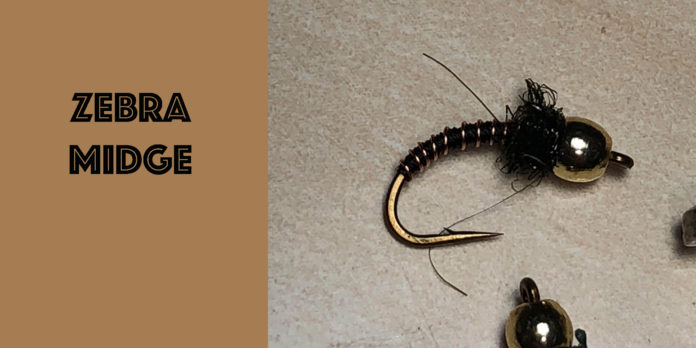
Conclusion for the Zebra Midge
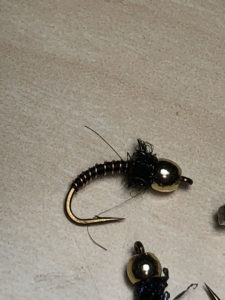
Gary Borger along with many others have noted this as one of the great patterns of all time. It does seem like sometimes the simplest patterns are the best. Make sure to tie this one in many variations and sizes.
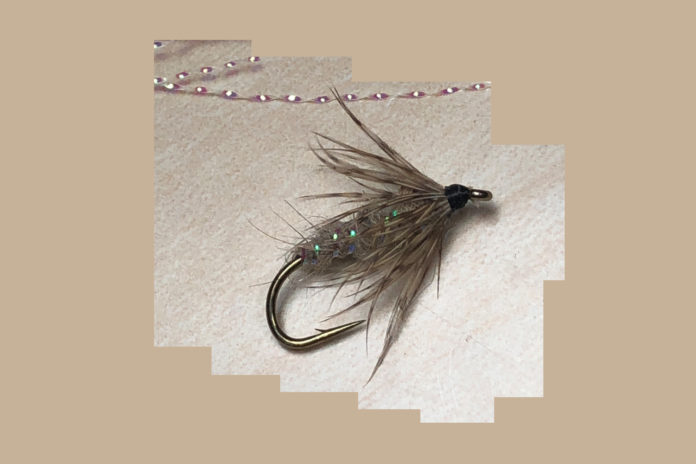
In todays video I show you how to tie a Soft Hackle Hares Ear. This was noted by John Gierach as one of his all time goto flies for trout. John fishes a lot of the high mountain streams in Colorado and I had him on the podcast in episode 47.
Click here to watch the Soft Hackle Hares Ear Video:
(If you’d rather I send you the entire package of materials please email here: dave@wetflyswing.com)
Click the image above to listen to John Gierach
Conclusion for the Stewart
This is one of the amazing things about this pattern. It has a great name, LOL and I didn’t come up with it. A great old friend of the family, Marty Sherman created this pattern and named it after my dad or the shop. Not sure which but I’ll ask Marty when I talk to him.
I sat down with Peter Stitcher from Ascent Fly Fishing to chat about analyzing the bug community to catch more fish. Peter breaks out the PAUSE method which will be a game changer to help you get started.
He shares the hatch organization method, how to organize your box and when he fishes mouse patterns. Peter talks about how he takes street kids off the street and welcomes them into their home.
40:15 – The Creating Order in Your Fly Box video can be seen here. In this video, Peter takes a customer box and tears in apart. Then puts it back together.
45:40 – The Martian Mysis Shrimp is the glow in the dark bad boy that gets it done on tail waters in the dark.
48:30 – The Martian Mouse is the goto big streamer Peter uses to displace water to get savage strikes.
49:30 – Landon Mayer talked about streamers in episode 48 of the podcast here. Landon is one the experts when it comes to streamer fishing.
52:30 – I interviewed Curtis Fry in this episode where he noted that they have anglers that test there patterns around the country.
1:03:20 – #FeartheBeard was a little fun movement they tested back in the day
I took home some great tips in this one for finding bugs and selecting the correct fly to use. Peter breaks down every step of the process in finding bugs from starting at the car into digging into your creek.
He also goes into some fishing tips using glo in the dark flies. Lots of crazy and great stuff in this one.
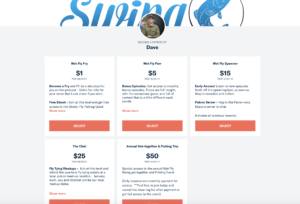
Thank you for your support of the podcast! Because of you and other podcast listeners we are able to reach 10’s of 1000’s of people. Our new Patreon Page is the easiest way to show support for the Wet Fly Swing Fly Fishing Podcast and to get exclusive bonuses.
I’ll share the exact 7 steps to signing up for Patreon so you can easily get started.
Step 2: Choose the Tier that you would like to sign up at. (this is a monthly subscription – so for the $1 tier you will get charged $1 per month) For each tier you get different bonuses but for every higher level tier you choose you get all of the bonuses from the tiers below you.
Step 3: Enter your name, email and password. Then click the box and click submit.
Step 4: Enter the Country and State you live in.
Step 5: Enter your credit card information or paypal information then click button.
Step 6: Share the page if you would like to help get the word out. If you get 3 people to sign up you will receive your membership 100% free. Just Send me an email and let me know the 3 people you got involved and you are good to go.
Step 7: Check your email inbox and click confirm email to make sure they know you are not a robot.
Not too bad right? If you are on a cell phone it will look a little different but will be the same premise. Thank you for supporting the show. You are helping me to go all in on this podcast and are changing the world one download at a time.
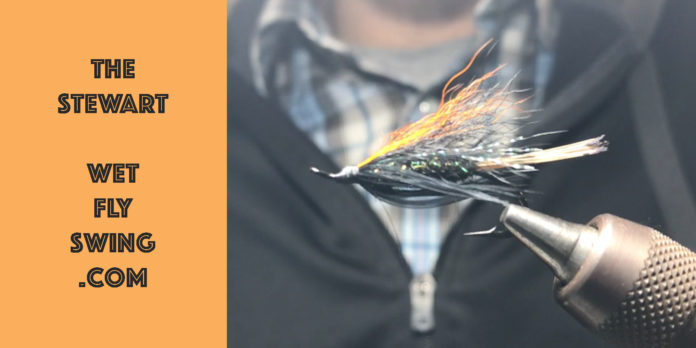
In this video I show you how to tie a Stewart, my goto summer steelhead fly pattern. This fly was developed by Marty Sherman, an old friend of the family. I hope to get Marty on the podcast soon.
(If you’d rather I send you the entire package of materials please email here: dave@wetflyswing.com)
Conclusion for the Stewart
This is one of the amazing things about this pattern. It has a great name, LOL and I didn’t come up with it. A great old friend of the family, Marty Sherman created this pattern and named it after my dad or the shop. Not sure which but I’ll ask Marty when I talk to him.
I connected with Jerry Lorang, the Deputy Region Coordinator for the NW Region for Project Healing Waters. Jerry shares some stores about the lives of some of the members including my cousin Mark.
We talk about family, fly fishing and how Project Healing Waters has become one of the big resources for veterans struggling with PTSD and various other issues. I hope you are ready for some inspiration.
Click below to listen to the Project Healing Waters Interview:
05:30 – I interviewed Rob Snowhite from the Fly Fishing Consultant Podcast in episode 12 who is also from the DC area.
07:20 – Shakespeare was the first rod that Jerry purchased when he was 40. He talks about what it felt like getting started a little later.
11:55 – John Colburn and Ed Nicholson were the original two people who planted the seed for Project Healing Waters after WWII. Here is an article that John wrote for FlyAnglersOnline.com.
The first fight I saw my dad get into while fishing blew my mind as a 9 year old kid. I will never forget the moment that he pulled off his watch and his teeth as he approached the dude.
I knew this was going to be more than a conversation at that point. This was my introduction to improper fly fishing etiquette.
We were driving up to the fishing pool just upstream about ½ a mile from camp. We passed this dude who was walking up the road to pick up his shuttle vehicle a few miles up river. As we drove by him, he was cussing my dad out.
Here’s what happened – He had asked my dad back at camp if he could have a ride. My dad said no and left it at that.
Shortly after passing the dude along the road, we turned into the pull out at our pool. My dad said wait here and started to walk towards the dude who was on the main gravel road.
This brings us back to the point where my dad was taking his teeth out.
I slowly followed so I could see what was going on.
My dad stopped the guy in his tracks and told him he was way out of line. He was even tapping this dude on his chest and telling him where he stood. The dude said “you tap me one more time and I’ll knock your block off.”
My dad proceeded to tap him again – Then the dude took a big swing and missed on a glancing blow. They both ended up on the ground in a mix of gravel, dirt and spit. Or in the mud, the blood and the beer – As the great Johnny Cash would put it.
Just at that moment, by brother came up the same road with his buddy. Chris thought my dad was having a heart attack and this dude was doing CPR or something. When he realized it was a fight, chris got out and pulled the guy off.
The dude said “oh, you want a piece of me, too?”
After the guy took a swing and missed -Chris clocked him with a left handed round house he wasn’t expecting.
The dude dropped to the ground with this one shot! I stood there on the side of the road – stunned.
I’ve never been a fighter. I’m not sure what it is, but have never been interested. My dad on the other hand was brought up in a different time. A time when you fought for your fishing water – literally. So, this was not that out of the ordinary for my old man.
I hope this gets you thinking about fly fishing etiquette and what is acceptable etiquette on the river. I will explain a little about steelhead fishing etiquette so you know what to expect next time you are on the river.
Swinging flies for steelhead is a little different than many techniques because you are fishing long runs at times. Sometimes on remote rivers and sometimes in combat fishing areas. Next time you arrive at your run and some dude is bearing down on you, I want you to feel comfortable knowing what the proper etiquette is on the river.
A Steelhead Run
This size of the area you are fishing will determine your bubble. It’s kind of like the bubble that’s around all of us when we talk to someone else. You feel a little weird when someone is a little too close and pushing on your bubble. You know, that “close talker” type of person. Remember the seinefeld episodeon the close talker?
We don’t want to be that person on the river. You should understand the water that person is fishing and give them plenty of room. How much is plenty of room? Well, that depends. Wherever possible, let that person hae the whole run. If it’s busy, you might have to share the run. Here’s a few things to think about.
Where to start in determining your distances? Typically when swinging flies, you might be casting up to 80’ so that’s a start. You can start by doubling that number to give us 160’. That feels a little better, right….. but is that enough room? Let’s answer that with the next section.
Fish Behind – Not In front
If you are going to fish near another fisherman, the best etiquette is to ask them if you can fish behind them. That way they get the first crack at the good water. You should still give them plenty of room.
Figure out how long you will be casting at the maximum distance and double it. Stay away at least that distance. Then as the guy in front works down, stay with his speed or a little slower if nobody is behind you.
It pays to give that person plenty of room so the run settles a bit before you come through anyways. This is the great things about steelhead fishing. The guy in front may not have covered the water or missed one little spot that you can key on and pick up fish.
Ask a Stranger
What about when you come up to a steelhead run and nobody is fishing but there is a camp right in the middle of the run. The best thing to do here is to stop in the camp and ask the people if they mind if you fish through the run. By far, the majority of fisherman will be happy to say yes and watch you fish through.
Just ask first and you should be good. The majority of scuffles I have been around on the river developed because some dude just jumped in the run without even saying hi.
Stepping In Downstream
Stepping in downstream of someone is usually a no no, unless you are on a section that is super busy and you are jumping in well below the person above you.
If you are going to jump in front of someone, be sure to give them a lot of room if you can’t ask them for permission. All rivers are different and a crowded river in the NE is different from swinging flies on a large west coast river. So, you have to figure out the specifics of that water body depending on the amount of fishing pressure.
In some situations, combat fishing is to be expected and you should be aware of this going into it. But, when you are on a river with lots of room, there’s no reason to jump in front of someone just because it’s your favorite run.
http://theeveninghatch.com/
Listen to Jack Mitchell in episode 002 of the the Wet Fly Swing Fly Fishing Podcast at the 30:00 minute mark to see what Jack notes as the best way to determine how fast to step through a run.
Step-Cast-Swing-Step
Better said – keep moving. There is this guy I see every year that comes in with his gear and sits on the money hole as fly fisherman have to step out, get on the bank and walk around this guy. You know who you are, backwards hat dude. Not Cool G.
With swinging flies for steelhead, you should keep moving. Just use that steady step-cast-swing and step process. Here’s how you do it.
I’ve been on sections of river that were super busy. I know what it’s like. It kind of sucks but is the way it is. You have to understand what’s going on around you and keep up with the pace. If you want to do your own thing, find a section of water where there isn’t 10 people waiting for you to fish.
The Fly Fishing Etiquette #1 Rule
And, drum roll please……. don’t forget about the golden rule. How would you like it if somebody jumped in 40 feet downstream of you? Yeah, I’d be pissed too. And this type of thing is what might put me in that mindset where my dad was at 30 years ago.
When you find yourself in that place eventually when you are the person that is cut-off by a newbie, take the time to explain to them how they were wrong. Don’t be an ass, but try to educate that newbie.
Conclusion
Remember to talk to the other fisherman and check in before you drop into a run. Once you get in, just keep up with a normal swinging pace. And if all else fails, just remember that rule from childhood and you’ll be golden. Ha, I couldn’t resist on that one.
Fly fishing etiquette is important to understand any time you are interacting with other anglers. If you found this helpful and want more tips, click on the button right below this text.
I had a chance to pick the brain of Gary Lewis, TV Show host of Frontier Unlimited and an author of a bunch of books and articles on fly fishing and hunting.
We talk about the MacNab challenge, Hunt Tv, the Pursuit Channel and how he found himself on the cover of Salmon, Trout Steelheader and made a living writing about the outdoors. Lot’s of good stuff as we mix it up again this week.
Click below to listen to the Gary Lewis Interview:
That was great to mix it up a bit with Gary Lewis. The MacNab challenge was really of interest to me because getting a steelhead, chukar and deer in the same day is a crazy challenge.
Gary also provides some good tips on hunting and fishing. Head over to Frontier Unlimited to check out Gary’s TV show.
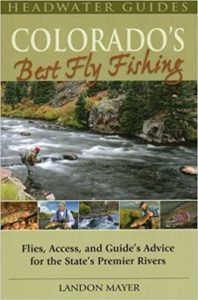
Landon Mayer shared his knowledge about fishing streamers for large trout and many other great tips from one of the knowledgable guides and teachers in the fly fishing circuit.
He talks about why he likes medium action rods, how he uses a swivel and what to do if a fish chases your fly but doesn’t take it. Landon breaks it down like a chess match so you can break it down easily to make your next move.
Click below and listen to the Streamer Podcast with Landon Mayer:
09:05 – Mayer’s Mini Leech is only an inch long but gives some great movement and helps to get those finicky fish.
14:45 – The Sonar Clear tip from Scientific Angler is one of his goto streamer lines for trout in shallow water. This is an intermediate sinking line that sinks at 1-2 inches per second.
18:10 – Dave Whitlock influenced Landon – Landon tells a story about some of Dave’s streamers from the 1980’s.
I really enjoyed that episode as Landon Mayer shared some of his best tips on fishing streamers. There are some great tips, resources and connections to some of the big names in the streamer game.