Tellis Katsogiannos has spent decades at the highest level of fly casting, earning world champion titles while helping shape how modern anglers think about efficiency, control, and simplicity. In this episode, Tellis shares how competitive casting sharpened his understanding of techniques, and how those lessons translate directly to real fishing situations.
We also head to Sweden and Atlantic salmon water, where Scandi systems and Spey-style thinking demand precision over power. From line design at Guideline to teaching anglers how to improve without overthinking, this conversation connects elite casting, salmon culture, and innovation into one clear framework for better fly fishing.
Episode Transcript
00;00;01;29 – 00;00;23;27
Dave
Before he ever helped design some of the most progressive roars and lions in Scandinavia. He was a kid on the Swedish coast, tying his first flies and chasing sea run browns with whatever gear he could get in his hands. He didn’t know then, but that curiosity, those early cast in salty wind and tight little streams, would eventually pull him into the center of modern Scandinavian space innovation.
00;00;24;13 – 00;00;45;27
Dave
Today that kid is Tellis from guideline, a world champion caster and guidelines rod and line developer and one of the leading voices behind the short haired revolution that’s reshaped how anglers fish across Europe and beyond. This is the Wi-Fi Swim podcast, where I show you the best places to travel to for fly fishing, how to find the best resources and tools to prepare for that big trip, and what you can do to give back to the fish species we all love.
00;00;46;25 – 00;01;07;14
Dave
And this episode you’re going to hear how Scandinavian public waters pushed anglers to innovate faster than anywhere else. Why shooting heads kept getting shorter. And what actually separates gadget and scandi lines? Today? We’re also going to find out how Tellus approaches Atlantic salmon versus steelhead and what decades of ride design have taught him about power, timing and feel.
00;01;08;02 – 00;01;22;24
Dave
Plus, we’re going to find out how they are making their products more environmentally sound and creating less impacts around the world and on the fish species we love. Okay, let’s get into it. You can find tell us at guideline fly fish dot com. How’s it going?
00;01;22;25 – 00;01;35;09
Tellis
Tell us. And it’s good. Winter is just coming around the corner and the roads are slowly collecting a little bit of dust seen between casting practices and in the long wait for spring.
00;01;35;22 – 00;01;41;10
Dave
Right, right, right, right. Yeah. Well, this is going to be fun because I’m not even sure exactly where are you at right now. Physically.
00;01;41;20 – 00;01;45;28
Tellis
I got from Burg, Sweden. So are in the west coast of Sweden. Scandinavia.
00;01;46;05 – 00;02;04;06
Dave
Oh, cool. Sweden. Yeah, this is great. We we’ve had a few episodes in that part of the world. It’s been. I mean, it’s a pretty. It’s a hotspot, right? You get Sweden, Norway. We’re going to talk today about guideline. We’ve been using your stuff we’ve been talking a lot about. Yeah I know we’ve been heading up to specifically Togiak River Lodge.
00;02;04;06 – 00;02;22;03
Dave
We’ve been. I got my first chance to swing for Chinook up there and was using your stuff, so we’re going to talk about that. But you aren’t only, you know, into that, you kind of cover everything over there and you’re kind of basically a powerhouse as far as kind of on the Europe side of the pond. So we’re going to talk about everything that guideline does.
00;02;22;03 – 00;02;38;02
Dave
We’ll get into all that, maybe focus a little bit on speed, because to hand casting is a big struggle. We had a a meeting last night with our fly swing pro community and Tim was mentioning like, Man, I really want to get into Spey casting. He hasn’t done it yet, right? So we have a lot of people I think, that are sitting there.
00;02;38;02 – 00;02;45;17
Dave
They want to get into it, but they’re not sure where to start. So we’re going to talk about that today. But take us back real quick on fly fishing. What’s your first memory? How did you get into it?
00;02;46;00 – 00;03;17;13
Tellis
Oh, it’s actually this thought. Well, right, right about now, it’s actually exactly 30 years ago, I started to write a few fliers and then I got my first fly fishing kit single landed at Christmas of 95. So I started out trout fishing in both the coast. We fish a lot of sea run browns along the coast. So that was my main thing in the beginning, as well as stocked rainbow trout, some wild brown trout streams that we have here around Gulf Hoberg.
00;03;17;26 – 00;03;34;08
Tellis
So that’s how I started. And then I came into swinging fliers and salmon in 2002. That’s when I started swinging fliers. And it’s actually due to the fact that I, I try to double and write inspired casting and just fell in love with it. So.
00;03;34;15 – 00;03;40;07
Dave
Yeah, right. So that’s your thing. So you’re into the so pretty much from the start you’ve been into the spay game and all that.
00;03;40;19 – 00;04;08;20
Tellis
Yeah, it’s something I mean, today if I can swing a fly for any species, I would do. So it doesn’t need to be salmon, even though it’s still high in the hierarchy. For me, it’s the whole flowing water, the river fishing. It’s something with that that just resonates with my soul and everything. It just I if I can swing a line in a fly through a stream, that’s my, my top game for sure.
00;04;09;02 – 00;04;25;14
Dave
Yeah. Yeah. That is amazing. Yeah. We, we talked to a lot of people, you know, steelhead, you know, over here obviously is popular. You know, where you’re at, you’ve got Atlantic salmon, you’ve got sea run brown trout. And you know, here you have ups and downs. Some areas where maybe the runs aren’t that great in the year and it can be tough.
00;04;25;14 – 00;04;40;15
Dave
Right. And we I know I was talking to Steve there last night as well and he was saying, man, I got skunked last time I went steelhead fishing, but, you know, he keeps going for it, right? He’s still going for it. What’s your take on that? Do you guys have in your area I know you’re kind of in a hot spot.
00;04;40;15 – 00;04;46;26
Dave
Do you find yourself fishing more for Atlantic salmon or brown trout? And how are the numbers there? Are you able to find some fish out there?
00;04;47;07 – 00;05;24;11
Tellis
Yeah. I mean, it’s been ups and downs then. I mean, Atlantic salmon across the globe is, of course it is a worrying state and declining numbers. But here in between you see rivers that picking up solid numbers. This summer was, of course, a very positive trend, even though it was solid run of grills, both in Norway. Well, all over Scandinavia, even in Scotland, even though they were struggling a lot with the extreme low water, the numbers of fish entering the rivers this year was definitely better than last year because last year was cast as rapid.
00;05;24;11 – 00;05;29;02
Tellis
I mean, they closed 33 of the major rivers in Norway.
00;05;29;13 – 00;05;29;26
Dave
Wow.
00;05;30;10 – 00;05;43;03
Tellis
Just like three weeks into the season. They just closed it. So it’s been worrying. But this year was definitely with START, it seems like in the tunnel and it was for me was a good season. Definitely.
00;05;43;03 – 00;05;58;08
Dave
Yeah. Good here. Well, I want to talk you know, we’re going to go deep in the guideline, maybe take us back there a little bit on guideline. Do you know a little bit of the history on guideline? Can you talk about that? I’m not sure how long before you use got into fly fishing. The guideline was out there, but they’ve been going a while, right?
00;05;58;26 – 00;06;24;20
Tellis
Yeah. The first products that came out of guideline was actually in the beginning of the nineties 91. Then that the brand name guideline was funded in, I think it was 93, it was in Norway. So it was a new region company with a lot of work in collaboration with Swedish Office. And then in 2001, the Swedish guideline started and so we have it’s two parts.
00;06;24;20 – 00;07;01;29
Tellis
You have the Norwegian and the Swedish where the Swedish is the the biggest one. And there where we also have the, the main warehouse for all our global distribution. And uh, and in the beginning guideline was definitely are salmon, sea trout, brand double and stuff. Pioneers within Morden type shooting heads with multiple densities. But slowly guidance started growing more and more and became not just salmon and trout, but today, as you mentioned, we are very, very a global covering brands and we have everything more or less from European thing to this, all seen in space stuff.
00;07;03;01 – 00;07;26;07
Tellis
I joined guidelines in 2022. I used to run my own business and then they brought an offer I couldn’t refuse. So I joined the product development team and closed my company down while I still have some hosted trips and courses and stuff. But but my main focus today is the product developing rods and lines is on my table, so to speak.
00;07;26;17 – 00;07;35;22
Dave
Yeah. Horizon Lines. Okay. Yeah. Well, tell me about that. So 1222 it’s amazing. I mean, they must give you a pretty amazing offer. What, what were you doing before? What was your company?
00;07;35;22 – 00;07;46;02
Tellis
Before I had my own small Well, it started out with the courses and trips and stuff like that and a lot of fly tying materials. Yeah, on fly fishing.
00;07;46;02 – 00;07;47;13
Dave
This was focused on fly fishing.
00;07;47;16 – 00;08;12;07
Tellis
Yeah, I have. I’ve never really had a normal job, so to speak. Right. So I started my own company in 2006 and I had a web shop fly tying materials, and then slowly, slowly grew within that. And I had my own small brand of rods and lines for a few years, about ten years. And I knew a lot of people within guide because I’m also based in golf.
00;08;12;07 – 00;08;31;18
Tellis
Hamburg and the company has been based in Durham Burg since 2001. So we knew about each other as well, very well. And then they contacted me and we had a few meetings and then what they offered was just so it felt perfectly right. So a new chapter in my life started.
00;08;31;29 – 00;08;53;13
Dave
There you go. What do you think? Guideline? Because I remember guideline at the early days to when they first got started. I think you guys, I think you were doing some stuff already coming across over, you know, across the pond to North America, I believe in those early days. But what do you think it is that guideline, you know kind of did best early and maybe does best now because you kind of cover it all now, like you said, right?
00;08;53;27 – 00;09;20;26
Tellis
Yeah. Today we are definitely, especially when it comes to the rods and lines, we are definitely stepped up the game across the board and as well as the what we call software or the soft goods, waiters, jackets and apparel, all those kinds of things. This slowly but steadily became of a much higher quality. So today, where we have a really good offer of, well, the whole range of equipment flying your needs.
00;09;21;15 – 00;09;43;21
Tellis
And I think in the beginning when we prior to my time, when guidelines came over to their to the continent, they they came with mainly the double handed stuff as that was relatively new compared to here in north of Europe, where the tradition of space fishing and double and rods as of course it’s back to the 18 1900s.
00;09;44;06 – 00;10;02;16
Tellis
So I think that was that was guidelines or Scandinavian brands. Overall that’s been our strength. But to to be able to cover more and more and offer better equipment throughout the whole scene of fly fishing is of course I think that’s been the key why we are succeeding much, much better this time.
00;10;02;29 – 00;10;18;26
Dave
Right? Right. That’s it. So, well, we’re going to probably talk and bounce around a little bit. Talk about your gear. Looking at it now. Yeah, it looks amazing. You got a ton of stuff here. I did want to focus on Spain a little bit like we talked because I think that we have a a nice chunk of people that are really interested.
00;10;18;26 – 00;10;36;00
Dave
They’re either doing it or they’re getting ready to do it. You know, maybe. Do you know a little bit? Can you talk about the history of Spain? I know over here we went to this little revolution of people doing it in the eighties and then the early nineties. There’s a small group of people that started kind of going crazy and figuring things out.
00;10;36;00 – 00;10;44;25
Dave
And then it was guideline is this go way back before then on the speed with guideline or the people you know and the space out there and then that say say in Scandinavia.
00;10;45;10 – 00;11;30;07
Tellis
Well in Scandinavia and double and tradition or space fishing is it’s been around since the sixties a little bit later into Norway. Well of course Norway has had a tradition of a lot of double hand fishing for salmon since well, well, 1800s due to the to the due to the British. But then when it came to average jokes kind of because that in the beginning of I mean the beginning of salmon fishing in Scandinavia, in Norway in particular, that was mainly there, the very rich British coming over renting or taking over the full rivers with more or less luxurious lodges stuff.
00;11;30;07 – 00;11;52;10
Tellis
While here in Sweden it’s always been more public. We still have way more public waters. And that’s why I think in general why it’s so much innovation in the modern double hand fishing or space fishing has come from Sweden and it’s due to the fact that we are fishing public water. So you need to be better than the next guy because otherwise it won’t catch anything.
00;11;52;12 – 00;11;53;28
Dave
Right? Right.
00;11;53;28 – 00;12;25;06
Tellis
Well, so I think I mean, back in the sixties, even before they were commercialized, people cutting double tapered lines, putting monofilament behind it, creating types of shooting heads and stuff like that. But then in the beginning of the eighties, we started seeing these custom shooting heads coming out. And I think the big boom was in the late eighties, beginning of nineties, where also then guidelines came into the picture with the first line, which was the powder taper.
00;12;25;22 – 00;12;53;03
Tellis
Prior to that loop was of course very big with the their custom as this as it would call guideline pushed it a little bit further by a little bit, changing the taper and making it more not just a cut the kind of taper, but it was it made a big difference with that line. I was what I mentioned before in many ways kind of a pioneer started doing multi density versions of these as well.
00;12;53;25 – 00;13;16;01
Tellis
So there’s been a lot of modern tradition that comes out of both, of course, Norway and Sweden and even Denmark has a lot of great set. Now. They also have some great salmon anglers, Finland as well. But I mean a lot comes out of Sweden and Norway when it comes to what we today refer as to the modern spey casting waters spey fishing.
00;13;16;12 – 00;13;34;20
Dave
Right, right, right. That makes sense. And it was really interesting. We’ve heard about that recently. The fact that you have Norway and we have has all these amazing historic waters, but a lot of them are private and you got to have a lot of money. And then Sweden has this public quarter. What about Finland and Denmark? Are those is there a lot of public land there as well?
00;13;34;20 – 00;13;35;08
Dave
Public water?
00;13;35;16 – 00;14;01;08
Tellis
Yeah, I would say that. I mean, every country has a little bit different systems, but in general, Denmark and Sweden, even though Denmark is has way less rivers and this is such a much smaller country, they have a little bit about the same daily licenses or weekly license, even though it might be you have quotas or you have limitations within how many license you have.
00;14;02;01 – 00;14;11;00
Tellis
Finland and Sweden are quite the same, but Finland’s rivers are more destroyed through hydro dams.
00;14;11;05 – 00;14;12;16
Dave
All right.
00;14;12;16 – 00;14;33;14
Tellis
Overfishing and stuff like that. So we do have a lot of Finnish guys coming over to Baltic to fish the northern Baltic rivers and Sweden, because we do, even though Sweden has also been very bad at destroying our rivers, I mean majority or more or less all the big rivers in Sweden are has at least a handful of big hydro dams.
00;14;33;23 – 00;14;37;17
Dave
Hydro dams, right. With fish passage, do they usually put a fish ladder in those?
00;14;37;26 – 00;14;49;22
Tellis
Some of them, yes. But the problem is there might be a fish ladder, but it’s just not good. You have someone who. Yeah, exactly. Someone who shouldn’t have built it. Got the job.
00;14;50;19 – 00;14;59;14
Dave
We deal with that here, too. I mean, we have we have thousands and thousands of dams, small and big and some. And we’re taken out, you know, a lot of big ones. You’ve probably heard, you know, the Klamath River.
00;14;59;14 – 00;15;00;26
Tellis
Yeah. Yeah.
00;15;00;26 – 00;15;18;10
Dave
So there’s some good stuff going, but there’s a lot of dams out there still that are complete. You know, the Columbia River is a great example. You know, all the all the famous, you know, rivers on the on the Deschutes and all those I mean, if you go up the Columbia, there is a giant dam that’s a complete barrier, you know, for thousands of miles that goes up into Canada that fish have no access to, you know.
00;15;18;10 – 00;15;24;11
Dave
So I feel like it’s going to be something we’ve got to work on for, you know, not only our lifetimes, but used to come. Right.
00;15;24;27 – 00;15;46;29
Tellis
And that’s the thing. I mean, what we see here is Sweden, just like you guys as well. I mean, those huge dams in those big rivers that actually they are producing electricity, they’re of a valid amount. But we have so many like, for example here, the main office guideline here and we have a small local Salmon River is just literally outside my window.
00;15;47;12 – 00;15;53;15
Tellis
That dam, it produces so little electricity so it doesn’t serve a purpose.
00;15;53;22 – 00;15;54;20
Dave
Not doing anything.
00;15;55;00 – 00;16;09;04
Tellis
That’s the main thing is we know if we have about 2000 dams where if we would demolish like 1800 something about them, we will lose like 2% of the capacity right?
00;16;09;04 – 00;16;12;08
Dave
So it’s a no brainer. But it costs money. Right. Of course to remove.
00;16;12;08 – 00;16;17;15
Tellis
Dam so much in what they call the culture or things to this dam has been here since blah, blah blah.
00;16;17;28 – 00;16;34;28
Dave
Historic. Yeah we deal with that. It’s all the same. You know, I think there’s always going to be people that, you know, want to keep their dams for historic purposes. But I feel like, you know, in this country and I’m guessing in years to the, you know, the fish, the Atlantic salmon and I’m guessing that most people love that they have that, you know, that those fish are there.
00;16;34;28 – 00;16;42;23
Dave
Right. They probably don’t want to lose them. And I feel like that maybe you know, maybe that’s why we do do a better job of educating them. Right. Letting them know the benefits. Yeah.
00;16;43;05 – 00;17;03;04
Tellis
I think so. I mean, and that’s where Norway, for example, in many ways that they’re of course, they have a lot of hydro dams as well, but they have in many rivers at least built the dams in a way, or they made the hydro plant in a way that it didn’t destroy the migration or the river, for example, close to Trondheim, where I fish a lot.
00;17;03;23 – 00;17;23;05
Tellis
They are like in the middle of the river where you have the biggest fall hit. They steal water by lake leading out to a tunnel, so they steal water. That then comes into the river further down again, like 20 kilometers further down. So the actual power plant is in the tunnels within the mountain.
00;17;23;10 – 00;17;26;27
Dave
Oh, wow. And the is like starved of water in that section.
00;17;26;29 – 00;17;49;02
Tellis
Yeah. Not story. I got this deal like 50%, but it’s still fishable all the time and the fish can still migrate. So there are, of course, options that works for all of us. So we have the they’re good in that sense, even though they are they’re bad in destroying their ocean habitat for Atlantic salmon with all the farming.
00;17;49;02 – 00;17;49;18
Tellis
So yeah.
00;17;50;04 – 00;18;11;27
Dave
Costs if you’re looking for a world class fly fishing experience, it’s time to check out Mountain Waters Resort, nestled along Newfoundland’s legendary Portland Creek. This spot has a history that runs as deep as the Atlantic salmon. They call it home once they fly fishing. Retreat for the great leave. Wolf, today, it’s your turn to step into these historic waters and swing up your salmon.
00;18;11;27 – 00;18;36;15
Dave
This year, you can head over to wet fly, swing dot com slash mountain waters right now and make it happen. That’s what fly, swing, dot com slash mountain waters. Let’s get out there today San Juan rod work started with a simple belief great fly rods and gear shouldn’t cost a fortune. As a family run company, they focus on building high quality fly fishing products that perform on the water without the premium price tag.
00;18;36;26 – 00;18;51;01
Dave
You can try San Juan. Rod works for 30 days risk free right now. And if you’re not satisfied, send it back for a full refund. You can go to San Juan roadworks dot com that’s Sanjay you and Rod works dot com.
00;18;53;22 – 00;19;08;03
Dave
Well there’s a lot going on obviously that’s part of the reason there’s some challenges with Atlantic salmon I you know I think there’s some great groups out there we’ve talked to him recently conservation groups doing good stuff you know internationally and you know across. But but I want to talk you mentioned it going back to the lions. You know, I think so.
00;19;08;03 – 00;19;27;14
Dave
We got a little bit of that history, you know, spay or the two handed rods have been out there for a long time, you know, united, Europe, England and kind of that area. They came over and probably fish your waters. But really 1960s, you know, it sounds like you started getting going in 1980. Things go and then early nineties, which is when the spay revolution started, really started here.
00;19;27;14 – 00;19;33;17
Dave
It sounds like the same thing. What was the the power taper? Describe that. What was that line? Was it a a scandal.
00;19;34;06 – 00;20;00;02
Tellis
Like a scam? The shooting had still within the time frame where it was still custom. So you you bought a pad where you cut and trimmed in to perfectly fit your style and personality and your rod. So very few. Well the first pre looped lines, they they weren’t around until like after the millennium so still people kept it customized.
00;20;00;02 – 00;20;06;28
Dave
Right. So there was ten years there were guideline had lines but it was more like grab your line and cut it to your certain length.
00;20;07;02 – 00;20;14;21
Tellis
Yeah, yeah. Well, more or less everyone were a very few that started making some, but there was still like little bit of the limitations within.
00;20;14;21 – 00;20;18;22
Dave
Well, what were they using? Lines. They were just what were they used The Longbow. Yes I guess.
00;20;18;27 – 00;20;27;07
Tellis
Yeah. Well like in back in the way back it’s just those steel lines or double tapered silk line.
00;20;27;11 – 00;20;27;24
Dave
Yeah.
00;20;28;13 – 00;20;54;08
Tellis
And then the one is not efficient. No. Extra then. Then we started coming into the PCC, of course they were still then using double tapered PVC lines or which was we used here in Sweden, Scandinavia for a long time as well. There was a lot of guys back in the eighties and even in the nineties, still using long lightweight forward spray lines, full floating, maybe a party leader.
00;20;55;01 – 00;21;17;29
Tellis
But then the I think it was in the nineties where the the whole shooting hand thing really took off because they were then slowly getting more and more brands doing the shooting head thing and people started no noticing that this is definitely beneficial in every way. Well everything has its pros and cons. I still love full spray lines as well.
00;21;18;00 – 00;21;18;18
Tellis
Now and then.
00;21;19;00 – 00;21;19;19
Dave
Yeah, you do?
00;21;20;00 – 00;21;53;29
Tellis
Yeah, I love it. But if I’m going to be as efficient as possible, I have a bunch of different shooting ads with me because it’s way easier to fast to adapt to the situation I’m facing. You’re a little bit more limited with a real with a false baseline on it. Of course, it’s like trout fishing. If you have a real with a weight forward, then you need spare spools or it’s so fastest used that change to had or now even now we are using so much multi tip shooting heads.
00;21;55;02 – 00;22;01;12
Tellis
So that’s even on another level too, making it vastly adaptable when fishing.
00;22;01;20 – 00;22;16;21
Dave
Right? Right. Yeah. Hey, there’s still a lot of innovation going on at guideline. Are you always because you’re kind of in the middle of all of that? Are you always trying to tweak like for the next year, like change the line a little bit? Or do you guys have a set of lines that are pretty much good to go and there’s not much tweaking needed.
00;22;17;04 – 00;22;39;11
Tellis
While we tweak what we can and we try to experiment in that. Like, for example, a glance on my table, what’s what I see, for example, when I’m out fishing, meeting people at my oyster trips, that’s a very good way for me to notice if there are new things out there or people’s perspective towards things and my personal taste as well.
00;22;39;11 – 00;23;11;13
Tellis
And then we try to tweak what we can. But I mean, the last decade is so much things has happened. So right now we’re finding ourselves in a situation where there are very minor tweaks, which we can do because the lines today are so good. But I mean, we still, for example, when it comes to multi densities, we we experiment by changing the density split or the weight distribution of the line, experimenting with different softness of coating to try and get a better energy flow.
00;23;11;13 – 00;23;30;23
Tellis
And so there are always some small things and of course then it also goes sometimes in circles is like what’s trending right now when it comes to length overhead. Then after a while it gets more popular with shorter heads and then then all of a sudden you get a few years later, Yeah.
00;23;31;03 – 00;23;31;20
Dave
Yeah, it goes back.
00;23;32;17 – 00;23;55;23
Tellis
But we, we, we try, of course, to innovate what we can. And we’re still finding things here and there like our latest multi tape body that we released last year, the classic Scandi that is of course up to date. The definitely the best multi tip we have made when it comes to easy to cast weight distribution suppleness.
00;23;56;08 – 00;23;57;08
Dave
That’s the classic Scandi.
00;23;57;14 – 00;24;03;07
Tellis
Yeah, the classic Scandi body which took over after what we had before, which was the four D body concept.
00;24;03;16 – 00;24;19;17
Dave
Okay, classic skinny and how would you explain it? You know, again, somebody is listening now let’s say they’re, they’re trying to understand they haven’t done it yet like they here, you know, sketch it versus scandi. How do you describe that? Do you guys you know, if you have somebody looking at your lines, you know, maybe describe that a little bit.
00;24;19;17 – 00;24;23;05
Dave
What’s the difference between sketch it and Scandi for you? And do you have both styles?
00;24;23;22 – 00;24;53;13
Tellis
Yes and no in a way, because I mean, today, the whole categorizing scandi gadget space, that space is still it’s in its own call home. I mean, because they they tend to be longer or noticeably longer in length of total line length or habit length. But today we have gadget heads crossing over to what used to be or is still is referred to as typical scandi.
00;24;53;13 – 00;25;04;10
Dave
That’s right. Yeah, there’s overlap. Now you guys have these lines coming out and they’re, they’re calling them. Yeah, I don’t know what the names of it. There’s certain everybody has somewhere. They’re like a mix. It’s kind of like a Scandinavian gadget mix.
00;25;04;10 – 00;25;25;23
Tellis
Yeah, exactly. In my opinion, this is my personal opinion. Everything that we’re casting is a shooting at that. Some are short and heavy, some are long in light summer long. And have you? Some are short and light them but it’s still a shooting it. And then you have this gadget style of casting which is the sustained actor casting, but you can still do that with a full line.
00;25;26;07 – 00;25;27;05
Dave
So you can, right?
00;25;27;12 – 00;25;41;22
Tellis
But it’s more difficult due to a longer line. Everything needs to be more correct within the cast. But we for example, within guideline, we have some line that we’re calling the compact Scandi or four D Compact. Yep.
00;25;41;22 – 00;25;42;16
Dave
Compact. Right.
00;25;43;11 – 00;26;09;14
Tellis
Which is in lengthwise terms, that is more of a gadget. But for us we are using that as a short scandi line and the difference in general is when we’re differentiating these two categories is if it’s used as a scandi line, it’s normally you do a single spray or a snake roll or something, but if you’re doing the snap t or pair of poke, then you’re into what often is referred as gadgets casting.
00;26;09;14 – 00;26;25;21
Tellis
But it’s or sustain the anchor. But I mean, as I said, I use a lot of these scandi lines and if I, if I miss the set up in a sweep or directions change, I just dump it into a pair of but it’s still my scandi line.
00;26;25;28 – 00;26;43;13
Dave
Yeah, I gotcha. So, so there’s tons of overlap. And that’s the thing. The more the more we go into this, probably the more overlap there will be. Right. Or just keep in. New things will come out of it and there might be, you know, a scandi. I guess we try to make it easy, right? How would you describe that for again, back to a new person who’s listening right now, they’re thinking about getting into it.
00;26;43;20 – 00;26;53;11
Dave
Do they start with the, you know, the species first, the rod first, the length? Like where does somebody, if they want to choose it, where would you tell them, you know, where do you start? How do you know what to give them?
00;26;53;24 – 00;27;21;08
Tellis
Well, I mean, when it comes to their different perspectives, when it comes to how to choose, I would tackle it within fly fishing itself. I mean, but when it comes to salmon or spey fishing, it’s often okay. What length overall do I need? And then of course, they’re estimated line width follows. But if it’s a semi wide river, I’m going for Atlantic salmon or big steelhead in a larger steelhead river.
00;27;21;08 – 00;27;44;13
Dave
Well, let’s take this one. Tell us and I like to use and I’m not sure if you’ve been over to Newfoundland, but we’re heading over there to Mountain Waters Resort. We’re going to be fishing for Atlantic salmon and probably some brook trout, too. But Link Sam is the focus. It’s a pretty and what from what I hear a pretty decent sized river and it’s windy right and so it sounds like they use single hand rods out there quite a bit, you know, because it’s just the that’s what they’ve always done.
00;27;44;13 – 00;27;53;24
Dave
But I know we’ve had some listeners go over there and use double handed rods. What would you think on that? A big river with lots of wind. Is that in Atlantic salmon? Where would you start for somebody maybe new to it?
00;27;53;24 – 00;28;36;07
Tellis
That’s going well today, for example. I mean, either I mean, the shorter rod, the easier it is to get high line speed, which is very needed when it’s very windy. So if you take that reference to Patagonia, Big Easy run, really good at getting the right relatively big river, a lot of wind. So down there we’re using short double handers or even because today we have the switch rod, which is today we have like two categories within the switch, have a single and rated and double and rated switch rods and the double hand rated switch rod is literally a short double and rod due to the double and rating those rods because the benefit of
00;28;36;07 – 00;28;48;15
Tellis
a short rod but still has a high line rating means that you have a lot of weight in the line and a short rod that will give you a lot of speed punch. Yeah, a lot of polish. A lot of speed, Yeah.
00;28;48;19 – 00;28;51;06
Dave
What’s the length on those. What would be a length of.
00;28;51;06 – 00;28;57;17
Tellis
That between short. Yeah. Between 11 and 12. 12. Yeah. Up to 12 and a half foot maybe.
00;28;57;26 – 00;29;12;28
Dave
Yeah. So more of that. More of that. So we call it a Yeah. Switch or. Yeah. That’s so in the middle kind of range two handed. Right. Okay. And then you have the next level which I think a lot of people also get into, which is maybe 12, six up to 13 and a half. Right. You have that next range.
00;29;12;28 – 00;29;19;04
Dave
Is is that kind of your range? Do you kind of have the three ranges like that short and then the middle? Yeah, maybe 14, 15 foot.
00;29;19;09 – 00;29;34;03
Tellis
Yeah, I would say so. And what we for example, normal say over here in Sweden and Norway, if you were only having one spare rod for Atlantic salmon overall a 13 foot eight nine weight is like yeah.
00;29;34;03 – 00;29;34;13
Dave
That’s the.
00;29;34;13 – 00;29;37;12
Tellis
One. It’s like the nine foot five or nine foot six way for trout.
00;29;37;12 – 00;29;46;16
Dave
Yeah, that’s the rod. So the 13 foot and just BS you say 13 doesn’t have to be 13, three or 13 six. But the 13 foot eight or nine. Yeah. Is, is the one.
00;29;46;16 – 00;29;48;23
Tellis
Yeah. 13 plus minus that if you or something.
00;29;49;01 – 00;30;02;06
Dave
That might make it easier for this. So if somebody you know is going on the trip needs new rod and they want to do this it could be that 13 foot 894. And then let’s just take that. So if we have that rod, what is that rod, first of all, in your what would that be called in your quiver there?
00;30;02;26 – 00;30;13;19
Tellis
Well, we have that. That’s the thing. We as we offer, great equipment from a lower price point all the way up to, I mean, the premium stuff.
00;30;13;28 – 00;30;19;20
Dave
Yeah. What would be the that’s go top of the line like if somebody wanted the best, you know, Rod you guys have, what would that be.
00;30;20;17 – 00;30;28;02
Tellis
We have the ante 11 range which has actually been been very well noticed.
00;30;28;02 – 00;30;37;04
Dave
Yeah. Yeah. Then too we’ve heard about it. I think that’s a some of the stuff that we’ve been using our folks have been using over here, I believe at Togiak. I can’t remember exactly, but they’re using some of the bigger stuff out there.
00;30;37;10 – 00;31;00;27
Tellis
Yeah. And it’s been, I mean the whole range within the trout and this salty stuff as well as the Spey has become very popular and very well received within that range. We have two different categories of spare rods. We have the full range of with which is the regular Mt 11 salmon, those rods, for example. Then you have a 12 foot nine, eight, nine, that’s the 13 foot eight mine in a way.
00;31;01;14 – 00;31;23;27
Tellis
But then they also have one range that’s called the fast full flex, which is what they’re a little bit stiffer tipped sectional and softer. But second, it is more of a full, deeper loading rod, which is more maybe a little bit more similar to traditional space rods or a little bit more Skagit rod action type. But all of them casts all types of lines.
00;31;23;27 – 00;31;28;00
Tellis
It’s the more of a personal style, what kind of temper you have in your casting.
00;31;28;12 – 00;31;42;11
Dave
Yeah, they can cast anything. Yeah. Okay. So if we had that, that 13 or whatever, 12, nine, you know, somewhere in that range, what would be the line that would pair with that. That would be good for say you know, heading out there for Atlantic salmon to maybe a place with some wind.
00;31;42;25 – 00;31;53;07
Tellis
Either to the compact head for example, the 25 gram, which is the greens. I’m not so good at grains.
00;31;53;12 – 00;31;56;11
Dave
All right. 25 gram grains. Yeah.
00;31;56;11 – 00;32;05;26
Tellis
With then that matching tip within like for example, the 15 foot tip nine gram or 11 gram tip, for example.
00;32;05;26 – 00;32;16;28
Dave
Okay. The, but that’s the compact head. So that’d be more of the, the shorter. And when would you go with the shorter compact head versus say a longer, you know, a longer not, not as compact head.
00;32;17;13 – 00;32;36;13
Tellis
Well it comes down to for example a short head, It’s easy to move around when it is windy. It’s also a little bit more user friendly due to the fact it’s a shorter line will more easily fall into alignment with your on, even if your sweep is a little bit off or so, it’s easier to move around.
00;32;36;13 – 00;32;39;28
Dave
For the beginner. The beginner would want to get this compact line probably. Yeah, I.
00;32;39;28 – 00;32;50;10
Tellis
Would say so and all. But also that vast angler that wants a short head that’s easy to just flip out when it’s tight or when it’s windy or when you’re going to chuck big flies.
00;32;50;16 – 00;32;51;28
Dave
Oh, right. Okay. Yeah.
00;32;52;04 – 00;33;09;05
Tellis
Otherwise you have the classic scandi body of course, with classic scandi. Yeah. Yeah. The 26 gram for those was, for example with the same type of tips add up. So it’s the body will then be about five feet, six feet longer or shorter depending which one you choose.
00;33;09;16 – 00;33;17;22
Dave
Okay, a little bit shortened and so that one would be good for. And again, like you said, you could do all your sustained anchor cast with that classic scandi if you wanted to.
00;33;17;22 – 00;33;18;19
Tellis
Yeah, yeah, absolutely.
00;33;18;19 – 00;33;22;24
Dave
If you just knew the snap tee, that’s all you could do. The kind of those cast you could still use that classic.
00;33;22;24 – 00;33;38;06
Tellis
Scandi Yeah, because I mean, if you look at the Scandi line, it’s still in relation to the rod length. It’s still a relatively short line. If you, if you compare it to what we normally use on a way forward for, for trout fishing.
00;33;38;12 – 00;33;40;18
Dave
Oh it is right, It is still pretty slow.
00;33;40;24 – 00;34;14;14
Tellis
So if will look at it from that perspective, for example, a 13 foot rod with hand that’s 11 meters in total. That’s a typical scandi setup. But I mean many nine foot five with rods using weight forward lines that has the same head length, which you still do roll casting or switch casting with. And so but it’s just it’s a little bit matter of getting used to the rod lengthen and of course the environment if it’s windy and you’re chucking big flies, it’s always nice.
00;34;14;20 – 00;34;17;11
Tellis
Yeah, it’s always nice to get to a shorter, more aggressive head.
00;34;17;17 – 00;34;32;25
Dave
Yeah, the compact would probably be smart to have a couple of heads maybe or a couple of, you know, lines here. Right. You’d have your compact maybe, and the scandi. So depending on the conditions and what you felt like. And if you’re I mean, I think here we’re fish and stuff, on the surface it’s all dry. Fish are coming up too, you know.
00;34;32;25 – 00;34;41;28
Dave
So I think the classic scandi will be good. But if it gets windy, you know, maybe the compact would be the thing to have in your in your satchel there. Right. In case things get crazy.
00;34;41;28 – 00;34;54;25
Tellis
It’s never a bad idea because, I mean, as you said, that would mean turning over a big bomber in had wind with a long tapered an island later it’s nice to have a little bit more of a truck of a fly line to push.
00;34;55;01 – 00;35;04;02
Dave
Yeah, exactly. What about the fishing performance? You know, if you think about that dry line, you’re on the surface, is there a major difference between the performance of the swing on those two?
00;35;04;17 – 00;35;31;29
Tellis
Well, I mean, there is the benefit if we move even further to spare line or the or a scandi or gadget, the longer the actual weighted part of the line the had this, the easier it is to control the whole swing by mending downstream or mending upstream. The shorter the had or the more amount of monofilament shooting line you have, the more difficult it’s going to be to actually affect how that line is moving.
00;35;32;10 – 00;36;05;16
Tellis
But of course it’s possible we do a lot of high sticking, even do a lot of aerial menace before it lands too. So we can like manipulate how it lands before the first impact on water. I think that’s key. So if we wanted to be swinging with a more 90 degree kind of a cross, then I tried to do that mend already in the air by if I shooting across, I pushed a rod towards downstream myself or towards my bank, which will be the line will land in a 90 degree angle.
00;36;05;27 – 00;36;13;17
Tellis
But if I hold the rod or even lift it upstream, it will be more or less the opposite than Yeah.
00;36;13;17 – 00;36;20;29
Dave
Yeah, yeah. You’re holding that. You’re, you’re, yeah, the opposite of that which is you’re trying to stop the fly line in position so it feels better.
00;36;21;08 – 00;36;53;22
Tellis
Yeah, exactly. You get more of that. I mean the typical difference. What, Because I’ve been Steelhead twice on the Deschutes and the Maine. Yeah, a beautiful place there. But the main difference what I’ve learned there, little thing I’ve done with Atlantic salmon or steelhead compared to Atlantic is that steelhead we try to more or less present the fly several times, more visible, more slowly, like mending upstream to have that more of a dangle while Atlantic is more getting it across with a higher speed.
00;36;53;22 – 00;37;06;03
Dave
Across and speeding it landing because Atlantic’s want you faster, right? You kind of want to kick that. Yeah. So you’re throwing it out 90 and they might hit it at 90. They might land and they might hit it out there in the right when your line hits, right?
00;37;06;03 – 00;37;40;03
Tellis
Yeah, absolutely. And sometimes I do upstream and because it depends on the current so there there is always the environment or the pool and the structure of the water. Everything that also affects so much how I want that to so sometimes 90 degrees if the main current is pushing in the middle of the river, my line will then be presented for the fish before they fly, which I don’t want, which means I will maybe high stick upstream to force the line into that swinging curve that I want and then start to follow.
00;37;40;21 – 00;37;56;04
Dave
Yeah, that’s it. That’s it. That’s so good. So like I said, we’re heading to this, you know, to Newfoundland. And they have a lot of people, the guys up there, I think they’re all using single for the most part, single handed rods. What would be the if we were doing that, What would be the single hand rod that we’d want to be using?
00;37;56;04 – 00;38;01;29
Dave
And do you have that in your lineup? Like, dude, are people doing that at all or are there people fished for Atlantic salmon with single hand log lines?
00;38;02;03 – 00;38;25;08
Tellis
Absolutely. And I mean, yeah, both in in Norway, for example, the single under all too often comes up in the back end season unless you’re fishing the small rivers used for high summer low water conditions, ten foot seven weights, ten foot eight weights, or nine, nine and a half footers. But around here, for example, around the West Coast.
00;38;25;08 – 00;38;53;00
Tellis
So we now river some rather small. So we use what we in Scandinavia call the true switch rod, which is basically longer, longer single rods like 11 foot seven weights, which you can use as a small double hand, but it’s still line rated as a single ladder. We have that, for example, in our range called a US ultralight scandi, which are single and rated and switch rods.
00;38;53;01 – 00;39;02;12
Tellis
Those are my personal favorites for Atlantic and sea run trout here along Sweden and then the smaller Norwegian rivers as well.
00;39;02;21 – 00;39;16;29
Dave
Yeah, ultralight, skinny. So that’s the line and then like you said, you could do a nine half or ten or even 11 foot that switch, get into that for the length. And what is the, what is the longer length of rod, what are the benefits and maybe disadvantages of the longer rod for that.
00;39;17;16 – 00;39;38;06
Tellis
Well, there for example, if you look at a fishing as the Salmon River with a nine and a half foot compared to them, you will see 11 foot, but still with the same line weight, the benefit of that extra rod length, it’s the same with the big double headers. It’s easier to control the and it’s easier to control the fly and the swing.
00;39;38;23 – 00;40;03;19
Tellis
It’s of course, easier to create that distance that you want even though you might reach it with nine foot, it’s easier to do it with an 11 footer. It’s the same with the 13 versus 15 foot. When I’m fishing in Norway example, many times the 30 foot will definitely be enough. But some of the pools I will be more efficient with the 15 foot because it’s easier.
00;40;03;25 – 00;40;07;06
Tellis
It’s easier for me to reach the points I need to reach.
00;40;07;18 – 00;40;25;17
Dave
Right, right, right. Do you think the you know, the 15, I think we see a lot more 13 and a half in the 13 range. And there’s some, you know, like 14 we were using 14 for four Chinook up there in Alaska. Do you think there’s going to be more and more towards the higher 15, maybe 16, 17 foot rods back to that range?
00;40;25;17 – 00;40;29;25
Dave
If they as we go because of the tech and the lightness of the rods or what are your thoughts there?
00;40;30;06 – 00;40;58;02
Tellis
Well, I think it goes in it goes ups and downs and trends. Yeah. Yeah, it does. But I mean, in general here in Scandinavia we see, especially in the north of Sweden, in the big northern rivers, the Baltic rivers in the spring fishing or earlier like the the, the chrome season, you barely see anyone with anything shorter than a 15 footer, often 16, where you will still be able to reach with 13 and a half or 39.
00;40;58;02 – 00;41;12;06
Tellis
But just that the chair casting of big heavy sinking lines, the the the deep waiting often would spring foot flood. You’re like you’re waiting to your nipples and I mean yeah if you’re.
00;41;12;17 – 00;41;15;02
Dave
Yeah you need that extra length to help with your cast right.
00;41;15;04 – 00;41;21;25
Tellis
Especially if you’re like me or below the six foot I need right. And any second get on throttle.
00;41;22;10 – 00;41;30;09
Dave
That’s right. Yeah, that’s right. Is there to like, where’s the end? I mean, what’s your length, How long do you go and how long what’s the longest rod you’ve casted.
00;41;31;18 – 00;41;49;00
Tellis
The longest one we have in our range now for a few years, which we still have in both the Chrome and, and 11 is 5910. Wait, that’s the longest rod I’ve ever casted or I regularly cast is 18, but that’s only in spey casting competitions.
00;41;49;00 – 00;42;00;21
Dave
Space camps. Yeah, right. Yeah. And that’s because. Because at a certain point you just don’t get the advantage of of more feet on a rod. It’s just what why is the 18 not as good as, say, the 16 or the 17.
00;42;00;22 – 00;42;17;11
Tellis
It gets 18. When it comes to practical fishing. I mean 17. So do you still see out there. But it gets it’s like the tipping point. It gets exponentially more heavy because of the the I mean, it’s a very long lever that you need to.
00;42;17;18 – 00;42;28;15
Dave
Yeah, right. You’re still a person. You’re a human down. They’re trying to move this giant. So yeah, it’s like the extreme obviously at a 25 foot rod out, there’s a certain point where you can’t you’re not strong enough or.
00;42;28;15 – 00;42;47;02
Tellis
Exactly. Or you don’t get the benefit of it is Same with where within this Baikal, for example, I mean we we experimented using extremely long heads for a while, but then after a while we started shortening down because we realized that we were losing speed.
00;42;47;11 – 00;42;48;05
Dave
The Oh.
00;42;48;05 – 00;43;09;04
Tellis
Right. So in theory, yes, you will cast the longer line further because it’s a longer line. But if the velocity of the line goes down, you’re you’re not gaining in it, then it becomes more difficult for no reason. So it’s the same there with a rod. It’s that there’s a fine line and everyone needs to find their sweet spot.
00;43;09;04 – 00;43;17;29
Tellis
The little bit the same with the line length for when practical fishing as well. What’s what might be perfect for me might not be perfect for you.
00;43;17;29 – 00;43;54;26
Dave
Discover the Montana fly fishing lodge nestled along the federally designated wild and scenic East Rosebud River with 1.5 miles of exclusive private frontage, their all inclusive luxury experiences combine world class fly fishing on legendary waters like the Yellowstone, the Bighorn and Stillwater Rivers with rustic elegance and their spacious lodge and luxurious canvas cabins. Beyond fishing explore the stunning abs of Roca Beartooth wilderness through guided adventures, or simply relax on their outdoor Firepits surrounded by quaking aspen and cottonwoods with capacity for up to 18 guests, private Spring Creek stocked trout ponds and a fully equipped fly shop.
00;43;55;09 – 00;44;22;09
Dave
Every detail is designed for the perfect Montana escape you can book now and experience that ultimate combination of responsible fishing practices, breathtaking scenery and unmatched hospitality at Montana is premier fly fishing destination. You can head over to Montana, fly fishing, lodge ecom right now and check in with them and see what they have available. That’s Montana fly fishing lodge, dot.com.
00;44;22;09 – 00;44;39;18
Dave
Yeah, it’s pretty cool because it’s like an evolution, you know, we’re all going through it whether you’re starting, you know, today or whether you’re like a master and you’ve been doing it for 20 years, there’s always some room. Is that how it’s look for you? I mean, what is your space kind of evolution look like? Do you are you still, you know, getting better at things?
00;44;39;18 – 00;44;43;26
Dave
You still have things to work on. And you mentioned competition. Is that something you’ve done in the past?
00;44;44;20 – 00;44;56;12
Tellis
Yeah, I competed. I still compete, even though I’m not as I am not as hungry anymore. But I’ve competed since 2010. I won the world championship a couple of times in.
00;44;56;13 – 00;45;01;26
Dave
Sports, right? Yeah. Yeah, that’s right. Yeah. Okay. So and this was the world championship at which one is this in.
00;45;02;22 – 00;45;33;02
Tellis
The first one was the 2016 In Estonia, it’s the ICC. After international casting federations, which is the 15 foot space. And then you have the single and of course the trout events as well. But I normally well, I tend to jump into a lot of events, even though Spey is the one I actually practice a little bit. But when it comes to my personal fishing or I’ve become more adjustable, I was it was a period of time where I was like, No, no, no.
00;45;33;02 – 00;45;39;15
Tellis
I don’t care if it’s high flooding, I’m going to fish my full spey floating lions lalala because I was just being.
00;45;39;25 – 00;45;43;28
Dave
You’re stuck, you know it stuck. But you just had a way you wanted to fish, which is, which is great.
00;45;44;09 – 00;45;59;18
Tellis
Which I still do. But today, I mean if I’m coming to a river and I see this pool, this, that and that narrow and I need to get down this, okay, I’m going to rig something similar to a scattered line or if I’m going to if it’s a long swinging pool and it’s shallow and I’m going to bring this Bay line.
00;45;59;18 – 00;46;09;13
Tellis
So it’s today, I rather I’m enjoying the fact that I have the knowledge and a possibility to adapt and be optimized in what I’m doing.
00;46;09;13 – 00;46;20;12
Dave
Right. Right. That’s awesome. Well, take us back to that. The Estonia is that that was your first time winning the world championship. Describe what that was like in you know that take us there.
00;46;20;27 – 00;46;52;21
Tellis
Yeah, it was I was of course very cool because I’ve been into sports in different kinds of ways my whole life. And then, of course, fly casting as a fly, angering fly casting nerd. It’s always been very fun in many ways. And of course, well, everything aligned perfectly at that time because I when I first I won their qualification round and I, I felt that I actually have a possibility here now to to do something.
00;46;53;02 – 00;47;20;20
Tellis
And I mean that sometimes you need to get lucky as well because I remember when that final or the finals started, it’s a reversed order. So if you it’s six people goes to the finals. If you win the final, you’re the last one out. So the guys before me, well, the first few guys went out there was like dead calm, no wind, no tailwind, no headwind, no nothing, just dead calm and then a small breeze picked up as a headwind.
00;47;21;09 – 00;47;43;19
Tellis
So this three guys prior to me was also struggling with having this small headwind. But then it died off a little bit the night. And then I came out and the wind picked up again and I did probably one of my best casting rounds I’ve ever done. I was I’ve never used as much power without without.
00;47;43;29 – 00;47;45;03
Dave
Without failing. Yeah.
00;47;45;16 – 00;48;06;14
Tellis
But I mean, it was impossible because the breeze just pushed the line all the time. But then I had like a window of, I don’t know, a minute, 50 seconds where it died off. And I managed to get 101 proper cast in and ask that cast land. So you can actually see it on the video that the wind stars the wind is actually starting to pick up again.
00;48;06;14 – 00;48;08;11
Tellis
So I had that small window of opportunity.
00;48;08;11 – 00;48;10;22
Dave
There is that video out there. Could we see that? Yeah.
00;48;11;02 – 00;48;17;05
Tellis
Yeah, yeah. It’s on both my YouTube channel and I think there are some other people that put that there.
00;48;17;05 – 00;48;18;06
Dave
What’s your YouTube channel?
00;48;18;19 – 00;48;25;17
Tellis
Uh, if you search, tell us Katsuya and also tell his casting. You will find it on YouTube.
00;48;25;26 – 00;48;45;14
Dave
Okay, good. We’ll put that in the show notes so we can take a look at that here after this one. So that’s cool. So basically, and like a lot of professions, like athletes and professional sports, I mean, that’s what’s amazing about sports, you know, is that it’s the highest level and people can get in the zone. And so they’re at this place and you’re seeing stuff that like maybe has never been done before.
00;48;45;14 – 00;48;53;24
Dave
And it feels like you had that little moment of a zone and then Mother Nature cooperating for a minute and then you and then you wanted that. Cas, Was that the one that actually won it for you?
00;48;54;02 – 00;49;18;29
Tellis
Yeah. Yeah. So I, I had, I think I managed to do three cast within those 50 seconds or a minute with no wind. The first one was the OC, and I think that put me on a bronze or something. Then I made a bad cast which I quickly retrieved. Then I threw the third cast away and then that was the winning one.
00;49;19;10 – 00;49;32;06
Dave
Wow. And you win. And this you take home basically you’re And how does that work with because we hear a lot about the space drama, you know, over here. Is there an international or is there just multiple events around the world on this?
00;49;32;07 – 00;49;48;08
Tellis
Well, I mean, the space drama, for example, I have a lot of good friends both in Sweden and what we do in the whole tournament casting scene. That’s been over several times. I have unfortunately not had the time because it’s always colliding with my high seasonal work.
00;49;48;16 – 00;49;51;13
Dave
But it’s a similar event. The spare room is similar to the one you want.
00;49;51;27 – 00;50;12;03
Tellis
The difference is the space drama also the snake role on left and right shoulder. So you’re performing as a right and left angles bay and right and left snake role in the This World Championship, which is my sport Federation is the official one at official World Championship where we only do left and right singles player.
00;50;12;09 – 00;50;20;25
Dave
Okay, gotcha. So so this one is in the basically the one you want is kind of more of the official. It’s accredited by who? Who’s the accrediting board.
00;50;21;13 – 00;50;51;06
Tellis
International casting a sport federation. So when for example the Swedish casting federation we’re on a national sport federation in Sweden, which also includes like football and hockey and all that kind of thing. So in Sweden it is actually referred to as a real sport and we get funded by the Swedish government. So it’s but this pay panorama is what everyone calls it is it is in many ways the world championship.
00;50;51;23 – 00;51;07;19
Tellis
I’m not I’m not going to say anything less than that. Right. Right. The highest level of casters is always there as well. And many of them and many of those guys and women, they they tend to attend the ICC ones as well.
00;51;07;28 – 00;51;24;25
Dave
Yeah, that’s right. Yeah. It kind of goes both ways. Yeah, I’ve heard we’ve heard some stories from the history of they’ve had pretty interesting I think The Clash, one of them you know, goes back to I’m trying to think of the name one of the famous line designers. I think it was Don GREENE or Jim Green. One of them was was a big space caster.
00;51;24;25 – 00;51;41;01
Dave
And they he went over and competed over in one of the international events in Europe. And basically because of the line design and what he was doing with the rods, he was just like dominating. And this is probably back in the sixties or seventies for a single hand rod. But it turned you know, it turned out it was this interesting thing.
00;51;41;01 – 00;51;56;21
Dave
But I think that a lot of the the tech rake and prove right, the rods, the lines, how much when you’re doing these casting competitions, does that affect you have some new technology that comes in and all the sudden one person is dominating or there’s a company. Have you seen that throughout the years?
00;51;57;00 – 00;52;16;21
Tellis
Well, I mean, the biggest thing that happened about ten years ago or so that the one player competition line, that there are a handful of space lines out there for competition. But the one that like puts the level up quite significantly was a line called Gale Force from James Chalmers.
00;52;17;06 – 00;52;17;18
Dave
That’s right.
00;52;17;29 – 00;52;42;02
Tellis
The Equalizer had when everyone got a hold of that, it brought the spray casting to another level for all of us. And we’re still I’m still using the same line. I’ve tried some really cool ideas from Celestials as well. That’s really good. But then when it comes to Rods, of course, today’s I mean, we have one, for example, in the anti 11 guideline range, the anti 11 tournament, a 60 foot rod.
00;52;42;02 – 00;53;03;07
Tellis
I mean the weight of that competition. Right, is it’s so ridiculously light so it is easier to cast these distances today. But I mean, so what used to be I mean 50 meters is still a hell of a cast, but it’s it’s been done. So frequently due to the tackle.
00;53;03;25 – 00;53;04;14
Dave
All right.
00;53;04;24 – 00;53;08;16
Tellis
So it’s pushed the limit further and further up again.
00;53;08;16 – 00;53;27;15
Dave
I love the sports analogies. I go back to, you know, like sports again. You know, the you could look at basketball, you could look at the Olympics, you know, and I’m not sure if you’re a basketball fan, but basketball is, you know, like Stefan Curry, you know, I mean, the guy went from nobody was shooting like from halfcourt and stuff like that.
00;53;27;15 – 00;53;42;26
Dave
But this guy comes in, he starts shooting these three pointers which are way far. I’m not even sure how many feet or meters, but and nobody thought it could be done before, so nobody did it. But once he started doing it and now you look at the NBA and everybody’s shooting from the same distance, their way out, they’re shooting because they saw this guy that made, you know, broke the mold.
00;53;43;05 – 00;53;55;23
Dave
I feel like that’s kind of what you’re talking about, maybe with with these rods is that you get something that breaks the mold and they realize, oh, I can actually cast ten feet further with my line. Do you think people will keep casting further or is there some limit to how far you can actually cast?
00;53;56;06 – 00;54;18;03
Tellis
Wow. I mean, we used to say, oh, this is the limit. The same with the trout, The distance, for example, which used to be a competition as well, held in the US called The Best of the West. For example, if I went trout distance casting when I started, 40 meters was like, Now that’s an impossible reach. That which is still used the same line today.
00;54;18;03 – 00;54;43;13
Tellis
It’s an extra distance line. For instance, if the guy English were still using the same line, but today there are hundreds of people throwing over for you because it is a what is to say. I mean, when someone shows that it’s possible, then the barriers broken. So I think we haven’t seen the longest cast yet but I think we because long as we don’t change the rules of what we are allowed to use.
00;54;43;13 – 00;55;09;19
Tellis
And I said when it comes to line length or head length, weight diameters, if we would remove the regulations, then we would see further casting. But within the rules that we have, I’m starting to think that we’re now I don’t really see how we are going to push it further. It’s it is if Roots people would start training like Olympic athletes right?
00;55;09;19 – 00;55;09;28
Tellis
Yeah.
00;55;10;10 – 00;55;30;07
Dave
Right, right. Which there is some we’ve heard. I’ve never met Steve Rae Jeff in person, but I’ve heard that he’s like the perfect specimen of, you know, strength and like all that. Right. So there’s probably some advantages, although I have heard also, I mean, people women have won the world, you know, the championship drama, you know, and they’re some, you know, not very people.
00;55;30;07 – 00;55;34;02
Dave
Right. So there’s people that you got to be shorter and still still do well and dominate.
00;55;34;06 – 00;55;54;12
Tellis
Absolutely. Because when it comes to I mean, there are many sports out there and fly fishing is one of them where, yes, if you apply more force on a perfect timed technique, it will go further and the problem is that the fly casts itself. It’s so technical and it has so much.
00;55;55;11 – 00;56;00;11
Dave
Rights like timing, minor little minor things can make a big difference. Yeah.
00;56;00;16 – 00;56;19;09
Tellis
And the fact that the object that we’re throwing away the line, it’s still stuck to the rod. So just the thing that you can throw a perfect cast and then you might lower the rod tip a little bit too fast or you’re not lowering it fast enough. The shooting resistant might be taking a feet or so off the car.
00;56;19;16 – 00;56;43;05
Tellis
I mean, there are so many small details where the human error always occurs. That’s which makes it so beautiful because there is the perfect fly cast is not has never been made. If you look at it from a theoretical perspective, there are always room for some small improvement, even in the most long, beautiful cast we ever seen. And there’s always something we can find in it.
00;56;43;16 – 00;57;03;10
Dave
Yeah, it’s amazing. Well, this has been great. Tell us. I think. I’ve got a few more. We’re going to do a little segment here. Kind of our. We are actually did a wet fly swing pro shot out segment. So we have our community where, you know, we’re meeting up and chatting and building trips and stuff like that. And, you know, I want to shout out to Tim, Tim Carpenter in there.
00;57;03;10 – 00;57;23;00
Dave
He’s one of the guys that’s really wanting to get into this. And and so I want to do that. I’m looking at your Web site as we kind of transition in this guideline. It says Silver Week. It says Wild fish stocks are struggling in many parts of the world. And you’re doing your part. You dedicating a percentage, 30% of all B2C sales during a period of November 21st through the 30th.
00;57;23;04 – 00;57;33;16
Dave
This episode will probably go out after that. But tell us about that. I think that’s pretty amazing. Where did that come from? Have you guys done looking to do more of that in the future?
00;57;34;10 – 00;57;56;27
Tellis
Well, we try to support, of course, conservation work and everything we can do. I mean, every if everyone does a little bit in the end, it becomes quite a lot. And what we are doing here with the Silver Week is kind of our way within this whole Black Friday Black Week. Everyone is just discounting everything we’re doing opposite where it’s just full retail price.
00;57;56;27 – 00;58;11;14
Tellis
But that margin, when people are buying, we are giving that away. So instead of just follows and doing Black Friday and trying to empty our stocks, we would rather see that that money goes to something good.
00;58;11;25 – 00;58;30;01
Dave
Yeah, that’s really cool. Yeah, we’re we’re big supporters of all the cons. I mean, I think most fly anglers are, you know, I’m sure because it’s our you know, what we love depends on it, right. Protecting these fish And there is some amazing we’ve been working with Patagonia out there, you know this year and you know they’ve been doing some we just heard about their silver.
00;58;30;12 – 00;58;47;22
Dave
There are swift current waders and so how they’re trying to remove a pea face, which is one of those forever chemicals. And they’re trying to they’ve removed it from all their their lineup. And so it’s not there anymore. And they’re continuing to again, I think it’s like that thing when people see like, hey, you know, this company can do this Well, now other companies will follow.
00;58;47;22 – 00;58;50;11
Dave
I feel like you’re doing the same thing here where you’re. Yeah. You know.
00;58;50;28 – 00;58;59;11
Tellis
We actually when it comes to waders and beavers guideline actually is in more or less all our waders. We stopped using BFS already in 2018.
00;58;59;17 – 00;59;00;09
Dave
Oh, wow.
00;59;00;14 – 00;59;21;23
Tellis
So, yeah. So I mean, everything that we do ripples on water and hopefully more follows the same with Patagonia. I mean they’re they’re big powerhouse and they what they do are they do some great work. Of course. And I mean, what we all have to do, I mean, we have this motto within guy and I would call to, you know, all the way where we try to minimize our footprint.
00;59;22;11 – 00;59;46;12
Tellis
We have Rod series, for example. There are elevation where we have a lot of eco features. Yes. The simple thing as not polishing the blank leaves less carbon dust, recycled materials within the tube. We have made many our way to just have recycled materials. So we we trying to do what we can. I think all of us are in many ways.
00;59;46;13 – 01;00;01;29
Dave
And yeah. Do you find again, I’m just comparing because I haven’t spent any time over in Sweden. I’m hoping to get over there sometime soon. But you know, when you look at the countries, you know, we see like you got companies like Patagonia, but then you have companies that are the exact opposite, that are probably really hammering the environment.
01;00;01;29 – 01;00;10;15
Dave
You think in Sweden, is it pretty much a similar thing where you’ve got companies or is there more ethos over there of of kind of conservation, all that in general?
01;00;10;15 – 01;00;29;18
Tellis
I think in Europe, especially in Northern Europe, we we are very aware of all these. Yeah. And but then of course there’s a fine line between greenwashing and doing something properly done and there are will always be.
01;00;30;03 – 01;00;31;06
Dave
Cut in corners people that are.
01;00;31;17 – 01;00;55;29
Tellis
Of course and I mean we, we at some some points we can I mean for example carbon fiber, I mean we if we would have an eco friendlier replacement for the same performance of our fly rod, we would use it, but there isn’t. But we can minimize what we put on the rod. We can use recycled components, we can minimize the way we ship and pack it.
01;00;56;10 – 01;01;17;19
Tellis
So there are ways around and some, some way things we just need to accept as well. But there is there is always things we can do and we and that’s what we are trying a lot with old product development. That’s one of my jobs. While trying to find ways to make a flier on more sustainable or a fly line as well.
01;01;17;19 – 01;01;30;20
Tellis
For example, we don’t have any fast in any or fly lines today. So there are it’s moving forward. It takes time. You kind of need to have muscle to make things change. Unless everyone is changing together.
01;01;31;02 – 01;01;50;00
Dave
Yeah, that’s right. Yeah. It’s you know, I think some companies have more money, so it’s probably easier for them to do things versus say something that’s just starting out or, you know, whatever, not at the same level. But well, before we get out here, I want to hear if we missed anything on other, you know, gear as far as we talked a lot about space, is there anything else you want to highlight about guideline?
01;01;50;00 – 01;01;54;02
Dave
You know, we didn’t touch on or you want to make sure people are aware of with as far as from the gear end?
01;01;54;17 – 01;02;12;00
Tellis
Well, I mean, we’re we’re having the portfolio that we have. We do have more or less tackle for for all types of fly fishing today. We’re even we’re even coming out later this or in the beginning of next year with our first range of tropical lines as well.
01;02;12;09 – 01;02;17;00
Dave
Nice. Yeah, because salt is big. You guys have a saltwater collection, right of Rod’s right now?
01;02;17;00 – 01;02;57;03
Tellis
Yes. Rod said We have reels that’s very suitable and it’s also going to become a more specialized reel for it. We have last year we launched both the E.ON and fly reels with our best reels to date. Very, very beautiful, crafted reels and with the in our waiting as we talked about clothing and sustainability, we have a couple of waders or the second version is coming out this in in 2026 degree of our WADER which is made of 100% recycled materials extra durable polyester coating.
01;02;57;21 – 01;03;12;19
Tellis
So it’s that is our definitely most sustainable way to to date and also the when it comes to feeding and durability and everything that’s it’s become a really, really good product and was very well received in 2025.
01;03;12;28 – 01;03;30;20
Dave
Yeah. Gotcha. So yeah, you got the waiters and, and the reels are I’m looking at them now, they’re, they’re pretty. You got a nice mix of reels too. It looks like some that are ultra light and a mix. What would be the we mentioned that Rod Dante 1113 or the 12 nine. I think eight nine. What would be a good reel that would match with that one.
01;03;31;24 – 01;03;34;28
Tellis
Depends on your like if you like a little bit more.
01;03;35;18 – 01;03;38;22
Dave
Weights like let’s think a little more like classic style.
01;03;38;25 – 01;03;44;09
Tellis
Yeah. Then the E.ON seven nine would suit perfectly on the air.
01;03;44;10 – 01;03;57;26
Dave
Yeah I love the the Earl is it’s it’s spelt a0n right and it’s, it looks like a classic something from the sixties or something like that. But yeah, it looks different in that real is a little heavier. Yeah.
01;03;58;04 – 01;04;19;28
Tellis
That’s the cool thing I it, it’s, Yeah. And it’s cool that you say that because the whole project idea was for guidelines to create what we call a timeless reel which many ways it is because it’s a real that doesn’t look like any real that we have never done before. And it it plays a little bit, which you said with the whole old school, but it still has a very modern touch to it.
01;04;20;17 – 01;04;25;13
Tellis
So that one and the sound, of course, the sound of that when I still had a sound.
01;04;25;21 – 01;04;26;14
Dave
That a ball.
01;04;26;14 – 01;04;27;23
Tellis
Oh yes it is.
01;04;28;05 – 01;04;29;08
Dave
It has. There you go.
01;04;29;16 – 01;04;32;22
Tellis
That’s going to scream from the river Valley light.
01;04;32;23 – 01;05;03;18
Dave
So that’s got the sound. Yeah. It’s got the click. It’s, it’s cool. We just did an episode with some it was Jim Adams who has he basically has collected gear for 70 years classic in vintage and and he in the reels I mean he was show me the lot you know like Hardie right Hardie has some of these old reels from the you know, whatever year back in the day and they’re just classic and I think a lot of company you see some of these newer classic style reels, but I think there’s something about the classic that just I don’t know what it is, it’s like it kind of feels good, you know, Although the
01;05;03;18 – 01;05;06;20
Dave
other stuff is probably right, the newer stuff is probably a lighter reel.
01;05;07;04 – 01;05;16;04
Tellis
I think it comes down to us humans how we are. I just look at cars. I mean, that’s true. An old, well-polished, vintage car. Everyone, like, loves it.
01;05;16;16 – 01;05;31;01
Dave
That’s right. That’s right. Yeah. And some people like to drive a pickup truck and some people like to drive, you know, a Volkswagen van, right? Yeah, Everybody’s different, so. Okay, cool. Well, we’re going to get out of here in a sec, but I wanted to get a a couple of tips before we get out of here on on the space.
01;05;31;01 – 01;05;52;15
Dave
So we we kind of have the set up. You know, we’re getting ready for maybe somebody kind of getting ready for that next trip. What would you be telling them? You’re a casting expert. I mean, we couldn’t ask a better person. They’re out there. They’re they’ve got the set up and they’re getting ready to go. What are a couple of things you tell that person to have more success if they’re maybe either starting out or they’ve been doing a while, but they’ve been struggling to get, you know, the length and all that.
01;05;53;02 – 01;06;25;19
Tellis
What I’ve seen as a casting instructor over the years is one of our biggest enemies in all of fly casting and spec casting include is when we have slack in our system. So for example, one of the big one of the things I still focus when I’m casting is I always start with my rod tip low. So I’m always very focused in slowly starting to lift that line and rod as the one, I slowly lift the rod and rotate by, see how the line slowly gets out of the water.
01;06;25;29 – 01;06;52;21
Tellis
And I have this saying in the back of my head, Don’t stop moving the line until you’re done What you’re supposed to be doing, which is finishing the sweep. So I’m just slowly lifting that line and then gradually moving into that backward sweep, because if you stop and pass, you can still make a cast. But the problem is then as soon as the tension goes away, you need to read Stretch to line.
01;06;53;09 – 01;07;13;17
Tellis
So line tension. If you can feel the weight of the line, if you can feel the tension of the line when you’re moving the rod tip, you can easily move it. So if you constantly feel that what many people refer to as the load or that, but it’s the tension, when I as soon as I start moving to Rod, I will either bend.
01;07;13;17 – 01;07;42;18
Tellis
If I move the rod aggressively, I will just bend the rod towards the weight of the line. But if I slowly move or are starting to think that I’m going to move the line and not bend the rod, the Rod band is an effect of me moving the heavy object. So I want to simplify it. If you start low with Rod tip and then slowly lift and look at the ballet, look at the line and how that is actually moving and what you visually will see.
01;07;42;18 – 01;07;44;01
Tellis
You can also feel.
01;07;44;10 – 01;07;48;25
Dave
Yeah, you can feel it. So that’s a good start. So start with what you’re saying is rod tip close.
01;07;48;25 – 01;07;50;21
Tellis
To the surface. Yeah, close to the surface.
01;07;50;21 – 01;08;01;07
Dave
So it’s a surface. So and when you start that, do you start slow and you do you kind of start slowly speeding up as you go to getting to the load position or is it the same speed throughout the whole sweep?
01;08;01;20 – 01;08;12;15
Tellis
There is a small acceleration, but the lift the lift itself does not really contain any acceleration because if I if I lift with a little bit too much aggression or a little bit too much.
01;08;12;15 – 01;08;14;06
Dave
Speed, I could blow your anchor.
01;08;14;17 – 01;08;19;01
Tellis
Out. Or the initial thing is that I will direct energy up.
01;08;19;12 – 01;08;23;26
Dave
Oh, up. You don’t want you want the energy kind of going back be in the loop.
01;08;23;28 – 01;08;48;00
Tellis
Exactly. So when you just start to lift that rod, the line doesn’t have a direction yet. It will just slowly come out of the water. And then when you start to accelerate in a straight path, horizontally backwards, then the line is getting the direction. But if I’m lifting with speed, I’m getting a direction straight up. And from that point when I’m moving backwards, I will create that wave, the dip that will crash.
01;08;48;00 – 01;09;11;09
Tellis
My anchor so slowly is getting that line to. It’s like a dynamic movement. And when you see that, that starts to move. Then you just gradually do a horizontal kind of sweep. As the line comes out and you’re lifting your arms and waiting for your anchor and then you cast it. So my my key thing is start low and slow and look and feel that line.
01;09;11;09 – 01;09;41;00
Tellis
And when you’re the direction change itself, the sweep backwards. I use that the reference if you think of if you think of driving a car the forward cast is the easy part That’s the straight out on the highway. You can just put the pedal to the metal cruise control. Yeah, yeah. But if you think about the direction change the whole creating of the loop, the changing of angle and everything, if you’re driving on a gravel road and you’re going to take like a steep curve in the middle of the forest on a loose gravel road.
01;09;41;19 – 01;09;42;07
Dave
Right?
01;09;42;13 – 01;09;44;07
Tellis
Do you want to go fast or do you want to go slow?
01;09;44;15 – 01;09;46;16
Dave
Right. Yeah. You want to go is slow. Yeah. Yeah.
01;09;46;17 – 01;10;08;10
Tellis
Otherwise you will just you will end up in the forest with your car. It’s the same with a straight cast. If you lift and the first thing you do is add a lot of speed into that sweep, you will not stay on the road. So lifting the line out and keeping a little bit high movement will actually how it will be the help for you to slow down and then you turn your body.
01;10;08;10 – 01;10;10;16
Tellis
I’m I’m using a lot of body when I’m casting.
01;10;10;22 – 01;10;12;28
Dave
Okay Yeah. Bodies bodies big right.
01;10;13;11 – 01;10;23;13
Tellis
But I can also I can send you some because we did some good the videos with guideline me explaining and showing. Oh nice. So let’s make casting so I can send you those links.
01;10;23;13 – 01;10;41;10
Dave
Yeah, that’d be great. Yeah. If you can send those links, we’ll get those in the show notes and people can look at those right now. Absolutely. That’d be awesome. So, so cool. Let’s give you one random one before we get out of here. I love we talked sports. I love this sports analogies, it sounds like. Do you have some other sports you’ve either played in in your life or that you follow?
01;10;41;29 – 01;10;44;22
Tellis
Yeah, I used to compete in powerlifting for many years.
01;10;44;29 – 01;10;46;21
Dave
Oh, wow. Power like so weightlifting.
01;10;47;00 – 01;11;04;13
Tellis
And I all the different weightlifting. The newest Olympic events, which you have the clean and jerk and snacks. Yeah, I used to do powerlifting, which is squat bench press and deadlifting. Okay, I did that for many, many years, which I don’t anymore. Now I’m more into dancing. I do sell sour golf.
01;11;04;16 – 01;11;04;29
Dave
Oh, cool.
01;11;05;05 – 01;11;07;00
Tellis
Dance my ass off. There you.
01;11;07;00 – 01;11;15;06
Dave
Go. There you go. That’s amazing. Yeah. Dancing is not an easy, not easy thing to learn, right? Is that something that you’ve just picked up recently?
01;11;15;19 – 01;11;24;29
Tellis
Yeah. Yeah, I just. I fell in love with it. It’s. I enjoy it. And otherwise I still do it. All the strength training or not a lot. I do a little more strength training, more yoga, mobility.
01;11;25;05 – 01;11;25;17
Dave
Right.
01;11;25;28 – 01;11;29;28
Tellis
Functional every day. Functional, everyday kind of sports.
01;11;30;09 – 01;11;38;22
Dave
Yeah, that’s right. Do you follow any professional sports? Is there a, you know, I guess in dancing, I’m guessing there’s probably some professional like level stuff out there.
01;11;38;22 – 01;11;46;29
Tellis
Or whatever, but I don’t follow that much sport. I used to enjoy a little bit of like heavyweight boxing.
01;11;46;29 – 01;11;47;16
Dave
Oh yeah.
01;11;48;15 – 01;11;53;17
Tellis
Not so much into like football and those kind of things. I’ve been more into individual sports.
01;11;53;17 – 01;11;58;00
Dave
INDIVIDUAL What was your boxing? What era were? The fighters you’re following in the head? Yeah.
01;11;58;00 – 01;12;00;23
Tellis
I mean, even though I was young, I mean, the whole Mike Tyson.
01;12;00;23 – 01;12;01;23
Dave
Mike Tyson. Yeah.
01;12;01;26 – 01;12;03;19
Tellis
We will never get we will never get that back.
01;12;03;19 – 01;12;08;02
Dave
No, no. Mike Tyson was such a it was one of those freaks of nature, you know? It was. Yeah.
01;12;08;03 – 01;12;13;27
Tellis
And the whole and the whole I mean, the whole not the not just him, but the whole boxing at that time.
01;12;14;01 – 01;12;24;15
Dave
Oh, just that. That boxing thing. Right. It’s all changed. It’s not like that anymore. When you have one undisputed heavyweight champion that that’s not. There’s all these other. Right. What is the biggest change between that and now or say.
01;12;24;27 – 01;12;45;24
Tellis
Well I mean, back in the day, if you look at the amount of times Tyson, for example, defended his title within a year and you have the heavyweight guys today, they’re doing one fight a year maybe or even one and a half year. So it was more fun to watch it was war or was war.
01;12;45;24 – 01;13;03;07
Dave
So on that one, I go back to even further before my time, but in years probably is Muhammad Ali right back in the the Thrilla in Manila. And those times were that I mean, talk about some grueling battles, you know, I mean, that that was like crazy. That guy, you know, obviously paid for it. I mean, that’s the thing about boxing.
01;13;03;07 – 01;13;21;08
Dave
That’s a tough sport. You know, you’re you’re probably going to take some mental abuse and it’s kind of a crazy, crazy sport. But but no, I grew up in a to it my dad was a big boxing fan and and so I watched all the boxing when I was a kid. That’s what we did. We’d watch all the fights and, you know, it was it was pretty amazing.
01;13;21;08 – 01;13;24;29
Dave
I but yeah, I ran out of time. Now I don’t have as much time to watch the sports.
01;13;24;29 – 01;13;38;22
Tellis
So that was the same here. I’m I used to be in watching a lot of movies. I loved cinema and everything, but today I barely watch TV cause I’m in a stage in life. I’d rather do things than watch things That’s right.
01;13;38;25 – 01;13;51;04
Dave
At me too. Cool, Right? Tell us. Well, I think that we’ll leave it there for today. We’ll send everybody out to guideline flatfish dot com if they have questions for you or want to check in with anything else you have going. But yeah, I just want to thank you for all your time. This has been amazing. Appreciate it.
01;13;51;18 – 01;13;52;28
Tellis
Thank you. It’s been my pleasure.
01;13;54;26 – 01;14;20;00
Dave
If conversations like this hit the spot like casting talk, the gear design and the behind the scenes stories, come hang out with us. Inside wet flight Swing Pro. It’s where anglers are swap and reel setups. We’re getting honest truth about line recommendations and planning trips to places that people actually want to fish. We’ve also got a full slate of events and hosted sessions, including some flight tying events, casting sessions.
01;14;20;10 – 01;14;42;05
Dave
It’s all inside What by Swing Pro Guru. Apply swing dot com slash pro and you’ll get reminded when we open our next cohort of fly swing pro. All right, stay tuned and subscribe to this podcast if you want to hear our next episode. Oh, we got some good stuff coming, including Lateral zone. I know everybody loves. If you love Stillwater, you love a little Phil Roy Little Zone, check in now and we’ve got that coming next week.
01;14;42;05 – 01;14;56;28
Dave
All right. I want to thank you for stopping in, hanging out this evening. And I hope you enjoy have a good evening of this evening. Hope you have a good morning. It’s afternoon and you’re somewhere around the world. Please check in with me if I haven’t talked to you already. Sent me an email. Dave at Workplace swing dot com would love to hear if you heard this podcast.
01;14;57;11 – 01;15;04;03
Dave
Always appreciate making a connection. All right. Until next one, we will talk you then. Thanks for listening to the wet fly.
01;15;04;03 – 01;15;04;24
Tellis
Swing fly.
01;15;04;24 – 01;15;05;18
Dave
Fishing show.
01;15;05;24 – 01;15;06;15
Tellis
For notes and.
01;15;06;15 – 01;15;10;26
Dave
Links from this episode. Visit Wet fly, swing, Dotcom.
This episode shows how elite casting principles can simplify everyday fishing. Tellis Katsogiannos connects world championship fundamentals with Atlantic salmon traditions and Scandinavian design to create systems that reward efficiency over effort. His approach reminds us that better casting isn’t about chasing distance — it’s about control, timing, and repeatability. Whether you’re swinging flies in Sweden or fishing your local river, the lessons translate. Improvement comes from clarity, not complexity.


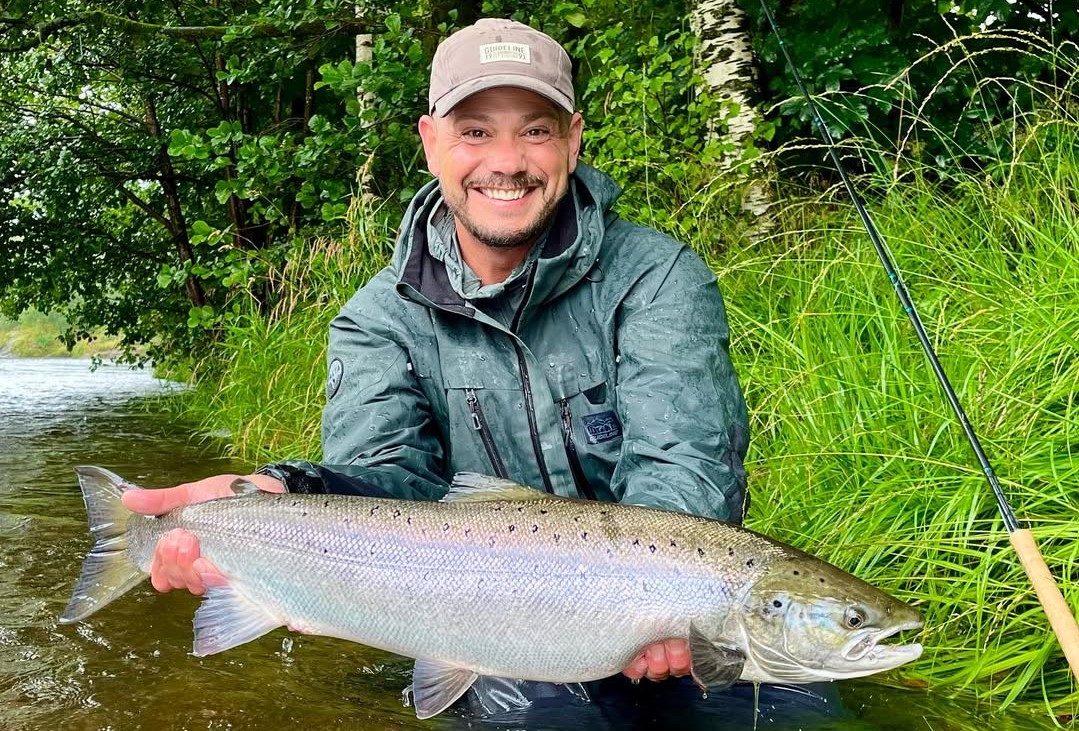




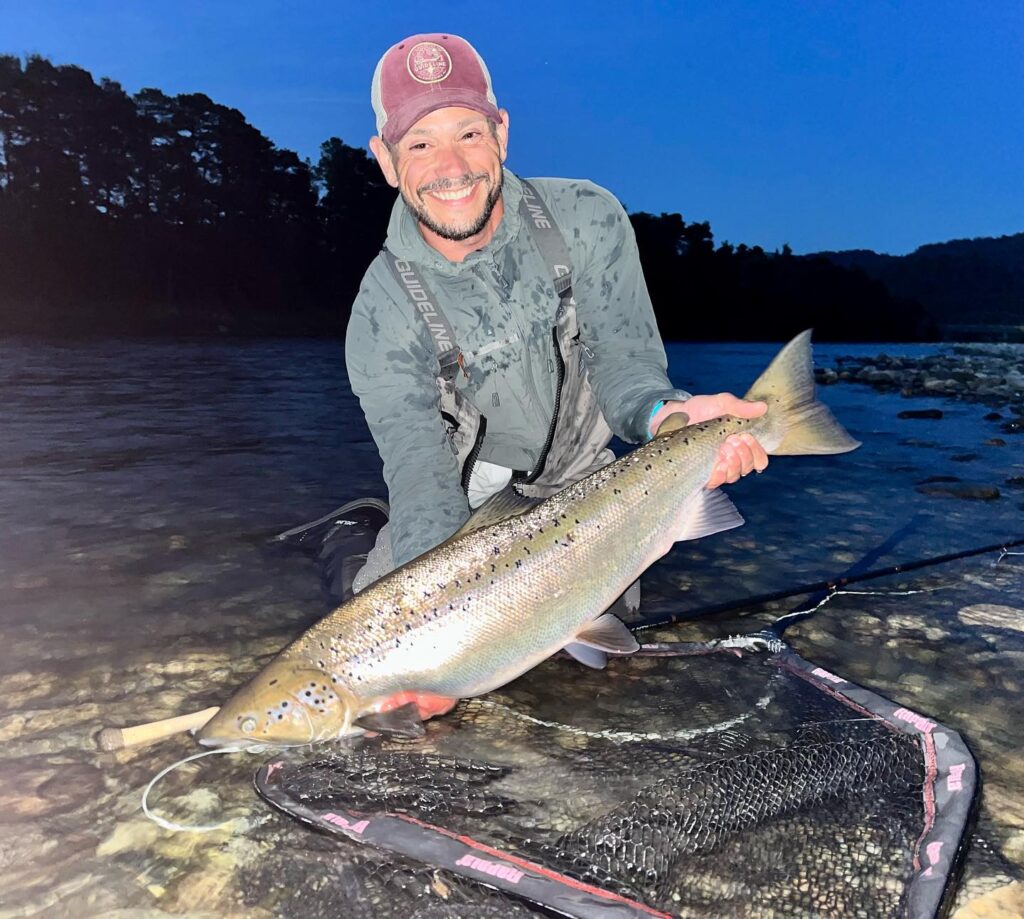
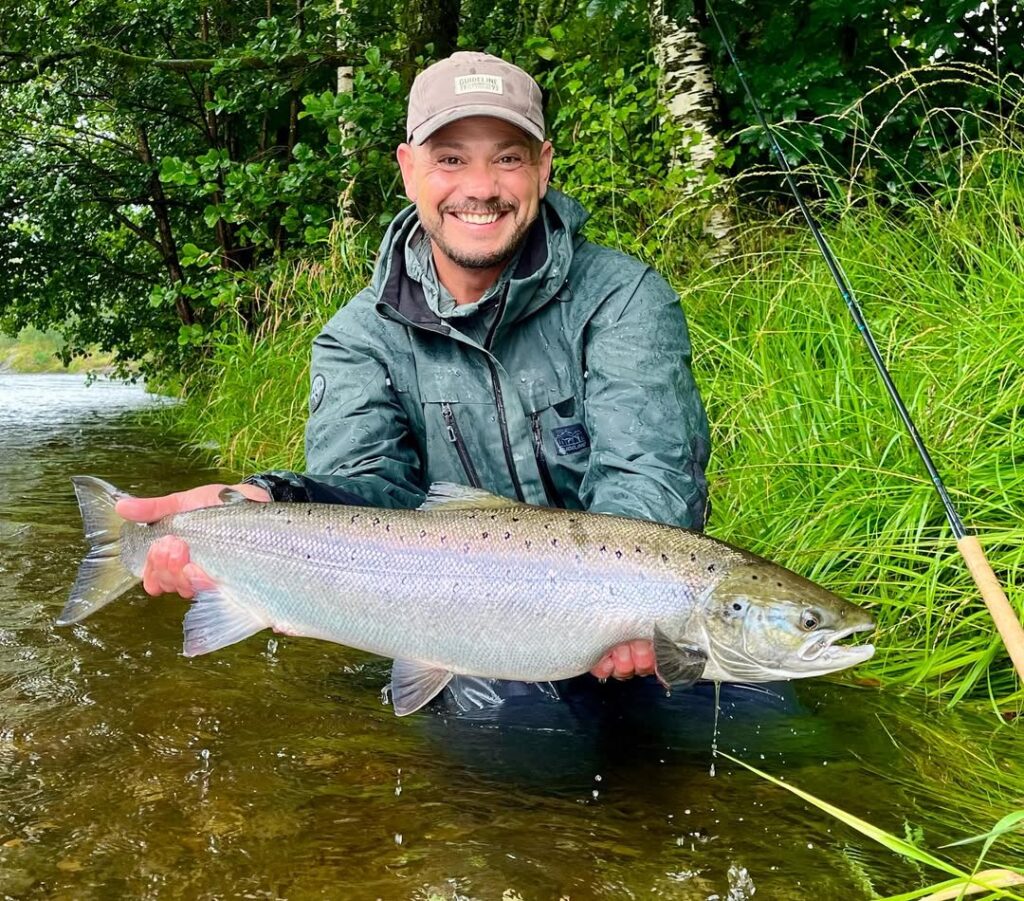
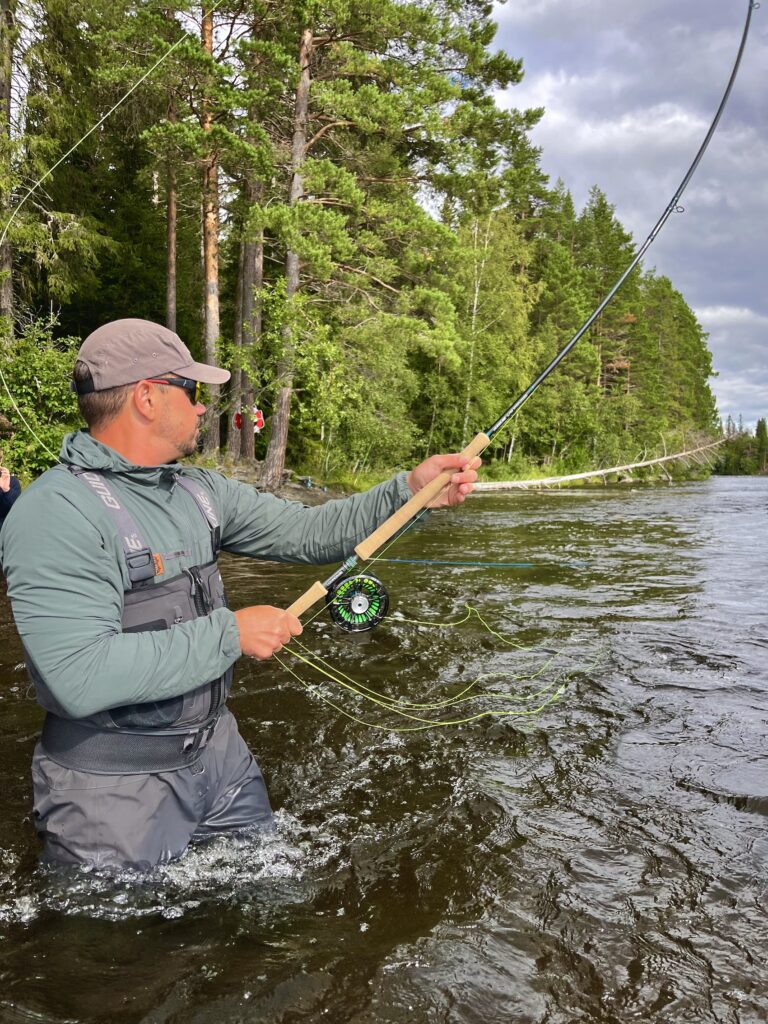
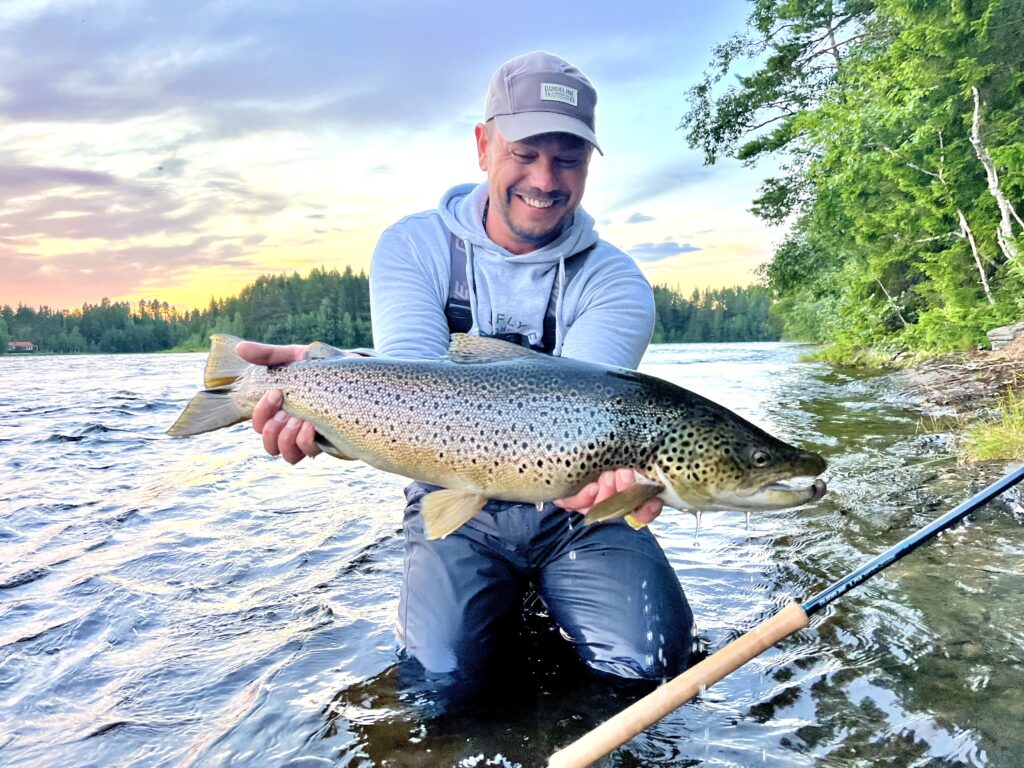
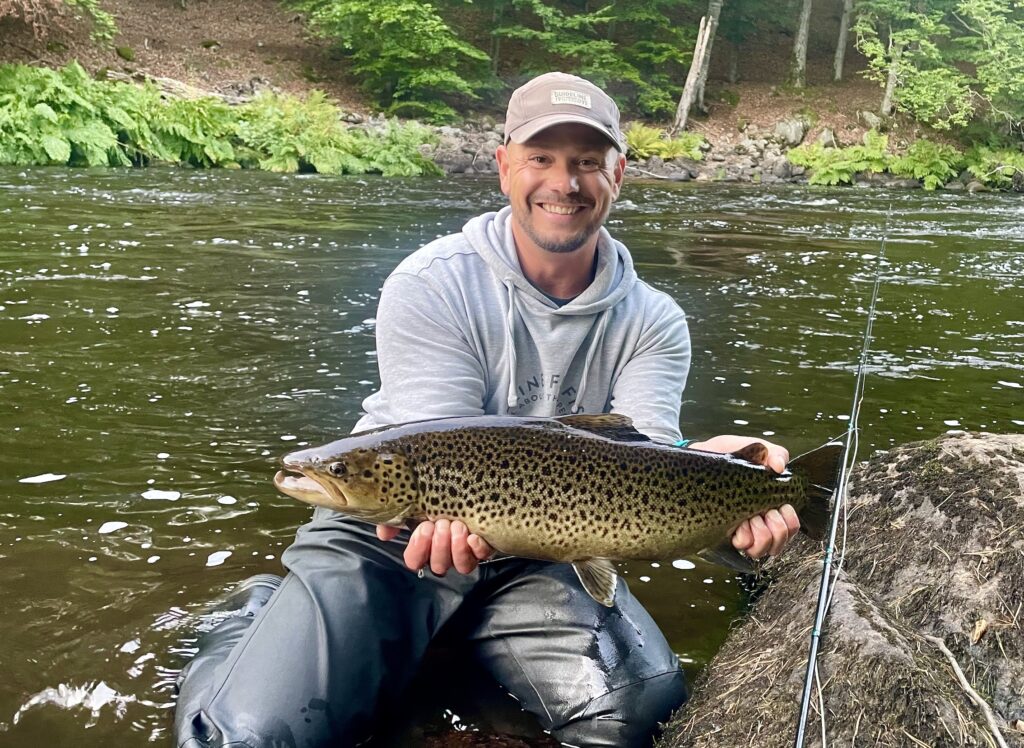
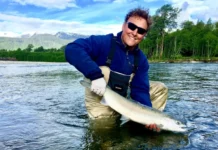





Stickman Hook — Swing physics that feel perfect when you nail them. Chain momentum, skip anchors, and fly. Challenge: complete a hard set with zero falls—clip it.