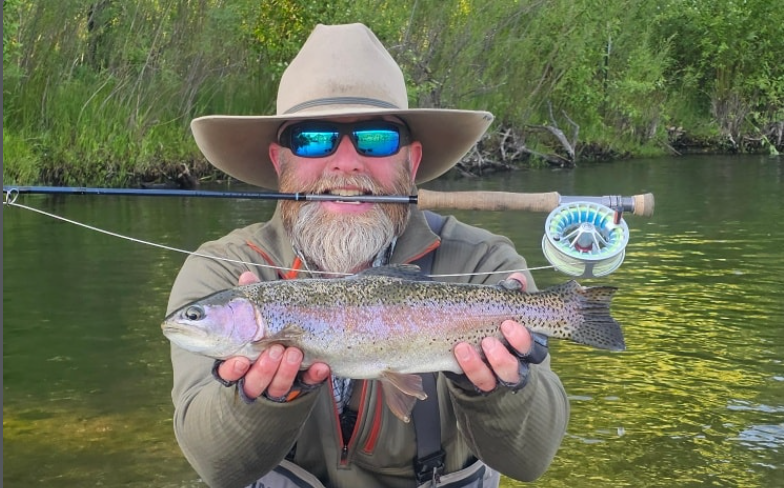
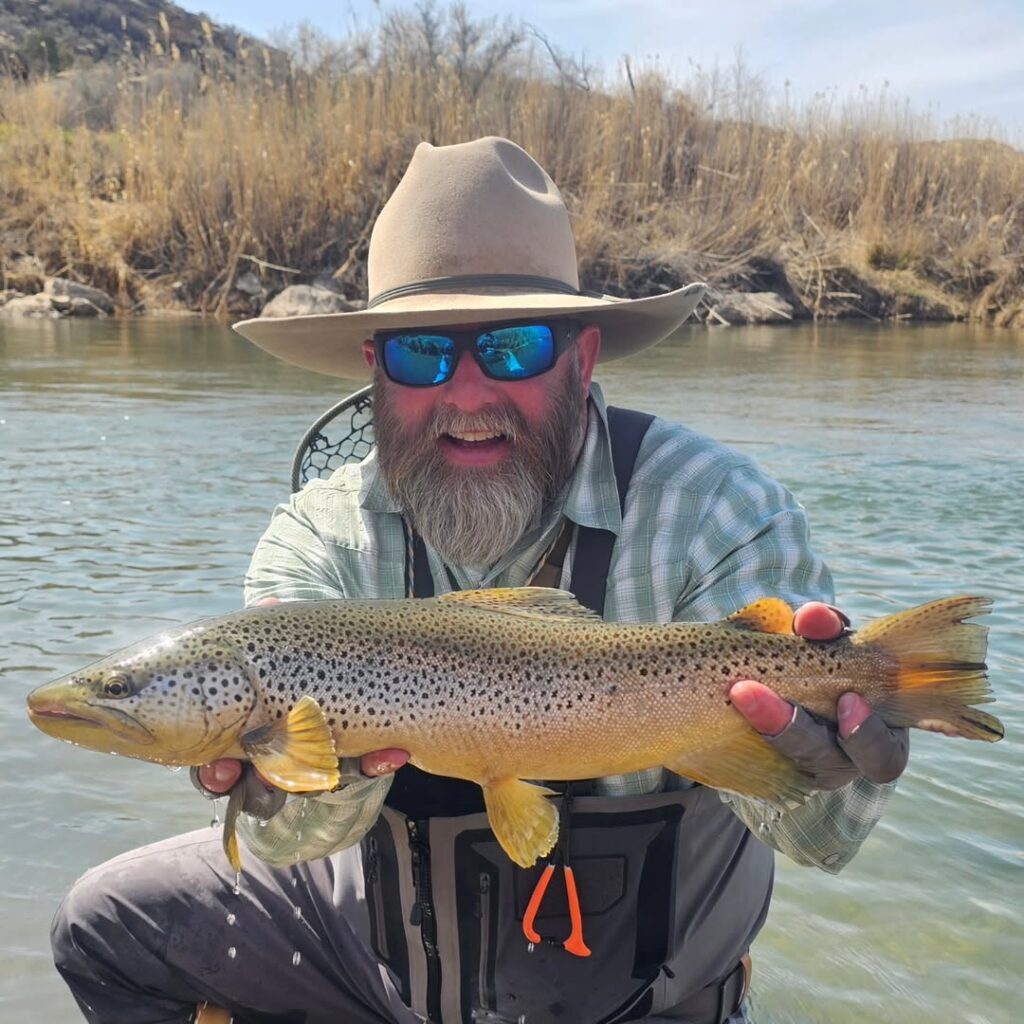
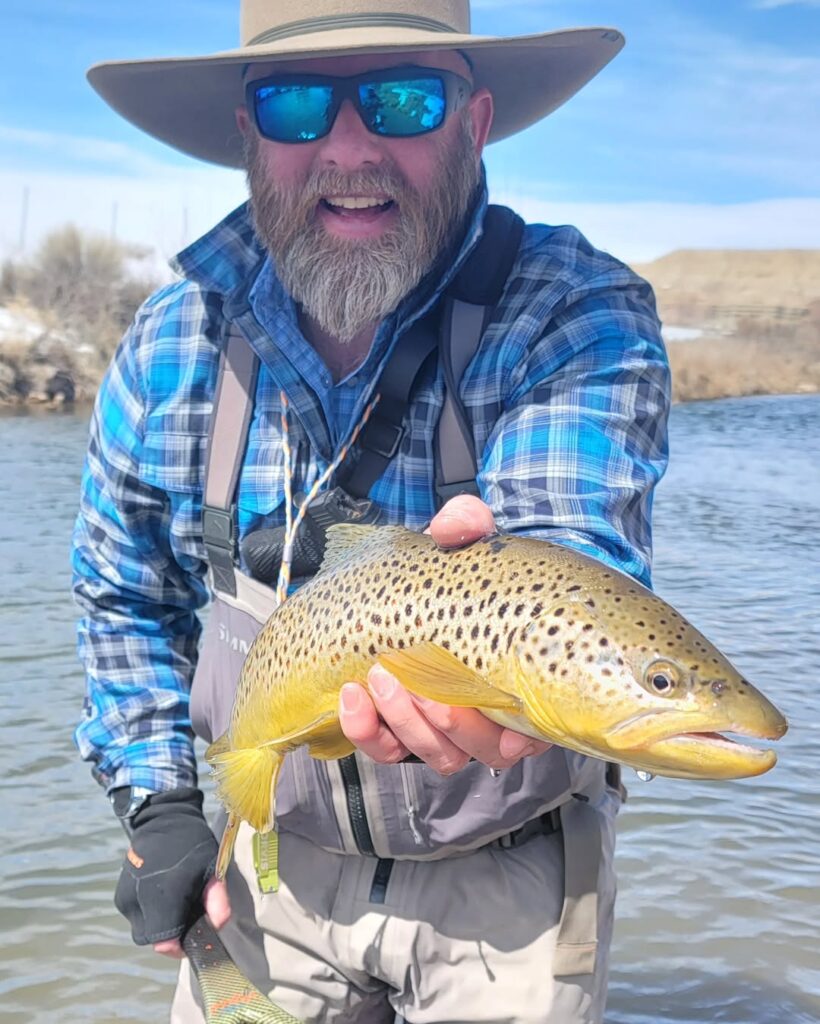
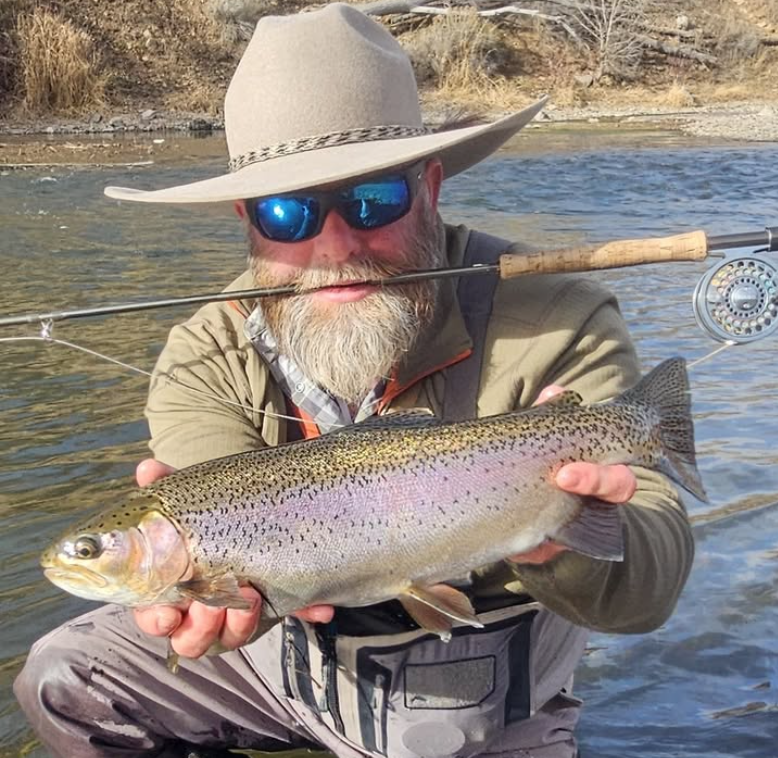
Fly fishing has a way of pulling you back when you need it most. And for Mike O’Brien, those quiet hours on the water turned into a full-on career shift, from financial services to guiding full-time in Utah.
In this episode, we dig into what makes Utah such a sleeper fly fishing destination, why the Provo River is a legit year-round option, and the small tweaks that can turn a slow day into a “how is this even legal” kind of day. We also break down Mike’s go-to winter and shoulder-season setup: the bounce rig.
If you’ve ever felt like you’re “doing everything right” but the trout still aren’t eating, Mike lays out exactly where to look, what to adjust, and how to slow things down enough to get the takes.
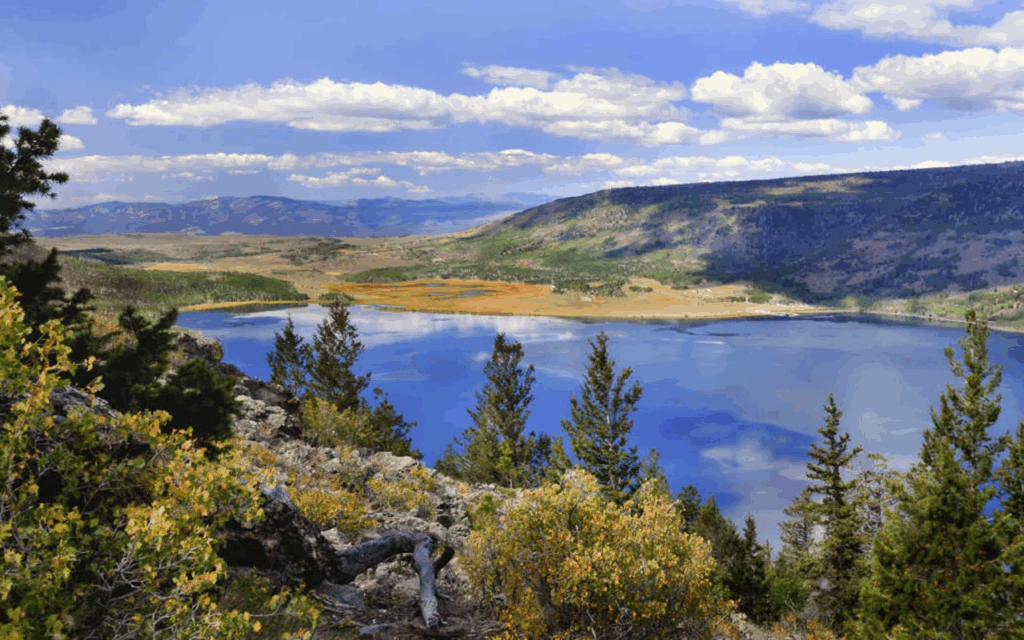
One of the biggest perks is access. Mike says you can land at Salt Lake City and be fishing within about 40 minutes, which is tough to beat if you’re trying to squeeze in a day around work or family.
And there’s more to do off the water, too, which matters if you’re traveling with a spouse or crew who isn’t fishing all day.
03:39 – Mike’s first fishing memories go back to being a kid with his uncle, then fly fishing came into focus in Oregon on the John Day River. He started out hammering smallmouth and later expanded into coastal sea-run cutthroat, steelhead, and trout.
Later, he moved to Utah for a promotion with JP Morgan, but that offer dissolved. After bouncing through a few transitions and big life changes, he met the woman who’d eventually become his wife and she asked the question that changed everything:
Mike’s answer was simple: fish and hunt full-time. And that’s exactly what he built.
09:05 – Mike’s guiding is centered in “central Utah,” with most trips happening on the Provo River. If you book a half-day or full-day, chances are you’re fishing the Provo, with the Weber River in the mix depending on conditions.
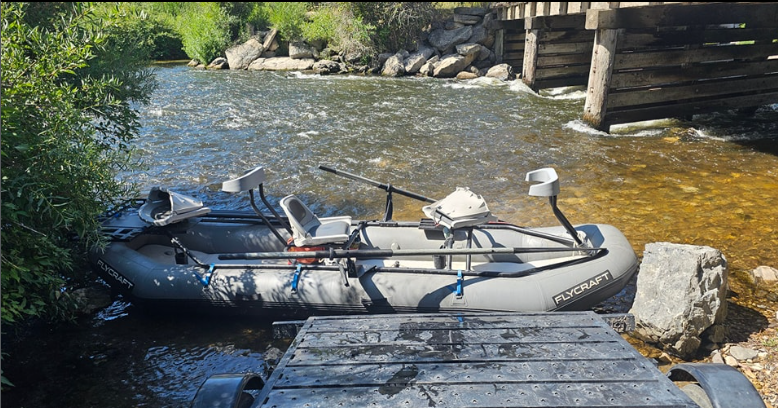
13:00 – The Provo is smaller than a lot of classic Western float rivers, so Mike runs a raft setup (Flycraft) instead of a traditional hard-sided drift boat. The big advantage is that you’re not just floating and casting all day.
You hop in and out, fish the best runs, and use the boat like a mobile platform. It’s kind of a “best of both worlds” situation: walk-and-wade feel without grinding miles on foot.
If someone wants a break, they can sit back and enjoy the view while still staying in the game.
13:45 – Mike also offers remote streams and river trips where you get away from the crowds, especially in summer and early fall. These are higher elevation waters where you can run into cutthroat, brook trout, and even tiger trout.
14:03 – In mid-October through November, Mike says they’re in that pre-spawn window, and the fish start getting aggressive. That means:
This is also where we got into something important: Utah biologists have encouraged anglers to harvest some brown trout on the Provo because numbers are high.
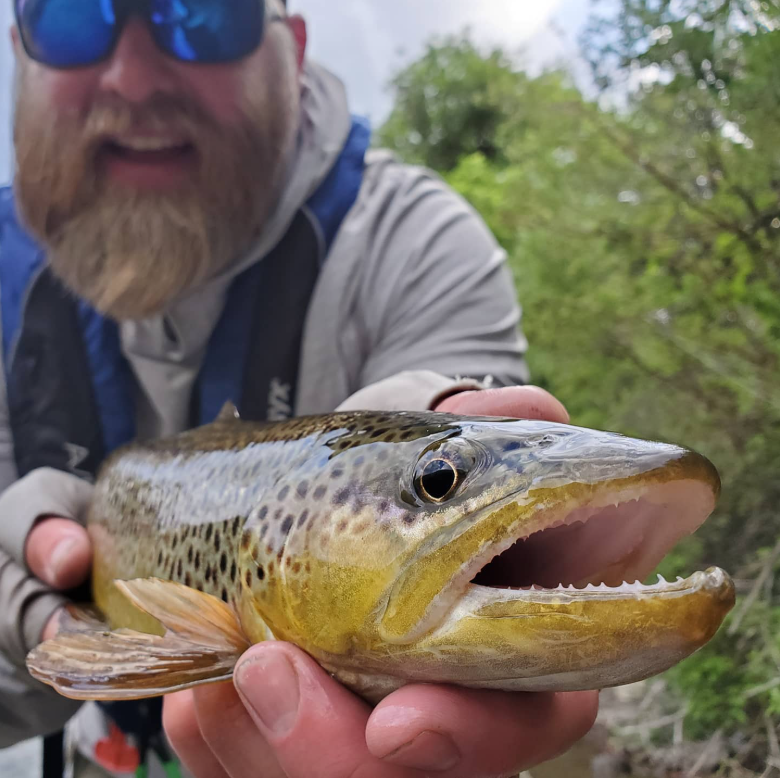
The goal isn’t to wipe out brown trout. It’s to thin the smaller size class so fish aren’t stunted, and the river holds more quality fish in that 17–20 inch range.
22:32 – Winter fishing can be excellent, but the feeding window shrinks. Mike typically starts winter trips later in the day to avoid the deep freeze and line up with the midge activity.
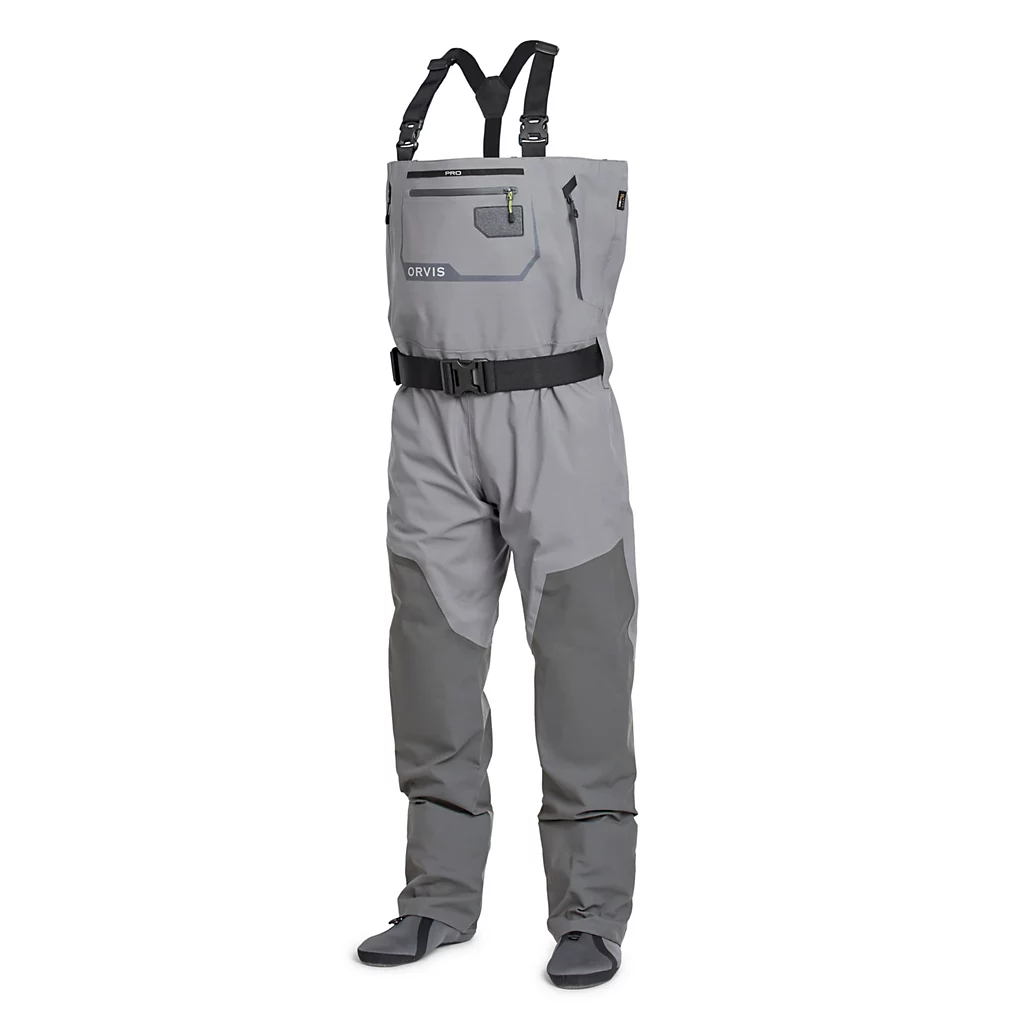
He also mentioned one thing that matters if you’re traveling and don’t have gear: he provides solid equipment, including waders and boots.
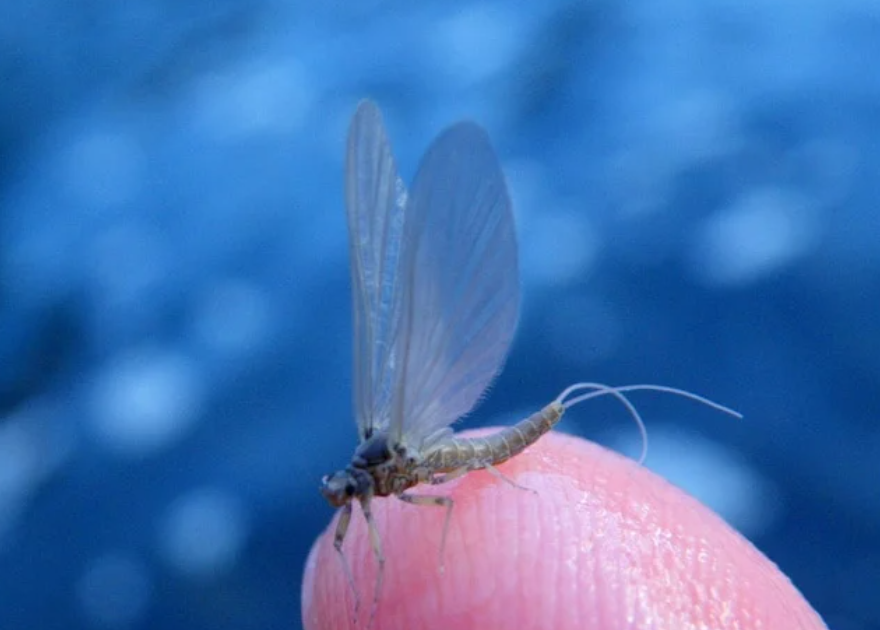
Mike says April and May are some of his favorite dry fly months on the Provo. He sees more trout noses up during the BWO hatch than nearly any other hatch.
He told a story of a newer angler who wasn’t getting eats subsurface, so they switched to dries, and she landed 10 trout over 16–17 inches on a half-day.
That’s a good reminder that sometimes the “nymph always works” mindset doesn’t hold up when fish are locked into surface feeding.
47:10 – Mike likes CDC dries because they sit low in the film and look more natural than a high-riding hackled pattern.
He mentioned a favorite BWO dry and the importance of visibility too, adding small hot spots so anglers can track flies in real hatch conditions.
He also shouted out Lance Egan’s patterns from Fly Fish Food, including the Corn Fed Caddis.
54:51 – To wrap things up, we shifted gears into hunting.
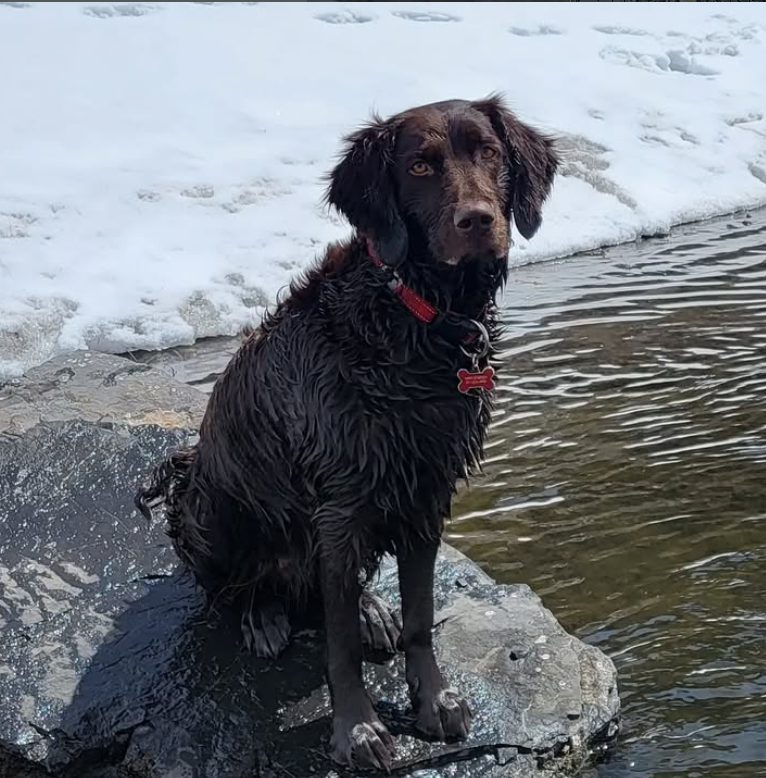
Mike said his dogs will even jump in during fishing and try to retrieve trout like they’re birds, and one of them will dive underwater trying to get fish back after release.
They point, flush, retrieve, and even work rabbits, making them a big part of Mike’s outdoor life when he’s not guiding on the river.
Episode Transcript
00:02:01 Dave: Fly fishing is where patience meets purpose. Every cast a quiet conversation with the river. Today’s guest has turned those quiet conversations into a full time calling. We’re going to talk about how he left the corporate grind at JP Morgan to build a full time gig in Utah, an outfitting service where he focuses not just on catching fish, but learning the details to make a difference from the tail waters of the Provo to the hidden high country creeks. Our guest is going to walk us through small, minor adjustments that can make big differences on the stream. This is the Wet Fly Swing podcast, where I show you the best places to travel to for fly fishing, how to find the best resources and tools to prepare for that big trip, and what you can do to give back to the fish species we all love. Mike O’Brien is here and he is here to take us into Utah fishing the Provo River. We’re going to talk about streamer bites during Pre-spawn. We’re going to get into bluing, olive hatches, how to lighten up your rig in the spring, and why most guides in the Rockies still keep one rod rigged with the technique we’re going to talk about today. It’s a good one and it’s called the bounce rig. We’re gonna find out why winter trout needs slower drifts and lighter shots, and how a subtle check, instead of a hard set can keep things buttoned up during your fishing. All right, let’s get into it. Here he is. Lots of good stuff today, Michael. Brian, you can find him at Fly Fish with me utah.com or on Instagram. Here we go. How’s it going, Mike?
00:01:25 Mike: I’m doing great. Thanks, Dave. Yeah, really, really excited to be here.
00:01:29 Dave: Yeah, this is going to be great. I think, you know, you’re in a place Utah, which is, you know, kind of. I feel like it’s right in that hot spot area. Right? We’ve done a ton of stuff up north in Idaho. There’s Wyoming, there’s all these western states. And of course you got some big players out in Utah fly, fish, food and all the gang and all that stuff. So I feel like to me it’s a hot spot, but maybe is a little bit off the radar, you know, for some people. And I want to I want to talk about that.
00:01:54 Mike: I think it’s a little overlooked.
00:01:56 Dave: Yeah. It’s overlooked.
00:01:57 Mike: Yeah, it’s it’s funny when people think about fly fishing in the Rockies. Colorado, Montana, Idaho, Wyoming often pop up. But Utah hasn’t been on the radar for a little while, and it’s I don’t know why. It’s we’re really one of the big benefits to Utah is the proximity to the airport and fishing. So whereas and and not to knock any other state, but I know within forty minutes of touching down at Salt Lake Airport, you can have boots in the water and get in lines wet. Which, which is tough to say about some of my neighboring states. Right.
00:02:40 Dave: Yeah.
00:02:41 Mike: And up until I was just told earlier this year, up until about five years ago, more people came to Utah to fly fish than to ski.
00:02:49 Dave: Oh, wow. No kidding. So skiing. So fly fishing is actually bigger than skiing.
00:02:54 Mike: It used to be.
00:02:55 Dave: It used to be.
00:02:56 Mike: Yeah. Now there are so many. The billions of dollars getting put into the ski industry have eclipsed that. However, the opportunities here, we we really do have world class trout, rivers and streams and and it often gets overlooked for the quality of experience, the accessibility and then all the other nice things that you’re able to do, fun things that you can do. You know, if you bring your spouse or family, um, which a lot to do and they can be really entertained versus, you know, if you go out to other spots, it can be pretty remote and your your options can be quite limited.
00:03:39 Dave: I think that today we’re going to talk about that. We’re going to talk about the opportunities in Utah. We’re going to get into some fishing. We’re going to talk about your home because you’re a you’re a guide out there and you’ve got some good stuff going. I haven’t spent as much time in Utah as some of the other Western states, so I think it’s going to be cool to get that update today. But before we get into all that, I want to talk about your guiding your program. Take us back because we like to hear the story of the founder. What’s your first memory of fly fishing? Like? How did you get into it?
00:04:06 Mike: So my my uncle got me fishing when I was seven or eight years old. And when I was in my late teens, like eighteen, seventeen, eighteen, I got into fly fishing on the John Day in Oregon.
00:04:23 Dave: Oh, really? John Day?
00:04:24 Mike: Yeah. Yeah, I grew up in Oregon. Um, and would spend my summers out here in Utah and Wyoming as a kid and, um, doing, you know, the family road trip thing. And, um. Yeah, catching just heaps of bass on the John Day is how I started. And then that converted to, um, you know, all the coastal rivers for sea run cutthroat and steelhead and, and trout and, and all that stuff and then some Stillwater. But mainly I prefer moving water over Stillwater. And then life got busy and I found. I fell back in love with fly fishing in my thirties, and so I’ve been a full time guide now for eight years. Um, I’ve had my outfitter now for six, and the reason I started my own outfitter instead of working for others is I really try and focus on the experience versus, you know, just getting people a fish or into fish. And, um, and so the level of experience I think that I offer is, uh, is a little different out here.
00:05:34 Dave: So basically so started in Oregon. John Day fishing for and what was the species there was that you got some of that bass.
00:05:42 Mike: Hundreds a day. You know, it’s just on little float tubes back then and just hanging out and having fun.
00:05:49 Dave: Yeah. Just going for it. And what got you out again to Utah.
00:05:52 Mike: So, um, I used to be in financial services, and I took, uh, a promotion transfer out here with JP Morgan. And then I came out here and that, uh, that job actually dissolved. Um, the offer went away, and so I transferred over to ETrade, and then, um, after a series of events, big life changes, I got out of financial services entirely, and, um, met a gal, and she said, uh, what do you want to do? You know, being in my forties, I was like, what do you mean? What do I want to do? I want to fish and hunt full time. What do I want to do? What what does anyone want to do? And she said, well, maybe you should be a guide if you love fishing so much. And so I started guiding. And it’s funny, I, I talk with a lot of friends who are guides and, you know, they think, oh, guiding so hard and it’s so stressful. And, but for me, like every day is just. It’s so fun.
00:06:53 Dave: You did? I’m just gonna say. I was just gonna say that. That’s a good gal. Yeah, you should stick with her.
00:06:57 Mike: Yeah. Especially like it doesn’t matter if the. If the weather’s absolute garbage. Like, I still get to fish, right? And teach, teach people about my passion. And, um, I mean, I in my free time, I fish and fish. Not just here in Utah, but all over. And in fact, my wife said, oh, so I married that gal who said, what do you want to do? You should be you should be a guide. I married her because. And she’s so supportive. She’s wonderful and absolutely amazing. So every trip we take typically includes fishing. Always includes fishing, actually. And, uh, she said, you know, every trip we take doesn’t have to include fishing. I said, you’re right. Well, sometimes we hunt too, like, it’s okay, but honestly, it’s there’s nothing I would rather do.
00:07:49 Dave: Yeah. You’re talking bird hunting. Is that what you’re.
00:07:51 Mike: Yeah, especially fly fish. You know, hunting season is not nearly as long in Utah. I can fish every day of the year. I do a lot of bird hunting, some big game. And last year, I had a big trip down to Africa where I hunted. But I also caught trout in Dalström, South Africa, which was unbelievable.
00:08:11 Dave: South Africa.
00:08:12 Mike: Yeah.
00:08:13 Dave: You’re catching what were the species in South Africa?
00:08:15 Mike: So those were rainbow and brown trout that they plant up there. But it’s in these highlands that are just beautiful. You know they’re not they’re not obviously not native. They’re not naturally reproducing. But it was still you know I still caught trout in South Africa.
00:08:32 Dave: That’s the thing about the fly fishing has gotten so cool is that it’s become this world. You know, you name the spot anywhere in the world, any country, any little stream, any. It doesn’t matter how big or small the fish is, you can catch something. You know what I mean? That’s what it’s kind of grown to.
00:08:45 Mike: Almost anywhere.
00:08:46 Dave: Right? Where it used to be. Just this trout fishing. You know, that’s it. That’s all you had. And now it’s just it’s like everything. Cichlids. We did an episode on in Texas.
00:08:54 Mike: Yeah, yeah. And if you’re a straight up purist, that’s not for you. But I was already there, and I was like, can we go to Dahlstrom? And my, my guide was like, absolutely, let’s go fish. So took a day up there. It was magical.
00:09:11 Dave: So that’s it. So you’ve got the good gal there. She gave you good advice to stick with it. So. And you could just tell, you know, that’s the thing about the guiding. I remember because I did some guiding and I really it was always a struggle for me. I didn’t enjoy it that much because it was the pressure. But there’s always these people you meet that are just meant for it, you know? And you seem like one of those guys that you just love it.
00:09:30 Mike: I do, and I tell people to, you know, you can’t beat the views of my office. You know, the the Wasatch Mountains are ninety five percent of the time what we see, what we’re looking at when we’re fishing and they’re spectacular. The view never gets old.
00:09:45 Dave: So with your program, maybe let’s take us back a little bit there. So what are you covering? What’s your main river when people are fishing, are you covering, you know, just part of Utah. Talk about that a little bit.
00:09:55 Mike: Yeah. So that’s a great question. So I’m in kind of the in central Utah we mainly fish the Provo River. If you book a half day or a full day walking weight or a float, vast majority of the time going to be on the Provo River could also be the Weber River. But that’s that’s what we do most of the time is the Provo. Um. And if the Webers fishing really well, then we might go up to the Weber River, which is closer to Salt Lake. If you’re staying in like Park City, though, it’s. Excuse me, it’s about sixes. The Provo River is a blue ribbon fishery. It’s spectacular. It’s world class, and the fish are aggressive and fight hard. And and we get to fish year round. It’s really fun.
00:10:40 Dave: So the Provo is the river when people call if they’re if they want to go to Utah. That’s probably the place that you’re going to take them. So is the promo. Now describe that a little bit. Is that a is that a tailwater. Is that a freestone. What is that.
00:10:51 Mike: So there’s three sections of the Provo the upper the middle and the lower. The upper is a freestone. Both the middle and the lower are tail waters. Um the middle Provo is probably the most fished stretch of water in the state. And it is, um, it has a lot of fish. They’re a little smaller, but they have it has a great green drake hatch. They’re very open to, um, hit and dries. I fish the middle a fair amount, but where I really like to fish is the lower Provo. The fish count is over six thousand per mile. They are in the upper and high teens for length and they are aggressive and fun. That’s where we do our floats, which is, you know, from April through September, that’s probably eighty, Eighty eighty five percent of what we do, our float trips. And, um, as a normal float trip where you’re just casting from, you know, a hard side, uh, drift boat for, you know, all day, these are the Provo River’s a little smaller, so we are in rafts. Um, I run a fly craft, and so we hop in and out and use the use that platform to move from run to run and then fish in between. So you kind of get, I tell people, you get the best of both worlds. You get the walk and wait experience without all the effort. And then if you know, if you’ve got a kid with you or a wife who’s like, I want to take a little break, great, sit back and, you know, crack open a beverage and and enjoy the view. Right. It’s spectacular. And, um, and so that’s, that’s where I spend the majority of my time is on the Provo. We’re really opening up to a remote streams and rivers trips, which is a full day. and, um, and that includes a little bit more driving, but you’re the odds of you seeing other people when you’re fly fishing are really low and getting into different species to the Provo holds rainbows and brown trout. But in the last week and a half or two, I fished with clients and we’ve caught cutthroat and brook trout and couple tigers. So there’s a lot of different opportunities if you want if you’re in, if we’re in the summer or late spring, early fall, we can go up in really high elevation creeks and the headwaters of several rivers and, um, and chase a lot of different aggressive, you know, smaller fish, but super fun. Or we can go out to places where last week, as an example, we landed a few twenty two, twenty three inch browns. And so it’s just there’s a lot of opportunity and a lot of different things that we can we can do depending on on the client’s ability and timeline.
00:13:45 Dave: Right. Gotcha. And and those are so you’ve got the Provo, you said the lower Provo the middle. And so you have some other streams you’re going to other than the Provo that are in. Yeah another basin.
00:13:54 Mike: Yeah. So hotspot those obviously. Right.
00:13:57 Dave: But yeah let’s not we don’t want to spot burn anything but but I just want to verify that you have some other secret spots where you can go other than the Provo.
00:14:04 Mike: Yeah, absolutely. As well as like there there are a couple small Stillwater places, little reservoirs and and lakes where we can get into just crazy fishing. So depending on the timeline, right, depending on the month, we can really have a lot of fun going remote and chasing some fun fish. And it really makes it, you know, a little bit of variety for a guide is is fun. But for the client to, you know.
00:14:34 Dave: Definitely get some new add some species to the to the list. So you mentioned the month. Let’s just take it now as we’re talking. We’re kind of in the October. November is right around the corner period. Maybe. Let’s start there. So are you guys. When is your program. So you mentioned through September. Are you kind of do you cut things off and start hunting at some point or are you still are you still guiding.
00:14:52 Mike: So I yeah, I’ve got clients this weekend and next week I fish year round and and then I bird hunt when I’m not on the water and when I’m not, you know, obligated with, you know, family things. But it goes fishing first and then I’ll fill in with hunting and some some days I get to do a little cast and blast. So, so that’s, you know, just just depends. But yeah, right now, um, mid-October into November, we’re in Pre-spawn. So these fish are starting to starting to get a little randy and thinking about building redds. So it’s great streamer season. We have a great blue wing hatch right now that’s going off in the afternoons. A lot of dry eats. I even saw some October Caddis and some PMDs. Even a lot of midges still popping off now that things are cooling down and the and the water temp is dropping, insect life is really picking back up again. And uh, and so it makes it really fun. And the recruitment on the lower Provo especially is so high that we’ll, we’ll even fish when they’re spawning. And we are we have been encouraged by our DNR, by our Department of Wildlife to take fish, because there are so many in our river system on the Provo.
00:16:15 Dave: To kill brown trout.
00:16:16 Mike: Yeah, browns, especially browns, outnumber rainbows on the lower Provo, probably eight or nine to one. And on the middle it’s probably like eighteen nineteen to one. Yeah. So especially on the middle Provo, that needs to occur more than it is, because the size of the trout is being a little stunted because there’s just so many of them.
00:16:41 Dave: So you could kill a couple and take them home to eat?
00:16:42 Mike: Yeah. In fact, I, I encourage it with clients. The rule the law in Utah for the Provo is two under fifteen inches, which is a great, great size for eating. Right.
00:16:56 Dave: So two under fifteen, but nothing over fifteen. Yes. And that’s because I guess that would be another whole conversation. But you would think if you’re trying to reduce the numbers that you would probably want to take some of those. What is the reasoning? Do you know why?
00:17:09 Mike: Yeah. So the reasoning is catching something in the seventeen to twenty inch range. One at seventeen to twenty is way more fun than five at ten. And so and those are the ones that are spawning and and being, you know, offering a better experience for the angler and providing a more like a, you know, a more of an experience. So it’s the size class also in volume for population is so much higher in that smaller range way higher. And so they’re trying to to cull that smaller range.
00:17:48 Dave: They’re trying to balance.
00:17:49 Mike: Yeah trying to balance it out.
00:17:50 Dave: Because this isn’t something where they’re like trying to wipe out all brown trout. They want to keep some browns because browns are good but they’re but they want to try to balance a little bit to make it.
00:17:59 Mike: Exactly. There ought to be there ought to be. You know, obviously you can’t have all trophy sized fish. There have to be smaller fish that are coming up to replace. But right now that small the the small size population is over out of control, especially on the middle. Provo.
00:18:18 Dave: Well, that’d be an interesting conversation right there to bring somebody on to hear more of the background on that.
00:18:23 Mike: Yeah. And and I’m not I’m not a biologist. Right. I don’t but I go out there when they’re doing the, uh, the sampling of the fish, you know. And typically that happens. You know normally end of October when they’re doing it. It happens every couple of years.
00:18:38 Dave: What’s the big fish you’re seeing.
00:18:40 Mike: So on on on the, on the lower Provo I’ve, you know, when they’re zapping fish and sampling them, we’ve seen twenty, twenty one, twenty two inch rainbows and browns. And on the middle we’ve also seen fish that’s that size and a little bigger even.
00:19:00 Dave: So there’s fish over twenty in the whole system.
00:19:04 Mike: Oh yeah. Yeah. It’s and those are true trophies right. If you’re finding a twenty three inch brown in on the Provo River, that’s, that’s a, that’s an exceptional fish. I consider anything eighteen plus as a trophy.
00:19:21 Dave: Exactly. Well and that’s the cool thing about it. I mean, size is all relative to the basin. You know, if you’re on a a blue line stream, you know, you might have a six inch trout is a trophy fish, right?
00:19:31 Mike: Yeah, yeah, in the appalachias. Man, you’re stoked if you hit eight. And that’s. It’s all a matter of scale, right? But it’s, you know, you’re not getting c run size fish.
00:19:42 Dave: No. These fish are growing and this is a and again back to that. So is the Provo. Does it have a lake. Is it or is it a tail water.
00:19:48 Mike: So it is fed from what we call the Uinta mountains. Uinta. And it’s one of the few mountain ranges in the US that actually runs east to west instead of north to south. And so from that basin it feeds the upper Provo, which then, you know, several other streams join it and feed into the Jordanelle Reservoir. And from Jordanelle to Deer Creek Reservoir is the middle Provo, and that’s in the Heber Valley. And it’s beautiful. Uh, couple weeks ago saw a few moose as we’re fishing.
00:20:21 Dave: No kidding.
00:20:22 Mike: Oh, yeah. Yeah, yeah. Um, and as a heads up, you know, so nobody gets, like, scared when they book with me, I always carry a sidearm. Um, like on my chest. Because moose.
00:20:35 Dave: Moose are dangerous.
00:20:36 Mike: Yeah.
00:20:37 Dave: Or can be not. I mean, the likely the chance of you getting mauled by a moose are, like, almost zero. Probably, but. But it could happen.
00:20:44 Mike: Yes, but you can never underestimate, you know, people’s lack of awareness. And then to a large degree, their stupidity. Right. People just kind of think, oh, wow, look at that moose. And then they start moving towards it. You know, hackles up, ears back, like, hey, man, you know, read the room. Right. So it’s they’re most dangerous when it’s a cow with calves or a cow with a calf.
00:21:08 Dave: Yeah. Same with bears, right? Yeah.
00:21:10 Mike: Yeah. Same with bears. So with her cubs and I haven’t had interactions where I’ve had to pull, but we’ve come close a more than a few times, you know, because calves are curious and they’re like hey what’s going on? And they’ll, they’ll walk right up to you. And that’s when, you know, that’s when you want to have a guide. Who knows what’s going on.
00:21:30 Dave: I mean, always being prepared is better than not not being ready for it. So that’s and that’s interesting too, because, yeah, I didn’t realize that moose are going down, you know, further south than you guys. I mean, you’re not way south. Obviously, you’re up in the northern part of I mean, that’s the thing about Utah, right? It’s it’s a big state. If you go down, like you can get down into more of the I mean, I guess are you do you consider where you’re at that kind of the high desert or mountain or what. What is the area. It’s not the desert, right?
00:21:54 Mike: Yeah. So I live in a valley, that is I would consider it high desert. And Utah is the second driest state in the US for precip. Like, only Nevada has less rain than we do.
00:22:08 Dave: Oh, yes. You are a dry state, right?
00:22:09 Mike: Yeah. So we’re really dry. But the mountains, you know, depending on elevation can get a lot of snow, quite a bit of rain. Their own.
00:22:18 Dave: Their own weather pattern in the.
00:22:20 Speaker 3: Yeah, yeah yeah yeah.
00:22:22 Mike: I’ve been in the mountains at ten thousand feet in August fishing. And all of a sudden we get three inches of snow. You know, it’s it can get crazy. You just have to be prepared.
00:22:32 Dave: So that kind of sets the scene a little bit on Utah. And we will kind of bump around here a little bit. But let’s take it to I think, you know we’re talking October November. This episode I think is going to go out December Jan somewhere in the winter. So let’s talk about that. How are your tactics if you just take it to let’s say January. So you do book trips in the winter.
00:22:50 Mike: Yeah. So so it’s funny the I am more busy when the snow is bad because people book trips to ski. And then if the skiing is great, a lot of my return, like a lot of my return clients, don’t give me a call and I’ll hear like a couple weeks later, hey, we were just in Utah, had a blast, and the snow was too good. So we didn’t call you, right? Um, but if the snow is bad, I get a lot of calls and and fishing in the winter here on these tailwaters can be really good. Great. Midge hatches, um, most every day. And, you know, if you’re if you’re bundling up for skiing, you can easily fish. Um, now might be a good time to let you know. Like, one of the things that sets me apart as an outfitter is I use, like, Orvis pro waders, um, nice Simms waders. Like, I’m not using, like, inexpensive or less lower quality cheaper gear. So as long as you can bundle for weather, like, my gear isn’t going to fail on you.
00:23:56 Dave: Yeah. Oh, so you’re saying you have gear for if somebody’s coming in? They don’t have their own gear. You could hook that up.
00:24:02 Mike: Oh, absolutely. Yeah. And that’s that’s included with with the trip.
00:24:07 Dave: Yeah. So somebody coming in for sale, whatever. It is a business in the Utah, because that happens a lot. We were talking to Rafael, one of our members in the community, and he was, um, I think traveling over to, you know, Cleveland and he, you know, and he heard Jeff Lisk on the podcast. He’s like, all right, I’ll check it in. And he went up and just got a day with Jeff and it was on a business trip, but you probably get some of that too.
00:24:26 Mike: I get a lot of it. I get a lot of it. It’s good. Really high end. I kind of cap my corporate trips or larger group trips and try to keep it to ten to twelve max, but, um, yeah, I, we include waders and boots. Right? Everyone should know you bring your own hat and sunglasses and dress for the weather. But, you know, I do hand warmers in the winter, always have water, etc., but it’s. Yeah, we we provide all of that. And then the guides have their own rods and everything. So you can literally show up in a polo and, and khakis and, and go for it and then head right back into meetings if you want. I have clients doing that all the time.
00:25:13 Dave: Well, let’s start on that. Let’s think of it as a winner. So if we were coming in there, somebody coming in, you know, they got a business meeting, they’re going to hop out for you on a on a trip. What is the talk about that winter fishing. Typical. What’s your rig setup look like? What do you fish in there like flies and stuff.
00:25:28 Mike: So typically that’s going to be for winter. I will it’ll be midgie. It’ll be really midgie. And we’re using bounce rigs typically as well. And so I would throw on any number like a miracle Midge or a bling Midge or something like that, and maybe, maybe also a little glow bug on the bottom, just depending. A lot of times those those hit great in the Winter caddis, like a caddis booger or caddis pupa. Something like that too does really well. The feeding window obviously in the winter time is much shorter. And so typically those trips start around eleven o’clock, eleven to noon. And and obviously we have much less sun, right? So we’re not going to start at eight a m and absolutely freeze, but eleven sometime between that eleven and three o’clock window is a good thirty to ninety minutes where those trout are going to feed, where the insect activity is moving, sufficient for them to for the juice to be worth the squeeze, right where they’re going to be able to add calories instead of diminished calories, um, by chasing food. So it’s much lighter, slower presentation. Typically we’re on, you know, five or six x tippet. And but it’s the thing I love about fall and winter fishing is there’s so few people out. It’s quiet. It’s beautiful.
00:26:57 Dave: Yeah. There’s snow on the bank a lot of times. Are you.
00:27:00 Mike: Uh, yeah, a lot of times there’s snow on the bank. Not well, not this winter so much. But the last two winters before, I mean, there was significant snow. We had two record setting years, so we were, like, post holing three four feet to get to the river to fish, and because their tail waters, they never freeze over. Right. But yeah, depending on the snow, it can be an adventure just getting to the river sometimes.
00:27:30 Dave: So yeah. So in the wintertime you’re going to narrow that window. It’s going to be, you know, a few hours in the middle of the day. And then you talk about and what is the bounce rig.
00:27:39 Mike: So a bounce rig is indicator fishing with uh, two or three flies, uh, with some split shot on the bottom.
00:27:48 Dave: Oh, yeah. On the bottom. Right.
00:27:49 Mike: Yeah. So it’s if you’re a bass guy, it’s kind of like a drop shot rig, except you’re moving it through the river. And so what ends up happening is the indicator acts as the sail, and it’s pulling the rig through the water, and the weights act as the drag and the ballast to slow it down. And what I, what I tell people is, you know, you can always see the current on the top of the water. And as we know, that’s the fastest of the moving water in the river, and you want it to be like twenty, twenty five percent slower than that surface current, to be more consistent with the current that’s on the bottom of the river. And when you can match that, that’s more the speed of what the food is looking like moving down river, that’s when you get strikes. You could have everything perfect if you don’t have the right speed, you those fish are going to steer clear, right? They’re not going to eat it for love nor money. And so yeah, it’s that’s where it becomes very technical and using I mean, the smallest change in weight or even length of line can make all the difference between lights out catching, you know, twelve to twenty fish in a day versus getting one or two. Right. So it’s it’s really understanding kind of the, the intricacies of that setup to really produce.
00:29:19 Dave: Yeah. And and you balance that on depth and all that. What is the typical are you fishing more kind of riffle type water. Is it pools. Are you mixing. What would be the perfect for that bounce rig.
00:29:31 Mike: Yeah that’s a that’s a great question. So in the wintertime typically it will be on a tail out right leading into a deep pool and through the deeper pools. Because those fish with the water being so cold, their metabolism is slower, their movement is slower, and they’re pretty lethargic. And so they’re not going to be in the fast riffles that are shallow and highly oxygenated, because that’s too much effort and energy to expend when there’s not enough insect life to to feed them.
00:30:07 Dave: They’re hanging in the deep stuff where it doesn’t take any energy or very little, and they’re just sitting down there and you’re dropping them off the tail out right in their feeding lane. and it’s like right in front of them. And they got. Three and as the flies. So you got this weight on the bottom. What would be a typical weight? I guess it depends on how deep the pool is. But what’s the typical.
00:30:25 Mike: So, um, yeah, it depends on the it depends on the depth of the pool. So if let me think most of the time I’m using either double like BB shot or B shot. So so point four grams or point two grams. Right now I’m on point two, I’m using B shot and sometimes I even go smaller and two to four on the point twos is typically typically what I’m doing in this. You know, when we have more water flow, we switch to BB and sometimes even much like AB shot plus just depending on how deep we need it to get and how slow we need it to go.
00:31:07 Dave: Because you want to get that. So you get it down. And when it’s down, how do you know when it’s down? Is it just kind of bouncing along the bottom or.
00:31:13 Mike: Yeah. So we call it a bounce rate because that indicator I. Instead of bouncing I call it it’s ticking. Right. And so what you’re seeing. Off the bottom on the top of the water with your indicator is how those. Weights are moving over the rocks and debris on the bottom of the river. So if. You have it ticking, then you know you’re the the likelihood of you getting a strike is higher, right? If it’s just if the if the indicator is just moving along with, with the flow of the water and the and the bubbles, you’re not going to get anything because it’s moving too fast. It’s moving at the surface current rather than the subsurface current.
00:31:52 Dave: So that’s how you know, when you’re well, you feel it ticking. So you know you’re down on the bottom.
00:31:56 Mike: Well it’s so you need slack. From the tip of the rod to the indicator. You need a couple inches of slack. So it’s not like you’re a nymphing where it’s tight line. Right. So what you’re doing is you’re allowing for a little bit of slack because you want that indicator to just drift dead, like with zero input from you. And then I tell clients, you know, the three indicators typically that you’re going to see before a strike. That indicator is either going to stop, it’s going to drop under the surface or it’s going to hit right. So if it stops, drops or hits, we give it a bump. We give it a check.
00:32:32 Dave: What’s the check? Just a rod tip.
00:32:34 Mike: Yeah. So I call it a check versus a set because I have too many clients from the East Coast, you know, striper fishermen and the like, uh, bass guys, if you yell set, they’re ripping that rod and they’re sending that. Yeah, they’re sending that fish airborne or snapping it off when we’re on light line. So a a check is just moving that indicator a few inches.
00:32:57 Dave: Just a little bit. You’re just kind of popping it up.
00:32:59 Mike: Yeah. But it’s always down downriver.
00:33:01 Dave: So you’re setting or not setting but you’re.
00:33:03 Mike: Into their mouth. Yeah. You’re setting the hook into their mouth. If you pull it up, a lot of times you’re pulling it right out of their beak. And we never set up river, Dave. Never.
00:33:13 Dave: Yeah, always down to the fish. So you’re sitting in the corner of the mouth of the fish.
00:33:16 Mike: You’re welcome to set up river with other guides, but you’re going to hear about it from me.
00:33:21 Dave: Yeah. No, no. Good, good. Yeah. That’s what we wanted. We want to hear, you know, that’s the cool thing about this is that, you know, we’re learning, right? We want to learn on this, on this trip and take it home.
00:33:31 Mike: Yeah. And it’s it’s the I’ve been told the bouncer was like, innovated and started pioneered on the Provo River. That could be you know, I’ve heard from old timers that’s that that that is the case. But I will tell you in the Rocky Mountains, if you hit moving water and you tie up a good bounce rig, it’s it, man. It’s it’s almost unfair.
00:33:58 Dave: Yeah. Because you’re down. Because you’re out there and you got multiple flies. Talk about that. How many flies would you typically have on it.
00:34:05 Mike: So depending on the time of year and what the bugs are doing. I’ll do two to three. Um, three is the legal limit in Utah. Some surrounding states only allow for two, but because they allow for treble hooks, that’s got three. So fly fishermen got the green light for for running three flies. And so what I typically do like if, if there were a blue wing olive hatch going right, I might run three flies on like four x, maybe even three x depending on the flows of the river, because early spring those fish are fired up and hungry. But I’ll do like a pupa on the bottom, like, uh, an a merger or like a good, uh, no, I’m sorry, a nymph on the bottom, a pupa in the middle, and then a merger on top. So you’re hitting three different heights in the water column at three different stages. And a lot of times what happens is you’ll get the the nymph and the pupa hit on the top eighty percent of that drift. And then as it swings right at the end of your drift, as that emerger lifts up and the weights go from being behind upriver from the indicator to downriver, right, it gives that little bit of a lift and pause, and that’s where that emerger will absolutely just get annihilated. And it’s yeah, it’s it’s exhilarating.
00:35:34 Dave: What is your, um, how are you tying what’s your dropper look like when you’re tying these on?
00:35:38 Mike: Um, so I tie, uh, triple surgeon’s loop and use the tags I will tie. I will always do a triple surgeon’s unless I’m on three x, and then I’ll just do a double loop instead. The triple because it binds too much.
00:35:54 Dave: And then how far above that? That weight are you putting your fly.
00:35:57 Mike: So again that depends on time of year. That could be like four or five inches. Or it could be like a good foot. and then I will typically run between flies six to twelve inches normally, maybe with eight about eight inches being the happy medium as kind of the standard. And it’s always fluorocarbon for the bounce rig.
00:36:21 Dave: Floral for everything.
00:36:23 Mike: No, just for the bounce rig, for anything subsurface. So if we’re running a hopper dropper in the summer on a float trip, right, that hopper is going to be all mono because it floats and stretches, but the floral because it’s neutrally, it neutrally sinks right and doesn’t stretch. That’s always going to be floral to that sunken line.
00:36:45 Dave: And well, your three x and all that. Your main line be leader, be floral to.
00:36:49 Mike: Above the indicator is mono and everything below the indicator that gets that gets in the water is floral.
00:36:56 Dave: And what is the typical indicator you’re using?
00:36:59 Mike: Um, so I really like the arrow. Is it the airlocks?
00:37:04 Dave: Oh, airlocks. Yeah.
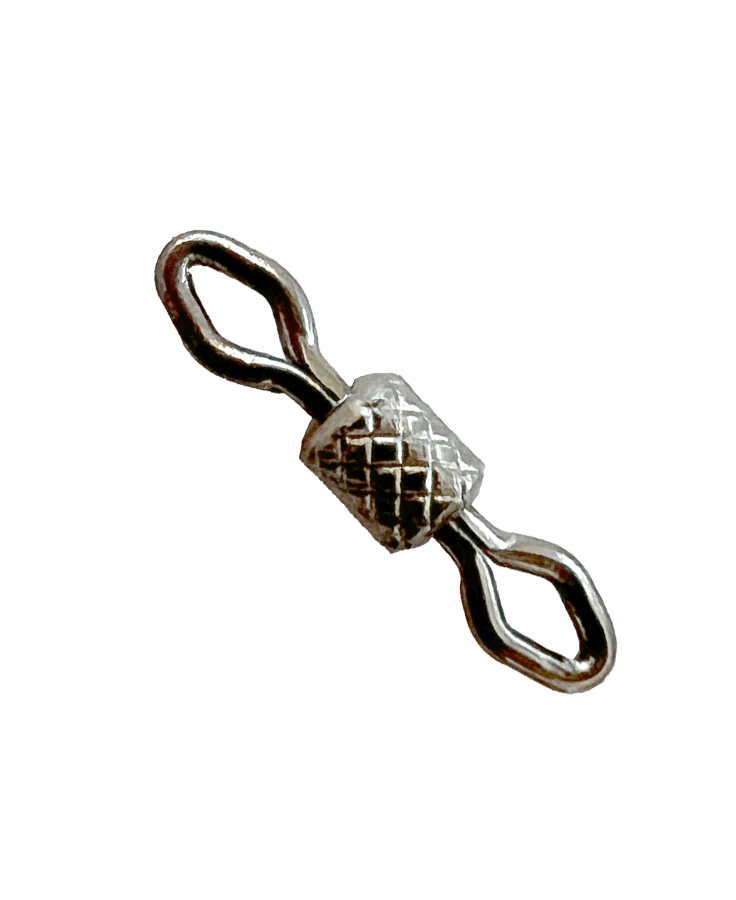
00:37:06 Mike: I have, I don’t know, probably three hundred thingamabobs that I, I just go through those too quick. The Oreos, they’re okay. They’re not my favorite. I really like the airlocks, especially because I’m able to adjust up and down my leader the depth. So from my indicator, the knot that connects my leader to my floral line, I have a micro swivel. Because that line always kind of is moving and twisting and, and then I don’t get binding up and twisting in my fly line. But I’m able to adjust the depth, especially if if we go from one hole that’s rather shallow to one that’s a little deeper. Instead of changing out the whole rig or splicing in a couple feet, I can just slide my indicator up and get that to swing down and give me some extra depth there. So it’s it’s really versatile. It’s it’s fun.
00:38:01 Dave: So that’s definitely one killer technique. Now that is good. We’re talking wintertime, but does that work throughout the year? Are you using that for nymphing?
00:38:07 Mike: Yeah, man I will tell you. Like if you look at ninety percent of ninety five percent of guides year round, at least one rod is going to be set up for a bounce rig. I always, um, I’ll say in September we might do a little bit of or August. Sometimes an in-line rig works really well. Um, but clients have to understand what what the flies are doing underwater to be able to understand how that strike looks different. A bounce rig, hook set and strike. I mean, most of the time that indicator is rippin and bouncing hard. The hits are pretty noticeable. Wintertime more subtle, but most of the time they’re aggressive takes. So you’ve got to be asleep not to notice.
00:38:58 Dave: No kidding. And then what’s the in line.
00:39:00 Mike: So an inline is where you go from indicator down to a fly again with fluoro. And then I like to go eye to eye with a second fly. And normally my first fly is weighted and my second fly is unweighted. So I’ll use like a euro fly like a jig fly typically to the first fly. And then my second one will be like, no wait, that just is able to really kind of feather in the water column and move more naturally. And that can be also really effective, especially on the swing on that bottom third of that drift where that second fly kind of lifts. You know, it triggers that Trout’s FOMO, which is way I mean, trout have FOMO more than any person I’ve ever met. You know, they can’t they can’t stand something get in the way.
00:39:54 Dave: Yeah, definitely. And what and you mentioned the emerger. So what would be that good fly at towards the tail out of the that you’d be using. I guess it depends on the hatch.
00:40:02 Mike: It depends on the hatch. You know, a lot of times I’ll use like a, a CDC dry fly as my emerger because it it’ll trap bubbles and air and want to float. But because of that, that first fly being weighted, it can’t until it starts to lift up for my, let’s say, bluing olives like April and May. Um, I use a lot of, like, the Slim Shady and a lot of, a lot of flies from Hopper one. Rodriguez. His his bluing patterns are just sick, and I prefer them unweighted so that they can they can rise and that that really triggers those trout in that mid mid to higher column. Right. As things are lifting up man. And you’ll you see fish flashing all the time when they’re actively feeding. Sometimes they’re on the bottom of the river, and sometimes they’re like ten inches under the surface. And and that’s where you’re really able to target them, like with an in-line rig and kind of get that to. Once you stop the drift, that bottom fly starts to lift up because the current’s pulling it. And so against that tension you get you get some fun. Fun takes.
00:41:23 Dave: Yeah. Awesome. It’s basically I come out of your, you know, uh, you know, indicator down to a fly. You’re typical. And then and off of the the hook or not? Off the hook. Off of the the eye. And why do you do that? Why the eye versus off of the shank?
00:41:38 Mike: Because I, I, uh, I’ve converted over to, like, in freshwater. I don’t have any barbed hooks anymore. So if I, if I tie a hook, if I tie a line onto a barbless hook, man, it’s a lot of times I’ll lose the. I’ll lose that section. Right. And I’ve learned as long as people keep tension with trout, are typically not going to lose the trout because unless he just straight up beats us, right, breaks us off or or beats us. But if you’re doing your job, we’re not losing the fish because we don’t have a barb. And then when the fish gets landed, if if they pop the hook, I don’t want to catch it in my hands. Right. I don’t want clients and pop the line. I don’t want him to catch a barbed hook in the face or in the hand. It’s just it’s so much easier for me. And and it doesn’t mess up the faces of these fish.
00:42:35 Dave: Those are the two biggest things, right? It’s the fact that it’s better for the fish and it’s better for us if we get hooked. I was doing that with my kids because I had them out in the stream here this last month, and, and I kept, you know, there’s some times that, you know, I might have some flies in the bar, maybe I forget about, but I was really on. I was like, all right, I’m going to make sure this barb is totally pinched down because I want to make sure if my kid catches it in the face. I’m not going to be out there with a pair of pliers having to rip it out of her, you know what I mean?
00:43:01 Mike: Yeah, I’ve had guys like, I’ve heard it hit their sunglasses and then anchor into their cheek. Right. I’ve had gals, you know, who have, like, nice hair, like, it’s all tied up and everything, and that. And that hook gets hit right in the part of their scalp, and it’s barb deep.
00:43:20 Dave: Oh, have you done that with a barb? And you’ve done it. Yeah. And what’s the what’s the bar? I’ve seen that before. How in those situations how did you get that thing out or what would you do.
00:43:29 Mike: So the so the best way to do it is, um, putting pressure down on the hook eye and looping around the hook bend with other line. And as you push down, you pop that and it pops right out. And that works for like big hooks. Like if you’re off like offshore like it, it works for everything. You just have to have someone not moving, right? That whatever it’s stuck in has to be, like, stable. And you have to get a good pop in order the to pop it loose.
00:44:07 Dave: Yeah. And you do it on the numbers, right? You go right. Do it on three. Ready? One, two. And you pop it before you get to three so they’re not ready for it.
00:44:16 Mike: Oh I never yeah you never go to three. Right. Because they tense up and I a lot of times I’ll just do it on one one pop and they’re like oh because that’s when they’re most relaxed.
00:44:28 Dave: Yeah. Right. That’s so I mean for me that is so cringe. That’s one of those things that just gets me like, man, I do. I’ve never actually that trick. I just learned more recently and I think in the past, you know what I mean? So I think in the past. But yeah, that’s a good one. So for anybody that’s listening one hundred percent, you should learn that trick just or actually just use Barbless hooks and you’ll be fine. You’ll be.
00:44:48 Mike: Yeah. Barbless hooks. The other place that’s horrible is the webbing in between the fingers. That happens a ton because a lot of times these hooks are small. You know, it’s not uncommon for us to be eighteen to twenty two. A good chunk of my flies are in that that smaller range, sometimes twenty fours, though. I don’t like tying those. But those small hooks, man, I mean sticky, sharp and close. It’s no big deal, right? But in fingers and faces that that’s where it really.
00:45:19 Dave: Yeah, definitely.
00:45:20 Mike: Yeah, that’s where it really hurts.
00:45:23 Dave: Well, there’s our little segment on our safety segment today. So uh, but yeah, so we’re talking you know, we’re going to take it out of here in a little bit. But we’re talking you know, we’re kind of focusing on winter which is good. As you get into the summer. Are you going to be depends on the situation. Are you doing more nymphing less nymphing are you if the hatch is going, are you really switching to dries?
00:45:42 Speaker 3: That’s a great question.
00:45:43 Mike: So I will say April and May is some of my favorite time to dry fly on the Provo because those fish. It’s. The water’s coming up a little bit in temp. We’re getting some runoff, so the water’s moving heavier. We can walk and wade and second half of April. We’re always able to float, but I see more noses in on that blowing hatch on the lower Provo than for any other hatch. Really? It’s it’s incredible. And so I had a gal this spring who had. She told me she’d hooked a fish once with a fly rod, but so really no experience. And the and subsurface nymphs weren’t working at all. At all.
00:46:32 Dave: So that’s the thing. So nymphs don’t always work. It’s not like you can just say, hey, I’m going to always catch something on nymph. They might not be working for whatever reason.
00:46:38 Mike: They may not be looking at it. And I was throwing everything I could. And finally, after seeing so many noses, I said, okay, we’re switching, we’re going dry flies. And she caught, She landed ten big trout over sixteen seventeen inches all on dries on a half day walking weight. Which for someone who has never like pretty new. Yeah. To hit. I mean, it was it was absolute magic.
00:47:07 Dave: Yeah. Like a blowing of dry size, what, sixteen eighteen.
00:47:10 Speaker 3: sixteen.
00:47:11 Mike: eighteen and and I’ll tell you, my favorite new bluing olive dry fly is the Antonio’s, uh, bluing olive that CDC with loon laksa as the floating is, is a one two punch. That was absolutely irresistible. And the beautiful thing is, it’s got a high viz tag right in between the wings. So even if there’s a bunch of blue wings out there, you can spot that fluoro orange or pink. Um, I time typically in orange. They’re super easy to spot. And the trout just hammer them because they sit so low.
00:47:51 Dave: I feel like the more we do this talk, you know, the expert guides like yourself, you know, I always go back to the Catskills dries, right? Because you got this big traditional dry fly sitting on the surface. It’s perfect. It’s beautiful. But I feel like trout sometimes. What dries especially like it a little more down for whatever reason. Right in the surface in that CDC really does a good job, right? Because it floats, but it captures bubbles.
00:48:12 Mike: Yeah. I’ll tell you. Lance Egan at, you know, fly fish food. A friend of mine, uh, who’s been on your podcast a bunch, right?
00:48:20 Dave: Yeah. Lance has been awesome. Yeah.
00:48:21 Mike: His caddis that he has that corn fed caddis is. Dude, it’s so lethal.
00:48:29 Dave: It’s such a great name, too.
00:48:30 Mike: Yeah. And it’s. And it’s a great buoyant fly with a little bit of lox in there. Man, that thing will go all day long. And it. And the thing is too, because it sits on the water, not above it. Right. With a bunch of hackle spun It puts, I think, a better footprint on the water and it gets more bugginess in the film, which is where those bugs get trapped. Right. And and that movement and everything. And it just is so irresistible that man, they just they can’t help themselves. So I’m, I’m a big fan of CDC dry flies because they do sit low. And most of the the dry flies that I spin with with hackle. Right. I’m cutting off the bottom of there. I want that hook point to be subsurface and sitting on top.
00:49:25 Dave: Yeah. You want to end.
00:49:27 Mike: In and on. Yeah. Yeah.
00:49:29 Dave: Right. And then you can still see, like you said, the tag or whatever. It’s still obviously there. There’s no question.
00:49:33 Mike: Yeah. We’re none of us are getting younger. Right. So now I’m tying more like little hot spots on on dries. And it’s making a huge difference for visibility with clients, right. That floral orange with like EP fibers or whatever it is are just and it doesn’t take a lot but so good.
00:49:55 Dave: Well, this is this is awesome, Mike. I think what we’re gonna have to do is bring you back on and dig deeper into some of these, because I have some other questions about, you know, your top tens and all this stuff. But let’s take it out of here with our Wet Fly Swing Pro segment. This is our members community. We just had a call here last night, and I want to give a shout out to John Jacks, who’s been we’ve been talking for a while and finally had a chance to chat on zoom with him. He was asking and so Mike was on there too, Mike Willis as well. And they were asking about they love a couple segments we do. One of them is like resources, you know, and I’m not sure if you have some good resources over the years like when you first got into it. But are there any books or, you know, videos. How did you, you know, did you teach yourself, like how did you get in when you kind of got going on this for tying?
00:50:39 Mike: Is that what you’re talking about.
00:50:40 Dave: Or really anything could be anything around fly fishing. Yeah.
00:50:44 Mike: So when I started, obviously prior to YouTube or anything like that, it was books and friends. And so the first first flies I tied were wooly buggers, right? Bead head, wooly buggers. And then the first book I bought was from, um, Charles Jardine, who I’ve actually gotten to fish with, and he’s such a gentleman and so cool.
00:51:08 Dave: Yeah, he’s a big in the UK, right?
00:51:10 Mike: Yeah, man. He’s he’s like the lefty cray of.
00:51:13 Dave: Yeah, he’s the lefty cray. In fact that’s what they call him right. The lefty cray of the UK.
00:51:17 Mike: And he’s so fun and so great. And yeah Lance actually hooked me up with him because I got to go to London a few years ago with my wife. And uh, so I got to fish with Charlie for a couple days, and it was so fun. But I bought his book years ago for tying. And what you need is just a few simple techniques. And once you understand a few basic techniques, you can begin to piece that together. I’ll tell you now, if it’s not your number one search for, for tying and for strategies, it probably ought to be. And that’s fly fish food. The content that cheats the and Lance and all those guys put out is so outstanding for trout that you know, I it is right down the street from me and I am in there a lot. And so I clearly have a little bit of bias. But I’ve been to fly shops all over and you can’t find a better fly tying inventory in the world.
00:52:20 Dave: That’s what you hear about fly fish. Those guys are so awesome. And I’ve heard because we’ve been doing some stuff up north at the shop. They took over Jimmy’s. They took Jimmy’s shop, which was already known as a fly tying shop. Right? It had tons of materials and they, like, doubled it or did even more. So they, they these guys are the fly. Yeah. They’re like the fly timing. I feel like for me too, because I grew up around a fly shop and I feel like we always were. The fly tying was what made us, you know, like that was a big part of what we are because there’s some shops that don’t have a lot of fly tying out there. Right? They don’t have a lot of materials and stuff and that’s fine. It’s just a different shop.
00:52:52 Mike: And and and everything they do, they like, they buy those preset flies which can work. But in fisheries with a lot of pressure, sometimes a touch of a variation, a little bit of a darker or a lighter or less dressing can make all the difference between a good day and an absolutely just epic, like unforgettable day. And, and that’s, that’s the thing that, that they bring really to the table is that expertise of, you know, combined decades upon decades of experience. And um, and yeah, they’re just they’re awesome. So I, I send people there all the time. They’re they’re great. Never had clients say, oh, I had a bad experience there. They’re awesome. So YouTube is is has got to be a number one resource. There’s so many videos and strategies and tips and tricks and casting and the whole shebang like you can get if you want to go down rabbit holes, man.
00:53:56 Dave: Yeah, you. Oh man. YouTube is like I’ve been talking a little bit about that because I haven’t been I’m more in the the audio only, you know, most of the podcasts we’ve done have been it’s audio only. But yeah, you get on that YouTube and YouTube’s so good at knowing what you want and you’ll be watching. All of a sudden this thing will pop up on the right, some video about whatever, some random topic, and you’ll be like, man, that’s exactly. And then you’re on this rabbit hole for an hour.
00:54:17 Speaker 4: How did they know? Yeah, yeah. And then four hours.
00:54:20 Mike: Later you’re like, oh, I forgot to eat.
00:54:22 Dave: Exactly. But I guess if you do that with fly fishing and fly tying, it’s fine. You know, it’s okay to go down rabbit holes, right? That’s not a waste of time. Cool. Well, I think, Mike, you know, again, I think we got a good episode for number two coming because I want to dig deeper into this. I want to talk dry flies. I want to go in, but I think we’ll leave it here for today before we get out of here, my one random question for you. Um, you’ve got some dogs around there, and I. I haven’t done a lot of bird hunting in recent years, but talk about that. Is that your other big passion for other than fly fishing?
00:54:51 Mike: So I yeah, I, I spend between two hundred and seventy to three hundred days a year outside. And if I don’t have a rod in my hand I’m typically with my dogs. I have two they’re they’re called Deutsche Longhairs. They’re a German longhaired pointer. So they have they have the same drive and energy in the field that a shorthair does, but they have a much better off switch and a double coat. And so they handle the cold much better. They love the water. I can take them fishing with me sometimes, but a lot of times they they can’t get the birds out of them. And so as I’m bringing the fish in, they’ll jump in and they’ll bring it to hand for me. And they’re like, here you go. And I’m like, ah, thanks. And then when I let him go, my girl especially has dived down into the like bottom of a pool to try and get the fish back because she’s like, what are you doing? We take these. Yeah. So it’s. Yeah. So they’re super birdy. They love the water.
00:55:58 Dave: She literally will go underwater and she’ll dive down into a pool.
00:56:02 Mike: Yeah, she’ll dive down and I’ll see all the fish scatter. And I’m like, okay, it’s time to go to another hole. Right.
00:56:08 Dave: So they’re not on all your guide trips.
00:56:10 Mike: They’re on very few guide trips because they they’re too they’re highly intelligent, highly driven. And they they don’t like being on the sidelines. They’re they need to be in the action.
00:56:23 Dave: And is that the cool thing about the bird hunting is that your dogs, you’re so tied to your dogs and their. And what is that like when you get that dog and you’re and it’s on I guess point are they pointing. Is that kind of what they’re doing.
00:56:33 Mike: Yeah. So they’ll point flush and retrieve. They don’t just do birds. They do. They’re one of the versatile hunting breeds of Europe. So they also do rabbits. And that’s super fun. They can track scent for big game retrieval. Um, but when they’re working a field, having them kind of criss crossing and picking up scent and then going on point is just it’s magical to watch, man. It’s so it’s so fun. And for them it’s it’s like fulfilling their entire life’s purpose. And so they just like when, when I put them in and and they see me grab shotguns, they like, they start shaking and their teeth chatter and they can’t they can barely contain themselves because they, they get so amped up and they’re just it’s it’s a joy to watch them work. Right? Even if I don’t shoot a bird. Like, for them to, like, cover fields and cover brush and work is is incredible. One quick story about my girl Adele, who’s now five and a half. When she was eight months old, I took her out for, um, for grouse, thinking, okay, you know, we might find one or two. No big deal. She actually pointed on a bunch of birds. I shot two, and she retrieved four. Like she’d get so close to them and just couldn’t handle it, and then just pop and grab them and bring them back, and I’m like, great job. But when I saw the DNR guy, he was like, hey, uh, what’s going on? How did you do today? I was like, hey, man, I got a problem. Limit’s three, I have four, but I’ll take a ticket. Um, and I’ll especially take a ticket if you can find shot two of these birds. And so he’s, you know, lifting up, kind of running his thumbs through the feathers. And he’s like, well, this one has one, this one has one. And then he’s like, these two don’t have shot. I’m like, I, I know dude, she she took him like before I could get her on lead and before I knew what was going on. So they’re super birdie and fun. And that’s I think that’s her like just super. Just can’t can’t stop won’t stop.
00:58:44 Dave: Oh yeah. They’re at the top. These these dogs are like top of the game.
00:58:48 Mike: Like yeah. But also it it it’s probably a lack in my ability of training. Right.
00:58:54 Dave: Right training. Right training too.
00:58:56 Mike: So I it’s the first time I’ve trained them myself. Um, I haven’t had pro trained birds, bird dogs before. Um, but it’s. Yeah, the connection there is so great. And when they’re listening and moving and, you know, if I drop a bird and I point, like, with my hand out, they’ll look and they’ll hit that direction for me. Um, and it’s. Yeah, it’s just it’s magic, man. It’s so fun.
00:59:24 Dave: That’s awesome. I know there’s a number of people that are into that, so I’m sure you know, they’re going to be listening and maybe, maybe we’ll have some pointers and I definitely. But that’s something you know the casting blast, right. Yeah. You’re not really you’re not guiding for uh, for hunting right now. But that’s that’s something you do on your personal time. You can kind of get a cast blast in.
00:59:42 Mike: Yeah, I’m a licensed outfitter, so I can, uh, in the state, I can take people out and set them up. I’m not a licensed hunting guide, is what I should say.
00:59:52 Dave: Gotcha. Okay, cool. Uh, well, this is awesome, Mike. I think we’ll just leave it there and send everybody out to fly fish with me, utah.com. And if they want to connect with you, that’s same on social media. And yeah, thanks today for all the time. This has been great. I love getting these intro episodes in, and we’ll be digging into something else on the next one. And yeah, looking forward to staying in touch.
01:00:10 Mike: That was great fun Dave. Thanks. I’m excited. Have a great day.
01:00:16 Dave: There we go. Like we said, you can connect with Mike right now. Go to Fly Fish with me Utah.com. If you’re heading to Utah or have any interest in checking out the area, definitely a great resource. We’re excited to check in with Mike again on that next episode if you’re interested. The best way to get in on trips as well with us is go to swing, and we are likely heading down to this part of the world. So if you want to check in on trips, send me an email Dave at com as well. Either of those places will get you access to our entire community, and you can connect with more anglers and get more good stuff going this year. That’s all I have for you today. I appreciate everything you’re doing for us and all the listeners. If you get a chance, please share this out. Uh, to someone you know and love who needs some extra tips on fishing the Provo, and especially fishing with nymphs. We got into that very, uh, highly today and hope you have a great afternoon, great morning or great evening, or wherever you are in the world. And I look forward to talking you with you on that next episode. We’ll see you then.
01:01:14 Speaker 5: Thanks for listening to the Wet Fly Swing Fly Fishing show. For notes and links from this episode, visit Wet Fly com.
If you’re looking for a Rocky Mountain trip that’s easy to reach, packed with year-round fishing, and loaded with technical opportunities, Utah should be on your list. The Provo has the access, the fish numbers, and the kind of variety that keeps things interesting from winter midges to spring dry fly days.
And if you take one thing from this episode, it’s this: slow the drift down, get the tick, and check downriver.