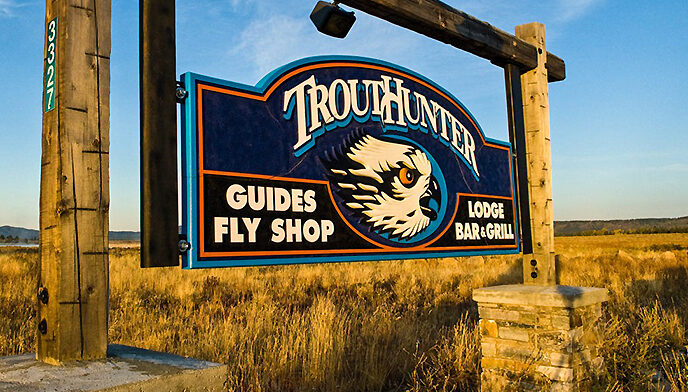
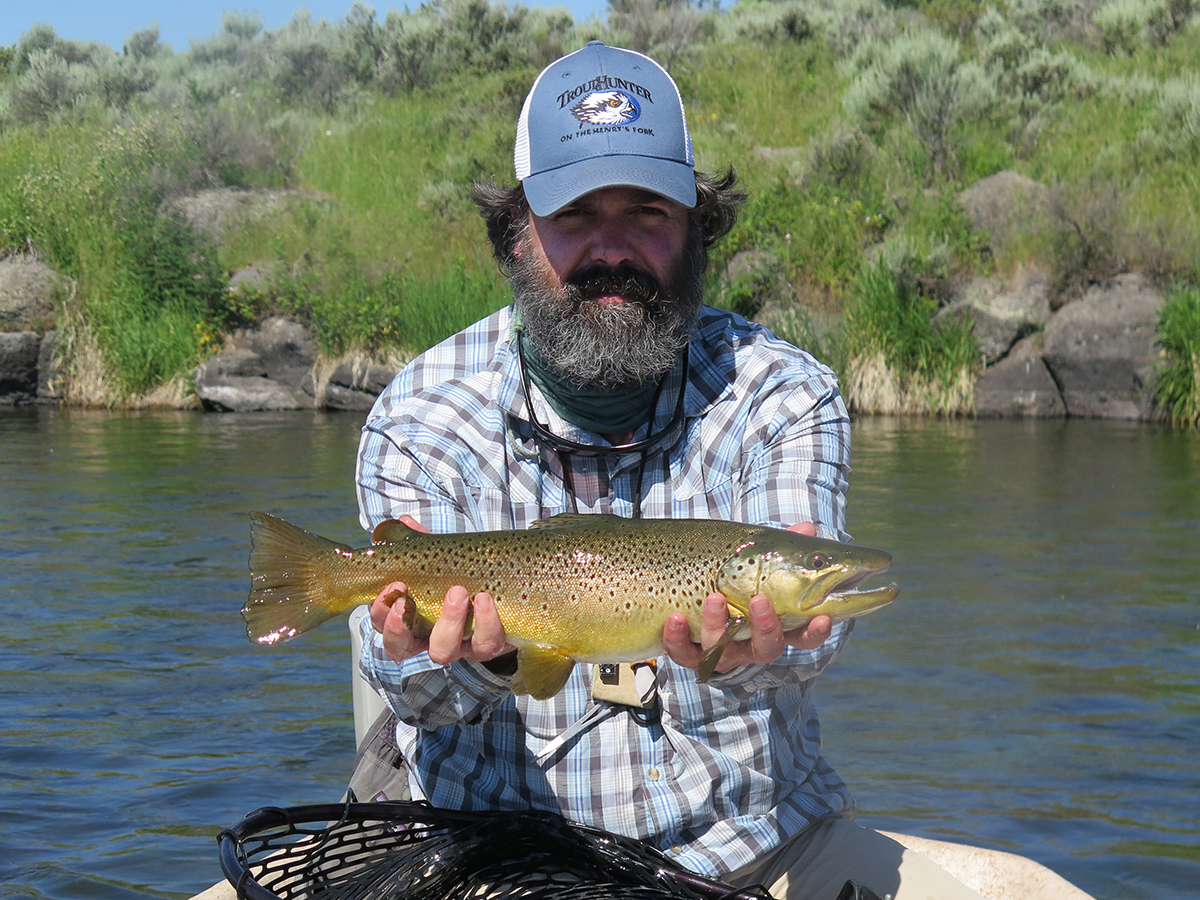
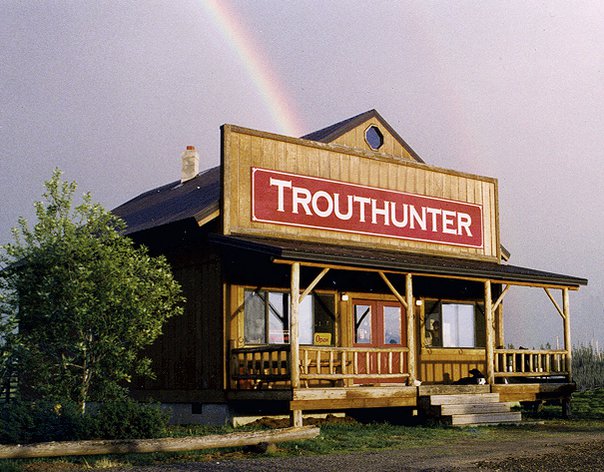
Jon Stiehl is here to take us to TroutHunter Lodge and how he came to own and take this famous lodge to the next level.
We get the history of the ranch water. We’ve heard a lot about that over the years. We get some inside information on Island Park. Find out about some of the cool box canyons in this area, tricos, and what makes Henry’s Fork so famous out west.
33:11 – He describes the TroutHunter ranch.
38:56 – Most of their guides these days use a skiff because it is easier to navigate when windy.
42:00 – He talks about the brown drake and the blue-winged olives.
43:39 – We talk about flies.
48:42 – He shares that time when Japanese anglers frequently visit their lodge. They had more sizes of tippets. That’s when they thought of bringing their tippets into the lodge to sell.
52:53 – He describes the extrusion process for their leaders.
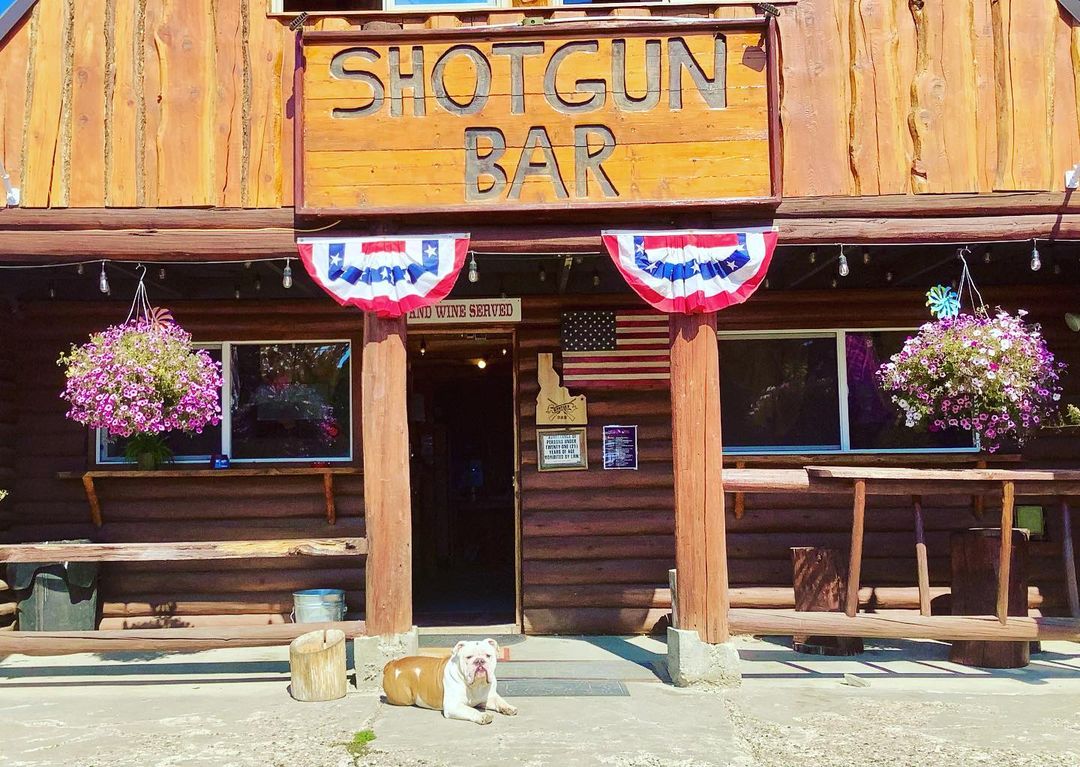
1:03:26 – We do the two-minute drill. I first ask him about a good bar in their area that he would recommend. He recommends Shotgun and Ponds.
1:04:07 – He gives a tip on dry flies and dealing with the wind when fishing.
1:05:51 – He shares the events and things they are looking forward to in TroutHunter. He also mentions a band that their guides have put together called the Tail Hooked Whitey.
Episode Transcript
Dave (1s):
Today on Yellowstone Tetons Traveled podcast,
Jon (5s):
The biggest thing that he taught me was how to treat other people. There was an interesting evening one night when we had first opened our, our restaurant and someone had kind of, one of our employees had had sort of stepped outta line and I, I took them to task in a way that I probably shouldn’t have. And Renee was there and witnessed it and called me out on it. And I’ve always remembered that and that’s probably, you know, it has nothing to do with fishing, but more just you know how to be a good person.
Dave (34s):
John Steele, with a powerful lesson from one of the biggest names in Eastern Idaho. We are traveling to one of the famous lodges of the West, back up to the Henrys Fork today on travel. Welcome to Traveled where it’s all about the journey we are all on in fly fishing and in life. This is our chance to take deep dive into a specific area around the country so you have a better feel for the people, the resources, and the community that make this part of the country so unique. We have a special travel trip going on right now to this part of the country. We are gonna be fishing this river that we’re talking about today, along with the South Fork of the Snake. We’re gonna dig into all of everything we have going here. And if you want a chance to jump in on this trip for a limited number of slots, head over to wetflyswing.com/trips right now.
Dave (1m 21s):
And you can enter or connect with me by email dave@wetflyswing.com and let me know. I’ll let you know if we have something available. Hope to see you in eastern Idaho this year to learn from some of the best Euro anglers on the planet. Before we jump into it today, I wanted to share a little love with our travel sponsor. This podcast is sponsored by Swing Outdoors and the Wetly Swing podcast. If you get a chance to visit a lodge, a hotel, a business, anything in Eastern Idaho, just let ’em know you heard about us and them through this podcast and, and that’ll be your chance to show your love for our sponsor in this podcast.
Dave (2m 2s):
You can also head over to wetflyswing.com/teton right now. That’s T E T O N. And take a look at a list of a bunch of the great companies that are in this part of the country. This week. John Steele takes us into the Trout Hunter Lodge and how he came to own and take this famous lodge to the next level, we get the history of the ranch water. Find out a little bit more about the ranch water. We’ve heard a lot about that over the years. We get some inside infer on Island Park, the strip up there. Find out about some of the cool box canyons in this area, Trico. And what makes the Henry’s Fork so famous out west. Time to experience the road less traveled. Find out what gentleman’s hours are all about at the Trout Hunter Lodge.
Dave (2m 44s):
We’re gonna dig deep. This is a fun one. Here we go. Jon Stiehl from trout hunt.com. How you doing Jon?
Jon (2m 53s):
I’m doing great. How are you doing, Dave?
Dave (2m 54s):
Good, good. Yeah, thanks for putting a little time together to, I know you have a busy schedule. The Trout Hunter is a name that’s out there big time around the country. Before we even talked, I saw some of your products, your leaders and that was probably the first thing and definitely heard about you. We had Mike Lawson on a while back. He talked about some of the fishing out there, so I know he talked about you as well. You’re in one of those hot spots around the country. I always love to ask about that because you know, it’s this part of like eastern Idaho or that part of the, the West. Other than the Henry’s Fork, which is obviously a famous river. What is so cool about that part of the world where you’re living?
Jon (3m 30s):
Well, it’s, you know, we get everything about Yellowstone Park only. We’re not in the park. Fishing is great. We’ve got great hunting. There’s a ton of forest service here. So, you know, I live on a pretty small piece of property, but I feel like I’ve got a lot of land. It’s just one of the great things. Account, being in this part of Idaho, there’s very little private land here in Island Park, so it’s easy to get away, whether it’s on the river or out in the woods hunting. You don’t have to ask permission anywhere, you can just go,
Dave (4m 3s):
Right. So that’s it. So you got Island Park? Yep. Gotcha. Yeah, it’s, there’s a bunch of towns around there that are well known, you know, from Island Park to like Victor Driggs. I mean there’s some smaller towns in there as well. But then as you keep going, you eventually run into Jackson, right? Everything over there. What’s, how is Island Park a little bit, you know, is it different or is it similar to, say if you were going to Victor or you know, Jackson, maybe Jackson seems to be the one that’s a little bit different, but how does Island Park compare to the other towns around there?
Jon (4m 32s):
Well, island Park is, is really a unique spot. You know, we’re in an old volcano. So the hotspot that was is currently under Yellowstone, used to be here in Island Park. It created a Caldera that helps with everything around here from the, the plumbing of our river. You know, it’s a giant Spring Creek causes us to traditionally have, you know, like 20% more rainfall or moisture fall than a lot of the surrounding area. So we, we’ve always been sort of a lush location. But when you start talking about the differences between those other areas, island Park is really, honestly, it was kind of in the sticks for almost up until Covid.
Jon (5m 14s):
I mean, once Covid hit, we had a ton of people that started showing up. There’s a huge, you know, V R B O inventory in town and for the last two years we’ve probably been busier than we ever have. And that’s, you know, on the river, in town, whatever. And, and the town is actually very unique in that it’s 33 miles long. So frequently, you know, in the morning when we’re in the fly shop and someone’s traveling, you know, any distance to get to us, we start getting calls when they’re about 20 miles away wondering where we are. Cause they’re in the Island Park, but they’re not seeing us. Right. So to zoom in on that a little bit, you know, island Park was established back in the fifties and what they needed to do was link all of the bars that were up here.
Jon (5m 60s):
It was traditionally a, and always has been kind of a resort vacation area. You know, there was some logging and some other type of industry up here, but that was sort of the big one. The biggest one by far has always been recreation. You know, whether it was one of the old fishing clubs, like the Flat Rock Club or the North Fork Club or the Coffee Pot Club, all of those were established around the 19 hundreds, very early around that time. I don’t have the dates handy, but you know, they’ve been around here for a long time. So Island Park connected all the bars that were up here off of what was called the Old Highway. Now we have a new highway, so it’s even more confusing, like a hundred yards off the old highway is the official boundary of Island Park.
Jon (6m 44s):
But it’s really also been the area. And then to make it sort of more confusing, there’s little villages in Island Park. The village that we’re in is last chance and it’s right up against Herman State Park. It’s the first village you hit when you’re coming from the South. And it’s pretty tiny. I mean, you can easily drive through it and not know if you were even in Island Park.
Dave (7m 6s):
Right. This is really interesting cuz I don’t know if I’ve ever seen a town with, when you look at the boundary of the city, it, it literally, like you say, is a strip. It’s a strip that just goes along the highway and gets a little wider, you know, down the main part of town. But essentially that’s really, I mean, the bar thing, that’s pretty funny. So I’m guessing you have some of the best bars in the state. Is that true?
Jon (7m 29s):
I, I would say we have a great bar at Trout Hunter.
Dave (7m 31s):
Oh yeah, right. You guys have a bar there?
Jon (7m 33s):
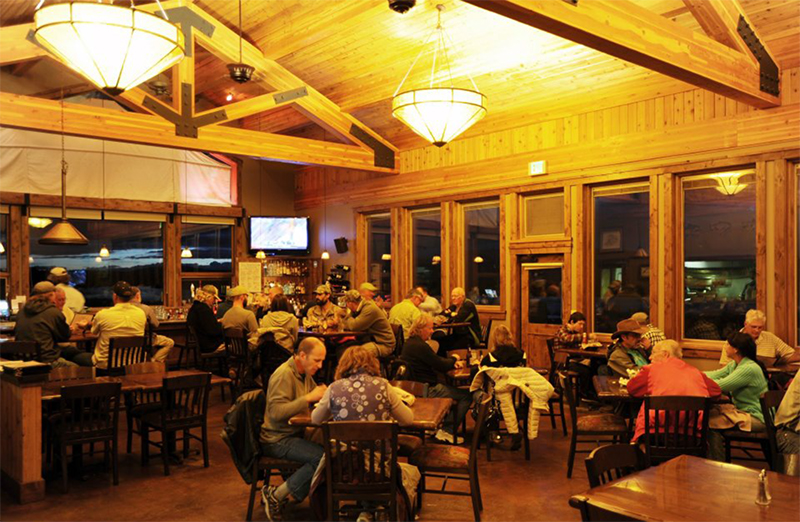
Yep, we’ve got a bar in the lodge and we’re sort of the one one stop place in Island Park for everything.
Dave (7m 38s):
That’s so cool. J because I had Jeff Courier on a while back. I asked him at the end of the show, I was like, Hey, so where should we go? We’re gonna be here, gimme one place. Or you know, a couple places. And I think he said, you gotta go to Trout Hunter and have, you know, have a drink, have some food.
Jon (7m 52s):
Yeah, I know he, Jeff certainly knows, he’s definitely had a few beers watching some baseball games, a trout hunter before and has been up for a ranch opener party. And Granny usually make a few visits, although I don’t know how much we’ll see ’em now that they’re in Wisconsin, but, you know, hopefully we do see him back. I think he really enjoys the Henry’s Fork and particularly the ranch. So I can’t see him staying away for too long.
Dave (8m 13s):
Yeah, definitely. No, this is cool. I love these episodes when we start out and it, it takes some, a tangent and some interesting stuff. So we’ll probably, you know, I wanna circle back cause I love the history and digging into that. But let’s just jump right into, yeah, the trout hunter, what you have going, and then we’ll take it into the Henry’s Fork and talk about, you know, some of the other fishing opportunities there. So talk about Trout Hunter. Can you give us a quick little, maybe a snippet history? I’m not sure how you’re involved in that. How did you come to, to connect with that shop? Or have you been there since the beginning?
Jon (8m 44s):
I’ve been there since the beginning. It’s a pretty fun story. My business partner, Richey and myself, came out as interns in 1993 to work for the Henry’s Fork Foundation. And part of the, the bonus of that was we got to live on Herman Ranch in one of the housing units they had there, which I think we were probably the last interns that they let live there. I’m not sure if that was our rowdy behavior or perhaps some, some other thing that kept that from continuing. But once you live on Herriman Ranch, you’re pretty much spoiled. You know, I was 21 living at Millionaires pool. The job was such that, you know, we were fishing eight hours a day and that got us pretty entrenched in the local community.
Jon (9m 31s):
Our job was to do a socioeconomic survey of the fishing. And once everyone figured out what we were doing, they all wanted to let us know what was going on and share their opinions. So we got to know everybody pretty quickly. And one of those guys we got to know very well and became quick friends with was Renee Har. And, you know, there was some changes happening up here in the fly shops. There were some closing, there were some new ones opening.
Dave (9m 60s):
What year was this, John? Give us a year. Just so we kind of put in perspective.
Jon (10m 3s):
So this would’ve been, say, you know, from 93, we got here, 94, we started working, you know, as guides and in fly shops or tending a bar or managing lodges, whatever we could do to stay in Island Park. And in 19, I wanna say 98, we sort of came to a point where we didn’t wanna work for the outfitter that we were working for. And, and Rich and I, and, and the rest of the staff at this outfitter decided to, you know, kind of explore the world a little bit. And I was in Maryland, I was driving a Zamboni and making pizzas. And Rich was in New Jersey. He was working in some construction.
Jon (10m 44s):
And Renee had given Rich a call about an opportunity that he thought to bring in a, a fly shop that would be different than what was was here. Henry’s work, anglers was here, they were the, the big guys in town. They had the, you know, all the iconic guides in the area. Mike’s shop was, was fantastic, but it was extremely busy. And, you know, there were a lot of guys that were in the area that didn’t necessarily need rods or guides. There were a ton of hardcore regulars that just come because they like to fish the ranch. You know, it’s a unique spot because you don’t need a boat. It’s totally open.
Jon (11m 26s):
It’s just a, you know, it’s sort of a, a wade fisherman’s paradise. Great hatches. So there are a lot of these guys that are in town that needed a place to hang out. And we figured that we could create an opportunity for ourselves by, you know, sort of taking these guys and making them our core customer group. So Renee reached out to us, we said, Hey, that’s a great idea. So we kind of headed back to Island Park and in 1999 we opened up a little shop that was an old antique store and it was about two doors down from Henry’s Fork anglers. So we kind of jumped right in with two feet and started it up. Obviously, you know, working with Renee was a huge advantage.
Jon (12m 9s):
I mean, he kind of gave us instant legitimacy as far as a, a shop and, you know, trout Hunter was his idea. He never wanted it to be, you know, Renee HARs Trout Hunter or anything like that. He just wanted it to be trout hunter at the time. That was everything. Had someone’s name in front of it, you know, there was Bud Lilly’s, Mike Lawson’s, Henry’s work, anglers, so on. So he just wanted to make something that would be a standalone entity and that’s how we came up with a trout hunter.
Dave (12m 36s):
Great. And that was so late nineties and, and it’s been, yeah, I mean, gosh, now going on, yeah. Almost 25 years. Looking at it now as you look back, when people come there, you know, they’re coming there for, I mean, your name’s out there. What do you think is the number one reason when a new person comes in the shop, what are they looking for? What’s, are they looking to fish the Henry’s fork first or is it the products or what is it?
Jon (12m 58s):
I think it’s the Henry’s Fork. I mean that’s the, the big draw. I mean, we’re in, you know, I don’t think we could have this shop on a different river or achieve the success that we’ve had. You know, the river is, is the key.
Dave (13m 10s):
Yeah, the key. Great. Well, like I said, we had Mike Lawson on, we talked a little bit, but the great thing is there’s so much going on on the Henry’s Fork and we actually had, you mentioned it was pretty interesting here, another connection, Henry’s Fork Foundation. We had Brandon Hoffner on recently from the foundation and he dug into kind of the, what’s going on up there right. With like the water quantity. Right. And talked about how they’re protecting the area. And so he described a little bit about the Henry’s Fork, but take us back really quick for those that didn’t hear, cuz there’s a lot going on. There’s the Henry’s Lake, there’s, you know, quite a bit going. Describe the Henry’s fork. Like where does it kinda, where does it start and where do you guys fish most of it, you’ve mentioned I think a couple spots, but give us a quick little snippet on that.
Jon (13m 49s):
Sure. No, the Henry’s Fork is, you know, it’s also known as the North Fork of the Snake River. So we’re in the Upper Snake Watershed, which includes, you know, the snake in Jackson Hole as it comes into Idaho. We start calling it the South Fork. So we are the North Fork, and it starts here in Island Park. There’s a big basin right up on the Continental Divide where Henry’s sits. And that is a contributor to the Henry’s Fork. But the main source is what we call Big Springs. And that’s just giant spring that kind of pops out of the ground right up against the Yellowstone Plateau. Wow.
Jon (14m 29s):
And starts flowing through Island Park.
Dave (14m 32s):
That’s amazing. So literally the Henry’s Fork River. And I’m not sure on this side, I actually haven’t fished it yet. I’m going to be hopefully get it out there soon. But I mean, it literally starts like, this isn’t from a headwater string, this just pops out of the ground.
Jon (14m 44s):
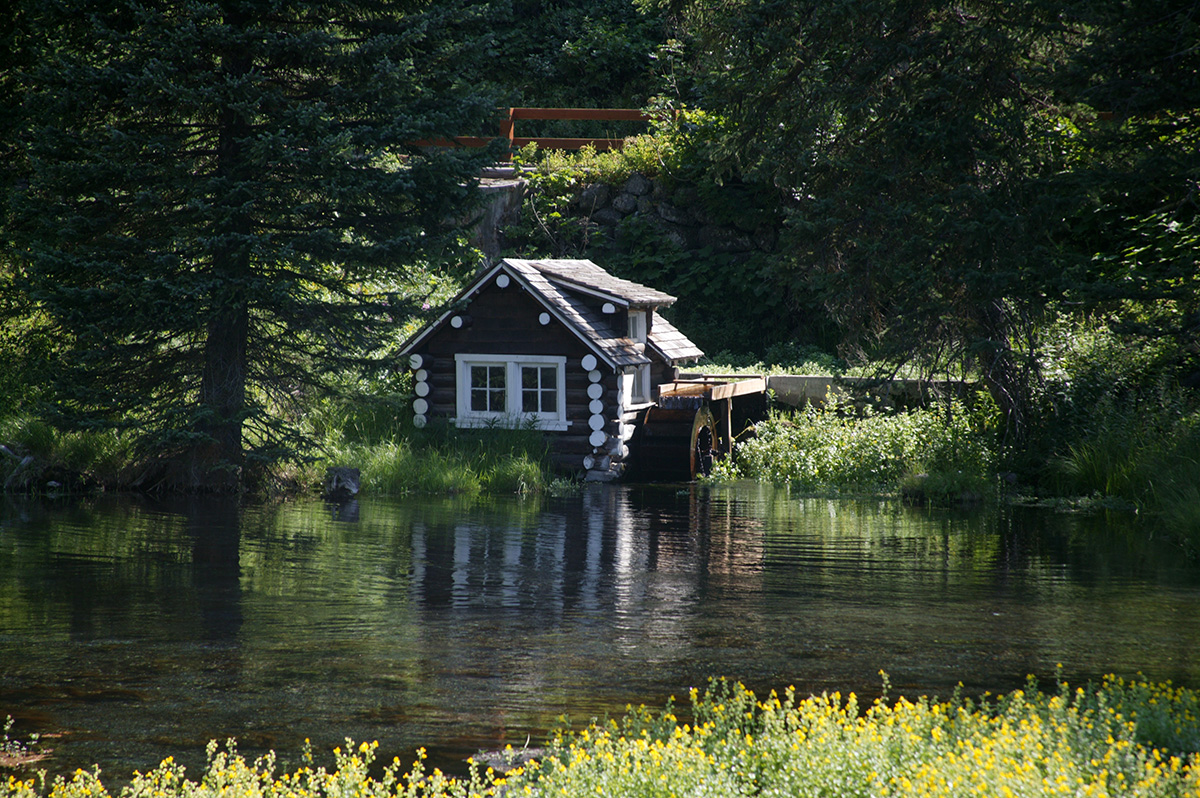
Nope. You can go up there, you know, it’s closed to fishing, but you can go up there and throw pellets out to giant rainbows when they’re there. Every once, once in, in a while they do get cleaned out by some otters or perhaps poachers. But you can go up there, there’s a little cabin where some of the water comes out. The Johnny Sack cabin, he was a little guy. So it’s a little cabin. Right.
Dave (15m 6s):
So j Johnny Sack. So we gotta hear this story, but this is a, is there a good quick story on Johnny Sack cabin?
Jon (15m 12s):
Yeah, he was just one of the original, you know, sort of founders up here I guess, or one of the first guys that really sort of took residence, but he was small, so his cabin door’s, you know, like five feet tall, may I might be, maybe he’s a little bit bigger than that, but you go in there and everyone’s bending over and hunched and Oh wow. It’s interesting. He was a, a builder, so there’s still a few old cabins that you see around here. In fact, my neighbor down the street has one and you know, he’s really proud that it’s a, an old Johnny Zacker that he had moved to the area and they generally have, you know, sort of unique railings and things like that in him. But yeah, he was this little guy that’s where he lived and
Dave (15m 48s):
Amazing. Now
Jon (15m 49s):
It’s a Forest Service campground up there in a historic structure. But yeah, it comes out of the ground right there. It’s close to fishing for about a mile and a half now where the Henry’s Lake outlet joins the Henry’s Fork at that point it’s opened to fishing that part of the river. You know, we do a little bit of fishing up there and, and we’ve done more recently, but not a ton. They get a lot of just general recreation traffic up there. It’s a, an area called Maxin is where you would take out if you were to put in up there. And that’s a very touristy location. So then you cruise do it down there and then it goes into Island Park Reservoir, which is impalment made by the irrigators and built by the irrigators and essentially managed by the irrigators.
Jon (16m 36s):
The Henry’s Fork Foundation tries to, you know, work with them, work with them, that’s the right word, to get flows that benefit the fishery. And they’re doing a, a good job on that. But, you know, it’s,
Dave (16m 47s):
But it’s not perfect.
Jon (16m 48s):
No, it’s not perfect. Yeah,
Dave (16m 49s):
That was discussion we had, you know, it sounded like Brandon’s like a good guy for that position because it, it, these are never easy, right. Being in the middle of water. But that is the great thing is that you gotta work with them and it sounds like it’s not perfect, but they’re at least, I mean, I guess the fishing, well maybe just talk about that without getting too deep into the weeds there. Is there some room from the fishing and, or it seems like the fishing’s great. Are there other things that could be done out there from a, you know, kind of a water perspective conservation that could make things better? Or is it pretty good as it is?
Jon (17m 21s):
Well, I think there’s always things that could be improved upon, you know, but given the situation, given the politics of Idaho and the economics of Idaho, we’re pretty lucky to have the foundation there to do what they can in what they can work with. I mean, you know, they, when I first arrived it was a very confrontational relationship between irrigators and anglers.
Dave (17m 45s):
Oh, right, because you were there, John, remind us on that again, your role. So you, you were working for the foundation or what were you doing there?
Jon (17m 53s):
I was an intern for the foundation. So basically my, my job was to do a socioeconomic survey on angling in the area. How much money did it bring in? What made it better, you know, to people came. And basically what we found is that, you know, when the fishing was better, more people came, they stayed longer, they spent more money, you know, not No, no. Great epiphanies there.
Dave (18m 14s):
No surprise.
Jon (18m 15s):
Right. Yeah. Right. So going through that, the Henry’s Fork Foundation has just been able to work collaboratively with the irrigators. They created a thing shortly or well, like probably re we got there 1993 called the Henry’s Fork Watershed Council. I’m sure Brandon talked about it. But it brings all the stakeholders together to hopefully, at least when they need to come down and, and have tough conversations. They know each other, you know, it’s not some angler yelling at some farmer. Hopefully they can all speak nicely to each other. And I’ve been in a number of those meetings and I think, you know, it’s, it’s been pretty effective. I think it’s helped the foundation be able to talk with these guys and them understand that, you know, there’s a lot more at stake for other people’s livelihoods, for nature, for the fish.
Jon (19m 4s):
So yeah, they’ve, they’ve done a good job with that. But you know, it is, it is hard. It’s not an easy thing to go into one of those meetings and say, Hey, we need this much water cuz that’s not really gonna get you very far. You kind of have to say, Hey, we would like this, or if you can do this, we can run a, we can run a generator and generate some electricity if we get to 200 cfs. And little nudges there have really helped I think the conditions of the river.
Dave (19m 29s):
That’s great. No, that explains it really well because that is the challenge and yeah, it’s like little steps, right? Baby steps. I think that, you know, it’s always the worst thing is if you’re, if you’re not even talking, you know, that’s the worst. So it sounds like that’s going well. Right,
Jon (19m 43s):
Sure. And you know, sometimes 20 CFS can make a big difference. You know, when your, when your flows are cut back to a hundred CFS in the winter, an additional 10 or 20 CFS is a significant addition, which creates more habitat for fish, maybe keeps some spawning ground or spawning beds covered. All kinds of things can happen. But you know, it’s sort of taking that small incremental approach and appreciating every drop that, you know, all those drops add up.
Dave (20m 13s):
Exactly. So somebody was coming in or calling you at the shop today and they were talking about wanting to come out and do some fishing. What’s the first step? What do you tell them as far as kind of when, where on the he? Because it seems like there’s quite a bit of opportunities. What do you tell a, an angler who maybe has some experience, they’re not a complete newbie and they want to, you know, just experience that area. What do you tell ’em?
Jon (20m 33s):
Well, I say come when you can and I’ll start asking ’em some questions about what their goals are. You know, if you wanted to fish Herriman ranch because it’s on your bucket list, Herriman ranch doesn’t open until June 15th. June 15th to July 4th is a really busy, crowded time there. It’s a lot of fun. But if you’re looking for a fishing situation where you’re not gonna see anybody, I would say don’t come, then you’re gonna see a lot of
Dave (21m 0s):
People. Yeah. That’s not the time. Right. And what is the Herman, describe that again on the Herman’s. Why is that such a sought after reach of the river?
Jon (21m 9s):
Because it’s probably the biggest, most beautiful Spring Creek you’ve ever seen with traditionally fantastic hatches. It’s an area where you can go and, you know, when I came out here was always considered the place you went to see what kind of fly fishing and you were, you know, where do you stack up? They’ve always called it the PhD of fly fishing, you know, to take our PMD hatch for an example, you know, that’s a hatch that can last all summer long. The bugs get smaller, the fish really become familiar with that hatch. So you’ve gotta make sure everything is right to go out there and have success. Which also reminds me of another question that I’m gonna ask.
Jon (21m 49s):
It would be, you know, hey what are you looking for outta your day? Do you want a couple of fish? Do you need to have a lot of tug time? What is it that’s gonna make you happy? Because if they’re like, well I wanna go there and I wanna catch a lot of big fish on dry flies, you know, I would say, Hey, you’re not gonna, we’re not probably not gonna take you to the ranch. You know, that’s not a place that you catch a a ton of fish even on a great day.
Dave (22m 11s):
What if somebody comes in and says, I wanna fish the river, I wanna experience it. You know, catching a ton of fish isn’t the super requirement, but what about if they say I wanna do some nim fishing, maybe even some euro nipping on the Henry’s fork. What would you talk about that? Is that something you guys focus on?
Jon (22m 26s):
Oh yeah, sure. I mean you can’t certainly have an outfitting operation and it would be great if you could only fish dry flies. But the fact of the matter is there’s a lot of time when the fish are not eating on top. And that’s the number one place that our guides want to go is to the surface. But that’s not always gonna get you somebody happy. So yeah, you, we take you to the box canyon or the cardiac canyon or someplace on what we call the lower river, which is when you get down off of our mountain and you’re out in the Snake River plane, you know, the towns of Ashton and St. Anthony, the river goes through both of those and they have some great fishing around there. But as the, as the summer progresses, some of that lower river, you know, particularly from St.
Jon (23m 6s):
Anthony down, we don’t go down there because the water temperatures get warm and we don’t wanna stress the fish out. And you know, frankly at that time of the year, the fishing is not generally very good. You know, the fish kind of hold up and you might see ’em early in the morning or late in the evening, but to go down there and try and do afloat in the middle of the day, you’re gonna, you’re gonna have a tough time.
Dave (23m 26s):
Okay. That’d be in the peak of the, that’d be kind of the hot time. When does the season start to turn where the temperatures maybe start to cool down towards the fall and you can maybe get some good nim fishing or maybe even some dry fly fishing down throughout that, that lower area you’re talking
Jon (23m 40s):
About? You know, I would say September it’s usually back back on once the days start getting shorter, it’s not getting all that direct sunlight. The other thing to keep in mind is, you know that we did talk about the Henry’s fork providing a lot of irrigation water. So when they’re irrigating down there, they’re sending a lot of water down. They’re also diverting a lot of water. So it depends on where you are in the system, what the water is gonna be like. By the time September comes around they’ve usually reduced some of the irrigation demand. They start thinking about holding back some water already. So you kinda have to play it as, you know, play the hands you’re given.
Dave (24m 15s):
Gotcha. Yeah. Okay, well let’s bring it back up and focus on then just some dries cuz that is the one I think with Mike, I think we talked about the green Drake hatch, right? That’s one of the big ones out there. When you look at the hatches, what do you think are the big ones? You mentioned the PMDs. Are there a few big ones that people are really focused on or that you really love to, to hit out there?
Jon (24m 36s):
Boy, this could be a whole show in itself.
Dave (24m 39s):
They’re all good. They’re all good
Jon (24m 40s):
Then that’s because we have a bunch of different great hatches. I mean our season starts, you know, with Cas and March Browns. Shortly after that we’ll get a salmon fly hatch that will come through and that doesn’t hit every piece of the river. You know, it’s really more of those freestone type aerated waters. The box canyon is great, the lower river is great. That’s my favorite time of the year to try and get into the cardiac canyon, which is, you know, a little more challenging to row, little less access really thins out the people a lot. But when you can get fish coming outta that water to eat some salmon flies, you can just have a great day. Now we have this other slide where you, we call the cardiac slide and you basically get in rafts.
Jon (25m 22s):
It’s been in a numerous print ads. You know, if you see someone dragging a raft looking pretty radical, that’s, that’s would probably be the cardiac canyon. So we’ve got that. After the salmon flies, then we start getting into, you know, sort of mayfly season. Then we start with the PMDs and the PMDs can go into August, sometimes even into September. So that starts then, you know, then we have our next one would be the Green Drakes and the Gray Drakes. We get the Brown Drakes. After that we get the small green Drake we call the Flav. Once the flas done we start seeing some calibus, we’ll get some trios in the mix and then we kind of wind up the season with some, you know, kind of the last larger mayfly is the mahogany done.
Jon (26m 10s):
And that comes at a nice time. It’s September you get sort of that fall light. It’s the fish are kind of tired of eating tiny PMDs and Trico at that point. So you can usually fool them with a well presented mahogany imitation for fish that, you know, previously had been very challenging. And then after that we go back into our blue and olives and midges. But the real gem of the whole summer, which is a very lucky thing to hit if you can, would be a flying ant fall. And that, that hatch is amazing. If you can hit it, you’re never guaranteed, but you wanna make sure you’ve got ’em in your box from about the middle of July. Oh certainly into September.
Jon (26m 51s):
But that’s one of those hatches, you know, could happen during a trico hatch. And the fish is not moving an inch out of its feeding lane and suddenly you see the behavior of the fish completely change and he will start moving. Or she, I guess we’ll start moving, you know, three, four feet. What previously had been a little delicate sip is now a really aggressive chomp. You can actually sometimes hear it before you even realize what’s going on. And that is amazing. Those are the days where you go out there and, and guys just, you know, stumble back into the shop and you kind of can tell as soon as they walk through the door what happened out there because their eyes are huge and they’re totally blown away by the experience they just had.
Jon (27m 33s):
And hopefully they had them in the box and if they haven’t, you know, they’re going right over to the bins and sort of just kind of talking and and looking for these ants. It’s a really cool hatch but very, very rare.
Dave (27m 45s):
Gotcha. But, and then that happens throughout the summer and end sometime in September typically.
Jon (27m 50s):
Yep. And then as far as our hatches too, I mean they’re, they’re realizing because you’ll get deers in different parts of the river, kind of have their, you know, the real strong presence, the lower river on a good water year you can get great gray Drakes down there. But we’ve seen a lot of gray Drakes moving up into the last chance area, which is right behind our shop the last couple years. Which has been pretty interesting to see sort of that, I don’t know if it would be called a migration or what, but habitat change, we’re seeing some more of those up there. You know, the Brown Drake, which is a really short hatch. I kind of call it sort of the, the shop guy hatch because it’s every evening or well that’s when you wanna be out there, you know, in the summertime we’ll keep our shop open fairly late, you know, we’ll be open till nine o’clock.
Jon (28m 37s):
But during that hatch, generally if it’s eight o’clock and we haven’t seen anybody, we’re gonna go out there and join that. The fishing as well, you know, we can put a note on the door cuz everyone has already come in to buy their flies to get out there. So we can go out and join and you can go out there and you know, the fish are generally very generous during that hatch. It’s a big hatch specifically, I mean the fly, it’s at a low-light time so the fish are a little more susceptible. So I’ve had some of my best days fishing in the 45 minutes before dark during that time of year.
Dave (29m 12s):
Yeah. And that’s for the, the big, that’s the brown Drake.
Jon (29m 15s):
Yeah. And it happens in sort of the, the sier sections and it’s really fun. Those are the times when you actually wanna make sure you hit the bar afterwards because it’s always a a fun event. Everyone kind of like, you pull out a Harriman and you just see the traffic heading out. You know, these are all other fishermen, many of them are pulling into Trout hunter to you know, maybe get a late night burger and have some cocktails and kind of tell share stories.
Dave (29m 40s):
Right. God that’s so cool. And that’s where you guys in, so your place, yeah you’re right there just north of the park of the Herriman State Park. And then it looks like that’s really the cool area cuz Yeah, it’s pretty, it looks pretty remote at least from the map. Like when you look across from where you’re at, you don’t see a lot of other structure or human, I mean is that kind of what it feels like? You guys are kind of out there in the middle of nowhere?
Jon (30m 1s):
Yeah, we’re, we’re incredibly lucky. I mean when you are looking towards the river, you look across the river and then you see Herriman State Park and while the park itself is only say 6,000 acres, there’s much more of it that’s part of the refuge. So you get a great view of everything and it feels like you’re in the middle of nowhere now you turn around you’ll see Highway 20, which is, is actually a real highway and it’s, it’s fairly busy but you know, looking out towards there we’re kind of where you can begin to to leave and escape sort of civilization to a degree.
Dave (30m 37s):
That’s right. And is the lodge there at that location? Because you guys do have a lodge, right?
Jon (30m 41s):
Yeah, yeah. We’re all in one building. So we’re right there in last chance on the banks of the river. We’ve got our fly shop, we’ve got our outfitting service, we’ve got a lodge, we’ve got our restaurant and then we also run our wholesale program out of the same building.
Dave (30m 55s):
There you go. Perfect. Nice. Well it’s always hard. You mentioned you ran through some of the hatches in their, I mean everything would be fun to dig into. Let’s take it to, let’s just keep around the season. So we talked about September. What about when you get into like late September, early October into October, what does that look like? What are your best hatches chance at hatches then
Jon (31m 15s):
If you’re lucky you still got a few mahogany poking around, but we’ll get blue and olives and if we have the right whether you will get blanket blues and that’s a hatch that can last for a really long time. It’s really nice because you know, they always say the Henry’s fork is has gentlemen’s hours and that would be one of the perfect hatches to speak to that you know, it’s happens usually starts, you know like 11 but it might not start till one and it can go till things start cooling down for the day. You know, like four or five at which point usually there’s a baseball game that’s starting up so you’re not sort of interrupting any of your potential sporting or social time, but you’ve had this nice intense time in the middle of the day.
Jon (32m 1s):
You know, a lot of people come and they wanna come in June and June is a little bit crazy because we’re still getting kind of spring weather. We get fronts that move in. You can be sitting out on the water and everything’s looking great. You’re like, all right man, I’m here. It’s 10 o’clock, the temperatures just right. We should be seeing some green Drakes pop any minute. And then you get a little storm front that moves in, drops the temperature 10 degrees and shuts it down later on in the summer, you know, July, August and certainly into September we’ve got very stable weather so you can start setting your clock by the hatches.
Dave (32m 37s):
Right. That is really cool. And then like you said to a lesser degree, the October you start to lose some of the mahogany other hatches, but you still have BWS and then
Jon (32m 47s):
And Midges.
Dave (32m 48s):
Yeah and Midges, right? Yep. And Midges.
Jon (32m 50s):
And then you know, streamer fishing is always fun that time of year, not something we, we generally encourage on the ranch, but you know, the lower river, there’s a number of browns on the lower river and those guys as everyone knows are, are very happy to chase some big streamers.
Dave (33m 5s):
Right. That’s right. So remind us again on the ranch, what section, what is the ranch reach or does it start, where does it end?
Jon (33m 11s):
The ranch is basically the water w confined by Herriman State Park. So it would begin at what we call the log jam, which is just south of us where the river pulls away from the highway and then it’ll continue down about eight miles or so and it’ll wind down through the historic ranch buildings. And all of it is very wide but very wadeable. It can be intimidating when you first get there cause you don’t really know what you’re looking at, but
Dave (33m 39s):
Where do you fish
Jon (33m 40s):
Exactly and that’s why you go there, you go trout hunting, you’re looking for heads, you’re not just blind casting. And that’s actually something that we don’t, you know, we really want our guides to sort of hold up that tradition, which is not going down and just blind casting to a bank and blowing the whole bank up.
Dave (33m 58s):
Yeah. So going into the spotlight like okay, this is where we caught fish yesterday. It’s more, it’s not about that as much as it is like let’s just go find the fish,
Jon (34m 5s):
Find the fish, present the fly and who knows, hopefully you get ’em quickly, maybe it takes two hours that you can spend over the same fish. And that’s sort of the draw is getting those challenging fish that continue to rise no matter how well you think you’ve presented your fly or matched the hatch. I mean those, this is where you have to come and and figure things out. But it’ll go down for about eight miles and it, you know, when you get onto what we call East Herman that the river changes to a degree there, it’s still very slow and flat.
Dave (34m 35s):
Yeah. Across the highway. Is that up to you Across the highway?
Jon (34m 38s):
Yep. Goes under the highway at Osborne Bridge. Yeah, it gets a little bit narrower. So once you get there, that area we, I would say we discourage guides from floating on the upper Herman. This is what we call Lower Herman. And the reason that we do that is because it’s so great for the waiting angler and you know, these guys are, we identify with these guys, we don’t, you know, some of these guys they hike in three miles. Oh wow. And if you were to come in with a boat and just float down their bank, you know, I don’t care how much space you think you’re giving them, you’re affecting the fishing.
Dave (35m 12s):
Yeah, you are. Can you float it? Are other people floating it?
Jon (35m 16s):
Oh sure. I mean it’s unfortunate but yeah, there’s nothing that says you can’t totally legal. I just, you know, find it slightly, it’s like going to say play Augusta, you know?
Dave (35m 28s):
Yeah. With a cart.
Jon (35m 30s):
Right.
Dave (35m 30s):
That’s exactly it. I love
Jon (35m 31s):
That. That’s a wonderful comparison right there. Play Augusta with a
Dave (35m 34s):
Cart. With a cart. Exactly. I love that about a tell my brother about that one. I mean that says a lot about you guys, you know, I think because right, you don’t have to do that and even other people aren’t even doing it. But yet you’re setting the tone. You are the one of the leaders out there and like people, I’m sure there’s people out there that respect that and they probably don’t float it because of you guys. Right. But you still have some people that maybe need to learn a little bit more about the, the history and the river and what makes it special.
Jon (36m 0s):
Yeah, I would certainly say it would be great if everyone does that because you know, there’s more and more people using the resource and you know, fish are, you know, they’re living creatures. It’s not a place where you just go pound and get a bunch of numbers. It’s a place where you see what’s going on, you observe and you know you enjoy it. And it’s nice to be out there and not have a bunch of hooting and hollering go around and just watching what’s happening.
Dave (36m 27s):
Yeah, I’d imagine there are opportunities, and this is probably gets into some politics and stuff, but
Jon (36m 32s):
I’m sure
Dave (36m 32s):
You could make a regulation right, of no boats and I think of like the Deschutes River, which I fish quite a bit, you know, it’s no fishing out of a boat at all and it’s totally different system so you can’t really compare it. But I would imagine that that would be an option. Right. Eventually there could be, they could make it easily as sections like hey this is just for the, the foot traffic, you know, we don’t need to float this. But they haven’t done that yet probably because that’s a real challenging thing to do. Right.
Jon (36m 56s):
And you know, we’re in Idaho and it’s definitely a state of personal freedom is celebrated and to come in and and dictate something like that would not be very popular. And you know, there’s also a lot of exceptions that you’d want to have to the rules. What about, you know, some of our anglers are old. You want to be able to take those guys down there and the only difference we do is we say, Hey listen to our guides. If you’re gonna be taking someone down there, let’s fish from a stationary boat, you know, find a rising fish. There’s ways to do it with a boat that are, I would say would be acceptable versus not acceptable. You know, I love going down there and it’s easier to bring your lunch. You can fit more beer in your cooler when it’s in the boat,
Dave (37m 38s):
So That’s right. Yeah. Nice. Good, good deal. So that’s it. So basically, yeah, you go through that re and then where does the, where does this area end?
Jon (37m 46s):
It ends at the community of Pine Haven, which is just at the southern boundary of the park. And you know, the, I would consider ranch water really extends further, you know, it probably goes down a mile from where the boundary is. The river starts, the land around the river starts to develop more of a canyon characteristic, but the river itself is still a nice flat river. And then once it hits the cardiac canyon sort of in earnest, it becomes more of a freestone type river again. So you know, kind of from the cardiac canyon and then even above our shop upstream from our shop where the box canyon ends, you start getting into what again, what I would consider ranch water and that’s water, that’s, you know, easy to wade has great hatches, you can walk around.
Dave (38m 37s):
Wow, this is great. Yeah, you’re really painting a good picture of I I’m, I think we’re all starting to understand why it’s so cool and all these hatches, right? The Spring Creek, all these hatches, there’s good accessible waters then if you have a boat or or people mostly using, it sounds like a mix like raffs and boats, what’s the boats you guys use? For the most part on guiding,
Jon (38m 57s):
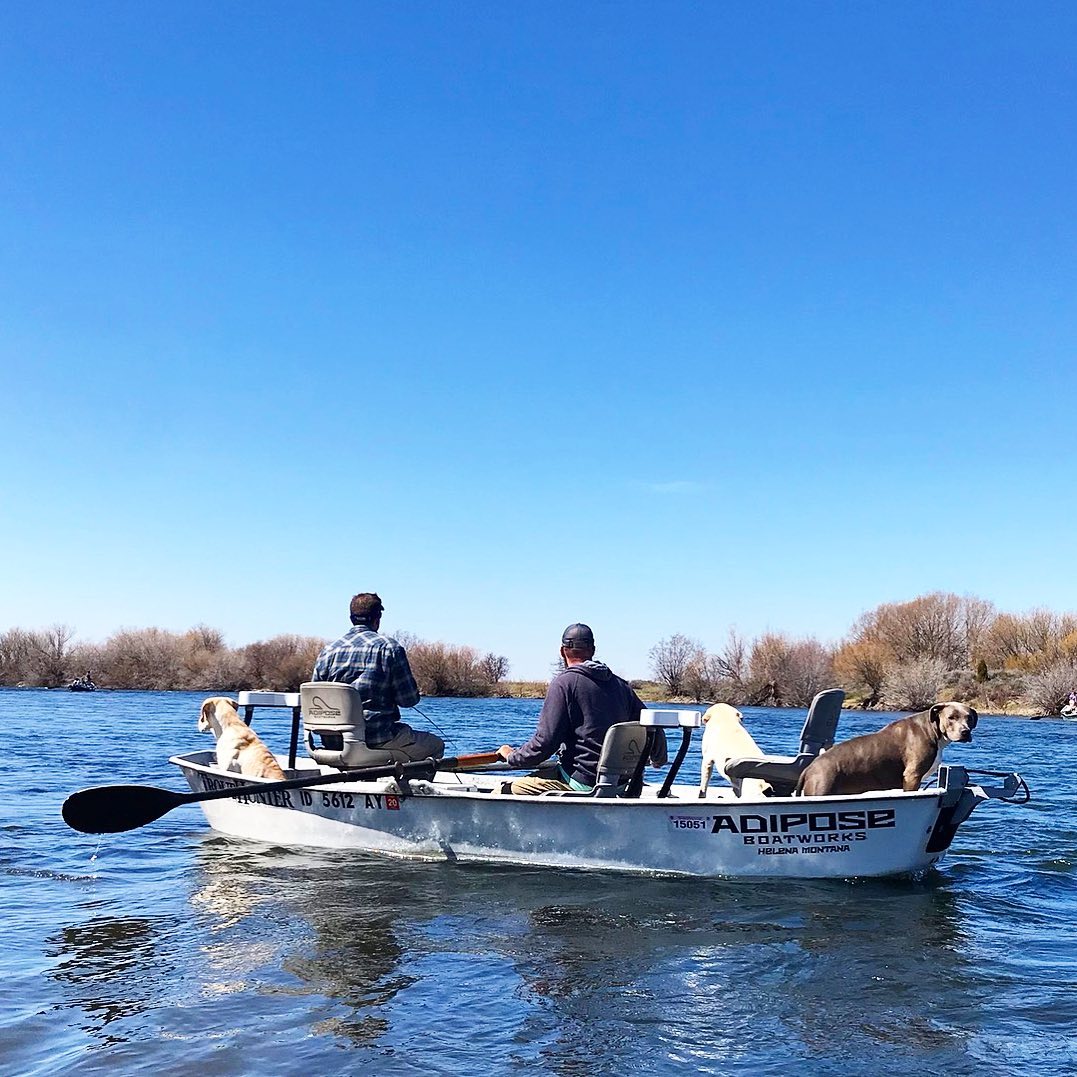
Most of our guides these days are using a skiff. You know, it gives you a lot more visibility. We don’t have anything that would be considered, you know, major class type rapids. We do have a couple shop fly crafts that we use. We have fly crafts make us some slightly more durable, you know, kind of all welded together. They’re not the breakdown version of their raft, but more of a solid deal. And those work great, we use those for that cardiac slide I talked about earlier. We’ll use them if you’re going into the cardiac canyon just because they’re a little safer, they’re a little easier to maneuver. You know, that cardiac canyon piece was always, you know, sort of a, you’d have a little bit of a pucker going through there at certain spots because if you get in any trouble it’s real hard to to get out.
Jon (39m 46s):
And I would say, you know, when I was guiding almost every year there was one or two boats that would just get pinned up against the rock and flip over. And that happens very quickly once you actually, that water starts coming in, you’re pretty much done.
Dave (40m 2s):
Right, right. Yeah. That’s it. So that is one of the things about the boats. Yeah you have, you could think traditional style drift boat which has, is made more for whitewater but you don’t have enough of that water to make it se it’s a lot better to have a, the lower profile boats for you know, fishing there. But there are some opportunities. You gotta be careful that’s basically what you’re saying.
Jon (40m 20s):
Yeah, well but the skiffs are great. I mean it’s easier to see and one thing that we have a lot of, which I think is, you know, the case in a lot of the west is we get a lot of wind and the lower profile skiff is a lot easier to navigate the wind. And the other thing is that I like about ’em too is if you’re fishing from the boat, you know you can sit down in a skiff very easily and the anglers can see and that keeps your profile a lot lower when you’re trying to approach fish. So it makes it, you know, there’s a lot of positives about that for our water.
Dave (40m 49s):
Yeah, we did a whole series on drift boats a whole history and it was really cool. We had some manufacturers and companies from around the country, you know, hear the stories and stuff like that. So it’s always interesting. I love hearing about the boats. What, do you guys use a mix of boats or is there one brand you give a shout out to that you guys use quite a bit?
Jon (41m 7s):
Well I always love to give a shout out to Robert Eds over at Roe. I think he kind of got the skiff thing sort of, at least in our area, really made it bigger. And that original skiff of his, I just loved that thing is super lightweight. We have a couple of our guides that still are running those and yeah, he’s, he’s just always been a, a good friend and someone who’s a lot of fun to, to be around. So yeah, he’s, most of our guys are using that. That’s what’s been our, you know, official shop boat over the years. But it’s a mix, you know, we don’t dictate what anybody needs to have cuz everybody likes something different.
Dave (41m 39s):
Yeah, you get your own thing. It’s probably maybe kinda like fly rods, right? They’re all, it’s hard to find a bad fly rod but you know, say with drift boats it seems like these days are all pretty awesome. Yeah, yeah. Good. All right, well let’s, let’s just dig into one little hatch a little further because I want to make sure to, you know, kind of touch on that just so we know. And it seems like there’s so much that’s always a challenge is if we had to pick one, but you mentioned that one, the Mahogany Dunn. Yeah. And that one is, the unique thing about that you’re mentioning is it’s kind of a late evening that’s the one later in the evening they’re big fish can’t see as well. Is that the one that you were talking about earlier?
Jon (42m 12s):
That would be the brown Drake.
Dave (42m 14s):
Oh that’s the brown Drake.
Jon (42m 15s):
Yeah, that’s real specific. I mean that’s like the last week of June to about July 4th. So you’ve got a pretty small window for that hatch, but it’s a great hatch.
Dave (42m 24s):
Yeah, that’s the brown Drake. Gotcha. Yeah. And then we talked about the blooming olives, which is a hatch that goes on. Let’s just touch on that one really quick since it’s, it sounds like it starts and now as the blooming dogs, are you gonna see those mainly once it starts cooling down a little bit? Or when throughout the year are you gonna see those?
Jon (42m 39s):
Yeah, we’ll see those two times. You know, we’ll see ’em in the spring, they show up kind of one of our, the first mayfly that we’ll see out here, you know, and we’ll sometimes see that, you know, as early as February if we get the right conditions. But then, you know, we really get kind of the great blanket hatches that I like to fish in the fall and that’s, you know, it helps to have sort of a nasty rainy day, maybe a little bit of snow in the mix to really get those things going where you can be out there and it’s, it’s just a timing thing. Get your fly into the rhythm of the fish cuz he’s probably all he’s doing is just coming up and eating what’s right in front of his face.
Dave (43m 19s):
Oh
Jon (43m 20s):
Yeah. Which is why I really like the mahogany done because when you get, there’s still a few of those around and when they see that they will select it out of the blanket of blueing olives.
Dave (43m 30s):
Oh right, gotcha.
Jon (43m 32s):
Yeah. Even after the mahogany are done, I’ll still fish one of those. Yeah, well I’m getting a little bit older I can’t see like I used to.
Dave (43m 39s):
That’s right. That’s the problem with the dry flies is that I’ve kinda the same way, you know, you get it. Well I’ve always been that way. I’ve, the small stuff I’m not great at tying it, you know, it’s always been, I always love fishing a little bit bigger fly. Right. So the mahogany dubs a good hu Is that the pattern? Like if you’re to pick up a few patterns in the shop, what would be the one, would the, is there a specific pattern to cover that fly?
Jon (43m 59s):
Oh, we’ve got, you know, for us to have one fly for each hatch, that’s not the way of the Henry’s fork. You need to have, you know, the full life cycle. But the mahogany done that is one of the few that I really fish a lot of the actual done, you know, the full on adult with it gives a really cool profile. It’s got a nice dark wing so it makes it nice and easy to see, you know, in a merger. Mahogany merger is always a good one too, but I, I kind of like to fish the Dun just because it’s one of the few hatches where I think the done is really a, a successful imitation.
Dave (44m 34s):
Yeah. Gotcha. Okay, so the done and then what about in the blue and do same thing, there’s probably a ton of patterns, but if you had to pick a one that might cover that hatch, if it was going on, what would it be?
Jon (44m 44s):
Again, i, I sort of like the mergers, I mean some of the har patterns, the last chance cripple is fantastic and then, you know, if, if you can get some no hackles that are tied, well I mean that, that works for everything on the Henry’s fork.
Dave (44m 58s):
Okay. The no hackles. Awesome. So when you come out there and you’re in that time and you’re, you’re seeing this blanket hatch of blueing olives, is it the same thing like you said the trout hunter you start with, okay, where are you seeing a fish coming up and where’s one you know, that I want to go for or talk about that? How do you start that process? If you got a big hatch, you don’t know where to start.
Jon (45m 16s):
Generally you start by walking, you know, continue down the river and look for heads. And I generally will try and look at the spots that for one reason or another, you know, the, the bugs are congregating, you know, whether it’s around some rocks that are creating some sort of funnel. Sometimes it’s one bank or the other, depending on which way the breeze might be blowing. You know, there’s, there’s one little walk that I’ll frequently do. You know, I kind of go down the river on one side, I come up on another, you know, knowing that I’m gonna be coming up from behind the fish on the generally windward side of the river and there just seemed to be fish packed over there. But it always, for me anyway, it starts with walking and then looking for heads.
Dave (46m 1s):
Yeah, looking for heads. And then once you see ahead as far as what you put on there, how do you start that, walk through that process a little bit? How do you know?
Jon (46m 9s):
What I like to do is I’ll go out and I’ll generally get directly downstream from the fish just so I can see what they’re seeing as far as, you know, what does the mix of the bugs look like, you know, are these spinners, are there some spinners in the mix? Is a little bit of everything. And then, you know, sort of like, all right, how much is this fish eating? And part of this is just cuz I’m always, always very interested in, in what’s going on. I mean, I’ll try and sneak up fairly close behind the fish and just get a good visual of what’s going on if I can. Particularly if you have a very comfortable fish. Those are generally the ones that are gonna be tough, but if you can kind of get behind them, it’s amazing how close you can actually get without disturbing them if you do it properly.
Jon (46m 51s):
Getting up behind them, getting a good idea about, you know, what they’re eating and you know, looking at the fly box and, and matching up what I think is, is there. And then after that it’s getting into position to get a good drag free drift and that’s, you know, besides the hatch, that’s probably the number one thing that you need to do on the Henry’s fork. You know, our fish very rarely eat something that’s not presented properly and I like to fish going sort of over overhead, you know, kind of quartering upstream if I can. I just feel that that gives me the best view to what’s happening. If I’m lucky I’ve got a, an angle where I can actually see how the fish is responding to the fly.
Jon (47m 31s):
You know, another popular way in the Henry’s fork is a lot of guys will, will get upstream and, and just feed it down to them so they’re seeing it fly first. I prefer not to fish that way just because I feel you have more of an opportunity to disturb the fish, you know, is if your cast isn’t right, if it drags in front of them, they’re gonna know what’s going on. But if you can get upstream and have it come back at you, I feel the chance for a drag is, is less. And like I said before, you can even get closer, but you really need to have a long tippit section. That’s the other trick. I mean, you know, it’s not uncommon to fish maybe three, sometimes four feet of tippit here and just get it to pile up.
Jon (48m 13s):
And that’s, you know, that’s your finest deal. So you have to have a good leader that’s gonna help turn over the tippit and you have to be a good caster and you know, you have to do everything right. And if you do, hopefully you’re rewarded.
Dave (48m 24s):
There you go. And this is the perfect segue because the leaders, I want to touch on that a little bit. So verse, maybe just talk about your leaders. So you guys have, at the start we were talking about that. I think that’s probably one of the first things I saw out there from you guys. What is, what’s, you know, unique or how’d you guys get into the leaders? How’d that thing get so popular around
Jon (48m 43s):
Actually a pretty fun story. You know, when we were with Renee at, at Trout Hunter, you know, one of the, the groups of anglers that would frequently come to the Henry’s Fork were Japanese. I mean they have a true passion for fly fishing and they really eek out, you know what I feel they have a great sense of what is genuine and they really value things and they, they take on like Jenny. So we had a lot of Japanese coming over before they had problems with their economy and they had some of the coolest fly fishing things. Many of them smoked. So they all had, you know, they’re very clean on the river. They all had their little ashtray around their neck. They had great little tools.
Jon (49m 25s):
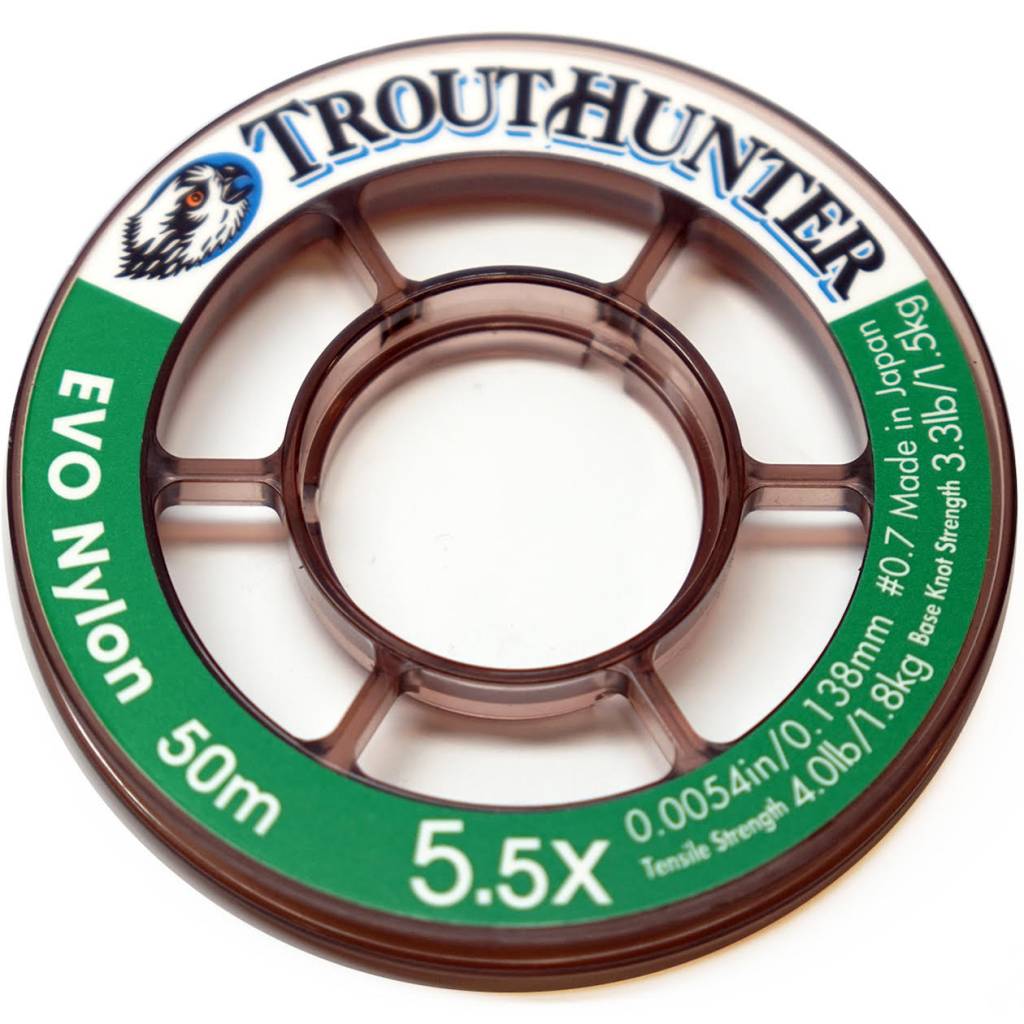
But the thing that, you know, I would always ask for before they’d leave if they were game would be some of their tippet because they had many more sizes than, we had a lot of sizes that were in between, which you’ll see in our half sizes of Tippett. And it was always incredibly strong. So we had a guy who was working with Renee to promote his flies in Japan, came good friends of ours, name is Masa. And he said, Hey, let’s do a project together. And that was sort of the thing that Rich Renee and I all agreed would be a great thing would be, let’s bring in some, some of your tippit. It’s by far the strongest and it’s the most important thing in our minds besides the fly if you wanna land a fish.
Jon (50m 9s):
So for about three years, you know, we were kind of going back and forth testing some things out, getting feedback, you know, kind of like we get one with a red sticker, one with a blue sticker. Okay, how do these two like then you know, next month we get a couple more to, to try out and we all agreed on sort of what became our existing tippit. And you know, when you start selling Tippit you also have to have leaders. So again, we, you know, kind of relied Amasa to find us a a good source of that. And he found a great small leader manufacturer in Japan that we worked with. I’ve been to the factory, it’s amazing. I mean the stuff that they turn out of this very tiny little place and I mean it’s a family operation, it’s really cool.
Jon (50m 53s):
So anyway, we had them do our leaders and Renee had always had a great long leader and that was something that no one else had. So after much sort of persuasion we were able to get him to provide his leader formula, which we turned into an extruded leader. So it was really a lot of work to do that. I mean each of those leaders is designed on its own, right? It’s not just, you know, in the extrusion process you start thick and you, you make it thinner and you can determine what you’re doing sometimes by just where you cut this giant leader. I mean they all come out on a big spool and then you cut there to determine what your leader length is.
Jon (51m 37s):
His are all actually designed and formulated for each size. Like you know, the five x, the 14 foot four x is gonna have a different butt section than the 14 foot five x. You know, those diameters are all changed so they all turn over. So that’s, you know, that was one of the real unique things that I would say is a ranch specific designed leader. And we found, you know, we sell our stuff in a lot of shops and generally the, the shops that also have spring creeks that they’re serving will will pick up a few of those. Also like our finesse leader too. But if you’re really fishing a big river like we have, you want that 14 footer cuz you’re gonna be, I mean sometimes that’ll be built out to 20 feet, you know, take a 14 foot four x add some five, maybe some five and a half and then some six or something like that on there to get out to your really long leader.
Jon (52m 26s):
So you’re giving that fish a good presentation but that leader designed such that it will turn over a long tibit.
Dave (52m 34s):
Right, right. That’s cool. No, that is an amazing story and so it makes sense. It’s the reason you’re known, these leaders are known cause they’re awesome, you know, which makes total sense and especially if you’re in some of these areas where you’ve got spooky fish and in presentation is key. So describe the extruder just if we don’t know like exactly what extrusion is, what is that process?
Jon (52m 54s):
Okay, so basically, you know, all of this stuff is originally pellets of whatever material, whether it’s an nylon or whether it’s a floor carbon. You dump that into a hopper, it melts it out and then the extrusion process basically as it melts, it’s kind of getting stretched.
Dave (53m 13s):
Oh right.
Jon (53m 14s):
Yeah. So you can do different things in the stretching to affect the diameter of the tip it and then there’s usually a dye associated where the actually comes out of the hopper and that’ll sort of cut down your original diameter.
Dave (53m 29s):
Yeah, yeah, that’s right. So extreme leader basically one built leader kind of knotless for the most part versus say if you were to just get certain segments that are all the same length, then you were to build a lead or something like that on spools.
Jon (53m 40s):
Exactly,
Dave (53m 41s):
Yeah, that’s right. Okay, cool. And do you remember, this is just kind of a fun fact, I’m not sure how old you are, but have you ever thought of leaders in poundage? Like, you know, back in the day, I remember there used to be like, well this is two pound, three pound, but you know, X is kind of the way. Do you remember that when it was talked about? Or maybe it was never talked about it
Jon (53m 57s):
There? No, no, no. It certainly was, you know, and I would say as when I got onto the Henry’s fork, you know, mainly it was when you got there you were talking about diameter cuz that was really the the important thing you needed to get that diameter such that you could fool the fish. After that it kind of became a, a test game. You know, what’s, what’s gonna be the strongest of that diameter that you can find.
Dave (54m 22s):
Yeah, yeah, it makes total sense. I mean because you think back now like yeah, why, I mean it’s all right, quality’s probably better now and and really strength doesn’t matter that much because it’s probably all, do you feel, well you’re probably a good person to ask this. I mean there must be still leaders out there that maybe are seven x but they’re not as strong as say you’re seven X or somebody else’s seven x. Do you think that’s true?
Jon (54m 43s):
Oh, that’s very true. You know, there’s different ways to make it, there’s fast ways, there’s slow ways and I think we, we have a slower way which I think creates a better end product. But you know, the other thing too is you know, what is five x is everyone’s five x created equal and not, you know, the X is a range sizes. So you know, we have half sizes. So we started about, you know, we go three, three and a half, four down to seven and then once you get to seven, there’s really not that much space in between the diameters, at least from what we’re offering to fit in another size. So for us, we have to be very accurate in our diameters, otherwise our five x is gonna look more like our five and a half X or our four and a half X.
Jon (55m 32s):
So we wanna make sure you know, that you’re comparing apples to apples when you start talking about test strength. You know, if someone just says five x, well oh you’re five x is actually, you know, a micron larger than someone else’s five x and that’s gonna give you additional strength. But the thing that we’ve always put out there is our stuff is very true to what is on our label. You know, if it says it’s five x, that’s gonna be in the middle of the range because if we start getting out beyond that, we’re gonna get too close to something else in our line.
Dave (56m 5s):
Yeah, right, right. And that’s why the half sizes make sense too because you, I mean you’re fine tuned enough that yeah, okay, 4.5 you’re right in the middle of 4.5 too, right. So people can kinda understand that.
Jon (56m 17s):
No, and I know some people scoff it, the concept of the half sizes, but you know, if you spend a lot of time on the Henry’s fork like we do, you appreciate it.
Dave (56m 25s):
Yeah, perfect. Well this is cool. Yeah. So in the shop wise, so is this product, I mean I’m not sure if you guys have other products out there kinda in the trout hunter brand, is this one of the ones that you know definitely is out there? Do you have other stuff you guys have going there?
Jon (56m 39s):
You know, we’ve had a pretty good run with some tying materials and mainly c D C, but you know, with all of the stuff going on, we are no longer in the c d C business between bur, you know, we had a great supplier that was in Europe and he went through a number of bird flus and basically it got to a situation where we could not get it reliably and we’ve been looking for another supplier but haven’t been able to find someone that had the same quality that we used to have access to. And you know, it’s been very funny because this started with Covid and you know, people call up to complain that we didn’t have one of these, our colors in stock and I’d have to say like, hey, I know you’ve heard of Covid but perhaps you haven’t heard of all these avian flus that have been hitting Europe.
Jon (57m 29s):
And essentially what our CDC was, it was, you know, kind of an organic product, you know was from the sort of a byproduct of the pat industry in Europe, they let their ducks grow to be a lot bigger, they have to have access to water, they have to be able to see the sky, so you get a much happier duck and it gets to be older, which produces a much nicer feather. So without having access to that, we’ve kind of pulled our, our C D C, but we are still looking and I do hope to find another source sometime soon. Perfect.
Dave (57m 60s):
And you mentioned Renee Har up, so that’s a name that’s definitely out there. Can you talk about, I missed that as far as the connection there, who is Renee Har and yeah, it sounds like a pretty influential person in the area.
Jon (58m 13s):
Very and and certainly in my life, Renee was one of the original, you know, kind of regulars in the area, kind of in the modern fly fishing thing. And when Swisher and Richards came to the area, I wanna say this was back in the seventies, you know, to test fly designs and kind of helped create the match the hatch movement. You know, they got to know Renee and he was one of Orvis first contract tires. Oh wow. So they got hooked up with him and Renee was able to put onto the hook some of the designs that they had and that kind of got him jump started as a, a real serious tire.
Jon (58m 55s):
And then he got to know about C D C and started creating a bunch of his own flies, ultimately kind of doing the house of Har, which, you know, tide flies for many shops in the area. I, I shouldn’t say not too many, but you know, all of sort of the big ones. He tied for Henry Fork anglers, George Anderson’s Yellowstone Angler over in Silver Creek, you know, mainly the areas that had tough challenging Spring creeks. And Renee provided the solutions to a lot of the, that anglers needed there. And he was always a Henry’s fork, regular and rich. And I got to know him hanging out at the a bar and on the river, but that was an old watering hole up here that was along the, the old highway,
Dave (59m 39s):
Oh, what was it called?
Jon (59m 40s):
The A bar.
Dave (59m 41s):
Oh, the A bar, is it still there?
Jon (59m 44s):
The building is still there, but it’s not, not running as a bar anymore. They wound up selling that a few years ago, but you know, it was sort of the fisherman’s Hangout for a number of years and that’s where everybody would wind up going and you know, we got to know Renee there and he really had a huge impact on the way I thought about fishing and, and a lot of other things in, in life. He was one of our partners for a long time while still doing the house of Har and I always sort of called him our, our spiritual advisor. You know, he was really the guiding light on how we, you know, the direction that we would go and, and the things that we wanted to appreciate about fly fishing and yeah.
Jon (1h 0m 25s):
So that was, we were very lucky to get associated with him and, you know, consider one of the most positive things that that happened in my life with just getting to, to know him and, and hang out with him. And I really need to do that more. I’ve been, I’ve been working too much recently.
Dave (1h 0m 39s):
Right, right, right. So Renee’s still around town.
Jon (1h 0m 42s):
He is. He, he kind of moves back and forth and the wintertime, he goes down to St. Anthony, you know, to get out of the, the island park winters and then comes back in the summers where he is, got a cabin up here and you know, for as long as I’ve known him, you could always find him on the river at night after he was, you know, usually at lunch he’d go out, take a break from tying during the day and then again in the evenings and he was constantly always on the river.
Dave (1h 1m 10s):
Wow. What was one thing, I mean it sounds like he helped taught a lot, but what was one thing that Roy he maybe taught you or you remember when you think about him?
Jon (1h 1m 19s):
I would say probably the biggest thing that he taught me was how to treat other people. There was an interesting evening one night when we had first opened our, our restaurant and someone had kind of, one of our employees had had sort of stepped outta line and I, I took them to task in a way that I probably shouldn’t have and Renee was there and witnessed it and called me out on it. And I’ve always remembered that and that’s probably, you know, has nothing to do with fishing, but more just, you know, how to be a good person. And that’s something that I think he shared and has always been extremely respectful of everybody. He’s somewhat of a celebrity around here and always would make himself available to people.
Jon (1h 2m 2s):
I mean, once people realize, hey, that’s Renee’s truck, you know, they’d go over there and they’d wanna chat ’em up and you know, if they were a fly tire, they’d wanna give ’em a fly or something like that. And he was always very gracious and generous with his time with those people. And I’ve seen him take some flies that I certainly probably would’ve passed on. But you know, it was something that this person had put some time into and had given to him because they were proud of it and he understood that and he appreciated it and he let them know. So he’s a, a big hearted guy.
Dave (1h 2m 34s):
Amazing. Yeah, it reminds me, and not knowing him and just hearing from you, but it reminds me of kind of like the stories you hear about some of the other people. Right. Lefty cray. Some of these people that were bigger than life in the fly fishing and, and it always goes back to that, it’s never about the fishing, although they are great teachers, it seems like it’s always about the people talk about the person. Yeah. And sounds like he’s one of those guys. Yep,
Jon (1h 2m 56s):
I would, I would agree. Good
Dave (1h 2m 58s):
Deal. Well I And what was his truck? What was the old truck he would drive around? Does he still have that truck?
Jon (1h 3m 2s):
Yeah, he still has it. I wanna say it’s like a 1980. It might even be a 79 like old Ford Ranger, but Oh perfect. Yeah, no one kind of one of the, one of the bigger ones and yeah, he’s got his kind of one of the, the first little rod, not even one, one of these rod vaults, but a little rod holder on the back and there’s a cooler in the back and you know, there
Dave (1h 3m 26s):
You go. Well let’s take it out here. We’ve got the two minute drill. This is the way that forces me to kind of wrap things up here quickly. So I’ve got a couple just quick ones. These will be easy ones to take us outta here. You ready to jump into this? Sure.
Jon (1h 3m 37s):
All
Dave (1h 3m 38s):
Right, so I guess let’s go to the bars first. So you got one bar other than your place, what’s another good bar? You know, you’d stop into?
Jon (1h 3m 45s):
Oh gosh. I would have to say, you know, kind of depending on what you want, but Ponds is another good bar up here. They’ve kind of turned into a big sports bar. If you wanna go have some beers and you know, they don’t have liquor out there, but out at a shotgun, which is a little off the beaten path, that’s where we’ll get some real local flavor.
Dave (1h 4m 6s):
Perfect. Yeah, good deal. And so we were talking some basically dries a little bit on dry flies today, but what would be, and you’ve given us a few tips, one quick tip on dry flies. So if you’re out there, what do you recommend? What would be one tip you’d give somebody?
Jon (1h 4m 19s):
Take your time, you know, watch what you’re doing, observe and try and make your first cast the best cast. I feel after, once the fish knows it’s being fished too, it becomes immeasurably difficult and generally they will not leave, which sometimes people consider to be quite rude. Gotcha.
Dave (1h 4m 40s):
Okay, perfect. And what would be a tip for the wind? You talked about the wind, I love that first tip. What about if somebody’s got some wind blowing, what do you recommend there and they’re trying to fish dries?
Jon (1h 4m 51s):
I always say try and use it to your advantage. You know, the harder, if you’re trying to cast directly into the wind frequently you have to force it, which is more than likely gonna affect your presentation, the delicacy of your presentation. And that wind also can be to your advantage. I mean, it’ll put some ripple on the water. It might allow you to get into a position where you can use the wind and still remain concealed, you know, they can’t see as well. It does allow you to have a little bit more of a sloppy presentation as far as you know, how the fly lands. But I definitely think, you know, try and use it to your advantage as much as you can, whether it’s to make your casts easier or it’s to help hide yourself from the fish.
Dave (1h 5m 34s):
Good. So this has been great John. I think that you’ve shed some light, there’s a ton of questions. I always love the ones where we talk and there’s still a hundred questions I have like the area, the history, so we’ll have to check back with you. But anything else coming up here in the next, the rest of this year as you look ahead? Anything new you wanna give a shout out to from Trout Hunter?
Jon (1h 5m 51s):
Well, I’m, I’m hoping we’ll get some new leader and Tippi material go in that hopefully we’ll have that ready to go by the fall. We’ve got some, a new coating we’d like to, we’re already using on our nylon that we’d like to expand into our floor carbon and some more of our leaders. Some of the prototypes that I’ve been fishing with. That stuff has been very impressive. So hopefully we can get to a position where we can release it so we’ve got that going. And then probably the, the big thing on everyone’s calendar for Herriman Ranch is the opener on June 15th and we always have a big party on June 14th, little band, possibly a pig roast. So hopefully we’ll be able to have another one of those this year.
Jon (1h 6m 33s):
It’s been a little bit mellow after Covid, you know, not wanting to cause too much problems, but I think hopefully we’ve got some things figured out and I’m not sure if we’re gonna have our new house band, which our guides have put together. Tail Hooked Whitey. Oh wow. Yeah, it’s been been quite a deal.
Dave (1h 6m 49s):
Tail hooked
Jon (1h 6m 50s):
Whitey Tail hooked Whitey
Dave (1h 6m 51s):
Perfect. Is this a bluegrass band?
Jon (1h 6m 54s):
No, more of a rock band.
Dave (1h 6m 56s):
Oh right, good.
Jon (1h 6m 57s):
But yeah, they’ve been, we’ve had put on a couple shows for us last summer, which were really a lot of fun. We had ’em play this winter. We had a Winter Fest event here kind of at our local chamber commerce put sound, they really knocked it out of the park there. So hopefully we’ll see ’em again this summer and we’ll have a great ranch opening party and then a great summer on the Henry’s Fork.
Dave (1h 7m 18s):
Man. Sounds amazing. This is, be hoping to shoot for mid-June and maybe connect with you there, so, so we’ll send everybody out to trout hunt.com And yeah, just wanna say thanks for all the the good stuff today, John. Appreciate you spending some time and we’ll definitely talk to you very soon.
Jon (1h 7m 33s):
All right, sounds good Dave. Thanks a lot.
Dave (1h 7m 35s):
There it is. John Steele on Travel, part of the Wet Fly Swing podcast and Swing Outdoors. This podcast was supported by Eastern Idaho’s Yellowstone Teton territory. You can support this podcast and eastern Idaho by heading over to wetly swing.com/teton. That’s T E T O n. And, and check out some of the companies you can support that also support this podcast. Don’t forget to reach out to me, dave@wetfiveswing.com. If you’re interested in grabbing one of the remaining slots for the Euro School, the trip, the big trip, we are heading and we are gonna be fishing this river that we just talked about today along with the South Fork. This is gonna be an epic trip to an amazing cabin of some of the best anglers in the country.
Dave (1h 8m 18s):
And we’re gonna go deep on your own nipping. That’s the point. We’re gonna go deep dive on your own nipping on this, on this trip. And we’re probably gonna have some opportunities to do some other stuff because we got the gold medal guy from the gold medal winning team, Pete Erickson is on. It’s gonna take this one home for us. So that’s it. I am gonna let you get out here. I’m not gonna dig into anymore on this. You know where to go if you want to check in with us. And I appreciate you for hanging in and checking out this episode of Traveled. We’ve got a bunch of great stuff going on this summer, this spring, this summer coming up here. We’ve got some awesome episodes. We’re just expanding things a little bit. We’re testing the waters, we’re dipping our toes in, and we’re gonna try some new stuff if we try something that resonates with you, if we have a new guest on, like guest host like Phil Roy, if you’re loving the Stillwater, we got another episode of one of those coming up with Phil Roy.
Dave (1h 9m 7s):
If you wanna hear more of that or maybe you have a guest podcast, a guest podcast host you want to hear on this podcast, gimme a shout out dave@wetflyswing.com anytime. All right, that’s all we got for travel. I hope you have a great, I hope you have a great year in 2023. I hope you get a chance to travel somewhere around this country. If you get a chance to travel to Eastern, I for sure give a drop. Drop a line. Don’t give a drop, but drop a line. And if you’re traveling somewhere around the world, do the same thing. Let me know. Check in with me anytime. And I would love to give you a shout out on this podcast episode. The easiest way is to send me an email, dave wetly swinging.com or on social media, and I will give you a shout out and if you give me a show topic, I’ll also work on getting you a show to put together.
Dave (1h 9m 51s):
All right, I’ll talk to you later.