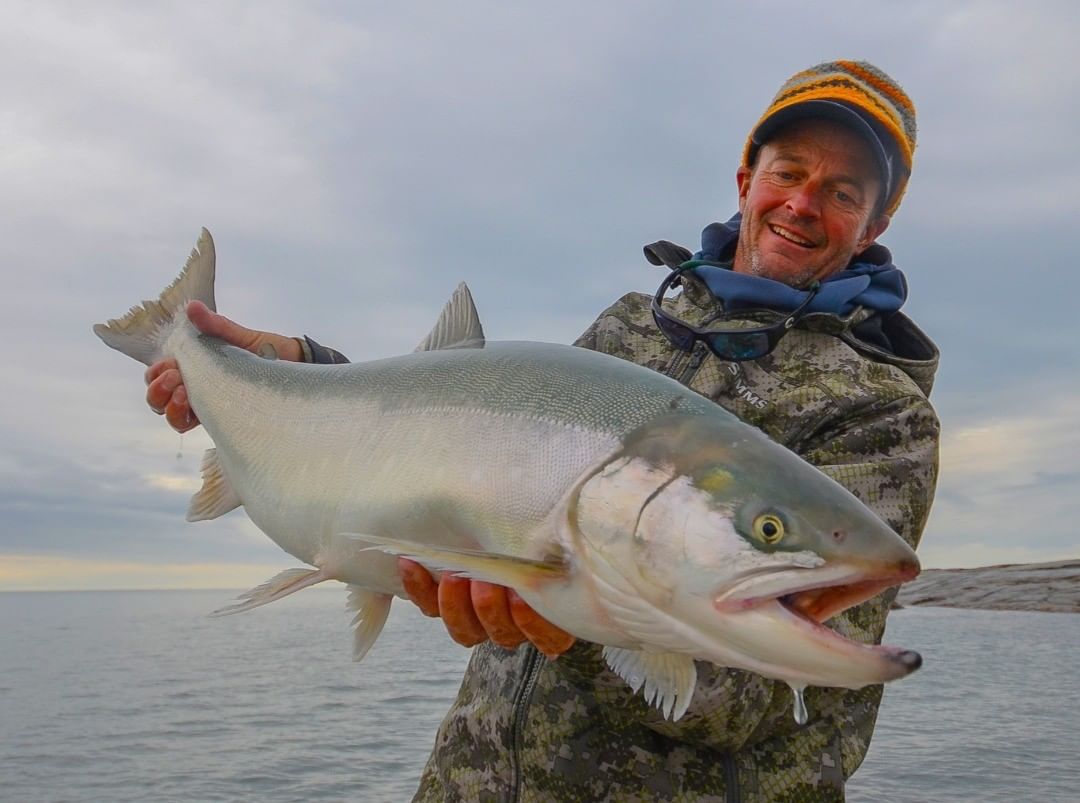
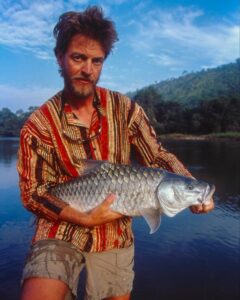
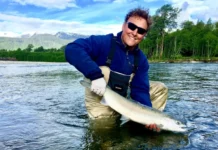
Jeff Currier is back again with an update on his journey to catch 500 species on the fly. Jeff is one of the rockstar travelers in fly fishing with over 440 species caught on the fly.
Today Jeff takes us into his life in Eastern Idaho and the great rivers he has fished around this part of the country. This is the first-ever episode of our new series, Traveled. Time to experience the road less traveled, here we go!
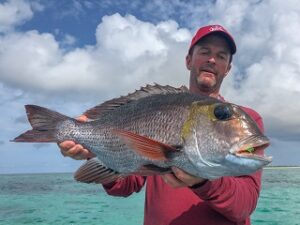
09:50 – He caught a big-eyed emperor in Seychelles.
13:30 – Jeff talks about Eastern Idaho fly fishing.
51:00 – The South Fork of the Snake River is one of the greatest rivers in the West.
52:00 – Jeff mentions other rivers that he recommends you fish.
59:00 – September to October is the best time to fish Eastern Idaho.
Episode Transcript
Dave (1s):
Coming up next on the Wet Fly Swing podcast,
Jeff (4s):
The guy that picked me up, he goes, they just canceled you. We’re not allowed, we’re not allowed to do this thing in Canada tonight. I was like, holy cow, what’s going on? This is real, isn’t it? He’s like, yeah. He goes, we’re actually gonna take you straight to the airport, the Calgary airport, put you in a hotel and you’re gonna wait for flight to get outta Canada. They’re kicking you out. I was like, whoa. I remember I sat in Calgary for two days and then I caught a, I was one of only two people on a flight from on Delta to Seattle, and then kind of worked my way back to Idaho Falls.
Dave (35s):
Jeff Courier, sharing an experience from the beginning of Covid and the end of international travel. Welcome to Travelled, where it’s all about the journey we are all on in fly fishing and in life. This is our chance to take a deep dive into a specific area around the country so you have a better feel for the people, the resources, and the community that make this part of the country so unique. Before we jump into it with Jeff today, let’s share love with our traveled sponsor. Today’s episode is sponsored by Eastern Idaho’s Yellowstone Teton territory. Idaho’s most renowned zone for fly fishing. From the Henry’s Fork to the South Fork of the Snake, and all the high Alpine lakes and streams in between Yellowstone Teton territory provides anglers and other outdoor enthusiasts with all the information they need to plan their next big trip.
Dave (1m 27s):
You can visit wetly swing.com/teton right now to get the full list of Outfitters Lodges, fly shops, and all kinds of inspiration to get you started on your next trip to Eastern Idaho. That’s Teton, T E T o and wetly swing.com/teton. This week on travel, we have Jeff Courier, who is one of the most well-known travelers in fly fishing. Jeff has been traveling the world and has caught over 400 species on the fly, and today Jeff takes us into his life in eastern Idaho and the Great Rivers he’s fished around this part of the country. Time to experience the road less travel. Here we go, Jeff Courier from jeff courier.com.
Dave (2m 12s):
How you doing today, Jeff?
Jeff (2m 13s):
You’re doing really good. How about you, Dave?
Dave (2m 15s):
Good, good. It’s great to have you back on the show. It’s been, I was looking back episode 65, which was a few years ago now we’re, we’re approaching 400, so we’re gonna get an update on what you have going. It’s been, you know, a few years here and you’ve, we’ve gone through Covid now, so we’ve had all that putting behind us and you know, we’re doing this new series now on Traveled where we’re, we’re focusing on some, you know, traveling with the focus on Eastern Idaho. So this is pretty cool chance because you are probably the most well-known traveler, you know, out there in the space. But, but take us back real quick. 65 I think was, what was it? Three, I think it was 2019. So what’s been going on with you, I guess maybe other than covid in in the last since then?
Jeff (2m 58s):
Yeah, well, obviously Covid changed my life. I mean, yeah, it changed a lot of people’s, for me was big time because, you know, I’m out there doing the presentations all all year and that came to an end for me for 18 months, which kind of gave me a little time to, to look at my life in Idaho and you know, I fished around home for, for a year and a half more than I had in 25 years. So it was, it was really cool, really cool. And probably spent as much time in the Henry’s Fork, you know, up in the ranch as I probably did when I was like 21 years old, which was, you know, we’re talking like 30 or 40 days. So it was a very, very cool time, even though at the same time it was killing my business.
Jeff (3m 42s):
But you know, that’s, that’s life. It was the same for everybody. So it wasn’t like I was, you know, too bummed about it. It was fun to, to have that angle of life. But then the weird thing is, you know, then all of a sudden this housing crisis started and people started moving into, you know, eastern Idaho and Teton Valley and stuff and somebody wanted to buy our house and we had joked about moving, you know, the last 10 years cuz you know, I actually met my wife in northern Wisconsin going to college and we love it there. We have a lot of friends there and we often joked about going back, but we never thought it would really happen. We’d leave the mountains when I leave the Henry’s Fork. But, you know, we had this opportunity to sell our house at a, at a good price and then maybe go to Wisconsin and, and buy a house that a lot less money and have more time to fish together and do cool stuff.
Jeff (4m 32s):
It happened, that’s basically what we did. We, we sold our house last October, which would be 2021 and I bought a sweet van. I’ve done nothing but drive old cars my old life, you know, still got my 1991 explorer. It’s still my favorite vehicle, but Nice. We went right out with some of our house money and bought a brand new, not a sprinter van, but one of the Dodge Ram little tiny vans. Yeah. We lived out of it all the way till about May 9th last year or actually into this year. And that’s when we bought our house in Wisconsin.
Dave (5m 6s):
Gotcha, gotcha. So you, you picked up one of those van, I mean basically it looks like a sprinter van, but it’s just a little, it’s what, it’s just a different brand. Right, but it’s the same sort of style.
Jeff (5m 16s):
Exactly. We’ve got the shortest, smallest one. It’s 17 foot and basically just get a double burner stove in there and sink if we want it. And a really nice bed and plenty of places to store my fish and stuff.
Dave (5m 28s):
Nice, nice. And you guys are settling in Wisconsin, what’s that like? Is there a big change between Wisconsin and and Idaho?
Jeff (5m 35s):
Oh yeah, it’s obviously a little flatter, although it’s not, you know, people joke about, oh, you’re moving to the flatlands where we live, we’re in Hayward, which is about 55 miles south of Lake Superior. We actually wanted to be in Lake Superior because I love the Great Lakes, but it didn’t work out. It was hard to find a house here too. And we ended up in Hayward by accident and we love it. It’s very rolling hills here. We have a, an amazing river that comes through town, it’s called the Nama Coggan and it’s actually one of those, you know, scenic waterways but upstream from town is really fabulous. Trout fishing got out there just a few times cuz the season’s early, so I kind of missed a lot of the, the April in early May part of it, but fished in June, it was great.
Jeff (6m 19s):
And then south of town there’s a lake that it’s, you know, a dam on the river through town here, but south of it is great musky walleye and pike fishing, so it’s pretty cool.
Dave (6m 30s):
There you go. Something that’s, does Idaho have much of that musky kind of walleye pike?
Jeff (6m 37s):
They know very little up north. There’s some pike, which was a long way from, you know, where I lived in eastern Idaho, but not really. And I, I didn’t mention the small mouth fishing here is incredible. That is something that Idaho is starting to have a lot of that, that Snake River below American Falls is incredible. Small mouth fishing.
Dave (6m 56s):
Oh right. That’s it. So eastern Idaho doesn’t have all the species but it’s got the, the small mouth pretty dialed in.
Jeff (7m 3s):
It does, it really
Dave (7m 5s):
Does. Which is right. You’re, you’re one of your favorite species still, right?
Jeff (7m 8s):
It is. I still love my smallies so I’m in heaven here and I do miss that lower snake, but I’ll get back, you know, I, since I’ve moved here, I’ve been back to Idaho twice this year to see friends. I fish the Jacksons old one fly. Oh nice. And I’m sure I’ll always do that.
Dave (7m 22s):
Yeah, that’s right. The one fly. So that one fly’s still going on strong.
Jeff (7m 26s):
Oh yeah, I don’t think it’s ever going anywhere. It’s, I think they broke their record on raising money for the rivers back there this year.
Dave (7m 33s):
Nice. Yeah, I forgot about the one fly. So, so that basically they raised money in that event to support kind of local rivers conservation, that sort of stuff.
Jeff (7m 41s):
They do, but they go beyond local. They take on some big projects around the country as well.
Dave (7m 46s):
Right on. Nice. And you know, I think last time in 365, you know, a few years ago we, you were like at 400, right? The species, I think you’re close to 400, you broke it. How, how’s that look? Are you still, I mean obviously Covid took out a few years there, but are you still focusing on that as we kind of pull out of this thing covid and, and look into the future?
Jeff (8m 4s):
Absolutely. I’m, I’m gonna target 500. I didn’t think it would be possible, but I’m at about pretty close to four 40 now and now I’ve actually, it’s time to kick back and create a list of this fish species I have not got. Right. And then go out and start targeting because this past year actually knocked off a few real nemesis for me. Two weeks ago I was down in Mexico and finally got my striped Marlon, which is not necessarily a super hard fish. I mean you gotta be on the water to get him. But for some reason that thing just gave me trouble. But I knocked him off. And then last spring I got, I was working in the sea shells and got a real nice milk fish, which was another one that’d been giving me trouble.
Dave (8m 48s):
Nice. There you go. So, so you got this rolling in 500. So in a normal, I don’t know, is this like a few, few years to get to that 500? How long do you think it’ll take you?
Jeff (8m 58s):
It could take about 10.
Dave (8m 59s):
Oh it could? Yeah. You gotcha.
Jeff (9m 1s):
Yeah, it’s hard to find stuff to catch now, so I’m gonna literally have to make a list and then start doing some oddball stuff.
Dave (9m 7s):
Gotcha. Wow. So out of those that that list, so how many are the normal, I mean you’ve been probably been getting some oddball ones, but out of the four 40, you know, how many of those are ones that are kind of doable for like the normal person that can travel and then how, how many are the crazy, like you got a extreme?
Jeff (9m 24s):
Oh I would say like a hundred of them are probably crazy Extreme meaning like for instance, gold bus here you have to go to India or the Himalayas to catch and then they’re hard to catch even when you get there, despite the fact that they’re there. And then there’s so many random like oddball lucky catches. I guess the most recent would be when I was at Providence Atoll and S Shells back in April I was hosting a YellowDog trip but I caught a fish called the Big Eyed Emperor. And it was kind of funny because as the, the host I was staying out of the way of my guests. I had, you know, you have three people on the boat there and usually you jump out and the three of you walk the flats. But we were, we were anchored up on a spot because it was a good place for big GTS to come by and both my guests wanted to fish gts so I was just kind of chilling out in the middle of the boat and I could see down about eight feet below and there were these really large interesting looking fish zipping around the coral heads and I was like, wow, this looked like some kind of weird, you know, reef fish.
Jeff (10m 27s):
Have you ever caught one of those? Tim looked over and he said, I don’t even know what they are courier. No, we’ve never caught them. So I said, well I think why these guys are waiting for fish, I’m gonna try to nim one up. I broke out my nine weight and Tim had a cool algae fly. They had a little weight to it. So I basically was, it was like I was European ning over this coral head trying to get these fish and, and lo and behold one ate it. Wow. And I don’t know how I landed him to be honest with you because he was trying to get into the coral, but you know, my nine weight and I think I was using straight 20 pound tests, I was able to get ’em in. Yeah. And so like that’s a fish another one that’s like, I don’t think too many people are gonna catch that. Yeah. That fish ever.
Jeff (11m 7s):
Right. It was just a weird situation and I made it happen by luck.
Dave (11m 10s):
Gosh. And what was that fish called?
Jeff (11m 12s):
The Big Eyed Emperor.
Dave (11m 14s):
Oh right. Big eyed emperor fish.
Jeff (11m 15s):
Yeah. If you were to Google that with my name, you’d see the picture cuz we got some really great photos of it. Oh good. Just a cool looking interesting fish.
Dave (11m 23s):
Cool. Yeah, I’ll put some links to those photos in the show notes or to your website and stuff, so, so good. What, what’s that like on the hosted, so you, you sounds like you do some hosted trips mixing in with other stuff. Do you, you know, you’ve got the clients on the boat. I mean, do you find that you get a few opportunities or, or how does that look with your hosted trips you’ve done?
Jeff (11m 42s):
Well the way I do ’em now is I really just do one a year. I mean I guess I did two in this last year and I really only do the say shells. I really, really off the wall far away stuff. Basically places that I can’t go on my own if I’m not finding some avenue to work. And I do it through YellowDog, you know, I don’t like dealing with all the paperwork and the logistics on my own. So it’s great for me. They do all that for me. And then I actually just work with the guests on their fishing and then take them over there. That’s cool. I got a good tribe. I’ve got people who have gone all over with me for years so it’s, it’s very little work for me. We just go and have a good time together.
Dave (12m 23s):
Yeah, that’s awesome. That is the thing about Yellow Dog, right? And is that they just pretty much, you come in there and they do it all for ya, there’s not much else to do. They take you what? Pack your gear and then everything else is kind of squared away.
Jeff (12m 35s):
Yep. It’s that easy. And actually now YellowDog practically packed your gear if you want because they just bought a fly shop in Bozeman.
Dave (12m 42s):
Oh wow. What, what was the fly shop in Bozeman?
Jeff (12m 45s):
I should know, but I think it’s the Bozeman angler maybe. I’m not a hundred percent sure. It’s on the YellowDog website. It just happened. Okay.
Dave (12m 53s):
Yeah. Gotcha. Yeah, I’ll get a link out to that as well. Nice. Right on. Well yeah, I think, you know, we’ll we’ll dig into a little more on some of this around the world stuff, but I just wanted to touch on, you know, Eastern Idaho because we’re kicking off this series and focusing a little bit to, into that area and you’re like the perfect person for this because like you said, you’ve lived there for 34 years, you were just fishing it before you moved out. Talk about, you know, that area, you know, you got the Henry’s fork I guess the snake, right? What, what is, what are the few, what are the species there? Let’s talk about that for you. What are the species that you’ve caught that you’ve added to your list from that area?
Jeff (13m 30s):
Well what it’s famous for is, you know, yellows don’t cutthroats and then if you jump over to Jackson, which is not Idaho, but it’s only, you know, 15 miles away, then you have your snake or cutthroats. So it’s famous for Cutthroats. Yeah. That’s basically, yep. The deal there. And they’re trying to reestablish ’em a little better in the south fork of the snake. But if you get in any of the small streams in the Teton River, it’s, it’s, you know, some of the best cutthroat fishing there is anywhere, you know, I won’t say the world cuz they’re only from, you know, the western part of the United States, but probably the best fishing in the entire west for Cutthroats.
Dave (14m 7s):
For cutthroat. And these are cutthroat typically that you’re getting on the surface? Or is it a mix of techniques?
Jeff (14m 14s):
Well you can do a mixed techniques, but that’s definitely what that fish is known for coming up being a little stupider than some of the other trout and you know, crushing a big foam dry fly, you know, on the twitch, you know, it could be more like bass fishing sometimes.
Dave (14m 27s):
Oh, nice. So
Jeff (14m 28s):
Yeah. Yeah, it’s fabulous. I lived very close to, you know, I was in Victor so I was like five miles from the Teton River, which is, you know, the upper stretch, a slow moving stretch of river and you know, not only did they crush the big flies, but there were times where they would be very finicky on tiny dry flies in some of the slower water sections. And it was, it’s great. Kept me tuned.
Dave (14m 49s):
Right. And and are there cutthroat, you’ve mentioned Yellowstone, snake River, are there a bunch of other cutthroat species out there or those just a couple of the main ones.
Jeff (14m 59s):
Those are the main ones. But if you drive two hours north, you’ll start getting into the West Slope Cutthroats, which are more the Montana fish. Okay. If you drive south down towards Salt Lake, a couple hours you get into the Bear River strain. And then if you zip over into Wyoming you have the Colorado Cutthroats. So Colorado, that area’s got a lot of them.
Dave (15m 21s):
Right, right. So you got it all in that. And then that’s the cool thing is yeah, they’re super active on the surface. And then what are they, so you got smallmouth bass, you add some other species to the, that Eastern I Idaho. What else you got out there? That smallmouth right one, one of your favorites.
Jeff (15m 34s):
Oh yeah. And you, you have to venture like ID Idaho Falls, there’s a lake there called the Ry Reservoir that had smallmouth in it. They don’t get very big, but it is a good fishery for ’em. The top water fishing was always good in the summer, but world-class smallmouth bath fishing has developed down below American Falls Reservoir all the way to Boise on the snake. And the last 10 years is really just when I started tapping into it. And you know from Victor, that’s about a two and a half hour drive down to that area. So, you know, I didn’t go every year, but I went for like a four day trip every summer. And I tell you it, each time I went, the last three years that I went, I topped my biggest small mouth, which I’ve topped again since I’ve now moved to Wisconsin, but Oh wow.
Jeff (16m 23s):
Yeah, it’s incredible, incredible small mouth bass fishing down there.
Dave (16m 27s):
Oh wow. And what’s a big, what are one of those big smallmouth? How big is that?
Jeff (16m 31s):
I would say super fat 18 inch fish. Yeah. And you know, some nineteens and you know, I’m pretty honest with the measuring tape, so I don’t pop the 20 mark out very often and I never got one down there, but I have since I’ve got to Wisconsin.
Dave (16m 46s):
Yeah, that’s right. Yeah. People tend to extend, if it’s close, call it the 20 inches. But yeah, I mean you got an 1819 inch and plus it’s a fat, obviously a fatter fish. So that’s, I don’t know what the poundage is, but that’s pretty decent. Right.
Jeff (16m 59s):
Yeah. They’re, that’s a giant Somali really is. Yep. So also I should mention, you know, the carp fishing is what I’ve probably did the most of the last, you know, number of years in Idaho and you know, they’re common carp. We don’t have any grass carp in, in eastern Idaho, but common carp mirror carp, which is actually the, the same species, the mirrors of subspecies, kind of a mutant actually of the common carp. But that lower snake had an incredible carp fishing on, you know, with the fly as well, as well as every one of the reservoirs including American Falls and Blackfoot Reservoir, like superb flat style carp fishing.
Jeff (17m 39s):
Like incredible. I do, that’s the thing I’ve missed the most since I’ve moved to Wisconsin.
Dave (17m 44s):
Right. So there’s no carp up there. So, and, and that’s just because of a obviously warmer water. Right? That’s the big thing thing. You need the warmer water.
Jeff (17m 50s):
Well, I just haven’t found ’em yet. I did see a couple on Lake Superior on a flat this summer and I did go over to Lake Michigan, which is actually incredible for, for fishing him on the flats there. Oh, okay. Just clear water. Yep. I think Lake Superior might really be a little bit too chilly for him to, to really prosper.
Dave (18m 9s):
Yeah. Right, right. Yeah, we just got back, we were, I was over in Lake Erie with Jeff Lisk doing the steelhead alley stuff and man, the Great Lakes are amazing, you know, I mean I, we’ve been doing a number of episodes, but it’s such a, I mean you, you know it, I’m sure you’ve, you’ve were from there originally, but so many opportunities, you know. Right. So it’s just, but again, the US it goes back to that thing. You’ve traveled all around the world, but you probably look at the US as a pretty productive place and diversity of species. Is that how you see it?
Jeff (18m 40s):
Oh my gosh, yes. I mean it’s, this is a great country for adding fish to your species list. Just not just freshwater, but we got two different oceans as well. So it’s amazing. But I am, I am really excited to be back in the Great Lakes region to be this close. You know, I can, you know, fish my river I just mentioned about here, here through town. I’ve got a hundred lakes within 25 miles away. In fact, I’m gonna go out and check up some coffee for dinner here shortly. Nice. Through the ice. And then I can go up to Lake Superior and not only fish, giant small mouth on Lake Superior, but they also have a, you know, a very good steelhead fishery and amazing brown trout fishery.
Dave (19m 20s):
Oh right. The Browns
Jeff (19m 22s):
Giant fish and it’s pretty cool.
Dave (19m 24s):
Yeah, it’s cool. Yeah. I, well again, adding to my species list, I, I don’t think as much because I haven’t been out as much, but I was, we were swinging for steelhead and I had a kind of a tip, you know, and then I hooked up with a fish and brought it in. It was a small fish. But then when I got, I was like, wow, it was a lake run brown. Nice. And it was beautiful fish. I mean it was, you know, over 20 inches and or whatever it was. And, but you know, that’s one of those things where you probably are fishing out there and you hook into something you sometimes you might not be quite sure what you’re gonna get. Right.
Jeff (19m 52s):
Yeah. It’s a beautiful thing. It’s my favorite thing in fishing. You’ll love
Dave (19m 56s):
It. Right. God. Okay, so, so we got that. So I mean, going back to Idaho, you know, you mentioned carp, smallmouth, all the Yellowstone, all the cutthroat. Are there any other species? Cuz that’s the ones you always think about for sure. I mean, those are the ones I’ve caught while in Idaho. Are there other ones out there? Is, are there a bunch or just a few more?
Jeff (20m 14s):
Well, the, the ranch of the Henry’s fork, which was my favorite Idaho water, is 99% rainbow trout.
Dave (20m 21s):
Oh right.
Jeff (20m 22s):
And big ones at that. Um-huh. Occasionally there’s, there’d be, there are some small streams. In fact the Teton River has a lot of brook trout.
Dave (20m 32s):
Oh,
Jeff (20m 32s):
Okay. And, and that, you know, self fork and the snake. And the snake itself is, you know, it’s world-class brown trout fishing as well.
Dave (20m 40s):
Yeah, that’s right. So it’s got all that. So you got all the, the, the trout essentially. What is that area? I mean the, the Henry’s fork is, you know, and especially like you said, the ranch reach. What is the thing that makes that area so special? If you go specifically into the Henry’s Fork? Is it the, just the area, the type of fishing? What, what is, because you hear so much about it, right? From, from people.
Jeff (21m 2s):
It’s, it’s the whole package. It’s, it’s the area, it’s incredible area right in the edge of Yellowstone. So the wildlife is there. That river, you know, I believe it’s one of the world’s largest spring creeks. But once it leaves, you know, Yellowstone area and through the ranch it goes over Mesa Falls and then it’s, you know, a pretty fast moving river. You know, so you have a lot of pocket water and it, it’s basically, it has everything and it has all the species as well. That ranch part that I like to fish is, is mostly just rainbows. But once it drops over Mesa falls, you start getting into more cutthroats, you get lots of rainbows, you get brown trout.
Jeff (21m 45s):
The reason I was passionate about the ranch though is, you know, I’m a drive fly guy. Yeah. And I love the technical, you know, gimme an 18 foot liter and a size 20 blueing olive and try to fool a fish. That’s gonna be really hard to get. It’s, that’s, that’s what I enjoy. That’s the, the puzzle of fly fishing that keeps me going.
Dave (22m 6s):
Yep. So that’s, that’s the big thing. And that is a, for me and probably a lot of people, you know, the dry flies not only tying those little suckers, but getting a fish to fool and and matching the hatch. So that, and, and you compare that to the stark contrast to Euro nipping. Right. Which is also a very popular style. And something obviously you with the, the Team USA you’re very familiar with. Talk about that a little bit. Are there areas in that part of the, of Idaho where you can actually use the nymphing, you know, different stream? Can you do that on the Henry’s fork or other areas?
Jeff (22m 37s):
Absolutely. So you would not do it on the ranch because it’s too weedy and slow water, you know, that is dryly water. But my practice grounds, you know, before we do it turn, it wouldn’t be to go to that lower Henry’s fork. So I’d go over around Ashton, Idaho or even further downstream and find some of that pocket water and, and do my practice runs and you know, while catching trout we also catch a lot of whitefish and there’s, you know, people don’t get too excited about whitefish. I do. Cuz I’m a species nut and I always call the Henry’s fork home of the Mighty Whiteys from Hell. Nice. And yeah, I mean it’s not uncommon to get a big 17, 18, maybe even a 20 inch whitefish on NPH down there.
Jeff (23m 22s):
Yeah. That’s pretty fun. Pretty
Dave (23m 23s):
Cool. That’s right, that’s right. Yeah. I love Whitefish. That’s the thing. They don’t get the respect, you know, they’re like out there but they’re a cool fish.
Jeff (23m 30s):
They are maybe even get really lucky and get a Utah sucker.
Dave (23m 34s):
Oh, I was just gonna say suckers. Right, because you’ve got, you guys probably have a number of different suckers in there too.
Jeff (23m 38s):
Yep. Got Utah and I think the blue head and there’s mountain suckers. Mm. Most people would never identify one from another. They just call it sucker and get upset that they caught one. But I get fired up.
Dave (23m 51s):
Exactly. Well there aren’t suckers. Aren’t those native fish for that area?
Jeff (23m 54s):
They are.
Dave (23m 55s):
Yeah, exactly. You can’t get too fired up too down on a native fish. Right.
Jeff (23m 60s):
You shouldn’t, that’s for sure.
Dave (24m 2s):
Nice. And is it the white whitefish, is that the mountain whitefish or what is that one?
Jeff (24m 6s):
Yes, it’s the mountain whitefish.
Dave (24m 8s):
Yeah, mountain Whitefish. Cool. This is awesome. So you got basically, and on the Euro end of course Team usa, are you still involved in that or are you still doing all that stuff with, I think it’s the, what do you call, it’s not the senior, it’s the masters or what’s the level you’re
Jeff (24m 20s):
At? Yeah, so I do the masters, which is 50 and older. Yeah. And I’ve done maybe four or five, well I’d say five years in a row. It started when I was in my forties so I couldn’t do it. But as soon as I turned 50 I got the call and it’s been fabulous. I, I did fish it this year. In fact, we won the gold medal. We’re the first adult team never win a gold medal. And we did it in Italy back in July. Exactly. But we’ve been good. We, my first year on the team we went to Ireland and we got fourth place. And the team has evolved.
Jeff (25m 0s):
We’ve got some, some better players on there now that have come up. Like Brett Bishop and Pete Erickson and Mike Sexton and Lauren Williams. They were a little, they’re all a little younger than me. So now that they’ve come in 50 and joined the team, we are deadly. So we got the bronze medal in Portugal, then we had a year, we got fourth place again in Spain. And then we got the silver medal in South Africa in 2000, either 18 or 19. And then of course Covid slowed it down there for a while. But we got fourth place in Czech Republic last year. And then this year we struck it and got gold.
Jeff (25m 40s):
It was God so much fun. And Brett actually Brett Bishop, he got the gold individual. So yeah, everybody fished. Well he fished like, you know, just outstanding.
Dave (25m 52s):
He was on it. Yeah. We had bread on recently and we heard that story. It’s so cool because I mean, and you for sure again on this, probably the best person to talk to because you’ve been there from the beginning of that too. Right. You go back to the old shop who, who’s the old, the old boy who’s, who started the whole thing, right. Drawn a blank here. The fly shop he used to work for back in the day.
Jeff (26m 14s):
Well I worked for Jack Dennis. Yeah, Dennis, Jack Dennis fly shop. Yeah. Yep. And then, yeah, he got involved as a, a coach there for the men’s team for a couple years. And what Jack did, basically he, he got g generated sponsorship, which then we could put together a younger team, you know, not to say old guys can’t fish cuz we proved that we can this year. Yep. But you know, I’m not climbing over the rocks on my belly. Right. For three straight hours. Quite as well as I, as I used to, although I didn’t do it this year. Cause I knew we were, I knew we were hot for gold. So I think all of us needed, you know, crutches to get home from that trip this year. Holy cow.
Dave (26m 53s):
Oh, that’s awesome. So you guys just went, I mean, that’s it because right. You’re kinda the tactical fishing or combat, whatever you wanna call it. I mean, to get some of these fish you gotta like crawl on your hands and knees sort of thing. Right. At times
Jeff (27m 5s):
It’s totally different than anything in the US It’s really hard to explain to people. But yeah, they, the fish are small yet they’re very wild. And you know, unlike here where we have a lot of catch and leaves fishing, most of fish in Europe, most of fisheries in Europe are not catching release. So every fish that you’re fishing to knows that, you know, if I get hooked I’m dead. So they’re different. They’re, they’re much, much wiser, much more spooky, much harder to catch even though they’re smaller. So yeah, you really are putting on the snake and it’s cool. Wow. I love it. I do love it.
Dave (27m 41s):
It must feel pretty good. Now you guys are like top of the game after all those years of Right. Kind of, you started out like, whoa, I, I think when you started, what wasn’t the first, didn’t you get a, a medal the first year or something like that? You were in it?
Jeff (27m 53s):
It wasn’t the first, but it was about the third. Yeah. It was in Spain in 2003. And yeah, we, that was, that’s when things turned around because then we proved that an American could be good enough to compete with the Europeans and that’s when the sponsors really jumped on board. Oh right. And our team developed from there. So yeah, I did get lucky. I pulled, I pulled a rabbit out of a hat in Spain and you know, it was my type of fishing, it was up upstream, dry fly, dry dropper and you know, I know how to do that stuff. So.
Dave (28m 27s):
Yeah. That’s cool. That’s cool. Yeah. And we, we, I’m setting up and I’m, you know, Brad and Pete, we’ve been chatting here, we’re setting up kind of a, we’re doing some of these school little events connected to the podcast where we’re bringing some people over to learn these techniques. And I’m hoping to get, you know, Brad and Pete and some other ones involved in doing something there in, in eastern Idaho. Right. So it sounds like the Henry’s fork, that area might be a good place to, to head over to and do some of this and then at the same time, maybe even throughout a few dry flies. Right?
Jeff (28m 55s):
Yeah, absolutely.
Dave (28m 57s):
This is good. Nice. Well I think, you know, I wanted to break down a little bit just of a little bit on that and then just looking ahead for what you have going as you look out, you know, when you’re thinking trips, say you said 10 years, right? I mean, is this gonna be taking you all around the world or do you focus, and you probably don’t know exactly, but are you saying, Hey, I’ve got this many species in, you know, north America, south America? Or what does that look like for say, the next 10 years do you think? Well,
Jeff (29m 23s):
I think part of my move to Wisconsin was to have cool new things closer to me. So I think it’s, it’s a little bit the opposite. I’m still gonna travel. I mean I still have a few things, you know, coming up here soon and, and I’m never gonna stop my travel. But in 2018 I left the country 13 times and 2019 I think I was outta the country nine times. And then all of a sudden covid hit and I was outta the country one or two times. Yep. And you know, I realized how how much all that travel was beating me up. I mean it was, it was very restful to be home in Idaho for, you know, more than I was away.
Jeff (30m 9s):
And it just kind of opened my eyes that, you know, hey I’m, I’m getting older, maybe I should cut back the travel alone, enjoy a little bit what I have right here at my fingertips. And so I think, you know, like this next year, 2023, I’ll probably leave the country four or five times as and and I’ll never get back to that Absolutely crazy going somewhere every single month. And I’m gonna be happy with that. I’m gonna be happy with it.
Dave (30m 35s):
Yeah. Yep. Every month is nuts. So, and you were doing that for, how long were you doing the every, well you said 13, like say monthly. How, how long were you doing, how many years were you doing that sort of schedule?
Jeff (30m 48s):
I would say about 11 or 12 years since I quit the fly shop in 2009. I think I went through five passports. You know, I had to, you know, get new ones cuz they were full, they stopped at, they used to add pages, but they stopped adding pages so. Right. Yeah, it was insane. It was cool though.
Dave (31m 6s):
Yeah. What is the toughest thing about travel for somebody that hasn’t done a lot of travel if, I mean you’re at the extreme level, but just say doing maybe six trips a year. What, what is, what takes the toll? Especially as you get older?
Jeff (31m 17s):
I would say, you know, time changes and, you know, sitting in one place. I think that in 2018 I went to Africa three times in, in three months and two of them were in the same month. We had the world championships in South Africa in early February and then I came back to the states because I had, you know, a pretty intense speaking schedule that I couldn’t miss. So I think I came back for 18 days and did like, you know, 15 different docs and then I went right back to African Fish and Cameroon. So yeah, I never really adjusted, you know, I never got straight, I just remember after Cameroon I came home, my wife was like, how was your vacation?
Jeff (32m 4s):
I’m like, it was not a vacation. I need to go sleep for like four days. I’m banged up. Yeah. I’m beat up. I’m sunburnt, I’m, my back hurts from sitting on a, you know, plane for 30 hours. Gosh, yes. I, I wouldn’t trade it for anything, but I’m, I probably won’t pull that one off ever again. Right.
Dave (32m 21s):
Gosh. So it sounds like maybe Covid, you know, again it goes back to how bad Covid was, but sometimes there’s like the silver lining, right? It sounds like Covid maybe got you to a place to understand like, hey, maybe I don’t need to travel all this. Is that kind of how that looked?
Jeff (32m 36s):
Absolutely. Yeah. Yeah. It really, really did. And it’s funny, a couple of my buddies that, you know from Victor, Victor is one of those places where there are a lot of, you know, professional outdoor sports people and a lot of ’em are fly fishers and there’s a little core of guys there that are some of the best permanent fishermen in, in the world. You know, like Tim Brun and Mike dos and you know, all of us were sitting around together out, out in the lawn drinking beers in the spring when it was when we couldn’t travel and we’re like, Hey, this is pretty cool. We haven’t done this together in so long. And so yeah, I think it is a silver lining that a lot of us experienced.
Dave (33m 15s):
Yeah. Nice. And your speaking schedule, so are you back on track now for, we’re coming up into 23. What, tell us what’s that look like? Cause I know you do a pretty hefty speaking schedule.
Jeff (33m 25s):
Yeah, I’m gonna do a monster this year. I actually have a thing in a couple nights right here in Wisconsin, but when the new year starts, I’m doing every single fly fishing show except the big one in Pennsylvania. And then in between the shows I have, you know, a lot of one night gigs. Like I’ve got, you know, quite a few in California around the Pleasanton fly fishing show. And I have a little Oregon tour after the shows doing clubs and some of the fly shops there. And yeah, I’m going hard, you know, I’ve gotta make up for the ones that I, they all got canceled. That’s right. You know, during the, during the pandemic there. So, and I love it though, you know, I, I gotta make it clear, I have a lot of people, my fellow industry people that, that do a few here and there and they’re just like, yeah, they watch me at these shows and they’re like, Curry, I don’t know how you do it.
Jeff (34m 16s):
And I’ll just, I, I really enjoy meeting people, having people come up and share their, you know, their fishing problems with me and helping ’em solve them. I like helping people catch fish. So it’s, I’m good with it.
Dave (34m 30s):
Yeah. And that’s what I hear a lot of, sometimes you’ll hear of the, well even the extremes sometimes you’ll hear people that actually get out of fly fishing, right. Because for whatever reason, life things or whatever. But you know, you hear those people that are just so passionate about it. Right. And, and you know, like for you it’s obvious, you know, you love that. And like for me with this podcast, it’s the same thing. You know, people probably wonder like, wow, how do you do that many episodes? But you know, it kind of doesn’t feel like work when you’re actually Right. Enjoying it that much. So that’s cool to hear. And people, if they wanna connect with you, what would be the best way to find that schedule? Can they go to your website and just kind of track down where you’re gonna be so they could connect?
Jeff (35m 4s):
That’s right. Yeah. You go to my website and just one of the, one of the first tabs up there and knows Jeff speaking or so I can’t remember what it is, but you just drop, it’ll drop down, you’ll see Jeff’s schedule. Oh perfect. And yeah, and I encourage people to do that if I’m gonna be at the Jersey show, you know, come on down and say hi and you know, let’s visit. I love it.
Dave (35m 25s):
Yep. Yeah, that’s awesome. I’m gonna definitely see you at some of these shows. I’m hoping to get out east as well and I gue I guess Wisconsin probably. Is that even a better place for being more centrally located for the US
Jeff (35m 37s):
It’s gonna be a lot easier for my travels, you know. Yeah. When I have an east coast speaking engagement, I can actually leave my own house in the morning and, and be there that evening and not worry about, you know, having to fly all the way from Idaho and make it a speaking engagement in Boston. Bef you know, if you miss a flight by a minute, then you, you’re done. So, oh yeah, yeah. This is gonna be great. In fact, I’ve done a few West coast things this summer and it was great because, you know, I got there at like noon, you know, get an early flight and I got a chance to take a little nap, go check out the town I’m speaking in and, and do my thing. So yeah, it’s very good for that. I, my drive to the airport’s a little longer, I, Idaho Falls airport is what I used to use leaving Victor and that was about an hour and 10 minute drive.
Jeff (36m 22s):
Yeah. I’m flying out of Duluth, which is about, that’s about an hour and a half drive for me. But you know what, it’s a beautiful drive. Who cares.
Dave (36m 30s):
That’s right. That’s, that’s cool. And are you taking with the, the trailer now, is that something where you gonna be traveling doing some of this stuff or is that more for the summer? Summertime,
Jeff (36m 39s):
The van is going this winter, so I, I did all the shows from the van last year so I didn’t have to, I probably saved myself having to get in an airplane five times, maybe more. And I’m gonna do the same this year. I, I enjoy driving and it’s cool, you know, when I get tired we pull into a rest area or whatever. If we forget a four days between, like for instance this year the Denver show butts up again, so the California show. So we’ll drive from Denver on Monday after the show to Pleasanton, but we’re gonna stop in Moab and, you know, ride bikes for a couple days, you know. Oh cool. It’s gonna be great. So that’s the way we’re working it now. Last year we went down to Phoenix and car fish for a week cuz there was two, two weeks between the shows.
Jeff (37m 22s):
So yeah, we’re just making it work out and maybe I’ll nail a couple new species along the way. We’ll
Dave (37m 27s):
See. Right. I was gonna say, yeah, the carp, we just did a carp episode with somebody in Right in like urban carp. Were you fishing, was it urban right in the city or was this outside?
Jeff (37m 35s):
Mostly right in, you know, between Phoenix, Mesa, and Scottsdale. I love, I love grass carp fishing. Now I talked about the me carp and the common car of Eastern I Idaho, but I love fish and dry flies for the, the, the grass carp, the white and mirror down in Arizona. It’s one of my favorite things. Yeah, they’re tough.
Dave (37m 53s):
They’re tough. Right. That’s the cool thing about carp is that the, what do they call ’em? The, the of the, like the freshwater or bonefish or something like that?
Jeff (37m 60s):
Yeah, I guess you could call that.
Dave (38m 4s):
Today’s episode is sponsored by Eastern Idaho’s Yellowstone Teton territory. Idaho’s most renowned zone for fly fishing from the Henry’s Fork to the South fork of the snake and all the high alpine lakes and streams in between Yellowstone Teton territory provides anglers and other outdoor enthusiasts with all the information they need to plan their next big trip. You can visit wetly swing.com/teton right now to get the full list of outfitters lodges, fly shops and all kinds of inspiration to get you started on your next trip to Eastern Idaho. That’s Teton, T e t o nfi swing.com/teton.
Dave (38m 45s):
So on that camper, I’m just, you know, curious on this, cuz I’ve been thinking about the camper thing for a while. So are you guys fully, this things dialed, like plug it in, you got everything on this thing? Or is it more like just a bed and a couple things in it?
Jeff (38m 57s):
Ours is primitive, so we do have a plug, but we did, we used it maybe once since we’ve had it. We’re not, we’re more like go into the boonies away from a campground and you know, sleep out there and we’re we’re, I have a solar panel on it, so in which Okay. Is incredible so far, you know, we’ve had it a little over a year now and it, it seems to charge us up beautifully. Oh wow. And, but very small. We don’t have a bathroom so, oh. You know, we just, we have an outdoor shower. Yep. So I can, I can hook up my water, run a hose outdoors and we’re swimmers, so like we picked it up last year in Phoenix. You know, I bought it in November of 2021, but my wife was working and I was overseas so we went and picked it up in January and we basically just took the southerly route.
Jeff (39m 47s):
So every morning we would take, you know, a very cold swim even though we were in Texas, I was surprised how cold it was in January. And it’s refreshing. We, we get kicked out of it. It’s fun.
Dave (39m 58s):
Yeah, you’re doing it. I mean that’s the thing I haven’t really got into, but you hear like Joe Rogan and some of these people doing, what do they call it, like the cold thing, you know, they got these Right. It recharges actually super good for you doing the cold plunges.
Jeff (40m 9s):
Yep. And as your body gets older it it, it helps, it definitely helps with those achy, achy bones and muscles.
Dave (40m 16s):
Right on. Right on. Cool. So that, I love that in the camper. And then how do you do, so if you’re in the winter, so you have a heater, I mean you plug it in and then you’re actually getting like what propane or how are you doing the heat?
Jeff (40m 27s):
My heat’s on propane so I don’t have to plug into anything, just turn that on and good to go. Yeah. We usually, you know, we don’t pull off the road till seven or eight o’clock at night so the car’s, you know, the band’s pretty warmed up from driving and you know, we’ll sit around and pop a bottle of wine, listen to some music, maybe I’ll do a little internet, do a little work. And then I like sleeping in the cold, so does my wife. So usually it’s not till like four or five in the morning we’re like holy cow, it’s getting cold. Maybe turn the heat on or That’s right. Get an early start one or the other. Gotcha. Yeah. Yeah. So we really, we only used one bottle of propane so far since we’ve had this thing, it’s been a year.
Dave (41m 3s):
Oh man. And for the travel again this is like, you know, for the travelers out there, I mean how cold can you, cuz I’m kind of a wimp, you know, I’m up here in, in Oregon and you know, if it gets down to the teens, that’s crazy. But I mean, are you able to be out there in like super? What if it’s like hitting zero? Is there a time when you know, it kind of gets too cold?
Jeff (41m 20s):
Yeah, I would say zero is about it. When, yeah, we ended our January excursion last year up in New Hampshire because that’s, I had to start my fly fishing show tour up there in the northeast and yeah, we hit zero and we basically had to turn our water off and we didn’t get it off quick enough. We froze our pump.
Dave (41m 40s):
Oh right. That’s it. Yeah. At the freezing.
Jeff (41m 42s):
So I turned it off this year, back in like late October.
Dave (41m 46s):
Yeah. Yeah. Gotcha. Nice. Well that’s, I think this is really cool because I know when you were on back in 2019 you had mentioned you were talking about this camper right? And doing something like this and now to hear you back, this is the perfect timing because full circle, you’ve got it going now you’re out in Wisconsin, you got that going. We’re outta covid. It seems like, I mean I’d imagine for you, you probably looking at things that’s pretty positive even with all the crazy world stuff going on. Do you feel like you’re in a pretty good spot now?
Jeff (42m 12s):
Yeah, right. We’re very, very happy. But I should mention, you know, when that Covid thing hit, it was rock bottom for me for Yeah. The first couple of months. I mean on my entire business that I’ve been working on God for 10 years. Yeah. It just got destroyed and you know, luckily everything, everything’s meant to happen I guess. And we came out of it stronger than, than we went into it. So Yeah. Yeah. Things great right now and it made us make this move that I honestly don’t think we ever would’ve made.
Dave (42m 42s):
Yep. Yep. That’s the change, that’s the one thing, right? Sometimes people, you get stuck right. Or whatever in a place and you’re like, oh this is comfortable. But actually change can be a good positive thing. Right. Which is what you guys just went through.
Jeff (42m 55s):
Yep. Huh.
Dave (42m 56s):
It’s so take us there just for a second, just cuz I mean we’ve all had our different covid experiences. What, what was that you, you’re talking rock bottom When you hit that, like for you, how does that feel in that situation? Are you just kind of no idea, right? Nobody knows, right. Is this gonna be the end of the world? Right. Is my business done? Take us there for a second.
Jeff (43m 14s):
Yeah, it was, I was so addicted and to my travel. Like I, I felt if I wasn’t traveling, I wasn’t living. If I wasn’t, you know, pursuing some new species, you know, 8,000 miles from home, what, what else am I gonna do? And I had to, you know, I had to cancel some amazing fishing trips. In fact I was, when when we really, the covid really hit, you know, where we got, you know, told we had to stay home. I was actually in Canada doing a speaking tour and Oh wow. My, my night in Calgary, I had just arrived in Calgary to do a really big deal for some of the fly shops up there.
Jeff (43m 53s):
Fishtails and the clubs, they all came together. That’s something I’ve done about, I do it about every three years. So it’s a big event with, you know, there’d be 200 people there in a beautiful theater. And I literally got up there and the guy that picked me up, he goes, they just canceled you We’re not allowed, we’re not allowed to do this thing in Canada tonight. Damn. I was like, holy cow, what’s going on? This is real, isn’t it? He’s like, yeah. He goes, we’re actually gonna take you straight to the airport. The Calgary airport puts you in a hotel and you’re gonna wait for a flight to get outta Canada. They’re kicking you out. I was like, wow. Wow. And I called my wife cuz my wife and I were supposed to leave to the Cook Islands that following week and I said, what’s the deal with our Cook Island treatment?
Jeff (44m 33s):
We gonna be able to make it? She goes, I don’t think so. The US is shutting down and some of the airlines are shutting down. So I remember I sat in Calgary for two days and then I caught, I was one of only two people on a flight from on Delta to Seattle and then kind of worked my way back to Idaho Falls. Yep. But yeah, that was like, oh my god, my life just ended, my tour just got ended right in the middle of it in Canada is what I’ve been looking forward to my cook island trip with my wife where we’re gonna be gone for five weeks ended and next thing you know, we’re sitting, I was sitting in Idaho on a cold March day watching, you know, the wet snow come down, so That sounds horrible. It was,
Dave (45m 12s):
That was 2020. Yeah, that was right March, 2020.
Jeff (45m 15s):
Yep. But it’s funny, we loaded up my explorer, we broke all the rules after being old for a week. Yep. Loaded up the explorer and I said, we’re gonna go see Idaho, we’re gonna go to some warmer areas cuz you know that Eastern Idaho, Victor Ito, Drake’s, that’s high country that’s set, you know, 6,500 feet and it’s cold, but you can go down the snake towards Boise and and gain 25 degrees. And that’s what we did. We went down and we’ve, we hung out, you know, that lower snake got some cart, got some Somalis, it was, you know, 55 degrees instead of 30 degrees. And that was the beginning of the, the happiness coming back and also realizing that we needed a, a larger vehicle cuz living out of an explorer when you’re 55 years old and climbing in and outta the back and taking everything out at night so you can sleep in there.
Jeff (46m 8s):
That that part got old.
Dave (46m 9s):
That’s right. I’s right. Yeah. I’ve done a little bit, I think, you know, we’ve done that right. Same thing. And actually we have two little kids now, so you add two little kids with car seats and the same sort of thing, you know. Yeah. It, it’s kind of, it’s tricky. They, it’s a lot nicer with some sort of a camper deal. Nice. Well this is good. So in, let’s just go back again where we started kind of, we were talking Idaho as far as places. If you kind of look at, you know, again, going back to that part where you’re, you know, where you lived Eastern Idaho, what are the place, if somebody was coming there and they were gonna do like a trip, like right now we’re gonna head to Idaho, set up, you know, maybe Henry’s for what do you tell somebody if they’re coming in or as far as fishing or places you have a couple of favorite like lodges or rivers or hotels, stuff like that.
Dave (46m 57s):
Food.
Jeff (46m 58s):
Yeah. What I always tell p tell people is, you know, slow down dude, slow down. Because usually they’ll have a list of rivers that they’re going to fish, you know? Yeah. We’re gonna do the self work a couple days we do the Henry’s Fork, we’re gonna do the Teton Tetto. Right. We go up to, you know, cuz we’re right on the edge of Montana and Wyoming. We over do the snake in Wyoming. They were up to Quake Lake and I’m like, how many days you got? They’re like, we got, it’s about 10 days we’re driving up from California. And I’m like, okay, so really you’ve got, you know, six days of fishing And they’re like, yeah, I guess. And I’m like, okay, well you gave me seven rivers that you’re gonna fish so you’re gonna drive from one to the other and halfway, you know, you understand what I’m getting at.
Jeff (47m 40s):
Yeah. So I just tell people, slow it down. The Henry’s Fork for instance, you know, like I was describing a little while ago, you know, you’ve got the spring creek section up there in the ranch, you’ve got the Mesa falls, which is, you know, whitewater, which can be nt. And then you’ve got the, you know, the slow mix of, you know, Stillwater below, you know, a big pool and then it’s, you know, fast moon water. You could spend a lifetime there, let alone try to do it all in in two days. So I tell people, if you’re doing it the typical two week American vacation, do just a couple places and keep ’em within 50 miles and do it right. As opposed to try and speed through and see it all.
Dave (48m 17s):
Gotcha. Yeah, I like that. So basically, so yeah, if you have two weeks, basically take, like you said, maybe you’re gonna be fishing, maybe even half of that, right? You might even plan on say a week or maybe eight days of fishing and then, and then a couple places there. So maybe three or four days at each place. Something like that would be better than trying to hit eight places.
Jeff (48m 38s):
I think so. I always tell people in my hosted trips, you know, the first day, you know, it gets a group to, you know, Mexico or you know, the say shells. I’m like, okay, I know everybody’s ready to jump outta their shoes here and go out and fish from sunrise to sunset tomorrow, but we’re doing this the next nine days. So I want you to start pacing yourself right now so that on the last day you’re just as strong as you are on your first day. Yeah. It’s important.
Dave (49m 2s):
Yeah. Right. And pacing yourself means what? What does that mean exactly?
Jeff (49m 6s):
Fish more thoroughly and slowly and enjoy it as opposed to going as fast as you can, not doing a very good job at it. And then at the end you’re like tired and looking back saying, boy, I didn’t really do a very good job. Didn’t catch as many fish as I should have.
Dave (49m 23s):
Yep. Gotcha. So 14 days. So basically the first day you might even, well you got the travel day, so that maybe takes off one and then you got your first day on the water. So instead of Yeah. I mean fishing all day, not eating, not drinking. Right. Just kind of fish and like take a little, make sure you get your stay hydrated. Right. And kind of stay healthy along the way.
Jeff (49m 43s):
Exactly.
Dave (49m 44s):
Yep. And then if we were, you know, looking at that, so where would you reco, I mean there’s a lot of places if somebody wanted to do a little mix, maybe some dryly, maybe some kind of euro nipping, what would that look like? You mentioned a few of these at the start, but you got the Henry’s fork. What are the other big rivers that are in that area, you know, of kinda eastern Idaho that people, you know, would be definitely destinations.
Jeff (50m 5s):
You gotta fish the south fork of the snake, it’s, it’s one of the greatest rivers in the West. You got the full variety pack there. You got your snake or cuties, your Yellowstone cuties. You have rainbows, you have brown trout, you have, you know, big bushy dry fly fishing. And of course it depends on the season, but if you’re there anytime from June till October you got a chance of fish. Big bushy dry flies at the same time. You go around the next band and you have a riff where the fish are eating tiny PMDs or blueing olives off the riff and you know, six inches of water or incredible dry fly fishing. And then off the edge of that you could, you know, do your ni thing.
Jeff (50m 45s):
And it’s definitely a river where I tell in a lot of wade fishing, people don’t realize that that’s big water and they think you have to have a boat. But yeah, there is a lot of wade fishing and a lot of public water. Nice. On that river more than any other river there is. Perfect,
Dave (51m 2s):
Perfect. So the south for the snake is a big one. And then, and then what are the other ones you’d throw in there along, along that line?
Jeff (51m 9s):
Well, obviously I said the Henry Forks that’s gonna be in there, the Teton River, a sneaky one. I guess I’ll say it cause I don’t live there anymore. The Fall River is a really cool one and you know, most of the Fall river is private. But yeah, if you look at the map, it comes out of Yellowstone, that’s southeast part of Yellowstone, which is actually in Idaho. And of course it’s, you know, in Yellowstone that’s public water, you have to get a Yellowstone fishing license. But it was one of my favorites, you know, when I didn’t need a big fish fix by any means. If I just wanted to go out and have a nice quiet day and catch the, the full range of species. That was a good one for me.
Dave (51m 48s):
That was it. Nice. So yeah, so there’s four big ones. So again, on this, we’re a two week trip, so we, we pick two of those off. So if you haven’t fished, I mean, I’m looking maybe the South Fork of the Snake and the Henry’s Fork would be two if you had eight or nine days or that be a good Yeah. Good deal.
Jeff (52m 3s):
Yes. And by the way, the Henry’s fork flows into the South Fork of the Snake. Oh. So that’s how close they’re together as well.
Dave (52m 10s):
There you go. There you go. Okay. And, and then if you’re heading out there, I know you guys, you know, obviously with camping and stuff, are there plenty of lodges if somebody had some extra money to do that sort of thing? I mean, you got the Yeah, you got the Henry’s Fork Lodge, that stuff there, right? There’s, are there just a bunch of lodges or There’s a few big ones that are out
Jeff (52m 29s):
There. There’s, there’s probably a bunch, but there’s, there’s a few big ones like Logic Palisades and the South Fork Lodge would be two fabulous ones there on the river. Yeah. And well, we’re in the Henry’s Fork. You do have the Henry’s Fork Lodge and there’s some sneaky ones up in that I can’t even think of the names of, but Sure. My advice to everybody there would be, if you are planning a trip even for 2024, you might wanna reserve that live. Oh wow. Do a lodge. Yeah. It’s a busy area. Yeah, it’s a busy, busy area. So. Yep.
Dave (53m 3s):
Plan way ahead. And same with Yellowstone. If you’re going to the park, definitely good to plan ahead.
Jeff (53m 8s):
Oh gosh. If you’re gonna try and book an accommodation up there, then you Absolutely. A year and a half ahead of time.
Dave (53m 13s):
That’s right. Yeah. We, we
Jeff (53m 15s):
Even campsite.
Dave (53m 16s):
Yep. Even that’s what I was saying. We did the campsite thing and we kind of, you know, we didn’t plan as well. It was still fun, but we kind of popped in the park and did a little more driving and then popped out of the park at times when we had had to in camp. But it was, it was fun. Nice. So, and then timing wise and the South Fork Lodge, is that the one I think, is that Oliver White? Is that the lodge that he’s running now there? Yeah,
Jeff (53m 36s):
That’s right.
Dave (53m 37s):
Yeah. Good. Yeah, that’s Oliver and, and I think Jimmy Kimmel right is part of that whole thing we’ve
Jeff (53m 42s):
That’s right. Yep.
Dave (53m 43s):
Yeah, yeah. Who were, who were still hoping to get, get on the podcast, hopefully we had, you probably didn’t see it, but we had Henry Winkler, you know, the, the Fawns right back in the old school. Only the older people probably know Henry Wright from Happy Days.
Jeff (53m 56s):
I gotta tell you Henry’s story. So yeah, when I worked at the Fly Shop in Jackson Hole, when I first started working there, which would’ve been 1987, we had a very cool guy from Los Angeles who, who was a contract lawyer for, for many movie stars. So a few times the summer he’d bring people out and he brought out Henry and you know, I was young, I was like 22, so I was kind of starstruck. I’m like, oh my God, there’s a bonds. Yeah. And I had the pleasure that day, you know, they were getting ready to go fishing, but he needed everything. He’d never been fishing before. So I sold him. Oh wow. You know, I sold him his new vest and a rod and all stuff. It was super cool. Got to meet him, never really saw him again.
Jeff (54m 36s):
Yeah. You know, he didn’t come in the store again, he just went out fishing. Well I was flying, this is, and I know he keep kept coming back to the area. He, he fell in love with fishing. He never stopped. So he still fishes. So I am flying, I Idaho falls to Salt Lake, I’m going somewhere, I’m just on that leg and I got bumped into first class. You know, it’s the little tiny planes and it’s not a big deal, but you know, I obviously fly a lot. So I got pushed up there and here comes the fawns and I’m like, holy crap, I haven’t seen this guy in 25 years. And sure enough he sits next to me. I had an aisle seat and he was Oh wow. Was on the aisle across. And I’m like, oh, I’ve got to tell. I’ve gotta just say hi.
Jeff (55m 16s):
Yeah. And tell him the story about what I sold in the vest. He’ll probably never remember. And unfortunately, you know, it was an early morning flight. So he plops in his seat. He had a little entourage, you know. Oh really? People with, of course. Yeah. And he had a two piece fly rod and I’m like, oh, here’s my perfect, you know, way to start the conversation cuz I could be like, can’t you afford to buy a four piece? Right. And it was funny cuz the stores, they were all a little bit star shocked too, cuz they kind of knew what was going on and they’re trying to get his two piece rod in a closet cuz it doesn’t fit anywhere.
Dave (55m 45s):
Oh right.
Jeff (55m 46s):
I’m like, all this, this’ll be fun. Well he plops in a seat and shuts his eyes and I’m like, dang it, you know? And he literally was out like a light. And it’s a short flight. So 30 minutes, soon as the wheels hit the ground in Salt Lake City, he wakes up and I’m like, okay, I gotta give him a minute, but I’m going to say something to him. And as we’re getting off the plane, we’re the first two guys to stand up. I’m like, like Henry, you’ll never for the life of you remember me, but we have a mutual friend. And he goes, he looks at me like, okay. And I go, yes, skip Pritham him. He introduced us Oh yeah. To each other about 30 years ago. And Ian Jackson, he goes, the Jack Dennis fly shop. And I’m like, yeah, I sold you the vest.
Jeff (56m 26s):
And he goes, yeah, the turquoise blue vest. And Sims had those really bright colors. Oh yeah. And I go, yeah, you remember. I go, I was the kid that sold you that stuff. He goes like, oh man, what’s your name? And I was, we started shooting the, the bull air. Yeah. All the way off the plane. He’s like, how do you still know Skip? And it was funny cuz Skip had just gone with me to the say Shells him a couple his friends. Oh yeah. And yeah, I just had a really nice visit with him and then at the end I was able to give him some crap. I’m like, dude, what are you doing with a two piece rod for God’s sakes? He goes, oh, I don’t love that rod. And I’m like, yeah, you need to up the game buddy. Yeah. And his little entourages like, yeah, you need to up your game. Because we are sick of hauling that thing around, fighting with the stewards every time we get on a plane.
Dave (57m 3s):
Exactly.
Jeff (57m 4s):
So it’s super cool, super cool to run into him.
Dave (57m 7s):
Wow. That’s funny. That’s funny. Yeah. Skip Whitham. I remember when he mentioned that on the, the episode was amazing. Same thing for me. I mean, he’s a guy, obviously huge and, and he mentioned that and some great stories. So yeah, I’m excited to, hopefully, I told Oliver that. I said, Hey, if, if I can get, if I can get Henry on, then what do you think about Jimmy? He said, well, check back with me after you have Henry on. So I’m, I’m gonna swing back around with Oliver and see if we can put that together.
Jeff (57m 32s):
Cool. I look forward to finding the one on Henry. I’ll check it out maybe today.
Dave (57m 36s):
Yeah, yeah, yeah. Definitely. So, cool. Well I think, you know, I’m feeling pretty good about this. I wanted to do a little, a little primer on, you know, update on what you have going and talk, you know, Eastern Idaho and this trip, you know, we’re kind of already thinking like, okay, I’m gonna, taking the family out there doing something. I would love to do the South Fork. I’d love to do the Henry’s Fork, you know, heading out there as far as when to go. You know, what do you, what do you tell somebody? So there’s, so they’re new to that. When is the best time, or maybe not the best, but when would you recommend a good time to head out there?
Jeff (58m 7s):
September? I always told people that September 15th, October 15th was my favorite time of year. Do college kids go back to school? There’s, you know, families in general, you know, have to go home cuz they’re going back to school. So it’s, yep. There’s less people there. The weather is a little more unpredictable. But even if you were have a spell of, you know, once in a while we’d have like this little tiny September snowstorm, we might get six inches of snow and everybody panics. Winter’s coming. But realistically, three days after that snowstorm, you’re back in the upper fifties and sixties and even sometimes we had beautiful weather in the seventies.
Jeff (58m 47s):
So it’s those cold snaps that actually turned on some of the best dry fly fishing of the year. So Oh wow. Yeah. If, if people were gonna do it September 15th, October 15th. That being said, the best dryly of the entire year is when you have your salmon flies kind of rolling into the first Hoppers of the year. And that’s always early July. So the month of July is great as
Dave (59m 11s):
Well. Yeah. Right. Idaho. Yeah. Or and then you can’t go right. When does the first over there? When can you, you know, when does the winner kind of warm up? A little bit out there
Jeff (59m 20s):
About June 15th. But we have a lot of high water at that time. Even though the South Fork and the Henry’s Fork are both tailwaters. Even the tailwaters are, this year for instance, they have a tremendous snow pack going, which is great, thank God. And even the water coming outta the dams can be off color in June and early July. So it’s best to wait till July.
Dave (59m 40s):
Yeah. And, and you said Victor, so, and Victor Idaho was the place you guys lived. What’s that town like? It take us there a little bit because there’s all sorts of big name towns around there. What, what’s Victor like?
Jeff (59m 51s):
Victor is the last town before you crossed a border and go into Jacksonville, Wyoming. So, Hmm. It’s a little sleeper of a town. I think a, a couple times, I remember years ago Google in the coolest towns in America that Victor was always in that top 10. Hmm. And for a long time, you know, we moved there, we bought our house there, we kind of built our house there in 1991 and people thought we were crazy, but I, I knew location for me it was ideal. It’s 20 miles from South Fork, it’s 40 miles from Henry’s Fork and Teton goes through town past practically. I knew it was gonna come along and sure enough our house was right downtown and everything kind of built up around it the last 29 years that we were there.
Jeff (1h 0m 34s):
Which one of the reasons we moved it changed so much for us. Yeah. It was just wasn’t the same place. But it still is one of the greatest towns. I mean, we could walk to all the cool little bars and restaurants and there are good bars and restaurants in a very small town, which is hard to find that we got the world cast England fly shop there, which are a bunch of great guides and some of the best guides and all of I Idaho. It was tough to leave, you know, here I am talking about it. I’m like, you left that place, what are you thinking? Yeah. But you know, it was time and you know, we have so many friends. I, like I said, I went back twice this year. I’ll be back there again in April this year. Yeah. I won’t do too much fishing in April.
Jeff (1h 1m 14s):
It’s more of a pass through. But I probably will get on the Henry’s Fork. That’s the beginning of the Squa Hatch and the Blueing olives.
Dave (1h 1m 19s):
Oh right. That’s it. Gosh, there’s so much good stuff. And you reminded me, you know, talking about, you know, Victor, it sounds like it started out, you know, small and then is built up into probably got more expensive Right. And everything. And I know Brian O’Keefe, who I’m sure you know, he was on and he started out in Bend and that was a great town. Probably same thing 30 years ago. And now it’s this massive thing and expensive. And he’s actually moved to Idaho I think. Yeah.
Jeff (1h 1m 42s):
We were joking about it. Yeah. He didn’t know I was leaving and he, he sent me a, he sent me an email about a year ago this time he is like, dude, you’re not gonna believe it. He goes, I’m moving to I Idaho next year. I’ve been talking about it for years. I’m doing, I’m like, you not gonna believe I’m moving to Wisconsin? Like what? I saw Bryant when I was back there in September. It was, we had a fun visit buddy. Yeah. It’s, you know, it’s both great places and if it’s different for you, like if, if it’s new no matter, I mean you don’t see it the way I saw it in 1991 when I moved there. So it’s gonna be great. Yeah. I mean it is one of the greatest fishing towns surrounded by some of the best fishing. Oliver would be another example. Oliver just moved back there. That’s right. You know, a year and a half ago.
Jeff (1h 2m 23s):
Yeah. He was a guy in Jackson when he was, you know, younger. Oh
Dave (1h 2m 26s):
That’s right. Yeah.
Jeff (1h 2m 27s):
But yeah, he had just moved back. He’s like, Kirk, you’re leaving. I’m like, yeah, it’s hard to explain right now, but you know, I am, I am leaving so, yep. You wanna buy my house.
Dave (1h 2m 38s):
That’s right. God. Yeah. It seems like pretty cool. I always think of Idaho because it’s like right in the middle. Right. It’s got all the other Western states are kind of, it feels like they’re surrounded. It’s this weird little, you know, slim state up towards the north and it doesn’t seem like it gets as much recognition. Right. Overall, but it seems like actually that’s changing. It seems like Idaho maybe is getting more recognition. Do you, is that, do you kind of see it that way?
Jeff (1h 2m 60s):
Oh yeah. It’s, it’s getting the most recognition between, you know, gotcha. There’s a huge migration of people going to Boise and
Dave (1h 3m 7s):
You
Jeff (1h 3m 7s):
Right. From, particularly from California and Oregon. Yeah. And then a lot of people are moving from the Boise Air more into the eastern part of the state. Yeah. And, and then you get guys like me that are moving outta the state, which is weird, but you know, it’s just, that’s the one thing the pandemic did. It created a little bit of a migration. It’s kind of cool.
Dave (1h 3m 27s):
That’s right. Yeah. Migrate. Exactly. Nice. And who are some and when, just think you know that area Idaho. I’m thinking we’ve had a few guests over the years. Who are some of the people that, you know, maybe are big names out there other than yourself kind of in this, in the space? Who are some other people that you know of that are still there?
Jeff (1h 3m 44s):
Yeah, the first quick one, you know, would be Mike Das. Yeah. Who, he was one of the founders of WorldCast Anglers. And he’s actually not. And he just, he’s more doing what I’m doing now. I think he has, well I know he has his own podcast as well. Hmm. But he’s fishing a lot. You know, he’s really, he wants to be the guy that’s caught the most permanent and he, he’s the most permanent fishing I’ve ever seen, so. Yep. Yeah. He’ll probably do that. Of course you get Brian O’Keefe who just moved there. You have Mike Lawson who is Yep. One of the, in my opinion, one of the great legends in that area. And he’s my top mentor by the way. You know, I got to spend a lot of time with him the last 30 years and he’s one of the last people I visited before I left Idaho.
Jeff (1h 4m 30s):
We went to lunch with with him and she Lee just as we were leaving town last year. And yeah, so there there’s quite a few. It’s pretty cool. Yeah. And that’s just the fishing athletes. There’s a lot of professional skiers and climbers. Yeah. It’s good stuff.
Dave (1h 4m 46s):
That’s good stuff. Cool. Well that gives me, and I haven’t actually the world cast anglers. I know I was talking to Pete about that, but that’s, you know, I think I’ll try to talk to Mike and do some more episodes there going back up back to Wisconsin. So I’m interested in the house cuz we’ve been talking about the house stuff a little bit. And sometimes we’ll see a property be like, oh man, cuz things have got so crazy, you know, we’re thinking like, well maybe we get a, get a bigger property with a less house that we can fixer up. What, what’s that? Like, take us into the house, fixing up your house because I’m, I don’t, I’m not a good fixer upper person. What was that like for you?
Jeff (1h 5m 17s):
It was brutal. It was, man. Yeah. But you know, we lived outta the van for seven months and it was really fun. But it was also as I was trying to incorporate my fishing travels and it was very difficult because I’m like, oh my God, we gotta drive back to Casper, Wyoming where my, one of my best friends Sammy lives. And I go, cuz I left my, both my nine weights there. I got, you know, it just gotta the point. And I’m like, oh shoot that my, my other stuff is at mom’s house in New Hampshire. I’m like, honey, we’ve got to, you know, we’ve talked about living out of the van for a couple years. I’m like, you know, we actually need to have at least a small crummy little house where we can actually keep our stuff and Yep.
Jeff (1h 5m 59s):
This area up here we’re at and real estate was, it’s pretty inexpensive I would say. Oh, nice. Wisconsin is is a very reasonable place. Although it’s changed here too a lot, even in the time we’re looking. Yeah. So we found this, we found this house that looked beautiful on the internet. We drove all the way up to Wisconsin to look at it. We were gonna look at three or four of ’em, which was, I had been through here a couple times earlier in the winter to look at stuff and didn’t work out. But we saw this beautiful house. We opened the door to walk in with a real estate agent and it smelled like somebody had been smoking seven packs a day. Oh crap. And yeah. Broke our heart and we, we were bummed because we really love this place and the location was beautiful.
Jeff (1h 6m 39s):
The, the house itself needed a lot of work. But yeah, the property’s incredible. And it’s on a cul-de-sac so it’s walking distance to town, which is what we always had in Victor because we, the couriers do like to go out and rally so. Yep. You know, it’s nice to be able to walk. So we went downtown after our real estate agent. We were bummed. We went downtown and parked in front of this little bar and restaurant. It was actually called The Anglers. We went in and got lunch and the service, the lunch and the new glares, which is the Wisconsin beer, was so delicious. I looked across the table up my wife and I go, you know what we’re gonna do? And she goes, what? I go, we’re gonna leave the car parked here and we’re gonna walk to that house.
Jeff (1h 7m 19s):
We just looked at, see how long it takes us to walk to that house and just get a feel for it. Well the walk from the anglers bar to 13 minutes, which is nothing perfect, it’s 0.9 miles. I was measuring it on my phone and along the walk we just, you know, people were like out working in the yard and you know, raking in the, everyone was so pleasant and said hi and this and that. I’m like, that’s what I like about the Midwest. And we got to the house and the neighbor was out raking, he was raking acorns. And he looks over and he goes, how are you guys doing today? And we’re like, yeah, we’re doing good. And I’m like, this is a perfect opportunity to chat with the neighbor and get a real feel. And he recognized, he said, I think I saw you guys look at the house earlier today.
Jeff (1h 8m 2s):
And I’m like, it was us. And he goes, I’m just gonna tell you right now, this is the most beautiful place to live. And he went on and on, we went into his house, had a coffee and, and I walked out and I said, I think for the price of this house we can fix it, it up ourselves. Yeah. And we did it.
Dave (1h 8m 18s):
And you did it. There
Jeff (1h 8m 19s):
We are. And it was hell. It was hell,
Dave (1h 8m 21s):
It was hell. Right.
Jeff (1h 8m 22s):
Yeah. But it’s, we’re there now, it’s great.
Dave (1h 8m 25s):
Yeah. And now you’re getting ready for, I mean, cuz there, it’s another level, right? Just like any of these places up north where you, you can’t, you gotta be ready for the winter. Right. Are you guys all ready for some cold temperatures coming here?
Jeff (1h 8m 36s):
Yeah, and you know, it’s, it’s, you know, global warming is a real deal. It’s a lot milder than when I lived here back in the eighties. Oh right. It’s, it’s 35 degrees right now. We only have, you know, six inches of snow on the ground. So it has not been a bad winter. And I got home from a month in Baja a week ago today. My wife was with me, so we haven’t had any winter yet. So right now we welcome the short days and a little bit of winter. We’re looking forward to a snowstorm that’s coming on Wednesday. So yeah, it’s cool. I’m looking at a rabbit in my backyard right now. It’s, it’s good stuff.
Dave (1h 9m 8s):
Awesome. That’s good to hear. What’s your, just for the new home buyer right? Somebody’s out there, what would be a tip you’d give somebody that’s looking to get, you know, something like you found something cool and all that?
Jeff (1h 9m 18s):
Yeah, I would say number one, be patient. You know, we were very patient number two, as long as, you know, if you look at a really bad house and you find out the foundation is is still good, which you know, an inspector would tell you, then you have all kinds of potential. And that’s pretty much the situation we got into. We’re like, oh my God, we’ll never get this smoke outta here. Yeah. Well we ripped all the carpet out and I Yep. Took down popcorn ceilings. Two things I’d never done in my entire life and Yep. And aired it out all summer and you know, all of a sudden September the smoke was gone. So we put in new floors ourselves and did all the painting and Yes.
Jeff (1h 9m 58s):
Ripped out the kitchen cabinets, put in new ones. I all stuff I never ever thought, I mean I couldn’t even pound a nail straight.
Dave (1h 10m 5s):
Right. Did you do the work yourself?
Jeff (1h 10m 7s):
We did a lot of it. We didn’t do it all. I mean, and I won’t say myself. Yeah. Here’s the funny thing cause I went to college in Ashland, which is 60 miles from here and a lot of my college buddies settled in Wisconsin and it so happens that my friend Tom Smedley, who I had not talked to in 30 years, he’s the, the manager of Nelson Lumber here in town. Oh wow. And he was obviously excited that we’re moving here and he has physically helped me with a lot of project. We redid the outside of our foundation so that it looks nice. It was kind of just plywood and rotten plywood. We tore it all off and put on this cool metal and I’m very satisfied with the way the project came out. But that was the worst project I’ve ever done in my life. And the worst part of it was the fact that I was not fishing instead every night I was out working in my foundation with my friend and That’s right.
Jeff (1h 10m 56s):
Yeah. That killed me. But I don’t have to do that next year. I’m fishing. You
Dave (1h 10m 59s):
Got it done, you got the fishing, you got it outta the way. That’s cool. Right on. And, and heading back to Rich to just take us outta here. If you think about, you know, like somebody’s traveling there again for this, you know, kind of two week trip sometime in this, this next summer. Is there a little, like a little restaurant or some food you’d recommend? Is there something in, in there that you say, you gotta stop by this place?
Jeff (1h 11m 21s):
Yeah, I would say that, you know, when you’re over in the Henry’s fork you gotta go up to Trout Hunter, which is a bar at a restaurant and great food, great guys that work in there, everybody’s fun. And then down at Victor, ah man, you got the naughty pine, you got the west side and you got the barbecue. I mean those are my three favorites that, you know, we alternate between those all our years living in Victor great places.
Dave (1h 11m 45s):
Oh, perfect. Good, good. All. Well we’ll put some link to those And then, and then in Victor is there, what is, other than the fly fishing, what is the town? Is there a bunch of stuff to do? Is there, what’d you guys do? What would be your thing if you weren’t fishing? If you guys just went out and kind of had a night on the town, what would that be?
Jeff (1h 11m 60s):
Oh, well I would, I mean I did a lot of hiking and I did, you know, so in the summertime I, you know, cause I work at home, I would always take, you know, between four and six before the wife got home, I would go on a hike somewhere, maybe knock off three or four miles or go for a run or something. In the wintertime, CrossCountry skiing and snowshoeing was fabulous. Right. There’s lots to do there and if you’re into climbing, you can do that or just go kayaking on the, on the Teton or canoeing. I mean it’s, and again, it’s only, it was exactly 26 miles over to downtown Jackson Hole, so Yeah. Then you got Teton Park and Yellowstone right at your fingertips as well.
Dave (1h 12m 37s):
Yeah, exactly. Yeah, you got it all in all the, the bison, right. And everything. It’s, that whole area is just right there, right next door.
Jeff (1h 12m 45s):
Yep.
Dave (1h 12m 46s):
Amazing. All right Jeff, well I think this has been a cool little update episode. I hope to not wait, you know, 350 episodes to get you back on. So maybe we’ll maybe we’ll circle around next year or so and and see if that’d be great. We get a little update on the Wisconsin. That’s what I’d love to hear too is just to see like, we just had a guy, we had this came down from Minnesota. He was kind of Minnesota, Wisconsin and he was fishing steelhead down. We are in Ohio, which again just blows you away, right? Like where is the fishing? Ohio has great steelhead fishing. I mean a lot of people wouldn’t even probably know that but, but yeah, it’s a cool area and, and maybe we’ll just leave it there and thanks for all your time today.
Jeff (1h 13m 21s):
Pleasure. Thank you very much Dave.
Dave (1h 13m 24s):
Big thanks to Jeff for jumping in on this episode of Traveled and a big shout out to Yellowstone Teton territory, the Wetly Swing Podcast and Swing Outdoors. This episode has been sponsored by Eastern Idaho’s Yellowstone Teton territory. You can support this podcast by clicking through@wetlyswing.com slash teton and and support any of the brands. If you’re doing some traveling this year, planning a trip, check them out and you can check out some of the lodges, some of the events and all the good stuff. We’re gonna be heading out there this year as well, doing some more trips in that part of the country.
Dave (1h 14m 6s):
So excited to get over to the Teton area. Reminder, don’t forget the Euro School we got going in this part of the country. This is a big event we have where if you’ve been interested in learning how to Euro name from some of the best and greatest anglers who are top, top, not just in this country but in the world. We’ve got those guides coming on to help teach the course, the class and the Euro School. Before we get out here, let’s take a quick peek over at that website. I’m gonna click over right now and take a peek and we’re gonna look at a couple things. Wetly swing wetly swing.com/teton. Let’s take a peak. We got the regions accommodations, things to do.
Dave (1h 14m 48s):
Let’s look at the regions. So we got Idaho Falls Island Park, Ashton Rexburg, St. Anthony Swan Valley, Irwin Teton Valley, and Reary Rigby. I’m just gonna take a peak today on accommodations. Let’s see what we got here. We got, let’s get comfortable lodging Bmb Reynolds camping. You know what? What are we gonna be doing? I think we’re gonna be doing a little bit of all this. Let’s look, let’s take a look just since we have ’em. Let’s look at camping. Here’s a bunch. We got Big Springs Campground, shout out to them. Big Springs Campground. We got Wind. Willow RVs. That might be a potential. Getting the rv. We’ve got Sugar RV Park, we’ve got Blowout Campground, blowout Campgrounds located on Highway 26 58 miles southeast of Idaho Falls.
Dave (1h 15m 35s):
We got Pine Creek Campground, Aspen Grove Inn. This is in Rigby. We got Bucks Gas and RV Park. We got Lava Spa Motel in RV Park. That sounds entering. Lava Spa. I like, I like the sound of that. Rooms in Lava Hot Springs. There you go. So that might be the one right there, I think. I think we found it at least one of the woods where we’re definitely on lookout. We also got Teton Canyon. I’m gonna click on the lava spot cause I’m interested in looking at this and see this. We got it, here we go. This looks like it’s right. Yeah, this is right. Lava Hot Springs. A love of Hot Springs. This is in Lava Spa, motel Main Street.
Dave (1h 16m 17s):
Lava Hot Springs, and it’s in Bannock County. This is good. This is really cool. I’m gonna click on this map. I’m gonna drill in a little bit deeper. Yes, there is a cool, this looks like a really, really cool place. Amazing stuff. Get directions. This is West Soda Springs. Zooming out, Pocatello. This is like southeast of Pocatello, so this is awesome. This is super awesome. I, all right, so there’s our shout out for the day. I am gonna dig into that more and, and we’re gonna hopefully actually get somebody from the Lava Springs Hotel on this podcast.
Dave (1h 16m 59s):
This is fun. All right, I’m gonna get outta here. I hope you enjoyed that little snippet as much as I did, and I am excited to follow up with this. And I’m excited for the next episode of Traveled. This is episode number one of Traveled and we’re gonna be doing this for a good part of the year moving forward. If you have a good, a good place that we haven’t connected with here in this part of Idaho and Eastern Idaho, or if you have an idea for a region in the country that you’d like us to dig into, definitely check in with me. Always love to get the feedback and always love to hear how we’re doing with this show. Where are you traveling at the end of this year?
Dave (1h 17m 40s):
When we look back and we say, where have we traveled? What is gonna be that one big place that you’re gonna look back and be like, I loved that I did this this year. This was a huge one. So let me know. I’d love to hear from you. I’d love to hear where you’re traveling this summer, this winter, this spring. Gimme a shout out Dave atfl swing.com and let me know. Let me know. You heard this traveled episode and you’re liking it and, and let me know where you’re traveling. I’ll give you a shoutout on one of these upcoming episodes if we get a chance. Would love to hear from you. All right. I hope you are traveling and I hope you get your travel on. I hope you’re, I hope you’re well traveled.
Dave (1h 18m 20s):
We’re traveling. Let’s go Traveling. Traveled traveling. We need the outro music. Traveled. Traveled. All right, I’ll see you there. Have good travel. Safe travels. Happy travels. Happy trails. Happy travels. All right, bye. Travel.