If you’ve ever swung a fly for steelhead and wondered where that pattern really came from, this one goes deep. In this episode, we dig into the history and evolution of Spey flies with John Shewey.
John gave us the quick thumbnail story of his books. About 27 years ago, he published Spey Flies and Dee Flies. It was around 160 pages and written before internet research was what it is today, so he had to leave a lot on the cutting room floor.
After that book, he traveled to Scotland twice and did more research on the River Spey. More than twenty years later, he released Spey Flies, a much larger book packed with historical details that had never seen the light of day. He says it was a true two-decade project.
John says the Spey fly is named for the River Spey in northeast Scotland, one of the most famous Atlantic salmon rivers in the country. It is hard to pin down an exact date, but he believes the style began in the opening decades of the 1800s.
The defining moment likely came when someone decided to wrap the hackle the “wrong” way. Instead of tying it in by the tip and wrapping forward, they tied in a long rooster feather by the butt end and spiraled it up the body. That gave the fly its signature look and movement.
In the 1800s, every river in Scotland and Ireland had its own flies. But if you mixed most of them together, you could not tell which fly belonged to which river. Spey flies were the exception. They were unique, and you could spot them right away.
At the same time Spey flies were evolving, the elaborate full-dress salmon fly was exploding in popularity.
These could include 30 different materials, often using exotic bird plumage. They were commercial fishing lures in the 1800s — not just artwork.
Over time, full-dress flies transitioned into display art. Spey flies survived longer as fishing tools because they were simpler and functional. Today, most full-dress flies are tied as artwork, though a few anglers still fish them.
We also touched on the feather thief story and the obsession with rare materials. John says that the case was extreme, and while some feathers are hard to replace, great tiers can use substitutes and still honor tradition without harming wild birds.
John explains that Dee flies came from the River Dee in Scotland, south of the Spey. Each river had its own style in the 1800s, and Dee flies became known for their wing construction and long heron-style hackles. They shared some traits with Spey flies, but they evolved on a different river system.
When the gold rush hit in 1849, anglers brought their tackle west. Early California anglers fishing for what they called “salmon trout,” later known as steelhead, used Atlantic salmon patterns from England and Scotland. The influence was already there.
In 1849, 300,000 people flooded California during the Gold Rush. Among them were fly anglers bringing Atlantic salmon traditions west.
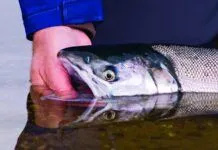
On rivers like the Eel, anglers encountered ocean-going fish that didn’t die after spawning. They called them “salmon trout” — what we now call steelhead.
Early steelhead flies included patterns imported directly from Great Britain. Sporting journals in the 1800s helped spread information across the Atlantic.
By the early 1900s, the center of steelhead fly fishing shifted north to the Rogue and Oregon rivers.
World War I changed everything in Great Britain. Many of the old estate systems shifted, and access to salmon rivers became more commercial. At the same time, new fly styles started replacing both traditional Spey flies and the fancy full dress salmon flies.
The full dress patterns slowly became artwork. But Spey flies were different. They were simple, unique, and they survived the upheaval.
John says they still work today if you give them a chance. What matters most is faith. If you believe in the fly you are swinging, you will fish it with confidence.
Even modern steelhead flies show Spey influence. Long flowing hackles, movement in the water, balanced design. You can see it in today’s shank and tube flies, even if the tier does not know the history. In the end, steelhead fishing is about belief.
I once asked Frank Moore what fly I should fish on the North Umpqua. He said, “Put on a skunk.” Not a green butt skunk. Just a skunk. I did, and I landed my first North Umpqua steelhead on that fly.
John explains that the big shift to hair-wing flies started in the 1920s. Zane Grey wanted a more durable version of his Golden Demon, so the Bunnell sisters tied it with bucktail instead of a feather. By the 1930s, hair wings were all the rage and quickly replaced the old feather wing patterns.
John says do not just study the flies. Study the people behind them. These traditions came from real anglers who shaped the sport.
John can still spot the McNeese influence in modern flies. He also shared how much Forrest Maxwell meant to him. They fished and hunted together for years, learning from each other along the way. Forrest’s impact, he says, was unforgettable.
Today’s Toyota Trivia question: Traditional Spey flies were originally designed to be fished in what kind of water?
If you know the answer, head over to the Instagram post for this episode and drop it in the comments. Make sure you tag @wetflyswing and @toyotapacific. One winner will receive a new steelhead fly line.
Episode Transcript
WFS 890 Transcript 00:00:00 Dave: Today’s guest has spent a lifetime swinging flies for steelhead and paying close attention to how Spey patterns actually work and move in the water. And he’s not just fishing them, he’s studying where they came from, how they are constructed, and why certain designs continue to show up on rivers around the world. John Shuy has been writing, tying and fishing Spey flies for decades. His work bridges classic Spey history with modern steelhead fishing, connecting old ideas to the way anglers swing flies today. This is the Wet Fly Swing podcast, where I show you the best places to travel to for fly fishing, how to find the best resources and tools to prepare for that big trip, and what you can do to give back to the fish species we all love. John Shuy is back to take us on a deep dive into Spey flies. We’re going to find out about their origins and evolution, and then we’re going to get into what decades of steelhead rivers teach you about fly design, confidence and fishing with intent. In this episode, you’re going to learn what defines a true spey fly and how these definitions developed over time. Why movement, proportion and balance matter more than surface detail. How traditional spaceflight concepts translate to modern steelhead rivers, and what materials and construction choices influence swing speed and depth. All right, take a deep breath. It’s always great to have John on the show. You can find him at Match the Hatch. Com here he is. John. How you doing, John I’m good. 00:01:22 John : Dave. Thanks for thinking of me for this again. It’s been a while. 00:01:25 Dave: Yeah, definitely. No, I was kind of thinking. I was talking to one of my assistants, and I was saying, we’re doing a lot of content, you know, now. And it’s great because it allows me to talk to people that some folks have never heard of them and people like you that, you know, a lot of us have heard of you. So it’s good to get you back on, because I want to do more of these episodes where we kind of circle back and, you know, catch up from, you know, what we did last time. So first off, it’s been a little while. Maybe just give us an update. You’re still editor of one of the big magazines out there. Maybe give me a heads up on what you got going and what’s been going on the last few years. 00:01:55 John : Yeah, I’m twenty one years into my seat as the editor in chief of American Fly Fishing magazine. I seem to be bolted to that desk, so to speak, and the big news in my fishing and active life was that ten months ago, I had a pretty serious shoulder surgery on my right shoulder. So that took me. It’s the first time I’ve ever missed a summer steelhead season. 00:02:18 Dave: Yeah, right. 00:02:20 John : And I, you know, I discussed all the different forms of casting with my PT people and they’re like, no, no, no. 00:02:26 Dave: None of it. So even Spey, even Spey, you can’t deal with the even with top hand. Switch to top hands. You still can’t do it. 00:02:31 John : That’s right. 00:02:32 Dave: That’s funny. What’s it look like? How long do you have to wait to get? 00:02:36 John : I’ve got. Well, I’ve got two more months until I’m cleared to pretty much do anything I want. So. Yeah. So we’re getting there. Yeah. I’ve been a real dog on the on the physical therapy. And, you know, you sort of have to be kind of I think you get the outcome you set yourself up for. So. 00:02:48 Dave: Yeah. Right, right. So you put in the work. 00:02:50 John : But it was not easy. You know, every, uh, October for many years, my family members and I, my cousins and my brother and my nephews. We do a lower to shoot steelhead trip with Brad Staples. Oh yeah, and we’ve been doing that for a long, long time. And I couldn’t fish this year. So I was sort of the designated heckler and designated photographer, which is actually kind of fun because, you know, normally on that trip, I sort of set the photography aside and just enjoy the fishing and the camaraderie. But this time I really focused on the photography, and it was kind of fun to do that. 00:03:21 Dave: That’s cool. Yeah. Did you guys have a little bit of action out there? 00:03:24 John : You know, we did, Dave. And the best part was that, uh, my seventy seven year old cousin from eastern Idaho got his first fly rod steelhead. It turned out to be a thirty two inch wild fish. 00:03:34 Dave: Nice. 00:03:35 John : And that was awesome. And if that wasn’t enough, my, uh, twenty two year old nephew from Florida caught on that trip. We also did some trout fishing and he caught his first trout and his first steelhead, so that was pretty awesome. Yeah. 00:03:48 Dave: Wow, that is awesome. That is cool. Yeah, that’s the thing about the Deschutes, I think sometimes people might not realize is that it’s got this great steelhead fishery, which you hear a lot about. But I mean, the trout fishery, it might be as good, right? Depending on where you’re fishing. 00:04:01 John : It is. You know, it’s funny in that that lower end, the lower twenty five miles, you know, it doesn’t get the credit. It’s due for its trout fishery because it’s such a steelhead centric fishery. But yeah, but yeah it can be great down there. Yeah. 00:04:12 Dave: It’s got them. Yeah. That’s something we always did down there. I know we fish both steelhead and trout in that lower twenty five. And it was great because nobody was trout fishing really. That’s right. You grew up there and swing a I mean well lots of times you’d be fishing for steelhead and you might catch a trout or vice versa, right. That’s possible too. 00:04:28 John : Yep. Absolutely. Well, we we took the kid out to my, my brother and my nephew. I took him out to Chickahominy Reservoir before the Deschutes trip. And that was pretty epic. It was, you know, it had held water for two years. And that’s the key. And it was one of those we had one of those, uh, two day spans where you could fish a size fourteen or a size four. You could strip fast, medium or slow. You could fish a floating or sinking or sinking tip line. It It didn’t matter. It was it was all just really, really easy. So that was pretty epic. 00:04:56 Dave: That’s awesome. Nice. 00:04:57 John : Plus, the wind didn’t blow. 00:04:59 Dave: Oh, yeah. Yeah. That’s out. Kind of in southeastern. Right. Southeastern? 00:05:02 John : Yeah. It’s one hundred miles east of bend. 00:05:04 Dave: Yeah, it’s way out there. Yeah. Cool, nice. Well, this is good. And American fly fishing. Is everything still, um, kind of as it was a few years ago. You guys still kicking out all the content there? 00:05:14 John : Yeah, we’re plugging away, and we’re. You know, we’re lucky that in this media climate that, you know, we have a dedicated subscriber base that likes what we do, likes what we’re different about. You know, we’re very destination focused. And we’re by that I mean, we’re focused on publicly accessible destinations in the United States. And, you know, our our dedicated subscriber base, they stick with us because of that. 00:05:37 Dave: Yeah. So people that come in, they want to know, they know they’re going to get some new new places to travel to. Right. Like new spots to think about. Is that kind. 00:05:44 John : Of. 00:05:44 Dave: Exactly. Yeah. 00:05:45 John : You know, we talked about this on the last podcast, but when we converted from the three regional magazines to the national magazine. You know, we upset a lot of previous subscribers. But of course, as our former owner used to say, they’re not the ones that have to pay the bills. Yeah, right. So it is it is what it is. But, uh, yeah, we’ve sort of come around full circle on that and gained a not only a lot of the people that stayed with us, but we’ve gained a new audience as well. 00:06:09 Dave: Right, a new audience. That’s great. Yeah. Awesome. Well, we’ll put links to the show notes to those. We’ve done two episodes now in the past, uh, with you, we’ll have those in there and some links to other stuff as we go today. But I wanted to talk, you know, and the other thing you’ve done a ton of is some of these amazing books, you know, and you’ve got this, um, experience. We’ve talked about it before, classic flight time today. I want to talk a little bit about, you know, Spey flies and flies, really just the history and talk about how it’s evolved maybe to where we are today. Does that sound like a good place to start? 00:06:38 John : Absolutely. 00:06:39 Dave: Nice. Well, maybe kick us off with your books first on that because I know there’s going to be we’re going to touch the skip, probably skim the surface on some of this, but where can people follow up on this if we don’t dig into it all on kind of this history. 00:06:50 John : Sure. Well, so to give you the quick thumbnail story, about twenty six, twenty seven years ago, I put out a book called Space Flies and Flies. And that book was one hundred and sixty pages long and was done largely without the benefit of, of, uh, internet available research resources at that time. And so a couple things happened. One, I, you know, I had to leave a lot of things on the cutting room floor. And two, I didn’t have nearly as much information available to me as I do now or any of us do. Uh, but the other thing it did is it opened some doors. And in the in the wake of publishing that book, I was able to travel to Scotland twice to the Spey River and continue a lot of my research there. Uh, and anyways, the culmination of that was, uh, more than twenty years later, a book called, uh, Spey Flies. And that book is, is nearly twice the size. And, uh, is just packed with historical details that have never seen the light of day. So you know that was really a multi. It was a two decade project. I always knew I wanted to put everything in the book that hadn’t made it before and also um, expand on my research. And I spent twenty years doing that and finally found a publisher that sort of saw my vision with me. And so, yeah, so that books out there and it’s uh, it has, you know, virtually everything that a Spitfire aficionado would want to know about these flies. 00:08:11 Dave: Awesome. That’s perfect. Yeah, that’s the perfect resource. So that’ll be the follow up so people can, uh, listen today and get fired up and then go pick up your book and take the deep dive. So. 00:08:20 John : Yeah. And I hope people do. You know, one of the things when you put a lot of work into historical research and then you sort of spew it all out in writing, you actually hope people will read it. Yeah. You know, because it’s funny how, uh, unsubstantiated so-called history gets spread around so rapidly these days. And, you know, to this day, there’s still things flying around on the internet and on social media that are just not true about space flies, because people don’t take the time to actually, you know, sort of read. Read the fine print, so to speak. 00:08:49 Dave: Yep. Exactly. No. That’s great. Well, maybe think just, you know, spay flies. Where do you. I’m not sure if we can kind of follow the book a little bit, but where do we start if we want to talk about the history? Was there a point in history you can go back to a certain place and say, this is kind of where it began, or maybe describe that a little bit. 00:09:04 John : Well, yeah. So obviously the spay fly is named for the River Spey in northeast Scotland of the most famous of of all the Atlantic salmon fisheries in Scotland. And, uh, it’s really difficult to pin an origin date on the particular type of fly that was invented on that river. But the original Spey flies sort of became what they were when somebody on that river in the early eighteen hundreds decided to try rapping the hackle the wrong way. And so instead of tying it, for example, when you Palmer a hackle through a fly, meaning tying it all the way through the body, normally we think about tying it in by its tip and wrapping it forward. but in this case, someone decided, let’s take that big rooster feather and tie it in by its butt end. So all the fluffy fibers are at the back of the fly, and then let’s spiral it forward. And that sort of became the defining characteristic that separated, you know, that differentiated an original Spey fly, a salmon fly tied for the Spey River and on the Spey River from the flies that were springing up on all the rivers in the United Kingdom. And we don’t know exactly when that happened, but the best I can pin it down would be the opening decades of the eighteen hundreds, when somebody came up with that idea and, you know, it became sort of the signature style for that river. And in the eighteen hundreds, all the, the Scottish and Irish salmon rivers had their own set of flies. But at that time, if you were to take, say, a say it’s eighteen sixty and I buy from one of the tackle manufacturers a set of tweed flies and a set of of, uh, flies from the Shannon, and a set of flies from five other rivers and mix them all together. I’m not going to be able to tell you which one goes where, but I would be able to tell you which ones are flies because they were unique. 00:10:54 Dave: Yeah, they were unique. 00:10:55 John : Yeah. 00:10:56 Dave: So okay, so what you’re saying is. Yeah, the River Spey and maybe take us to the River Spey. Is there a reason? Was the River Spey? Why was that the river or was it just happened to be the river that they came up with these flies on? 00:11:07 John : It’s hard to really say for certain, Dave. There. If you read more, more modern. By modern, I mean late eighteen hundreds authors, you might hear things like the because of how the gradient of the Spey River, pretty steep river compared to some of the others. So it flowed fairly rapidly that they wanted a fly that could sort of stand up to that flow and have, you know, significant movement. But I’m not sure that that was not sort of a misunderstanding, that that sort of came about sixty or seventy years after the flies were first invented. It might be true, but it may also be that a simple, unique style kind of caught on. You know, sometimes flies just get popular and, you know, there’s there’s no reason to think that a, a stimulator is a more effective fly than a sofa pillow. 00:11:53 Dave: Right? 00:11:54 John : But, boy, the stimulator just caught fire. You know, it was it was unique. It was different. It was fun. It was, uh, adaptable. So sometimes there may not be a pragmatic reason. Um, and then that may have happened with the Spey flies. I can’t be sure. Nobody can. Yeah. But, yeah, they were certainly unique. And they were sort of relegated to that river for a lot of decades. But in the middle, starting in about the eighteen sixties, um, English tourism exploded, English sporting tourism, and it sort of went hand in hand with the development of railways in the United Kingdom. As the railways spread into the Highlands, the highland rivers and the highland Moors, the grouse hunting areas became more and more accessible to the elite classes from England, and they were able to sort of take advantage of that with easier and easier travel to the Northlands. And that’s when, uh, salmon fishing as especially as a paid pursuit where they were actually leasing, uh, pools and stretches of river became a really big deal in Scotland when that happened. Of course, the unique flies from the Spey and other rivers spread throughout the kingdom and became pretty well known. So, you know, by the by the eighteen eighties, uh, a learned salmon angler from London would certainly recognize, uh, what a Spey fly was. 00:13:09 Dave: Yeah. And what were the other than the Spey flies? What were the other flies of the time like? How were they different than the Spey fly? 00:13:16 John : Well, one of the big revolutions that had happened and was ongoing was the development of the full dress salmon fly. The really the really regaled, uh, flies like jock Scots and green Highlanders and dozens of others that were, you know, they could have thirty different materials in them and they all relied on the, the plumage of exotic birds. And that was a revolution in salmon fly tying that was going on at exactly the same time. And it’s a testimony not only to the uniqueness of the much simpler Spey flies, but also to some of the Speyside ghillies and anglers that championed them, that they sort of held on to their popularity even as the salmon fly was becoming all the rage in Great Britain. 00:13:56 Dave: Mhm. Wow. That’s crazy. So and was the full dress salmon fly. So was it just as effective at the time. It feels like you know full dress flies are more for looking at now as, not as much as fishing right. You know they fished. 00:14:09 John : That’s a great question Dave, because you know, like if you were to talk to people that are really experts in tying full dress salmon flies today, you know, essentially they’re tying artwork. 00:14:19 Dave: The artwork. 00:14:19 John : And I know very few people that fish them other than like myself and a few others. But, um, you know, primarily they are artwork today. But in their heyday in the eighteen hundreds in Great Britain, they were absolutely critical fishing lures. Yeah, they were tied by commercial tackle houses in Great Britain, both in Scotland and in England and uh, appeared in, in all the tackle catalogues. And they were sort of the, uh, the most popular salmon fly of the day. 00:14:47 Dave: Wow. 00:14:48 John : Yeah. So, so a lot has changed since then. 00:14:51 Dave: Experienced the waters of Bristol Bay at Togiak River Lodge, where fly fishing meets Alaska’s rugged beauty. This is the place to complete the Alaska Grand Slam with all five salmon species, rainbow trout, Arctic char and more, where each day offers a new Alaskan adventure. You can visit Togiak Lodge. Com right now to start planning your Bristol Bay experience with Togiak River Lodge. Golden Fly Shop isn’t your average fly shop. They have a twelve foot shark painted like a cutthroat, hovering over a huge selection of the best rods in the business, a massive assortment of tying materials, and their famous steakhouse streamer display. And it’s the hub for a community of anglers who never stop tinkering with new ways to catch fish. Sometimes the conversation behind the counter includes what hatches are going off and what techniques are working best. Then tales of destination fishing, adventures sought after species, or a good old congratulations. When a customer brings stories of finally connecting with that fish they’ve searched for forever. With a growing online store and a budding YouTube channel, you’ll be able to follow along with their fun antics, international adventures, and helpful fly fishing tips. Golden Fly Shop where the community is hanging out even if they’re supposed to be working. That’s Golden fly shop.com check them out right now. It’s pretty interesting world because again, I want to ask you about this next question too, because I know we’ve had an episode on it. It ties right into this. But we had you know, I’m sure you heard, you know, the feather thief, right? We had the author of that and told the story of that. And I feel like part of that was, you know, the kid that, you know, did that at the time, you know, or whatever, stole, broke into the museum to steal these rare birds. Yep. He was just an addicted a tire of these types of flies, right? Absolutely. And he had to have the exact fly pattern. What’s your take on that? Do you feel like, um, because you’re kind of in that world of fly tying? Was that just so out there? I mean, like, do you remember that? I guess first off, I do. 00:16:47 John : And absolutely, it was just way out there. I mean, I think you’re talking about essentially an addictive personality in that case. But but nonetheless, I mean, I’ve known many other fly tyers over the years that would not go to the lengths that that that kid did, but they certainly have gotten addicted to the pursuit of rare feathers. 00:17:04 Dave: Right. 00:17:05 John : And, you know, and I always have thought that’s kind of a juxtaposition of values, really, you know, as fly anglers, maybe we should extrapolate our conservation ethic onto other genres, including, you know, ecology in general, you know. And so when you are, when you are sort of addicted to pursuing feathers for two reasons. One, they are used on some classic fly patterns, but two, they’re extremely rare, which makes them more covetable. You know, I struggle with that a lot myself. You know, I’m not a feather addict at all, but I’ve certainly known a few. So I think in a lot of cases, you know, if I had a if it was my perfect world, we would, we would keep the old full dress flies alive for historical purposes, but we would be willing to, uh, where possible, look for substitutes for some of the feathers that we probably shouldn’t be pursuing anymore. 00:17:56 Dave: Yeah. That’s right. Yeah. See, and that’s the people that I’ve talked to that that kind of are in there. That’s exactly what they say, is that, yeah, we shouldn’t be so stuck to the fly. Doesn’t have to be perfect. Exactly what it was like with that same bird. 00:18:08 John : Yeah. And I think, you know, and equally to that point, I think great fly tyers who excel at the minute details of constructing a full dress salmon fly, they can, um, highlight their skills with substitute materials. You know, the same skills apply. You don’t need to have the rare feathers to exhibit your skills. Right now, there’s a few feathers that I think if you took them away, we would no longer be tying traditional classic salmon flies. I mean, a good example would be the crest of a golden pheasant, or the tippet feathers of a golden pheasant. That’s pretty hard to replicate. Um, same with with jungle cock. Pretty hard to replicate that. But but in those cases, you know, golden pheasants and gray jungle fowl are raised substantially in captivity. And so, you know, those feather sources, I mean, we would never want to in further endanger things like a gray jungle fowl in the wild, uh, you know, by, by creating a market, you know, that relies on wild birds. But there seems to be enough domestically, you know, cage raised birds in some cases to sort of satisfy the demand. 00:19:17 Dave: Yeah. That’s there. Nice. So, yeah. So that definitely is a kind of a crazy story and the whole the whole thing there. But I want to jump back in just more, you know, like you’re talking on this history piece. So we have really the space flies. And maybe just for those that don’t know, space flies, flies, flies are in there too. What is the difference? Is that a subtle difference between the two? 00:19:37 John : It’s somewhat subtle, but I mean, I think first, for people that aren’t familiar with these these words like Dee and Spey, the critical difference is that Dee flies originated on the Dee River in Scotland, which is south of and over a big mountain range from the from the Spey River drainage. So each of the Scottish salmon rivers in the eighteen hundreds sort of had its local anglers develop their own flies, not surprisingly. And those flies evolved to become, um, associated with their home rivers. And in the case of the Dee flies, by the eighteen eighties, they had they had evolved their own unique characteristics, especially in the way the wings are assembled on the fly. So they’re different, but they share some commonality with the flies in that some of the Spey flies. There’s there’s I’ll back up here a moment. There’s two broad classes of original sp-a flies. There are the sp-a flies that are tied with a rooster tail hackle through the body, and as I mentioned earlier, it’s tied in the reverse way from normal. And then there’s a class of sp-a flies that originally were tied with heron hackles. So a longer fibred hackle D flies are tied with heron hackles. Or were. And so they have they share that commonality with sp-a flies. But most of them are a little bit fancier than sp-a. Flies have a few more components that borrow from from full dress salmon flies. Not all of them, but some of them do so. But the primary difference is that they’re they evolved on two entirely different river systems. 00:21:10 Dave: Yeah I gotcha. Yeah, it’s cool to hear. So you’ve got these people out there fishing. They get you know, the trains come in to the UK and now they’re able to fish these places in Scotland that are further up north or wherever. And then they’re and they’re evolving these different techniques. Is there any are there any similarities? I take it over to the steelhead because I know you’ve talked about that. Where? California. Right. The first days of steelhead and that happened. Yeah. Kind of a similar. Do you think there’s a lot of similarities there in the two. You know, those getting into the first steelhead versus that Scottish area. 00:21:39 John : Yeah. Well in a sense, yes. And in a sense the groundwork had already been laid for some of the early California steelhead anglers that sort of codified our sport, because amongst their first flies that they started using specifically to target at the time, they called them salmon trout. And that’s an interesting story, too. As an aside, when in the eighteen seventies, eighteen eighties, even earlier in California, you had, uh, anglers going to the eel River and a few other rivers, and they found these, these, uh, enigmatic fish that came out of the ocean like a salmon to go on their spawning runs. But unlike salmon, they didn’t die. Unlike Pacific salmon, they didn’t die after spawning, so they didn’t know what to call them. So they took the most logical approach, which is just to call them a him a salmon. Trout. 00:22:24 Dave: Yeah. 00:22:25 John : Eventually that became what we call steelhead. Um, but yeah, amongst the early flies that were used in use on the eel River and dedicated for these fish called salmon, trout or steelhead were some of the old Atlantic salmon flies that that came from England and Scotland. So when you look at, uh, reports of someone catching steelhead on the eel River with a blue charm or something like that, you have to recognize that the groundwork had been laid by the Atlantic salmon anglers in Great Britain. And not surprisingly, you know, one of the things that was, uh, very popular in Great Britain in the eighteen hundreds were the sporting journals. And they were, we would call them a magazine, but they were these usually large format, um, information packed periodicals that reported widely on, on sporting pursuits like salmon angling. And certainly there was ample opportunity for learned anglers in on the east coast of North America to absorb information from those journals and trade information with anglers in Great Britain. So you know what? Essentially what happened is the year eighteen forty nine rolled along and instantly in one year, three hundred thousand people moved to what would become the state of California because of the gold rush. 00:23:37 Dave: Yep. 00:23:38 John : And so when when the gold rush brought more than a quarter million people to the California territory in one year, those among them who were fly anglers brought the tackle that they knew. They brought the tackle that they’d fished with in New England, or they brought the tackle that they’d fished with wherever they came from. And so that’s how all the early flies were introduced to the steelhead Coast was by the, by the forty-niners, so to speak, forty niners. 00:24:04 Dave: And they had all sorts of trout flies and maybe some had this information on old salmon flies. Salmon flies. Right. 00:24:10 John : Exactly. 00:24:11 Dave: Yep. God, that’s so cool. And it’s cool to tie in. I we just watched the, uh, you know, Ken Burns, you know, came out with the American Revolution. His new his new documentary. Yeah. It was awesome. and it’s cool to put it in place because really, you look at this time, I mean, you’re eighteen, forty nine, you know, that’s after fifty years after Lewis and Clark, and then it’s just before, um, you know, the Civil War, right? In that time of this crazy period. But there’s still people out there, you know, traveling, exploring. And then you get in the eighteen eighties, seventies and 80s and were people now was people were fly fishing. So they were out there. That’s the cool thing, right? People were still they were doing it. 00:24:46 John : Yeah, absolutely. One of the you know, obviously, one of the fascinating things about history is the interconnectedness. And, you know, there’s no question that amongst many other things, the gold rush of eighteen forty nine had a profound influence on fly fishing in the West. I mean, it’s just inescapable. And, you know, you could go into the myriad details of that, but the fact is inescapable that that that that particular year had a profound influence on fly fishing and many other pursuits. I mean, when you throw in one calendar year, when you throw three hundred thousand people into a new landscape, you know, things are gonna things are going to change, and they certainly did. But, you know, it wasn’t. If you think about us, we fly anglers today. You know, so many of us are eager to try new places that we haven’t tried before. Eager to try new genres in fly fishing that we haven’t tried before. So they were no different. You know, they I mean, it was not much of a reach for someone in San Francisco in eighteen ninety five to say, you know, I heard these rumors about a river up in Oregon called the rogue River, you know? Hey. Hey, guys, we should go check this out. We should figure out, you know, how can we get there? 00:25:50 Dave: Right? God. 00:25:52 John : You know, so by, you know, the early nineteen hundreds, the rogue River was the whole impetus of the evolution of of fly fishing for steelhead had shifted north to the rogue River. 00:26:01 Dave: No kidding. It shifted. 00:26:02 John : Yeah, but, you know, even during those early founding years from, you know, especially the early nineteen hundreds through about the nineteen twenties, there were individual anglers, you know, making great strides in, in forwarding the idea of fly fishing for steelhead throughout the northwest. We had people fishing, the, uh, a few people fishing the Deschutes River that early, um, and many other places. You know, there was a time, as you probably know, that anglers could jump on the train in Portland and be dropped off along the Deschutes River. 00:26:31 Dave: Yeah, I love telling that story. My dad and my grandpa used to do that. 00:26:34 John : I mean, how cool would that be, right? 00:26:35 Dave: I know they’d literally go up there and they’d stop and drop you off for your trip. 00:26:39 John : Yeah, yeah. Pretty cool. 00:26:41 Dave: Yeah, that is cool. 00:26:42 John : So yeah, you can’t you just cannot escape the interconnectedness of historical events, you know, and as you said, you know, there was you can have profound historical events occurring that are culture changing, societal changing. It doesn’t stop people from fly fishing necessarily. 00:26:57 Dave: Yeah, exactly. Wow. This is great. I love that you went into the rogue. Um, and the Deschutes. Right? I mean, these are two of our if you think about Oregon, you know, there’s a lot of great rivers, but I feel like those are maybe the two, maybe the two biggest right in history just because of. 00:27:11 John : And the North Umpqua. 00:27:12 Dave: And the North Umpqua. Yeah. Exactly. Yep. That’s right. 00:27:14 John : Well, you know, obviously, Dave, you think about where summer run steelhead exist, especially before hatchery produced runs were created. So the list of rivers that that originally historically have summer run life history, steelhead is pretty short. You know, it’s I mean, in Oregon, you’ve got the rogue and you’ve got the North Umpqua and you’ve got the Deschutes and the, you know, the Columbia, Upper Columbia tributaries. But a lot of the rivers, like, for example, here in the Willamette Basin, anything above Willamette Falls, those rivers never had historical runs of summer steelhead. So our opportunities have expanded, you know, owing to introduced runs of summer run steelhead. 00:27:50 Dave: Yep. Exactly. 00:27:51 John : But in, you know, back in the old days, there was only a few choices. And, you know, you had to have some anglers at the time, they’re willing to say, we’re going to we’re going to do the hard work in getting there and we’re going to do the hard work. And sort of they might not call it this, but sort of pioneering that fishery, seeing what it’s all about. 00:28:06 Dave: That’s it. That’s and that’s such a good point that summer steelhead because back then winter steelhead probably wouldn’t have been as easy to catch, right. They wouldn’t have had the right gear. So summers were probably the easiest, probably the only way almost to catch a steelhead back then. 00:28:19 John : And you know, that’s still true today. Obviously fly fishing for salmon and steelhead is much, much easier. Yeah. Especially in terms of the tackle that you need. You know, I’ve told people for many years that I’ve caught a lot of steelhead on a six weight trout rod with a floating line, just because I happen to be driving by my local river on the way somewhere else and thought, I’ll stop and fish a pool, you know? And all I had with me was trout gear. So it is not that complicated. 00:28:41 Dave: No, no it’s not. And then there’s a lot of overlap again with Atlantic salmon. Right. Because summer steelhead are probably more like Atlantic salmon than winter steelhead, or at least the techniques very much. 00:28:52 John : Yeah. I mean the techniques are we borrowed the, you know, the swung fly technique. It dates all the way back to Atlantic salmon fishing in Great Britain. So yeah, that’s just something that we borrowed, you know, and it’s interesting that to this day, despite plenty of historical evidence that’s come to light, we did not, you know, using spey rods, using two rods for steelhead is not something that’s modern. Essentially, we took a hiatus. What is? What happened? 00:29:17 Dave: Right. 00:29:18 John : Um. You know, but but, you know, you go back to, uh, there’s published accounts that I talk about in, in my book called Classic Steelhead Flies of of John S Benn winning the one of the early two handed rod competitions at the San Francisco Casting Club. So that was in the eighteen eighties, eighteen nineties. 00:29:34 Dave: Wow. Yeah. 00:29:35 John : And, you know, there’s historical accounts of two handed rods in use on the North Umpqua River. So, yeah, we we just sort of took a hiatus from it. 00:29:43 Dave: Yeah. Well, and on the Deschutes, maybe take us there for a second because you mentioned the train. Do you know a little bit of that history on the Deschutes of how it went from, say, those, you know, the early nineteen hundreds into present day? 00:29:55 John : Well, obviously, the Deschutes was a very difficult river to access in the early days. Uh, didn’t stop a few of the town elites from what’s the town of Condon and surrounds, actually from going out and sort of pioneering it, but, uh, they, they and there was a couple of them that were including the original editor and the founder of the Condon newspaper. Um, but yeah, they you know, in the early nineteen hundreds, there were people going down to the Deschutes figuring out that these salmon, like, trout like fish would eagerly grab flies. But when the, uh, railroad. And the other thing that happened is the feats of anglers in those days tended to make the newspapers. 00:30:34 Dave: Uh. 00:30:34 John : So we don’t do that anymore. Right. I mean, you and I are the last generation that can remember how fly fishing feats catches, you know, remarkable catches, remarkable journeys. Made it into the papers, the local papers. You know, we you and I can remember that. Yeah. But that doesn’t happen anymore because we’ve sort of moved on, you know? I mean, if you’re not talking about the latest, your latest NBA hero, you’re, you know, you’re not talking about sports anymore. You and I can remember when Sports Illustrated covered outdoor sports. 00:31:00 Dave: That’s right. That’s right. 00:31:02 John : But that hasn’t happened in decades. 00:31:03 Dave: Has changed. 00:31:03 John : Yeah. So it has changed. But so so the publicity machine inadvertently, Um, through the newspapers of the era of the early nineteen hundreds helped sort of propel the idea that, uh, you could successfully fly fish places like the Deschutes River. But when the railroads went in in the early nineteen hundreds, that sort of changed everything. As we talked about just a little while ago, it, uh, by by providing that train service to the Deschutes River for anglers in Portland, not only did it open up the river for anglers, but it also created this amazing publicity stream because when the you can go back, you can actually these days, it’s easy. You don’t even have to go to a library. You just go to Newspapers.com or some of those other sites, and you can find all the accounts of of Portland anglers, you know, fishing the Deschutes River and getting there by train. 00:31:52 Dave: Oh you can so newspaper. Yeah. So Newspapers.com is a good resource to check out. 00:31:56 John : Yeah. And there’s a few others too, you know, even if you’re just a little bit cagey with your search terms, you can find those old stories. 00:32:01 Dave: Oh that’s great. 00:32:02 John : But yeah, you know, so that’s sort of what happened is not only did the trains provide access? But the newspapers provided publicity. And so then we had this, you know, obviously, the thing exploded. And, uh, and obviously things changed a little bit when the Columbia dams went in, that sort of changed the fishery, but it certainly didn’t change what we were doing as anglers in those days. And so, you know, by, by the time like your dad was, uh, you know, being a real active on the Deschutes River, it was just a hugely popular thing. 00:32:34 Dave: It was so by the time my dad. And that was probably in the, you know, he was born in thirty nine, I think it was in the fifties. Him and my grandpa were going up there, and they were. So by the time that there was already lots of people that have done this before. 00:32:47 John : Right, exactly. Yeah. 00:32:49 Dave: But, you know, you kind of. 00:32:50 John : Yeah, you sort of look at the heyday, you know, like like your dad invented his famous five in the seventies. And the seventies were just a huge decade on the Deschutes River and and for fly fishing in general. And, you know, guys like you and I, we started, you know, in earnest in the eighties. And, uh, the fishing was amazing. I mean, just incredible. You know, and throughout the eighties, the the fly fishing for steelhead from a numbers standpoint, we can’t I mean, I don’t know about you, but I can’t get people to even believe me anymore. 00:33:17 Dave: No, I. 00:33:18 John : Know. So it was just we lived in a little bit of a different world, and today I it just seems like there’s more. I’m talking about the Deschutes specifically here. It just seems like there’s more fly anglers competing for fewer fish most of the time. 00:33:30 Dave: Yeah. Yeah. 00:33:31 John : More than than what we had, you know? But, uh, one thing, you know, well, two things sort of stand out about the Deschutes River, especially that lower end is, you know, one is the jet boats starting decades ago made that end of the river very accessible and primarily accessible to guided clients. Right. And the other thing that happened was when the two handed rods became very popular, they became popular for good reason on the Deschutes River. They just made it a lot easier. 00:34:02 Dave: Yeah. They did. 00:34:03 John : Uh, you know, there’s that river. Could use a good one hundred year flood once in a while, if not a good fire once in a while. If you’re a single hand guy. Right? 00:34:10 Dave: Right. 00:34:11 John : You know that that bank side brush and the and the alder trees make it challenging? Uh, but, you know, and the funny thing about that is the same thing. The two handed rods did the same thing to all the rivers. They just made steelhead fishing much more approachable, much easier. And you look at the North Umpqua, it’s a great example of that. There was lots of water on the North Umpqua that you really had to be a pretty expert single handed caster to cover effectively. And, uh, two handed rods changed all that all the way to the extent that the legendary Frank Moore used to opine that the two handed rods have just made it too easy. 00:34:46 Dave: Right? Too easy. 00:34:47 John : You know, and maybe there’s some, you know, and I always used to talk to him about that. And I think I sort of understood his point of view because, you know, there were parts of fly fishing that, you know, should be challenging and should demand that you sort of level up a little bit and you know, so I understood his perspective on that. But there’s no question. You look at the lower Deschutes River that two handed rods changed the whole landscape. 00:35:12 Dave: Yeah. 00:35:12 John : As far as fly angling for steelhead. 00:35:14 Dave: Yeah. They made it definitely. And for me, I was always the single hand rod. I’m an okay caster. But you know, you had some wind on that and cast an eight weight and sure not not the easiest thing to do. You got to be a pretty proficient caster to get those out. You know, get the fly out there. 00:35:28 John : Yeah. You know, I’ve always loved single hand casting for steelhead. And especially when my the late Forrest Maxwell about twenty years ago started building cane fly rods. And he the first two productions that he made were a matched set of eight and a half foot, eight weight solid core bamboo rods with all the accoutrements. And one of them was Maxwell A and one of them was Maxwell B, and he gave one of them to me and kept one for himself. And I’m telling you, Dave, that the thing was revolutionary for me, because hooking and landing a steelhead on a fly rod is a mesmerizing experience. Wow. And I might add, a very efficient way to do it. To land a steelhead on a on a rod. Bit like his were, right. 00:36:12 Dave: What is that like? What is that like landing a fish with a bamboo rod like that? 00:36:16 John : Yeah. You know, I mean, first off, you have to learn to cast them a little bit. But secondly, I would I’m almost certain I could guarantee that I could land a steelhead faster on my eight and a half foot Maxwell bamboo rod than than I could on any two handed rod. Hmm. I mean, it’s just they’re just the the leverage on that particular bamboo rod, and they’re not all built the same, of course, but the leverage on that rod just breaks the fish down very quickly. 00:36:41 Dave: Oh, wow. There you go. 00:36:43 John : But the more important part of it is that every nuance, every breath that fish takes is vibrated down that cane fly rod. And it’s so it’s just an amazing feeling. 00:36:53 Dave: Oh that’s cool. So those little those little tips and taps you get with the steelhead summer steelhead, you feel all those really Everything? 00:37:00 John : Yeah. Yeah, yeah. You know, the funny thing about that, that’s. Can I wander off on. 00:37:03 Dave: Yeah, yeah, let’s do it. 00:37:04 John : One thing I learned over the many years that Forrest and I fished the North Santiam for steelhead is, you know, you always wonder when you get that little tap on the swing. Uh, and it’s not a tug. It’s a tap. 00:37:16 Dave: Yeah, it’s a tap. 00:37:16 John : You’re like, okay, is that a steelhead? Well, after many years of sort of studying that, Forrest and I came to the conclusion that usually it’s a trout or a smolt. 00:37:25 Dave: Oh, really? That was your conclusion? 00:37:27 John : Yeah. And then when you get that very subtle like, like sometimes, you know, the fly just feels like it’s getting pushed a little bit. 00:37:33 Dave: Yeah. 00:37:33 John : You know, it’s not like a tug or attack. It’s more of a that’s a steelhead. 00:37:37 Dave: Oh. 00:37:37 John : Right. One of the reasons we came to that conclusion is not only based on what happened in the immediate moments before a hookup, but we also started really watching on the North Umpqua, where you can actually see in many places, you can you can watch fish react to the fly. And we realized, gosh, you know, a lot of those little taps and tugs that we thought were steelhead had kind of missing the fly turned out to be trout. So yeah, it’s pretty interesting. 00:38:04 Dave: On to Mark Lodge offers a world class experience with one of the finest rainbow trout and brown trout fisheries in the world. They’re family owned and operated. Missouri River Lodge offers comfortable accommodations, delicious home cooked meals, and personalized service that make you feel like family. Days on the water are capped off by appetizers, beverages, dinner, and stories on the back deck and around the campfire. Book your stay for an unforgettable fly fishing adventure where memories are made and the fish stories are real. You can head over right now to Wet Fly. That’s. On Denmark right now to book your magical Missouri River trip. That is interesting because that’s one of our things out there we’ve always joked about. It’s like, well, not even I, you know, you’re guiding somebody or you’re trying to get somebody to fish and they feel something, you know? I mean, it’s like, hey, put that cast back on that same right. Keep doing it. And sometimes you do get a a tip and a steelhead. And it is steelhead, right? 00:39:02 John : Absolutely. 00:39:03 Dave: So you never know. And it’s good to stick with it. 00:39:05 John : Well, you know, one of the greatest things I ever saw when Forrest and I used to haunt the North Umpqua was we had stopped along one of the highway pullouts, where the bank is really steep above the river just to check a pool. And sure enough, we we see a steelhead laying on a slab of bedrock about eight feet below the surface. So, you know, it was Forrest turn. We always used to argue about whose turn it was, but yeah, we convinced ourselves that it was Forrest’s turn. And so he made his way down the riprap. And this was long before two handed rods. But, you know, you had to sort of master the steeple cast in places like that. And so, uh, it was a really tricky spot. But he had a big skunk fly on with a big white wing, and he, he would get a good stable cast, get that fly out there. And I could clearly see the fly in the water from my perch up on the highway embankment. So I’m watching that fly. And he had no choice but to throw a couple upstream means to keep the line from just bellying into a couple of big s-curves. Well, the funny thing was, on his second cast, he again made a great steeple cast, got the fly where it needed to be, and started executing those two big upstream ends to straighten out the fly line. And it just so happened that the moment he was making that mend, I was watching the steelhead ascend and come after that fly. Oh, the problem was, the men jerked the fly three feet upstream and the fish just disappeared. And I, in my own head I said, I am never mending again, right? 00:40:27 Dave: Never mend. I know. Yeah. That’s right. Well, the cast is the Atlantic salmon, especially. I’ve heard this, you know, is that you’ve got that first cast. You got to be ready because the fish could hit as soon as it hits the water, you know. 00:40:39 John : Yeah, yeah. And I’ve had that happen with steelhead. I mean, I’ve had steelhead grab the fly. I mean, I can’t believe they could react that fast. I mean, there’s one that I’ll never forget. On the North Santiam I was fishing, I tied a great big traditional spaceflight called a Charon, which has an orange body and a black hat going. And I was fishing. Uh, it was I was fishing a two handed rod with that one. And I made the cast over to the seam. And this is on the upper end of a pool. And this is what we call the ten percent water. You know, if you’re going to catch a steelhead in that pool, only ten percent of them are going to come out of that upper end. That fly I just splashed down and the fish was on and I thought, how can that happen? 00:41:19 Dave: Right? 00:41:19 John : How can they react? How can they see that and react like that? But but yeah, it happens sometimes. Yeah. You know, I always tell people that you have to fish every cast from the minute that fly splashes down to the minute you decide to strip it back in. And then, you know, the other part of it is, you know, for people that aren’t accustomed to steelhead angling, you got to believe in the last cast of a fishless day with the exact same faith that you believe in the first cast of the day. 00:41:45 Dave: Yeah, you do. 00:41:47 John : Because it can happen anywhere in between. 00:41:48 Dave: Or. 00:41:49 John : On the first or the last. You know, my my brother Mike. He caught his first steelhead on his first ever cast for steelhead. Not first day, not first pool. 00:41:57 Dave: first ever. 00:41:58 John : Ever. Cast. 00:41:59 Dave: Wow. We’re almost ruins a guy, right? That almost makes. 00:42:03 John : This story gets better, Dave. Yeah, so I had him. He’d come out to. He used. He used to always. He still does. He comes out to fish with me every few years. He lives in Florida. And the one year I told him, you know, it’s time I introduced you to steelhead. So I took him up to the North Santiam and up to one of my favorite pools. And we waited out about knee deep and I sort of pointed things out to him and I explained, you know, it’s real simple, Mike. I just want you to throw the fly sort of down and across over to that current seam and then just let it, you know, drag back to your side of the river. You know, we we steelhead anglers have this fancy word called swing swing. But what is a swing? It’s just a drag. You’re just dragging. You’re dragging the fly. So I explained it that way to him and he said, okay, I got it. I said, but the other thing is, Mike, you want to fish your short cast first. So I just want you to make about a ten foot cast over to this seam right in front of you and just let that swing out. And then I want you to add six feet of length. And then I want you to keep pulling line off the reel until you’ve reached the amount of line that you can cast and straighten out, and then just stick with that. And then I’m going to have you take two steps downstream between casts. So I explained all that to him and he says, okay, I got it. My first cast, I’m just going to flip a short cast over to that seam. And and I said, yep. So I turned around and started waiting back to shore and he goes, I got one. It all. It happened that fast. I turned around and sure enough. 00:43:14 Dave: Right in short, right in foot. 00:43:16 John : Cast on his first ever cast for steelhead. Well, but the moral of that story is be careful what you wish for, because his next steelhead came about ten years later. 00:43:26 Dave: Oh it did. That’s funny. 00:43:28 John : Yeah, yeah. So I mean, ten years sounds like a long time, but it might have been like four or five shoots before he finally got another one. But yeah, he got punished a little bit. 00:43:36 Dave: That’s great. What do you think is, you know, we talked about the Deschutes a little bit. The rogue, the North. If somebody’s listening now, maybe they’re from Florida or out of the somewhere around the country, and they want to come to Oregon to fish one of these iconic rivers. Which one is the one you maybe start with, or what do you think? 00:43:51 John : I think you get a good guide and you fish the Deschutes. 00:43:54 Dave: The Deschutes. 00:43:55 John : Yeah, yeah. And I think, you know, if you’re a really good fly caster, you know, and you’re not from here, I’d say, you know, just bone up on your two handed casting. If you’re not a good fly caster, make sure the guide that you are hiring is a good fly casting instructor because, you know, again, with a two handed rod, you don’t have to practice very long to put enough line out to catch a fish on the Deschutes. So, uh, but, you know, some of the other rivers, like the North Umpqua, can just be flat out punishing. Uh, I don’t care what rod you’re using. Um, the, uh, the rogue River is different. You know, you’re primarily fishing for small steelhead, right? Um, but I will say that if if anyone were traveling from somewhere else in the world or in the country and wanted to have an incredible experience, you know, do a multi-day float through the wild and scenic, uh, in October, you know, in early October, because it’s just incredible. Yeah. I mean, it’s and, you know, some of the what the what the guides that do that they some of them are camping guides, but some of them, um, they like Jeff Helfrich, they do trips where they stay overnight at the historic lodges. 00:44:55 Dave: Oh, yeah. 00:44:56 John : You know, it’s just it’s an amazing experience, you know? Yeah. The steelhead are small. They’re twelve to twenty two inches. But, you know, the thing about the half pounders is if you get into one, you tend to get into a bunch. 00:45:06 Dave: Yeah. 00:45:07 John : But yeah, it’s a blast. And it’s just an incredible scenic experience. 00:45:11 Dave: Yeah. It’s a cool. And the history there is unbelievable. We just had an episode we did with, uh, Grant Wooldridge. Yeah, the great grandson of Glenn and Glenn. He told the whole story about Glenn, how the the federal government used to give him dynamite to go blast out the river to make it navigable. Yeah. But it’s really interesting because, I mean, he’s one of the he was right there at the start of Jetboats and going up the river and stuff. So that’s a really cool story. And then you go to the rogue with all the history of all the famous people that have been there and yep, writers. Right? I mean, it’s it’s a cool. 00:45:39 John : Hollywood stars, Hollywood starlets. Yeah, absolutely. 00:45:41 Dave: Yeah. So it’s cool. So, so good. Well that’s right. Now take us back. So we’ve been talking about this kind of some cool history. Now where are the are the space flies in all this. So we’ve got all this steelhead or spey flies still out there during this time. We’re talking about the early nineteen hundreds. Are they still being fished or what keeps them going out there. 00:45:58 John : Yeah, that’s a great question. So what happened in Great Britain? Uh, well, World War one, the Great War sort of interrupted everything, and it interrupted things in ways that we might not think about. One of which was when the when the elite classes, you know, when the, the peerage of England, you know, the people that are rich and famous and, and landed and estate owners, you know, when they send their sons off to the trenches in World War one, some there’s a lot, a lot of casualties, high casualty rates. And then all of a sudden you’ve got, uh, nobody to inherit, nobody to pay the inheritance taxes, nobody pay, you know. So so it was a massive social upheaval in Great Britain, and that had a profound impact on the whole concept of least rivers. And you know the thing about Great Britain, you don’t go to Scotland and just grab a, you know, like like, here we go to the shoes, we fish wherever we want. 00:46:51 Dave: Right? 00:46:52 John : That doesn’t exist in Great Britain. You know, all the water is private. And, uh, accessing most of it even today costs a lot of money. And there’s still many parts of, for example, the Spey River that are held in private hands and reserved for an exclusive set of people. Sometimes in a few cases, it’s it’s not paid fishing, it’s just held in a family’s hands and they reserve the fishing for themselves. But in many cases, the estates and the property owners that hold the the property on the river, they lease the fishing rights or they sell the fishing rights on a rod by rod basis. So it’s not like here not, not at all. But the Great War, World War One, caused a massive social upheaval in that whole system. And so that’s when a lot of the fishing went from, uh, owned by landed families on the Spey River and other rivers to owned by other property owners whose. Their business model was to provide leased fishing on a rod by rod basis or a. Year by year basis. So so it was a massive change but along at the same time. You know, fly styles tend to evolve and sometimes pretty rapidly. But uh. So some different kinds of flies started replacing the traditional salmon flies, not just the Spey flies, but also started replacing the fancy full dress salmon flies. So we had similar styles coming along. But luckily for those of us who enjoy fishing, a Lady Carolyn or a Karen fly or a purple king, the Spey flies were pretty unique. They were different and they managed to survive all the upheaval, all the evolution in fly styles and still remain, um, at least marginally popular as did as did a few of the the full dress flies, but as fishing tools, as lures. The full dress Salmon flies really took a beating. They took. They ended up being relegated to artwork as. 00:48:44 Dave: They did. 00:48:45 John : Earlier. 00:48:45 Dave: Yeah, they took a beating for for a number of different reasons. 00:48:48 John : Yeah. 00:48:49 Dave: The cost getting the materials. 00:48:51 John : Yep. 00:48:52 Dave: So if you were to go over to Scotland today or this year, would those Spey flies work just as effectively as anything else out there. 00:49:00 John : If you gave them a chance. Yeah. You know, and it’s, you know, so like flies you know tube flies are popular. They’re, you know, all the sort of the same revolutions and flies, you know, that that we’ve seen over here, you know, and I would it’s the thing the funny thing about flies is, you know, for example, I was mentioning earlier that my cousin and my nephew and my brother and my other, you know, they all catch fish on the Deschutes River on the same day. They all catch them on totally different flies, right? 00:49:27 Dave: Yeah. 00:49:27 John : You know, so what matters with flies, with steelhead is that you have faith in what you’re using, so you’re not spending your time questioning it. You’re not spending your time changing flies all the time. That’s not to say that a five inch long, articulated, weighted leech swung deep in the flow is going to be on equal terms with a size four Mack’s Canyon swinging on a floating line and just below the surface. Those are. That’s not a level playing field. 00:49:53 Dave: No. 00:49:54 John : But nobody can explain to me in logical terms that a black skunk is somehow rendered less effective swinging one inch below the surface if it doesn’t have a green butt. Right, right. 00:50:08 Dave: So yeah. 00:50:08 John : So I’m a big believer and believe me, evidence is on my side. It’s just a matter of how one individual’s brains work. Right. We’re all a little bit different. Some of us are more in tune to logical thinking and some of us aren’t. But nonetheless, if there was one particular style or color or size of traditional, say, heroin steelhead fly that was more effective than all the others, we’d all be using it by now. 00:50:32 Dave: We’d be using it. 00:50:33 John : Yeah, because we have plenty of years to let that sort out. But instead we have a broader selection of patterns than ever before. But luckily, within that broad selection of patterns, we still have aficionados like myself and many others who love to swing a lady. Carole. 00:50:47 Dave: Exactly. 00:50:48 John : You know. And it’s because, yes, they do work. You just got to give them a chance. Um, but, you know, the other thing that I see is that the influence of sp-a flies in flies that don’t look anything like a sp-a fly. So you take like some of the, the modern, the most modern style of steelhead flies, which are often tied on shanks or tubes using dyed ostrich herl for what counts for a hackle, you know, and, and dyed guinea feathers. And some of them are, you know, even though that they’re not a traditional fly in my definition, they are a fly that approaches artwork because of the way that the tires assemble and sort of conceive colors and patterns. So you’ve got these beautiful flies, whether they’re tied on a shank or a tube, and they’re they’re very different than a traditional fly, but they’ve approached the realm of artwork and and certainly they’re effective. But what I see when I see those flies is I see the influence of the the long hackle spey fly. 00:51:46 Dave: Yeah, exactly. 00:51:47 John : Even though. Yeah, even though the fly designers, you know, you might find a twenty five year old fly designer creating these beautiful steelhead flies. And he has no idea where his influences came from. His influences might go no farther back than the last person he saw tying a fly in the style he’s trying to to work on. Right. But there’s a deeper evolution there. 00:52:07 Dave: Yeah. You see it? Yeah. The Spey fly. The especially those long hackles that are just beautiful and wispy on the fly. I mean, that’s definitely similar to like you said, these articulate or not articulated but these steelhead flies, you know, whatever the fly is. Yeah. 00:52:20 John : Yeah. Exactly. 00:52:21 Dave: Intruder. Intruder. 00:52:22 John : Intruder. Styles. Yeah. Exactly. Yeah. And you know, that whole style flies evolved, you know, so rapidly and created this whole outpouring of these colorful, uh, you know, well conceived color patterns and, you know, they’re just beautiful works of art. Now, um, you know, and I can see where the influence is, you know, which is kind of interesting to me. You know, as an aside, I don’t know. It must have been twenty, twenty five years ago. I was reading an article in one of the magazines, and the article was about, um, space flies and their ilk, and, uh, the author said something to the effect that the reason that the space fly is so effective is because of the way those long hackles breathe and undulate in the water. And my reaction to that is, well, I know a lot of guys that fish cookies and they catch way more steelhead than we do on space flies. And there’s no breathing and undulating going on in a Corky. Nope. So the outflow of that is, if you believe that a breathing, undulating hackle matters, then you better fish a fly with a breathing, undulating hackle. 00:53:21 Dave: Yeah, right. 00:53:22 John : You’ve got to have faith in what you’re doing. 00:53:23 Dave: Confidence. 00:53:24 John : You know? Yeah. I mean, steelhead fishing is not so much fishing as it is, or is not so much catching as it is fishing. Right. We do a whole lot of fishing for a tiny bit of catching. So you really just have to believe in there’s there’s parts of that process. You just have to have faith. 00:53:38 Dave: In, believe in and have, like you said, have a good guide. We as you were talking, Frank, Frank Moore, I you know, we had him on the podcast before he passed away and I actually did it at his place. And I remember when we were there, I had never fished the North Umpqua before. It was my first time being there fishing it. And and I asked him, Frank, what should I put on tomorrow? I’m going to go fishing. What should I put on? He said he told me where to go, and he said, put on a skunk. And I was like, oh, a skunk. And I said, A green but skunk. And he’s like. And he, he got mad at me and he’s like, no, not a, not a green, but skunk, a skunk, but on a skunk. And so I put on a skunk and I went down to the spot and I fished it and I landed my first North Umpqua steelhead. 00:54:16 Speaker 3: There you go. 00:54:17 Dave: On Frank’s Fly. And it was just really. But it was you know, the skunk is cool because it’s pretty standard a black a white wing. The hair wing. What is the hair wing style? Um, when did that pop? I mean, I guess it’s been out there, but was there a transition when that thing you had these other flies and then the hair wing popped up? 00:54:33 John : Yeah. You know, for steelhead, it happened in the nineteen twenties when, uh, essentially, Zane Grey probably is mostly responsible for it because he had a fly he called the Golden Demon that he brought with him from New Zealand. And he asked a fly shop tackle shop owner down in Grants Pass if he could have that fly rendered in a in a Bucktail version, because he wanted a more durable version of it. The original Golden Demon had a wing made of of a mallard, a mallard, feathers, and uh. So Zane Grey wanted a more durable version, so the flies that were tied for him were tied by the Bunnell sisters, who were, uh, two sisters from Portland who were commercial fly tyers in the nineteen twenties. And, uh, so they tied the Bunnell sisters, tied the first herring Golden Demons. And I guess the idea kind of caught on because the hair wings in the nineteen thirties, hair wings became all the rage and they replaced all the feather wing flies pretty quickly. That was it. Yeah. 00:55:30 Dave: Yeah. And the feather went right. And now her wings. I think those kind of went away. Right. It’s changed back. Right. I guess it goes back and forth. 00:55:37 John : Yeah, it definitely changes. I mean, the the traditional. What you and I grew up with, the traditional bucktail wing steelhead fly is sort of a relic now. 00:55:46 Dave: Yeah, it’s a relic. 00:55:47 John : Uh, not for me. You know, I love them. Yeah. Me too. I love fishing a golden demon, but, uh. But, yeah, you know, they’re fly. Styles evolve. No question about it. Yeah. 00:55:56 Dave: Yeah. Awesome. Well, anything else we’re missing on? I know we’ve kind of hit high level on this. Um, just the Spey flies. What else would you tell us about? I was kind of thinking. Maybe talking a little on. Just design on them, but it sounds like that there’s been a lot of evolution there. Is there any anything we want to hit on before we get out of here? In a bit? 00:56:13 John : Well, I would I would encourage people to really, you know, take a deep dive into the not only the flies themselves. I’m talking specifically about Spey flies here, but this what I’m going to say applies to all genres. But, you know, take a deep dive into the flies themselves, but also into the people that are behind them. You know, some fascinating angling personalities created these traditions for us. And it’s pretty easy to sort of forget that part and sort of and I think it’s important that we sort of acknowledge that we stand on the shoulders of giants. Right? Yeah. Um, you know, one of the I, you know, my own in my own history, when I was a teenager, I went to work for Dave Mcniece at Mcniece Fly Shop in Salem, and that shop became iconic. And I’m not sure that most people, even these days in the northwest, don’t recognize how much they themselves were influenced by the fly tying that came out of Mcniece Fly shop in the nineteen eighties. Uh, because it revolutionized steelhead fly tying. And we and I see that when I go to fly tying shows, when I see flies that are published, I’m saying, you know, I’m seeing the fly shop influence there, and the tire doesn’t even know that anymore, you know. So I think it’s important to sort of understand where we come from and that we do stand on the shoulders of giants. 00:57:32 Dave: Love that. Well, tell me that before we jump out of here in a bit. The first Dave McNeice and also you mentioned Forrest Maxwell, maybe give us a quick summary. Who is Dave McNeice? For those that don’t know. 00:57:43 Speaker 3: Sure. 00:57:44 John : Yeah. So Dave McNeice opened McNeice Fly shop in Salem in nineteen seventy seven. And Dave was even at a young age. Dave was a well schooled fly dresser who had studied under some of the masters, you know, such as Preston Jennings. He always liked his work. Dave had already traveled to New England to study trout flies under the the likes of Walt Disney. Um, so he was a well schooled fly tyer even when he opened that shop, but also sort of a guy who’s artistically minded. So he always had these wonderful concepts of of colors and patterns and how they go together. And he became a expert materials dyer. So his, uh, methods for dyeing feathers and furs made Jesus Fly Shop just a really popular place for the people that wanted to tie steelhead flies and Atlantic salmon flies, and I came on the scene there in the early nineteen eighties, and Dave embraced me right away, and I went to work for him. And I even during my college years, I would work for him during the summer and anytime I was back and thereafter. And by that time, you know, by the time we got into the mid nineteen eighties, the place had already become iconic. I mean, we had a huge mail order business specializing in hard to find materials, many of which Dave dyed himself. Um, our steelhead flies were all tied by us right in the shop. Uh, myself and Dick Meyer were publishing magazine articles about the flies we were doing about steelhead fishing and steelhead flies, and it just became an incredibly influential. In fact, uh, just one little aside, if you see any steelhead fly today that has a dyed golden pheasant crest used as a tail, that’s a direct lineage to Dave Mcniece and that fly shop, because prior to that, you can dig all the history you want. You will not find a fly that’s tied with a dyed orange golden pheasant crest as a tail. 00:59:33 Dave: Really dyed orange golden pheasant. 00:59:35 Speaker 3: Crest, or. 00:59:36 John : Dyed red or dyed fluorescent pink, or, you know, all the different colors that we worked with. 00:59:39 Speaker 3: Yeah. 00:59:40 John : You know. Yeah, yeah. Natural golden pheasant crest. Yes. 00:59:42 Speaker 3: Okay. 00:59:43 John : On flies like. 00:59:43 Speaker 3: The Golden Dawn but. 00:59:44 John : Not dyed. And so that was something that, that sort of just one little aspect of the type of ingenuity coming out of that shop at the time. And it was incredibly influential at the same time, a force Maxwell originally was a customer of Dave’s, but then became a part time employee as well. And Forrest and I hit it off right away. Uh, he was twenty years older than me, but we hit it off right away, and we started palling around, and we spent years, uh, fishing all over the West, uh, hunting chuckers all over the West. Uh, we spent years doing that. He passed away two and a half years ago at the age of seventy eight. Um, but, uh, you know, the legacy that he and I forged together was, uh, unforgettable and, uh, just a critical part of my own, um, development as an outdoorsman. Because, you know, we taught each other a lot of things. You know, one of the great things about forest is, you know, he sort of took me under his wing in, in certain aspects. And I taught him things, you know, from my fishing background. And so it was just a great partnership, a great outdoors partnership. Uh, so, yeah. And just a very influential but yet to this day, Dave, I assure you that I can look at steelhead flies and tell you where the McNeese influence is. 01:00:56 Dave: Yeah. You can. That’s so cool. So you can see a fly and you can see Dave’s influence. 01:01:00 Speaker 3: Yeah, yeah, yeah. 01:01:01 Dave: That’s right. And he’s still out there, right? He’s still. 01:01:03 Speaker 3: He is. 01:01:03 John : Yep, yep. I saw him just a few weeks ago down in Eugene. 01:01:06 Speaker 3: Yeah. Yeah. 01:01:07 Dave: In Eugene. Okay. Yeah. And is the, um, the show season is kind of upon us. Is that going to be coming up here? Uh, the, uh, the Albany. Is that still going on strong? 01:01:15 John : Yeah, that’s going on in March. And, uh, I missed it last year because I was a week out, a week away from shoulder surgery, and I couldn’t really keep my right arm up in the air very long. 01:01:23 Speaker 3: Right. Yeah. 01:01:25 John : But you know, the the I’ve been doing the March Expo since it started in the eighties down in Eugene. And, you know, it’s changed a lot. It’s a two day event now instead of a single day event. And, you know, we didn’t used to have vendors. We do now. But, um, you know, the thing that the one thing that keeps me coming back is that, you know, like, every year I go through this in my own head. Oh, boy. I gotta go sit around and tie flies for a few hours, you know, and I’m not a guy that sits down and does one thing for very long. I just, you know, I got other things in my brain, but, you know. But then every year I do it, I end up with, uh, three or four young kids standing around, you know, watching and asking me questions. 01:02:02 Speaker 3: Oh, yeah. 01:02:03 John : And that’s where it all is worthwhile. 01:02:05 Speaker 3: Yep. 01:02:06 John : Being able to sort of to interact with the, the, the kids and maybe have some influence on them and. Yeah. 01:02:12 Dave: Right, right. Exactly. Well, and it’s part of a way to, for people to connect, you know, I mean everybody listening now that maybe doesn’t know the history. Being able to connect to you, you know, connects them to all that history, right? I mean. 01:02:23 Speaker 3: Absolutely, that’s. 01:02:24 Dave: What your books do. 01:02:25 Speaker 3: Yep. 01:02:25 Dave: That’s great. Awesome. Well, I think we can leave it there. I’ve got one little segment we’ve been doing on the podcast, which is our, our partner, uh, shout out today. And I’m going to do it really quick here. And this is, this has been kind of a fun one with us. We got some really exciting stuff coming through the podcast. We’re testing the waters. We might even have, uh, have some new events going here this year, but today this is going to be our Toyota trivia. Toyota is a big partner of ours, and the way this is going to work is I’m going to ask a question, and it’s going to be something related to Sp-a flies today. And then for folks listening, they can just go to the post for this, because we actually have a post on Instagram that is going to talk about this podcast. And uh, and it’ll have, uh, a little summary there and whoever gets the right answer and I see it there, I’m going to choose one winner. And they can just mention a Toyota Pacific and at wet fly swing there. And then we’re going to give somebody a new fly line. And it’s going to be uh, we’ll get a steelhead line out here since that’s what we’re talking about today. So the question is, is traditional spaceflights were originally designed to be fished in what kind of water. And so and John, I’m sure you might know the answer to this, but what kind of water, you know, was that pools was that riffles. Was that shallow. Was that deep. So if you know the answer, throw that. Just say just mention it in the answer to Toyota trivia. And we’re going to give somebody a new line. So so this is kind of a fun thing we’ve been doing. Um big shout out to Toyota. I’m a Toyota driver now with the tundra and stuff. So that’s all good as we take it out of here. John, I want to get a couple of random ones for you. Um, first off, tell me I’m not even sure we haven’t seen each other. What’s your car of choice that you’re driving these days? 01:03:54 Speaker 3: You know. 01:03:54 John : That’s a great question, Dave. I’m actually sitting right now talking to you in my Tacoma. 01:03:58 Dave: There you go. 01:03:59 Speaker 3: Boom. 01:04:00 John : And I’ve had two tundras and, uh. Yeah. So I’m a big Toyota fan. Uh, for two reasons. Nothing ever goes wrong with them. 01:04:07 Speaker 3: That’s the big one. 01:04:08 Dave: I know that’s a big part of it. Yep. That’s great. Well. 01:04:12 John : And mine mine always end up having the Nevada pinstripes on them. If you don’t know what a Nevada pinstripe is, it’s when you drive your Toyota through a desert road where the sagebrush is just a little bit narrower than your car is. 01:04:21 Dave: Oh, right. Right. So you abuse them a little bit. 01:04:23 Speaker 3: That’s good. 01:04:24 John : Yeah. I use them for what they’re meant for. 01:04:25 Speaker 3: Nice. 01:04:26 Dave: Yeah, yeah. That’s great. Well, that’s the perfect segment. Shout out to Toyota. And we’ve been doing some events. We’re going to be doing another event we’re heading up to actually to Saskatchewan. I’m probably not going to drive up on that one, but we’re going to head up to northern Saskatchewan and fish for pike, which I’ve never done before. So a couple of the questions I want to have for you as we take it out of here. Just back to American fly fishing. You know, what is how do you choose? I mean, I’m sure that’s kind of a challenge, right? Your next topics, because everything’s been done, you know, give us a little insight on the magazine. 01:04:55 John : Yeah. So I like to choose locations based on a couple things. One is the contributor who’s proposing the story. Either have expertise in that fishery or talking to the right people who do have expertise in that fishery. Uh, and two, you know, has it been done to death? And if it’s been done to death, you know, I mean, we’ve all read about the Deschutes River. We’ve all read about the Henrys Fork. But can it be presented in a way that’s different? You know, that gives new information, different information. One of the little bits of pushback we get sometimes is, you know, you’re you’re basically low holing us. You know, you’re giving all this, you’re going to send a swarm of people. Well, that never happens, you know? We’ve been doing this for twenty seven years. It’s never happened. 01:05:35 Speaker 3: No. 01:05:35 John : And, you know, because most people like to read about cool destinations. And then if they are motivated to go there, it’s not everybody rushing there at once. It’s one or two going here and there. Uh, and funny story, if I got if you got. 01:05:47 Speaker 3: A moment here. Oh, definitely. 01:05:48 John : I did a story on it. I’m not going to name the locations because I don’t want to sell anybody short here. But I was doing a story on a particular river years ago, and our ad people decided to call the local fly shop to see if they might want to advertise based on the story. Now, the story wasn’t scheduled to run until four months later. Well, within a month of the ad, people calling that shop was posting that we had sold them out by. 01:06:13 Speaker 3: Publishing this. 01:06:14 John : Article, and that they were swarms of people on the river. And I’m like, the article hasn’t run yet. 01:06:18 Dave: Right? 01:06:20 Speaker 3: So you take all. 01:06:21 John : This stuff with a grain of salt. 01:06:22 Speaker 3: For sure. That’s a classic. 01:06:23 Dave: Story. There you. 01:06:24 Speaker 3: Go. 01:06:25 John : Exactly. 01:06:25 Dave: Nice. So, so. And tell me about we talked about influences. Anybody else we missed on your influence? I’m sure with all the research and history and everything, you know, that you’ve done over the years, you’ve got a lot. But you mentioned a couple people. Anybody else you want to, you know, give a headlight to or a spotlight to. 01:06:40 John : Well, you know, I mean, just some people that are still living is great to talk about. Um, you know, when during those fly shop days, I got, you know, sort of exchange ideas with some great fly tires and, you know, one guy that’s sort of under the radar, but just a super guy, an amazing fly tyer is Brad Burden. You know, I don’t know if you’ve ever had Brad. 01:06:59 Speaker 3: On the podcast. 01:07:00 John : But yeah, he’s great. 01:07:01 Speaker 3: And. 01:07:01 John : You know, he was one of those guys that that we got to hang out. He’d he’d hang out in the shop. We’d exchange ideas and you know, so that was one of the steelhead tires that, that I think was great. There was a for those that are no longer with us, there was Al Brunel, who was, um, one of the last experts on tying the classic rogue River herring flies. Um, you know, al was great, you know, just very giving and generous. And, uh, I learned a lot from him. Uh, but, you know, my other influences were people that are, you know, that are no longer with us, like, Walt Johnson, uh, was a friend of mine. And, you know, one of the, the great, uh, fly tyers and steelhead anglers from up in Washington. So I could make a long list. But, you know, like I said, we stand on the shoulders of giants for sure. 01:07:40 Dave: Love it. Love it. Well, do you have any other, uh, I know you’ve written some of the most amazing books out there. Anything else? You always have something you’re thinking about or anything in the hopper there. 01:07:49 John : You know, there’s always something I’m thinking about in terms of fly fishing, and I’m sure it’ll come about. Um, right now I’m working on another, uh, in my series of books about birds. 01:07:58 Speaker 3: Oh, yeah. 01:07:59 John : Yeah. So I just did a book on owls, and before that, a book on hummingbirds. And so I’ve got another one I’m working on in that series. So that’s sort of tying up my book writing time. 01:08:08 Speaker 3: There you go. 01:08:09 Dave: There you go. And we can check that. Where can we find the books on the birds? 01:08:12 John : You can find them all on Amazon. 01:08:13 Speaker 3: Yeah. Amazon. Okay. Yep. 01:08:15 Dave: Awesome. John. Well, I think we can leave it there for now until we get you back on. We’ll do another update. This has been great. I feel like again, the classics. I love the history. I think that’s why I love doing these episodes and it’s going to get me fired up. I’m going to be actually fishing for my first time for Atlantic salmon this year. 01:08:30 Speaker 3: Oh, awesome. 01:08:30 Dave: And I’m going to be bringing some of the traditional, you know, my steelhead stuff over to the other side to Newfoundland. 01:08:36 John : Yeah, fantastic. 01:08:37 Dave: So yeah, I’ll be I’ll have some stories there. But yeah, I appreciate all your time today. This has been great and look forward to catching up with you again. 01:08:43 John : Yeah. Thanks for having me on, Dave, I appreciate it. 01:08:46 Speaker 3: Uh, before we head out of here today, just a. 01:08:48 Dave: Couple quick things I want to give a shout out to John. I want to thank him for this great episode. If you get a chance, head over to match the hatch. Com, get all the details from him and you can get all of his books, everything he’s got going. Lots of great resources there if you’re interested. We’ve got a bunch of good things going on right now as we speak. We’re getting ready to kick off the fly fishing boot camp. This is your chance to get a taste of what we’re doing inside the shop, and to listen to some of the best speakers and presenters from around the country. It’s all on right now. It’s all going to be free and it’s all starting soon. So if you go to, uh, wet Fly Swing Boot camp, you can sign up and save your spot for the next, uh, this next big boot camp. It’s going to be a lot of fun. Next week, we’re going to have some more prizes to give away for those that show up live. And, uh, and it’s just an exciting time for us as we’re getting into another big event. All right. I just want to give a shout out if you are interested in any trips again. Uh, Wet Fly Swing Pro is the best place. Head over there, wet fly swing. And if you get access to that, you get first shot. At all the trips we’re doing this year and we’re doing some good ones, uh, including, uh, the Teton Valley. So that is also upon us, the Teton Valley, the big trip and, uh, giveaway we’re doing there. Uh, if you want to get more information on that, you can check in with us at Fly Swing Pro. All right, I’m out of here. Appreciate you for listening all the way to the very end. And as always, if you get a chance. You haven’t checked in with me yet. Dave at Wet Fly swing com. Always love to hear from, uh, new listeners or folks that I haven’t heard from in a while. Send me an email, drop me a line, let me know you’re listening. And and I want to thank you again and hope you have a great morning. Great afternoon. Or if it’s evening, maybe it’s late in the evening. You’re traveling to that next fishing spot. You’re, uh, you know, it’s late in the night. You’re getting ready because in the morning, you want to wake up and maybe get the trout gear out there and get ready to make a few casts and maybe get a shot at a fish and just experience the outdoors. So I would love it. I appreciate you, and we’ll see you on that next one.
Spey flies carry a deep history, but they are still very much alive today. From Scotland to the Pacific Northwest, the ideas, patterns, and people behind them continue to shape how we fish. If this episode sparked something for you, take the time to learn the history, tie a few classic patterns, and go swing one with confidence.