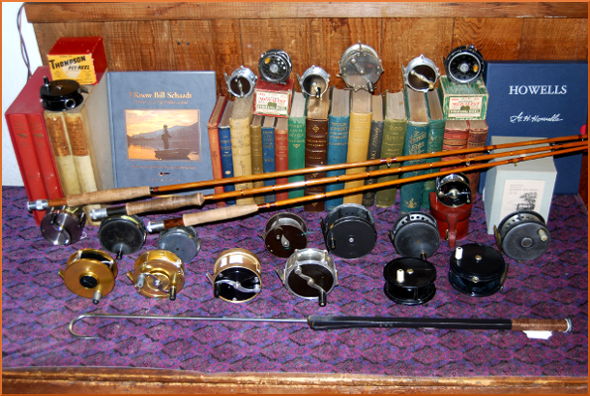
There’s a certain kind of fly fishing knowledge you don’t get from a quick scroll or a gear review. You get it from someone who’s been there when the “new” stuff was being invented, watched it cycle back around, and saved the paper trail along the way. That’s what this conversation with Jim Adams felt like: a walk through the hidden world of fly-fishing collectibles, rare books, and the history behind the gear we all obsess over.
Jim Adams has been collecting, selling, and studying fly-fishing books and vintage gear for decades, building one of the most fascinating windows into the sport’s past. We dig into rare books, high-dollar reels, bamboo rods, and the authors and innovators who shaped modern fly fishing. Along the way, Jim shares how he learned to spot first editions, what makes certain tackle “museum-level,” and why he thinks the next generation is missing something by skipping the books.
He talks candidly about aging, balance, eyesight, and how fishing evolves as your body changes. The big takeaway: the passion doesn’t fade, it just shifts. Steelhead becomes more appealing. Boat pushing for tarpon becomes harder. But the obsession stays the same.
05:20 – Jim doesn’t mince words here. He believes a lot of modern anglers are missing out because they don’t read books anymore. If it isn’t online, it “doesn’t exist,” and that drives him nuts because fly fishing has been written about in depth for more than a century.
14:11 – Jim digs into the world of truly rare fly-fishing books, including oversized limited editions, feather-illustrated volumes, and books that have sold for $7,000 to $10,000. These are the kinds of pieces that blur the line between fishing literature and fine art.
Many of these high-end titles rotate through Jim’s inventory and sell quickly when they appear.
No guide service. No social media. Just observation, curiosity, and a pram.
He also fished Everglades National Park back when it was brand new and still incredibly primitive. That’s a version of the Keys and the Everglades none of us will ever see again.
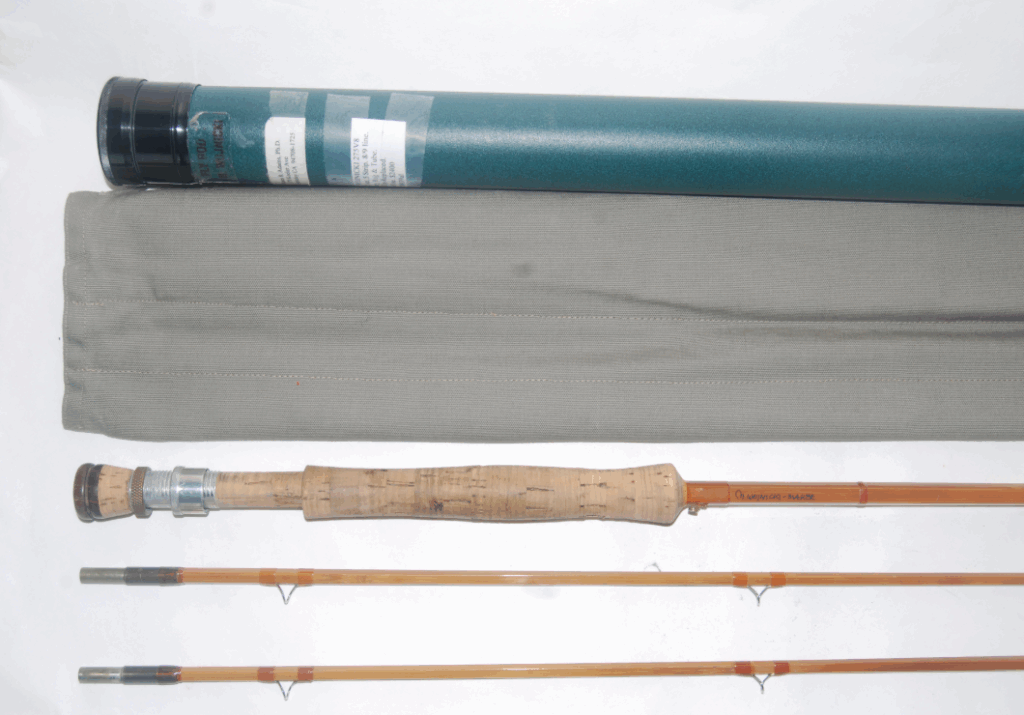
Jim regularly lists classic bamboo rods on his site, including hard-to-find pre-fire examples.
34:24 – This episode is loaded with names, but a few stand out as pillars in Jim’s world:
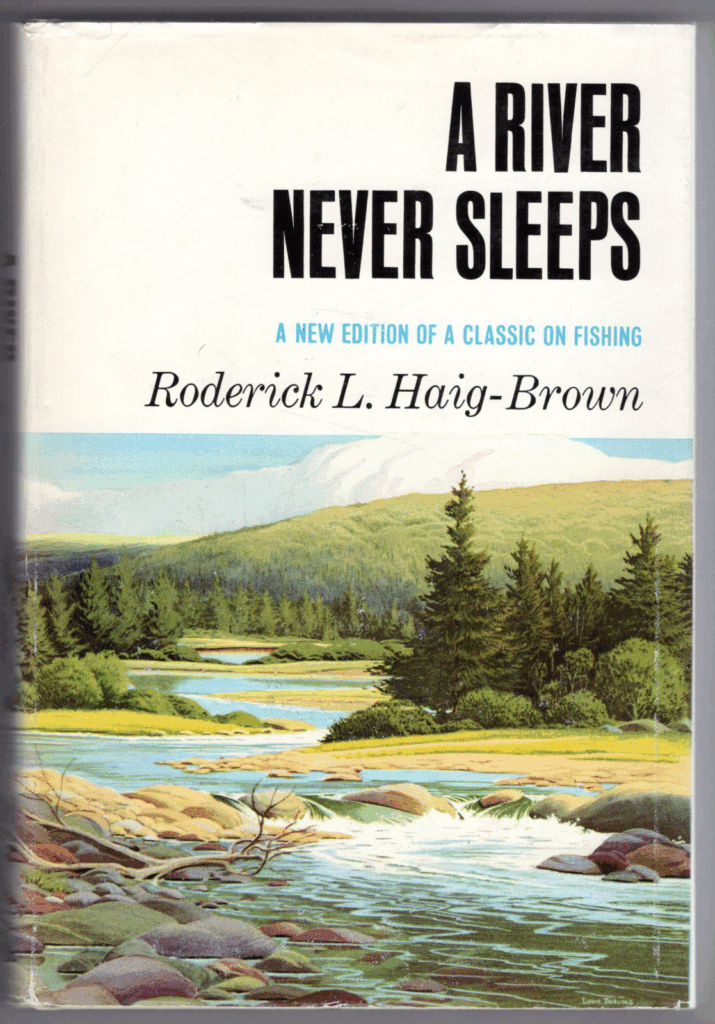
If you want a reading list that actually shaped modern fly fishing, this is a strong start. Let’s start by knowing more about Roderick’s Books of “A River Never Sleeps.”
51:06 – Jim’s critique of modern fly fishing is sharp and worth sitting with. He feels too many anglers focus on numbers: how many fish, how fast, how consistent. That pushes guiding toward bobber-style nymphing where, as he puts it, the guide “moves the guy’s bobber around” to put it in front of fish.
He’s not anti-indicator entirely. He talks about subtle indicators, including the old-school New Zealand trick of using a bit of sheep’s wool pulled from a fence, naturally oily and low-profile. What he’s against is the mentality of fishing becoming a fish-counting contest.
Episode Transcript
00:02:00 Dave: The first thing you notice isn’t a fish. It’s the heat coming off the Florida Flats in nineteen fifty four. A twenty two year old kid from California is standing in a plywood pram with a bamboo rod, binoculars in his pocket, quietly tailing the best guides in the keys. Joe Brooks is somewhere on the island. Ted Williams is too, and the kid is about to stumble into the early days of saltwater fly fishing without even knowing it. This is the Wet Fly Swing podcast, where I show you the best places to travel to for fly fishing, how to find the best resources and tools to prepare for that big trip, and what you can do to give back to the fish species we all love. That kid is Jim Adams, and he grew up to become one of the great fly fishing book and gear archivists over the last seventy years. Today you’re going to learn how fly fishing ideas actually evolve. What makes a bamboo rod collectible? We’re gonna find out how rare reels are found and fake. Also talk about some of the authors who shaped modern angling and what nearly a century on the water teaches you about fish gear and life. It’s all here today. Let’s jump into it and hear all the stories you can find Jim Adams at Adams Books.com. How’s it going, Jim? Fine. Great to have you on the show here today. We’ve done a number of episodes over the years on Vintage Gear. You know, just the history of fly fishing, really. And I’m excited to talk to you because you have you get into, you know, books, gear. You have a lot of rare and vintage books. I want to talk about that today. I want to. I see some reels on your website that there’s some pretty expensive reels as well, and I want to hear about the background, maybe to help some people, you know, find out where they can get access or if they want to get into this. Um, you know, this range, this field. But take us back real quick before we jump into all the rare and vintage gear. Have you been in fly fishing for a while? What’s your first memory?
00:01:40 Jim: Yes, I tied my first fly in nineteen forty three. I was born in nineteen thirty two, and I’m. I’m ninety three years old right now, and I was lucky enough to be able to retire when I was fifty four. And I’ve been fishing around the world ever since.
00:01:57 Dave: No kidding.
00:01:57 Jim: Yeah.
00:01:58 Dave: That’s amazing. This is going to be fun because we’ve done a number of episodes actually with, you know, people in their nineties. You know, I think I’m trying to think of the last one we had on, you know, but it’s great because I feel like there’s something about fly fishing. Maybe it’s the outdoors, maybe it’s the getting out. But it keeps you healthy, right? Do you feel like what’s your secret to your success? You’re ninety three. You’re feeling good out there. How have you done it?
00:02:19 Jim: Yes, actually, it’s my passion in life and it’s helped kept me pretty healthy. And I had some problems right now because I broke my big toe over in Norway in twenty nineteen, and they were going to cut my toe off, and I pleaded with them and they sewed it back on and everything else. And I can’t walk as well as I used to, and I have I used to do lots of tarpon fishing, boat fishing down in the Florida Keys, and I can’t push pull a tarpon boat around anymore. I don’t have the sense of balance. I’m just too old.
00:02:47 Dave: Yeah, yeah, I got you. That’s amazing. Maybe take us to the, um. You know, the website Adams Angling Books.com. When did that start? When did all this? Um, kind of the website.
00:02:57 Jim: I was my second wife was a librarian in, uh, school, and, uh, UC Berkeley offered a course on book buying for pleasure and profit, question mark, and is offered through the library there at UC Berkeley. And so we both took it, and it was a eight week long course, uh, three hours a night once a week. And we visited all the major printing presses in the greater Bay area, in the lino types of the newspapers and a lot of lead type, really old fashioned presses. And, uh, we learned how books are made. We learned how they’re fabricated. We learned how paper was made. We learned how everything was put together. We learned how to identify first editions, especially British first editions, because it’s a confusing area. And, uh, we had a great time and my wife became a letterpress printer and bought a little press with lead type and everything else, and started trying to print her own books. And, uh, I decided to become a book dealer because I loved books. And my mother started giving me fly fishing books back in nineteen forty six and forty seven. Ray Bergman’s Trout and things like that and, uh, Crider steelhead and all these other things. And so anyway, so, uh, we started a business in nineteen seventy, our respective businesses. In nineteen seventy seven, I became Adams Angling Books and my wife became Pool Press, and she ended up printing over eighty books. And she did a lot of small books, and she was in international competitions. She won lots of prizes. And, uh, I just sold books. As I said in my website, I’ve sold, uh, nearly fifty three thousand books on fishing and hunting, mostly on fishing and natural history. Uh, since I started, I still have my own personal library of, uh, seven thousand books, which is in the house on fishing and, uh.
00:04:45 Dave: That’s amazing.
00:04:46 Jim: Uh, one of my customers wants to buy my library, and I’m gonna sell it to him in a low price. And I don’t leave a huge pile for my kids.
00:04:54 Dave: Oh, good. So somebody’s going to keep the tradition going here. And when we. When you head out.
00:04:58 Jim: Yes. Right.
00:04:59 Dave: Oh that’s amazing. So. And who is the person that’s going to take it over? He’s your not your son but your who’s going to take over the library?
00:05:05 Jim: Uh, well no. One of my customers. Yeah.
00:05:07 Dave: Oh. Oh, customers. Okay. Yeah, yeah. I was going to say because it seems like you hear some of these stories, you know, about people when they when they head out that, you know, different things happen. I feel like yours. This should be in, like, a natural history museum, you know.
00:05:20 Jim: Well, you know, the new problem. Uh, David, you probably know the new generation of fly fishermen don’t read books, right?
00:05:27 Dave: They don’t read books.
00:05:28 Jim: Uh, if it’s not on a website, they don’t believe it. But nothing’s new in fly fishing, you know. Sure. We, you know, we have beat headed nymphs and stuff like that. And we have some much better imitations of aquatic insects. But the fish will eat anything at various times, and you don’t need much to delude them. And, uh, anyway, uh, but I’ve always enjoyed books, and I feel a great pleasure, but I’m really sorry that the people are missing out on so much because nothing is new in fly fishing. People have written about everything. Forward tapered lines were developed in the eighteen eighties over in England, you know. Weight forward lines.
00:06:01 Dave: And yeah, it just repeats. It’s history repeats itself. Right. We’re doing the same. Yeah. So you back so like you said, back in nineteen forty three, which is pretty amazing because that’s like right in he takes us back to the history, you know World War two. How old are you in nineteen forty three.
00:06:15 Jim: Well, I was born in nineteen thirty two.
00:06:17 Dave: Yeah. Thirty two. Okay. So you’re so you’re nine. So. So you tied your first fly about somewhere in that range. You’re nine.
00:06:22 Jim: Well, there’s nine years old.
00:06:23 Dave: Yeah, yeah, nine years old. And then basically. Yeah, you have, uh, you know, obviously you get in, you’re into fly fishing early. What you know, over the years you’ve seen lots of changes, I’m sure. But, um, have you been in California most of most of your life?
00:06:37 Jim: Yeah, mostly in California, but I’ve gone all over the world. I’ve been to New Zealand forty times, and I fished in, uh, Russia for Atlantic salmon for forty eight weeks. Uh, I’ve been down to South America a number of times. I’ve fished all over Europe, fished Yugoslavia, fished Sweden and Norway, Ireland, Great Britain, Scotland, of course, and Germany and Austria. France. I knew lots of the great casters in the world. I’m a member of the Golden Gate Angling Casting Club, and I’ve been that for years, and I met a lot of the important tournament casters all over the world, both here in San Francisco and over in Europe. I knew Charlie Rich and I knew Jim Hardy. I knew Captain Tommy Edwards of the British casting teams. I knew lots of the major casters and all the different countries. And I attended the internationals over in Oslo, Norway in nineteen sixty one. And, uh, I met these fishermen and casters from all over Europe, and they all invited me to go fishing with them and all these different countries. I was over at the time on, on a, uh, I was collecting fish for the California Academy of Sciences and for UC Berkeley under contract with the university. And so I was over in my Volkswagen bus in Europe for nine months collecting fish. I started off in Iceland and went over to, uh, to England and then on over to the continent, into Norway and Sweden, and met all these cashiers at the internationals up at and Buddy and John Tarantino of San Francisco, who was the world champion caster about ten years running it at that time, was casting over there along with Myron Gregory, who was the guy that standardized line weights the whole thing on weight, forward lines by weight rather than by diameter. Um, they were over there and they’re well known in the European casting circuit. So I met all these fishermen and watched buddy walk off with the twelve different events. And he he won the all around most of the time. This is the tenth time he had won the all around trophy for all the twelve different events.
00:08:34 Dave: Wow, this is for the casting championship.
00:08:37 Jim: He was an amazing caster, a great guy.
00:08:40 Dave: What was his name again?
00:08:41 Jim: Joe Tarantino.
00:08:43 Dave: Yeah. John Tarantino.
00:08:44 Jim: Yeah. And of course, Steve Rajeff is a world champion right now. He’s also from San Francisco. He’s a member of the Golden Gate.
00:08:51 Dave: Yeah. We’ve done we’ve covered the Golden Gate Club quite a bit. It’s been awesome. We’ve, you know, haven’t had Steve on yet. We’re working on we’ve had his brother on a few times. And uh, so we’re going to hopefully have Steve on soon. So yeah, you’ve been basically you’ve been all around the world, you know, all the greatest names throughout really the history of the twentieth century, it sounds like.
00:09:10 Jim: Well, yeah, I do and I taught fly fishing schools back in Yellowstone with Andy Pouillon at through, uh, Mike Lawson and his shop, you know.
00:09:19 Dave: Yeah.
00:09:20 Jim: And I used to teach aquatic entomology and identification.
00:09:23 Dave: Oh. You did. So what was your background? So.
00:09:26 Speaker 3: Well, I have a.
00:09:27 Jim: Bachelor’s and master’s in fishery biology at Humboldt State. And later on, I got my PhD at the University of Washington, also in fisheries.
00:09:34 Dave: Yeah, that makes sense.
00:09:36 Jim: I was trained scientifically, and I’ve worked in that field. And the only job, the only I worked on temporary jobs for Cal Fish and Game and for the Federal Fish and Wildlife Service. My first one was working in Yellowstone National Park in nineteen fifty two as a biologist on Yellowstone cutthroat, and I was there for two and a half months. And then I, uh, I of course, I went fishing.
00:09:58 Dave: Yeah.
00:09:59 Jim: You know, we were, uh, netting cutthroats and casting them on, uh, at, uh, at collecting weirs and things like that and tagging them to all kinds of.
00:10:08 Dave: Oh, right. What’s your take on the. Do you keep up with just the changes in climate and fish populations and, you know, like you’ve been there since nineteen forty three that’s been you know, we’re pushing, like we said, ninety years. Like what have you seen. Have you seen a lot of changes. You must have been involved in that back in the.
00:10:24 Speaker 3: Oh yeah. Yeah. The, uh.
00:10:26 Jim: The thing that happened, uh, some, uh, a lot of bad things happened and some good things happened. But, you know, if you look at the history of of what was going on in Fish and game in the United States by the eighteen sixties and eighteen seventies, The sportsmen’s clubs were complaining about what was happening to the streams from the pollution, the logging.
00:10:45 Dave: Yeah, because that’s when it was first starting. Right. That’s when we were really hammering stuff was in the late.
00:10:48 Jim: They really started the entire environmental movement. It wasn’t it wasn’t it wasn’t, uh, Audubon and all those, it was really the sportsmen’s clubs that got together and pushed for Congress to pass all these laws to eventually start cleaning up the water and all the. And we kept on getting more sophisticated as we knew more and more about it. And they’re very responsible for lots of the progress that we’ve made. And now we have wonderful things like a restoration in the Klamath River in California, which I’m sure you’ve heard about.
00:11:18 Dave: Yeah, I.
00:11:18 Speaker 3: Have.
00:11:19 Jim: I’ve been pushing for that for years, along with the restoration of the eel and quite a few other rivers. I have, uh, worked in some river rehabilitation products. I designed the Hat Creek project in Northern California, where we went ahead and, uh, electroshock the stream to pull out whatever trout were left in it. And then we chemically treated to remove all the other non-game fish that were in there. And then we put the trout back in all wild trout, no hatchery fish. And we had one of the best trout streams in the world for a while.
00:11:46 Dave: Right. Yeah. We’ve heard about the Hat Creek.
00:11:48 Jim: No, that was my project. Yeah.
00:11:50 Dave: Okay. That was amazing. Well, I think that the, um, part of the history, the challenge is, is that, like, right now, as we speak, you know, twenty twenty five, we’re hearing, I mean, really terrible stuff, you know, closures of Chinook salmon in Alaska, steelhead populations, you know, tanking Atlantic salmon, brook trout. You know, we do episodes, conservation episodes all around the world. And we hear all these things that are going on. And I think we’ve done a lot of good work. Right. But what’s your take on, you know, where do you think we’re heading? Do you think we’re you got a positive outlook?
00:12:20 Jim: Well, I used to be very positive.
00:12:22 Dave: And what’s changed since like if you think about it, you you’ve been there in the sixties and seventies. 80s. You know, we’ve gone through the environmental crisis then and now. You know what? What’s changed? Are we just on a trajectory like what’s your take there?
00:12:34 Jim: We’re a lot more knowledgeable about what’s happening in the environment. We know lots more things because of all the scientific work that’s been done right now. The present administration doesn’t believe in science, and they’re dismantling the Clean Water Act. They’re dismantling all the protections for many of the wild areas. And while they want to go ahead and explore for oil and not in national parks, where things are lots of wild areas, um, all the protections for the rivers is out the window. You know, the, uh, the compact is going to be worked out for the Columbia River, uh, to, uh, try to get the salmon, the wild salmon and wild steelhead back rather than hatchery fish are a great president. Cancelled that. And, uh, so that’s that’s not viable anymore right now. Climate change is happening. People don’t want to admit it. Some people don’t want to admit it.
00:13:20 Dave: Yeah, well, I think climate change is there’s no question. I mean, we’ve talked to people, like I said, all around the country, and it’s clear, you know, I mean, I just talked to somebody up in northern Saskatchewan, you know, like in one of the most probably protected areas you can imagine. But they’re seeing changes in, you know, uh, fishing, it’s different, but so I think. Yeah, I think I think what we’re talking about here, there’s a lot going on. I think, um, you know, I want to circle back just kind of a little bit more to the book, just to make sure we stay on track on that, and we don’t miss that. I think we might have to. Jim, have you back on later on for another episode, but let’s take it back in. You got such a crazy, amazing history of of all these years and all these people and places. But I did want to take it back to the books. So when you think about fly fishing books, um, you know, or really any of the books you have there, do you have a few that are just, you know, the top of the top, the, the, the most expensive, the most rare books? Do you have that list? Is that something that’s out there?
00:14:11 Jim: Yes, I do, I have some of that on my website. I have lots of it all in my other my own collection. I siphoned out pieces of my own collection. I sold books on a smoker. Paul Smukler, who you probably know of, put together some fantastic things. He did some limited editions. Uh, one of them was, uh, his first big book that he did. I had an illustrated all the feathers. He made several copies of a two volume edition that had all the feathers in the back. And these were huge books. These things were two feet by two feet. And the second edition, I sold my I bought two copies of that and I sold one for ten thousand dollars.
00:14:50 Dave: No kidding. Yeah, one book for ten thousand dollars.
00:14:53 Jim: Yeah. And I sold several books for seven or eight thousand dollars.
00:14:57 Dave: Did those books do you typically where do you find those books?
00:15:00 Jim: All over the world.
00:15:02 Dave: So you’ll find a book and you’ll know since you’re educated on it.
00:15:05 Jim: You buy low and sell high.
00:15:07 Dave: You buy low. So that book for ten thousand dollars.
00:15:09 Jim: And I supported my fishing from my from my business, Adams angling. All the trips that I take throughout the world are are a write off, a tax write off against my, my business. And so that works out very well. And in some years they don’t make much money. I mean, I make a lot of money, but I spend it on fishing trips. And so it’s a business because I meet all these. When you travel Internationally. That’s where you meet the famous people. That’s where you meet the people with money. We used to sit in the airports, wherever we were in the world, and if we saw it was back before TSA and all these. If we saw somebody carrying a rod tube, a fishing tube, we would go down and talk to him. We may not know him, but we all have mutual friends because the people that travel internationally are very small group. And, you know, whether you’re going to South America or down in New Zealand, I’ve been to New Zealand forty times, for example. Uh, so anyway, it’s a very small group. And uh, and they became many of them have become very good customers. I’ll be going back to fishing in the Grand Cascapedia in Quebec this year.
00:16:07 Dave: Oh, you are for Atlantic salmon.
00:16:09 Jim: thirtieth, thirtieth year up there.
00:16:11 Dave: Yeah. So you’ve been up there for Atlantic Salmon.
00:16:14 Jim: Fishing River with the same same guides and the same pools and all that stuff. Yeah, yeah.
00:16:19 Dave: Wow. That’s that’s amazing. So what’s your species? What? Number one, if you had to choose one species to to only fish for.
00:16:26 Jim: Well my favorite fish probably is a steelhead. My next favorite fish is tarpon, but I really can’t do that anymore because my balance, my sense of balance. Because of spinal stenosis, I can’t stand up and push pull a boat anymore. I could hardly stand up to make a good cast. And if you can’t see the fish, you can’t. You’re out of it.
00:16:45 Dave: But you’re in the game for tarpon for a long time. That’s pretty. How many years did you fish for tarpon?
00:16:49 Jim: I went down to Florida Keys. I was waiting to get drafted. This inspector in the Korean War.
00:16:55 Dave: So what year? So nineteen fifty nine.
00:16:57 Jim: Yeah, it was in the nineteen fifties. Fifty, fifty four and fifty five. And so my draft board said, well, you can go ahead and vote. I didn’t want to go in for three years. I just wanted to go in for two years and do my duty, you know. Yeah. And so I volunteered for the draft for nine months before I got in. But my draft board said, all you have to do is let us know by postcard of a phone that you want to be put at the head of the draft list for that month. And so I did that for for nine months. But in the meantime, I took off and they said, well, if if you want to go to Florida, that’s fine. So in in nineteen fifty four, the eel River went over its banks. I was fishing up in the eel River, and, uh, I had quit college and I was working in a lumber mill to make money and fishing during the day and working in the lumber mill at night. And the eel River went over its banks, and the fishing wasn’t any good in November. So somebody said, I wonder how the bonefish are biting in Florida. And I said, I wonder how they are. So I hopped in my forty eight Plymouth and my eight foot plywood frame, my five horsepower motor, and drove down to Florida for three months. And I caught my first tarpon and my first bonefish on bamboo rods in the Florida Keys.
00:18:05 Dave: And.
00:18:05 Jim: fifty four in nineteen fifty four and fifty five. Yes.
00:18:08 Dave: Wow. Who is fishing for tarpon in nineteen fifty four? Who are the people out?
00:18:12 Jim: Well, Joe Brooks was down there, and, uh, Ted Williams was down there.
00:18:16 Dave: Yep. Ted Williams.
00:18:17 Jim: Yeah. And, uh, the different guys, the major guides, you know, and, uh, but I didn’t use any guides. I used my binoculars and I would follow the guides out from their house, out to their boats and follow them across the flats and see where they were fishing.
00:18:31 Dave: Right.
00:18:32 Jim: And so and then I would go out there and try to duplicate it.
00:18:35 Dave: And so you brought your own skiff out there or your own boat?
00:18:37 Jim: Yeah. I had my little eight foot pram. Yeah.
00:18:40 Dave: Oh your pram. You brought your pram out there.
00:18:42 Jim: I had a horsepower motor, a plywood pram. Yeah.
00:18:45 Dave: Plywood pram all the way out in fifty four and fish. Yeah. And you stayed down there for three months and then you went back year after year.
00:18:51 Jim: And I fished Everglades National Park when it was first opened. That was back in the nineteen fifties. And it was really primitive. It was hardly anything. A few johns scattered here and there and a ranger station or two, and that was it. And, uh, that was pretty incredible fishing. And, uh.
00:19:06 Dave: So you were traveling really? You know, you’re probably one of the few people that were traveling around the country, around the world back then. Right? Did you always have that travel bug in you from the young age?
00:19:15 Jim: Oh, yes, I did. Yeah. You know, I worked up in Alaska as a fish biologist from nineteen fifty three through Nineteen sixty two and with time out from military and school and stuff like that. But I was I worked up there during the summer. I made enough money in Alaska to see me through school for the rest of the year.
00:19:34 Dave: Trout Routes by Onyx is built for fly anglers who want better Intel without spending hours digging for the information. You’ll get access to public land maps, stream access points, regulations, and even road and trail maps all in one place. It’s become my go to app for scouting new trips. You can check them out right now. Go to web, fly complex routes and download the app today. Fishing Guide Service is dedicated to sharing the incredible fly fishing opportunities around Jackson Hole. Whether floating the scenic snake River in search of native cutthroat trout, or hiking into the mountains to explore pristine tributaries. Every day on the water is an adventure. You can join them for an unforgettable fly fishing experience in the heart of the Tetons at Fish Thefly.com. Wow. What’d you do up there in Alaska?
00:20:23 Jim: Working for the Fish and Wildlife Service on salmon research.
00:20:25 Dave: So you were doing, like, a surveys and things like that?
00:20:28 Jim: Mostly. I was mostly in Bristol Bay, but I was out in the Alaska Peninsula. I was down in Southeast Alaska. I was in the Anchorage area. ET cetera. ET cetera. I covered it pretty well and did lots of stream and lake surveys, uh, salmon stocks and, uh, knew lots of the major researchers and all that stuff.
00:20:46 Dave: Do you keep up with that at all? What do you think? What’s your take with the.
00:20:49 Speaker 4: Oh, yeah. Sure I’m sure. You know, once you.
00:20:52 Jim: Work with salmon or steelhead management, you can’t quit it even if you don’t actually have the responsibility to manage it anymore. Yeah. You follow all the latest scientific works, you know, and Berkeley has a fantastic library here. I’ve had access to that for years.
00:21:06 Dave: If you think about this, what is the top kind of rarest book you think of in fly fishing?
00:21:11 Speaker 4: Well, for example, uh.
00:21:12 Jim: Halford wrote a number of books where he. The second came in two volumes, and usually the first volume. Uh, it was a one of seventy five or one of one hundred and twenty five copies. Second volume had the actual flies in there.
00:21:29 Dave: Oh, wow. Well, I wonder, is there a resource online where we can go look at the list of books that are the rarest the books, the oldest books out there?
00:21:37 Jim: Well, you can look for books that are for sale, like on a books or something like that, which is owned by Amazon. But, you know, you really have to get into it.
00:21:46 Dave: Yeah, you have to get into it. What would you tell somebody now who’s listening, who really loves the rare and vintage stuff, wants to get more into it, but they don’t, you know, but they want to like, learn like about how it all works. How would they start collecting? What would you tell them?
00:21:58 Jim: Well, if I really wanted to, uh, Thatcher wrote a book on on collectible books in which she summarized, uh, all the major fly fishing books and the prices that they’re being offered for and things like that. And it’s a pretty good history. But, uh, there’s quite a few books on the history of fly fishing for trout that have been written by various people. Charlie Waterman did a pretty good work on that. Hills did a great job for the British.
00:22:22 Dave: Ryan Hills. Yep.
00:22:23 Jim: History of fly fishing for trout. And, uh. Uh, Hank Brown has written a lot about books. And his his writing I knew had Brown.
00:22:31 Dave: Oh. You did?
00:22:32 Jim: Yeah. And I, I had my heroes when I was growing up. Of course, I loved Ted Trueblood.
00:22:36 Dave: Yeah. Who were they? Give me your top heroes when you were growing up.
00:22:39 Jim: Well, uh, Ray Bergman, who wrote for Outdoor Life, and Ted Trueblood, who wrote for, uh, Field and Stream, uh, and people like that. And then all the other writers like Joe Brooks. I met Joe Brooks and talked to him. And when I went down to Florida in nineteen fifty four.
00:22:55 Dave: Did you spend some time around Joe Brooks?
00:22:57 Jim: Uh, well, only very briefly, because he wrote a book on saltwater fly fishing. And that was my Bible when I went down to Florida in nineteen fifty four. And he talked about a fly fishing reel. I was using a Pflueger medalist at the time, and they weren’t very good. They were good enough. You know, you can catch fish on them when I did.
00:23:15 Dave: Right.
00:23:16 Jim: But he talked about a book called An Otto Zwaag Flywheel. It was made originally in New York and later on down in Florida. And he talked about it as having a very good dragon, an excellent saltwater reel. I went down to Florida every tackle shop I stopped in. I asked them if they knew about Otto’s flywheel and they knew nothing about it. Never heard of it. And finally I got all the way down to the Florida Keys, and I’ve been down there fishing for quite a few weeks, and I was in la mirada. I was tying flies in one of the outdoor benches out there, and I said, God, I’d love to find one of these reels. And Joe Brooks’s book. Oh, he says, well, Joe lives right over there in Alvarado. Why don’t you give him a call? He’s very open. So I called Joe Brooks in the afternoon, and we talked for a couple of hours on the phone. He said, I’m leaving for my first trip to South America tomorrow morning, so I can’t go fishing with you. But I’d love to talk to you. But I’m going to be gone for a month and a half or two months. And so anyway, so I talked to him extensively, and he told me about lots of things on the Florida Keys and places to go and things like that. I really admire him. And they made a misprint in the book on the price of the war. It sold for much more money than it said it was in the book.
00:24:26 Dave: Oh, really?
00:24:26 Jim: So and I’ve had quite a few reels for sale since they usually sell for, uh, uh, three or three or four thousand dollars. Yeah.
00:24:36 Dave: That’s amazing. What does it look like when we walk into your your house or your fly fishing room? What’s that look like?
00:24:41 Jim: Well, it’s wall to wall books and quite a few stuffed fish. I got one hundred and forty pound tarpon on the wall, and I got the stream record steelhead and stuff like that. Stuffed, you know.
00:24:51 Dave: Yeah. And do you have all your do you have, like, all these bamboo rods that are for sale or is that.
00:24:56 Jim: I have a usually a hundred or so fly rods for sale and uh, many more reels. And uh, and I had my own collection of rods and reels. I have like sixty five fly rods in my own collection. I said, I can’t use sixty five rods anymore, Moore. I’m starting to sell those. I’m trying to get rid of things and cut, cut down on it.
00:25:15 Dave: Yeah, you’re you’re trying to cut down a little bit. What’s the. When you think of the Adams books, Adams angling books, the initial vision when you started in the nineteen seventy seven, what’s the initial vision versus what it turned out to be? Was it similar or a lot different?
00:25:33 Jim: Well, uh, at that time, what you did, you wrote it, you put together a catalog. That’s the way it was before the internet. And so you put together a catalog and you mailed it out to customers. And what I did, I, I knew the membership in the Federation of Fly Fishing, for example, I went back to their annual conclave in, in in Wyoming or in Montana, Yellowstone in that area every year for a number of years as a sponsoring member. And so I met all these people back there who were interested in fly fishing, and many of them who were interested in books and started building it up. And, you know, I started out with a couple hundred. Pretty soon my mailing list was up to over three thousand. Mm. Yeah. All over the world. Wow. I sold lots of fly rods to Japanese customers.
00:26:15 Dave: Oh, really?
00:26:16 Jim: Yeah. One Japanese customer, for example, who was a very, very well known fisherman and fly tyer. He bought fly rods, mostly bamboo fly rods, for me and his. And I had a running account of all the sales, two hundred and eighty thousand dollars with this one guy.
00:26:35 Dave: Wow.
00:26:36 Jim: Yeah.
00:26:36 Dave: One guy spent two hundred and eighty k one guy.
00:26:38 Jim: Yeah. He spent, you know, not not all of them one time, but over the years. Yeah.
00:26:43 Dave: But still. Yeah. Yeah. He’s about as hardcore as you are. Right. Spend that much money?
00:26:47 Jim: Oh, yeah. He really is. Yeah. He came over with a Japanese film crew to the, uh, one of the fly fishing shows in West Yellowstone, and, uh, I had a parabolic, uh, parabolic fifteen fly rod for a five or six line, and he wanted to cast it. So he and the film crew went over there, and we cast the rod, and he bought the rod. And so that caused lots of excitement because that was the first Paul Young Rod ever had.
00:27:10 Dave: Oh, wow.
00:27:11 Jim: And then he started buying lots of rods from me. Pretty soon when he came over to the States, he didn’t speak very good English. It was a great guy. He would always communicate and, uh, he had me arranging trips for him. He said, I want to go to this river and I want to stay in a good motel near there. And then I want to go on over to this river and fish this area and fish this spring Creek, etc., and crossing state lines. He didn’t care about money. He gave me his credit card and had me making reservations at the hotels for him, at the motels and, uh, and for the rental cars and all that. He told me what flights he was coming in on and when he was leaving, etcetera, etcetera.
00:27:47 Dave: That’s amazing.
00:27:47 Jim: He had a very he didn’t have a good understanding of geography. And he thought that hot creek in Southern California, on the other side of the Sierras, was just a hop, skip and a jump from San Francisco. He didn’t realize he had to drive through Yosemite Park to get to it. And so I picked him up at the airport and went to the Fairmont Hotel overnight. And then the next morning we took off from my van and drove to Hot Creek and went over Tioga Pass, you know, through the.
00:28:12 Dave: Yeah.
00:28:12 Jim: nine thousand feet elevation and all that stuff. And he was absolutely amazed. And we had a great fishing time here.
00:28:18 Dave: That’s amazing. I’m looking at on your website, you have a number of rods, lots of I mean, there’s actually lots of bamboo rods that are only a few hundred dollars. I’m looking at one that’s two thousand four hundred dollars. It’s a seven foot Leonard forty eight DF. Yes, price. But now talk about Leonard. What is the most famous bamboo rod out there? Is Leonard? Was he the guy?
00:28:36 Jim: Well, Leonard was was very popular for a long time. Um, unfortunately, they had a fire in the nineteen seventies and the buildings burned to the ground, including all the taper sticks for their actions. So they had to rebuild the whole thing. At that time, people had changed their preferences and rod actions, rather than something where the entire rod did the work. They went to tip action rods. That made them very fast and they were for poor catches. They worked out fine for poor casters. The better fishermen didn’t like them. But anyway, they, uh, they were very popular for a while, but now they fall out of favor except for the ones made before the fire. Entirely different actions. And so the Pre-fire Leonards are very good and sell for high prices. And the post-fire Leonards just don’t sell very well.
00:29:19 Dave: No kidding. And was Leonard when was Leonard? When was the fire? When did that happen?
00:29:23 Jim: Uh, they started before the turn of the century.
00:29:25 Dave: Turn of the century. So. And what about I’m looking at another one for four thousand seven hundred dollars. It’s Mike. Uh, how do you pronounce it? Montag.
00:29:31 Jim: Mike Montag. Yeah, well, he was a wild guy. He was. He’s a genius. When he was twelve or thirteen years old, he was designing ballistic tables for cartridges. And, uh, he’s a computer jock, and he wanted to build the fastest bamboo fly rod in the world. And he built that. He built a four sided rod, what we call a quad. But it wasn’t a true quad. It wasn’t a regular. It was a rectangular quad. And so the rod is wider across than it was from top to bottom, and the top to bottom was very narrow, and so it bent along one preferred line. And if you tipped off slightly off that line, the cast would blow up. So I had to have real control.
00:30:12 Dave: It’d be perfect. This is for the perfect caster.
00:30:14 Jim: Oh, you had to have perfect control. And you can cast a mile with the damn things. And they’re very expensive. He made very few of them. But he said even if I sold them for five thousand dollars, I could make a living on it. So he quit it.
00:30:26 Dave: What year was he building those rods?
00:30:27 Jim: Uh, thirty years ago.
00:30:30 Dave: Oh, really? Just recently.
00:30:31 Jim: Oh, yeah. Yeah. You’re right. Yeah.
00:30:32 Dave: Oh, wow. So these are newer.
00:30:34 Jim: You live here in California? Yeah.
00:30:35 Dave: Okay, so we’re talking in the nineteen, uh, thirty years ago, like nineteen, uh, not too far. Thirty years, you know. Take us back. Like.
00:30:42 Jim: That’s right. Yeah, yeah.
00:30:43 Dave: Wow. That’s crazy. Okay.
00:30:44 Jim: Yeah. And he he had amazing rods and they they’re come, come up for sale very seldom. And, uh, they’re a bitch to cast. If you twist your wrist just slightly, the cast folds up. You can’t do it. Otherwise, if you cast properly, you could drive a huge, narrow loop. and he was a very avid steelhead fisherman and he knew about cast and everything.
00:31:05 Dave: Yeah, I’m looking at another one made by um, uh, made by. This is a eight foot pain made by Jim Pain before his death in nineteen sixty eight. So now pain is another big name. Leonard’s huge pain.
00:31:16 Jim: Well, you will pain, pain. Uh, there was two pains. There was Jim pain. And his father. His father started the business in the nineteen twenties.
00:31:24 Dave: Oh, okay.
00:31:25 Jim: And pain continued as an apprentice and eventually owned the thing. And and pain made a beautiful rod. I didn’t like most of his actions. Beautiful looking rod, exquisite fishing finish and everything like that. And then there’s gills and things like that. And there’s, uh, other rods.
00:31:41 Dave: Which are those? The top? If you think about the top most classic, uh, raw bamboo rods. Who is it?
00:31:48 Jim: Yeah, probably. Probably pains and gills and, uh, garrisons and, uh, things like that. Yeah. Those are some of the big names.
00:31:55 Dave: I see some other one, pal. I guess Powell also made bamboo. Right. There was some of those folks.
00:31:59 Jim: The thing about Powell, in fact, all the really good rod actors were guys that were tournament casters, and Granger was a tournament caster. Goodwin Granger was a turning caster. Bill Philipson was a tournament caster.
00:32:11 Dave: Yeah, well, look at this one. The Jim Echo fly rods. Think of that, right?
00:32:16 Jim: Yeah. Well, that’s that is a Chris Cork.
00:32:19 Dave: We’ve had we’ve had Chris on the podcast. He did a real awesome episode.
00:32:22 Jim: Yeah yeah yeah. He’s he’s a hell of a guy. Yeah.
00:32:24 Dave: Yeah he is.
00:32:25 Jim: He speaks fluent Russian. And he was running a Russian fishing camp over in Russia when I was over there.
00:32:30 Dave: Oh, right.
00:32:31 Jim: Yeah. Right.
00:32:32 Dave: Yeah, yeah. Because you were over in Russia. Wow.
00:32:34 Jim: Yeah. We knew each other very well because he lived here in San Francisco for a long time.
00:32:38 Dave: Yeah. And of course, there’s Winston, which we’ve talked a lot about. They’ve obviously still around, but they were back in the early days. Yeah. Wow. Okay. So so this is now tell me this. If you think about you’ve been doing this a while. Take us back to your twenty five year old self. What would be what would be your advice to that person knowing what you know now, if you could go back and give yourself advice at your twenty five years.
00:33:01 Jim: Fishing is such an individual passion. Uh, all fishing is fun. Some fishing is more fun than others. And what you do is you develop niches in the fishing world where you feel happier. And so you tend to do that more frequently, and you can become pretty good in some of these narrow niches. Uh, I love spring creeks. I like saltwater fly fishing, I like steelhead fishing and all that. So I indulged in all that. And as I get older, my eyesight gets poorer. I do more steelhead fishing.
00:33:31 Dave: All right. Me too. That’s the thing. I feel like we’re all, you know, we’re all on that path of getting older, you know what I mean? And things don’t work as good as they used to.
00:33:41 Jim: Yeah. Yeah. I’m waiting for a cataract operation right now because I could hardly read the type on a cell phone. I carry a magnifying glass and and, uh, you know, and I’m in line for cataract operation, probably in January or so I know.
00:33:56 Dave: Well, we’re all with you at just different levels, you know? I mean, yeah, glasses. I remember the time when I didn’t wear glasses my whole life and then I my fly tying, it was like I quit tying flies. Oh, yeah. And I didn’t know what it was. And then finally I picked up a pair of glasses and I was like, oh my God, fly tying is great again. Yeah. You know. Yeah, it’s just part of the thing. Well, tell me this. We talked a little bit about books. Who do you think maybe you’ve mentioned before, but what authors do you think really have shaped, um, the Western fly fishing literature most out there?
00:34:24 Jim: I love Haig-brown and I met him. He’s one of the one of my heroes. Um, that I, I actually had somebody write a letter of introduction for me. I just didn’t want to barge into his house up at Campbell River in British Columbia without letting him know in advance who I was. You know what? Why? I wanted to meet him. And so I became very good friends with him. And, uh, we when we were when I was doing my Hat Creek project, we bought Haig-brown down from British Columbia for the fundraiser. Oh, wow. For the Hat Creek project.
00:34:55 Dave: What year was that when you brought him down?
00:34:57 Jim: That was in the mid nineteen sixties. Nineteen sixty five. And so he and his wife drove down in their Jaguar sedan. And we met up in the fall River in Northern California. And he had several reasons to come down to California. He wanted to get a new wetsuit, and they were much cheaper in California than they were in British Columbia. And so anyway, so we were up there in fall River in one of the, uh, one of the streams up there and, uh, he, I had my wetsuit with me and my, one of my other biologists, Brian Waters, had his wetsuit with him, and Brian Waters gave his wetsuit to Haig Brown. And Haig Brown and I were in there, and Haig-brown had his underwater Nikon camera and was feeding caddis larva to the trout in that stream underwater. And uh, and I was there with him. And you know what? We never got a picture of him doing this.
00:35:47 Dave: Oh, you didn’t now, but you got the memory, and we’re capturing it right now. You got the story. What were you guys doing down there? What was haig-brown. What were you? Were you snorkeling or what were you doing with the in the water?
00:35:55 Jim: You was snorkeling? Yeah, I was just snorkeling.
00:35:57 Dave: And what were you doing with the project? Were you just counting fish or what was the snorkeling you were doing?
00:36:00 Jim: Well, I designed the project and so.
00:36:04 Dave: Did describe that a little bit. What was that Hat Creek project?
00:36:06 Jim: Hat Creek project was it was a stream of that, uh, headed up a mountain and then flew north and went into the rising River and, and then, uh, went on down finally into the pit River and, uh, and, uh, it had a series of hydro dams on it that were built back in the teens and the twenties, uh, to have one or two powerhouse and turn them out. This last interruption of twenty fifteen, the entire stream got killed by the hot volcanic eruption coming down Hat Creek and killed all the fish population off.
00:36:45 Dave: Oh, now, what year was this when it erupted?
00:36:48 Jim: Uh, that was nineteen fourteen nineteen fifteen, a series of eruptions and this ball of superheated water and volcanic sand and everything else.
00:36:58 Dave: Right. Probably similar to like Mount Saint Helens. Right. In the eighties.
00:37:01 Jim: That’s right. Exactly. Yeah. The same. Same thing. Yeah. Blew his top. Yeah. And it took a long time for it to come back. And, uh, rising River was famous. Bing Crosby had a ranch up there, and that’s the ranch that, uh, Clint Eastwood bought. Eventually, it was Bing Crosby’s ranch on the Russian River. And I got involved on, uh, on the open part of it down below the powerhouses. When I came to work for PGE, I’d already been fishing a Hat Creek quite a bit. The upper part, it was still available. The public access part. The lower part just had a whole group of, uh, of non-game fish in it, uh, the hardheads and squawfish and suckers or the primary inhabitants. And they were eating up everything. And the trout population was very small, although there were some very big trout in there. And, I said, God, if we go ahead and build a barrier down at the lower end of the of Hat Creek, where before it goes into Lake Britton, we could stop these non-game fish from coming up out of this lake down there, this hydro lake. And we could put trout in there and get a world class stream. We did this and we got everybody together. The only people that didn’t get together at that time was a real mistake. We didn’t get the Indian tribes up there that owned the land actually owned. But we had all those clubs. We had the Bureau of Land Management, U.S. Forest Service, US Fish and Wildlife Service, California Department of Fish and Game, the local sportsmen’s clubs, and everything else all behind it. But we never got the Indians involved till later on went in and we, uh, we electroshock the stream first at the part that we were going to poison because to get all the wild trout out both round browns and rainbows in electroshock. And we took out some very big fish. Yeah. And I actually participated in that. We took out a seventeen pound brown trout and a fifteen pound rainbow trout.
00:38:46 Dave: Wow. In the. And these are fish living in the creek.
00:38:49 Jim: Yeah. Living in the creek. Yeah.
00:38:50 Dave: Wow.
00:38:50 Jim: And we were eating the other fish, you know, there. But there were very few of those. Yeah. And so we took all those fish out and put them in a body of water in one of the hatcheries up there. And then we chemically treated the entire stream. And we took out, I think it was eight tons of fish.
00:39:06 Dave: And what were the invasive fish? Mostly?
00:39:09 Jim: Uh, well, they were native fish, but they had just proliferated because they weren’t being fished for. And they consisted of squawfish and hardheads, the pikeminnow, the the scourge of the Columbia River right now.
00:39:20 Dave: Which are actually native fish. Right? They’re native to the area, native fish.
00:39:24 Jim: But they had taken over the stream because so many of them and they they had both a hard edge and the fish took a fly very well, but you couldn’t get the slime off your hands. And it smelled horrible.
00:39:35 Dave: Yeah.
00:39:36 Jim: And so we cleaned them out and then we got lots of suckers out of there. And of course, they were just grazing down on the, uh, all the algae and eating all the insects that ruin the algae.
00:39:46 Dave: They are. Which is interesting because the suckers are also native, right? Especially the tribes.
00:39:50 Jim: They’re also native. They’re all native fish. They were all eaten by the Indian tribes up there. In fact, the Indians preferred suckers to trout because they had a higher fat content. But anyway. So we cleaned those out and we had, you know, lots of publicity and all that stuff. And then when it opened up, we had all wild trout, no hatchery fish, even though the fish hatchery right nearby. And, uh, and it was a fantastic fishery for a number of years. And then we had to go ahead and and rephrase it, because some of the sand from the Mount Lassen eruption was still coming down through hatchery and coming into the rising river, and it was coming all the way through, and it was smothering the aquatic vegetation, and there was no insect life. Yeah.
00:40:31 Dave: Oh. So it ended up impacting. So you guys so haig-brown back to him. So you guys were there just doing a getting, uh, funding opportunity, right? Raising money and all that? Yeah.
00:40:39 Jim: Right. It was raising money, essentially. and raising awareness and getting everybody together to work for it.
00:40:45 Dave: Yeah. What was haig-brown? What was he like?
00:40:47 Jim: Oh, he was a super guy. He was just as I went in there and he he was he was a judge, you know, up in the, in the British Columbia courts, uh, along with other things. But that was his primary job as being the judge.
00:40:59 Dave: Oh, that was his Haig-brown was a judge.
00:41:01 Jim: He was a judge. Yeah.
00:41:02 Dave: Wow.
00:41:03 Jim: He was also a chancellor of the University of British Columbia later on. And he was also a member of the International Salmon Commission that managed the Fraser River, which is split by, uh, us fishermen and Canadian fishermen and various other things. But anyway, he, uh, he was a great guy. Uh, we stayed up there at a motel near near his house, and I would go in and talk to him in the morning and have breakfast with him. He was shaving. He said, come on in the bathroom and keep on talking, you know. So he was in shaving away.
00:41:30 Dave: Right?
00:41:32 Jim: And talking and talking about everything and talking about books and talking about authors and talking about rivers and things like that, and lots of mutual friends that we had. And, uh, And so we became very good. Oh, and when he came down to do this fundraiser for Hat Creek later on. Anyway, he had a maserati sports car up there. This guy. And so he haig-brown got to drive the Maserati sports car over all these dirt roads up the fall River. He really enjoyed that. He was a wild man when he was a kid.
00:42:01 Dave: Big shout out to Smitty’s fly box. They’ve quietly become one of my favorite places to grab flies and tying materials online. The Smitty’s experience is simple, clean, and it’s all the stuff you actually use. Patterns that fish well, solid hooks, tungsten beads, dubbing, foam, feathers, tools, none of the stuff you don’t need and all the stuff you do. And the cool thing is, these flies and materials come from folks who fish the same waters we do. Their patterns are built around real conditions, cool mornings, slow afternoons, and picky fish. So if you’re looking to restock for the season or just want to refresh the bench before your next tying session, check out Smitty’s Fly box. They’ve got nymphs, dries. Warm water pattern streamers and everything you need to tie your own. You can head over to Wet Fly. Right now. That’s s as in mama I TT y as in yes s. Check em out now. Right? Yeah. That’s his for the Jaguar. Wow. So? So Haig Brown’s one influential, uh, you know author. Who else would you add? Maybe a few other couple other people.
00:43:03 Jim: Uh, Ted Trueblood I love. And Ted Trueblood came to do an article on Jim Frey, the fly tyer from Eureka, who died in nineteen fifty three. And, uh, he was down there at praise House every day, and everybody said he was good, but I, I was in such awe of troops that I wouldn’t go down to meet him. He was my hero, and I didn’t want to. I don’t know, I was really silly.
00:43:26 Dave: Right. So. So you didn’t meet him?
00:43:27 Jim: No, I never did meet him. Yeah.
00:43:29 Dave: Ted. And what was Ted? What was he known for?
00:43:31 Jim: Oh, he was an outdoor writer. Uh, he was from, uh, Idaho originally. And he had to go back to New York City to become the fishing editor of Field and Stream, which he hated. He hated New York, and so he became a roving correspondent for, for, and still wrote articles every month for Field and Stream. But he was no longer stationed in New York, and he was just a great all around fisherman.
00:43:53 Dave: Just a okay, so so you got Ted and who would be some more a couple other people for that list?
00:43:59 Jim: Well, some other people, Joe Brooks, of course, and, uh, and, and, uh, Joe Bates fished together with Joe Bush quite a bit. And I knew Bates pretty well later on. Uh, never fished with him, but I saw him at conferences and things like that. The Federation of Fly Fishing Meetings had all the world. Many of the fishermen of the world there, you know, from all over the place and, uh, South America and Europe and everything. And, uh, I was lucky enough to meet these people later on. And, uh.
00:44:27 Dave: So really haig-brown, uh, Ted Trueblood, Joe Brooks are probably three of the, you know, probably shaped Western.
00:44:32 Jim: Or a lot of others. Uh, Ray Bergman, of course, is my hero, but I’ve never met him. And, uh, because he. The first book I had on Fisher, my wife, my mother gave it to me in nineteen forty six, I think it was. And that was trout.
00:44:45 Dave: Yeah, trout, of course.
00:44:46 Jim: And then another book was by Claude Kreider, who wrote a book on on steelhead.
00:44:51 Dave: Oh, really? Claude Kreider.
00:44:52 Jim: That was nineteen forty nine. And then there was a McDowell who wrote a book on Western trout. And then there was, uh, Charles McDermott, who wrote books on Kings Canyon trout and the waters of the golden trout country. And he was a salesman of the Emporium Sporting Goods in San Francisco. I met him and I met Claude Kreider, who also made bamboo fly rods, and I sold some of his rods, a tremendous number of other writers.
00:45:15 Dave: Yeah, there’s a bunch. But yeah, like you said, Haig-brown.
00:45:18 Jim: You know, a John Goodrich and all the people like that. I met those at the shows and, uh.
00:45:23 Dave: Yeah. You see all that? Exactly. Yeah. What about your books you found? What do you think? Is there a most surprising book that you found over the years that you just couldn’t believe you found this thing? Is there a story there?
00:45:33 Jim: Well, the book that I enjoyed the most was was A River Never Sleeps by Haig-brown. It’s just a fantastic bit of writing and everything. And he, of course, he wrote every other book imaginable. I’ve had, I’ve had I had a complete collection of all the Haig-brown books, plus all the signed ones and things like that that he had done for me and, uh, yeah. And, um, very important, uh, and the whole literature of fly fishing, uh, there’s no one person that’s responsible for it, but there’s a lot of individuals that made individual contributions to it are extremely important. One of the most innovative tires was Gary Lafontaine.
00:46:09 Dave: Yeah. Gary.
00:46:10 Jim: He was amazing. Yeah, he was the only you know, he was trained as a psychologist and everything else. And he had teams of scuba divers going underwater and have them record the reactions of the fish to particular flies to see how they acted, and had two or three guys underwater watching and recording. I mean, God, what a what a fantastic.
00:46:27 Dave: Guy that is.
00:46:28 Jim: It was really bad that he died when he did. He was he was amazing.
00:46:31 Dave: Yeah. Gary. Gary Lafontaine, we I’ve definitely talked. He would be on that list of most influential authors. Right. For sure. In fly fishing.
00:46:38 Jim: Yeah.
00:46:39 Dave: You also did some other stuff, right. You also did like a little hunting and natural history talk about your other, um, kind of niches.
00:46:45 Jim: Well, you know, when I, when I grew up, my dad was an avid duck hunter. He was a geologist. And so he would go out and sit on oil wells and gas wells in the greater California area and also in, in Utah and Wyoming and Colorado and, uh, Idaho, everyplace else imaginable and down in Texas. And, uh, so he was wandering around for an oil company and, uh, he liked to hunt and so that he would line up places to go hunt either pheasants or ducks or geese in California when he’s out sitting on these oil rigs.
00:47:16 Dave: Right.
00:47:16 Jim: But I decided, right. I went with him when I was in grade. He said he used to take me out of grade school for two or three days at a time. He’d get permission from the teachers and I would go with them. And overnight, of course, all the geese were flying. And, you know, in in the fall of the year and things like that. And what I decided right away is I saw how these ranchers lived at twenty four hours a day, you know, especially the cattle ranchers, you know, they had milk herds and all that stuff. And I said, God, I never want to be a rancher.
00:47:43 Dave: Yeah, that’s a tough job.
00:47:44 Jim: A farmer like that. Well, you’re tied to the animals for twenty four hours a day for the rest of your life. And that’s why I decided I wanted to be allowed, but I didn’t even. I started off at UC Berkeley in nineteen fifty. I didn’t know anything about fish biology, but I thought you became a game warden or something like that, you know? And I, of course, in my life. And so I majored in surface water hydrology, which is a civil engineering course at Berkeley, because I wanted to be around water. And so I and then, then I heard about Humboldt State having a course in fisheries. And so I zapped up to Humboldt State in nineteen fifty one and never looked back. And, uh, I was a speed reader. I took courses from Evelyn Woods and Reading dynamics and how to speed read a book. And I if you look at my old catalogs, I used to go into some great detail in certain books because I actually glanced at the entire book before I wrote a description of what it was about and everything like that. But now that my vision is going to hell and I can’t do that anymore.
00:48:46 Dave: No, but but you do have. The great thing is your vision might be gone, but maybe the surgery will help fix that, right? Possibly.
00:48:53 Jim: Oh it should. Yeah. That’s right. It’s my near sight. I can’t read the writing. Uh, unless the light is just right on my cell phone. I carry a magnifying glass. There’s a pain in the ass to deal with it that way.
00:49:04 Dave: I know, I hear you, I’m looking at a real now on your website, and this is a good one, because this one is seventeen thousand dollars.
00:49:11 Jim: Yeah. Right.
00:49:12 Dave: And, um, it’s a two and five eighths inch Philbrook and pain. Marbleized flywheel. Um, raised pillar design circa eighteen seventy. Talk about that one. What’s the Philbrook and pain?
00:49:22 Jim: Well, it’s a very small company. They all made reels in the eighteen seventies and eighteen nineties. In that time period, uh, and uh, they used actually the marbleized finish as a, a particular type of mud that they mixed together to get that really beautiful black and orange color. And if they didn’t make any solid nickel silver and very fine fittings, excellent construction. I’ve had three of those you have.
00:49:46 Dave: And what makes that one so expensive?
00:49:48 Jim: Uh, I bought it at auctions, and I used to bid on lots of auctions. And what you would do is you, you you knew what your margin was and you knew what was going to cost you with all the fees and everything like that and the shipping, etcetera, etcetera. And so you could decide and, and those Philbrick trains are sold for, uh, some of them up to twenty and thirty thousand dollars. Yeah.
00:50:09 Dave: No kidding. And what did you pay for that one when you got at the auction?
00:50:12 Jim: Uh, I don’t remember, but it was very little.
00:50:14 Dave: Very little. It wasn’t. It wasn’t thousands.
00:50:17 Jim: For maybe seven or eight thousand dollars.
00:50:20 Dave: Wow. Yeah. This is cool. So. So you have that reel, and that’s eighteen seventy seven. What are the it seems like Hardee’s, right? I mean, what are the most, uh, rarest, most expensive classic?
00:50:31 Jim: Yeah, some of the early Hardee’s bring lots of money. I’ve had some pretty early ones, uh, you know, most of the more expensive Hardee’s that I’ve had were in the, uh, oh, three to five thousand, six thousand dollars bracket. And, uh, I’ve had those in the past.
00:50:46 Dave: Wow. This is this is cool. You’ve got a bunch of stuff on your site. We’ll have a link out, obviously, to all your stuff on the blog here. Um, what do you think? Now, tell me this. We’re going to take it out of here in a little bit. But as far as fly fishing, you know, back when you started to. Now what do you think we’ve lost? What do you think modern fly fishing has lost? That maybe we we shouldn’t have over the years. Is there something there that you really, you know, back in your sixties.
00:51:06 Jim: The things that I’m really disturbed about is people are concerned about numbers. How many fish did you hit today? And that’s what the guide’s philosophy is. Their clients have to catch lots of fish. So they’ve gone to bobber fishing, where essentially the guide moves the guy’s bobber around.
00:51:21 Dave: And that’s right.
00:51:23 Jim: In front of the fish.
00:51:24 Dave: So you’re not for you’re not for the bobber indicator fishing except.
00:51:28 Jim: And I know down in New Zealand and other streams I use, I use a little bit of fluorescent floss or even white floss. Uh, the people that I met down in New Zealand used a little bit of sheep’s wool that pull off a wire fence, and they used that as their bobber. And that works out very well because sheep’s wool has a natural oil in it. And so it floats and it’s kind of a dirty white. And so that it looks like stuff is coming down the river all the time anyway. And so the fish don’t. But for example, uh, Adams is a great fly down in New Zealand for some of the limitations of the, uh, but the parachute Adams, because of the white wing, the fish will refuse. After a while. They see too many of them.
00:52:07 Dave: That’s right. So you still use their indicator can work, right? You still use indicator sometimes. But I see what you’re saying. It’s the it’s the numbers.
00:52:15 Jim: Yeah, yeah, but I just use a very small one to, uh, keep track of things. And, uh, I met Frank Sawyer over in England in nineteen, uh, sixty one, and he showed me how to tie the Sawyer pheasant tail.
00:52:28 Dave: Oh, right. Did he now? Did he do did he write any books or anything? Or was it just the Pheasant Tail?
00:52:32 Jim: And he was writing books? Yeah. Keeper of the stream was one of them. And, uh, and he wrote two books, and he’s a fantastic guy. And, uh, I spent quite a bit of time walking the River dove, uh, Avon with him. And his wife was tying all his flies for him, and he showed me how to tie a pheasant tail using my hands. And. No, no lice use copper wire and pheasant tail. And that’s all you needed.
00:52:55 Dave: Oh, really? So you just tied a fly in hand? Yeah. How do you do that? How would you describe that to somebody? How would you.
00:52:59 Jim: You hold the hook in one hand and you have the copper wire, and you start up at the head, and then you want it on back, and then you tie in some strands of pheasant tail.
00:53:07 Dave: Are you using a bobbin? Are you. How are you doing the thread.
00:53:09 Jim: No, no. You don’t use a bobber at all. Just use this copper. Very fine copper wire.
00:53:14 Dave: Oh, so there’s no thread at all? Yeah I see. Wow.
00:53:17 Jim: And then you wrap and you learn how to build up the body with copper. It’s not like lead. It doesn’t sink like lead. It sinks more slowly. It’s a real fast sinking. Fly is an insult to the fish. The fish don’t see a fast sinking insect. Insects sink slowly, you know, and move slow. They’re not. They’re not jerking around all the time.
00:53:36 Dave: You’re right. Yeah, you’re definitely right on that one.
00:53:38 Jim: And surely it’s an excellent site. Fisherman.
00:53:40 Dave: Yeah. Sawyer. No. Well, the cool thing about Sawyer is we’ve interviewed many of the greatest, you know, competition fishing. You know, team USA, just a lot of the greatest anglers.
00:53:48 Speaker 5: Oh, yeah.
00:53:50 Jim: Fish in Europe. Euro and all this.
00:53:51 Dave: Yeah. Euro. Exactly. They’re still using the pheasant tail. Is is still number one extremely effective?
00:53:57 Jim: No question. I just don’t enjoy it that much. I don’t care about what numbers I catch. I care about I want to see the fish. Actually I love I use skating flies for Atlantic salmon and steelhead muddler minnows, right. Muddlers and all over the world. And people say, oh, you can’t catch them on a muddler. Well, I’ve caught them on a muddler.
00:54:14 Dave: Yeah. Is that your place out of all the travels you’ve done? What’s your number one? If you had to go back, where would that place be?
00:54:20 Speaker 5: Well.
00:54:20 Jim: I don’t know. I probably like you after Russia again.
00:54:23 Dave: Yeah. Russia. What was that? You were down there in Russia. And were you fishing for steelhead or Atlantic salmon?
00:54:29 Jim: I saw Atlantic salmon for Kola Peninsula. This is on the Kola Peninsula, is up around Murmansk and all that area. And I fished twenty six different rivers over there. I did a lot of exploratory work.
00:54:40 Dave: How did that come together? Was that a research project?
00:54:43 Speaker 5: No, no. It was.
00:54:44 Jim: It cost money. Um, the cost of the, uh, just the trip alone. I mean, of the, uh, staying at the lodge or whatever it was or the tents, usually, uh, was anywhere from, um, six or seven thousand dollars a week, up to twenty five thousand dollars a week.
00:54:59 Dave: Wow.
00:55:00 Jim: Yeah. And I had that money. I made it with Adams angling, and I spent it, and I was over there for forty. I fished forty eight weeks in Russia.
00:55:07 Dave: Forty eight weeks at the same like over the years.
00:55:10 Jim: Yeah, right. Yes. I was usually there for one week, Sometimes two or three weeks.
00:55:15 Dave: Forty eight weeks.
00:55:17 Speaker 5: Yeah.
00:55:17 Dave: What was the fishing like for Atlantic salmon, say, versus, say, Quebec?
00:55:21 Jim: Well, on some rivers it was fantastic. Some, some days were twenty and thirty first days and other days were two or three fish days. Like any place, any kind of fishing, it depends on where the fish were in the river and how you’re fishing and what was going on in the time of the year and everything else. It was a question of landing on top of the runs, and I really enjoyed that. And it was very wild and the guides were fantastic. All the guides spoke English, and we had people there that were working in nuclear science on reactors, uh, that had summer jobs as guides and make more money as guides for the Americans and the Brits, and they’d made in their regular job.
00:55:57 Dave: Right?
00:55:57 Jim: Yeah. And so it was like a three month season over there, and that was it.
00:56:00 Dave: Wow. The Russia thing. What is it that really brought you back for forty eight weeks other than the fishing? What? How do you explain Russia up there?
00:56:07 Jim: Well, I love wild places, I love Alaska, but when my my first wife and I, met my my first wife over in, uh, Great Britain under the tail end of my, uh, stay over there for collecting all those fish. When I was gone for nine months in my Volkswagen camper. And, uh, I stopped off at the Isaac Walton Hotel, which is on the River dove, and it was near the Charles Cotton and Isaac Walton fishing on the River dove. And she was the receptionist at the hotel there. And her cousin, the Duke of Rutland, owned the hotel. And so she was a Persian and all that stuff. And, uh, she was in the stud book, as you call it, you know, the book of periods and all that junk. And, uh, I didn’t know it at the time, but anyway, uh, so anyway, uh, I came back there after a couple of weeks and went back to meet her again to see her, and, uh, they I got a job at the hotel bringing the workers in. They were rehabilitating this fourteenth century farmhouse that had made into a motel a hotel, and they’re cleaning it all up. And so that, uh, I was there for the opening Christmas weekend and there for a month and a half, I guess. And, uh, anyway, I decided this was the person in my life I want to have. And so I proposed to her, and we had a big church wedding. And, uh, then I brought her back to the States, and, um, I didn’t want to land in New York. I didn’t like New York at that time, and I wanted to do something else. So I knew from some of the guidebooks that I had that you could leave from Vigo, Spain, and go by the way of the Madeira Islands, the Canary Islands, Curacao, Caracas, Venezuela, San Juan, Puerto Rico, and landing in Port Everglades for the same price as going from Liverpool to New York. And besides that, they would put my Volkswagen bus on the ship, coming on second class as a piece of luggage rather than as a, as something a truck, you know, a van thing. And so we had all of her her possessions in the van, in the and in all the fish that I caught over there were shipped back by different fishery agencies throughout Europe. It was all set up by Paul. Doctor Paul Netto at UC Berkeley for me. And so I didn’t have to carry the fish around that I was collecting for very long anyway. So she’ll be landing in Florida, and we fish down there for three weeks for tarpon. And then, um, we drove to Alaska. And the reason for that was that when I went to get a green card for my wife, they said, well, that’s fine, you can get a green card and you can go ahead. And you’ve never had a job, a permanent job before. So you have to go over there and get a job in the United States, and you could send for your wife and bring her with you and get her over to the States.
00:58:52 Dave: Oh, right. You hadn’t had a job yet.
00:58:53 Jim: Yeah. And so I worked all these temporary jobs up in Alaska. So I wrote a telegram. I telegrammed my boss up there, Chuck Costanzo. Doctor Costanzo, he said I need a job. And he said, yes, you’re hired at this Alaska seasonal salary, which is all inflated twenty five percent cost of living allowance for Alaska in all kinds of extras. And so that they allow me to bring her with me. And she learned to drive down the Florida Keys. Both her brother and her father were avid fly fisherman, but the women didn’t fly fish.
00:59:25 Dave: Oh no kidding. So she didn’t she didn’t fly fish. You had to teach her how to fly fish.
00:59:28 Jim: No, no she didn’t. But she learned how to fly fish. And she became very, very good. You know, we start off in the Florida Keys and catching things like.
00:59:35 Dave: What was that Volkswagen van that you took across the ocean? What year was that thing?
00:59:40 Jim: Oh, that was a sixty one, sixty one. Yeah. Nineteen sixty one. Yeah.
00:59:43 Dave: Was it just was it like a a camper build out or was it just the.
00:59:46 Jim: It was a camper van. You had a camper in it. You could see two people easily or even more. And yeah, but two, two were about right. And so that’s the thing that we drove to Alaska and we decided that we were up in Alaska for three months, and I was in charge of at that time, Alaska had become a state and the Federal Fish and Wildlife Service had managed Alaska’s territory for a long time. Had to turn all their data over to the state of Alaska. And I was in charge of doing all that data transfer, because I’d been working on it for so long. I knew I’d been on lots of streams and knew where the stuff was and everything. And so I was in charge of that. Had a bunch of people working for me. And, uh, anyway, we decided the fishing we were living in, uh, in Juneau, Alaska, and working at the laboratory of the US Fish and Wildlife Service. And the problem was that the fishing was so easy in Alaska there was no fun.
01:00:39 Dave: What were you fishing for? What’s your Alaska species?
01:00:42 Jim: We were fishing for, uh, sea run cutthroat, uh, lost in many of the streams and in, in in the lakes and some rainbows. Uh, and then lots of salmon, both coho salmon and chum salmon and, uh, were very common in the fall of the year. And you couldn’t keep them off. They were just crazy, you know.
01:01:02 Dave: Right.
01:01:02 Jim: And my wife learned how to play fish up there, and she was very good. She became a very good caster, using a glass rod and reel and all that stuff. Then we later on went down to the Kispiox. So it went from Alaska down and were there for two weeks. And uh, it was a year when the fish were just really numerous and you’d go out and catch two or three or four or five steelhead in the morning and fish up into the mid twenties and things like that, you know, and uh, and uh, so we had a grand time there. But anyway, she got pregnant there on the kispiox with her first child.
01:01:36 Dave: No kidding.
01:01:37 Jim: Okay. And so then I had to get a job that had maternity benefits.
01:01:42 Dave: Oh, right. And then what was your job? What job did you get for maternity benefits?
01:01:46 Jim: Well, so, uh, I had some friends who were rooting for me in, in, uh, because of my connections to the Golden Gate and all that stuff and various other things. And my father, uh, P-g-a needed a biologist. They were hiring consultants. Fisheries consultants. I didn’t know what consultants to hire. And one of my major professors, Doctor Ernie Schiller at Humboldt State, said, they’re hiring me as a consultant. They need somebody on the ground that’ll tell them what consultants to hire for a particular problem, you know. And so he recommended me for the job. And so I went to work in, in October of, of nineteen sixty one sixty two for Pacific Gas and electric companies, the first biologists.
01:02:27 Dave: And what did you do for them?
01:02:28 Jim: I was there for twenty five years. I retired as director of of ecological studies, and I had eighty people working for me, forty biologists and forty other engineers and scientists and stuff like that.
01:02:39 Dave: Oh that’s amazing. What did you do for PG and E?
01:02:43 Jim: Uh, well, we had, uh, we had twelve fossil fuel power plants. We had eighty two hydroelectric power plants. We had AEC license number one, and we had AEC license number seven for nuclear power plants were designed in nuclear power plant at Bodega Head. We had all these hydro plants that had problems with fish and things like that because flow, flow variations. And so I, I was told to design a marine monitoring program for bodega, bodega Bay Nuclear Power Plant right on the coast. And of course, we had all the whole Berkeley coalition opposed to nuclear power.
01:03:21 Dave: Right. Well, as I say, part of the interesting thing here is the fact that, you know, PG and E, there was a big movie, Erin Brockovich, a three hundred, you know.
01:03:29 Jim: Oh yeah. Right. Yeah. Yeah. That was.
01:03:31 Dave: You know, and it was like the interesting thing.
01:03:33 Jim: Very well depicted. But it was a.
01:03:35 Dave: Great no, but a great movie. But you worked for a company, you know, you’re in the fish, but you work for a company that was doing some harmful things, you know, some stuff.
01:03:43 Jim: Well, you know, the thing that I found, first of all, I met a lot of the presidents and vice presidents of PGE through the years and, um, many avid fishermen and the highest number of Sierra Club members of any power company in the United States.
01:04:00 Dave: Really?
01:04:01 Jim: Yeah, right. Yeah, they they were they were they? Sierra Club high trips and all that stuff. They were really. Why do people hate us so much? Well, they hated you because they had to pay your bill every month.
01:04:12 Dave: Oh, right. Yeah. That’s right.
01:04:16 Jim: And and the company went through lots of changes. It was a company managed by engineers. It was. The lawyers weren’t managing it. And I got out when I heard that a whole string of lawyers were coming in to take over the company and to raise the profits for the stockholders. And when that happened, I knew that was coming, because I heard all the scuttlebutt through my friends in San Francisco. Um, and so, um, I decided to get out. And so I was able to retire when I was fifty four years old.
01:04:46 Dave: Oh, you did so fifty four. You retired.
01:04:48 Jim: twenty four years. Twenty five years at the company? Yeah. And that was the only permanent job I ever had.
01:04:52 Dave: Right. That was it. PG and E P.g.a. Amazing.
01:04:55 Jim: So I had lifetime medical and had a lifetime salary and all that stuff, you know?
01:04:59 Dave: Oh, really?
01:05:00 Jim: Yeah. I had a big four hundred and one K and still living on that.
01:05:03 Dave: Oh no kidding. So you still have. So you have your medical is all covered through p.g.a.
01:05:07 Jim: I yeah, I had all that, but I still drive ratty old cars.
01:05:11 Dave: Yeah. Hey, you know, I think why change? You know, I think, uh, we’ve had some episodes where we’ve had some pretty famous people that still drive old cars. You know, I think there’s something to that.
01:05:20 Jim: Yeah, well, right now, there’s so much problem with thievery, you know, going people picking up certain models. I have a nineteen ninety nine Dodge van.
01:05:29 Dave: Nice. Nineteen ninety nine Dodge van.
01:05:32 Jim: Hundred and seventy thousand miles. And it’s been all over the place. And, uh, uh, anyway, it’s all falling apart. It’s, uh. But, uh, I’ll leave it parked out in front because then everybody says, oh, God, that car. That guy must really be poor driving that van, you know, he can’t. He can’t have any good stuff.
01:05:47 Dave: That’s right. I’m the same way. I’m the same way. I feel like this is good. Well, well, Jim, let’s take it out here. We got a little segment we call our listener. Shout out we’re going to do real quick here. This is a wet fly swing pro. We have a community of listeners who are in there in our membership group. I want to give a shout out to Percy. He’s the newest member I just saw. He just came in here this week. We’re going to give Percy a big shout out. This one today, um, is presented by Patagonia Swift Current waders. Uh, Patagonia is a big sponsor of the podcast, and we’re helping to get the word out on their great products and all the good stuff they’re doing here. But but I want to check with you. Percy was saying in the group. He said, you know, Scotland is a place that he really wants. He’s a big spey guy too. He wants to go to Scotland. He’s never been there. Have you been what’s your take on you fished that area kind of Scotland for.
01:06:30 Jim: Yes I did, I fished and I fished the Spey in Scotland.
01:06:33 Dave: Tell us that. What’s that like?
01:06:35 Jim: It’s so different from anything in the States because the landowner controls the fishery. And I met researchers that lived on the River Tay their entire life at the Pitlochry Marine Laboratory, for example, on the Tay. They had no idea of how many fish went up the Tay River because the people that controlled the river would not tell them. And you can’t manage the fishery if you don’t know what’s going on there, you know. And so it was very frustrating for them and some of the best biologists I’ve ever met. Tom Stewart, uh, was at Pitlochry. Anyway, uh, so you dealt with individual. It was also Europe too. That was a whole new, whole new way. Uh, all the rivers were controlled by particular people and syndicates and things like that. And you had to go to them if you wanted to try to fish there. And, uh, sometimes you had to pay money, but often just.
01:07:24 Dave: The fishing itself when you’re on the river. Was it similar to the swinging of the flies, the gear, or was it similar to to back in California or anywhere else?
01:07:32 Jim: It wasn’t like New Zealand or South America, South America, to a certain extent. You had to contact the landowner to go on some of the property, but often you just rode free and New Zealand even more so. Um, but in Europe especially, and especially in Yugoslavia, you had to know exactly who it was when I was in Yugoslavia fishing in sixty one. Uh. Tito was still in charge. He hadn’t died yet. And, uh, uh, it was, um, pretty complicated. The language problem was really something.
01:08:02 Dave: Gotcha. Okay, well, tell me this. I want to take it out here on just a couple of quick tips on, uh, again, going back to people that want to learn more about all this gear. They got your website, vintage, you know, all the stuff you have going there, what would be a tip or two you’d give them? Or maybe a resource to learn more about, you know, the gear, how to get started, how to learn, where would you send them to learn about, you know, how to do this? Is there a good book?
01:08:24 Jim: Well, of course, everybody’s on YouTube nowadays. You could learn how to learn. If you have a splice rod, you can learn how to fix your splice, you know, by going on YouTube and things like that. And, uh, and everybody’s looking at anyway.
01:08:36 Dave: But what about if it was collecting? What if it was like, I want to become I want to learn more about the gear, where to find it, the collecting of the gear. Is there a is there a resource or book on that or video?
01:08:46 Jim: There probably are. But the thing you do is just, uh, if you pick literate author like John Goodrich and read through him, he gives you some ideas and what he likes and, and, you know, and that’s a really good place to go.
01:09:00 Dave: So find an author. So find somebody like maybe Haig-brown and read his stuff.
01:09:04 Jim: Learn about and maybe buy or look at all his books or something like that. I went into Haig-brown that way because he covers such a wide area and uh, and, uh, and I did that with quite a few other people and uh, uh, a lot of contemporary people who are writing right now are excellent. And it’s hard to write papers because.
01:09:24 Dave: Yeah, it’s hard to play favorites. Yeah. People could probably also connect with you, maybe check in with you by email if they wanted, if they had questions about if they had a real.
01:09:31 Jim: Oh yes. Right. Yes. Yeah. I’m talking all the time. I’m not traveling as much as I used to. I used to be gone six or eight months out of the year, year round.
01:09:39 Dave: More. Okay, good. I think, Jim, we could probably leave it there for today. This has been amazing. I think, uh, we’ll have to keep in touch with you and maybe get you back on at a later point and dig in more.
01:09:48 Jim: Sure. Okay.
01:09:49 Dave: Awesome. All right. Jim, well, we’ll send everybody out to Adams Angling Books.com if they have questions for you. And. Yeah, just thanks for all the time. This has been a lot of fun.
01:09:56 Jim: All right, well, good talking to you, Dave. Thanks again.
01:10:01 Dave: If you enjoyed this episode, if you want to connect more, check in with Jim. You can check in with me and you can go to his website, see what he has going. We we covered a lot of it today. Some of the books and some of the gear, some of the the seventeen thousand dollars reel. That was a cool one to look at. Take a look at, uh, at Jim’s website. If you’re interested in following this show. You can do that any time. If you’re on Apple Podcasts or Spotify or anywhere out there, I’d love to hear where you’re coming from. Send me an email Dave at com. It’ll make my day. As always, if I see from you out there and I get an email, that would be great. Quick heads up on next episode and trips we are heading to Montana. We got a big event coming up next month for Montana, so if you’re interested in hearing some secret spots in Montana and these are definitely some places you probably haven’t heard about. So if you thought Montana was just completely blown up all over the place, it’s not. We got a couple of secret spots that’s coming in for some content this next month. I want to give a shout out to, um, our Newfoundland trip. It is going to be on. We got an episode tomorrow on brook trout. Giant brook trout fishing. If you’ve ever fished for brookies, you know some of them can be small, but they do get big in some areas. And and Newfoundland is one of those places. We’re heading back there tomorrow, so stay tuned for that. And that’s all I have for you. I hope you’re having a good afternoon. Hope you have a good morning and hope to see you. If it’s evening, uh, somewhere online and we will talk to you soon. Have a good one.
01:11:21 Speaker 6: Thanks for listening to the Wet Fly Swing Fly Fishing show. For notes and links from this episode, visit Wet Fly Comm.
This one felt like opening a door into a part of fly fishing most of us only glimpse, the rare books, the forgotten makers, the reels with century-old craftsmanship, and the stories behind how it all got here. Jim’s lived through nearly every era of modern fly fishing, and he’s still connecting dots between rivers, people, and ideas the way a true collector does.
All links, products, and host promises have been flagged inline throughout the post.