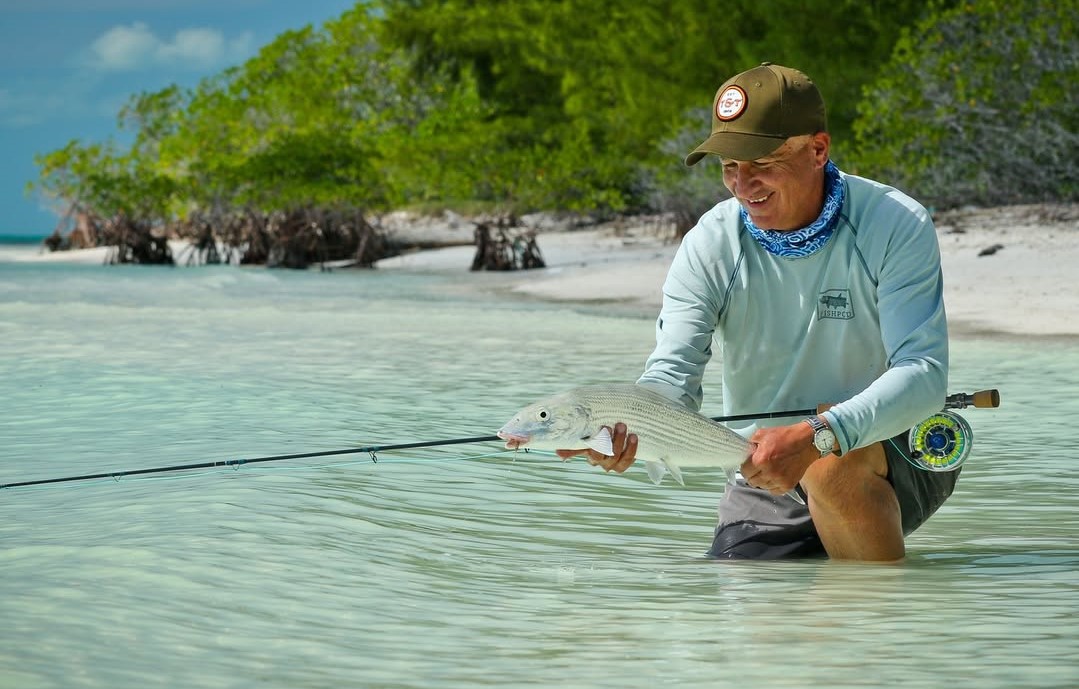
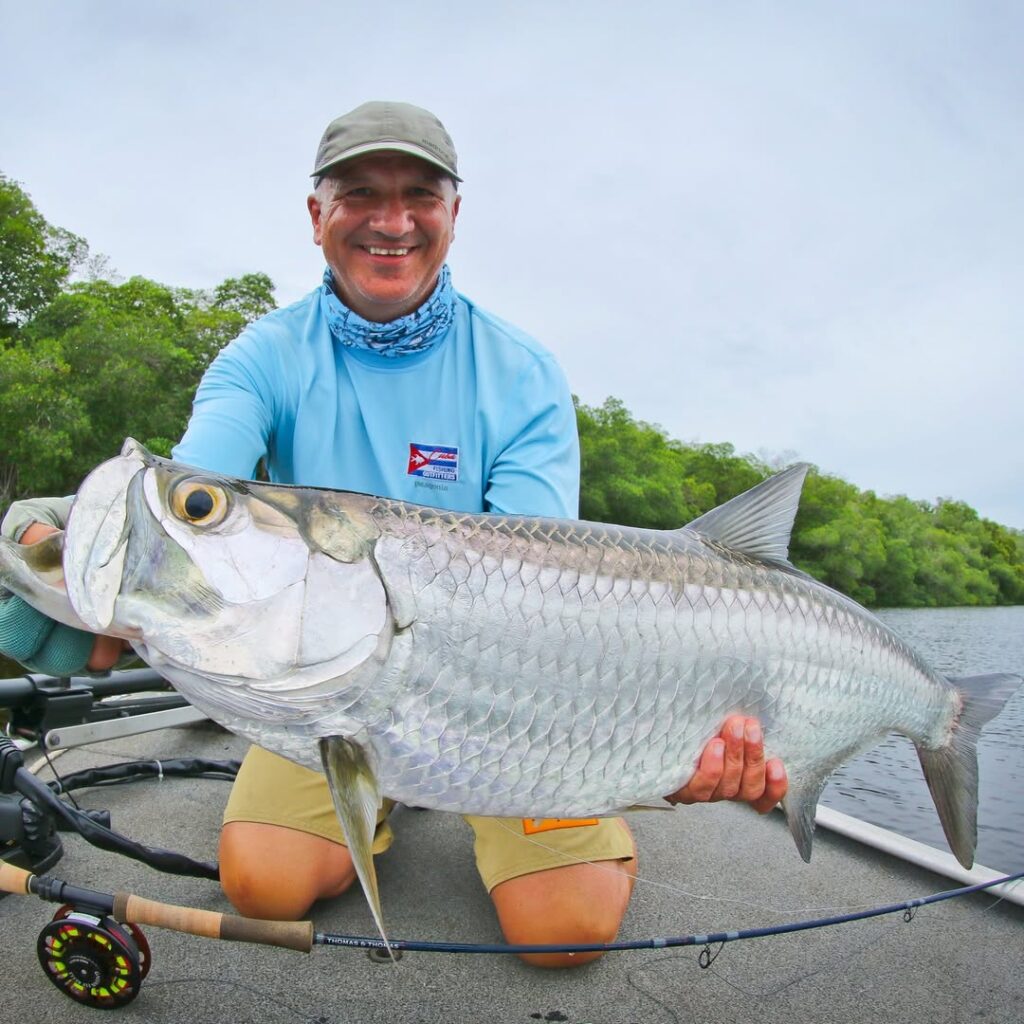
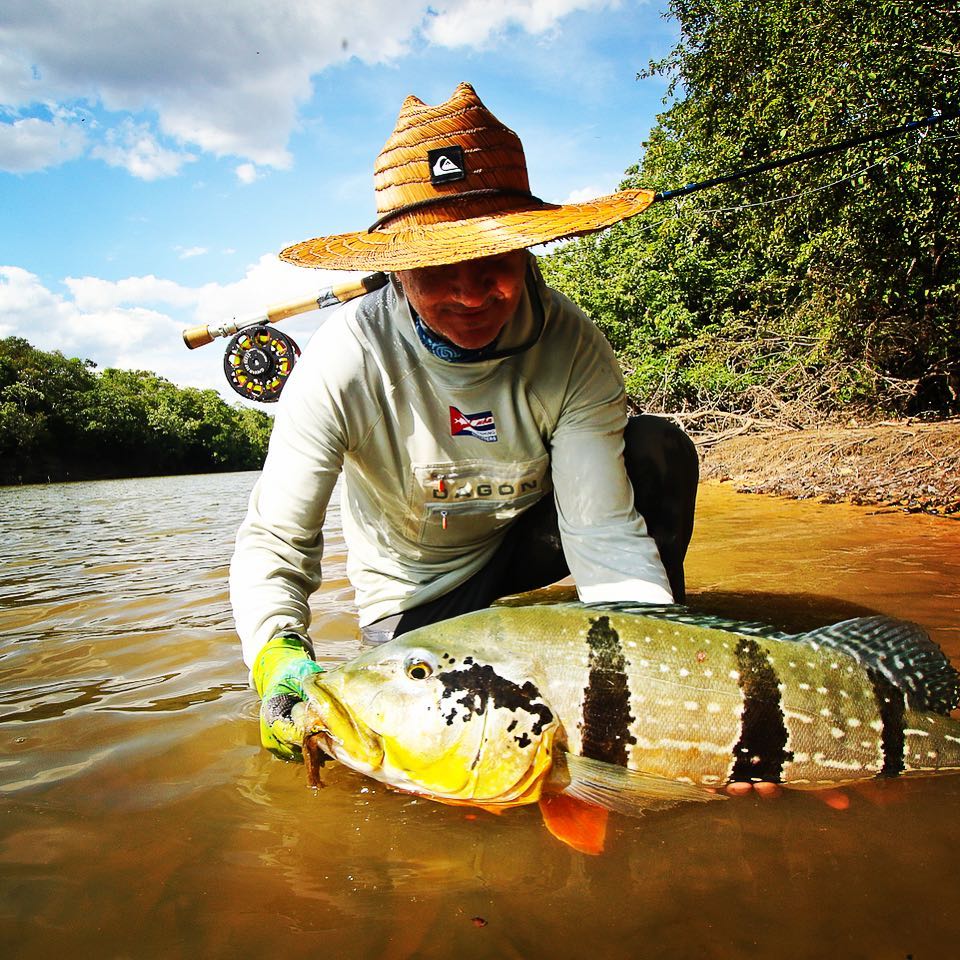
Cuba has long carried a sense of mystery for travelers, and when you put a fly rod in your hand, that mystery only deepens. In this episode, Jon Covich talks about chasing bonefish, tarpon, and permit on the Cuban flats, the realities of travel restrictions, and how the culture of the island is just as important as the fish.
Jon shares what it’s like to guide and host trips through World Fly LLC, why South America deserves more attention from anglers, and the practical lessons you need before booking a saltwater trip. The conversation drifts between history, people, gear, and stories that remind us why fishing new water is about far more than checking a species off a list.
00:00 – 06:15 — Dave opens the show, introduces Jon Covich, and sets the stage with Cuba’s unique fishing opportunities and travel challenges.
06:15 – 15:42 — Jon shares how he first began traveling to Cuba, the hurdles of permits and restrictions, and why the flats there are so special.
15:42 – 26:20 — Bonefish, tarpon, and permit stories: Jon explains the seasonal rhythms, what makes Cuban waters different, and how anglers should prepare.
26:20 – 34:48 — South America highlights: exploring rivers across the continent, species diversity, and why travel planning makes or breaks the experience.
34:48 – 47:10 — Culture and history: connecting with Cuban guides, learning from local communities, and how politics shape the fishing experience.
47:10 – 55:30 — Travel tips: gear choices for saltwater trips, what to pack, and Jon’s favorite setups for flats fishing.
55:30 – End — Reflections on why Cuba and South America keep calling him back, and how travel fishing deepens our sense of connection.
Episode Transcript
Dave (2s):
Today’s guest has built a life around two passions, fly fishing, and world travel. From his early days working at Kaufman Stream Board to becoming a tackle rep along people like Brian O’Keefe, today’s guest has followed a path that has taken him far beyond the Pacific Northwest. By the end of this episode, you’ll hear why Cuba’s Flats are unlike anywhere else in the Caribbean, how John helps anglers navigate the ever-changing rules that Americans face traveling in Cuba. And what you can expect when chasing Tarpon permit and bonefish in a fishery where your group might be the only angler for 100 miles. This is the Web Fly Swing podcast where I show you the best places to travel to for fly fishing, how to find the best resources and tools to prepare for that big trip, And what you can do to give back to the fish species we all love.
Dave (48s):
John Kovich is here to take us inside the Cuban Flats and the culture and history of Cuba. He’s been there for decades. He’s got 33 trips and counting, and he’s gonna be back there this November. We’re gonna get a perspective, not only on the fishing, but on Havana and the history. We take a nice tangent on this one, so be prepared for that. We’re gonna find out why he is the leading expert in fly fishing for this area. What you can expect at World Fly, where he does his business, and everything else that’s gonna come along today. Here he is. Let’s get started. John Kovich. You can find him@worldlyllc.com. How you doing, John?
Jon (1m 28s):
I’m doing just fine. Early out here on the West Coast.
Dave (1m 30s):
Yeah, yeah, that’s right. We like to get going early. Nice. How are things going? Are you, you staying cool this summer?
Jon (1m 36s):
You know, we’ve had a little bit of a heat wave this last week, but you know, there’s nothing like summer in the Pacific Northwest or the Western US if you ask me. So it’s kind of funny. I get people all the time asking me, you know, where are you traveling right now? And I say, I’m not travel anywhere. I’m staying home. It’s beautiful here. I’m out crabbing and salmon fishing and hiking. So
Dave (1m 55s):
It’s Oh, nice. And where, where’s your home these days?
Jon (1m 58s):
I’m just outside of Seattle.
Dave (1m 59s):
Oh yeah. Outside of Seattle. Cool. Yeah, you’re right in the right in the hub. You’ve got lots of, I mean, lots of fly fishing opportunities. Right. We, we’ve definitely done some episodes. What do you focus, do you do some fishing around around the area?
Jon (2m 9s):
Yeah, I do. I’ve got a little whaler, you know, a 17 foot Montauk that I can put in the water, a third of a mile from my house. And So I fish, see in cutthroat this could, you know, I mean, throughout the year, but a lot of times, right, like right now I’m not going out and throwing crab pots because we get dungeon of crabs, so that, that becomes a nice substitute for actually fly fishing. But pretty soon the salmon will really be here in forest. I mean, the pinks are here right now, and we’ll get coho Yeah. Really in thick here in the next month or so. So I’ll be doing that quite a bit. Right,
Dave (2m 39s):
Right. Yeah, that’s right. Because you guys get the, the pinks and you get the whole, well, I guess, do you get some Chinook up there too?
Jon (2m 44s):
We do. Well, yeah, absolutely. You know, we get, you know, it’s not as dependable. It’s certainly harder on a fly ’cause they tend to be deeper, but you’ll catch ’em. I just saw a picture of a friend of mine that’s out at a place called Ne Bay, which is out fishing from a kayak and landed a 25 pound king on the fly. Wow. What happens? But they were out fishing for, for a coho, and that
Dave (3m 4s):
Happened. Yeah, that’s a big fish. 25 pounds is big. Yeah.
Jon (3m 7s):
Even from a kayak, which is great.
Dave (3m 9s):
Nice. Okay, well, we’ll we’ll talk, probably sprinkle around, talk about some of these other topics. And Today I think we wanna focus on one of your travels to Cuba and you’re traveling all around the world. But maybe before we get there, why don’t you take us back really quick. I know you’ve been in the industry for a long time. You’ve, seems like you’ve done everything. Maybe take us back to the start. What’s your, what’s your first memory of fly fishing?
Jon (3m 29s):
You know, I, I actually got kind of, I got into fly fishing a little bit late in my, oh, I guess mid twenties. This is probably when I got into fly fishing. I’ve been fishing all my life, you know, as a kid I was lucky to grow up really in, you know, a rural part of Washington state. And my parents gave me a lot of freedom. So I was always running off and fishing a spinning rod with my buddies. But I knew about fly fishing. I had a granddad who was Scottish, and he passed away when I was really young. But, you know, there were a lot of pictures of, of him around with a tweed jacket and, and a fly rod. And I, I always knew about it And it was something I wanted to try. And So I got into it and like I said, in my mid twenties, and then fell, of course, like so many of us do, into being a hardcore obsessed flying.
Jon (4m 11s):
Couldn’t talk about anything else except fly fish. She couldn’t do anything else except fly fishing. It was a little bit all consuming. And then I got into the, into her career as ultimately as a, as a tackle rep, which,
Dave (4m 24s):
Oh, a tackle rep. Was that your first position in the industry? Well,
Jon (4m 28s):
I started, I was working, I worked for Nordstrom for a long time through my college years, and then took a job with them for a while. That was pretty serious. And no, I really didn’t like it and wanted to get out, So I quit. And I had a guy that I’d worked with at Nordstrom who was managing the Kaufman Stream board shopping. Oh wow. And if you remember Randall Kaufman? Yeah. Which
Dave (4m 47s):
One? Because there was two, I know he had one up there. There were two,
Jon (4m 50s):
One in be, well they had three actually. One in Portland, Oregon, TIG Oregon, which was their original. And one in Bellevue and one in Seattle. And So I worked in downtown Seattle and I would run in between Nordstrom where I worked. I started early and I took a job there just, but I wanted a menial job. I said, you know, after I quit this office job I had, I said, do gimme, I wanna be a, gimme a janitorial job. ’cause I just want something that’s kind of a no brainer. And so they said, yeah. And then as I was going to say, this guy, Bob, a, who I’d worked with at Nordstrom was managing the Kaufman’s downtown. And he found out that I’d quit this, you know, this office job at Nordstrom. And he called me and said, Hey, you should come to work for us. ’cause you, you know, you’re a good salesman and you know about fly fishing.
Jon (5m 31s):
So I worked it out that I could work from about seven in the morning to 11 at Nordstrom. And then I would run virtually run, you know, three blocks down the street to Kaufman’s for their midday rush. ’cause you know, there was, they were catering to the, the business crowd downtown. And they would come in between 11 and three. So I Ricky 11 to three, 11 to four, and then I’d run back to Nordstrom and finish my shift there. And that’s kinda how I got into it. And then I started seeing the reps, the tackle reps that would come in. And, you know, a lot of the, you know, the listeners to your podcast probably haven’t met fly tackle reps. Maybe they have, maybe they’re gone to a shop or something. But, you know, virtually everything in that shop that you visit, your favorite fly shop is represented by a tackle, an independent tackle rep who comes in and shows the product to the, sells it to ’em.
Jon (6m 19s):
And So I started seeing these reps come in. I thought, you know, I could do that. I know how to sell stuff. And So I started talking to Brian O’Keefe, who I think you’ve had Brian Oe. Oh yeah.
Dave (6m 29s):
Oh yeah. Yeah.
Jon (6m 30s):
And I was, you know, I was like, oh my god, this Brian O’Keefe guy’s famous because I was, was getting into photography. And So I I his photos and, you know, seen his, his stories about his travels. And so he would come into the shop and I’d be all over the guy with questions and everything. Yeah. It’s almost a little embarrassing to, to look back on. And Brian, you know, quickly kinda recognized that, that I wanted to have a career in this. And so he was, he was awesome. He said, Hey, if you wanna start as a rep, I’ve got a bunch of stuff that honestly I don’t make any money from, but I, you know, I represent these small companies and I’ll just, I’ll just pass ’em on to you. And that way you can, you can be a rep, at least you’ll be able to say your rep and then you’ll be able to do some other stuff.
Jon (7m 12s):
And, and he had me kind of sub rep one company for him, barber clothing. ’cause basically he didn’t want to do it. Right. You know, he’s like, you’re a clothing guy. So, so that’s how I got my start. And I was making, I think I figured out that for my first year I averaged about $60 a month. Luckily I had some savings. And then my first job where Dan Bailey’s called me and they needed a new rep. And So I started ing for Dan Bailey’s and then Abel called me and they needed a new rep and heard that I was a new guy in the Pacific Northwest here. So they started ing Abel wheels and were an upward, and that was 19 nine, full of 1992 when I started ING
Dave (7m 51s):
Oh nine two. Right. In the, the, the mix of a river runs through it. Right. That’s Yeah.
Jon (7m 56s):
Exact, exactly.
Dave (7m 57s):
Yeah. A good, a good time.
Jon (7m 59s):
Fun time. Yeah. It was a fun, energetic time.
Dave (8m 1s):
Yeah. Nice. So, well, I mean, you’ve obviously got a lot of stuff we could talk about on your background. I think we should skip ahead a little bit to the travel. Sure. ’cause I wanna talk Cuba. So did, was that an easy transition? Did you, you know, from talking to Brian O’Keefe to travel in the world? Because you’ve kind of been everywhere, right?
Jon (8m 18s):
Yeah, it, it was because the nice thing was before I got into fly fishing, I was already a traveler. So I had kind of decided in my early twenties that I wanted to see the world. And so, you know, the, my first trip I went to Europe and the Middle East and North Africa. And I was gone for 15 months with a backpack. And So I kind of, you know, I fell in love with traveling and, and I fell in love with a camera, having a camera along to kind of shoot photos. And then when I got into, you know, fly fishing, of course I’d heard about The Bahamas and I heard about Alaska and New Zealand. And So I started going to those places and I was really, I had one smart move in that I married a flight attendant.
Dave (8m 56s):
Mm, there you go.
Jon (8m 57s):
You know, so we had these slight benefits. And So I was going to Argentina and Chile and Brazil and you name it. And in those days I started getting, I mean, O’Keefe and some other guys were really known for this. But I started getting a little bit of a reputation, at least in my area and here on the Pacific Northwest as being a guy that people could talk to about travel. Right. So I wanna shop and shop and say, Hey, you’ve been to the South island. Right. You know, I mean, can you really do it on your own or do you have to go to a lodge? And So I could talk to ’em about, and then ultimately I, I fell in with the guys at Fly Water Travel, who you probably know of. They were purchased about five years ago by Far Bank. So part, they’re part of the Far Bank family, you know, Sage in Rio Redington.
Jon (9m 39s):
And I knew those guys. I knew Ken Morris, who was one of the founders of the company. And I would always visit them. ’cause Kenny had worked in a fly shop. And so we had this great relationship. So I’d stop into their office and see them in Ashland, Oregon. And I think in 2011 or 2012, I, I stopped to have a coffee with them and I’d just come back from Argentina and we were talking about my experience there. And Brian, the other co-owner, kind of said, as I was leaving, he said, we should find a way to work together. That would be really cool. And I left, I thought, I wonder if he was serious, you know, but that would be cool. So I called him back a few days later and he said, yeah, I was serious about, let’s find a way for you to work with us. So I became a rep for them calling on fly shops and talking to them about and partnering them.
Jon (10m 22s):
And so it gave me a lot more opportunity in travel. Now, ultimately, I became kind of their Cuba specialist. ’cause I, I had been in Cuba early on and then was interested in, in keeping that up, especially when it started kind of opening up around 2015. And, but it’s a cut go a little bit forward. Fly Water had to stop selling Cuba after they got bought by, you know, they had big corporation that was overseeing them and lawyers, you know, big lawyers. And they said, you know, we don’t understand this Cuba thing. We, we don’t wanna take any risk if there’s any risk. So I started my own little travel company called Worldly and at, and a few other places in the world. Columbia and Brazil and Argentina and a few others.
Jon (11m 3s):
Right. So there you go. I’m doing both still. So it’s not, I haven’t had to transition.
Dave (11m 9s):
I’m still Oh, cool. So you’re still doing fly water travel too? Yeah.
Jon (11m 12s):
Well, I’m not doing fly water. I had, I ultimately, this year I resigned from Fly Water for only selfish reasons, not because there was anything that matter with those guys. I love them. And they are, you know, they’re two of the best guys that started that company. And they, the people there do a great job and I refer a lot of customers to them.
Dave (11m 30s):
Yeah. Who was the other one other than Ken Morris? Who was the Brian Geese? Oh, Brian Geese. Okay. Is the
Jon (11m 34s):
Other, yeah. Yeah. And they’ve done a lot for me, So I owe them a, a lot. But I recognize that with a little bit of uncertainty and travel with a new administration, you know, in the Oval Office. And I wasn’t quite sure what was gonna happen. Cuba in particular. And also, you know, I am a rep for other companies that aren’t part of Far Bank. So I thought to myself, oh, you know, there’s gonna be a time when the all, you know, the people that really up high in Far Bank say, who is this John Kovich guy? And why is he, you know, he doesn’t represent sage or real, you know. So I just thought it was the right time. But I still have a great relationship with him. Yeah. Yeah.
Dave (12m 9s):
That’s awesome. Wow. So you’ve, you’ve done it so you’ve transitioned a little bit into your Yeah. Right. Thing, which is cool. I mean, I think the awesome thing about this, and you mentioned it, the the Cuba thing, I think, we’ll, we’ll dig into today because it’s one of those places where, I don’t know, I mean, I know it’s probably different than Russia, but there’s these places that are a little bit unstable. You’re not quite sure people want to go there, they wanna travel there. But there’s all this geopolitical stuff, and I’ll take it back Sure. To you. I hope we could talk history on this, but of course on Cuba, you can go back to, I mean, I think it was the Spanish American War, which is where America went in and Teddy Roosevelt basically, which his rough riders went in and basically took down the Spanish to help save Cuba. To liberate Cuba. Yeah. And, and so that goes back to quite a long time ago.
Dave (12m 50s):
But what does that look like for you? Do you know, I mean, you were there earlier, what’s Cuba like? Describe that to somebody who’s never been there.
Jon (12m 56s):
Well, it’s interesting because you get a lot of interesting questions from, from customers, from people that say, I’ll never go to Cuba because they’re communists. Right. You know, I just, I I’m not gonna, you know, put my money in the hands of any communist. You get people that say, oh, isn’t it dangerous? Right. I mean, what’s their, are they, if they find out you’re American, I mean, do you get a lot of backlash from them? So you get a lot of interesting questions. So you get people that ask, is it dangerous? Right. So that’s where I can add value for, you know, there’s a lot of places in the world that we can all go visit. Right. And so you keep, it’s hard to visit them all or become an expert in the mall. But I’m gonna, I’m going to Cuba in November, it’ll be my 33rd trip to Cuba.
Jon (13m 39s):
Wow. So I can say to people, you know, I can tell you honestly that when you walk the streets of Havana and people find out you’re an American, all they’ll want to talk to you about is their family that lives in Tampa.
Dave (13m 53s):
Oh, no kidding.
Jon (13m 54s):
Lives in Houston. Yeah. Or dream of going to America or their old car that they have their love with America, you know, their normal Cuban person is, and, you know, life there is so different than ours. It’s such a fascinating place to go there. If you go as an open-minded traveler, which, you know, I als also have to talk to people about, because something’s different doesn’t mean it’s worse or better. Right. It’s just different. And a lot of the cases, that’s what it, what travel is. You go to Spain and you order a steak and you go that my steak is, this is really good, but it’s little, you know, they should come to America where we have big steaks. Right. Well, that’s not what they do.
Jon (14m 33s):
They, they sell meals a longer one. Right. So it’s different. It’s maybe, again, not better or worse. And with Cuba, there’s a mixture of that. You can again say life is, you know, life is difficult. There people are poor there, people don’t seem to, you know, they recognize they’re, that they don’t have the opportunity of, of a future like they might have in some other places. That’s the bad part about it. But what’s different about it is that they live in a communal sense there, partly because it’s been forced to, meaning that life’s been difficult for quite a long time in Cuba. And so they have to rely on each other in order to get by. And so Cubans say to you, if you’re talking to them in Spanish, they’ll say in UE in the Cuban village is what they refer to the country as.
Jon (15m 21s):
Right. So they all kind of think of themselves as being neighbors. And they do, they, they trade with each other or they help each other. You know, you go to a house that doesn’t have a phone and they’ll say, if you wanna call me, call my neighbor. And she’ll tell me I’ve got a phone call and I’ll run over there. Right. Or I raise, I’ve got, you know, pigs in my backyard, and when I butcher them, I trade with my neighbor who has chickens. Right. And So I get chickens from her. So it’s very interesting if you’re willing to, again, kind of drop what your life is like and just look inside what their life is like.
Dave (15m 56s):
Hmm. That’s pretty cool. Yeah. Yeah. It sounds like it’s a, yeah, I mean, they’ve made do with what they have. And that’s the thing about it is that it sounds like it’s probably, and a lot of these places, you go back to some native villages around the world and you’ll find some of the, probably some of the happiest people out there. You know, it’s not, you don’t have to have a bunch of stuff to be happy. Right.
Jon (16m 13s):
Yeah, you do. And I, you know, there’s a couple experiences recently, if you don’t mind me, like sharing a couple of them, but yeah, where, where that really is highlighted. So recently, well, I go to Columbia quite a bit, a couple different areas there, but I was in the kind of the Oroco region, the, the Oroco divides Venezuela from, from Columbia. And there we fish, peacock pass and Payara. But the river is the eastern boundary of Venezuela, I’m sorry, the eastern boundary of Columbia and the western boundary of Venezuela. It’s the, the middle of the river is the border. Right. And so you’re with the fishing guide there on the Oroco, and I was talking to one, I said, are you Venezuelan or Colombian?
Jon (16m 53s):
And he said, well, my, my passport is Venezuelan. But he said, we’re all, we just go back and forth across the river, we’re all the same, you know. And I said, are you know, were you born here? And he said, no, I, I from Carus. But he said, you know, life in Caracas was really difficult. Right. And, you know, you inflation was high and, and you know, to get rice, you know, was, was really difficult continually to get to staples. And so he said, I moved back to where my family came from by the river. And he said, here we have it all. He said, there’s fish in the river, there’s always fish in the river. We can grow yucca and we can grow potatoes, and I can trade with my neighbors. And he said, life here is really simple, but beautiful is what he said.
Jon (17m 37s):
Right. And you see that in the Cuban countryside as well. Not as much in the cities, because I think life in the cities is simply more difficult. Right. Because you can’t have the pig in your backyard. You can’t have a guard and you, you know, you’re not gonna know maybe your neighbors quite as well as you in the countryside. So you see it in Cuba a lot when you go to towns like Les, where they grow the tobacco. Beautiful. And there you, you walk the kind of the country lanes. You, you think about if you’ve been in Havana first and walked an old historic Havana, which is beautiful, but if you go to the back streets there, you can see that life is difficult. There’s no hiding it. And then when you go to Les, you can say, oh, life is simple.
Jon (18m 18s):
Right? It’s, versus say the first instance, life is, boy, life must be difficult. You know, the second one you say, life is simple here, but you recognize the beauty of it. So there’s a lot to learn, obviously as a traveler, any country you go to. But I think in places like Cuba, it’s, it’s even more eye-opening.
Dave (18m 36s):
Pescador on the fly offers a full range of fly fishing gear for any angler at any budget. With premium rods delivered directly to you, the LAG six is the most packable high performance fly rod on the market, performing like a four piece rod, but with unmatched portability in six pieces. And you can get 10% off your next order right now if you use the code wet fly swing at pescador on the fly.com. Never fly without your G six. Discover the L Race series and more at pescador on the fly.com. Check out Jackson Hole Fly company today. Premium fly gear straight to your door without the premium price. Jackson Hole fly company designs and builds their own fly rods, reels, flies, and gear delivering quality you can trust at prices that let you fish more and spend less.
Dave (19m 20s):
Whether you’re picking up a fly rod for the first time, or guiding every day they’ve got what you need, check ’em out right now. That’s Jackson hole fly company.com. Jackson hole fly company.com. So you’ve been there a bunch of times and well, let’s answer that question. You set the top, I mean, for the other place, the DIY, can somebody do this Cuba thing on their own? Or is this something where you definitely want to be going with somebody who’s been there before?
Jon (19m 46s):
Right. Well the rules, first of all keep changing. And then when I say the rules, I don’t mean from the Cuban side, I mean from the US side are rules about US citizens being able to travel to Cuba and do it legally. So first of all, from the Cuban side, all they care about is that you have a visa and that they know where you’re staying. Right. So you have to kind of register when you check into a hotel or a, what they call a casa, particular like an Airbnb, the owner of that gets your passport, takes a picture of it and sends it to the government. You know, this government agency say, John Kovich has arrived in Cuba and he’s staying with me. Right. That’s basically it that they care about because they need, your first dollars are the most important driver of the Cuba economy these days from the American side.
Jon (20m 33s):
There are different categories of travel, right. That we have had since the, well, actually for quite a long time he actually, since George Bush ii, now Obama opened it up quite a bit more. And then we’ve gone back and forth. Right. But those categories of travel have been things like support of the Cuban people, meaning that you’re there to witness culture and to interact with normal Cuban people. There are other ones called, One is called humanitarian projects. Right. Which means that you’re there to observe a particular aspect of Cuban life. Or for example, you could go there to go to national parks and see what they’ve done to protect marine life and reefs, you know, for example, and be with marine biologists, their religious, you know, exemptions for going to Cuba as well.
Jon (21m 17s):
If you go there for religious reasons to visit, you know, their churches to interact with their, their religious community if it’s Catholic or CEA or whatever. So there’s quite a few. But in doing yourself right now with recent changes by the Trump administration, it seems that you’re, one of the requirements is that you have to have a chaperone. Right. And that, you know, it’s, it’s a little bit harder to define what that is. Does that mean a Cuban guide? Right. Have every day or somebody that goes with you as a host? Right now we typically host trips, so it, you know, kind of solves that problem.
Dave (21m 53s):
Yeah. So the chaperone, so you are the chaperone.
Jon (21m 55s):
Yeah, that’s right. Yeah. Now, when people ask me about fishing there and DIY, it’s almost impossible. I mean, there are a few places to do it in the, the resort areas, like on the North Shore where they’ve got these beautiful resorts that are right on the beach. You could walk the beaches and try and get in some areas that are a little bit away from the crowd and see if you could, you know, find a little flat. And, and people have done that, certainly Canadians that go there a lot, Europeans that go there a lot have done that. But there’s so much of that coastline that is either in national parks, it’s a restricted, you have to have, you know, you have to have permission to enter, or it’s mangrove coastline like you get in Belize for example, it’s very difficult to be a DIY fisher, you know, angler in Belize because you can’t access the coastline if you don’t have a boat.
Jon (22m 39s):
You can’t get out in the water because it’s all mangroves along the edge. So it’s not a great place to DIY fishing. It’s a place where you can, to a degree, again, if you had guides there to help you around plan your own itinerary in Cuba, you know, with a little bit of research and travel the country, but it’s not as easy as other places. You gotta figure out how to get from point A to point B, and you gotta be inventive. I remember early on, I was telling one of the guys from Avalon, who’s one of the, the main outfitters, I had told him about a trip I’d just been on. I said, ah, I couldn’t get a bus ticket from, you know, from from Havana to sea to Avila or something. And I, I said, it was all sold out. And he said, you just gotta think like a Cuban.
Jon (23m 20s):
And I said, what do you mean? He said, just go to the bus station. You got more money than the normal Cuban has. Right. I said, well, I guess. And he said, well just go to the bus station and say, I’ll pay $25 for anybody’s ticket that’s going to see.
Dave (23m 33s):
Oh, right,
Jon (23m 33s):
Right. And you’ll be able to get a seat and it’s cheap for you. They only paid two for it. And so, you know, you have to be a little bit inventive sometimes.
Dave (23m 41s):
Gotcha. Okay. So that’s it. So it’s, so it probably makes more sense, especially your first time going there. Yeah, I mean, yeah,
Jon (23m 48s):
It’s true. It’s absolutely true. And I, I wanna say this carefully because I don’t wanna kind of toot my own horn or, or you know, that kind of thing. You know, in life there are things that we, we get good at and other things where we just have to admit we’re, you know, we’re mediocre at, right? Like, I can change the oil on my car, but don’t ask me to do it, you know, to really tune up.
Dave (24m 10s):
No, no, me neither.
Jon (24m 11s):
I could do a little bit of sheet rock, you know, but, but don’t ask me to. Nope. You know, home repair, right. With Cuba, I think because I’ve been there so much and I really interact a lot with normal Cubans, I get customers that say, I wouldn’t go to Cuban unless I went with you. Right. And I do recognize that I’ve got a background that I can say to people, you know, what you’re seeing over there is this, right? So some people just see a line and they go, what? What’s going on with that line? And I could say to them, oh, those people are in line there because it’s a telephone company. Right. And the tele, they always have to go in there to buy a new sim card or whatever. Oh, right. And they’re always underfunded.
Jon (24m 52s):
So there’s a line, but, and I could say this, notice that there’s no formal line there, right. They’re all, people are in the shade or people in the ca cafe next door. But you can tell they’re all waiting to go into the, you know, the telephone office. But they’ve got a system right where they say Ian is Right. Who is the last, so when you arrive there, you yell out who’s the last person, right. In lie some, but lady raises her hand and says, I’m the last person. You go, okay, now I know I’m behind, I’m after her.
Dave (25m 24s):
Oh, right. There you go.
Jon (25m 26s):
And then the next person comes and says it and you have to raise your hand and say, I’m the last, so they know they’re after you. Gotcha. So I’m able to explain those little things because I’ve, I’ve witnessed life in Cuba so much. Whereas if I go to Argentina, although I’ve been there quite a few times, I don’t have that intimate background that I would have in Cuba. Yeah,
Dave (25m 43s):
Okay. Right. Well that, that’s awesome. And I wanna talk a little on the fishing too there, but maybe before we jump into that, what is the, you know, Cuba, similar species, how does it compare to other areas? You know, if somebody’s thinking like maybe they haven’t done a trip to one of these amazing salt water areas and they’re thinking like, oh, you know, Cuba, you know, south America, what would you tell them? What is, how is Cuba different maybe than other than what you said, obviously the area?
Jon (26m 7s):
Sure. Well, I would say that if you just boil it down to basics, you’d say, you know, you’re talking about flats fishing. So we’re talking about shallow water flats where you find bonefish, permit tarpon, jacks, snapper, et cetera. Right? So you can compare it to places like Ascension Bay, to Belize, to Christmas Island, to a degree. They don’t have tarpon there, but they’ve got gt, you know, but, but still flats where you find bonefish and it’s all site fishing, that kind of thing. So it’s similar in that way. Right. I think if you’re a beginner, maybe there’s some places in Cuba for you, but maybe it’s better for you to start at Christmas Island. Right? Because you can, you can wade fish everywhere and you really get a lot of practice in seeing Bonefish or Ascension Bay because it’s easy to travel there.
Jon (26m 53s):
Right. It’s a flight from, you know, I live in Seattle, Seattle, Houston, Houston, Belize, or Houston, Cancun, and then to drive to lodge, right? Where Cuba is a little bit more complicated in that way. But if you are a person who likes the idea of being able to say, I want to go to Cuba because I wanna see a little bit of the culture and I hear it’s got great fishing, right, then it can very often be the right trip for you. And I think the thing that makes it really different is the fishing is much more restricted, which is both an advantage and a disadvantage to us. The disadvantage is that of course it can become more expensive because it’s got limited availability or you can not find your spot if you want to go, you say, I’ve got a specific week where I wanna go.
Jon (27m 42s):
Right? Well if it’s full is full, yeah. Go to Ascension Bay, there might be 10 different lodges that you could choose from there.
Dave (27m 48s):
Right, right.
Jon (27m 49s):
No spots available in one, there are spots available in the other, they’re competing against each other, so the price might be lower as well. The Greek disadvantages though, you’re fighting for water, you’re fighting for availability of species. So what they do in Cuba, which is quite interesting because the government of course has con you know, control of basically almost everything there is, if you’re an outfitter and you want to open a fishing business in Cuba, like has been done by several different outfitters. So they have to lobby the government. And the government ultimately, let’s say they say, yes, we will allow you a license to fish in this area. They don’t give a license to anyone else.
Jon (28m 30s):
It’s an exclusive license to that.
Dave (28m 32s):
Oh wow.
Jon (28m 33s):
And they say from this point to this point, this is yours. You graphic area, you can’t fit.
Dave (28m 38s):
Right. Kinda like your beats up the
Jon (28m 40s):
Area, that’s your beat, but your beat might be 120 miles from east to west. Oh wow. And 40 miles from north the south. Right. That’s what some of these are. And so when you, you know, you go, they also say to the outfit, you can only have this many boats and this many anglers at a time there. Right. As well. So they’re restricted to that degree. So that’s the great thing about Cuba is when you go out there, you’d say you’re on a liverboard boat and are archipelago, the only other people that you will see during your week are the people in your group. That’s it. You never compete with anybody else, which is phenomenal. It also means that although we have an effect on the fishing, you cannot not have an effect.
Jon (29m 21s):
It’s not anywhere near as great as it is in other places where the fish are seeing so many more anglers and so many more boats zipping over the top of them.
Dave (29m 30s):
Yeah. So the fishing is, is better in Cuba,
Jon (29m 33s):
I think on average it is. Right. It’s still fishing. It’s still fishing. You
Dave (29m 38s):
Still, you still got per, you’re still trying to get a permit to take, right? That’s
Jon (29m 42s):
Right. You still gotta make a good cast and you still have to find a permit in that case, a permit that is willing to eat the fly. Right. ’cause they, they’re permit no matter where you go in the world. But that permit might be a little bit more willing in Cuba than it is in, you know, in Mexico or least.
Dave (29m 55s):
Right. Okay. So that’s it. And, and so let’s set up the trip a little bit. What does that typically look like if somebody’s thinking, it sounds like you’d probably have to plan out a little bit, but you do, you know, timing wise, when do you think is, if it’s somebody’s, you know, first time going for it, when’s a good time to go out there? Sure.
Jon (30m 10s):
Well one of the, the great things about Cuba and, and other places like The Bahamas for example, is that the, the season is long there, right? So it’s almost, it’s not a full year season, but let’s say it’s eight or nine months the season. Because outside of kind of hurricane season, right? So late July, August, September, beginning of October, the rest of the year is, you know, is fishing time, right? Those fish, for the most part live there every day of the year. They have to eat every day of the year. So they’re available to you and you can, you know, so you can, like for me again in the Pacific Northwest or you in the, you in the Southern Rockies, I, if you wanna escape winter in January or February, you can go to Cuba or you can go to Belize and you can, you know, you can suddenly find it’s 80 degrees and light wind and you know, can be a great way to get away.
Jon (30m 59s):
And the fish are there. Now the big differences is when you get somebody that says, I want to go when there are a lot of tarping around, for example.
Dave (31m 6s):
Right?
Jon (31m 7s):
Right. Yeah. Or I want to go to the place that I’ve got the best opportunity for permit. So then you have to start breaking it down and saying, this is the right place for you because there are about six or seven different places in Cuba, different areas to go fishing. And this is the right time for you. So if it was tarpon, for example, there were tarpon. So if you used zippo pen and salt, for example, near the Bay of Pigs, famous bay pigs, there are tarpon there every day of the year. Right. But there are more tarpon there in April, may, June, July, when the water warms and where the, we call them, very often we refer to these fish as migratory fish, which is probably not correct.
Jon (31m 47s):
They’re mature fish that have left the mangroves and live in the deeper water throughout the course of most of the year. And when as the water warms and bait starts getting more prolific along the shoreline because the water’s warmer, they move into shallow water. So you see more, ’cause if you go diving in Cuba where you’ve got some of the best diving in the world and you dive 40 feet into, you know, coral, a coral channel or something, they’re tarpon everywhere. But you wouldn’t see them, you wouldn’t know that they were there because they’re not on the flats where you can see them four feet of water. But again, those times of the year you see a lot more, but we call the migratory fish, but they’re 30, 40, 50 pounds. So they’re not those, you know, 80 to 180 pounders that you’ve seen in the Florida Keys.
Dave (32m 30s):
Right, right. They’re not the giant tarpon.
Jon (32m 32s):
It’s important anywhere you go, as somebody who’s interested in getting a great trip and a trip that’s right for you, and a trip where you get the best bang for your buck to ask a lot of questions. So you make sure that you’re doing it right and it’s the right place for you. And that’s where, you know, people like me come in or flower comes in, or yellow dog or whoever. Yeah. That especially answer your questions.
Dave (32m 52s):
Yeah. Okay. So that makes sense. So yeah, tarp, and maybe if you wanna shoot for that April, the June might be a little bit better. But let’s just say you were kind of in one of the wetter, colder areas and you want to get out when the weather is. So let’s just take it to say it’s December or January, February. What would that look like if we were putting together a trip in January, let’s just say? Right.
Jon (33m 11s):
So, so as I said, there’s a bunch of different options, right? So you can, in some areas of QBU have to stay aboard a LBO boat because you’re fishing in an archipelago that might be 40 miles off the coast, right? So in that case, you stay on LBO boat and again, you have your beat and there, if you use Gardens of the Queen for example, or the can of Rails Archipelago, where you stay on LBO boats, you’re fishing for all those same fish resident, tarpon, bonefish, permit Jacks, Barracuda, et cetera. Right? And typically the weather in, especially on Cuba, southern coast is fairly stable. Doesn’t mean you can’t get a cold front ’cause you absolutely can without question.
Jon (33m 51s):
But there’s only about a 10 degree difference in Cuba’s coldest month of the year to its warmest month of the year. Right. On average. So if you, in January, it might get down to 68, 69, 70 degrees at night, but with a high of 81 or 82, right on average. And if you went in June, it would be 10 degrees up from that. So it might get as cold as 77, 78 at night and as high as 91 or 92. Right. So you’re pretty, you’re pretty safe overall escaping winter and going to Cuban in December, January, February. Right. Yep.
Dave (34m 28s):
Makes sense. Okay.
Jon (34m 29s):
And, and you’d find, again, you’d find those same fish. Now I said that those were the liverboard situations. There are also places where you stay on land. So there are a couple different resorts. There are 1, 2, 3, 4 different areas where there are resorts, big hotels that you stay in that the Alfred or contracts with, you stay there and fish from the, the hotels. And there’s some great advantages in that. Of course they are a little bit more, well you get a little bit more space. Yeah. Let’s put it that way. Right? The boats are fantastic, the boats are fantastic. I mean they’re, I don’t wanna say luxurious, but they’re extremely comfortable with great attention, you know, from the staff and everything. But, you know, resort, you can say, I’m, you know, I wanna get away from everybody, so I’m gonna go, go walk the beach for a while, or I’m done, I’m gonna go hang out in my room.
Jon (35m 13s):
The disadvantage is, you are not out there where the fish are, you have to go find them every day. Right. So, but there are those resort areas as well. And there’s one in the little town of Playa Larga on the Bay of Pigs, where it’s one of my favorite trips where we stay in private Cuban guest homes. They’re Airbnbs and they’re right on the beach. And then you fish, you again, you go fishing from there. But again, all the same species. But this is, if we go back to talking to a professional or an agent about making sure you’re doing the right trip for you, where we said that generally speaking, April, may, June is the best time for Tarpon. Well, November is also a great time. October, November is a great time for Tarpon in Za because they have a river there, a freshwater river.
Jon (35m 58s):
And that river with the rains of the, you know, kind of the early winter it, they get some of the really heaviest rains in August, September, kind of hurricane season, the swamp fills up the whole Zapata Peninsula is like the Everglades. How do
Dave (36m 11s):
You spell that? The, the, that Sapa
Jon (36m 13s):
Zapata ZZ as in zebra, A-P-A-T-A, which means shoe. Okay. So this shaped like, you know, a boot or a shoe and there’s a river there called the river. They, they pronounce it ti Guko, it starts with an H, but they don’t pronounce it so Hatti Guko, that river is a big river that drains the whole swamp. So all the water, the flood water during the raiding season dumps into the river. And as it does that, that pushes lots of bait from the swamp into the river. So the tarpon really congregate and the river, they get much more active and big tarpon from the ocean come in. And so it can be a great time to go there where you wouldn’t find as many tarpon that time of year if you went out into the open ocean to places like Gardens of the Queen or canner rails.
Jon (36m 59s):
So again, talking to somebody is, you know, there’s a great advantage in that typically.
Dave (37m 3s):
Yeah. That seems cool. So yeah, no, this, this all sounds good. I think that really, it sounds like, you know, you can kind of base this on when you want to go and probably find a good time no matter what month
Jon (37m 14s):
You can. Exactly. I mean, again, I think the two things to really understand is one, that for a place like Cuba, you do need to book it in advance more so than you would other places just because as I said, the availability, right? So you maybe need to plan out a little bit more. The other is to know that in April, may and June it can get quite a bit more expensive. Oh, okay.
Dave (37m 32s):
In
Jon (37m 33s):
Some, not all of them, but some of them have a tiered pricing structure, knowing that they’re more tarpon around in April, may, and June they charge more. Right. So get more expensive. So you do have to keep that in mind. And I can go through that with anybody who is interested.
Dave (37m 47s):
Yeah, okay. You can cover that and if they wanna follow up, we can Yeah. Check in with you. Yeah. How is the Cuba, you know, I mean The Bahamas is kinda right there. Is that a totally different experience or is that, is there a lot of similarities?
Jon (37m 59s):
It is And it isn’t, right? I mean, so I’ve been to The Bahamas many times and I like the ball, I like The Bahamas, but I prefer Cuba so much more. And part of it is because of the cultural
Dave (38m 11s):
Aspect, right? The cultural,
Jon (38m 12s):
Yeah. Right now, obviously The Bahamas has a, has a culture, but it’s not as evident. It’s not as in your face as it is in Cuba. And so that’s a big part of why I love going to Cuba. Right? I love the music, I love seeing the old cars. I love seeing, you know, kids going to school in a horse-drawn carriage, you know, in their uniform. Oh wow. Yeah. I love, I love the tobacco. I, I mean, I’m not, I don’t smoke, but maybe one cigar a year with a group when I’m on a trip, but I love the whole tobacco culture, the cigar culture, you know, there. Right. I love the street life and, you know, so all that stuff is so much more evident as part of the, of the, the experience of the trip than, than you get in a place like The Bahamas or to me in Belize or even in in Mexico.
Jon (39m 1s):
Although those are all great places. Right. And you know, going, if you look at the fishing part of it though, right? The north shore of Cuba, if you go to like the northeastern part of Cuba, you are right across Andros Island. Oh, right. You right, you’re divided by The Bahamas channel. So you, it shares fish, you know, obviously it’s tarpon that migrate down that, that The Bahamas channel might turn left and go to the west side of Andros. Or they might turn right and go to the north shore of Cuba. So they, they are the same, you know, the same fish. But overall, when you go to The Bahamas, it’s more, much more of a bonefish fishery. Right. I mean, I’m really generalizing. Yeah. But you don’t go there expecting to find a lot of tarpon.
Jon (39m 43s):
You run into Tarpon. And with the rare exception, you don’t expect to go there to find lots of permit either. Right. Although there are places where you, you know, it’s got more permit than others. But Bahamas, you’re fishing for bonefish and you see a permit, right. And you always say, oh, there’s a permit, let’s go get it. We’re in, in Central Bay or in Belize or in Cuba, the guy will say, get your permit Rod out, we’re gonna go where there are permit. Oh, right. I think that’s more variety.
Dave (40m 11s):
Today’s episode is brought to you by Trout Routes by Onyx, the ultimate mapping app for trout anglers. Whether you’re planning a big road trip or sneaking away for an afternoon session, trout routes helps you find and explore new waters fast. You’ll get detailed maps that include public land boundaries, stream access points, regulations, and other extras like hiking trails and parking spots. I’ve been using it to plan my trips and it’s taken the guesswork out of the process. No more bounce in between multiple tools, everything you need in one spot, give it a try right now at wetly swing.com/trout routes and download the app to start exploring Smarter today. Not many companies are building their own gear these days, but Intrepid Camp Gear is changing that based in Boulder, Colorado Intrepid designs and manufactures some of the most rugged, technically advanced rooftop tents and aluminum cargo cases on the market.
Dave (41m 2s):
Their gear is built in-house with paned designs that stand up to the elements and the miles, whether you’re chasing elk deep in the back country hunting for fresh powder or heading out for your next fly fishing trip in Trepid gives you the confidence to go further. Their rooftop tents keep you warm, dry and off the ground. Their cargo cases bombproof weather tight and ready for just about anything. So stop settling for flimsy mass produced gear, level up with the gear that’s built to last and engineered for real adventure. Go to web flight swing.com/intrepid right now to get started. That’s I-N-T-R-E-P-I-D intrepid Camp gear. Get started right now.
Dave (41m 44s):
Okay, well let’s take it to the boat. Let, let’s just say we’re doing on one of the boats and then we’re, we’re shooting for that say April Tarpon. Describe that. What does that look like if you’re on the boat? Maybe take us to, people are coming in, where are they flying into? What’s that look like?
Jon (41m 57s):
Right, so there are three different boat operations that time of year for Tarpon. Two of them are in a place called the Canna Rails Archipelago. So if you looked at a map of Cuba and town Havana and you just went straight south, right? You would run into a big island called Island of the Youth is de in Spanish, and then an Archipelago Islands that goes to the east, all the ending in CAO Largo, right? So in order to go there, they have the outfitter puts a boat at near Island of the youth and a boat near Cao Largo. And they travel as opposed travel, but to the middle of the Archipelago, right? Where they share an anchorage. They’re not there the same day, but they would anchor there in that middle of different days and, and back the other direction.
Jon (42m 39s):
So again, they don’t fish each other’s water, but to get there, you fly into Havana, you don’t have to, but you typically spend a night in Havana. The next day you get picked up around midday and you drive about three hours to a port on the Bay of Pigs where the boat is waiting for. You get on the boat And it immediately departs, right? So you take off the staff briefs, you, gives you lay of the land, gets you in your rooms, brings all your luggage in, gives you kind of a, a briefing on how the week will work, serves you, your meals, the guides help you put your rods and reels together for the next day fishing. And you travel, depending upon which end of the archipelago you’re going to, you might travel, you know, three or four hours if you’re going to, you know, the eastern end, you might travel seven or eight hours into the night.
Jon (43m 23s):
If you’re going to island of the youth, the next morning you get up and you’re there, you’re
Dave (43m 28s):
Right, you’re, you’re in the fishing area.
Jon (43m 29s):
And so the guides have all the skiffs, if you know, the skiffs are already out there. So they go and retrieve the skiffs early in the morning and they tie them up at the back of the boat. And so you have your breakfast and the, you know, person that’s kind of in charge, the host has says, are you ready? Your guides are waiting. And so you go out and you jump on the skiff and you take off to your different areas. And the guides kind of, you know, depends on the trip And it depends on the guides. They might work it out amongst themselves, you know, where each person’s gonna be fishing and in again, you’ve got this dedicated zone, but one of ’em might say, I’m gonna go to the reef in the morning, so why don’t you go to the, you know, the lagoon up there or you’re gonna go to the flat or whatever. And so you’re, and they typically spend all day out. You bring your lunch with you.
Jon (44m 10s):
Now some people wanna come back to the boat for lunch, but it’s kind of a waste of time, honestly. Right? Yeah. ’cause if you, you went 30 minutes out, you gotta go 30 minutes back. And so typically what you do in the morning on the boats, the program is when you have your breakfast, they set out a lunch buffet as well. So you grab a Tupperware container and you go through the lunch buffet and you take, you know, some rice and some chicken and some fruit and you know, some bread or whatever. And you pack that and they write your name on it And it goes in your skiff with your drink order, which they’ve always also taken from you the night before. So the night before, if I’m the host, I go around to the grip and say, Hey, you know, what do you want in your boat every day for you? You can change it, but what do you typically, what do you want? Four waters, two beers, you know, and they put that in the boat on ice, it’s already for you.
Jon (44m 55s):
And they learn as well, which rods are yours. It’s amazing. You get outta the boat, typically your rods and stuff are already in the boat. It’s always a good idea. Check them. But, but again, they typically, you know, have your stuff already in the boat. And you take off and you do your fishing and you come back around 5, 5 30 and you know, stash your stuff. They rinse all your, you know, they, they’ve got the dedicated staff on the boat that meet you. They call to say, Hey, we’re arriving, you know, this is whatever guide, this is Alexi, we’re arriving. And so they make sure to have staff out there. They’ve got guys to tie up the boat, they grab your, your rods from you, they rinse them off and put them away for you. Right? The boat there, there’s always a couple hostesses there that have a towel, you know, cold towel, wash your face, give you a, a drink, and then you have a little bit of free time.
Jon (45m 42s):
They typically serve appetizers around six or six 30 and dinner around seven or seven 30. And it’s all typically, again, mostly a buffet style of simple but really delicious food. A lot of, lot of fresh seafood of course since you boats. And so that’s kinda the way the, the week goes. Your last day you typically fish depending upon the location, either five and a half days or six days of fishing. Right. And at the end of that last day of fishing, you in some cases say goodbye to the guides. ’cause they stay there. They live on island of the EU for example, if you’re fishing gardens of the Queen, they come back with you because there’s nowhere to live on those islands. So they come back town with you. That’s where you fish five and a half days.
Jon (46m 22s):
So it gives them a little time, time to be with their family a little bit more. But in any case, you travel back to the port and catch a bus back to the airport. And so if you fished the area, I first talked about canna rail’s, arch Capella, go south of the of Havana, you go straight back to the airport in Havana and fly home right the same day. Right now you can opt just to spend the night in Havana again if you want to. But most people have done that already. And go home. If you’re in the Eastern zone and fishing gardens of the Queen, you can now fly in and out through a town called Kamay. There are, there’s only one fly today on American Airlines. Two Kamay and leave in Kamay back to Miami. So again, if you’re on that boat fishing out there, your last day of fishing, you fish half day and then they pull anchor about 1 1 30 and you steam towards shore.
Jon (47m 8s):
You get in around dinner time and the guides take off to go spend the night with their family. ’cause they’re gonna be on the boat the next afternoon. Yeah. Right. So you spend the night in port, they’re on the boat, you have your dinner there, and next morning, you know, you’ve all got your bags all packed. You have breakfast on the boat and the bus comes and you know, and they load all your stuff on the bus and you drive to the airport of came way, which is three hours or so. And it’s about the same, you know, for the other trip I talked about from the Bay of Pigs where you meet the bus to back to the airport in Havana. So it’s fairly straightforward. The outfitter does a really good job, I would say at that stuff. Their organization is just almost impeccable there.
Dave (47m 47s):
Right. That’s sweet. What if you wanted to do your trip and either before or after spend some time in Cuba, like exploring, what would you, what would you recommend there? Right.
Jon (47m 55s):
So there are, there are a couple things to that. Typically, I always add that in. So if I’m hosting a trip and we’re going, we have to fly into a Vana, for example, I always tell people, come in a night before, please. Right. And I’ll organize a bunch of stuff and you can either, you know, partake in it or not. Right? And we’ll pay on site. So I organize a walking tour, Avan, I’ll all organize a visit to the cigar factory, all organize some music if you want to go to the Hemingway house and, and, you know, et cetera. And some people are, most people are into that. And so just add that in. And people pay a couple hundred dollars to, you know, to add altogether, to do those activities. Other people might have been to Cuba before and have done those, and they just want to hang out.
Jon (48m 36s):
And that’s all fine. The thing that you can’t do is to say, after the trip is over, your fishing time is done and you say, I just wanna go spend three or four days in Havana. Right. You have to again, conform to the rules. What is your reason for staying in Havana, those three more days, right. What were you doing? Who were you with? So you can do it, but again, you would have to be the company guide and have activities planned each day. Yeah,
Dave (48m 60s):
Yeah, that’s right. You have to plan it out, but
Jon (49m 2s):
You can’t. So, but, but to make even a little bit more complicated, but more simple Yeah. Is that by our rules, you are allowed a day before and a day after your activities start to be in Cuba. Oh, okay. Guys, that you’ve got travel time, right? So if you’re, if you start your activities on a Friday, you’re allowed to arrive on Thursday. Sure. If you, on Friday, you’re allowed to stay through Saturday.
Dave (49m 25s):
Right, right. So you could add on a kind of a day Yeah.
Jon (49m 28s):
With, yeah. Without doing anything extra. But like I, one of the trips I do there, which is, I always say to people, it’s my favorite trip that I do, I do a combination cultural and fishing trip where it’s nine days long and we fish for four days and we’ve got another four days of cultural stuff. Right. Oh, wow. And, and people that don’t fish get a full eight days of culture where I bring them other places. So you can, you know, you can really get an experience there rather than just a little observation of life in one night in Havana, you know, we go to, we go to the tobacco country, we do Havana, then people go fishing, then the people on our, we go birdwatching. We snorkel, we go to another historic town we hike in, you know, the rainforest.
Jon (50m 11s):
So there’s a lot of different opportunities. Wow.
Dave (50m 14s):
That’s so cool. What’s your, do you know a little about the history of Cuba? Is that something you, you, I
Jon (50m 20s):
I know some history. Yeah.
Dave (50m 21s):
Obviously the Hemingway. I think it’s interesting because it’s like, you know, every country’s unique. I’ve been kind of doing the history thing recently, and you look at, you know, communism obviously that the Bay of Pigs, you mentioned it, right? I don’t know that whole history, but that was a very crazy time where we were trying to get rid of communism. But I, I go back to the, the fascism, right? And Hitler, the ultimate thing where, where he was kind of trying to take over Europe and the world ultimately. And because the US was strong, we were able to go over there and help stop that. And, you know, the worry was, is that that would spread and that capitalism and, and a free democratic society in the world might not be there. What, what’s your take on Cuba? It seems like, you know, it’s a, a government run.
Dave (51m 2s):
What do you know? Maybe back us back into some of that history.
Jon (51m 6s):
Sure. So again, I’m not a, a scholar of, of Cban history, but we know that, you know, after the true of the century in Cuba, you know, there was a lot of American influence there. And then ultimately, you know, Cuba gay, its independence. And the, the famous, you know, leader of Cuba during that, the thirties and forties was Batista. Right. And Batista, by all accounts, was actually quite a good leader at the beginning. Right. He did a lot of things right. But when he came into office the second time, he turned into much more of a authoritarian. Right. And so that’s where the Cuban, the new Cuban revolution. ’cause there was a, there was a push for revolution in late 18 hundreds, as you said, from the Spanish in Oh right.
Jon (51m 49s):
Spanish. This was a new revolution for, you know, getting rid of a strong man, getting rid of authoritarianism, you know, that kind of thing. And certainly led by the Castro brother
Dave (52m 1s):
Castro. Right.
Jon (52m 3s):
And they were not talking about communism. Right. They were just talking about a new form of government that was more led by the people by more normal Cubans. Right. And so, you know, it’s interesting there is that, you know, there was a first attempt at revolution in Cuba, 1940, I’m sorry, 1957, I believe. And it failed. Right. Most of those revolutionaries were killed and the others were jailed, including the two castor brothers. Raul and Fidel went to prison. Oh wow. On island of the youth. There’s a famous prison there killed.
Dave (52m 36s):
No, no kidding. There’s a prison there. Okay.
Jon (52m 37s):
Yeah. Yeah. So they were in prison. Now they grew up in a fairly affluent family in Eastern Cuba. And they went to a Jesuit school. And the Jesuit, you know, the leaders of the school, Jesuit priest went to the government and says, listen, these are actually good boys. We know the, we know their family. You know, they’re just enthusiastic, idealistic, you know, but they’re not Dan the Cuban government let them outta jail. Oh, wow. And so they immediately fled Cuba to Mexico and organized a new attempt at Revolution. That’s where Cha Guevara became part of the, the gang. Oh yeah. All the others that became, that became famous, ultimately Mar Martyrs, you know, in the revolution.
Jon (53m 20s):
So they went back to Cuba aboard the grandma a boat that it supposedly had between 1780 people aboard this boat, which is not big. You could see it still in downtown van on old Havana. It’s in glass, you know, in case, but, but open to the, you know, you can see it from the street. And it landed in eastern Cuba in grandma province, which was where the Castros were from, and fled into the mountains, into the Sierra Madre mountains there. But with walkie-talkies and radios and stuff. Started to organize the revolution and ultimately, ultimately gained some victories and gained the support of the Cuban population, which was part, right. Right. So a lot of support from normal Cubans that were tired of this, what they perceived as oppression by this, the Batista guy.
Jon (54m 5s):
Yeah. And when they, when they were starting to move to the west, going towards Savannah, they, they finally won a battle in the town of, oh, basically on the end of town. Kovar was famous for, for winning the battle. And once he won there, Batista fled because,
Dave (54m 22s):
Because Oh really?
Jon (54m 23s):
The next city. Right. So that’s when, this is 1959, this is when, you know, Castro really gained control. Cuba. And if you don’t mind me, like one or two more minutes Yeah, yeah,
Dave (54m 34s):
Yeah, yeah. Take your
Jon (54m 35s):
Time. From my little bit of, of study and talking to Cubans, that first 10 years or so in Cuba was a really interesting time. And, and, and kind of a beauti. And if you, I say this with all due respect for people who, you know, hate Cuba because of, of losing property and that kind of thing. In some ways it was a beautiful time in Cuba. Now, the government ultimately did say basically everything that’s, you know, all land, all houses are, are now property of the government. Right. And so they did. And so a lot of wealthy Cubans left. That’s all that Cuban population you see in, in Dade County in Miami. Right. The rest of the Cubans that were there, they, they, they had a place to live. Now they paid a, the lease to the government.
Jon (55m 16s):
They paid the government for staying in their house. Not, not very much. Right. But in that first 10 years, Cuba went from having, you know, something like 48% literacy, literacy to 98% literacy. Oh, wow. Education was the first thing, right? Yeah. The second one was equality between men and women, and equality between races as well. Now, never got perfect, still isn’t perfect in Cuba, particularly amongst the racists, but Right. Way, way, way better.
Dave (55m 42s):
Nor is it in the United States. Right?
Jon (55m 44s):
No, exactly. Exactly. And the whole idea of, of Cubans having medical care provided to them and education provided to them free of charge for as long as they needed it. So in education, still in Cuba, still in Cuba, and this is, you can argue about this ’cause there’s a lot to argue about. Still today in Cuba, your education is free all the way through becoming a doctor. Right. So you become a doctor, you don’t pay for your education. Now if you do something like really super, super higher education, like becoming a doctor, I think, I think you give a year back in service to the government. Right, right. To where you work for free for a year. Right? Yep. So that’s all the great stuff that, that, you know, happened. Yeah, that’s good stuff.
Jon (56m 24s):
It hasn’t necessarily continued. So yeah, like for example, medicine, me and, and, and care, you know, healthcare is free in Cuba. Great. But doesn’t mean anything right now because the country is so poor, they don’t have any medicine. Oh,
Dave (56m 38s):
Right. They don’t have
Jon (56m 38s):
Machines that work.
Dave (56m 40s):
Yeah. Right. Right. That’s the problem. That’s the, hence the, what people see as the cars, the old cars people are driving fifties.
Jon (56m 46s):
That’s right. So, you know, you looked at that time where there was great idealism and there was enough support from particularly then the Soviet Union who was really propping Cuba up, right? Oh, with trade. With trade. ’cause what Russia was doing, what Soviet Union was doing was saying, we’ll promise to buy all of your sugar. Right. For example, if you promise to, you know, buy all of our, you know, parts for your diesel buses or you know, our lata.
Dave (57m 13s):
And that seems really interesting. When I think about geopolitically, you say Cuba’s right there, I mean right next to the tip of, of Florida. But Russia is on the other side of the, the planet. Right? Yeah. How does that, like how, man, that’s pretty crazy. Well,
Jon (57m 27s):
Most strategically, it made a lot of sense for Russia. They said, Ike, we can be in the backyard of the, of the Americans. Right. During this time when there was so much tension between the two. Right. Which is what happened when they brought in missiles to, to
Dave (57m 38s):
Cuba. Yeah. That’s what happened. So that is the Bay of Pigs. I don’t know that whole issue. That’s the pig. Yeah. Russia brought in, brought in missiles. Describe, that’s right. Do you know a little bit about what happened there?
Jon (57m 46s):
Well, all I know is, you know, I’m, again, I know the basics, the basic history of it, which is that yeah, indeed we discovered via spy planes that Russia was, had, had, you know, was, had brought in missiles and they were planning to have silos, you know, that, that these missiles could be nine 90 miles away from, from US oil. So that’s what started the whole, you know, this tension between, you know, us and the Soviet Union was, you know, there’s gonna be, there’s gonna be ultimate consequences that these missiles don’t leave. Right? Right. And so, ultimately, we, nato, I believe, took missiles out of Turkey in exchange for the Russians taking the missiles out of Cuba and promising to never bring them back there.
Jon (58m 27s):
Right. So that’s the first part about that crisis. Now, the second part of it is the invasion of the Bay of Pigs, which was organized by Cuban expats. Right. By Cubans who had, had left Cuba under Castro, probably had, you know, were wealthier, had big homes in, in Havana or plantations or whatever, and they got the backing to a degree of the US government, where the US government said, we’ll help train you. Right, right. We’ll give you a little bit of supplies, but not much. Right. So that was the thing. It was a rag tag of, you know, a thousand troops or something like that. And it was all botched. And they landed in the mangroves and on the re and stuff like that. And the cubits saw them coming, you know, they, they parachute out of planes and trapped out on the mangroves.
Jon (59m 12s):
And so the people in the little town where we go and play a larga, play a larga, and there’s another little town inland called Australia, crazy name for a little Cuban town, they called Havana and said, Hey, there are soldiers jumping outta planes and landing here. And so the Cuban military had enough time then to go down and repel that of the invasion killed a lot of people. Captured quite a few about, I think it was 80 Cubans were killed. And when you drive the road, that ghost to the little town of play Lar on the Bay of Pigs, they’ve got monuments, you know, for each of the Cubans that was killed in that. And so you see them and you see a lot of propaganda there as well. This is where the final stand was made against the, you know, the US Oh, right.
Jon (59m 55s):
Invaders, right. Yeah,
Dave (59m 57s):
Invaders. Right, right, right. That’s it. Okay. Wow. It’s, I mean, it is interesting because I mean, that’s part of the history, you know, that’s happened there. Yeah. Right. And now who’s running the, now the government is run by who? It’s a ah,
Jon (1h 0m 8s):
Yeah. Oh, I’m just, it is, I’m spacing on the guy’s name ’cause you don’t hear us. His Yeah.
Dave (1h 0m 13s):
Fidel Castro. And then you had his brother.
Jon (1h 0m 15s):
Yeah. And, and, and Raul is, Raul is still alive. Yeah. According, you know, you don’t see, you don’t see video of him very much, but he’s supposedly still alive and is, I believe still the president of the, or the head of the communist party.
Dave (1h 0m 28s):
Yeah. Communist
Jon (1h 0m 29s):
Party Then, then they have the person who has really replaced Fidel as the leader. Something Obrador, I believe is his, his
Dave (1h 0m 36s):
Name. Okay. So there is a, and it’s not a fair Yeah. They don’t really have elections. It’s just things,
Jon (1h 0m 40s):
Well, it’s in one party there, you know, the communist party. So you only have candidates from one party to vote for. And so without getting too political Yeah. Because I still wanna go to Cuba. Right,
Dave (1h 0m 49s):
Right.
Jon (1h 0m 50s):
You know, the thing is, right now in Cuba, life is as difficult in Cuba right now as it’s probably ever been.
Dave (1h 0m 57s):
Oh, really?
Jon (1h 0m 58s):
Which is really sad. Right. Yeah. And, and part of it is the fact that this, you know, the Soviet, when the Soviet Union broke apart in 1990, Cuba lost all that, that support
Dave (1h 1m 9s):
Oh, I’m sure. The support the
Jon (1h 1m 10s):
Trade. So it lost 80% of its exports and 80% of its import business. Right. So it had to turn to tourism, which it did. And tourism became the biggest driver of the Cuba economy still is. But where it was really, you know, very popular to go to Cuba, especially as I said, amongst Canadians and Europeans in the early two thousands right after COVID, that business hasn’t come
Dave (1h 1m 34s):
Back. Oh, really? So they lost that. Right.
Jon (1h 1m 36s):
So yeah. So they lost that. The other thing that’s happened in Cuba, which makes perfect sense, is that although you think, you’d think that a place like Cuba internet would be super restricted. It’s not, it’s not sometimes not available just because they don’t have the infrastructure there. So you have a hard time finding a place where you can connect. But every young Cuban, every young Cuban could look at Instagram and Facebook and TikTok and Right. It’s all there, YouTube, and see the world. Right.
Dave (1h 2m 2s):
They could, they could see what’s going on.
Jon (1h 2m 4s):
So in the last, well, three or four years, they estimate that between 1,000,002 million people have left Cuba of an island of 11 million. They’ve lost, so more than, you know, 10, at least 10% of their population. Oh, wow. All of whom is under 30 years old. Sure. All, I mean, all virtually all of them,
Dave (1h 2m 24s):
They’re losing their, their young people.
Jon (1h 2m 26s):
They are. Because those young people go, okay, what’s my future in Cuba? Right. I can go to the university, I can get a degree in tourism, I can work at the front desk of a hotel, and I can make $30 an hour or $30 a month, sorry, a month, not an hour, $30 a month. Wow. Or I can try and immigrate to Spain, or I can go to Mexico and there, if I can learn to speak English, I can get a job in a hotel and I can make, you know, whatever, $500 a month, which is still, you know, not great, but I’ve got opportunity. Yeah. I’ve got, I can determine my future. And that’s what Cuba is not offering. Its young people now. So it’s, it’s sad to see that happening, but it’s
Dave (1h 3m 4s):
Happening. Yeah. That’s it. And full circle, why, you know, in the US isn’t perfect, obviously on everything, but that’s, that’s the, the system we have is about free and democratic, you know, and, And it’s about giving people opportunity no matter who you are. Right. And I feel like
Jon (1h 3m 18s):
That’s that’s right. That’s right. Although, you know, the thing that is interesting, you have to think about this a little bit more. You’re exactly right. We’ve got incredible opportunity. But when you talk to a Cuban about it, if they’re really not informed, which a lot of them are, they think that going to the US means that you can just automatically live a prosperous life.
Dave (1h 3m 36s):
Oh, right, right.
Jon (1h 3m 37s):
Yeah. Yeah. And that’s
Dave (1h 3m 38s):
Not true. No. We’ve got plenty of, it’s not struggling.
Jon (1h 3m 40s):
So I have to, I have to have really heart to heart conversations with people that I know there, like fishing guides that I really become good friends with, or people that you work in, restaurants or hotels that I really get to know. And they say, you know, I’ve got an opportunity to go to the United States, you know, and I’m so excited. And I always say to them, get, you know, make sure you become a professional. Right. And whatever it is, I’ve got a good friend that’s in Las Vegas now Right. Who is a fishing guide in Cuba. And I forever kept saying to him, become an electrician, become a plumber. Right. You know, drive, drive a semi, whatever you do. Because if you just say, oh, I can work in a restaurant. Right. Or I can work in a hotel cleaning rooms, you’re going to live a, you’re still gonna live a difficult life.
Jon (1h 4m 23s):
Yeah. You know, you are be living with very little money in the bank. Right. So, you know, you do have to understand that we have opportunity, but you have to work for that opportunity as well. Right.
Dave (1h 4m 34s):
Yeah. Interesting. Wow. Well, that was a good, that was an awesome tangent we took there. I think that we’ll have to maybe follow up on a, a more history, but I love, yeah. I mean, I think for me, going to Cuba would be at all this, you know, it’d be like being in that place and the history and the culture. Right. It would almost be equal to the fishing, you know, and then it’s like, well, it is. Let’s go catch a tarpon and have fun too.
Jon (1h 4m 54s):
It is. And you’re getting it. I mean, that’s why, that’s why I prefer Cuba over so many other salt water destinations. You know? If I can just say real quick, Dave, yeah. I do want, for anybody that’s watching this, that is a real historian of Cuba or a, a Cuban American and who might have differences of opinion with what I’ve said, you know, I understand, I understand. I, I’m giving my perception of, of Cuba based on my experiences and a little bit of history that I know there, but I’m, I’m certainly willing to talk to anybody about it. I, I got a, you know, a message on TikTok the other day from a video I posted from a guy who, not a Malden fishing or anything, and he just said, you know, Cuba’s communist, and I don’t, I, you know, communist Right. Or support communism.
Jon (1h 5m 35s):
And I said, I get it. I don’t either. I don’t either. But I, I love Cuban people, and if I can go there and stay in their little casa, you know, if I can live, or if I can go to their little private restaurant and put money in their pocket, I’m helping those normal Cubans. So, you know, I try to approach it from a standpoint of we’re all in this world together. They, you know, they, they need the same things that we do. Prosperity, health, family, friends, you know, there’s no differences. Right?
Dave (1h 6m 0s):
Yeah. Yeah. So that’s it. Perfect. Well, let’s, you know, and I think we might have to circle back around and check in with you later and do some more on, on the fishing love, because I think, you know, I think there is some of the tips and tricks and stuff like that, but let’s just take it outta here today. This is like, like our, our kind of wet fly swing pro. This is our travel segment. Basically, we’re trying to put these trips together with folks that are listening as well. And, and I think Cuba’s one of those places. I know I wanna give a shout out to Raphael. He’s been out there, he’s, we’ve learned from him as well. But we’re gonna be working on this today. This is presented by Patagonia. They’re swift current waiters. They’re a big partner for this podcast, and we’re excited to kinda share what they have going, they’re obviously doing great things for the environment and kind of all that stuff.
Dave (1h 6m 41s):
But as we get into this segment, let’s start with, this is kind of a random travel segment. Okay. But for, for you, you’ve traveled everywhere, right? Do you still have a place that’s on that list where you’re like, man, I I need to go here. I need to, that you haven’t been to yet.
Jon (1h 6m 53s):
Yeah, I do. Mongolia.
Dave (1h 6m 55s):
Oh, Mongolia. Yeah.
Jon (1h 6m 56s):
Yeah. I don’t care about tamen fishing necessarily. Okay. But again, a big part of it’s the culture,
Dave (1h 7m 1s):
You know? Yeah. The culture.
Jon (1h 7m 2s):
I, I, I, I, I’m just in love with the idea of that vastness and the big, you know, the true big sky and the horse culture and the, you know, the nomadic lifestyle. So I’m in love with that. And I, I just go fish for, you know, what they call trout there. I haven’t been to Sey shells. Crazily. Yeah. I need to go there. And I haven’t been to Kamchatka, which of course is
Dave (1h 7m 20s):
Not. Yeah. Which is tough
Jon (1h 7m 21s):
Option right now. But, you know, I’ve been to so many of the other places and some I don’t need to go back to. And some might just, yeah. Ought to go back to every year.
Dave (1h 7m 29s):
What do you think are, if you had to say a top maybe three or four of the best places that are like culturally, you know, like you think are, are high priorities, like you, you mentioned you got one, you got Cuba. Are there some other ones that would be a have a similar cultural Yeah,
Jon (1h 7m 42s):
I, I do actually. So I think that first of all, Europe is, is not a bad option. Oh
Dave (1h 7m 47s):
Yeah. Europe Sure.
Jon (1h 7m 48s):
Inexpensive necessarily. But I mean, you can go to Slovenia, you can go to Spain and, and Italy and fly. Right. And, and of course you get, you know, incredible cultures there. Right. Yeah. That’d be awesome. Food and wine and history of literature and art, all that kind of stuff. Some that you might not think of. Columbia is one that I, a place I go to where I think that the culture is fascinating. Love
Dave (1h 8m 9s):
It. Oh, cool. Yep.
Jon (1h 8m 10s):
As well as a place like Argentina, which again may not seem so evident, but you know, again, Buenos Aires is a, is a super amazing city, you know, with, with amazing food, great, you know, great music, great dance. We’ve got the whole Odo country through or Gudo culture throughout Argentina and Chile, the whole meat culture. Right. Grew up fire, that whole thing. Oh, right. And you know, I just love the way they live there as well. So it’s not as in your face as Europe is or as Cuba is, for example. But when you go on a trip there and you get that combination of fishing and culture, you know, one of the things that happens is you’re suddenly eating dinner at 10 o’clock at night, you know, right.
Jon (1h 8m 52s):
At wine at nine 30 and appetizer eating at 10 or 10 30 at night. And you’re thinking, that’s pretty cool. I had a, I had a long day of with a, we left lodge at seven 30 this morning, and I’m eating dinner at 10 30 right now. And if I think of all the stuff I saw and did today, what an amazing day I had, you know, here in, in Argentina. So it’s another place because it’s pretty awesome that you might not think of as having that, that
Dave (1h 9m 17s):
Is, that is, no, those are great. Okay. So those are on the list is for sure. Yep. And then what about just maybe a tip or two on travel. So you’ve done tons of traveling. What are some things you’ve learned over the years that might help somebody who’s planning a big trip around the world?
Jon (1h 9m 32s):
Well, I, to quote Brian O’Keefe, he would say black underwear. Oh,
Dave (1h 9m 35s):
Really?
Jon (1h 9m 36s):
Yeah, yeah, yeah.
Dave (1h 9m 38s):
Now why is that?
Jon (1h 9m 39s):
Yeah. Well, just because, you know, you can’t see anything. Right, right. There you go. They don’t get dirty. They don’t get dirty if you can’t see Yeah. You know the dirt and you can turn ’em inside out. Right? Sure. No, just, just joking. But, but one of them is, is to indeed pack lightly. Oh, right. Yeah. I mean, indeed people get overburdened by their luggage. And so, you know, the trick is to pack and then lay it all out a week in advance, and then to pick away at it over the course of the week until you suddenly realize, I don’t need, I don’t need a, a new shirt for every day on the flats. They, they can wash them or I can wash them in the shower, or I can wear a shirt two days in a row, for example. So the first is to try and chill out on not only the general stuff like clothing, but tackle even too.
Jon (1h 10m 25s):
Yeah. You know, people get so overburdened with, they’re like, oh, I’ve got tie flies, God, you know, I’ve got so many.
Dave (1h 10m 31s):
Right.
Jon (1h 10m 32s):
How many bonefish flies do you need in a week? You know, how many fish do you break off? You might break off, you know, two fish of the week and you fly might get tattered. So you need what, 8, 10, 12 flies. Right. You know, on box patterns, but people tie hundreds of them, so just don’t get, you know, completely obsessed. And then I’d say the only other thing is, And it goes in line with what we’re saying, what we’ve been saying this last, you know, hour or so, look at where you are. Right. You get so excited about the fishing that sometimes people get back from a trip and they, you know, people say, oh, you were in Belize, what was it like? And all they could talk about is the fish and the fishing.
Jon (1h 11m 11s):
Right. They forgot to look at everything else. They forgot to look at the color of the water. They forgot to look at the palm trees. They forgot to think about the foods that they were eating. They forgot to be, you know, to, to spend some time meeting people. Right. So if you’re traveling all the way, spending all that money, right. Taking time away from your family, make sure that you’re maximizing your time and making it worth your, your while. Perfect.
Dave (1h 11m 33s):
No, that’s awesome. What, and what does your packing look like if you’re going a trip? Like maybe a further trip out? Do you have a I
Jon (1h 11m 38s):
Have too much. I have too much.
Dave (1h 11m 40s):
Yeah. Yeah. Are you taking, you’re taking a couple rides, all that?
Jon (1h 11m 43s):
Yeah. Well, I typically take too many rods because I, I typically will bring rods for other people.
Dave (1h 11m 48s):
And your focus in case they photography. Right. We haven’t talked about that. Your cameras. Yeah.
Jon (1h 11m 52s):
Although I’ve chilled out. I mean, I, I, I take a lot of, of photographs, but you know, your iPhone has become really important these days. Yeah, yeah. Right. And so now where I used to have, you know, you know, at least one camera body, maybe two and three or four lenses, I now take one body and I very often take one lens. I take a 7,200, you know, 2.8 that I can crisp, you know, macros or, or crisp shots at distance, but I can use my iPhone for almost everything
Dave (1h 12m 19s):
Else. No kidding. So your iPhone is just as equal or it’s right there with your Well,
Jon (1h 12m 24s):
You know, I mean, it’s a different, it’s a different tool. Yeah. Is really Right. You know, e especially if you’re on a boat, if you think about you’re in a skiff and your buddy catches a fish, those pictures are almost always terrible.
Dave (1h 12m 37s):
Right? They are. Yep. Because
Jon (1h 12m 39s):
You can’t get any distance away from, you can’t get any great perspective from, there’s too much stuff in the way. So your big camera does you not that much use. Right. But you, if you take your eye, you get your iPhone, it doesn’t take up much space. You
Dave (1h 12m 52s):
Pan out, you can pan out other
Jon (1h 12m 54s):
Stuff. Right? Yeah. You’re right. You can take a big white angle and that kind of thing. Now, what I want my long list for is I wanna take a picture of the guys. My buddies are in a boat a hundred yards away. Right? Then I can get the color of the flat and I get the, the island behind them. I can get the fish jumping and really see it. I can compress the shot, you know, so that I, I get a barely nice blurred four grand in background, you know? So they’re really different tools for sure.
Dave (1h 13m 17s):
Yeah. This is awesome.
Jon (1h 13m 19s):
Yeah. But, so yeah, my packing is too much. It’s always full. My bag is always full, but I only have one check bag and one carry-on.
Dave (1h 13m 26s):
Oh, okay. Yeah. That’s it. So one check bag and one carry-on. Yep. So
Jon (1h 13m 28s):
Pretty, all my, all my rods go into one bag. I fight with people about this all the time, and I know we’re getting late here, so
Dave (1h 13m 34s):
Oh yeah, no, go for it.
Jon (1h 13m 35s):
But I get people that carry, you know, two piece rods. Oh,
Dave (1h 13m 38s):
Wow. Two piece, that would be nuts. But other
Jon (1h 13m 40s):
People that carry four piece rods and they insist on carrying ’em on the plane. Right. And they’re wrapped in duct tape. And the round, you know, metal drives me crazy because if you, if, and I can understand that if your flights are risky, right. But when we go to Cuba, I’ll say arrive a day early, there are six flights a day. There are two flights of the border before, you know, we leave the next day, but all your rods inside your rolling luggage. Right. And I buy,
Dave (1h 14m 5s):
And your check put inside your check bag.
Jon (1h 14m 7s):
Yep. I buy that Patagonia, I don’t remember what they call it. It’s that Cordura roll.
Dave (1h 14m 12s):
Yeah. The roll of Patagonia roll. Okay.
Jon (1h 14m 14s):
Yeah. And So I pack four or five rods inside that, roll it up tight, just in the rod socks so they don’t take a bunch of room. I put clothing underneath them, I put ’em in, I put clothing and gear on top of them, and I’ve never broken a rod. Yeah. You know? Right. And it’s, boy, it saves a lot of time and space. Yeah.
Dave (1h 14m 29s):
So everything’s there. Yeah. And then, and then you just have your, your bag that carry on is just whatever you need. Just
Jon (1h 14m 34s):
Carry, carry on would be my camera gear, you know, and maybe a laptop. You
Dave (1h 14m 38s):
Know, laptop. Okay. Perfect. Well, this has been awesome, John. I think we could like leave it there for now on this one. We’ll send everybody out to worldly llc.com if they wanna connect with you and Yeah. Yeah, that’d be great. This has been awesome. Hope to super, hope to get some people out your way and hopefully we can connect with you down the line and maybe get off to Cuba eventually and go from it.
Jon (1h 14m 56s):
Well, thanks so much for your time. Look forward to seeing you and talking to you again.
Dave (1h 15m 0s):
You can find John’s hosted travel@worldflyllc.com. You can also reach him directly by email or on social media. And if you’re interested in a trip out here, I would love to hear from you. The best chance to do this is to go to web flight swing.com/pro. Sign up there. If you’re not already a member, if you are a member, just reach out to me, DM me in the group. And if you want to do this trip with John, find out more information, have John on inside the the shop, just let me know and I’ll put that together. Big shout out, we got it going right now as we speak. The Steelhead School, the Chena Spay Lodge with Brian Ska, Jeff Liske, John McMillan. It’s going right now. If you go to wetly swing.com/steelhead school, you can add your name there and we’ll follow up with you and let you know on availability.
Dave (1h 15m 45s):
We should, since it’s early, we should have some spots still available. So please do that. If you wanna enter the giveaway, as always, we fly swing.com/giveaway. It’s your best chance to get a spot. The Skiena Spay Lodge. It’s happening right now. And Brian Ska is putting it together. All right. Gotta get going. We’re heading out on the river. We’re gonna be doing some steelhead on the fly. It’s gonna be happening this week. So if you have any questions, check in with me. If you wanna put together a trip, you know where to find me. And hope you’re having a great morning. Hope you have a great afternoon. If it’s evening, travel on out there late in the night. Hope you’re having a good one and, and hope to keep you awake on the road and, and we’ll talk to you very soon. See you then.
3 (1h 16m 23s):
Thanks for listening to the Wet Fly, swing Fly Fishing show. For notes and links from This episode, visit wet fly swing.com.