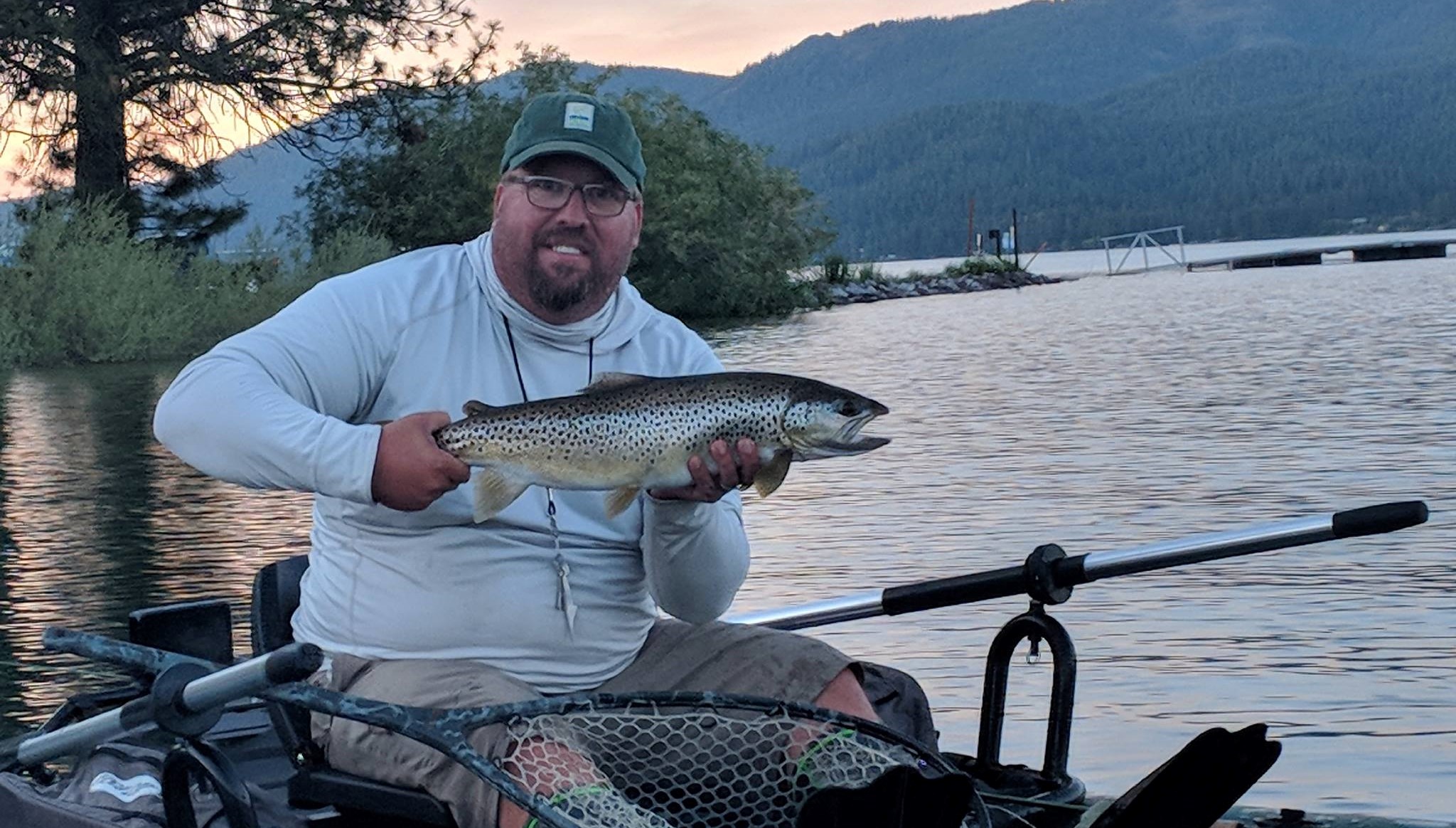
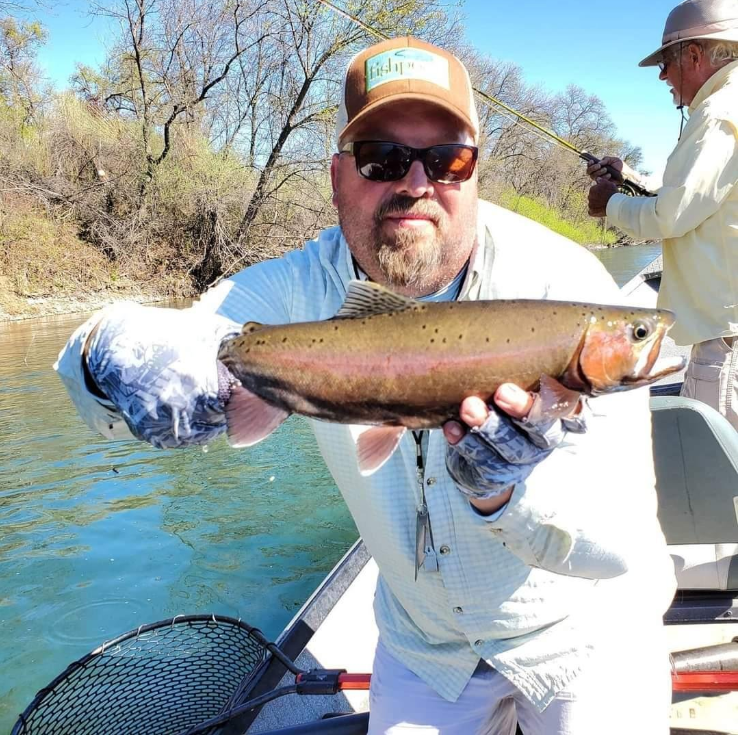
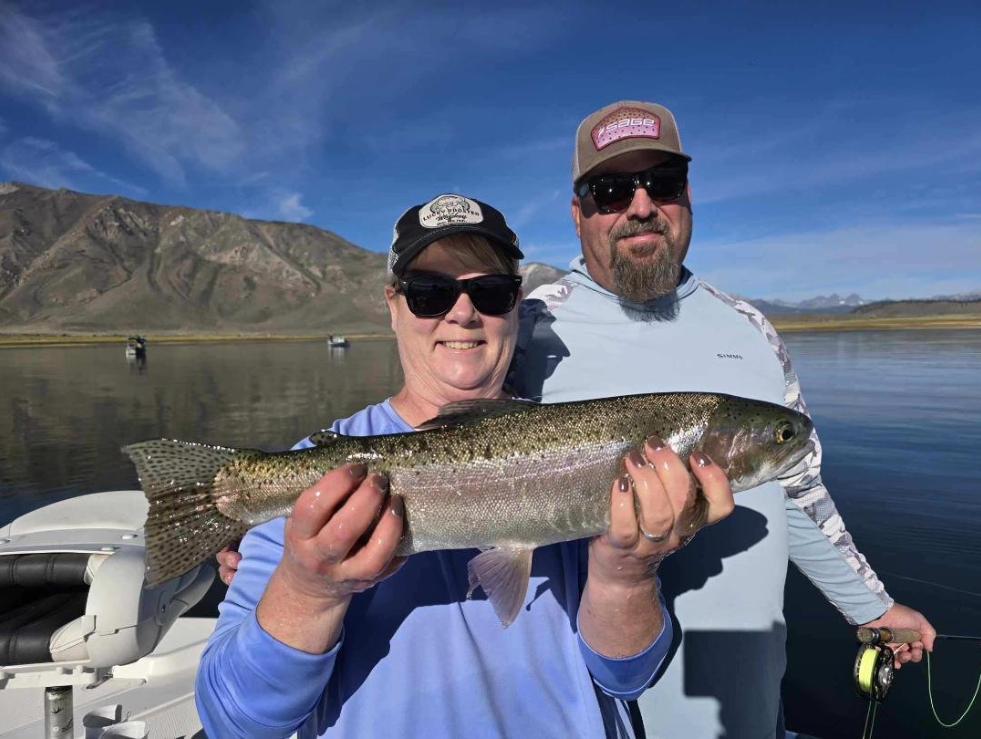
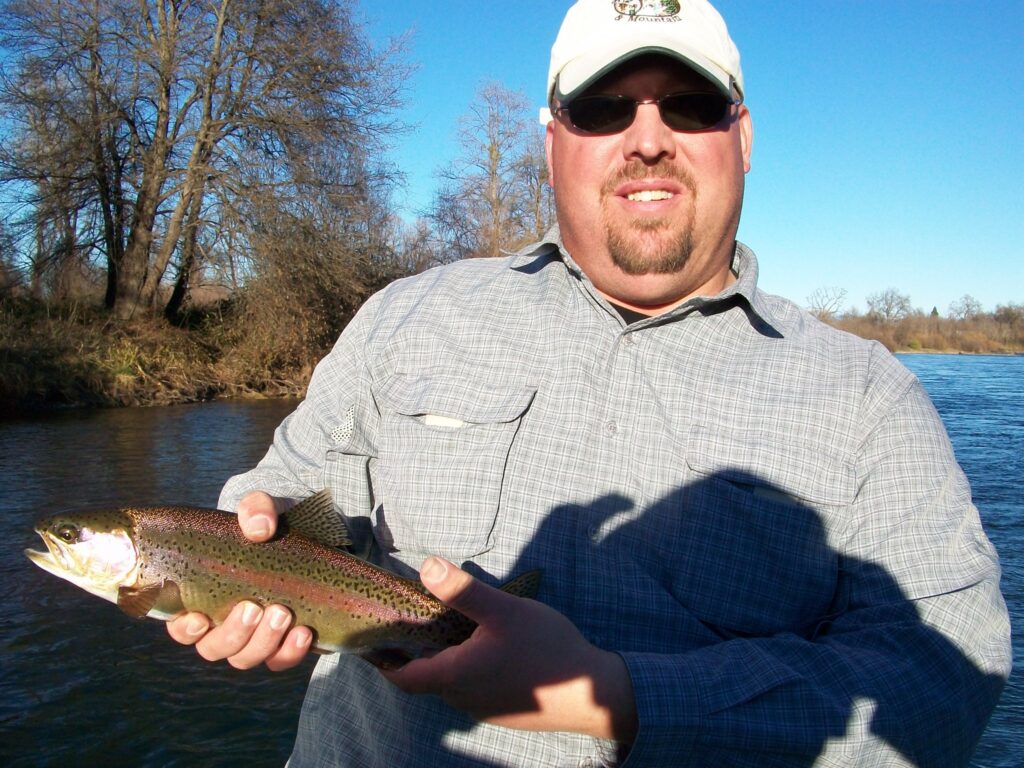
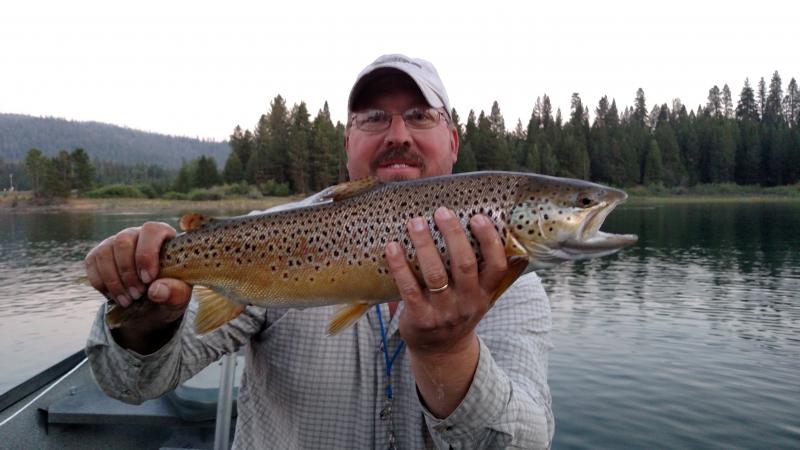
Lance Gray gives us a full guide-level breakdown of Northern California — from the Feather River steelhead runs to the stillwaters that shaped generations of Chico anglers. He talks about reading Davis and Almanor, when stillwaters light up, and why steelhead require technical knots, clean leaders, and perfect presentations. Lance also brings us into the heart of the Chico fly-fishing community, where teaching, mentorship, and his Guide School continue to shape new anglers. It’s part NorCal fishing tour, part education deep-dive, and part love letter to the waters that raised him.
00:00 – 05:03 — Dave introduces Lance Gray, his Chico roots, and the waters that shaped his guiding career.
05:03 – 10:28 — Feather River overview: steelhead access, pressure patterns, and why the river remains a classroom for teaching anglers.
10:28 – 16:45 — NorCal stillwaters: Davis Lake, Almanor, seasonal timing, and how to slow down and read lakes properly.
16:45 – 23:22 — Building the Fly Fishing Guide School: philosophy, the mission behind it, and why education matters more than ego.
23:22 – 30:04 — Chico community: local anglers, the fly shop network, and why collaboration beats competition.
30:04 – 36:17 — Mentorship mindset: teaching anglers to care, not just cast; ethics, etiquette, and shared stewardship.
36:17 – 43:20 — Gear and knots: tippet strategies, connection strength, and why correct knots save more steelhead than fancy flies.
43:20 – 49:41 — Modern guide challenges: permits, water conditions, and why guiding in California is different than it used to be.
49:41 – 55:18 — CDFW regulations and conservation: balancing angler education with resource protection.
55:18 – End — Closing thoughts: Northern California’s uniqueness, staying connected to your home water, and upcoming programs.
Episode Transcript
00;00;01;28 – 00;00;24;25
Dave
Today we’re diving into knots rigs and the on the water systems that make every connection count for me. Lifetime guiding California’s rivers to perfecting Stillwater rigs on Lake al-Mansour. Our guest has built a career around teaching anglers how to simplify and strengthen the most overlooked part of fly fishing. The Knot. By the end of this episode, you’re going to discover the top three go to knots for fishing.
00;00;24;25 – 00;00;45;17
Dave
How to build a deep water indicator rig that finds trout when everyone else is fishing too shallow and a few insider tricks to keep your leader and your fish connected all the way to the net. This is the Wi-Fi Suite podcast ratio. The best places to travel to for fly fishing. How to find the best resources and tools to prepare for that big trip and what you can do to give back to the fish species we all love.
00;00;46;00 – 00;01;17;15
Dave
Lance Gray is here today to share how he uses one simple tool that was invented in Chico, California, that tie fast Neil Knot tool and how this changed the way he rigs teaches and fishes for everything from brown trout on the on his local rivers to Steelhead Lake fishing. We’re going to get into it all today. You’re also going to hear how he built his tour program that blends guiding with workshops and on the water education and why he believes in consistent, repeatable knots over fancy ones and what every angler should know before heading to the lake this season.
00;01;17;27 – 00;01;26;00
Dave
All right, let’s jump into it. Here he is. You can find Lance Gray, Lance Gray and company Dotcom. How’s it going, Lance?
00;01;26;11 – 00;01;27;15
Lance
Good. How are you, Dave?
00;01;27;29 – 00;01;45;13
Dave
Good. Good to have you on here. We are going to have a good conversation about probably some high level fishing fly fishing focused on. You’re in California. You got a lot going with presentations, you know, guiding kind of all that. So we’re going to get into that and I think focus on nuts to today because I think it’ll be cool to get some.
00;01;45;13 – 00;01;49;18
Dave
I know nots are a big struggle for some people. So does that sound like a good start for the day?
00;01;49;29 – 00;01;50;20
Lance
Sounds great.
00;01;50;28 – 00;01;59;21
Dave
Okay. Well, take us back real quick. I love to hear the story on fly fishing. You know, your first memory. How did you get into are you kind of you’ve been doing this a while or what’s your story?
00;02;00;07 – 00;02;23;05
Lance
I’ve been doing this a while. Yeah. I have a twin brother named Lincoln, which is also he’s also in the fly fishing industry. But what’s kind of funny is when my dad started us fishing, we were both fishing. And then he realized that we were going through a lot more bait than what he could afford. And that was McEnroe in the seventies.
00;02;23;05 – 00;02;40;02
Lance
So he decided to switch us to fly fishing, which he was time flies and fly fishing himself, but so we went to fly fishing. And ever since, I mean, it’s been boom, boom, boom. So time flies and and fly fishing.
00;02;40;15 – 00;02;42;07
Dave
Did you grow up in California? Where did you grow up?
00;02;42;17 – 00;03;02;03
Lance
I grew up in Southern Oregon, actually, from the age of 3 to 13. We lived outside of Medford. So then at 13 we moved back to Chico, which were the hometown. And I’ve been in Chico ever since. And now I live in Willows. I’ve lived in Willows for the last 23, 24 years. So.
00;03;02;09 – 00;03;04;01
Dave
Okay. And that’s near near Chico.
00;03;04;08 – 00;03;08;11
Lance
That’s near Chico. Yeah. It’s about 30 miles west.
00;03;08;28 – 00;03;17;21
Dave
Okay. And some of the waters you fish. There’s definitely some famous rivers out there. And Stillwater, too, right? The feather. What are some of the big ones that you’re out. You’re guiding on.
00;03;18;14 – 00;03;29;23
Lance
The lower sac. The lower sac? The Feather River for steelhead. Then I do Lake Amador, which is my big one. That’s what I do, mostly all through the summer.
00;03;30;06 – 00;03;48;01
Dave
So like Alma Noria. And I thought, well, we’ll talk a little bit about some of this today. And but I do want to check on, you know, dig into some on knots because I think that knot, especially for people new to it need to fly fishing. That’s a big struggle. Maybe talk about your presentations because you’re doing these are these mostly online or the in-person.
00;03;48;01 – 00;03;48;18
Dave
What do you do there?
00;03;48;27 – 00;04;16;06
Lance
Oh, no. The presentations are a combination of online or in-person, so just matters on where they’re at and it just matters on on the timing. So like next week I have one as a zoom because it’s all the way down at in Riverside and then the other one is in the Bay Area. So one all the way down south will be Zoom and the one in the Bay Area would be in-person.
00;04;16;06 – 00;04;20;00
Lance
So it’s kind of tough getting all the traveling schedules and.
00;04;20;09 – 00;04;21;29
Dave
Right. So you are traveling quite a bit.
00;04;22;15 – 00;04;50;12
Lance
Yeah. Because as a guide, if you do like in-person, you basically are taking two days because of the travel and sometimes you don’t get back until, you know, maybe back home until early, early in the morning, or you were coming back after you stayed at a hotel. So, you know, those take two days. But the zoom ones are really nice because they just you know, you can do them when you get home from the river.
00;04;50;12 – 00;05;04;18
Lance
You’re tired, but you know, you can get aboard. But I love doing the presentations, tell you the truth, because it just energizes me. You know, it’s probably like your podcast here. When you’re a good man with your podcast, you’re like, Oh, I get all your.
00;05;04;20 – 00;05;21;24
Dave
Oh, there’s two types of people. That’s awesome because I’ve done like a thousand interviews. I mean, probably more than any fly fishing, I’m guessing any podcasts out there. But I’m the type person that actually get energized, you know, And some people I think, are the opposite. I think some people get drained by the end of day. But at the end of the day, for me, I’m ready to go for more.
00;05;21;28 – 00;05;23;01
Dave
It sounds like you’re the same way.
00;05;23;07 – 00;05;30;10
Lance
Yeah. Yeah. I’m ready to go for more. Yeah. I mean, biking fishing is easy. If super easy.
00;05;30;10 – 00;05;31;12
Dave
Yeah, yeah, yeah.
00;05;31;12 – 00;05;31;22
Lance
So?
00;05;31;26 – 00;05;45;09
Dave
Well, I think today, I think it’d be cool to dig into this knots a little bit because. And we’re going to talk about some of the other stuff you do that you mentioned Steelhead, Stillwater is huge and all that stuff, but maybe start there. So let’s say somebody new, right? You know, they’re new to fly fishing, they’re coming in.
00;05;45;09 – 00;05;49;25
Dave
What are the knots that you think are the key? You know, maybe few knots. They really need to know to get going.
00;05;50;06 – 00;06;17;23
Lance
Well, I okay. So I’m kind of easy when it comes to not and I use knots that are as close to 100% knots as possible. Okay. Because every knot breaks before the tensile strength of the tippet. So the perfection loop is number one when you’re looping like your leader on to your fly line and that kind of stuff or your first Lolita’s or something like that.
00;06;18;06 – 00;06;38;29
Lance
I love to loop is super simple, super strong, and it’s a great not for my terminal, not and for what I call my marriage knots for a marriage really tip it to a leader or two pieces. I tip it together. I use the tie fast nail tool.
00;06;39;08 – 00;06;45;04
Dave
Hmm. Right. So instead of a blood knot or a surgeon’s. Not this. Not. Okay, What is this about?
00;06;45;16 – 00;07;11;28
Lance
Well, the tie fast was developed in Chico by a guy named Ron Louis. And my brother worked for him for years, and he was actually the sales rep for them for years. And then he became the manager of the of the company. But the tie fast is a simple tool that ties a nail knot and everybody’s like, Oh, you can’t tie a fly on with a nail.
00;07;12;03 – 00;07;37;27
Lance
Well, you can. Yeah, you just loop it through the eye of the hook and then just tie a nail. And it’s a very strong knot. It’s in the 98% range and it holds very well. And you can do a lot of stuff with it. And that’s what’s so great, is that you can tie on your flies or you can do back to back nail knots where you actually tie to now knots.
00;07;38;01 – 00;08;09;21
Lance
Then when you pull them together, they push against one another and that’s your marriage knot. And what’s so great about it is that it’s just four turns around the tool and then back down through it. And it’s consistent. It’s always giving you a knot because as you well know, when you tie like an improved clench nod or a uni or whatever, you’re always putting, you know, maybe an extra turn on there or you’re not pruning it.
00;08;10;01 – 00;08;19;16
Dave
Or not enough, right? And then it’s never it’s never sometimes not perfect. And I’m always in the school of thought that if my knots not perfect, especially still at fishing, I’m cutting it off and doing it again.
00;08;19;25 – 00;08;37;24
Lance
Exactly. Because you want knots that are not going to fail. I mean, it’s just part of the game. You want to throw all the aces on the deck, but you want to have all the aces in your hand. So the tie fast for everybody. I mean, anybody can go look at it. They’re online and.
00;08;37;24 – 00;08;59;08
Dave
Yeah, yeah, I’m looking at it now. This is the well, we can’t see here, but it’s. Yeah, yeah, I know the tool and I actually it’s, Yeah, it’s hard to explain. It’s a unique tool but I know the nail not well because I grew up I mean that was the to I use always fly lying to leader until the loop not stuff came in right and now I don’t use it but I love the nail knots It’s a cool knot but it’s not what you say.
00;08;59;08 – 00;09;02;08
Dave
It’s easy to learn compared to say a blood knot or something like that.
00;09;02;21 – 00;09;26;04
Lance
With the nail knot tool, it’s super simple, okay? I mean, it’s not hard at all. It’s not like you have to actually go find a nail. The old days, they used to put a nail underneath it and run the lie back through. Back in the eighties, when I worked at Powell Fly Shop and Powell Rod Company, the guy that was the manager in there we used to be in before the tie fast.
00;09;27;00 – 00;09;30;01
Lance
We used to use cut off little the ball.
00;09;30;05 – 00;09;32;16
Dave
Oh, the one thing of the plastic, the little.
00;09;32;21 – 00;09;37;20
Lance
No, this was the thing that you screwed into your hand to blow up your balls.
00;09;37;25 – 00;09;41;11
Dave
Oh, right. And never thought about that right now.
00;09;41;14 – 00;09;47;21
Lance
And what he did is he cut the end of it off. So it was completely round. It was it tapered.
00;09;47;27 – 00;09;49;18
Dave
Yeah. There it is. I got it right there.
00;09;49;23 – 00;09;51;02
Lance
Yeah. One of those.
00;09;51;02 – 00;09;54;01
Dave
Yeah. There it is. So you could use that. Yeah. So and so.
00;09;54;03 – 00;09;55;26
Lance
You can use that as a nail tool. Yeah.
00;09;55;26 – 00;10;05;06
Dave
So what we use. Yeah. We used I think it was the Q-Tip, you know, it has, they had plastic and we cut the Q-Tip and have that plastic cylinder similar. Yeah. That’s cool. Okay.
00;10;05;15 – 00;10;17;28
Lance
Now and that and the, the nice thing about that, not like I said before, it, it ties it consistent out every time and it’s a good not it’s the strong knot and once you get used to it it’s extremely fast.
00;10;18;06 – 00;10;34;21
Dave
Yeah it’s extremely fast. The one interesting thing again, going back to my dad, he was that old old timer and he always talked about it with flight time and everything, trying to use the least amount of tools as possible. Right. Learned stuff. So his old school. So he did, although he used the nail not tool, but this is one where you actually have to have a tool.
00;10;34;21 – 00;10;36;21
Dave
Do you find that what your school of thought there?
00;10;36;29 – 00;10;47;15
Lance
Well, and that’s the thing is when I was a kid, my dad made us sit there and take all our three fishing line and cabinets all winter long.
00;10;47;21 – 00;10;48;13
Dave
Yeah, me too.
00;10;48;20 – 00;11;09;27
Lance
And we would tie the improved flashlight at the end of the, you know, all of the, you know, the you not all these thoughts and, you know, and then when I got into boating, you had to learn knots. And then when I got into, you know, rock climbing and doing paddling, you have to learn knots. And then when Lincoln started working for Ron, he was like, Hey, you need to try this.
00;11;09;27 – 00;11;17;00
Lance
So and that’s fun. 30 something years ago. And I’m like, Oh yeah, it was like the aha moment. So.
00;11;17;08 – 00;11;22;18
Dave
So for somebody new to, let’s just say some of these new to fly fishing today, you still think that’s a good tool or a good way to go?
00;11;22;25 – 00;11;29;26
Lance
Yeah, they can kind of do the opposite. They can learn on the tool and then get consistent knots and bends. Okay, branch out.
00;11;30;02 – 00;11;39;06
Dave
Okay. That’s awesome. So that’s awesome. So we got two knots there. So the perfection loop with the loops, the tie fast tool, and then what else, what other knots would somebody new need, Is that it.
00;11;39;15 – 00;11;49;24
Lance
Well, and that’s the thing that that’s what’s so great about that that now not all is that you can use it for your terminal flies you can use it so you can manage two lines together.
00;11;50;03 – 00;11;51;22
Dave
All right then. Yeah. Everything.
00;11;51;23 – 00;12;14;26
Lance
You can actually use it to tandem fly. So let’s say if you’re tying off the bin of a hook for another fly, so for trying to tie onto the end of the hook, you can actually just take the, the material, the tip of material and make a loop in your hand and then Tylenol, not all. I mean, you actually got a loop with the knot and it’s a hangman’s noose.
00;12;14;26 – 00;12;17;16
Lance
So when you put it on the band, it just tightens right now.
00;12;17;16 – 00;12;19;04
Dave
Oh, time’s up. Wow.
00;12;19;18 – 00;12;23;12
Lance
So you can hit that rule you can use I mean, I use it for everything.
00;12;23;15 – 00;12;27;08
Dave
So the tie fast tool is I mean, this is like a it’s like an infomercial for typeface.
00;12;27;25 – 00;12;49;16
Lance
But, you know, I don’t have them. I usually have a hanging around my neck. And that’s like my goal. And, you know, they’re always right there. And it’s funny because when I get like I have this last couple of days, I had a new guy on the boat that I never fished with, and he was like, God, you’re fast.
00;12;49;16 – 00;12;57;11
Lance
And then he goes, What’s that tool? Then he’s like, Wow, that’s super. And then he I started showing him different things with and he’s like, Oh, I got to get me one of that.
00;12;57;11 – 00;12;59;18
Dave
Right. All right. So it’s one of those. Yeah, you get you got to have it.
00;12;59;22 – 00;13;13;18
Lance
Yeah. But a lot of people already have them, especially guys from the eighties and nineties. Yeah, it was. They used to do a lot of the shows and they used to sit there and tie with them and people go, Oh yeah, I’ll, I’ll take one of those eight bucks. Here you go. You know.
00;13;13;23 – 00;13;16;11
Dave
Right, right, right. So you can still pick them up. Where would you pick one of those up.
00;13;16;23 – 00;13;18;26
Lance
You could pick them up everywhere. Everywhere.
00;13;18;26 – 00;13;19;10
Dave
Yeah. They’re out.
00;13;19;10 – 00;13;30;06
Lance
Yeah, they’re available online. They’re available at the big stores. They’re anywhere. Why shop in Redding? They’re everywhere. Yeah, and there’s knockoffs. And I see there are.
00;13;30;06 – 00;13;31;09
Dave
Yeah, there’s lots of knockoffs.
00;13;31;09 – 00;13;37;06
Lance
Well, yeah, there’s knockoffs. But these are. These are actually still being made in California. Okay, So.
00;13;37;07 – 00;13;41;23
Dave
Okay. Gotcha. And is it the typhus, the website for them? The direct website? Is it typhus?
00;13;41;25 – 00;13;45;01
Lance
I believe so, yes. I still yeah, I still think it is.
00;13;45;01 – 00;13;46;22
Dave
I see some on Amazon and.
00;13;46;23 – 00;14;00;02
Lance
Yeah, I would have to check but yeah, there’s all kinds of videos on YouTube and that kind of stuff. But his company that he works for now, Lincoln is kind of like a holding company, but they have other tools.
00;14;00;12 – 00;14;01;11
Dave
Oh, they do that.
00;14;01;11 – 00;14;02;06
Lance
They do? Yeah.
00;14;02;06 – 00;14;03;11
Dave
Yeah. Is this the boomerang?
00;14;03;11 – 00;14;06;07
Lance
Boomerang coloring is one of them. Yeah, yeah, yeah.
00;14;06;07 – 00;14;13;19
Dave
I see it as a bunch of tools. Okay, so that’s now. Now do you do presentations on just knots or talk about your presentations that you do.
00;14;13;22 – 00;14;40;10
Lance
No, I don’t do just that now. So what I do is, is let’s say we’re doing the lower spec and we’re talking about, you know, access areas or drift times or all this different stuff. And then we get to I’ll show a diagram of my rigging and I’ll go through how I rig it, and then we’ll talk about the knots that I used during that portion of the presentation.
00;14;40;10 – 00;14;51;10
Lance
But I have presentation sheets on like once the deep water indicator where we finish the indicator, 25, 30 feet. Oh, wow. What a straight line.
00;14;51;16 – 00;14;52;04
Dave
In a lake.
00;14;52;09 – 00;14;52;29
Lance
In a lake.
00;14;53;05 – 00;14;53;17
Dave
Yeah.
00;14;53;18 – 00;15;05;09
Lance
And we’re using the different knots, but we actually just talk about how to use that later, how to tie it, how to use it, how to fish it. And that’s all that, that’s.
00;15;05;09 – 00;15;21;12
Dave
Yeah, it’s all Yeah. You got the whole leader, the whole rig set up for us. And that’s interesting right, Because deep we’ve talked stillwater’s decent out on here and a lot of people talk, you know, the, the shallower lay in fact you probably know Danny Rickards right? He’s been on here and he’s, he’s talked to me even said like, just stay in the shallow hour.
00;15;21;12 – 00;15;27;03
Dave
Don’t even worry about going deep at all right There’s no no reason the best. He’s pretty opinionated, but what’s your what’s your take on that?
00;15;27;18 – 00;15;51;13
Lance
Well, it matters on the lake, too. If you have a cold water lake where you have lots of cold water, like, for example, Lake Elmo or Lake Allen or during the spring, we have a lot of shallow water and we have great fishing in the shallow water. But when June happens in July and August happen, the fish leave the shallow water and they go to deep water or they go to the springs.
00;15;52;00 – 00;16;14;11
Lance
So you have to fish deeper to get to them. And sometimes the water gets so warm on the surface that like on my boat I have sonar. So I can actually tell that the temperature going down and there’s places where you’ll see a biomass slide and then past that biomass line is too hot for the fish. But we don’t even fish.
00;16;14;11 – 00;16;20;28
Lance
We’re like, okay, we’re done for a month, because if we pull the fish through that, that hot water, we’re going to kill it.
00;16;20;28 – 00;16;21;19
Dave
Yeah, it’s not good.
00;16;21;23 – 00;16;25;24
Lance
I don’t want to kill big brown trout and big rainbows. No.
00;16;25;28 – 00;16;34;20
Dave
So okay, so you guys get down in a certain time, down deep where the fish are in on that set up. Maybe talk about that rig a little bit. You know, What is your meter?
00;16;34;21 – 00;16;43;26
Lance
Yeah, the rig’s pretty easy, actually. It came about, and I’ve written about it, too. There’s articles on it in the California Fly fish.
00;16;43;26 – 00;16;44;08
Dave
Okay.
00;16;44;15 – 00;17;04;17
Lance
Yeah. What’s so cool about it? It’s just a piece of £20 fluorocarbon that you can make them 20 feet long. You can make them 25 feet long. I have ones that are 40 feet long, and then we have five you to tip it off the bottom of it. So what it is, is it’s basically a barrels of oil on either end.
00;17;05;01 – 00;17;22;22
Lance
And then you have one barbershop that’s up on the top towards your fly line, and then you put an indicator on. And when the whole thing sinks, the indicator just rises to the barbershop and stops and then you’re at your set depth chart.
00;17;22;22 – 00;17;44;11
Dave
Roots by Onyx is built for fly anglers who want better intel without spending hours digging for the information. You’ll get access to public land maps, stream access points, regulations and even road and trail maps all in one place. It’s become my go to app for scouting new trips. You can check them out right now. Go to west by swing dot com slash trout routes and download the app.
00;17;44;11 – 00;18;06;25
Dave
Today. Fish out expeditions offers world class fly fishing right off Alaska’s incredible road system for monster Rainbow trout to feisty Arctic grayling. You’ll chase big species in the stunning landscape. Whether you’re a seasoned angler or just starting out there. Expert guides ensure an unforgettable adventure Book your trip today before spots fill up and experience Alaska’s diversity like never before.
00;18;07;07 – 00;18;16;08
Dave
Check them out right now that’s Fish Town expeditions dot com and a barber stop is is that just a piece of what is the barber Stop.
00;18;16;14 – 00;18;20;09
Lance
The barber shop You got to go to the dark schools or the dart shop.
00;18;20;16 – 00;18;22;06
Dave
Or of a conventional fishing type of thing.
00;18;22;06 – 00;18;33;26
Lance
Yeah but what it is, is it’s a little rubber piece that you can throw it on to your leader and it stops your barber and it works on friction. And so you can move it up and down on your leader.
00;18;33;26 – 00;18;37;07
Dave
So really easily you can move this thing super like a great idea.
00;18;37;15 – 00;18;58;04
Lance
Yeah, well, the long story to that. But yeah, we used to make our own. But the great thing about these is that they’re available everywhere, but you can take them. In fact, most of the fly shops are now carrying them, but you can move them up and down and you can set your debt. So what happens is this whole leader sinking because you have a fly on it.
00;18;58;04 – 00;19;08;26
Lance
I think you have a little weight and the whole leader sinking through the water column and the indicators just laying there on the surface. And they’re right when it hits the barbershop, it just pops up. You know, you’re vertical.
00;19;09;01 – 00;19;09;28
Dave
Oh, wow.
00;19;09;28 – 00;19;33;27
Lance
And what’s great is that it’s highly sensitive to when I mean, if a fish grabs, it is going to shake it or do whatever it does on the indicator. And you can cast it, too, because you can when you strip it all over, when you have the fluorocarbon comes in through your guides and you’re right, and then you have to kind of man to it to get the line back.
00;19;34;06 – 00;19;37;29
Dave
Oh, yeah, Yeah. You’re not casting 20 or 30 feet of leader, right?
00;19;38;04 – 00;19;46;13
Lance
Because the indicator falls all the way to the bottom. Oh yeah. And so then when it all sinks again, the indicator rises to the top.
00;19;46;19 – 00;19;49;13
Dave
Gotcha. This is cool. And that’s what is the bobber you’re using?
00;19;49;27 – 00;19;52;24
Lance
Well, the indicator bobber I use is I see mine.
00;19;53;02 – 00;19;54;05
Dave
Yeah. What would it be called?
00;19;54;29 – 00;19;59;12
Lance
I have all the ones sitting on my desk over here. Yeah. What’s actually looks like this.
00;19;59;19 – 00;20;08;14
Dave
Okay. And for those that can’t see it, because most people are going to be on audio. Yes. It looks like a it looks like a phone. I mean, it’s similar to a thing of Bob, right? It looks like.
00;20;08;24 – 00;20;27;14
Lance
Yeah, it’s a foam ball. It’s a hard foam ball. Then it’s painted. So it’s two tone. So it’s orange on the top, white on the bottom, and then it has a eyelet on the bottom of it where you can run your leader through. And then it has a little what I call telltale has a little stem on it.
00;20;27;14 – 00;20;29;22
Dave
That is that what keeps it? Well, that’s when you know, when it’s.
00;20;29;22 – 00;20;34;06
Lance
Up, that’s when you know, it’s dead drip or you’re straight up is when the tail piles.
00;20;34;06 – 00;20;39;27
Dave
Up. So that’s the difference with the thing or Bob or some of the other properties, they don’t have that thing that tell you when it’s vertical, Correct. Right.
00;20;39;28 – 00;20;52;28
Lance
So this this is the one I use this I have two of these. This is the bigger one. This is the one in. Okay. And then I have a five inch one, but the one edge holds up about a little bit more than an eighth of an ounce.
00;20;53;09 – 00;20;53;20
Dave
Yeah.
00;20;54;03 – 00;21;08;08
Lance
So if you have like a balance slide down there that has a tungsten beat on it and then you have a slingshot above it, it will hold that up at all. It Yeah. And the nice thing about that system is that it’s not that complicated.
00;21;08;09 – 00;21;09;01
Dave
No, it’s simple.
00;21;09;11 – 00;21;29;24
Lance
But it works and you can move it. So if you, let’s say you’re fishing and 25 feet deep of water and then you’re like, oh yeah, now you go over to 15 feet of water or 12 feet of water, all you have to do is just move your bob or stop down super easy. Well, yeah, but the traditionalist, this is the stuff I get all the time.
00;21;30;00 – 00;21;31;02
Dave
You get some blowback.
00;21;31;02 – 00;21;37;03
Lance
Others like use some blowback, some little feedback from people, but they don’t like the fluorocarbon going through their guy.
00;21;37;19 – 00;21;38;05
Dave
Oh, Roy.
00;21;38;17 – 00;21;57;14
Lance
And I’m like, well, you know, you can make all these well, they think it’s going to hurt their fly line on the rail or when you catch a fish, you know, you’re pressuring the fish and the fish comes out and you’re running fluorocarbon right over your fly line. Well, it’s £20. And if it’s if it was a pound thing, yeah.
00;21;57;14 – 00;22;03;11
Lance
It probably cut into your fly because super thin. Yeah. But £20 is big.
00;22;03;14 – 00;22;06;13
Dave
You’re using £20 flora. Yeah I see.
00;22;06;18 – 00;22;31;23
Lance
Well the other reason why I use the £20 fluorocarbon, there’s three reasons. One is that the barbershop runs on heat. It’s friction. So if you move it back and forth, back and forth, what happens is the heat of moving it back and forth on fluorocarbon. It’s fine because Fluorocarbon has a good outer shell. But if you use monofilament, it will start doing the little table.
00;22;31;23 – 00;22;33;16
Dave
It will. It’ll get it won’t be strained anymore.
00;22;33;16 – 00;22;36;00
Lance
It won’t be straight anymore because you’re pretty heated.
00;22;36;18 – 00;22;40;05
Dave
Okay, So. So you use for pretty much always for your long section.
00;22;40;16 – 00;23;03;24
Lance
Right? And then the other reason why I use the 20 and I learned this the hard way and this is kind of a funny story, but two tops on fly rods are ceramic. They don’t have a ceramic, you know. No, you’re not a piece. So the if you catch a lot of fish with a pound fluorocarbon and you’re rolling it on to your fly line, they’ll actually break a groove in your tip top.
00;23;04;06 – 00;23;05;02
Dave
Oh, wow.
00;23;05;13 – 00;23;09;11
Lance
Because they’ll just start. It’s just like little wire. It will just, you know.
00;23;09;11 – 00;23;10;17
Dave
So Flora will do that.
00;23;10;23 – 00;23;11;05
Lance
Oh, yeah.
00;23;11;14 – 00;23;12;00
Dave
Crazy.
00;23;12;12 – 00;23;17;06
Lance
Yeah. I actually broke fish off because, you know, all senior leaders got.
00;23;17;17 – 00;23;19;06
Dave
Your cuts in. Wow.
00;23;19;11 – 00;23;31;27
Lance
I think you’re, like, looking at your read. You’re thinking, okay, I got that fluorocarbon, and then you’re thinking, Oh, maybe I had a knot in it, or maybe this, and then it happens again the same day. And you’re like, All right, wow, what else is going on now?
00;23;31;28 – 00;23;32;26
Dave
How do you fix that then?
00;23;33;07 – 00;23;35;04
Lance
Well, you got to bring your tip top on your rod.
00;23;35;05 – 00;23;37;16
Dave
So there aren’t ceramic tipped ups yet? No.
00;23;37;16 – 00;23;42;14
Lance
Well, you can if you want to, but just put a £20 fluorocarbon solves that problem.
00;23;42;19 – 00;23;45;15
Dave
Oh, it does. So there’s no issue. If it’s £20, you’re not going to have it, right.
00;23;45;15 – 00;23;57;07
Lance
Yeah. Because it’s so big in diameter that Yeah. You’re not going to have that. So yeah, this is like guides and you know, it’s funny because, well, other guys talk to other guys. This is the stuff that we talk about.
00;23;57;09 – 00;23;59;20
Dave
Oh, this is great now, I mean, this is the money stuff right here.
00;23;59;20 – 00;24;01;04
Lance
Yeah, this is the money stuff.
00;24;01;04 – 00;24;11;29
Dave
It gets people thinking, I mean, and then what is the layer? Because we have that conversation too. And steelhead maxima, you hear NOM has some good stuff coming. What is your for this set up the Stillwater stuff. What type of leader, what brand.
00;24;12;03 – 00;24;18;23
Lance
Do I use the cigar or the C? Yeah, or wherever you want, whatever you know, whatever you pronounce it. The yellow with.
00;24;19;00 – 00;24;24;21
Dave
The stuff that’s used for wear is that one. Yeah. I guess I hear a lot about that. I haven’t used it, but is that kind of used everywhere?
00;24;25;02 – 00;24;28;06
Lance
I use it a lot. Yeah. Okay. It’s good stuff.
00;24;28;16 – 00;24;39;06
Dave
So you have the setup, you have what? You’re talking about the the barber barbershop. You got the 20 or 30 whatever link, and then a little swing and a swivel go between the leader and the tip. And then where’s the second swivel go.
00;24;39;08 – 00;25;05;26
Lance
Yeah. The second the bottom swivel or the terminal swivel is your connection between the £20 fluorocarbon and your Tippit. And what’s nice about it is that you can use it as a tip. It ring, for example, because you don’t have to tie on if you want to tie on top. And let’s say you’re at Pyramid Lake and you want to use the system, you’re using £14, you know, because you have big fish like Alvin or I use £10.
00;25;07;03 – 00;25;22;20
Lance
When we made fish up there and we start tying measures on, we’ll go all the way down to £6. So you can that swivel that barrel swivel allows you to tie on smaller tip it or big tip or big. It’s a nice marriage area.
00;25;22;25 – 00;25;23;20
Dave
That’s really cool.
00;25;23;20 – 00;25;33;19
Lance
And then you can put a split shot above it, which does it ride down onto your fly. And then five feet from that, five feet from that barrel, the tip is suction. I have to my fly.
00;25;33;27 – 00;25;45;05
Dave
Yeah, to your fly. And then and does it matter, you know, £20 down to say really light tippet as far as the what you’re doing on the now it doesn’t matter at all because sometimes turning over the fly stuff like that or whatever.
00;25;45;05 – 00;25;52;12
Lance
Well you’re talking like five feet for your tip. It sucks. Not much. So you’re not talking like, you know, 14 feet where you’re trying to turn it over it.
00;25;52;23 – 00;25;58;02
Dave
It’s pretty short. So you don’t want to go. There’s no need to go up to six, seven, eight, nine feet on. Your tip is like five is good.
00;25;58;11 – 00;26;21;23
Lance
No, because you want to keep it regulated. You want to make sure that everything that you do when it comes to it is measure correctly, because that way you’ll know when you’re fishing. If you’re in 25 feet of water, you can pull back the barber stop on your what I call the drop later and you can pull it back like eight inches.
00;26;21;23 – 00;26;31;05
Lance
And when you fish it, you’re going to be eight inches from the bottom. Or you can move it back up. So you’re four inches from the bottom, right? And the big fish live on the bottom.
00;26;31;05 – 00;26;33;16
Dave
Do they so and still are those big fish, the big.
00;26;33;16 – 00;26;34;08
Lance
Fish round about.
00;26;34;13 – 00;26;39;29
Dave
There on the bottom. So you got to get down. How are you putting the fly kind of right out there as close as you can to.
00;26;39;29 – 00;26;55;04
Lance
I’m trying to get it, but I’m using like a balance hacksaw or balance leech or something or even image. That bottom fly is right there on the back. I mean, it’s two or three inches from the closer I could go to the bottom, the better.
00;26;55;14 – 00;26;55;24
Dave
Yeah.
00;26;56;02 – 00;27;22;12
Lance
Wow. But they use our tweak and stuff. Okay. Let’s say your fish images. Well, images are found in mud. That’s where they live. Taxes are found in the mud. Right. But if you’re fishing, the system with a ballast minnow, you want to fish it. The transition zones from mud to rock because or mud to weed bed or rock to weep at because the minnows are moving.
00;27;22;22 – 00;27;36;19
Lance
And usually they try to stick in the rocks or the weeds because those are the safer areas. They’re not out in the open areas where they can get eat it. So I go back to that little Walt Disney movie, the the Finding Nemo.
00;27;36;29 – 00;27;37;14
Dave
Oh, right.
00;27;37;17 – 00;27;44;24
Lance
Whereas his mom always told him, you know, don’t go out there. Don’t go out there. Always stay in here. Yeah. So, yeah, I gotcha.
00;27;44;24 – 00;27;51;15
Dave
Wow. It’s okay. And and then you mentioned the sonar to talk about that. I mean, I’m kind of old school. I haven’t really got the new tech. Is this the one with.
00;27;51;22 – 00;27;53;21
Lance
There’s. Dude, there’s so much, like.
00;27;54;03 – 00;27;54;27
Dave
So much tech, Right?
00;27;54;27 – 00;28;09;09
Lance
And mine is pretty simple to a lot of people. But the sonar just gives you a better picture so you can, you know, look at different things. There’s sonar out there now that you can actually watch your your fly line. Yeah.
00;28;09;09 – 00;28;21;00
Dave
The forward feet, we’ve heard about the the forward facing sonar where it’s like a video game, correct? Yeah. Which is kind of a almost you get to that point where you at what point is it? Not really, you know, exactly.
00;28;21;02 – 00;28;26;04
Lance
I mean, there’s even there’s at the last shot show I was there’s even goggles.
00;28;26;14 – 00;28;31;21
Dave
Oh, wow. Because you can be in the boat now that’s so you’re not even looking at nature any more than you’re.
00;28;32;02 – 00;28;58;08
Lance
Looking at nature anymore. No. And I’m and I’m more old school that I have new school. I don’t have the forehead facing sonar. I just have the regular sonar. And I want people to fish. I don’t want people, you know, And my boat originally had three screens on it where there was one up on the bar, one back on the stern, and then one at the the control panel or at the steering wheel.
00;28;58;22 – 00;29;09;02
Lance
And I took them all off except for the one at the steering wheel. Yeah. Most guys were looking down the screen. Oh right. Not just looking around and, and enjoying nature.
00;29;09;05 – 00;29;22;08
Dave
Yeah, that’s right. That would be kind of be kind of crazy because I think in my style, I really don’t have, you know, any of that. And I would be out in the lake and it’s like, okay, well, I’m out there trying to figure it out. And I’m struggling there because I’m trying to figure out what level they’re where they’re at.
00;29;22;17 – 00;29;25;25
Dave
So you need a little bit of tech, right, to kind of figure out temperatures.
00;29;25;25 – 00;29;33;08
Lance
You really do. And especially in Stillwater, you need to know the depth and you need to know what the surface is down here.
00;29;33;08 – 00;29;40;02
Dave
You need to know like what are the key things you need to know and still are. And, you know, like the depth of the water or, you know, temperature, temperature.
00;29;40;03 – 00;29;42;23
Lance
And then if it’s rock, mud or wheat.
00;29;43;13 – 00;29;51;03
Dave
You know that. So those are kind of key you can get. And then after that on yours, are you really looking at kind of seeing the fish? The fish find it, right, Obviously.
00;29;51;04 – 00;30;15;05
Lance
Well, yeah, you can see fish, but like when you’re driving or when you’re just if you just have the trolling motor down and you’re working into an area, you’ll actually see arrows like little like boomerangs. Those are the fish. And you can set it for I mean, there’s so many settings on those things, but you can set it or you can see those when you’re stationary, you mind it’s just shows line.
00;30;15;05 – 00;30;31;11
Lance
So those are fish that are swimming underneath the boat back and forth and the transducers picking them up. And then you can get, you know, like the forward facing sonar is really great because you can put it down. You can actually see fish in real time, swimming at you.
00;30;31;24 – 00;30;32;24
Dave
Swimming at you, right?
00;30;32;26 – 00;30;35;17
Lance
Oh, yeah. I mean, you can actually watch them take your fly.
00;30;35;21 – 00;30;36;23
Dave
Yeah, you could. Yeah.
00;30;36;25 – 00;30;46;01
Lance
And that’s good for a guy to look at and you can say, okay, you know, here comes fish or whatever, but it’s really bad for clients to sit there and look at.
00;30;46;04 – 00;31;02;15
Dave
No. Yeah. You don’t want that. You want them to learn a little bit about, you know, I think of it again, I’m out there. I think having some of that knowledge of depths and is key because let’s take that. So you’re not seeing the fish, Roy You know, but you’re how do you go from knowing the depth to the water sounds like with the deep that you’re going down deep.
00;31;02;15 – 00;31;06;14
Dave
So that’s pretty easy. You’re not midway in the column looking for fish or describe that.
00;31;06;21 – 00;31;24;28
Lance
And that’s the thing is, is the more precise you have among your leader. So if your leader is 20 feet long, your drop leader and your tip is five, you know that you have 25 feet. So if you move down your bobber, stop a foot, you know, you’re at 24 feet. Now you move it down two feet, you know, you’re at 23.
00;31;25;15 – 00;31;42;16
Lance
The other thing to do is to use a lot of guys used to use forceps and they used to pull forceps on the fly in the sink it down, and then the indicator would lay over and then they would just the indicator until it stood up and then they would know they’re on the bottom or close to the bottom.
00;31;42;16 – 00;32;14;25
Lance
And then they would take the forceps off and fish. And then some guys a lot of my buddies have and I do too. We have these little devices that we just alligator clip on there. And those are the fine tuning things because this is when my nerdiness comes out. So if you have clients to clients and you have a client in the front of the boat, in the car, on the back of the boat, you might have a difference in elevation on the bottom of the lake, six, 5 to 18 inches.
00;32;15;12 – 00;32;35;03
Lance
Okay, it’s like completely flat. So you’re fine tuning them with those and a lot of guys make their own. There’s some out there. The depth setter is one that that’s commercially made, but what it does is touch your depth so you can actually, you know, pinpoint it a little bit better.
00;32;35;10 – 00;32;36;06
Dave
I see. Huh.
00;32;36;21 – 00;32;48;12
Lance
Here’s mine. I just thought that it was up there on the desk. Here’s mine. So for the people that can’t see it at home, I’ll explain it. So if I can get it in the right spot there, we’re going to go. But it has a little alligator. Yeah, that’s.
00;32;48;12 – 00;32;49;08
Dave
What I was pitching. Yeah.
00;32;49;10 – 00;32;52;03
Lance
Yeah. And then it has a tungsten weight down here.
00;32;52;08 – 00;32;58;22
Dave
Yeah. So it’s a basically it’s a little metal clip and then it’s got a tungsten weight is kind of welded on to the end of the metal clip.
00;32;58;28 – 00;33;01;12
Lance
Yeah. For your old guys, it’s a roach clip.
00;33;01;18 – 00;33;04;21
Dave
Yeah, exactly. It’s a road slip.
00;33;05;08 – 00;33;08;05
Lance
And has the weight and you just flip it on and then sink.
00;33;08;05 – 00;33;10;15
Dave
It. That’s right. That’s right. Oh, wow. That’s cool.
00;33;10;15 – 00;33;17;13
Lance
And what’s nice about that is that you can fine tune the to depth on either side of the boat from Bow.
00;33;17;20 – 00;33;20;22
Dave
Yeah. So you’re trying to get within like inches.
00;33;20;22 – 00;33;22;01
Lance
I’m getting within inches.
00;33;22;01 – 00;33;32;02
Dave
Yeah. And what you’re thinking is, is that again, you know where these fish are because you saw them on your fish finder, right? You kind of know where they’re at and then you just want to get them right in front of their face. So it’s just.
00;33;32;02 – 00;33;37;25
Lance
Sort of get them right in front or a little slightly above. Yeah. I don’t want to blow them.
00;33;38;05 – 00;33;38;16
Dave
Yeah.
00;33;39;02 – 00;34;01;18
Lance
But the big fish live on the bottom. So I’m always looking for big fish and I might even like, for example, if I have two people out and I come into an area where I want to fish and there’s fish that are suspended up in the water column and there’s fish on the bottom, I’ll place both of them two different places opposite one on the bottom and I’ll put one suspended.
00;34;01;26 – 00;34;06;29
Lance
So I’m fishing both zones at the exact same time. What do different rods help?
00;34;07;12 – 00;34;15;26
Dave
Are those fish just finding, you know, you got some on the bottom. Are they stratifying based on water temperatures? Why are they a little higher? What’s going on there?
00;34;15;28 – 00;34;19;20
Lance
And that’s the thing. They’ll find a cool spot. They’ll find a thermal and.
00;34;20;02 – 00;34;21;12
Dave
Or a spring there, because.
00;34;21;12 – 00;34;46;07
Lance
Spring or the spring has the the hot water and they’re comfortable in it, you know, And that’s what’s so nice about Stillwater. And you can’t be arrogant. I say this to people because people go, all the guys out there trolling all those trollers know where all the thermals are at because they’re in there, they’re trolling gear right in those thermals where those fish are holding.
00;34;46;26 – 00;35;17;13
Lance
So if you listen to trollers, they’ll tell you, Oh, I’m fishing 35 feet down and I’m going, you know, three quarters of a mile per hour and I’m fishing this. And you’re like, okay, so the fish are 35 feet down. They like it’s slow and your fish in a minnow pattern. Okay? So that tells you, okay, well, I can sink something that low or into that column and I see a minnow pattern and I can fish it, slow it out, and you can take information from them and use it in wildlife.
00;35;17;13 – 00;35;33;01
Lance
And they do the exact same thing. You know, they talk to me all the time and they’re like, hey, you know, or they’ll see me fish in a spot. And a lot of times they’ll see me fish in a spot and they laugh because they can’t get in there because there’s between boobies or. Right, you.
00;35;33;02 – 00;35;35;20
Dave
Know, and you’re getting in there with your with your drift boat.
00;35;36;01 – 00;35;40;13
Lance
No, I have a big boat. I have a big 19 foot lake boat.
00;35;40;18 – 00;35;42;03
Dave
Oh, you do. Right. So a big boat?
00;35;42;06 – 00;35;43;20
Lance
Yeah, actually, I had two of them.
00;35;43;26 – 00;35;45;09
Dave
So what’s the name of Lake Lake?
00;35;45;09 – 00;35;45;25
Lance
Al-Manar.
00;35;46;03 – 00;35;47;04
Dave
Al-Manar.
00;35;47;04 – 00;35;48;06
Lance
Al-Manar. Yeah.
00;35;48;15 – 00;35;52;29
Dave
So describe this lake a little bit. It sounds like there is definitely some mix of gear and flight angles up here.
00;35;53;07 – 00;35;59;13
Lance
Well, yeah, it’s a big lake. It’s 12 miles, almost 12 miles long and seven miles across.
00;35;59;13 – 00;36;00;28
Dave
Oh, wow. And it’s near Chico.
00;36;01;01 – 00;36;05;21
Lance
Yeah, it’s about an hour and a half hour. Chico is by Chester, California.
00;36;05;21 – 00;36;06;23
Dave
That’s okay.
00;36;06;23 – 00;36;09;09
Lance
But it’s up right at the base of my life.
00;36;09;17 – 00;36;13;13
Dave
Oh, Matt Larson. Yeah. Okay. Yeah. So you got Shasta Larson in that, right? Okay.
00;36;14;02 – 00;36;18;06
Lance
That’s actually the north fork of the Feather River runs into Lake Almanor.
00;36;18;09 – 00;36;18;28
Dave
Oh, Roy.
00;36;19;05 – 00;36;25;26
Lance
Then when it leaves Lake Harmon or it goes down into the Canyon Highway 70, carrying that down to Lake Oroville, then.
00;36;26;03 – 00;36;28;13
Dave
Oh, wow. Then into the steelhead water down below.
00;36;28;20 – 00;36;29;00
Lance
Yeah.
00;36;29;06 – 00;36;29;22
Dave
Oh, yeah.
00;36;29;22 – 00;36;32;09
Lance
Wow. We’re still water down below Lake Oroville.
00;36;32;18 – 00;36;37;01
Dave
So you’re hitting the lake water for Stillwater and the same where efficient steelhead down below.
00;36;37;07 – 00;36;37;16
Lance
Yep.
00;36;37;24 – 00;36;41;00
Dave
That’s cool. So these steelhead can’t migrate up through the snow.
00;36;41;02 – 00;36;48;25
Lance
They can’t get Orville down? No, there’s actually a fish barrier about four away from the lake. Yeah. Okay. So they can’t get up.
00;36;49;02 – 00;36;52;01
Dave
And what are the species? So in the lake, what are the species that are there?
00;36;52;06 – 00;37;01;27
Lance
The species up in the lake are brown trout, kokanee logs, salmon, rainbows, smallmouth, bass.
00;37;01;27 – 00;37;38;24
Dave
Discover the montana fly fishing, large nets along the federally designated wild and scenic East Rosebud River with 1.5 miles of exclusive private frontage there, all inclusive luxury experiences combined world class fly fishing on legendary waters like the Yellowstone, the Bighorn and Stillwater Rivers with rustic elegance and their spacious lodge and luxurious canvas cabins. Beyond fishing explore the stunning abs of Roca Beartooth wilderness through guided ventures, or simply relax on their outdoor firepit, surrounded by quaking aspen and cottonwoods with capacity for up to 18 guests, private Spring Creek stocked trout ponds and a fully equipped fly shop.
00;37;39;02 – 00;38;02;26
Dave
Every detail is designed for the perfect Montana escape you can book now and experience that ultimate combination of responsible fishing practices, breathtaking scenery and unmatched hospitality. And Montana’s premier fly fishing destination. You can head over to Montana, fly fishing lodge dot com right now and check in with them and see what they have available. That’s Montana fly fishing lodge dotcom.
00;38;03;29 – 00;38;21;22
Dave
There’s a place where every bend in the river feels like it’s been waiting for you, where the air smells of sage and pine and trout rise beneath the shadows of the Tetons that places visit Idaho’s Yellowstone Teton territory, the heartbeat of fly fishing in the west from the legendary Henry’s Fork to the winding South Fork of the snake.
00;38;21;22 – 00;38;40;01
Dave
This is where big fish and bigger stories live. You’ll find endless waters, welcoming towns and locals who still wave as you drive by with drift boat in tow. This is your starting point for world class fly fishing, year round recreation and wild country that stays with you long after you’ve packed up your gear. Check it out right now.
00;38;40;01 – 00;38;54;27
Dave
That’s wet fly swing dot com slash Teton Teto and visit Idaho for yourself and support this podcast while you go And if somebody was going to make a trip what’s the time of year that you’d be hidden.
00;38;55;04 – 00;39;14;21
Lance
Well and that’s what’s so cool about Lake Allen is that you have basically major seasons. You have the spring, which is April and May, you have the Midge Hatch and that’s up in the shallow portion of the lake. And then June, June and somewhere into July, a little bit, we have the hexa juniper hatch.
00;39;14;28 – 00;39;16;02
Dave
Oh yeah. The night.
00;39;16;10 – 00;39;31;06
Lance
Which is the evening. Yeah. Then and September we have the pond smell. And the pond smell is a little bay fish is actually the real name of us. That was Saki. It’s a Japanese bay fish that they put in the lake.
00;39;31;19 – 00;39;32;21
Dave
They actually put them in there.
00;39;32;23 – 00;39;56;00
Lance
They actually are Department of Fish and Wildlife put in there in the seventies and a lot of the Northern California lakes to feed the fish. Now they’re there for as a bait fish to feed the fish crazy. And in September they go on spot and they’re what they call a free spotter. So they actually gather up in shallow water 12 to 15 feet deep.
00;39;56;17 – 00;40;14;25
Lance
They like a mud bottom. And then the females raise up in the water column and release their eggs, and then the males come and inseminate and then the brown trout and the rainbows come in and they eat all these thousands of supporters smile, and then they’ll push against the rocks like stripers do, and they’ll eat them.
00;40;15;04 – 00;40;17;02
Dave
So that’s how these trout are getting big.
00;40;17;09 – 00;40;22;24
Lance
Well, yeah, they grow about two. Yeah. On average right now, Lake Allen Artificial grow £2 a.
00;40;22;24 – 00;40;26;15
Dave
Year, £2 a year. So you’re seeing like what is, what’s a big fish out there.
00;40;27;04 – 00;40;29;21
Lance
Big fish is £20, £20.
00;40;29;21 – 00;40;39;14
Dave
So this is a similar group we always hear, you know, you hear a lot of the lakes is interesting because, you know, from Kamloops up in Canada, all these but you hear a lot about pyramid, right?
00;40;39;24 – 00;40;41;08
Lance
German lost big as.
00;40;41;08 – 00;40;47;04
Dave
Big fish for sure. But you’re talking I mean, pretty decent. I mean, these are huge, too. A £20 fish is a giant fish right there.
00;40;47;04 – 00;41;04;13
Lance
You know, big brown runs between ten and 20. A lot of twelves, a lot of 14. The rainbows will get that big. They’ll get in the £14 range, £15 range. They won’t get as big as the Browns. Well then the landlocked salmon, the kokanee will get into the three or £4 range.
00;41;04;22 – 00;41;05;15
Dave
Three or four. Okay.
00;41;05;20 – 00;41;26;17
Lance
And then the bass and that’s the thing that’s under-utilized up there, the bass fishing is phenomenal. And the bass, the small mouth will get a small mouthful, get into the £8 range. I mean, I actually had a client years ago that we were during the heck’s hatch, and he got this big, small amount that was probably eight, maybe even £9.
00;41;26;17 – 00;41;39;08
Lance
It was big. And he looks at me and he goes, I’ve traveled all around the world trying to catch big bass Hills. All I do is go an hour from my house. It’s the biggest bass and Right. A small mouth.
00;41;39;17 – 00;41;41;01
Dave
Small mouth, Yeah. Yeah. It’s mammoth.
00;41;41;10 – 00;41;58;28
Lance
Yeah. You know, And we do the float and fly up there, which you probably heard, heard of that which is the same system basically as the deep water indicator. Where it is used are shorter later, but we’re pretty afloat with a bait fish fly underneath it and we’re fishing those around the points that are out there.
00;41;59;02 – 00;42;02;10
Dave
So it’s the same thing we describe just using the bait fish imitation.
00;42;02;11 – 00;42;02;21
Lance
Yep.
00;42;03;00 – 00;42;03;12
Dave
Okay.
00;42;03;22 – 00;42;17;08
Lance
And we’re doing that. That’s turned the flow and fly. That was the deep water indicator. But yeah, and that’s what’s so cool is you can do I’m usually up there, I try to well my cab and we have a family cabin up there.
00;42;17;09 – 00;42;17;28
Dave
On the lake.
00;42;18;06 – 00;42;26;27
Lance
At the lake. We’re about 200 yards away from the lake. So I’m usually up there when the snow melt and I usually leave, the snow starts to fly.
00;42;27;01 – 00;42;30;13
Dave
Oh, okay. So like in the march snows melting, something like that or.
00;42;30;14 – 00;42;35;00
Lance
Well, in April, usually it’s April is when we turn the water back on.
00;42;35;04 – 00;42;35;20
Dave
Yeah. Okay.
00;42;35;24 – 00;42;41;15
Lance
We actually have a community water, so there’s like 15, 16 cabins that are on the same water source.
00;42;41;16 – 00;42;42;24
Dave
Oh, wow. It’s just on a well.
00;42;42;26 – 00;42;48;21
Lance
On a well, yeah. Yeah. When that’s turned off. In fact, we’re going to go up there tomorrow. That’s what we’re doing tomorrow.
00;42;48;25 – 00;42;59;16
Dave
Oh, you’re turn it off. Yeah. Because now as we’re talking, it’s almost November. It’s actually today’s Halloween and. Yeah. And so you’re, you’re kind turning things. You’re right. Once you lock things up, are you not out there in the winter at all.
00;42;59;16 – 00;43;01;06
Lance
I’m not up there in the weather, you know.
00;43;01;09 – 00;43;02;27
Dave
So you’re pretty decent elevation.
00;43;03;14 – 00;43;05;03
Lance
As 4700 feet.
00;43;05;03 – 00;43;05;14
Dave
Yeah.
00;43;06;00 – 00;43;13;04
Lance
Yeah. So it’s it gets a lot of snow. We’re right in the snow belt. Gets a lot of snow. Just staying on the toes. The teens in the winter.
00;43;13;16 – 00;43;14;11
Dave
And yeah, it’s cold.
00;43;14;15 – 00;43;18;01
Lance
Yeah. Cold there fishing up there during that time but it’s cold.
00;43;18;06 – 00;43;24;01
Dave
That’s it. So Lake Albert or so that’s your big C when you’re guiding, that’s a place you listen to.
00;43;24;11 – 00;43;27;04
Lance
That’s where I’m up. I’m usually up there six months out.
00;43;27;16 – 00;43;35;17
Dave
So you got it dialed in. That’s awesome. And then and it sounds like you’re doing some other stuff. Maybe give us a rundown. So what are the other than the lake stuff? What else they’re doing throughout the year?
00;43;35;26 – 00;43;48;21
Lance
Well, okay, so there’s a couple I do like. I do the lower sac, which is from Redding all the way down to Anderson, down to almost the Red Bluff. We drift out in the drift boat, which by drift boats right behind me.
00;43;48;22 – 00;43;50;27
Dave
Yeah, right there. Yep. Yeah. What kind of boat you got there?
00;43;51;13 – 00;43;52;06
Lance
Fish craft.
00;43;52;13 – 00;43;53;11
Dave
Yeah, Fish craft. Okay.
00;43;53;21 – 00;43;57;12
Lance
18 Footer, It’s. Oh, wow. This is no longer in business, but.
00;43;57;12 – 00;43;58;03
Dave
Oh, they’re not.
00;43;58;09 – 00;44;00;10
Lance
No, That’s a 25 year old boat.
00;44;00;16 – 00;44;03;08
Dave
No kidding, Fish. Yeah. So it’s 18. Yeah, that’s a big boat.
00;44;03;16 – 00;44;04;09
Lance
Yeah.
00;44;04;09 – 00;44;05;26
Dave
Decent size for a drifter, right? I mean.
00;44;06;13 – 00;44;34;24
Lance
Yeah, I mean, there’s bigger ones, but, yeah, this one’s pretty big. Okay, I do the Feather River for steelhead, and that’s below Lake Oroville. So from Oroville down to Gridley, which Lake City? Down with you? Steelhead. And then I do Pooler Creek, which is a little still, or Stillwater. It’s a little tail water that’s down. And what almost the back of it, which is the East Bay, the San Francisco Bay, they call that the East Bay.
00;44;34;25 – 00;44;35;12
Dave
Oh, okay.
00;44;35;20 – 00;45;02;19
Lance
Yeah. Which is a little tail water that runs from Lake Barry us out to the Sacramento River, and it has wild trout on it. The Sacramento has a wild trial in the feather, just as steelhead. There’s no trout. There’s they’re all still it. And then there’s those are for my tell water fish. But I also do something that’s kind of cool that a lot of people aren’t doing is I do what I call the tours.
00;45;02;19 – 00;45;10;20
Lance
And the tours is a combination of a guided trip, a workshop, and not time clinic.
00;45;10;25 – 00;45;13;26
Dave
Oh, see, now you’re talking this is this sounds pretty cool. The tours. Yeah.
00;45;14;00 – 00;45;22;09
Lance
Yeah. So what we do is. So let’s say you want to learn Pewter Creek, all right? And you fished it before, but you really.
00;45;22;13 – 00;45;25;13
Dave
Haven’t done anything. Yeah, you’ve been on pewter. You’ve been skunked so far.
00;45;25;18 – 00;45;52;29
Lance
Yeah, you really haven’t done that. Great. Blah, blah, blah, blah, blah. So what I do is I get three people together and we do the tours and so I go through I started the very top end of the of the creek, and I’ll walk all the way to the bottom and we’ll show you all the accessory is how to go from one side to the other side, where to wait at, what to do if you’re here versus over there and how we fish, right?
00;45;53;03 – 00;45;56;12
Dave
So like a high level, you’re driving doing a high level of the whole area.
00;45;56;13 – 00;46;18;14
Lance
While we’re driving. But we’re we’re getting out walking some of the trails and the walk. Now, a lot of the stuff. And then we’re talking about runs and how I fish them and what I fish them with and and so on, so forth. And then we rig so somebody wants a euro or somebody wants the high stick or somebody wants to use the indicator rig with them.
00;46;19;00 – 00;46;44;21
Lance
Then we do all that and we rig all those surveys rig and then we have lunch and then we go fish and I can work with all three people individually on casting or reading water or wading skills or whatever. And then the day ends around 330, 4:00, and everybody has a whole bunch of knowledge. And then I give them a handout that they can write on.
00;46;44;21 – 00;46;49;27
Lance
And you know, these guys is great. They show up. I give them clipboards and a handout.
00;46;49;28 – 00;46;50;12
Dave
Nice.
00;46;50;12 – 00;47;10;26
Lance
With a map of it and everything, and then a diagram of all the rigging and all that. And they’re riding on it. They’re taking their phones and taking pictures of everything and don’t. Oh, yeah. And it’s really great because you get like I tell people, you get like three, three or four years of knowledge just here you go, right?
00;47;11;05 – 00;47;19;14
Dave
You’re not just focused on necessarily getting them to catch a fish. You’re doing kind of correct. It’s more of a yeah, school sort of thing I’m doing.
00;47;19;22 – 00;47;25;15
Lance
They all test to make, you know, you teach a man to fish, you feed forever. But if you show, you know.
00;47;25;15 – 00;47;28;14
Dave
Exactly. And then when do the knots they’re not tying come in.
00;47;28;18 – 00;47;30;23
Lance
Well the knot time comes in during the rigging.
00;47;31;02 – 00;47;31;26
Dave
Yeah, during the rigging.
00;47;31;26 – 00;47;50;25
Lance
So when they’re rigging, you know, I tell them, okay, this is how I rig and I show them with the tie festival, and then they’re like, Oh, okay. Then sometimes they’ll use it or, or they’ll use whatever they want to use. And it’s, you know, we go back and forth on knots and you know, how I rig and how and I and we set it up so they can take it with them.
00;47;51;08 – 00;47;58;13
Lance
Well, they don’t have to, you know, they can actually see it on a diagram, do it with their hands, you know, hear me talk about.
00;47;58;13 – 00;48;02;15
Dave
It does everybody leave with a tie fast tool? Do you have one for how.
00;48;02;20 – 00;48;04;00
Lance
They all live with a typhus?
00;48;04;00 – 00;48;08;26
Dave
Yeah, right. Right. Some people don’t need some people don’t need it. Right. They’re already got their knots figured out.
00;48;08;27 – 00;48;15;09
Lance
Yeah, I’m actually getting one of my labs. He came over and said, Oh, cool. So cool. I have a water one over there, but.
00;48;15;14 – 00;48;26;25
Dave
Nice, nice, nice. Yeah. So back to the knots a little bit. So we talked about that tie fast too, and I. So other than that, there’s no other knots we’re missing. Really? I guess if somebody didn’t have the tie fast, then you’d have to learn, you know, the clenched knot.
00;48;27;01 – 00;48;38;08
Lance
Well, then, then the next one. If you did have the tie fast for the marriage knot, I would probably use the the uni knot. It’s a little bit better than the blood knot it is.
00;48;38;08 – 00;48;41;00
Dave
So the uni not as similar to a blood does the same purpose.
00;48;41;02 – 00;48;42;26
Lance
Yeah, but it’s the breaking strength.
00;48;43;05 – 00;48;44;02
Dave
This better than the blood?
00;48;44;06 – 00;48;59;02
Lance
It’s better than the blood. Yeah. Every time you wrap or you cross over a piece of monofilament or fluorocarbon, you’re creating a cutting edge. So. And then the blood. Not actually. Excuse me. The marriage, not the one I use for the to.
00;48;59;02 – 00;49;01;15
Dave
The described that one. Is that for tying your loops?
00;49;01;24 – 00;49;31;15
Lance
No, the marriage not is when you tie two pieces of material together. So if you’re going from let’s say, £5 tippet to £4 tippet, you can tie those together using the marriage knot. And all of it is the nail, not on either side. And then when you’re tying it down, it gets site, but you can actually use that marriage not to marriage fluorocarbon with monofilament or it will still hold if you use a blow knot and try to marriage fluorocarbon to monofilament, it will break.
00;49;31;25 – 00;49;32;09
Dave
Oh wow.
00;49;32;16 – 00;49;36;17
Lance
Because the fluorocarbon will just cut right through the Oh gosh.
00;49;36;28 – 00;49;41;08
Dave
So we’re learning lots of areas and fluorocarbon the blood knots. Not going to be the knot you want to use.
00;49;41;12 – 00;49;45;02
Lance
Well, if it is if you’re using fluorocarbon or fluorocarbon.
00;49;45;05 – 00;49;46;11
Dave
Yeah, but not that.
00;49;46;15 – 00;50;07;17
Lance
Yeah. So yeah. And that’s what’s so great about different knots is that, you know, once you learn them, then you can go, Oh, okay, this one’s a little bit better. This one’s not like the marriage, not that I use. You can actually tie that down. But before you tying it down, it let’s say this, let’s go that when you tie it down tight, the two tags are sticking out like this.
00;50;09;02 – 00;50;26;25
Lance
But before you tied it down tight, and if you take one of those tags and you run it through the middle, so it’s through the little loop between the two pieces, between the two knots and you’re tying it down, it will actually come out a 90 degree. So you can use that 90 degree as one of your drops.
00;50;27;23 – 00;50;48;19
Lance
You know, if you want to set up your rig, you can do it that way or and it doesn’t come off at a 30 degree angle. It actually comes off a 90 degree angle. And you can use that for dry flies if, you know, if you’re using, you know, doing dry fly fishing, you want to fish or dropper of the hop or dropper style or if you want to fish to dry flies, that’s a way to do it, too.
00;50;49;08 – 00;50;57;26
Lance
So it’s it’s more universal than a blood, not even with a blend. When you put thing through it, it doesn’t really come out at 90 degrees. Yeah, it comes out.
00;50;58;05 – 00;51;08;01
Dave
So for the the knot, I mean, basically if you get that tool that solves a lot of the things because once you learn that you can cover almost everything you got that in the marriage. Not those are kind of the two things you’re using.
00;51;08;12 – 00;51;40;00
Lance
You can do it all I did it all was the typhus and I use it in saltwater to there’s a big one that you can use in salt water that you can tie up £220 monofilament with our fluorocarbon with it. So it’s just a bigger tool. But I use them everywhere and going by to more knots. Okay. So just to throw this out, because I know we’re we’re coming to the end, but on that deepwater rig, you can use a loop not on the bottom of it.
00;51;40;13 – 00;51;41;29
Lance
Like a lefty’s work. Not.
00;51;42;03 – 00;51;43;26
Dave
Yeah, I like the open loop right.
00;51;43;26 – 00;52;00;11
Lance
Okay. Yeah. Which a lot of guys do. I don’t. You don’t know. I actually just tie my my nail right to it, and I tie it tight. And what I do is because a lot of the ballast flies that you buy in stores, they’re not barrels.
00;52;00;25 – 00;52;01;10
Dave
They’re not.
00;52;01;20 – 00;52;07;08
Lance
No. Because they’re commercially made. They’re not sitting there making sure that they’re balanced. So, yeah.
00;52;08;05 – 00;52;10;02
Dave
So they’re not doing what you need them to do.
00;52;10;05 – 00;52;13;28
Lance
They’re not going to be perfect. Okay? They’re going to angle or.
00;52;13;28 – 00;52;16;20
Dave
And is that a rule? Is that a bad thing? If they’re not balanced perfectly?
00;52;16;20 – 00;52;23;26
Lance
Well, it can be, because if you’re trying to imitate a certain fly or a certain baitfish.
00;52;24;03 – 00;52;25;07
Dave
Yeah, you want it to be.
00;52;25;12 – 00;52;41;13
Lance
You want it to be. But the way I do it is when I tie my terminal, which is the nail, not right to the eye, the hook. What’s great about it is I can take it and I can use the friction of the hook or the friction of the knot in the eye of the hook to make my fly.
00;52;41;17 – 00;52;43;24
Dave
To set it. So you kind of set it to the angle.
00;52;44;03 – 00;53;10;28
Lance
Yeah. So let’s say for example, on the X, then I’ll set it at a 30 degree angle because that’s how hex is Slap. Sure, it’s swimmers, they swim up and they fall by a on a baitfish. I might set it so it’s balanced style or if they’re, if I’m fishing let’s say next to a RockPile I might move it so it looks like a swimming down to the rock or swimming away from the RockPile.
00;53;10;28 – 00;53;11;11
Dave
Yeah.
00;53;11;17 – 00;53;25;16
Lance
Okay. So you can kind of set those and those settings, those fine tuning as I call, like using the this little tool to set your depth, those little fine tunings. You know.
00;53;25;23 – 00;53;26;18
Dave
It makes a difference.
00;53;26;24 – 00;53;33;06
Lance
Icily, I was going to say 15 to 20% difference. Yeah. And hook up. Right. So you know.
00;53;33;14 – 00;53;34;10
Dave
How makes sense.
00;53;34;13 – 00;53;38;09
Lance
When you’re guiding you want me hook up with now.
00;53;38;17 – 00;53;54;28
Dave
Increase the odds I find that the big challenge for me and I used to just use the clinch not you know and that was pretty soon we’re still at fishing especially and I’m not the greatest caster, but what I would do is I’d cast and then I’d my fly in and check it and it would be at a right angle too, you know, because I might catch was crappie or something.
00;53;54;28 – 00;54;07;10
Dave
And I found myself always fixing the fly because I didn’t want in the right angle. So I just went to open loop and you know, and that does get more action. But also for me, it just allows me to not have to worry about the fly because I know it’s not going to be caught up. Do you see that at all?
00;54;07;10 – 00;54;08;08
Dave
How do you deal with that?
00;54;08;10 – 00;54;13;25
Lance
Well, yeah, that’s the reason why I just fine tuned them every time they crashed. I got to the point.
00;54;14;04 – 00;54;16;02
Dave
I’ll see you bring them in. You find to them every time.
00;54;16;08 – 00;54;19;05
Lance
Yeah. If they get a grab and they lose the fish.
00;54;19;05 – 00;54;20;01
Dave
Right, Right.
00;54;20;05 – 00;54;24;06
Lance
I tell you know, strip it up and I grab a hold of it. Fine. Tune it. Yeah.
00;54;24;13 – 00;54;31;18
Dave
Like and are you making on when you’re on Stillwater with your clients or yourself or are you making a, you know, a giant cast. Are you just kind of flipping out there.
00;54;31;23 – 00;54;38;24
Lance
On the deepwater stuff? We fish really close to the boat, so we’re fishing anywhere within 5 to 10.
00;54;38;24 – 00;54;40;29
Dave
So you just drop it off and it’s going down.
00;54;41;00 – 00;54;51;23
Lance
Where? Drop it. Yeah, but on some of the other stuff like majors, I’d also majors are usually not for the idea. Oh yeah. I mean because they’re just going straight up, right.
00;54;51;23 – 00;55;04;00
Dave
So the setting is more for that deep stuff, really just being really exact. You’re pinpointing that exact thing. Yeah. Which is cool. Which is a smart thing to do because yeah, you don’t have to worry about casting it up, you know, 80 feet out there.
00;55;04;05 – 00;55;28;26
Lance
Right. And if you’re using and if you’re using, let’s say the floating fly, the floating fly, is that a pilot fly? It’s actually a LED jig. So if you use a loop, not on that, you’re good because or you can tie right to it and use the friction to move it if you want it to. But it doesn’t matter because they’re manufactured in a way that they’re almost always balanced or they’re always the same one they are.
00;55;29;00 – 00;55;30;15
Dave
So that’s cool. Wow.
00;55;30;24 – 00;55;31;03
Lance
Wow.
00;55;31;07 – 00;55;45;20
Dave
This is awesome. I think this is we’ve definitely hit on a few big things today and, you know, I won’t take it out of here. We always have our segment, our Wet Fly Swing Pro. This is our community and I love the talk you mentioned about the, you know, doing the tours because we’re always putting together trips. We’re always connecting in our community.
00;55;45;20 – 00;55;48;11
Dave
And so today this is sponsored by and.
00;55;48;11 – 00;55;56;08
Lance
We do like and just sorry to interrupt, but Oh yeah we do soft tackle we yeah, we Oh yeah.
00;55;56;12 – 00;56;01;06
Dave
Yeah, yeah. You guys do some wet fliers and stuff. It’s not just nymph and tackle workshops.
00;56;01;06 – 00;56;03;01
Lance
We do swinging workshops. Oh, yeah.
00;56;03;01 – 00;56;18;10
Dave
Well, maybe that will be for the next one. We’ll have to talk to you more to talk, because definitely the trout spray and wet fliers. All that is huge. I just want to give one shout out to Patagonia because there are today’s sponsor and now we’re kind of helping support the Swift current Waders, which I’ve been learning more about them.
00;56;18;10 – 00;56;35;09
Dave
I’ve been wearing the swift current waders. They’re awesome. The the cool thing about Patagonia is obviously they’re a great company supporting the planet and, you know, conservation, but they have some great products. I mean, I’m totally into it. So big shout out to Patagonia today as we get into this and we wrap this up here. The question for you first is on our random segment.
00;56;35;16 – 00;56;46;07
Dave
First on Gear. I love the gear you we talked boots on Stillwater. We focus on that a little bit. Other than the tie right to a what is the other piece of gear you have out there that’s like that must have thing? Is there anything that’s kind of.
00;56;46;22 – 00;56;48;29
Lance
Like a little upset?
00;56;48;29 – 00;56;53;17
Dave
Oh yeah, the clip. Yeah, yeah, the clip. You have to have that. That clip is key for fine tuning. Yeah.
00;56;53;20 – 00;57;01;02
Lance
Yeah. But the other thing is this is some kind of electronic device to find the bottom.
00;57;01;08 – 00;57;10;24
Dave
Yeah. What do you think? Is there any recommendations like how if somebody didn’t have a device right now, they want to get something for their boat, Is it? I mean, there’s so many. Where do you start? Do you just you to insert.
00;57;10;25 – 00;57;17;21
Lance
Matters on your boat, You know, like float gives you can get rigs for your float tips little tiny of what we used to.
00;57;17;21 – 00;57;21;17
Dave
Get if you’re going out in the lake in a midriff it’s not the best lake boat but let’s say you’re going on a.
00;57;21;17 – 00;57;33;26
Lance
Drift boat Drift boats are tough. I actually use what we call the the fish body, which is a yeah, one that actually has a stem on it. And I just set it outside the boat and turn it on and it shows me the bottom.
00;57;34;04 – 00;57;35;27
Dave
How it does. So the fish buddy does that.
00;57;36;02 – 00;57;49;20
Lance
Yeah, but if you’re in flow tubes, I have guys that go out and float tubes and pontoon boats that they have more like Tronic. I mean, it’s sonar or they got it. All right. There’s actually another little device that’s the ball.
00;57;49;25 – 00;57;50;07
Dave
Okay.
00;57;50;08 – 00;57;57;13
Lance
That you hook to your cell phone. It’s a Bluetooth to your cell phone. Yeah. It’s all in the water and it has a little tether.
00;57;57;22 – 00;58;00;27
Dave
Oh, really? Wow. So there’s an actual sonar ball that goes in the water.
00;58;01;01 – 00;58;03;08
Lance
Yeah. And then you can look at it on your phone.
00;58;03;09 – 00;58;04;21
Dave
Oh, wow. That’s pretty cool.
00;58;05;00 – 00;58;10;19
Lance
So any kind of electronic device that you can find the bottom line out, What if it’s rock my.
00;58;10;19 – 00;58;21;17
Dave
Rock temperature and see the fish? Obviously. And maybe if you want to go get the goggles, if you want to be crazy and go, Have you ever see anybody with goggles out there? I have.
00;58;21;17 – 00;58;36;07
Lance
I have. There is a guy out there that has the goggles. I like Al-Manar. Yeah, but I played with them at the The Shot show. Like when I was just like, yeah, I’ll be cool for a couple hours as well. We do.
00;58;36;07 – 00;58;39;17
Dave
Enough. We do enough of looking at our phones throughout the day, right?
00;58;39;27 – 00;58;56;02
Lance
Yeah, I try to not look at the, you know, the electronics a lot. I mean, when I get set, I’m like, okay. And then somebody will ask me, Well, is there fish here? And I’ll go, Oh, no, no. What do you mean, you don’t know? And I look at I look over at the sky. Yeah, there’s fish here.
00;58;56;02 – 00;58;57;13
Dave
Yeah, there’s fish. Exactly.
00;58;57;13 – 00;58;59;24
Lance
Yeah, there’s always fish. Yeah. No.
00;58;59;29 – 00;59;13;15
Dave
Yeah, that’s a cool. So on again, we’ve been on this thing a little bit here today, but what are a few more on tips. Give us a couple of tips for Stillwater. We talked about some of these out there. They’re going to follow what we’re talking about today with maybe get in deep on some of these when they have to.
00;59;13;23 – 00;59;20;29
Dave
What are a few things you’re telling them today to maybe have success this year and over the next year? Any big tips that you tell your clients be patient.
00;59;21;17 – 00;59;44;26
Lance
Keep your rod tip down rod tips to the indicator. I like the rod tips as low as possible, especially if you’re sitting in a floatie on a boat. I want them low too, because when you set that stuff, you want to set it with the most leverage you can get. So when you’re on tips down low, you have a bigger swing with it when it comes to your set.
00;59;44;26 – 00;59;46;01
Dave
Oh, right, right.
00;59;46;01 – 01;00;03;00
Lance
And you can tie it all that stuff up if you keep your head up high, you’re not going to have that big leverage. And if you keep your rod down low, you’ll be at you’ll set your you’ll be on the depth that you want, that you ve tried to go hard to get at. If you raise a rod, you’re going to raise that stuff out of the water.
01;00;03;06 – 01;00;05;08
Dave
So your tip is right. Just touching the water.
01;00;05;16 – 01;00;12;05
Lance
I want it. Yeah, I want it where it’s as close to the water. I don’t want it in the water like Danny does. I want it.
01;00;12;06 – 01;00;13;07
Dave
Okay. He puts it in.
01;00;13;12 – 01;00;15;21
Lance
Yeah. I want it on the water or close to the.
01;00;15;21 – 01;00;17;21
Dave
Water, because then you know exactly where you’re.
01;00;17;21 – 01;00;23;03
Lance
At. I know. Yeah. And you have big leverage because you got to tighten all that stuff up.
01;00;23;06 – 01;00;28;07
Dave
Yeah. How does that look when you see a you see a little something on your indicator. What’s the set like?
01;00;28;07 – 01;00;41;20
Lance
The set is I like a line set or a line strike and then left. You know, I like him to move the line with their hand. You know, maybe two feet or whatever, and then lift all the exact same time.
01;00;41;22 – 01;00;46;07
Dave
Yeah. So when you do that first stripped, if they don’t get anything, do you leave it in there and keep fishing.
01;00;46;11 – 01;00;48;28
Lance
I did say leave it back. Put it back. Yeah.
01;00;48;28 – 01;00;49;06
Dave
Leave it.
01;00;49;06 – 01;01;02;08
Lance
Back. I mean there’s no reason to recast. There’s no reason. But the other thing is, is on that deep water like we were talking about before, most of the time, if we’re fishing that deep, I’ll actually have them bring it a whole thing in and I’ll reset that.
01;01;02;14 – 01;01;03;12
Dave
Reset it right Then.
01;01;03;12 – 01;01;04;00
Lance
We’ll go back.
01;01;04;07 – 01;01;09;23
Dave
So yeah, in that deep. And you’re saying the best time that really is during when things get warm up, they’re going deeper.
01;01;10;03 – 01;01;19;12
Lance
Well, yeah. And during the hacks as we fish like we’ll go out. A lot of people think that it’s the evening and it is. But we start at 530.
01;01;19;14 – 01;01;20;15
Dave
Yeah. Before it’s dark.
01;01;20;22 – 01;01;22;22
Lance
And we’ll fish them that deep.
01;01;22;27 – 01;01;24;08
Dave
Oh. Before they come up.
01;01;24;12 – 01;01;40;21
Lance
And there was the rising already. But the big fish will be coming in the shallows, the sun will be on the water. So when the sun comes off the water then we might raise our flies in the water column. But until then we don’t because the fish aren’t going to rise in the water column because of the front.
01;01;41;00 – 01;01;49;17
Lance
Wow. You know, it’s all has to do with, you know, that they don’t want to get caught by the Osprey in the Eagles. And, you know and. Right. You know, there’s a fine.
01;01;49;18 – 01;01;50;17
Dave
There’s a balancing.
01;01;50;17 – 01;01;53;19
Lance
You’re always trying to find that perfect balance. Yeah.
01;01;53;24 – 01;02;10;08
Dave
So, yeah, this is cool. Nice. Well, I think we could probably leave it there today. I think we’ve really kind of set the stage for probably the next steps on this. You’ve got a lot going. So we’ll send everybody out to Lance Gray and company AECOM. They have questions. Are you also on what’s your social place?
01;02;10;13 – 01;02;14;12
Lance
I’m on Facebook and I’m on Instagram. And this was Lance Gray.
01;02;14;15 – 01;02;24;04
Dave
Yeah, Lance Gray. Okay. Yeah, cool. Well, we’ll send everybody out there and yeah, if we have questions or hopefully down the line, we’ll, we’ll put together a trip, maybe learn these techniques on the water with you and.
01;02;24;11 – 01;02;25;03
Lance
I’ll be awesome.
01;02;25;10 – 01;02;31;11
Dave
Awesome. Lance Well, thanks for all your time. This has been great today and definitely looking forward to keeping in touch and seeing how everything looks in the future.
01;02;31;19 – 01;02;37;18
Lance
Great. Dave, I appreciate it. It’s been a hard time planning this because of all those rules, but I’m glad we got it done.
01;02;37;18 – 01;02;41;06
Dave
I had a let’s do it. Yeah, me too. We’re both Jack. Let’s get on the water now.
01;02;41;19 – 01;02;42;10
Lance
Exactly.
01;02;42;18 – 01;02;43;17
Dave
All right. We’ll talk to you soon.
01;02;43;25 – 01;02;44;25
Lance
Everybody. Thank.
01;02;46;24 – 01;03;04;07
Dave
There you go. If you want to find more information from Lance, you can head over to Lance Gray and company dot com. You can follow him on social. And if you have any questions about nuts, we are likely going to be putting together a session very soon. So check in with me. If you’re interested in this, send me an email.
01;03;04;07 – 01;03;22;05
Dave
Dave at Workplace Swing ICOM. We’ll let you know next week. We’ve got Patagonia, the house. We’re going to be jumping into their gear lineup, so stay tuned for that. We’re going to talk waders. I’m going to talk everything. The story behind everything Patagonia has going next week is going to be a good one If you haven’t yet checked out our Atlantic Salmon School.
01;03;22;05 – 01;03;39;07
Dave
It’s open right now. If you want to get a spot to fish and catch an Atlantic salmon and a giant brook trout all in the same trip, this is year one. We’ve got a great date for 2026 and beyond. So check with me, Dave. I will fly swing dotcom. All right. That’s all I have for you. It’s getting late tonight, so I hope you’re having a good evening.
01;03;39;07 – 01;03;57;22
Dave
I hope you have a good morning. Or if it’s a afternoon, enjoy your day and we’ll look forward to catching you on that next episode. See you then. Thanks for listening to the wet fly Swing fly fishing show for notes and links from this episode. Visit web Fly, swing, dotcom for.
Lance Gray reminds us that Northern California isn’t just rich with trout — it’s rich with people who care about teaching, community, and good stewardship. From Feather River steelhead to the stillwaters that demand patience, Lance brings decades of guiding into clear, simple lessons that anglers can use right away. His emphasis on knots, ethics, and shared knowledge highlights the parts of fly fishing that matter most. When you hear Lance talk, it’s obvious: NorCal is more than a destination — it’s a culture that keeps giving back.