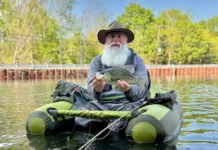
Tim Sands is a fisheries management biologist with the Alaska Department of Fish and Game, focused on the Nushagak and Togiak districts of Bristol Bay. His primary job is managing commercial salmon fisheries — mostly sockeye — while also protecting Chinook, chum, pink, and coho moving through the system.
We covered how sonar counts guide daily decisions, what happens when too many salmon return, and why king salmon are struggling statewide.
Bristol Bay produces the biggest wild sockeye salmon runs in the world. In 2022, the total return topped 80 million sockeye, even after more than a century of commercial fishing.
That scale comes down to habitat. Massive lake systems like Iliamna and the Wood-Tikchik chain provide prime rearing conditions for juvenile sockeye.
At one point in the early 2000s, returns were closer to 6 million. The rebound has been dramatic.
Tim’s day starts with fish counts.
Crews deploy sonar and tower systems in early June. Counts come in every morning and afternoon. Those numbers are compared to decades of historical data to decide whether to open or close commercial fishing.
Things move fast. When millions of fish are surging upstream, there’s very little margin for error.
It sounds strange, but too many salmon can stress a system.
If escapement is too high, sockeye can overgraze zooplankton in rearing lakes. That reduces food for the next generation and can lead to density-dependent crashes.
Tim put it simply — sending 16 million sockeye up one river isn’t an experiment anyone wants to run.
While sockeye are booming, king salmon are struggling statewide.
Returns have been cyclic in the past. The Nushagak saw strong runs in the mid-2000s, including years with 300,000 kings returning. Today, production isn’t what it once was.
There’s no single smoking gun. And what’s clear is that commercial harvest alone doesn’t explain the drop.
Managers now face a balancing act — increasing king escapement while preventing excessive sockeye escapement.
Sockeye spawn in tributaries connected to large lake systems. Juveniles rear in lakes feeding on zooplankton before migrating to sea.
Interesting twist: smaller tributary systems often produce fish that spend fewer years in the ocean. Bigger fish can struggle to access shallow spawning areas.
Life history diversity is built-in insurance. Not all fish return at the same age, spreading risk across years.
A 25-pound king is likely a 3-ocean fish. A 70-pound giant could be 7–8 years old.
The biggest concern today isn’t just total numbers — it’s the lack of older age classes. Fewer fish are staying out in the ocean long enough to reach those trophy sizes.
And no one has fully solved why.
Other regions of Alaska do operate hatcheries, primarily for pink and chum salmon. But Bristol Bay remains entirely wild.
As of now, Pebble is not permitted to move forward. But the broader conversation about habitat protection continues. Large-scale mining projects inevitably bring risk, especially in one of the last fully intact salmon ecosystems on earth.
This is one of the premier destinations for Chinook, coho, and all five Pacific salmon species in a truly wild setting.
Episode Transcript
WFS 889 Transcript 00:00:00 Dave: Every summer in western Alaska, more salmon moved through a single region than most rivers see in a lifetime, and every one of those fish represent a decision that has to be made in real time. When runs overlap, numbers surge and conditions shift fast. There’s no clear answer that keeps everyone happy, and the choice is made in those moments. Shape fisheries for years to come. That’s the world today’s guest works in. Tim Sands is a fisheries management biologist with the Alaska Department of Fish and Game, and works on the west side of Bristol Bay. His job is focused on helping manage the largest wild sockeye salmon runs on the planet, and also protecting Chinook and other salmon species migrating through the system, often at the same time under intense pressure and with limited room for error. In this conversation, Tim pulls back the curtain on how salmon management actually works in Alaska. This is the Wet Fly Swing podcast, where I show you the best places to travel to for fly fishing, how to find the best resources and tools to prepare for that big trip, and what you can do to give back to the fish species we all love. Tim Sands is here, and today you’re going to learn how fisheries managers make decisions when millions of salmon are moving all at once throughout the year. We’re going to find out how they use sonar counts and escapement goals to work in everyday practice. Why too many salmon can stress a river system. We get into some details and the life history of Chinook sockeye. It’s really unique. We get into a good story and some some good lessons. Today you’re going to learn. All right, let’s get into this one Tim Sands. You can find him at Alaska Department of Fish and Game. Here he is Tim Sands. How you doing, Tim? 00:01:39 Tim: I’m doing great, dude. How are you? 00:01:40 Dave: Good, good. Yeah. This is, uh. This is going to be a fun conversation today. I think a little bit different. We’ve done a lot of episodes around the, you know, North America talking about different species and and fish and, you know, I know Alaska’s come up quite a bit because people are it’s probably the number one destination. I think when I talk to listeners, I think if I say, what’s your bucket list, I think Alaska comes up more than anything else. So we’re going to talk about, you know, some of the species up there that you’re working on and your background there. Does that sound like a good, good plan for the day? 00:02:09 Tim: That sounds great. 00:02:10 Dave: So what? Maybe just give us a background, take us back who you work for. Um, what takes up your week, what species you’re working on. Give us a little update there. 00:02:19 Tim: Right. So I work for the Alaska Department of Fish and Game, and I am the commercial fisheries management biologist on the west side of Bristol Bay. So I manage a commercial salmon fisheries in the Nushagak and Togiak districts in Bristol Bay. And for the most part, our focus is sockeye salmon. We have basically the largest wild sockeye salmon run in the world. Comes back to Bristol Bay June July of every year. That’s the main focus. But we have other species that we also monitor and are concerned about. Sockeye is the main one King salmon, Chinook salmon, chum salmon as well. And later in the season we have an even year pink salmon run and coho salmon. But there’s a lot less overlap with the the main run of sockeye with, you know, they don’t overlap as much with coho and pink, and there’s not that much commercial interest in the coho and pink at this time. 00:03:20 Dave: There isn’t. Yeah. And that and well, this is great. I think again, I know this is going to be a great conversation because there’s lots of topics that pop up as you, you know, just give a little intro there. And one of them is just on Bristol Bay. You know, I think it’s been we’ve heard that before that it’s the largest sockeye kind of runs in the world. What is special because Alaska is huge. There’s places around the world. Why is why is it the number one place? What makes Bristol Bay so, so good for sockeye? 00:03:45 Tim: A couple different things. First of all, pristine environment, right. Our watersheds are largely undeveloped and we have lakes. We have lots of big lakes around Bristol Bay that, you know, sockeye in particular rear in lakes versus coho or king salmon that might be rearing in in flowing waters, streams and rivers more. I mean, coho obviously rearing lakes too, but but it’s much more essential for sockeye to be in a lake system. And, you know, Lake Iliamna is the largest lake in Alaska. And we have on the Nushagak side, we have the wood tick checks. So wood tick check state Park is the largest state park in the country. And each the wood River system has five lakes in it. And the tick checks which come down the Nushagak River also have five big lakes. So we have all that habitat for the rearing fish. And there’s obviously there’s other districts in Bristol Bay and they also have big lake systems. 00:04:51 Dave: Yeah, but that’s basically what it comes down to, is that the biggest part is the just the size of the lakes. There’s bigger lakes and more pristine habitat than other parts of of Alaska. And then do sockeye. How far up north? Where is the cutoff? If you head north in Alaska for sockeye runs. 00:05:08 Tim: For commercial fishing? You know, a Bristol Bay is really there’s sockeye that are other places that connect, talk. And I’m sure some of the rivers in Norton Sound, they’re actually it’s been interesting. I get to talk to a bunch of different biologists and stuff with my job. And there’s a population colonizing the Mackenzie River in Canada, and they’ve been doing some genetics on that. And there’s a significant part of the straight, the fish that are there strays, right? 00:05:41 Dave: There’s no oh, wow. No hatchery. 00:05:43 Tim: No, not not hatchery strays. They’re just wild strays. But from the genetics they’ve done a lot of them are wood River fish from right here in Dillingham. And they you know, I think the way it was explained in the talk I listened to the ice on the north in the Arctic Ocean is diminishing such that there’s a passage along the coast to the Mackenzie River and allowing, in some years, at least, for salmon to go across the top of Alaska and into Canada and, and colonize some of those streams up there. 00:06:18 Dave: Wow. And whereas in the Mackenzie is that’s where is that like where does it flow into the ocean. 00:06:24 Tim: The Arctic Ocean in the northern part of Canada. 00:06:27 Dave: Wow. 00:06:27 Tim: It flows north from Canada into the Arctic Ocean. 00:06:30 Dave: Yep, I see it. Right. And it comes out of the the Northwest Territories. It’s a huge river. So you’ve got sockeye. That’s really interesting because yeah, you have these natural stray rates, right, of fish just in natural populations that recolonize. But it’s always a question like yeah what percentage of stray. That’s amazing. And they’ve documented that a majority of those fish are coming from your area. 00:06:51 Tim: I wouldn’t say I don’t know if it’s a majority, but a significant like, I don’t know if it was ten percent or whatever, but a bunch of different populations are straying and and you know, I don’t have all the details of the paper in front of me, but. 00:07:02 Dave: Right, right. 00:07:03 Tim: But the guy that was at the research station here, uh, that University of Washington runs, was talking about it. And I was kind of proud because it was my fish. 00:07:13 Dave: Right. Yeah. That’s awesome. I think, uh, we’ll try we’ll try to research up and maybe get a link in the show notes to that paper if we can find it. And. Yeah. So I mean, there’s obviously a lot going on here. I think, you know, we hear a lot about, uh, you know, climate change and what that’s going to look like as temperatures change. And, and, you know, there’s a few big items I think up there. It sounds like you’re focused on sockeye, but Chinook is another big one. I think that, you know, I feel like Alaska, maybe people always thought it was so big that there was no way we were going to see, you know, any problems. But there’s been quite a few closures. I don’t think your area right has any closures, but you’ve probably seen those in other parts of Alaska for Chinook fishing. 00:07:51 Tim: Yeah. So Chinook or king salmon, I just call him king salmon. I don’t know, but I think coast wide and certainly certainly places in Alaska, there’s been concerns and actions taken to conserve king salmon. King salmon have been listed as a stock of concern in several places. And in fact, here in the Nushagak District, our king salmon were listed as a stock of concern in twenty twenty two. And so we just last week got finished with the Board of Fish meeting. And that was a big topic, was how do we balance protecting king salmon here and still having, you know, some commercial fishery and not over escaping our sockeye salmon to the point that we damage the sockeye runs? 00:08:35 Dave: That’s right. Yeah. Because there’s there’s quite a bit going on. Do you feel like because we’ve also heard about the the pink salmon out there that there’s, there’s so many. I’m not sure you probably have heard of this right. There’s so many hatchery pinks out there that it’s starting to affect some of the other populations, as far as I’m not sure if that’s food resource or do you know that study that or some of the research there on pinks? 00:08:56 Tim: Yes, I’m aware that there is. So ocean carrying capacity right. Yeah. Kind of the the topic and there’s I guess conflicting views on is there some kind of density dependent mortality or restriction based on competition, interspecies competition between pinks or chum because there’s billions of chum salmon also being released. But I’m not the expert on on those subject. 00:09:26 Dave: Yeah. You’re you’re not the biologist running the right. Yeah, I think that’s the thing. That’s what’s the struggle for a lot of people is that there’s so much going on. You know, it’s not just one thing. It’s not like you say, you know, it’s just whatever. But, you know, and it’s hard to put your finger on it. And everybody, like, we’re sitting here as kind of, you know, anglers like thinking, okay, what’s going on here? You know, what can we do? And all that stuff. So yeah, it’s a lot, but, um, well, there’s definitely a number of questions there. Let’s take it back a little bit on your, you know, what you focus on. Maybe you mentioned sockeye. What does that look like in your your day to day or your week to week. Are you out doing lots of meetings or are you out in the field? What is your position look like? 00:10:02 Tim: So my position is mostly in the office because I make the decisions about when fishing opens and closes. So the way things work here is things start ramping up end of May. Our crews come in and they start, they start their training and we get our sonar crew up the river by the third of June and hopefully counting by June sixth. We use sonar on the Nushagak River to count the sockeye kings and chum salmon that are coming up there early. Then we’ll have other crews deploy. We use towers on our other rivers and Bristol Bay. And so in the Nushagak District we have the wood River tower and the river tower, and we get those crews in there and counting fish. And so I get those counts every morning and every afternoon and kind of plug those into my spreadsheets. So we’ve been counting fish from towers since the fifties. 00:10:57 Dave: Wow. 00:10:58 Tim: So we have all this data, and with all the data, we can look at where we are today versus where we should be historically. And based on that comparison, we can decide, okay, we have more fish than we need at this time and we can afford to fish or we have less. But it’s a balance because like I said, we have three different river systems and multiple species. So trying to craft the right decision on how much fishing time to allow is, is what my job is. And I get other additional information. I can fly aerial surveys and look for how many fish are being caught. If the commercial fishery is open or transiting. Most of Nushagak Bay is mud, you know, it’s you can’t see through it, so you can’t really fly and see fish. You might see a jumper here or there, but as you go up the rivers, you can see kind of the rivers clear up a little bit and we can start to see fish swimming up, up the river below where we count them at. And that gives us an idea of how many fish are moving. And it helps inform our decisions. And I guess just for perspective, we’ve had over a million fish go up the wood River in a single day. Our biggest single day harvest in the Nushagak District is two and a half million fish. So things happen really fast and large volumes. 00:12:26 Dave: Yeah, seems like a challenge to keep up with it all, especially with do you find like changing since you’ve been there, changing conditions, like you said, climate change, you know, weather, stuff like that has affected made it harder or easier to to keep accurate records of like the tower. Seems like that might be the challenge. 00:12:44 Tim: Keeping the records. Is is easy. It’s. But things have changed. So, for example, when I first started in the early two thousand, we were very concerned about Nushagak River sockeye salmon. They were performing poorly and we were taking measures to protect them. And back then in the early two thousand, our average run in the Nushagak District might have been six million fish. Since twenty seventeen, our average run is probably sixteen million fish. So what caused that? I mean, my pet theory is warmer winters. Warmer winters have allowed for earlier ice out in these lakes, and our lakes are a little higher elevation here on the west side of Bristol Bay than the east side of Bristol Bay. And so if the ice goes out in May versus June, the rearing salmon have an extra month to grow and they get that much bigger and are that much more fit when they go to the ocean and survive it just a little higher rate. And that’s to me, like said, my pet theory on on why we’re getting better returns in the Nushagak District. 00:13:57 Dave: Yeah, that makes sense. So so yeah, that’s the thing. You’ve got changes in in climate. So some species are going to benefit during a certain time and others probably will not. But what about the the other species you’ve been working on. Have there been similar effects, changes from like changes in temperature. 00:14:13 Tim: Right. So like I said, we’re concerned about king salmon now. And the king salmon returns are not doing that. Well we we used to have very strong king salmon returns. But it’s always been a little bit cyclic I think for the Kings when I first started we were concerned about kings. The returns weren’t that great. And then we had like two thousand and four, two thousand six, we had three hundred thousand king salmon come back to the Nushagak River and we’re like, wow, things are great. And then it was it had a couple down years, but for the most part they were pretty good returns. Lots of sport fishing opportunity. And you know, you hear stories of guys going out for guys in a boat, catching one hundred fish in a day and being really happy. And and now, of course, for whatever reason, we’re just not getting the same production from our escapements. And it’s not, you know, if it was just the Nushagak District, we’d say, okay, it’s something we’re doing here locally, but it’s across the state. And so that points to a bigger, a bigger thing, which is the ocean. 00:15:19 Dave: Yeah. The ocean. So you think that basically it’s changes in ocean conditions are affecting. I mean, do you kind of have that nail. What’s your guesstimate on on that and what’s going to happen as we look ahead the next ten years. 00:15:31 Tim: You know, hopefully like I said, it’s just a cyclical thing. And we’re at the down side of the cycle and it’ll pop back up. I just don’t know enough about oceanography and everything else to point a finger. There’s no smoking gun. Lots of people, you know, trawlers are are an easy target for people. But but really, what’s harvested in the trough fishery or bycatch in the trough fishery does not come close to what’s missing from western Alaska. King salmon runs. If you take the Yukon-kuskokwim and Nushagak rivers, there’s five hundred thousand kings missing. And the trawlers aren’t catching anywhere near that. So that’s not the only problem. I mean, I’m not saying it’s a problem or not, but but that doesn’t explain. That’s not the hole in the bucket where everything’s going out of. 00:16:21 Dave: Right. Yeah. If you remove trawlers one hundred percent, that’s not going to save the Chinook. That’s not. You don’t think that’s going to bring back. I mean, it’ll help, but it’s not going to save the run back to where it was. Right. Three hundred thousand. Yeah. 00:16:32 Tim: Right. So competition hatchery fish. Some other people are pointing the finger at orcas. I just don’t know. I mean, I know that we have a problem here, but we’re not, you know? So commercial fishing in the Nushagak District started in eighteen eighty four, and those runs have coexisted with commercial fishing since then and been fine. That’s so many life cycles of king salmon and sockeye salmon. And I think that’s why we claim sustainability is because if you’ve harvested species for that many life cycles and you still have strong runs, that’s sustainable, right? So what changed recently to make it less good? I don’t know. But again, I would argue that it’s not the commercial fishery in the Nushagak District. 00:17:21 Dave: Right, right. Yeah. And it seems like the areas around Alaska, you know, the Togiak, the Nushagak, I mean, those are still open, right? Is there are there other places that are still up north, like what are the places that you can still fish for Chinook? Are there more open than, than are closed now? 00:17:36 Tim: Yeah. I mean there’s there’s restrictions in places, you know. But I think most places are open and then the department makes in-season decisions if they’re going to restrict something. You know, I think maybe some of the places around Kodiak are closed. 00:17:52 Dave: But yeah. And the Kenai. Right. The Kenai Peninsula, that whole area. 00:17:55 Tim: Yeah. I’m I’m not sure. Um, I was fortunate enough I fished on the Kenai in the late eighties when I, I worked, I started fishing, working for fish and game and in eighty eight as a volunteer. And, uh, my boss, then Nick Dudiak took me fishing on, on the Kenai, and I got a couple pictures of my wall holding up a sixty four and a seventy two king from back then. 00:18:20 Dave: Crazy. Yeah, that’s. Do you guys still see? Do you see changes in, um, size of fish, or is the. Do you still get some of those big. I know you’re not seeing one hundred pounder. You’ve hear these stories about some of those old fish. But what’s changed there is that just because the the harvesting is taken out the big fish over the years and there’s smaller ones left. 00:18:37 Tim: There’s definitely been a change in size. And what pressure caused that to happen again? People point the finger at orcas or commercial nets or the sport fishing industry harvesting the trophy fish. You know, everybody’s got a theory and I don’t know. 00:18:56 Dave: Yeah, it’s kind of everything. That’s the thing. I think that’s what’s the hard part about it, is that it’s not just one thing. Right. And I think people tend to point fingers and. Right. Instead of thinking like, hey, everybody’s part of it. Right. Right. It’s going to take everybody together. So what about when you look at the Togiak versus the Nushagak in that area? Are those populations all coming from very similar areas? Are they if you look at the genetics or just the life history, are they pretty pretty similar in that area? All of the Bristol Bay. 00:19:24 Tim: Yeah. I would say so. I mean, king salmon don’t lend themselves to genetic distinction like sockeye do. And there’s certainly, you know, the togiak is more likely connected to Yukon or Kuskokwim and connect. And because there’s certainly, you know, for the potential for headwater capture. But even the upper Nushagak, I guess, is potentially kind of abuts the Yukon Kuskokwim drainage a little bit. Oh, wow. You know, if you go way up to the top end of the Nushagak, we were just having this conversation last week that there’s there’s a lot of places where, you know, an ice dam here or something could or a beaver dam or something else could change the way, uh, something drains. 00:20:12 Dave: That’s amazing. Yeah. You don’t think because it’s so big, you know, you’re talking however big. Alaska, right? Twenty million acres here or there. But yeah, it’s. These are kind of connected. So the togiak, if you head up north and and eventually the headwaters are what it sounds like are near the headwaters to the Kuskokwim is kind of what you’re saying. So there could be overlap species that historically are evolutionarily were coming from the same drainage. 00:20:35 Tim: Right. And I know we know that for the connect doc, there’s one of the tributaries from the Togiak is right near the connector and the connector. Sockeye salmon have been been much more productive of late, possibly because of, you know, a little bit warmer climate, kind of easing more into the Goldilocks zone than they were before. 00:20:59 Dave: Right. No, it’s it is interesting. You got a lot going on up there. And and so the sockeye maybe you can talk about that a little bit because that sounds like that’s one species you’re working a lot on. Can you explain the life history of sockeye as they come back and then, um, you know how old they are and that, you know, kind of a life cycle for them? 00:21:17 Tim: Sure. So and it’s interesting because our sockeye here on the west side of Bristol Bay are sockeye, are predominantly one threes. So the adults come back and really starting here mid June. And then our fishing season probably starts last week in June and goes till like the twentieth or so of July and really starts winding down pretty quick after that. So mid-June till end of July, middle of August. There’s stock guy around. I think they do most of their spawning towards the end of August, and for the most part, they will either spawn in a river adjacent to a lake so that the juveniles can move into the lake for rearing. We have some beach spawning and some of our lakes, but you know, like on the wood River system, there’s a bunch of small streams that come into the lake, and then we have the Agulla and the Agulla pack that are the big rivers that transition between the big lakes. And so you have different kind of life history. Sockeye. The so they come in, they spawn, and then the juveniles come out of the gravel in the spring and start rearing, and they’re rearing the lake and they’ll rear for a whole year. So there are one check. Sockeye fresh one fresh water check. But they’re two years old because they were put in the gravel in August. On January first. They turned one year old. Then they’ll come out of the gravel. They’ll feed in the lake, eating phytoplankton or zooplankton in the lake all summer. And then they’ll stay through the next winter. Then they’ll turn two years old on January first. But they only have one scale check, because when they were an egg, they didn’t have a scale. And then they’ll go out to the ocean in the spring. After the ice goes out, they’ll swim around the ocean for two or three years and then come back to spawn where they spawn. But if you were born in Mission Creek or Icy Creek, a very small creek, you’re more likely to only stay out in the ocean for two years. Because if you come back as a really big three ocean fish. There’s a gravel berm in front of that creek that you’re going to have to get over, and. And you could high center on that. 00:23:38 Dave: Oh, wow. 00:23:38 Tim: And then when you’re in this little creek, you’re going to be sticking out of the water, and it’s going to be harder for you to move around. And when the bear comes along, he’s going to see the one that’s sticking out. Oh, I’ll take that one. 00:23:49 Dave: Right. 00:23:50 Tim: But if you want to spawn in the walk or the pack, you need to be a much bigger fish to dig out your red and get your eggs buried in the gravel. So there’s different life kind of strategies for these different fish. And of course, as the parents, you know, some of your fish are going to come back as three ocean fish. Some is two ocean, some is one ocean because you don’t want all your progeny just come back in one year. And there’s a flood that year, or it’s super hot or something else, then you’ve not been successful. So so you’re still going to have a mix of these different age classes coming back to the river regardless of where they were born, but predominantly if you were a. To a one year in freshwater, two years in the ocean, a four year old fish and you spawn in Mission Creek, then most of your progeny are probably going to come back as what you were a four year old, one, two. And then on the east side they have a lot of two twos or two threes. So those fish stay in freshwater for two years because they don’t quite get big enough to smolt and go out to the ocean. So it takes them an extra year to get big enough to really be fit enough to go to the ocean. And those populations are kind of somewhat variable as well. As far as some years, we see a lot of two checks and some years we don’t. 00:25:15 Dave: Yeah, there’s a lot going on there. And then is it similar for if you take it to Chinook on their life history because they can be a little bit older. Right. What does that look like. Um, and I guess could you look at, you’re talking about kind of the Bristol Bay. Would that be similar for the Togiak area? The sockeye you just mentioned? 00:25:31 Tim: Yes. And Togiak sockeye are also predominantly one threes. Just because they have they have a bigger river to go up. You know it’s. 00:25:39 Dave: Yeah, it’s a big river. 00:25:40 Tim: And it’s, it’s a long river. And they want to get all the way up to the lake and. Yeah. But so for Chinook same thing. They’ll come in for the most part I think they spawn in the rivers and the tributaries. They rear for a year in fresh water, go out to the ocean and generally speaking they’ll stay out longer. And that’s that’s kind of what we’re missing now. Right. Is so, you know you see a twelve pound king and that’s probably a four year old fish three or four year old fish. To get to the seventy pound mark you got to be like seventy years old. So you’ve had to been in the ocean for five or six years. And we’re not seeing those fish staying that long. Is that because there’s too much competition or being? Those are the ones that Yorkers like to pick off. Or, you know, it’s just too big a black box to figure some of those questions out right now. 00:26:34 Dave: We’ve heard many of the stories on this podcast. Togiak River Lodge is one of the great destinations for swinging flies, for Chinook, stripping for coho all day, and unwinding in a lodge right on the riverbank of the Togiak River, with access to all five salmon species plus rainbows, Dolly Varden and more, Togiak offers a true Alaskan experience. Picture over thirty miles of river, seasoned guides, high quality boats and low fishing pressure. It’s fly fishing. Alaska at its best. I’ll be heading up this summer, so reach out to Jordan and the crew to see what dates they have available this year. You can learn more right now at fly. That’s Togiak. Alaskan fly fishing like you’ve always dreamed about. How do you guys how do you manage that when you’re, you know, we don’t know quite what it is, right? It’s all this stuff. You mentioned it, you know. How does that affect how you manage the. You know, you’re focused on the commercial. If it is the some things we can’t like orcas. Right. There’s some things we can’t. Or climate change. How do you adjust looking ahead at, you know, seeing what you see now. 00:27:43 Tim: Well so our management is all about escapement. And we have escapement goals for different species on the different rivers. And obviously most of our escapement goals are for sockeye. That’s mostly what we manage for. And we re-evaluate these escapement goals and change them over time. Obviously we’re king salmon are struggling now. So we’re in this kind of conflicting situation where we’re trying not to let too many sockeye go up the river, but still get more kings up the river because we’re not quite hitting our escapement goals on king salmon. But we also are struggling with the sonar. Worked great when there was five hundred thousand fish going up the Nushagak River. Last year we had three point two million fish going up the river, and it’s a lot harder to count fish when when the sonar gets kind of overwhelmed. So anyway, like I said, we’re trying to find the right balance of getting as many kings up the river as we can and still not letting sixteen million sockeye go up the river and destroying things that way. 00:28:43 Dave: Yeah. How does that work? So the sockeye, you can actually have too many fish going up into the system, into the river, affecting other. Is that what you’re saying? Other populations or other species? 00:28:52 Tim: Yeah. I think at some point you do get into this density dependent mortality of, you know, if right now our escapement goals are based on what we think is sustainable for each species, if you put so many sockeye up into a system that they will overgraze the standing stock of zooplankton, then there’s nothing for the next generation to eat. And so you have a crash, and that’s a bad outcome whether or not we don’t know what the limit is. But again, sixteen million sockeye up to Nushagak is we don’t want to do that experiment. 00:29:33 Dave: Right. That’s a lot of fish. I mean, right, the biggest. Right. Like you said, the biggest run. There’s not. This is the biggest place in the world, right? You’re not finding millions. Where would be the next. What would be number two? Take Bristol Bay out as far as sockeye. 00:29:45 Tim: Wow. I have no idea. I don’t know enough about, you know, Russia or. Right. I know there’s some places over there but but you know, you look around Alaska and Cook Inlet. I, I heard Cook Inlet maybe had a ten million sockeye run for all of Cook Inlet this year, but we were at over fifty. We were at fifty seven million. 00:30:05 Dave: Geez. 00:30:06 Tim: And, you know, we set the record in twenty twenty two with eighty million sockeye in Bristol Bay. 00:30:12 Dave: eighty million fish, eighty million fish going into all, coming back into Bristol Bay tributaries. 00:30:17 Tim: eighty million sockeye. 00:30:19 Dave: Just sockeye. 00:30:20 Tim: Just sockeye. 00:30:21 Dave: Wow. 00:30:22 Tim: And after over a hundred years of exploitation, we set the record in twenty two. 00:30:26 Dave: Right, exactly. Well, hopefully, like you’re saying, hopefully the, uh, the Chinook are on one of those cycles. I guess that thing we’ve talked about that with steelhead, which you don’t have steelhead. Right. And you’re in that area. It’s kind of further south. 00:30:37 Tim: Correct. Just I think technically you got to go down on the Alaska Peninsula for steelhead. We certainly have some char that are anadromous. And I don’t know if if a rainbow sneaks out and goes to another river if that counts or not. But no technically no steelhead. 00:30:54 Dave: No steelhead. Yeah. And that’s something that we’ve talked about quite a bit. We’ve had you know, John McMillan’s been on talking about steelhead runs because it’s similar thing. They’ve been up and down. It feels like we’re in this place. That’s a tough time right now because there’s lots of closures and people don’t quite know what’s going on. And you know, and you’re hoping like you said, what’s that curve doing. You know, is it kind of going up and down but on a downward trend or, you know, and then if you hit those lows, you know, is that kind of hitting extinction in some of these populations. Right. That’s kind of the big questions. He you know, he talked about which could be similar for Chinook. Right. If it is hitting some of those low end, you’re kind of hoping, trying to keep it above that level right. Of not hitting, you know, any extinction or whatever. 00:31:35 Tim: Exactly, exactly. We definitely don’t want that. And I feel like we’re not approaching that here on the Nushagak. 00:31:43 Dave: No, because people are still fishing. I mean, we were that’s the thing. I fished a few places in Alaska. I fished the Yukon, the Kuskokwim system, quite a few years ago, and it was pretty amazing. And then just recently, we fished the Togiak for Chinook and we were catching fish in there that were what they call them. I think they call them Super Jacks that are kind of the smaller, up to fifteen pounds or something like that. And then you have the fish, the bigger fish that are I guess over fifteen. Fifteen to thirty or something like that. But what is the fish in the Chinook you mentioned? The ones that are coming in that say are that twenty pounds or above in size? How old would that fish be? That twenty five pounder. 00:32:19 Tim: I would say that’s a three ocean plus, I think. So a five year old or older. 00:32:26 Dave: And do the Chinook when they come in, or the Kings when they come in. When is the peak spawning for them up in that system? Togiak in that area. 00:32:33 Tim: We would do our aerial surveys for spawning in the first week of August. On the Nushagak side, and probably a week or two later in Togiak. It’s been a long time since I’ve flown the aerial surveys. Other people are flying them now in the Nushagak, but we don’t have the resources to do togiak anymore. And it’s hard because really the US Fish and Wildlife Service did some some research and tagging and stuff over there because that’s on the refuge. And I think they found that a lot of the fish spawn in the deep water in the lower river, and you just can’t you can’t see them. 00:33:09 Dave: Oh, wow. Yeah. So they’re spawning in that main stem big. The big water. 00:33:13 Tim: Right. And even on the Nushagak there’s a lot of deep water in the main stem that I think is is spawning habitat for fish there. And aerial surveys can be helpful, but they’re not the end all, be all. You’re not going to see every fish for sure. 00:33:29 Dave: Okay. So they’re spawn and they’re spawning for the most part. So roughly just in the Bristol Bay tributaries in the August September. So they’re kind of I always get to that. Are they more of I guess is that more of a like spring Chinook type life history? Are they how long are the fish, the juveniles staying in in the fresh water after they hatch out? 00:33:47 Tim: They hatch out in the following spring and stay for through the next winter and then out migrate the next spring. 00:33:55 Dave: So they do. So they’re kind of like so they’re technically they are kind of like a spring. If you had to compare them a spring like down south. Right. Lower forty eight kind of that spawning August, September in that range as opposed to later. And they’re not spawning in November. 00:34:07 Tim: No. 00:34:08 Dave: It’s early. Yeah. It makes sense because Alaska they’re not going to be fish. It’s getting it’s winter time right up there in November. Things aren’t conditions aren’t good. So okay. And and so it’s the one. And then you said so that twenty twenty five pounder is probably a three ocean fish, maybe three plus somewhere in there. 00:34:21 Tim: Yeah, maybe four ocean. 00:34:23 Dave: Okay. And then that seventy pounder you caught back in the day, how old was that fish? Guesstimate or rough. 00:34:29 Tim: So probably a seven year old fish. Five years in the ocean. Maybe. Maybe an eight year old. Six years in the ocean. 00:34:35 Dave: Wow. So that makes sense to why Chinook, you know, would be more challenging, right? Because they’re out there longer for all sorts of predators and harvesting. Right. It probably makes it harder. And they’re bigger. So they’re probably sticking out more to potentially. And and the meat too. Right. I guess you go back to that like what’s your the best eating I feel like sockeye has. Maybe it’s the marketing thing. But you know sockeye have always been that fish. That’s oh the prime salmon. What do you think is the best eating salmon out there. 00:35:01 Tim: So we have this debate. My wife is all in on sockeye. For me personally, I say a fresh king is better than a fresh sockeye. But a frozen sockeye is probably better than a frozen king. Canton Kings. Uh, the locals here do. They call the three day smoke and they can it with jalapenos and that. Oh, wow. Probably the best thing there is. 00:35:25 Dave: Dang. Where can you get some of that? If you want to get some of that smoked salmon, those, uh, jalapeno style is everybody is that pretty easy to find. 00:35:33 Tim: Well people making themselves. And since it’s homemade you can’t really sell it. So you gotta you gotta come visit somebody. 00:35:39 Dave: There you go. Okay. And then what about coho? Because coho are a pretty good right? Why are they not getting the love as much as, say, Chinook and are the kings and sockeye? 00:35:48 Tim: Well, as far as commercial fishing, the cohos been interesting because when I first got here, there wasn’t a lot of interest in coho and things would taper off really before they started up. And then there was a while that that one of the processors really wanted pinks. And so when you’re fishing for pinks, you’re also catching coho. So there was more interest. But it’s really volume. I mean, Bristol Bay is a volume fishery and the processors are set up to handle millions, you know, combined a couple million fish a day. And when you’re catching twenty thousand, forty thousand fish a day, things just don’t pencil out operations wise. So that’s why things shut down at some point later in the season. The volume is just not there and they pull the plug on their operations. One smaller operation might make a go of it. We caught coho and frozen them and and had, you know, they’re fine for us, but yeah, maybe market wise they’re not as good frozen. And then also, if they’re trying to do them fresh you gotta they need a little bit better handling. And they I guess they get soft a little bit quicker than sockeye do. As far as if you’re trying to just keep them in a fresh market and you’d have to fly them out to get them out of Bristol Bay fresh. So again, you know, it’s not really my lane. 00:37:12 Dave: Yeah. Yeah. That’s not your you’re not a special specialist in that. 00:37:15 Tim: But I’ve tried to build an understanding over the years just to. 00:37:19 Dave: Yeah. To be able to talk. Yeah. Understand a little bit. Right. Yeah. It’s. And then the pinks. Is that a species that you’re not really focusing on in the, in your kind of position there. I mean because it’s interesting with the life history. Right. The two and two. Can you talk about that a little bit. Why they have that life history. 00:37:35 Tim: Right. So so pinks are interesting in that they return, they spawn. So our pink run starts third week in July and goes till second week in August. For the most part, probably lots of we can have big runs. We haven’t you know, since I’ve been here we’ve, I think one year we harvested a million and had over a million escapement in the Nushagak, but most years there’s not a market. So pinks come in, they spawn, they come out of the gravel in the spring, and they go right out to the ocean as fry. And they spend one year in the winter and come back the next year, so they’re two years old. They spawn in twenty twenty two. They come back in twenty twenty four. In Bristol Bay we have an even year. Pink run. In other places in the state they have odd year pink runs. And when it’s an odd year we’ll see. You know a few thousand pinks versus million. 00:38:31 Dave: Oh right. 00:38:32 Tim: An even year. Right. So and the coho are interesting too, because they seem to do better in pink years. So we have our coho are basically a four year cycle. They’ll come in spawn, they’ll stay in fresh water for two years rearing. Then they’ll go out to the ocean, spend one year in the ocean and then come back. So they’re four years old almost exclusively. And that that changes as you move along the coast in Alaska. You know, other places. Maybe they’re only spending one year in freshwater. I’m pretty sure all coho are one year in the ocean. I went down to a place in B.C., and there there coho would, I think, spawn. The fish would come out of the gravel in the spring, and they’d be heading out to the ocean in the fall and not not even overwintering in freshwater. So I think there’s a whole gamut or continuum of life histories for coho. But they’re voracious. 00:39:31 Dave: That’s right. They’re aggressive. They’re the ones that are. They’re going to follow you, strip. You follow your fly into your feet, you know, when you’re out there. 00:39:36 Tim: Yeah. 00:39:37 Dave: And then why is it, why the two year life history? Why do they have that? 00:39:41 Tim: That’s the way they were made. 00:39:42 Dave: That’s it. That’s just what they. Yeah. 00:39:44 Tim: Right. You know, so chum and pinks, they don’t rear in freshwater. They spawn. The eggs come out of the gravel in the spring, and those fish go right to the ocean as fry and compete. And then chum will stay. They’ll stay in the ocean for up to five years even. But pinks one year and back. And that’s just the strategy they adopted evolved to to they figured was successful. 00:40:08 Dave: Yeah. It must have something to do with the the size, because they are the smallest of all the fish of all the five salmon. Right, right out there. Nice. And then chum of course the, the which aren’t quite as meat wise. Right. Because in freshwater they change pretty quick. But if you catch them in the commercial fishery or chum just as good, you see them called keta salmon right down at the stores. They’re not called chum or but is the meat is good if you catch them in the commercial. 00:40:34 Tim: Yeah. I’m sure you know it’s different flavor. And I know some people that absolutely like it. I don’t prefer it. I prefer sockeye or King, but somebody I work with is like, oh no, I make chum in the blanket. And she really likes that. And yeah, I think it’s, uh, not as strong a taste. Maybe chum eat a lot different in the ocean than sockeye. Do you know, sockeye are the reason why sockeye have that really red flesh is because they’re eating those mysids and euphausiids and shrimp like creatures that have, you know, that’s what makes a flamingo pink. It’s what makes a sockeye red. Is is the oils the carotenoid oils from the creatures they’re eating? Whereas chum salmon eat a lot more gelatinous kind of prey and and are just don’t have the same colors as the sockeye does. 00:41:26 Dave: Yeah. It’s cool. There’s definitely a lot to all of this. I think that, you know, for people listening, you know, it’s um, I think sometimes we get worried. We’re kind of thinking we love all these species. We want to see them, you know, we want to be able to go fish for them, you know, kind of selfishly. Right? We want to make sure that fish aren’t going extinct, but just longer term, you know, bigger picture. Like if fish are going extinct, you know, that’s probably a bigger, um, telling us something about, you know, something else is going on. Right. And I feel like sometimes it doesn’t feel like there’s much we can do. What would you say for people listening, you know, if they could? Is there anything people can do to help understand more of, you know, whether it’s sockeye or Chinook downturns and runs? Or what do you think? Are you are you more optimistic or pessimistic? Kind of where you sit right now. 00:42:12 Tim: I’m always an optimist. 00:42:13 Dave: Because you’ve seen it. You’ve seen it with Saka, you’ve seen sockeye, you’ve seen it come back to sixteen million fish from where it was. Right? 00:42:20 Tim: Right. And even kings, you know, like I said we there were down cycles. If you look if you look at the data you can see how things have gone up and down. I mean, Bristol Bay salmon in the early seventies for sockeye salmon. I think the total run for Bristol Bay was less than five million fish. And then we had eighty million fish in twenty twenty two. So I’m an optimist. But people can do I don’t know I’d say buy wild salmon by farm salmon. 00:42:48 Dave: Are there hatchery salmon in uh, in Alaska? 00:42:52 Tim: There are hatcheries in Alaska. There’s none in Bristol Bay. The hatcheries are, you know, like Prince William Sound has some. 00:42:58 Dave: Hatcheries for Chinook and all the species, all five. 00:43:01 Tim: You know, so there’s. 00:43:03 Tim: Fish hatcheries that do king salmon. But there are other hatcheries that are commercial, and they’re they’re doing pink and chum for the most part for the commercial fishery. But there’s you know, I don’t know if you’ve ever heard of the fishing lagoon on the spit. It’s now the Nick Dudiak fishing lagoon. So they when I first started, they were just getting that going in the late eighties. And basically there’s, there’s a lagoon that’s a tidal lagoon on the Homer Spit and they stocked that with it’s a release point for king salmon. And I think they do coho now as well. So it’s a release point. And back then we were holding the Kings for a few days and we’d go out and feed them, and then we’d let them out of the tent and they’d go out to the ocean, and then they come back, and then you could catch king salmon right there on the Homer Spit. Uh, how about Cove? Lagoon was another place I worked where we were. Had big net pens, and we were rearing these these fish. And then some of the the lakes I worked at were for sockeye for kind of commercial production of sockeye. You’d have a lake that was no longer the fish couldn’t make it up to the lake because a lot of it was earthquake related, actually. So the earthquake changed some of these lakes and anyway, but there was a lake that could support these fish for rearing. And then they, the fish would go out to the ocean and come back, and then they could have a fishery for them. But the fish that are stocked are hatchery fish. 00:44:33 Dave: Yeah. So that’s not in Bristol Bay. None of that’s going on in Bristol Bay. 00:44:37 Tim: None of that’s. 00:44:37 Tim: In Bristol Bay. There was a hatchery in Bristol Bay for a couple, three years. 00:44:41 Dave: Oh, there was a sockeye. 00:44:43 Tim: Yeah, but that was in the eighties and it hasn’t operated. Like I said, I think maybe three or probably a little bit longer than that because I think they started getting some returns. But they had they had it just didn’t work out and it wasn’t feasible. 00:44:56 Dave: So yeah. Yeah. That’s that’s great. Yeah. The you mentioned, uh, you know, we’ve talked a little bit today kind of about some of the I kind of go back and think of the four H’s you know, of this is more lower forty eight but, you know, hatcheries harvesting hydroelectric and and habitat. Right. Of those are maybe the four that if you had to summarize the impacts. But habitat is one that’s not in Alaska because it’s so pristine. Right. You do hear we’ve heard about the um, you know, kind of the Pebble Mine or, you know, kind of the mines and stuff like that. Is there is there a curtain up update on that? I know I think one of them, because there’s a big one, right, that was looking at Bristol Bay, is that one kind of not going anymore. 00:45:35 Tim: So Pebble Mine was proposed in the Bristol Bay watershed and on actually Nushagak and kind of Creek watershed a little bit. And right now it’s it’s not approved. It’s not I think any new legislator or whatever can come in and make changes to what’s been decided. But for right now, there’s no permitting happening. And it’s not going forward. 00:45:58 Dave: It’s not going forward. Okay. Yeah. But that could like you said, that could change with different politics that come in and it might go for do you think if it did go forward, is it are all these so different that you don’t know or is there would there be definitely impacts on on the watershed? 00:46:12 Tim: Yeah. You can’t you can’t build a mine like that and have no impact. I actually went on the Fraser River and went to see one of the mines in the Fraser River, and, and it was very interesting and enlightening. You know, I think once a project like that gets started, it’s not just one and done. What the mine we went to on the Fraser River, they had started this mine open pit mine. I can’t remember the name of it. Um, but but anyway, then the price of copper, I think it was the copper mine price of copper tanked. And so they they just shut the mine down. Years later, the price comes back up. And so now, now it’s three pits. And they’ve stored all this, you know, when you do a mine open pit mine like that, at least, at least this, mine that I went to, I’ll just keep it for that. there’s different levels of or there’s some that absolutely. We’re going to. Process right now because it’s higher value. There’s some that it’s not worth processing it this many cents a pound. But if the price goes up it might be worth processing. So they kind of store that. And that’s what happened at this mine in Canada. They had this all this kind of or lower grade or stored. And then it started getting acid mine drainage because it was just sitting out there and it was kind of a problem. 00:47:30 Dave: So it starts leaching, essentially leaching or even it could kill like just the life in the stream if something happened. 00:47:36 Tim: Right, right. And so so it’s one of those things that you gotta not. 00:47:41 Dave: Good. 00:47:42 Tim: Very watchful and not good. Yeah. So I’m, I’m very skeptical that what’s said on paper is going to be what happens in reality. And it would it would work out in the long run. 00:47:53 Dave: Right. Yeah. That’s what we’ve heard. That’s what we’ve heard. I think with the Pebble, that was some of the talk they were saying, you know. Yeah, this is just a, you know. No, no big deal. Just a little mine. This is small, but I think it’s a slippery slope. Right? And it becomes like you’re saying this massive thing and then you have some, like, you know, like we just had, we just had a huge one hundred year flood, and all of a sudden you get one hundred year flood event and it rips through. And all of a sudden now that mine, all the tailings are in the stream and, you know, just wiped out an entire population of sixteen. You know, like you said, it’s you can see how it could go down that route. So I feel like I feel like those places that are the best, you know, you got to protect our best, you know what I mean? Like, there’s going to be some impacts. Yeah. It’s a tough one though, because you’re kind of you probably don’t find yourself because you’re in the commercial side, but are you in the middle of that conservation environmental discussion? Is that something you’re kind of on the outside of a little bit. 00:48:41 Tim: I mean, just because of my position as a state employee, I’m not allowed to be super vocal, right? 00:48:48 Dave: Right, right. Well, this has been cool. I think that, um, there’s definitely a lot of information here. It’s been great here in just the background. I think people like I said from the start, people want to go up to Alaska. They want to just have an opportunity to fish and even not even kill fish. You know, I think fly fishing, there’s places you mentioned Canada, you know, the the Skeena for steelhead has been catch and release for a long time. Do you feel like that might be something eventually that comes up to I know there’s lodges. We’ve, you know, been we’re working with here that are changing from kind of a killing fish to more catch and release. Do you think that could help things if more places go to that? 00:49:22 Tim: Yeah, especially with the downturn in king salmon. I mean, obviously it’d be nice to have a king salmon to take home and eat or whatever, but there’s there’s some debate about what the catch and release mortality is. We just had like I said, we just had the Board of Fish meeting last week. And I know one number that our our department did a study on, and they came out with one number, but there was some other people citing a much higher number for catch release mortality. And so I don’t know what the answer is there. 00:49:51 Dave: Yeah, that’s a harder one. 00:49:53 Tim: But yeah. 00:49:54 Dave: Cool. Tim. Well, I think we can leave it there for today. We will send everybody out to, I guess, the best place, probably the website. Uh adfgvx. We mentioned the phone number at the start if they have questions for you. But yeah, I want to thank you for your time today. This has been great. And for all the good work, the hard work you’re doing out there, definitely appreciate that. And and for shedding some light on on us and getting us informed. So we’ll look forward to keeping in touch with you. 00:50:17 Tim: All right. Yeah. Sounds good. If you have any other follow up questions, let me know. And once you, I guess, make this live, if you send me a link, I could go find it. 00:50:24 Dave: Yeah, we’ll do that. 00:50:25 Tim: All right, I appreciate it. 00:50:28 Dave: Hope you enjoyed that one with Tim. Uh, please reach out. Uh, we mentioned before, if you want to reach out to Tim, get any, uh, any questions answered, you can do that right now. Uh, I want to also let you know if you’re interested in, uh, jumping in to our next trip up to Alaska. Check in with me, Dave at com. Let me know. And a couple shout outs before we get out of here. First, we got a big episode coming on next week. Uh, John Shuey is back. He’s going to bring his magic. We’re going to be talking about the history of Spey. spay. We’re going to be we’re going deep back. We’re going back across the pond. We’re going to hear where it all got started. We’re getting into to some spay. Also want to let you know we’ve got a big event that just launched the Teton Valley Lodge giveaway. If you’re interested in winning a trip to go fish eastern Idaho to one of the sweet Places, the Sweet Lodge is out there Teton Valley Lodge. It’s going to be a good one. Check in and and let me know. Uh, that’s all I got for you. Uh, hope you’re having a good, uh. Good evening. Uh, it’s a great evening here. It’s getting late, but I’m looking forward to tomorrow, and we’ll hopefully see you on the river. Uh, we’ll talk to you then. Have a good day. 00:51:32 Outro: Thanks for listening to the Wet Fly swing Fly fishing show. For notes and links from this episode, visit Wet Fly Comm.
Bristol Bay is proof that large-scale, wild salmon systems can still thrive.
But even here, nothing is automatic. It takes daily monitoring, hard calls, and a constant balance between opportunity and conservation.
If you care about fly fishing for sockeye and king salmon — this conversation gives you a deeper look at what’s really happening behind the scenes.