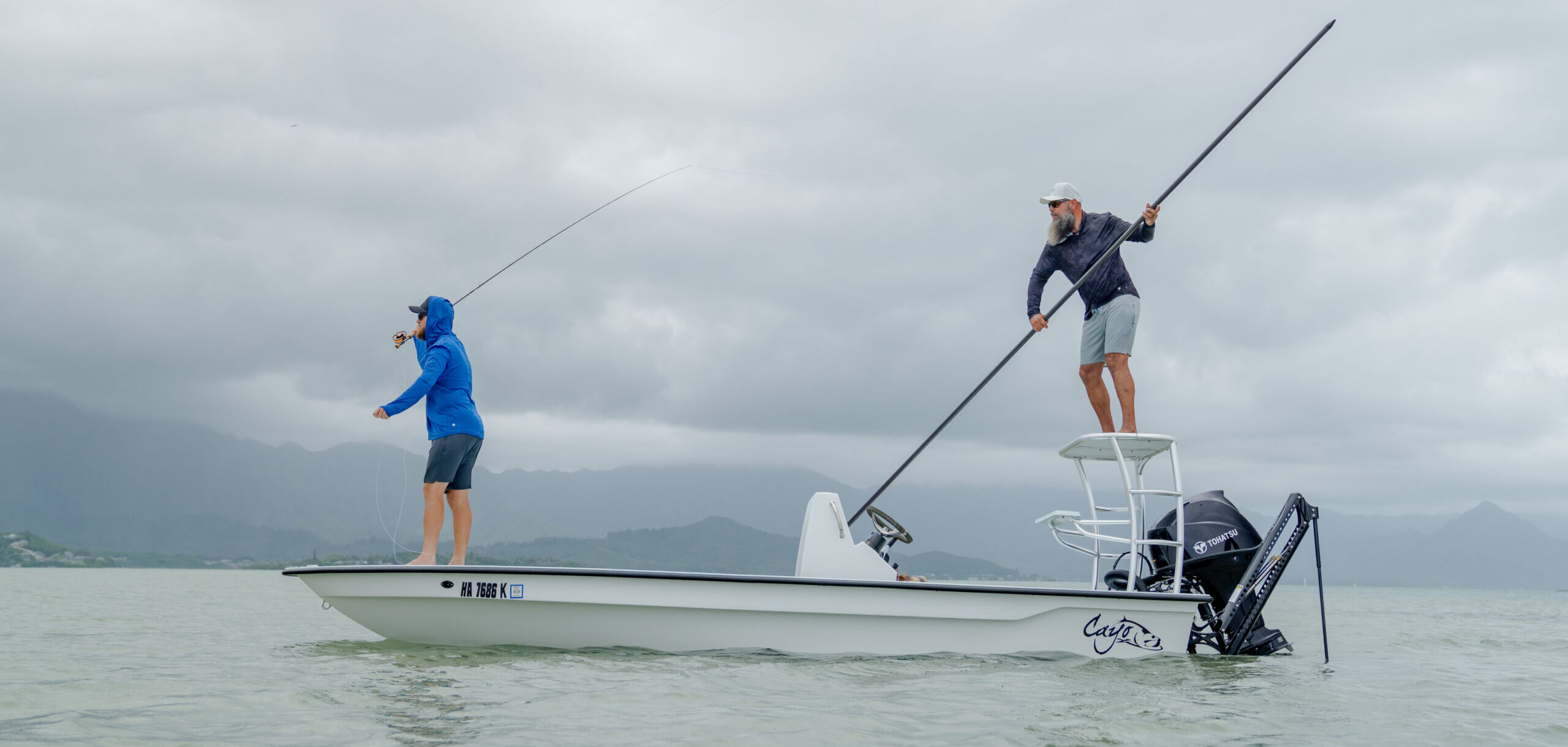
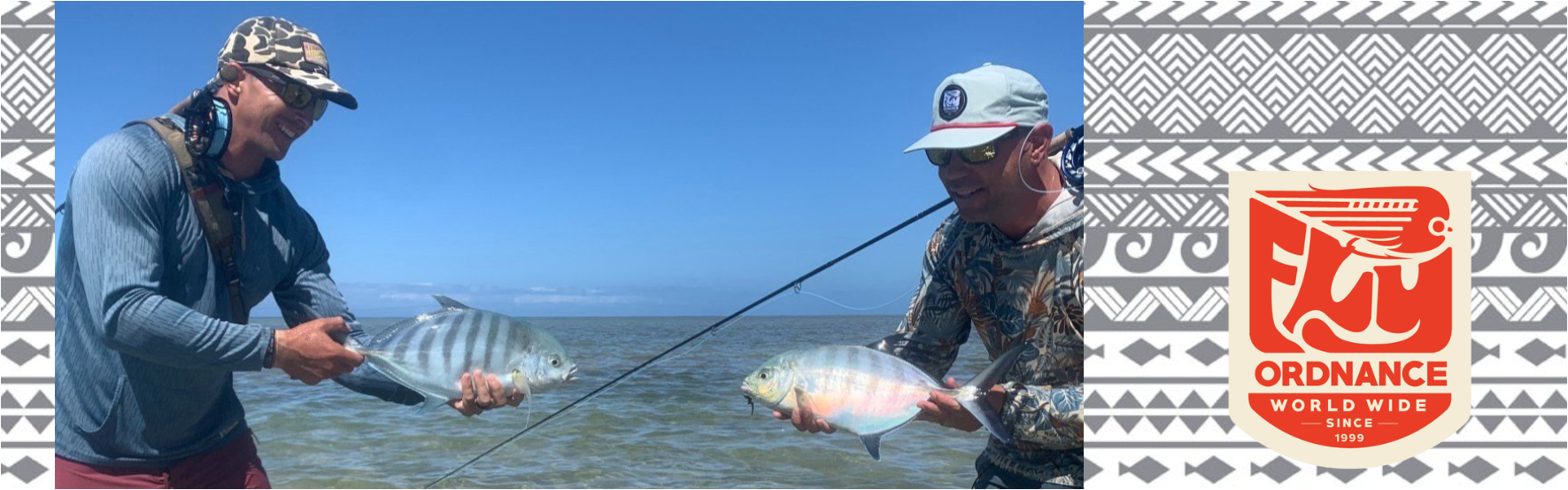
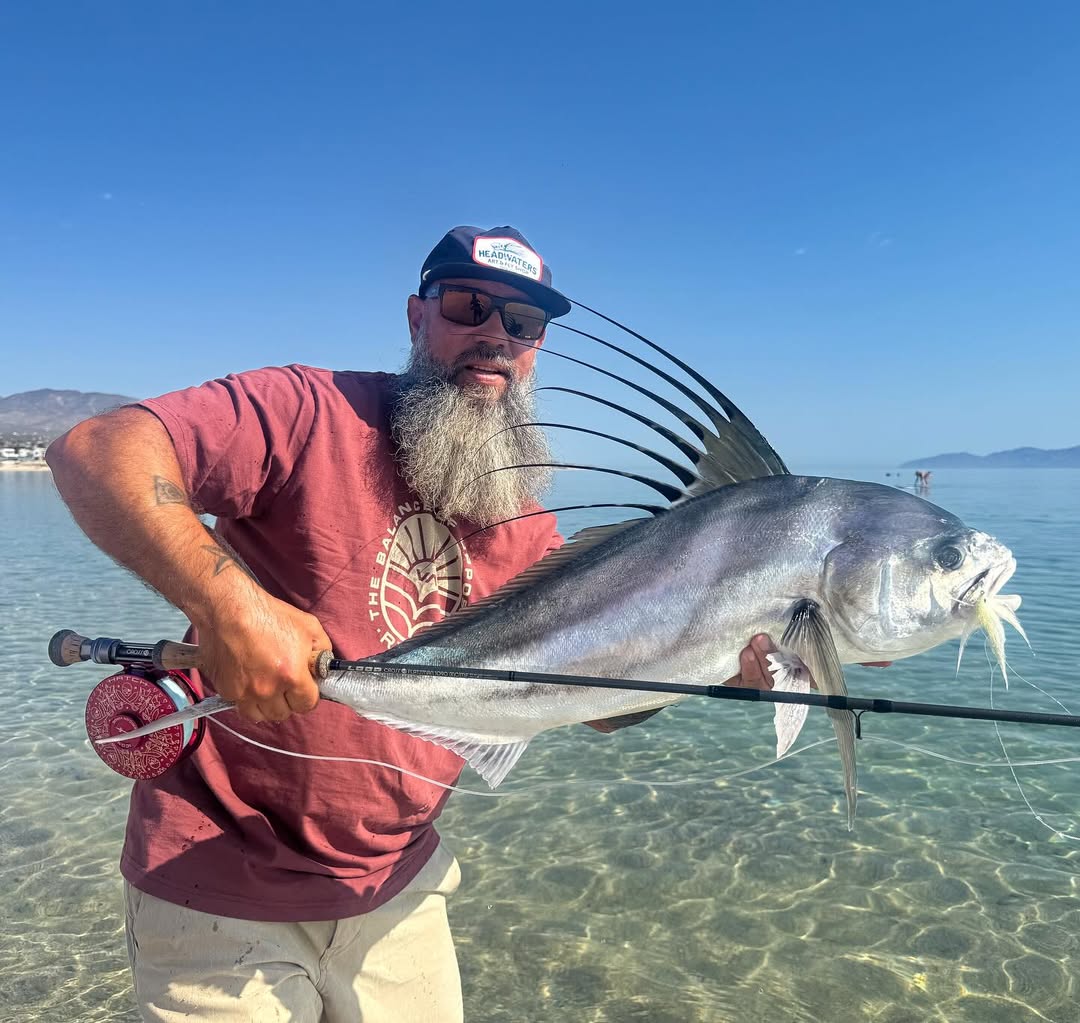
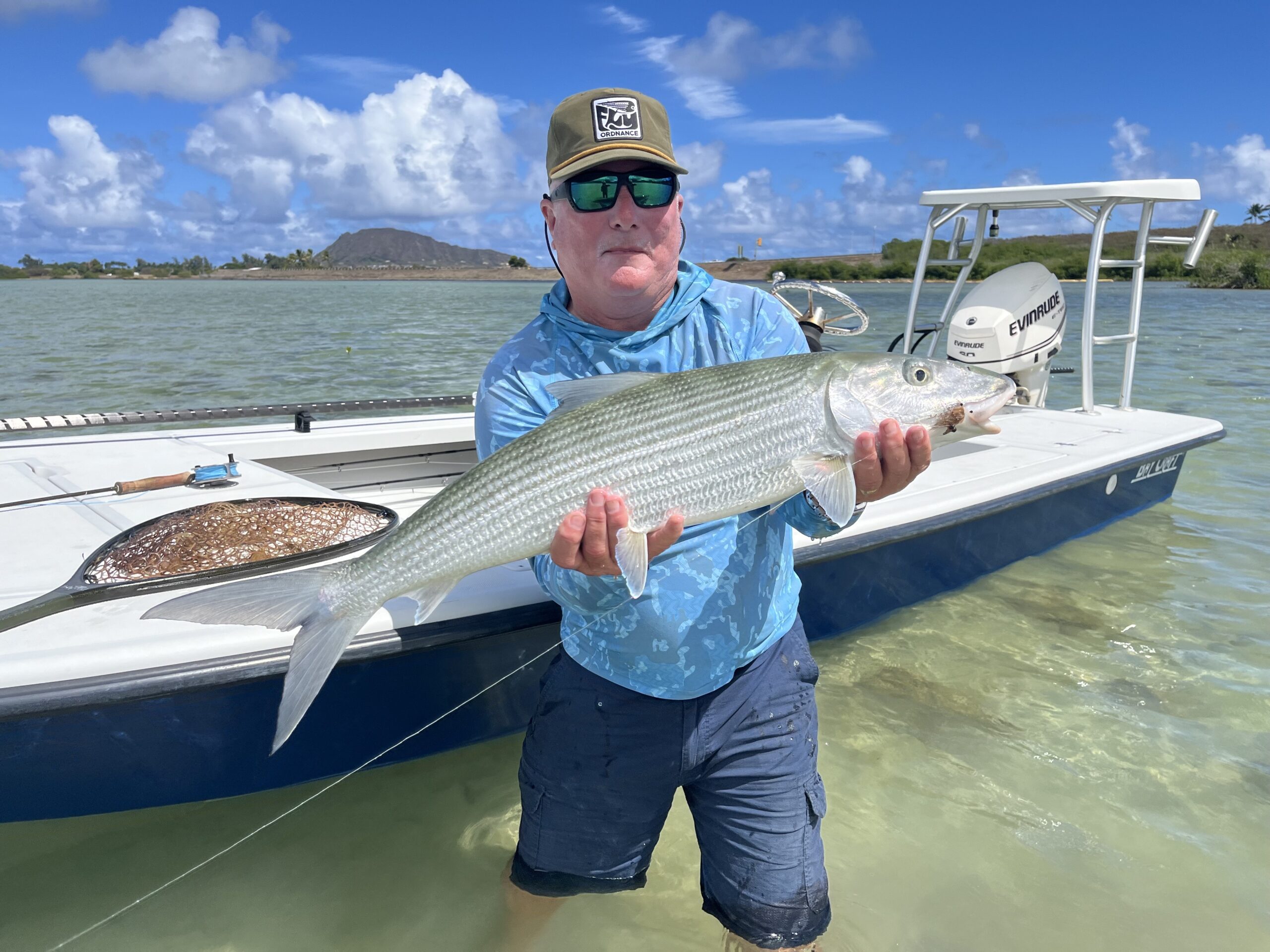
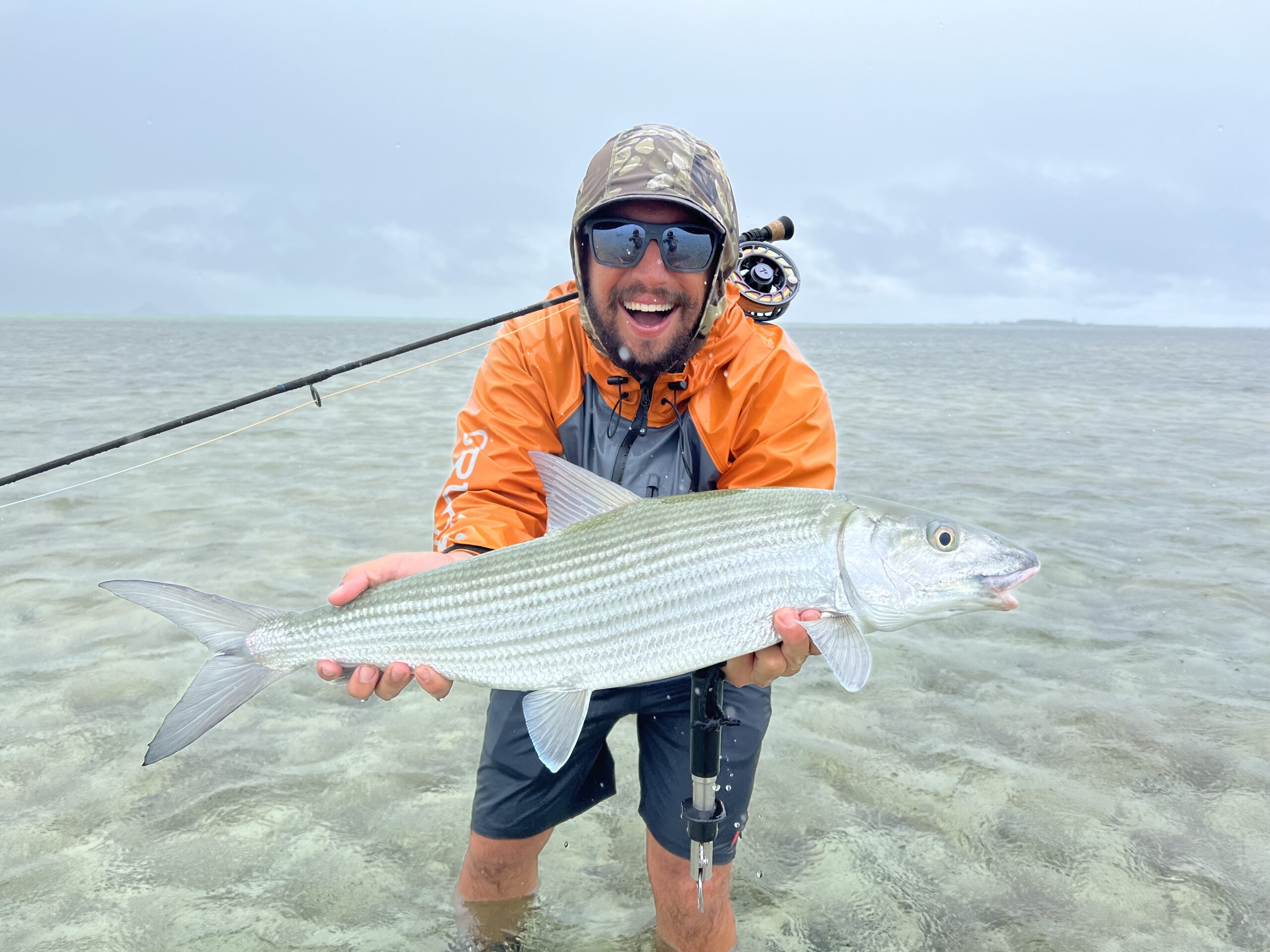
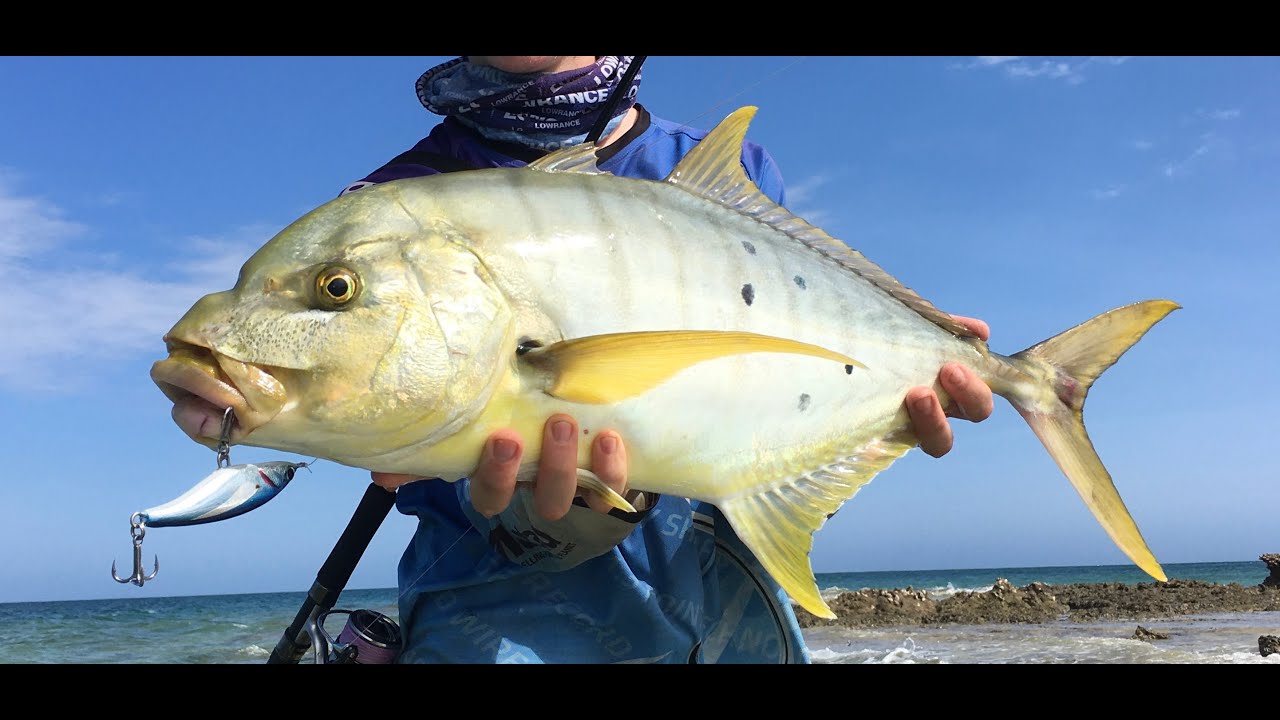
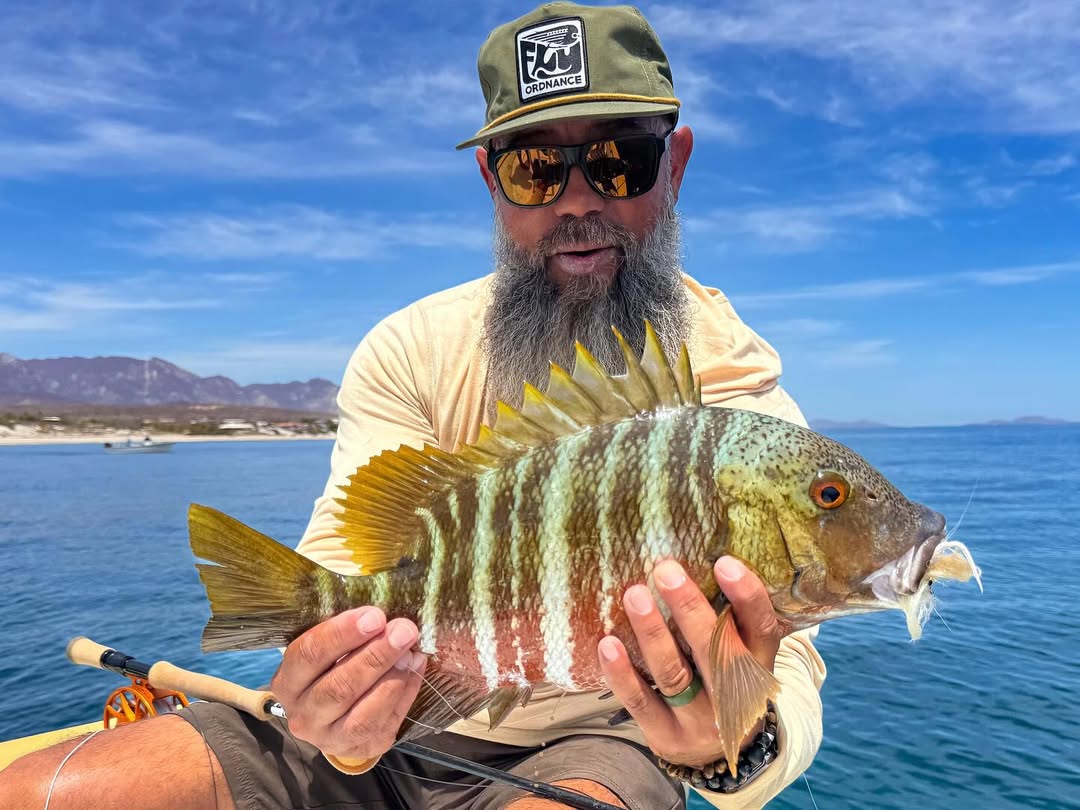
BoneFishing in Hawaii might not be the first thing that comes to mind when you think of saltwater adventures, but for Marine veteran Mike Bressler, it’s become both a calling and a way of life. In this episode, we head to the island of Oahu to uncover what makes Hawaii’s flats fishery so unique—and so challenging. From bonefish (known locally as ō‘io) to golden trevally, Mike shares what it’s like to guide in one of the Pacific’s toughest but most rewarding destinations. Whether you’re planning a DIY trip or dreaming of landing a 10+ pound bone, his insights are packed with practical value.
We talk about everything from how to master casting in Hawaii’s relentless trade winds to how moon phases affect bonefish behavior. Mike also opens up about building his homegrown “Bone Lodge” for guests, the cultural realities of fishing in local waters, and why he takes veterans out monthly for healing on the flats. This episode is more than a fishing guide—it’s about patience, local respect, and finding purpose through saltwater fly fishing.
2:03 – Mike Bressler explains that while bonefish are active year-round in Hawaii, spring and summer bring peak action. The largest fish stay on the flats during the winter spawning season, starting around November’s full moon. Still, Hawaii is a tough fishery—constant trade winds and challenging conditions make it a true test for any angler. As Mike puts it, “If you can get good out here, you can be good anywhere.”
5:46 – Retired Marine Mike Bressler discovered Oahu’s bonefish flats during a COVID quarantine on Ford Island. Now based in Hauʻula, he guides anglers year-round, with peak season from October to December. Windy conditions and remote flats make boat access and strong casting skills essential.
09:06 – Mike Bressler emphasizes that handling Hawaii’s wind starts with mastering the double haul and sidearm cast. He recommends aiming for at least a 40-foot cast under the wind and leading the bonefish—not landing the fly on their head. Sometimes, a short flip of the fly is all that’s needed, as long as it’s placed ahead of the fish’s path.
9:49 – Mike Bressler explains that Hawaii’s largest bonefish are most active from October to December, as they begin their deep-water spawning cycle around full moons. He advises avoiding fishing three days before and after a full moon since fewer fish are found on the flats during that time.
16:36 – Mike Bressler explains that while fall offers peak conditions, big bonefish are still catchable in May. These “home guard” fish are older, resident fish that tend to stay shallow and fight with brute weight rather than long runs. Hawaii’s bonefish can reach impressive sizes—Mike has landed 12-pounders and knows of fish near 14, with the state record sitting at 15.7 lbs on conventional tackle. He also notes rumors of even larger bonefish—up to 20 pounds—coming from remote areas like New Caledonia.
18:17 – Mike Bressler shares that while bonefish populations are improving globally, Hawaii faces unique conservation challenges. Bonefish are considered a local delicacy, and with no regulations against harvesting them, locals often use nets or hook-and-line to catch them. Although enforcement is limited due to resource constraints, Mike hopes increased awareness will lead to better stewardship of the fishery.
20:51 – Mike Bressler starts most guided trips around 6:30–7:00 AM, timing for sunlight to spot fish while walking the flats and watching for signs of life like turtles or goatfish that indicate bonefish are nearby. Rather than tailing fish, anglers are taught to look for “Heineken backs”—a green shimmer just under the surface as bonefish move in with the incoming tide to feed.
24:31 – Mike Bressler shares that many first-time anglers struggle to spot bonefish, as their green shimmer is often mistaken for similarly colored reef fish. He recommends multi-day trips to learn proper sight-fishing technique—walking slowly, pausing often, and watching for subtle signs like nervous water, much like stalking prey in a hunt.
26:40 – Mike Bressler explains that while guiding, he positions himself based on the angler’s casting hand and wind direction, often spotting bonefish 10 to 50 feet—or even 50 yards—away. He coaches clients to observe the fish’s movement like a grazing animal, place the cast ahead of it, and use a slow strip to trigger a bite, reminding them never to trout set, but to keep stripping steadily for a clean hookup.
29:16 – Mike Bressler explains that a trout set often pulls the fly out of a bonefish’s mouth, while a strip set keeps the fly in the zone, allowing the fish to hook itself through steady tension. He adds that Papio, or juvenile trevally, sometimes rush in and steal the fly mid-strip, earning their nickname as “thieves” on the flats.
32:53 – Mike Bressler emphasizes using a slow, smooth two-foot strip to keep the fly close to the bottom, imitating natural prey like crabs and mantis shrimp. He teaches anglers to let the fly sink fully, clear slack for direct connection, and make gentle, quiet adjustments—since bonefish, like snipers, will spook if prey behaves unnaturally or the line is moved too aggressively.
37:00 – Mike Bressler prefers a 12–14-foot leader built from 40-30-20 pound sections, finishing with a Rapala loop knot and adjusting to 16-pound tippet on calm days to reduce visibility. For gear, he recommends a 9-foot 8-weight rod paired with a sealed drag reel, 150 yards of backing, and Cortland’s Redfish Tropical fly line, which he trusts for its durability against coral-heavy flats.
Watch this for more information.
43:08 – Mike Bressler shares that the most effective fly colors for Hawaiian bonefish are browns, tans, blacks, and occasionally a translucent orange, matching the natural hues of local mantis shrimp on the flats. While some mantis shrimp in other regions show vibrant rainbow-like colors, Mike notes that the shrimp in Hawaii’s flats are smaller, subtler, and adapted to their muted, sandy environment, reinforcing the importance of natural tones when fly tying.
44:59 – Mike Bressler advises that while Oahu is ideal for DIY bonefishing with walkable flats and public shoreline access, islands like Moloka‘i should be approached cautiously due to cultural sensitivities—locals may challenge visitors fishing near their homes. For Maui or Kaua‘i, DIY anglers should use satellite imagery to identify promising flats and focus on incoming tides, which provide better access and more time on the water without needing a boat. Enjoy a breathtaking view of Moloka‘i.
48:35 – Mike Bressler notes that while bonefish are present on the Big Island, it’s the one place in Hawaii he hasn’t personally landed one, and he primarily guides out of Oahu, where conditions and access are more reliable. He encourages anglers to book at least a half-day with a guide—not just for learning spots, but to understand the local waters, tides, and fishery culture—emphasizing that for him, guiding is a passion rather than a livelihood, unlike many full-time guides who depend on it to make ends meet.
51:21 – Mike Bressler highlights a major step forward in Hawaiian conservation with the new non-resident fishing license requirement, which began in April and helps fund efforts like coral restoration through DLNR. While no major bonefish-specific conservation group currently operates in Hawaii, Mike stresses the importance of ethical fish handling, reef awareness, and hopes for future support from organizations like Bonefish & Tarpon Trust to expand research and protection efforts in the islands. Get more information here.
55:04 – Mike Bressler reflects on the historical weight of living and guiding near Pearl Harbor, noting its deep connection to his 24 years of service in the Marine Corps. As part of giving back, he offers free monthly guided fly fishing trips to fellow veterans, believing strongly in the mental clarity and healing that comes from time on the water—something he says benefits anyone going through stress, not just those who’ve served.
59:20 – As the episode wraps up, Mike Bressler offers heartfelt encouragement to new and seasoned anglers alike, reminding them that the real reward in Hawaii isn’t just the bonefish but the experience of being on the water in such a stunning place. He expresses support for Project Healing Waters, offers to help veterans get out and fish, and leaves listeners with a simple message: come out, enjoy the island, and if you catch a fish, that’s just the bonus.
Episode Transcript
0 (2s):
He didn’t grow up sight fishing the flats or even thinking about bonefish. But after a military posting brought him to Hawaii, a quarantine on base, gave him enough time with a fly rod to understand bones and create a new obsession. By the end of this episode, you’ll get practical tips on spotting bonefish and tough light, how to improve your casting in the wind, and how to choose flies that won’t spook pressured fish. You also learn how to time your trip around the tides and the moon faces, and what gear holds up best on the coral flats. This is the Wet Fly Swing podcast where I show you the best places to travel to for fly fishing, how to find the best resources and tools to prepare for that big trip, And what you can do to give back to the fish species we all love.
0 (42s):
Mike Bressler, Hawaii based guide and founder of Flight Ordinance takes us on the inside to what it’s really like to chase trophy bonefish in the Pacific. We also find out what it’s like and how he built a guest friendly program from the ground up, and how anglers find success in one of the toughest flats, fisheries on the planet. Along this journey today, you’re gonna feel how he’s building a different experience, one that blends local knowledge, low pressure approach, and a deep respect the fish and culture from balancing guiding with his family life to hosting guests in his home built bone lodge. Michael shares what it’s meant to create something special in Hawaii. All right, let’s find out how he does it all. Here we go. Mike Bressler from Hawaii fly guide.com.
0 (1m 23s):
How are you doing, Mike?
1 (1m 24s):
Good, thanks guys. Thanks for having me.
0 (1m 26s):
It’s, it’s great to always good to have a Hawaii chat. It’s been a little while since I’ve been down there, but we’ve had definitely some listeners asking about it. I know it’s always a, you know, a hot topic because it’s a place that maybe isn’t known as the, you know, as far as the salt water stuff. You know, you don’t hear as much about it, But I think it does have some good resources, and I think you are in a place that’s pretty amazing. So, so before we jump into all that, maybe just take us back kind of this time of year. What, what are we at now? It’s, it’s May, June. This probably will go live in July. What’s happening this time of year down there?
1 (1m 60s):
This time of year? It’s getting warmer. It’s our spring, basically, and, and as it gets warmer, the, the water’s getting warmer and, and the fish are getting more active. I mean, bonefish here are year round, more so in the spring and summer starting November. They, they start their spawning cycle usually on a full moon. So it’s, it’s a lot of bigger fish that are staying on the flats during the winter months, which is, which is something that everybody wants to get that 10 pound bone, you know? So it’s, it’s a humbling place. It really is. It’s not an easy fishery. It’s, it’s really tough on, especially beginners.
0 (2m 39s):
Why is it so tough on, on V? Is it tougher than other places you might,
1 (2m 43s):
I mean, we’re, we’re in the middle of the Pacific. We, we, we have a lot of trade wind, so if, you know, you’re not, if you’re not up to par with the, say, just double hauling and, and casting into the wind, it can get really frustrating for, for folks out there. It’s, it’s a huge learning curve if in the salt water fly fishing game, you know, if you can get good out here, you can definitely be good
0 (3m 6s):
Anywhere. Nice. Well, we’re gonna definitely talk some casting, you know, some wind tips and stuff like that today for sure. But yeah, let, let’s go back first, like kind of where you are now. Talk about that which, which island you are. Do you fish one area or what does that look like?
1 (3m 20s):
Sure. So I’m on the island of Oahu. It’s, it’s probably the most visited tourist island, you know, because of Waikiki. But where I live in the town of Haah, it’s considered country fishing wise. You can pretty much get bonefish all around this island for the most part. I mean, everybody would rather be on a flat, but I’ve seen ’em from the beach before, and it’s not just bonefish. We do have traval species here. You know, we do have the occasional giant, giant traval, bluefin, traval, golden traval. They’re, they’re fewer and far between, but they are definitely here. But I think the one that catches everybody’s eyes is, is the bonefish.
1 (4m 4s):
The oal.
0 (4m 5s):
So, yeah. So you’re on Oahu and you know, there are some other islands obviously out there. You don’t hear as much about the bonefish on the other ones, right? I think people think of Oahu as the big one.
1 (4m 15s):
Yeah, there’s a, there’s a few of us that are trying to get the ev a bonefish on every island. So every island does have bonefish out here. It’s just different fisheries. Not every island has, has flats fishing like Oahu or Molokai. Molokai is really well known for its hunting and its bone fishing as well. Bones on Maui Lanai, the hardest places to get a bonefish out here right now is the big island and Kauai, those, those are the challenging ones right now.
0 (4m 47s):
Why is that? Is just different in habitat types. It’s
1 (4m 50s):
The lack of flats, you know, and so you’re, it’s the site fishing form is a little bit tougher. You gotta get really lucky to spot one from the shoreline, you know, by being on a flat, it’s, you know, 12 inches of water or even a little bit more where you can really spot these guys tailing or just seeing them swimming.
0 (5m 8s):
Okay. So, so you’re on Owa. What is the, maybe let’s take it back real quick to your background. Have you been on, in the Hawaii Hawaiian islands for a while? What, how’d you, how’d you land out there?
1 (5m 19s):
Sure, sure. So I am a Marine, I’m a retired marine now. My last duty station was here on Oahu, But I’ve been flying out to Oahu now for the past probably 15 years now, just to come chase these, these bonefish. And lucky for me, my last three years happened to be on Oahu. So, you know, the height of COVID was, was in effect when I got sent over here. And lo and behold, yeah, lo and behold, that was,
0 (5m 50s):
So, that must have been kind of cool. Not a lot of pressure in during that time.
1 (5m 54s):
It, it wasn’t, it’s, it’s funny, Dave, I I, I was on quarantine on the, on Ford Island, which is in Pearl Harbor, and a buddy of mine called me up. He’s like, you know, there’s bonefish on that island, and you know, the, the only thing the only stipulation was I couldn’t leave the island. I had to stay within the lodge in the limits of the lodge there on, on Ford Island. And so I got the fish for 15 days on quarantine for bone fish. So yeah, I, I got really lucky there and there was plenty of fish and, and yeah.
0 (6m 26s):
So Pearl Harbor, is that right in the area? Are there some flats right out on those in that area? So
1 (6m 30s):
That, so there’s flats on, on Hickum Air Force Base. There’s very limited flats on Ford Island. It’s more of fishing from the shoreline. If you want flats, you go over to the triangle, which is a most common one. All the guides here have access to Triangle Flats, which is the closest one to the airport. And then we have flats throughout the island. You, you’ve got ’em over on Kaneohe Bay, you have ’em over on the west side. Yeah. So I mean, it’s, it’s more convenient to have a boat to get out to some of these places for sure. Otherwise, you’re, you’re getting on a standup paddle board or a kayak.
1 (7m 12s):
There’s still a few places out here that you can walk, walk in and wait.
0 (7m 16s):
Right. And we’ve talked about that too. Maybe we can just start it off here with just, if they were, somebody was kind of gonna be coming, maybe hooking up with you. What does that look like? If you mentioned that you can fish year round. I think probably a lot of people love to go to Hawaii during the, you know, maybe during the colder months, you know, in on the lower 48. But when do you think is the most popular time? When do you recommend people come out to fish?
1 (7m 37s):
I mean, right now is, is the moment’s heating up, you know, right now is a really, you know, may, June really good if you’re someone that’s really looking for getting that 10 pound fish. Plus, I’d recommend starting coming out here in October into November and December. The challenging aspect with being out in the middle of Pacific is, is the trade winds. I mean, you never know, so you gotta be really comfortable with windy situations.
0 (8m 7s):
And what is the secret when you have windy situations on, how do you deal with that?
1 (8m 12s):
I mean, it’s, there’s really no secret to it. It’s the double hall in, in my opinion. It, it’s all in your double hall in the timing. If you can get a good side arm cast underneath the wind with a good double hall, at least 40 foot, you’ll be okay. If you can get more than 40 foot, great, that’s awesome. You know, but, you know, and there’s, there’s times that you don’t even need to cast that far. You’re just gonna flip your fly over and, and in front of this fish and just cross its path. You know, the key thing here is don’t land the fly on their head. You know, you wanna lead them by at least the rock.
0 (8m 49s):
Let’s think of that. If we’re, you know, thinking big fish. So the, you mentioned the October through December is a good, and that’s mainly because of spawning? Or why, why is that again? Why, why is that the time to get the big fish?
1 (8m 60s):
Yeah, so the spawning cycle starts usually November all the way into May. You know, these fish go out during full moons, you know, and, and they go out into the deeper water. They’ll go into, you know, 400, 600 feet of water and, and they’ll, you know, dive down deep, shoot up to the surface. And that’s when, you know, the, the magic happens with the eggs and, and, and the males doing their thing. Yeah, it’s funny, it’s, it’s a big reason why those offshore guys that are trolling for big Marlin will use bonefish as
0 (9m 31s):
Bait. So the spawning on bonefish is, they’re going deep. Are they, are they broadcast spawning there eggs out there? Are they actually, how does that, do you know how that looks on a little bit of that?
1 (9m 43s):
No, I, I, I, there’s not a lot of information on it, you know, just through looking at some of the studies that bonefish and Tarpon trusts and the University of y done, you know, just reading some of those, those information papers is, is what we know, but there’s just not a ton of information once, you know, we know they go deep and they go spawn, and then, you know, we, that’s why, you know, we tell, I would suggest to anybody, you know, and, and this is just my guide head talking, is you don’t wanna fish three days before or three days after a full moon because there’s usually not that many fish on a foot.
0 (10m 23s):
If it’s a full moon, don’t fish three days before or three days after.
1 (10m 27s):
Yeah. Yeah. I, I, I don’t like to, it’s just, maybe it’s just my theory, but you know, I, I know guys that’ll go out. It doesn’t matter. They’ll go out full moon or not. And, and some people still catch fish. I have caught fish during a full moon, but there’s just not as many bonefish on the flats is what I’ve seen and noticed.
0 (10m 47s):
So they’re essentially going out spawning. Those are the times where they’re kind of migrating out, and then they might come back after the full moon’s done.
1 (10m 54s):
Yeah, and, and you’ll see it too, on the flat. I mean, these fish, after they come back on the flat, they’re hungry, you know, they’re all, they’re all what we call lit up and, and just, you know, they’re really bright. Their pectoral fins have a really cool, like, like really blue teal outline, and it really glows on the flat. You can really see ’em, you know, 50 yards out. You can see ’em coming your way.
0 (11m 18s):
Could you see, do you have some of these photos of some of those colors on your out there, social out people can take a look?
1 (11m 25s):
Oh yeah, for sure. For sure.
0 (11m 27s):
Yeah. Yeah. So we got the full moon, and, and you mentioned if we’re sticking with the big ones, we’re thinking October through December. What does it look like if somebody’s coming in, let’s just say they’re coming in in November for a trip. What’s that look like for you? If they were coming out, do you typically do like day trips, half day, full day? What’s that look like?
1 (11m 45s):
Yeah, so the unique aspect with what my wife and I have out here is, you know, we do have a, a little Airbnb freestanding building. We call it the Bone Lodge. You know, if, if it’s you know, two people, it’s comfortable, you know, if it’s you and your wife, your significant other, or you and a friend, it’s more than accommodating.
0 (12m 5s):
What about you, your wife and a couple of of kids? Little kids? Yeah,
1 (12m 9s):
That’s, that’s, I mean, we’ve got some blow up mattresses for ’em, and the, the couch cools out and it, it’s been done. We’ve had, oh man, we’ve had like five people in here before, you know, not all fishing, but you know, it’s usually the, the husband or the wife that wants to go fish and then the significant other goes out and does other things around the island. But yeah, I, I do, I can custom to anything, but the, the, the standard is, you know, your half days and your full days. I do have a skiff here that I just got last year. I brought it out from Florida. It’s a coyo boat work skiff, 18 foot flat skiff, you know, and, and weather permitting. If it’s not blowing 25 knots.
1 (12m 50s):
And I’m on the back of that skiff and I’m pulling year round and, and showing you fish and hopefully getting you off too.
0 (12m 56s):
How often throughout the year is it, is it, you know, there’s enough, there’s not that much wind that you can have the skiff out there. I mean, I know you just got it, but if you look ahead,
1 (13m 6s):
Oh, I, I mean, I’m taking the skiff out no matter what. So yeah, for sure. You know, regardless of the wind, you can still take the skiff out and get out to some of the flats, whether it’s triangle or you know, anywhere around the island. It’s just polling an 18 foot boat against the wind can be a, can be a feat in itself, you know?
0 (13m 27s):
So you guys have, so if, yeah, if somebody had a wanted to stay, you have that option. Are people typically coming there and getting booking a couple days with you? Are you doing, you know, more than that? How does that look? Fish to Fly Guide service is dedicated to sharing the incredible fly fishing opportunities around Jackson Hole. Whether floating the Scenic Snake River in search of native cutthroat trout, or hiking into the mountains to explore pristine tributaries every day on the water is an adventure. You can join them for an unforgettable fly fishing experience in the heart of the tetons@fishtofly.com. Stonefly nets builds handcrafted landing nets that are as tough as they are beautiful. They’re shaped, sanded, and finished by hand from premium hardwoods.
0 (14m 10s):
You’ll feel the difference the moment you land your first fish light in the hands, strong at the hoop and made by someone who knows what it means to earn your trust. You can head over to stonefly nets do.com right now and see what they’ve got in the shop today. That’s stonefly nets.com?
1 (14m 26s):
Yeah, yeah, yeah, for sure. Usually come out for four or five days. I’ve actually got a, I actually got a client coming out at here next week on Tuesday, who’s just coming back from Christmas Island, decide to stay. Yeah. So yeah, it’s usually a, a why is that stopping point before you go out to Christmas Island? So usually stay stop here for a night and then leave the next day.
0 (14m 53s):
So you have some people, so of those people coming in on Tuesday, let’s just talk about that. I know it’s, right now, it’s kind of mid-May as we’re speaking here, so how’s that gonna look for them? But what, talk about your day, so your first day you’re gonna meet ’em, describe that a little bit.
1 (15m 5s):
Yeah, usually I’ll go out and I, I’ll pick ’em up from the airport, you know, and then that gives us, you know, it’s about a 40 minute drive to the airport from where I live. So during that drive back is, you know, we’ll go through question and answers and I, you know, I show him around the island going towards home and we talk fishing and, you know, this client in particular, I know him really well, so I know he’s just excited to get out here. And he’s, he’s on the hunt for a big one. So we’re definitely gonna put in a lot of work. A lot of time we’ll do both, we’ll do some skiff fishing or take the skiff out to some of the flats, but I’ve got some locations that are, you know, little top secret that I’ll probably take him to chase for that nine plus pound bonefish.
0 (15m 49s):
So you can get nine, you can get bigger bone still in the, the May, even though the, the fall’s better.
1 (15m 54s):
Oh, yeah, for sure. It’s just in the fall. The, the thing is, is those, I, you know, I think those bigger fish are older. They’re, you know, they don’t wanna, they don’t want to get all, you know, they don’t want to go through the trouble of going to the deep water. They’re like home guard fish now. They’re just, they’re, they’re living their retired life in a sense. It’s funny, those, those really big bonefish, they’ll get one big run and then they’ll just turn around and come directly at you and just, you know, they’ll just use their weight. Whereas you hook a, you know, a three to six pound bonefish and they’re gonna get multiple runs, you know, up to 150 yards at times.
0 (16m 32s):
What’s the largest bonefish you’ve seen or heard of out there? How big do they get
1 (16m 37s):
Heard of is 15.7? I believe it was. It’s the new Hawaii State record. Now that’s not fly, that is on conventional tackle, but you know, I’ve, I’ve, I’ve caught ’em at 12 pounds. I’ve, I know guys that have gotten them, you know, really close to 14 pounds, but the standard is your 10 to 11 pounds, I would say, or really big fit.
0 (17m 0s):
Okay. And is that, do you know, is that, are there other places around the world where you can get even bigger ones or is that pretty, pretty up there?
1 (17m 8s):
So I, I have heard there is other places, you know, further out in the Pacific, new Caledonia, I’ve heard there’s some really big fish there, but the, it’s really tough to get to some, supposedly it’s, so I’ve heard, I’ve heard up to 20 pounds been over there, but it’s, you know, who knows if it’s or not, but
0 (17m 31s):
You gotta head down off the east coast of Australia to, to get there.
1 (17m 35s):
Yeah, exactly. Yeah. So I mean that’s, I heard that’s really good spot, you know, and the bone fishery is starting to climb up even for Florida now. I’m, I’m hearing fish are getting bigger and more bones are coming, you know, they had that big freeze in 2010, and I’m hearing the fishing’s getting better. So, you know, it, it looks like it’s getting good across the world. So I just hope that, you know, with the, with everybody’s eyes and minds on conservation and, and having a better, being, better stewards of our earth, I I hope that the fishery gets better for everybody. You know, it’s, it is tough here in Hawaii because bonefish is a delicacy here,
0 (18m 11s):
Right? That’s the, we’ve heard about that. Yeah. So people are definitely harvesting bonefish, I think. Have you seen, is there some more conversations around changing that a little bit? Or how does that look? That’s always a tough conversation.
1 (18m 24s):
Yeah, I mean, I man, it, it’s, it’s a bummer to see, but you know, Hawaii doesn’t have any, any regulations for catching bonefish and keeping them for food, you know, that’s the Hawaiians wines have to eat. And that’s, they’ve grown up doing that for ages, you know, so I’m, who am I to tell them that they can’t do it? You know, I, I I, you know, DNR doesn’t have a ton of funding, doesn’t have a ton of manpower to, to uphold regulations. They’re doing the best they can with, you know, a lot of the netting that’s going across the shorelines and, and illegal fishing and, and, you know, protected zones.
0 (19m 2s):
Is that how they catch them? Do they typically catch ’em with a, a net or they use in other types of gear?
1 (19m 7s):
They, they, they use whatever they have to their veil, whether it’s hook and line nets, you know, you won’t see too many guys spearing ’em. I mean, if you’re in the water splashing around, you know that bonefish is not gonna be anywhere near you. But they will, they will net ’em out here. But again, you know, it’s, as long as your nets are within regulations, you can do it.
0 (19m 34s):
Well back to, you know, Turing that trip. So you’ve got this thing next week, so somebody’s gonna be coming in there for four or five days. So talk about the day, let’s, let’s say the first day on the water, how is that gonna look? What, what time are you getting rolling? How does that Yeah,
1 (19m 48s):
Yeah, we’ll start, we will leave the house about 6 30, 7. There’s, there’s no need to, to totally rush. We’ll go out to the, you know, to the marina there and, and we will either launch from, from KeHE or Sand Island or, you know, heya, these are all boat launch areas. I do have access to the, to the Marine Corps base here, as, you know, as a retired Marine. And we can launch from that marina there. You know, the, the, the key thing is, is it, it doesn’t make it any better to go earlier. You, you want some sunlight, you want that sun to come up, up, up on the horizon so you can actually start the hunt, you know, and we’ll have waters and sandwiches on the boat and we’ll motor out.
1 (20m 34s):
We will, more than likely, if the wind’s, if the wind’s a little too high, we’ll just anchor the boat on the flat and we’ll, we’ll get out there and we’ll start hunting it. It’s, it, it is a, it’s, I I love fishing for these bonefish, as, as it is, like I said, is it’s a hunt. You know, you’re, you’re walking slow on the flat, you’re searching for activity, you’re searching for life on the flat. You know, the more life I start seeing on the flat, whether it’s turtles or, or stingrays or you know, goat fish moving around, the more excited I get. ’cause I’m pretty sure there’s gonna be a lot of bonefish on there. You know, when you see life on the water, it’s a pretty, you know, telling sign that, you know, there’s, there’s gonna be crabs on there, there’s manta shrimp on there because you’re starting to see all this other activity.
1 (21m 22s):
So there’s gonna be bones up there, you know, the summer months, you know, spring and summer we start getting those negative low tides. So we get to spend a good, a good amount of time up on the flats. And typically, I like to see, I’d like to get out there just before the tide shifts to come up. ’cause that means the water’s gonna be moving across the flat and, and that’s gonna bring life across the flat. It’s gonna bring the bonefish up there. They’re gonna start hunting and we’re gonna start hunting them depending on where, what flat you’re on is, is, you know, depending on whether you’re gonna see tailing fish or you’re gonna see fish just underneath the water, you know, these, these bonefish are hugging the bottom of the ocean, the bottom of the flat, just feeding away.
1 (22m 8s):
They’re not always necessarily tailing all the time. Like that pictures, you know, you, you picture The Bahamas and everything, you picture these tailing fish everywhere. But that’s, that’s not the case. You know, we, we call it, we’re looking for what we call Heineken Heineken backs. So Heineken bottle green backs. So it’s that green color that we’re looking for in a fish that’s moving across a flat.
0 (22m 32s):
So you, you mentioned the tides. So negative tides are good and you wanna get there just before it shifts. So you’re basically there as the tides starting to come in and flood those, those areas. Yeah.
1 (22m 41s):
Yeah. And that’s, that’s just a personal preference. That’s how, that’s the kind of conditions I like to fish. But it’s, you can get bonefish on a high, high tide, low tide, slack, tide. You can still catch fish if, if there’s a bone fish on the flat, it usually means that it’s looking for food.
0 (22m 60s):
Describe that again. What, what’s the, how are you finding the fish? What’s the color you’re looking for?
1 (23m 4s):
So the, they, we call ’em greenbacks. So you know, I, I use a Heineken bottle as a reference. ’cause that’s the color you’re basically looking for.
0 (23m 12s):
And is that because you don’t see any other species out there that have that same color? Is that kind of why that is?
1 (23m 18s):
Exactly, exactly. I mean, we, we have some other re fish that are very similar, but it’s more of a blue color. And sometimes that’ll throw, you know, if, if you’re new to sight fishing, that’ll throw a lot of people off. But yeah, once, you know, I would say 80% of the clientele, if, if they only go out with me for a day, they usually never see the fish. I have ’em casting to
0 (23m 41s):
So that you’re seeing them, but they’re not.
1 (23m 43s):
So, you know, and, and so that’s why it’s really, it’s, it’s, you know, if you can, if you can do it, take a couple days so you can really learn how to, you know, spot these fish, cast these fish, you know, walking across a flat is, is is key. It’s, it’s how you walk. You’re not just, you’re not walking normal. If you, if you ever see a, you know, a water bird, like a heron or something walking across, you know, the shoreline looking for prey, they’re just going really slow and, you know, tiptoeing through the water. So you really, that’s, that’s where that hunting aspect comes in. You’re not, you know, you’re not jogging through the woods looking for an access deer. You’re, you’re going slow, you know, slow is smooth and smooth is fast.
1 (24m 26s):
So you’re taking your time, you take pauses on the flat, sometimes up to 30 minutes to an hour, you’re just gonna stand still and just watch the top of the water looking for fish. You know, you’re looking for that nervous water.
0 (24m 39s):
So I always think of the, like blacktail deer hunting. I haven’t done much of that, but I’ve heard that that’s what you walk through the forest like that you’re just like super slow one step, you know? Yeah,
1 (24m 50s):
Yeah. You know, any, any crunch on the bottom of your foot, whether you’re, you’re, you know, you’re crunching down on shell or whatever the case is, is is basically a loud noise in the water for these fish. They can feel it on their lateral line and, and you can see them, you know, if you make the wrong step, you, they’re either gonna shoot away from you or they’re gonna, they’re gonna kind of like, it’s like them tilting their head to the side, like, wait, what was that? That’s not normal. You know?
0 (25m 17s):
So you’re sitting there slowly hunting and then you, and are you as the guide, are you kind of sitting there right over the shoulder? Or are you kind of walking with them?
1 (25m 26s):
Yeah, depending on, depending if you’re left-handed or right-hand. If you’re a right-handed caster, I’m gonna pro more than likely, you know, and then wind dependent too, so, so it’s key that you can forward cast side, arm cast, do a backhand, cast it. It’s because depending on the wind, you know, I can place myself in multiple places for you. But, so I, if we’re walking around, we see a fish, you know, I’m gonna, I’m gonna say something, I’m going to, you know, I’m gonna whisper over, Hey, hey, take a pause right here. I see something and I’m, we’re gonna watch this fish. ’cause I’m probably gonna see ’em probably, you know, anywhere from, you know, 10 to, to 50 feet out away. You know, at times you can, you can almost look 50 yards away and see these fish coming in.
1 (26m 10s):
And we’re gonna, you know, and then I’ll, I’ll point the fish out. If the client sees them, great. If not, I’ll just have ’em get ready to cast and, and we will just kind of, you’ll kind of just watch the fish and see which way it’s, it’s swimming, which way it’s feeding, you know. And then, then, then you’ll determine where are you gonna place the cast. Bonefish aren’t necessarily like erratic swimmers. They’re, they’re more of like, imagine a goat that’s grazing out on the grass. They’re not going from left to right really quick. They’re just kind of grazing and keeping going, keep going forward to the next blade of grass. And it’s kind of the same, same thing these bonefish do, you know, they, they’ll get on a trajectory and, and you can kind of study ’em for a little bit and be like, okay, I think they’re gonna go from left to right.
1 (26m 57s):
Go ahead and start casting out to, you know, your two o’clock, about 40 feet, lay that cast down and you’re just waiting to see if this fish gets closer to fly. Usually the fish gets to within three, to two to three feet, and you’re doing a really slow and smooth long strip. And at that point, that fish usually sees, it comes over the fly and they just do basically a headstand on the fly. And they, you don’t have, don’t trout set. Whatever you do, whatever you do, just don’t trout set. If anything, put the tip of the pole in the water and just keep stripping that fish will hook itself.
1 (27m 39s):
And before you know it is running off with all your fly line and into your backing. Yeah. It’s, it never gets old.
0 (27m 47s):
Got it. And so why, just a reminder on the the not trout, why, why is the trout set so bad? What is it doing versus the strip set?
1 (27m 54s):
So the, the trout set, as soon as you pick up that fly is basically doing, you know, if you, if you imagine the fly’s mouth, the, the mouth of the fish going down on the fly, as soon as you trout set it provides a basically a big U bend in the fly line and into, into your tippet, which basically just rips that fly out of its mouth and then out of the water. So it’s going out of the mouth, down into the water and then straight back up. Whereas when you’re doing a strip set or just stripping, it’s a direct connection to that fly without moving it away from the zone. It’s, it’s keeping it into the fly, into the fish’s mouth.
0 (28m 36s):
Yeah. In the fish’s mouth because it’s eating and then you’re just stripping it right into the mouth. Yeah,
1 (28m 40s):
A lot of times, you know, it’s, it’s just, if you just keep stripping that fish will feel that hook and you know, they get so spooked that they hook themselves by turning and it’s taking off. So a lot of times it’s just, you don’t even, you know, in the blink of an eye, you’re already hooked up and, and all your fly line is leaving you.
0 (28m 59s):
Exactly. And the strip set too is you’re in the water still, so even if it didn’t hit it, it’s still in the water being so it could take it again. Right. Or or do you ever, do you ever have other fish? Does that ever happen where you’re stripping that fish doesn’t take another fish, takes it later?
1 (29m 12s):
Oh yeah. So Papillo, which is a, a basically a, a juvenile bluefin traval or, or a traval species, they’re called papillo in Hawaiian, you’ll sometimes go,
0 (29m 24s):
How do you spell that?
1 (29m 26s):
P-A-P-I-O.
0 (29m 28s):
So how does that look? What, what, what happens there? So describe that situation.
1 (29m 31s):
Yeah, we, we call ’em, they, they’re thieves. There’s times a bonefish will see or fly and, and they’ll be quicker, quicker to the fly than the bonefish and just steal it from you, you know, and they don’t get, they’re a fun fight, you know, but they don’t, if you get one that’s five pounds, that’s a big one, you know what I mean? So, but yeah, still a good time. You know, it ka
0 (29m 54s):
Yeah. I still feel like that’s cool. I feel like, like me and a lot of the people, we talk about listeners on the podcast, I think species is cool, right? Numbers and just getting different species, even if they’re, you know, like, this sounds like I, I’d love to see this fish. It’d be kind of cool.
1 (30m 8s):
Yeah. It’s, it’s a blast either way. You know what, what everybody strives for on the island is, is getting the golden traval. That’s, that to us is our, yeah, that’s, that’s the big one for us.
0 (30m 21s):
And why is the golden trial? Is it because it’s just a unicorn? What, why is that one so special?
1 (30m 25s):
It’s, it’s a unicorn. ’cause there’s, there’s not many caught, you know, for instance, I had one year I caught eight and then two years where I didn’t catch any. And, and I’ve seen ’em on the flat, you know, so they’re, they’re few and far between, but they are definitely a treat to catch. And, and it’s just that one traval species that, that has like a, a really gummy carp like mouth. And, and they’re the ones that feed on the flats. Unlike where you see a gt on the flat, a giant chival, they’re more than likely chasing the bonefish. You they’re chasing goat fish. They’re, they’re more predatory to other fish. Whereas the, the goldens are eating crabs, mantis shrimp and, and baby octopus and such.
0 (31m 10s):
And they’re, and they get big, right? They, these fish can get pretty decent size.
1 (31m 14s):
Oh yeah, yeah. I mean, you can get ’em up to, you know, 15 pounds, they, they get bigger than that as well. And, but yeah, they’re, they’re, they’re a treat.
0 (31m 24s):
So there’s another species. So we talked a few here, but let’s take it back on the flap. So you mentioned the slow smooth strip. So is that, describe that just to kind of a, you’re just pulling slowly, just like long, like two, two foot strips.
1 (31m 36s):
Yeah. So you, you know, you get your initial cast out however far you’re getting out. And then usually always suggests that you take a couple, like maybe two strips at the most just to get all the slack outta your fly line and all the slack outta your leader system out. So you have that direct connection to your fly when you get ready to start stripping. And that, when that fish sees the fly. And, and so basically in a sense, if you’re starting your strip, I mean, it’s, it’s, you’re not, how do I describe the speed? It, it’s really just slow and easy. What you’re trying to do is just bump that fly and keep that fly on the floor of the ocean there and you’re just barely slowly ticking it and long strips.
1 (32m 23s):
And what I mean by long strips, if you’re starting your strip, you’re ending your strip behind your back or behind your leg. So you’re, you’re basically stripping about two feet, you know, within, you know, 10 seconds real slow
0 (32m 38s):
And you’re imitating. And what are you imitating typically when you’re doing that? Yeah,
1 (32m 41s):
You’re, you’re imitating that crab or that manta shrimp, you know, just bumping along, searching for other holes to live in for other, other manta shrimp to fight and, and other things to eat. And that’s what you’re doing. And you, you know, you’re just trying to make that fly act as, as, as nature has made crabs and manta shrimp to at,
0 (33m 3s):
Which is, which is just kind of a walking
1 (33m 5s):
Yeah. You know it, and it’s funny, you see ’em on the flats and as soon as they see you or they, they hear you crunching on a flats, they scurry really fast away from you, but they’re definitely out there. But when they’re, when they’re not, you know, they’re not afraid or they don’t even know you’re around, you can sit there and watch ’em and they’re just slowly creeping around, just searching through different cracks and crevices on the ocean floor just looking for their food and doing their thing. You know, they just want that, you know, and that’s why, that’s why like a lot of times if you’re, if you’re on a bone, you’ve got a cast out and you know, say you do a quick strip and it makes that fly jump up into the water column a little bit before it flutters down.
1 (33m 48s):
A lot of times that’ll spook a bone fish away because their prey never jumps up at ’em or jumps out of, you know, into the water column, higher water column before going back down. That just freaks ’em out. They wanna be snipers on their, on their, on their food.
0 (34m 5s):
That’s the amazing thing. Yeah. They’re snipers, they’re fast, they’re, they’re out there. And, and so you make that cast the first cast and you just basically let it sink. Is that kind of what you do once you, if you see, let’s say, yeah,
1 (34m 15s):
You’re gonna let that, you’re gonna let that fly flutter down all the way to the bottom. You’re gonna get the slack outta your fly line and, and your leader system and then, you know, we’ll just keep watching that fish. But you know, at, at times you may have to take a recast depending on say the fish’s coming, your, you know, it’s coming in the direction of the fly and then it decides to, to meander off just a little bit to the left. So you, you, this is why it’s a good reason why we lead these fish by at least the rod length is in case you need to pick up and cast again to get better placement. You can do that without spooking the fish.
0 (34m 50s):
So you might have to pick it up. And then how do you pull it out? Do you just, how do you not spook ’em? Do you just kinda slowly strip your line in or, or how do you pick it up without
1 (34m 59s):
Yeah, depending how much line you have out. You know, you’re definitely not ripping that ripping the fly line off the water. ’cause that’ll spook ’em too. So you, you wanna make sure you’re able to cast where you’re picking up that fly line. And then once you see your leader system, then you can start your, your back cast to get ready to place it somewhere else. You know, it’s all dependent, you know, if you got, you know, 60 feet of line fly line out, you’re, you’re probably not gonna rip that all the way out. You’re gonna overpower your fly, fly, fly rod.
0 (35m 31s):
And what is your, just to finish that up on, well, leaders was one other thing and then flies, I think you, you might have some fly patterns to talk about a little bit here, but maybe talk about the leader first. What, what does that look like?
1 (35m 42s):
So here’s, you know, and everybody’s different. A lot of guys out here, they like to use the, the 16 pound tipt, but typically my nor my standard build of a leader is, is I’ll do a, a six foot piece of 40 pound nail knot to the fly line and then I’ll take another three foot piece of 30 pound and I’ll do a, a slim beauty knot connection between the 40 and 30. And then I’ll take another two to three feet of 20 pound with your standard blood knot and then the fly, the connection to the fly. You know, any, any loop knot is gonna work. But I definitely usually stick with the, the standard rippa loop knot on there.
0 (36m 23s):
So, so it’s okay. And then so you stick with 20 pound tip it?
1 (36m 26s):
Yeah, I, I do, I do. I like to catch the fish. There’s, there’s a lot of rock and coral out here for them to get wrapped up around, you know, and, and I don’t think it has any effect on ’em. You, you can, if it’s, if it’s a really calm day, there’s no wind, i, I will probably drop down to 16, you know, a good three to four foot piece of 16 pound tip it and I, and you know, standard lengths, 12 to 14 feet liters is what we use out here.
0 (36m 57s):
12 to 14. Okay. And what’s the perfect bonefish rod for out there?
1 (37m 1s):
Yeah, I’ve, I’ve, you know, I’ve got plenty of rods to provide if needed, But I use an eight, eight weight, nine foot, eight weight, you know, real, you wanna make sure you have a, a sealed drag system. Real Definitely. ’cause we’re in salt water. So you want the advantage as much as possible, you know, at least 150, 50 yards of backing.
0 (37m 24s):
Yeah, 150. Okay.
1 (37m 25s):
Yeah, at least. And you know, if you have, you know, if, if you have issues casting in the wind, I, I’d say just keep that eight weight and just put some nine weight line on there. And you know, my go-to my go-to line out here and I haven’t changed it now in five years is the, the Cortland red fish tropical. I haven’t had that fly line break on me anything like, and I’m not endorsed or sponsored or anything like that by Coral. I just, that is, I love that line out here for these fish. It, it with stands, the coral. I haven’t had any breaks. I haven’t had, you know, I haven’t lost the fly line yet due to the coral out here.
0 (38m 5s):
And you’ve probably scraped some coral in your time. Oh,
1 (38m 8s):
Absolutely. You know, how’s that, how’s that saying? If, if you’re not, if you’re not bumping in a race, you’re not racing
0 (38m 14s):
Right. You gotta get down there a little bit. It’s awesome. And then, and we talk leaders and then, and then what about flies? Do you have some flies that you are kind of unique for out there or talk about that what you’re using on DeMar Lodge offers a world-class experience with one of the finest rainbow trout and brown trout fisheries in the world. They’re family owned and operated. Missouri River Lodge offers comfortable accommodations, delicious homecooked meals and personalized service that make you feel like family days on the water are capped off by appetizers, beverages, dinner and stories on the back deck and around the campfire. Book your stay for an unforgettable fly fishing adventure where memories are made and the fish stories are real.
0 (38m 56s):
You can head over right now to wet fly swing.com/on DeMar, that’s O-N-D-E-M-A-R-K on DeMar right now to book your magical Missouri River trip. Step into the world where the river whispers and the fishing is nothing short of legendary. This year I ventured into the heart of Eastern Idaho’s Yellowstone Teton territory where the fish were larger than life and the waters held the secrets of the best fly fishing out West Yellowstone Teton territory is not just a location, it’s a gateway to adventures that will etch themselves into your memory with crystal clear rivers like the Henry’s Fork and the South Fork of the Snake, and enough lakes to keep you going all year long.
0 (39m 38s):
Make your way to Yellowstone Teton territory and embark on a journey to one of North America’s finest fly fishing destinations. Whether you’re planning your trip now or just dreaming it up, the YTT is where those dreams turn into reality. Remember Yellowstone Teton territory, that’s Teton, T-E-T-O-N. It’s time to experience eastern Idaho for yourself and support this podcast at the same time.
1 (40m 3s):
It’s got a fly that’s called the spam and eggs and, and that fly is online. You can see it, you can learn how to tie it. I have a fly that’s very similar, maybe a little bit, it’s a little bit smaller than his pattern. And there is some tweaks, just like every fly tire does. They, they all make a little tweak here and there of, of a normal pattern. You know, I usually, I’ll do that pattern, but I’ll, I’ll, you know, take a feather and palmer that feather across the whole base of it. And I tie my, tie my silly legs on a little bit differently than that pattern. And it works great. You don’t need much out here.
1 (40m 44s):
I don’t use, I really don’t use any flash on any of my flies. I don’t know what it is, but the more natural looking without any shine on it, the better. You know, crazy. Charlie’s a a heavier weighted crazy charlie still works out here just fine. Any, any shrimpy pattern that that is made with a a bunny strip works fine. You know, Arctic Fox works great, raccoon works great. EP just as good, you know, you could, you could take a hook and, and put a, put, you know, a good EP tail on there and put some brown stripes on there and, and dub the, dub the body up and put a couple of silly legs on there.
1 (41m 30s):
It’s gonna work, you know? But I think key is no flash,
0 (41m 35s):
Right? No flash. And, and and why do you think that is? Because they’re kind of spookier out there because the flash is the idea of being a, a little subtle, like it looks like a fish flashing right? Or, or whatever the creature is.
1 (41m 46s):
Yeah. I I I don’t think it’s, I having a bunch of flash is, is not what the bonefish is looking for. They, they see that and they’re like, well, what, you know, a crab’s not out there with, with pompoms made out of chail and, and flashing ’em, you know what I mean? And, and neither are mantis shrimp. If, if you, you know, there’s days that I go out on a flat or, or I take the wife and the dogs out to the flat just for, just to hang out on the sandbar. I’ll walk out there and just look at, you know, I’ll look at these manta shrimp and I’ll look at the crabs and I don’t see any shine. If anything you see, you know, a translucent look to their body. So, you know, the the key thing that it tell that tells me is, is less is more on material.
0 (42m 31s):
Yeah. The, the, the spam and eggs is definitely a cool looking fly. Does it vary in color or is gold and a typical color gold yellowish.
1 (42m 40s):
Yeah. Your, your typical colors out here are gonna be your browns, your tans, and you know, at times even black, you know, we’re, we’re matching the hatch per se, you know, and when you look at these manta shrimp that are out here, brown, tan and black, I mean, we, there’s sometime, you know, here now in the spring and, and summer you’ll start seeing some manta shrimp that have an orange color, orange hue to ’em, a translucent orange. And, and at times that color will work as well.
0 (43m 9s):
Yeah, I’m looking at some photos of mantis shrimp and they’re like super amazing like blues reds.
1 (43m 18s):
Yeah, they’re wild. They’re, they’re, they’re adapted to their surroundings for sure.
0 (43m 22s):
All the colors in the spectrum looking at one and it’s got like every color of the rainbow and more.
1 (43m 27s):
Yeah. So I mean, and those, there’s, there’s different species across the world, Dave, but you know, when you come to y you just take a look around and, and you like, I’m pretty sure I know which picture you’re looking at that’s got all the green and purple and, and pinks on it. Yeah, they’re, they’re, I mean I’m sure we have ’em here, but you don’t see that color up on the flat. We’re, we’re looking at these, you know, one to two inch mantis shrimp that are, you know, really small and juvenile that they’re still in their growing phase. Whereas, you know, they have mantis shrimp that are white and black, you know, white with black stripes coming all the way around them, you know, so there, there’s so many different colors you can do.
0 (44m 9s):
Yeah, it’s a spawning thing probably with the, or something with the sexual, you know, dimorphism or something with the other coloration.
1 (44m 15s):
Oh yeah, for sure. For sure. Yeah. Color, color attracts right in that sense. So
0 (44m 20s):
That’s a little on the fly. So, so that’s awesome. Let, let’s kind of go out high level real quick on, we’ve been talking, really focusing Oahu. Talk about that. If somebody’s going into one of the other islands, whether that’s Kauai or Maui, what would you recommend as far as understanding if maybe somebody’s doing a DIY what, what’s your, what’s your best tip there to figure, to figure, you know, get a chance at a fish
1 (44m 39s):
For starters? I’ll say this for Molokai. You, you don’t really want to do DIY there, it’s one of the few islands that is holding true to being a true Hawaiian native island. Doesn’t have a lot of touristry. Yes. They, they have fly fishing there and you know, I think there’s two guides left there, but if you get caught walking the flat and, and there’s a house right there, they’re the locals there. Their thought is, is they own the water behind their home and they own the land up in front of their home. So they, it, it’s not that they’re aggressive, but they’ll get out there and be like, Hey, you’re gonna have to leave type thing, Maui, they, they have very limited flats, but there’s definitely bonefish there.
1 (45m 30s):
And sure, I mean, DIY you know, if you get on satellite imagery and you look, you know, you look for those beaches that have a little bit of a flat on ’em or a little, you know, and then there’s, there’s a barrier reef just outside. Those are usually good holding points for these fish, you know, on the island. Oahu, I mean, really that’s, it’s prime there because just about everywhere on the island, there’s gonna be flats. I think for anybody that’s doing DIY, if you’re gonna do walk and wade, I think the focus should be on tide. You know, if you, if you, you’re not gonna try to go out on a high tide, there’s usually most flats, you, you won’t be able to get out to ’em either if it’s too high.
1 (46m 13s):
So you wanna focus on those low tides where, where you have a, a gradual high tide coming in so you get more time on the flat.
0 (46m 21s):
So you wanna go out, optimize. So maybe get there during, from a high tide going down to a low or something like that, or somewhere in there. Yeah,
1 (46m 30s):
No, you go, you know, depending on the, the, the tide swing, you know, if it’s, if it’s only going to one foot, then more than likely you get to spend the whole day out on the flat, you know, the tides swinging to, to 2.8 feet, then you, you know, you’re gonna be limited as, as how far out you can go. Gotcha. You know, but you won’t, you won’t be swimming though. So that’s the good part.
0 (46m 53s):
Right. So, but there are places you can, if you didn’t have a boat, you can go right off find some flats Oh,
1 (46m 58s):
Absolutely. Around
0 (46m 59s):
Oahu that you just walk to. Yeah,
1 (47m 2s):
Absolutely. Yeah. None of that’s, you know, and ev everywhere in Hawaii, if you’re on the beach or in the water, it’s, you’re allowed to be there. It’s not like you’re in somebody’s backyard and, and nobody owns the water per se.
0 (47m 15s):
Oh, okay. So nobody owns e and even on Moka, it’s just that things are a little bit different there.
1 (47m 21s):
Yeah. Just things are different there on that island.
0 (47m 24s):
Yeah. That’s always a good, no matter where you are in the world, and no matter what the laws are, I think think the, the landowner’s always right. You know what I mean? Even if they’re wrong, it’s always a good
1 (47m 33s):
Yeah. You wanna respect the locals, you wanna, you know, you wanna respect their way of living and, and you know, the locals, you know, there’s not much going on Molokai anyways, you know, I don’t think they even have a a, a road light there or stoplight there yet.
0 (47m 48s):
Right. It’s remote.
1 (47m 50s):
So those guys are dependent, really dependent on living off the land and living off, off the ocean.
0 (47m 55s):
And then what about the, on the big island? What, what is that? How, is there any opportunity there?
1 (48m 0s):
There is, there absolutely is. That one’s a hard one. I haven’t figured that one out. I’ll be honest with you. That’s, that’s the one area that I haven’t been able to get a bonefish yet. There in Kauai.
0 (48m 14s):
In Kauai. And, and that’s the, the opposites, right? Because isn’t the big island is the newest, right. The most, and then Kauai is the oldest island. Is that how it works?
1 (48m 22s):
That’s a great question. I, I don’t know that answer.
0 (48m 25s):
I think that’s, I think that’s right. The more active volcano, it means it’s a little bit newer and Kauai I think is the,
1 (48m 31s):
Well, well, the, the more active volcanoes on the big island of Hawaii.
0 (48m 35s):
Yeah, the big island. Yeah. So I think that is, I think that’s the newer island. It’s still being created and then it goes down the chain to the oldest, which is Kauai. We’ll have to fact check that to make sure I’m, I’m correct, but
1 (48m 45s):
Yeah. Def I’m gonna look it up because it’s something I should probably know.
0 (48m 50s):
Yeah, yeah, exactly. Cool. But you spend most of your time, it sounds like, fishing, Oahu, I mean, that’s where you live, so that’s obviously the, the place you’re, you’re at most of the time, if somebody’s gonna get a trip from you, that’s where it’s gonna be. Correct. Okay. And and I am looking now, yes. Kauai is the oldest of the main Hawaiian islands. It was formed approximately 5.1 million years ago.
1 (49m 11s):
Wow. Amazing. Huh?
0 (49m 13s):
Yeah, it is. It is. So, okay. So I, it sounds like with the DIY, which you know, a lot of people will be DIYing it, I think if, you know, like a lot of these things, if they wanna decrease the learning curve, you know, connecting with you for at least a day would be a good idea. But there are some opportunities to do it there. Yeah,
1 (49m 29s):
Yeah, for sure. You know, and, and you’re gonna get a lot of information if you hire a guide, say for a half day, you know, whereas you just go up to a guide while he’s loading his boat and just asking him, Hey, where should I go? A lot of times they’re gonna be like, well, why don’t you just get me for a half day and then I can not only just teach you about our place and where we live and our water and this bone fishery, but more, he’s more susceptible to tell you, Hey, on this tide tomorrow I would go here. You know what I mean? Yeah,
0 (50m 3s):
Right.
1 (50m 4s):
Yeah. And then, and we’ve got a, you know, like we got a few guides here that are really great, that are very experienced. Not just me, you know, it, it’s, we got guys here that are, you know, that not only guide here, they guide here Alaska, here in Puerto Rico. You know, my guiding here is more, it’s, it’s something, it’s a passion of mine. It’s something that I love to do. I’m not trying to do it to put food on the table every day. You know, as, as a retired marine, I have a, a, you know, that cushion where, you know, I’ve got my pension, where a lot of these guides, they don’t, they’re, they’re dependent on their guide business.
0 (50m 40s):
Right. Well, I mean, pretty amazing. I was gonna ask you a little bit about that because I think it is kind of a cool, unique, the history there of, of Oahu, right? With everything. And, but, but before we get there, I, I, I want to talk, let, let’s start to take it out here with our, our conservation kind of corner segment. We always like to kinda start to wrap things up and you know, today we’re gonna give a shout out to Patagonia, Patagonia’s, new Swift current waiters. We’re helping get the word out on them and I’m learning more about ’em as they go. The great thing about Patagonia, it’s an amazing company because all the conservation stuff they do, right? I mean from, you know, we had Yvonne sch on the podcast and he told me, you know, talking to him, he is like, man, his mind is always on that, how do they make the world better, right?
0 (51m 22s):
Saving our, saving our home planet. So we wanna give a big shout out to Patagonia ’cause we think they’re one of the best companies out there first. But for you, maybe what is that? We talked a little bit on the conservation. Are there groups you’d recommend we, we should be following out there helping to protect support bonefish not only in Hawaii, but around the world? Yeah,
1 (51m 39s):
Right now, I mean, I, I think it’s key to understand that, that Hawaii just started This year is purchasing a fishing license for non-residents. So for all those DIY guys and those guys that are coming into Hawaii, and that’s any island, there is a requirement to buy a fishing license. Whereas years past you didn’t have to have that. So I think that’s a really good step in the right direction. It provides funding for, you know, DL and our Department of Land natural Resources. It provides that funding for coral restoration. You know, if you got a healthy coral, if you got a healthy reef, you’re gonna have healthy fish.
1 (52m 23s):
So I, I think there are steps that are go, We are, that Hawaii is taking, it’s just still pretty fresh because the, in April is when that, that fishing license requirement came into, into effect. But they’ve started doing basically like Zoom calls and zoom meetings where they’re, where they’re talking more of the biologists and what the biologists are seeing on the reef. How they’re, they’re trying to clean it up or how they’re trying to let it grow. So again, I mean that’s, that’s a start. You know, us as fly fishermen or fishermen in general, I think it’s key that, you know, we, we treat these fish correctly. You don’t pick ’em up by their gill plate.
1 (53m 5s):
You don’t pick ’em up by the bottom lip, you know, wet your hands before you, you pick up a fish if you want to take a picture, you know, and, and take the picture quick and, and get ’em in the water and get ’em on their way. There’s a lot of guys that are fishing barbless for bones out here, you know, and that it helps to get that fish off the hook quicker and, and can be done. You know, as long as you keep a tight connection with that hook on that fish, you’re not gonna lose them. So I think just in general, just, you know, take self-awareness and, and fish handling and, and where you’re walking on the flat, you know, if you’re on the flat, you’re not walking on, on top of big coral heads that are alive.
1 (53m 47s):
You know, you’re, you’re kind of walk around it, you know, and leave, stay off the, stay off the, the coral and that that’ll help as well. But there, there isn’t, you know, per se an organization that I’ve seen out here that’s, that’s doing really much in the terms of conservation out here for specifically for bonefish. You know, there’s, like I said, there’s been limited studies on ’em. You know, I’m, hopefully we can get bonefish and tarpon trusts to expand and, and come out here and do some more, do some more research and help us out.
0 (54m 18s):
Yeah, that’s a great idea. Yeah. Well hopefully somebody’s listening now from that organization, we, we will give a shout out to them right here. And it seems like, you know, yeah, Hawaii is one of those places that, you know, who doesn’t want to travel to Hawaii, right? I mean, it seems like every, everybody, I’ve never heard anybody that didn’t love Hawaii, you know, so I feel like it seems like a place they should be good. So, so we’ll work on that a little bit as far as, you know, the conservation and, but let’s, let’s hear, I want to, I’m interested a little bit. We’re doing, you know, an event This year with Project He Waters and it’s the first time we’ve had ’em on the podcast, but we’re actually going do an event down on the White River and it’s gonna be, we’re really excited about it.
0 (54m 58s):
’cause we’re gonna be on the water with some veterans. I’ve, I’ve never served, but I’m learning about it. But I mean, you’re in a place Pearl Harbor, right? I mean, in that area, what does that feel like being, I mean, I don’t know your history as a Marine, but just do you think about that? Is that something like daily you’re like, wow, because I, I think of the history there, how much that just right. Well before our time, but yeah, what’s your take on that living there?
1 (55m 21s):
Yeah, I mean it’s, yeah, there’s definitely a ton of history all over the island. There’s reminders of, of, you know, the past and, you know, 1941 and 42, it was that, that Japan came across, a lot of people don’t know this, but they, it was Marine Corps base Hawaii that got bombed first before they flew over the mountains and started bombing bombing in Pearl Harbor on the ships and, and people there. It, it definitely resonates with me, you know, so, you know, not just as a veteran myself, you know, so there, there is one thing, you know, if there’s a veteran listening, you know, reach out to me because I definitely, I try to take a veteran out every month for free to go fly fishing.
1 (56m 10s):
So that’s just my take on it, you know? And so, and the reason why I do that is, you know, 24, 24 years in the Marine Corps, numerous combat deployments, you know, I know what Marines, sailors, soldiers, airmen, even Coast Guard have gone through with, you know, the mental stress of either combat or, or a rough time. And you know, there’s this movie out there called Mending the Line, which kind of depicts that, right? And, and it’s, it’s really true. And, and for our veterans out there. So I, it’s not just about going out and hunting for these bonefish, it’s, it’s mind clarity.
1 (56m 52s):
It’s not thinking about anything else but what you’re doing on the water that day. And I think it helps greatly and it does, you don’t need to be a veteran to do that, you know, if you’re going through a rough time, you know, mentally, physically get out on the water ’cause it’ll rejuvenate you.
0 (57m 10s):
Yeah, I think that’s, that’s the great thing about, you know, one of ’em about fly, you know, once you do it, but really it’s anything outdoors, you know, being on the water, being just out in the fresh air. I think we, it’s, it’s kind of crazy how the world’s changed, right? With the iPhones and all the electronic stuff and the kids who are, you know, in their devices, just like adults are, you know, I, it, it seems crazy, you know, to think like, just as we’re getting ready to go on a trip next week or thinking like, man, right,
1 (57m 33s):
You’re, you’re working right?
0 (57m 35s):
I’ve been behind the computer a lot, you know, I’m, I’m behind it right now, right? We’re talking because we love sharing information. Yeah, we, you know, but it’s, but at the, but we’re really excited about getting on the water, like, you know, taking that break for a week, you know, or whatever, you know, a few days or a day just for, to get away from it and, and just be, yeah. So, so no, I appreciate that. And you know, I think that, like I said, this event we’re doing in on the White River is really, is gonna be really cool because I’m gonna get a, probably hear some stories, you know, from people and, you know, maybe, maybe just connect with some people that had a different, you know, history than I have had. But, so I guess that was one thing I wanted to definitely touch on that as we take it out here, I have a couple of random ones for you, but let’s, let’s just kick this off with a few tips.
0 (58m 17s):
So we’re going back, that person is gonna be listening now, their man, they’re going to Hawaii, maybe they’re gonna be on Oahu. You wanna give them two or three tips? Let’s just say they’re DIYing it on their own. What, what are you telling them if they’re either getting ready or on the water to maybe have more success for bonefish?
1 (58m 32s):
Yeah, so I, I think my first tip is, you know, you’re, you’re, you’re spending money to come to Hawaii. It’s, it’s not a cheap trip, right? So take the time, go out to the park and, you know, hopefully it’s windy for you and just start casting into the wind and double hauling and being able to double haul and cut. Make sure that fly line cuts through the wind with a side arm cast. Get that practice in, take the time out so when you get out here on the water, you can fully enjoy what you’re about to do.
0 (59m 4s):
Yeah. And what does the side arm, what does that do when you have the side arm low? What is the load? So
1 (59m 9s):
In, in sense, you know, instead of going, you know, straight up your 10 and two normal casts, you’re basically going to the side. And what that does it, it cuts underneath the wind, right? So if, if you’re doing a normal fly cast, you’re gonna have more base of that full wind catching that fly line as that loop is trying to turn over. Whereas by going sideways, you’re kind of going, it, it’s, you’re not, you’re still going against the wind, but you’re kind of going underneath and you’re not hitting a big wall of wind, you’re hitting that undercut of wind. Does that make sense?
0 (59m 43s):
Yeah, it does. It does. Yeah. So you’re, you’re getting outta the wind a little bit. Okay. And then, and then to practice, if somebody was gonna be practicing at the park, how, how, let’s say their trip is in a month, how often should they be gonna the park for like 10 minutes at a time? Five minutes, an hour?
1 (59m 57s):
Yeah. I, I think if you go out for, you know, 15 minutes to half an hour, that’s good. You don’t wanna overdo it, you know, you don’t want to create bad habits or anything like that. If you feel a really good cast, you know, put that fly rod down for, for a little bit for a minute and then, you know, just think about how you did that, cast what you did right? And then pick it up and try to do the same cast again. You know, e everybody develops bad habits. Even I do at times. You know, you, you’re on the water for eight hours and you’re on your last hour and you’re, you know, you’re, you’re tired, you know, you’re probably dehydrated because you haven’t been drinking enough water. So it’s, it’s, you know, getting really comfortable with your cast and casting into the wind is crucial out here.
1 (1h 0m 45s):
I think two is just, you know, learning how to walk on the flat. You’re, you’re, don’t just take your time. Slow is smooth, smooth this fast, learn to take your time. And three would be, you know, your, your, your head, your eyes are on a swivel look as far out as you can into the water with a good, you know, a good pair of polarized glasses is, is crucial as well. But you know, just study the water, look, look for the differences in the water. You know, if, if the wind is pushing against you and you see the wind ripples coming against you and then all of a sudden you look, you know, 20 yards off and you see awake going against the wind, well that, that’s not the wind, that’s probably a fish that’s moving around there, you know, you know, take a look at the surroundings, take a look at what you’re stepping on and just be aware of, of your environment, I think is is crucial as well.
1 (1h 1m 46s):
You know, it is, it is a hunt when you get out here and it’s, it’s not a rush to get on a fish, it’s, it’s a rush to find them by going slow.
0 (1h 1m 55s):
Those are killer. I think that’s perfect to set somebody up for success here. And the practicing is always good. And you mentioned the double hall as well, and I think you could, you could always, if you wanted to before you got on, get a casting instructor, I have no, I’ve heard, you know, Chris Kch has been on, he’s a, he’s a casting instructor and he’s talked about guys going to the Salt Flats and, and you know, maybe their first time and then checking in with him and being like, Hey, I need some help. And what he finds is that a lot of times it’s the rod sometimes they, they don’t have the right setup or the right action or Rod and
1 (1h 2m 23s):
Yeah, you, every human is different, right? So everybody’s cast is gonna be different, you know, there’s people that look down at over, over lining a rod. There’s people that say, Hey, you know, you don’t need the nine weight line for an eight weight rod. I, I, I don’t think that’s the case, you know, depends on how you cast, you know, if you’re a a, a big dude like Arnold, you know, Schwarzenegger and, and you know, you’re, you probably, he probably doesn’t need all that power to accelerate to a stop. He’s, he’s gonna use more of his forearm and his wrist than anything else, you know? So yeah, that’s, if you can get to a fly shop, I would, I would definitely suggest if there’s, if there’s an instructor that has a couple different setups that you can try out different brands and, and I think it’s crucial that, you know, if you’ve got a park that’s got a pond or, or a fly casting pond nearby, I’d highly suggest go cast there because casting on land without the drag of the water on your fly line is gonna be, it’s gonna be two different things.
1 (1h 3m 28s):
So it helps to, to understand that there, you know, when you’re casting on the water, you’re, you know, when you go to pick up that cast and go again, you’re already starting to load that rod by picking it up and dragging that fly line through the water so it’s automatically starting to load. So maybe you don’t have to power it back on your back cast as much. Yep,
0 (1h 3m 48s):
Exactly. No, those are, those are all awesome tips and I think we’ll leave it there for today. We will send everybody out to Hawaii fly guide.com and at Fly Ordinance on Instagram, it sounds like. So yeah, any other words of advice before we head outta here? Do you feel like somebody listening now might have a chance at a bonefish on their next trip? Do you guys have one? Is there a project Healing Waters in Hawaii?
1 (1h 4m 13s):
Yeah, you know, hey, definitely. I mean, you, you brought up Project Healing Waters. Hey, shout out to those guys. I love what they do and again, I’m, I’m a I’m, that’s why I say, hey, give them, give them my name if you want. Again, I’d love to start it up here. You know, if you’re, if you’re new to fly fishing, you know, come out, come enjoy you. You’re not just going out to catch a a bonefish. Go out to enjoy the day. Go out and to enjoy the sites of what you’re looking at and where you’re at in Hawaii. It, it’s beautiful out here.
0 (1h 4m 46s):
Yeah, the fish is just a bonus. The, you know, the, if you get a bonefish, that’s the bonus right on top of the trip. Yeah,
1 (1h 4m 51s):
Absolutely. Cool.
0 (1h 4m 52s):
Absolutely. All right, awesome. Well appreciate your time today and we’ll definitely be in touch and look forward to hopefully seeing you out there on the water someday soon. Thanks,
1 (1h 4m 59s):
Jake.
0 (1h 5m 2s):
If Hawaii’s on your radar, if you’re heading there for travel, if you’re heading there for fun, bonefish, they are a calling. Mike’s built a setup that keeps things simple, local, and super dialed in. He’s got a great flats fishery, but like you heard all around the island and not just this island all around Hawaii. Wanna check ’em out? Go to Hawaii fly guide.com right now and check out the Bone Lodge and if you get a chance, shoot me an email If you’re interested in a trip here, Dave, at wetly swing.com and we’ll look forward to following up on all the details there, maybe putting something together if you get a chance, please follow this show if you haven’t done already, if you haven’t sent me an email yet, send me an email to the email I just mentioned dave@wetlyswing.com. I’d love to hear if this episode was helpful and, and I hope to see you very soon On the water We are launching, we actually just launched the lodge at Palisades Creek giveaway event.
0 (1h 5m 48s):
It’s going right now, wetly swing.com/giveaway for your chance to win a all expenses paid, all inclusive trip to the lodge at Palisades Creek on the South Fork of the Snake River. It’s going right now. Sign up now for your chance and I appreciate you, appreciate you for stopping In today and sticking around to the very end. Hope you have a great afternoon. Hope you have a spectacular evening and if it’s morning, hope you’re enjoying those eggs. A little bit of toast, hopefully enjoying those with you on the river subtype. We’ll talk to you soon. All right.
Mike Bressler’s journey is more than one of saltwater success—it’s about service, purpose, and patience on the flats. Through the relentless wind, subtle bites, and shimmering backs of elusive fish, he teaches us what it means to listen to the ocean, move with intention, and respect the waters that feed our souls.
What’s your biggest challenge when sight-fishing on the flats? Tell us in the comments or on Instagram.