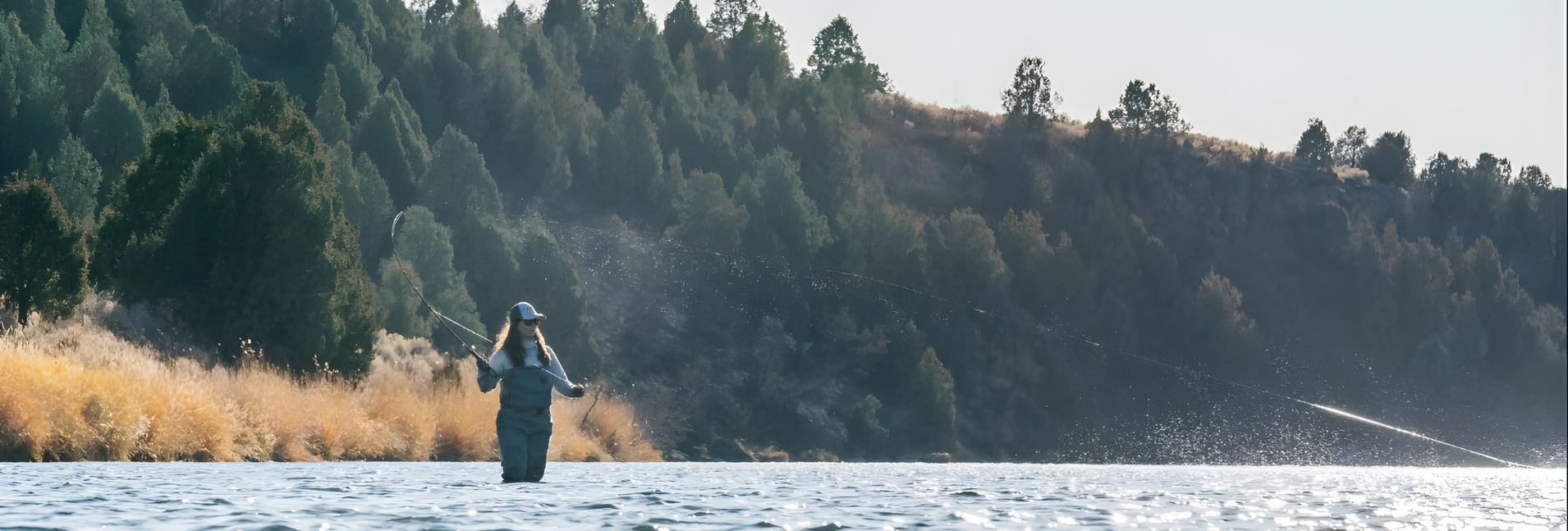
There’s a whole world of trout food drifting beneath the surface that most anglers never fully notice. Tiny insects, short-lived hatches, and subtle movements quietly control how trout feed and where they hold.
In this episode, we dig into trout food — not just what they eat, but why it matters. Because once you start noticing bugs, the river starts making a whole lot more sense.
Maggie Heumann from Trout Unlimited joins me to break down aquatic entomology in a way that actually connects to your time on the water.
Trout rely entirely on the food web beneath the surface, and aquatic insects are at the center of it all. Without a steady supply of macroinvertebrates, trout simply can’t survive.
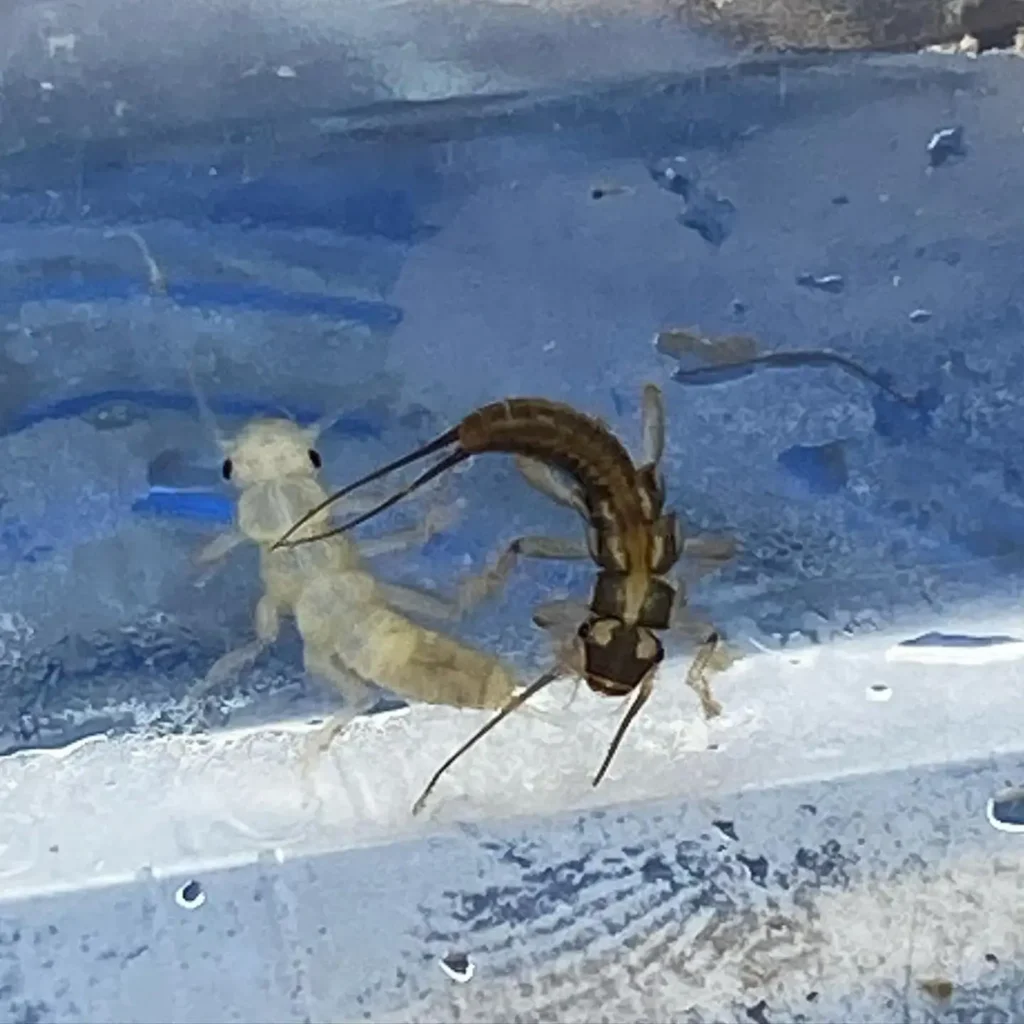
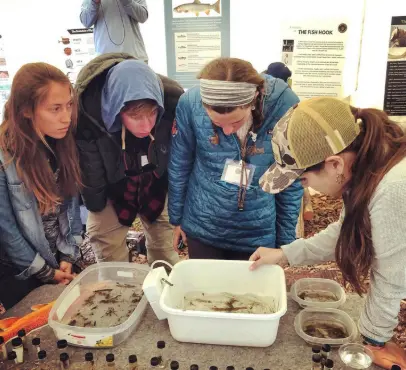
Flipping rocks and observing what’s around you is one of the fastest ways to understand a river.
It’s easy to get overwhelmed by scientific names, but Maggie keeps it grounded. You don’t need perfect identification to catch fish.
If you match those three, you’re already doing what most anglers miss.
Mayflies are one of the most important insect groups in fly fishing, and they vary widely depending on the species and time of year. Maggie highlights how different types behave and why that matters.
Some hatch once per year, while others cycle multiple times depending on conditions.
One of the most useful ways to understand insects is how they move in the water. This directly connects to how trout feed.
If bugs are in the drift, fish are feeding in the current — not on the bottom.
Trout aren’t flipping rocks to find food. They’re sitting in feeding lanes, waiting for insects to come to them.
This constant drift explains why fish can feed even when you don’t see surface activity.
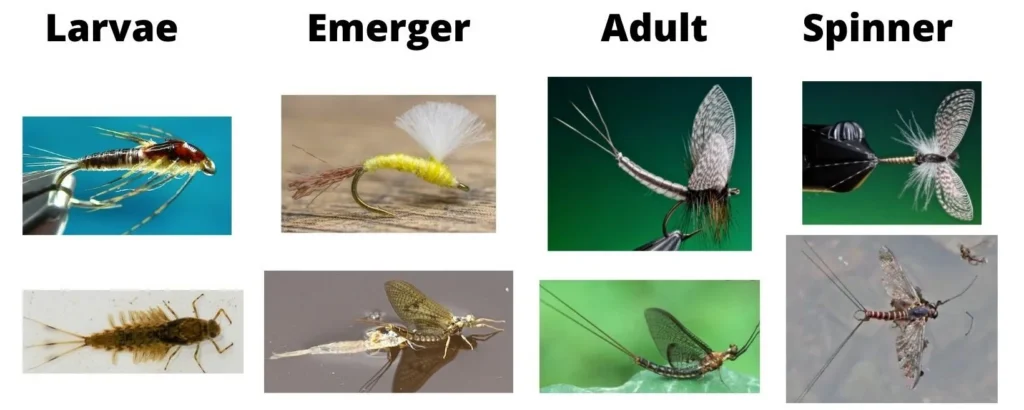
Mayflies are unique because they have an extra stage in their life cycle, creating more opportunities for trout to feed.
Fish often key in on the vulnerable stages, especially during emergence and spinner falls.
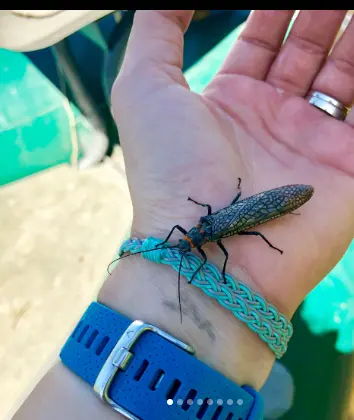
Stoneflies are larger insects that often take multiple years to develop. Instead of emerging in the water, they crawl out onto rocks or vegetation.
They’re also strong indicators of clean, healthy water systems.
In many rivers, salmonfly hatches aren’t as strong as they once were. Maggie shares how multiple factors are contributing to this shift.
She’s involved with the Salmonfly Project working to better understand these changes.
Caddisflies are incredibly abundant and behave very differently from mayflies and stoneflies.
They emerge underwater and swim to the surface, which is why emergers and soft hackles are so effective.
Beyond the big three, there’s a wide range of insects trout feed on throughout the year.
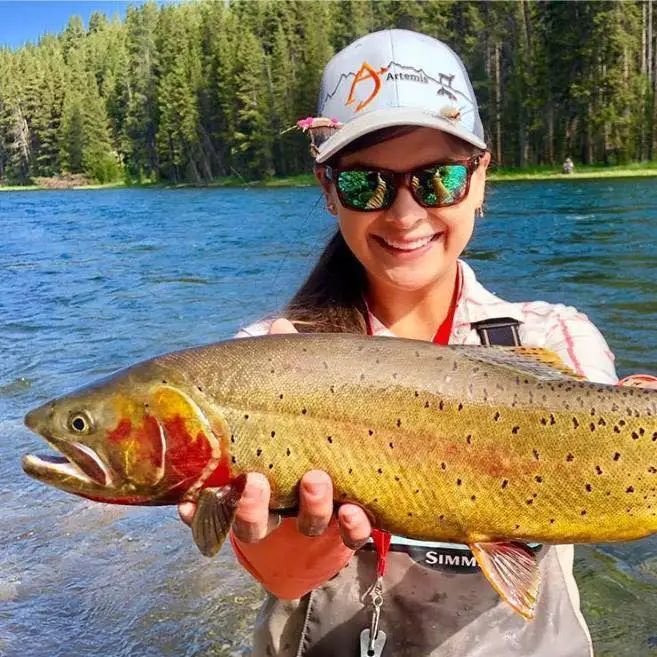
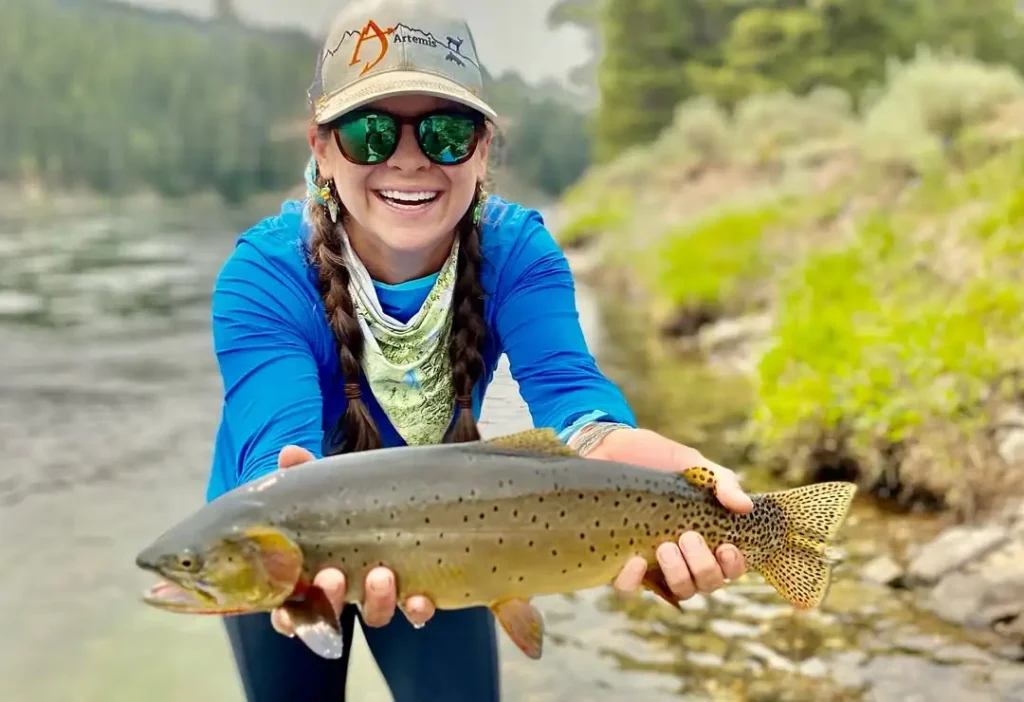
Maggie shares a story of landing a large cutthroat on a dragonfly pattern — a reminder to pay attention to what’s around you.
This all ties back to conservation. Healthy insect populations mean healthy rivers and strong fisheries.
She also highlights the impact of the Teton Dam failure and how rivers recover over time.
Episode Transcript
00:00:00 Dave: There are entire worlds moving beneath the surface of the river that most people never notice. Hatches that last only a few minutes. Life cycles that quietly control when trout feed where they hold. And why a river feels alive one day and empty the next. If you start paying attention to those details, fly fishing changes. Today, we’re digging into the science behind trout food. Why river health and why understanding aquatic insects is one of the fastest ways to become a better angler and a better steward of the water. This is the Wet Fly Swing podcast, where I show you the best places to travel to for fly fishing, how to find the best resources and tools to prepare for that big trip, and what you can do to give back to the fish species we all love. Maggie Human from Trout Unlimited is here today and she is going to take us inside her world of aquatic etymology. We’re going to find out what anglers should look for when identifying bugs on the water, how changes in water temperature and snowpack can affect hatches. What the connection between river conservation and the insects that trout depend on is all about, and some simple ways anglers can start noticing the bug life around them and dive in a lot deeper than just the surface. All right, here we go. Let’s jump into it. Maggie. Human. You can find her at Trout Unlimited dot org. How are you doing, Maggie?
00:01:19 Maggie: Doing good spring. But wish we had more snow.
00:01:22 Dave: Right. That’s what I’m hearing. I just we talked to one place, one outfitter who was near Teton, I guess closer to maybe the Yellowstone. And they said they had some pretty good snowpack, but I think I think overall it’s a little bit light, right?
00:01:35 Maggie: Yeah. I think the snow water looks okay, but we’ve had a lot of rain. And you know, a lot of the snowpack has melted down. I’ve never seen stuff blooming in my yard this early in the robin showing back up. So which is an interesting dynamic given I was in a water strategy meeting on the snake yesterday with Trout Unlimited staff.
00:01:56 Dave: Oh, right. Yeah, that’s always a hot topic. All the water. So we’ll hope for the best. Maybe there’ll be some late, uh, late snow coming in there. But, um, today we’re going to talk about, uh, we’re going to get into bugs. You know, we’re going to, you have you do some presentations with Trout Unlimited. We’re going to probably get a little bit nerdy and deep into some of these insects talk Latin a little bit. But, um, you know, before we get into that today, I want to talk about your experience with to what is, what is your current position? Maybe talk about what you do with them when that relates to kind of entomology.
00:02:27 Maggie: Yeah, I’m our director of engagement partnerships. So it’s kind of a broad title, but I wear many hats in the organization. I do everything from running our online store to managing both non-profit and brand partnerships for events and engagement type stuff. And I also run our Trout Unlimited business program, which is kind of a new portion of things for me to be doing. And so looking at ways to kind of reinvent that and get more shops engaged. And part of one of the big things that I get to do in my job is I get to educate about entomology. And so being in the engagement department allows me to kind of go out in the world, whether it’s to a Trout Unlimited regional rendezvous or national meeting or, you know, fly fishing show or guide schools really are one of the ones I do the most where I can do entomology talks and breakdowns for people as opposed to, you know, the career path I could have taken as an entomologist, my dad thought I was always going to go work for Monsanto or be the bug man and, like, spray him and kill him. But I’m very glad that Trout Unlimited allowed me to parlay my love for educating people on insects and bringing people to love insects to the the greater fishing world, as that’s one of my passions as well.
00:03:45 Dave: Amazing. Yeah, no, it sounds like you made the right choice on your career path, because two is obviously one of the great groups in the country. Um, and what do you think it is? You know, you do some entomology? Why is entomology for those listening? You know, fly fishing. Why do you think it’s important to understand a little bit more about the bugs, and maybe even down to the scientific names and things like that?
00:04:05 Maggie: Well, I mean, we oftentimes refer to trout as canary in the coal mine, right? Because they can only live within a certain temperature thresholds and they live in the coldest, cleanest, most beautiful water in places. And that’s why people are so drawn to them, right? And if we don’t have a food web for them to feed on, then they’re not going to live there. So it really what it boils down to is the insects. And I usually start my entomology programming, kind of just breaking down the words like macro invertebrate, like what is macro mean and what is invertebrate mean. It’s the biggest thing without a spine. And we can’t see bacteria and diatoms and all these microscopic things. But the macro invertebrates are the first things that you can really see in a river system. And, you know, just getting out there and flipping over some rocks and poking around and looking under. You know, willow bushes and things along the bank can really educate you and your understanding of what trout are looking for and how trout are eating. And I’ve got a story coming out in this month’s issue of trout magazine, and it’s a storytelling issue. So I kind of tell some bug stories a little bit. But, you know, the gist of it all is, is I’ve learned so much more from just observing than anything, right?
00:05:17 Dave: So do you do a variety of presentations from kind of high level people new to it to getting way nerdy down into the species subspecies, or do you do a mix of things there?
00:05:28 Maggie: Yeah, it just depends. A lot of people tend to get intimidated by the Latin. I was lucky enough to have some, some really solid professors in graduate school and am surrounded in a community in the Greater Jackson Hole area. I live over in Teton Valley, Idaho, but I started my career at High Country, flies in the fishing industry and worked for Howard Cole, which I know you’ve had him on your podcast and he’s a. he’s a pretty buggy dude. And so he kind of would nerd out with me on that type of stuff. But a lot of the, the educational stuff that I do, I laugh because I’ll end up doing some of the same programming for adult groups that I do for kids groups, because you just have to break it down and simplify it for people or otherwise they get intimidated and want to, you know, run away from it. But at the end of the day, I always say, you know, if it’s a size fourteen and it’s brown and fuzzy and you’ve got something that’s size fourteen and brown and fuzzy in your box, the fish don’t know that it’s a caddis versus, you know, a yellow Sally pattern or a midge pattern or whatever it may be. And that’s why a lot of fishing folks run around with Sharpies in their packs and things like that, so they can make adjustments on the fly, but it’s more about the size, shape, action. You know, there’s a lot more factors that go into it outside of knowing the exact name, but I’ve had the opportunity to join the board for the Salmon Fly project and help them kind of get their new nonprofit off the ground. And so that’s definitely the group that we tend to nerd out a little bit more with, maybe less in presentations. We’ll go down to, you know, family or species level, especially with the more common ones in talks. But a lot of times, like just categorizing things, mayflies, stoneflies, caddisflies, midges is probably the most useful. But I will say one thing I learned because I’m from Alabama originally is that there’s a lot of common names that are different across the country. And so, you know, a green drake in the East Coast is different than a green Drake in the Rockies. And so sometimes that is not always, you know, the best baseline to go off of if you’re not sure that they are the same thing, because they’re in two totally different parts of the country, they may just call it that. And there are certain region, right?
00:07:36 Dave: Yeah. Green Drake. That’s definitely a big one. People love what is the, what is the scientific name for the green Drake or what is the, how do you maybe break that down really quick where that is family and then down to the species.
00:07:48 Maggie: So it’s a mayfly, and Drake is just kind of a common term for a bigger mayfly. It’s not indicative of a certain species. Um, but it’s, it’s kind of the bigger mayflies that hatch once a year. So they’re big hatches that anglers, you know, like to chase after and target. But green drakes are crawlers. So I call them Arnold Schwarzenegger bugs because they look like they’re making a muscle. When you look at them, if they look like they’re they’re making a big muscle with their bicep, it is most likely a green drake, but Drunella Grandis is the one that we see the most commonly around here, and it’s got two little spiky horns on its head. So that’s the dead giveaway. But there’s multiple other species of drunella. So there’s Flavia, there’s Drunella Dot-c. So there’s three different drunella species that we’ll see hatching, all kind of sequentially, sometimes overlapping, that are all considered a part of the green Drake, the lesser green Drake. But it doesn’t matter. Every time I do a sample just about. In healthy rivers in this area, we tend to find those.
00:08:52 Dave: You do? Okay. And so Janella and just going a little bit or clarifying a little bit, you’ve got the genus and species, right? So you’ve got drunella, grandis, genus and species. And then what is the family for? For the niklass.
00:09:07 Maggie: So they are actually in family ephemerality, which is the same family as your pmd’s. So you may have one overarching family and, you know, to get into scientific nomenclature a little bit, you know, you’ve got kingdom, phylum, class order, family, genus, species is how it goes. And if you look at the order, that’s going to be kind of where we start in this fly fishing entomology. So that’s going to be what defines your mayflies or caddisflies or stoneflies. If you go down to family, ephemerality is the family and then Drunella is the genus and grandis is the species.
00:09:44 Dave: Gotcha. That’s it. Okay, so. So that’s ephemerellidae. And then sometimes they’re called just ephemerellidae, right? You take off the A day and just kind of what would you call that? That’s just, I guess that’s not a still a common name, but that’s the easier way to say the scientific family.
00:09:58 Maggie: I mean, it’s not scientifically accurate. So it would be it’s just, you know, like we say flaps, right? Like that’s not actually the word, but it’s just an angler kind of lingo. The way that we shorten it and put that’s on the end.
00:10:13 Dave: Oh, it is. Right. So that’s a, that’s an angler thing. So when you call it a beta day abated. That’s definitely not a scientific scientifically correct.
00:10:21 Maggie: No it’s not. You’ll have Batus and beta D, but they all have the same suffix if they’re depending on what classification level they are. So I was a stickler about this when I was at grad school, teacher at Colorado State. And I would count off for spelling because you screw up spelling in a Latin name and you might have a whole different species.
00:10:41 Dave: Right? Right. That’s cool. So that was your background. So you have a master’s in what is your master’s degree in?
00:10:48 Maggie: So I have my master’s degree in entomology. I, like I said, grew up in Alabama and went to Auburn University and got a degree, oddly enough, in poultry science with a minor in entomology. I actually took more hours in entomology than I did poultry science, but they had it dropped to a minor when I was a freshman because there was not enough students enrolled, which was like really disheartening to me that there weren’t more people that cared about the bugs. But that’s why I always joke about my time working in fly shops. I’m like, well, I’m a bug and a hackle expert, so I can tell you all, all the things. I’ve had a couple good poultry science friends go on to work with the likes of Tom Whiting and be on grad school committees and college professors with him. So it’s a pretty interesting dynamic to have both of those in my degree background.
00:11:39 Dave: Nice, nice. That’s awesome. So you mentioned Ephemerellidae. What are a couple of the other big families of insects out there you hear a lot about or, you know, the you mentioned one, the Drakes. Those are big. What are some other ones?
00:11:51 Maggie: Um, well, if you want to keep going on ephemerality, like PMD is probably your biggest category that anglers really know about. And the guide cop out is always like, if you don’t know what it is, just call it a PMD, right? Because everything could be a PMD. Oh, right. Um, but if we’re talking specifically about mayflies, there’s several different groups. If you want to go like based off of time of year hatch or, you know, do they hatch once a year? Do they hatch multiple times a year? There’s a lot of just kind of background info that it’s helpful to understand before you dive right in. And I mentioned that like the Drakes, right? They come off one time of year, but then you’ve got things like PMDs and betas. They’re a little bit more small bodied and they have the ability to regenerate and re lay eggs and restart that whole generational life cycle, and they may emerge a couple times a year. And so depending on water temperatures and air temperatures, it’s got to be a perfect mix of the two. They can emerge, you know, two, three different generations per year. But I would say PMDs are one of the definite big groups. We’ve also got family Baetidae. You mentioned those are mayfly species or family, excuse me. Um, family that regenerate and have multiple generations per year, but tend to like a little bit more cold weather. PMDs are more of a kind of middle of the summer heat of the day kind of deal. And you’ve got blue winged olives and, you know, calabashes. Those are both in the family Baetidae. I had a professor that called him Beatus, which apparently it’s like tomato, tomato. You can call him either, but I always learned it in school as Beatus. And then, you know, the Anglo community obviously calls it Beatus, but those are very abundant, you know, versus some of the drakes where you’ll have really abundant hatches, but not not to the level of the clouds that you’ll get with some different blue winged olive hatches. So there’s definitely a lot of fish that consume those throughout the year. And one thing to really think about too is like, how often are these fish actually consuming, you know, the adults versus the nymphs? Because if you’re regenerating all the time and laying eggs and starting over, like there’s constant availability of nymphs under the water. So, you know, lends to the understanding that typically nymphing can be more prolific. But a lot of us like to go fishing in places where you get to catch them on top and as a dry fly.
00:14:20 Dave: Yeah, exactly. Is that, um, do you do quite a bit of fly fishing? Is that what you’re most interested in getting them on, on the top?
00:14:27 Maggie: I would say so. I would say just based on where I live and the access to Yellowstone cutthroat and snake River cutthroat, my nearby rivers and those being fish species that really like to look up the dry fly fishing definitely has a hook, but it doesn’t mean that I don’t want to go fishing. I mean, our boat ramps are clear right now, which is crazy. A lot of times we’re waiting on snow removal before people can put boats in, but I’m sure the dry fly fishing is probably pretty phenomenal right now. During during some of these warmer days.
00:14:56 Dave: Exactly. So I’m kind of going down this track. We’re in the mayfly. I’m just trying to give people a primer to, you know, some of the Latin. So I think we’re doing good. We got Bay today. We got bluing olives, Calabasas. You got Ephemerellidae. You mentioned the pmd’s under there, the drakes. What would be another, um, mayfly or, uh, you know, family that’s pretty popular out there. Other than those two.
00:15:17 Maggie: one of my favorites is family ephemeridae. And so again, ephemerality ephemeridae. So they’re very, very close in spelling, but that’s going to be your things like brown drakes and hexes. But I mentioned the common name dynamic earlier about the green drakes. And so this is also where your green drake falls in from the East Coast. But these are burrowing mayflies, and I didn’t really talk too much about, you know, PMDs and betas or swimmers. And so, excuse me, betas are swimmers and PMDs are kind of clinger smaller crawler. They’re not as robust like your, your green drakes, so they can hang on to the rocks, but they’re not, you know, super adept at moving around. And then you move into this brown Drake and hex space. And these guys are totally different. They’ve got tusks on the front of their face. Their face is really cone shaped and pointed so that they can burrow. And they make these little U-shaped burrows in the sides of the bank. And again, just taking it back to angling, understanding, it’s like, well, what kind of banks are those going to live in where the hex is live? You know, they’ve got to have some kind of muddy substrate or something silty and easy to burrow into. We’re certainly not getting huge brown Drake hatches here on the snake River proper and Grand Teton National Park because it’s all these gigantic cobblestones. So there’s really not an opportunity for them to borrow. So we don’t have substantial populations of those types of mayflies here. But you get one hatch a year from those guys and they are considered a filterer or gatherer as far as the way they feed. When we’re talking entomology, we classify things based on a couple different categories. But how they move, how they feed, how many times they generate per year, those are all all different, distinctive factors that help you understand what bug you’re looking at.
00:17:09 Dave: Grand Teton Fly Fishing is a premier guide service and fly shop that has access to some of the most coveted rivers and lakes in western Wyoming. Their simple goal is to share their valued resource and have you experience a native cutthroat trout rising to a single dry fly in the shadows of the Tetons. You can check out Grand Teton right now at Grand Teton fly fishing dot com. Let them know you heard of them through this podcast. Trout Routes by Onyx is built for fly anglers who want better Intel without spending hours digging for the information. You’ll get access to public land maps, stream access points, regulations, and even road and trail maps all in one place. It’s become my go to app for scouting new trips. You can check them out right now, go to Webflow Complex routes and download the app today. So we’ve got a few. We mentioned the fam. I mean really some big ones. And the hex. Is that the.
00:18:03 Maggie: Hexagenia?
00:18:04 Dave: Yeah. Hexagenia.
00:18:05 Maggie: Yep. And same like I said, same as the brown Drake. They’re in the same family, but the hexes we do have down on the snake River proper. And some of the further down stretches closer to like Pocatello, Idaho. But there are hexes and a lot of the lake systems. So like I grew up in Alabama, we had hexes all over our lakes, and we would go out in the summertime and like, every light on every dock at the lake would just be covered up. And, you know, every light at the gas station would just be covered up. You’re just snorting those bugs, right?
00:18:38 Dave: Because they’re kind of known as a they hatch. Do they hatch in the evening or are there people fish for them in the evening? Right.
00:18:43 Maggie: Um, both. They definitely start emerging in the evening. And that’s one thing I’ve learned. And it may be a product of climate change and otherwise, but sometimes people are like dead set convinced that this only happens at night. And like, you can’t do that during the day. And, and that this is not going to happen. But I’ve definitely seen Brown Drake’s emerging, you know, in the middle of the day, places like Silver Creek, Idaho. But I would say the bulk of them are going to be, you know, mornings coming off of overnight hatch and then spinner falls in the evening that you want to target for fishing.
00:19:14 Dave: Okay, good. So we mentioned a few here on some of the mayflies. Is there another you mentioned the crawlers, the swimmers, the burrowers. Is there another type of mayfly? Are those the three big ones?
00:19:27 Maggie: So as far as movement groups go, that’s kind of the big groups are burrowers, clingers, crawlers and swimmers. And when you move into the other insect orders, there’s some some different ways that they move. But in fly fishing we’re pretty like literal. So it’s exactly what you would expect. They burrow, they cling, they crawl, they swim. If they’re a clinger versus a crawler, there tends to be sometimes confusion on the types there. And clingers are just hanging on for dear life. So a good example of a clinger would be something like a March brown. And so that’s a more early spring mayfly species that we see. Obviously we name some with common names based on their month. Right. So and with warming temperatures, you know, Mother’s Day caddis may become Easter caddis.
00:20:20 Dave: Right?
00:20:21 Maggie: It’s changing from August caddis. But March Browns tend to come off around March and they’re a flatheaded mayfly. So their body is really, really super flat and they almost make a suction cup with their gills to. Suction on to a rock. But if you’re picking up a rock and it’s just hanging on for dear life versus crawling away from you. Yeah, that’s a good distinction between a clinger and a crawler.
00:20:44 Dave: Okay. And is the March Brown what family is that in?
00:20:47 Maggie: It’s in family heptageniidae, which also includes like your pale evening done. Just like there’s a pale morning dun. Um, some of the different quills, like a yellow quill, but generally they are more flatheaded mayflies not as abundant hatches, but definitely still important to the angler.
00:21:05 Dave: Yeah. Very important. Right. Because if you understand and that’s kind of what we’re getting to, if you understand the life history and we’re just touching the surface on this, but of the movement, the feeding and everything, then you can understand more about the bugs and how to fish them, how to tie them, you know, where to find them, right? All that.
00:21:21 Maggie: Mhm. And a key factor in all this too, is like, I’ll have people ask questions and they’re like, well, if they live under a rock, like, how are the fish eating them? But you’ve got to understand with river flows and, you know, passive and active drift, you’re you’re having bugs in the water column at all times. So a bug like a mayfly is not going to be an adept swimmer at a river, you know, rolling at twenty thousand cfs during spring runoff. But they’re going to be in the system. And that’s what fish are targeting. That fish aren’t flipping over rocks. The fish are catching them in the drift. And so these bugs can drift down river based on, you know, upticks in dam releases. It can be, you know, regular natural spring runoff flows. It can be you pull in your boat into the river and kicking rocks downstream, and then all of a sudden they go tumbling because a little bitty mayfly is not going to swim back to where it came from. And so that’s also how they keep, you know, their genetics alive and spread their seed is because they’re constantly moving and traveling down river and starting a new life over. Because when mayflies lay eggs, they’re laying thousands at a time. And it’s not really in your best interest to go mate with your brother or sister, right? So it’s good to kind of keep it moving and, and really keep the population alive that way. But it’s definitely an evolutionary strategy with a lot of a lot of these insects is that they emerge in such large numbers because they’re not only important to fish, they’re important to birds too. And make sure that there’s enough numbers that there’s no way all of them can get eaten at once.
00:22:56 Dave: Gotcha. Okay, so that’s and mayfly is the order. What is the order of mayflies?
00:23:01 Maggie: Ephemeroptera. And that translates Tara at the end. Tara means wing. So anything Tara is flying. But a film means that it’s short lived. So ephemeral streams, right? It’s a lot of the same prefixes that you see, in other words, but it’s short lived. So, you know, mayfly adults live for twenty four to forty eight hours. So it’s a very, very timely to be able to get to the river and hit the hatch when it’s going off, because it’s not going to last that long.
00:23:33 Dave: Yeah, exactly. Okay. So that’s perfect. And, and their life history, as far as their they’re a little bit different than caddisflies and stoneflies, right. Can you describe that? How mayflies, they have an extra part of their life cycle?
00:23:45 Maggie: Yeah. So I liken, and if you’ve heard me give talks before, you’ve probably heard me make this analogy, but I liken mayflies to kind of like the pronghorn antelope. It’s so ancient and has not evolved in ways that other ungulates have, that it has both, you know, a skull and with an antler type structure underneath it, and then a horn sheath on top. So it’s got both. And with a mayfly, it never evolved as well. And so it’s maintained this second adult stage. And so that’s where you have spinners and dones come in. And those are the terms that we use commonly as anglers. But it’s subimago or imago subimago imago again, just pronunciation based on on region. But when they emerge out of the water, mayflies are so small that they’re kind of the only ones with the ability to readily emerge in the surface tension of the water, so they can pull themselves out of that exoskeleton and emerge into the winged adult. But that is the done phase. And usually their wings are opaque or mottled. They’re not totally clear, and they’ll go find a nice little leaf or branch or rock to rest on, and they’ll bake in the sun for a few more minutes or in the rain if you’re a bwo. And then they’ll, they’ll shed that last exoskeleton around their wings. And then that’s when they become a sexually mature adult. And so they can mate and start the process all over again. But when they do that, the males typically get elongated forearms, and then they get these little claspers to be able to grab females mid-air.
00:25:23 Dave: Right? Wow. That’s amazing. Yeah. So they have that’s the extra part of their life history. And then if we take it to let’s just go over to stoneflies for a sec here. So is it plecoptera? Is that the order?
00:25:34 Maggie: Plecoptera.
00:25:35 Dave: Plecoptera.
00:25:36 Maggie: Yep. Is the, the order name for stoneflies and they’re a little bit chunkier. You know, we have stoneflies that don’t emerge every year. It takes them maybe two, maybe three, maybe four years. And then we have some stonefly species that can have one or two generations per year. So there’s a lot of different dynamic there. Obviously, their body structure, their wing structure visually are different. A lot of folks tend to get the smaller stoneflies confused with mayflies in the nymph form, but one of the dead giveaways is that all insects have a head of thorax and abdomen and stoneflies on their thorax. They have three plates, and so they have kind of three little structures protecting their back, little armored plates. And so if you can count those three plates behind their head, you’ll you’ll know it’s a stonefly.
00:26:31 Dave: Cool. And the tails isn’t always a dead giveaway, right? But most a lot of stoneflies have two tails.
00:26:37 Maggie: Tails is not a dead giveaway. A lot of people think that. But, um, mayflies can have two or three tails. And stoneflies always just have two.
00:26:45 Dave: Yeah. Okay. And the plecoptera. What is the start of that? The plecoptera.
00:26:50 Maggie: So it actually means folded or braided wing. And so when they’re developing those bottom two plates that I was just talking about on their thorax are actually where their wings are developed and they’re folded up in those plates like little origami pieces. So when they shed that last exoskeleton before they become an adult, those wings unfurl. They pump their little insect veins up full of insect blood. Um, that’s another misnomer is that these bugs are coming out of the water. So they got to dry off. And you’ll hear here anglers say that all the time they got to dry off before they start flying. But it’s not actually drying off. Their exoskeleton protected them from getting wet and they shed that, but they’re just waiting to fill their bug blood up in their veins before they have the ability to fly.
00:27:36 Dave: Oh, wow. That’s cool. Um, okay. And then what are a few in the plecoptera the stoneflies? What are some of the families that are really popular for fly fishing?
00:27:46 Maggie: Um, you know, there’s a bunch of smaller families that we see kind of this time of year and over the winter, not as important in fly fishing, but just that reminder that they’re always underwater, right? So you’ll have little black stoneflies. And that’s why sometimes like smaller black nymphs with maybe a shiny bead work well in the wintertime because there’s several different species and families of those. But I would say when we start really getting into the ones that matter, we’re talking about like family chloroperlidae, which is commonly confused with yellow Sally’s. And it’s actually the better common name. There is a greenstone flower or a spring stone, but if you if you see something that looks like a yellow solid, it’s a little bit more electric green. That’s going to be one of those guys. They’re they’re pretty dainty, but make a great snack for trout in the early summer. We’ve got family perlidae and family perlodidae. So again, the dynamic between the barely different pronunciation and both of those are families that we consider to be golden stoneflies. So they’re larger. The key identifying factor between the two is that family perlidae has large gill tufts under their arms, or maybe on their thorax, and then family Perlodidae does not have gills under its appendages. So that’s going to be something like your scalas that are a little bit more slender and and don’t have massive gills underneath. So all these insects have to adapt under the water. And they have a gill system when they’re aquatic. And then once they become a winged adult, they respirate through their skin, through their exoskeleton.
00:29:24 Dave: Gotcha. Wow. This is amazing. So. And what would be some of the. Describe a couple of the other normal. You know, you talked about the greenstone. What would be the. I’m thinking golden stones. Um, the giant salmon flies. Are those in these families?
00:29:37 Maggie: No, actually. So in family perlodidae. So the one that has the O in it, that also includes your true yellow Sally’s. So again, there’s a pretty wide size range between a scoala and a yellow Sally, but they are in the same family and golden stones, uh, little yellow stones. You know, there’s a lot of, a lot of pretty basic common names around those, but I would say without a doubt, the pearls and pearls are the most abundant. And the golden stone and yellow Sally family that we see consistently. And then you move over to family Taranaki, and that’s where your salmon flies and your least salmon flies live. And so there’s just a little bit smaller version that we call the salmon fly. But the true salmon fly species has gigantic gills right on its chest. And so if you flip over something that looks like a big, you know, scary looking bug, it’s more of a dark black color. It has really serrated edges on those armored thorax plates. And then it’s got big fuzzy white gills right under its chest. You know that you’re looking at a salmon fly. And part of the work that I’ve been doing, helping out the Salmon Fly project and being on their board. Is this all all was born of a of a lack of hatches being prolific anymore? Like a lot of places, we’re used to have salmon flies don’t have them anymore or they have way, way less than they, they used to. And so trying to identify what’s going on with some of these hatches, and they’ve expanded further beyond salmon flies to look at full macroinvertebrate communities. But overall, there’s, tons of different factors that are limiting, you know, the abundance that we once had. And, and a lot of it is, you know, human influence. A lot of it’s warming water temperatures. A lot of it’s, you know, changing dynamics of the river, whether it’s dams or otherwise. But there’s a lot of different things that that are impacting their life. And, you know, it’s one thing that I’m passionate about is making sure that they continue to persist because they’re pretty amazing species.
00:31:42 Dave: And the stoneflies are those are they’re some of the aquatic invertebrates that are more of, like you mentioned, the canary in the coal mine. They could tell you more about water quality, like stoneflies versus, say, caddisflies. Or is that important to know?
00:31:56 Maggie: Yeah. And I would say it’s hard to make blanket statements with insects, especially aquatic insects. But, you know, you might have something like the glacial stonefly that lives only in glacial snow melt water. And so they found them in Grand Teton National Park and in Glacier National Park. And so, you know, those are obviously very sensitive to climate change. You’ve got some little mayfly species. One of the things that I know is going to be piloted soon on the Henry’s Fork is a PMD study, and trying to figure out why there’s less adults than there used to be. But Pmd’s are a lot smaller than some of the Drakes, and they’re far more sensitive. And when they have thinner, you know, exoskeletons and they’re they’re smaller bodied, they tend to take the hits a lot faster. And so you may not see it immediately because the abundance is so large, but those smaller bugs definitely are being impacted. But I would say there’s a lot of specific species that, you know, live in specific places or rivers that, that are ones to monitor. But salmon flies are definitely one of kind of the keystone figures in gauging that.
00:33:05 Dave: Yeah. Salmon flies are so the giant, the giant stoneflies.
00:33:08 Maggie: Mhm.
00:33:09 Dave: Gotcha. Perfect. And then what about there’s one that’s, um, I think some people call it a mutant stone, but it’s like that stone fly that doesn’t have developed wings. Are you familiar with that one?
00:33:18 Maggie: Oh, yes. Um, there’s it’s actually two. So mutant is in science word we call brachypterous. So that means that they have shortened wings and it’s only the males of those species, but it’s koalas and seniors that you see that in. You actually see it in a lot of the winter stoneflies too. So if you ever see something that looks real weird walking on snow and you’re like, that doesn’t have wings, it’s not a bug. It’s most likely a little black male winter stone. So it’s quite a trait throughout the stonefly species, but you see it often. But in a lot of these major rivers in the west, you see Squalus in the spring and you see seniors in the fall. But either one of those people might call them mutant. They’re sometimes called Nocturnals, but the male has that shortened wing, which they have bigger clunkier bodies in comparison to something like a mayfly. And so the males can’t fly and they immediately just become fish food. You know, once they’re over the water and they, you know, or if they mate with a female on shore and then they try to take off over the water, they can’t actually fly. So that’s why that skittering flies and having a little bit more on the action front when you’re fishing for those species definitely helps it look more realistic to the fish. And they’ll give me a hard time about this. But I laughed very hard when fly fishing launched because I was like, guys, you know that the like male is the sacrifice. Basically. He’s he’s not a very strong species. That’s probably not what I would have picked. And then just just done a men’s line, but.
00:34:51 Dave: Right, right, right. There you go. That’s right. That’s awesome.
00:34:55 Maggie: So we’re good buddies with them over at T. So we like to give them some grief.
00:34:59 Dave: That’s cool. And what is the is that just a, you know, what is the advantage of having that mutant? Is that why do they have that, that trait?
00:35:07 Maggie: Um, you know, I would have to look into like genetics and life history a little bit more of why that happened. But at the end of the day, all these aquatic insects are fish food and bird food. And I’m sure if they’ve already spread their seed, the males honestly not needed anymore. It’s more important for the female to be able to water and purposefully lay her eggs and that sort of thing. So once he’s done his duty, he’s just helping keep the trout fed.
00:35:34 Dave: Quick shout out to today’s sponsor AVC rig. They’re the team in Loveland, Colorado, turning regular vans into full blown adventure machines, looking for a full build from the ground up, or just their keel or aluminum cabinetry and storage systems. AVC rig helps you create a setup that’s lightweight, rock solid, and built for life on the road, perfect for anyone chasing fish and wild places. And here’s the best part they’ll be at the Denver Fly Fishing show so you can step inside their rigs, meet the crew, and see what makes their work so dialed in. Stop by, say hi, and let them know you heard about them on the Web Fly swing podcast. And if you want to learn more right now and start planning your dream rig, go to avc rig dot com. That’s avc rig dot com. Albert Victor Conrad rig comm AVC rig check them out now. Let’s go into caddis because I think that’s another one of the big ones. Uh, I’m getting my pronunciation wrong, but is it trichoptera or how do you pronounce it?
00:36:34 Maggie: Um. Trichoptera.
00:36:36 Dave: Yeah. Trichoptera. Trichoptera.
00:36:38 Maggie: Tricho. And not to be confused with tricho mayflies, but T r I c h o tricho mayflies or tricorythodes. But trichoptera is the order of caddisflies. And that actually translates to mean hair wing. And it’s because they’re so closely related to butterflies and moths that when you touch a moth or a butterfly, you get like scaly powder on your fingers. And when you touch a caddis, you get a light little hair. And so that is really impactful in how they appear on the water, how you fish with them. You know, that’s why a lot of these materials, like CDC are used or soft tackles because they really mimic kind of that hair floating in the water. And so that’s an important thing to note about caddis in general, is that they have these just finite little hairs along their wings, and it definitely impacts the way that they look underwater or on top of the water.
00:37:33 Dave: That’s amazing. Yeah. They do. They look a lot like a different than the other ones we’ve talked about. And they look like. Yeah, kind of. You mentioned like a moth a little bit. It seems like, you know, with the mayflies and stoneflies, there’s a very specific bugs with caddisflies, are there? What would be some of the popular or common families in caddisflies?
00:37:52 Maggie: So caddisflies, we kind of look at them a little bit differently because they have the ability to spin silk as well, just like a butterfly or moth does. And so they can build cases, they can have a rock case or a stick case or a plant case and use it as protection around them. So a lot of times the type of case that they make will tell you or be an indicative factor of what family it belongs to. But there are some cases that are very predatory, you know, whereas stoneflies and Mayflies are both fairly vegetative, like, no, that’s not the right word. That means that they’re dead.
00:38:29 Dave: Yeah. Right, right.
00:38:30 Maggie: They’re typically eating more plant materials. So they’re scraping things off of rocks. They’re eating not their friends, right? They’re not eating other macroinvertebrates as much, but caddis are pretty predatory. And so there’s a couple that don’t feel the need to make a case around them because they’re the predator in the system. And so you’ll have things like the Netspinning caddis that can spin a net and use it to filter whatever bugs come down the the river corridor, and they can catch them in their net and use that to eat just like a spider would almost. But then you have things like the green rock worm, which is also free living and very predatory, but just kind of goes out on its own and does its own thing and eats other critters. But I would say the most abundant that I have here in this system that we see quite a few of are the Mother’s Day Caddis or the Granum or Apple Caddis. There’s a couple different common names based on the species, and those are in family brackets. And easily identifiable factor about those is that their cases are perfect geometric shapes. So it might be a perfect square, it might be a perfect tube, but it’s a very, very geometric looking case that those have. It’s not a bunch of random pebbles stitched together.
00:39:50 Dave: Oh it’s not. And what are those made out of typically?
00:39:52 Maggie: Um, it’s mostly plant material.
00:39:54 Dave: It is. What are the ones that make the little like square out of small pebbles? That case, the little, little caddis inside. Do you know that what I’m talking about there.
00:40:04 Maggie: That’s probably them, too. If it’s a perfect square, you know, it could be rock material. It can be plant material, but some of them make them out of, like, teeny tiny little sticks and some of them not a teeny tiny little rocks. But then you have the ones that are glued to the rock. So if you’ve ever flipped over a rock and seen like where it looks like a bunch of tinier pebbles are glued and there’s little groups of them, that’s going to be your saddle case makers. And so it’s, you know, I don’t like, I don’t want everybody ripping all the bugs out of the water, you know, and killing them or anything, just just because. But it is pretty cool if you ever get a chance to like, pull one off and see if it’s still in its larval stage or if it’s in a pupa, um, if it’s in a pupa, it looks like a little piece of brown rice. And that’s also an important distinction between caddis and mayflies. And stoneflies is mayflies and stoneflies go through incomplete metamorphosis. So they never make a pupa. They just emerge straight from being a nymph into an adult, and when caddis go through their metamorphosis, they go through a pupal stage just like a butterfly or moth does. So they get into basically a cocoon type situation, and then they redevelop their whole body and grow wings and then emerge so they don’t have the wings nicely folded up in their thorax ready to go. They have to create those.
00:41:24 Dave: Wow. Can you describe that a little more? Like let’s take it to well, I guess they all do it. The bracket center today, you mentioned the granum. The granum. So how do they do that? So they’re in there. They’re in their rock shelter, let’s say the granum. What are the stages on that? Where does it go from that to hatching.
00:41:41 Maggie: Um well you’d have to back up. You’d have to start with like the egg. And then every single insect sheds their excess skeleton over and over again. That’s what makes them an invertebrate. They don’t have bones, right? They just have a hardened structure around them. So once all their tissues get big enough, they explode through that exoskeleton and they are in this kind of like really vulnerable phase. They’re really squishy. A lot of times they’re really pale. That’s why if you see like Pmd’s coming off during the start of the hatch, they’re like almost white, right? Like they’re really, really tiny and really, really pale and really squishy. But they will go through those shuck shedding or exoskeleton shedding periods and we call those instars. Um, so they might have ten instars. They might have forty instars. It depends on the insect. And there is no blanket term. Every single one has a different amount. And based on temperature and other factors, sometimes they have more, sometimes they have less. But once it gets to its phase where it’s it’s instar, where it’s ready to pupate, it will create a place, a safe place for that pupal stage to, to happen. And without getting into like full chemistry of it all. I mean, their, their cells all just meld back into like, goo. And then they reform a new insect. And so it may take a couple days, it may take a couple weeks. And then they will emerge out. And obviously, if they’re going through a pupal stage, they’re not swimming up to the shore as a nymph, right? Or like a stonefly would go find like a bridge pile on and crawl out of the water. And they don’t have that ability. So they’re emerging out with wings underwater. And so you’ll have a caddis swimming up with wings and adult caddis. And so again, that’s where that like soft hackle type fishing comes into play big time.
00:43:35 Dave: Gotcha. Wow. That’s cool. So larvae to the pupae or what is the term for that. When it goes from larvae to the pupa in stars.
00:43:44 Maggie: Um or they go through a molt they molt their exoskeleton each time. And then the stage in between is called the instar. Like what are they in their third instar. Fourth instar.
00:43:53 Dave: Yeah. In between the instars. And then and then the pupa eventually emerges, as with its wings underwater. And that’s where the soft tackles or those emergers are so critical, which they are kind of more critical. Emergers. Do you think of those more as caddis, or are you fishing mayfly emergers too?
00:44:11 Maggie: Um, you are definitely fishing mayfly. Yeah you are. That’s probably the most that you’re fishing because they emerge in the surface tension of the water. You’re kind of hitting that in-between phase where they’re they’re pulling out of that exoskeleton into that final molt. They’re certainly one off things that happen all the time in the insect world that you’ve never seen before. But there’s definitely more of that struggle and that vulnerability with mayflies than there are with Caddis and Stoneflies, because stoneflies get their whole body out of the water. They get on some plant material or rocks or bridges or whatever, and then they transform and do that final molt and then caddis or doing it underwater and then swimming out as an adult.
00:44:54 Dave: That’s right. Man, this is what’s cool about it. There’s so much here, right? I think we’re we’re just kind of scratching the surface. But I think it’s, it’s interesting because I find that the more you get into fly fishing and trout fishing, I think understanding this makes the experience better out there when you’re on the water because you’re kind of understanding this, what are some of the other just kind of high level? We mentioned the three big ones. What are some of the other orders or families that are out there? What would be the other orders? We talked about three that the midges I guess would be one out there.
00:45:24 Maggie: Yep. And midges are in the same order, is like a housefly. They’re in order. Diptera and Diptera are the most abundant of all these aquatic insects. They’re the ones you find the most. They’re the most pollution tolerant, but they’re certainly species that you find in much more cold, clean water environments. Things like a black fly. I can’t tell you a sample I’ve ever done in this whole region where I haven’t gotten a crane fly. And so that’s why, like my flies have gotten so popular is because we see lots and lots of craneflies there. You know, dragonflies and damselflies come into play when you’re in slower moving water or in, you know, lake pond type area. But, you know, don’t write them off if you’re in a really slow moving river or Spring Creek. A couple years ago, I think you had Brian Berry on from Teton Valley Lodge recently. And a couple of years ago, I was fishing out in front of the lodge with one of his guides, and we saw all these dragonflies flying around and tied on a dragonfly like a bass fly, and ended up catching like a twenty one inch cutthroat on dragonfly pattern on the surface. And it was amazing to see and something that, you know, you just don’t really do that often or think about if you’re not at a lake. But you know, there’s plenty of terrestrials that are not aquatic insects that have bad days and hop in the water or fall in the water. There’s some beetles that are aquatic. There’s some beetles that are terrestrial. Both of them can come into play depending on where you are and what you’re what you’re doing. so. Just paying attention to what’s around you and what the fish are doing. Often times will answer a lot of those questions.
00:46:59 Dave: Yeah, exactly. This is cool. And what was your, um, back to your master’s degree. What did you focus on? What were you studying there for your, your masters?
00:47:07 Maggie: Um, so I did an inventory of the macroinvertebrates of the Teton River for my master’s degree. I actually started it at Colorado State and did two years there. I was coming out to the Tetons and doing butterfly surveys for a guy named Paul Opler. And um, ended up working a little bit part time at the fly shop and, uh, started at high country flies and I want to say two thousand and nine. And so I worked at high country flies when they got bought by the old Jack Dennis store, and then they merged into one. And then I got to work for Howard Cole and Scott Sanchez for a little bit there. And in twenty twenty or twenty eighteen, I went to work for Orvis and I ran the Orvis shop in Jackson Hole for a couple of years before making the move to to you.
00:47:58 Dave: Gotcha. Well that’s cool. So you studied all of the insects in the Teton? For the most part, everything we talked about today and kind of. Yeah, yeah.
00:48:06 Maggie: That’s where like the Salmon Fly project is doing really incredible work. Like I moved out west thinking like every national park and national forest has an entomologist on staff, right?
00:48:16 Dave: Because if you don’t.
00:48:17 Maggie: Take baseline inventory of what’s there, you don’t know when something changes, what goes missing. And I always just kind of assumed that people were doing that type of monitoring work. And as luck would have it, there’s not a lot of people doing that type of monitoring work. And I’ll tell you a quick funny story of why I obviously live in Teton Valley and so have vested interests in the Teton River. And, um, I started looking into finding out if there was an inventory there or if there were any studies. And I found a fishing, you know, guidebook, and they had a hatch chart for the Teton. And I was like, well, I’m going to look up the author and see if I can give him a call and see if he might tell me where he got this hatch chart from, because maybe it’s from a study or a paper that I haven’t found. And I called him up and I said, well, where did you get this hatch chart from? And he was like, oh, I got it from Guides in Teton Valley. And so it all comes back to fishing, you know, like the guides are the ones on the water. They’re the ones that know the most. And that’s one hope with the Salmon Fly project is for, you know, them to, to be able to get more guides and folks on the water engaged using tools like iNaturalist and seek and documenting what they see. Because when you post a picture of it, you get a geotag. So we know where it was, you can have scientists verify it, and then you can be used for research. And so having the public create those data points where there’s a lack of a government entity doing it is huge. And it really makes you feel like you’re giving back too.
00:49:47 Dave: Yeah, that’s a great idea to definitely do iNaturalist or something like that, because we’re out there sitting around anyways, kind of hanging out. It’d be nice to document some of that. The you mentioned Brian Berry. He, he told this really crazy story about the river, the dam blowing out. And I didn’t realize that, like kind of what did that do when that dam blew out back in the day? Did it take a while? Do you know much of that story when that happens to a stream, does that just wipe.
00:50:11 Maggie: Out very, very familiar with that story? Um, it’s kind of been a little bit of a passion project of mine to, to make sure that the Teton River remains a free flowing river forever because, you know, there’s beautiful places all around and tons of my friends have the travel bug and like going places. But I, you know, I’m lucky enough that I can drive twenty minutes from my house and be in a place that just feels so, so far removed from society. And there’s cutthroat everywhere and bugs and it’s just an incredible fishery. But, um, this is actually the fiftieth anniversary of the Teton Dam failure this year. It blew June fourth, nineteen seventy six, and killed eleven people. The first person killed was actually an angler and really just absolutely devastated the communities south of the dam and and flooded out all, you know, blew out channels and meanders and, you know, all the way to the Henry’s Fork. It was it was a wild and devastating event. And now we’re in twenty twenty six and East Idaho’s got a bunch of new water storage proposals on the table. And rebuilding the Teton Dam is one of those. And so that’s part of, you know, just being involved as a staffer at the two level of, you know, trying to navigate, you know, our local chapter and how we’re going to proceed with what, what do we need to do? Do we need to write comments? Do we need to call senators? But they’ve got a lot of new water storage proposals, and a lot of them are dams. And and dams are not great for fish. I mean, we’re a huge proponent of breaching the lower four snake dams. And and, you know, to use one of the only groups that has presented alternatives, we’re very realistic organization. And I think that that’s why oftentimes we get a seat at the table is because we understand that there’s, you know, food and people and power and facilities and things that have to be replaced and services that have to be replaced. If that does happen. And we’re not advocating for full, full removal of the lower four snake dams, we’re advocating for breach to allow the fish to get by. But while maintaining some of of the services still. And and so, you know, free flowing rivers are a huge part of, of what we do and, and protecting the fish that live there. But the Teton could not be a more special place. It’s one of the only, you know, strongholds of Yellowstone cutthroat that there are left in the region. If you look at a map of the areas that they’ve been extirpated, it’s pretty wild.
00:52:41 Dave: Wow. Yeah. So the Teton, this is a really important um.
00:52:45 Maggie: Right now.
00:52:46 Dave: Yeah. Hot issue. And when that dam blew out. I’m just guessing that it wiped out when this happens. Wipes out complete populations of bugs. Does that take a while to recover from something like that?
00:52:57 Maggie: It does. And I actually asked that question in our meeting yesterday. Like what type of restoration work was done post Teton Dam failure? Because the canyon is so deep, it’s pretty much inaccessible for heavy equipment and machinery. And I know that, you know, the Fish and Wildlife Service and some other groups came in and reseeded certain areas with native plants. And, you know, we’ve learned a lot over the last twenty five, thirty years about hatcheries and the impact of bringing in hatchery fish to a wild fish population. And so it’s actually an incredible story that it’s recovered the way it has, um, with very, very little intervention. And I still think that there’s a lot of work that could be done there. When I first started at two is when the Yellowstone River flooded. And I’ll tell you a quick story. My sister and brother in law are both park rangers, and my brother in law was stationed up in the Buffalo Valley at the time that that flood had happened, and he was just getting blown up with phone calls. Like, are the fish going to make it or are they going to die? You know? And we’re like, guys, have you seen the Yellowstone Canyon? Like, they’ve been here this whole time. Like they’ve survived a lot of crazy stuff prior to people. So, um, we ended up going for a two river cleanup and we found, you know, roof parts and people’s dressers and shoes and, you know, traffic cones and all kinds of crazy stuff in the river. But I stayed. Me and a coworker stayed with my brother in law and he was like, hey, you know, nobody’s allowed to fish the park right now. And he’s like, y’all work for Trout Unlimited. Why don’t y’all come do a little research for us and tell us how it is? And we went into the park. We had Yellowstone National Park all to ourselves for the whole day fishing, and it was just the craziest experience. I didn’t change my fly all day. It was some of.
00:54:41 Dave: The.
00:54:42 Maggie: Best fishing I’ve ever had.
00:54:44 Dave: No kidding.
00:54:45 Maggie: So those fish are pretty darn resilient, right?
00:54:48 Dave: Oh, man, you had the park to yourself. That’s pretty cool. Yeah it is. I mean they’ve they’ve lasted. They’ve been here millennia. Right? This is not they’re not new on the scene. So they’re pretty resilient. I feel like fish are too. If you give them a chance, you know. But, um. But. Cool. Maggie. Well, this has been great. Um, like we said, I think we, we scratched the surface. Hopefully we can follow up with you and talk more. We’ll send everybody out. We mentioned at the start on Instagram at PJ bug or they can go to to take a look at the staff page there. Any other places we want to give a shed light to give a heads up to, or is that the best place to track you down and kind of take this conversation further?
00:55:25 Maggie: Yeah, that’s probably the best, best place to start if you want to communicate with me directly. But I also have a module that dives in a little bit more with some images and things on Fish Camp’s website. So if you haven’t checked them out, fish camp, we’ve got some two staffers that have modules on there, but it’s basically like master classes and angling and entomology and all the subject matter around fly fishing. And I’m also on the board of the Salmon Fly Project, who will be doing some events throughout the year. This summer at three Dollars bridge, we’ll be doing a bug fest in July. So check out their website for more information there. And yeah, I was a co-founder of Artemis Sportswomen, which is part of the National Wildlife Federation, who’s also put on some great hunting and fishing events. So sometimes I’m involved in those as well. So yeah, kind of all over the place.
00:56:17 Dave: What is the Artemis? How do you spell that. So we get that right.
00:56:20 Maggie: It’s a r t e m I s.
00:56:23 Dave: Okay, great. Yeah. We’ll put all these links in the show notes and so we can track all this down and, um, and we’ll be doing some stuff too with the Salmon Fly project. We’re excited about that. We’re going to keep going down this etymology road. I think that, um, I think it’s time to go a little bit deeper as we can. So this has been great. Maggie, appreciate all your time. Yeah, we’ll be in touch.
00:56:43 Maggie: All right. Thank you so much for having me on. I appreciate it.
00:56:47 Dave: Hope you enjoyed that one. If you get a chance, go to Trout Unlimited dot org right now. You can check in with Maggie, find one of her events, one of her sessions. She’s got a lot going. This is just touching the surface. I was glad we were able to get into some a little bit of the Latin. I think we’re going to be hopefully doing more of that as we go. And we’ve also got some other folks around the region that we’ll be talking about bugs as we keep going here. I want to give you a heads up before we get out of here today. We mentioned the the Missouri today. The dry fly school is on right now. The doors are open if you want to get a shot to fish the Missouri River right now with me and a crew of wet fly swing anglers, you can check in with me right now. Just go to wet fly dot com right now and sign up your name. Add your name there. I’ll let you know what we have for availability and follow up with you on a trip that’s big Mo as in big Missouri River B I g m o. Check that out right now if you get a chance and we’ll follow up with you. Also want to give you a heads up next week. We’ve got a great episode. Jonathan Farmer’s back. He’s going to be talking about fishing, Alaska steelhead fishing specifically. He’s got a new program, the Steelhead Camp. So we’re excited to share that and talk about another region we haven’t been to for steelhead. That’s all coming next week. Hope you enjoyed this one. Today we’re going to get out of here. We’ve got a couple more edits to put together today. Um as always we got done through the boot camp. It was awesome. Wet Fly Swing Pro is out there anytime you want. You can go there and sign up, get more information and join a great group of anglers that are taking it to the next level. All right. Hope you have a great morning, afternoon or evening wherever you are in the world. And I appreciate you for stopping in and listening till the very end. We’ll talk to you soon.
00:58:24 Speaker 3: Thanks for listening to the Wet Fly Swing Fly Fishing show. For notes and links from this episode visit Wet Fly dot com.
Understanding trout food isn’t about memorizing Latin names or turning into a full-on bug scientist. It’s about slowing down, paying attention, and starting to notice what’s actually happening beneath the surface.
Once you begin to see the insects, the drift, and the timing of hatches, the river starts to open up in a completely new way. Your fly choices make more sense, your confidence grows, and those moments when everything lines up start happening more often.
So next time you step into the river, what would change if you spent just a few extra minutes flipping rocks and really looking at what trout are feeding on?