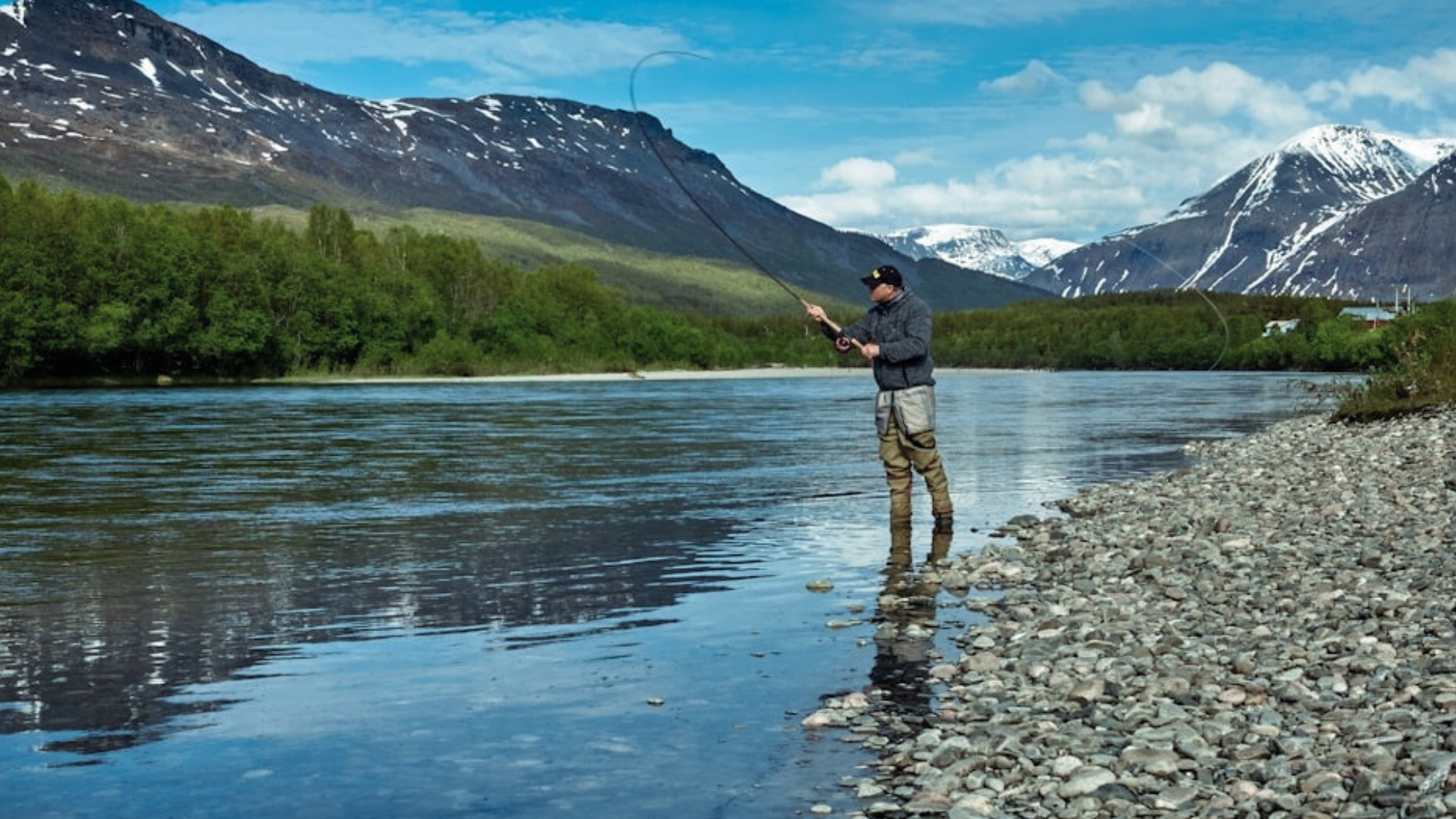
Most anglers think they know Montana trout fishing until they stumble into the rivers nobody’s talking about. No shuttle lines. No shoulder-to-shoulder boats. No mid-summer hoot owl closures shutting things down. Just cold water spilling off nearly 13,000-foot peaks and trout that still behave like trout.
That’s exactly what we’re digging into on this episode of the Wet Fly Swing Podcast. I sat down with Lincoln Powers of Montana Fly Fishing Lodge to talk about a pocket of Montana that still fishes like the old days. Freestones, spring creeks, migrating browns and rainbows, and a lodge experience that goes way beyond the water.
If you’ve ever wondered what Montana looked like before the crowds, this one’s for you.
08:40 – Cold Water, No Hoot Owl Closures, and Happy Trout.
The Absaroka-Beartooth range rises just south of the lodge, with peaks nearly 13,000 feet high. That elevation matters.
Cold runoff keeps water temperatures in check even during hot summers. While much of southwest Montana deals with hoot owl restrictions, these rivers rarely hit the danger zone. Clear spring creeks continue to pour into the Yellowstone even when the main river turns muddy.
This cold-water stability is a huge part of why the fishing stays consistent from spring through fall.
Variety is the name of the game here. Guests can float midsize freestones, wade intimate mountain streams, or fish private spring creeks with exclusive access.
Lincoln described their spring creeks as approachable and fun, not the ultra-technical fisheries some anglers associate with Montana. These streams are narrow, clear, and forgiving, with fish willing to eat dries, nymphs, or even oversized hoppers early and late in the season.
Most anglers here are chasing browns and rainbows, but the mix is broader than that.
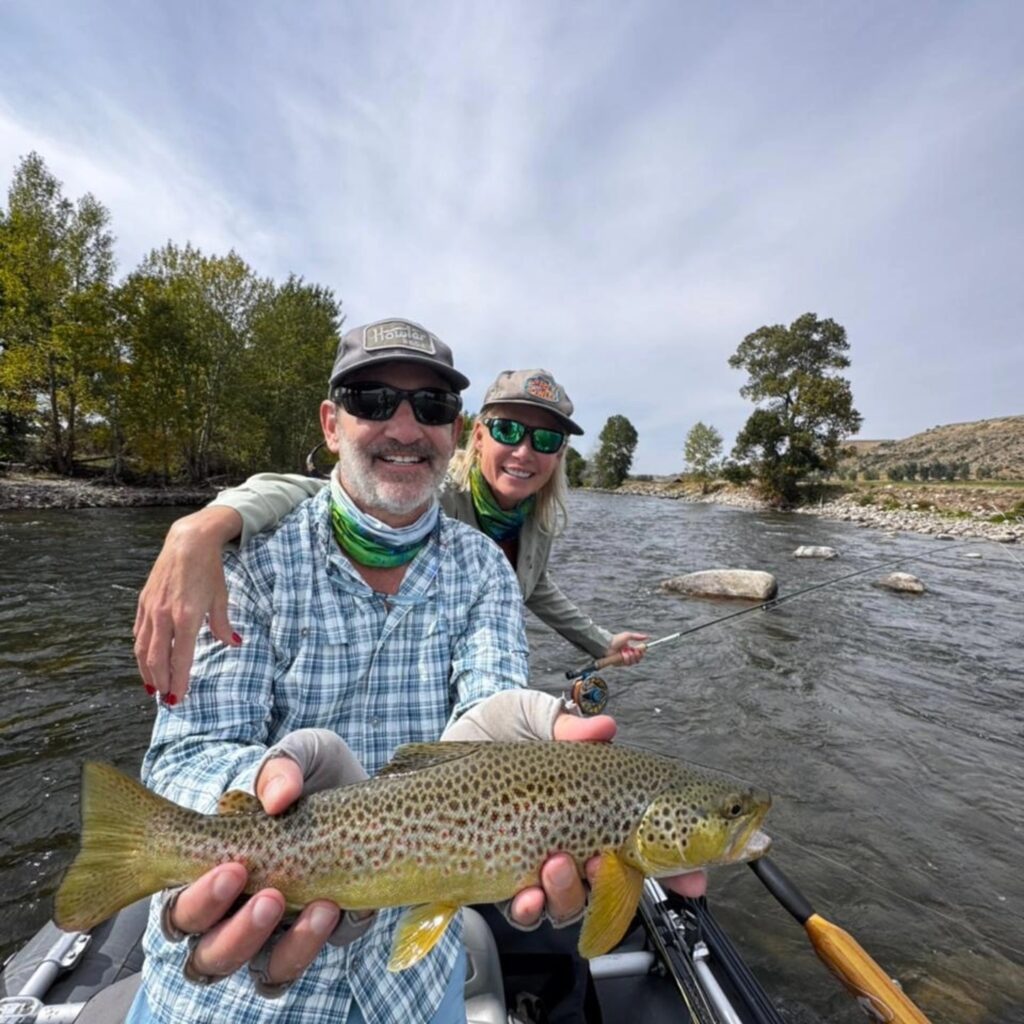
These freestone systems also serve as spawning tributaries for larger fish migrating in and out of the Yellowstone. That’s how you end up with surprises like a 28-inch rainbow caught in two feet of water on the Stillwater.
Yes, that actually happened.
Spring through fall, there’s always something working.
Dry flies, dry-dropper rigs, Euro-style nymphing, and streamers all have their place. Streamer fishing, in particular, can be excellent all season long, especially on deeper water like the Yellowstone and Stillwater.
Spring creeks stay productive even during runoff. Freestones shine in late summer and fall. Streamers come into their own as water cools and fish get aggressive.
Lincoln is a walk-and-wade specialist and loves getting people onto smaller water. For guests who are mobile and up for it, a full day on a small stream can be a highlight of the trip.
For those who prefer a lighter physical day, raft fishing on the Stillwater, Boulder, Shoshone, or Yellowstone offers flexibility. Guides frequently pull over to wade productive runs before hopping back in the boat.
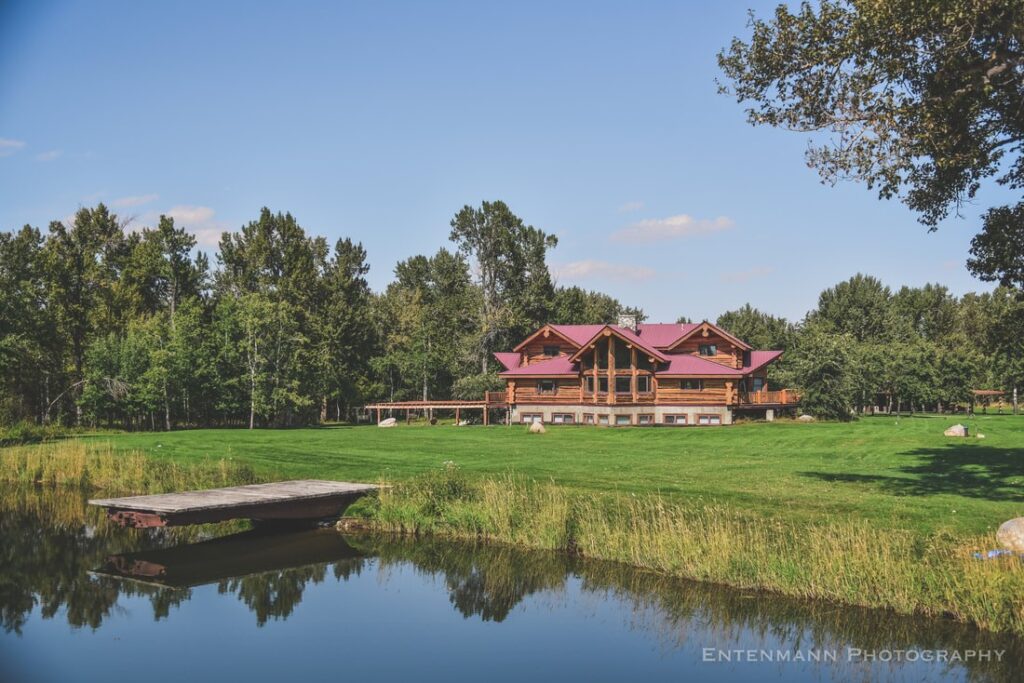
The lodge experience is fully dialed.
Yes, live bluegrass during dinner is a real thing here.
Before guests ever arrive, Lincoln’s team gathers information through a detailed questionnaire. Fishing style, experience level, mobility, and personal goals all factor into guide assignments.
Some guests keep the same guide all trip. Others mix it up. The goal is always the same: match personalities, skills, and expectations so everyone has the best possible experience on the water.
If someone wants to focus on streamers, the guides can build a day around that. Smaller rivers like the East Rosebud are perfect for learning the mechanics, while the Yellowstone brings out heavier lines, sink tips, and bigger flies.
Streamer fishing here isn’t just about numbers. It’s about learning how trout move, where they hold, and when to commit.
That recognition comes from rigorous evaluations, on-site visits, and verified guest reviews. It reflects consistent service, strong guiding, and a lodge experience that delivers from start to finish.
We wrapped up talking about Montana’s legacy. While A River Runs Through It brought global attention to fly fishing, this part of the state still feels untouched.
On many of these streams, you might fish all day without seeing another angler. Just you, the river, and the mountains. That’s the experience Lincoln and his team are protecting and sharing.
Lincoln’s advice was refreshingly simple.
Relax.
Slow down. Watch the water. Dial in your roll cast. Let the place work on you a little. The fishing will come, but the experience matters just as much as the number of fish landed.
Episode Transcript
00:00:00 Dave: Many people think they know Montana s trout game until they fish the rivers that no one talks about. The ones without crowds, without shuttle lines, without the mid-summer hoot owl closures that hammer the rest of the state. Just cold water sliding off thirteen thousand foot peaks, unpressured fish slipping in and out of Freestones and Spring creeks that stay clear even when Yellowstone turns to chocolate. This is the Wet Fly Swing podcast, where I show you the best places to travel to for fly fishing, how to find the best resources and tools to prepare for that big trip, and what you can do to give back to the fish species we all love. Lincoln Powers from Montana Fly Fishing Lodge is here to break down what makes their operations so unique out there. We’re going to find out why this pocket of Montana still fishes like the old days. During the river runs through it, we get into a little bit of that story how browns, rainbows, and Yellowstone cutties move through these tributaries all season. The wild productivity of their spring creeks from esoph through the fall, and what a full lodge day looks like. From casting clinics to four course dinners, to music on the lawn, live music as well. It’s all here today, so let’s get into it. Here he is, Lincoln Powers. You can find him at Montana Fly Fishing Lodge dot com. How you doing, Lincoln?
00:01:11 Lincoln: Great. Glad to be here. Yeah.
00:01:13 Dave: It’s great to have you on here. I’ve been really excited about this one because you fished some waters that I’ve been thinking about for many years. Um, I’ve fished Montana a lot, but I’ve never been out to what we’re going to talk about today. So we’re gonna get into your program. You guys have this amazing lodge, which is. I know it’s, uh, we’ll talk about the Orvis endorsed. I know you’re part of the Orvis. We love Orvis and that whole network thing. So we’re gonna we’re really going to do a whole full scoop on the lodge program because we’re going to prepare, hopefully. I think the plan is I’ll be out there hopefully fishing with you guys. So but let’s take it back first to your fishing. How did you get into fly fishing? The lodge. Maybe take us back to square one, or you’ve been doing this a while, or are you kind of new to it?
00:01:51 Lincoln: Well, relatively. We’re I’m new to it. I’m not new to fly fishing. I’ve been fly fishing since I was a high schooler. Anyway, um, but, uh, the property is. This has been in our family since nineteen forties and really no, uh, livable structure on it. You know, uh, there was an old building my first birthday. We, uh, I had my get pictures of my birthday in, um, kitchen at that old place, but it didn’t have any power or running water. And so I think it was that summer of, you know, sixty four or whatever that we were sixty five would have been we moved into the little community of Absarokee. But my dad chased cows for a living. And, um, so we he took me out there all the time. He would go out every day and, you know, take care of business that way. But. And I’d always go with him as a little, little kid, you know, uh, but, uh, there was no livable structure. And, um, you know, as I got older, I, uh, in ninety six, I had moved away. I went to the military. I worked at Microsoft for a little while and moved back and to start my own business in Montana and raised my kids in Montana is what, uh, my original impetus of moving. I was out on the West Coast then, but, um, moved back to started my own, uh, software development business and built the lodge as our main family residence back then. And as you know, you know, between my wife and I, we launched seven kids and each have a thirty year career, uh, mining software development and her in, uh, healthcare leadership. And, um, so here along come twenty eighteen, and Judy challenged me to consider myself partly retired. And little did I know the level of effort it would be to manage and run a lodge to feed my passion here a little bit. But, uh, it’s been a beautiful experience. So Judy and I, we both did, um, we launched started using the lodge in the, you know, early teens of two thousand as a, um, destination wedding venue and cut our teeth on hospitality and, uh, cooking for, uh, larger groups and that type of thing then. And, you know, Judy and I are both foodies. And so it was something that really came natural to us and something that we loved a lot. And, uh, you know, it’s starting. You know, Judy’s challenge was consider yourself partly retired in twenty eighteen. And so I did that and, uh, you know, started toying with the idea of marketing to fly fishing guests, you know, and you kind of just took on a life of its own.
00:04:45 Dave: Just go with it, you know?
00:04:46 Lincoln: Yeah. And, you know, our max client capacity is eighteen, and that’s if we have two, you know, clients in each Need to come in. And so a small group like that, if you can imagine seven kids, it’s it’s not linear. Uh, the amount of people cooking for eighteen is no different. It was, you know, cooking for kids and and stuff. And so we just amp up the level of quality of service and the quality of food. And we carry that through to our, uh, very experienced and affable guides on the water and stuff. So it’s been a great, a great experience. I just, I, you know, I can’t say enough about it how it’s fulfilling for us. And uh, based on our feedback from clients, uh, fulfilling for them too. So.
00:05:35 Dave: Right. That sounds great. And you’re maybe describe kind of where this is located. The rivers you fish describe that a little bit.
00:05:42 Lincoln: I often think of that, um, how when I was a kid, when we wanted to go fishing, it was, you know, you always just went fishing. I’d never really occurred to me to hire a guide and stuff to take you fishing. And, you know, thinking back on it, I mean, people that are traveling to go fishing into unfamiliar waters and stuff, you know, that’s the only way to do it, to have a really good time and to get to and know where the good fishing is in the area. Now, in our area of Montana, having, you know, been in software development for decades, I recognized that our area of Montana is a bunch of blue ribbon trout streams, all within a, you know, really a few minutes, for whatever reason, kind of stayed out of the fray. That is, you know, fly fishing in Montana nowadays, like you see in southwest Montana. And, uh, you know, the Madison big hole, those, all those. And then over and further east of us, another hour and a half or so. Um, the Big Horn and all of our rivers are quiet. I mean, just to get to have more than a couple of boats on the water during the same day as you’re on the water, uh, it more than likely will be end up having to be a weekend day. And those are likely to be locals out fishing for the weekend or whatever. Not necessarily commercial guides, but they’re, you know, at points during the summer, you know, you get you might see three or four other people, you know, fishing, you know, boats fishing near you, but nothing like the pandemonium that you see as well elsewhere in Montana.
00:07:38 Dave: So how do you what do you attribute that to? Because, yeah, I mean, all over Montana. It’s amazing to hear that.
00:07:44 Lincoln: It is it really is amazing. I mean, the Madison really is really. It’s a tale of water twice over. So the horn is a is a tale water. And so people, I think, uh, you know, are drawn to the tale waters more so than fishing freestones or maybe some of the spring creeks. Um, and I think that might be it now, but that kind of flies in the face. I don’t know, eight to ten years or whatever, where you get warmer water in the summertime on the southwest Montana. So, I mean, the mountains that rise up above us here is the Beartooth apps, Rocha, Beartooth Wilderness, and it’s the highest mountains in Montana state. So they’re just under thirteen thousand feet. And in south, in the southwest corner, there’s, you know, um, the highest peaks in there are eight thousand five hundred or nine thousand. So get colder water that runs off the east slopes of the Absaroka-beartooth so we don’t get a hoot owl hours and stuff. I mean, I think in twenty one or thereabouts they kind of held all of the Yellowstone just because. But all the streams, the boulder, the Stillwater, all the walkway stream, east and west, Rosebud, Rock Creek and all the various, uh, you know, private ranch spring creeks that we have access to. They all run cold, you know, run. You know, a warm day might approach upper sixty degrees, um, you know, on occasion, but it’s not enough to provoke, uh, fish, wildlife and parks and, um.
00:09:21 Dave: That’s amazing. And what is the closest town to where you’re at, where you’re located?
00:09:25 Lincoln: We are located right along a little, uh, two lane State Highway seventy eight, um, just south about five miles of Zorky. Yeah. So. And you get off the interstate at Columbus. Um, Columbus is right on I-90, and it’s about twenty, twenty minutes up country to where the lodge is.
00:09:42 Dave: Yeah. I see you’re working your way down towards those those high peaks, the mountains down south of you.
00:09:48 Lincoln: Exactly. Yeah. So. And we do, you know, airport shuttle and stuff from Billings is the closest. It’s about sixty minutes door to door airport shuttles. But yeah.
00:09:58 Dave: So people be flying into Billings, taking the shuttle and then heading down through Columbus, then south.
00:10:03 Lincoln: Yeah. And we often see people that are going to dovetail in, you know, something else. In Montana, we’re just on the northeast corner of Yellowstone Park, the entrance there, and you get traveling, uh, you know, either before your fly fishing out, you know, trip or after people off. You know, a lot of people go through the park if they haven’t been there. And it. And from where we’re at the entrance to the park, you go over an area called Beartooth Pass. And I might be revealing my age here a little bit, but the old, uh, national newscaster Charles Kuralt, dubbed the Beartooth Pass the most scenic drive in the lower forty eight states. So it’s it’s something to see if you’ve never seen it before, particularly if you haven’t been in high mountain passes and that type of stuff.
00:10:50 Dave: So yeah, so you guys obviously are in this, uh, wonderland. I mean, you’re in this place. That’s amazing.
00:10:57 Speaker 3: Oh, it’s all straight out of the fray.
00:10:59 Lincoln: I just don’t have any idea. You know? It’s it’s it’s hard to understand why, you know? I mean, we really are the only fly fishing lodge in quotes, um, between Livingston and Fort Smith where Bighorn is. So. Yeah.
00:11:13 Dave: And you guys also have these spring creeks. So when people are coming there, what do you talk about? What it would be like if somebody was going to be there for a few days? Is there a mix of streams that you’re fishing? Describe that a little bit.
00:11:24 Lincoln: Yeah, I highly I recommend the variety. So I mean if you like I mean the Stillwater is a midsize river. We take uh fly fishing room frame outfitter raft on the boulder is the same way. Um, it’s a sister river of of Stillwater. It gets pretty skinny as you get into August, so you gotta, you know, floated earlier in the season and then, you know, really changes over to more of a walkway stream the boulders. Um, we take people uh, to our, our close tailwater, if you will, um, on the Shoshone down at Cody, which is about an hour and fifteen. That’s about as you know, that’s we that’s a that’s about.
00:12:03 Speaker 3: The farthest.
00:12:03 Lincoln: Drive that we do any type of regularity to. It’s about an hour and a half into Paradise Valley south of Livingston. Um, if you want to float the upper still or upper Yellowstone, um, but in between, you know, it’s it’s tough to drive that far because you’re passing sections of this Yellowstone that are fish. Great. And you’re passing in the Deer Creek Mountains. Uh, we’ve got, uh, exclusive private access to six miles and a two mile stretch of, uh, you know, kind of private ranch spring creeks. So. So it’s not technical like the the Spring Creek south of Livingston.
00:12:41 Dave: Oh. So it’s so you’re saying these spring creeks are easier to catch fish in than other areas.
00:12:47 Speaker 3: The water baby, you.
00:12:48 Lincoln: Are in there in April and October and year.
00:12:52 Speaker 3: So it’s.
00:12:54 Lincoln: Super fun. Um, those things, those little streams run crystal clear into the Yellowstone, even in, you know, June, when the Yellowstone is a mud torrent. Uh, you get those clear streams running in there. You can stand down by those confluences and watch them coming into the little into the clear water.
00:13:10 Dave: Amazing. And what are the species that you guys are fishing for here?
00:13:13 Lincoln: Um, you know, by far and away the bulk is browns and rainbows. Um, and we get, uh, you know, I’m gonna I’m just gonna off the cuff, say forty percent browns and thirty five percent rainbows. And then, you know, you get a small percentage of Yellowstone cutthroat, a small percentage of brook trout. And then, uh, you know, at times you can catch a bunch of mountain whitefish is another trout species that’s in, uh, in those waters. So they’re one of the only. Well, they’re the only trout, uh, native to that besides Yellowstone cuts.
00:13:54 Dave: That is. Okay. So you have all these species and then.
00:13:56 Speaker 3: Part.
00:13:57 Lincoln: Which biologists.
00:13:58 Speaker 3: Go.
00:13:58 Dave: Right. And are you on on the spring creeks. Are you guys fishing those a lot different than you’re fishing say or maybe describe that. Which ones are the spring creeks? Are these trips to the Stillwater? To the boulder?
00:14:08 Lincoln: No, no, they’re they are a specific kind of destination. We have a actually another kind of, uh, lodge, um, that’s located on the banks of it’s Upper Deer Creek is the name of the stream, but, um, it’s, you know, a you takes you about forty five minutes to drive over there and into where we have the lodge on that, that stretch of water. But and there’s, you know, six miles and really about a mile and a half is a full day walkway trip. But it’s really I mean, that thing is, you know, eight to twenty feet wide. The tail outs are six to ten inches deep. The holes are four feet. I mean, it’s it’s just a beautiful, clear, running little stream in the mountains. And, you know, it just it fishes great. I mean, you’re if you got your roll cast dialed, you’re going to be on them all day long.
00:15:07 Dave: You are. And and what are you guys doing as far as techniques out here? Is this a mix of dry and nymphing? A little of everything.
00:15:13 Lincoln: Uh, in the Spring Creek, you can try whatever you want. Um, a few of them. I mean, if you want dries and you’re fishing top water, you’re going to get action. But I, you know, and even on the smaller freestone streams East Rosebud, West Rosebud and Rock Creek, if you have your, you know, any flavor of a nymphing action going, if you’re good at dragging her downstream like the Euro style. You’ll catch lots and lots of fish. So that’s that can be fun. But you have some people that only want to dry fly fish.
00:15:49 Dave: Yeah, only want to dry fly? Yeah, I can imagine that. Because you go to a place you’re in Montana, you know? I mean, who doesn’t want to catch a fish on the surface seeing it come up, right?
00:15:58 Lincoln: And, you know, on some of the bigger waters. Stillwater, Boulder, Yellowstone, if you go come across, you know, come on to a pod of nodding, head bobbing heads, you’re definitely, uh, go top water. Um, try whatever you want that ways versus maybe you might be doing a dry dropper or something like that, but you know, yeah, there’s. And if you’re a game to, uh, do some streamer fishing, it’s um.
00:16:25 Dave: That’s the other thing. So you got streamer fishing too?
00:16:28 Lincoln: Oh, boy. Yeah. Streamer fishing can be just fantastic. And it’s that’s the season for that is basically the whole season.
00:16:36 Dave: Is it really so. So you can start right in the spring, all the way through the fall, into the summer or summer to fall.
00:16:42 Lincoln: Yeah, even when the water is hot in or it gets warmer in the, you know, we consider upper sixties pretty hot, but still it’s the trout. Or you know, if you if you treat them right, they don’t do badly. But in some of the deeper water, like in the Yellowstone, you put a screamer down in the bottom when the water’s a little warmer, that’s where they’re holding out. Is, uh, in the boulders in the bottom.
00:17:05 Dave: Gotcha. Wow. And and now are you, uh, do you have a past or have you guided, or are you just mostly run the lodge?
00:17:11 Lincoln: And I am a guide, and I have guided, but I’m mainly walkway strings. I mean, I feel like I can add value to people best, um, having, you know, not really, uh, guided people in a raft or drift boat before I’m, you know, my whole life is it’s been, you know, beating the water walkway streams. And so I feel like that’s that’s where my sweet spot is. And it’s kind of what I really like to do so is fish. The small waters walk waiting. But yeah.
00:17:42 Dave: Okay. But you have, you have guides that are going to take, you’re going to take you out in boats and everything.
00:17:47 Lincoln: Oh yeah. And that’s you know, when we got into this little stint here, we were talking about variety. And that’s where I, you know, if you’re mobile and you’re fit, I highly recommend at least one day walkway in these little streams because I mean your own anything we in if you don’t, you know, if you’re if you’re you’re not familiar with it. We’ll give you a three weight rod ten footer. And so your touch can be, you know, the can be a little more sensitive. And you may have never fished that. You may have never fished something smaller than a five weight or something.
00:18:21 Dave: No, I mean, I, I’ve casted some stuff, but I really haven’t gone like full trip on the little stuff, which is cool.
00:18:28 Lincoln: Yeah, yeah. So you can, you know, it’s, you know, it takes some feel for sure. It’s like being able to eat fish online. It does take some practice, but we can get you on fish in Euro style. Definitely. You know what though? Small streams and stuff. So. But you gotta, you gotta you know, you your, your mobility has to be there for it to be an enjoyable day.
00:18:51 Dave: Yeah. You gotta work a little bit.
00:18:52 Lincoln: And, and for people that aren’t really, you know, uh, feeling like they’re fit enough to do a walkway a mile and a half or whatever, I highly recommend, you know, the Stillwater Boulder and just have the guide pull over. You know, you get a few casts as you go through a hole and then pull over at the tail outs and walk back up that hole and get it, you know, worked over good. And then get back in the raft and go down, you know, further. So you get a little bit of walk waiting. But it’s not your only mode of of mobility.
00:19:20 Dave: Yeah. I feel like what you’re saying is a mix would be cool. I think it would be cool to get some drift mode action, but then have a maybe a full day walking and checking stuff out and hiking around and raft walking.
00:19:30 Lincoln: That’s the perfect three days of fishing. And then and each of these streams. The Stillwater has a number of stretches day full day stretches. You know, most of the season we can get will have probably four. And then in the earlier in the spring, we’ll have five full day stretches on the Stillwater. The boulder really has two good day day floats. Um, and that’s both of those are, uh, in rafts, the fly fishing rafts. And then we’ll do the and same thing on the, on the Shoshone down in Cody. You know, you, uh, it’s it’s a raft on that stream, but it is tailwater. And so it gets you, you know, you’re a little better action. It’s not as deep as, like, the Bighorn is the reservoir that feeds it. Um, so it has, you know, like, the horn runs pretty clear. The Shoshone has kind of almost a glacial tint to it, but it you just got to kind of ignore that and fish because it’s, it fishes.
00:20:29 Dave: Well, how do those differ? You mentioned Stillwater, the the Boulder, the Shoshone, the Yellowstone. Are those all four of those quite a bit different? Are there similarities between the.
00:20:38 Lincoln: Oh, there, well, the Yellowstone or the Stillwater and the Boulder? Excuse me? Um, are Sister Rivers and they’re real similar now. And the Shoshone is is not so much. It’s, um, it’s actually, you know, um, the geology that it that river kind of cut through cuts through is, is sandstone. Think of like a microminiature. Um. Oh. I’m losing. I’m trying to remember a place in Arizona that’s like it. But you’re going through the sandstone canyons. It’s it’s cut into.
00:21:12 Dave: Oh, yeah. Like a, like a Arches or Zion National Park or something like that, where it’s cutting through all the rock.
00:21:17 Lincoln: Oh, yeah. It is a really fun river to be on. And then the Yellowstone is bigger water where our, you know, within an hour or so of us, it’s it’s a big river.
00:21:27 Dave: Yeah. The Yellowstone is a massive river. I mean, I’ve been on the Yellowstone. I mean, it’s it’s gigantic, right? This is a this is a big river. Yeah. Bigger than the similar to the Bighorn. I haven’t fished the Bighorn. Is it?
00:21:37 Lincoln: No, the horn is actually. It feeds into Yellowstone and downstream of Billings ways. Um, but, uh, it’s, you know, spouting a CFS right now isn’t going to really describe it, but it’s where we fish it, uh, from Columbus up to big timber, mainly, and then even closer to Livingston. It is probably three times as big as the Bighorn. It does a lot.
00:22:04 Dave: Yeah, that’s a lot of water. So that is cool. But that again, it’s a diversity. You’ve got that. And then talk about these spring creeks now. And you have these spring creeks too that are out there. What is a what is a day like that look like on the Spring Creek. Is this where we’re doing the walk in and wading and stuff?
00:22:17 Speaker 4: Yeah.
00:22:17 Lincoln: Walk, wait on the Spring Creek. Yeah. It’s kind of an all it’s a, um, you know, that’s what you’re doing for the day, you know? And what’s nice about those spring creeks, uh, contrary to or not contrary, but different than the east. Rosebud, West Rosebud and Rock Creek is the. Walking along the bank and in the stream is much easier. The banks are, you know, uh, kind of limestone. Sandstone. And the base of the stream is that way. And so you’re not having to, you know, step on and bounce across cobble rock on river. Um, so it’s walking. It is much easier than, uh, some of the freestone, small streams.
00:22:58 Dave: If we were going to be going out with you, let’s just say we’re going on a walk trip. Where would be what would that day look like? What would be like dry fly fishing and talk about time. I’m thinking I think we might be out there in early September. Maybe we could take it to that a little bit. Does it does it vary a lot depending on spring, summer, fall out there?
00:23:15 Lincoln: Um, at on the spring creeks, you can make it very if you want. But like I said.
00:23:22 Dave: They’re the same.
00:23:23 Lincoln: Well, much the same. It’s food in the water type of deal, like in the Yellowstone and the Stillwater fish will get super picky, particularly when the water is covered with caddis or something. You know those spring creeks there? You can fish basically whatever you want within reason, and you’re going to get action. I don’t want to get, you know, too cavalier there. I’m serious. When I said you could go in there right after ice off and throw a twelve hopper pattern in there and boom. Yeah, just like right now. I could go over there right now, and the same thing would happen.
00:24:02 Dave: You could. And these are going to be brown trout, rainbows and mixed, like you said, of species.
00:24:05 Lincoln: And in there it’s either going to it’s the Spring Creek is probably a little higher concentration of browns. It’s it’s probably at least, you know, sixty or seventy percent browns. But you’ll get rainbows and Yellowstone cuts in there. You never I’ve yet to catch any whitefish going up that yet, but, um, they have free reign access just coming up the Yellowstone, So I imagine at least in some of the lower stretches of it, there might be some whitefish holed up, but who knows?
00:24:33 Dave: Yeah. What is the, um. What is your program look like? Are people coming there for a few days, a day, a week? What do you guys do? A mix of things.
00:24:41 Lincoln: So in twenty twenty four, our most popular package was five night, four day, and in twenty five this past season, it was four night, three day. Um, and largely that difference is, um, some of our bigger corporate groups, they’re always almost always four night, three day. So we had several six or eight of those big groups. And I think that kind of bumped up the average or it gave the, the, um, the edge on the four night three day to the sheer number of clients, you know.
00:25:13 Dave: Oh, sure. Number. Yeah, I got you. Yeah. We’ve been doing a mix of things that it feels like they’re, um. Yeah, it feels like the three days. Just enough to give you a pretty decent, you know, three days. Four nights. You’re always feeling like you want more. I mean, I feel like I go out there. I could be out there for two weeks a month. And you still feel like, man, I could stay another week, right? It’s it’s. There’s never enough time.
00:25:32 Lincoln: Yeah. Meaning where we’re at there. There’s so much variety close by that I mean, you could fish. I mean, even the the Stillwater, you could fish it in three different sections for a three day trip. And it feel pretty different in all three of them, because you’re going through a little canyon and then you’re kind of going through the transition area, and then you go into the lower end where you confluence with the Yellowstone. And, you know, I mean, it’s it’s it’s can be significantly different in the three different areas, even on the one river. But I when I’m thinking variety, I’m thinking walkway, raft, drift boat, like literally the physical means of getting to the creek is.
00:26:17 Dave: And different rivers to potentially.
00:26:19 Speaker 4: Yeah. Yeah.
00:26:19 Lincoln: And combining that with different rivers.
00:26:21 Dave: Could that be like if you know, if we’re going out there, if we’re talking right now, maybe talking about this late August September trip, what would you be telling me as far as like, let’s just say it’s a three days, you know, talk about when we might arrive. You arrive the first night. What do people arrive and have dinner? Talk about like that first night when people when do they get their.
00:26:40 Speaker 4: first night.
00:26:40 Lincoln: On? On the day of arrival? We have we try and do a casting clinic for everybody, even for experienced people. And you never know what.
00:26:51 Dave: You never know. Everybody can use casting. We all need help with our casting.
00:26:54 Speaker 4: Yeah.
00:26:55 Lincoln: If you’re if you haven’t had a chance to really dial your double haul in or something like that, we have people, our casting clinic guys that are gonna can you may pick something up, even if you’ve been fishing a long time and a lot, but for new people or people that only get out a few times a year or something like that, highly recommend. Um, taking or participating in the casting clinic, which happens most nights. You know, we probably have one nearly every night, May through September.
00:27:25 Dave: Oh, really? And what does that clinic. What does that look like? What are you doing?
00:27:28 Lincoln: Well, we we go about an hour and a half. Um, we just we start out in the South Lawn there at, at the lodge, and then we have one of our smaller trout ponds right there. And so we transition from, uh, you know, casting out on the grass. Even if we’re leaving, we have special leaders set up where you leave tag ins in several different sections just so you get some kind of, you know, you can get some, uh, get some bend out of your rod, you know, you get the, um, so and then we take them on the, on the casting, casting pond and then, um, the East Rosebud, a little walkway stream and a little, uh, a little branch of it runs right up there against the lodge. And so then it’s nice once you to be able to go over on to moving water and understand better. You know, what mending is about. I mean, you can talk about mending, but actually practicing it and flicking the tip of your rod and try and actually get it to work in the grass or on flat water is actually pretty tough. I mean, roll casting on flat water is fine. You can get the you can load your rod coming back. Um, but um, mending is it’s a it’s nice to be able to practice on some moving water.
00:28:40 Dave: Wow. So you kind of go through the basic depending on what they, you know, what folks need for help when you get them ready to go. And then and then you kind of have dinner there. We talk about the dinner. What’s that look like? You guys, this is a all inclusive sort of package, right?
00:28:52 Speaker 4: Oh, yeah.
00:28:52 Lincoln: Yeah, it’s all food, beverage, lodging, um, golf carts to peruse around.
00:28:57 Dave: Oh, golf carts to golf carts.
00:28:58 Lincoln: Rec barn, you know, two big, two trout ponds. We have, uh, several different fire pits. There’s one up on top of the hill. If you want to go up, maybe take a beverage and watch something nice.
00:29:08 Dave: So there’s going to be a there’s going to be some fireside chats. And this is good. And and the rec building. What do you have some, uh, pool ping pong.
00:29:15 Lincoln: We got billiards and shuffleboard. Uh, foosball, table tennis got the old, old style electronic Pac-Man game.
00:29:25 Dave: Wow, this is awesome. Okay, all the good ones.
00:29:27 Lincoln: Got a lounge over there on the front deck of the, uh, rec barn. So if you want to smoke, we kind of have you go over to the barn in the little lounge area there for that. Uh, yeah.
00:29:38 Dave: So that’s it. And then, uh, so that’s the first night, get ready and then the and then the first day. What would that look like? Is that where the, the guides meet you at the lodge or how does that work.
00:29:46 Lincoln: Yeah, yeah. Let me just I’ll finish up on that on the meeting stuff. I mean, we finished or we serve up, uh, four course, uh, chef prepared meals that are, uh, very well received by the guests. Um, you know, we get very high marks for, uh, the quality of the food and the level of our service in the lodge. Yeah. And and to kind of finish out what the package looks like in on the fly fishing program side, it’s all gear and equipment, rods, reels and tackle. And, you know, obviously the Daily Guide, but, um, yeah. So the, the next, you know, the first day on the water. We try to encourage our guides to come over and say hello, uh, after dinner at night. And so we have the assignments all made to the clients, to the guide and to the stretch of water. And, uh, if they don’t make it over, um, after dinner the night before, they come over in the morning before breakfast and say hello and greet the guests. And, um, they have we have a little area there. Uh, we got a old cabin, actually used to be a art studio for a friend of mine’s mother. Um, but we have that as the guide shack now, and it’s a couple hundred yards from the lodge, and the guides go over there. They. We’ve got a wash rack for their truck and boat. We’ve got an ice machine to, uh, prep their lunch or their coolers. And over there, inside the guide shack is a TV that has a spreadsheet on it that shows, you know, the guide and the client, uh, association and where they’re going that day. And, you know, they’re some of the detail is, you know, once they’re ready over there, um, they wait. So the clients get ready on the front, front deck and under the portico of the main lodge. So once they’re ready over there, we walkie talkie their guide over, and they come over and loop up through the portico to pick the guests up. And one of the things on that spreadsheet is their cooler number. So the guide can see on the front deck, make sure it grabs the right cooler and stuff because he it’s all, um, client guide specific. So yeah. So we have it on the front deck. Everybody all each accommodation we get too carried away here. But each accommodation has a locker and a couple of boot slash waiter dryers uh, for each. And so it’s kind of where you start your fly fishing day and you end it. Um, so yeah.
00:32:11 Dave: Wow. And then you go on, get with your guide and go out to some different one of the streams and you’re out for the day.
00:32:17 Speaker 5: Yeah, yeah.
00:32:18 Lincoln: Yeah. Guy, jump in there. The the guides vehicle and go. Go to the water. And they, they put in have lunch riverside during the day whenever is convenient. And then, uh, you know, that’s roughly early season. It’s probably more like nine a m. We launched from the lodge, um, middle of the summer. Seven, seven thirty probably. And then it ends the same way. So some of our, our groups in October this year, you know, we launched at nine a m again, but then you come back at four o’clock, four o’clock to five thirty, depending on where you went and how your day went. And so yeah, yeah.
00:32:54 Dave: And get back and tell some stories and.
00:32:56 Lincoln: And if we have uh, at least right now we over time we’ve kind of fine tuned this. If we have at least eight guests at the lodge, we have live music. So during dinner, we’ll have live music most of the nights.
00:33:10 Dave: No kidding.
00:33:11 Lincoln: Yeah.
00:33:12 Dave: And who’s playing the live music?
00:33:13 Lincoln: Oh, we now one of our our, uh, our regulars, if you will, is a couple of guys at a bluegrass duo at, uh. Uh, there’s probably about five different small, either single person or duos that come.
00:33:29 Dave: That’s really cool. Yeah, that’s that’s pretty unique. Having live music at the at the venue.
00:33:34 Lincoln: I think it’s well received for sure.
00:33:35 Dave: And then that’s kind of. And then. Yeah, you’re gonna. Basically rinse and repeat and do that for depending on how many days you’re there. Who are the the guides you have on board. Talk about the the guides. Do they have different specialties? Do they have different rivers? Are they covering everything?
00:33:49 Lincoln: Well, I try and uh, the the goal is for everybody to be versatile. So we, we have some people that specialize on the Yellowstone. Some people specialize on the midsize rivers, like the Stillwater, if you will. But I encourage them all to have a raft and a drift boat both, and also be, uh, walkway capable. So it’s, you know, uh, we, we go the extra mile to, uh, give guides the, uh, time that they need to become familiar because our waters are so varied. It’s, you know, it it takes guides a while to, you know, a couple of years to have experienced all each of the different, uh, stretches of water and where all the takeouts are and the put ins, obviously, that type of stuff. Um, and so, you know, we we have several guides that are actually born and raised in the area. And so they it’s easy for them. They know them all. Um, but some of the other guys, we’ve have people, uh, we have guides from Argentina, we’ve got guides from New York, North Carolina. We’ve had, uh, you know, we kind of searched far and wide the last few years to, uh, get a good set of guides that are very experienced and got a good balance of fishiness and, uh, interpersonal skills with the clients and be able to carry a conversation with whoever they have in their boat and, you know, make everybody comfortable because of that. And, yeah.
00:35:26 Dave: Guides over the years here. And I think one of the things with a good guide is they, uh, figure out what expectations you have for the day of fishing. Is that going to be something that we would be talking to you like, let’s just take this trip again. If I was going out there, you know me in a group, what would you be asking me? What I when I’m expecting or how would that look? Or am I talking to the guides one hundred percent?
00:35:45 Lincoln: That’s that starts, uh, when we send you our online questionnaire. There’s a just a free form, uh, control in there that lets you enter what you’re expected, what you prefer, the type of fishing you prefer. And we also ask you questions about your, uh, fitness and your mobility, that type of stuff. And then what you want to experience. And a lot of times people say variety. You know, I want a little walkway, a little floating, you know, that type of stuff. But so that’s where that kind of dialogue starts. That’s why we try our best to get, uh, you know, a good conversation going with the guide or as early as possible. Um, you know, and it’s based most of the time it doesn’t that, uh, conversation with the guy doesn’t start until after you’re at the lodge. But, you know, it’s sometimes we make those, uh, we make decisions on what guides, um, go with which clients. Um, you know, we have a set of guides that are all, you know, uh, signed by an outfitter and are qualified that way. But between us, the people at the lodge and the guides, we like to make a good kind of personality match. And your desires and stuff are a huge piece of that. And your experience is a huge piece of that. Um, on what we feel is going to be the best fit for you and we change that up. We have some people that want to have a different guide each day just to have that on another level of variety. So our operandi is to try and have a guide stay with the clients. Uh, you know, their, their whole time there. But, um.
00:37:25 Dave: Yeah, I think it depends a little bit on, you know, what everybody wants to do. We found that we’ve been doing these trips and we’ll have, you know, listeners that come from sometimes they don’t know each other at all. And we come there as a group and then we find, you know, we’ll find that it might be a guy and his friend or something. But by the end of the trip, everybody wants to fish with everybody else and mix up the guides. And you know what I mean? It’s just kind of it becomes this family kind of trip. It’s kind of cool. You guys probably see some of that too.
00:37:49 Speaker 5: Yeah, that sounds awesome.
00:37:50 Lincoln: That sounds like what we’re all about for sure.
00:37:53 Dave: Yeah, definitely. What if, uh, I came to you, you’re asking me and I. And I was like, I would really love to dig into streamers. I’d really love to learn about streamers more. Is there a guide or a river you would have in mind for that?
00:38:05 Lincoln: I would definitely, you know, if you want to, if you’re unfamiliar with streamer fishing, I would take and have a guide take you out on the East Rosebud there, and just try some streamer fish and be a little smaller stuff, you know, maybe some twelves or something like that and just see what it’s all about, see how comfortable you are and, you know, varying your.
00:38:26 Dave: See, see how bad I am. See how much I struggle.
00:38:30 Speaker 5: Well, you.
00:38:31 Lincoln: Know, streamer fishing it can be changed things up. You get in the Yellowstone, you’re going to want sinking tip line and bigger streamers and stuff. So you know it’s. Yeah.
00:38:40 Dave: Is that is that the river is there one is the Yellowstone the one where you’d say, where would you have your best chance of getting a the biggest fish say out in that area.
00:38:49 Speaker 5: Biggest. Oh.
00:38:50 Dave: Or maybe, maybe not the biggest, but the most maybe. Actually, I figure the Yellowstone is big. It must have some big fish out there, right?
00:38:58 Lincoln: Well, yeah. Yes, but all the streams that I spoke of, other than that are spawning streams for the fish in the.
00:39:07 Dave: Oh, right.
00:39:08 Lincoln: So they’re moving in and out of those streams all the time.
00:39:11 Dave: Oh they are. So the browns and rainbows are coming in and out.
00:39:14 Lincoln: Yeah. I mean, our biggest fish on the Stillwater this year was a twenty eight inch rainbow.
00:39:19 Dave: Really?
00:39:20 Lincoln: In Stillwater, two feet of water.
00:39:22 Dave: No kidding. No kidding. What did that fish. What did you catch that fish on?
00:39:26 Lincoln: I believe he was. I believe he was using a streamer.
00:39:29 Dave: Streamer? There you go.
00:39:30 Lincoln: It may have been. It may have been a nymph too, but it wasn’t dry.
00:39:34 Dave: Wow. So twenty eight. So you have fish up to rainbows up. Twenty eight. So the browns must get in that size range too.
00:39:39 Lincoln: Well, you know, the biggest brown I think we caught this past year that I can remember was was about a twenty four inch. But they’re I mean they’re nice fish. I mean I think the biggest one we’ve caught.
00:39:50 Dave: Anything over twenty. I feel like anything over twenty is a giant fish.
00:39:54 Lincoln: Oh, yeah. Yeah. I mean, these are all freestone streams too. Besides the. You catch that twenty eight inch rainbow? That’s a huge fish for a freestone stream.
00:40:04 Dave: And is the. Is the Yellowstone a freestone too?
00:40:06 Lincoln: Oh yeah, one hundred percent. The whole stretch all the way from the park, all the way to North Dakota, where it runs into the Missouri.
00:40:13 Dave: Amazing. Oh, it goes to Missouri, right. It goes all the way across into Missouri, into the Dakotas.
00:40:18 Lincoln: Yep. It’s the longest freestone stream in the nation.
00:40:21 Dave: Is it really? Yeah. And that’s the unique thing because yeah, most of these big rivers have dams on them. Right. Almost all all of them.
00:40:27 Lincoln: Yeah. Big or not I mean, Madison, it’s got two dams on it.
00:40:32 Dave: Why do you think is that just because you guys are in this remote area where, I mean, I wonder why the. It’s a good thing, right? Lack of dams. That’s a healthier system.
00:40:40 Lincoln: Well, I guess, you know, I don’t know. I mean, uh.
00:40:43 Dave: Well, I look on the map when I look at the map, I’m like, you got Billings, you know, to the east of you. You got Livingston to the west. I’m not sure what’s up north. And then you guys are kind of right in the middle. You know, it feels like. Yeah, when you look at the map, you’re like, yeah, you guys are definitely off the off the map. I mean, there’s not a lot of big towns or kind of bozeman’s out there a little further. Right. Somewhere out there too, isn’t it?
00:41:04 Speaker 6: Yeah. It’s over the pass and stuff.
00:41:06 Lincoln: Yeah.
00:41:06 Dave: But you’re kind of tucked in, right? Like you said, at the base of the mountains, you’re, you know, just the national park isn’t too far away either. You’re kind of right there.
00:41:13 Lincoln: And, yeah, it’s about twenty miles as the crow flies. But you go over that area. I spoke of the Beartooth Pass, which ends up stretching her out about a mile or an hour and a half or two hours, actually, because it’s really the Beartooth Pass. If you look at it, it’s just hairpin switchbacks for a bunch of it. So most people drive super, super slow, you know, twenty miles an hour or less.
00:41:34 Dave: I feel like that would be the cool thing to do is, like you said, kind of get a little Yellowstone experience, maybe drive through the national park, do the scenic thing, see some buffalo. Do you guys have are there wildlife? You must get some. Maybe not buffalo out in your neck of the woods, but are you getting.
00:41:48 Speaker 6: We don’t.
00:41:49 Lincoln: We’re not you know, we don’t have any real I mean, the park animals don’t come out. Really. There’s the grid back and forth. Yeah. The grizzlies would go back and forth in the mountains, but they don’t generally come down into the river valleys. We get moose come out of the mountains in our river bottom. That’s by far the most dangerous thing is stumbling in a moose.
00:42:10 Dave: Yeah. The moose, they can be dangerous.
00:42:12 Lincoln: Oh, yeah. So. But, you know, we have some black bears and stuff you’ll see on occasion. Uh, I consider myself super lucky if I see one, because they are much more wary than, like, all the whitetails and mules and all the kinds of deer all over. I mean, the the yard at the lodge right now probably has twenty whitetail in it feeding. So.
00:42:35 Dave: Well, I’m excited about this. I think, uh, we’re, you know, it’s a it’s a part of the I’ve driven by that, you know, quite a few times, but I’ve never really spent any time fishing. So this is going to be, I think, exciting. And and what you guys have there is pretty unique too with the spring creeks and talk about the the Orvis endorsed because I think you guys were close to like a finalist for the Orvis and George Lodge of the year, something like that. Describe that a little bit.
00:42:57 Lincoln: How an Orvis endorsed finalist is. There’s three of them. And so that’s all for the non-international lodges. So I’d be guessing. A wild guess is like there’s one hundred and twenty or so.
00:43:12 Dave: There in the Orvis network.
00:43:14 Speaker 6: Yeah.
00:43:14 Lincoln: Non-International lodges. And we were the top three in the nation for twenty twenty four. You didn’t win it. Um, I believe, uh, another it was actually in Arkansas, white River Inn or Nice.
00:43:29 Dave: We’re heading there this year too. That’s that’s awesome.
00:43:31 Speaker 6: Are you. Yeah that the.
00:43:33 Lincoln: That they won it in twenty four I’m pretty sure. Yeah.
00:43:37 Dave: Nice. So so basically that’s a they choose a lodge that I mean it’s probably a mix of things right. Like you said the great food a great kind of like describe that. What do you what do you think got you up into the finalists for that?
00:43:48 Lincoln: Uh, I think it was our service level. Yeah, the service level for both the lodge and, um, you know, the inn that carrying the service level at the lodge all the way out onto the water, it’s, you know, a lot of, you know, happy clients.
00:44:03 Dave: Yeah, exactly. And I think I think part of that is, is good reviews, lots of positive reviews. I think that’s a that’s a big part of it too.
00:44:09 Speaker 6: I mean, getting all.
00:44:10 Lincoln: This endorsement was quite a deal. It took us a couple of years. I mean, it was back in twenty one. We started in, uh, the process. And, you know, Orbis has went through a process in twenty eighteen when, uh, Simon Perkins, the grandson of the founder of it.
00:44:26 Speaker 6: Took.
00:44:26 Lincoln: Over the helm and they kind of went through a process of revamping the endorsement program. Um, re, you know, making the rigor for being in it, you know, a lot more scrutiny and evaluation on sites. Orbis staff experiencing, you know, your employees, your guides, your offering in total top to bottom. And, um, it’s been great. It definitely, uh, provides a level of, uh, you know, it’s like when you.
00:45:00 Speaker 6: See.
00:45:00 Lincoln: Reviews out on the internet. You go to Google, and Google reviews are out there or whatever for different places, but it’s a Google review. Is not third party reviewed by some an organization that kind of validates all the data and stuff in it and the the person making the review and all that. Whereas like the reviews are reviewed by that process is managed by a company called Bazaarvoice. And so the reviews you see on on Orbis are third party evaluated and kind of.
00:45:35 Speaker 6: Uh.
00:45:36 Dave: They’re legit.
00:45:36 Lincoln: Approved. Yeah. And that’s you you tapped on a key word there. That’s what the Orbis endorsement provides, is it’s a legitimacy that says that your lodge has been reviewed by the Orbis organization, both in person and, uh, they’re they’re, uh, talking with our clients, you know, on their own.
00:46:01 Dave: Yeah, yeah, it’s been essentially you’ve been vetted. People can actually when they see this, they know, you know, you’ve got a certain standard that’s going to be met and that’s going to include the fishing and the whole experience. Right. That’s that’s what. Yeah.
00:46:13 Speaker 6: Yeah. And I think.
00:46:13 Lincoln: Orbis is a focus on getting that to the quality. The perceived quality of that endorsement has been, uh, revamped in twenty eighteen after talk.
00:46:25 Dave: We’ve had a number of Orbis episodes. I can’t remember how many, but we’ve probably done five or six with, uh, we’ve had perc on, you know, we’ve had multiple generations in the family. And it’s been it’s been great because my story, you know, I have a Orvis connection since I was a kid, you know, and all that stuff. So I feel like it’s just a great they’re great for conservation. They’re a great company. And I feel like anything, anything they can support, I think probably anybody should be, you know what I mean? Be able to back that up. But so I’m glad we touched on that. That’s part of, you know, a big part of what you do. Obviously, we talked about this today. Before we get out of here, we’re going to get out of here a little bit. I want to get a couple of tips from you on this, but I did want to ask you one thing we have, um, John McClane, is I think let’s see, was just on the podcast. He’s the son of Norman MacLean. A River Runs Through it, right? The famous book. And you probably do you remember that was in nineteen ninety three when that movie came out. I love I’ve been chatting with him. And so ninety three, it kind of blew the roof off of fly fishing. Right? Everybody had all these people coming in. Brad Pitt, do you remember that period? Were you out there in Montana when that hit?
00:47:25 Lincoln: I actually at ninety three, I was at my stint at I was in six years at Microsoft. And so my goal then, because I lived, uh, north of there and kind of called Mount Vernon, Washington, and, uh, I, I would go to the Skagit River and go all the way upstream to a little area called Cascade, and then up there, the Skagit River is about the size of the Stillwater. And so that was where I went to have be in my zone as a fisherman, fishing for salmon in the huge water as it gets out to the coast was definitely not something.
00:48:00 Dave: Different world.
00:48:00 Speaker 6: Yeah.
00:48:01 Lincoln: But that’s where I was at at the time. But but the fish in those little streams like that, you know, the Blackfoot that’s in that movie couldn’t tell the difference between the boulder and the Stillwater and the Blackfoot.
00:48:12 Dave: Oh, really? So that’s what the. You’re in a big canyon.
00:48:15 Lincoln: The Blackfoot runs through kind of the Black Forest, so to speak. So it’s wooded, it’s conifer forests on both sides, whereas the Stillwater in the boulder, they’ll be breaks in that. They’ll be, you know, hills that don’t have much, uh, many trees on it. And it’s a little bit, you know, higher elevation, that type of stuff, you know.
00:48:40 Dave: But, you know, in the movie, I think what it did was and we just watched it recently because my kids hadn’t seen it before. And so we watched it. And, you know, it’s just it’s a great movie. You know, it’s a great movie because it’s a story. And Norman says this, you know, he said this, we’ve had a few episodes, but, you know, it’s not about fly fishing, right? The movie’s about his brother and the fact that he, you know, it’s a sad ending because his brother got murdered. And it was a really sad ending. But but really, the Montana thing is what blew people away, right? Because you’re in this place which you know very well, Montana, I’ve spent when I, when I first went to Montana, I was thirteen years old. We drove out across from Oregon. My brothers were older than me, and I was able to tag along on this trip. It was me and my brothers and a couple of friends. We went to Montana to Rock Creek, you know, out of Missoula, and I never forgot that trip. It was like the greatest thing ever. I hooked myself almost in the eye three times, but. But it’s just Montana, you know? How do you explain that to people? Because it’s it’s this special place. How is how do you describe that?
00:49:36 Lincoln: You know what what I like to fishing at in the streams around us is not unlike that movie. Because if you’re walk waiting on any of those streams I spoke of and I said, Rock Creek, but it’s the Rock Creek on our side of the state there that runs out of Red Lodge.
00:49:55 Dave: Oh, there’s another Rock Creek, of course. Yeah.
00:49:57 Lincoln: Yeah. So Rock Creek, east and west. Rosebud. You won’t see another fisherman. You won’t see another because there likely hasn’t been another fisherman’s unless they were with a group of hours, you know, probably been at least a couple of weeks. You’ll go on these rivers and they’re just not pressured. You don’t see people often. So I mean, you can go all day. You can go a whole your whole stay and only see a handful of other people fishing.
00:50:26 Dave: That’s crazy. It’s kind of like that experience that we’re talking about. This is like Montana back in the day of Norman McLean.
00:50:33 Lincoln: Out on the water, and you’re there fishing and it’s just you in the river.
00:50:39 Dave: That’s cool. And you get that experience, which is just big sky country and, um, you know, trout and mountains and all that stuff. This is good. Well, I’ve got a couple of random ones for you. Then we’ll let you get out of here. Um, today. So I do want to I want to hear we’ll probably get into more on your guides, because I think that sitting in the talking to them more and all that. But, um, you know, one thing we really love to talk about is, um, you know, conservation, you know, that’s a big part. You mentioned you hear about these hoot hoot owl things that are going on is that, you know, what’s do you have any issues out? Are there any groups in your area? Do you have any problems with it sounds like water quality stuff like that’s pretty good. Do you are things looking pretty good in your area or are there groups out there doing any work in nearby?
00:51:21 Lincoln: Well, you know, Trout and Limit is always doing stuff, you know, to try and revitalize, uh, streams. They do, I think, quite a bit of work in western Montana, um, northwest Montana mine old deputy in leakage and one of the overt kind of tailings in the National or the, the, uh, tail waters and that type of stuff. But, um, you know, there’s there’s a few organizations around, um, that, uh, you know, Greater Yellowstone Coalition is one, you know, I, I’m struggling to come up with another one.
00:51:57 Dave: Yeah, but the coalition is there’s there are groups. Yeah, there’s probably some watershed councils, groups that are connecting the community and basically doing whatever that is, river cleanups and, you know, getting the word out. Education.
00:52:09 Lincoln: Sure, sure. Yeah. You bet.
00:52:11 Dave: So that’s good. So. Well, give me I’m going to give you a couple of tips. I want to, you know, we’re fishing with you. Let’s just imagine this. We’re on one of these spring creeks. We’re out with you for the day. You’re fishing. Um, I haven’t been out there. You know, they’re new to the water. What do you tell? What’s a tip or two? You’re going to give somebody to have more success on your river for that day. It sounds like it’s pretty easy, but what would you what would be your tip?
00:52:29 Lincoln: My tip for them would be to just relax. Relax. And, you know, uh, if it’s if you gotta spend a few minutes feeling like you can get your roll cast dialed, I mean, stand right in the middle of the stream and just Go right parallel with the water. It’s I don’t know that there’s I, I, I just part of me or not part of me. The biggest part of me wants people to have an overall good experience. The fishing might wax and wane during a day or during a trip, but it’s it’s gotta be more than that.
00:53:13 Dave: It’s got more than the fishing.
00:53:16 Lincoln: Yeah, it’s got to be more than the fishing. The lodge experience, you know, just the relaxation, the, um, camaraderie, that type of thing.
00:53:26 Dave: That’s right. No, I think the relax is a good tip because, yeah, it makes you realize I think a lot of us get out there and you’re sometimes fired up and you’re like, man, I want to get out there and fish. But taking a break and stepping back and actually checking out the stream, seeing what’s going on is a good reminder, because there’s you can learn a lot from just watching the stream, right? Seeing what’s going on.
00:53:44 Lincoln: Well, and you’ll see like in our casting clinics, a lot of our guys are really into entomology and stuff and so.
00:53:52 Dave: Oh, nice. Oh, cool. Really. So you have guys that are into etymology?
00:53:55 Lincoln: Oh, one hundred percent stuff, you know. Yeah. No, they’ll they’re be all about, uh, you know, sifting, you know, turning over a few, showing you exactly how to determine what is in the water going into East Rosebud and turning a rock over and bringing it up and saying, this is, uh, stonefly. Yeah. Stonefly or a caddis. Um, or, you know, whatever dragonfly larva or whatever, you know.
00:54:21 Dave: No. That’s cool, I think I think it is pretty exciting, uh, you know, to think about this. So I think for today, we can leave it here and send everybody out to Montana fly fishing lodge dot com if they have questions for you or want to get some more information on trips and everything you have going, but, um, but yeah, Lincoln, this has been, uh, definitely a lot of fun. We’re going to be following up with you again and following up with some of your guides and talking more, but thanks for all the time today and we’ll be in touch.
00:54:44 Lincoln: Sounds good. I know. We got a couple of them teed up to talk to you, so that’s good.
00:54:49 Dave: All right. Awesome. Well, we’ll see you on that next one. And, uh, have a good have a good rest of the week.
00:54:53 Lincoln: Sounds good. Thanks very much.
00:54:56 Dave: If that conversation opened your eyes to a quieter side of Montana, the cold free stones and everything we talked about today, twenty eight inch rainbows. Check in with them. Check in with me. If you’re interested, you can just send an email. Dave. Com if you want to get access to this trip, which we have going right now, you can go to Wet Fly Swing, get access there and you will get first access to to this trip when we put it together and and we’re going to be heading out there this year. So if you’re interested, check in with me and I’ll let you know what we have going on. Availability. I want to give a big shout out again before we get out of here. We got a big week coming next week. We’ve got Josiah is here to talk Hawaii, and we’re going to a place that I’m sure many people have not thought about on Hawaii. This is not Maui. This is not the Big Island. This is a unique little cast and blast opportunity in Hawaii. I’m excited for this one. So subscribe if you haven’t already. And, uh, and if you’re loving this one, Subscribe to us on YouTube. We’re doing a few select episodes throughout the year that are going live on YouTube, and if you go over to wet YouTube, you’ll get access to that. And you can see us, me and me and Lincoln see what we look like chatting away our talking heads. Hope you enjoyed this one. Really appreciate you for sticking in to the end here. And uh, hope you have a great afternoon. I hope you have a wonderful evening. If it’s morning and you’re just getting going, maybe you’re on the road cruising across the state of Wyoming, heading out to, uh, maybe you’re heading over to Miami, uh, to Montana right now. Heading to this neck of the woods. Maybe you’re going down the highway, I think. What is that highway? Highway ninety across Montana. Maybe you’re in the area. Livingston, if you are. I hope you’re enjoying this podcast episode and I look forward to talking to you soon. If that’s you, definitely send me an email anytime. Dave, I have a good one.
00:56:31 Speaker 7: Thanks for listening to the Wet Fly Swing Fly Fishing show. For notes and links from this episode, visit Wet Fly Comm.
This conversation with Lincoln Powers was a deep look into a part of Montana that still feels untouched, where cold freestones and spring creeks flow out of the Beartooths and trout move freely without the pressure found on more famous rivers. We talked about why this area avoids hoot owl closures, how migratory browns and rainbows use these tributaries, and what makes Montana Fly Fishing Lodge more than just a place to sleep between fishing days. From walk-and-wade spring creeks to floating the Stillwater and Yellowstone, the focus here is variety, solitude, and a complete lodge experience that brings fishing, food, and community together.
If you could design your ideal Montana trip on the fly, would you spend more time wading small spring creeks or floating big water in search of migratory trout?